1. Introduction
Haiti is located within the Caribbean tectonic plate, a region exposed to substantial seismic activity, and has experienced two devastating earthquakes in recent decades. In 2010, a magnitude 7.0 event caused the collapse of approximately 105,000 home buildings and the loss of more than 220,000 lives [
1].
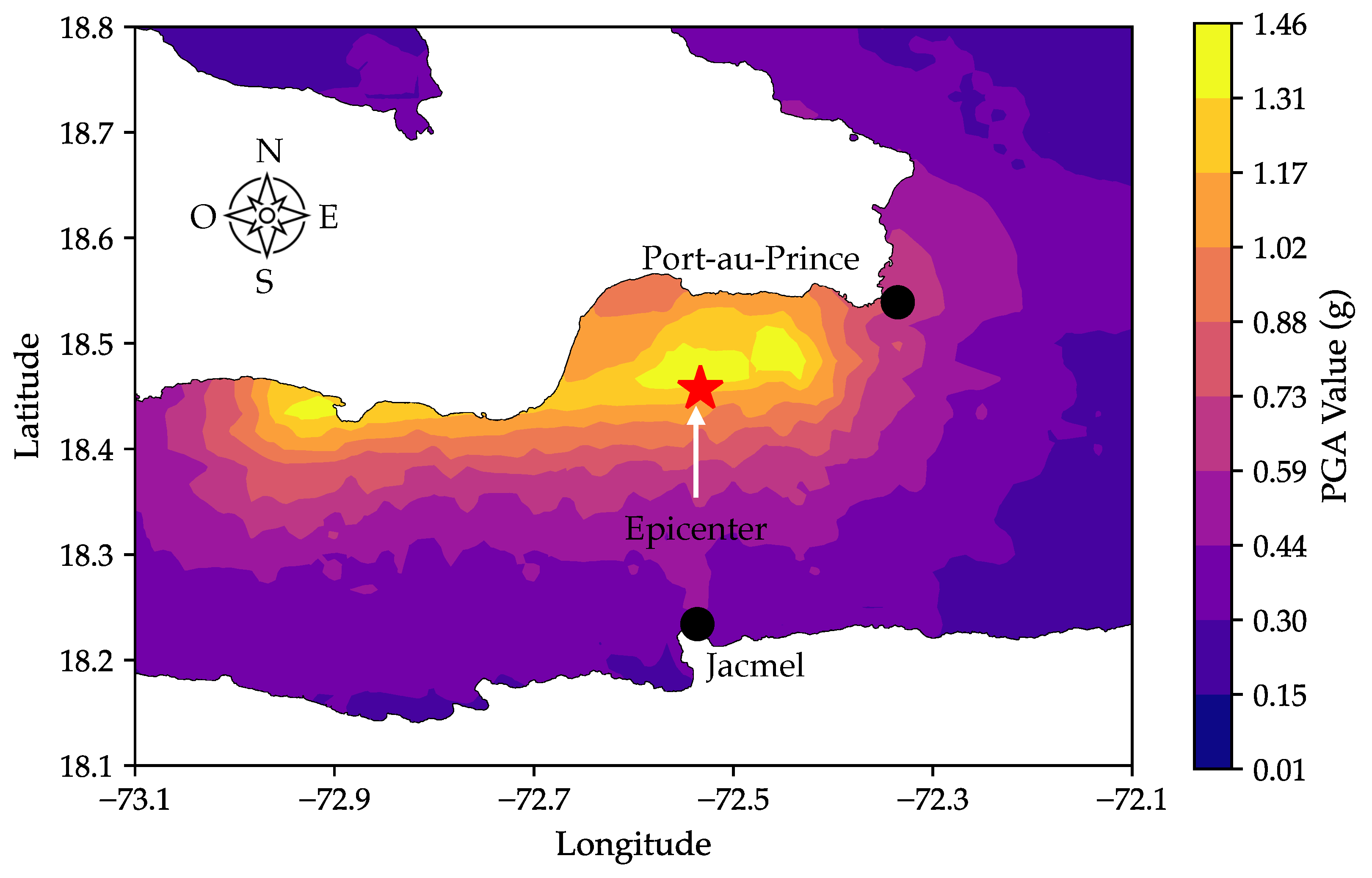
Figure 1 shows the USGS ShakeMap of peak ground acceleration (PGA) for the 2010 Haiti earthquake, while
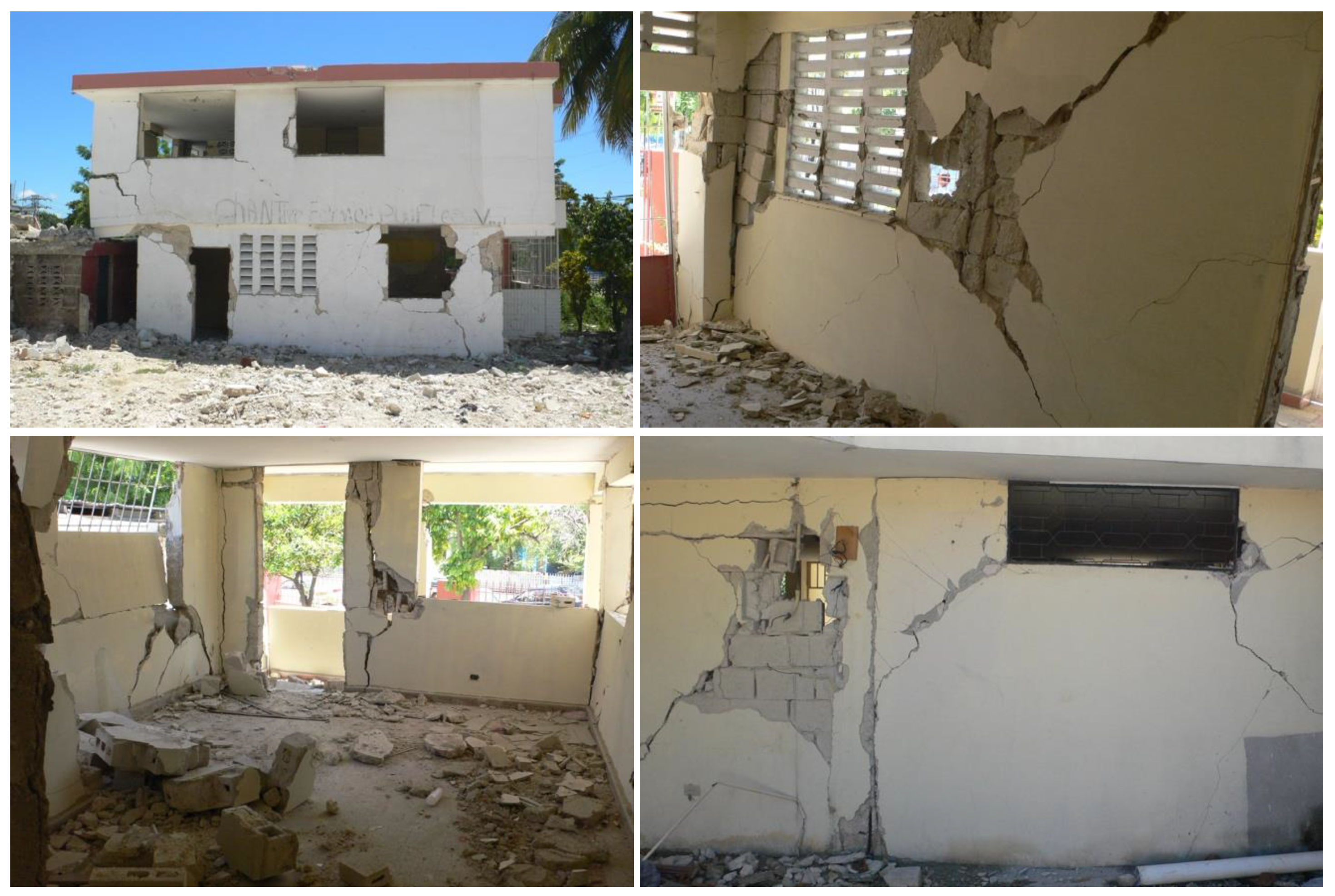
Figure 2 illustrates representative patterns of structural damage observed. Approximately a decade later, in 2021, another earthquake of magnitude 7.2 struck the southern peninsula of Haiti. Although its epicenter was located in a less densely populated region, it still caused approximately 2000 deaths and severe damage to more than 61,000 buildings [
2]. These events and their severe consequences have led to extensive research aimed at mitigating seismic risk in the country [
3,
4,
5,
6]. These studies consistently identify several critical causes of structural vulnerability, including the use of poor-quality materials, the presence of horizontal and vertical irregularities such as soft stories and captive columns, and the absence of reliable lateral load-resisting systems.
Beyond building performance, other researchers have examined seismic hazard, tectonic plate motion, and local site effects. Frankel et al. [
7] developed seismic hazard maps for Haiti, providing estimates of peak ground acceleration and spectral accelerations corresponding to return periods of 475 and 2475 years. St. Fleur et al. [
8] and Calais et al. [
9,
10] investigated fault activity and crustal deformation in Haiti, while Ulysse et al. [
11,
12,
13] explored site effects in Port-au-Prince and their implications for seismic risk. Although these studies characterize the seismic hazard and ground-motion conditions of Haiti, understanding how this hazard translates into structural damage requires a focus on structural building vulnerability and performance. Fragility curves are a central tool in this process, describing the probability that a structure reaches or exceeds a certain damage state for a given ground motion intensity, and providing a foundation for loss estimation and seismic risk assessment in earthquake engineering.
Fragility curves can be developed through computational simulation, experimental data, or post-earthquake observations (empirical). A computational modeling-based fragility assessment provides significant flexibility, allowing the use of different intensity measures (IMs) and enabling the use of a large number of analyses [
14,
15,
16]. The drawbacks include the need for intensive computational modeling and the need to carefully incorporate uncertainty to ensure that the results adequately capture the variability within the building stock. More importantly, modeling errors are known to be significant in structural engineering applications; thus, fragility models based solely on computational models must be applied with care. Empirical fragility curves, derived from post-earthquake data [
17,
18], directly capture the uncertainties inherent in real building inventories. Although this approach is often considered more reliable because it reflects actual performance, it also has important limitations. It requires resource-intensive surveys and an extensive dataset, and the results are influenced by the professional’s judgment of the extent of damage, potentially leading to sampling bias. Nevertheless, by grounding the analysis in observed damage, empirical fragility remains an important reference for understanding how building typologies perform in practice.
In recent years, the derivation of empirical fragility curves has become increasingly widespread, supported by multiple post-earthquake assessments of events worldwide and by growing data availability. Researchers in several countries have developed such curves for building stocks in Italy [
19,
20,
21], Nepal [
22,
23,
24], Thailand [
25], and several other countries. These studies typically rely on paired observations of damage levels and IMs obtained from seismic station networks and their outputs, such as ShakeMaps. For Haiti, empirical fragility curves have been developed using observations from the 2010 and 2021 earthquakes [
18,
26,
27,
28]. Hancilar et al. [
26] analyzed more than 200,000 remote-sensing data samples and 6000 field observations to derive fragility functions based on IMs such as PGA, peak ground velocity (PGV), and Modified Mercalli Intensity (MMI). More recently, Laguerre et al. [
18] developed fragility curves from the 2021 event for four building typologies: confined masonry, reinforced masonry, reinforced concrete, and unreinforced masonry. While valuable, these studies largely considered broad building classes without accounting for specific structural attributes.
With the availability of new data from the Network for Earthquake Engineering Simulation (NEES), including 170 detailed assessments recording parameters such as the presence of captive columns, and Priority Index (PI), it is now possible to derive fragility curves conditioned on these attributes. Such disaggregation allows for more accurate assessments of the vulnerability of Haiti’s building stock, especially since these parameters are critical for evaluating seismic vulnerability. By conditioning fragility on structural and site-specific attributes, the proposed framework supports the development of evidence-based seismic vulnerability assessments that are essential for risk-informed retrofit prioritization and the strategic allocation of reconstruction resources.
The present study advances fragility modeling by explicitly incorporating building-specific characteristics into the estimation process. A new set of fragility curves for Haiti is developed in two stages. First, a maximum likelihood estimation is used to derive a set of baseline empirical fragility curves within a set of key parameters, including soil class, wall system, topography, roof system, and building age. Subsequently, detailed data from the NEES covering 170 building assessments and including attributes such as the presence of captive columns and the PI, are used to update the baseline empirical fragility models presented in Laguerre et al. [
18] through a Bayesian updating estimation process that relies on the Markov Chain Monte Carlo (MCMC) framework with the Metropolis–Hastings algorithm.
2. MTPTC Dataset Overview
Following the 2010 Haiti earthquake, a large-scale survey (designated herein as MTPTC) of more than 400,000 buildings was conducted in the metropolitan area of Port-au-Prince. For each building, damage was recorded using a “traffic-light” classification system as defined in
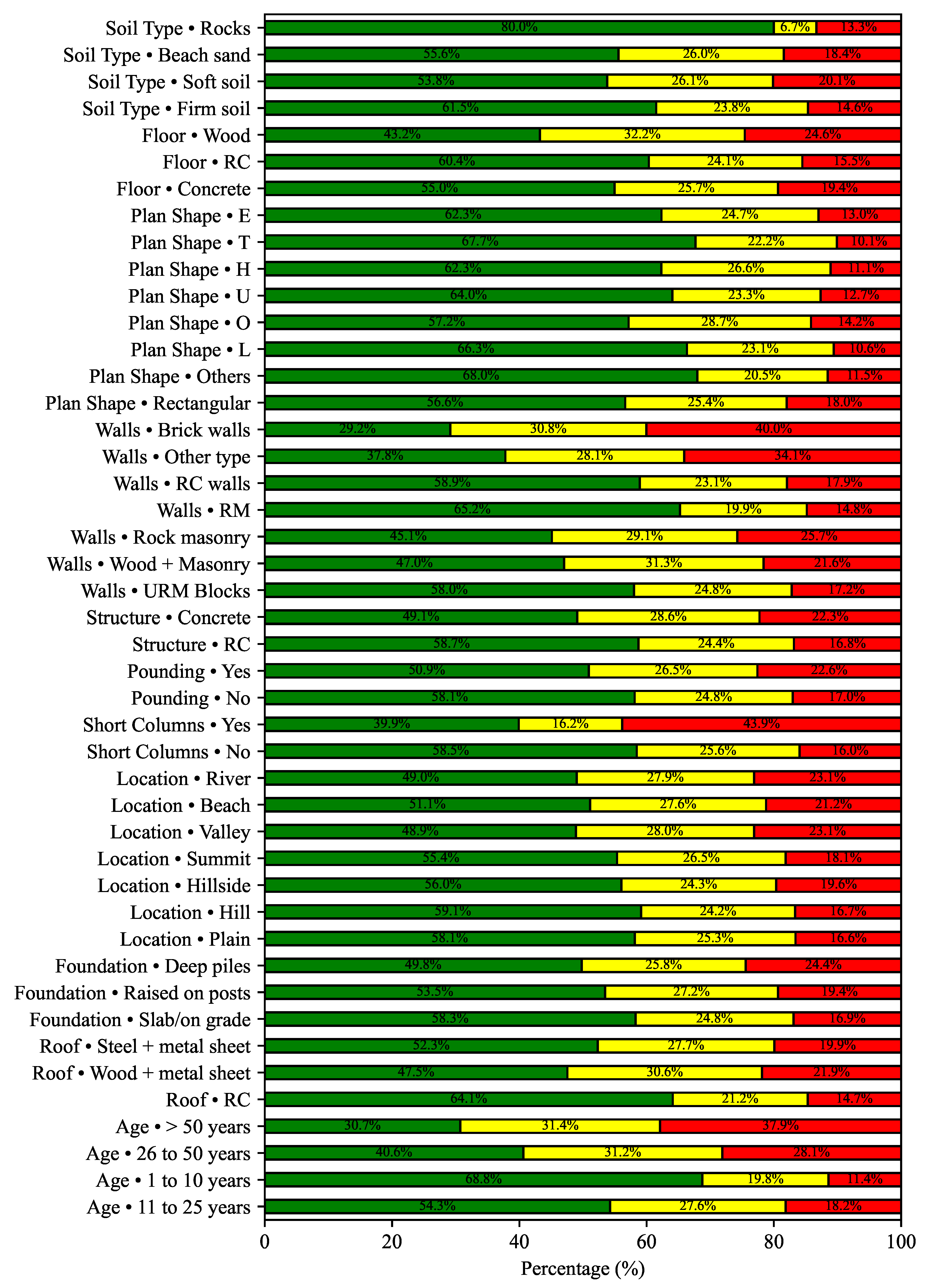
Table 1, and several additional attributes were documented, including soil type, floor system, plan shape, wall type, structural typology, pounding, presence of short columns, topography, foundation type, roof system, building age, and geographic location. In this dataset, buildings were classified as green, yellow, or red based on their observed damage state. Analysis of the dataset, as shown in
Figure 3, reveals that damage levels vary systematically with building attributes. In particular, buildings older than 50 years, dominated by brick masonry wall systems, and with the presence of short columns, exhibit lower proportions of green tags and/or higher proportions of red tags. These trends highlight the importance of developing fragility curves conditioned on specific building parameters rather than relying solely on typology-based fragility models.
From this dataset, parameters such as soil nature, wall type, topography, roof type, number of stories and building age were used to examine their specific effects on fragility for reinforced concrete (RC) and masonry buildings. Since all buildings have at least the level of damage corresponding to the green tag, it was not feasible to derive fragility for the green damage state; therefore, fragility curves were derived only for the yellow- and red-tagged buildings, which correspond to moderate and severe damage levels. To enable fragility modeling within this framework, the ordinal traffic-light categories were converted into binary exceedance indicators. Specifically, for the moderate damage state, buildings tagged yellow or red were considered exceedance cases and assigned a value of 1, while all other buildings were assigned a value of 0; for the severe damage state, only red-tagged buildings were considered exceedance cases and assigned a value of 1, while the remaining buildings were assigned a value of 0.
It is worth noting that a damage assessment based on MTPTC is subject to inspector bias. Inherent uncertainty exists in the classification process, particularly when field observations are assigned to damage states, which introduces threshold-related subjectivity. However, such limitations are common in any post-earthquake dataset used for empirical fragility development. Despite this limitation, the data is considered a valuable tool for capturing statistical relationships between seismic intensity and observed structural damage at the population level.
3. NEES Dataset Overview and Damage Description
Following the 2010 Haiti earthquake, a team of researchers from Purdue University, the University of Washington, and the University of Kansas assessed 170 RC structures in Port-au-Prince and Léogâne, providing detailed documentation of their geometric, structural, and damage characteristics. The observed damage was categorized into three states for both RC members and masonry walls, increasing in severity from minor cracking to severe damage.
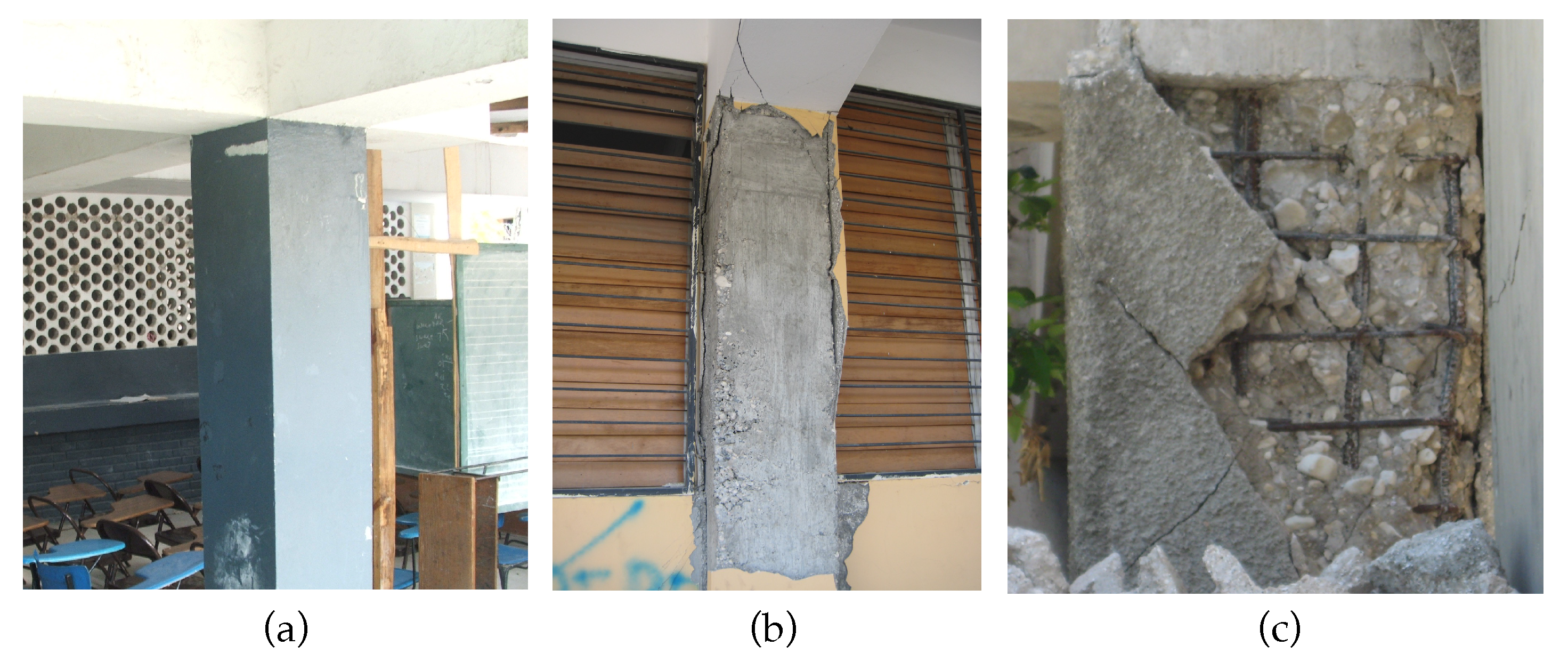
Table 2 summarizes the qualitative descriptions of these three adopted damage states (minor, moderate, and severe) as defined by O’Brien et al. [
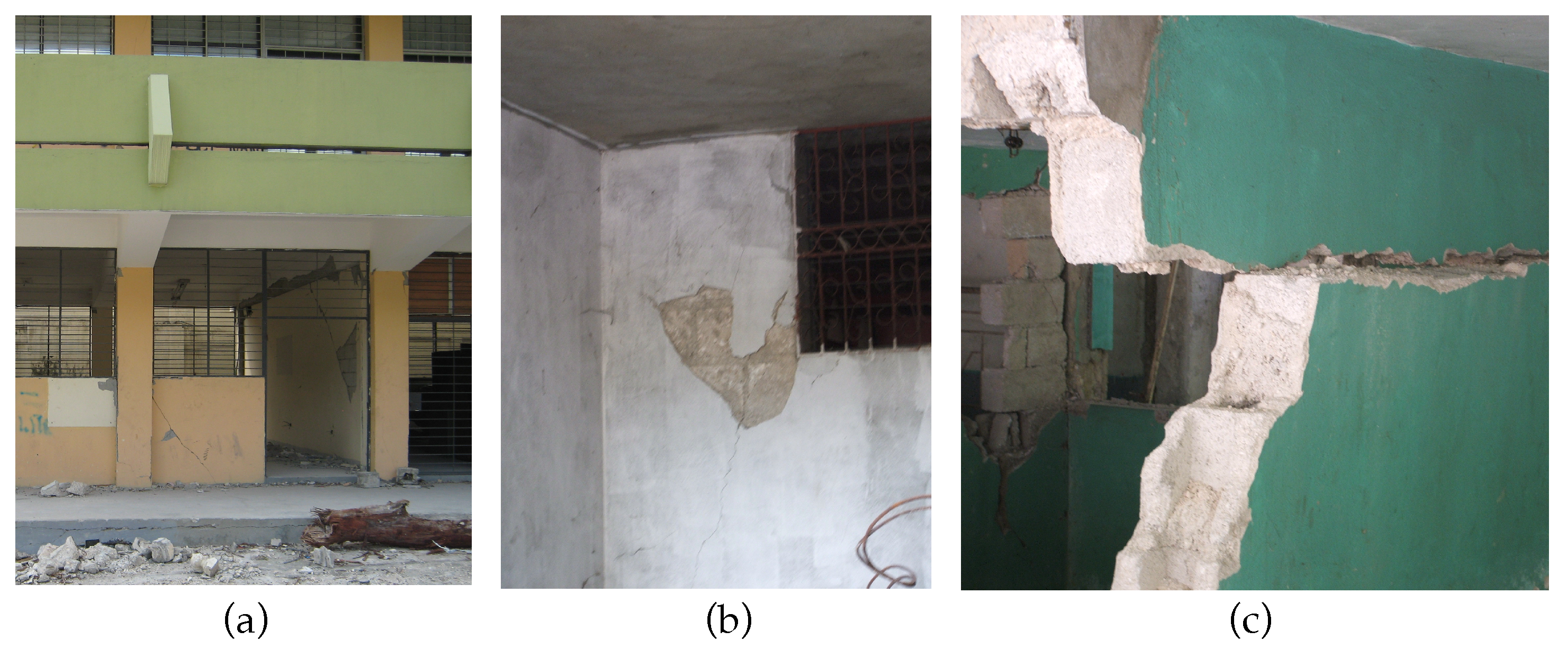
5]. Representative examples of these categories are illustrated in
Figure 4 and
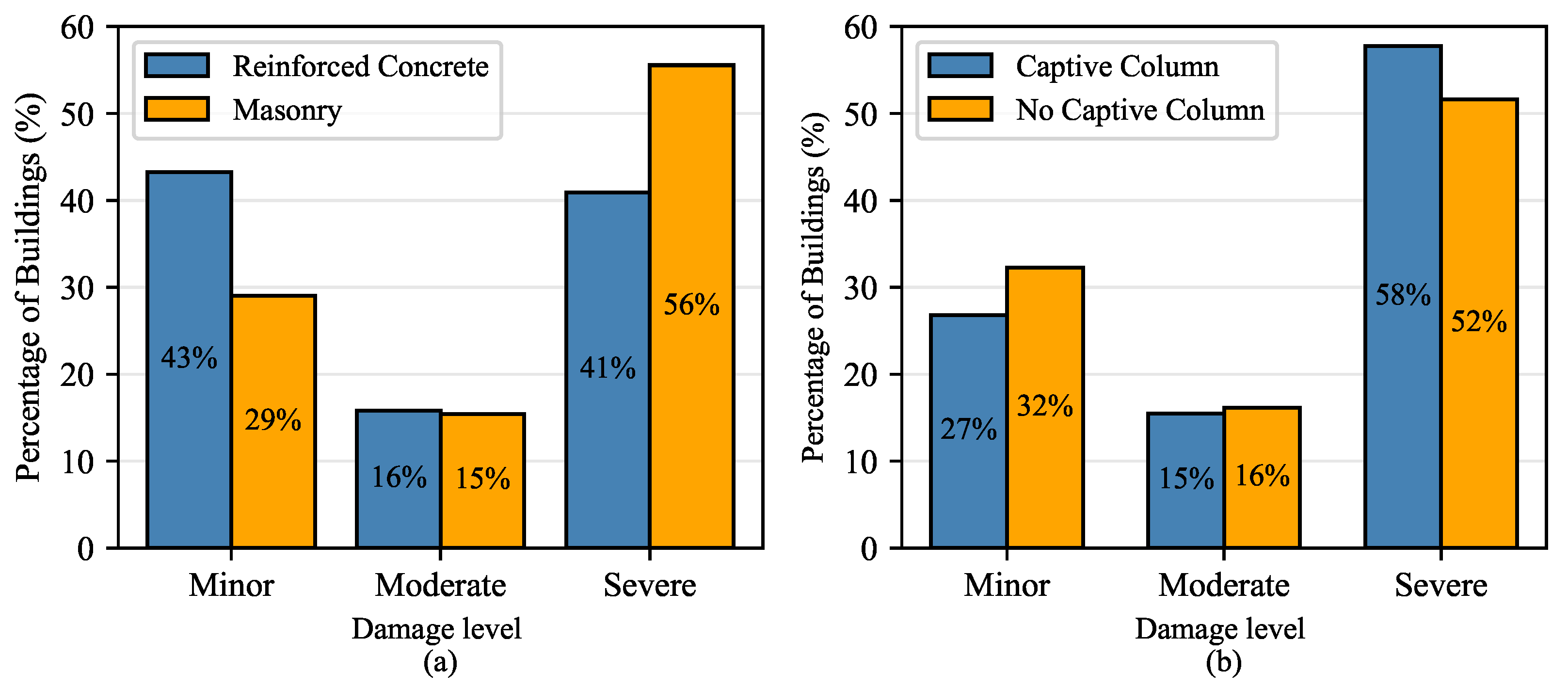
Figure 5. The overall distribution of damage is shown in
Figure 6a, where 41% of RC components experienced severe damage compared to 56% of masonry walls. In contrast, 29% of the masonry walls showed minor damage, while 43% of the RC components fell into the minor damage category.
In contrast to other post-earthquake reconnaissance studies, this dataset provides detailed quantitative information, including the measured areas of columns, walls, and floors, as well as data on the presence of captive columns. As shown in
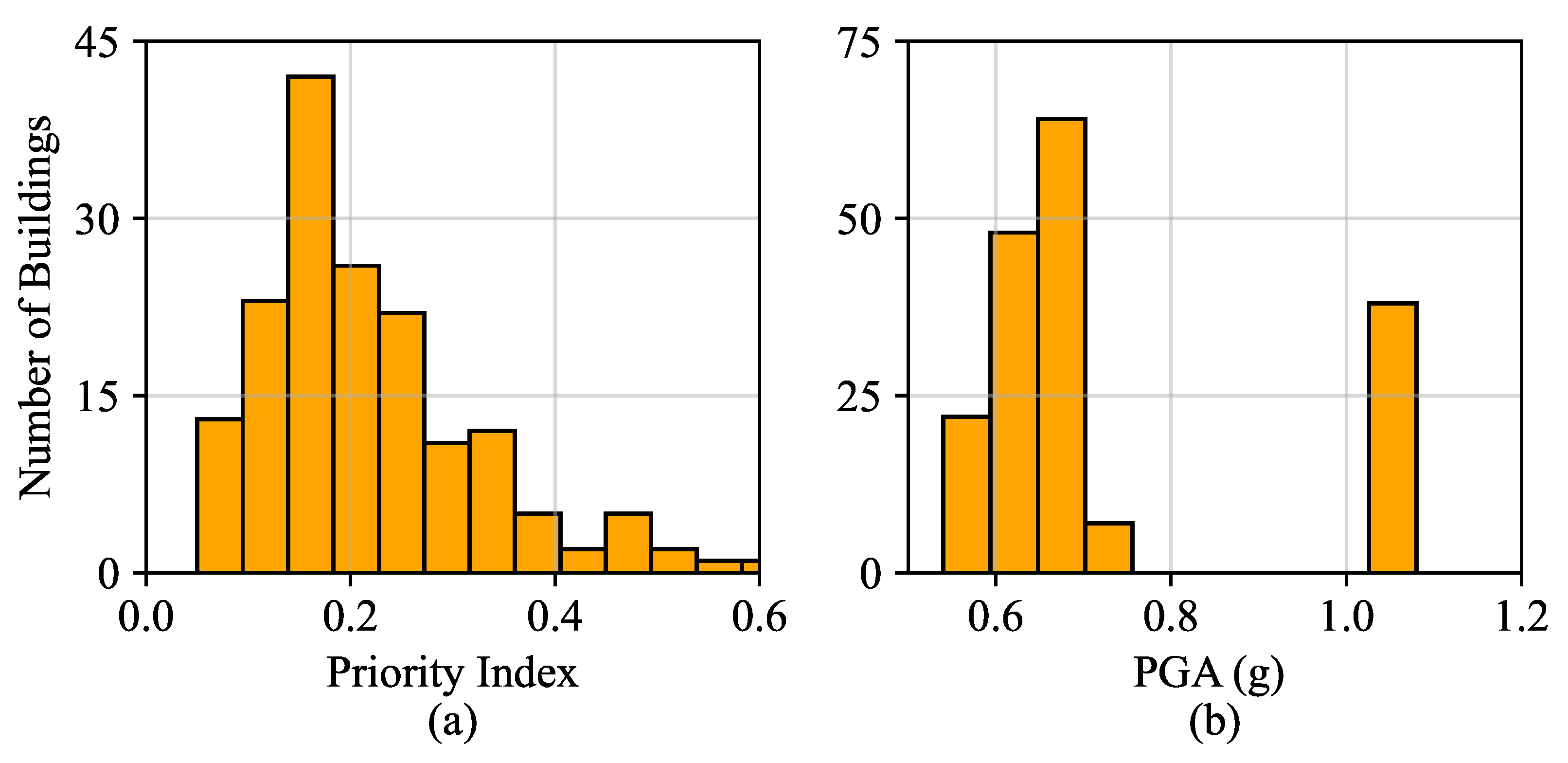
Figure 6b, the damage distribution indicates that buildings with captive columns sustained a higher proportion of severe damage than those without, underscoring the detrimental role of this configuration in increasing seismic vulnerability. Furthermore, the Wall Index (WI) and Column Index (CI), defined as the ratios of wall and column areas to the total floor area, respectively, were evaluated for each building in the dataset. A composite index, the PI, was also introduced to represent the overall lateral strength contribution of the vertical elements [
5]. The distribution of the building PI is shown in
Figure 7a, and the index is calculated as:
This dataset includes mainly buildings located near the 2010 earthquake epicenter with high PGA recorded in their vicinity (see
Figure 7b); the dataset is not sufficiently representative for deriving new fragility functions, but rather for updating and refining existing ones. It provides an opportunity to update fragility functions conditioned on PI, a parameter that has been shown to be predictive of damage. As reported by O’Brien et al. [
5], higher PI values are associated with lower damage levels for both masonry and RC members. Given this relationship, it is important to disaggregate the fragility by this parameter, which was achieved by splitting the dataset into two groups across the median.
4. Empirical Fragility Framework
The empirical fragility assessment quantifies the probability that a structural component or building exceeds a specific damage state (
) for a given intensity measure (
). This relationship is typically modeled using a lognormal distribution function parameterized by the median
and the logarithmic standard deviation
, and given by Equation (
2) [
18,
19,
25,
29]:
In this expression, X denotes the random variable representing the structural damage state, and corresponds to the likelihood that the structure reaches or exceeds a specified damage state given an . denotes the standard normal cumulative distribution function (CDF). The parameter corresponds to the median IM at which there is a 50% probability of exceeding the selected damage state, while characterizes the dispersion of the fragility curve, representing the variability or uncertainty in the structural response. The parameters are estimated using the maximum likelihood estimation (MLE) method, which identifies the parameter values that maximize the likelihood of the observed damage data.
5. Bayesian Updating Framework
Bayesian inference provides a probabilistic framework for calibrating model parameters as new information becomes available. In seismic fragility analysis, this approach enables existing fragility functions to be refined by combining prior knowledge with newly observed damage data using Bayes’ theorem. In this context, baseline or existing fragility parameters can be used as a source of prior information, while the observed data is used to update the model. The computed posterior parameters provide an updated understanding of the structural vulnerability.
The application of Bayesian updating to seismic fragility has evolved over several decades. Singhal and Kiremidjian [
30] were among the first to employ this framework, using empirical building damage data from the 1994 Northridge earthquake to refine analytically derived fragility curves for reinforced concrete frames. Porter et al. [
31] later proposed a Bayesian updating method that refines existing fragility functions through a discrete approximation of the joint probability distribution of the fragility parameters, updating their weights based on the likelihood of observed outcomes. Subsequent studies have increasingly adopted sampling-based approaches such as MCMC for estimating posterior distributions of fragility parameters [
32,
33,
34]. For example, Tekeste et al. [
34] applied Bayesian updating to laboratory data from shaking table tests on reinforced concrete structures, using probabilistic priors derived from incremental dynamic analyses. Together, these studies demonstrate the evolution of Bayesian updating for improving seismic fragility models.
5.1. Bayesian Formulation
In the Bayesian framework, the posterior probability distribution of the fragility parameters
is obtained using Bayes’ theorem:
where
represents the parameters’ prior distribution, reflecting existing knowledge about the probability of their possible values, while
is the likelihood function that quantifies the likelihood of observing the data
d as a function of the parameters. The denominator represents the marginal likelihood or evidence, which ensures normalization of the posterior, but is typically intractable to compute analytically.
The likelihood function
is given by [
25,
29]
where
denotes the fragility function defined in Equation (
2);
represents the intensity measure associated with each observation, and
is a binary indicator of whether the damage state threshold was exceeded. This formulation allows prior information and observed data to be combined to estimate updated fragility parameters that better represent structural vulnerability under seismic loading.
5.2. Markov Chain Monte Carlo (MCMC) Sampling
MCMC sampling provides a framework for estimating the marginal distributions of the parameters when the posterior distribution cannot be computed analytically. MCMC uses numerical simulation to estimate a sample from the posterior distribution by constructing a Markov chain that explores the parameter space, with the posterior as its stationary distribution. The samples are then used to estimate the parameters.
Several MCMC algorithms have been developed, including the Metropolis–Hastings algorithm, Gibbs sampling [
35], and Transitional Markov Chain Monte Carlo (TMCMC) methods [
36]. In this study, the Metropolis–Hastings algorithm is employed to estimate the posterior distribution of the fragility parameters. The general procedure involves proposing candidate samples from a distribution centered on the current parameter values and then accepting or rejecting each candidate based on its likelihood relative to the current state. The accepted samples collectively form a sample from the posterior distribution from which any desired statistical moment can be estimated. In this study, a bivariate normal proposal distribution is employed, and given by
A random number
is drawn and compared with the parameter
to determine whether the candidate sample is accepted or rejected, where
is defined by
Using this approach over repeated steps generates a Markov chain whose stationary distribution converges to the posterior distribution of the fragility parameters and . The posterior median and dispersion are then estimated from the expected values of the sampled parameters.
The prior distribution of the fragility parameters was constructed using a joint probability distribution, in which
follows a lognormal distribution and is assumed to be independent of
, which is modeled using a gamma distribution with parameters
c and
, as shown in Equation (
7):
The posterior distribution
is proportional to the product of the prior distribution and the likelihood function, as expressed in Equation (
8), in which
:
5.3. Application of MCMC for Fragility Updating
The dataset was disaggregated according to two main criteria: the presence of captive-column configurations and the PI. The number of buildings included in each subgroup is summarized in
Table 3. RC and masonry damage counts are reported for buildings experiencing damage states equal to or greater than moderate and severe, as well as for the total number of buildings within each subgroup.
The Metropolis–Hastings algorithm was implemented in Python 3.11.5 [
37] to perform posterior sampling of the fragility parameters. PGA values obtained from ShakeMaps and binary damage indicators from the NEES dataset are used to construct the likelihood function. PGA was used as the sole IM to maintain consistency with the prior fragility model formulation. Each simulation consisted of 100,000 iterations, with the first 2000 samples discarded as burn-in to remove initialization bias. Convergence of the Markov chains was assessed using the Gelman–Rubin statistic, as described in
Section 7.2.
The random-walk Gaussian proposal distribution was adopted, and its variance parameters were calibrated to yield an acceptance rate between 10% and 50%, a range commonly recommended for efficient Metropolis–Hastings sampling [
34]. Based on this tuning process, proposal standard deviations of 0.4 and 0.2 were selected for the median and dispersion parameters, respectively. The prior mean and standard deviation of the median capacity parameter were set equal to the empirical estimates reported in earlier studies [
18], while the dispersion parameter was assigned a gamma prior with a standard deviation of 0.20. Posterior samples obtained after burn-in were used to estimate the median and dispersion parameters and to construct the posterior fragility curves.
The prior distribution was selected based on existing results. In particular, the empirical study of Laguerre et al. [
18], which developed fragility functions for reinforced concrete buildings in Haiti from post-earthquake damage data from the 2021 Haiti earthquake, is used to define the prior. The corresponding parameters of the prior fragility curves are summarized in
Table 4. The findings of Laguerre et al. for the overall building stock are consistent with those reported by Saini et al. [
38]. In the present study, however, the typology-specific fragility functions developed by Laguerre et al. for reinforced concrete buildings were adopted, as they align directly with the structural class examined herein.
In the prior formulation, the fragility parameters
and
were assumed to be statistically independent, following common practice in Bayesian fragility modeling [
32,
34]. This assumption is adopted in the absence of a reliable a priori model to characterize potential correlation between the parameters.
6. Results and Discussion
6.1. Fragility Curves from the MTPTC Dataset
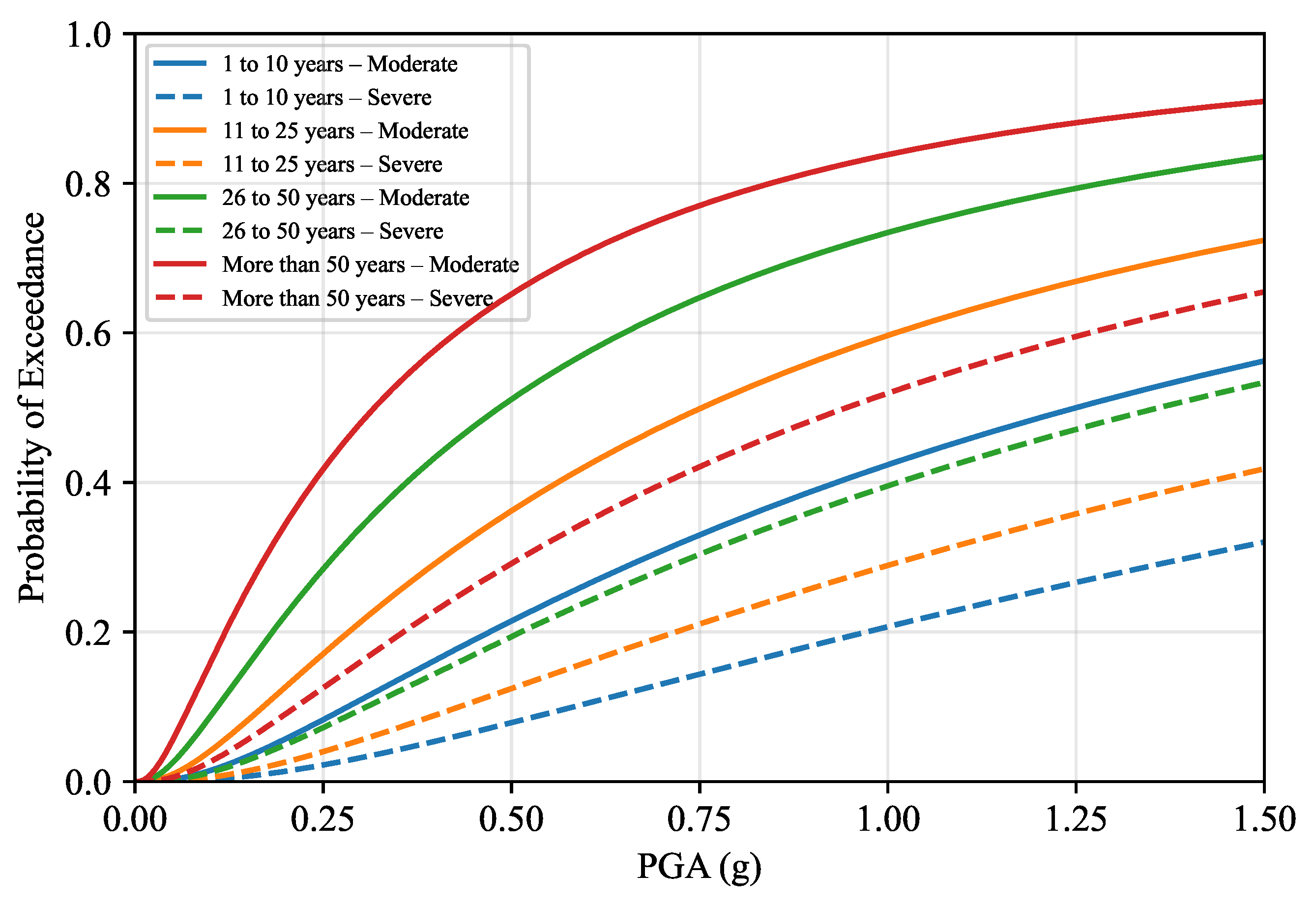
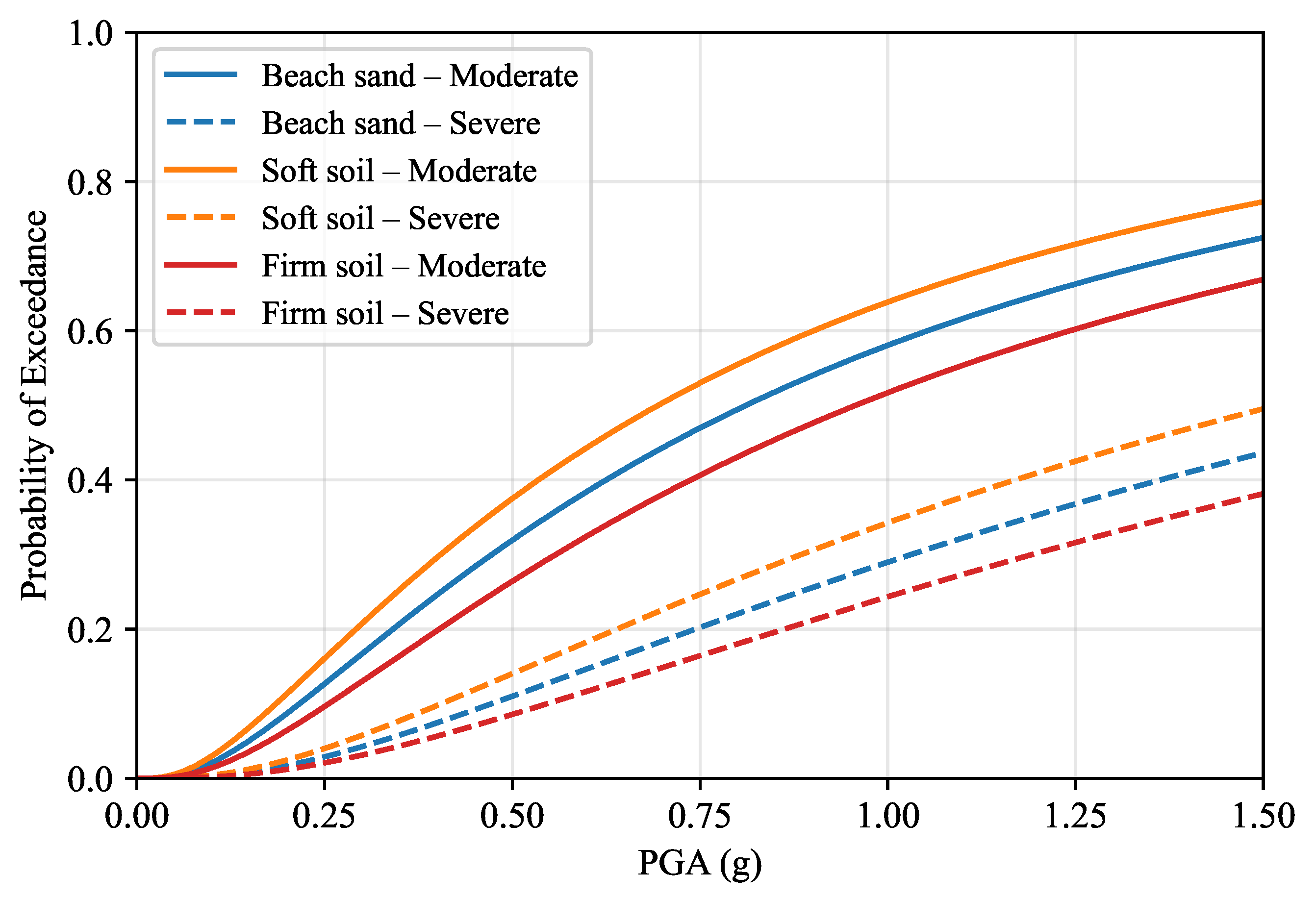
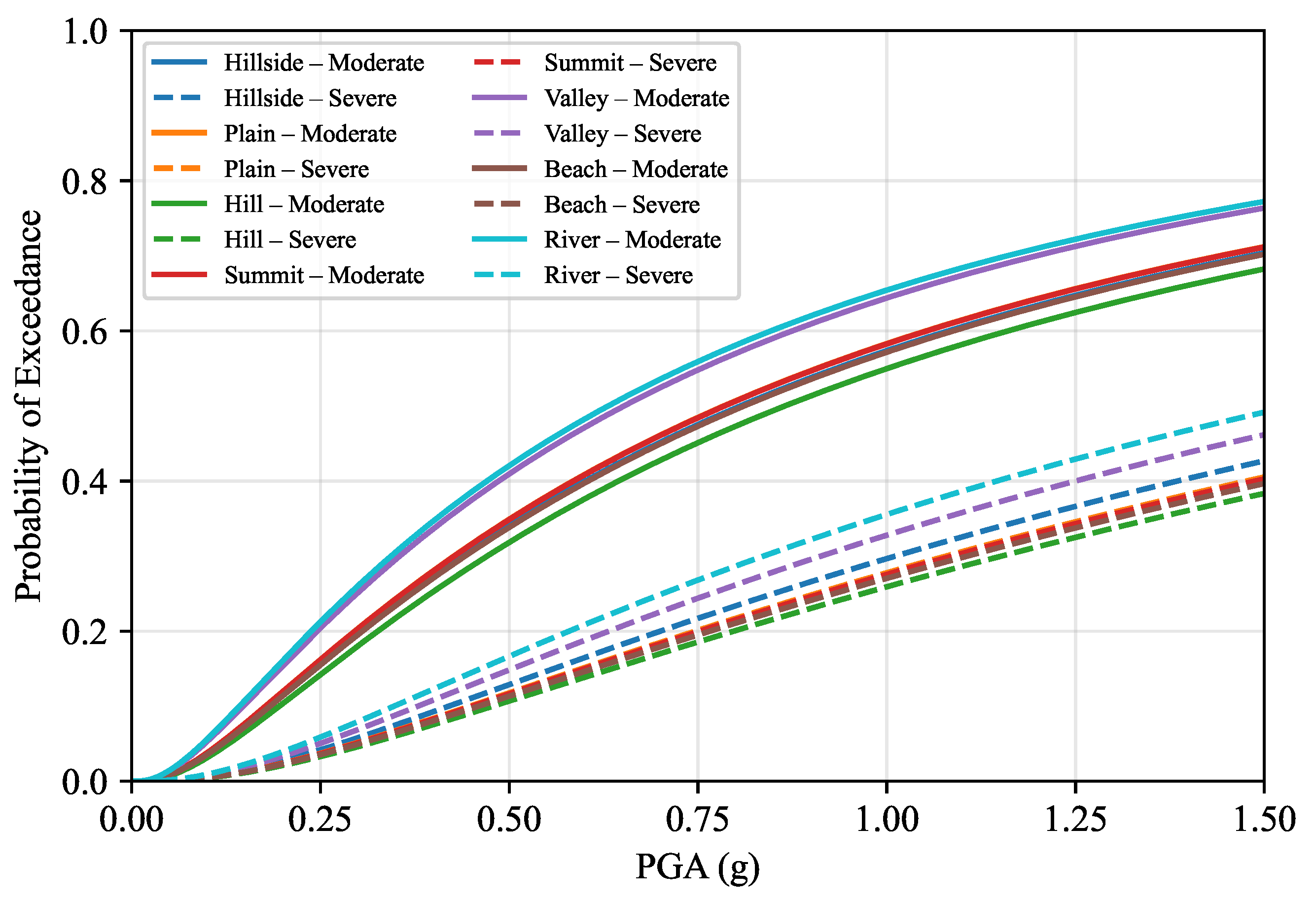
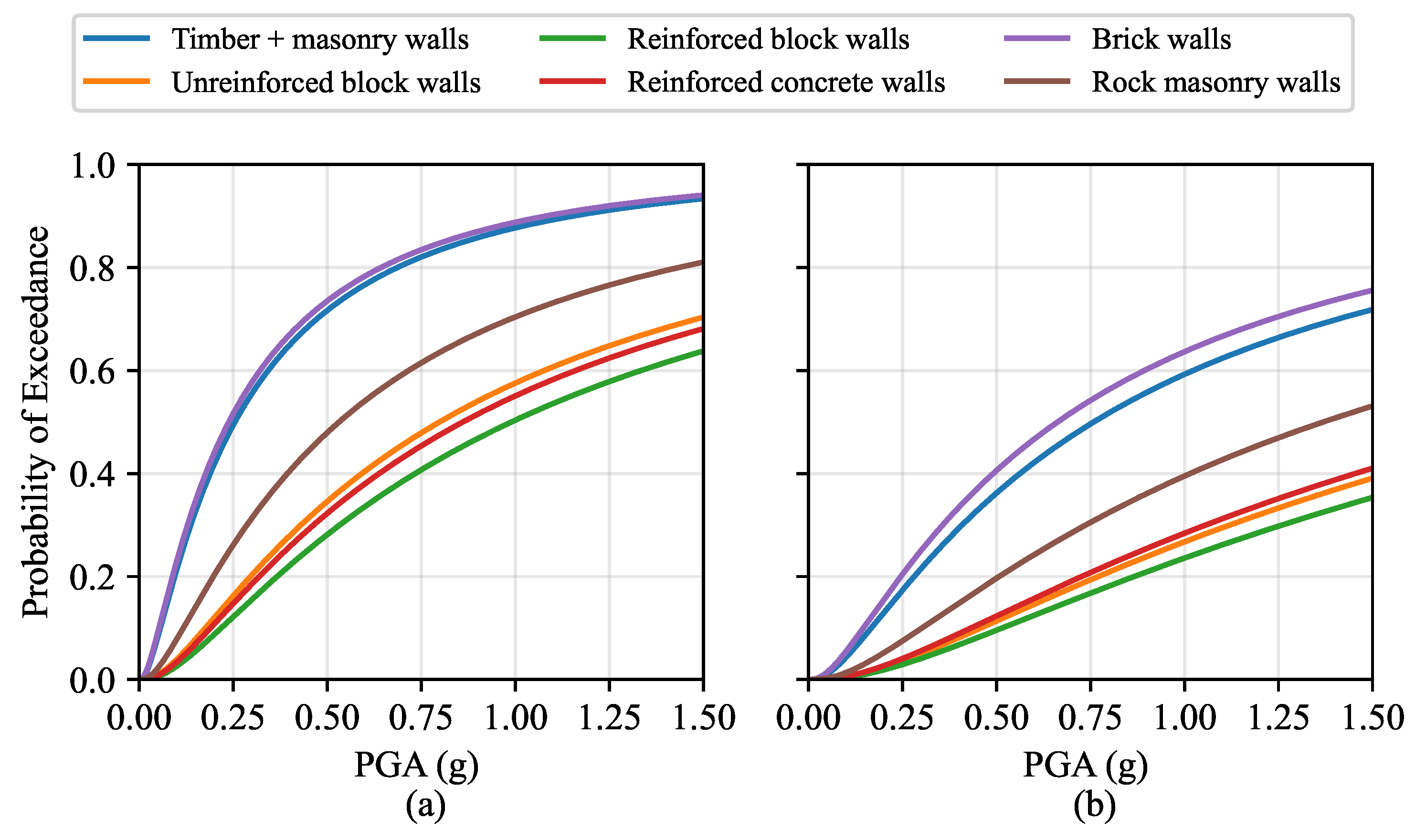
The resulting fragility curves, whose parameters are summarized in
Table 5 and illustrated in
Figure 8,
Figure 9,
Figure 10,
Figure 11,
Figure 12 and
Figure 13, show that site and building attributes have a strong influence on structural vulnerability to seismic loading. The median PGA (
), which represents the intensity level at which there is a 50% probability of exceeding a given damage state, was used to compare how each attribute impacts vulnerability. The dispersion parameter
was fixed across each attribute to ensure that the curves do not cross; the adopted value was subsequently verified against ranges reported in previous fragility studies of Haitian building stocks to ensure consistency with previous empirical findings [
18,
38]. Although dispersion was constrained, the curves remain representative of the observed damage because the median parameter is still estimated from the data.
Across all attributes, the largest difference in median PGA values was observed for wall type (
g for moderate damage and
g for severe damage) and date of construction (
g for moderate damage and
g for severe damage), indicating that wall material and construction age exert the strongest control on seismic capacity. The date of construction showed that newer buildings exhibited significantly higher median PGA values, as shown in
Figure 8. Structures constructed within 10 years prior to 2010 display the maximum median value of
g for moderate damage and
g for severe damage, whereas buildings older than 50 years show median values of only 0.318 g and 0.945 g, respectively. This progressive decline reflects improvements over time, in that newer buildings are less vulnerable, which may be attributed to material degradation in older buildings and/or to improvements in construction practices.
A closer examination of wall systems highlights their strong influence on seismic capacity (
Figure 11). Reinforced block and reinforced concrete wall systems exhibit the highest median PGA values in this category, reaching
g for moderate damage and
g for severe damage, whereas timber and brick masonry wall systems exhibit the lowest values, indicating high vulnerability. These differences reflect the fundamental role of wall material and reinforcement in governing lateral resistance and energy dissipation capacity.
Site conditions, including soil type and topographic setting, play an important role in influencing seismic ground motion. Soil conditions are widely known for their potential to amplify seismic waves and therefore represent an important parameter for fragility disaggregation (
Figure 9). Within this category, firm soil yielded the highest median PGA values, with
g for moderate damage and
g for severe damage, while soft soil produced substantially lower values (
g and
g, respectively). Topographic setting also exhibited a noticeable influence on the median PGA (
Figure 10). For moderate damage, the maximum difference in the median PGA was 0.234 g, while for severe damage it reached 0.579 g, which is comparable to the difference observed among different soil types. Buildings located in river settings exhibited the lowest median PGA values, whereas hill locations showed the highest.
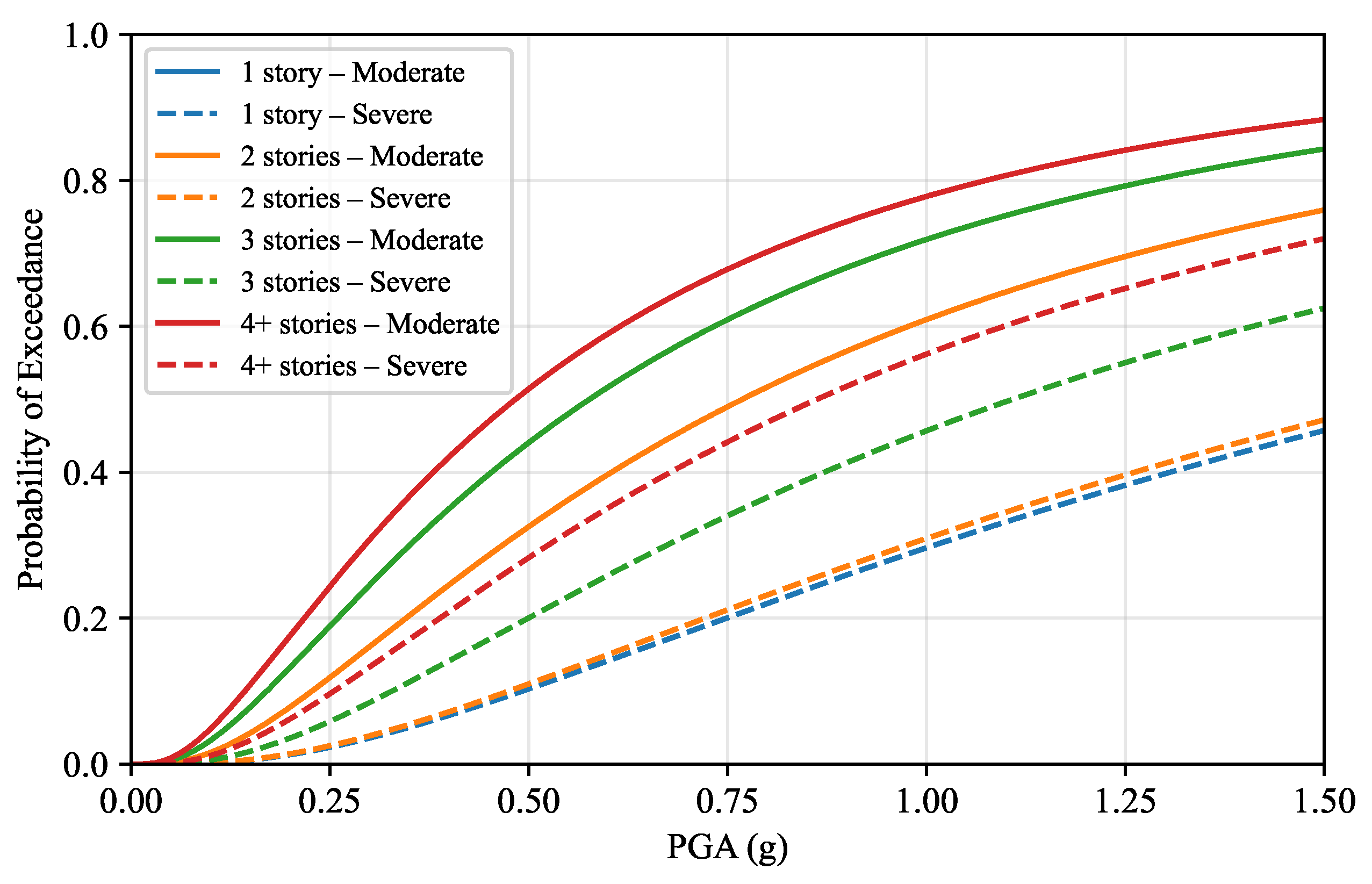
The number of stories also has a clear effect on fragility, with taller buildings showing higher damage susceptibility (
Figure 12). One-story and two-story buildings exhibit the highest median PGA values within this category, with
g for moderate damage, while three-story and four-plus-story buildings show progressively lower values, decreasing to 0.483 g for taller structures. A similar decline was also observed for severe damage.
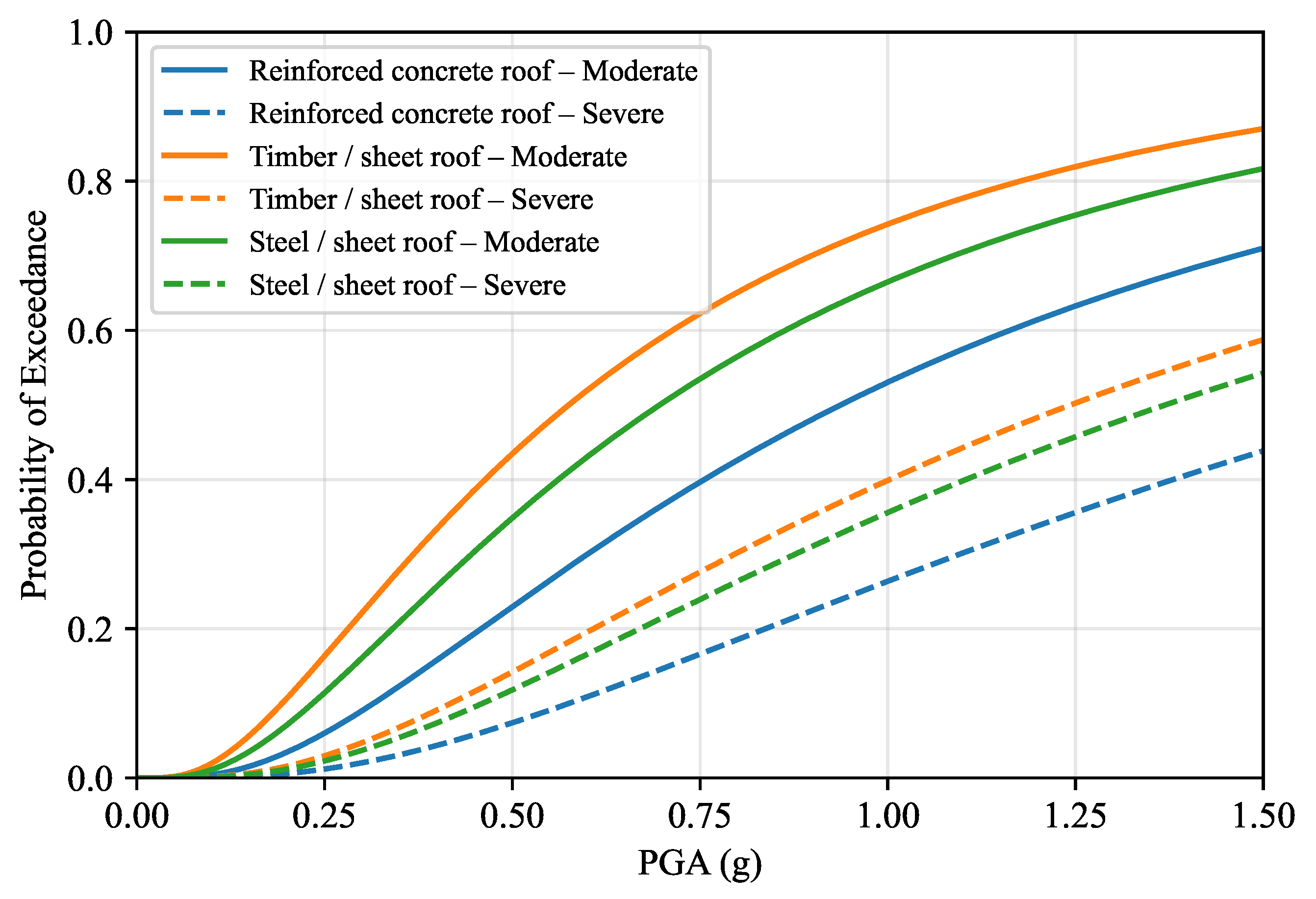
Roof type also influences median PGA, though to a lesser degree than wall type or construction age (
Figure 13). Buildings with reinforced concrete roofs exhibited the maximum median PGA values within this category, with
g for moderate damage and
g for severe damage, while timber and steel sheet roofs are associated with lower values. These differences likely reflect the fact that reinforced concrete roofs may contribute to improved load redistribution and diaphragm integrity, thereby increasing the effective seismic capacity of the structure.
Overall, the observed variability in median PGA across site and building attributes demonstrates that seismic fragility is strongly conditioned by a combination of geotechnical, geometric, and material factors, as illustrated in
Figure 8,
Figure 9,
Figure 10,
Figure 11,
Figure 12 and
Figure 13. Because the median directly governs the horizontal shift of the fragility curve, even moderate changes can lead to substantial differences in predicted damage probabilities at a given ground-motion intensity.
6.2. Comparison with Seismic Hazard Assessments
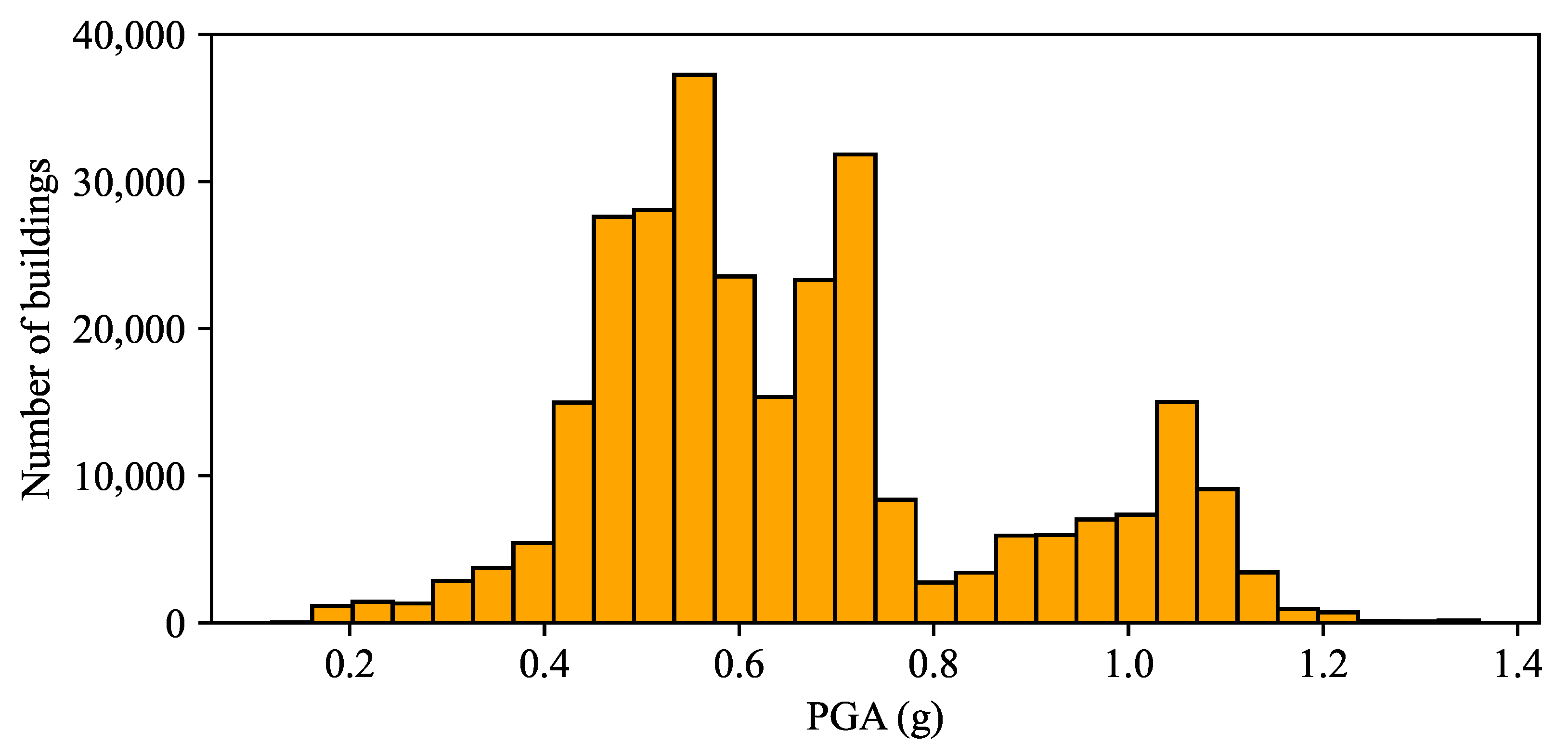
The distribution of ground-motion intensities observed in the dataset is examined and compared with regional seismic hazard estimates reported by Frankel et al. [
7]. The intensity at each building location was evaluated using ShakeMap-interpolated PGA values, which range from 0.120 g to 1.360 g with a median of approximately 0.600 g, as shown in
Figure 14. For reference, probabilistic seismic hazard assessment results for Port-au-Prince indicate a PGA of approximately 0.680 g for the 2475-year return period event [
7]. These values suggest that the ground-motion levels represented in the dataset are consistent with the regional hazard range.
It is important to distinguish these observed ground motion values from the median PGA parameter of the fragility model. In the lognormal formulation, the median PGA represents the intensity level at which 50% of buildings are expected to reach or exceed a given damage state. For moderate damage, the estimated median PGA ranges from 0.238 g to 1.250 g, whereas for severe damage it ranges from 0.662 g to 2.578 g. The highest median PGA values are observed for the most recently constructed buildings (within the last 10 years), reaching 1.250 g for moderate damage and 2.578 g for severe damage. High medians are also associated with reinforced block wall systems and firm soil conditions. These higher values suggest that such building classes require stronger ground motion to reach the specified damage states, which is consistent with improved construction practices after 2000 and the greater strength and stiffness associated with reinforced structural systems and good soil conditions.
6.3. Fragility Curves from the NEES Dataset
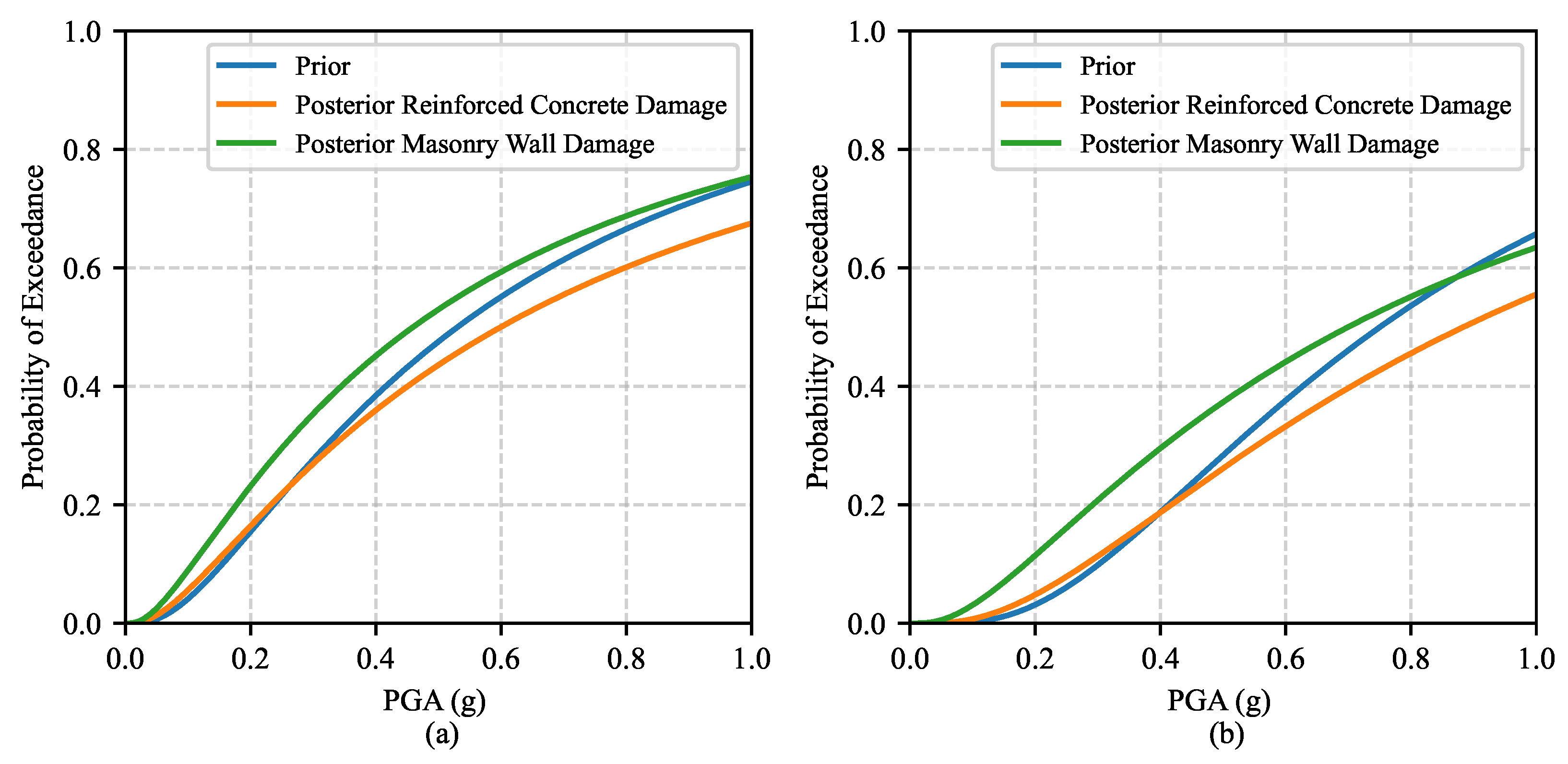
Table 6 and
Table 7 present the updated fragility parameters for the RC members and the masonry wall damage, while
Figure 15 compares their corresponding fragility curves for states of moderate and severe damage. RC and masonry components exhibit distinct fragility characteristics. For RC elements, the median PGA is 0.603 g for moderate damage and 0.916 g for severe damage, whereas for masonry walls, it is 0.459 g and 0.699 g, respectively. The lower median values for masonry indicate that damage initiates at lower shaking intensities, consistent with their susceptibility to early cracking and out-of-plane failure.
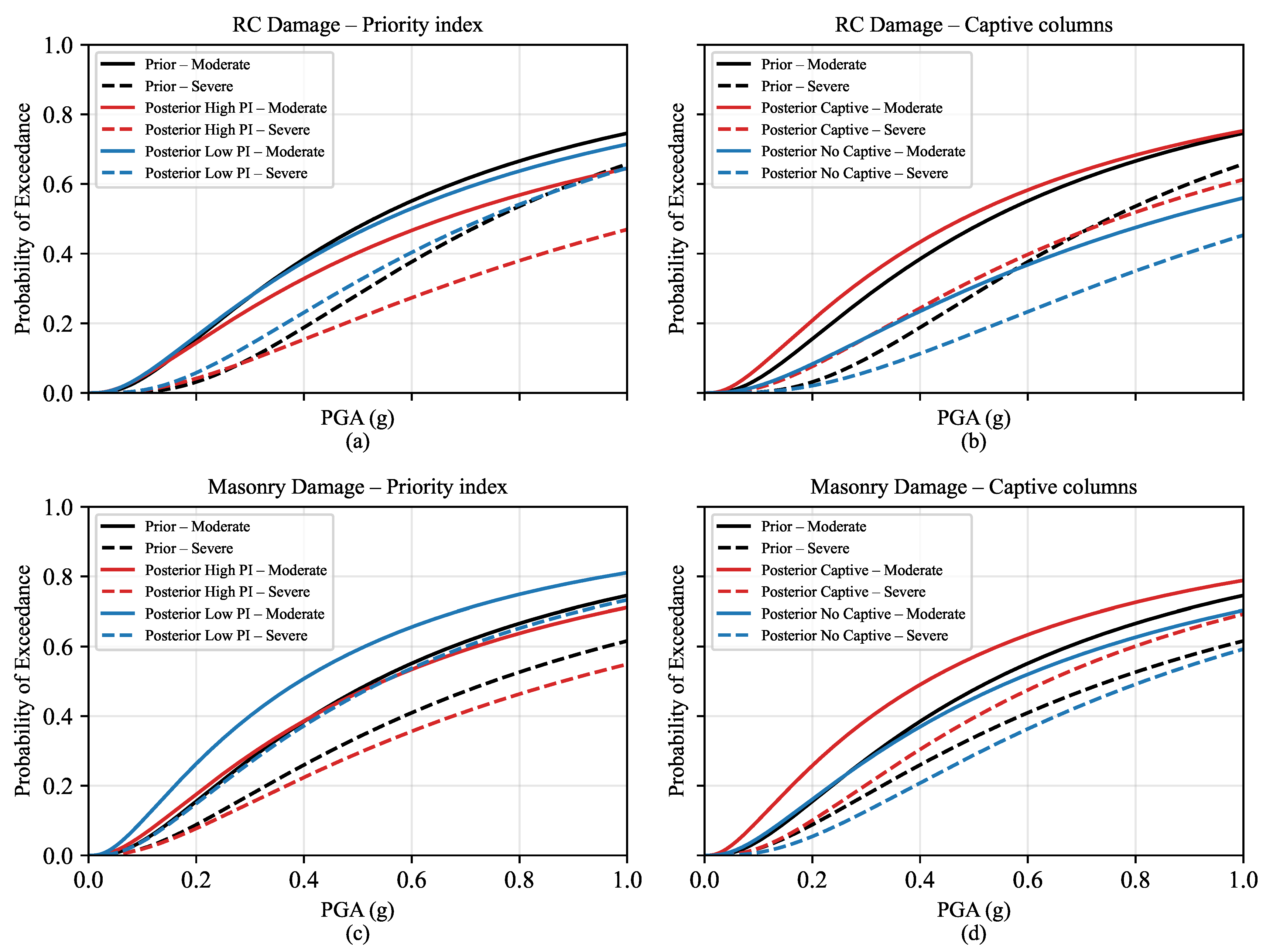
Beyond the general differences in damage between RC and masonry buildings, the influence of specific structural configurations becomes evident when the dataset is disaggregated by the presence of captive columns and the PI. As shown in
Figure 16, RC damage associated with captive columns occurs at substantially lower median intensity values, with 0.479 g for moderate damage and 0.765 g for severe damage, compared with cases without captive columns, which exhibit median values of 0.854 g and 1.104 g for moderate and severe damage, respectively. This highlights the detrimental effect of captive columns. Masonry damage follows a similar trend, with the median intensity increasing from 0.411 g to 0.569 g in buildings with and without captive columns for moderate damage, and from 0.635 g to 0.815 g for severe damage.
Disaggregation by the PI further reveals differences in structural vulnerability (
Figure 16). Low-PI buildings, typically characterized by limited wall-to-floor ratios, experienced damage at lower shaking intensities, with median values of 0.555 g and 0.734 g for RC and 0.392 g and 0.548 g for masonry at moderate and severe levels, respectively. In contrast, high-PI configurations exhibited larger median values, reaching 0.659 g and 1.077 g for RC and 0.547 g and 0.880 g for masonry at moderate and severe damage levels, reflecting improved lateral strength and higher damage thresholds. Overall, masonry infills remain the most damage-prone elements within the structural system. Buildings with either captive columns or low PI values represent the most vulnerable group and should be prioritized for retrofit interventions.
7. Robustness and Convergence Assessment
7.1. Sensitivity to Prior Assumption
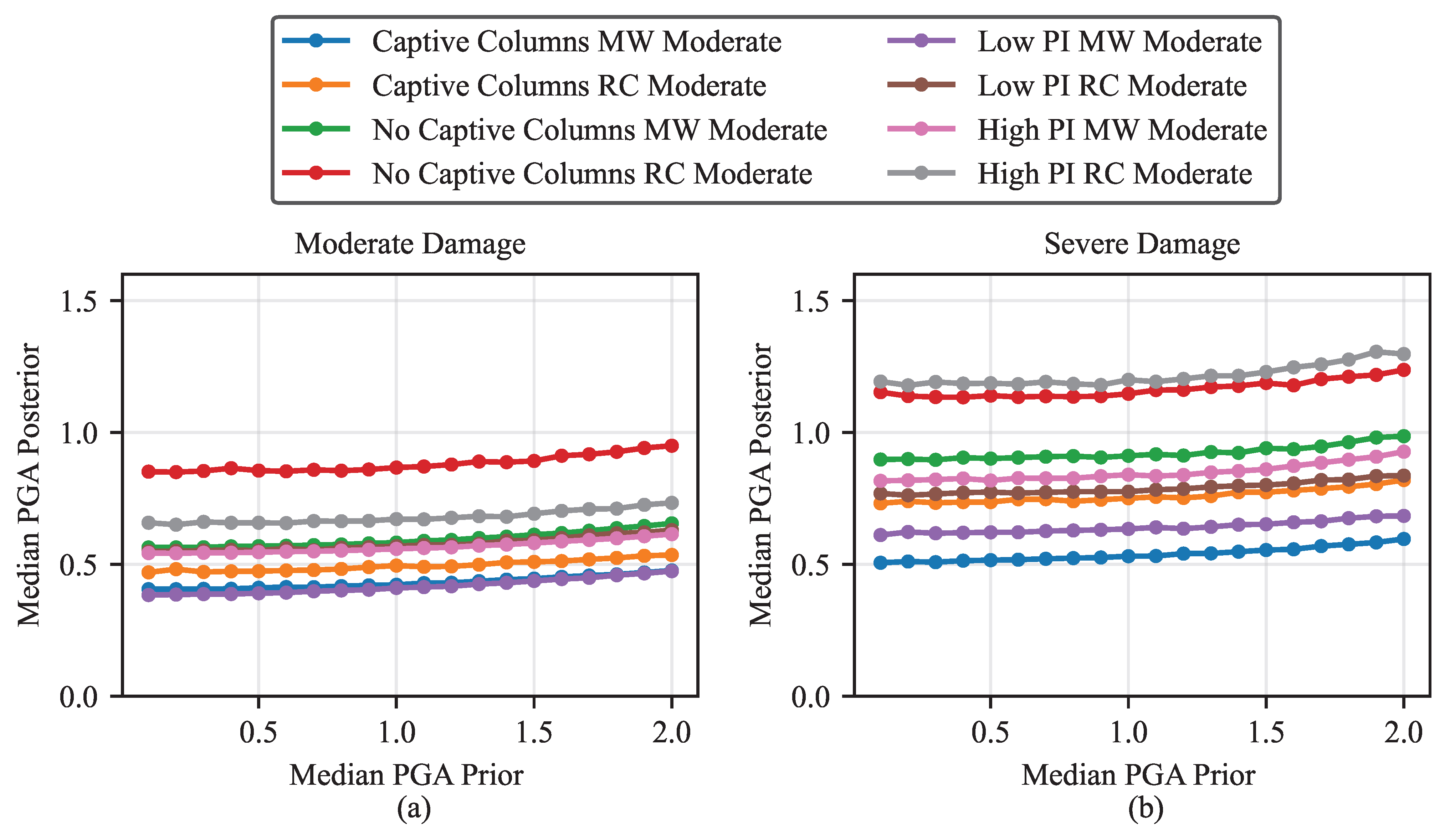
To quantitatively evaluate the influence of the prior on posterior parameter estimates, a sensitivity analysis was conducted by varying the prior median PGA over the range 0.1–2.0 g while maintaining the prior standard deviation fixed at 1.0, reflecting greater confidence in the dispersion parameter based on previous studies. For each assumed prior value, the Bayesian updating procedure was repeated and the corresponding posterior median and dispersion were found. Across all structural categories and damage states, the posterior median PGA shows limited variation relative to the imposed prior range. Specifically, the posterior median typically varies within a narrow range (generally less than approximately 10–20% relative change for a given configuration). As illustrated in
Figure 17, the posterior curves remain nearly flat with respect to the prior mean, indicating weak prior sensitivity. These results demonstrate that the likelihood function driven by the observed damage data dominates the updating process.
7.2. Gelman–Rubin Convergence Diagnostic
To assess convergence of the MCMC algorithm, the Gelman–Rubin convergence diagnostic was employed [
39,
40]. The objective of the diagnostic is to run multiple independent Markov chains initialized at different points in the parameter space and compare the variability within each chain to the variability between chains. If all chains converge to the same stationary distribution, the two sources of variability would be similar. Assuming
m parallel chains, each of length
n, the MCMC algorithm was used to sample the parameter vector
. Let
denote the
i-th value of the
j-th chain, where
and
. In this analysis, four independent Markov chains were run, each consisting of 10,000 samples. The sample mean of each chain is defined as
The overall mean across all chains is:
The between-chain variance is:
The within-chain variance is:
where the variance of each chain is:
The Gelman–Rubin statistic, denoted by
, is computed as:
Values of
close to one indicate convergence, whereas values significantly greater than one suggest that additional iterations may be required. The convergence diagnostic indicated that the Gelman–Rubin statistic was close to one (up to two decimal places) for all parameters (see
Table 8), confirming that the Markov chains converged to their stationary distribution.
7.3. Credible Intervals for Posterior Parameters
The reduced sample sizes in some categories highlight the importance of explicitly quantifying uncertainty in the parameter estimation process. The posterior 95% credible intervals for the fragility parameters are reported in
Table 9 for each subgroup and damage state, which shows that the 95% credible intervals for
are generally wider than those for
, suggesting that the dispersion parameter is less constrained by the available data.
8. Conclusions
This study develops a quantitative framework to evaluate how site and structural attributes influence seismic fragility. The fragility curves were disaggregated according to topography, soil type, number of stories, construction age, roof type, wall type, the presence of captive columns, and the Priority Index (PI). The results show that both geometric and material characteristics exert a strong influence on damage potential and quantify the extent of this influence. Among all attributes, wall type and construction age emerged as two of the most influential factors, with reinforced concrete and reinforced masonry wall systems, as well as newer buildings, consistently exhibiting higher median PGA values and lower vulnerability.
The disaggregated analyses further demonstrate the critical role of geometric configuration. In particular, reduced PI values, defined as the ratio of total wall and column area to floor area, are associated with systematically lower median PGA values, indicating increased vulnerability. Buildings with higher PI values exhibit larger median PGA values, reflecting improved lateral load capacity and enhanced seismic performance. In addition, configurations characterized by the absence of captive columns demonstrate significantly improved seismic resistance and more predictable behavior, confirming the detrimental effect of the presence of captive columns. A comparative assessment between RC and masonry components further highlights that masonry infill damage exhibits the lowest median parameters and the highest dispersions, confirming their early initiation of cracking and rapid degradation under moderate to strong shaking. RC components, while comparatively more resilient, display strong sensitivity to configuration effects, particularly the presence of captive columns and low PI values.
The fragility models developed in this work offer insights into how structural and geometric parameters condition seismic vulnerability. They provide a quantitative basis for identifying critical vulnerability classes, informing where greater design care is required, and guiding the prioritization of retrofit interventions. Strengthening strategies that increase the PI and eliminate captive columns can substantially reduce expected damage. Beyond the Haitian context, this systematic disaggregation of fragility by physically meaningful attributes provides a transferable framework for seismic vulnerability assessment. The methodology enables evidence-based identification of dominant vulnerability factors and supports risk-informed retrofit planning.