1. Introduction
Among all natural disasters and threats, earthquakes are the most destructive in terms of their impact on the loss of life and economies of countries. A significant portion of the world is at serious risk of earthquakes. The collapse of infrastructure following an earthquake, based on the recovery period for life to return to normal, requires careful planning and significant investment. Such investments in risk mitigation strategies play a crucial role in reducing the expenses after major earthquakes and shortening the recovery process. From this perspective, prioritizing risk reduction strategies over disaster management will alter the scale of anticipated damage and also reduce the resulting negative economic impacts. Seismic isolation systems arguably offer the best-justified solutions for earthquake-resilient structural design in minimizing structural damage [
1,
2,
3,
4,
5,
6,
7,
8,
9]. As a result of the reduction in earthquake demands, seismic isolation technology ensures that the superstructure response is elastic or slightly exceeds the yield level under design-level ground motion records. Buildings designed for high-performance expectation displacement, acceleration-sensitive equipment, nonstructural components, and building content can be protected using seismic isolation. The high performance demonstrated by earthquake isolation devices employed in Türkiye for risk reduction in healthcare facilities during the 6 February 2023 earthquakes have attracted the attention of various segments of society as well as the engineering community [
6,
7].
Common isolation units in practice stem from historical benchmark construction methods and conceptually developed ideas and patents. The concept of seismic isolation, employed to protect structural systems from earthquake-induced damage, dates back to medieval times. Approaches such as utilizing the frictional properties of materials, the rocking behavior of structural members, and modifications to supporting site characteristics were considered effective. The earliest known patent related to seismic isolation was issued in 1870 for a novel building protection method proposed by Jules Touaillon [
10]. With advances in computer technology and manufacturing processes, seismic isolation systems have evolved into their current modern forms.
Although a wide range of isolation units is commercially available, commonly used isolation units can be classified into two categories: elastomeric and friction-based sliding isolation units. The ideal and contemporary seismic isolation system should aim to meet the following requirements. (1) The isolation system should have the ability to concentrate the displacement demands using either flexibility or friction characteristics and geometry to enhance the structural performance and integrity. (2) The seismic isolation system must have energy dissipation capability to reduce the displacement demand for a stable response. (3) Residual displacements should be in a permissible range through re-centering characteristics. (4) The seismic isolation system should be preserve its integrity and stability under extreme events.
Among the two commonly used devices, the first applications of rubber bearing isolation units in the world were used for equipment protection, relying on vibration control theory by following the advances of the late 1950s for steady-state response [
11,
12,
13]. Then, in the early 1960s, rubber was used as bridge bearings and to isolate undesired vibrations in building-type structures in the United Kingdom with pioneering works of coordinate by Gent [
14,
15]. The first seismic isolation application to protect an elementary school building employing rubber bearings was in Skopje [
1]. However, the lack of steel shims resulted in a flexible response in the vertical direction and a coupled response with the rocking and the targeted horizontal period.
Elastomeric bearings were generally classified based on the energy dissipation capacity. The early application of current forms of elastomeric bearings in New Zealand and the US goes back to the end of the 1980s [
16,
17,
18]. Likewise, sliding isolation systems reduce the transmission of forces using a special wear at the contact interface with a lower friction coefficient rather than the flexibility of the rubber compound. Re-centering capability is provided either by concave geometry or a supplemental spring mechanism. The first commonly used isolation was the so-called friction pendulum isolation device [
19,
20,
21], and its multi-surface concave types were developed to accommodate large displacement capacities for the multiple design levels of performance-based design approaches [
22,
23,
24].
Seismic design codes and regulatory guidelines serve as fundamental frameworks for the advancement and implementation of seismic isolation (SI) technologies [
25,
26,
27,
28,
29,
30,
31,
32]. Current provisions in TSDC-2018 [
25]—consistent with global standards such as ASCE/SEI 7-10 [
27] and Eurocode 8 (EC8) [
29]—predominantly adopt an Equivalent Lateral Force (ELF) framework for establishing minimum design requirements. While these linear procedures provide baseline peak displacement demands, they often offer flexible guidance on ground motion selection, typically leading practitioners to rely on limited record suites for design verification.
A core novelty of this study lies in the critical evaluation of these State-of-Practice (SOP) code procedures under extreme seismic demands representative of the catastrophic 6 February 2023 Kahramanmaraş Earthquakes. To the best of the authors’ knowledge, this is one of the first comprehensive investigations to benchmark the effectiveness of the TSDC-2018 ELF procedure against rigorous nonlinear time history analysis (NTHA) using ground motions specifically refined to reflect the Probabilistic Seismic Hazard Analysis (PSHA) and directivity characteristics of the 2023 events.
This study elevates the analysis beyond routine application through a unique, practice-oriented computational integration. Utilizing in-house developed codes, the methodology seamlessly bridges advanced PSHA, Wavelet-Based Spectral Matching, and NTHA using a computationally efficient Bouc–Wen proxy. Unlike common studies that rely on simplified linear amplitude scaling, this research employs two distinct, rigorous approaches for input motion generation: conditional selection based on predefined seismotectonics and earthquake physics and Advanced Wavelet-Based Spectral Matching. The latter is specifically utilized to preserve the non-stationarity and near-fault pulse characteristics essential for accurately assessing the response of isolated structures.
The 2023 earthquakes served as a critical test for SI systems, yet current performance assumptions are often limited by the lack of direct records from isolated sites. Observations from hospital buildings in the disaster region indicated that recorded ground motions were significantly below design-level criteria, leaving the true resilience of these systems under design-level demands partially unverified. Furthermore, the Antakya city center experienced devastating damage during the first mainshock due to the passing fault line, complex source mechanisms, basin effects, and geotechnical failures [
17,
18,
19,
20,
21,
22,
23,
24,
25,
26,
27,
28,
29].
To address these critical observations, this study performs a site-specific hazard assessment for a construction site in the heavily damaged Hatay province. We obtain a Uniform Hazard Spectrum (UHS) considering cases both with and without directivity effects. By comparing the TSDC-2018 ELF method with results from NTHA—modeled using idealized bilinear envelopes for residential SI buildings—this research assesses the necessity of site-specific hazard studies and spectrally matched ground motion suites to reduce record-to-record variability in high-seismicity near-fault zones.
2. Earthquake-Resilient Design Concepts in Practice
Contemporary standards emphasize two primary design concepts. The first, conventional design, permits inelastic seismic response to allow controlled damage as a trade-off for feasibility, thereby enhancing structural safety. After yielding, deformations are intentionally concentrated at designated locations. In contrast, the second approach involves modifying the structural response to reduce transmitted earthquake forces using seismic isolation (SI) and energy dissipation devices. SI systems are applicable to a wide range of structures, including buildings, bridges, infrastructure, LNG tanks, offshore platforms, and industrial facilities, serving as protective measures. Typically, these systems reduce earthquake forces by increasing the fundamental vibration period of the isolated structure and even maintain the functionality of essential facilities. Thus, the structural performance of seismic isolation systems is determined by the level of estimated damage, and it precedes rather than concerns itself with the total collapse of the structural system, as in the conventional earthquake-resistant design procedures. This study concentrates the concepts of seismic isolation for protecting residential buildings with a special emphasis on extreme earthquakes and near-fault conditions in earthquake-prone regions.
3. Equivalent Earthquake Load Procedure for SI System
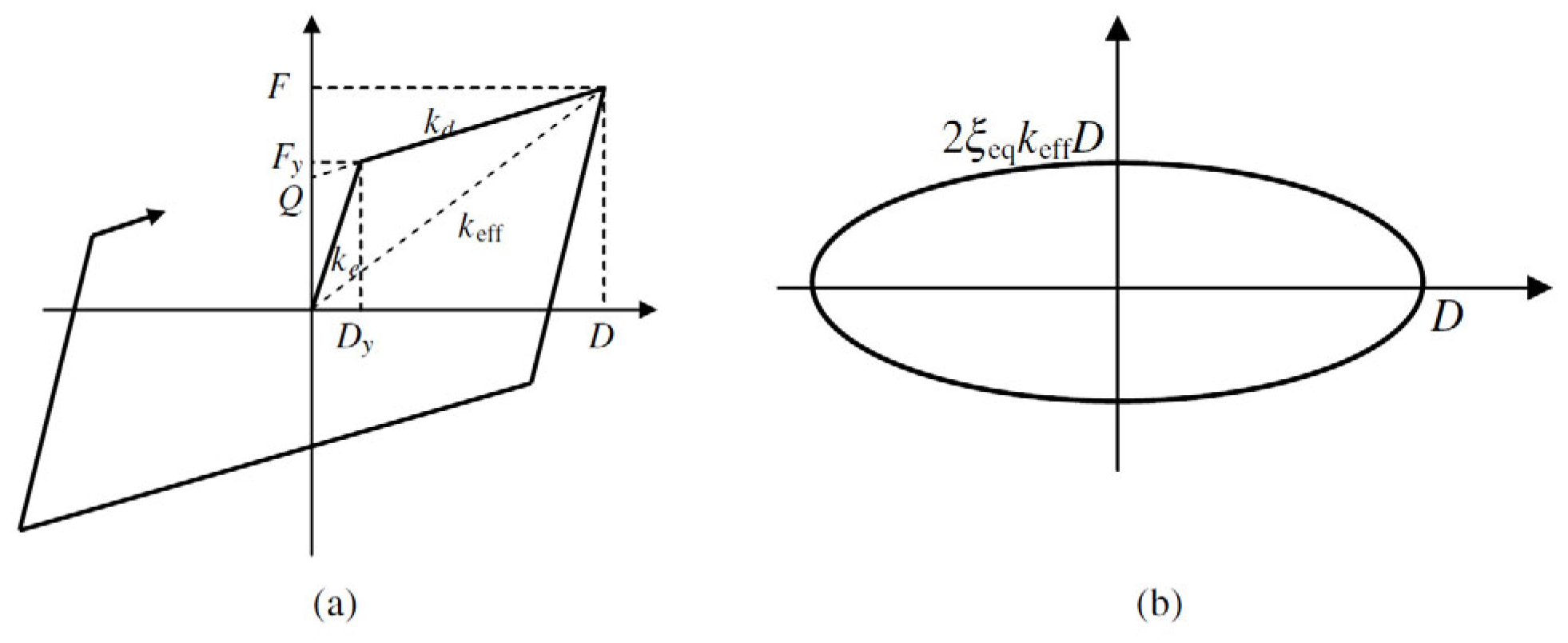
The equivalent linearization method (
Figure 1) for seismic isolation systems is commonly used in modern design codes due to its simplicity and ease of determining the minimum values under certain conditions [
4,
33,
34]. Numerical simulations involving ELF and nonlinear time history analysis were performed using tools developed in MATLAB version 9.14 (R2023a) using selected and scaled earthquake ground motions compatible with the site-specific hazard analysis. The so-called earthquake lateral force procedure in the well-known standards has slight differences with the TSDC-2018, which was referred to as the Equivalent Earthquake Force (EEF) method. The procedure is based on the concept of equivalent linearization and a rigid superstructure assumption to estimate the displacement demand and the applied force on the superstructure of the isolated structure. In other words, single mode procedure neglects the influence of superstructure flexibility on the response of the seismic isolation system. Hereafter, EEF will be referred to as the ELF method to use a unified term, like in well-known international standards.
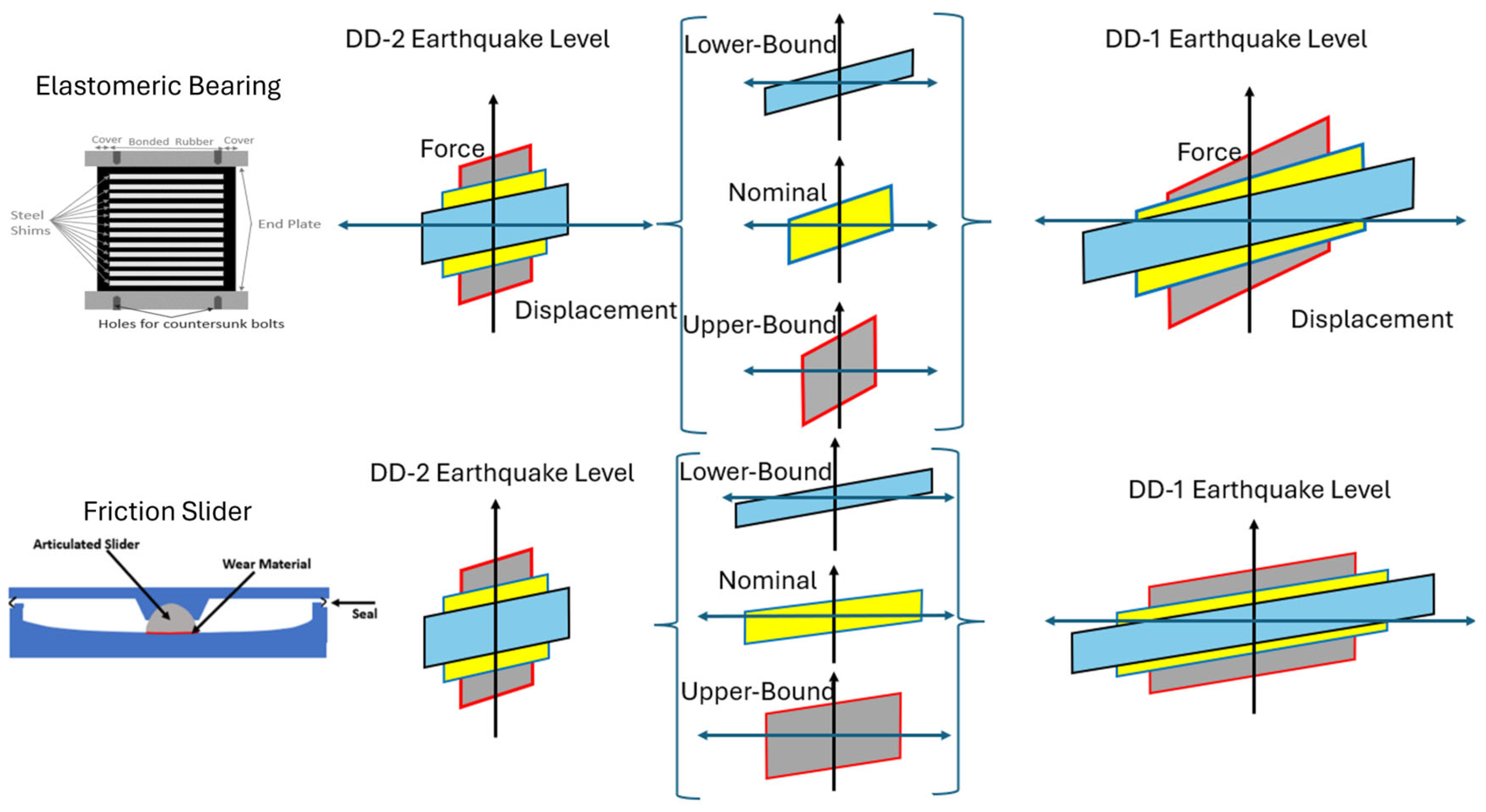
Figure 2 compares the nominal, lower-bound (LB), and upper-bound (UB) bilinear response of seismically isolated systems; the bounding condition is idealized using three primary parameters to define the hysteretic response. Bounding analysis was conducted using property modification factors specified in Chapter 14 of TSDC-2018 [
25] when test data are unavailable for design. This study focuses exclusively on residential buildings, with the fundamental vibration period limited to 4 s or less. The analysis results pertain to 15 systems, each with three distinct characteristic strengths. The performance goals for seismically isolated buildings differ from conventional structural systems. The isolation system is designed for the Continued Functionality (CF) performance target independently of the Seismic Design Class (SDC), while the superstructure is designed for SDC = 1, 2, 3, 3a, 4, 4a buildings, the superstructure is designed for the Limited Damage (LD) corresponding to normal performance objective, and for SDC = 1a, 2a buildings, it is designed for the functionality for higher performance objectives. The structural system behavior factor (R) and overstrength factor (D) are used for the superstructure design, and the relative story drift limits differ from those for fixed-base buildings. For the CF performance target, R = 1.2, D = 1.2, and hi = story height, the relative story drift limit = 0.005 hi is considered; for the Limited Damage performance target, R = 1.5, D = 1.5, and the relative story drift limit = 0.010 hi is considered. Apart from the superstructure, the R factor is equal to 1 in the calculations for the substructure.
The ELF procedure is applied to the 15 system and analysis results are shared for LB and UB analysis results for the DD-1 and DD-2 earthquake levels. Constant Dy values for isolation bearings were used to classify the isolation system and compare the minimum required displacement threshold for nonlinear time history analysis (
Table 1 and
Table 2).
4. Dynamics of the SI System for Nonlinear Time History Analysis
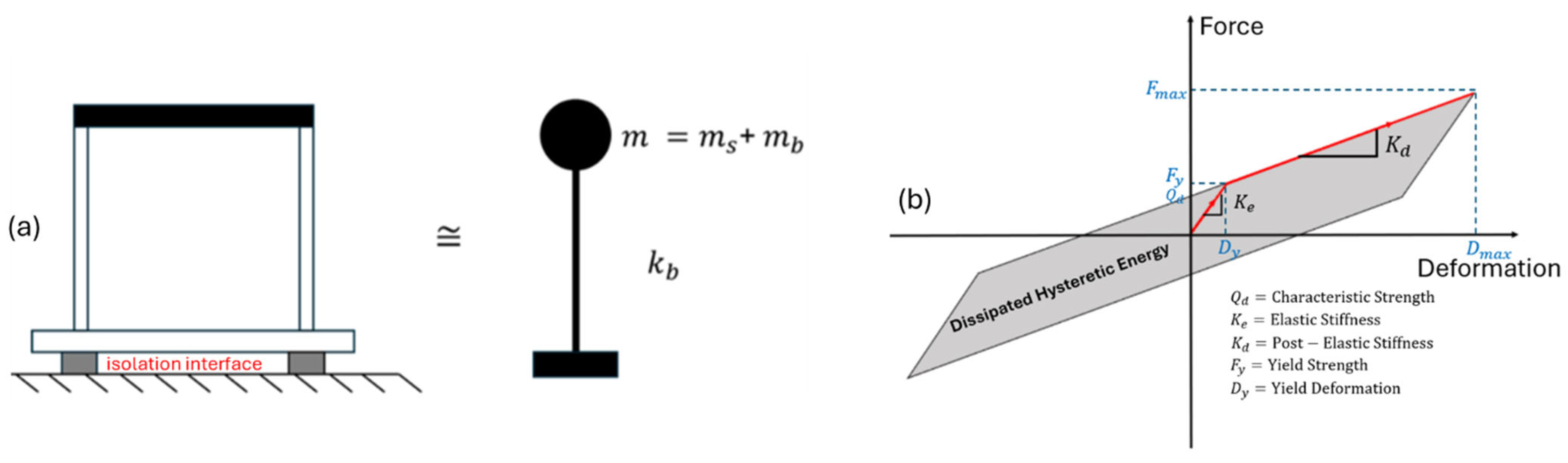
Dynamics of seismically isolated buildings can be modeled through an isolation interface, decoupling the ground motion and superstructure response. The simplest form of representing the SI buildings relies on a rigid superstructure and a nonlinear isolation system as an SDOF system, as shown in
Figure 3 [
3,
4,
7,
8,
9]. Thus, nonlinear time history analyses were conducted using a suite of governing differential equations in MATLAB routines to compare the ELF procedure results. A suite of input ground motion records was selected and then spectrally matched for the nonlinear time history analysis. Extreme earthquakes can be considerably different from the design spectra provided by standards for design and analysis purposes. In this study, a site-specific hazard assessment is performed for a construction site located in Antakya city, and three near-fault ground motion records from the 6 February 2023 earthquake doublet are included in the earthquake sets to assess the influence on the design of a seismically isolated residential building.
The equation of motion can be modified to represent the response of first-mode dominated seismic isolation systems for the curved surface friction sliders and elastomeric bearings by assigning the proper values of characteristic strength, yield displacement, and post-elastic stiffness parameters. It is possible to modify the practical suite of equation forms into more sophisticated forms based on the goal of the study. During extreme earthquakes in close proximity to fault rupture, undesired conditions can develop for the seismically isolated structures. The 6 February 2023 earthquake doublet and its extreme earthquake records on the response characteristics for the inelastic SDOF fixed-base and base-isolated structures were investigated in Hatay province by Yenidogan [
9] using 24 as recorded ground motions. However, it was concluded that the earthquake records had long duration, high-velocity content, and pulse content in Antakya city center close to the rupture. Thus, extreme records have exceeded the DD-1 earthquake ground motion level. There was only one seismically isolated hospital building in Dörtyol that was subjected to lower earthquake ground motion demands compared to ground motion records in Antakya city center. A similar approach is adapted to this study to conduct a rapid evaluation of inelastic seismically isolated building to evaluate the influence of extreme events in the case of using SI technology. In this study, input motions were selected and spectrally matched to understand the response close to design spectrum including near-fault ground motions. Non-stationary long period motions are preserved and the maximum displacement and maximum base shear force coefficient are calculated using three design parameters along with the bounding analysis. In Equations (1)–(3), u(t),
(t), and
(
t) denote the time-varying relative displacement, relative velocity, relative acceleration, and earthquake ground acceleration. The ratio of the characteristic strength to the total weight is multiplied by the gravitational acceleration, g, which is one of the basic features of the seismic isolation system used in the arrangement made in Equation (2) together with the natural vibration period of the seismic isolation system is used. The z(t) parameter shown in Equations (2) and (3) is a dimensionless hysteretic parameter and takes values between −1 and 1 such that |z(t)| ≤ 1 [
35,
36].
The Bouc–Wen hysteretic model can represent hysteretic shapes varying from bilinear to flag-shapes responses for different earthquake protection systems. It is a versatile model, and it can be easily modified. MATLAB routines provide a computationally effective and simple tool, and a suite of 330 analyses can be computationally performed and processed in a shorter period than commercial software without having any convergence problems by using stiff ODE solvers. The provided tool is versatile, simple, and practical. It only depends on design parameters and the solution of differential equations of the seismically isolated building with rigid mass. Unscaled ground motion taken from the construction site is used for the nonlinear time history analysis as shown in
Figure 4.
5. Representation of the Earthquake Demand
In the design and analysis of essential structural systems, it is critical to determine the earthquake parameters appropriately. Designing seismically isolated residential and hospital buildings requires specialized expertise; in Türkiye, the evaluation process is governed by the TBDY-2018 (TBSC-2018) and the Ministry of Health (MoH) circular [
30]. This process follows a straightforward review, and TSDC-2018 [
25] provides a design spectrum for four earthquake ground motion levels via a web-based tool. However, detailed site-specific studies are generally preferred for seismically isolated structures because of their low redundancy in high seismicity regions.
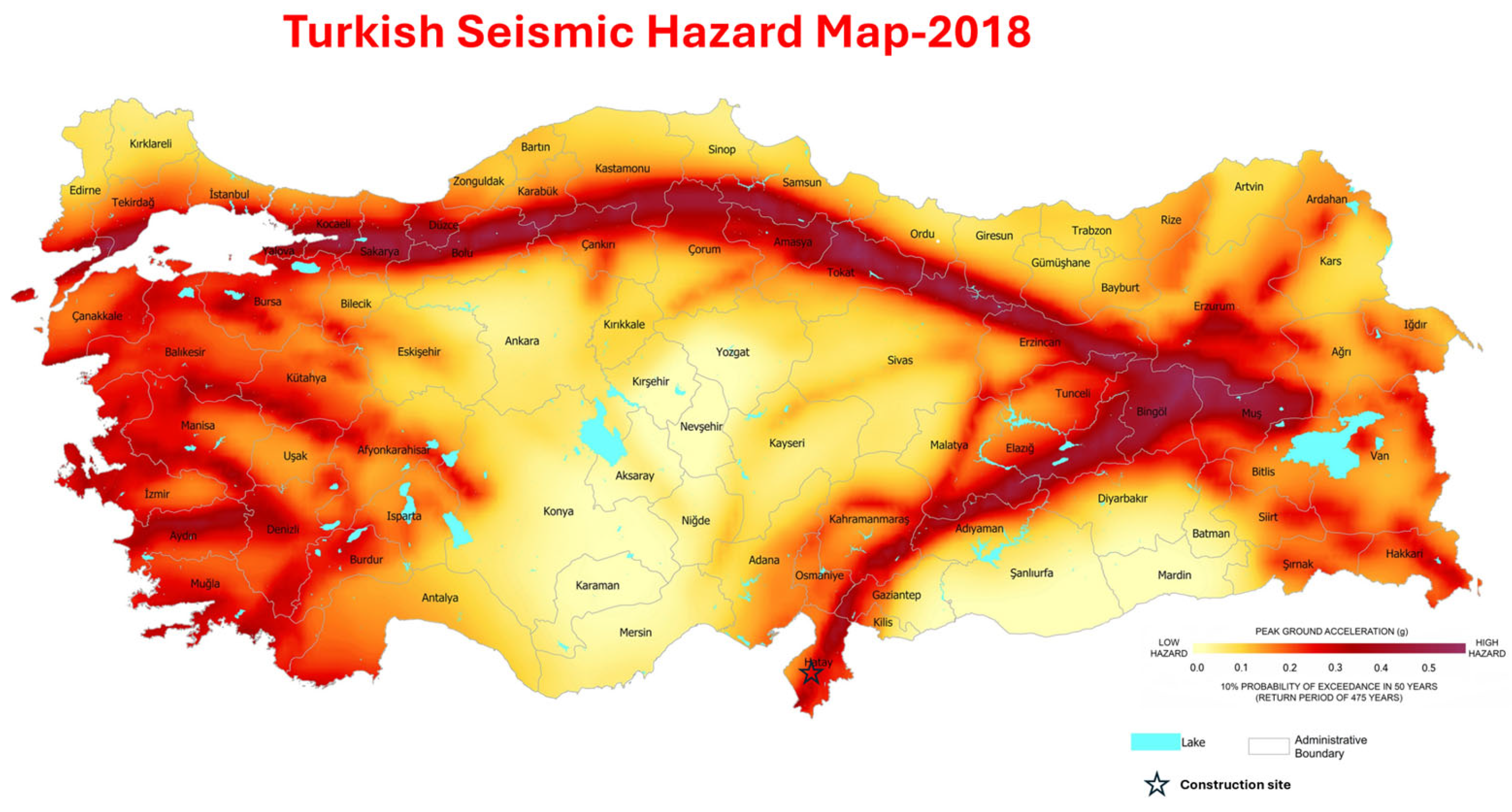
Antakya city center was hit by the first mainshock of the 6 February 2023 earthquake (
Figure 5). This was due to a complex source mechanism, site conditions, and near-fault ground motions with directivity effects [
37,
38,
39,
40,
41,
42,
43,
44,
45,
46]. In this study, the construction site is selected in Antakya city center to assess the effectiveness of seismic isolation through a comprehensive site-specific study. Near the construction site for the seismically isolated residential building, a large number of total collapses occurred during the 6 February 2023 earthquakes in Türkiye.
6. Site-Specific Probabilistic Seismic Hazard Assessment
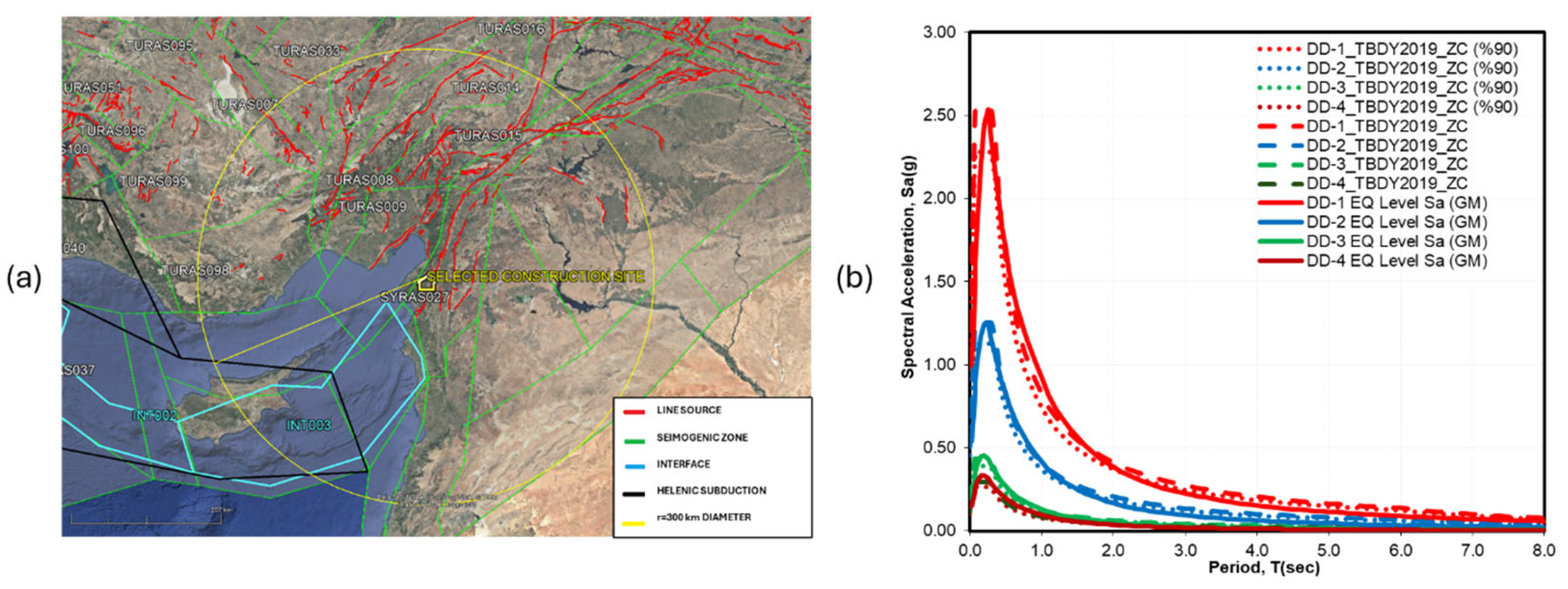
To assess the probabilistic seismic hazard at the construction site, comprehensive seismic hazard analyses were conducted. These analyses considered active seismic sources, tectonic unit features, and earthquake occurrence patterns. These parameters were evaluated to provide a robust understanding of the regional seismicity that could potentially affect the site. In this context, data and parameters developed within the scope of the Updating of the Turkish Seismic Hazard Map (UDAP-Ç-13-06) project were adopted as the primary reference (
Figure 5). Using this dataset, earthquake occurrence models and seismic source zoning for the study area were re-evaluated to ensure consistency with the latest national seismic hazard framework. All analyses were conducted within a circular area with a 300 km radius centered on the project coordinates (
Figure 6a), allowing for consideration of both local and regional tectonic structures. This approach ensures that potential seismic influences from nearby and distant fault systems are comprehensively represented in the probabilistic hazard assessment. Spectral values at short period and 1 s and the Peak Ground Acceleration (PGA) value of the construction site are given in
Table 3.
A site-specific Probabilistic Seismic Hazard Analysis (PSHA) was performed incorporating the EZ-FRISK software package (Risk Engineering, 2015) [
49], assuming a ground classification of ZC (Vs30 = 470 m/s) in accordance with the Turkish Seismic Design Code (TSDC-2018 [
25]). As a result of the analysis, Uniform Hazard Spectra (UHS) were obtained for four earthquake hazard levels: DD-1, DD-2, DD-3, and DD-4. Disaggregation of the probabilistic seismic hazard results indicated that, for the spectral acceleration at 1 s corresponding to a 2% probability of exceedance in 50 years, the deterministic scenario earthquake is represented by a right-lateral strike slip event on the EAF fault, with a moment magnitude (Mw) of 7.8, occurring at a distance of 5.50 km, and residual (ε) of 1.68. In
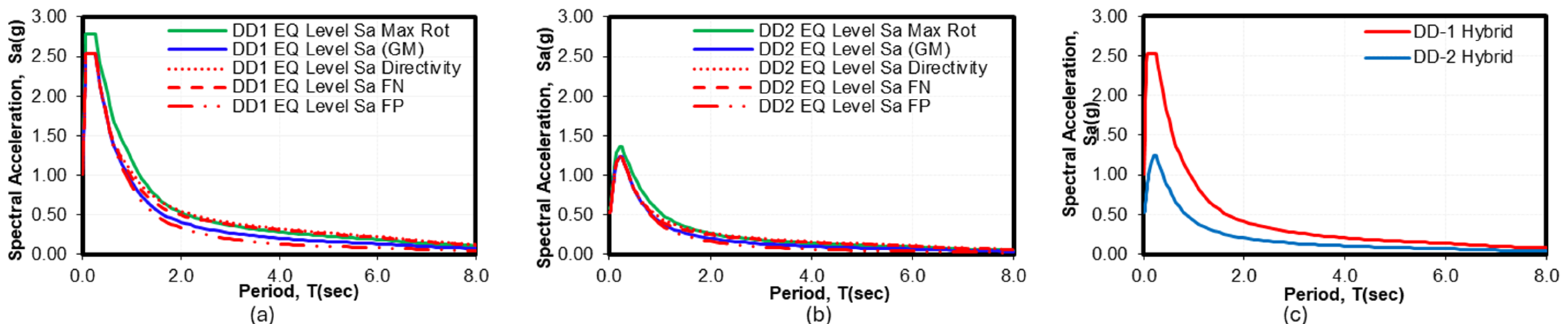
Figure 6, the site-specific calculated UHS are compared with the spectra provided by the Turkish Seismic Hazard Maps (TSHM) interactive web application (tdth.afad.gov.tr) for the same location. Since TSDC-2018 requires that the calculated UHS in the relevant period range must not be less than 90% of the corresponding TSDC-2018 design spectrum, envelope spectra were developed for the DD-1 and DD-2 earthquake levels. Specifically, the envelope spectra (Hybrid Spectrum of the UHS of site-specific and design spectra shown in
Figure 6b) were formed using the TSDC (2018) spectra beyond 1.6 s and before 0.25 s for the DD-1 level, and beyond 1.2 s for the DD-2 level (
Table 3).
The earthquake generation potentials of the identified seismic sources were determined, and the earthquake magnitude–recurrence relationships were established using the Gutenberg–Richter (GR) model. In the site-specific horizontal Uniform Hazard Spectrum calculations, the Next Generation Attenuation (NGA) relationships were used to represent ground motion characteristics. The attenuation relationships applied in the analyses were those proposed by Chiou and Youngs (2008) [
50], Abrahamson and Silva (2008) [
51], Campbell and Bozorgnia (2008) [
52], and Boore and Atkinson (2008) [
53].
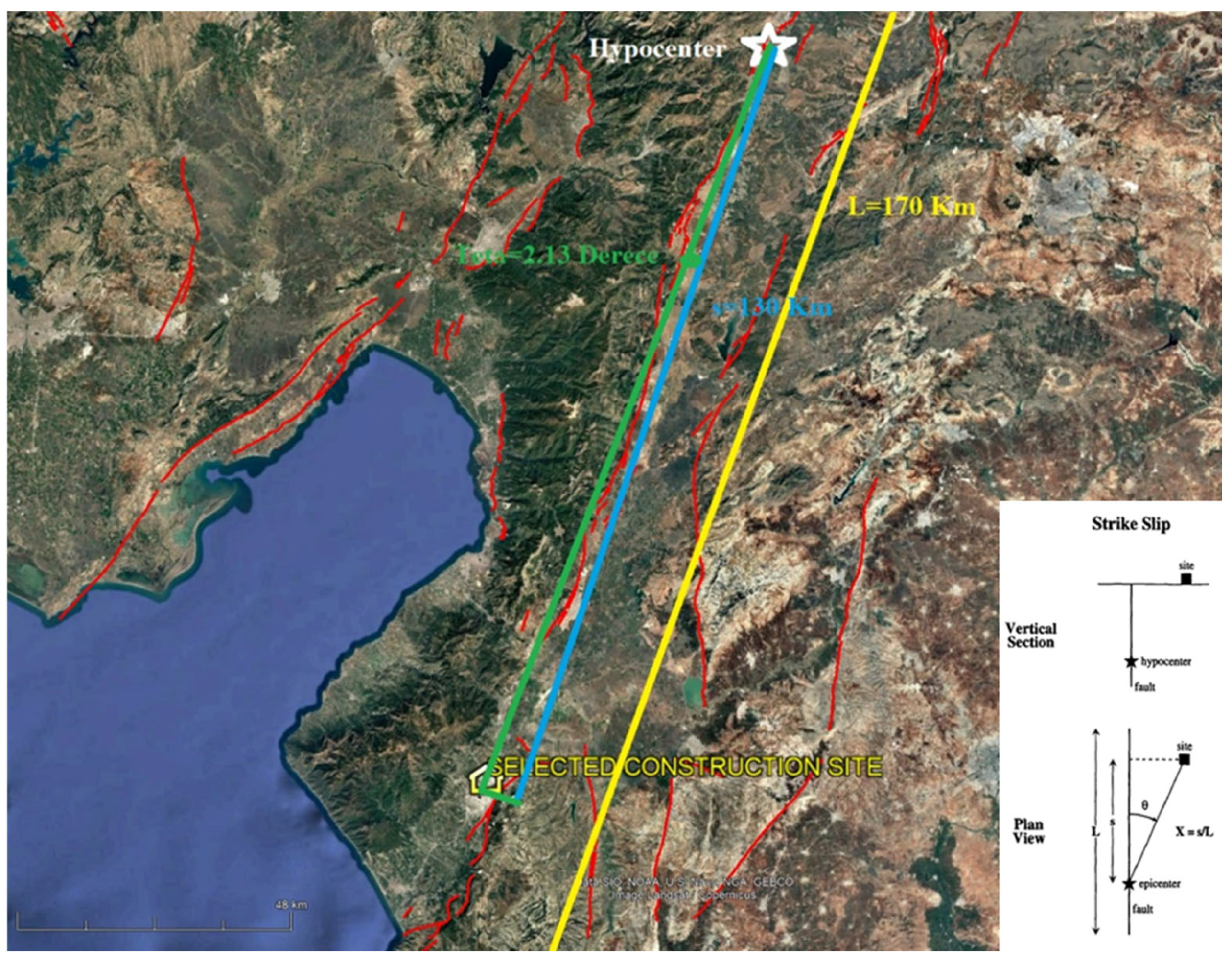
The pilot area of this study appears to be affected by near-fault effects (
Figure 7). Therefore, the calculations were performed considering potential rupture directivity effects, which depend on the fault rupture direction and propagation velocity, as well as variations in spectral accelerations that may occur in the fault-normal and fault-parallel components. In this context, the fundamental studies by Somerville et al. (1997) [
54] and Abrahamson (2000) [
55] on near-fault ground motion characteristics were considered. The results for the DD-1 and DD-2 earthquake hazard levels were evaluated by comparing the directivity, fault-normal, and fault-parallel spectra (calculated with near-fault effects) with the geometric mean and maximum rotated spectra (
Figure 8). This comparison allows for the assessment of directional amplification patterns and identification of period-dependent variations in spectral response due to directivity effects.
7. Selecting and Scaling of Earthquake Records
The selection and scaling of ground motions directly influence the nonlinear time history analysis results, yet there is no consensus on best practices, including the number of near-fault ground motions to use, beyond generic seismic design provisions. The Equivalent Lateral Force (ELF) procedure serves as a critical static approach, providing a minimum design threshold to reduce the collapse probability of seismically isolated structures. According to the TBDY-2018 (TSDC-2018), the average base shear from nonlinear time history analysis must be at least 80% of the base shear obtained from the ELF analysis. Following the code provisions, for time history analyses, at least 11 pairs of ground motion records—each consisting of at least two orthogonal horizontal components—must be selected and scaled to spectrally matched to the Uniform Hazard Spectrum (UHS) within the period range of 0.5
to 1.25
, where
is the effective vibration period of the seismic isolation system under maximum displacement demand. For analyses near fault zones, the spectrum should reflect directivity effects, while for analysis not in near-fault zones, a hybrid spectrum should be used. In this study, 11 sets of earthquake ground motions were selected based on parameters consistent with the target design earthquake level, such as magnitude, fault distance, source mechanism, and local site conditions. The selected ground motions and their characteristics for the DD-1 and DD-2 earthquake levels are presented in
Table 4.
The reliability of nonlinear time history analyses within performance-based design frameworks depends largely on both the appropriate selection and accurate scaling of real ground motion records. Therefore, earthquake records consistent with the seismotectonic characteristics of the study area—such as moment magnitude, source-to-site distance, faulting mechanism, local site conditions, and near-fault directivity effects—were considered. The digital quality of the selected records was carefully examined, including a comprehensive review of parameters such as sampling rate, signal saturation, filtering, and baseline correction. Component consistency was verified to ensure compatibility. Records that statistically distorted the target spectra or had the potential to systematically bias nonlinear structural demands were excluded from the analysis dataset. The soil conditions of the recording stations were selected in accordance with TSDC-2018 [
25] requirements, corresponding to soil class ZC with Vs30 values between 360 m/s and 760 m/s, representing different stiffness conditions within this range. The earthquake magnitudes were determined based on disaggregation analysis, corresponding to the deterministic scenario earthquake that dominates the seismic hazard in the region. The fault mechanisms were selected as strike slip, consistent with the seismotectonic setting of the study area.
In this study, the Time-Domain Spectral Matching (TDSM) method was applied to adjust the elastic response spectra of recorded real earthquake ground motions to match a predefined target design spectrum within specified tolerance limits. The primary objective of this approach is to minimize spectral amplitude or energy discrepancies—both excesses and deficiencies—particularly around the fundamental vibration period. By addressing the critical lower and upper period ranges of interest for structural performance, a close agreement with the target spectrum is achieved.
In the TDSM approach, correction is performed by iteratively adding appropriate combinations of windowed (narrow-band) sinusoidal or wavelet functions to the original acceleration time history. The algorithm used in this study (RSPMatch) is based on the method developed by Lilhanand and Tseng [
56,
57]. The discrepancy between the target and recorded spectra is defined as the spectral misfit, representing the correction required to match the peak responses of single-degree-of-freedom (SDOF) oscillators defined for different period–damping pairs. Assuming that small-amplitude corrections do not significantly alter the peak response time, the adjustment signal δa(t) can be expressed as a linear combination of selected wavelet basis functions. The contribution of each wavelet to the response of a given oscillator is computed through a convolution integral with a closed-form analytical solution. In the original approach proposed by Lilhanand and Tseng [
56,
57], local narrow-band wavelets were introduced to reduce spectral differences while preserving the non-stationary character of the ground motions. However, this process sometimes resulted in drift effects in velocity and displacement time histories, which may compromise the physical realism of the motion and introduce significant uncertainty in performance-based earthquake engineering analyses. To overcome this limitation, Al Atik and Abrahamson [
58] proposed the use of a cosine–Gaussian wavelet form, which, due to its integral properties, provides zero net contributions to the velocity and displacement histories. This improvement effectively eliminates drift problems, enhancing both the numerical stability and computational efficiency of the method. Thus, the adjusted ground motions achieve excellent agreement with the target spectrum over a wide period range while preserving the Fourier amplitude, normalized Arias Intensity, Significant Duration, and the overall non-stationary character of the waveforms.
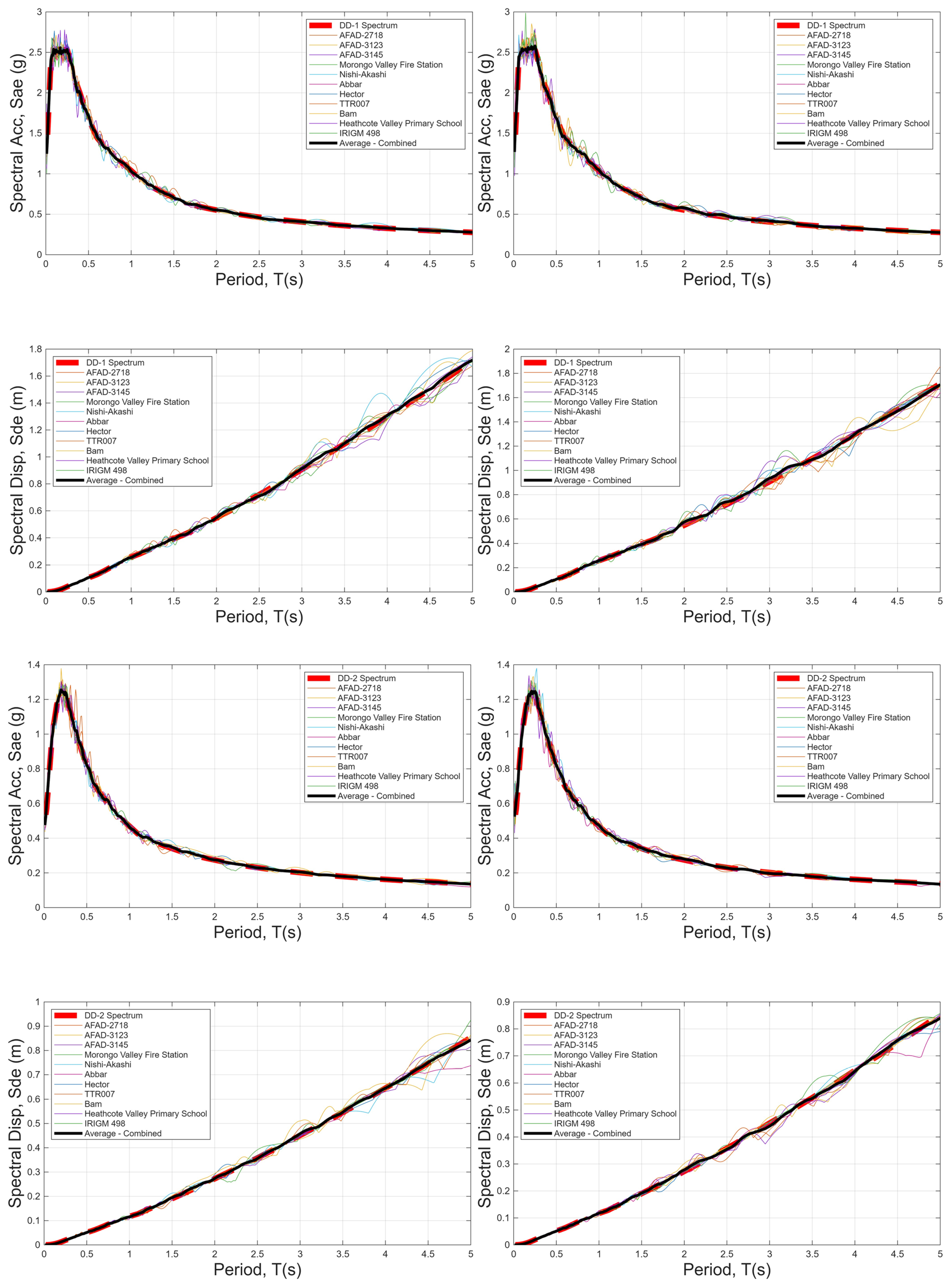
Figure 9 presents the spectral acceleration and spectral displacement spectra, along with their mean values, obtained for 11 scaled earthquake records corresponding to the DD-1 and DD-2 earthquake levels under the influence of directivity effects. The method successfully scaled the original time history records to match the target spectrum within the 0.1–5 s period range while maintaining their energy and frequency content at acceptable levels. For the selected set of 11 earthquakes, the results demonstrate that the spectrally matched ground motions are in high agreement with the target design spectrum. As shown, the individual acceleration or displacement spectra exhibit only minor deviations for each record, while the mean spectral acceleration and mean spectral displacement spectra show near-perfect compatibility with the target spectrum over the relevant period range.
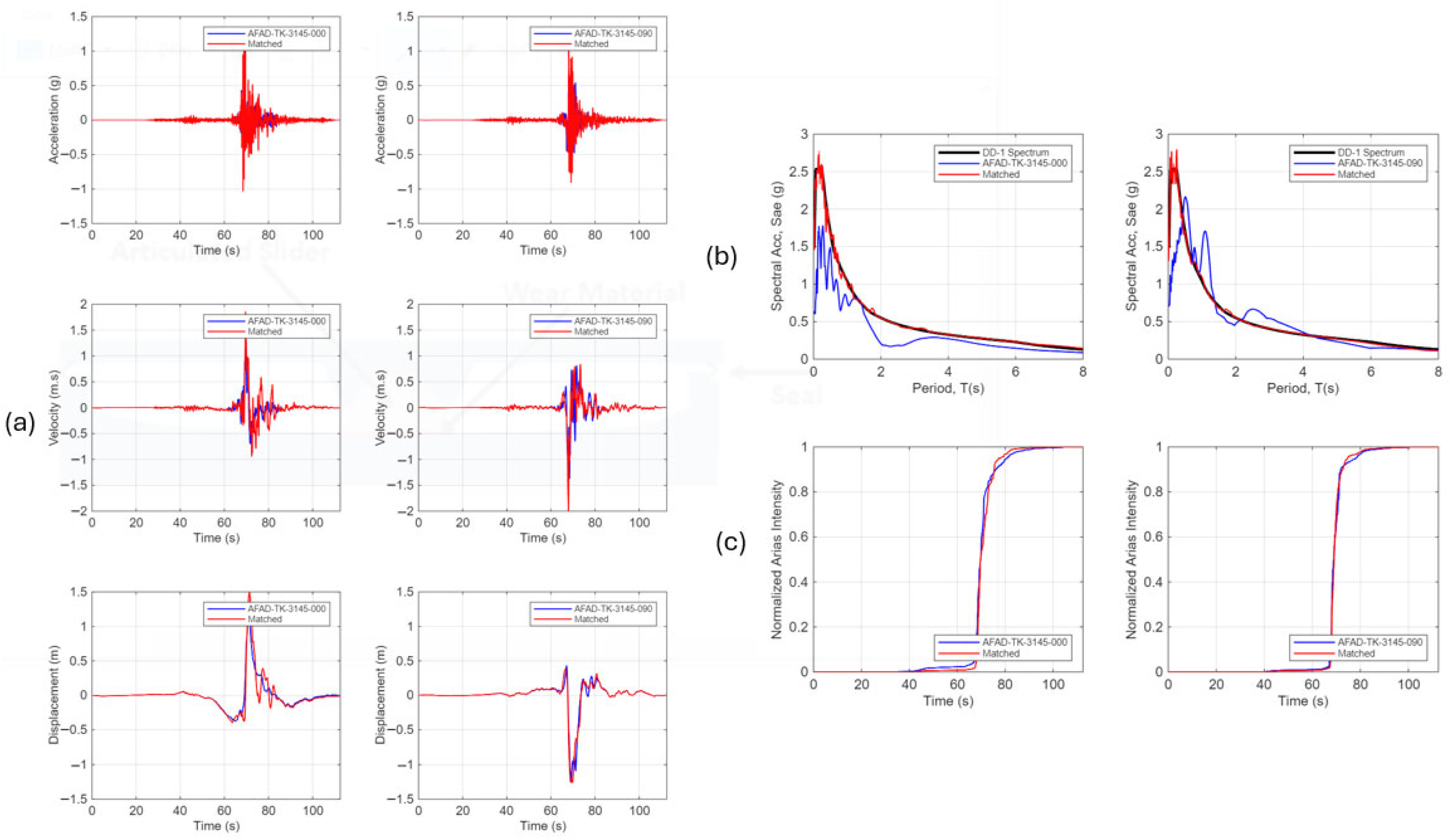
Figure 10 presents, for the AFAD-3145 recording station, the acceleration, velocity, and displacement time histories before and after spectral matching, as well as the original and matched spectral acceleration and normalized Arias Intensity curves. For this station, no significant differences are observed between the time histories before and after matching in terms of acceleration, velocity, or displacement. The original spectrum (shown by the blue line in
Figure 10) and the target spectrum (shown by the black line) are also very close, mainly because the ratio between them is nearly one (scaling ratio = 1.05). Examination of the velocity component in
Figure 10 reveals pulse-like waveforms with amplitudes exceeding 1 m/s. The applied algorithm successfully preserved these pulse-type characteristics—one of the distinctive features of near-fault ground motions—ensuring that the scaled records accurately represent both the physical realism and the essential characteristics of near-fault earthquake motions.
8. Analysis Results and Discussions
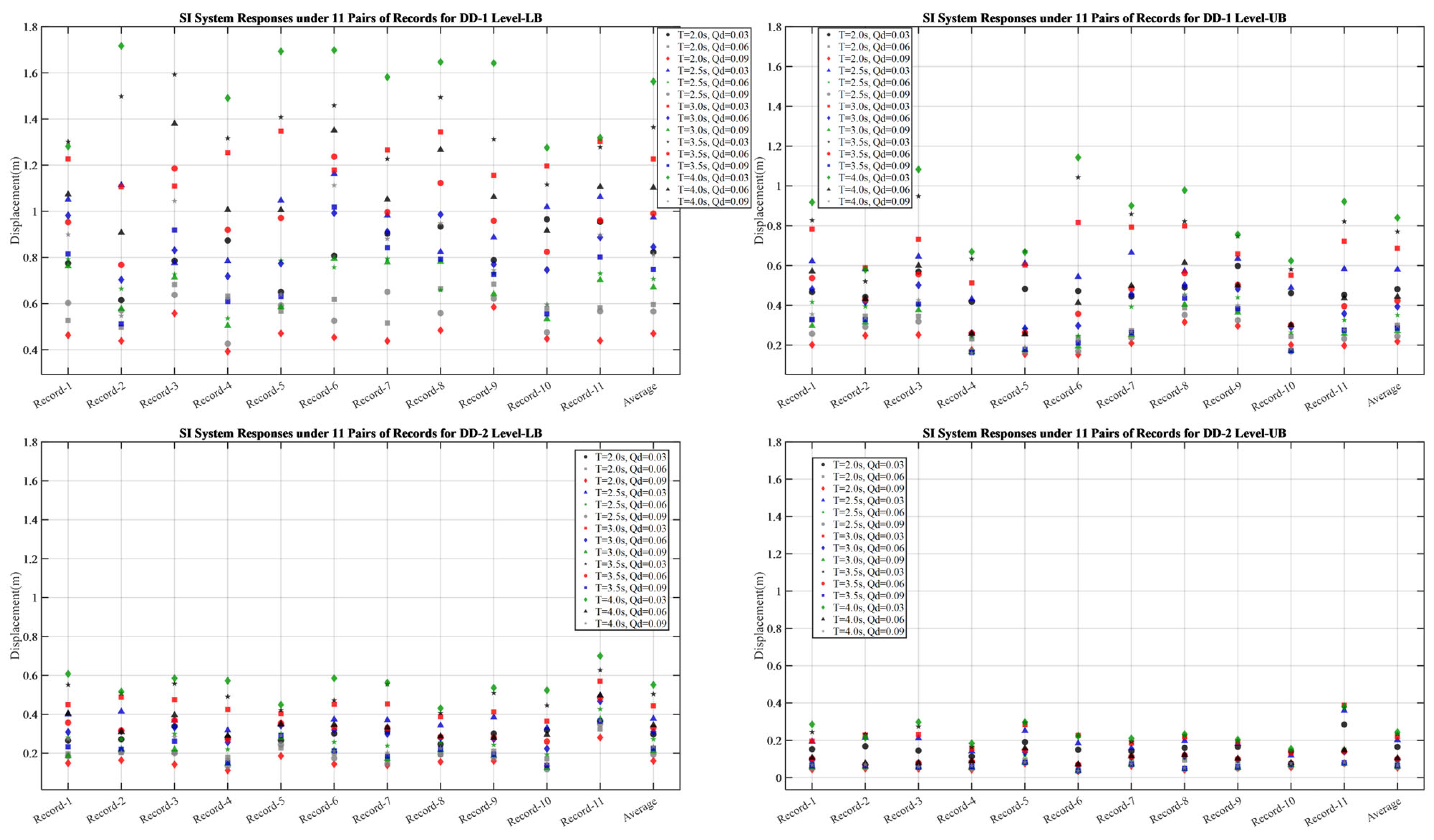
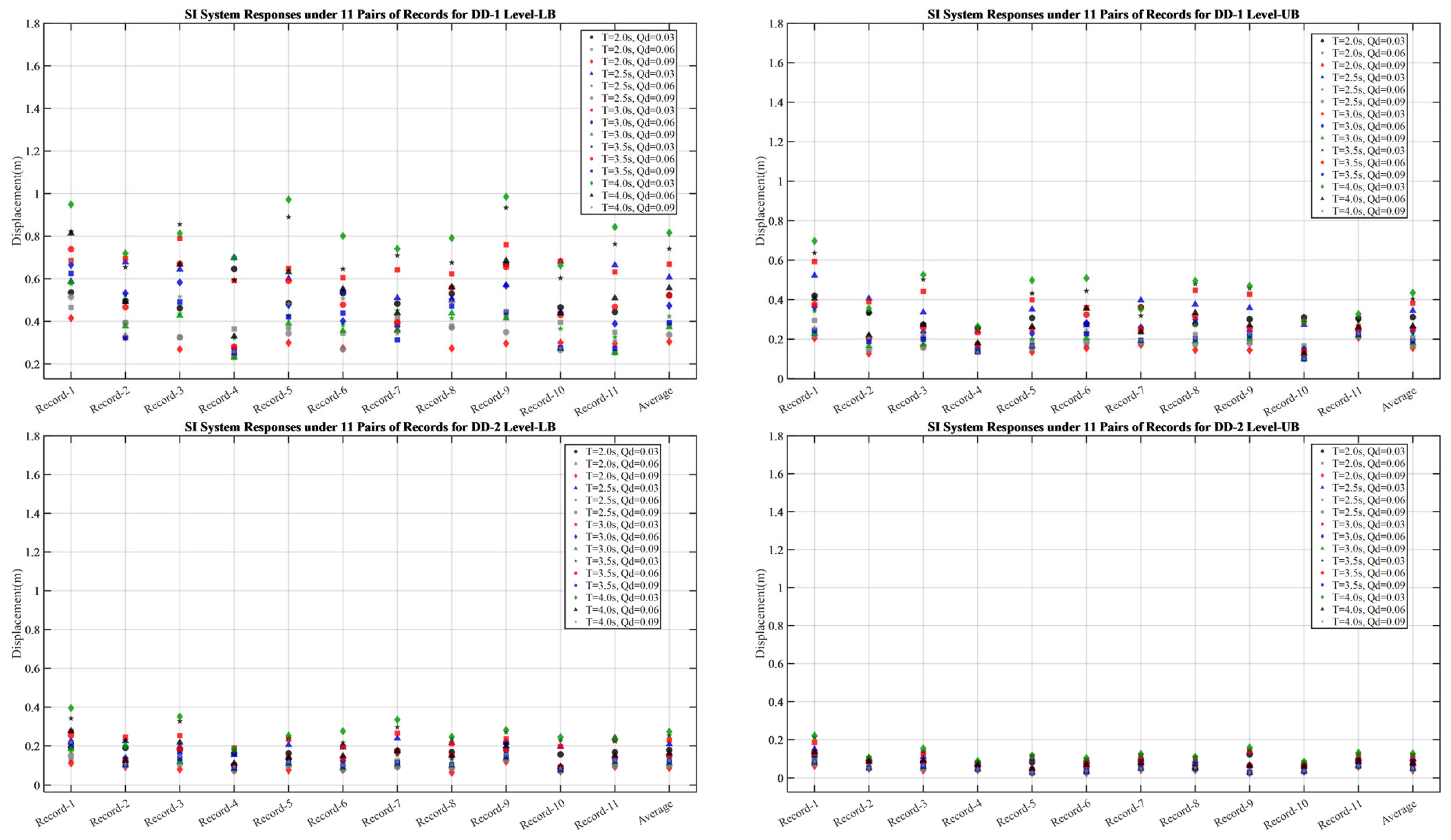
A total of 5280 response history analyses were carried out for 15 seismically isolated systems considering the bounding analysis for the elastomeric and friction type of sliders given in
Section 3. Lower-bound analysis incorporating the DD-1 earthquake ground motion level aims to determine the maximum displacement capacity, whereas DD-2 is incorporated to investigate the superstructure design force under extreme earthquake actions. Comparison of the analysis results for the construction site at Antakya city center is carried out for the lower-bound (LB) and upper-bound (UB) analysis for the outcomes of consideration of directivity effects in the seismic hazard analysis (
Figure 11,
Figure 12 and
Figure 13).
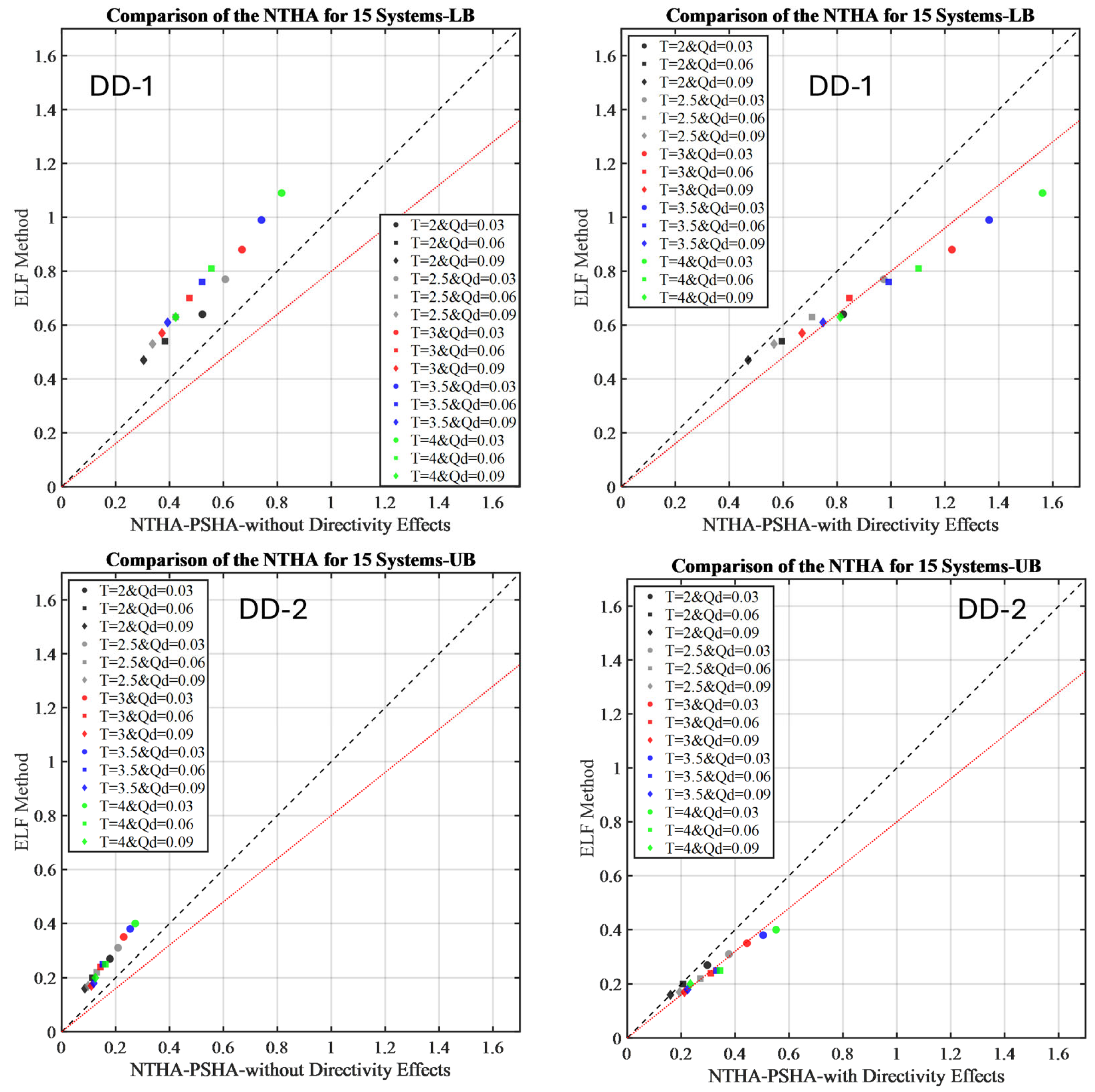
A comparative statistical analysis reveals a distinct divergence in performance metrics when comparing site-specific hazard studies—both considering and disregarding directivity effects—against the standard ELF procedure. While both datasets exhibit high trend-congruence with the ELF results (notably reaching local maxima at System 13), the response magnitudes vary significantly. The analysis incorporating directivity consistently demonstrates superior amplitude, with mean and root mean square (RMS) values exceeding the ELF threshold across all 15 systems. Conversely, the site-specific study excluding directivity maintains a more conservative profile, with statistical averages closely tracking or falling slightly below the ELF results, as observed at the DD-1 ground motion level. Furthermore, the higher RMS-to-mean ratio in the directivity-inclusive cases suggests a right-skewed distribution characterized by intermittent peak intensities, whereas the cases excluding directivity exhibit higher central tendency stability. These findings indicate that the inclusion of directivity significantly amplifies system response, effectively shifting the maximum design displacement envelope for protection systems above the ELF threshold for the lower-bound analysis (
Figure 11 and
Figure 13).
The comparative analysis of cases with and without directivity for friction slider systems—considering the DD-2 ground motion level—exhibits a significant deviation in system displacement responses. Across all 15 evaluated systems, ground motion records including directivity tend to yield higher values, suggesting that the proper inclusion of directivity effects acts as an amplifier for the maximum recorded responses. Quantitatively, directivity effects at this ground motion level result in a mean response nearly double that of the counterpart where directivity is disregarded, frequently exceeding the defined ELF threshold. From a statistical perspective, the mean and median values for both datasets show a high degree of central tendency alignment, indicating a symmetric distribution of data points across the 11 records. However, the root mean square (RMS) values for the directivity-inclusive set show a marked increase in the effective intensity of the input motion; this is particularly evident in Systems 7, 10, and 13, where peak values are considerably high. While the ‘without directivity’ case maintains a stable profile well-aligned within the limits of the ELF procedure, the directivity-inclusive case demonstrates that the absence of an amplification factor in TSDC-2018 results in a high-response state during nonlinear time history analysis. This state is characterized by greater variance and higher peak intensities, as evidenced by the maximum value of 0.387 observed in the dataset (
Figure 13). Moreover, undesired influences of disregarding the directivity effects of amplification were obtained for elastomeric bearings, too.
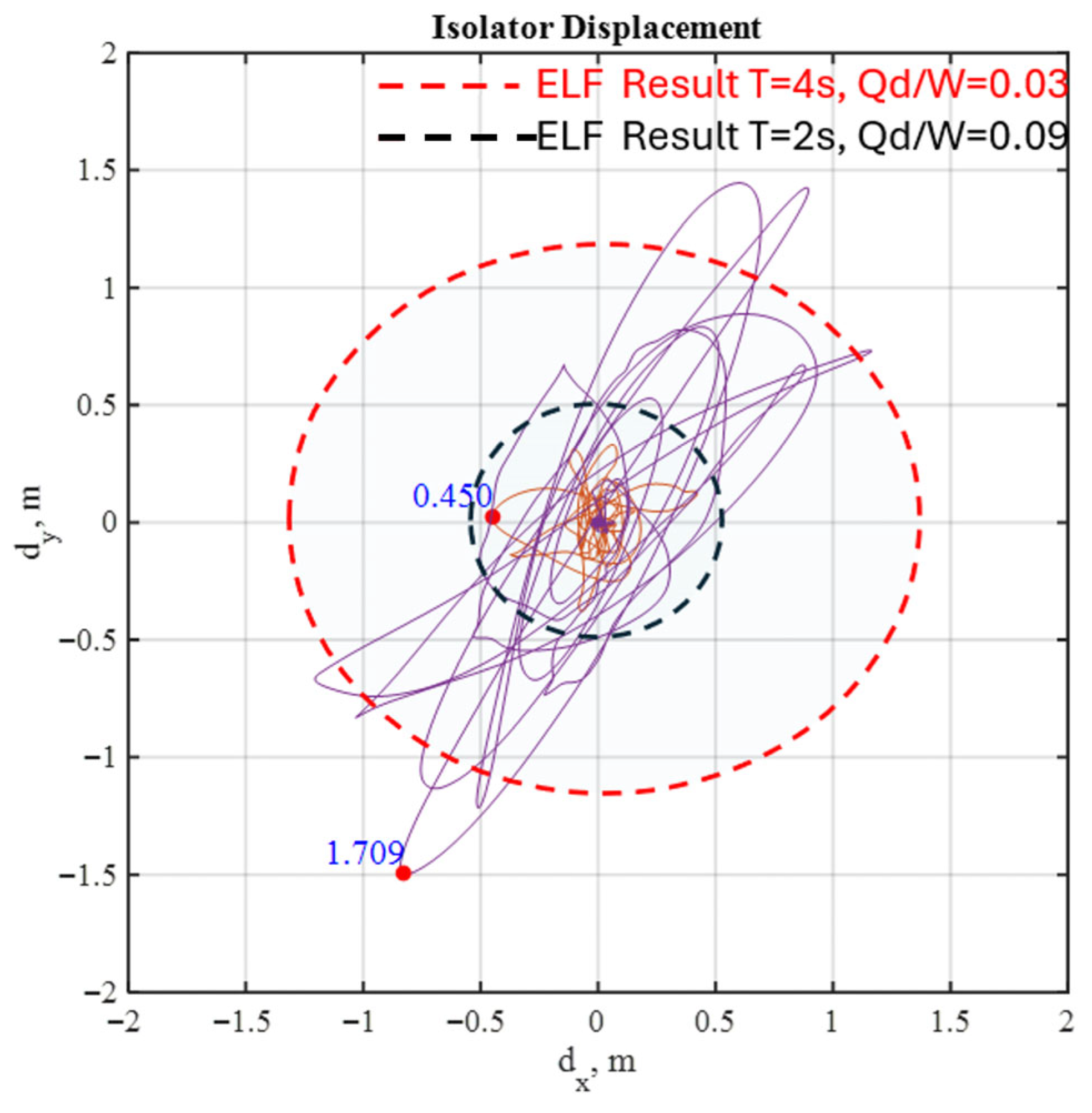
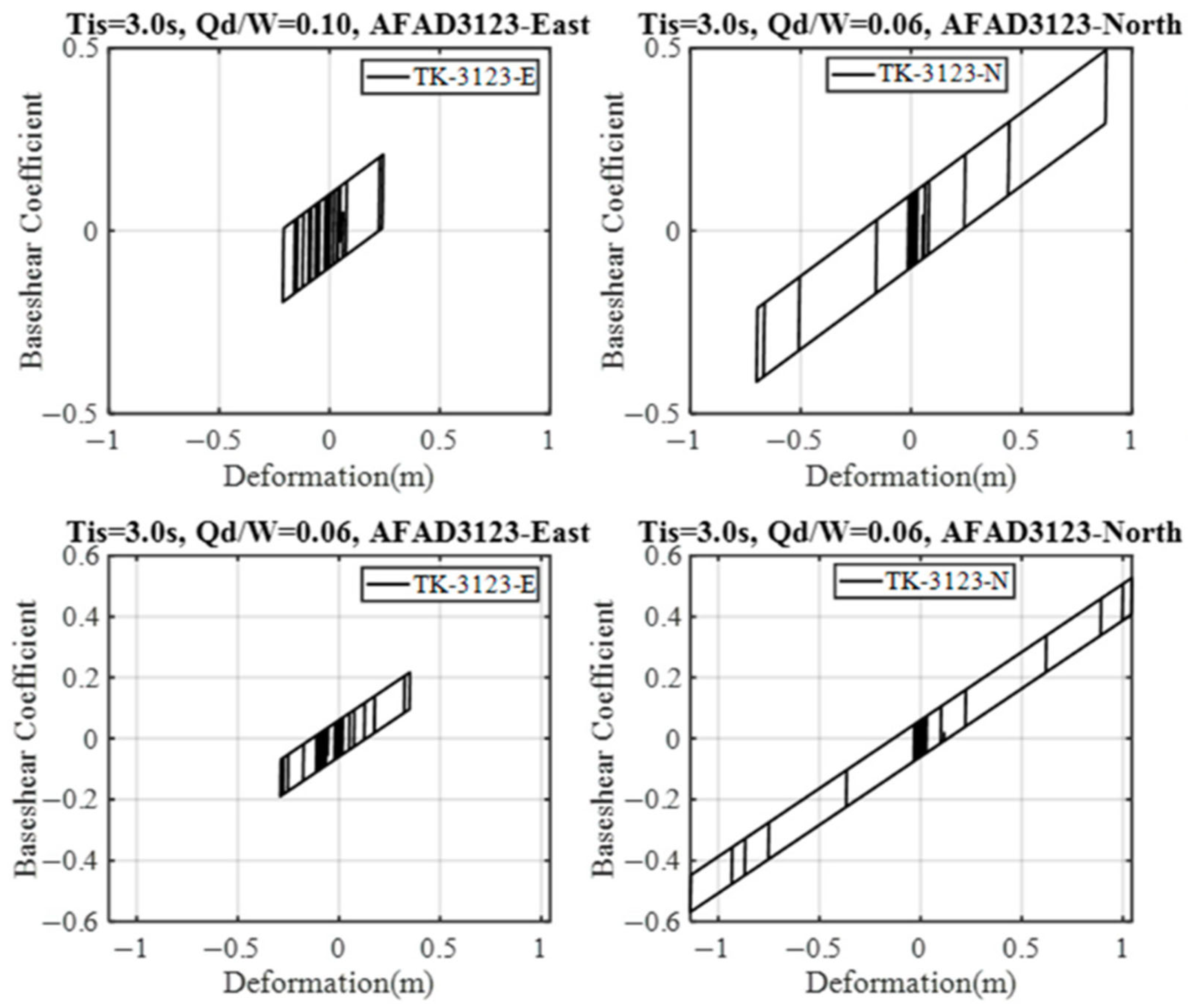
An AFAD recording station, specifically TK-3123, was located at the construction site in close proximity to the fault rupture. The record obtained from the first main shock of the 6 February 2023 earthquake sequence was incorporated into the response history analysis to verify large displacement demands under directivity effects. Among the isolation systems investigated, the largest displacement demand occurred in the most flexible system—characterized by the lowest characteristic strength—while the lowest demand was observed in the stiffest system (
Figure 14). Comparatively, these two extreme cases yielded contradictory results when evaluated against code-based minimum requirements. Since the suites of ground motion sets employed in this study were perfectly fitted to the derived site-specific spectra (both with and without directivity), the actual recorded ground motion values are highlighted for these two particular isolation systems. Upon considering directivity effects, the established displacement requirements were exceeded in all but three systems, indicating that proper system selection is critical. Furthermore, a total of 5280 nonlinear time history analyses, incorporating site-specific studies both including and excluding directivity effects, demonstrated that the DD-1 earthquake level exhibits a response tendency similar to that observed in the TK-3123 record under directivity effects for the lower-bound nonlinear time history analysis.