Article

Shear Tests on Notch Connections for Timber–Concrete Composite Floor Beams Using Low Strength Lightweight Concrete †

1
Division of Structural Mechanics, Faculty of Engineering LTH, Lund University, P.O. Box 118, SE-22100 Lund, Sweden
2
Construction Engineering Research Group, Faculty of Engineering Technology, Hasselt University, B3590 Diepenbeek, Belgium
*
Author to whom correspondence should be addressed.
This paper is an extended version of our paper published in Appavuravther, E.; Vandoren, B.; Henriques, J. Behaviour of screw and notch shear connections in timber-low strength lightweight concrete composite (TLCC). Presented at the World Conference on Timber Engineering, Santiago, Chile, 9–12 August 2021; pp. 2617–2623.
Buildings 2026, 16(5), 923; https://doi.org/10.3390/buildings16050923
Submission received: 6 February 2026 / Revised: 21 February 2026 / Accepted: 22 February 2026 / Published: 26 February 2026
(This article belongs to the Special Issue Research on Timber and Timber–Concrete Buildings)

Abstract

Notch connections are commonly used in timber concrete composite (TCC) members because of the simple geometry of the solution making execution easy and the high strength and stiffness resulting from the mechanical interlock between the timber and concrete. However, the use of low strength lightweight concrete in TCC applications is limited in the literature. Therefore, in this work, shear tests were conducted on notch shear connections between glulam timber and low strength lightweight concrete, in which the effects of notch dimension and adding a screw in the notch have been analyzed. From the obtained force-slip curves, strength, stiffness, and the ductility of the shear connection have been assessed. The tested connections’ strength and stiffnesses are compared with the analytical approaches given in TCC Technical Specification CEN/TS 19103. The results show that the use of low strength lightweight concrete, even with a low modulus of elasticity, provides a stiff solution. The observed failure mode agrees with the EN 1995-1-1 requirement; however, an overestimation is observed for the load predictions. For the specimens with screws, an improvement in strength capacity, stiffness and deformation capacity was noticed.

1. Introduction

The increase in need for more ecological construction materials is re-addressing the construction sector’s attention towards timber as structural material. Timber is a naturally renewable material, with a high strength to weight ratio. With the current technologies, the mechanical properties of timber products are optimized to obtain the best structural performance. Glued laminated timber (glulam), laminated veneer lumber (LVL) and cross-laminated timber (CLT) are some examples of performant engineered timber products. Still, one can find some limitations associated with the lower stiffness and mass of timber products such as excessive deflections, sensibility to vibrations or insufficient acoustic isolation. These drawbacks made it necessary to combine timber with other structural materials to obtain composite action and mitigate the referred problems. The use of mortar screed and concrete are currently the most popular options. The disadvantage of using a mortar screed is that, even though the structural mass is increased, the structural contribution is disregarded [1]. Use of concrete with timber, however, is found to be a more reliable option. In the past few decades, numerous research and industrial applications have been performed. With those applications, it is possible to conclude that with an optimized use of timber, concrete and a performant shear connection, very performant composite systems can be obtained.
To achieve an efficient composite action that can maximize both materials’ contribution, it is essential to use performant connections between the materials. Composite action can be obtained using various types of connections. Researchers are working on novel connectors to increase the composite behavior of a TCC section [2,3,4,5]. A dowel type fastener such as screws or nails is very common and reliable [6,7]. Even though dowel connectors are very reliable, in the late 1930s, with the need for a very stiff connection for composite decks of bridges, the development of mechanical interlock connections, the so-called notch connections, were proposed by Richard and William [8].
When selecting a shear connection, even though the main parameters are to assure a reliable system with sufficient strength and stiffness, easy application and cost are often governing parameters. By creating geometric openings in a timber beam (rectangular, triangular, etc.) and filling them with concrete, creates a mechanical interlock between the two materials, resulting in a strong and stiff composite system [9,10]. Given its good mechanical performance and easy execution, notch connections became common for timber-concrete composite floor beams. However, the lack of ductile behavior is a limitation of this connection [11].
To improve the mechanical properties of the notch shear connection, some researchers investigated the combination of notches with dowel type fasteners such as rods, screws and nails [3,5,6,10,12,13,14,15,16]. In a research project conducted by Kudla in 2015 within the COST action scope [11], an extensive literature review has been realized. The effect of the use of a fastener is not determined due to variability and limited examples in the literature [11]. Recently, Rasmussen et al. gathered literature on notch connections and evaluated design requirements and concluded that ductile failure of notch connections should be ensured [14]. In the experimental program conducted by Kuhlmann and Michelfelder [17], the influence of screws on the load-carrying capacity or stiffness was found to have a negative impact. Xie et al. mentioned in their study that the load capacity of shear connections combining studs and notches was directly proportional to the diameter of the stud [18]. The strength and stiffness values are almost proportional to the square of the stud, groove width and depth [18] and the connection capacity decreased as the groove dimension increased.
In the literature, notch connections have been studied extensively [7,14,19]. However, the use of different cement-based materials is minimal [20,21]. This could be extended to the use of a mortar screed or lightweight concrete. Lightweight concrete can replace the mortar screed for the same purposes and with added structural contribution; lightweight concrete has been proven to be a reliable option with several advantages such as increased structural mass for acoustic and vibration related reasons [22,23,24,25].
In this paper, the behavior of notch shear connections in TCC with the use of low strength lightweight concrete of LC 12/13 and glulam GL 24 h are presented. Shear tests were conducted to determine the mechanical performance of the shear connections. The two parameters examined are the notch dimensions and the effect of adding screws to the notches. This research shows that even with low strength concrete, timber was the weakest part, therefore not limiting the mechanical interlock connection’s performance. Adding the screws, however, shifted the failure mode to the concrete with at least a doubled load-carrying capacity. The results show that the use of low strength lightweight concrete could be considered in future applications.

2. Mechanical Behavior of Notch Shear Connections

2.1. Load Carrying Capacity

The shear connection should present a sufficient load carrying capacity to resist the shear forces at the interface of the two materials and guarantee the integrity of the composite member. Accordingly, there are four potential failure modes which can occur without the use of mechanical fasteners [26], which involve failure in timber and failure in concrete. The possible failure modes and corresponding design equations are given in Table 1. The effective area for each failure mode is hatched to identify the critical zone. These failure modes are as follows:
  •      shear failure of the timber, FRd_st,
  •      crushing of the timber, FRd_ct,
  •      shear failure of the concrete, FRd_sc,
  •      crushing of the concrete, FRd_cc.
The expected failure mode can be determined by the minimum of possible failure modes, given in Equation (1).
Fnotch = min (FRd_st; FRd_ct; FRd_sc; FRd_cc)
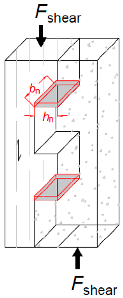
The symbols in Table 1 have the following meaning: FRd_st represents design shear load capacity of the timber, determined by the crack factor (kcr) obtained from EN 1995-1-1 [27], the design shear strength of timber member (fv,t,d), the notch width (bn), and by the minimal shear length of the timber (lmin) based on the notch depth (hn). FRd_ct, which represents design crushing load capacity of the timber, is based on the notch depth (hn), the notch width (bn), and the compressive design strength of timber parallel to grain (fc,0,d). FRd_sc corresponds to design shear load capacity of the concrete and is determined by the notch width (bn), the concrete notch length (ln), and the design shear strength of concrete (fv,c,d) which is in turn a function of the strength reduction factor of concrete in shear (v), the design compressive strength (fc,d), the characteristic compressive strength, and on the angle of the concrete strut between maximum values v [28]. FRd_cc, which corresponds to the design crushing load capacity of the concrete, is based on compressive strength, notch width (bn), and notch depth (hn).
For shear connections combining notches with screws, Xie et al. proposed the added contribution of notches with studs; however, in their study, the modes were limited to some of the dowel type failures [18]. In this work, this approach is extended to a combination of a “pure” notch connection load capacity with a “pure” dowel-type connection load capacity as given in Equation (2). The mechanical system can be interpreted as two springs working in parallel; therefore, the load capacity of both components (notch and screw) of the connection are summed:
Fmax = Fscrew + Fnotch
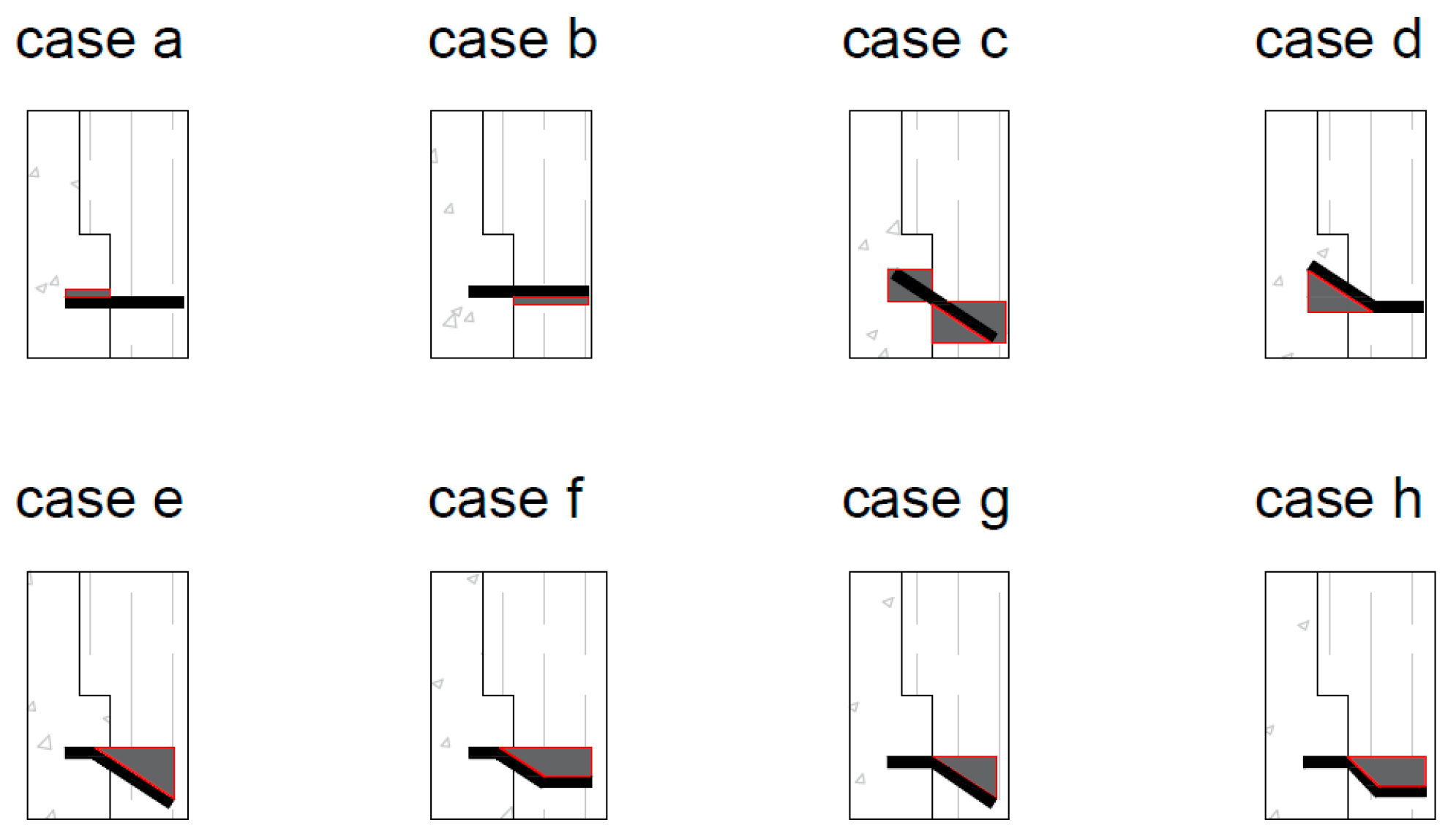
To determine the load-carrying capacity of dowel type connections (Fscrew), it is proposed in the EN 1995-2 [29] that extending the design equations for steel-to-timber connections to shear dowel-type connections in TCC. As the modulus of elasticity of concrete and timber are very similar in this experimental work, predictions given for timber-to-timber connections are also considered [25]. For screw connections, potential failure modes are determined using the classical Johansen dowel type predictions given in EN 1995-1-1 [27]. Based on these dowel connection predictions, eight failure modes are possible, as illustrated in Figure 1, which are respectively (a) local failure by concrete crushing in the screw–concrete zone, (b) local failure by timber crushing in the screw–timber zone, (c) rotation of the screw by crushing of the concrete and timber, (d) plastic hinge formation in the screw in the timber part, (e) plastic hinge formation in the screw in the concrete part, (f) formation of two plastic hinges in the screw that is in the concrete and the timber part, (g) plastic hinge formation in the screw at the timber–concrete interface and (h) formation of two plastic hinges in the screw, one at the timber–concrete interface and one in the timber layer. The minimum of these eight cases determines the failure load of the screw, Fscrew.

2.2. Stiffness

Stiffness, also referred to as the slip modulus, is an essential property of a shear connection as it determines the composite action between the timber and the concrete. Determining the stiffness for notch connections is still challenging. As part of a COST action, the results available in the literature to derive on an approach to determine the stiffness is collected [11]. According to this study, the following conclusions are here highlighted:
  • For notches, the slip modulus for serviceability, Kser, and ultimate limit states, Ku, are equal. This indicates that the notch connection’s behavior has a constant slope with a linear elastic response until the failure.
  • For various experiments covering different variables, the slip modulus is normalized, by dividing it with the notch’s width (bn in Table 1). This normalization leads to the determination of an expected stiffness per width.
  • The slip modulus is determined based on the notch depth, hn. If the depth is 20 mm, the slip modulus is 1000 kN/mm/m and if the depth is 30 mm or larger, the slip modulus is 1500 kN/mm/m, where the slip modulus is given per meter width. For depths between 20 and 30 mm, linear interpolation is used, and no information is given for depths smaller than 20 mm.
These conclusions are valid for concrete class C 20/25 or higher and for glulam timber class GL 24 h or higher. Even though these two material grades are commonly used, it limits the proposed approach’s applicability, namely, its extension to lightweight concrete. If the given material requirements are not satisfied, the slip modulus should be determined by experimental and/or FEM analysis. For the use of screws, however, a conclusion was not drawn due to limited availability in the literature. Some researchers tested notch connection with and without the use of a screw or a dowel and concluded that the addition of a dowel connection increases the stiffness [3,20].

2.3. Ductility and Deformation Capacity

Ductility is an important characteristic in the shear connection behavior as it allows the redistribution of the slip force amongst multiple connectors. Notch shear connections are known for their brittle behavior; however, the notch’s combination with a steel fastener is expected to lead to more ductile behavior.
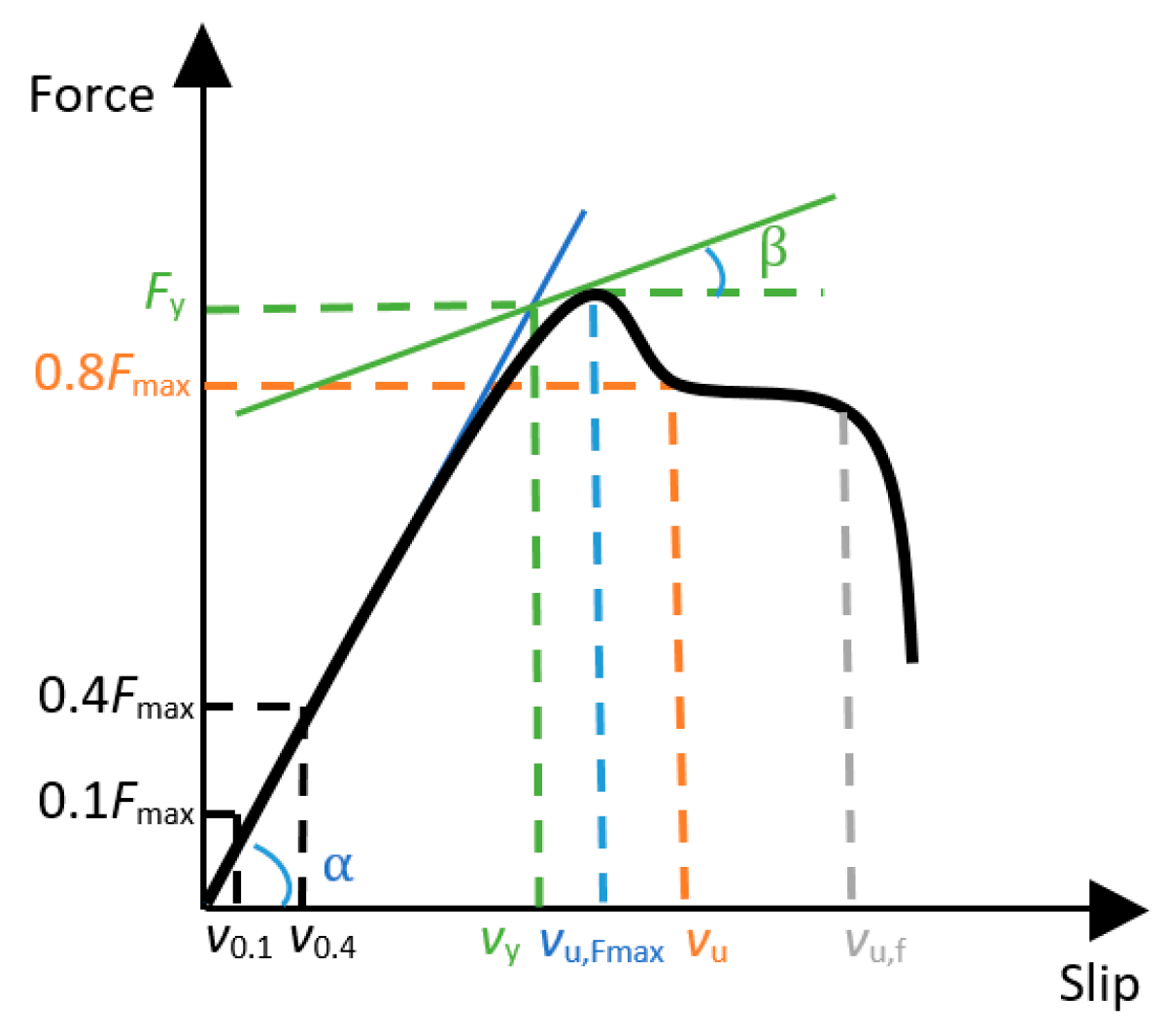
In this paper, ductility is determined using EN 12512 [30], as illustrated in Figure 2. Ductility of a shear connection can be quantified by the ratio between ultimate slip and yield slip, as expressed in Equation (3). The ultimate slip, vu, is determined by the value corresponding to the 80% of the peak load in the post-peak load range. The yield slip, vy, is the slip value corresponding to the intersection between the initial stiffness, tanα, determined using the force-slip coordinates for 10% and 40% of the load capacity, as given in Equation (4), and the post elastic stiffness, tangent to the force-slip curve at the maximum load capacity, tanβ, determined as expressed in Equation (5).
To determine the deformation capacity, two other parameters are also included in the analysis of the results. The slip corresponding to maximum load vu,Fmax and the slip corresponding to the slip in which the connection fails due to global collapse, vu,f both illustrated in Figure 2 [31].
D = V u V y
tan α = 0.4 F m a x 0.1 F m a x v 0.4 v 0.1
tan β = tan α 6

3. Experimental Campaign

3.1. Test Specimens, Layout, and Monitoring

Push-out tests, with symmetric loading, on notch shear connections for TCC with lightweight concrete are performed. The objective is to estimate the shear resistance (load carrying capacity), stiffness, deformation capacity and ductility of notch connectors with and without the use of screws. Four different configurations are tested, two with different notch sizes and two with a screw inserted perpendicular to these notch configurations.
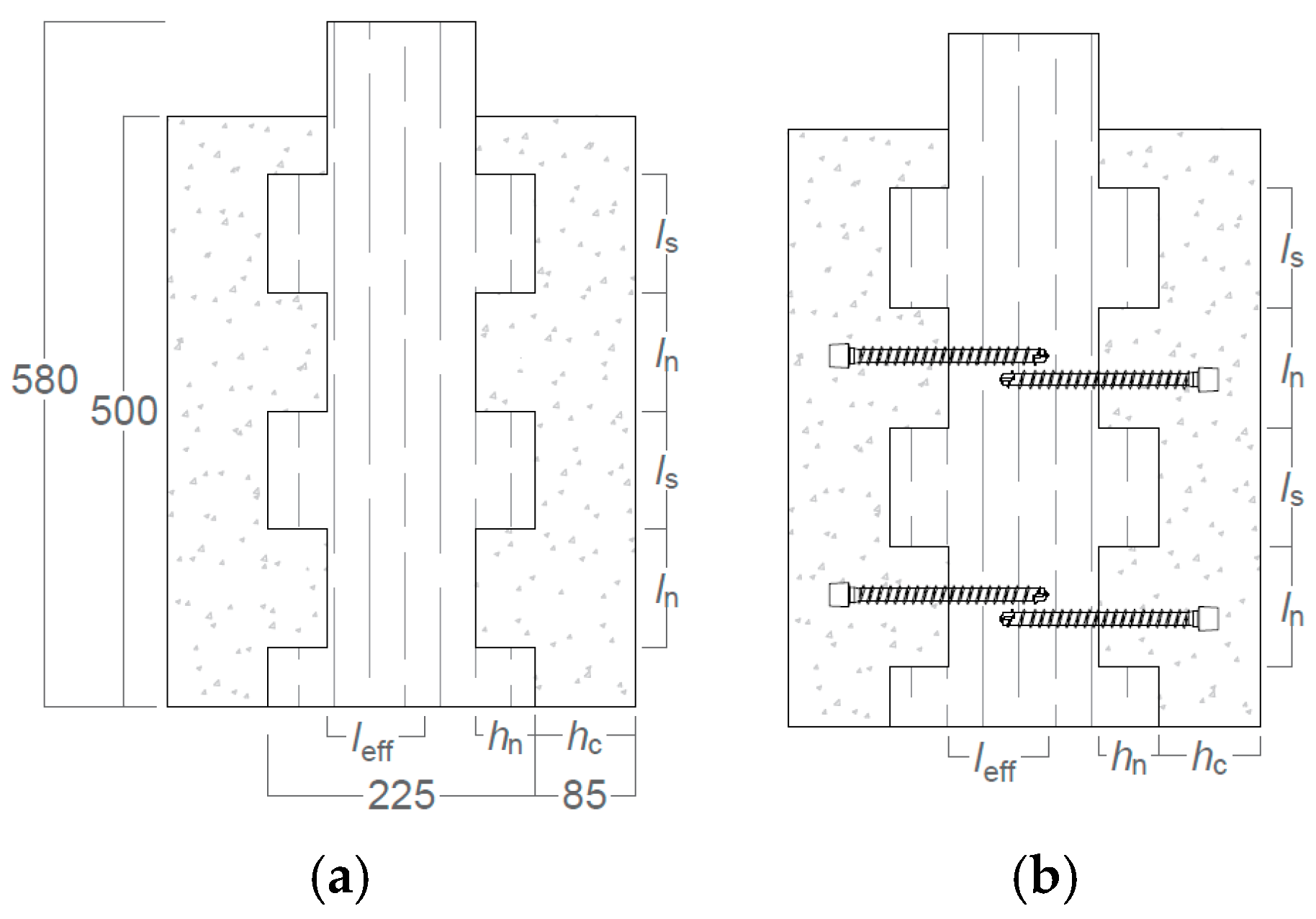
The timber strength class used in this experiment is GL 24 h. The average density of the wood is 387.79 kg/cm3 and the average compression strength with parallel grain direction of the wood is 44 MPa and the perpendicular is 4.28 MPa, determined by the code requirements of EN 408 [32]. The timber specimen’s dimensions are as given in Figure 3. A timber thickness of 90 mm is used.
The concrete used in this experimental program is low strength lightweight concrete. The concrete recipe contains Argex® (expanded clay) lightweight aggregates of AR 0/4, Portland cement 52.5 N, sand and water. The concrete’s strength is determined according to EN 12390-3 [33], with a 28-day cube compression tests, resulting in 14.5 MPa. The modulus of elasticity and density are determined by following the approach given in EN 1992-1-1 [28] for lightweight concrete, and are 10,934 MPa and 1400 kg/m3, respectively. Each concrete section is as given in Figure 3 with an out-of-plane dimension of 190 mm.
Given the shape of the notches, mechanical interlock between the two materials is provided. To examine the effect of screws, in two configurations, ASSY plus VG® screws from Würth [34], which are ETA certified for timber-concrete composites, are used. The screws have a diameter of 8 mm and a length of 200 mm (M8x200). The screws are applied in the notches see Figure 3. To avoid overlapping of the screws of opposite sides, each screw is shifted 5 mm up or down to allow for 10 mm of spacing between them to satisfy the requirements in EN 1995-1-1 [27].
The timber was covered with plastic foil to avoid the absorption of water present in the concrete. The test specimens’ identification followed the following principles: (i) the use of the notch-with or without 8 mm diameter screw (N or N-M8), and (ii) the notch dimensions (lsln), as given in Table 2. In Figure 3, the notch geometry is given for a member with and without the use of screws using the dimension notations given earlier in this paper. In Table 2, the dimensions for each specimen are given with the number of tests for each configuration. In TS 19103, it is recommended to use notch depth, hn, of equal to or more than 20 mm for normal loads and 30 mm for heavy loads. In this paper, 50 mm is used since the use of low strength, lightweight concrete is introduced [26]. It is recommended to use length of timber in front of the end notch, lv (not applicable in this work), and distance between notches, ls, to be equal or greater than 12.5 hn. These dimensions are not respected, which is once again due to the use of lightweight concrete.
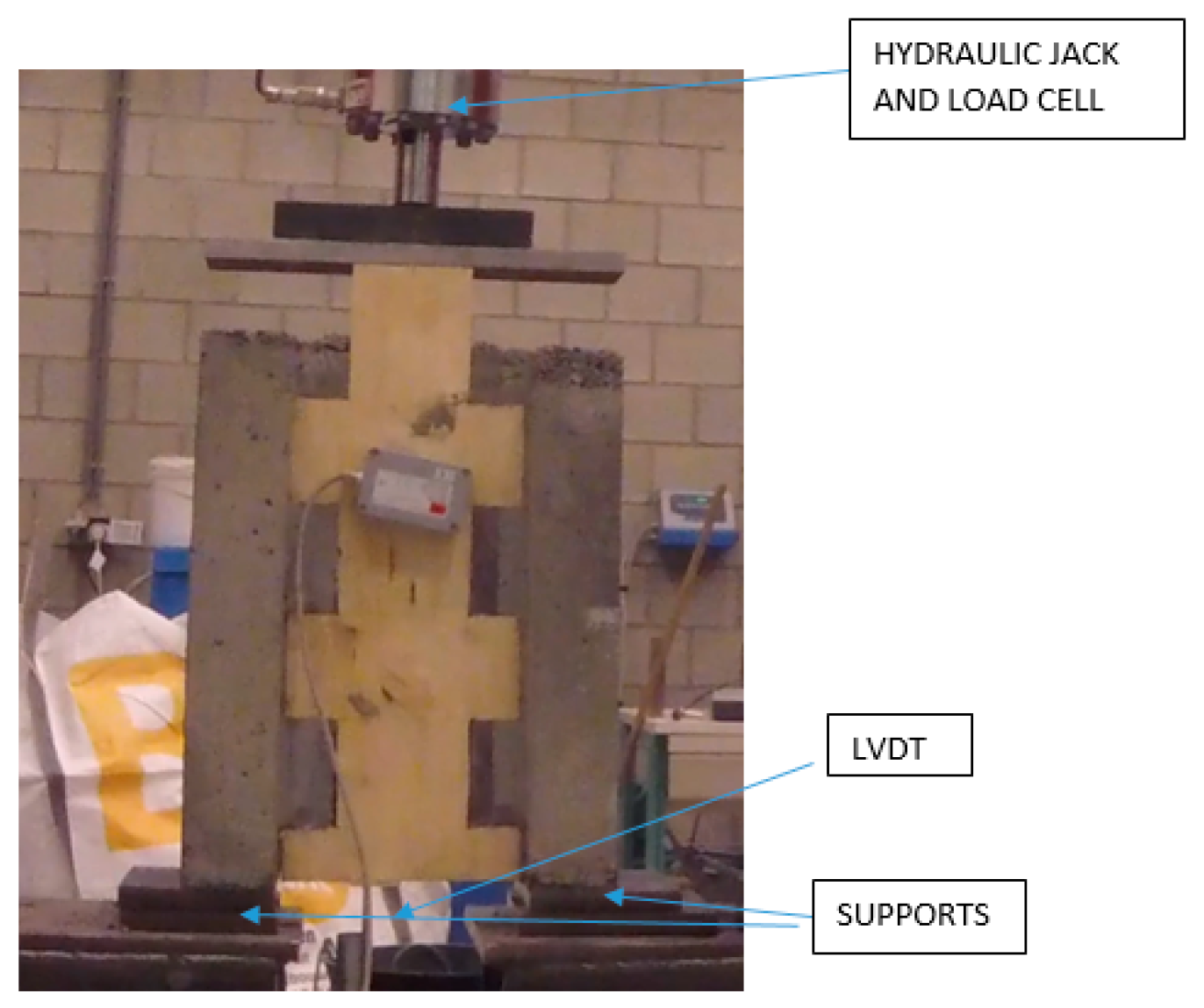
The experimental setup is shown in Figure 4 and consists of a steel frame, hydraulic jack, load cell, and steel plate supports. The force-displacement behavior is measured using linear variable displacement transducers (LVDTs), which are placed at the timber’s bottom center to measure the slip.

3.2. Test Results

3.2.1. Load Deformation Behavior

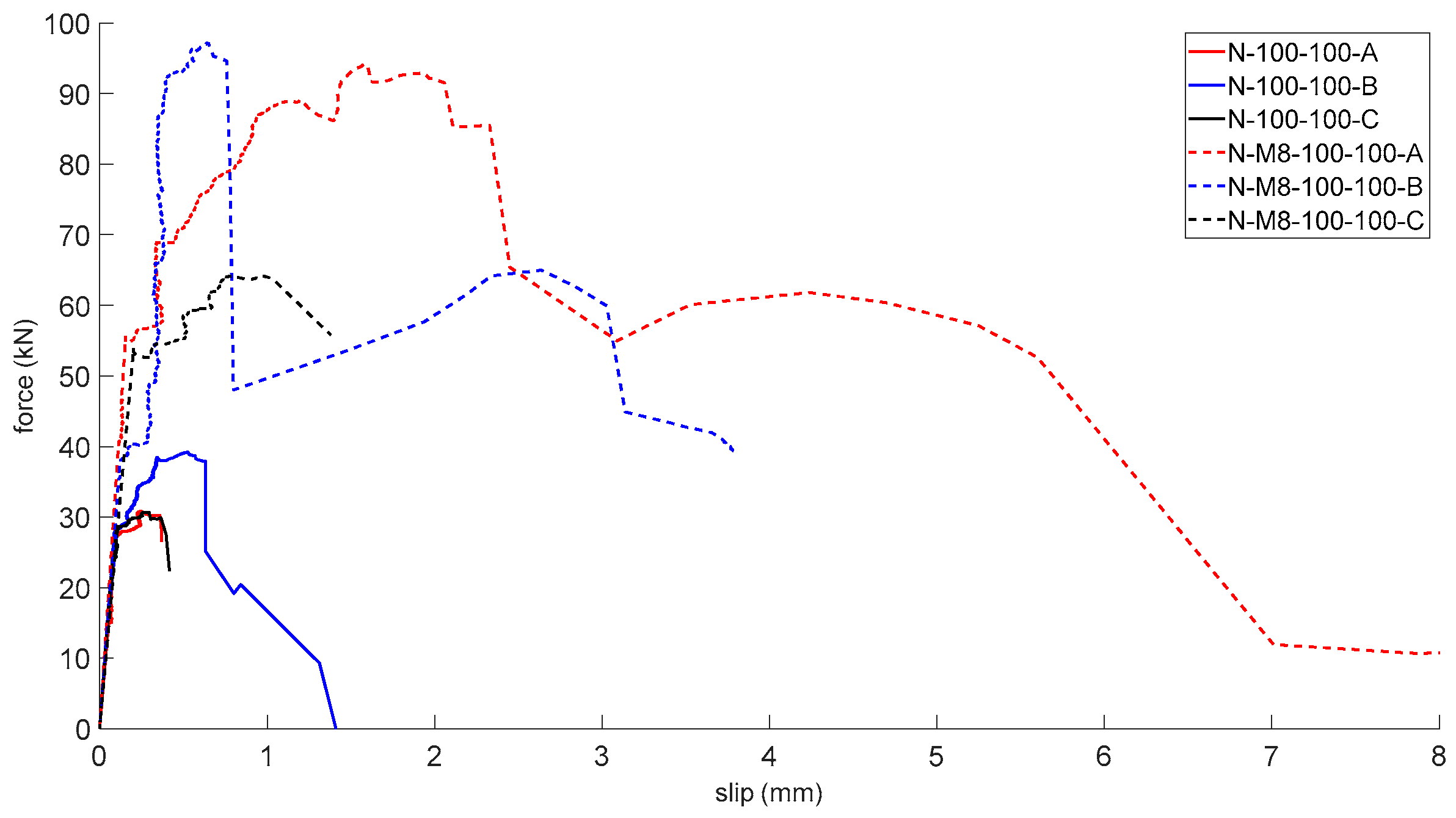
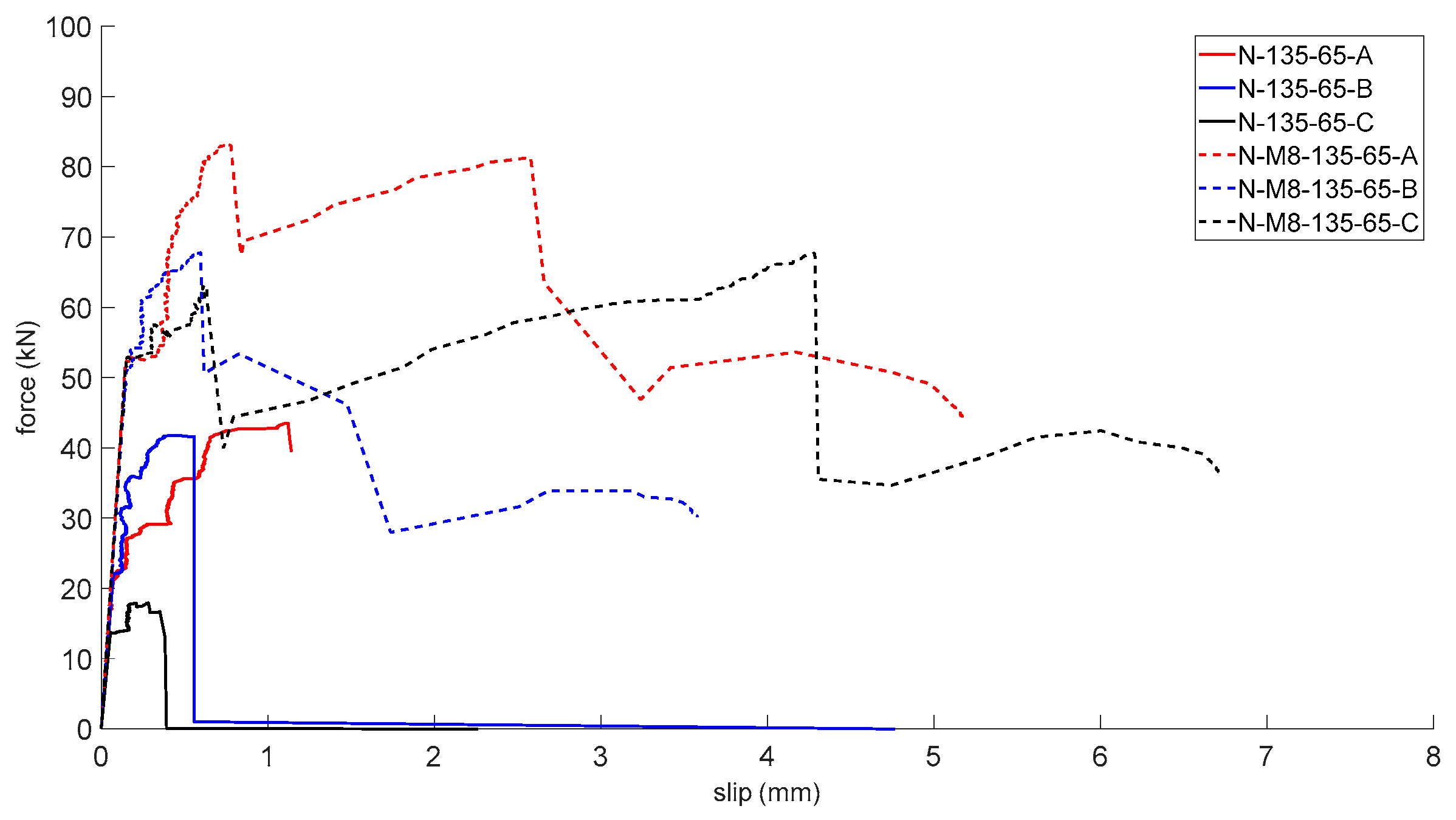
In Figure 5 and Figure 6, the obtained force-slip curves for the tested notch shear connections are given for both cases, with and without screws, for N-100-100 and N-135-65, respectively. These include the post-peak loading behavior of the connection.
In the elastic range, both types of connections, without and with screws, present a similar high initial stiffness, as shown in Figure 5 and Figure 6. The maximum load within the linear range is attained within 0.5 mm slip. For configurations with no screws, a linear pattern is observed until the maximum load is obtained as expected [11].
For specimens without screws, a sudden decrease in strength indicates a local brittle failure of one of the materials (timber in this case). In these specimens, after local failure (loss of stiffness due to a crack in the timber), it was possible for the load to be transferred. There is also an evident rotation in the system after the primary failure; therefore, the force-slip curve’s readings no longer represent a pure shear loading. The screw’s presence has an apparent effect on the load capacity. All specimens with screws achieve a visibly higher load capacity than specimens with the same notch geometry but without screws.
The specimens without screws present a higher loss of load capacity after the maximum load is reached, which results in a lower deformation capacity. For configurations with screws, a slightly stiffer behavior for the force slip curve’s linear part can be observed. This shows the added contribution of the screws. Before the maximum load is reached, a slight loss in load capacity is observed, which corresponds to the concrete’s minor cracks. Though the specimens do not show significant ductility, the deformation capacity, vu, is much higher than for the other specimens. After the failure load, the deformation capacity was held until the system’s global failure, which presents a higher deformation capacity.
In Table 3, a summary of the experimental results is given. For each case, the slip modulus, Kser, is calculated as proposed in the EN 12512 [30] and given per width value to allow comparison with the code requirements [11]. The maximum load, Fmax, is presented from the experiments and the normalized value per notch width. The ultimate slip, vu, is determined according to the calculation presented in Section 2.3. For each configuration, the observed failure mode was identified. In addition to the mean values, the coefficient of variation percentage (CoV) is also calculated to determine the deviations within each type of specimen. The characteristic 5-percentile value is determined according to EN 14358 [35], which specifies the statistical procedures for deriving characteristic values from test results.
There is no significant modification in terms of stiffness, though the specimens with screws presented a higher stiffness. The CoV was between 3 and 15% showing again consistency.
The ultimate slip, vu, is positively impacted by the configurations with the use of screws.
Specimens N-100-100 and N-135-65 showed the same failure mode (shear failure of the timber notches). The specimens with screws showed failure on the concrete side starting in the region of the concrete notch. Further information is given and discussed in the next section.

3.2.2. Observed Failures

  • N-100-100 and N-135-65 (without screws)
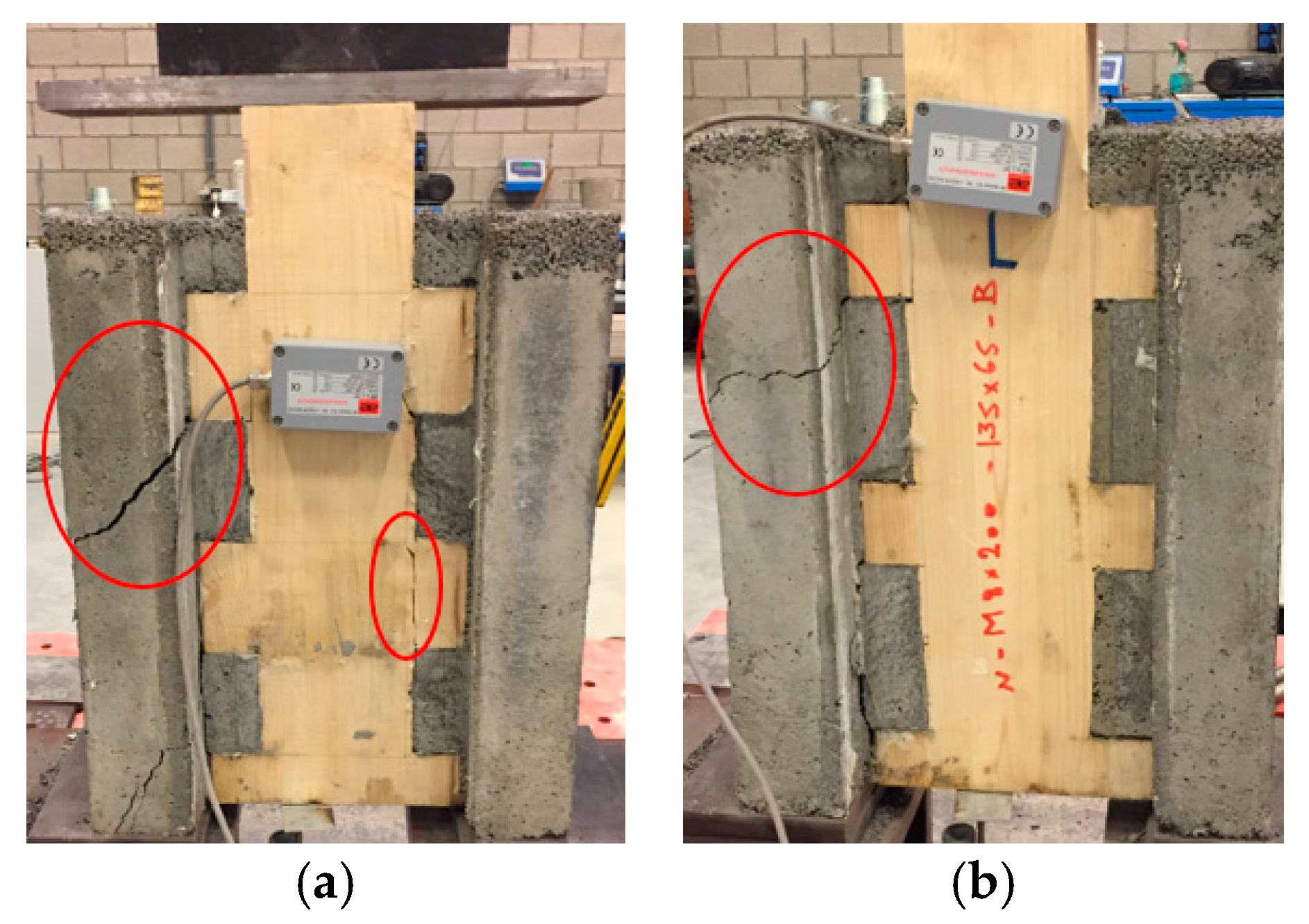
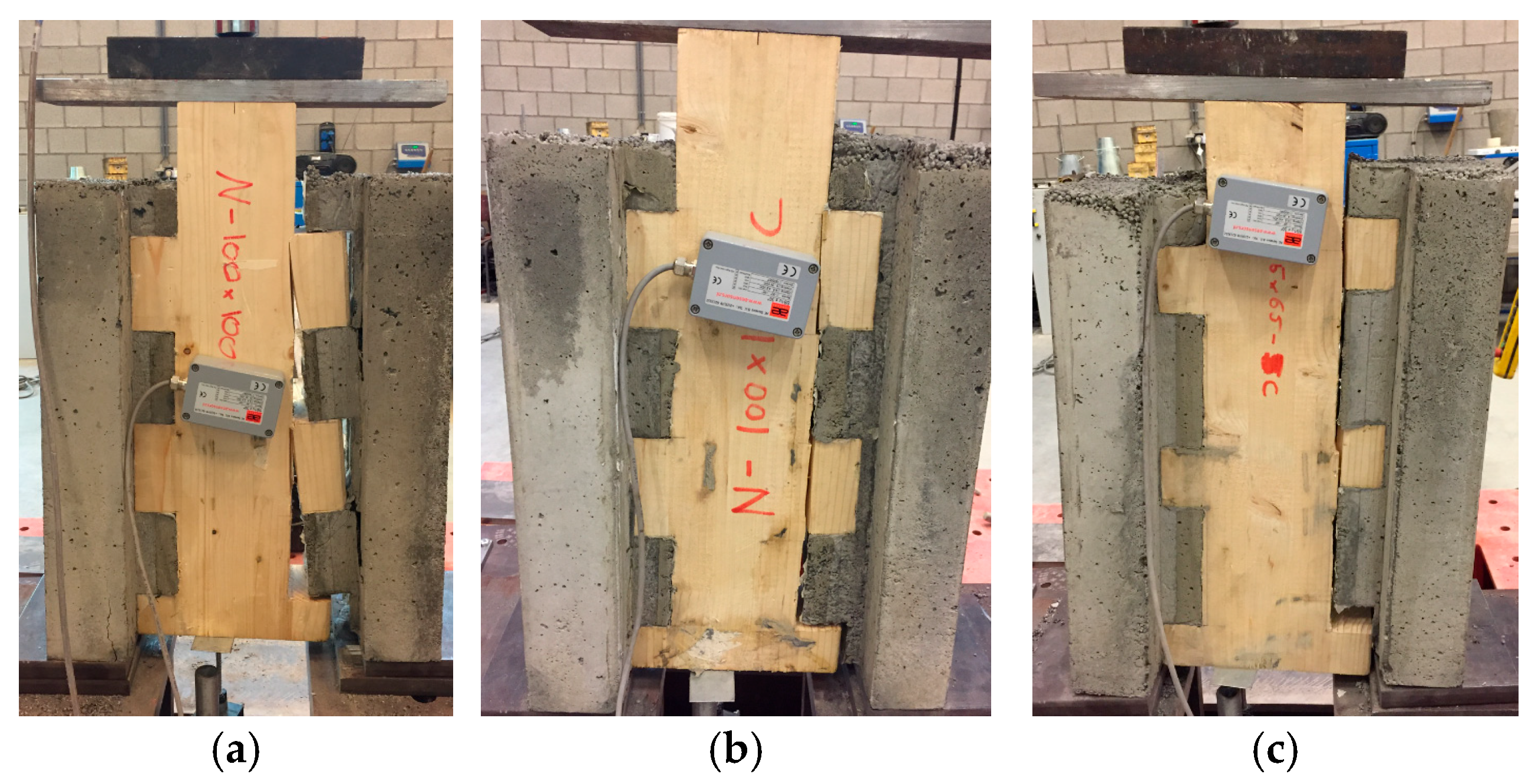
For specimens without screws, the observed failure is shear failure of the timber notches. Figure 7a shows the failure of the test specimen for N-100-100-A. During the experimental loading, after the timber’s shear failure, an immediate shear failure of the concrete notches was observed. Specimens N-100-100 (B&C) and N-135-65 (A&B) only had timber shear failure (Figure 7b), leading to global failure of the specimen due to loss of equilibrium but still undergoing some deformation (slip) before collapse. In test specimen N-135-65-C failure developed similarly as in the latter, as shown in Figure 7c. No particular difference was noticed that could justify the lower load capacity measured in this specimen, as is reported in Figure 6 and Table 4. Consequently, it might be assumed that the lower load capacity of this specimen is due to the inhomogeneity in the wood material.
  • N-M8-100-100 and N-M8-135-65 (with screws)
For specimens with screws, global concrete failure is commonly observed. This failure is visible in the form of diagonal cracks starting at the concrete notch corner and propagating throughout the concrete layer towards the outer surface (see red circles in Figure 8). Due to the added contribution of the screws, the two materials were held together until a first local failure occurred in the concrete (where stiffness degradation is observed at the force-slip curve). The failure was a cone edge failure caused by anchorage in concrete. As shown in Figure 8, even though there was a secondary failure in the timber (see Figure 8a), the composite member was held together/separation was postponed.

4. Discussion

4.1. Comparison Between Testing Variables

In this subsection, the mean values of the experimental results from Table 3 are summarized for a general comparison between the testing variables. The slip modulus, Kser, failure load, Fmax and ultimate slip, vu, are given based on EN 12512 [30]. The effect of each testing variable is here below further analyzed.

4.1.1. Effect of Notch Dimensions

To evaluate the impact of the notch dimensions, the results of test specimens N-100-100 and N-135-65 are compared. The only difference between these two configurations is the increase in the concrete notch length, ln, from 100 mm to 135 mm, and a decrease in the timber notch length, ls from 100 mm to 65 mm. The notch length affects the shear capacity of the concrete, and the distance between the notches affects the shear of timber according to the TS 19103 [26] and as discussed in Section 2.
The timber’s shear resistance calculation is based on the minimum of three geometric parameters. Even though this has been recently revised see Table 1, since a minimum dimension given for lv and ls are bigger than 8hn. In this experimental work, as these dimensions were not respected, the timber notch dimension (ls) is taken as the smallest. In addition to the timber shear capacity, the concrete’s shear capacity also depends on the concrete notch length (ln). The modifications of the notch dimensions thus affect both resistances. As the observed failure mode in both configurations is a shear failure in timber, increasing the timber notch length from 65 mm to 100 mm was not enough to change the failure mode. However, the experimental failure load increased by 3.2% when the notch dimensions are changed from 100-100 to 135-65. Evidence for this is not found on the experiments or the failed specimens; however, N-135-65 (A and B) failed at a higher load than expected. These results are further discussed in Section 4.2.2. with an analytical approach that further support the unexpected observations.
According to the TS 19103 [26], the slip modulus is determined based on the notch’s depth, hn. In this comparison, it is not a variable. The results show that change in notch dimensions affected the results by 8%. This variation is acceptably reasonable as similar differences are observed in the literature [11].
There was an increase of 50% in terms of ultimate slip when the notch dimension is changed from 100-100 to 135-65. This difference is caused by a knot that was at the notch connection on the specimens 100-100. In both configurations, the deformation is limited.

4.1.2. Effect of Added Screws

As there is no conclusion on the effect of the use of dowel type fasteners in notch connections [11,26], some observations based on the current experiments are discussed.
In both configurations, adding a screw to each notch (four in total) leads to a significant increase in strength. Theoretically, the capacity of each screw should be added to the expected failure load of the notch member, which should lead to a significant increase in strength [18]. Even though this is a significant increase, it is not clear if the positive contribution of the screw is activated 100%. It should also be noted that with the use of screws, the failure mode shifted from shear failure in timber to failure in concrete through the development of a global crack. The latter limited the resistance of the specimens, given the narrow dimensions of the concrete layer. Such limitation should not be observed in a floor system where the concrete dimensions are significantly larger; therefore, (lateral) edges should not impact the connection’s performance. After the specimens’ failure, the load was increased a bit in a post-peak load capacity but in a deformation state that might involve eccentricity and secondary mechanisms.
In terms of stiffness, a contribution was observed; however, it was not significant. A slight increase in the initial stiffness was noticed. The initial stiffness of a screw connection is very small compared to the stiffness of a notch connection, as it can be found in [25]. In the latter, screw connections have been tested in similar conditions to the ones of the present study (concrete and timber type, specimen dimensions). The measured initial stiffness of screw connection (only) is 1.56 kN/mm per screw [25]. This justifies that not a major increase is expected.
When the force-slip curves are compared, there is a significant increase in the deformation capacity in both cases with screws. The screw held the two materials together even after the global failure.

4.2. Comparison Between Experimental Tests and Code Requirements

4.2.1. Load Carrying Capacity

The experimental results are compared with the predictions as calculated as described in Section 2.
-
Without screws (notch only)
For notch configurations without screws, the expected failure loads are given in Table 4 based on TS 19103 [26], as presented in Section 2. For the calculations, all safety and modifications factors are considered equal to one as the comparison is made with the experimental results. Due to the limited tests on the material property determination, characteristic material properties are used [36]. For comparison, the mean experimental results are used. The expected failure load is calculated for a single notch and then linearly increased by the number of notches.
For configuration N-100-100 and N-135-65, the expected failure mode is shear failure of the timber. Figure 7 shows that, for these configurations, that was also the failure mode observed during the experiments. The comparison between the observed and predicted load capacity shows that the code leads to an overestimation of 154% and 60% for N-100-100 and N-135-65, respectively.
There may be a few reasons why the TS 19103 requirements lead to an overestimation [26]. As the failure load predictions are based on the notch’s geometric properties, the predictions would be expected to give a closer prediction to the experimental results. Nevertheless, the deviation in the results is high because these models are based on pure shear. Increasing the distance between notches, ls (65 mm to 100 mm) is expected to increase the shear capacity of the timber. The failure loads of N-135-65 (A and B) were indeed higher than when compared to N-100-100. Another reason can be that in the TS 19103, normal weight concrete with a minimum strength class of C20/25 is recommended [26]. Even though the strength prediction is based on the geometric properties of the notch connection, the bending stiffness of concrete will influence the overall behavior. Due to the use of lightweight concrete, the modulus of elasticity is as low as the one of the timber.
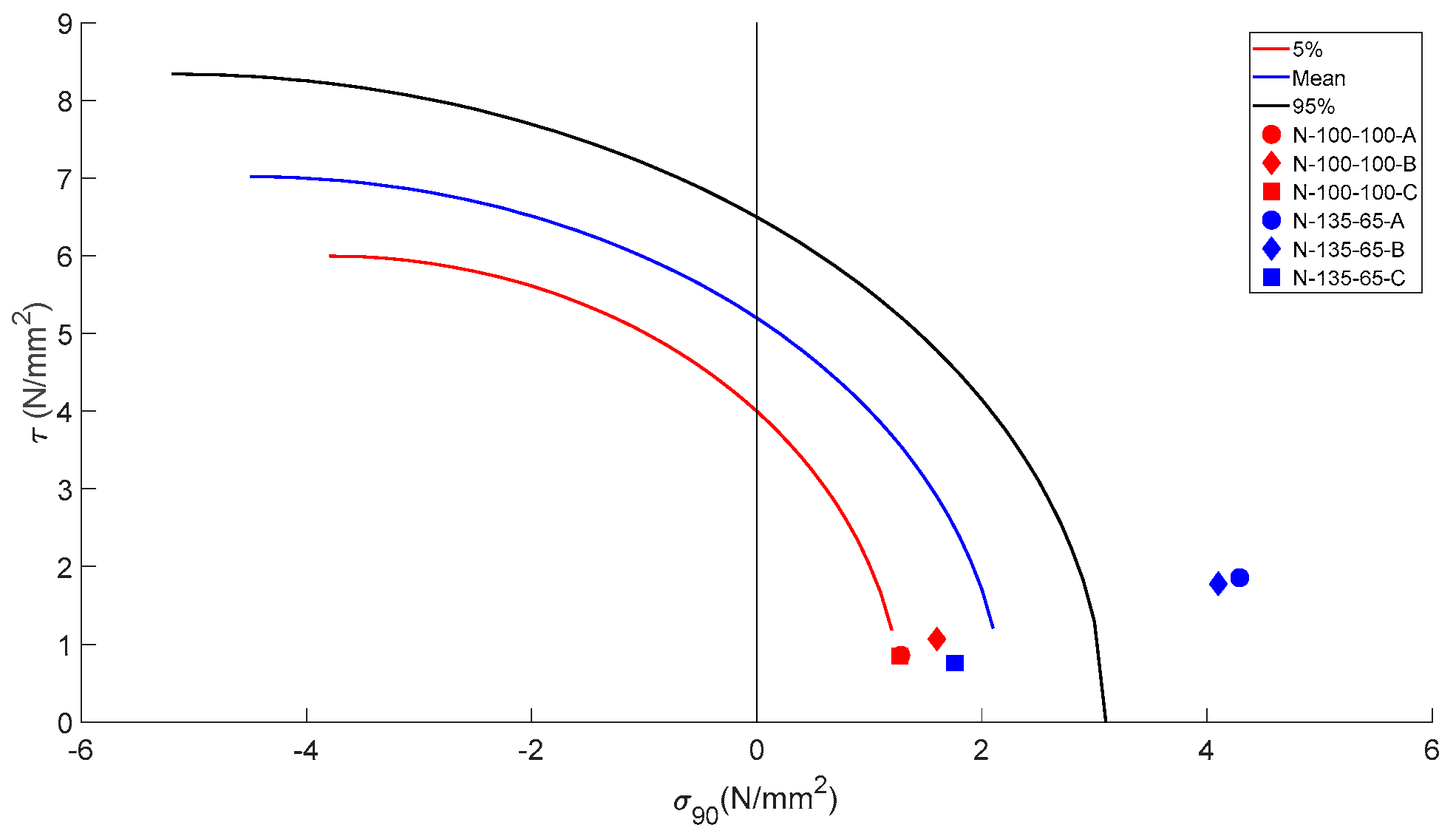
In the literature, the notch depth is usually limited to 20 or 30 mm. By increasing this notch depth and shear forces, bending of the notch also occurs, which becomes relevant with the increase in the notch length [37]. Given the size of the notch of the specimens discussed in this paper, the developed bending moment at the notch interface is not negligible. It affects the shear resistance of the timber notch, as along with shear stresses also tension and compression stresses perpendicular to the grain are developed. Consequently, the resistance of the timber notch has to consider this combined state of stresses. In the Swiss code [38], the interaction between shear stress and tensile stress in timber can be considered using Equation (6), as also depicted in Figure 9. In this plot, 5 percentile, mean, and 95 percentile are worked with for the mechanical properties. The interaction is calculated using the conventional shear strength (fv), the compressive strength perpendicular to the grain (fc,90), the tensile strength perpendicular to the grain (ft,90), and the axial stress parallel to the grain (σ90). For this work, the mechanical properties are those of Norwegian spruce glulam as given in [39].
The shear is calculated for 5 percentile, mean, and 95 percentile, respectively. This model was applied to experimental results. To observe where the experimental, the shear and tensile stresses are calculated using Equations (7) and (8), respectively, and are plotted in Figure 9. These points are computed for tension because they are more critical in the behavior of shear resistance of the connection. Figure 9 shows that the experimental results obtained in this paper are in agreement with the 5% level. As can be seen in Figure 9, except for tests N-135-65 (A and B), the experimental results are in line with the interaction approach. This indicates that test specimen N-135-65-C provides a consistent result with the geometric variation performed given that failure was governed by the timber.
τ = f v 2 1 f c , 90 + σ 90 2 f c , 90 + f t , 90 2 1 f c , 90 f c , 90 + f t , 90 2
τ e x p = F s h e a r , p e r   n o t c h ( b n × l s )
σ e x p = 3   h n   F s h e a r , p e r   n o t c h b n × l s 2
where τ is the shear stress based on the shear strength parallel to the grain (fv), fc,90 is the compressive strength perpendicular to the grain, ft,90 is the tensile strength perpendicular to the grain, and σ90 is the tensile stress. τexp represents the experimental shear stress and σexp is the tensile experimental stress, which is calculated based on Fshear,per notch, which is the failure force of the entire system divided by four to calculate the force bore by a single notch.
-
With screws
The load capacity of the modes associated with the screw connection is computed with the rope effect for a screw M8x200 and is given in Table 5. As for the notch connection there was a high variation between the code prediction and the experimental load. In Table 6 are given the computed values using two approaches: case (1) only using the analytical approach; case (2) the analytical approach to estimate the screw component and the experimental resistance of the notch component.
The results in Table 6 show that the difference between the tests and computed load for case 1 is 41% for N-M8-100-100 and 27% for N-M8-135-65 when code predictions are used for the notch. The overestimation is mainly due to the overestimation of the notch failure load (see Table 4). Due to the deviation of the notch results (code prediction), and the observation on Equation (2), load predictions would also be affected. When the experimental notch load-carrying capacities are used, Case 2, the deviation reduced to 20% and 2%, respectively, for N-100-100 and N-135-65. It should be noted that now the predicted value is underestimating the experimental tests, which is recommended for safer design.
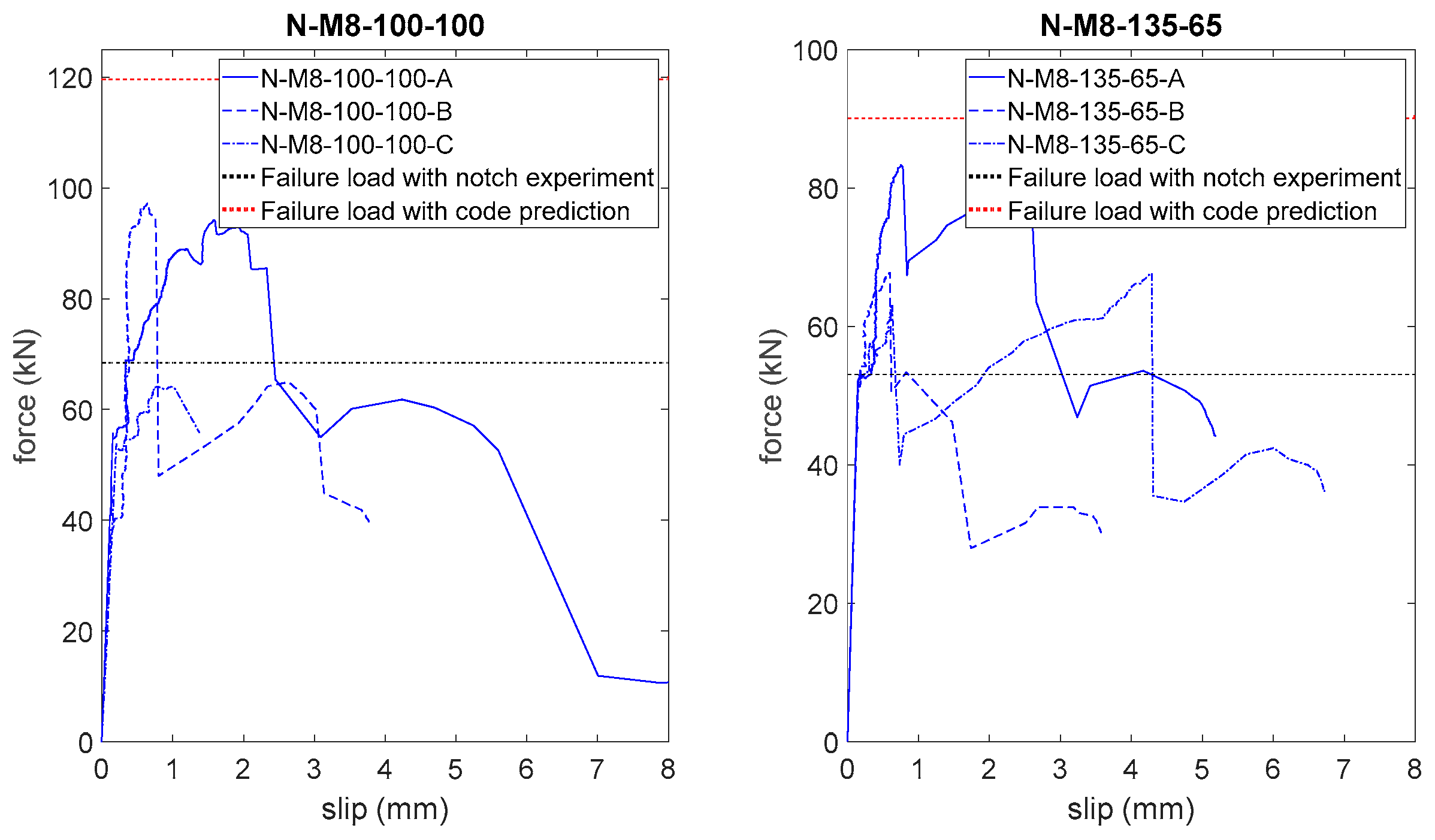
Figure 10 shows the experimental force-slip curves, which are compared with the predicted load capacity. For the latter, the sum of screw capacity and notch capacity are presented for both discussed cases.

4.2.2. Stiffness

As discussed in Section 2, the determination of the slip modulus of notch connections is still an open topic for notch depths, hn, different from 20 or 30 mm. This estimation is based on an extensive literature review [40]. In Table 7, the slip modulus per notch obtained from experiments are presented.
In this paper, a notch depth (hn) of 50 mm is used to explore other dimensions than those given by the code. From the TS 19103 [26], the expected slip modulus for a notch depth of 50 mm is 1500 kN/mm/m per notch width. However, this expected slip modulus is not reached by the specimens. The reason may be the use of low strength lightweight concrete, which has a higher deformability than normal weight concrete. The code recommendation is based on normal weight concrete.
For the configurations with screws, the slip modulus increased when compared to cases without screws. The expected slip modulus of one screw is 1.56 kN/mm [25]. The slip modulus of the notch connection is significantly higher (approximately 295 kN/mm); therefore, the contribution of a screw is expected to be low (Table 7). This observation is in line with the literature [20].
The above observations have to take into consideration that the measured values of the slip, to compute the slip modulus, have an order of magnitude smaller than 0.5 mm; therefore, any fluctuation in the measuring system has a significant impact in the measured values. Consequently, any deviation from the expected added contribution of the screw to the notch connection, in terms of stiffness, may be affected.

4.2.3. Ductility and Deformation Capacity

In Table 8, the mean ultimate slip, vu, the yield slip, vy, slip corresponding to maximum load, vu,Fmax, and the ductility ratio, D, are presented. Ductility is calculated using the ratio of ultimate slip to yield slip, as explained in Section 2.
Screws are known for their ductile behavior, and by introducing them to notch connections, it was expected to increase the ductility ratio, which is lacking in the notch connections. In this paper, the ductility ratio was slightly higher for the configurations with a screw. Adding a screw to the notch connection, increased the yield slip. The increase in the yield slip led to a ductility ratio higher than the one for the case without using a screw (see Figure 5 and Figure 6).
Adding the screws increased the slip at the failure load, vu,Fmax, and the deformation capacity of the connection, vu,f. As given in Table 8, the deformation capacity minimum doubled with the addition of screws.
The computation of D is very sensible to vy, here it is used based on EN 12512 [30]. Different approaches are available in the literature, showing that there is no convergence on the approach to use [41]. However, this is not the scope of this study as it requires deeper study and a more extensive parametric study. The ductility parameter was here mainly used to have a qualitative comparison quantification of the effect of the screw on the connection deformation without the loss of significant load capacity. Deeper analysis is not within the scope of this paper.

5. Conclusions

In this paper, the behavior of notch shear connections for TCC using low strength lightweight concrete was studied. The experimental program determined the effect of two different notch dimensions and the combination of notches with screws. From the performed shear tests, force-slip curves are obtained to determine the initial stiffness of the shear connection, failure load, ductility, and deformation capacity. Based on the results, the following conclusions can be reached:
For notch connection without screws:
  • Though a lower concrete strength was used, concrete was not responsible for the failure of the connection, which shows that such a low strength concrete can be suitable for application in TCC as for instance in a renovation solution.
  • Failure mode predictions given in the TS 19103 were in agreement with the experimental results. However, due to the notch dimensions in this paper, the failure was governed by a combination of shear stresses and tensile stresses perpendicular to the grain rather than pure shear stresses, as proposed in the design approach of TS 19103.
  • Due to the quasi-brittle behavior of timber under shear stresses, further pronounced with the development of tensile stresses perpendicular to the grain, a brittle failure was observed.
  • Stiffness predictions given in the code are based on very narrow criteria, which are not respected in this paper; therefore, a high deviation is observed. However, this observation is in line with the literature, in which similar materials are used.
For notch connections with screws:
  • Dowels can be used to take uplift forces in the connections, which is the positive effect; however, other advantages are shown in this paper.
  • In terms of stiffness, adding screws had a slight impact on the measured results, in agreement with other experiments reported in the literature.
  • Adding screws to the composite member significantly increased the load-carrying capacity (more than double).
  • Adding screws changed the failure mode from shear timber failure to concrete failure. Diagonal concrete cracks were observed at the edge of the concrete notches and propagating through the concrete layer. Its narrow dimension limited the load capacity of the test specimens. In real applications (continuous concrete slabs), these cracks can be avoided with a wider slab.
  • The ductility ratio calculation shows an increase in ductility when a screw is added.
  • Moreover, as it can be observed, in Figure 5 and Figure 6, adding screws impacts the deformation capacity of the connection. The complete fracture of the specimens with screws occurs at three to four times the slip of those without screws.
Moreover, an analytical approach given in TS 19103 was considered. For the specimens without screws, the failure mode was in agreement, and the load-carrying capacity was in reasonable agreement with the code requirements. As the strength prediction in the TS 19103 gives a reliable estimate, the most optimized notch dimensions can be obtained.
For the specimens using screws, there are no code provisions. In this paper, the component of the screw connection load-carrying capacity was determined using the screw failure modes given in EN 1995-1-1. Use of EN 1995-1-1 gave accurate predictions in terms of strength. To have a more accurate estimate, it is proposed to sum up the loads for a notch and a screw.
As a result of this study, it can be concluded that the use of low strength lightweight concrete is still an acceptable option even though it is not mentioned in the current literature. With this observation, optimization in the structural weight can be made. This may have particular interest for renovation cases, where notches can be, for example, created or added (glued or screwed). Though, the present paper did not explore this specific application, it opens the door to the use of LWC. Even though some concepts are discussed in this paper, more extensive experimental analysis is required to improve the code requirements.

Author Contributions

Conceptualization, E.A., B.V. and J.H.; methodology, E.A., B.V. and J.H.; validation, E.A., B.V. and J.H.; formal analysis, E.A.; investigation, E.A.; resources, B.V. and J.H.; writing—original draft preparation, E.A.; writing—review and editing, B.V. and J.H.; visualization, E.A.; supervision, B.V. and J.H.; project administration, J.H.; funding acquisition, B.V. and J.H. All authors have read and agreed to the published version of the manuscript.

Funding

This experimental campaign was funded by Hasselt University under the PhD employment of the first author (2018–2022), and the APC was funded by Lund University.

Data Availability Statement

The data presented in this study are available on request from the corresponding author.

Acknowledgments

The authors would like to acknowledge Argex Belgium for their material contribution and Xavier Kestemont for his technical contribution. Hasselt University students from the 2018–2019 academic year, Mathias Hendrikx, Stijn Gielis and Hubrecht Hermans are gratefully acknowledged for their help and experimental work. Support of Dan Dragan is appreciated.

Conflicts of Interest

The authors declare no conflicts of interest.

References

  1. Carvalho, S.; Panzera, T.; Christoforo, A.; Fiorelli, J.; Lahr, F.; Freire, R. Epoxy mortar timber beam upgrading. Int. Wood Prod. J. 2017, 8, 146–154. [Google Scholar] [CrossRef]
  2. Lukaszewska, E. Development of Prefabricated Timber-Concrete Composite Floors. Ph.D. Thesis, Department of Civil, Mining and Environmental Engineering, Lulea University of Technology, Lulea, Sweden, 2009. [Google Scholar]
  3. Yeoh, D. Behaviour and Design of Timber-Concrete Composite Floor System. Ph.D. Thesis, University of Canterbury, Christchurch, New Zealand, 2010. [Google Scholar]
  4. Avez, C. Design of an Adhesively Bonded-in Steel Plate Connection for Cross Laminated Timber. Ph.D. Thesis, Engineering Science and Technology, University of Mons, Mons, Belgium, 2021. [Google Scholar]
  5. Al Rahim, A.; Heng, P.; Keo, P.; Lepourry-Nicollet, C.; Palas, F.; Somja, H. Behaviour of a novel timber-concrete floor with a three-dimensional (3D) ductile notched connection. Eng. Struct. 2024, 309, 117963. [Google Scholar] [CrossRef]
  6. Dias, A. Mechanical Behaviour of Timber-Concrete Joints. Ph.D. Thesis, TU Delft, Delft, Netherlands, 2005. [Google Scholar]
  7. COST. Design of Timber-Concrete Composite Structures—A State-of-the-Art Report by COST Action FP1402/WG 4; Shaker Verlag: Düren, Germany, 2018. [Google Scholar]
  8. Richard, F.; Williams, C. Tests of Composite Timber-Concrete Beams; University of Illinois Bulletin; Engineering Experiment Station: Urbana, IL, USA, 1943. [Google Scholar]
  9. Lukaszewska, E.; Fragiacomo, F.; Frangi, A. Evaluation of the slip modulus for ultimate limit state verifications of timber-concrete composite structures. In Proceedings of the CIB-W18, International Council for Research and Innovation in Building and Construction-Working Commission W18-Timber Structures, Bled, Slovenia, 28–31 August 2007. [Google Scholar]
  10. Gutkowski, R.; Brown, K.; Shigidi, A.; Natterer, J. Investigation of notched composite wood-concrete connections. J. Struct. Eng. 2004, 130, 1553–1561. [Google Scholar] [CrossRef]
  11. Kudla, K. Short Term Scientific Mission: Notched Connections for TCC Structures as Part of the Standard; European Cooperation in Science and Technology (COST): Brussels, Belgium, 2015. [Google Scholar]
  12. Djoubissie, D.; Messan, A.; Fournely, E.; Bouchair, A. Experimental study of the mechanical behavior of timber-concrete shear connections with threaded reinforcing bars. Eng. Struct. 2018, 172, 997–1010. [Google Scholar] [CrossRef]
  13. Monteiro, S.; Dias, A.; Negrao, J. Assessment of Timber-Concrete Connections Made with Glued Notches: Test Set-Up and Numerical Modeling. Exp. Tech. 2013, 37, 50–65. [Google Scholar] [CrossRef]
  14. Rasmussen, P.; Sorensen, J.; Hoang, L.; Feddersen, B.; Larsen, F. Notched connection in timber-concrete composite deck structures: A literature review on push-off experiments & design approaches. Constr. Build. Mater. 2023, 397, 131761. [Google Scholar]
  15. Ling, Z.; Wang, H.; Rong, X.; Li, Z.; Zhang, L.; Zheng, W. Experimental behaviour of notched timber-concrete connections with glued-in rod under different test configurations and loading protocols. Mater. Struct. 2026, 59, 16. [Google Scholar] [CrossRef]
  16. Rasmussen, P.; Sorensen, J.; Hoang, L.; Feddersen, B.; Larsen, F. Experimental study of an innovative timber-concrete composite deck with a demountable dry-dry notched connection system. Structures 2024, 70, 107355. [Google Scholar] [CrossRef]
  17. Kuhlmann, U.; Michelfelder, B. Grooves as shear-connectors in timber concrete composite structures. Presented at the 8th World Conference on Timber Engineering WCTE 2004, Lahti, Finland, 14–17 June 2004. [Google Scholar]
  18. Xie, L.; He, G.; Wang, X.; Gustafsson, P.; Crocetti, R.; Chen, L.; Li, L.; Xie, W. Shear Capacity of Stud-Groove Connector in Glulam-concrete Composite Structure. Bioresources 2017, 12, 4690–4706. [Google Scholar] [CrossRef]
  19. Lamothe, S.; Sorelli, L.; Blanchet, P.; Galimard, P. Lightweight and slender timber-concrete composite floors made of CLT-HPC and CLT-UHPC with ductile notch connectors. Eng. Struct. 2021, 243, 112409. [Google Scholar] [CrossRef]
  20. Jiang, Y.; Hu, X.; Hong, W.; Zhang, J.; He, F. Experimental Study on Notched Connectors for Glulam-lightweight Concrete Composite Beams. Bioresources 2020, 15, 2171–2180. [Google Scholar] [CrossRef]
  21. Appavuravther, E.; Vandoren, B.; Henriques, J. Behaviour of screw and notch shear connections in timber-low strength lightweight concrete composite (TLCC). Presented at the World Conference on Timber Engineering, Santiago, Chile, 9–12 August 2021. [Google Scholar]
  22. Steinberg, E.; Selle, R.; Faust, T. Connectors for timber-lightweight concrete composite structures. J. Struct. Eng. 2003, 129, 1538–1545. [Google Scholar] [CrossRef]
  23. Jorge, L.; Cruz, H.; Lopes, S. Shear tests in timber-LWAC joints with screw-type connections. Presented at the International Council for Research and Innovation in Building and Construction, Working Commission W18—Timber Structures, Estes Park, CO, USA, 11–14 August 2003; pp. 102–112. [Google Scholar]
  24. Appavuravther, E.; Vandoren, B.; Henriques, J. Behaviour of bonded-in dowel shear connections in timber lightweight concrete composite beams including effect of an interlayer. Constr. Build. Mater. 2023, 397, 132389. [Google Scholar] [CrossRef]
  25. Appavuravther, E.; Vandoren, B.; Henriques, J. Behaviour of screw connections in timber-concrete composites using low strength lightweight concrete. Constr. Build. Mater. 2021, 283, 122973. [Google Scholar] [CrossRef]
  26. CEN/TS 19103:2021; Eurocode 5: Design of Timber Structures—Structural Design of Timber-Concrete Composite Structures—Common Rules and Rules for Buildings. European Committee for Standardization: Brussels, Belgium, 2021.
  27. EN 1995-1-1; Design of Timber Structures—Part 1-1: General Rules and Rules for Buildings. European Committee for Standardization: Brussels, Belgium, 2004.
  28. EN 1992-1-1; Design of Concrete Structures—Part 1-1: General Rules and Rules for Buildings. European Committee for Standardization: Brussels, Belgium, 2004.
  29. EN 1995-2; Design of Timber Structures—Part 2: Bridges. European Committee for Standardization: Brussels, Belgium, 2004.
  30. EN 12512; Timber Structures—Test Methods—Cyclic Testing of Joints Made with Mechanical Fasteners. European Committee for Standardization: Brussels, Belgium, 2002.
  31. Bruhl, F.; Kuhlmann, U.; Jorissen, A. Consideration of plasticity with in the design of timber structures due to connection ductility. Eng. Struct. 2011, 33, 3007–3017. [Google Scholar] [CrossRef]
  32. EN 408:2010; Timber Structures—Structural Timber and Glued Laminated Timber—Determination of Some Physical and Mechanical Properties. European Committee for Standardization: Brussels, Belgium, 2010.
  33. EN 12390-3; Testing Hardened Concrete—Part 3: Compressive Strength of Test Specimens. European Committee for Standardization: Brussels, Belgium, 2009.
  34. ETA-13/0029; Self-Tapping Screws for Use in Wood-Concrete Slab Kits. ETA-Denmark A/S: Copenhagen, Denmark, 2017.
  35. BS EN 14358:2016; Timber Structures. Calculation and Verification of Characteristic Values. European Committee for Standardization: Brussels, Belgium, 2016.
  36. EN 14080; Timber Structures—Glued Laminated Timber and Glued Solid Timber—Requirements. European Committee for Standardization: Brussels, Belgium, 2013.
  37. Boccadoro, L.; Steiger, R.; Zweidler, S.; Frangi, A. Analysis of shear transfer and gap opening in timber-concrete composite members with notched connections. Mater. Struct. 2017, 50, 231. [Google Scholar] [CrossRef]
  38. SIA 265; Timber Structures. Swiss Society of Engineers and Architects (SIA): Zurich, Switzerland, 2003.
  39. Steiger, R.; Gehri, E. Interaction of shear stresses and stresses perpendicular to the grain. In Proceedings of the Working Commission W18-Timber Structures, Meeting Forty-Four, Alghero, Italy, 28–31 August 2011. [Google Scholar]
  40. Dias, A.; Kuhlmann, U.; Kudla, K.; Monch, S.; Dias, A. Performance of dowel-type fasteners and notches for hybrid timber structures. Eng. Struct. 2018, 171, 40–46. [Google Scholar] [CrossRef]
  41. Jorissen, A.; Fragiacomo, M. General notes on ductility in timber structures. Eng. Struct. 2011, 33, 2987–2997. [Google Scholar] [CrossRef]
Figure 1. Potential failure modes in screw shear connection for TCC.
Buildings 16 00923 g001
Figure 2. Identification of the reference slip values (vy, vu,Fmax, vu and vu,f) in a load-slip curve.
Buildings 16 00923 g002
Figure 3. Geometry of the test specimens (a) configuration without screw (b) configuration with screw (dimensions in mm).
Buildings 16 00923 g003
Figure 4. Experimental setup.
Buildings 16 00923 g004
Figure 5. Force slip curve for notch dimensions 100-100.
Buildings 16 00923 g005
Figure 6. Force slip curve for notch dimensions 135-65.
Buildings 16 00923 g006
Figure 7. Failure modes of notches without screws (a) N-100-100-A (b) N-100-100-C (c) N-135-65-C.
Buildings 16 00923 g007
Figure 8. Failure modes of notches with screws (a) N-M8-100-100-A (b) N-M8-135-65-C.
Buildings 16 00923 g008
Figure 9. Shear and perpendicular stresses of given wood and experimental results.
Buildings 16 00923 g009
Figure 10. Force-slip curves with failure load predictions.
Buildings 16 00923 g010
Table 1. Failure modes based on TS 19103 [26], schemes and equations.
Failure ModeSchemeEquation
Mode (i)
Shear failure of the timber
Buildings 16 00923 i001 F R d _ s t = k c r f v , t , d b n l m i n
l m i n = 8 h n
Mode (ii)
Crushing of the timber
Buildings 16 00923 i002 F R d _ c t = f c , 0 , d b n h n
Mode (iii)
Shear failure of the concrete
Buildings 16 00923 i003 F R d _ s c = f v , c , d b n l n
f v , c , d = v f c , d cot θ + tan θ
v = 0.6 1 f c , k 250
θ = m a x tan 1 0.5 h c + h n l n + l s ; tan 1 h n l n
Mode (iv)
Crushing of the concrete
Buildings 16 00923 i004 F R d _ c c = f c , d b n h n
Table 2. Test specimen dimensions in mm.
IDlnlshnbnScrewleffNumber of Specimens
N-100-1001001005090--3
N-M8-100-1001001005090M8-2001003
N-135-65135655090--3
N-M8-135-65135655090M8-2001003
Table 3. Experimental results.
Kser (kN/mm)Kser (kN/mm/m)Fmax (kN)vu (mm)Observed Failure
N-100-100-Mean306.573406.3033.260.47Timber shear
N-100-100-Standard deviation 23.89265.454.410.14
N-100-100-CoV (%)7.797.7913.2629.15
N-100-100-Characteristic 238.102645.5922.090.19
N-M8-200-100-100-Mean311.133457.0485.141.52Concrete failure
N-M8-200-100-100-Standard deviation45.81508.9918.340.81
N-M8-200-100-100-CoV (%)14.7214.7221.5453.23
N-M8-200-100-100-Characteristic 193.322148.0040.260.24
N-135-65-Mean283.103145.5634.320.69Timber shear
N-135-65-Standard deviation31.45349.4014.290.40
N-135-65-CoV (%)11.1111.1141.6356.97
N-135-65-Characteristic 196.182179.816.570.53
N-M8-200-135-65-Mean351.733908.1571.330.71Concrete failure
N-M8-200-135-65-Standard deviation9.10101.0910.610.12
N-M8-200-135-65-CoV (%)2.592.5914.8716.61
N-M8-200-135-65-Characteristic 300.443338.2044.900.42
Table 4. Failure load predictions.
Units in kNN-100-100N-135-65
FRd_st21.1113.72
FRd_ct108.00108.00
FRd_sc29.6932.63
FRd_cc65.2565.25
minimum21.1113.72
For 4 notches84.4254.87
Mean experimental33.2634.32
Difference (%)−153.82−59.79
Table 5. Experimental slip modulus per notch.
N-100-100N-135-65
Stiffness(kN/mm)(kN/mm/m)(kN/mm)(kN/mm/m)
Screw (for 4) [25]6.2469.336.2469.33
Notch only306.573406.30283.103145.56
Total312.813475.63289.343214.89
Experimental311.133457.04351.733908.15
Difference (%)−0.54−0.5417.7417.74
Table 6. Failure load predictions with the use of Equation (2).
N-100-100N-135-65
Capacity (kN)Case1Case 2Case 1Case 2
Screw capacity8.858.858.858.85
For 4 screws35.3835.3835.3835.38
Notch capacity84.4233.2654.8734.32
Total119.8068.6490.2569.7
Experimental results85.1485.1471.3371.33
Difference (%)−40.7119.38−26.532.29
Table 7. Failure load predictions of screw connection.
CasesM8x200
Case a10.41
Case b21.45
Case c8.85
Case d12.91
Case e19.67
Case f9.12
Case d213.76
Case e29.67
minimum for a screw (kN)8.85
Table 8. Experimental ductility results.
IDvu (mm)vy (mm)vu,Fmax (mm)vu,f (mm)D
N-100-100-Mean0.470.090.280.475.51
N-100-100-CoV (%)29.159.7120.0829.1538.39
N-M8-100-100-Mean1.520.251.001.546.91
N-M8-100-100-CoV (%)53.2322.3352.7154.3274.04
N-135-65-Mean0.690.150.630.714.86
N-135-65-CoV (%)58.326.6659.8054.0354.94
N-M8-135-65-Mean0.710.140.670.845.23
N-M8-135-65-CoV (%)16.6110.6014.399.2813.65
Disclaimer/Publisher’s Note: The statements, opinions and data contained in all publications are solely those of the individual author(s) and contributor(s) and not of MDPI and/or the editor(s). MDPI and/or the editor(s) disclaim responsibility for any injury to people or property resulting from any ideas, methods, instructions or products referred to in the content.