Research on Thermal Performance and Structural Optimization of Finned Shell-and-Tube Storage Units for Air-Source Heat Pump Systems


Abstract
1. Introduction
2. Materials and Methods
2.1. Influence of EG Content on the Mechanism of Thermal Conductivity
2.2. Physical Model
2.3. Numerical Model
2.3.1. Model Assumptions
- (1)
- Thermophysical properties of the PCM are constant within the operating temperature range.
- (2)
- The PCM is incompressible and isotropic, with negligible volume change during phase change.
- (3)
- The standard k-ε turbulence model is employed primarily to enhance numerical stability and capture local velocity perturbations in the buoyancy-driven natural convection of the liquid PCM. While the overall flow regime is laminar to weakly turbulent (Rayleigh number ~106–107), the k-ε model provides robust convergence for the transient, phase-change-coupled simulation. The Boussinesq approximation is adopted for buoyancy effects, and validation against experimental data confirms that this modeling strategy reasonably predicts the overall melting time and temperature evolution.
- (4)
- Radiation heat transfer is neglected, and the outer wall is adiabatic.
2.3.2. Governing Equations
2.4. Assessment of Regional Discretization and Mesh Independence
3. Numerical Results and Discussion
3.1. The Influence of Heat Exchanger Tube Structure
3.2. Effect of Inlet Temperature
3.3. Techno-Economic Considerations
4. Experimental Verification of the Function of Unit Heat Storage Tank Fins
4.1. Experimental System
4.2. Numerical Model and Method Validation
4.3. Experimental Results and Discussion
5. Limitations and Future Work
- (1)
- Idealized modeling assumptions. The numerical model adopts adiabatic outer boundary conditions and assumes constant thermophysical properties for the PCM. In practical systems, however, heat losses to the ambient and temperature-dependent variations in material properties may influence the thermal response and overall performance.
- (2)
- Focus on the charging process. The investigation primarily addresses the melting (charging) behavior of the PCM. In contrast, the solidification (discharging) process—characterized by weakened natural convection, potential supercooling, and reversed heat flux direction—has not been systematically examined. A detailed analysis of discharge performance is necessary for comprehensive system evaluation.
- (3)
- Long-term thermal cycling stability. Although CPCM3 exhibited stable behavior during the initial experimental cycles, its long-term performance under extended thermal cycling (e.g., >1000 cycles) has not been assessed. Possible degradation mechanisms—including paraffin leakage from the EG porous matrix, gradual reduction in effective thermal conductivity, and phase transition temperature drift—require quantitative investigation to enable reliable lifetime prediction.
- (4)
- Scope of techno-economic evaluation. The techno-economic discussion in this study re-mains qualitative. While fin structures increase manufacturing complexity, they reduce melting time by 47–59%, suggesting potential system-level economic benefits. However, detailed life-cycle cost modeling incorporating material cost, fabrication processes, and regional economic parameters was beyond the present scope.
6. Conclusions
- (1)
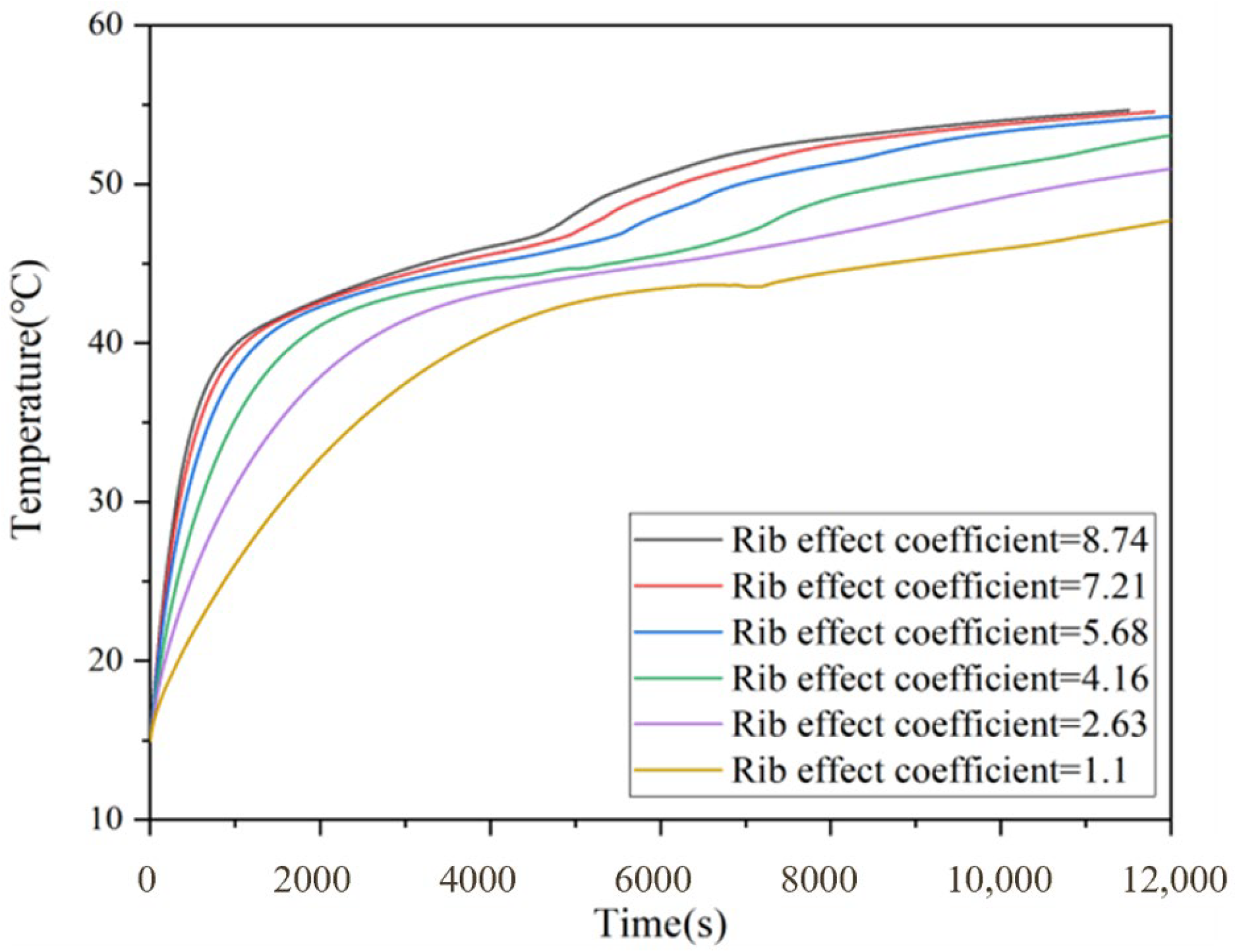
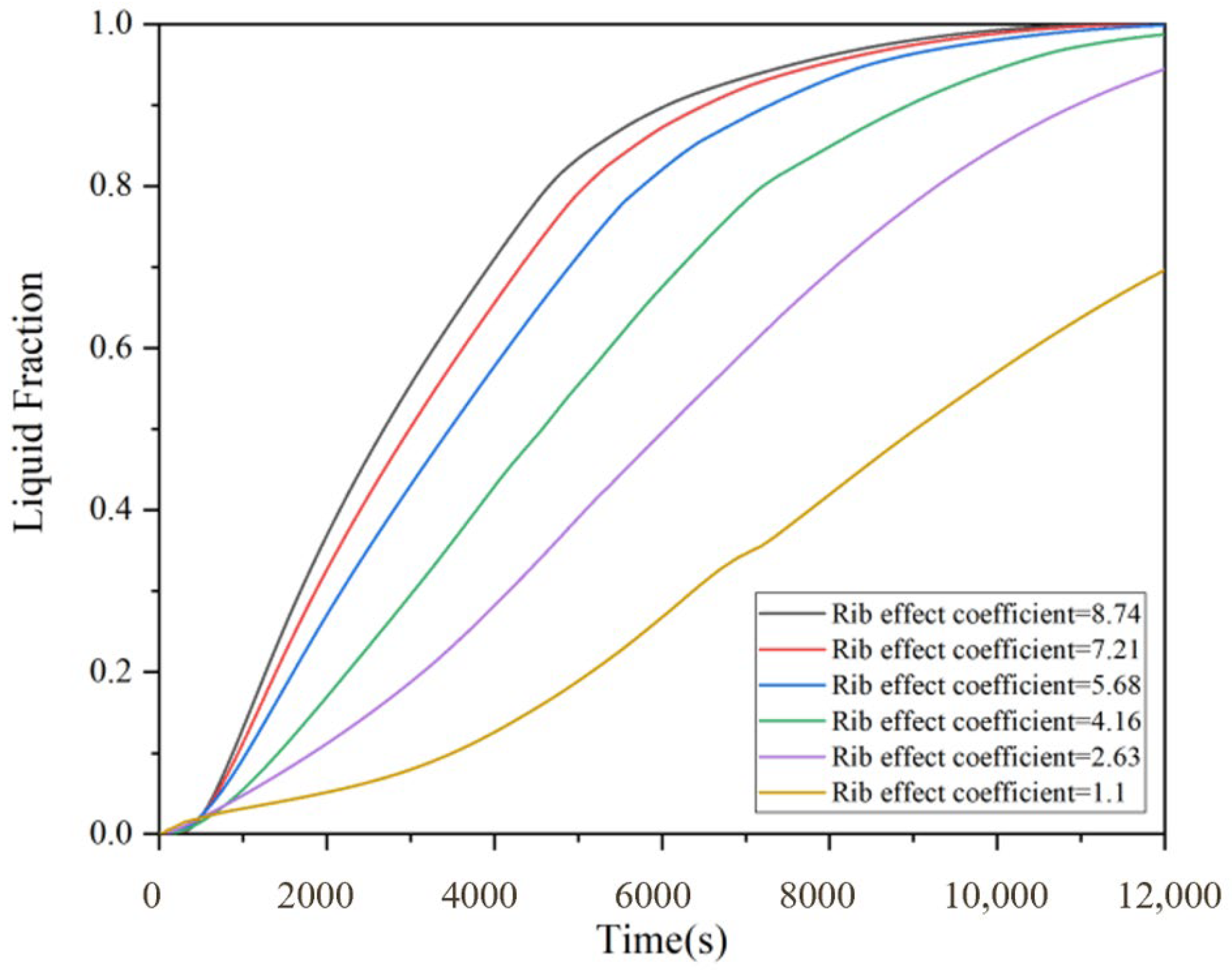
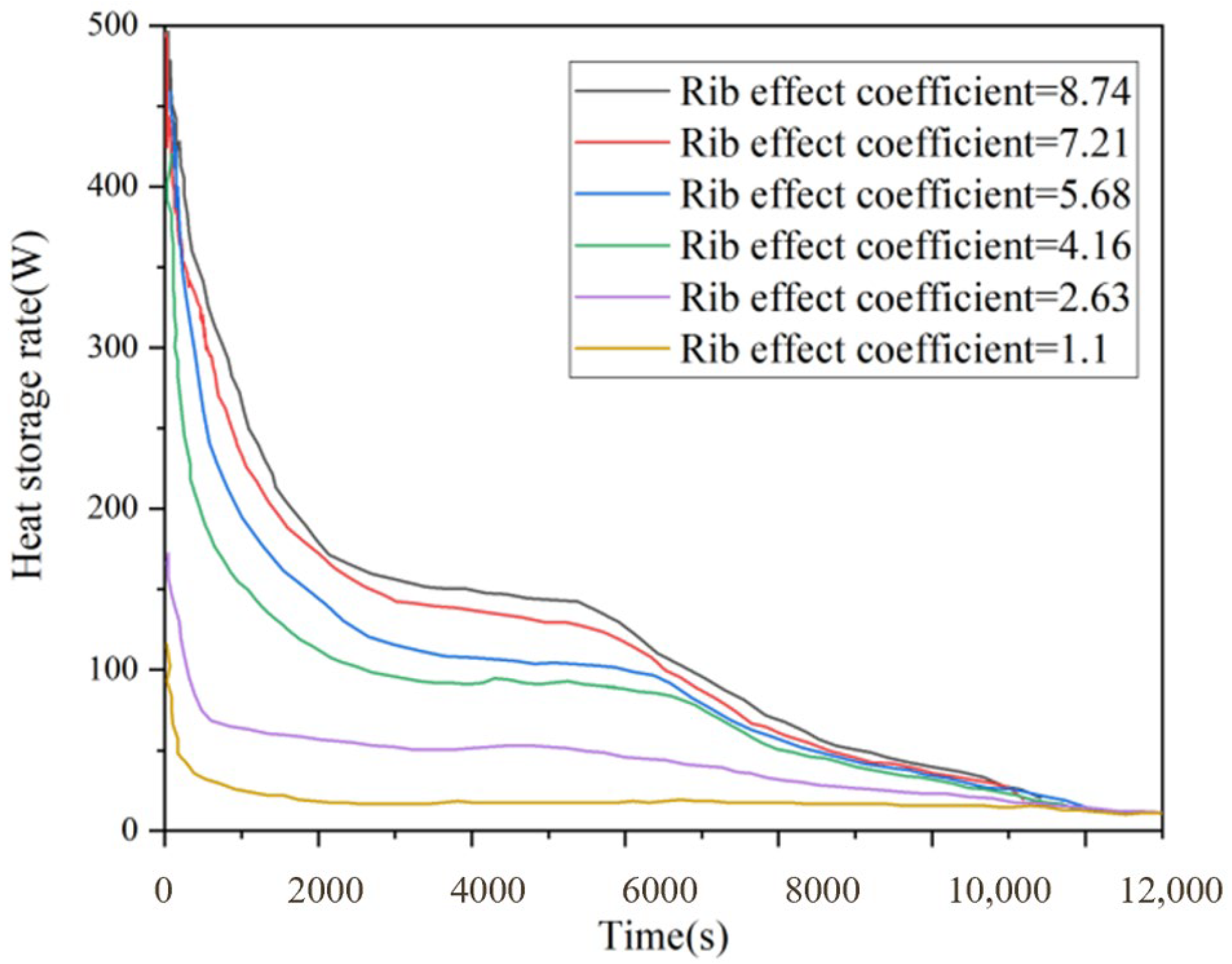
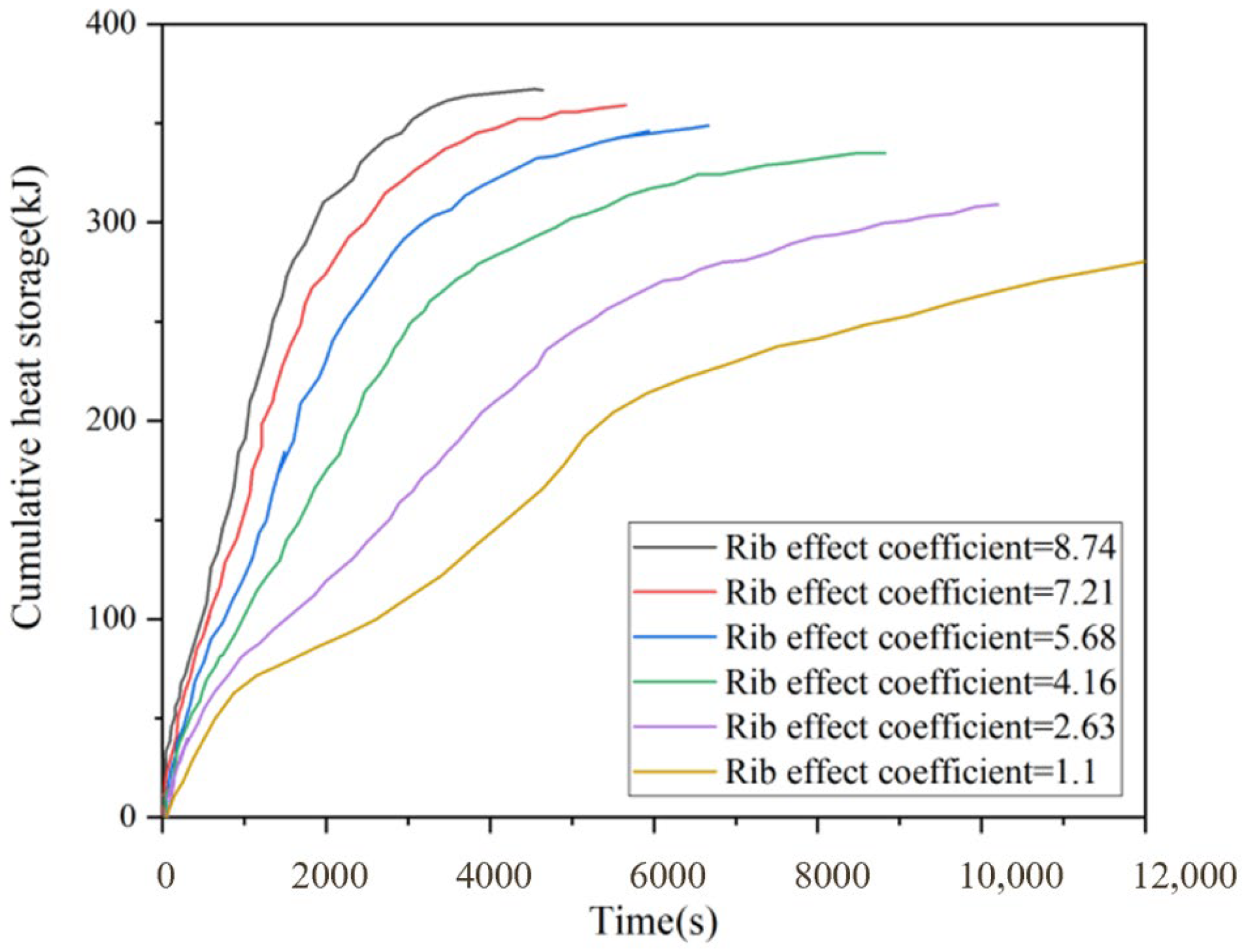
- The study revealed the nonlinear influence of fin structure on heat storage performance and proposed an optimal design range. Research indicates that a higher finning coefficient does not necessarily equate to superior performance; excessively high values may impede natural convection within the PCM, thereby adversely affecting performance. Through systematic analysis, the optimal finning coefficient range for this system was determined to be 4.16–5.68 for the first time, providing crucial theoretical groundwork for the structural optimization of heat storage devices.
- (2)
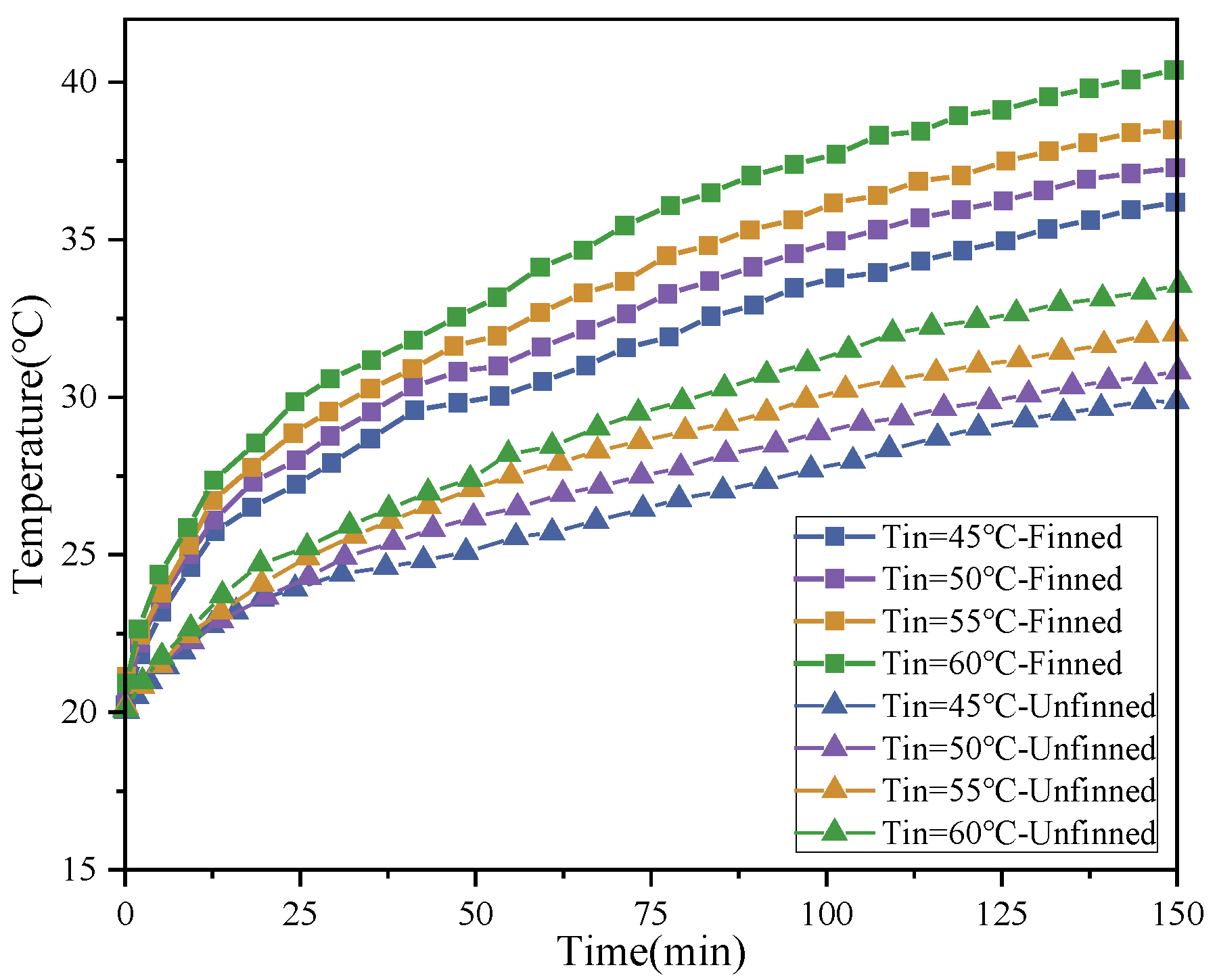
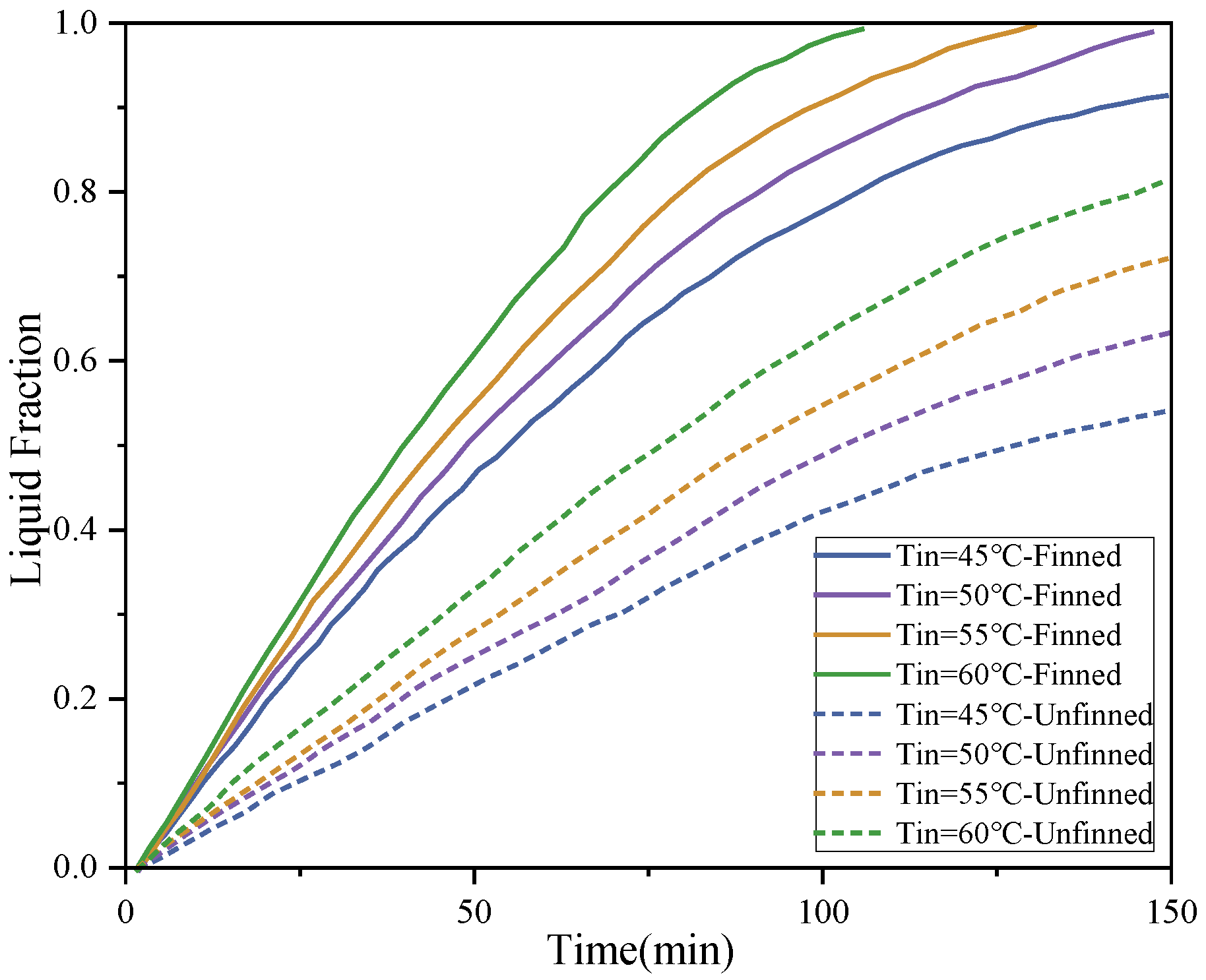
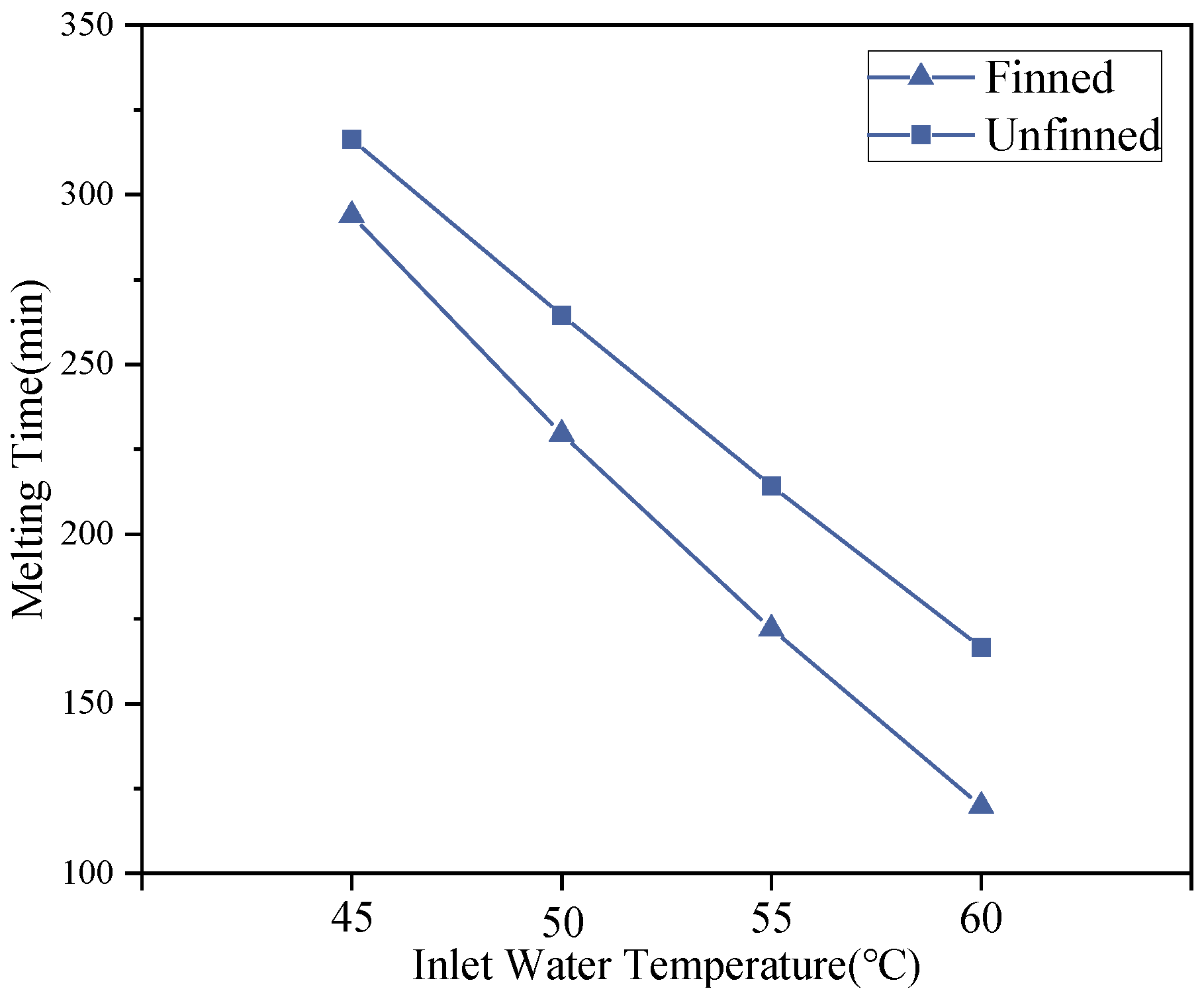
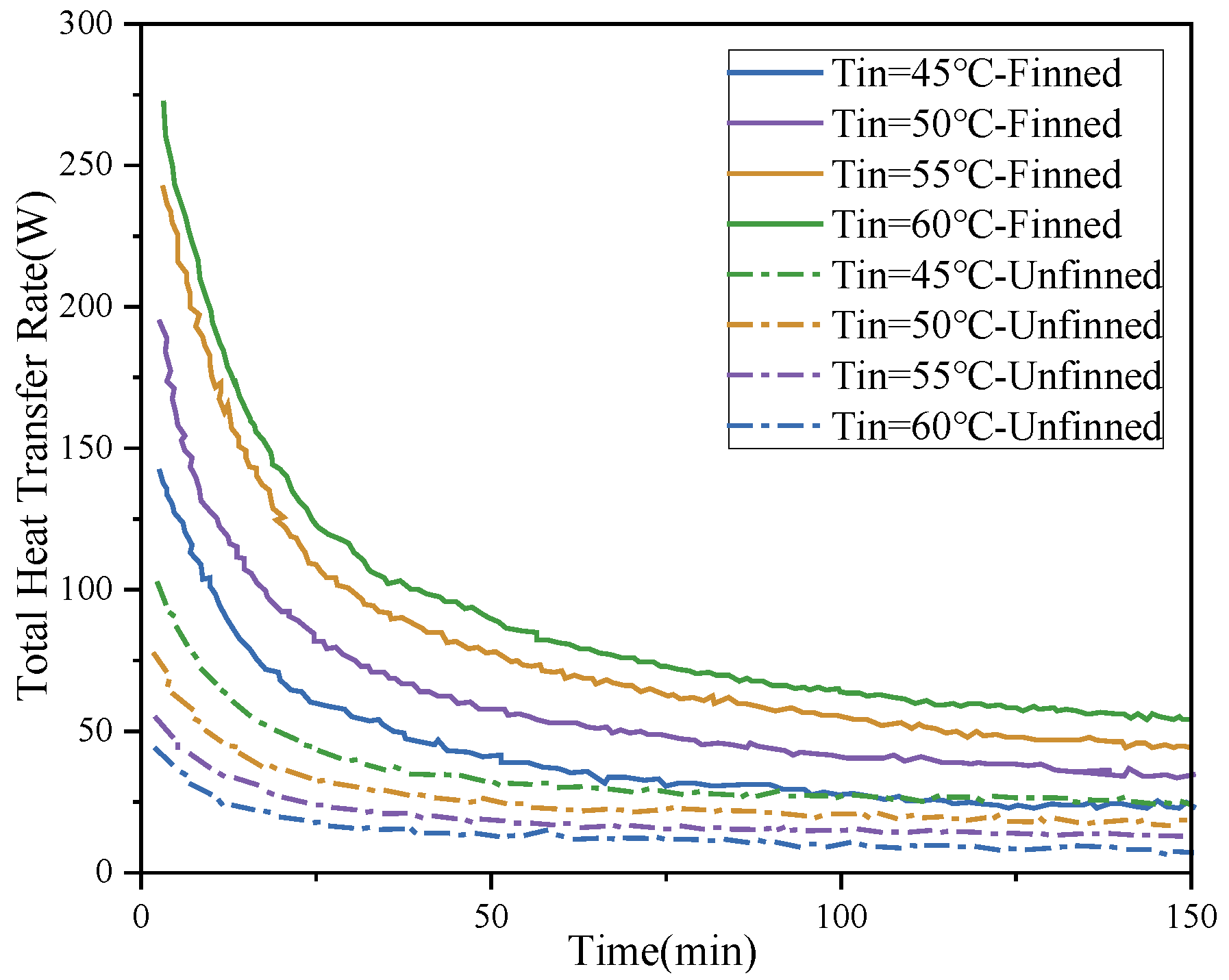
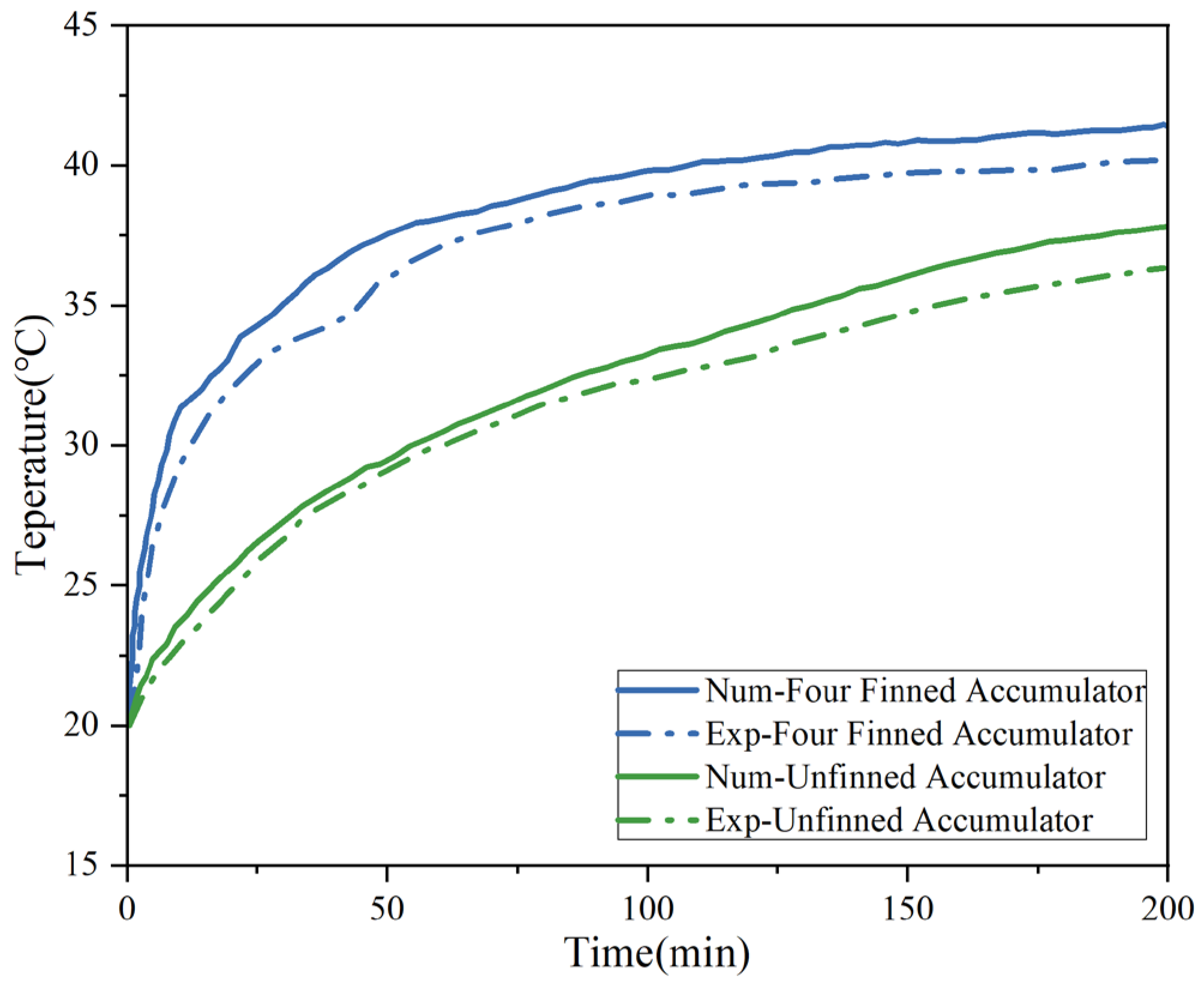
- The intensification effect of fin structures on the heat storage process was quantified and a high-precision predictive model was developed. Experimental results indicate that, within an inlet temperature range of 45–60 °C, adding fins significantly reduces total PCM melting time by between 47% and 59%. Building upon this, we developed a reliable numerical model that was verified experimentally and showed less than 5% deviation from the measured data. This further yielded a melting time prediction formula suitable for rapid design. With fins: Melting Time = 0.12Tin 2 − 24.43Tin + 1145.72; Without fins: Melting time = 0.04 Tin2 − 14.27 Tin + 876.08.
- (3)
- The synergistic and competitive relationship between material modification (the addition of expanded graphite) and structural optimization (the addition of fins) is elucidated. Although incorporating EG significantly improves the thermal conductivity of the PCM, comparative studies suggest that optimizing the fin structure has a more significant impact on overall heat storage rates. Therefore, in engineering applications, structural optimization should be prioritized as the primary strategy for improving the performance of heat storage devices.
Author Contributions
Funding
Data Availability Statement
Conflicts of Interest
References
- Adamo, A.; Martín, H.; de la Hoz, J.; Rubio, J. A review of worldwide strategies for promoting high-temperature heat pumps. Appl. Sci. 2025, 15, 839. [Google Scholar] [CrossRef] [Scilit]
- Zhu, X.; Gong, B. Risk Challenges and Path Options for Realizing the Dual-Carbon Goal in the Context of High-Quality Development in China; Chinese Governance and Transformation Towards Carbon Neutrality; Springer Nature: Singapore, 2025; pp. 71–89. [Google Scholar]
- Yang, Y.; Lo, K. China’s renewable energy and energy efficiency policies toward carbon neutrality: A systematic cross-sectoral review. Energy Environ. 2024, 35, 491–509. [Google Scholar] [CrossRef] [Scilit]
- Christodoulides, P.; Christou, C.; Florides, G.A. Ground source heat pumps in buildings revisited and prospects. Energies 2024, 17, 3329. [Google Scholar] [CrossRef] [Scilit]
- Sjöblom, P. Power-to-Heat Systems for District Heating: A Comparative Analysis of Air Source and Ground Source Heat Pumps. 2025. Available online: https://www.doria.fi/handle/10024/190784 (accessed on 6 January 2026).
- Hu, W.; Chang, M.; Jin, F.; Shao, Z.; Ye, L. Study on heat storage and release characteristics and energy-efficient heating operating temperature conditions of phase change heat storage air source heat pump systems. Renew. Energy 2021, 39, 908–915. [Google Scholar] [CrossRef]
- da Cunha, S.R.L.; de Aguiar, J.L.B. Phase change materials and energy efficiency of buildings: A review of knowledge. J. Energy Storage 2020, 27, 101083. [Google Scholar] [CrossRef] [Scilit]
- Rapucha, A.; Narayanan, R.; Jha, M. Heat pumps with smart control in managing Australian residential electrical load during transition to net zero emissions. Energies 2024, 17, 2977. [Google Scholar] [CrossRef] [Scilit]
- Mokarram, N.H. Peak Shaving Potential Using a Novel Flexible Two-Stage Heat Pump for Heating and Cooling. Ph.D. Thesis, University of Glasgow, Glasgow, UK, 2025. [Google Scholar]
- Gao, J.; Li, S.; Wu, F.; Jiang, L.; Zhao, Y.; Zhang, X. Study on efficient heating method by solar coupled air source heat pump system with phase change heat storage in severe cold region. Appl. Energy 2024, 367, 123206. [Google Scholar] [CrossRef] [Scilit]
- Rogowski, M.; Fabrykiewicz, M.; Andrzejczyk, R. Melting in Shell-and-Tube and Shell-and-Coil Thermal Energy Storage: Analytical Correlation for Melting Fraction. Energies 2025, 18, 2923. [Google Scholar] [CrossRef] [Scilit]
- Mills, A.; Farid, M.; Selman, J.R.; Al-Hallaj, S. Thermal conductivity enhancement of phase change materials using a graphite matrix. Appl. Therm. Eng. 2006, 26, 1652–1661. [Google Scholar] [CrossRef] [Scilit]
- Tian, Y.; Zhao, C.Y. A numerical investigation of heat transfer in phase change materials (PCMs) embedded in porous metals. Energy 2011, 36, 5539–5546. [Google Scholar] [CrossRef] [Scilit]
- Zhao, C.Y.; Zhou, D.; Wu, Z.G. Heat Transfer Enhancement of Phase Change Materials (PCMs) in Low and High Temperature Thermal Storage by Using Porous Materials. Int. Heat Transf. Conf. 2010, 49422, 435–441. [Google Scholar]
- Hosseini, M.; Rahimi, M.; Bahrampoury, R. Experimental and computational evolution of a shell and tube heat exchanger as a PCM thermal storage system. Int. Commun. Heat Mass Transf. 2014, 50, 128–136. [Google Scholar] [CrossRef] [Scilit]
- Masoumi, H.R.; Haghighi Khoshkhoo, R. Investigation of melting of nanoparticle-enhanced phase change materials (NePCMs) in a shell-and-tube heat exchanger with longitudinal fins. Heat Mass Transf. 2020, 57, 681–701. [Google Scholar] [CrossRef] [Scilit]
- Wu, X.; Gao, L.; Zhai, Y.; Wang, Y.; Wang, Y. The present study constitutes an experimental investigation into the enhancement of heat transfer in shell-and-tube phase change heat storage devices. J. Eng. Thermophys. 2021, 42, 1004–1008. [Google Scholar]
- Wang, W.; Xing, Y.; Zheng, W.; Hao, Z. Study on Phase Change Heat Transfer Characteristics and Fractal Optimisation of Annular Ribbed Fin Tubes. J. Beijing Univ. Aeronaut. Astronaut. 2022, 48, 2520–2528. [Google Scholar] [CrossRef]
- Agyenim, F.; Eames, P.; Smyth, M. Heat transfer enhancement in medium temperature thermal energy storage system using a multitube heat transfer array. Renew. Energy 2010, 35, 198–207. [Google Scholar] [CrossRef] [Scilit]
- Agyenim, F.; Eames, P.; Smyth, M. Experimental study on the melting and solidification behavior of a medium temperature phase change storage material (Erythritol) system augmented with fins to power a LiBr/H2O absorption cooling system. Renew. Energy 2011, 36, 108–117. [Google Scholar] [CrossRef] [Scilit]
- Hosseini, M.; Ranjbar, A.; Rahimi, M.; Bahrampoury, R. Experimental and numerical evaluation of longitudinally finned latent heat thermal storage systems. Energy Build. 2015, 99, 263–272. [Google Scholar] [CrossRef] [Scilit]
- Huang, Y.; Song, L.; Wu, S.; Liu, X. Investigation on the thermal performance of a multi-tube finned latent heat thermal storage pool. Appl. Therm. Eng. 2022, 200, 117658. [Google Scholar] [CrossRef] [Scilit]
- Wang, Y.; Quan, Z.; Jing, H.; Wang, L.; Zhao, Y. Performance and operation strategy optimization of a new dual-source building energy supply system with heat pumps and energy storage. Energy Convers. Manag. 2021, 239, 114204. [Google Scholar] [CrossRef] [Scilit]
- Tiari, S.; Hockins, A.; Moretti, S. Experimental Investigation of Latent Heat Thermal Energy Storage System Enhanced by Annular and Radial Fins. In Proceedings of the ASME 2021 15th International Conference on Energy Sustainability Collocated with the ASME 2021 Heat Transfer Summer Conference, Virtual, 16–18 June 2021; Volume 84881, p. V001T06A007. [Google Scholar]
- Jin, Y. Research on Enhanced Heat Transfer in Horizontal Shell-and-Tube Phase Change Heat Storage Units. Master’s Thesis, Tsinghua University, Beijing, China, 2019. [Google Scholar] [CrossRef]
- Guo, W. Numerical Simulation and Experimental Study on the Performance of a Dual-Heat-Source Heat Pump with Phase Change Heat Storage Heat Exchanger. Master’s Thesis, Nanchang University, Nanchang, China, 2014. [Google Scholar]
- Jin, Y.; Sheng, F.; Sheng, L.; Wang, X.; Li, H. Study on Heat Transfer Mechanism of Horizontal Shell-and-Tube Phase Change Heat Storage Unit. Heat. Vent. Air Cond. 2021, 52, 99–104+94. [Google Scholar]
- Zhang, X.; Savoie, M.; Quinn, M.K.; Parslew, B.; Revell, A. Simulation of Flow Around a Finite Rectangular Prism: Influence of Mesh, Model, and Subgrid Length Scale. Entropy 2025, 27, 65. [Google Scholar] [CrossRef] [Scilit]
- Łach, Ł.; Svyetlichnyy, D. Advances in numerical modeling for heat transfer and thermal management: A review of computational approaches and environmental impacts. Energies 2025, 18, 1302. [Google Scholar] [CrossRef] [Scilit]
- Hussien, S.A.; Ali, A.B.M.; Alkhatib, O.J.; Mahariq, I. Enhanced passive thermal management of lithium-ion batteries with conical cy-lindrical chamber incorporating various phase change materials. Sci. Rep. 2025, 15, 35675. [Google Scholar] [CrossRef] [Scilit] [PubMed]
- Liu, H.Y.; Yang, S.S.; Qu, B.C.; Wu, C.M.; Li, Y.R. Synergistic enhancement of heat conduction and natural convection in latent heat storage cavities with longitudinal fins. Int. J. Heat Mass Transf. 2025, 236, 126291. [Google Scholar] [CrossRef] [Scilit]
- Wang, L.; Wang, L.; Wang, Y. The negative effect of natural convection in a vertical shell and tube latent heat energy storage unit. Appl. Therm. Eng. 2024, 244, 122688. [Google Scholar] [CrossRef] [Scilit]
- Nair, A.M.; Wilson, C.; Kamkari, B.; Locke, J.; Huang, M.J.; Griffiths, P.; Hewitt, N.J. Advancing thermal performance in PCM-based energy storage: A comparative study with fins, expanded graphite, and combined configurations. Energy Convers. Manag. X 2024, 23, 100627. [Google Scholar] [CrossRef] [Scilit]
- Ma, F.; Liang, Y.; Tao, Z.; Guo, X.; Guo, Q.; Liu, Z. A novel PCM/expanded graphite composite sphere with high thermal conductivity and excellent shape stability used for a packed-bed thermal energy system. Diam. Relat. Mater. 2024, 145, 111102. [Google Scholar] [CrossRef] [Scilit]
- Farshineh Adl, H. EFFECT OF FORCED CONVECTION AND COMPRESSIBILITY ON TRANSIENT MELTING BEHAVIOR OF PCM IN A CAVITY. 2025. Available online: https://open.metu.edu.tr/handle/11511/115592 (accessed on 8 January 2026).
- Proia, P.; Sbragaglia, M.; Falcucci, G. Heat transfer modulation in Phase Change Materials via fin insertion. arXiv 2025, arXiv:2507.04851. [Google Scholar]
- Zhao, Y.; Jin, L.; Zou, B.; Qiao, G.; Zhang, T.; Cong, L.; Jiang, F.; Li, C.; Huang, Y.; Ding, Y. Expanded graphite–Paraffin composite phase change materials: Effect of particle size on the composite structure and properties. Appl. Therm. Eng. 2020, 171, 115015. [Google Scholar] [CrossRef] [Scilit]
- Zhao, Y.; Huang, S.; Jin, Z.; Xie, Z.; Guo, H.; Xie, H. Thermally Conductive Shape-Stabilized Phase Change Materials Enabled by Paraffin Wax and Nanoporous Structural Expanded Graphite. Nanomaterials 2025, 15, 110. [Google Scholar] [CrossRef] [Scilit] [PubMed]






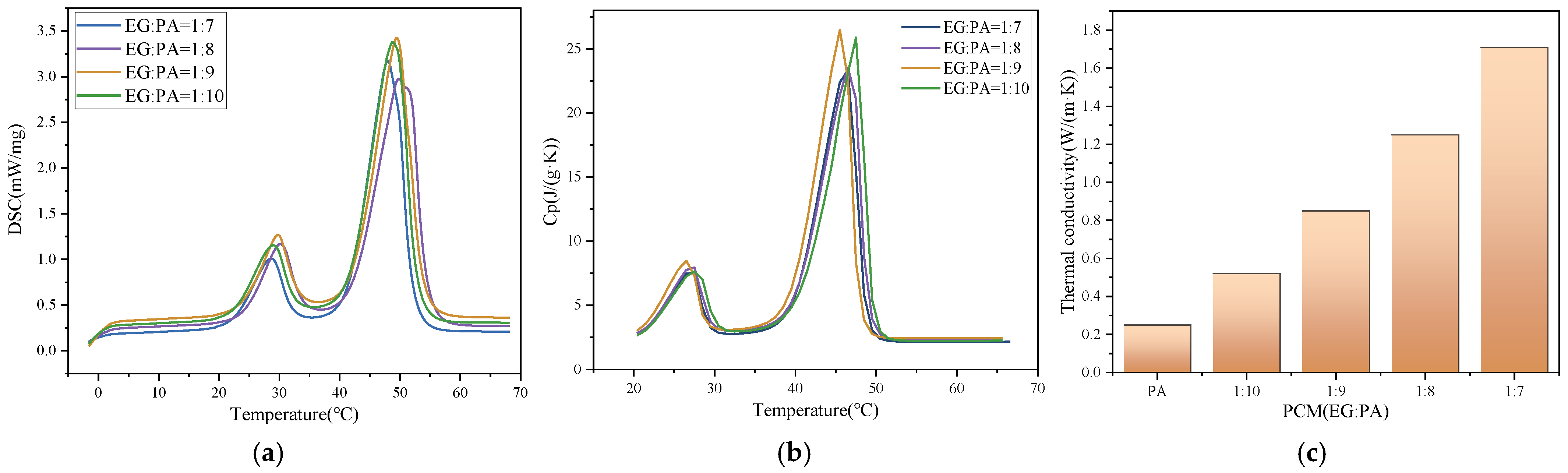
| Physical Parameter | CPCM1 | CPCM2 | CPCM3 | CPCM4 | PA |
|---|---|---|---|---|---|
| EG:PA | 1:7 | 1:8 | 1:9 | 1:10 | / |
| Density (kg/m3) | 831 | 842 | 857 | 865 | 880 |
| Phase transition temperature (°C) | 41.1–43.6 | 41.7–44.2 | 42.4–44.3 | 41.5–44.2 | 40–42 |
| Specific heat capacity (J/(g·K)) | 2.14 | 2.35 | 2.42 | 2.24 | 2.56 |
| Thermal conductivity (W/(m·K)) | 1.78 | 1.28 | 0.95 | 0.52 | 0.24 |
| Latent heat of phase change (kJ/kg) | 159.9 | 170.1 | 176.2 | 178.3 | 183.6 |
| Structure | Fitting Formula | Tin = 45 °C | Tin = 50 °C | Tin = 55 °C | Tin = 60 °C |
|---|---|---|---|---|---|
| Finned | Melting Time = 0.12Tin2 − 24.43Tin + 1145.72 | 293.95 | 220.49 | 172.04 | 119.8 |
| Unfinned | Melting Time = 0.04Tin2 − 14.27Tin + 876.08 | 316.29 | 264.53 | 214.18 | 166.5 |
Disclaimer/Publisher’s Note: The statements, opinions and data contained in all publications are solely those of the individual author(s) and contributor(s) and not of MDPI and/or the editor(s). MDPI and/or the editor(s) disclaim responsibility for any injury to people or property resulting from any ideas, methods, instructions or products referred to in the content. |
© 2026 by the authors. Licensee MDPI, Basel, Switzerland. This article is an open access article distributed under the terms and conditions of the Creative Commons Attribution (CC BY) license.
Share and Cite
Wang, M.; Zhang, T.; Zhou, W.; Wang, Y. Research on Thermal Performance and Structural Optimization of Finned Shell-and-Tube Storage Units for Air-Source Heat Pump Systems. Buildings 2026, 16, 909. https://doi.org/10.3390/buildings16050909
Wang M, Zhang T, Zhou W, Wang Y. Research on Thermal Performance and Structural Optimization of Finned Shell-and-Tube Storage Units for Air-Source Heat Pump Systems. Buildings. 2026; 16(5):909. https://doi.org/10.3390/buildings16050909
Chicago/Turabian StyleWang, Meng, Tianyang Zhang, Wenhe Zhou, and Yongli Wang. 2026. "Research on Thermal Performance and Structural Optimization of Finned Shell-and-Tube Storage Units for Air-Source Heat Pump Systems" Buildings 16, no. 5: 909. https://doi.org/10.3390/buildings16050909
APA StyleWang, M., Zhang, T., Zhou, W., & Wang, Y. (2026). Research on Thermal Performance and Structural Optimization of Finned Shell-and-Tube Storage Units for Air-Source Heat Pump Systems. Buildings, 16(5), 909. https://doi.org/10.3390/buildings16050909