Article

Cooling Strategies for the Effective Mitigation of Summer Thermal Stress in City Laneways

by
Priyadarsini Rajagopalan
1,2,*,
Jean Jonathan Duverge
1,2,
Andrew Carre
1,2 and
Mary Myla Andamon
1,2
1
Post-Carbon Research Centre, RMIT University, 124 La Trobe Street, Melbourne 3000, Australia
2
Sustainable Building Innovation Lab, School of Property Construction and Project Management, RMIT University, 124 La Trobe Street, Melbourne 3000, Australia
*
Author to whom correspondence should be addressed.
Buildings 2026, 16(5), 1079; https://doi.org/10.3390/buildings16051079
Submission received: 10 February 2026 / Revised: 2 March 2026 / Accepted: 4 March 2026 / Published: 9 March 2026

Abstract

This study explored a range of cooling interventions suitable for city laneways where space for greening opportunities is constrained. Five individual cooling interventions namely, PVC shading, cool pavement, small canopy trees, green wall and water mist, as well as multiple combinations of these individual cooling interventions were tested in a narrow laneway in the temperate setting of Melbourne, Australia. The impact of various cooling interventions was assessed by evaluating microclimatic parameters—air temperature (Ta), relative humidity (RH), mean radiant temperature (TMRT)—alongside two thermal comfort indices, Physiological Equivalent Temperature (PET) and Universal Thermal Climate Index (UTCI). When each intervention was analysed individually, water mist was the best performing with Ta, PET and UTCI reduction. This was followed by PVC shading, small canopy trees and green walls. Cool pavement had the lowest Ta reduction and minimal thermal comfort impact. While green provided marginal reductions in thermal comfort indices, the effects were insufficient for standalone cooling. They were most effective when integrated with other cooling interventions. For example, when green walls were combined with water mist, a Ta reduction of 1.49 K and a TMRT reduction 2.57 K were obtained. The water mist system as an individual cooling intervention or as part of a combined intervention had an impact on Ta with a reduction of maximum 1.3 K and 1.76 K, respectively. The water mist had a UTCI reduction of 1.25 K, and the water mist combined with green wall had a PET reduction of 1.84 K. The novel contribution of this study to climate-sensitive urban design is the suite of practical, site-specific interventions for extreme summer conditions. These findings provide a framework for planners and designers to evaluate and implement optimal cooling strategies tailored to the unique microclimate demands of narrow urban laneways.

1. Introduction

The risk of more frequent heatwaves and longer periods of extreme hot days will increase significantly over the next few decades in cities with damaging impacts on public health, mortality rates, productivity, energy demand, economy and infrastructure. Several studies have delved into various interventions to mitigate heat. The interventions have included nature-based solutions such as green infrastructure [1,2], water-based solutions [3,4,5,6,7], and grey solutions such as shading structures [8,9,10] and high albedo materials [5,8,9,10,11,12,13,14,15]. Of these, high albedo materials for urban surfaces appear to be well-suited to laneway applications where space is constrained. High albedo materials such as cool pavements and roofs can reduce air and surface temperatures and are effective in mitigating urban heat island (UHI). Cool pavements, primarily reflective pavements, are achieved by applying a thin reflective coating on a substrate such as asphalt or concrete. This treatment enhances radiative properties such as solar reflectivity and thermal emissivity, thereby reducing solar heat gains. There are two main types of cool pavement strategies, namely, reflective coating that uses high-albedo coatings in pavements and roads to minimise heat absorption and lower ground-level temperatures and light-coloured aggregates used in pavement materials to enhance solar reflection and reduce surface temperatures. Numerous studies have evaluated the effect of cool pavements in urban areas across global climates [16,17]. Kappou, Souliotis [18] presented an extensive analysis and review on the effect of state-of-the-art cool pavements. In Australia, there are a few investigations on cool pavement interventions. The Guide to Urban Cooling Strategies report prepared by Osmond and Sharifi [19] provides detailed technical information on cool surfaces and pavements and reports that a maximum air temperature reduction of around 2.5 K could be achieved around the spot of the application. Karimipour, Tam [20] used ENVI-met simulation to evaluate street-cooling strategies for a pilot site located in Sydney, Australia and found that a maximum difference of 3.14 K occurred when asphalt roads where shaded by tree canopies and parking areas utilised light-coloured pavements (albedo = 0.8). A limited number of case studies have been conducted across Australian cities. Notably, in western Sydney, the reflective coating Coolseal reduced day-time and night-time surface temperatures of asphalt by up to 6 K and 2 K, respectively [21]. A similar project was undertaken in the Adelaide urban region where several treatments were tested on asphalt roads, with an average surface temperature reduction of 8.65 K and an average air temperature reduction 0.16 K at a height of 100 cm [22]. Recent studies have also investigated innovative technologies such as super cool materials on building cooling [12,13,15].
Shading is an intervention which can protect people from exposure to solar radiation during hot weather. It is important to carefully consider how shading interferes with other microclimatic parameters including wind flow and air temperature. Shading structures range from lightweight or engineered shades, pergolas, awnings to solar panels with shading that generate renewable energy while providing cooling benefits. Lam, Weng [9] examined the effect of shading devices with different material properties at a university campus in Guangzhou, Southern China. Their findings showed that there was only a 0.8 K reduction in air temperature in summer. Studies by Middel, AlKhaled [23] on the effects of various shade types yielded similar results, with an average temperature reduction of less than 1.3 K. Middel and Krayenhoff [24] studied lightweight/engineered shade for locations shaded by a north–south canyon, tunnel, and photovoltaic canopy and reported average temperature variations of less than 1.5 K during the record-breaking heat in Tempe, Arizona. The impact of sun-sail shading in a school yard in Egypt was examined by Elgheznawy and Eltarabily [8] using ENVI-met simulation. The simulation results revealed a reduction in air temperature with an average difference of 0.5 K. A study by Lee, Cheung [10] at a university campus in Hong Kong demonstrated that the implementation of shading-canopy fins resulted in an air temperature reduction of merely 0.8 K at mid-day. In a study on market shades undertaken in Thailand by Jareemit and Srivanit [2], the maximum air temperature reduction under the artificial canopies at a height of 1.6 m was 1.5–3 K.
Water-mist spray is another type of cooling intervention that can provide ambient temperature reduction on hot days. Water-mist systems use high-pressure nozzles to atomise water into ultrafine droplets which reduce the ambient air temperatures through evaporative cooling. When ultrafine water particles are applied with high pressure, a cool and relatively dry feeling is perceived on the skin. An early simulation study using ENVI-met in Greece by Chatzidimitriou, Liveris [25] showed an ambient temperature reduction of 1.9 K, while another ENVI-met modelling study in Rome, Italy, by Di Giuseppe, Ulpiani [3] found ambient air temperature reductions of around 0.3–0.5 K towards downwind sections, for up to 24 m away from the misted areas. Montazeri, Toparlar [6] used ANSYS to simulate the cooling effects of water mist in the Netherlands’ urban landscape and reported a maximum air temperature reduction of 5 K. Wai, Xiao [26] studied the impact of water mist in a sub-tropical compact and high-rise built environment using ENVI-met and Weather Research and Forecast (WRF) and models. Their ENVI-met results indicated that the water-misting system provided a reduction of 2–3 K in ambient air temperature at the pedestrian level. Narita, Kohno [27] conducted an outdoor experiment using a water-misting system in Japan and found that the maximum air temperature drop was 6 K. Most of these studies were performed in expansive urban open spaces rather than the confined configuration of narrow laneways.
There have been extensive studies that have investigated the impact of green infrastructure, including trees, green roofs and green walls. In Melbourne’s central business district, Balany, Muttil [7] investigated the impact of green infrastructure in a large area (936 m × 512 m) using ENVI-met simulations and reported a Ta reduction of 0.27 K when all buildings within the study area were covered with green walls. Another ENVI-met study conducted by Herath, Halwatura [1] in a 4.58 ha precinct in the city centre of Sri Lanka reported a much higher air temperature reduction of 1.86 K through the implementation of green walls. In a study conducted in the urban villages in Guangzhou, China, Lin and Zhang [28] noted that façade greening achieved a PET reduction of approximately 1.5 K.
The nature of the previous studies varied and included proving concepts, experiments, demonstrations and case studies, with their spatial scales ranging across city-wide urban design, neighbourhood-level initiatives that focused on small precincts, and building-specific strategies. Although earlier studies on street canyons have focused on the flow regimes and thermal comfort, the impact of various interventions was not analysed While existing research has focused on medium- and large-scale modelling, these interventions remain largely theoretical—such as incremental increase in greenery, large-scale cool pavement application—often with limited opportunities for practical implementation in the real-world urban settings. In contrast, this study explores a range of cooling interventions that can be installed in laneways that are constrained with limited greening opportunity. Through modelling and simulation, the study assesses the thermal benefits of interventions using practical solutions that are amenable to stakeholders. This laneway-focused study differentiates itself from previous ENVI-met simulation studies due to its retrofit feasibility in urban contexts characterised by limited greening potential and the practical feasibility of integrated cooling interventions.

2. Methodology

2.1. Site Description

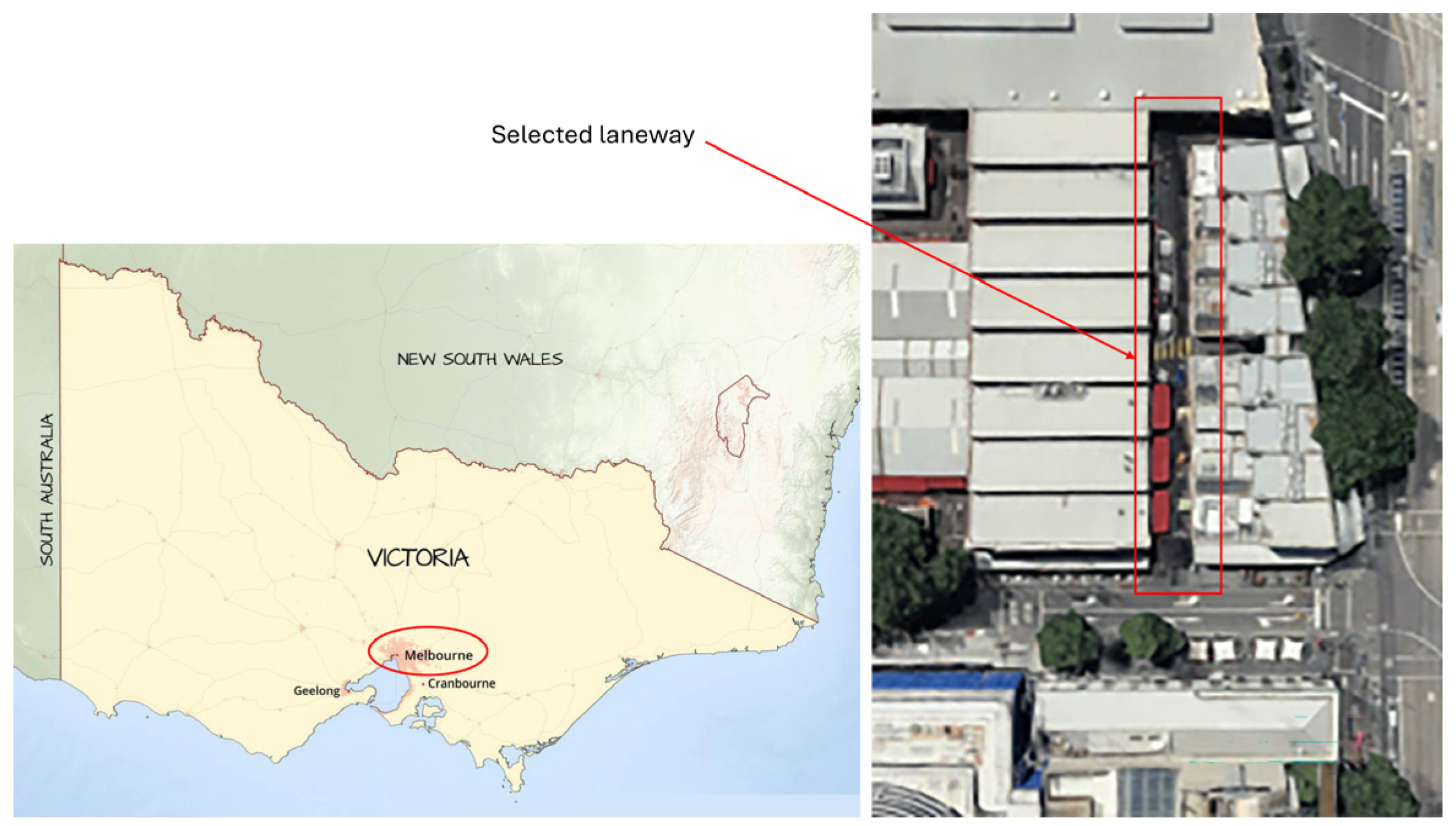
The site selected was located within a major public marketplace, north of Melbourne’s central business district (Figure 1). The asphalt-paved laneway is approximately 5 m wide × 65 m long, flanked by buildings of 3.5 m to 8 m high made of brick masonry and concrete as the primary building materials, making it an asymmetrical street canyon with a height to width (H/W) ratio ranging from 0.7 to 1.6.

2.2. Modelling Using ENVI-Met

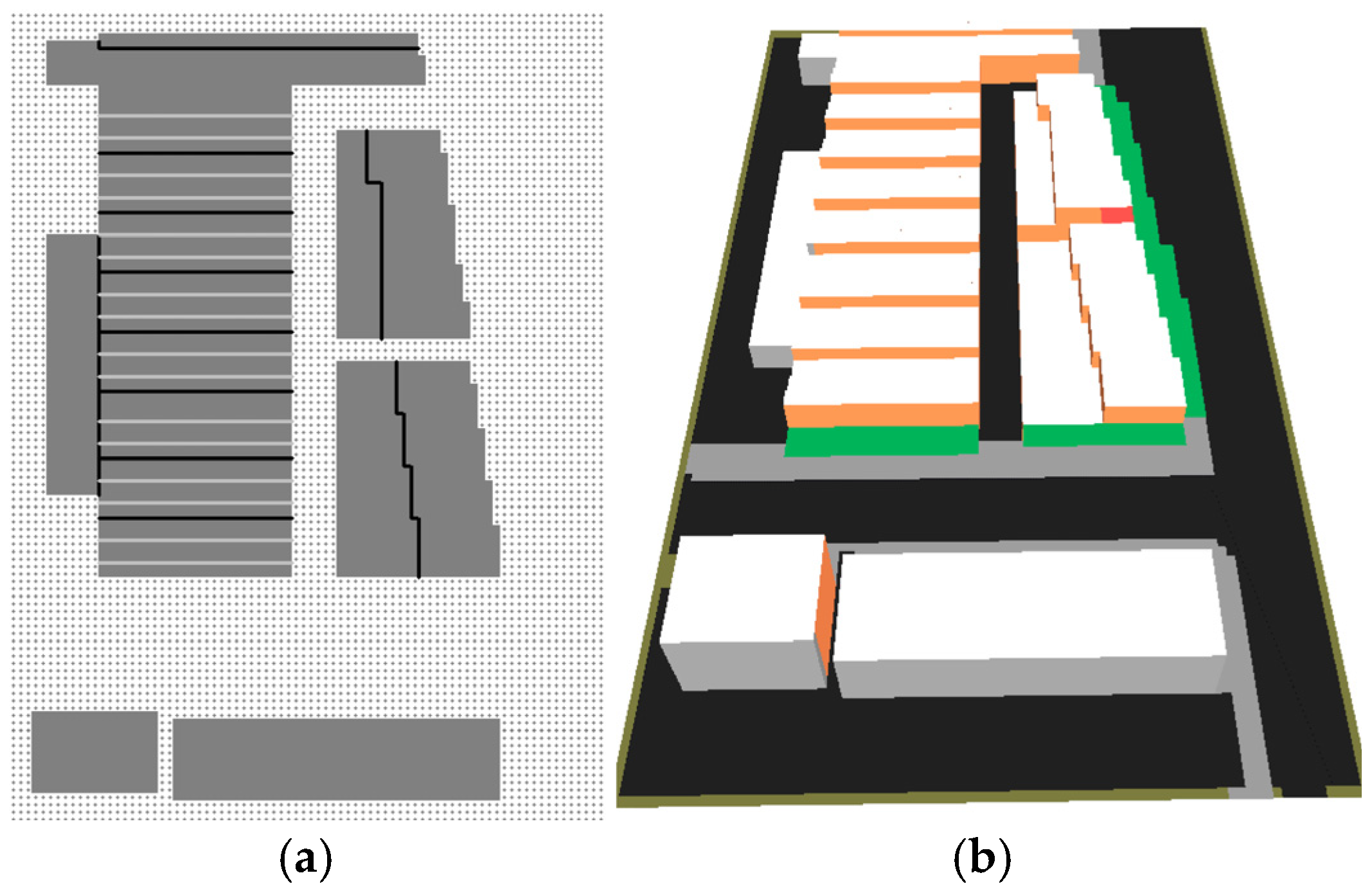
ENVI-met [29] software version 5.6.1 based on a three-dimensional model for the simulation of surface–plant–air interactions was used for the simulations. It includes a full 3D computational fluid dynamics model which solves the Reynolds-averaged nonhydrostatic Navier–Stokes equations for each grid in space and for each time step. The geometry model of the lane with a cell size of 1 m has 85 × 120 × 30 cells. The building materials and pavement properties used in the simulation are described in Table 1, and the 2-dimensional and 3-dimensional views of the site are shown in Figure 2.

2.3. Model Validation

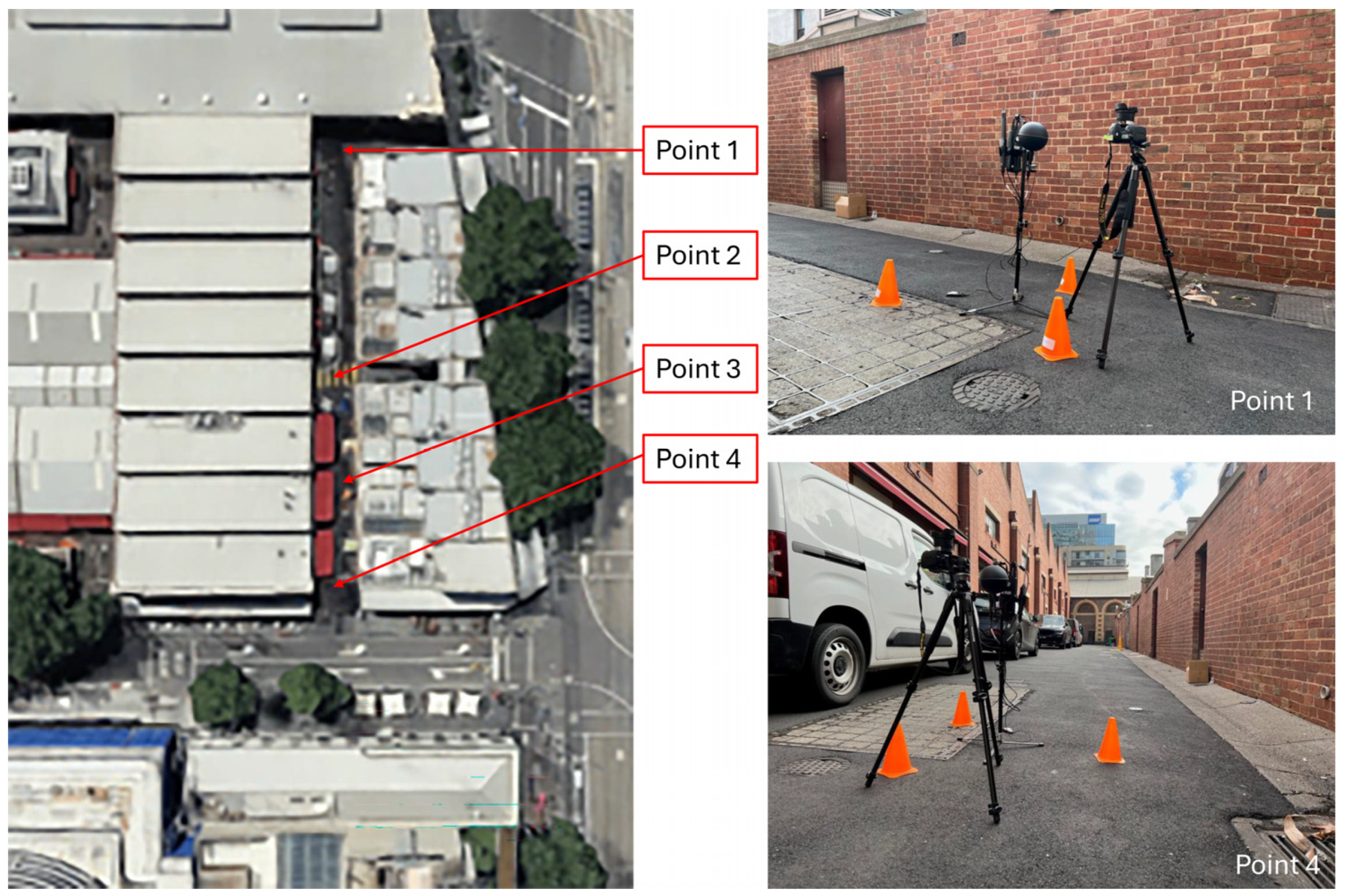
For model validation, microclimatic measurements including air temperature (Ta), relative humidity (RH), wind speed (v) and globe temperature (Tg) within the lane at a height of 1.2 to 1.5 m and at 5 min intervals were collected during 9 am to 4 pm on 2 August 2023 (winter) using a Testo 480 instrument (Figure 3). Instrument specification is shown in Table 2. A standard black globe of 150 mm in diameter was used for measuring globe temperature (Tg). The sensors were placed at four locations (points 1 to 4) at heights ranging from 0.85 m to 1.05 m. Measurements were recorded following a 30 min stabilisation period at each location to ensure the black globe thermometer reached thermal equilibrium. Sensors were then moved sequentially to subsequent points. Mean radiant temperature (TMRT) was calculated using the recorded values for Tg, Ta and v values.

2.4. Thermal Comfort Indices

The Physiological Equivalent Temperature (PET) and Universal Thermal Climate Index (UTCI), the most widely used outdoor human thermal comfort indices, were used for thermal comfort analysis. ENVI-met calculates these indices through its BioMet tool. UTCI [30] considers more variables that influence thermal comfort besides temperature and is used as an index in microclimate studies conducted by López-Cabeza, Diz-Mellado [31] and Lam, Weng [9]. The PET index is less suitable for humid environments because it lacks a dynamic clothing adaptation model. In this study, 0.9 clo is assumed for PET estimation and a clothing range of 0.4–2.6 clo is assumed for UTCI estimation. A moderate metabolic rate of 80 W (for walking at a speed of 1.34 m/s) is assumed. UTCI values between 26 °C and 32 °C indicate moderate heat stress, while the 32 °C to 38 °C range denotes strong heat stress (Table 3).

2.5. Cooling Intervention Scenarios

Cooling interventions were selected based on their suitability and practical application for the laneway and the surrounding physical infrastructure. The selection of interventions prioritised non-invasive measures that could be implemented without significant modifications, such as the removal and replacement of existing pavement. Ten scenarios were investigated, which included five individual cooling interventions, namely, PVC shading, cool pavement, green canopy, green wall and water mist, as well as five combined cooling interventions, as shown in Table 4 below:

2.6. Climate Data

Melbourne has a temperate oceanic climate with highly variable weather conditions and warm summers, moderate autumns, and cool winters. The variability in ambient temperature is due to its oceanic location, whereby the city is subjected to cold air mass from the south and hot dry air masses from the desert to the north. Though temperatures remain low for much of the year, summer periods are characterised by extreme temperature diversions and prolonged heatwave events. The mean annual temperature recorded was 16.2 °C, while the highest and lowest temperatures ever recorded were 46.4 °C and −2.8 °C, respectively [32]. For validation, weather data for Melbourne Olympic Park obtained from BOM for the day of measurement (2 August 2023) was used. For the cooling intervention simulations, the Melbourne Typical Meteorological Year (TMY) weather file for the period March 2022 to February 2023 in *epw format was used. The results of cooling intervention studies presented in the following sections are for a hot day, the hottest day of 2022 (27 December 2022) in order to assess summer heat stress conditions.

3. Results

3.1. Model Validation Results

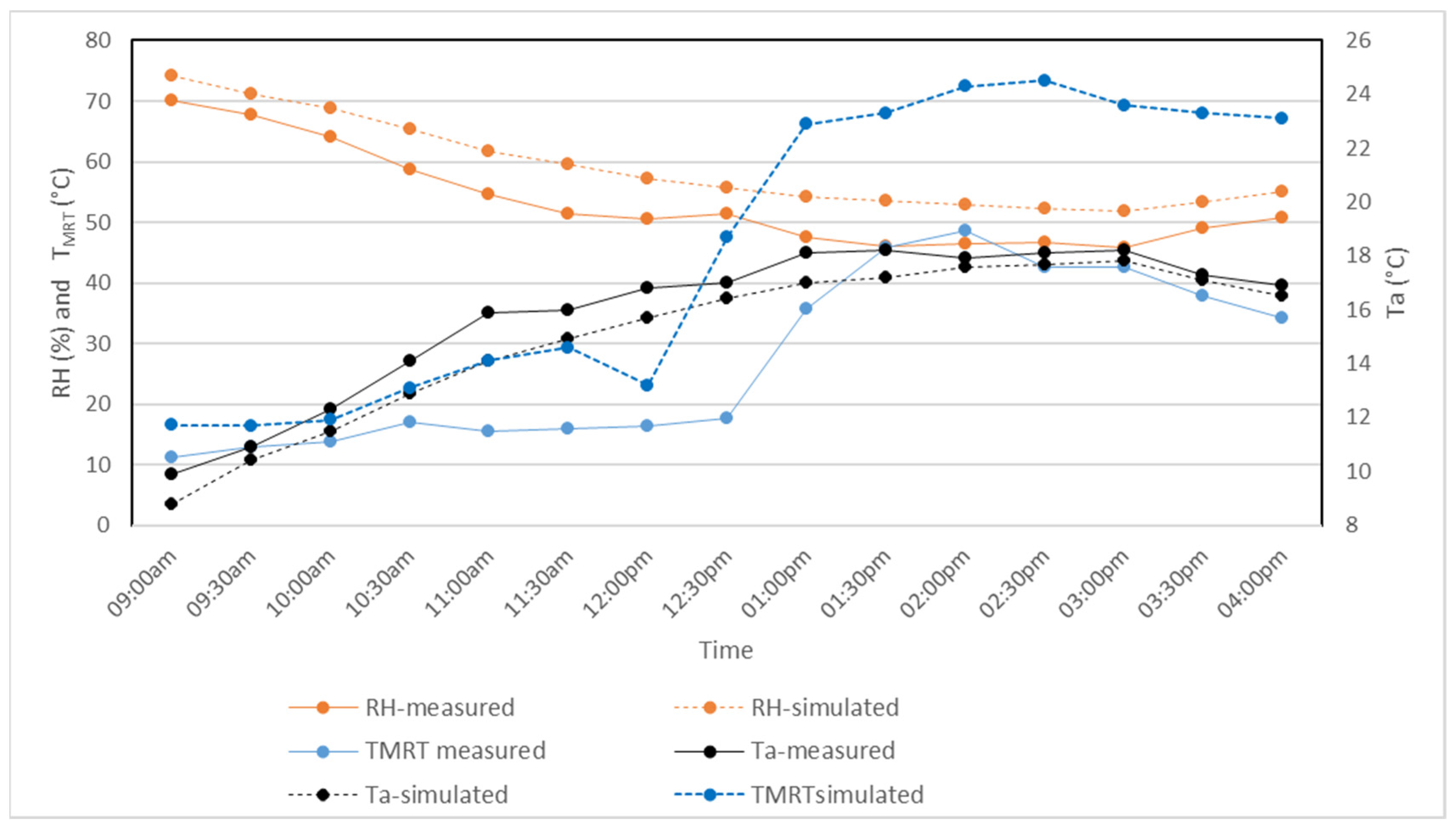
Ta, RH and TMRT were compared against the results obtained from the simulation. Simple forcing was used for validating the model, while full forcing was used for modelling the cooling interventions. Simple forcing uses basic, 24 h hourly profiles for temperature and humidity, while full forcing utilises detailed data for all parameters. Comparison of the measured and simulated values of Ta, RH and TMRT are displayed in Figure 4. Ta and RH values show a similar profile, whereas TMRT values show some discrepancy. For TMRT comparison, measured and simulated values showed similar trends between 9:00 and 12:30, but from 13:00 onwards, there is some difference between the two values. The model performance is also assessed by Root Mean Squared Error (RMSE), correlation coefficient (R2) and index of agreement (d) between the measured and the simulated Ta, RH and TMRT values and the results are shown in Table 5.
The R2 values show that there is a high correlation between the measured and simulated values for Ta and RH and TMRT. Ta is well estimated (R2 = 0.97 and d = 0.97) in line with similar microclimatic studies undertaken by Yang et al. [33], where (R2 = 0.93 and d = 0.97) were reported, and by Ketterer and Matzarakis [34], where (R2 = 0.94, RMSE = 1.01) were reported. RH values also had strong correlations with R2 = 0.97 and d = 0.97 but higher RMSE, suggesting a high error margin compared to Ta. However, the RMSE lies within similar range (2.3–10.2) reported in a study performed by Tsoka et al. [35]. Similar statistical indices for Ta and RH were also reported by Balany et al. [7] in a study in Melbourne. RMSE and d values showed that there is lower correlation for TMRT compared to Ta and RH. As noted by [36], prediction of MRT using urban microclimate simulation is a complex task due to complexity in radiation modelling, difficult representation of urban geometry and globe response delay.

3.2. Effects of Cooling Interventions

This section presents the results of the 24 h period simulation conducted with the full force option using the 2022–2023 Melbourne weather file. The hottest day of 2022 (27 December 2022) was used for detailed analysis and comparison between scenarios.

3.2.1. Air Temperature

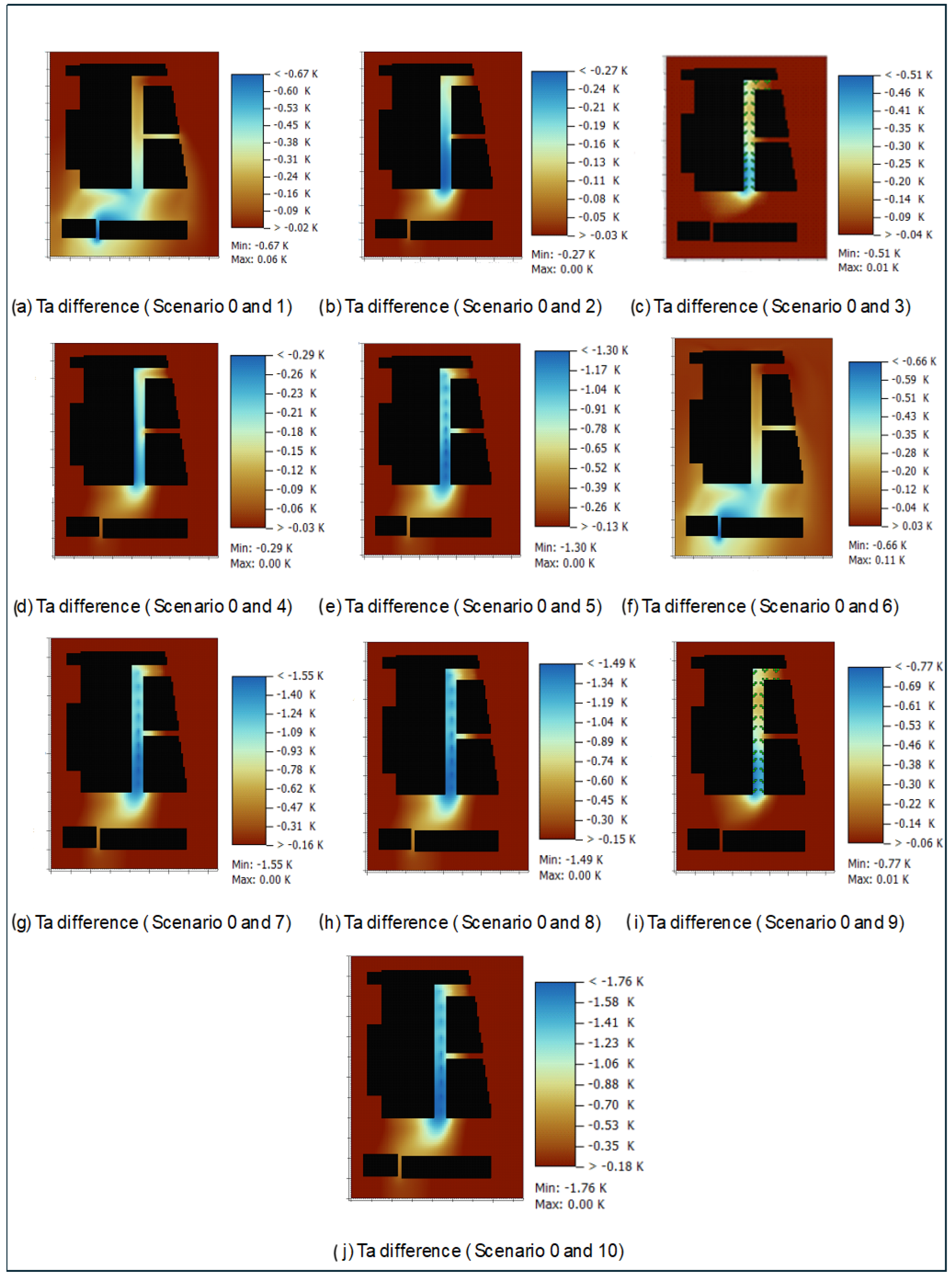
Figure 5 shows the temperature differences between the base case and all the other scenarios at a 1.5 m height for the hottest hour (15:00 h) of the day extracted at point 4 (see Figure 3). Maximum Ta reduction was observed towards the southern end of the lane. In terms of individual cooling interventions, scenario 5 (water mist) was the best performing, with a Ta reduction of 1.3 K. PVC shading (scenario 1) had a Ta reduction of up to 0.67 K but only to the southern end of the lane. Small canopy plants (scenario 3) caused a reduction of up to 0.51 K. Green walls (scenario 4) caused a small Ta reduction of 0.29 K. The cooling intervention with the least effect on Ta, though marginal, was cool pavement with a reduction of up to 0.27 K. Looking at the combination of cooling interventions (scenarios 6–10) some of the combined scenarios show a reduction of up to 1.76 K in Ta, for the combination of cool pavement, water mist and green walls (scenario 10). Scenario 7 (water mist and cool pavement) and scenario 8 (water mist and green walls) have Ta reductions of up to 1.55 K and 1.49 K, respectively. Scenario 9 (small canopy tree and cool pavement) has a Ta reduction up to 0.77 K while scenario 6 (PVC shading and cool pavement) has a reduction of up to 0.66 K.
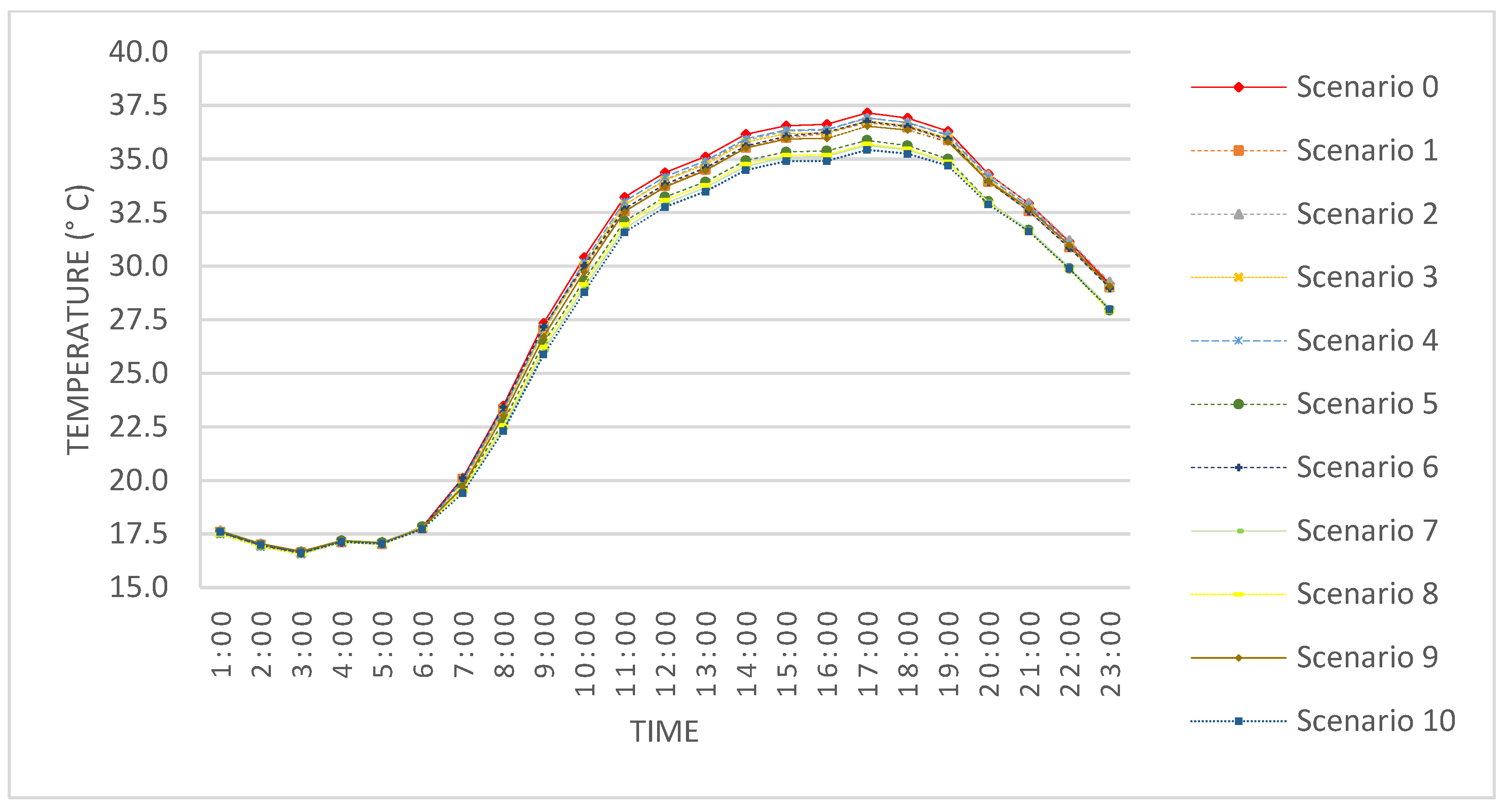
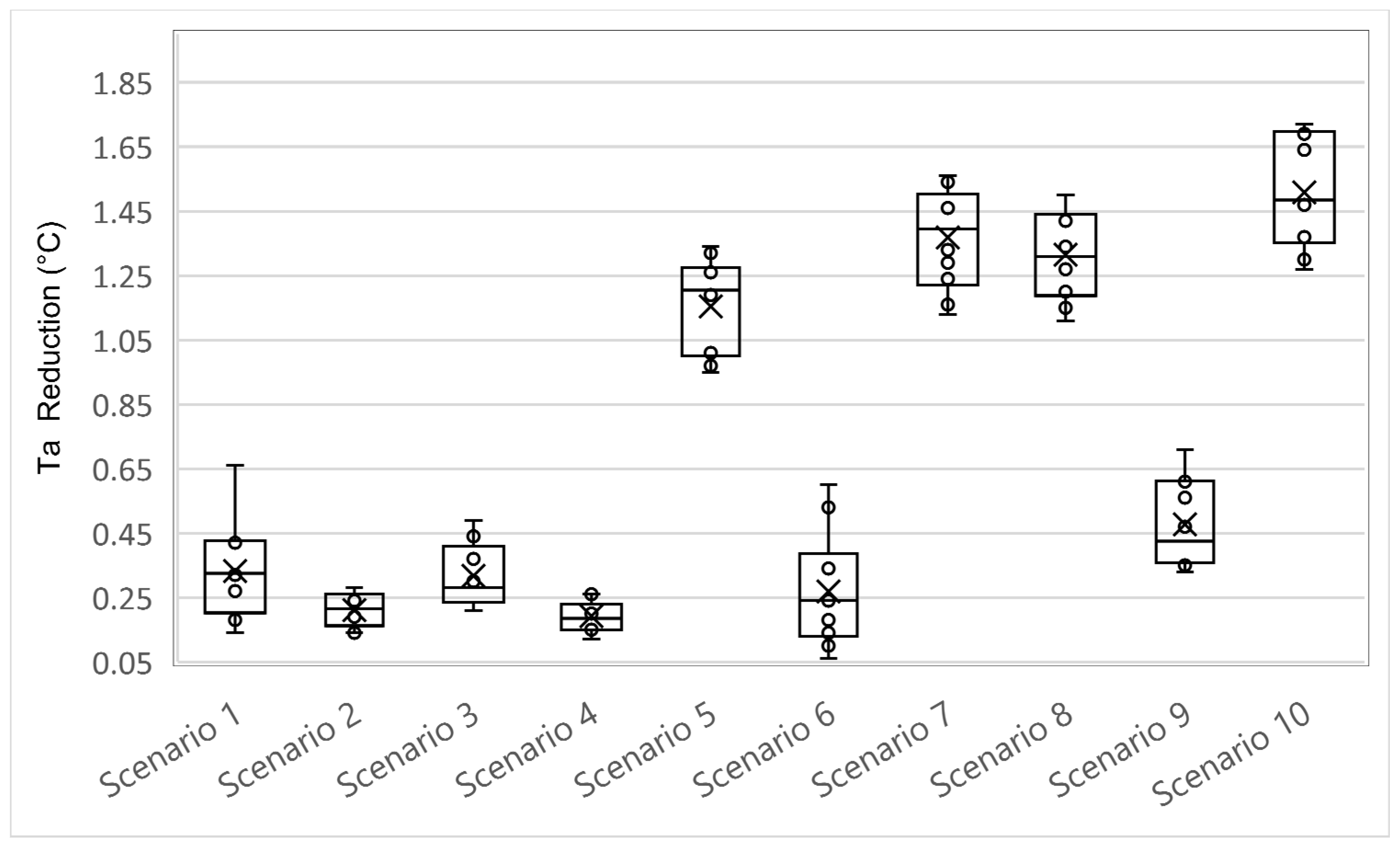
Figure 6 shows the hourly profiles of Ta from 00:00 to 23:00 at point 4 extracted from the simulation results. Point 4 was chosen as it is located at the southern end of the lane where all the scenarios reported some reduction in Ta. As expected, there is little effect on Ta with changes in scenarios during the early hours of the morning. Slight reductions in Ta start from around 7:00–8:00 in the morning, with temperature reductions becoming more noticeable from 12:00 onwards. The maximum temperature reduction was found between 15:00 and 18:00. At 17:00, scenario 10 (highest reduction) showed a Ta reduction of approximately 1.8 K while scenario 2 (lowest reduction) had a Ta reduction of 0.3 K. Further analysis was done with temperatures extracted at around 17:00 at points 1 to 4. The values are presented in Figure 7 as whisker and box plots to indicate the minimum and maximum Ta reduction as well as the upper and lower quartile of the values. The plots show the distribution of temperature reduction across the whole lane for various intervention scenarios. For example, for scenario 1, the Ta reduction within the lane ranged from 0.15 K to 0.65 K, with a median reduction of 0.32 K. For scenario 10, the Ta reduction ranged from 1.27 K to 1.72 K, with a median of 1.48 K. The next section presents the analysis of the TMRT, PET and UTCI indices.

3.2.2. Mean Radiant Temperature

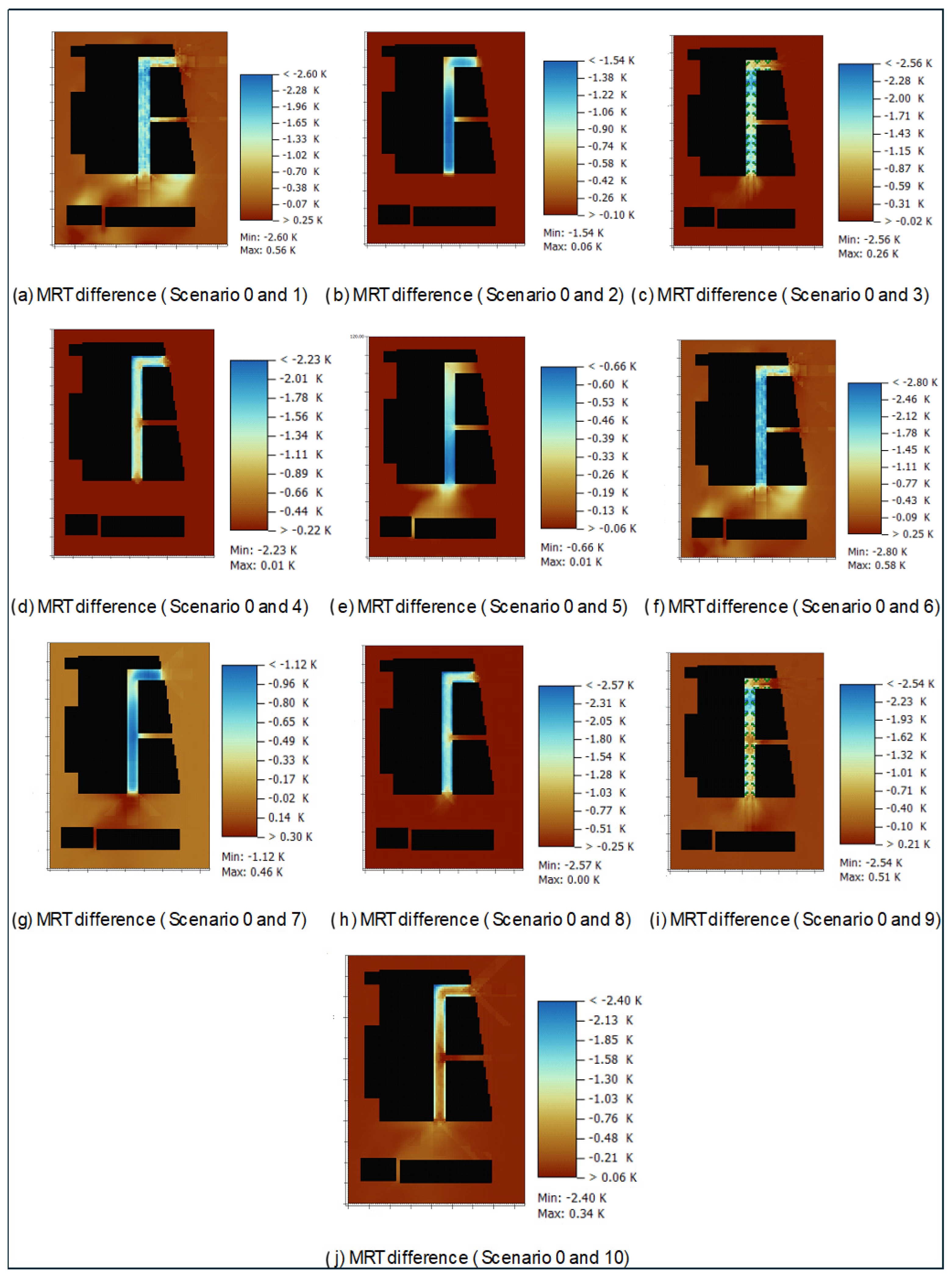
Figure 8 illustrates the differences in TMRT values at 17:00 for scenarios 1–10 compared to the base case scenario. For individual cooling intervention scenarios, scenario 1—PVC shade had a TMRT reduction of approximately 2.6 K, while Scenario 5—water mist had a reduction of only 0.66 K. The effect of shading on TMRT reduction has been well established in previous studies. Though scenario 5 had a 2.6 K reduction in Ta, there was not much effect on TMRT. With combined interventions, scenario 6 (PVC shading and cool pavement) reported a TMRT reduction of 2.8 K.
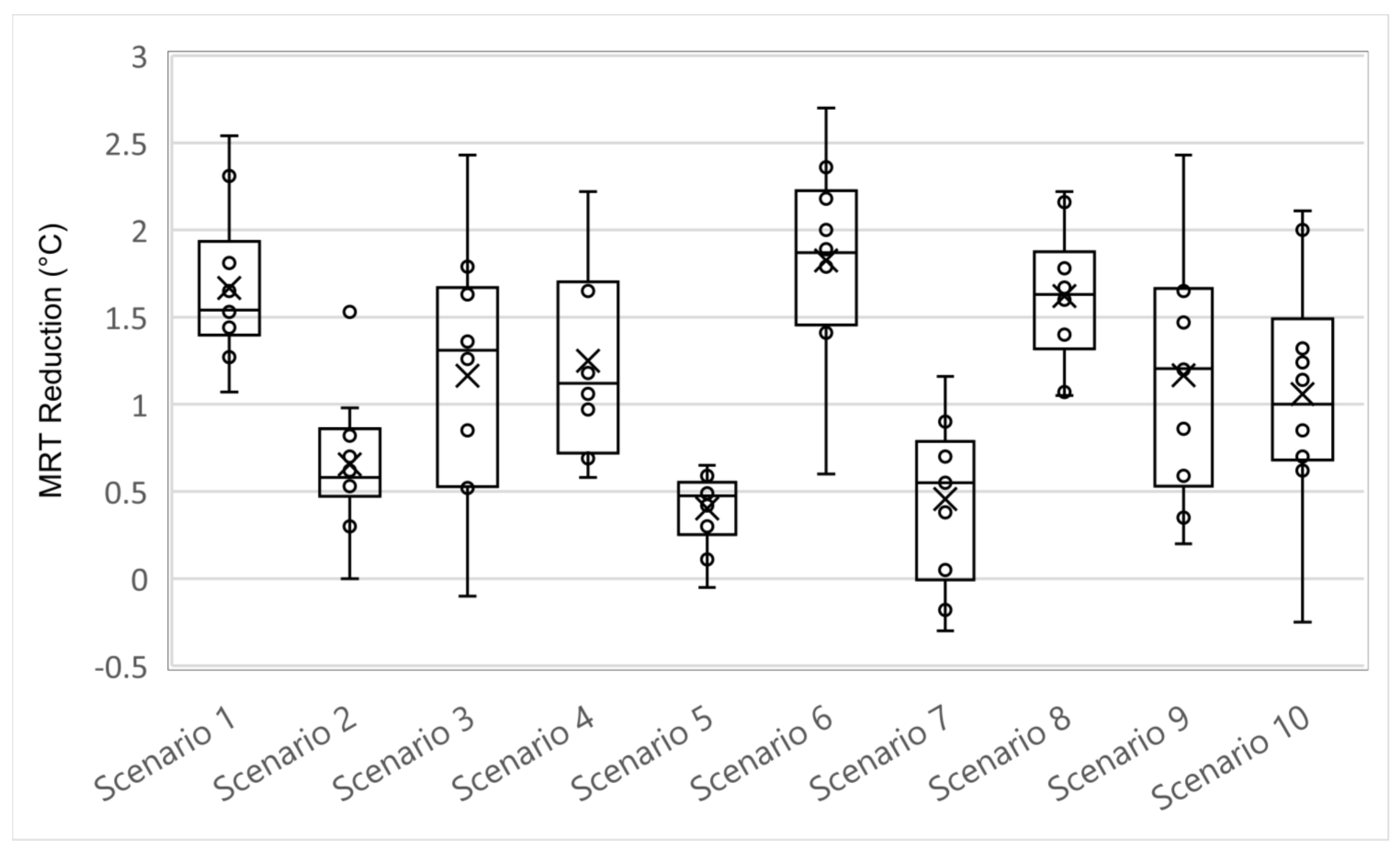
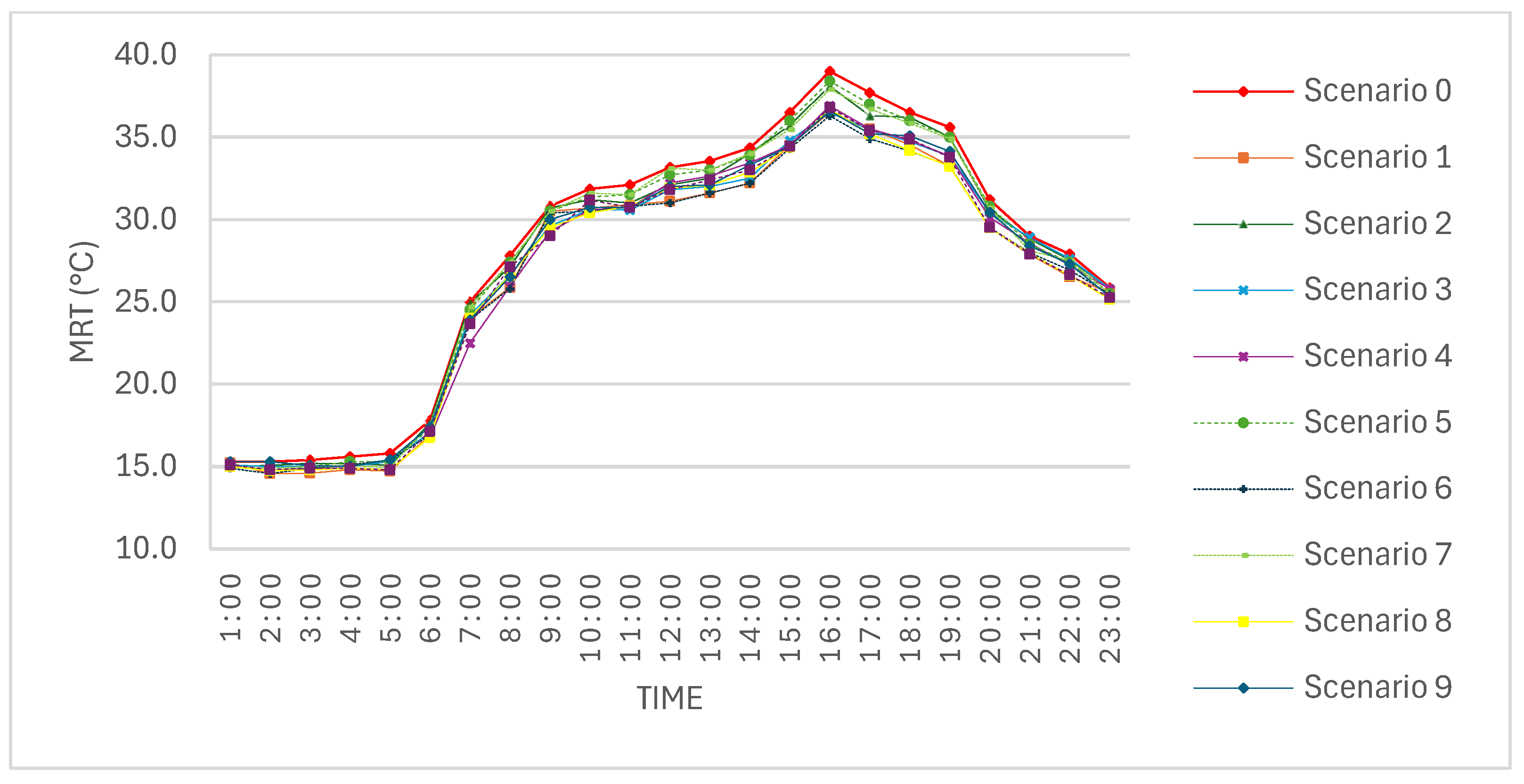
Figure 9 shows hourly TMRT profiles at point 4. TMRT Values reached the peak at around 16:00–17:00 and dropped gradually from 17:00 onwards. Figure 10 shows the TMRT reductions extracted for points 1 to 4 for all scenarios. Scenario 6 reported the highest TMRT reduction along the lane, ranging from 0.6 to 2.7 K with a median value of approximately 1.8 K. Water mist (scenario 5) had the lowest TMRT reduction distribution amongst the individual cooling scenarios. An increase in MRT was also noted for some scenarios. For example, scenario 7 showed a TMRT increase of approximately 0.4 K at point 1.

3.2.3. Analysis of Thermal Comfort Indices

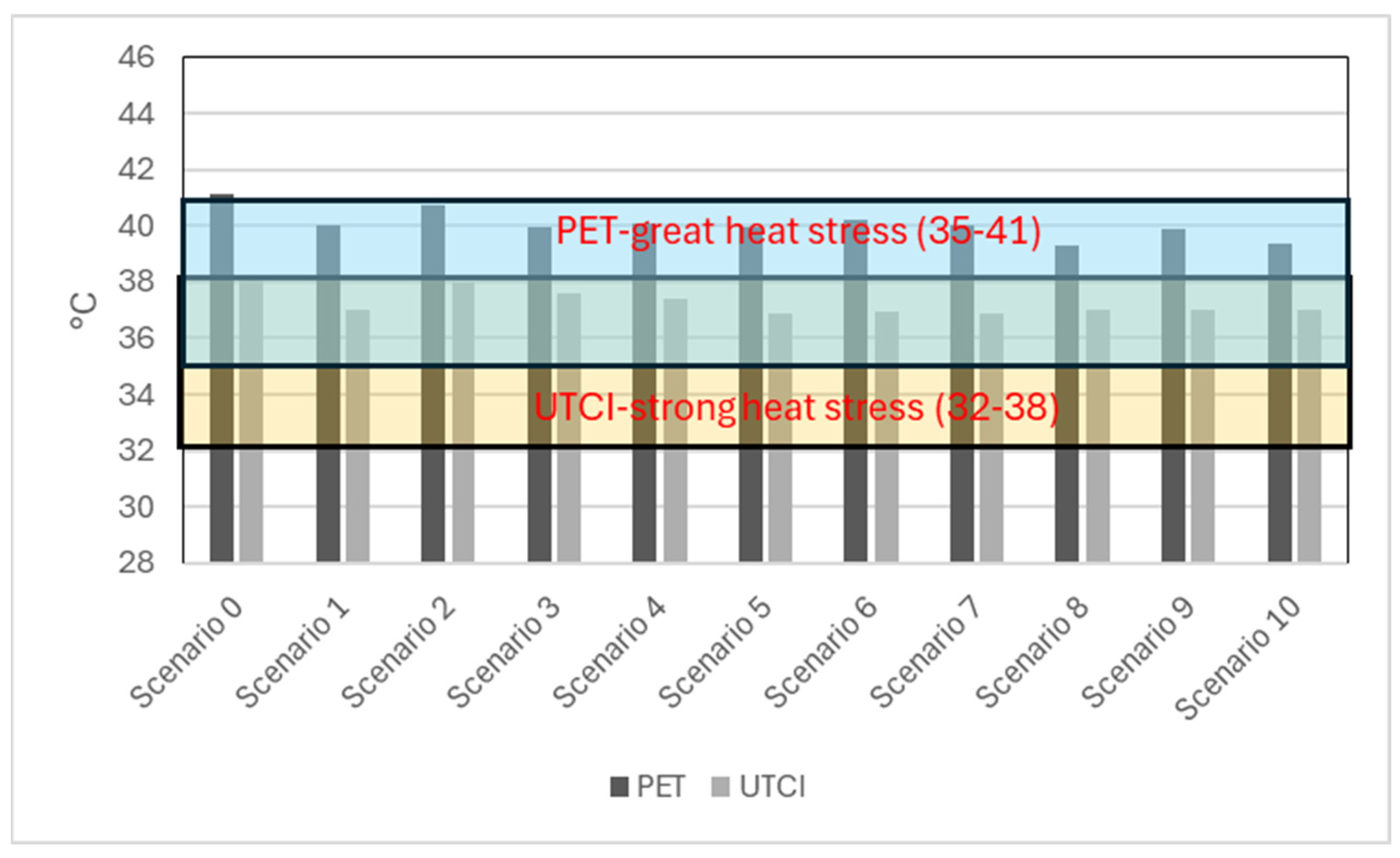
Figure 11 displays a comparison of thermal comfort indices, namely PET and UTCI. The PET value for the base scenario is 41.14 °C, which is categorised as extreme heat stress as per the PET evaluation scale developed by Matzarakis et al. [37]. In general, PET values were reduced in all scenarios, with scenario 2 (cool pavement) having a reduction (0.42 K) and scenario 8 performing best with a reduction of 1.84 K. All the cooling interventions helped to reduce the thermal perception from very hot to hot, reducing the heat stress level from extreme heat stress to the upper limit of great heat stress. In general, scenarios with greenery (plants and green wall) seem to have better effect on PET values compared to PVC shading and cool pavement.
The UTCI value for the base case was 38.14 °C, which falls under the category of strong heat stress. Looking at the effect of various interventions, water mist (scenario 5) was the best performing, with a UTCI reduction of 1.25 K, followed by PVC shading interventions. Similar to TMRT and PET, the lowest UTCI reduction (0.14 K) was observed with scenario 2 (cool pavement). For the UTCI heat stress category to be downgraded from strong to moderate, a reduction of at least 7 K is required, though none of the interventions were able to accomplish this. The improvements were meaningful at the microscale.

4. Discussion

All the cooling interventions in this study were chosen based on the possibility of retrofitting the laneway without significantly changing the existing infrastructure. Scenarios were carefully considered while combining cooling interventions for realistic applications. For example, PVC shading was not combined with green walls or trees or water mist as shading would not be suitable for growing trees or green walls, and a water-mist system will cause high levels of humidity under the PVC shading infrastructure. Though microclimatic conditions are heavily influenced by their surrounding environment; changes to small areas within a large urban context may not significantly impact the microclimate conditions within a laneway. This study, however, showed some reduction in air temperature, radiant temperature and thermal comfort indices, and the findings can be used as a guideline by planners, researchers, local councils, government agencies, etc.
Looking at the Ta reduction for individual scenarios, water mist was the best performing, with a Ta reduction of 1.3 K. This was followed by PVC shading (0.5 K) and green canopy (0.4 K). Cool pavement had the lowest Ta reduction (0.3 K) and little impact on thermal comfort indices. In the case of water mist, the cloud of fine water droplets produced by the atomisation nozzles has a large surface in contact with the surrounding air, allowing them to evaporate immediately and significantly enhancing the cooling effect in the surrounding area. The morphology of the street canyon also impacts the dispersion of water-mist droplets, hence the efficiency of spray cooling. Narrower street canyons (H/W = 2) enhance the cooling performance of water-mist spray as found in a recent study by Du, Chen [5]. In another recent study in Qingdao, China, Gao, Ge [4] found that water spray can reduce Ta by 2.01 K when the surrounding temperature is above 34 °C. The efficiency of water-mist spray cooling can also be influenced by the meteorological condition, including ambient air temperature, relative humidity, solar radiation and wind speed, and it has poor performance in high humidity. Additionally, different urban scenarios may have varying requirements for technical parameters such as the number of nozzles and water consumption. Mist systems require a constant water supply and are susceptible to mould/mildew, requiring frequent cleaning for clogged nozzles.
The results of the thermal comfort analysis show that the cooling impact varied with the thermal index selected for analysis. Also, not all combined scenarios exhibit a higher cooling effect compared to the individual scenarios. The worst-performing cooling intervention with respect to thermal comfort was cool pavement, and the best-performing one was water mist. Many previous studies have documented a negligible to modest impact on air temperatures with cool pavement even though there was a significant reduction in surface temperatures [14,38,39]. But cool pavements can perhaps be used effectively in certain locations (e.g., places where shade-based approaches are not feasible), particularly if reducing surface temperatures is the main goal. Also, they can be implemented as part of the combined interventions. Cool pavements are affected by both optical and thermal properties. An albedo of 0.6 was assumed for the cool pavement in this simulation. Further increasing the albedo could raise the TMRT and can have an impact on people’s thermal comfort at high temperatures. Cool pavements can sometimes cause a notable increase in Tmrt because of the increased reflection of short wave radiation as observed in Los Angeles by Middel, Turner [38].
Though PVC shading had a reduction of only 0.67 K in Ta, it caused some reductions in TMRT, PET and UTCI values. So, PVC shading is also a promising cooling intervention that is suitable for this type of lane. Though shading can reduce ventilation within the canyon, overall cooling is improved. Also, the good light transmission property of the material does not hinder the daylight performance within the lane.
Small canopy trees, in general, have an impact on the microclimate within the lane and could improve the level of thermal comfort during summer months because of deciduous trees’ ability to reduce short-wave radiation. Canopy trees and vertical greenery can reduce ventilation and convective heat transfer. Green walls did show small improvements in thermal comfort indices but not high enough to be used as an individual cooling intervention, and therefore it would be more appropriate to combine with other cooling interventions. For example, when combined with a water-mist system, a maximum Ta reduction 1.49 K and TMRT reduction 2.57 K were obtained. The water-mist system as an individual cooling intervention or as part of a combined intervention had a significant impact on Ta, with a maximum reduction of 1.3 K and 1.76 K, respectively. However, a similar impact was not found with the thermal comfort indexes (TMRT, PET and UTCI). While the air temperature may drop, the reduction is insufficient to compensate for increased radiation loads, as a result of which pedestrian thermal comfort may be compromised. It is to be noted that as the validation was performed during winter, it may affect the model confidence for summer simulation, particularly with respect to TMRT as ENVI-met often underestimates the full intensity of solar radiation during the peak summer season.
PET indicates that scenario 8, with a combination of water mist and green wall, was the best performing, with a reduction of 1.84 K, while UTCI shows water mist (scenario 5) was the best performing, with a reduction (1.25 K). One possible reason is that the UTCI is more sensitive to changes in ambient stimuli, particularly wind speed, compared to PET. Furthermore, UTCI adjusts clothing based on outdoor meteorological conditions, whereas PET always uses standard clothing (clo = 0.9). Although UTCI is better for warm and humid environments, it gives more details about cold stress during cold conditions.

5. Conclusions

In this study, the impact of multiple cooling interventions was analysed in a narrow city laneway in the temperate climate setting of Melbourne. The sky-view factor of the laneway ranged from 0.51 to 0.63, classifying it as a semi-open space. As an individual intervention, water mist had the best-performing PET and UTCI reduction, 1.22 K and 1.25 K, respectively, followed by PVC shading and small canopy trees. For combined scenarios, water mist with green wall (scenario 8) had the best performing PET reduction (1.84 K), while water mist with cool pavement (scenario 7) had the best-performing UTCI reduction (1.25 K). Table 6 shows a summary of the best-performing interventions.
Overall, the results obtained in this study are consistent with the previous studies. This study offers practical knowledge about climate-sensitive urban designs addressing summer conditions. Results underscore the combined effects of cooling interventions, demonstrating that hybrid strategies can improve thermal conditions in laneways and activity spaces in cities. The findings can help planners and designers choose appropriate cooling strategies for the effective regulation of summer thermal stress. There are few limitations to this study that should be noted. First, the study focused on a single laneway that has a northwest–southeast orientation. Further studies involving laneways with east–west and north–south orientations could be conducted. Though field measurements were conducted for two days (one day in summer and one day in winter), only winter measurements were used for validation. This is because the model is assumed to be robust across seasons. Extending the monitoring for multiple days in summer, particularly during heat waves, can provide a deeper understanding of the microclimatic conditions and hence the design of appropriate solutions. A cost–benefit analysis could also be undertaken before the implementation of the interventions, though the high variability in the cost between the cooling interventions could make this challenging to undertake. The next stage of the study will involve the modelling of multiple typical laneways that have different geometries and orientations and applying different ranges for each of the cooling interventions.

Author Contributions

Conceptualisation, P.R.; methodology, P.R., A.C. and M.M.A.; software, J.J.D.; validation, P.R., J.J.D. and A.C.; formal analysis, P.R., A.C. and J.J.D.; investigation, P.R., A.C. and J.J.D.; resources, P.R., A.C. and M.M.A.; data curation, P.R., J.J.D., A.C. and M.M.A.; writing—original draft preparation, P.R. and J.J.D.; writing—review and editing, P.R., A.C. and M.M.A.; visualisation, P.R., J.J.D. and A.C.; supervision, P.R.; project administration, P.R.; funding acquisition, P.R. All authors have read and agreed to the published version of the manuscript.

Funding

This research was funded by City of Melbourne under the Heat Lab project (Contract Number 37043).

Data Availability Statement

The raw data supporting the conclusions of this article will be made available by the authors on request.

Acknowledgments

We would like to acknowledge City of Melbourne for funding this project.

Conflicts of Interest

The authors declare no conflicts of interest.

References

  1. Herath, H.M.P.I.K.; Halwatura, R.U.; Jayasinghe, G.Y. Evaluation of green infrastructure effects on tropical Sri Lankan urban context as an urban heat island adaptation strategy. Urban For. Urban Green. 2018, 29, 212–222. [Google Scholar] [CrossRef]
  2. Jareemit, D.; Srivanit, M. A Comparative Study of Cooling Performance and Thermal Comfort under Street Market Shades and Tree Canopies in Tropical Savanna Climate. Sustainability 2022, 14, 4653. [Google Scholar] [CrossRef]
  3. Di Giuseppe, E.; Ulpiani, G.; Cancellieri, C.; Di Perna, C.; D’Orazio, M.; Zinzi, M. Numerical modelling and experimental validation of the microclimatic impacts of water mist cooling in urban areas. Energy Build. 2021, 231, 110638. [Google Scholar] [CrossRef]
  4. Gao, Y.; Ge, L.; Meng, X. Employing the spray system to improve the regional thermal environment in outdoor open space. Urban Clim. 2025, 59, 102266. [Google Scholar] [CrossRef]
  5. Du, Y.; Chen, H.; Chen, G.; Hang, J.; Meng, H.; Mak, C.M. Integrated impacts of water mist spray and aspect ratios on thermal environment inside 2D street canyons: Scaled outdoor experiments. Build. Environ. 2026, 287, 113774. [Google Scholar] [CrossRef]
  6. Montazeri, H.; Toparlar, Y.; Blocken, B.; Hensen, J.L.M. Simulating the cooling effects of water spray systems in urban landscapes: A computational fluid dynamics study in Rotterdam, The Netherlands. Landsc. Urban Plan. 2017, 159, 85–100. [Google Scholar] [CrossRef]
  7. Balany, F.; Muttil, N.; Muthukumaran, S.; Wong, M.S.; Ng, A.W.M. Studying the Effect of Blue-Green Infrastructure on Microclimate and Human Thermal Comfort in Melbourne’s Central Business District. Sustainability 2022, 14, 9057. [Google Scholar] [CrossRef]
  8. Elgheznawy, D.; Eltarabily, S. The impact of sun sail-shading strategy on the thermal comfort in school courtyards. Build. Environ. 2021, 202, 108046. [Google Scholar] [CrossRef]
  9. Lam, C.K.C.; Weng, J.; Liu, K.; Hang, J. The effects of shading devices on outdoor thermal and visual comfort in Southern China during summer. Build. Environ. 2023, 228, 109743. [Google Scholar] [CrossRef]
  10. Lee, L.S.H.; Cheung, P.K.; Fung, C.K.W.; Jim, C.Y. Improving street walkability: Biometeorological assessment of artificial-partial shade structures in summer sunny conditions. Int. J. Biometeorol. 2020, 64, 547–560. [Google Scholar] [CrossRef] [PubMed]
  11. Debbage, N.; Zhai, W.; Ochoa, E.L.; Lee, R.J.; Pineda, A.; Jones, E.; Clearwater, T.; Rueda, S.; Pursch, T.; Renteria, J.; et al. Evaluating the Performance of Cool Pavement in San Antonio, Texas, as an Urban Heat Mitigation Measure. J. Appl. Meteorol. Climatol. 2025, 64, 1127–1146. [Google Scholar] [CrossRef]
  12. Feng, J.; Saliari, M.; Gao, K.; Santamouris, M. On the cooling energy conservation potential of super cool roofs. Energy Build. 2022, 264, 112076. [Google Scholar] [CrossRef]
  13. Santamouris, M.; Khan, H.S.; Paolini, R.; Julia, O.M.L.; Garshasbi, S.; Papakonstantinou, I.; Valenta, J. Recent Advances in Fluorescence-Based Colored Passive Daytime Radiative Cooling for Heat Mitigation. Int. J. Thermophys. 2024, 45, 90. [Google Scholar] [CrossRef]
  14. Schneider, F.A.; Cordova Ortiz, J.; Vanos, J.K.; Sailor, D.J.; Middel, A. Evidence-based guidance on reflective pavement for urban heat mitigation in Arizona. Nat. Commun. 2023, 14, 1467. [Google Scholar] [CrossRef]
  15. Wang, J.; Yan, D.; Ding, L.; An, J.; Santamouris, M. On the development of super cool paints for cooling purposes. Sol. Energy 2025, 296, 113592. [Google Scholar] [CrossRef]
  16. Gaitani, N.; Spanou, A.; Saliari, M.; Synnefa, A.; Vassilakopoulou, K.; Papadopoulou, K.; Pavlou, K.; Santamouris, M.; Papaioannou, M.; Lagoudaki, A. Improving the microclimate in urban areas: A case study in the centre of Athens. Build. Serv. Eng. Res. Technol. 2011, 32, 53–71. [Google Scholar] [CrossRef]
  17. Santamouris, M. Using cool pavements as a mitigation strategy to fight urban heat island—A review of the actual developments. Renew. Sustain. Energy Rev. 2013, 26, 224–240. [Google Scholar] [CrossRef]
  18. Kappou, S.; Souliotis, M.; Papaefthimiou, S.; Panaras, G.; Paravantis, J.A.; Michalena, E.; Hills, J.M.; Vouros, A.P.; Ntymenou, A.; Mihalakakou, G. Cool Pavements: State of the Art and New Technologies. Sustainability 2022, 14, 5159. [Google Scholar] [CrossRef]
  19. Osmond, P.; Sharifi, E. Guide to Urban Cooling Strategies; CRC for Low Carbon Living: Sydney, Australia, 2017. [Google Scholar]
  20. Karimipour, H.; Tam, V.W.Y.; Burnie, H.; Le, K.N. Simulating cooling street strategies on urban heat islands effects: An empirical study for blacktown city, Australia. J. Green Build. 2022, 17, 143–162. [Google Scholar] [CrossRef]
  21. Supersealing. Cool Road Trials; Supersealing: Boronia, Australia, 2021. [Google Scholar]
  22. Marchant, J.; VanderBerg, J.; Siebentritt, M.; Chambers, A.Y. Cool Road Adelaide Projects, Report for the Department for Environment and Water; Climate-KIC: Ultimo, Australia, 2020. [Google Scholar]
  23. Middel, A.; AlKhaled, S.; Schneider, F.A.; Hagen, B.; Coseo, P. 50 Grades of Shade. Bull. Am. Meteorol. Soc. 2021, 102, E1805–E1820. [Google Scholar] [CrossRef]
  24. Middel, A.; Krayenhoff, E.S. Micrometeorological determinants of pedestrian thermal exposure during record-breaking heat in Tempe, Arizona: Introducing the MaRTy observational platform. Sci. Total Environ. 2019, 687, 137–151. [Google Scholar] [CrossRef]
  25. Chatzidimitriou, A.; Liveris, P.; Bruse, M.; Topli, L. Urban Redevelopment and Microclimate Improvement: A Design Project in Thessaloniki, Greece, PLEA 2013. In Proceedings of the PLEA2013—29th Conference, Sustainable Architecture for a Renewable Future, Munich, Germany, 10–12 September 2013. [Google Scholar]
  26. Wai, K.-M.; Xiao, L.; Tan, T.Z. Improvement of the Outdoor Thermal Comfort by Water Spraying in a High-Density Urban Environment under the Influence of a Future (2050) Climate. Sustainability 2021, 13, 7811. [Google Scholar] [CrossRef]
  27. Narita, K.; Kohno, T.; Misaka, I. Experimental study on evaporative cooling of fine water mist for outdoor comfort in the urban environment. In Proceedings of the Third International Conference on Countermeasures to Urban Heat Island, Venice, Italy, 13–15 October 2014. [Google Scholar]
  28. Lin, C.; Zhang, S. Impact of Green Roofs and Walls on the Thermal Environment of Pedestrian Heights in Urban Villages. Buildings 2024, 14, 4063. [Google Scholar] [CrossRef]
  29. ENVI-Met. 2024. Available online: https://www.envi-met.com/ (accessed on 10 May 2024).
  30. Bröde, P.; Fiala, D.; Błażejczyk, K.; Holmér, I.; Jendritzky, G.; Kampmann, B.; Tinz, B.; Havenith, G. Deriving the operational procedure for the Universal Thermal Climate Index (UTCI). Int. J. Biometeorol. 2012, 56, 481–494. [Google Scholar] [CrossRef]
  31. López-Cabeza, V.P.; Diz-Mellado, E.; Rivera-Gómez, C.A.; Galán-Marín, C. Shade and Thermal Comfort in Courtyards: Experimental versus Simulation Results. Buildings 2022, 12, 1961. [Google Scholar] [CrossRef]
  32. BoM. Climate Statistics for Australian Locations. 2025. Available online: http://www.bom.gov.au/climate/averages/tables/cw_086071_All.shtml (accessed on 25 January 2025).
  33. Yang, X.; Zhao, L.; Bruse, M.; Meng, Q. Evaluation of a microclimate model for predicting the thermal behavior of different ground surfaces. Build. Environ. 2013, 60, 93–104. [Google Scholar] [CrossRef]
  34. Ketterer, C.; Matzarakis, A. Comparison of different methods for the assessment of the urban heat island in Stuttgart, Germany. Int. J. Biometeorol. 2015, 59, 1299–1309. [Google Scholar] [CrossRef]
  35. Tsoka, S.; Tsikaloudaki, A.; Theodosiou, T. Analyzing the ENVI-met microclimate model’s performance and assessing cool materials and urban vegetation applications—A review. Sustain. Cities Soc. 2018, 43, 55–76. [Google Scholar] [CrossRef]
  36. Evola, G.; Costanzo, V.; Magrì, C.; Margani, G.; Marletta, L.; Naboni, E. A novel comprehensive workflow for modelling outdoor thermal comfort and energy demand in urban canyons: Results and critical issues. Energy Build. 2020, 216, 109946. [Google Scholar] [CrossRef]
  37. Matzarakis, A.; Mayer, H.; Iziomon, M.G. Applications of a universal thermal index: Physiological equivalent temperature. Int. J. Biometeorol. 1999, 43, 76–84. [Google Scholar] [CrossRef]
  38. Middel, A.; Turner, V.K.; Schneider, F.A.; Zhang, Y.; Stiller, M. Solar reflective pavements—A policy panacea to heat mitigation? Environ. Res. Lett. 2020, 15, 064016. [Google Scholar] [CrossRef]
  39. Moretti, L.; Di Mascio, P.; Cantisani, G.; Carpiceci, M.; D’Andrea, A.; Del Serrone, G.; Loprencipe, G. Effect of Sampietrini Pavers on urban heat islands. Int. J. Environ. Res. Public Health 2021, 18, 13108. [Google Scholar] [CrossRef]
Figure 1. Map of Melbourne in Victoria and aerial view of the laneway.
Buildings 16 01079 g001
Figure 2. Model of the site: (a) 2D view. (b) 3D view.
Buildings 16 01079 g002
Figure 3. Measurement locations.
Buildings 16 01079 g003
Figure 4. Comparison of simulation results against measured values.
Buildings 16 01079 g004
Figure 5. Ta difference between basecase and scenarios 1–10.
Buildings 16 01079 g005
Figure 6. Hourly profile of Ta for all the scenarios at point 4.
Buildings 16 01079 g006
Figure 7. Distribution of Ta reduction across the lane.
Buildings 16 01079 g007
Figure 8. Differences in TMRT difference between base case and scenarios 1–10.
Buildings 16 01079 g008
Figure 9. Hourly profile of TMRT for scenarios 0–10 at point 4.
Buildings 16 01079 g009
Figure 10. Distribution of TMRT reduction across the lane.
Buildings 16 01079 g010
Figure 11. PET and UTCI comparison.
Buildings 16 01079 g011
Table 1. General input data for ENVI-met model.
ParameterItemDescription
BuildingsAs per the site plan (Figure 1)
BuildingWall materialsBrick walls (emissivity: 0.93,
absorption: 0.3, transmission 0, reflection: 0.4 thermal conductivity: 0.3)
Roof materialsMetal roof (emissivity: 0.1, absorption: 0.3, transmission 0, reflection: 0.7 thermal conductivity: 45)
Road and pavementAsphalt road (albedo: 0.1, emissivity 0.9); Pavement (albedo: 0.2, emissivity 0.9)
MicroclimateAir temperature and RHAs per full-force weather file
Wind speedAs per full-force weather file
Simulation period00:00–24:00 (24 h)–27th December 2022
Table 2. Specification of instruments.
ParameterMeasuring Range and Accuracy
Air temperature Ta (°C)0 to +50 °C, ±0.5 °C
Relative humidity (%)0 to 100RH%, ±(1.8RH% + 0.7% or measured value)
Globe temperature Tg (°C)0 to +120 °C, Class 1
Air velocity (ms−1)0 to +5 ms−1, ±(0.03 ms−1 to 4% of measured value
Table 3. Thermal perception and heat stress classification.
UTCI in °CStress CategoryPET in °CStress Category
Above 46 Extreme heat stress>41Extreme heat stress
38–46 Very strong heat stress35–41Great heat stress
32–38 Strong heat stress29–35Moderate heat stress
26–32 Moderate heat stress23–29Slight heat stress
9–26 No thermal stress18–23No thermal stress
9–0 Slight cold stress13–18Slight cold stress
0 to −13 Moderate cold stress8–13Moderate cold stress
−13 to −27 Strong cold stress4–8Great cold stress
−27 to −40 Very strong cold stress<4Extreme cold stress
Below −40 Extreme cold stress
Table 4. Tested scenarios.
NumberType of ScenariosPropertiesDetails
1PVC shading at 4 m heightThickness–0.005 m
Colour–White
Absorption–0.45
Transmission–0.13
Reflection–0.40
Emissivity–0.90
Specific heat–1470 J/Kg.K
Thermal conductivity–0.19 W/m.K
Density–1020 kg/m3
Buildings 16 01079 i001
2Cool pavementSurface coatings that can be used on the existing asphalt floor
Albedo–0.60
Emissivity–0.90
Roughness length–0.01
Thermal conductivity–1.16 W/m.K
Volumetric heat capacity–2214 J/m3.K
Buildings 16 01079 i002
3Green canopyRepresenting small canopy trees in planter boxes placed along the lane–small deciduous trees
canopy width 1 m, tree height 3 m
Buildings 16 01079 i003
4Green wallGreen wall system in planter boxes placed along the brick walls–made up of ivy (Hedera Helix).Buildings 16 01079 i004
5Water mistSeveral water nozzles at 6 m interval approximately are placed at a height of 2.5 m along the lane, nozzle type: high-pressure misting nozzles; flow rate: 5 g/s; droplet size: 10 µm; operation: continuous, control logic: noneBuildings 16 01079 i005
6PVC shading and cool pavement Combination of 1 and 2 above
7Water mist and cool pavement Combination of 2 and 5 above
8Water mist and green wall Combination of 4 and 5 above
9Green canopy and cool pavement Combination of 2 and 3 above
10Cool pavement, water mist and green wallsCombination of 2,4 and 5 above
Table 5. Statistical indices comparing measured and predicted values.
Statistical IndicesR2RMSEd
Ta0.970.900.97
RH0.975.920.86
TMRT0.9112.40.63
Table 6. Summary of best performing interventions.
ParametersTemperature ReductionScenarios
Ta1.3 KScenario 5–Water mist
TMRT2.6 KScenario 1–PVC shading
PET1.84 KScenario 8–Water mist + green wall
UTCI1.25 KScenario 5–Water mist
Disclaimer/Publisher’s Note: The statements, opinions and data contained in all publications are solely those of the individual author(s) and contributor(s) and not of MDPI and/or the editor(s). MDPI and/or the editor(s) disclaim responsibility for any injury to people or property resulting from any ideas, methods, instructions or products referred to in the content.