Article

Effect of Temperature Changes on the Experimental Modal Analysis of a Galvanized Steel Benchmark Structure


1
Department of Civil Engineering, Faculty of Engineering, Ondokuz Mayis University, 55139 Samsun, Turkey
2
Department of Civil Engineering, Faculty of Engineering, Giresun University, 28200 Giresun, Turkey
*
Author to whom correspondence should be addressed.
Buildings 2026, 16(5), 1069; https://doi.org/10.3390/buildings16051069
Submission received: 19 January 2026 / Revised: 6 March 2026 / Accepted: 6 March 2026 / Published: 8 March 2026

Abstract

The effect of temperature change on modal frequencies leads to erroneous results in the detection of structural damage. Therefore, quantifying the temperature dependency of modal frequencies is essential to improve the reliability of damage identification. Due to the irregular and time-dependent nature of temperature distribution, reliable correlations between air or surface temperatures and modal frequencies cannot be established. In this study, the dynamic behavior of a galvanized steel benchmark structure was investigated at two controlled temperature levels (2 °C and 32 °C) using experimental modal analysis (EMA). The structure was excited using a shaking table, while ambient vibration signals recorded at ground level were used as pre-recorded excitation input to the shaking table. Modal parameters were identified using Enhanced Frequency Domain Decomposition (EFDD). The results showed that mode shapes remained consistent across temperature levels, whereas natural frequencies decreased by an average of 2.43%. The identified dynamic parameters exhibited an approximately linear trend with temperature change. These findings highlight the importance of considering temperature effects in experimental modal analysis of galvanized steel structures to avoid false damage detection.

1. Introduction

In civil engineering structures, vibration-based methods are widely used to evaluate structural performance and detect potential damage throughout the service life of buildings and infrastructure. Damage in existing structures may occur not only due to earthquakes but also due to excavation activities, tunnel constructions, blasting operations, and other environmental effects that adversely influence stability. Therefore, the damage assessment in existing buildings should be monitored throughout the life of the building [1,2]. For this reason, reliable and rapid damage detection techniques are required for existing buildings. Operational Modal Analysis (OMA) and Experimental Modal Analysis (EMA) are among the most preferred approaches for identifying dynamic parameters such as natural frequencies, mode shapes, and damping ratios [3,4,5,6,7,8]. While EMA applies controlled excitation to the structure, OMA utilizes environmental excitations such as wind, traffic, or ambient vibrations. Because both approaches are based on similar mathematical principles, they are widely used for modal identification and structural performance evaluation [6,7,8]. In SHM applications, modal parameters are directly associated with structural stiffness and integrity. Variations in dynamic characteristics may indicate changes in stiffness due to damage, strengthening, or construction differences between design and practice [9,10,11,12,13,14]. For example, Dönmez and Karakan [15] demonstrated that ERA and NExT-ERA methods can successfully identify modal parameters of a steel bridge, emphasizing their importance for SHM. Moreover, vibration-based damage identification techniques rely heavily on monitoring changes in modal frequencies and mode shapes [16]. Therefore, EMA and OMA play fundamental roles in establishing baseline modal characteristics and validating numerical models within SHM systems. However, modal parameters are influenced not only by structural damage but also by environmental factors. In particular, temperature and humidity have been shown to significantly affect dynamic properties [17,18,19,20]. Numerous studies have investigated temperature-induced variability in steel, reinforced concrete, and composite structures. Long-term bridge monitoring studies revealed strong correlations between daily and seasonal temperature variations and modal frequency shifts [21,22,23,24]. Ding and Li [21] demonstrated that modal frequencies of a steel box-girder suspension bridge decreased with increasing temperature, while similar observations were reported for railroad bridges using Stochastic Subspace Identification techniques [24]. High-temperature laboratory experiments on metallic plates further showed that temperature gradients can alter modal frequencies and, in some cases, mode shapes [22]. SHM systems typically employ accelerometers, strain gauges, LVDTs, thermocouples, and fiber optic sensors to record structural responses and environmental conditions [25,26,27,28]. The collected data are processed using modal identification algorithms and statistical inference techniques to evaluate structural integrity. However, without adequate temperature compensation, frequency-based damage detection may result in false alarms. In steel structures in particular, temperature influences the Young’s modulus and thus directly affects structural stiffness, leading to measurable changes in modal frequencies. Comprehensive reviews and case studies emphasized that temperature-induced frequency shifts may be comparable to moderate damage levels, which may lead to misinterpretation in vibration-based SHM applications if environmental effects are not properly separated [29,30,31,32,33,34,35,36,37]. To address this issue, various compensation approaches based on statistical modeling and data-driven techniques have been proposed. Methods such as linear regression, ARX, ARIMA, and hybrid optimization-based models have been successfully employed to reduce temperature-related variability and distinguish environmental effects from actual structural damage [29,38]. In addition, SHM systems often integrate accelerometers, strain gauges, LVDTs, thermocouples, and fiber optic sensors to simultaneously monitor structural responses and environmental conditions [25,26,27,28,33]. Although the general trend of decreasing frequency with increasing temperature has been widely reported [34,35,36,39], the temperature–frequency relationship is not always strictly linear. Several studies highlighted that the relationship may depend on structural geometry, boundary conditions, and thermal distribution within the structure [24,37,38,39,40]. Finite element–based thermal modeling approaches incorporating heat transfer and modal analysis stages have demonstrated improved prediction accuracy for temperature-dependent frequency variations [39,41]. Furthermore, the heating rate and transient thermal stresses were shown to influence modal responses under non-isothermal conditions [40].
Galvanized steel is a building material obtained by coating the steel surface with a zinc layer using the hot-dip galvanizing method, providing superior corrosion resistance [42]. This coating can protect the lifespan of steel infrastructure in atmospheric, industrial, and marine environments for a considerable period, such as 50–100 years, and is widely preferred for bridges, power transmission lines, industrial facilities, and steel construction buildings [43]. Galvanized steel, due to its corrosion resistance and wide application in civil and mechanical structures, has gained significant attention in structural dynamics and monitoring studies. Understanding the dynamic behavior of galvanized steel elements under varying environmental conditions is crucial for accurate structural health monitoring (SHM) and damage detection. Temperature variations, in particular, can alter the material’s elastic properties, leading to measurable changes in modal parameters such as natural frequencies and damping ratios [37]. Experimental studies on galvanized steel benchmark structures have demonstrated that an increase in temperature results in a decrease in natural frequencies, while mode shapes remain largely unchanged, indicating that the frequency variations are primarily governed by the temperature-dependent elastic modulus rather than boundary conditions [35]. These findings underscore the importance of considering temperature effects when performing experimental or operational modal analysis (EMA/OMA) for galvanized steel structures to avoid misinterpretation of temperature-induced changes as structural damage [35,38]. Despite its practical significance, the literature specifically addressing the influence of temperature on the dynamic characteristics of galvanized steel remains limited, highlighting a critical gap that warrants further experimental and numerical investigation [38].
While the effect of temperature on modal parameters has been extensively studied in the existing literature, experimental studies addressing this relationship in lightweight galvanized steel frame systems are limited. Galvanized steel minimizes the effects of corrosion and moisture in long-term experiments thanks to the protection provided by its surface coating, thus allowing for more accurate observation of elasticity changes due solely to temperature. In this context, galvanized steel structures offer a suitable laboratory scale for monitoring temperature-induced dynamic changes. The unique contribution of this study is the experimental evaluation of the effect of temperature on modal parameters by applying real-world vibrations obtained from microtremor recordings as input to a shake table. This approach both brings real-world environmental inputs to laboratory conditions and allows the study of the effects of temperature changes on modal frequencies and mode shapes in a controlled environment. This provides experimental evidence to avoid confusing temperature effects with damage indicators. In this study, the experimental modal analysis results obtained from a galvanized steel benchmark structure at two distinct temperature levels (+2 °C and +32 °C) were compared to evaluate temperature-dependent frequency variations. These temperature levels correspond to the minimum and maximum values recorded in the laboratory during the measurement period and were selected to represent the annual thermal extremes. The objective of the study is to investigate how measurements conducted at different periods, corresponding to these extreme temperature conditions, influence the identified modal parameters. More specifically, the study seeks to quantify the potential uncertainty and error margin introduced into modal frequency estimations when measurements are performed under the annual minimum and maximum temperature conditions.

2. Materials and Methods

2.1. Modal Parameter Extractions

The evaluation of the dynamic performance of existing structures is a fundamental requirement in structural engineering, particularly when assessing their safety, reliability, and long-term serviceability. In this context, operational modal analysis has gained considerable attention as an effective experimental technique for investigating the vibration characteristics of structural systems under real operating conditions. Unlike conventional analytical approaches that rely primarily on theoretical assumptions, operational modal analysis focuses on the interpretation of measured response data obtained directly from the structure while it is subjected to ambient or operational excitations. Through the analysis of this data, engineers can obtain valuable information regarding the actual dynamic behavior of structural systems and identify possible irregularities that may indicate structural damage or deterioration. One of the major advantages of this method is its contribution to the validation and improvement of numerical models developed for structural analysis. Finite element models, which are widely used for predicting structural responses, are often constructed using simplified assumptions related to geometry, boundary conditions, and material properties. Although these models provide an important analytical framework, they may not always represent the real behavior of existing structures with sufficient accuracy. Experimental data obtained through operational modal analysis make it possible to compare measured structural responses with those predicted by the numerical model. When inconsistencies between the analytical and experimental results are detected, the initial model can be recalibrated and refined using the experimental findings. This updating process enhances the reliability of the numerical model and ensures that it more accurately represents the physical characteristics of the structure. Another important application of operational modal analysis arises in situations where establishing a comprehensive numerical model is difficult or impractical. Many existing structures lack detailed design documentation, and in some cases, the material properties or boundary conditions cannot be determined with complete certainty. Additionally, complex structural configurations may complicate the modeling process and reduce the reliability of purely analytical approaches. Under such circumstances, experimental modal analysis techniques provide a practical alternative for identifying the fundamental dynamic properties of the structure. By analyzing measured vibration responses, parameters such as natural frequencies, damping ratios, and mode shapes can be determined directly, allowing engineers to evaluate the structural behavior without depending entirely on theoretical models. Beyond its use in model validation and dynamic characterization, operational modal analysis also plays a crucial role in structural health monitoring applications. Continuous or periodic monitoring of dynamic parameters provides valuable information about the evolution of structural behavior over time. Even small variations in modal properties may indicate the presence of damage, stiffness loss, or other forms of structural degradation. Detecting such changes at an early stage enables engineers to implement appropriate maintenance or rehabilitation measures before the problem becomes critical. For this reason, operational modal analysis is increasingly recognized as a reliable and efficient tool for the long-term monitoring and management of structural systems. In summary, operational modal analysis serves multiple purposes in the evaluation of existing structures. It contributes not only to the identification of structural damage and the determination of dynamic characteristics, but also to the verification and updating of analytical models as well as the monitoring of structural health throughout the service life of the structure. Owing to these capabilities, it has become an indispensable methodology in modern structural engineering practice [44,45,46,47]. Engineering structures generally employ several identification approaches to determine their dynamic characteristics. These approaches are commonly classified into three groups: modal parameter identification, structural modal parameter identification, and control model identification methods. Each method focuses on extracting specific information from measured structural responses and is used to better understand the behavior of the structural system. In frequency-domain analyses, identification procedures are typically based on the singular value decomposition of the spectral density matrix. One of the most frequently used techniques in this category is Frequency Domain Decomposition (FDD). An improved form of this method, known as Enhanced Frequency Domain Decomposition (EFDD), has been developed to obtain more accurate estimations of modal parameters. For time-domain analysis, the stochastic subspace identification (SSI) technique is widely used. This method has several implementations, including Unweighted Principal Component (UPC), Principal Component (PC), and Canonical Variate Analysis (CVA). These approaches are commonly applied to determine modal parameters and to update structural models [48,49].
Evaluating the sensitivity of a structural system to variations in uncertain or random parameters is a critical step in structural analysis and model validation. In practice, measurement noise can significantly affect the accuracy of identified modal and physical parameters, potentially altering the conclusions drawn about the system’s dynamic behavior. Therefore, it is important to determine the threshold level of measurement noise for which the identified parameters remain reliable and can still be used to validate finite element models of the examined structure. To achieve this, system identification is commonly carried out using observer-based techniques, such as the Kalman filter [50,51,52], as well as subspace identification algorithms [53]. In certain situations, the observer gain can be set equal to the Kalman gain, simplifying the identification process while maintaining accuracy. Once the identification framework is established, the stochastic characteristics of the structural system are simulated through a state-space representation, which is further analyzed using the Monte Carlo method. This approach allows engineers to account for the inherent uncertainties and randomness in the system, providing a robust assessment of how measurement noise and parameter variability influence the reliability of the identified structural parameters. Combining observer-based identification with stochastic simulations ensures that the finite element model remains valid under realistic operating conditions and measurement imperfections, offering a comprehensive framework for structural analysis and health monitoring.
The EFDD technique used in SHM system applications was preferred in this study and used as the basic data generator to understand the effect of temperature changes on frequency and damping ratios. Thus, the sensitivity of modal parameters, which are the basic data source of statistical or artificial-intelligence-based compensation methods for eliminating temperature-related errors in SHM applications, was evaluated. Similar to studies such as [38,41] that directly model the temperature–frequency relationship in SHM, this study also aimed to analyze the temperature effect directly through frequency shifts.
The Frequency Domain Decomposition (FDD) method is widely recognized as an extension of the basic frequency-domain (BFD) or Peak-Picking technique. This approach takes advantage of the fact that, for lightly damped structures subjected to white noise excitation, modal parameters can be effectively estimated from the spectral density functions of measured responses [54,55,56]. As a non-parametric technique, FDD extracts modal information directly from experimental data without the need for a predefined structural model, making it particularly useful in operational modal analysis. The method operates by performing a singular value decomposition (SVD) on each measurement dataset, which isolates the contribution of individual modes. Each singular value derived from the decomposition represents a single degree of freedom (SDOF) system, effectively providing an approximate modal representation of the structure [57]. While FDD provides a straightforward means of estimating natural frequencies and mode shapes, it has limitations regarding the assessment of damping characteristics and the precision of frequency estimation. To address these limitations, the Enhanced Frequency Domain Decomposition (EFDD) technique was developed as an advancement of the standard FDD method [58]. EFDD incorporates the analysis of damping ratios in addition to natural frequencies and mode shapes, offering a more complete evaluation of structural dynamic behavior. In this technique, the SDOF power spectral density (PSD) function corresponding to a resonance peak is transformed back into the time domain using the inverse discrete Fourier transform (IDFT). The natural frequency is then determined by counting the zero crossings in the resulting time-domain signal, while the damping ratio is estimated using the logarithmic decrement of the normalized autocorrelation function of the SDOF system [59,60]. The advantages of EFDD extend beyond the inclusion of damping estimation. By leveraging the SVD of spectral density matrices and the subsequent time-domain reconstruction, the technique enhances the reliability of modal parameter identification even in the presence of measurement noise and operational uncertainties. This makes EFDD particularly suitable for structural health monitoring and experimental validation of numerical models. The ability to obtain accurate estimates of modal parameters with minimal assumptions about the underlying structural system has led to its widespread adoption in both research and practical engineering applications. Consequently, EFDD is now considered one of the most effective tools for operational modal analysis, enabling engineers to perform detailed assessments of structural dynamics under realistic loading conditions.
In this study, modal parameter identification was performed using the Enhanced Frequency Domain Decomposition (EFDD) method. In the EFDD technique, the relationship between the input and the responses can be expressed as follows: the unknown input is denoted by x t , while the measured output is represented by y t .
G y y ( j ω ) = H ( j ω ) * G xx ( j ω ) H ( j ω ) T
Here, G x x ( j ω ) is the r × r power spectral density (PSD) matrix of the input, and G y y ( j ω ) is the m × m PSD matrix of the output. H ( j ω ) denotes the m × r frequency response function (FRF) matrix, and the superscript TTT represents the complex conjugate transpose. The FRF can be expressed in a pole–residue form as follows:
H ( ω ) = Y ( ω ) X ( ω ) = k = 1 m R k j ω λ k + R k * j ω λ k *
where n is the number of modes, λ k is the kth pole, and R k is the corresponding residue. Then, Equation (1) can be written as:
G y y ( j ω ) = k = 1 n s = 1 n R k j ω λ k + R k * j ω λ k *
G x x ( j ω ) R s j ω λ s + R s * j ω λ s * H ¯
where s the singular values, superscript is H denotes complex conjugate and transpose. Multiplying the two partial fraction factors and making use of the Heaviside partial fraction theorem, after some mathematical manipulations, the output PSD can be reduced to a pole/residue form as follows:
G y y ( j ω ) = k = 1 n A k j ω λ k + A k * j ω λ k * + B k j ω λ k + B k * j ω λ k *
where A k is the kth residue matrix of the output PSD. In the EFDD identification, the first step is to estimate the output PSD matrix. The estimated PSD, known at discrete frequencies, is then decomposed using the singular value decomposition (SVD) of the matrix:
G y y ( j ω i ) = U i S i U i H ¯
where U is a unitary matrix containing the singular vectors, and S is a diagonal matrix containing the singular values.

2.2. Materials, Equipment and Experimental Conditions

The Quanser shake table is a widely used bench-scale earthquake simulator designed for both educational and research applications in structural dynamics, control engineering, and related fields such as aerospace and mechanical engineering. Its compact and flexible design allows for the investigation of structural responses under controlled seismic excitations, making it particularly suitable for laboratory-based experimental studies. The simulator has been extensively employed in teaching environments, as it provides a tangible demonstration of structural behavior under dynamic loading while enabling safe and repeatable experiments. In this study, particular attention was given to the possibility of using recorded microtremor data at ground level as an ambient vibration input for experimental investigations. Unlike traditional excitation methods that rely on artificial or idealized signals, using microtremor data allows the simulation of realistic dynamic conditions at a small scale. This approach provides a closer approximation to real-world seismic inputs, enhancing the reliability of the experimental results and the subsequent interpretation of structural behavior. The recorded ambient vibration data were applied to perform experimental modal analysis (EMA) on galvanized steel benchmark structures mounted on the Quanser shake table. By integrating real microtremor measurements as input excitation, the study aimed to evaluate the dynamic characteristics of these structures, including their natural frequencies, mode shapes, and damping properties. This methodology not only facilitates the identification of fundamental modal parameters but also demonstrates the effectiveness of using small-scale simulators in structural health monitoring and educational experiments, bridging the gap between theoretical models and real-world structural responses.
The specifications of the shake table are listed in Table 1 [61].
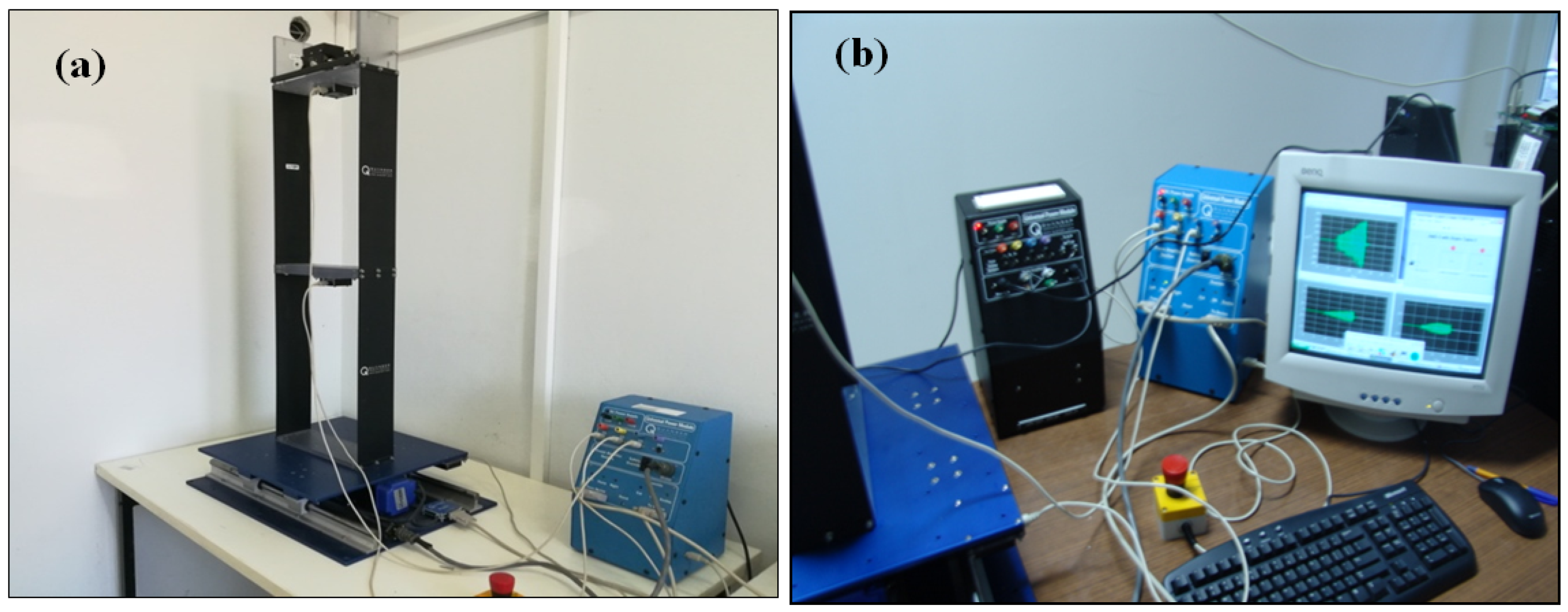
The Quanser Shake Table II (Quanser Inc., Markham, ON, Canada) is a uniaxial, bench-scale seismic simulator that can be operated and precisely controlled using dedicated software, as illustrated in Figure 1a,b. Its versatile design makes it highly suitable for a broad spectrum of experimental studies involving civil engineering structures, including both full-scale and scaled-down models. The unit provides researchers and students with the ability to replicate controlled seismic excitations in a laboratory setting, enabling detailed investigations of structural responses under dynamic loading conditions. By allowing precise manipulation of motion parameters, this shake table serves as an effective platform for experimental studies in structural dynamics, vibration analysis, and earthquake engineering research.
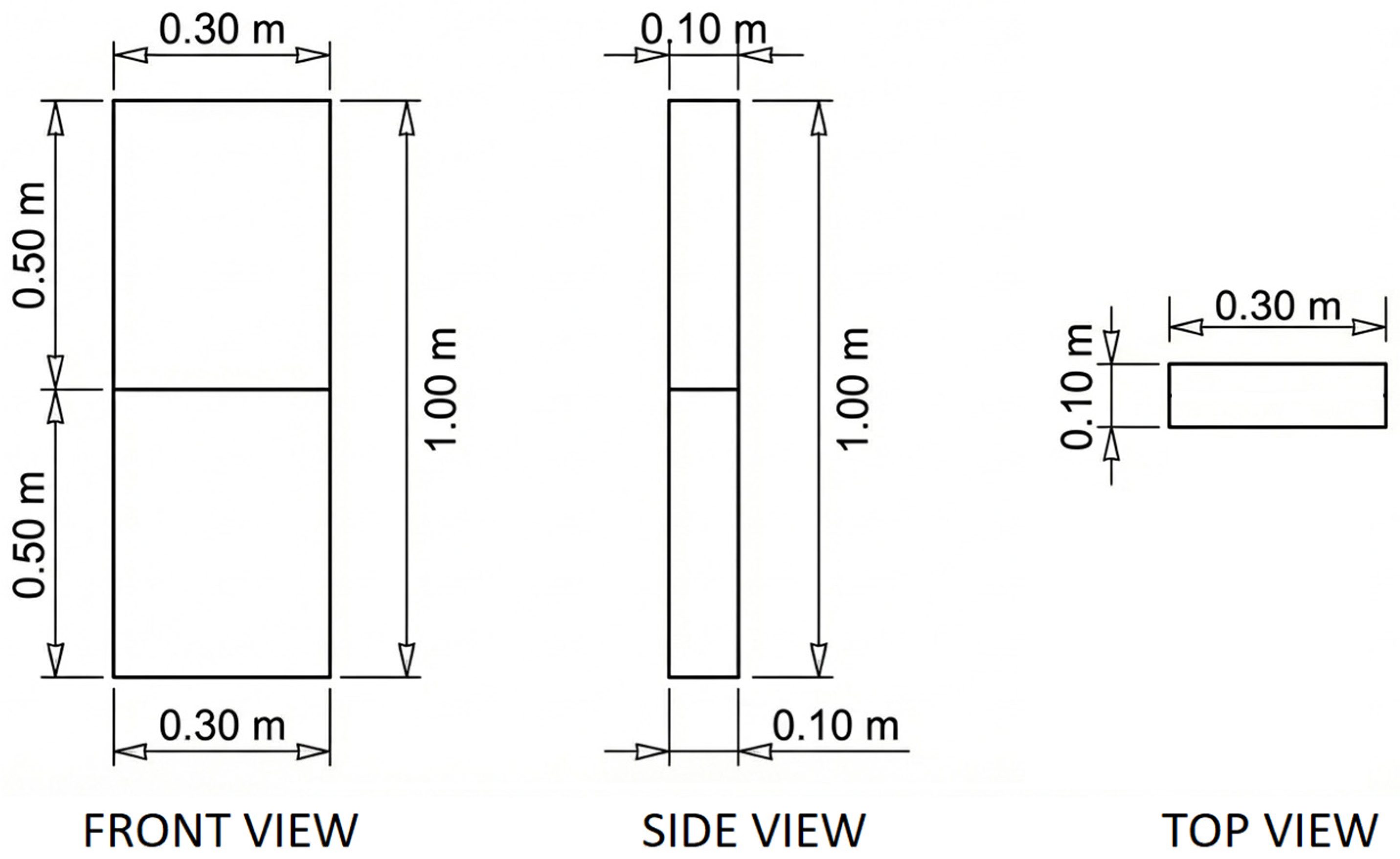
The galvanized steel benchmark structure used in this study has a total height of 1.00 m, with each structural element having a thickness of 0.0015 m. The detailed geometric dimensions and configuration of the structure are illustrated in Figure 2.
Galvanized steel is a material obtained by protecting the steel surface with zinc coating. It provides advantages in long-term experimental studies or in outdoor conditions due to its resistance to corrosion. By choosing galvanized steel as the material in this study, it became possible to observe the effect of temperature effects directly on steel elasticity (young’s modulus). If a different quality steel that is prone to rust and age was used, this effect could be noisy. In addition, the surface reflectivity of galvanized steel reduces thermal transmittance; this can soften the effects of thermal gradient. Thus, problems such as temperature difference between the inner-core and outer surface occurred less in the tested system. Since the chemical composition of galvanized steel (Table 2) is low-carbon and low-alloyed, its mechanical properties are more sensitive to temperature. This makes it easier to capture dynamic frequency changes. The steel system used is made of galvanized steel and its chemical composition is given in Table 2.
The experimental benchmark structure was fabricated from hot-dip galvanized structural steel. According to the guidelines provided by the American Galvanizers Association [62], the hot-dip galvanizing process primarily enhances corrosion resistance through a zinc coating and does not significantly alter the fundamental mechanical properties of conventional structural steel grades. The typical material parameters adopted in the analysis are summarized in Table 3.
Refs. [39,41] also stated that the temperature–frequency relationship can be observed more clearly with low-carbon steel or zinc-coated samples. Thanks to the galvanized coating, the outer surface of the structure is less affected by temperatures. This allows the internal structure to show a more stable frequency characteristic. In this way, galvanized steel offers the opportunity to clearly observe the expansion and elasticity changes caused by temperature. The thermal behavior of the material is of critical importance in order to distinguish the effects of temperature changes in SHM systems. Galvanized steel elements allow reliable vibration data to be collected without material deterioration (e.g., rust, surface roughness) in long-term SHM applications. The suppression of the moisture effect due to the coating also facilitates the separation of the mixed effects of temperature and moisture in SHM systems. In the study of [35], the response of steel structures to temperature differed according to the material type. More stable mode shapes were observed in galvanized samples. Ref. [36] points out that controlled surface systems such as galvanized are easier to model in SHM algorithms.
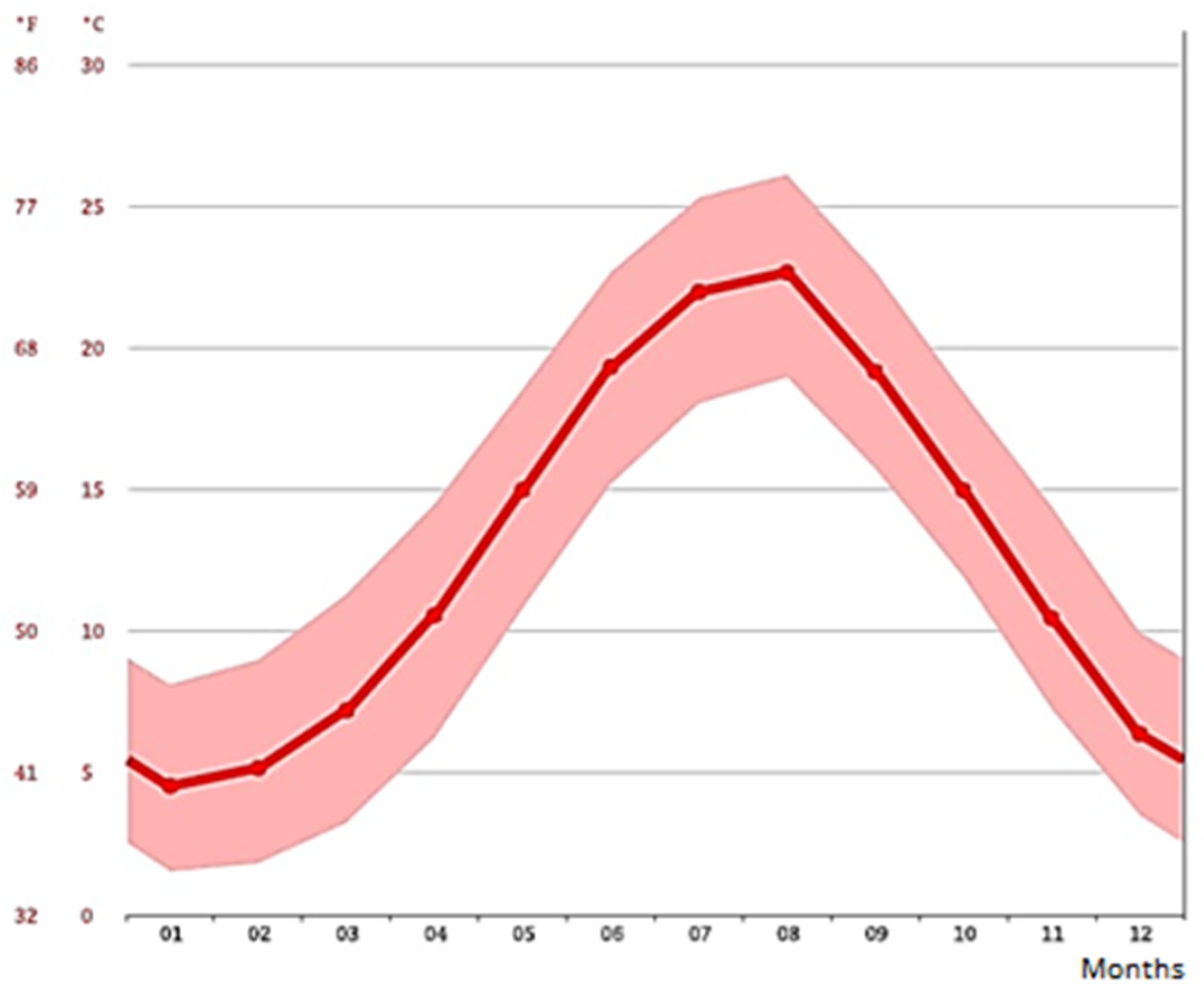
The coordinates of the point where the experiments were conducted in Samsun province of Turkey are 41.3623618; 36.1836511. Figure 3 shows the monthly average temperature changes in Samsun province of Turkey [63], where the experiment was conducted, between 1991 and 2021. Since the largest temperature difference is between January and August, the dates of the experiments were determined in this way.

3. Analysis of Experimental Results

3.1. Experimental Modal Analysis of Galvanized Steel Benchmark Structure at 2 °C

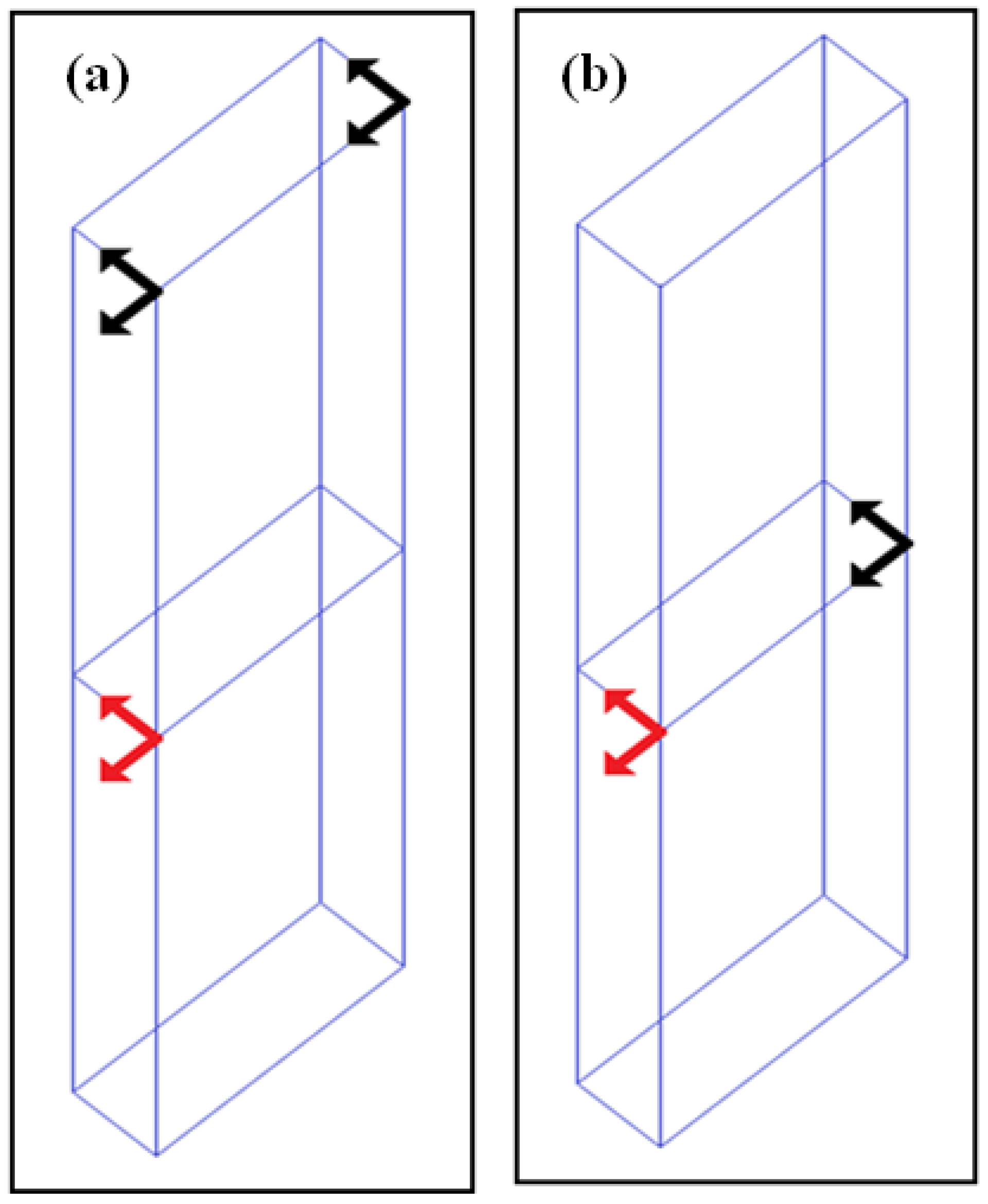
Experimental modal analysis of a galvanized steel benchmark structure was performed at different temperatures. The temperature values were determined based on long-term annual data. According to these data, the first measurement was conducted on 13 January 2024, when the ambient temperature was +2 °C. Ambient excitation was provided by recorded microtremor data at ground level. Three accelerometers, measuring both x- and y-directions, were used for the ambient vibration measurements. One accelerometer was designated as a reference sensor and was always located on the first floor (indicated by the red line in Figure 4a,b), while the other two accelerometers were used as roving sensors (indicated by the black line in Figure 4a,b). The responses were recorded in two separate datasets (Figure 4a,b). The first and second datasets corresponded to 3 and 5 degrees of freedom, respectively (Figure 4a,b). Each dataset was measured for 100 min. The selected measurement points and directions are illustrated in Figure 4a,b.
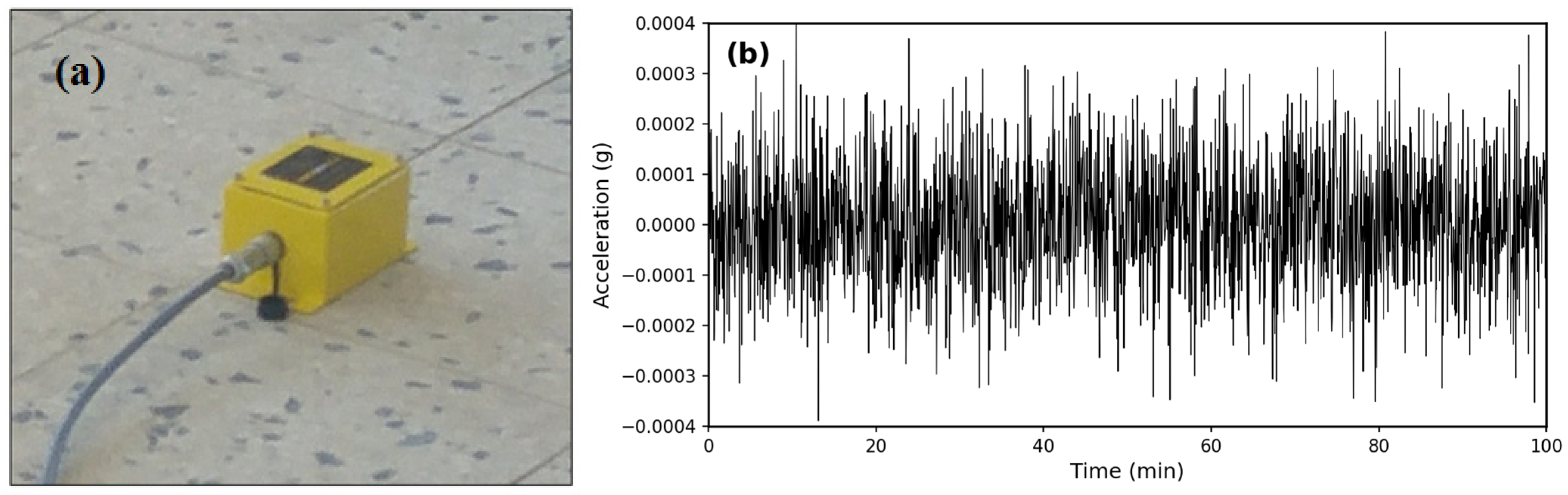
A dedicated computer was employed for the acquisition of ambient vibration records. Following each measurement sequence, the recorded data files were transferred to a separate analysis workstation using specialized software. This configuration facilitated uninterrupted data acquisition on one system, while the second, higher-performance workstation conducted on-site data processing. Such an arrangement ensured rigorous quality control and enabled preliminary evaluation of the collected data. In cases where the measurements exhibited anomalous signal drifts, undesirable noise, or any form of data corruption, the respective dataset was discarded and the measurements were repeated. The measurement phase conducted with the ambient vibration with accelerometer, as well as the ambient excitation data obtained from the recorded microtremor signals at ground level and used for driving the shake table, are presented in Figure 5a and Figure 5b, respectively.
Before beginning the measurements, all cabling connecting the sensors to the data acquisition system was carefully arranged to ensure reliable signal transmission and minimize potential interference. During the experimental procedure, the roving sensors were methodically repositioned across successive floors after each measurement, allowing a comprehensive mapping of the structural response at multiple locations. This systematic approach ensured that sufficient data were collected to accurately capture the dynamic behavior of the structure. The measurement setup consisted of three Quanser accelerometers capable of recording both x and y directional responses, a Geosig uniaxial accelerometer, and data acquisition performed using the MATLAB 2023a Data Acquisition Toolbox (WinCon) [64]. Once the ambient vibration data were recorded, modal parameters were extracted through experimental modal analysis (EMA) using ARTeMIS Modal Pro 4.0. software [65]. This process enabled a detailed identification of the natural frequencies, mode shapes, and damping characteristics, providing a robust foundation for evaluating the dynamic properties of the tested structure.
The simple Peak-Picking method (PPM) determines eigenfrequencies by identifying the peaks in nonparametric spectral estimates of structural responses. While straightforward in concept, this technique can become highly subjective in practice, particularly when dealing with noisy measurement data, weakly excited modes, or closely spaced eigenfrequencies. Under such challenging conditions, distinguishing true modal peaks from spurious spectral fluctuations can be difficult, potentially affecting the accuracy of the identified dynamic parameters. Also, the half-power bandwidth method, often employed alongside PPM to estimate damping ratios, tends to be unreliable when the spectral peaks are not well-defined or when modal contributions overlap. Despite these shortcomings, frequency-domain algorithms continue to be widely utilized in experimental modal analysis due to their computational efficiency, simplicity of implementation, and relatively fast processing times. Their ease of use makes them particularly attractive for preliminary investigations and educational purposes, even though more robust techniques may be required for high-precision modal identification in complex structures [55,56,66,67,68].
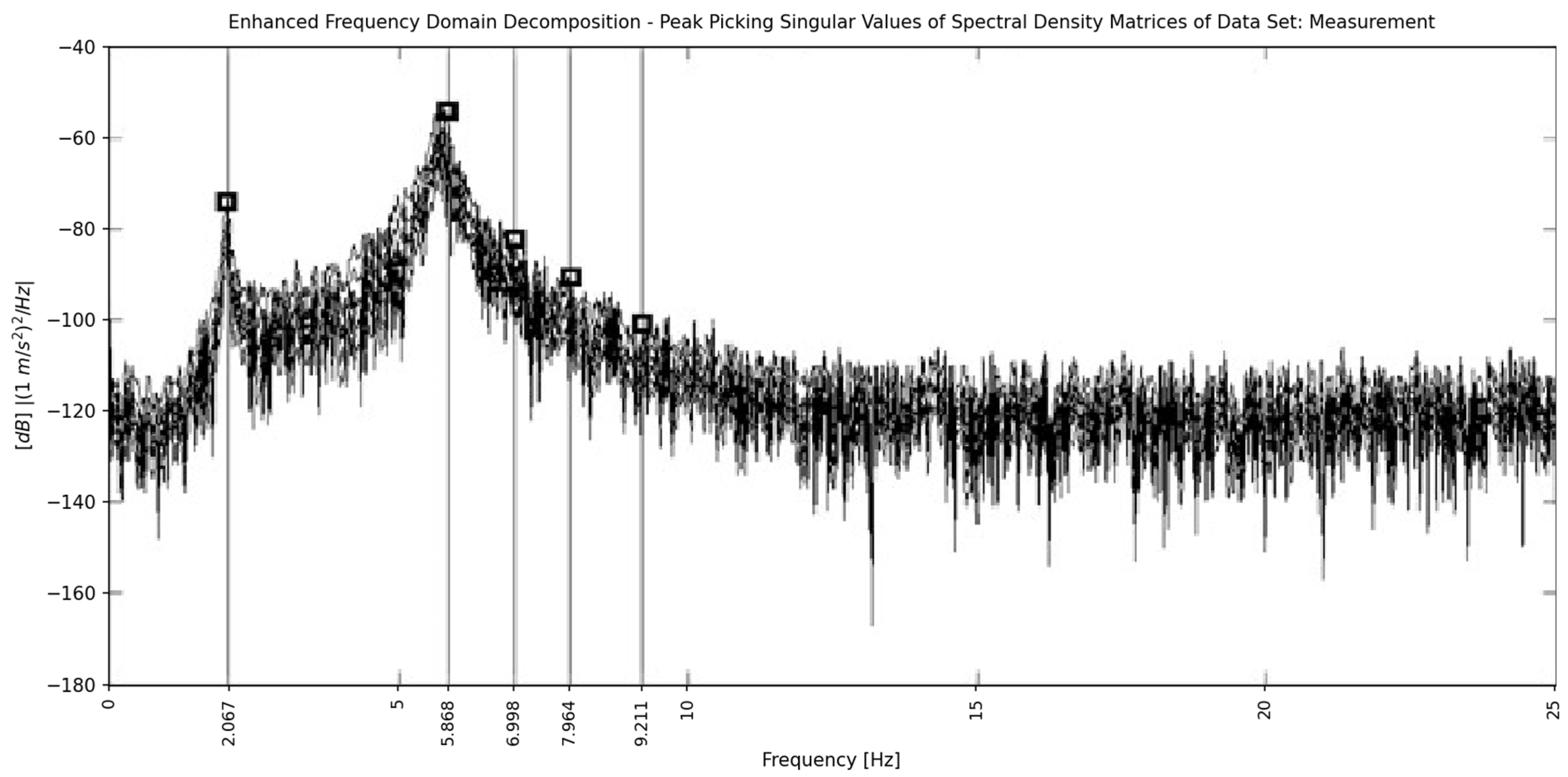
The singular values of the spectral density matrices, obtained using the Peak-Picking (PP) method from vibration measurements recorded at 2 °C, are presented in Figure 6.
The natural frequencies determined from the experimental measurements conducted at 2 °C are summarized in Table 4.
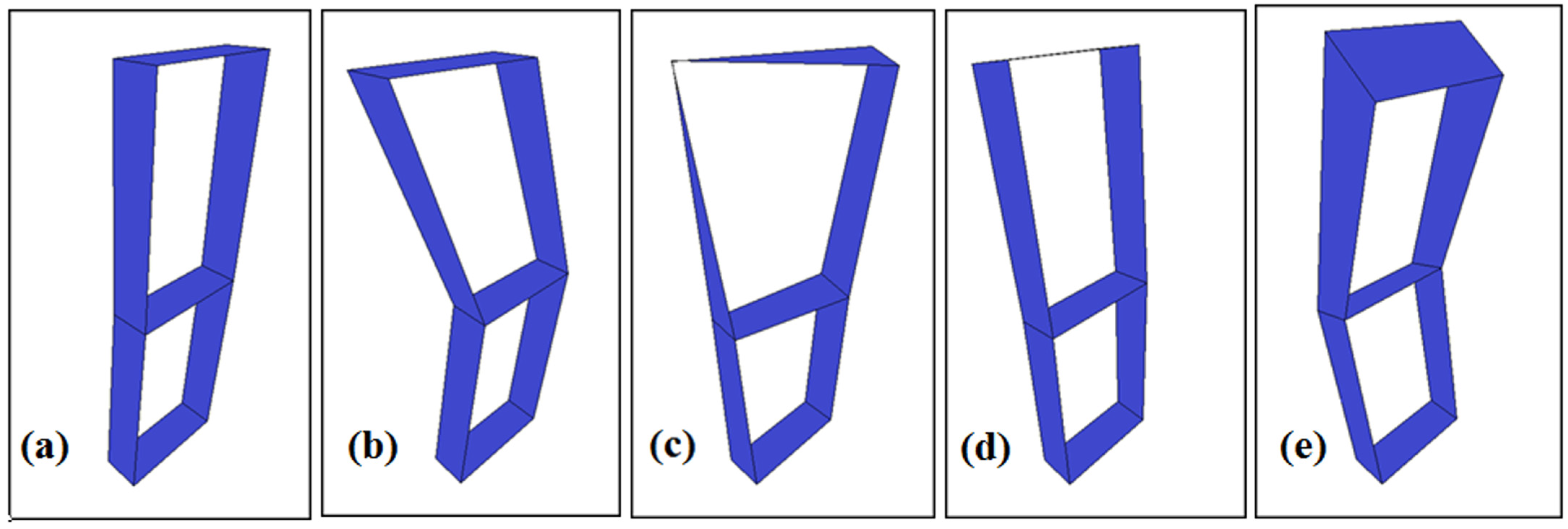
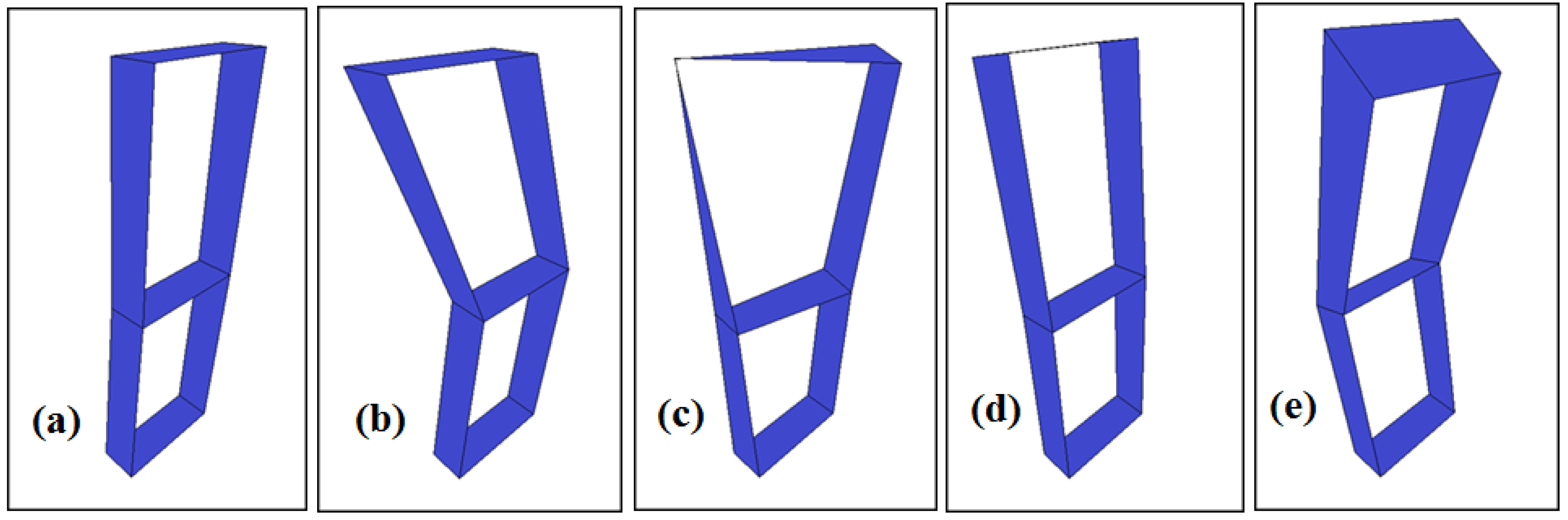
The first five mode shapes at 2 °C temperature, as identified through the experimental modal analysis, are illustrated in Figure 7.

3.2. Experimental Modal Analysis of Galvanized Steel Benchmark Structure at 32 °C

Experimental modal analysis of a galvanized steel benchmark structure was per-formed at different temperatures. The temperature values were determined based on long-term annual data. According to these data, the second measurement was made on 20 August 2024, when the ambient temperature was +32 °C. In the present study, the measurements at 32 °C were performed following the exact same procedures and steps as those applied at 2 °C. All experimental conditions were maintained consistently between the two temperature settings to ensure that any observed differences could be attributed solely to the temperature variation. By strictly adhering to the protocol established at 2 °C, the reproducibility and reliability of the results were preserved, enabling a valid comparison of the temperature-dependent behavior.
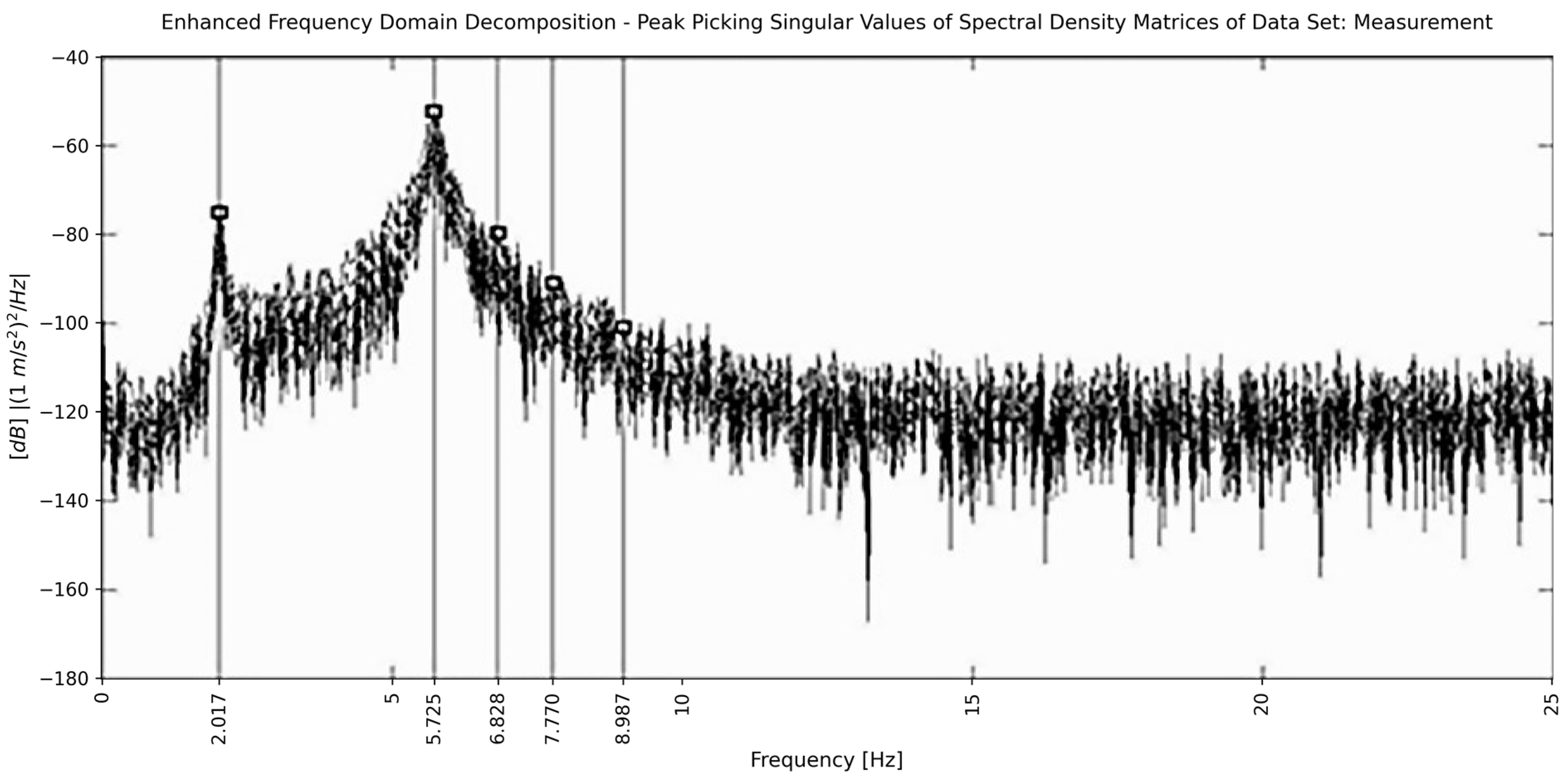
The singular values of the spectral density matrices, obtained using the Peak-Picking (PP) method from vibration measurements recorded at 32 °C, are presented in Figure 8.
A comprehensive examination of all measurements indicates that the experimental mode shapes obtained at +2 °C and +32 °C remain largely consistent. A comparison of the modal parameters from both temperature conditions shows no significant differences in the identified mode shapes. These results also confirm the consistency of the mode shapes and highlight the reliability of experimental modal analysis in capturing the dynamic properties of the structure for no spurious or non-structural modes were detected during the experiments.
The natural frequencies determined from the experimental measurements conducted at 32 °C are summarized in Table 5.
The first five mode shapes at 32 °C temperature, as identified through the experimental modal analysis, are illustrated in Figure 9.

3.3. Comparison of Results

In this study, the effect of temperature change of galvanized steel benchmark structure on modal parameters was investigated using Quanser Shake Table. The ambient vibration tests were performed on the shake table using ground-level ambient vibration data as the excitation source. Modal parameters were subsequently identified using the Enhanced Frequency Domain Decomposition (EFDD) technique, allowing for accurate estimation of the structure’s dynamic characteristics. For this purpose, modal parameters obtained at +2 °C and +32 °C temperatures were compared on shake table with ambient vibrations. Experimental modal analysis was successfully conducted for both measurement sets at 2 °C and 32 °C. The tests were repeated multiple times to minimize deviations and ensure the reliability of the results. A comparison of the obtained natural frequencies shows consistent trends across both temperature conditions, indicating that the experimental procedure was robust and reproducible. These findings confirm the validity of the measurements and allow for a meaningful evaluation of the temperature dependent modal behavior of the specimens. Each modal parameter obtained from the experimental modal analysis including natural frequencies, mode shapes, and damping was carefully compared. The comparison was performed systematically to ensure accuracy.
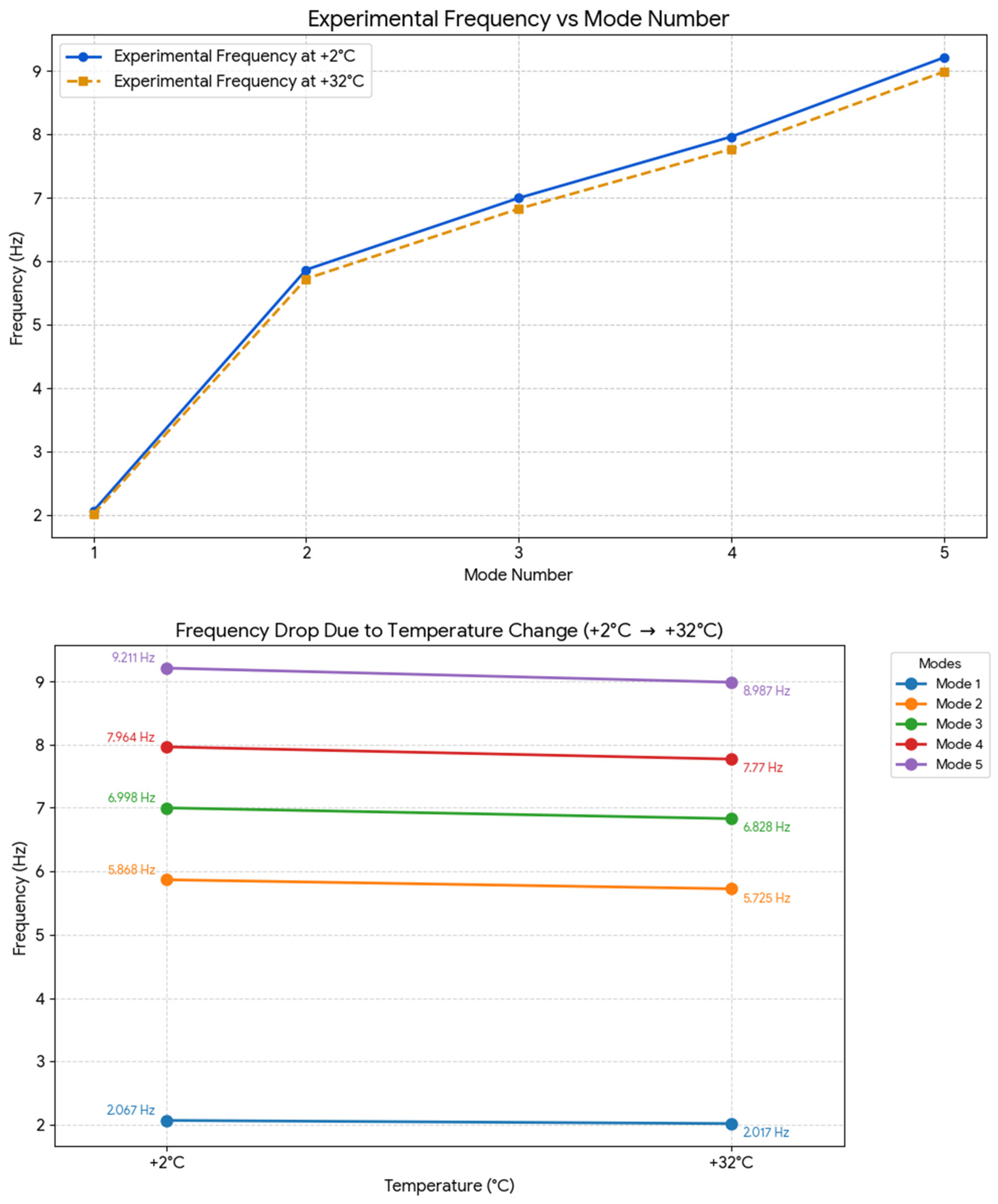
A comparison of the natural frequencies of the first five modes, obtained from the experimental modal analysis, is presented in Table 6.
Figure 10 shows the graphs illustrating the temperature effect and frequency changes in the first 5 modes.
Analysis of the obtained data indicates that an increase in temperature resulted in a decrease in the natural frequencies across all modes. This situation is parallel to that in the literature [38,41]. The decrease in the first mode (~0.05 Hz) indicates a decrease in the stiffness of the structure. This can be explained by the decrease in the young modulus with the increase in temperature. However, the decrease in the 4th and 5th modes is more pronounced (about 0.22 Hz). This may indicate that high-frequency modes are more sensitive to temperature changes. The frequency decrease of approximately 2.4% observed for all five modes reveals that temperature-induced frequency shifts should not be confused with structural damage in SHM applications. Similarly, it has been reported in the literature [34,41] that temperature changes create similar effects to moderate structural damage. Therefore, performing damage detection directly by frequency monitoring without temperature compensation in SHM systems may be misleading.
Based on this study and the relevant literature, it is possible to suggest some numerical values for the relationship between the percentage change of temperature and the percentage change rate in frequencies. However, the general validity and practical benefits of such suggestions will vary, especially depending on the building materials, structural geometries, environmental factors and SHM techniques used. Different types of materials respond to temperature changes in different ways. In addition, the effect of temperature change varies not only with air temperature but also with environmental factors such as humidity, wind and solar radiation. Therefore, temperature–frequency ratios should be based on specific environmental conditions. In addition, large-scale structures may cause more significant frequency changes due to temperature expansion. Therefore, frequency change rates between small and large structures may also differ. In addition, temperature changes that will occur under high temperatures may cause larger changes in frequencies. As a result, specific temperature–frequency modeling should be performed for each structure and environment.
Some studies report that temperature increase in single steel elements or complex structural systems causes a certain decrease in frequencies [34,41], and it has been reported that in some experiments, a decrease of 0.1–0.5% in frequency can be observed for a 1 °C increase [24,38,69,70]. This study results revealed an average frequency reduction of approximately 2.4% across all identified modes under a 30 °C temperature variation. This magnitude of change is consistent with trends reported in the existing literature, confirming that the observed modal shifts are aligned with previously documented temperature-induced stiffness variations.
The mode shapes were not affected by the temperature change. This shows that the frequency changes are related to the changes in material elasticity rather than the boundary conditions. In this study, in the experiments conducted at 30 °C differences, the decrease in frequencies while the mode shapes remained constant could be revealed in a transparent and predictable way thanks to the homogeneous structure of the galvanized steel. If a different and deterioration-prone steel had been used, the changes in frequency could have been more complex or uncertain due to thermal expansion irregularities, temperature conduction differences, and the effects of internal structural errors. The use of galvanized steel in the study was an important choice in terms of isolating and reliably revealing the effects of temperature changes on dynamic parameters. The elimination of corrosion effects thanks to its coated structure, the more compatible surface temperature with the core part of the structure, and the sensitive responses of its low-carbon structure to elasticity changes allowed the changes in modal frequencies to be observed clearly [38,39,41,69,70,71].
The damping ratios showed no systematic dependency on temperature, consistent with prior studies reporting that damping is influenced mainly by connections, friction surfaces, and material interfaces rather than temperature changes. In the studies conducted by [35,36], it is seen that the temperature affects the frequency, but the damping ratios do not change much. In parallel with the results obtained in this study, corresponding studies have also demonstrated that mode shapes are not sensitive to temperature variation, and the change of modal damping may be masked by measurement noise [72]. Damping ratios showed no systematic dependency on temperature, consistent with prior studies reporting that damping is influenced mainly by connections, friction surfaces, and material interfaces rather than temperature changes.
Based on experimental data, a simple linear model can be proposed as f / f k . T / T , where f : Initial frequency, f : frequency change, T : initial temperature, T : temperature change and k : a constant that varies according to material properties (e.g., Young’s modulus change with temperature), structural properties (element thickness, connection type) and boundary conditions. In some cases, especially in wide temperature ranges, it may be necessary to use nonlinear models. In these models, the change in the elastic properties of the material with increasing temperature can be reflected more accurately. In such cases, polynomial or exponential functions determined by experimental calibration can be used. Therefore, although the recommendations serve as a general guide, they will first require laboratory and field calibration for each structure. Models to be used in SHM systems in particular should be re-adjusted according to the unique properties of the structure (e.g., with local temperature measurements and modal parameter tracking) and model validity should be continuously checked. In summary, the numerical values that can be suggested for the percentage change rate of frequency change depending on the percentage change rate of temperature change; For galvanized steel, a frequency decrease of approximately 0.1% to 0.5% can be modeled as expected for a 1% temperature increase, and a total change of 1% to 3% in wider temperature ranges. These rates will provide practical benefits for correct signal extraction, calibrated modeling, and correct damage detection in SHM systems. However, it is important to remember that experimental calibration should be performed first for each structure and environmental conditions. Although these suggestions provide a general framework, they should be detailed in practical application by considering the structural features, environmental conditions, and sensor technologies used for each structure. Thus, more comprehensive and reliable detection methods can be developed for SHM systems.

4. Conclusions

This study experimentally investigated the influence of temperature variation on the modal parameters of a lightweight galvanized steel benchmark structure under controlled laboratory conditions. Experimental modal analyses were conducted at two distinct temperature levels (+2 °C and +32 °C) using real microtremor recordings as excitation input.
The results demonstrated that a temperature increase of approximately 30 °C led to an average reduction of about 2.4% in natural frequencies across all identified modes. This consistent trend confirms that temperature-induced stiffness variations can produce frequency shifts comparable to those reported in previous experimental and field studies. The findings highlight that such variations may be misinterpreted as structural damage if temperature effects are not properly considered in vibration-based structural health monitoring applications.
Mode shapes remained largely unchanged across temperature levels, suggesting that the observed frequency shifts were primarily associated with temperature-dependent stiffness variations rather than boundary condition effects. Similarly, damping ratios showed negligible sensitivity to temperature changes, confirming that temperature mainly influences structural stiffness rather than energy dissipation mechanisms.
The experimental outcomes underline the importance of accounting for temperature-induced uncertainty when modal parameters obtained at different times of the year are compared. The use of annual minimum and maximum laboratory temperatures provides a practical framework for estimating the potential error margin associated with temperature-related frequency changes. The experimentally quantified frequency–temperature relationship provides practical reference values for distinguishing temperature-induced frequency variations from potential damage-related changes in galvanized steel structures.

Author Contributions

Conceptualization, S.T.; Methodology, S.T.; Software, S.T.; Validation, F.G.; Formal analysis, F.G.; Investigation, V.K.; Resources, V.K.; Data curation, V.K.; Writing—review and editing, F.G. All authors have read and agreed to the published version of the manuscript.

Funding

This research received no external funding.

Data Availability Statement

Data are contained within the article; further inquiries can be directed to the authors.

Conflicts of Interest

The authors declare no conflicts of interest.

References

  1. Lenza, P.; Ghersi, A.; Marino, E.M.; Pellecchia, M. A Multimodal Adaptive Evolution of the N1 Method for Assessment and Design of R.C. Framed Structures. Earthq. Struct. 2017, 12, 271–284. [Google Scholar] [CrossRef]
  2. De Canio, G.; De Felice, G.; De Santis, S.; Giocoli, A.; Mongelli, M.; Paolacci, F.; Roselli, I. Passive 3D Motion Optical Data in Shaking Table Tests of an SRG-Reinforced Masonry Wall. Earthq. Struct. 2016, 40, 53–71. [Google Scholar] [CrossRef]
  3. Tuhta, S.; Günday, F. Investigation of Effect of Using Nano Coating on Wooden Sheds on Dynamic Parameters. Wood Res. 2021, 66, 1006–1014. [Google Scholar] [CrossRef]
  4. Kasimzade, A.A.; Tuhta, S.; Günday, F.; Aydın, H. Obtaining Dynamic Parameters by Using Ambient Vibration Recordings on Model of The Steel Arch Bridge. Polytech. Civil Eng. 2021, 65, 608–618. [Google Scholar] [CrossRef]
  5. Günday, F. Structural Health Monitoring of Steel Garage Model with Stochastic Subspace Identification–Covariance Variance Analysis. Buildings 2025, 15, 944. [Google Scholar] [CrossRef]
  6. Brandt, A.; Orlowitz, E. Comparison of Experimental and Operational Modal Analysis on a Laboratory Test Plate. Measurement 2017, 102, 121–130. [Google Scholar] [CrossRef]
  7. Costa, N.; Camargo, E.; Pirk, R. Identification and Comparison of Modal Parameters in a Structure During the Vibration Test Using Operational Modal Analysis. In Proceedings of the ISMA 2018—International Conference on Noise and Vibration Engineering, Leuven, Belgium, 17–19 September 2018. [Google Scholar]
  8. Zague, L.O.; Castello, D.A.; Matt, C.F.T. Combination of Operational Modal Analysis Algorithms to Identify Modal Parameters of an Actual Centrifugal Compressor. arXiv 2024, arXiv:2407.07273. [Google Scholar] [CrossRef]
  9. Nezhad, M.E.; Poursha, M. Seismic Evaluation of Vertically Irregular Building Frames with Stiffness, Strength, Combined-Stiffness-and-Strength and Mass Irregularities. Earthq. Struct. 2015, 9, 353–373. [Google Scholar] [CrossRef]
  10. Zhu, H.; Mao, L.; Weng, S.; Xia, Y. Structural Damage and Force Identification under Moving Load. Struct. Eng. Mech. 2015, 53, 261–276. [Google Scholar] [CrossRef]
  11. Basaran, H.; Demir, A.; Ercan, E.; Nohutcu, H.; Hokelekli, E.; Kozanoglu, C. Investigation of Seismic Safety of a Masonry Minaret Using Its Dynamic Characteristics. Earthq. Struct. 2016, 10, 523–538. [Google Scholar] [CrossRef]
  12. Ni, Y.Q.; Zhang, F.L.; Xia, Y.X.; Au, S.K. Operational Modal Analysis of a Long-Span Suspension Bridge under Different Earthquake Events. Earthq. Struct. 2015, 8, 859–887. [Google Scholar] [CrossRef]
  13. Tuhta, S.; Günday, F. Determination of The Effect of TiO2 on The Dynamic Behavior of Scaled Concrete Chimney by Oma. Mater. Technol. 2021, 55, 459–466. [Google Scholar] [CrossRef]
  14. Günday, F. Investigation of the Effect of Coating Light Steel Container Houses with Nano-TiO2 on Dynamic Parameters Using OMA. Buildings 2025, 15, 909. [Google Scholar] [CrossRef]
  15. Dönmez, M.F.; Karakan, E. Modal Parameters of a Steel Bridge Using ERA and NExT-ERA Methods. Pamukkale Univ. J. Eng. Sci. 2009, 15, 271–280. [Google Scholar]
  16. Huang, Z.; Li, J.; Sun, L.; Zhang, Y. Temperature-Induced Variability in Vibration-Based Damage Identification: A Review. Struct. Durab. Health Monit. 2024, 19, 1–18. [Google Scholar]
  17. Kasimzade, A.A.; Tuhta, S. Ambient Vibration Analysis of Steel Structure. In Proceedings of the Experimental Vibration Analysis of Civil Engineering Structures (EVACES’07), Porto, Portugal, 24–26 October 2007. [Google Scholar]
  18. Kasimzade, A.A.; Tuhta, S. Particularities of Monitoring, Identification, Model Updating Hierarchy in Experimental Vibration Analysis of Structures. In Proceedings of the Experimental Vibration Analysis of Civil Engineering Structures (EVACES’07), Porto, Portugal, 24–26 October 2007. [Google Scholar]
  19. Kasimzade, A.A.; Tuhta, S. Optimal Estimation of the Building System Characteristics for Modal Identification. In Proceedings of the 3rd International Operational Modal Analysis Conference (IOMAC), Porto Novo, Ancona, Italy, 4–9 May 2009. [Google Scholar]
  20. Kakar, R.; Kakar, S. Analysis of Stress, Magnetic Field and Temperature on Coupled Gravity–Rayleigh Waves in Layered Water–Soil Model. Earthq. Struct. 2015, 9, 111–126. [Google Scholar] [CrossRef]
  21. Ding, Y.; Li, A. Long-Term Monitoring of Temperature Effects on Modal Frequencies of a Steel Box-Girder Suspension Bridge. J. Bridge Eng. 2011, 16, 579–589. [Google Scholar]
  22. Silva, A.C.; Neto, J.M.B.; Boechat, A.R.; Viana, F.A.C.; de Araújo, J.M. High-Temperature Modal Analysis of a Non-Uniformly Heated Hastelloy-X Plate by Full-Field Temperature and Out-of-Plane Displacement Measurements. J. Sound Vib. 2019, 453, 377–393. [Google Scholar]
  23. Anastasopoulos, D.; De Roeck, G.; Reynders, E.P.B. One-Year Operational Modal Analysis of a Steel Bridge from High-Resolution Macrostrain Monitoring: Influence of Temperature vs. Retrofitting. Mech. Syst. Signal Process. 2021, 161, 107951. [Google Scholar] [CrossRef]
  24. Venglár, M.; Lamperová, K. Effect of the Temperature on the Modal Properties of a Steel Railroad Bridge. Slovak J. Civ. Eng. 2021, 29, 1–8. [Google Scholar] [CrossRef]
  25. Sevieri, G.; De Falco, A. Dynamic Structural Health Monitoring for Concrete Gravity Dams Based on Bayesian Inference. J. Civ. Struct. Health Monit. 2020, 10, 235–250. [Google Scholar] [CrossRef]
  26. Noel, A.B.; Abdaoui, A.; Elfouly, T.; Ahmed, M.H.; Badawy, A.; Shehata, M.S. Structural Health Monitoring Using Wireless Sensor Networks: A Comprehensive Survey. IEEE Commun. Surv. Tutor. 2017, 19, 1403–1423. [Google Scholar] [CrossRef]
  27. Avci, O.; Abdeljaber, O.; Kiranyaz, S.; Hussein, M.; Gabbouj, M.; Inman, D.J. A Review of Vibration-Based Damage Detection in Civil Structures: From Traditional Methods to Machine Learning and Deep Learning Applications. Mech. Syst. Signal Process. 2021, 147, 107077. [Google Scholar] [CrossRef]
  28. Park, H.S.; Shin, Y.; Choi, S.W.; Kim, Y. An Integrative Structural Health Monitoring System for the Local/Global Responses of a Large-Scale Irregular Building under Construction. Sensors 2013, 13, 9085–9103. [Google Scholar] [CrossRef]
  29. Sohn, H.; Farrar, C.R.; Hemez, F.M.; Shunk, D.D.; Stinemates, D.W.; Nadler, B.R.; Czarnecki, J.J. A Review of Structural Health Monitoring Literature: 1996–2001. Los Alamos Natl. Lab. Rep. 2003, 1, 1–169. [Google Scholar]
  30. Farrar, C.R.; Worden, K. An Introduction to Structural Health Monitoring. Philos. Trans. R. Soc. A Math. Phys. Eng. Sci. 2007, 365, 303–315. [Google Scholar] [CrossRef] [PubMed]
  31. Lin, S.-Y.; Chang, K.-C.; Chen, C.-C. Dynamic Behavior of Taipei 101 Tower: Field Measurement and Numerical Analysis. J. Struct. Eng. 2011, 137, 79–89. [Google Scholar] [CrossRef]
  32. Tcherniak, D.; Mølgaard, L.L. Vibration-Based SHM System: Application to Wind Turbine Blades. J. Phys. Conf. Ser. 2015, 628, 012072. [Google Scholar] [CrossRef]
  33. Li, Y.; Zhang, Y.; Wang, Y. Fiber-Optic Monitoring of Environmental Effects on Cable-Stayed Bridges: A Case Study on the Sutong Bridge. Sensors 2023, 23, 1120. [Google Scholar]
  34. Serker, N.K.M.; Wu, Z. Temperature Sensitivity Assessment of Vibration-Based Damage Identification Techniques. Struct. Durab. Health Monit. 2009, 5, 87–108. [Google Scholar]
  35. Xia, Y.; Chen, B.; Weng, S.; Ni, Y.Q.; Xu, Y.L. Temperature Effect on Vibration Properties of Civil Structures: A Literature Review and Case Studies. J. Civ. Struct. Health Monit. 2012, 2, 29–46. [Google Scholar] [CrossRef]
  36. Luo, J.; Huang, M.; Lei, Y. Temperature Effect on Vibration Properties and Vibration-Based Damage Identification of Bridge Structures: A Literature Review. Buildings 2022, 12, 1209. [Google Scholar] [CrossRef]
  37. Bao, Y.; Chen, Y.; Hoehler, M.S.; Smith, C.M.; Bundy, M.; Chen, G. Experimental Analysis of Steel Beams Subjected to Fire Enhanced by Brillouin Scattering-Based Fiber Optic Sensor Data. J. Struct. Eng. 2017, 143, 04016143. [Google Scholar] [CrossRef]
  38. Wang, Z.; Huang, M.; Gu, J. Temperature Effects on Vibration-Based Damage Detection of a Reinforced Concrete Slab. Appl. Sci. 2020, 10, 2869. [Google Scholar] [CrossRef]
  39. Wang, D.; Tan, B.; Wang, X.; Zhang, Z. Experimental Study and Numerical Simulation of Temperature Gradient Effect for Steel-Concrete Composite Bridge Deck. Meas. Control. 2021, 54, 681–691. [Google Scholar] [CrossRef]
  40. Kamei, K.; Khan, M.A.; Khan, K.A. Characterising Modal Behaviour of a Cantilever Beam at Different Heating Rates for Isothermal Conditions. Appl. Sci. 2021, 11, 4375. [Google Scholar] [CrossRef]
  41. Poudel, A.; Kim, S.; Cho, B.H.; Kim, J. Temperature Effects on the Natural Frequencies of Composite Girders. Appl. Sci. 2024, 14, 1175. [Google Scholar] [CrossRef]
  42. EN ISO 1461; Hot Dip Galvanized Coatings on Fabricated Iron and Steel Articles—Specifications and Test Methods. International Organization for Standardization: Geneva, Switzerland, 2010.
  43. American Galvanizers Association (AGA). Life-Cycle Cost Comparison and Performance of Galvanized Steel; AGA Technical Report; American Galvanizers Association (AGA): Centennial, CO, USA, 2023. [Google Scholar]
  44. Tseng, D.H.; Longman, R.W.; Juang, J.N. Identification of the Structure of the Damping Matrix in Second Order Mechanical Systems. Spacefl. Mech. 1994, 1994, 167–190. [Google Scholar]
  45. Aliev, F.A.; Larin, V.B. Optimization of Linear Control Systems: Analytical Methods and Computational Algorithms; CRC Press: Boca Raton, FL, USA, 1998. [Google Scholar]
  46. Ljung, L. System Identification: Theory for the User; Prentice Hall: Upper Saddle River, NJ, USA, 1999. [Google Scholar]
  47. De Roeck, G. The State-of-the-Art of Damage Detection by Vibration Monitoring: The SIMCES Experience. J. Struct. Control 2003, 10, 127–134. [Google Scholar] [CrossRef]
  48. Friswell, M.; Mottershead, J.E. Finite Element Model Updating in Structural Dynamics; Springer: Boston, MA, USA, 1995. [Google Scholar]
  49. Marwala, T. Finite Element Model Updating Using Computational Intelligence Techniques: Applications to Structural Dynamics; Springer: London, UK, 2010. [Google Scholar]
  50. Kalman, R.E. A New Approach to Linear Filtering and Prediction Problems. J. Basic Eng. 1960, 82, 35–45. [Google Scholar] [CrossRef]
  51. Ibrahim, S.R. Random Decrement Technique for Modal Identification of Structures. J. Spacecr. Rocket. 1977, 14, 696–700. [Google Scholar] [CrossRef]
  52. Juang, J.N.; Phan, M.; Horta, L.G.; Longman, R.W. Identification of Observer/Kalman Filter Markov Parameters—Theory and Experiments. J. Guid. Control Dyn. 1993, 16, 320–329. [Google Scholar] [CrossRef]
  53. Van Overschee, P.; De Moor, B.L. Subspace Identification for Linear Systems: Theory—Implementation—Applications; Springer Science+Business Media: New York, NY, USA, 1996. [Google Scholar]
  54. Lus, H.; De Angelis, M.; Betti, R.; Longman, R.W. Constructing Second-Order Models of Mechanical Systems from Identified State Space Realizations. Part I: Theoretical Discussions. J. Eng. Mech. 2003, 129, 477–488. [Google Scholar] [CrossRef]
  55. Tuhta, S.; Günday, F. Application of OMA on the Bench-Scale Aluminum Bridge Using Micro Tremor Data. Int. J. Adv. Res. Innov. Ideas Educ. 2019, 5, 912–923. [Google Scholar]
  56. Tuhta, S.; Abrar, O.; Günday, F. Experimental Study on Behavior of Bench-Scale Steel Structure Retrofitted with CFRP Composites under Ambient Vibration. Eur. J. Eng. Res. Sci. 2019, 4, 109–114. [Google Scholar] [CrossRef]
  57. Lam, H.F.; Yang, J. Bayesian Structural Damage Detection of Steel Towers Using Measured Modal Parameters. Earthq. Struct. 2015, 8, 935–956. [Google Scholar] [CrossRef]
  58. Jacobsen, N.J.; Andersen, P.; Brincker, R. Using Enhanced Frequency Domain Decomposition as a Robust Technique to Harmonic Excitation in Operational Modal Analysis. In Proceedings of the International Conference on Noise and Vibration Engineering (ISMA), Leuven, Belgium, 18–20 September 2006. [Google Scholar]
  59. Bendat, J.S. Nonlinear Systems: Techniques and Applications; Wiley: New York, NY, USA, 1998. [Google Scholar]
  60. Peeters, B. System Identification and Damage Detection in Civil Engineering. Ph.D. Thesis, Katholieke Universiteit Leuven, Leuven, Belgium, 2000. [Google Scholar]
  61. Quanser. Position Control and Earthquake Analysis. Quanser Shake Table II User Manual; Nr 632, Rev. 3.50; Quanser Inc.: Markham, ON, Canada, 2008. [Google Scholar]
  62. American Galvanizers Association. Design of Products to Be Hot-Dip Galvanized After Fabrication; American Galvanizers Association: Columbus, OH, USA, 2016. [Google Scholar]
  63. Climate-Data.org. Climate Samsun (Turkey): Monthly Average Temperature. Available online: https://tr.climate-data.org/asya/tuerkiye/samsun/samsun-268/ (accessed on 5 February 2023).
  64. The MathWorks, Inc. MATLAB, Version R2023a; The MathWorks, Inc.: Natick, MA, USA, 2023. [Google Scholar]
  65. Structural Vibration Solutions A/S. ARTeMIS Modal Pro: Operational Modal Analysis Software; Structural Vibration Solutions A/S: Aalborg, Denmark, 2015. [Google Scholar]
  66. Brincker, R.; Ventura, C. Introduction to Operational Modal Analysis; John Wiley & Sons: London, UK, 2015. [Google Scholar]
  67. Günday, F.; Dushimimana, A.; Tuhta, S. Analytical and Experimental Modal Analysis of a Model Steel Structure Using Blast Excitation. In Proceedings of the International Conference on Innovative Engineering Applications, Sivas, Turkey, 20–22 September 2018. [Google Scholar]
  68. Kasımazade, A.; Tuhta, S.; Günday, F.; Aydın, H. Extraction of Modal Parameters on Steel Structure Using EFDD. In Proceedings of the 2nd International Conference on Technology and Science, Burdur, Turkey, 14–16 November 2019. [Google Scholar]
  69. Cai, Y.; Zhang, K.; Ye, Z.; Liu, C.; Lu, K.; Wang, L. Influence of Temperature on the Natural Vibration Characteristics of Simply Supported Reinforced Concrete Beam. Sensors 2021, 21, 4242. [Google Scholar] [CrossRef]
  70. Al-Hababi, T.; Alkayem, N.F.; Cui, L.; Zhang, S.; Liu, C.; Cao, M. The Coupled Effect of Temperature Changes and Damage Depth on Natural Frequencies in Beam-Like Structures. Struct. Durab. Health Monit. 2022, 16, 15–35. [Google Scholar] [CrossRef]
  71. Kashyzadeh, K.R.; Amiri Asfarjani, A. Finite Element Study on the Vibration of Functionally Graded Beam with Different Temperature Conditions. Adv. Mater. 2016, 5, 57–65. [Google Scholar] [CrossRef]
  72. Moser, P.; Moaveni, B. Environmental Effects on the Identified Natural Frequencies of the Dowling Hall Footbridge. Mech. Syst. Signal Process. 2011, 25, 2336–2357. [Google Scholar] [CrossRef]
Figure 1. (a) The shake table and the benchmark structure used for the experimental modal analysis; (b) the shake table control unit used for operating and monitoring the excitation system.
Buildings 16 01069 g001
Figure 2. Dimensions of galvanized steel benchmark structure and shake table.
Buildings 16 01069 g002
Figure 3. Monthly average temperature changes in Samsun province of Turkey [63].
Buildings 16 01069 g003
Figure 4. Accelerometer’s location of experimental model in the 3D view: (a) test layout for first measurement; (b) test layout for second measurement.
Buildings 16 01069 g004
Figure 5. (a) Ambient vibrations recorded by the accelerometer. (b) Ambient excitation data from the recorded micro tremor data on ground level used in the shake table.
Buildings 16 01069 g005
Figure 6. Singular values of spectral density matrices at +2 °C.
Buildings 16 01069 g006
Figure 7. Identified mode shapes of galvanized steel benchmark structure at +2 °C: (a) 1st Mode Shape (f = 2.067 Hz, ξ = 0.672); (b) 2nd Mode Shape (f = 5.868 Hz, ξ = 1.822); (c) 3rd Mode Shape (f = 6.998 Hz, ξ = 1.035); (d) 4th Mode Shape (f = 7.964 Hz, ξ = 0.551); (e) 5th Mode Shape (f = 9.211 Hz, ξ = 0.670).
Buildings 16 01069 g007
Figure 8. Singular values of spectral density matrices at +32 °C.
Buildings 16 01069 g008
Figure 9. Identified mode shapes of galvanized steel benchmark structure at +32 °C: (a) 1st Mode Shape (f = 2.017 Hz, ξ = 0.678); (b) 2nd Mode Shape (f = 5.725 Hz, ξ = 1.829); (c) 3rd Mode Shape (f = 6.828 Hz, ξ = 1.043); (d) 4th Mode Shape (f = 7.770 Hz, ξ = 0.557); (e) 5th Mode Shape (f = 8.987 Hz, ξ = 0.676).
Buildings 16 01069 g009
Figure 10. Graphs comparing changes in temperature and frequency.
Buildings 16 01069 g010
Table 1. Shake table specifications.
Dimensions (H × L × W)(61 × 46 × 13) cm
Total mass 27.2 kg
Payload area (L × W)(46 × 46) cm
Maximum payload at 2.5 g7.5 kg
Maximum travel±7.6 cm
Operational bandwidth10 Hz
Maximum velocity 66.5 cm/s
Maximum acceleration 2.5 g
Lead screw pitch1.27 cm/rev
Servomotor power 400 W
Amplifier maximum continuous current12.5 A
Motor maximum torque7.82 N.m
Lead screw encoder resolution 8192 counts/rev
Effective stage position resolution 1.55 μm/count
Accelerometer range±49 m/s2
Accelerometer sensitivity1.0 g/V
Table 2. Chemical composition of galvanized steel [62].
C%Si%Mn%P%S%Cr%Mo%Co%Cu%Nb%
0.04020.00870.16910.02340.0040.01230.0050.010.00550.0021
Ti%V%W%Pb%Zn%Sn%A1%Sb%Ni%Fe%
0.0010.02770.010.0050.0010.00250.01940.0050.066499.61
Table 3. Mechanical properties of hot-dip galvanized structural steel.
ParametersValue
Elastic Modulus200 GPa
Poisson’s Ratio0.30
Shear Modulus80 GPa
Density7850 kg/m3
Yield Strength355 MPa
Ultimate Tensile Strength510 MPa
Table 4. Experimental modal analysis results at the galvanized steel benchmark structure at +2 °C.
Mode Number 1 2 3 4 5
Frequency (Hz)2.0675.8686.9987.9649.211
Modal damping ratio (ξ)0.6721.8221.0350.5510.670
Table 5. Experimental modal analysis result at the galvanized steel benchmark structure at +32 °C.
Mode Number 1 2 3 4 5
Frequency (Hz)2.0175.7256.8287.7708.987
Modal damping ratio (ξ)0.6781.8291.0430.5570.676
Table 6. Comparison of natural frequencies obtained from experimental modal analysis.
Mode Number 1 2 3 4 5
Experimental frequency (Hz) at +2 °C2.0675.8686.9987.9649.211
Experimental frequency (Hz) at +32 °C2.0175.7256.8287.7708.987
Difference (%)2.4182.4362.4292.4352.431
Disclaimer/Publisher’s Note: The statements, opinions and data contained in all publications are solely those of the individual author(s) and contributor(s) and not of MDPI and/or the editor(s). MDPI and/or the editor(s) disclaim responsibility for any injury to people or property resulting from any ideas, methods, instructions or products referred to in the content.