Flexural Behavior of Reinforced Concrete Beams Strengthened with Novel BFRP Plates

Abstract
1. Introduction
2. Testing Schemes
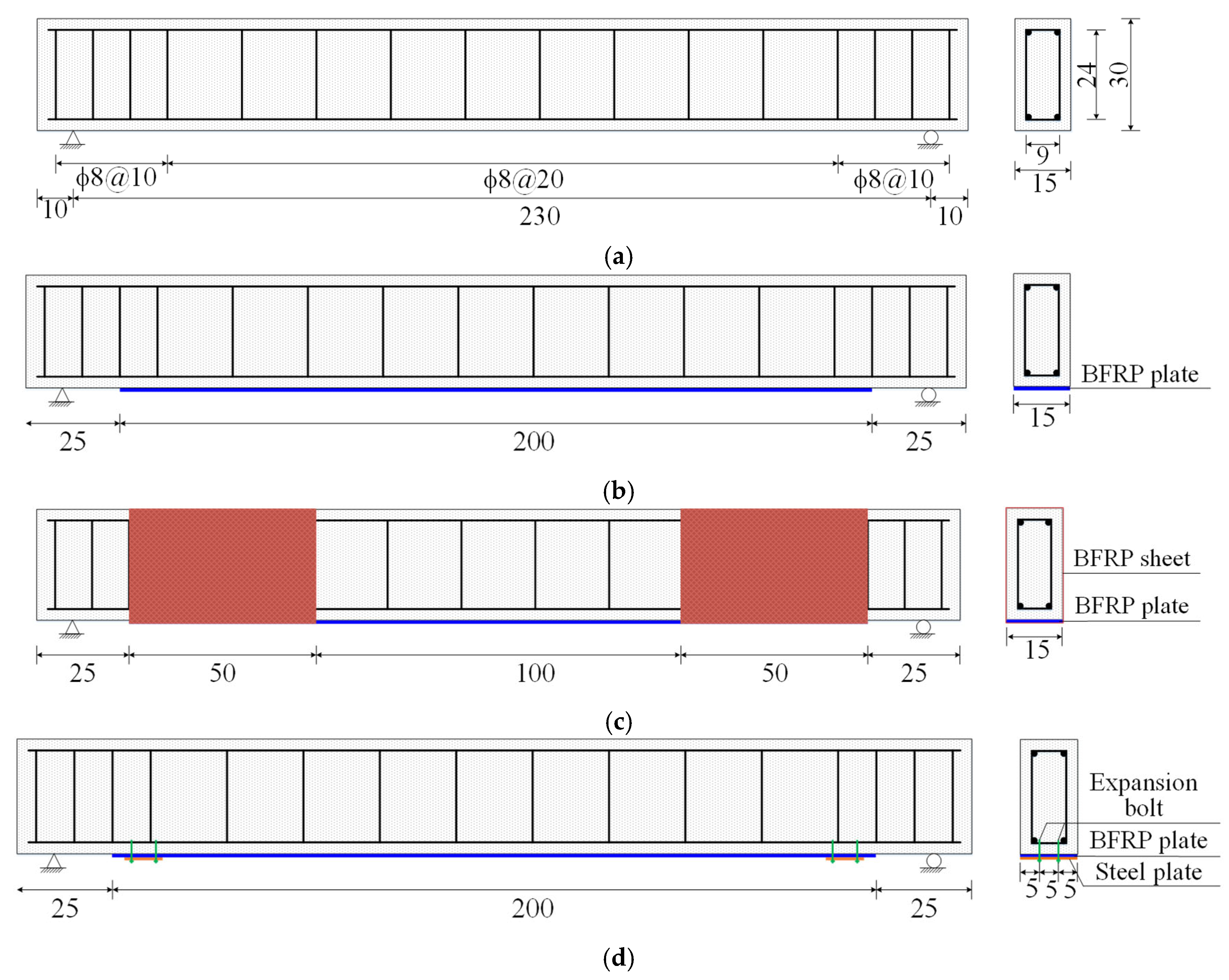
2.1. Specimen Design and Fabrication
2.2. Material Properties
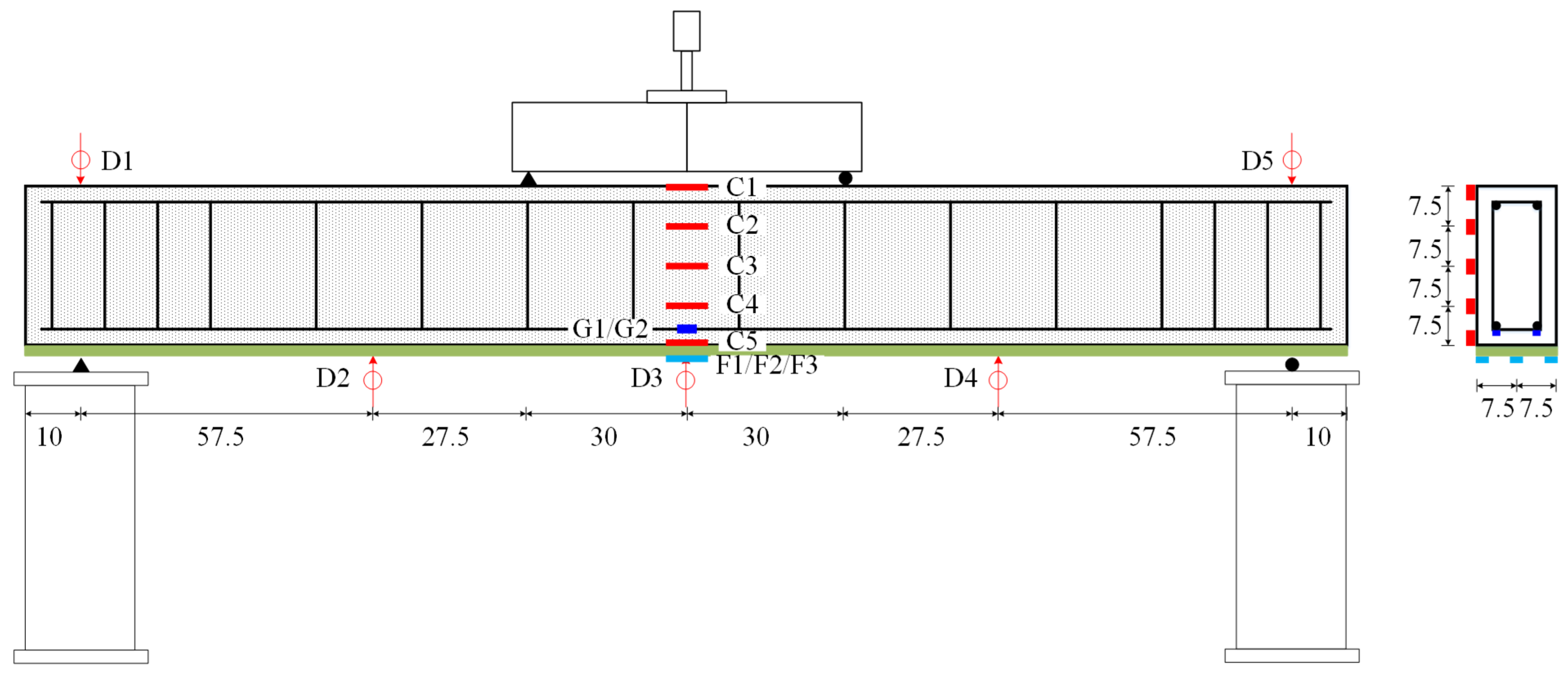
2.3. Test Setup and Measuring Instrumentation
2.4. Test Results and Discussion
- (1)
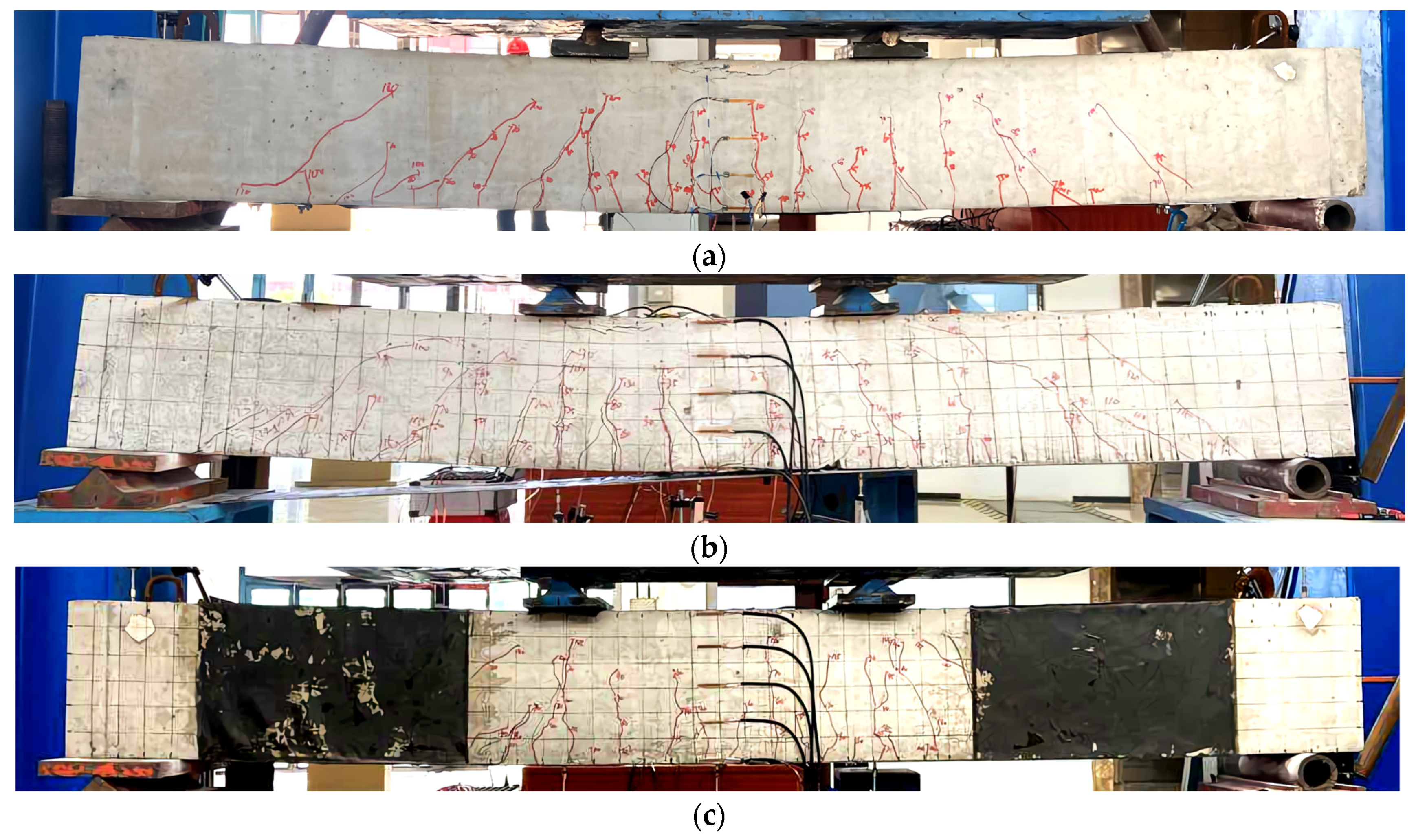
- Concrete crushing in the compression zone. This mode occurred in the control specimens (CB1 and CB2) and the strengthened beams with mechanical anchorage (M-0.5 and M-1). The failure process exhibited the typical characteristics of under-reinforced RC beams: yielding of the longitudinal tensile reinforcement occurred first, followed by substantial flexural deformation. The ultimate failure was governed by the crushing of concrete in the compression zone. Notably, Specimen M-0.5 also exhibited longitudinal splitting of the BFRP plate, which initiated at the plate end and progressively propagated toward the mid-span along the fiber direction. This phenomenon was attributed to the relatively low BFRP plate thickness combined with the negligible transverse stiffness of the unidirectional plate. These factors led to stress concentrations in the mechanical anchorage region, ultimately triggering the longitudinal tearing of the plate.
- (2)
- Debonding failure of BFRP plates. This failure mode occurred in the strengthened beams without end anchorage (U-0.5, U-1, and U-2). Prior to debonding, no pronounced interfacial slip was observed along the FRP–concrete interface. The debonding initiated abruptly and propagated rapidly, exhibiting brittle failure characteristics. At the moment of debonding, a thin layer of concrete was attached to portions of the BFRP plate surface. Specimen U-0.5 also showed longitudinal splitting of the BFRP plate.
- (3)
- Shear compression failure. This mode was observed in strengthened beams with BFRP sheet circumferential wrapping (W-2, W-4, and W-6). Initially, flexural cracks appeared in the shear span; with increasing load, these extended toward the loading points, eventually evolving into a dominant diagonal crack. The ultimate failure was characterized by shear compression along a critical inclined section, accompanied by localized concrete crushing. Notably, crack propagation at the ultimate stage intensified stresses at the FRP–concrete interface within the anchorage region, inducing partial debonding. While the BFRP plates remained intact, the failure exhibited pronounced brittle characteristics.
- (1)
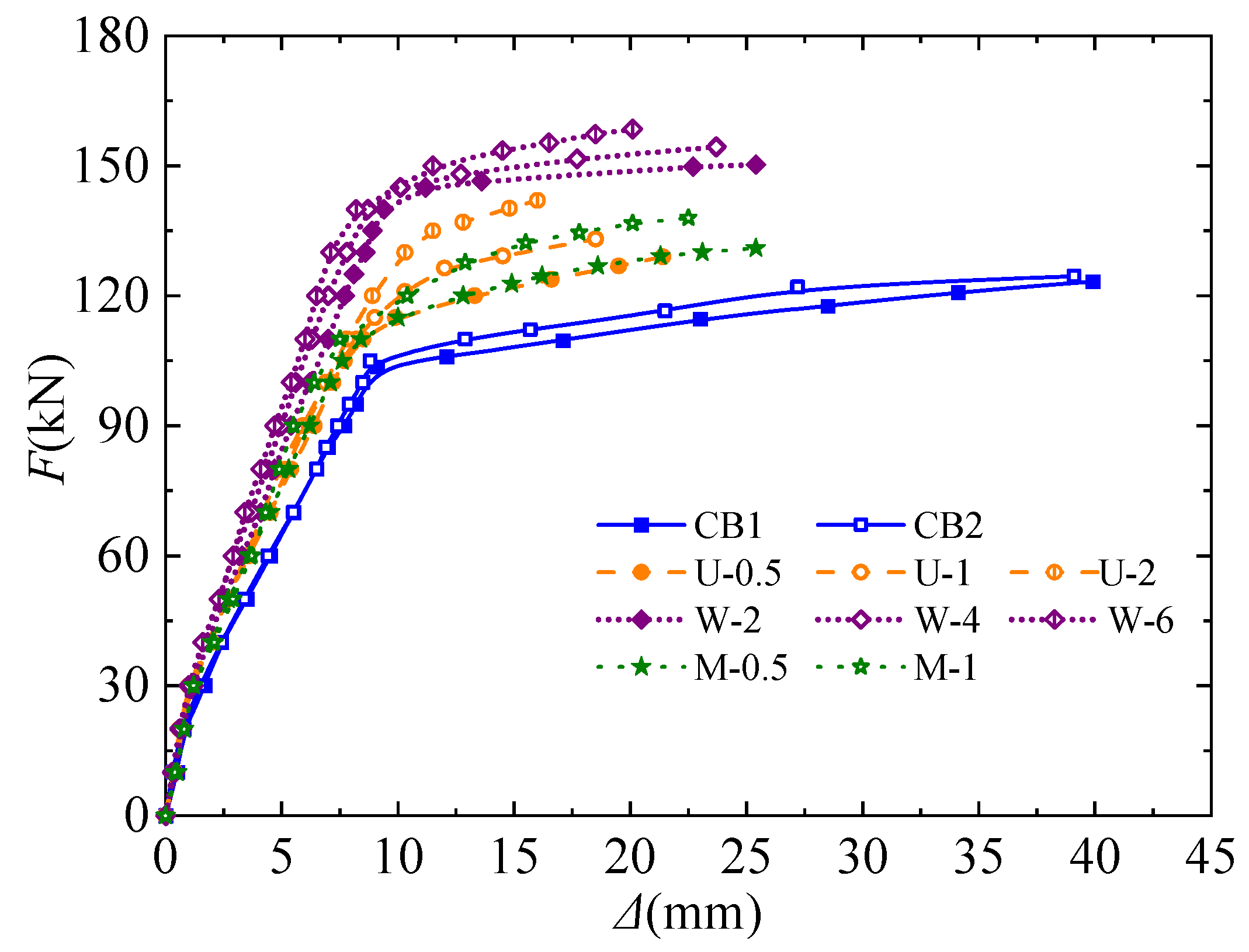
- The load–displacement curves of control beams CB1 and CB2 almost overlapped, indicating the high consistency and low dispersion of the test results.
- (2)
- During the initial loading stage, all specimens remained in the elastic regime, where the strain–lag effect of the BFRP plate limited its contribution. Consequently, the early-stage load–displacement responses of the strengthened and unstrengthened beams were nearly identical. Upon concrete cracking, the BFRP plate was progressively activated, leading to more effective internal-force redistribution and crack-propagation restraint. As a result, the strengthened beams showed a higher post-cracking flexural stiffness, Fy and Fu, and a marked reduction in Δu.
- (3)
- With the increase in BFRP plate thickness, the Fu of strengthened beams was enhanced, while μ was reduced. For unanchored strengthened beams, increasing the BFRP plate thickness from 0.5 mm to 2 mm linearly improved Fu (by 4.5% to 15.0%) but drastically reduced μ (by 42.9% to 64.9%). A similar tendency was observed in strengthened beams with mechanical anchorage. Strengthened beams using BFRP sheet circumferential wrapping anchorage were dominated by shear compression failure, so the increase in plate thickness had a limited influence on Fu.
- (4)
- Regarding the effect of end anchorage, the results indicate that, at the same BFRP plate thickness, applying end anchorage effectively delayed debonding damage and improved the Fu and μ. Notably, the mechanically anchored beams exhibited a μ increase of more than 20% relative to the unanchored beams, demonstrating a clear advantage in deformation capacity.
- (1)
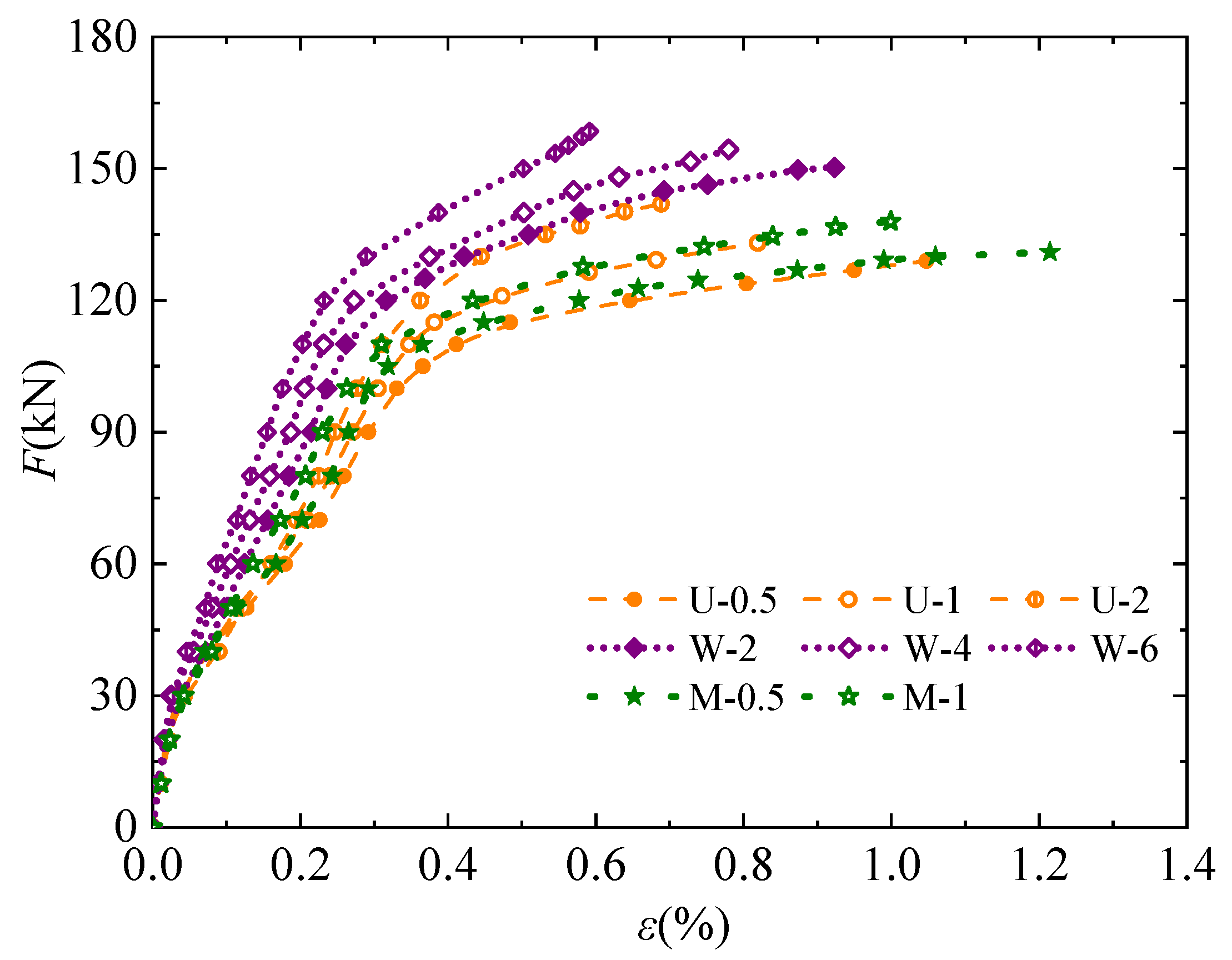
- Prior to concrete cracking, the strains of BFRP plates increased nearly linearly with the loads. After cracking, the strain growth rates accelerated significantly.
- (2)
- Specimens with thicker BFRP plates exhibited lower strain levels under the same load, along with a reduced ultimate strain. This indicates a decrease in material utilization efficiency as thickness increases.
- (3)
- The strain curves of the BFRP plates largely coincided for beams with the same reinforcement thickness. However, specimens with end anchorage demonstrated delayed failure and correspondingly higher material utilization efficiency.

3. Finite Element Analysis
3.1. Finite Element Modeling
3.2. Finite Element Verification
3.3. Parametric Analysis
3.3.1. BFRP Plate Thickness
3.3.2. Concrete Grades
3.3.3. Elastic Modulus of BFRP Plate
4. Analysis of Flexural Capacity of Strengthened Beams
4.1. BFRP Plate Strain at Debonding Failure
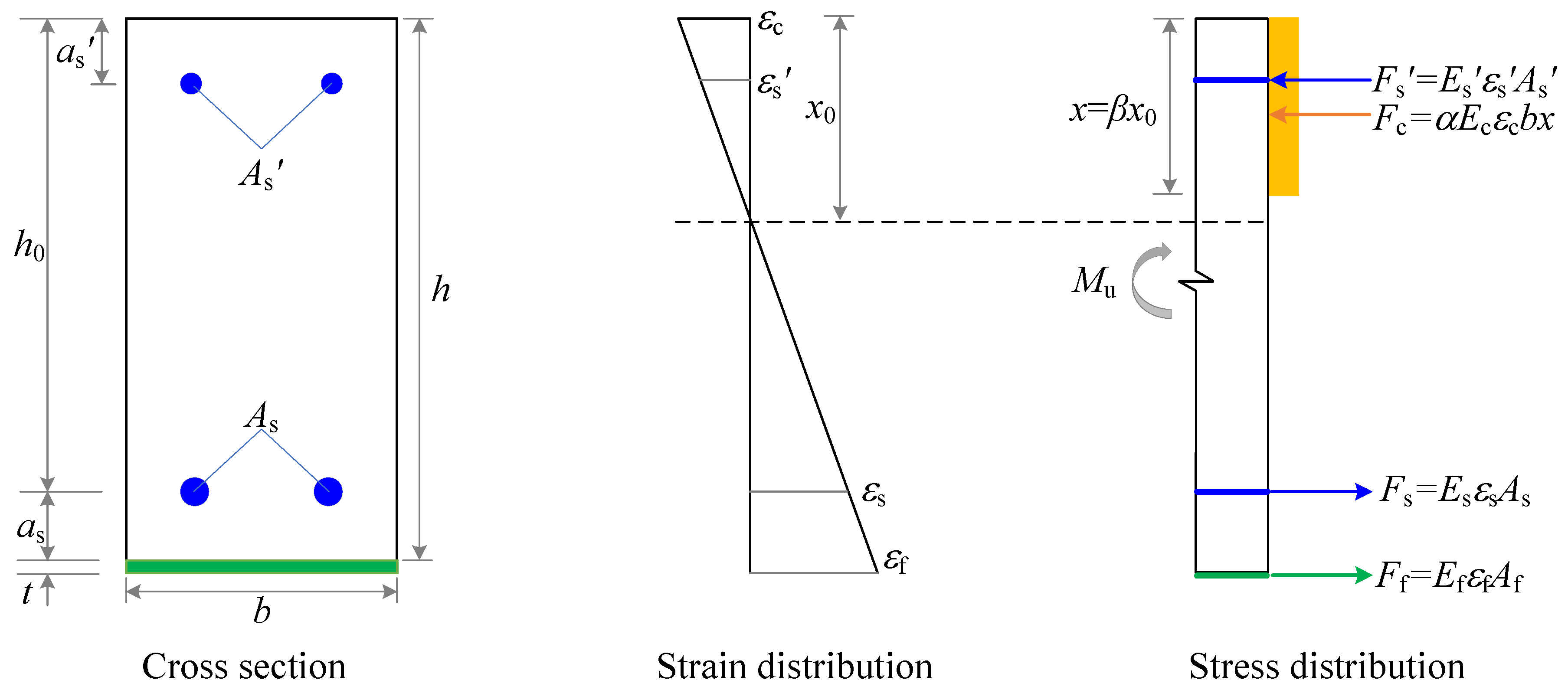
4.2. Calculation of Flexural Bearing Capacity at Debonding Failure
5. Conclusions
- (1)
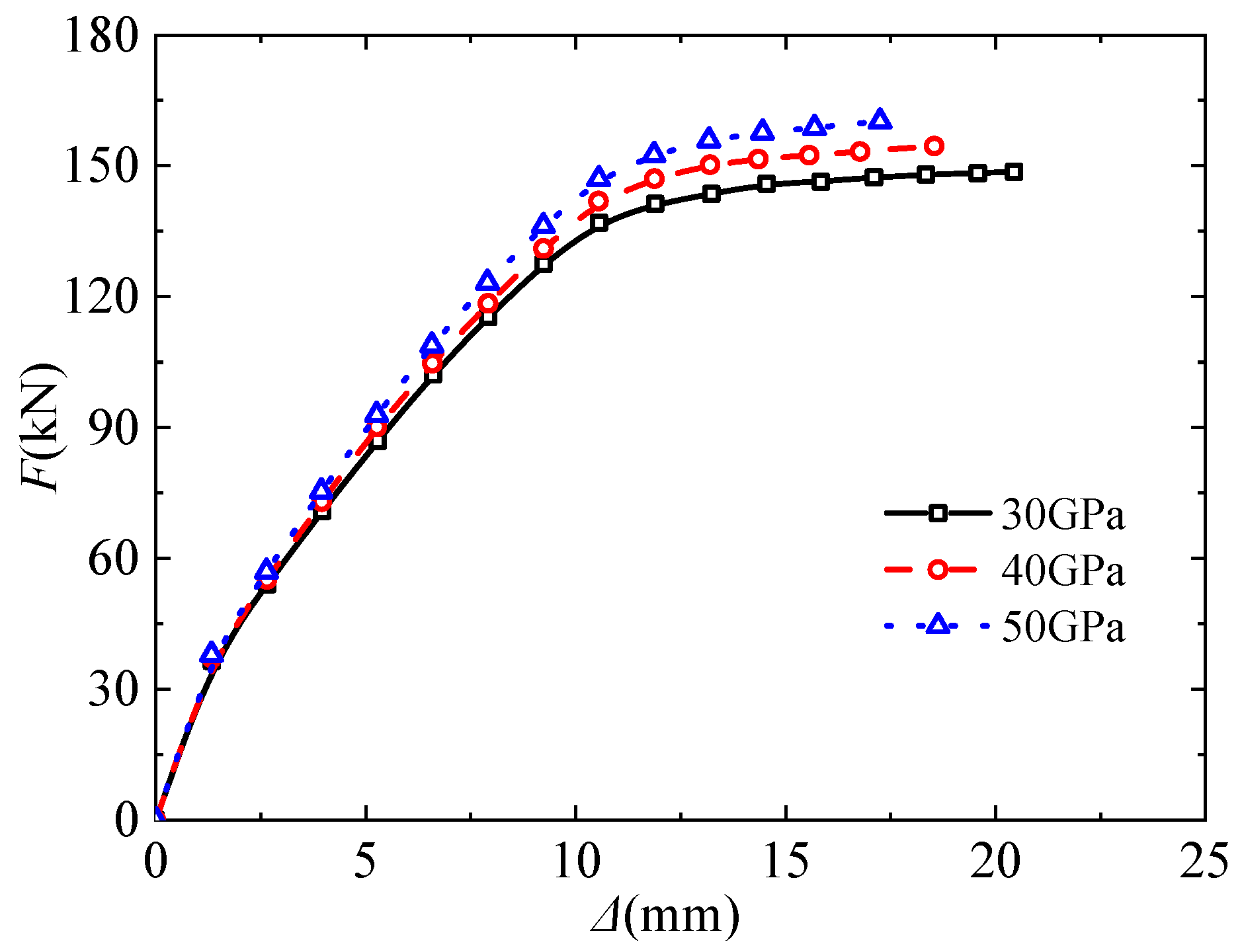
- For unanchored strengthened beams, which consistently failed due to debonding, increasing the plate thickness from 0.5 mm to 2 mm raised the flexural capacity gain from 4.5% to 15% but intensified the ductility reduction from 42.9% to 64.9%. Effective end anchorage prevented brittle failure, further enhancing both flexural capacity and ductility. The novel BFRP plate exhibited flexural strengthening behavior similar to that of existing FRP systems.
- (2)
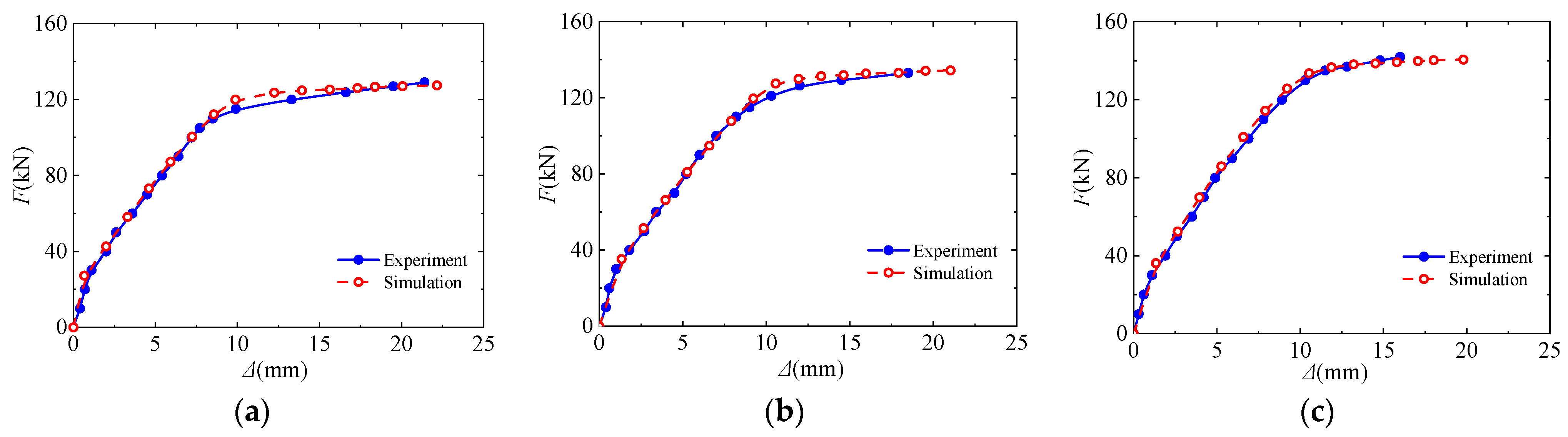
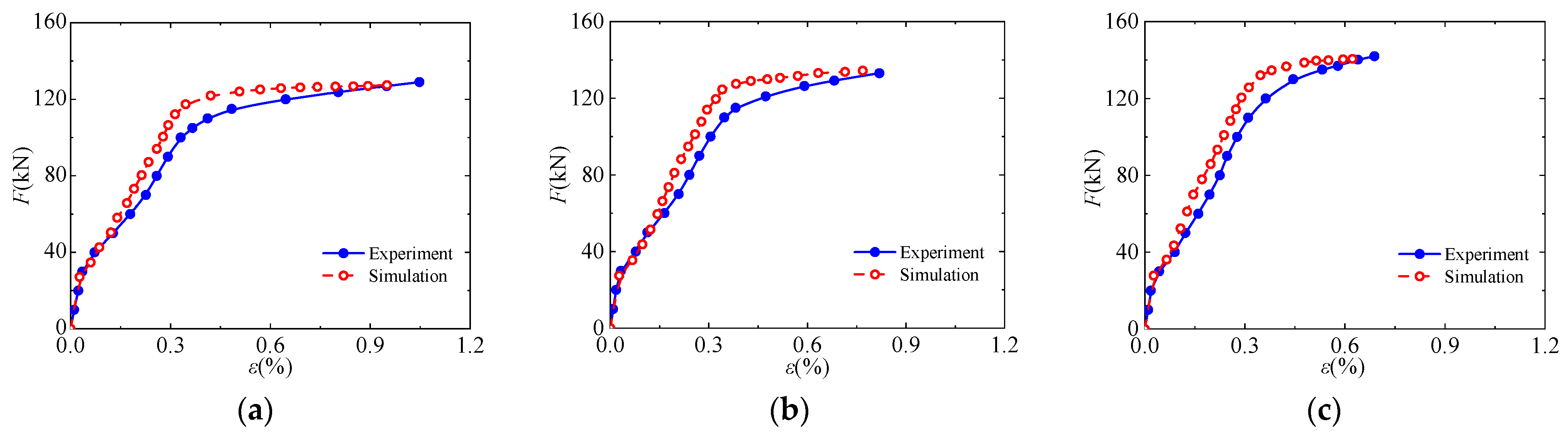
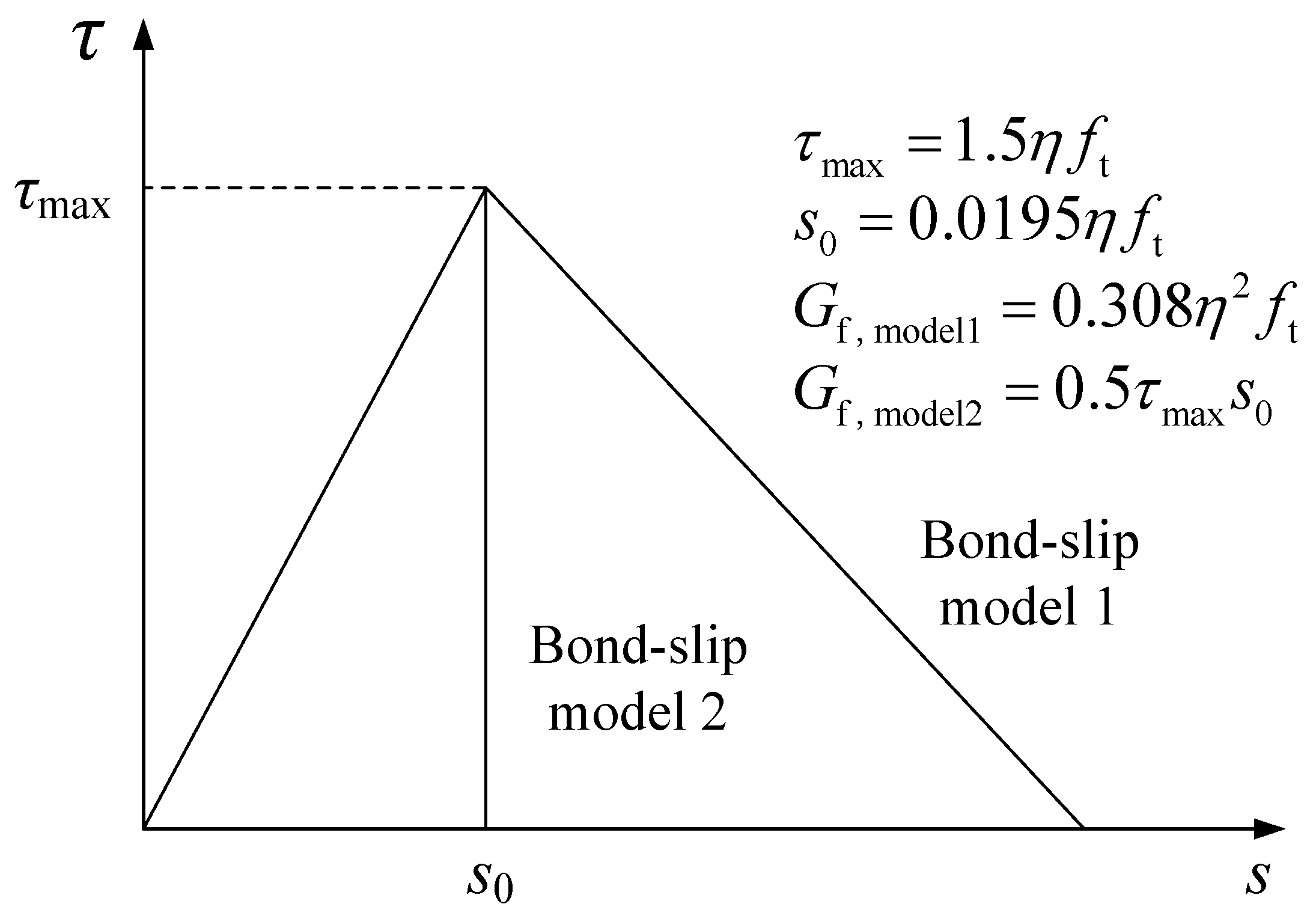
- The adopted bond–slip constitutive model accurately captured the debonding failure behavior of RC beams strengthened with the novel BFRP plates, with FE simulation results showing excellent agreement with test data, providing a robust analytical foundation for the refined numerical simulation and performance evaluation of such strengthening systems.
- (3)
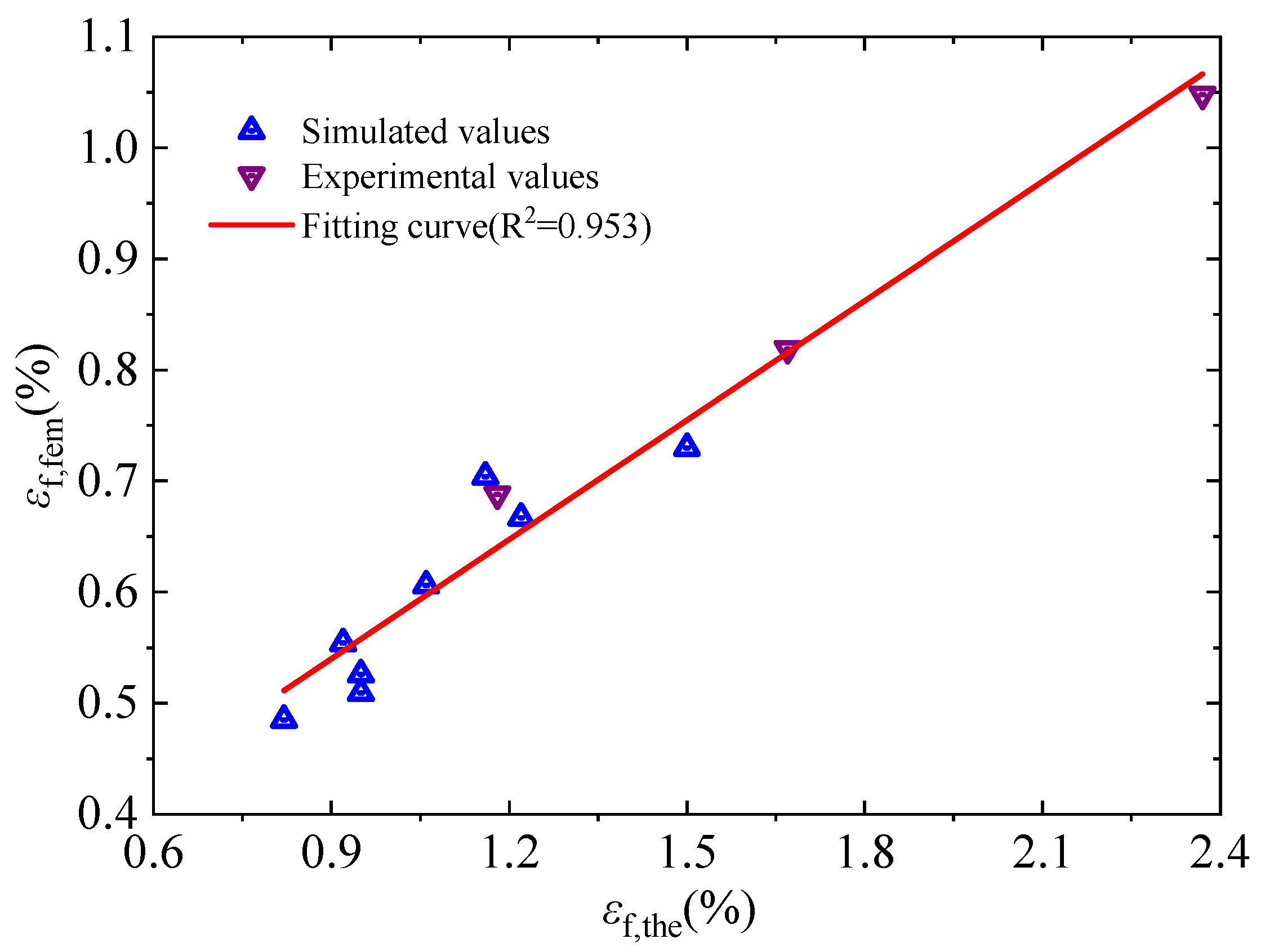
- The ACI 440.2R-17 specification was found to produce certain discrepancies in predicting the debonding strain of the novel BFRP plates in strengthened beams. To address this, a modified predictive formula for the BFRP plates’ debonding strain was proposed based on regression analysis, which provides a robust framework that more accurately captures the onset and characteristics of debonding failure for the novel BFRP system.
- (4)
- The flexural capacity calculation method of the novel BFRP-strengthened beams under debonding failure was proposed based on the modified strain formula. The theoretical predictions exhibit a high degree of accuracy with deviations within 5%, demonstrating that the proposed method provides a reliable basis for the design of RC beams strengthened with the novel BFRP plates.
Author Contributions
Funding
Data Availability Statement
Conflicts of Interest
References
- Sbahieh, S.; Rabie, M.; Ebead, U.; Al-Ghamdi, S.G. The mechanical and environmental performance of fiber-reinforced polymers in concrete structures: Opportunities, challenges and future directions. Buildings 2022, 12, 1417. [Google Scholar] [CrossRef] [Scilit]
- Zheng, S.; Hu, T.; Yu, Y. Interpretable Machine Learning-Based Prediction Model for Concrete Cover Separation of FRP-Strengthened RC Beams. Materials 2024, 17, 1957. [Google Scholar] [CrossRef] [Scilit]
- Al Nuaimi, N.; Sohail, M.G.; Hawileh, R.; Abdalla, J.A.; Douier, K. Durability of reinforced concrete beams externally strengthened with CFRP laminates under harsh climatic conditions. J. Compos. Constr. 2021, 25, 04021005. [Google Scholar] [CrossRef] [Scilit]
- Slaitas, J.; Valivonis, J. Full moment-deflection response and bond stiffness reduction of RC elements strengthened with prestressed FRP materials. Compos. Struct. 2021, 260, 113265. [Google Scholar] [CrossRef] [Scilit]
- Slaitas, J.; Valivonis, J. Concrete cracking and deflection analysis of RC beams strengthened with prestressed FRP reinforcements under external load action. Compos. Struct. 2021, 255, 113036. [Google Scholar] [CrossRef] [Scilit]
- GB 50608-2010; Technical Code for Infrastructure Application of FRP Composites. Ministry of Housing and Urban-Rural Development of the People’s Republic of China: Beijing, China, 2010.
- ACI 440.2R-17; Guide for the Design and Construction of Externally Bonded FRP Systems for Strengthening Concrete Structures. ACI Committee 440; American Concrete Institute: Farmington Hills, MI, USA, 2017.
- CAN/CSA S806-12; Design and Construction of Building Components with Fibre-Reinforced Polymers. Canadian Standards Association (CSA): Mississauga, ON, Canada, 2012.
- CNR-DT 200 R1/2013; Guide for the Design and Construction of Externally Bonded FRP Systems for Strengthening Existing Structures. National Research Council: Rome, Italy, 2013.
- Salameh, A.; Hawileh, R.; Safieh, H.; Assad, M.; Abdalla, J. Elevated Temperature Effects on FRP–Concrete Bond Behavior: A Comprehensive Review and Machine Learning-Based Bond Strength Prediction. Infrastructures 2024, 9, 183. [Google Scholar] [CrossRef] [Scilit]
- Gong, S.; Su, M.; Deng, X.; Song, Z.; Yoshitake, I.; Peng, H. Temperature effects on bonding performance of near-surface-mounted CFRP concrete interfaces: Experimental and finite element studies. Eng. Struct. 2026, 354, 122395. [Google Scholar] [CrossRef] [Scilit]
- Wang, Y.X.; Ye, N.L.; Liu, S.Q.; Zhang, Z.Q.; Hu, Y.F.; Wei, A.B.; Wang, H.T. Bond Strength Evaluation of FRP–Concrete Interfaces Affected by Hygrothermal and Salt Attack Using Improved Meta-Learning Neural Network. Appl. Sci. 2024, 14, 5474. [Google Scholar] [CrossRef] [Scilit]
- He, W.L.; Jiang, X.Y.; He, R.Q.; Zheng, Y.T.; Dai, D.X.; Huang, L.F.; Yao, X.M. A Review on the Aging Behavior of BADGE-Based Epoxy Resin. Buildings 2025, 15, 2450. [Google Scholar] [CrossRef] [Scilit]
- Smoleń, J.; Olesik, P.; Nowacki, B.; Godzierz, M.; Kurtyka, K.; Chaber, P.; Czakiert, J.; Kozioł, M. The influence of UV radiation on the properties of GFRP laminates in underwater conditions. Sci. Rep. 2024, 14, 7446. [Google Scholar] [CrossRef] [Scilit]
- Lohani, S.; Shubham; Prusty, R.K.; Ray, B.C. Effect of ultraviolet radiations on interlaminar shear strength and thermal properties of glass fiber/epoxy composites. Mater. Today Proc. 2021, 43, 524–529. [Google Scholar] [CrossRef] [Scilit]
- Harle, S.M. Durability and long-term performance of fiber reinforced polymer (FRP) composites: A review. Structures 2024, 65, 105881. [Google Scholar] [CrossRef] [Scilit]
- Xian, G.; Guo, R.; Li, C.; Wang, Y. Mechanical performance evolution and life prediction of prestressed CFRP plate exposed to hygrothermal and freeze-thaw environments. Compos. Struct. 2022, 293, 115719. [Google Scholar] [CrossRef] [Scilit]
- Wang, Y.Q.; Zeng, Z.; Huang, Z.Y.; Shang, J. Preparation and characteristics of silicone-modified aging-resistant epoxy resin insulation material. J. Mater. Sci. 2022, 57, 3295–3308. [Google Scholar] [CrossRef] [Scilit]
- Anwar, S.; Li, X. A review of high-quality epoxy resins for corrosion-resistant applications. J. Coat. Technol. Res. 2024, 21, 461–480. [Google Scholar] [CrossRef] [Scilit]
- Chen, L.S.; Shen, H.J.; Zheng, H.H.; Zhang, L. Experimental-numerical study on axial compression performance of square concrete columns confined by new-type BFRP. Phys. Scr. 2024, 99, 065042. [Google Scholar] [CrossRef] [Scilit]
- Li, W.; Chen, Y.; Pham, T.M.; Hao, H. Effect of elevated temperature on the mechanical properties of basalt fiber reinforced polymer (BFRP) plates. Constr. Build. Mater. 2021, 285, 122863. [Google Scholar]
- Kuntal, V.S.; Chellapandian, M.; Suriya Prakash, S.; Sharma, A. Experimental study on the flexural behavior of RC beams strengthened with prestressed BFRP laminates. Eng. Struct. 2021, 242, 112521. [Google Scholar]
- Manibalan, P.; Kesaven, S.; Abirami, G.; Baskar, R. Fatigue response of RC beam strengthened by BFRP laminate. Case Stud. Constr. Mater. 2023, 18, e01707. [Google Scholar] [CrossRef] [Scilit]
- Chen, W.S.; Pham, T.M.; Sichembe, H.; Chen, L.; Hao, H. Experimental study of flexural behaviour of RC beams strengthened by longitudinal and U-shaped basalt FRP sheet. Compos. Part B Eng. 2018, 134, 114–126. [Google Scholar] [CrossRef] [Scilit]
- Gao, Z.; Pan, D.; Qin, Q.; Zhang, C.; He, J.; Lin, Q. Experimental Study on Mechanical Performance of Basalt Fiber-Reinforced Polymer Plates with Different Bolted Connection Configurations. Polymers 2025, 17, 2627. [Google Scholar] [CrossRef] [Scilit]
- Shen, H.; Chen, L.; Zheng, H.; Zhang, F. Experimental study on axial compression performance of new-type BFRP-confined square concrete columns. J. Compos. Mater. Sci. Eng. 2023, 9, 106–111. [Google Scholar] [CrossRef] [Scilit]
- Liu, C.Y.; Wang, X.; Chang, X.Q.; Wu, Z.; Zhu, Z.; Wang, H.; Bian, Z. Experimental study on wedge anchorage performance of prestressed BFRP laminates for flexural strengthening of reinforced concrete components. J. Compos. Constr. 2023, 27, 04023043. [Google Scholar] [CrossRef] [Scilit]
- Effiong, J.U.; Ede, A.N. Experimental investigation on the strengthening of reinforced concrete beams using externally bonded and near-surface mounted natural fibre reinforced polymer composites—A review. Materials 2022, 15, 5848. [Google Scholar] [CrossRef] [Scilit]
- Smith, S.T.; Teng, J.G. FRP-strengthened RC beams. I: Review of debonding strength models. Eng. Struct. 2002, 24, 385–395. [Google Scholar] [CrossRef] [Scilit]
- Teng, J.G.; Smith, S.T.; Yao, J.; Chen, J.F. Intermediate crack-induced debonding in RC beams and slabs. Constr. Build. Mater. 2003, 17, 447–462. [Google Scholar] [CrossRef] [Scilit]
- Kalfat, R.; Al-Mahaidi, R.; Smith, S.T. Anchorage devices used to improve the performance of reinforced concrete beams retrofitted with FRP composites: State-of-the-art review. J. Compos. Constr. 2013, 17, 14–33. [Google Scholar] [CrossRef] [Scilit]
- Hawileh, R.A.; Assad, M.; Abdalla, J.A. Effect of Increasing the Number of Anchors on the Flexural Performance of FRP-Strengthened RC Beams. Procedia Struct. Integr. 2024, 54, 287–293. [Google Scholar] [CrossRef] [Scilit]
- Ren, Y.; Wang, H.; Guan, Z.; Yang, K. Evaluation of the Properties and Applications of FRP Bars and Anchors: A Review. Rev. Adv. Mater. Sci. 2023, 62, 20220287. [Google Scholar] [CrossRef] [Scilit]
- Monti, M.; Renzelli, M.; Luciani, P. FRP adhesion in uncracked and cracked concrete zones. In Proceedings of the 6th International Symposium on FRP Reinforcement for Concrete Structures, Singapore, 8–10 July 2003. [Google Scholar]
- Dai, J.G.; Ueda, T.; Sato, Y. Development of the nonlinear bond stress-slip model of fiber reinforced plastics sheet-concrete interfaces with a simple method. J. Compos. Constr. 2005, 9, 52–62. [Google Scholar] [CrossRef] [Scilit]
- Fathi, A.; El-Saikaly, G.; Chaallal, O. Experimental and Analytical Study of Bond Stress–Slip Behavior at the CFRP-to-Concrete Interface. J. Compos. Constr. 2023, 27, 04023009. [Google Scholar] [CrossRef] [Scilit]
- Aghabagloo, M.; Carreras, L.; Barahona, M.; Ribas, C.; Baena, M.; Torres, L. Experimental Study and Numerical Prediction of the Bond-Slip Law for Concrete Elements Strengthened with FRP Using Metaheuristic Algorithm. Constr. Build. Mater. 2024, 411, 134712. [Google Scholar] [CrossRef] [Scilit]
- Ceroni, F. Experimental performances of RC beams strengthened with FRP materials. Constr. Build. Mater. 2010, 24, 1547–1559. [Google Scholar] [CrossRef] [Scilit]
- Mostofinejad, D.; Hosseini, S.M.; Nader Tehrani, B.; Eftekhar, M.R. Innovative warp and woof strap (WWS) method to anchor the FRP sheets in strengthened concrete beams. Constr. Build. Mater. 2019, 218, 351–364. [Google Scholar] [CrossRef] [Scilit]
- Nguyen, N.T.; Nguyen, T.K.; Du, D.H.; Nguyen, D.N.; Kieu, T.S. Nonlinear Finite Element Analysis of FRP-Strengthened Full-Size Reinforced Concrete Beams. Innov. Infrastruct. Solut. 2023, 8, 139. [Google Scholar] [CrossRef] [Scilit]
- GB 50010-2010; Code for Design of Concrete Structures. National Standard of the People’s Republic of China, China Architecture & Building Press: Beijing, China, 2015.
- Al-Saawani, M.A.; Al-Negheimish, A.I.; El-Sayed, A.K.; Alhozaimy, A.M. Finite Element Modeling of Debonding Failures in FRP-Strengthened Concrete Beams Using Cohesive Zone Model. Polymers 2022, 14, 1889. [Google Scholar] [CrossRef] [Scilit]
- Xiao, Y.Y.; Zhang, Z.H. Numerical simulation of interfacial debonding between CFRP and concrete under rapid loading. J. Ningbo Univ. (Nat. Sci. Eng. Ed.) 2020, 33, 82–88. [Google Scholar]
- Lu, X.Z.; Ye, L.P.; Teng, J.G.; Jiang, J.J. Bond-slip model for FRP-to-concrete interface. J. Build. Struct. 2005, 26, 10–18. [Google Scholar]
- Lu, X.Z.; Teng, J.G.; Ye, L.P.; Jiang, J.J. Finite element analysis of intermediate crack-induced debonding in FRP strengthened RC beams. Eng. Mech. 2006, 23, 85–93. [Google Scholar]
- Teng, J.G.; Lu, X.Z.; Ye, L.P.; Jiang, J.J. Recent research on intermediate crack induced debonding in FRP strengthened beams. In Proceedings of the 4th International Conference on Advanced Composite Materials for Bridges and Structures, Calgary, AB, Canada, 20–23 July 2004. [Google Scholar]







| Specimen | Strengthening Condition | End Anchorage Configuration | BFRP Plate Thickness/mm |
|---|---|---|---|
| CB1 | No strengthening | None | 0 |
| CB2 | 0 | ||
| U-0.5 | EB BFRP plate | None | 0.5 |
| U-1 | 1 | ||
| U-2 | 2 | ||
| W-2 | BFRP sheet circumferential wrapping | 2 | |
| W-4 | 4 | ||
| W-6 | 6 | ||
| M-0.5 | Mechanical anchorage | 0.5 | |
| M-1 | 1 |
| Material | Tensile Strength/MPa | Compressive Strength/MPa | Yield Strength/MPa | Ultimate Strength/MPa | Elastic Modulus/MPa | Elongation /% |
|---|---|---|---|---|---|---|
| C50 concrete | - | 48.79 | - | - | 3.34 × 10⁴ | - |
| BFRP plate | 470 | - | - | - | 2.4 × 10⁴ | 3.11 |
| BFRP sheet | 746.4 | - | - | - | 2.4 × 10⁴ | 3.11 |
| HPB300 | - | - | 324 | 516 | 2.09 × 10⁵ | - |
| HRB400 | - | - | 433 | 632 | 2.06 × 10⁵ | - |
| Adhesive | 70.1 | - | - | - | 3.02 × 10³ | - |
| Specimen | Fy (kN) | Fu (kN) | Δy (mm) | Δu (mm) | μ | Failure Mode |
|---|---|---|---|---|---|---|
| CB1 | 105 | 123 | 9.1 | 39.9 | 4.38 | Compression failure |
| CB2 | 105 | 124 | 8.8 | 39.1 | 4.44 | Compression failure |
| U-0.5 | 110 | 129 | 8.5 | 21.4 | 2.52 | Debonding failure |
| U-1 | 115 | 133 | 9.0 | 18.5 | 2.06 | Debonding failure |
| U-2 | 125 | 142 | 10.3 | 16.0 | 1.55 | Debonding failure |
| W-2 | 140 | 150 | 9.4 | 25.4 | 2.70 | Shear compression failure |
| W-4 | 140 | 154 | 8.7 | 23.7 | 2.72 | Shear compression failure |
| W-6 | 140 | 159 | 8.2 | 20.1 | 2.45 | Shear compression failure |
| M-0.5 | 110 | 131 | 8.4 | 25.4 | 3.02 | Compression failure |
| M-1 | 115 | 138 | 7.5 | 22.5 | 3.00 | Compression failure |
| Scheme | FyE (kN) | FyF (kN) | FyF/FyE | FuE (kN) | FuF (kN) | FuE/FuE | εfE (%) | εfF (%) | εfF/εfE |
|---|---|---|---|---|---|---|---|---|---|
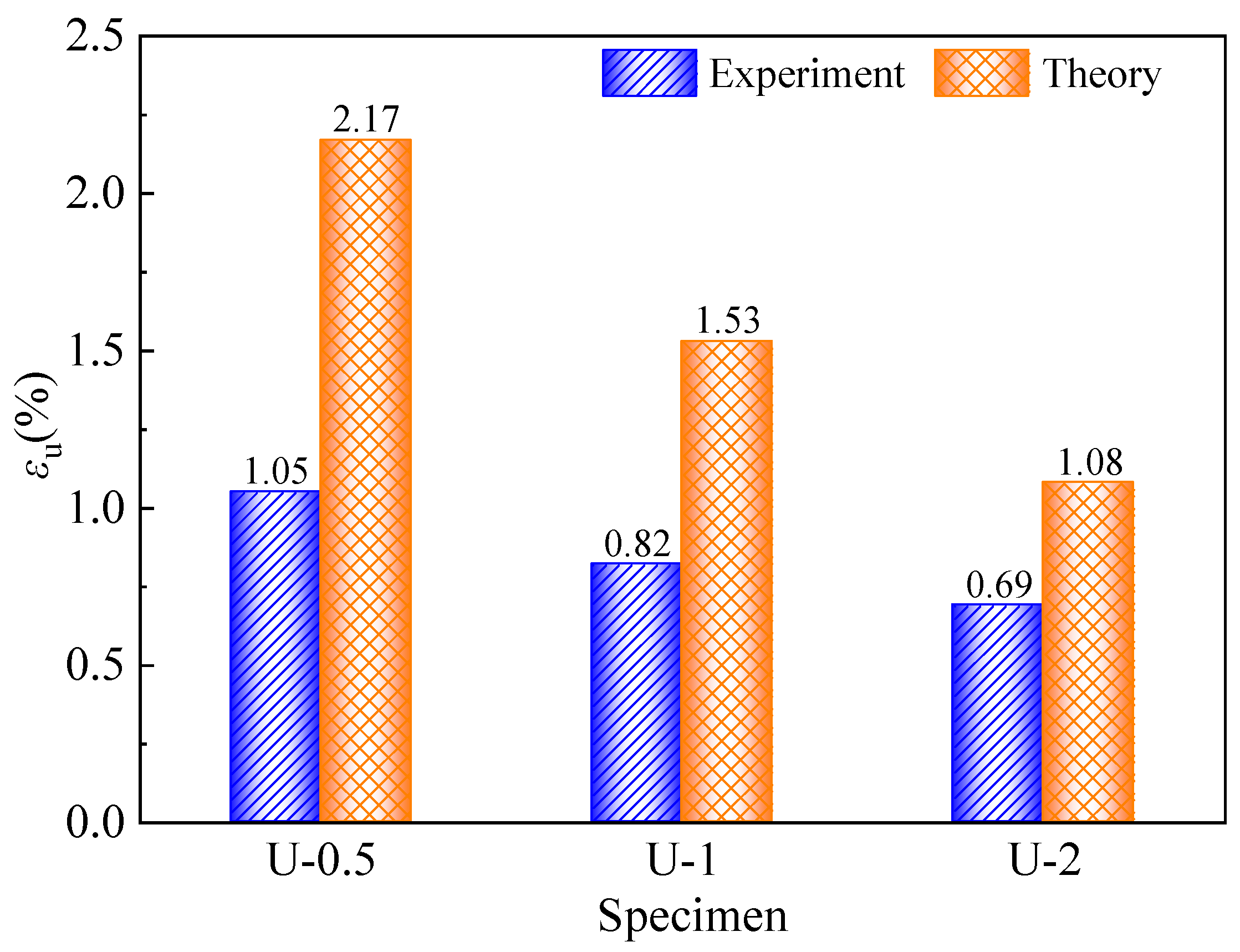
| U-0.5 | 110 | 116 | 1.05 | 129 | 127 | 0.98 | 1.05 | 0.95 | 0.90 |
| U-1 | 115 | 122 | 1.06 | 133 | 134 | 1.01 | 0.82 | 0.77 | 0.94 |
| U-2 | 125 | 132 | 1.06 | 140 | 141 | 1.01 | 0.69 | 0.62 | 0.90 |
| Specimen | Concrete Grades | tf (mm) | Ef (GPa) | FuF (kN) | εfF (%) |
|---|---|---|---|---|---|
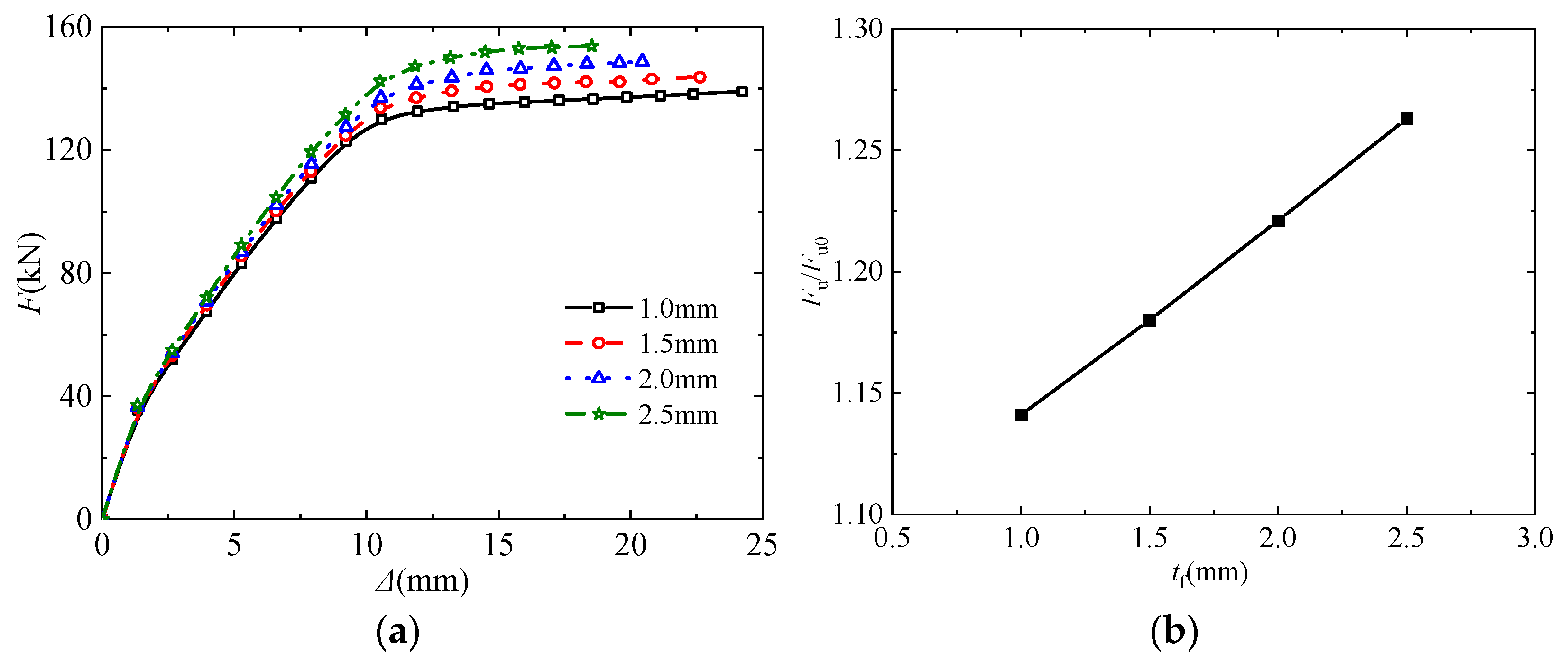
| C50-1-30 | C50 | 1 | 30 | 139.0 | 0.730 |
| C50-1.5-30 | C50 | 1.5 | 30 | 143.7 | 0.667 |
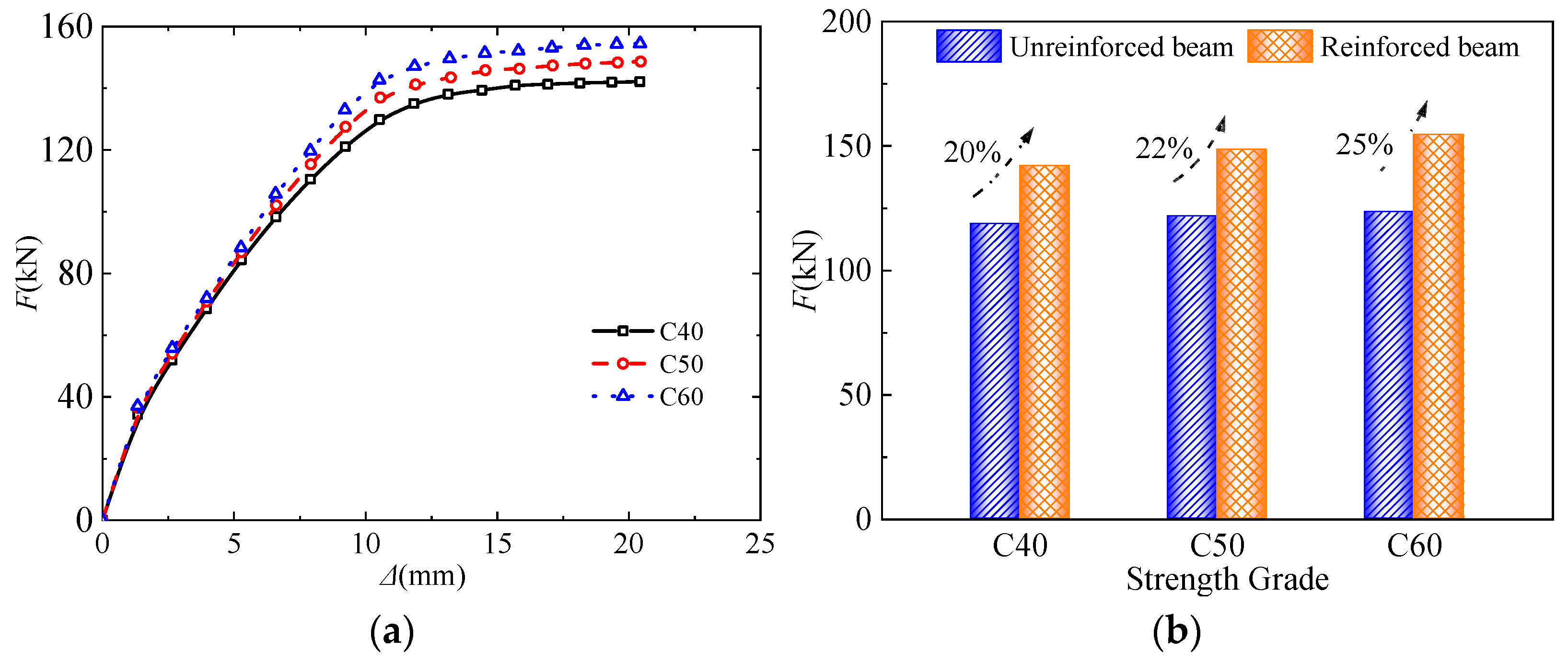
| C50-2-30 | C50 | 2 | 30 | 148.7 | 0.591 |
| C50-2.5-30 | C50 | 2.5 | 30 | 153.8 | 0.526 |
| C40-2-30 | C40 | 2 | 30 | 142.1 | 0.509 |
| C60-2-30 | C60 | 2 | 30 | 154.3 | 0.704 |
| C50-2-40 | C50 | 2 | 40 | 154.5 | 0.554 |
| C50-2-50 | C50 | 2 | 50 | 160.2 | 0.485 |
| Specimen | MuF (kN·m) | MuP (kN·m) | MuP/MuF |
|---|---|---|---|
| C50-0.5-30 | 59.08 | 60.20 | 1.02 |
| C50-1-30 | 61.07 | 62.81 | 1.03 |
| C50-1.5-30 | 63.20 | 65.24 | 1.03 |
| C50-2-30 | 65.37 | 67.55 | 1.03 |
| C40-2-30 | 60.41 | 64.01 | 1.06 |
| C60-2-30 | 65.56 | 66.32 | 1.01 |
| C50-2-40 | 65.67 | 68.28 | 1.04 |
| C50-2-50 | 68.09 | 71.18 | 1.05 |
| U-0.5 | 54.83 | 56.68 | 1.03 |
| U-1 | 56.53 | 59.09 | 1.05 |
| U-2 | 60.35 | 63.31 | 1.05 |
Disclaimer/Publisher’s Note: The statements, opinions and data contained in all publications are solely those of the individual author(s) and contributor(s) and not of MDPI and/or the editor(s). MDPI and/or the editor(s) disclaim responsibility for any injury to people or property resulting from any ideas, methods, instructions or products referred to in the content. |
© 2026 by the authors. Licensee MDPI, Basel, Switzerland. This article is an open access article distributed under the terms and conditions of the Creative Commons Attribution (CC BY) license.
Share and Cite
Ye, X.; Li, Z.; Shen, H.; Zheng, H. Flexural Behavior of Reinforced Concrete Beams Strengthened with Novel BFRP Plates. Buildings 2026, 16, 1031. https://doi.org/10.3390/buildings16051031
Ye X, Li Z, Shen H, Zheng H. Flexural Behavior of Reinforced Concrete Beams Strengthened with Novel BFRP Plates. Buildings. 2026; 16(5):1031. https://doi.org/10.3390/buildings16051031
Chicago/Turabian StyleYe, Xingzhan, Zheng Li, Huijun Shen, and Hehui Zheng. 2026. "Flexural Behavior of Reinforced Concrete Beams Strengthened with Novel BFRP Plates" Buildings 16, no. 5: 1031. https://doi.org/10.3390/buildings16051031
APA StyleYe, X., Li, Z., Shen, H., & Zheng, H. (2026). Flexural Behavior of Reinforced Concrete Beams Strengthened with Novel BFRP Plates. Buildings, 16(5), 1031. https://doi.org/10.3390/buildings16051031