Article

Optimization and Performance Study of 3D Printed Concrete Mixture for Underground Utility Tunnels
1
College of Civil Engineering, Xijing University, Xi’an 710123, China
2
Shaanxi Key Laboratory of Safety and Durability of Concrete Structures, Xi’an 710123, China
3
PowerChina Northwest Engineering Corporation Limited, Xi’an 710065, China
*
Author to whom correspondence should be addressed.
Buildings 2026, 16(4), 859; https://doi.org/10.3390/buildings16040859

Submission received: 13 January 2026 / Revised: 9 February 2026 / Accepted: 19 February 2026 / Published: 20 February 2026
(This article belongs to the Special Issue Advances in the 3D Printing of Concrete)

Abstract

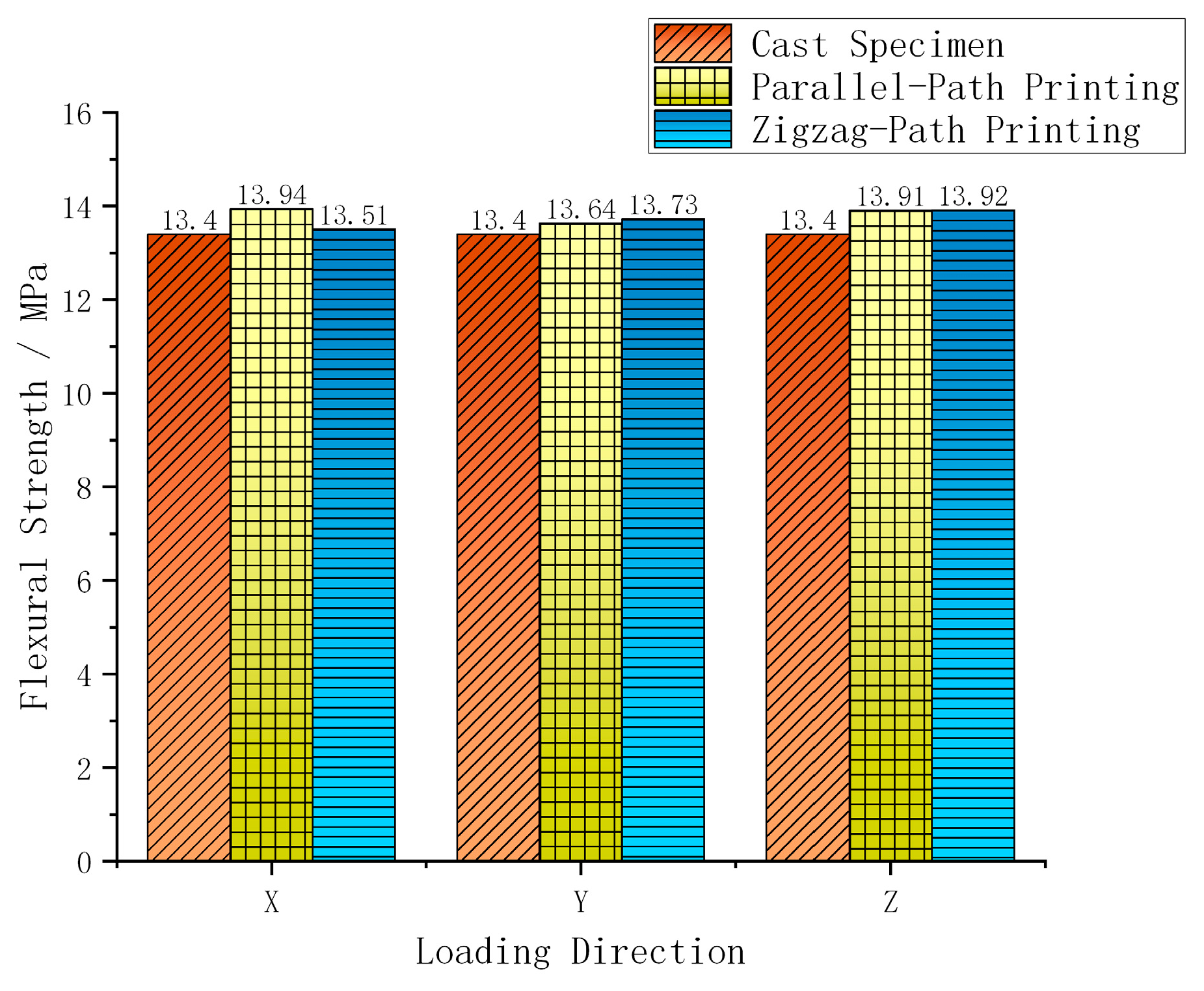
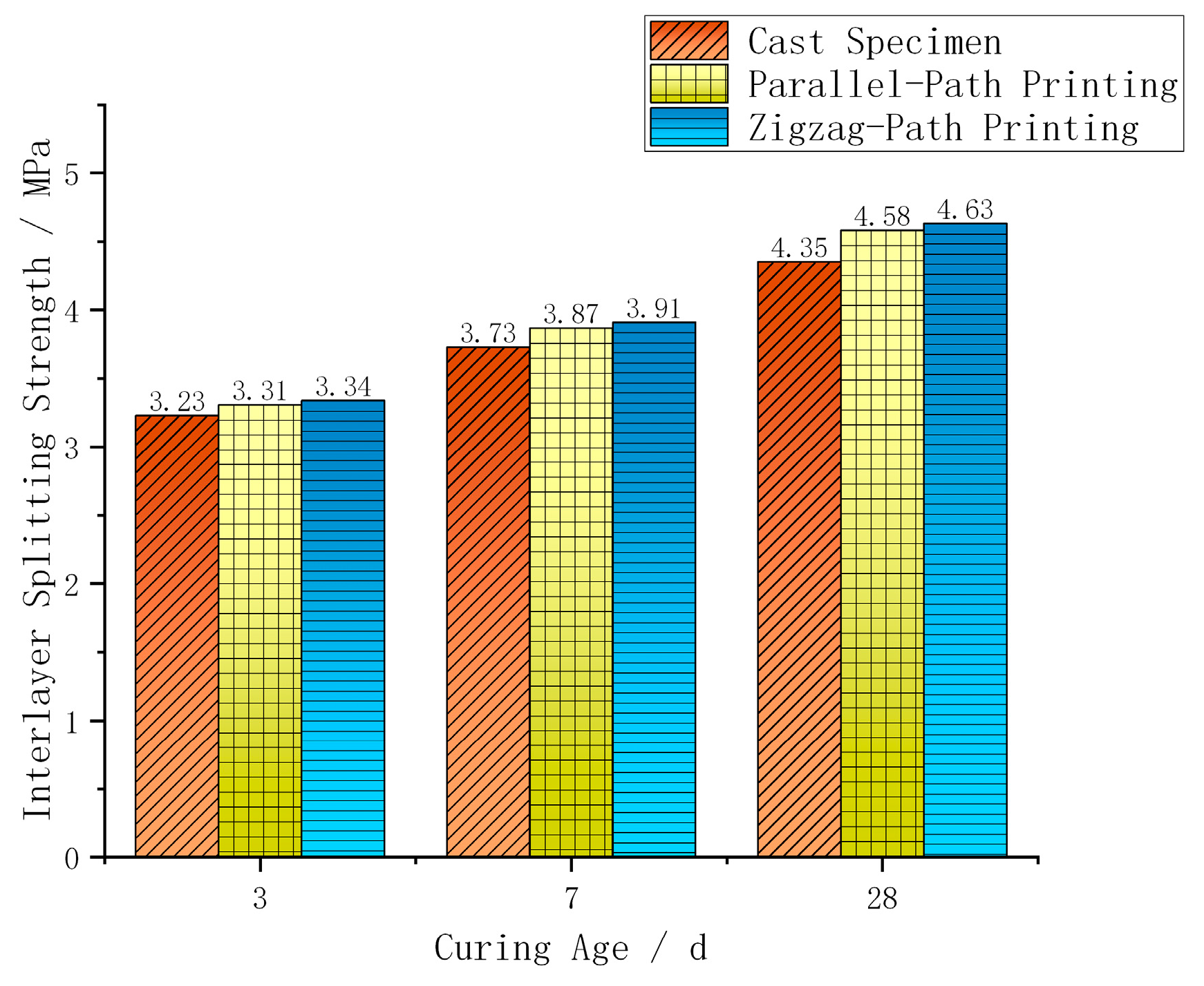
The construction of traditional underground utility tunnels faces prominent challenges, including high costs, long construction cycles, and limited workspace. Although 3D printing technology offers an effective solution to these issues, its practical application is largely constrained by key performance factors such as the printability, early strength, and interlayer bonding of concrete materials. This study aims to develop a 3D-printable concrete material specifically suited for the construction of underground utility tunnels. Through collaborative optimization of parameters such as the water–binder ratio, additives, and fiber content using single-factor and orthogonal tests, the optimal mix proportion was determined: a water–binder ratio of 0.30, a 10% dosage of rapid-hardening sulphoaluminate cement (R·SAC), a sand-to-binder ratio of 1.0, 20% mineral admixtures (15% fly ash + 5% silica fume), and a 1.0% volume fraction of polypropylene fibers. The results indicate that the fresh paste achieved a flowability of 192 mm, demonstrating excellent printability. Specimens printed using a sawtooth toolpath reached a 3-day compressive strength of 37.8 MPa, with 28-day compressive and flexural strengths increasing to 56.3 MPa and 7.8 MPa, respectively, and an interlayer bond strength of 3.5 MPa. Crucially, the compressive and flexural anisotropy coefficients were as low as 0.023 and 0.066, respectively, showing a preliminary exploratory trend superior to levels reported in some literature and suggesting the potential of printed components to improve structural performance consistency. This material system not only meets the requirements of 3D printing for early strength and workability but also, by introducing R·SAC to form a low-alkalinity binder system, provides a potential pathway for enhancing long-term durability in corrosive environments. This study offers a reliable theoretical and experimental basis for the application of 3D printing technology in underground engineering. Long-term durability will remain a primary focus of subsequent research.
Keywords: underground utility tunnel; 3D printed concrete; mix proportion optimization; single-factor test; orthogonal test underground utility tunnel; 3D printed concrete; mix proportion optimization; single-factor test; orthogonal test