1. Introduction
The construction industry is currently grappling with labor shortages and the imperative for sustainable development, challenges for which 3D printing technology based on digital modeling offers promising solutions. By enabling formwork-free construction, this technology demonstrates significant potential for enhancing efficiency while reducing material consumption and carbon emissions [
1,
2]. Its application in underground utility tunnel projects can effectively address the limitations of traditional construction methods; however, the stringent durability requirements of underground environments—such as the coupled effects of moisture and chemical attack [
3] represent a primary challenge. Furthermore, conducting life-cycle assessments and thermal performance evaluations of 3D printed buildings is essential for determining their environmental viability [
4].
Current research into 3D printed concrete primarily focuses on material systems and process parameters. To address the incompatibility between traditional reinforcement placement and the printing process, strategies such as metal cable reinforcement [
5] and shotcrete-based 3D printing [
6] have been extensively investigated. The integration of Engineered Cementitious Composites (ECC) has notably improved the tensile strength and hardening characteristics of printed components [
7]. Concurrently, 3D printing is reshaping the labor market, necessitating a workforce with enhanced digital competencies [
8].
At the material level, studies frequently emphasize the regulation of fresh properties [
9] and the incorporation of industrial solid wastes—such as copper tailings [
10] and recycled aggregates [
11]—to bolster sustainability. Fiber reinforcement techniques [
12] and the impact of printing toolpaths on compressive behavior [
13] have further broadened the scope of material research. Meanwhile, process parameters, specifically interlayer bond strength [
14] and the printability of fresh concrete [
15], remain as critical determinants of final structural performance. As a cornerstone of digital construction, the opportunities and challenges associated with “Digital Concrete” [
16], along with established research roadmaps [
17], provide a robust theoretical framework for the field. Recent comprehensive reviews have summarized significant material advancements and persistent challenges [
18]. As construction-scale additive manufacturing processes continue to evolve [
19], advanced data-driven approaches are increasingly utilized to understand and predict the macroscopic properties of these innovative materials.
Against this background, by targeting the special requirements of 3D printed concrete for humid and corrosive environments, such as underground utility tunnels, this study takes ensuring the early-age strength of structures during the construction period and their safety, serviceability, and durability during their service life as the fundamental goal, and aims to address the key technical challenges in coordinating early-age strength and durability of 3D printed concrete suitable for underground engineering.
Despite significant progress made by scholars in the research on materials and performance of 3D printed concrete, there are still obvious deficiencies in the material–process collaborative optimization under underground environments. On one hand, most studies adopt single modification with traditional early-strength agents, which are difficult to meet the stringent durability requirements of underground environments; on the other hand, mix proportion optimization under multi-factor interaction still relies heavily on experience, lacking systematic and efficient methods. More importantly, the intrinsic mechanism by which printing path planning and material design synergistically regulate interlayer bonding and mechanical anisotropy remains unclear, which restricts the long-term performance of printed components in service environments.
To address the above issues, this study breaks through the limitations of single material modification and proposes a systematic solution covering material–process–performance for 3D printing of underground utility tunnels. The innovation lies in the adoption of compound blending of R·SAC and OPC to form a new type of cementitious system that can replace traditional chemical early-strength agents. This design not only utilizes the flash-setting characteristics of R·SAC to ensure the early-age constructability of printed components for underground utility tunnels but also consumes Ca(OH)2 generated by OPC through its hydration reaction. Since high alkalinity is a major factor inducing durability problems such as alkali–aggregate reaction and steel corrosion in underground environments, this system theoretically has the potential to improve long-term durability. However, its actual corrosion resistance needs to be verified through subsequent long-term durability tests.
This study adopts a systematic method combining single-factor and orthogonal experiments. Taking flowability, initial setting time, 3-day compressive strength, and interlayer bonding strength as the main evaluation indicators, and targeting the needs of underground engineering, key parameters such as water–binder ratio, sand–binder ratio, admixtures, and fiber content are optimized to establish a mix proportion balancing flowability and early-age strength. The results show that the compound blending strategy of R·SAC and OPC lays a solid material foundation for achieving high performance of 3D printed components for underground utility tunnels.
3. Results and Discussion
3.1. Mixture Proportion Optimization Results
3.1.1. Water–Binder Ratio
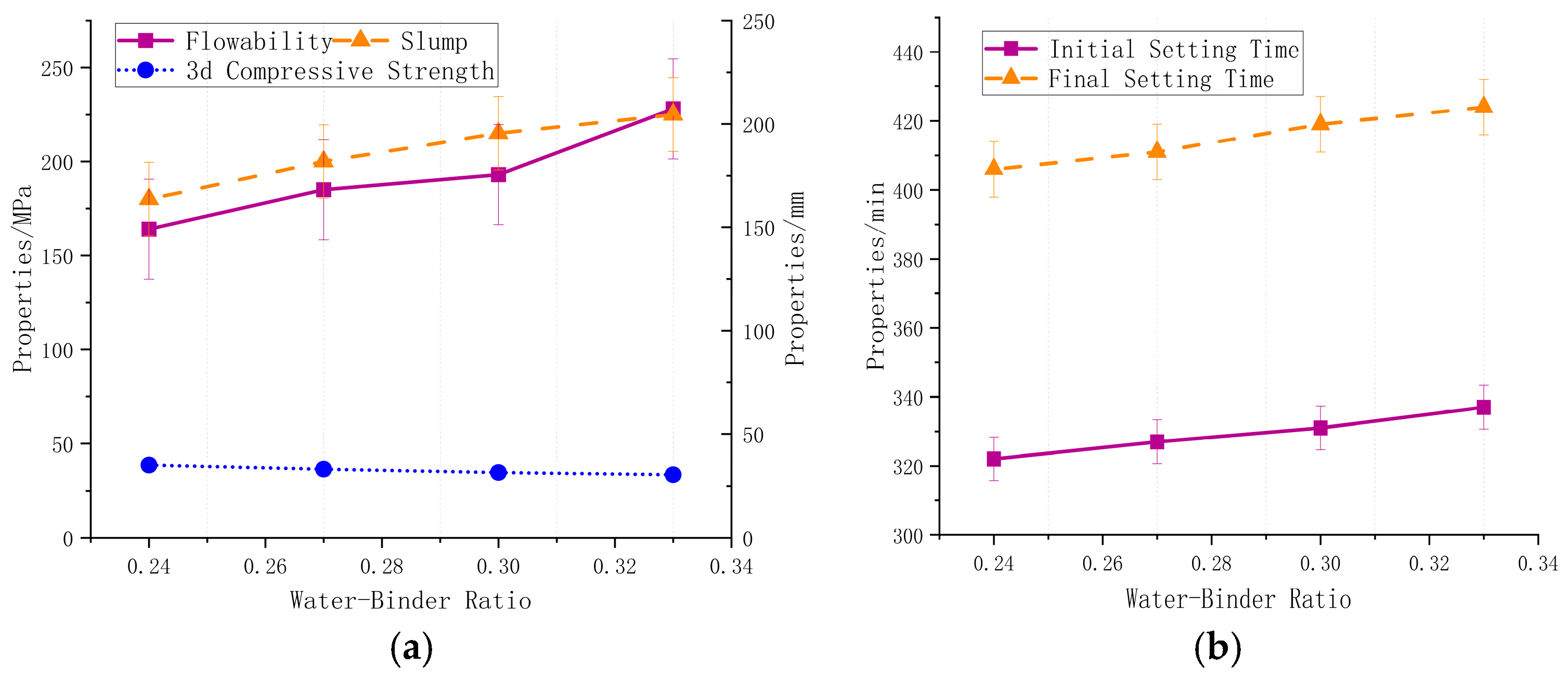
The water–binder ratio (w/b) is a critical parameter affecting the rheological properties of 3D printed concrete, as it requires balancing fluidity: an excessively low w/b results in pumping difficulties, while an excessively high w/b leads to poor buildability. To determine its reasonable range, single-factor experiments were conducted with four levels (0.24, 0.27, 0.30, and 0.33). The other fixed parameters were as follows: sand-to-binder ratio of 1.0, superplasticizer dosage of 0.19%, total mineral admixture content of 20% (15% fly ash + 5% silica fume), and polypropylene fiber volume fraction of 0.32%.
As shown in
Figure 2, the test results indicate that the water–binder ratio significantly influences the workability and mechanical properties of 3D printed concrete. Regarding workability: when the w/b is less than 0.24, the flowability is insufficient (<160 mm), leading to low pumping efficiency; when the w/b exceeds 0.31, the flowability becomes excessively high (>200 mm), resulting in degraded buildability, which is unfavorable for printing. The compressive strength decreases with the increase in w/b, mainly due to the increased porosity and weakened bonding between aggregates. The comprehensively reasonable w/b range is determined to be 0.24–0.31.
3.1.2. Rapid-Hardening Sulphoaluminate Cement (R·SAC)
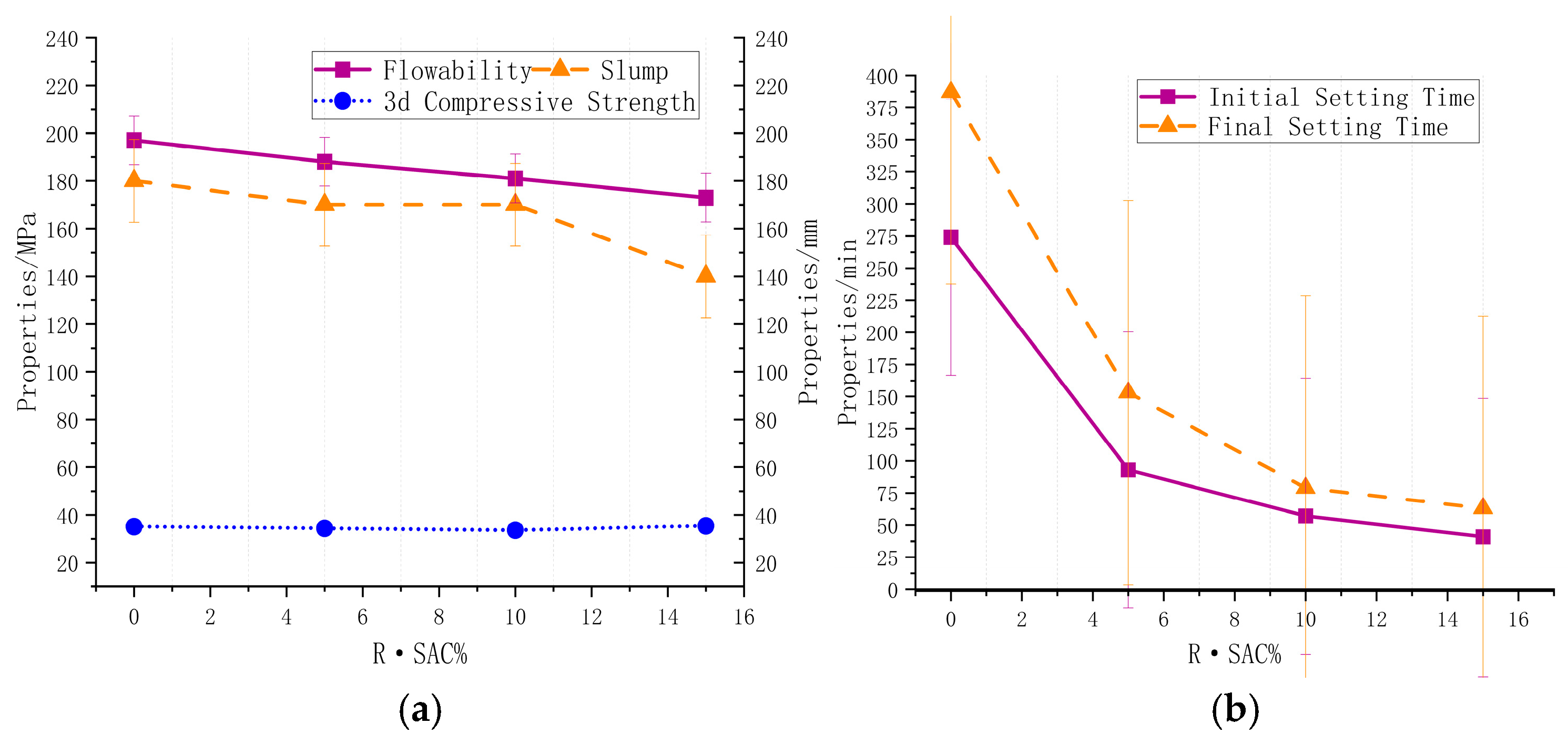
To meet the early-age strength requirement of 3D printed concrete and avoid the adverse effects of traditional early-strength agents on durability, rapid-hardening sulphoaluminate cement (R·SAC) was selected as the early-strength and setting-regulating material in this study. Considering the stringent durability requirements of underground engineering, R·SAC was used to replace OPC at an equal mass ratio. In this single-factor test, the R·SAC dosage was set as the variable with four levels (0%, 5%, 10%, and 15%), while the baseline mix proportion was fixed as follows: water–binder ratio of 0.31, sand-to-binder ratio of 1.0, 15% fly ash, 5% silica fume, 0.19% superplasticizer, and 0.32% fiber volume fraction.
As illustrated in
Figure 3, the experimental results demonstrate that the dosage of rapid-hardening sulphoaluminate cement (R·SAC) notably influences the overall performance of 3D printed concrete. In terms of workability, both flowability and slump experience a sharp decline when the dosage exceeds 10%, while pumping becomes problematic beyond a 15% threshold. Regarding setting time, a pronounced retardation effect is observed at dosages below 5%, which stabilizes once the dosage surpasses 10%. Compressive strength exhibits a slight decrease when the R·SAC content is below 10%, followed by steady growth at higher concentrations. As noted by Khalil et al. [
25], the incorporation of sulphoaluminate cement markedly shortens the initial and final setting times of 3D printed materials and plays a pivotal role in accelerating early strength development, thereby ensuring interlayer stacking stability during the printing process. Consequently, the R·SAC dosage should be maintained above 10%. Taking into account pumpability, early strength requirements, and long-term strength development, the optimal R·SAC dosage is determined to be between 10% and 15%.
3.1.3. Fiber Test
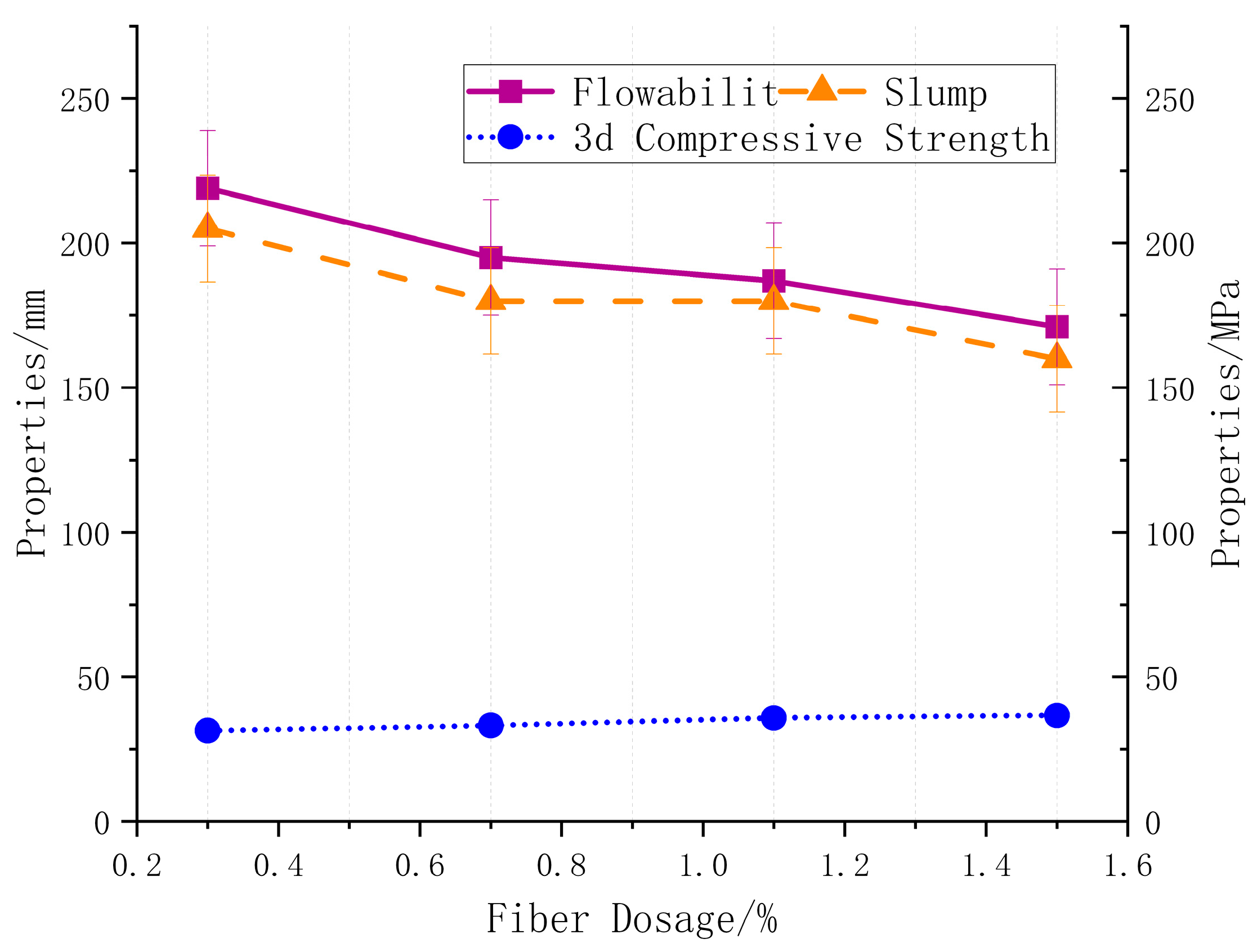
To address the insufficient strength of 3D printed concrete caused by the inability to embed steel reinforcement, 6 mm polypropylene fibers were adopted for reinforcement in this study. Based on a fixed baseline mix proportion (water–binder ratio = 0.31, sand-to-binder ratio = 1.0, 15% fly ash, 5% silica fume, and 0.19% superplasticizer), a single-factor test was conducted to systematically investigate the effects of four polypropylene fiber volume fractions (0.3%, 0.7%, 1.1%, and 1.5%) on the workability and mechanical properties of the material.
The test results (
Figure 4) indicate that the flowability and slump of concrete decrease notably with increasing fiber content. When the fiber volume fraction is below 0.3%, the flowability is excessively high (approximately 220 mm), which is detrimental to buildability. Conversely, when it exceeds 1.3%, the flowability drops below 180 mm, hindering pumping and extrusion processes.
Figure 4 also demonstrates that the compressive strength gradually improves as fiber content increases, though the rate of enhancement diminishes at higher dosages. As the fiber content increases from 0.3% to 1.5%, the compressive strength improves by 16.7% (from 31.37 MPa to 36.61 MPa). This is likely because fibers effectively bridge voids at lower dosages, whereas excessive addition leads to agglomeration, which compromises material compactness. Consequently, considering the balance between workability and mechanical properties, the optimal fiber volume fraction is determined to be 1.0%.
3.2. Orthogonal Test Results
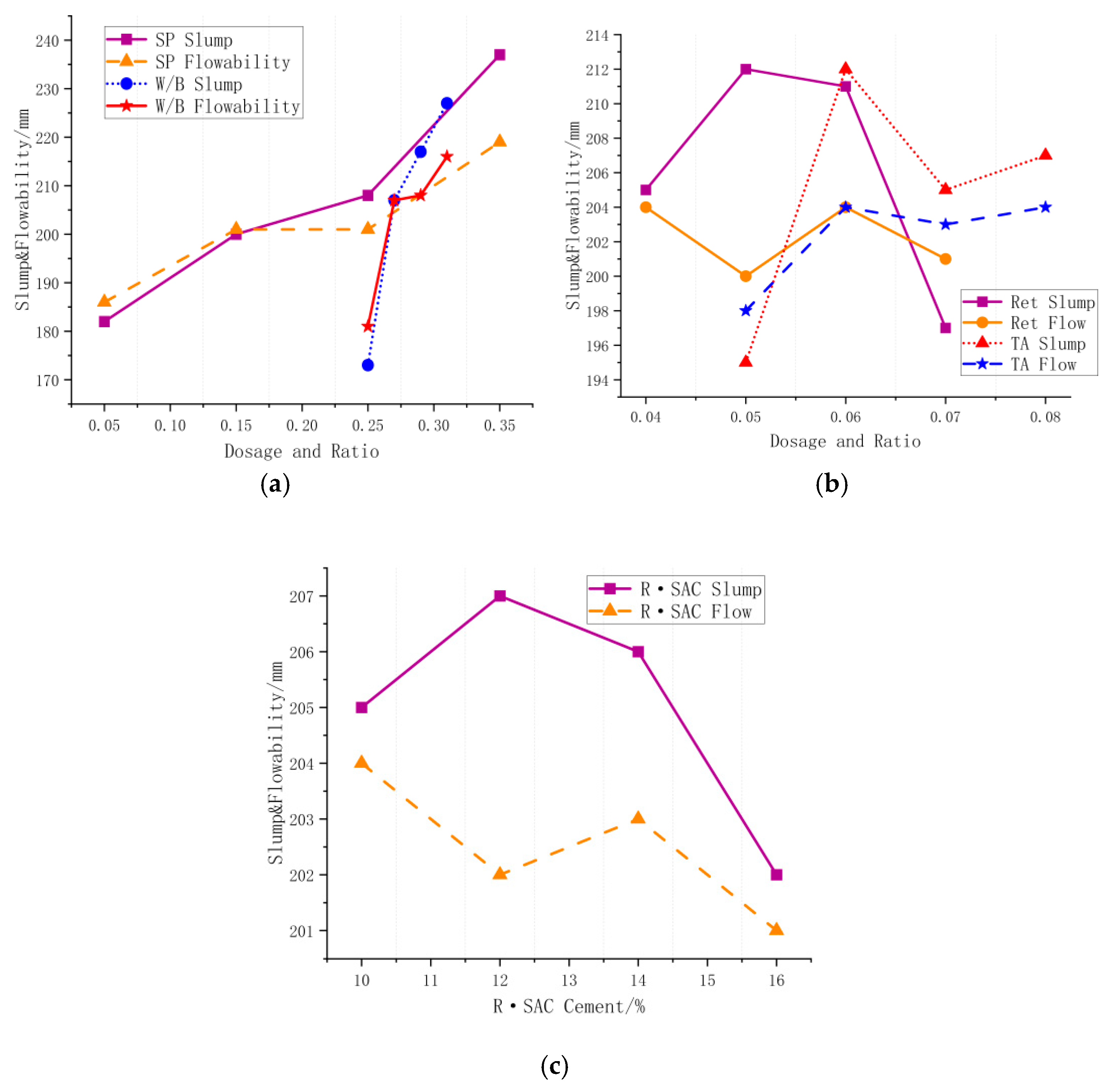
Based on the analysis of
Figure 5a–c and the range analysis of the flowability index, the primary and secondary order of influence of each factor on the flow performance of 3D printed concrete is determined as follows: water–binder ratio > superplasticizer dosage > thixotropic agent dosage > retarder dosage > R·SAC dosage. Among these, the water–binder ratio and superplasticizer dosage are the dominant factors affecting the rheological properties of the material. An increase in the water–binder ratio directly raises the free water content of the paste, leading to a significant upward trend in flowability. In contrast, the superplasticizer effectively reduces the water demand required to achieve the desired flowability by dispersing cement particles; when the water–binder ratio is fixed, increasing the superplasticizer dosage can significantly improve paste fluidity. Test results show that a water–binder ratio below 0.25 or above 0.31 will cause the flowability to exceed the pumpable range (160–220 mm), while a superplasticizer dosage exceeding 0.35% will result in excessively high flowability (>230 mm), thereby impairing the buildability and stability of the material. The slump test results further verify the consistent variation law with flowability. Ultimately, the optimal parameter combination for flowability is determined as follows: water–binder ratio of 0.31, superplasticizer dosage of 0.35%, R·SAC dosage of 10%, retarder dosage of 0.05%, and thixotropic agent dosage of 0.06%. Under this mix proportion, the material exhibits a flowability of 218 mm, along with excellent extrudability and shape retention.
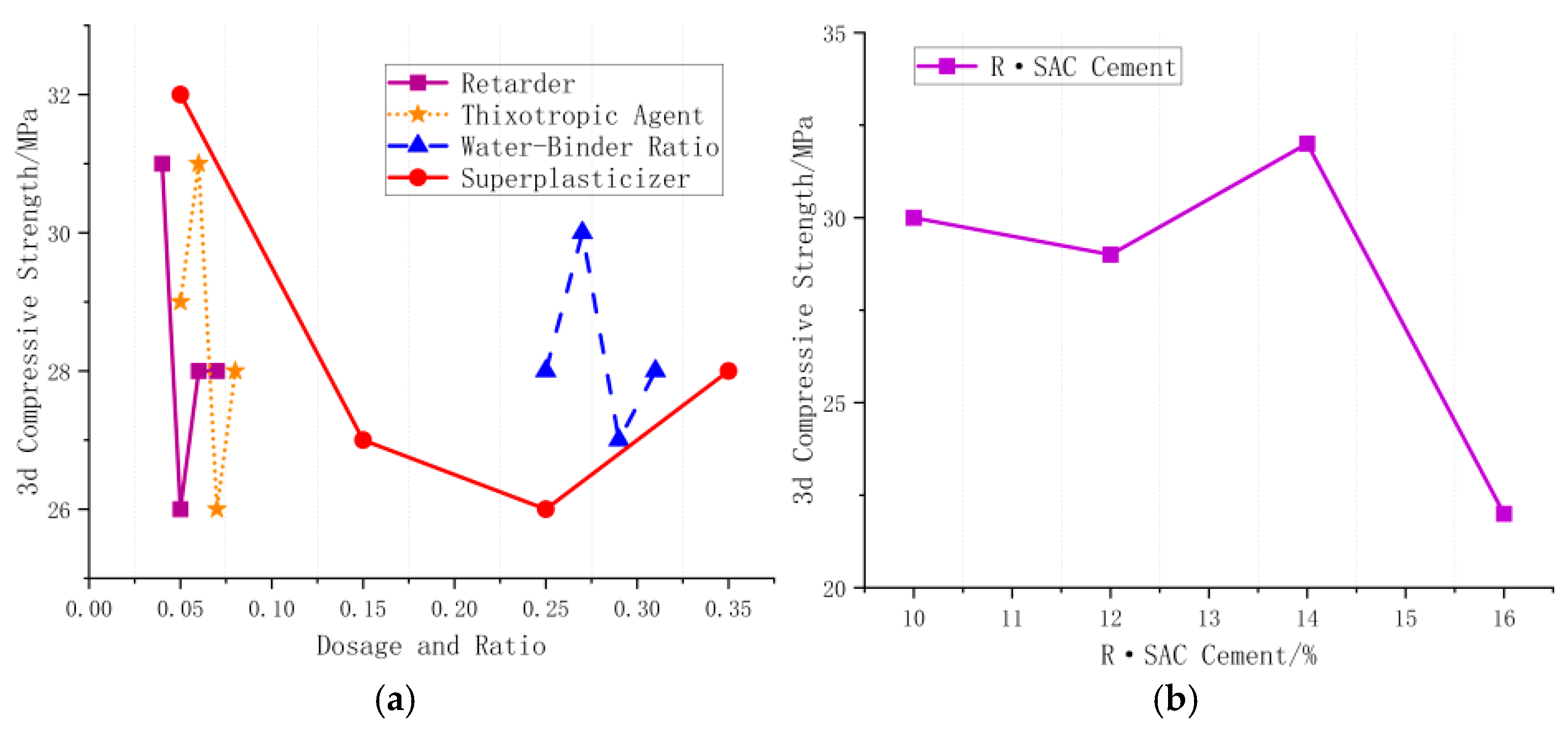
Based on the range analysis of the compressive strength test results shown in
Table 4 and
Figure 6a,b, the primary and secondary order of influence of each factor on the early-age strength development of 3D printed concrete is determined as follows: R·SAC dosage > superplasticizer dosage > retarder dosage ≈ thixotropic agent dosage > water–binder ratio. Among these, R·SAC and superplasticizer are the key factors controlling early-age strength development: with the increase in R·SAC dosage, its setting-accelerating characteristic is conducive to early-age strength formation, but excessive dosage (exceeding 14%) will reduce the long-term strength stability; in contrast, an increase in superplasticizer dosage introduces excessive air voids, and when the dosage exceeds 0.15%, the compressive strength shows a linear downward trend. Finally, the overall optimal mix proportion of 3D printed concrete is determined. This mix system not only ensures printability but also achieves a balanced development of workability, setting characteristics, and mechanical properties. The specific optimal mix proportion is as follows: water–binder ratio of 0.30, R·SAC dosage of 10%, sand-to-binder ratio of 1.0, total mineral admixture content of 20%, superplasticizer dosage of 0.15%, retarder dosage of 0.06%, thixotropic agent dosage of 0.06%, and polypropylene fiber volume fraction of 1%.
3.3. Comparative Analysis of Mechanical Properties
3.3.1. Compressive Strength Comparison
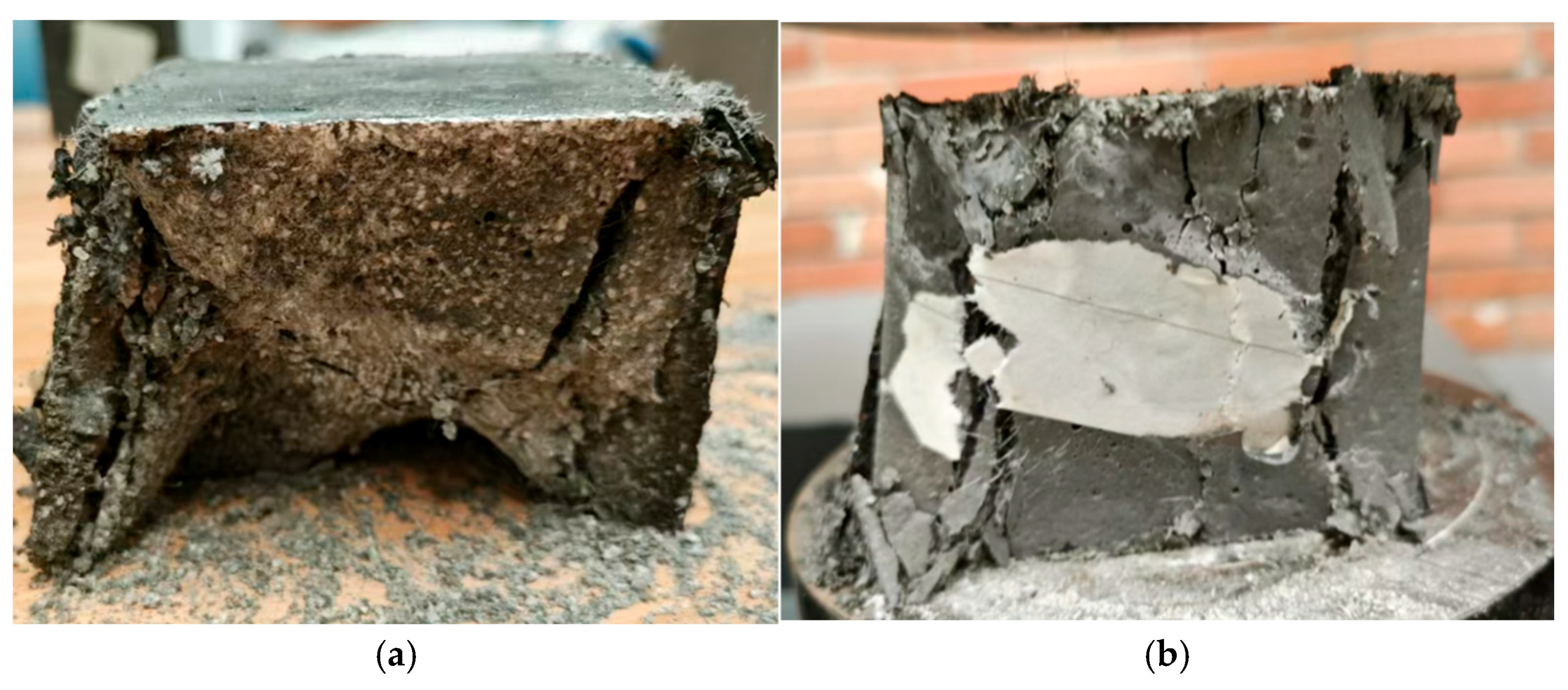
The comparative results of the compressive strength of concrete with different molding methods and curing ages show that the compressive strength of 3D printed specimens is higher than that of traditional cast specimens, and their typical failure modes are shown in
Figure 7, with the zigzag path-printed specimens exhibiting the highest observed strength. Specifically, at the 28-day curing age, the compressive strength of the zigzag path-printed specimens reaches 56.3 MPa, that of the parallel path-printed specimens reaches 54.8 MPa, and that of the traditional cast specimens reaches 51.7 MPa. Compared with the cast specimens, the zigzag path-printed specimens show an 8.9% increase in strength. To systematically evaluate the influence of the printing process,
Table 5 summarizes the strength, average strength, anisotropy coefficient (AC), and strength increase rate compared with cast specimens for the specimens in the three principal material directions (X, Y, Z).
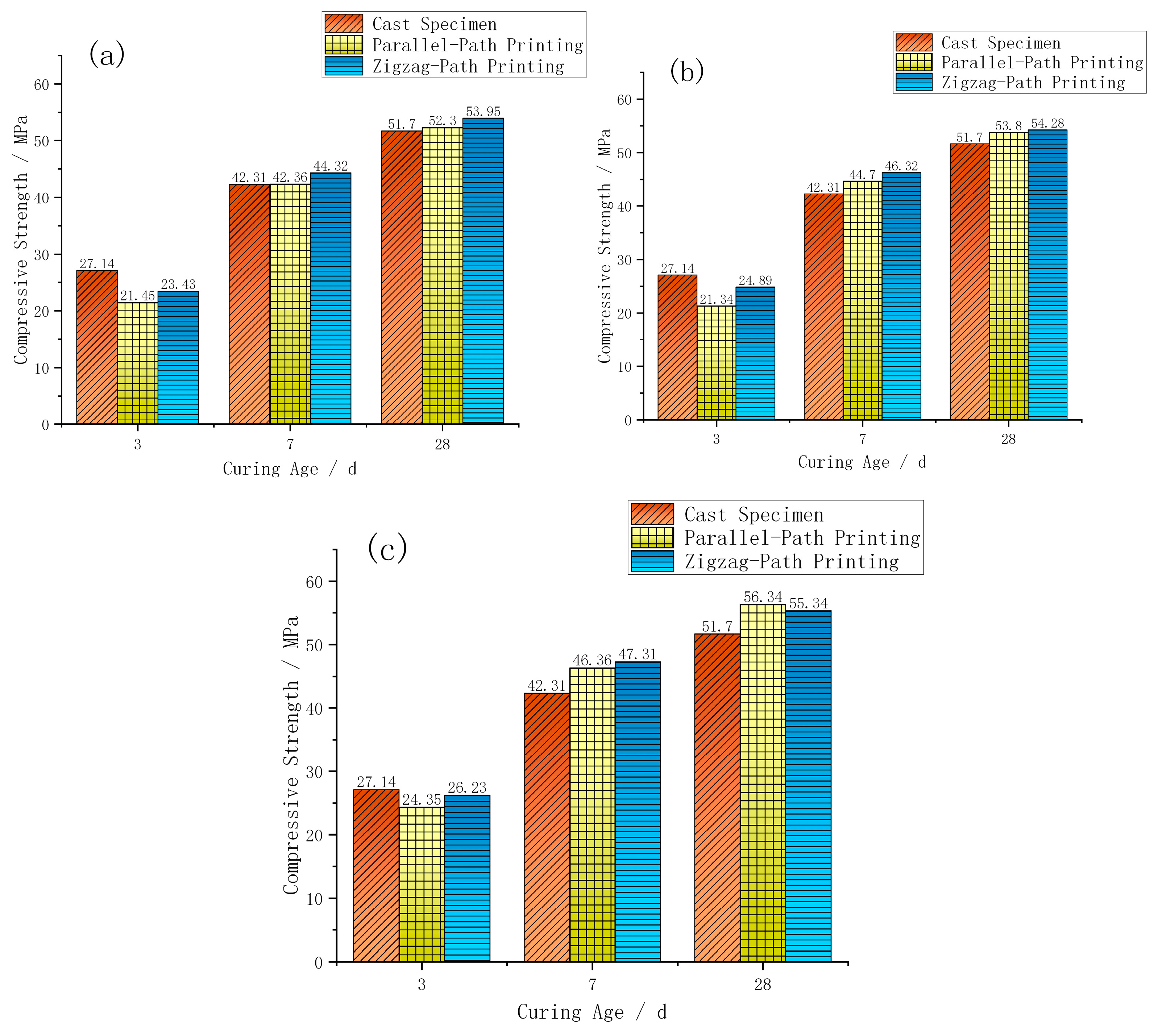
As can be seen from
Figure 8a–c, in terms of anisotropic characteristics, all printed specimens exhibit a certain degree of mechanical anisotropy, with the strength order being Z-direction > X-direction > Y-direction. To more clearly and systematically present the anisotropic performance data,
Table 5 summarizes the compressive strength, calculated average strength, anisotropy coefficient (AC), and strength increase rate relative to cast specimens of specimens with different paths in the three principal directions.
Based on
Table 5, the following findings are obtained:
Analysis indicates that the printed specimens exhibit typical mechanical anisotropic characteristics, following the order of Z-direction > X-direction > Y-direction. The anisotropy coefficient (AC) defined in this study reveals that the value for the sawtooth toolpath (0.023) is considerably lower than that of the parallel toolpath (0.038). Although the calculation basis differs from the architected printing strategy proposed by Zhou et al. [
26], the low anisotropy values achieved through toolpath optimization in this study demonstrate a preliminary exploratory trend that compares favorably to the standardized strength variation rate of 3–5% under ideal printing conditions reported in most literature using the formula:
This suggests the potential effectiveness of the sawtooth toolpath in suppressing mechanical anisotropy, although its statistical significance warrants further verification through future studies with larger sample sizes.
Influence mechanism of loading direction: Anisotropy mainly originates from the layer-by-layer stacking printing process. Under compression, the directions parallel to the printing lamination (X, Y) are more prone to interlayer slip, while the direction perpendicular to the lamination (Z) can more effectively utilize the high density brought by the “compaction effect”, hence the highest strength in the Z-direction. This performance difference caused by the relative relationship between the loading direction (i.e., stress state) and the printing structure orientation is a key factor that must be considered in the structural design of 3D printed concrete.
The superior compressive performance of printed concrete mainly stems from the synergistic effect of the “compaction effect” and path optimization. The “compaction effect” refers to the compression of the paste during extrusion through the nozzle, which significantly reduces the internal porosity (12.5% for printed specimens vs. 18.2% for traditional cast specimens), improves material compactness, and enhances the bonding between aggregates and the cementitious matrix. Meanwhile, the extrusion pressure promotes cement hydration and accelerates the formation of early hydration products, leading to a 12.3% increase in 3-day compressive strength.
In terms of path design, the zigzag path achieves more uniform fiber distribution in the three-dimensional space through staggered printing in the X-Y plane. Compared with the unidirectional fiber arrangement in the parallel path, this effectively reduces mechanical anisotropy. Additionally, the staggered overlapping structure increases the interlayer contact area and mechanical interlocking, minimizing weak interlayer interfaces and further improving the overall compressive performance.
3.3.2. Flexural Strength Comparison
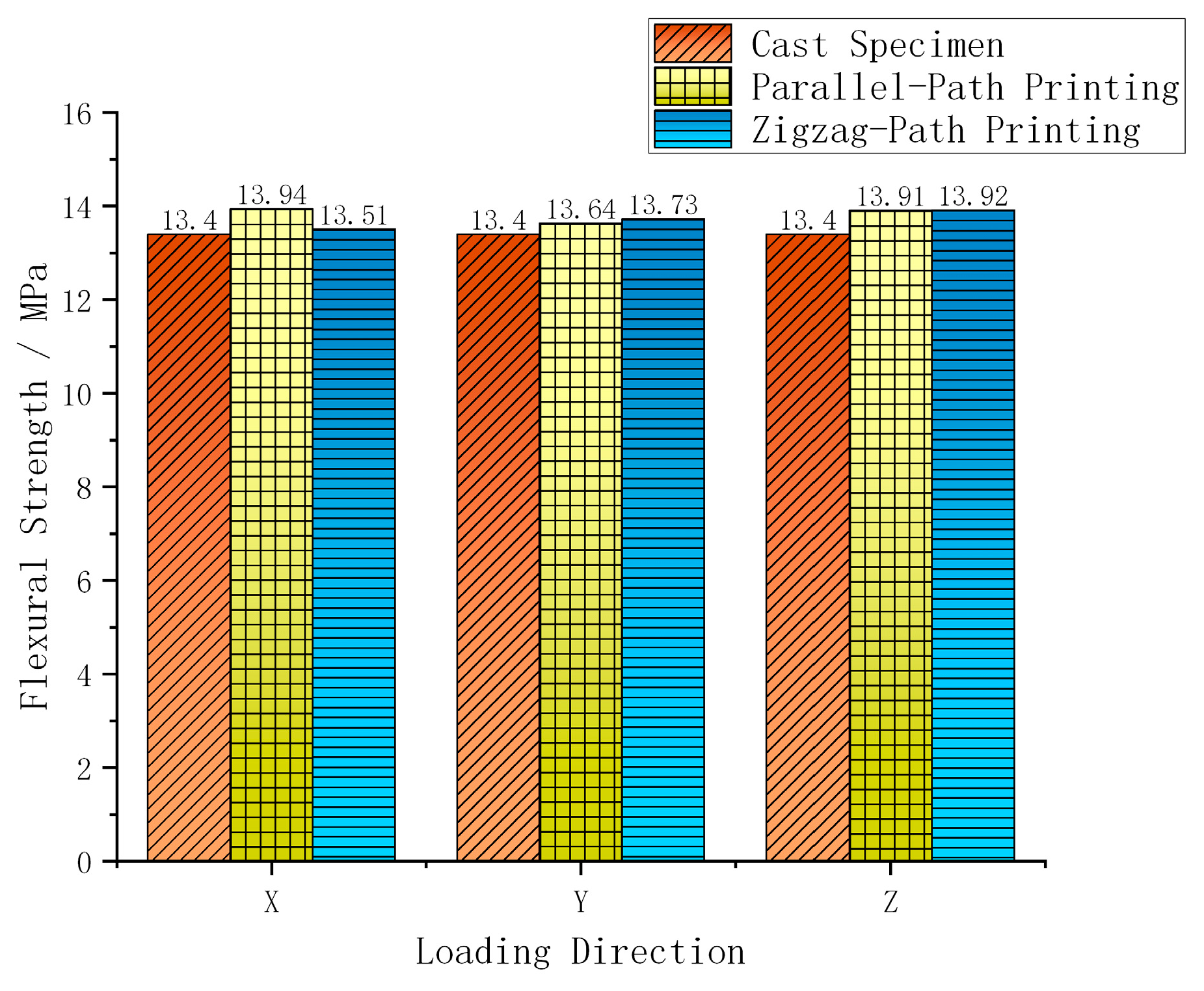
The comparison results of flexural strength follow the same trend as compressive strength: the flexural strength of printed specimens is superior to that of traditional cast specimens. Specifically, at the 28-day curing age, the flexural strength of zigzag path-printed specimens is 7.8 MPa, that of parallel path-printed specimens is 7.5 MPa, and that of traditional cast specimens is 7.2 MPa. Compared with the cast specimens, the zigzag path-printed specimens show an 8.3% increase in flexural strength. This indicates that the “compaction effect” and path optimization of the printing process can effectively enhance the flexural capacity of the material.
As shown in
Figure 9, the anisotropic characteristics are manifested as Z-direction > Y-direction > X-direction. To systematically analyze the anisotropic behavior of flexural strength,
Table 6 details the flexural strength, calculated average strength, anisotropy coefficient (AC), and strength increase rate of specimens with different paths in the three principal directions.
Loading direction and anisotropic characteristics: As shown in
Figure 9, the anisotropy of flexural strength is manifested as Z-direction > Y-direction > X-direction. This law is different from that of compressive strength (Z > X > Y). The calculated AC values (0.066 for the zigzag path and 0.055 for the parallel path) qualitatively indicate that the printing process introduces anisotropy, but its degree is relatively low, indicating that a good printing process can effectively control the directional difference in mechanical properties caused by layer-by-layer stacking.
Influence Mechanism of Loading Modes: Flexural strength is extremely sensitive to interlayer interface properties and fiber distribution. Under flexural loading, cracks typically initiate and propagate from weak interlayer zones on the tension surface.
For the sawtooth toolpath, its staggered overlapping structure provides a larger area for interlayer mechanical interlocking, which is likely the primary reason for achieving the highest absolute strength of 7.8 MPa. For the parallel toolpath, it exhibited a lower numerical inclination compared to the sawtooth path (AC = 0.066), suggesting its potential for anisotropy control in specific directions. Its smaller AC value indicates a lower degree of anisotropy. This may be attributed to the unidirectionally aligned fibers forming more effective stress transfer paths in the direction parallel to the printing path (X-direction), resulting in more balanced performance when withstanding flexural stress in certain directions. Nevertheless, its absolute strength remains lower than that of the sawtooth toolpath.
3.3.3. Comparison of Interlayer Splitting Strength
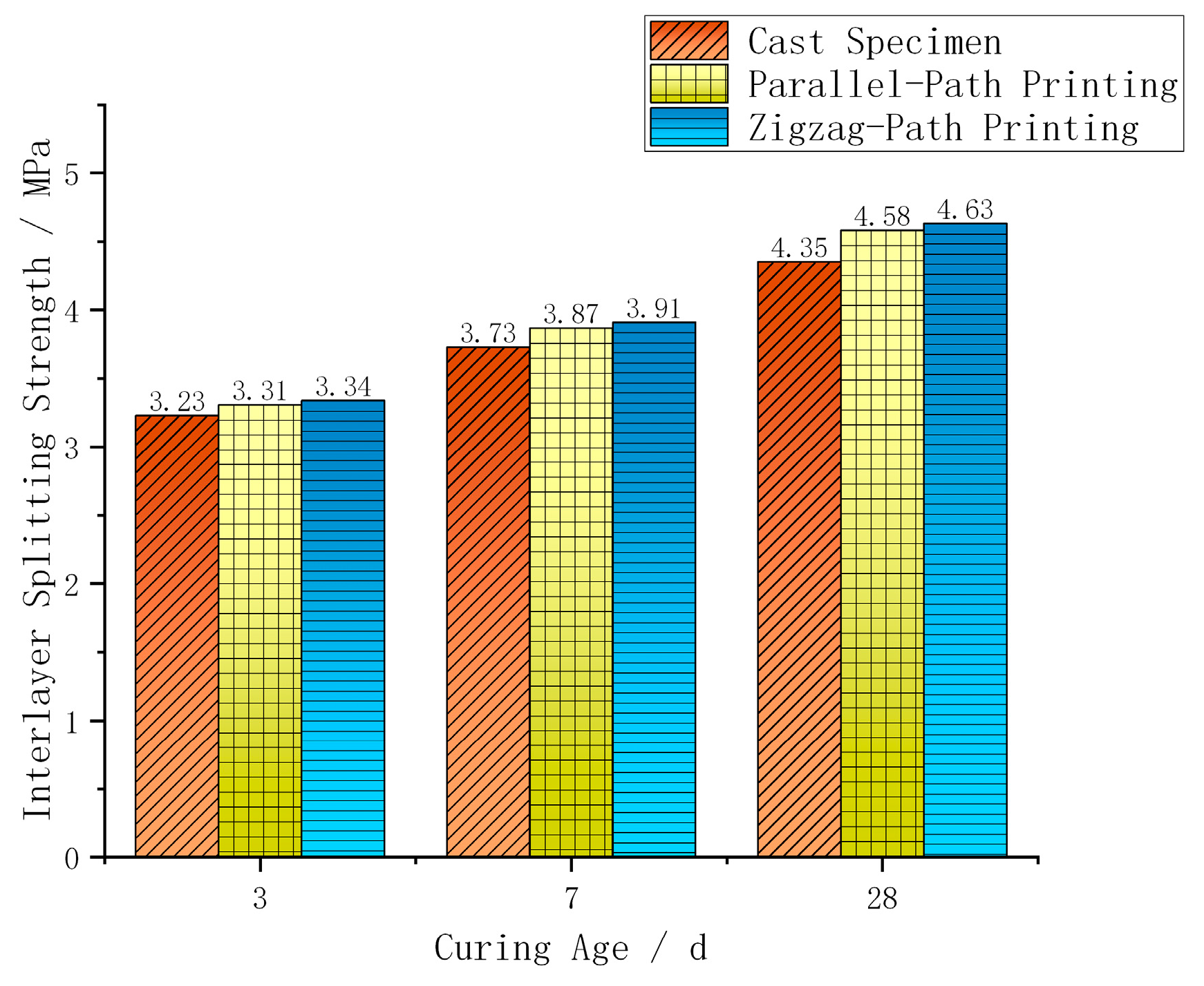
As shown in
Figure 10, the interlayer splitting strength test results indicate that specimens fabricated via both printing paths exhibit excellent interlayer bonding performance, with no obvious weak interlayer interfaces. At the 28-day curing age, the interlayer splitting strength of the zigzag path-printed specimens is 3.5 MPa, and that of the parallel path-printed specimens is 3.2 MPa, showing that the zigzag path is slightly superior to the parallel path.
The performance difference mainly originates from path design: in the zigzag path, the materials of adjacent printed layers overlap in a staggered manner, increasing the interlayer contact area and mechanical interlocking, thereby improving bonding strength. In contrast, the interlayer contact in the parallel path is relatively regular with a smaller overlapping area, resulting in lower interlayer bonding strength. Although traditional cast specimens have no obvious layered interfaces, their overall compactness is lower than that of printed specimens, leading to inferior comprehensive mechanical properties.
Interlayer bonding performance is jointly determined by the “compaction effect” and path design. During printing, the subsequent paste comes into close contact with the previous layer under extrusion pressure, expelling air, reducing pores, and promoting synchronous hydration reactions, forming chemical and mechanical bonding. Additionally, polypropylene fibers are distributed across interlayer interfaces, exerting a bridging effect that effectively inhibits the initiation and propagation of interlayer cracks, enhancing the overall integrity of the structure.
3.4. Comprehensive Discussion
In this study, the mechanical properties of 3D printed concrete with different paths were systematically compared by testing compressive strength, flexural strength, and interlayer splitting strength. Material performance indicators were established: for example, the 3-day compressive strength of 37.8 MPa directly meets the strict requirements of the 3D printing layer-by-layer stacking process for early structural stability, ensuring construction safety; the 28-day compressive strength of 56.3 MPa and interlayer bonding strength of 3.5 MPa provide the necessary long-term load-bearing capacity guarantee for utility tunnel structures to withstand loads such as soil pressure and water pressure. These performance parameters are the foundation for realizing the “constructibility, load-bearing capacity, and durability” of underground utility tunnel structures.
Based on the above results, the following main conclusions can be drawn: printed specimens outperform traditional cast specimens consistently in both compressive and flexural strengths, demonstrating that the 3D printing process can comprehensively enhance the macroscopic mechanical properties of concrete through the synergistic effect of the “compaction effect” and path optimization. More importantly, regarding the critical issue of mechanical anisotropy in 3D printed concrete, this study offers novel insights from two dimensions: “strength” and “path”.
In terms of compressive strength, the sawtooth toolpath (AC = 0.023) exhibited a lower anisotropy tendency compared to the parallel toolpath (AC = 0.038). This is mainly attributed to its staggered printing in the X-Y plane, which effectively improves fiber distribution and enhances integrity by increasing interlayer mechanical interlocking. However, in terms of flexural strength, the parallel path (AC = 0.055) exhibits slightly lower anisotropy than the zigzag path (AC = 0.066). This seemingly contradictory phenomenon reveals that different mechanical properties may have different sensitivities to anisotropy: flexural strength is more sensitive to interlayer bonding, and the consistency of fiber direction in the parallel path may provide a more direct bridging effect in resisting bending stress.
Nevertheless, comprehensively considering absolute strength and anisotropy control ability, the zigzag path (compressive strength of 56.3 MPa, flexural strength of 7.8 MPa) still shows the most significant potential for overall performance in the underground utility tunnel application scenario set in this study. Additionally, at the 28-day curing age, the interlayer splitting strength of the zigzag path-printed specimens is 3.5 MPa, and that of the parallel path-printed specimens is 3.2 MPa, indicating that the zigzag path is slightly superior. This suggests that the printing path can be selectively optimized according to different engineering requirements (e.g., pressure-bearing oriented or flexure-bearing oriented). The material system and performance database established in this study provide an important basis for the personalized path design of subsequent 3D printing of underground structures.
4. Summary and Conclusions
(1) Material Innovation and Optimization: A 3D printed concrete material based on a composite cementitious system of Ordinary Portland Cement (OPC) and rapid-hardening sulphoaluminate cement (R·SAC) has been successfully developed. Through systematic optimization via single-factor and orthogonal experiments, the optimal mix proportion was determined as follows: water–binder ratio of 0.30, R·SAC dosage of 10%, sand–binder ratio of 1.0, mineral admixture content of 20%, and polypropylene fiber volume fraction of 1.0%. This material system possesses both excellent workability (e.g., flowability of 192 mm) and ideal early-age strength (e.g., 3-day compressive strength of 37.8 MPa), with a 28-day compressive strength reaching 56.3 MPa, providing a reliable material foundation for 3D printing construction of underground utility tunnels.
(2) Enhancement of Mechanical Properties: Comparative studies indicate that a 3D printing process can significantly improve the mechanical properties of concrete. Specimens printed using the sawtooth toolpath exhibited the most promising comprehensive performance; their 28-day compressive strength, flexural strength, and interlayer splitting strength are increased by 8.9%, 8.3%, and reach 3.5 MPa, respectively, compared with traditional cast specimens. This proves that the “compaction effect” during the printing process effectively improves material compactness.
(3) Anisotropy Control and Toolpath Optimization: This study reveals the pivotal regulatory role of printing toolpaths in mechanical anisotropy. Compared to the parallel toolpath (compressive AC = 0.038), the sawtooth toolpath, leveraging its staggered stacking characteristics, significantly optimizes the spatial distribution of fibers and enhances interlayer mechanical interlocking, thereby reducing the compressive and flexural anisotropy coefficients to 0.023 and 0.066, respectively. These results are numerically small and exhibit a preliminary exploratory trend superior to the standardized strength variation rates (typically fluctuating between 3% and 5%) commonly observed in 3D printed concrete, as reported by Zhou et al. [
26] and in related reviews. This provides a qualitative reference for toolpath optimization and highlights the potential advantages of the sawtooth toolpath in suppressing structural directional dependency.
(4) Research Limitations and Future Prospects: The conclusions of this study are based on laboratory tests under standard curing conditions. It should be noted that the explanations for the material performance enhancement mechanisms (such as compaction effect and fiber distribution optimization) in this study are mainly indirect inferences based on macroscopic performance test results. Due to limitations in research conditions and length, direct experimental evidence such as microstructural characterization, pore morphology analysis, or fiber orientation observation could not be provided. The verification of these mechanisms will be an important part of subsequent research, including microstructural analysis via Scanning Electron Microscopy (SEM), pore distribution detection via Computed Tomography (CT) scanning, and fiber orientation analysis via image processing. Additionally, the long-term durability of the material in complex actual underground environments (e.g., chemical erosion, wet–dry cycles)—impermeability and carbonation resistance are key factors determining its service life—will also be the focus of future research. Future work will focus on durability verification under actual environments, printing process synergy technology, and structural behavior evaluation of full-scale utility tunnel printing, so as to promote the engineering application of this technology.