


Abstract
The growing need for a cleaner, sustainable environment has increased interest in reusing waste materials that cause pollution. In this research, the mechanical (dry density, compressive, and tensile strength) and also durability properties (sorptivity, rate of water absorption, chloride ion resistance, and resistance to freeze–thaw) of concrete were studied by partially substituting cement with brick powder (BP) and sand with quarry dust (QD). The proportions of brick powder replacement with cement were in the range of 5%, 10%, 15%, and 20% by weight. Likewise, QD was used in the range of 15%, 30%, 45%, and 60% by weight of natural sand. Both materials were used separately as well as simultaneously in concrete. Concrete mixtures were prepared, tested after curing, and then compared with conventional concrete. The water–cement (w/c) ratio was kept constant at 0.55 for all the mixes. According to experimental results, the concrete made with brick powder and quarry dust resulted in improved dry density. After curing for 28 and 56 days, the compressive and splitting tensile strengths increased by substituting cement with brick powder up to 15%. Brick powder showed a higher strength activity index than required according to the standard. Also, compressive and splitting tensile strengths significantly increased by replacing natural sand with quarry dust up to 60% at all curing ages. Combined mixes with partial replacements of cement and sand with brick powder and quarry dust, respectively, also showed improvements in the compressive and splitting tensile strength at all ages. Sorptivity and rate of water absorption decreased with the addition of BP and QD. Moreover, brick powder and quarry dust mixes showed higher resistance to chloride ion penetrability and higher resistance to freeze–thaw as the replacement level increased. Microstructural analysis of hard concrete samples also confirmed the enhanced mechanical strength and durability due to brick powder and quarry dust.
1. Introduction
The fast-paced expansion of megacities and the rising rate of urbanization have greatly increased the demand for construction materials. Experts emphasize that for the construction sector to remain sustainable, it must focus on efficiently reusing waste from both the construction industry itself and other sectors linked to building materials [1,2,3]. If this is not addressed, material shortages could arise in the coming years. Concrete remains the world’s most widely used building material, with cement being its primary component. In 2019, Pakistan was among the leading producers of cement, manufacturing roughly 40,000 metric tonnes of hydraulic cement [4]. However, research by the Portland Cement Association shows that producing each tonne of cement releases between 0.75 and 1 tonne of CO2 [5], while creating 1 kg of clinker consumes around 850 kilocalories of energy [6]. These highlight the importance of reducing cement use by partially or completely replacing it with alternative binders. Numerous studies have explored such substitutions, reporting benefits like reduced energy consumption, lower production costs, and a decrease in pollution caused by cement manufacturing [7,8,9,10,11,12,13]. In Pakistan, approximately 20,000 brick kilns contribute about 1.5% to the national GDP [14], yet they also generate massive amounts of waste. Similarly, demolition and construction activities from masonry structures produce significant quantities of debris. This waste presents two main problems: the need for large landfill areas and the environmental hazards associated with its disposal. Incorporating recycled brick powder as a partial replacement for cement in concrete offers a promising solution, tackling both the environmental burden of cement production and the challenges of waste brick disposal.
Every year, there is a significant rise in the number of construction activities in Pakistan, which in turn results in an increased need for materials. Natural river sand is the major ingredient used as fine aggregates in preparing concrete all around the world and has produced good results. The huge consumption of natural river sand may lead to its depletion in Pakistan. There is a need to find a suitable alternative material that can safely replace the natural sand, either partially or fully, in concrete. In this regard, a by-product produced in crushing plants, quarry dust (QD), can be utilized as a partial substitute for natural sand in concrete. It can lower the load on natural reserves and resources of sand and solve the disposal problem of quarry dust. The crusher owners sell the quarry dust at a very low cost or even give it free of charge. The pozzolanic nature of clay brick powder (BP) makes it a promising option for partially replacing cement in concrete production [15,16,17]. Clay bricks are fired at temperatures between 600 and 1000 °C, a process that alters the structure of their silicates into an amorphous form. This transformed material can react with lime at ambient temperature to produce calcium silicate hydrate [18]. Numerous studies have explored the incorporation of brick powder in concrete. Some have utilized crushed brick as a coarse or fine aggregate [19,20,21,22,23,24,25,26], while others have investigated its use as a cement substitute in mortar and concrete mixes. However, research findings on the mechanical performance and durability of concrete containing brick powder remain inconsistent within the scientific community.
The earliest documented application of crushed bricks in combination with Portland cement dates back to 1860 in Germany [27]. Heidari and Hasanpour [28] conducted experimental work on incorporating waste brick powder into concrete as a cement substitute at levels of up to 40%. Their findings suggested that up to 20% of cement could be replaced with brick powder due to its pozzolanic characteristics, though a slight reduction in strength was noted. Salman and Yousif [29] examined cement replacement with waste brick powder at proportions as high as 50%, concluding that a 10% substitution yielded mechanical properties comparable to the control mix. Khan et al. [30] observed an improvement in both compressive and tensile strength when 15% of the cement was replaced with brick powder, but strength declined beyond that percentage. Ge et al. [31] explored the influence of clay BP content and particle size on concrete performance. Their results indicated that clay BP can replace part of the cement without adversely affecting overall properties. While 10% clay BP reduced workability and early-age strength, later-age strengths matched those of the control, and autogenous shrinkage was notably reduced. Schackow et al. [32] further investigated the incorporation of clay brick waste (CBW) into mortar, replacing Portland cement by up to 40%, to assess its effect on durability. An increase in the compressive strength was observed, attributed to the finer particles of CBW, resulting in a refined pore structure of mortars. Naceri and Hamina [33] explored the feasibility of incorporating waste brick powder as a partial cement replacement in mortar production, using a 20% substitution level. Their experimental findings indicated that up to 10% replacement could be implemented without reducing compressive strength. In a separate investigation, Olofinnade et al. [34] assessed clay brick powder as an environmentally friendly alternative to cement in concrete. X-ray diffraction (XRD) confirmed both the material’s pozzolanic reactivity and its amorphous structure. The inclusion of brick powder was found to decrease the slump of fresh concrete; however, replacing 20% of the cement enhanced both compressive and tensile strength while also producing a more refined pore structure. Ortega et al. [35] studied the long-term effects of waste brick powder on mortar microstructure and performance. Their results showed that mixes containing 20% brick powder exhibited better service properties over time than control mixes without any supplementary materials. Similarly, Letelier et al. [36] examined recycled aggregate concrete with 5%, 10%, and 15% brick powder as cement replacements. They reported that substitution levels up to 15% did not compromise compressive strength.
Research on the replacement of natural sand with quarry dust in mortar and concrete has also been extensive. Quarry dust has been identified as a viable alternative to sand, often improving mechanical performance and elastic modulus. Febin et al. [37] investigated quarry dust powder as a manufactured sand replacement in block production, testing replacement levels from 0% to 60% in 15% increments. They observed compressive strength gains up to 60% replacement and splitting tensile strength improvements up to 15%, with the optimal level identified as 30%. The authors also reported that workability was reduced drastically as the ratio of quarry dust powder in the mix increased. Gupta et al. [38] studied the influence of stone processing dust on concrete strength, durability, and sustainability, substituting fine aggregates up to 100% in 10% steps. Their results highlighted that the fine particle content of stone dust enhanced compressive and flexural strength up to 70% replacement, attributed to its filler effect. The reduction in voids improved bonding between cement paste and aggregates, while water penetration decreased. They concluded that stone dust is suitable for structural concrete at replacement levels between 20% and 60%. The higher water absorption leads to reduced workability. Cheah et al. [39] examined the mechanical and durability properties of mortar incorporating granite quarry dust (GQD) as a sand substitute, testing replacement from 0% to 100% in 20% increments. They reported that bulk density increased with higher GQD content, and both compressive and flexural strengths improved up to 60% replacement. Durability indicators such as porosity, water absorption, and capillary absorption also improved at this level, while drying shrinkage was reduced. Scanning Electron Microscopy (SEM) revealed that mortars with 60% GQD possessed a more refined pore microstructure compared to the control mix without GQD. Based on these findings, GQD was deemed a suitable partial or full replacement for natural sand in concrete.
Shyam et al. [40] experimentally studied and investigated the concrete compressive strength by replacing sand with quarry dust. Different classes of concrete were studied with varying replacements of quarry dust and w/c ratios. Quarry dust exhibited water absorption properties, and the concrete workability was reduced with an increase in the replacement level of quarry dust. It was concluded from this experimental study that sand can be replaced by quarry dust in concrete. The optimum replacement level was 40%, giving higher strength than normal concrete. Strength decreased at the 50% replacement level. Balamurugan and Perumal [41] experimentally examined quarry dust in concrete as a sand replacement by studying different grades of concrete while the slump was kept constant at 60 mm. Quarry dust replacement levels were from 0% to 100% in steps of 10%. Quarry dust’s specific gravity was 2.57, and the fineness modulus was 2.41. The void ratio of quarry dust was 0.42, which was lower than that of the natural sand, i.e., 0.55. Test results revealed that compressive strength attained at 50% substitution of sand by quarry dust was the maximum. Kannan et al. [42] inspected the influence of fine aggregates’ partial substitution with quarry dust in preparing concrete. Quarry dust replacement levels were from 0% to 100% in steps of 10%. It was concluded from the experimental results that quarry dust can partially substitute sand in concrete works. Washed samples (cleaned with water) of quarry dust gave improved results as compared to the unwashed (not cleaned with water) samples. The optimum substitution for natural sand by quarry dust was found to be 60%. Further, in the past multiple studies have considered the use of advance simulation techniques, rehabilitation and repair methods through experiments and laboratory tests for the concrete [43,44,45,46,47,48].
While numerous prior studies have examined the partial replacement of cement with brick powder and the substitution of natural sand with quarry dust independently, limited work has focused on using both materials together in the same concrete mix. Furthermore, based on the authors’ understanding, research on employing brick powder as a cement replacement and quarry dust as a natural sand substitute within Pakistan remains scarce. Consequently, this study was undertaken to investigate the effects of incorporating these materials both individually and in combination, with the goal of determining their optimal replacement levels. The experimental program aimed to assess how brick powder and quarry dust influence concrete’s mechanical properties—such as compressive and splitting tensile strengths—as well as durability characteristics, including water absorption rate, sorptivity, chloride ion penetration, and resistance to freeze–thaw cycles. An additional objective was to lower the overall cost of concrete production while making productive use of waste materials to minimize environmental impact. Also, in the past, different studies have reported the use of waste materials in concrete and assessed the life cycle of construction waste on human health [49,50,51,52,53,54,55,56].
This study introduces a groundbreaking approach to sustainable concrete production by incorporating waste brick powder (BP) as a binder and quarry dust (QD) as a substitute for sand. It uniquely explores the simultaneous partial replacement of both cement and sand, providing a thorough assessment of mechanical and durability properties. Results indicate that BP improves the strength activity index, proving its viability as an alternative to conventional materials. By recycling these waste products, the research contributes to waste reduction, minimizing construction and demolition debris in landfills and mitigating the over-extraction of natural resources like river sand. Overall, this study advocates for sustainable construction practices, demonstrating that high-performance concrete can be achieved using eco-friendly materials, thereby lowering the carbon footprint and informing policies for a circular economy in the building sector. This study’s practical contributions are substantial, addressing both environmental sustainability and concrete performance. By demonstrating that waste materials like brick powder and quarry dust can effectively replace traditional cement and sand, the research offers a viable method for reducing construction waste and resource extraction. These findings provide concrete producers with alternative materials that enhance mechanical and durability properties, potentially lowering production costs and environmental impacts. Furthermore, this study supports the development of eco-friendly construction practices, contributing to policy frameworks that advocate for circular economy principles in the building industry and promoting the use of sustainable materials in infrastructure development.
2. Methods and Materials
2.1. Materials
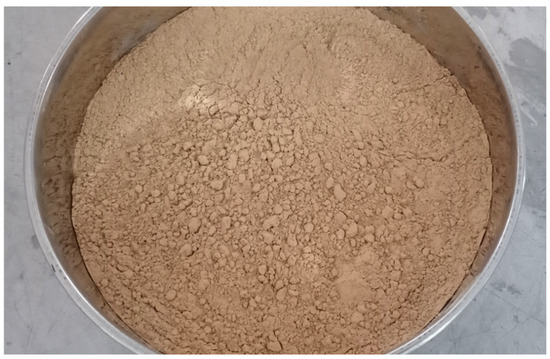
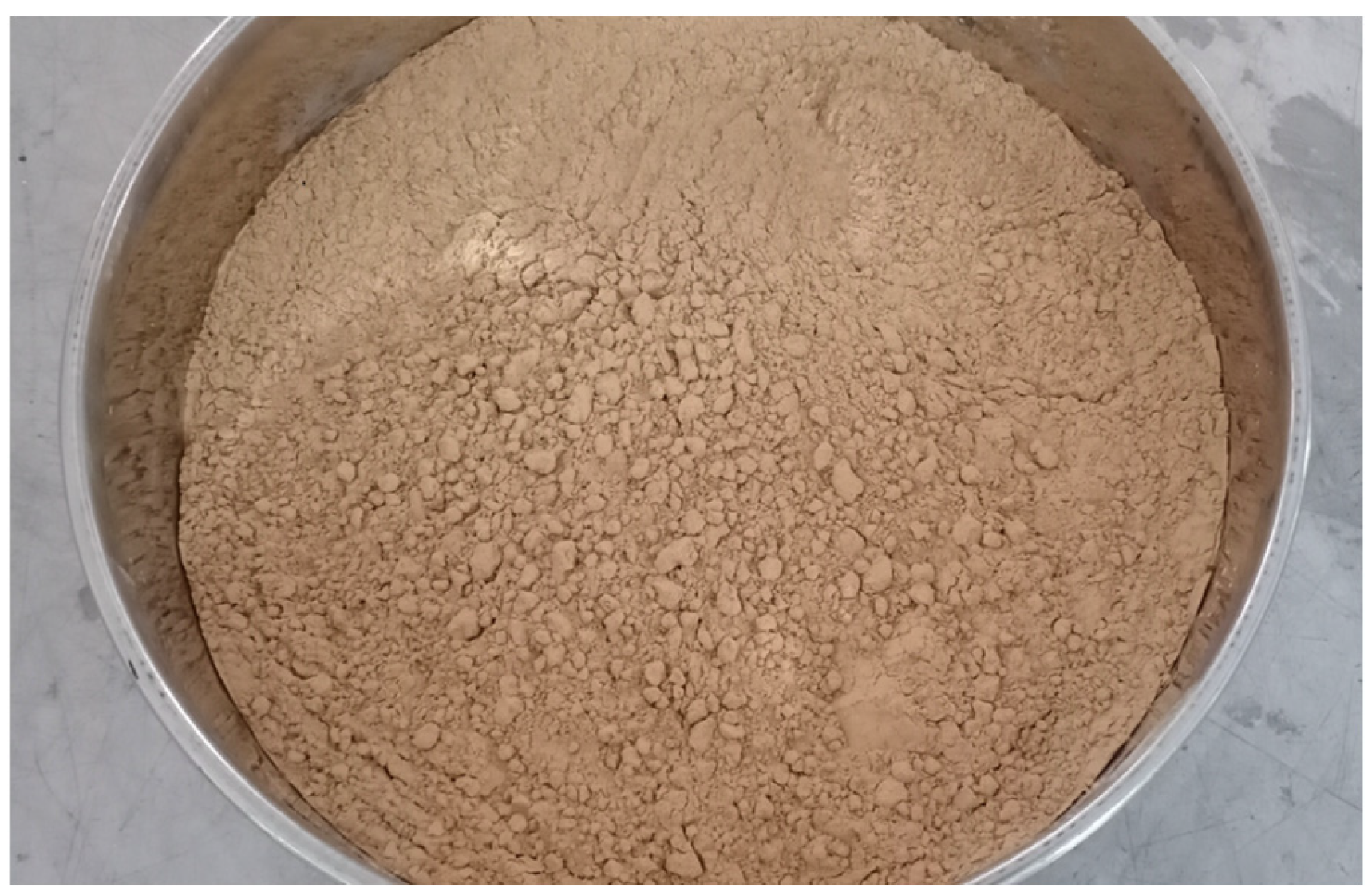
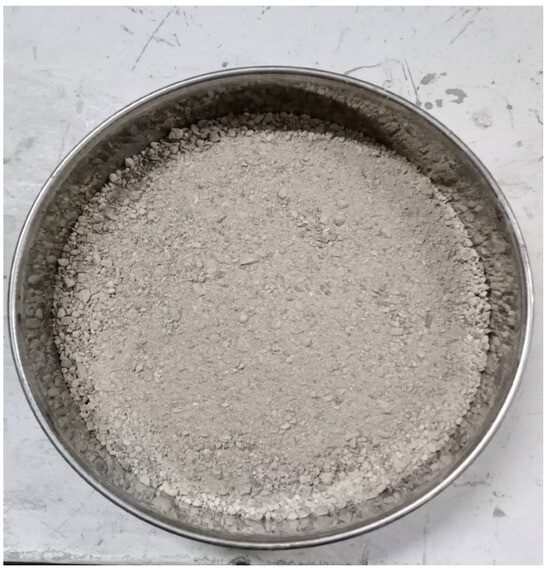
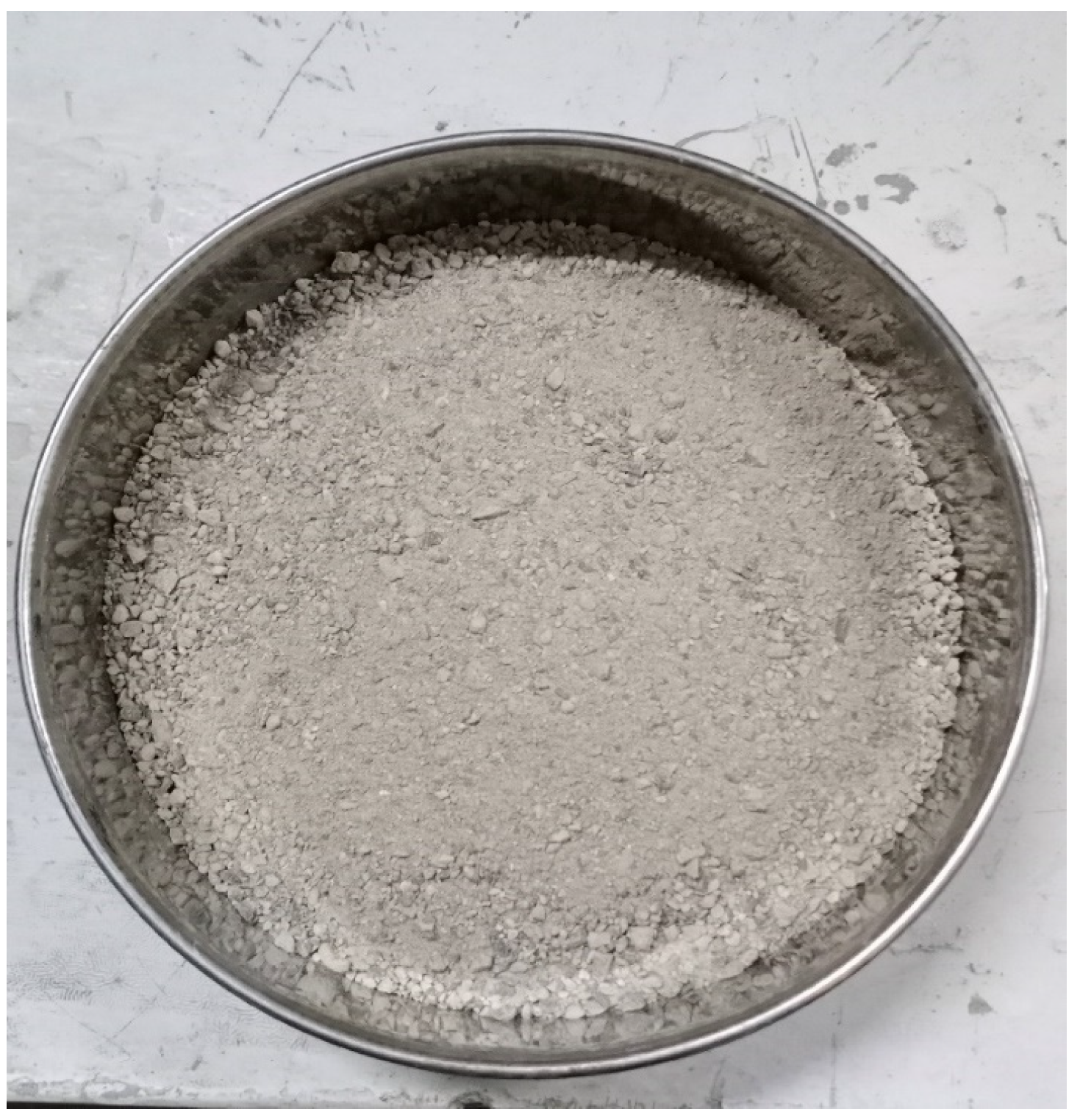
In this research, Ordinary Portland Cement (OPC) Type 1, meeting the specifications of ASTM C150 [57], was employed, with a measured specific gravity of 3.14. The brick powder (BP), illustrated in Figure 1, was sourced from bricks obtained from a nearby kiln. Initially, the bricks were manually broken with a hammer and then ground into powder using a Los Angeles abrasion machine. After sieving, only particles smaller than 75 microns were retained for mix preparation. The BP had a specific gravity of 2.80. Table 1 presents the physical and chemical properties of both cement and BP. Chemical analysis confirmed that the brick powder met the composition criteria for natural pozzolans as defined in ASTM C618 [58]. The Blaine fineness values in Table 1 reveal that BP possesses a greater surface area than cement, consistent with earlier findings [39]. Fine and coarse aggregates were obtained from a local quarry and graded according to ASTM C136 [59]. The physical properties of fine and coarse aggregates, as well as quarry dust, are given in Table 2. The grading of aggregates was carried out to satisfy the requirements of ASTM C33 [60]. Quarry dust was taken from a local crushing plant in Margalla, as shown in Figure 2. Tap water available in the laboratory was used for mix preparation and curing of samples.
Figure 1.
Brick powder sample.
Table 1.
Physical and chemical properties of cement and brick powder.
Table 2.
Physical properties of aggregates (fine and coarse) and quarry dust.
Figure 2.
Sample of quarry dust.
2.2. Mix Proportioning and Sample Preparation
In this research, an experimental program was carried out to examine the mechanical performance—specifically compressive and tensile strength—and the durability aspects, including sorptivity, water absorption rate, chloride ion penetration resistance, and freeze–thaw resistance, of concrete incorporating varying amounts of brick powder (BP) as a partial cement replacement and quarry dust (QD) as a partial sand replacement. A control concrete mix (CC) without any substitutions was also produced for comparison. All mixes were prepared using a constant water-to-cement (w/c) ratio of 0.55. The control mix was proportioned to achieve a target compressive strength of 25 MPa at 28 days of curing, in accordance with ACI 211 guidelines [61]. To ensure adequate workability, a superplasticizer (Sika Viscocrete-3110 obtained from Sika Pakistan (Pvt.) Ltd., Lahore, 54792, Pakistan) was added at a maximum dosage of 0.4% of the binder weight. In the first series of mixes, cement was substituted by BP in four different proportions, i.e., 5%, 10%, 15%, and 20% (samples were named BP5, BP10, BP15, and BP20, respectively), while natural sand was not replaced with QD. In the second series of mixes, natural sand was replaced with quarry dust in four different proportions, i.e., 15%, 30%, 45%, and 60% (samples were named QD15, QD30, QD45, and QD60, respectively), while the cement was not replaced with BP. In the last series of mixes, both cement and sand were simultaneously replaced by brick powder and quarry dust, respectively. The replacement levels of both materials in combined mixes were selected based on the center and high levels of both materials. Different replacement ratios were selected following previous studies [37,38,39]. Further, replacing traditional cement and sand with these alternatives not only enhances the mechanical and durability properties of concrete but also promotes recycling and waste management. Additionally, utilizing locally sourced materials can lower transportation emissions and costs. Overall, incorporating brick powder and quarry dust contributes to a circular economy, fostering eco-friendly building solutions while addressing the pressing issue of construction waste. Those samples were named BP10QD30, BP10QD60, BP20QD30, and BP20QD60. The BP10QD30 mix means 10% BP and 30% QD in the mix, and the same applies to the remaining combined mixes. The concrete mixes for various series are displayed in Table 3. The procedure followed for preparing all the specimens was similar. The samples were prepared under laboratory conditions, demolded after 24 h, and kept in water for curing under the standard conditions [49]. After the completion of the curing period, the specimens were subjected to different tests in the laboratory.
Table 3.
Concrete mix design and quantities for different series of mixes.
2.3. Testing Procedures and Setup
Different tests were performed on samples of different mixes to observe and investigate their mechanical and durability properties. For each test and parameter, three samples were tested, and average results were reported. The details of the tests performed are given below.
2.3.1. Material Analysis
For mineralogical analysis, the dry BP was examined using XRD. The natural sand and quarry dust used were chemically analyzed through an XRF spectrometer for the determination of their chemical composition. The X-ray diffraction (XRD) analysis was conducted using a Bruker D8 Advance diffractometer, equipped with a Cu Kα radiation source (λ = 1.5406 Å). The measurement range was set from 5° to 70° 2θ, allowing for a comprehensive analysis of the mineral phases present. A step size of 0.02° was employed to enhance resolution, and the scan speed was maintained at 0.5°/min to optimize data acquisition. Samples were carefully prepared to ensure a flat surface, minimizing preferred orientation effects. The operating conditions were optimized for peak intensity and clarity, facilitating accurate identification of mineralogical components.
2.3.2. Test Method for Workability
The slump test, as per ASTM C143 [62], is a widely used method for assessing the workability of fresh concrete. It involves filling a conical mold with concrete, then lifting the mold vertically, allowing the concrete to settle. The vertical distance the concrete slumps is measured, providing an indication of its consistency and workability. A higher slump indicates greater workability, while a lower slump suggests stiffer concrete. This test helps ensure that the concrete mix is suitable for its intended application and facilitates proper placement.
2.3.3. Hardened/Dry Density
The dry density of samples was also measured after 56 days of curing. Cylindrical samples of size 100 mm × 200 mm were weighed after drying, and density was computed by dividing the weight of the sample by volume of sample.
2.3.4. Test Method for Compressive Strength
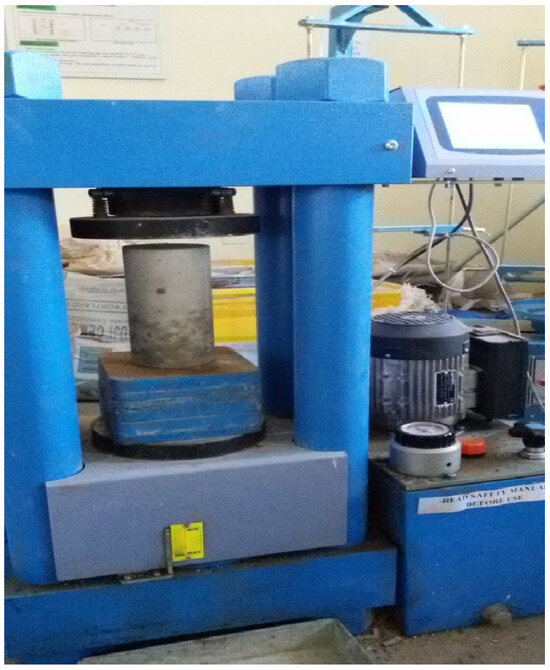
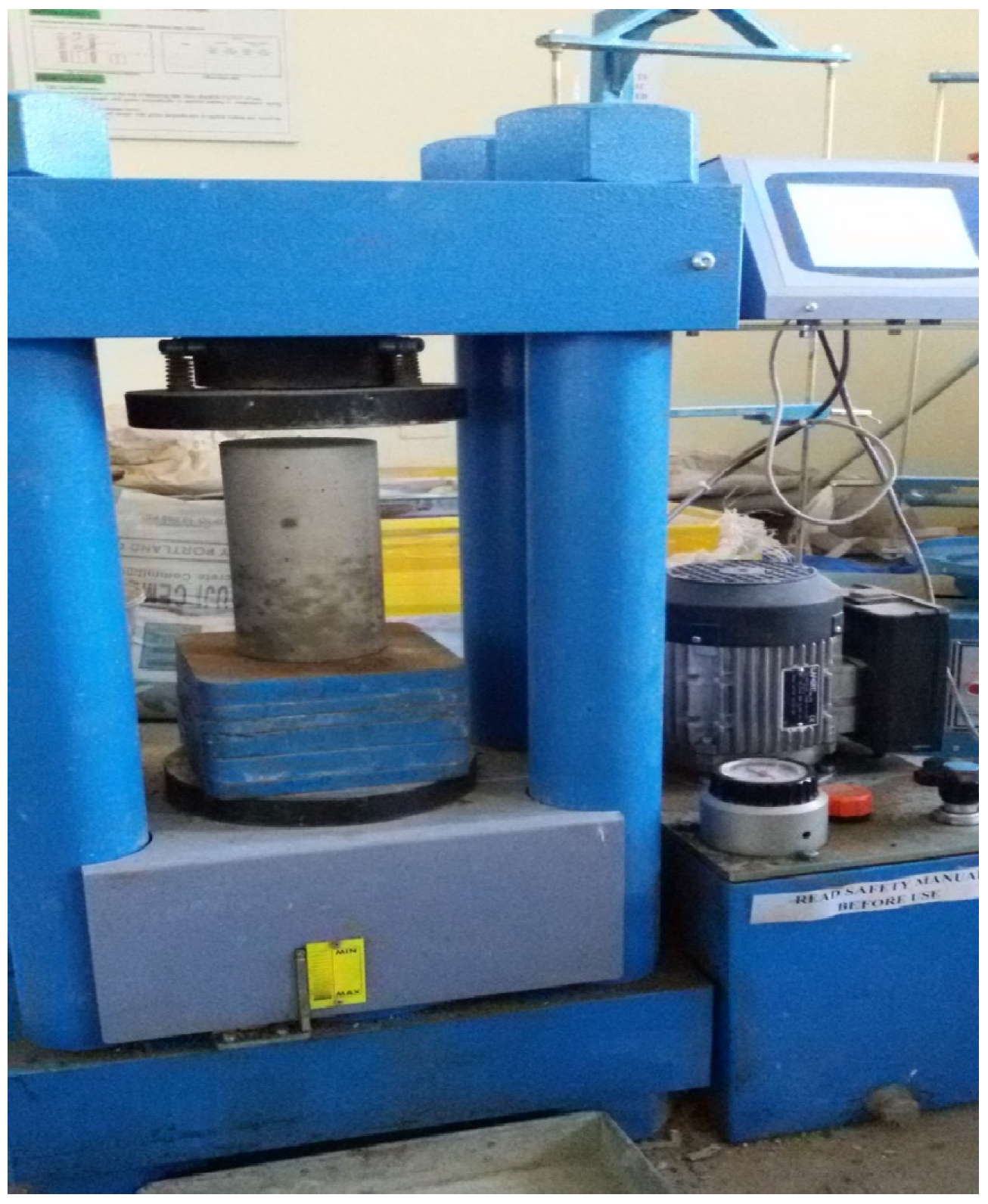
Compressive strength is widely regarded as the most critical property of hardened concrete. In this study, compressive strength tests were conducted at three curing ages: 3, 28, and 56 days. Cylindrical specimens measuring 100 × 200 mm were tested using a compression testing machine with a capacity of 2000 kN, following the procedures outlined in ASTM C39 [63]. During testing, a loading rate of 0.20 MPa/s was maintained. The experimental setup is illustrated in Figure 3.
Figure 3.
Compressive strength test of samples.
2.3.5. Test Method for Strength Activity Index (SAI)
The strength activity index is a measure of strength development of a natural pozzolan when used in concrete with hydraulic cement. The strength activity index (pozzolanic activity) of brick powder was determined based on the compressive strength of mortar cubes according to ASTM C311 [64]. According to ASTM C618 [58], the strength activity index of the natural pozzolan should be a minimum of 75% of the control mix at 7 or 28 days. Mortar cubes were cast for the control mix and brick powder mix, with brick powder as 20% replacement of cement. Cubes were then tested for compressive strength after 7 and 28 days of curing according to ASTM C109 [65]. The strength activity index was calculated using Equation (1):
where
A = average compressive strength of the test mix (BP mix), MPa, and
B = average compressive strength of the control mix, MPa.
2.3.6. Test Method for Splitting Tensile Strength
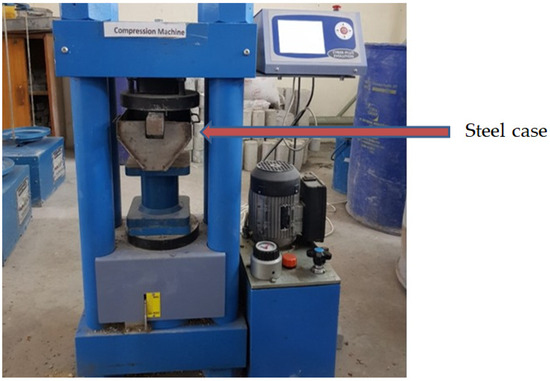
As concrete is strong in compression but very weak in tension, it is thus critical to assess the concrete tensile strength to avoid cracking in tension zones. Splitting tensile strength is an indirect process for assessing the tensile strength of the concrete. The curing durations considered for the tensile strength test were 3, 28, and 56 days. This test was conducted on the cylindrical samples of 100 mm × 200 mm following ASTM C496 [66]. The loading rate during the test was maintained at 0.25 MPa/s. The test equipment and setup are shown in Figure 4.
Figure 4.
Splitting tensile strength test setup.
2.3.7. Sorptivity Test
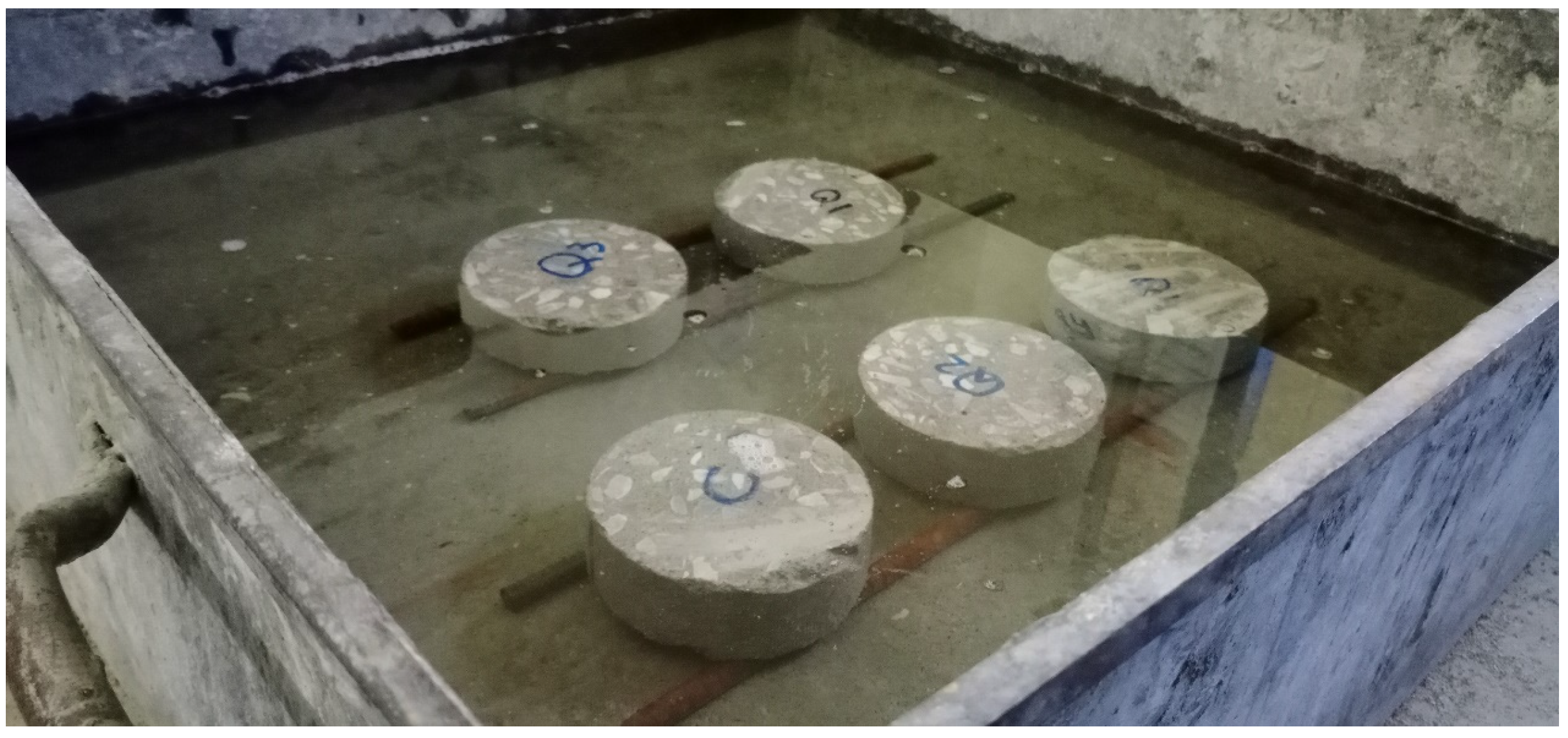
In this test, the amount of water absorbed by a hardened and dried concrete sample was measured after submersion for 30 min. Sorptivity testing was carried out after 56 days of curing, following ASTM C1757 [67]. Disc-shaped specimens with a diameter of 100 mm and thickness of 50 mm were extracted from the cylindrical samples. These specimens were first oven-dried at 50 °C until a constant mass was achieved, and this mass was recorded as the oven-dried weight. The samples were then placed on a support rack in an immersion container with a flat horizontal surface. Water temperature was maintained at 23 ± 3 °C, and the water level was set so that 25 ± 10 mm of water covered the top of each sample. After 30 min of immersion, the specimens were removed from the container for further analysis. Samples were dried using a damp absorbent cloth rapidly so that their surface appeared damp. The mass of the samples was determined immediately and recorded as the mass after immersion. The test setup is shown in Figure 5. Sorptivity was calculated in millimeters (mm) using Equation (2), which is given as follows:
where
W = sample’s mass after absorption in grams,
D = oven-dried mass of sample in grams, and
A = sample’s surface area in square millimeters.
sd = sample diameter in mm = 100
sh = sample height in mm = 50, and
d = density of water in grams per cubic millimeter = 0.001 g/mm3.
Figure 5.
Sorptivity test of samples.
2.3.8. Test Method for Rate of Water Absorption Test
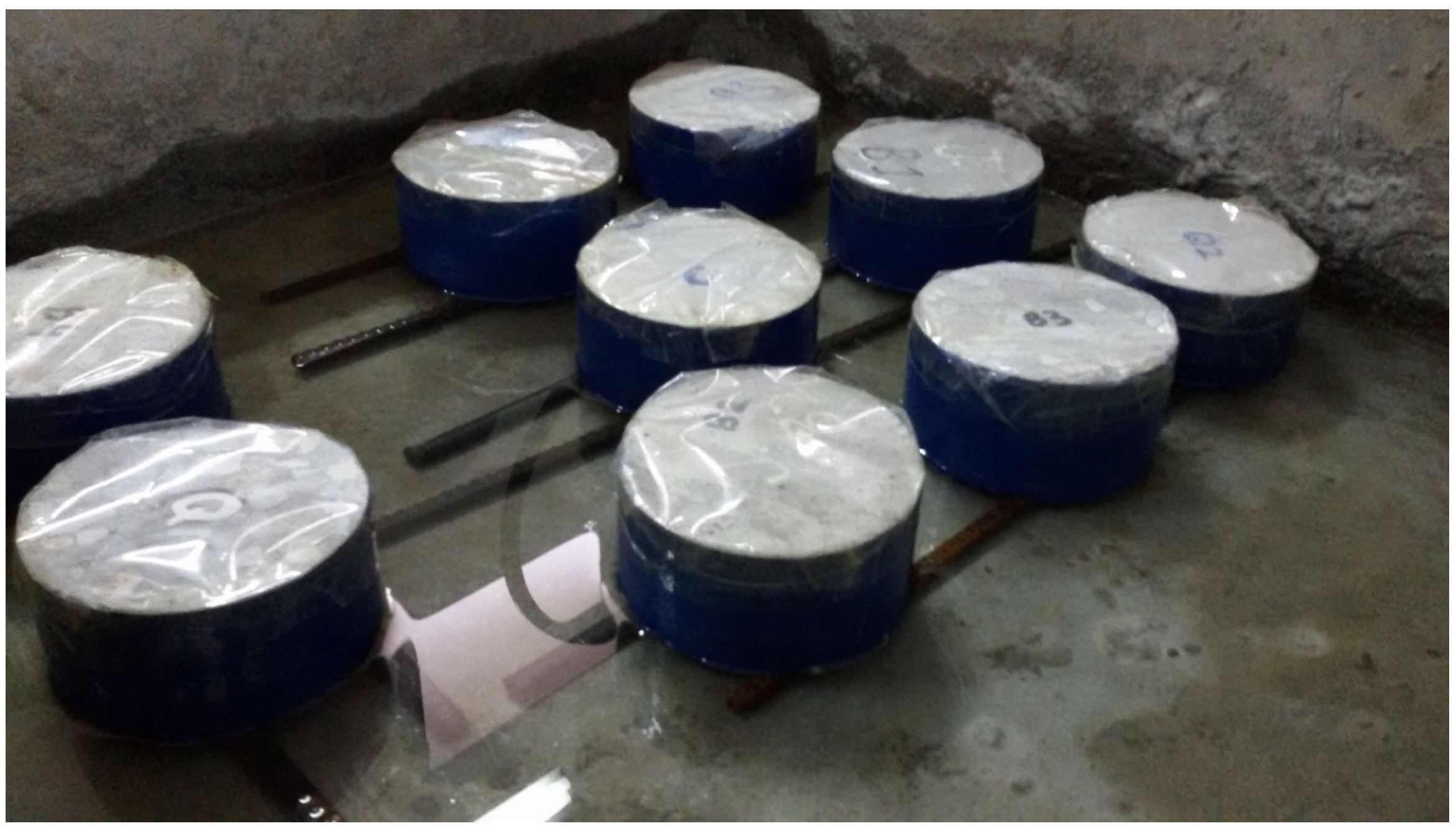
The movement of liquids through interconnected pores is a key factor influencing the durability of concrete. In this study, the water absorption rate was determined by measuring the increase in specimen mass over time, with only one face of the sample exposed to water. The test was conducted after 56 days of curing. Disc-shaped specimens, 100 mm in diameter and 50 mm thick, were cut from cast cylinders, and the procedure followed ASTM C1585 [68]. Prior to testing, the specimens were conditioned, and the side surfaces were coated with a waterproofing material to prevent unwanted absorption. The top surface, which was not in contact with water, was sealed with a plastic sheet. The initial mass of each sealed specimen was recorded for absorption calculations.
Support devices were placed at the bottom of a shallow pan, and water was added to maintain a level 1–3 mm above the top of the supports. Each specimen was placed with its test surface facing downward on the support device, and timing began immediately. Mass readings were taken at specified intervals for up to 8 days after initial water contact, as per the standard. At each interval, specimens were removed from the water, the stopwatch was paused, and excess surface water was blotted away with a cloth before weighing. They were then returned to the supports, and timing resumed. The test arrangement is illustrated in Figure 6. Water absorption, I, was expressed in millimeters (mm) and calculated using Equation (3).
where
I = the absorption,
mt = the change in sample mass in grams, at time t,
a = the exposed area of the sample, in mm2, and
d = the density of water = 0.001 g/mm3.
Figure 6.
Typicaly display of rate of water absorption test.
2.3.9. Test Method for Rapid Chloride Ion Penetration Test
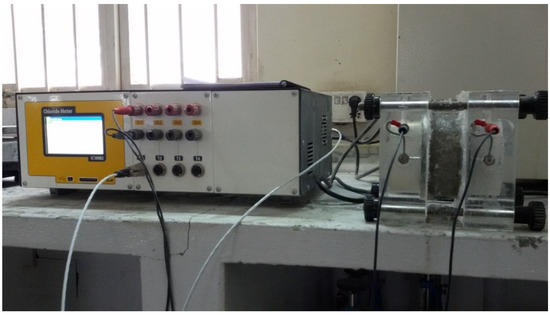
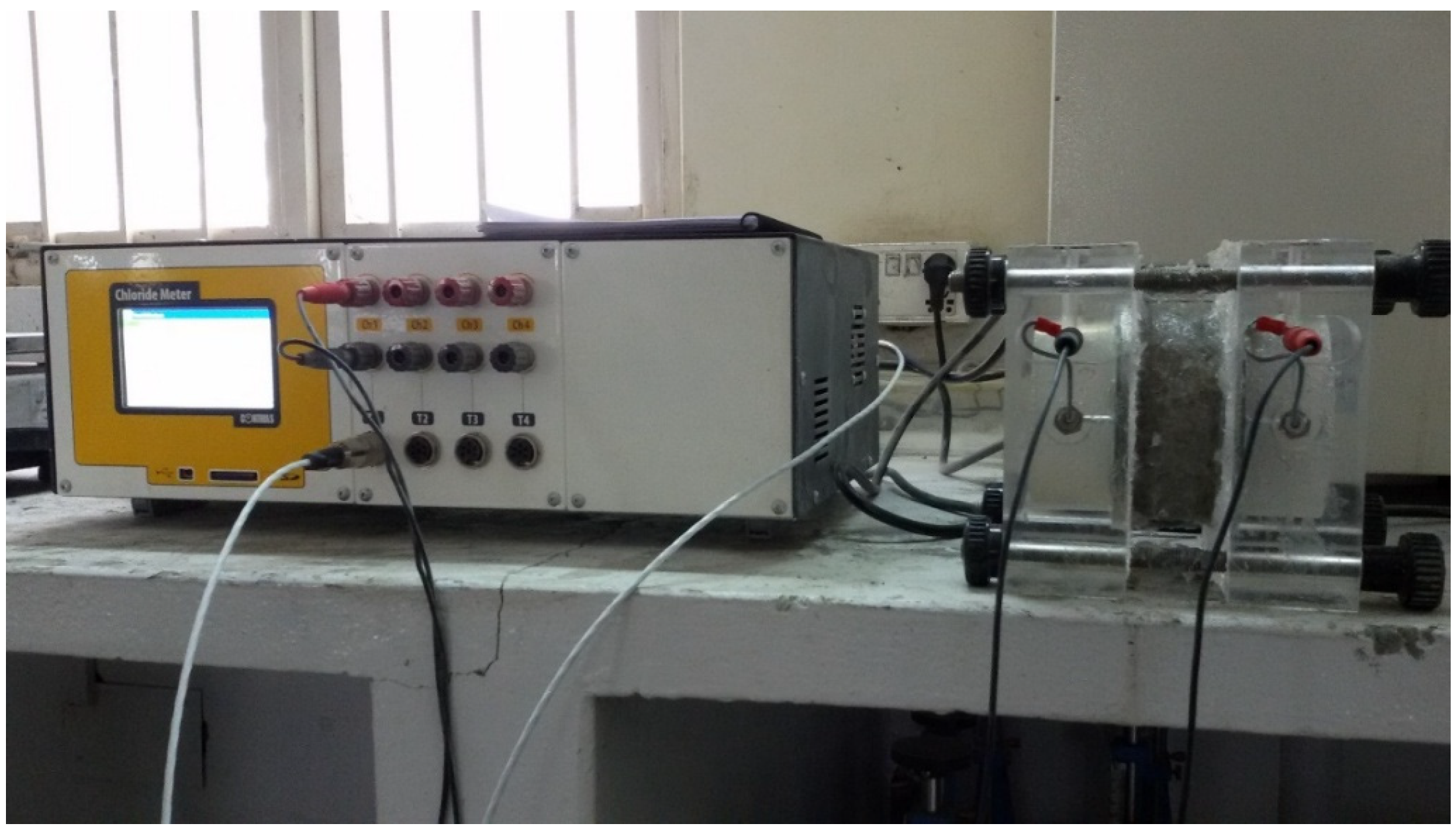
Chloride ion penetration is a major cause of corrosion in reinforced cement concrete (RCC) structures, significantly reducing their durability. The rapid chloride ion penetrability test provides a quick assessment of concrete’s resistance to such deterioration by measuring its electrical conductivity. In this study, after 56 days of curing, disc-shaped specimens measuring 100 mm in diameter and 50 mm in thickness were tested for chloride ion resistance in accordance with ASTM C1202 [69]. A chloride ion penetrometer was used for the assessment, with each specimen exposed to a constant voltage of 60 V for a duration of six hours. During testing, one face of the specimen was in contact with a sodium chloride (NaCl) solution, while the opposite face was exposed to a sodium hydroxide (NaOH) solution. The testing arrangement and apparatus are shown in Figure 7.
Figure 7.
Chloride ion meter and test setup.
2.3.10. Resistance to Freeze–Thaw Test
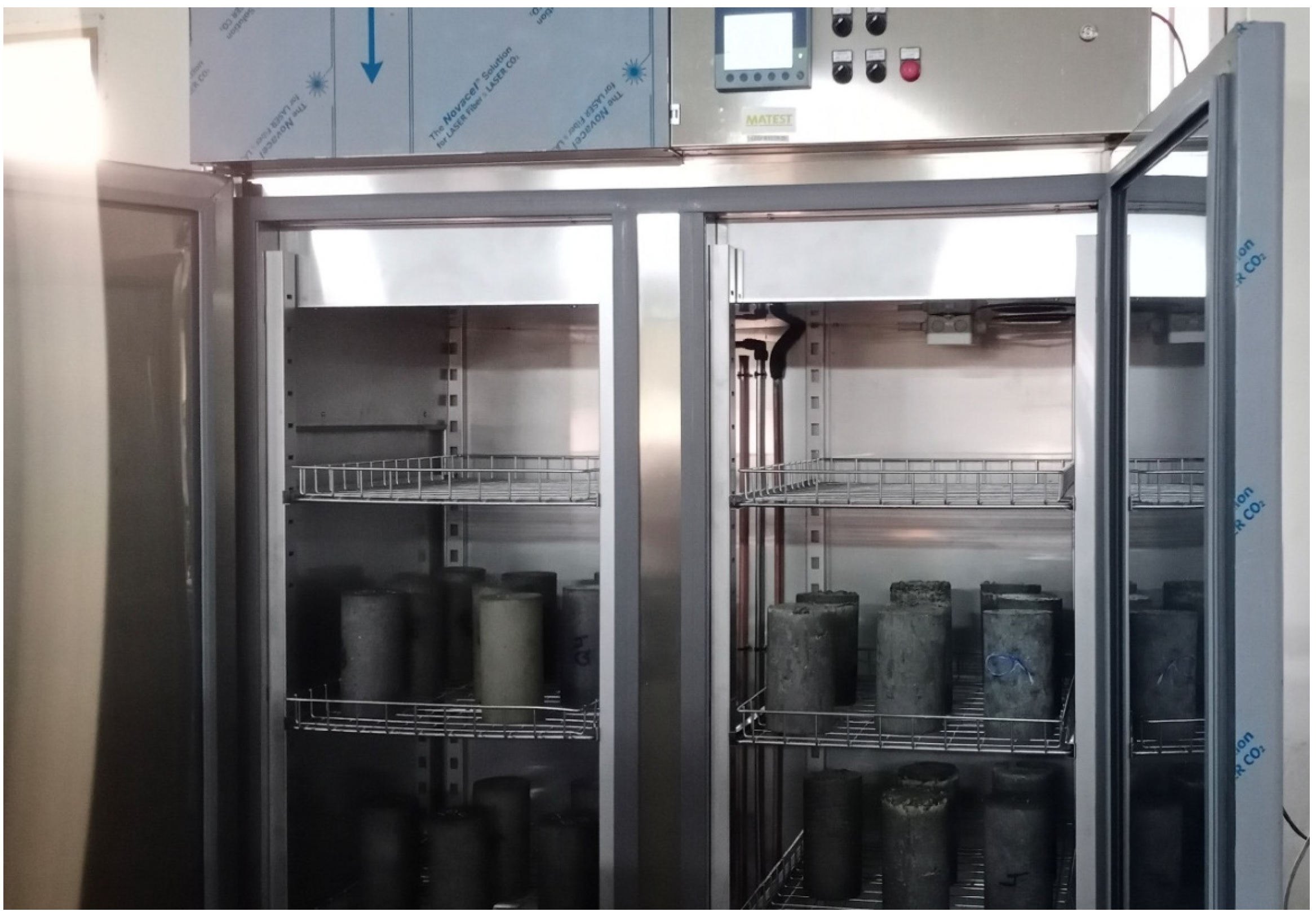
Concrete structures need to possess adequate durability to withstand freeze–thaw effects. The resistance to freezing and thawing is a critical property that must be evaluated, particularly when incorporating new materials in concrete. In this study, the freeze–thaw test was performed on 100 mm cube specimens after 56 days of curing, conducted using a thermal regime inspired by ASTM C666 Procedure B (freezing in air and thawing in water) [70]. A 24 h cycle was employed to ensure thorough thermal penetration—a methodology adapted to local environmental conditions and equipment availability and consistent with previous durability assessment on modified concrete [71]. The test measured concrete scaling caused by freeze–thaw cycles, and mass loss was expressed as a percentage. The procedure involved freezing the samples in an air chamber and subsequently thawing them in water. The freezing chamber used is shown in Figure 8. Prior to testing, the mass of each sample was recorded. Each freezing cycle lasted 16 h, with temperatures ranging from 20 °C to −15 °C. After freezing, samples were placed in a water bath for an 8 h thawing cycle, maintaining the water temperature at 20 ± 2 °C. After completing 28 freeze–thaw cycles, the percentage mass loss of the samples was calculated using Equation (4).
where
P is the percentage mass loss,
mo is the air-dry mass of the sample in grams, and
ms,n is the cumulative mass of the dried scaled material.
Figure 8.
Freezing chamber used for the freeze–thaw test.
3. Experimental Results
3.1. Analysis of Materials
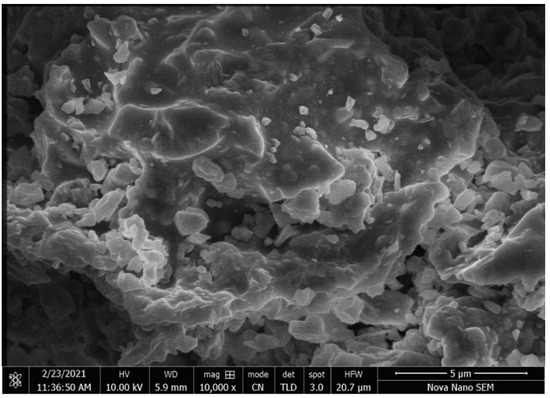
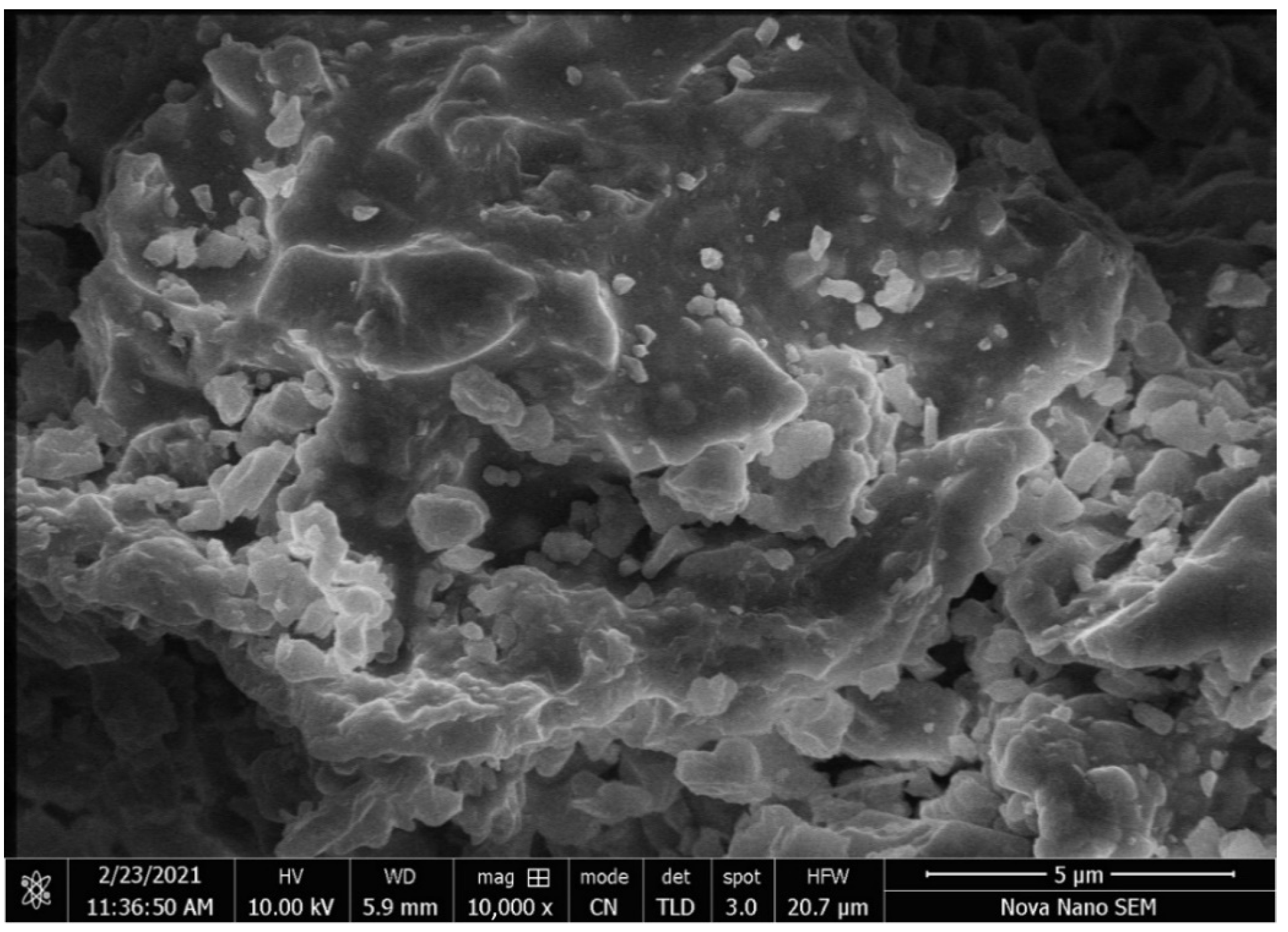
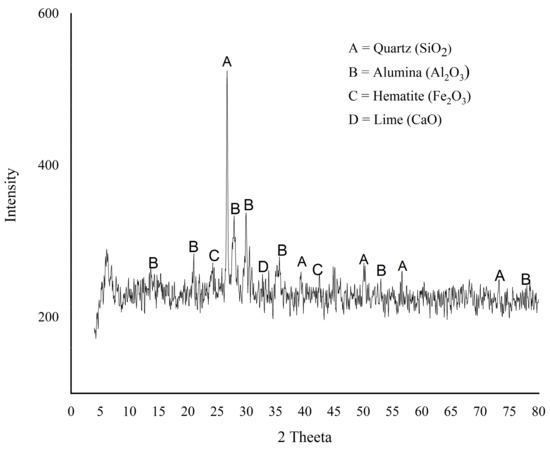
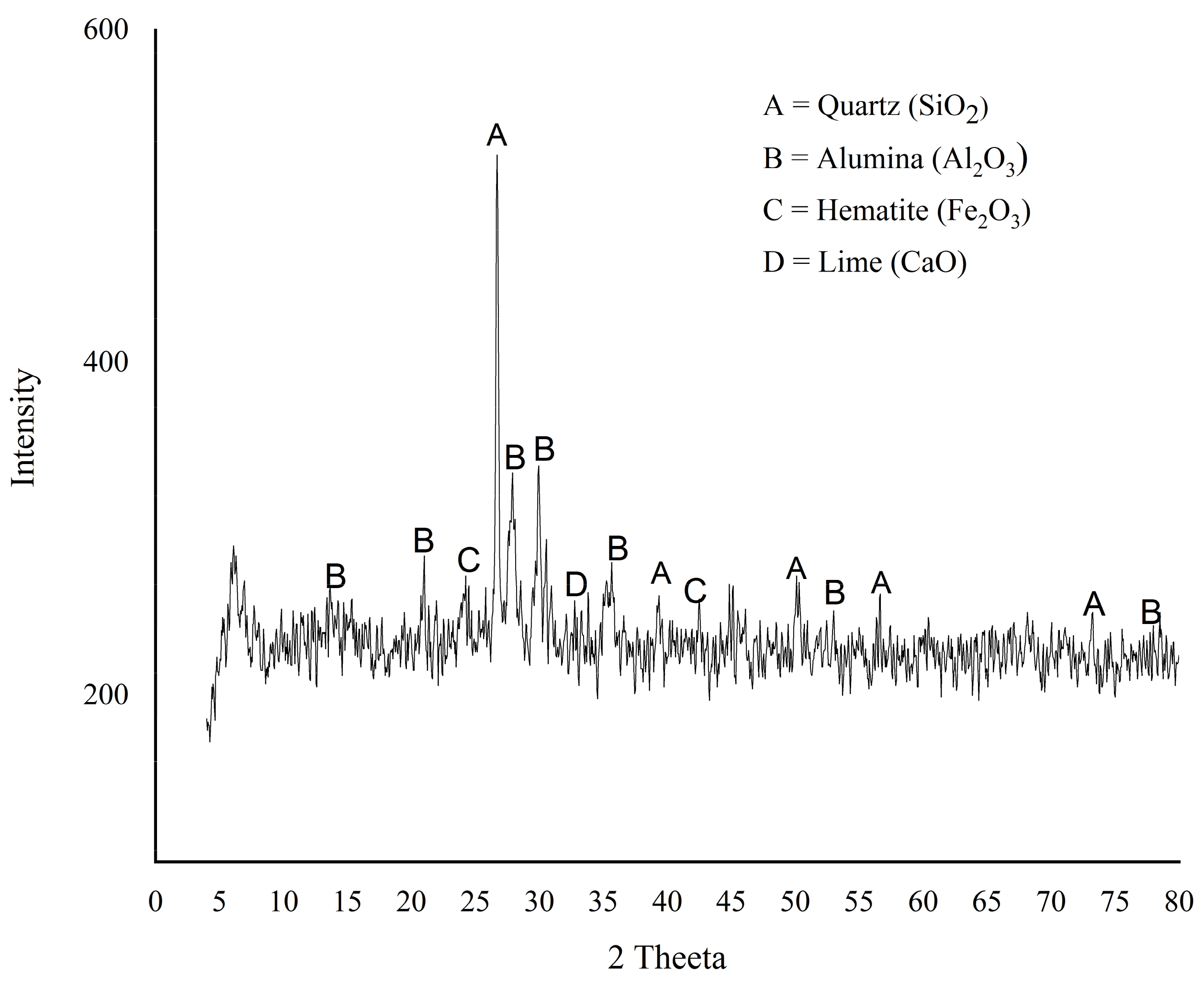
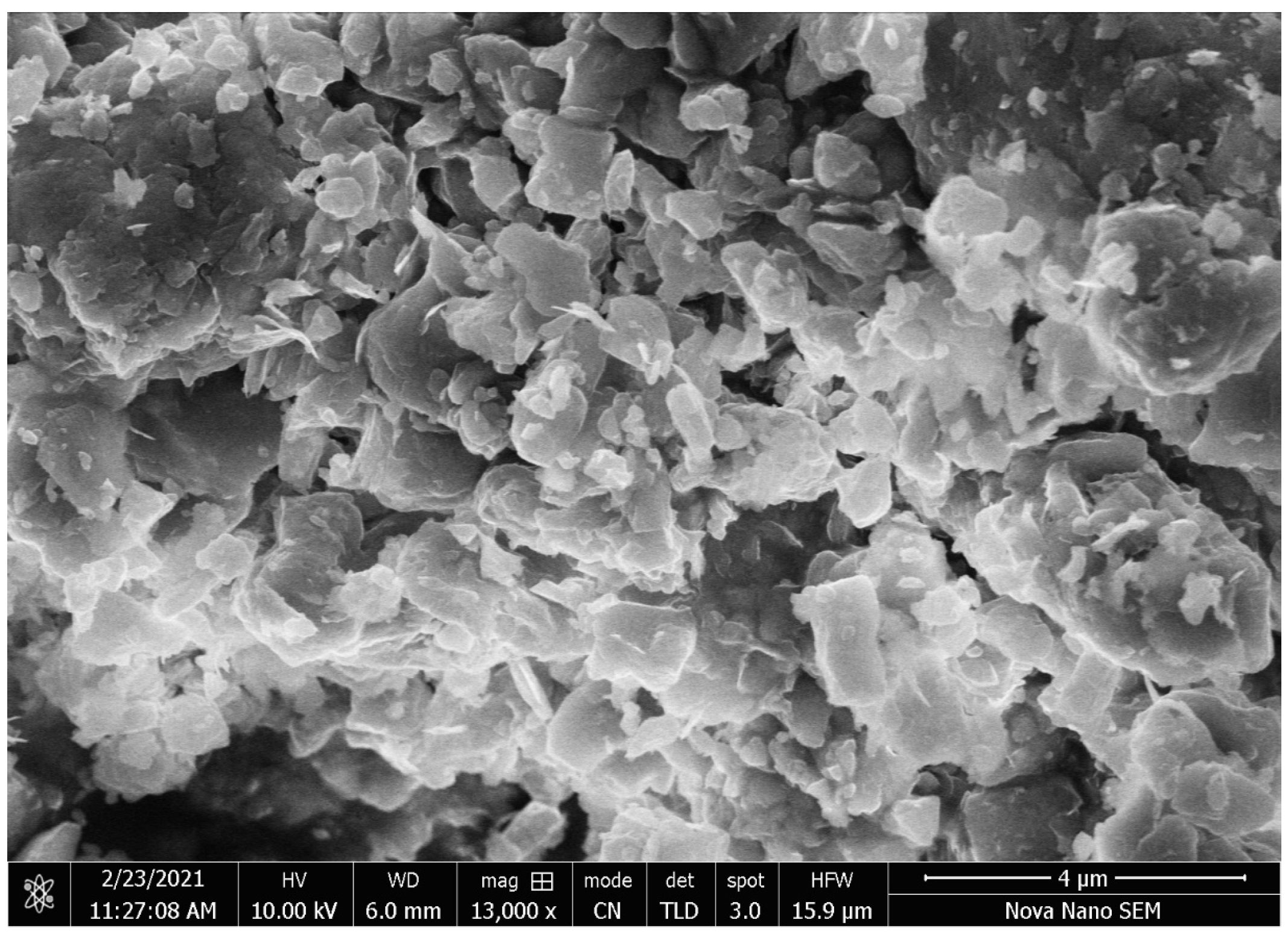
Figure 9 displays the SEM image of BP, showing irregular, angular particles with a rough surface texture. For mineralogical analysis, the dry BP was examined using XRD, with the resulting pattern shown in Figure 10. The analysis indicated that BP primarily consists of quartz (silica), alumina, and hematite. The natural sand and quarry dust used were chemically analyzed through an XRF spectrometer for the determination of their chemical composition, and the results are presented in Table 4. Loss on ignition test results of both materials are also provided in Table 4. Figure 11 displays the SEM micrograph of the natural sand showing that the particles are round in shape and less angular, with a smooth surface. The quarry dust particles are granular, irregular, and sharp in geometry, having a rough surface, as shown in the SEM micrograph in Figure 12.
Figure 9.
SEM image of brick powder.
Figure 10.
XRD pattern of brick powder.
Table 4.
Chemical composition and properties of natural sand and quarry dust.
Figure 11.
SEM micrograph of natural sand.
Figure 12.
SEM micrograph of QD.
3.2. Workability
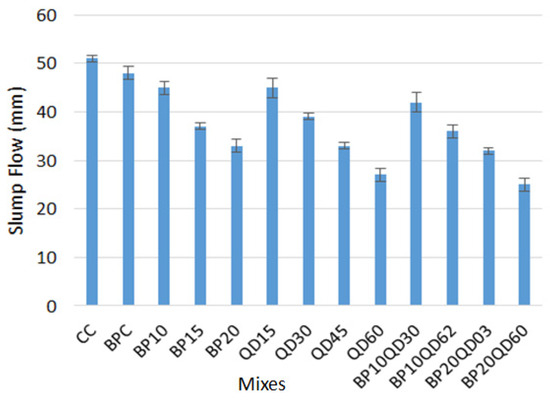
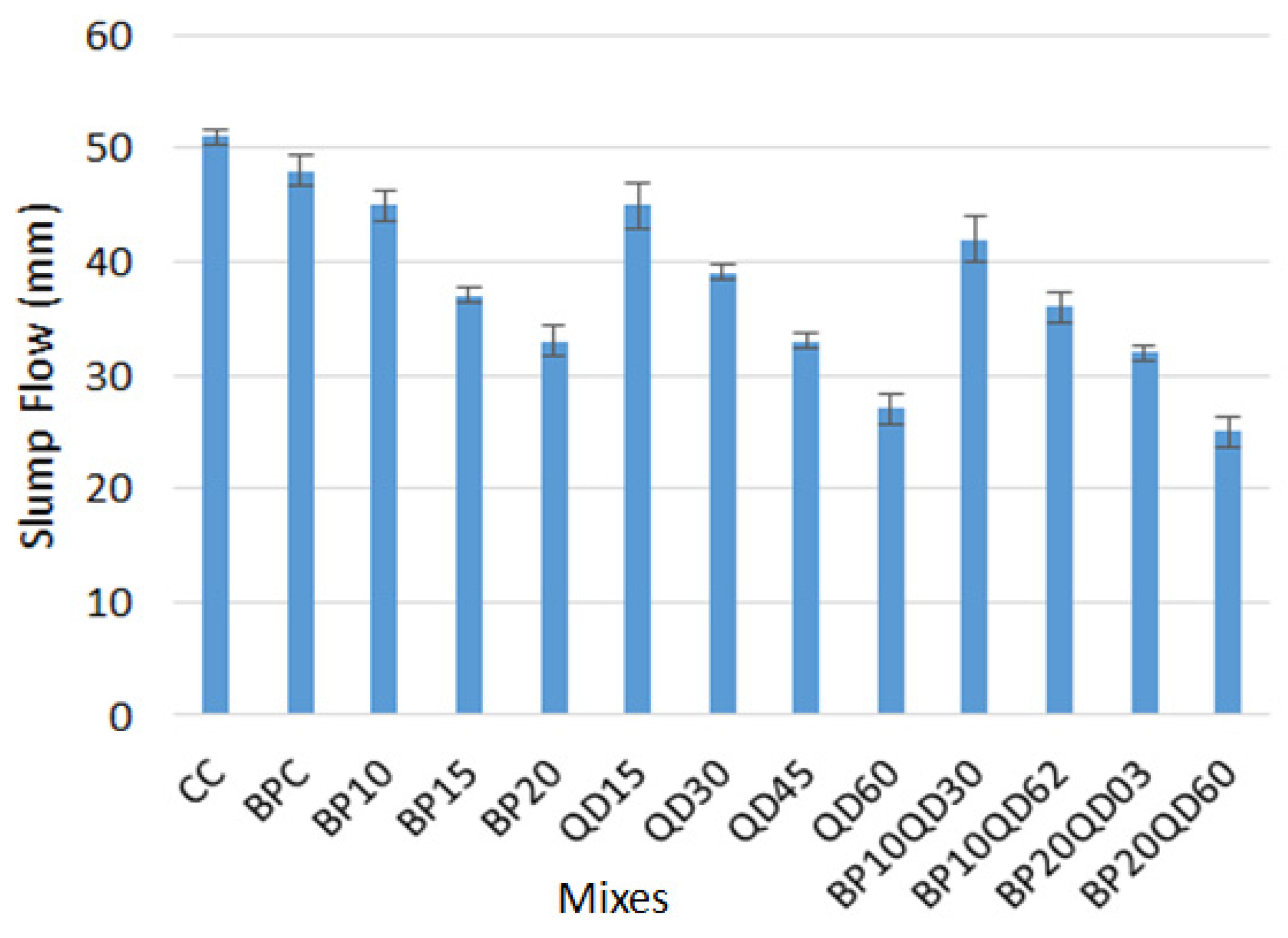
The influence of BP and QD on the workability of mixes was measured as the slump in mm. Results of workability of all the mixes are graphically shown in Figure 13. One slump test was performed for each mix. It was noted that the slump of mixes with brick powder and quarry dust was reduced compared to the control mix. The slump reduction percentages indicate varying impacts on workability across the different concrete mixes. Notably, mixes with higher proportions of brick powder (BP) and quarry dust (QD) show significant reductions in slump. For instance, BP20 exhibits a 34% reduction, while BP20QD60 shows the highest reduction at 50%, indicating a substantial decline in workability. In contrast, the mixes with lower percentages, such as BP5 and QD15, only exhibit minimal reductions of 4% and 10%, respectively. This trend suggests that increasing the content of supplementary materials like BP and QD can enhance concrete’s strength but compromise its workability. The workability of concrete is reduced with the addition of brick powder as a cement substitution. This reduction in slump was less for 5% and 10% BP content. Loss of slump was more for 15% and 20% substitution of cement with brick powder. This decrease in slump was due to the finer particles of brick powder and their larger surface area. The test results were similar to the previous studies that stated reduced workability due to the addition of brick powder [17,18]. Similarly, the quarry dust addition in concrete, as a natural sand replacement, also resulted in decreased workability. Reduction in slump increased as the replacement level of QD increased. The decrease in workability was due to the difference in the particle size distribution and shape of quarry dust and natural sand particles. The fine particle content of quarry dust was higher than that of the natural sand. Also, quarry dust particles have a rough surface texture, whereas the particles of natural sand are round with a smooth surface [4,19]. These results were similar to the previous finding by Shyam et al. [40]. Combined mixes also showed a decrease in slump, and the reduction increased as the substitution level of both BP and QD increased. The BP20QD60 mix exhibited the lowest slump value as both materials’ replacements were highest. Hence, mixes prepared with brick powder and quarry dust showed lower workability than the control mix CC. The values of the slumps of the tested mixes were within the designed limit of 25–50 mm. Hence, all the mixes can be used for the casting of PCC and RCC sections using proper compaction/vibration means. The mean absolute deviation (MAD) values were also shown in Figure 3.
Figure 13.
Slump values of different mixes.
3.3. Dry Density
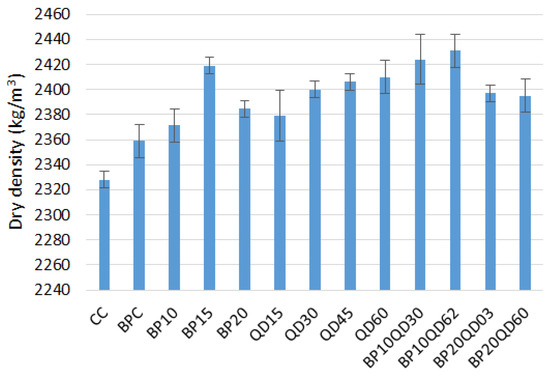
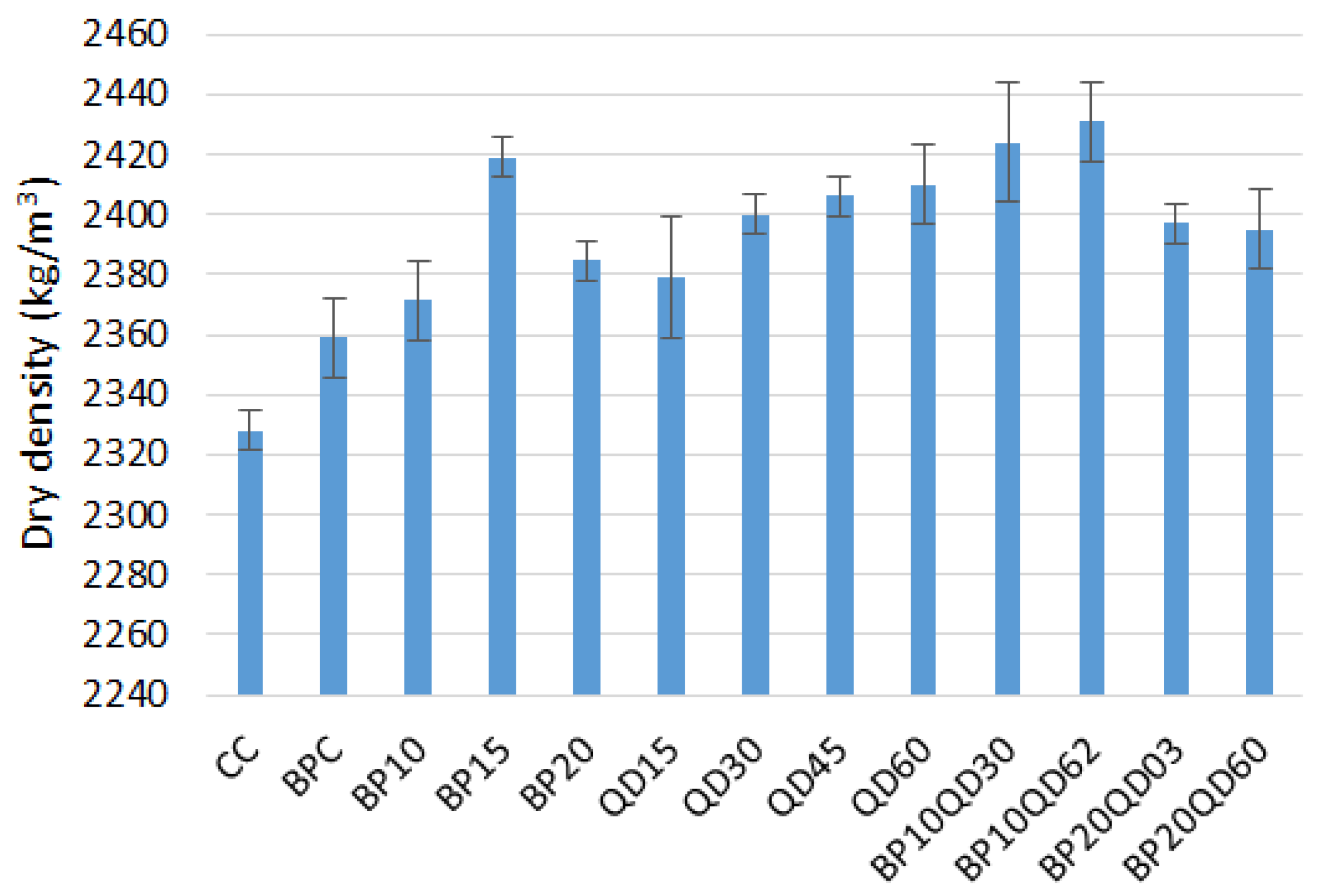
The dry densities of all the samples measured after 56 days of curing are given in Figure 14. Three samples were tested for each mix to determine the dry density. Brick powder and quarry dust additions in concrete resulted in increased density. Overall, the density of the control mix was lower than all replacement levels. In the replacement mixes, the density was slightly higher than the control mixes, which could be due to the brick powder addition, which fills up the pores in concrete because of its finer particles as compared to cement, making concrete denser and more compact, which agrees with the previous studies [18,20,21]. The dry density of the QD60 mix was highest among all the quarry dust mixes, with the value of 2410 kg/m3. In combined mixes, the dry density of the BP10QD60 mix was highest among all the combined mixes, with the value of 2431 kg/m3. The increment in the density of mixes with the addition of quarry dust as the natural sand replacement was credited to the filling effect of micro-fines in quarry dust, which filled the voids present in concrete and made the concrete microstructure denser [4]. Moreover, the bulk unit weight of quarry dust was greater than that of the natural sand. Thus, heavier particles of quarry dust led to higher density [4]. This densification leads to a tighter microstructure, enhancing the bond between aggregates and the cement paste. As the voids are filled, the packing efficiency of the particles improves, resulting in a more compact and homogenous mix. Consequently, this denser microstructure contributes to higher strength and durability in the final concrete product.
Figure 14.
Dry density of hardened concrete after 56 days of curing.
3.4. Compressive Strength
3.4.1. Effect of BP
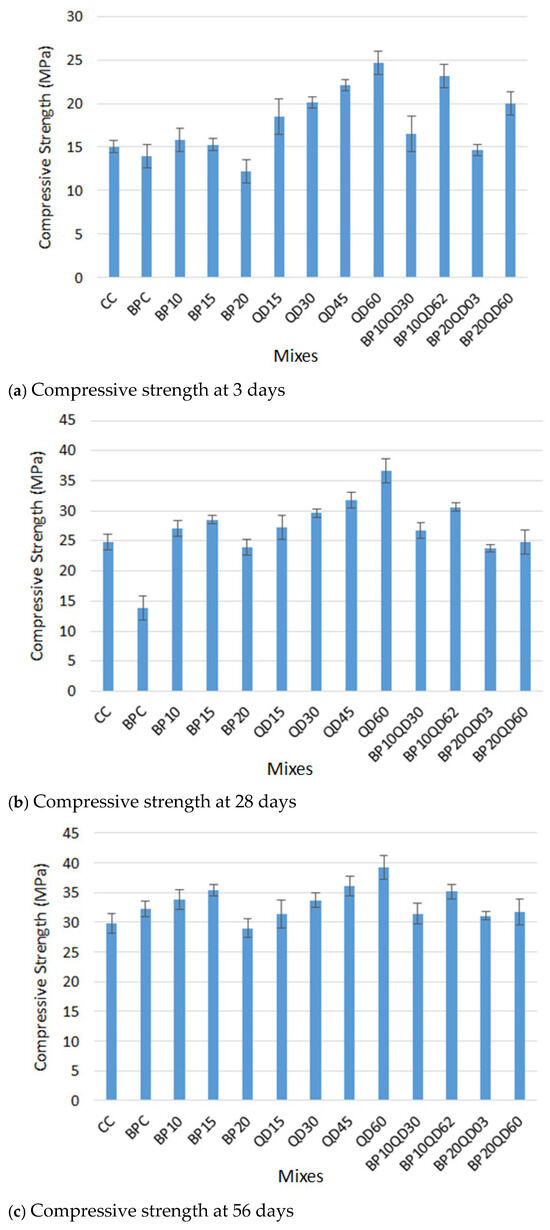
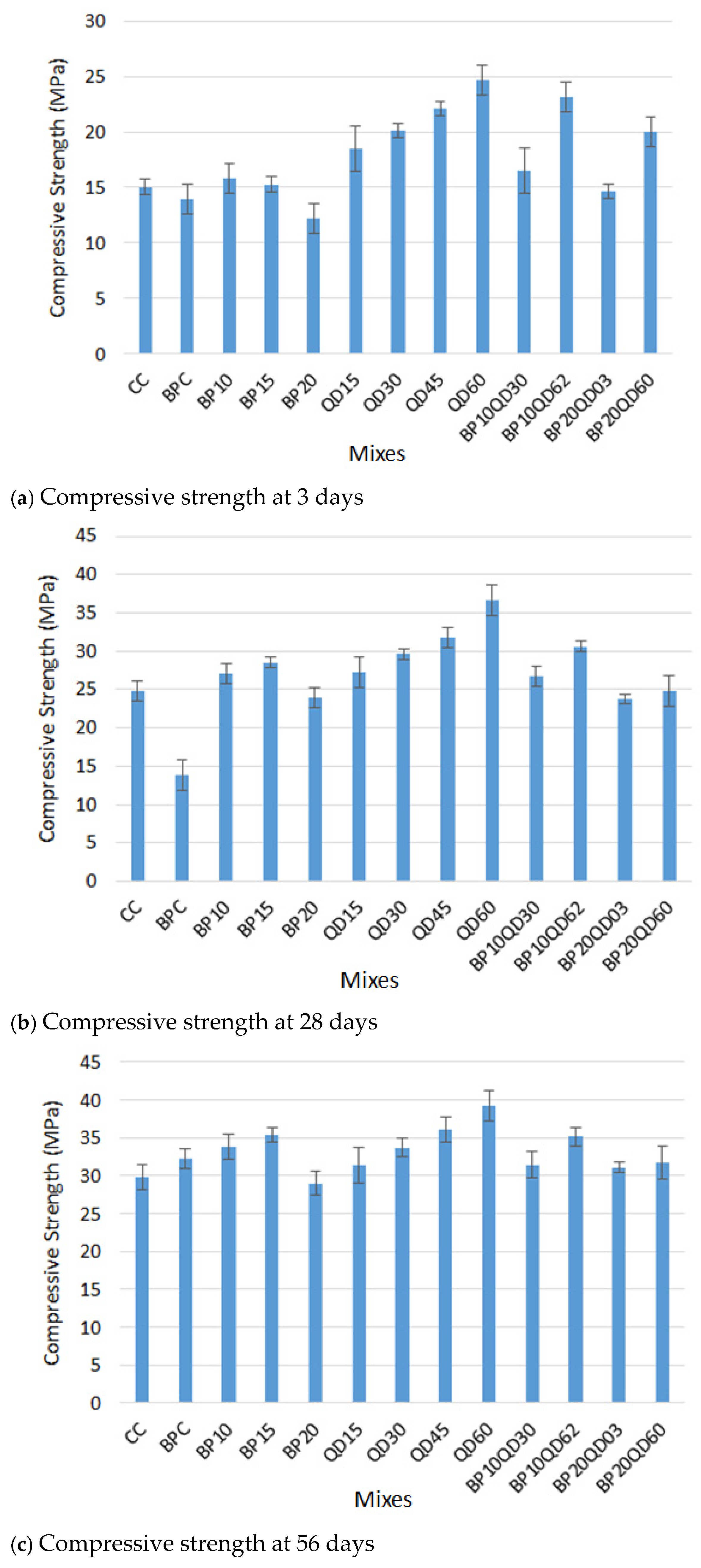
The compressive strength of the various concrete mixes was evaluated at 3, 28, and 56 days to investigate the effects of partial cement replacement with brick powder and sand replacement with quarry dust. The results are presented in Figure 15. Three samples were tested for each mix to determine the compressive strength. It was observed that incorporating brick powder as a partial cement replacement significantly enhanced compressive strength. At 3 days, the control mix and the brick powder mixes exhibited nearly identical compressive strengths. This could be associated with the hydration process of cement. The hydration of cement is a rapid process that occurs in the first few days after mixing. The brick powder may not hydrate as quickly or as effectively as cement and does not contribute significantly to strength during this early period. However, at later ages, the brick powder mixes showed notable improvements. At 28 days, mixes BP5, BP10, and BP15 displayed increases in compressive strength of 3.70%, 8.4%, and 13.58%, respectively, while BP20 showed a 5% reduction compared to the control mix (CC). At 56 days, a similar trend was observed: BP5, BP10, and BP15 exhibited increases of 7%, 11.85%, and 17.5%, respectively, whereas BP20 experienced a 4.11% decrease relative to CC. These findings indicate that the strength gain of brick powder mixes is more pronounced at later ages, primarily due to the pozzolanic activity of BP. Additionally, the fine particles of BP contribute to a denser microstructure by filling voids and pores, further enhancing the strength, in agreement with previous studies [18,22,23].
Figure 15.
Compressive strength results of mixes at different ages.
3.4.2. Effect of QD
The quarry dust inclusion as a partial substitute for natural sand in concrete resulted in a significantly enhanced strength at all ages. Quarry dust resulted in higher early-age strength of concrete at 3 days as well as at 28 days. At 3 days, quarry dust mixes QD15, QD30, QD45, and QD60 exhibited an increase of 21%, 32%, 46%, and 62%, respectively, in compressive strength as compared to CC. At 28 days, the same trend was observed, where mixes QD15, QD30, QD45, and QD60 showed a 9%, 17%, 27%, and 45% increment in strength, respectively, as compared to CC. Similarly, at 56 days, mixes QD15, QD30, QD45, and QD60 showed a respective increase of 3.35%, 11.42%, 19%, and 30% in strength as compared to CC. This means that the compressive strength of concrete improves with an increase in the amount of sand replacement with quarry dust and attains a maximum value of compressive strength at 60%. These results were in agreement with the previous studies [2,3,4]. Combined mixes that have both replacements of brick powder and quarry dust also showed an increment in strength.
3.4.3. Combined Effect of BP and QD
At 3 days, mixes BP10QD30, BP10QD60, and BP20QD60 exhibited an increase of 9%, 53%, and 31%, respectively, whereas the BP20QD30 mix showed a 3% decrease in the compressive strength, as compared to CC. After 28 days, mixes BP10QD30 and BP10QD60 exhibited an increase of 6.45% and 22%, and mixes BP20QD30 and BP20QD60 showed a decrease of 5% and 1.4% in strength, as compared to CC. At 56 days, all mixes, BP10QD30, BP10QD60, BP20QD30, and BP20QD60, showed an increase of 4.2%, 16%, 2%, and 4% in strength, respectively, as compared to CC. The optimum mix with the highest compressive strength was BP10QD60. Quarry dust has a better filling effect than natural sand due to more fines present in the quarry dust, resulting in a refined pore structure and dense concrete. Therefore, the compressive strength increased with the addition of quarry dust. Both brick powder (BP) and quarry dust resulted in a refined pore structure of concrete [4,21]. The refinement of the pore structure was also reflected in the sorptivity and water absorption results, where brick powder and quarry dust mixes showed lower sorptivity and rates of water absorption. The mean, standard deviation, and convergence of variance of compressive strength results are given in Table 5.
Table 5.
Mean, standard deviation, and convergence of variance of compressive strength results.
3.5. Strength Activity Index (SAI)
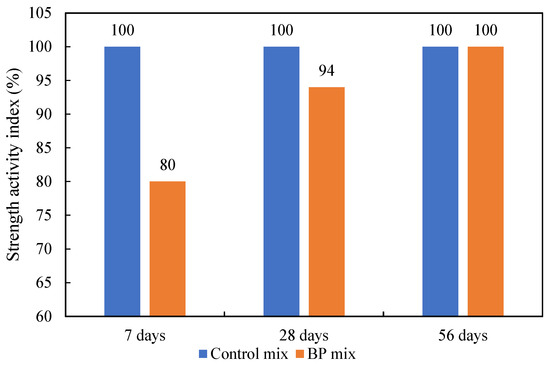
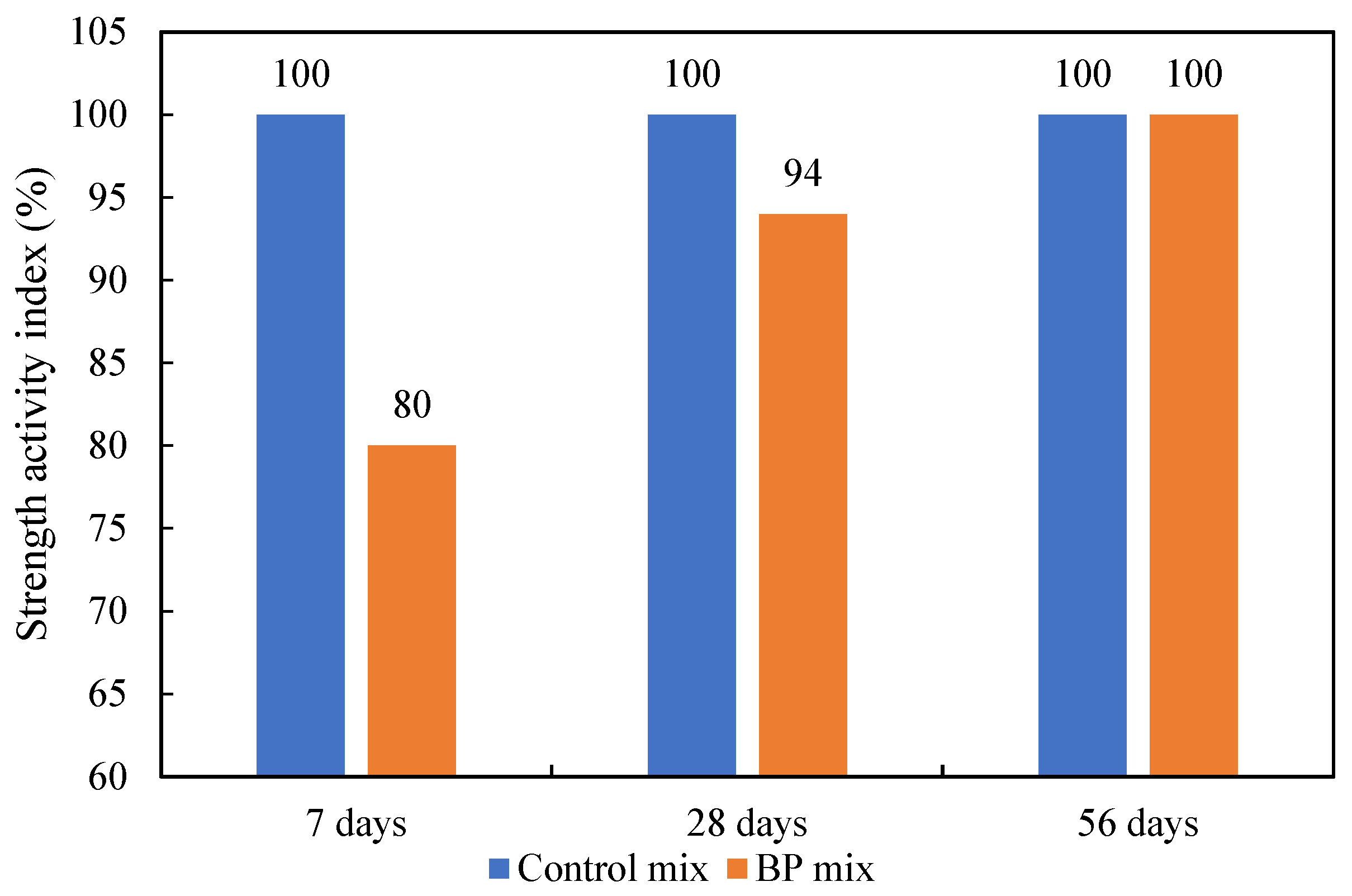
Figure 16 presents the average strength activity index of the control and brick powder (BP) mixes at 7, 28, and 56 days. Three samples were tested for each mix to determine the SAI. The results indicate that the BP mixes achieved average strength activity indices of 80%, 94%, and 100% of the control mix at the respective ages, exceeding the minimum requirement of 75% specified by ASTM C618 [38]. This confirms that the brick powder used was reactive and demonstrated notable pozzolanic activity. The strength activity index results for the brick powder (BP) mixes indicate a progressive enhancement in strength over time, reflecting the pozzolanic reactivity of the BP. At 7 days, the index of 80% suggests initial hydration and formation of calcium silicate hydrate (C-S-H) gel, which contributes to early strength development. By 28 days, achieving 94% signifies continued pozzolanic activity, where BP effectively reacts with calcium hydroxide to produce additional binding materials. The full 100% index at 56 days demonstrates that the BP continues to enhance strength as hydration progresses, emphasizing the importance of extended curing times for optimal performance in concrete incorporating pozzolanic materials.
Figure 16.
Strength activity index results for control and BP mix.
3.6. Splitting Tensile Strength
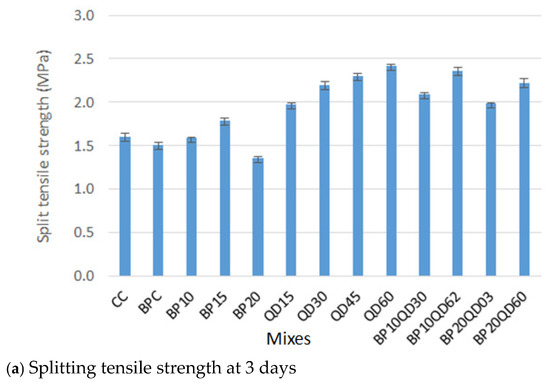
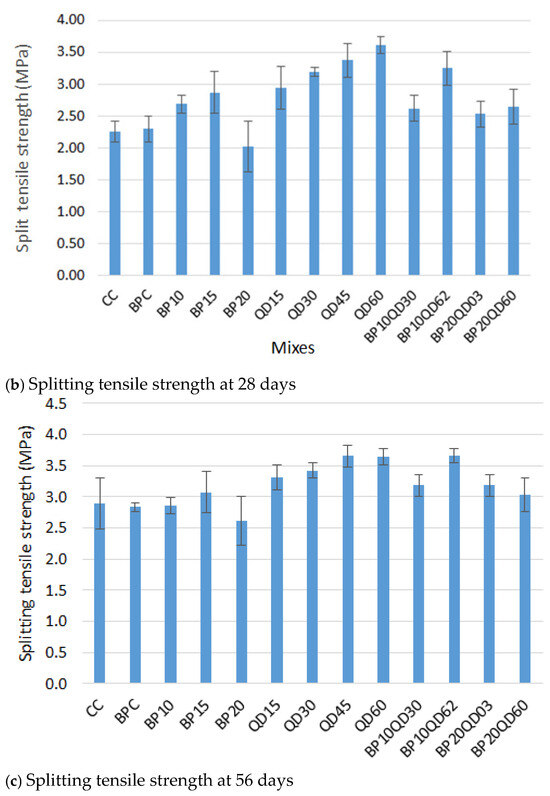
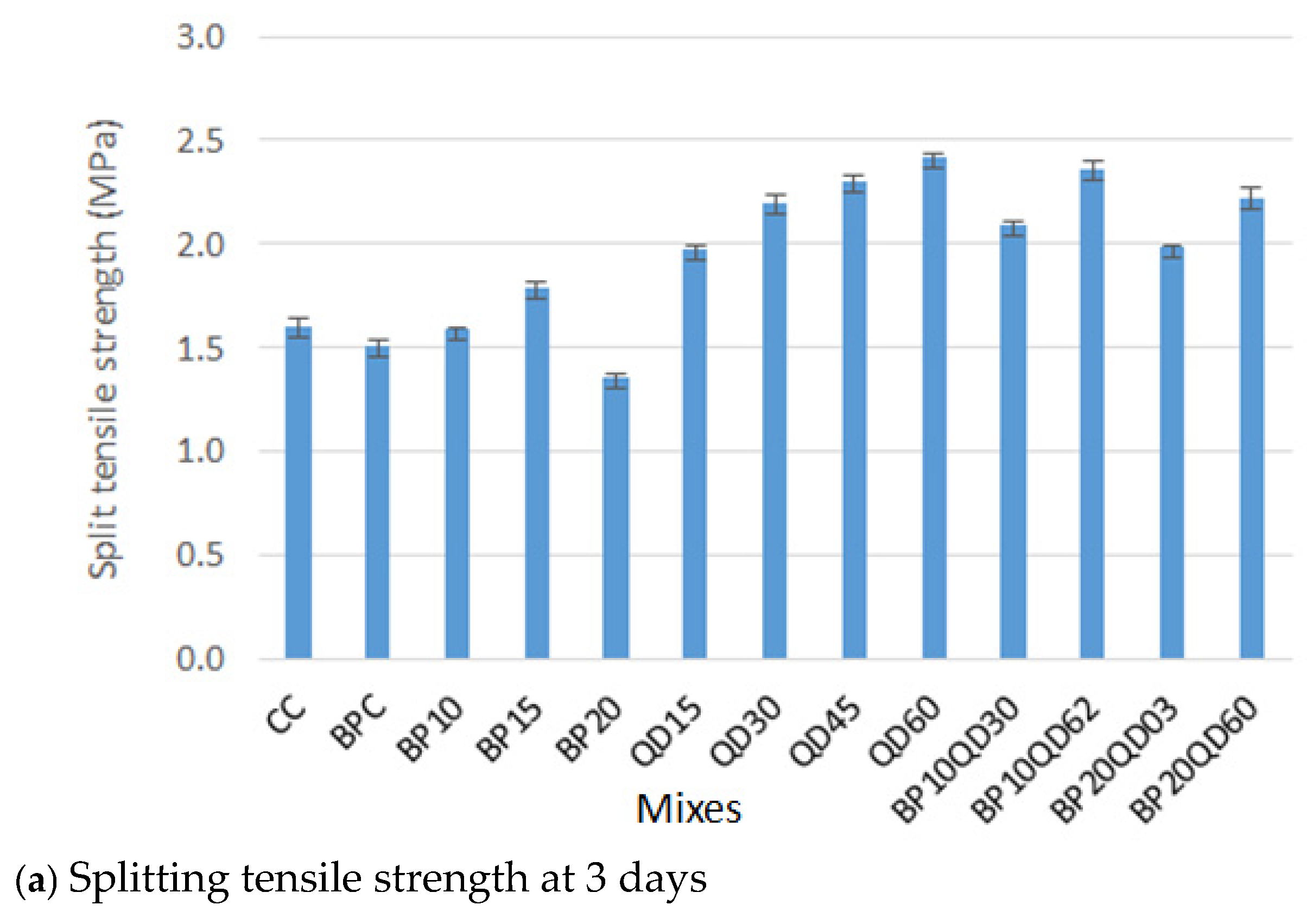
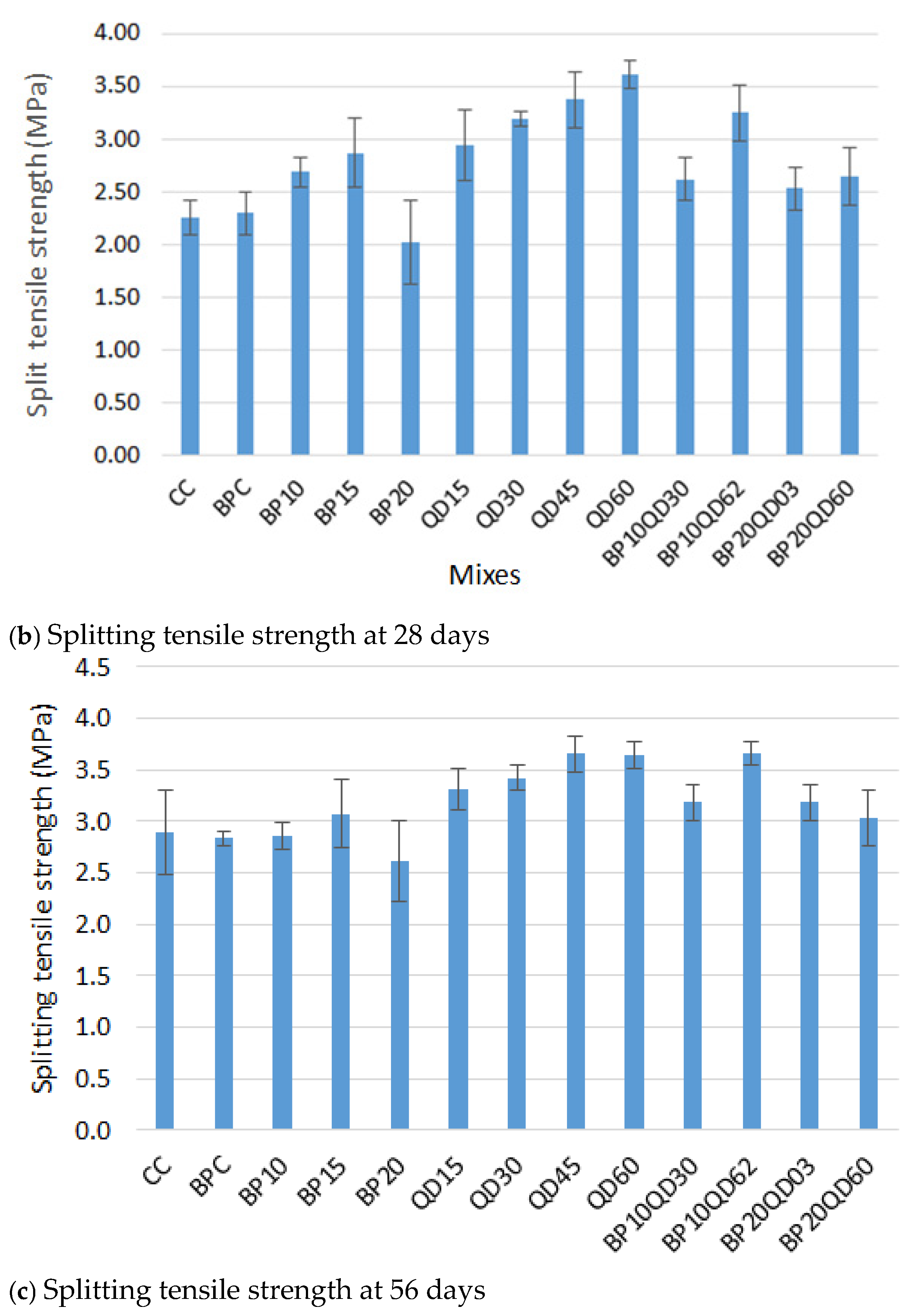
Figure 17 presents the tensile strength results for all concrete mixes. Three samples were tested for each mix to determine the split tensile strength. At 3 days, most brick powder (BP) mixes recorded slightly lower tensile strength than the control mix (CC), with the exception of BP15. At later ages, however, BP mixes generally outperformed CC. At 28 days, BP5, BP10, and BP15 exhibited increases of 2.6%, 20%, and 22%, respectively, while BP20 showed a 10% decrease in splitting tensile strength compared to CC. By 56 days, BP5, BP10, BP15, and BP20 achieved gains of 7.1%, 8.4%, 15.75%, and 0.53%, respectively. The 20% replacement level resulted in a lower tensile strength, reflecting the same trend seen in compressive strength. The improvement at lower BP contents is likely due to the angular shape and rough surface texture of BP particles, which enhance the bond within the cement matrix [18,23]. A substantial increase in splitting tensile strength was also observed when natural sand was replaced with quarry dust (QD) across all curing ages. Strength improved progressively with higher QD content, with the maximum value recorded at 60% replacement. At 3 days, QD15, QD30, QD45, and QD60 showed respective increases of 21.5%, 35%, 41.7%, and 50% over CC. At 28 days, the same upward trend continued, with increases of 32.44%, 41.33%, 50%, and 60% for QD15, QD30, QD45, and QD60, respectively. By 56 days, the gains were 26%, 30%, 40%, and 46%, respectively. These improvements are attributed to the rough texture and angular geometry of QD particles, which strengthen the bond between the aggregate and the cement paste, consistent with previous findings [4,7]. The combined use of BP and QD also led to tensile strength improvements at all ages compared to CC, with the highest value achieved by the BP10QD60 mix. The simultaneous incorporation of both materials enhanced the mechanical performance of the concrete by producing a denser and more compact microstructure. The mean, standard deviation, and convergence of variance of tensile strength results are given in Table 6.
Figure 17.
Splitting tensile strength results at different ages.
Table 6.
Mean, standard deviation, and convergence of variance of tensile strength results.
3.7. Sorptivity
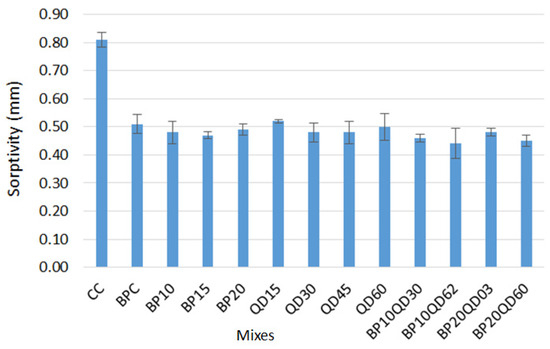
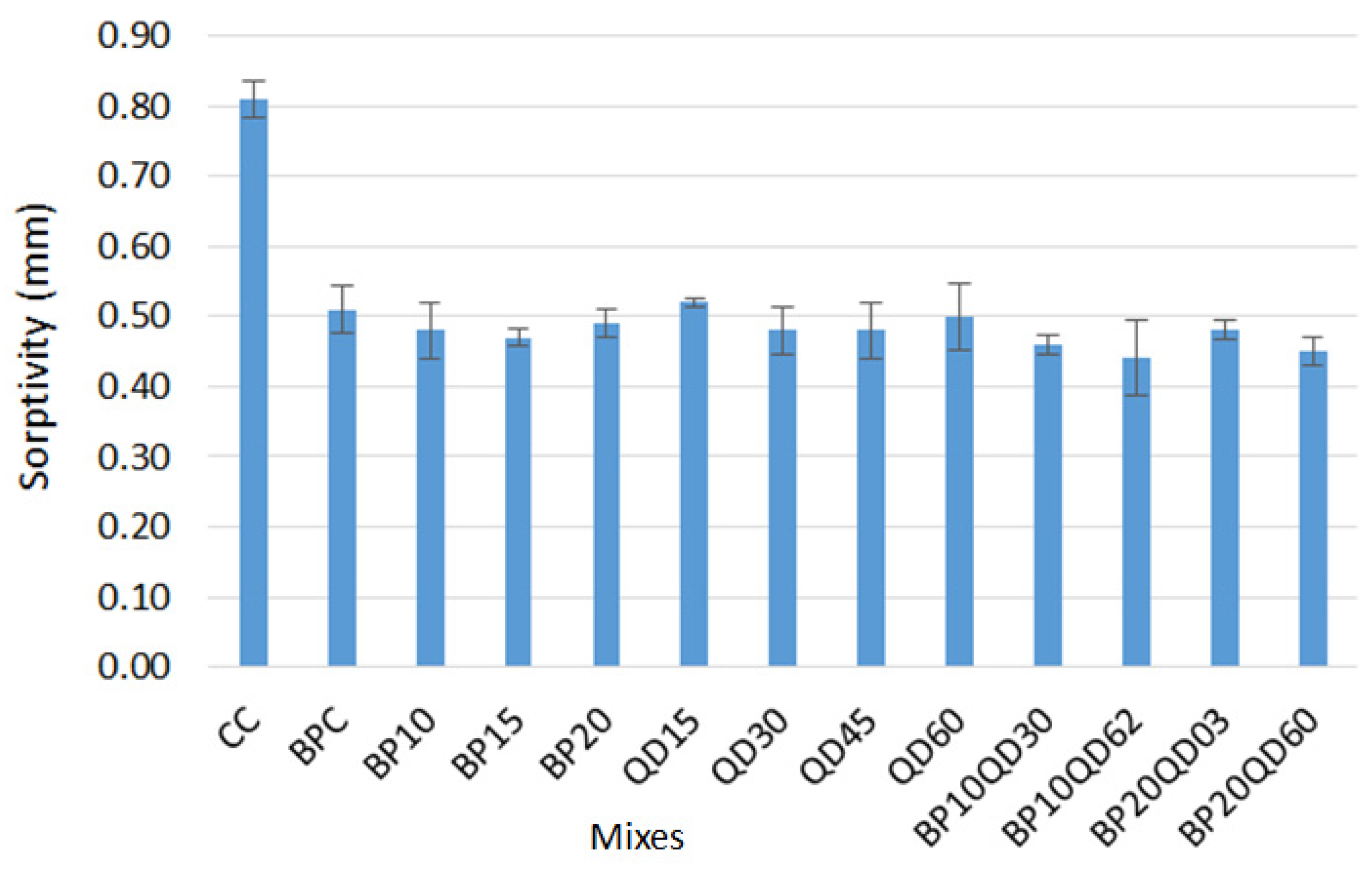
The results of the water sorptivity of all mixes are displayed in Figure 18. Three samples were tested for each mix to determine the sorptivity. The sorptivity of all the brick powder and quarry dust mixes was lower than that of the control sample. Brick powder and quarry dust mixes showed around half of the sorption as compared to the control sample. Brick powder, quarry dust, and combined mixes showed a decreasing trend in sorptivity, showing a positive influence on the durability of concrete. Finer particles of BP result in the compacted and refined pore structure of concrete [17,18,24]. Similarly, quarry dust having finer particles results in the refined pore structure, decreasing the sorptivity of concrete and agreeing with the previous study by Cheah et al. [39] that reported a refined pore structure for quarry dust mix through SEM analysis. The lower water sorptivity observed in mixes containing brick powder (BP) and quarry dust (QD) can be attributed to their finer particles, which enhance the compactness of the concrete’s pore structure. The pozzolanic reaction of BP with cement generates additional calcium silicate hydrate (C-S-H) gel, effectively filling voids and reducing porosity. This results in a more refined microstructure that inhibits water penetration. Similarly, the fine particles of QD contribute to a denser matrix, limiting the pathways for water ingress. Consequently, both materials improve the durability of concrete by decreasing sorptivity, aligning with findings from SEM analyses that highlight the refined pore structure in these mixes.
Figure 18.
Results of water sorptivity of all mixes.
3.8. Rate of Water Absorption
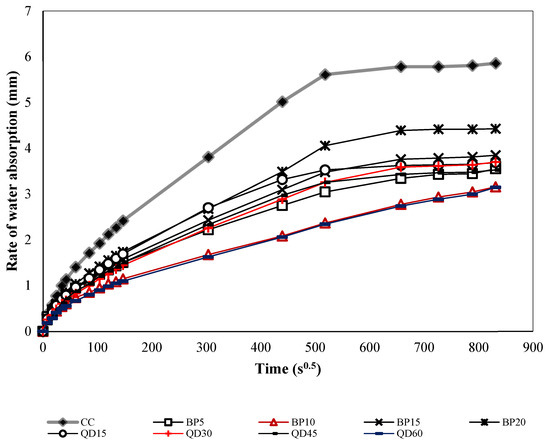
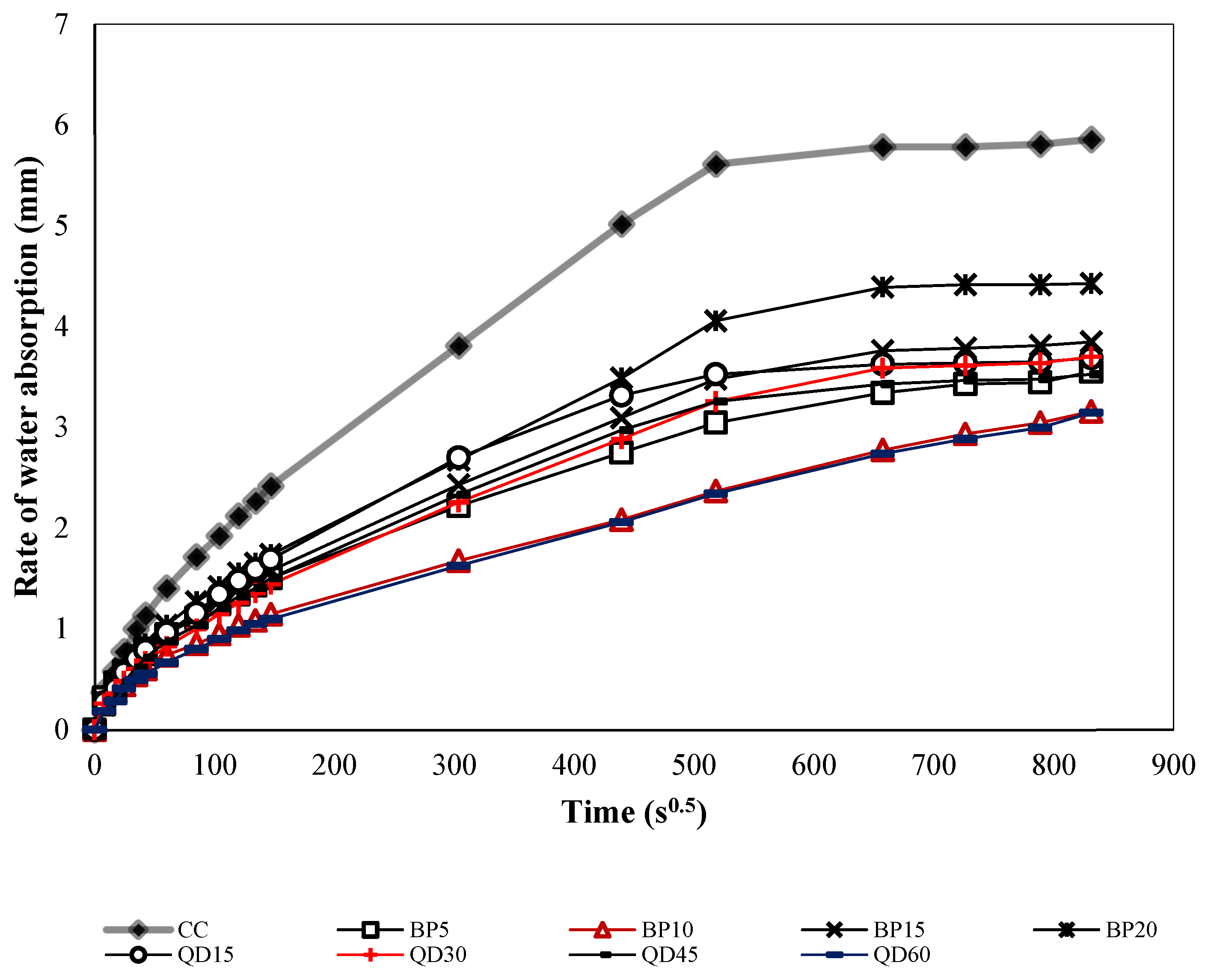
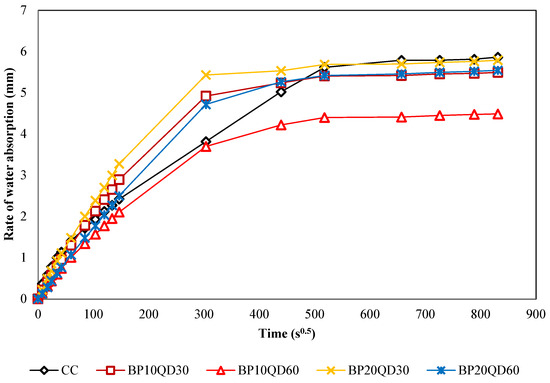
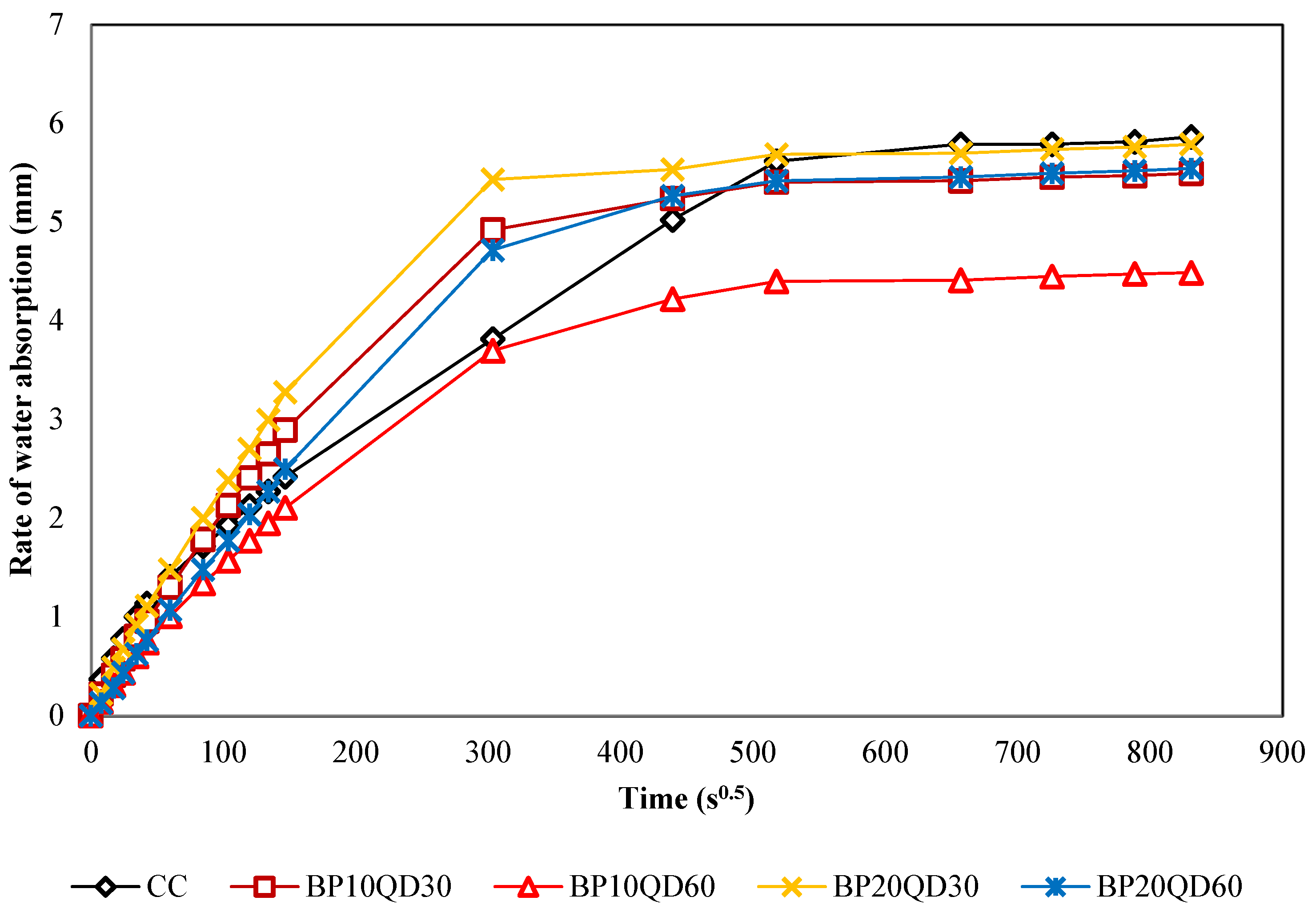
The relationship between water absorption rate, I, and the square root of time in seconds (80.5) was plotted to produce a curve. Figure 19 and Figure 20 display the results for various concrete mixes. Incorporating brick powder (BP) and quarry dust (QD) consistently reduced water absorption compared to the control mix (CC). Among BP mixes, BP10 exhibited the lowest absorption rate, followed by a slight rise at higher replacement levels—though still below that of CC. For QD mixes, absorption rates declined progressively with increasing QD content, with QD60 achieving the minimum rate. When both BP and QD were combined, the resulting mixes showed slightly higher absorption rates than their individual counterparts, but still lower than CC. The optimal combination, BP10QD60, achieved the smallest absorption rate among all combined mixes and outperformed the control sample. The reduced absorption values highlight the beneficial influence of BP and QD on concrete’s durability. This improvement is attributed to the pore-filling action of both materials. Finer BP particles promote pozzolanic reactions with cement, leading to a denser pore structure [21], while the micro-fines in QD help fill voids and refine the internal pore network, thereby reducing permeability—findings consistent with earlier research [4]. The observed reduction in water absorption rates in concrete mixes containing brick powder (BP) and quarry dust (QD) can be mechanistically explained by their pore-filling effects. Finer BP particles enhance pozzolanic reactions with cement, producing additional calcium silicate hydrate (C-S-H) gel that fills voids and creates a denser microstructure. Simultaneously, the micro-fines in QD occupy gaps within the concrete matrix, further refining the pore network. This combined action significantly decreases permeability, leading to improved durability and lower water absorption compared to the control mix.
Figure 19.
Rate of water absorption results of different BP and QD mixes.
Figure 20.
Results of water absorption of combined mixes.
3.9. Rapid Chloride Ion Penetration
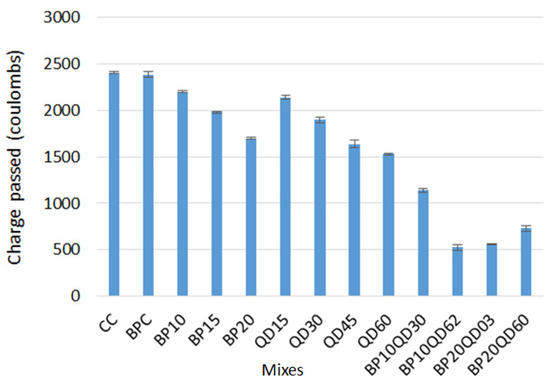
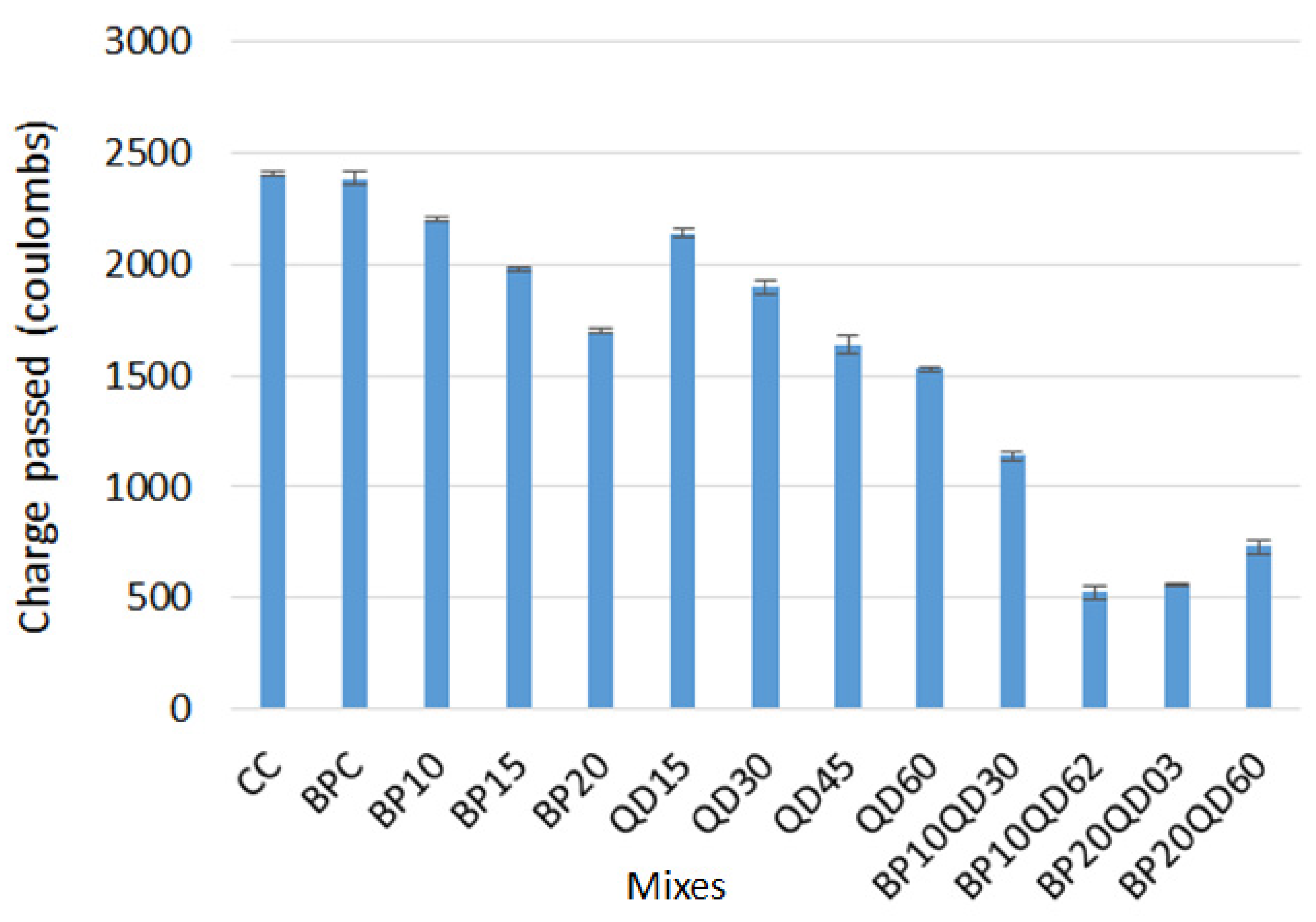
Figure 21 shows the chloride ion resistance test results of all the mixes. It can be noticed that the chloride ion resistance increased with the addition of brick powder and quarry dust in concrete. According to ASTM C1202, the mixes CC, BP5, and BP10 fall in the “Moderate” category, and mixes BP15 and BP20 fall in the “Low” category. Similarly, quarry dust mix QD15 falls in the “Moderate” category, and the mixes QD30, QD45, and QD60 fall in the “Low” category. The BP10QD30 mix, having both replacements of brick powder and quarry dust, falls in the “Low” category, and mixes BP10QD60, BP20QD30, and BP20QD60 fall in the “Very Low” category. Results depicted that chloride ion penetrability decreased with the addition of brick powder and quarry dust in concrete, exhibiting better durability. The concrete pore structure became refined with the addition of brick powder and quarry dust, resulting in a compact structure as found in previous studies through SEM analysis [4,21]. Resistance to chloride ions increased due to the refined pore structure of brick powder and quarry dust mixes. Hence, brick powder and quarry dust resulted in better durability of concrete. The results agreed with the previous findings of Ortega et al. [35], who reported improved resistance to chloride ions due to brick powder addition up to 20% in mortars as compared to control mortar. It was credited to the pozzolanic action and the filler effect of brick powder that resulted in a more refined pore structure of mortar.
Figure 21.
Chloride ion penetration test results of mixes.
3.10. Freeze–Thaw Resistance
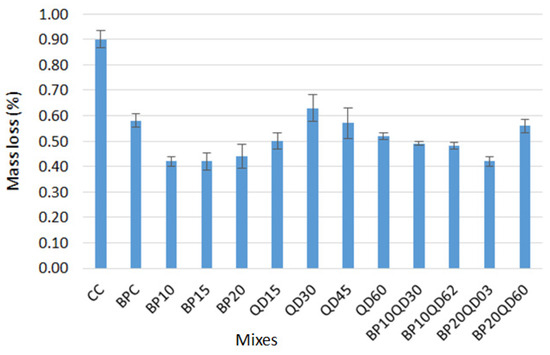
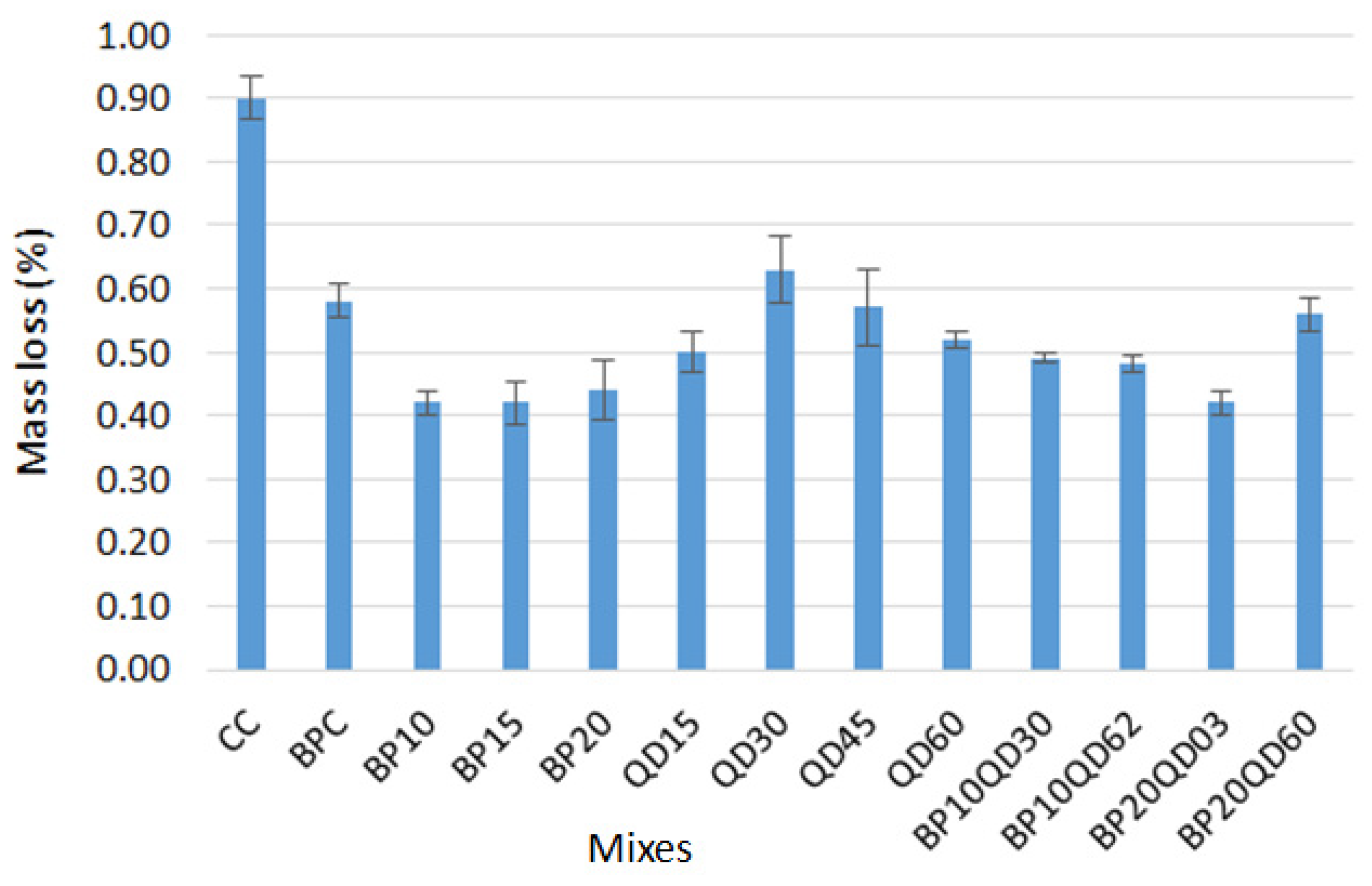
Figure 22 displays the results of the freezing–thawing test. Percentage mass loss was measured for all the mixes after 28 freezing and thawing cycles. Three samples were tested for each mix to determine the percentage mass loss. The mass loss of control samples was 0.90%, and mass loss decreased as the brick powder content increased in the mix. Likewise, the mass loss of quarry dust samples decreased as the quarry dust content in concrete increased. Similarly, the mixes with simultaneous replacements of both materials showed a decrease in mass loss. Minor scaling was observed for all the mixes without any visual cracks on the exterior surface of the samples. The percent mass loss for all the mixes was less than 1%. Hence, brick powder and quarry dust improved concrete mixes’ resistance to freeze–thaw. Therefore, better durability was achieved with the addition of brick powder and quarry dust in concrete. The enhanced resistance to freeze–thaw cycles in concrete mixes containing brick powder (BP) and quarry dust (QD) can be attributed to their ability to refine the pore structure and reduce permeability. As BP replaces cement, it promotes pozzolanic reactions that produce additional C-S-H gel, filling voids and creating a denser matrix. Similarly, the fine particles of QD occupy gaps, further enhancing the compaction of the concrete. This refined microstructure limits water ingress, reducing the potential for freeze–thaw damage and resulting in lower mass loss during testing.
Figure 22.
Mass loss of the mixes after 28 freezing–thawing cycles.
3.11. Microstructural Analysis of Hardened Concrete
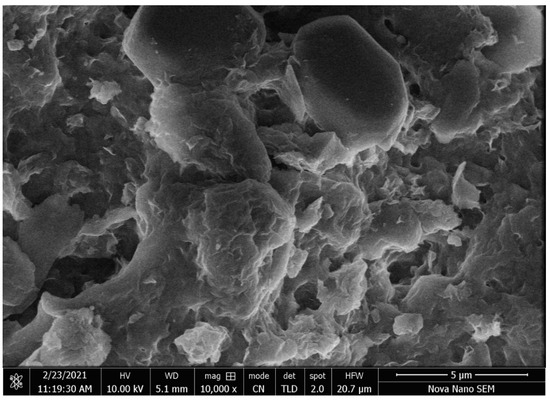
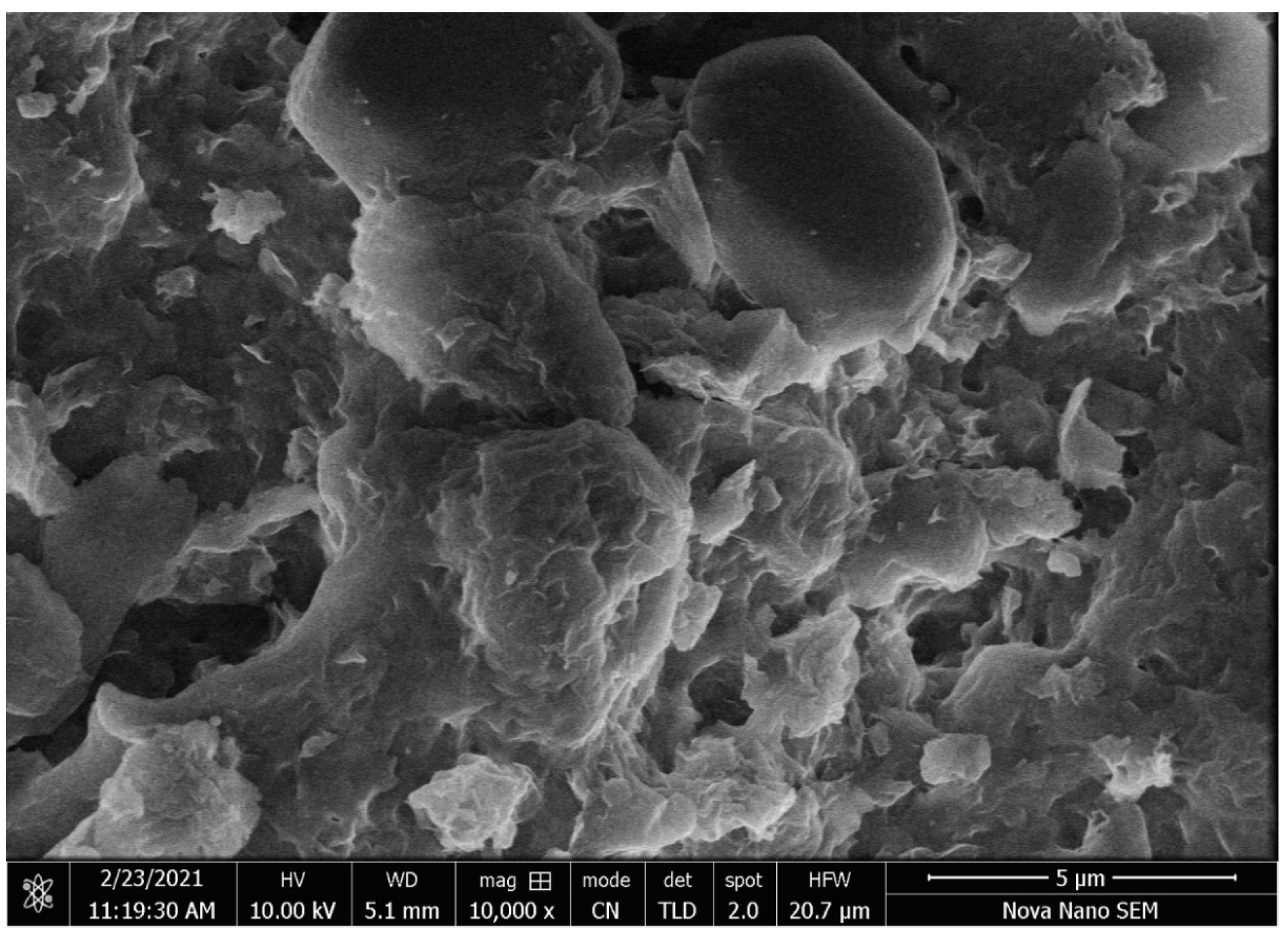
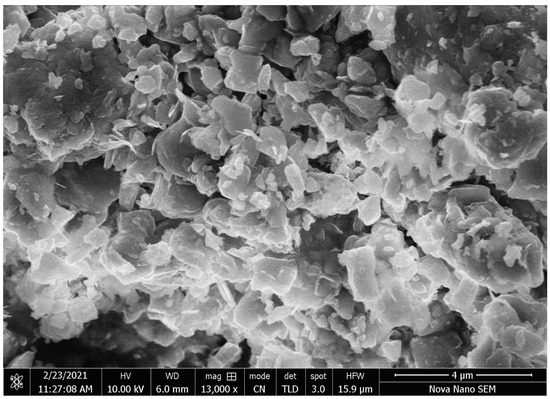
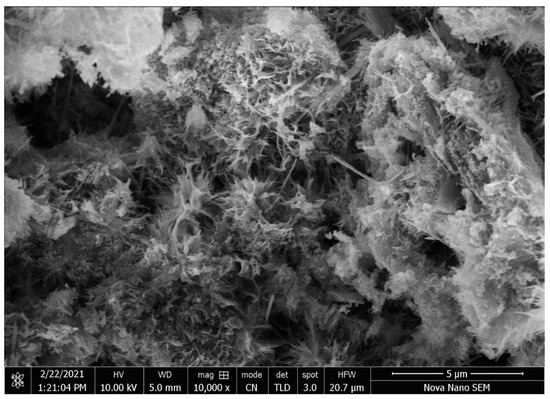
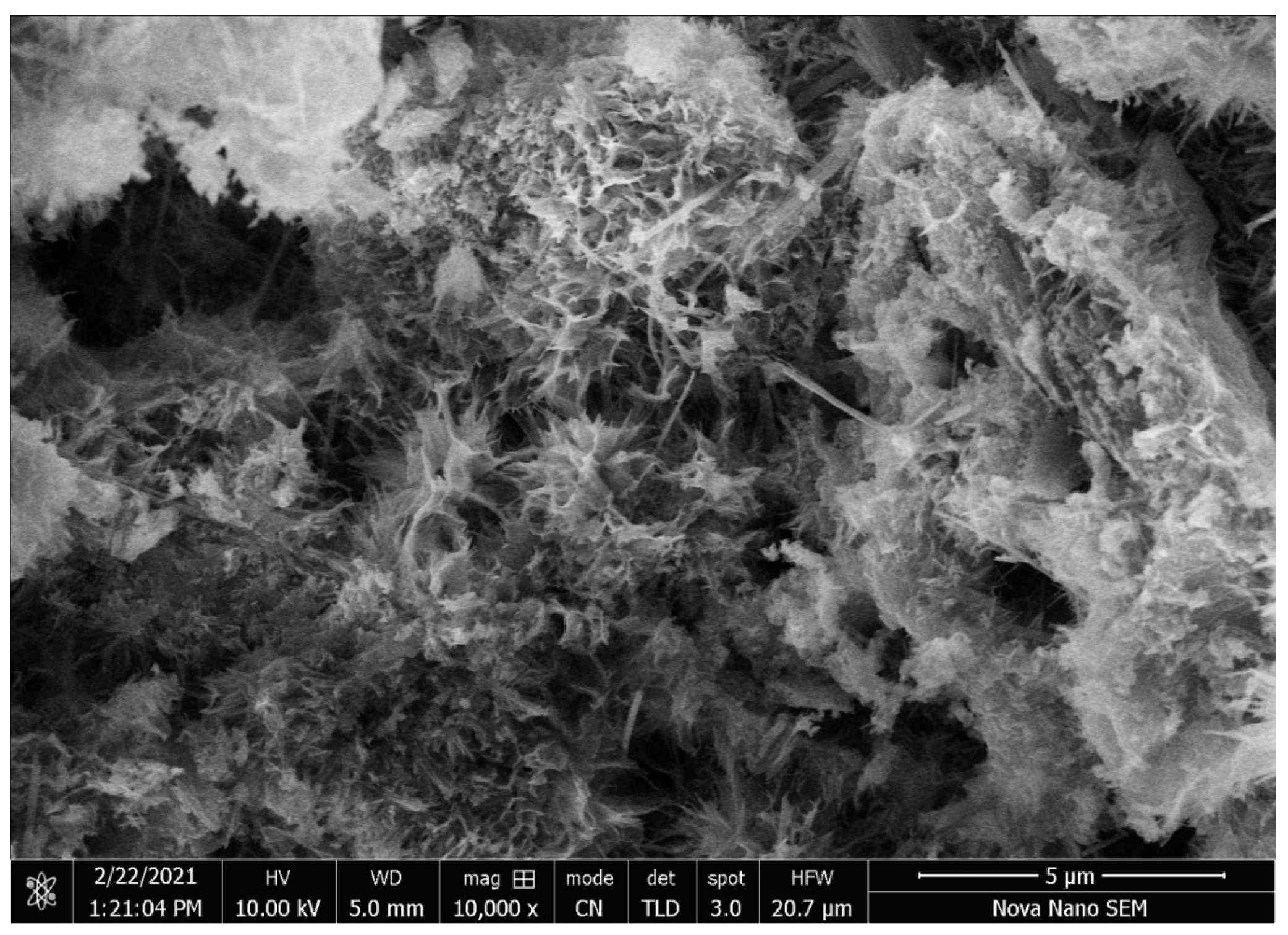
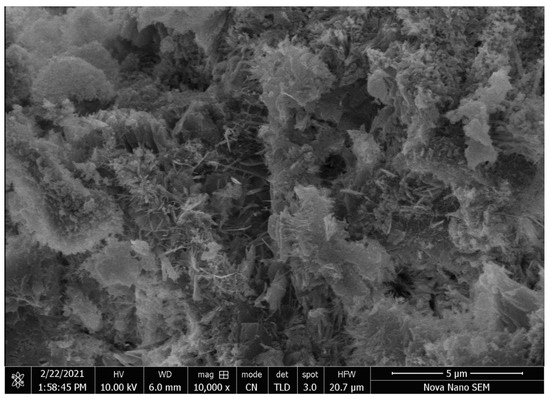
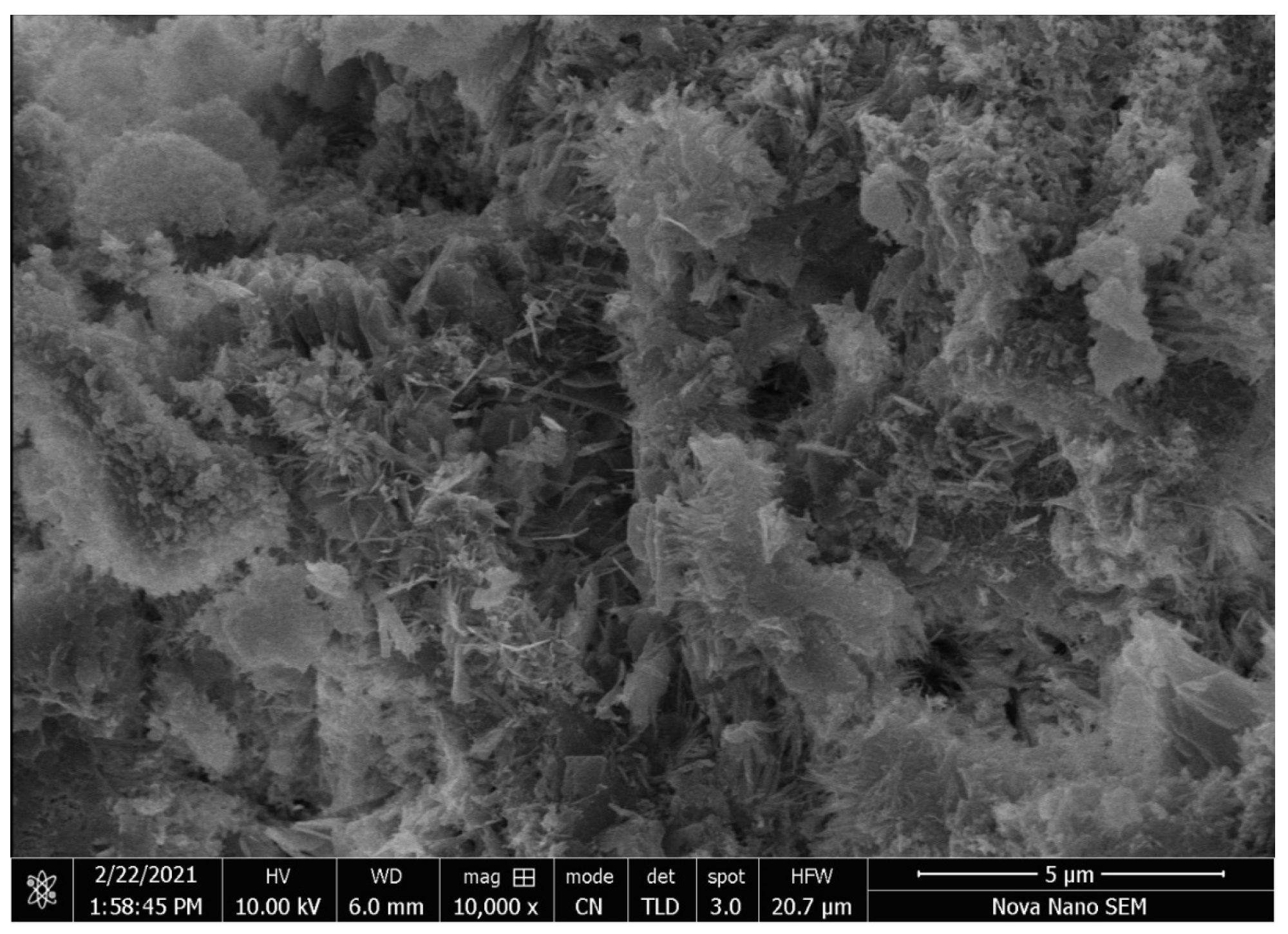
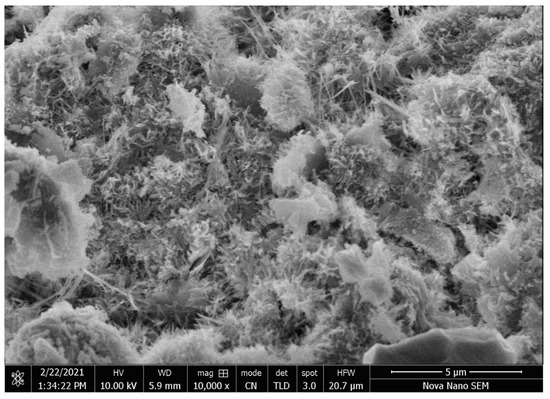
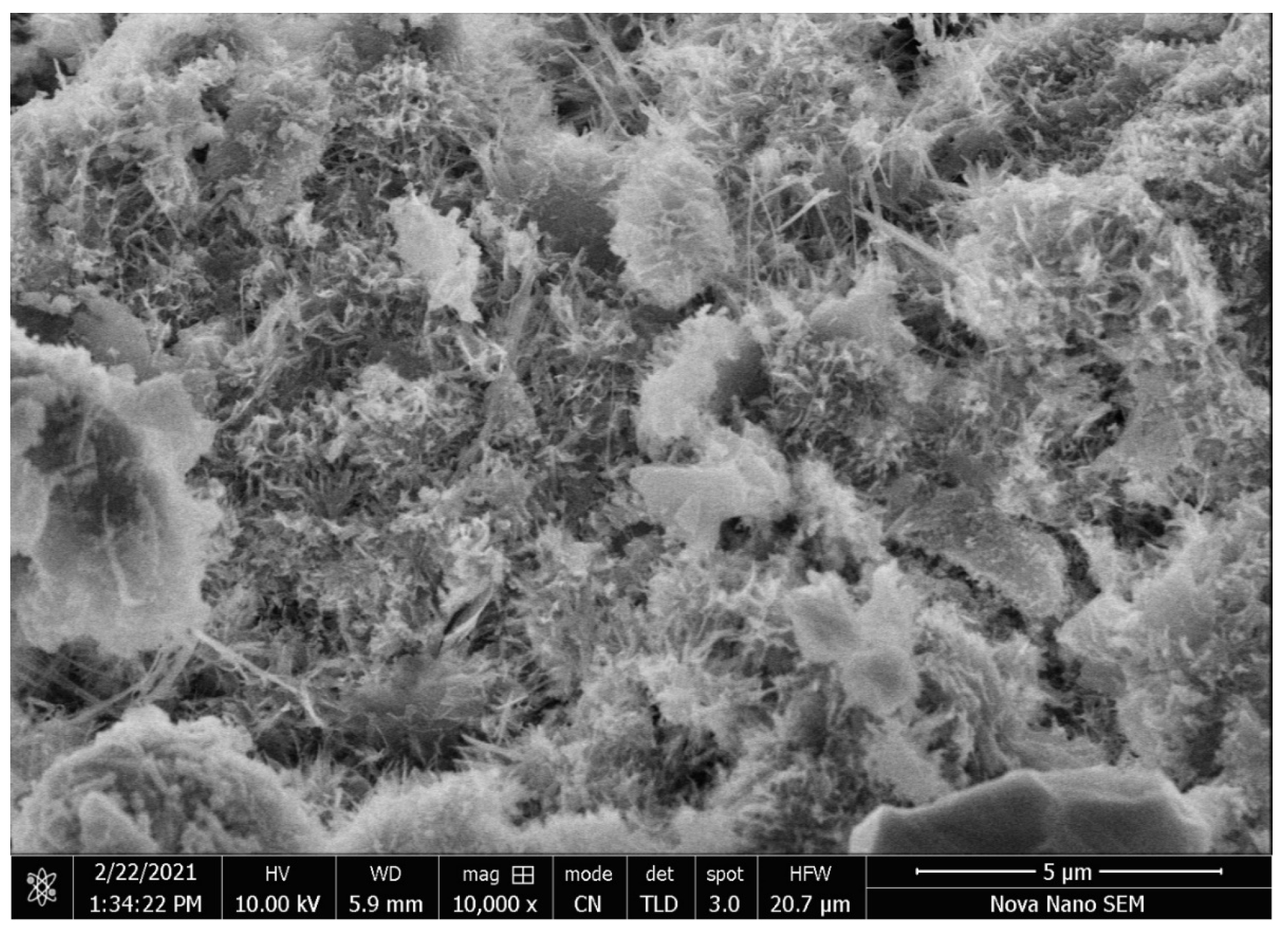
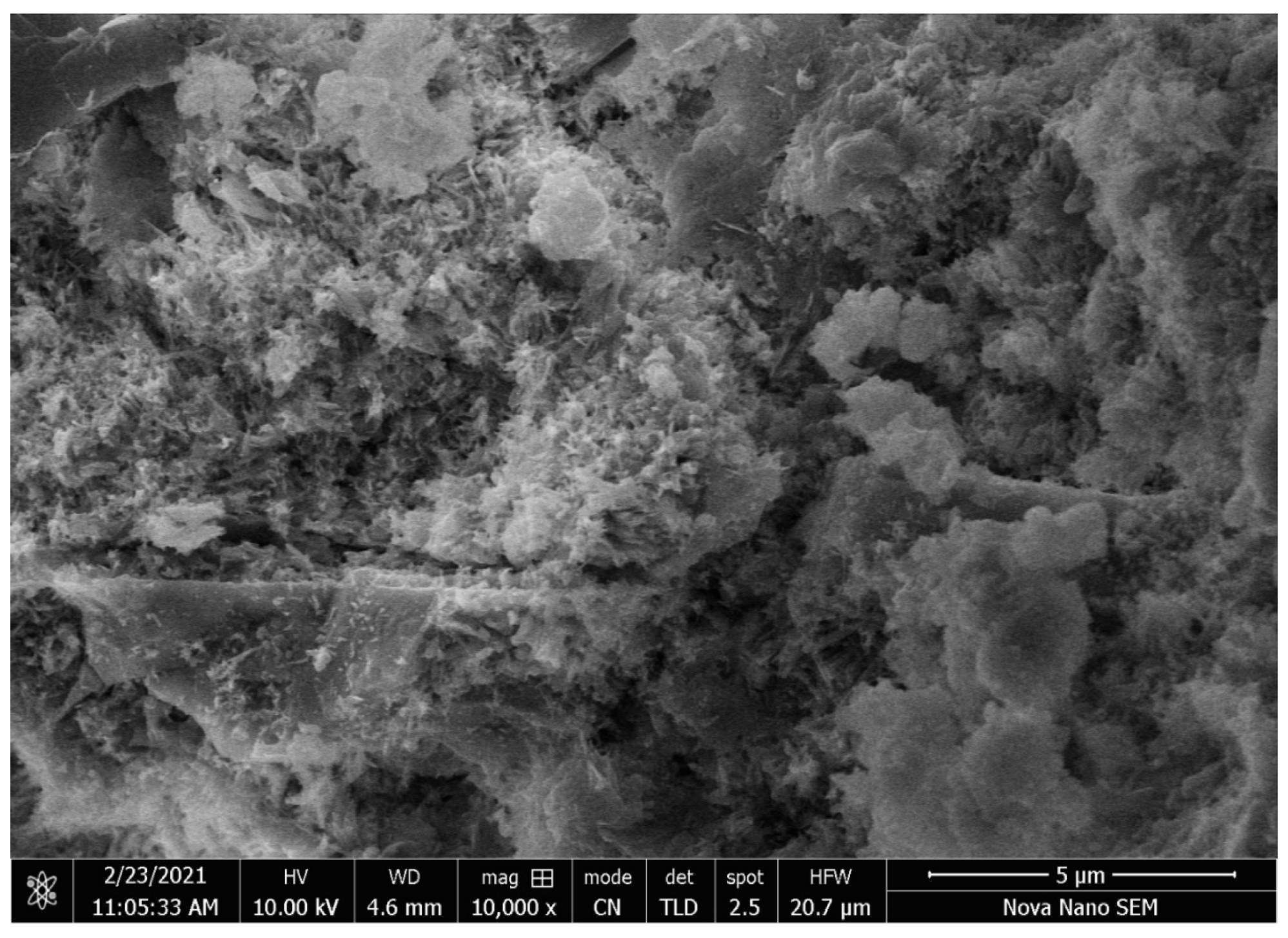
The hardened concrete samples of the selected mixes were analyzed through a scanning electron microscope (SEM) for microstructural studies after a curing of 56 days. The mixes selected were CC, BP15, QD60, and BP10QD60, and their SEM analysis images are given in Figure 23, Figure 24, Figure 25 and Figure 26, respectively. The control mix, having only cement, has pores and voids, as can be seen in the SEM image. The mix, having cement with no supplementary materials, could not have a refined microstructure, as no secondary C-S-H gel is formed. A refined and compact microstructure was observed for the BP15 mix containing 15% brick powder (BP) as cement substitution, confirming the higher compressive strength for this mix as compared to the control mix. The pozzolanic reaction between cement and brick powder particles produced secondary C-S-H gels, filling the voids and resulting in a refined pore microstructure. It was found in that study that at 90 days, the microstructure of the paste containing 20% clay brick powder was denser and more refined as compared to the paste containing no clay brick powder from SEM analysis. It was attributed to the filler effect of clay brick powder at later ages due to the pozzolanic reaction. In addition to the hydration products due to cement hydration in blended pastes, C-A-H and C-A-S-H gel were also made due to the clay brick powder. Similarly, a refined microstructure was also observed for the quarry dust mix QD60 containing 60% quarry dust as natural sand substitution, proving the higher compressive strength as evaluated against the control mix. The quarry dust had all the particles of different sizes, like very fine, fine, and coarse. That is why the better filler effect of the QD resulted in a compact and refined microstructure. These results are in agreement with the previous study by Cheah et al. [39] on granite quarry dust (GQD) as a natural sand substitution. During the study, it was observed that mortar containing 60% GQD showed an extra refined pore microstructure as compared to the control mortar with no additions from SEM analysis. Similarly, the combined BP10QD60 mix, containing brick powder and quarry dust, also has a refined microstructure. Hence, the pore refinement due to the brick powder and filler effect of quarry dust was confirmed from the microstructural study through SEM. Both materials resulted in better mechanical and durability properties of the mixes. The scanning electron microscope (SEM) analysis of the hardened concrete samples provides valuable insights into the microstructural changes resulting from the addition of waste materials. The control mix (CC), which was comprised solely of cement, exhibited significant porosity, characterized by numerous voids and larger pores, indicating an unrefined microstructure. This lack of a secondary calcium silicate hydrate (C-S-H) gel formation, essential for strength and durability, limited its overall performance. In contrast, the BP15 mix, with 15% brick powder as a cement substitute, displayed a refined and compact microstructure. The presence of BP facilitated the formation of additional C-S-H gel, which effectively filled voids and contributed to a denser matrix. This densification correlates with the observed increase in compressive strength for the BP15 mix, demonstrating that the incorporation of brick powder not only enhances the microstructure but also significantly improves the mechanical properties of the concrete, making it a viable alternative for sustainable construction practices.
Figure 23.
SEM image of the control CC mix.
Figure 24.
SEM image of the BP15 mix.
Figure 25.
SEM image of the QD60 mix.
Figure 26.
SEM image of the BP10QD60 mix.
4. Conclusions
We can conclude from the findings of this research that the combination of brick powder as a cement partial substitution and quarry dust as a natural sand substitute results in concrete with good quality structural characteristics. These materials should be encouraged where there is a comparative cost advantage. The key conclusions attained from experimental research are given as follows:
- The workability of concrete is reduced with the incorporation of brick powder and quarry dust. This reduction in workability increased as the percentage substitution of brick powder and quarry dust increased in concrete. Finer particles of brick powder, having a larger surface area, resulted in decreased workability. Also, micro-fine particles present in quarry dust and their angular shape decreased the workability;
- The dry density of concrete improved with the addition of brick powder and quarry dust. Concrete density increased up to 15% substitution of BP with cement. All mixes with quarry dust replacements showed higher density as compared to CC. Combined mixes also exhibited higher densities as compared to CC;
- Replacing cement with brick powder up to 15% led to increased compressive strength and splitting tensile strength of concrete after curing of 28 and 56 days. Replacing natural sand with quarry dust up to 60% resulted in significantly improved compressive and tensile strengths of concrete at all ages;
- Combined mixes containing both brick powder and quarry dust also showed improved compressive and tensile strengths. The optimum combined mix w.r.t. to compressive and tensile strength was the BP10QD60 mix;
- Sorptivity and water absorption significantly decreased by incorporating brick powder and quarry dust in concrete. Resistance to chloride ion penetration significantly increased for brick powder and quarry dust mixes. Combined mixes showed very low chloride ion penetrability. Better durability properties can be achieved using these materials in concrete;
- Mixes with brick powder and quarry dust exhibited lower mass loss values as compared to the control mix when subjected to 28 freezing–thawing cycles; hence, better durability properties were achieved;
- Based on the outcomes of different properties (mechanical and durability), the optimum mix that had brick powder and quarry dust was BP10QD60, with 10% BP as cement replacement and 60% QD as a natural sand replacement, which showed significantly enhanced mechanical and durability properties. Also, it was found 11.2% cheaper than the CC mix;
- This study contributes significantly to reducing the carbon footprint of concrete production by promoting the use of waste materials like brick powder (BP) and quarry dust (QD) as sustainable alternatives to traditional cement and natural sand. By partially substituting cement with BP, which has pozzolanic properties, the reliance on energy-intensive cement production is diminished, resulting in lower greenhouse gas emissions. Additionally, using QD helps mitigate the depletion of natural sand resources, promoting resource conservation.
5. Limitations and Future Studies
This study’s limitations include the lack of comprehensive microstructural analysis, such as Energy-Dispersive X-ray Spectroscopy (EDS) and porosity measurements, which would provide deeper insights into the mechanisms behind improved performance. Additionally, the long-term effects of environmental exposure on concrete durability were not evaluated. Future studies should focus on a broader range of replacement proportions, including higher levels of brick powder and quarry dust, to assess their long-term impact on strength and durability. Furthermore, exploring the synergistic effects of combining other waste materials with BP and QD could lead to even more sustainable concrete solutions, enhancing resource efficiency.
Author Contributions
Conceptualization, P.J., A.N., J.I., R.F.T., P.C., A.A. and B.C.; methodology, P.J., A.N., J.I., R.F.T., P.C., A.A. and B.C.; writing—original draft, P.J., A.N., J.I., R.F.T., P.C., A.A. and B.C.; writing—review and editing, P.J., A.N., J.I., R.F.T., P.C., A.A. and B.C. All authors have read and agreed to the published version of the manuscript.
Funding
This research project was supported by the Faculty of Engineering, Srinakharinwirot University, Thailand.
Data Availability Statement
Data are contained within the article.
Acknowledgments
This research received research funding from the Faculty of Engineering (Srinakharinwirot University, Thailand) for the fiscal year of 2025 (Contract Number 394/2568).
Conflicts of Interest
The authors declare no conflict of interest.
References
- Lin, K.-L.; Wu, H.-H.; Shie, J.-L.; Hwang, C.-L.; Cheng, A. Recycling waste brick from construction and demolition of buildings as pozzolanic materials. Waste Manag. Res. 2010, 28, 653–659. [Google Scholar] [CrossRef] [Scilit] [PubMed]
- Edser, C. Reducing the environmental impact of laundry. Focus Surfactants 2005, 2005, 1–2. [Google Scholar] [CrossRef] [Scilit]
- Meyer, C. The greening of the concrete industry. Cem. Concr. Compos. 2009, 31, 601–605. [Google Scholar] [CrossRef] [Scilit]
- Pakistan Cement Production|2003-2020 Data|2021-2023 Forecast. Available online: https://tradingeconomics.com/pakistan/cement-production (accessed on 13 February 2026).
- National Ready Mixed Concrete Association. Concrete CO2 Fact Sheet; NRMCA: Alexandria, VA, USA, 2012. [Google Scholar]
- Gartner, E. Industrially interesting approaches to ‘low-CO2’ cements. Cem. Concr. Res. 2004, 34, 1489–1498. [Google Scholar] [CrossRef] [Scilit]
- Schneider, M.; Romer, M.; Tschudin, M.; Bolio, H. Sustainable cement production—Present and future. Cem. Concr. Res. 2011, 41, 642–650. [Google Scholar] [CrossRef] [Scilit]
- Pastor, J.L.; Ortega, J.M.; Flor, M.; López, M.P.; Sánchez, I.; Climent, M.A. Microstructure and durability of fly ash cement grouts for micropiles. Constr. Build. Mater. 2016, 117, 47–57. [Google Scholar] [CrossRef] [Scilit]
- Ortega, J.M.; Esteban, M.D.; Rodríguez, R.R.; Pastor, J.L.; Sánchez, I. Microstructural Effects of Sulphate Attack in Sustainable Grouts for Micropiles. Materials 2016, 9, 905. [Google Scholar] [CrossRef] [Scilit]
- Williams, M.; Ortega, J.M.; Sánchez, I.; Cabeza, M.; Climent, M.Á. Non-destructive study of the microstructural effects of sodium and magnesium sulphate attack on mortars containing silica fume using impedance spectroscopy. Appl. Sci. 2017, 7, 648. [Google Scholar] [CrossRef] [Scilit]
- Nawaz, A.; Julnipitawong, P.; Krammart, P.; Tangtermsirikul, S. Effect and limitation of free lime content in cement-fly ash mixtures. Constr. Build. Mater. 2016, 102, 515–530. [Google Scholar] [CrossRef] [Scilit]
- Zafar, M.S.; Javed, U.; Khushnood, R.A.; Nawaz, A.; Zafar, T. Sustainable incorporation of waste granite dust as partial replacement of sand in autoclave aerated concrete. Constr. Build. Mater. 2020, 250, 118878. [Google Scholar] [CrossRef] [Scilit]
- Iqbal, H.W.; Khushnood, R.A.; Baloch, W.L.; Nawaz, A.; Tufail, R.F. Influence of graphite nano/micro platelets on the residual performance of high strength concrete exposed to elevated temperature. Constr. Build. Mater. 2020, 253, 119029. [Google Scholar] [CrossRef] [Scilit]
- CCAC. Pakistan Moves Toward Environmentally Friendly and Cost-Effective Brick Kilns; Climate & Clean Air Coalition: Paris, France, 2018. [Google Scholar]
- Böke, H.; Akkurt, S.; İpekoğlu, B.; Uğurlu, E. Characteristics of brick used as aggregate in historic brick-lime mortars and plasters. Cem. Concr. Res. 2006, 36, 1115–1122. [Google Scholar] [CrossRef] [Scilit]
- Puertas, F.; Barba, A.; Gazulla, M.F.; Gómez, M.P.; Palacios, M.; Martínez-Ramírez, S. Ceramic wastes as raw materials in portland cement clinker fabrication: Characterization and alkaline activation. Mater. Constr. 2006, 56, 73–84. [Google Scholar] [CrossRef] [Scilit]
- Vieira, T.; Alves, A.; de Brito, J.; Correia, J.; Silva, R. Durability-related performance of concrete containing fine recycled aggregates from crushed bricks and sanitary ware. Mater. Des. 2016, 90, 767–776. [Google Scholar] [CrossRef] [Scilit]
- Aliabdo, A.A.; Abd-Elmoaty, A.-E.M.; Hassan, H.H. Utilization of crushed clay brick in concrete industry. Alex. Eng. J. 2014, 53, 151–168. [Google Scholar] [CrossRef] [Scilit]
- Bektas, F.; Wang, K.; Ceylan, H. Effects of crushed clay brick aggregate on mortar durability. Constr. Build. Mater. 2009, 23, 1909–1914. [Google Scholar] [CrossRef] [Scilit]
- Saingam, P.; Hussain, Q.; Sua-Iam, G.; Nawaz, A.; Ejaz, A. Hemp fiber-reinforced polymers composite jacketing technique for sustainable and environment-friendly concrete. Polymers 2024, 16, 1774. [Google Scholar] [CrossRef] [Scilit]
- Yooprasertchai, E.; Saingam, P.; Hussain, Q.; Khan, K.; Ejaz, A.; Suparp, S. Development of stress-strain models for glass fiber reinforced polymer composites confined sustainable concrete made with natural and recycled aggregates. Constr. Build. Mater. 2024, 416, 135097. [Google Scholar] [CrossRef] [Scilit]
- Yooprasertchai, E.; Bahrami, A.; Saingam, P.; Hussain, Q.; Ejaz, A.; Joyklad, P. Incorporation of steel fibers to enhance performance of sustainable concrete made with waste brick aggregates: Experimental and regression-based approaches. Buildings 2023, 13, 2820. [Google Scholar] [CrossRef] [Scilit]
- Khaloo, A.R. Properties of concrete using crushed clinker brick as coarse aggregate. Mater. J. 1994, 91, 401–407. [Google Scholar]
- Waqas, H.A.; Bahrami, A.; Sahil, M.; Khan, A.P.; Ejaz, A.; Shafique, T.; Tariq, Z.; Ahmad, S.; Özkılıç, Y.O. Performance prediction of hybrid bamboo-reinforced concrete beams using gene expression programming for sustainable construction. Materials 2023, 16, 6788. [Google Scholar] [CrossRef] [Scilit] [PubMed]
- Debieb, F.; Kenai, S. The use of coarse and fine crushed bricks as aggregate in concrete. Constr. Build. Mater 2008, 22, 886–893. [Google Scholar] [CrossRef] [Scilit]
- Joyklad, P.; Nawaz, A.; Hussain, Q. Effect of fired clay brick aggregates on mechanical properties of concrete. Suranaree J. Sci. Technol. 2018, 25, 349. [Google Scholar]
- Hansen, T.C. Recycled Aggregates and Recycled Aggregate Concrete; Third State-of-the-art Report; Technical University of Denmark: Kongens Lyngby, Denmark, 1992; pp. 1945–1989. [Google Scholar]
- Heidari, A.; Hasanpour, B. Effects of waste bricks powder of gachsaran company as a pozzolanic material in concrete. Asian J. Civ. Eng. 2013, 14, 755–763. [Google Scholar]
- Salman, M.M.; Yousif, M.Z. The Effect of Waste Brick Powder As Cement Weight Replacement on Properties of Sustainable Concrete. J. Eng. Sustain. Dev. 2018, 22, 116–130. [Google Scholar] [CrossRef] [Scilit]
- Khan, M.N.A.; Liaqat, N.; Ahmed, I.; Basit, A.; Umar, M. Effect of Brick Dust on Strength and Workability of Concrete. In Proceedings of the IOP Conference Series: Materials Science and Engineering; IOP Publishing: Bristol, UK, 2018; Volume 414, p. 12005. [Google Scholar]
- Ge, Z.; Wang, Y.; Sun, R.; Wu, X.; Guan, Y. Influence of ground waste clay brick on properties of fresh and hardened concrete. Constr. Build. Mater. 2015, 98, 128–136. [Google Scholar] [CrossRef] [Scilit]
- Schackow, A.; Stringari, D.; Senff, L.; Correia, S.; Segadães, A. Influence of fired clay brick waste additions on the durability of mortars. Cem. Concr. Compos. 2015, 62, 82–89. [Google Scholar] [CrossRef] [Scilit]
- Naceri, A.; Hamina, M.C. Use of waste brick as a partial replacement of cement in mortar. Waste Manag. 2009, 29, 2378–2384. [Google Scholar] [CrossRef] [Scilit]
- Olofinnade, O.M.; Ede, A.N.; Booth, C.A. Sustainability of Waste Glass Powder and Clay Brick Powder as Cement Substitute in Green Concrete. In Handbook of Environmental Materials Management; Springer: Cham, Switzerland, 2018. [Google Scholar]
- Ortega, J.M.; Letelier, V.; Solas, C.; Moriconi, G.; Climent, M.Á.; Sánchez, I. Long-term effects of waste brick powder addition in the microstructure and service properties of mortars. Constr. Build. Mater. 2018, 182, 691–702. [Google Scholar] [CrossRef] [Scilit]
- Letelier, V.; Ortega, J.M.; Muñoz, P.; Tarela, E.; Moriconi, G. Influence of Waste brick powder in the mechanical properties of recycled aggregate concrete. Sustainability 2018, 10, 1037. [Google Scholar] [CrossRef] [Scilit]
- Febin, G.K.; Abhirami, A.; Vineetha, A.; Manisha, V.; Ramkrishnan, R.; Sathyan, D.; Mini, K. Strength and durability properties of quarry dust powder incorporated concrete blocks. Constr. Build. Mater. 2019, 228, 116793. [Google Scholar] [CrossRef] [Scilit]
- Gupta, T.; Kothari, S.; Siddique, S.; Sharma, R.K.; Chaudhary, S. Influence of stone processing dust on mechanical, durability and sustainability of concrete. Constr. Build. Mater. 2019, 223, 918–927. [Google Scholar] [CrossRef] [Scilit]
- Cheah, C.B.; Lim, J.S.; Ramli, M.B. The mechanical strength and durability properties of ternary blended cementitious composites containing granite quarry dust (GQD) as natural sand replacement. Constr. Build. Mater. 2019, 197, 291–306. [Google Scholar] [CrossRef] [Scilit]
- Prakash, K.S.; Rao, C.H. Study on Compressive Strength of Quarry Dust as Fine Aggregate in Concrete. Adv. Civ. Eng. 2016, 2016, 1742769. [Google Scholar] [CrossRef] [Scilit]
- Balamurugan, G.; Perumal, P. Use of Quarry Dust to Replace Sand in Concrete—An Experimental Study. Int. J. Sci. Res. Publ. 2013, 3, 2250–3153. [Google Scholar]
- Kannan, A.; Subramanian, K.; Aleem, M.I.A. Optimum Mix of Quarry Dust as Partial Replacement of Fine Aggregate in Concrete. Int. J. Res. Eng. Technol. Manag. 2014, 2, 3–7. [Google Scholar]
- Fu, K.; Xue, Y.; Qiu, D.; Wang, P.; Lu, H. Multi-channel fusion prediction of TBM tunneling thrust based on multimodal decomposition and reconstruction. Tunn. Undergr. Space Technol. 2026, 167, 107061. [Google Scholar] [CrossRef] [Scilit]
- Wei, M.; Chen, L.; Lei, N.; Li, H.; Huang, L. Mechanical properties and microstructures of thermally activated ultrafine recycled fine powder cementitious materials. Constr. Build. Mater. 2025, 475, 141195. [Google Scholar] [CrossRef] [Scilit]
- Saingam, P.; Chatveera, B.; Roopchalaem, J.; Hussain, Q.; Ejaz, A.; Khaliq, W.; Makul, N.; Chaimahawan, P.; Sua-Iam, G. Influence of recycled electronic waste fiber on the mechanical and durability characteristics of eco-friendly self-consolidating mortar incorporating recycled glass aggregate. Case Stud. Constr. Mater. 2025, 22, e04369. [Google Scholar] [CrossRef] [Scilit]
- Talpur, S.A.; Thansirichaisree, P.; Poovarodom, N.; Mohamad, H.; Zhou, M.; Ejaz, A.; Hussain, Q.; Saingam, P. Machine learning approach to predict the strength of concrete confined with sustainable natural FRP composites. Compos. Part C Open Access 2024, 14, 100466. [Google Scholar] [CrossRef] [Scilit]
- Farooq, U.; Rizwan, M.; Khaliq, W.; Ejaz, A.; Saingam, P.; Hussain, Q.; Joyklad, P. Towards sustainable construction: Harnessing potential of pumice powder for eco-friendly concrete, augmented by hybrid fiber integration to elevate concrete performance. Case Stud. Constr. Mater. 2024, 21, e03815. [Google Scholar] [CrossRef] [Scilit]
- Khan, I.; Khattak, A.W.; Bahrami, A.; Khattak, S.; Ejaz, A. Engineering characteristics of SBS/nano-silica-modified hot mix asphalt mixtures and modeling techniques for rutting. Buildings 2023, 13, 2352. [Google Scholar] [CrossRef] [Scilit]
- Wang, L.; Lv, Y.; Wang, T.; Wan, S.; Ye, Y. Assessment of the impacts of the life cycle of construction waste on human health: Lessons from developing countries. Eng. Constr. Archit. Manag. 2025, 32, 1348–1369. [Google Scholar] [CrossRef] [Scilit]
- Luo, B.; Su, Y.; Ding, X.; Chen, Y.; Liu, C. Modulation of initial CaO/Al2O3 and SiO2/Al2O3 ratios on the properties of slag/fly ash-based geopolymer stabilized clay: Synergistic effects and stabilization mechanism. Mater. Today Commun. 2025, 22, 113295. [Google Scholar] [CrossRef] [Scilit]
- Georgeoi, C.; Petran, I.; Negrutiu, C.M.; Sosa, P.I. Recycled Electric and Electronic Waste in Concrete: A Review of Mechanical Performance and Sustainability Potential with a Case Study in Romania. CivilEng 2025, 7, 2. [Google Scholar] [CrossRef] [Scilit]
- Qazi, A.U.; Khan, Q.S.; Ahmad, H.A.; Pham, T.M. Axial behavior of FRP confined concrete using locally available low-cost wraps. Sustainability 2022, 14, 9989. [Google Scholar] [CrossRef] [Scilit]
- Suparp, S.; Khan, I.; Ejaz, A.; Khan, K.; Weesakul, U.; Hussain, Q.; Saingam, P. Behavior of non-prismatic RC beams with conventional steel and green GFRP rebars for sustainable infrastructure. Sci. Rep. 2023, 13, 15733. [Google Scholar] [CrossRef] [Scilit]
- Thansirichaisree, P.; Mohamad, H.; Ejaz, A.; Saingam, P.; Hussain, Q.; Suparp, S. Stress-strain behavior of square concrete columns confined with hybrid B-CSM composites and development of novel prediction models. Compos. Part C Open Access 2024, 14, 100448. [Google Scholar] [CrossRef] [Scilit]
- Yooprasertchai, E.; Khursheed, A.; Qureshi, M.I.; Ejaz, A.; Hussain, Q.; Jirasakjamroonsri, A.; Saingam, P. Sustainable development of concrete through treated and untreated plastic waste aggregates. Sci. Rep. 2024, 14, 22051. [Google Scholar] [CrossRef] [Scilit]
- Bo, L.; Yang, S.; Liu, Y.; Zhang, Z.; Wang, Y.; Wang, Y. Coal mine solid waste backfill process in China: Current status and challenges. Sustainability 2023, 15, 13489. [Google Scholar] [CrossRef] [Scilit]
- ASTM C 150; Standard Specification for Portland Cement. American Society for Testing and Materials: West Conshohocken, PA, USA, 2007.
- ASTM C618-17a; Standard Specification for Coal Fly Ash and Raw or Calcined Natural Pozzolan for Use in Concrete. American Society for Testing and Materials: West Conshohocken, PA, USA, 2017.
- C136-14; Standard Test Method for Sieve Analysis of Fine and Coarse Aggregates. ASTM: West Conshohocken, PA, USA, 2014.
- ASTM C33-16; Standard Specification for Concrete Aggregates. ASTM Int.: West Conshohocken, PA, USA, 2016; p. 8. [CrossRef] [Scilit]
- ACI 211.1-91; Standard Practice for Selecting Proportions for Normal Heavyweight, and Mass Concrete (Reapproved 2009). ACI Committee 211: Farmington Hills, MI, USA, 2013.
- ASTM C143/C143M-15; Standard Test Method for Slump of Hydraulic-Cement Concrete. ASTM: West Conshohocken, PA, USA, 2015.
- ASTM C39; Standard Test Method for Compressive Strength of Cylindrical Concrete Specimens: C39/C39M-18. American Society for Testing and Materials: West Conshohocken, PA, USA, 2018.
- ASTM C311; Standard Test Methods for Sampling and Testing Fly Ash or Natural Pozzolans for Use in Portland-Cement Concrete. American Society for Testing and Materials: West Conshohocken, PA, USA, 2018.
- ASTM C109/C109M; Compressive Strength of Hydraulic Cement Mortars (Using 2-in or [50-mm] Cube Specimens) 1. American Society for Testing and Materials: West Conshohocken, PA, USA, 2007.
- ASTM C496; Standard Test Method for Splitting Tensile Strength of Cylindrical Concrete Specimens. ASTM Int.: West Conshohocken, PA, USA, 2011.
- ASTM Standard C1757; Standard Test Method for Determination of One-Point, Bulk Water Sorption of Dried Concrete. ASTM Int.: West Conshohocken, PA, USA, 2014; Volume i, pp. 14–16. [CrossRef] [Scilit]
- ASTM C1585-13; Standard Test Method for Measurement of Rate of Absorption of Water by Hydraulic Cement Concretes. ASTM Int.: West Conshohocken, PA, USA, 2013; Volume 41, pp. 1–6. Available online: https://store.astm.org/c1585-13.html (accessed on 13 February 2026).
- ASTM C1202; Standard Test Method for Electrical Indication of Concrete’s Ability to Resist Chloride Ion Penetration. American Society for Testing and Materials: West Conshohocken, PA, USA, 2012; pp. 1–8. Available online: https://store.astm.org/c1202-12.html (accessed on 13 February 2026).
- ASTM C666/C666M-15; Standard Test Method for Resistance of Concrete to Rapid Freezing and Thawing. ASTM International: West Conshohocken, PA, USA, 2015.
- Kumar, M.; Sumit, M. Experimental study on freeze and thaw resistance of carbon fibre reinforced concrete. Int. Res. J. Eng. Technol. 2022, 9, 1864–1868. [Google Scholar]

Disclaimer/Publisher’s Note: The statements, opinions and data contained in all publications are solely those of the individual author(s) and contributor(s) and not of MDPI and/or the editor(s). MDPI and/or the editor(s) disclaim responsibility for any injury to people or property resulting from any ideas, methods, instructions or products referred to in the content. |
© 2026 by the authors. Licensee MDPI, Basel, Switzerland. This article is an open access article distributed under the terms and conditions of the Creative Commons Attribution (CC BY) license.