Analysis of Dynamic Load Tests on Reinforced Foundations Under the Influence of Karst Soil Cavity Collapse

Abstract
1. Introduction
2. Test Introduction
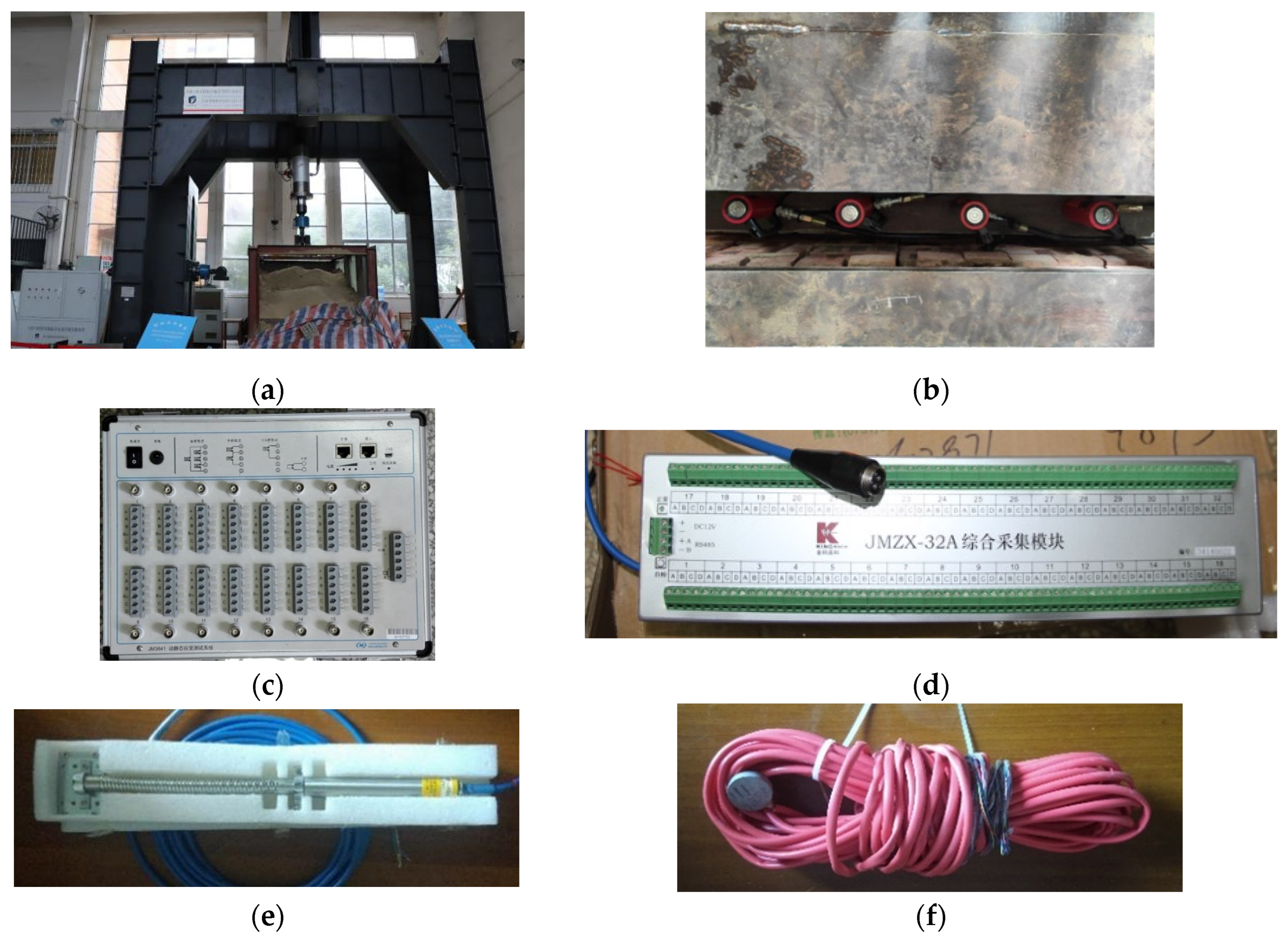
2.1. Test Equipment
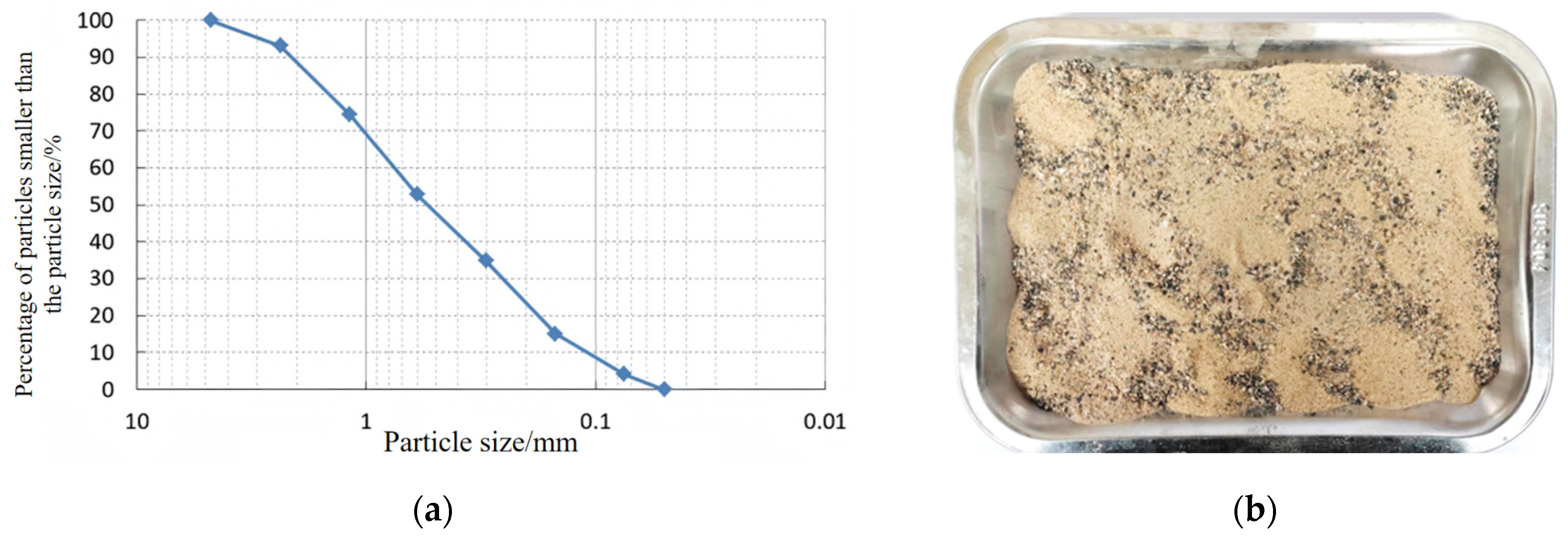
2.2. Test Materials
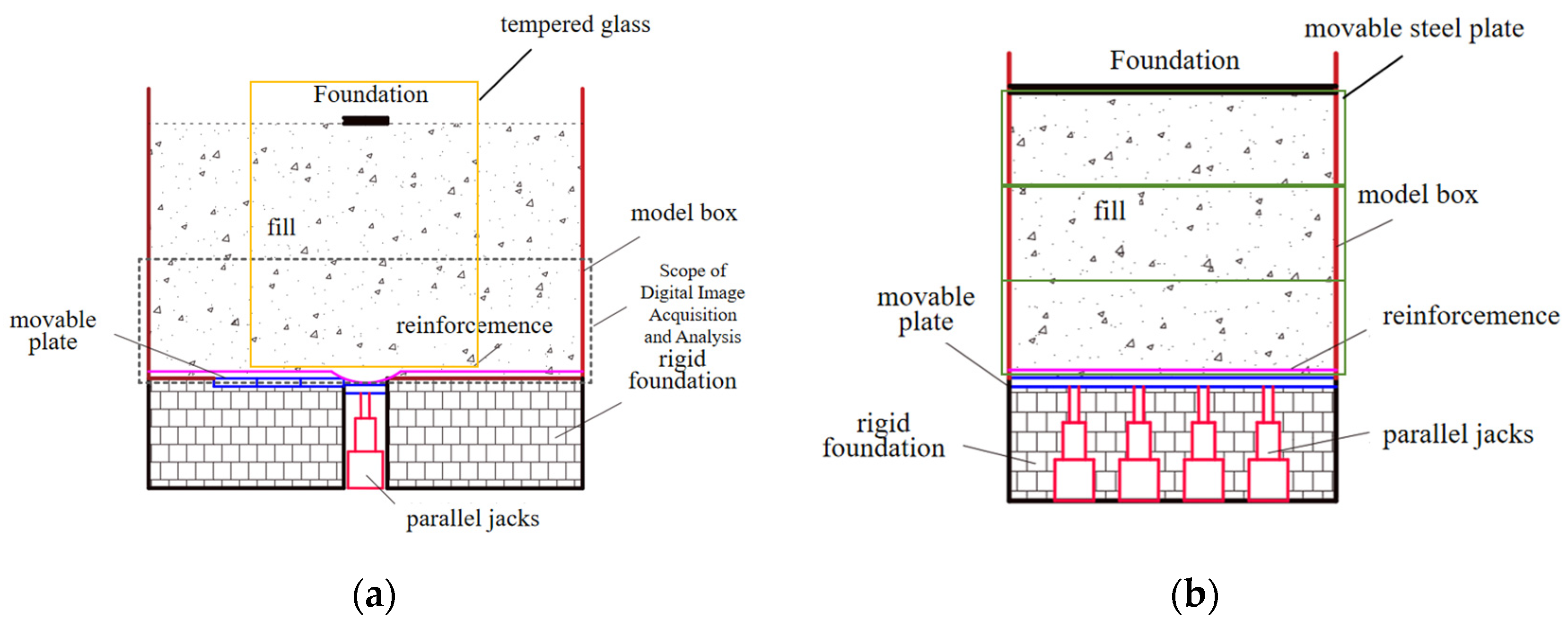
2.3. Test Process and Scheme
- (1)
- Equipment commissioning and installation: Before the test begins, the test components must be commissioned and the time on all computers synchronized, so that the measured test data are more accurate.
- (2)
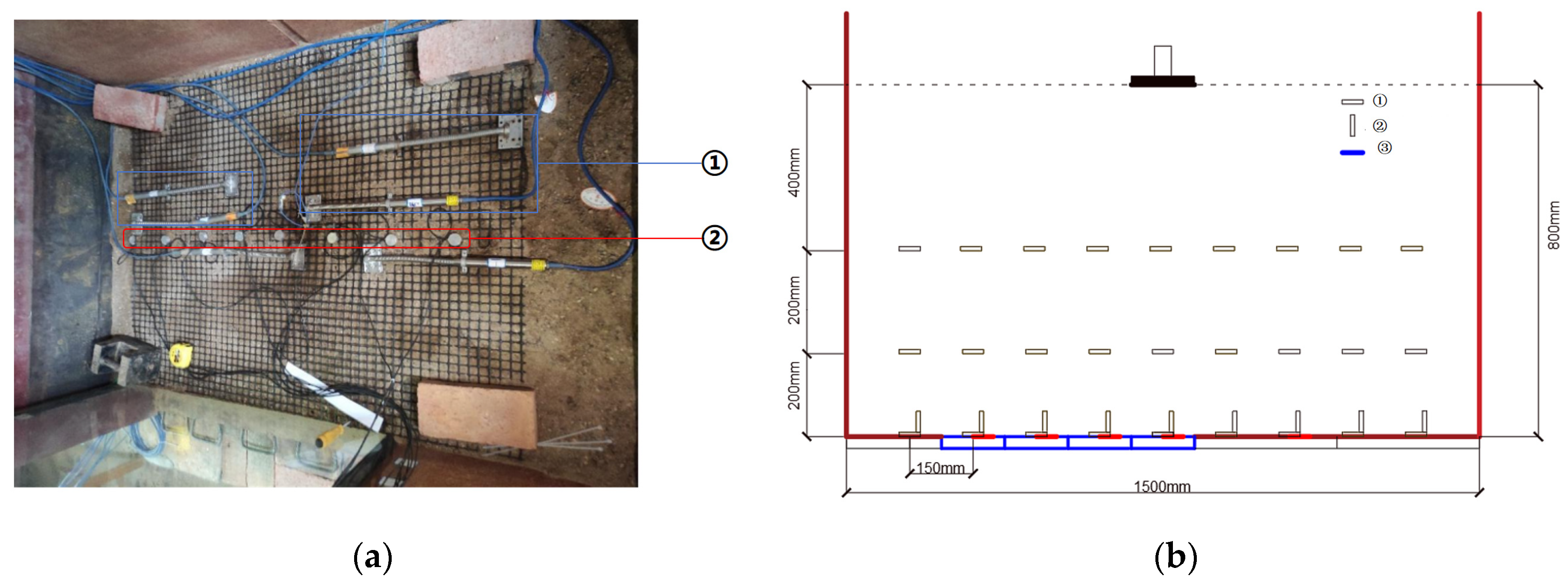
- Layout of test elements and geogrid installation: In order to reduce test error and simulate the actual state of the geogrid in the sand, a 20 mm thick layer of sand is first backfilled and compacted with a flat plate tamper before laying the geogrid. During the filling process, when reaching the preset height and position for placing the measurement elements, the surface is first leveled with a flat plate tamper, then a groove 20 mm deep is dug to embed the measurement elements, in order to minimize errors caused by manual operations. The layout of the monitoring elements and the overall arrangement are shown in Figure 4.
- (3)
- Layered filling and compaction of sand: Before filling, the model box is marked with scale graduations. Sand is filled in layers, with each layer having a thickness of 10 cm, and compacted using a 20 kg weight. Every 20 cm, the surface is leveled with a flat plate tamper to reduce error.
- (4)
- Loading: After the sand filling is complete, the soil surface is leveled, and loading is then initiated. A stepwise loading method is adopted, using the settlement stabilization approach—the next load level is applied only after the previous load has reached a stable state. A DJM-500 biaxial electro-hydraulic servo loading system is used to apply the vertical load.
3. Test Results and Discussion
3.1. Analysis of Model Test Results
3.1.1. Foundation Bearing Capacity Analysis
- (1)
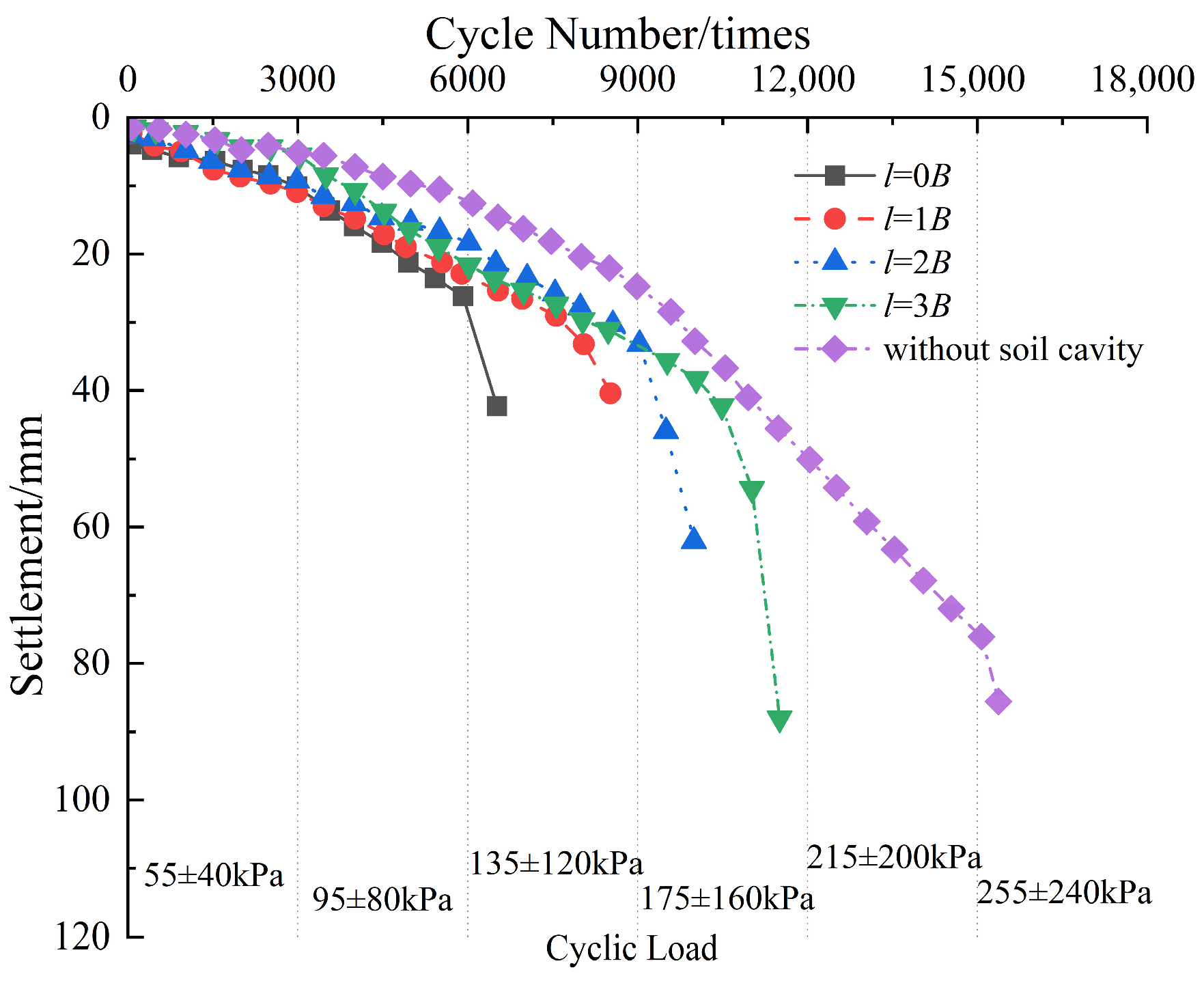
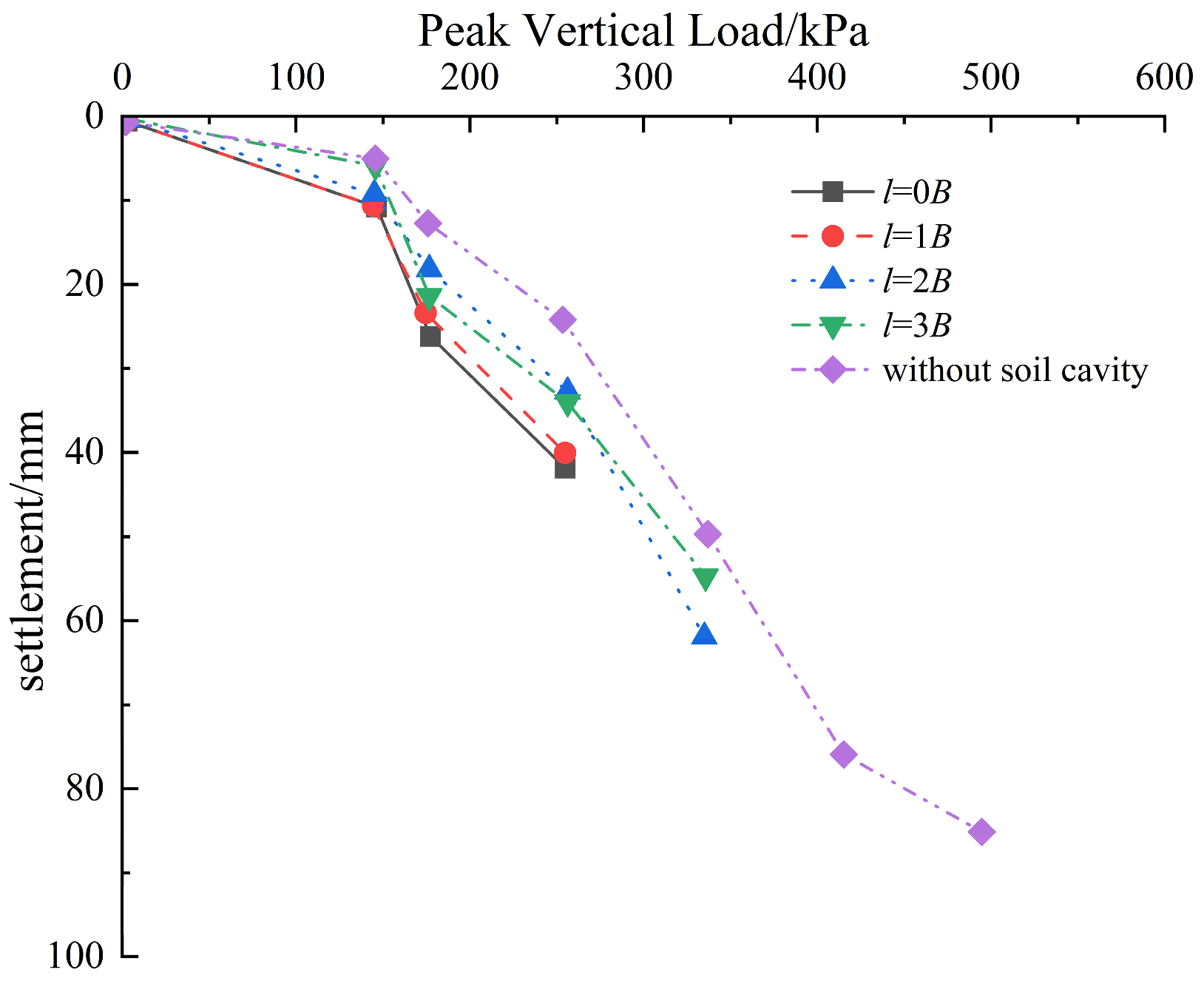
- Under cyclic dynamic loading, the distance between the soil cavity and the foundation center has a significant effect on the bearing capacity of the reinforced foundation. The bearing capacity is essentially the same when the cavity is directly beneath the foundation center and when it is at a distance of 1B from the center.
- (2)
- As the distance between the soil cavity and the foundation center increases, the ultimate bearing capacity of the foundation also increases; however, in all cases, their ultimate bearing capacities are lower than that of the foundation without a cavity. This indicates that, under cyclic dynamic loading, when the distance between the cavity and the foundation center exceeds 3B, the cavity still affects the foundation’s bearing capacity.
- (3)
- Under the same cyclic load and the same number of cycles (3000 cycles), the settlement rate is the fastest when l = 0B, and the slowest when there is no soil cavity.
3.1.2. Analysis of Dynamic Earth Pressure in the Foundation
3.1.3. Geogrid Strain Analysis
3.2. Digital Image Analysis of the Soil Cavity Collapse Zone
- (1)
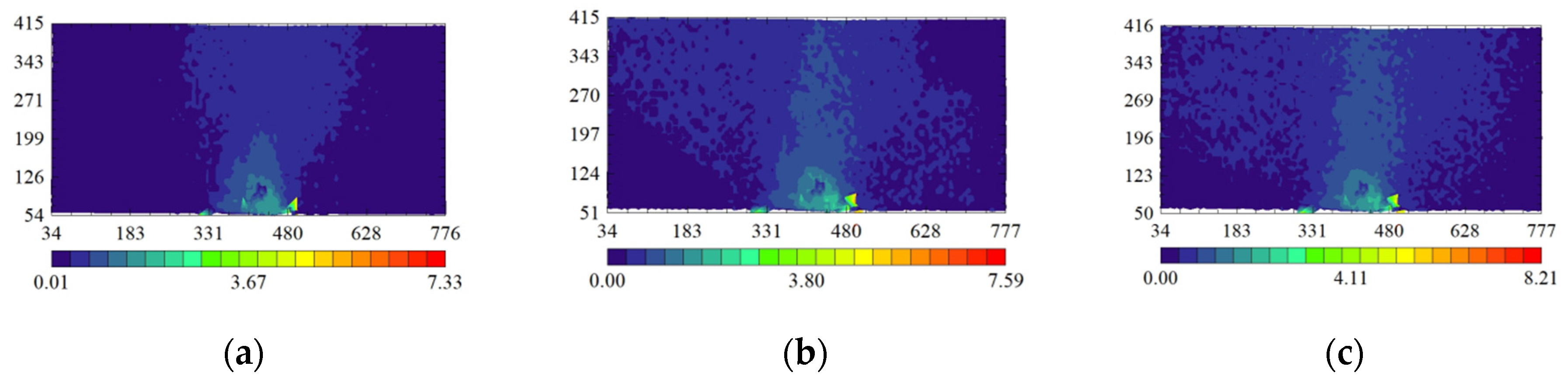
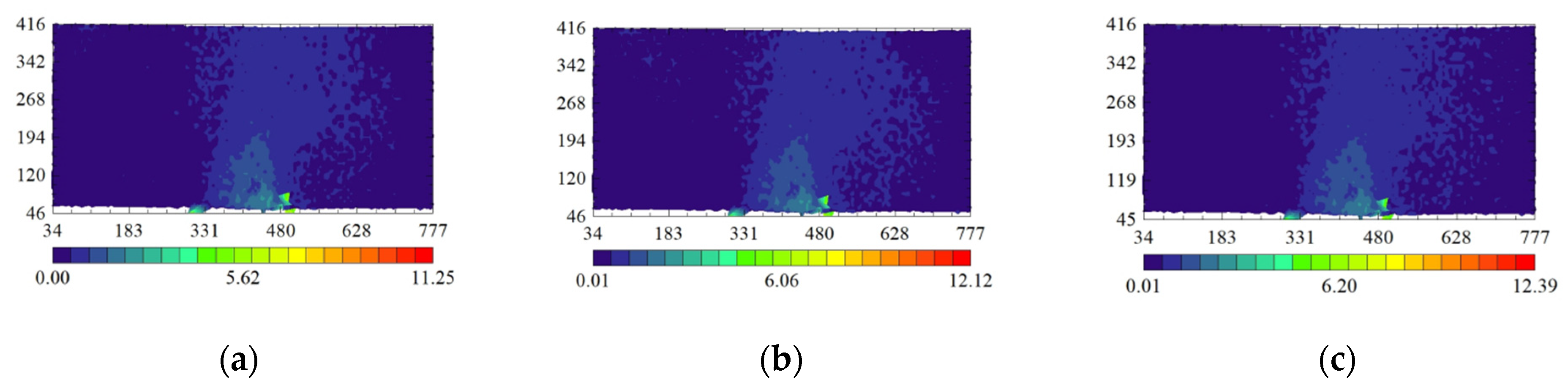
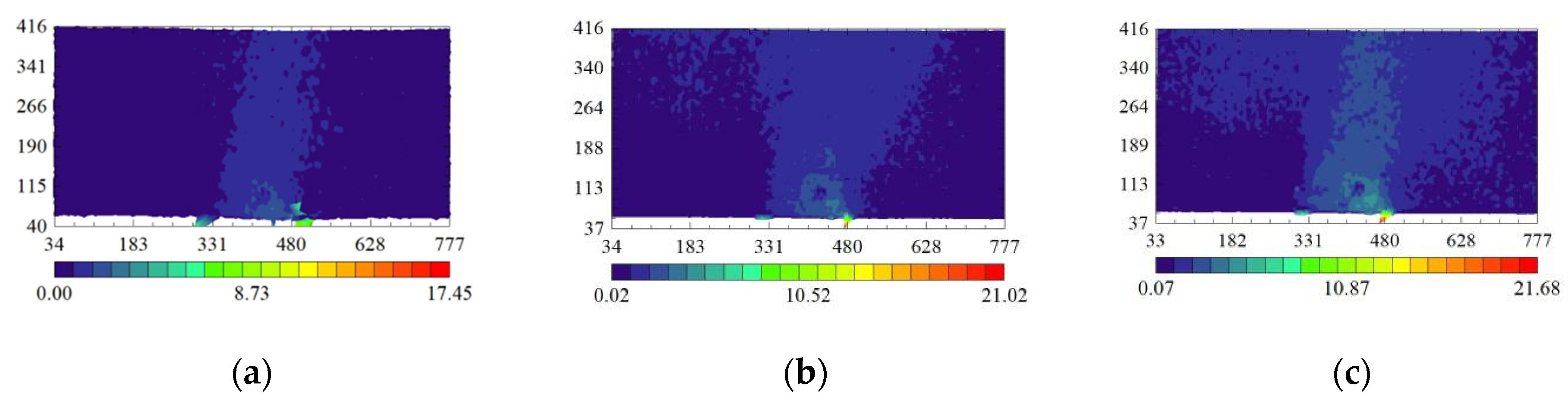
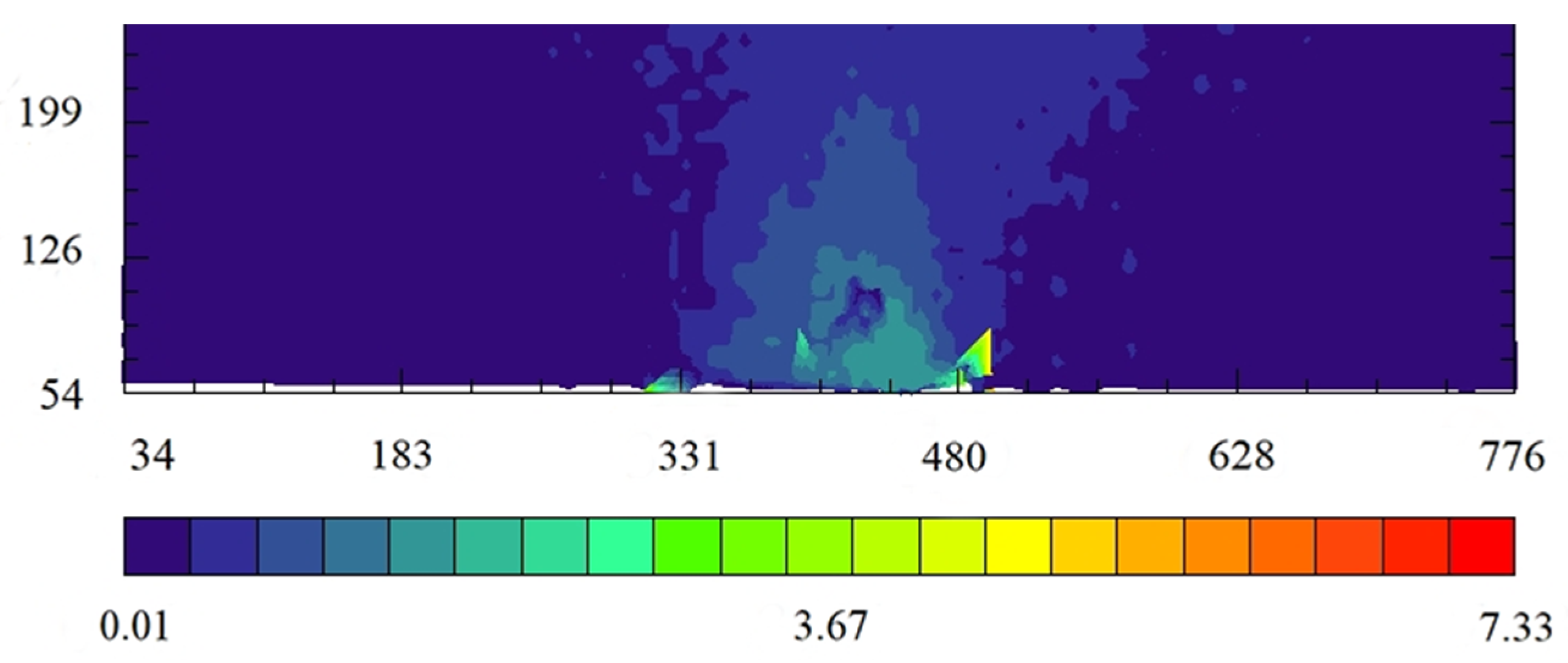
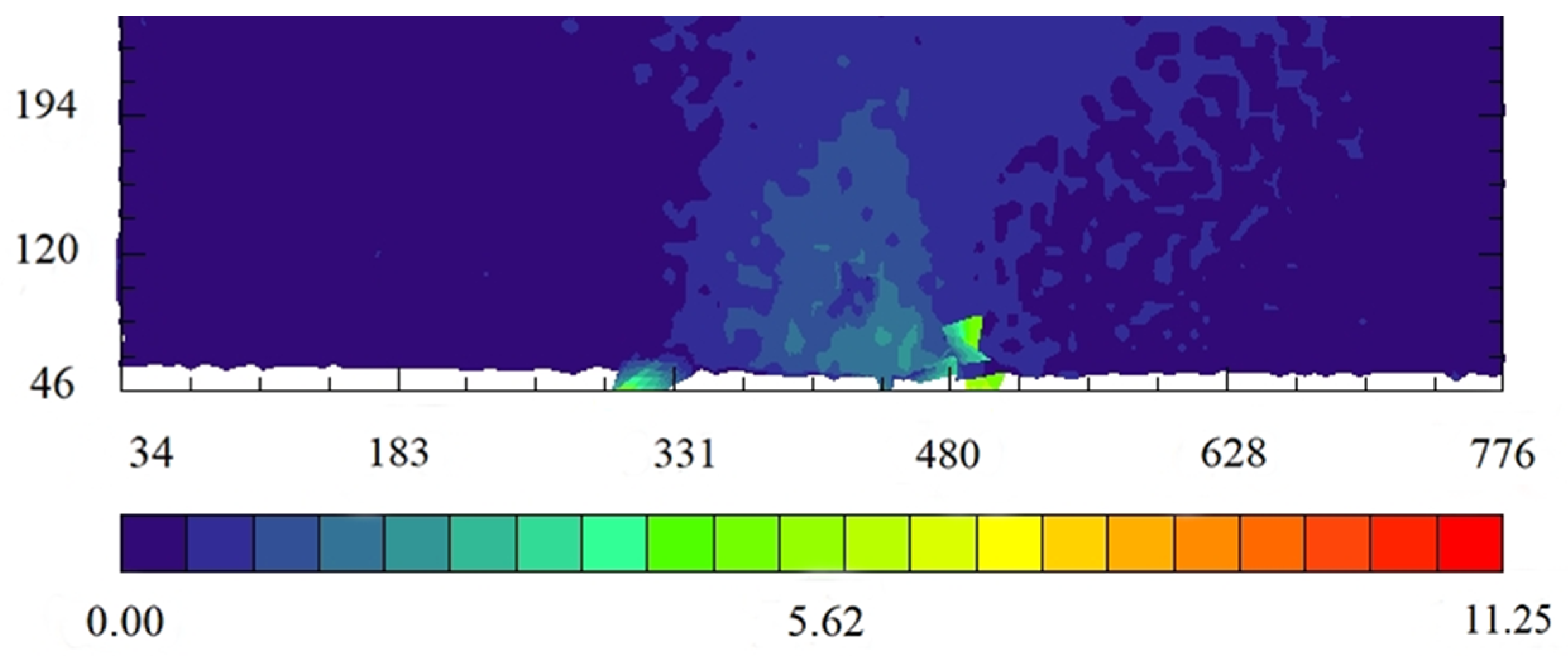
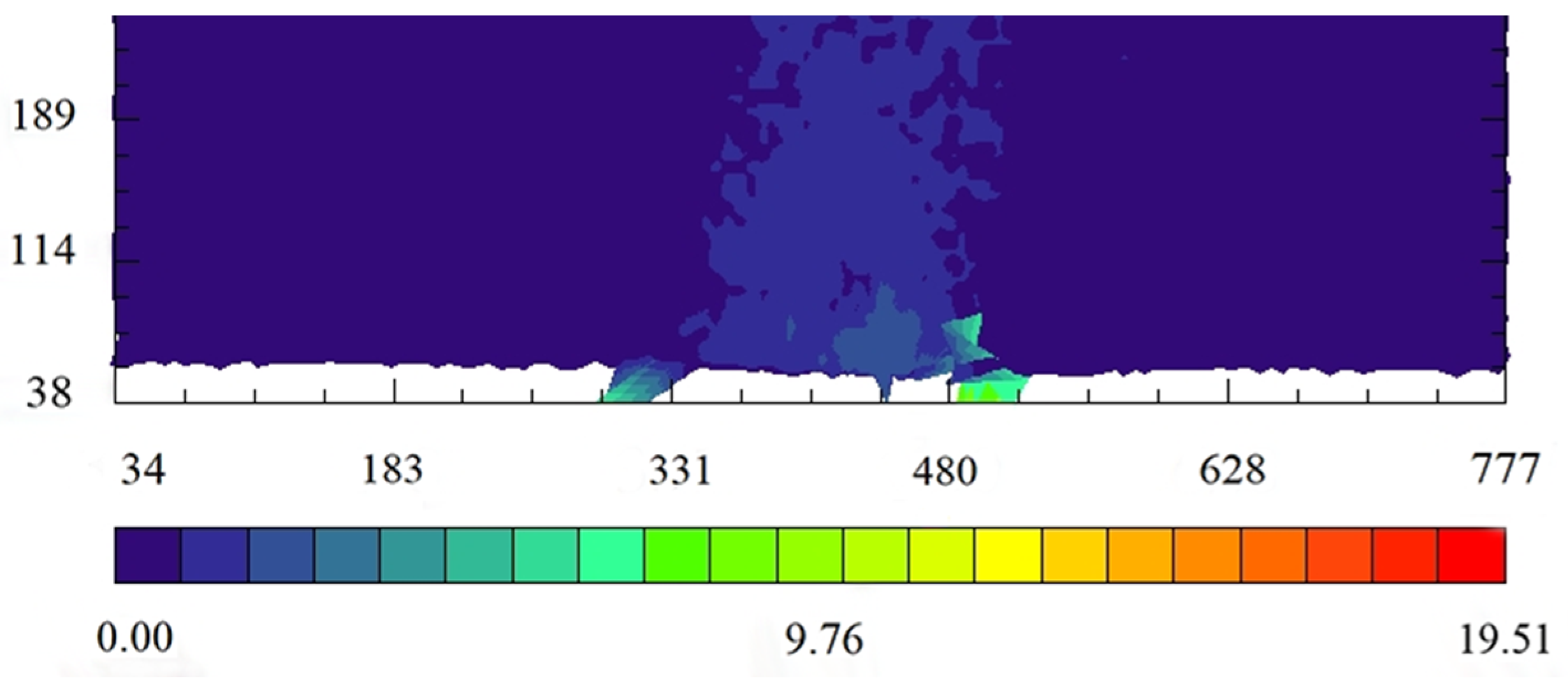
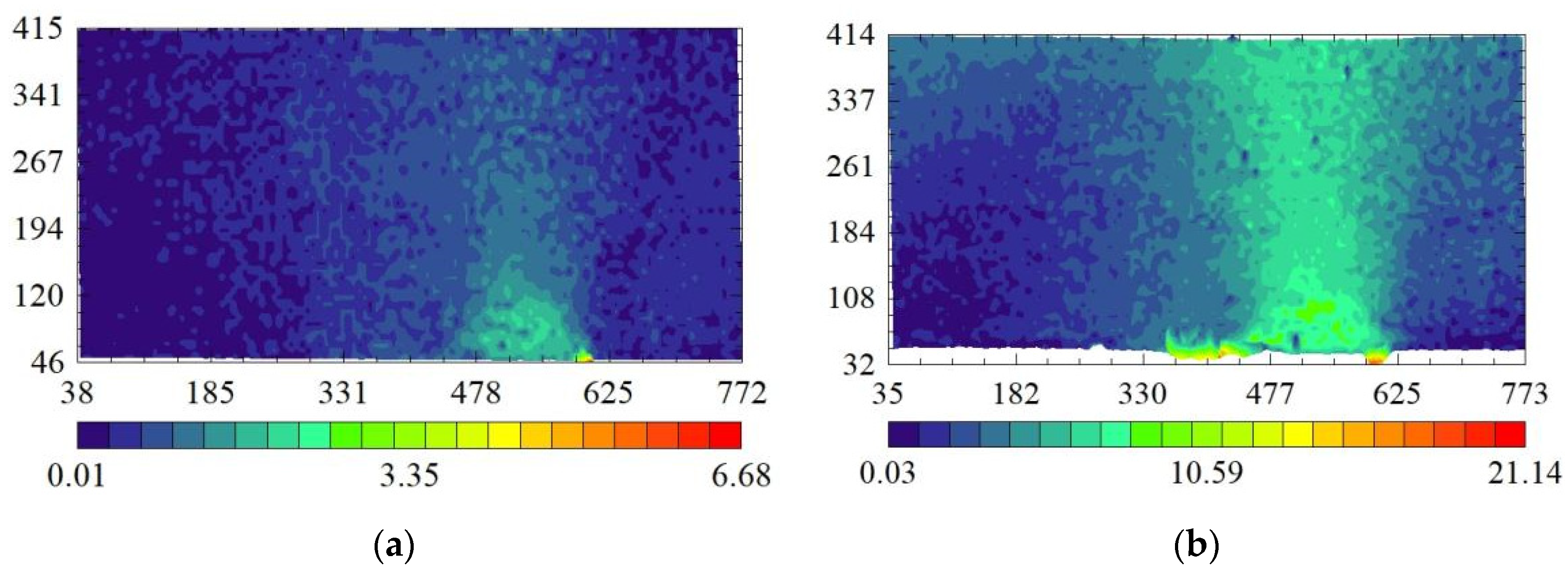
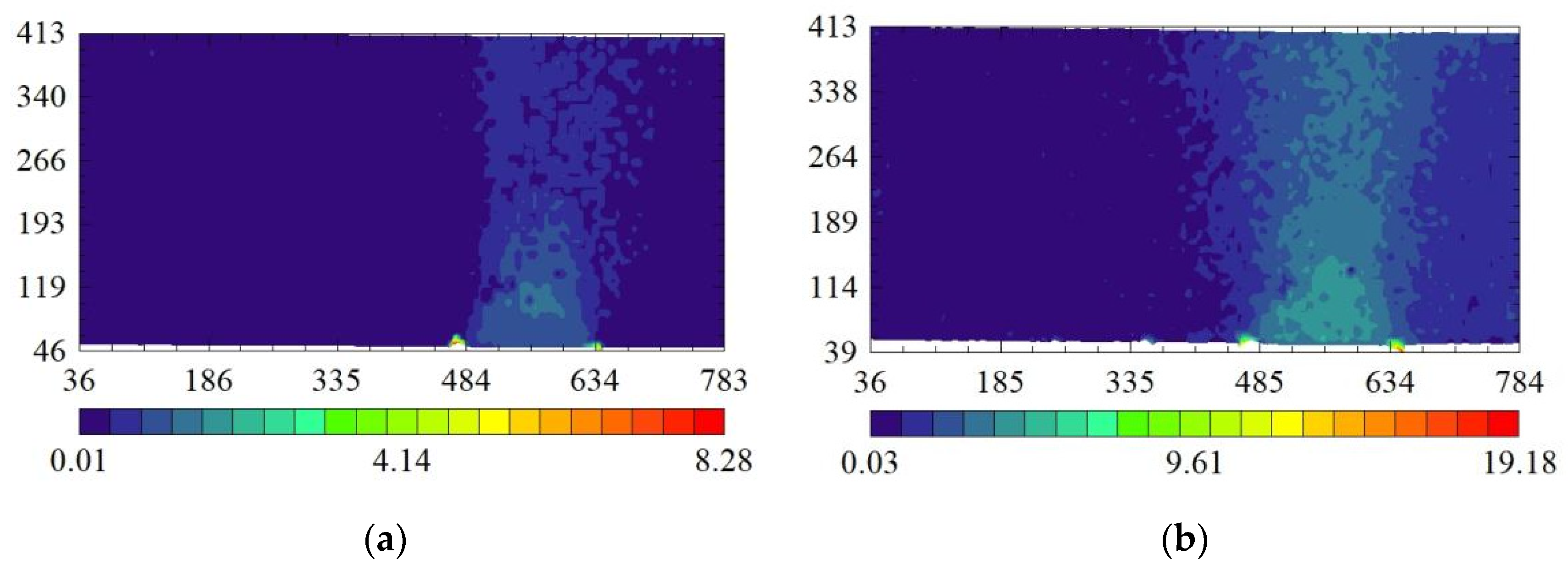
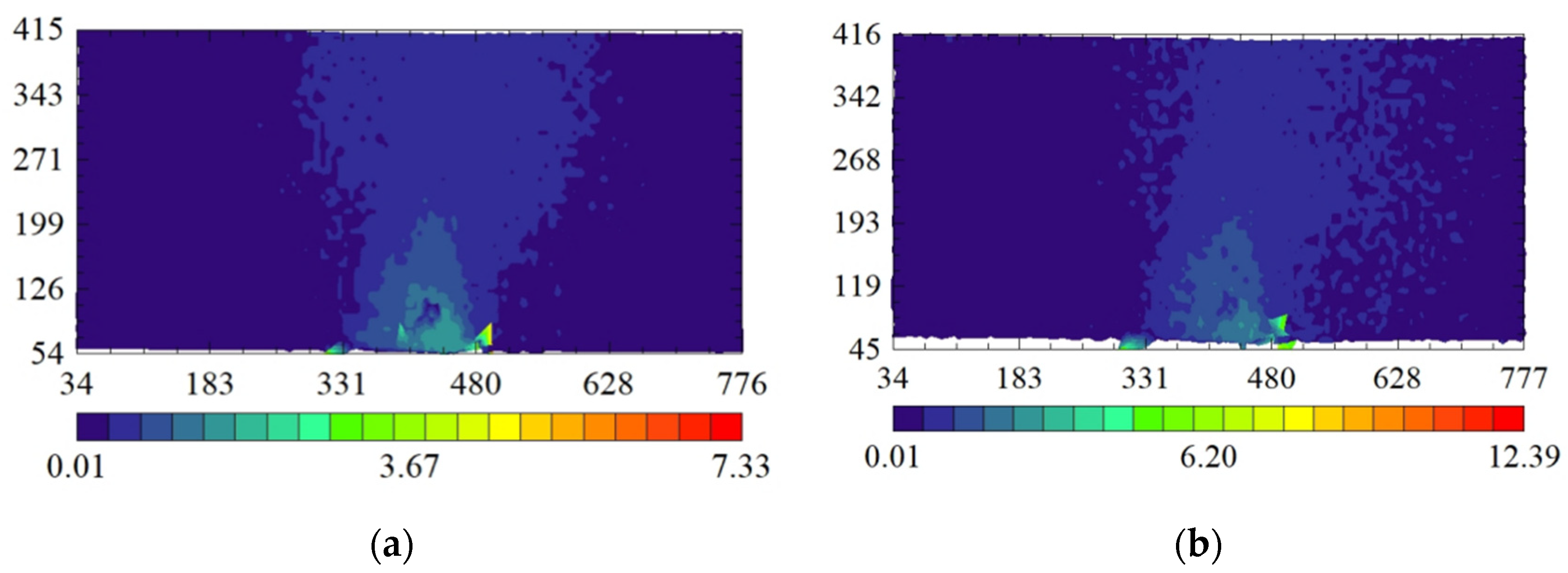
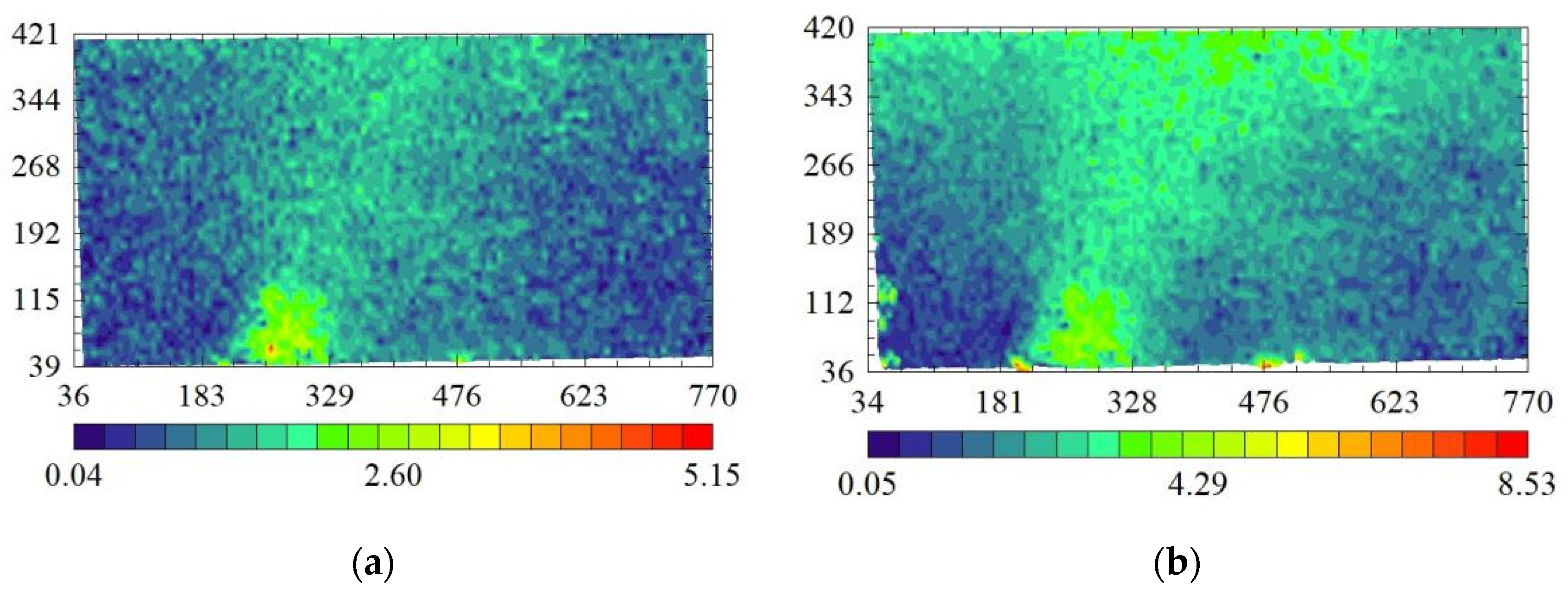
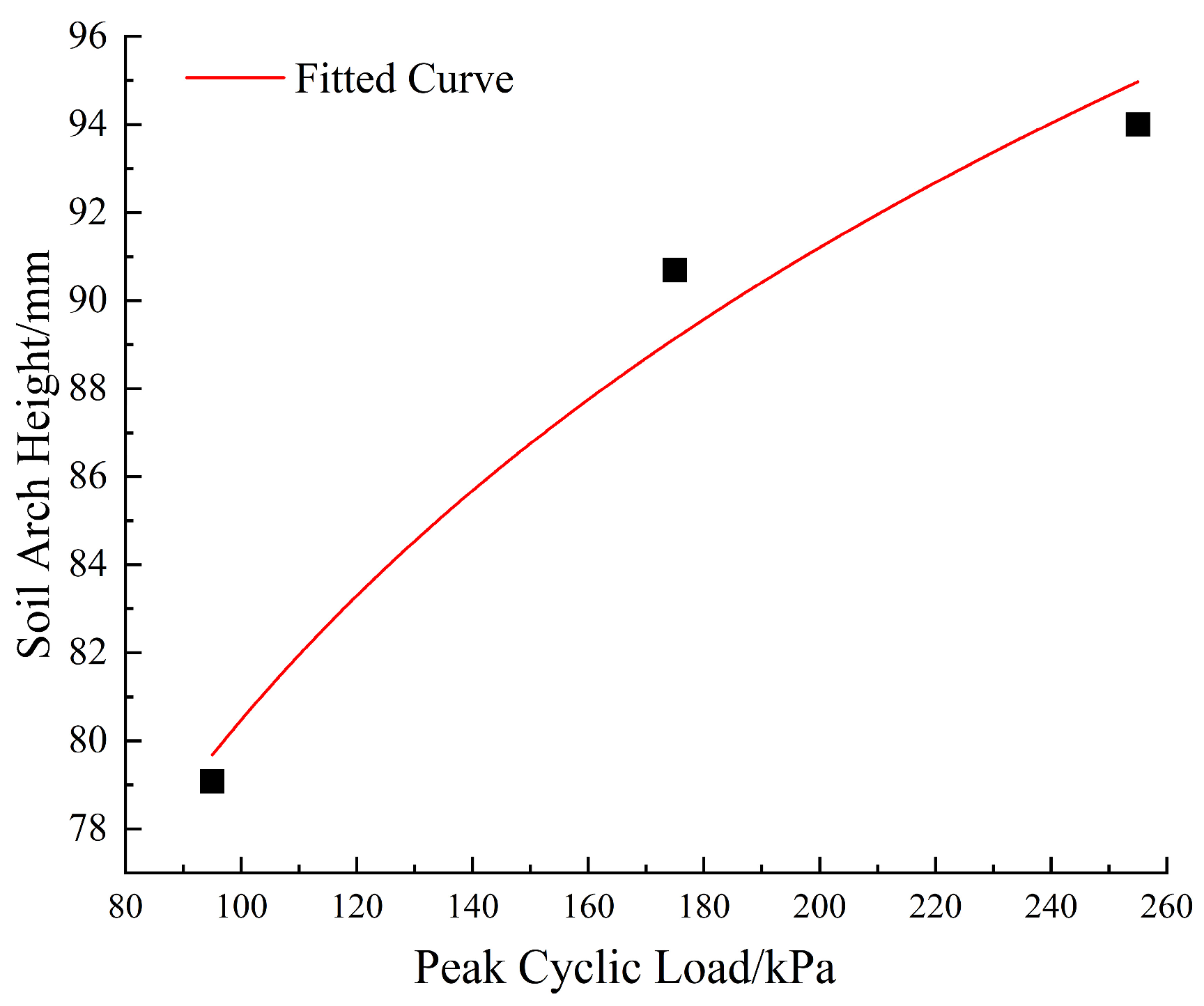
- Under the first level of loading, uneven settlement occurred at the bottom of the collapse zone. Combined observation of Figure 15 and Figure 18 clearly shows that the contour surfaces of soil displacement at different depths form three closed elliptical arch crowns, i.e., three soil arches are formed. Their heights from the inside out are 36.5 mm, 54.75 mm, and 146 mm, respectively. The main reason is that, after the first action of the cyclic load, the soil in the collapse zone becomes more compacted, creating the conditions necessary for the formation of arch feet.
- (2)
- Under the same loading level, the height and number of soil arches are independent of the number of loading cycles; they remain unchanged as the number of cycles increases. For example, under a cyclic load of 55 ± 40 kPa, the heights and numbers of the three soil arches are the same during the 1st, 1500th, and 3000th cycles.
- (3)
- (4)
- (5)
- When the soil cavity is not located directly beneath the foundation center, the ranges of the soil arches on either side of the cavity are not equal, and the difference in range decreases as the load increases. For instance, in Figure 15a, the horizontal distances from the outer arch foot to the middle arch foot are 37.25 mm on one side and 6.21 mm on the other.
3.3. Bearing Mechanism
3.3.1. Fitting Relationship of Cyclic Load and Soil Arch Height
3.3.2. Bearing Mechanism of Reinforced Foundation in Karst Cavity Collapse Zone Under Cyclic Dynamic Loading
4. Discussion
4.1. Key Research Findings
- (1)
- Position-dependent bearing characteristics of eccentric soil caves: Seven sets of comparative tests were carried out to explore the performance of reinforced foundations with soil caves at eccentric distances of 0B, 1B, 2B, and 3B (B = foundation width). The results show that the bearing capacity of foundations with soil caves at l = 0B and l = 1B is 175 kPa, while that at l = 2B and l = 3B reaches 255 kPa. This quantitative law clarifies how soil cave position regulates foundation bearing capacity, settlement, and earth pressure distribution.
- (2)
- Dynamic deformation mode under cyclic loading: Multi-stage cyclic dynamic loading (3000 cycles per level) was used to simulate traffic loads. Reinforced foundations affected by soil caves only undergo a short elastic compaction stage, followed by rapid deformation until failure. This differs from the three-stage deformation pattern under static loading, reflecting the unique response of foundations under actual service conditions.
- (3)
- Dynamic evolution of soil arches: Digital image analysis reveals three key characteristics of soil arches: under the same load level, their height and number remain unchanged with loading cycles; as load increases, soil arches fail progressively from the inside out (3 → 2 → 1); for eccentric soil caves, the scope of soil arches on both sides is asymmetric, and this asymmetry narrows with increasing load. The soil arching effect plays a dominant role in the initial stage of loading, effectively improving foundation bearing capacity.
- (4)
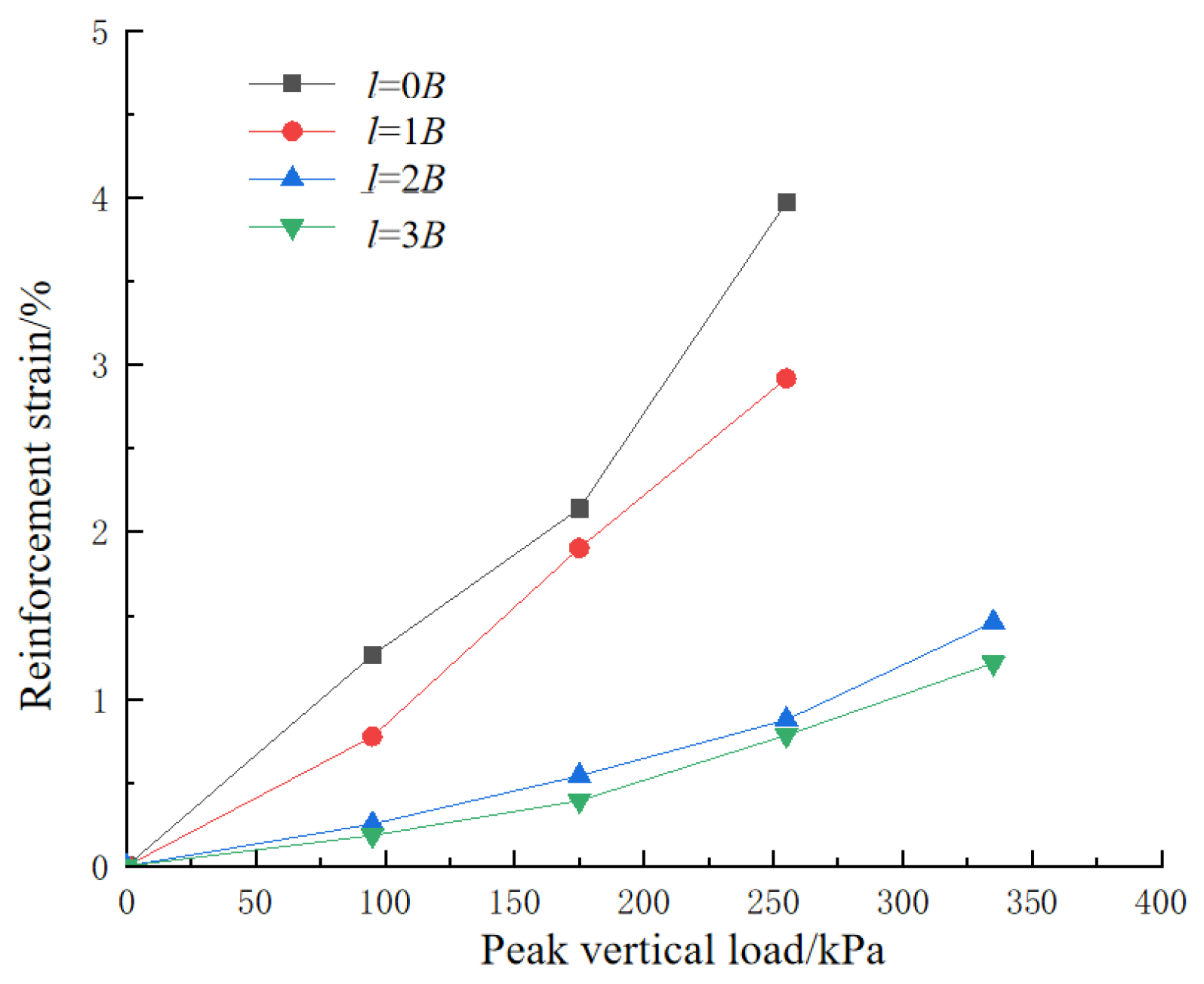
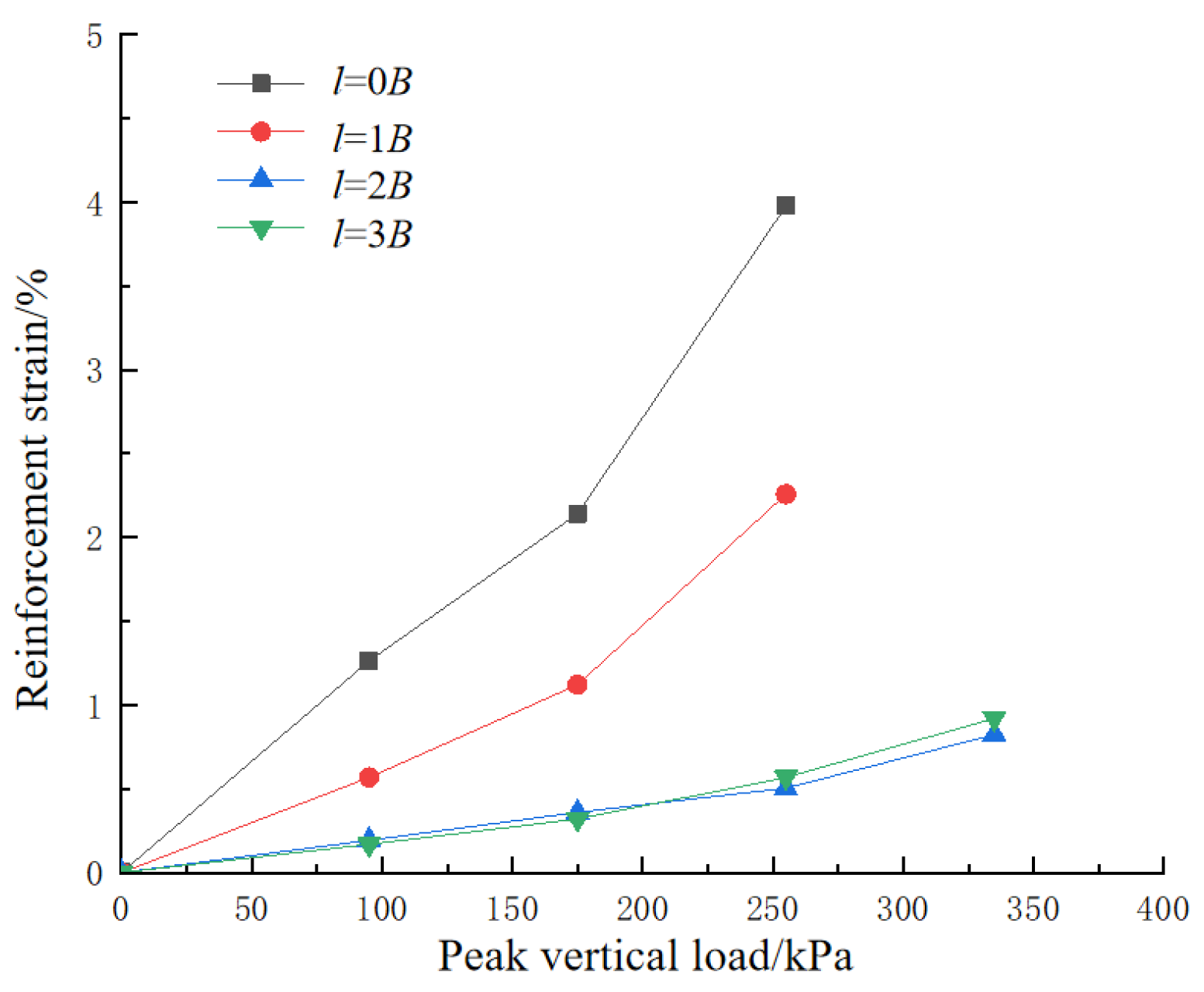
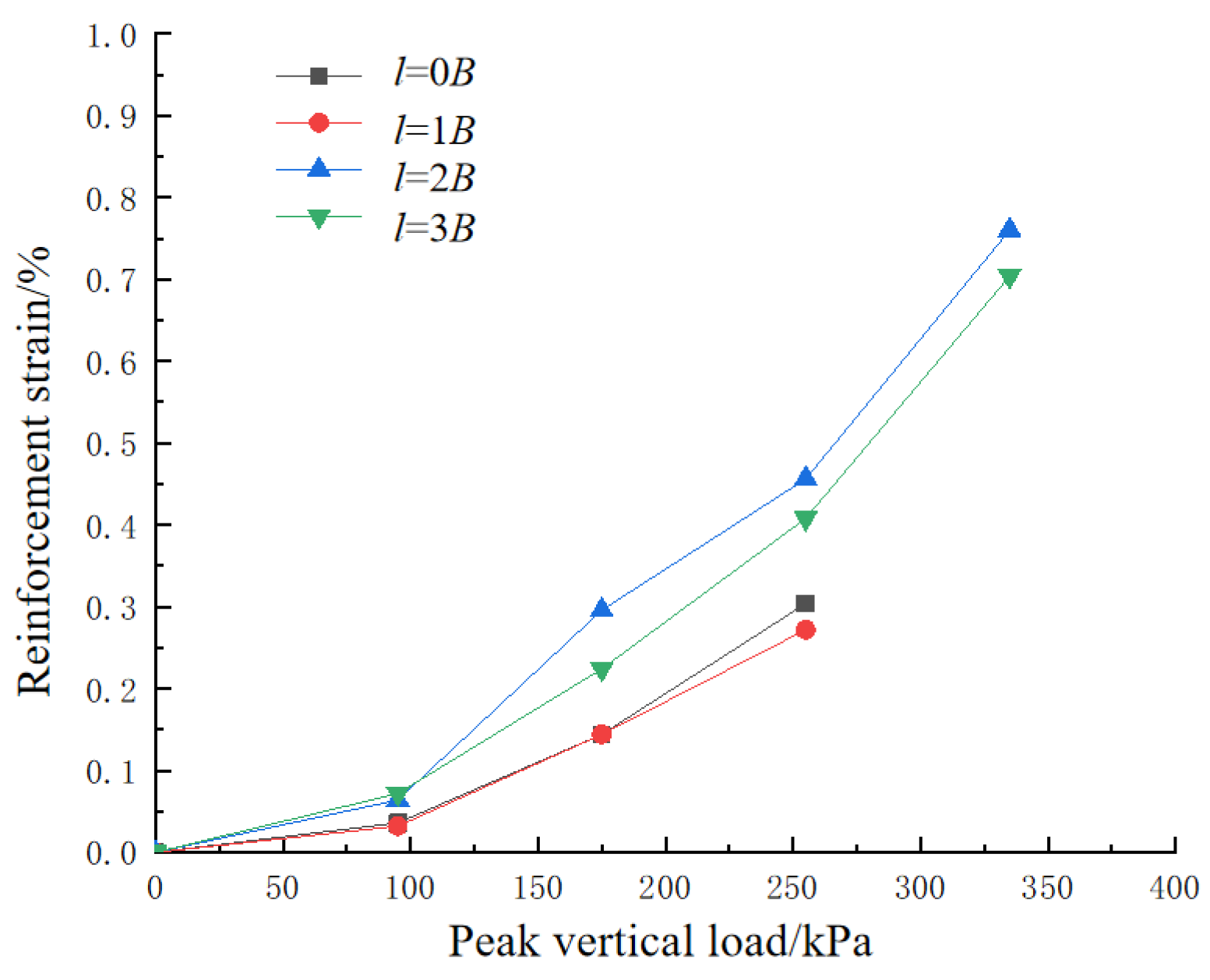
- Engineering application value: The 3B influence range of soil caves, 1B–2B critical distance for earth pressure mutation, and spatial distribution law of geogrid strain provide technical references for the design of subgrade and foundation engineering in karst areas. These results help optimize traditional design methods, balancing scientificity and economic efficiency, but further verification through field tests and numerical simulations is required before practical promotion.
4.2. Comparison with Existing Studies
4.3. Limitations and Future Research
- (1)
- Soil cave setup: Only the eccentric distribution of a single soil cave was simulated. The effects of the interaction of multiple soil caves and irregularly shaped soil caves (e.g., strip-shaped, irregular polygonal) in practical engineering were not considered, nor was the coupling effect of variations in soil cave burial depth involved.
- (2)
- Scale effect: Although a large-scale model box with dimensions of 1.5 m × 1.0 m × 1.3 m was adopted, multi-scale comparative tests were not conducted. When extrapolating the model test results to prototype engineering, further correction via numerical simulation or field tests is required to ensure accuracy.
- (3)
- Environmental factors: The influences of environmental factors such as groundwater level fluctuation and temperature variation on soil cave stability, soil strength and geogrid-soil interface behavior were not considered, leading to a need for further improvement in the consistency of the test results with the complex environments of practical engineering.
- (1)
- Conducting tests on the interaction of multiple soil caves: Working conditions of multiple soil caves with different spacings and shapes will be designed to explore the interaction mechanism between soil caves and clarify the critical influence range and reinforcement schemes in the multi-soil cave scenario.
- (2)
- Carrying out multi-scale comparative tests: Model tests with three similarity ratios (1:10, 1:20, 1:30) will be designed to quantify the scale effect coefficient and establish a correction formula for extrapolating model test results to prototype engineering.
- (3)
- Expanding numerical simulation and exploring micro-mechanisms: Prototype-scale 3D numerical models will be established using FLAC3D or PLAXIS, with the soil creep and geogrid aging models coupled to simulate the long-term service performance of foundations and verify the long-term validity of the results from short-term model tests. In addition, CT scanning and Particle Flow Code (PFC) simulation will be combined to analyze the evolution laws of soil particle displacement and the interlocking behavior at the geogrid-soil interface from a micro perspective, so as to deepen the understanding of the coupling mechanism between the soil arching effect and the geogrid tensile membrane effect.
5. Conclusions
- (1)
- Under cyclic dynamic loading, the settlement of reinforced foundations affected by soil cavity collapse increases with the number of cycles. Their bearing capacity is significantly influenced by the presence of the cavity. As the cavity moves farther away from the center of the foundation, the ultimate bearing capacity of the foundation increases; however, in all cases, their ultimate bearing capacities remain lower than that of foundations without cavities. It can therefore be determined that, under cyclic dynamic loading, when the distance between the cavity center and the foundation center exceeds 3B, the cavity still affects the foundation’s bearing capacity.
- (2)
- Under the same cyclic load, different working conditions exhibit different settlement rates at the same number of cycles (e.g., 3000 cycles). The unreinforced foundation has the smallest settlement rate, while the foundation with a cavity directly beneath the center experiences the largest settlement rate. For reinforced foundations under the influence of karst soil cavities, the P–s curve under cyclic loading exhibits only a very short elastic compression stage before undergoing rapid deformation until failure.
- (3)
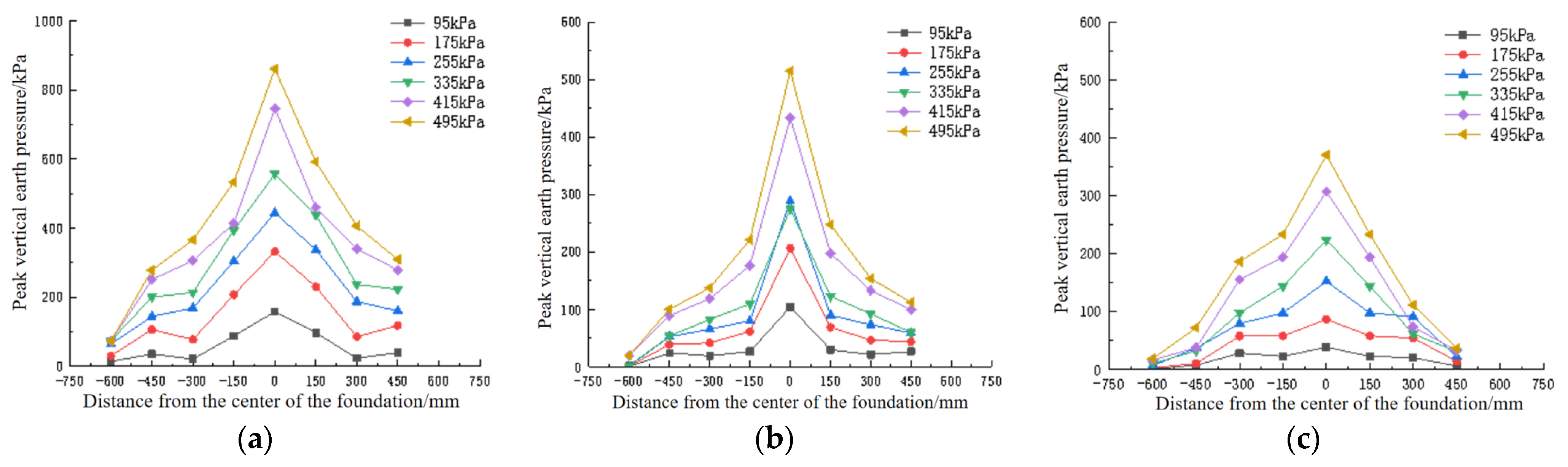
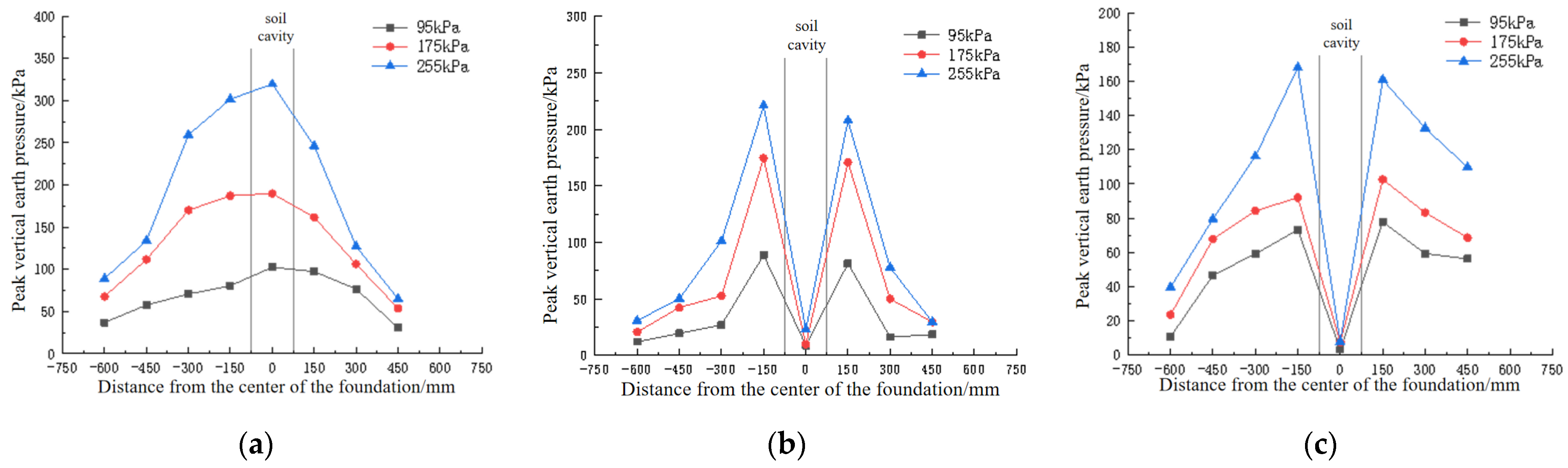
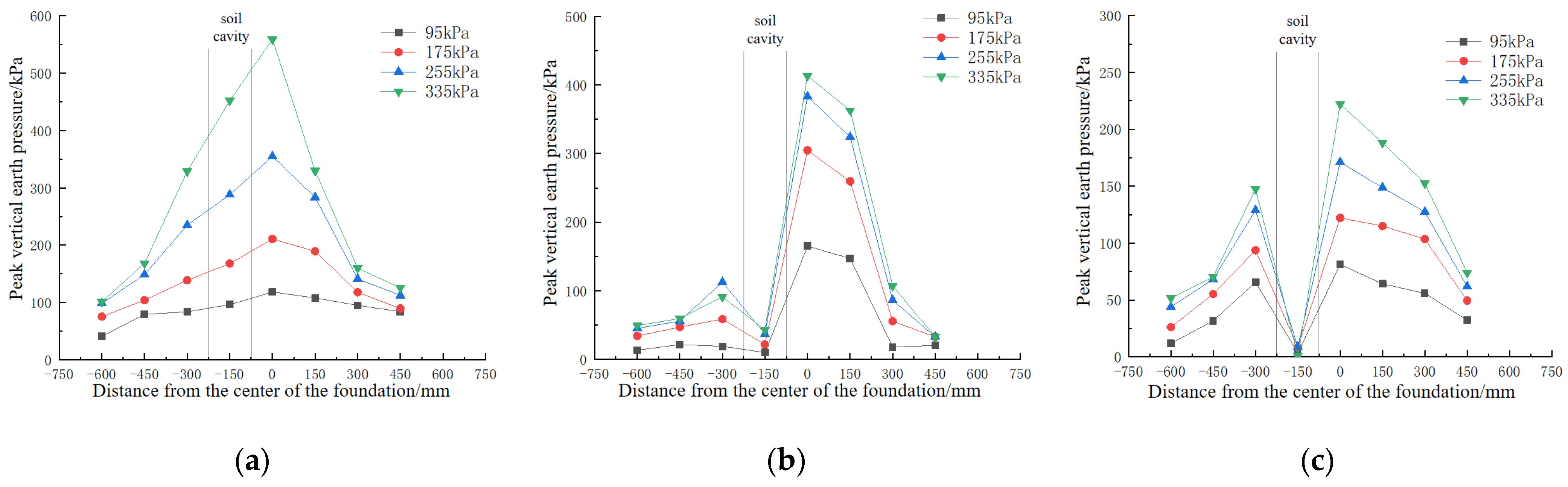
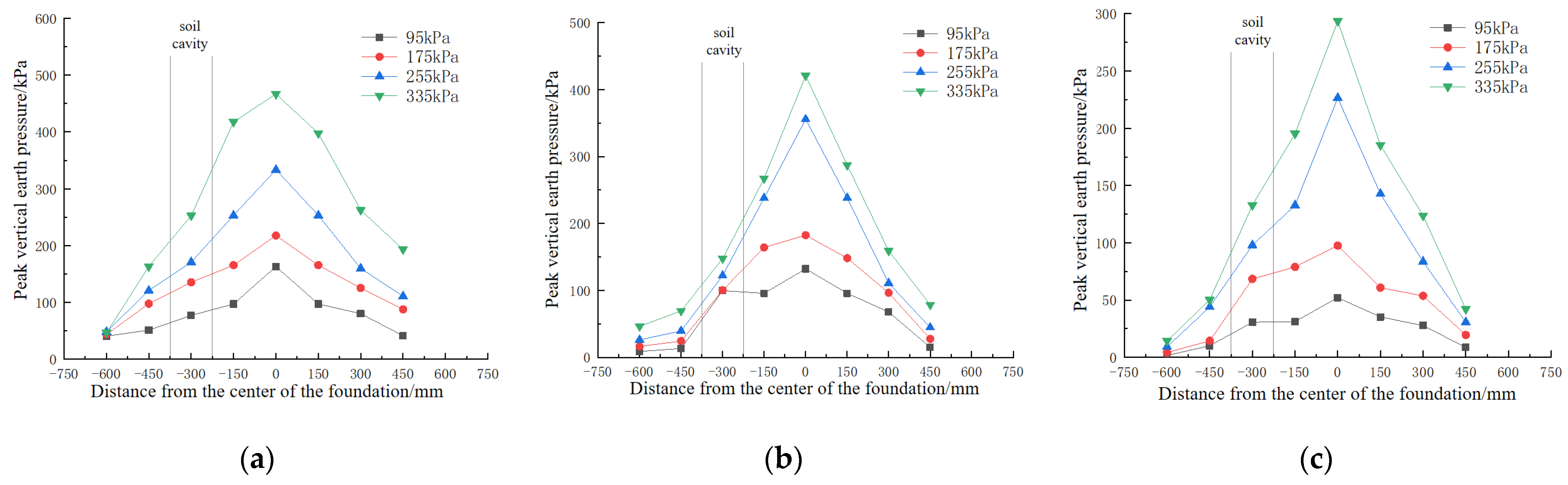
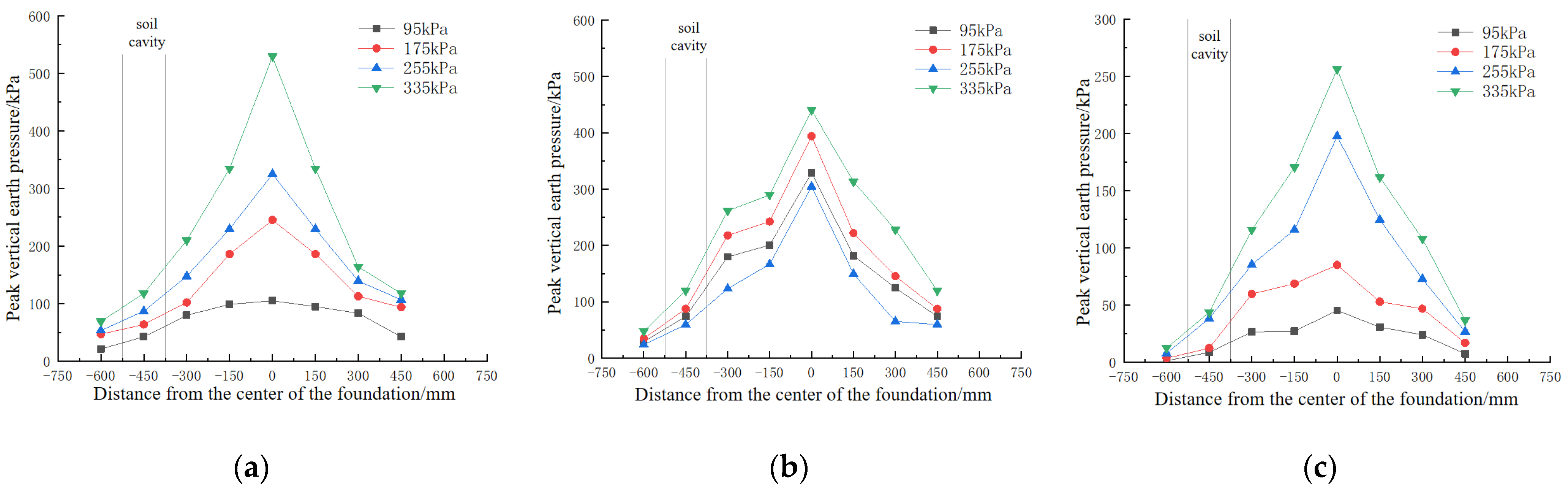
- Based on the conditions of this model test, under cyclic dynamic loading, there exists a critical spacing value between 1B and 2B for the cavity center located at a depth of 800 mm from the foundation center. When the spacing exceeds this critical value, the vertical earth pressure distribution in the horizontal direction within the collapse zone is the same as that for foundations without cavities. When the spacing is smaller than this critical value, the vertical earth pressure in the collapse zone experiences a sudden drop.
- (4)
- An in-depth analysis of the displacement field of the reinforced foundation reveals that, under the same cyclic load level, the height and number of soil arches are independent of the number of cycles and remain unchanged as the cycle count increases. When the cavity is not located directly beneath the foundation, the range of soil arches on either side of the cavity is unequal, and this difference decreases as the load increases. At the initial stage of cyclic loading application, the reinforcement immediately comes into play, forming multiple soil arches—indicating that the soil arching effect has the greatest influence on the bearing capacity of the reinforced foundation.
Author Contributions
Funding
Data Availability Statement
Conflicts of Interest
References
- Wei, Y.; Li, Z.; Hang, B.; Gong, X.; Wu, X. Review and analysis of collapse mechanisms of karst soil caves under positive and negative pressure effects. J. Sichuan Geol. 2023, 43, 472–475+482. (In Chinese) [Google Scholar] [CrossRef]
- Zhou, Y.B.; Zhou, L.; Duan, Z.Q.; Ke, F.C.; Liu, H. Analysis of the influence of the distribution and development of soil caves on the stability of high-voltage transmission tower foundations. Adv. Civ. Eng. 2022, 2022, 2856947. [Google Scholar] [CrossRef]
- Cao, R.; Feng, S. Detection methods for unfavorable geology and soil caves before grouting in karst terrains. Soil Mech. Found. Eng. 2021, 58, 308–313. [Google Scholar] [CrossRef]
- Huang, T. Introduction to diseases of subgrade in karst road sections and corresponding foundation treatment. Henan Build. Mater. 2018, 4, 386–388. (In Chinese) [Google Scholar] [CrossRef]
- Hong, R.; Jian, W.; Chen, X. Response of covered karst soil caves to groundwater level fluctuations and their collapse evolution process. J. Eng. Geol. 2023, 31, 240–247. (In Chinese) [Google Scholar] [CrossRef]
- Wu, D.; Li, A.; Li, D.; Jia, L.; Wei, X.; Wu, J. Simplified design method for reinforced anti-collapse treatment of karst subgrade. Carsol. Sin. 2023, 42, 538–547. (In Chinese) [Google Scholar]
- Wei, Y.; Sun, S. Study on formation and expansion condition of hidden soil cavity under condition of groundwater exploitation in karst areas. Environ. Earth Sci. 2017, 76, 282. [Google Scholar] [CrossRef]
- Wan, L.; Chen, F.; Zou, W. Study on bearing mechanism of reinforced subgrade under the influence of karst collapse. J. Yangtze River Sci. Res. Inst. 2017, 34, 56–62. (In Chinese) [Google Scholar]
- Liu, X.; Wu, C.; Li, L. Study on horizontal reinforcement treatment methods and deformation characteristics in collapse areas. J. China Foreign Highw. 2016, 36, 37–41. (In Chinese) [Google Scholar] [CrossRef]
- Zhang, D.; Xue, Y.; Luo, Q.; Liu, W.; Zheng, Y. Mechanics and design method of horizontal reinforcement for strengthening karst subgrades. J. Southwest Jiaotong Univ. 2019, 54, 336–342. (In Chinese) [Google Scholar]
- Su, T.; Hong, R.; Jian, W. Numerical simulation and prediction of disaster processes in covered karst soil caves. J. Nat. Disasters 2018, 27, 179–187. (In Chinese) [Google Scholar] [CrossRef]
- He, W.; Li, K.; Wang, F. Large-scale model tests and design theory research on reinforced cushion layer for preventing karst collapse. Chin. J. Rock Mech. Eng. 2016, 35, 980–988. (In Chinese) [Google Scholar] [CrossRef]
- Chen, H.; Guo, R.; Chen, X. Vacuum suction-induced collapse model of covered karst soil caves and analysis of influencing factors. J. Eng. Geol. 2022, 30, 1284–1291. (In Chinese) [Google Scholar] [CrossRef]
- Lees, A.S.; Clausen, J. Strength envelope of granular soil stabilized by multi-axial geogrid in large triaxial tests. Can. Geotech. J. 2020, 57, 448–452. [Google Scholar] [CrossRef]
- Fox, B.P.; Soliman, H.; Marcotte, B.A.; Hammerlindl, A.; Wayne, M.H.; Lees, A.S.; Kawalec, J.; Fleming, I. Large-Scale Plate Load Tests of Geogrid-Stabilized Aggregate Layers over Weak Clayey Subgrade. Geotech. Test. J. 2026, 49, 185–208. [Google Scholar] [CrossRef]
- Zhou, W.; Lei, M. Summary editorial for karst hydrogeology: Advances in karst collapse studies. Environ. Earth Sci. 2018, 77, 803. [Google Scholar] [CrossRef]
- Duan, C.; Yan, C.; Xu, B.; Zhou, Y. Crosshole seismic CT data field experiments and interpretation for karst caves in deep foundations. Eng. Geol. 2017, 228, 180–196. [Google Scholar] [CrossRef]
- Ponomaryov, A.; Zolotozubov, D. Several approaches for the design of reinforced bases on karst areas. Geotext. Geomembr. 2014, 42, 48–51. [Google Scholar] [CrossRef]
- Kempton, G.T.; Lawson, C.R.; Jones, C.J.F.P.; Demerdash, M. The use of geosynthetics to prevent the structural collapse of fills over areas prone to subsidence. Geosynthetics: Applications, design and construction. In Proceedings of the 1st European Geosynthetics Conference, Maastricht, The Netherlands, 30 September–2 October 1996; pp. 317–324. [Google Scholar]
- Huckert, A.; Briançon, L.; Villard, P.; Garcin, P. Load transfer mechanisms in geotextile-reinforced embankments overlying voids: Experimental and analytical approaches. Geotext. Geomembr. 2016, 44, 442–456. [Google Scholar] [CrossRef]
- Bridle, R.J.; Jenner, C.G. Polymer geogrids for bridging mining voids. Geosynth. Int. 1997, 4, 33–50. [Google Scholar] [CrossRef]
- Giroud, J.P. Determination of geosynthetic strain due to deflection. Geosynth. Int. 1995, 2, 635–641. [Google Scholar] [CrossRef]
- Briançon, L.; Nancey, A.; Geosynthetics, B.; Caquel, S.A.F.; Villard, P. New technology for strain measurements in soil and the survey of reinforced earth constructions. In Proceedings of EUROGEO; EGS: Lausanne, Switzerland, 2004; Volume 3, pp. 471–476. [Google Scholar]
- Briançon, L.; Villard, P. Design of geosynthetic-reinforced platforms spanning localized sinkholes. Geotext. Geomembr. 2008, 26, 416–428. [Google Scholar] [CrossRef]
- Le, V.; Huang, J.; Bin-Shafique, S.; Papagiannakis, A.T. Model tests of subsidence of the reinforced soil over void. In Proceedings of the Geotechnical Special Publication (GSP); ASCE: Reston, VA, USA, 2014; Volume 238, pp. 312–321. [Google Scholar]
- Schwerdt, S.; Naciri, O.; Jenner, C.G. Performance of aggregates in geogrid-reinforced soils used for protection against surface collapse into underground voids. In Proceedings of the EuroGeo 3: Geosyntetics Conference, Munich, Germany, 1–3 March 2004; pp. 483–487. [Google Scholar]
- Sireesh, S.; Sitharam, T.G.; Dash, S.K. Bearing capacity of circular footing on geocell–sand mattress overlying clay bed with void. Geotext. Geomembr. 2009, 27, 89–98. [Google Scholar] [CrossRef]
- Jiang, X.; Lei, M.; Li, Y.; Dai, J.; Meng, Y. Model test study on stability of rock-filled subgrade under the action of karst water. Carsol. Sin. 2005, 2, 96–102. (In Chinese) [Google Scholar]
- Zhu, B.; Gao, D.; Li, J.-C.; Chen, Y.-M. Model tests on interaction between soil and geosynthetics subjected to localized subsidence in landfills. J. Zhejiang Univ. Sci. A 2012, 13, 433–444. [Google Scholar] [CrossRef]
- Wang, F.L. Theoretical and Experimental Study on Prevention of Potential Collapse of Karst Subgrade Using Multi-Layer Geosynthetic Reinforcement. Master’s Thesis, Changsha University of Science and Technology, Changsha, China, 2014. Available online: https://kns.cnki.net/kcms2/article/abstract?v=_mmQV6m3IPkjJ4gXCwvAM7fcMH7o3fh03x-i4y0sppte_rzAooK8MIF7CJEGSApAnKq9eO5Am54mR9GuXyIdrYpxLCeadUzcv9nZ6q97tU6p7iTo79IPrImCo0HEVUXHuRc9UpI7aGdOPOpXsXyO9PjzMoiD6CYlRpLANdOE_S7vkPNCym9QJg==&uniplatform=NZKPT&language=CHS (accessed on 1 January 2021). (In Chinese)
- He, W.; Li, K.; Wang, F.; Yin, P. Large-scale model experimental study on load distribution behavior of multi-layer reinforced cushion over karst collapse in subgrade. Hydrogeol. Eng. Geol. 2016, 43, 79–84. (In Chinese) [Google Scholar] [CrossRef]
- Song, G. Study on Catastrophic Regularity of Ground Collapse in Covered Karst Areas. Master’s Thesis, Shandong University, Jinan, China, 2020. (In Chinese) [Google Scholar] [CrossRef]
- Wu, J. Study on the Reinforcement Mechanism of Geotextiles in Treating Collapse of Karst Subgrade. Master’s Thesis, Guilin University of Electronic Technology, Guilin, China, 2020. (In Chinese) [Google Scholar] [CrossRef]
- Wang, J.; Bai, L.; Tang, Y.; Zhang, L. Numerical analysis of bearing characteristics of geogrid-reinforced foundation. Sci. Technol. Eng. 2020, 20, 5269–5275. (In Chinese) [Google Scholar]
- Wang, J.; Bai, L.; Lin, Z.; Tang, Y.; Wang, Q. Analysis of bearing failure characteristics of geogrid-reinforced foundation with underlying karst caves in karst areas. J. Nat. Disasters 2020, 29, 173–181. (In Chinese) [Google Scholar] [CrossRef]
- Wang, J.; Zhong, W.; Huang, S.; Tang, Y. Model test and static-dynamic performance of modular geogrid-reinforced soil retaining wall. Rock Soil Mech. 2023, 44, 1435–1444. (In Chinese) [Google Scholar] [CrossRef]
- GB/T 50123—2019; Standard for Geotechnical Testing Method. China Planning Press: Beijing, China, 2019.



| Fill Soil Name | Unit Weight (kN·m−3) | Specific Gravity of Soil Particles | Cohesion (kPa) | Internal Friction Angle (°) |
|---|---|---|---|---|
| Sand soil | 18.10 | 2.65 | 1.28 | 39 |
| Model | Mesh Size (mm) | Longitudinal Yield Tensile Strength (kN·m−1) | Transverse Yield Tensile Strength (kN·m−1) | Node Size (mm) | Transverse Rib Thickness (mm) | Longitudinal Rib Thickness (mm) |
|---|---|---|---|---|---|---|
| biaxial geogrid | 20 × 20 | 18 | 17.4 | 3.2 × 3.1 | 1.3 | 1.1 |
| Working Condition | Reinforcement Type | Width of Soil Hole (W) (mm) | Position Of Soil Hole from Foundation (mm) | Loading Plate Width (B) (mm) | Thickness of Overlying Soil (u) (mm) | Load Type | Frequency (Hz) |
|---|---|---|---|---|---|---|---|
| 1 | Unreinforced | - | - | 150 | 800 | dynamic load | 2 |
| 2 | 150 | 0 | |||||
| 3 | Reinforced | 150 | 0 | ||||
| 4 | 150 | 1B | |||||
| 5 | 150 | 2B | |||||
| 6 | 150 | 3B | |||||
| 7 | 300 | 0 |
| Test Condition | l = 0B | l = 1B | l = 2B | l = 3B | Without Soil Cavity |
|---|---|---|---|---|---|
| Settlement (mm) | 16.41 | 12.97 | 10.05 | 9.26 | 7.41 |
| reduction ratio | 0 | 0.21 | 0.39 | 0.44 | 0.55 |
| Test Condition | Ultimate Bearing Capacity of the Foundation (kPa) | Ultimate Bearing Capacity Ratio | Final Settlement(s) (mm) |
|---|---|---|---|
| l = 0B | 175 | 1.00 | 26.65 |
| l = 1B | 175 | 1.00 | 22.05 |
| l = 2B | 255 | 1.46 | 33.97 |
| l = 3B | 255 | 1.46 | 36.10 |
| without soil cavity | 415 | 2.37 | 76.53 |
| Test Condition | Cumulative Strain of Reinforcement (%) | Relative Strain Ratio |
|---|---|---|
| l = 0B | 3.97 | 1.00 |
| l = 1B | 2.92 | 1.36 |
| l = 2B | 1.46 | 2.72 |
| l = 3B | 1.22 | 3.25 |
| Peak Cyclic Load (kPa) | Load Level | Number of Soil Arches | Soil Arch Height (mm) (From Inside to Outside) | Average Soil Arch Height (mm) 1 | Total Soil Arch Span (mm) |
|---|---|---|---|---|---|
| 55 ± 40 | 1 | 3 | 36.5, 54.75, 146 | 79.08 | 286 |
| 95 ± 80 | 2 | 2 | 51.9, 129.5 | 90.70 | 268 |
| 135 ± 120 | 3 | 1 | 94.00 | 94.00 | 242 |
| Authors and Year of Study | Research Scenario and Loading Type | Core Conclusions | Differences and Innovations of This Study |
|---|---|---|---|
| Briançon et al. [24] (2008) | Reinforced platform over a centralized cavity, static load | Uneven deformation of reinforcement over a centralized cavity. | Focus on eccentric soil caves, cyclic dynamic load, and quantify the 3B influence range. |
| Wu et al. [33] (2020) | Effects of soil cave width/burial depth, static load | A significant increase in settlement caused by the enlarged soil cave width. | First reveal the position effect and identify the critical bearing capacity threshold of 1B~2B. |
| Zhu et al. [29] (2012) | Local settlement of landfill, static load | The soil arching effect is enhanced with the increase in reinforcement strain. | Dynamic evolution of soil arch under cyclic dynamic load, with soil arch dominating bearing capacity at the initial loading stage. |
| Huckert et al. [20] (2016) | Cohesive/non-cohesive soil, full-scale static load | Reinforcement strain of non-cohesive soil is more consistent with a parabola. | Spatial differentiation law of reinforcement strain under cyclic dynamic load, with the maximum strain at the collapse position. |
Disclaimer/Publisher’s Note: The statements, opinions and data contained in all publications are solely those of the individual author(s) and contributor(s) and not of MDPI and/or the editor(s). MDPI and/or the editor(s) disclaim responsibility for any injury to people or property resulting from any ideas, methods, instructions or products referred to in the content. |
© 2026 by the authors. Licensee MDPI, Basel, Switzerland. This article is an open access article distributed under the terms and conditions of the Creative Commons Attribution (CC BY) license.
Share and Cite
Lu, J.; Wang, J.-Q.; Yang, X.-Y.; Wang, H.-T. Analysis of Dynamic Load Tests on Reinforced Foundations Under the Influence of Karst Soil Cavity Collapse. Buildings 2026, 16, 828. https://doi.org/10.3390/buildings16040828
Lu J, Wang J-Q, Yang X-Y, Wang H-T. Analysis of Dynamic Load Tests on Reinforced Foundations Under the Influence of Karst Soil Cavity Collapse. Buildings. 2026; 16(4):828. https://doi.org/10.3390/buildings16040828
Chicago/Turabian StyleLu, Jia, Jia-Quan Wang, Xiao-Yan Yang, and Heng-Tong Wang. 2026. "Analysis of Dynamic Load Tests on Reinforced Foundations Under the Influence of Karst Soil Cavity Collapse" Buildings 16, no. 4: 828. https://doi.org/10.3390/buildings16040828
APA StyleLu, J., Wang, J.-Q., Yang, X.-Y., & Wang, H.-T. (2026). Analysis of Dynamic Load Tests on Reinforced Foundations Under the Influence of Karst Soil Cavity Collapse. Buildings, 16(4), 828. https://doi.org/10.3390/buildings16040828