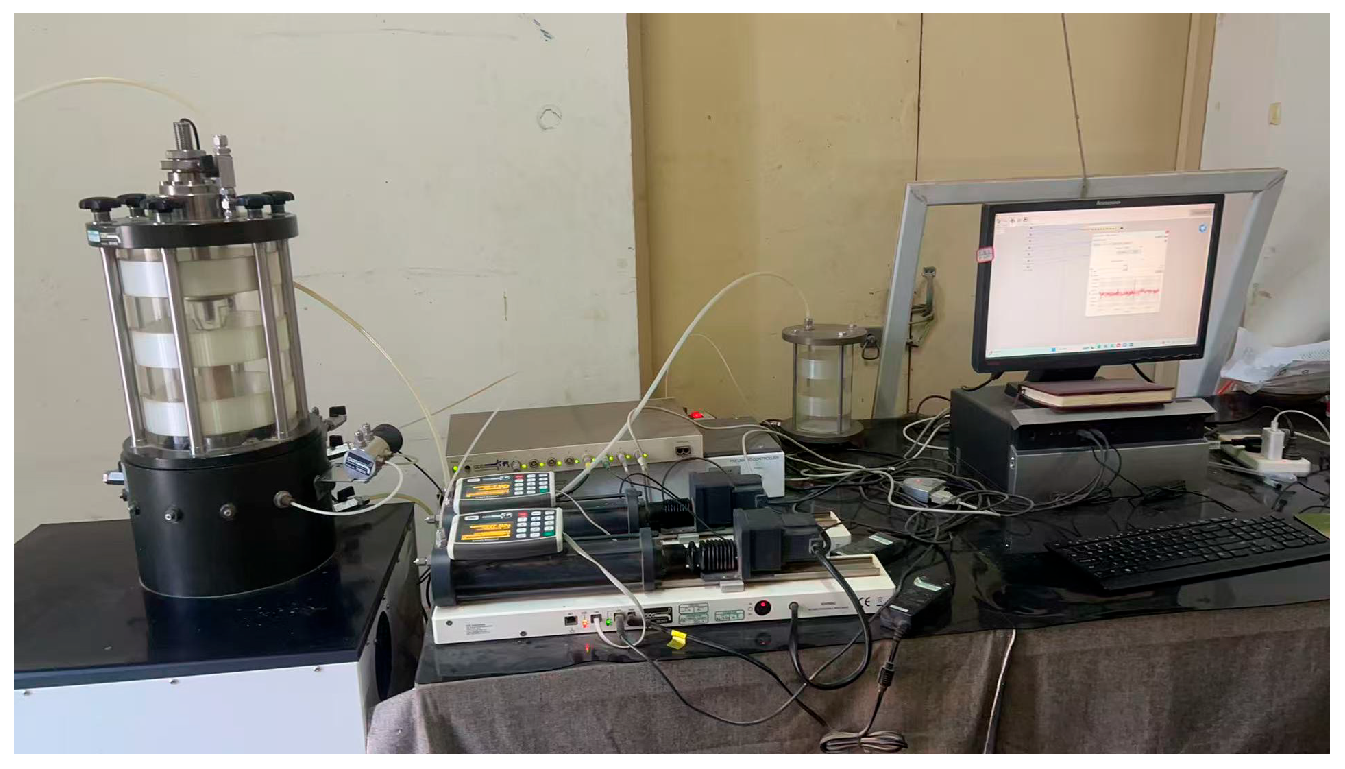
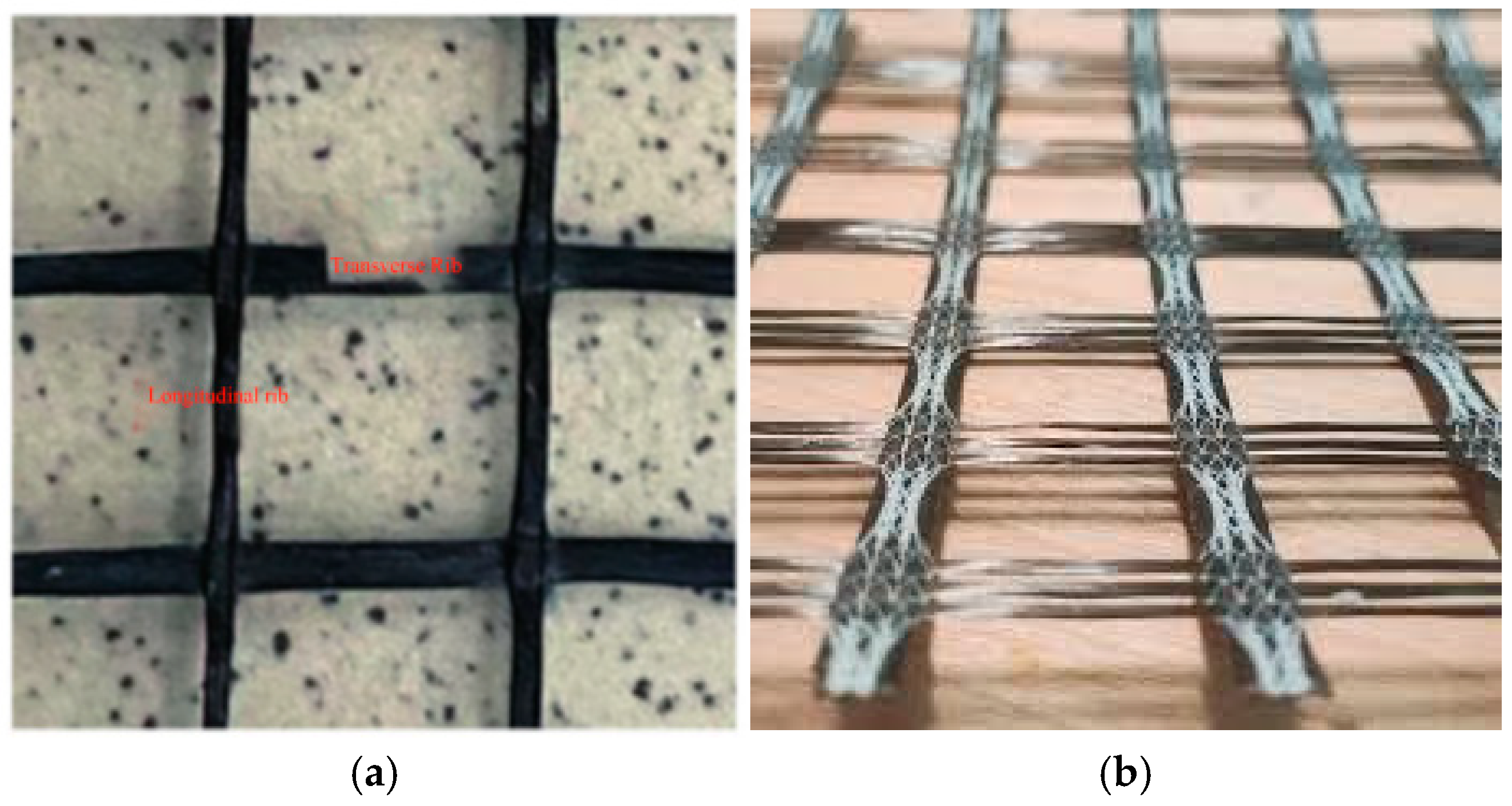
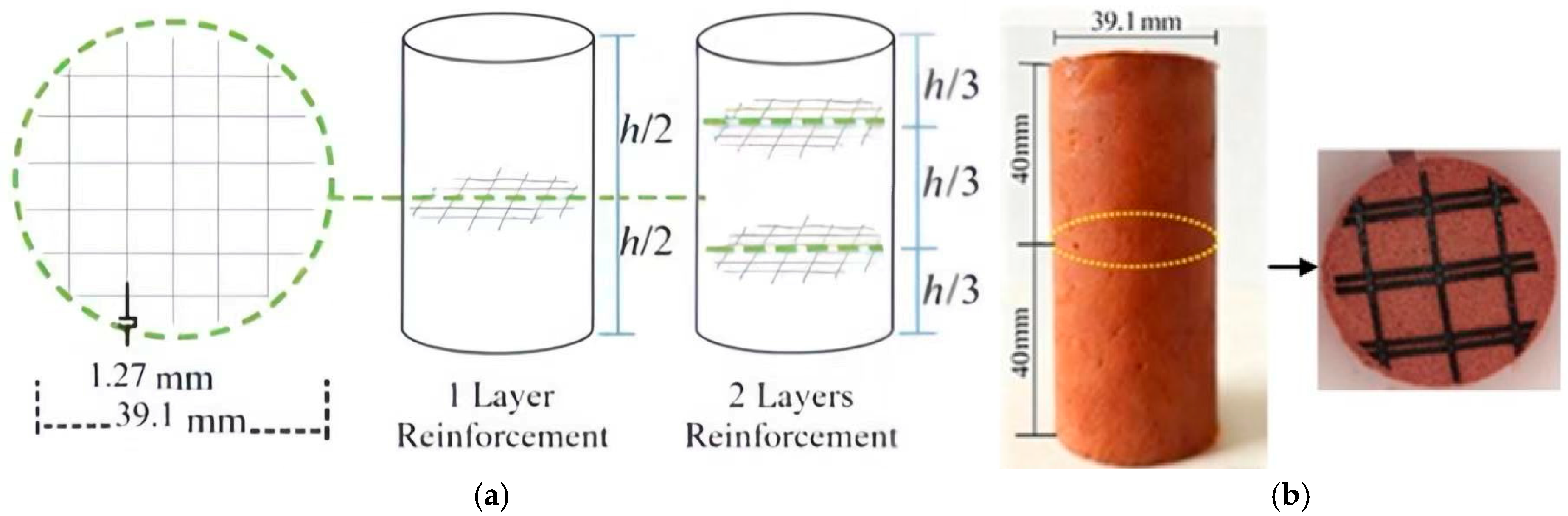
Cylindrical triaxial specimens with a diameter of 39.1 mm and a height of 80 mm were prepared by static compaction. The geogrids were cut into circular sheets with a diameter of 39.1 mm to match the specimen cross-section. The required dry soil mass (m0) to achieve the target dry density was calculated using Equation (1). During layered compaction, equal amounts of soil were placed in each layer to ensure that the overall dry density of the specimen met the design value.
After specimen preparation, isotropic consolidation was conducted using a GDS advanced triaxial testing system (GDS Instruments, London, UK). Consolidation confining pressures (σ3) of 100, 200, and 300 kPa were applied to establish the target stress state prior to shearing. Following consolidation, undrained shearing was performed at a constant axial strain rate of 0.5 mm/min. Each test was terminated when the axial strain reached 15%, at which point the complete stress–strain and pore water pressure responses were recorded. The general loading procedure was consistent with the recommendations of GB/T 50123–2019 (China) and ASTM D4767–11 (USA).
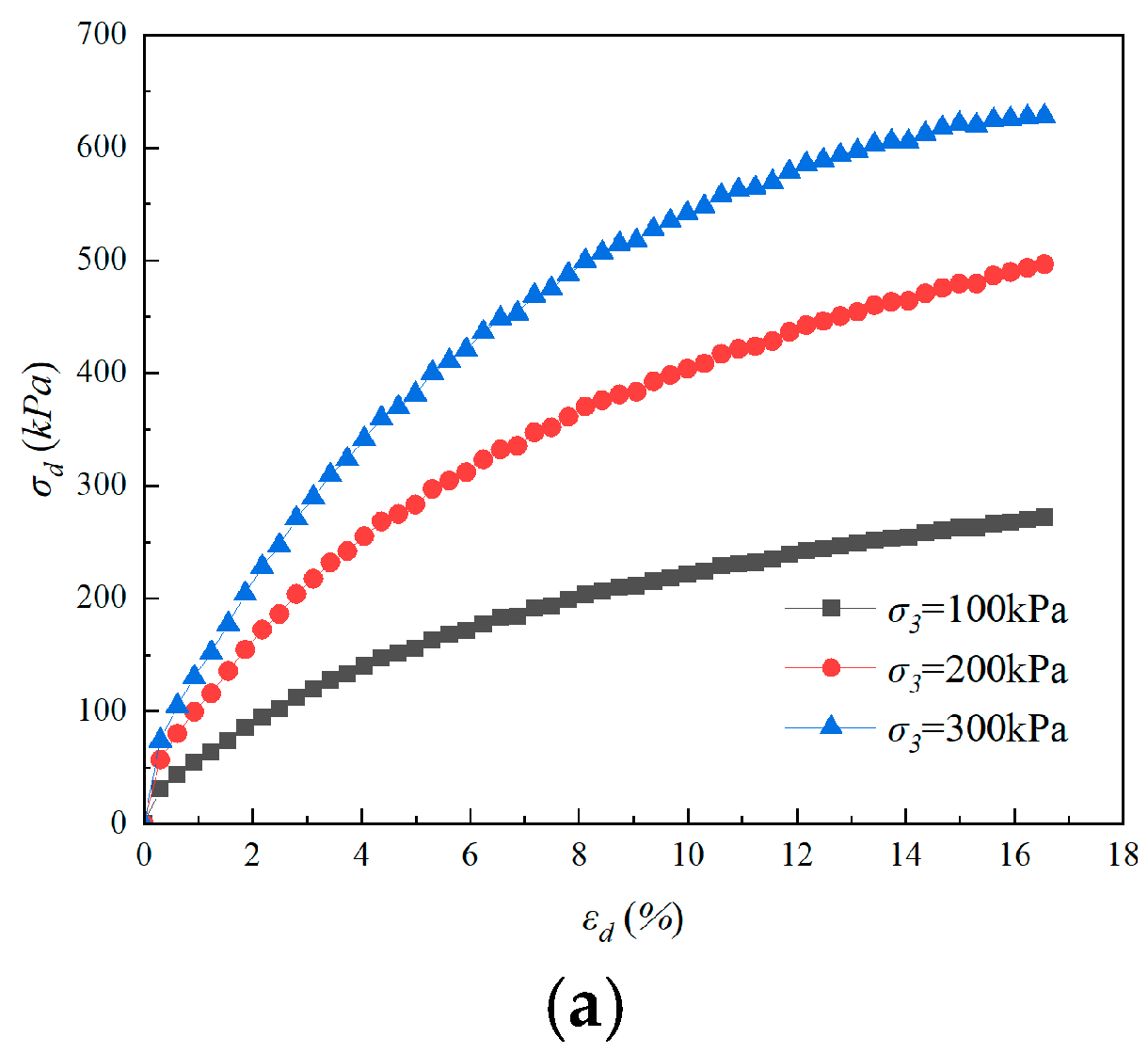
Building on the results of triaxial consolidated undrained (CU) tests conducted on loess specimens prepared at different moisture contents, this section further examines the shear behavior of geogrid-reinforced loess, with particular emphasis on the effects of reinforcement layering, confining pressure, and geogrid configuration on shear strength and deformation characteristics.
3.2. Influence of Reinforcement Layers
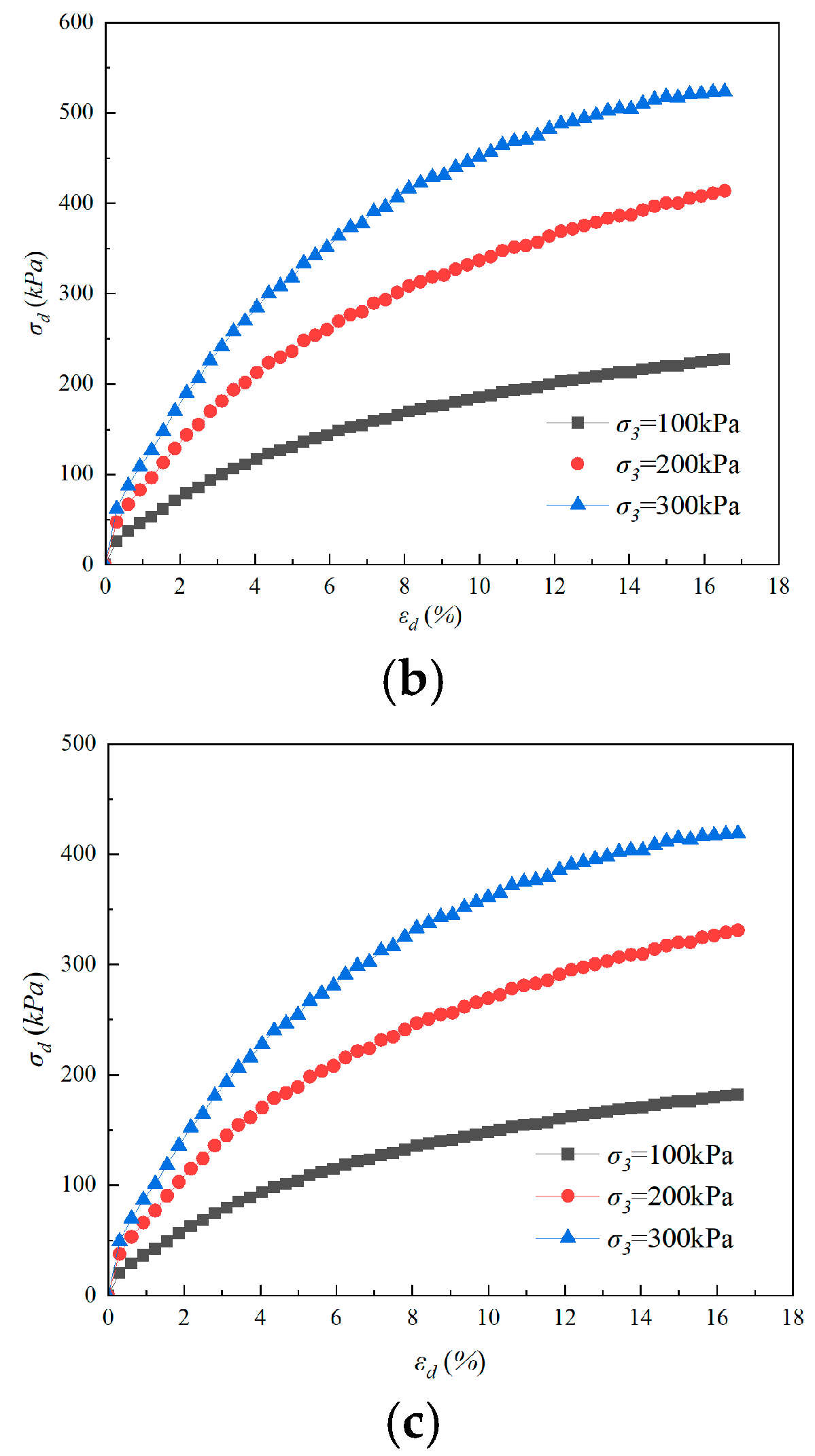
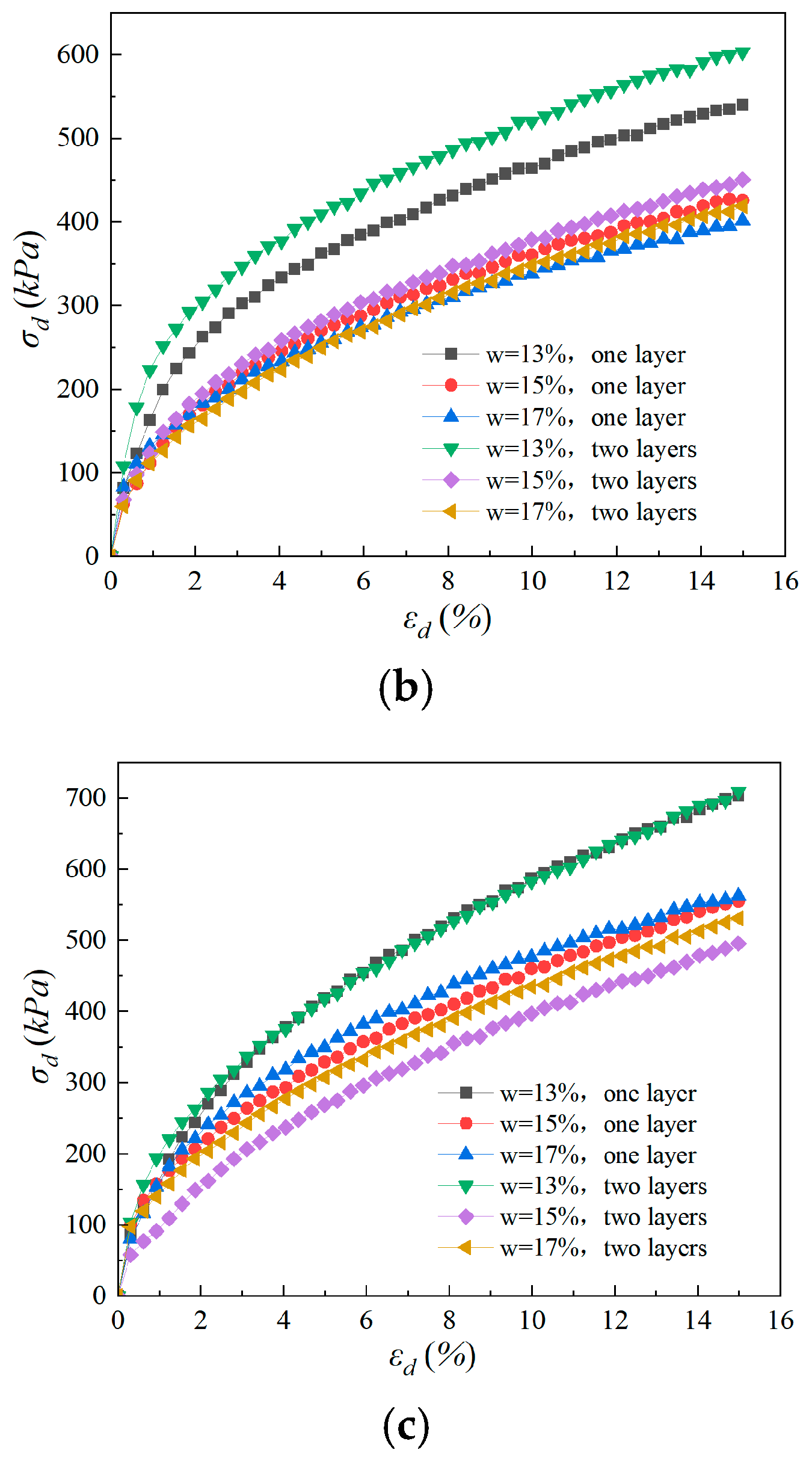
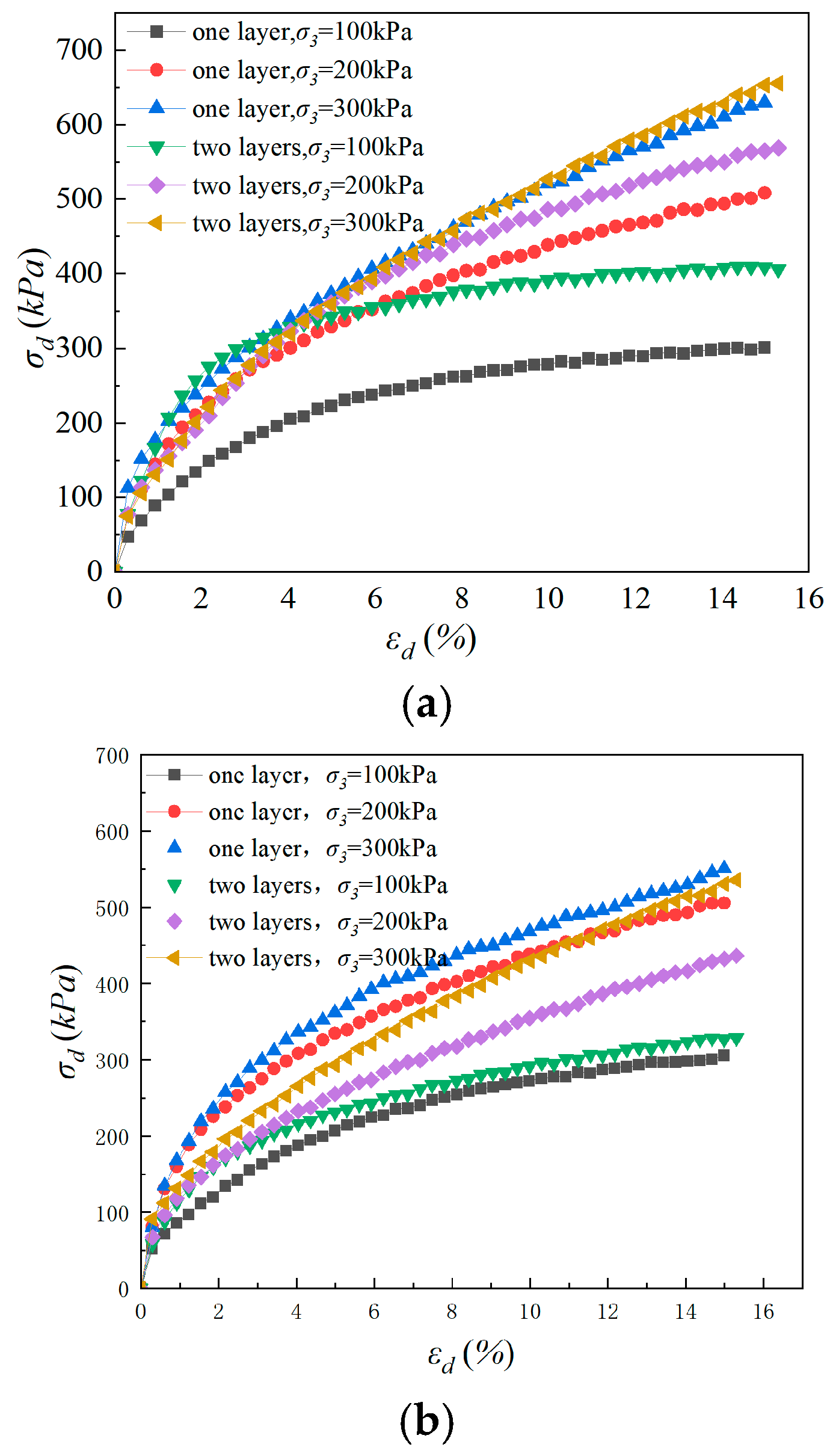
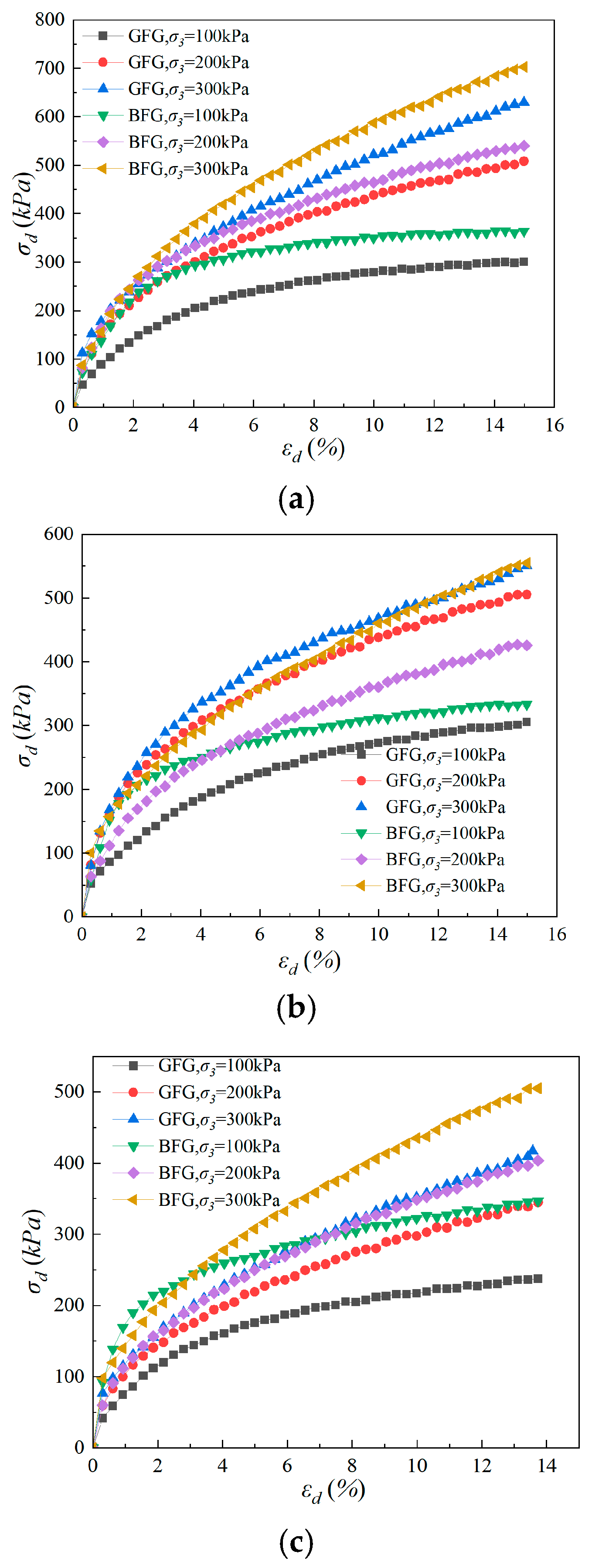
Figure 7 presents the stress–strain responses of loess reinforced with glass fiber geogrids (GFGs) obtained from consolidated undrained (CU) triaxial tests conducted under different confining pressures (
σ3 = 100, 200, and 300 kPa). Specimens reinforced with one and two geogrid layers are compared to examine the effect of confining pressure on the stress–strain response during shearing.
All specimens exhibited a distinct strain-hardening response, characterized by a rapid increase in deviatoric stress at small axial strains followed by a gradual transition toward a stable residual stage. The peak deviatoric stress increased consistently with increasing confining pressure, reflecting the pressure-dependent shear strength typical of frictional geomaterials. Higher confining pressures restrained volumetric dilation tendencies and resulted in smoother stress–strain curves with improved post-peak stability.
For both single-layer and double-layer reinforced specimens, the influence of GFG reinforcement was more pronounced under lower confining pressures (σ3 = 100–200 kPa), where the soil skeleton provided relatively limited confinement. Under these conditions, the presence of the geogrid contributed more noticeably to strength development and deformation resistance. At higher confining pressure (σ3 = 300 kPa), although the absolute shear strength continued to increase, the relative incremental benefit provided by reinforcement became less pronounced, as the confining stress itself dominated the overall shear resistance.
The number of reinforcement layers also affected the observed mechanical response. Specimens reinforced with two geogrid layers consistently exhibited higher peak strength and more ductile post-peak behavior compared with the single-layer case. This behavior is consistent with an increased contribution of reinforcement distributed over the specimen height, which may facilitate more uniform deformation during shearing.
Overall, the results indicate that the combined influence of confinement level and reinforcement configuration governs the shear performance of reinforced loess. While increasing confining pressure enhances overall strength and stability, it also reduces the relative contribution of reinforcement to the observed shear resistance. These findings suggest that geogrid reinforcement is particularly effective in improving the mechanical response of loess under low-to-moderate confinement conditions, such as those commonly encountered in shallow subgrades and near-surface slope zones.
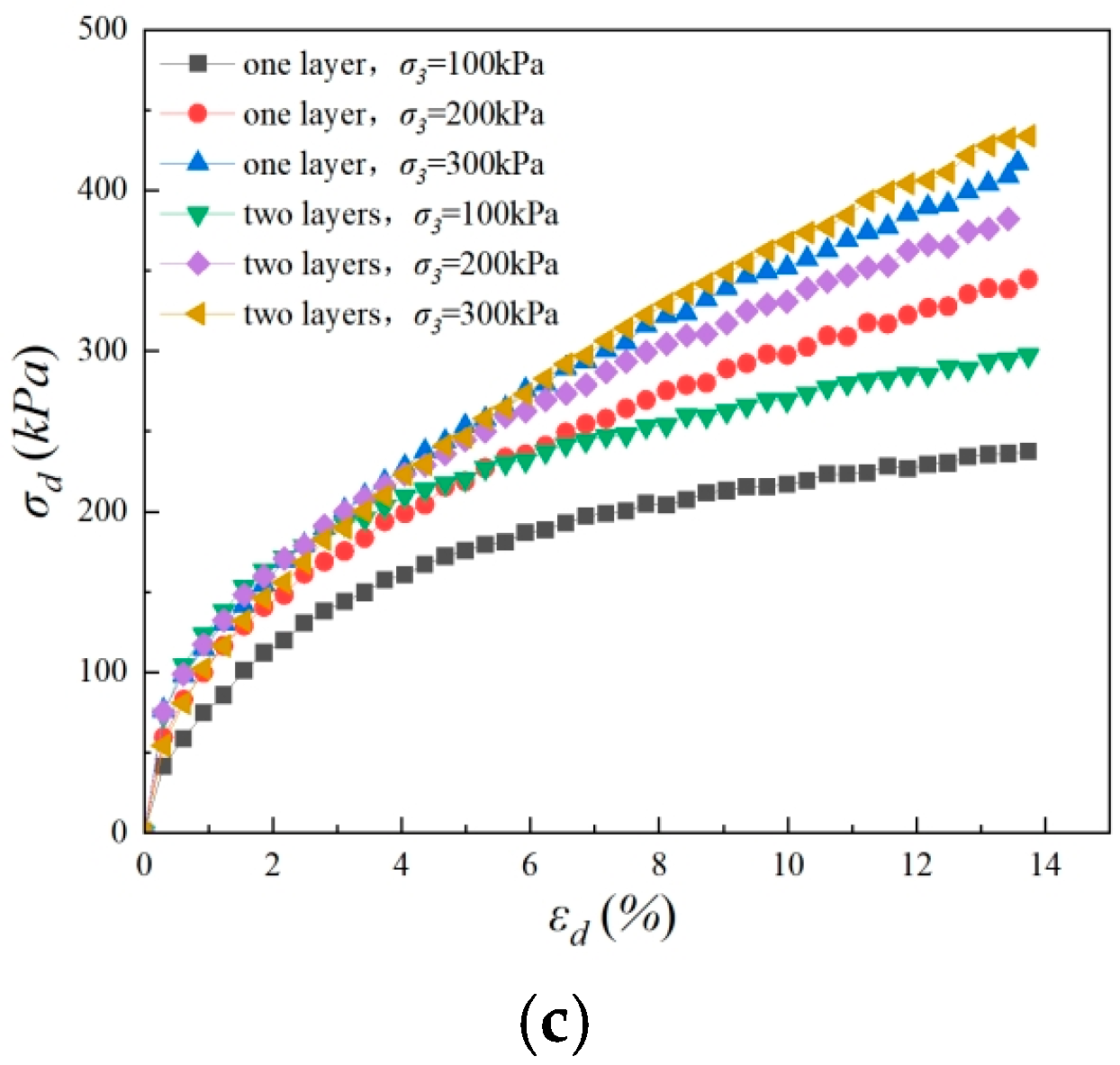
Figure 8 presents the stress–strain behavior of loess reinforced with basalt fiber geogrids (BFGs) obtained from consolidated undrained (CU) triaxial tests conducted under different confining pressures (
σ3 = 100, 200, and 300 kPa). Specimens reinforced with one and two geogrid layers are compared to examine the effect of confining pressure on the stress–strain response during shearing.
All specimens exhibited typical strain-hardening stress–strain responses, characterized by a rapid increase in deviatoric stress at small axial strains followed by a gradual transition toward a stable plateau at larger strains. As the confining pressure increased, both the overall shear strength and deformation capacity of the loess increased noticeably. Higher confining pressures resulted in smoother stress–strain curves and improved post-peak ductility, indicating enhanced stability of the mechanical response under increased confinement.
Compared with unreinforced specimens, loess reinforced with basalt fiber geogrids (BFGs) exhibited higher shear strength and improved ductility across all confining pressure levels. The reinforcement effect was more pronounced at lower confining pressure (σ3 = 100 kPa), where reinforced specimens showed a clearer enhancement in peak strength and deformation resistance relative to the unreinforced loess. As the confining pressure increased, the incremental strength gain associated with reinforcement gradually decreased, as the confining stress itself became the dominant contributor to shear resistance. Nevertheless, even at σ3 = 300 kPa, BFG-reinforced specimens consistently exhibited higher residual strength than the unreinforced specimens, indicating that the presence of the geogrid continued to influence the post-peak mechanical response.
Notably, BFG-reinforced specimens consistently exhibited higher residual strength and greater ductility than those reinforced with GFG under comparable test conditions. This performance difference may be associated with the comparatively higher surface roughness and improved chemical stability of basalt fibers, as reported in previous studies [
18,
20]. A rougher reinforcement surface can promote enhanced soil–geogrid interfacial friction and facilitate more progressive stress transfer during shear deformation, thereby contributing to sustained post-peak resistance. However, it should be emphasized that the present interpretation is based solely on macroscopic mechanical responses observed in the triaxial tests. No direct surface characterization, interface testing, or durability assessment of the geogrids was conducted in this study. Therefore, the observed superiority of BFG reinforcement should be interpreted as a phenomenological outcome under the tested conditions, rather than definitive evidence of underlying micro-mechanical mechanisms. The results nonetheless indicate that BFG reinforcement provides improved deformation compatibility and residual strength retention compared with GFG within the investigated moisture and confinement ranges. These differences were reflected in the post-peak stress–strain response, where BFG-reinforced loess maintained a more gradual strength reduction at large axial strains. The observed behavior indicates that the type of geogrid reinforcement influences the post-peak mechanical response of reinforced loess, particularly under higher confinement and large deformation conditions.
Overall, the results indicate that basalt fiber geogrid (BFG) reinforcement enhances both the shear strength and deformation capacity of loess, particularly by maintaining higher resistance in the post-peak deformation stage. The observed pressure-dependent trends reflect the combined influence of confining stress level and reinforcement configuration on the mechanical response of reinforced loess. These findings provide useful experimental evidence for understanding the role of geogrid reinforcement in improving the performance of loess under varying confinement conditions, with potential implications for near-surface geotechnical applications.
3.2.1. Differential Reinforcement Efficiency and Stress Mobilization
A clear difference was observed between loess reinforced with glass fiber geogrids (GFGs) and basalt fiber geogrids (BFGs) in terms of their stress–strain evolution during shearing. Under low confining pressure (σ3 = 100 kPa), GFG-reinforced specimens exhibited a relatively rapid increase in deviatoric stress at small axial strains, followed by an early tendency toward stabilization. In contrast, BFG-reinforced specimens showed a more gradual but sustained increase in deviatoric stress with increasing axial strain, resulting in higher resistance being maintained at larger deformation levels.
This contrast suggests that GFG- and BFG-reinforced loess exhibit different stress–strain evolution characteristics during shearing. GFG-reinforced specimens tend to display a higher initial stiffness and a more rapid strength increase at small axial strains, followed by an earlier transition toward a stabilized stress level at larger deformations. In comparison, BFG-reinforced specimens show a more gradual but sustained increase in deviatoric stress with increasing strain, which is reflected in higher residual strength being maintained at large deformation stages.
These observed behavioral differences suggest potential implications for the application of different geogrid types in reinforced loess. BFG-reinforced specimens exhibited more sustained resistance and greater ductility at large deformation levels, which may be advantageous in applications where post-peak deformation capacity is a key consideration. In contrast, GFG-reinforced specimens demonstrated higher initial stiffness and more rapid strength development at small strains, indicating their potential suitability for applications where deformation control at early loading stages is of primary importance. It should be noted that these implications are inferred from laboratory-scale triaxial test results and should be further evaluated in conjunction with project-specific conditions.
3.2.2. Confinement-Dependent Reinforcement Transition
With increasing confining pressure, the stress–strain response of geogrid-reinforced loess exhibits a noticeable change in the relative contribution of reinforcement to the overall mechanical behavior. Under lower confinement, reinforcement effects are more clearly reflected in the early-stage stress–strain response, whereas under higher confinement, the influence of reinforcement becomes more evident in the post-peak and large-strain behavior. This trend suggests that confinement level plays a key role in governing how reinforcement contributes to the observed shear response of reinforced loess.
The mechanical response of geogrid-reinforced loess exhibited clear differences under varying confining pressures. At low confinement (σ3 = 100 kPa), reinforcement effects were primarily reflected in the early-stage stress–strain response, where reinforced specimens showed enhanced initial stiffness and peak strength compared with unreinforced loess.
At moderate confinement (σ3 = 200 kPa), reinforced specimens displayed a more pronounced improvement in deformation capacity, with a smoother transition from peak to post-peak behavior. This indicates that the contribution of reinforcement extended beyond the initial loading stage and became more evident over a wider strain range.
At high confinement (σ3 = 300 kPa), the stress–strain responses of reinforced loess were characterized by stable post-peak behavior and reduced sensitivity to further increases in confinement, suggesting that the overall mechanical response was increasingly governed by the combined effect of confining stress and reinforcement configuration.
Differences between BFG- and GFG-reinforced specimens were also observed across the examined confinement levels. BFG-reinforced loess generally exhibited a more gradual and continuous stress–strain evolution, whereas GFG-reinforced specimens showed a more abrupt transition between deformation stages. These observations suggest that the type of geogrid reinforcement influences the manner in which shear resistance develops with increasing deformation under different confinement conditions.
3.2.3. Implications for Design and Constitutive Modeling
The experimental results indicate that the shear strength behavior of geogrid-reinforced loess cannot be adequately described by a single linear Mohr–Coulomb failure envelope. Instead, the strength response exhibits a clear nonlinear dependence on confining pressure and reinforcement configuration. This nonlinear strength characteristic reflects the evolving stress–strain response of the reinforced loess during shearing, suggesting that simplified linear strength assumptions may be insufficient for representing the mechanical behavior of geogrid-reinforced loess over a wide range of stress states.
From a constitutive modeling perspective, the observed shear behavior of geogrid-reinforced loess can be described within the framework of the Unified Twin-Shear Strength Theory (UTSST), which accounts for the influence of the intermediate principal stress. By introducing a strain-dependent reinforcement contribution coefficient,
R(
εd), and incorporating confinement-related parameters to reflect the experimentally observed stress–strain trends, the original yield function proposed by Yu, M.H. [
9] is extended to better represent the nonlinear strength response of reinforced loess. The modified yield criterion is expressed as
where
σ1,
σ2 and
σ3 are the major, intermediate, and minor principal stresses, respectively;
α is the intermediate principal stress coefficient defined in the original UTSST framework;
c0 and
φ represent the apparent cohesion and internal friction angle of the unreinforced loess;
cr is an equivalent reinforcement-related strength parameter calibrated from the experimental data; and
R(
εd) is a strain-dependent mobilization function (0 ≤
R ≤ 1) introduced to describe the progressive activation of reinforcement effects during shearing. It should be emphasized that the reinforcement contribution is introduced in an equivalent and phenomenological manner, without explicitly modeling tensile stress transfer or interface mechanics.
This constitutive approach provides a confinement-sensitive description of the stress–strain response of geogrid-reinforced loess based on the experimental observations. By linking laboratory results with a constitutive representation, the model offers a quantitative means of capturing the influence of confinement and reinforcement configuration on shear behavior. The proposed formulation may be useful as a reference framework for further analytical or numerical studies of reinforced loess, with its applicability to design requiring additional verification.
3.3. Comparative Shear Behavior of GFG- Reinforced and BFG-Reinforced Loess with Single and Double Reinforcement Layers
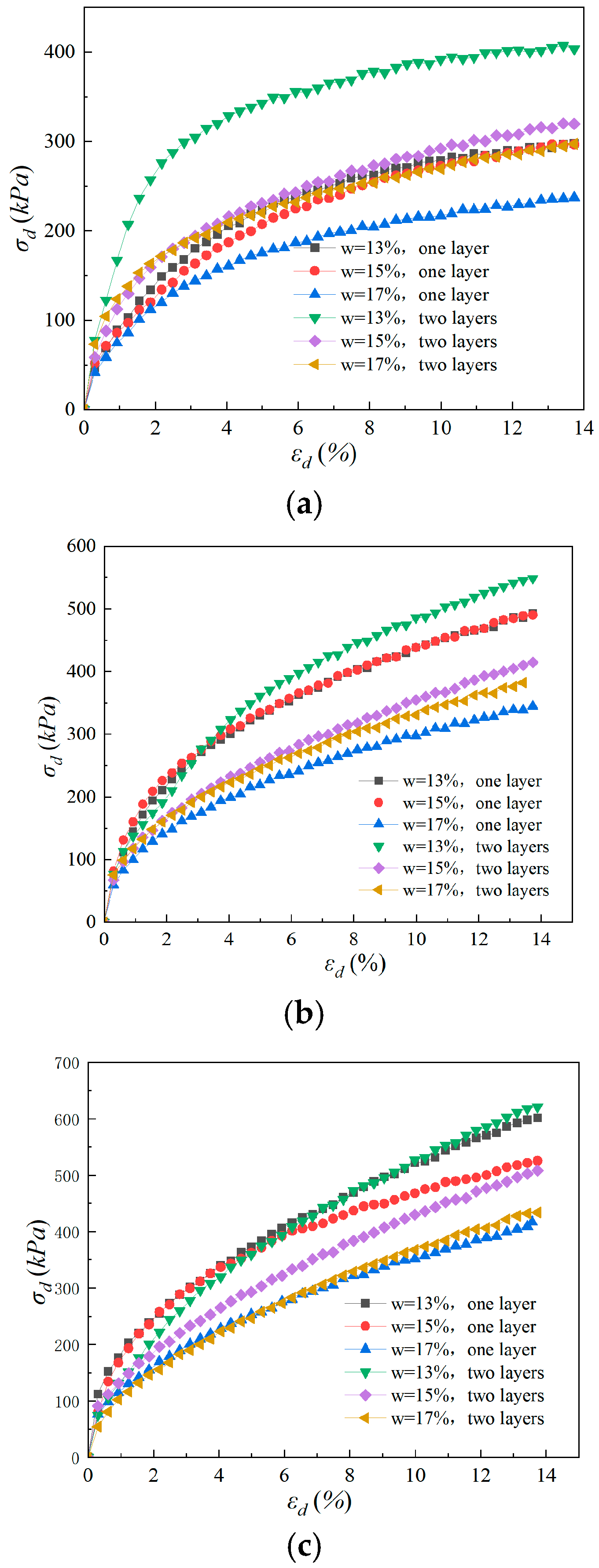
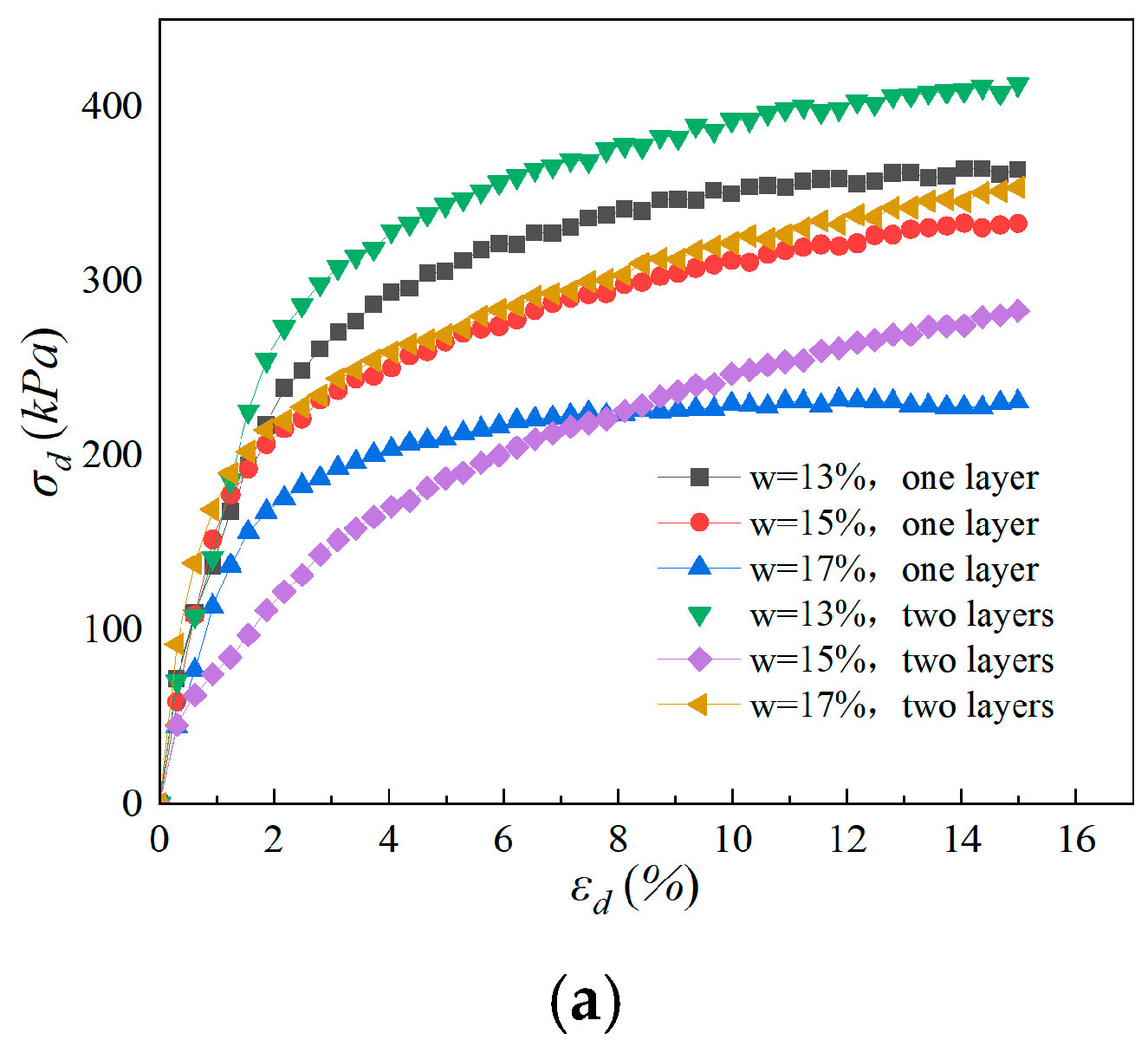
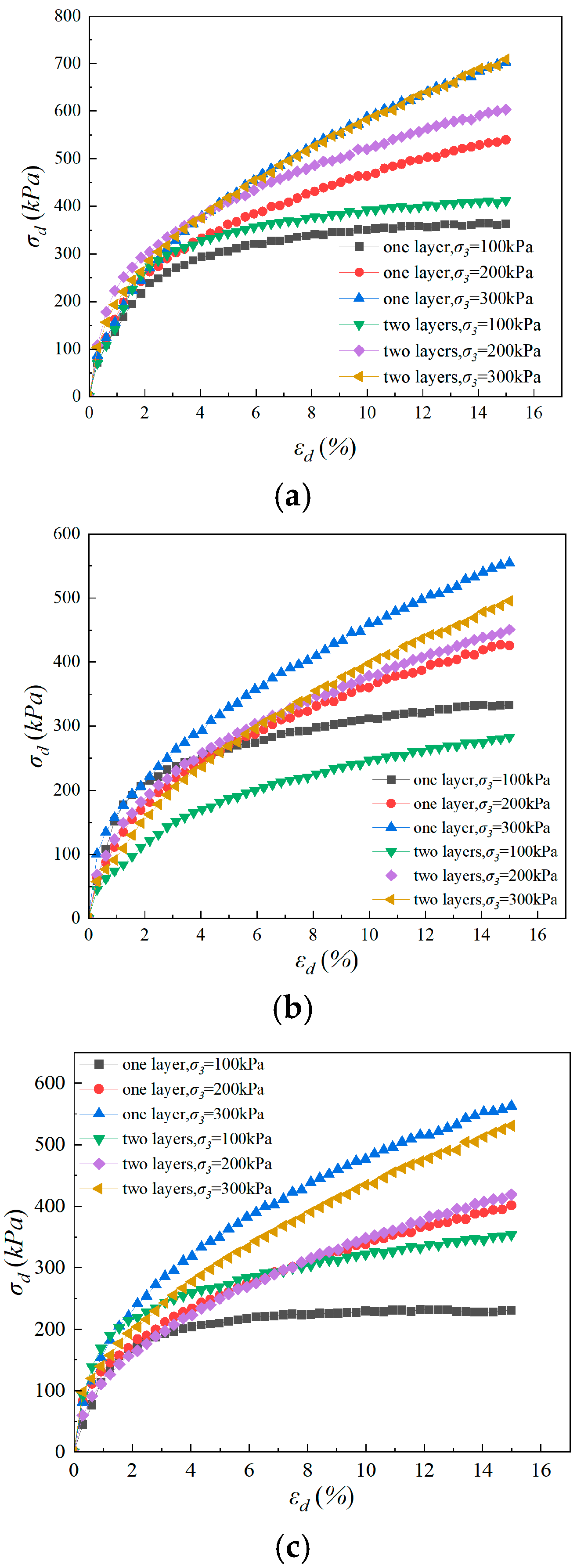
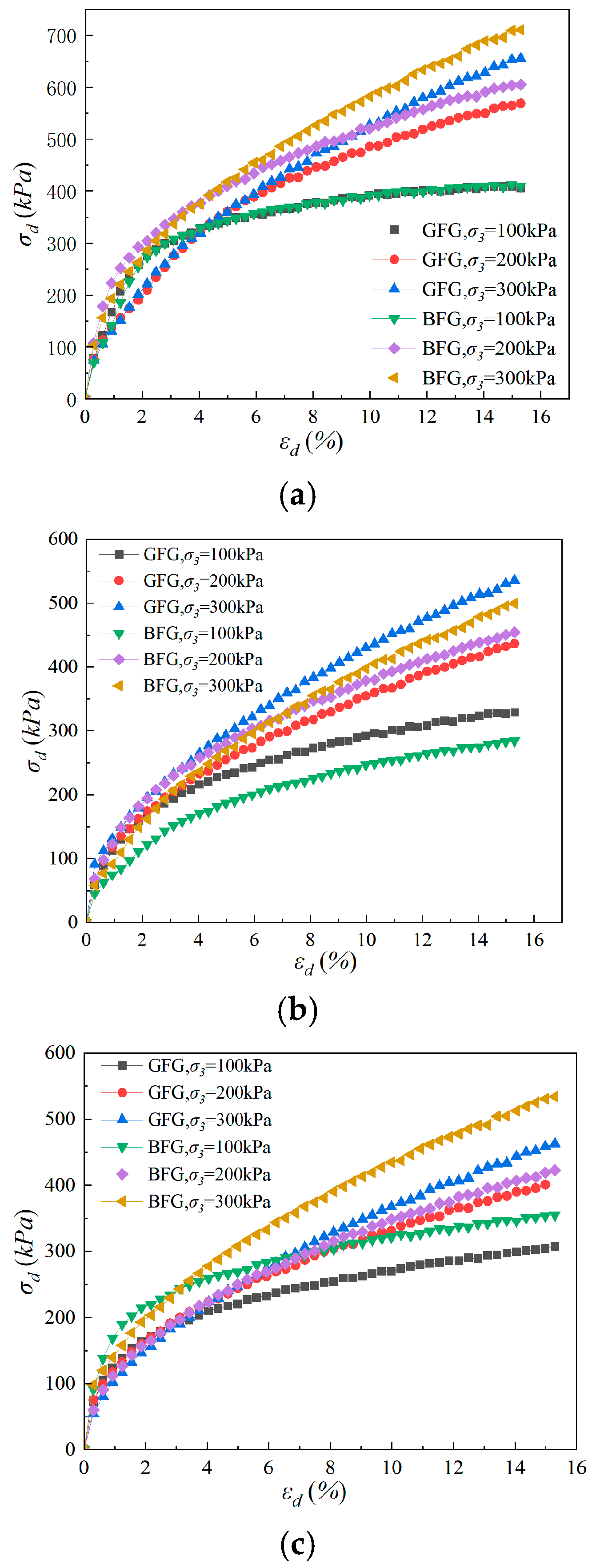
Figure 9 presents the stress–strain relationships of loess reinforced with two different geogrid types, namely glass fiber geogrid (GFG) and basalt fiber geogrid (BFG), obtained from consolidated undrained (CU) triaxial tests. The results correspond to specimens reinforced with a single geogrid layer, enabling a comparative assessment of the macroscopic shear response and deformation behavior of reinforced loess under identical test conditions.
Figure 10 presents the stress–strain relationships of loess reinforced with different geogrid types, namely glass fiber geogrid (GFG) and basalt fiber geogrid (BFG), obtained from consolidated undrained (CU) triaxial tests. In this series, all specimens were reinforced with two geogrid layers. The results are presented to facilitate comparison with the corresponding single-layer reinforced specimens shown in
Figure 10, highlighting the effect of reinforcement layering on the observed shear response and deformation behavior under identical test conditions.
3.3.1. Differences in Stress–Strain Evolution and Post-Yield Response
While the previous sections established the overall strengthening effect of confinement, the present results reveal clear differences in post-yield stress–strain behavior between GFG- and BFG-reinforced loess. Under single-layer reinforcement conditions (
Figure 10), GFG-reinforced specimens exhibit an early increase in deviatoric stress followed by a relatively stable plateau at moderate axial strains. In contrast, BFG-reinforced specimens continue to exhibit gradual stress development at larger axial strains (approximately 8–10%), resulting in higher residual strength levels.
These differences indicate that GFG reinforcement is associated with a rapid enhancement of stiffness and strength during the early stages of loading, whereas BFG reinforcement is characterized by a more progressive stress–strain response and improved post-yield ductility. As a result, BFG-reinforced loess demonstrates greater deformation tolerance and sustained load-bearing capacity at large strains.
From an engineering perspective, the observed differences suggest that BFG reinforcement may be more suitable for applications where large deformation capacity and post-peak stability are critical, while GFG reinforcement may be advantageous in situations requiring enhanced initial stiffness and early-stage deformation control. These interpretations are based on observed macroscopic stress–strain responses under controlled laboratory conditions.
3.3.2. Effect of Reinforcement Layer Number on Strength Development
The transition from single-layer to double-layer reinforcement leads to a pronounced increase in shear strength, particularly under low confinement (σ3 = 100 kPa). For BFG-reinforced loess, the peak deviatoric stress increases by approximately 22–28% when the number of reinforcement layers is doubled, whereas the corresponding increase for GFG-reinforced specimens is limited to about 10–15%. This result indicates that the strength enhancement obtained by adding a second reinforcement layer is material-dependent.
The greater strength increment observed in BFG-reinforced specimens suggests that multiple reinforcement layers contribute more effectively to the overall load-bearing capacity of the soil mass. In contrast, the additional strength gain provided by a second GFG layer is comparatively modest, indicating a reduced sensitivity to reinforcement layering.
These results demonstrate that reinforcement layering plays an important role in improving the mechanical performance of reinforced loess, especially under low confinement conditions where the soil skeleton provides limited lateral restraint. The observed differences between GFG and BFG reinforcement highlight the importance of reinforcement material selection when multilayer configurations are adopted in engineering applications.
3.3.3. Effect of Moisture Content on Stress–Strain Behavior of Reinforced Loess
The stress–strain response of reinforced loess exhibits clear sensitivity to moisture content. As the moisture content increases from 13% to 17%, both GFG- and BFG-reinforced specimens show a gradual reduction in peak deviatoric stress accompanied by enhanced ductility. This trend is observed consistently across different confining pressures and reinforcement configurations.
At lower moisture contents, reinforced loess exhibits higher initial stiffness and peak strength, whereas specimens prepared at higher moisture contents demonstrate smoother stress–strain curves and improved post-peak deformation capacity. These observations indicate that moisture content plays an important role in governing the macroscopic shear response of reinforced loess.
Although reinforcement remains effective across the investigated moisture range, the magnitude of strength enhancement provided by geogrid reinforcement decreases with increasing moisture content. This behavior suggests that moisture conditions influence the relative effectiveness of reinforcement in improving shear resistance, particularly under low to moderate confinement.
3.3.4. Large-Strain Behavior of Reinforced Loess
Under high confining pressure (σ3 = 300 kPa) and elevated moisture content (w = 17%), noticeable differences are observed in the large-strain stress–strain response of loess reinforced with different geogrid types. BFG-reinforced specimens exhibit a more gradual post-peak response, characterized by sustained deviatoric stress at large axial strains, whereas GFG-reinforced specimens tend to show a more pronounced stress plateau following peak strength.
The smoother post-peak behavior observed in BFG-reinforced loess indicates enhanced deformation tolerance and improved residual strength under combined high confinement and moisture conditions. In contrast, GFG-reinforced specimens display a relatively sharper transition toward a stable stress level after yielding, suggesting a more limited capacity to sustain additional deformation.
These differences in large-strain response highlight the influence of reinforcement type on the post-peak behavior of reinforced loess under unfavorable moisture and stress conditions. Although reinforcement remains effective for both materials, BFG reinforcement demonstrates superior capacity to maintain load-bearing performance at large strains, which may be beneficial for applications where deformation control and post-peak stability are of concern. The interpretations presented here are based on macroscopic stress–strain observations obtained from laboratory tests.
3.3.5. Implications for Reinforced Loess Design Considerations
The experimental results provide useful insights into the selection of geogrid reinforcement for loess under varying moisture and confinement conditions. The effectiveness of reinforcement layering is shown to depend on the reinforcement material, particularly under moderate moisture content (w ≈ 15%), where differences in stress–strain response between GFG- and BFG-reinforced loess are most evident.
In general, BFG reinforcement demonstrates a greater capacity to sustain load-bearing performance at large strains, while GFG reinforcement is associated with enhanced initial stiffness and early-stage deformation control. These contrasting characteristics suggest that reinforcement material selection should consider both the required stiffness and the deformation tolerance of the reinforced soil system.
The findings of this study highlight that reinforcement configuration and material type play important roles in influencing the mechanical response of reinforced loess. While the present results are based on laboratory-scale tests with uniform reinforcement layouts, they may provide qualitative guidance for the preliminary design and comparative evaluation of reinforced loess structures. Further experimental and numerical studies are required to investigate alternative reinforcement arrangements and to establish optimized design strategies under field conditions.