Evaluation of Compressive Strength of Expanded Polystyrene Concrete Based on Broad Learning System

Abstract
1. Introduction
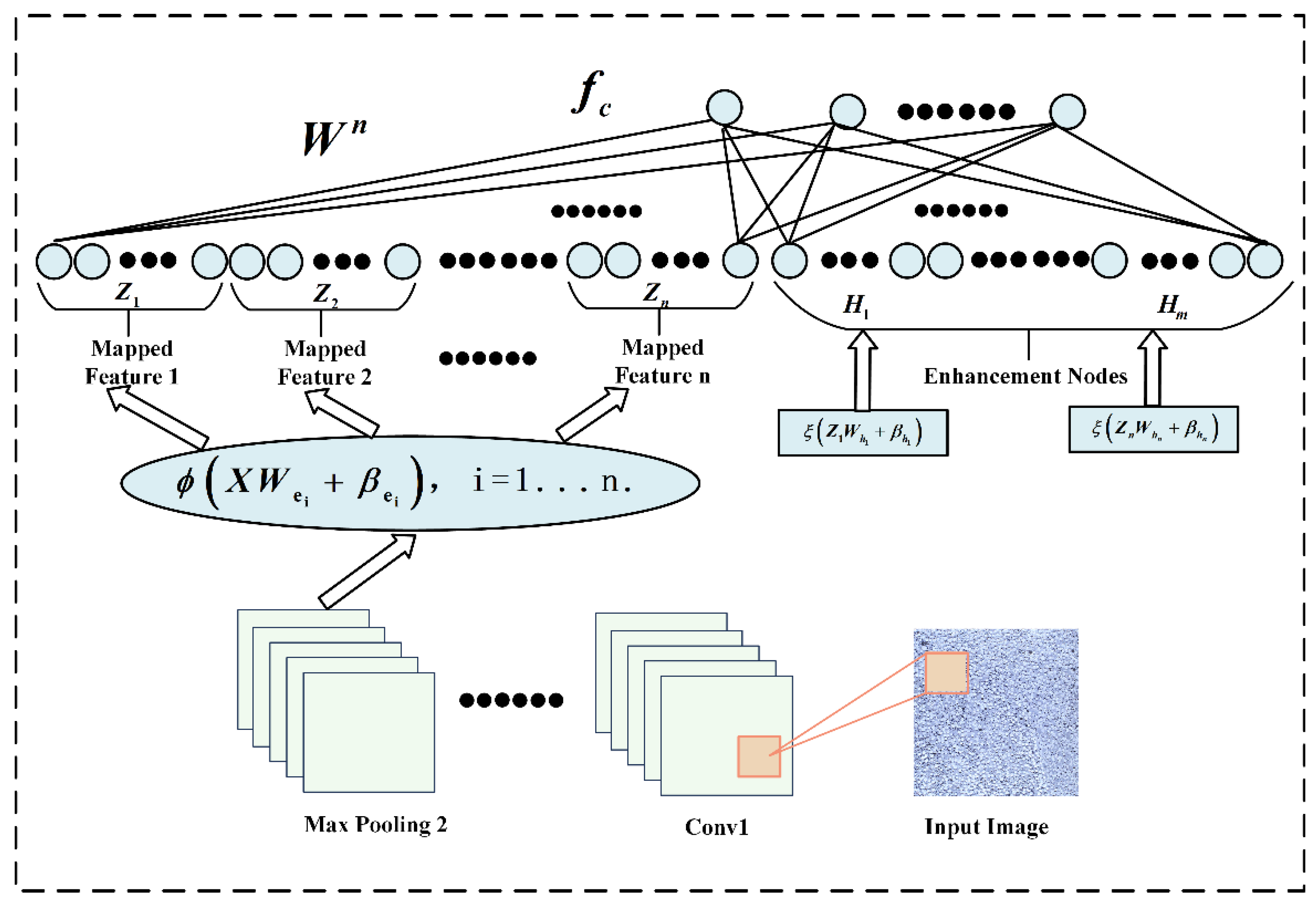
- A novel model named BLS-Xception was proposed, which integrates the feature extraction capability of deep convolutional networks with the efficient learning mechanism of the BLS. The proposed model effectively alleviates feature redundancy and improves learning efficiency when dealing with heterogeneous image data, demonstrating enhanced robustness in compressive strength prediction of EPS concrete.
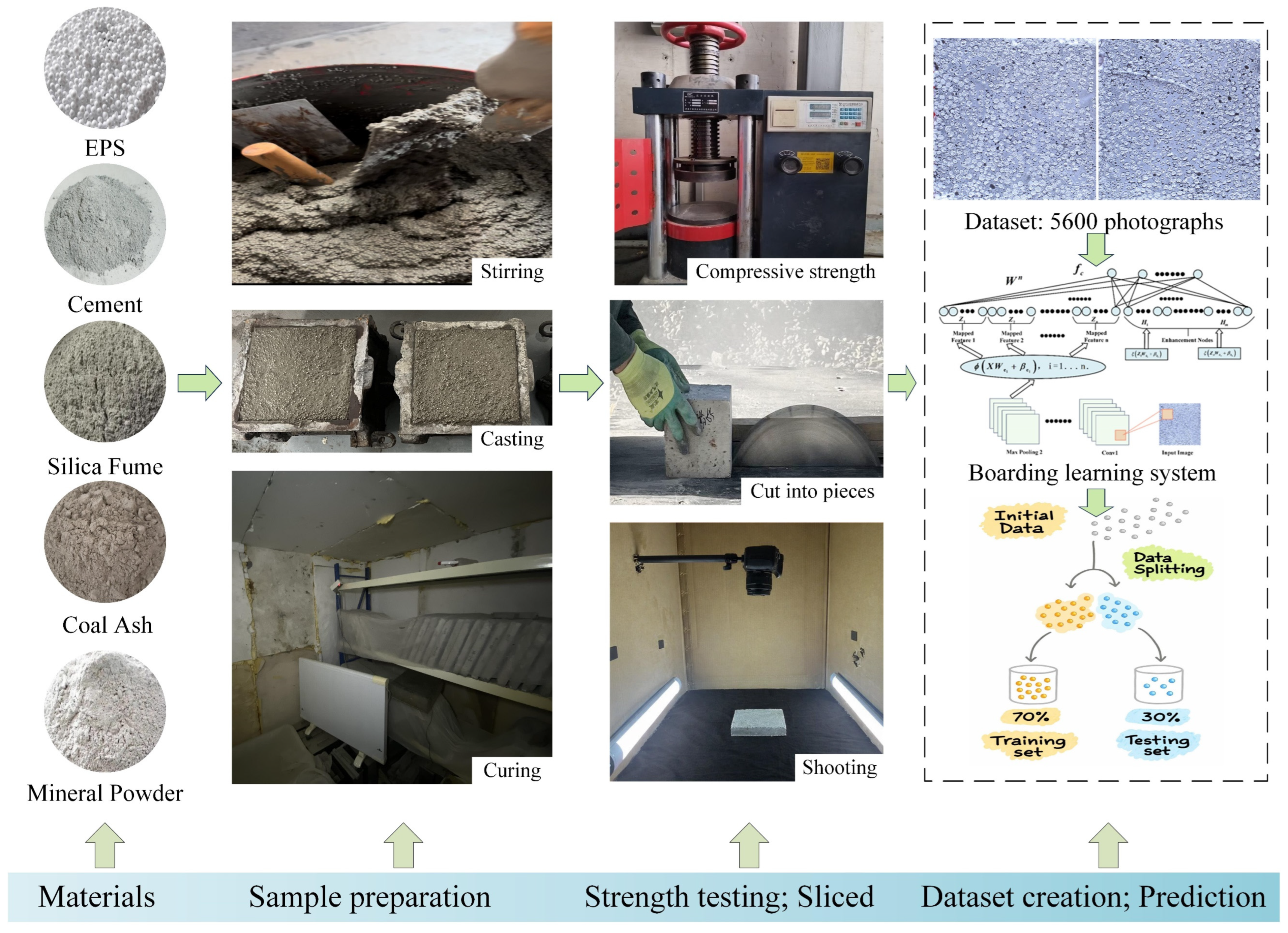
- A dedicated image dataset of EPS concrete slices was established, consisting of 5600 high-quality cross-sectional images obtained through standardized cutting, background removal, cropping, and normalization procedures. This dataset provides a reliable visual basis for learning the intrinsic relationships between mesoscale structural characteristics and compressive strength.
- Comprehensive experimental investigations were conducted to validate the proposed model, systematically examining the effects of cementitious material replacement ratios, EPS particle contents, and particle sizes on the compressive strength of EPS concrete. The experimental results confirm the effectiveness of the BLS-Xception model in capturing strength-related features under varying material compositions.
2. Experimental Setup and Dataset Acquisition
2.1. Sample Preparation
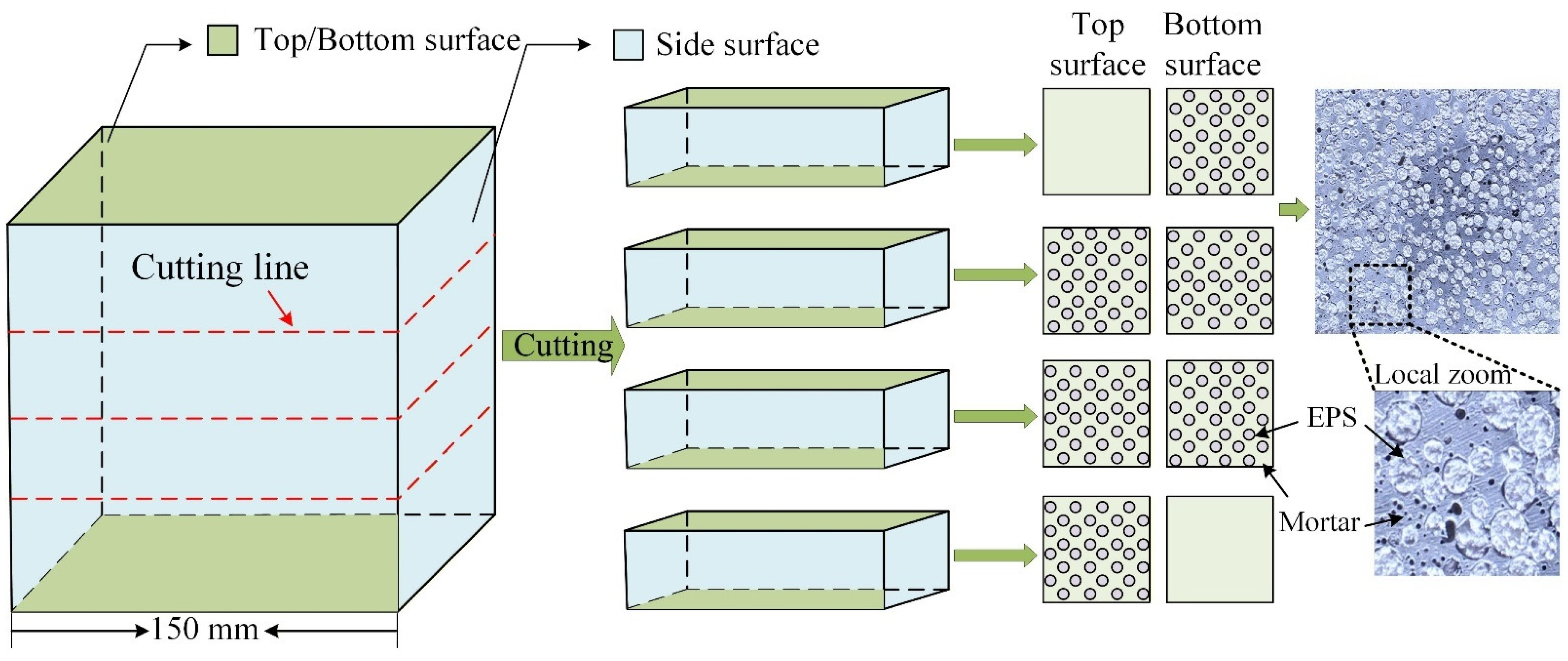
2.2. Sample Sectioning Procedure
2.3. Compressive Strength Test
2.4. Image Acquisition
- A box-type enclosure was built indoors using black blackout cloth (inner dimensions: 50 cm × 80 cm × 120 cm) with a 30 cm × 50 cm front opening; non-reflective covering was used to block ambient light and suppress specular reflections.
- The slice was placed at the center of the enclosure bottom and cleaned with an air blower; wet surfaces were air-dried to prevent glare.
- Two 15 W LED lamps (emitting area: 8 cm × 60 cm) were fixed on the side walls near the bottom (5 cm above the bottom plane and ~30 cm from the specimen edge), and the illuminance at the specimen center was calibrated to ~2000 lx (±5%).
- Images were acquired using a Canon EOS 3000D mounted on a rigid stand through a top opening, with the optical axis perpendicular to the slice surface and a fixed working distance of 60 cm (lens front to slice surface), at a resolution of 6000 × 4000 pixels.
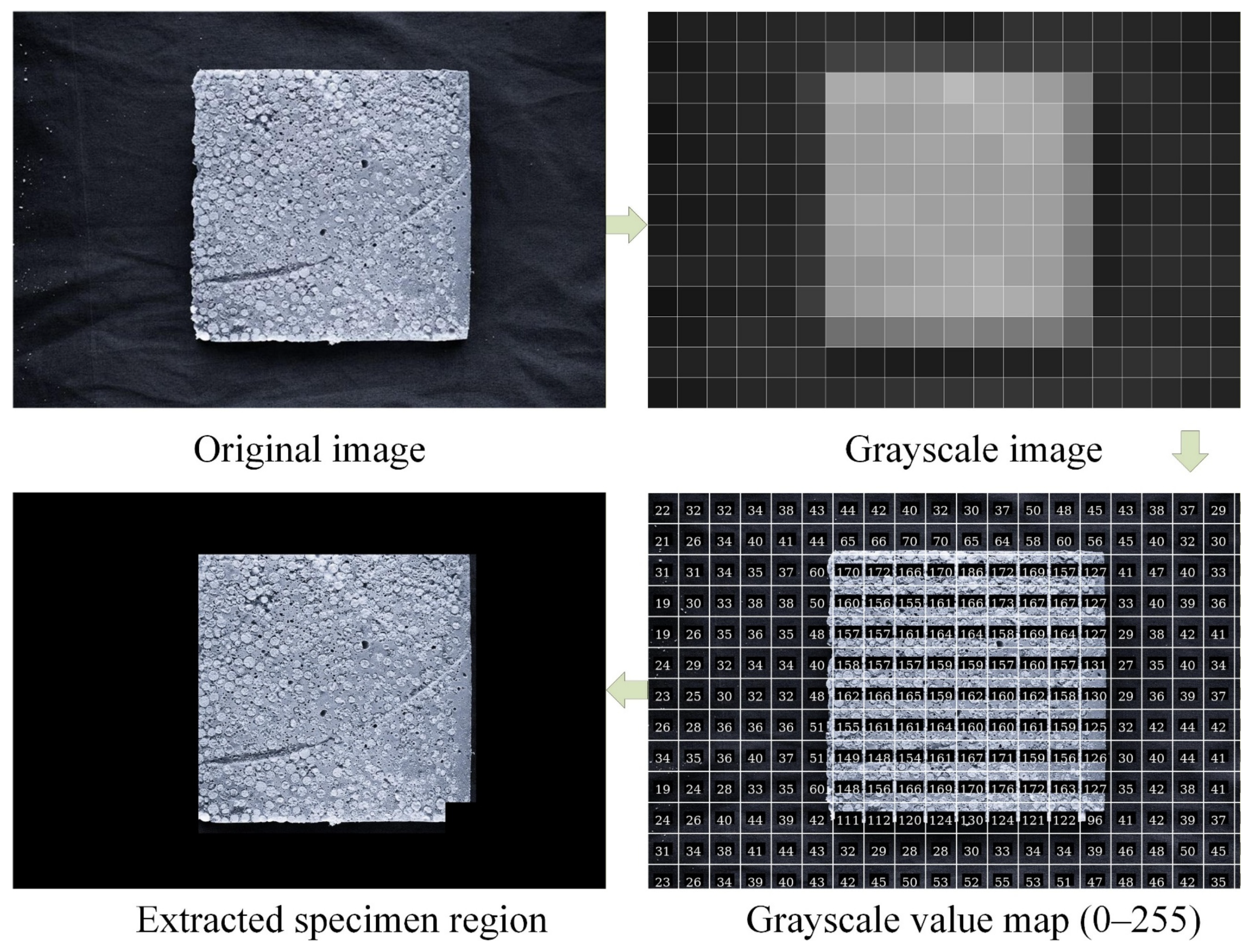
2.5. Image Preprocessing
3. Model Architecture Design and Optimization
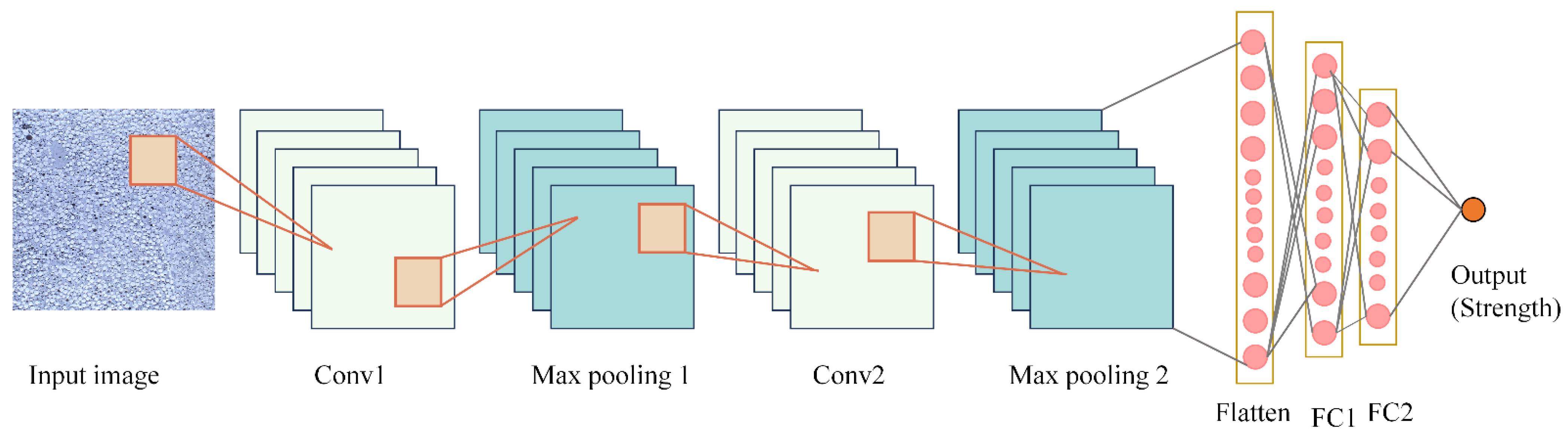
3.1. DCNN
3.2. BLS Basic Network
3.3. Optimization Mechanisms
3.4. Model Construction and Training
3.4.1. Model Construction
3.4.2. Training Process
4. Result
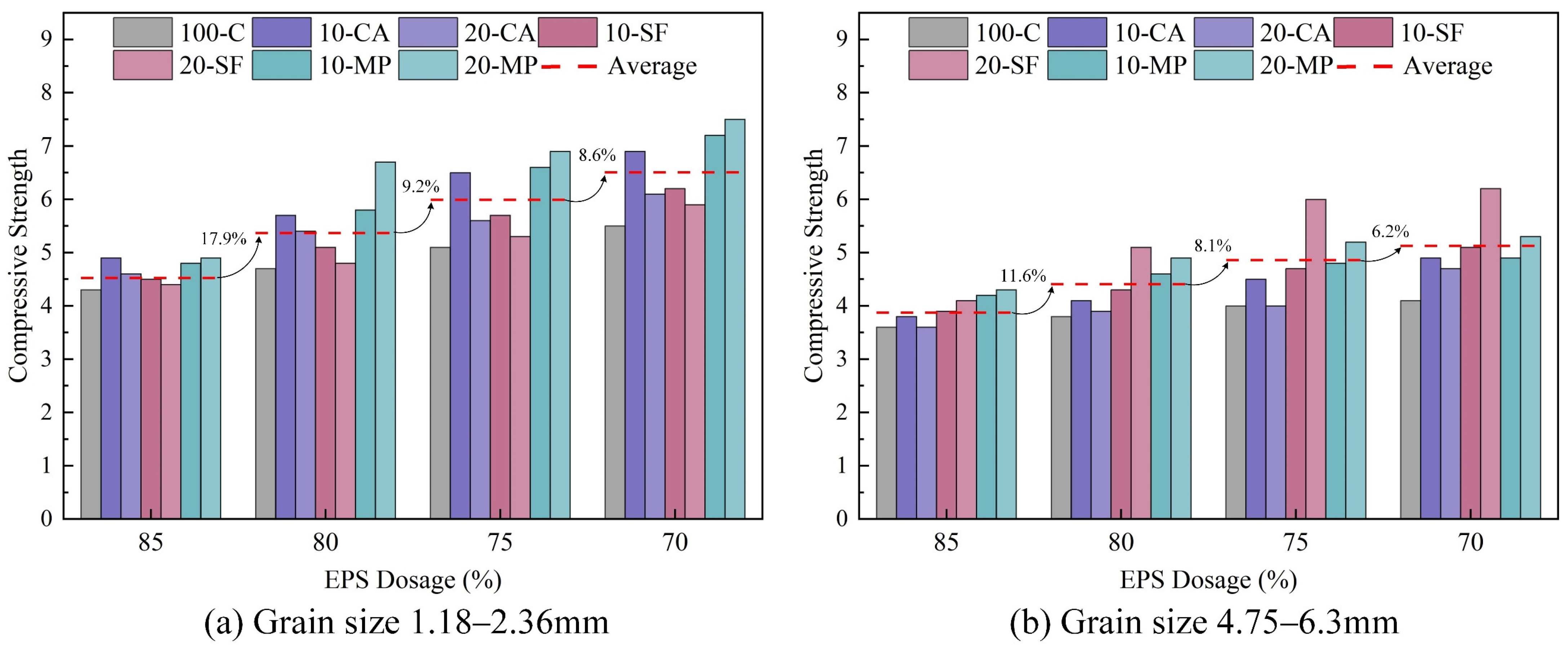
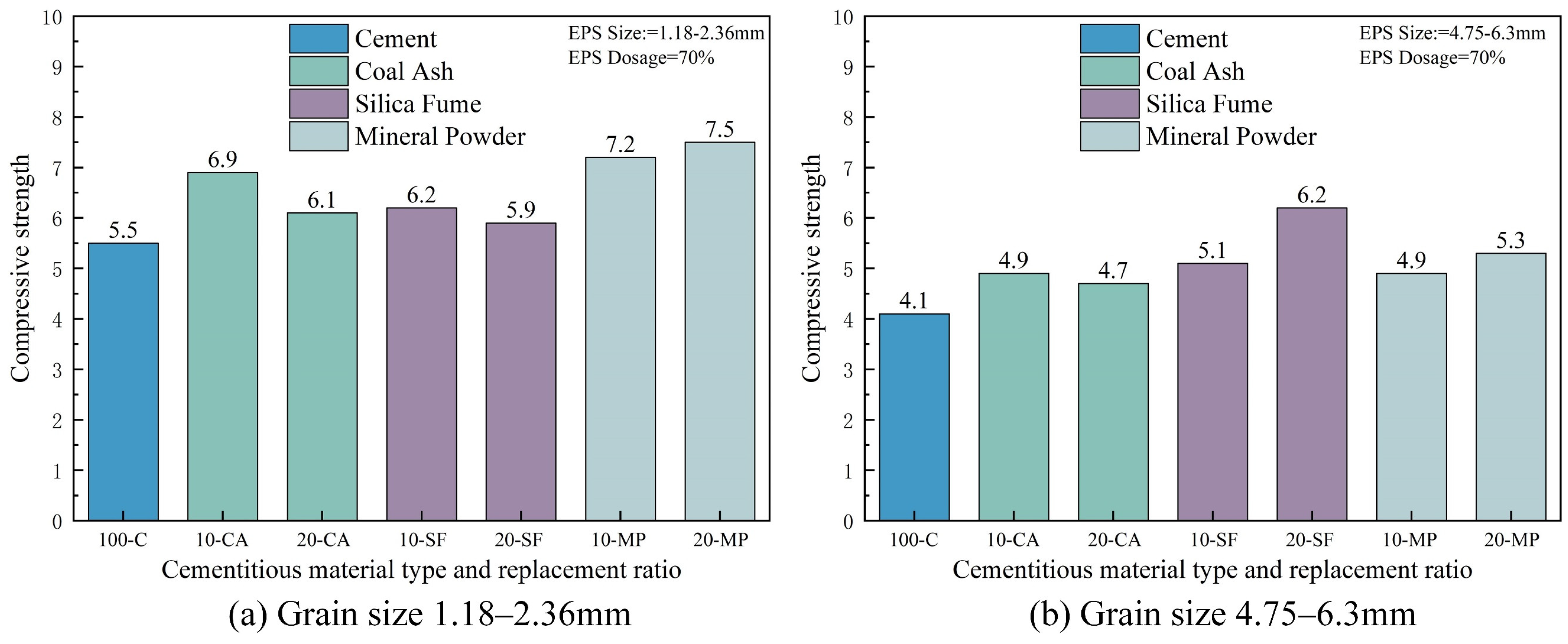
4.1. Analysis and Experimental Results of Compressive Strength of EPS Concrete
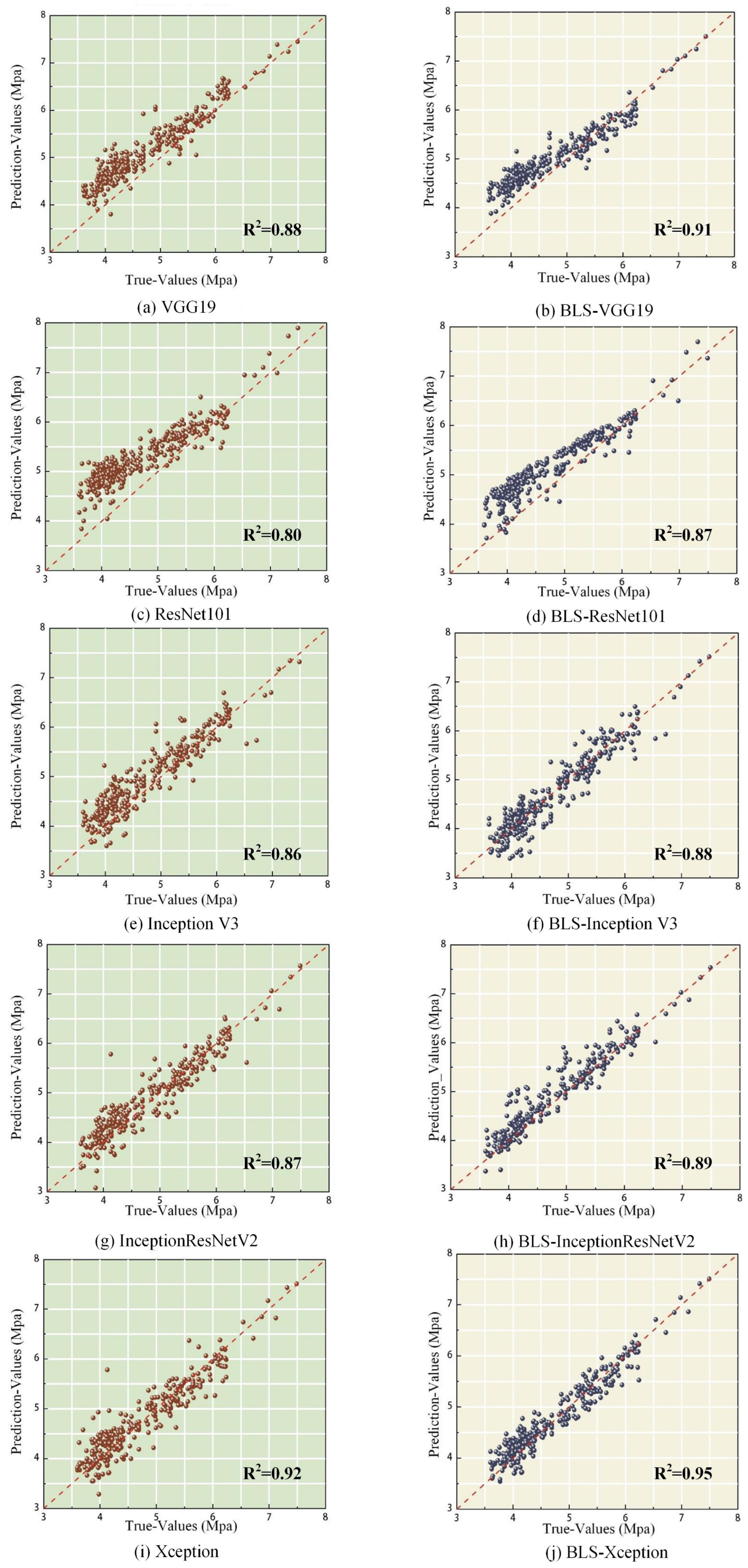
4.2. Performance of the BLS-DCNN Model for EPS Concrete Prediction
4.3. Evaluation of Prediction Speed for BLS-DCNN Models
4.4. Ablation Study on Mechanism Contribution
5. Conclusions
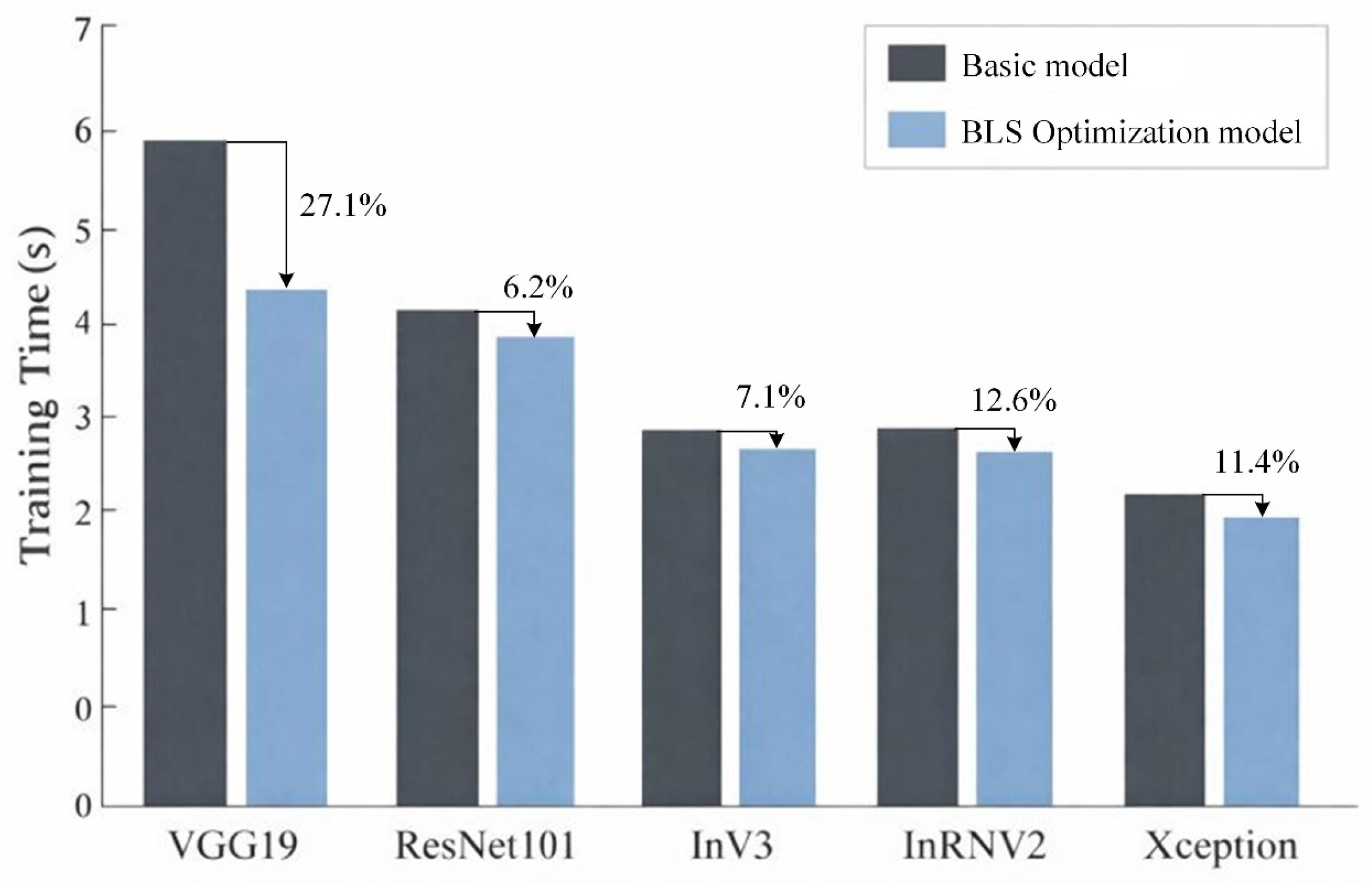
- The training time of the EPS concrete compressive strength prediction model was successfully optimized by introducing the mechanisms of BLS. The experimental results showed that these mechanisms significantly reduced the training time by approximately 15%. Among all models, the BLS-Xception model had the shortest training time, with each image taking only 1.9 s.
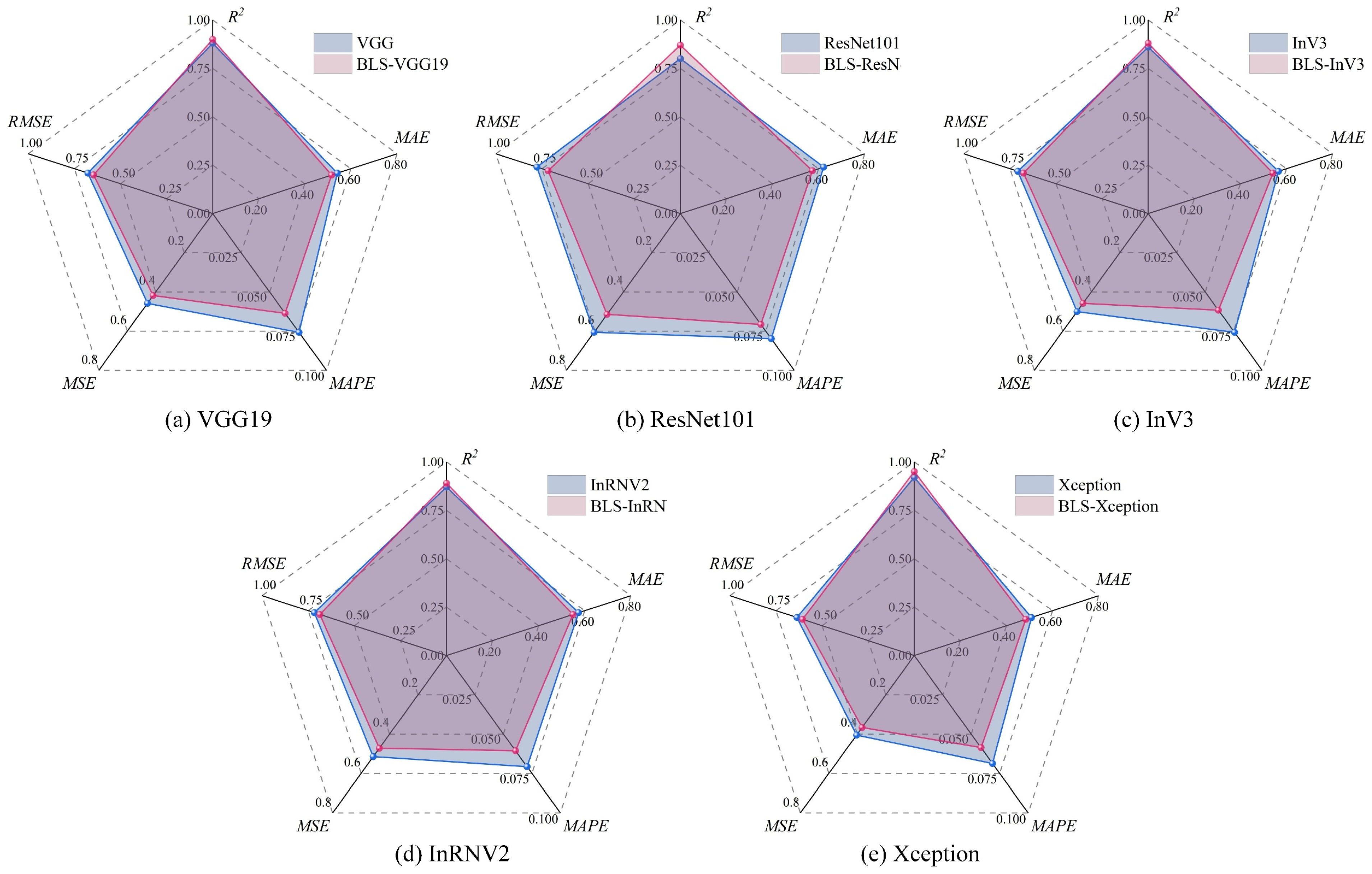
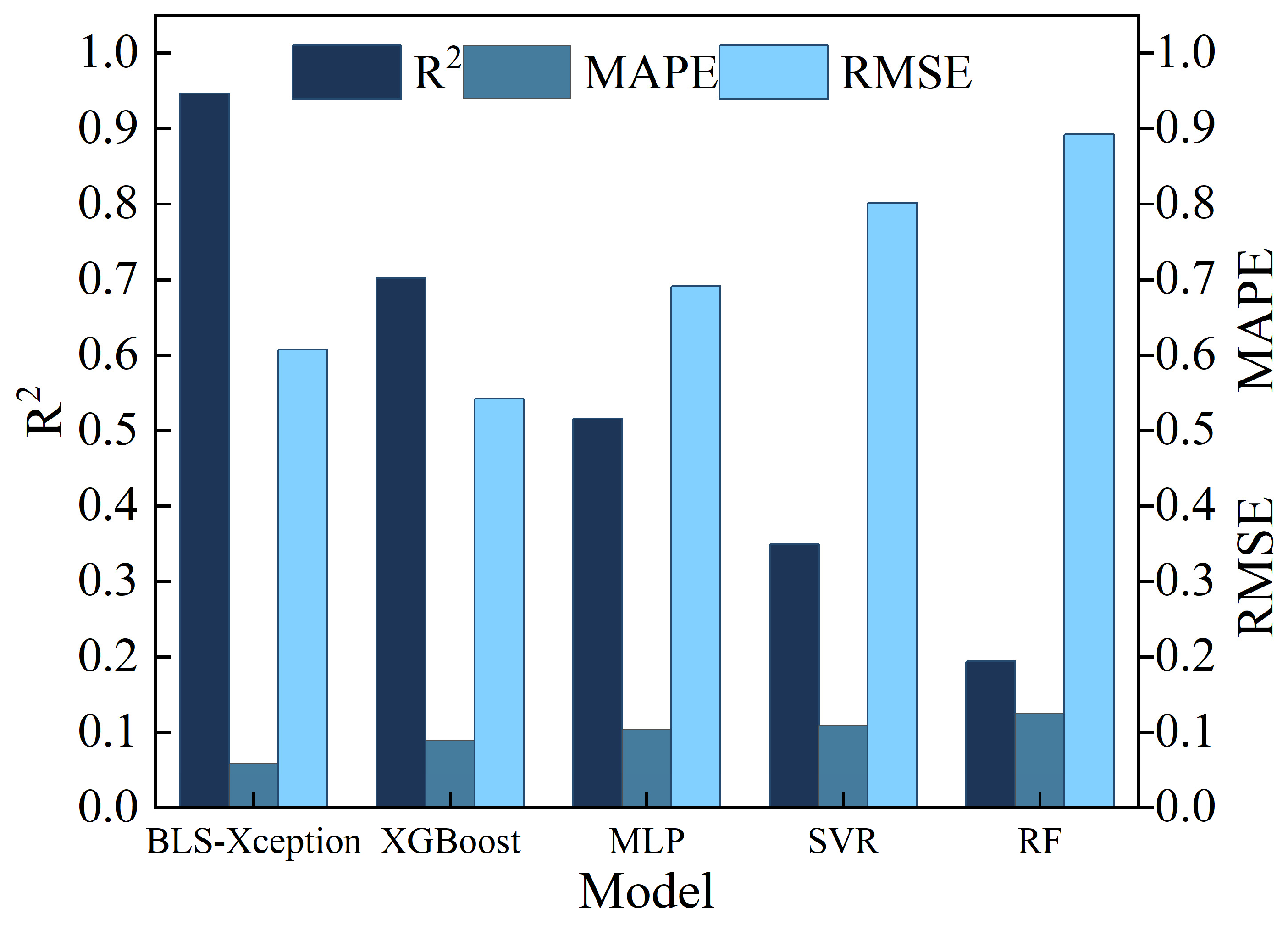
- Based on the combined evaluation of R2, MAE, MSE, MAPE and RMSE, the BLS-Xception model performed optimally. It achieved the highest R2 value of 0.95, along with the best performance in the other metrics, indicating superior prediction accuracy compared with the other models.
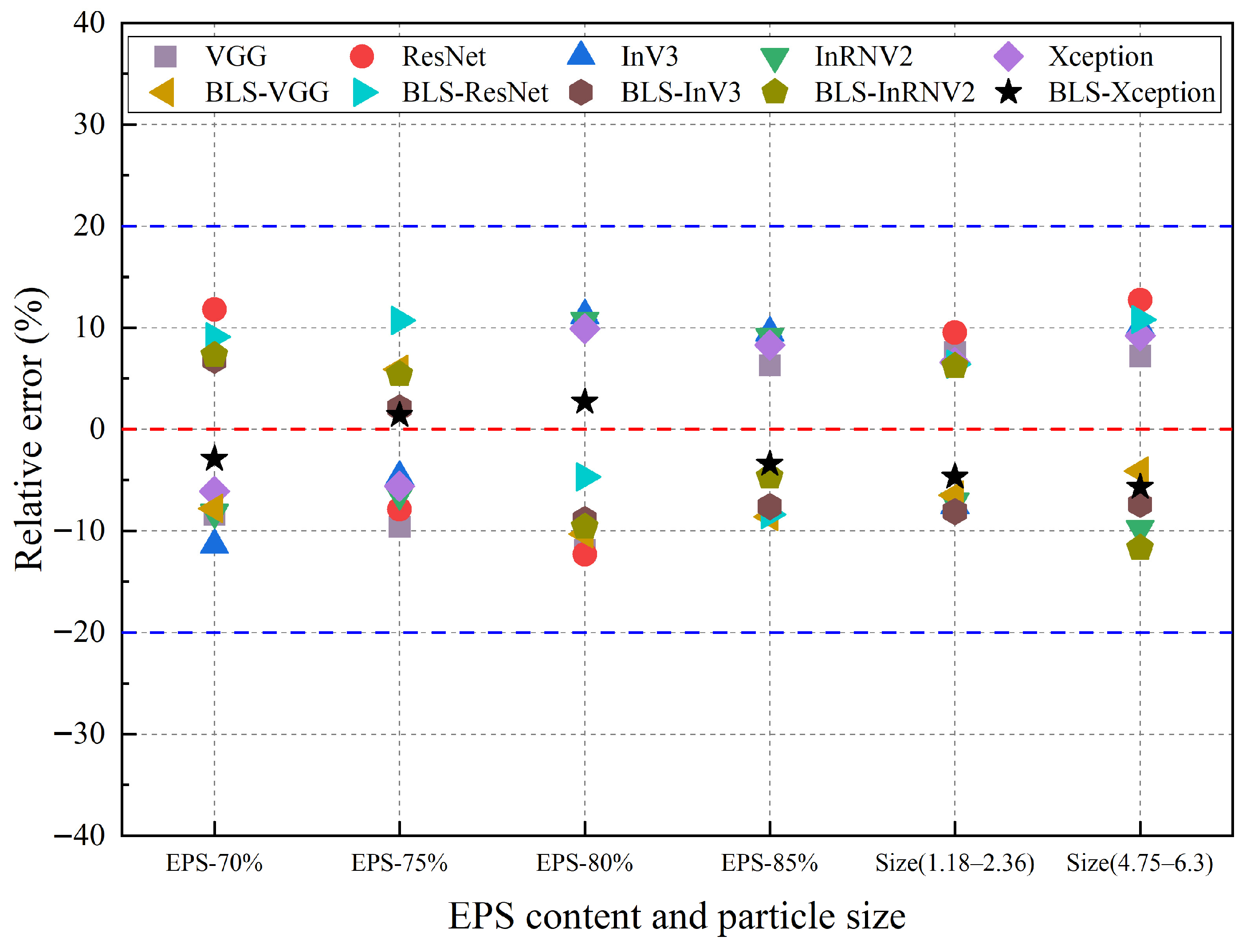
- The study demonstrates that as the polystyrene content increases, the compressive strength shows a progressive decline, with smaller EPS particles exhibiting better performance. The choice of cementitious materials significantly influences the compressive strength of concrete, with mineral powder showing the most pronounced enhancement effect for small-particle EPS. Silica fume performs better with larger EPS particles. The proposed BLS-Xception model effectively captures the impact of particle size, cementitious material type, and content on the mechanical properties, showcasing its practical application potential in EPS concrete strength prediction.
Author Contributions
Funding
Data Availability Statement
Conflicts of Interest
References
- Nam, Y.; Kim, W.; Kim, Y.; Lee, T.; Park, S. Analysis of influence of concrete aggregate in evaluation of form removal time of concrete using ultrasonic pulse velocity methods. J. Build. Eng. 2024, 86, 108775. [Google Scholar] [CrossRef]
- Al-Alusi, M.R.M.; Kurdi, N.H.; Al-Hadithi, A.I.; Hammad, A. An experimental investigation of the mechanical characteristics and drying shrinkage of a single-size expanded polystyrene lightweight concrete reinforced with waste plastic fibres. Constr. Build. Mater. 2024, 415, 135048. [Google Scholar] [CrossRef]
- Alshaikh, I.M.H.; Zeyad, A.M. Reliability of the tests’ results of Schmidt Hammer and core cutting for assessing actual compressive strength of concrete. J. Build. Pathol. Rehabil. 2022, 7, 70. [Google Scholar] [CrossRef]
- Adhikary, S.K.; Ashish, D.K. Turning waste expanded polystyrene into lightweight aggregate: Towards sustainable construction industry. Sci. Total Environ. 2022, 837, 155852. [Google Scholar] [CrossRef]
- Li, S.; Hu, D.; Yu, F.; Jin, Q.; Li, Z. Performance Optimization of Expanded Polystyrene Lightweight Concrete Using a Multi-Objective Physically Interpretable Algorithm with Random Forest. Buildings 2025, 15, 3944. [Google Scholar] [CrossRef]
- Li, C.; Miao, L.; You, Q.; Hu, S.; Fang, H. Effects of viscosity modifying admixture (VMA) on workability and compressive strength of structural EPS concrete. Constr. Build. Mater. 2018, 175, 342–350. [Google Scholar] [CrossRef]
- Der, O. Multi-Output Prediction and Optimization of CO2 Laser Cutting Quality in FFF-Printed ASA Thermoplastics Using Machine Learning Approaches. Polymers 2025, 17, 1910. [Google Scholar] [CrossRef]
- Liang, Y.; Chen, G.; Li, S.; Xu, Z. Intelligent Defect Diagnosis of Appearance Quality for Prefabricated Concrete Components Based on Target Detection and Multimodal Fusion Decision. J. Comput. Civ. Eng. 2023, 37, 04023032. [Google Scholar] [CrossRef]
- Chen, Z.; Zhang, W.; Huang, R.; Dong, Z.; Chen, C.; Jiang, L.; Wang, H. 3D model-based terrestrial laser scanning (TLS) observation network planning for large-scale building facades. Autom. Constr. 2022, 144, 104594. [Google Scholar] [CrossRef]
- Wang, Q.; Kim, M.-K.; Cheng, J.C.P.; Sohn, H. Automated quality assessment of precast concrete elements with geometry irregularities using terrestrial laser scanning. Autom. Constr. 2016, 68, 170–182. [Google Scholar] [CrossRef]
- Turkan, Y.; Bosché, F.; Haas, C.T.; Haas, R. Toward Automated Earned Value Tracking Using 3D Imaging Tools. J. Constr. Eng. Manag. 2013, 139, 423–433. [Google Scholar] [CrossRef]
- Yu, F.; Yuan, L.; Jin, Q.; Hu, D. MBAV: A Positional Encoding-Based Lightweight Network for Detecting Embedded Parts in Prefabricated Composite Slabs. Buildings 2025, 15, 2850. [Google Scholar] [CrossRef]
- Liu, J.; Li, D.; Feng, L.; Liu, P.; Wu, W. Towards Automatic Segmentation and Recognition of Multiple Precast Concrete Elements in Outdoor Laser Scan Data. Remote Sens. 2019, 11, 1383. [Google Scholar] [CrossRef]
- Xue, J.; Hou, X.; Zeng, Y. Review of Image-Based 3D Reconstruction of Building for Automated Construction Progress Monitoring. Appl. Sci. 2021, 11, 7840. [Google Scholar] [CrossRef]
- Wang, Q.; Kim, M.-K. Applications of 3D point cloud data in the construction industry: A fifteen-year review from 2004 to 2018. Adv. Eng. Inform. 2019, 39, 306–319. [Google Scholar] [CrossRef]
- Ercetin, A.; Der, O.; Akkoyun, F.; Chandrashekarappa, M.G.; Şener, R.; Çalışan, M.; Olgun, N.; Chate, G.; Bharath, K. Review of Image Processing Methods for Surface and Tool Condition Assessments in Machining. J. Manuf. Mater. Process. 2024, 8, 244. [Google Scholar] [CrossRef]
- Ye, G.; Li, S.; Zhou, M.; Mao, Y.; Qu, J.; Shi, T.; Jin, Q. Pavement crack instance segmentation using YOLOv7-WMF with connected feature fusion. Autom. Constr. 2024, 160, 105331. [Google Scholar] [CrossRef]
- Putranto, A.; Lin, T.-H.; Huang, B.-X. Deep learning-integrated electromagnetic imaging for evaluating reinforced concrete structures in water-contact scenarios. Autom. Constr. 2024, 164, 105459. [Google Scholar] [CrossRef]
- Pimenov, D.Y.; Da Silva, L.R.R.; Ercetin, A.; Der, O.; Mikolajczyk, T.; Giasin, K. State-of-the-art review of applications of image processing techniques for tool condition monitoring on conventional machining processes. Int. J. Adv. Manuf. Technol. 2024, 130, 57–85. [Google Scholar] [CrossRef]
- Başyiğit, C.; Çomak, B.; Kılınçarslan, Ş.; Üncü, İ.S. Assessment of concrete compressive strength by image processing technique. Constr. Build. Mater. 2012, 37, 526–532. [Google Scholar] [CrossRef]
- Dogan, G.; Arslan, M.H.; Ceylan, M. Concrete compressive strength detection using image processing based new test method. Measurement 2017, 109, 137–148. [Google Scholar] [CrossRef]
- Ye, G.; Qu, J.; Tao, J.; Dai, W.; Mao, Y.; Jin, Q. Autonomous surface crack identification of concrete structures based on the YOLOv7 algorithm. J. Build. Eng. 2023, 73, 106688. [Google Scholar] [CrossRef]
- Yu, G.; Zhu, S.; Xiang, Z. The Prediction of Pervious Concrete Compressive Strength Based on a Convolutional Neural Network. Buildings 2024, 14, 907. [Google Scholar] [CrossRef]
- Rubio, J.D.J.; Garcia, D.; Sossa, H.; Garcia, I.; Zacarias, A.; Mujica-Vargas, D. Energy processes prediction by a convolutional radial basis function network. Energy 2023, 284, 128470. [Google Scholar] [CrossRef]
- Wu, J.; Yang, R.; Zhao, P.; Yang, L. Computer-aided mobility solutions: Machine learning innovations to secure smart urban transportation. Sustain. Cities Soc. 2024, 107, 105422. [Google Scholar] [CrossRef]
- Nan, S. Feature Extraction and Segmentation Processing of Images Based on Convolutional Neural Networks. Opt. Mem. Neural Netw. 2021, 30, 67–73. [Google Scholar] [CrossRef]
- Shi, Z.; Li, H.; Cao, Q.; Ren, H.; Fan, B. An Image Mosaic Method Based on Convolutional Neural Network Semantic Features Extraction. J. Signal Process. Syst. 2020, 92, 435–444. [Google Scholar] [CrossRef]
- Wu, L.; Tong, J.; Wang, Z.; Li, J.; Li, M.; Li, H.; Feng, Y. Post-flood disaster damaged houses classification based on dual-view image fusion and Concentration-Based Attention Module. Sustain. Cities Soc. 2024, 103, 105234. [Google Scholar] [CrossRef]
- Jang, Y.; Ahn, Y.; Kim, H.Y. Estimating Compressive Strength of Concrete Using Deep Convolutional Neural Networks with Digital Microscope Images. J. Comput. Civ. Eng. 2019, 33, 04019018. [Google Scholar] [CrossRef]
- Chen, C.L.P.; Liu, Z. Broad Learning System: An Effective and Efficient Incremental Learning System Without the Need for Deep Architecture. IEEE Trans. Neural Netw. Learn. Syst. 2018, 29, 10–24. [Google Scholar] [CrossRef]
- Jin, J.-W.; Chen, C.L.P. Regularized robust Broad Learning System for uncertain data modeling. Neurocomputing 2018, 322, 58–69. [Google Scholar] [CrossRef]
- Kuok, S.; Yuen, K. Multi-resolution broad learning for model updating using incomplete modal data. Struct. Control Health Monit. 2020, 27, e2571. [Google Scholar] [CrossRef]
- Kuok, S.-C.; Yuen, K.-V. Model-free data reconstruction of structural response and excitation via sequential broad learning. Mech. Syst. Signal Process. 2020, 141, 106738. [Google Scholar] [CrossRef]
- GB 175-2007; Common Portland Cement. National Standards of the People’s Republic of China: Beijing, China, 2007.
- GB/T 50081-2019; Standard for Test Methods of Concrete Physical and Mechanical Properties. National Standards of the People’s Republic of China: Beijing, China, 2019.
- Shiuly, A.; Dutta, D.; Mondal, A. Assessing compressive strengths of mortar and concrete from digital images by machine learning techniques. Front. Struct. Civ. Eng. 2022, 16, 347–358. [Google Scholar] [CrossRef]
- Ji, Z.; Wang, H.; Han, J.; Pang, Y. Saliency-Guided Attention Network for Image-Sentence Matching. arXiv 2019, arXiv:1904.09471. [Google Scholar] [CrossRef]
- Cao, B.; Hu, Q.; Wang, Q.; Xu, X.; Zhu, P. Conditional Controllable Image Fusion. In NIPS ‘24: Proceedings of the 38th International Conference on Neural Information Processing Systems; Neural Information Processing Systems Foundation, Inc. (NeurIPS): Vancouver, BC, Canada, 2024; pp. 120311–120335. [Google Scholar] [CrossRef]
- Yang, Y.; Yuan, H.; Li, X.; Lin, Z.; Torr, P.; Tao, D. Neural Collapse Inspired Feature-Classifier Alignment for Few-Shot Class Incremental Learning. arXiv 2023, arXiv:2302.03004. [Google Scholar] [CrossRef]
- Waris, M.I.; Plevris, V.; Mir, J.; Chairman, N.; Ahmad, A. An alternative approach for measuring the mechanical properties of hybrid concrete through image processing and machine learning. Constr. Build. Mater. 2022, 328, 126899. [Google Scholar] [CrossRef]
- Simonyan, K.; Zisserman, A. Very Deep Convolutional Networks for Large-Scale Image Recognition. arXiv 2014, arXiv:1409.1556. [Google Scholar] [CrossRef]
- Szegedy, C.; Ioffe, S.; Vanhoucke, V.; Alemi, A. Inception-v4, Inception-ResNet and the Impact of Residual Connections on Learning. arXiv 2016, arXiv:1602.07261. [Google Scholar] [CrossRef]
- R, S.; Thaseen, I.S.; M, V.; M, D.; M, A.; R, M.; Mahendran, A.; Alnumay, W.; Chatterjee, P. An efficient hardware architecture based on an ensemble of deep learning models for COVID -19 prediction. Sustain. Cities Soc. 2022, 80, 103713. [Google Scholar] [CrossRef]
- He, K.; Zhang, X.; Ren, S.; Sun, J. Deep Residual Learning for Image Recognition. arXiv 2015, arXiv:1512.03385. [Google Scholar] [CrossRef]
- Chollet, F. Xception: Deep Learning with Depthwise Separable Convolutions. In 2017 IEEE Conference on Computer Vision and Pattern Recognition (CVPR); IEEE: Honolulu, HI, USA, 2017; pp. 1800–1807. [Google Scholar] [CrossRef]
- Ye, G.; Yuen, K.-V.; Jin, Q.; Zhou, M.; Yin, C.; Jiang, Q.; Zhao, S.; Su, W. Evaluation method for uniformity of steel slag concrete aggregate based on improved YOLOv8. J. Build. Eng. 2024, 98, 111046. [Google Scholar] [CrossRef]
- Chai, T.; Draxler, R.R. Root mean square error (RMSE) or mean absolute error (MAE)?—Arguments against avoiding RMSE in the literature. Geosci. Model Dev. 2014, 7, 1247–1250. [Google Scholar] [CrossRef]
- Zhou, Z.; Jin, Q.; Hu, D.; Zhu, L.; Li, Z.; Su, W. Long-term volume stability of steel slag sand mortar and concrete. Case Stud. Constr. Mater. 2025, 22, e04179. [Google Scholar] [CrossRef]



| Grade | Specific Gravity (g/cm3) | Blaine Surface Area (m2/kg) | Setting Time (min) | Flexural Strength (MPa) | Compressive Strength (MPa) | |||
|---|---|---|---|---|---|---|---|---|
| Initial | Final | 3 d | 28 d | 3 d | 28 d | |||
| 42.5 R | 3.18 | 339 | 147 | 179 | 5.3 | 7.7 | 27.4 | 49.8 |
| Chemical Composition (%) | Cement | Silica Fume | Coal Ash | Mineral Powder |
|---|---|---|---|---|
| Silica | 21.57 | 91.17 | 45.1 | 27.85 |
| Aluminum oxide | 4.91 | 0.19 | 24.2 | 12.93 |
| Iron oxide | 3.56 | 0.12 | 3 | 0.31 |
| Loss on ignition | 0.92 | 3.92 | 2.8 | 2.3 |
| Label | Cement Percentage of Quality | Coal Ash Percentage of Quality | Silica Fume Percentage of Quality | Mineral Powder Percentage of Quality | EPS Percentage of Volume |
|---|---|---|---|---|---|
| 100-C-85 | 100% | 0 | 0 | 0 | 85% |
| 100-C-80 | 80% | ||||
| 100-C-75 | 75% | ||||
| 100-C-70 | 70% | ||||
| 10-CA-85 | 90% | 10% | 0 | 0 | 85% |
| 10-CA-80 | 80% | ||||
| 10-CA-75 | 75% | ||||
| 10-CA-70 | 70% | ||||
| 20-CA-85 | 80% | 20% | 0 | 0 | 85% |
| 20-CA-80 | 80% | ||||
| 20-CA-75 | 75% | ||||
| 20-CA-70 | 70% | ||||
| 10-SF-85 | 90% | 0 | 10% | 0 | 85% |
| 10-SF-80 | 80% | ||||
| 10-SF-75 | 75% | ||||
| 10-SF-70 | 70% | ||||
| 20-SF-85 | 80% | 0 | 20% | 0 | 85% |
| 20-SF-80 | 80% | ||||
| 20-SF-75 | 75% | ||||
| 20-SF-70 | 70% | ||||
| 10-MP-85 | 90% | 0 | 0 | 10% | 85% |
| 10-MP-80 | 80% | ||||
| 10-MP-75 | 75% | ||||
| 10-MP-70 | 70% | ||||
| 20-MP-85 | 80% | 0 | 0 | 20% | 85% |
| 20-MP-80 | 80% | ||||
| 20-MP-75 | 75% | ||||
| 20-MP-70 | 70% |
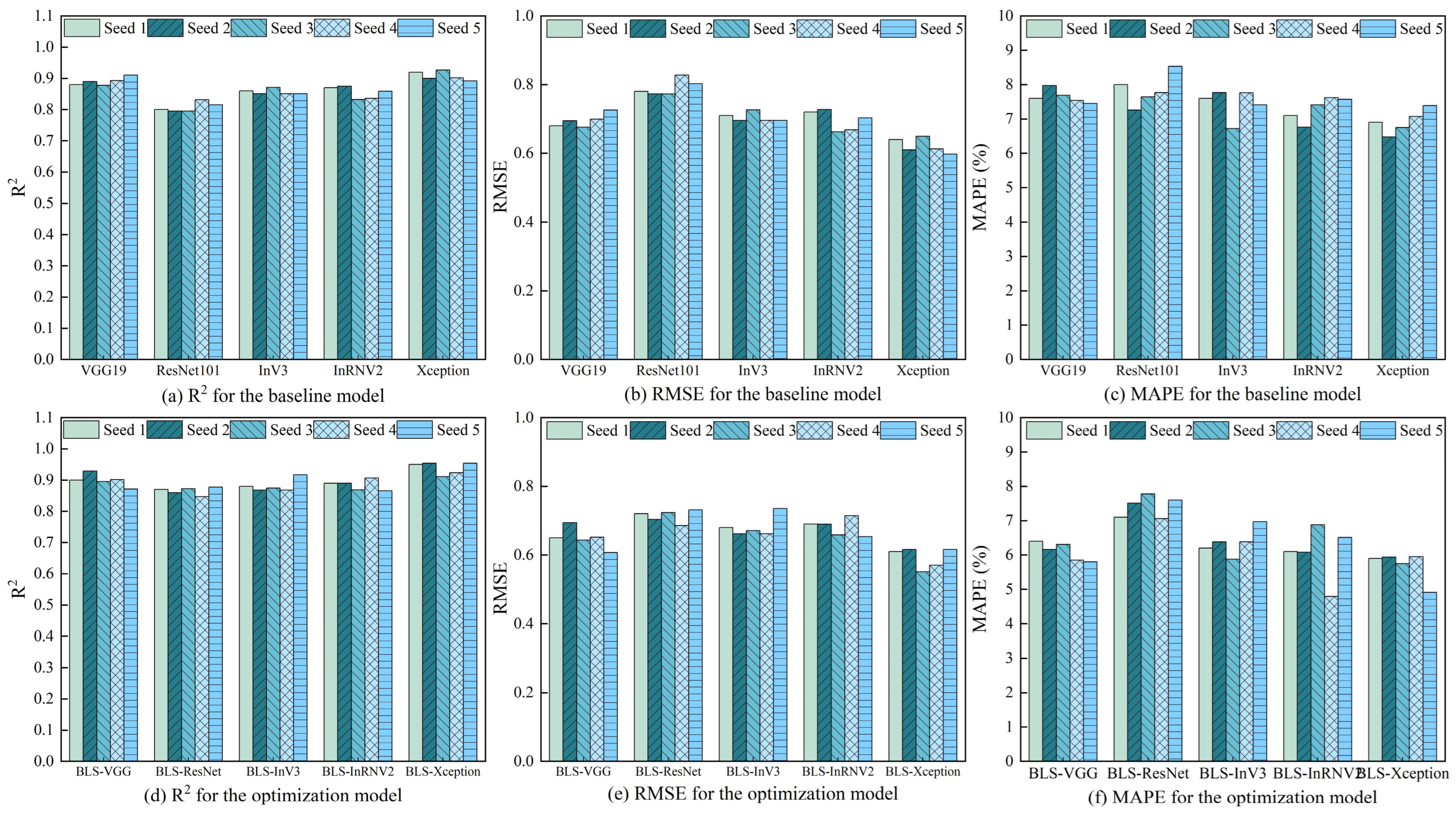
| Model | R2-Mean | R2-Std | RMSE-Mean | RMSE-Std | MAPE-Mean (%) | MAPE-Std (%) |
|---|---|---|---|---|---|---|
| VGG19 | 0.890 | 0.012 | 0.695 | 0.018 | 7.65 | 0.18 |
| ResNet101 | 0.808 | 0.014 | 0.791 | 0.021 | 7.84 | 0.42 |
| InV3 | 0.857 | 0.008 | 0.705 | 0.012 | 7.45 | 0.39 |
| InRNV2 | 0.854 | 0.018 | 0.696 | 0.026 | 7.29 | 0.32 |
| Xception | 0.908 | 0.013 | 0.622 | 0.020 | 6.92 | 0.31 |
| BLS-VGG | 0.900 | 0.018 | 0.649 | 0.028 | 6.10 | 0.24 |
| BLS-ResNet | 0.865 | 0.011 | 0.713 | 0.016 | 7.41 | 0.28 |
| BLS-InV3 | 0.881 | 0.018 | 0.682 | 0.028 | 6.36 | 0.35 |
| BLS-InRNV2 | 0.884 | 0.015 | 0.681 | 0.023 | 6.07 | 0.71 |
| BLS-Xception | 0.938 | 0.018 | 0.593 | 0.027 | 5.69 | 0.40 |
| Model Variant | R2 | RMSE | MAPE | Per-Image Time (s) |
|---|---|---|---|---|
| Xception | 0.9237 | 0.6441 | 0.0665 | 2.3 |
| BLS | 0.9019 | 0.6627 | 0.0691 | 1.7 |
| BLS-Xception | 0.9465 | 0.6073 | 0.0586 | 1.9 |
Disclaimer/Publisher’s Note: The statements, opinions and data contained in all publications are solely those of the individual author(s) and contributor(s) and not of MDPI and/or the editor(s). MDPI and/or the editor(s) disclaim responsibility for any injury to people or property resulting from any ideas, methods, instructions or products referred to in the content. |
© 2026 by the authors. Licensee MDPI, Basel, Switzerland. This article is an open access article distributed under the terms and conditions of the Creative Commons Attribution (CC BY) license.
Share and Cite
Zhou, Z.; Cao, W.; Jin, Q.; Li, S. Evaluation of Compressive Strength of Expanded Polystyrene Concrete Based on Broad Learning System. Buildings 2026, 16, 795. https://doi.org/10.3390/buildings16040795
Zhou Z, Cao W, Jin Q, Li S. Evaluation of Compressive Strength of Expanded Polystyrene Concrete Based on Broad Learning System. Buildings. 2026; 16(4):795. https://doi.org/10.3390/buildings16040795
Chicago/Turabian StyleZhou, Zhenhao, Wanfen Cao, Qiang Jin, and Sen Li. 2026. "Evaluation of Compressive Strength of Expanded Polystyrene Concrete Based on Broad Learning System" Buildings 16, no. 4: 795. https://doi.org/10.3390/buildings16040795
APA StyleZhou, Z., Cao, W., Jin, Q., & Li, S. (2026). Evaluation of Compressive Strength of Expanded Polystyrene Concrete Based on Broad Learning System. Buildings, 16(4), 795. https://doi.org/10.3390/buildings16040795