The Effect of Combining Waste-Derived Pozzolanic and Fibrous Materials with Functional Admixtures on Performance and Corrosion Resistance of Concrete



Abstract
1. Introduction
2. Materials and Methods
2.1. Materials
2.2. Mix Design
2.3. Methods
3. Results and Discussion
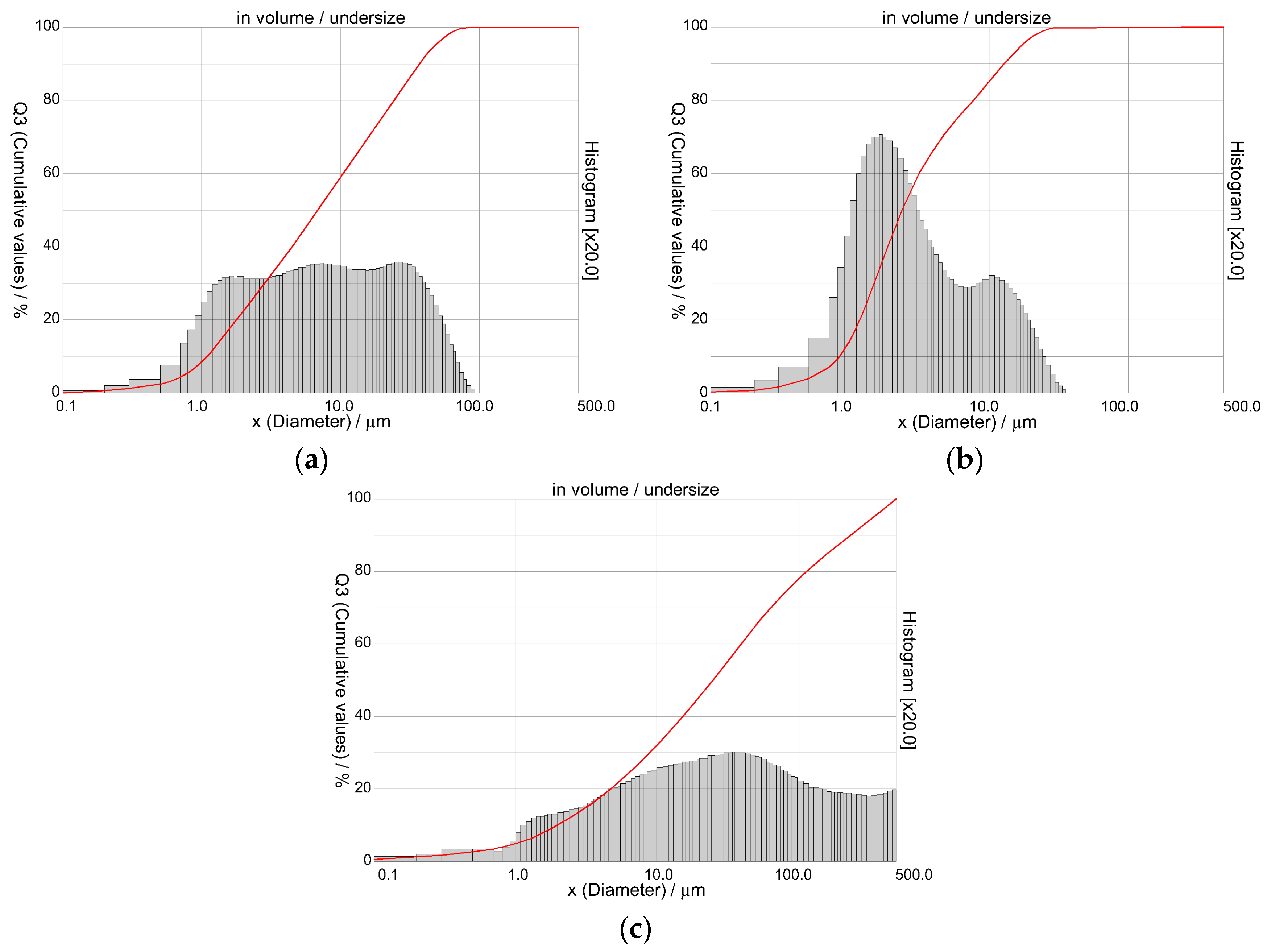
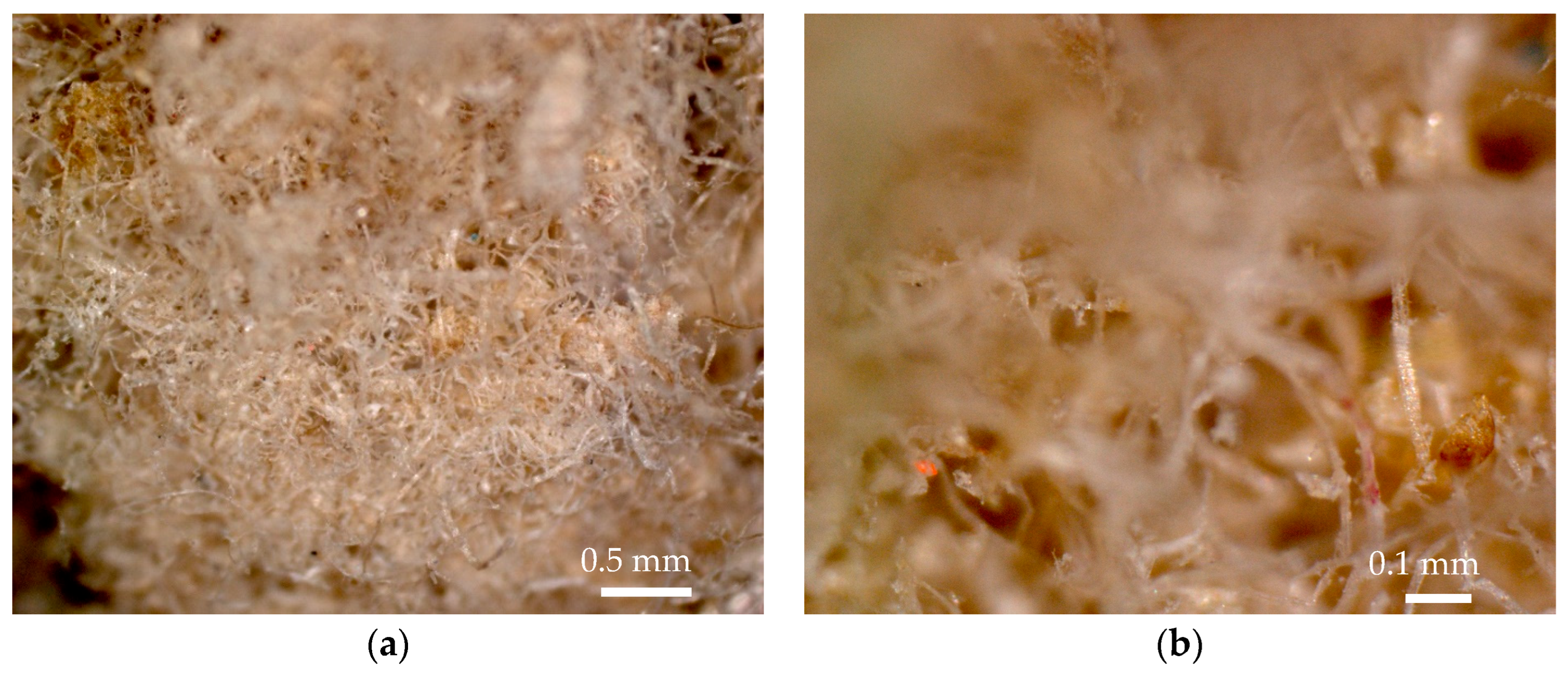
3.1. Parameters of Tested Materials
3.2. Density and UPV
3.3. Flexural and Compressive Strengths
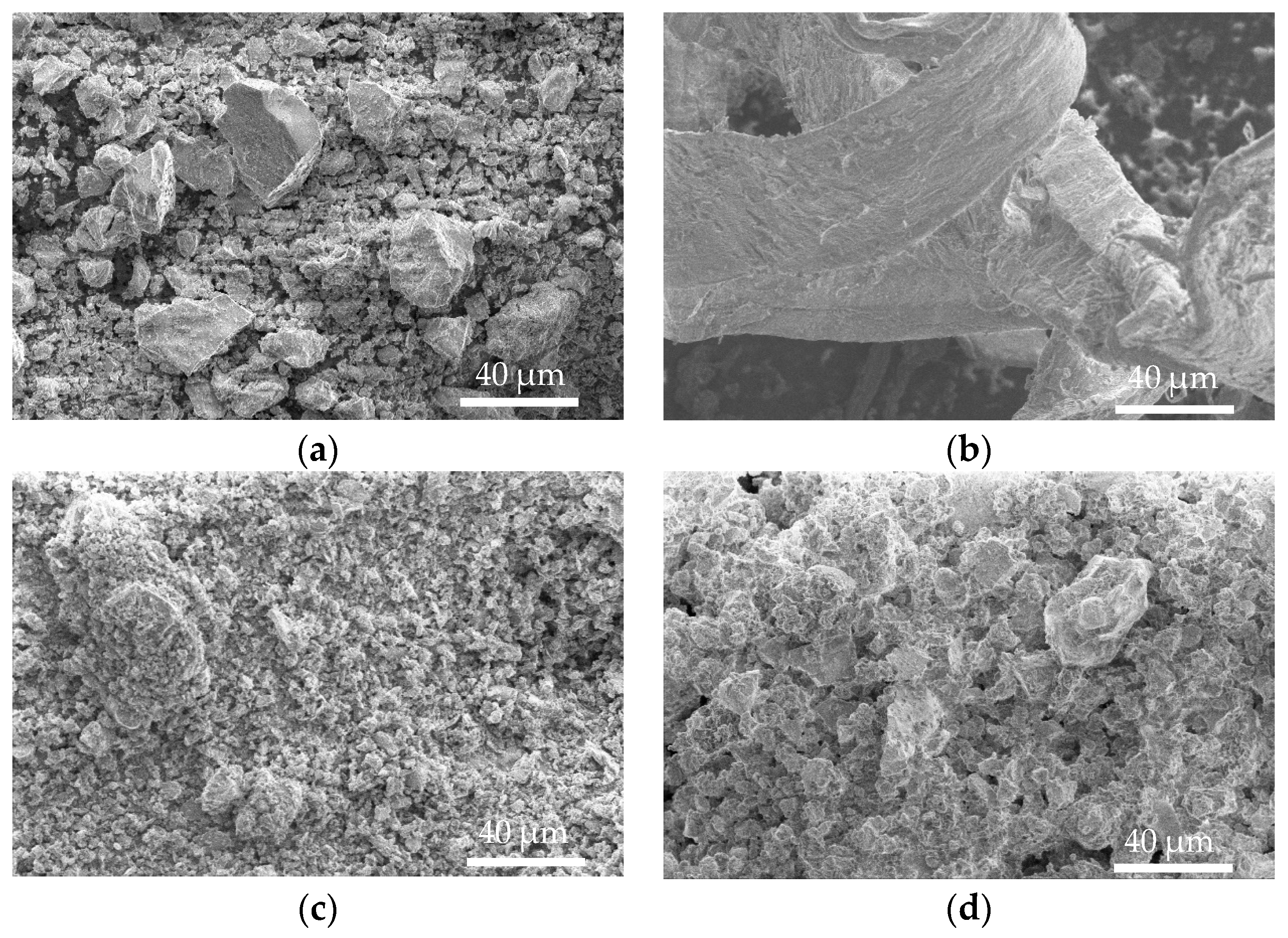
3.4. SEM Analysis
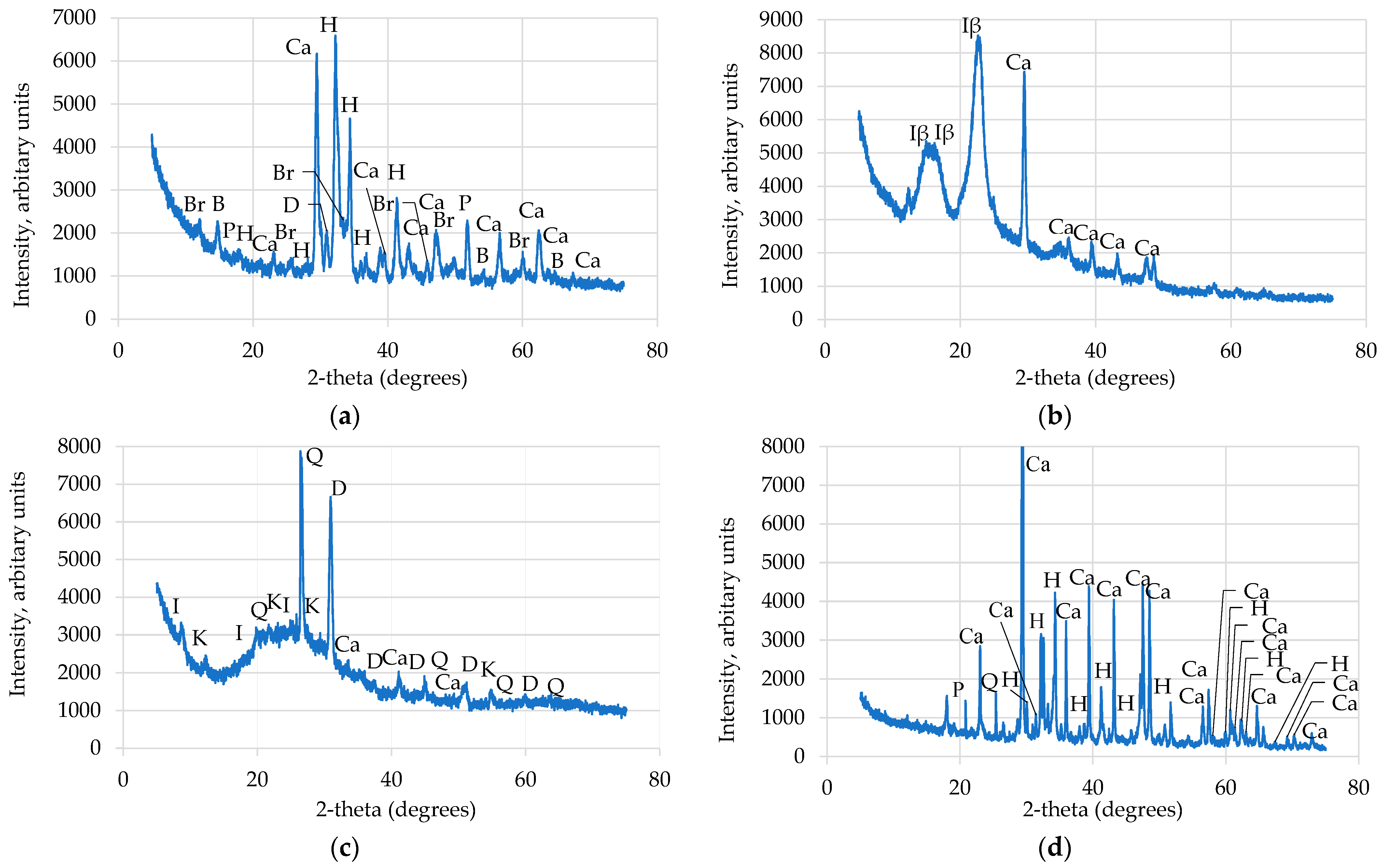
3.5. XRD Analysis
3.6. Expansion
4. Conclusions
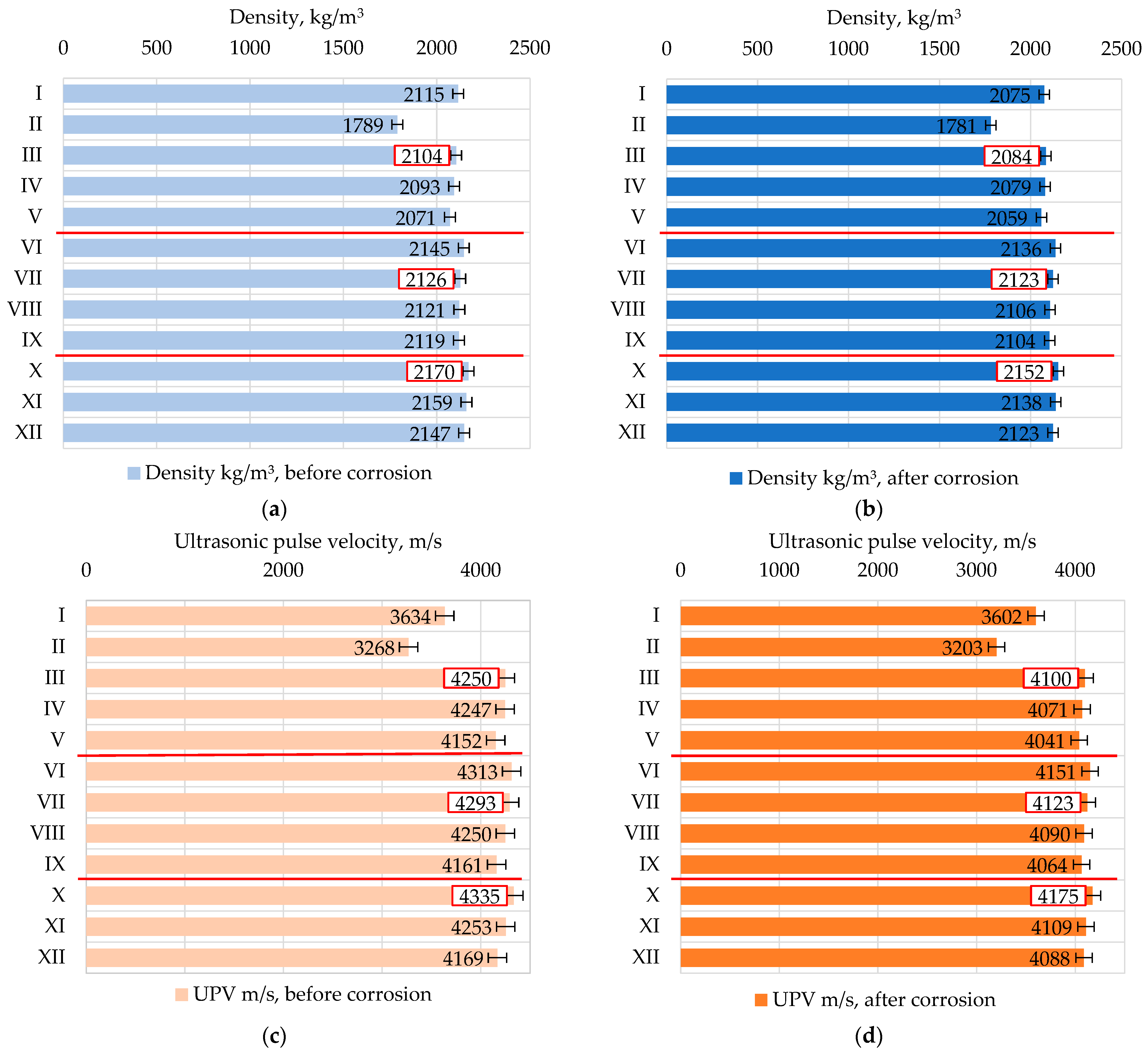
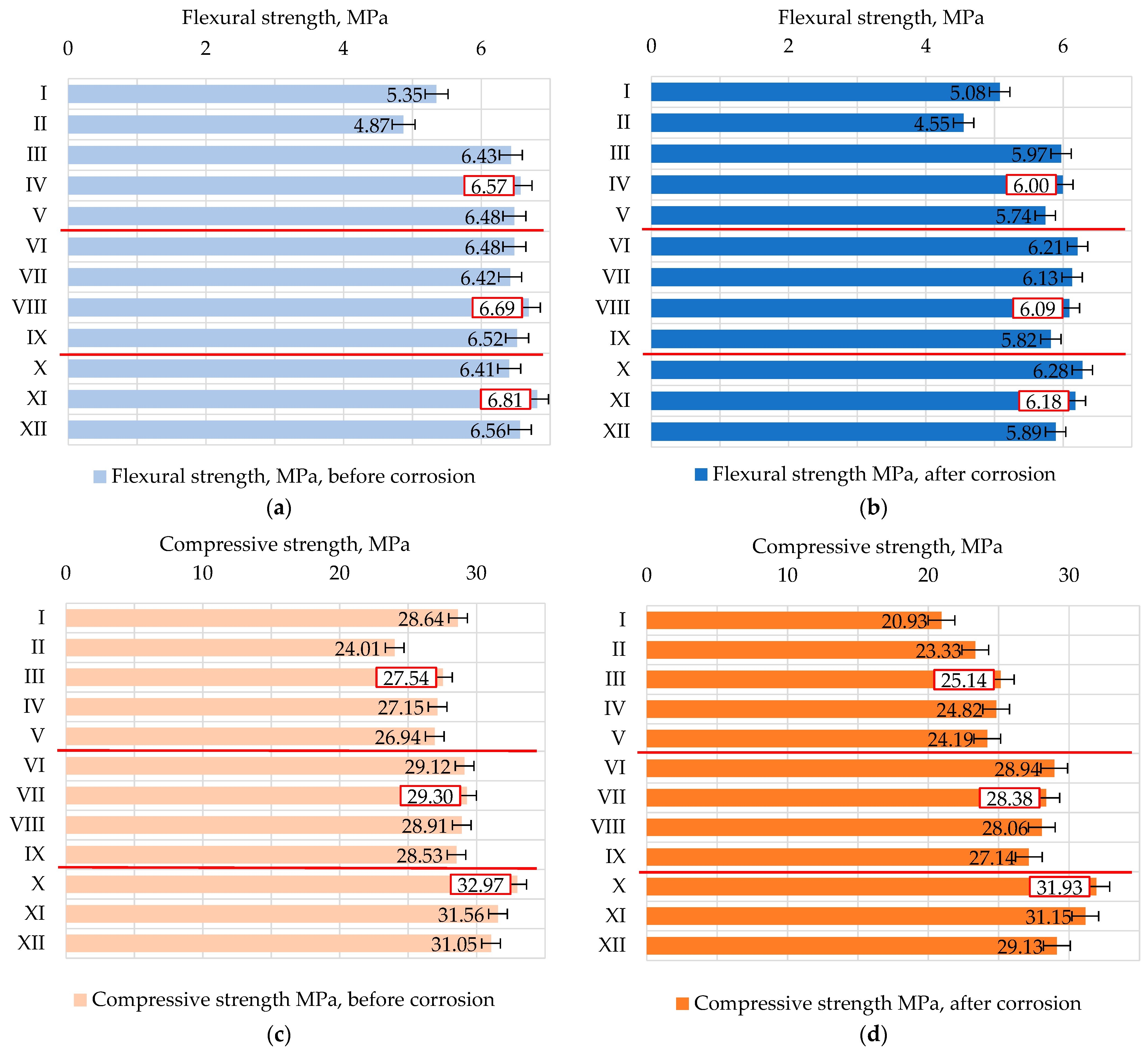
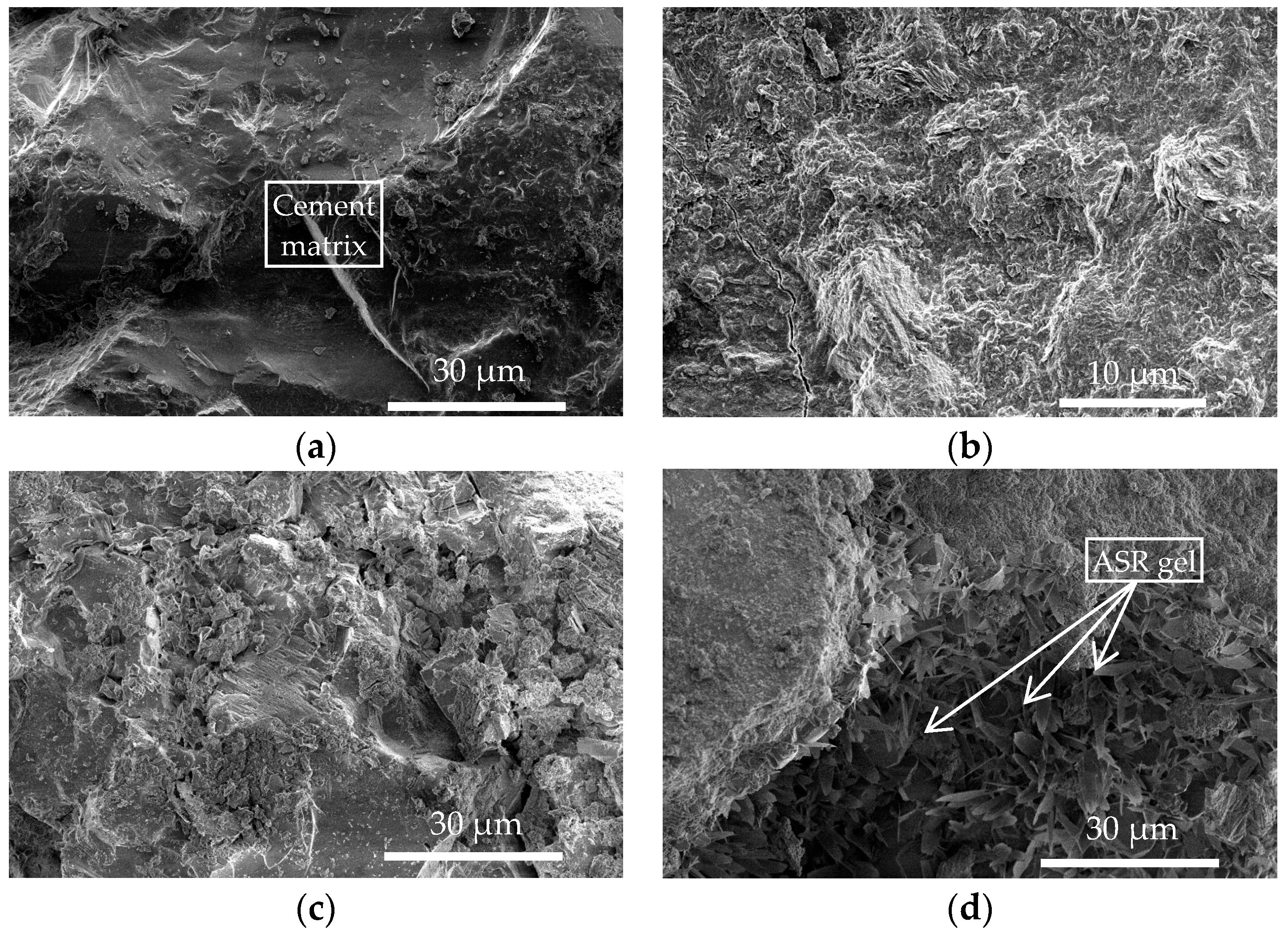
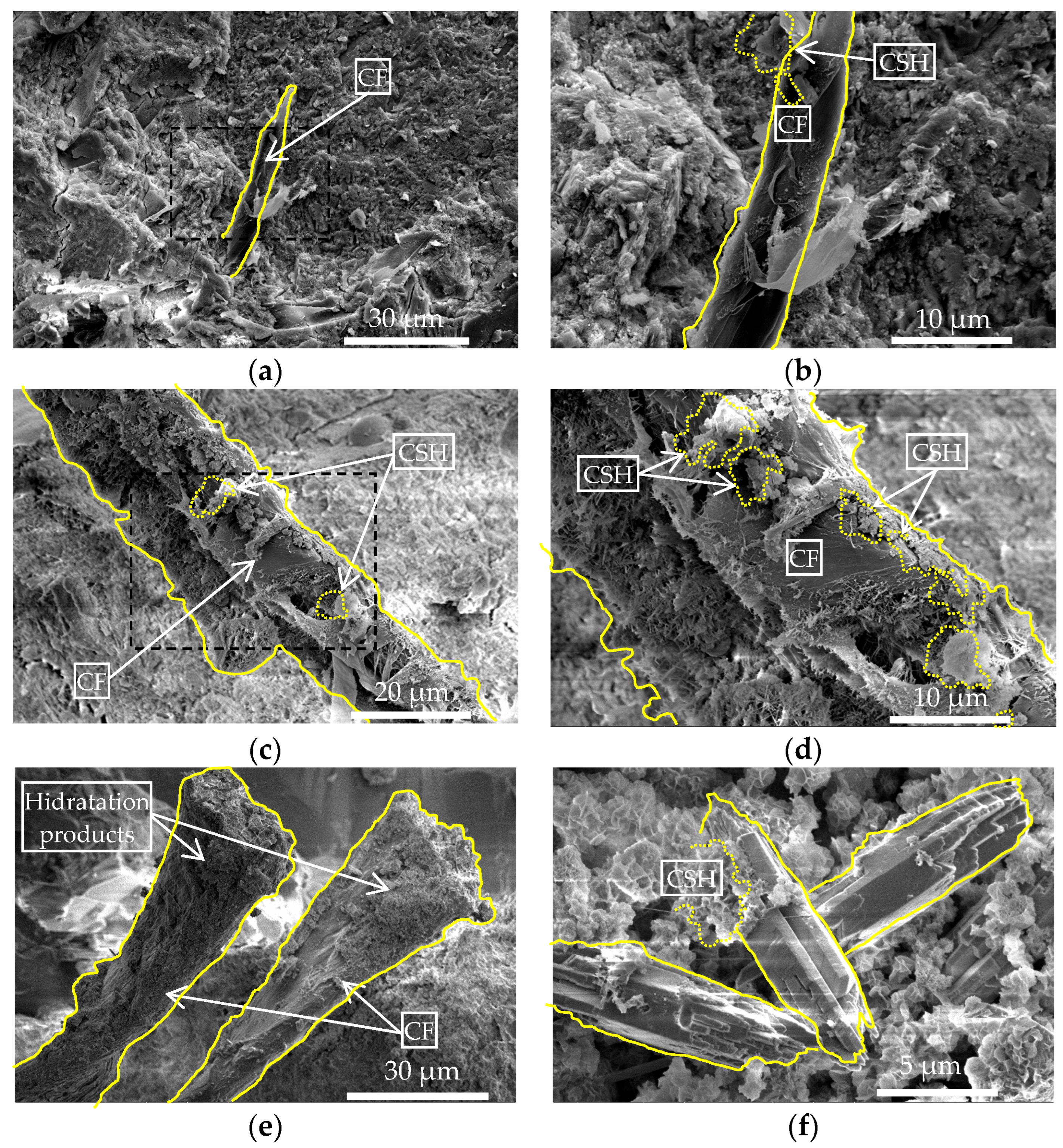
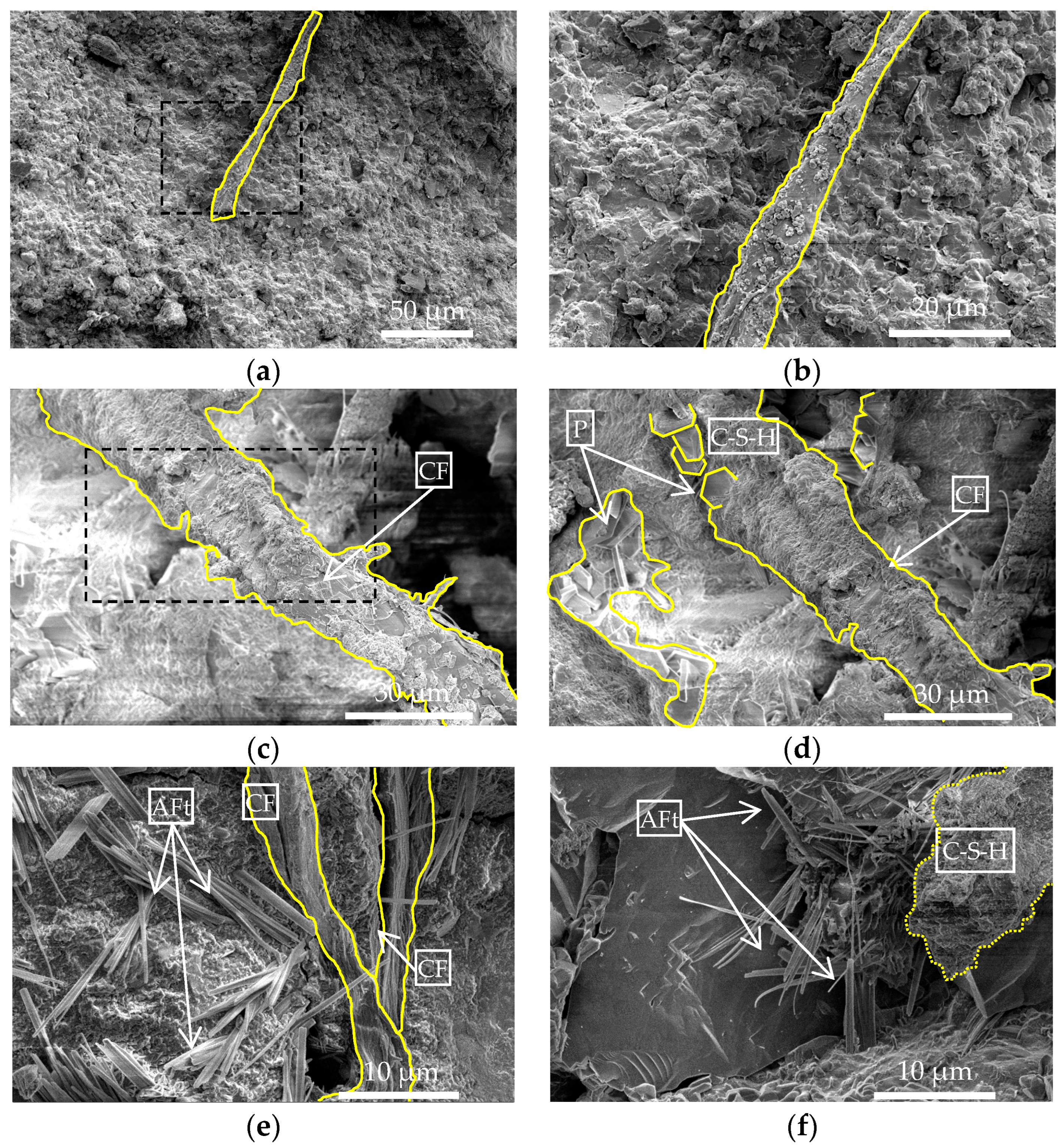
- Flexural strength is increased by 23% and 27% in comparison to pure cement specimens when 8% and 10% of metakaolin waste are substituted for cement and cellulose fibres in amounts varying from 1% to 2%. However, adding a 1% functional water-proofing additive also enhances specimen density by up to 2.6%, ultrasonic pulse velocity by up to 19%, and compressive strength by up to 15% due to increased crystallization of hydration products on the surface of cellulose fibre and pore filling. The functional water-proofing additive contains a large amount of CaO, and possibly actively participates in the hydration process by forming additional hydration products, such as CSH.
- Combined utilizing of metakaolin, functional waterproofing additive and cellulose fibre positively influences concrete microstructure, displaying increased exceptional bonding with the cement matrix. An additional factor that can improve the cement hydration process is the fact that cellulose fibre is hydrophilic. The wet surface of cellulose fibre is the suitable area on which precipitation of cement hydration products occurs most visibly. As the hydration process continues, the cellulose fibre acts as a source of additional water. Cellulose fibre, because of its hydrophilicity, collects water and releases it gradually into the surrounding region, thus ensuring increased reactions between cement minerals, metakaolin and CaO- rich functional waterproofing additive on the fibre surface.
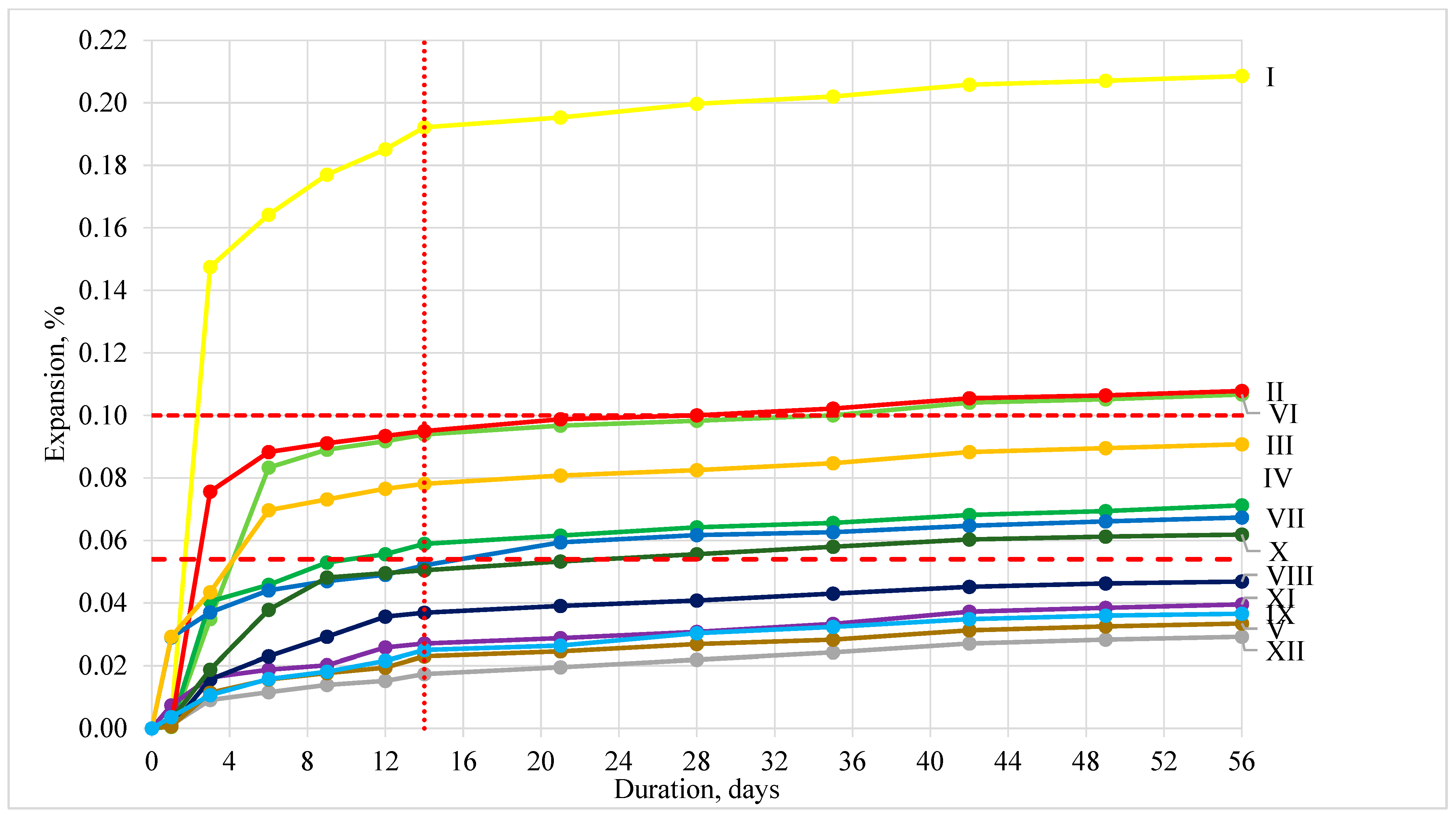
- In a 1 M NaOH solution at 80 °C, batch VII’s (with minimal 1% of cellulose fibre in composition) expansion stayed below 0.054% after 14 days and did not surpass 0.1% after 56 days, indicating that it performed excellent in the expansion tests. These findings suggest a low susceptibility to the alkali–silica interaction. This improved performance is most likely attributable to the combined use of metakaolin, a functional waterproofing additive, and an optimal amount of cellulose fibres, which led to a denser concrete structure and helped prevent ASR development.
Author Contributions
Funding
Institutional Review Board Statement
Informed Consent Statement
Data Availability Statement
Conflicts of Interest
References
- Wang, Y.; Zhu, L.; Xue, Y. A Comprehensive Review on Dual-Pathway Utilization of Coal Gangue Concrete: Aggregate Substitution, Cementitious Activity Activation, and Performance Optimization. Buildings 2026, 16, 302. [Google Scholar] [CrossRef]
- Kesavraman, S. Studies on Metakaolin Based Banana Fibre Reinforced Concrete. Int. J. Civ. Eng. Technol. 2017, 8, 532–543. [Google Scholar]
- Chandra Mouli, K.; Pannirselvam, N.; Anitha, V.; Vijaya Kumar, D.; Valeswara Rao, S. Strength Studies on Banana Fibre Concrete with Metakaolin. Int. J. Civ. Eng. Technol. 2019, 10, 684–689. [Google Scholar]
- Srivastava, S.; Roy, S.; Khan, F. Study of using Metakaolin and Vetiver Fiber as Partial Replacement of Cement in Concrete. Int. J. Eng. Res. Technol. 2022, 11, 219–221. [Google Scholar]
- Bede Odorčić, N.; Kravanja, G. Combined Effects of Metakaolin and Hybrid Fibers on Self-Compacting Concrete. Materials 2022, 15, 5588. [Google Scholar] [CrossRef]
- Valizadeh Kiamahalleh, M.; Gholampour, A.; Rezaei Shahmirzadi, M.; Ngo, T.D.; Ozbakkaloglu, T. Mechanical, Durability, and Microstructure Assessment of Wastepaper Fiber-Reinforced Concrete Containing Metakaolin. Materials 2024, 17, 2608. [Google Scholar] [CrossRef]
- Pazderka, J.; Hájková, E. Crystalline admixtures and their effect on selected properties of concrete. Acta Polytech. 2016, 56, 306–311. [Google Scholar] [CrossRef]
- Beltrán Cobos, R.; Tavares Pinto, F.; Sánchez Moreno, M. Analysis of the Influence of Crystalline Admixtures at Early Age Performance of Cement-Based Mortar by Electrical Resistance Monitoring. Materials 2021, 14, 5705. [Google Scholar] [CrossRef]
- Sideris, K.; Chatzopoulos, A.; Tassos, C.; Manita, P. Durability of concretes prepared with crystalline admixtures. MATEC Web Conf. 2019, 289, 09003. [Google Scholar] [CrossRef]
- Machado, B.R.; Silva, L.S.; Amario, M.; Haddad, A.N.; de Vargas, A.S.; Stolz, C.M. Effect of curing methods on the long-term properties of concrete containing crystallizing additives. Next Mater. 2025, 8, 100759. [Google Scholar] [CrossRef]
- Ayeni, O.; Mahamat, A.A.; Bih, N.L.; Stanislas, T.T.; Isah, I.; Savastano Junior, H.; Boakye, E.; Onwualu, A.P. Effect of Coir Fiber Reinforcement on Properties of Metakaolin-Based Geopolymer Composite. Appl. Sci. 2022, 12, 5478. [Google Scholar] [CrossRef]
- Luo, R.; Liu, H.; Duan, P.; Ye, J.; Chen, W.; Zhang, Z.; Wang, A. Sulfate resistance and microstructure of metakaolin geopolymer reinforced by cellulose nanofiber and wollastonite. J. Build. Eng. 2023, 64, 105580. [Google Scholar] [CrossRef]
- Jamshaid, H.; Ali, H.; Mishra, R.K.; Nazari, S.; Chandan, V. Durability and Accelerated Ageing of Natural Fibers in Concrete as a Sustainable Construction Material. Materials 2023, 16, 6905. [Google Scholar] [CrossRef]
- Mircea, C.; Toader, T.-P.; Hegyi, A.; Ionescu, B.-A.; Mircea, A. Early Age Sealing Capacity of Structural Mortar with Integral Crystalline Waterproofing Admixture. Materials 2021, 14, 4951. [Google Scholar] [CrossRef]
- Al-Rashed, R.; Al-Jabari, M. Managing Thermal Effects in Waterproofed Concrete with Multi-Crystallization Enhancer. Cement 2022, 10, 100050. [Google Scholar] [CrossRef]
- Nagrockienė, D.; Pundienė, I.; Čepulis, A.; Pocius, E. The Effect of Crystallizing Admixture on the Properties and Shrinkage of Concrete. Ceram. Silikáty 2021, 65, 273–280. [Google Scholar] [CrossRef]
- Tsampali, E.; Tsardaka, E.-C.; Pavlidou, E.; Stefanidou, M. The mechanism action of crystalline admixtures on hydration, microstructure, and self-healing of cementitious materials. J. Build. Eng. 2025, 110, 112987. [Google Scholar] [CrossRef]
- LST EN 197-1:2011; Cement—Part 1: Composition, Specifications and Conformity Criteria for Common Cements. Lithuanian Standards Board: Vilnius, Lithuania, 2012.
- LST EN 12620:2002+A1:2008; Aggregates for Concrete. Lithuanian Standards Board: Vilnius, Lithuania, 2009.
- Malaiškienė, J.; Škamat, J.; Kizinievič, O.; Girskas, G. Synergistic Effect of Metakaolin Waste and Nano-Silica on the Properties of Ultra-High-Performance Concrete. Processes 2025, 13, 3614. [Google Scholar] [CrossRef]
- Ahmad, J.; Majdi, A.; Arbili, M.M.; Deifalla, A.F.; Naqash, M.T. Mechanical, Durability and Microstructure Analysis Overview of Concrete Made with Metakaolin (MTK). Buildings 2022, 12, 1401. [Google Scholar] [CrossRef]
- Majstorović, F.; Sebera, V.; Mrak, M.; Dolenec, S.; Wolf, M.; Marrot, L. Impact of metakaolin on mechanical performance of flax textile-reinforced cement-based composites. Cem. Concr. Compos. 2022, 126, 104367. [Google Scholar] [CrossRef]
- Liu, J.; Lv, C. Research Progress on Durability of Cellulose Fiber-Reinforced Cement-Based Composites. Int. J. Polym. Sci. 2021, 2021, 1014531. [Google Scholar] [CrossRef]
- Prashar, R. Fiber-Reinforced Cementitious Composites: A Comprehensive Review of Synthetic, Natural, and Hybrid Systems for Advanced Construction Applications. Int. J. Multidiscip. Res. 2025, 7, 5. [Google Scholar] [CrossRef]
- Mirdamadi, A.; Layssi, H.; Eftekhar, M.H.; Shekarchi, M. Comparative Study of Metakaolin and Silica Fume to Prevent Alkali-Silica Reaction in Concrete. In Proceedings of the 13th International Conference on Alkali-Aggregate Reaction, Trondheim, Norway, 16–20 June 2008. [Google Scholar]
- Al-Hashem, M.N.; Amin, M.N.; Ajwad, A.; Afzal, M.; Khan, K.; Faraz, M.I.; Qadir, M.G.; Khan, H. Mechanical and Durability Evaluation of Metakaolin as Cement Replacement Material in Concrete. Materials 2022, 15, 7868. [Google Scholar] [CrossRef]
- Shumuye, E.D.; Li, W.; Fang, G.; Wang, Z.; Liu, J.; Zerfu, K. Review on the durability of eco-friendly engineering cementitious composite (ECC). Case Stud. Constr. Mater. 2023, 19, e02324. [Google Scholar] [CrossRef]
- Zhang, G.-Z.; Liu, C.; Ma, X.; Yu, X.-K. The Effects of Crystalline Admixture on the Self-Healing Performance and Mechanical Properties of Mortar with Internally Added Superabsorbent Polymer. Materials 2023, 16, 5052. [Google Scholar] [CrossRef]
- Rezaei Shahmirzadi, M.; Gholampour, A.; Hosseini, S.A.; Ngo, T.D.; Nematzadeh, M. Wastepaper fiber-reinforced concrete containing metakaolin: Effect on fracture behavior. Struct. Concr. 2024, 25, 2931–2946. [Google Scholar] [CrossRef]
- Raveendran, N.; Vasugi, K. Synergistic effect of nano silica and metakaolin on mechanical and microstructural properties of concrete: An approach of response surface methodology. Case Stud. Constr. Mater. 2024, 20, e03196. [Google Scholar] [CrossRef]
- LST EN 12504-4:2021; Testing Concrete—Part 4: Determination of Ultrasonic Pulse Velocity. Lithuanian Standards Board: Vilnius, Lithuania, 2021.
- LST EN 12390-7:2019; Testing Hardened Concrete—Part 7: Density of Hardened Concrete. Lithuanian Standards Board: Vilnius, Lithuania, 2020.
- LST EN 12390-3:2019; Testing Hardened Concrete—Part 3: Compressive Strength of Test Specimens. Lithuanian Standards Board: Vilnius, Lithuania, 2020.
- LST EN 12390-5:2019; Testing Hardened Concrete—Part 5: Flexural Strength of Test Specimens. Lithuanian Standards Board: Vilnius, Lithuania, 2022.
- Wang, R.; Ding, Z.; Zhang, Y.; Xu, Y. Self-healing of high-performance engineered cementitious materials with crystalline admixture in the seawater environment. J. Build. Eng. 2023, 63, 105472. [Google Scholar] [CrossRef]
- Rong, Z.; Jiang, G.; Sun, W. Effects of metakaolin on mechanical and microstructural properties of ultra-high performance cement-based composites. J. Sustain. Cem.-Based Mater. 2018, 7, 296–310. [Google Scholar] [CrossRef]
- Sofi, A.; Kumanan, T.S. Chapter 7—Metakaolin-blended cements—The past and future of sustainable concrete. In Binding Materials for Sustainable Construction; Singh, N.B., Goyal, R., Middendorf, B., Eds.; Woodhead Publishing: Cambridge, UK, 2025; pp. 211–232. [Google Scholar]
- Patrisia, Y.; Gunasekara, C.; Setunge, S.; Mendis, P.; Nanayakkara, O. Multi-perspective evaluation of waste-derived cellulose fiber concrete: Engineering performance, microstructure and sustainability. Sustain. Resilient Infrastruct. 2025, 1–24. [Google Scholar] [CrossRef]
- Lin, X.; Nguyen, Q.D.; Castel, A.; Deng, Z.; Li, W.; Tam, V.W.Y. Self-healing of biochar-cement composites with crystalline admixture exposed to sulphate solution and simulated seawater. J. Build. Eng. 2025, 99, 111564. [Google Scholar] [CrossRef]
- Lo Monte, F.; Ferrara, L. Self-healing characterization of UHPFRCC with crystalline admixture: Experimental assessment via multi-test/multi-parameter approach. Constr. Build. Mater. 2021, 283, 122579. [Google Scholar] [CrossRef]
- Kumar, R.; Singh, R.; Patel, M. Effect of metakaolin on mechanical characteristics of the mortar and concrete: A critical review. Mater. Today Proc. 2023, 93, 315–319. [Google Scholar] [CrossRef]
- Jóźwiak-Niedźwiedzka, D.; Fantilli, A.P.; Dziedzic, K.; Lisowski, P. Effect of different fibres in mitigation of alkali-silica reaction. Mater. Today Proc. 2023; in press. [Google Scholar]
- Jagtap, S.A.; Shirsath, M.N.; Palaskar, S.M.; Karpe, S.L. Effect of metakaolin and basalt fibre on mechanical properties of conventional concerete. Int. J. Adv. Res. Innov. Ideas Educ. 2022, 3, 1–5. [Google Scholar]
- Velastegui, L.; Velasco, N.; Sanchez Quispe, H.R.; Barahona, F.; Onyelowe, K.C.; Hanandeh, S.; Ebid, A.M.; John, T.A. Predicting the impact of adding metakaolin on the flexural strength of concrete using ML classification techniques—A comparative study. Front. Built Environ. 2024, 10, 1434159. [Google Scholar] [CrossRef]
- Lauch, K.S.; Desmettre, C.; Charron, J.-P. Self-healing of concrete containing different admixtures under laboratory and long-term real outdoor expositions based on water permeability test. Constr. Build. Mater. 2022, 324, 126700. [Google Scholar] [CrossRef]
- Luo, D.; Sinha, A.; Adhikari, M.; Wei, J. Mitigating alkali-silica reaction through metakaolin-based internal conditioning: New insights into property evolution and mitigation mechanism. Cem. Concr. Res. 2022, 159, 106888. [Google Scholar] [CrossRef]
- Jaberizadeh, M.; Danoglidis, P.; Shah, S.P.; Konsta-Gdoutos, M. Harnessing Waste Cellulose Fibers for Developing Highly Resilient and Durable Cementitious Composites. In Proceedings of the C3 Symposium 2025, Chicago, IL, USA, 2–5 October 2025; Volume 6. [Google Scholar]
- Oyan, V.; Özvan, A.; Tapan, M. Effectiveness of Pumice and Scoria Aggregates in Controlling Alkali Silica Reaction. In Proceedings of the Ninth International Concrete Conference and Exhibition for Sustainable Construction, Manama, Bahrain, 11–13 February 2013. [Google Scholar]
- Veliseicik, T.; Zurauskiene, R.; Kligys, M.; Dauksevic, M. Influence of Short Carbon Fibers on the Properties of Autoclaved Fiber Cement in Standard Fire Environment. Materials 2023, 16, 2513. [Google Scholar] [CrossRef]
- Ren, G.; Guo, Y.; Shen, A.; Pan, H.; Wu, H.; Deng, S. Effects of cellulose fiber on shrinkage, anticrack performance, and mechanical properties of concrete. Constr. Build. Mater. 2024, 451, 138824. [Google Scholar] [CrossRef]
- Nagrockienė, D.; Pundienė, I.; Kanapeckienė, L.; Jarmolajeva, E. The Impact of High-Alkali Biofuel Fly Ash on the Sustainability Parameters of Concrete. Buildings 2023, 13, 3015. [Google Scholar] [CrossRef]



| Quartz | Carbonates | Feldspars | Mineral Aggregates | Amphiboles | Mica | |
|---|---|---|---|---|---|---|
| Declared/limit value | 62.80% | 18.00% | 15.60% | 1.80% | 1.60% | 0.20% |
| Properties | PC | MW | CA |
|---|---|---|---|
| Specific surface area, cm2/g | 3819 | 7043 | 3407 |
| Particle density, kg/m3 | 3130 | 2700 | 2390 |
| Bulk density, kg/m3 | 1210 | 3802 | 3406 |
| Chemical Composition of Portland Cement, Mass % | ||||||||||
| SiO2 | Al2O3 | Fe2O3 | CaO | K2O | SO3 | Na2O | P2O5 | MgO | TiO2 | Cl |
| 14.8 | 3.47 | 2.61 | 61.6 | 1.12 | 4.56 | 0.097 | 0.09 | 3.37 | 0.249 | 0.04 |
| Chemical composition of Metakaolin waste, mass % | ||||||||||
| 50.4 | 20.9 | 0.61 | 5.54 | 0.51 | 0.12 | 11.2 | 0.08 | 2.22 | 0.33 | 0.02 |
| Chemical composition of Functional waterproofing additive, mass % | ||||||||||
| 5.74 | 0.93 | 0.68 | 49.59 | 0.22 | 1.06 | 5.38 | 0.13 | 0.97 | 0.08 | - |
| Batches | I | II | III | IV | V |
|---|---|---|---|---|---|
| Cement, kg | 346.8 | 319.52 | |||
| Sand, kg | 1793 | ||||
| Cellulose fibre, kg | 0 | 31.5 | 21 | 31.5 | 42 |
| Metakaolin waste, kg | 0 | 27.28 | |||
| Chemical admixture, kg | 5.21 | ||||
| W/C | 0.3 | ||||
| Batches | VI | VII | VIII | IX |
|---|---|---|---|---|
| Cement, kg | 346.8 | 319.52 | ||
| Sand, kg | 1793 | |||
| Cellulose fibre, kg | 0 | 21 | 31.5 | 42 |
| Metakaolin waste, kg | 0 | 27.28 | ||
| Functional waterproofing additive, kg | 3.39 | |||
| Chemical admixture, kg | 5.21 | |||
| W/C | 0.3 | |||
| Batches | X | XI | XII |
|---|---|---|---|
| Cement, kg | 312.12 | ||
| Sand, kg | 1793 | ||
| Cellulose fibre, kg | 21 | 31.5 | 42 |
| Metakaolin waste, kg | 34.1 | ||
| Functional waterproofing additive, kg | 3.39 | ||
| Chemical admixture, kg | 5.21 | ||
| W/C | 0.3 | ||
Disclaimer/Publisher’s Note: The statements, opinions and data contained in all publications are solely those of the individual author(s) and contributor(s) and not of MDPI and/or the editor(s). MDPI and/or the editor(s) disclaim responsibility for any injury to people or property resulting from any ideas, methods, instructions or products referred to in the content. |
© 2026 by the authors. Licensee MDPI, Basel, Switzerland. This article is an open access article distributed under the terms and conditions of the Creative Commons Attribution (CC BY) license.
Share and Cite
Vaičekauskienė, V.; Nagrockienė, D.; Pundienė, I. The Effect of Combining Waste-Derived Pozzolanic and Fibrous Materials with Functional Admixtures on Performance and Corrosion Resistance of Concrete. Buildings 2026, 16, 767. https://doi.org/10.3390/buildings16040767
Vaičekauskienė V, Nagrockienė D, Pundienė I. The Effect of Combining Waste-Derived Pozzolanic and Fibrous Materials with Functional Admixtures on Performance and Corrosion Resistance of Concrete. Buildings. 2026; 16(4):767. https://doi.org/10.3390/buildings16040767
Chicago/Turabian StyleVaičekauskienė, Vilma, Džigita Nagrockienė, and Ina Pundienė. 2026. "The Effect of Combining Waste-Derived Pozzolanic and Fibrous Materials with Functional Admixtures on Performance and Corrosion Resistance of Concrete" Buildings 16, no. 4: 767. https://doi.org/10.3390/buildings16040767
APA StyleVaičekauskienė, V., Nagrockienė, D., & Pundienė, I. (2026). The Effect of Combining Waste-Derived Pozzolanic and Fibrous Materials with Functional Admixtures on Performance and Corrosion Resistance of Concrete. Buildings, 16(4), 767. https://doi.org/10.3390/buildings16040767