


Abstract
In order to investigate the mechanical properties and supporting effect of the rapidly assembled lattice beam supporting structure in slope engineering, an indoor physical model test based on a scale ratio of 1:2 was carried out to simulate the typical landslide geological conditions of a highway slope. The structural design, construction technology and mechanical response characteristics of the assembled lattice beam under different loads were systematically studied. The stress process of the slope was simulated by the graded vertical loading method, and the evolution law of the soil pressure at each measuring point of the lattice beam cross beam and vertical beam was monitored. The test results show that the assembled lattice beam does not significantly participate in the load transfer of the soil at the initial loading stage. As the load gradually increases, its load-bearing capacity is significantly improved, and the supporting effect is obvious. The earth pressure of the cross beam is non-uniformly distributed along the length direction, and the force near the node and the edge area is significantly higher than that in the mid-span position. The earth pressure of the vertical beam shows a decreasing trend along the height direction, which reveals its transfer law to the concentrated load. The test results can provide a theoretical basis and experimental reference for the design and optimization of a bolt-fabricated lattice beam structure under complex geological conditions.
1. Introduction
Frequent occurrences of geological disasters worldwide pose severe challenges to human society. Among them, landslide geological disasters are relatively common, posing a serious threat to lives and property safety. The bolt-lattice beam support structure has been widely applied in landslide prevention and control projects due to its advantages of good load-bearing capacity and high stability, and the research results related to it are also relatively well-developed. In particular, Zhu Yanpeng [1], Ye Shuaihua [2], and their research teams have conducted a series of studies on frame prestressed bolt slope stabilization technology by combining research methods such as theoretical research [3,4,5], numerical simulation [6,7], and model tests [8,9]. Liu et al. [10] carried out an in-depth analysis on the application of the bolt-lattice beam support structure in loess slope reinforcement and its reinforcement mechanism, fully proving its effectiveness in improving the stability of loess slopes; on this basis, Liu et al. [11] optimized the design of the bolt-assembled lattice beam support structure based on the improved particle swarm optimization algorithm and discussed the slope safety under different soil conditions. Lin et al. [12,13,14] conducted a series of shaking table tests to study the dynamic characteristics of the bolt-lattice beam support structure and proposed its dynamic model. In terms of materials, Liu et al. [15] emphasized the practical application potential of engineered bamboo as a sustainable and environmentally friendly building material in modern structures. They highlighted that the mechanical performance of its connections—particularly beam-column joints—under cyclic loads such as those induced by earthquakes and wind is critical to determining structural safety and reliability. Liu et al. [16] employed simulation methods to analyze the dynamic response, internal force redistribution, and potential failure mechanisms of the lattice beam–anchor–soil composite system under real seismic wave inputs. This work is crucial for investigating the seismic performance of slopes reinforced with lattice beams.
However, the traditional bolt-lattice beam support structure has problems such as a long construction period, difficulty regarding quality control, and significant environmental disturbance. In response to the slope instability caused by frequent natural disasters like earthquakes and collapses, Dong Jianhua et al. [17] proposed a new type of airbag-type bolt frame ground beam structure which greatly shortens the construction period and enables a rapid response to emergency rescue work. At the same time, some scholars have proposed and studied the assembled lattice beam support structure. Zhang et al. [18] put forward a hinged assembled lattice beam support structure that can be applied to multiple scenarios by adjusting design parameters. Dai et al. [19] proposed a combined lattice beam composed of straight beams and cross beams; based on the Winkler elastic foundation beam and Timoshenko beam theories, Wei Shaowei et al. [20] provided a design method for a combined lattice beam consisting of straight beams and cross beams. Lin et al. [21] investigated the mechanical properties of anchored beams in rock masses under seismic conditions, providing some references for this study. Lin et al. [22] also conducted in-depth research on the load-bearing issues of anchored frames and gravity retaining walls under seismic conditions. The research conducted by Zhang et al. [23,24] offers valuable material-scientific foundations and high-level methodological references for the post-construction maintenance, defect remediation, and performance enhancement of lattice beam systems under extreme environmental conditions. To summarize, the combination forms of existing assembled lattice beams are relatively few, and there are also few studies on the base reaction force of the assembled lattice beam support structure. Moreover, existing prefabricated lattice beam systems mostly adopt rigid or hinged connection modes, which either restrict structural deformation adaptability or cannot achieve efficient load transfer. Their load-bearing mechanisms are mostly focused on the superposition effect of single components, lacking systematic research on the collaborative force transmission path between anchor rods, lattice beams, and sliding beds and failing to clarify the evolution law of base reaction force during the loading process.
The new type of bolt-assembled lattice beam proposed in this paper fully demonstrates its advantages in load-bearing capacity through multi-dimensional innovations in structural design, system coordination, and process optimization. Similar to the research on support structures for deep buried soft rock tunnels [25], the core of effective support lies in matching the deformation characteristics of the surrounding medium and establishing a stable force transmission path; this is exactly the design concept embodied in the “anchor pier—lattice beam—bolt” integrated force-bearing system proposed in this study. In terms of the overall load-bearing mechanism, the structure establishes an integrated force-bearing system of “anchor pier—lattice beam—bolt”. The anchor pier is pre-provided with accurate bolt holes, and the ends of the lattice beam are equipped with positioning mortise and tenon joints, which ensure that the anti-sliding tension of the bolts is transmitted to the lattice beam without loss. Meanwhile, the grid-like layout can quickly disperse local soil pressure and external additional loads to the entire structure, avoiding local stress overload caused by concentrated loads and significantly improving the anti-sliding load-bearing efficiency of the system. In terms of load-bearing stability under complex working conditions, it breaks through the limitations of traditional fixed connections. At the same time, the prefabricated lattice beam adopts a reinforced steel arrangement design, which further enhances the flexural and compressive load-bearing limits, avoids fluctuations in the load-bearing performance of traditional cast-in-place structures caused by on-site construction differences, and ensures that the structure always has stable and sufficient load-bearing redundancy during long-term support. Overall, it comprehensively surpasses the load-bearing limitations of traditional cast-in-place lattice beams and existing assembled lattice beams.
In their article, Gu et al. [26] proposed six types of prefabricated beams with different joint connection methods, correspondingly investigated the influence of different connection methods on the bending capacity of the beams, and analyzed the flexural capacity, variations in bending stiffness, ductility, and energy absorption capacity of the beams through three-point bending tests, which provided significant references for this paper. Fan et al. [27] also concluded that significant differences exist in the bending moments of the cross beam within the middle third of its length, notable variations occur at the sections where the maximum bending moments are located in the vertical beams, and the theoretical bending moments under actual working conditions show relatively good agreement with the measured values. Wang et al. [28,29] investigated the effects of different-headed stud arrangements on creep and shrinkage behavior. By conducting a comparative analysis of the long-term performance and ultimate axial strength test results against prevailing building standards, they provided valuable references for the future design and construction of steel–concrete composite walls. In our follow-up research, the methodology for restoring the mechanical properties of lattice beams subjected to high-temperature failure will be investigated, with FRP reinforcement [30] as a typical solution.
This paper proposes a new type of bolt-assembled lattice beam support structure and conducts a model test study on the bolt-assembled lattice beam support structure. The model adopts a large scale of 1:2. Through the test, the actual distribution of the base reaction force of the assembled lattice beam support structure is analyzed, which can provide a certain reference for the design and calculation of the lattice anchorage system.
2. Design of the Assembled Lattice Beam Structure
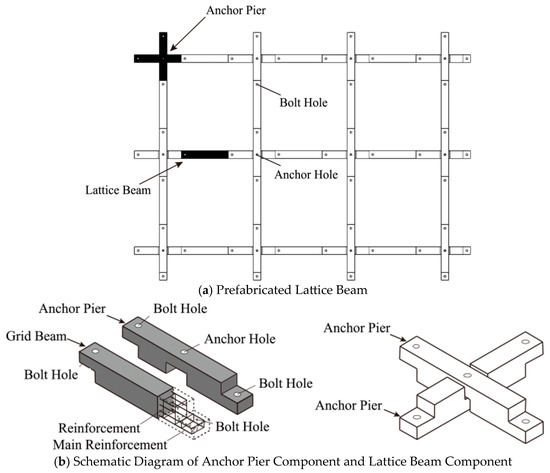
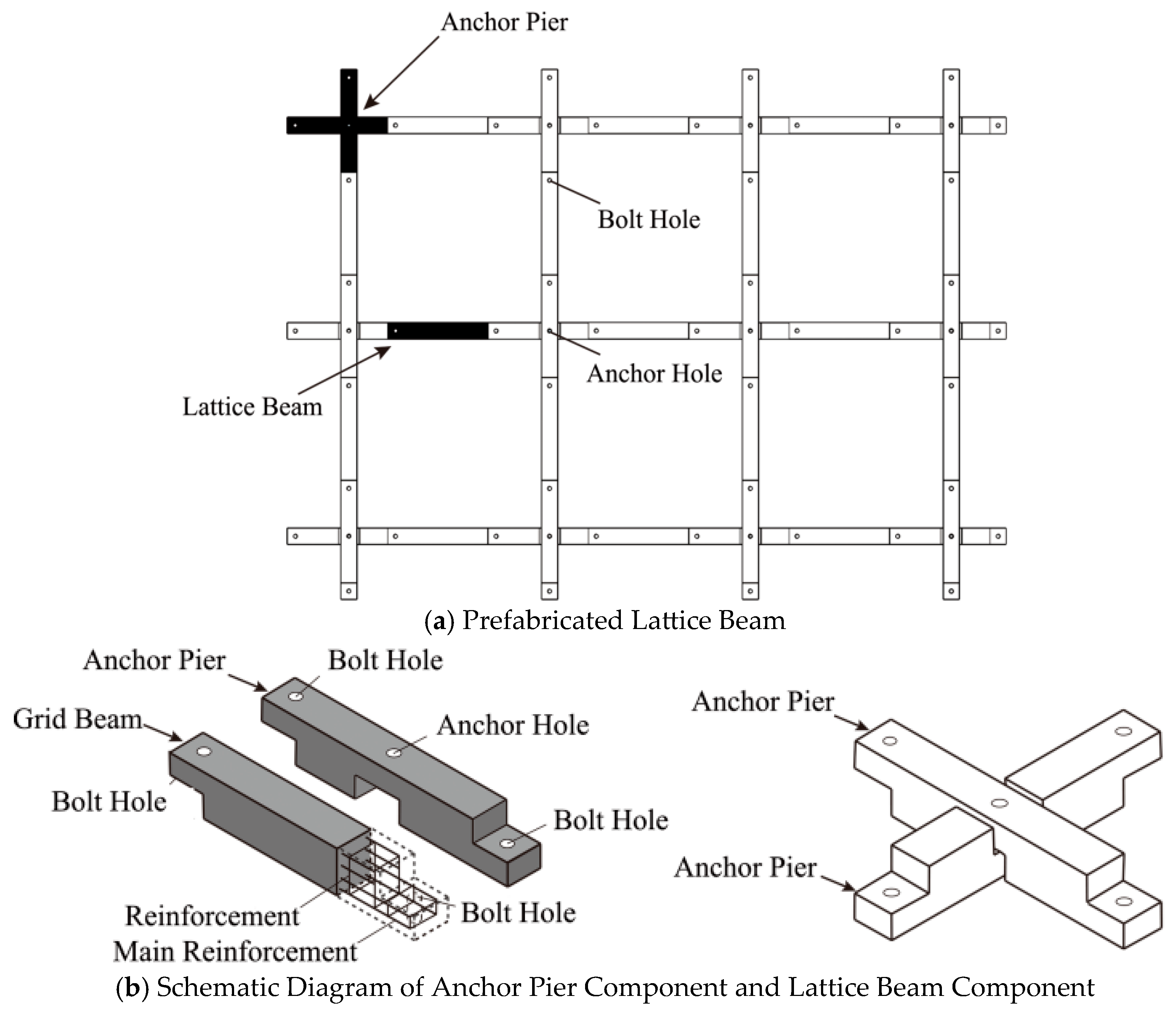
The rapidly assembled lattice beam support structure consists of two parts, anchor pier components and lattice beam components, which form a stable support system (see Figure 1. Schematic diagram of assembled lattice beam). A bolt hole is reserved in the center of the anchor pier component for the penetration and fixation of bolts. In addition, connecting holes are provided at both ends of the anchor pier components and lattice beam components, and reliable connection is realized through high-strength bolts to ensure the overall stability and uniform stress of the structure. During the assembly process, each lattice beam component is connected to each other through the reserved connecting holes at the ends and fastened by bolts, realizing effective engagement between components. A bolt hole is reserved in the center of the anchor pier component to facilitate the installation and force transmission of bolts, enabling the entire support system to better adapt to complex terrain conditions. The assembly method of this structure has high flexibility and can be adjusted according to terrain conditions, engineering requirements and under varying geological conditions, such as single underlying void [31]. By increasing or decreasing the number of lattice beam components, the size of the overall lattice beam can be flexibly adjusted to meet the support requirements of different slopes. Precise alignment between components is achieved through connecting holes.
Figure 1.
Schematic diagram of assembled lattice beam.
3. Model Test
3.1. Test Prototype and Test Model
For the rapid prefabricated lattice beam support structure, the cross-sectional dimensions and span of the designed lattice beam were modeled and calculated according to a similarity ratio of 1:2. The design strictly follows the gravity similarity criterion and elastic mechanics similarity principle, with a clear distinction between mechanical quantities that strictly satisfy similarity and those that are approximately similar.
The structure forms a square lattice consisting of 3 transverse beams and 4 longitudinal beams, with the span of the transverse and longitudinal beams being 1.0 m × 1.5 m. The lattice beams adopt a rectangular cross-section, with a cross-sectional dimension of 0.08 m × 0.1 m.
The anchor rods are arranged in 3 rows, totaling 12 rods. The lengths of the rods in each row are 4.82 m, 4.12 m, and 3.43 m respectively. Reinforcing steel bars with a diameter of 16 mm are used for the anchor rods, and the anchoring angle is 20°. The anchoring lengths of the rods in each row are all 2 m, and the diameter of the anchoring mortar is 0.1 m.
3.1.1. Strictly Satisfied Similarity Criteria
Geometric similarity: All geometric parameters of the model, including lattice beam section size, anchor rod length, slope gradient, and component spacing, are scaled at a 1:2 ratio relative to the prototype, ensuring the consistency of structural morphology and relative position.
Stress similarity: By controlling the moisture content and compaction degree of the model soil to match the prototype soil properties, the stress field distribution of the model slope is made consistent with the prototype, which ensures the validity of soil pressure monitoring data for prototype inference.
Boundary condition similarity: The slope gradient of the model is set to 25°, which is the same as the prototype highway slope. The sliding zone is simulated by double-layer polyethylene film, and its shear strength parameters are determined by pre-test back-calculation to ensure the consistency of the boundary mechanical properties with the prototype sliding zone.
3.1.2. Approximately Satisfied Similarity Criteria
Material similarity: The model lattice beam is precast with C30 concrete, and its elastic modulus is consistent with the prototype without scaling according to the similarity ratio. This approximation is adopted because it is difficult to find a model material that meets the strict similarity ratio requirements in practical operations. The error caused by this approximation is controlled within 5% by optimizing the reinforcement ratio of the model component.
Dynamic response similarity: This test focuses on the static mechanical response of the support structure, and does not consider the similarity of dynamic loads such as earthquakes. For dynamic scenario research, it is necessary to further introduce the inertia force similarity criterion and adjust the model parameters.
3.2. Model Materials
3.2.1. Sliding Bed and Sliding Mass
The sliding bed was simulated using a soil slope with a gradient of 25°, so as to match the topographic characteristics of actual landslides as closely as possible. For the sliding mass, silty clay extracted from the overburden along a certain highway was selected, and the sliding mass was constructed by means of layered compaction. The physical and mechanical properties of this silty clay are relatively close to those of the soil in real landslides. During the compaction process, the thickness and compaction density of each layer were strictly controlled to ensure the sliding mass had good uniformity and overall stability. After the completion of compaction, the soil had a moisture content of 25.5% and a unit weight of 19.7 kN/m3.
3.2.2. Sliding Surface and Sliding Mass Gradient
The sliding zone is a critical interface between the landslide mass and the sliding bed, and its mechanical properties exert a significant impact on landslide stability. During the test, to accurately simulate the low-friction characteristic of the sliding zone, a double-layer polyethylene film was used as a substitute material for the sliding zone. First, a model test was conducted without any support structure to measure the mechanical behavior of the sliding mass under the limit equilibrium state. Through back-calculation, the shear strength parameters of the sliding zone were finally determined: cohesion c = 3.5 kPa and internal friction angle φ = 10°.
3.2.3. Prefabricated Lattice Beams
The dimensions and layout of the prefabricated lattice beams are shown in Table 1. During the design process, full consideration was given to the load conditions and geological environment in actual engineering projects, and the construction technology in practical engineering was simulated to ensure that the test results could truly reflect the actual engineering situation. Emphasis was placed on the stiffness and strength of the prefabricated lattice beams, as well as their interaction with the sliding mass and sliding bed, to ensure their effectiveness in landslide treatment. Through the combination of experiments and numerical simulations, the mechanical properties of the bolt-prefabricated lattice beam support structure were further analyzed, providing a scientific basis for practical engineering.
Table 1.
Size of assembled lattice beam.
The prefabricated lattice beams are precast with C30 concrete. For the tensile and compressive surfaces of the components, prestressed steel strands are used as longitudinal reinforcements; 8 mm diameter steel bars are adopted as longitudinal reinforcements in the middle, and 8 mm diameter steel bars are used as stirrups. The effective length of a single prefabricated lattice beam component is 0.5 m.
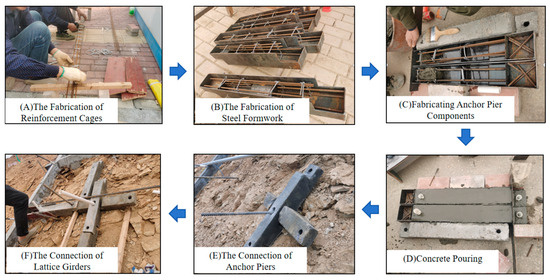
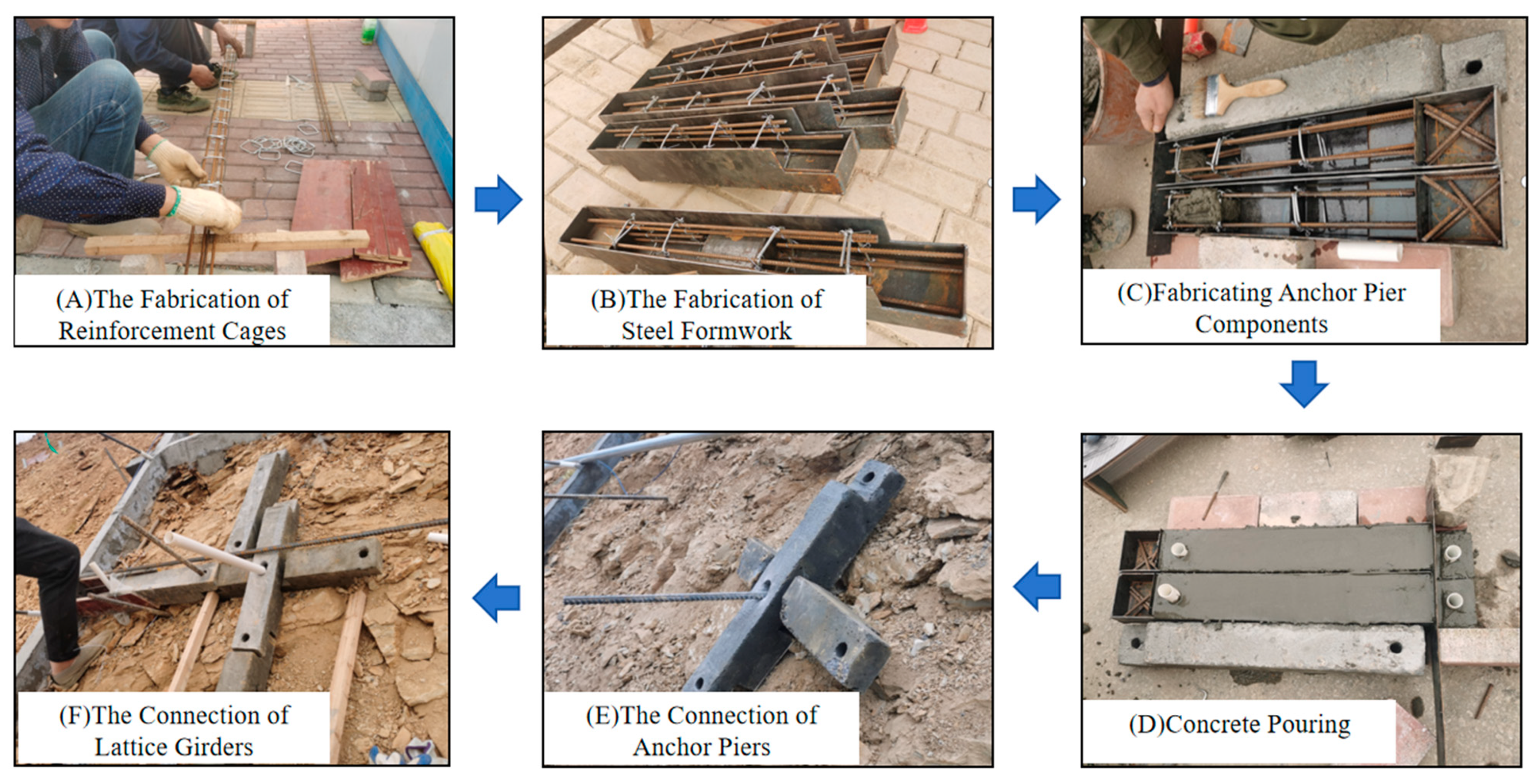
The manufacturing process of prefabricated lattice beams includes six main steps (see Figure 2 for the manufacturing flow chart). Firstly, cut the steel bars to the designed length and bind them with stirrups at the designed positions to ensure the overall shape and spacing meet the design standards, and then process the steel formwork to guarantee the dimensional accuracy of the components. Next, apply a release agent to the steel formwork, place the steel reinforcement cage into the formwork, and pour concrete. Two holes with a diameter of 20 mm should be reserved at both ends of each lattice beam component, so as to obtain prefabricated anchor pier components and lattice beam components. Subsequently, conduct self-connection of the anchor pier components and connection of the lattice beam components at the construction site. Finally, assemble all prefabricated components to form a complete lattice beam structure. In addition, bolts should be used for connecting the ends of the lattice beams; to enhance the strength of the bolt connection positions, 10 mm thick bearing plates are arranged at the bolt hole locations. When connecting beams to beams, rubber elastic gaskets are installed on the bearing plates.
Figure 2.
Model profile diagram.
3.2.4. Anchor Rods
In the experiment, ribbed steel bars with a diameter of 16 mm were utilized as the anchor rod material. These bars, with their high strength and excellent tensile properties, adequately meet the requirements of the anchoring system. The length of the anchor rods was determined based on the thickness of the sliding mass, with an anchorage depth of no less than 2 m to ensure the effectiveness of the bond between the rods and the surrounding soil. The layout of the anchor rods was designed in consideration of the stress characteristics encountered in practical engineering applications. The anchorage angle was set at 20° to fully mobilize the anti-sliding capacity of the anchor rods. The anchor rods were arranged uniformly with both transverse and longitudinal spacings set at 1 m, a configuration that contributes to enhancing the overall stability of the structure.
3.2.5. Earth Pressure Cell Installation
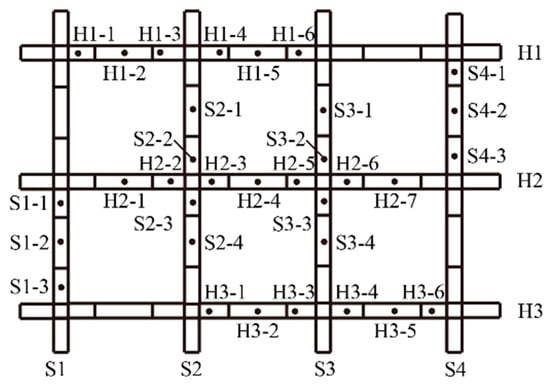
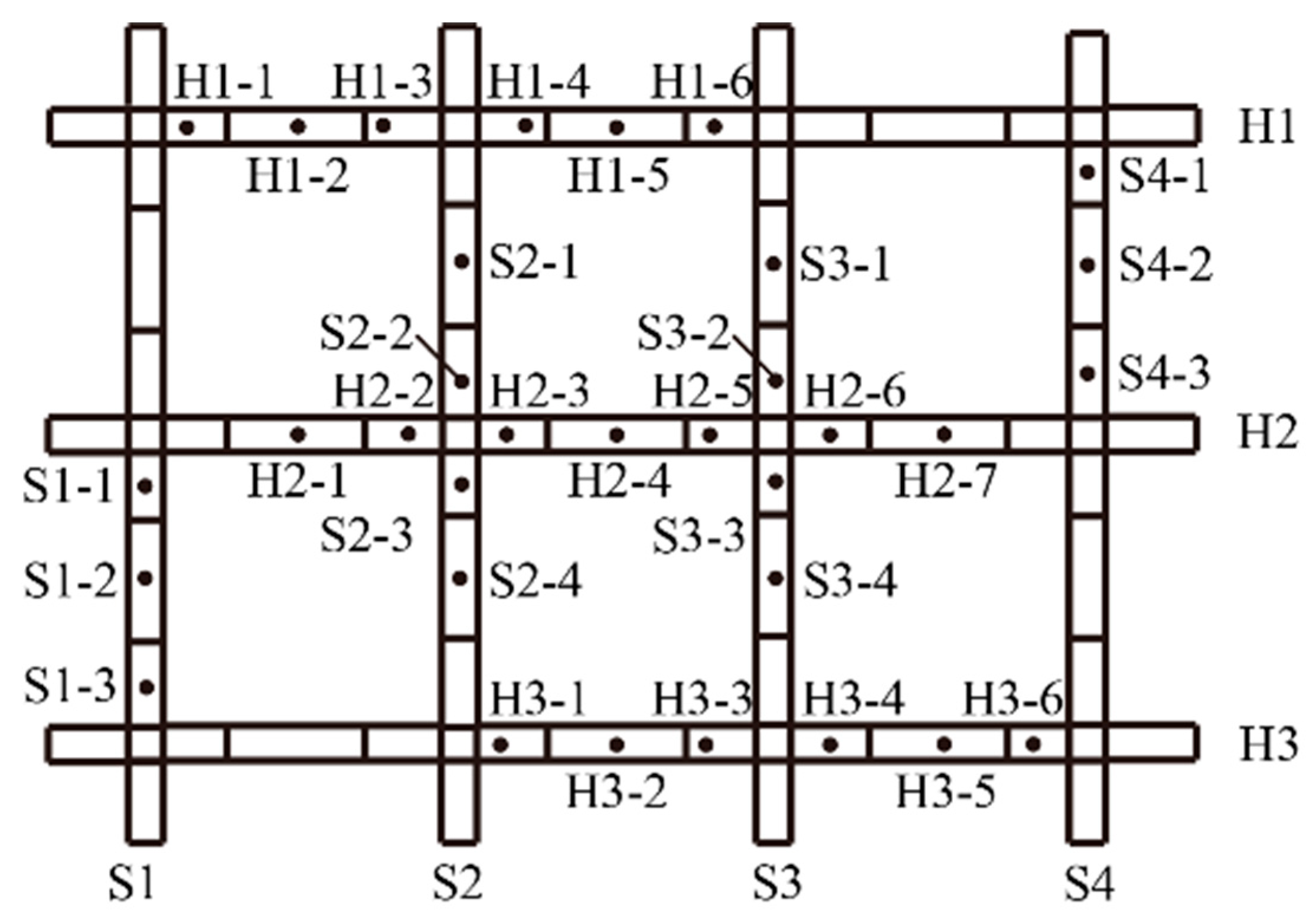
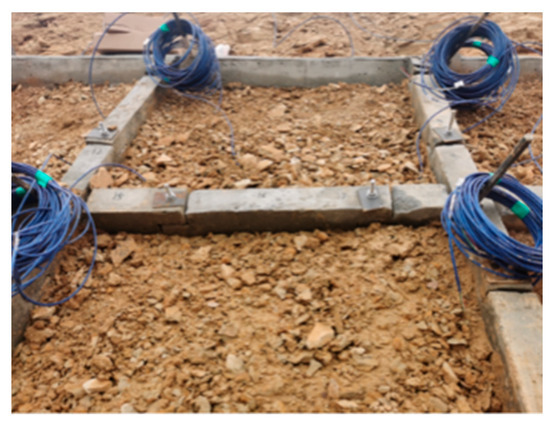
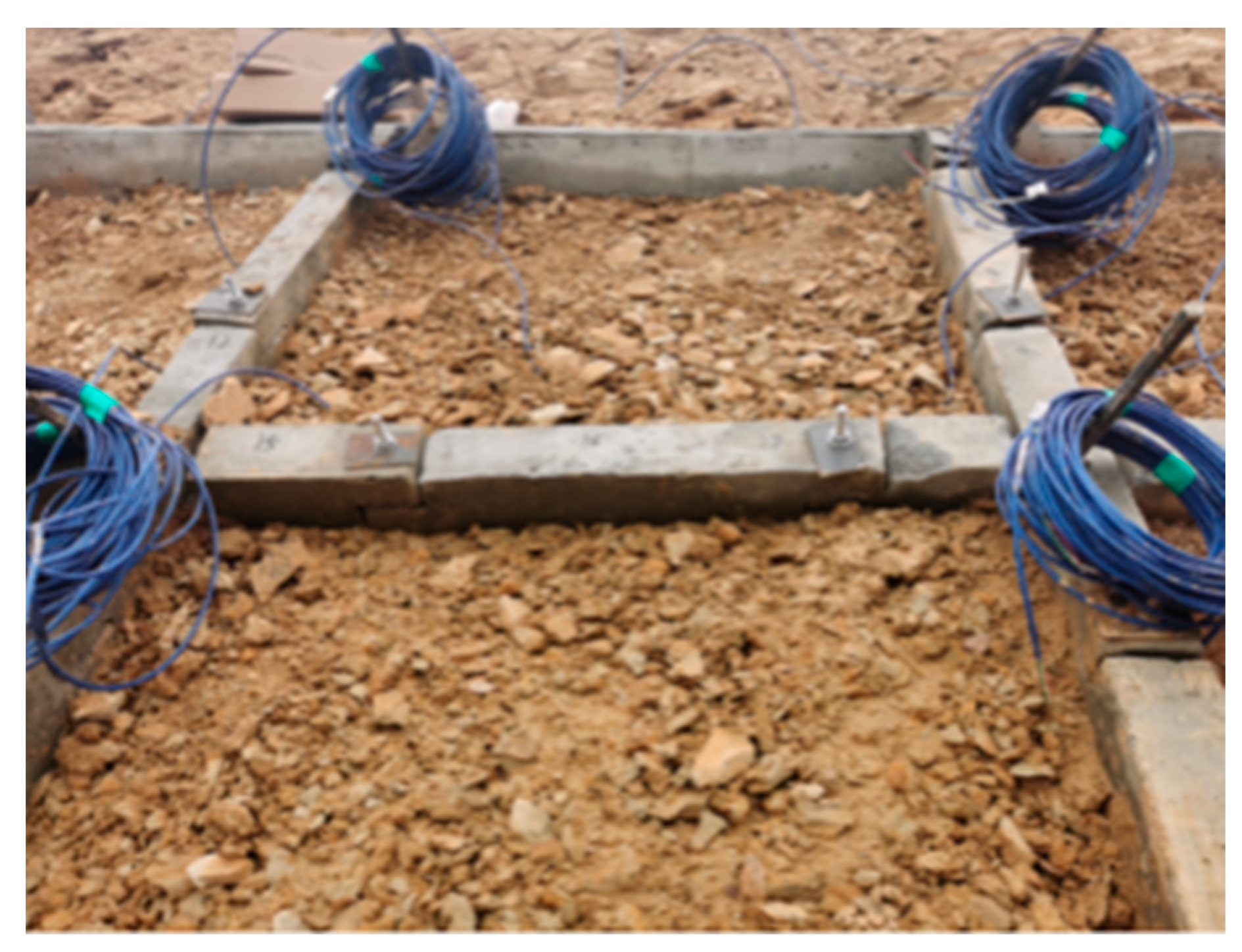
To measure the reactive forces generated by soil extrusion on the prefabricated lattice beams, vibrating wire earth pressure cells were embedded in the soil beneath the beams during the test. These pressure cells offer high precision and excellent long-term stability, enabling real-time monitoring of soil pressure variations. The horizontal beams of the lattice structure were numbered from top to bottom as H1, H2 and H3, while the measurement points on each horizontal beam were sequentially labeled from left to right as Hn-1, Hn-2, Hn-3, etc., to facilitate systematic data recording and analysis. The vertical beams were numbered from left to right as S1, S2, S3 and S4, with measurement points on each vertical beam labeled from top to bottom as Sn-1, Sn-2, Sn-3, etc. This arrangement allows for comprehensive monitoring of the stress distribution along the vertical beams at different heights. A total of 33 pressure cells were deployed in the experiment, with their specific configuration illustrated in Figure 3 and Figure 4. The placement of these pressure cells covers critical load-bearing zones of the lattice beams, effectively capturing the interaction between the prefabricated lattice beams and the surrounding soil.
Figure 3.
Location of buried earth pressure box.
Figure 4.
Arranged earth pressure box.
3.2.6. Loading Design
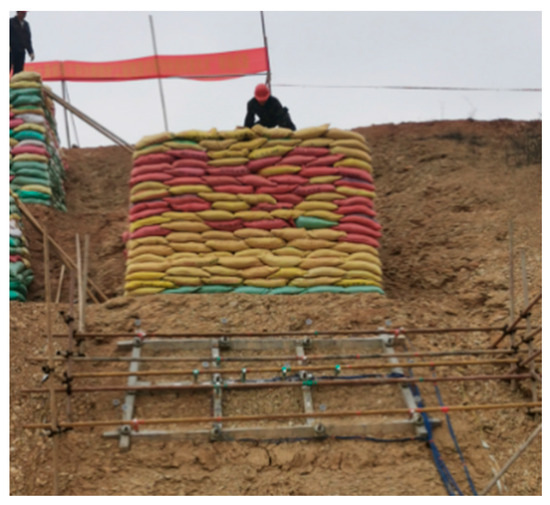
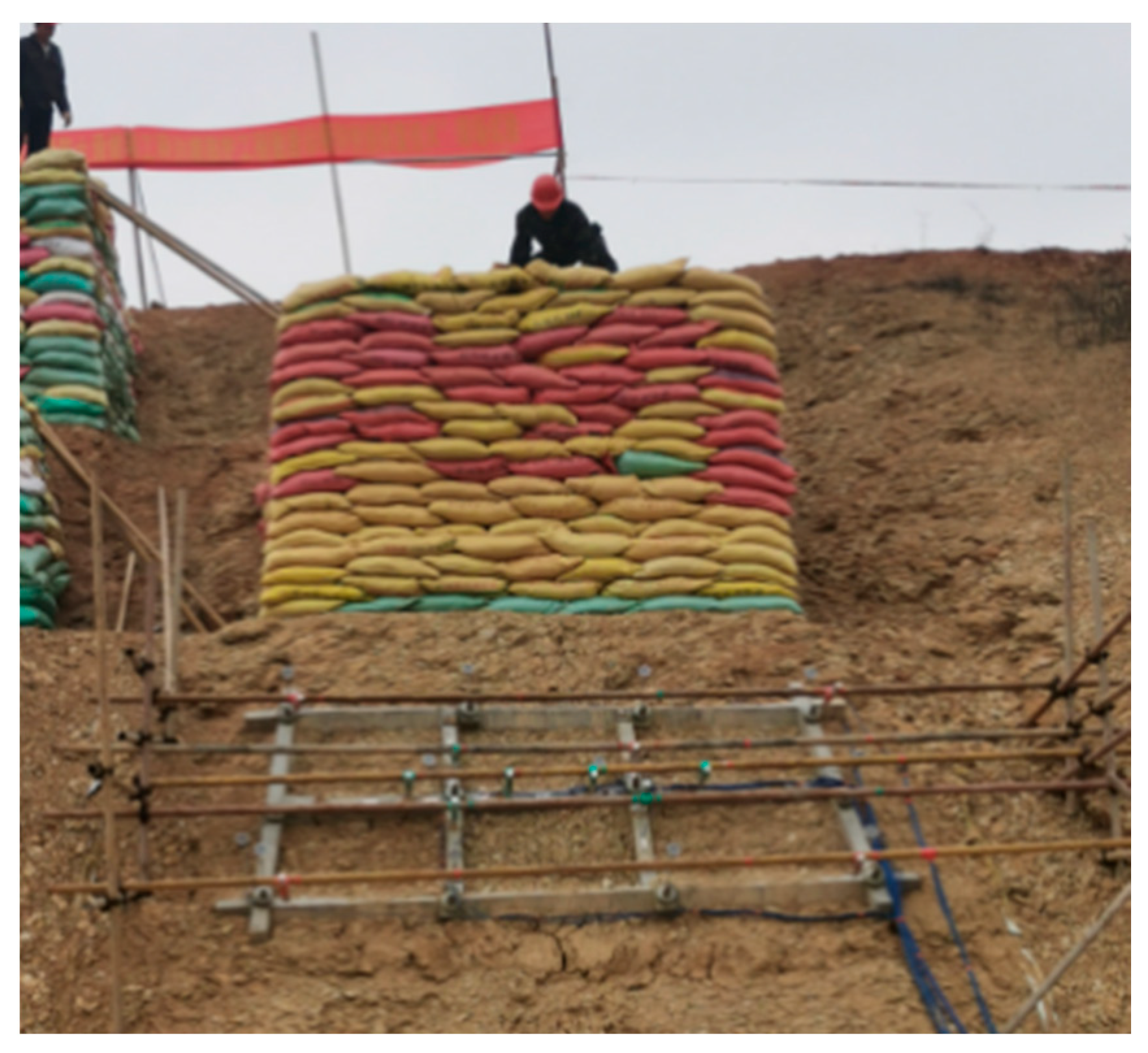
The test adopted a stepwise vertical loading method applied at the slope crest. Vertical loads were incrementally imposed by stacking sandbags on the sliding mass to simulate the deformation and failure process of an actual landslide under load. Based on load conversion relationships derived from numerical simulations, each loading step was set to 5 tons. To ensure the accuracy and reliability of the test data, the next load increment was applied only after the monitoring data had stabilized following each loading step. This step-by-step loading can effectively capture the mechanical response of the sliding mass at different loading stages, providing key insights into the deformation and failure mechanisms of landslides. Throughout the loading process, real-time monitoring of lattice beam displacements, soil pressure, and anchor rod forces was conducted to analyze the deformation behavior of both the sliding mass and the lattice beams. Figure 5 illustrates the loading system and the field test model. When the total load reached 35 tons, instability occurred in the lattice beams, accompanied by obvious deformation and failure of the sliding mass. Analysis of displacement and pressure data prior to instability reveals the deformation patterns of the sliding mass and lattice beams, as well as their interaction mechanisms.
Figure 5.
Loading system and field test model diagram.
4. Test Data Analysis
4.1. Analysis of Horizontal Beam Forces
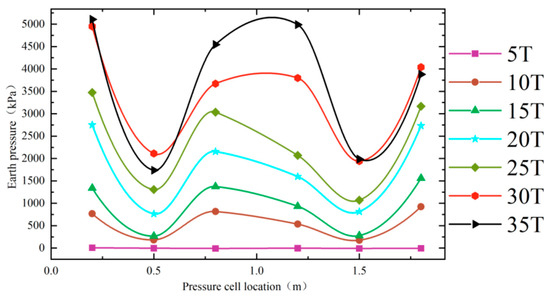
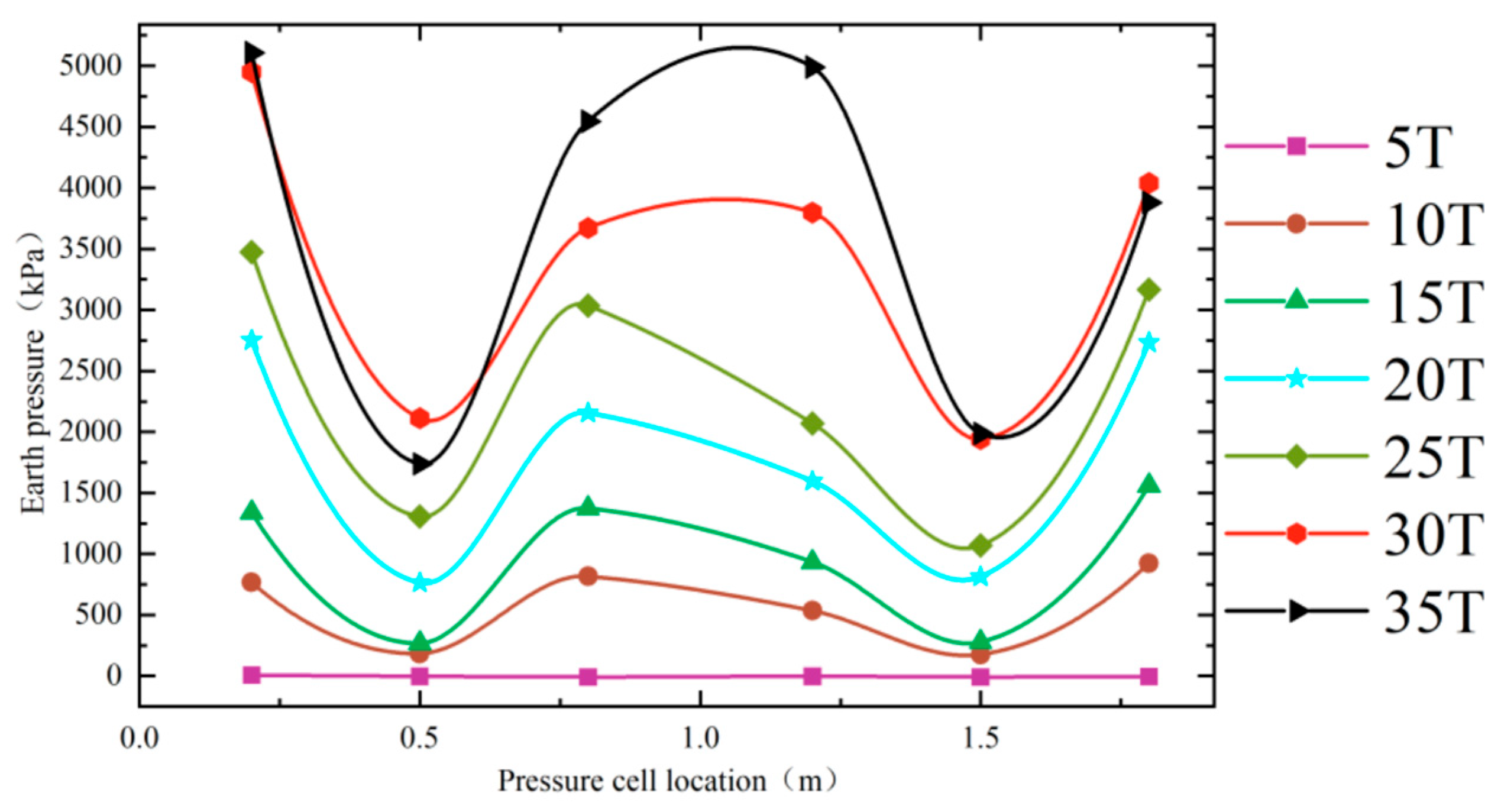
The patterns of earth pressure change at each measurement point on the upper-row H3 horizontal beam, under loads from 5 T to 35 T, are presented in Figure 6, reflecting the performance during slope reinforcement with a rapidly assembled lattice beam system. Test results indicate that the earth pressure generally exhibits a clear increasing trend with the rise in load, demonstrating that the lattice beam–anchor support system effectively transfers loads during the slope loading process, thereby enhancing the stress response capacity of the slope mass. In the low-load stage, earth pressure remains relatively low at most locations, with some measurement points even recording values close to zero. This suggests that the support structure has not yet fully engaged, and the slope mass remains largely unconstrained by the support, representing the initial stress phase. Regarding the distribution of earth pressure along the length of the horizontal beam, under the 35 T load, the earth pressure near the nodal points is significantly higher than at other measurement points, with peak values approaching 5000 kPa. This indicates that in the shallow surface layer of the slope and areas close to the slope shoulder, the combined effect of load transfer from the anchor-assembled lattice beam support system and local stress concentration results in higher internal stress levels in the soil, with the support structure bearing a greater share of the load in these regions. The stress concentration at the nodes is jointly induced by two key factors: first, the structural stiffness difference between the node and the mid-span segment—the node connects horizontal and vertical beams, and the high-strength bolt + mortise–tenon connection enhances its stiffness, making it a dominant load-bearing area; second, the soil arching effect in the slope—under external loads, the soil between adjacent nodes forms a natural soil arch, transferring the overlying soil pressure to the stiff node positions, which further amplifies the stress concentration phenomenon at the nodes. In contrast, at the mid-span locations under loads ranging from 25 T to 35 T, the earth pressure curve exhibits a distinct “trough” characteristic, reflecting localized load dispersion or stress release phenomena in this area. This mechanical behavior is attributed to the deformation coordination between the lattice beam and the slope soil: the mid-span of the beam undergoes downward bending deformation under load, which reduces the contact pressure between the beam and the soil, thus forming a pressure “trough”. Meanwhile, the load originally borne by the mid-span is transferred to the beam nodes with higher stiffness, which further amplifies the difference in pressure distribution between the mid-span and the nodes. The stress release at the mid-span is a typical manifestation of the force redistribution of the lattice beam support system. Based on the Winkler elastic foundation beam model, when the beam is subjected to uneven soil pressure, the elastic foundation reaction force will adjust adaptively with the deformation of the beam. The stress release at the mid-span is essentially the result of the reduction in the foundation reaction force caused by the separation tendency between the beam and the soil, which is consistent with the mechanical response law of the shallow beam structure under concentrated load. This non-uniform distribution pattern is closely related to the coupling of structural deformation and soil arching mechanism: on the one hand, the mid-span of the horizontal beam has lower stiffness than the node, and it undergoes downward bending deformation under load, reducing the contact pressure between the beam and the soil, thus forming a pressure “trough”; on the other hand, the soil arching effect diverts the load originally borne by the mid-span to the nodes, resulting in stress release at the mid-span. This mechanical behavior is consistent with the Winkler elastic foundation beam model, where the foundation reaction force adjusts adaptively with the deformation of the beam structure. Overall, the distribution of earth pressure along the length of the horizontal beam shows fluctuating variations, without displaying a typical monotonically increasing or decreasing trend.
Figure 6.
Soil pressure variation curve of H3 beam.
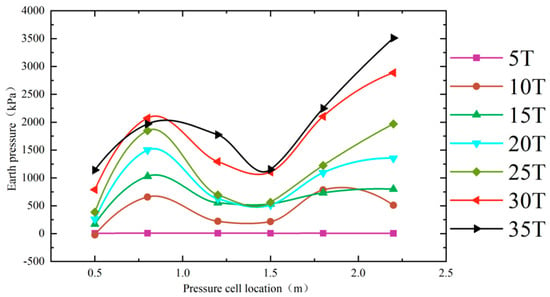
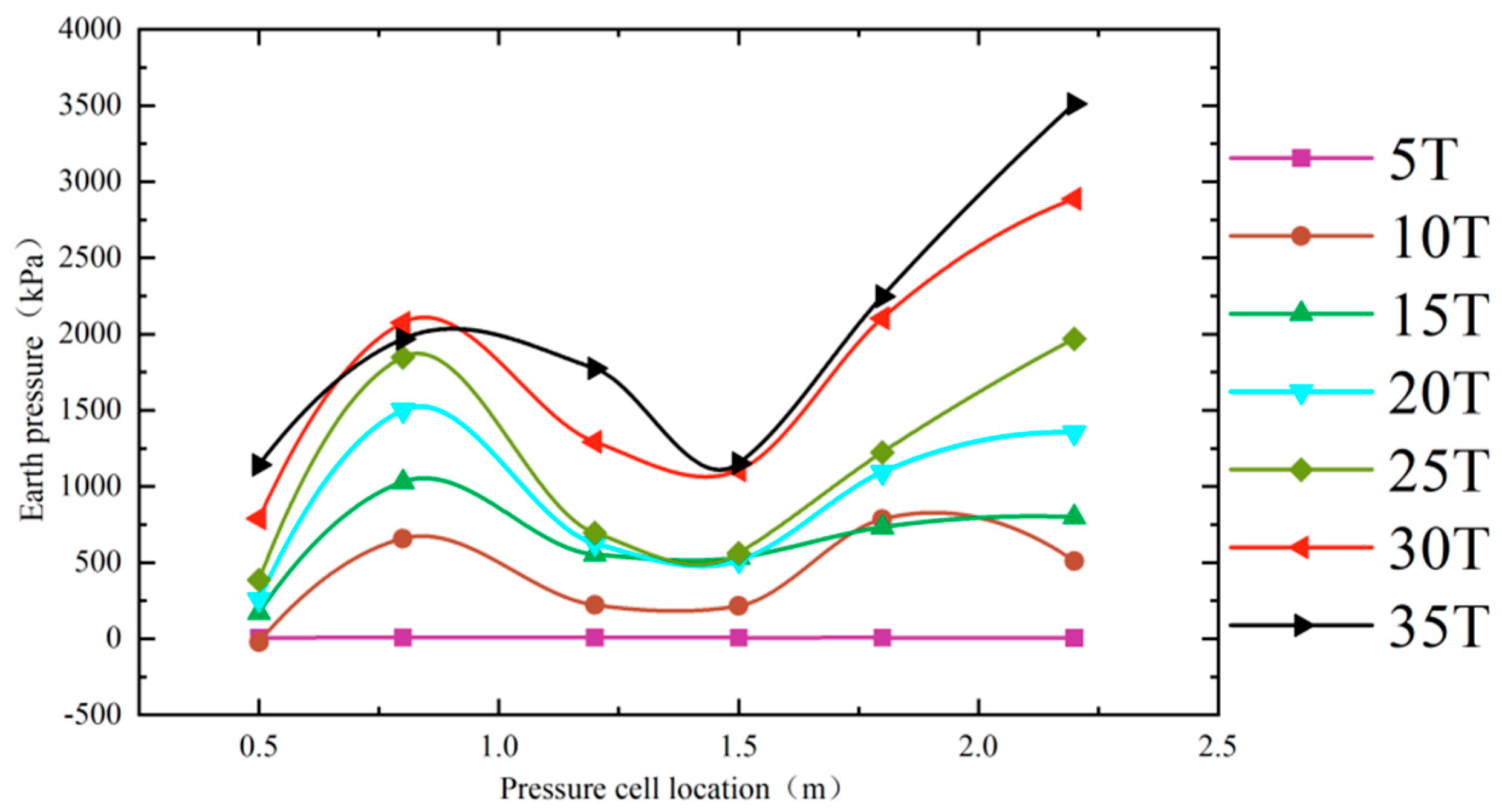
Within the anchor-prefabricated lattice beam supported slope structure, the earth pressure distribution along the mid-row H2 beam, measured between 0.5 m and 2.2 m under different load levels, is illustrated by the variation curve in Figure 7. The results indicate a general trend of gradual increase in earth pressure with rising load levels, further confirming the significant role of the support system in sharing and transferring external loads. Simultaneously, earth pressure values at some measurement points under 5 T and 10 T loads were generally low, indicating that the supporting effect of the anchor–prefabricated lattice beam structure was not yet pronounced in the mid-row horizontal beam. When the load exceeded 15 T, the earth pressure values at all measurement points showed a continuous upward trend with increasing load. In particular, the rightmost position reached 3510.69 kPa under the 35 T load, demonstrating that the support structure generated significant stress concentration in the central slope area. This stress concentration is due to the superposition of the vertical load from the slope crest and the lateral thrust from the slope soil in the central area. The rigid connection between the lattice beam components enhances the stress transfer efficiency at this position, making it a key bearing area of the support system under high load conditions. This localized high stress is attributed to the superposition of the soil arching effect and the boundary effect of the slope—the central slope area is the main stress zone of the landslide thrust, and the stiff node structure further gathers the transferred load, leading to a significant increase in earth pressure. In addition, the interaction between the anchor rod and the lattice beam enhances the stiffness of the central area, making it more prone to stress concentration compared with the edge segments. Furthermore, the earth pressure at the mid-span of the mid-row beam also increased markedly under high load levels, exceeding 2000 kPa, indicating that the synergistic interaction between the anchors and the prefabricated lattice beams effectively controlled soil stress in this region. It is worth noting that at the 1.5 m position, the rate of earth pressure increase was relatively slow between 15 T and 35 T loads, with the pressure reaching only 1151.84 kPa under the 35 T load—significantly lower than at other depth measurement points.
Figure 7.
Soil pressure variation curve of H2 beam.
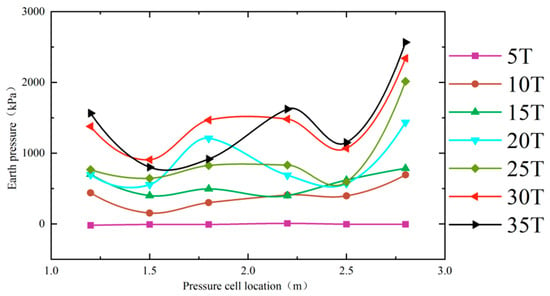
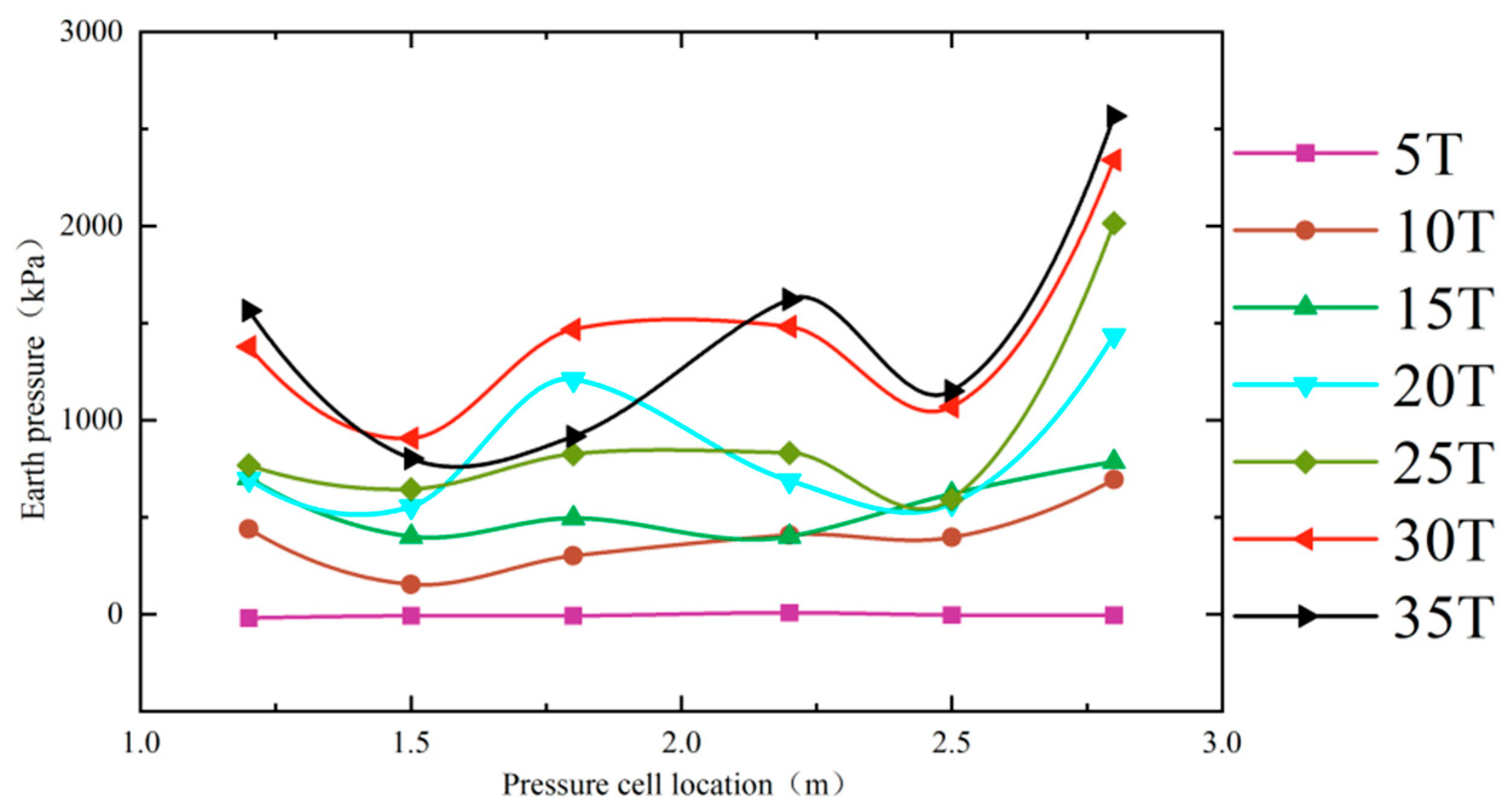
The earth pressure changes along the lower-row H1 horizontal beam, within the range of 1.2 m to 2.8 m under the anchor-prefabricated lattice beam support system, are illustrated by the variation curve in Figure 8. These results further reveal the load response characteristics of the prefabricated lattice beams along the longitudinal direction of the horizontal beam. Overall, the earth pressure generally exhibits an increasing trend with rising load levels, though significant fluctuations or anomalies are observed at certain locations. During the low-load stage, earth pressure values at all measurement points remain close to zero. As the load increases to the 15 T–35 T range, the support system demonstrates clear load-sharing capacity. Particularly at the 2.8 m position, the earth pressure rises continuously with increasing load, reaching a peak value of 2566.62 kPa under the 35 T load. In contrast, at positions such as 1.5 m, 1.8 m, and 2.2 m, the earth pressure curves exhibit phenomena of “initial increase followed by decrease” or “platform phases” during certain loading stages.
Figure 8.
Soil pressure variation curve of H1 beam.
4.2. Analysis of Vertical Beam Forces
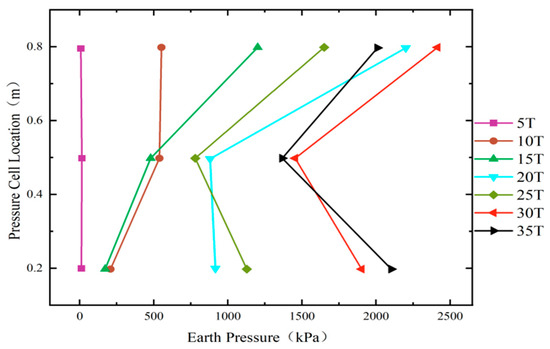
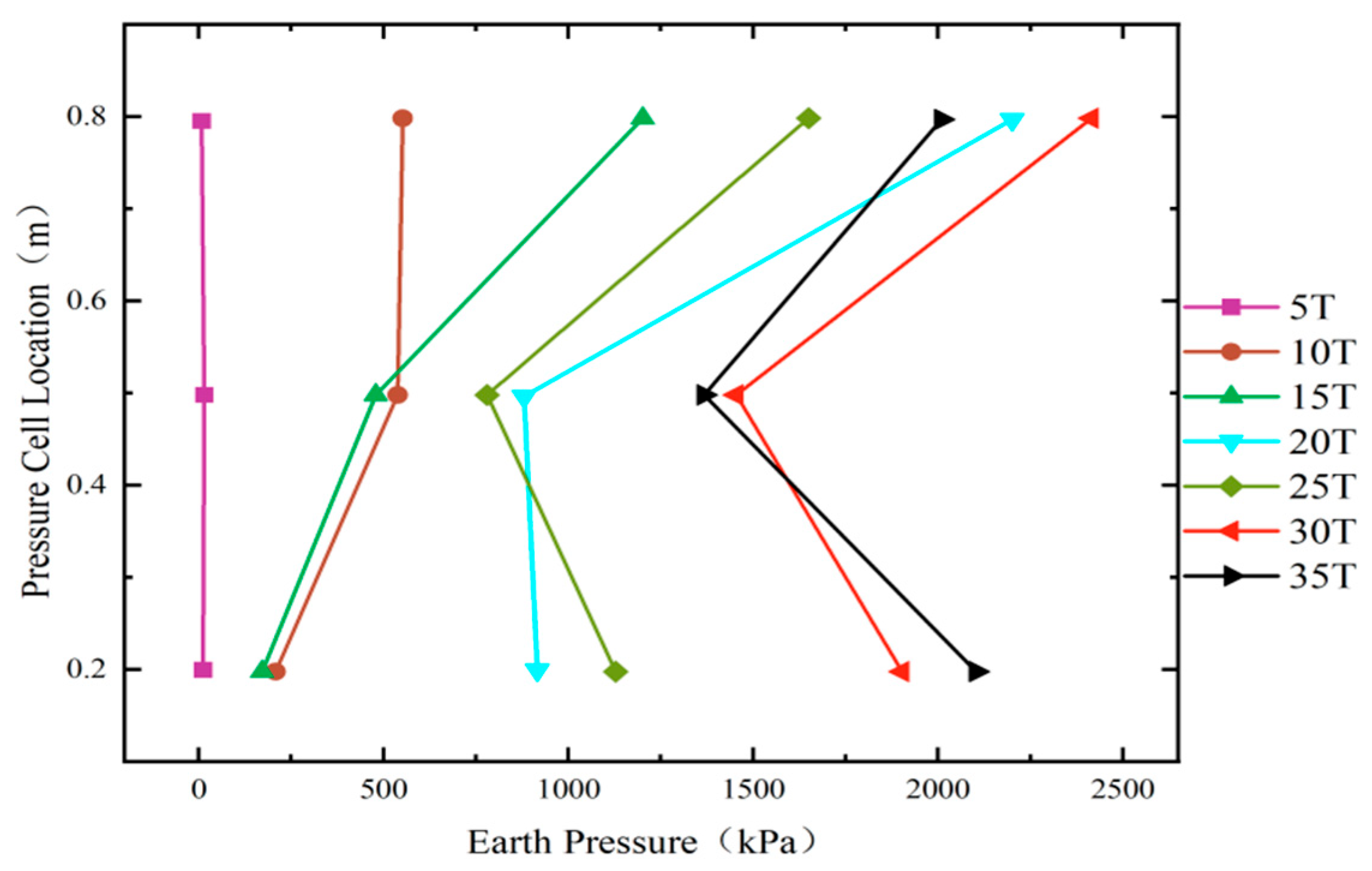
The earth pressure variation curve for Vertical Beam 1 is shown in Figure 9. Under the load applied at the slope crest, the vertical beam in the prefabricated lattice beam support system exhibits a clear mechanical distribution pattern. Measurements at different positions indicate that the earth pressure along the vertical direction gradually decreases from top to bottom. In terms of data, the earth pressure at the top of the beam is generally high, with a maximum value of 2406.74 kPa, while pressures at other measurement points mostly range between 1198.44 kPa and 2194.99 kPa. This indicates that near the slope crest area, the vertical beam directly bears a significant portion of the thrust transmitted from the overlying soil and external loads. The earth pressure in the middle section is noticeably lower than at the top, with values mainly distributed between 476.10 kPa and 1448.36 kPa. This suggests that during the downward transmission of vertical loads, part of the energy is dissipated by the prefabricated lattice beams, resulting in relatively smaller thrust borne by the middle segment of the vertical beam. The earth pressure at the bottom shows an overall lower trend, with some measurement points as low as 168.29 kPa and 203.52 kPa, indicating that the total force exerted on the bottom of the vertical beam is relatively small. Overall, the vertical earth pressure distribution of the beam follows a basic pattern of “higher at the top and lower at the bottom,” which aligns with the mechanical characteristics of concentrated loads gradually attenuating and dispersing from the upper to the lower sections.
Figure 9.
Soil pressure variation curve of S1 beam.
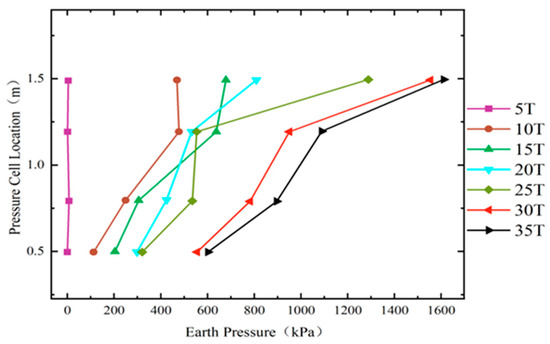
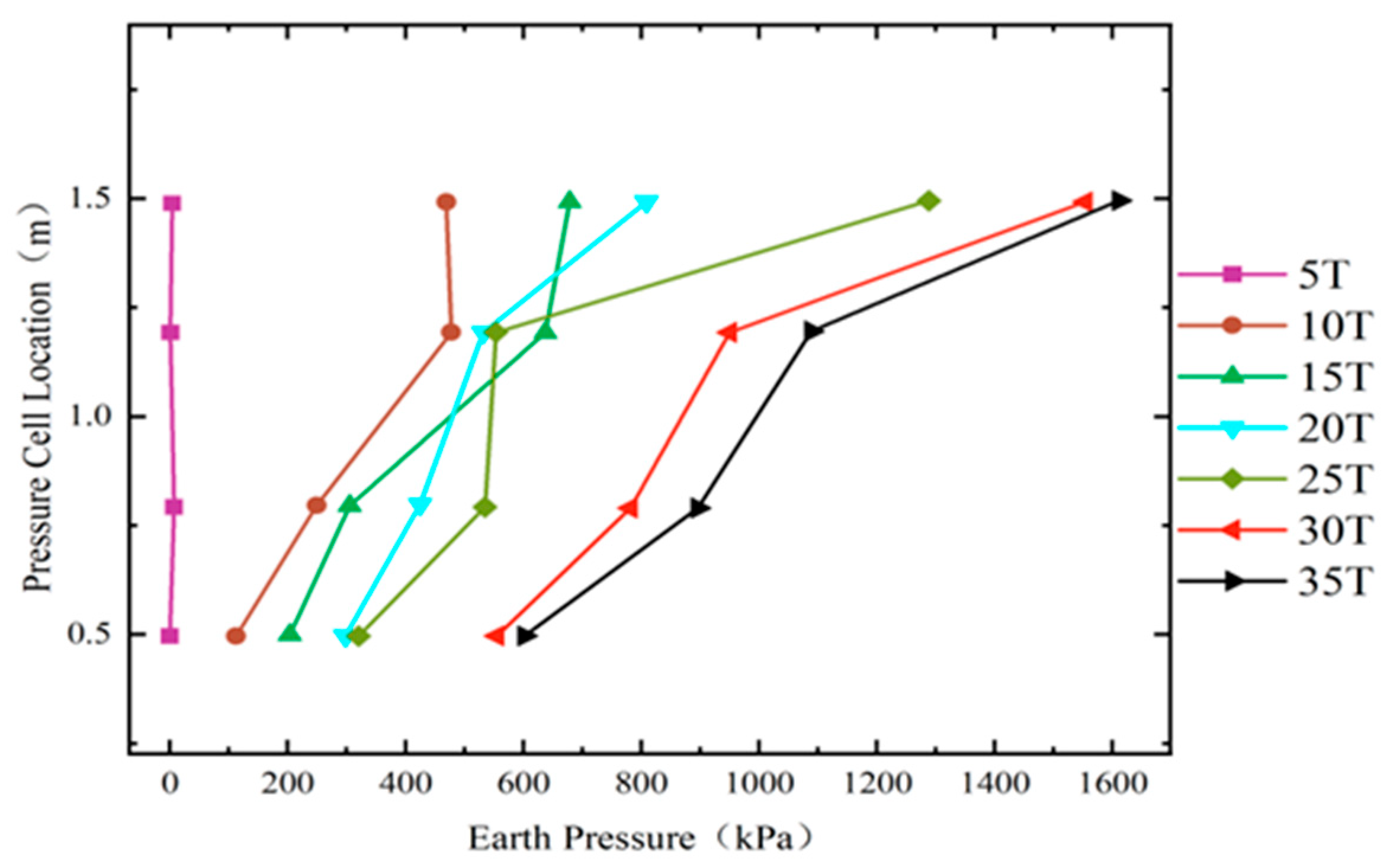
To further analyze the earth pressure distribution in the prefabricated lattice beam system, the variation curve for Vertical Beam 3 is provided in Figure 10. The data demonstrate that while the earth pressure variation still follows the “higher at the top, lower at the bottom” trend across different vertical positions, there are notable differences in stress magnitude at various elevations. At the 1.5 m position, earth pressure values are generally elevated, reaching a maximum of 1609.72 kPa, with other measurement points fluctuating between 468.85 kPa and 1553.23 kPa. This indicates that the upper section of the vertical beam is subjected to substantial thrust, particularly in areas close to the slope crest. This earth pressure primarily results from the sliding thrust of the slope soil and the transmission of upper loads. At the 1.2 m position, earth pressure decreases to a range of 479.64 kPa to 1088.40 kPa, showing a reduction compared to the 1.5 m level while maintaining relatively high values. This suggests that the middle section of the vertical beam still bears considerable lateral soil thrust, with a clearly emerging trend of progressive load transfer downward. The earth pressure values at the 0.8 m and 0.5 m positions remain relatively low, particularly at the 0.5 m level where the minimum reading is only 112.79 kPa. This confirms that the lower section of the vertical beam carries significantly reduced earth pressure, consistent with the established pattern of vertical loads progressively diminishing from top to bottom.
Figure 10.
Soil pressure variation curve of S3 beam.
5. Finite Element Analysis
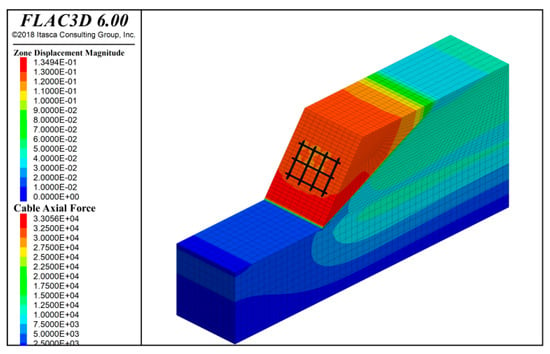
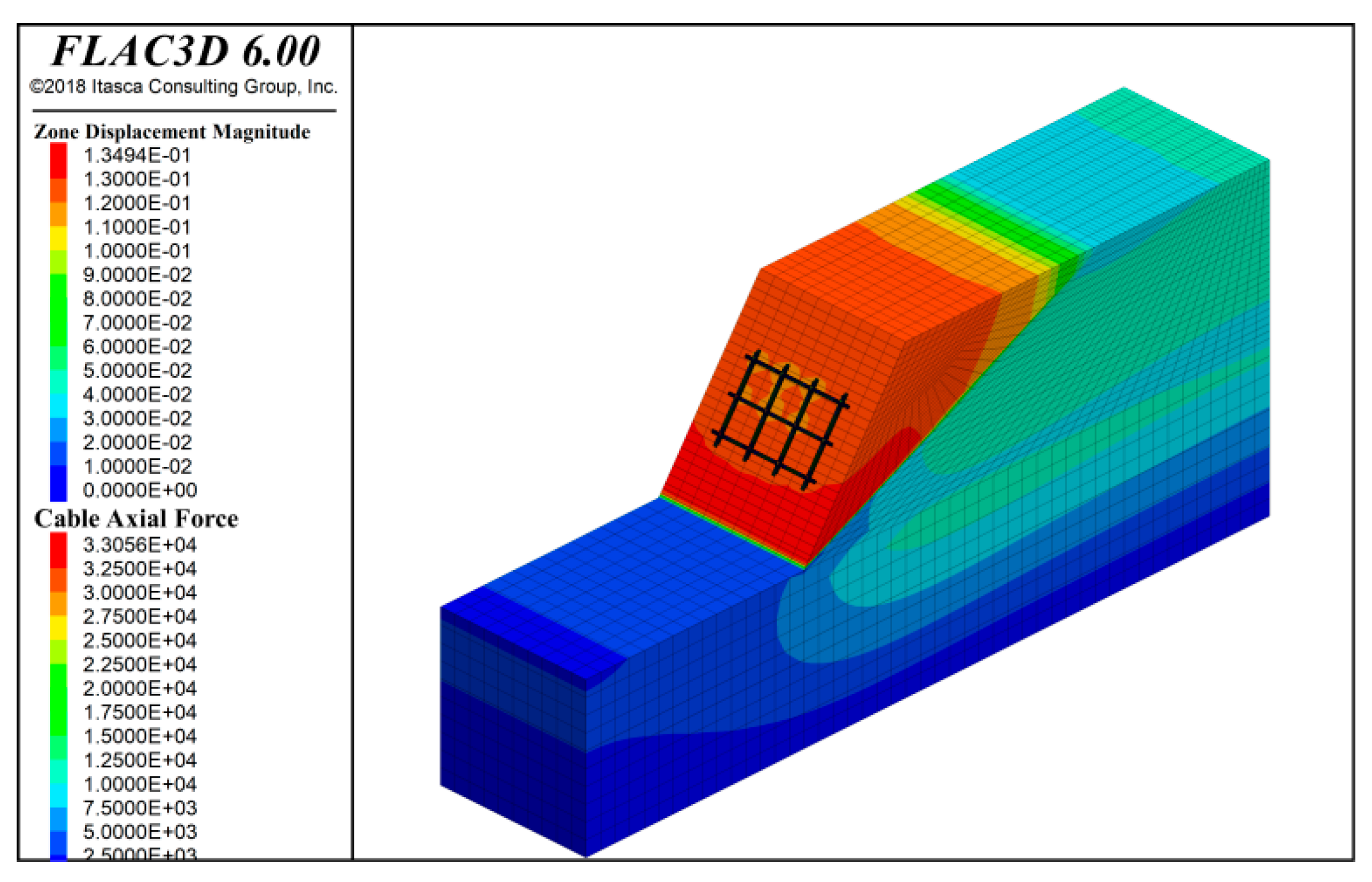
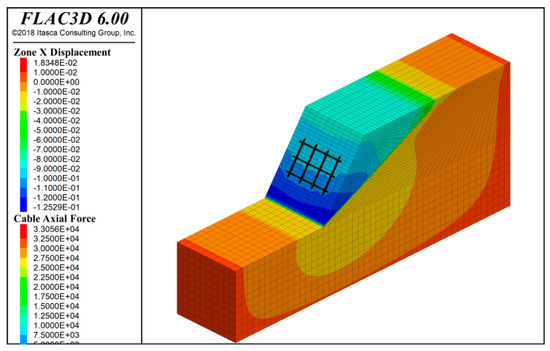
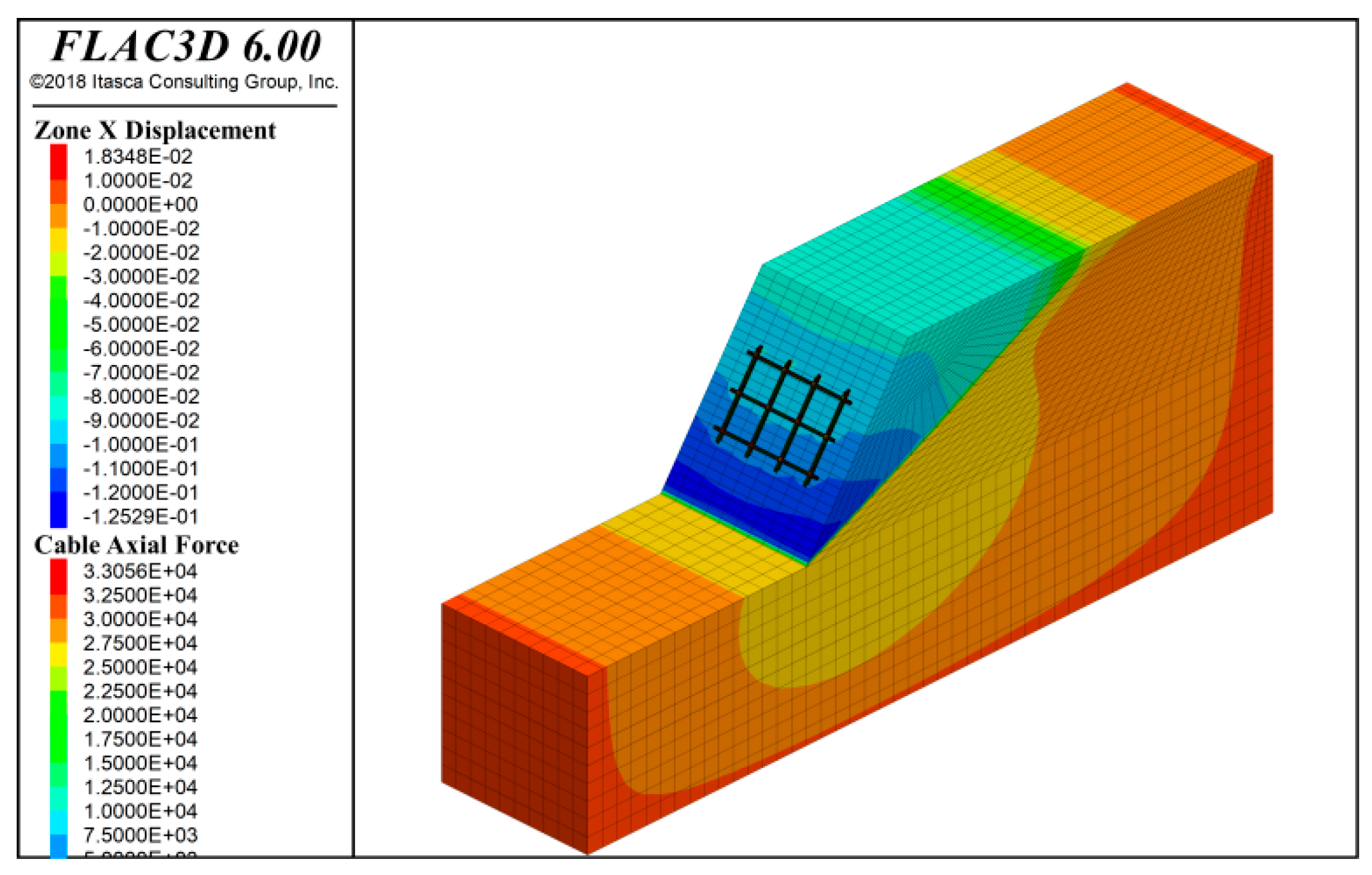
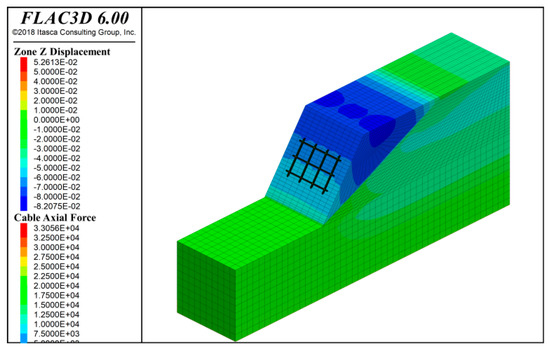
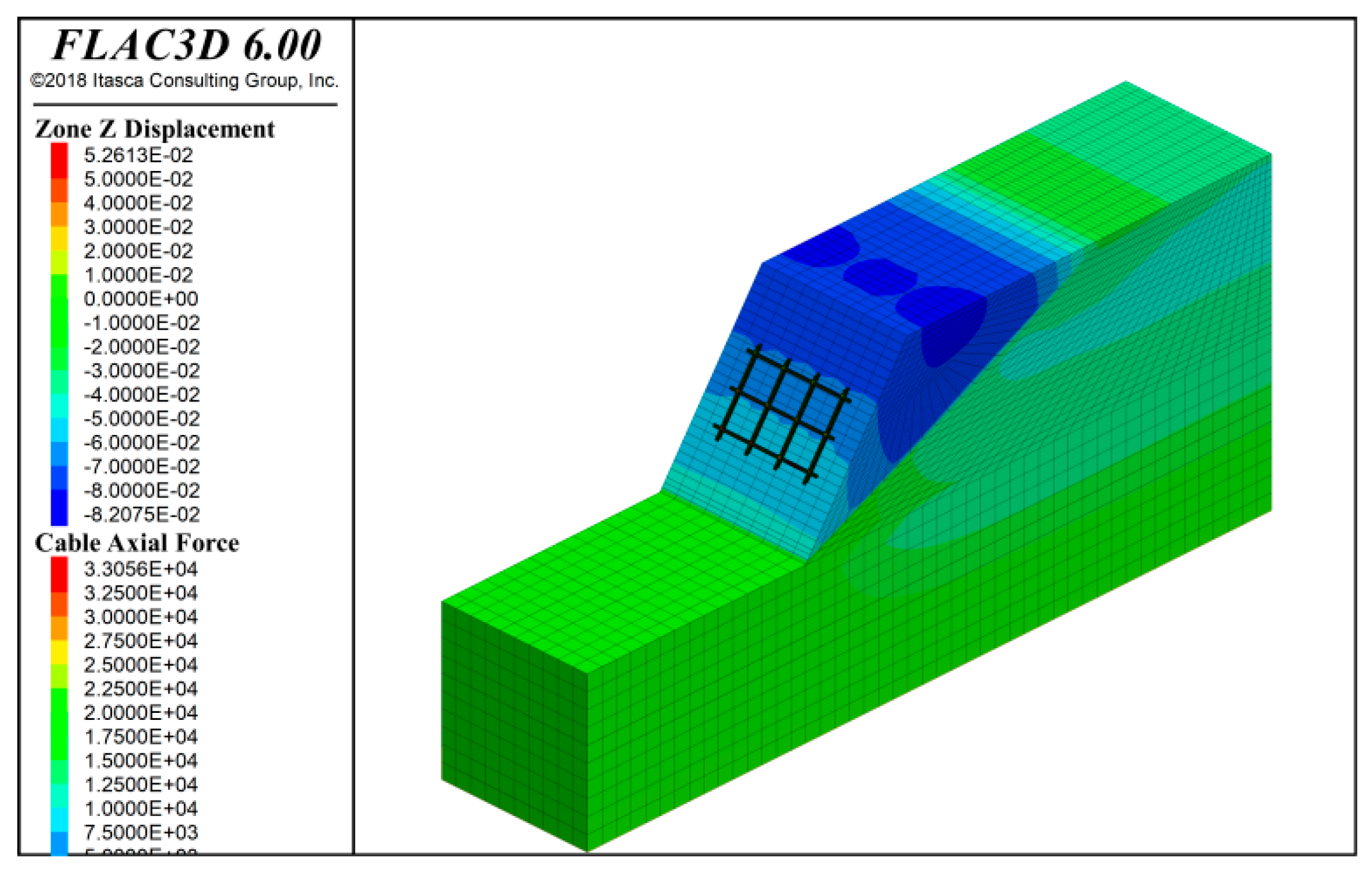
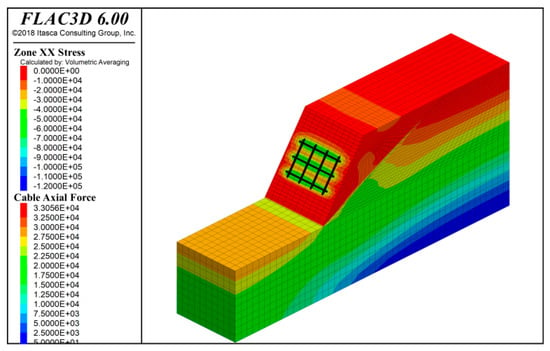
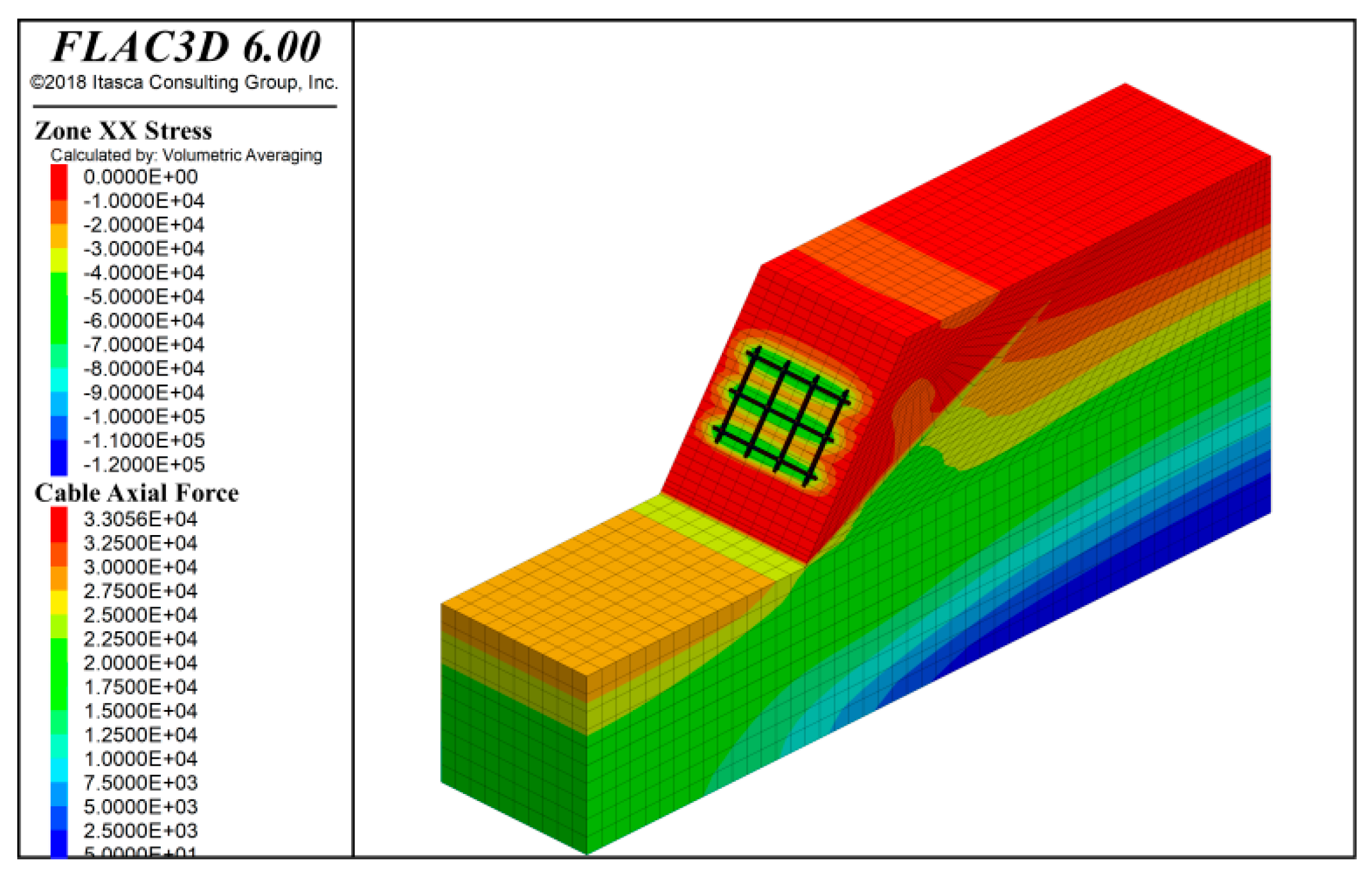
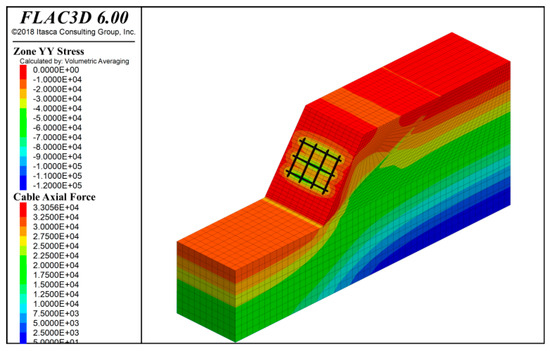
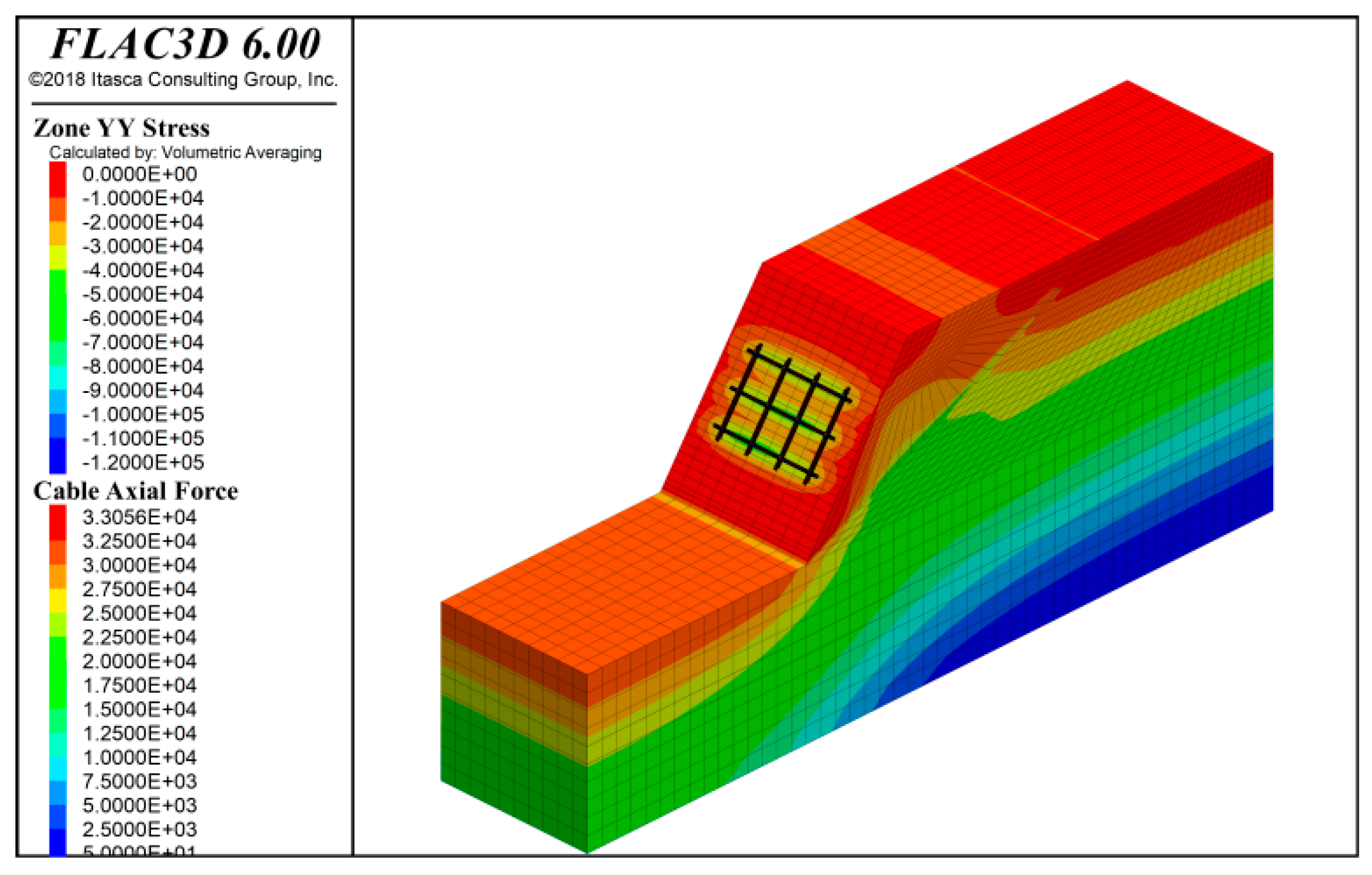
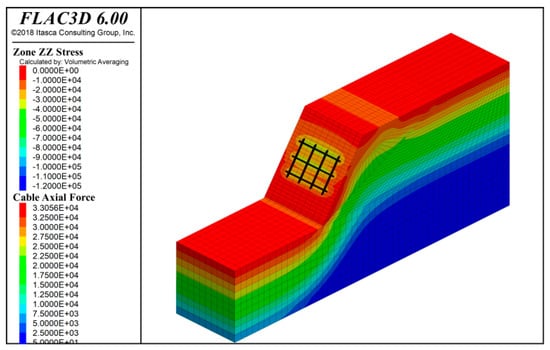
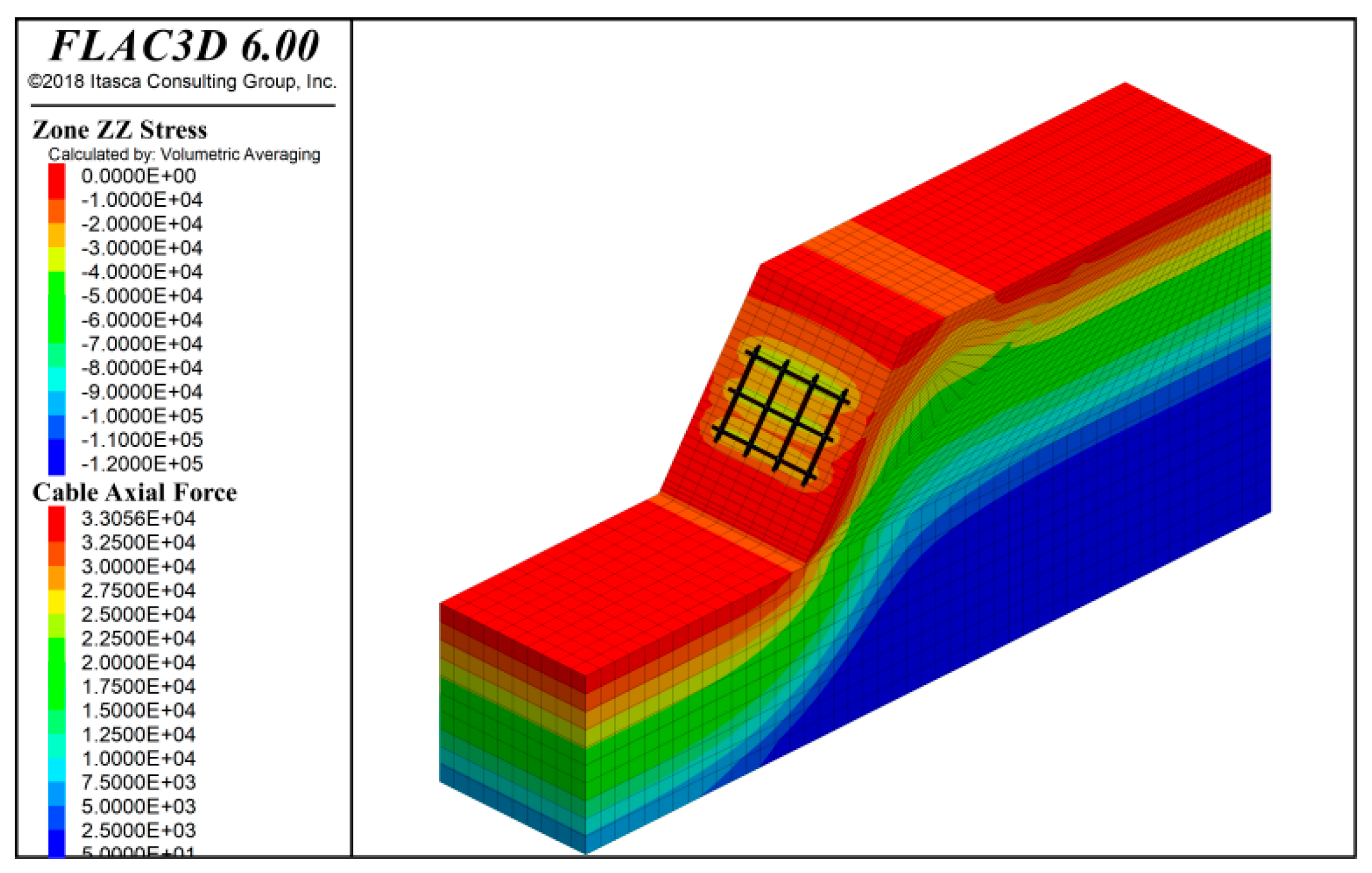
The working conditions of the lattice beam were analyzed in detail via finite element software. In this process, the effects of complex dynamic responses on structural members were comprehensively considered, including the eccentric load issue addressed in the study “Laboratory tests of an eccentrically loaded strip footing above single underlying void” [31], the temperature-displacement correlation explored in the research “Bridge Cable Performance Warning Method Based on Temperature and Displacement Monitoring Data” [32], and the vibration problem investigated in the project “Bridge Tower Warning Method Based on Improved Multi-Rate Fusion Under Strong Wind Action” [33]. Loads of 6 kPa, 12 kPa, 18 kPa, 24 kPa, 30 kPa and 36 kPa were applied sequentially. The maximum displacements of the lattice beam along the X, Y, and Z axes and the internal forces between beam segments were systematically analyzed. To verify whether the lattice beam would fail under compressive loading, the working condition under 36 kPa was selected for in-depth analysis, and the corresponding contour plots are presented in Figure 11, Figure 12, Figure 13, Figure 14, Figure 15 and Figure 16.
Figure 11.
Zone Displacement Magnified and Cable Axial Force.
Figure 12.
Zone X Displacement and Cable Axial Force.
Figure 13.
Zone Z Displacement and Cable Axial Force.
Figure 14.
Zone XX Stress and Cable Axial Force.
Figure 15.
Zone YY Stress and Cable Axial Force.
Figure 16.
Zone ZZ Stress and Cable Axial Force.
6. Conclusions
This study conducted a 1:2 scale model test on a rapidly assembled lattice beam support system, simulating the interaction process between the landslide mass and the supporting structure. The test setup was rational, and the loading method accurately reflected the actual stress characteristics of the slope. The main conclusions and recommendations are as follows:
(1) The earth pressure at each measurement point on the horizontal beams generally increased with the load, though significant variations were observed at different locations. Near the nodal points, the earth pressure peaked as high as 5000 kPa, indicating a tendency for stress concentration in these areas. It is recommended to enhance the structural strength at nodal positions in practical engineering designs. This stress concentration is a direct mechanical response to the high stiffness constraint at the beam–beam connection nodes, which leads to the superposition of load transfer from both horizontal and vertical beams. The trough characteristic of earth pressure at the mid-span and the corresponding stress release phenomenon further verify the rationality of the force redistribution mechanism of the assembled lattice beam system.
(2) The earth pressure on the vertical beams gradually decreased from top to bottom along the height direction. The maximum pressure at the top reached 2406.74 kPa, while the minimum at the bottom was only about 100 kPa. This demonstrates that the structure primarily bears the thrust from the upper slope soil and external loads, with the load being gradually released during vertical transmission.
(3) Overall, the prefabricated lattice beams and anchor rods exhibited effective synergistic interaction. The support structure demonstrated excellent mechanical stability and adaptability, making it particularly suitable for reinforcement projects in complex terrains or sliding slopes. Referring to the research on large-deformation soft rock tunnel support [25], the adaptive design concept of this assembled lattice beam can also provide reference for the optimization of support systems in other geotechnical engineering scenarios with complex deformation characteristics.
Author Contributions
Conceptualization, J.L. and Y.Z.; methodology and software, J.L. and Y.Z.; validation, J.L.; formal analysis, Y.Z.; investigation, Y.L. and W.W.; data curation, R.Z.; writing—original draft preparation, R.Z.; supervision, Z.L.; funding acquisition, Y.Z., Y.L. and W.W. All authors have read and agreed to the published version of the manuscript.
Funding
This work was supported by the National Key Research and Development Program of China [grant number 2019YFC1509904]; the Geological Survey Program of China [grant number DD20230600501]; the National Key Research and Development Program [grant number 2025NC-YBXM-32]; and the Basic Research Program of Shenzhen [grant numbers JCYJ20240813110520027, HITSZUAI25023].
Data Availability Statement
The raw data supporting the conclusions of this article will be made available by the authors on request.
Conflicts of Interest
The authors declare no conflicts of interest.
References
- Zhu, Y.; Hou, X.; Ma, X.; Yang, K. Limit Analysis of Slope Stability with Frame Prestressed Anchor Support. Chin. J. Geotech. Eng. 2021, 43, 7–12. [Google Scholar]
- Zeng, H.; Ye, S.; Zhang, J. Seismic Stability Analysis of Slope Reinforced by Frame Anchors Considering Prestress. KSCE J. Civ. Eng. 2024, 28, 1238–1252. [Google Scholar] [CrossRef] [Scilit]
- Peng, J.; Zhu, Y. Derivation of Shukla’s Generalized Expression for Dynamic Active Thrust by Inclined Slice Element Method. Soil Mech. Found. Eng. 2019, 56, 77–81. [Google Scholar] [CrossRef] [Scilit]
- Peng, J.; Zhu, Y. Simplified Method for Calculating Active Earth Pressure Against Rigid Retaining Walls for Cohesive Backfill. Soil Mech. Found. Eng. 2019, 55, 374–379. [Google Scholar] [CrossRef] [Scilit]
- Ye, S.; Fang, G.; Ma, X. Reliability Analysis of Grillage Flexible Slope Supporting Structure with Anchors Considering Fuzzy Transitional Interval and Fuzzy Randomness of Soil Parameters. Arab. J. Sci. Eng. 2019, 44, 8849–8857. [Google Scholar] [CrossRef] [Scilit]
- Ye, S.; Shi, Y.; Gong, X.; Cheng, C. Numerical Analysis of Seismic Response of Multi-Stage High Slope Reinforced by Frame Prestressed Anchors. Chin. J. Geotech. Eng. 2018, 40, 153–158. [Google Scholar]
- Ye, S.-H.; Ding, S.-H.; Tao, J. Reliability Analysis of Slope Reinforced by Frame-Anchors Based on Failure of a Single Anchor. Soil Mech. Found. Eng. 2023, 59, 513–520. [Google Scholar] [CrossRef] [Scilit]
- Zhao, Z.; Ye, S.; Zhu, Y.; Tao, H.; Chen, C. Scale model test study on negative skin friction of piles considering the collapsibility of loess. Acta Geotech. 2021, 17, 601–611. [Google Scholar] [CrossRef] [Scilit]
- Ye, S.; Zhao, Z.; Zhu, Y. Large-Scale Shaking Table Model Test Study on Loess Slope Supported by Frame Anchor. Rock Soil Mech. 2019, 40, 4240–4248. [Google Scholar]
- Liu, Y.; Han, D.; Liu, N.; Wang, W. Reinforcement mechanism analysis of lattice beam and prestressed anchor rod system for loess slope. Front. Earth Sci. 2023, 11, 1121172. [Google Scholar] [CrossRef] [Scilit]
- Liu, Y.; He, J.T.; Liang, J.; Wang, W.; Wang, Z. A new improved particle swarm algorithm for optimization of anchor lattice beam support structures. Nat. Hazards 2025, 121, 225–243. [Google Scholar] [CrossRef] [Scilit]
- Lin, Y.-L.; Lu, L.; Chen, X.-B.; Xue, Y.; Wang, Z.M. Shaking table experiment on seismic response of a three-stage slope supported by anchoring lattice beam. Soli Dyn. Earthq. Eng. 2024, 187, 109003. [Google Scholar] [CrossRef] [Scilit]
- Lu, L.; Lin, Y.-L.; Guo, D.-D.; Xing, H.; Zhang, Z.; Duan, J.Y. A modified Newmark block method for determining the seismic displacement of a slope reinforced by prestressed anchors. Comput. Geotech. 2023, 162, 105697. [Google Scholar] [CrossRef] [Scilit]
- Lin, Y.-L.; Lu, L.; Yang, G.-L. Seismic behavior of a single-form lattice anchoring structure and a combined retaining structure supporting soil slope: A comparison. Environ. Earth Sci. 2020, 79, 78. [Google Scholar] [CrossRef] [Scilit]
- Liu, Y.; Liu, K.; Wang, W.; Fan, L.; Li, B. Progress on the connection performance of steel-engineered bamboo beam column connections under cyclic loads: A review. Sustain. Struct. 2024, 4, 000037. [Google Scholar] [CrossRef] [Scilit]
- Liu, Y.; Liu, H.; He, J.; Fan, L.; Zhu, F. Dynamic Response Analysis of Oil Well Casing Under Earthquake Action. China J. Earthq. Eng. 2024, 47, 309–318. [Google Scholar]
- Dong, J.; Guo, H.; He, P.; Wu, X. Mechanical Performance Analysis of Airbag-Type Frame Ground Beam Slope Support Structure. Chin. J. Geotech. Eng. 2023, 45, 1498–1508. [Google Scholar]
- Zhang, J.; Zhou, Q.; Li, F.; Zhang, S. Case Study of Field Application of Prefabricated Anchoring Frame Beam Structure in Slope Supporting Projects. J. Constr. Eng. Manag. 2022, 148, 05022008. [Google Scholar] [CrossRef] [Scilit]
- Dai, X.; Cao, Y.; Wei, S.; Wei, P.; Huo, H.; Cai, J.; Li, Y. Analysis of reinforcement effect of different anchoring forces on slope stabilised by prefabricated anchorage cable frame beams. Structures 2024, 69, 107476. [Google Scholar] [CrossRef] [Scilit]
- Wei, S.; Cai, D.; Yao, J.; Shi, Y.; Lv, S. Key Technologies for Design and Construction of Prefabricated Prestressed Anchor Cable Frame Structure. Railw. Eng. 2022, 62, 15–24. [Google Scholar]
- Lin, Y.; Li, Y.; Yang, G.; Li, Y. Experimental and numerical study on the seismic behavior of anchoring frame beam supporting soil slope on rock mass. Soil Dyn. Earthq. Eng. 2017, 98, 12–23. [Google Scholar] [CrossRef] [Scilit]
- Lin, Y.; Yang, G.; Yang, X.; Zhao, L.H.; Shen, Q.; Qiu, M.M. Response of gravity retaining wall with anchoring frame beam supporting a steep rock slope subjected to earthquake loading. Soil Dyn. Earthq. Eng. 2017, 92, 633–649. [Google Scholar] [CrossRef] [Scilit]
- Zhang, Q.; Huang, C.; Liu, J.; Zhang, L.; Wang, X.; Pei, Y.; Zhou, S.; Yang, Z. Time-dependent characteristics of quick-setting slurry rheological parameters with extremely high temperature: Experimental study. Tunn. Undergr. Space Technol. 2025, 163, 106750. [Google Scholar] [CrossRef] [Scilit]
- Huang, C.; Zhang, Q.; Zhang, L.; Tong, H.; Hu, Y.; Yang, Z.; Li, Z. Investigations on basic properties and water plugging ability of ordinary cement grout under high temperatures. Constr. Build. Mater. 2025, 461, 139873. [Google Scholar] [CrossRef] [Scilit]
- Chao, K.; Junru, Z.; Haiyan, W.; Gu, S.; Gu, Y. Research on Deformation Characteristics and Bearing Mechanism of Support for Deep Buried Soft Rock Tunnels with Large Deformation. China Railw. Sci. 2021, 42, 103–111. [Google Scholar]
- Gu, R.-G.; Kang, Y.-L.; Huang, W.; Yan, Z.-X.; Fang, Y.-G.; Xu, Y.-F. Study on Mechanical Properties of Prefabricated Lattice Beam Joint. Buildings 2024, 14, 3781. [Google Scholar] [CrossRef] [Scilit]
- Fan, J.; Yang, S.; Deng, B.; Sun, B.; Liu, T.A. Comparison of Load Distribution Methods at the Node and Internal Force Analysis of the Lattice Beam Based on the Winkler Foundation Model. Buildings 2023, 13, 1731. [Google Scholar] [CrossRef] [Scilit]
- Wang, Y.; Khan, M.; Uy, B.; Katwal, U.; Tao, Z.; Thai, H.-T.; Ngo, T. Long-term performance of steel-concrete composite wall panels under axial compression. Structures 2024, 64, 106606. [Google Scholar] [CrossRef] [Scilit]
- Wang, Y.; Khan, M.; Uy, B.; Lim, L.; Thai, H.-T.; Ngo, T. Behaviour, design and performance of steel-concrete composite walls in fire. J. Constr. Steel Res. 2025, 227, 109408. [Google Scholar] [CrossRef] [Scilit]
- Shayanfar, J.; Barros, J.A.O.; Rezazadeh, M.; Kafshgarkolaei, H.J. Enhancing the performance of heat-damaged rectangular RC columns using prestressed FRP confinement. Constr. Build. Mater. 2025, 501, 144346. [Google Scholar] [CrossRef] [Scilit]
- Wu, G.; Tan, Y.; Zeng, J.; Zheng, J.; Zhang, R.; Liu, Y.; Yue, S. Laboratory tests of an eccentrically loaded strip footing above single underlying void. J. Build. Eng. 2025, 111, 113211. [Google Scholar] [CrossRef] [Scilit]
- Shi, Y.; Wang, Y.; Wang, L.N.; Wang, W.N.; Yang, T.Y. Bridge Cable Performance Warning Method Based on Temperature and Displacement Monitoring Data. Buildings 2025, 15, 2342. [Google Scholar] [CrossRef] [Scilit]
- Shi, Y.; Wang, Y.; Wang, L.N.; Wang, W.N.; Yang, T.Y. Bridge Tower Warning Method Based on Improved Multi-Rate Fusion Under Strong Wind Action. Buildings 2025, 15, 2733. [Google Scholar] [CrossRef] [Scilit]

Disclaimer/Publisher’s Note: The statements, opinions and data contained in all publications are solely those of the individual author(s) and contributor(s) and not of MDPI and/or the editor(s). MDPI and/or the editor(s) disclaim responsibility for any injury to people or property resulting from any ideas, methods, instructions or products referred to in the content. |
© 2026 by the authors. Licensee MDPI, Basel, Switzerland. This article is an open access article distributed under the terms and conditions of the Creative Commons Attribution (CC BY) license.