Article

How Wooden Design Enhances User Satisfaction in Concert Halls: The Serial Mediating Roles of Flow Experience and Place Attachment

1
School of Arts and Cultures, Newcastle University, Newcastle upon Tyne NE1 7RU, UK
2
Faculty of Humanities and Social Sciences, Macao Polytechnic University, Macao, China
3
School of Art, University of Bristol, Bristol BS8 5UL, UK
*
Author to whom correspondence should be addressed.
Buildings 2026, 16(4), 765; https://doi.org/10.3390/buildings16040765
Submission received: 12 January 2026 / Revised: 4 February 2026 / Accepted: 10 February 2026 / Published: 13 February 2026

Abstract

In the field of cultural architecture design, the deep impact mechanisms of wooden material design perception on users’ psychological experiences have not yet been fully elucidated. The interior environmental design of concert halls, as venues for immersive artistic experiences, especially the use of natural materials such as wood, is considered a key factor shaping audience perception and experience. However, existing research has largely focused on the acoustic performance of or visual preferences for wooden materials, while there remains a lack of mechanistic explanations for how wooden design perception systematically enhances users’ overall satisfaction through a series of internal psychological processes. Based on the “stimulus–organism–response” theoretical framework, this study proposes a chain mediation model aimed at exploring how perception of wooden design in concert halls enhances user satisfaction by promoting users’ flow experience and subsequently strengthening their place attachment. Through a cross-sectional survey of 1017 audiences with actual experience in wooden concert halls and analysis of the data using covariance-based structural equation modeling, the findings reveal that: (1) perception of wooden design has a significant direct positive effect on user satisfaction; (2) both flow experience and place attachment independently mediate the influence of wooden design perception on user satisfaction; (3) there exists a significant chain mediation path: “perception of wooden design → flow experience → place attachment → user satisfaction”. This study validates, from an architectural psychology perspective, the role of flow and place attachment as consecutive psychological mechanisms. The research provides empirical evidence for architects to use wood as a psychological intervention tool in cultural spaces, transforming material selection from an aesthetic consideration into a systematic design strategy with measurable psychological outcomes.

1. Introduction

In the field of cultural architecture design and research, concert halls, as spaces for live art presentation and perception, have been increasingly emphasized for the role of the material elements of their interior environmental design in shaping the psychological experience of the users [1,2]. In particular, wood is the main material used in the interior decoration and construction of many concert halls because of its natural visual texture and tactile temperature [3,4]. However, there is a clear cognitive gap between current academic discussions and design practice. Existing research has focused on objective physical parameters of wood, such as its effect on sound field uniformity and reverberation time, or has been limited to surveys of users’ general preference for its visual form [5,6,7,8,9,10]. A more fundamental but not yet fully explained question is, when users are in a concert hall where wood is the dominant material, how their overall perception of the wooden environment is transformed through a series of orderly internal psychological states that ultimately affect their overall satisfaction with the place. The black-box status of this mechanism makes the application of wood in cultural spaces to a large extent easy to stay in the designer’s empirical intuition and traditional practices, and it lacks empirical theoretical support based on the study of environmental psychology and user behavior, thus constituting a significant knowledge gap.
This knowledge gap is specifically characterized by the failure of existing research to effectively connect the complete psychological pathway between environmental stimuli and end-user evaluation. On a theoretical level, environmental psychology and experiential research have provided important insights into the relationship between material perception and psychological responses in cultural architecture. Attention restoration theory suggests that natural or “nature-like” environments can restore cognitive resources by reducing the load on directed attention and inducing individuals to enter a more relaxed and focused mental state [11]. As a building material highly endowed with natural cues, wood’s texture, color, and tactile characteristics are thought to stimulate restorative experiences similar to those of natural environments. When environmental cues are well-matched to an individual’s perceptual and behavioral systems, individuals are more likely to enter a flow experience that is highly focused and integrates action and awareness. The nature of the concert hall experience is one of deep situational immersion and emotional interaction, in which psychological processes are not simply linear cause and effect [12,13]. The sensory information provided by the wooden environment may first act on the user’s state of attention and engagement, leading them into a flow experience of heightened concentration, the disappearance of the sense of time, and the fusion of action and consciousness. This immersive peak experience is likely to provide a key psychological foundation for the establishment of a deeper emotional bond between the user and the place, i.e., the cultivation of a sense of belonging to the place, a sense of identity, and a sense of dependence, i.e., place attachment. Ultimately, this emotional attachment may become an important emotional basis for assessing place satisfaction. However, there is a lack of systematic empirical testing and theoretical integration in the existing literature as to whether there is such a chain relationship of progressive transmission between the four elements of perception of wooden design, flow experience, place attachment and user satisfaction.
In response to the above research gaps, this study attempts to construct a chain mediation model using the classical stimulus–organism–response (SOR) theory as a foundational framework. The model aims to go beyond the exploration of single-variable relationships to systematically empirically test whether and how the perception of wooden design can indirectly and effectively enhance overall user satisfaction with a concert hall by sequentially stimulating users’ mind-flow experience and reinforcing their place attachment. The core value of this research path is that it attempts to integrate the physical attributes of the built environment, the dynamic psychological processes of users, and their eventual behavioral evaluations into a logically coherent mechanistic explanatory model, thus providing a more refined and dynamic psychosocial perspective for understanding the spatial experience of cultural buildings.
Based on this theoretical conceptualization, this study used a field research method to conduct a large-scale sampling survey on the audiences of 11 concert halls with wood as the core design language in seven cities in China, and a total of 1017 valid questionnaires were obtained. The data were analyzed by applying covariance-based structural equation modeling. This study verifies the direct positive impact of perception of wooden design on user satisfaction, and the empirical results also reveal that flow experience and place attachment play both independent intermediate roles and form a continuous chain mediating sequence in this influence pathway. The findings of this study are expected to provide solid empirical evidence from the perspective of architectural psychology and to shift the perception of the role of wood in the design of cultural spaces from the selection of materials, which is mainly concerned with aesthetics and acoustics, to a systematic design strategy and theoretical tool that can actively intervene and optimize the psychological experience of users and has the potential of quantitative benefits, so as to provide some references for architectural designers in the design of wooden concert halls with higher user satisfaction in the future.

2. Literature Review and Research Hypotheses

2.1. Perception of Wooden Design and User Satisfaction

Perception of wooden design refers to the overall and subjective evaluation of wooden spaces or products by users, covering people’s perception of wood in terms of aesthetic, tactile, olfactory, and environmental associations and emotional responses. Perception of wooden design has been gradually recognized as an important environmental factor influencing spatial experience and emotional response in cultural architectural contexts. Relevant studies have shown that in concert halls, performing arts spaces and cultural venues centered on immersive experiences, wood elements not only have structural or acoustic functions but also participate in the construction of spatial meanings and emotional experiences through multi-sensory paths such as visual, auditory, olfactory and tactile senses [14]. Xiao et al. explicitly classified the perception of wooden design in a wooden stadium context into four dimensions—Aesthetic Perceived Value, Perceived Natural Connection, Perceived Olfactory Comfort, and Natural Material Tactility—and verified that all four dimensions positively affect user satisfaction. Perceived Acoustic Comfort is the user’s subjective comfort evaluation of the spatial acoustic environment, emphasizing the pleasantness, appropriateness and intrusiveness of sound in a particular context. In the framework of an acoustic landscape, an acoustic environment should be understood as “the acoustic environment that is perceived and experienced/understood in context”, so acoustic comfort is essentially a contextualized subjective evaluation [15]. Based on this, this paper specifies acoustic comfort perception as the audience’s comprehensive judgment of the overall comfort of the acoustic environment, the clarity of sound, the immersion experience, and the degree of noise/echo and other disturbances, in order to reflect the important role of auditory quality and contextual adaptation on the overall experience in cultural venues. Perceived Olfactory Comfort is the user’s subjective comfort evaluation of the odor experience in a wood space, reflecting the pleasantness, naturalness and acceptability of the odor. The sense of smell is closely related to emotion and autobiographical memory, and odor cues tend to trigger memories and emotional responses of high emotional intensity and therefore have a unique role as an “emotional amplifier” in the spatial experience [16]. Based on this mechanism, this paper further specifies olfactory comfort perception as the audience’s comprehensive evaluation of the naturalness, subjective pleasantness, relaxation, and whether or not it produces irritation/discomfort of wood odors, in order to portray the path of wood odors’ influence on spatial experience through the emotional channel. Natural Material Tactility refers to the subjective evaluation of the user’s “material sensation” by touching the surface of wood. Multimodal studies of wood material perception have found consistency and integration between visual, auditory and tactile evaluations of the emotional material properties of wood, providing empirical support for an independent measure of “Natural Material Tactility” [17]. Based on this, this paper operationalizes tactile perception as the audience’s comprehensive evaluation of the warmth, authenticity and naturalness of wood touch, skin friendliness/comfort, and pleasure brought by touch, emphasizing that tactile sensation, as an important source of material experience, directly affects the user’s comfort judgments and affective evaluations. It should be noted that although established studies have made a more detailed dimensional division of the experiential value of wooden environments from a multi-sensory perspective, most of them still regard different sensory perceptions as juxtaposed independent variables, paying less attention to the dynamic psychological processes that users may experience in real situations and their sequential characteristics. Based on the above literature combing, perception of wooden design can significantly enhance the experience of concert hall users, and at the same time, the immersive atmosphere created by wooden elements is related to emotional repair and empathic experience [18]. However, in terms of the overall research lineage, such conclusions remain more at the empirical level of validation, and the theoretical explanations of how perception of wooden design is gradually transformed into stable place evaluations through specific psychological states remain to be further systematized. Similarly, in cultural and tourism experiential spaces, natural wood is more likely to stimulate positive emotions and form stable associations with authenticity, comfort, and cultural meaning, as found by Kotradyová and Vavrinsky through questionnaires and physiological experiments, which are closely related to the associations of authenticity, comfort, and sustainability [19].
User satisfaction refers to the comprehensive psychological evaluation of the overall feeling and value realization of an individual after experiencing a specific environment or place, and it is an important index to measure the effectiveness of place design [20]. In the wooden spatial environment, research shows that user satisfaction not only comes from the visual aesthetics and material characteristics of wood itself but also depends on the coordination of spatial elements and the physical and mental feelings they bring [21]. Shima et al. pointed out that the comfort and privacy brought by wooden frames have a significant effect on satisfaction in open-plan office spaces and that there are differences in evaluation criteria between different genders and age groups, suggesting that user satisfaction is moderated by the personal characteristics of users. Satisfaction is moderated by users’ personal characteristics [22]. Also in the built environment, Lindblad and Schauerte’s research further reveals that experiential factors such as acoustic performance play a key role in user satisfaction. When the actual acoustic experience exceeds expectations, user satisfaction is higher, even in the face of higher costs, suggesting that satisfaction is not only driven by the actual functional performance but also by the degree to which psychological expectations are matched by actual experience [23]. Existing research on user satisfaction mostly starts from a single environmental element or specific experiential factors, and the relevant conclusions show a certain degree of context dependence and have not yet formed a unified analytical framework capable of integrating material perception, psychological experience and emotional evaluation. In experience-centered spaces such as wood venues, user satisfaction reflects the process of fitting between people’s expectations and their real feelings about the environment, and its formation mechanism may stem from the enhancement of spatial elements to the overall place experience through visual coherence, sensory comfort, and psychological identity. Based on this, the following hypothesis is proposed in this paper:
H1. 
Perception of wooden design has a positive effect on user satisfaction.

2.2. The Mediating Role of Flow Experience

The flow experience refers to the high level of concentration and immersion that individuals enter when the challenge of a task matches their own abilities, which is typically characterized by a high level of concentration, a diminished sense of self-consciousness, and an accompanying sense of intrinsic pleasure and control [24,25]. And the focus, pleasure and sense of control that accompanies this flow experience itself directly enhances the individual’s overall positive evaluation of that environment or activity, which translates into higher levels of satisfaction [26]. For example, research on online platforms has found that the quality of a website can enhance viewer satisfaction by enhancing pleasure and facilitating a flow experience [27]. Although the above studies have repeatedly verified the basic path of “external features–flow experience–outcome variables” in different application contexts, most of the related studies have focused on digital media or virtual interactive environments, and there is still a limited discussion on how the environmental elements in the physical space influence user evaluation through flow experience. However, most of the related research focuses on digital media or virtual interactive environments, and the discussion on how environmental elements in physical space influence user evaluation through mind-flow experience is still relatively limited. Likewise, in a live travel e-commerce context, real experiences such as interactivity and authenticity promote an individual’s mind-flow experience thereby enhancing purchase intent [28]. Together, these studies point to a more stable explanatory framework: external features can influence outcome variables by altering the experiential process. In the context of this paper, the naturalness, sensory richness, and environmental amenity inherent in the perception of wooden design facilitates the user’s flow experience by creating a sensory environment conducive to focus and engagement: a state of affairs that further translates into higher evaluations and satisfaction with the overall experience of the space [29]. As a result, this paper attempts to introduce the flow experience from the previous research context centered on media or activities into the research on cultural architecture centered on physical space, in order to make up for the insufficiency of the related research at the level of spatial psychological mechanisms. Based on this, the following hypothesis is proposed in this paper:
H2. 
Flow experience mediates between the effects of perception of wooden design on user satisfaction.

2.3. Mediating Role of Place Attachment

Place attachment refers to the emotional bond and sense of belonging that is created between a person and a particular place, making that place transcend its physical attributes and become an integral part of an individual’s identity and memory [30]. As a core representation of the emotional bond and psychological identity between an individual and a specific place, place attachment has been shown to be a mediating mechanism connecting environmental perception and user satisfaction in a variety of environmental contexts [31]. Wu et al. showed that tourists’ perceptions of heritage authenticity in heritage tourism contexts enhance tourists’ satisfaction and subjective well-being by reinforcing place attachment, which in turn enhances tourists’ satisfaction and subjective well-being [32]. Su et al.’s study further reveals that physical landscape features (e.g., greenery and heritage landmarks) ultimately influence users’ well-being through the chain mediation of cultural perceptions and place attachment [33]. Although the above studies have more systematically verified the mediating role of place attachment in tourism and landscape environments, most of the related studies have focused on open or outdoor spatial contexts, and the mechanism of the role of cultural built environments, which are centered on indoor experience and sensory immersion, still needs to be further tested. Together, these studies build a stable theoretical path: the perceived attributes of an environment promote users’ emotional attachment and identification with a place, further driving satisfaction [34]. Hence, in the context of this paper, the natural material properties and multi-sensory characteristics unique to wood spaces ultimately translate into higher user satisfaction by evoking emotional belonging and psychological identification with the spaces [35]. In this process, place attachment is not only an outcome variable of environmental experience but also assumes the role of an important psychological mechanism that translates physical environmental features into stable subjective evaluations. Place attachment plays a mediating role in this process by transforming the objective attributes of the physical environment into an individual’s subjective experience of satisfaction. Based on this, the following hypothesis is proposed in this paper:
H3. 
Place attachment mediates between the effects of perception of wooden design on user satisfaction.

2.4. Chain Mediation Model

Based on the above literature combing, this study proposes a chain mediation model, i.e., the perception of wooden design influences user satisfaction by triggering the mind-flow experience and place attachment and then ultimately affects user satisfaction. As a multi-sensory environmental stimulus, the perception of wooden design first promotes users to enter a highly focused and deeply immersed state of mind-flow, and the mind-flow experience has been confirmed by research in many fields to be able to serve as a bridge to transform external environmental features into higher satisfaction and positive emotional outcomes [36]. When this high-quality experience occurs in a wooden space, it significantly strengthens the depth and continuity of the emotional interaction between the user and that space, thus providing a more lasting emotional bond and psychological identity.
SOR theory is a “stimulus (S)–organism (O)–response (R)” model, which reveals how external stimuli affect an individual’s internal mental state (organism), which ultimately drives their external behavioral responses [37]. The SOR model, proposed by Mehrabian and Russell, suggests that external stimuli trigger affective and cognitive responses through an individual’s internal mental states, ultimately leading to behavioral or attitudinal changes [38]. The core logic of the model is that environmental characteristics do not directly determine the outcome but indirectly influence the behavioral response through the individual’s subjective experience and mental processing. For example, Zhang et al. use SOR theory to explain that in user psychology, scarcity can be used as an external stimulus to stimulate impulse buying behavior [39]. In Wang’s study, SOR theory was used to explain that online media, as an external stimulus, can influence the public’s environmental attitudes and behavioral responses through information and emotional processing [40]. Similarly, Unde notes that information stimuli from social media can influence public attitudes toward the environment through psychological responses [41]. These studies collectively show that the SOR framework can effectively explain the dynamic relationship between external context, psychological responses, and behavioral outcomes. Based on this theory, this study considers the perception of wooden design as an external stimulus, which ultimately affects user satisfaction by triggering two internal psychological responses, namely, heart-flow experience and place attachment. The perception of wooden design attributes, as clear external stimuli, first act on the user’s internal psychology, triggering the emotional state of flow experience in the processing of this state of mind, contributing to a more lasting place attachment; ultimately, this series of orderly internal psychological changes are externally manifested as user satisfaction enhancement. Based on this, the following hypothesis is proposed in this paper:
H4. 
Flow experience and place attachment mediate the chain between the effects of perception of wooden design on user satisfaction.

3. Research Design

3.1. Recipients and Questionnaire Distribution

In order to explore the universality and effectiveness of the spatial experience of wooden concert halls, 11 representative concert halls covering seven cities in China (including Beijing, Shanghai, Guangzhou, Shenzhen, Chengdu, Xi’an, and Wuhan) were selected as field research sites. These cities are located in different regions of China and are characterized as both first-tier and new-tier cities, reflecting to a certain extent the architectural and performance contexts of China’s major urban cultural venues. The selected concert halls are all cultural buildings with the core function of live performances, where wood is used as the main or significant design language (e.g., wood wall/ceiling finishes, wood acoustic components, wood furniture, etc.) to ensure that the perception of wooden design forms the basis of a real and stable experience for the interviewees. Given that wood may carry different symbolic meanings and sensory preferences in different regions, this paper emphasizes the boundaries of its applicability when extrapolating its conclusions and further suggests directions for comparative validation across cultural and material scenarios in “Limitations and Prospects”. All of the selected venues use wood as the core decorative and acoustic material in their interior spaces, forming a clear and strong perception of wooden environments. The subjects of this study were audience members who have had actual experience of attending a performance in any of the above-mentioned concert halls. All participants participated voluntarily and completed an informed consent form. The purpose of the study, the anonymity and confidentiality of the questionnaire were clearly explained to the participants before data collection, and their informed consent was obtained by having them sign the written version of the informed consent form.
This study focuses on users’ subjective psychological experiences, which are introspective in nature. Currently, the most effective and economical measurement tools are validated self-report scales. Large-scale field sampling also ensures ecological validity. This study used offline field distribution of paper questionnaires for data collection to ensure the authenticity and contextualization of the data sources. The study was conducted by uniformly trained research team members who traveled to 10 target concert halls in the above seven cities between August and October 2025 in phases. A standardized time-slot sampling design was used to strictly control the potential interference of the viewing hours in the research results. We systematically categorized the data collection periods into two levels—weekday attendance (Tuesday–Thursday evening performances) and weekend peak hours (Friday evening and Saturday all-day performances)—and controlled the distribution of questionnaires according to the proportion of actual annual performances in each target concert hall, so as to make the distribution of the sample time periods consistent with the structure of the actual performance market. A total of 1100 questionnaires were distributed. After recovery, the questionnaires were strictly screened and cleaned according to the criteria. For example, questionnaires that were incomplete, were missing key questions, had a short response time, had obviously not been read carefully, had answers that showed regularity, or included contradiction or randomness were excluded from the final valid sample. After cleaning, 1017 valid questionnaires were finally obtained, with an effective recovery rate of 92.5%. The sample size fully meets the statistical requirements for subsequent hypothesis testing using structural equation modeling. The demographic information of this paper is shown in Table 1.

3.2. Measurement of Variables

This study focuses on four core variables, namely, perception of wooden design (WDP), flow experience (FE), place attachment (PA) and user satisfaction (US). The development of the measurement tool is based on established scales and underwent a systematic process of localization and contextual adaptation: First, a rigorous translation–back-translation process was carried out to ensure conceptual equivalence between the Chinese and English versions; then, the research team reviewed each item and invited three experts in the field of architectural and spatial design to review each item and conduct several rounds of comments on the semantic clarity of the entries, the meaning of the entries, the impact on user satisfaction, and cultural appropriateness of the concert hall’s usage scenarios. Based on this, cognitive interviews and a small-scale pre-test were conducted (N equal to 35), and the results of the pre-test were not included in the final analysis. Some of the expressions and the order of entries were optimized to form a survey scale applicable to the context of this study.
Regarding the measurement of the independent variable, “perception of wooden design,” this study adopted the Wooden Music Hall Design Perception Scale developed by Chen et al. [18]. This scale was adapted from an existing perception scale for wooden sports venues and revised to suit the specific context of music halls, ultimately forming a measurement tool applicable to the perception of wooden music hall design in the Chinese context. The scale consists of four distinct dimensions: Aesthetic Perceived Value, Perceived Acoustic Comfort, Perceived Olfactory Comfort, and Natural Material Tactility. These dimensions systematically cover multiple perceptual aspects, including visual aesthetics, the acoustic environment, olfactory experience, and tactile qualities, thereby ensuring the theoretical comprehensiveness and construct validity of the operational definition of this construct. In the actual measurement, each dimension is reflected through corresponding representative items. For example, under the Natural Material Tactility dimension, an item such as “The tactile sensation of wooden surfaces in a concert hall makes me feel warm and comfortable” is used. The adoption of this multi-dimensional scale clarifies the specific connotation of “perception of wooden design,” avoids conceptual ambiguity, and lays a foundation for subsequently examining its relationship with dependent variables within the psychological mediation model. The dependent variable user satisfaction was also measured using their unidimensional scale. The dependent variable user satisfaction was also measured using their unidimensional scale for measuring overall user satisfaction, with typical items such as “I felt great pleasure and enjoyment during this concert hall experience”.
For the measurement of flow experience we used the Psychological Flow Scale (PFS) developed by Norsworthy et al. including the three dimensions of absorption, effortless control, and intrinsic reward [42]. In order to ensure the accuracy of the measure, some of the items in the original scale were modified in minor scenarios. For example, “I was absorbed in the act/task” was changed to “I was absorbed in the musical performance”. Similarly, “I was highly focused on the task/activity.” was changed to “I was highly focused on the details of the music”.
For the measurement of place attachment we refer to Zhang et al.’s place attachment scale [43], which has been validated with a large sample of Chinese users, contains the dimensions of place identity and place dependence, and has been adapted. Typical question items are “Compared to other concert halls, I prefer coming here for musical performances.” and “I feel a special connection between myself and this concert hall”. All questions were measured on a 5-point Likert scale, where 1 means “strongly disagree” and 5 means “strongly agree”.

4. Data Analysis and Results

4.1. Reliability Analysis

Reliability analysis is used to test the internal consistency and stability of a scale. In this study, Cronbach’s α coefficient and combined reliability (CR) are used as reliability assessment indexes. Cronbach’s α coefficient and a CR value greater than 0.7 indicate good reliability. As shown in Table 2, the Cronbach α coefficients of the dimensions range from 0.819 to 0.958, which are all greater than the critical criterion of 0.7, indicating that the scales have good internal consistency reliability. The combined reliability (CR) ranges from 0.817–0.958, greater than the criterion value of 0.7, further proving that the scales used in this study have a good level of reliability.

4.2. Exploratory Factor Analysis

Before conducting factor analysis, KMO and Bartlett’s spherical test needed to be performed on the data to determine whether the data are suitable for factor analysis or not. The KMO value is greater than 0.7, indicating that the data are suitable for factor analysis, and Bartlett’s spherical test is significant (p < 0.05), indicating that there is a correlation between the variables, which makes them suitable for factor analysis. As shown in Table 3, the KMO value of 0.916, which is greater than the criterion of 0.7, indicates that the data are well suited for factor analysis. The approximate chi-square value of Bartlett’s test of sphericity is significant (p < 0.001), which rejects the original hypothesis that the correlation matrix between the variables is a unitary matrix and indicates that there is a significant correlation between the variables that makes them suitable for factor analysis. The variance explained reflects the extent to which each factor explains the total variance. According to the Kaiser criterion, factors with eigenvalues greater than 1 should be retained. A cumulative variance explained ratio of 60% or more indicates good factor extraction. As shown in Table 4, according to the principle that the eigenvalue is greater than 1, a total of nine factors are extracted, and the cumulative variance explained rate is 75.479%, which is more than the criterion of 60%, indicating that the extracted factors are able to explain the information of the original variables better. The distribution of the variance contribution rate of each factor is relatively uniform, indicating the independence and stability of the factors’ explanation of the total variance.
The factor loading values reflect the degree of correlation between the observed and latent variables. Generally speaking, the factor loading value should be greater than 0.5, and ideally it should be greater than 0.7. The loading value of each measurement item on its corresponding factor ranges from 0.734 to 0.844, greater than the ideal criterion of 0.7, and there is no obvious cross-loading of each item on the non-target factor, which indicates that each measurement item can effectively measure its corresponding latent variable, and the scale has good structural validity.
To test the structural validity of the scale, this study used validated factor analysis (CFA) to test the measurement model. The model fit indicators included χ2/df, GFI, AGFI, RMR, RMSEA, NFI, IFI, CFI and TLI. All the fit indicators of the measurement model reached a good standard: χ2/df = 1.126 (<3); GFI = 0.971 (>0.9); AGFI = 0.964 (>0.9); RMR = 0.016 (<0.05); RMSEA = 0.011 (<0.05); NFI = 0.977 (>0.9); IFI = 0.997 (>0.9); CFI = 0.997 (>0.9); TLI = 0.997 (>0.9). This indicates that the measurement model fits the data well and the scale has good construct validity.
Convergent validity (CV) reflects the degree of correlation between items measuring the same construct. In this study, combined reliability (CR) and average variance extracted (AVE) were used as indicators for assessing convergent validity. Typically, a CR value greater than 0.6 and an AVE value greater than 0.5 indicate good convergent validity. As shown in Table 5, the range of CR values for each dimension is 0.855–0.900, which is greater than the criterion of 0.6. Additionally, the AVE values of all dimensions are greater than the critical criterion of 0.5, indicating that the scale of this study has good convergent validity.

4.3. Discriminant Validity

Discriminant validity reflects the degree of difference between distinct constructs, meaning that items measuring different constructs should exhibit low correlations. This study employed the Fornell–Larcker criterion to assess discriminant validity, which requires that the square root of the average variance extracted (AVE) for each dimension should be greater than its correlations with other dimensions. Additionally, the Heterotrait–Monotrait (HTMT) ratio was used as a supplementary test, where an HTMT value below 0.85 indicates good discriminant validity.
See Table 6, ased on the results of the Fornell–Larcker criterion test, the square root of the AVE for each dimension (values on the diagonal) was greater than the correlations between that dimension and the others (off-diagonal values), demonstrating good discriminant validity among the dimensions. The square root of the AVE for PWD was 0.688, which was greater than its correlations with other dimensions (0.332, 0.327, 0.551). The square root of the AVE for FE was 0.705, exceeding its correlations with other dimensions. The square root of the AVE for PA was 0.681, and for US, it was 0.801. All dimensions satisfied the Fornell–Larcker criterion, confirming the discriminant validity of the measurement model.
See Table 7, based on the results of the discriminant validity test using the HTMT ratio, all HTMT values between dimensions were below the critical threshold of 0.85, providing further validation for the discriminant validity of the measurement model. The highest HTMT value was 0.553, which remained well below the 0.85 standard. Integrating the test results from both the Fornell–Larcker criterion and the HTMT ratio, the measurement model in this study demonstrates good discriminant validity. The latent variables can be effectively distinguished from one another, indicating that the measurement tools possess sound structural validity.

4.4. Common Method Bias Test

As the data in this study were all self-reported from the subjects, the issue of common method bias may exist. In order to test the extent of the effect of common method bias, this study utilized Harman’s one-way test and one-way validated factor analysis. Harman’s one-way test is one of the most commonly used methods to test for common method bias. This method incorporates the measurement question items of all variables into an exploratory factor analysis, and the factors are extracted using unrotated principal component analysis. If the first factor explains more than 40% of the variance, it indicates a serious problem of common method bias. The explained variance of the first factor in this study’s data without rotation was 31.951%, which was below the 40% threshold criterion, and initially indicated that there was no serious common method bias problem in this study’s data.
To further validate the common method bias problem, this study used one-way validated factor analysis. This method grouped all measurement question items under one latent variable for validation factor analysis, and if the model fit was poor, it indicated that there was no serious common method bias. As shown in Table 8, all the fit indicators of the one-way model did not meet the acceptable criteria (χ2/df > 5; GFI < 0.9; CFI < 0.9; RMSEA > 0.08), and the model fit was poor, which further proved that the data of the present study did not have the problem of serious common method bias, and the data could be subjected to subsequent analyses.

4.5. Structural Equation Modeling

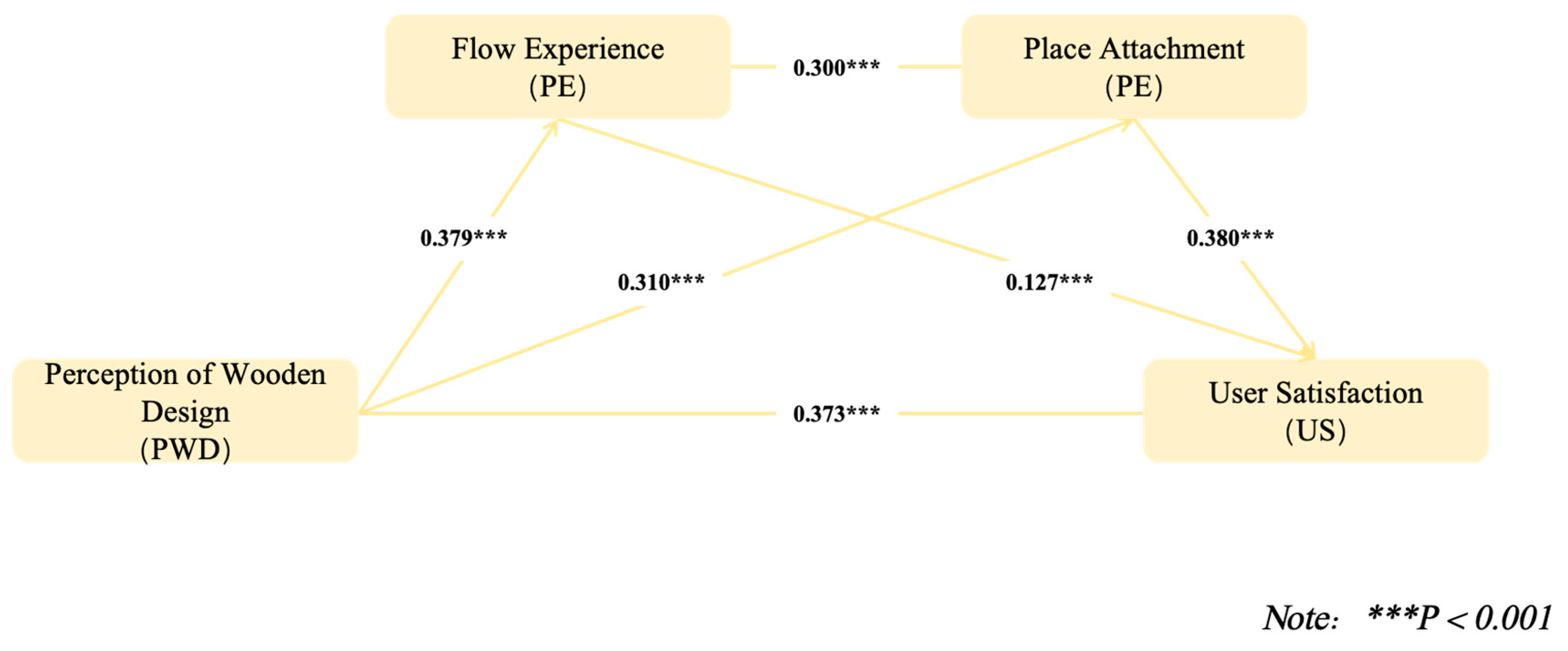
In this study, structural equation modeling (SEM) was used to test the research hypotheses. On the basis of the previous validation factor analysis confirming that the measurement model has a good fit, the structural model was further constructed to test the path relationship between the variables. The path coefficients of structural equation modeling reflect the direction and strength of the influence of the independent variables on the dependent variable. In this study, the maximum likelihood method is used for parameter estimation, and the significance of the path coefficients is judged by the Z-test. As shown in Table 9, all path coefficients reach a statistically significant level, while the modified structural equation model diagram of this study is shown in Figure 1.
In summary, based on the results of path analysis and mediation tests, all hypotheses proposed in this study are supported, as detailed in Table 10. Concurrently, the proposed model diagram has been revised accordingly; please refer to Figure 1.

4.6. Mediation Effect Analysis

To test the mediation path of the model, this study uses the Bootstrap method for mediation effect analysis. This method estimates the confidence interval of the indirect effect by repeated sampling, and if the 95% confidence interval does not contain 0, it indicates that the mediation effect is significant. The results of the analysis are shown in Table 11. The total effect of PWD on US was significant (effect value = 0.597; 95% CI [0.529, 0.642]). Specifically, the direct effect of PWD on US was significant (effect value = 0.428; 95% CI [0.351, 0.468]), as was the total indirect effect (effect value = 0.169; 95% CI [0.147, 0.200]). Among the specific indirect pathways, the effect of the pathway “PWD → FE → US” was significant (effect value = 0.060; 95% CI [0.030, 0.086]), and the effect of the pathway “PWD → PA → US” was significant (effect value = 0.081; 95% CI [0.067, 0.097]), and there was a significant effect of the chained path “PWD → FE → PA → US” (effect value = 0.028; 95% CI [0.022, 0.039]). The results suggest that FE and PA play independent and chained mediating roles in the relationship between PWD and US.

5. Discussion

5.1. Direct Effects

The results of this study show that there is a significant positive effect of perception of wooden design on user satisfaction, suggesting that in wooden environments, the user’s perception of the visual, tactile, and overall ambience of the wood can in itself significantly enhance their overall evaluation of the space. This result directly supports the hypothesis that perception of wooden design has a positive effect on user satisfaction. This result is highly consistent with existing research on the psychological effects of wood indoor environments. It has been shown that the visual texture and color tone of wood, as a natural material, can significantly enhance the perceived comfort and environmental quality of a space and trigger more positive emotional responses [44]. In addition, experimental studies based on physiological indicators have found that visual stimulation with wood reduces tension and improves emotional states compared to non-wooden environments, thus providing the basis for a comfortable experience [45]. Altogether, these results suggest that the perception of wooden design is enough to directly influence users’ overall evaluation of the space. This study builds on this by further emphasizing that the perception of wooden design as a material-level perceptual attribute is an important source of environmental satisfaction. It also reaffirms the positive effect of wood elements on user satisfaction in the context of a concert hall.

5.2. Chained Mediating Effects

This study further validates that perception of wooden design can significantly enhance user satisfaction through the two mediating effects of flow experience and place attachment. Combined with the results of hypothesis testing, the mediating effect of flow experience, the mediating effect of place attachment, and the interlocking mediating effect of flow experience and place attachment are all supported. In a wooden environment, an individual’s perception of wooden design can create a more immersive and emotionally rich experiential environment, making it easier for the individual to enter a state of high psychological engagement and immersion [46]. It is widely recognized in environmental psychology research that natural or nature-like environments help to restore attentional resources and enhance emotional stability, which provides conditions conducive to the production of immersive experiences and flow experiences [47]. As individuals develop a stronger sense of immersion in wooden spaces, this positive experience is further transformed into an emotional attachment to place, i.e., place attachment. Place attachment is believed to stem from the positive experiences that individuals repeatedly accumulate in a particular environment and is centered on emotional attachment and meaning construction [48]. It has also been established that emotional experience is an important antecedent to place attachment formation in culturally and experientially oriented spaces and that place attachment significantly enhances satisfaction and positive behavioral intentions [49]. Thus, the chain-mediated pathway validated in this study systematically reveals the complete psychotransduction mechanism from material perception to mental immersion to emotional connection, which ultimately leads to satisfaction. From the SOR framework, flow experience and place attachment can correspond to immediate experience and stable emotional connection at the level of the “organism” respectively, which together explain how the perception of wooden design can be transformed from stimulus to satisfaction, thus providing theoretical support for the intermediary path of chaining. The two together explain how the perception of wood design is transformed from stimulus to satisfaction, thus providing theoretical support for the chain mediation path.

5.3. Research Comparisons

The findings of this study are supported in several research areas, but at the same time they form meaningful differences and additions to some of the established research. Firstly, in the field of wood environments and interior design research, there is established research that generally confirms the positive effects of wood on mood and comfort on both a visual and tactile level. For example, Watchman’s study found that wood spaces visually create a warmer and more pleasant feeling, which significantly increases psychological comfort and spatial satisfaction [44]; Alapieti further noted that wood materials have a positive impact on indoor environmental quality by regulating humidity and stimulating positive emotional responses [50]. This is highly consistent with the present study’s emphasis on the positive effect of perception of wooden design on satisfaction. However, unlike some of the studies that focus only on material preference or comfort ratings, the present study further reveals the psychologically mediated mechanisms behind this perceptual effect, expanding the explanatory depth of material perception research [51]. In cultural and experiential space research, some studies have placed more emphasis on the impact of functional or technical factors on satisfaction. Further, the innovation of this paper’s “mechanistic explanation” is mainly reflected in the complementary and deepening of the existing research orientation: compared with the previous “performance-appraisal” or “preference-satisfaction” conclusions that are based on the acoustic properties of wood or visual preferences of the material [52], this paper operationalizes wood design perception as an integrated stimulus that includes multi-sensory cues such as vision, touch, smell and acoustic comfort. In this paper, we operationalize the perception of wooden design as a multisensory stimulus with visual, tactile, olfactory, and acoustic comfort cues and further examine how it transduces satisfaction through a continuum of internal psychological states within the SOR framework [53] states to realize the conduction of satisfaction. For example, in a study of museums and cultural buildings, Yalçın et al. found that wooden structures not only have technical and structural functions but also enhance the immersion and emotional resonance of a space through visual and sensory dimensions [54]. Compared to that, this study, by introducing the variables of flow experience and place attachment, shows that material perception and emotional immersion are still important complementary paths for satisfaction formation even in cultural buildings with strong functional orientation. The path structure of this study also shows differences compared to some service- or management-centered studies. Yu points out that in hotel space, the application of perception theory directly affects satisfaction mainly through service experience and functional layout [55]. In contrast, Zhao’s study found a significant interaction between material properties and restorative experiences in residential settings [56]. The findings of this study further complement this discrepancy by pointing out that in spaces centered on aesthetic and cultural experiences, the mind-flow experience plays a key role between design perception and place attachment, emphasizing that psychological immersion rather than functional attributes have a more significant impact on satisfaction. In contrast to macro-environmental or city-scale place attachment studies, this study cuts through the microlevel of material perception to reveal how place attachment is gradually constructed within cultural buildings. Similarly, Zou et al. point out in their study of wooden Buddhist temples in China that wooden structures construct a “sense of the sacred” and a sense of place through the emotional resonance between material and space, which provides a new perspective to understand the material and spiritual dimensions of place attachment [57]. In doing so, this study confirms that place attachment not only stems from social interactions or long-term residence but can also be triggered in a relatively short period of time through high-quality spatial experiences.

5.4. Theoretical Contributions and Practical Contributions

At the theoretical level, the main contributions of this study lie in the following three points. First, this study introduces flow experience into the context of architectural and environmental psychology, showing that mind-flow does not only occur in digital products or explicit task activities but also in experience-centered spaces such as cultural buildings, where environmental cues may also trigger a high degree of concentration and immersion, thus expanding the boundaries of the applicability of the theory of mind-flow. Second, this study deepens the mechanism of place attachment from material perception, emphasizing that place attachment not only comes from long-term use or functional dependence but also may be driven by high-quality sensory experience and emotional immersion. Third, by constructing a chain model, the study further structured the “O” in the SOR framework into two levels—immediate immersion and more stable emotional connection—which explains more clearly how material perception is transformed into the psychological path of satisfaction.
On the practical level, this study provides a clearer starting point for the design and operation of wooden cultural buildings. At the design level, the intuitive approach of “the more wood the better” should be avoided, and instead, the combined visual, tactile and acoustic advantages of wood should be systematically utilized to create an experiential atmosphere that is conducive to concentration and emotional recovery; at the operation level, the user’s sense of engagement and emotional resonance can be strengthened through spatial narratives, activity planning, and guidance of the viewing process to make the immersion experience more easily precipitated into a place attachment. At the evaluation level, it is suggested to add psychological indicators such as flow experience and place attachment in addition to the traditional technical indicators, which can be used to portray the experience value and optimization direction of cultural buildings in a more comprehensive way. It is important to emphasize that the design insights in this paper are intended to provide “mechanism-oriented” decision-making rather than generalized material prescriptions. The implementation of a wood strategy needs to take into account project-specific costs and life cycle costs, fire safety and fire code requirements, maintenance and durability (e.g., wear and tear, moisture, cleanliness management), sustainable sources and certifications (e.g., legal logging and supply chain stability), and possible acoustic trade-offs with target acoustic metrics (e.g., the impact of different wood configurations and finishes on reverberation, absorption/diffusion, and optimization in concert with acoustic design need to be optimized in concert with the acoustic design). It is therefore recommended that the psycho-benefits of wood be evaluated in the same framework as engineering performance, operational management and compliance requirements, resulting in differentiated material and construction combinations for different budgets, codes and scenarios.

5.5. Limitations and Recommendations

Although this study verifies the direct effect of perception of wooden design on satisfaction and the chain mediation mechanism of “flow experience–place attachment”, the following limitations should be noted: this study adopts cross-sectional data, which is able to test the statistical correlation between variables, but the inference of the causal direction and dynamic process is still limited; in the future, it can be further verified by longitudinal tracking or experimental design. The sample mainly relies on the core wood features of concert hall scenes, and more evidence is needed to extrapolate to other material-dominated spaces or different cultural contexts; at the same time, the present study relied on self-reported questionnaires, and despite the test of common methodological bias, it may still be affected by the influence of social expectations and recall bias. Objective indicators such as physiological, behavioral, and qualitative methods can be introduced to enhance the validity of the measurements; in addition, the potential moderating effects of individual differences (e.g., musical literacy, aesthetic preferences) and situational factors (e.g., types of performances, seating locations) have not yet been sufficiently incorporated, and more complex models can help to further reveal the boundary conditions. Future research could focus on the above directions in order to more clearly define the scope of application and explanatory power of the “design–psychology–satisfaction” mechanism.
It should also be noted that wood may carry different symbolic meanings (e.g., tradition, warmth, rituals, or sustainable associations) in different regions, and sensory preferences such as smell/touch may also be culturally different; therefore, the applicability of the psychological mechanisms derived from the Chinese wooden concert halls to other cultures and building types will have to be further tested in cross-cultural and multi-scenario comparative studies. In addition, future research could incorporate real-world variables such as cost constraints, fire codes, maintenance costs, sustainable supply chains, and acoustic performance indicators into a comparative framework or multi-case study, in order to more systematically assess the implementability and comprehensive benefits of wood strategies under different conditions.
It should also be noted that the concert hall experience is often shaped by a combination of environmental cues, such as lighting ambience, spatial layout, seating comfort, overall acoustic conditions, and crowd density at the time of the performance, which may simultaneously influence flow experience, place attachment, and user satisfaction. Therefore, the results of this paper should be interpreted as a result of the perception of wooden design as one of the important environmental cues that work together with other environmental factors to contribute to the overall experience in the context of a real performance, rather than as a “completely isolated” causal estimation of the psychological effect of wood. Future research could use the above environmental variables as controls in combination with multi-venue objective measurements (e.g., illuminance, reverberation time, seating parameters, flow density, etc.) or experimental manipulation designs to further identify the relative contributions and boundary conditions of wood perception.
In addition, this paper mainly discusses the experiential benefits of wood design in terms of environmental psychological mechanisms and has not yet quantitatively assessed the life cycle environmental performance (e.g., carbon footprint, energy consumption, maintenance and renewal costs, etc.) of wood applications. Future research could incorporate life cycle assessment (LCA) methods to integrate psychological benefits and ecological performance into a unified analytical framework to support more comprehensive material decisions and sustainable design practices.

6. Conclusions

In this study, we constructed and tested a chain mediation model between perception of wooden design, flow experience, place attachment and user satisfaction and revealed the intrinsic mechanism by which the wooden environment of a concert hall affects user experience and evaluation. The conclusions of the study include: (1) perception of wooden design has a significant positive effect on user satisfaction; (2) flow experience and place attachment play a significant mediating role in the relationship of perception of wooden design–user satisfaction; (3) there is a significant chain mediation path, “perception of wooden design → flow experience → place attachment → user satisfaction”, suggesting that wooden environments can enhance satisfaction by facilitating immersive experiences and strengthening emotional connections. At the theoretical level, this study validates and refines the explanatory power of the stimulus–organism–response (SOR) framework in the chain of “material perception–mental state–satisfaction” and expands the applicability of the mind-flow theory to non-task immersion. It also expands the boundaries of flow experience theory in non-task immersive spaces and adds empirical evidence that high-quality sensory experiences can facilitate place attachment formation. On the practical level, the study suggests that cultural architectural design should consider natural materials, such as wood, as a systematic design tool with psychological benefits and that the operation and evaluation of cultural spaces can be more comprehensively measured by guiding immersion through experiential processes and incorporating psychological indicators such as flow experience and place attachment. Although the study is based on the concert hall context, its mechanism is also relevant to cultural spaces such as theaters, art museums and libraries.

Author Contributions

Conceptualization, Z.Z., X.C., H.Z. and T.W.; Methodology, Z.Z., L.Y. and T.W.; Software, Z.Z. and T.W.; Validation, T.W.; Formal analysis, Z.Z. and X.C.; Investigation, X.C., H.Z., L.Y. and T.W.; Resources, X.C., L.Y. and T.W.; Data curation, H.Z. and T.W.; Writing—original draft, Z.Z., L.Y. and T.W.; Writing—review and editing, Z.Z., X.C., H.Z. and L.Y.; Visualization, H.Z.; Supervision, H.Z. and T.W.; Project administration, Z.Z.; Funding acquisition, Z.Z. All authors have read and agreed to the published version of the manuscript.

Funding

This research received no external funding.

Institutional Review Board Statement

Ethical review and approval were waived for this study, as the research was of an investigative nature and did not involve any form of intervention in the participants. All data collection was based on publicly available or anonymizable information and did not involve sensitive personal information or commercial interests. This study is in accordance with the “Measures for Ethical Review of Life Science and Medical Research Involving Human Beings” (Article 32, Chapter iii) (https://www.gov.cn/zhengce/zhengceku/2023-02/28content_5743658.htm, accessed on 16 May 2025).

Informed Consent Statement

Informed consent was obtained from all subjects involved in the study.

Data Availability Statement

The original contributions presented in this study are included in the article. Further inquiries can be directed to the corresponding authors.

Conflicts of Interest

The authors declare no conflicts of interest.

References

  1. Beranek, L.L. Concert hall design: Some considerations. Psychomusicol. Music Mind Brain 2015, 25, 181. [Google Scholar] [CrossRef]
  2. Yang, H.; Wang, S.; Chen, X.; Zhang, H.; Wong, C.U.I. Does Participation in Group Music Activities and Pro-Social Behavior Among College Students Have an Association? A Study of the Interlocking Mediating Effects of Positive Social Connections and Peer Support. Behav. Sci. 2025, 15, 64. [Google Scholar] [CrossRef]
  3. Asdrubali, F.; Ferracuti, B.; Lombardi, L.; Guattari, C.; Evangelisti, L.; Grazieschi, G. A review of structural, thermo-physical, acoustical, and environmental properties of wooden materials for building applications. Build. Environ. 2017, 114, 307–332. [Google Scholar] [CrossRef]
  4. Viholainen, N.; Kylkilahti, E.; Autio, M.; Toppinen, A. A home made of wood: Consumer experiences of wooden building materials. Int. J. Consum. Stud. 2020, 44, 542–551. [Google Scholar] [CrossRef]
  5. Galiana, M.; Llinares, C.; Page, Á. Impact of architectural variables on acoustic perception in concert halls. J. Environ. Psychol. 2016, 48, 108–119. [Google Scholar] [CrossRef]
  6. Yan, S.; Zhang, L.; Miao, Y.; Deng, J.; Liu, Z. Research on regulating classroom reverberation time by using wood materials. J. Build. Eng. 2025, 103, 112173. [Google Scholar] [CrossRef]
  7. Yaman, M.; Kurtay, C. Reverberation Time Analysis in the Design of Performance Halls Hosting Animals. In INTER-NOISE and NOISE-CON Congress and Conference Proceedings; Institute of Noise Control Engineering: Wakefield, MA, USA, 2025; Volume 272, pp. 392–398. [Google Scholar]
  8. Diri, C.; Bilmez, D.H.; Arpacioğlu, Ü. Plan and Stage Typology in Design of Concert, Opera and Theatre Hall. Int. Res. Archit. Plan. Des. 2023, 272, 392–398. [Google Scholar]
  9. Lai, H.Y.; Chiang, W.H. Generative design of terraced concert hall–a case study of Taipei music and library centre. Build. Res. Inf. 2024, 52, 49–67. [Google Scholar] [CrossRef]
  10. Stepien, A.; Piotrowski, J.Z.; Munik, S.; Balonis, M.; Kwiatkowska, M.; Krechowicz, M. Sustainable Construction—Technological Aspects of Ecological Wooden Buildings. Energies 2022, 15, 8823. [Google Scholar] [CrossRef]
  11. Berman, M.G.; Jonides, J.; Kaplan, S. The cognitive benefits of interacting with nature. Psychol. Sci. 2008, 19, 1207–1212. [Google Scholar] [CrossRef]
  12. Antoshchuk, S.; Kovalenko, M.; Sieck, J. Creating an interactive musical experience for a concert hall. Int. J. Comput. 2018, 17, 143–152. [Google Scholar] [CrossRef]
  13. Cairoli, M.; Agostinelli, S. Concert halls as nearly adaptive spaces. Appl. Sci. 2024, 14, 3250. [Google Scholar] [CrossRef]
  14. Harju, C. The perceived quality of wooden building materials—A systematic literature review and future research agenda. Int. J. Consum. Stud. 2022, 46, 29–55. [Google Scholar] [CrossRef]
  15. ISO/DIS 12913-1; Acoustics—Soundscape—Part 1: Definition and Conceptual Framework. ISO: Geneva, Switzerland, 2014.
  16. Herz, R.S. A naturalistic analysis of autobiographical memories triggered by olfactory visual and auditory stimuli. Chem. Senses 2004, 29, 217–224. [Google Scholar] [CrossRef]
  17. Fujisaki, W.; Tokita, M.; Kariya, K. Perception of the material properties of wood based on vision, audition, and touch. Vis. Res. 2015, 109, 185–200. [Google Scholar] [CrossRef]
  18. Chen, Y.; Wang, S.; Yang, H.; Nah, K. The Impact of Wooden Design on User Satisfaction in Music Halls Based on a Serial Mediation Model: The Chain Mediation Mechanism of Perceived Restorativeness and Musical Resonance. Buildings 2025, 15, 4157. [Google Scholar] [CrossRef]
  19. Kotradyová, V.; Vavrinsky, E. The Perception and Performance of Wood in Relation to Tourist Experience—A Pilot Study. Buildings 2025, 15, 3626. [Google Scholar] [CrossRef]
  20. Ji, X.; Li, K.; Liu, C.; Shang, F. Bridging Built Environment Attributes and Perceived City Images: Exploring Dual Influences on Resident Satisfaction in Revitalizing Post-Industrial Neighborhoods. Sustainability 2024, 16, 7272. [Google Scholar] [CrossRef]
  21. Kumpulainen, S.; Kilpiäinen, M.; Koski, J.; Pesola, A.J. Wooden Interiors Improve Heart Rate Variability-Derived Psychophysiological Well-Being: An Acute Cross-Over Study. Environ. Behav. 2024, 56, 155–178. [Google Scholar] [CrossRef]
  22. Shima, T.; Sakata, K.; Shirakawa, M.; Tsunetsugu, Y. Understanding user evaluation structures for wooden frames in open-plan offices: A quantitative and qualitative study. J. Wood Sci. 2025, 71, 43. [Google Scholar] [CrossRef]
  23. Lindblad, F.; Schauerte, T. The perceived customer satisfaction of sound transmission in relation to final product price. In INTER-NOISE and NOISE-CON Congress and Conference Proceedings; Institute of Noise Control Engineering: Wakefield, MA, USA, 2015; Volume 250, pp. 3815–3822. [Google Scholar]
  24. Wanzer, D.L.; Finley, K.P.; Zarian, S.; Cortez, N. Experiencing flow while viewing art: Development of the Aesthetic Experience Questionnaire. Psychol. Aesthet. Creat. Arts 2020, 14, 113. [Google Scholar] [CrossRef]
  25. da Silva deMatos, N.M.; de Sa, E.S.; de Oliveira Duarte, P.A. A review and extension of the flow experience concept. Insights and directions for Tourism research. Tour. Manag. Perspect. 2021, 38, 100802. [Google Scholar] [CrossRef]
  26. Zhu, X. Flow Experience in Immersive Tourism Performance: Antecedents and Tourists’ Satisfaction. Ph.D. Thesis, Singapore Management University, Dallas, Singapore, 2025. [Google Scholar]
  27. Hsu, C.L.; Chang, K.C.; Chen, M.C. The impact of website quality on customer satisfaction and purchase intention: Perceived playfulness and perceived flow as mediators. Inf. Syst. E-Bus. Manag. 2012, 10, 549–570. [Google Scholar] [CrossRef]
  28. Liu, X.; Zhang, L.; Chen, Q. The effects of tourism e-commerce live streaming features on consumer purchase intention: The mediating roles of flow experience and trust. Front. Psychol. 2022, 13, 995129. [Google Scholar] [CrossRef]
  29. Custodero, L.A. Seeking challenge, finding skill: Flow experience and music education. Arts Educ. Policy Rev. 2002, 103, 3–9. [Google Scholar] [CrossRef]
  30. Brown, G.; Raymond, C. The relationship between place attachment and landscape values: Toward mapping place attachment. Appl. Geogr. 2007, 27, 89–111. [Google Scholar] [CrossRef]
  31. Abuhamdeh, S. Investigating the “flow” experience: Key conceptual and operational issues. Front. Psychol. 2020, 11, 158. [Google Scholar] [CrossRef]
  32. Wu, D.; Shen, C.; Wang, E.; Hou, Y.; Yang, J. Impact of the perceived authenticity of heritage sites on subjective well-being: A study of the mediating role of place attachment and satisfaction. Sustainability 2019, 11, 6148. [Google Scholar] [CrossRef]
  33. Su, C.; Wang, X.; Wang, Y.; Chen, Y.; Dai, F.; Chen, X. Mediating Roles of Cultural Perception and Place Attachment in the Landscape–Wellbeing Relationship: Insights from Historical Urban Parks in Wuhan, China. Land 2025, 14, 1176. [Google Scholar] [CrossRef]
  34. Zhang, C.; Chen, X.; Zhang, H.; In, W.C.U.; Longzhu, Y. When the Concert Hall Dances with Water: How Does the Architectural Experience of Waterfront Concert Halls Affect User Satisfaction?—A Study Based on 12 Concert Hall Users in China. Buildings 2025, 15, 4576. [Google Scholar] [CrossRef]
  35. Demattè, M.L.; Zanetti, M.; Urso, T.; Cavalli, R. Wooden indoor environments’ restorativeness. Forests 2022, 13, 2073. [Google Scholar] [CrossRef]
  36. Akçakese, A.; Demirel, M.; Yolcu, A.F.; Gümüş, H.; Ayhan, C.; Sarol, H.; Işık, Ö.; Demirel, D.H.; Stoica, L. Nature relatedness, flow experience, and environmental behaviors in nature-based leisure activities. Front. Psychol. 2024, 15, 1397148. [Google Scholar] [CrossRef] [PubMed]
  37. Arora, R. Validation of an SOR model for situation, enduring, and response components of involvement. J. Mark. Res. 1982, 19, 505–516. [Google Scholar]
  38. Mehrabian, A.; Russell, J.A. An Approach to Environmental Psychology; The MIT Press: Cambridge, MA, USA, 1974. [Google Scholar]
  39. Zhang, J.; Jiang, N.; Turner, J.J.; Pahlevan-Sharif, S. The impact of scarcity on consumers’ impulse buying based on the SOR theory. Front. Psychol. 2022, 13, 792419. [Google Scholar]
  40. Wang, Y.; Zhang, W.; Chu, J. What drives citizen’s participate intention in smart city? An empirical study based on stimulus-organism-response (SOR) theory. J. Knowl. Econ. 2024, 15, 10088–10110. [Google Scholar] [CrossRef]
  41. Unde, A.A. SOR Theory and the issues of environment: The role of online social media in affecting public opinion. In IOP Conference Series: Earth and Environmental Science; IOP Publishing: Bristol, UK, 2019; Volume 343, p. 012102. [Google Scholar]
  42. Norsworthy, C.; Dimmock, J.A.; Miller, D.J.; Krause, A.; Jackson, B. Psychological flow scale (PFS): Development and preliminary validation of a new flow instrument that measures the core experience of flow to reflect recent conceptual advancements. Int. J. Appl. Posit. Psychol. 2023, 8, 309–337. [Google Scholar] [CrossRef]
  43. Zhang, Z.; Liu, W.; Zhang, J.; Du, L.; Pan, J. Mechanisms of Resident Satisfaction Enhancement Through Waterfront Sports Buildings: A Synergistic Perspective of Blue Space and Built Environment—Empirical Evidence from Nine Chinese Cases. Buildings 2025, 15, 2233. [Google Scholar] [CrossRef]
  44. Watchman, M.; Demers, C.; Potvin, A. Wood and comfort: A comparative case study of two multifunctional rooms. BioResources 2017, 12, 168–182. [Google Scholar] [CrossRef][Green Version]
  45. Zhang, X.; Lian, Z.; Wu, Y. Human physiological responses to wooden indoor environment. Physiol. Behav. 2017, 174, 27–34. [Google Scholar] [CrossRef] [PubMed]
  46. Zhu, Y.; Wang, Q.; Zhao, F. Wood in office spaces: The impact of different wooden furniture on aesthetic evaluation. Front. Psychol. 2023, 13, 986627. [Google Scholar] [CrossRef]
  47. Clarke, M. Environmental Narratives and Psychological Restoration: An Immersive Experience. Doctoral Dissertation, Huron University, London, ON, Canada, 2024. [Google Scholar]
  48. Lewicka, M. Place attachment: How far have we come in the last 40 years? J. Environ. Psychol. 2011, 31, 207–230. [Google Scholar] [CrossRef]
  49. Liu, W.; Chen, X.; Zhang, H.; Wong, C.U.I.; Qiu, J. How Restorative Design in Aquatic Center Enhances User Learning Engagement: The Critical Role of Attention Restoration: An Environmental Psychology Approach with Implications for Sports Buildings. Buildings 2025, 15, 3439. [Google Scholar] [CrossRef]
  50. Alapieti, T.; Mikkola, R.; Pasanen, P.; Salonen, H. The influence of wooden interior materials on indoor environment: A review. Eur. J. Wood Wood Prod. 2020, 78, 617–634. [Google Scholar] [CrossRef]
  51. Kwak, S.; Choi, K. Visual perceptions of wood-integrated material combinations: Effects on psychological and physiological responses. J. Wood Sci. 2025, 71, 20. [Google Scholar] [CrossRef]
  52. Bucur, V. A review on acoustics of wood as a tool for quality assessment. Forests 2023, 14, 1545. [Google Scholar] [CrossRef]
  53. Kim, J.; Heo, W. Importance of interior design: An environmental mediator for perceiving life satisfaction and financial stress. Int. J. Environ. Res. Public Health 2021, 18, 10195. [Google Scholar] [CrossRef] [PubMed]
  54. Yalçın, M.; Dedeoğlu, E.F. Structural, Exterior, and Interior Medium of Wood as a Holistic Museum Experience: A Case Study of OMM (Odunpazarı Modern Museum). Buildings 2024, 14, 649. [Google Scholar] [CrossRef]
  55. Yu, H.; Bai, G.; Wu, L. Application of perception theory in hotel interior design. Open J. Appl. Sci. 2018, 8, 285. [Google Scholar] [CrossRef]
  56. Zhao, J.; Nagai, Y.; Gao, W.; Shen, T.; Fan, Y. The effects of interior materials on the restorativeness of home environments. Int. J. Environ. Res. Public Health 2023, 20, 6364. [Google Scholar] [CrossRef]
  57. Zou, M.; Bahauddin, A. The Creation of “Sacred Place” through the “Sense of Place” of the Daci’en Wooden Buddhist Temple, Xi’an, China. Buildings 2024, 14, 481. [Google Scholar] [CrossRef]
Figure 1. Path diagram of the modified structural equation model.
Buildings 16 00765 g001
Table 1. Demographic information.
VariableOptionNProportion (%)
GenderMale47746.9
Female54053.1
Age (years)18–2517417.1
26–3536335.7
36–4529128.6
46–5513713.5
56 or over525.1
Household type (hukou)Urban82481.0
Rural19319.0
Monthly income5000 RMB or below24824.4
5001–10,000 RMB36636.0
10,001–20,000 RMB26726.3
20,001–35,000 RMB989.6
35,001 or above383.7
Educational backgroundHigh school/middle school or below11211.0
College/bachelor’s degree65764.6
Master’s degree or above24824.4
Average annual utilization of wood concert halls1–2 times46745.9
3–5 times32131.6
6–8 times15715.4
9 times or more727.1
Table 2. Results of reliability test for each dimension.
DimensionCronbach’s αNumber of Topics
PWD10.8994
PWD20.8543
PWD30.8613
PWD40.8703
FE10.8703
FE20.8543
FE30.8723
PA10.8613
PA20.8523
US0.8985
total0.92733
Table 3. KMO and Bartlett’s test of sphericity.
Value
KMO Quantity of Sample Suitability 0.921
Bartlett’s Sphericity TestApproximate chi-square20,340.158
Degrees of freedom528
Significance0.000
Table 4. Total variance explained.
Initial Eigenvalues (Total) Initial % of VarianceInitial Cumulative % Extraction Sums of Squared Loadings (Total)Extraction % of VarianceExtraction Cumulative %
10.07330.52530.5253.71411.25311.253
3.93311.91942.4443.1849.64720.901
2.8678.68851.1322.4137.31128.212
1.7915.42756.5592.3657.16735.379
1.3394.05760.6162.3557.13742.517
1.2283.72264.3382.3447.10249.619
1.1273.41567.7542.3167.01756.636
1.0953.31971.0722.3076.99163.627
1.0713.24674.3182.2926.94570.572
1.0183.08677.4042.2546.83177.404
Table 5. Results of aggregation validity test.
DimensionCRAVENumber of Questions
PWD10.9000.6934
PWD20.8550.6633
PWD30.8630.6793
PWD40.8700.6913
FE10.8700.6913
FE20.8560.6673
FE30.8750.7013
PA10.8630.6783
PA20.8520.6583
US0.8990.6425
Table 6. Discriminant validity test results: Fornell–Larcker criterion.
VariablePWDFEPAUS
PWD0.688
FE0.3320.705
PA0.3270.3320.681
US0.5510.4000.4910.801
Table 7. Discriminant validity test: HTMT ratio.
VariablePWDFEPAUS
PWD
FE0.334
PA0.3430.333
US0.5530.3990.508
Table 8. Indicators of one-factor CFA model fit.
Fit IndicatorValueJudgment CriteriaConclusion
χ211,763.414
df495.000
χ2/df23.764<5Bad
CFI0.439>0.90Bad
TLI0.401>0.90Bad
RMSEA0.150<0.08Bad
SRMR0.138<0.08Bad
GFI0.467>0.90Bad
AGFI0.396>0.80Bad
Table 9. Path coefficients of structural equation model.
PathUnstandardized CoefficientStandard ErrorZpStandardized Coefficient βSignificance
FE ← PWD0.3260.0427.781<0.0010.310***
PA ← PWD0.3160.0466.888<0.0010.285***
PA ← FE0.2650.0445.979<0.0010.251***
US ← PWD0.2120.0464.643<0.0010.171***
US ← FE0.4200.0479.021<0.0010.356***
US ← PA0.2830.0446.386<0.0010.253***
Note: *** p < 0.001.
Table 10. Verification results of hypotheses.
HypothesisContentResult
Hypothesis 1 (H1)Perception of wooden design has a positive effect on user satisfaction.Valid
Hypothesis 2 (H2)Flow experience mediates between the effects of perception of wooden design on user satisfaction.Valid
Hypothesis 3 (H3)Place attachment mediates between the effects of perception of wooden design on user satisfaction.Valid
Hypothesis 4 (H4)Flow experience and place attachment mediate the chain between the effects of perception of wooden design on user satisfaction.Valid
Table 11. Decomposition results of mediating effects.
PathEffect SizeStd. ErrorZpLower CI Upper CISignificance
PWD → FE → US0.0600.0173.453<0.0010.0300.086***
PWD → PA → US0.0810.0136.465<0.0010.0670.097***
PWD → FE → PA → US0.0280.0064.860<0.0010.0220.039***
Total Indirect Effect0.1690.0189.180<0.0010.1470.200***
PWD → US0.4280.03910.899<0.0010.3510.468***
Total Effect0.5970.04014.951<0.0010.5290.642***
Note: *** p < 0.001.
Disclaimer/Publisher’s Note: The statements, opinions and data contained in all publications are solely those of the individual author(s) and contributor(s) and not of MDPI and/or the editor(s). MDPI and/or the editor(s) disclaim responsibility for any injury to people or property resulting from any ideas, methods, instructions or products referred to in the content.