1. Introduction
The impact of tornadoes on structures, particularly public infrastructure, is a critical area of study, especially in the context of Europe. The 2021 Czech Republic tornado serves as a significant case study to understand the vulnerability and resilience of various structure types to extreme weather events. This tornado, one of the most devastating in recent European history, highlighted the susceptibility of public infrastructure.
Tornadoes pose a substantial threat to structures due to their high wind speeds and the debris they generate. Wind load on structures during a tornado can cause severe damage or complete destruction, particularly if the structures are not designed to withstand such forces [
1].
The article aims to assess public infrastructure, which often belongs to the category of critical infrastructure, making its functionality essential for societal stability. Critical infrastructure includes key systems and networks whose disruption would have severe consequences for security, economy, and public health. This includes energy grids, hospitals, water supply and telecommunication systems, as well as transport hubs that provide continuity of essential services [
2]. These elements are often interconnected, meaning that a failure in one sector can trigger a domino effect on other infrastructure components [
3]. Therefore, public infrastructure must meet safety and resilience standards and be efficiently managed and maintained [
4].
The study by Strader et al. emphasizes the importance of understanding the specific types of vulnerability of different structure types [
5]. Various structural solutions and preventive measures can reduce tornado damage. These include reinforced materials, improved anchoring, safe rooms, and regular maintenance and inspections to identify vulnerabilities. The use of advanced materials, modern construction methods, and strict building codes has proven effective in reducing damage and maintaining essential services [
6].
In conclusion, the 2021 Czech Republic tornado underscores the urgent need to enhance the resilience of public infrastructure to extreme weather events. By understanding the specific different types of vulnerability of structures and adopting international best practices, it is possible to minimize damage and provide safety and continuity of essential services.
This paper contributes two innovations. First, it presents the first systematically georeferenced survey of 46 public-infrastructure buildings affected by the 2021 South Moravia tornado, with component-level damage classification and a building level average damage [%] metric. Second, the primary damage drivers and the most vulnerable components of public infrastructure in Central Europe are identified, and recommendations for improvement are provided. This study provides a basis for further research and the development of targeted interventions to protect public infrastructure from the devastating impacts of tornadoes.
2. Literature Review
2.1. Overview of Tornadoes from Both Global and European Perspectives
Tornadoes represent a worldwide phenomenon, occurring on all continents except for Antarctica. The majority of documented events are concentrated in North America, particularly in the United States, where approximately 1250 tornadoes are recorded annually [
7]. The Midwest region, known as Tornado Alley, experiences the highest frequency due to the unique combination of warm, moist air from the Gulf of Mexico, dry air from the Rocky Mountains, and cold air from Canada. Canada also reports a significant number of tornadoes with over 60 events a year documented between 1980 and 2009 [
8]. Outside North America, tornadoes occur in South America, Europe, Africa, Asia, and Australia, although documentation is often fragmented.
The United Kingdom records around 20 tornadoes per year, with higher concentrations in the south-east. France documented 107 significant tornadoes (F2–F5) between 1680 and 1988, with higher occurrences in the north and along the Mediterranean coast [
9].
A total of 468 tornadoes were recorded in Germany between 1950 and 2003, averaging 9 tornadoes per year. From 1980 to 2003, the number increased by 290 tornadoes (12 per year on average) with a significant rise in occurrences between 1998 and 2003, reaching 26 tornadoes per year. The years 2000 and 2003 were particularly extreme, with 40 tornadoes recorded in 2003. Research suggests that this increase in reported tornadoes may be partially attributed to improved detection methods and greater public awareness but also raises concerns about the potential influence of climate change on the increasing frequency of severe storms in the region [
10].
Another study shows historical data on tornado occurrence and its impacts in Europe also play a significant role in this case study. The period from 1800 to 2014 reported 9563 tornadoes recorded across 30 European countries, reflecting a significant body of research and data collection efforts [
11].
Tornadoes in Europe typically develop under different atmospheric conditions compared to those in the United States, with lower mid-tropospheric temperature lapse rates, reduced moisture content, weaker instability, and less pronounced vertical wind shear. As a result, the frequency of tornado occurrence in Europe is lower [
12].
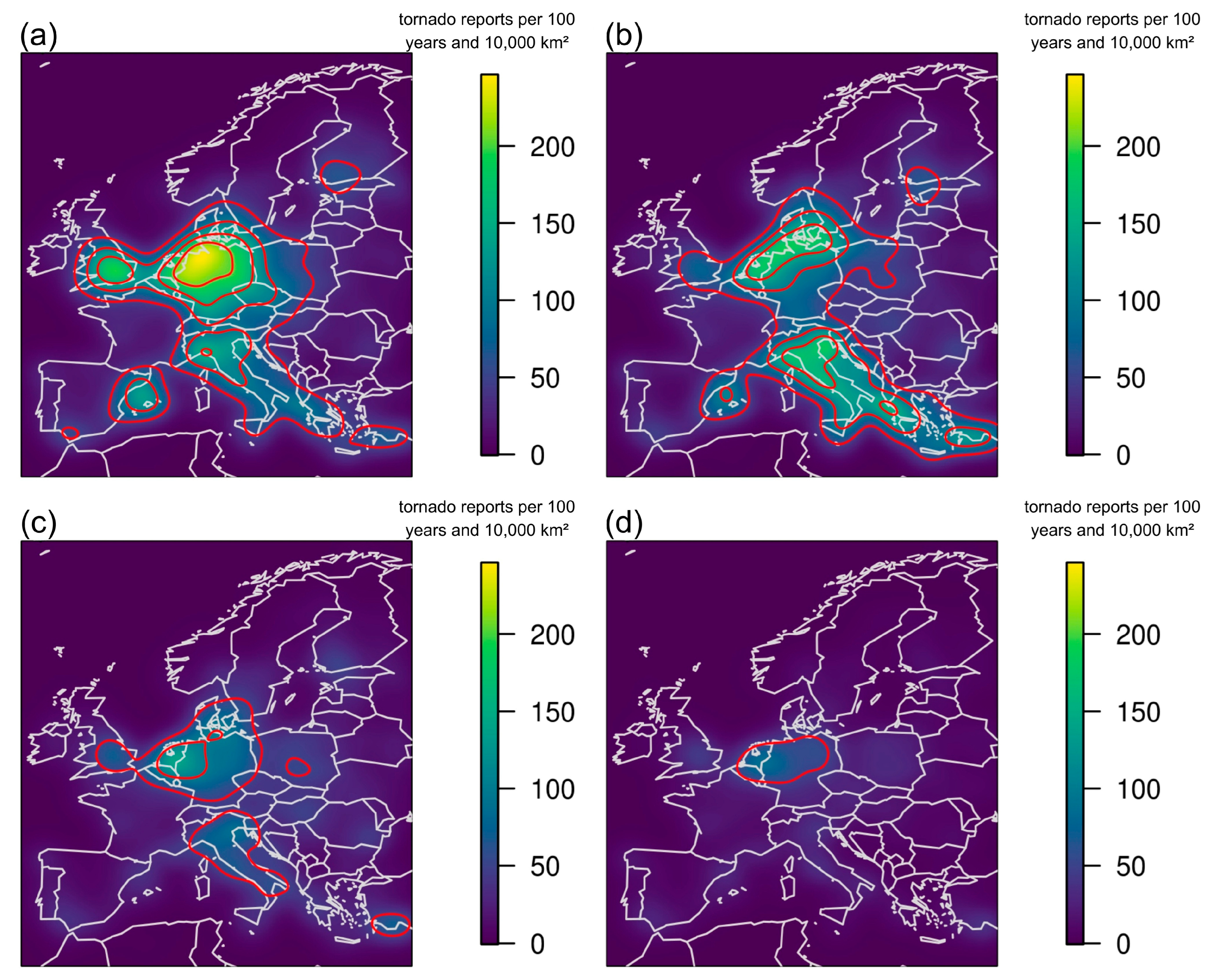
Figure 1 shows data from Kernel smoothed ESWD tornado reports per 100 years and 10,000 km
2. For all recorded tornadoes (a), tornadoes recorded in the period 2005–2019 (b), tornadoes recorded in the period 2005–2019 that touched land (c), and tornadoes recorded in the period 2005–2019 that touched land and have an intensity rating (d). Contour lines of 50, 100, 150 and 200 reports per 100 years and 10,000 km
2 are marked in red [
13].
In previous centuries, many tornado events were either misclassified as severe windstorms or omitted due to limited meteorological data and inconsistent recording practices. A forensic re-analysis of the 1916 Wiener Neustadt tornado (Austria), classified as an F4 event, exemplifies this challenge [
14].
The collection and analysis of historical data on tornadoes are essential for understanding their impact and improving future forecasts. The 1990s and 2000s recorded a marked increase in tornado reports, largely attributed to greater media coverage, advancements in meteorological tools, and the establishment of databases such as the European Severe Weather Database (ESWD) [
15]. Despite these challenges, databases like the ESWD have enhanced the ability to document and predict tornado occurrences, contributing to better preparedness and response strategies. The historical analysis of tornadoes in Europe reveals that severe thunderstorms and tornadoes tend to be more common than generally acknowledged.
2.2. Historical Tornado Events in the Czech Republic
Tornadoes in the Czech Republic, historically perceived as rare, have been documented for over 900 years. One of the earliest records dates back to 30 July 1119, when chronicler Cosmas of Prague described an intense storm that devastated Vysehrad Castle, uprooting trees and damaging structures. Historical tornado events in the Czech Republic have been documented sporadically over the centuries, with varying degrees of detail and accuracy [
16].
Previous research indicates that until 2021, only F2, F2–F3, and F3 tornadoes were documented in the Czech Republic. From 1811 to 2019, a total of 108 tornadoes were recorded, of which 74 tornadoes were proven. While tornadoes are primarily a summer phenomenon, they occasionally occur in other months, potentially due to atypical weather patterns or unseasonal temperature variations. The distribution reflects the influence of seasonal atmospheric dynamics, with warm, moist air in the summer providing optimal conditions for tornado formation. According to the list of all documented tornadoes in the region of the Czech Republic, from 1811 to 2019 there were 72 IF2 tornadoes, 22 IF2–IF3 tornadoes and 14 IF3 tornadoes [
11].
Another study of tornadoes suggests occurrence in the Czech Republic between 1801 and 2017 identifying a total of 367 tornadoes recorded. The highest frequency was observed in the decades 2001–2010, 1931–1940, and 1921–1930, with July being the peak month, followed by June and August. Most tornadoes reached an intensity of F1, causing moderate damage, while stronger tornadoes of F3 intensity were less frequent, but resulted in significant destruction [
17].
The increasing frequency and intensity of these events in recent years have raised concerns about the adequacy of current structure codes and construction practices. The destruction caused by the 2021 tornado has prompted a re-evaluation of these standards, focusing on enhancing the structural integrity of structures to withstand such extreme weather conditions [
18].
2.3. The First IF4 Tornado in the Czech Republic
The 2021 tornado of June 24 in the south-east Moravia caused widespread devastation, with over 1200 buildings damaged and 180 structures completely or partially demolished. The tornado affected the cadastres of 10 municipalities in South Moravia, with properties damaged in the municipalities of Valtice, Mikulcice, Luzice, Hrusky, Moravska Nova Ves, Breclav and Hodonin. The tornado touched down near Hrusky and tracked through Moravska Nova Ves, Mikulcice, and Luzice, before dissipating near Hodonin.
The area was hit by a tornado with an intensity ranging from IF0 to IF4, which was accompanied by hail in some parts [
19].
The most common types of damage included roofs being completely torn off, heavily damaged or collapsed brick walls, and the partial collapse of church towers at the periphery of the tornado’s path. Several outbuildings were destroyed, and vehicles, including lorries and buses, were overturned or displaced. One of the most striking examples of the tornado’s power was a 7-ton caravan which was lifted into the air and carried 20 m away before being deposited in a nearby field. The tornado, classified as IF4 on the International Fujita Scale, also caused severe environmental destruction, stripping trees of their bark and uprooting vineyards, leaving a 21.9 km
2 area devastated, with 6.1 km
2 suffering extreme damage (IF2 and above). It caused significant damage along a 20 km path, with a maximum width of 70 m. The worst-hit locations included Hrusky, Moravska Nova Ves, Mikulcice, and Luzice, where entire streets were turned to rubble [
18,
20].
A post-event survey revealed serious deficiencies in tornado risk awareness and preparedness in the affected communities. Many residents did not recognize the approaching tornado, and fatalities occurred due to individuals staying near windows or failing to take adequate shelter [
18].
The 2021 Czech tornado also uncovered the importance of better spotter programs for early tornado reporting and enhancing the chances of successful tornado warnings. The feedback from surveyors and the application of a wide range of damage indicators and degrees of damage from the IF scale provided valuable insights into the tornado’s impact and the effectiveness of existing preventive measures [
21].
2.4. Importance of Studying Tornado Impact on Public Infrastructure
Extended recovery and service interruptions after widespread damage indicate limitations in existing design provisions and maintenance regimes. The city of Joplin, heavily impacted by a tornado in 2011, serves as a representative example of the challenges faced by the community in the aftermath of such events [
22].
Schools are particularly vulnerable to tornado damage in terms of public infrastructure. For example, even after partial recovery of school buildings, a substantial number of students may need to be relocated to alternative facilities for extended periods, as evidenced by the need to host 4000 students in other locations for approximately 2.5 years following a tornado event [
23].
The damage to schools often includes roofs, windows, and other structural components, making it challenging to rate the level of damage due to the subjective nature of damage descriptions [
24]. Adoption of calibrated damage-state scales would limit subjectivity and allow comparable reporting across sites.
Schools, as essential social institutions, are particularly vulnerable to tornadoes due to their large, open spaces and the presence of many occupants during operational hours. The structural integrity of school buildings is often compromised during tornadoes, leading to significant damage and posing a risk to the safety of students and staff [
25].
The dependency between individual facilities within civil infrastructure systems is a significant factor in assessing hospital vulnerability. When a hospital is damaged, its reduced functionality can affect other facilities that rely on it, leading to a cascading effect on the entire network [
26].
In 2009, the United Nations Office for Disaster Risk Reduction initiated the development of the Sendai Framework for Disaster Risk Reduction by coordinating and leading multiple global, regional, national, and technical consultations. A key priority of this framework was to assess the safety of existing health facilities and implement action plans to enhance hospital resilience by 2015. This initiative was part of a broader effort to reduce the vulnerability of health infrastructure to disasters, providing continuity of essential medical services during and after crises [
27].
Municipal offices, often housed in older buildings, may not be designed to withstand the high winds and flying debris associated with tornadoes. The structural integrity of these buildings is a primary concern, as damage to municipal offices can disrupt local governance and emergency response efforts. According to [
28], severe weather impacts on critical infrastructure, including municipal offices, can lead to significant operational disruptions.
The development of fragility curves for 19 building types, including schools, hospitals, government buildings, commercial facilities, and industrial structures, provides a probabilistic framework for assessing post-tornado recovery. For high schools, there is a 50% probability of full functionality restoration within 228 days after extensive structural damage, while hospitals and large commercial buildings face the highest repair costs and longest recovery times. Fragility analyses show that repair costs can reach up to 18.9% of a building’s total replacement value [
22].
The implementation of building codes that account for tornado-resistant design features, such as reinforced walls and roofs, can significantly reduce the vulnerability of these buildings. Additionally, the integration of safe rooms within municipal offices can provide a secure refuge for staff and the public during tornadoes, as suggested by Federal Emergency Management Agency (USA) [
29].
Moreover, the integration of comprehensive risk analysis frameworks and dynamic mathematical models can aid in estimating the resources required for post-disaster restoration. Such methodologies both facilitate efficient recovery and support the planning and allocation of resources necessary to restore school infrastructure promptly [
30].
2.5. Structural Resistance and Building Codes
In the USA various programs and laws play a crucial role in enhancing the resilience of buildings against tornadoes. A key initiative is the National Windstorm Impact Reduction Program (NWIRP), which coordinates federal agencies (NIST, FEMA, NOAA, NSF) in efforts to mitigate tornado and windstorm damage. The law mandates FEMA to collaborate closely with organizations responsible for building codes and standards to promote wind-resistant construction. Another significant milestone was the Disaster Recovery Reform Act (DRRA) of 2018, through which Congress formally recognized the importance of building codes for disaster resilience. DRRA introduced a requirement that federal pre-disaster mitigation funds be tied to the adoption of the latest building codes [
31].
This provision granted FEMA the authority to financially incentivize states and municipalities to adopt and enforce modern, wind-resistant building regulations. Additionally, it mandated that federally funded reconstruction projects comply with up-to-date resilience standards, ensuring that public buildings rebuilt after a tornado meet the latest wind resistance requirements to maintain eligibility for federal funding [
32].
In general, federal initiatives focus on strengthening resilience through the development of advanced construction standards, financial incentives, and mandatory criteria for federally funded projects, ensuring that disaster recovery efforts prioritize wind-resistant design and long-term sustainability.
The International Building Code (IBC) 2024 introduces significant updates to enhance the resilience of buildings against extreme wind events, particularly tornadoes. For the first time, the code formally incorporates tornado-specific design requirements for structures in high-risk areas. Buildings classified as Risk Category III and IV, which include hospitals, emergency operations centers, large public assembly buildings, and schools must now be designed to withstand tornado-induced wind loads. These provisions are based on the new tornado hazard design criteria introduced in ASCE 7-22 [
33].
The ASCE 7-22 Minimum Design Loads for Buildings and Other Structures serves as the technical foundation for these updates. It introduces tornado risk maps, which establish geographic hazard zones based on historical and modelled tornado intensities, guiding the application of wind-resistant design measures. The inclusion of tornado wind pressure calculations in Chapter 32 ensures that buildings are structurally designed to withstand the unique wind loads, uplift forces, and suction effects generated by tornadoes. The standard mandates that Risk Category III and IV buildings incorporate risk-based design criteria, ensuring that critical facilities remain operational after extreme wind events. In contrast to the USA, European countries rely on general wind provisions but lack tornado-specific standards [
34].
General Actions–Wind Actions EN 1991-1-4 [
35] offers guidance for wind load determination on buildings, but tornado-specific considerations are absent. The upcoming 2nd generation Eurocodes consider climate change and extreme events, adding “scaling factors” to account for changing wind climate but even there, incorporating non-synoptic events like tornadoes or thunderstorms remains a challenge [
36].
2.6. European Civil Protection Framework and Critical Infrastructure Resilience
At the European level, the resilience of critical infrastructure is framed by three complementary instruments, namely Decision No 1313/2013/EU on the Union Civil Protection Mechanism [
37], the Directive (EU) 2022/2557 on the resilience of critical entities [
38] and the EU guidelines for national risk assessment [
39]. The Union Civil Protection Mechanism and the Commission Recommendation on Union Disaster Resilience Goals [
40] define five strategic priorities for civil protection, which are anticipation, preparedness, alert, response and security. In practice, these goals translate into requirements to improve risk assessment and disaster risk management planning, to increase public risk awareness and preparedness, to enhance interoperable early warning systems, to reinforce joint response capacities and to ensure that civil protection systems remain operational during and after disasters. Together, these instruments set common objectives and minimum requirements, but the detailed assessment of natural hazards and the choice of structural measures remain within the competence of individual Member States.
National Risk Index classifies 18 natural risks affecting real estate [
41]. According to the statistics of the Czech Insurance Association, significant natural risks can be windstorms, hailstorms, floods, snow and landslides [
42]. From a historical perspective tornado occurrence is rare, and tornado is not assessed as a separate natural hazard even by insurance companies. As a result, tornado hazard is not directly considered in Czech hazard maps or in the associated building requirements.
2.7. Summary
From the perspective of structural design, researchers have examined various analytical models of strong winds, including the Rankine, Burgers–Rott, and Bjerknes vortex models, to better understand the effects of tornadoes on buildings and infrastructure [
13]. These models support the development of structures capable of withstanding tornado-induced loads, thereby reducing damage and enhancing overall resilience.
Adopting international best practices for infrastructure protection against natural hazards is essential to improving the resilience of buildings and public infrastructure to tornado impacts. Such practices include the implementation of dual objective-based design approaches that address both structural damage and loss reduction under low-to-moderate tornado wind speeds, as well as occupant life safety during more intense events. By differentiating design objectives according to tornado intensity, this approach enables more targeted and effective structural solutions.
However, the effective application of these international design principles in the Central European context is significantly constrained. Despite the extensive research on tornado climatology in Europe, a critical knowledge gap remains regarding the physical vulnerability of public infrastructure. Existing fragility curves are predominantly derived from North American data, failing to reflect the specific structural response of Central European masonry and reinforced concrete buildings. This absence of localized empirical data contributes to the main challenges faced by both the EU and the Czech Republic: the absence of tornado-resistant building codes, insufficient risk assessment in urban planning, and the lack of proactive resilience measures. Addressing these scientific and practical deficiencies is therefore critical for protecting public infrastructure and strengthening long-term disaster preparedness. Based on these findings, the following research questions have been formulated:
Which damage patterns and component failures were most frequently observed in public buildings during tornado events in the Czech Republic?
How can the structural design of these buildings be improved to enhance their resistance to tornadoes and other extreme weather conditions?
3. Materials and Methods
The answers to the research questions outlined above were investigated using a research sample based on professional damage assessments conducted by the Institute of Forensic Engineering at Brno University of Technology, Brno, the Czech Republic.
At the request of the South Moravian Region, the Institute of Forensic Engineering at Brno University of Technology, prepared a professional estimate—an assessment of damage after the tornado. According to the contracting authority, the subject of the professional estimate was “a professional estimate of the costs that must be spent on the restoration of property damaged by the disaster or on the acquisition of new property that will fulfil the same basic function as property destroyed by a disaster in South Moravia in defined parts of the South Moravian Region, the administrative territory of the municipalities with extended jurisdiction of Hodonin and Breclav, in accordance with Act No. 12/2002 Coll., on state aid for the restoration of areas affected by natural or other disasters and on the amendment of Act No. 363/1999 Coll., on insurance and on the amendment of certain related acts (the Insurance Act), (the Act on State Aid for the Restoration of Areas), as amended”.
The client’s task was processed by the Institute of Forensic Engineering, Brno University of Technology, completely based on the cost approach to valuation, but regarding the very limited time frame for preparation, specific valuation methods and procedures were chosen so that it was possible to assess the entire extent of the damage in a comparable manner.
In total, there were 109 items, i.e., real estate in the municipalities of Valtice, Hodonin, Breclav, Hrusky, Mikulcice, Luzice and Moravska Nova Ves, for which monetary amounts of damage were estimated. The processors used materials and documentation from individual municipalities and from the Police of the Czech Republic, which provided video captured by a drone.
The actual work of the team of the Institute of Forensic Engineering at Brno University of Technology first began with an investigation at the sites of damage. From 12 July 2021 to 19 July, local investigations were carried out in all municipalities affected by the disaster in the sense of providing an expert estimate in a total time span of 5 days. The set of individual local investigations was divided into individual days:
On 12 July 2021, with the support of authorized persons from the municipalities and the region, an initial reconnaissance of damaged objects was conducted with the acquisition of initial photo documentation in the municipalities of Hrusky, Moravska Nová Ves, Mikulcice and Luzice. A detailed local investigation was started directly in Breclav.
On 13 July 2021, a detailed local investigation was performed in the township of Moravska Nová Ves, in the municipality of Mikulcice and in the city of Hodonin.
On 15 July 2021, a detailed local investigation was undertaken in Luzice and completed in Hodonin.
On 16 July 2021, a detailed local investigation was carried out in Hrusky, Valtice and continued in Breclav, where it was completed on 19 July 2021.
Upon arrival in individual municipalities and towns, an authorized person or persons were always available to provide access to the objects and familiarize the processors with the location of the objects and the list of damages. The employees of the Institute of Forensic Engineering of BUT were divided into teams to individual locations and carried out the investigation (photo documentation, verification of the extent by on-site measurements, classification and quantification of damages). The photo documentation taken during all local investigations is stored in the archive of the Institute of Forensic Engineering of BUT on a CD and a selection from it was used in the creation of real estate object cards—damage passports. These assessments which documented property damage caused by the tornado and accompanying hailstorm in the South Moravian Region of the Czech Republic in 2021 were inputs for the research in this article.
The research investigation was conducted following the methodological framework outlined below:
Determination of tornado intensity in the studied area and identification of hailstorm occurrence.
Identification of properties within the area according to their functional use.
Collection of information regarding building damage within the affected region.
Classification of observed damages and defects in the buildings.
Evaluation of the resilience of structural components.
Qualitative and comparative assessment of observed structural vulnerabilities.
Formulation of recommendations for the design of more resilient buildings.
3.1. Definitions and Terminology
To ensure clarity and consistency regarding the specific focus of this study, the core terms are defined as follows:
Structure and Building: The term “structure” is used in a broad sense to refer to any constructed asset evaluated in the forensic survey, including civil engineering objects (e.g., water reservoirs, technical infrastructure, playgrounds). The term “building” is strictly reserved for roofed structures with walls intended for permanent or temporary human occupancy (e.g., schools, municipal offices, residential houses).
Resistance and Resilience: “Resistance” describes the technical capacity of a structural component (e.g., roof, wall, window) to withstand wind loads without mechanical failure. “Resilience” is understood in the broader context of critical infrastructure as the ability of the system to absorb the impact, maintain essential functions, and recover functionality efficiently following the extreme event.
Tornado Intensity Scale: While historical records discussed in the literature review often refer to the original Fujita (F) scale, this case study utilizes the International Fujita (IF) scale, which is commonly applied in Europe for classifying tornado intensity based on specific damage indicators.
3.2. Data Collection
The collection of information regarding damaged properties was conducted through field surveys, utilizing available construction documentation, local records maintained by municipalities, supplementary information from the Land Registry (e.g., age of the building), official meteorological reports, and additional sources, such as the historical tornado records database for the Czech Republic [
11].
Data concerning the technical and material characteristics of the buildings including roof type, roof structure, thermal insulation, types of openings (windows, doors, gates), and the extent of damage or water intrusion were gathered through on-site inspections carried out several days after the tornado event.
The surveyed buildings primarily included schools and educational facilities, healthcare facilities, cultural buildings, apartment blocks, single-family houses, technical infrastructure (e.g., transformer stations), water infrastructure (e.g., wastewater treatment plants), and other structures.
Schools and educational facilities were the most numerous categories, highlighting their critical role both as educational institutions and as potential shelters during disaster events.
A research sample comprising 109 properties was assembled within the affected area as part of the professional assessment. Of these, 91 were buildings, while the remaining 18 structures included playgrounds, spectator stands, water reservoirs, and other atypical structures that could not be adequately compared with standard buildings. The cemetery affected by the tornado in Hrusky is discussed by Hromadka et al. in their paper [
43]. These 18 properties were therefore excluded from detailed analysis.
Given that the areas impacted by the tornado and hailstorm did not overlap, the resulting database of 91 buildings was divided into two groups: buildings affected by the tornado (46 objects) and buildings impacted by the accompanying hailstorm (45 objects). The studied area comprised the cadastral areas of the municipalities of Valtice, Mikulcice, Luzice, Hrusky, Moravska Nova Ves, Breclav, and Hodonin. The tornado formed between the village of Hrusky and the town of Breclav and moved in a northeast direction through Hrusky, Moravska Nova Ves, Mikulcice, and Luzice. The town of Breclav was not directly affected by the tornado but by a related hailstorm event. The nearest edge of the tornado’s path was located approximately 2 km from the outskirts of Breclav, and the closest evaluated building in Breclav showing hail damage was situated approximately 2.5 km from the tornado’s trajectory. The second hail-affected municipality, Valtice, lies approximately 14.7 km from the tornado path. Therefore, buildings affected by the tornado and those affected by the hailstorm were spatially distinct. Although the database contained 91 buildings, the detailed analysis presented in this study focuses exclusively on the 46 buildings affected directly by the tornado. The remaining 45 buildings impacted by hailstorm were excluded from further structural evaluation, as they were subject to different damage mechanisms.
Table 1 presents the number of buildings affected by adverse events in each municipality.
The highest overall amount of damage was recorded in the city of Breclav, where the damage was exclusively attributed to the hailstorm. In contrast, the greatest amount of tornado-related damage was observed in the municipality of Mikulcice. It is noteworthy that although Breclav and Valtice were also affected during the extreme event, no tornado-related damage was reported in these two locations; the recorded damage was solely associated with the tornado’s accompanying phenomenon—the hailstorm.
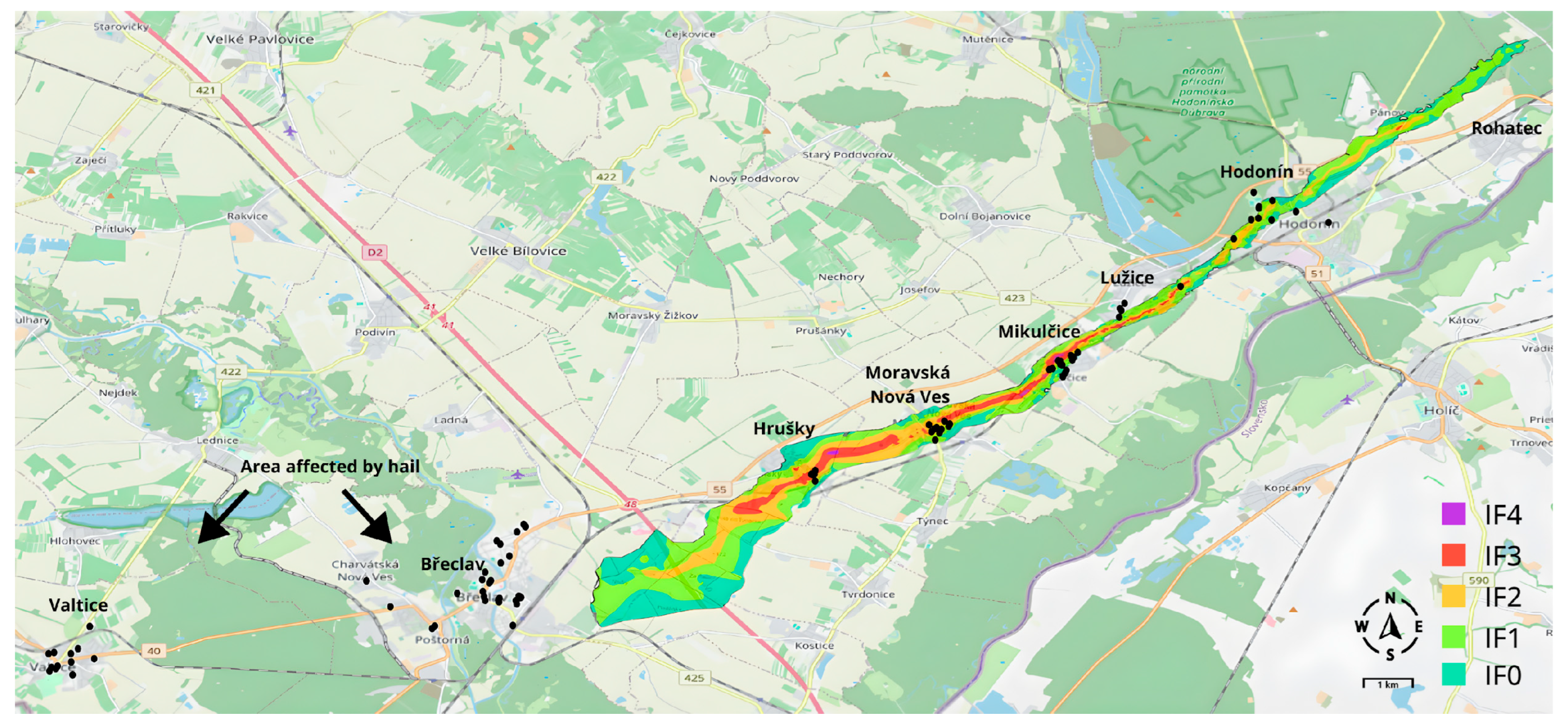
The set of 46 buildings affected by the tornado was further categorized according to tornado intensity: 17 buildings were impacted by an IF0-intensity tornado, 14 buildings by an IF1-intensity tornado, 10 buildings by an IF2-intensity tornado, and 5 buildings by an IF3-intensity tornado. None of the surveyed buildings was affected by an IF4-intensity tornado. The tornado intensity (IF) assigned to each building was determined based on the GPS coordinates of the building and its position relative to the official tornado track and intensity map. Each analyzed building was georeferenced and overlaid onto the mapped tornado path, and the corresponding IF level was assigned according to the intensity zone in which the building was located.
For the purposes of further research, the surveyed buildings were divided into six primary categories based on their principal function and role within the infrastructure: educational buildings, residential buildings, healthcare facilities, cultural institution buildings, public administration buildings, and sports facilities. The corresponding data are presented in
Table 2.
A detailed map was developed to depict the tornado track from the 2021 event in South Moravia. The geographical locations of all 46 analyzed buildings were georeferenced using GPS coordinates and superimposed onto the official tornado track and intensity map. In addition, the locations of buildings affected by the accompanying hailstorm were recorded, although a distinct hailstorm path was not separately mapped. The analyzed buildings were georeferenced using GPS coordinates and plotted onto the tornado track map. The spatial distribution is presented in
Figure 2.
3.3. Analysis Techniques
The property database in the affected municipalities includes information about the building location (GPS coordinates), the type of structure based on its predominant function, the cause and extent of the damage, the type of damage, and the estimated total cost for its repair (assessed damage value).
3.4. Damage Assessment Methods
The damage to buildings in the study area includes a wide range of damage types, from minor cracks in facades to disruption of the building’s structural stability. Damage to major building structures involved complete destruction of roofing materials, collapse of chimneys, disruption of roof trusses and metal elements, damage to external walls, disruption of facade systems, and breakage of windows and doors. These damages led to water infiltration into the interiors, which resulted in secondary damage within the buildings, including floor damage and damage to internal walls. The damage was categorized and quantified for further analysis according to the following groups:
The type of structural component affected,
The type of damage,
The extent of damage is expressed as a percentage of the total surface area, volume, or other relevant metric.
In cases of water intrusion, additional analysis was conducted to assess the extent to which the intrusion affected the overall functionality and structural condition of the buildings.
Table 3 presents the classification scale for the intensity of water intrusion, including a technical description of the resulting damage.
Based on the severity of the damage and the overall condition of the buildings, various types of defects were observed. The defects were subsequently categorized into five groups, which serve to determine the priority of repairs in order to minimize further secondary damage, such as ongoing degradation due to water infiltration and subsequent deterioration of the interior. The defects and their descriptions are shown in
Table 4 below.
The classification system presented in
Table 4 provides a clear framework for prioritizing the repair and remediation of damaged buildings, particularly those forming part of critical infrastructure. Critical defects (level 5) and severe defects (level 4) must be addressed immediately to provide safety and core functionality of the buildings. Moderately severe defects (level 3) should be scheduled as the next step following the resolution of critical issues. Minor and slight defects (levels 1 and 2) can be deferred to a later stage, as they do not pose an immediate threat to the safety or operation of the building.
This methodology offers a practical tool for effective repair planning, especially for facilities essential to the resilience and functioning of critical infrastructure systems.
4. Results
4.1. Identified Scope and Type of Property Damage in the Studied Area
The result of the investigation is the identification of types of structural damage caused by tornadoes, which have been detected on buildings of public and critical infrastructure. Furthermore, the analysis includes a partial assessment of the technical resilience of these buildings, based on the observed extent and patterns of damage.
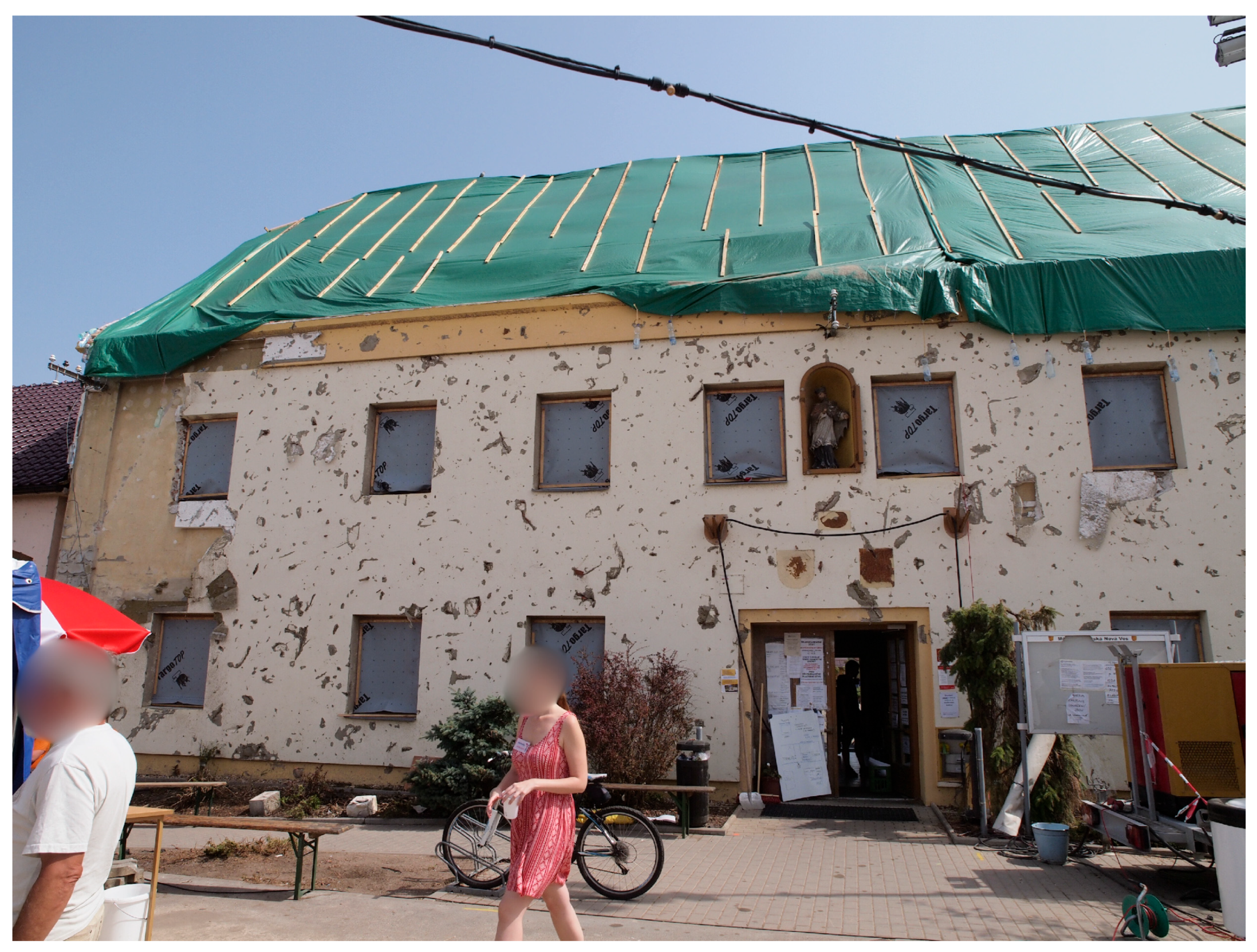
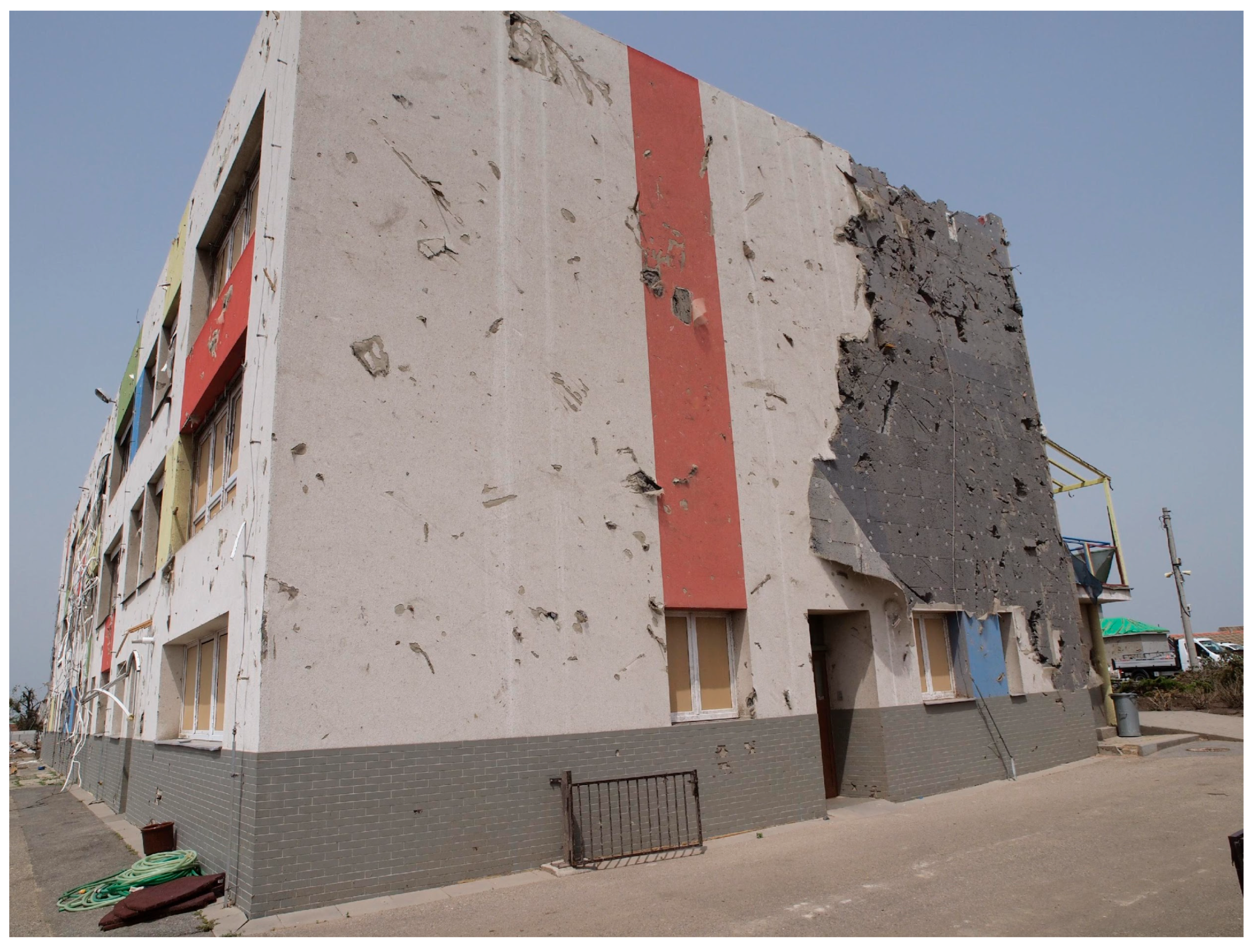
The photographs document damage to public infrastructure from the 2021 tornado. The following images
Figure 3 and
Figure 4 compare different structural systems subjected to the same IF2 intensity.
The following table presents the number of affected buildings along with descriptions of the observed damage. It can be concluded from the perspective of structural vulnerability that the most severely affected properties were predominantly older buildings lacking adequate structural resistance to extreme weather events. As evident from the subsequent table, the most common failures included complete or partial roof detachment, destruction of gable walls, and collapse of smaller structural components.
Key evidence of code compliance was unavailable for fully destroyed roof structures. Therefore, the causes of failure could not be conclusively separated among code noncompliance, code-compliant design subjected to loads exceeding the codes’ intent for non-tornadic wind, and inherent code limitations. Structural damage probability is driven mainly by property characteristics: the structural system and continuity of the load path, the quality of anchorage and connections between roof and walls, envelope robustness, and maintenance condition. Age is not causal by itself, it operates through deterioration and, most importantly, through the effects of poor maintenance and inferior or degraded materials. Well maintained older buildings can perform comparably to newer ones.
Table 5 provides a detailed comparison between the types of damage observed and the corresponding tornado intensity levels and average damage. The indicator “
N” represents the number of occurrences. The indicator “
aD” (average damage), expressed in %, represents the ratio between the area of the structural element affected by damage and the total area of the assessed structural element. The affected area is defined as the portion of the element exhibiting visible signs of deterioration, such as cracking, surface degradation, or material loss. The value of “
aD” was determined by expert visual assessment based on data collected during on-site inspections and supporting photographic documentation. For each damage category, the average damage value of each structural element was calculated as the ratio of the affected area to the area of the respective element or the number of damaged units to the total number of units.
To ensure the technical relevance of the dataset and avoid overrepresentation of visually negligible damage, a minimum damage threshold of 5% was applied. Damage below this level typically involved minor issues such as a few broken roof tiles, light surface cracks in the façade, or isolated damage to windows or doors, which were considered functionally insignificant. Only components with damage exceeding 5% were included in the tabulated damage analysis.
The observed distribution of damage severity across the surveyed buildings. In terms of damage quantification is presented in
Table 6.
The results clearly demonstrate that the extent and type of structural damage directly correlate with tornado intensity, with buildings exposed to IF2 and IF3 intensities sustaining the most severe damage. In these categories, the most common types of damage included complete failure of roof covering materials, destruction of roof structural frames, severe façade system failures, and a high incidence of window damage, with up to 94% of window surface areas affected under IF2 conditions. Numerous cases of serious secondary damage caused by water intrusion were also recorded, significantly increasing the overall costs of repair and restoration. The findings confirmed that older buildings without regular maintenance, constructed with less durable materials and suboptimal design, showed the highest vulnerability from the perspective of building typology.
4.2. Identified Impacts of Property Damage According to Tornado Intensity
4.2.1. Area Affected by a Tornado of IF0 Intensity
Tornadoes of IF0 intensity are relatively weak and, in general, did not cause significant damage to larger buildings. The primary types of damage observed involved tearing of roofing membranes on flat roofs and, in some cases, destruction of ceramic roof tiles. This led to localized water intrusion, compromising roof frames and roof insulation systems. Minor façade damage was also recorded, mostly limited to superficial and point-specific impacts, along with partial damage to windows and sheet metal components. Water intrusion was relatively minor, and buildings were generally usable after minor repairs. However, it is noteworthy that even an IF0-intensity tornado had devastating effects on smaller buildings: one older, unrenovated single-story residential building was completely damaged and had to be demolished. Similarly, older and smaller wooden buildings in the Hodonin Zoo did not withstand even the low-intensity IF0 tornado and were severely damaged or destroyed.
4.2.2. Area Affected by a Tornado of IF1 Intensity
The IF1-intensity tornado impacted 14 buildings within the surveyed database, causing moderately greater damage compared to IF0 events, primarily to roofing systems and external building envelopes. Damage typically involved the displacement or breakage of ceramic roof tiles, leaving several buildings without roof coverings, which led to significant water intrusion and, in about half of the cases, subsequent damage to roof structural frames. Flat roofs performed relatively well, with damage mostly limited to superficial impairments; however, this often resulted in water penetration into insulation layers, ultimately compromising the entire roofing system. Concrete and ceramic masonry exterior walls generally withstood the pressure well, and any observed structural deformations were minor. The most frequent types of damage included roof covering loss or breakage, window damage in 12 buildings, façade plaster and insulation layer damage, and door failures. Older and smaller buildings, comparable in size to single-family houses, were unable to withstand the tornado forces and, in several cases, experienced complete structural collapse. Failures commonly involved the collapse of gable walls and severe damage to roof structural systems. In contrast, reinforced concrete slab roofs and steel roof trusses generally resisted the tornado forces without major structural failure. Additionally, external roller shutters were observed to improve building resilience and, in some instances, prevented window breakage.
4.2.3. Area Affected by a Tornado of IF2 Intensity
The IF2-intensity tornado impacted 10 buildings of civil infrastructure, causing substantial damage with obvious signs of destruction across the assessed properties. The tornado uprooted trees destroyed roofing systems and roof frames and significantly damaged the structural integrity of buildings. Smaller buildings, comparable in size to single-family homes, were often demolished. Roof coverings were destroyed in 100% of the affected properties, and severe damage to roof frames and ceiling structures was recorded in 8 of the 10 buildings. Exterior walls suffered widespread and deep structural damage. Water intrusion and overall building defects were classified as severe, with restoration costs correspondingly high. In many smaller buildings, only portions of the external walls remained standing, while larger buildings suffered significant damage but showed better resistance due to thicker walls and more robust construction systems. Interior equipment and furnishings were extensively damaged or destroyed, requiring substantial reconstruction efforts. In some cases, fixed shutters and steel grilles installed on doors and windows contributed to enhanced resilience and helped mitigate the extent of damage.
4.2.4. Area Affected by a Tornado of IF3 Intensity
A total of five evaluated buildings were impacted by tornadoes of IF3 intensity. These results are not fully representative due to the small sample size; however, the observed damage patterns were severe. Under IF3 tornado actions, roof structures were generally unable to resist and were completely destroyed beyond repair. The only roof structure that withstood the tornado forces was a reinforced concrete slab roof. Thermal insulation materials were torn away from the exterior wall system. Smaller buildings were almost entirely destroyed, with damage classified as severe to critical, and a water intrusion was extensive. Collapse of gable walls and roof framework was frequently observed.
5. Discussion
The primary objective of this research is to evaluate the resilience of civil and critical infrastructure in the Czech Republic to tornado events. The results indicate that roof systems are the most vulnerable components, while reinforced concrete and steel-framed buildings demonstrate high resistance. Older, smaller, and poorly maintained buildings exhibited greater susceptibility to tornado-induced damage. The following discussion interprets these findings and outlines implications for building design, maintenance, and policy.
Roofing systems, facades, windows, doors, and sheet metal elements were among the most frequently damaged structural components. Roof covering showed the highest vulnerability; damage ranged from partial damage at lower intensities (IF0 and IF1) to complete destruction at higher intensities (IF2 and IF3). The average extent of roof structural frame damage for most buildings exceeded 70% for IF2 events and reached nearly destruction for IF3 events. These findings are consistent with known structural vulnerabilities associated with wind effects, particularly uplift and suction forces, which suggest inadequate anchoring and insufficient structural resistance of roofing elements. This observation is further supported by the findings presented in [
24]. Roof system failures were also attributed to insufficient connections between wooden components of roof frames.
Facades, windows, and exterior cladding systems also showed a progressive increase in the severity of damage corresponding to higher wind intensities. Facades sustained substantial damage, with an average damage level of approximately 78% at IF2 intensity and 76% at IF3 intensity, indicating a high vulnerability to wind-induced pressure differentials and impacts from flying debris. Windows demonstrated significant fragility, with average damage levels increasing dramatically from 36% at IF0 to nearly complete destruction (94%) at IF2. This pattern of damage highlights the critical importance of enhancing the resistance of the glazing systems against extreme wind pressures and mostly debris impacts. Masonry and concrete walls of civil infrastructure demonstrated good resistance to tornado forces under local conditions.
The severity of damage to doors and sheet metal components corresponded to the damage observed in roofs and windows with failure intensity increasing alongside higher tornado intensities. Water intrusion correlated primarily with roof damage, leading to secondary interior degradation, including damage to walls, floors, and internal spaces. The severity of water intrusion similarly increased from minor to moderate at lower tornado intensities to severe at IF3 intensity, indicating significant compromise of the building envelope.
Buildings built of reinforced concrete or steel frames showed significantly higher resistance, demonstrating the effectiveness of robust structural materials and connections in mitigating tornado-induced damage. In contrast, older, smaller, and poorly maintained buildings, particularly those utilizing lightweight materials or masonry and timber construction of inferior workmanship or substandard materials, suffered catastrophic structural failure, including complete collapse in several cases at intensities ranging from IF1 to IF3.
Another example of good resistance was observed in windows equipped with additional protective features, such as exterior security grilles, fixed shutters, or outdoor blinds, which showed a significant reduction in damage severity, particularly during lower-intensity tornado events.
The results of the analysis clearly indicate that larger and more recently built buildings with robust structural systems demonstrated significantly higher resistance to tornado impacts compared to smaller and older buildings, reflecting stronger connections, higher material quality, and the absence of accumulated maintenance-related deterioration. Changes in current legislation and the implementation of new measures aimed at increasing building resistance to extreme events, such as tornadoes, involve considerable financial costs. Therefore, it is crucial to selectively prioritize protective measures for buildings located in areas where the risk of tornado occurrence is demonstrable and statistically significant.
Heino et al. [
3] also emphasize that the resilience of buildings and public infrastructure cannot be assessed in isolation. Critical infrastructures form an interconnected system, where the disruption of one sector, such as the energy supply, can trigger cascading effects in other areas, including water supply and healthcare services.
Based on the findings, it is advisable to consider the implementation of the following measures, which are particularly effective under tornado intensities ranging from IF0 to IF2:
Regular and thorough maintenance of buildings, including periodic inspections of load-bearing structures, connections, and the overall structural integrity of the buildings;
Structural reinforcement, especially at the connections between load-bearing elements such as walls, floors, and roof structures, as well as within individual components; the results are also confirmed by the authors of the articles [
25,
33].
Installation of protective elements for windows and doors, such as impact-resistant windows, fixed shutters, external blinds, or at a minimum, security films and reinforced entry doors; similarly [
33], authors state.
Providing a robust roof system or a solid ceiling structure, as the failure of the roofing system often initiates the complete collapse of the building.
Conventional mitigation measures have proven largely ineffective at tornado intensities of IF3 and above, primarily due to issues of economic inefficiency. Structural system collapse must be anticipated for tornado intensities of IF4 and IF5, and alternative protective strategies, such as the construction of safe rooms or the use of underground shelters, should be considered. This necessity is also highlighted by findings reported in [
44].
It is important to emphasize that the effectiveness of the proposed technical measures is conditioned by their simultaneous implementation alongside organizational and informational measures, such as the establishment of early warning systems and the regular education of the population on appropriate behavior during such emergency events.
Limitations of the Study
The presented research has several limitations. The analyzed sample of 46 buildings is not large enough to fully represent all types of buildings within the Czech Republic. The results are geographically restricted to the South Moravian region, which was affected by the 2021 tornado, thereby limiting the generalizability of the findings. The quality of the data was influenced by the variability of the sources and the subjective assessment of damage extent. Moreover, the study focused solely on a single event, without the ability to observe long-term trends. Broader interdisciplinary aspects, such as social or political factors, were also not considered in detail. These aspects will be the subject of future follow-up research.
6. Conclusions
Implementing comprehensive tornado-resilient measures is often not cost-effective for standard residential buildings from an economic perspective. In contrast, investing in the protection of public infrastructure, including critical facilities such as hospitals, schools, and administrative centers, is both economically and socially justified, particularly in regions with a documented history and higher risk of tornado occurrence. Partial measures, such as reinforced roofing systems and designated safe rooms, provide a practical alternative to full-scale tornado-resistant construction. In some cases, integrating tornado protection with mitigation strategies for other natural hazards, such as strong winds, floods, or earthquakes, may further enhance the resilience of buildings.
In this context, the study draws on a georeferenced field survey of 46 public buildings. Damage was classified by building component and quantified using the average damage indicator for key elements, which allows a comparison across intensity levels. Through the analysis of damage sustained by public buildings during the 2021 South Moravia tornado, key factors influencing building performance were identified, particularly the size of the building, construction quality, and regular maintenance practices. Economic considerations indicate that incorporating resilient design features at the new construction stage is more cost-effective than expensive retrofits. The results of this study emphasize the critical need to protect essential infrastructure, especially educational and healthcare facilities, and proposed both technical and organizational measures to enhance resilience. Future efforts should focus on refining the identification of high-risk areas, improving early warning systems, and adopting a broader interdisciplinary perspective on tornado risk. The findings of this study provide a practical foundation for developing preventive strategies and strengthening infrastructure resilience against extreme climatic events.