1. Introduction
For roughly two centuries, until the early 1900s, the tiled-vault construction technique was an effective and cost-efficient alternative to the traditional stone
voussoir systems used for vaulted floor structures [
1]. This technique was presumably introduced in Sicily during the period of Spanish rule (16th–18th centuries) and is historically linked to the
bòvedas tabicadas tradition, which developed across different regions of the Iberian Peninsula, with the Valencian area playing an important role [
2,
3,
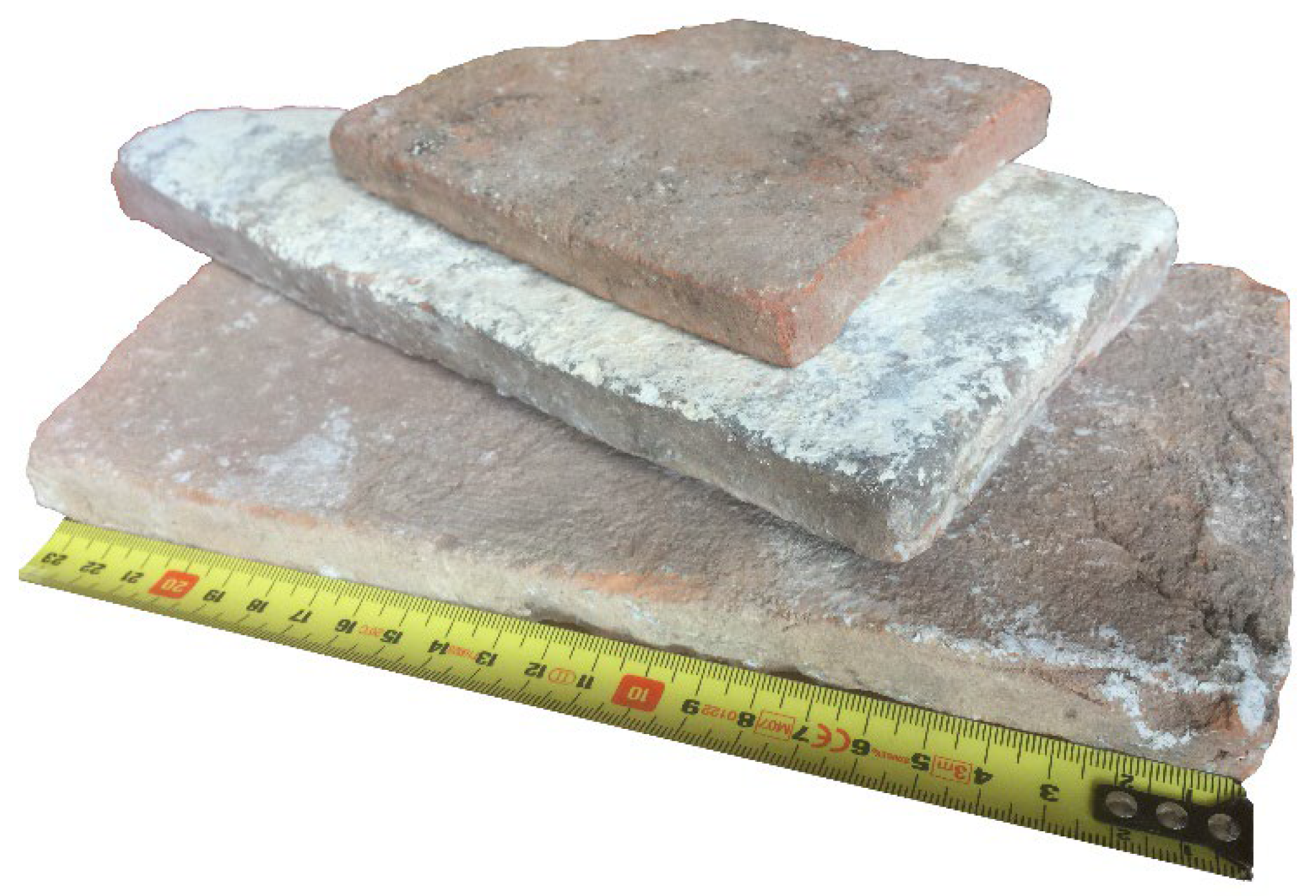
4]. Tiled vaults consist of a main bearing masonry shell, usually composed of two or three leaves of thin clay bricks (tiles, see
Figure 1), often embedded in gypsum-based mortar, for a total thickness on the order of a few centimeters. Thanks to the reduced weight of the structure and the rapid hardening of the mortar, even complex vaulted geometries could be built without scaffolding or formwork and within short construction times.
Recent findings allow the latest applications of this constructive technique in western Sicily to be dated to the second decade of the 20th century, after which it progressively fell out of use and was largely abandoned by the 1930s [
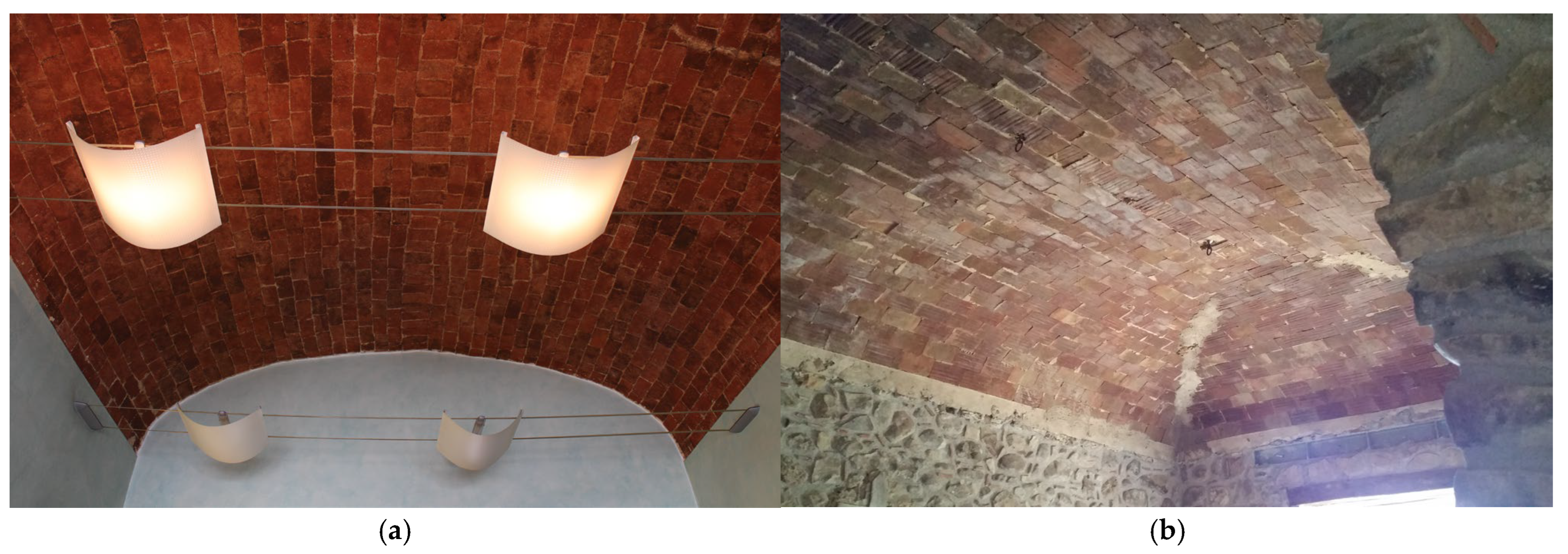
5]. In Southern Italy, and particularly in Sicily, thin-tile vaults were most commonly realized as simple barrel vaults (
Figure 2a), pavilion vaults (
Figure 2b), and cross vaults. Among these, cross vaults represent the most geometrically and structurally complex typology. Their construction required the adaptation and cutting of bricks along groins and intersections, often resulting in irregular masonry textures.
Despite numerous tiled vaults remaining in service today, demonstrating their durability and the adequacy of their structural behavior, significant technical and regulatory gaps still hinder the proper preservation of this architectural heritage. As a consequence, until very recently, many interventions on tiled vaults were poorly conceived and unregulated. In most cases, a limited understanding of the structural system led to hasty demolitions; in many others, inappropriate solutions were adopted with the aim of replacing the vault’s bearing function. [
6]. Accordingly, more conventional flat slabs were frequently constructed over existing vaults, relegating the historic structure to the role of a simple ceiling [
7]. In some cases, extrados fillings were often removed to reduce weight, thereby compromising the vault’s static behavior. In other cases, the extrados was encased in a continuous layer of reinforced concrete in an attempt to increase the resisting section. However, due to differences in stiffness and chemical incompatibility between the materials, this practice generally damages the masonry shell. Relieved of its natural compressive bearing role, the brick layers lose their structural collaboration and, over time, may detach and fall from the soffit. [
8].
The preservation of tiled vaults’ architectural technology, understood as the safeguarding of all parts of the structural element, is the main goal of the present study. Starting with a specific case study, namely a cross-vault from an old barn in Central Sicily, general information about the constructive technique is provided, with the aim of contributing to a more conscious approach to these legacy structures. Due to the complexity resulting from its geometry, the cross-vault typology was deliberately selected for the present study. Although the specific case investigated reflects a particular historical and architectural context, the materials, construction techniques, and extrados stiffening solutions observed are consistent with those documented in a wide range of thin-tile vaults built in Southern Italy between the eighteenth and early twentieth centuries. The results are therefore intended to provide qualitative and transferable insights into the structural role of extrados elements, rather than quantitative generalizations applicable to all vaulted typologies or construction periods.
An in-depth research activity formed the basis of this work. The photographic, geometrical, and material surveys were the starting point of the knowledge-finding process. The historical investigation, conducted through both scientific literature and oral sources, made it possible to retrace the successive construction stages. The material survey was further developed in the laboratory by testing actual material samples to determine their chemical nature and mechanical properties. The collected information enabled the implementation of a finite element model to evaluate the stress and displacement distribution within the vaulted system. The results of the numerical analysis were compared with those of hypothetical finite element models in which the vault was stripped of its finishing structural components, such as counter vaults and stiffening ribs, with the aim of demonstrating the importance of all structural parts and the completeness of the historical construction technique.
Within the context of existing studies on thin-tile vaults, the novelty of the present work lies in the integrated use of full-scale survey documentation, original photographic evidence, and experimental material data to support a comparative three-dimensional numerical investigation of the structural function of extrados elements. The results provide insights into the structural rationale of these systems and indications that are directly relevant to the assessment and design of compatible intervention strategies for historic vaulted structures.
2. Sicilian Tiled Vaults: Constructive Technique and State of the Art
Thin brick masonry vaults, typical of the Sicilian building tradition, were probably introduced from the Iberian area at the end of the Spanish rule, in the early eighteenth century. They spread throughout the region and were progressively influenced by local construction cultures and materials [
9]. The wide diffusion of this building technique was due to its ease of execution and cost-effectiveness, which made it particularly suitable for popular housing. It is not by chance that the earliest examples in western Sicily appeared shortly after the strong seismic events of 1726 and 1751, as the rapid construction process and the presumed seismic performance associated with the light and monolithic behavior of the masonry shell made these vaults an attractive solution. As suggested by many authors, the origins of thin-layered vaulting techniques extend further back, rooted in various Roman imperial constructions [
10]. The Terme di Caracalla baths are among the greatest examples of Roman vaulted structures, built with overlapping layers of flat brick masonry, although in this case, the vaults served only as a ceiling. In [
11], the Roman technique for the realization of thin-layered vaulted ceilings is described.
The widespread use of thin brick vaulting is documented by many treatise writers across different countries. Examples range from the 1639 writings of Fray Lorenzo de San Nicolas, to the late-eighteenth-century treatises of Félix-François d’Espié, Blondel [
12], and Rondelet [
13], up to the early twentieth century, works of Antoni Gaudí in Catalonia. In the 1880s, the technique was introduced in the United States by Raphael Guastavino-Moreno [
14], where it was sometimes employed in steel structures in both residential and industrial buildings [
15].
A consistent invariant of the technique was the thickness of the clay tiles used in the masonry shell, usually between 15 and 20 mm. Tiles were embedded in lightweight mortar and arranged in overlapping layers with different textures. The use of a fast-hardening binder made it possible to construct complex geometries without scaffolding or formwork. Moreover, the versatility of this technology, deriving from the size of the tiles, often made it possible to create specific geometries capable of accommodating architectural or spatial constraints related to irregular layouts or limited heights [
16].
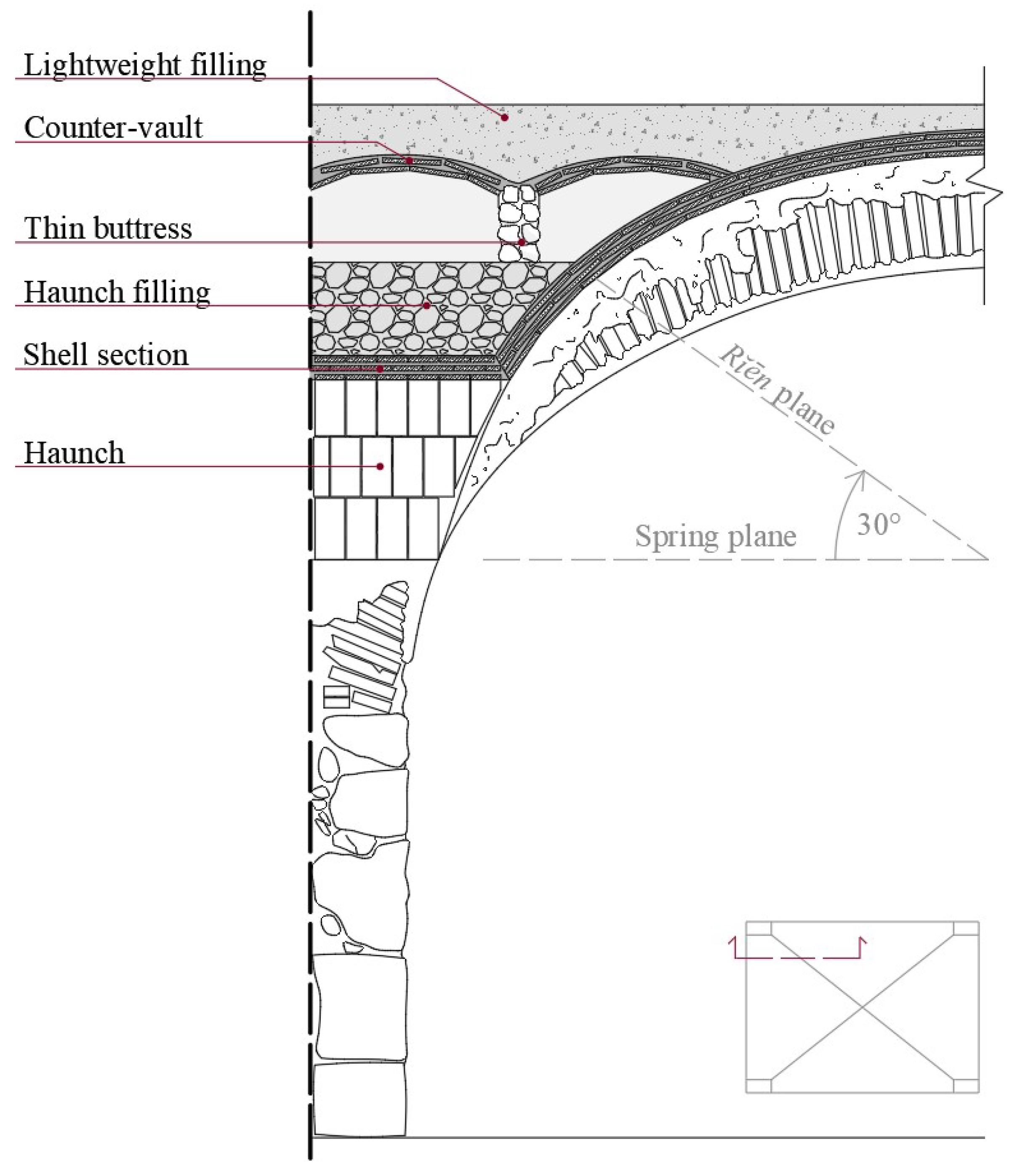
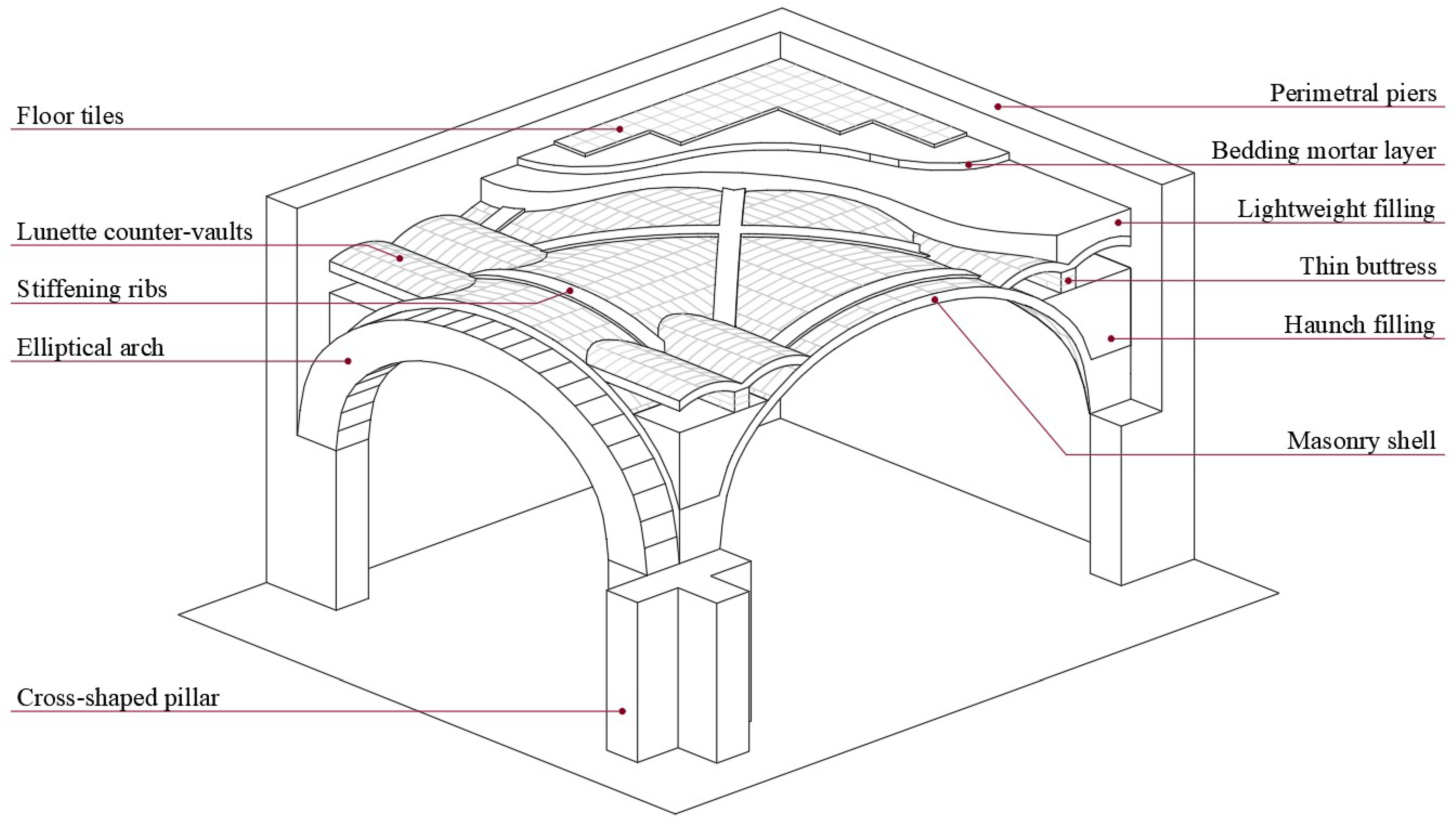
Figure 3 illustrates an exploded extrados view of a tiled vault, where it can be observed that the masonry shell was remarkably thin relative to the vault proportions, and it rarely exceeded a total thickness of 10 cm. The number of tile layers depended on the structural demand. Two leaves were usually adopted for simple vaulted ceilings, while three or four leaves were used for load-bearing vaults [
17]. This ensured exceptional lightness but required additional measures to ensure the structure’s stability.
In flat vaults, the extrados of the haunches was filled with heavy raw material up to the
rĭēn plane, defined as an inclined plane forming an angle of approximately 30° with respect to the springing plane [
18]. This heavy filling played an important mechanical role by reducing the horizontal component of the compressive resultant, particularly significant in low-rise geometries [
19].
Over time, the experience of the so-called vaulted masters led to the development of a wide catalog of finishing structural elements, such as stiffening ribs, thin buttresses, and longitudinal or lunette counter-vaults. Positioned at the extrados of the vault, these components allowed the structure to combine lightness with mechanical efficiency (see
Figure 3). Extrados stiffening ribs, consisting of one or two adjacent lines of the same flat bricks used in the vault, increased stiffness by expanding the effective cross-sectional area along the most loaded directions. Thin buttresses placed orthogonally to the vault haunches counteracted plastic hinge mechanisms induced by asymmetrical or horizontal actions, ensuring the stability of the structure. Counter vaults placed on the extrados allowed a significant reduction in the non-structural mass acting on the vault by replacing part of the filling material. Longitudinal counter vaults, usually built with two or three layers of flat brick masonry, were arranged along the main direction of barrel vaults or along the extrados perimeter of trough vaults and domes. These substructures rested on one side directly on the main vault shell and on the other on the perimeter walls. This configuration allowed the counter vault to transfer part of the floor load directly to the perimeter masonry and to act as a continuous buttress, improving resistance to collapse mechanisms caused by horizontal or skew symmetric actions. In more complex geometries, such as cross vaults, the discontinuity of the extrados prevented the construction of longitudinal counter-vaults. In these cases, lunette counter-vaults were used, consisting of one or more small segmental barrel vaults placed at the corners where the haunches converged into the supporting pillars (see
Figure 3).
From the beginning of the twentieth century onward, possibly following the collapse of some structures during earlier earthquakes, the use of tiled vaults in Sicily gradually declined and eventually disappeared after 1920. Indeed, because the masonry shell behaves as a thin monolithic element, it cannot accommodate differential displacements or rotations of the supporting structures, as stone voussoir vaults can, nor can it act as a rigid diaphragm when subjected to seismic loads. Only recently, due to findings emerging from several restoration sites, have these structures come to attention again, revealing a much wider diffusion in western Sicily than previously assumed. Many examples remain in service today and are generally in good condition, although a common source of deterioration is the degradation of gypsum mortar caused by prolonged contact with infill water.
3. The Miccichè Old Manor House in Central Sicily: A Case Study
The Miccichè old manor house (
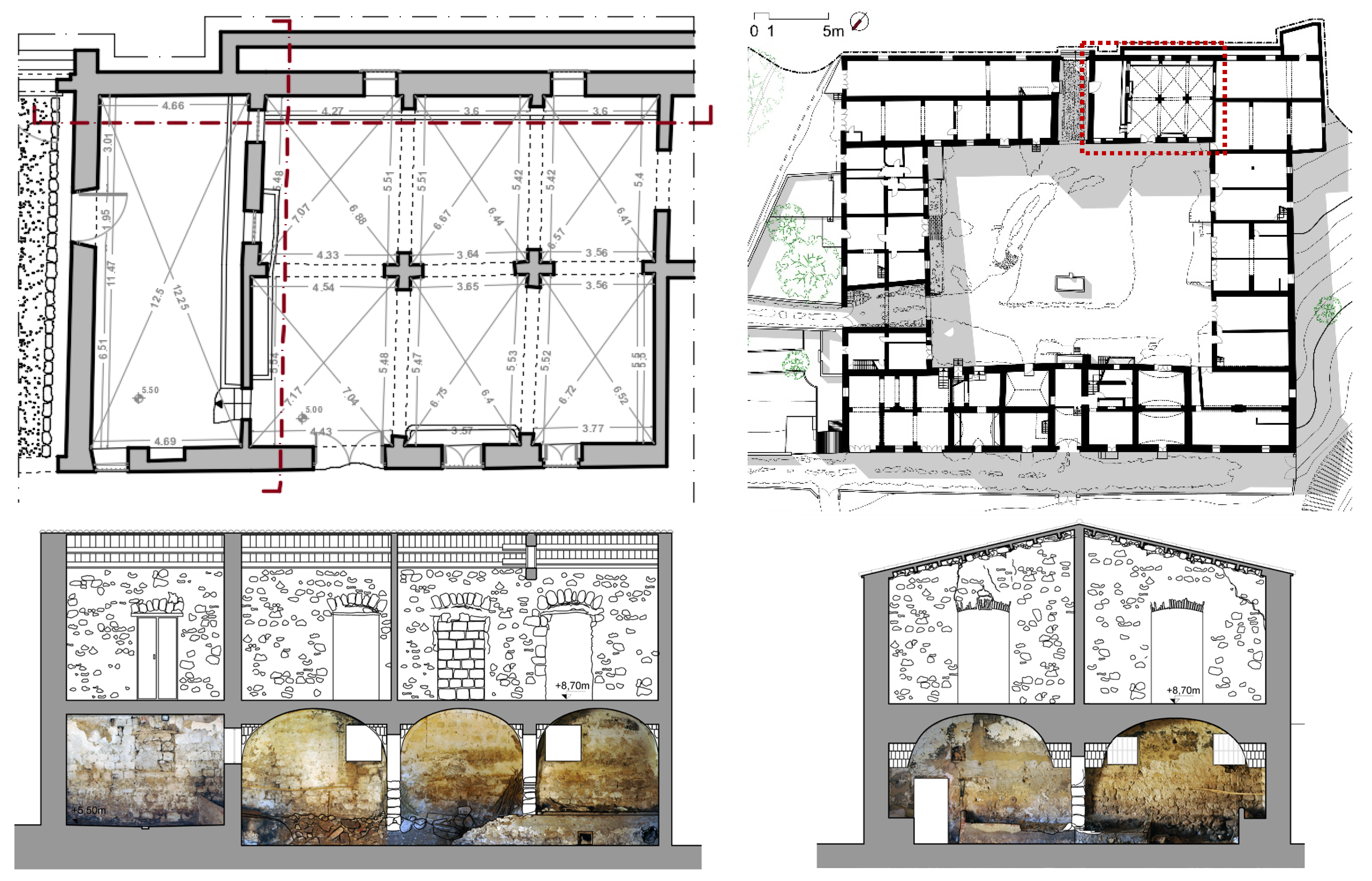
Figure 4) was selected as a case study to investigate the historic construction technique of thin vaulting from the Sicilian tradition. In the authors’ view, the examined vaulted system incorporates the construction features most commonly reported in the scientific literature on Sicilian thin-tile vaults while also offering particularly favorable conditions for detailed investigation. These conditions enabled the documentation of construction details at full scale, the characterization of materials, and the definition of a representative structural configuration for subsequent numerical modeling.
The eighteenth-century Miccichè manor house (named after the historic owners), located in the province of Caltanissetta, has long been associated with agricultural activities. Today, the complex appears as a heterogeneous ensemble of buildings, the result of three centuries of necessity-driven architecture and of the progressive combination of local materials and construction techniques typical of each period.
The southern portion of the complex, historically used as a grain store, is distinguished by the remarkable quality of its horizontal partitions. It consists of two series of three double-leaf masonry cross vaults dating to the late eighteenth century (
Figure 4). Through six elliptical arches with spans ranging from 3.5 to 5.5 m, the vaulted system transfers loads to the external piers and to two central cross-shaped pillars made of local limestone blocks. The typical construction scheme of the vaults is shown in
Figure 3.
The partial collapse of two of the six vaults provided a valuable opportunity to inspect otherwise inaccessible portions of the structural elements. After the removal of guano deposits and fill materials, the extrados of the vaults was exposed, allowing direct observation of construction details and the collection of information on building methods. The presence of collapsed fragments also made it possible to extract several samples of construction materials, which were later analyzed in the materials testing laboratory of the University of Palermo.
3.1. Geometrical Survey and Structural Analysis
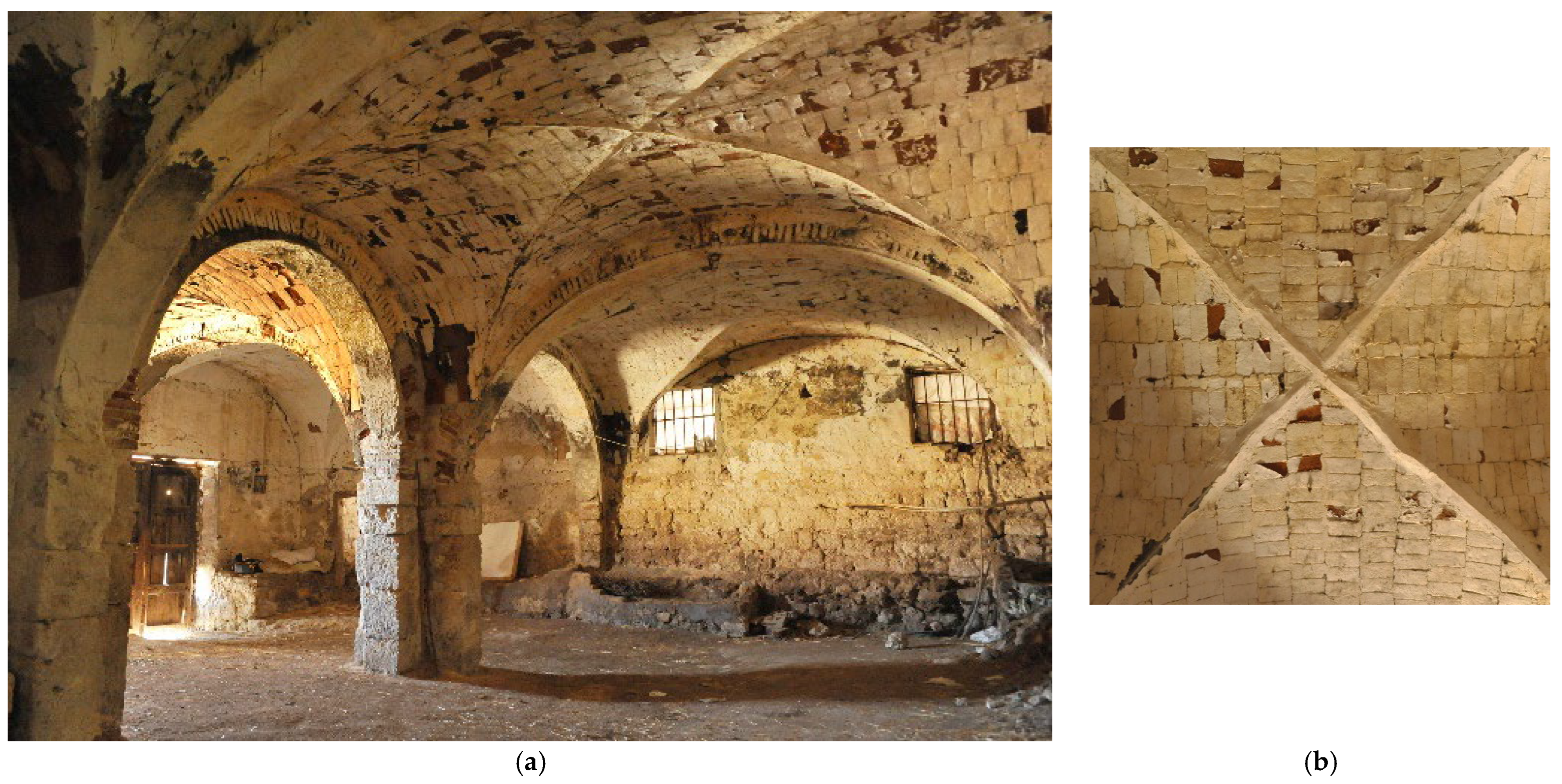
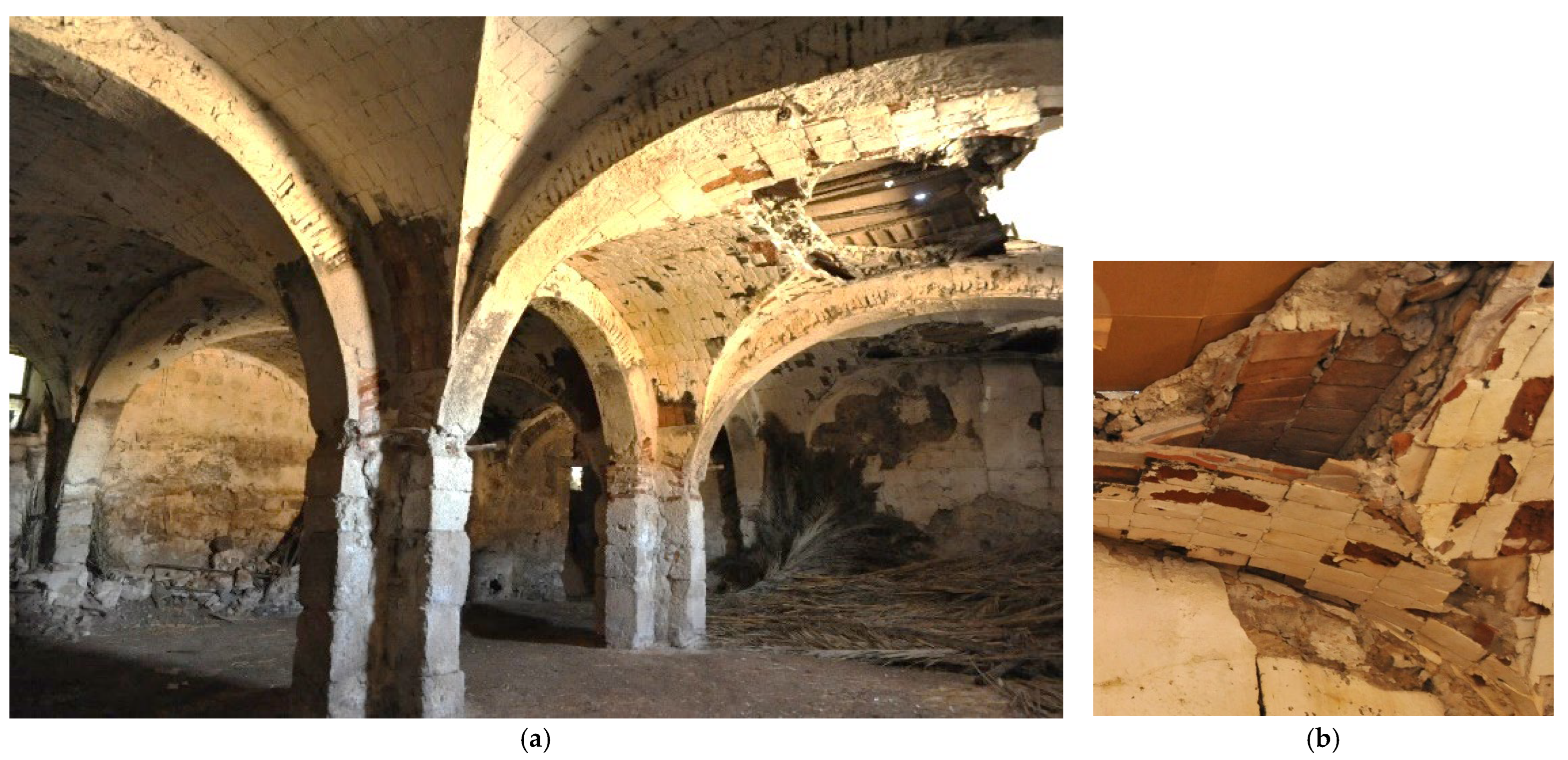
Figure 5a shows the spatial arrangement of the vaulted system, which provides an overall view of three of the six cross vaults in the grain store. Each vault derives from the intersection of two-barrel vaults with the same rise but different spans, generating an asymmetric cross-geometry. The bearing shell consists of two leaves of thin clay bricks (240 mm × 115 mm × 15 mm), resulting in an average total thickness of about 55 mm. The vaults have a rise of approximately 1.35 m, while their plan dimensions range between 5.5 × 3.6 m and 5.5 × 4.5 m (
Figure 4).
The cross geometry, despite the reduced thickness of the resisting section, provides an intrinsic stabilizing effect to the vaulted system. This is due to the mutual interaction between the two intersecting barrel vaults, which allows the redistribution of loads along multiple directions and limits the development of unilateral deformation mechanisms. The contrast between opposing haunches and the three-dimensional confinement at the intersection lines contributes to enhancing global stability, particularly in thin masonry shells, where bending and out-of-plane deformations must be controlled. At the same time, the staggered arrangement of brick courses and masonry leaves increases the overall strength of the bearing shell and contributes to improving its mechanical behavior.
A detailed examination of the construction arrangement is possible through
Figure 5b, which shows the vault intrados. In this close-up, the offset disposition of the brick courses becomes evident. Each row of tiles is laid with staggered transverse joints relative to the adjacent ones, improving interlocking between courses and favoring shear transfer between the two masonry leaves. This arrangement enhances the structural efficiency of the shell by preventing the formation of continuous weakness planes and ensuring a more uniform distribution of compressive stresses along the curved surface.
Along the diagonal ribs, the brick mesh does not follow fixed alignment rules. The need to accommodate the intersection of two vaults with different spans leads to the use of brick elements of irregular geometry, often triangular or pentagonal, cut directly to fit the available space. This adaptation allows the courses to follow the variable curvature without disrupting the continuity of the brick pattern. A similar adjustment occurs at the keystone region, where the closure of the vault depends on the residual gap left by the converging brick courses and therefore varies from one vault to another.
The haunches of the vaults are filled up to the
rĭēn plane (i.e. haunch line), located approximately 0.45 m below the keystone, as illustrated in the detailed section in
Figure 6. This infill consists of heavy raw materials of heterogeneous size and composition, typically including stone fragments, earth, and construction debris. The purpose of this filling layer is twofold: on the one hand, it stabilizes the haunch zones by providing the compressive mass required to reduce the horizontal component of the thrust. On the other hand, it compensates for the irregular extrados geometry generated by the intersection of the two-barrel vaults.
Above the haunch fillings, the upper floor is leveled using a counter-vault technique. Four pairs of thin segmental lunette counter-vaults, typically composed of two leaves of tiles, are constructed over the vault–pillar junctions (see
Figure 6). As shown in the section of
Figure 6, these elements rest with one side directly on the extrados of the main vault and with the opposite side on the adjacent wall. The counter-vault pairs converge on thin extrados buttresses arranged orthogonally to the main barrel. This substructure performs several essential functions: (i) it reduces the non-structural weight acting on the main vault by replacing part of the heavy filling; (ii) it provides additional stiffness against collapse mechanisms associated with plastic hinge formation; (iii) and it transfers a significant portion of the superimposed floor loads directly to the external masonry walls.
Finally, above counter-vaults extrados, the upper floor is leveled by means of a lightweight leveling layer (screed), which compensates for geometric irregularities and distributes loads uniformly to the underlying vault and extrados substructures.
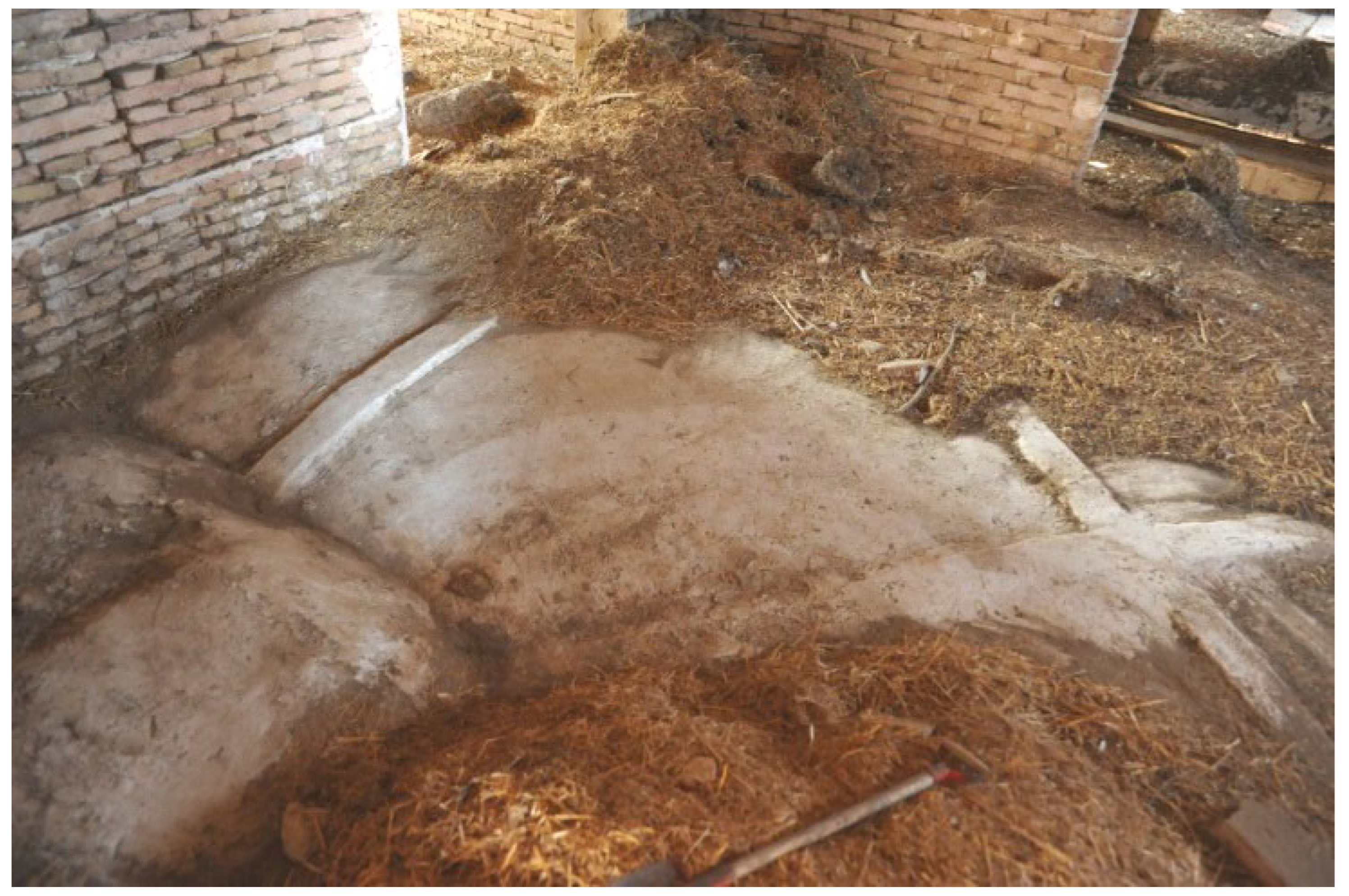
Figure 7 shows the vault extrados immediately after the removal of accumulated dirt and superficial filling materials, allowing a clear inspection of the structural configuration. Once uncovered, the extrados revealed the presence of stiffening ribs arranged along both diagonal directions and the perimeter of the vault. These ribs are constructed using one or two adjacent courses of the same thin clay bricks employed in the masonry shell. They are arranged along the diagonal directions of the vault and also trace the perimeter, but with an intentional inward offset of approximately 50 cm from the actual extrados edge.
By placing the perimeter rib slightly inward from the edge, masons ensured that the rib rested on a continuous masonry substrate, rather than on the edge line where the vault thins and curvature changes abruptly. This offset position increases the structural effectiveness of the rib, allowing it to function as a continuous stiffening band without the risk of local detachment or stress concentration at the free boundary. From a mechanical standpoint, the inward-shifted rib enhances the bending and shear capacity along the vault’s perimeter lines, where tensile stresses may develop due to asymmetrical loading or partial constraint of the supporting walls. The rib also helps redistribute the load around the perimeter, improving the out-of-plane stability of the thin shell.
Together with the diagonal ribs, these perimeter ribs contribute to strengthening areas of maximum stress concentration, increasing the effective resisting section exactly where the vault geometry produces curvature discontinuities and where load transfer paths converge. Their presence confirms the empirical but highly effective constructive strategies adopted by local vaulted masters to improve the mechanical performance of a very thin masonry shell.
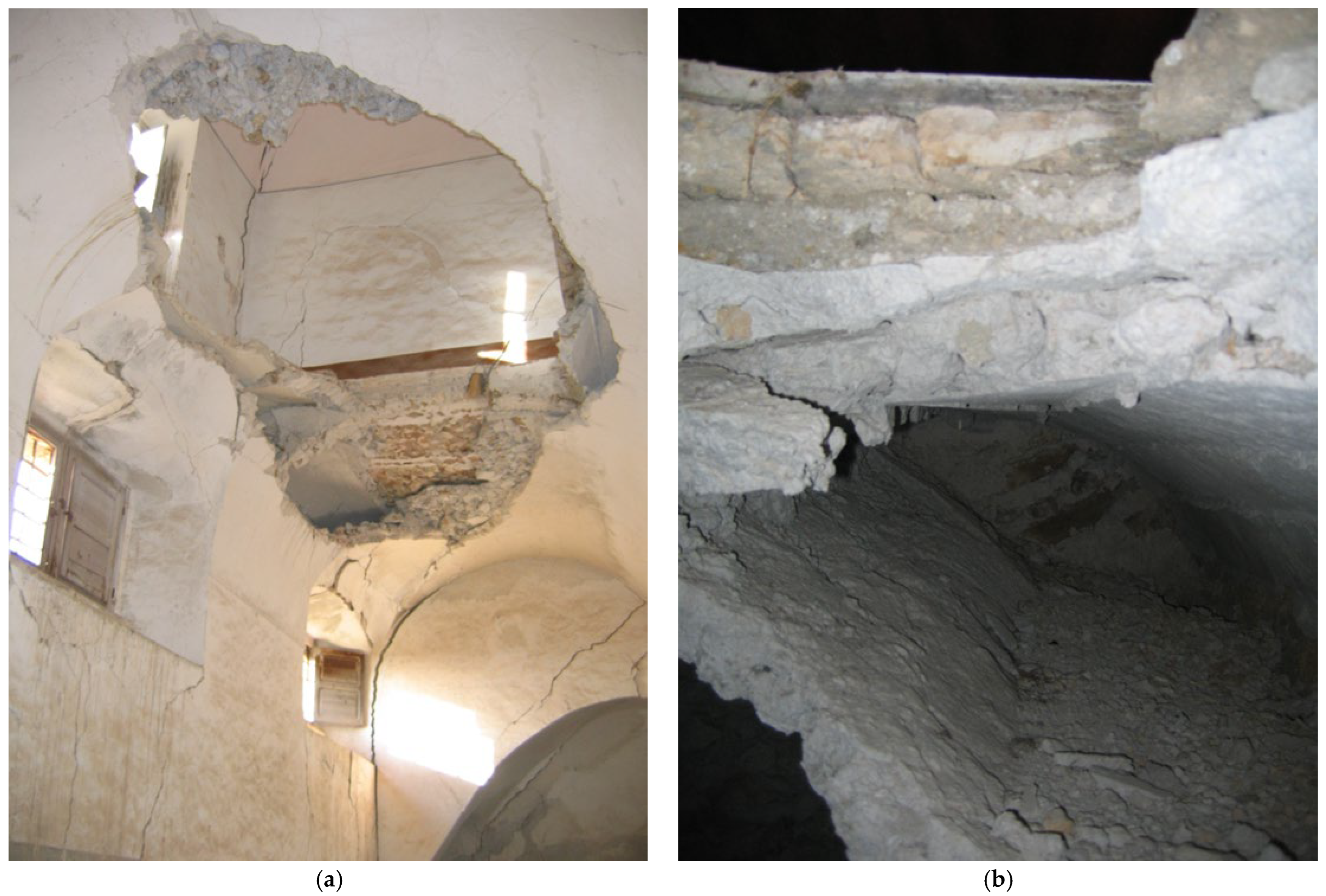
The partial collapse of two of the vaults (
Figure 8) allowed the collection of material samples for laboratory testing. A total of 12 specimens were extracted from the remains: three for the chemical characterization of the mortar and nine for the mechanical characterization of the masonry and mortar.
3.2. Material Investigation
Specimens are named according to the notation PC (or TPB or RS)_V (or M)_n, where PC (pure compression) or TPB (three-point bending) or RS (Raman spectroscopy) indicates the type of test, V (vault shell) or M (mortar) refers to the material, and n is the specimen number.
A list of all tested specimens is reported in
Table 1, where
h,
w, and
t are the specimen height, width, and thickness, respectively, while
W and
γ are the specimen total and specific weight, respectively.
3.2.1. Raman Spectroscopy
Scientific literature concerning Sicilian tiled vaults indicates that, until the end of the nineteenth century, gypsum-based mortar was used almost exclusively to embed the thin clay bricks, due to its practical advantages associated with rapid setting and hardening [
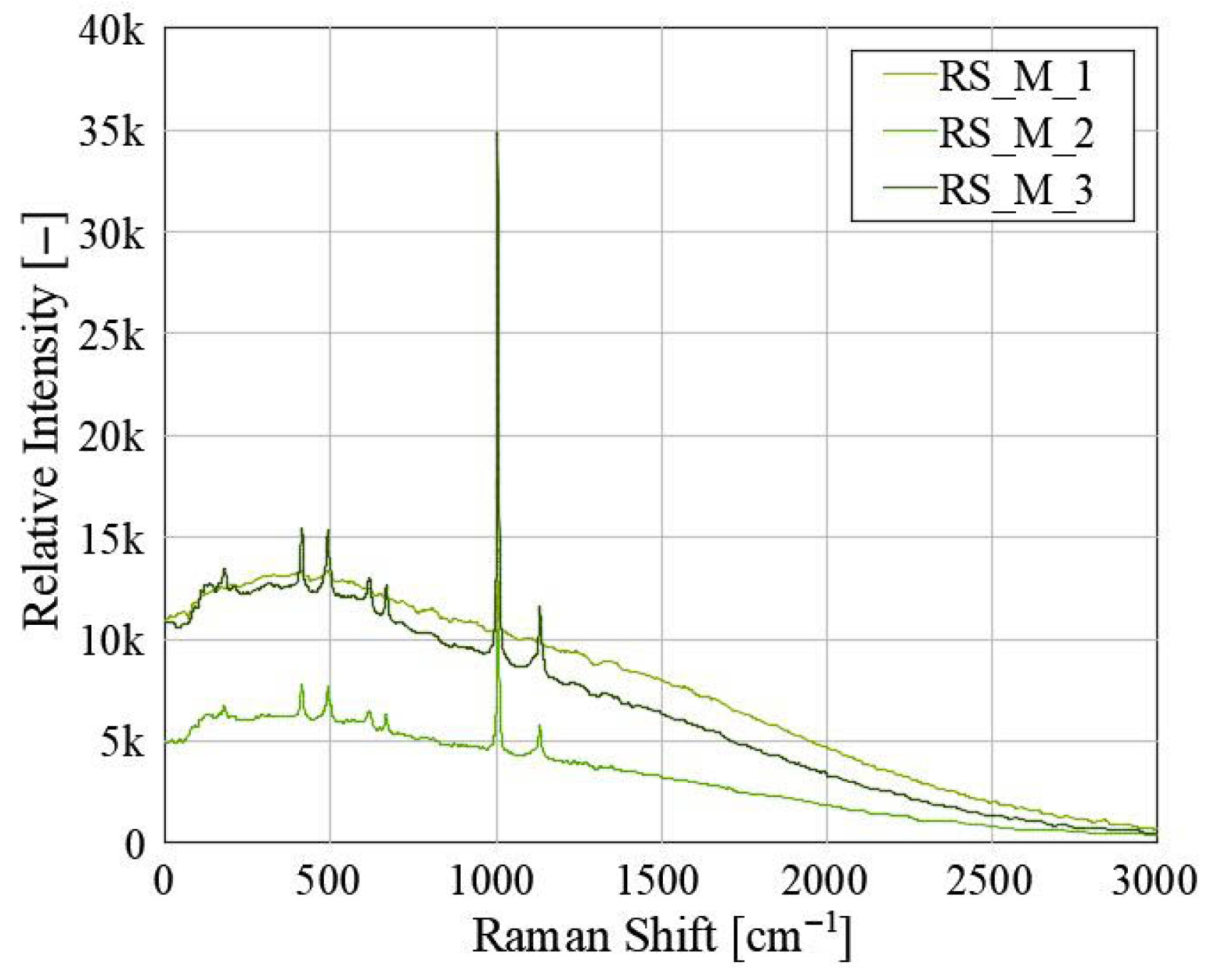
5]. Three micro-Raman spectroscopic tests, referred to as R_M_1–3 in
Table 1, were carried out on three embedding mortar samples taken from different locations of the masonry shell, with the aim of verifying the consistency of the binder composition.
The spectra reported in
Figure 9 confirm these expectations, showing a main peak at 1008 cm
−1, which is characteristic of calcium sulphate dihydrate CaSO
4 · 2H
2O (gypsum). All three analyses confirmed the predominant presence of gypsum, with lower concentrations of burnt dust, used to reduce weight, and calcite, originating from aggregates in the mixture. Gypsum fragments of approximately one millimeter in size were widely distributed within the mortar.
3.2.2. Compression Test on Mortar and Masonry
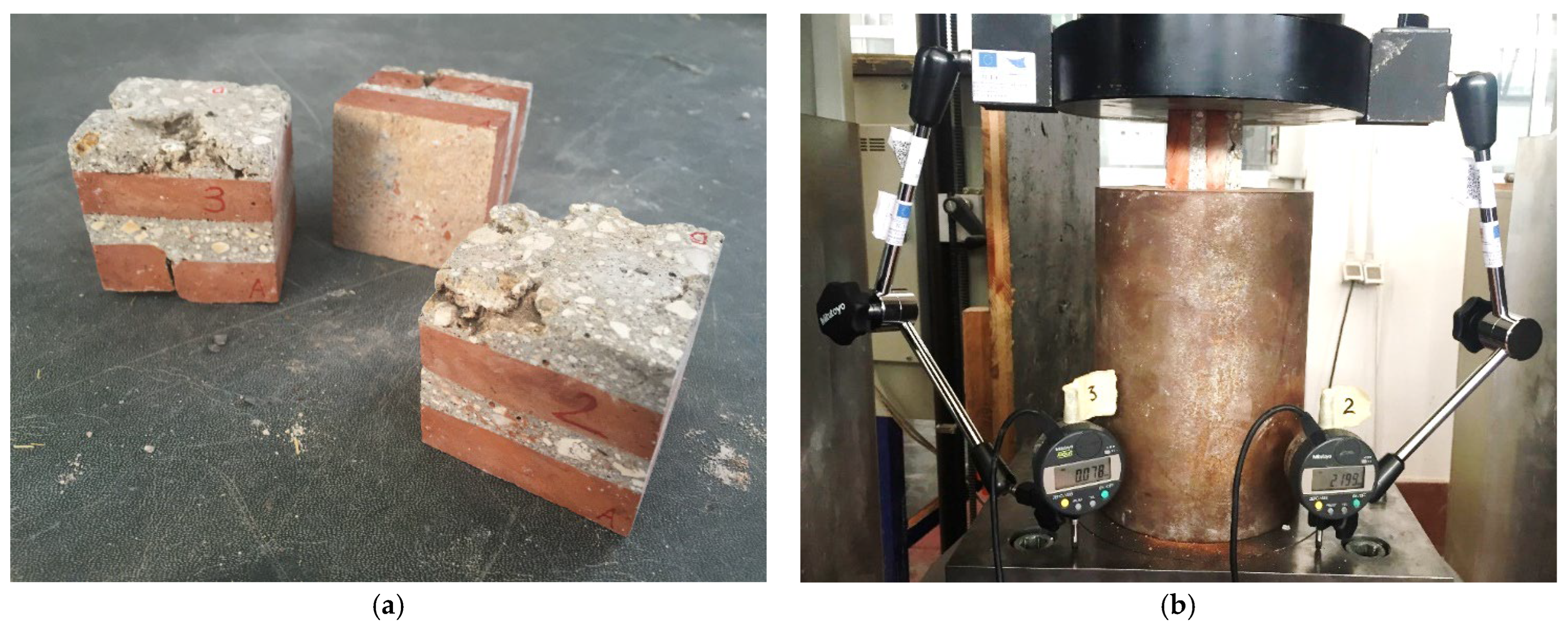
Three compressive test repetitions have been performed, respectively, on vault shell masonry (
Figure 10a) and mortar specimens to determine their compressive strength and elastic modulus. Tests were performed using a Zwick/Roell (Ulm, Germany) electromechanical testing machine equipped with a 150 kN load cell. Specimens were loaded by monotonically increasing the stroke downward displacement at a rate of 0.002 mm/sec. The loading plate is connected to the machine stroke via a spherical joint to accommodate eventual misalignment in the specimen, and its vertical displacement is recorded by two linear variable displacement transducers (LVDT) applied directly to the loading actuator and reacting on the machine bottom plate (see
Figure 10b).
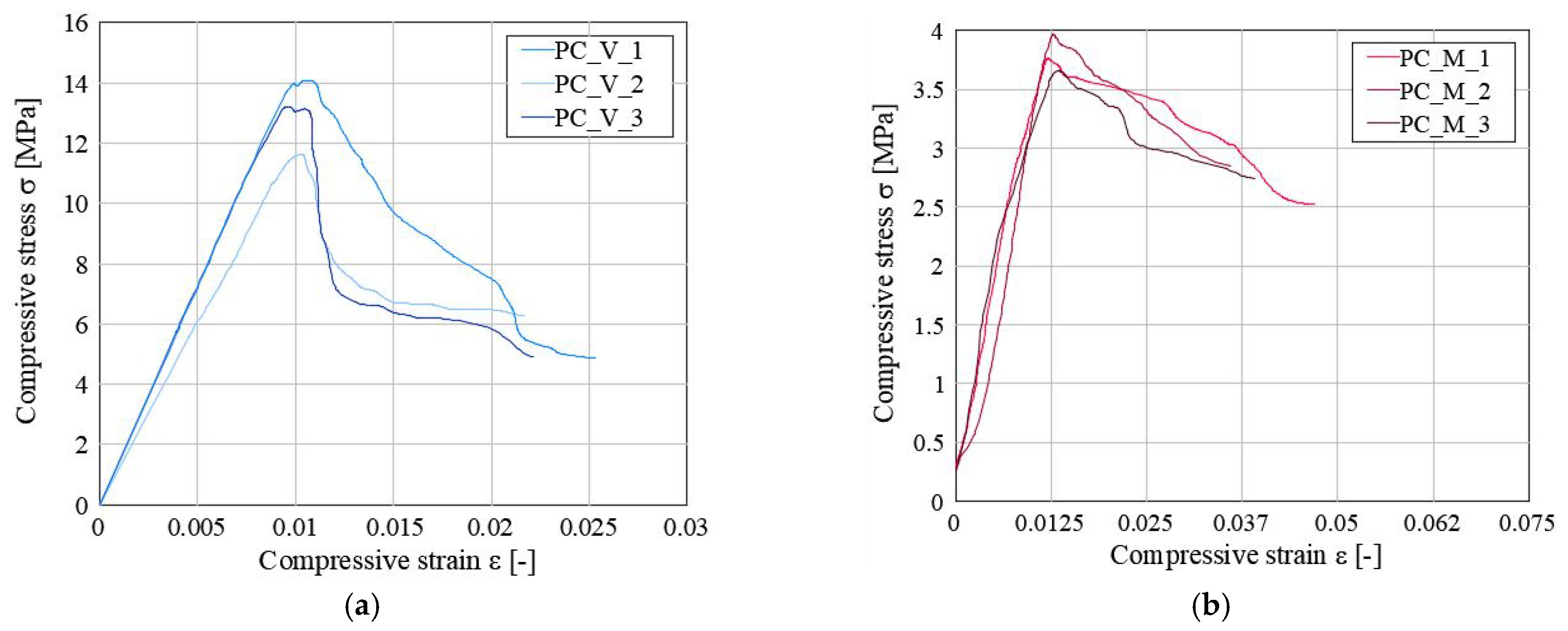
The compressive stress σ—compressive strain ε curves relative to all tested specimens are reported in
Figure 11, where σ is obtained by dividing the applied load recorded by the load cell by the specimen area (
A =
h·
w), and ε is the ratio between the average reading of two LVDTs and the specimen height.
3.2.3. Mortar Flexural Tests
To evaluate the tensile strength of the embedding mortar, three flexural tests were carried out in accordance with EN 1015-11 [
20], using a three-point configuration with a clear span of
l =107 mm. Given the elastic-brittle behavior of the material and the pure bending stress state, the tensile strength was calculated using Navier’s linear stress distribution according to Equation (1):
where
P is the failure load registered by the testing machine,
l is the bending test clear span,
h = 40 mm, and
I =
h4/12 is the cross-section height and momentum of inertia.
3.2.4. Test Results and Discussion
The result of the bending tests and the evaluation of the tensile strength of the mortar, along with the compressive test results and corresponding average values, are reported in
Table 2, where
fmc represents the tested material compressive strength;
Ec is the compressive modulus; and
fmf is the flexural strength, evaluated according to Equation (1).
Benfratello et al. [
21] reports compressive tests conducted on Sicilian thin-layered vault specimens taken from an early twentieth-century building in central Palermo. Each specimen measured 322.5 mm × 322.5 mm × 115 mm and consisted of three layers of tiles (260 mm × 130 mm × 20 mm). The reported values were fmc of 2.6 Mpa and Ec of 1700 MPa. Six additional cubic specimens with side lengths of approximately 120 mm and three brick layers showed a higher compressive strength of 6 MPa. In [
9], compressive tests have been performed on specimens of dimensions 320 mm × 320 mm, with different thicknesses, employing two, three, and four layers of tiles (240 mm × 120 mm × 18 mm), showing ultimate compressive stress values of 1.7 MPa, 2.5 MPa, and 2.9 MPa, respectively.
The comparison between these literature results and those obtained in the present study highlights a significant variability in the mechanical properties of thin-layered vault masonry. It reflects the marked size dependence typical of thin and heterogeneous masonry systems composed of small clay tiles embedded in weak gypsum matrices. Larger specimens tend to exhibit lower strength values due to the greater probability of containing defects, discontinuities, or weak interfaces, while smaller specimens, involving a more limited number of bricks and joints, tend to show artificially higher strengths that are not fully representative of the global behavior of the actual vault.
4. Finite Element Analysis
In the scientific literature, vaulted structures are often analyzed using simplified approaches based on the arch decomposition method, in which the vault is idealized as an assembly of independent arches, each carrying a portion of the applied load. Such approaches can provide acceptable approximations for simple geometries subjected to uniformly distributed vertical loads, where the structural behavior is predominantly one-dimensional. However, this representation becomes inadequate when dealing with complex vaulted configurations, such as cross vaults, especially in the presence of extrados finishing elements. In these cases, the interaction between intersecting vault surfaces and between the masonry shell and elements such as stiffening ribs and counter-vaults gives rise to a three-dimensional load-transfer mechanism that cannot be captured by a set of isolated arches.
For this reason, a three-dimensional finite element model was adopted in the present study to investigate the structural contribution of stiffening ribs and counter-vaults to the global behavior of thin-tile vaults. The model is intentionally simplified, adopting a homogenized and linearly elastic representation of the masonry based on experimentally measured mechanical properties. The analysis has an exclusively qualitative purpose, aimed at isolating the relative influence of different extrados constructive configurations under the same geometric, material, and loading conditions. Accordingly, the analysis focused on the relative differences in stiffness and deformation behavior between configurations with and without stiffening ribs and counter-vaults.
It is worth noting that the simplified linear-elastic formulation adopted in this study does not allow for the explicit simulation of nonlinear phenomena such as cracking, stiffness degradation, and progressive damage, which are known to affect the ultimate behavior of masonry vaults. The numerical analysis was therefore not intended to reproduce collapse mechanisms or estimate ultimate capacity.
Within a nonlinear framework, the presence of stiffening ribs and counter-vaults would be expected to further enhance the structural response by delaying crack initiation and promoting a more distributed damage accumulation mechanism. Introducing nonlinear behavior would lead to different stress and displacement values, but it would not undermine the qualitative interpretation derived from the elastic analyses.
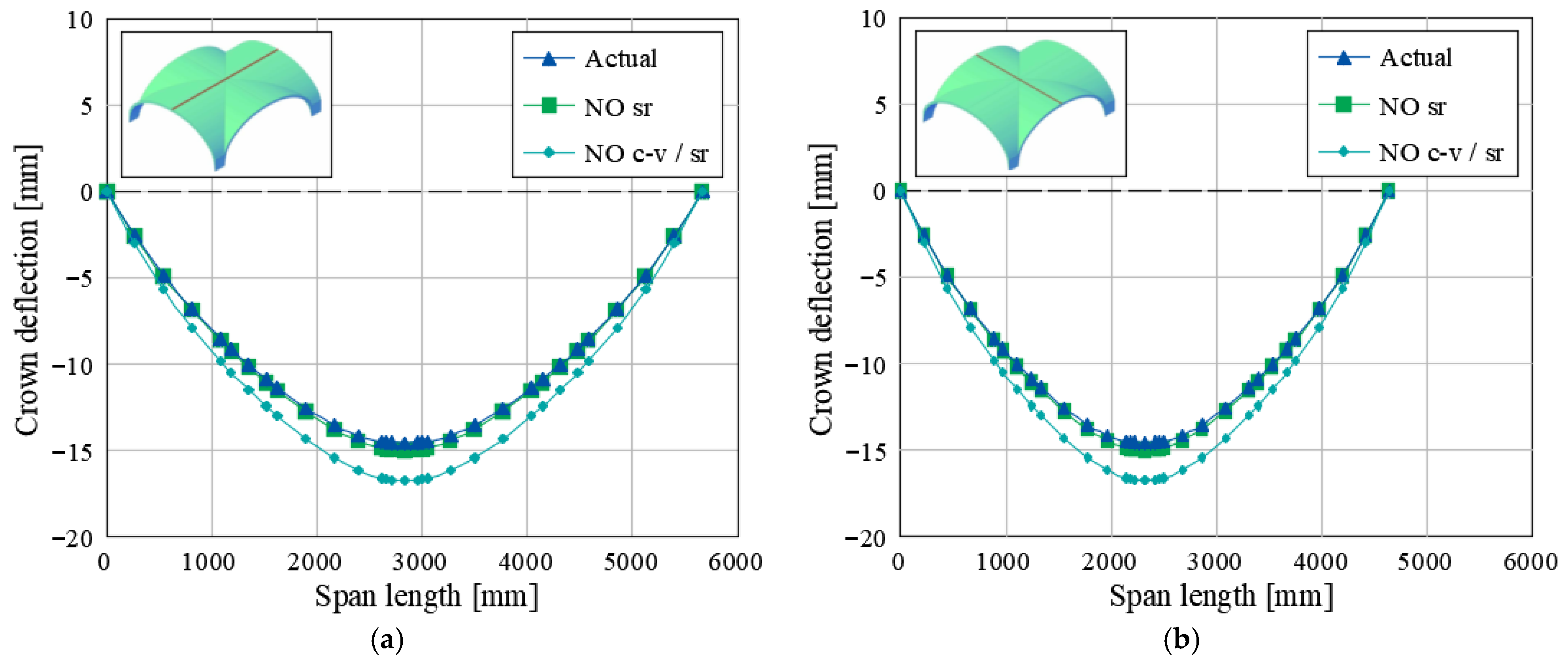
The maximum vertical deflection along the crown lines of the two intersecting barrels was selected as the main index of structural efficiency. This parameter provides a direct measure of the global stiffness of the vault, is easily comparable across different model configurations, and is sensitive to the presence or absence of extrados elements. The choice of crown deflection as a reference indicator is further justified by the condition observed on site: the two partially collapsed vaults (see
Figure 8) exhibited failure mechanisms localized at the crown, most likely triggered by excessive or incompatible vertical deflection in the central region. This empirical evidence makes crown deflection a meaningful and representative metric for evaluating the contribution of stiffening ribs and counter-vaults to the overall behavior of thin tiled vaults. Other response parameters, such as thrust redistribution, cracking patterns, and stability under horizontal loads, are certainly relevant for a comprehensive structural assessment. However, their investigation would require a nonlinear material model and a different analytical framework, which lie beyond the scope of the present study.
The finite element analysis was carried out using the commercial FE software SAP2000, modeling all components with 8-node linear brick elements. Although simplified, the model allows for a consistent comparison between the different configurations, as all simulations share the same mesh, boundary conditions, geometry, and homogenized material properties derived from the experimental investigation.
The Finite Element Model
A total of approximately forty thousand solid elements were used to model the largest of the six vaults of the manor house, including the masonry shell and all extrados elements. Since the vault masonry predominantly works under compression, the average values obtained experimentally (
fmc = 13 MPa and
Ec = 1480 MPa) were assigned to the masonry shell, the stiffening ribs, and the counter-vaults. The crack-opening compressive and tensile limit stresses are given by the mortar compressive and flexural strengths, respectively equal to
fmc = 3.96 MPa and
fmf = 1.14 MPa (see
Table 2).
The specific weight of the masonry material is assumed equal to 1670 kg/m
3, by averaging the values reported in
Table 1. A heavy material (γ = 1800 kg/m
3) with low elastic modulus has been employed to model the haunch filling up to the
rĭēn plane. At the same time, a lightweight filling in expanded clay aggregate (γ = 900 kg/m
3) has been employed to reach the floor level. Only vertical uniformly distributed loads were considered in this phase of the study, with a characteristic live load of 200 kg/m
2.
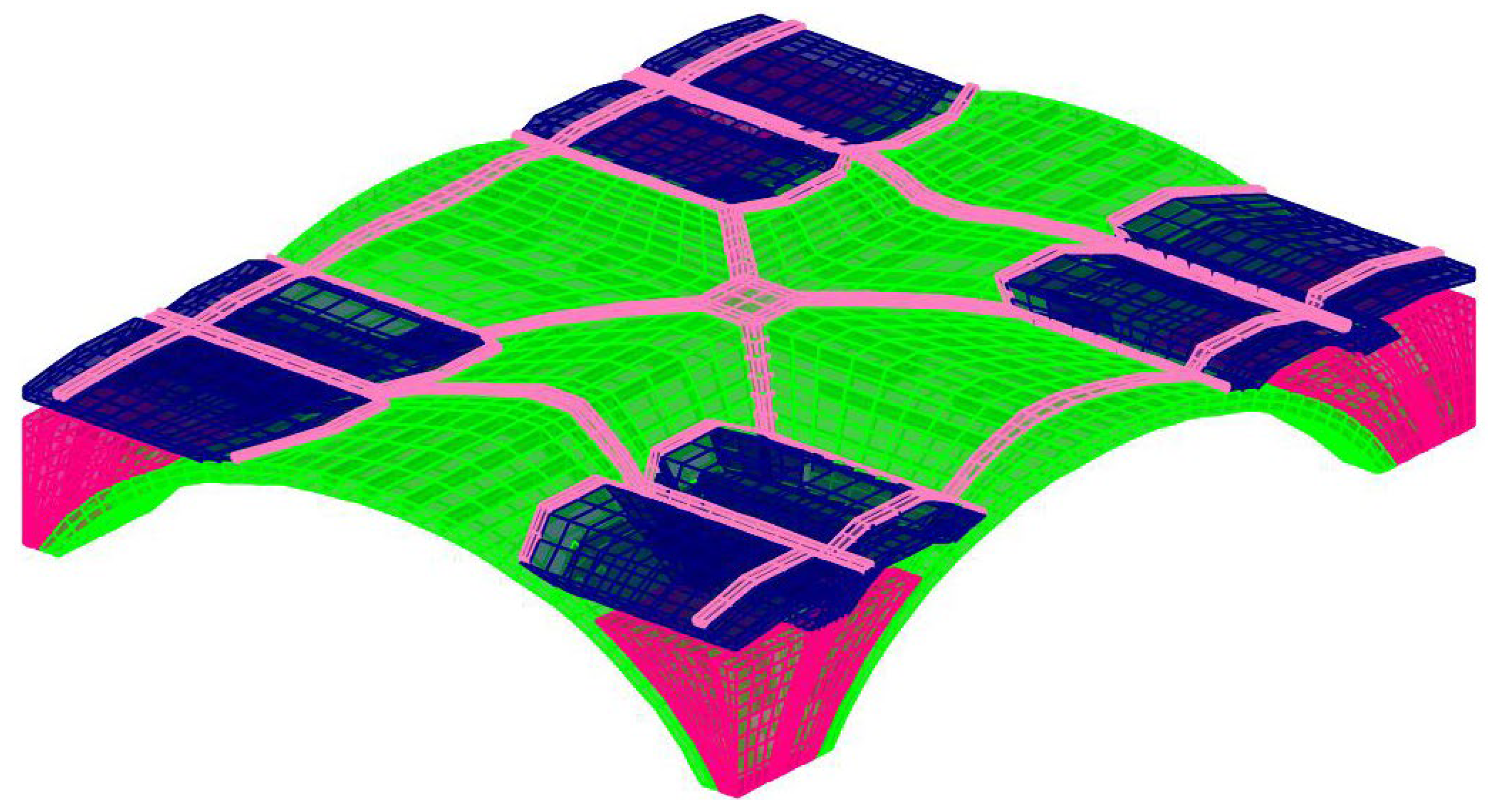
Figure 12 presents the complete finite-element “Actual” model, which includes all structural parts existing in the real vault. The masonry shell is represented in green, the haunch filling in red, the counter-vaults in blue, and the extrados stiffening ribs in pink. All components are connected through perfect tie constraints to ensure full continuity between adjacent elements. Fixed supports were applied at the vault–pillar junctions, while the perimeter of the masonry shell was constrained by vertical rollers to prevent horizontal displacements and to allow the correct simulation of vertical deflection and rotations.
Although uncertainties in geometric reconstruction, material properties, and boundary conditions are unavoidable when dealing with historical masonry structures, all numerical models analyzed in this study share the same geometry, mesh discretization, material properties, and boundary conditions. Consequently, while such uncertainties may affect the absolute values of the response quantities, their influence on the relative comparison between different configurations is significantly reduced, which is consistent with the qualitative objective of the analysis.
To assess the structural role of the finishing elements, two additional simplified models were created. These models share the same geometry and material properties as the actual vault but with specific components removed and replaced by lightweight fill:
These comparative models make it possible to quantify the contribution of each extrados element to the global stiffness and stress distribution of the vault. It is further emphasized that historical vaulted structures are inherently affected by construction imperfections, workmanship variability, and alterations accumulated over time. The numerical model developed in this study therefore represents an idealized configuration, adopted as a conceptual tool to identify general mechanical trends rather than to reproduce the exact behavior of a single real vault.
Figure 13 shows the comparison among the three models. When only the stiffening ribs are removed (NO sr model), the maximum vertical deflection increases by approximately 3%. When both ribs and counter-vaults are removed (NO c-v/sr model), the maximum deflection increases by approximately 15%, confirming the significant stiffening effect provided especially by the counter-vault substructure.
In addition to global deflection trends, the finite element results were further examined in terms of stress distribution on the vault extrados.
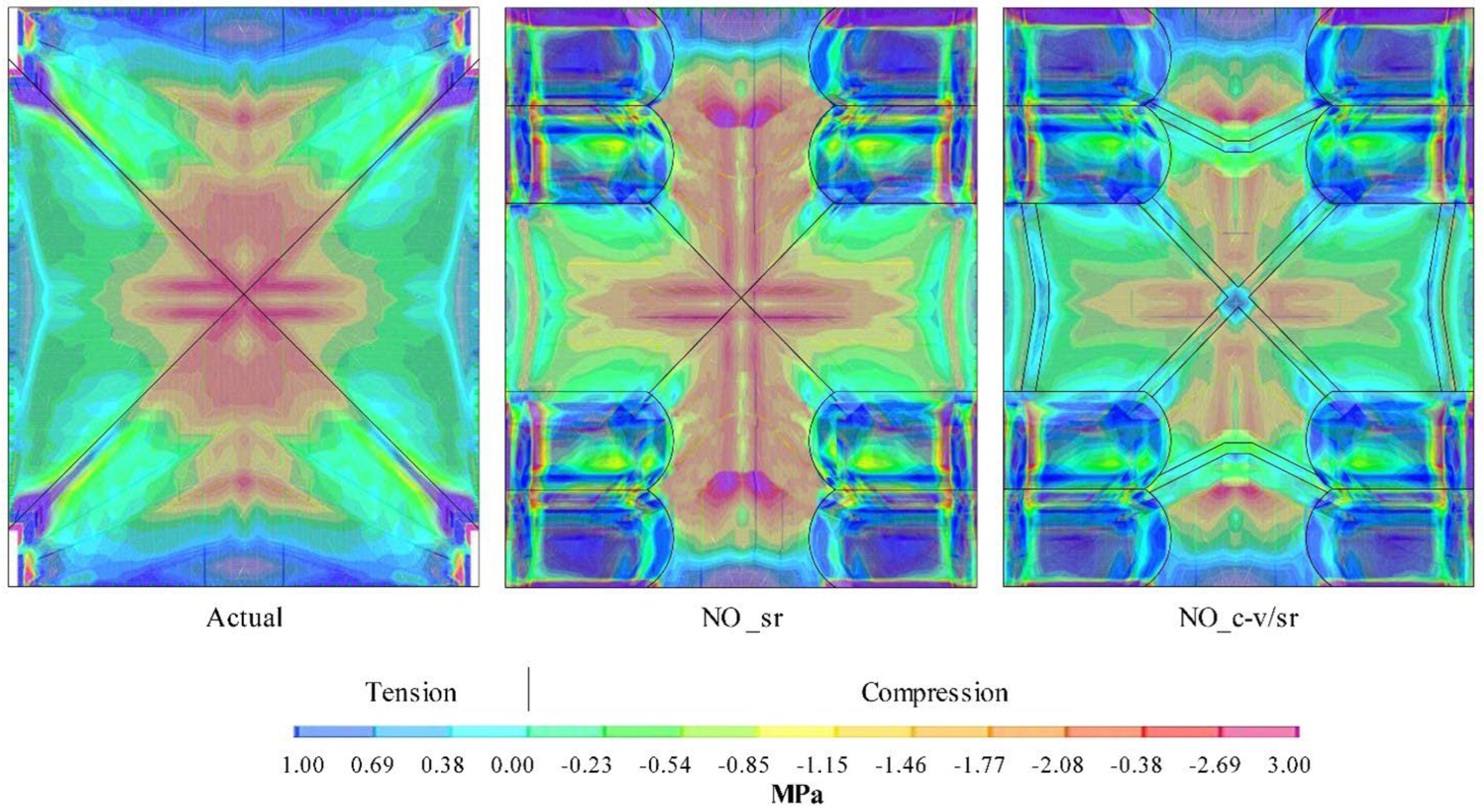
Figure 14 presents the distribution of the maximum principal stresses on the extrados surface of the main vault shell for the three modeled extradossal configurations. The results confirm that the masonry shell works predominantly in compression, with tensile stresses limited to localized regions.
In the “Actual” configuration, the presence of stiffening ribs and counter-vaults promotes a more uniform compressive stress field and limits the development of tensile stress concentrations, particularly along the diagonal directions and in the vicinity of the vault–support junctions. This behavior indicates an effective redistribution of loads within the thin masonry shell.
When the stiffening ribs are removed (NO_sr model), stress concentrations become more pronounced along the diagonal lines of the vault, reflecting a reduction in shell continuity and stiffness. The removal of both stiffening ribs and counter-vaults (NO_c-v/sr model) further amplifies localized tensile regions near the supports and along the crown lines, confirming that the extrados elements contribute not only to global stiffness, but also to the control of local stress concentrations and load-transfer mechanisms.
Tensile stresses are also observed along portions of the vault perimeter in all configurations. These regions are primarily associated with the boundary conditions adopted in the numerical model, in which vertical roller constraints were introduced to prevent horizontal displacements while allowing vertical deformation and rotation. The resulting restraint induces local effects near the edges, leading to tensile stresses at the extrados, which should therefore be interpreted as a modeling-related effect.
Beneath the lunette counter-vaults, particularly near the vault–pillar junctions, the stress distribution exhibits a more complex pattern, characterized by transitions between tensile and compressive states. These stress gradients can be associated with the geometric intersection between the counter-vaults and the main masonry shell, as well as with the interaction between the shell and the haunch filling. Although locally heterogeneous, these regions remain limited in extent and are less pronounced in the “Actual” configuration, further supporting the beneficial role of the counter-vault system in moderating stress concentrations within the vault.
5. Interpretation and Implications for Practice
The results obtained from the examination of the proposed case study confirm that historic thin-tile vaults operate as lightweight masonry shells characterized by predominantly compressive structural behavior. Their effectiveness does not derive solely from the masonry shell itself, but rather from the interaction between the vault and the extrados finishing elements, including haunch fillings, stiffening ribs, and counter-vaults. These components form an integrated structural system, conceived to balance lightness with mechanical efficiency.
A comparative interpretation of the identified structural mechanisms can be drawn by considering other thin-vaulting solutions within the Sicilian tradition. In thin vaults realized entirely in gypsum conglomerate, of which
Figure 15 shows an example, counter-vaults are almost systematically present, whereas extrados stiffening ribs are rarely employed. This observation, in the authors’ opinion, confirms that stiffening ribs primarily serve to ensure continuity between the different parts of the vault, in addition to providing reinforcement at the edges in brick vaults with complex geometries. In such cases, the precise cutting of thin bricks required to guarantee proper interlocking along the diagonal lines of cross vaults is inherently difficult, making the use of extrados ribs particularly effective. In contrast, in vaults made entirely of gypsum conglomerate, structural continuity is ensured by the monolithic nature of the material itself, reducing the need for localized stiffening ribs. Counter-vaults, on the other hand, remain a common solution, confirming their primary role in load redistribution and in the reduction in non-structural mass acting on the main vault.
From the perspective of structural assessment and retrofit practice, the findings of this study are not intended to be translated into prescriptive intervention rules. Instead, they provide a set of general interpretative principles that can support informed engineering decisions. In particular, the results confirm that any strengthening strategy should aim to preserve the original static scheme of the vault, avoiding solutions that significantly modify the stress distribution or deformation mechanisms governing its behavior. Structural efficiency, in this context, cannot be pursued independently of the original construction logic without introducing new vulnerabilities.
In this sense, invasive interventions based on the addition of rigid and heavy layers, such as reinforced concrete slabs, or on the removal of structural haunch fillings should be avoided. Such approaches alter the original load transfer paths, increase mass and stiffness incompatibilities, and may compromise the compressive working mechanism of the masonry shell. The numerical results presented in this study, together with widespread evidence from restoration practice, confirm that these solutions are often detrimental rather than beneficial for thin historic vaults.
Similarly, the widespread use of reinforcement systems based on organic-matrix composites (FRP), although common in current engineering practice, appears problematic when applied to historic thin vaults [
22,
23]. Beyond well-known issues related to mechanical compatibility, reversibility, and adhesion to historic masonry substrates, these systems raise significant concerns in terms of fire safety. Polymer matrices may undergo a rapid loss of mechanical capacity at elevated temperatures and may generate toxic fumes in the event of fire, making such solutions poorly consistent with the safety, durability, and conservation requirements of historic buildings [
24,
25].
In light of these considerations, the findings of the present study support retrofit strategies that prioritize constructive solutions coherent with the original building technology. Traditional elements such as counter-vaults and stiffening ribs, when still present or reconstructable, should be recognized as active structural components rather than as secondary or non-structural features. Where additional reinforcement is required, the adoption of inorganic-matrix composite systems, such as Textile Reinforced Mortar (TRM), appears more compatible with the mechanical behavior and conservation needs of thin-tile vaults [
26,
27]. Owing to their reduced thickness and deformable response, these systems allow improvements in both in-plane and out-of-plane capacity while respecting the lightweight nature of the vault and offering improved performance under fire conditions [
28,
29].
In this perspective, moving from a qualitative interpretation toward a quantitative evaluation of safety and load-bearing capacity would require further experimental and analytical investigations. On the experimental side, extended material testing at multiple scales would be necessary to capture the strong size dependency, heterogeneity, and mortar–brick interaction typical of thin-tile masonry. In situ investigations and monitoring activities could also provide valuable information on deformation compatibility, long-term behavior, and the interaction between vaults and supporting structures.
In practical applications, especially for vaulted systems with complex geometries, numerical models are often validated through controlled in situ load tests. These are commonly performed by applying distributed vertical loads using water-filled mattresses or tanks, which allow a gradual and reversible increase in loading while continuously monitoring displacements and the onset of damage. Such testing procedures provide direct insight into stiffness, deformation capacity, and safety margins and serve as an effective complement to numerical analyses.
From an analytical standpoint, the development of nonlinear numerical models capable of simulating cracking, stiffness degradation, and damage evolution would be essential for investigating ultimate capacity and collapse mechanisms under both vertical and horizontal loads. These models should be supported by targeted experimental validation on representative vault portions or full-scale specimens. Within this framework, the knowledge phase should be understood not only as a prerequisite for intervention design, but also as the foundation for any reliable quantitative assessment of the structural safety of historic thin-tile vaults.
6. Conclusions
This study analyzed the structural behavior of Sicilian thin-tile vaults through an eighteenth-century case study, combining survey data, material characterization, and numerical modeling. A simplified finite element analysis was used to qualitatively evaluate the role of extrados stiffening ribs and counter-vaults, focusing on maximum vertical crown deflection as an indicator of structural efficiency, in agreement with observed crown-localized damage patterns.
The results obtained allowed for drawing the following main conclusions:
Cross and groin geometries, owing to the contrast between opposing haunches, provide higher overall stability to the vaulted structure. In many cases, this allowed the use of only two tile leaves in the masonry shell, whereas barrel and coved vaults typically required three or four leaves;
In large and low-rise cross vaults, such as those examined in this study, lunette extrados counter-vaults were arranged in pairs, converging on a thin intermediate buttress disposed orthogonally to the major barrel;
The Raman spectroscopic analysis on mortar samples confirmed the almost exclusive use of gypsum-based binders until the late nineteenth century, in accordance with the literature. The analysis also revealed the presence of gypsum clasts and ash particles added intentionally to reduce weight and to impart partial hydraulic behavior to the mortar;
The numerical analysis showed that the presence of extrados stiffening ribs increases the stiffness of the masonry shell, reducing the vertical crown deflection by approximately 3 percent;
Counter-vaults produced an even more significant structural effect, allowing a reduction of approximately eight tons of heavy filling material. When counter-vaults were replaced by fill, the vertical crown deflection increased by about 15%. This confirms that counter-vaults act as structural stiffening components, not merely as lightweight fill replacements.
Tiled vaults represent an important component of Italian and European architectural heritage. Many of these structures remain in service and in good condition, demonstrating the effectiveness and durability of this ancient constructive technique. The results underline the need for specific regulations and technical guidelines for the strengthening and retrofitting of these legacy structures, ensuring interventions that respect both their historical identity and their original structural function.