Research on the Systematic Analysis of Safety Risk in Metro Deep Foundation Pit Construction



Abstract
1. Introduction
- What are the main factors affecting the safety risks in metro deep foundation pit construction?
- What are the interrelationships among these main safety risk factors?
2. Related Work
2.1. Related Studies on Safety Risk Identification
2.2. Related Studies on Risk Analysis and Assessment
3. Methodology
3.1. Chinese Word Segmentation
- (1)
- Construction of the safety risk corpus: On the basis of accident reports collected through literature review and web crawling, textual descriptions related to the accident process were manually selected and obvious errors were corrected. These texts were then consolidated into a single document to establish a safety risk corpus for metro deep foundation pit construction.
- (2)
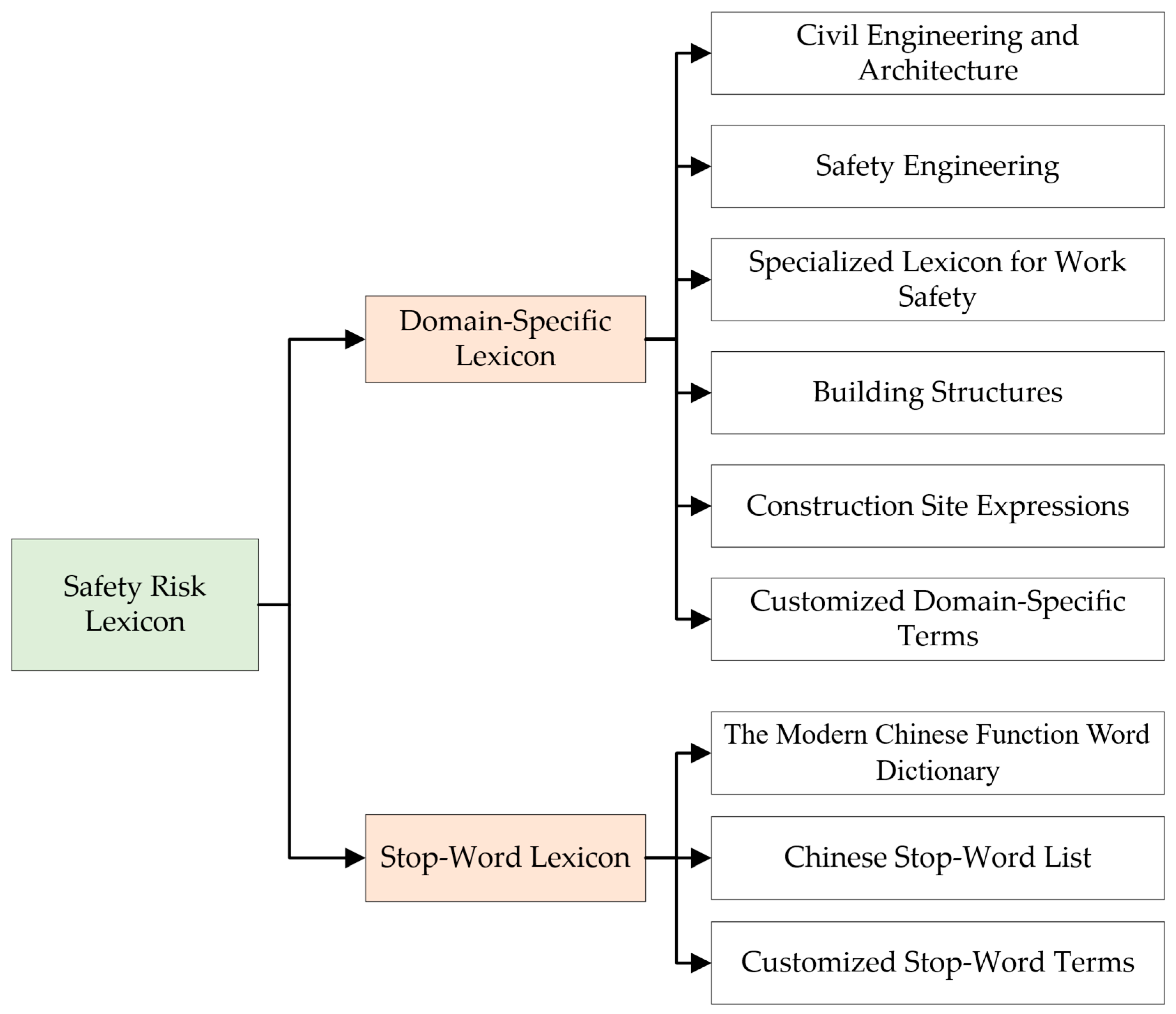
- Development and application of the safety risk lexicon: When using the default dictionary of the Jieba segmentation package, the segmentation performance was unsatisfactory, and some domain-specific terms were improperly split, which would affect the accuracy of subsequent risk identification. Therefore, to ensure the accuracy of Chinese word segmentation, it is necessary to develop a safety risk lexicon.
- (3)
- Feature parameter calculation: Feature parameters are used to filter the segmented keywords. In this study, three main feature parameters are adopted, namely Term Frequency, (Inverse) Document Frequency and Term Frequency–Inverse Document Frequency. Let the segmented safety risk corpus for metro deep foundation pit construction be denoted by D, an individual accident report by Di, and a risk term by wi, then:
- (4)
- Feature term selection and construction of the safety risk factor set
3.2. Analytic Hierarchy Process
- (1)
- Construct the hierarchical analysis model: Based on an analysis of the factors that influence the research objectives, the evaluation criteria are decomposed from top to bottom, identifying the corresponding criterion-level and indicator-level factors to form a progressive hierarchical structure.
- (2)
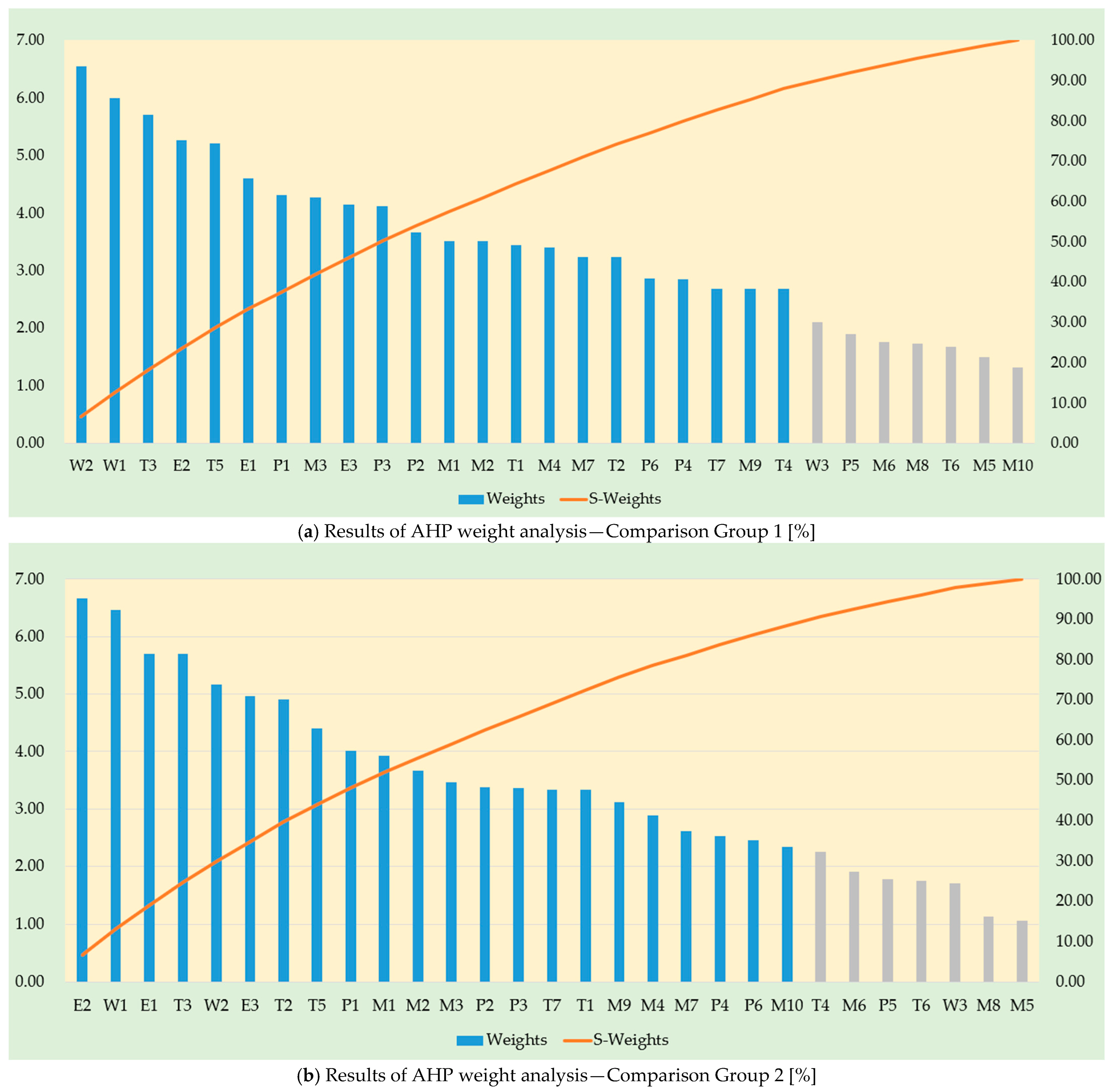
- Construct the judgment matrix: The judgment matrix represents the results of pairwise comparisons of the relative importance of the factors at the criterion-level or the indicator-level factors within the same criterion layer. Using the “1–9 scale method,” experts assign scores to determine the relative importance of each pair of indicators. Typically, the judgment matrix D is constructed by calculating the average score given by each expert.
- (3)
- Calculation of relative weights: The judgment matrix is normalized by columns, and the sum is calculated to obtain the standard matrix F. The standard matrix is then row-sum and normalized to obtain the weight matrix W, which provides the relative weights of the factors within the same level.
- (4)
- Consistency test: Since the process of pairwise comparisons and scoring is inevitably influenced by subjective factors, a consistency test is required to ensure the rationality of the results. Typically, the consistency ratio (CR) is used for this purpose. If the CR value is less than 0.1, the results are considered valid.
- (5)
- Actual weight calculation: By calculating the judgment matrices for the criterion layer and the corresponding indicator layers under each criterion, the weight of the criterion factors and the relative weights of the factors at different indicator layers can be determined. The actual weights of each indicator factor are then obtained through weighted calculation, as follows:
3.3. Interpretative Structural Modeling
- (1)
- Formation of the expert panel: The panel typically consists of 5 to 10 members, and it is important that the members are actively engaged with the problem at hand. Experts with diverse perspectives should be included to ensure a broad range of viewpoints.
- (2)
- Identification of system elements: The key elements of the system are determined through methods such as literature review and questionnaire surveys. In this study, the key system elements are the main safety risk factors in metro deep foundation pit construction, which were selected through AHP analysis.
- (3)
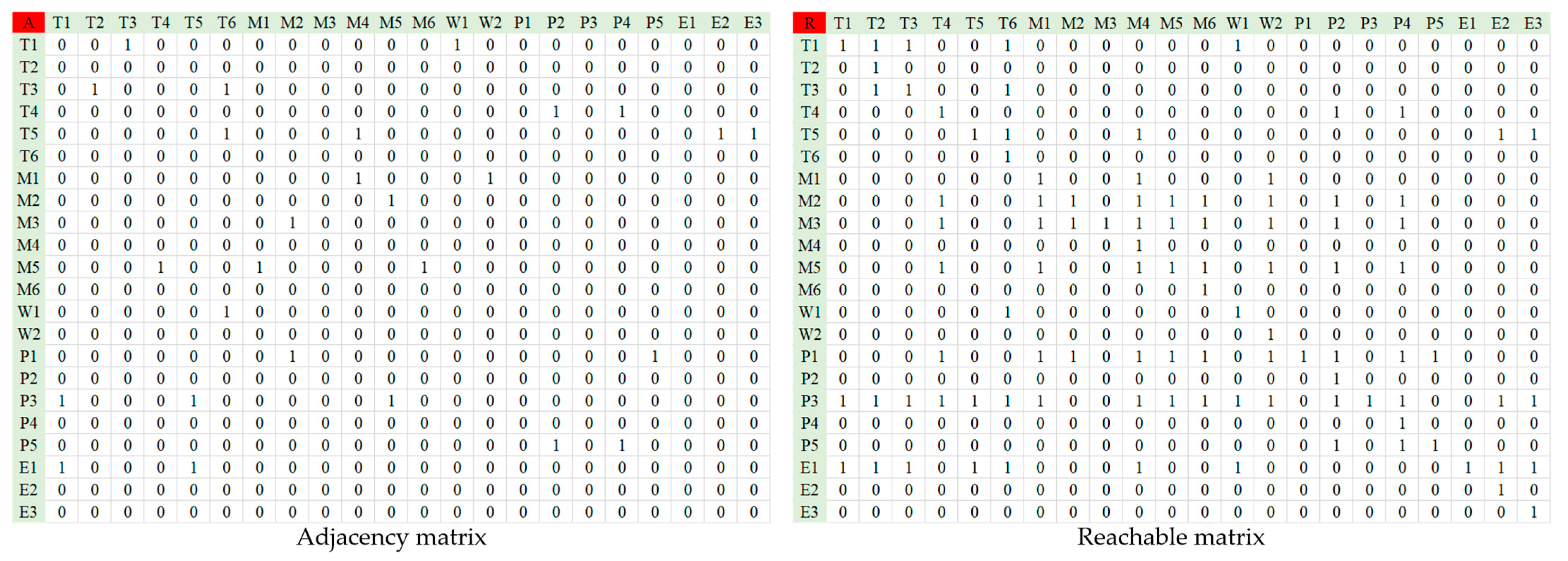
- Matrix operations: Each member of the expert panel evaluates the direct relationships between the elements, determining whether a direct relationship exists between each pair of elements, and constructs the adjacency matrix A. The adjacency matrix A is then added to the identity matrix I to obtain the product matrix B. Finally, Boolean algebra operations are applied to the product matrix to derive the final reachability matrix R.
- (4)
- Parameter calculation and region partitioning: For each system element, the reachability set (R(Si)) and the antecedent set ((A(Si)) are calculated. The reachability set refers to the set of elements that can be reached by a given element, corresponding to the elements in the row of the reachability matrix for that particular element. The antecedent set refers to the set of elements that can reach a given element, corresponding to the elements in the column of the reachability matrix for that element. Based on the calculation of the reachability and antecedent sets for each system element, their intersection is determined. If the intersection equals the antecedent set, the system element is considered part of the common set. The intersection of the reachability sets of all common set elements is then calculated; if the intersection is non-empty, it indicates that the system has only one connected domain.
- (5)
- Hierarchy division: Before performing the hierarchy division, the concept of the highest-level element must be introduced. A highest-level element is defined as one for which no higher-level element can reach it, as follows:
- (6)
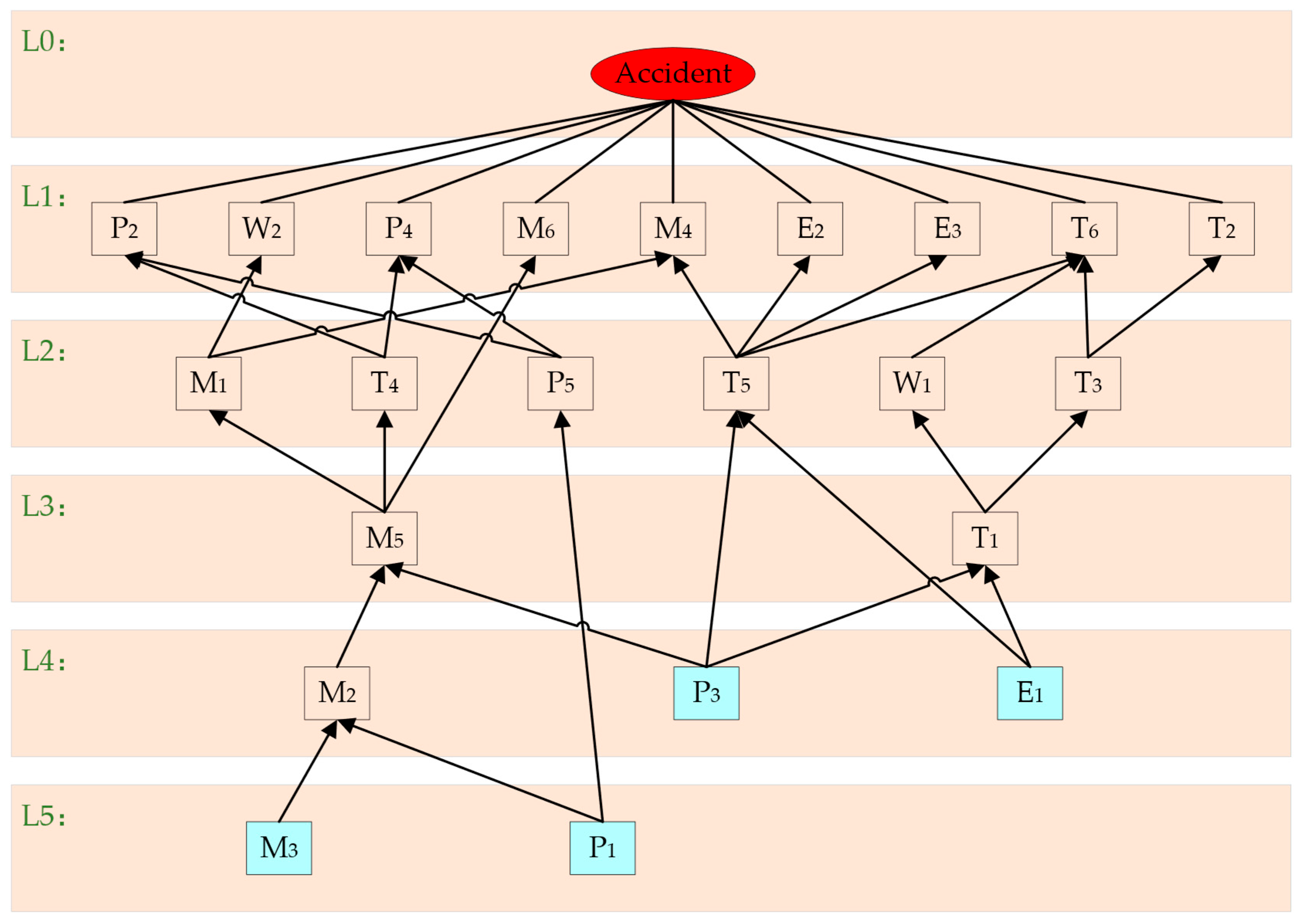
- Structure model construction: After determining the hierarchy of system elements, strongly connected elements at the same level are merged, and the reduced reachability matrix is sorted. Directed arrows are then drawn from lower-level elements to higher-level elements according to the relationships in the reachability matrix. It is important to note that there may be directional relationships spanning multiple levels. If there are already directed arrows from adjacent levels pointing to a multi-level element, additional arrows for cross-level relationships do not need to be drawn.
3.4. Matrice D’Impacts Croisés–Multiplication Appliquée à Un Classement
4. Results and Analysis
4.1. Identification of Initial Safety Risk Factors Based on Chinese Word Segmentation
4.2. Extraction of Main Safety Risk Factors Based on AHP
4.3. Determination of Interrelationships Between Safety Risk Factors Based on ISM
4.4. Classification of Safety Risk Factors Based on MICMAC
5. Discussion and Recommendations
- (1)
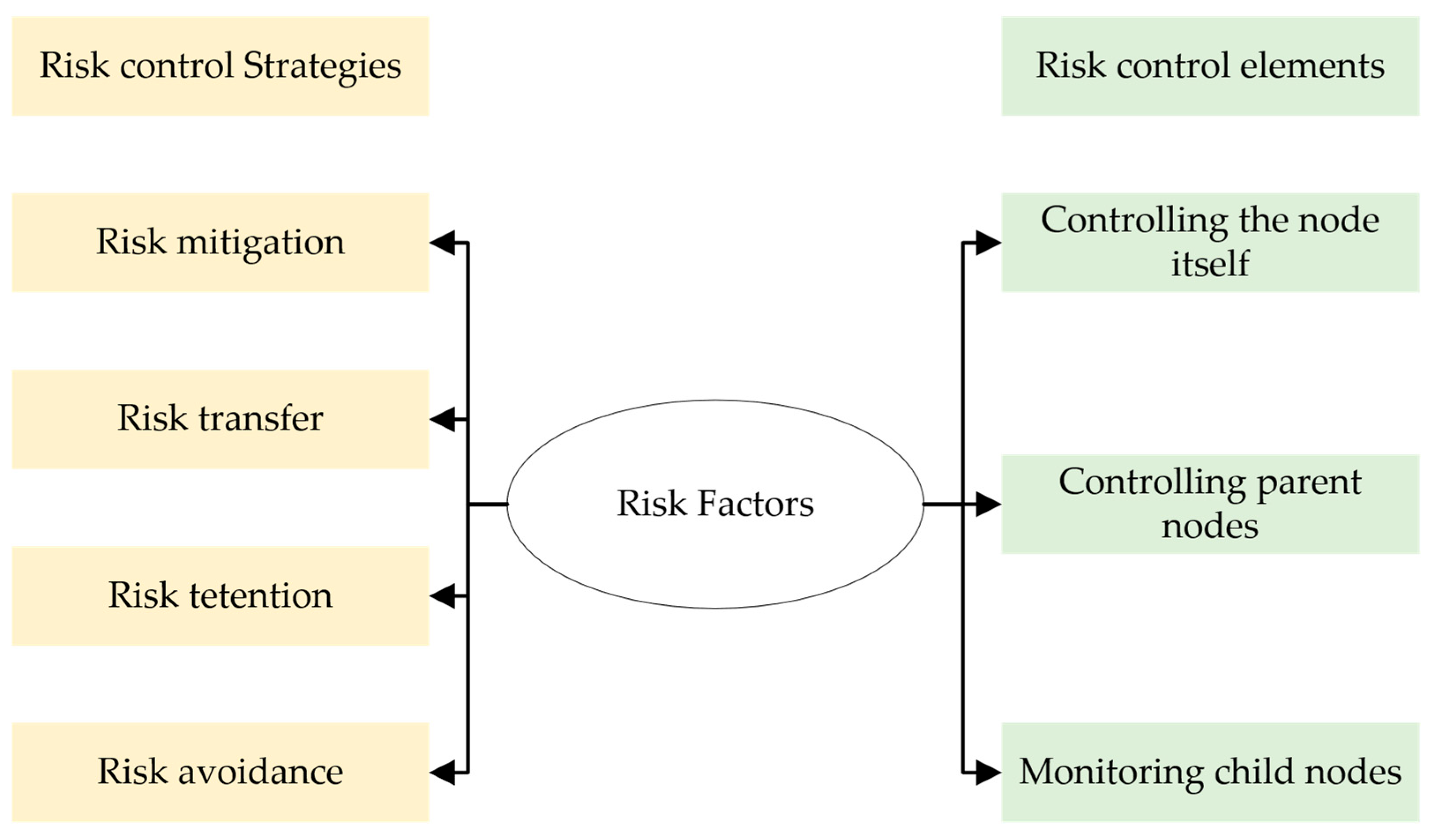
- For “Unscientific construction plan (T3)”, which has the highest weight in the AHP analysis and is located in the upper layers of the ISM model, priority attention should be given to targeted risk mitigation. Risk control can be achieved through coordinated management of this factor and its parent node (T1). Control at the node level mainly involves inviting multiple stakeholders to participate in the formulation of construction plans and conducting expert consultations to enhance scientific decision-making. Control of “T1” focuses on increasing both the number and frequency of site investigations, thereby providing sufficient support for the timely revision and optimization of construction plans.
- (2)
- For “Inadequate safety training (M5)”, which exhibits relatively high driving power and dependence, priority should be given to targeted interventions. Risk mitigation can be achieved through coordinated control of this factor and its parent nodes (M2 and P3). Control at the node level primarily involves increasing the frequency of safety training and strengthening on-site supervision. With respect to the parent nodes, mitigating “P3” can be achieved by engaging instructors with advanced professional and technical qualifications, while controlling “M2” requires the implementation of incentive and penalty mechanisms for safety training management.
- (3)
- For “Defect of the structural quality (T6)”, the occurrence probability of this factor can be reduced by controlling its parent nodes (T3, T5, and W1). Control of “W1” mainly refers to appropriate material selection based on specific construction conditions. Control of “T3” focuses on strengthening mechanical analysis to ensure the scientific validity of design and construction schemes, while control of “T5” emphasizes strict compliance with construction specifications by workers and an increased monitoring frequency to prevent control indicators from exceeding threshold values.
- (4)
- For “Improper operation of the equipment (P4)”, the risk can be mitigated by reducing the occurrence probability of this factor and its parent nodes (P5 and T4). Control of “T4” involves enhancing the depth and effectiveness of safety technical briefings, while control of “P5” is achieved through the implementation of a shift rotation system to ensure appropriate physical conditions of workers.
- (5)
- For “Inadequate security checks (M1)”, mitigation measures should focus on controlling the occurrence probability of this factor and its parent node (M5), while monitoring the status of its child nodes (W2 and M4). Control at the node level includes strengthening safety inspections through regular and unscheduled safety patrols to reduce the likelihood of occurrence. Controlling “M5” involves expanding both the frequency and coverage of safety training. Monitoring of child nodes mainly refers to the periodic inspection and statistical tracking of failures in mechanical equipment and HVAC and lighting systems.
- (6)
- For “Complex hydrogeological conditions (E1)”, considering the variability and concealment of hydrogeological conditions, a risk retention strategy is primarily adopted. Continuous monitoring of groundwater levels is required to ensure that safety risks remain within an acceptable and controllable range.
6. Conclusions
- (1)
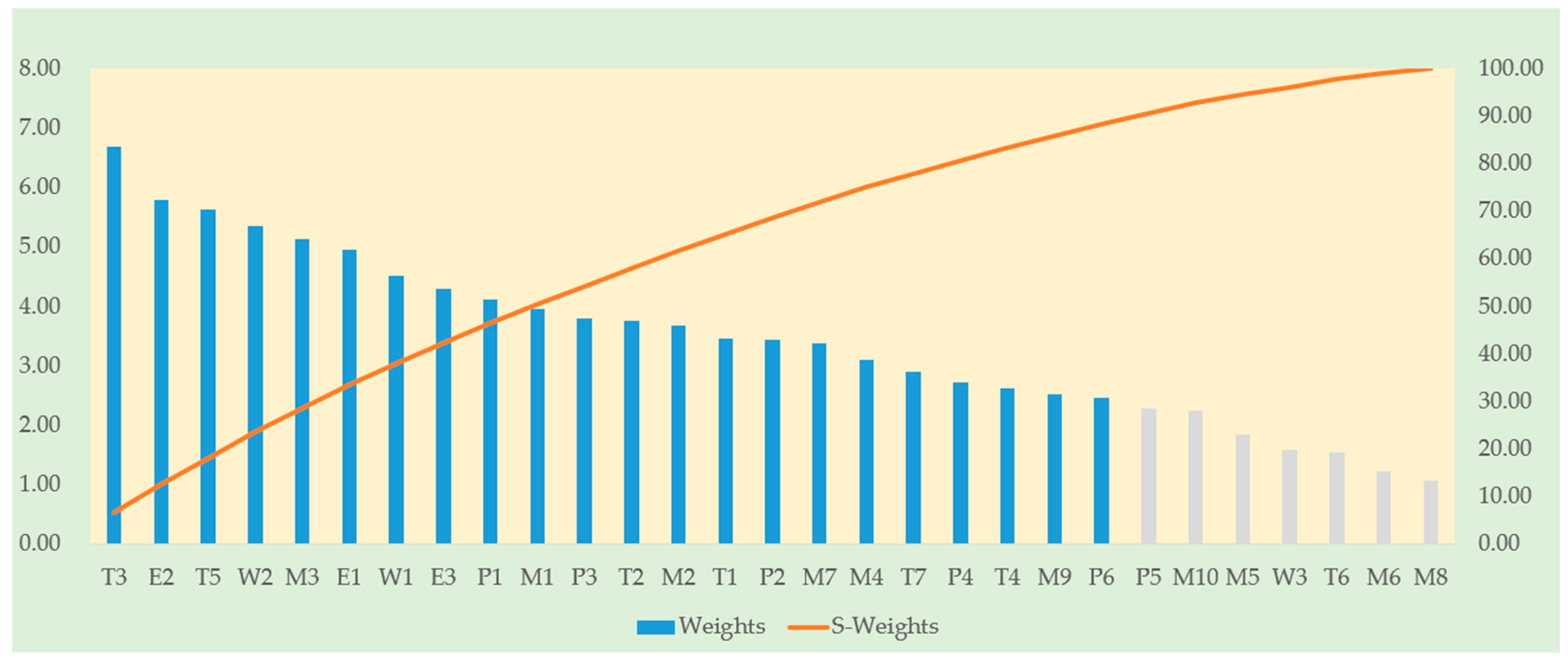
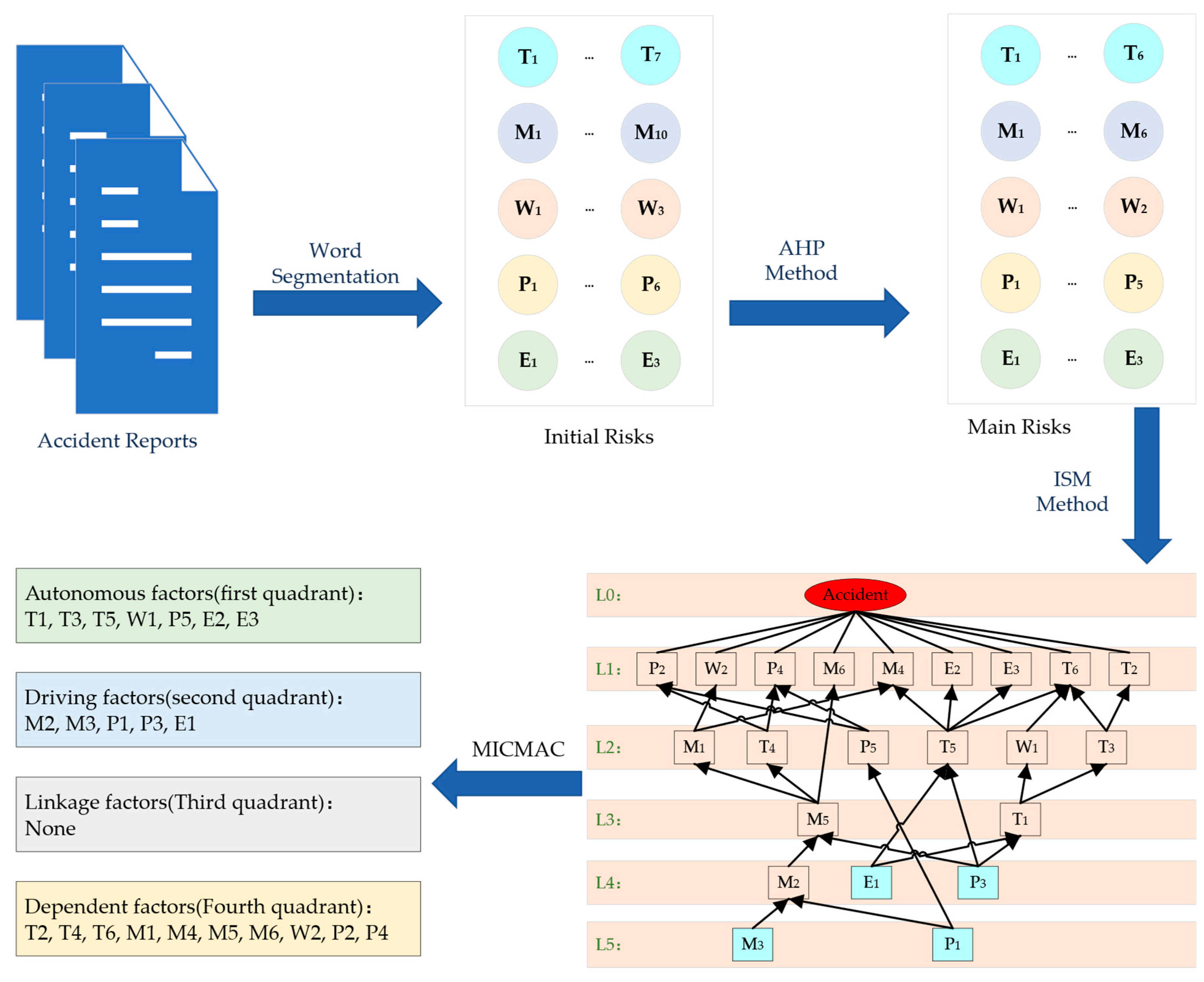
- This study established an initial list of safety risk factors for metro deep foundation pit construction through Chinese word segmentation and identified 29 factors across five categories: technology, management, personal, material and environment. To extract the main risk factors, a questionnaire survey was conducted to evaluate the relative importance of each factor, and AHP was employed to determine their weights. A total of 22 main safety risk factors were ultimately identified. Among them, “Unscientific construction plan” had the highest weight, whereas factors such as “Unscientific design plan” were deemed insignificant and were excluded from the final list.
- (2)
- Based on the identification of the main safety risk factors for metro deep foundation pit construction, ISM was applied to analyze the interaction relationships among these factors and to organize them into five hierarchical levels. Two underlying factors are located at Level 5, eleven intermediate factors are distributed across Levels 2–4 and nine direct factors are positioned at the top level. In addition, the two bottom-level factors, together with two intermediate factors that are not influenced by any other factors, constitute the fundamental safety risk factors in metro deep foundation pit construction. These four factors represent the root causes of safety accidents in metro deep foundation pit projects.
- (3)
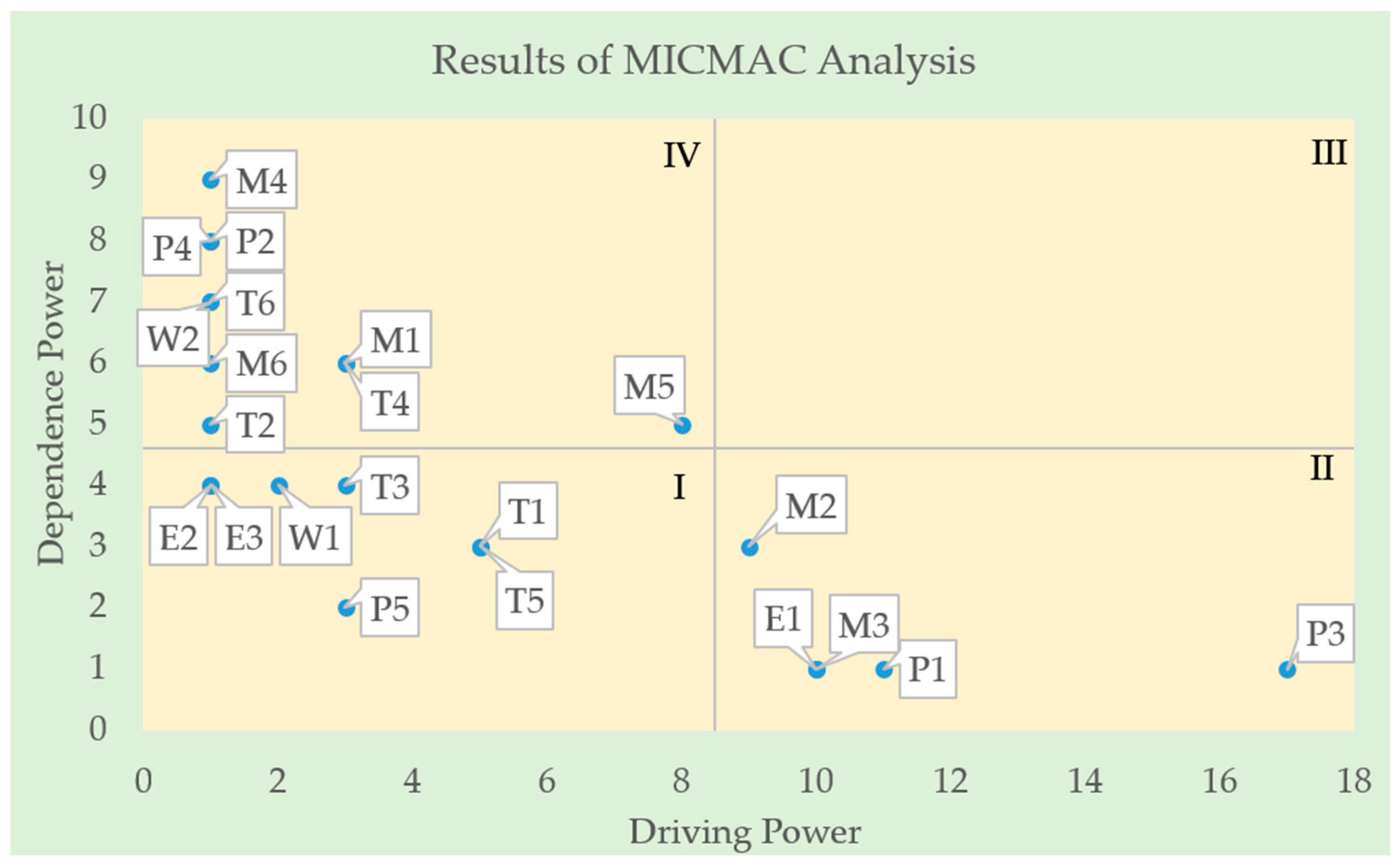
- The MICMAC analysis classified the risk factors according to their driving power and dependence into eight autonomous factors, four driving factors and ten dependent factors. This study proposes a safety risk management framework for metro deep foundation pit construction, in which appropriate control strategies and control elements are formulated for each category of factors, and targeted response measures are proposed for six representative safety risk factors.
Supplementary Materials
Author Contributions
Funding
Data Availability Statement
Acknowledgments
Conflicts of Interest
References
- Gnoni, M.G.; Andriulo, S.; Maggio, G.; Nardone, P. “Lean occupational” safety: An application for a Near-miss Management System design. Saf. Sci. 2013, 53, 96–104. [Google Scholar] [CrossRef]
- Wang, Q.; Kang, X.; Zhu, K. Coupling Evaluation Method of the Construction Risk for Subway Deep Foundation Pit. J. Northeast. Univ. (Nat. Sci.) 2021, 42, 1152–1158. [Google Scholar]
- Zhang, S.; Sunindijo, R.Y.; Loosemore, M.; Wang, S.; Gu, Y.; Li, H. Identifying critical factors influencing the safety of Chinese subway construction projects. Eng. Constr. Archit. Manag. 2021, 28, 1863–1886. [Google Scholar] [CrossRef]
- Xing, X.; Zhong, B.; Luo, H.; Li, H.; Wu, H. Ontology for safety risk identification in metro construction. Comput. Ind. 2019, 109, 14–30. [Google Scholar] [CrossRef]
- Liu, H.; Liu, L.; Ji, X. Identification and Analysis of Metro Foundation Construction Safety Risk Based on Fault Tree Analysis. Chem. Eng. Trans. 2016, 51, 979–984. [Google Scholar]
- Li, M.; Wang, J. Intelligent Recognition of Safety Risk in Metro Engineering Construction Based on BP Neural Network. Math. Probl. Eng. 2021, 20, 5587027. [Google Scholar] [CrossRef]
- Zhang, S.; Shang, C.; Wang, C.; Song, R.; Wang, X.H. Real-Time Safety Risk Identification Model during Metro Construction Adjacent to Buildings. J. Constr. Eng. Manag. 2019, 145, 04019034. [Google Scholar] [CrossRef]
- Seo, J.W.; Choi, H.H. Risk-Based Safety Impact Assessment Methodology for Underground Construction Projects in Korea. J. Constr. Eng. Manag. 2008, 134, 72–81. [Google Scholar] [CrossRef]
- Abouhamad, M.; Zayed, T. Fuzzy Preference Programming Framework for Functional Assessment of Subway Networks. Algorithms 2020, 13, 220. [Google Scholar] [CrossRef]
- Na, X.U.; Ling, M.A.; Liu, Q.; Wang, L.; Deng, Y. An improved text mining approach to extract safety risk factors from construction accident reports. Saf. Sci. 2021, 138, 105216. [Google Scholar] [CrossRef]
- Tang, C.; Shen, C.X.; Zhang, J.J.; Guo, Z. Identification of Safety Risk Factors in Metro Shield Construction. Buildings 2024, 14, 492. [Google Scholar] [CrossRef]
- Deng, Y.L.; Liu, Z.D.; Song, L.L.; Ni, G.D.; Xu, N. Exploring the metro construction accidents and causations for improving safety management based on data mining and network theory. Eng. Constr. Archit. Manag. 2023, 6, 3508–3532. [Google Scholar] [CrossRef]
- Liang, Y.X.; Xu, N.; Chang, H.; Qian, S.; Liu, Y. Automatic construction of risk transmission network about subway construction based on deep learning models. Sci. Rep. 2025, 15, 16383. [Google Scholar] [CrossRef]
- Chen, D.W.; Zhou, J.L.; Duan, P.S.; Zhang, J.Q. Integrating knowledge management and BIM for safety risk identification of deep foundation pit construction. Eng. Constr. Archit. Manag. 2023, 30, 3242–3258. [Google Scholar] [CrossRef]
- Zhang, Y.C.; Xing, X.J.; Antwi-Afari, M.F. Semantic IFC Data Model for Automatic Safety Risk Identification in Deep Excavation Projects. Appl. Sci. 2021, 11, 9958. [Google Scholar] [CrossRef]
- Hao, H.; Jian, H.; Liu, P.L.; Cong, Z. Identification and evaluation of deep foundation pit construction risks based on Grey-DEMATEL-Fuzzy comprehensive evaluation method. PLoS ONE 2024, 19, e0304095. [Google Scholar] [CrossRef]
- Huang, J.Y.; Fang, J.; Wang, J.C. Risk Coupling Analysis of Metro Deep Foundation Pit Construction Based on Complex Networks. Buildings 2024, 14, 1953. [Google Scholar] [CrossRef]
- Wu, B.; Zeng, J.; Zhu, R.; Yang, F.; Liu, C.; Xie, Y. A collapse risk assessment method for subway foundation pit based on cloud model and improved Dempster-Shafer evidence theory. Sci. Rep. 2024, 14, 2653. [Google Scholar] [CrossRef] [PubMed]
- Shen, Y.S.; Wang, P.; Li, M.P.; Mei, Q.W. Application of Subway Foundation Pit Engineering Risk Assessment: A Case Study of Qingdao Rock Area, China. KSCE J. Civ. Eng. 2019, 23, 4621–4630. [Google Scholar] [CrossRef]
- An, X.; Zheng, F.; Wang, Z.; Li, Z.; Jiao, Y.; An, H. Dynamic Risk Assessment Approach for Deep Foundation Pit Construction Based on the Integration of Multisource Data Using D-S Evidence Theory. J. Constr. Eng. Manag. 2025, 151, 04025155. [Google Scholar] [CrossRef]
- Yu, Y.; Wu, K.; Cui, S.; Zhang, Q.; Zhao, J.; Zhang, Z. Deformation Characteristics Analysis of Supporting Structure Caused by Deep Excavation of Large-Span Subway Parking Lot in Deep Silt Stratum. Indian Geotech. J. 2019, 12, 519–530. [Google Scholar] [CrossRef]
- Valipour, A.; Yahaya, N.; Md Noor, N.; Antucheviciene, J.; Tamosaitiene, J. Hybrid SWARA-COPRAS method for risk assessment in deep foundation excavation project: An Iranian case study. J. Civ. Eng. Manag. 2017, 23, 524–532. [Google Scholar] [CrossRef]
- Zhou, Y.; Li, C.; Zhou, C.; Luo, H. Using Bayesian network for safety risk analysis of diaphragm wall deflection based on field data. Reliab. Eng. Syst. Saf. 2018, 180, 152–167. [Google Scholar] [CrossRef]
- Wei, D.; Xu, D.; Zhang, Y. A fuzzy evidential reasoning-based approach for risk assessment of deep foundation pit. Tunn. Undergr. Space Technol. 2020, 97, 103232. [Google Scholar] [CrossRef]
- Samantra, C.; Datta, S.; Mahapatra, S.S. Fuzzy based risk assessment module for metropolitan construction project: An empirical study. Eng. Appl. Artif. Intell. 2017, 65, 449–464. [Google Scholar] [CrossRef]
- Potapova, E. General problems of geotechnical risk management in terms of construction of vertical shafts in the Moscow subway. Min. Informational Anal. Bull. 2019, 10, 44–54. [Google Scholar] [CrossRef]
- Jian, H. Construction Risk of Foundation Pit of Subway Station Based on Rough Set Theory and Catastrophe Progression Method. Electron. J. Geotech. Eng. 2016, 4, 1615–1628. [Google Scholar]
- Zhou, Y.; Li, S.; Zhou, C.; Luo, H. Intelligent Approach Based on Random Forest for Safety Risk Prediction of Deep Foundation Pit in Subway Stations. J. Comput. Civ. Eng. 2019, 33, 05018004. [Google Scholar] [CrossRef]
- Dong, L.; Wang, Q.; Zhang, W.; Zhang, Y.; Li, X.; Liu, F. Risk assessment of tunnel water inrush based on Delphi method and machine learning. Front. Earth Sci. 2025, 13, 1555493. [Google Scholar] [CrossRef]
- Shen, J.H.; Liu, S.P.; Zhang, J. Using Text Mining and Bayesian Network to Identify Key Risk Factors for Safety Accidents in Metro Construction. J. Constr. Eng. Manag. 2024, 150, 04024052. [Google Scholar] [CrossRef]
- Fu, L.P.; Wang, X.Q.; Zhao, H.; Li, M.N. Interactions among safety risks in metro deep foundation pit projects: An association rule mining-based modeling framework. Reliab. Eng. Syst. Saf. 2022, 221, 108381. [Google Scholar] [CrossRef]
- Fu, L.; Li, X.; Wang, X.; Li, M. Safety risk propagation in complex construction projects: Insights from metro deep foundation pit projects. Reliab. Eng. Syst. Saf. 2025, 257, 110858. [Google Scholar] [CrossRef]
- Zhou, Y.; Su, W.J.; Ding, L.Y.; Luo, H.B.; Love, P.E.D. Predicting Safety Risks in Deep Foundation Pits in Subway Infrastructure Projects: Support Vector Machine Approach. J. Comput. Civ. Eng. 2017, 31, 04017052. [Google Scholar] [CrossRef]
- Hui, L.I. Mutual Influence Analysis of Simultaneous Excavation of Subway and Adjacent Block Deep Foundation Pits. J. Railw. Eng. Soc. 2019, 36, 65–69. [Google Scholar]
- Zhang, X.; Zhao, D.; Shi, X.; Gao, X.; Zhang, Y.; Wang, S. Investigation into the Impacts of Cover-and-Cut Top-Down Metro Station Construction on Adjacent Buildings: A Case Study. Buildings 2025, 15, 4149. [Google Scholar] [CrossRef]
- Zhou, W.; Abdullah, A.; Xu, X. Safety Risk Assessment of Deep Excavation for Metro Stations Using the Second Improved CRITIC Cloud Model. Buildings 2025, 15, 1342. [Google Scholar] [CrossRef]
- Durdyev, S.; Ashour, M.; Connelly, S.; Mahdiyar, A. Barriers to the implementation of Building Information Modelling (BIM) for facility management. J. Build. Eng. 2022, 46, 103736. [Google Scholar] [CrossRef]
- Warfield, J.N. On Arranging Elements of a Hierarchy in Graphic Form. IEEE Trans. Syst. Man Cybern. 1973, SMC-3, 121–132. [Google Scholar] [CrossRef]
- Duperrin, J.C.; Godet, M. Method for Hierarchizing the Elements of a System: Essai de Prospective du Système de L’énergie Nucléaire dans son Contexte Societal; CEA-Rapport économique R-45-41; CEA: Paris, France, 1973. [Google Scholar]
- GB50652-2011; The Code for Risk Management of Underground Works in Urban Rail Transit. China Architecture & Building Press: Beijing, China, 2011.
- GB50715-2011; The Standard for Construction Safety Assessment of Metro Engineering. China Planning Press: Beijing, China, 2011.
- Lee, S. Determination of Priority Weights under Multiattribute Decision-Making Situations: AHP versus Fuzzy AHP. J. Constr. Eng. Manag. 2015, 141, 05014015. [Google Scholar] [CrossRef]
- Wang, Q.; Shen, C.; Guo, Z.; Zhu, K.; Zhang, J.; Huang, M. Research on the Barriers and Strategies to Promote Prefabricated Buildings in China. Buildings 2023, 13, 1200. [Google Scholar] [CrossRef]
- Thomas, D.; Khanduja, D. ISM-ANP hybrid approach to prioritize the barriers in green lean Six Sigma implementation in construction sector. Int. J. Lean Six Sigma 2022, 13, 502–520. [Google Scholar] [CrossRef]





| No. | Time | Location | DOI of Accident Report |
|---|---|---|---|
| 1 | 4 July 2019 | Qingdao Metro Line 1 Shengliqiao Station | http://www.safehoo.com/News/News/China/201907/1570206.shtml (accessed on 12 November 2025) |
| 2 | 27 August 2019 | Shenzhen Metro Line 10 Mugu Station | http://www.safehoo.com/News/News/China/201908/1576031.shtml (accessed on 12 November 2025) |
| 3 | 7 December 2020 | Nanjing Metro Line 7 Fujian Road Station | http://js.people.com.cn/gb/n2/2020/1207/c360303-34460377.html (accessed on 12 November 2025) |
| … | … | … |
| No. | DOI of Accident Report |
|---|---|
| Original sentence | The construction workers have weak safety awareness and illegally enter the dangerous hoisting area when the crane is hoisting mortar. |
| Jieba segmentation | The/construction/workers/have/weak/safety/awareness/and/illegally/enter/the/dangerous/hoisting/area/when/the/crane/is/hoisting/mortar/./ |
| Jieba segmentation + Domain-Specific lexicon | The construction workers/have/weak/safety awareness/and/illegally/enter/the/dangerous/hoisting/area/when/the/crane/is/hoisting/mortar/./ |
| Jieba segmentation + Domain-Specific lexicon + Stop-Word lexicon | The construction workers/weak/safety awareness/illegally/enter/dangerous/hoisting/area/crane/hoisting/mortar/ |
| No. | High-Frequency Terms | TF–IDF | No. | High-Frequency Terms | TF–IDF |
|---|---|---|---|---|---|
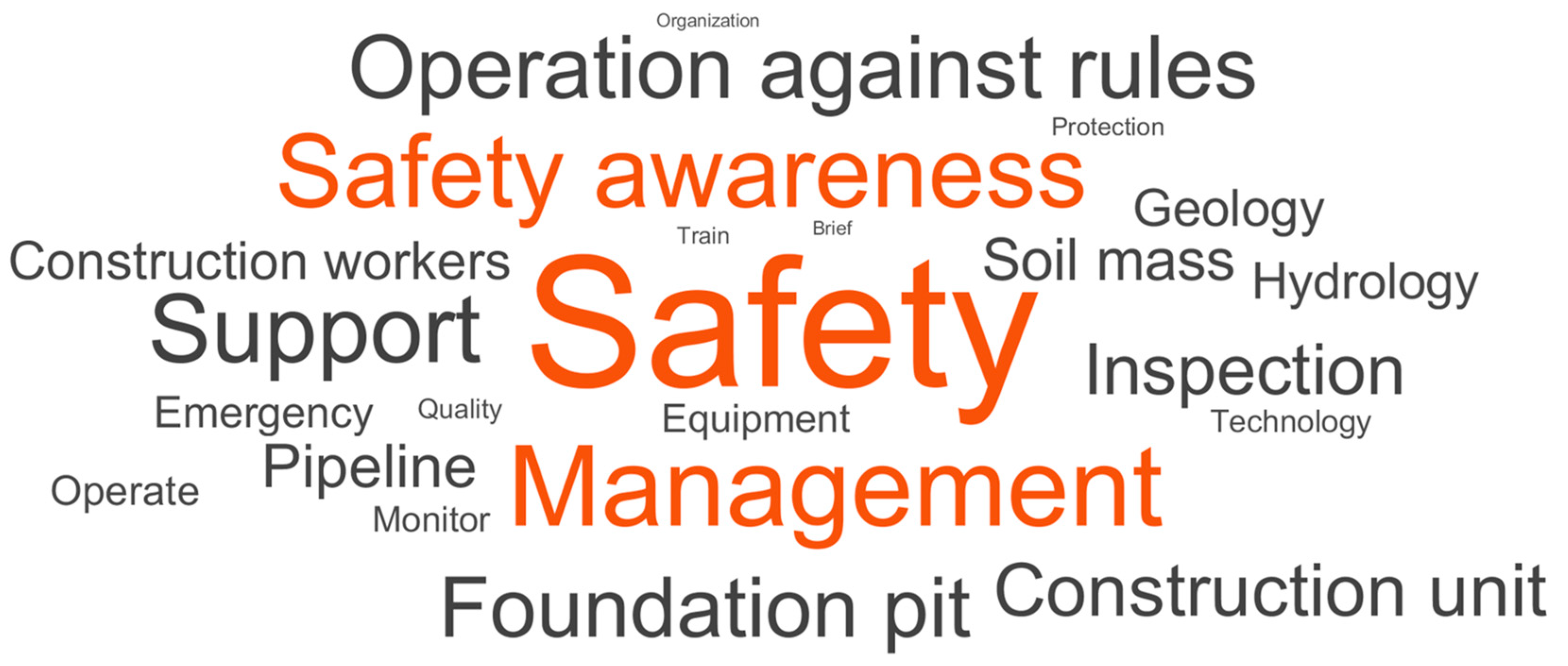
| 1 | Safety | 238.2 | 2 | Management | 153.6 |
| 3 | Safety awareness | 143.3 | 4 | Support | 135.7 |
| 5 | Operation against rules | 129.1 | 6 | Foundation pit | 125.3 |
| 7 | Construction unit | 115.7 | 8 | Inspection | 112.9 |
| 9 | Pipeline | 103.5 | 10 | Soil mass | 102.1 |
| 11 | Construction workers | 97.8 | 12 | Geology | 96.2 |
| 13 | Hydrology | 95.3 | 14 | Emergency | 89.4 |
| 15 | Operate | 87.5 | 16 | Equipment | 86.3 |
| 17 | Monitoring | 83.1 | 18 | Technology | 79.7 |
| 19 | Quality | 76.5 | … | … | … |
| Category | Code | High-Frequency Terms | Risk Factors |
|---|---|---|---|
| Technology | T1 | Investigation | Inadequate investigation |
| T2 | Support | Defect of the support system | |
| T3 | Construction plan | Unscientific construction plan | |
| T4 | Briefing | Insufficient safety and technical briefings | |
| T5 | Monitor | Inadequate monitoring | |
| T6 | Design plan | Unscientific design plan | |
| T7 | Quality | Defect of the structural quality | |
| Management | M1 | Check | Inadequate security checks |
| M2 | Management | Chaotic on-site management | |
| M3 | Organization | Incomplete safety management organization | |
| M4 | Protection | Insufficient safety protection | |
| M5 | Subcontract | Insufficient subcontracting management | |
| M6 | System | Imperfect safety management system | |
| M7 | Safety training | Inadequate safety training | |
| M8 | Coordination | Inadequate organizational coordination | |
| M9 | Emergency | Insufficient emergency management capabilities | |
| M10 | Supervision | Inadequate safety supervision | |
| Material | W1 | Material | Incorrect use of materials |
| W2 | Failure | Equipment failure | |
| W3 | Equipment selection | Incorrect equipment selection | |
| Personal | P1 | Safety awareness | Insufficient safety awareness |
| P2 | Violation | Violation of work regulations | |
| P3 | Technology | Insufficient professional and technical proficiency | |
| P4 | Operation | Improper operation of the equipment | |
| P5 | Command | Illegal command | |
| P6 | Fatigue | Worker fatigue | |
| Environment | E1 | Hydrologic, Geological | Complex hydrogeological conditions |
| E2 | Pipeline | Insufficient protection of underground pipelines | |
| E3 | Building | Insufficient protection of surrounding buildings |
| Characteristic | Categories | No. | Percentage |
|---|---|---|---|
| Type of Employer | University | 8 | 22.22% |
| Research institution | 6 | 16.67% | |
| Investment unit | 6 | 16.67% | |
| Design unit | 4 | 11.11% | |
| Construction unit | 12 | 33.33% | |
| Educational Qualifications | Bachelor and Lower | 22 | 61.11% |
| Master | 8 | 22.22% | |
| Doctoral and Higher | 6 | 16.67% | |
| Work Experience | <1 years | 2 | 5.56% |
| 1–3 years | 13 | 36.11% | |
| 3–5 years | 14 | 38.89% | |
| >5 years | 7 | 19.44% |
| Categories | Technology | Management | Material | Personal | Environment |
|---|---|---|---|---|---|
| Technology | 1.0000 | 1.0000 | 2.2500 | 1.2500 | 2.0000 |
| Management | 1.0000 | 1.0000 | 2.5000 | 1.5000 | 2.0000 |
| Material | 0.4444 | 0.4000 | 1.0000 | 0.7500 | 0.5833 |
| Personal | 0.8000 | 0.6667 | 1.3333 | 1.0000 | 1.3750 |
| Environment | 0.5000 | 0.5000 | 1.7143 | 0.7273 | 1.0000 |
| Caterories | Technology | Management | Material | Personal | Environment |
|---|---|---|---|---|---|
| Weight | 0.2659 | 0.2812 | 0.1144 | 0.1882 | 0.1503 |
| λmax | 5.0845 | CR | 0.0189 | Consistency | Pass |
| Categories | Weight | Safety Risk Factors | Relative Weight [%] | Actual Weight [%] |
|---|---|---|---|---|
| Personal | 18.82% | Insufficient safety awareness | 21.89 | 4.12 |
| Violation of work regulations | 18.32 | 3.45 | ||
| Insufficient professional and technical proficiency | 20.20 | 3.80 | ||
| Improper operation of the equipment | 14.43 | 2.72 | ||
| Illegal command | 12.12 | 2.28 | ||
| Worker fatigue | 13.04 | 2.45 | ||
| Material | 11.44% | Incorrect use of materials | 39.44 | 4.51 |
| Equipment failure | 46.72 | 5.34 | ||
| Incorrect equipment selection | 13.84 | 1.58 | ||
| Technology | 26.59% | Inadequate investigation | 12.99 | 3.46 |
| Defect of the support system | 14.10 | 3.75 | ||
| Unscientific construction plan | 25.16 | 6.69 | ||
| Insufficient safety and technical briefings | 9.88 | 2.63 | ||
| Inadequate monitoring | 21.15 | 5.63 | ||
| Unscientific design plan | 5.82 | 1.55 | ||
| Defect of the structural quality | 10.89 | 2.90 | ||
| Management | 28.12% | Inadequate security checks | 14.06 | 3.95 |
| Chaotic on-site management | 13.04 | 3.67 | ||
| Incomplete safety management organization | 18.25 | 5.13 | ||
| Insufficient safety protection | 11.04 | 3.10 | ||
| Insufficient subcontracting management | 6.54 | 1.84 | ||
| Imperfect safety management system | 4.34 | 1.22 | ||
| Inadequate safety training | 12.02 | 3.38 | ||
| Inadequate organizational coordination | 3.80 | 1.07 | ||
| Insufficient emergency management capabilities | 8.96 | 2.52 | ||
| Inadequate safety supervision | 7.95 | 2.24 | ||
| Environment | 15.03% | Complex hydrogeological conditions | 32.92 | 4.95 |
| Insufficient protection of underground pipelines | 38.47 | 5.78 | ||
| Insufficient protection of surrounding buildings | 28.61 | 4.30 |
| Categories | Code | Safety Risk Factors |
|---|---|---|
| Technology | T1 | Inadequate investigation |
| T2 | Defect of the support system | |
| T3 | Unscientific construction plan | |
| T4 | Insufficient safety and technical briefings | |
| T5 | Inadequate monitoring | |
| T6 | Defect of the structural quality | |
| Management | M1 | Inadequate security checks |
| M2 | Chaotic on-site management | |
| M3 | Incomplete safety management organization | |
| M4 | Insufficient safety protection | |
| M5 | Inadequate safety training | |
| M6 | Insufficient emergency management capabilities | |
| Material | W1 | Incorrect use of materials |
| W2 | Equipment failure | |
| Person | P1 | Insufficient safety awareness |
| P2 | Violation of work regulations | |
| P3 | Insufficient professional and technical proficiency | |
| P4 | Improper operation of the equipment | |
| P5 | Worker fatigue | |
| Environment | E1 | Complex hydrogeological conditions |
| E2 | Insufficient protection of underground pipelines | |
| E3 | Insufficient protection of surrounding buildings |
| Level | Safety Risk Factors |
|---|---|
| 1 | T2, T6, M4, M6, W2, P2, P4, E2 |
| 2 | T3, T4, T5, M1, W1, P5 |
| 3 | T1, M5 |
| 4 | M2, E1, P3 |
| 5 | M3, P1 |
| Safety Risk Factors | Driving Power | Dependence Power |
|---|---|---|
| T1 | 5 | 3 |
| T2 | 1 | 5 |
| T3 | 3 | 4 |
| T4 | 3 | 6 |
| T5 | 5 | 3 |
| T6 | 1 | 7 |
| M1 | 3 | 6 |
| M2 | 9 | 3 |
| M3 | 10 | 1 |
| M4 | 1 | 9 |
| M5 | 8 | 5 |
| M6 | 1 | 6 |
| W1 | 2 | 4 |
| W2 | 1 | 7 |
| P1 | 11 | 1 |
| P2 | 1 | 8 |
| P3 | 17 | 1 |
| P4 | 1 | 8 |
| P5 | 3 | 2 |
| E1 | 10 | 1 |
| E2 | 1 | 4 |
| E3 | 1 | 4 |
Disclaimer/Publisher’s Note: The statements, opinions and data contained in all publications are solely those of the individual author(s) and contributor(s) and not of MDPI and/or the editor(s). MDPI and/or the editor(s) disclaim responsibility for any injury to people or property resulting from any ideas, methods, instructions or products referred to in the content. |
© 2026 by the authors. Licensee MDPI, Basel, Switzerland. This article is an open access article distributed under the terms and conditions of the Creative Commons Attribution (CC BY) license.
Share and Cite
Guo, G.; Han, S.; Tang, C.; Shen, C. Research on the Systematic Analysis of Safety Risk in Metro Deep Foundation Pit Construction. Buildings 2026, 16, 634. https://doi.org/10.3390/buildings16030634
Guo G, Han S, Tang C, Shen C. Research on the Systematic Analysis of Safety Risk in Metro Deep Foundation Pit Construction. Buildings. 2026; 16(3):634. https://doi.org/10.3390/buildings16030634
Chicago/Turabian StyleGuo, Guoqing, Shuai Han, Chao Tang, and Chuxiong Shen. 2026. "Research on the Systematic Analysis of Safety Risk in Metro Deep Foundation Pit Construction" Buildings 16, no. 3: 634. https://doi.org/10.3390/buildings16030634
APA StyleGuo, G., Han, S., Tang, C., & Shen, C. (2026). Research on the Systematic Analysis of Safety Risk in Metro Deep Foundation Pit Construction. Buildings, 16(3), 634. https://doi.org/10.3390/buildings16030634