The Effect of Air Supply on Kitchen Range Hood Performance and Unintended Infiltration


Abstract
1. Introduction
1.1. Research Background and Significance
1.2. Research Purpose and Methods
2. Discussion of Existing Research
3. Experimental Research
3.1. Experimental Overview
3.2. Measurement Items and Methods
4. CFD Analysis Research
4.1. CFD Overview
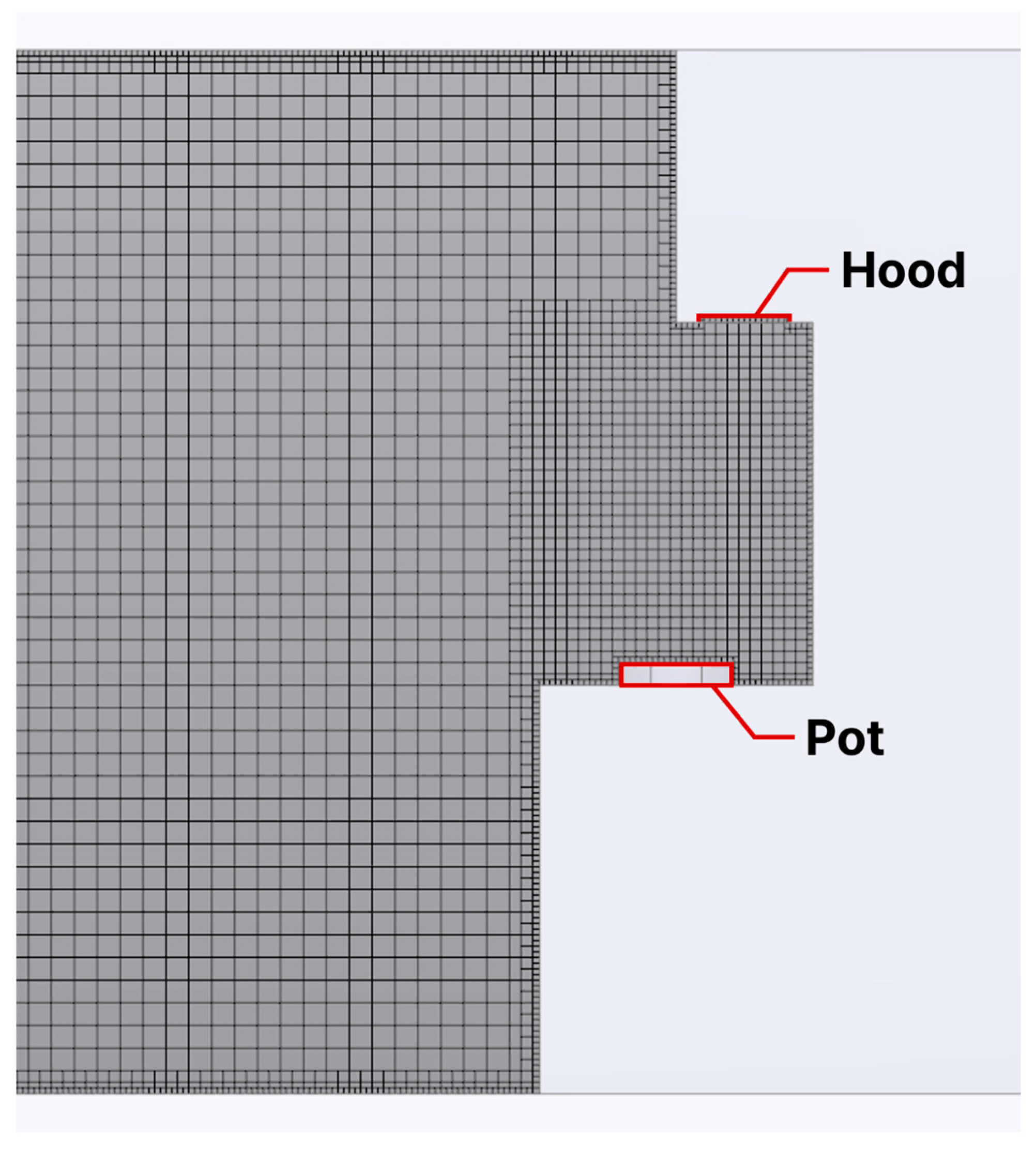
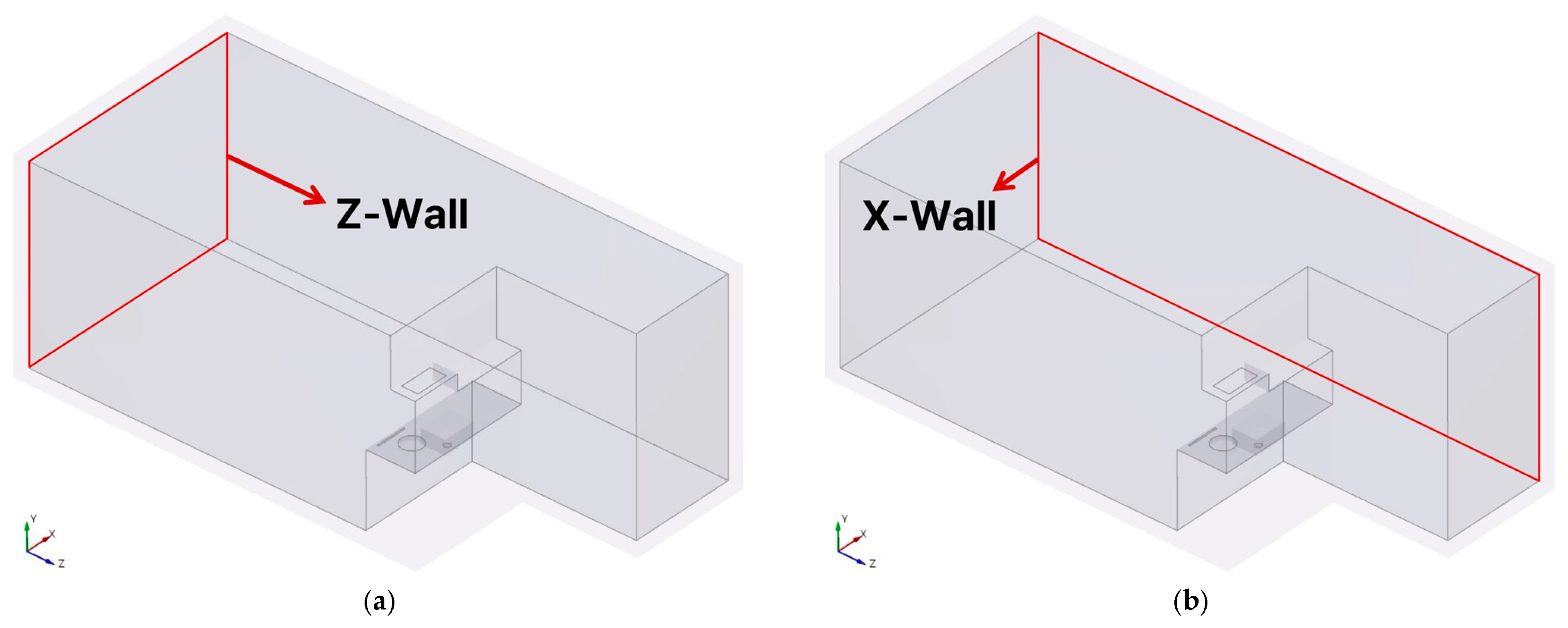
4.2. Computational Domain Modeling
4.3. Boundary Conditions
- Qleak: Equivalent leakage rate.
- Qhood: Hood exhaust flow rate.
- QASU: ASU airflow rate.
- QUIC: UIC infiltration rate.
- Qpot: Pot hot airflow rate.
4.4. Analysis Conditions
5. Results and Analysis
5.1. Results of the Experiment
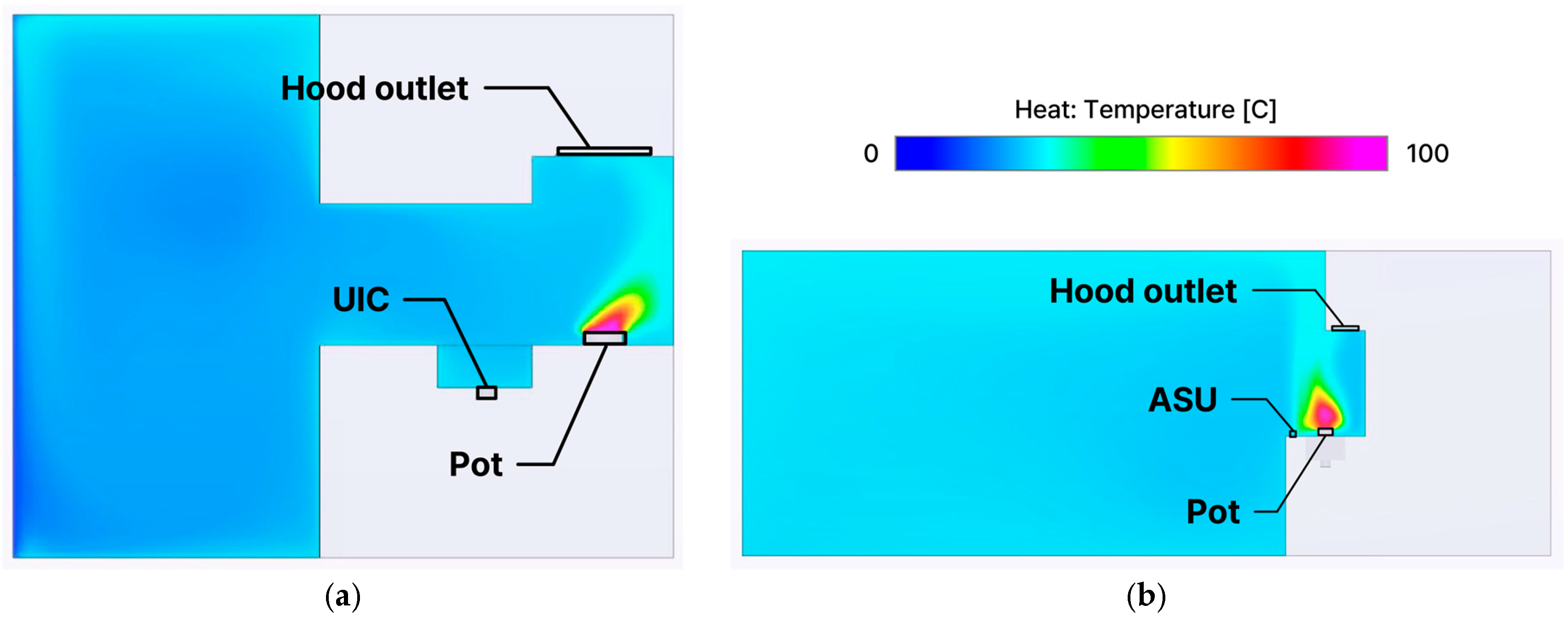
5.2. Results of CFD Analysis
5.3. Comparison of Experimental and CFD Results
6. Conclusions
- (1)
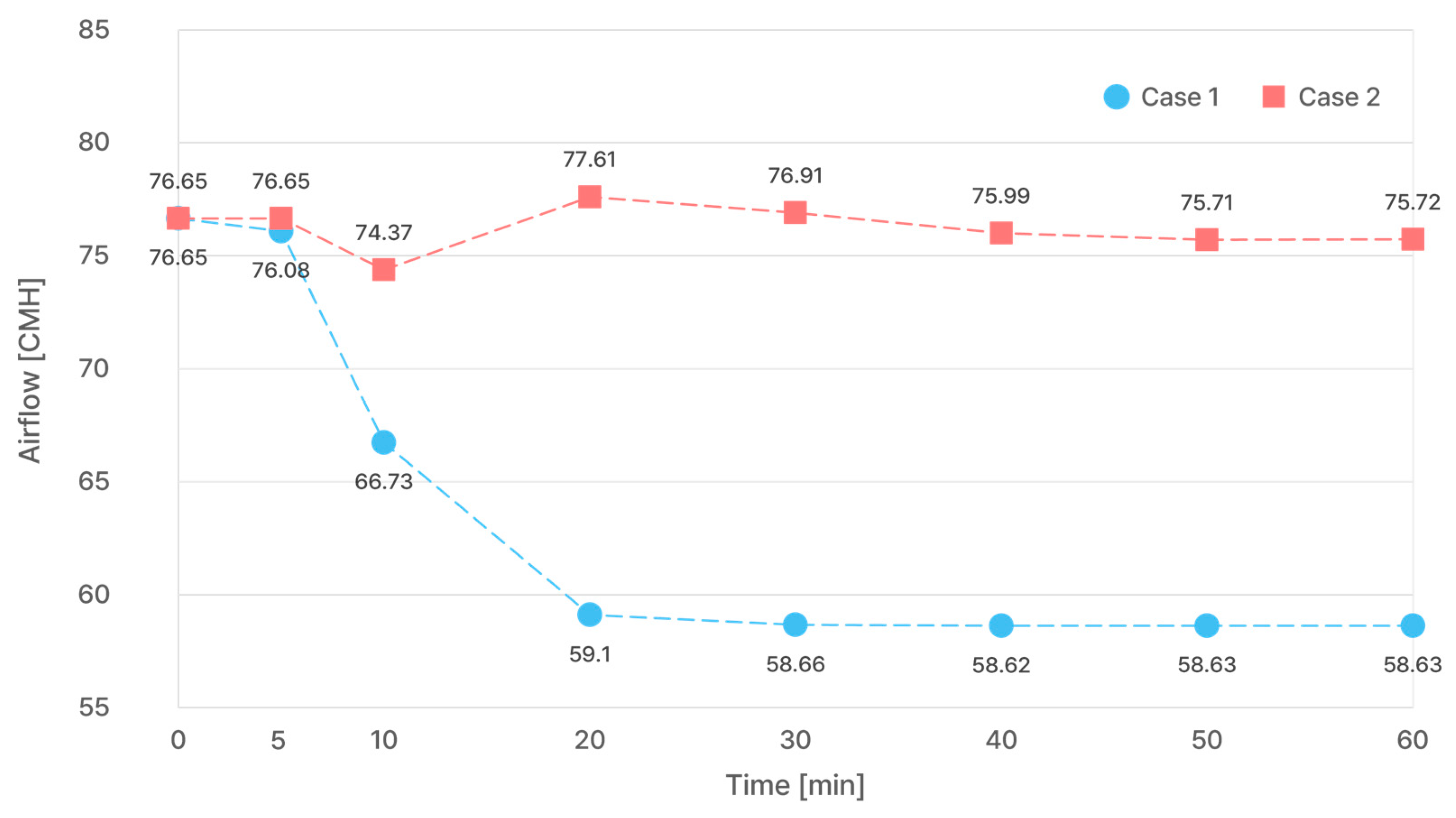
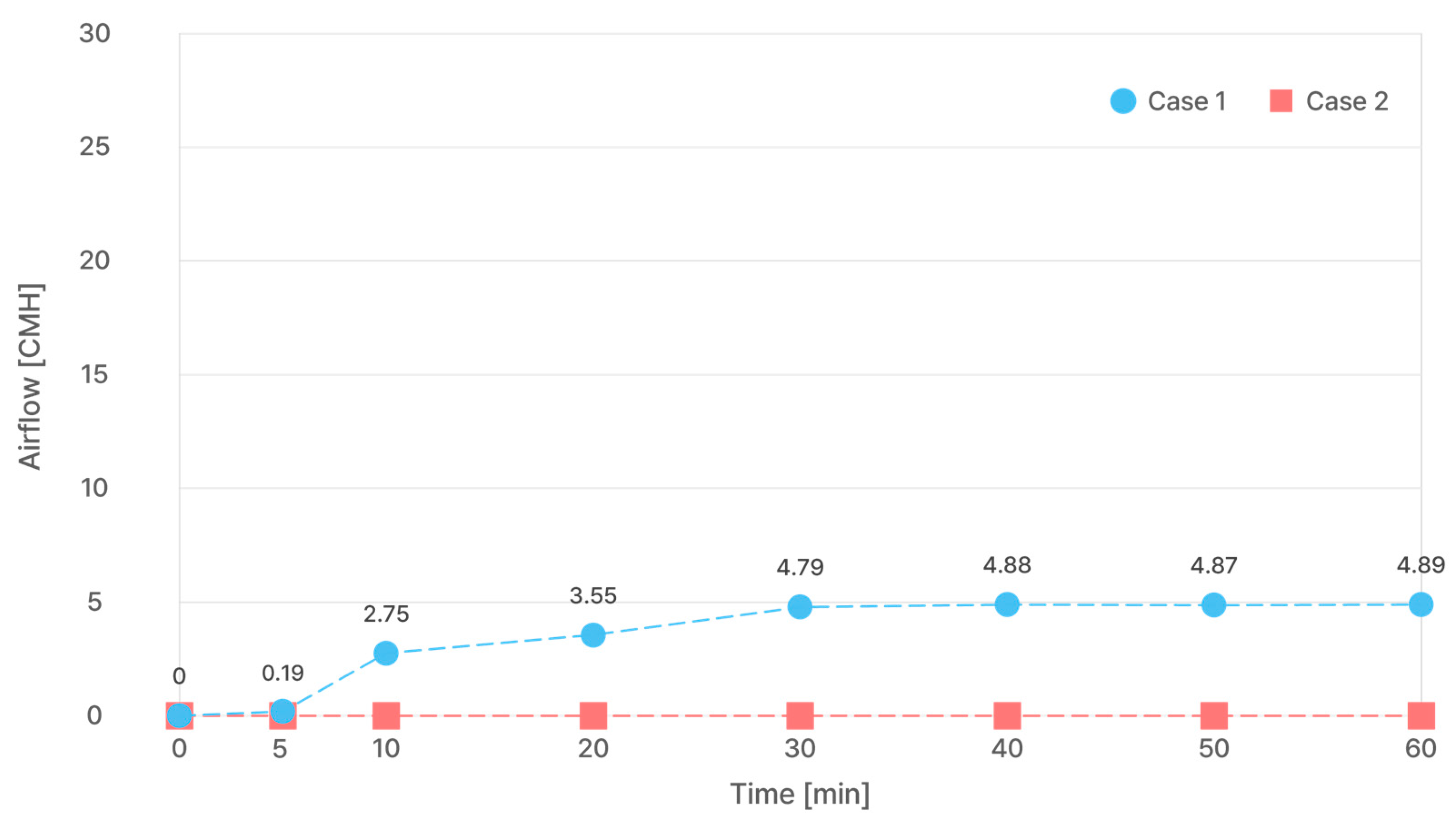
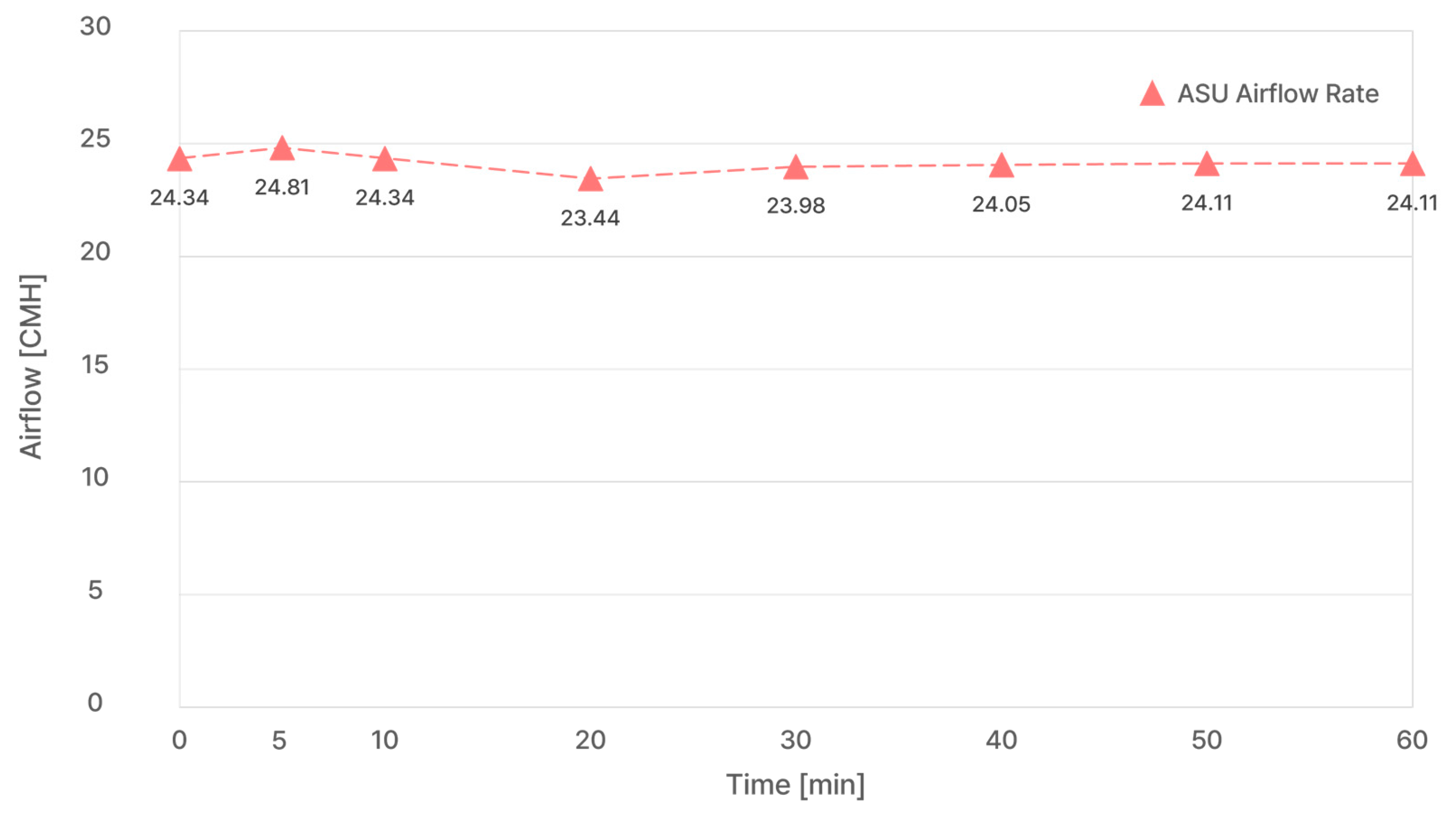
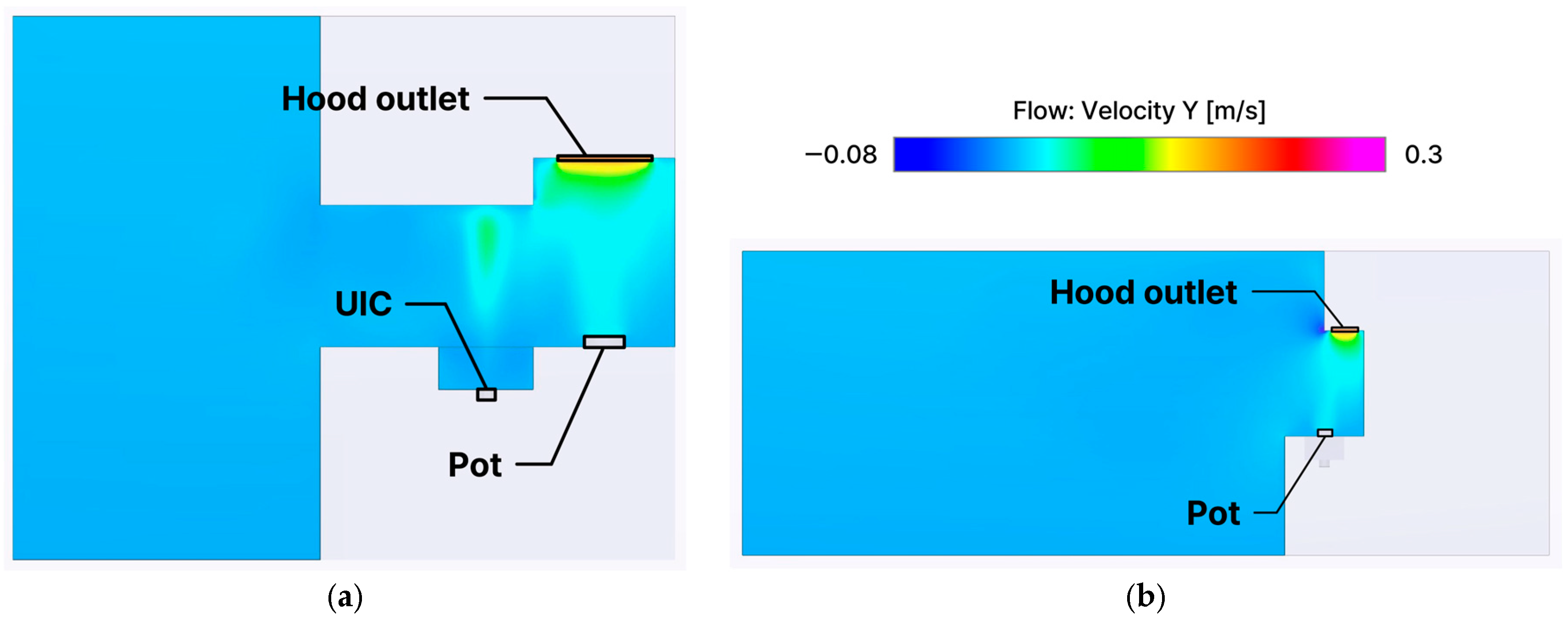
- The experimental results showed that in Case 1, the hood airflow decreased over time and infiltration occurred through unintended channels. In contrast, in Case 2, the installation of the air supply unit maintained stable hood airflow throughout the experiment and eliminated infiltration.
- (2)
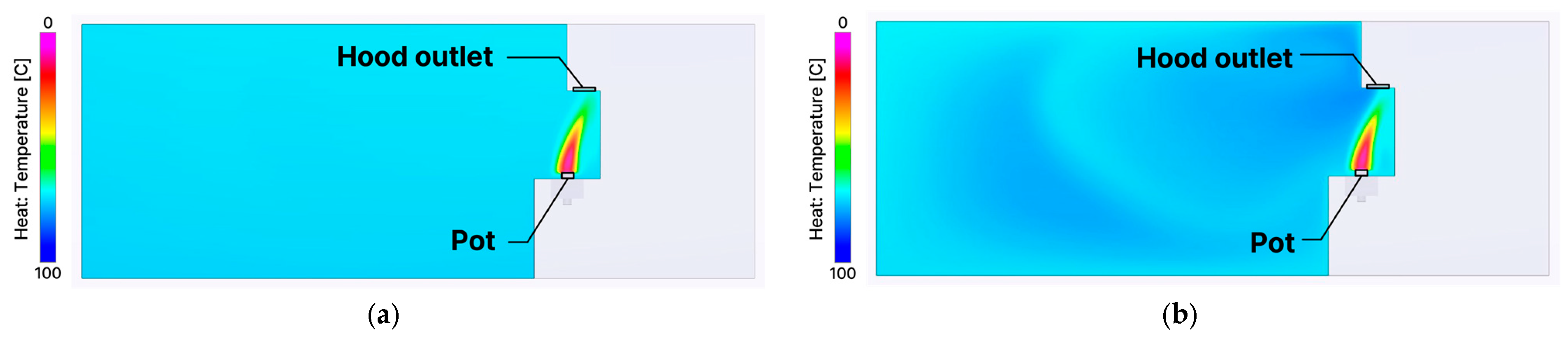
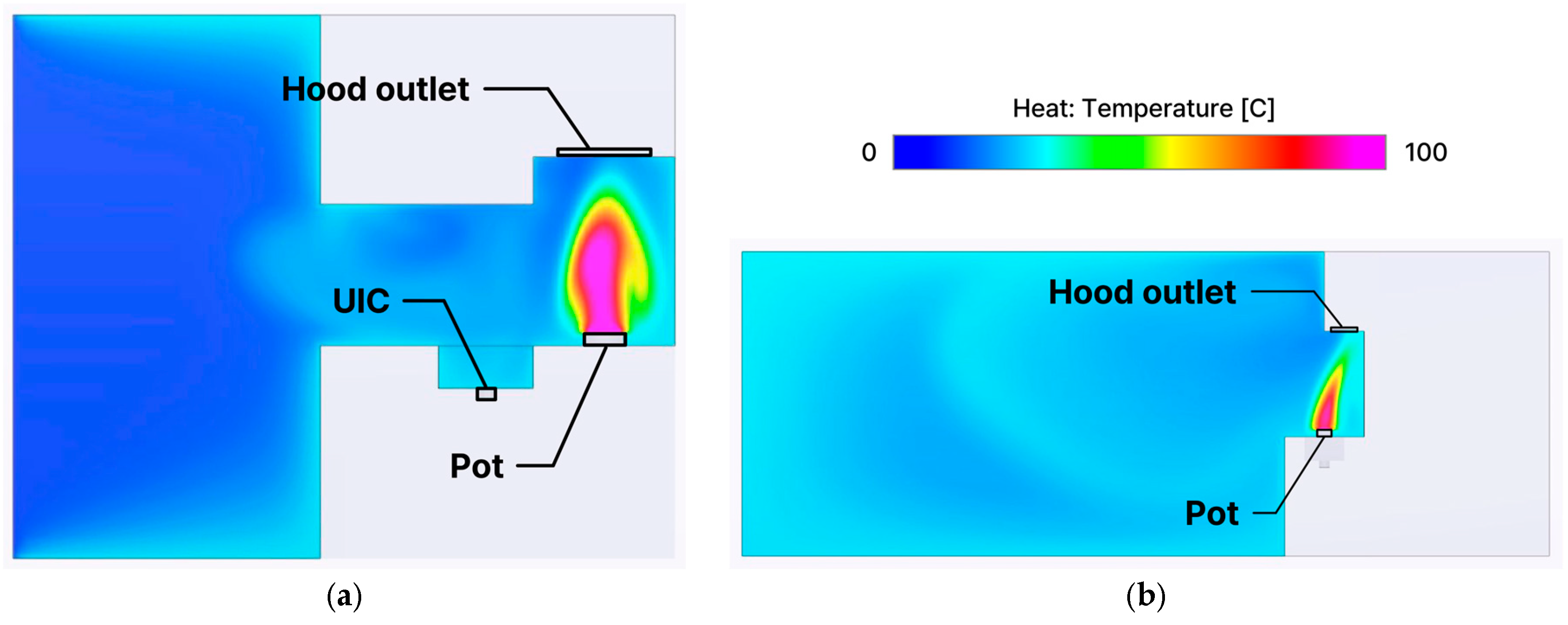
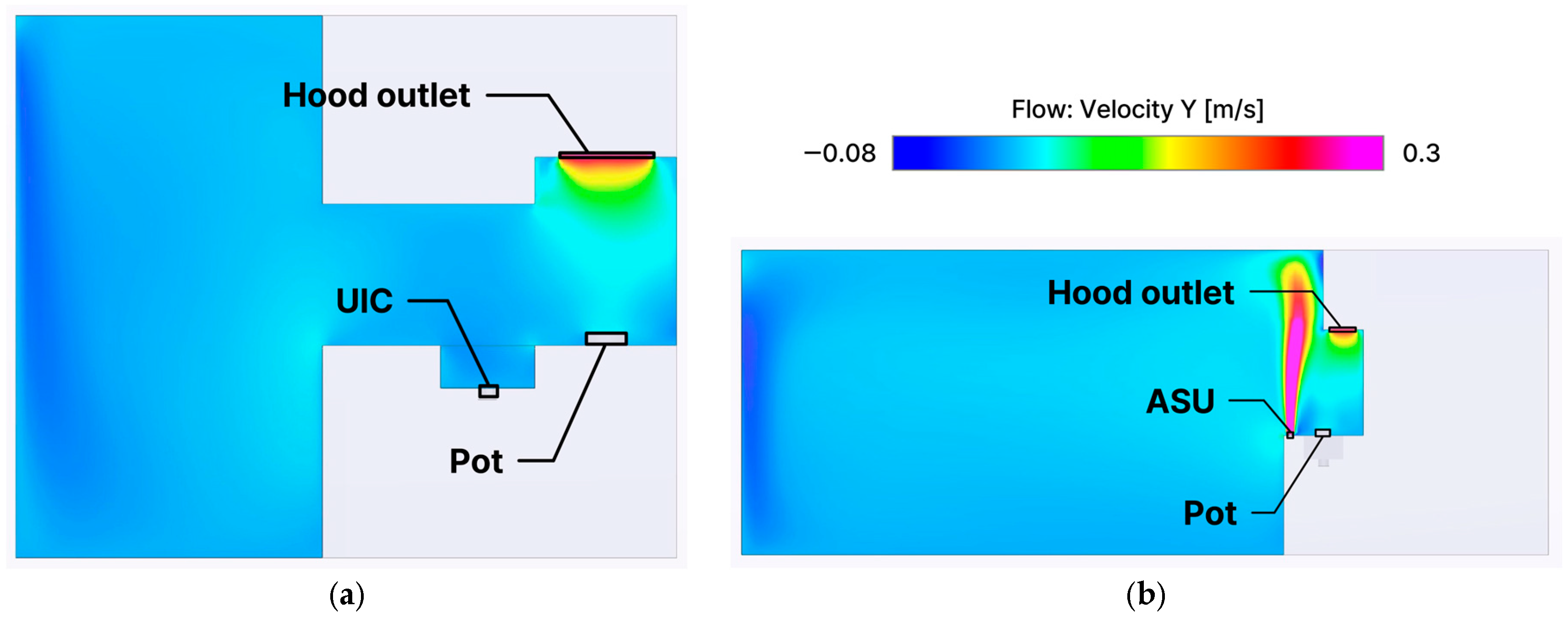
- The CFD analysis exhibited trends consistent with the experimental observations, confirming that the air supply unit functions as an air curtain that rapidly captures the thermal buoyant plume generated from the pot and reduces the stagnant high-temperature region beneath the hood.
- (3)
- Consequently, the simultaneous operation of supply and exhaust ventilation in highly airtight residential spaces was found to be effective in stabilizing hood performance, enhancing energy efficiency, and preventing odor generation by suppressing infiltration.
7. Discussion
7.1. Comparison with Previous Study
7.2. Limitations and Future Research Directions
Author Contributions
Funding
Data Availability Statement
Conflicts of Interest
References
- Lolli, F.; Coruzzolo, A.M.; Marinello, S.; Traini, A.; Gamberini, R. A Bibliographic Analysis of Indoor Air Quality (IAQ) in Industrial Environments. Sustainability 2022, 14, 10108. [Google Scholar] [CrossRef]
- Saffell, J.; Nehr, S. Improving Indoor Air Quality through Standardization. Standards 2023, 3, 240–267. [Google Scholar] [CrossRef]
- Settimo, G.; Yu, Y.; Gola, M.; Buffoli, M.; Capolongo, S. Challenges in IAQ for Indoor Spaces: A Comparison of the Reference Guideline Values of Indoor Air Pollutants from the Governments and International Institutions. Atmosphere 2023, 14, 633. [Google Scholar] [CrossRef]
- Kim, D.U.; Lee, J.H.; Kim, T.Y. Improvements of Ventilation System in the Kitchen and Development of High-Powered Exhaust System to Prevent Odor Spread in High-rise Residential Buildings. J. Archit. Inst. Korea 2007, 23, 195–202. [Google Scholar]
- Mannan, M.; Al-Ghamdi, S.G. Indoor Air Quality in Buildings: A Comprehensive Review on the Factors Influencing Air Pollution in Residential and Commercial Structure. Int. J. Environ. Res. Public Health 2021, 18, 3276. [Google Scholar] [CrossRef]
- Sung, S.K. Exhaust Characteristics of Kitchen Hood System with Inclined Air Curtain. Korean J. Air-Cond. Refrig. Eng. 2014, 26, 594–599. [Google Scholar] [CrossRef][Green Version]
- Kim, J.T.; Roh, J.W.; Chung, Y.G. A Field Test on Ventilation Efficiency of Range-Hood in Kitchen of Apartment. J. Archit. Inst. Korea Struct. Constr. 1999, 15, 207–214. [Google Scholar]
- Park, J.C.; Lee, S.S.; Rhee, E.K. A Study on the Improvement of Ventilation Systems of the Kitchen in Apartment. Korean J. Air-Cond. Refrig. Eng. 2000, 3, 63–71. [Google Scholar]
- Statistics Korea. 2023 Population and Housing Census (Register-Based) Press Release. Available online: https://kostat.go.kr (accessed on 12 October 2025).
- Ministry of the Interior and Safety. 2025 Administrative Safety Statistical Yearbook. Available online: https://www.mois.go.kr (accessed on 12 October 2025).
- Lee, E.J.; Lee, S.S. A Comparison of the Differences in Amenities at the Housing Complex between Regular Multi-family Housing and Urbanistic Housing for Improving Residential Quality of the Urbanistic Housing. J. Korean Hous. Assoc. 2015, 26, 9–18. [Google Scholar] [CrossRef]
- Korea Land and Housing Corporation. Era of Ten Million Single-Person Households: Living Alone (Part 1). Available online: http://www.lh.or.kr/gallery.es?act=view&bid=0004&list_no=11613&mid=a10503000000 (accessed on 6 November 2025).
- Cheung, P.K.; Jim, C.Y.; Siu, C.T. Air Quality Impacts of Open-Plan Cooking in Tiny Substandard Homes in Hong Kong. Air Qual. Atmos. Health 2019, 12, 865–878. [Google Scholar] [CrossRef]
- Lee, M.; Park, G.; Park, C.; Kim, C. Improvement of Grid Independence Test for Computational Fluid Dynamics Model of Building Based on Grid Resolution. Adv. Civ. Eng. 2020, 2020, 8827936. [Google Scholar] [CrossRef]
- Lee, J.J.; Lee, W.S. Experimental Study on Structural Shape of Exhaust System for Kitchen Range Hood. J. Korean Soc. Mech. Technol. 2002, 24, 1159–1165. [Google Scholar] [CrossRef]
- Kim, B.G.; Choi, H.G.; Yong, T.Y.; Lee, M.H. Horizontal Air-Jet Effect on the Natural Convection around a Range-Hood System. Korean J. Air-Cond. Refrig. Eng. 2005, 17, 333–341. [Google Scholar]
- Sohn, D.Y.; Lim, J.H.; Choi, Y.H.; Park, J.H. A Numerical Study on the Performance Improvement of Kitchen Range Hood by Air Induction and Air Curtain. Koran J. Air-Cond. Refrig. Eng. 2007, 19, 321–327. [Google Scholar]
- Sung, S.K. Exhaust Performance of a Kitchen Hood System with a Supply Air Slot on a Kitchen Table. Korean J. Air-Cond. Refrig. Eng. 2016, 28, 489–494. [Google Scholar] [CrossRef]
- Kang, Y.D.; Lee, J.C.; Kim, B.S. The Performance Improvement in Ventilation of Kitchen of Housing by Using CFD Method. KIEAE J. 2018, 18, 119–124. [Google Scholar] [CrossRef]
- Kang, K.M.; Bae, S.H.; Lee, Y.G. Assessment of Cooking-Generated Particle Removal Efficiency of Range Hood with Auxiliary Air Supply System. J. Korean Soc. Indoor Environ. 2020, 19, 149–156. [Google Scholar] [CrossRef]
- Kravchenko, I.; Kosonen, R.; Kilpeläinen, S. Performance Analysis of the Demand-Based Ventilation in a Nordic Apartment Building. Appl. Sci. 2021, 11, 176. [Google Scholar] [CrossRef]
- Yang, F.; Gao, J.; Cao, C.; Zeng, L.; Wang, L.; Liu, Z.; Zheng, Z. Novel Kitchen Ventilation System with the Cabinet-bottom Air Supply. J. Build. Eng. 2022, 60, 105137. [Google Scholar] [CrossRef]
- Kwon, Y.I. A Study on Flow Interference between Total Heat Recovery System and Kitchen Range Hood in Apartment. Korean J. Air-Cond. Refrig. Eng. 2023, 35, 434–442. [Google Scholar] [CrossRef]
- Kwon, Y.I. Effect of Makeup Air Supplied to Kitchen Hood in Apartment on Ventilation Performance of Heat Recovery Unit. Korean J. Air-Cond. Refrig. Eng. 2024, 36, 586–593. [Google Scholar] [CrossRef]
- Li, X.; Huang, K.; Feng, G.; Cao, G.; Li, A.; Teng, X. New Makeup Air Method through Ceiling for Kitchen Ventilation in Severely Cold Regions and Its Effect on Air Environment. Atmosphere 2024, 15, 1109. [Google Scholar] [CrossRef]
- Zhang, S.; Huang, H.; Ye, F.; Wang, F.; Cheng, L.; Tan, Y.; Shen, Z.; Chen, Z. Optimization Analysis of Kitchen Cooking Environment for Air Conditioning Range Hood Based on Thermal Comfort and PM10 Concentration. Buildings 2025, 15, 1842. [Google Scholar] [CrossRef]
- Zhang, D.; Mui, K.W.; Gao, C.; Wong, L.T. Assessing the effectiveness of combined ventilation strategies for cooking in residential kitchens in Hong Kong. Energy Build. 2026, 354, 116994. [Google Scholar] [CrossRef]
- Sun, Y.; Francisco, P.; Merrin, Z.; Gilleade, K. CFD Simulations of Small Particle Behavior with Blower-Driven Airflows in Single-Family Residential Buildings. Indoor Air 2024, 2024, 6685891. [Google Scholar] [CrossRef]
- Chen, Q. Ventilation Performance Prediction for Buildings: A Method Overview and Recent Applications. Build. Environ. 2009, 44, 848–858. [Google Scholar] [CrossRef]







| Classification | Exclusive Use Area |
|---|---|
| Ultra-Small | Less than 40 m2 |
| Small | 40 m2 or more but less than 60 m2 |
| Medium | 60 m2 or more but less than 85 m2 |
| Large | 85 m2 or more |
| Division | Case 1 | Case 2 |
|---|---|---|
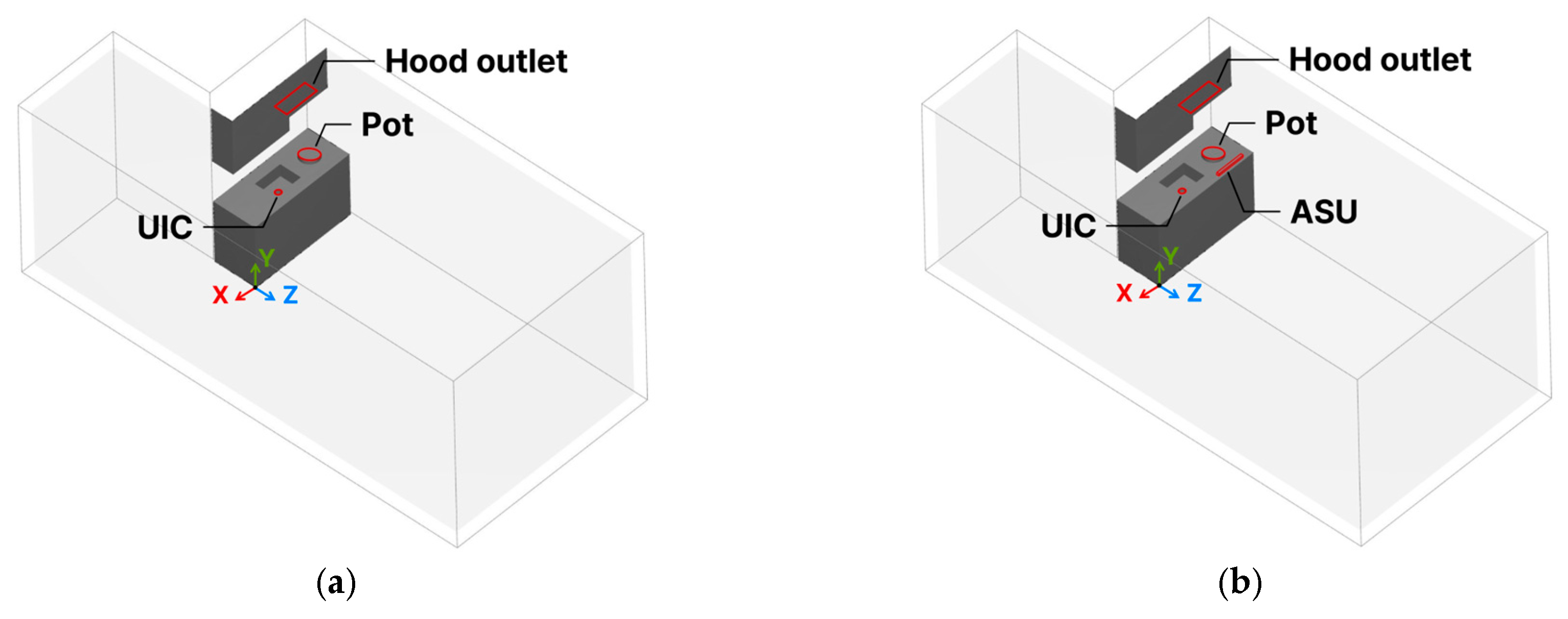
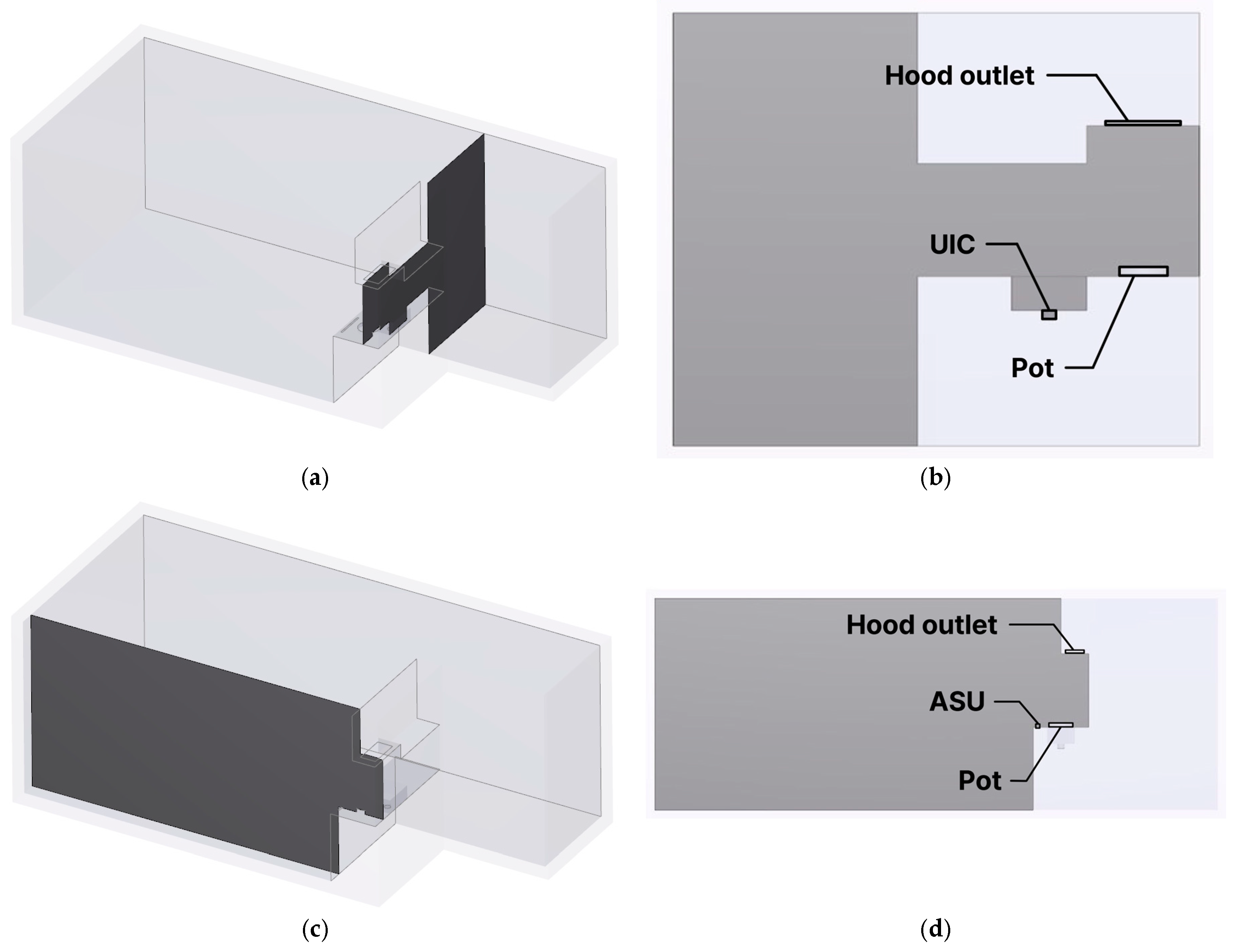
| Conditions | Air supply unit uninstalled, hood operation only | Air supply unit installed, simultaneous operation of the hood and the supply air |
| 3D Models | 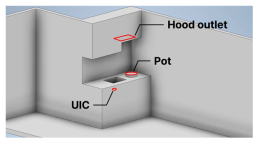 |  |
| Category | Component | Specification |
|---|---|---|
| Indoor Space | Floor Area | 15 m2 |
| Actual Volume | 34.5 m3 | |
| Temperature/Relative Humidity | 25 °C/65% | |
| Hood | Hood Specifications | 0.4 m × 0.2 m × 0.6 m |
| Hood Exhaust Area | 0.4 m × 0.2 m = 0.08 m2 | |
| Hood Rated Airflow | 253 CMH | |
| Air Supply System | ASU Area | 0.38 m × 0.02 m = 0.0076 m2 |
| Supply Fan Rated Airflow | 300 CMH | |
| Flexible Duct (Circular) Specifications | Length 7 m, Diameter 0.15 m |
| Division | Conditions |
|---|---|
| Mesh system | Unstructured mesh |
| Meshing domain | Internal fluid region |
| Maximum cell size | 0.008 |
| Minimum cell size | 1 × 10⁻⁶ |
| Wall and surface cell size | 0.003 |
| Hood–countertop region cell size | 0.005 |
| Critical edge angle | 30° |
| Curvature resolution | 35° |
| Division | Case 1 | Case 2 | ||
|---|---|---|---|---|
| Airflow [CMH] | Temperature [°C] | Airflow [CMH] | Temperature [°C] | |
| Hood | 58.63 | - | 75.72 | - |
| UIC | 4.89 | 5 | 0 | 5 |
| ASU | - | - | 24.11 | 5 |
| Pot | 5 | 100 | 5 | 100 |
| X-wall | 48.74 | 5 | 46.61 | 5 |
| Division | Conditions | Division | Conditions |
|---|---|---|---|
| Space | 3D | Fluid condition | Incompressible fluid |
| Time | Steady State | Viscosity | Turbulence |
| Properties | Ideal gas law | Reynolds number model | k-ε turbulence model |
| Airflow [CMH] | Case 1 | Case 2 | ||
|---|---|---|---|---|
| Hood | Initial Condition | Steady State | Initial Condition | Steady State |
| 76.65 | 58.63 | 76.65 | 75.72 | |
| UIC | Initial Condition | Steady State | Initial Condition | Steady State |
| 0 | 4.89 | 0 | 0 | |
| ASU | Initial Condition | Steady State | Initial Condition | Steady State |
| - | - | 24.34 | 24.11 | |
Disclaimer/Publisher’s Note: The statements, opinions and data contained in all publications are solely those of the individual author(s) and contributor(s) and not of MDPI and/or the editor(s). MDPI and/or the editor(s) disclaim responsibility for any injury to people or property resulting from any ideas, methods, instructions or products referred to in the content. |
© 2026 by the authors. Licensee MDPI, Basel, Switzerland. This article is an open access article distributed under the terms and conditions of the Creative Commons Attribution (CC BY) license.
Share and Cite
Lee, J.-W.; Eom, S.-H.; Jun, Y.-J.; Park, K.-S. The Effect of Air Supply on Kitchen Range Hood Performance and Unintended Infiltration. Buildings 2026, 16, 463. https://doi.org/10.3390/buildings16020463
Lee J-W, Eom S-H, Jun Y-J, Park K-S. The Effect of Air Supply on Kitchen Range Hood Performance and Unintended Infiltration. Buildings. 2026; 16(2):463. https://doi.org/10.3390/buildings16020463
Chicago/Turabian StyleLee, Jae-Woo, Seon-Hye Eom, Yong-Joon Jun, and Kyung-Soon Park. 2026. "The Effect of Air Supply on Kitchen Range Hood Performance and Unintended Infiltration" Buildings 16, no. 2: 463. https://doi.org/10.3390/buildings16020463
APA StyleLee, J.-W., Eom, S.-H., Jun, Y.-J., & Park, K.-S. (2026). The Effect of Air Supply on Kitchen Range Hood Performance and Unintended Infiltration. Buildings, 16(2), 463. https://doi.org/10.3390/buildings16020463