Article

The Effect of Air Supply on Kitchen Range Hood Performance and Unintended Infiltration

1
Department of Architectural Engineering, Dong-Eui University, Busan 47340, Republic of Korea
2
Sustainable Community Research Laboratory, Dong-Eui University, Busan 47340, Republic of Korea
*
Author to whom correspondence should be addressed.
Buildings 2026, 16(2), 463; https://doi.org/10.3390/buildings16020463
Submission received: 12 December 2025 / Revised: 20 January 2026 / Accepted: 21 January 2026 / Published: 22 January 2026
(This article belongs to the Section Building Energy, Physics, Environment, and Systems)

Abstract

With the increasing number of highly airtight residences, concerns have risen that the negative pressure formed indoors during kitchen hood operation can reduce capture performance and cause unintended infiltration. This study experimentally and numerically (via CFD simulations) examined whether installing an air supply unit on the cooktop beneath a hood can stabilize hood performance and suppress infiltration in small residential spaces. Two cases were established depending on whether air was supplied: Case 1 (hood operation only) and Case 2 (simultaneous operation of the hood and the air supply unit). In the experimental setup, the hood exhaust flow rate, supply airflow rate, sink-drain infiltration rate, and temperature/humidity were measured. The period during which variations in measured values remained within 10% was defined as the steady state. In the CFD analysis, winter conditions were assumed, and the measured values were applied to the wall boundary, after which the temperature and velocity field were analyzed. In Case 2, by supplying 24.11 CMH of air, the hood flow rate remained stable at 75.72 CMH (98.8% of the initial level) throughout the test, and no infiltration was detected. The CFD analysis revealed that the air supply unit generated an “air curtain” effect, enabling rapid capture of hot airflow and reducing the high-temperature region. In conclusion, the interconnected operation of supply and exhaust systems was shown to be effective in enhancing hood exhaust stability, suppressing unintended infiltration, and improving capture reliability in highly airtight small residential buildings. Future studies should include further analyses, such as the effects of actual cooking behaviors and leakage path distributions.

1. Introduction

1.1. Research Background and Significance

Modern individuals spend approximately 90% of their time indoors. In line with this trend, the airtightness performance of buildings has improved significantly to conserve energy and maintain a comfortable indoor environment [1]. However, the resulting reduction in the exchange between indoor and outdoor air has made finding an appropriate balance between maintaining airtightness for energy efficiency and ensuring ventilation for occupant health a critical challenge [2]. Despite these needs, standards and policies regarding indoor air quality remain insufficient [3].
Indoor spaces are exposed to various air pollution sources, including occupant activities and building materials. Among these, the kitchen in apartment buildings is a key source that significantly affects residential air quality [4]; according to Mannan and Al-Ghandi [5], pollutant concentrations in the kitchen have been reported to be higher than in other living areas, such as the living room. This is due to the characteristic release of complex pollutants—including combustion gases, water vapor, particulate matter (PM), and odors—in high concentrations over short periods during cooking. Consequently, kitchen range hoods are operated to rapidly remove these pollutants. However, if the supply airflow is insufficient during hood operation, excessive negative pressure can develop indoors, leading to a reduction in the hood’s effective air intake rate and capture stability. As a result, uncollected pollutants can disperse into living areas, such as the living room [6]. Furthermore, outdoor air may infiltrate through the unintended leakage channels, such as drains or gaps around electrical outlets, potentially causing odor backflow and hygiene issues. Studies have shown that such performance degradation can reduce the hood’s capture efficiency by up to 50% [7], ultimately leading to user distrust in the hood’s effectiveness [8].
Meanwhile, socio-demographic changes have increased the need for ventilation performance research tailored to small residential spaces. According to the Ministry of Data and Statistics (MODS), the proportion of single-person households in Korea has steadily risen since 1980, reaching 35.5% of all households as of 2023 [9]. In addition, population statistics of the Ministry of the Interior and Safety (MOIS) show that the number of single-person households nationwide surpassed 10 million in 2024 [10]. In response to these trends, the government introduced urban residential housing in 2009 to accommodate the growing number of small 1–2 person households and to enhance residential stability for low-income citizens. This housing type consists of small-scale multi-unit buildings characterized by compact unit sizes and fewer amenities [11]. Furthermore, data from the Korea Land and Housing Corporation (LH) indicate that while the demand was previously centered on 84 m2 units, interest in smaller units under 60 m2 has increased significantly in recent years [12].
According to the classification standards of the Ministry of Data and Statistics (MODS), apartment units are categorized as ultra-small, small, medium, or large based on exclusive use area, as shown in Table 1. Among these categories, small units with an exclusive use area of less than 60 m2 have a smaller volume than medium and large units (60 m2 or more), resulting in a more rapid increase in pollutant concentrations generated by cooking and occupants. In addition, limited spatial separation between the kitchen and living room, combined with insufficient range hood exhaust performance, allows pollutants to spread more quickly and extensively throughout the living space.
Cheung et al. [13] found that particulate matter (PM10) concentrations during cooking were about 136% higher than the pre-cooking levels in tiny homes lacking a partitioned kitchen. They reported that particularly under conditions where ventilation was severely restricted by closing openings such as windows, it took significant time for the pollutant concentrations to return to normal levels, which increased the occupants’ exposure to the air pollutants.
This indicates that small residential spaces exhibit structural vulnerabilities compared to medium and large units, as their smaller volumes lead to a rapid increase in pollutant concentrations over a short period, and their indoor air quality is more deteriorated under airtight conditions. Accordingly, in this study, grid refinement was performed with a focus on the wall boundary layers in order to ensure sufficient accuracy in the pressure field analysis of small spaces [14].
Existing research has primarily focused on units with an exclusive use area of 60 m2 or more, resulting in a relative lack of analysis on the ventilation performance and pollutant behavior of small units with an exclusive use area of less than 60 m2. In addition, unlike previous studies that concentrated mainly on numerical analysis, the present study aimed to ensure the reliability of its findings by implementing a simplified air supply system that can be applied without additional construction, and by conducting experiments in conjunction with CFD analysis.

1.2. Research Purpose and Methods

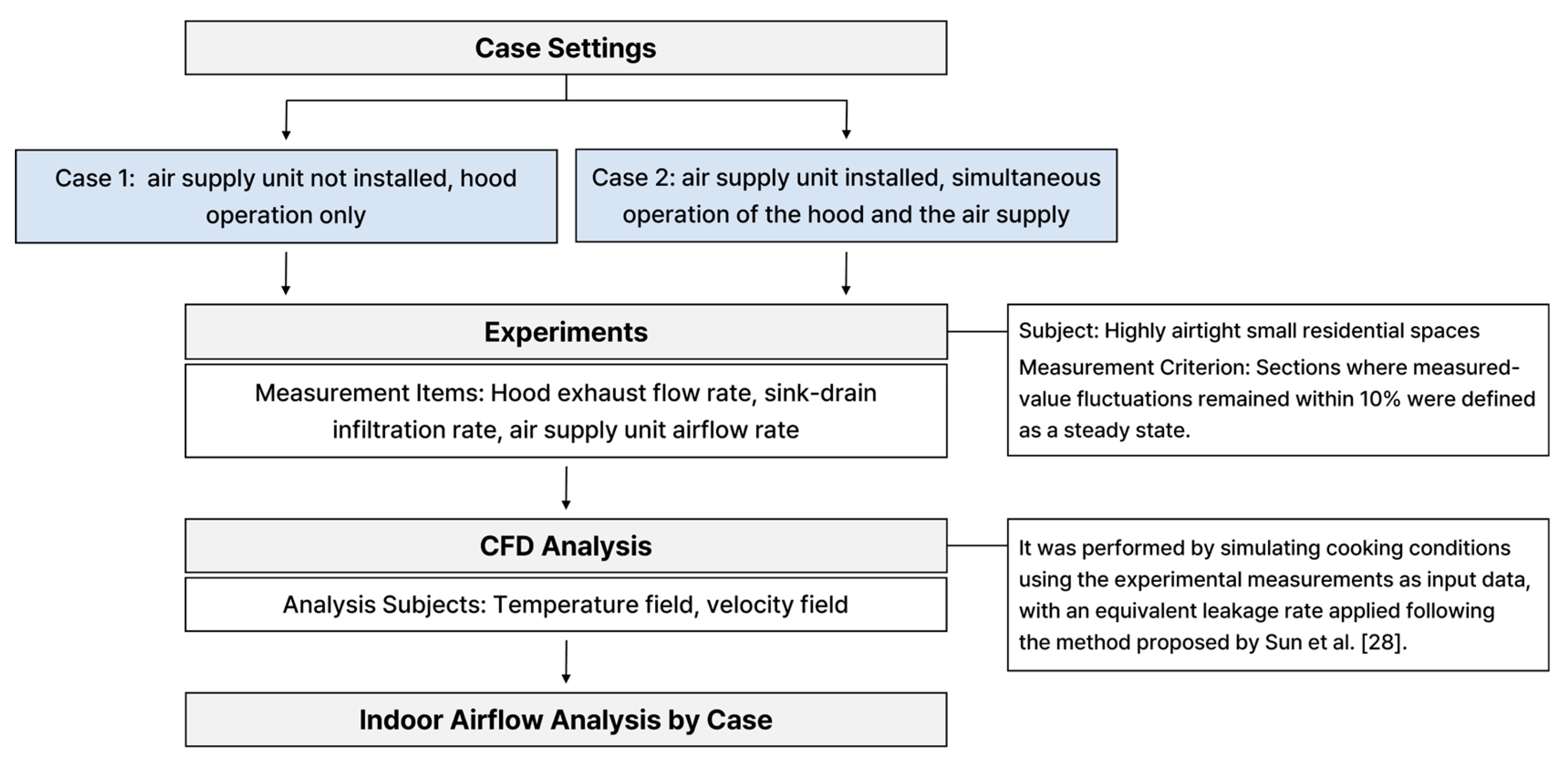
This study aims to propose a ventilation design suitable for highly airtight small residential spaces by installing an air supply unit on the cooktop beneath the kitchen hood, and to evaluate its effectiveness in enhancing hood performance and suppressing unintended infiltration through experiments and computational fluid dynamics (CFD) analysis. The overall research procedure is shown in Figure 1. To achieve this objective, two operating conditions were defined: Case 1 (hood operation only) and Case 2 (simultaneous operation of the hood and the air supply unit). An air supply system was installed in a small residential test space, and airflow measurement were conducted for each case. Subsequently, CFD analysis simulations cooking conditions were performed using the measured values as the boundary conditions. Finally, the effectiveness of applying the air supply was assessed through a comparative analysis of the experimental results and CFD outcomes.

2. Discussion of Existing Research

Kitchen hoods consist of components such as a fan, chamber casing, and ducts, and they can be classified according to their purpose, materials, and shape. However, in practical installation and operation, structural and construction constraints often lead to longer duct lengths and an increased number of bends, which in turn cause additional pressure losses. When combined with the reduced performance of terminal vent caps, these factors frequently result in the actual exhaust capacity falling short of design specifications [15]. Moreover, in highly airtight residences, excessive indoor negative pressure generated during cooking can diminish the hood’s effective air intake rate and capture stability. Numerous studies have been conducted to address these limitations.
Kim et al. [16] numerically evaluated the effectiveness of horizontal air jets in kitchen hoods. Comparisons between cases with and without hood fan operation and with and without jets indicated that horizontal jets induced the Coandă effect, which confined polluted air within a limited region and suppressed its dispersion. A qualitative correlation was also observed between the capture jet flow rate and the pollution distribution pattern.
Sohn et al. [17] numerically evaluated the performance of hood equipped with air induction and an air curtain, reporting an approximately a 20% improvement in capture efficiency compared with conventional box-type and plate-type hoods. This improvement was attributed to the air induction and air curtain blocking leakage airflow from the front and sides of the hood, together with an increased intake flow rate provided by an auxiliary fan.
Sung [18] numerically assessed hood performance when an air curtain was installed at the front edge of the countertop. When the air supplied through the slot was approximately 50% of the exhaust flow rate, the capture efficiency increased by about 90% relative to the configuration without an air curtain. Even when the supplied airflow was relatively small, a notable improvement in capture efficiency was observed when an upward air curtain was used. Conversely, the study reported that capture efficiency decreased when the slot airflow exceeded 60%.
Kang et al. [19] conducted numerical analyses of the kitchen and living room in an apartment and proposed mechanical ventilation strategies to reduce the diffusion of cooking-generated pollutants. The study concluded that suppressing diffusion requires maintaining negative pressure in the kitchen and operating the exhaust outlet together with an air supply unit. Specifically, converting a portion of the exhaust outlets in the kitchen and living room into air supply units was found to be an effective solution.
Kang et al. [20] investigated particle removal performance using an auxiliary air supply-linked hood under different ventilation patterns in an experimental house. The findings showed that hood operation only was insufficient to sufficiently reduce fine and ultrafine particle concentrations generated during cooking, and elevated concentrations persisted even after cooking. In contrast, when auxiliary air supply was provided, indoor particle concentrations fell below background levels during post-cooking operation, and ultrafine particle removal exhibited a trend similar to that of fine particles.
Kravchenko et al. [21] conducted numerical simulations to evaluate the performance of kitchen hoods in newly built, highly airtight apartments in Finland. The study confirmed that a serious imbalance of over 10% occurs between the supply and exhaust airflow rates when all units in the same riser simultaneously operate their kitchen hoods in ‘Boosting mode’ for pollutant removal. This imbalance increased the indoor–outdoor pressure difference to a warning level of 40 Pa, particularly within studio units with small spatial volumes. It was reported that the resulting pressure resistance caused the actual exhaust airflow of the kitchen hood to decrease by approximately 28% compared to design specifications, leading to degraded pollutant removal performance.
Yang et al. [22] proposed a novel makeup air system utilizing under-cabinet air supply and evaluated its capture efficiency, as well as pollutant concentrations in the breathing zone and indoor space, through experiments and CFD simulations. The results identified the makeup air supply ratio as the most influential factor on hood performance, with optimal performance achieved at an 80% supply ratio and a rear-wall-mounted outlet position. The study demonstrated that this system improved capture efficiency by more than 15% compared to conventional natural ventilation via window opening, and reduced concentrations in the breathing zone and room by over 46% and 40%, respectively.
Kwon [23] highlighted flow interference between the supply airflow from a heat recovery ventilator (HRV) and the makeup air of the hood in kitchens of domestic high-rise apartment buildings. He proposed and evaluated localized makeup air supplied through slots around the countertop and hood. The results demonstrated that this approach reduced flow interference compared with window-based makeup air and improved separation from the HRV supply airflow, thereby enhancing indoor air quality.
Kwon [24] conducted a comparative analysis of different makeup air strategies during the simultaneous operation of an HRV and a kitchen hood in a highly airtight, high-rise apartment. Two configurations were evaluated: makeup air supplied through low-velocity slots around the hood, and makeup air introduced through exterior windows. The results indicated that window-based makeup air enhanced both the hood’s exhaust efficiency and the HRV’s ventilation performance.
Li et al. [25] proposed a ceiling-mounted makeup air system designed to improve kitchen air quality while maintaining indoor temperatures in cold regions, evaluating its effectiveness through experiments and CFD simulations. The results demonstrated that the ceiling makeup air system reduced PM2.5 concentrations by 87% compared to the infiltration ventilation method where windows and doors remain closed. Additionally, it was confirmed that this system could maintain indoor temperatures more than 11.9 °C higher than the natural ventilation method of opening windows. The study also reported that the size of the exterior wall intake is the most influential factor on the environment and suggested that avoiding symmetrical placement of ceiling intakes is beneficial for effective pollutant control.
Zhang et al. [26] proposed an air conditioner-integrated range hood to solve the issues of high temperatures and pollutants generated during cooking and performed an optimization study considering both thermal comfort and PM10 concentrations. The experimental findings showed that the hood’s exhaust flow rate was the most critical factor affecting PM10 concentrations, while the initial diffusion velocity of cooking fumes had the most significant impact on thermal comfort values. Under optimal conditions, thermal comfort values and PM10 concentrations were reduced by 34.56% and 69.49%, respectively, compared to conditions before operating the air conditioner, proving that thermal comfort and air quality in the kitchen can be achieved simultaneously.
Zhang et al. [27] conducted a multi-objective optimization study using an air-conditioner-integrated range hood to simultaneously address high temperatures and pollutant dispersion in residential kitchens. The analysis revealed that the hood’s exhaust flow rate had the most significant impact on PM10 concentrations, while the initial diffusion velocity of the air supply was the primary factor influencing thermal comfort (PMV). By applying the optimal design configuration, the study achieved a 34.56% reduction in PMV and a 69.49% decrease in PM10 concentration compared to conditions before air conditioner operation, demonstrating the potential to ensure both thermal comfort and air quality within the kitchen environment.
In summary, previous studies have demonstrated that air curtains, localized makeup air, and reductions in duct-related pressure losses can significantly improve hood capture performance. However, most of this research has focused on medium and large residential units, and studies targeting small, highly airtight residential spaces remain limited. Accordingly, this present study evaluates hood performance in small residential spaces by introducing an air supply unit installed on the cooktop beneath the hood, using both experiments and CFD analysis.

3. Experimental Research

3.1. Experimental Overview

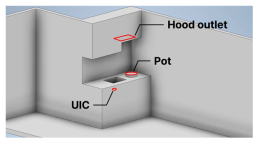
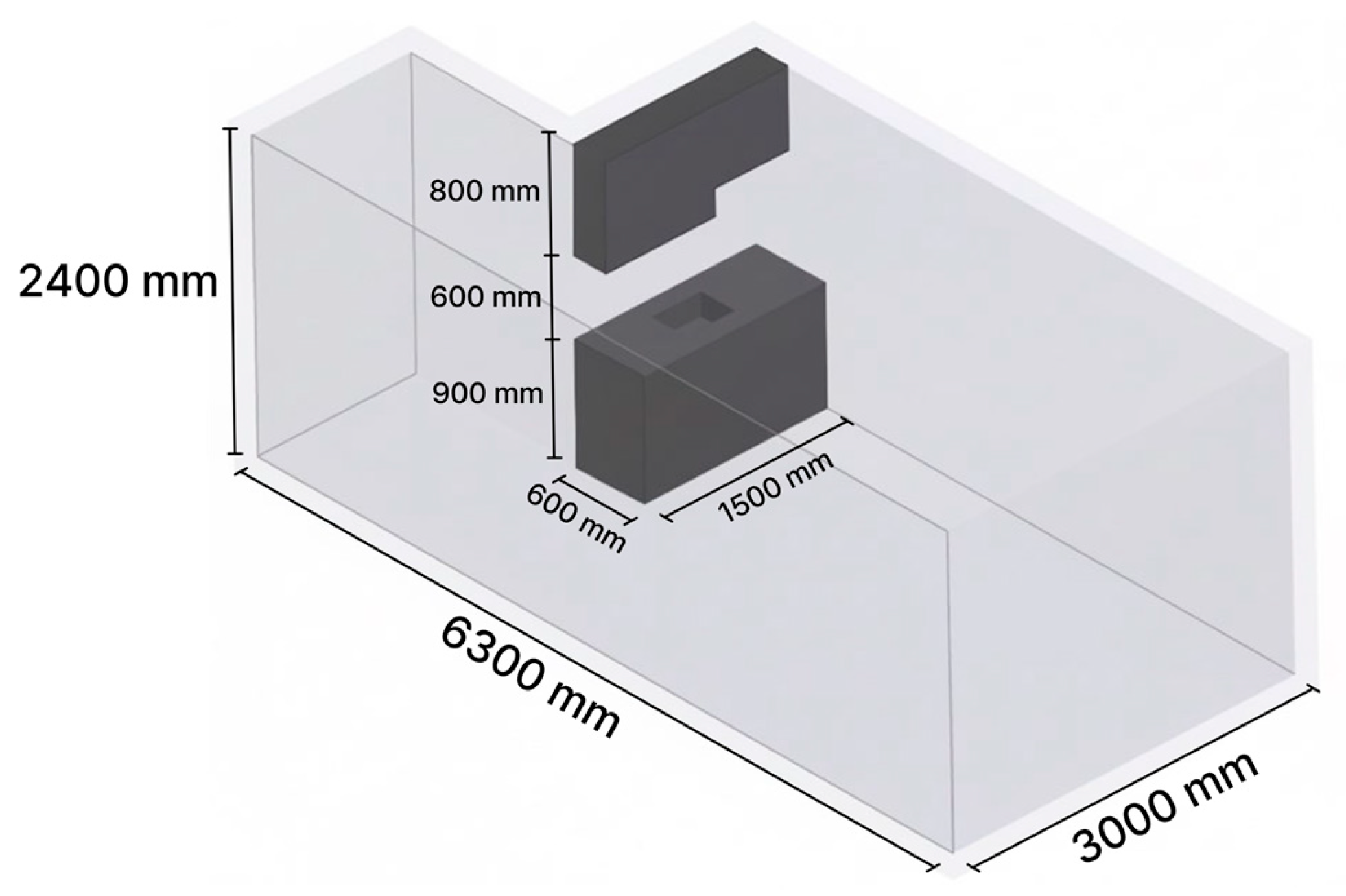
This experiment aimed to analyze changes in hood exhaust flow rate depending on the presence or absence of an air supply unit (ASU), as well as the characteristics of air inflow through the unintended infiltration channels (UIC), such as sink drains. The operating conditions for each case are presented in Table 2, and the experimental conditions are summarized in Table 3 and Figure 2.
In the KS (Korean Industrial Standards) system, household range hoods fall under KS C 9304 (Ventilating Fans). Unless otherwise specified, laboratory test conditions are defined as a temperature of 20 ± 5 °C and a relative humidity of 60 ± 20%. While ASHRAE and CEN recommend an indoor relative humidity range of 40–60%, this study primarily adopted the laboratory test conditions specified in KS C 9304. Reflecting the environmental conditions on 21 August 2025 when the experiments were conducted, the final experimental environmental conditions were set to a temperature of 22 °C and a relative humidity of 65%.
The experimental setup was designed to resemble a typical studio-type layout commonly found in small residential units, and consisted of a range hood, upper and lower cabinets, a sink, a sink drain, and an air supply system. The air supply system comprised a supply fan, a flexible duct, and a rectangular air supply unit (ASU), which was installed in front of the cooktop.
The hood used in the experiment was a standard-specification device commonly installed in small apartment buildings, with a rated airflow of 253 CMH. The air supply system was configured following the method described by Sung [18], as introduced in Section 2, in which the supply airflow was set to 60% or less of the hood exhaust flow rate. To implement this system, a supply fan with a rated airflow of 300 CMH and a flexible circular duct with a length of 7 m and a diameter of 0.15 m were employed.
Moreover, the sink drain—identified as the most probable source of significant infiltration under negative pressure due to its proximity to the hood—was designated as the unintended infiltration channel (UIC). To simulate highly airtight conditions, all external openings and gaps other than the UIC were sealed.

3.2. Measurement Items and Methods

As described in Section 1.2, the experiment was conducted under two operating cases. The measured items included the hood exhaust airflow rate, ASU airflow rate, UIC infiltration rate, and indoor temperature and humidity. In each case, the initial condition (IC) immediately after hood operation was recorded, followed by continuous measurement of airflow variations over the entire section. In this study, a section in which the measured values fluctuated by less than 10% was defined as a steady state (SS). Data were logged at 5 min intervals to clearly identify the process by which the indoor airflow stabilized and reached the previously defined steady state. For the analysis, a 1 h average of the data obtained during the steady state section was used.
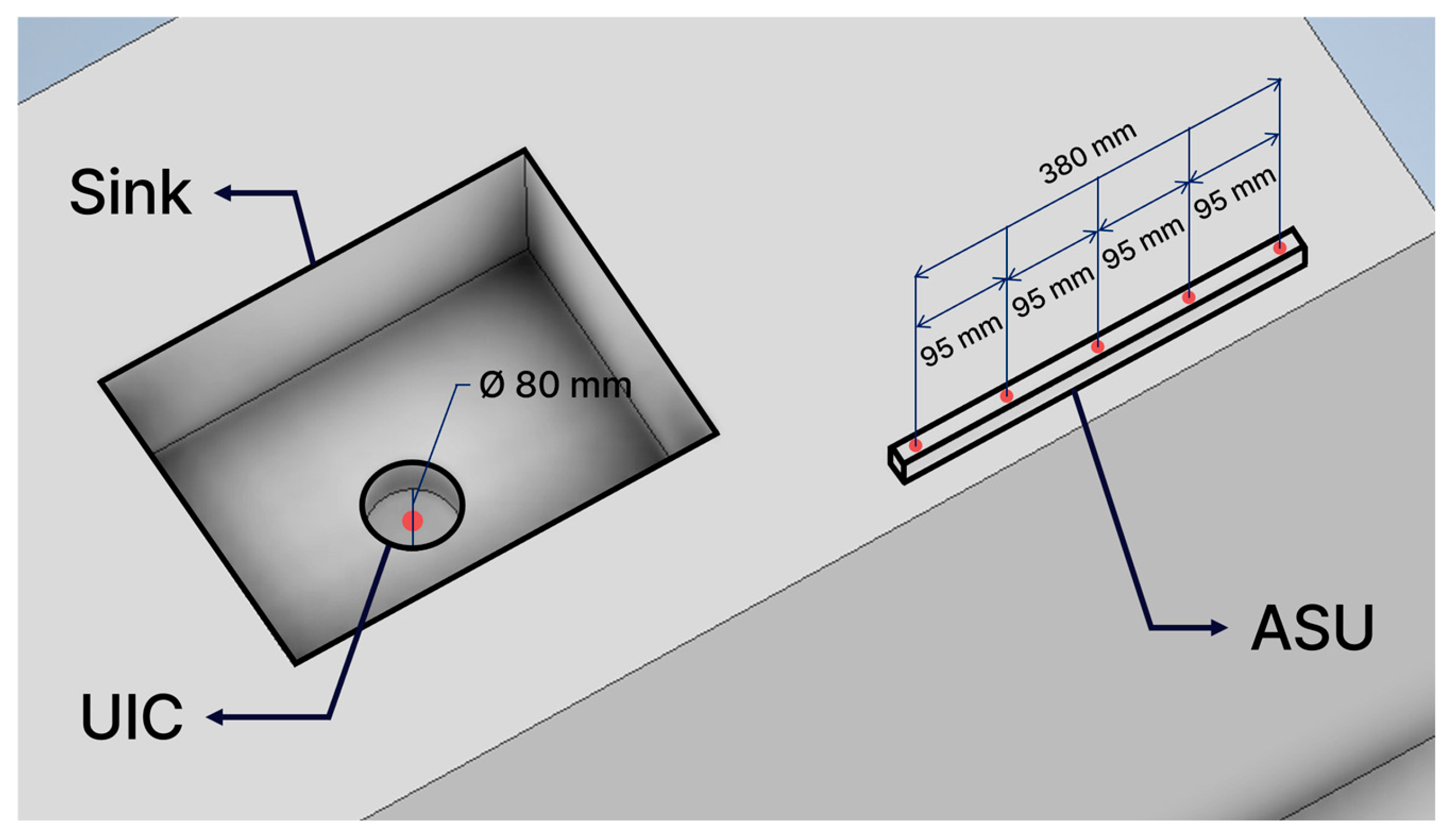
The hood exhaust airflow rate was measured by installing an airflow meter (TESTO 420) in close contact with the hood exhaust outlet to minimize leakage. Due to the small size of the openings, it was difficult to directly install airflow meters on the ASU and UIC. Therefore, as shown in Figure 3, the wind velocity was measured at five points within the ASU opening and at the center of the UIC, and the airflow rates were estimated by interpolating the values using a quadratic function.

4. CFD Analysis Research

4.1. CFD Overview

Computational fluid dynamics (CFD) is a methodology that numerically solves the Navier–Stokes equations, which represent the conservation of mass, momentum, and energy in continuum fluids. In practice, the governing partial differential equations are discretized in space and time, converted into algebraic equations, and solved using appropriate boundary conditions.
In this study, CFD analysis was performed using Simerics-MP, following the procedure outlined below. First, the planar geometry of the experimental setup and the measured conditions—such as hood airflow—were mathematically modeled to be recognized by the solver. The finite volume method (FVM) was then applied to the computational domain to generate a mesh. The conservation equations for each mesh cell were discretized into integral forms and solved numerically.

4.2. Computational Domain Modeling

To analyze hood performance and indoor airflow patterns with and without the ASU, the computational domain was modeled to replicate the experimental setup using Autodesk Inventor. A cooking pot was additionally included to observe the capture behavior of hot vapors generated during cooking.
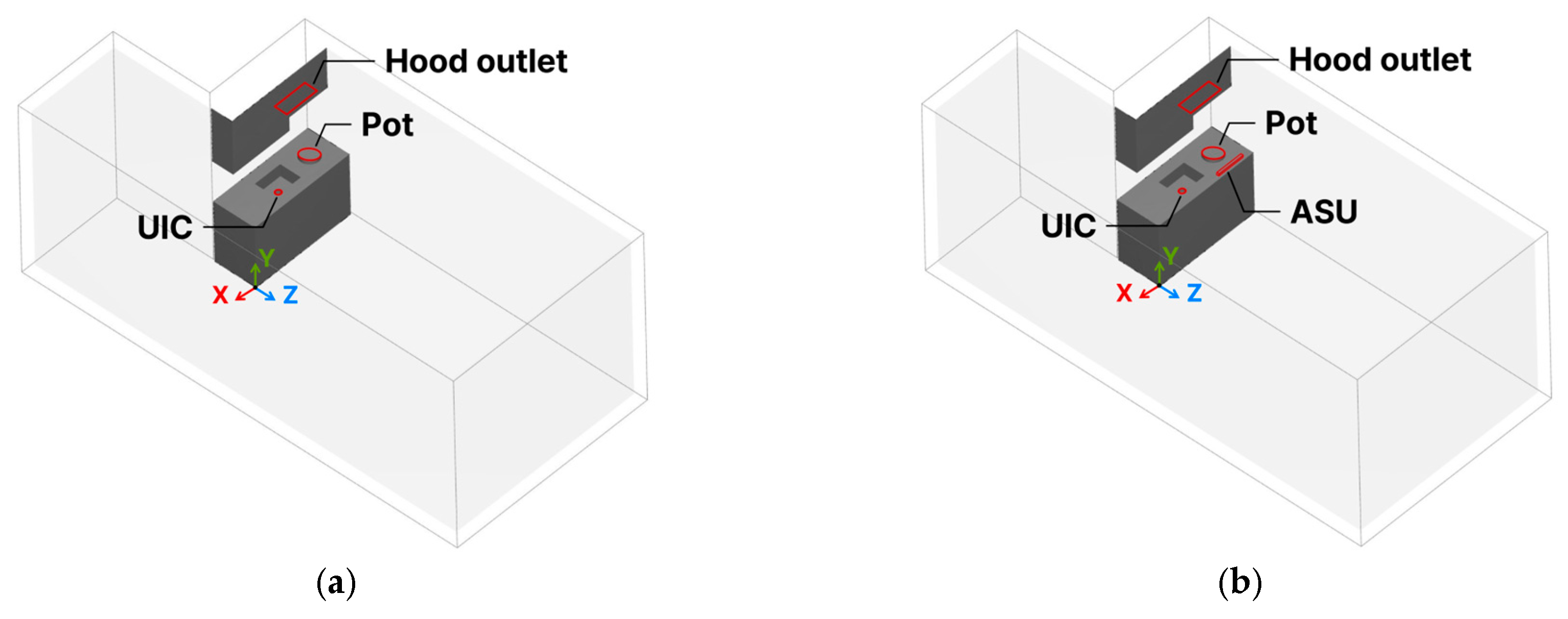
During the experimental phase, external openings and gaps were sealed to simulate airtight conditions, except for the UIC. In accordance with the experimental setup, the CFD model was also configured as a closed space, with openings such as doors and windows excluded. The CFD analysis domains for each case are shown in Figure 4.
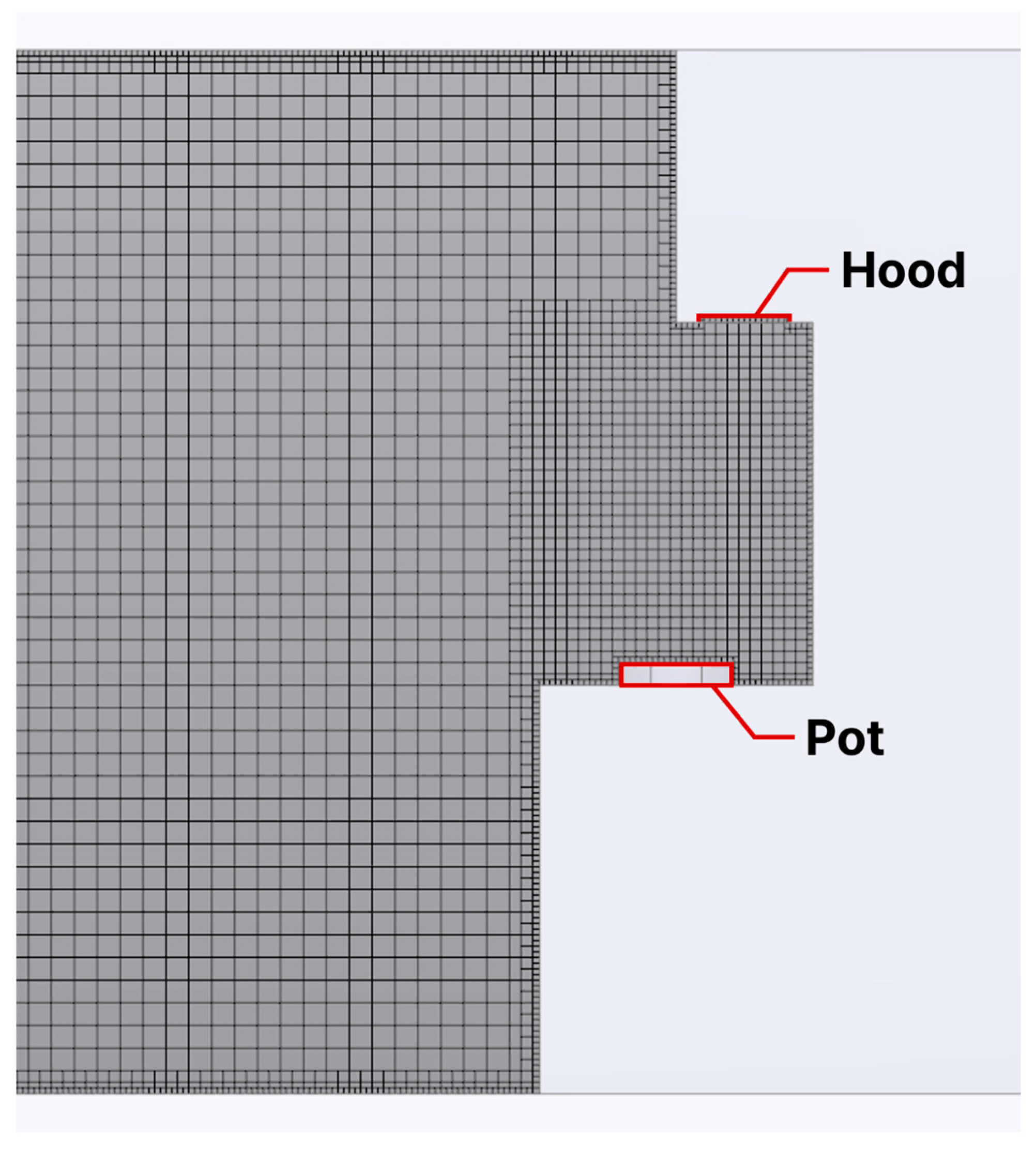
The mesh conditions are summarized in Table 4. An unstructured mesh generated using the default settings of Simerics-MP was employed.
The mesh configuration established under these conditions is shown in Figure 5. A dense mesh was configured in regions where intensive observation of airflow variations was required, while a coarser mesh was applied to distant regions to optimize the computational load of the numerical analysis. In Simerics-MP, individual cell sizes are determined proportionally to the major axis length of the imported CAD surface; therefore, a Grid Independence test was conducted to ensure an appropriate mesh level for this study. The results confirmed that when the minimum cell size in the refined regions was subdivided to 0.0125% of the maximum cell size, numerical divergence was prevented and optimal resolution was achieved. Based on this mesh system, the k-ϵ turbulence model, which is widely validated in engineering for its stable convergence, was employed to accurately simulate the characteristics of indoor airflow.

4.3. Boundary Conditions

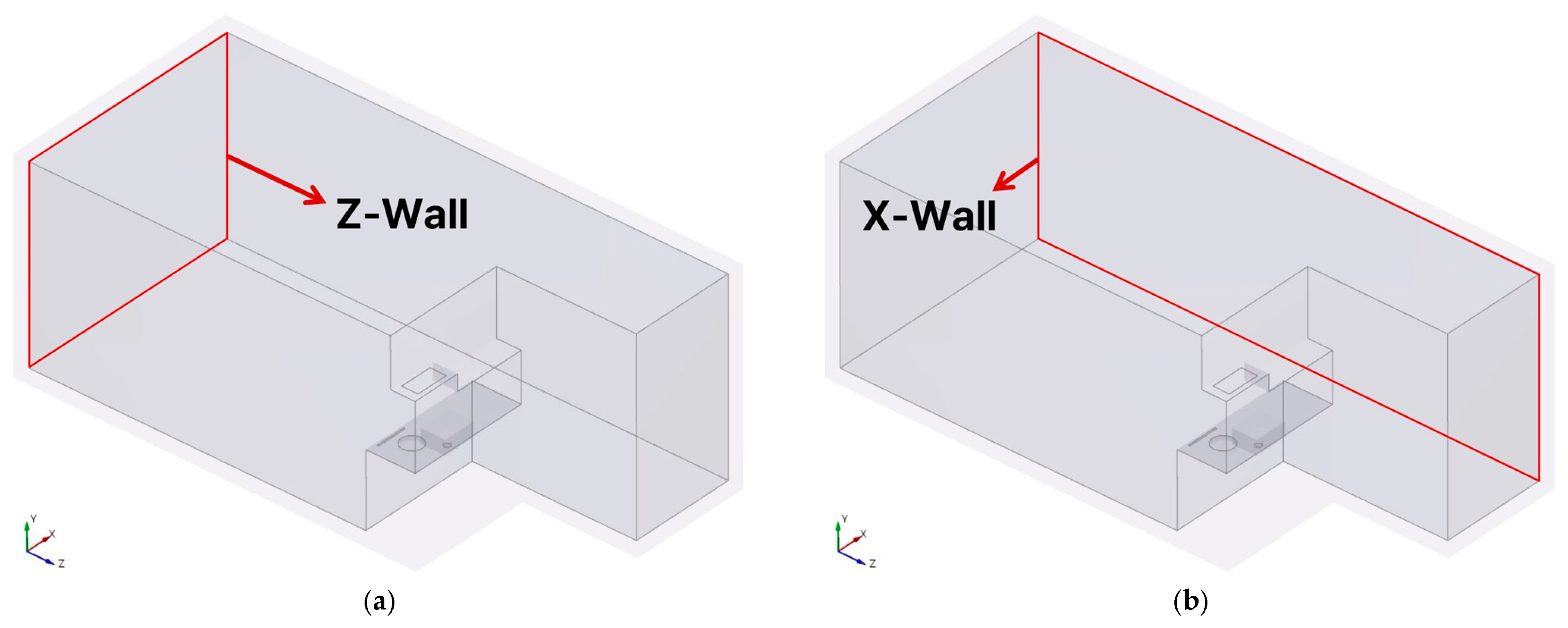
In this analysis, five flow inlet boundaries were defined: the hood, sink drain (UIC), ASU, pot, and X-wall. The boundary conditions are as shown in Table 5.
Among the boundary conditions, the hood exhaust flow rate, ASU airflow rate, UIC infiltration rate, and indoor temperature were specified using the experimentally measured values. Although no actual air jets were generated above the pot, a virtual upward velocity boundary condition was applied to visualize and track the thermal buoyancy induced by cooking heat. In CFD analysis, mass conservation must be satisfied. However, when only the experimentally obtained exhaust and supply airflow rates were applied for each case, the condition Qexhaust ≠ Qsupply, violating mass conservation. This imbalance is attributed to unintended infiltration through gaps around doors or windows, electrical outlet boxes, material joints, and other openings commonly present in residential environments. Accordingly, an equivalent leakage rate (Qleak) was applied directly to the wall surfaces in this study, following the approach of Sun et al. [28]. The equivalent leakage rate was calculated from the measured data using Equation (1).
Qleak = Qhood − (QASU + QUIC + Qpot)
  • Qleak: Equivalent leakage rate.
  • Qhood: Hood exhaust flow rate.
  • QASU: ASU airflow rate.
  • QUIC: UIC infiltration rate.
  • Qpot: Pot hot airflow rate.
To apply the calculated equivalent leakage rate (Qleak) to the wall farthest from the hood, the Z-wall and X-wall were considered, as shown in Figure 6. A comparison of the results for both application locations indicated no significant differences attributable to the wall selection; however, the temperature field was visualized more clearly when the equivalent leakage rate was applied to the X-wall. Accordingly, the X-wall was selected as the boundary for applying the equivalent leakage rate.
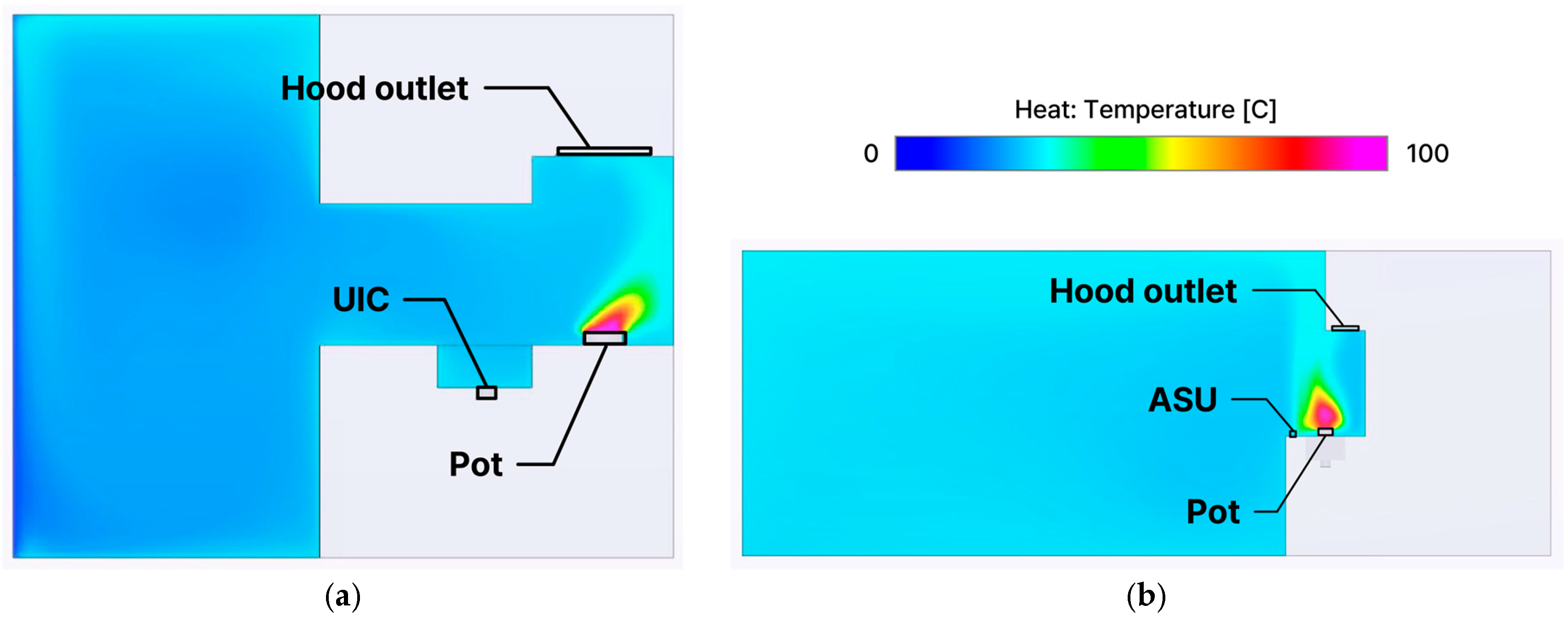
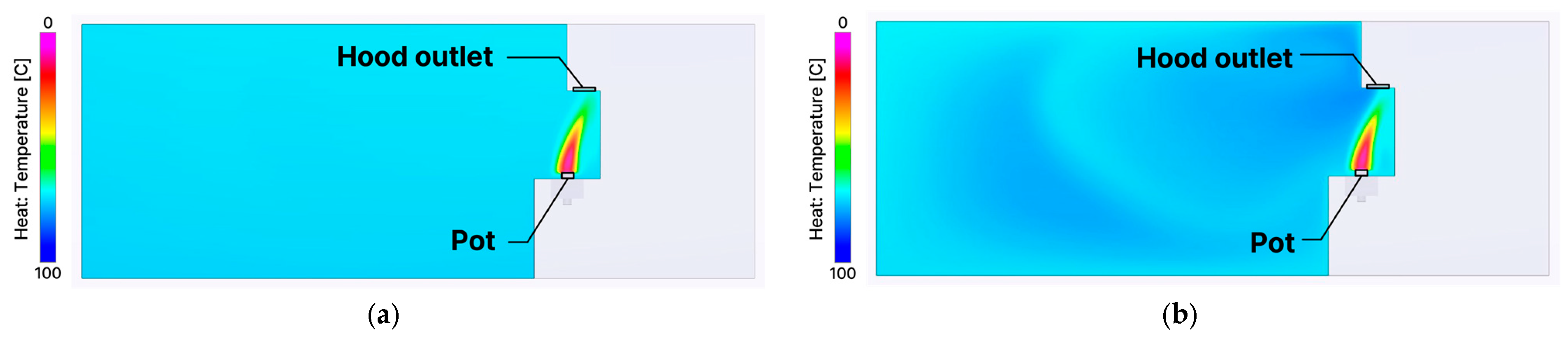
This CFD analysis was conducted under winter conditions, with the infiltration temperature through the UIC, ASU, and X-wall set to 5 °C, and the indoor temperature set to 20 °C. The experiment was conducted in summer; however, preliminary analysis confirmed that there were no significant differences in the basic airflow patterns between summer and winter (Figure 7). Nevertheless, winter conditions were adopted because, compared to summer when the indoor–outdoor temperature difference is small, the changes in air inflow and temperature fields according to the presence or absence of air supply are more visually pronounced under winter conditions with lower outdoor temperatures.
To more accurately represent actual winter heating conditions, additional considerations—such as applying wall insulation or defining thermal transmittance based on material properties—would be required. However, incorporating these thermal conditions caused numerical instability during the simulation. Therefore, to maintain computational stability, an isothermal condition was applied to the indoor wall surfaces. Generally, building walls do not respond immediately to changes in air temperature due to their high thermal mass; this characteristic forms the primary basis for assuming isothermal wall conditions in steady state flow analysis. Based on this physical property, the wall temperature was set as constant in this study, following methodologies reported in previous studies that demonstrated such an assumption does not compromise the reliability of the analysis results [29].

4.4. Analysis Conditions

To examine the influence of infiltration occurring during cooking while the hood is operating, both a flow model and a turbulence model were employed. The simulation was performed until the residual value decreased below 0.001. The analysis conditions are summarized in Table 6.
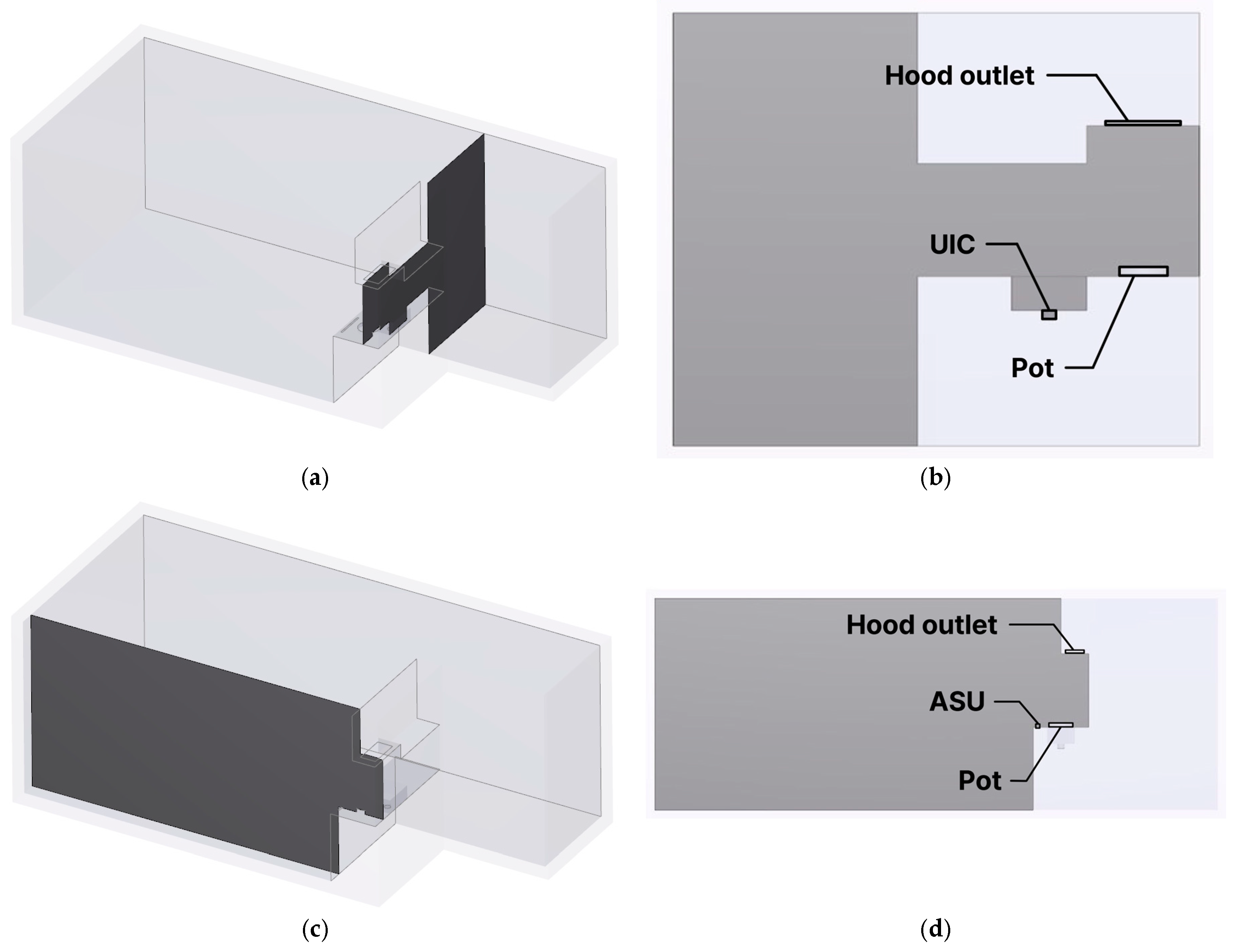
Furthermore, for each case, the temperature field and the Y-direction velocity field were analyzed on the Z- and X-planes passing through the center of the hood. The positions and configurations of each plane are shown in Figure 8.

5. Results and Analysis

5.1. Results of the Experiment

Experiments were conducted under two conditions: hood operation only (Case 1) and simultaneous operation of the hood and the supply air diffuser (Case 2). The experimental measurements obtained for each case are summarized in Table 7.
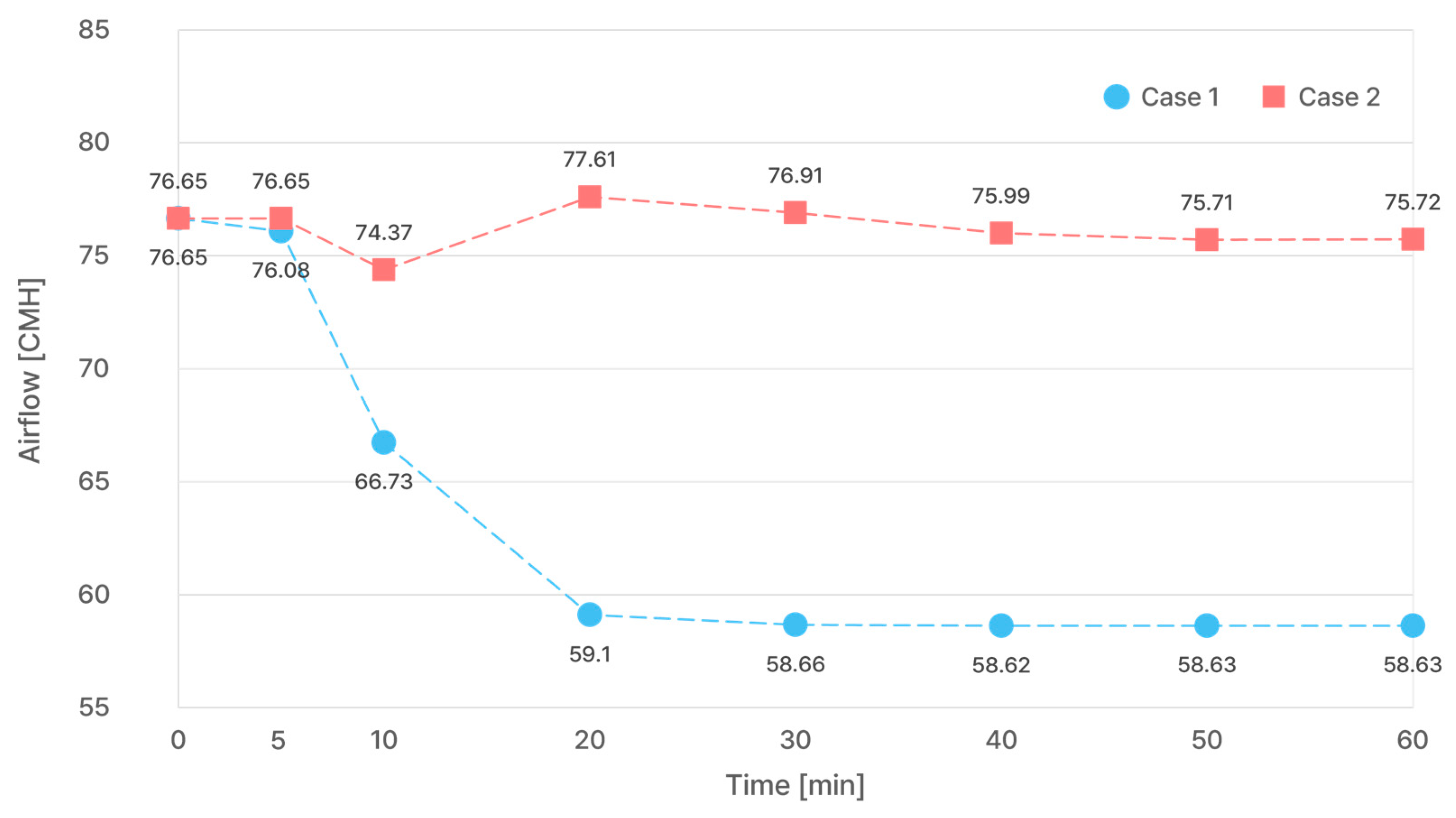
The measured exhaust airflow rates for each case are presented in Figure 9. In both cases, the initial condition airflow was approximately 76 CMH; however, the results diverged after 10 min of operation.
For Case 1, the airflow gradually decreased over time and reached a steady state after approximately 30 min, at which point the exhaust airflow was measured to be 58.63 CMH. The corresponding airflow reduction rate for Case 1 was approximately 23.51%.
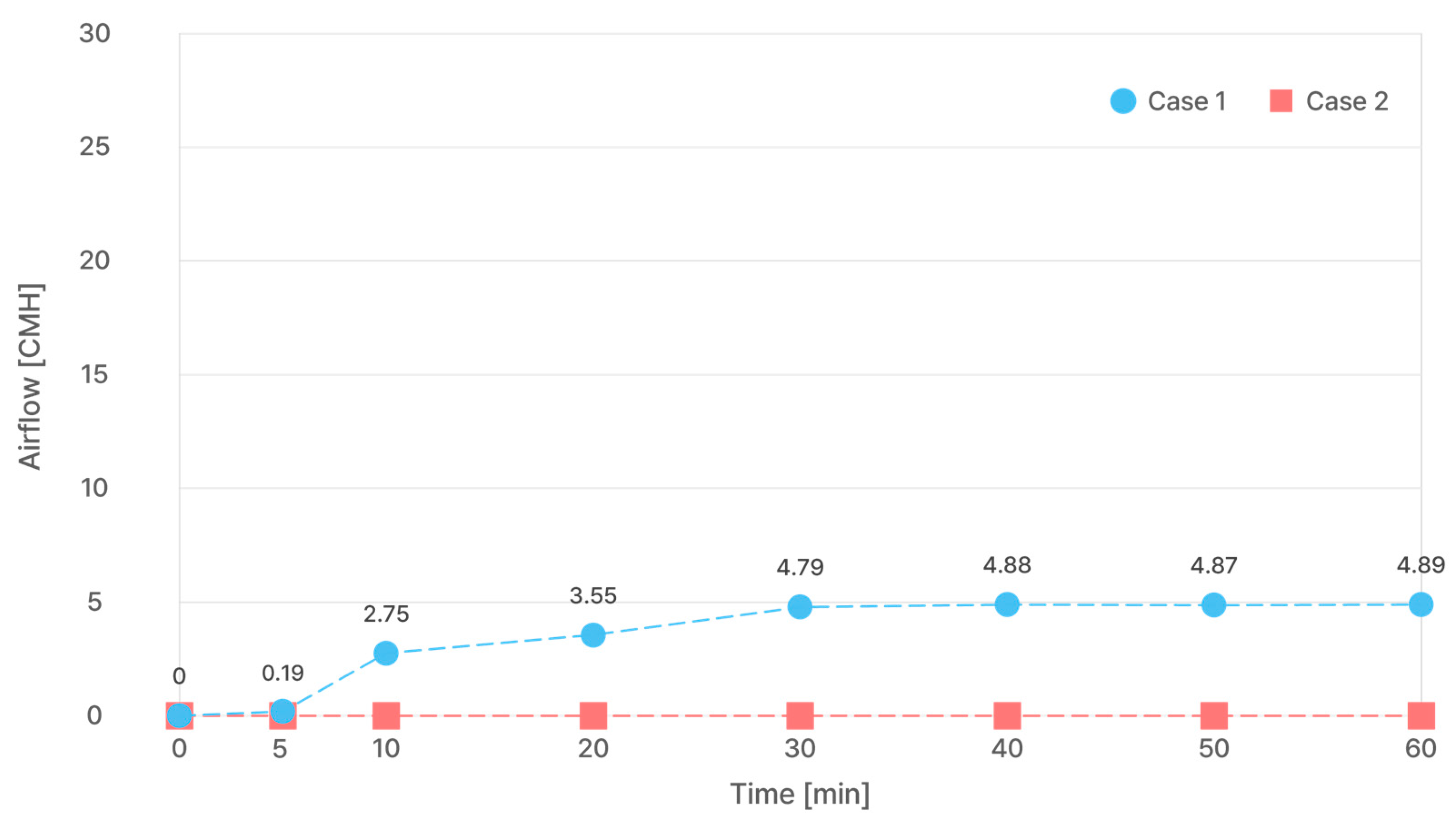
The measured UIC infiltration airflow for each case is presented in Figure 10.
For Case 1, the UIC infiltration was 0 CMH during the initial condition, but gradually increased over time and reached a steady state after 30 min. The steady-state UIC infiltration for Case 1 was measured to be 4.89 CMH.
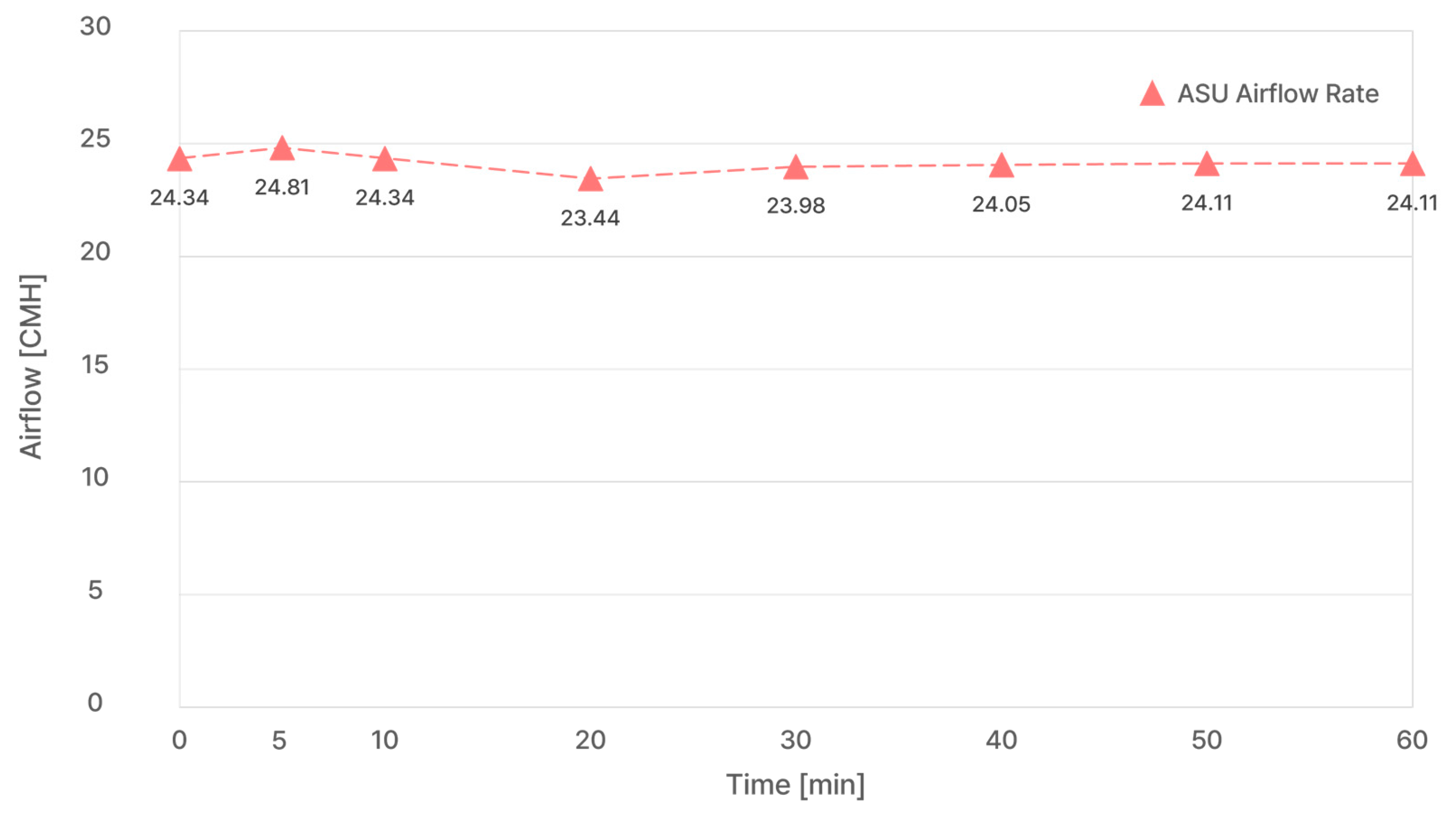
The measured ASU airflow for Case 2 is presented in Figure 11.
Throughout the entire experiment, the ASU airflow remained relatively stable, and the steady-state value was measured to be 24.11 CMH. Because the supply-air system in this study was implemented using a supply fan, duct, and ASU, this result is considered to reflect the rated airflow specified in the manufacturer’s performance data for the supply fan.

5.2. Results of CFD Analysis

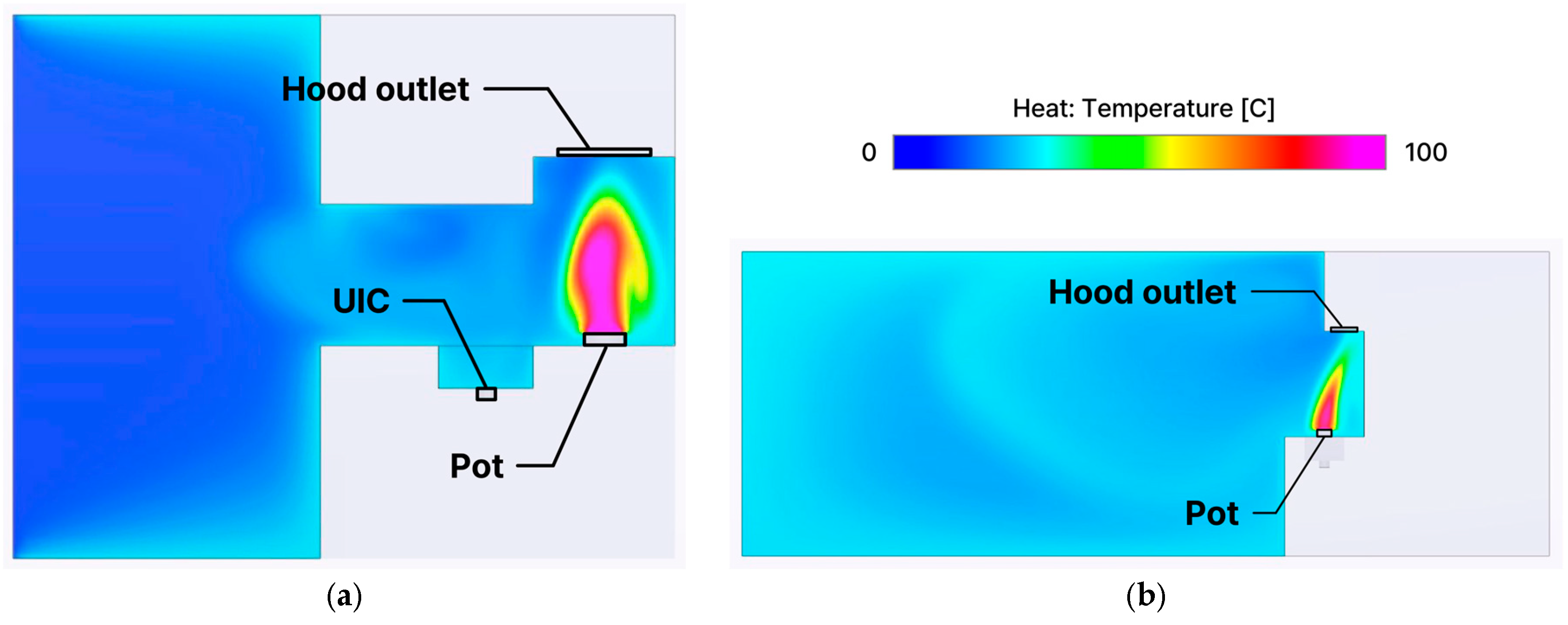
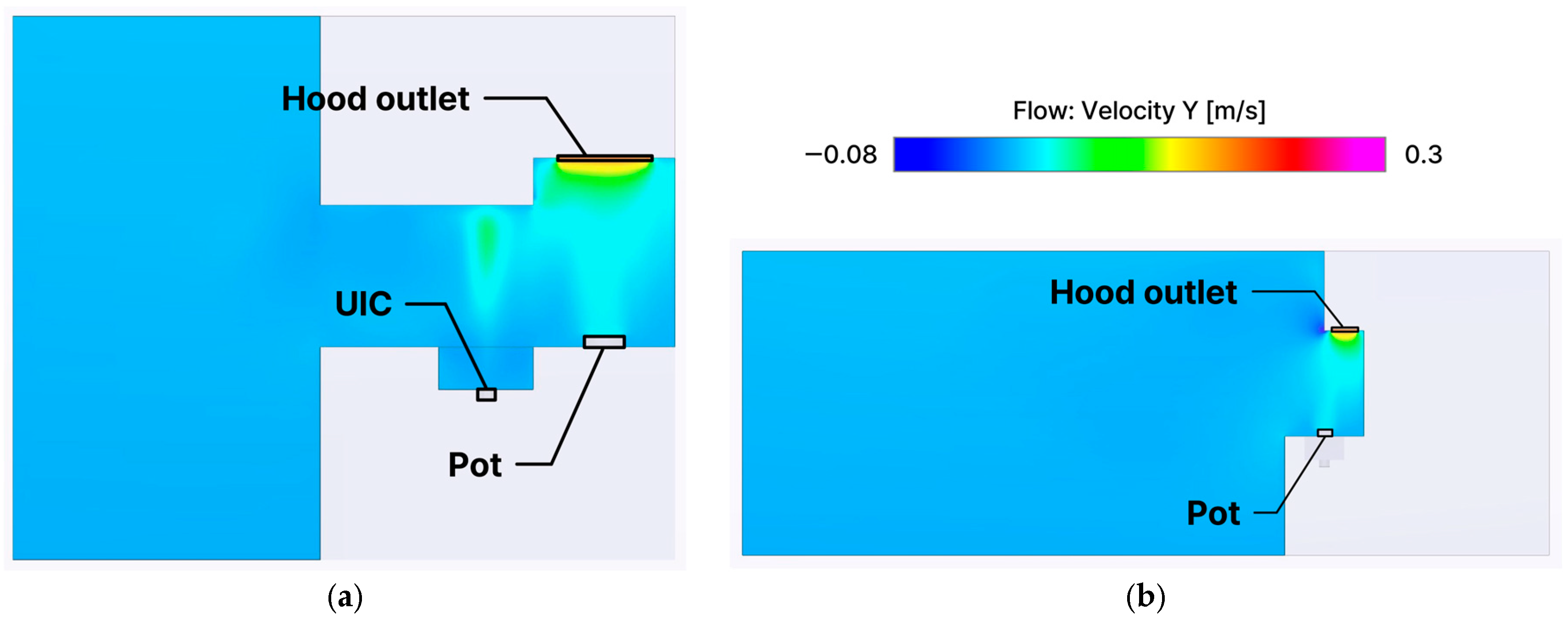
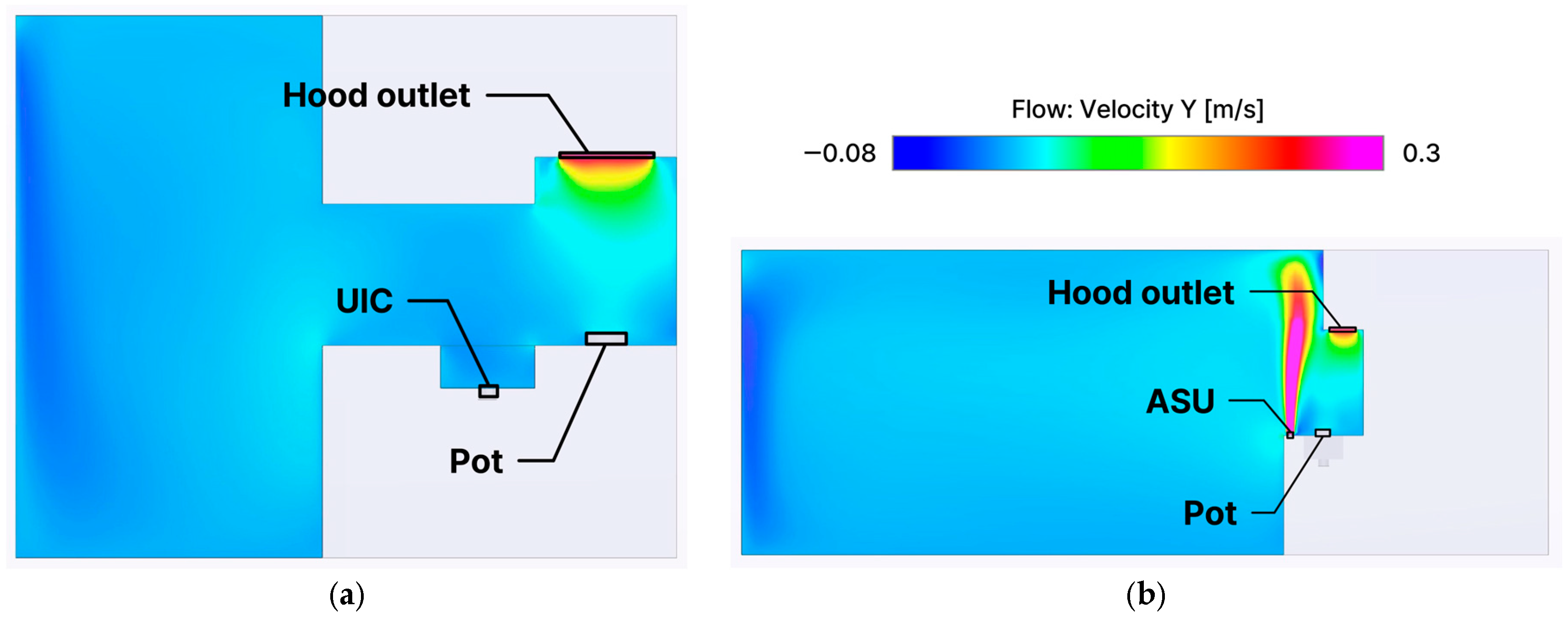
Numerical analyses were conducted using the experimentally measured values for each case. The temperature fields for Case 1 and Case 2 are presented in Figure 12 and Figure 13, respectively, while the velocity fields for Case 1 and Case 2 are shown in Figure 14 and Figure 15, respectively.
In Case 1, the hood operation, combined with outdoor air inflow through the UIC and the X-wall, resulted in a relatively high degree of mixing between indoor and outdoor air. In addition, the thermal buoyant plume generated from the pot was observed to reach the hood with a noticeable delay, leading to the formation of a stagnant high-temperature region beneath the hood exhaust outlet. This phenomenon is considered to account for the reduction in the hood’s capture effectiveness for cooking-generated pollutants. In contrast, Case 2 exhibited substantially reduced inflow of outdoor air through the UIC and X-wall due to the operation of the ASU. The supplied air functioned similarly to an air curtain in front of the hood, stabilizing the airflow between the cooking equipment and the hood. As a result, the thermal buoyant plume rising from the pot was captured more rapidly, the high-temperature region near the hood exhaust outlet was diminished, and a more uniform temperature distribution was maintained throughout the space.

5.3. Comparison of Experimental and CFD Results

Both the experimental measurements and the CFD simulations exhibited consistent trends depending on the presence or absence of the ASU. In Case 1, the experimental results showed a reduction in hood airflow, with the UIC infiltration rate measured at 4.89 CMH. The CFD analysis also visualized the delayed capture of the rising hot plume, which was attributable to the stagnant high-temperature region and the excessive mixing between indoor and outdoor air.
In contrast, in Case 2, the hood airflow remained stable throughout the experiment, and the UIC inflow was measured as 0 CMH. The CFD analysis similarly reproduced the pattern in which the ASU suppressed the inflow of outdoor air through the UIC and the X-wall, resulting in a more stable and uniform airflow field around the hood.

6. Conclusions

This study investigated, through both experiments and CFD simulations, the reduction in hood capture performance and the occurrence of unintended infiltration during hood operation in highly airtight small residential spaces, and evaluated the effectiveness of introducing an air supply unit. The main findings are summarized as follows:
(1)
The experimental results showed that in Case 1, the hood airflow decreased over time and infiltration occurred through unintended channels. In contrast, in Case 2, the installation of the air supply unit maintained stable hood airflow throughout the experiment and eliminated infiltration.
(2)
The CFD analysis exhibited trends consistent with the experimental observations, confirming that the air supply unit functions as an air curtain that rapidly captures the thermal buoyant plume generated from the pot and reduces the stagnant high-temperature region beneath the hood.
(3)
Consequently, the simultaneous operation of supply and exhaust ventilation in highly airtight residential spaces was found to be effective in stabilizing hood performance, enhancing energy efficiency, and preventing odor generation by suppressing infiltration.
Therefore, the air supply system could be a key element in achieving energy conservation and effective indoor air quality management in highly airtight residential environments. Furthermore, the findings of this study can serve as foundational data for the development of ventilation design guidelines for highly airtight small residential units in the future.

7. Discussion

7.1. Comparison with Previous Study

The CFD analysis results of this study revealed that the airflow formed by the Air Supply Unit rapidly captures the thermal buoyant plume above the cooking area, effectively reducing the stagnant high-temperature region beneath the hood.
These results exhibit a trend consistent with the effects of upward air supply presented in the study by Kwon [23]. The study reported that localized upward air supply minimizes flow interference and enhances capture efficiency by aligning the air supply direction with the movement of the thermal buoyant updrafts.
Similarly, this study confirmed that providing an upward airflow through the supply inlet adjacent to the cooking area beneath the hood performs an ‘air curtain’ function, preventing the dispersion of pollutants generated during cooking and stabilizing the exhaust flow. This suggests that in high-airtightness small-scale residential spaces, precise airflow control near the pollution source is more effective for improving indoor air quality than simply securing a total ventilation volume.

7.2. Limitations and Future Research Directions

This study focused on identifying the effects of installing an air supply unit on the flow field in cooking spaces; however, the following limitations remain in fully capturing the complex variables present in actual residential environments. By concentrating on changes in flow characteristics associated with the presence or absence of air supply during hood operation, the study did not account for various variables relevant to real-world usage conditions, such as quantitative indicators including pollutant removal efficiency and the noise level of the air supply system. Therefore, future studies should comprehensively incorporate these variables to further evaluate the effectiveness of pollutant diffusion control and improvements in residential comfort under actual cooking conditions.

Author Contributions

Conceptualization, Y.-J.J. and K.-S.P.; Methodology, J.-W.L. and Y.-J.J.; Software, J.-W.L. and S.-H.E.; Validation, Y.-J.J.; Formal analysis, J.-W.L.; Investigation, J.-W.L., S.-H.E. and Y.-J.J.; Resources, K.-S.P.; Data curation, J.-W.L. and S.-H.E.; Writing—original draft, J.-W.L.; Writing—review & editing, Y.-J.J. and K.-S.P.; Supervision, Y.-J.J. and K.-S.P.; Project administration, Y.-J.J.; Funding acquisition, K.-S.P. All authors have read and agreed to the published version of the manuscript.

Funding

This research was funded by the National Research Foundation of Korea (NRF) grant funded by the Korean government (MSIT), grant number (RS-2022-NR070211), (RS-2021-NR061942).

Data Availability Statement

The original contributions presented in this study are included in the article. Further inquiries can be directed to the corresponding author.

Conflicts of Interest

The authors declare there are no conflicts of interest.

References

  1. Lolli, F.; Coruzzolo, A.M.; Marinello, S.; Traini, A.; Gamberini, R. A Bibliographic Analysis of Indoor Air Quality (IAQ) in Industrial Environments. Sustainability 2022, 14, 10108. [Google Scholar] [CrossRef]
  2. Saffell, J.; Nehr, S. Improving Indoor Air Quality through Standardization. Standards 2023, 3, 240–267. [Google Scholar] [CrossRef]
  3. Settimo, G.; Yu, Y.; Gola, M.; Buffoli, M.; Capolongo, S. Challenges in IAQ for Indoor Spaces: A Comparison of the Reference Guideline Values of Indoor Air Pollutants from the Governments and International Institutions. Atmosphere 2023, 14, 633. [Google Scholar] [CrossRef]
  4. Kim, D.U.; Lee, J.H.; Kim, T.Y. Improvements of Ventilation System in the Kitchen and Development of High-Powered Exhaust System to Prevent Odor Spread in High-rise Residential Buildings. J. Archit. Inst. Korea 2007, 23, 195–202. [Google Scholar]
  5. Mannan, M.; Al-Ghamdi, S.G. Indoor Air Quality in Buildings: A Comprehensive Review on the Factors Influencing Air Pollution in Residential and Commercial Structure. Int. J. Environ. Res. Public Health 2021, 18, 3276. [Google Scholar] [CrossRef]
  6. Sung, S.K. Exhaust Characteristics of Kitchen Hood System with Inclined Air Curtain. Korean J. Air-Cond. Refrig. Eng. 2014, 26, 594–599. [Google Scholar] [CrossRef][Green Version]
  7. Kim, J.T.; Roh, J.W.; Chung, Y.G. A Field Test on Ventilation Efficiency of Range-Hood in Kitchen of Apartment. J. Archit. Inst. Korea Struct. Constr. 1999, 15, 207–214. [Google Scholar]
  8. Park, J.C.; Lee, S.S.; Rhee, E.K. A Study on the Improvement of Ventilation Systems of the Kitchen in Apartment. Korean J. Air-Cond. Refrig. Eng. 2000, 3, 63–71. [Google Scholar]
  9. Statistics Korea. 2023 Population and Housing Census (Register-Based) Press Release. Available online: https://kostat.go.kr (accessed on 12 October 2025).
  10. Ministry of the Interior and Safety. 2025 Administrative Safety Statistical Yearbook. Available online: https://www.mois.go.kr (accessed on 12 October 2025).
  11. Lee, E.J.; Lee, S.S. A Comparison of the Differences in Amenities at the Housing Complex between Regular Multi-family Housing and Urbanistic Housing for Improving Residential Quality of the Urbanistic Housing. J. Korean Hous. Assoc. 2015, 26, 9–18. [Google Scholar] [CrossRef]
  12. Korea Land and Housing Corporation. Era of Ten Million Single-Person Households: Living Alone (Part 1). Available online: http://www.lh.or.kr/gallery.es?act=view&bid=0004&list_no=11613&mid=a10503000000 (accessed on 6 November 2025).
  13. Cheung, P.K.; Jim, C.Y.; Siu, C.T. Air Quality Impacts of Open-Plan Cooking in Tiny Substandard Homes in Hong Kong. Air Qual. Atmos. Health 2019, 12, 865–878. [Google Scholar] [CrossRef]
  14. Lee, M.; Park, G.; Park, C.; Kim, C. Improvement of Grid Independence Test for Computational Fluid Dynamics Model of Building Based on Grid Resolution. Adv. Civ. Eng. 2020, 2020, 8827936. [Google Scholar] [CrossRef]
  15. Lee, J.J.; Lee, W.S. Experimental Study on Structural Shape of Exhaust System for Kitchen Range Hood. J. Korean Soc. Mech. Technol. 2002, 24, 1159–1165. [Google Scholar] [CrossRef]
  16. Kim, B.G.; Choi, H.G.; Yong, T.Y.; Lee, M.H. Horizontal Air-Jet Effect on the Natural Convection around a Range-Hood System. Korean J. Air-Cond. Refrig. Eng. 2005, 17, 333–341. [Google Scholar]
  17. Sohn, D.Y.; Lim, J.H.; Choi, Y.H.; Park, J.H. A Numerical Study on the Performance Improvement of Kitchen Range Hood by Air Induction and Air Curtain. Koran J. Air-Cond. Refrig. Eng. 2007, 19, 321–327. [Google Scholar]
  18. Sung, S.K. Exhaust Performance of a Kitchen Hood System with a Supply Air Slot on a Kitchen Table. Korean J. Air-Cond. Refrig. Eng. 2016, 28, 489–494. [Google Scholar] [CrossRef]
  19. Kang, Y.D.; Lee, J.C.; Kim, B.S. The Performance Improvement in Ventilation of Kitchen of Housing by Using CFD Method. KIEAE J. 2018, 18, 119–124. [Google Scholar] [CrossRef]
  20. Kang, K.M.; Bae, S.H.; Lee, Y.G. Assessment of Cooking-Generated Particle Removal Efficiency of Range Hood with Auxiliary Air Supply System. J. Korean Soc. Indoor Environ. 2020, 19, 149–156. [Google Scholar] [CrossRef]
  21. Kravchenko, I.; Kosonen, R.; Kilpeläinen, S. Performance Analysis of the Demand-Based Ventilation in a Nordic Apartment Building. Appl. Sci. 2021, 11, 176. [Google Scholar] [CrossRef]
  22. Yang, F.; Gao, J.; Cao, C.; Zeng, L.; Wang, L.; Liu, Z.; Zheng, Z. Novel Kitchen Ventilation System with the Cabinet-bottom Air Supply. J. Build. Eng. 2022, 60, 105137. [Google Scholar] [CrossRef]
  23. Kwon, Y.I. A Study on Flow Interference between Total Heat Recovery System and Kitchen Range Hood in Apartment. Korean J. Air-Cond. Refrig. Eng. 2023, 35, 434–442. [Google Scholar] [CrossRef]
  24. Kwon, Y.I. Effect of Makeup Air Supplied to Kitchen Hood in Apartment on Ventilation Performance of Heat Recovery Unit. Korean J. Air-Cond. Refrig. Eng. 2024, 36, 586–593. [Google Scholar] [CrossRef]
  25. Li, X.; Huang, K.; Feng, G.; Cao, G.; Li, A.; Teng, X. New Makeup Air Method through Ceiling for Kitchen Ventilation in Severely Cold Regions and Its Effect on Air Environment. Atmosphere 2024, 15, 1109. [Google Scholar] [CrossRef]
  26. Zhang, S.; Huang, H.; Ye, F.; Wang, F.; Cheng, L.; Tan, Y.; Shen, Z.; Chen, Z. Optimization Analysis of Kitchen Cooking Environment for Air Conditioning Range Hood Based on Thermal Comfort and PM10 Concentration. Buildings 2025, 15, 1842. [Google Scholar] [CrossRef]
  27. Zhang, D.; Mui, K.W.; Gao, C.; Wong, L.T. Assessing the effectiveness of combined ventilation strategies for cooking in residential kitchens in Hong Kong. Energy Build. 2026, 354, 116994. [Google Scholar] [CrossRef]
  28. Sun, Y.; Francisco, P.; Merrin, Z.; Gilleade, K. CFD Simulations of Small Particle Behavior with Blower-Driven Airflows in Single-Family Residential Buildings. Indoor Air 2024, 2024, 6685891. [Google Scholar] [CrossRef]
  29. Chen, Q. Ventilation Performance Prediction for Buildings: A Method Overview and Recent Applications. Build. Environ. 2009, 44, 848–858. [Google Scholar] [CrossRef]
Figure 1. Flowchart of the research process.
Buildings 16 00463 g001
Figure 2. Dimensions of the experimental setup.
Buildings 16 00463 g002
Figure 3. Measurement locations for wind velocity at the ASU and UIC.
Buildings 16 00463 g003
Figure 4. CFD domains for each case: (a) Case 1; (b) Case 2.
Buildings 16 00463 g004
Figure 5. Results of unstructured mesh generation in the computational domain.
Buildings 16 00463 g005
Figure 6. Boundary surfaces with outdoor air inflow conditions applied to satisfy mass conservation: (a) Z-wall; (b) X-wall.
Buildings 16 00463 g006
Figure 7. Comparison of temperature fields under summer and winter conditions: (a) temperature field under summer conditions; (b) temperature field under winter conditions.
Buildings 16 00463 g007
Figure 8. Cross-sections of the CFD analysis model: (a) 3D representation showing the sectional location; (b) Z-plane; (c) 3D representation showing the sectional location; (d) X-plane.
Buildings 16 00463 g008
Figure 9. Measured exhaust airflow rate for each case.
Buildings 16 00463 g009
Figure 10. Measured UIC airflow rate for each case.
Buildings 16 00463 g010
Figure 11. Measured ASU airflow rate for Case 2.
Buildings 16 00463 g011
Figure 12. Temperature field of Case 1: (a) Z-plane temperature field; (b) X-plane temperature field.
Buildings 16 00463 g012
Figure 13. Temperature field of Case 2: (a) Z-plane temperature field; (b) X-plane temperature field.
Buildings 16 00463 g013
Figure 14. Velocity field of Case 1: (a) Z-plane velocity field; (b) X-plane velocity field.
Buildings 16 00463 g014
Figure 15. Velocity field of Case 2: (a) Z-plane velocity field; (b) X-plane velocity field.
Buildings 16 00463 g015
Table 1. Classification of size of apartment units based on the standards of exclusive use area.
ClassificationExclusive Use Area
Ultra-SmallLess than 40 m2
Small40 m2 or more but less than 60 m2
Medium60 m2 or more but less than 85 m2
Large85 m2 or more
Table 2. Condition Settings.
DivisionCase 1Case 2
ConditionsAir supply unit uninstalled,
hood operation only
Air supply unit installed,
simultaneous operation of the hood and the supply air
3D ModelsBuildings 16 00463 i001Buildings 16 00463 i002
Table 3. Experimental Set Configuration.
CategoryComponentSpecification
Indoor SpaceFloor Area15 m2
Actual Volume34.5 m3
Temperature/Relative Humidity25 °C/65%
HoodHood Specifications0.4 m × 0.2 m × 0.6 m
Hood Exhaust Area0.4 m × 0.2 m = 0.08 m2
Hood Rated Airflow253 CMH
Air Supply SystemASU Area0.38 m × 0.02 m = 0.0076 m2
Supply Fan Rated Airflow300 CMH
Flexible Duct (Circular) SpecificationsLength 7 m, Diameter 0.15 m
Table 4. CFD mesh conditions.
DivisionConditions
Mesh systemUnstructured mesh
Meshing domainInternal fluid region
Maximum cell size0.008
Minimum cell size1 × 10−6
Wall and surface cell size0.003
Hood–countertop region cell size0.005
Critical edge angle30°
Curvature resolution35°
Table 5. CFD boundary conditions.
DivisionCase 1Case 2
Airflow [CMH]Temperature [°C]Airflow [CMH]Temperature [°C]
Hood58.63-75.72-
UIC4.89505
ASU--24.115
Pot51005100
X-wall48.74546.615
Table 6. CFD analysis conditions.
DivisionConditionsDivisionConditions
Space3DFluid conditionIncompressible fluid
TimeSteady StateViscosityTurbulence
PropertiesIdeal gas lawReynolds number modelk-ε turbulence model
Table 7. Measured values for each case.
Airflow [CMH]Case 1Case 2
HoodInitial ConditionSteady StateInitial ConditionSteady State
76.6558.6376.6575.72
UICInitial ConditionSteady StateInitial ConditionSteady State
04.8900
ASUInitial ConditionSteady StateInitial ConditionSteady State
--24.3424.11
Disclaimer/Publisher’s Note: The statements, opinions and data contained in all publications are solely those of the individual author(s) and contributor(s) and not of MDPI and/or the editor(s). MDPI and/or the editor(s) disclaim responsibility for any injury to people or property resulting from any ideas, methods, instructions or products referred to in the content.