

Numerical Evaluation of Interlayer Gaps on Dynamic Response of Precast Concrete Slab Track Systems with Maintenance Thresholds



Abstract
1. Introduction
2. Numerical Modeling
3. Effects of Gap Width
3.1. Behavior of Concrete Slab
3.2. Behavior of Grouting Layer
4. Effects of Gap Location
4.1. Behavior of Concrete Slab
4.2. Behavior of Grouting Layer
5. Effects of Gap Depth
5.1. Behavior of Concrete Slab
5.2. Behavior of Grouting Layer
6. Interlayer Gap Criteria
6.1. S-G-H Condition
6.2. S-GH Condition
6.3. SG-H Condition
7. Conclusions
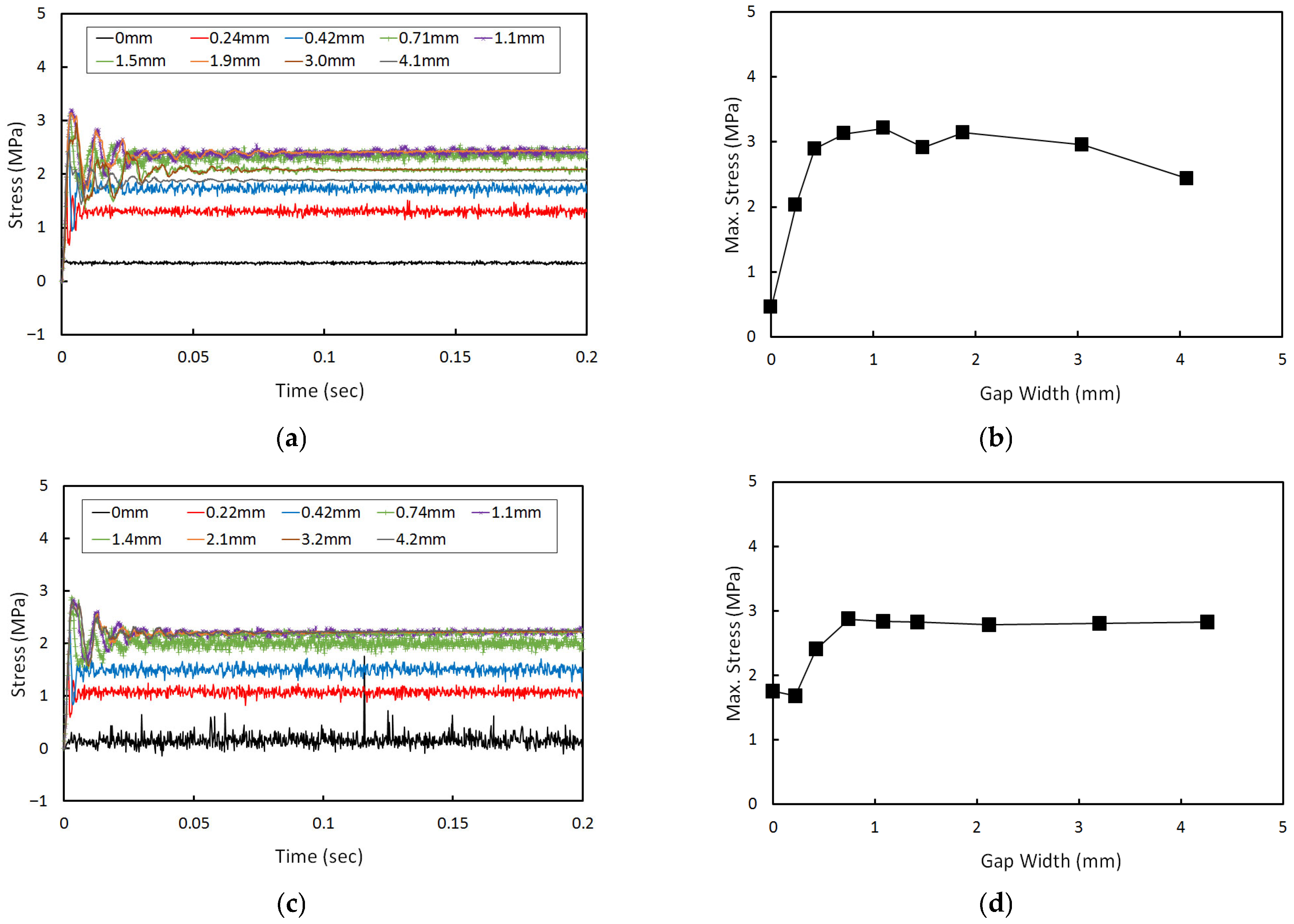
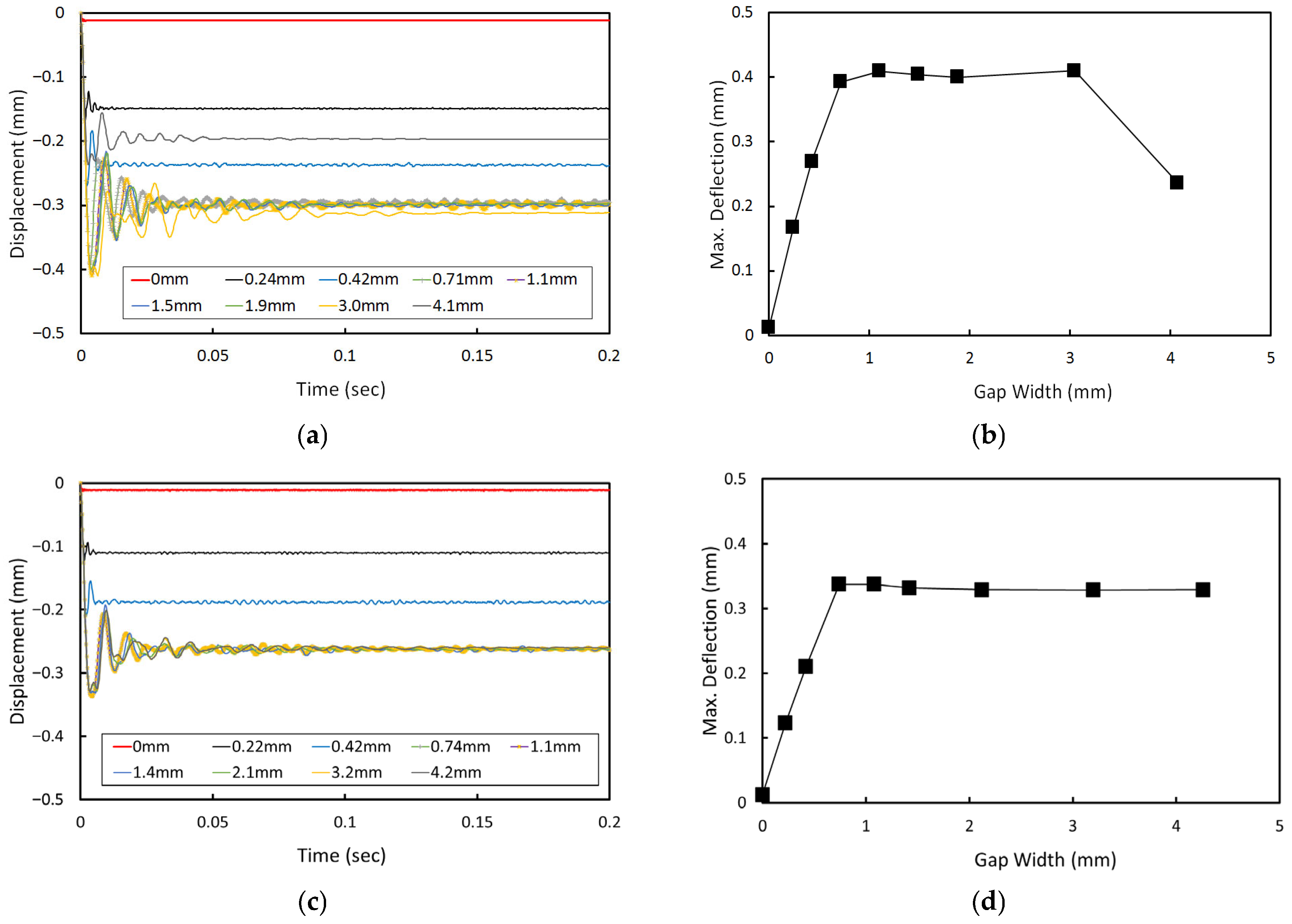
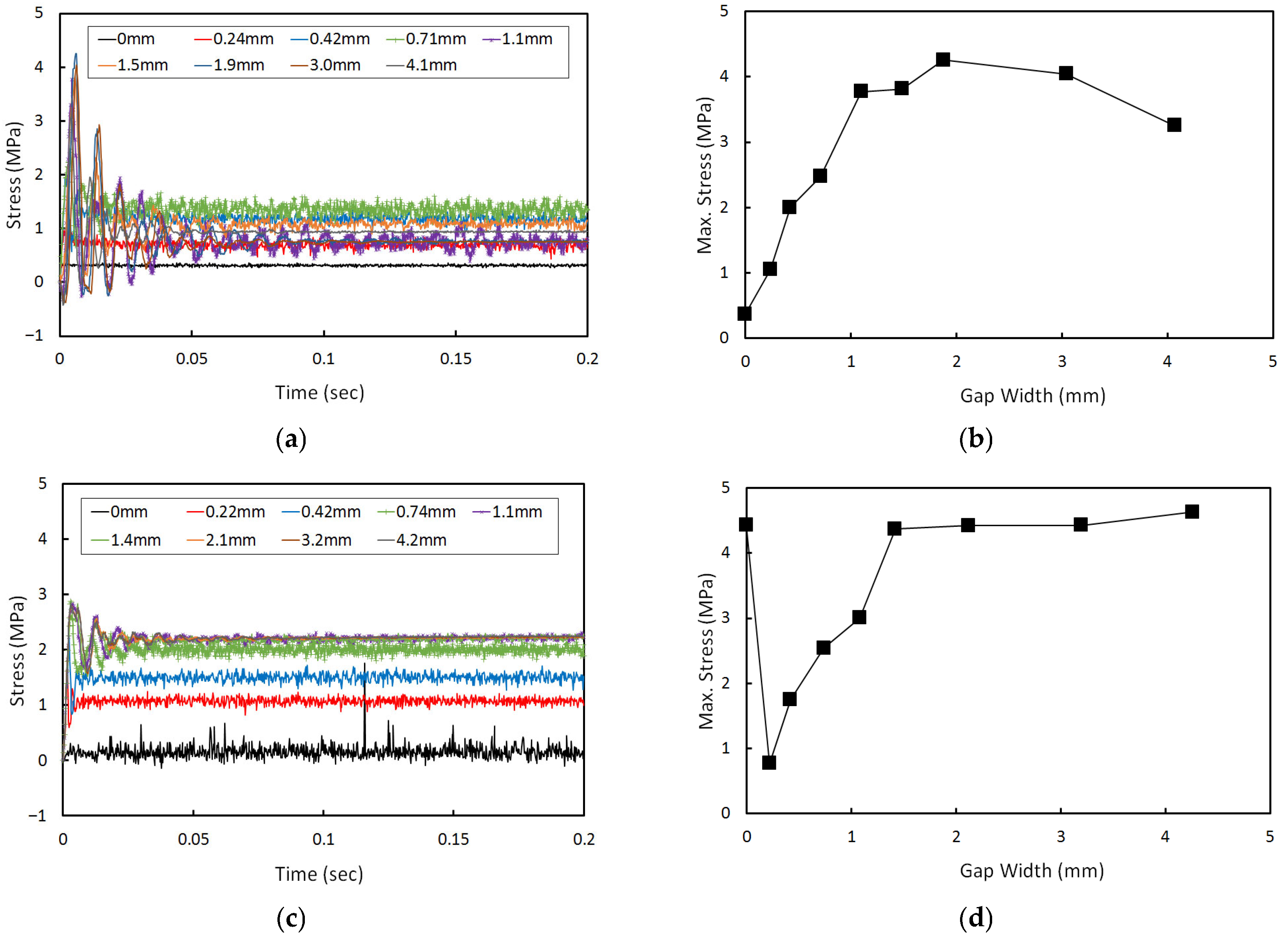
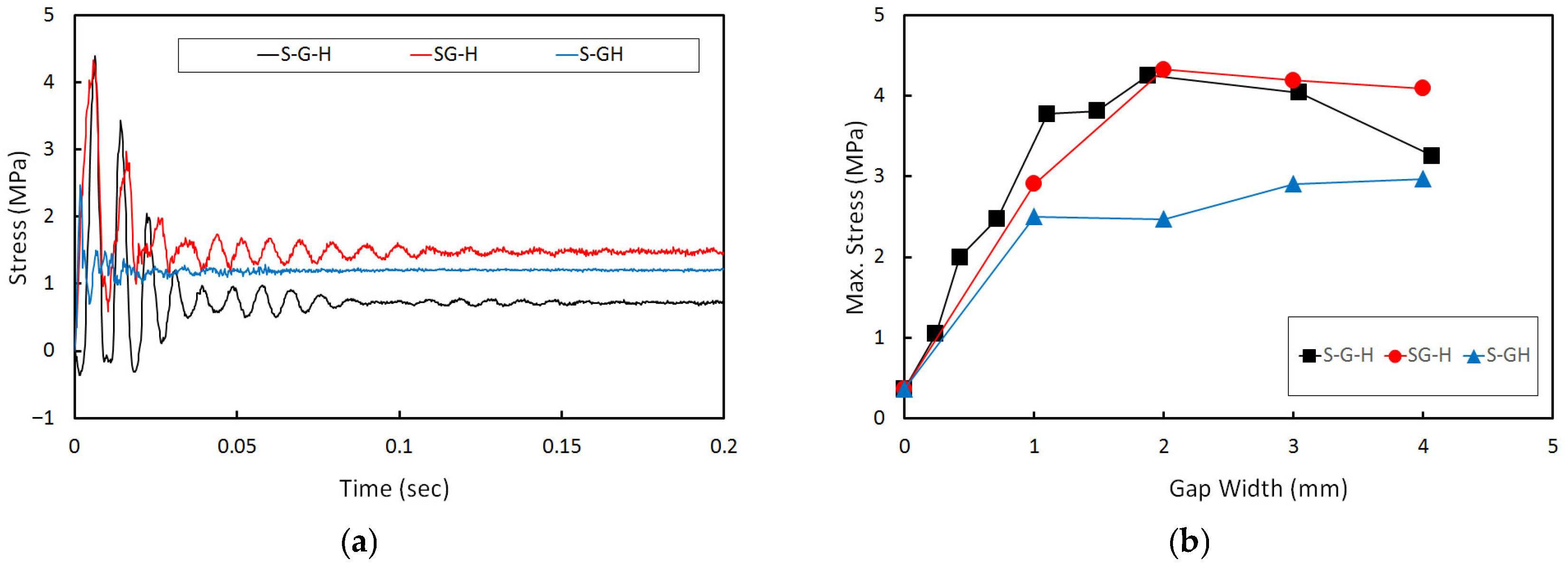
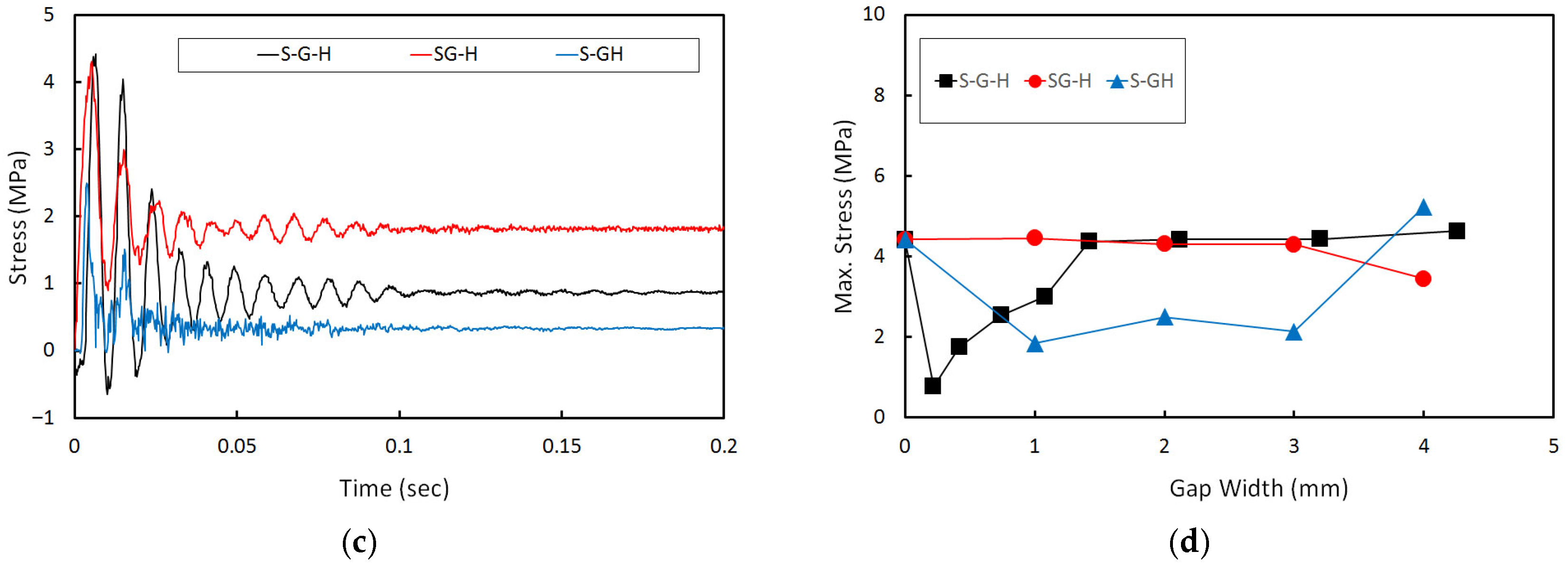
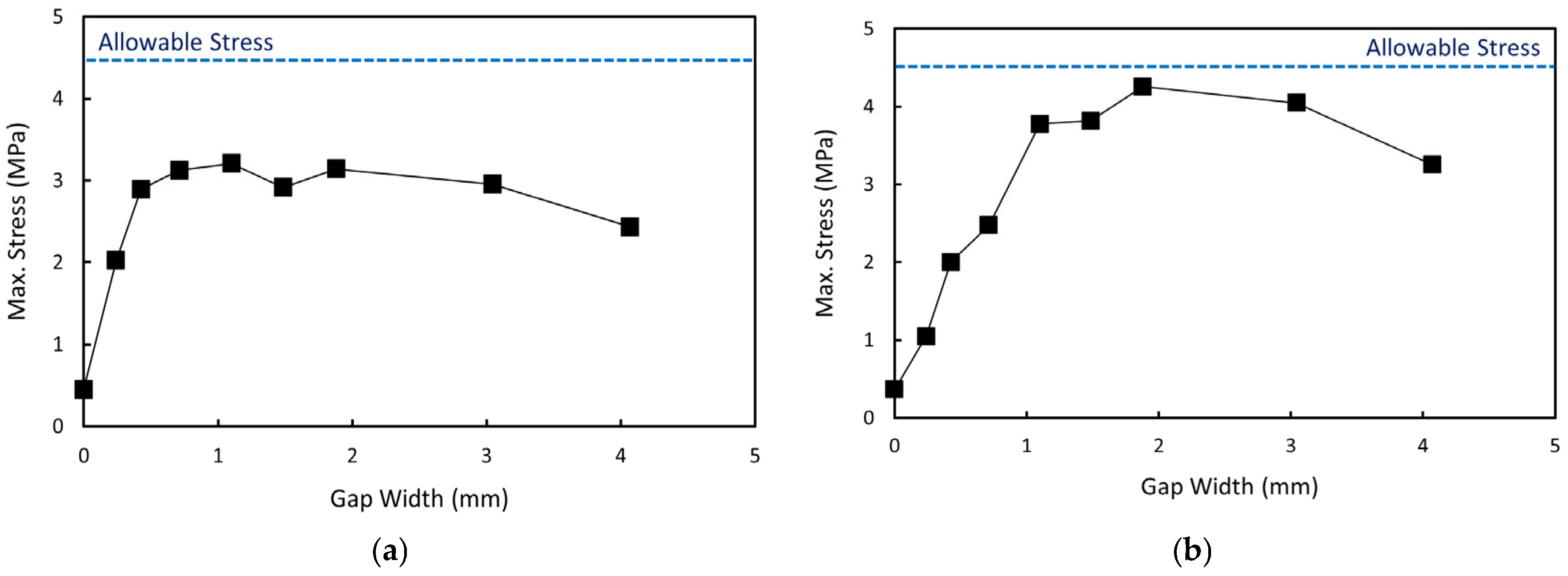
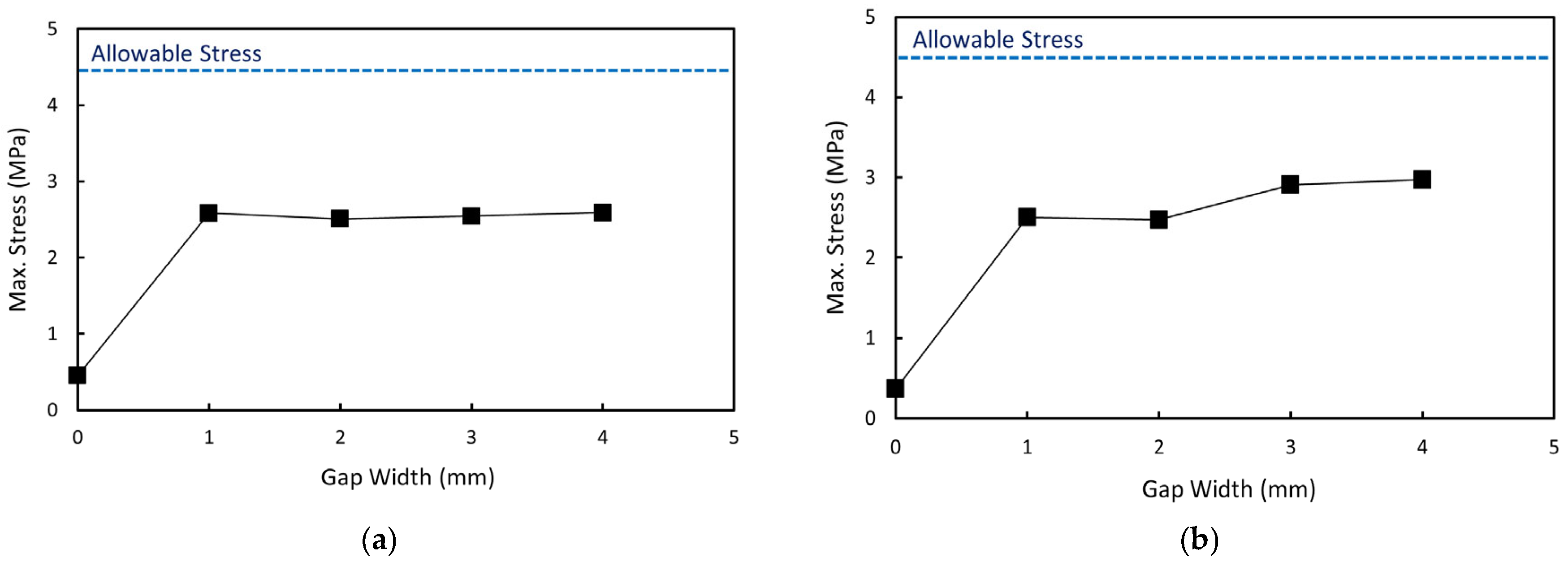
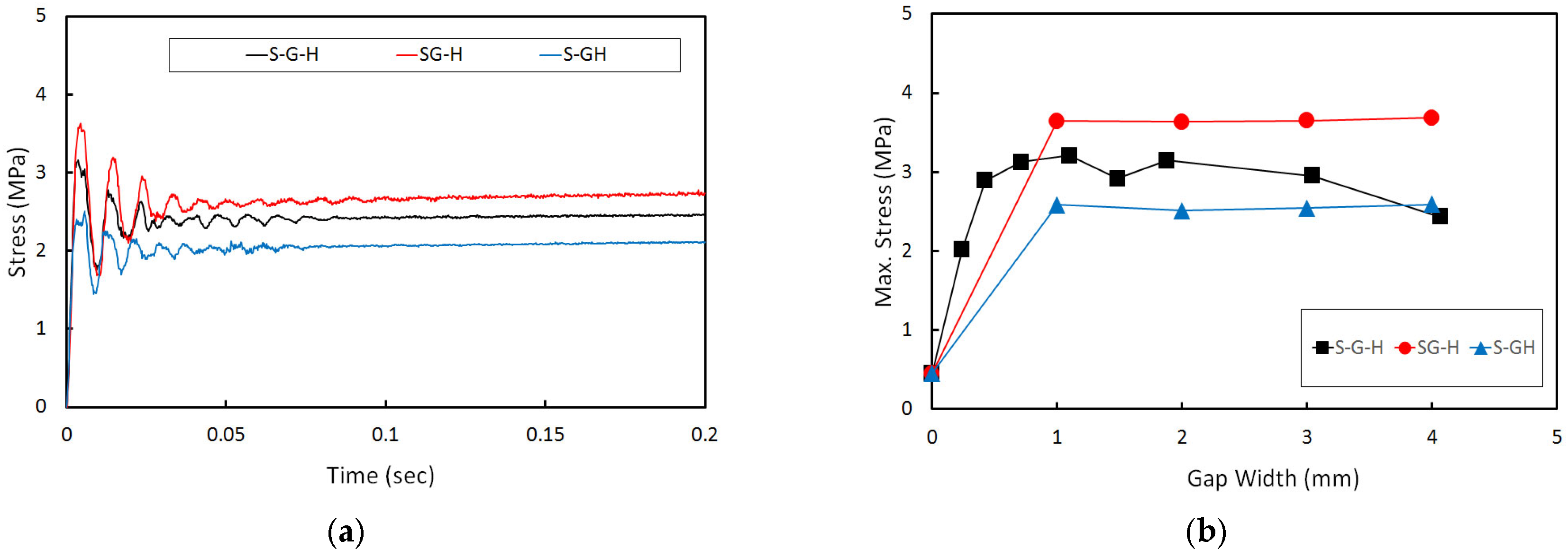
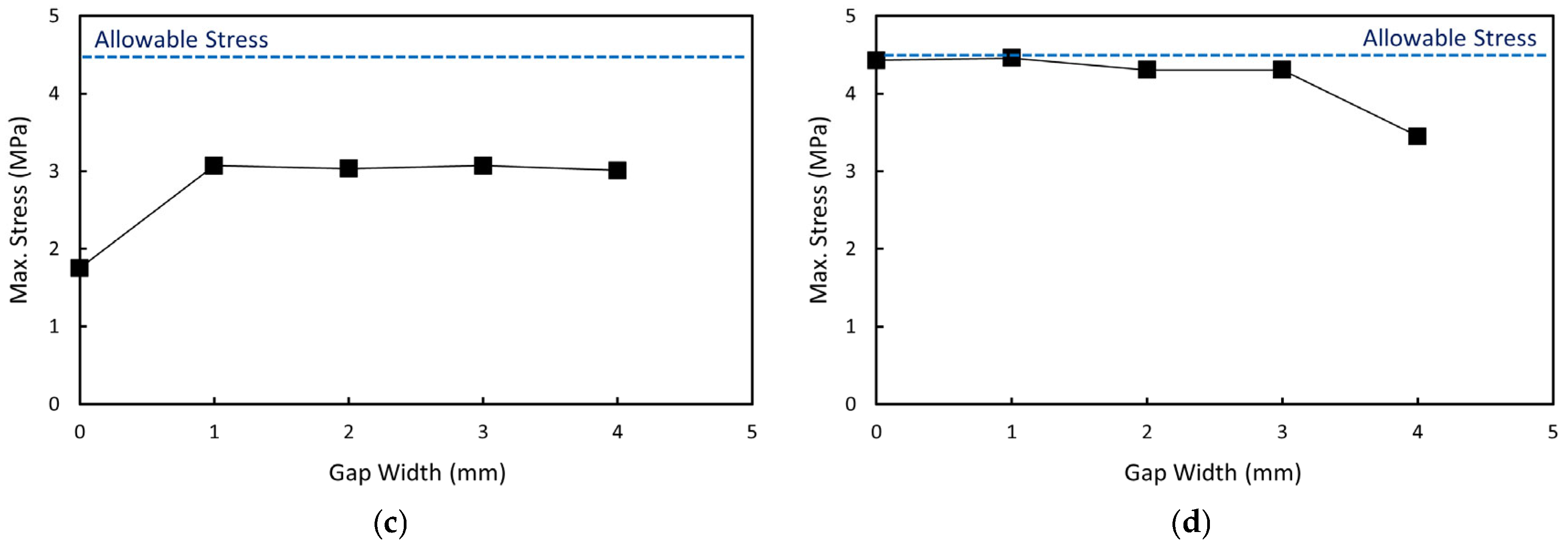
- In both models, maximum principal stresses increased with gap width before plateauing. This stress plateau indicates that stress demand stabilizes once the effective contact path no longer changes with further separation. Gap-induced loss of vertical support also triggers a cantilever-like response, shifting the critical tensile stress region. The as-is model maintained stresses below the 4.5 MPa limit, though fatigue risks emerged near 2 mm. In contrast, the as-was grouting layer exhibited significantly higher stresses, approaching flexural strength at 1.5 mm and exceeding it at 4 mm, emphasizing the need for close monitoring.
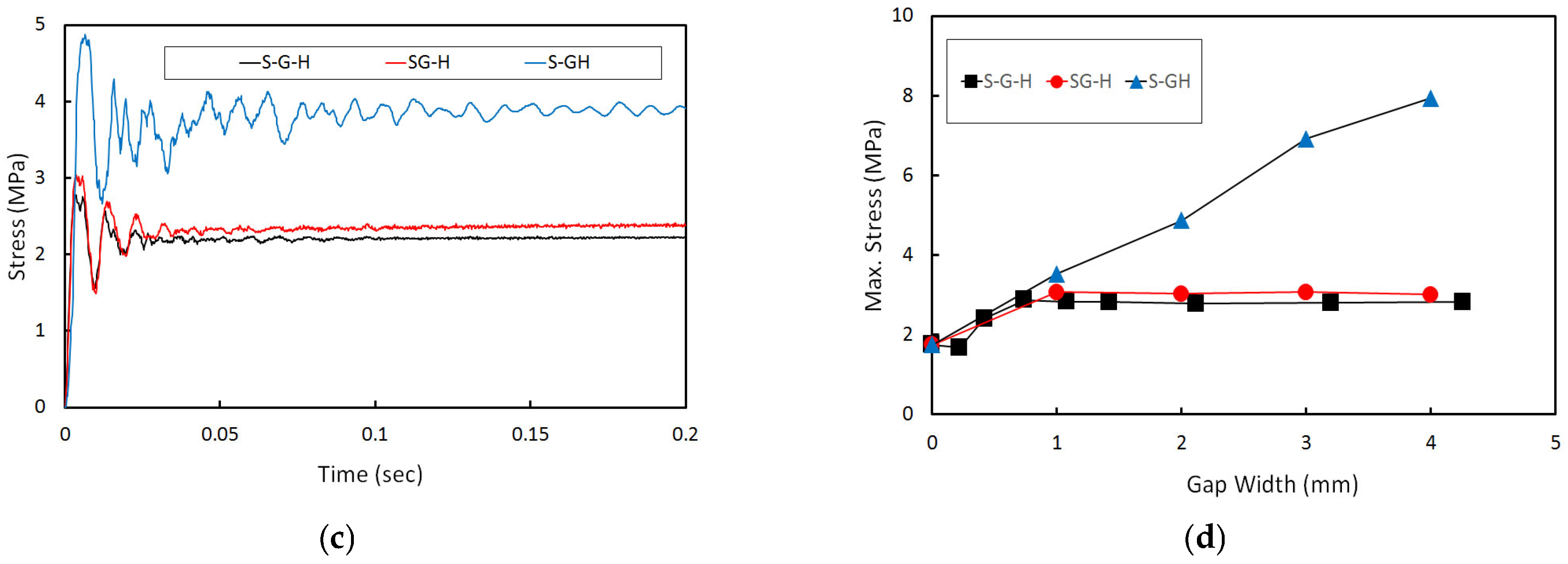
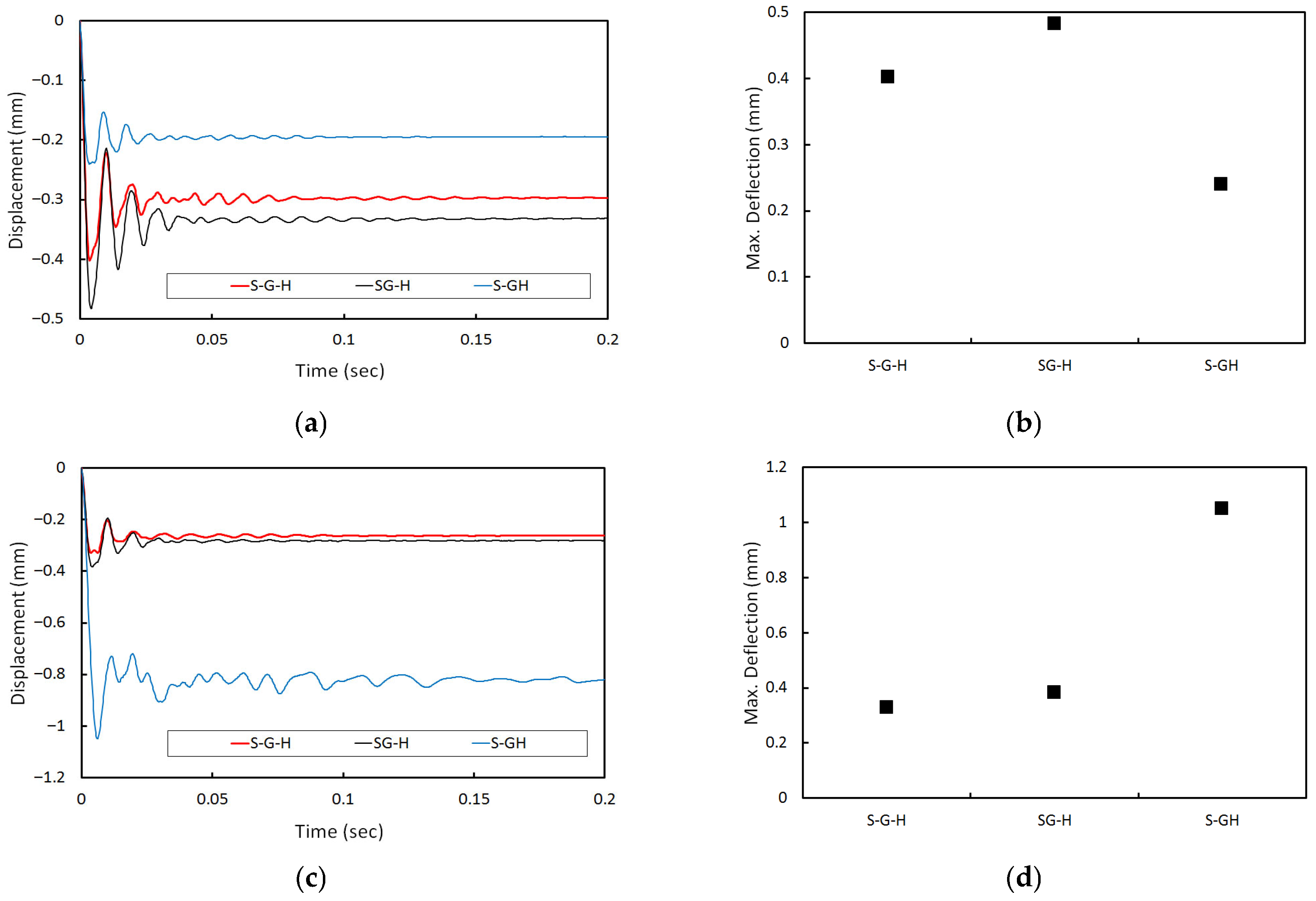
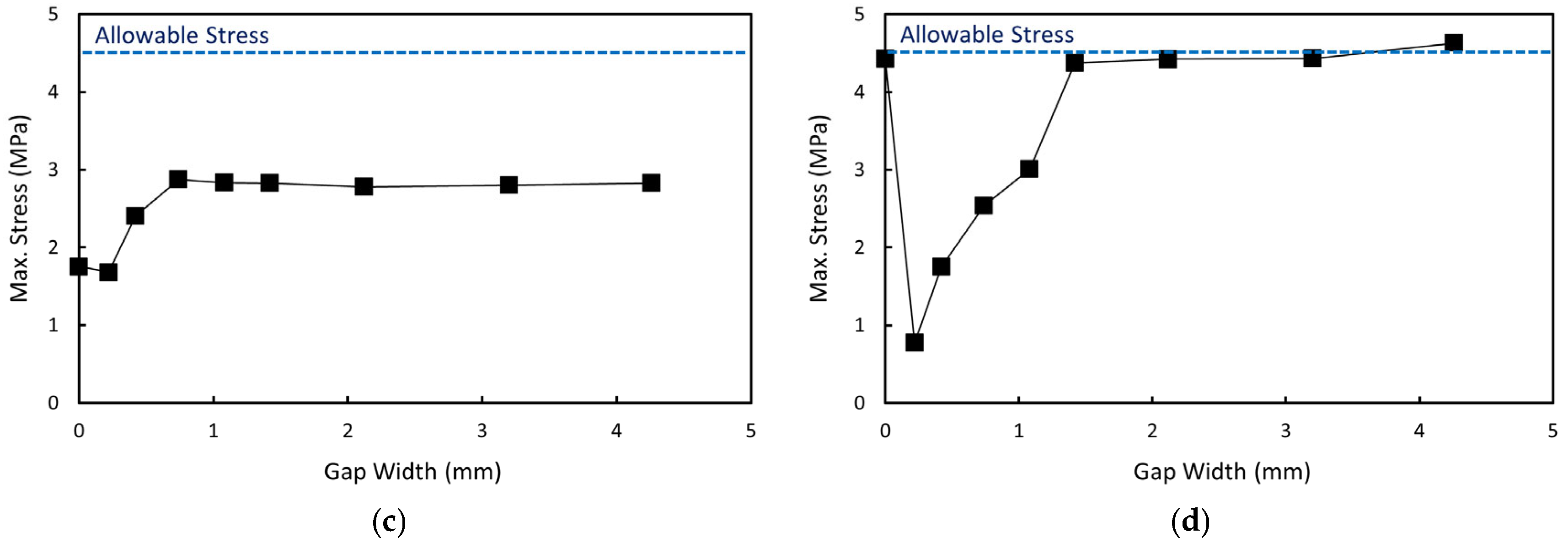
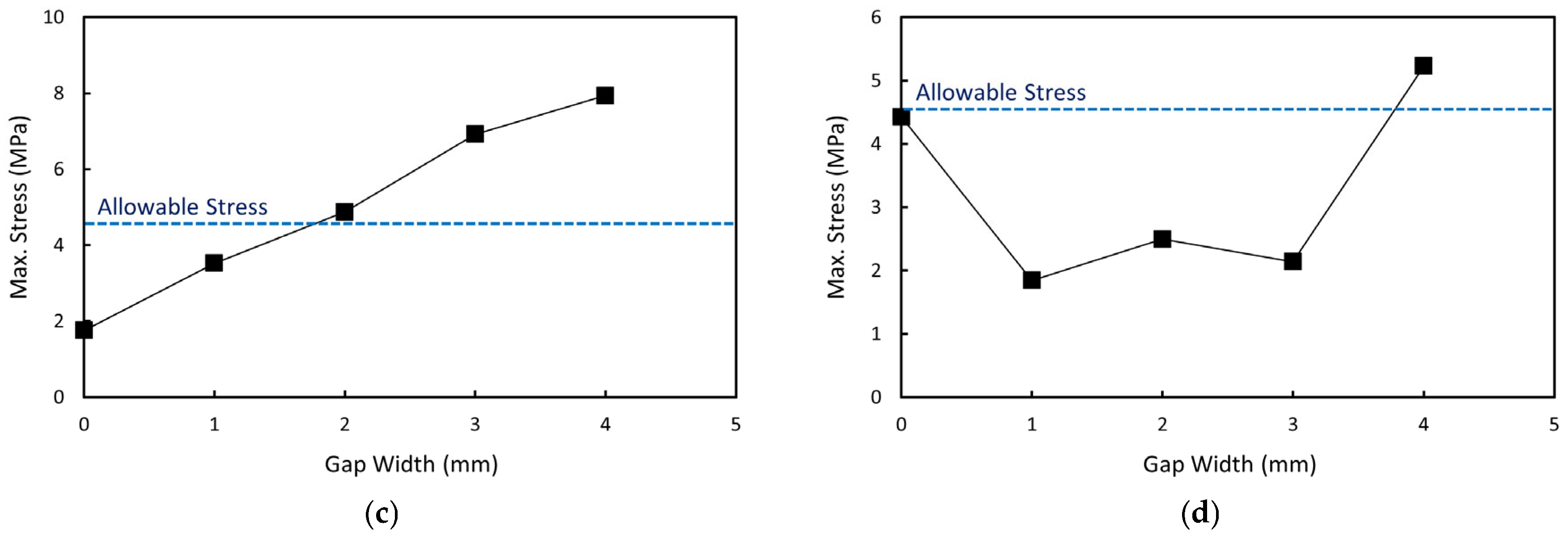
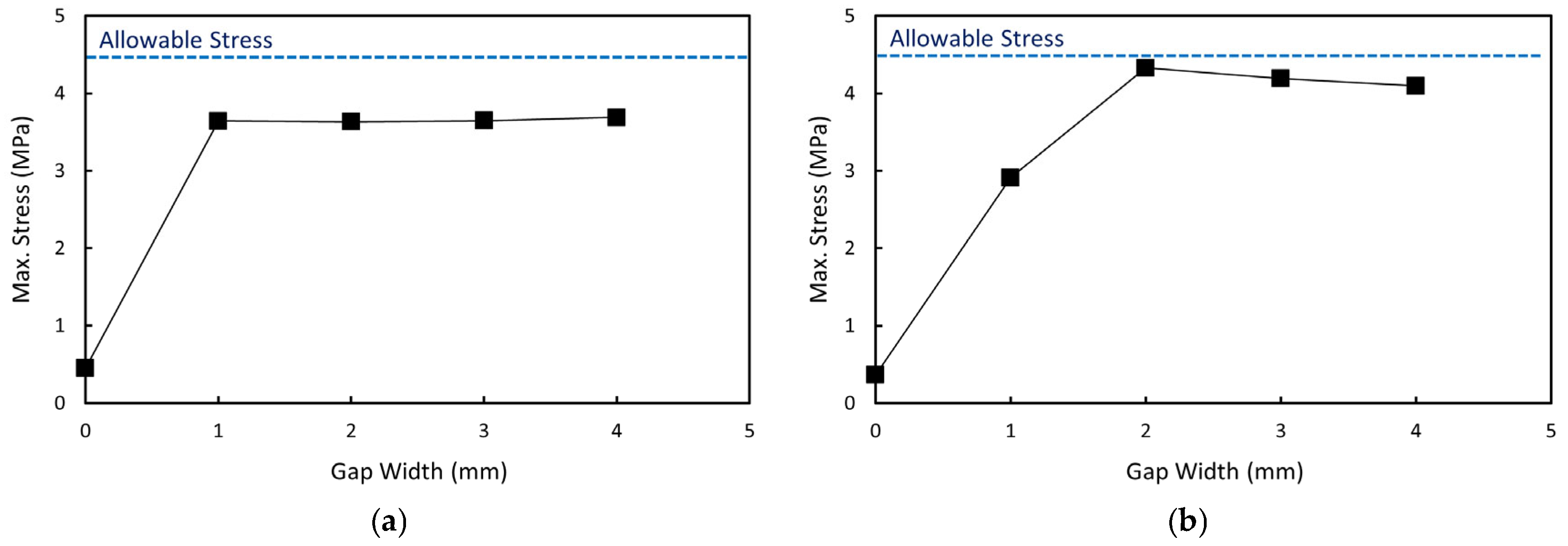
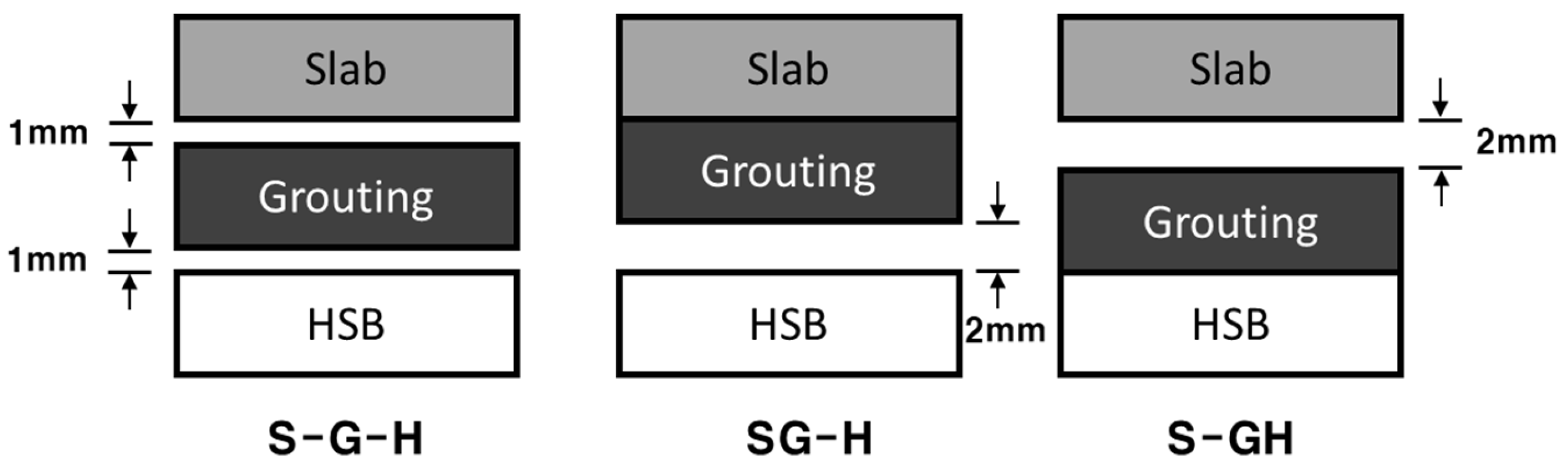
- For single-interface gaps, stress responses depended on location and geometry. In S-GH, the as-is model remained safe, whereas the as-was model reached allowable limits near 2 mm in the slab and exceeded them beyond 4 mm in the grouting layer. For SG-H, slab stress remained safe, but the grouting layer approached critical limits at 1 mm in the as-was model and indicated fatigue risks near 2 mm in the as-is model. Overall, the as-is reduces stress sensitivity by isolating edge effects from the grout core, whereas the as-was is more vulnerable.
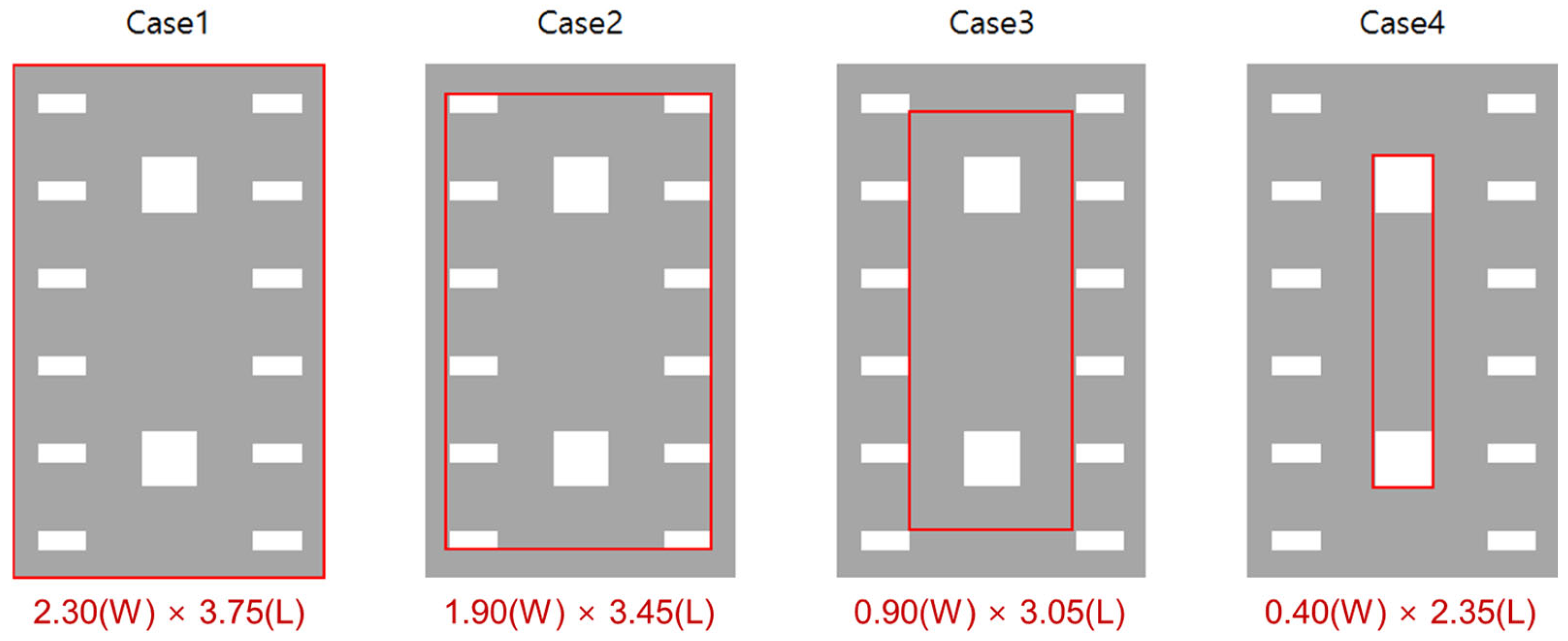
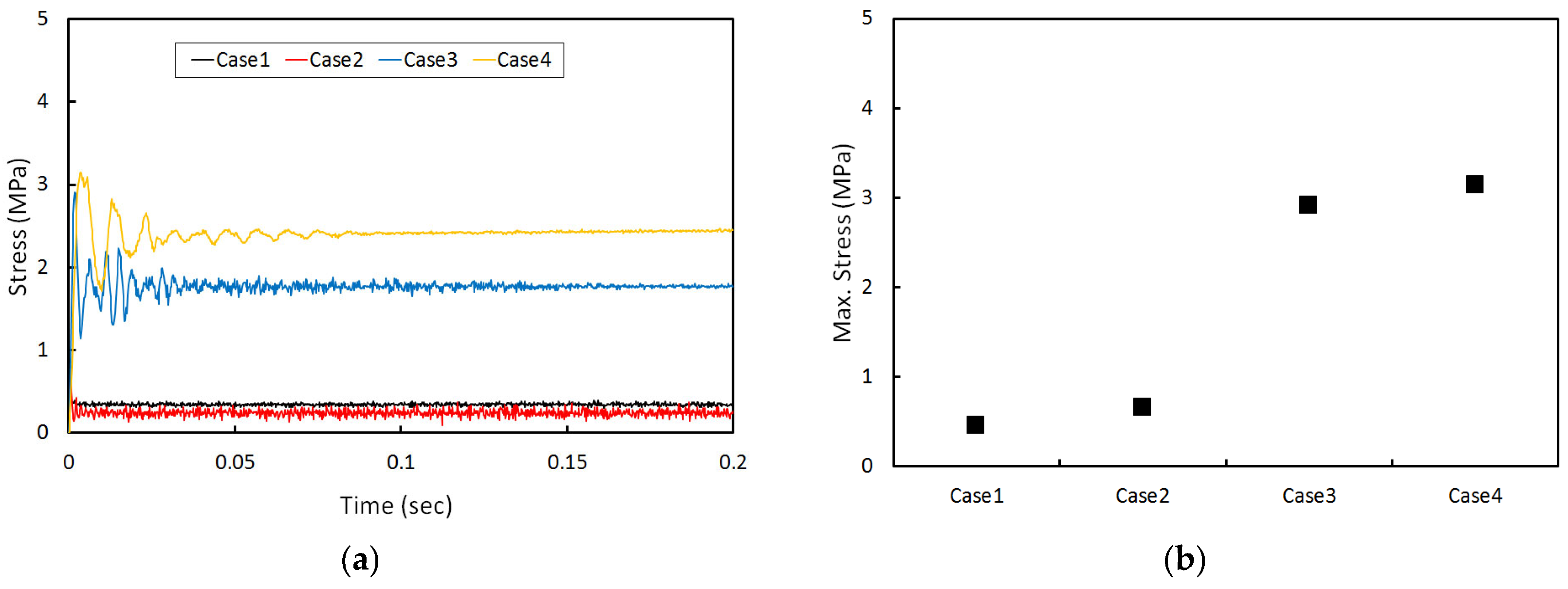
- Gap depth significantly influenced maximum principal stresses in both layers. When depths remained outside sleeper locations, responses were comparable to the no-gap condition. However, extending inward beyond the sleeper to the shear key notably increased stresses, particularly in the grouting layer. Delamination depth relative to the sleeper is a primary trigger for stress escalation, often more critical than gap width alone. Therefore, limiting gap depth within the sleeper zone is essential to mitigate stress escalation and preserve structural performance.
- Allowable interlayer gap width criteria were proposed based on stress assessments indicating potential fatigue damage. For the as-is model, a 2.0 mm limit was recommended for S-G-H and SG-H, while no limit was required for S-GH. Stricter criteria were necessary for the as-was model: 1.5 mm for S-G-H, 2.0 mm for S-GH, and immediate repair for SG-H due to consistently elevated stresses in the grouting layer. These results support a hierarchical maintenance strategy prioritizing gap depth and location, with gap width used as a secondary criterion.
Author Contributions
Funding
Data Availability Statement
Conflicts of Interest
References
- Nakahara, A. Shinkansen slab track to be laid on earthworks. Railw. Gaz. Int. 1996, 152, 3. [Google Scholar]
- Holzinger, H.; Schreiner, U. Feste Fahrbahn Bögl: Generationenwechsel im Gleisoberbau. Eisenbahningenieur 2000, 51, 74–78. [Google Scholar]
- Authority, K.R.N. Standard Design of Kyungbu KTX Between Daegu and Busan; Korea Rail Network Authority: Daejeon, Republic of Korea, 2006. [Google Scholar]
- Chen, R.; Zhao, X.; Wang, Z.; Jiang, H.; Bian, X. Experimental study on dynamic load magnification factor for ballastless track-subgrade of high-speed railway. J. Rock Mech. Geotech. Eng. 2013, 5, 306–311. [Google Scholar]
- Sun, L.; Duan, Y.-F.; Yang, X. Static Response Analysis of CRTS III Ballastless Track Structure. J. Railw. Eng. Soc. 2013, 30, 32–39. [Google Scholar]
- Liu, X.; Su, C.; Xian, F.; Liu, D.; Ding, C.; Zhao, P. Model experiment on concrete cracking characteristics of ballastless track. J. China Railw. Soc. 2017, 39, 105–110. [Google Scholar]
- Ando, K.; Sunaga, M.; Aoki, H.; Haga, O. Development of slab tracks for Hokuriku Shinkansen line. Q. Rep. RTRI 2001, 42, 35–41. [Google Scholar] [CrossRef]
- PORR. Slab Track Austria. 2018. Available online: https://www.porr-group.com/en/services/special-skills/slab-track-system/ (accessed on 15 July 2025).
- Bögl, S. LRB TS-Fertigteilweiche Bögl, Steckerfertige Weiche, Saalburgstrasse, Frankfurt am Main, ZEV rail. Glas. Ann. 2009, 133, 444–445. [Google Scholar]
- Antlauf, W. Bögl system slab track: Installation on the new Nuremberg–Ingolstadt line. Eisenbahningernieur 2004, 55, 64–67. [Google Scholar]
- Esveld, C. Modern Railway Track; MRT-Productions: Zaltbommel, The Netherlands, 2001. [Google Scholar]
- Dong, W.; Wang, X.; He, Q.; Ren, J. A survey of Ballastless track defects in China’s high-speed railway after ten years of service. Intell. Transp. Infrastruct. 2022, 1, liac023. [Google Scholar]
- Jang, S.; Lee, H.; Kim, Y.; Kim, E.; Lee, I.; Kang, Y.; Kang, Y. Development of Prefabricate Concrete Slab Track System and Trial Installation on Revenue Line; Korea Railroad Research Institute: Uiwang, Republic of Korea, 2008. [Google Scholar]
- Oh, H.J.; Cho, Y.K.; Seo, Y.; Kim, S.-M. Experimental analysis of curling behavior of continuously reinforced concrete pavement. Constr. Build. Mater. 2016, 128, 57–66. [Google Scholar]
- Kim, S.-M.; Nam, J.-H. Measurements and experimental analysis of temperature variations in Portland cement concrete pavement systems. Road Mater. Pavement Des. 2010, 11, 745–771. [Google Scholar]
- Zhao, L.; Zhao, G.; Yang, G. Warping deformation of the track slab and their influence on the interlayer stiffness and vibration transmission characteristics of the unit ballastless track. Structures 2023, 57, 105078. [Google Scholar] [CrossRef]
- Zhang, Y.; Gao, L.; Zhong, Y.; Wang, J.; Huang, Y. Interlayer damage evolution of CRTS III slab track under passenger and freight train loads. Constr. Build. Mater. 2024, 436, 136944. [Google Scholar] [CrossRef]
- Guo, G.; Wang, J.; Du, B.; Du, Y. Application study on fiber optic monitoring and identification of CRTS-II-Slab ballastless track debonding on viaduct. Appl. Sci. 2021, 11, 6239. [Google Scholar] [CrossRef]
- Wang, J.; Zhang, H.; Shi, C.; Wang, M. Effect of temperature gradient-induced periodic deformation of CRTS Ⅲ slab track on dynamic responses of the train-track system. Railw. Sci. 2024, 3, 437–452. [Google Scholar]
- Li, Y.; Li, H.; Wang, J.; Chen, J.; Wang, R.; Yu, J. Effects of dual application of interface adhesives and solar reflective coatings on damage of longitudinally continuous slab tracks. Constr. Build. Mater. 2024, 438, 137112. [Google Scholar] [CrossRef]
- Zhang, Y.; Wu, K.; Jiang, J.; Hu, Y.; Liu, L.; Cai, X.; Lu, Z. Static and fatigue performance of the interface between the epoxy resin and cement asphalt mortar for CRTS II slab track. Case Stud. Constr. Mater. 2025, 22, e04642. [Google Scholar] [CrossRef]
- Li, Y.; Chen, J.; Wang, J.; Shi, X.; Wang, R. Study on the effects of solar reflective coatings on the interfacial damage of the CRTS II slab track. Constr. Build. Mater. 2022, 325, 126711. [Google Scholar] [CrossRef]
- Liu, J.; Zhou, W.; Cao, J.; Li, X.; Jin, Y.; Ye, Q.; Feng, G. Dynamic performance of a slab track–concrete box subgrade under a double-line high speed railway. PLoS ONE 2024, 19, e0311969. [Google Scholar]
- Li, Y.; Li, H.; An, L.; Zhao, J.; Shi, X.; Walubita, E. Interfacial failure behavior of longitudinally coupled slab tracks restored by interface adhesives. Int. J. Adhes. Adhes. 2024, 132, 103662. [Google Scholar] [CrossRef]
- Guo, G.; Hao, C.; Du, B. Static and dynamic response characteristics of a ballastless track structure of a high-speed railway bridge with interlayer debonding under temperature loads. Eng. Fail. Anal. 2023, 151, 107377. [Google Scholar] [CrossRef]
- Wang, J.; Gao, L.; Zhao, W.; Zhong, Y.; Tong, F.; Wang, Q. Evolution mechanism of interlayer fatigue properties of CRTS III slab track. Constr. Build. Mater. 2022, 360, 129459. [Google Scholar] [CrossRef]
- Xu, Q.; Sun, S.; Xu, Y.; Hu, C.; Chen, W.; Xu, L. Influence of temperature gradient of slab track on the dynamic responses of the train-CRTS III slab track on subgrade nonlinear coupled system. Sci. Rep. 2022, 12, 14638. [Google Scholar] [CrossRef]
- Chen, X.; Pan, Y.; Deng, X.; Chen, N. Study on Dynamic Responses of Unit Slab Track Considering the Influence of Cement Asphalt Mortar Rough Surface. Adv. Civ. Eng. 2024, 2024, 9972652. [Google Scholar] [CrossRef]
- Zhao, L.; Zhao, G.; Yang, G.; Jin, H.; Li, C. Study on the dynamic contact relationship between layers under temperature gradients in CRTSⅢ ballastless track. High-Speed Railw. 2024, 2, 133–142. [Google Scholar] [CrossRef]
- Yan, D.; Xu, Y. Numerical study on bonding degradation of concrete-concrete interface in CRTS III slab ballastless track subjected to fatigue temperature gradient loading. Constr. Build. Mater. 2025, 483, 141754. [Google Scholar] [CrossRef]
- Zhu, S.; Luo, J.; Wang, M.; Cai, C. Mechanical characteristic variation of ballastless track in high-speed railway: Effect of train–track interaction and environment loads. Railw. Eng. Sci. 2020, 28, 408–423. [Google Scholar] [CrossRef]
- Xie, H.; Xu, L.; Yan, B. Mechanical properties of ballastless track considering freeze–thaw deterioration damage. Mathematics 2023, 11, 2289. [Google Scholar] [CrossRef]
- Xie, H.; Luo, Q.; Wang, T.; Jiang, L.; Connolly, D.P. Stochastic analysis of dynamic stress amplification factors for slab track foundations. Int. J. Rail Transp. 2024, 12, 281–303. [Google Scholar] [CrossRef]
- Cho, Y.K.; Kim, S.-M. Evaluation of grouting layer vibration of railway precast concrete slab track system. Constr. Build. Mater. 2018, 193, 244–254. [Google Scholar] [CrossRef]
- Bhatta, S.; Dang, J. Seismic damage prediction of RC buildings using machine learning. Earthq. Eng. Struct. Dyn. 2023, 52, 3504–3527. [Google Scholar] [CrossRef]
- Lazaridis, P.C.; Kavvadias, I.E.; Demertzis, K.; Iliadis, L.; Vasiliadis, L.K. Structural damage prediction of a reinforced concrete frame under single and multiple seismic events using machine learning algorithms. Appl. Sci. 2022, 12, 3845. [Google Scholar] [CrossRef]
- Dassault Systèmes Simulia Corporation. ABAQUS; 2024; Dassault Systèmes Simulia Corporation: Providence, RI, USA, 2024. [Google Scholar]
- Lee, J.H.; Park, J.S.; Lim, K.M. Comparison of the Behavior of PSC Bridges According to Design Train Load before and after Revision of Railway Bridge Design Standard. J. Korean Soc. Hazard Mitig. 2018, 18, 45–50. [Google Scholar] [CrossRef]
- Cho, Y. Numerical Analysis of Continuously Reinforced Concrete Pavement and Railway Track. Ph.D. Thesis, Kyung Hee University, Seoul, Republic of Korea, 2015. [Google Scholar]
- Tayabji, S.D. Precast Concrete Pavement Technology Implementation; United States, Department of Transportation, Federal Highway Administration: Washington, DC, USA, 2019.
- Ren, J.; Deng, S.; Zhang, K.; Du, W.; Wu, Q. Design theories and maintenance technologies of slab tracks for high-speed railways in China: A review. Transp. Saf. Environ. 2021, 3, tdab024. [Google Scholar] [CrossRef]
- Juanjuan, R.; Wengao, L.; Jiale, L.; Wenlong, Y.; Shijie, D.; Xueyi, L.; Bin, T. Performance deterioration and structural state diagnosis of slab tracks for high-speed railways: A review. Eng. Fail. Anal. 2024, 158, 107955. [Google Scholar] [CrossRef]
- Chen, H.; Sun, Z.; Zhang, X.; Fan, J. Tensile fatigue properties of ordinary plain concrete and reinforced concrete under flexural loading. Materials 2023, 16, 6447. [Google Scholar] [CrossRef]



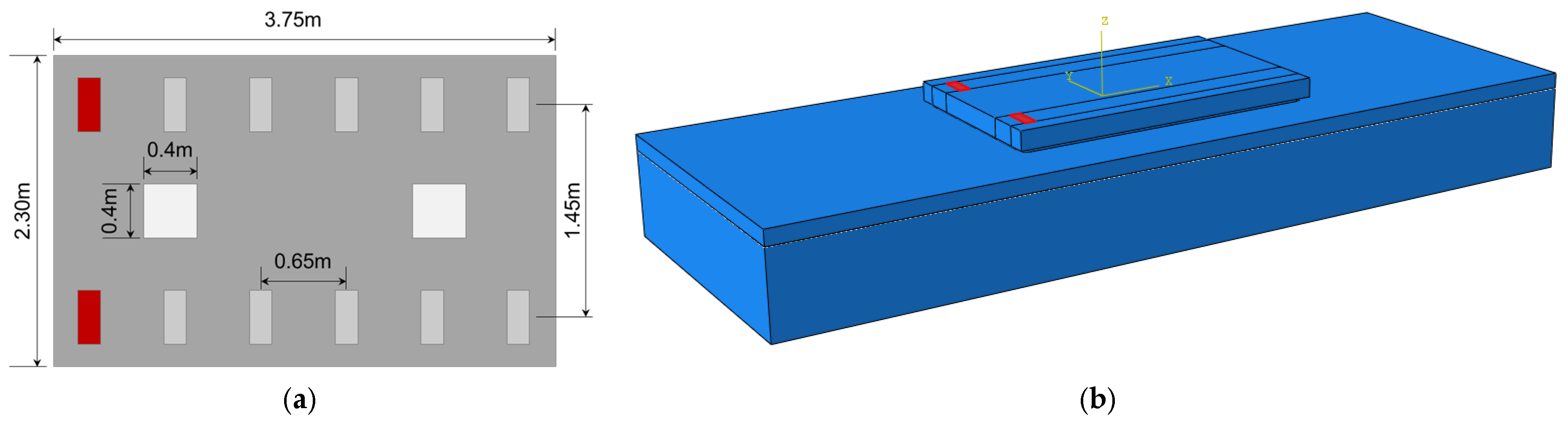





| Variable | Thickness (m) | Elastic Modulus (MPa) | Density (kg/m3) | Poisson’s Ratio |
|---|---|---|---|---|
| Precast concrete slab | 0.225 | 3.19 × 10⁴ | 2400 | 0.2 |
| Grouting layer | 0.043 | 3.19 × 10⁴ | 2100 | |
| HSB | 0.180 | 1.13 × 10⁴ | 2300 | |
| Subgrade | ∞ | 1.00 × 10⁶ | 1800 |
| Gap Location | As-Is Model | As-Was Model |
|---|---|---|
| S-G-H | 2.0 mm | 1.5 mm |
| S-GH | N/A | 2.0 mm |
| SG-H | 2.0 mm | Immediate repair |
Disclaimer/Publisher’s Note: The statements, opinions and data contained in all publications are solely those of the individual author(s) and contributor(s) and not of MDPI and/or the editor(s). MDPI and/or the editor(s) disclaim responsibility for any injury to people or property resulting from any ideas, methods, instructions or products referred to in the content. |
© 2026 by the authors. Licensee MDPI, Basel, Switzerland. This article is an open access article distributed under the terms and conditions of the Creative Commons Attribution (CC BY) license.
Share and Cite
Kim, S.-M.; Cho, Y.K.; Cho, B.H. Numerical Evaluation of Interlayer Gaps on Dynamic Response of Precast Concrete Slab Track Systems with Maintenance Thresholds. Buildings 2026, 16, 448. https://doi.org/10.3390/buildings16020448
Kim S-M, Cho YK, Cho BH. Numerical Evaluation of Interlayer Gaps on Dynamic Response of Precast Concrete Slab Track Systems with Maintenance Thresholds. Buildings. 2026; 16(2):448. https://doi.org/10.3390/buildings16020448
Chicago/Turabian StyleKim, Seong-Min, Young Kyo Cho, and Byoung Hooi Cho. 2026. "Numerical Evaluation of Interlayer Gaps on Dynamic Response of Precast Concrete Slab Track Systems with Maintenance Thresholds" Buildings 16, no. 2: 448. https://doi.org/10.3390/buildings16020448
APA StyleKim, S.-M., Cho, Y. K., & Cho, B. H. (2026). Numerical Evaluation of Interlayer Gaps on Dynamic Response of Precast Concrete Slab Track Systems with Maintenance Thresholds. Buildings, 16(2), 448. https://doi.org/10.3390/buildings16020448