1. Introduction
Facilities Management (FM) is a comprehensive discipline that enables organizations to operate, maintain, improve, and adapt their buildings and infrastructure while aligning the needs of occupants, owners, and facility managers [
1,
2,
3]. Within this broad scope, Facility Maintenance Management (FMM) plays a central role, representing the largest cost driver and accounts for approximately 65–85% of overall FM expenditures. To support these activities, Computerized Maintenance Management Systems (CMMSs) and Facility Management Systems (FMSs) serve as essential tools for organizing and tracking maintenance tasks. Widely used platforms such as ARCHIBUS™, EcoDomus™, Maximo™, and FM: Systems™ provide structured information management to facilitate routine FM workflows. However, despite their importance, current CMMS and FMS solutions offer only limited capabilities for automated data capture and advanced information analysis [
4].
The current use of FM systems in Operation and Maintenance (O&M) faces two major limitations. First, data entry is largely performed manually, making the process time-consuming, error-prone, and costly. Because inspectors are required to assess a wide range of items in accordance with building standards, there is a significant risk of overlooking critical aspects. This issue is particularly evident when large volumes of facility information generated during the design and construction phases are not seamlessly integrated into FM systems for later use [
4]. Second, project documentation is typically stored in formats such as PDF files or 2D CAD drawings, which restricts FM staff from quickly and reliably accessing accurate facility data. As a result, current O&M practices often hinder efficiency and effectiveness [
5]. In addition, most existing FM systems lack capabilities for digital visualization of workflows [
6].
On the other hand, Mixed Reality (MR) combines real and virtual environments [
7], offering strong support for FM tasks that involve managing large volumes of data. By enabling digital entities to coexist and interact with physical objects in real time, MR creates new opportunities for improving efficiency. Advances in wearable visualization systems, such as Microsoft HoloLens
®, have simplified MR hardware, making it accessible to a wide range of users without requiring specialized expertise [
8]. As a result, MR has significant potential to improve FM and O&M practices by bridging the gap between static facility documentation and dynamic, real-world operations. Specifically, it can support real-time visualization of building assets and streamline maintenance workflows.
Recent research [
9,
10,
11] has increasingly emphasized the role of immersive and digital technologies in supporting facility management, asset operation, and knowledge-intensive maintenance tasks. For example, Mao et al. [
12] highlighted that augmented and mixed reality systems can facilitate contextual visualization and procedural understanding in operational environments, while also identifying persistent challenges related to system stability, integration, and scalability in real-world settings.
Building on these existing challenges and opportunities, this study presents an exploratory, practice-oriented investigation of an MR system designed to support facility inspection/maintenance in an operational academic building. The primary contribution of this research lies in the real-world deployment of scenario-based MR inspection workflows and their evaluation by practicing FM professionals. Three representative maintenance scenarios (hot water plumbing systems, lighting fixtures, and fire sprinkler systems) were developed to reflect routine FM tasks and to examine how immersive visualization, checklist-driven guidance, and hands-free interaction may support inspection and maintenance activities. BIM was used as a visual and informational reference to contextualize building systems within the MR environment, rather than as a fully integrated parametric data exchange platform. The study adopts a qualitative, user-centered approach to assess perceived usability, learning support, and feasibility of MR adoption in facility operations, thereby positioning the work as a proof-of-concept and feasibility study intended to inform future, more comprehensive evaluations.
The objective of this study is to explore the feasibility and perceived usefulness of MR technology for supporting facility maintenance activities in academic buildings. Specifically, the study aims to: (1) implement MR-based inspection workflows using Microsoft HoloLens® across three representative FM scenarios involving plumbing systems, lighting fixtures, and fire sprinkler systems; (2) examine how FM professionals perceive the usability, clarity, and learning support provided by MR-assisted inspection compared with their existing practices; (3) assess the perceived potential of MR systems to support routine inspection/maintenance tasks within an academic facilities management context; and (4) identify practical limitations, user challenges, and implementation considerations that may inform future development and evaluation of MR-based tools for facility operations.
2. Literature Review
The operations and maintenance phase represents the longest and most costly stage in a building’s lifecycle [
2]. During this phase, building operators must conduct routine on-site maintenance to prevent functional failures of equipment and systems. Enhancing current maintenance procedures can substantially reduce overall lifecycle expenses, as FM accounts for more than 80% of total lifecycle costs [
10,
11,
13]. In this regard, visualization systems such as Augmented Reality (AR)/MR and BIM technologies have recently been explored as promising tools to the FM industry.
BIM can provide a digital FM data repository and serve as an information backbone for FM systems by providing three-dimensional, object-based representations of building systems and assets [
14]. Wetzel and Thabet [
15] proposed a BIM-based FM framework to support safe maintenance and repair practices. Although their framework uses locational data from BIM to enable more sophisticated information analysis, it only addresses safety issues during the maintenance phase. Chung et al. [
16] introduced an AR-based smart FM system built on the open-source BIM exchange format (COBie). Their findings demonstrated that the proposed system enabled faster and more convenient access to information than conventional 2D blueprint-oriented FM workflows. More broadly, Casini [
17] reviewed applications of AR, VR, and MR technologies for smart building operation and maintenance. The research concludes that the use of XR in building and city management demonstrates encouraging outcomes, improving human performance in technical O&M tasks, enhancing understanding and regulation of energy efficiency, comfort, and safety, and aiding strategic decision-making for future smart cities.
Several studies have further explored the integration of BIM and AR/MR for facility inspection/and maintenance. Chen et al. [
18] proposed an AR-based Facilities Management and Maintenance (FMM) framework that uses BIM as the data source, AR as a visualization tool, and Wi-Fi fingerprinting—a method of signal collection and association—for indoor localization [
19]. Multiple algorithms for location registration were developed to locate the nearest Wi-Fi fingerprints. Regarding BIM, two plug-ins were developed using Revit API to extract the correct room information. For AR, Unity 3D
® (Unity 2018) was used to develop an AR user interface (UI) for smartphones. With the integration of all three systems, the framework helped to achieve a 65% reduction in time required to complete the task compared with traditional 2-D plans, with a localization accuracy of 1 m. Future directions suggest improving localization accuracy and minimizing environmental dependence due to the limited Wi-Fi coverage throughout the facility. To overcome localization limitations, Jurado et al. [
20] developed a markerless application (GEUINF) for smartphones that captures real world 3D data by depth sensing to determine the user’s position and orientation with centimeter accuracy. They addressed the problem of positioning computer-generated renderings onto the real world by capturing 3D planar surfaces and comparing them with a virtual 3D model of the facility. It is evident from this study that ubiquitous smartphones are reliable devices for MR experiences in facility operation and maintenance [
20].
Additional AR/MR applications have focused on procedural guidance and usability in maintenance contexts. Diao and Shih [
14] developed a BIM-based AR Maintenance System (BARMS) for cooling towers and plumbing systems. Key features include markerless augmentation under varying light conditions (both indoor and outdoor), safety route visualization, and a 3D animated guidance interface. The application, developed in Visual Studio
®, utilized a 3D BIM model of the piping facilities created in Revit
® and AR scenes designed in Unity 3D
®. The results indicated high usability. However, despite incorporating visual tracking, the system still experienced drifting issues, which the authors suggested should be addressed in future research. Additionally, Khan et al. [
21] evaluated a BIM-based AR application for FM tasks using a student sample and reported faster and more accurate task completion compared to traditional methods. However, these studies are often conducted in controlled or educational settings rather than in operational facilities involving professional FM staff.
More recently, Kumar et al. [
22] found that an MR interface significantly outperformed VR and camera-only interfaces in a remote error-resolution task, with faster completion times, higher usability scores and lower cognitive load. Although this was a laboratory scenario rather than a full-scale FM deployment, it further underscores the potential of MR for improving maintenance workflows. Earlier works by the research team have also shown that immersive AR/MR technologies can significantly enhance operational and maintenance workflows in FM.
In their bibliographic review, Salman and Ahmad [
23] analyzed the use of AR and MR technologies in FM, specifically focusing on the operations and maintenance phase, which represents the most significant portion of a building’s life cycle cost. The authors categorized AR/MR applications into five areas: visualization, maintenance, indoor localization, information management, and indoor environment. The paper also identified implementation challenges, including high costs and limited BIM adoption, and proposed a preliminary framework to facilitate the adoption of AR/MR for optimizing facility maintenance. Similarly, Azhar et al. [
24] developed an MR model in Unity 3D
® to improve building inspection/maintenance workflows. The findings demonstrated the effectiveness of MR systems in guiding users through maintenance tasks.
Recent literature has expanded the discussion by situating immersive technologies within broader frameworks for knowledge and asset management. Mao et al. [
12] investigate the role of AR as a digital enabler for structured knowledge management in industrial settings, demonstrating how AR can support the capture, transfer, and application of operational knowledge among field personnel, thereby improving decision-making and reducing reliance on paper-based or memory-based approaches to maintenance tasks. Although this study focuses primarily on AR in broader industrial asset contexts, its findings underscore the potential of immersive technologies like MR to enhance the flow of contextual knowledge, a key challenge in facilities operations and maintenance. In parallel, recent reviews in facilities and asset management research emphasize the strategic role of digital technologies, including immersive visualization and digital twins, in supporting sustainable, resilient, and data-driven asset management practices [
25,
26]. These studies highlight the importance of integrating visualization tools with organizational workflows to improve asset visibility, decision-making, and lifecycle performance.
Prior studies have demonstrated AR/MR applications for visualization, safety training, and real-time monitoring in FM [
12,
13,
14,
15,
16,
17,
18,
19,
27]. However, most of the existing research remains limited to laboratory prototypes, student-based evaluations, or narrowly scoped technical demonstrations. Relatively few studies have examined the deployment of MR systems in real operational facilities involving professional FM personnel, and the use of checklist-driven MR workflows for structured inspection tasks remains underexplored. Addressing these gaps, the present study adopts a scenario-based, exploratory approach to evaluate the feasibility and perceived usefulness of MR-supported inspection workflows in a real academic facility, with particular emphasis on usability, learning support, and practical deployment considerations.
3. Materials and Methods
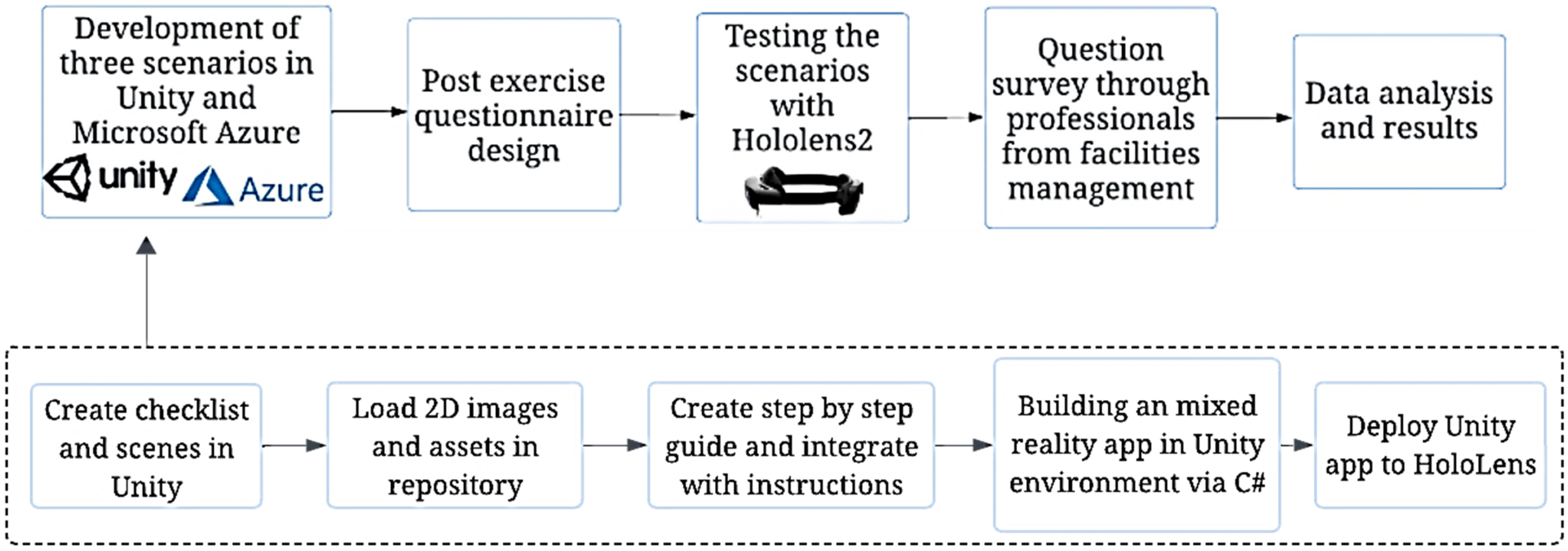
Three case scenarios were developed as a “proof of concept” to demonstrate the effectiveness of MR technology for inspection and predictive maintenance compared with the systems already in place. These scenarios include hot water systems, lighting fixtures, and fire sprinkler systems. A three-story academic building was used for deployment and testing. A mixed-methods research design consisting of a questionnaire survey and semi-structured interviews was adopted to collect user experience data from a selected group of facility technicians, inspectors, and managers who work for the Facilities Management division at Auburn University. The study received institutional ethics approval from Auburn University, IRB Protocol #27895. All participants provided informed consent prior to participation. The flow of the research methodology and steps in the development of MR environments are illustrated in
Figure 1.
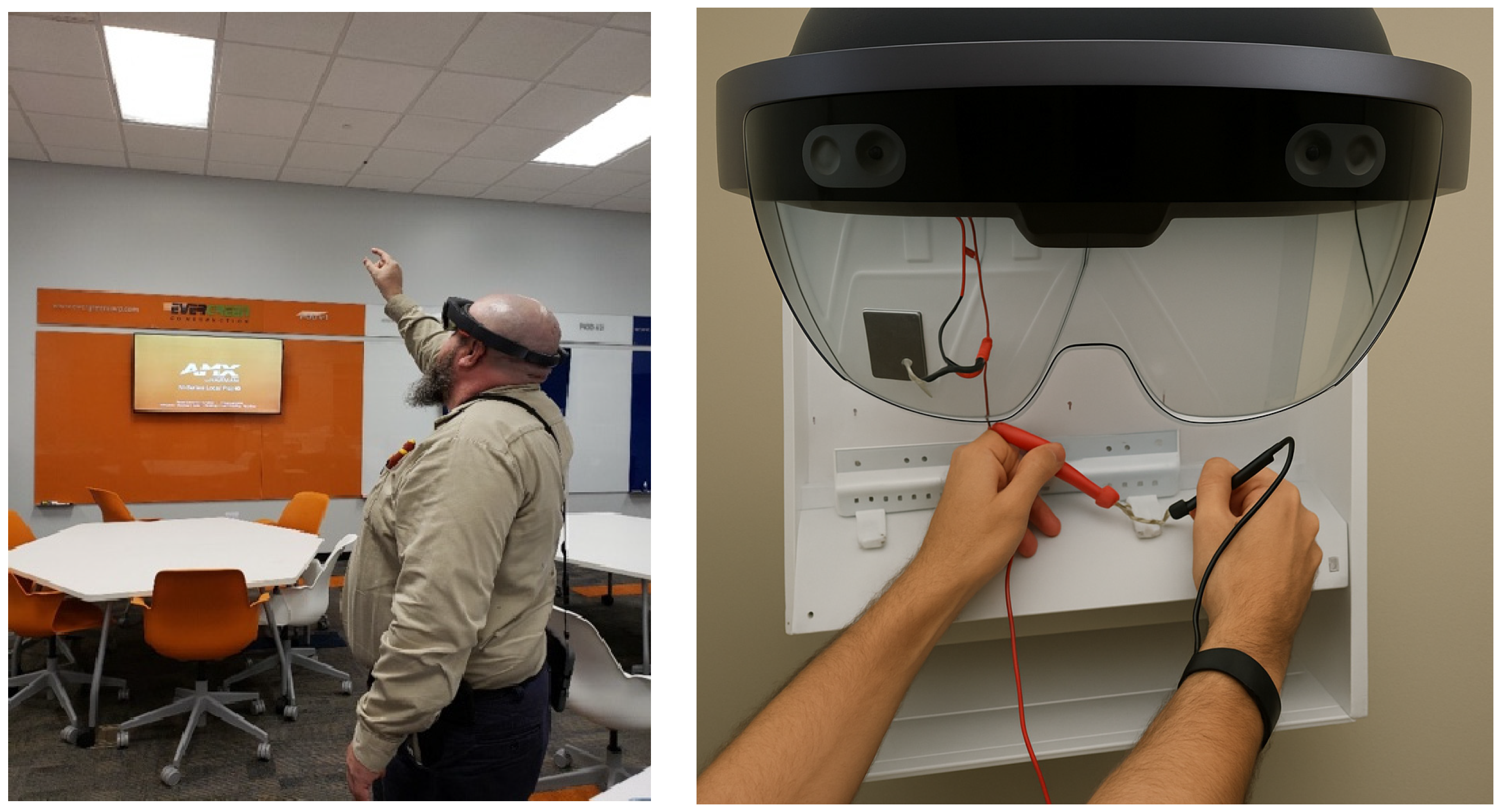
The MR system was developed using Microsoft HoloLens® 2 (Microsoft, Redmond, WA, USA) as the head-mounted display, withMicrosoft Azure cloud services, Unity 3D® 2019 Long Term Support (LTS), and Mixed Reality Tool Kit (MRTK) version 2 serving as the primary development environment for creating interactive MR content. The system architecture was intentionally designed to support scenario-based inspection workflows rather than real-time data synchronization or automated model updates. Visual representations of building systems were prepared using existing building documentation and BIM models and were used to create contextualized inspection scenes within the MR environment.
Each inspection scenario was structured around a checklist-driven workflow, where step-by-step instructions, safety prompts, and reference images were presented to the user in a hands-free manner. These checklists guided inspectors through routine operational procedures for specific systems, such as hot water plumbing, lighting fixtures, and fire sprinkler systems, consistent with standard FM practices described by the Facilities Management team at Auburn University. The following sections explain the three case scenarios that test this workflow in detail.
3.1. Scenario 1: Plumbing System (Hot Water)
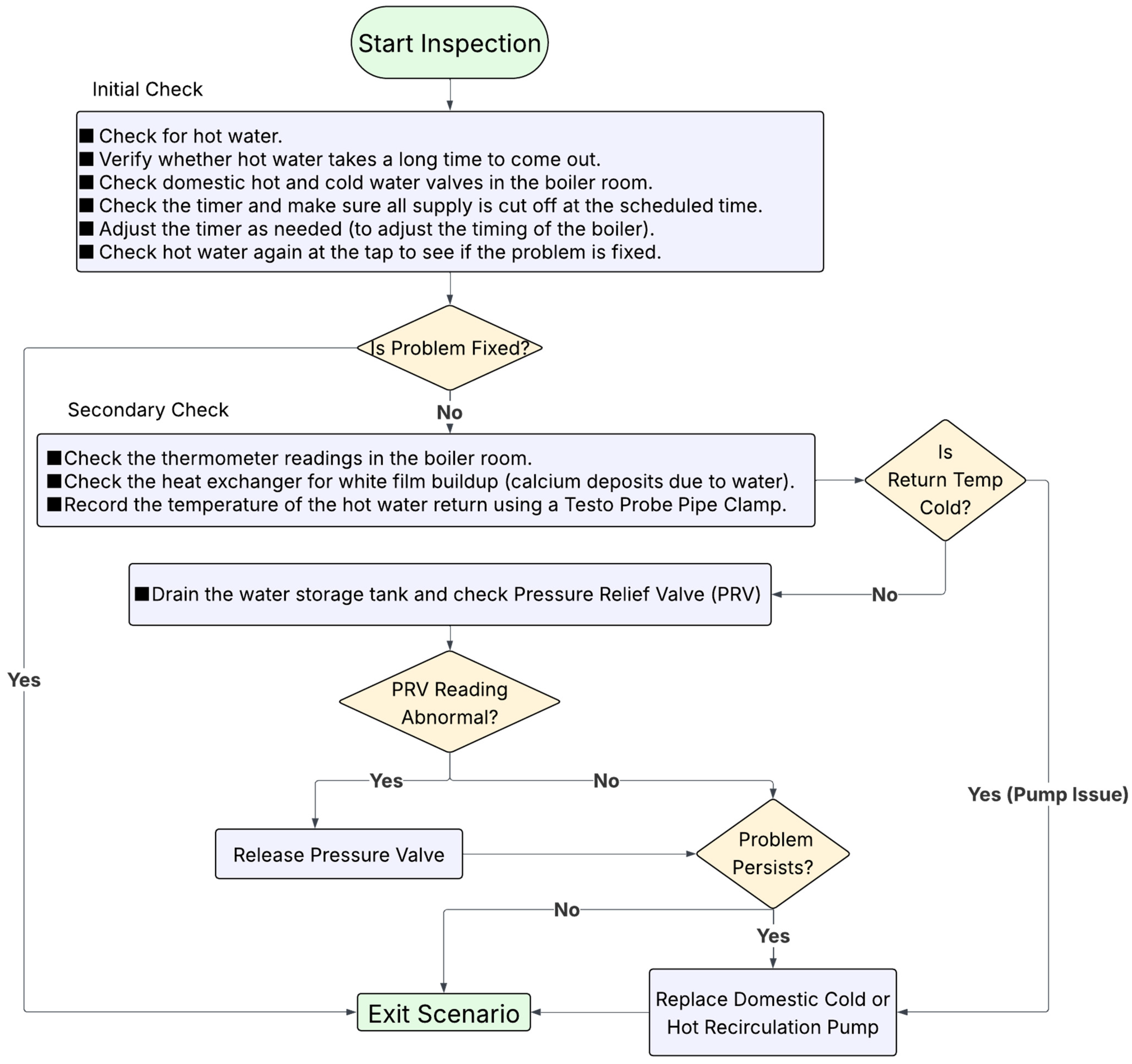
The first case scenario concerns the inspection/and maintenance of the hot water system. It was developed to demonstrate standard operating procedures for situations in which the hot water system fails to work. The workflow platform in the HoloLens
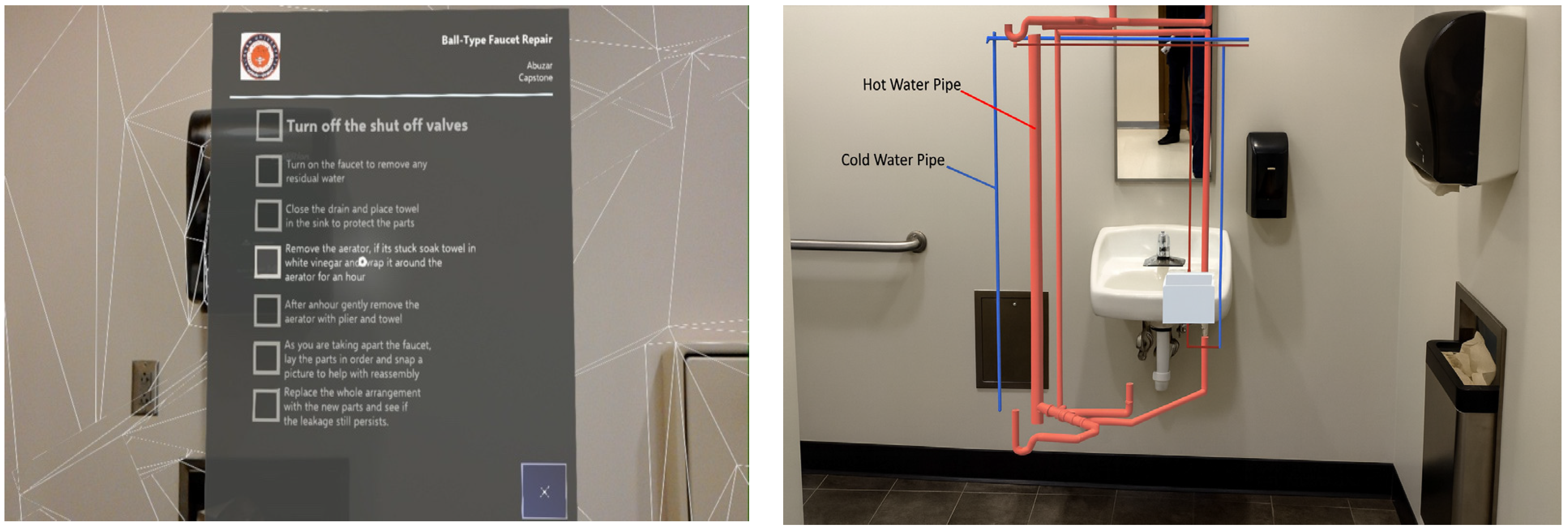
® was built to support failure and repair imagery. A plumbing model appears when the inspector wears the HoloLens
®. A checklist linked to the failure and repair images guides the inspector through the steps involved in inspection and repair.
Figure 2 and
Figure 3 show the workflow and images of the developed MR system for hot water system inspection and repair.
3.2. Scenario 2: Lighting Fixture System
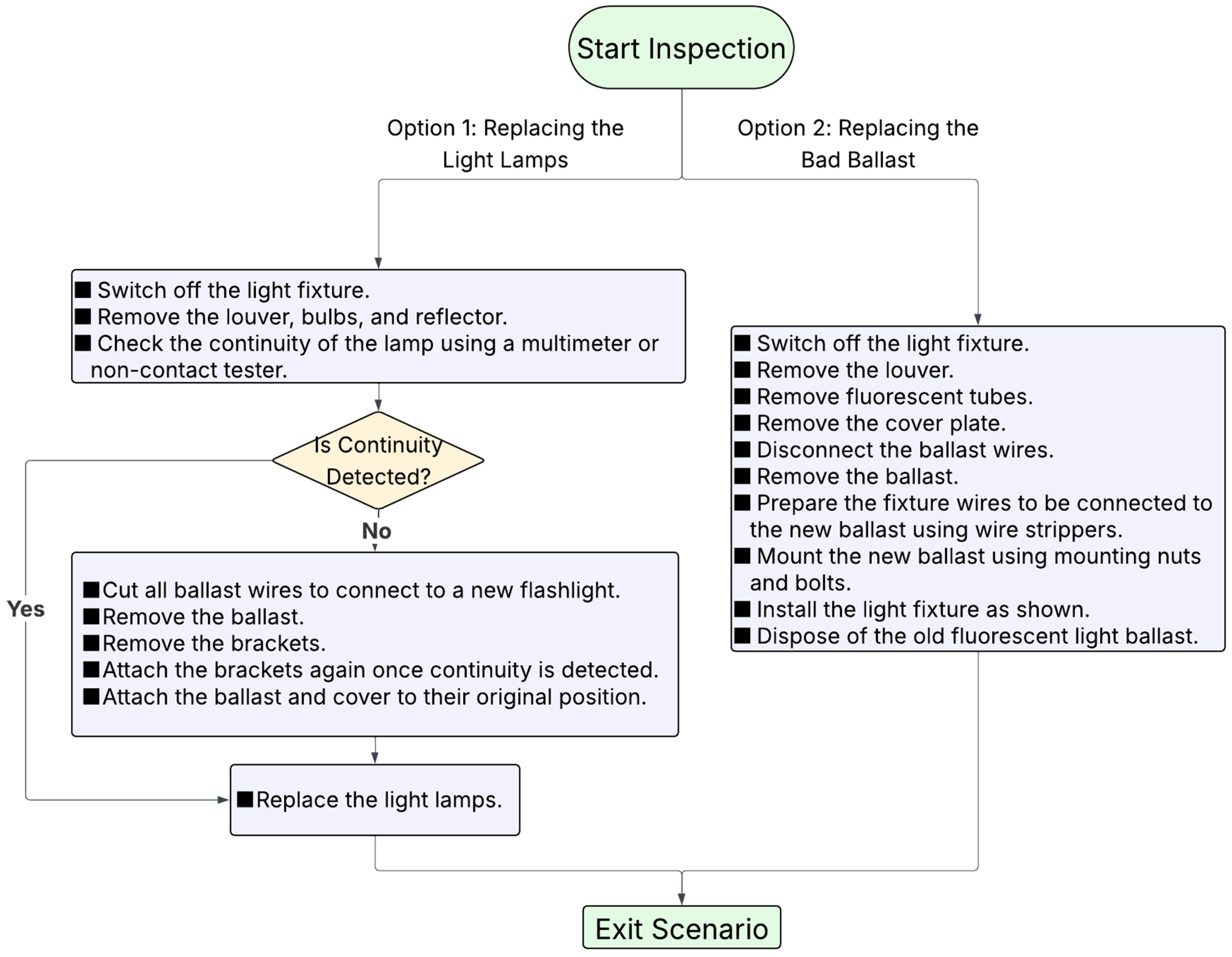
The second case scenario concerns fixing the ceiling light fixtures and consists of two modules: Module 1 guides the user through a step-by-step process for replacing the lamp, while Module 2 walks the user through procedures for fixing the ballast. For each step or set of actions, there is associated imagery that guides the user through the inspection and repair steps.
Figure 4 and
Figure 5 show the workflow and images of the developed MR system for ceiling light fixture inspection and repair.
3.3. Scenario 3: Fire Sprinkler System
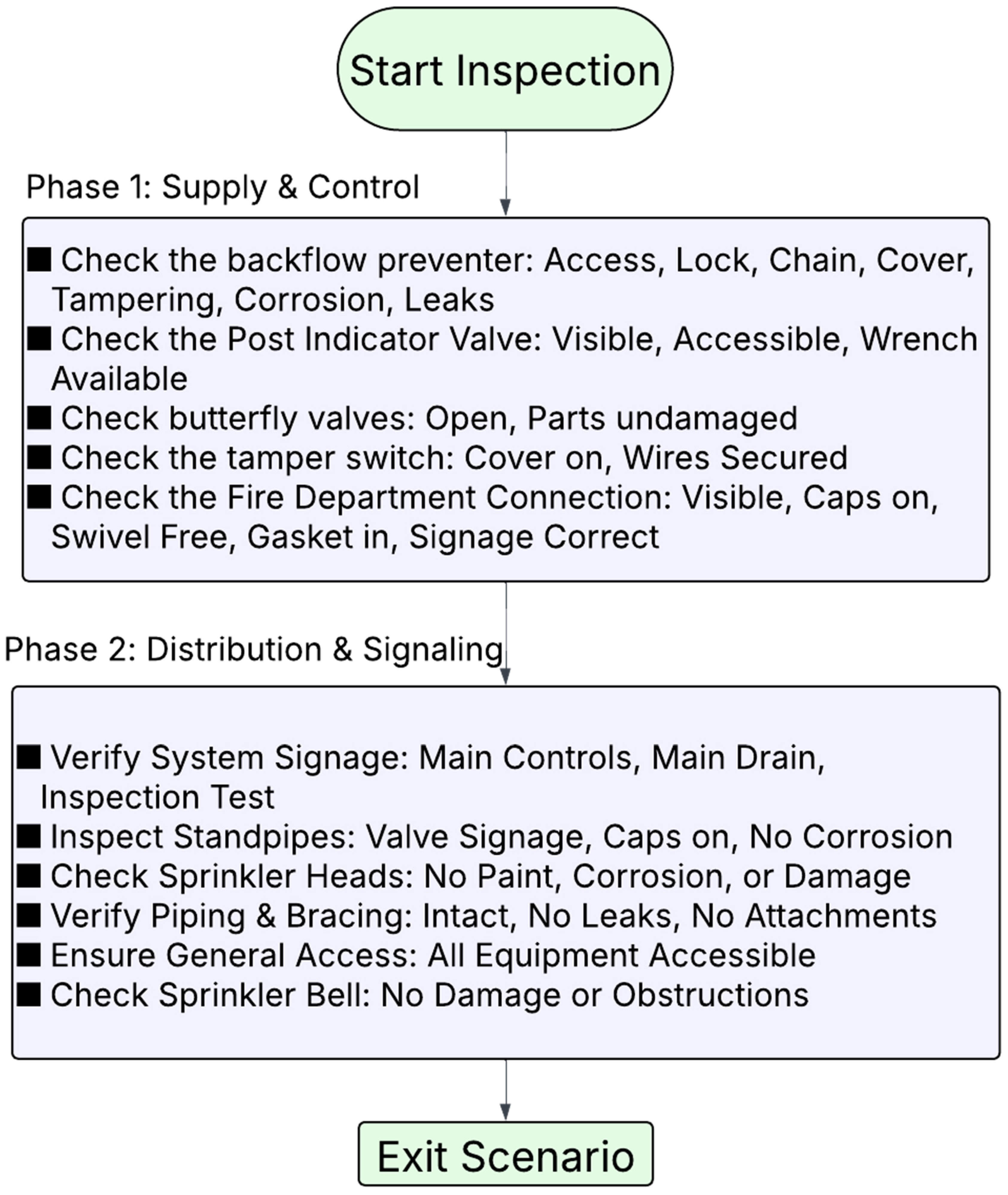
The third scenario addresses the inspection and operation of “Fire Sprinkler Systems”. A checklist with appropriate instructions is created in Unity 3D
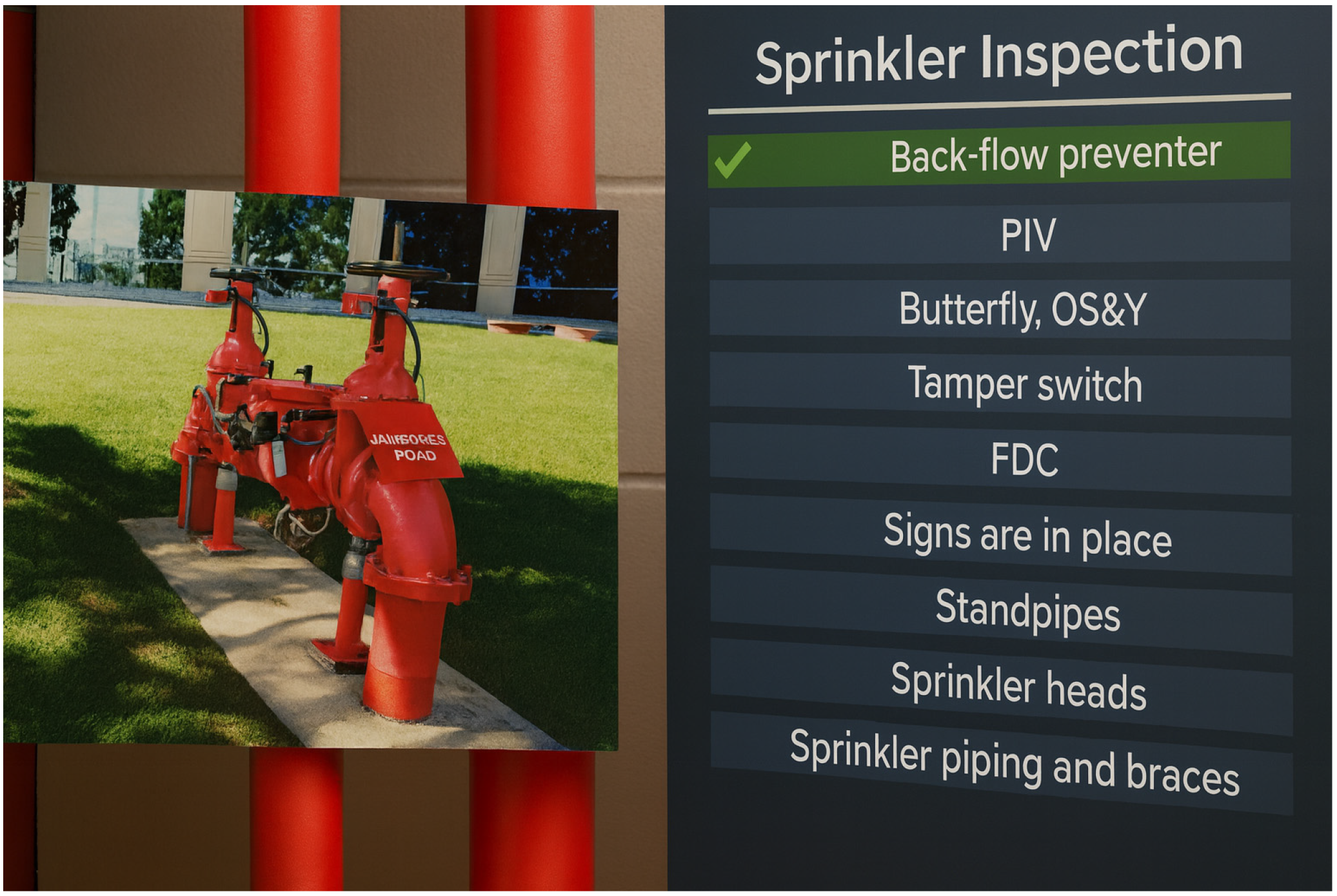
® to guide the user through the inspection and maintenance process step-by-step. Two-dimensional images and short videos are used for each step as a reference to support task execution.
Figure 6 and
Figure 7 show the workflow and images of the developed MR system for fire sprinkler inspection and repair.
4. Data Collection
The three MR inspection scenarios and their associated checklist-based workflows were developed through an iterative participatory design process involving a focus group of twelve professionals from the facilities management (FM) department. These participants included facility technicians, inspectors, and managers with direct experience in routine inspection, operation, and maintenance. During these meetings, commonly performed maintenance tasks, procedural steps, safety considerations, and existing challenges associated with traditional inspection practices were identified and discussed. The insights from these discussions directly informed both the selection of the inspection scenarios and the structure and content of the checklist-driven MR workflows, ensuring alignment with established FM practices.
Following this participatory design process, the scenarios were implemented as scenario-based inspection tasks intended to approximate real-world FM procedures rather than controlled laboratory conditions. Data collection focused on user perceptions, observed interactions with the MR system, and self-reported feedback, gathered through post-use questionnaires (
Appendix A), semi-structured interviews, and structured observational notes. Participants’ prior experience with conventional FM systems served as the contextual baseline for comparison, consistent with the study’s intent as an exploratory feasibility investigation.
The study was reviewed and approved by the Auburn University Institutional Review Board for human-subject research (Protocol 15-195-EP1506). All participants were informed of the study procedures and risks and provided written informed consent prior to participation. A standardized testing protocol was applied across all sessions, whereby (i) participants were read the exercise instructions aloud, (ii) introduced to the Microsoft HoloLens®, (iii) allowed to ask questions before testing, and (iv) visually observed during task execution. Each participant completed all three scenarios in a randomized order to reduce potential learning effects. Testing took place in a controlled indoor environment under stable lighting and Wi-Fi conditions.
Observers used structured note-taking procedures to record task time, challenges, and user feedback. The questionnaire comprised seven questions targeting three main areas of evaluation: (i) the effectiveness of the MR scenarios and HoloLens®, (ii) system limitations and learning curve, and (iii) the overall potential of the HoloLens® for the FM industry. Questions 1–2 assessed the effectiveness of the MR system and device, Questions 3–4 focused on identifying limitations and evaluating usability, Question 5 examined the potential benefits of the HoloLens® for FM, and Questions 6–7 were open-ended, inviting feedback on the case exercises and additional insights.
The semi-structured interviews consisted of the following guiding questions:
Can an MR-based system be effectively implemented in the inspection, operation, and maintenance of building facilities?
Were there notable differences in inspection, operation, and maintenance quality when using the MR system compared to with legacy FM systems?
What technological and design limitations must be addressed for wider MR adoption in FM?
Are there measurable time and cost benefits associated with implementing an MR-based system in facility operation and maintenance?
The interviews were conducted in small groups to encourage discussion and allow for follow-up questions. All collected data were analyzed using appropriate qualitative and quantitative techniques, with key findings presented in the next section.
5. Results
The results presented in this section reflect participants’ perceived experiences and subjective evaluations of the MR system during the scenario-based inspection exercises that they helped define during the initial focus-group meetings. Because the inspection scenarios and checklist workflows were developed in collaboration with FM professionals, the results should be interpreted as feedback on the practical relevance and usability of MR-supported inspection tasks rather than as quantitative measures of system effectiveness.
Given the exploratory nature of the study and the limited sample size (n = 12), all findings are reported as descriptive indicators of user perceptions. Percentages correspond directly to participant counts, with each participant representing approximately 8.3% of the sample. Participant feedback focused on visualization clarity, usefulness of checklist-based guidance, ease of interaction, and perceived learning support. Observational notes were additionally used to inform the interpretation of usability challenges, including interaction difficulty, spatial instability of virtual elements, and the learning curve associated with first-time use of the HoloLens®. No objective measurements of time savings, cost reductions, or inspection accuracy were collected; therefore, references to efficiency or benefits reflect only user-reported perceptions and qualitative observations.
Table 1 summarizes the questionnaire results related to participants’ experiences. Responses were recorded on a five-point Likert Scale, with 1 representing “no advantage at all” and 5 representing “highly advantageous”. The results show that most of the participants believe that MR-based tools provide easy identification of methods and time savings.
5.1. Scenario 1
The participants were asked about use cases they tested with MR. The first scenario was an MR-based system for inspection, operation, and maintenance of the Hot Water System. These questions addressed the clarity of MR visualizations, the use of a checklist, the comparison of the MR-based system with traditional FM training, and suggestions for further development. The results revealed that 66.67% of participants “strongly agree” that they were able to view the plumbing lines and utilities in the HoloLens, while 16.67% “agree” that they were able to view the utilities and plumbing lines another 16.67% of participants reportedly “disagree” and felt that they had extreme difficulty viewing the plumbing lines and utilities. The weighted average results suggest that, overall, participants “agree” that the HoloLens was effective for viewing plumbing lines and utilities in Scenario 1.
Nearly eighty-three percent (83.33%) of participants “strongly agree” that the checklist associated with the scenario provided better assistance in inspecting and maintaining the system, in contrast with the traditional FM training system, while 16.67% of participants “strongly disagree” that the checklist associated with the scenario provided no additional benefit help in inspecting and maintaining the system.
Fifty percent (50%) of participants reported that the MR system was “extremely effective” in exposing them to Hot Water System utilities and the steps involved in inspection, while 16.67% reported the MR system to be “very effective” in showing them the Hot Water system and the steps involved in inspection and another 33.33% of participants reported that MR system was “slightly effective” in demonstrating the Hot Water system and the process involved for inspection. The weighted mean value indicated that overall participants felt that knowing the Hot Water System through the MR and the steps involved in its inspection was “very effective”, compared to the traditional FM training system.
Although most participants strongly agreed with the usefulness of the checklist-based guidance for inspecting and maintaining the hot water system, a small proportion disagreed. This mixed response reflects variability in user experience, prior familiarity with plumbing systems, and individual preferences for interaction. Participants who disagreed often reported challenges with the HoloLens® interface, such as difficulty maintaining stable visualization or discomfort during use, rather than dissatisfaction with the inspection steps themselves. These observations suggest that perceived checklist usefulness may be influenced by levels of technical comfort with MR devices and prior procedural knowledge, highlighting the importance of adaptable interfaces and user training when deploying MR-based inspection tools across diverse facility management contexts.
The participants stated that compared to the traditional training system, the MR-based system provides (1) better ability to visualize the work, utility models, and instructions, (2) better interaction with the physical environment, and a more hands-free learning experience, (3) more data communication as an actual 3D model of the equipment can be made accessible, easy/convenient equipment and steps identification for troubleshooting.
In terms of the disadvantages associated with using the HoloLens® for hot water system inspection and maintenance, the participants stated that the checklist wouldn’t stay with the equipment, or it would shift or jitter when the user makes a slight movement. Moreover, it was noted that using HoloLens and becoming familiarized with its system requires some training; interaction can sometimes be difficult.
Considering the disadvantages of the MR-based hot water system inspection, the participants suggested a more in-depth scenario showing the movement of levers with animations and labeling the pipes as hot and cold; improved field of view in the HoloLens; and more flexibility and data to pull up additional 3D model and blueprints.
5.2. Scenario 2
The second scenario was an MR-based system for the inspection, operation, and maintenance of ceiling light fixtures. The questionnaire included questions on ease of use, the effectiveness of the checklist and pictures, a comparison of the MR-based system with conventional FM processes, and suggestions for further development.
Nearly thirty-three percent (33.33%) of participants “strongly agree” that the MR-based system made it easy to identify light fixture inspection and maintenance procedures, while 50% “agree” that the designed system essentially dictated the inspection and maintenance of light fixtures another 16.67% of participants “disagree” that the MR system easily identified the inspection and maintenance of light fixtures.
Approximately sixty-seven percent (66.67%) of participants “strongly agree” that the checklist shown in MR-based system helped educate the inspector about the steps to fix the light fixture, while 16.67% “disagree” that the checklist helped them in educate about the steps to fix the light fixture another 16.67% of participants “strongly disagree” that checklist helped educate the inspector about the steps to fix light fixture. Moreover, 83.3% of participants “strongly agree” that pictures associated with each action step in the checklist were helpful, while 16.67% “disagree” that pictures associated with each step in the checklist were of any help.
In terms of the disadvantages compared to traditional inspection, operation, and maintenance training, the participants mentioned (i) limited checklist, (ii) the need for more troubleshooting content, and (iii) the need for additional training for HoloLens use. The suggestions offered to improve the scenario are (i) including more animations to make the system more interactive and intuitive, (ii) greater user flexibility to manipulate information, and (iii) adding tags to objects and enabling the system to update the current progress of the equipment and create a work order that can be shared through a cloud platform.
5.3. Scenario 3
The third scenario was an MR-based system for the inspection, operation, and maintenance of the fire sprinkler system. The questionnaire included questions on the effectiveness of the checklist and pictures, a comparison of the MR-based system with the existing FM training, and suggestions for further development.
Nearly sixty-seven percent (66.67%) of participants reported that steps and images were “extremely relevant” in inspecting the fire sprinkler system, while 33.33% reported that steps and images were “not relevant at all” in inspecting the fire sprinkler system.
Fifty percent (50%) of participants reported that images and instructions were “extremely visible” in demonstrating the important information as compared with the traditional system, while 16.67% reported that images and instructions were “visible” in demonstrating important information another 33.33% said that images and instructions were only slightly visible.
The suggestions given by the participants included (1) attaching more information to objects regarding the functions, safe operating conditions, and features of the equipment, and (2) adding more in-depth scenarios that show the sprinkler risers, heads, and control valves to be inspected on each floor.
5.4. Semi-Structured Interviews
In addition to responses collected through the post-exercise questionnaires, further insights were obtained during discussions conducted after the exercises. These discussions revealed participant perspectives on the feasibility, limitations, and perceived benefits of implementing MR systems for facility inspection and maintenance.
Participants indicated that the cost benefits associated with MR-based systems would be minimal, citing several reasons. First, participants noted that familiarizing facility management personnel with MR-based systems would require extensive training, and that training many FM professionals regularly would incur substantial costs. Second, participants emphasized that content development for HoloLens® applications is currently expensive and requires specialized expertise, contributing to the high cost of MR-based solutions. Third, participants reported concerns about cloud-based data services and storage, noting that sharing three-dimensional models and blueprints in the cloud would require dedicated cloud services and storage, further increasing implementation costs.
Participants also reported technical discrepancies and usability issues during the exercises. One of the most common issues discussed was the application suddenly closing while the exercise was being conducted. In addition, participants reported that the checklist displayed in the MR environment was unstable during use. These issues affected the continuity of the inspection exercises and reduced user confidence in the system. While participants acknowledged that the HoloLens® is relatively new and that developers are still gaining experience with developing MR applications, they emphasized that reliability must improve significantly for MR systems to be implemented at scale for facility inspection and maintenance tasks.
6. Discussion
This study was designed as an exploratory feasibility investigation to examine how FM professionals perceive and accept MR technologies when applied to routine field-level FM tasks. Accordingly, the findings should be interpreted as descriptive and perception-based, rather than as evidence of statistically validated performance improvements. The evaluation relied on post-use questionnaires, semi-structured interviews, and observational notes collected from a limited sample of participants, without a control group or objective performance metrics. While this approach does not allow for generalizable claims regarding efficiency or effectiveness, it provides valuable insights into user experience, perceived utility, and practical challenges associated with deploying MR systems in real facility environments.
Consistent with previous literature [
16,
21], the results of this study demonstrate the advantages of an MR-based operation and maintenance system. The reported benefits, such as improved visualization of building systems and clearer understanding of inspection steps, can be interpreted as outcomes of immersive cognitive support rather than direct performance enhancement. By overlaying visual cues, checklists, and contextual information within the physical environment, the MR interface appears to reduce reliance on memory-intensive or paper-based procedures, thereby supporting situational awareness during inspection tasks. At the same time, variation in user responses, including minority disagreement regarding checklist usefulness, highlights differences in prior experience, task familiarity, and interaction preferences. These findings suggest that MR-based inspection tools may need to be adaptable and customizable to accommodate diverse user profiles and operational contexts. Importantly, the results directly address the challenges identified in the introduction, such as limited visualization, fragmented documentation, and constrained access to information, by demonstrating how MR may improve how information is accessed and understood, even if it does not yet resolve broader issues related to automated data capture or system integration.
This includes visualizing work, utility models, and instructions, interacting with the physical environment, providing a more hands-free learning experience, enabling increased data communication through accessible actual 3D models of equipment, and facilitating easy and convenient identification of equipment and steps to address issues. However, certain technical limitations, such as MR model drifting, information access delays, and system crashes, were identified and need improvement for a more efficient MR-based operation and maintenance system. Observed application reliability issues, including occasional system crashes and instability during use, are consistent with broader challenges reported in the literature on complex IoT-enabled and immersive systems, where separation of management and operation planes has been identified as a key factor in improving system dependability [
28].
In terms of the technological and design limitations, the following challenges were reported: (i) Spatial Registration: Spatial registration technology, also known as MR localization technology, combines the virtual world and the real world through a proper relationship of the relative positions. It has been noted that placing the model and accurately identifying the environment are problems in MR-based systems. Spatial registration has its limitations in either accuracy or practicality. To promote the application of MR in different fields of FM, more advanced localization methods that can provide higher accuracy and can be easily accessed are needed. The emerging fifth-generation mobile networks (5G) technology has the potential to fill many of these gaps. Localization accuracy based on 5G can reach the centimeter level, given the high efficiency of communication and the high density of base stations. No significant attenuation for 5G signals occurs in indoor environments, indicating the applicability of 5G to indoor localization; (ii) Application Reliability: While the exercise was being conducted, the MR application and the HoloLens® turning off were reported by three participants. This affected exercise time and introduced bias among participants, leading them to view MR-based systems as unreliable for handling complex processes. As the HoloLens® is relatively new, and developers are still gaining experience with developing MR applications, this limitation is not surprising. In this study, the first-generation HoloLens® was used. The second-generation HoloLens® has more computing and graphics processing power and would perform better in complex situations.
Lastly, the participants reported moderate time savings. However, some raised concerns about potentially high costs due to increased training needs and the need to manage data with paid cloud services. Based on these findings, FM managers considering MR adoption may benefit from prioritizing MR deployment in scenarios where visualization and procedural guidance are critical, such as complex or infrequently performed inspection tasks, rather than across all maintenance activities. Addressing these concerns requires a detailed cost–benefit analysis considering long-term benefits such as improved output and reduced errors. In practice, a phased implementation approach beginning with limited, scenario-specific pilots and targeted user training may help organizations evaluate MR’s practical value while managing training and infrastructure costs. Addressing training needs, a concern echoed by Eswaran and Bahubalendruni [
29], is crucial. A cost–benefit analysis considering long-term benefits, as suggested by Khan et al. [
21], can help justify the investment.
The study’s results align with previous findings by Diao and Shih [
30], who reported similar usability gains in plumbing maintenance via AR. However, the limited FOV and model stability issues identified here reflect challenges also noted in Khan et al. [
21].
7. Conclusions
This research demonstrates the feasibility of applying mixed reality (MR) technologies to support facility operations workflows in an academic building context. Through scenario-based deployments of plumbing systems, lighting fixtures, and fire sprinkler systems, the study illustrates how MR can provide immersive visualization, procedural guidance, and hands-free interaction that users perceive as beneficial for understanding and executing maintenance tasks. Importantly, the findings are based on user perceptions and observed interactions, rather than objective performance measurements, and should therefore be interpreted within the scope of an exploratory qualitative study.
Several limitations should be acknowledged to contextualize the findings and clarify their implications. First, the sample size was relatively limited, and the study did not include an experimental control group, which constrains the generalizability of the results and limits the ability to draw comparative performance conclusions. Second, the evaluation relied on first-generation Microsoft HoloLens® hardware, which is associated with constraints related to the field of view, spatial stability, and application reliability. These hardware-related issues influenced user experience and may have affected the consistency of interaction outcomes across participants. Finally, minor variability in data quality and participant responses reflects the exploratory nature of the study and the practical challenges of deploying MR systems in real operational environments. Collectively, these limitations highlight the need for cautious interpretation of the results and emphasize the importance of future studies employing larger samples, controlled experimental designs, and more advanced MR hardware to generate stronger empirical evidence in facilities management applications.
Despite these limitations, the study provides practical insights for facility managers and practitioners considering early-stage MR adoption. The results suggest that MR may be particularly valuable for training, guided inspection, and knowledge transfer in routine maintenance scenarios where visualization and procedural clarity are critical. Rather than positioning MR as a replacement for existing FM systems, the findings support its role as a complementary interface that enhances on-site access to and understanding of facility information.
Future research should build on this exploratory work by incorporating larger and more diverse participant groups, objective performance metrics, and controlled comparisons with traditional inspection methods. Additional studies should also examine multi-user collaboration, advanced spatial registration techniques, and more complex maintenance scenarios to further assess the scalability and operational impact of MR technologies in facility management.
This research demonstrates that MR-based systems can be successfully applied for the inspection, operation, and maintenance of buildings. The research findings validated the use of Microsoft HoloLens® as a capable tool for guiding systematic inspections, repairs, and preventive maintenance of systems. Specific improvements in the design and technology of HoloLens® are needed for its full-scale deployment in the FM industry.
The most immediate need for improvement is spatial registration technology, as successful maintenance and inspection will require the inspector to see the model overlaid exactly on the equipment. Information overlaid on the equipment using MR markers can provide users with clearer, more actionable information about the equipment. Other shortcomings the HoloLens® must overcome before its widespread adoption are a more stable view of the models, data, and space, as well as dedicated cloud services and 5G technology to share the data for multi-user collaboration. Overall, this study serves as a proof of concept and foundation for further research in the area of MR use in FM.
Future research aiming to expand this methodology may address several key limitations. First, the number and diversity of participants should be increased to capture a broader range of perspectives and ensure the generalizability of results. Including participants from different institutions, geographic locations, and professional backgrounds would provide richer insights into the applicability of the MR system across varied FM contexts. Second, assembly pieces should be labeled non-sequentially to better simulate real-world inspection and maintenance conditions, where tasks are often performed in a non-linear order and require greater cognitive engagement. Third, multi-user collaboration (both in-person and remote) should be explored to evaluate how MR technology can support team-based inspection/maintenance workflows. Such collaboration has the potential to improve coordination among technicians, inspectors, and managers, particularly in large-scale or geographically distributed facilities. Fourth, incorporating MR markers to overlay information directly onto equipment would enhance precision and efficiency, allowing users to access contextualized data without diverting attention away from the task. Finally, future studies should develop more comprehensive and realistic scenarios for the inspection and maintenance of HVAC, plumbing, and lighting systems. These expanded scenarios would test the MR system’s scalability and adaptability to diverse and complex building systems, offering a more rigorous evaluation of its practical value in the FM industry.