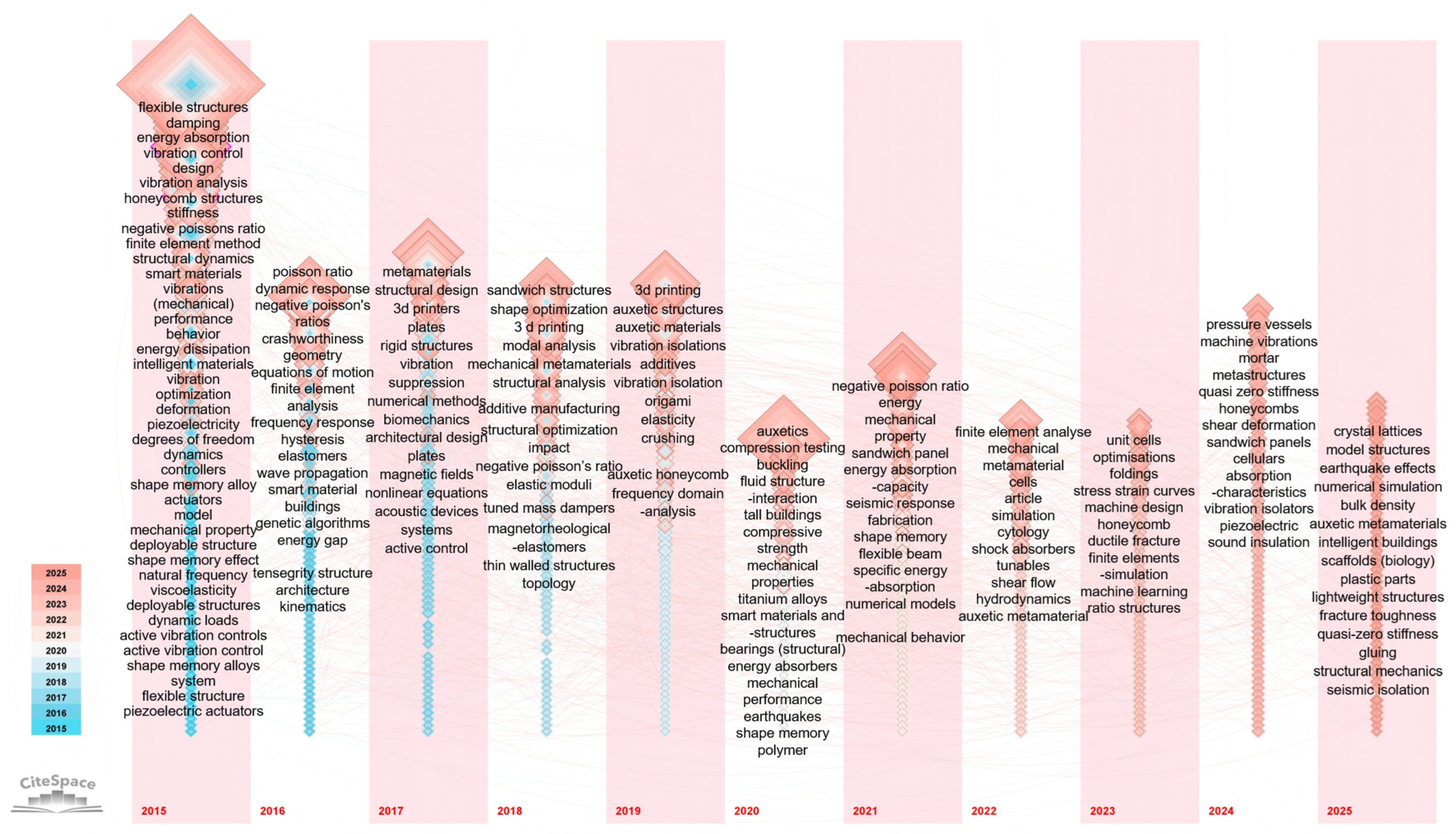
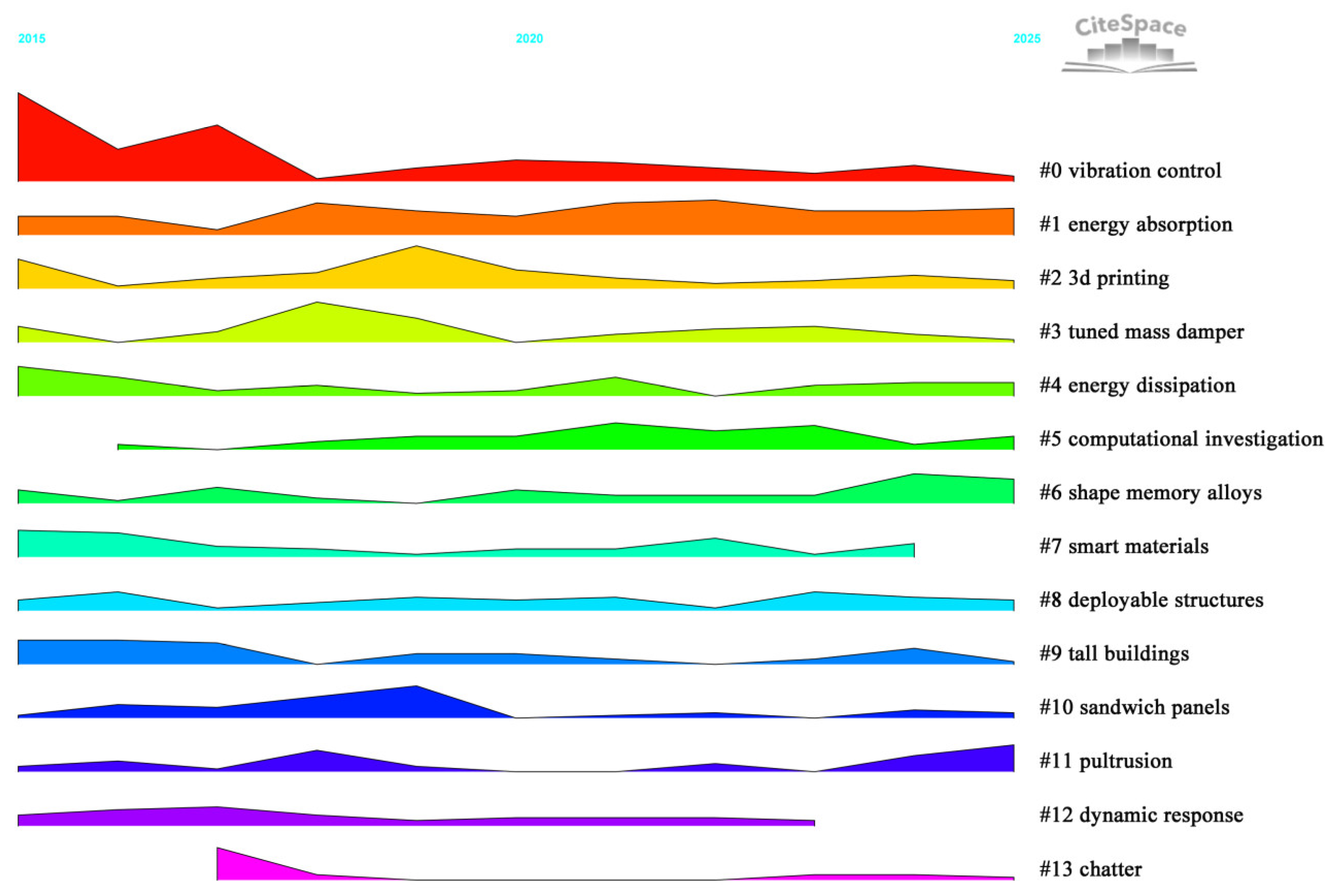
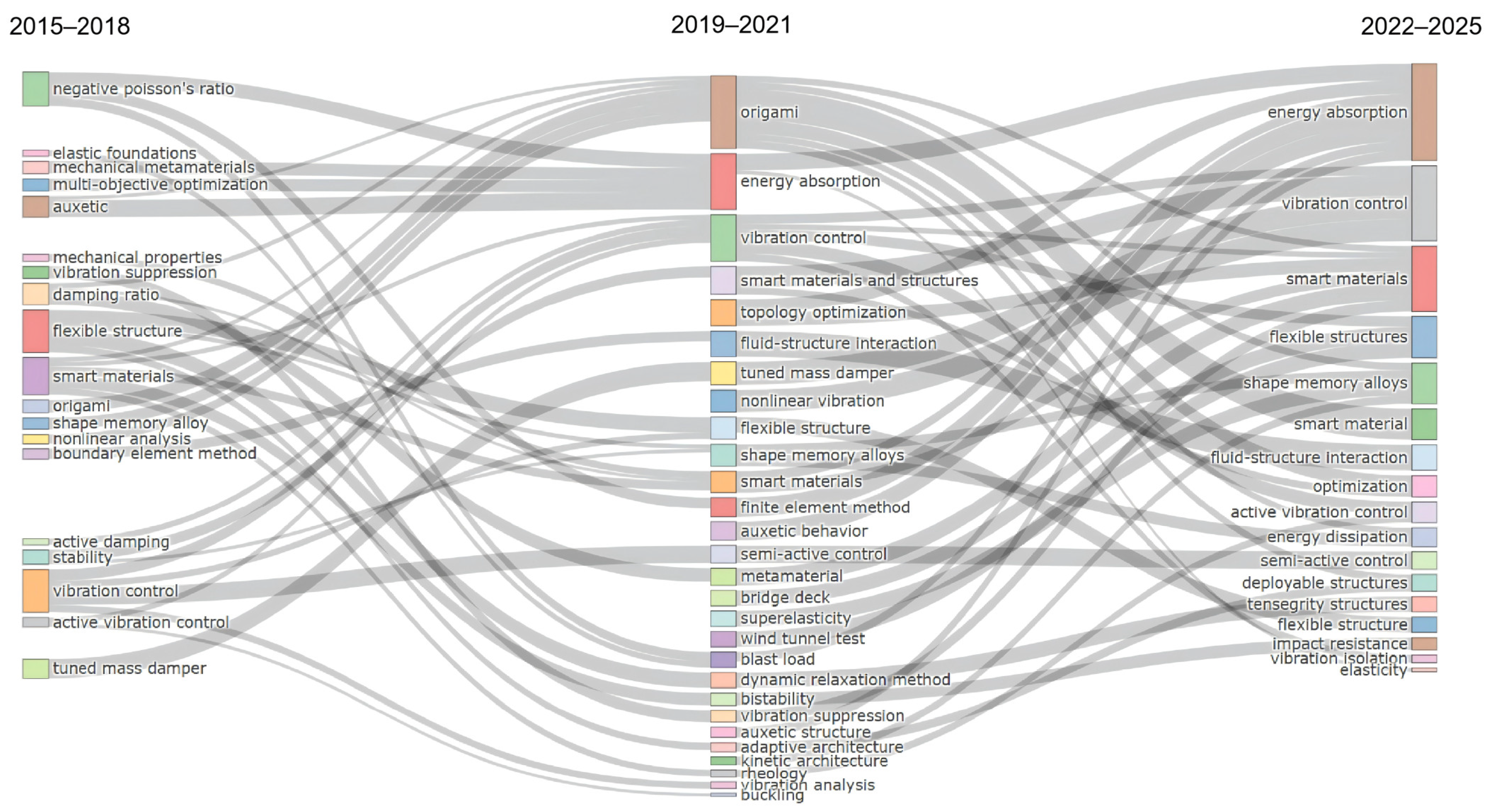
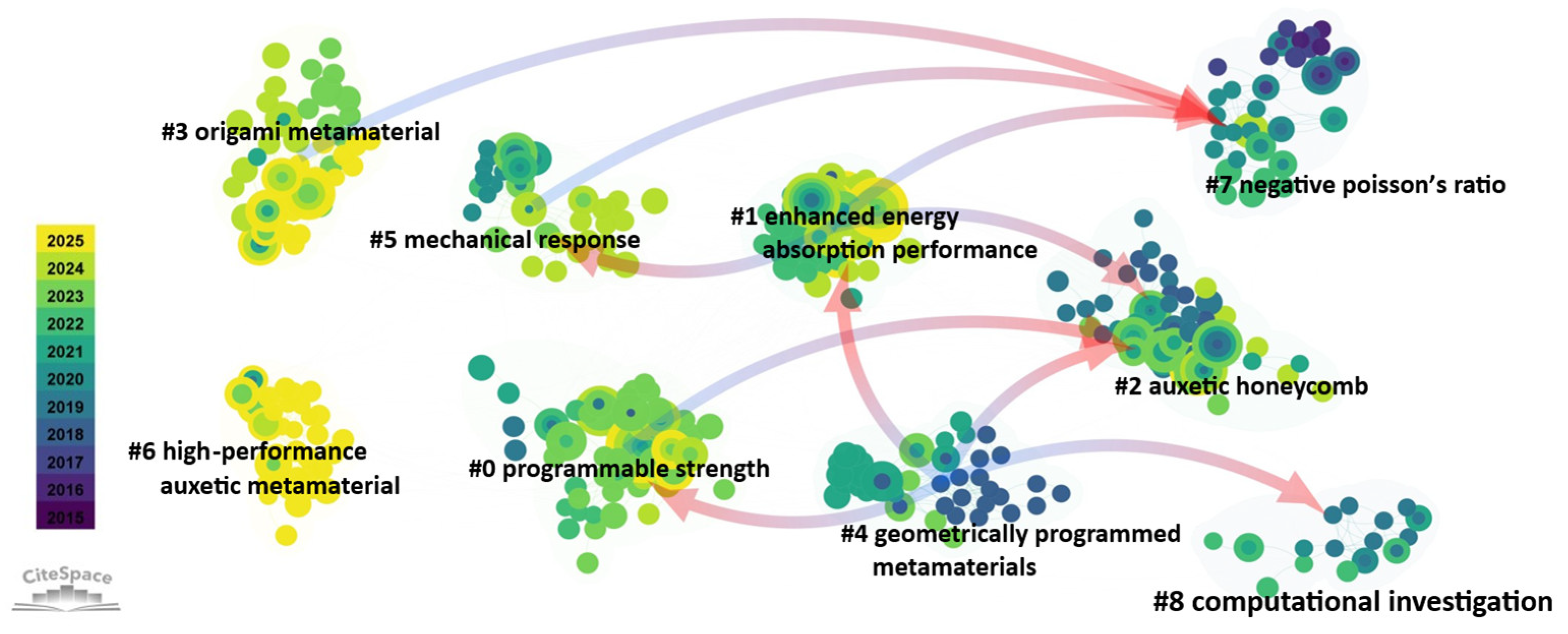
3.3.2. Citing Literature and Cited References
In analyzing literature co-citation networks, identifying key literature is crucial for understanding the knowledge base of specific research topics. CiteSpace software provides several quantitative indicators to evaluate the influence and role of literature within the network:
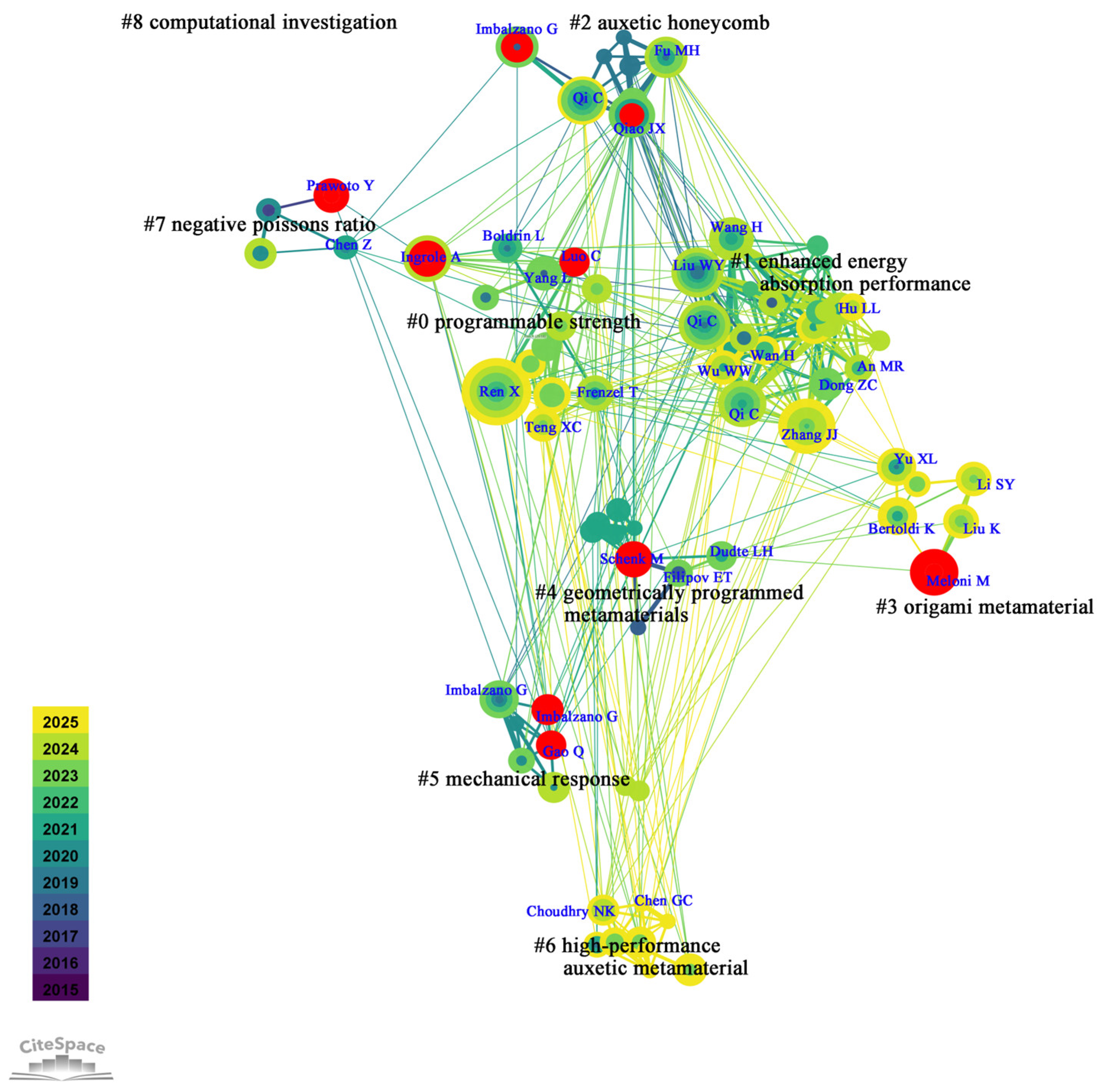
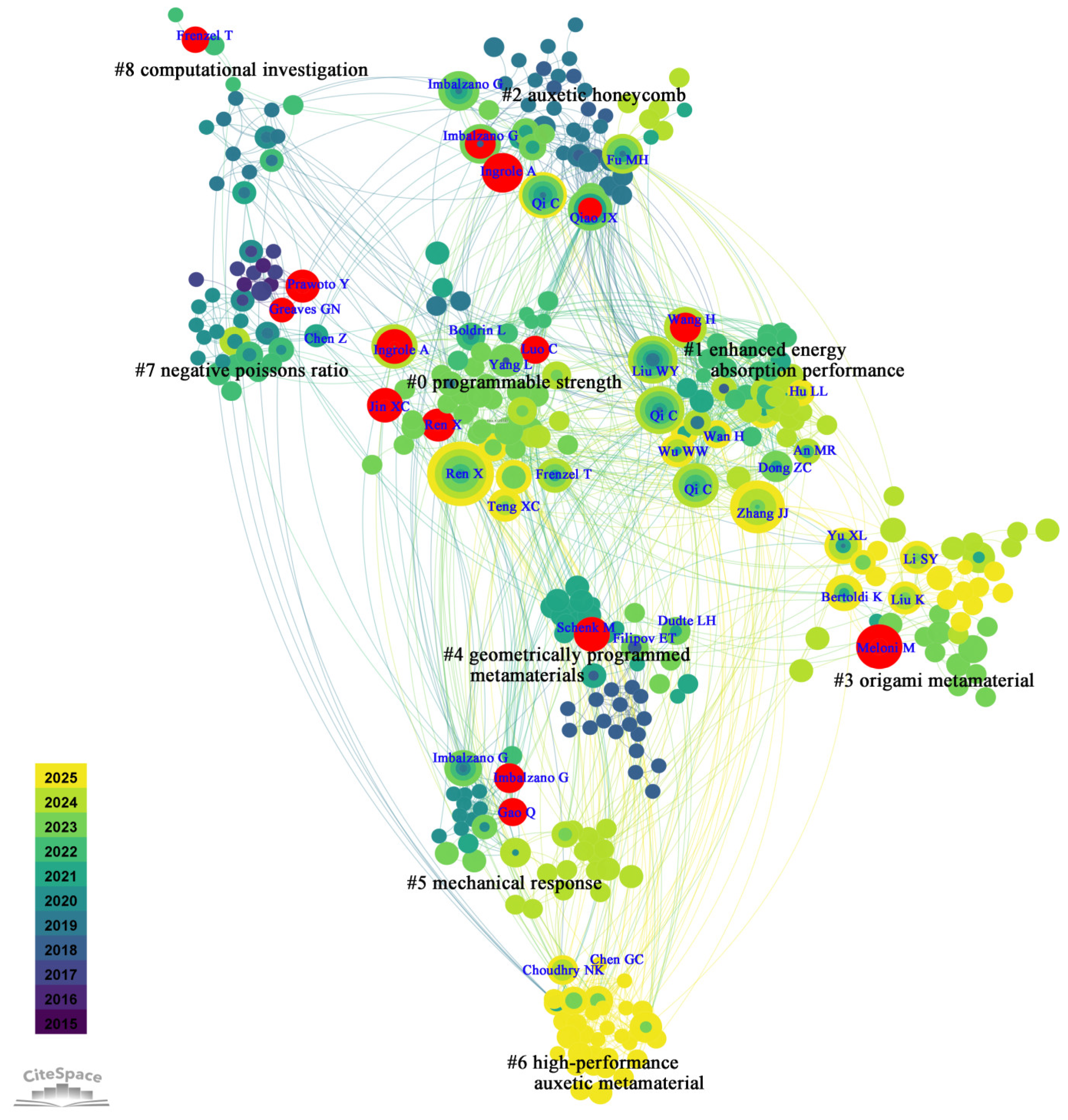
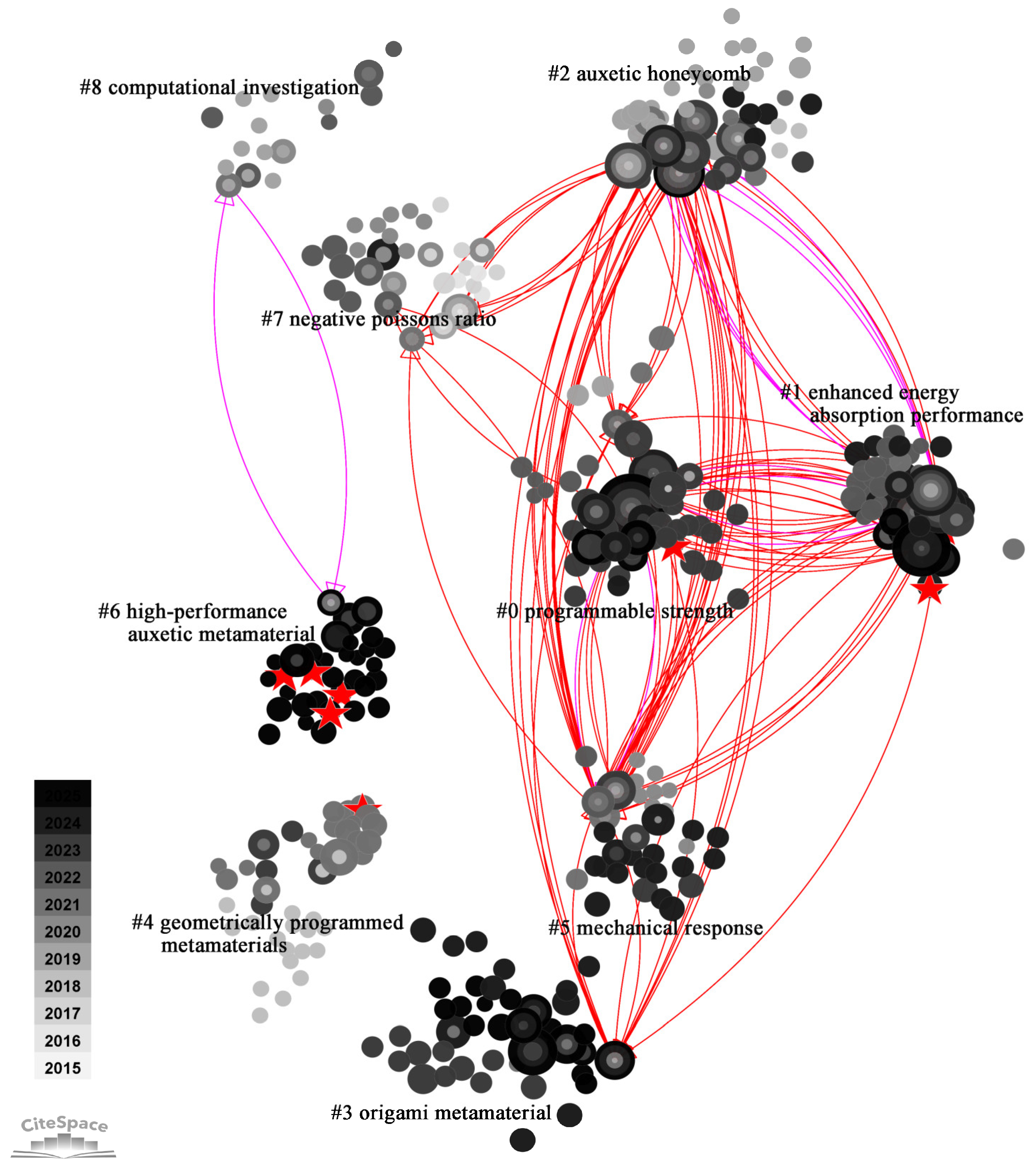
Freq (Frequency): The number of times a literature item is co-cited by other literature in the network, reflecting its universality and core status as a knowledge base (e.g., larger nodes in the co-citation network,
Figure 8).
Burst: Measures the intensity of citations to a literature item within a specific period, indicating its leading role or breakthrough contribution as an emerging hotspot (e.g., red node literature,
Figure 8).
Degree: Represents the number of nodes directly connected to a literature item in the network; a high value indicates it occupies a hub position in knowledge diffusion, connecting multiple research fields (e.g., isolated node,
Figure 9).
Sigma (Σ): A comprehensive influence index combining burstiness and centrality. A value > 1 usually indicates the literature possesses both innovative and hub properties.
Half-life: Characterizes the duration of a literature item’s influence. A long half-life signifies a lasting contribution, marking the literature as more classic.
This section focuses on core references (research foundation) with significant index values in each cluster, discussing how citing literature deepens, innovates, and expands applications based on these knowledge bases (research frontiers). This clearly shows the inheritance, evolution, and breakthroughs within each topical field.
Cluster 0 focuses on research concerning the adjustable strength and growth structure design of negative Poisson’s ratio materials. Important reference nodes, shown in
Table 1, systematically support the research context in the citing literature. Review studies have laid a solid theoretical foundation and constructed a comprehensive framework from design to application. The review by Luo et al. [
37] provides systematic support for subsequent research on design methods, performance evaluation, and application scenarios. Ren et al. [
38] systematically classified six auxetic cell models, linking the research chain of “structural design-performance-application realization”. Multiple citing literature items simultaneously cite their model classification and performance analysis, forming a theory-to-practice feedback loop.
In structural design innovation, the auxetic structures proposed by Ingrole et al. [
39] pioneered a design paradigm for adjustable deformation paths; their ideas have been continued in subsequent structural iterations, hybrid configuration designs, multi-physics field expansions, and cross-scale applications. Yang et al. [
40] established a pioneering three-dimensional auxetic honeycomb analytical model. Teng et al. [
41] developed rotating concave three-dimensional auxetic metamaterials to achieve high compression ratios and long stress plateaus, leading to structural optimization, manufacturing innovation, and functional development. Studies by Frenzel [
42], Boldrin [
43], and others made breakthroughs in novel structural design and gradient honeycomb vibration characteristics, respectively. In characterizing and optimizing mechanical properties, research by Jin et al. [
44] on the anti-blast performance of negative Poisson’s ratio honeycomb sandwich structures established a collaborative “gradient and cross arrangement” optimization paradigm, providing key parameter configuration schemes for anti-blast design. The above research collectively promoted the effective transformation of negative Poisson’s ratio structures from theoretical modeling to practical engineering applications.
Table 1.
Main reference nodes of Cluster 0.
Table 1.
Main reference nodes of Cluster 0.
| Label | Freq | Burst | Degree | Sigma | Half-Life |
|---|
| Ren X (2018) [38] | 35 | 2.79 | 44 | 1 | 4.5 |
| Ingrole A (2017) [39] | 18 | 3.09 | 22 | 1.12 | 5.5 |
| Teng XC (2022) [41] | 10 | 0 | 16 | 1 | 1.5 |
| Frenzel T (2017) [42] | 9 | 0 | 35 | 1 | 5.5 |
| Jin XC (2016) [44] | 9 | 3.63 | 6 | 1.02 | 6.5 |
| Yang L (2015) [40] | 9 | 0 | 20 | 1 | 7.5 |
| Luo C (2021) [37] | 7 | 2.82 | 15 | 1.03 | 1.5 |
| Boldrin L (2016) [43] | 7 | 0 | 25 | 1 | 4.5 |
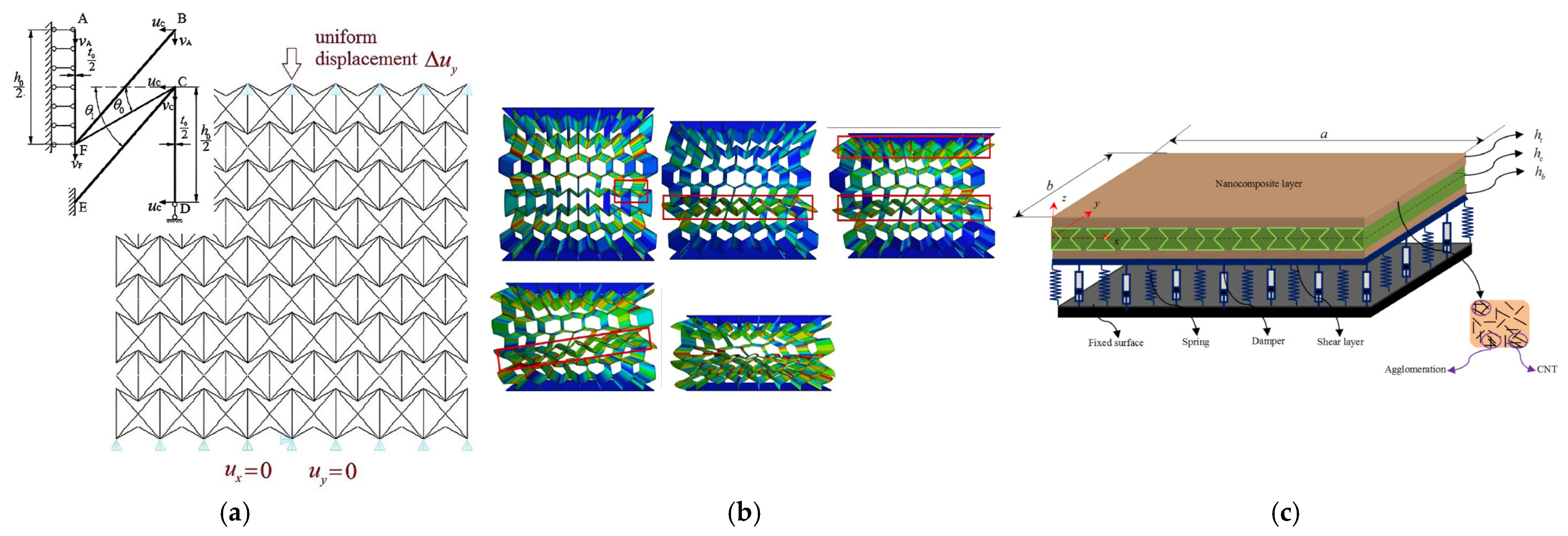
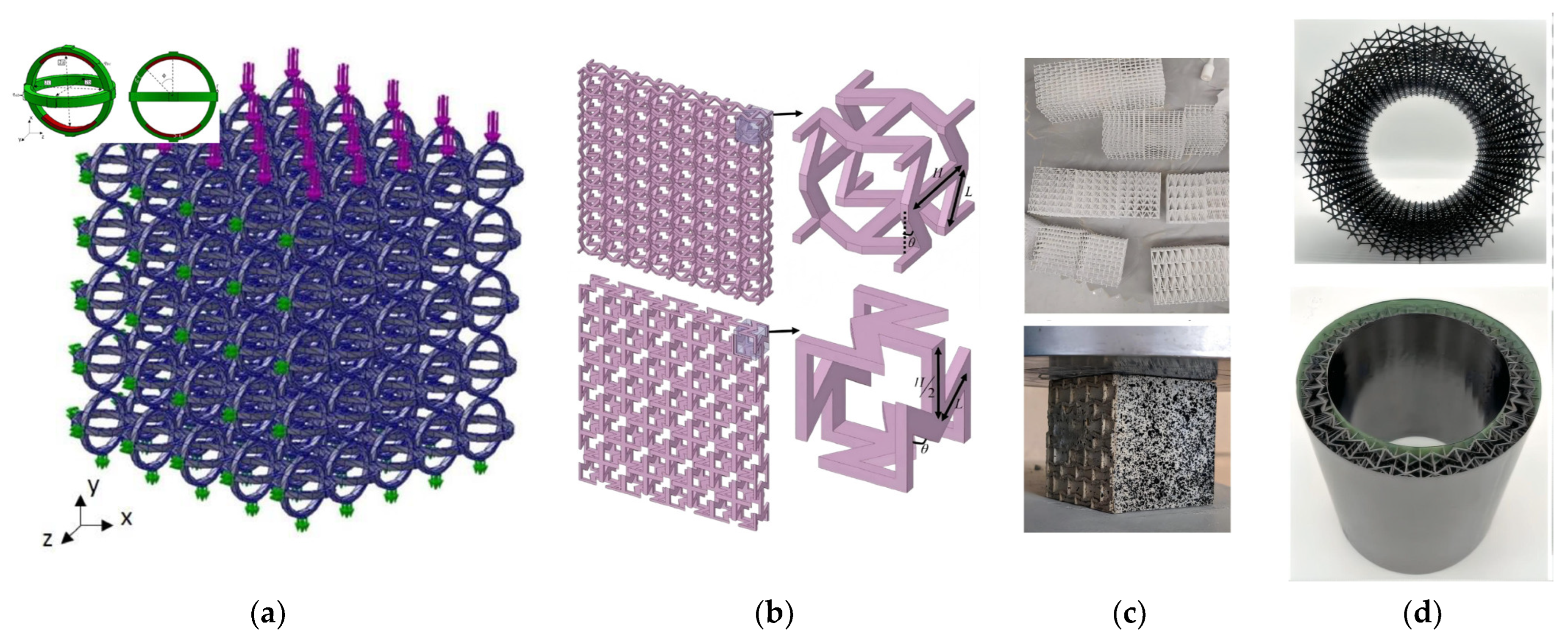
Citing literature covers core directions such as structural design innovation (
Figure 10a,b) [
17,
45,
46,
47], mechanical properties [
48,
49,
50,
51,
52], preparation methods [
7,
53,
54], and engineering transformation [
55,
56,
57,
58,
59,
60]. In structural design and innovation, the focus is on improving material performance through geometric configuration optimization. Energy absorption performance is optimized through gradient and hierarchical negative Poisson’s ratio structures (
Figure 10c) [
17,
54,
61], multi-material filling (
Figure 10d) [
58,
62], and theoretical modeling [
63,
64]. Focusing on different structures, substrates, and load conditions, the energy absorption, hardening response, and dynamic mechanical properties of auxetic materials are analyzed in depth to achieve universality in multi-mode deformation regulation. Preparation method exploration is crucial for the practical application of auxetic materials, with core strategies including low-cost assembly technology [
3], additive manufacturing parameter control [
7], and 3D printing, aiming to overcome technical bottlenecks in large-scale production and performance control. The research results of this cluster provide core theoretical support for the geometric programmable design of Cluster 4, and its gradient design concept has promoted the development of subsequent dynamic load protection structures.
- 2.
Cluster 1: Enhanced Energy Absorption Performance
Cluster 1 builds upon the gradient design and structural innovation foundation of Cluster 0. This cluster’s core focus is enhancing energy absorption capacity and stiffness, particularly achieving multi-platform stress characteristics and programmable mechanical behavior through design. The references in Cluster 1 (
Table 2) systematically support the depth of the citing literature. Their contributions span theoretical construction, structural innovation, performance verification, and engineering applications. In theoretical foundation and framework construction, Zhang et al. [
65] provided a systematic theoretical framework and manufacturing basis for research on the plastic deformation and energy absorption of additively manufactured auxetic materials. The limitations they identified, such as the lack of dynamic models, directly stimulated subsequent multi-mechanism coupling innovation and effectively promoted the translation of theoretical results to engineering applications. Wu et al. [
66] systematically established the theoretical system for chiral mechanical metamaterials, laying a foundation for subsequent performance optimization in vibration attenuation, impact energy absorption, and practical applications like medical stents and intelligent buildings. Hu et al. [
67] focused on constructing a theoretical model for auxetic honeycombs under dynamic loads, establishing the foundation for understanding dynamic response in this field; their theories are widely cited by subsequent studies.
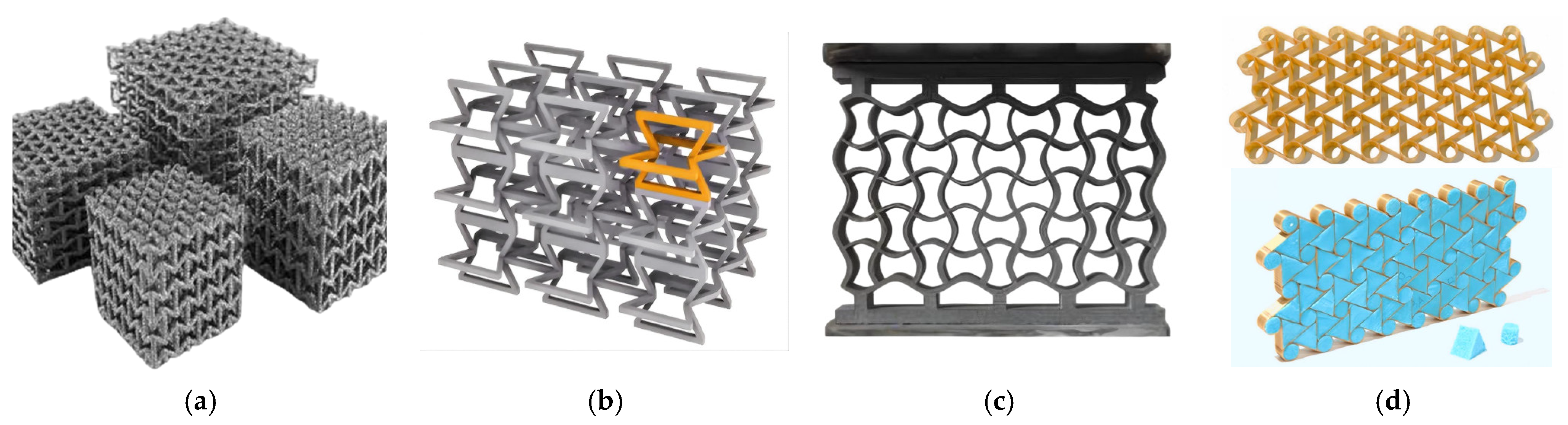
In platform stress and hierarchical mechanisms, the RSH honeycomb structure proposed (
Figure 11a) by Wang et al. [
68] has had a systematic impact due to its dual-platform stress characteristics and high energy absorption capacity. Its design concept triggered extensive structural derivations, performance optimization strategies, and mechanism exploration, integrating functional gradients with multi-objective optimization algorithms. Liu et al. [
69] established an analysis framework for the dynamic impact response of re-entrant auxetic honeycombs (
Figure 11b), proposed gradient and disorder design criteria, and inspired the development of various novel structures. Their established finite element analysis paradigm and identified engineering limitations are widely used and drive subsequent innovations (e.g., origami structures, negative gradient design). Research by Qi’s team verified the core advantages of re-entrant hexagonal honeycomb sandwich panels under blast impact [
70]. The subsequently proposed double-arc cell-wall re-entrant honeycomb (REC) [
71] realized a hierarchical energy dissipation mechanism through geometric innovation. Its parameterized paradigm further inspired gradient structure expansion and intelligent material integration, continuously promoting lightweight design innovation in impact and seismic protection. Dong et al. [
72] systematically revealed the compressive properties of metal re-entrant honeycombs, especially the influence of cell-wall thickness on deformation modes and size effects, providing experimental support for subsequent research in stiffness optimization, gradient design applications, and deepening understanding of material properties and NPR energy absorption mechanisms. An et al. [
73] designed a bidirectional re-entrant honeycomb (BRH) to achieve hierarchical energy absorption through adjustable negative Poisson’s ratio and dual-platform stress zone design (
Figure 11c); its analysis method is widely used in subsequent studies to verify dual-platform universality, extend to multi-material systems, and combine with origami structures to improve performance. These representative studies collectively verify the universality of multi-platform mechanisms and combination strategies in improving energy absorption performance, successfully overcoming limitations of early multi-level energy absorption designs.
Table 2.
Main reference nodes of Cluster 1.
Table 2.
Main reference nodes of Cluster 1.
| Label | Freq | Burst | Degree | Sigma | Half-Life |
|---|
| Zhang JJ (2020) [65] | 23 | 0 | 42 | 1 | 3.5 |
| Qi C (2017) [70] | 20 | 0 | 31 | 1 | 4.5 |
| Liu WY (2016) [69] | 20 | 0 | 52 | 1 | 5.5 |
| Qi C (2020) [71] | 16 | 0 | 41 | 1 | 2.5 |
| Wang H (2019) [68] | 14 | 3.67 | 39 | 1.01 | 2.5 |
| Wu WW (2019) [66] | 10 | 0 | 19 | 1 | 4.5 |
| Hu LL (2018) [67] | 10 | 0 | 17 | 1 | 5.5 |
| Dong ZC (2019) [72] | 8 | 0 | 20 | 1 | 3.5 |
| An MR (2022) [73] | 6 | 0 | 31 | 1 | 1.5 |
The core theme of the citing literature is the multi-platform stress characteristics and programmable mechanical behavior of novel honeycomb structures under dynamic loads. Key strategies in this field include multi-platform stress mechanism design and gradient design optimization. Multi-platform stress mechanism design focuses on raising the platform stress level through innovative structural design [
74] and geometric ordering of layered re-entrant honeycombs [
75]. Furthermore, multi-platform designs [
76,
77,
78,
79] and platform stress enhancement technologies [
80,
81,
82] have been developed to achieve complex hierarchical energy absorption responses. Gradient design optimization precisely regulates the energy absorption path and inertial effect by adjusting the gradient distribution of materials or structures (e.g., thickness, density, curvature). This is reflected in in-depth research on gradient direction dependence [
13,
83], bidirectional gradient synergy [
84], and dynamic response laws [
80,
85]. Additionally, the “matrix filler” gradient coupling effect in composite structures [
62] provides a new optimization dimension. Multi-platform stress characteristics are regarded as the core strategy for achieving efficient dynamic energy management, while gradient structures are key tools for achieving precise programming of platform stress. The coupled design of both is considered an important direction for further expanding material performance boundaries [
17]. Their coupling and synergy are crucial paths to unlocking the programmable energy absorption potential of honeycomb structures, serving as a technical breakthrough for the next generation of impact and vibration reduction systems.
- 3.
Cluster 2: Auxetic Honeycomb
In Cluster 2, the core research based on the literature focuses on significantly improving impact resistance through innovative auxetic structure design. Important nodes are shown in
Table 3. Qiao et al. [
86] proposed a functionally graded double-arrow honeycomb (DAH), achieving functional gradient through cell wall thickness regulation. Its dynamic platform stress model and deformation map provide a core verification benchmark for subsequent research and were later extended to building protection. In performance optimization mechanisms and model establishment, Fu et al. [
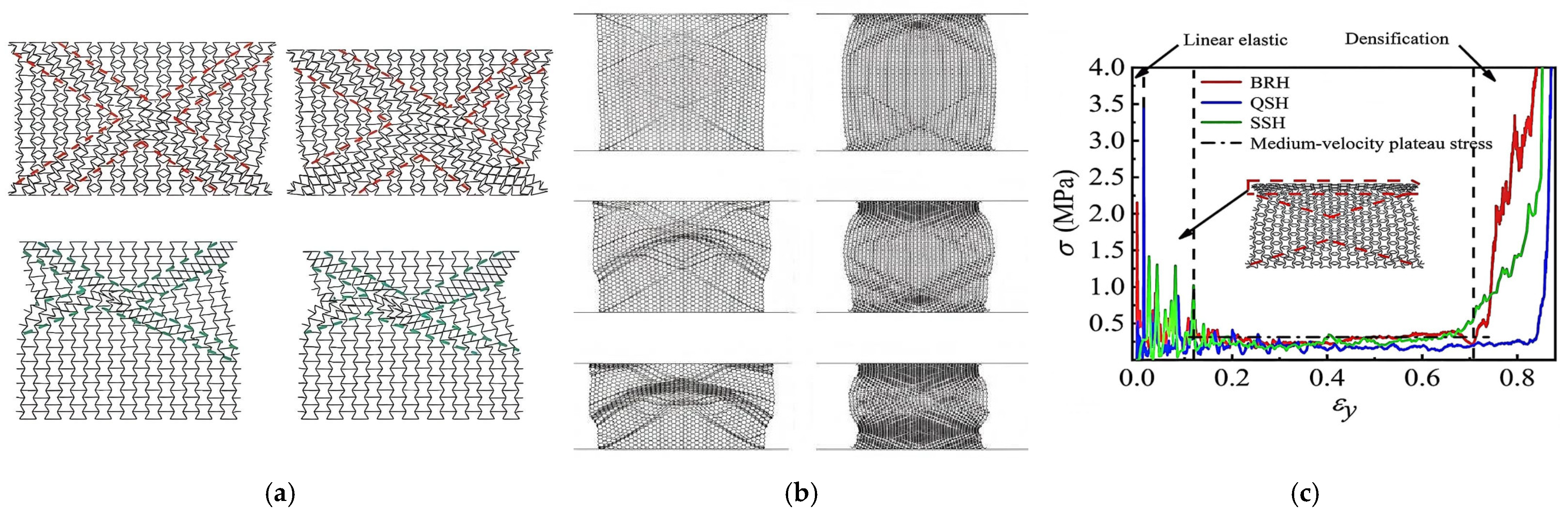
87] enhanced the stiffness and buckling strength of re-entrant honeycombs by embedding diamond configurations (
Figure 12a); the proposed trade-off law of “stiffness enhancement leads to negative Poisson’s ratio weakening” became a core goal for subsequent optimization. The related buckling constraint mechanism lays a foundation for multi-level energy absorption design. Qi et al. [
70] studied the anti-blast performance of honeycomb sandwich panels using a combined experimental–numerical method, revealing material aggregation effects and the evolution law of negative Poisson’s ratio under high strain rates (weakening negative value), and proposed a composite protection system (steel–aluminum sandwich) providing a paradigm for engineering lightweight design. Furthermore, Imbalzano et al. [
88,
89] established a simplified calculation model and a model associating geometric parameters with anti-blast performance, revealed the anti-blast performance advantages of auxetic structures, and laid a foundation for subsequent research.
Table 3.
Main reference nodes of Cluster 2.
Table 3.
Main reference nodes of Cluster 2.
| Label | Freq | Burst | Degree | Sigma | Half-Life |
|---|
| Qi C (2017) [70] | 19 | 0 | 23 | 1 | 4.5 |
| Qiao JX (2015) [86] | 15 | 3.51 | 36 | 1.2 | 3.5 |
| Fu MH (2017) [87] | 14 | 0 | 47 | 1 | 5.5 |
| Imbalzano G (2018) [89] | 12 | 0 | 11 | 1 | 3.5 |
| Imbalzano G (2016) [88] | 12 | 2.71 | 14 | 1.04 | 4.5 |
Citing literature focuses on the protection mechanisms and energy management strategies of auxetic structures under extreme dynamic loads such as explosions, impacts, and vibrations. This field integrates the core issues of Clusters #0 and #1, aiming to overcome the strength and energy absorption efficiency limitations of traditional protective structures through structural innovation.
In structural innovation, scholars primarily explore new auxetic honeycomb and metamaterial configurations, emphasizing the coupled design of negative Poisson’s ratio characteristics and energy absorption performance. Specific strategies include geometric reconstruction [
68,
90,
91], topology optimization [
92], multi-unit hierarchical composite design (
Figure 12b) [
93], etc. In performance optimization and mechanism exploration, research deeply analyzes the influence of key load conditions [
48,
94,
95] and structural variable parameters [
96,
97] on dynamic responses, aiming to establish theoretical models guiding performance prediction and optimization [
98]. In expanding auxetic structure application scenarios, research focuses on verifying the actual effectiveness of protective structures under extreme dynamic loads, including sandwich panel structures with excellent anti-blast performance (
Figure 12c) [
96,
99], sacrificial layer protection systems [
100], and exploring the potential and mechanisms of auxetic structures in vibration control.
Figure 12.
Impact resistance enhancement of auxetic honeycombs: (
a) re-entrant honeycomb with embedded diamond configuration [
87]; (
b) schematic diagram of deformation of multi-unit hierarchical composite auxetic structure [
93]. The red wireframe marks the local failure concentration area in the composite structure caused by uneven stress transfer at the hierarchical interface; and (
c) sandwich panel structures [
96].
Figure 12.
Impact resistance enhancement of auxetic honeycombs: (
a) re-entrant honeycomb with embedded diamond configuration [
87]; (
b) schematic diagram of deformation of multi-unit hierarchical composite auxetic structure [
93]. The red wireframe marks the local failure concentration area in the composite structure caused by uneven stress transfer at the hierarchical interface; and (
c) sandwich panel structures [
96].
- 4.
Cluster 3: Origami Metamaterial
Cluster 3 focuses on origami, showing close bidirectional interaction between theoretical construction and application expansion. Key references in
Table 4 are primarily foundational systematic reviews and key research papers. Meloni et al. [
101] systematically integrated the core knowledge system of origami engineering, established mainstream origami modes, and summarized reverse/forward design methods and computational toolchains. Bertoldi et al. [
1] and Yu et al. [
102] systematically classified mechanical metamaterials and defined key functional goals like negative Poisson’s ratio, multistability, and topological protection. These reviews, acting as “knowledge hubs,” prospectively point out key challenges such as manufacturing bottlenecks and dynamic behavior regulation, guiding the direction of technical breakthroughs in subsequent research. In computational mechanics models and dynamic analysis frameworks, core research papers provide powerful tools for cutting-edge exploration. The rod hinge model joint theory proposed by Liu et al. [
103] forms a key computational framework for addressing geometric nonlinearity and multistable behavior. Building on the mechanical theory and dynamic behavior analysis framework established by the review of Li et al. [
104], subsequent studies made breakthroughs in energy capture, programmable impact response, and defect-insensitive systems. These studies are cornerstones for understanding nonlinear dynamics tuning and realizing customized dynamic responses, confirming the transition of origami mechanics from theoretical exploration to engineering practice.
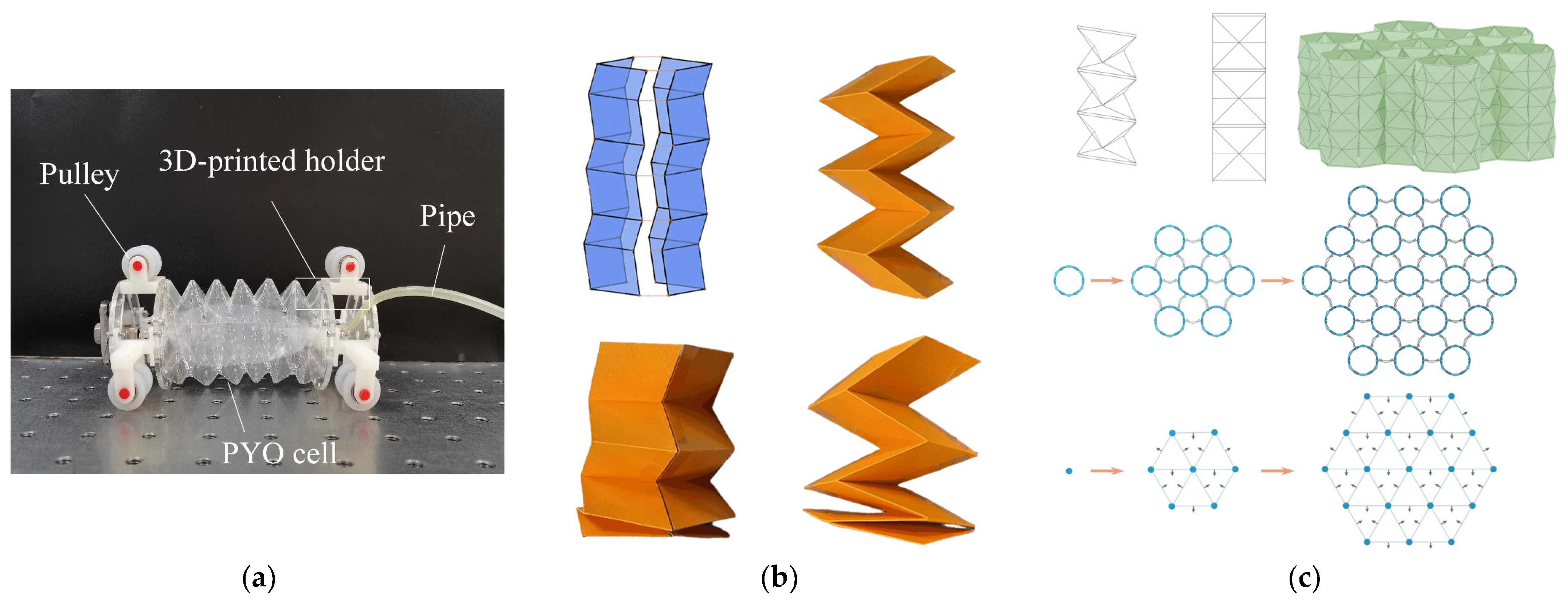
The theoretical foundation and geometric programming paradigm of Cluster 3 depend to some extent on Cluster #7, particularly origami mechanics modeling and dynamic analysis. This cluster explores origami-inspired mechanical metamaterials and deployable structures, focusing on realizing customized dynamic responses and shape control through geometric programming of folding topology. In dynamic response tuning, research explores the nonlinear dynamic behavior of origami structures and their driving mechanisms, such as pneumatic actuation (
Figure 13a) [
105,
106], fluid dynamics models (
Figure 13b) [
107], and topological phase transition regulation [
108], revealing their unique advantages in dynamic tuning. To realize the programmable mechanical response of multistable metamaterials, folding paths are encoded into mechanical response functions, and synergistic programming of multiple parameters (e.g., Poisson’s ratio, stiffness) is achieved through structures like bistable auxetic modules [
4], graphene origami auxetic materials [
109], water bomb crease cell structures (
Figure 13c) [
110], and inflatable bistable panels [
106].
In engineering application and design theory, Zhang et al. [
111] established a mechanical theoretical model and equivalent analysis method for single-crease origami arrays, systematically studying the coupling effect between crease stiffness and panel deformation. For aerospace engineering [
112,
113], building structures, and other scenarios, Meloni et al. [
114] established a shape–motion inverse design framework for origami building systems to realize collaborative optimization of folding paths and environmental avoidance. Ma et al. [
115] established a unified static framework for integrated origami-tensegrity systems, deriving explicit nonlinear equilibrium equations and linearized forms, proposing geometric kinematics descriptions and stiffness matrix calculation methods, and uniformly describing both structural paradigms through rod–hinge models, providing a theoretical basis for designing and analyzing large-scale deployable structures. Addressing the demand for low-frequency vibration isolation, origami structures with quasi-zero stiffness characteristics are designed based on the principle of geometric non-uniqueness [
116,
117]. The strong nonlinear effect induced by folding is utilized to effectively expand the low-frequency vibration suppression bandwidth. Such studies generally rely on high-dimensional coupling modeling frameworks [
118,
119].
- 5.
Cluster 4: Geometrically Programmed Metamaterials
Cluster 4 reflects the application of geometrically driven multifunctional architectural metamaterials in basic research. Theoretical development in origami engineering shows a clear progressive context. Referencing Cluster #4 literature in
Table 4, Schenk et al. [
120] quantitatively revealed the negative Poisson’s ratio mechanism of Miura origami units by establishing geometric and kinematic models, proposing the “interlayer compatible stacking” design paradigm. This work laid the theoretical foundation for the scale invariance of origami structure mechanical behavior and provided key support for subsequent Poisson’s ratio regulation and programmable deformation. Subsequently, Filipov et al. [
121] pioneered zipper-coupled origami tube structures, achieving stiffness jump and single-degree-of-freedom rigid folding through geometric coupling. Their geometric parameterized model and eigenvalue band gap theory provided key support for adjustable metamaterials and parameterized design standards. Dudte et al. [
122] further expanded the research dimension to complex surface programming. Their developed origami mosaic computational design method (e.g., constraint optimization algorithm) became a general bridge for cross-scale applications, from building deployable structures and mechanical metamaterials to reconfigurable systems, while deepening the understanding of mechanical behaviors like bistable control and promoting breakthroughs in engineering bottlenecks like thick-plate origami.
In citing literature, the core methodology depends on research from Clusters #1 (gradient and hierarchical design), #2 (protection and wave application), and #0 (multi-material and preparation), and builds upon the computational design framework from Cluster #8. This cluster focuses on introducing architectured metamaterials with programmable mechanical, thermal, and wave dynamic properties through geometric manipulation design. The core is realizing material performance tunability via origami folding mechanisms [
14,
101,
123,
124] and multi-material hierarchical lattices [
85,
125]. Major achievements include independent or synergistic regulation of Poisson’s ratio and thermal expansion coefficient [
126], adjustable wave propagation characteristics [
123,
127], efficient computational design frameworks [
124,
128,
129,
130], and enhanced mechanical properties [
131]. These studies mark a paradigm shift towards geometrically driven multifunctionality, controlling the static and dynamic properties of structures through precise design of folding topology and material distribution.
- 6.
Cluster 5: Mechanical Response
Research related to Cluster 5 in the auxetic structures field shows significant knowledge inheritance and expansion. Referencing Cluster #5 literature in
Table 4, the double-arrow auxetic structure proposed by Gao et al. [
132] laid an important foundation, and their geometric parameter sensitivity analysis provided a key basis for subsequent optimization research. Simultaneously, the pioneering work of Imbalzano’s team on the anti-blast performance of negative Poisson’s ratio composite panels, through efficient numerical models and quantitative energy absorption advantages, established a methodological benchmark and performance reference for subsequent impact resistance research [
88]; their 2018 research was further systematized, proposing a parameterized design framework, performance comparison methods, and revealing the “local densification” mechanism [
89]. This was widely used to explain anti-blast mechanisms and guide new structure designs, promoted extension of the theoretical system to multi-material composites and reconfigurable structures, and drove innovative exploration of engineering applications like lightweight armor and concrete protection.
Table 4.
Main reference nodes of Clusters 3, 4, and 5.
Table 4.
Main reference nodes of Clusters 3, 4, and 5.
| Label | Freq | Burst | Degree | Sigma | Half-Life | Cluster ID |
|---|
| Meloni M (2021) [101] | 16 | 3.68 | 12 | 1.05 | 2.5 | 3 |
| Yu XL (2018) [102] | 13 | 0 | 14 | 1 | 5.5 | 3 |
| Bertoldi K (2017) [1] | 11 | 0 | 14 | 1 | 5.5 | 3 |
| Li SY (2019) [104] | 10 | 0 | 12 | 1 | 4.5 | 3 |
| Liu K (2017) [103] | 10 | 0 | 14 | 1 | 6.5 | 3 |
| Schenk M (2013) [120] | 10 | 3.77 | 21 | 1.2 | 7.5 | 4 |
| Dudte LH (2016) [122] | 7 | 0 | 12 | 1 | 6.5 | 4 |
| Filipov ET (2015) [121] | 6 | 0 | 16 | 1 | 7.5 | 4 |
| Imbalzano G (2018) [89] | 13 | 0 | 21 | 1 | 3.5 | 5 |
| Imbalzano G (2016) [88] | 8 | 3.21 | 13 | 1.02 | 4.5 | 5 |
| Gao Q (2019) [132] | 7 | 3.61 | 22 | 1.1 | 1.5 | 5 |
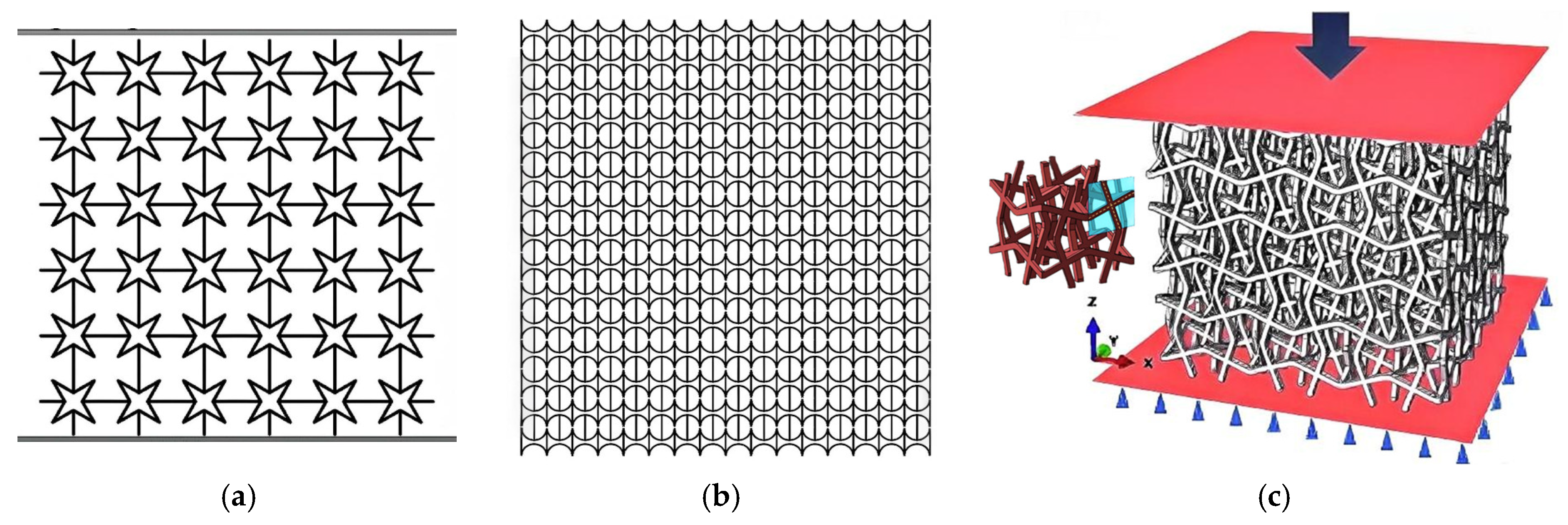
Citing literature research relates to the performance goals of Cluster #1 and the structural foundation of Cluster #7. This cluster focuses on structural innovation and optimization of auxetic materials, integration of advanced manufacturing technologies, and verification in multi-scenario applications. At the structural design level, researchers have moved beyond traditional configurations to innovate (
Figure 14a) and optimize structures [
2,
82,
133,
134,
135,
136]. Drawing on energy absorption performance quantification methods and understanding of anti-blast mechanisms, researchers designed 3D re-entrant structures (
Figure 14b) [
137], four-chiral structures [
55], and sandwich structures with truss cores [
138] that exhibit impact resistance superior to traditional honeycombs. In structural enhancement, embedding 3D auxetic truss lattice materials in concrete increases peak strength (
Figure 14c) [
139]. In vibration control, carbon fiber reinforced re-entrant core cylindrical shells (
Figure 14d) [
140] optimize vibration damping through modal strain energy. In health monitoring, the star-shaped hourglass structure ultrasonic guided wave monitoring framework [
141] combines probabilistic neural networks to achieve damage quantification. Additionally, excellent energy management characteristics under dynamic loads [
142] further confirm its engineering potential. In manufacturing technology, laser powder bed fusion accurately prepares steel and aluminum trusses; photocuring and fused deposition support 4D printing of shape memory polymers, endowing sinusoidal lattices [
136] and re-entrant structures [
143] with heat-driven self-healing capabilities. Applications have successfully expanded to multiple engineering scenarios, including building enhancement, vibration control, and health monitoring, systematically verifying the significant potential of auxetic metamaterials in dynamic load management.
- 7.
Cluster 6: High-Performance Auxetic Metamaterials
The knowledge base of Cluster 6 can be referenced in Cluster #6 literature in
Table 5. Chen et al. [
144] conducted systematic research on double-arrow metal honeycomb structures, exploring gradient design and filling optimization strategies; their proposed gradient design ideas and multi-mechanism synergy concepts provided important guidance for innovation in multifunctional auxetic structures and energy-absorbing materials. Simultaneously, the geometric optimization method and low-rotational-stiffness node concept proposed by Choudhry et al. [
145] became a common paradigm for cross-field research by establishing energy-absorption performance benchmarks and parameterized design frameworks. Its node design concept was adapted to the development of multifunctional coupling mechanisms, and optimization technologies were extended to multi-physics field analysis, promoting the evolution of auxetic materials from single-function to integrated design.
As relatively new research results, the citing literature in this cluster builds upon findings from Clusters #0–#5. This cluster explores breaking through the performance limits of auxetic materials through innovative structural design strategies, tapping their potential in high energy absorption [
11,
146,
147], vibration suppression [
148,
149], and adjustable mechanical response (
Figure 15a) [
150,
151] using advanced concepts like multi-mechanism integration [
146], gradient design [
11,
147], hierarchical strategies [
152], and intelligent control [
153]. Crucially, this frontier realizes active programming of mechanical responses by integrating functional materials or utilizing external fields, promoting auxetic metamaterials towards key directions such as large strain stable response (
Figure 15b) [
146], high reusability [
154], and active programmability [
152].
- 8.
Cluster 7: Negative Poisson’s Ratio
The knowledge base of Cluster 7 is reflected in key theoretical breakthroughs and engineering methods. According to the foundational Cluster #7 literature in
Table 5, at the theoretical level, the review on Poisson’s ratio by Greaves et al. [
155] systematically explains the physical mechanism of negative Poisson’s ratio and the material design framework, providing core theoretical support for understanding the relationship between microstructure deformation principles and macroscopic properties (e.g., energy absorption, fracture toughness). At the cross-scale analysis level, Prawoto et al. [
156] reviewed forward prediction for disordered microstructures and generalized homogenization calculation methods, laying a methodological foundation for designing and analyzing complex aperiodic structures. Chen et al. [
157] established a standardized optimization paradigm through innovative topological configurations and parameterized design methods.
Table 5.
Main reference nodes of Clusters 6, 7, and 8.
Table 5.
Main reference nodes of Clusters 6, 7, and 8.
| Label | Freq | Burst | Degree | Sigma | Half-Life | Cluster ID |
|---|
| Choudhry NK (2022) [145] | 7 | 0 | 23 | 1 | 1.5 | 6 |
| Chen GC (2021) [144] | 2 | 0 | 20 | 1 | 3.5 | 6 |
| Prawoto Y (2012) [156] | 10 | 4.2 | 17 | 1.18 | 6.5 | 7 |
| Greaves GN (2011) [155] | 6 | 2.86 | 9 | 1.02 | 5.5 | 7 |
| Chen Z (2018) [157] | 4 | 0 | 13 | 1 | 2.5 | 7 |
| Frenzel T (2017) [42] | 6 | 2.75 | 2 | 1.01 | 4.5 | 8 |
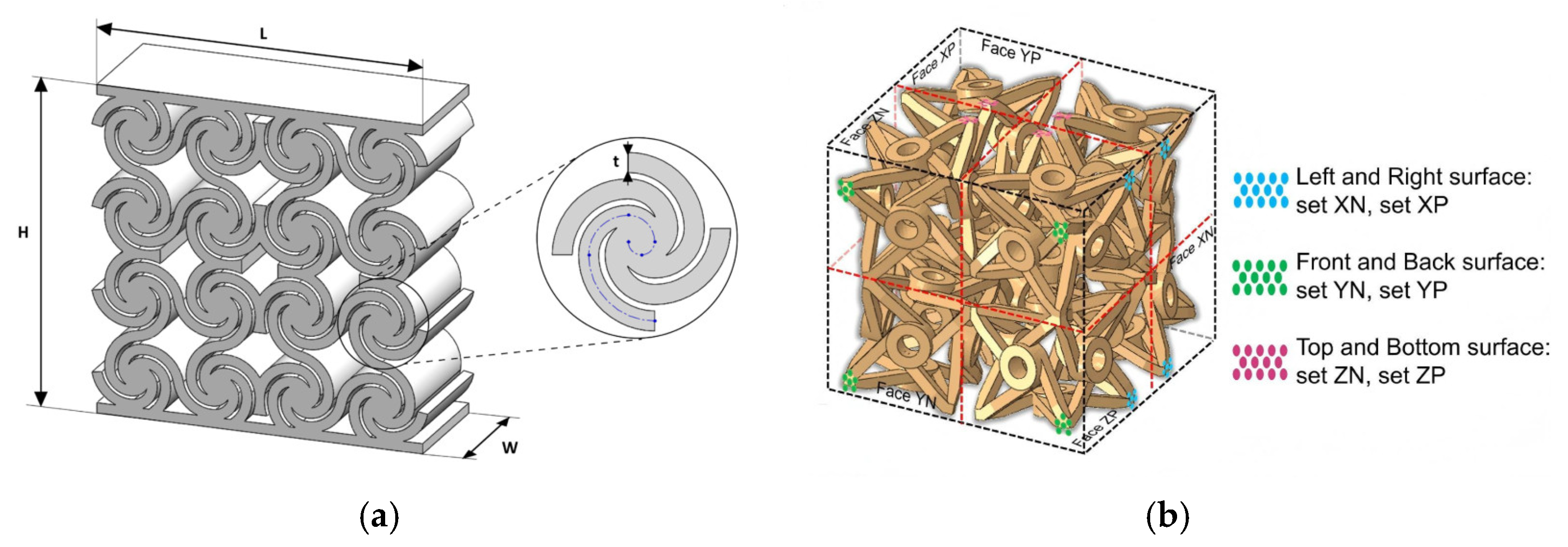
Cluster 7 research serves as an important foundation for Clusters #0, #1, #2, #3, and #5. This cluster fundamentally studies the design principles, mechanical behavior optimization mechanisms, and composite synergistic strategies of auxetic honeycombs and their derived structures. Researchers aim to overcome the performance limitations of traditional auxetic structures. On one hand, through innovative topological configurations like star-triangle honeycombs (
Figure 16a) [
158], concave arc honeycombs (
Figure 16b) [
159], and 3D cross-chiral structures (
Figure 16c) [
160] to improve strength, stiffness, and the negative Poisson’s ratio effect. On the other hand, based on accurate theoretical modeling and analysis systems [
161], they conduct in-depth analysis of complex structure behavior concerning dynamic response, platform stress, failure modes, and deformation mechanisms, providing key support for performance prediction. Composite and hybrid strategies have proven effective for synergistic performance enhancement, significantly improving energy absorption efficiency and multifunctionality. Representative schemes include hybrid honeycomb superstructures [
58,
74,
161], multi-lattice designs [
162], foam filling [
163], composite material integration [
164,
165], etc. The research scope has expanded from static mechanical behavior to performance characterization and exploration of emerging applications under multi-physics field coupling, such as dynamic impact and blast loads.
- 9.
Cluster 8: Computational Investigation
In the field of auxetic material research, Cluster 8 begins with the theoretical foundation laid by Frenzel [
42] and progressively builds a multi-scale intelligent control system, continuously advancing this field.
A multi-scale intelligent control system is built within auxetic material research, providing foundational theory for subsequent studies. Research in this cluster focuses on three core directions: computation-driven design [
166,
167], advanced manufacturing [
168,
169], and active control [
61], aiming to advance auxetic metamaterials from static structural systems to dynamic intelligent systems. Among these, intelligent reconfigurability [
170] and multifunctional integration characteristics [
171,
172] are becoming key trends and important driving forces in the development of this field.