Systematic Review

Challenges and Solutions for Scalability of Affordable Housing: A Literature Review on 3D Printed Construction in Kuwait


by
Fatemah Abdullateef Alawadi
*,
Martina Murphy
and
Robert Eadie
The Belfast School of Architecture and the Built Environment, Ulster University, Belfast BT15 1ED, UK
*
Author to whom correspondence should be addressed.
Buildings 2026, 16(2), 343; https://doi.org/10.3390/buildings16020343
Submission received: 1 November 2025 / Revised: 17 December 2025 / Accepted: 17 December 2025 / Published: 14 January 2026
(This article belongs to the Special Issue Advances in the 3D Printing of Concrete)

Abstract

This study presents a systematic literature review exploring the challenges and solutions for scaling 3D printing in affordable residential construction in Kuwait. This review explores the urgent need to alleviate housing shortages through faster, cost-effective, and sustainable building approaches, highlighting the potential of additive manufacturing. Guided by the PRISMA framework, this review synthesizes findings from 20 key sources selected from an initial pool of 141 studies. The analysis identifies major scalability challenges—high material costs, limited supply chain readiness, complex regulatory frameworks, environmental constraints, and technical limitations—and evaluates proposed solutions such as geopolymer concrete, advanced printing technologies, and policy reforms. While this study does not include empirical data, it offers a comprehensive synthesis of the existing literature to inform policymakers and industry leaders about the potential of 3D printing to address Kuwait’s housing crisis.

1. Introduction

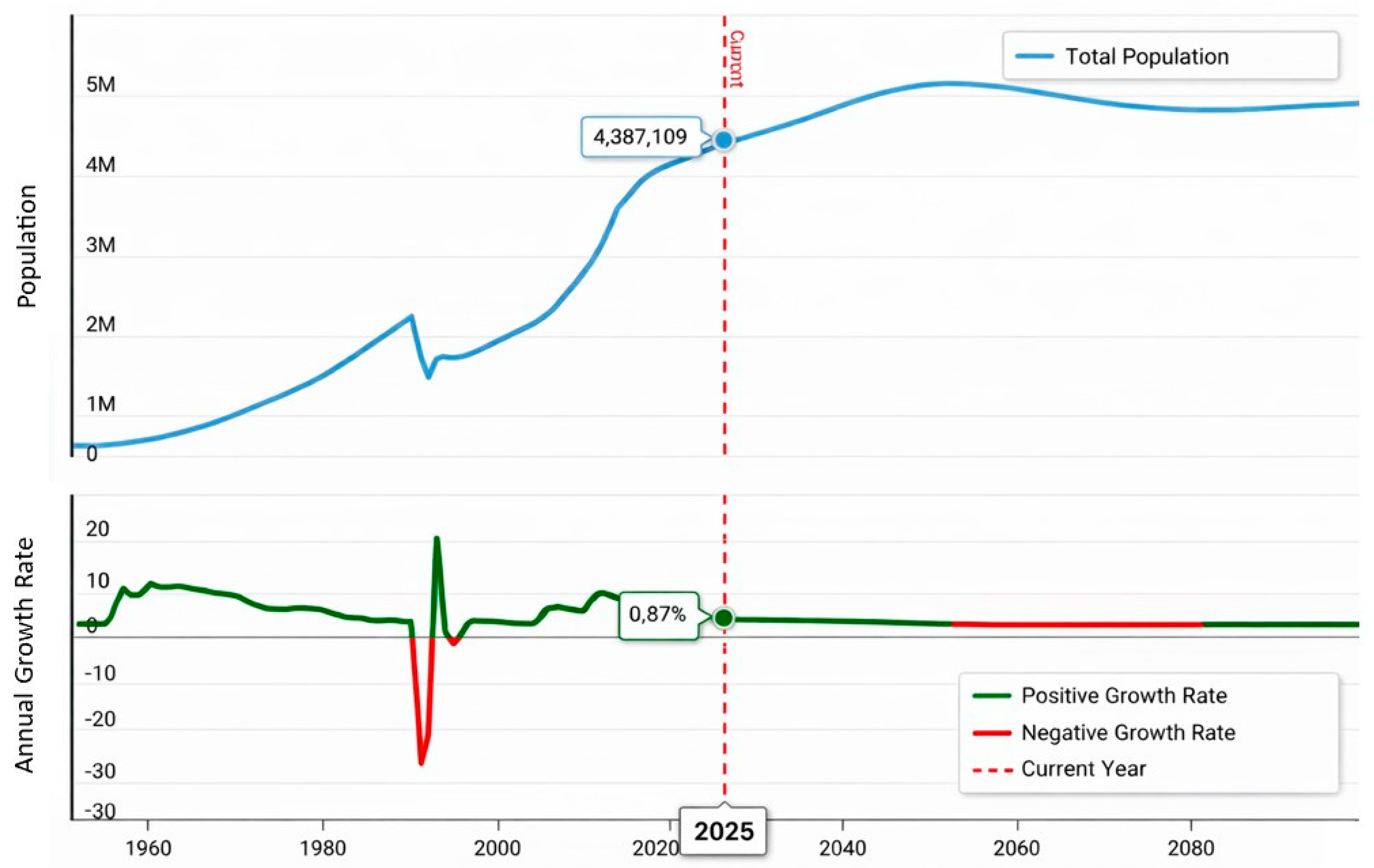
Since the discovery of oil in the 1950s, Kuwait has undergone dramatic transformations marked by accelerated economic development, demographic expansion, and urban intensification [1] This rapid urban growth, while economically beneficial, has created mounting stress on the nation’s housing infrastructure [2]. As outlined by Alghais and Algharib (2022) [1], the escalating population has significantly outpaced the capacity of available residential provisions. Between 1950 and 2025 (Figure 1), Kuwait’s population surged from approximately 153,738 to over 4.387 million [3], with Kuwaiti nationals comprising 1.560 million and non-Kuwaitis accounting for 3.359 million [4]. Over 92.1% of this population resides in urban zones, exacerbating housing demand and further straining urban infrastructure [3].
Amid this demographic surge and urban concentration, issues of housing affordability have become increasingly pronounced, necessitating a closer examination of income-rent disparities and evolving household structures [5]. Affordable housing, typically defined as costing no more than 30% of household income, remains essential for urban equity [6]. In Kuwait, rising rents and income disparities intensify affordability challenges [2]. Kuwaiti males earn an average of 1895 KD and females 1327 KD monthly [7], while rents in central areas like the Capital Governorate average 720 KD, often exceeding affordability thresholds [8]. Additionally, household sizes have declined from 6.44 in 1995 to 4.60 in 2020, reflecting socio-economic change [5]. While contemporary housing affordability challenges are largely framed through economic and demographic lenses, a deeper understanding also requires tracing the methods of construction which have shaped current construction practices used to deliver affordable housing [9]. The purpose of this study is to identify the key challenges and opportunities for scaling 3D printing in residential construction in Kuwait.
This study intentionally focuses on Kuwait for several reasons. Historically, the region is known for its significant reliance on imported construction labour [10]. Scaling up 3D printing would reduce the overreliance on overseas workers as well as workers in general. Also, the increased role of the state in offering housing facilities to citizens, necessitates large-scale, speed construction projects [11]. Focusing on Kuwait in particular provides a valuable contribution to the literature, given that the country has consistently lagged behind in technological advancement in construction, compared to its neighbours, such as Saudi Arabia [12]. It is acknowledged that the technology of 3D printing in construction continues to grow globally. Some notable projects have been realised in Europe, North America, and East Asia [13]. Such precedents necessitate the need to scale up 3D printing from regional pilot initiatives to full-scale projects for building affordable homes in Kuwait for its growing population.
Historically, Kuwait’s architecture has been shaped by vernacular methods that adapted to its arid climate and cultural context, using local materials like coral stone, Guss blocks, and palm trunks [14]. Seasonal structures, such as Bedouin tents and Al Arish shelters, reflecting a deep environmental sensitivity. Defined by Al Haroun (2015) [15] as climate- and culture-responsive, such building methods formed a core part of Kuwait’s heritage. However, late 20th-century modernisation replaced these practices with industrialised methods like reinforced concrete, which, despite standardisation benefits, led to higher costs, longer timelines, and environmental strain [9]. The shift from vernacular to modernised methods was fuelled by a host of unrelated factors, including the ballooning population, urbanisation, economic expansion, and the state’s desire to modernise its built environment [14]. Critics highlight these modern methods as inefficient and wasteful, contributing significantly to carbon emissions and construction waste [16,17].
In response to these challenges, both public sector stakeholders and private developers in Kuwait have begun exploring alternative construction technologies to meet Kuwait’s need for increased affordable housing [18]. Central to this shift is the deployment of digital technologies (DT), defined as tools, systems, and platforms that leverage data and computational innovation to enhance and modernise traditional processes [19]. DTs have already transformed multiple sectors, including education, healthcare, and increasingly construction, where they facilitate more efficient, responsive, and interconnected practices [20]. In Kuwait’s construction sector, the adoption of Lean Construction principles and Building Information Modelling (BIM) reflects a commitment to reducing inefficiencies and enhancing productivity across the project lifecycle [18].
Within this broader digital transformation, 3D printed construction has emerged as a pivotal innovation redefining how buildings are conceptualised, designed, and delivered through both on-site and off-site, automated, and highly customisable fabrication processes [21,22]. While digital transformation is commonly framed as the strategic adoption of digital tools to enhance organisational performance [23], Vial (2019) [24] refines this view, defining it as a process that fundamentally reshapes an organisation’s structure and practices through the integration of information, communication, and computing technologies. In the construction sector, 3D printing exemplifies this transformative potential: it shortens project timelines, reduces material waste, facilitates complex architectural geometries, and enhances both safety and environmental sustainability [25]. Emuwawon and Eleazer (2024) [26] further notes that 3D printing can reduce material consumption by 30–60%, significantly lowering costs while supporting eco-conscious practices. In Kuwait, the implementation of 3D printing into the housing sector has the potential to deliver affordable, scalable, and sustainable construction solutions in response to the rising demand for low-cost housing [27].
In light of Kuwait’s escalating housing demand, persistent affordability gaps, declining household sizes, and the environmental impact of conventional construction, this study examines the scalability of 3D printed construction as a potential solution for affordable housing in Kuwait.
Despite increasing global interest in 3D printing, regionally grounded research in the Gulf remains sparse, particularly in evaluating the technology’s ability to scale up to address the country’s housing crises [28]. While countries like Saudi Arabia and the UAE have launched strategic initiatives such as Saudi Arabia’s plan to build 1.5 million homes using advanced methods [29] and the UAE’s target for 25% of new buildings to be 3D printed by 2030 [30], there is limited comparative academic discourse in Kuwait [31,32]
Scalability is the key focus for this study, as it is the factor which has the most potential to address the increasingly critical need for affordable housing in Kuwait [33]. It refers to the capacity of 3D printing technologies to transition from small-scale or pilot projects to widespread residential housing applications while preserving performance, quality, and cost efficiency as usage scales up [34]. Whilst multiple dimensions contribute to the discussion, scalability is considered the factor that best aligns industry and market forces [35]. Scalability is more likely to meet affordable housing needs if 3D printing materials can be easily accessed locally [36] Also, scalability depends on national policies and the existing regulatory environment [37]. However, these associated factors provide a one-dimensional assessment of the issue [12]. Using scalability as an overarching framework enables the research to investigate the relationship between the technological performance and its ability to resolve the housing challenges affecting a country like Kuwait [35]. Whilst 3D printing has been proven to be effective in numerous local and global pilot studies the most significant shortcoming of these outcomes is that they fail to determine whether the technology can meet the demands of the country’s housing delivery needs [13]. In this regard, scalability as a focus of investigation enables the authors to evaluate whether this technology can overcome contextual issues in construction and be integrated on a large scale to resolve the affordable housing problems in Kuwait.
Kuwait’s adoption of 3D printing remains in its early stages, with limited implementation by the private sector despite substantial potential to scale up to meet current housing demands. There are examples of 3D-printed buildings in Kuwait, such as a 3D-printed residential villa located at Almutllaa [12] and infrastructure components such as water tanks [38]. As part of its ambitious Vision 2035 agenda, Kuwait is committed to accelerating large-scale urban development initiatives, particularly the establishment of advanced, integrated housing cities [4]. Two national programs have been introduced to prioritise resilient infrastructure and the creation of smart, eco-friendly urban environments grounded in sustainable technologies and green building principles [4]. These strategic frameworks present a timely opportunity to explore how 3D printing can support these initiatives by providing a viable, affordable, and sustainable construction solution for Kuwait.
To undertake this study a Preferred Reporting Items for Systematic Reviews and Meta-Analyses (PRISMA) framework is adopted to guide the literature review process [39]. It enables a rigorous and methodical selection, screening, and synthesis of the relevant literature on the scalability of 3D printing for affordable housing in Kuwait. This study seeks to identify the challenges and solutions for advancing the scalability of affordable housing in Kuwait using 3D printed construction.

2. Methodology

The literature review adopted a coherent, transparent, and replicable methodology to ensure rigorous data collection and synthesis across relevant studies [40]. Studies were identified which directly or indirectly related to residential 3D printed housing in the Gulf context and investigated key scalability factors. Studies of non-residential typologies or lacking a scalability focus were excluded since the scope of this study concerns affordable housing.
The PRISMA framework is a widely used methodology in conducting a systematic review and meta-analysis of the literature [41]. PRISMA utilises 27 mandatory elements summarised in Appendix A and arranged in distinct phases: title, abstract, introduction, methods, results, discussion, and funding [42].
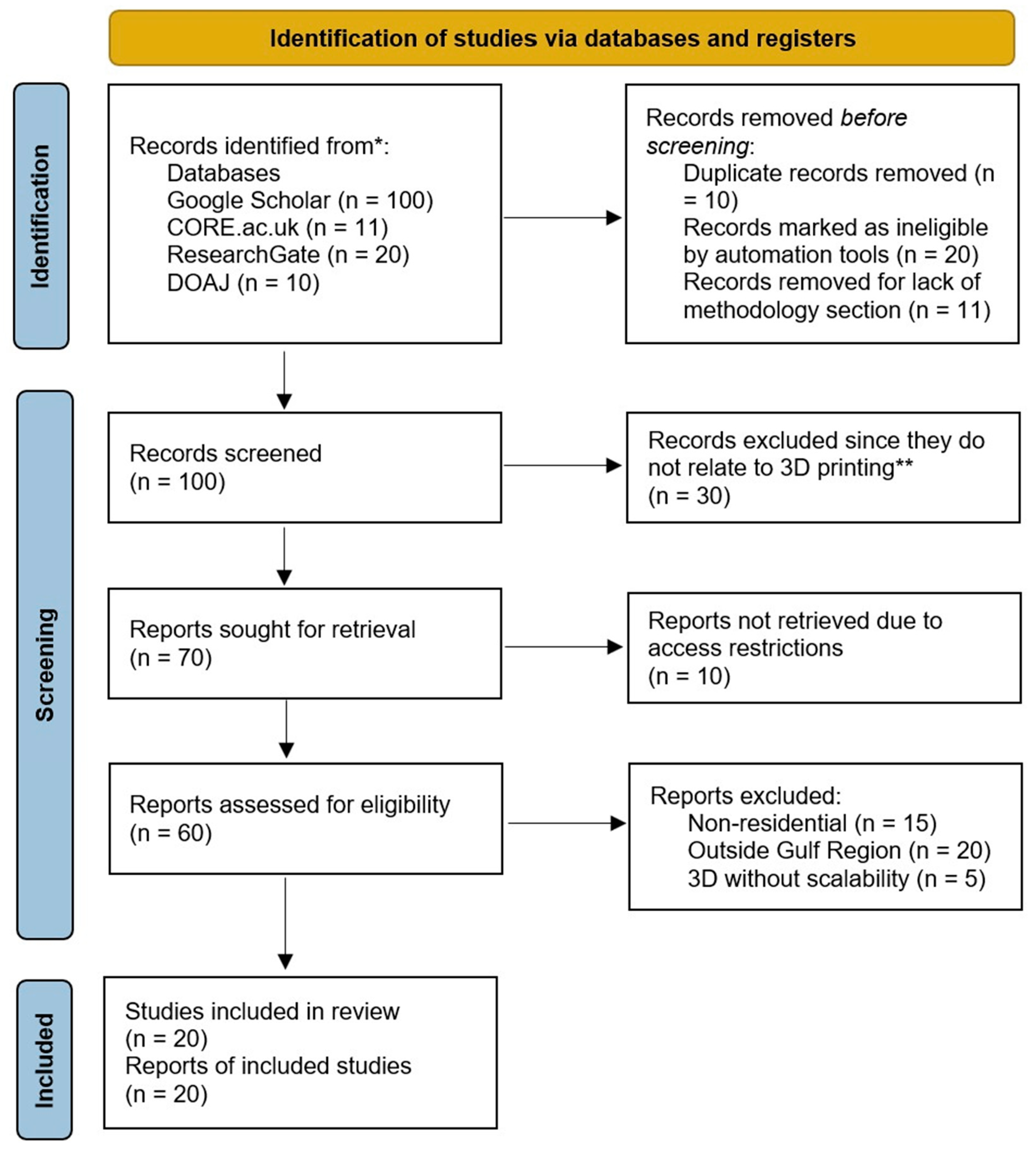
The first step involved identifying relevant studies through a comprehensive search across four key databases, but not limited to: Google Scholar (100), CORE.ac.uk (11), ResearchGate (20), and the Directory of Open Access Journals (DOAJ) (10). Supplementary database sources included Scopus, Web of Science, and IEEE Explore. However, the topic of 3D printing, particularly with regard to scalability in the Gulf region and in particular Kuwait, is still emerging. Hence, limiting the search to engineering databases may have restricted the number of sources as the most up-to-date research may not yet appear in such databases. For example, the ‘Systematic Review of Construction Project Delays in Kuwait’ [43], incorporated non-engineering resources in the search strategy, such as Science Direct, Google Scholar, and Research Gate. Similarly, ‘3D Printing in Facilities Management: A Systematic Review Toward Smart and Sustainable Building Operations [44], the databases used were Google Scholar, Science Direct, MDPI, and ProQuest. Each database was selected for its ability to provide access to a broad range of scholarly articles, relating to 3D printed construction in the Gulf region.
This study focused primarily on sources published in the last 6 years to ensure currency; however, seminal research is also included to ensure theoretical rigour. The search strategy was constructed using a combination of Boolean search terms, to capture studies that addressed 3D printing technologies, scalability, and residential buildings. The string search was as follows: (“3D printing” OR “additive manufacturing”) AND (“residential building”) AND (“Gulf region” OR “GCC” OR “UAE” OR “Saudi Arabia” OR “Kuwait” OR “Qatar” OR “Bahrain” OR “Oman”) AND (“scalability” OR “scaling up” OR “mass production” OR “large-scale construction”). The search yielded a total of 141 records.
Following identification of records, duplicate studies were filtered out. This was carried out using the web-based screening tool, ‘Rayyan’ (rayyan.ai), which resulted in 10 duplicate records being identified and removed. Also, 20 records were declared ineligible due to them not being peer-reviewed. Other reasons for omission relate to 11 records which were removed due to metadata concerns.
There were 100 records remaining which were subject to further screening. This stage entailed the evaluation of titles and abstracts of the studies to assess their relevance to the specific research. Amongst the 100 screened studies, 30 were excluded. Firstly, some of these studies were too general and were related generally to 3D printing in construction instead of focusing on scalability in residential buildings. Furthermore, a number of the studies focused on topics that were not directly associated with the scalability of 3D printing in the Gulf region but were related to construction technologies. Other studies proved to be beyond the geographic scope of this review as they dealt with areas outside the Gulf. In addition, a systematic filtering of the 30 excluded studies was performed to saturation since they are not directly related to the central theme of this review.
Following this initial stage, the full-text version of the 70 studies was retrieved to be examined more closely. This extraction procedure was necessary since it supplied the complete texts required for a thorough eligibility analysis. There were, however, 10 studies whose access was restricted, thus failing to access the articles fully, or whose references were incomplete. Such reports were not included in the review procedure, since reviewing the content thoroughly was not feasible. Thus, only the studies that can be retrieved in full were considered for the next round of eligibility evaluation.
The remaining 60 reports were screened to determine their eligibility. Some studies were not considered at this point due to specific reasons that directly refer to this review’s focus. Of the 60 analysed studies, 15 were discarded because they related to non-residential construction. 20 studies were removed due to their being located outside the Gulf region. and a further five papers were removed since they did not focus on scalability factors in 3D printed construction.
At the conclusion of this screening, 20 peer-reviewed studies fulfilled all the inclusion criteria negating risk of bias through evaluation of sources using the Newcastle-Ottawa Scale (NOS) method. The resultant studies describe the range of scalability challenges, including their solutions. The resultant PRISMA framework is depicted in Figure 2 below.
Further evaluation of the literature evidenced that the research methodologies used to explore the scalability of 3D printing in residential construction in the Gulf region varied but were generally effective in addressing the research questions. For example, Pawar (2024) [42] applied a case study approach by investigating the issue of introducing 3D printing into construction projects in the Gulf Cooperation Council (GCC) to reveal issues around materials and technological limitations. The case study approach is especially applicable because it provides practical information about scalability. Another study by Abdul-Kareem (2025) [45] compared the feasibility of 3D printing technology in the UAE residential projects, using a mixed methods approach of qualitative interviews with experts and quantitative cost information to provide insights into economic barriers to scaling.
These methodological approaches used are robust in that they provide specific, region-based evidence of how 3D printing scalability can be observed. Al-Raqeb and Ghaffar (2024) [12] conducted qualitative analysis to evaluate the stakeholders’ opinions regarding the possibility of 3D printing integration into the waste management processes in Kuwait, emphasizing associated regulatory and environmental issues. This study is significant in that it addressed the policy and legal barriers that affect scalability, although it is considered that more quantitative data on long-term scalability would strengthen the findings. On the other hand, some studies, such as Ibrahim et al. (2022) [46] and Alqaryouti et al. (2024) [47], although methodologically sound, focused primarily on technological aspects without addressing the full spectrum of regulatory or economic barriers, suggesting a gap in the evidence. Overall, the total body of evidence is comprehensive in terms of technological and material challenges but lacks sufficient depth in regulatory and policy-oriented research, determining a gap for future studies in these areas.
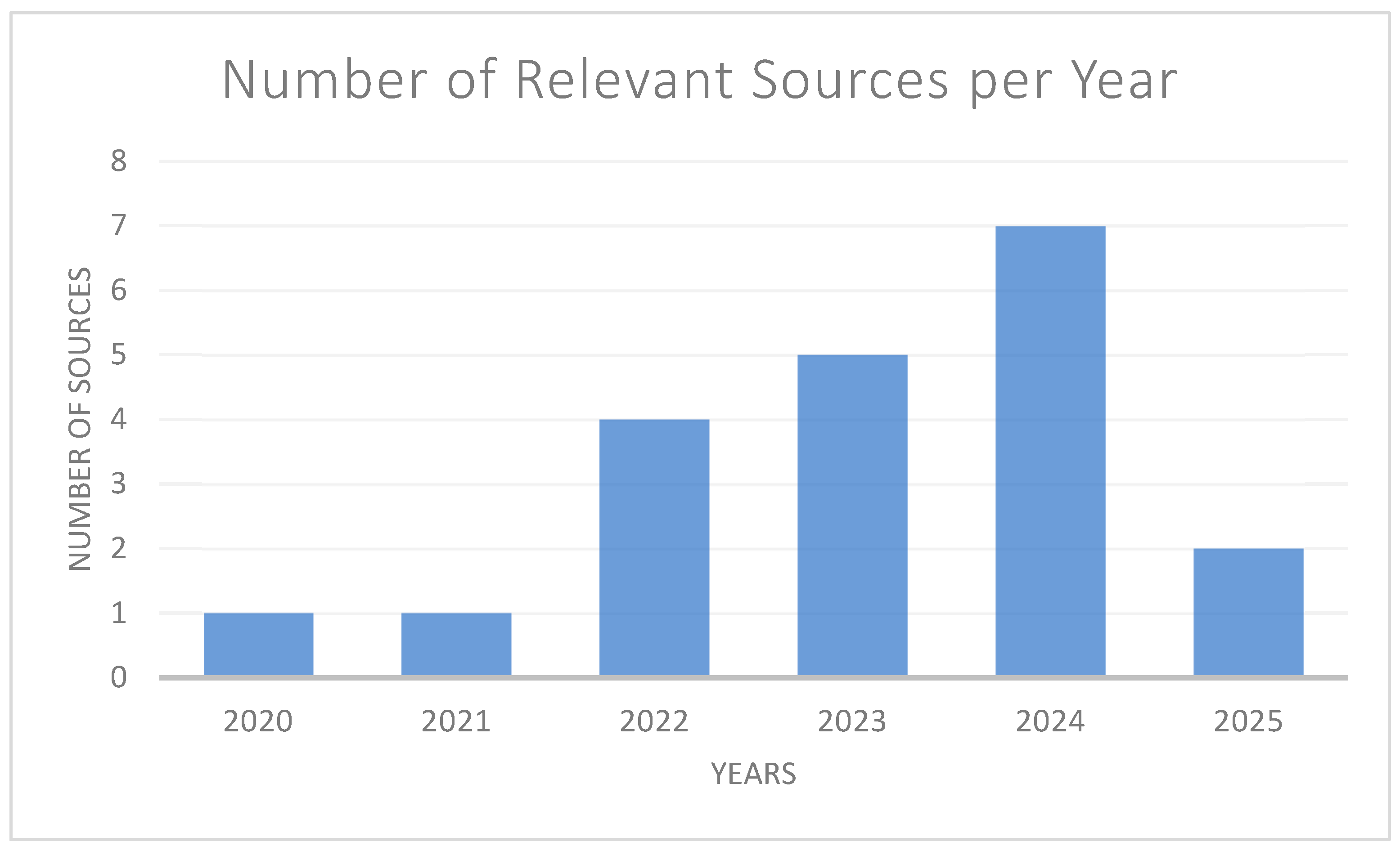
The bar chart in Figure 3 illustrates the distribution of relevant sources across different years. The year 2024 stands out as the most notable year, with the highest number of related studies indicating a peak in research and development regarding 3D printing in residential construction in the Gulf. The years 2023 and 2022 exhibit moderate representation, while 2021 and 2020 show relatively lower activity in this area. This trend highlights a growing interest in the subject, particularly in recent years, with 2 studies already published in 2025.
Following a Boolean search of the literature, development of a PRISMA framework, analysis of the methodological approaches of studies concerning scalability; the resulting outputs were subject to NVivo analysis. This facilitated a structured and systematic approach to identifying, coding, and analysing themes from the eligible studies.
The first step involved organizing the data from the 20 studies into a structured dataset. Key data, such as study contexts, scalability challenges, and proposed solutions, was systematically extracted and organised into predefined categories. NVivo’s features were then leveraged to further analyse recurring patterns [41]. Key nodes were formed, across key scalability themes, namely (1) technology, (2) financial and economic (3) regulations and policy (4) environment and energy (5) data and security, enabling the references to these key themes to be traced across the studies. All eligible studies were evaluated and coded against the identified nodes of enquiry.
Table 1 provides a synthesis of the 20 eligible studies mapping key scalability challenges, solutions and associated findings.
The literature reviewed in this study originates from the Gulf region, specifically Kuwait, the UAE, and Saudi Arabia. Of these, ten sources are directly associated with the UAE, with one that focuses specifically on Dubai. Seven sources examine 3D printing within the context of Saudi Arabia, while one source specifically addresses Kuwait. This further highlights the scant range of studies undertaken in relation to Kuwait and underscores the need for this study to address this gap. All articles were systematically assessed for methodological rigor and the credibility of their conclusions using the Newcastle–Ottawa Scale (NOS) Quality Appraisal Table, as presented in Table 2 [61].

3. Results and Findings

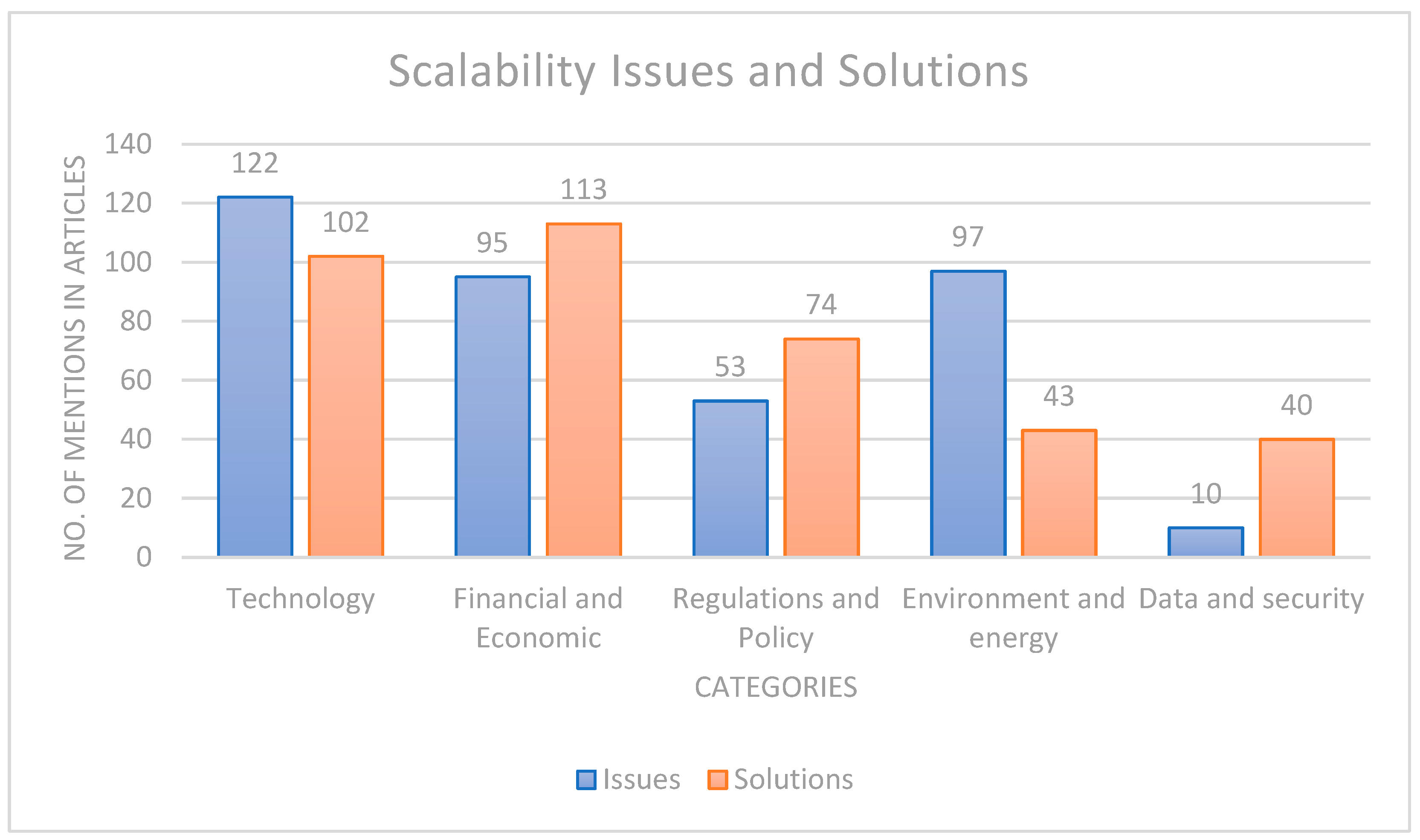
Twenty studies met the inclusion criteria, offering insights into both challenges and solutions affecting scalability of 3D printed construction for housing in Kuwait. The sampled articles identified multiple factors affecting scalability namely material availability (20 studies), production output (12 studies), adaptive technologies (9 studies), scalability (40 studies) scaling up (33 studies), mass production (14 studies), and large-scale construction delivery (13 studies). The resultant analysis of the studies yielded five categories of challenges and solutions relating to scalability: technological, environmental, financial, regulatory, and data-related challenges, alongside corresponding solutions.
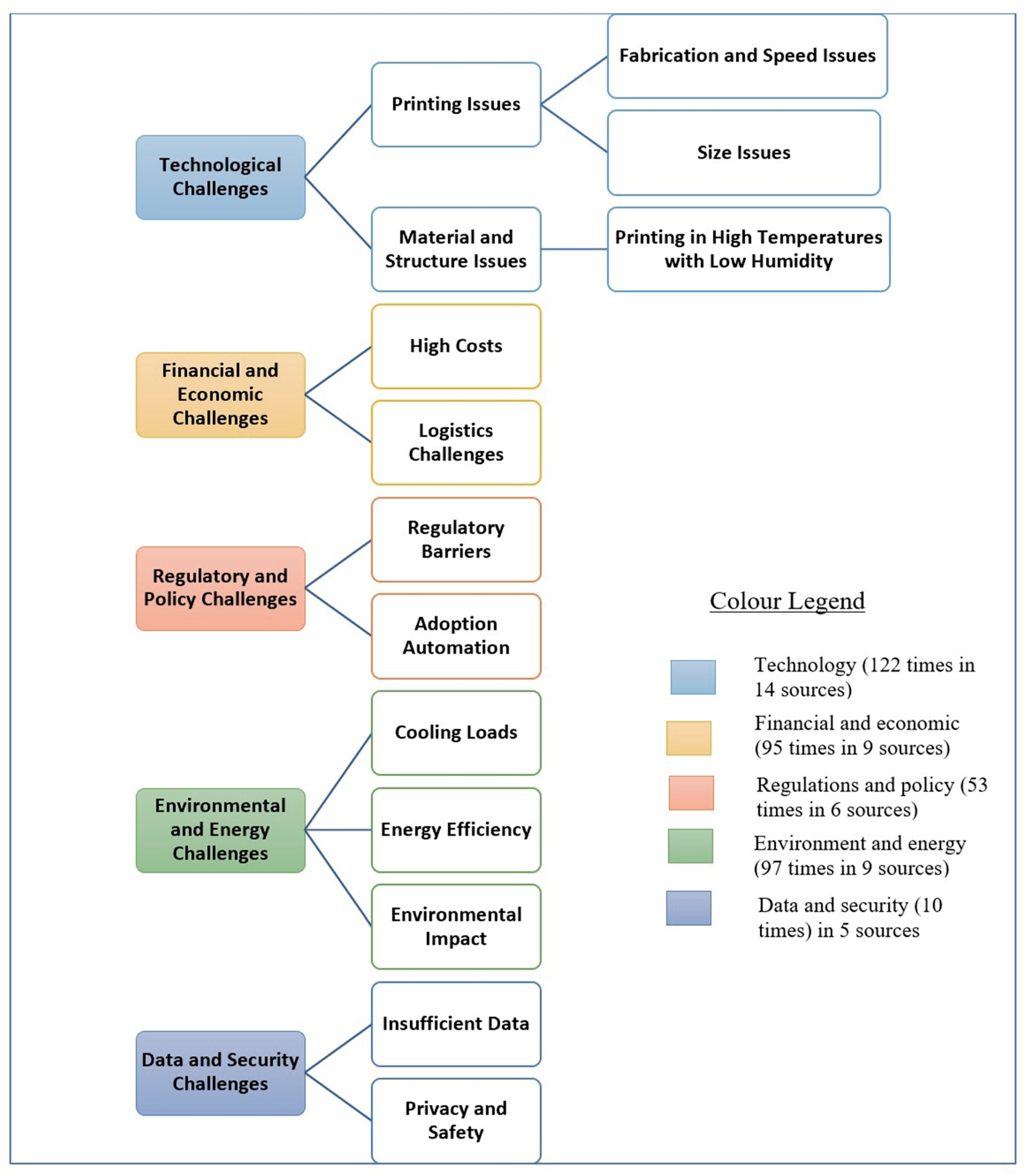
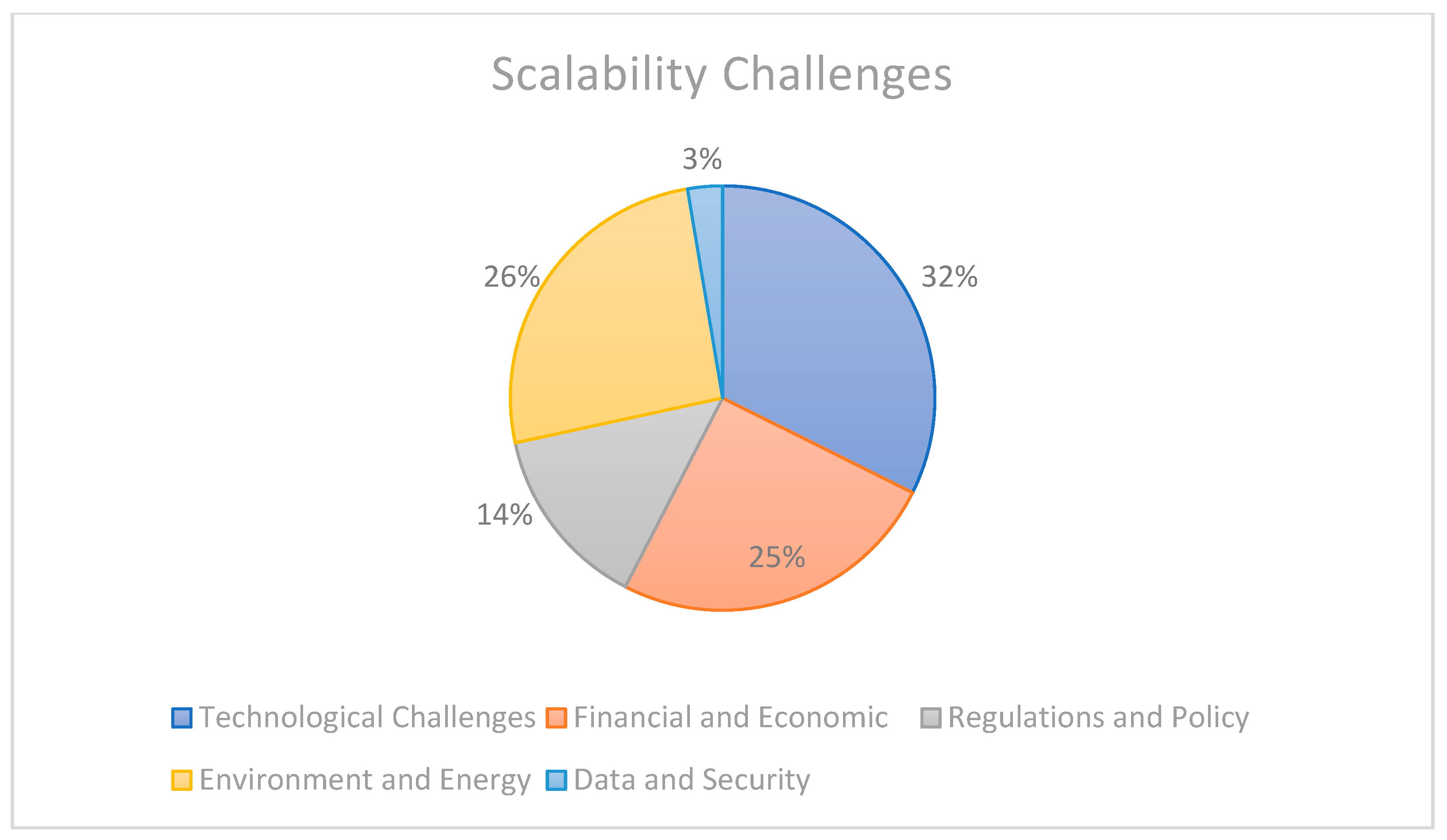
Figure 4 illustrates the distribution count of the key categories across the sampled articles and Figure 5 presents the scalability challenges identified from the NVIVO analysis. Figure 6 shows the occurrence of scalability challenges across the sampled articles.

3.1. Scalability Challenges

The systematic review of twenty eligible studies highlights the complex and multifaceted barriers to scaling 3D printed construction for affordable housing in Kuwait. These recurring themes converge into five overarching categories of challenges: technological, environmental, financial, regulatory, and data-related. Together, they illustrate the interdependent nature of scalability, where limitations in materials, energy use, costs, policy frameworks, and digital integration collectively constrain the widespread adoption of 3D printing in residential construction. Addressing these challenges requires not only technical innovation but also coordinated economic, regulatory, and sustainability strategies tailored to Kuwait’s unique context.
Together, these categories provide a structured lens through which the barriers to scaling 3D printed construction can be examined. The following sections explore each challenge in turn—technological, financial, environmental, regulatory, and data-related—highlighting their specific implications for Kuwait’s housing sector and the potential solutions identified in the literature.

3.2. Technological Challenges

Technological barriers represent the most significant challenge identified (32%). The literature consistently highlights the tension between speed and precision in printing large structures. The need to balance rapid production with structural integrity is particularly acute in residential housing, where safety and durability are non-negotiable [47]. Environmental conditions in Kuwait and the wider Gulf exacerbate these challenges. High temperatures, low humidity, and airborne dust influence material behaviour and printer performance, often leading to inconsistencies in fabrication [54]. Studies emphasise that conventional cement mixtures are poorly suited to such climates, necessitating innovations such as geopolymer concrete and advanced composites. Additional challenges stem from issues related to cost-competitiveness, regulatory compliance, and the adoption rates of these technologies in residential projects [37]. Companies are also reluctant to take on fully automated systems for construction processes as they are worried about reliability and demand for labour skills [54]. The literature underscores the paradox of 3D printing: while faster than traditional methods in some contexts, it struggles to meet the demands of large-scale residential construction.
Material logistics and supply chain limitations further compound these technological barriers. Supplying suitable 3D printing materials for large-scale construction in Kuwait is challenging, with studies confirming that sourcing raw materials and maintaining consistency under extreme environmental conditions is a persistent obstacle [47,50]. Importing specialised materials is costly and restricts adoption, while local availability remains limited [48]. The Gulf’s climate characterised by high heat and low humidity, intensifies these material challenges, often undermining durability and fabrication quality [50]. Moreover, despite advances in 3D printing technology, limitations in speed, fabrication accuracy, and scalability remain unresolved [60]. Residential projects demand precise tolerances for safety and liveability, yet current systems struggle to consistently deliver this level of accuracy [49]. Taken together, these issues highlight the technological paradox of 3D printing in Kuwait: while promising faster and more sustainable construction, the technology faces significant barriers in scaling up to meet the demands of affordable housing delivery. Without innovations in material science, supply chain integration, and automation reliability, the scalability of 3D printed construction in Kuwait will remain constrained.

3.3. Environmental and Energy Challenges

Environmental and energy-related concerns account for 26% of the findings. The sustainability of 3D printing is questioned due to high energy consumption, waste generation, and carbon-intensive material use. The volatility of oil prices further complicates financial planning, undermining government and developer confidence in long-term investment [46]. Yet, significant strides have been made in developing energy-efficient materials and sustainable printing methods [36]. Beyond the immediate concerns of energy consumption, scalability of 3D printing in Kuwait is also constrained by the region’s dependence on fossil fuels, which heightens the carbon footprint of construction projects. The reliance on oil-based energy sources means that fluctuations in global markets directly affect the affordability and sustainability of 3D printed housing [51]. Moreover, the production of conventional cement mixtures remains carbon-intensive, contributing significantly to greenhouse gas emissions. To address these challenges, researchers highlight the potential of integrating renewable energy systems, particularly solar power, into 3D printing operations [42]. Coupled with parametric shading structures and smart energy management systems, such approaches could reduce operational energy demand while aligning with Kuwait’s Vision 2035 sustainability agenda. Waste management is another critical issue, as excess material and failed prints generate construction debris. Strategies such as recycling aggregates and reusing printing by-products are increasingly seen as viable pathways to reduce waste and improve resource efficiency [47]. Collectively, these measures underscore the importance of embedding environmental and energy solutions into broader scalability frameworks.

3.4. Financial and Economic Challenges

Financial barriers account for 25% of scalability challenges. High capital costs for large-scale printers, coupled with the expense of specialised materials, remain prohibitive [47]. Cost has been a factor that has deterred this technology from being adopted widely in the United Arab Emirates [46]. Kuwait’s reliance on imported materials exacerbates these issues, introducing logistical vulnerabilities such as shipping delays, trade restrictions, and inflated costs [62]. Moreover, Al-Raqeb and Ghaffar (2024) [12] observed that repair and maintenance costs for 3D printing machinery add another layer of economic burden. Large-scale printers capable of constructing entire buildings can exceed 1 million AED, depending on their specifications and operational scope [42]. This level of expenditure is a significant deterrent for developers, especially in Kuwait, where economic volatility and fluctuating oil prices directly influence infrastructure spending priorities [51]. Beyond acquisition costs, ongoing expenses such as repair and maintenance of machinery further strain financial feasibility [12]. These cumulative costs limit the willingness of both public and private stakeholders to commit to long-term investment in 3D printing technologies. Taken together, these financial and economic challenges underscore the fragility of scalability in Kuwait’s context.

3.5. Regulatory and Policy Challenges

Regulatory and policy challenges, though less dominant (14%), are identified as critical. The absence of clear frameworks for 3D printed housing creates uncertainty around compliance, safety, and intellectual property. Existing codes remain rooted in conventional construction, leaving developers hesitant to adopt new methods [12,36,42]. However comparative analysis reveals divergence across the Gulf. The UAE has introduced initiatives such as the Dubai 3D Printing Strategy, while Saudi Arabia’s Vision 2030 emphasises technological integration. Kuwait, by contrast, has lagged behind, reflecting institutional conservatism and limited policy support. Vision 2035 signals intent for reform, relaxing some of the hurdles that have traditionally hampered innovation in the construction sector, but practical implementation remains uncertain [63]. The lack of clear regulatory pathways for approvals, safety standards, and intellectual property rights continues to create bureaucratic hurdles that slow adoption [64]. Developers remain cautious, as existing codes and standards are still tailored to conventional construction methods, leaving little room for experimentation with new technologies. This conservatism has limited Kuwait’s ability to match the pace of its Gulf neighbours in integrating 3D printing into mainstream construction. The literature underscores that regulatory clarity is essential for scalability. Without supportive policies, even technologically feasible solutions cannot achieve widespread adoption.

3.6. Data and Security Challenges

Data and security issues comprise 3% of the findings. As 3D printing increasingly relies on digital models and cloud-based systems, concerns about data accuracy, cybersecurity, and intellectual property theft become more pronounced [49]. Integrating advanced data protection systems and developing cloud-based management platforms for 3D printing projects will be key to alleviating these concerns and ensuring the smooth operation of digital construction projects [42]. However, their integration into Gulf construction contexts remains minimal. The literature suggests that addressing these concerns is vital to ensure trust and smooth operation in digital construction projects.

3.7. Scalability Solutions

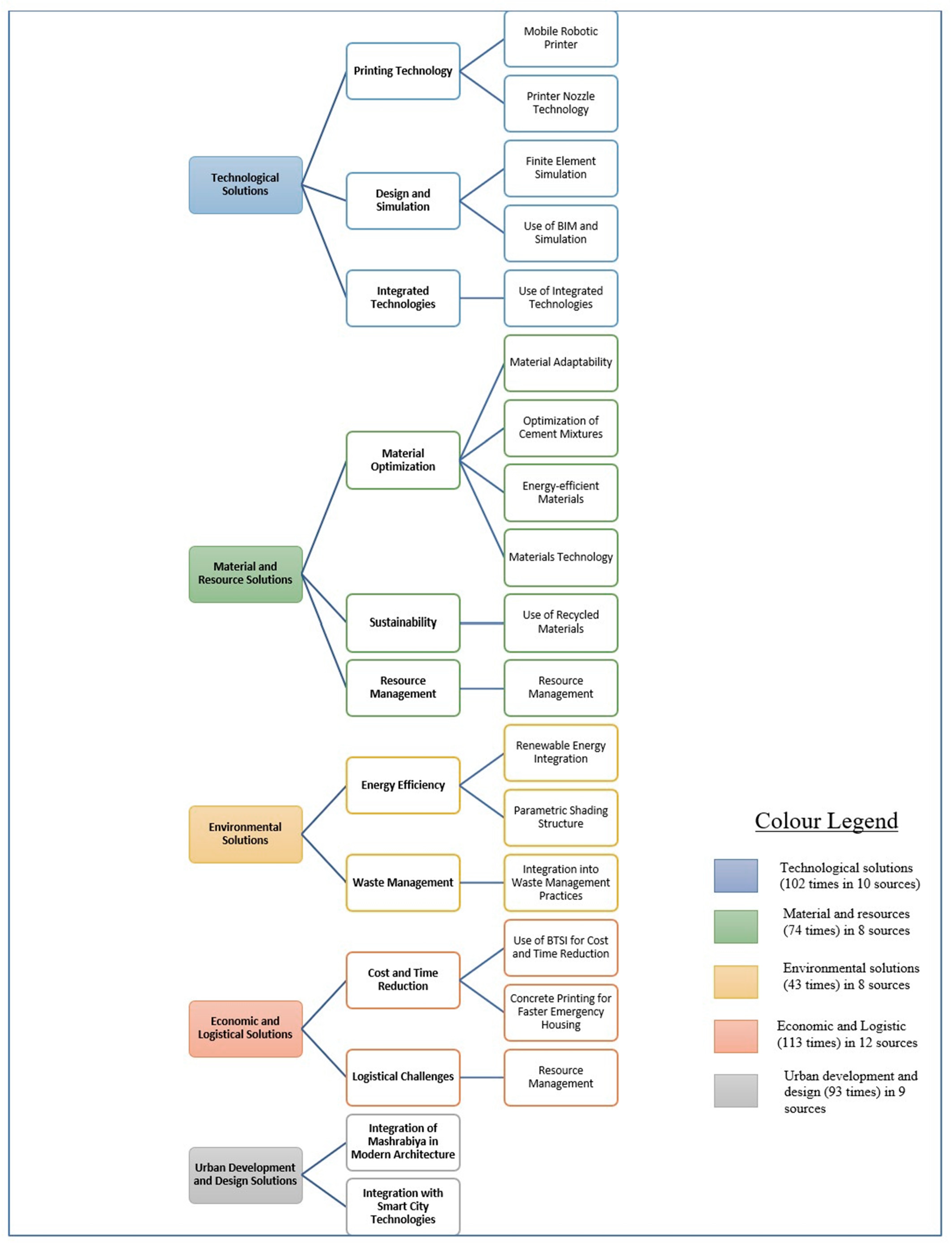
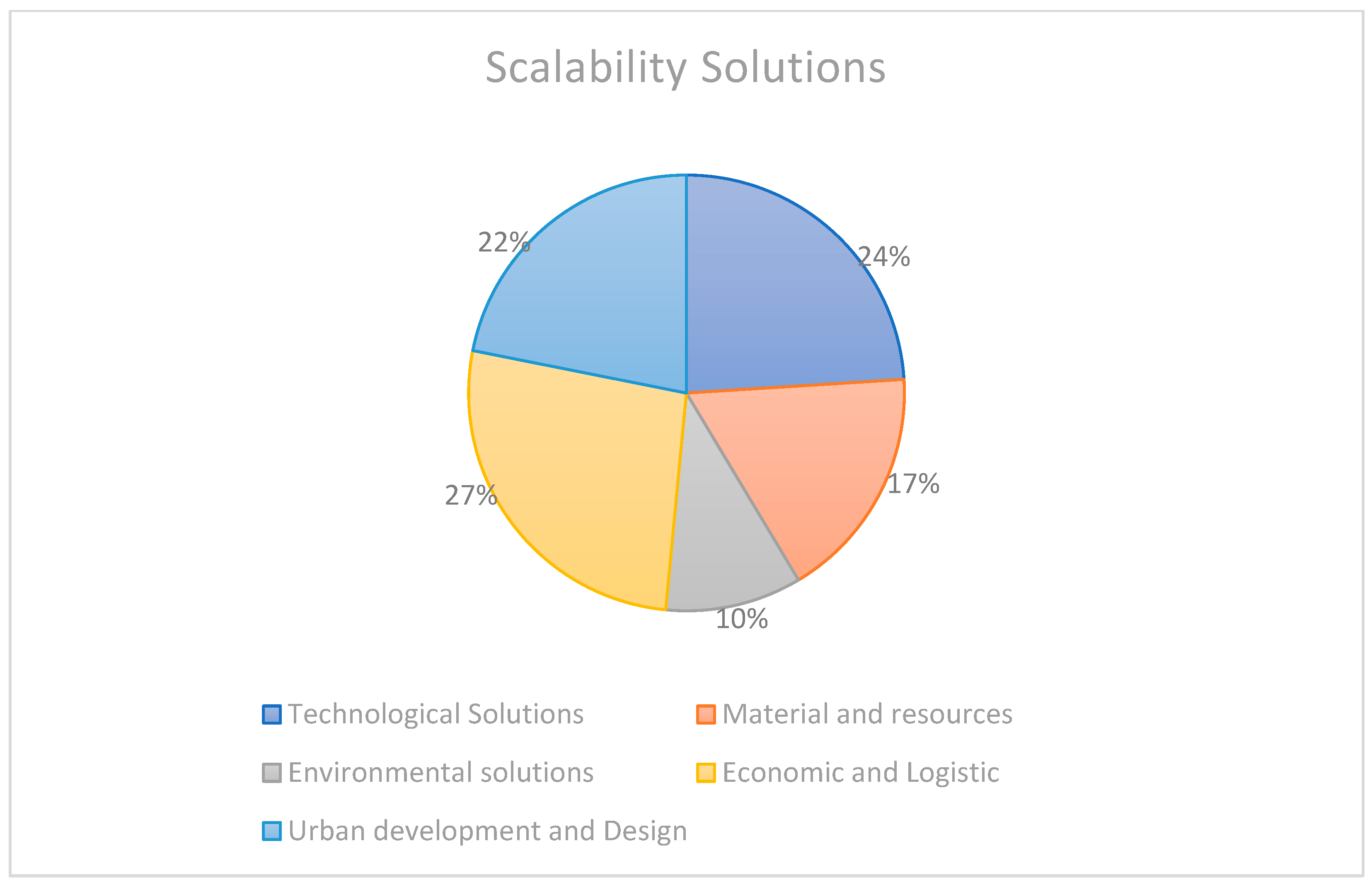
The literature identifies a multidimensional set of solutions to address scalability challenges in 3D printed construction for affordable housing in Kuwait. Economic and logistical strategies (27%) dominate, reflecting the centrality of cost and operational efficiency. Technological innovations (24%) and urban design solutions (22%) provide complementary pathways, while material optimisation (17%) and environmental strategies (10%) play supporting roles. Collectively, these solutions highlight the need for integrated approaches that balance cost, technology, sustainability, and cultural relevance. Figure 7 presents the scalability challenges identified from the NVIVO analysis. Figure 8 shows the occurrence of scalability challenges across the sampled articles.

3.8. Economic and Logistical Solutions

Economic and logistical solutions represent the largest share of proposed interventions (27%), underscoring the importance of cost reduction and operational efficiency. High capital costs for large-scale printers and the expense of specialised materials remain prohibitive [47]. Kuwait’s reliance on imported materials exacerbates these issues, introducing vulnerabilities such as shipping delays, trade restrictions, and inflated costs [62]. Moreover, the volatility of oil prices complicates financial planning, undermining confidence in long-term investment [46].
Proposed solutions include Building Technology and Systems Integration (BTSI), which streamlines construction processes and reduces delays [48]. Public-private partnerships, cost-sharing mechanisms, and localisation of supply chains are also recommended [42]. Collaborative efforts among government bodies, construction companies, and technology providers are particularly promising [53]. By combining resources, partners can reduce costs and make 3D printing more affordable for developers and builders [12]. However, empirical evidence of these strategies in Kuwait remains limited. The literature stresses that without financial innovation, technological advances alone cannot achieve scalability.

3.9. Technological Innovations

Technological solutions account for 24% of proposed strategies and focus on advancing printing systems to improve speed, precision, and reliability. Current limitations include balancing rapid production with structural integrity, particularly in residential housing where safety and durability are paramount [47]. Environmental conditions in Kuwait, high temperatures, low humidity, and airborne dust, further complicate fabrication, often leading to inconsistencies [54].
Proposed technological solutions include mobile robotic printers, which mitigate workforce constraints by reducing labour costs and increasing efficiency [49]. Advances in printer nozzle systems enhance speed and material efficiency, directly addressing scalability concerns [49]. Finite element modelling and simulation technologies are critical for anticipating structural behaviour, simulating stress, strain, and thermal responses to ensure safety and durability before construction [55,59]. Integration with Building Information Modelling (BIM) ensures projects remain within budget and design requirements while supporting efficient planning and execution [55]. Collectively, these digital innovations could significantly enhance the feasibility of large-scale implementation, rendering 3D printing a more attractive proposition for residential housing projects in Kuwait and the wider Gulf [57].

3.10. Urban Design Solutions

Urban design strategies (22%) emphasise the integration of cultural heritage with modern technologies. Kuwait’s architectural traditions, such as the Mashrabiya, offer climate-responsive design elements that can be incorporated into 3D printed housing. Blending traditional and contemporary designs ensures cultural relevance while enhancing environmental performance [47,50]. In addition, integrating smart city technologies with 3D printing can enhance building systems and urban planning. Smart sensors, IoT devices for energy control, and automated waste systems can be embedded into printed structures, aligning construction innovation with Kuwait’s Vision 2035 agenda for sustainable urban development [54,63]. Urban design solutions thus provide a pathway to scalability by ensuring that 3D printed housing is not only affordable but also culturally appropriate and environmentally responsive.

3.11. Material and Resource Optimisation

Material and resource solutions (17%) focus on improving the durability, efficiency, and sustainability of construction inputs. Conventional cement mixtures are poorly suited to Kuwait’s climate, necessitating innovations such as geopolymer concrete and advanced composites [36,47]. Firoozi & Firoozi (2024) [56] highlights material adaptability as a solution to tackling durability and usability challenges in harsh climates, while Di Salvo (2024) [54] stresses the need for energy-efficient materials that provide insulation against high temperatures. Optimisation of cement mixtures and integration of recycled aggregates can reduce costs and environmental impact, making 3D printing more feasible in the region [50]. Responding to primary concerns of cost, durability, and energy efficiency, both material and technological innovations are essential. Advances in nozzle-level printing efficiency Shema et al. (2022) [49] further support scalability by improving speed and resource utilisation. Collectively, these strategies ensure that 3D printed housing can withstand Kuwait’s climate while remaining affordable and sustainable.

3.12. Environmental Solutions

Environmental solutions, though representing only 10% of proposed strategies, play a vital supporting role. The adoption of renewable energy sources, particularly solar power, is considered a viable pathway to reduce the carbon footprint of 3D printed housing [42]. Parametric shading structures are highlighted as notable innovations that lower energy use through intelligent design strategies [36]. These solutions align with Kuwait’s Vision 2035 sustainability agenda and broader Gulf initiatives on green building. The literature suggests that environmental solutions must be embedded within broader urban planning frameworks. For example, integrating smart city technologies with 3D printing could enhance energy efficiency and waste management, linking construction innovation to sustainability agendas. Significant strides have already been made in developing energy-efficient materials and sustainable printing methods, but their application in Kuwait remains limited. Embedding environmental strategies into scalability solutions ensures that 3D printed housing contributes to both affordability and sustainability.

4. Discussion

4.1. Kuwait-Specific Scalability Landscape

Kuwait’s scalability landscape is shaped by climate, supply chains, and regulation. Extreme heat and low humidity compromise material durability and printer performance, necessitating climate-adapted solutions. Supply chain dependency on imported materials and labour creates vulnerabilities in cost and reliability. Regulatory frameworks remain underdeveloped, with complex permitting processes and limited integration of digital construction methods. By aligning these factors with the thematic nodes identified in the NVivo analysis, this study provides a more targeted understanding of Kuwait’s scalability landscape. Compared to the UAE and Saudi Arabia, Kuwait’s adoption of 3D printing has been slower, reflecting both institutional conservatism and limited policy support. Vision 2035 signals intent for reform, but practical implementation remains uncertain. This divergence underscores the importance of context-specific research in that Kuwait cannot replicate models from its neighbours but must address its unique climatic, economic, and institutional constraints.
Collaborative industry stakeholder efforts combined with regulatory clarity, and digital innovations are critical enablers for Kuwait to develop its capacity to scale up 3D printed construction. Collaborative governance mechanisms are equally critical [12,53]. Public-private partnerships can mitigate financial burdens, while regulatory reforms provide clarity and confidence for developers. Collectively, the solutions identified in this study highlight the need for integrated approaches that balance cost, technology, sustainability, and cultural relevance. For Kuwait, achieving scalability will require not only technological innovation but also financial reform, regulatory support, and cultural sensitivity, ensuring that 3D printed housing can deliver affordable, resilient, and sustainable solutions for its growing population.

4.2. A Way Ahead

A phased, context-sensitive approach is essential to building capacity for Kuwait’s affordable housing sector. Establishing a regional innovation hub would consolidate expertise across government, academia, and industry, fostering material innovation and regulatory alignment [53]. Pilot projects in small neighbourhoods provide low-risk opportunities to test technologies under real-world conditions, generating evidence to inform policy and investment decisions [48,65,66]. A staged approach could enable government bodies to make more confident decisions about feasibility and cost-effectiveness, echoing broader calls for stepwise adoption of digital construction innovations. Also, gradual implementation provides institutions space to refine regulatory procedures and build workforce skills progressively, which lowers systemic pressures during the transition [67,68]. Training programs are vital to address labour shortages and build technical capacity. Public-private partnerships, supported by government grants, could fund workforce development while reducing costs for developers [12].
Critically, Kuwait must move beyond generic industry recommendations and invest in primary research tailored to its environmental and institutional context. Only one study directly addresses Kuwait, highlighting a significant gap in the literature. Addressing this gap is not merely academic but essential for practical scalability.

5. Conclusions and Recommendations

Scalability remains the defining challenge for 3D printed housing in Kuwait, shaped by technological, financial, regulatory, environmental, and digital factors. While solutions exist, their effectiveness depends on contextual adaptation. This paper contributes originality by integrating the regional literature with Kuwait-specific analysis, highlighting the country’s unique vulnerabilities and opportunities. While this study does not present new empirical findings, it identifies critical gaps, particularly in regulatory and policy-oriented research, and proposes future directions for multidisciplinary investigation. These include quantitative assessments of material performance in Kuwait’s climate, cost–benefit analyses of policy reforms, and pilot studies integrating 3D printing with local supply chains.
Unlike the UAE and Saudi Arabia, Kuwait’s slower adoption reflects not only technological barriers but also institutional conservatism and regulatory inertia. Addressing these requires a multidimensional strategy including:
  • Policy alignment: Developing building codes and regulatory frameworks specific to 3D printing.
  • Material innovation: Investing in climate-adapted, energy-efficient materials through regional research hubs.
  • Collaborative governance: Fostering public-private partnerships to reduce costs and share risks.
  • Digital integration: Expanding BIM, simulation, and IoT applications to enhance efficiency and safety.
  • Workforce development: Implementing training programs to build technical capacity and reduce labour shortages.
  • Pilot projects: Introducing staged implementation to generate evidence and refine regulatory processes.
Ultimately, scalability in Kuwait depends on the resolve of stakeholders to overcome technical and material barriers while fostering supportive institutional ecosystems. With government commitment, collaborative innovation, and targeted research, 3D printing can transition from experimental initiatives to a viable solution for Kuwait’s housing crisis.

Author Contributions

Conceptualisation, F.A.A., M.M. and R.E.; Methodology, F.A.A., M.M. and R.E.; Validation, F.A.A.; Formal analysis, F.A.A.; Investigation, F.A.A.; Resources, F.A.A., M.M. and R.E.; Data curation, F.A.A., M.M. and R.E.; Writing—original draft preparation, F.A.A.; Writing—review and editing, M.M. and R.E.; Visualisation, F.A.A.; Supervision, M.M. and R.E.; Project administration, F.A.A., M.M. and R.E.; All authors have read and agreed to the published version of the manuscript.

Funding

This research received no external funding.

Data Availability Statement

The data underpinning this study are exclusively derived from and can be found in the sources listed in the Reference Section of this manuscript.

Conflicts of Interest

The authors declare no conflicts of interest.

Abbreviations

The following abbreviations are used in this manuscript:
PRISMAPreferred Reporting Items for Systematic Reviews and Meta-Analyses
DTDigital Technology
BIMBuilding Information Modelling
DOAJDirectory of Open Access Journals
GCCGulf Cooperation Council
3DCPThree-dimensional concrete printing
BTSIBuilding Technology and Systems Integration
IoTInternet of Things

Appendix A

Table A1. The PRISMA 2020 Statement.
Section and Topic Item #Checklist Item Location Where Item Is Reported
Title
Title 1Identify the report as a systematic review.See Title
Abstract
Abstract 2See the PRISMA 2020 for Abstracts checklist.See Abstract
Introduction
Rationale 3Describe the rationale for the review in the context of existing knowledge.See Section 1
Objectives 4Provide an explicit statement of the objective(s) or question(s) the review addresses.See Section 1—last paragraph
Methods
Eligibility criteria 5Specify the inclusion and exclusion criteria for the review and how studies were grouped for the syntheses.See Section 2
Information sources 6Specify all databases, registers, websites, organisations, reference lists and other sources searched or consulted to identify studies. Specify the date when each source was last searched or consulted.See Section 2
Search strategy7Present the full search strategies for all databases, registers and websites, including any filters and limits used.See Section 2
Selection process8Specify the methods used to decide whether a study met the inclusion criteria of the review, including how many reviewers screened each record and each report retrieved, whether they worked independently, and if applicable, details of automation tools used in the process.See Section 2
Data collection process 9Specify the methods used to collect data from reports, including how many reviewers collected data from each report, whether they worked independently, any processes for obtaining or confirming data from study investigators, and if applicable, details of automation tools used in the process.See Section 2
Data items 10aList and define all outcomes for which data were sought. Specify whether all results that were compatible with each outcome domain in each study were sought (e.g., for all measures, time points, analyses), and if not, the methods used to decide which results to collect.See Section 2
10bList and define all other variables for which data were sought (e.g., participant and intervention characteristics, funding sources). Describe any assumptions made about any missing or unclear information.See Section 2
Study risk of bias assessment11Specify the methods used to assess risk of bias in the included studies, including details of the tool(s) used, how many reviewers assessed each study and whether they worked independently, and if applicable, details of automation tools used in the process.See Section 2
Effect measures 12Specify for each outcome the effect measure(s) (e.g., risk ratio, mean difference) used in the synthesis or presentation of results.See Table 2
Synthesis methods13aDescribe the processes used to decide which studies were eligible for each synthesis (e.g., tabulating the study intervention characteristics and comparing against the planned groups for each synthesis (item #5)).See Section 2
13bDescribe any methods required to prepare the data for presentation or synthesis, such as handling of missing summary statistics, or data conversions.See Section 2
13cDescribe any methods used to tabulate or visually display results of individual studies and syntheses.See Table 1
13dDescribe any methods used to synthesize results and provide a rationale for the choice(s). If meta-analysis was performed, describe the model(s), method(s) to identify the presence and extent of statistical heterogeneity, and software package(s) used.See Section 1 and Section 2 plus Table 1 and Table 2
13eDescribe any methods used to explore possible causes of heterogeneity among study results (e.g., subgroup analysis, meta-regression).See Section 1 and Section 2
13fDescribe any sensitivity analyses conducted to assess robustness of the synthesized results.See Table 2
Reporting bias assessment14Describe any methods used to assess risk of bias due to missing results in a synthesis (arising from reporting biases).See Section 2
Certainty assessment15Describe any methods used to assess certainty (or confidence) in the body of evidence for an outcome.See Table 1 and Table 2 and Figure 3
Results
Study selection 16aDescribe the results of the search and selection process, from the number of records identified in the search to the number of studies included in the review, ideally using a flow diagram.See Section 3
16bCite studies that might appear to meet the inclusion criteria, but which were excluded, and explain why they were excluded.See Section 2
Study characteristics 17Cite each included study and present its characteristics.See Table 1
Risk of bias in studies 18Present assessments of risk of bias for each included study.See Section 2
Results of individual studies 19For all outcomes, present, for each study: (a) summary statistics for each group (where appropriate) and (b) an effect estimate and its precision (e.g., confidence/credible interval), ideally using structured tables or plots.See Table 1 and Table 2
Results of syntheses20aFor each synthesis, briefly summarise the characteristics and risk of bias among contributing studies.See Table 1 and Table 2 and Section 2 final paragraph
20bPresent results of all statistical syntheses conducted. If meta-analysis was done, present for each the summary estimate and its precision (e.g., confidence/credible interval) and measures of statistical heterogeneity. If comparing groups, describe the direction of the effect.See Table 1 and Table 2
20cPresent results of all investigations of possible causes of heterogeneity among study results.See Section 2 and Section 3
20dPresent results of all sensitivity analyses conducted to assess the robustness of the synthesized results.See Table 2
Reporting biases21Present assessments of risk of bias due to missing results (arising from reporting biases) for each synthesis assessed.See Table 1 and Table 2 and Section 2 final paragraph
Certainty of evidence 22Present assessments of certainty (or confidence) in the body of evidence for each outcome assessed.See Table 2
Discussion
Discussion 23aProvide a general interpretation of the results in the context of other evidence.See Section 3 and Section 4
23bDiscuss any limitations of the evidence included in the review.See Section 3, Section 4 and Section 5
23cDiscuss any limitations of the review processes used.See Section 4 and Section 5
23dDiscuss implications of the results for practice, policy, and future research.See Section 4 and Section 5
Other Information
Registration and protocol24aProvide registration information for the review, including register name and registration number, or state that the review was not registered.Not Registered
24bIndicate where the review protocol can be accessed, or state that a protocol was not prepared.See Figure 2 and Section 2
24cDescribe and explain any amendments to information provided at registration or in the protocol.No Amendments made
Support25Describe sources of financial or non-financial support for the review, and the role of the funders or sponsors in the review.No Funding used in the production of this review
Competing interests26Declare any competing interests of review authors.The authors declare no competing interests
Availability of data, code and other materials27Report which of the following are publicly available and where they can be found: template data collection forms; data extracted from included studies; data used for all analyses; analytic code; any other materials used in the review.No additional materials are publicly available
Copyright Statement: Reprinted/adapted with permission from The PRISMA Group (2020) [39]. Copyright 2020.under the Creative Commons Attribution License (CC BY 4.0).

References

  1. Alghais, N.; Algharib, S. GIS-Based Spatial Analysis of Population Density in Kuwait, 1957 to 2020, DigitalCommons@Kennesaw State University. 2022. Available online: https://digitalcommons.kennesaw.edu/thegeographicalbulletin/vol63/iss3/5/ (accessed on 4 June 2025).
  2. Markaz. Housing Problem in Kuwait and the Way Forward. 2022. Available online: https://www.markaz.com/getmedia/e0441a6c-e01d-4b2b-b33f-83d1d43ebbbb/Housing-Problem-in-Kuwait-and-The-Way-Forward-Eng_Final.pdf (accessed on 2 July 2025).
  3. Macrotrends.net. Kuwait Population Growth Rate 1950–2025. 2025. Available online: https://www.macrotrends.net/global-metrics/countries/KWT/kuwait/population-growth-rate (accessed on 27 July 2025).
  4. Kuwait Times. Kuwait Population Hits 4.919 Million. 2024. Available online: https://kuwaittimes.com/article/17488/kuwait/other-news/kuwait-population-hits-4919-million/ (accessed on 27 July 2025).
  5. Kuwait Times. Talal Finances, Education Behind Smaller Family Size in Kuwait. 2023. Available online: https://kuwaittimes.com/finances-education-behind-smaller-family-size-in-kuwait/ (accessed on 8 August 2025).
  6. HUD USER. Defining Housing Affordability. 2014. Available online: https://www.huduser.gov/archives/portal/pdredge/pdr-edge-featd-article-081417.html (accessed on 2 July 2025).
  7. SDG. Bulletins and Reports: The Second Voluntary National Review Report 2023. 2025. Available online: https://www.undp.org/kuwait/publications/state-kuwait-second-voluntary-national-review-report-sdgs-vnr2-2023 (accessed on 2 July 2025).
  8. Kuwait Finance House. KFH Report on Local Real Estate Market 2nd Quarter; Kuwait Finance House: Kuwait City, Kuwait, 2024; Available online: https://www.kfh.com/en/reports/kuwait/RE-Reports/KFH-Local-Real-Estate-Report---Q2-2024/document_en/RealEstateRep-2Q24EngAcptd.pdf.pdf (accessed on 2 July 2025).
  9. Almekaimi, M.; Alobaidan, J. Tracing the origins of the wind catcher: A comparative study of Iran, Egypt, and its influence on Kuwaiti architecture. Int. J. Eng. Sci. 2024, 13, 334–339. [Google Scholar] [CrossRef]
  10. Wagle, U.R. Labor migration, remittances, and the economy in the Gulf Cooperation Council region. Comp. Migr. Stud. 2024, 12, 30. [Google Scholar] [CrossRef]
  11. Zairul, M. Social housing development in the Arabian Gulf countries: Policies, practices, and prospects. Front. Built Environ. 2025, 11, 1715060. [Google Scholar] [CrossRef]
  12. Al-Raqeb, H.; Ghaffar, S.H. 3D concrete printing in Kuwait: Stakeholder insights for sustainable waste management solutions. Sustainability 2024, 17, 200. [Google Scholar] [CrossRef]
  13. Placzek, G.; Schwerdtner, P. A global snapshot of 3D-Printed buildings: Uncovering robotic-Oriented fabrication strategies. Buildings 2024, 14, 3410. [Google Scholar] [CrossRef]
  14. Mahgoub, Y. Globalization and the Built Environment in Kuwait. Available online: https://www.researchgate.net/publication/223233037_Globalization_and_the_built_environment_in_Kuwait (accessed on 14 August 2025).
  15. Al Haroun, Y. Contemporary Attitudes to Vernacular Elements in Kuwait’s Domestic Architecture: A Mixed Method Study. 2015. Available online: https://etheses.whiterose.ac.uk/id/eprint/8096/7/Yousef%20Al-Haroun%20PhD%20Thesis%20%282015%29.pdf (accessed on 2 July 2025).
  16. Jonnalagadda, S.; Vemuri, S. Challenges in traditional concrete slab construction for housing buildings in developing countries and critical need for novel methods. Int. J. Adv. Eng. Manag. 2023, 5, 176–186. [Google Scholar]
  17. High Concrete Group. Precast Concrete vs. Cast-In-Place vs. Tilt-Up. 2023. Available online: https://www.highconcrete.com/blog/precast-concrete-vs-cast-in-place-vs-tilt-up/?form=MG0AV3 (accessed on 2 July 2025).
  18. Aladwani, M.; Fleming, A. Improving the Construction Industry in the State of Kuwait. In Proceedings of the 14th International Postgraduate Research Conference 2019: Contemporary and Future Directions in the Built Environment, Manchester, UK, 16–17 December 2019; 2020. Available online: https://www.researchgate.net/publication/339311399_Improving_the_Construction_Industry_in_the_State_of_Kuwait (accessed on 2 July 2025).
  19. Tardieu, H.; Daly, D.; Esteban-Lauzán, J.; Hall, J.; Miller, G. The birth of digital—A brief history of digital technologies. In Future of Business and Finance; Springer: Berlin/Heidelberg, Germany, 2020; pp. 3–7. [Google Scholar] [CrossRef]
  20. Johnstone, K.; Kervin, L.; Wyeth, P. Defining Digital Technology—Digital Child. 2024. Available online: https://digitalchild.org.au/defining-digital-technology/ (accessed on 2 July 2025).
  21. Nebrida, J.A. Automated On-site Construction: 3D Printing Technology. J. Eng. Res. Rep. 2022, 23, 47–55. [Google Scholar] [CrossRef]
  22. Ter Haar, B.; Kruger, J.; van Zijl, G. Off-site construction with 3D concrete printing. Autom. Constr. 2023, 152, 104906. [Google Scholar] [CrossRef]
  23. Zhang, N.; Ye, J.; Zhong, Y.; Chen, Z. Digital Transformation in the Chinese Construction Industry: Status, Barriers, and Impact. Buildings 2023, 13, 1092. [Google Scholar] [CrossRef]
  24. Vial, G. Understanding digital transformation: A review and a research agenda. J. Strateg. Inf. Syst. 2019, 28, 118–144. [Google Scholar] [CrossRef]
  25. Arpitha, S. Dubai’s 3D Printing Strategy: Transforming the Construction Sector. 2024. Available online: https://parametric-architecture.com/dubais-3d-printing-strategy-transforming-the-construction-sector/?srsltid=AfmBOopxHLzXP6qtjd6gqHilM8SCbD686ct4o9MNuWC_dSZ_hofJnLPQ (accessed on 2 July 2025).
  26. Emuwawon, H.; Eleazer, S.C. How is 3D Printing Driving Sustainable Construction Practices? 2024. Available online: https://www.greystar.com/blog/3d-printing-in-construction (accessed on 2 July 2025).
  27. Al-Raqeb, H.; Ghaffar, S.H.; Haitherali, H.; Gopakumar, A. Overcoming barriers to implementing building information modelling in Kuwait’s Ministry of Public Works: A framework for sustainable construction. Buildings 2024, 14, 130. [Google Scholar] [CrossRef]
  28. Everett, B.; Soto, J.; Bakhshi, P.; Pourmokhtarian, A. Exploring 3D Printing Potentials for Sustainable, Resilient, and Affordable Housing. In Proceedings of the Creative Construction e-Conference, Petrčane, Croatia, 9–12 July 2022; Available online: https://www.researchgate.net/publication/367534467_Exploring_3D_Printing_Potentials_for_Sustainable_Resilient_and_Affordable_Housing (accessed on 2 July 2025).
  29. CyBe Construction. 3D Studio 2030. 2024. Available online: https://cybe.eu/cases/3d-studio-2030/ (accessed on 11 September 2025).
  30. Bari, M. Inside the World’s Largest 3D Printed Villa in Dubai. Available online: https://www.constructionweekonline.com/news/3dxb-dubai-3d-print-villa (accessed on 2 July 2025).
  31. Yu, H.; Shang, Z.; Wang, F. Analysis of the Current Situation of the Construct ion Industry in Saudi Arabia and the Factors Affecting It: An Empirical Study. Sustainability 2024, 16, 6756. [Google Scholar]
  32. Molitch-Hou, M. World’s Largest On-Site 3D Printed Building Completed in Saudi Arabia. 2023. Available online: https://3dprint.com/298925/worlds-largest-on-site-3d-printed-building-completed-in-saudi-arabia/ (accessed on 2 July 2025).
  33. Bazli, M.; Ashrafi, H.; Rajabipour, A.; Kutay, C. 3D printing for remote housing: Benefits and challenges. Autom. Constr. 2023, 148, 104772. [Google Scholar] [CrossRef]
  34. Sustainability Directory. Manufacturing Scalability → Term. Energy → Sustainability Directory. 2025. Available online: https://energy.sustainability-directory.com/term/manufacturing-scalability/ (accessed on 2 July 2025).
  35. El-Sayegh, S.; Romdhane, L.; Manjikian, S. An overview of BIM adoption in the construction industry: Benefits and barriers. In Emerald Reach Proceedings Series; Emerald Publishing Limited: Leeds, UK, 2020; Volume 2, pp. 297–303. [Google Scholar] [CrossRef]
  36. Alami, A.H.; Olabi, A.G.; Ayoub, M.; Aljaghoub, H.; Alasad, S.; Abdelkareem, M.A. 3D Concrete Printing: Recent Progress, Applications, Challenges, and Role in Achieving Sustainable Development Goals. Buildings 2023, 13, 924. [Google Scholar] [CrossRef]
  37. Altuwaim, A.; AlTasan, A.; Almohsen, A. Success criteria for applying construction technologies in residential projects. Sustainability 2023, 15, 6854. [Google Scholar] [CrossRef]
  38. COBOD. World’s First 3D Printed Large Concrete Tanks. 2024. Available online: https://cobod.com/worlds-first-3d-printed-large-concrete-tanks-made-with-materials-savings-of-25/ (accessed on 2 July 2025).
  39. Page, M.J.; McKenzie, J.E.; Bossuyt, P.M.; Boutron, I.; Hoffmann, T.C.; Mulrow, C.D.; Shamseer, L.; Tetzlaff, J.M.; Akl, E.A.; Brennan, S.E.; et al. The PRISMA 2020 statement: An updated guideline for reporting systematic reviews. BMJ 2021, 372, n71. [Google Scholar] [CrossRef]
  40. Ritterbusch, G.D.; Teichmann, M.R. Defining the metaverse: A systematic literature review. IEEE Access 2023, 11, 12368–12377. [Google Scholar] [CrossRef]
  41. Prasittisopin, L. How 3D printing technology makes cities smarter: A review, thematic analysis, and perspectives. Smart Cities 2024, 7, 3458–3488. [Google Scholar] [CrossRef]
  42. Pawar, M. Building the future: Evaluating the Integration of 3D Printing’s Impact in the Construction/AEC Sector. Master’s Thesis, University of Liverpool, Liverpool, UK, 2024. [Google Scholar] [CrossRef]
  43. Alrasheed, K.; Soliman, E.; Albader, H. Systematic review of construction project delays in Kuwait. J. Eng. Res. 2023, 11, 347–355. [Google Scholar] [CrossRef]
  44. Abid, M.T.; Khan, S.A.; Koç, M. 3D printing in facilities management: A systematic review toward smart and sustainable building operations. Buildings 2025, 15, 4231. [Google Scholar] [CrossRef]
  45. Abdul-kareem, M. Challenges, new approaches, and potential future paths for three-dimensional printing (3DP) in building project: A review. Al-Rafidain J. Eng. Sci. 2025, 3, 113–128. [Google Scholar] [CrossRef]
  46. Ibrahim, I.; Eltarabishi, F.; Abdalla, H.; Abdallah, M. 3D Printing in sustainable buildings: Systematic review and applications in the United Arab Emirates. Buildings 2022, 12, 1703. [Google Scholar] [CrossRef]
  47. Alqaryouti, Y.; Al Suwaidi, M.; AlKhuwaildi, R.M.; Kolthoum, H.; Youssef, I.; Al Imam, M. A case study of the largest 3D printed villa: Breaking boundaries in sustainable construction. E3S Web Conf. 2024, 586, 01002. [Google Scholar] [CrossRef]
  48. Jung, C.; Al Qassimi, N.; Sherzad, M. The comparative analysis of 3D printing technology development for building construction. Int. J. Adv. Res. Technol. Innov. 2022, 4, 56–67. [Google Scholar] [CrossRef]
  49. Shema, A.I.; Ibrahim, A.U.; Atakara, C.; Abdulmalik, H. The Integration of 3D Printing, Artificial Intelligence and Internet of Things for Construction of Sustainable Smart Homes. 2022. Available online: https://papers.ssrn.com/sol3/papers.cfm?abstract_id=4263953 (accessed on 1 September 2025).
  50. Alhumayani, H. The Feasibility of 3D Printing Technology as a New Construction Method for Houses in Saudi Arabia. Ph.D. Thesis, Cardiff University, Cardiff, UK, 2022. [Google Scholar]
  51. Sati, A.; Abu Dabous, S.; Hosny, F.; Abdallah, M.; Mantha, B.R.K. Comparative Eco-Efficiency Assessment of Different Construction Methods: General Framework and 3D Concrete Printing Application. 2024. Available online: https://ssrn.com/abstract=5038558 (accessed on 4 June 2025).
  52. Alangari, N.K.; Alzamil, W.S. Evaluating the building technology stimulus initiative offered by the Ministry of Housing within the Kingdom’s Vision 2030. J. Sustain. Dev. 2020, 13, 115. [Google Scholar] [CrossRef]
  53. Ismail, K.A.; Lino, F.A.; Henríquez, J.R.; Teggar, M.; Laouer, A.; Arici, M.; Benhorma, A.; Rodríguez, D. Enhancement techniques for the reduction of heating and cooling loads in buildings: A review. J. Energy Power Technol. 2023, 5, 031. [Google Scholar] [CrossRef]
  54. Di Salvo, S. Insights into new trends and contemporary challenges in 3D printing in the architectural sector. Eng. Innov. 2024, 8, 43–61. [Google Scholar] [CrossRef]
  55. Alabbasi, M.; Agkathidis, A.; Chen, H. Robotic 3D printing of concrete building components for residential buildings in Saudi Arabia. Autom. Constr. 2023, 148, 2–54. [Google Scholar] [CrossRef]
  56. Firoozi, A.A.; Firoozi, A.A. 3D printing in civil engineering: Pioneering affordable housing solutions. J. Civ. Eng. Urban. 2024, 14, 63–75. [Google Scholar] [CrossRef]
  57. Tamimi, H.; Abuamara, F.; Al-Baik, O. Utilization of 3D printing technology: A case study of UAE. In Proceedings of the 2021 8th International Conference on Computing for Sustainable Global Development (INDIACom), New Delhi, India, 17–19 March 2021; pp. 426–429. [Google Scholar]
  58. Faccia, A.; Le Roux, C.L.; Pandey, V. Innovation and E-commerce models, the technology catalysts for sustainable development: The emirate of Dubai case study. Sustainability 2023, 15, 3419. [Google Scholar] [CrossRef]
  59. Fazal, M.U.; Batikha, M. 3D Concrete Printing for sustainable and affordable housing Construction: A construction-comparative study. In Proceedings of the ZEMCH 2021 International Conference, Dubai, United Arab Emirates, 26–28 October 2021; pp. 423–436. Available online: http://zemch.org/proceedings/2021/ZEMCH2021.pdf (accessed on 1 October 2025).
  60. Tahmasebinia, F.; Jabbari, A.A.; Skrzypkowski, K. The application of finite element simulation and 3D printing in structural design within construction industry 4.0. Appl. Sci. 2023, 13, 3929. [Google Scholar] [CrossRef]
  61. Luchini, C.; Stubbs, B.; Solmi, M.; Veronese, N. Assessing the Quality of Studies in Meta-Analyses: Advantages and Limitations of the Newcastle Ottawa Scale. World J. Meta-Anal. 2017, 5, 80. [Google Scholar] [CrossRef]
  62. Peng, C. The Development Prospects of 3D Printers in the Middle East Market. 2025. Available online: https://www.icolorprinterandcopier.com/article/the-development-prospects-of-3d-printers-in-the-middle-east-market (accessed on 5 November 2025).
  63. Ottesen, A.; Thom, D.; Bhagat, R.; Mourdaa, R. Learning from the future of Kuwait: Scenarios as a learning tool to build consensus for actions needed to realise Vision 2035. Sustainability 2023, 15, 7054. [Google Scholar] [CrossRef]
  64. Vialva, T. Saudi Arabia’s Housing Ministry and Al Kathiri Holding to Develop Concrete 3D Printing Processes. 2019. Available online: https://3dprintingindustry.com/news/saudi-arabias-housing-ministry-and-al-kathiri-holding-to-develop-concrete-3d-printing-processes-150760/ (accessed on 5 November 2025).
  65. Buswell, R.; de Silva, W.R.L.; Jones, S.Z.; Dirrenberger, J. 3D printing using concrete extrusion: A roadmap for research. Cem. Concr. Res. 2018, 112, 37–49. [Google Scholar] [CrossRef]
  66. Tay, Y.W.D.; Panda, B.; Paul, S.C.; Noor Mohamed, N.A.; Tan, M.J.; Leong, K.F. 3D printing trends in building and construction industry: A review. Virtual Phys. Prototyp. 2017, 12, 261–276. [Google Scholar] [CrossRef]
  67. Perkins, I.; Skitmore, M. Three-dimensional printing in the construction industry: A review. Int. J. Constr. Manag. 2015, 15, 1–9. [Google Scholar] [CrossRef]
  68. Oesterreich, T.D.; Teuteberg, F. Understanding the Implications of Digition and Automation in the Context of Industry 4.0: A Triangulation Approach and Elements of a Research Agenda for the Construction Industry. Comput. Ind. 2016, 83, 121–139. [Google Scholar] [CrossRef]
Figure 1. Kuwait Population Growth Rate (% Annual Change), 1950–2025—Demographic pressure on housing demand [3]. The blue line shows total population, the green and red lines indicate positive and negative growth rates respectively, and the dashed vertical line marks the current year dividing historical data from projections.
Buildings 16 00343 g001
Figure 2. PRISMA framework depicting the inclusion criteria and final set of studies retained (Source: Authors). * Consider, if feasible to do so, reporting the number of records identified from each database or register searched (rather than the total number across all databases/registers). ** If automation tools were used, indicate how many records were excluded by a human and how many were excluded by automation tools.
Buildings 16 00343 g002
Figure 3. Distribution of studies 3D Printed Construction (2020–2025) (Source: Authors).
Buildings 16 00343 g003
Figure 4. Distributions count across sampled articles (Source: Authors).
Buildings 16 00343 g004
Figure 5. Key Scalability Challenges from NVIVO Analysis (Source: Authors).
Buildings 16 00343 g005
Figure 6. Occurrence of scalability challenges across the sampled articles (Source: Authors).
Buildings 16 00343 g006
Figure 7. Key scalability solutions from NVIVO analysis (Source: Authors).
Buildings 16 00343 g007
Figure 8. Occurrence of scalability solutions across sampled articles (Source: Authors).
Buildings 16 00343 g008
Table 1. Synthesis of the literature identifying key challenges and solutions (Source: Authors).
StudyAuthor’sYearLiterature TypeCountryFocusScalability ChallengesScalability SolutionsKey Findings
1 Pawar, M. [42]2024Review/Conceptual studyGulf
Cooperation Council (GCC)
Integration of 3D Printing in AECHigh Costs, Technological ChallengesInfrastructure scaling and material adaptabilityShowcases 3D printing’s impact on construction and its future prospects
2Abdul-Kareem, M. [45]2025Narrative literature reviewUAE3D Printing in Building ProjectsPrinting in an open environment with high temperatures and low humidity. Using a mobile robotic printer that was moved using a crane. Highlights challenges in adopting 3D printing in construction
3Altuwaim, A., AlTasan, A., & Almohsen, A. [37]2023Empirical quantitative study Saudi ArabiaSuccess criteria for applying construction technologies in residential projectsCost-competitiveness, adoption rates, and regulatory complianceImproving project efficiency, quality, and sustainabilityReducing cost, increasing safety, and reducing time are critical for the success of construction technologies in residential projects.
4Jung, C. et al. [48]2022Comparative analytical studyUAEComparative Analysis of 3D Printing TechnologySize, fabrication, speed, materials, structure, and design issuesPrinter nozzle technology and material technologyAnalyses the effectiveness and scalability of 3D printing in buildings
5Shema, A. I. et al. [49]2022Exploratory studyUAE3D Printing, AI, IoT for Smart HomesAdoption of automation, privacy and safety concerns, and an insufficient amount of data.Use of integrated technologies in constructionExplores the potential for integrating AI, IoT with 3D printing
6Alqaryouti, Y. et al. [47]2024Case studyUAE3D Printed VillaLogistical and material challengesLarge-scale 3D printing solutions, collaborationFocuses on the construction of the largest 3D printed villa
7Alhumayani, H. [50]2022Doctoral thesisSaudi ArabiaFeasibility of 3D Printing TechnologyHigh costs, technological readinessLife cycle assessments, cost comparisonAssesses the feasibility of 3D printing for large-scale housing
8Sati, A. et al. [51]2024Empirical environmental assessment studyUAEEco-efficiency Assessment of Construction MethodsEnvironmental impact, material efficiencyComparative assessment of 3D concrete printingFocuses on the eco-efficiency of construction methods
9Alangari, N. K. et al. [52]2020Policy evaluation/Empirical program evaluation studySaudi ArabiaBuilding Technology Stimulus InitiativeEconomic, environmental, and social aspectsPositive impacts of BTSI on cost and time reductionEvaluates the impact of BTSI on the housing sector
10Ibrahim, I. et al. [46]2022Empirical studyUAE3D printing in sustainable buildingsTechnical limitations, material constraints, and infrastructure needsCost-effective, environmentally friendly, and quick project delivery3D printing offers significant sustainability benefits, but challenges in material use and infrastructure need to be overcome for large-scale adoption.
11Ismail, K. A. et al. [53]2023Applied energy performance studySaudi ArabiaEnergy reduction in buildings using 3D PrintingEnergy consumption, heating & cooling loadEnergy-efficient materials, new construction methodsDiscusses solutions for reducing building heating and cooling loads through innovative materials
12Di Salvo, S. [54]2024Review articleSaudi ArabiaTrends in 3D printing in architectureCost, regulatory, and environmental impactAdoption of 3D printing for sustainable designReviews the benefits and challenges of integrating 3D printing in architecture
13Al-Raqeb, H., and Ghaffar, S. H. [12]2024Qualitative empirical studyKuwait3D concrete printing & waste managementRegulatory barriers, technical challengesIntegration into waste management practicesProvides stakeholder insights and a roadmap for integrating 3D printing in Kuwait’s construction sector
14Alabbasi et al. [55]2024Design-based research/Experimental applied studySaudi ArabiaDeveloping a design-to-fabrication frameworkHigh costs, material limitations, and regulatory issuesIntegration of robotic 3D printing with parametric modelling, topology optimization, and finite element analysisThe design-to-fabrication framework demonstrated benefits over traditional construction, such as improved customization and reduced waste.
15Firoozi, A. A., and Firoozi, A. A. [56]2024Conceptual/Policy-oriented reviewUAE3D printing for affordable housingRegulatory, material limitations, and workforce readinessAffordable housing solutions using 3D printingHighlights 3D printing’s potential to address the global housing crisis
16Alami et al. [36]2023Systematic literature reviewUAE3DConcrete Printing: Recent Progress, Applications, Challenges, and Role in Achieving Sustainable Development GoalsMaterial limitations, high costs of materials, and environmental impactUse of recycled materials, optimization of cement mixturesHighlights the potential of 3D concrete printing (3DCP) to reduce construction costs, material usage, and environmental impact. It discusses the role of 3DCP in achieving the United Nations Sustainable Development Goals (SDGs), particularly in terms of energy and water consumption.
17Alaud, S. [57]2024Narrative review/Analytical reviewUAE and Saudi ArabiaAdvancements in 3D printing for constructionCosts, regulations, and quality controlDesign flexibility, waste reduction, and faster constructionProvides a detailed analysis of 3D printing in the construction industry, including challenges
18Faccia, A. et al. [58]2023Theoretical studyDubaiFocus on technology catalysts like 3D printing in e-commerce and sustainable development.Difficulty in scaling 3D printing infrastructure for mass production. High initial costs of 3D printing technology.Modular innovation, open collaboration, and supportive government initiatives like the Dubai Future Foundation.Dubai’s 3D printing strategy aims to revolutionise construction by printing 25% of buildings by 2030, with strong regulatory support driving scalable, sustainable solutions.
19Fazal, M.U., & Batikha, M. [59]2021Empirical experimental studyUAE3D concrete printing for sustainable and affordable housing constructionHigh initial costs, material compatibility, and regulatory standardsUse of sustainable materials, cost-effective construction, and integration into existing supply chains3D concrete printing can provide sustainable and affordable housing solutions, but scalability is limited by high initial costs and material compatibility issues.
20Tahmasebinia, F. et al. [60]2023Empirical experimental studyUAE3D printing and finite element simulation in constructionMaterial limitations, structural concernsFinite element simulation for 3D-printed structuresExamines the structural performance of 3D-printed buildings using simulations
Table 2. An evaluation of the sampled articles rigor and credibility using the NOS scale.
Study (Author, Year)Selection (Max 4★)Comparability (Max 2★)Outcome/Exposure (Max 3★)Total Score (Max 9★)Quality Rating
Pawar (2024) [42]★★★★★★★7★High
Abdul-Kareem (2025) [45]★★★★★6★Moderate
Altuwaim et al. (2023) [37]★★★★★★★★8★High
Jung et al. (2022) [48]★★★★★★★7★High
Shema et al. (2022) [49]★★★★★6★Moderate
Alqaryouti et al. (2024) [47]★★★★★6★Moderate
Alhumayani (2022) [50]★★★★★★★★8★High
Sati et al. (2024) [51]★★★★★★★7★High
Alangari et al. (2020) [52]★★★★★★★7★High
Ibrahim et al. (2022) [46]★★★★★6★Moderate
Ismail et al. (2023) [53]★★★★★★★★8★High
Di Salvo (2024) [54]★★★★★6★Moderate
Al-Raqeb & Ghaffar (2025) [12]★★★★★6★Moderate
Alabbasi et al. (2024) [55]★★★★★★★★8★High
Firoozi & Firoozi (2024) [56]★★★★★6★Moderate
Alami et al. (2023) [36]★★★★★★★★8★High
Tamimi et al. (2021) [57]★★★★★6★Moderate
Faccia et al. (2023) [58]★★★★★★★7★High
Fazal & Batikha (2021) [59]★★★★★6★Moderate
Tahmasebinia et al. (2023) [60]★★★★★★★★8★High
Key: Selection (4★ max): How well the study groups represent the population and how accurately exposure/outcome is defined. Comparability (2★ max): Whether the study accounts for key confounding factors. Outcome/Exposure (3★ max): How thoroughly outcomes or exposures are measured and whether follow-up is sufficient. Quality Rating: High quality: 7–9★. Moderate quality: 4–6★. Low quality: 0–3★ [61].
Disclaimer/Publisher’s Note: The statements, opinions and data contained in all publications are solely those of the individual author(s) and contributor(s) and not of MDPI and/or the editor(s). MDPI and/or the editor(s) disclaim responsibility for any injury to people or property resulting from any ideas, methods, instructions or products referred to in the content.