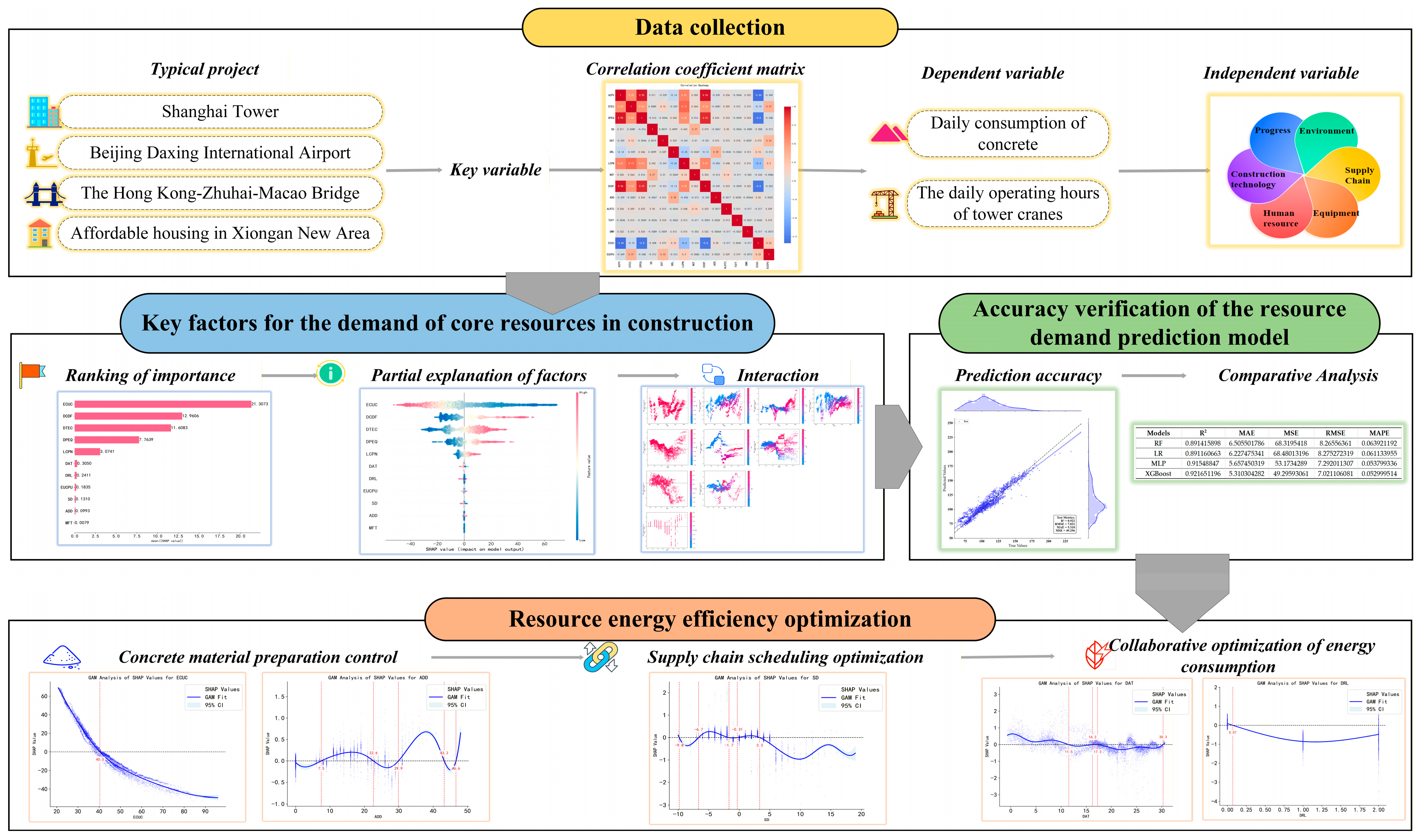
Intelligent Prediction and Optimization of Concrete Resource Mismatch in China’s Construction Industry—An Explainability Analysis Based on XGBoost-SHAP


Abstract
1. Introduction
- (1)
- How can we build a model that can precisely predict daily concrete consumption?
- (2)
- How can we explain the internal decision-making mechanism of this prediction model and propose corresponding resource optimization strategies?
2. Literature Review
2.1. Construction Engineering Resource Management
2.2. Machine Learning for Construction Resource Prediction
2.3. Interpretive Path of XAI
3. Methodology and Design
3.1. Data Sources and Processing
3.1.1. Data Resource
3.1.2. Data Collection and Preprocessing
3.1.3. Hyperparameter Tuning and Model Training Strategy
- (1)
- Definition of Hyperparameter Space
- (2)
- Bayesian Optimization Based on TPE
- (3)
- Time-Series Validation and Model
3.2. Research Framework and Research Method
3.2.1. Research Framework
3.2.2. Research Method
- (1)
- Prediction Model based on XGBoost
- (2)
- Mechanism Interpretation using SHAP
- (1)
- Global Interpretability
- (2)
- Local Interpretability and Nonlinear Effect Analysis
- (3)
- The Generalized Additive Model
4. Research Result
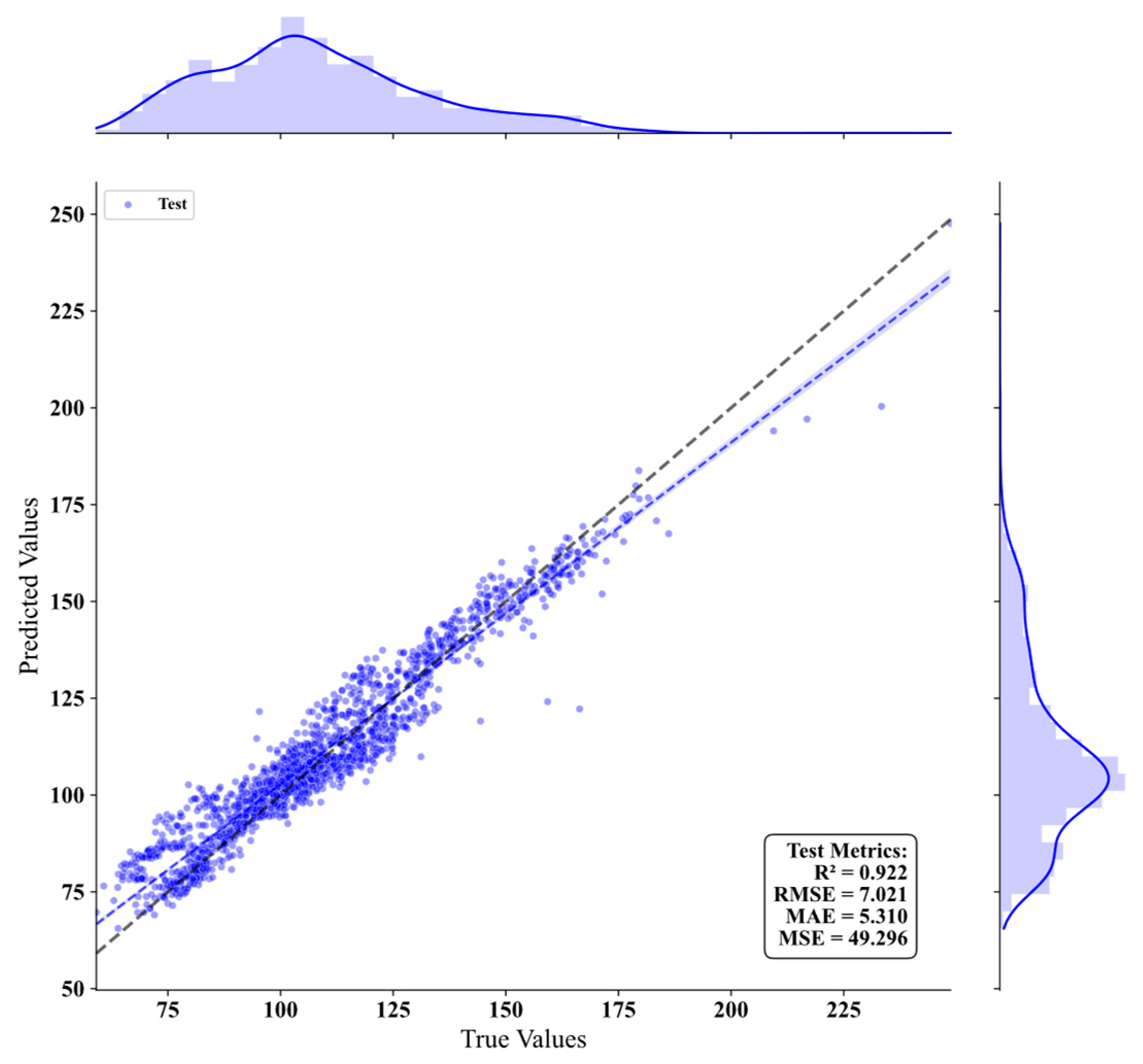
4.1. Comparative Performance Evaluation of Prediction Models
4.2. In-Depth Analysis of Influencing Mechanisms Based on SHAP
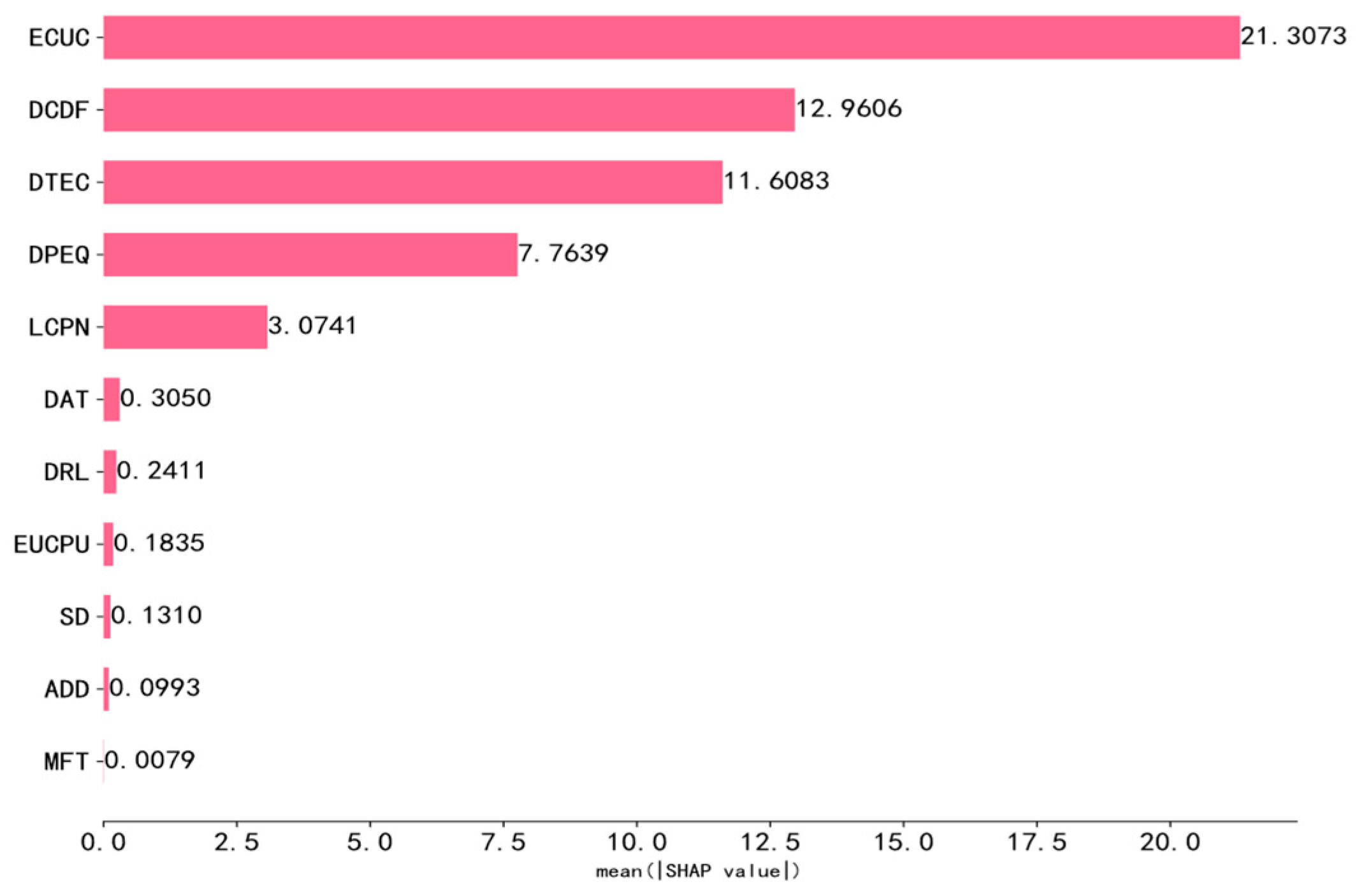
4.2.1. Global Feature Importance Analysis
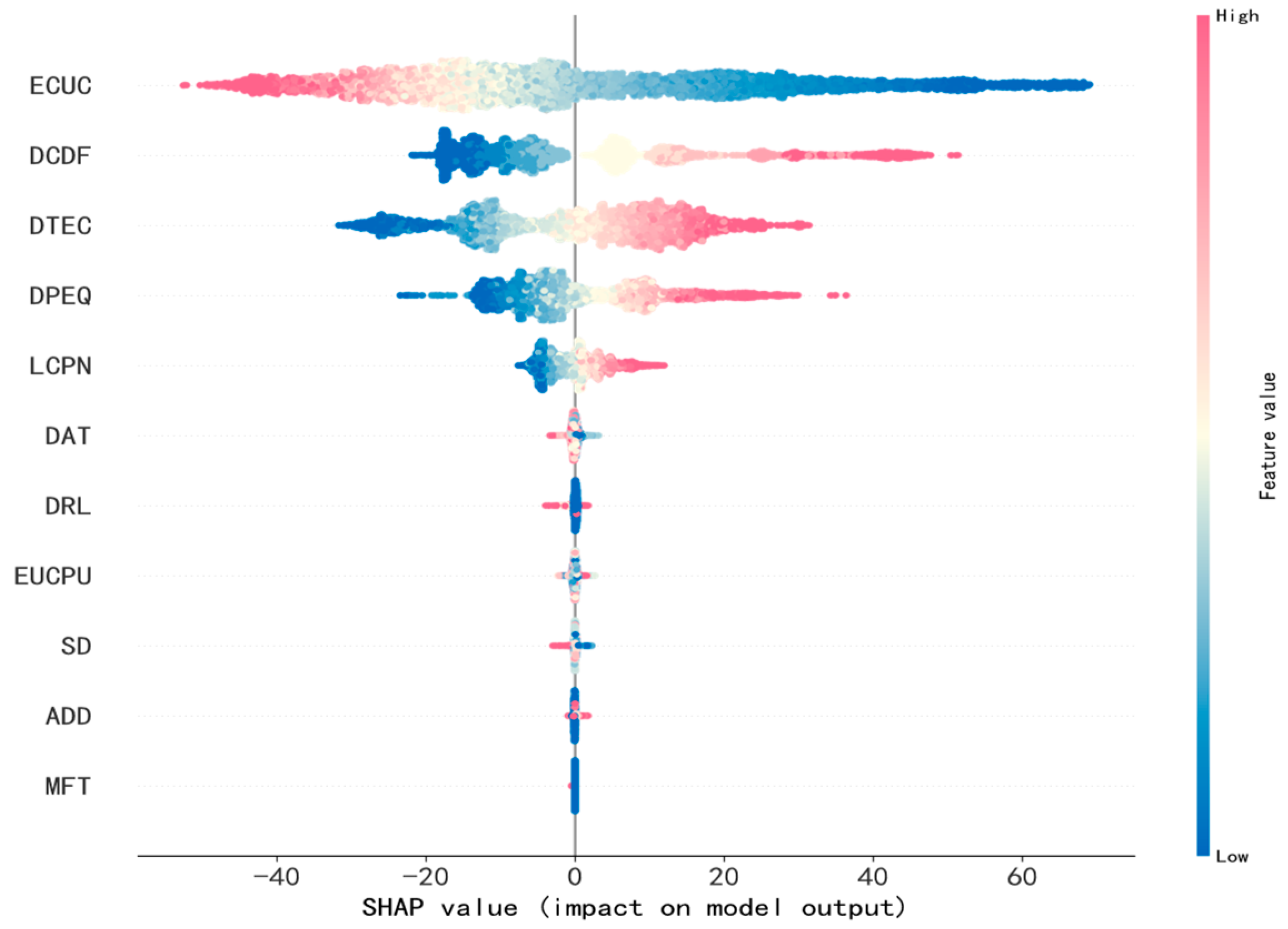
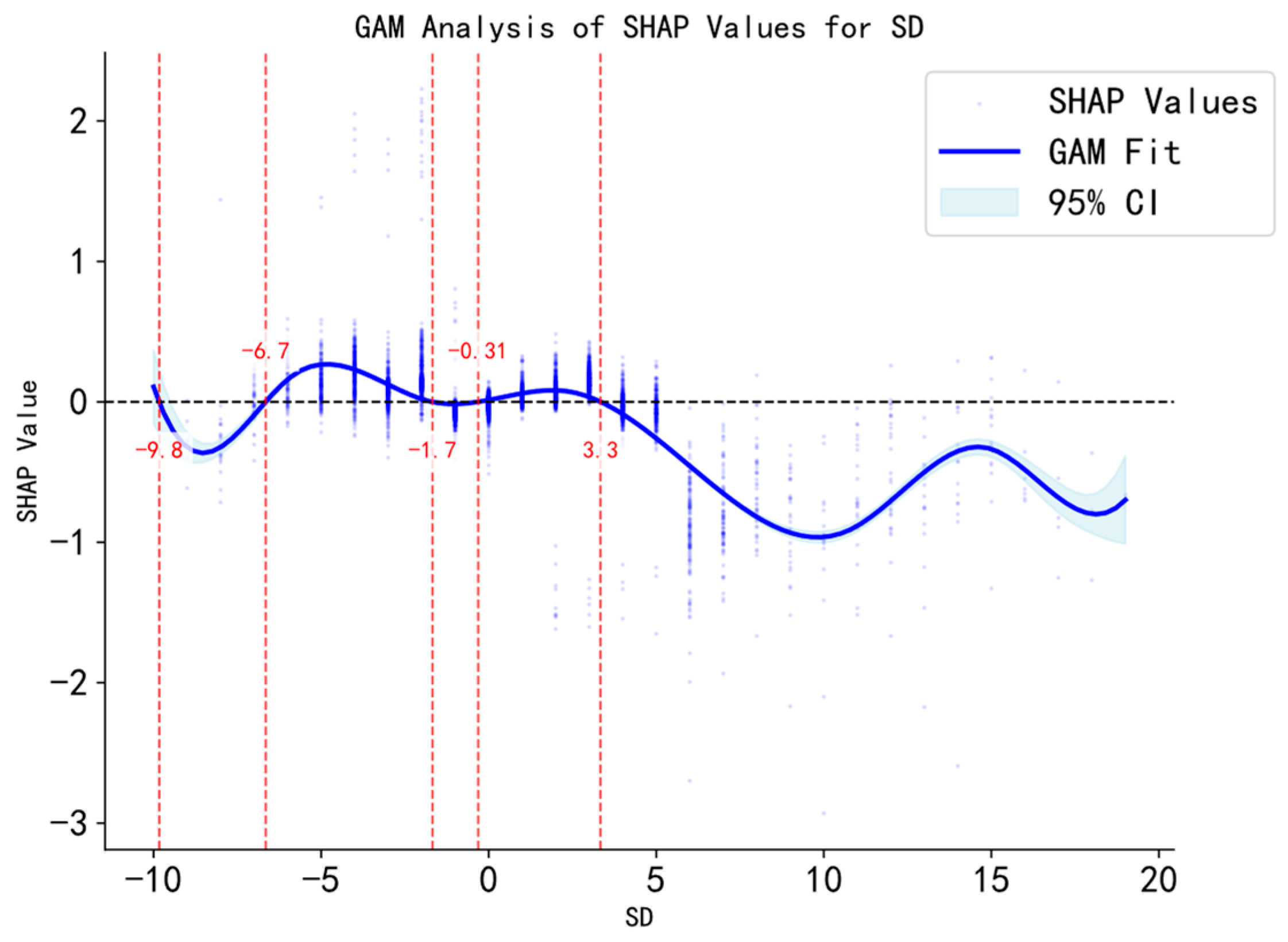
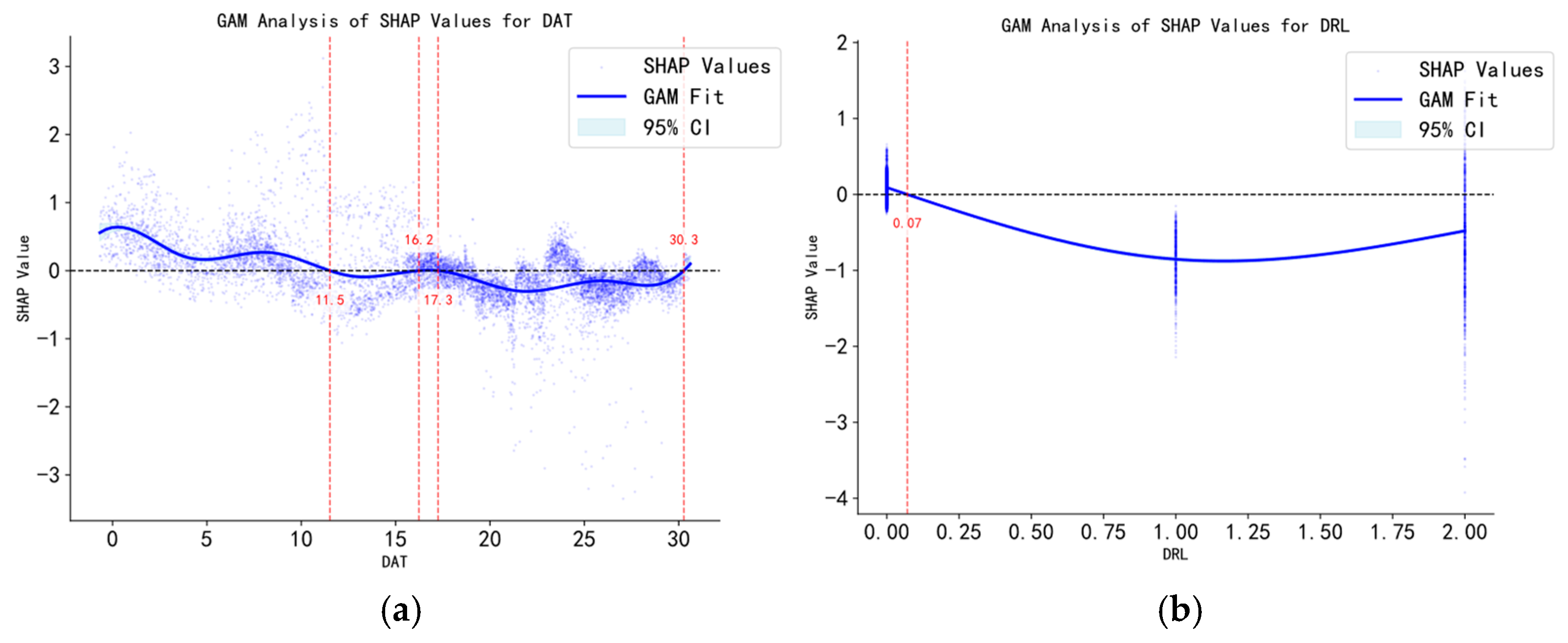
4.2.2. Nonlinear Influences and Threshold Effects of Factors
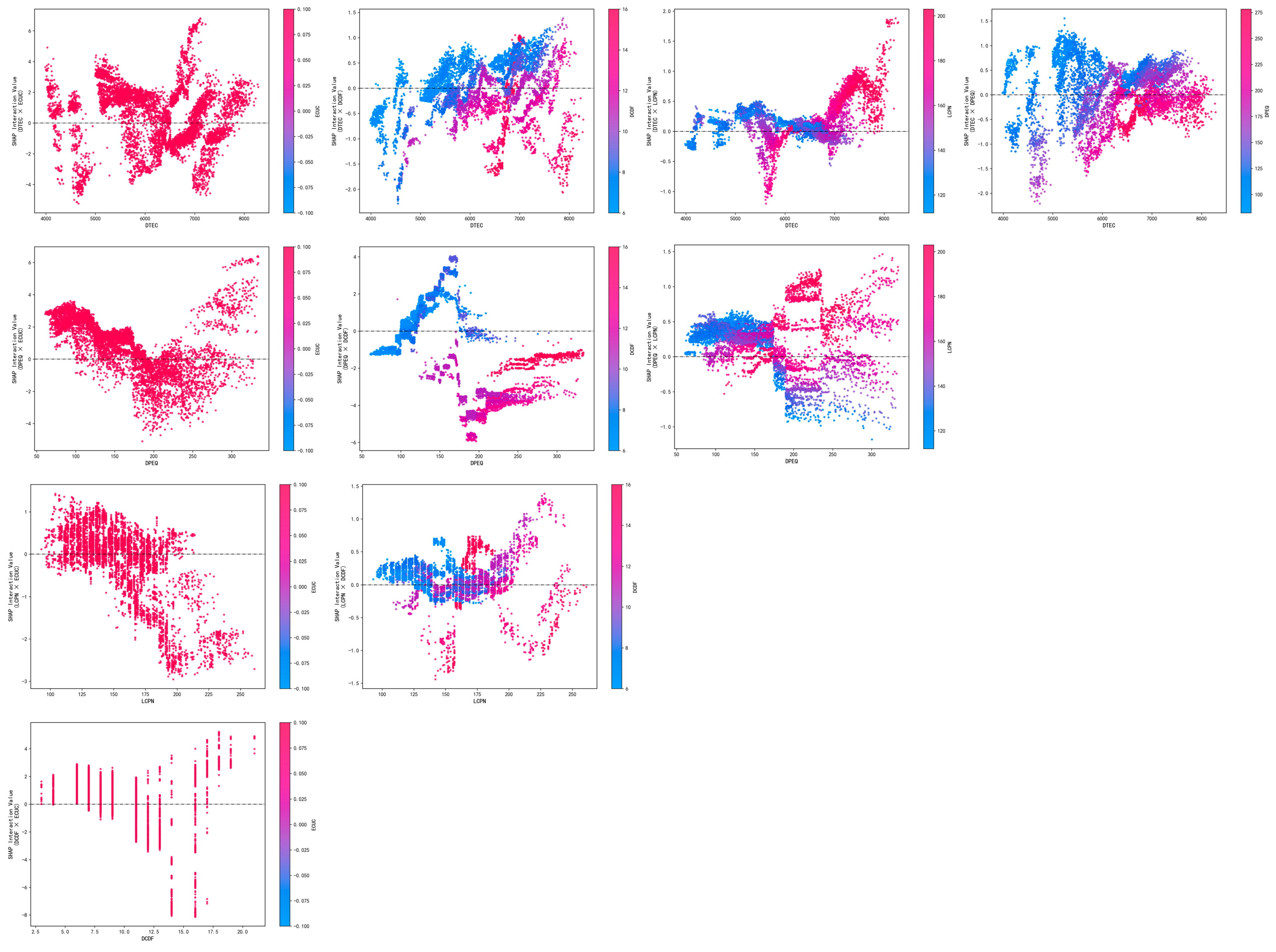
4.2.3. Analysis of Interaction Effects Between Multiple Factors
4.3. Hierarchical Optimization Strategy for Concrete Resources
4.3.1. Core Process Monitoring Layer
4.3.2. Planning and Execution Coordination Layer
4.3.3. External Environment Adaptation Layer
5. Discussion
5.1. Main Findings
5.1.1. Synergistic Effect of the XGBoost-SHAP Framework
5.1.2. Key Driving Mechanisms
5.1.3. Hierarchical Optimization Strategies Transformation Path
5.2. Theoretical Implications
5.3. Practical Implications
6. Conclusions
Author Contributions
Funding
Data Availability Statement
Conflicts of Interest
References
- Al-Aloosy, K.F.Q.; Mirvalad, S.; Shabakhty, N. Evaluating the impact of internet communication quality in human resource management on the productivity of construction projects. Heliyon 2024, 10, e28500. [Google Scholar] [CrossRef]
- Rasanjali, W.A.; Mendis, A.P.K.D.; Perera, B.A.K.S.; Disaratna, V. Implementing enterprise resource planning for lean waste minimisation: Challenges and proposed strategies. Smart Sustain. Built Environ. 2024, 13, 330–353. [Google Scholar] [CrossRef]
- Zhang, N.; Konyaloglu, A.K.; Duan, H.; Feng, H.; Li, H. The impact of innovative technologies in construction activities on concrete debris recycling in China: A system dynamics-based analysis. Environ. Dev. Sustain. 2023, 26, 14039–14064. [Google Scholar] [CrossRef]
- Cheng, J.; Tegge, A.N.; Baldi, P. Machine learning methods for protein structure prediction. IEEE Rev. Biomed. Eng. 2008, 1, 41–49. [Google Scholar] [CrossRef] [PubMed]
- Chitkeshwar, A. Revolutionizing structural engineering: Applications of machine learning for enhanced performance and safety. Arch. Comput. Methods Eng. 2024, 31, 4617–4632. [Google Scholar] [CrossRef]
- Ma, T.; Chen, H.; Zhang, K.; Shen, L.; Sun, H. The rheological intelligent constitutive model of debris flow: A new paradigm for integrating mechanics mechanisms with data-driven approaches by combining data mapping and deep learning. Expert Syst. Appl. 2025, 269, 126405. [Google Scholar] [CrossRef]
- Shen, L.; Ma, T.; Chen, H.; Ye, B.; Luo, R.; Sun, H. A new CNN-GRU deep learning framework optimized by CHIO for precise prediction of debris flow velocity. Stoch. Environ. Res. Risk Assess. 2025, 39, 2351–2371. [Google Scholar] [CrossRef]
- Hamilton, R.I.; Papadopoulos, P.N. Using SHAP Values and Machine Learning to Understand Trends in the Transient Stability Limit. IEEE Trans. Power Syst. 2023, 39, 1384–1397. [Google Scholar] [CrossRef]
- Othman, I.; Napiah, M.; Potty, N.S. Resource management in construction project. In Applied Mechanics and Materials; Trans Tech Publications Ltd.: Baech, Switzerland, 2014; Volume 567, pp. 607–612. [Google Scholar] [CrossRef]
- Chen, Q.; García de Soto, B.; Adey, B.T. Construction automation: Research areas, industry concerns and suggestions for advancement. Autom. Constr. 2018, 94, 22–38. [Google Scholar] [CrossRef]
- Lee, J.S.; Ham, Y.; Pork, H.; Kim, J. Challenges, tasks, and opportunities in teleoperation of excavator toward human-in-the-loop construction automation. Autom. Constr. 2022, 135, 104119. [Google Scholar] [CrossRef]
- Li, L.; Luan, H.; Yin, X.; Dou, Y.; Yuan, M.; Li, Z. Understanding Sustainability in Off-Site Construction Management: State of the Art and Future Directions. J. Constr. Eng. Manag. 2022, 148, 03122008. [Google Scholar] [CrossRef]
- Gurgun, A.P.; Koç, K.; Kunkcu, H. Exploring the adoption of technology against delays in construction projects. Eng. Constr. Archit. Manag. 2024, 31, 1222–1253. [Google Scholar] [CrossRef]
- Li, X.; Lu, W.; Xue, F.; Wu, L.; Zhao, R.; Lou, J.; Xu, J. Blockchain-Enabled IoT-BIM Platform for Supply Chain Management in Modular Construction. J. Constr. Eng. Manag. 2021, 148, 04021195. [Google Scholar] [CrossRef]
- Wang, X.; Mazumder, R.K.; Salarieh, B.; Salman, A.M.; Shafieezadeh, A.; Li, Y. Machine Learning for Risk and Resilience Assessment in Structural Engineering: Progress and Future Trends. J. Struct. Eng. 2022, 148, 03122003. [Google Scholar] [CrossRef]
- Fayek, A.R. Fuzzy Logic and Fuzzy Hybrid Techniques for Construction Engineering and Management. J. Constr. Eng. Manag. 2020, 146, 04020064. [Google Scholar] [CrossRef]
- Liu, L.; Hodgins, J. Learning basketball dribbling skills using trajectory optimization and deep reinforcement learning. ACM Trans. Graph. 2018, 37, 142. [Google Scholar] [CrossRef]
- Wang, X.; El-Gohary, N. Deep learning-based relation extraction and knowledge graph-based representation of construction safety requirements. Autom. Constr. 2023, 147, 104696. [Google Scholar] [CrossRef]
- Parsamehr, M.; Perera, U.S.; Dodanwala, T.C.; Perera, P.; Ruparathna, R. A review of construction management challenges and BIM-based solutions: Perspectives from the schedule, cost, quality, and safety management. Asian J. Civ. Eng. 2023, 24, 353–389. [Google Scholar] [CrossRef]
- Li, Z.; Lei, H.; Ma, E.; Lei, J.; Qu, J. Ensemble technique to predict post-earthquake damage of buildings integrating tree-based models and tabular neural networks. Comput. Struct. 2023, 269, 107114. [Google Scholar] [CrossRef]
- Zhang, J.; Yuan, J.; Mahmoudi, A.; Ji, W.; Fang, Q. A data-driven framework for conceptual cost estimation of infrastructure projects using XGBoost and Bayesian optimization. Constr. Manag. 2024, 24, 751–774. [Google Scholar] [CrossRef]
- Lyngdoh, G.A.; Zaki, M.; Krishnan, N.M.A.; Das, S. Prediction of concrete strengths enabled by missing data imputation and interpretable machine learning. Cem. Concr. Compos. 2022, 128, 104414. [Google Scholar] [CrossRef]
- Shehadeh, A.; Alshboul, O.; Almalki, R.E.A.; Homedat, O. Machine learning models for predicting the residual value of heavy construction equipment: An evaluation of modified decision tree, LightGBM, and XGBoost regression. Autom. Constr. 2021, 129, 103827. [Google Scholar] [CrossRef]
- Wu, Y.; Cai, D.; Gu, S.; Jiang, N.; Li, S. Compressive strength prediction of sleeve grouting materials in prefabricated structures using hybrid optimized XGBoost models. Constr. Build. Mater. 2025, 476, 141319. [Google Scholar] [CrossRef]
- Guan, D.; Shi, Y.; Zhou, L.; Zhu, X.; Zhao, D.; Peng, G.; He, X. Construction and Application of Carbon Emissions Estimation Model for China Based on Gradient Boosting Algorithm. Remote Sens. 2025, 17, 2383. [Google Scholar] [CrossRef]
- Chamola, V.; Hassija, V.; Sulthana, A.R.; Ghosh, D.; Dhingra, D.; Sikdar, B. A review of trustworthy and explainable artificial intelligence. IEEE Access 2023, 11, 78994–79015. [Google Scholar] [CrossRef]
- Khan, N.; Coleri, S.; Abdallah, A.; Celik, A.; Eltawil, A.M. Explainable and robust artificial intelligence for trustworthy resource management in 6G networks. IEEE Commun. Mag. 2024, 62, 50–56. [Google Scholar] [CrossRef]
- Liu, B.; Liu, P.; Lu, W.; Olofsson, T. Explainable artificial intelligence (XAI)for material design and engineering applications: A quantitative computational framework. Int. J. Mech. Syst. Dyn. 2025, 5, 236–265. [Google Scholar] [CrossRef]
- Amangeldy, B.; Imankulov, T.; Tasmurzaev, N.; Dikhanbayeva, G.; Nurakhov, Y. A review of artificial intelligence and deep learning approaches for resource management in smart buildings. Buildings 2025, 15, 2631. [Google Scholar] [CrossRef]
- Senevirathna, T.; La, V.H.; Marcha, S.; Siniarski, B.; Liyanage, M.; Wang, S. A survey on XAI for 5G and beyond security: Technical aspects, challenges and research directions. IEEE Commun. Surv. Tutor. 2025, 27, 941–973. [Google Scholar] [CrossRef]
- Thapa, I.; Ghani, S.; Paramasivam, P.; Tufa, M.A. Development of an optimized deep learning model for predicting slope stability in nano silica stabilized soils. Sci. Rep. 2025, 15, 26213. [Google Scholar] [CrossRef]
- Rady, M.; Soliman, A. Performance of fiber-reinforced ultra-high-performance concrete incorporated with microencapsulated phase change materials. Fibers 2023, 11, 94. [Google Scholar] [CrossRef]
- Zhai, X. Integrated Planning and Scheduling for Precast Concrete Production. Doctoral Dissertation, Nanyang Technological University, Singapore, 2007. [Google Scholar]
- Amjad, M.A.; Sigurdur, E.; Leif, S.; Englund, C. Predicting pavement condition index using an ML approach for a municipal street network. J. Transp. Eng. Part B: Pavements 2025, 151, 04025025. [Google Scholar] [CrossRef]
- Hooshyar, D.; Yang, Y. Problems with SHAP and LIME in interpretable AI for education: A comparative study of post-hoc explanations and neural-symbolic rule extraction. IEEE Access 2024, 12, 137472–137490. [Google Scholar] [CrossRef]
- Das, P.; Kashem, A.; Hasan, I.; Islam, M. A comparative study of machine learning models for construction costs prediction with natural gradient boosting algorithm and SHAP analysis. Asian J. Civ. Eng. 2024, 25, 3301–3316. [Google Scholar] [CrossRef]
- Qin, Y.; Song, D.J.; Chen, H.F.; Cheng, W.; Jiang, G.; Cottrell, G.W. A dual-stage attention-based recurrent neural network for time series prediction. In Proceedings of the 26th International Joint Conference on Artificial Intelligence, Melbourne, Australia, 19–25 August 2017; pp. 2627–2633. [Google Scholar] [CrossRef]
- Ouyang, F.; Wu, M.; Zheng, L.Y.; Zhang, L.; Jiao, P. Integration of artificial intelligence performance prediction and learning analytics to improve student learning in online engineering course. Int. J. Educ. Technol. High. Educ. 2023, 20, 4. [Google Scholar] [CrossRef]
- Love, P.E.; Irani, Z.; Edwards, D.J. A rework reduction model for construction projects. IEEE Trans. Eng. Manag. 2004, 51, 426–440. [Google Scholar] [CrossRef]
- George, S.V.; Kachhara, S.; Ambika, G. Early warning signals for critical transitions in complex systems. Phys. Scr. 2023, 98, 072002. [Google Scholar] [CrossRef]
- Wei, H.; Horns, P.; Sears, S.F.; Huang, K.; Smith, C.M.; Wei, T.L. A systematic meta-review of systematic reviews about interprofessional collaboration: Facilitators, barriers, and outcomes. J. Interprof. Care 2022, 36, 735–749. [Google Scholar] [CrossRef] [PubMed]
- Pan, Y.; Zhang, L.M. Roles of artificial intelligence in construction engineering and management: A critical review and future trends. Autom. Constr. 2021, 122, 103517. [Google Scholar] [CrossRef]
- Gong, D.; Hu, M.; Yin, Y.; Zhao, T.; Ding, T.; Meng, F.; Xu, Y.; Chen, Y. Practical application of artificial intelligence technology in glaucoma diagnosis. J. Ophthalmol. 2022, 2022, 5212128. [Google Scholar] [CrossRef]
- Li, Z.R.; Hu, J.; Leng, B.; Xiong, L.; Fu, Z. An integrated of decision making and motion planning framework for enhanced oscillation-free capability. IEEE Trans. Intell. Veh. 2024, 25, 5718–5732. [Google Scholar] [CrossRef]


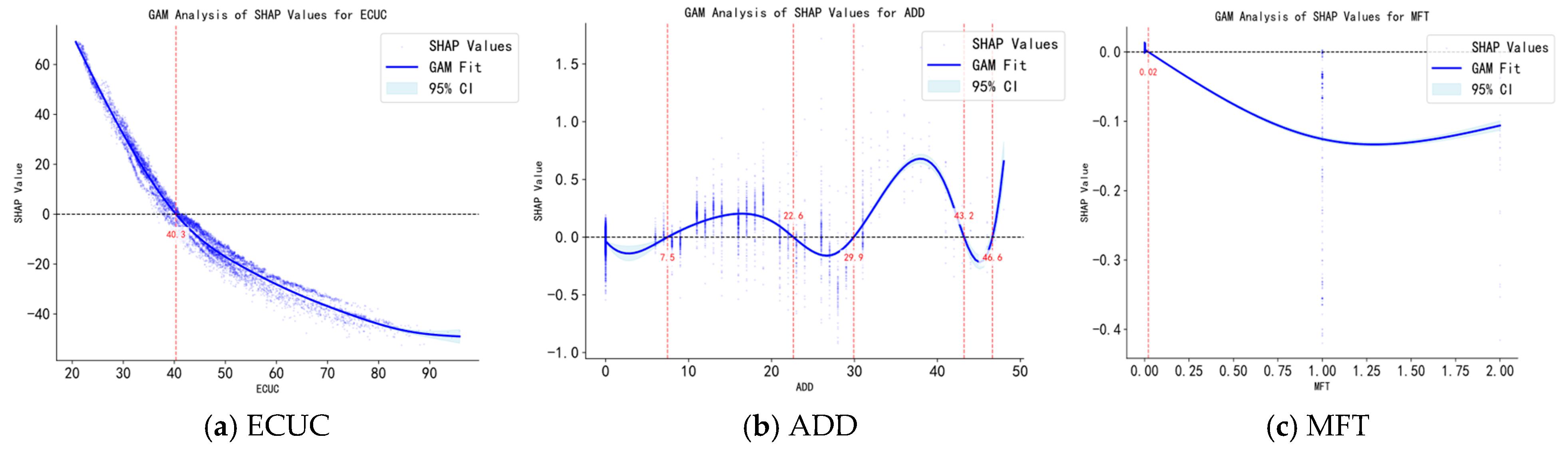
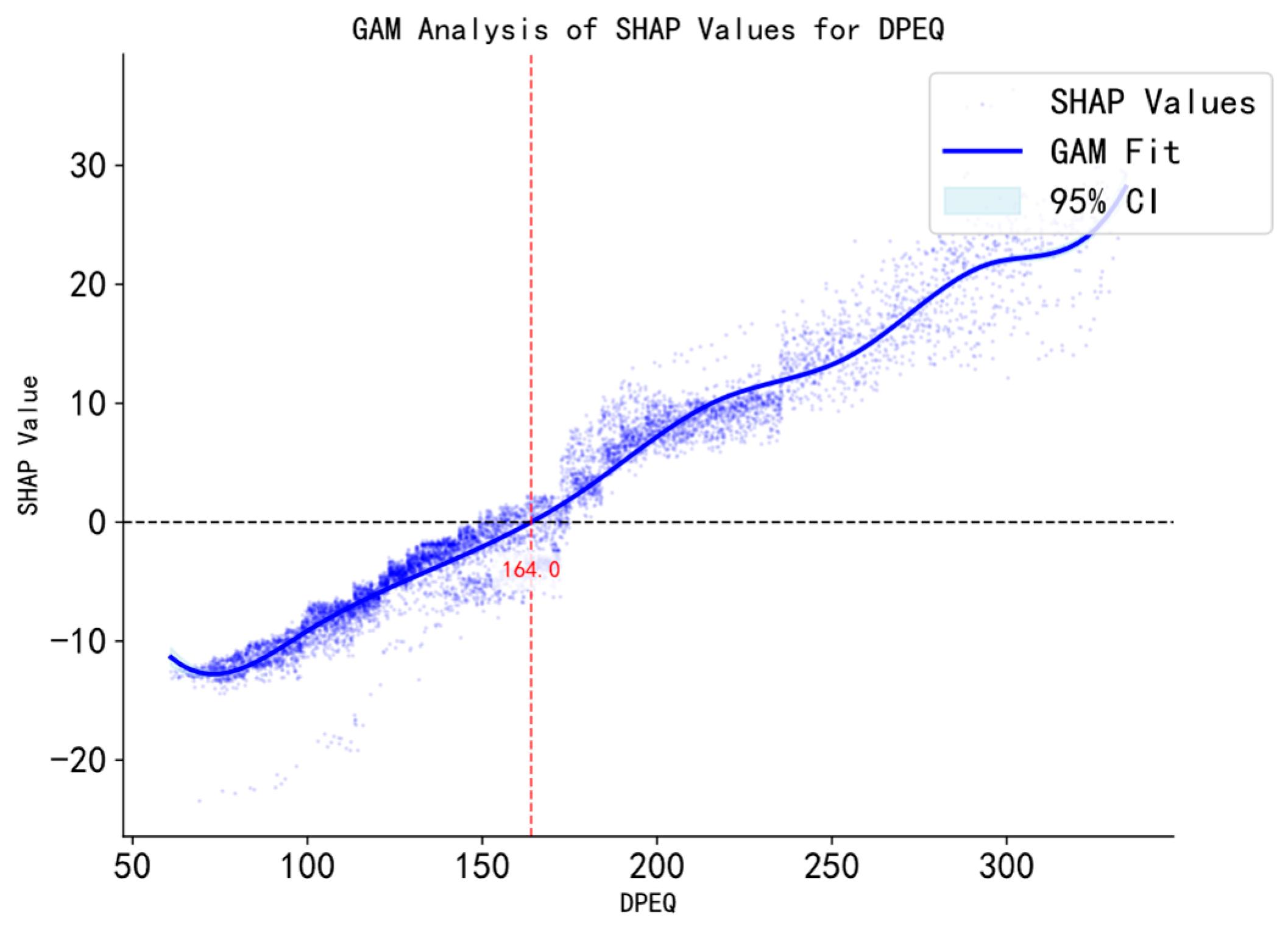



| Category | Specific Source |
|---|---|
| Macro-level building material consumption data | National Bureau of Statistics of China—Consumption of Building Materials and Cement (https://www.stats.gov.cn/) (Accessed on 21 October 2025) |
| Background data for iconic skyscraper projects | Shanghai Tower Construction & Development Co., Ltd./Shanghai Construction Group official releases (https://scdri.scg.com.cn/) |
| Large-scale public infrastructure project data | Beijing Daxing International Airport Authority official website (https://www.bdia.com.cn/) |
| Cross-sea mega-project background data | Hong Kong–Zhuhai–Macao Bridge Authority official portal (https://www.hzmb.hk/) |
| New district affordable housing/prefabricated engineering data | Xiong’an New Area Management Committee website—Construction Updates (http://www.xiongan.gov.cn/) |
| Policies and construction management specifications | Ministry of Housing and Urban–Rural Development—Department of Engineering Quality and Safety Supervision (https://www.mohurd.gov.cn/) |
| Energy consumption and energy-saving standards | China Association of Building Energy Efficiency/Construction Industry Energy Conservation Standards (http://www.cabee.org/) |
| Scientific research/daily high-frequency monitoring data | Carbon Monitor–Real-Time CO2 Emissions Data Platform (https://carbonmonitor.org/) |
| Project Name | Commencement Date | Period of Data Collection | Valid Data Volume |
|---|---|---|---|
| Shanghai Tower | 2008.11.29 | 2011.4.1–2019.12.31 | 2600 |
| Beijing Daxing International Airport | 2014.12.26 | 2016.1.1–2019.9.30 | 1369 |
| Hong Kong–Zhuhai–Macao Bridge | 2009.12.15 | 2009.12.15–2018.10.24 | 2800 |
| Affordable Housing in the Xiong’an New Area | 2020.3.20 | 2020.5.1–2024.10.3 | 1645 |
| Category | Variable Name | Unit | Description | Source/Measurement | Independence from Target |
|---|---|---|---|---|---|
| Construction Technology | Electricity Consumption per Unit Concrete (ECUC) | kWh/m3 | The electricity consumed for concrete operations per cubic meter of planned concrete | Total construction electricity consumption ÷ Actual amount of concrete poured | Independent. Denominator uses planned quantity (DPEQ), not actual consumption |
| Daily Total Electricity Consumption (DTEC) | kWh | Total site-wide electricity consumption | Total electricity quantity of each sub-item | Independent. Direct measurement, independent of concrete volume | |
| Supply Chain | Daily Concrete Delivery Frequency (DCDF) | Count | Number of ready-mix concrete truck deliveries scheduled for the day | Number of batches arriving | Independent. A planned supply-chain variable |
| Average Delivery Delay (ADD) | minutes | Average delay per delivery truck against the scheduled arrival time | (/number of batches | Independent. Measures logistics performance, not consumption | |
| Environment | Daily Average Temperature (DAT) | °C | Average ambient temperature | On-site weather station records | Independent. External environmental factor |
| Daily Rainfall Level (DRL) | mm | Total precipitation | On-site weather station records | Independent. External environmental factor | |
| Labor | Labor Count on Concrete Pouring (LCPN) | Count | Number of workers assigned to concrete pouring tasks | Take it straight from the ledger | Independent. A planned resource allocation variable |
| Schedule | Schedule Deviation (SD) | % | Progress status relative to the baseline schedule | Actual progress schedule—Planned progress schedule | Independent. Measures progress, not resource use |
| Daily Planned Engineering Quantity (DPEQ) | m3 | Volume of concrete planned to be poured for the day, as per the construction schedule | Construction plan given | Independent. The primary planned input, not a measured outcome | |
| Equipment | Equipment Usage Cost Per Unit (EUCPU) | CNY /hour | Operational cost rate of key equipment | Equipment cost/Project output | Independent. A fixed cost parameter |
| Mixing Equipment Failure Times (MFT) | Count | Number of failures or stoppages of mixing equipment | Count the number of outage events | Independent. Measures equipment status, not output |
| Hyperparameter | Description | Tuning Range |
|---|---|---|
| learning_rate (η) | Learning rate: Controls the weight of each decision tree | [0.01, 0.3] |
| max_depth | Maximum depth of a single decision tree | [3, 10] |
| min_child_weight | Minimum sum of sample weights required for a leaf node | [1, 10] |
| subsample | Proportion of sample subsets used for training each tree | [0.7, 1.0] |
| colsample_bytree | Proportion of feature subsets used for training each tree | [0.7, 1.0] |
| reg_alpha (L1) | Weight of L1 regularization term: Enhances model sparsity | [0, 1] |
| reg_lambda (L2) | Weight of L2 regularization term: Prevents overfitting | [1, 5] |
| Models | R2 | MAE | MSE | RMSE | MAPE |
|---|---|---|---|---|---|
| RF | 0.891415898 | 6.505501786 | 68.3195418 | 8.26556361 | 0.063921192 |
| LR | 0.891160663 | 6.227475341 | 68.48013196 | 8.275272319 | 0.061133955 |
| MLP | 0.91548847 | 5.657450319 | 53.1734289 | 7.292011307 | 0.053799336 |
| XGBoost | 0.921651196 | 5.310304282 | 49.29593061 | 7.021106081 | 0.052999514 |
Disclaimer/Publisher’s Note: The statements, opinions and data contained in all publications are solely those of the individual author(s) and contributor(s) and not of MDPI and/or the editor(s). MDPI and/or the editor(s) disclaim responsibility for any injury to people or property resulting from any ideas, methods, instructions or products referred to in the content. |
© 2026 by the authors. Licensee MDPI, Basel, Switzerland. This article is an open access article distributed under the terms and conditions of the Creative Commons Attribution (CC BY) license.
Share and Cite
Zhang, R.; Guo, Y.; Lu, X. Intelligent Prediction and Optimization of Concrete Resource Mismatch in China’s Construction Industry—An Explainability Analysis Based on XGBoost-SHAP. Buildings 2026, 16, 316. https://doi.org/10.3390/buildings16020316
Zhang R, Guo Y, Lu X. Intelligent Prediction and Optimization of Concrete Resource Mismatch in China’s Construction Industry—An Explainability Analysis Based on XGBoost-SHAP. Buildings. 2026; 16(2):316. https://doi.org/10.3390/buildings16020316
Chicago/Turabian StyleZhang, Ruixue, Yuning Guo, and Xin Lu. 2026. "Intelligent Prediction and Optimization of Concrete Resource Mismatch in China’s Construction Industry—An Explainability Analysis Based on XGBoost-SHAP" Buildings 16, no. 2: 316. https://doi.org/10.3390/buildings16020316
APA StyleZhang, R., Guo, Y., & Lu, X. (2026). Intelligent Prediction and Optimization of Concrete Resource Mismatch in China’s Construction Industry—An Explainability Analysis Based on XGBoost-SHAP. Buildings, 16(2), 316. https://doi.org/10.3390/buildings16020316