Article

InSAR-Based Structural Health Monitoring Within an Active Caldera: The Case Study of the Diego Armando Maradona Stadium


by
Riccardo Liuzzo
1,*,
Pier Francesco Giordano
1,
Alessio Bonzani
2 and
Maria Pina Limongelli
1
1
Department of Architecture, Built Environment, and Construction Engineering, Politecnico di Milano, Piazza Leonardo da Vinci 32, 20133 Milan, Italy
2
School of Management, Politecnico di Milano, Piazza Leonardo da Vinci 32, 20133 Milan, Italy
*
Author to whom correspondence should be addressed.
Buildings 2026, 16(18), 3726; https://doi.org/10.3390/buildings16183726 (registering DOI)

Submission received: 21 July 2026 / Revised: 11 September 2026 / Accepted: 16 September 2026 / Published: 19 September 2026

Abstract

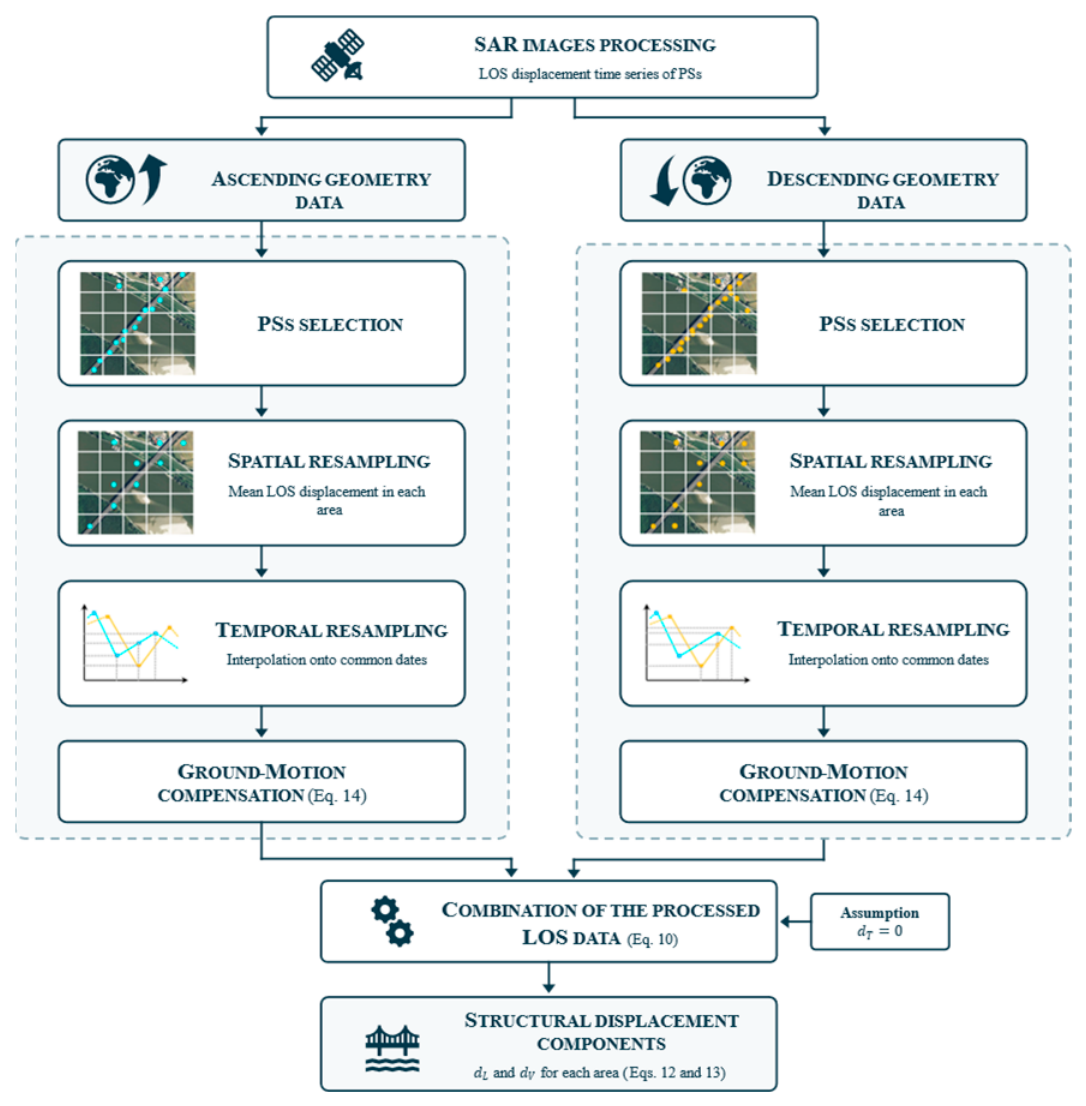
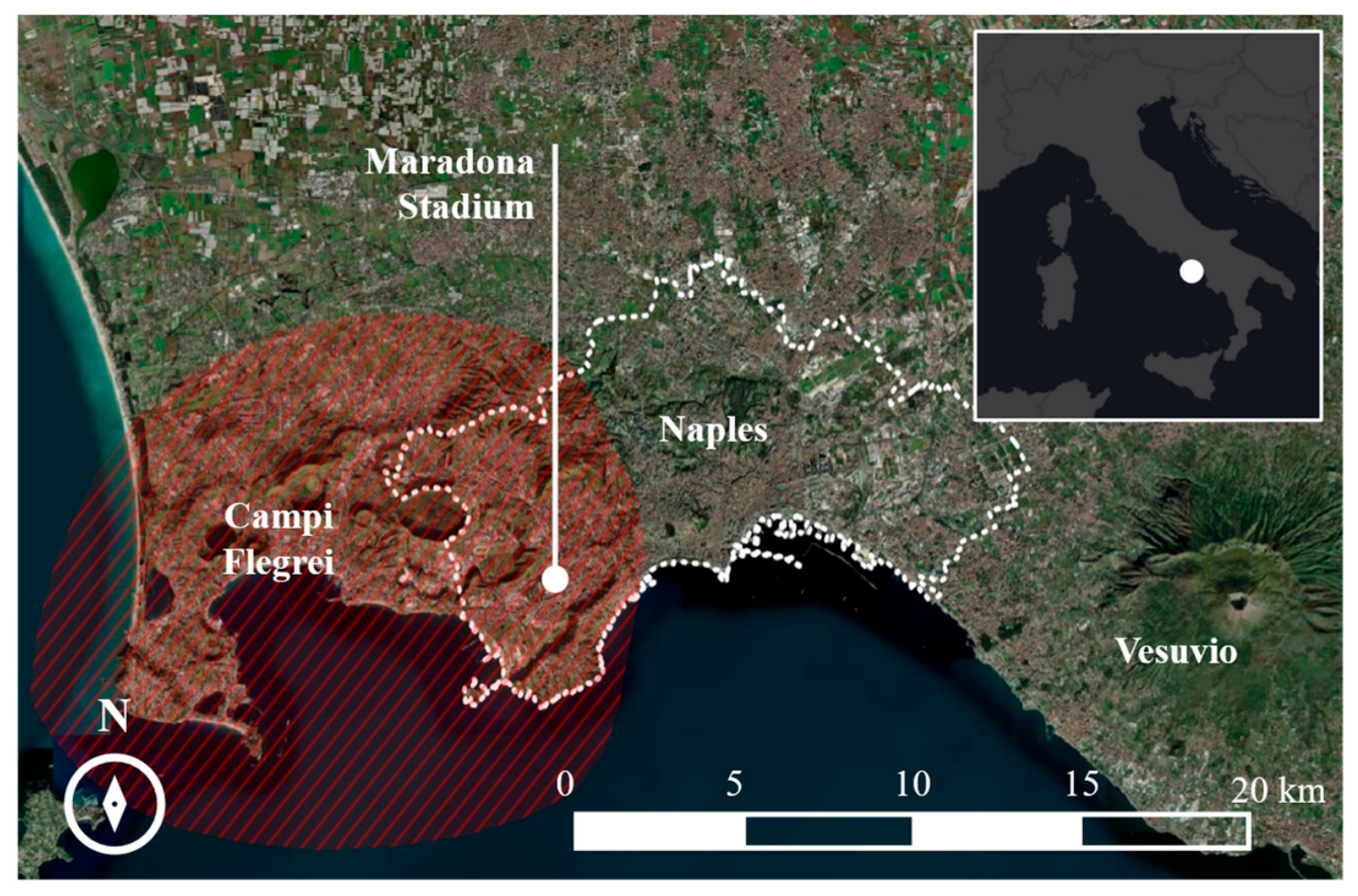
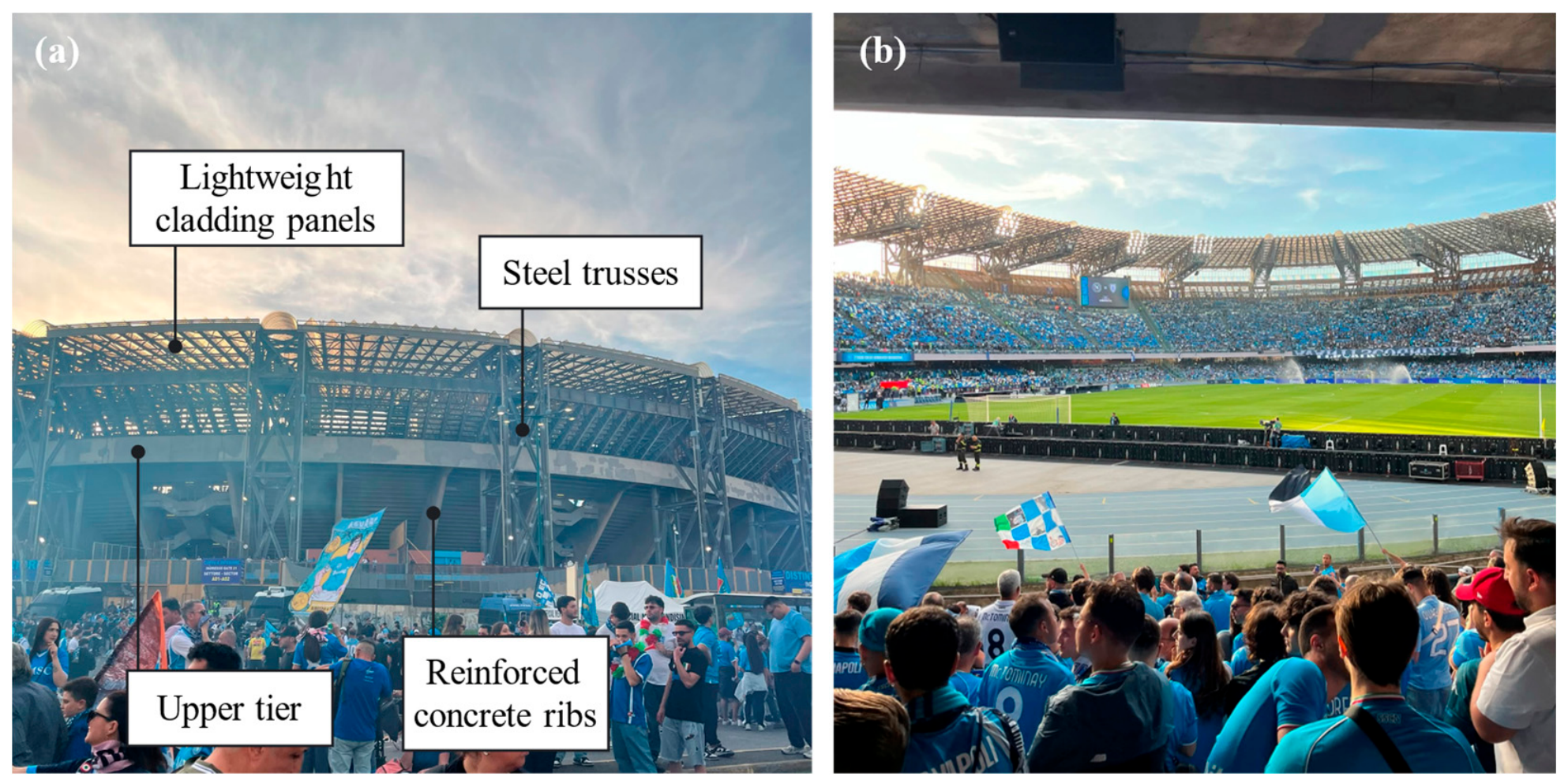
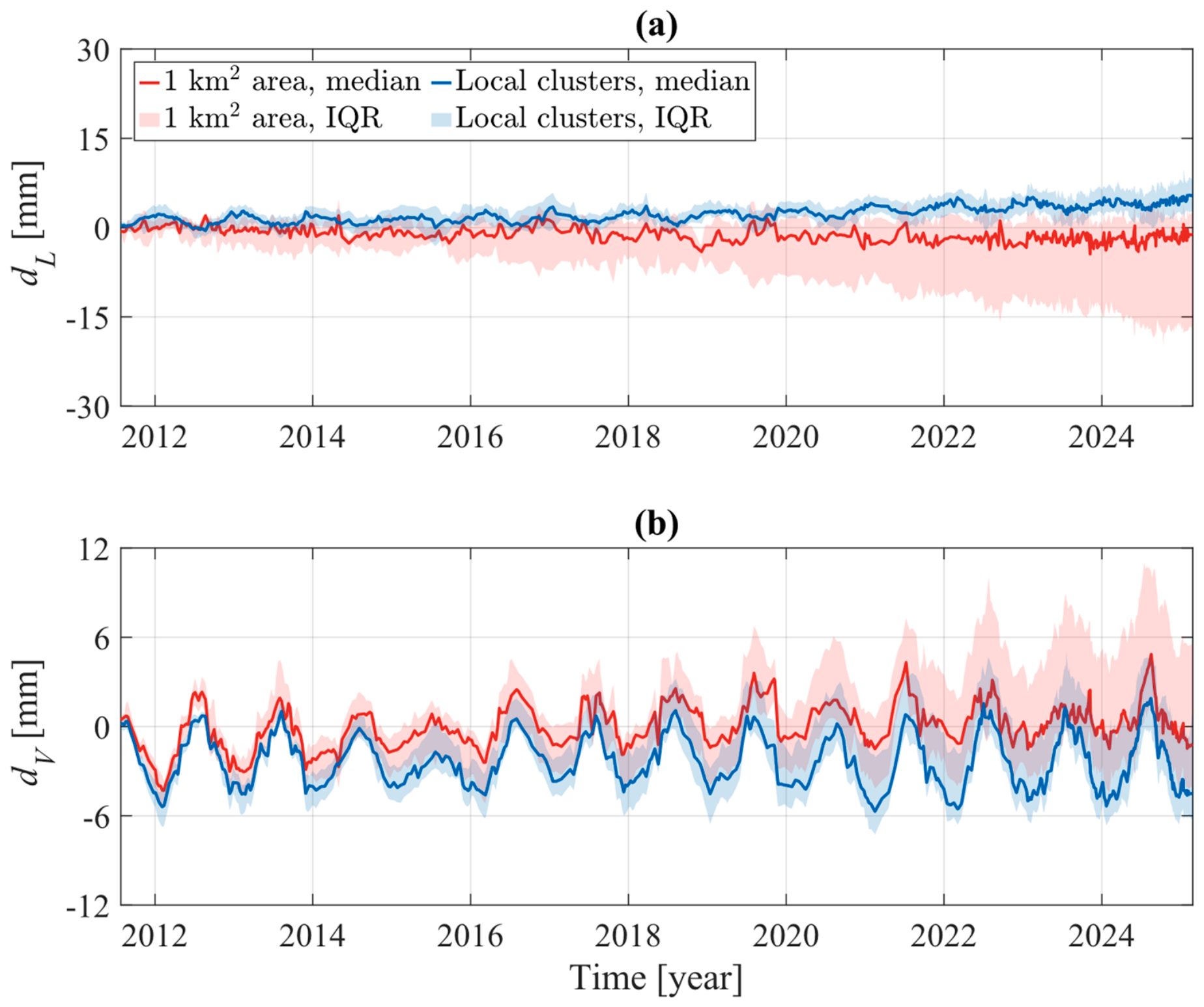
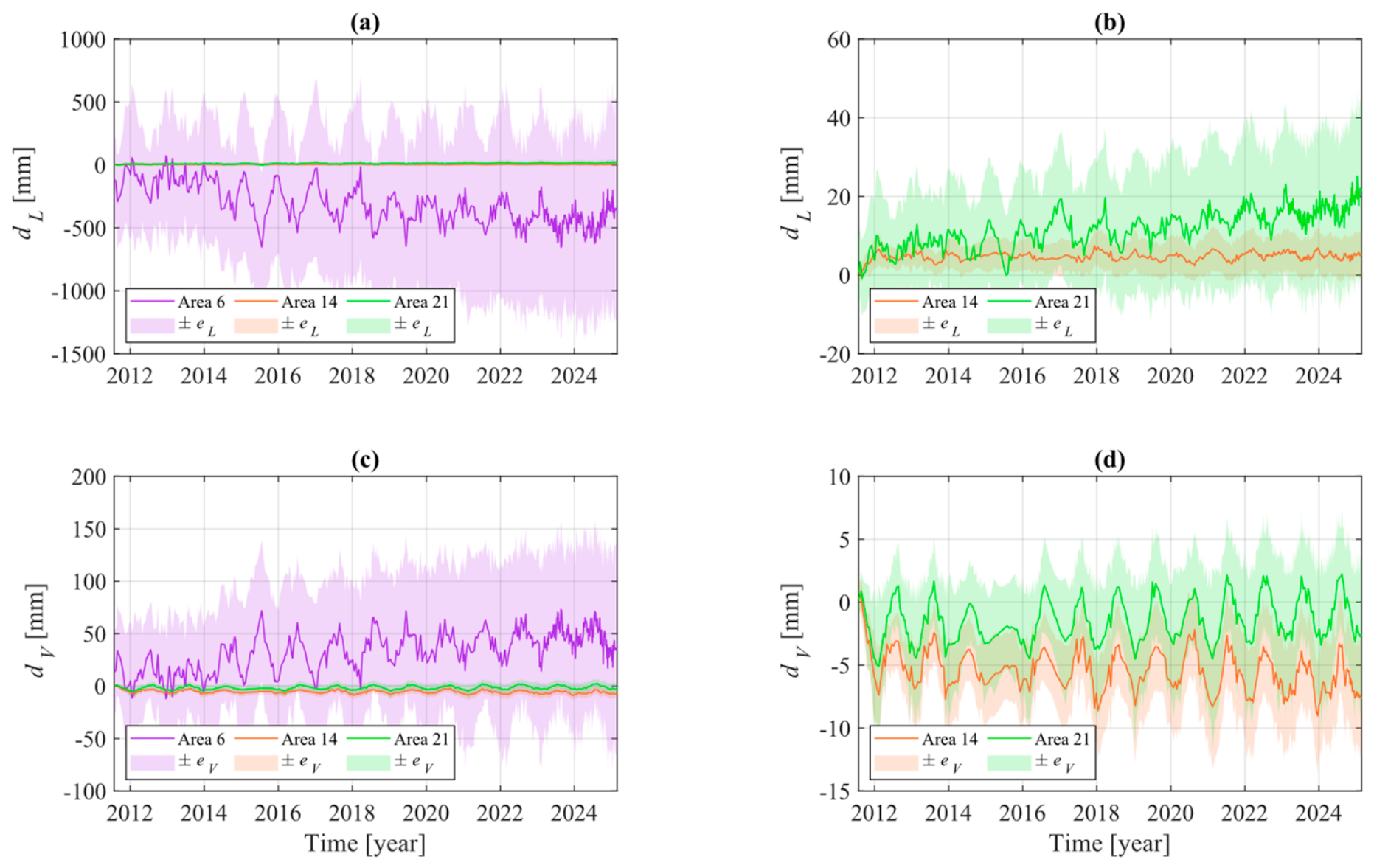
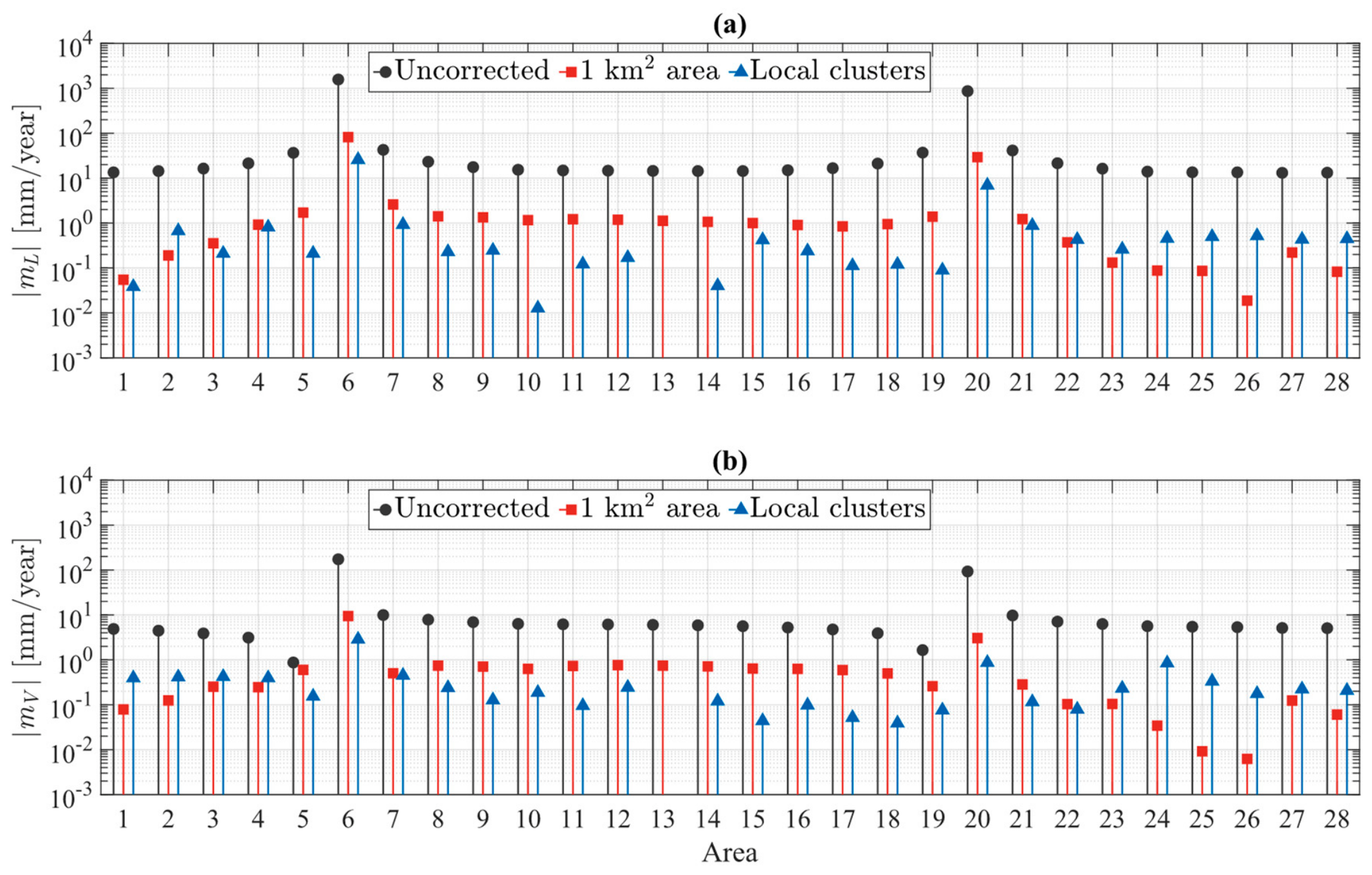
Satellite Interferometric Synthetic Aperture Radar (InSAR) provides spatially distributed displacement measurements that can support the monitoring of civil structures and infrastructures without permanent on-site instrumentation. However, for structures located in areas affected by subsidence or volcanic deformation, the measured Line of Sight (LOS) displacements may be dominated by ground-related motion, making the extraction of the structural response challenging. This paper proposes a methodology for compensating for large-scale ground deformation in InSAR-based structural monitoring, demonstrated on the Diego Armando Maradona Stadium in Naples, Italy, using high-resolution COSMO-SkyMed data. Persistent Scatterers (PSs) located on the roof and in the surrounding area are analysed and ascending and descending LOS measurements are combined to reconstruct longitudinal and vertical displacement components in a local structural reference system. For the selected case study, raw LOS measurements are strongly affected by ground deformation. Two correction strategies are compared: one based on the mean displacement of reference PSs and one based on polynomial fitting. While the latter does not reproduce the temporal variability of the ground motion at the site, the mean-reference correction yields displacement time series compatible with the expected thermal response of the steel roof. The study highlights the importance of accounting for large-scale ground motion when interpreting InSAR-derived structural displacements.
Keywords: InSAR; COSMO-SkyMed; remote sensing; ground deformation; Campi Flegrei; active caldera; structural health monitoring; stadium; steel structure; displacement monitoring InSAR; COSMO-SkyMed; remote sensing; ground deformation; Campi Flegrei; active caldera; structural health monitoring; stadium; steel structure; displacement monitoring