Article

Effects of Different Pretreatment Methods for Recycled Fine Aggregates on the Properties of Geopolymer Mortar Incorporating Recycled Powder


1
Department of Structural Engineering, Tongji University, Shanghai 200092, China
2
Department of Civil Engineering, Sichuan University, Chengdu 610207, China
3
Building Materials, Urban and Environmental Engineering, University of Liège, 4000 Liege, Belgium
*
Author to whom correspondence should be addressed.
Buildings 2026, 16(15), 3042; https://doi.org/10.3390/buildings16153042
Submission received: 3 July 2026 / Revised: 23 July 2026 / Accepted: 29 July 2026 / Published: 31 July 2026

Abstract

Although low-carbon geopolymers incorporating construction and demolition waste (CDW) offer a promising circular economy pathway, the synergistic mechanisms between pretreated recycled fine aggregates (RFA) and geopolymer binders have not been systematically elucidated. This study investigated the comprehensive performance of geopolymer mortar containing recycled powder (RP) incorporating RFA; 50% Fly ash, 25% slag, and 25% RP were incorporated as precursor for the production of geopolymer binders, while the replacement ratios (0%, 20%, 40%, 60%, 80%, 100%) and the pretreatment methods (carbonation and prewetting) of RFA were taken as experimental parameters. The effect of these parameters on the fluidity, setting time, water absorption, compressive strength, and microstructure of recycled geopolymer mortar (RGM) and recycled cement mortar (RCM) was analyzed. Results showed that as the RFA replacement ratio increases, the measured properties generally decline. However, pretreating the RFA, particularly through carbonation, effectively mitigates these drawbacks. The use of 60% carbonated RFA enhanced the compressive strength of RGM by 12% compared to untreated RFA at equivalent replacement ratio. A comparative evaluation of the performance variations between RGM and RCM revealed that geopolymer mortar exhibited lower fluidity, faster setting time, and higher compressive strength. The microstructure analysis by SEM showed that the geopolymerization reaction between adherent cement paste in RFA and geopolymer binders significantly enhanced the microstructural compactness compared to RCM. Furthermore, carbonation and prewetting treatments can mitigate cracks and pores in the mortar. The results demonstrate that RGM prepared with carbonated RFA offer an estimated 76% reduction in net CO2 emission and 14.3% reduction in total cost relative to conventional cement mortar. This study established a framework that compares the mechanisms of RFA pretreatment and equip engineers with validated pretreatment strategies for upcycling CDW into construction materials.

1. Introduction

Globally, over 2 billion tons of municipal solid waste are generated annually, and projected to rise to 3.8 billion tons by 2050 [1]. Specifically, construction and demolition waste (CDW) accounts for around 40% of the global waste generation, while up to 80% of CDW can be theoretically recycled into usable materials [2,3]. Unprocessed CDW results in substantial pollution to soil and water, while also increasing the demand for virgin raw materials [4]. Therefore, using recycled concrete aggregates (RCA) made from CDW has become an effective solution to the problems of over-exploitation of natural aggregates (NA) and the accumulation of CDW.
RCA exhibits rougher surfaces, more cracks, and residual mortar adhesion, leading to higher porosity and lower apparent density when compared to NA [5,6]. To minimize the adverse effects on the properties of concrete, pretreatment is applied to improve the properties of RCA. Methods for removing adhered mortar include acid leaching, calcination, mechanical grinding, and prewetting treatment. Common approaches for reinforcing adhered mortar include carbonation [7], nano-material filling [8], slurry immersion [9], and polymer film formation [10]. In addition, some methods are also used less frequently, such as freeze–thaw cycles [11] or ultrasonic washing [12]. However, certain limitations exist for most pretreatment methods. Acid leaching treatment of RCA involves complex operations and safety risks [13], while mechanical grinding struggles to substantially remove adhered mortar with noticeable effects [14]. In practical engineering scenarios, the prewetting method can effectively enhance the workability and mechanical properties of produced recycled aggregate concrete [15], while carbonation decreases the porosity and water absorption of RCA to achieve higher economic benefits and working efficiency [16,17].
Most of the pretreated RCA has been investigated in a cement-based system in the current studies. However, cement production accounts for a major source of carbon emissions. According to statistics, the carbon emissions during the manufacturing of one metric ton of Portland cement is predicted to range from 0.73 to 0.99 metric tons [18]. Worldwide, approximately 4 billion tons of cement production are produced each year [19], contributing to the majority of carbon emissions in the construction industry [20]. Thus, an alternative binder material (geopolymer) has been developed, which reduces greenhouse gas emissions by roughly 80% [21].
Geopolymer binders mainly use Fly ash (FA) and ground granulated blast-furnace slag (GGBFS) as a precursor. The low-calcium FA system, primarily governed by N-A-S-H gel, exhibits a mass loss of only approximately 6% under sulfuric acid attack [22]. However, it undergoes saponification when subjected to combined hydrocarbon fluids and thermal cycling [23]. Calcium-rich precursors, such as GGBS, enable room-temperature settings and early strength development through the formation of C-A-S-H gel; while accompanied by rapid setting and pronounced drying shrinkage [24,25]. When combined into a binary system, these two components effectively balance the tradeoff among workability, setting time, and long-term durability [26]. Metakaolin geopolymers exhibit intrinsic self-sensing piezo resistivity and exceptional thermal stability [27,28], while lithium slag enhances workability through increased water film thickness [29]. Waste brick and brick powder serve as effective partial precursors [30], improving strength at replacement ratios up to 40% and retaining over 50% of residual strength after exposure to 900 °C [31,32]. Meanwhile, recycled powder (RP), crushed from CDW with a particle size of less than 150 µm, has been used as a new type of geopolymer binder [33,34].
Producing recycled geopolymer concrete (RGC) or recycled geopolymer mortar (RGM) by integrating RCA into geopolymer systems constitutes an important pathway toward sustainable environmental, social, and economic development. The incorporation of RCA enhances the carbonation resistance and early strength of RGM [35], but excessive addition of recycled fine aggregates (RFA) causes a range of adverse effects, as presented in Table 1. In contrast to the cement system, geopolymers inherently possess high paste strength and a dense structure [36], which may enable effective encapsulation of RCA and ensure full utilization.
Carbonation and prewetting are well established for upgrading RFA in cementitious systems, yet their applicability to geopolymer binders remains sporadically explored. The alkali-activated reaction is exquisitely sensitive to the physicochemical state of aggregates and moisture balance, and the incorporation of RP as a ternary precursor adds further complexity. Critically, very few studies have systematically compared the effect of RFA across cement versus geopolymer matrices, nor examined the interplay of pretreated RFA in heterogeneous geopolymer composites. This work fills the gap by establishing a comparative framework to elucidate that carbonation and prewetting regulate geopolymerization kinetics via distinct mechanisms.
This study investigated the effects of carbonation and prewetting treatment of RFA on the performance of RGM and RCM containing RP. Two different pretreatment methods were employed to enhance the performance of RFA, and the effects of replacement ratio and pretreatment methods on the fluidity, setting time, water absorption, compressive strength, and microstructure of mortars were conducted. The differential regulatory mechanisms of carbonation and prewetting on the reaction kinetics and structural evolution of RGM constitute the scientific challenges. Meanwhile, the widespread adoption of low-carbon RGM is constrained by the inherent performance limitations of RFA. This study could systematically interrogate the differential mechanisms of RFA and pretreatment methods, which would provide valuable insights for the development of predictive engineering guidelines.

2. Materials and Methods

2.1. Raw Materials

2.1.1. Binders

The binders employed in this study included FA (F-class low-calcium), slag (S95 grade), RP, and ordinary Portland cement (P.O 42.5). FA, slag and cement were sourced from Chengdu, China, while the RP was sourced from Guangxi, China. The main chemical constituents are shown in Table 2.

2.1.2. Fine Aggregates

Two types of fine aggregates were used: natural fine aggregates (NFA) and RFA. NFA was natural river sand sourced from Chengdu, China. RFA (sourced from Guangxi, China) was prepared from waste concrete via crushing and screening, with all particles passing 4.75 mm standard sieve. Relevant properties of RFA are shown in Table 3.

2.1.3. Alkaline Activator

The alkaline activator solution employed in this study was formulated by blending sodium silicate solution ( M s = 3.13, Na2O = 8.83% and SiO2 = 27.64%) with sodium hydroxide solution (10 mol/L). Specifically, the sodium hydroxide solution was prepared by fully dissolving flake-form sodium hydroxide solids (98% purity) in distilled water. The alkaline activator solution must be prepared 24 h prior to the preparation of mortar.

2.2. Pretreatment Methods and Sample Preparation

2.2.1. Pretreatment Methods for RFA

For the carbonation pretreatment, a predetermined quantity of RFA was immersed in water for 12 h. Excess water was drained to maintain an optimal moisture content, which facilitated the subsequent carbonation. The conditioned RFA was evenly spread in a carbonation chamber to maximize the surface area exposed to CO2, thereby enhancing pore penetration and filling efficiency. The carbonation pressure of chamber was controlled at 0.4 MPa [42]. After 48 h of accelerated carbonation (T = 20 °C, relative humidity = 70%), the RFA was removed and stored under ambient conditions for later use.
For the prewetting treatment, a specified mass of RFA was weighed and soaked in water for 48 h. The soaked RFA was dried to achieve a saturated surface-dry state, and then placed in an ambient environment for subsequent experiments.

2.2.2. Mix Proportion and Sample Preparation

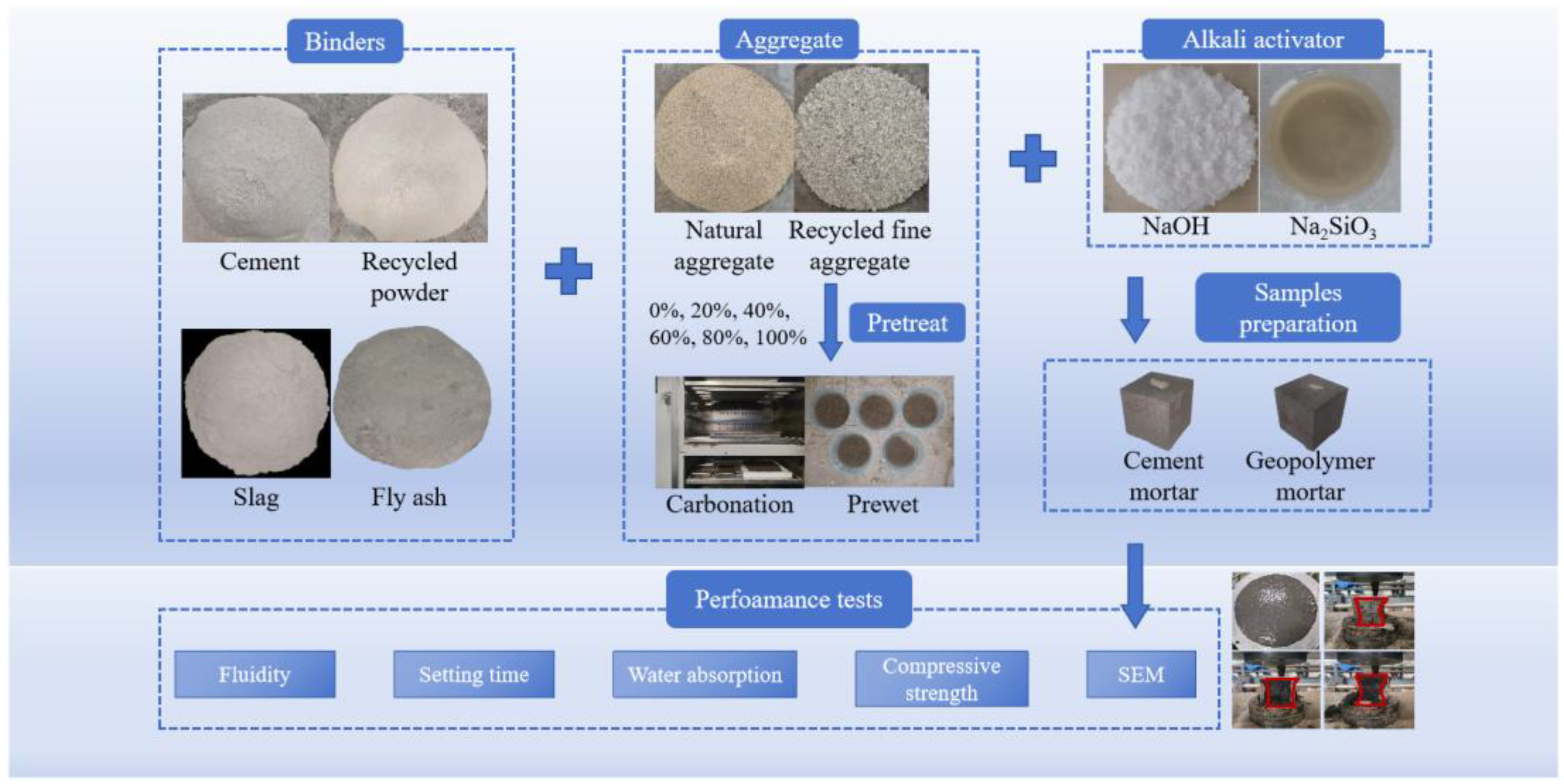
The outline of the experimental program is shown in Figure 1. Solid sodium hydroxide was weighed according to Table 4 and slowly poured into a clean beaker. A specified amount of distilled water was then introduced under continuous stirring to ensure complete dissolution. After the solution had cooled to ambient temperature, a precisely weighed quantity of sodium silicate solution was gradually incorporated with constant agitation to achieve homogeneity. The beaker was sealed with plastic wrap and placed in a cool, well-ventilated area protected from direct sunlight. The alkaline activator solution was allowed to stand for 24 h to achieve ion equilibrium.
Binding materials (FA, slag, RP, and cement) were accurately weighed according to Table 4, and added to a mixer and stirred for 2 min. Pre-weighed RFA was then added, and mixing continued for additional 3 min. Pre-prepared alkali activator solution was slowly and uniformly introduced, with continuous mixing until a homogeneous slurry was obtained. The slurry was cast into 70.7 mm × 70.7 mm × 70.7 mm cubic molds and placed on a vibrating table for 2 min to eliminate air bubbles. The surfaces of specimens were covered with plastic film to prevent moisture evaporation, and then cured at room temperature (20 ± 5) °C for 24 h. After demolding, the specimens were transferred to standard curing conditions maintained at a relative humidity greater than 90% and a temperature of (20 ± 2) °C [43].

2.3. Experimental Methods

2.3.1. Fluidity

Fluidity testing was conducted in accordance with the Chinese standard GB/T 2419-2005 [44]. The mixed mortars were quickly poured into the test mold and uniformly compacted. Then, the truncated cone-shaped mold (height 60 ± 0.5 mm, inner diameter at top 70 ± 0.5 mm, inner diameter at bottom 100 ± 0.5 mm) was vertically lifted, and the flow table was immediately activated. The table was operated at a frequency of once per second, completing 25 vibrations within 25 s ± 1 s. Subsequently, the diameter of the mortar was measured in two mutually perpendicular directions to obtain the average value.

2.3.2. Setting Time

The setting time of the mortar was determined in accordance with the Chinese standard JGJ-T 70-2009 [43]. The prepared mortar mixture was placed into a mortar container, which was positioned on the pressure gauge disk. The penetration probe was carefully adjusted until it just touched the surface of mortar and then pressed vertically to a depth of 25 mm within 10 s. The instrument reading N p was recorded each time the probe was pressed in, until the penetration resistance reached 0.7 MPa. The mortar penetration resistance was calculated using the following equation:
f p = N p A p
f p —penetration resistance value (MPa);
N p —Static pressure at a penetration depth of 25 mm (N);
A p —Cross-sectional area of the penetration test needle.
A graph was plotted to show the relationship between penetration resistance and time for each stage of the test. The time (in minutes) corresponding to a penetration resistance of 0.5 MPa was determined from the graph, which was taken as the setting time of the mortar. The final setting time was defined as the average value obtained from two parallel specimens.

2.3.3. Water Absorption

Specimens were formed and cured according to the Chinese standard JGJ-T 70-2009 [43]. At 28 days of curing, the specimens were dried at (78 ± 2) °C for (48 ± 0.5) h and subsequently weighed to record their mass. The specimens were then placed in a water tank with the formed surface facing downward, supported by two Φ10 mm steel bars below. The specimen was immersed in water to a depth of 35 mm and placed in a climate-controlled chamber at (20 ± 2) °C with a relative humidity of 80%. After (48 ± 0.5) h, the surface water of the specimen was wiped off, and the wet mass was measured to calculate water absorption using the following equation:
W x = m 1 m 0 m 0
W x —water absorption of mortar (%);
m 0 —mass of the mortar specimen after drying (g);
m 1 —mass of the specimen after water absorption (g).

2.3.4. Compressive Strength

The compressive strength of mortar cubes was tested in accordance with the Chinese standard JGJ-T 70-2009 [43], with specimen dimensions of 70.7 mm × 70.7 mm × 70.7 mm. Tests were conducted using a WAW-600C microcomputer-controlled electro-hydraulic servo universal testing machine. A continuous and uniform load was applied at a rate of 0.24 KN/s until the specimen failure occurred. The compressive strength of each specimen was calculated using the following equation:
f m , c u = N u A
f m , c u —compressive strength of the mortar cube specimen (MPa);
N u —failure load of the specimen (N);
A —bearing area of the specimen (mm2).
The average value of the compressive strength in each group was calculated as 1.35 times the arithmetic mean of the three specimen test values.

2.3.5. SEM Analysis

SEM images were used to characterize the microstructure, including the morphology of the geopolymer matrix and the interfacial transition zone (ITZ) between the matrix and aggregates. The thin samples (3 mm thick) containing both matrix and RFA were cut from mortar specimens. These samples were immediately immersed into isopropanol alcohol for 24 h and then stored in the vacuum environment. Prior to SEM observation, the samples were coated with gold to enhance conductivity. Microscopic examination was then conducted using an Ultra55 field-emission scanning electron microscope, operated at an accelerating voltage of 15 kV.

3. Results

3.1. Fluidity

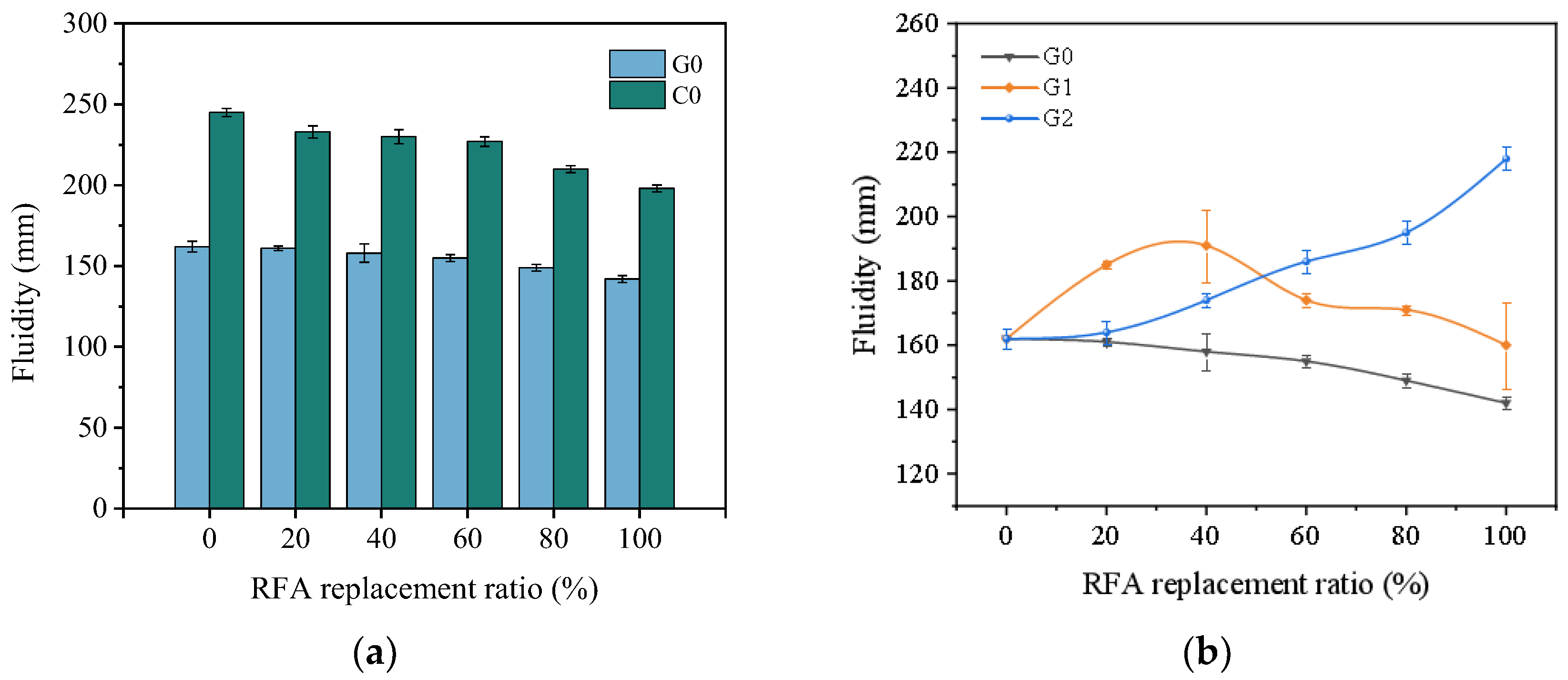
The fluidity of mortars prepared with untreated RFA is represented in Figure 2a. It was observed that the fluidity of recycled mortar decreased gradually with increasing RFA replacement ratios, which can be attributed to the high water absorption of RFA [45]. It also showed that RCM exhibited higher fluidity than RGM. For example, the fluidity of RGM containing 100% RFA was reduced by 28.3% relative to that of RCM under the same RFA content. Moreover, the RFA replacement ratio exerted a more pronounced effect on the fluidity of RCM which might be caused by differences in reaction products. Specifically, the silicoaluminates network structure of geopolymers is relatively compacted with strong interparticle interactions, allowing the RFA to be encapsulated by the formed gel layer. In contrast, this dense network structure is absent in cement mortar so the fluidity of RCM can be directly impaired by the incorporation of RFA [46].
In terms of G1 series, results of fluidity are shown in Figure 2b. The improved surface characteristics and reduced water absorption of pretreated RFA initially contributed to an increase in mortar fluidity [47]. However, the negative effects of RFA dominated eventually, resulting in a decrease in fluidity at the RFA replacement ratio of 40% (191 mm). For the G2 series, fluidity exhibited a progressive increase from 162 mm to 218 mm with the increasing of RFA replacement ratio. This improvement is attributed to the internal moisture retained within the prewetted RFA, which is gradually released during mixing to supplement free water in the mortar. A relatively stable improvement in the fluidity of the G1 series was demonstrated, maintaining an increase ranging from 10% to 20%. By contrast, the G2 series showed a more pronounced improvement with fluidity rising from 2% to 54%.

3.2. Setting Time

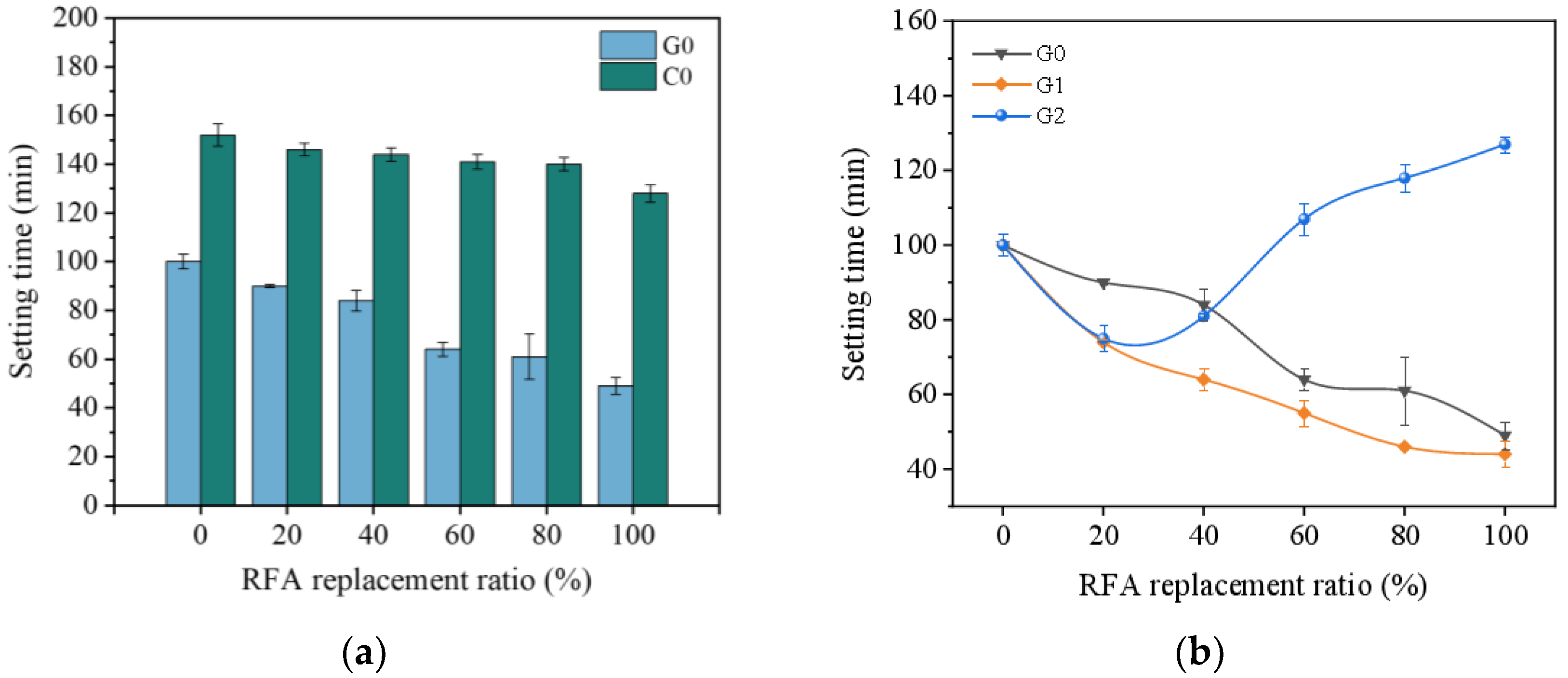
The setting time of recycled mortar decreased progressively with the increasing replacement ratio of RFA, as shown in Figure 3a. For RGM, the setting time generally did not exceed two hours, indicating a relatively shorter setting time and earlier setting behavior, which is consistent with the results obtained from Nauklong et al. [37]. It might be attributed to the adherent cement paste in RFA which possesses certain activity. Upon contact with water, the ion concentration in the system is increased. The adherent cement paste in RFA actively participates in the alkali-activated reaction of precursors so that the geopolymerization process is consequently accelerated. In addition, the abundant internal pore structure of RFA contributes to a large specific surface area [48], which may further accelerate setting time. It was also observed that setting time of RGM was generally shorter than that of RCM. It is primarily contributed to the presence of slag, which possesses a high calcium content and undergoes rapid geopolymerization under alkaline conditions. The free lime and metal cations released from slag react with silicates and aluminates to form C-A-S-H gel, thereby promoting the geopolymerization reaction [49].
The setting time of RGM prepared with pretreated RFA is represented in Figure 3b. Setting time of the G1 series decreased by 56% (100 min to 44 min) with RFA replacement ratios increased from 0% to 100%. This reduction can be attributed to the following factors: On the one hand, the densified surface formed on RFA reduces water absorption while providing a larger reactive surface area. On the other hand, the carbonation products release calcium ions under alkaline conditions, which accelerates the reaction with alkaline activator and promotes the formation of a geopolymer network. This is also the reason that carbonated RFA consistently led to a shorter setting time than untreated RFA.
A trend of initial shortening followed by subsequent lengthening in the setting time of the G2 series was observed with increasing RFA replacement ratio, exhibiting a substantially longer setting time compared to RCM. At a low replacement ratio, the limited amount of water released from prewetted RFA exerts a minor influence on the setting time by slightly supplementing additional water for geopolymerization. However, the larger volume of released water at a high replacement ratio significantly retards the geopolymerization reaction and prolongs the setting time.

3.3. Water Absorption

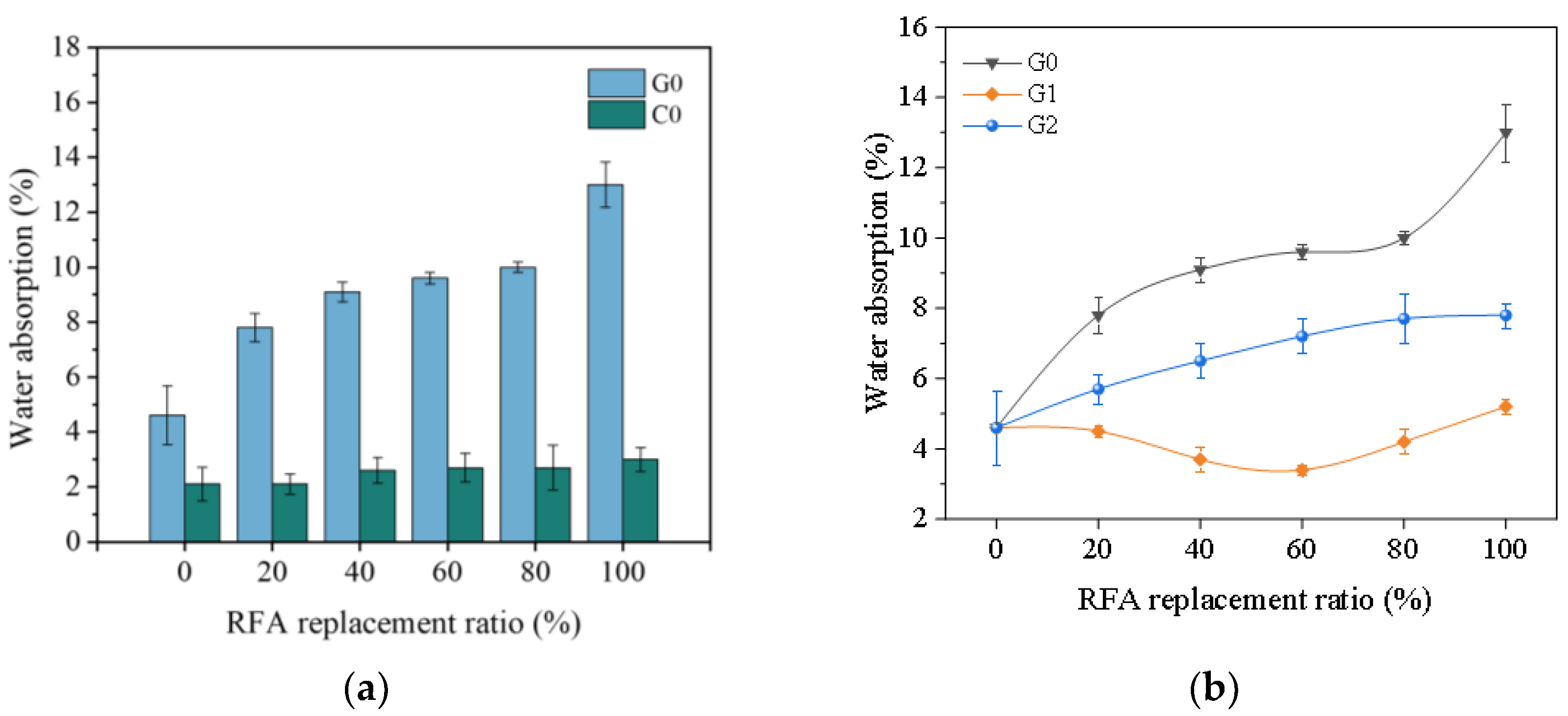
Figure 4a reveals the water absorption of RGM and RCM prepared with untreated RFA. It exhibited an increasing trend with rising RFA replacement ratio, which is consistent with the findings of Hu et al. [50]. In the G0 series, the water absorption increased by nearly threefold, from 4.6% to 13%, as the RFA replacement ratio increased from 0% to 100. It is primarily due to the additional pathways for water storage which was provided by numerous micro-cracks in the RFA.
It was proven that RGM exhibited higher water absorption than RCM, which can be attributed to inherently high water absorption of raw materials used in RGM. Additionally, the numerous uncondensed hydroxyl (–OH) groups on the surface of geopolymer impart strong hydrophilicity [51], contributing to an overall increase in water absorption. Furthermore, water absorption is generally considered to be positively correlated with the complexity of pore structure. Geopolymer mortar possesses complex pore structure with abundant capillary pores and high pore tortuosity, which facilitates water penetration [52].
The water absorption of the G1 series at 20%, 40%, and 60% RFA replacement ratios was 4.5%, 3.7% and 3.4%, respectively, shown in Figure 4b. It presented a decreasing trend due to pores filled through carbonation. However, when the replacement ratio of RFA increased to 80% and 100%, the overall water absorption of the mortar increased which is attributable to the greater proportion of RFA particles with high water absorption. Similar to the G0 series, the water absorption of the G2 series also exhibited an upward trend, rising from 4.6% to 7.8%, which was related to the increase in internal micro-cracks within RFA.
The utilization of pretreated RFA generally resulted in lower water absorption, with carbonation pretreatment performing more effectively. Carbonation reduces water absorption of mortar by refining pore structure and decreasing the number of accessible pores. In contrast, prewetting treatment does not fundamentally modify the internal structure and pore characteristics of RFA.

3.4. Compressive Strength

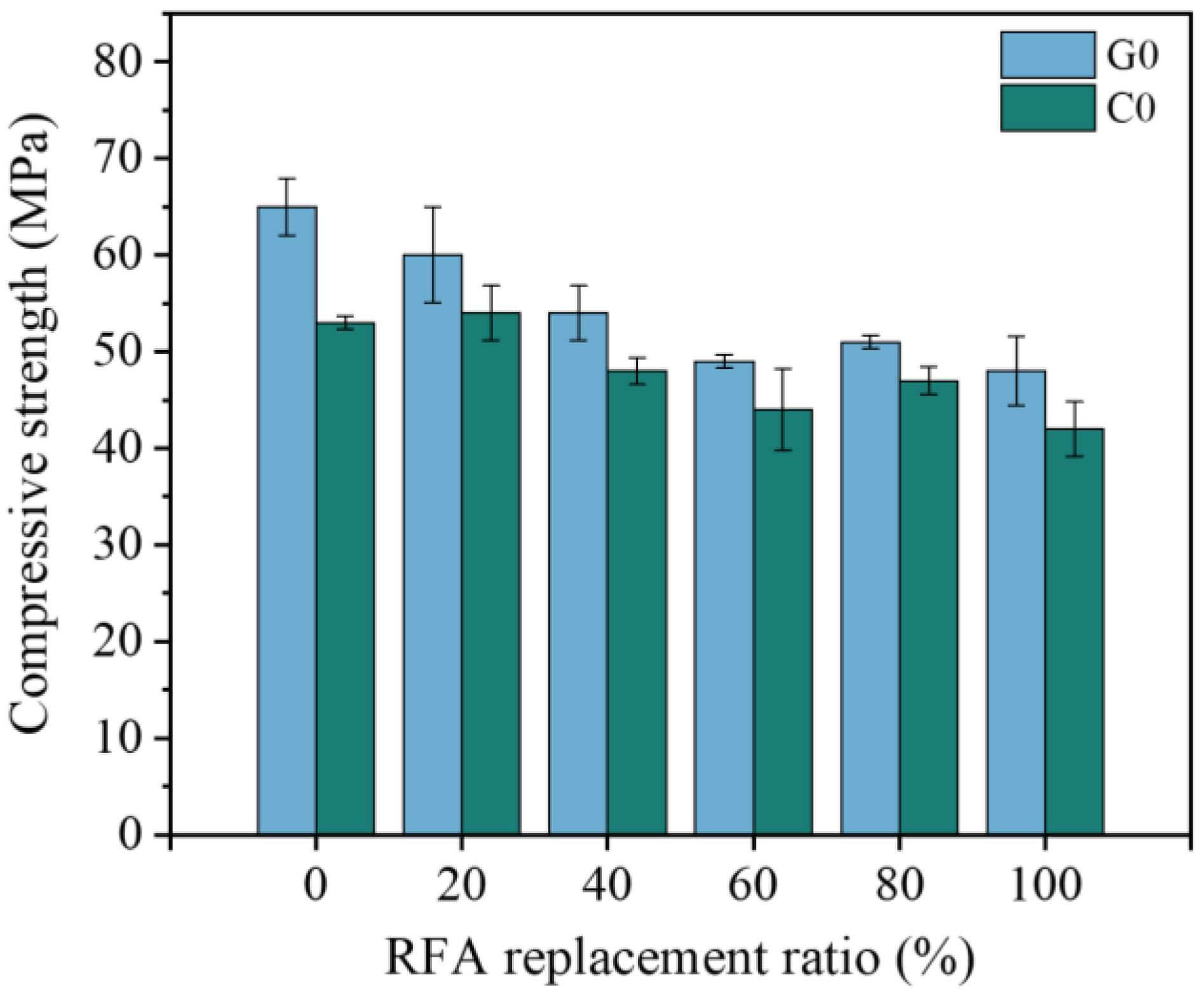
The compressive strengths of RGM and RCM prepared with untreated RFA are presented in Figure 5. The increase in the RFA replacement ratio generally led to a decrease in the compressive strength of both RGM and RCM. Specifically, the compressive strength of RGM decreased by 26.2% as the RFA replacement ratio increased from 0% to 100%. The bond strength between the matrix and RFA is collectively weakened by the double ITZ existing between aggregates and adherent cement paste, and between adherent cement paste and the new matrix. Additionally, surface cracks in RFA contribute to increased porosity and consequently reduced strength.
At RFA replacement ratios below 40%, a certain strengthening effect was achieved, as the negative impact of RFA on compressive strength remained negligible. For instance, the RCM containing 20% RFA achieved a 1.9% increase in compressive strength at 28 days. This improvement can be primarily attributed to the secondary reactions between the adherent cement paste of RFA and the mortar matrix: specifically, the interaction between C-S-H gel and silicoaluminates, as well as the involvement of Ca2+ in reactions with silicoaluminates. In RCM, the primary reaction products formed during the hydration are C-S-H gel and Ca(OH)2. Secondary hydration reactions also occur between unhydrated cement particles and hydration products on RFA, generating additional C-S-H gel. In contrast, the stable mineral constituents such as quartz in NFA exert limited influence on cement hydration, primarily serving physical filling and skeletal functions.
When the RFA replacement ratio reached 80%, the compressive strength of recycled mortar exhibited a slight improvement. For example, mixture G0-80 achieved a 4.1% higher compressive strength than mixture G0-60. This can be partly attributed to a more favorable combination with NFA.
The results also indicated that RGM exhibited higher compressive strength than RCM. At the 100% RFA replacement ratio, the compressive strength of RGM was 14.3% higher than that of RCM. This can be primarily attributed to the highly cross-linked silicoaluminates gel network structure formed effectively by geopolymerization, which could fill pores and prevent the interconnection of micropores.
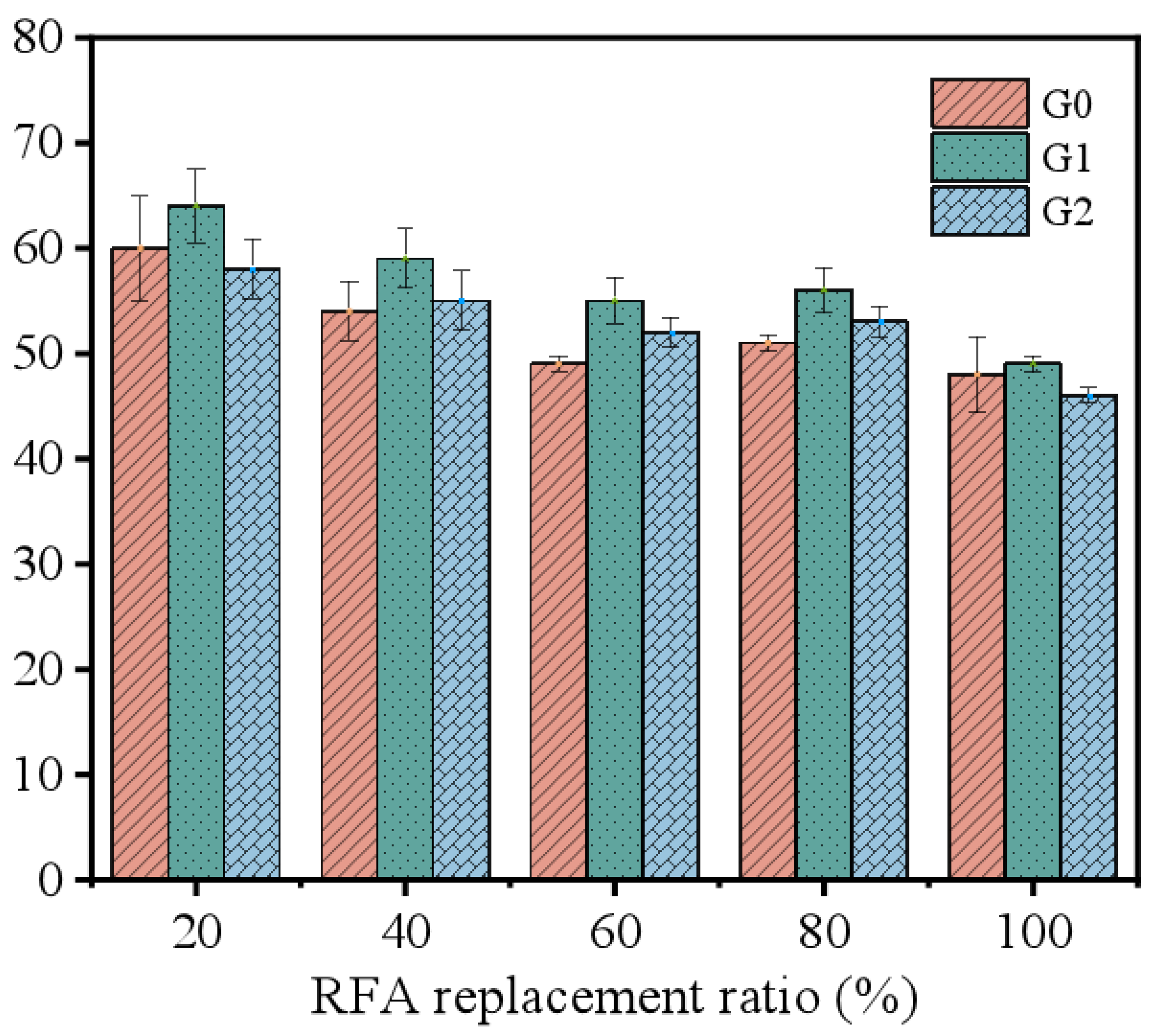
Figure 6 proves that the compressive strength of mortar prepared with treated RFA was higher than that with untreated RFA. The results showed an increase in the compressive strength of the G1 series compared to the G0 series. This enhancement reached a peak at a replacement ratio of 60%, where compressive strength increased from 49 MPa to 55 MPa (a 12.2% gain). This improvement can be attributed to the carbonation treatment, which generates substances such as CaCO3 through the reaction between Ca(OH)2 in RFA and CO2 dissolved in water. These microstructural results are consistent with the macroscopic performance conclusions discussed earlier.
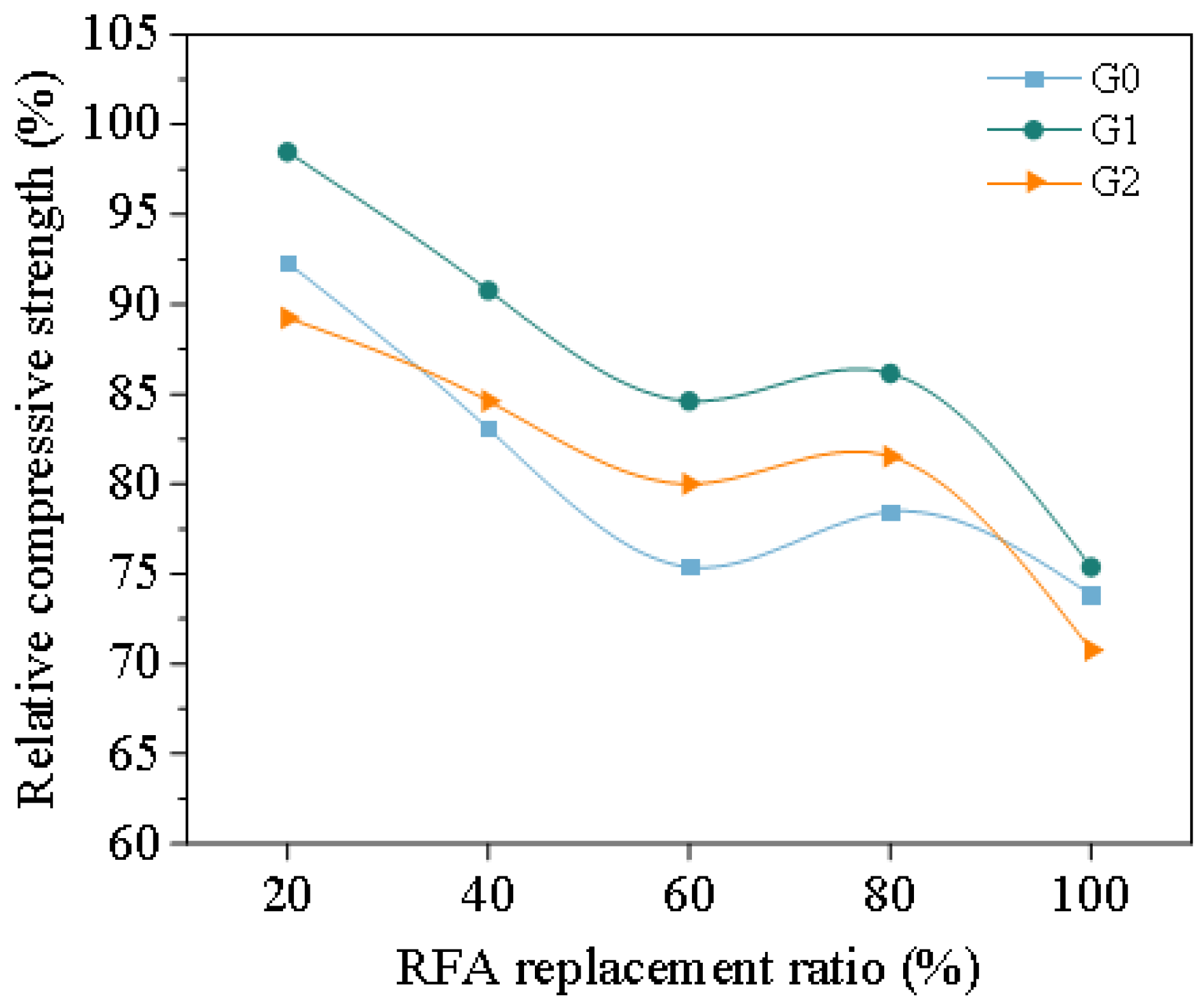
It is shown in Figure 6 that the compressive strength of the G2 series exhibited a relatively moderate variation. The relative compressive strength, calculated and shown in Figure 7, further reveals that a noticeable reduction occurred only at replacement ratios of 20% and 100%. This indicated that the prewetting exerted a limited influence on compressive strength. Although part of the moisture released from the prewetted RFA is utilized in the geopolymerization reaction, it simultaneously increases the actual liquid-to-solid ratio of the mortar at a high replacement ratio (100%), thereby constraining the strengthening effect. At a low replacement ratio of 20%, the local liquid–solid ratio at the interface between RFA and mortar matrix is increased by released water tending to loosen the interfacial bonding and leading to a strength reduction [53,54]. At moderate replacement ratio, prewetted RFA can function as internal curing which provides a stable water supply for the geopolymerization process, maintaining favorable internal relative humidity and mitigating self-shrinkage.

3.5. SEM Analysis

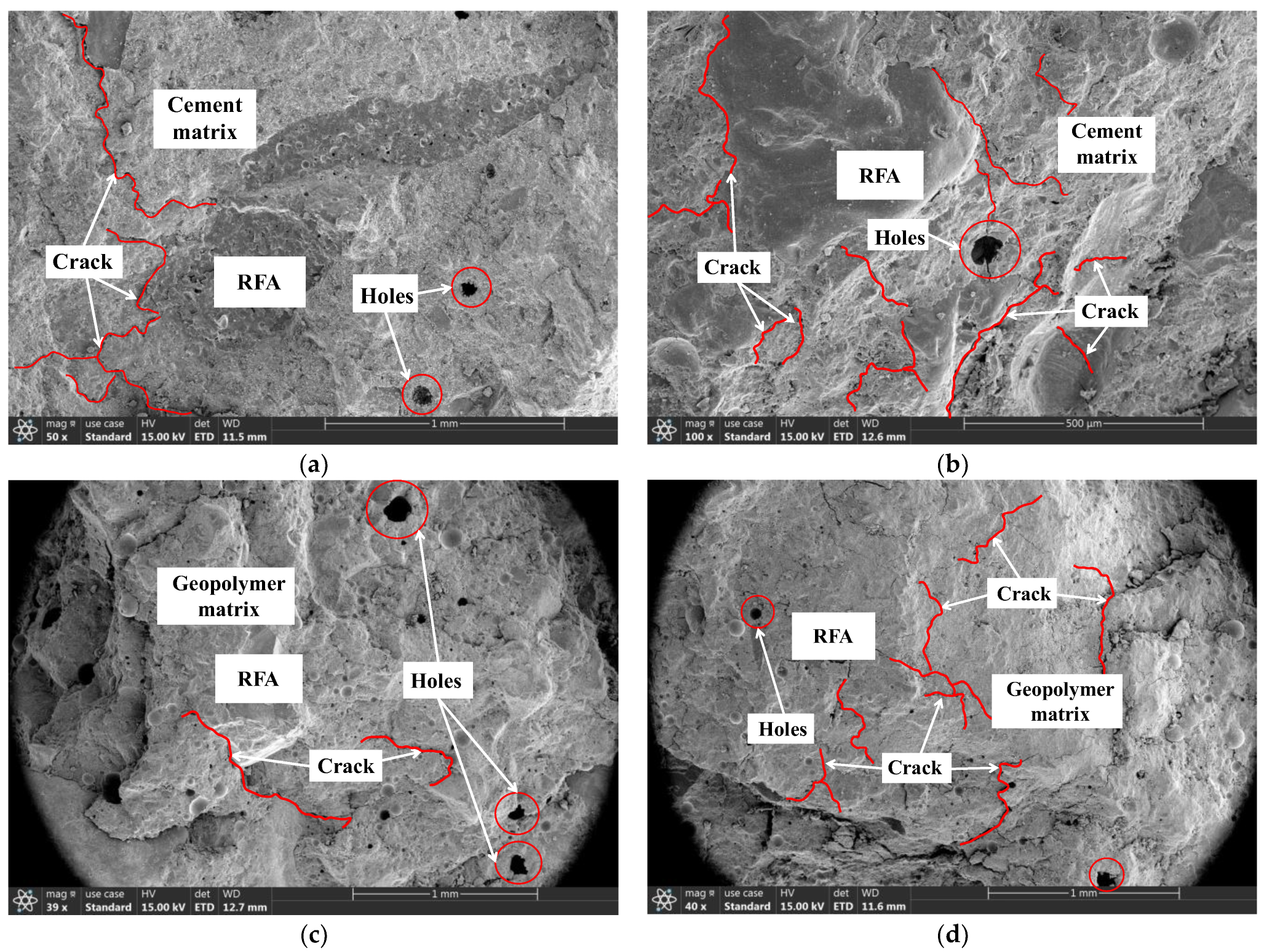
SEM images of RGM and RCM containing 20% and 80% RFA are shown in Figure 8. When 20% RFA was used, the microstructure of the composites exhibited a relatively dense overall structure with fewer pores and cracks. In contrast, the structure became more porous at an 80% RFA replacement ratio, accompanied by an increase in both the number and width of cracks at the interfacial regions. As the ratio gradually increases, the weak ITZ between the aggregates and the matrix exerted pronounced influence on mortar performance. Although certain ITZs were reinforced and connected by secondary reaction products, the overall structure remained more porous, which was consistent with the macro-performance results discussed earlier.
In this research, the microstructure of RGM containing 80% RFA was characterized by a complex assemblage of geopolymer products, dispersed unreacted precursors, and secondary geopolymerization products. In contrast, more pores and cracks were formed in cement mortar, with unevenly distributed hydration products and deteriorated overall compactness. This is primarily attributed to the more C-A-S-H gel and N-A-S-H gel in the RGM, which resulted in a more homogeneous microscopic structure on the matrix surface [55]. This indicated that the compactness and uniformity of geopolymer mortar containing RP can be moderately improved by incorporating RFA into a geopolymer system, which also partially accounts for the higher compressive strength of RGM compared to RCM.
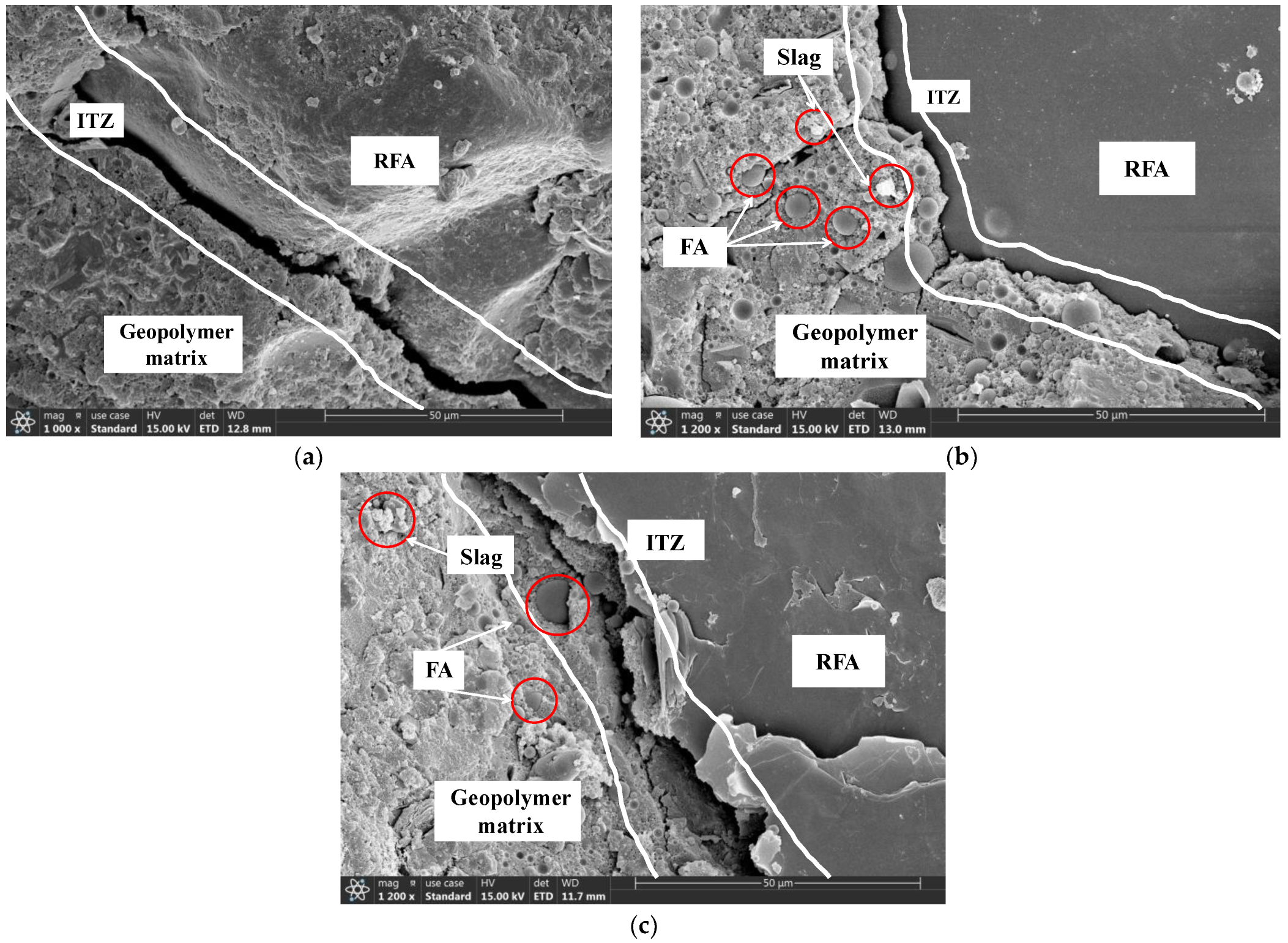
As shown in Figure 9, the ITZ of RGM prepared with untreated RFA exhibited a relatively porous and loose architecture, characterized by micro-cracks and unreacted particles. This defective interface, devoid of significant geopolymer gel or filler, provides a direct microstructural rationale for the inferior mechanical performance observed. After carbonation, the ITZ between the aggregate and the matrix was predominantly occupied by carbonation products formed within the RGM. The aggregate surface appeared smoother, which resulted from the alkaline substances and unhydrated cement particles in RFA reacting with CO2 in the pores, consistent with the results reported by Zhang et al. [56]. In certain regions, pores were also filled with calcium carbonate and products from secondary geopolymerization reaction. This synergistic interaction chemically binded the aggregate to the matrix, which is the primary micro-structural signature underpinning the enhanced compressive strength. In RGM with prewetted RFA, no distinct reaction products were observed, but the overall geopolymerization reaction appeared more homogeneous and exhaustive. This results in a more compact matrix with reduced porosity and micro-cracking. The observation indicates that the performance enhancement mechanism for prewetted RFA is predominantly physical, contrasting with the densification observed in the carbonated RFA.

3.6. Grey Relational Analysis

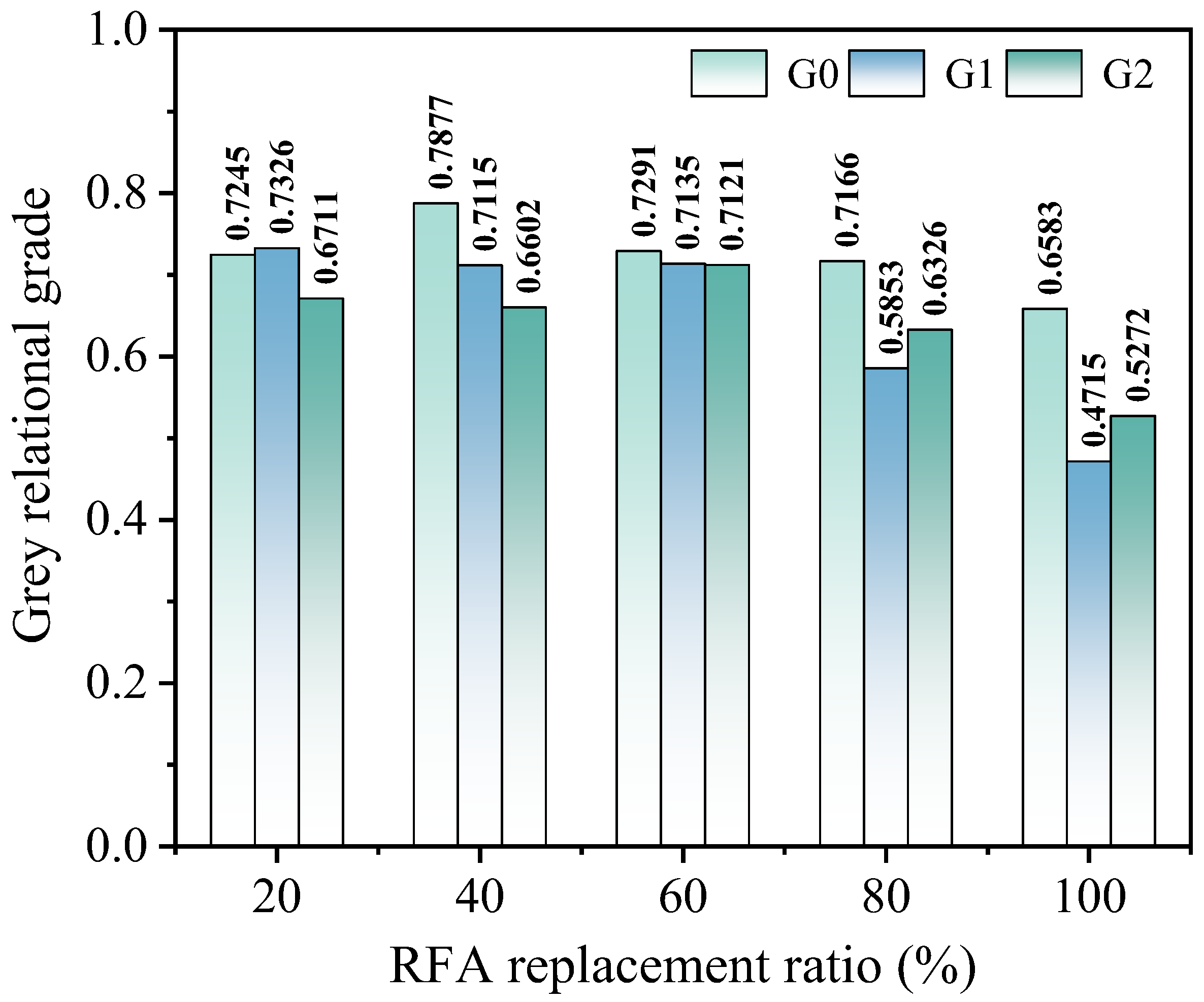
To identify the optimal RFA replacement ratio that simultaneously balances workability and mechanical properties, a grey relational analysis (GRA) was performed. The fluidity, setting time, water absorption, and compressive strength were integrated into grey relational grade (GRG), where a higher value denotes superior comprehensive performance [57]. The results are presented in Figure 10. For the G0 series, 40% RFA achieves the optimal performance equilibrium. Beyond 40%, the cumulative effects of elevated water absorption and weakened ITZ increasingly predominate, driving a monotonic degradation in comprehensive performance. For the G1 series, the GRG attained a maximum at 20% and remained comparatively stable at 40% and 60%. Notably, the GRG at 60% closely approached that at 20%, indicating that carbonation pretreatment effectively extends the viable replacement threshold to 60% without a substantial performance penalty. This aligns with the microstructural evidence that carbonation synergistically densifies the ITZ, mitigating the detrimental influence of higher RFA content. For the G2 series, the GRG increased to a maximum of 0.7121 at 60%, then declined thereafter. This optimum reflects the prewetted RFA gradually releasing supplementary moisture at elevated replacement ratios. Comparative evaluation reveals that the G1-60 mixture (0.7134) represents a superior compromise between maximizing RFA valorization and maintaining engineering reliability. Consequently, 60% carbonated RFA is recommended as the optimal configuration for applications requiring elevated recycled content without compromising comprehensive performance.

3.7. Environmental and Economic Analysis

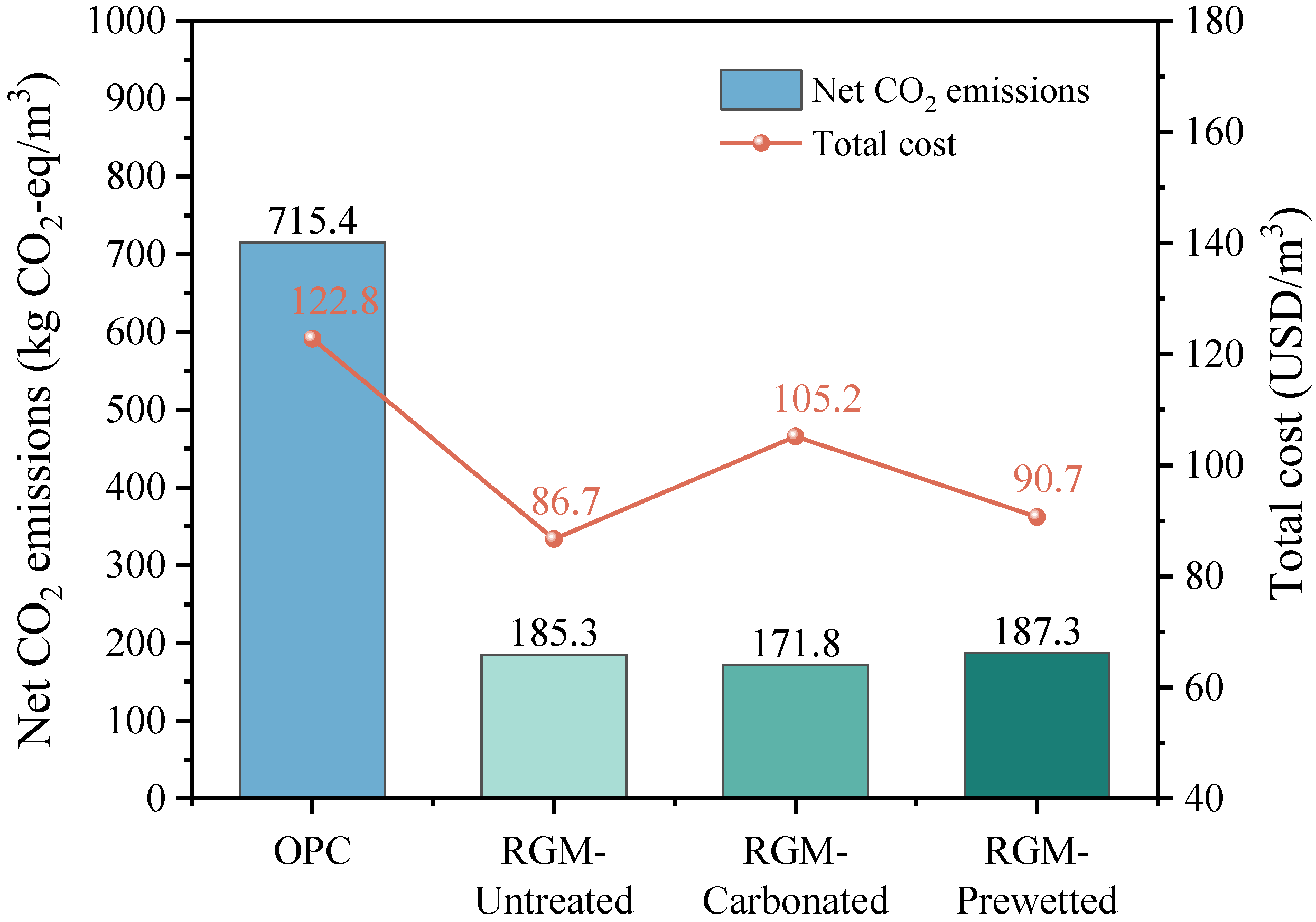
A streamlined life cycle assessment (ISO 14040/14044 [58,59]) was conducted for 1 m3 mortar, with CO2 emission factors sourced from Chinese standard T/CBMF 27-2018 [60] and credible publication [61,62]. Four schemes were comparatively analyzed: OPC mortar, RGM with untreated RFA, RGM with carbonated RFA, and RGM with prewetted RFA. The results are shown in Figure 11. In RGM with carbonated RFA, the carbonation pretreatment mineral carbonation of adherent cement pastes in RFA yielded the lowest net emissions. These results demonstrate that the integration of carbonated RFA establishes a viable emission pathway for alkali-activated materials. The total cost analysis which encompasses both material procurement and pretreatment processing is presented in Figure 11. OPC mortar incurs USD 122.8/m3, whereas RGM ranges from USD 86.7/m3 to USD 105.2/m3. This cost inversion stems from the industrial by-product precursors and RFA, which more than compensates for the alkali activator premium. From a deployment perspective, RGM with prewetted RFA demands minimal capital investment, whereas RGM with carbonated RFA is optimally suited for prefabrication facilities proximal to industrial CO2 sources. These findings establish that geopolymer systems with RFA are not merely environmentally preferable but also economically dominant.

4. Discussion

The ternary precursor system (FA, slag, and RP) is central to the observed performance differential between RGM and RCM. FA contributes long-term strength development through N-A-S-H gel formation, while slag enables ambient-temperature setting and early strength via rapid C-A-S-H precipitation under alkaline conditions [4,49]. RP introduces a third chemically active component that distinguishes this work from the more commonly studied binary formulations [50]. Comparisons with alternative precursor systems further contextualize the significance of the ternary formulation adopted herein. Metakaolin-based geopolymers typically require thermal curing [63]. Lithium slag does not separately address the calcium demand necessary for C-A-S-H formation and interfacial reinforcement [64]. The ternary system simultaneously satisfies the requirements of adequate workability, controlled setting, and sufficient calcium availability, all of which are prerequisites for the practical incorporation of RFA in geopolymer mortars.
The 26.2% reduction in compressive strength from 0% to 100% RFA replacement ratio observed in the G0 series is broadly consistent with prior studies on alkali-activated systems incorporating recycled aggregates [35,38,50]. A key observation is the non-monotonic strength evolution with increasing RFA content. At replacement ratios not exceeding 40%, a strengthening effect was achieved. Sodium ions can be replaced by calcium through ion exchange due to the similar ionic radii and electronegativity. A small portion of free Ca2+ reacts with N-A-S-H gel to form (N, C)-A-S-H gel. Additionally, since C-S-H gel preferentially incorporates aluminum as a bridging element in its composition, some of the SiO4 positions in the C-S-H gel are substituted by Al(OH)4− to transform the C-S-H gel into C-A-S-H gel [65]. The C-A-S-H gel formed during this process coats the interface between RFA and mortar matrix, partially compensating for the interface defects introduced by the RFA. The slight strength recovery observed at 80% RFA replacement ratio constitutes another finding that merits detailed discussion. Previous studies have indicated that recycled aggregates have greater angularity and smaller particle sphericity [66]. The smooth particles of NFA complement the relatively rough surface of RFA, effectively filling the interparticle voids. Therefore, compressive strength improved due to more stable and compact internal structure. This particle packing effect has been largely overlooked in the literature of geopolymer with RFA, which has focused predominantly on chemical degradation mechanisms at the ITZ [35,39].
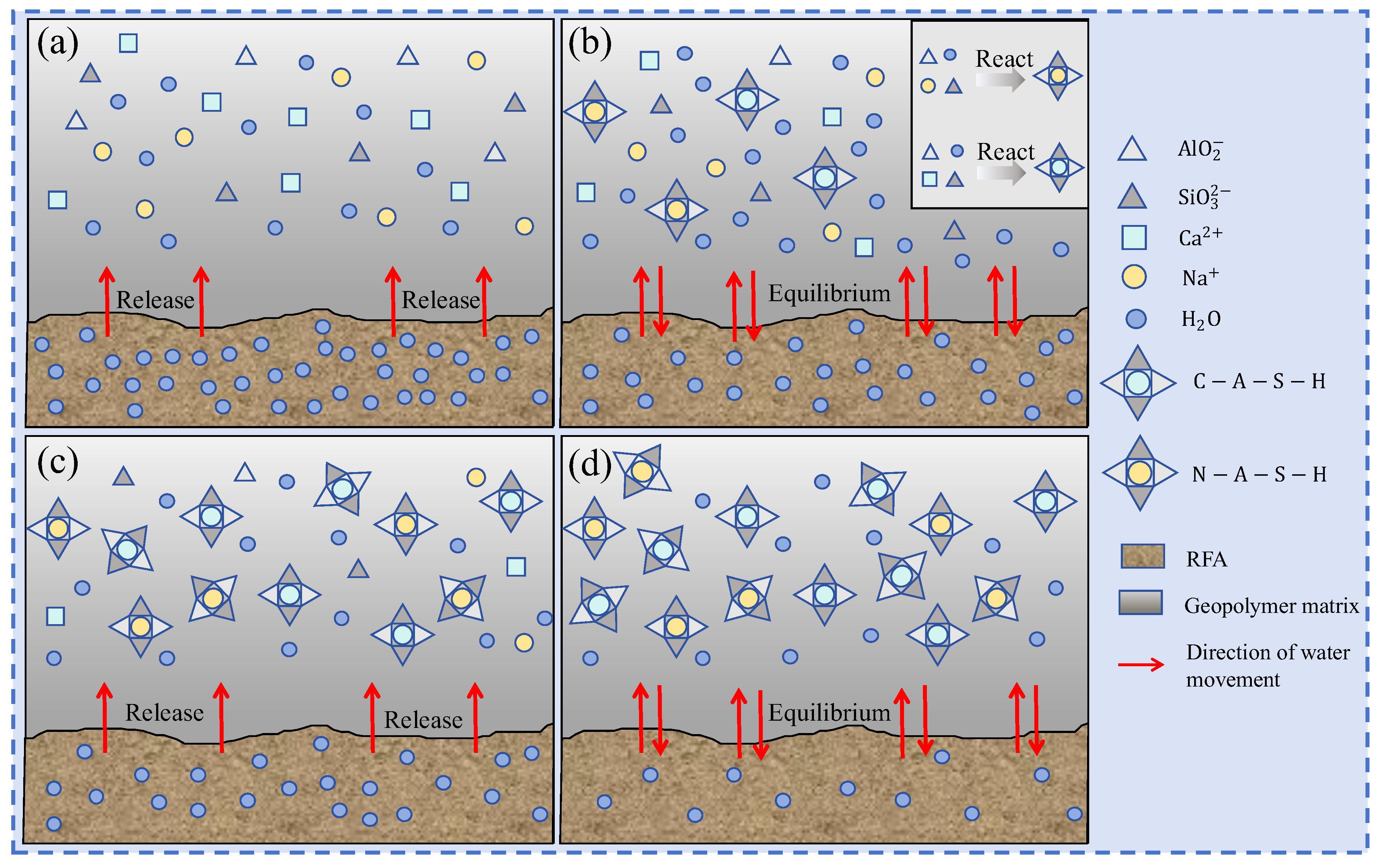
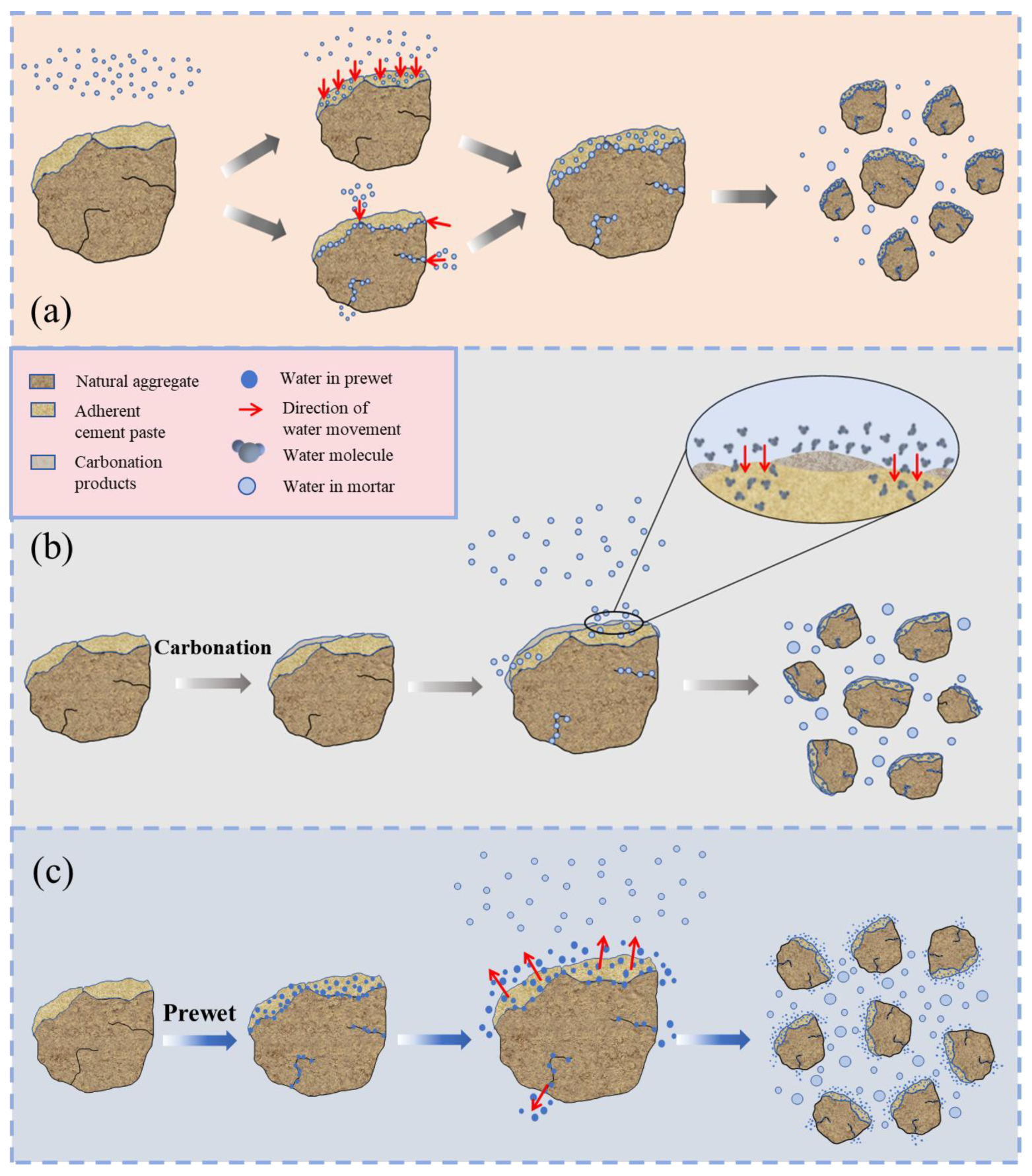
The fluidity of mortar was enhanced noticeably by pretreated RFA and the mechanisms of pretreatment on RFA are schematically illustrated in Figure 12. Prewetting elevates the internal moisture content of RFA, allowing gradual moisture release, and thereby effectively raising the overall water-to-binder ratio. In contrast, calcium carbonate and other pore-filling products are formed through carbonation treatment, which not only reduce the porosity and water absorption of RFA, but also moderately ameliorate the particle morphology. The resulting lower porosity of carbonated RFA contributes to a reduction in both dynamic yield stress and plastic viscosity, ultimately leading to improved fluidity of mortar [67].
The comparative evaluation of carbonation and prewetting pretreatments constitutes a central contribution of this study, as it reveals distinct modification pathways that operate through chemical and physical mechanisms, respectively. Understanding these differential mechanisms and effectiveness is essential for the rational design of pretreatment protocols tailored to specific performance requirements in geopolymer applications. It also represents a departure from the single-treatment studies that characterize much of the existing literature [53,68]. Carbonation treatment modifies RFA through a chemically driven densification process. The reaction between Ca(OH)2 in the adherent cement paste and dissolved CO2 generates CaCO3. The generated CaCO3 performs multiple functions through the following pathways. Firstly, the internal pores of the aggregates are filled with CaCO3 and silicoaluminates gel to form a calcium–silica composite layer. The high pH of the pore fluid promotes simultaneous dissolution and reaction of silica and calcium. Free Ca2+ migrates to the surface to increase aggregate hardness after carbonation [69]. Secondly, the interface is coated and reinforced. The CaCO3 renders the aggregate surface smoother and flatter, thereby enhancing overall microstructure. Finally, CaCO3 particles act as nucleation sites which facilitate the formation and growth of C-S-H gel on both the aggregate surface and internal pores, filling the ITZ and reducing aggregate porosity. SEM observations (Figure 9) corroborate this mechanism, revealing densification products within the ITZ of RGM with carbonated RFA.
By contrast, the primary effect of prewetting treatment is the elevation of internal moisture content within the RFA, which is gradually released during mixing and curing to supplement the free water available for geopolymerization. The three-stage internal curing mechanism identified in this study (Figure 13) adapts the framework of Tan et al. [70] and Zhang et al. [68] to the distinct water consumption kinetics of geopolymerization. In the first stage (initial curing), moisture released during mixing establishes a dynamic equilibrium of water exchange between aggregates and matrix. The second stage (mid-curing stage) is characterized by substantial water consumption due to the ongoing geopolymerization reaction. Cracks can be caused in this stage by the negative pressure generated at the concave liquid surface. At this point, prewetted RFA releases stored water under the influence of water concentration gradients to alleviate the formation of concave liquid surfaces. In the third stage (late curing), water is extensively consumed through geopolymerization reactions which is largely complete. The water exchange between aggregates and the matrix returns to a dynamic equilibrium once again. This three-stage model provides a conceptual framework for understanding the function of prewetted RFA as an internal curing agent specifically within geopolymer systems.
The differential effectiveness of the two pretreatment methods carries clear practical implications. Carbonation outperforms prewetting in improving compressive strength, reducing water absorption, and densifying the ITZ, while prewetting excels in enhancing fluidity and setting time.

5. Conclusions

This study systematically investigated the effects of different pretreatment methods (carbonation and prewetting) and replacement ratios (0–100%) of recycled fine aggregate (RFA) on the performance of recycled geopolymer mortar (RGM) incorporating recycled powder (RP). The reaction mechanism and performance of RGM were compared with recycled cement mortar (RCM). The main conclusions can be drawn as follows:
(1)
With the RFA replacement ratio increasing from 0% to 100%, the fluidity and setting time of the G0 series decreased, whereas water absorption increased markedly from 4.6% to 13%. Compressive strength exhibited only a modest reduction at replacement ratios below 40%, but dropped by 26.2% at a replacement level of 100%.
(2)
Compared with RCM, RGM exhibited lower fluidity (28.3% reduction at 100% RFA), shorter setting time, and notably higher compressive strength (14.3% increase at 100% RFA). SEM analysis revealed that the geopolymerization reaction between RFA and geopolymer binder formed a denser microstructure and stronger interfacial transition zone (ITZ), which leads to the higher compressive strength than RCM.
(3)
Carbonation pretreatment effectively mitigated the negative impact of RFA on compressive strength, water absorption, and microstructure, while prewetting pretreatment enhanced fluidity and setting time. Based on gray relational, environmental, and economic analysis, using 60% carbonated RFA is the optimal choice for practical engineering applications.
(4)
Comparative evaluation of pretreatment methods revealed distinct mechanisms. The calcium carbonate and secondary C-A-S-H gels formed through carbonation optimized the ITZ of RFA, which effectively reduce cracks and pores. Prewetted RFA supported more geopolymerization due to the “internal curing” treatment, which contributed to a certain enhancement of the microstructure of mortar.
(5)
The findings carry practical significance for deploying RGM in construction. Strength retention supports untreated RFA for non-structural or semi-structural uses, reducing natural aggregate dependence. Carbonation pretreatment provides a viable route to enhance material strength. The fluidity improvement from prewetting addresses constructability requirements including pumping, placement, and compaction in congested reinforcement zones.
However, it should be noted that certain limitations can be identified in this study, e.g., the absence of durability assessments and drying shrinkage behavior of the prepared RGM. Future research should first evaluate carbonation protocols (wet, semi-dry) regarding efficiency, energy consumption, and industrial scalability. Second, advanced characterization (e.g., XRD, FTIR, NMR) is required to elucidate nanoscale geopolymerization evolution and ITZ bonding mechanisms. Third, multi-scale predictive models linking RFA characteristics, pretreatment parameters, and long-term performance would advance science-based rational design.

Author Contributions

Z.Z.: conceptualization, writing—review and editing, validation. Y.W.: investigation, visualization, writing—original draft preparation. X.S.: conceptualization, methodology, writing—review and editing. C.L.: data curation, visualization, resources. L.C.: writing—review and editing, validation. All authors have read and agreed to the published version of the manuscript.

Funding

The authors would like to thank the National Key Research and Development Program of China (Grant number: 2025YFE0199600) and the Fundamental Research Funds for the Central Universities (Tongji University, funding number: 22120260196). The corresponding author thanks the support from the National Natural Science Foundation of China (No. 52578313) and Sichuan Province International Science and Technology Innovation Cooperation Project (No. 25GJHZ0191).

Data Availability Statement

The original contributions presented in this study are included in the article. Further inquiries can be directed to the corresponding author.

Conflicts of Interest

The authors declare no conflicts of interest.

References

  1. Zoë, L. Beyond an Age of Waste: Turning Rubbish into a Resource; UNEP, Ed.; Global waste management outlook; UNEP: Nairobi, Kenya, 2024. [Google Scholar]
  2. Xu, Y.; Chen, H.; Liang, Y.; Shen, J.; Yang, H. Study on Fracture Characteristics and Fracture Mechanism of Fully Recycled Aggregate Concrete Using AE and DIC Techniques. Constr. Build. Mater. 2024, 419, 135540. [Google Scholar] [CrossRef]
  3. Luo, W.; He, X.; Li, R.; Zhong, H.; Dong, B.; Fang, G. Investigation of “Internal-External” Enhanced Method for Recycled Aggregate. Constr. Build. Mater. 2025, 467, 140405. [Google Scholar] [CrossRef]
  4. Hossein, A.; Jafari, H.; Khoshnazar, R. The Role of Performance Metrics in Comparative LCA of Concrete Mixtures Incorporating Solid Wastes: A Critical Review and Guideline Proposal. Waste Manag. 2022, 140, 40–54. [Google Scholar] [CrossRef] [PubMed]
  5. Liang, C.; Bao, J.; Gu, F.; Lu, J.; Ma, Z.; Hou, S.; Duan, Z. Determining the Importance of Recycled Aggregate Characteristics Affecting the Elastic Modulus of Concrete by Modeled Recycled Aggregate Concrete: Experiment and Numerical Simulation. Cem. Concr. Compos. 2025, 162, 106118. [Google Scholar] [CrossRef]
  6. Wan, L.; Qiao, J.; Zhang, G. Effect of Pre-Soaking Saturated Limewater and Sodium Bicarbonate Catalysis on Carbonation of Recycled Fine Aggregates. Constr. Build. Mater. 2025, 464, 140228. [Google Scholar] [CrossRef]
  7. Shi, X.; Lyu, S.; Wang, Q.; Xiao, J.; Li, Y. Experimental Study on the Effect of Carbonate Ions on ITZs of Geopolymeric Recycled Concrete. Constr. Build. Mater. 2024, 446, 137919. [Google Scholar] [CrossRef]
  8. Zhang, M.; Cheng, C.; Chiang, K.; Wang, X.; Zhu, Y.; Zhao, Z.; Luo, H. Influence of Nano-Silicon Dioxide in the Enhancement of Surface Structure of Public Filler and Properties of Recycled Mortar. Buildings 2024, 14, 2093. [Google Scholar] [CrossRef]
  9. Guo, G.; Wang, X.; Zhang, D.; Yang, N.; Ding, X.; Zhang, X.; Ma, X. Freeze-Thaw Resistance and Carbon Sequestration Capacity of Recycled Aggregate Concrete Incorporating Carbide Slag Slurry Pre-Immersed and Carbonation-Cured Aggregates. Eur. J. Environ. Civ. Eng. 2026, 30, 2647990. [Google Scholar] [CrossRef]
  10. Kou, S.; Poon, C. Properties of Concrete Prepared with PVA-Impregnated Recycled Concrete Aggregates. Cem. Concr. Compos. 2010, 32, 649–654. [Google Scholar] [CrossRef]
  11. Abbas, A.; Fathifazl, G.; Burkan Isgor, O.; Razaqpur, A.; Fournier, B.; Foo, S. Proposed Method for Determining the Residual Mortar Content of Recycled Concrete Aggregates. J. ASTM Int. 2008, 5, 1–12. [Google Scholar] [CrossRef]
  12. Katz, A. Treatments for the Improvement of Recycled Aggregate. J. Mater. Civ. Eng. 2004, 16, 597–603. [Google Scholar] [CrossRef]
  13. Saraswat, P.; Parihar, M.; Sandeep, K.; Singh, B. Low-Concentration Acid Treatment of Adhered Mortar in RCA: A Multiscale Study Using Image Analysis. J. Mater. Civ. Eng. 2025, 37, 04025320. [Google Scholar] [CrossRef]
  14. Dimitriou, G.; Savva, P.; Petrou, M. Enhancing Mechanical and Durability Properties of Recycled Aggregate Concrete. Constr. Build. Mater. 2018, 158, 228–235. [Google Scholar] [CrossRef]
  15. Chen, X.; Hao, H.; de Brito, J.; Liu, G.; Wang, J. Discussion of the Implementation of Water Compensation Methods for Recycled Aggregate Concrete: A Critical Review. Cem. Concr. Compos. 2025, 161, 106080. [Google Scholar] [CrossRef]
  16. Tam, V.; Butera, A.; Le, K. Carbon-Conditioned Recycled Aggregate in Concrete Production. J. Clean. Prod. 2016, 133, 672–680. [Google Scholar] [CrossRef]
  17. Mistri, A.; Bhattacharyya, S.; Dhami, N.; Mukherjee, A.; Barai, S. A Review on Different Treatment Methods for Enhancing the Properties of Recycled Aggregates for Sustainable Construction Materials. Constr. Build. Mater. 2020, 233, 117894. [Google Scholar] [CrossRef]
  18. Kaptan, K.; Cunha, S.; Aguiar, J. A Review: Construction and Demolition Waste as a Novel Source for CO2 Reduction in Portland Cement Production for Concrete. Sustainability 2024, 16, 585. [Google Scholar] [CrossRef]
  19. Zhang, P.; Su, J.; Gao, Z.; Zhang, T. Effect of Sand-Precursor Ratio on Mechanical Properties and Durability of Geopolymer Mortar with Manufactured Sand. Rev. Adv. Mater. Sci. 2024, 63, 20230170. [Google Scholar] [CrossRef]
  20. Gursel, A.; Masanet, E.; Horvath, A.; Stadel, A. Life-Cycle Inventory Analysis of Concrete Production: A Critical Review. Cem. Concr. Compos. 2014, 51, 38–48. [Google Scholar] [CrossRef]
  21. Wang, W.; Zhang, P.; Dai, X.; Zheng, Y.; Hu, S. Workability of Self-Compacting Geopolymer Concrete: The Effect of Nano-SiO2 and Steel-Polyvinyl Alcohol Hybrid Fiber. Constr. Build. Mater. 2025, 460, 139849. [Google Scholar] [CrossRef]
  22. Ariyadasa, P.; Manalo, A.; Lokuge, W.; Aravinthan, V.; Gerdes, A.; Kaltenbach, J.; Galvan, B. Macro and Microstructural Evolution of Low-Calcium Fly Ash-Based Geopolymer Mortar Exposed to Sulphuric Acid Corrosion. Cem. Concr. Res. 2024, 178, 107436. [Google Scholar] [CrossRef]
  23. Shill, S.K.; Al-Deen, S.; Ashraf, M.; Hutchison, W. Resistance of Fly Ash Based Geopolymer Mortar to Both Chemicals and High Thermal Cycles Simultaneously. Constr. Build. Mater. 2020, 239, 117886. [Google Scholar] [CrossRef]
  24. Rakhimova, N.; Shi, C. Factors Affecting the Performance of Fly Ash-Slag Geopolymers. J. Mater. Civ. Eng. 2026, 38, 03126003. [Google Scholar] [CrossRef]
  25. Alves, L.; Leklou, N.; de Simone e Souza, F.; de Barros, S. Effects of Thermal Activation on Mechanical Performance and Sustainability of Slag-Based Geopolymers. Materials 2025, 18, 4419. [Google Scholar] [CrossRef] [PubMed]
  26. Guo, W.; Yao, W.; Liang, G.; Shi, C.; She, A.; Wei, Y. Mechanical Properties, Microstructure and Life-Cycle Assessment of Eco-Friendly Cementitious Materials Containing Circulating Fluidized Bed Fly Ash and Ground Granulated Blast Furnace Slag. J. Build. Eng. 2024, 95, 110293. [Google Scholar] [CrossRef]
  27. Ambikakumari Sanalkumar, K.; Yang, E. Effect of Mix Design Factors on the Self-Stress-Sensing Behavior of Metakaolin-Based Geopolymer. Cem. Concr. Compos. 2025, 161, 106093. [Google Scholar] [CrossRef]
  28. Howes, M.; Nystrom, P.; Cruz, R.; Souza, M.; De Matos, P.; Rodríguez, E. Enhanced High-Temperature Stability of Metakaolin-Based Geopolymers: Impact of Synthesis Parameters on Structural Integrity up to 1000 °C. Ceram. Int. 2026, 52, 3857–3869. [Google Scholar] [CrossRef]
  29. Liang, G.; Yao, W.; She, A. Rheology and Microstructure of Lithium Slag/Metakaolin Geopolymer Pastes: Insights from Particle Packing and Water Dynamic Evolution. J. Build. Eng. 2024, 95, 110261. [Google Scholar] [CrossRef]
  30. Wong, C.; Mo, K.; Alengaram, U.; Yap, S. Mechanical Strength and Permeation Properties of High Calcium Fly Ash-Based Geopolymer Containing Recycled Brick Powder. J. Build. Eng. 2020, 32, 101655. [Google Scholar] [CrossRef]
  31. Sharmin, S.; Sarker, P.; Biswas, W.; Abousnina, R.; Javed, U. Characterization of Waste Clay Brick Powder and Its Effect on the Mechanical Properties and Microstructure of Geopolymer Mortar. Constr. Build. Mater. 2024, 412, 134848. [Google Scholar] [CrossRef]
  32. Statkauskas, M.; Vaičiukynienė, D.; Grinys, A.; Dvořák, K. Effect of Elevated Temperature on Mechanical Properties of Ceramic Brick and Metakaolin Waste-Based Geopolymer Mortar. Constr. Build. Mater. 2025, 489, 140431. [Google Scholar] [CrossRef]
  33. Xu, J.; Kang, A.; Wu, Z.; Gong, Y.; Xiao, P. The Effect of Mechanical-Thermal Synergistic Activation on the Mechanical Properties and Microstructure of Recycled Powder Geopolymer. J. Clean. Prod. 2021, 327, 129477. [Google Scholar] [CrossRef]
  34. Xu, J.; Kang, A.; Wu, Z.; Xiao, P.; Gong, Y. Evaluation of Workability, Microstructure and Mechanical Properties of Recycled Powder Geopolymer Reinforced by Waste Hydrophilic Basalt Fiber. J. Clean. Prod. 2023, 396, 136514. [Google Scholar] [CrossRef]
  35. Huang, J.; Zou, C.; Sun, D.; Yang, B.; Yan, J. Effect of Recycled Fine Aggregates on Alkali-Activated Slag Concrete Properties. Structures 2021, 30, 89–99. [Google Scholar] [CrossRef]
  36. Liu, X.; Wen, Y.; Chen, S.; Jiang, M. Geopolymer Cold-Bonded Lightweight Aggregate Concrete: Mechanical Properties and Microstructure. Constr. Build. Mater. 2025, 465, 140261. [Google Scholar] [CrossRef]
  37. Nuaklong, P.; Wongsa, A.; Sata, V.; Boonserm, K.; Sanjayan, J.; Chindaprasirt, P. Properties of High-Calcium and Low-Calcium Fly Ash Combination Geopolymer Mortar Containing Recycled Aggregate. Heliyon 2019, 5, e02513. [Google Scholar] [CrossRef] [PubMed]
  38. Nuaklong, P.; Wongsa, A.; Boonserm, K.; Ngohpok, C.; Jongvivatsakul, P.; Sata, V.; Sukontasukkul, P.; Chindaprasirt, P. Enhancement of Mechanical Properties of Fly Ash Geopolymer Containing Fine Recycled Concrete Aggregate with Micro Carbon Fiber. J. Build. Eng. 2021, 41, 102403. [Google Scholar] [CrossRef]
  39. Singh, P.; Kapoor, K. Effect of Coarse and Fine Recycled Concrete Aggregates on the Performance of Geopolymer Concrete. Iran. J. Sci. Technol. Trans. Civ. Eng. 2024, 48, 4061–4073. [Google Scholar] [CrossRef]
  40. Arumugam, A.; Soundarapandian, N. Experimental Study on Characteristics of Fly Ash-GGBS-Based Geopolymer Concrete with Demolition Waste as Fine Aggregate. J. Mater. Civ. Eng. 2024, 36, 04023522. [Google Scholar] [CrossRef]
  41. Zhong, H.; Fu, H.; Feng, Y.; Li, L.; Zhang, B.; Chen, Z.; Lu, Z.; Xie, J. Compressive Behaviors of High-Strength Geopolymeric Concretes: The Role of Recycled Fine Aggregate. Buildings 2024, 14, 1097. [Google Scholar] [CrossRef]
  42. Zhu, C.; Fang, Y.; Wei, H. Carbonation-Cementation of Recycled Hardened Cement Paste Powder. Constr. Build. Mater. 2018, 192, 224–232. [Google Scholar] [CrossRef]
  43. JGJ/T 70-2009; Standard for Test Method of Performance on Building Mortar. China Architecture & Building Press: Beijing, China, 2009. (In Chinese)
  44. GB/T 2419-2005; Test Method for Fluidity of Cement Mortar. China Standards Press: Beijing, China, 2005. (In Chinese)
  45. Kim, J. Influence of Quality of Recycled Aggregates on the Mechanical Properties of Recycled Aggregate Concretes: An Overview. Constr. Build. Mater. 2022, 328, 127071. [Google Scholar] [CrossRef]
  46. Valente, M.; Sambucci, M.; Sibai, A. Geopolymers vs. Cement Matrix Materials: How Nanofiller Can Help a Sustainability Approach for Smart Construction Applications—A Review. Nanomaterials 2021, 11, 2007. [Google Scholar] [CrossRef] [PubMed]
  47. Scheinherrova, L.; Vejmelkova, E.; Keppert, M.; Dolezelova, M.; Rovnanikova, P.; Cerny, R. Effects of Accelerated Carbonation on Properties of Ceramic-Based Geopolymers. J. Therm. Anal. Calorim. 2021, 145, 2951–2966. [Google Scholar] [CrossRef]
  48. Ameri, F.; Merta, I. Second-Generation Recycled Concrete Aggregates: Comprehensive Characterization of Physical, Mechanical, and Microstructural Properties. Recycling 2025, 10, 193. [Google Scholar] [CrossRef]
  49. Abuowda, E.; El-Hassan, H.; El-Maaddawy, T. Characterization of Geopolymer Masonry Mortars Incorporating Recycled Fine Aggregates. Sustainability 2024, 16, 8147. [Google Scholar] [CrossRef]
  50. Hu, Y.; Tang, Z.; Li, W.; Li, Y.; Tam, V. Physical-Mechanical Properties of Fly Ash/GGBFS Geopolymer Composites with Recycled Aggregates. Constr. Build. Mater. 2019, 226, 139–151. [Google Scholar] [CrossRef]
  51. Sidhu, J.; Kumar, P. Development of Hydrophobicity in Geopolymer Composites-Progress and Perspectives. Constr. Build. Mater. 2023, 396, 132344. [Google Scholar] [CrossRef]
  52. Ruan, S.; Chen, S.; Lu, J.; Zeng, Q.; Liu, Y.; Yan, D. Waterproof Geopolymer Composites Modified by Hydrophobic Particles and Polydimethylsiloxane. Compos. Part B-Eng. 2022, 237, 109865. [Google Scholar] [CrossRef]
  53. Le, T.; Le Saout, G.; Garcia-Diaz, E.; Betrancourt, D.; Remond, S. Hardened Behavior of Mortar Based on Recycled Aggregate: Influence of Saturation State at Macro- and Microscopic Scales. Constr. Build. Mater. 2017, 141, 479–490. [Google Scholar] [CrossRef]
  54. Zhao, Y.; Zeng, W.; Zhang, H. Properties of Recycled Aggregate Concrete with Different Water Control Methods. Constr. Build. Mater. 2017, 152, 539–546. [Google Scholar] [CrossRef]
  55. Li, M.; Xue, C.; Gao, X.; Zhao, Q. Alkali Activation Effect on Geopolymer Cementitious Systems: Microstructural Evolution Study and GA-BP Neural Network-Based Strength Simulation. Constr. Build. Mater. 2025, 494, 143411. [Google Scholar] [CrossRef]
  56. Zhang, T.; Cui, J.; Chen, M.; Yang, J.; Yan, Z.; Zhang, M. Durability of Concrete Containing Carbonated Recycled Aggregates: A Comprehensive Review. Cem. Concr. Compos. 2025, 156, 105865. [Google Scholar] [CrossRef]
  57. Asadoullahtabar, S.; Asgari, A.; Tabari, M. Assessment, Identifying, and Presenting a Plan for the Stabilization of Loessic Soils Exposed to Scouring in the Path of Gas Pipelines, Case Study: Maraveh-Tappeh City. Eng. Geol. 2024, 342, 107747. [Google Scholar] [CrossRef]
  58. ISO 14040:2006; Environmental Management—Life Cycle Assessment—Principles and Framework. International Organization for Standardization: Geneva, Switzerland, 2006.
  59. ISO 14044:2006; Environmental Management—Life Cycle Assessment—Requirements and Guidelines. International Organization for Standardization: Geneva, Switzerland, 2006.
  60. T/CBMF 27-2018; Methods and Requirements of Low-Carbon Products Evaluation for Ready-Mixed Concrete. China Building Materials Press: Beijing, China, 2018. (In Chinese)
  61. Schiefer, C.; Plank, J. CO2 Emission of Polycarboxylate Superplasticizers (PCEs) Used in Concrete. J. Clean. Prod. 2023, 427, 138785. [Google Scholar] [CrossRef]
  62. Imtiaz, L.; Kashif-ur-Rehman, S.; Alaloul, W.; Nazir, K.; Javed, M.; Aslam, F.; Musarat, M. Life Cycle Impact Assessment of Recycled Aggregate Concrete, Geopolymer Concrete, and Recycled Aggregate-Based Geopolymer Concrete. Sustainability 2021, 13, 13515. [Google Scholar] [CrossRef]
  63. Siciliano, U.; Zhao, J.; Constâncio Trindade, A.; Liebscher, M.; Mechtcherine, V.; de Andrade Silva, F. Influence of Curing Temperature and Pressure on the Mechanical and Microstructural Development of Metakaolin-Based Geopolymers. Constr. Build. Mater. 2024, 424, 135852. [Google Scholar] [CrossRef]
  64. Luo, X.; Huang, L.; Yan, L.; Li, Y.; Wei, L.; Chen, Z.; Qu, Y. Preparation of Geopolymers from Thermally Activated Lithium Slag: Activity Enhancement and Microstructure. J. Build. Eng. 2024, 88, 109256. [Google Scholar] [CrossRef]
  65. Garcia-Lodeiro, I.; Palomo, A.; Fernández-Jiménez, A. An Overview of the Chemistry of Alkali-Activated Cement-Based Binders. In Handbook of Alkali-Activated Cements, Mortars and Concretes; Elsevier: Amsterdam, The Netherlands, 2015; pp. 19–47. [Google Scholar]
  66. Kommanamanchi, V.; Duddu, S.; Chennarapu, H. Comparison of Physical and Engineering Properties of Recycled and Natural Sand for Engineering Applications. In Proceedings of the 5th International Conference on Transportation Geotechnics (ICTG) 2024, Volume 5; Rujikiatkamjorn, C., Xue, J., Indraratna, B., Eds.; Springer: Singapore, 2025; Volume 406, pp. 139–149. [Google Scholar]
  67. Xiao, J.; Deng, Q.; Duan, Z.; Hou, S. Carbonization Modification of Recycled Fine Aggregates and Its Effect on Mortar Rheology. Carbonization Modification of Recycled Fine Aggregates and Its Effect on Mortar Rheology. J. Appl. Basic Eng. Sci. 2024, 32, 1486–1495. (In Chinese) [Google Scholar] [CrossRef]
  68. Zhang, H.; Xu, X.; Liu, W.; Zhao, B.; Wang, Q. Influence of the Moisture States of Aggregate Recycled from Waste Concrete on the Performance of the Prepared Recycled Aggregate Concrete (RAC)—A Review. Constr. Build. Mater. 2022, 326, 126891. [Google Scholar] [CrossRef]
  69. Ma, Z.; Jiang, Y.; He, J.; Shen, P.; Qin, Q.; Gu, Z.; Li, J.; Poon, C. Revealing the Connection between Carbonation Regimes and Early Pozzolanic Reactivity of Recycled Concrete Powder: Impact of Composition and Microstructure. Cem. Concr. Res. 2024, 186, 107697. [Google Scholar] [CrossRef]
  70. Tan, Y.; Yan, P.; Wei, Y.; Duan, M. Study on the Influence of Internal Curing Mechanisms on the Macro- and Micro-Mechanical Properties of Recycled Concrete Materials. Funct. Mater. 2024, 55, 9127–9138. (In Chinese) [Google Scholar]
Figure 1. The outline of experimental program.
Buildings 16 03042 g001
Figure 2. Fluidity of mortars: (a) mixtures G0 and C0 prepared with untreated RFA; and (b) mixtures G0, G1, and G2 prepared with RFA subjected to different pretreatment methods.
Buildings 16 03042 g002
Figure 3. Setting time of mortars: (a) mixtures G0 and C0 prepared with untreated RFA; and (b) mixtures G0, G1, and G2 prepared with RFA subjected to different pretreatments.
Buildings 16 03042 g003
Figure 4. Water absorption of mortars: (a) mixtures G0 and C0 prepared with untreated RFA; and (b) mixtures G0, G1, and G2 prepared with RFA subjected to different pretreatments.
Buildings 16 03042 g004
Figure 5. Compressive strength of mixtures G0 and C0 at different RFA replacement ratios.
Buildings 16 03042 g005
Figure 6. Compressive strength of RGM prepared with RFA subjected to different pretreatment methods after 28 days.
Buildings 16 03042 g006
Figure 7. The relative compressive strength of RGM (normalized to G0-0).
Buildings 16 03042 g007
Figure 8. SEM images of recycled mortar: (a) RCM containing 20% RFA; (b) RCM containing 80% RFA; (c) RGM containing 20% RFA; and (d) RGM containing 80% RFA.
Buildings 16 03042 g008
Figure 9. SEM images of RGM specimens prepared with RFA subjected to different pretreatment methods: (a) untreated; (b) carbonation; and (c) prewet.
Buildings 16 03042 g009
Figure 10. Grey relational analysis of the different RFA replacement ratio.
Buildings 16 03042 g010
Figure 11. Net CO2 emissions and total cost of OPC and RGM.
Buildings 16 03042 g011
Figure 12. Mechanism of pretreatment on RFA: (a) untreated; (b) carbonation; (c) prewet.
Buildings 16 03042 g012
Figure 13. Schematic illustration of water exchange behavior of prewetted RFA: (a) mixing stage; (b) initial curing; (c) mid-curing; and (d) late curing.
Buildings 16 03042 g013
Table 1. Previous summary on geopolymer concrete or mortar based on RFA.
ReferenceBindersAlkaline ActivatorRFA Replacement RatioRemarks
Nuaklong et al. [37]FA NaOH ,   Na 2 SiO 3   ( M s = 2.5)0%, 25%, 50%, 75%, 100%The rate of deterioration on the sulfuric acid increased with the RFA content, the weight loss was the highest (77.0%) for the 100%RFA mixture.
Nuaklong et al. [38]FA NaOH ,   Na 2 SiO 3   ( M s = 2.5)0%, 50%, 100%The splitting tensile strength and flexural strength of RGM with 100% RFA decreased 26.9% and 35.9%, respectively.
Singh et al. [39]FA NaOH ,   Na 2 SiO 3   ( M s = 2.0)0%, 25%, 50%, 75%, 100%The compressive strength of RGC containing 25% and 100% RFA reached 88% and 50% of reference mortar, respectively.
Arumugam et al. [40]FA, GGBFS NaOH ,   Na 2 SiO 3   ( M s = 2.2)0%, 25%, 50%, 75%, 100%RGC with 25%, 50%, 75%, and 100% RFA had 7%, 17%, 23%, and 31% higher effective porosity than reference mortar, respectively.
Zhong et al. [41]FA, GGBFS NaOH ,   Na 2 SiO 3   ( M s = 3.2)0%, 25%, 50%, 75%, 100%With increasing RFA, the damage was mainly concentrated at the interface associated with the attached cement paste.
M s refers to the modulus of sodium silicate.
Table 2. Main chemical composition of RP, FA, slag, and cement (%).
BindersSiO2Al2O3Fe2O3CaOMgOK2ONa2O
RP52.8016.684.8115.403.422.470.35
FA60.6013.517.295.120.771.900.91
Slag28.2113.100.4835.677.760.320.46
Cement25.0011.503.2851.103.020.95/
Table 3. Properties of used fine aggregates.
AggregateBulk Density (kg/m3)Apparent Density
(kg/m3)
Fineness ModulusWater Absorption (%)
RFA1209.62374.93.58.5
NFA1342.02573.02.31.2
Table 4. The mix proportions of RGM and RCM (kg).
GroupBinding MaterialsAlkaline ActivatorFine AggregateWaterWater ReducerPretreatment Method for RFA
CementRPFASlagRFANFA
G0-002505002503880100000Untreated
G0-200250500250388200800
G0-400250500250388400600
G0-600250500250388600400
G0-800250500250388800200
G0-100025050025038810000
G1-20025050025038820080000Carbonation
G1-400250500250388400600
G1-600250500250388600400
G1-800250500250388800200
G1-100025050025038810000
G2-20025050025038820080000Prewetting
G2-400250500250388400600
G2-600250500250388600400
G2-800250500250388800200
G2-100025050025038810000
C0-08592060000106526026Untreated
C0-20859206000213852
C0-40859206000426639
C0-60859206000639426
C0-80859206000852213
C0-10085920600010650
G refers to geopolymer mortar, C refers to cement mortar, 1 refers to carbonation, 2 refers to prewetting, 0 refers to untreated. Water reducer is polycarboxylate superplasticizer made by a company located in Shanxi province.
Disclaimer/Publisher’s Note: The statements, opinions and data contained in all publications are solely those of the individual author(s) and contributor(s) and not of MDPI and/or the editor(s). MDPI and/or the editor(s) disclaim responsibility for any injury to people or property resulting from any ideas, methods, instructions or products referred to in the content.