Article

The Application of the Swiss Cheese Model to Construct the 5E Framework in Hong Kong Construction Safety: Evidence from Tai Po Wang Fuk Court Fire Incident


1
Division of Business and Hospitality Management, College of Professional and Continuing Education, The Hong Kong Polytechnic University, Hong Kong, China
2
Liverpool Hope Business School, Liverpool Hope University, Liverpool L16 9JD, UK
*
Author to whom correspondence should be addressed.
Buildings 2026, 16(15), 3040; https://doi.org/10.3390/buildings16153040
Submission received: 3 May 2026 / Revised: 20 July 2026 / Accepted: 29 July 2026 / Published: 31 July 2026

Abstract

The construction industry is a critical pillar of Hong Kong’s economic development and urban growth, yet it continues to face significant safety challenges amid increasing construction activity and workforce demands. While efforts to accelerate housing development and infrastructure projects are essential for addressing societal needs, they must be balanced with effective measures to prevent accidents and manage workplace hazards. This paper reviews the common causes, patterns, and emerging trends of construction-related accidents in Hong Kong and examines the Tai Po Wang Fuk Court fire as a representative case study of systemic safety failure. Using documentary evidence on a fire that caused 168 deaths, 79 injuries, and spread across seven of eight towers, the study identifies five aligned failure layers. Drawing upon archival records, official reports, legislative documents, and public accounts, the study applies James Reason’s Swiss Cheese Model to demonstrate how deficiencies in material selection, worker behaviour, fire protection systems, contractor management, and regulatory oversight aligned to enable the incident. Building on these findings, the paper proposes a 5E framework—Engineering, Education, Enforcement, Engagement, and Evaluation—to provide a structured approach for strengthening construction safety management and fire risk governance. The framework offers practical guidance for policymakers, regulators, contractors, property managers, and other stakeholders seeking to enhance safety culture, improve regulatory compliance, and promote resilience in the construction sector. The findings contribute to the broader discourse on construction safety by demonstrating how systemic failures can be translated into targeted interventions for preventing similar incidents in the future.

1. Introduction

Hong Kong building and construction firms have received widespread recognition for their accelerated construction of excellence, including high-rise office towers and apartment blocks over the past few decades. The deployment of custom construction methods, such as reclamation and design-and-build approaches, positions Hong Kong as a leader in Asia. In general, the construction sector has made a remarkable contribution to Hong Kong’s economic growth and society. The number of employees has increased steadily from 186,867 in 2022 to 195,840 in 2023. In the meantime, the gross value of construction works grew significantly from HK$398,599 in 2022 to HK$439,159 in 2023. In 2025, there were 1626 construction sites, comprising 849 public and 777 private sites [1]. With moderate global economic growth and reduced trade tensions between China and the United States, the Hong Kong construction industry is expected to expand steadily in 2026. In addition, the Hong Kong construction industry will grow at an average rate of 4% between 2027 and 2030. The rationale behind this is that the HKSAR government continuously upgrades housing projects and transport infrastructure. In particular, the Chinese government launched the 15th Five-Year Plan period (2026–2030), inclining towards Hong Kong as a crucial global innovation and technology hub, supported by foreign direct investment [2]. As such, the future trend of the Hong Kong construction industry will align with the emergence of an innovative and advanced economy [3]. However, large construction projects worldwide often face significant schedule and budget overruns. A study found that large construction projects experienced an average cost overrun of 28%. This underscores the need for robust safety and risk-management frameworks to handle complexity and prevent overruns [4].
Nevertheless, the construction industry is identified as the most hazardous due to its risky site conditions and the nature of the work. As such, the construction industry has recorded high fatality and accident rates [5]. In 2022, there were an average of 29.1 construction accidents per 1000 workers [6]. Indeed, 20 accidental deaths were reported in the construction industry in 2025, generating 76.9% of all such deaths (26 cases) in the overall economy [6]. The construction fatality rate was 0.162 per 1000 workers in 2022. In general, there are five main types of occupational injuries in the construction sector in 2022, namely falling or slipping on the same level (946 cases), struck by moving objects or against stationary objects (612 cases), carrying or lifting (585 cases), falling from height (213 cases), and trapped by overturning objects or between objects (180 cases) [6]. The government and industry practitioners have been inclined towards increasing safety measures in the construction sector. In particular, a safety management system has been legally enforced in Hong Kong since 1991. The enforcement of the safety management system aims to minimise workplace injuries, mitigate accidents, and encourage a safe working environment in the construction industry. However, serious construction accidents still occur in the industry every year [6]. Typical examples are the Happy Valley Racecourse Grandstand Collapse in 1918, Wing On Warehouse fire incident in Shek Tong Tsui in 1948, Garley Building Fire in 1996, International Commerce Centre Lift Shaft Accident in 2009, several severe incidents involving the contractor Aggressive Construction Engineering Limited from 2020 to 2023, and the Tai Po Wang Fuk Court Fire in 2025.
Basically, housing developments are complex, all-encompassing structures that combine multipurpose uses, generally including shopping malls, clubhouses with swimming pools, children’s playgrounds, squash/tennis courts, and fitness rooms. The main features of construction are prolonged, substantial, high-personnel mobility involving sophisticated equipment and diverse participants, and hazardous operations. Thus, it is crucial to fully investigate the driving forces behind unsafe behaviours among construction workers throughout the building process of a house, particularly in settings characterised by interdisciplinary team collaboration, sophisticated systems, an ever-changing site environment, and a sustained period [7,8]. In this study, the 5E framework (Engineering, Education, Enforcement, Engagement, and Evaluation) is adapted to enhance research on Occupational Health and Safety (OHS) [9,10,11,12,13] and re-specified for high-rise refurbishment works, with each element mapped to evidence from the Wang Fuk Court fire.
In general, this paper is organised into six sections. Section 1 provides an overview of the development of Hong Kong’s construction industry, together with the main trends, accident types, and notable construction-related incidents. Section 2 reviews the literature on construction safety management, construction accidents, and systems-based safety models. Section 3 presents the research methodology, describing the qualitative documentary case study design, data collection procedures, and the analytical approach adopted in this study. Section 4 introduces the representative case study of the Tai Po Wang Fuk Court fire incident and examines the key factors contributing to the safety failures. Building upon the case analysis, Section 5 applies James Reason’s Swiss Cheese Model and proposes the adapted 5E framework—Engineering, Education, Enforcement, Engagement, and Evaluation—to provide practical recommendations and a future roadmap for strengthening construction safety management in Hong Kong. Finally, Section 6 concludes the paper by discussing the theoretical and practical implications of the study, together with its limitations and directions for future research.

2. Literature Review

The construction sector is widely recognised as among the most hazardous, with the actions of construction workers consistently identified as the primary or direct cause of the overwhelming majority of fatalities and accidents. Several factors influence the hazardous actions of construction workers. The comprehensive study categorises the underlying factors of unsafe behaviours into three main aspects: organisational, environmental, and individual [14,15]. Main factors such as training scope, resource deployment, staffing levels, supervision intensity, and safety consciousness significantly influence construction worker performance. Apart from classical categorisation, research studies have increasingly exploited various intelligent and digital approaches to explore and reduce hazardous actions among construction workers, providing instantaneous and vital insights that support static factor analysis [16].
Reason’s Swiss cheese model conceptualises a safety system as a stack of defensive layers (“slices”), each with weaknesses (“holes”). Latent conditions and active failures create holes in these slices. An accident occurs when the holes in several slices align, allowing a hazard to pass through all defences. In a construction project, the slices correspond to distinct lines of defence: clear client requirements, competent design, suitable materials, safe construction methods, proper operation, and effective maintenance [17]. This model helps engineers visualise how vulnerabilities across design, materials, construction, and operation can combine to cause collapse. The Swiss cheese model is not just theoretical; it has been used in real accident investigations. In a recent technical note, a safety expert applied the model to analyse a construction-site electrocution [18]. The investigation showed that missing slices, such as insulated gloves and boots, a complete protective-earth conductor, and residual-current protection, were not aligned to allow a “live-to-earth” fault to reach a worker. Identifying these missing defences helped practitioners understand how to prevent similar incidents.
Five-part intervention frameworks are widely used in injury-prevention research. The conventional 5E framework comprises Engineering, Education, Encouragement, Enforcement and Evaluation. According to Table 1, the present study adapts this structure by replacing Encouragement with Engagement to reflect the importance of worker participation, resident reporting, contractor–property manager communication, and inter-agency collaboration in occupied high-rise refurbishment projects. The resulting Engineering–Education–Enforcement–Engagement–Evaluation framework should therefore be understood as an author-developed construction-safety governance adaptation rather than a pre-existing standard OHS framework.
Previous studies [30,31,32] assessed construction safety management in Hong Kong. Past research has assessed various factors, such as accident types and age, among others, in the context of upkeep and restoration. Yang et al. [16] also noted that current research mainly focuses on frequency-based indicators. In particular, the number of incidents and violation rates are identified as unsafe behaviours as separate, quantifiable incidents [33]. In addition, Chiang et al. [30] assessed fatal accidents in the Hong Kong construction sector through a historical analysis of data from the last two decades. Li et al. [34] conducted a study to compare factors that induce construction-related accidents in decoration, repair, and maintenance (DSR) projects and in high-rise buildings. In addition, Shafique and Rafiq [35] analysed construction accident data in Hong Kong between 2011 and 2017, identifying the most common accident types and highlighting the need for stronger safety management systems and technology-enabled prevention. Chow [36] further emphasised the fire risks associated with refurbishment works, demonstrating how scaffolding, temporary modifications to fire protection systems, and obstructed means of escape can accelerate fire spread in occupied buildings. At the behavioural level, Mo et al. [33] examined unsafe behaviours among construction workers based on personality trait theory, while Tsang et al. [37] investigated the factors influencing safety violations among construction workers. Collectively, these studies have advanced the understanding of construction safety from the perspectives of accident frequency, worker behaviour, risk assessment, and fire hazards. However, they largely examine these issues in isolation and provide limited insight into how organisational, technical, and regulatory failures interact during a catastrophic refurbishment fire. Table 2 summarises the key characteristics, findings, and limitations of previous studies and highlights the research gap addressed by the present study, which adopts a systems-based documentary case analysis of the Wang Fuk Court fire to examine interacting failure mechanisms and develop an adapted governance framework.
Overall, previous studies have examined accident frequencies, work-at-height fatalities, risk ranking, unsafe worker behaviour and refurbishment-related hazards largely as separate issues. The present study extends this literature by reconstructing how technical, behavioural, managerial and regulatory weaknesses interacted during a catastrophic occupied-building refurbishment fire and by translating the findings into an adapted construction-safety governance framework.

3. Methodology

This section describes the methodological approach adopted in this study to investigate the Wang Fuk Court fire as a representative case of construction safety failure during high-rise refurbishment works. A qualitative documentary case-study design was employed to collect and analyse evidence from multiple publicly available sources. The methodology comprises three components: the research design and case selection; the documentary data collection process; and the analytical procedures for interpreting the evidence with the Swiss Cheese Model and developing the adapted 5E framework.
During the preparation of this manuscript, the author used OpenAI ChatGPT (GPT-5.5) to assist in generating and refining the design of Figure 1 and Figure 2. The generated output was subsequently reviewed, edited, and verified by the author to ensure its accuracy, clarity, and consistency with the study. The author takes full responsibility for the content of this publication.

3.1. Research Design

This study adopts a qualitative documentary case-study design to examine how a major high-rise refurbishment fire developed and how multiple lines of defence failed across technical, behavioural, managerial, and regulatory levels. The purpose of the design is explanatory rather than statistical. Rather than estimating accident frequencies, the study reconstructs the sequence of events, identifies interacting failure mechanisms, and interprets them using the Swiss Cheese Model to derive practical governance implications.
The Wang Fuk Court fire was selected as a critical and extreme case for three reasons. First, it was a catastrophic event associated with ongoing high-rise refurbishment works, thereby directly linking the case to the study’s focus on construction safety and refurbishment risk. Second, the incident involved several interconnected issues central to the literature reviewed in this paper, including scaffolding, combustible temporary materials, worker practices, fire protection performance, contractor management, and regulatory oversight. Third, the scale of the event and the breadth of the documented institutional response make the case especially suitable for a systems-based analysis of accident causation. In this sense, the case is analytically valuable not because it is statistically typical, but because it reveals how latent conditions and active failures can align in a dense urban refurbishment context.

3.2. Data Collection

The study relied exclusively on publicly available documentary materials. Documents were collected from multiple source categories, including government investigation materials and public statements, Housing Authority and related estate management documents, Labour Department publications and accident-related materials, Legislative Council papers, official press releases and media briefings, homeowners’ meeting records where publicly reported or reproduced, technical standards and codes relevant to scaffolding and fire safety, reputable news reports, and academic literature on construction safety, refurbishment works, scaffolding, fire spread, safety culture, and systems-based accident causation.
Document selection followed a relevance-based strategy rather than a fixed date window. Materials were included when they had a direct bearing on one or more of the following: the refurbishment project, reported fire events, scaffolding and temporary protective materials, fire protection systems, contractor and management decisions, resident complaints, enforcement actions, or post-incident governance responses. No rigid temporal boundary was imposed because the objective was to capture both antecedent conditions and subsequent institutional responses. Priority was given to primary and official sources, while reputable news reports were used mainly to supplement chronology, corroborate details, and identify contested points requiring cross-checking.
Because the study used only public documents and did not involve interviews, surveys, or the collection of identifiable personal data, no human subjects were involved. Ethical risk was therefore minimal. Nevertheless, the analysis treated public accounts cautiously, clearly distinguished between official findings and media reporting, and avoided drawing single-source conclusions.

3.3. Data Analysis

The analysis proceeded in four stages. First, the documentary corpus was reviewed to reconstruct the chronology of the Wang Fuk Court incident, including pre-incident warnings, refurbishment conditions, ignition and fire spread, emergency response, and post-incident investigation and enforcement. Second, the documents were read iteratively and coded thematically. Deductive themes were defined in advance from the study’s conceptual framing and then refined during close reading. The principal themes were material selection, worker behaviour, fire protection systems, contractor management, and regulatory oversight.
Third, the coded evidence was mapped onto James Reason’s Swiss Cheese Model to identify how weaknesses in separate defensive layers aligned during the incident. This mapping allowed the study to move beyond isolated causal factors and to interpret the fire as the product of interacting latent conditions and active failures. On that basis, five aligned failure layers were identified: deficiencies in material and design safety, unsafe worker behaviour, impaired fire protection systems, weaknesses in contractor management, and gaps in regulatory oversight. Finally, the findings were synthesised into the adapted 5E framework. In this study, Engineering, Education, Enforcement, Engagement, and Evaluation were not treated as abstract categories alone; rather, they were specified from the case evidence so that each element corresponded to a documented pattern of failure and a practical area for intervention.
To strengthen trustworthiness, the analysis triangulated documents from different source types, cross-checked disputed facts against official or quasi-official records where available, and maintained transparency through a simple source matrix and an analytic memo trail that recorded document provenance, key claims, coding decisions, and links between evidence, Swiss Cheese layers, and 5E recommendations. The study nevertheless has limitations. It does not include new primary interviews, and the public documentary record may be incomplete or affected by reporting bias, especially in the early stages of a major disaster. These limitations were mitigated by prioritising official documents, comparing multiple accounts, and treating contested or evolving claims cautiously.

4. Case Study: Tai Po Wang Fuk Court Fire Incident

The Wang Fuk Court Fire was recorded as a five-alarm blaze that emerged in Tai Po on 26 November 2025. It is the most fatal fire disaster to occur in Hong Kong since the Wing On Warehouse fire in Shek Tong Tsui on 22 September 1948. As a result, the Wang Fuk Court Fire incident led to the injury of 79 people and 168 deaths.
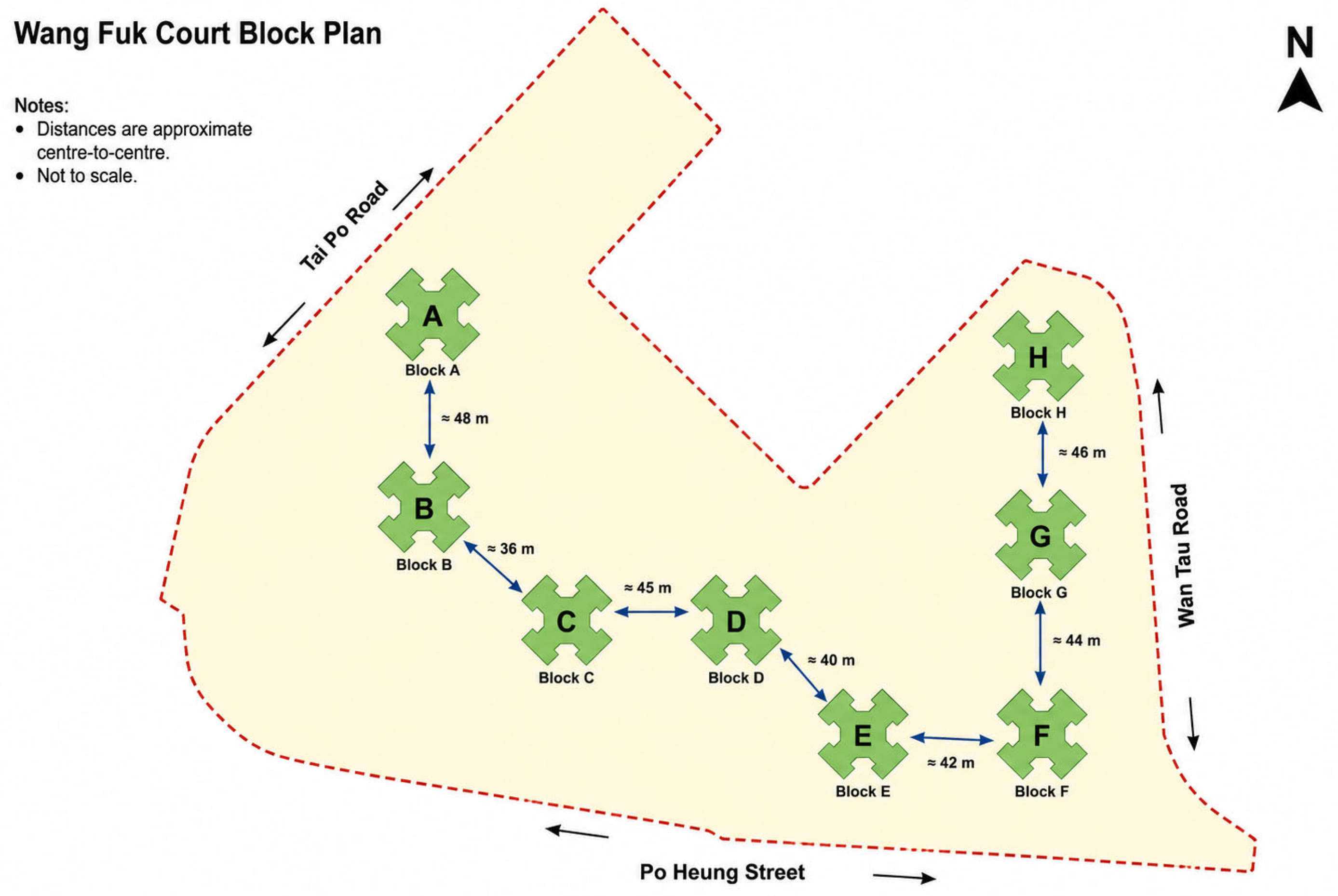
The fire began at 14:51 and burned for more than 43 h. The fire was eventually extinguished on the morning of 28 November 2025. The complex experienced a HK$336 million refurbishment during the blaze. Safety netting and bamboo scaffolding covered all eight surrounding blocks to prevent the flames. As a result, seven out of the eight 31-storey blocks were overwhelmed [38]. The overview of the Wang Fuk Court block plan is shown in Figure 1. Around 5000 residents of Wang Fuk Court were displaced. The locations of fatalities were reported in Table 3.
The inciting incident seems to be human error, which caused a severe event that swamped seven out of the eight blocks and killed 168 people. The following reasons comprise the key safety failures.
All eight towers at Wang Fuk Court were enveloped by bamboo scaffolding and protective netting for façade renovations. Residents had complained to the authorities as early as September 2024 that the green mesh and foam boards used to cover windows might be flammable [40]. Although the Labour Department initially reassured them that the netting met fire-retardant standards, subsequent investigations suggested otherwise. Police and inspectors later found that the exterior walls were wrapped in protective nets, membranes, and plastic sheets suspected of failing to meet fire-safety standards, and that the Styrofoam used to seal elevator lobby windows could have accelerated the spread of the fire [41]. A preliminary probe also indicated that significant cost differences between flame-retardant and untreated netting may have tempted contractors to use cheaper, non-compliant materials [42].
The bamboo scaffold and protective mesh acted like a combustible chimney. Investigators reported that the blaze ignited in the lower-level netting covering the bamboo scaffolding on one block and quickly travelled up the façade. As foam panels over the windows caught fire and blew out the glass, winds carried flames from one building to the next until seven of the eight towers were ablaze. Fire-safety experts noted that a combination of combustible scaffold components, wind conditions, and the multi-tower enclosure allowed flames to climb rapidly up the mesh and enter apartments. Within minutes, the blaze had spread across the scaffolding and penetrated the interior of several towers [38].
The disaster also exposed systemic negligence in safety management [43]. Minutes from Wang Fuk Court homeowners’ meetings showed that residents had raised concerns about fire-water inlets, corroded hose components, and ageing fire-hose reels months before the disaster. The committee also warned that fire alarms and firefighting equipment required repair or replacement [38]. Despite these warnings, Hong Kong’s Security Chief later confirmed that the fire alarms in the complex were not working properly. At the same time, the Labour Department had issued six improvement notices and initiated prosecutions against the contractor between July 2024 and November 2025, but the issues persisted. Residents also reported that workers smoked on the scaffolding despite the flammable environment and that management failed to act on complaints [43].
Finally, investigations into contractor practices found further weaknesses. Authorities collected 20 netting samples from various levels of the complex and found that 7 did not meet fire-safety standards [44]. Hong Kong’s Chief Secretary stated that this suggested some contractors had used cheaper, non-compliant netting to increase profits [42]. Regulators, therefore, ordered all contractors and registered professionals to reconfirm the fire-retardant certification of scaffolding nets and related materials. While an independent inquiry continues to examine whether there was deliberate swapping of materials or advance notice of inspections, the emerging evidence underscores a combination of combustible materials, inadequate safety systems, and poor site management that aligned to produce the catastrophic fire [45].
These observations highlight how multiple defensive layers, materials, worker behaviour, fire protection systems, contractor oversight, and regulatory enforcement were compromised. When latent and active failures align, hazards can pass through all defences and produce a catastrophe. Section 5, therefore, applies Reason’s Swiss cheese model to the Wang Fuk Court fire to show how vulnerabilities across client requirements, design, materials, construction methods, and operation can combine to cause a collapse.

5. Discussion

The Tai Po Wang Fuk Court fire highlights the complex interaction of technical, organisational, and human factors that can contribute to major construction-related disasters. Rather than attributing the incident to a single cause, a systems perspective allows for a more comprehensive understanding of how multiple weaknesses developed and interacted over time. To examine these interconnected failures, this study applies James Reason’s Swiss Cheese Model, widely used in accident investigation and safety management, to identify latent conditions, active failures, and breakdowns in organisational defences. The framework helps explain how deficiencies across several layers of protection, when aligned, created the conditions that enabled the fire to escalate into a major incident.

5.1. Swiss Cheese Analysis

James Reason’s Swiss cheese model conceptualises safety systems as a series of defensive layers, each with vulnerabilities or “holes.” Accidents occur when the holes in several layers align, allowing a hazard to pass through all defences. In a construction context, these layers correspond to design choices, material selection, worker behaviour, contractor management, and regulatory oversight. The Wang Fuk Court fire illustrates how such failures can overlap and cascade.
  • Material and design safety: The renovation works enclosed the towers in bamboo scaffolding wrapped with green mesh. Residents complained that the mesh and foam boards used to seal windows were flammable, and police later identified protective nets and plastic sheets suspected of failing to meet fire safety standards. Investigators found that some net samples failed safety tests, suggesting contractors had used cheaper, non-compliant materials. The presence of combustible Styrofoam around window openings further accelerated the fire’s spread [38].
  • Worker behaviour: Residents observed construction workers smoking on the scaffolding. Smoking near combustible materials creates ignition sources and demonstrates poor risk awareness. A culture of complacency also emerged when an electrician reportedly disconnected fire switches without understanding their role in the estate-wide alarm system [43].
  • Fire protection systems: Meeting minutes from 2025 documented corroded hoses, malfunctioning fire alarm bells, and outdated firefighting equipment. The security chief later confirmed that the fire alarms in the estate were not working properly. These lapses meant that early warning and suppression systems failed when most needed [43].
  • Contractor management: Hong Kong authorities conducted 16 safety inspections between July 2024 and November 2025 and issued 6 improvement notices. Nevertheless, netting samples collected after the fire revealed non-compliance. The Buildings Department subsequently ordered contractors to re-certify all scaffold nets and subject them to random sampling, implying that previous oversight had been ineffective. Allegations also surfaced that contractors received advance notice of inspections, giving them time to conceal inferior materials [44].
  • Regulatory oversight: Although labour officials warned contractors about fire-safety requirements and residents repeatedly reported hazards, the warnings did not translate into timely enforcement. Cost differences between flame-retardant and untreated netting created incentives to cut corners, and there was no regular mechanism to ensure continued compliance. In this sense, the regulatory layer had its own “holes” [45].
These overlapping deficiencies illustrate the Swiss cheese model: weaknesses in materials, behaviour, systems, contractor practices, and governance aligned to permit the disaster. Reason’s framework has been used in other construction accident investigations—for example, a technical analysis of a site electrocution identified missing safety measures such as insulated gloves, proper earthing, and residual-current protection—showing its relevance for diagnosing systemic failures and guiding remediation. The timeline of the Tai Po Wang Fuk Court fire incident is described in Table 4.

5.2. Integration with the 5E Framework

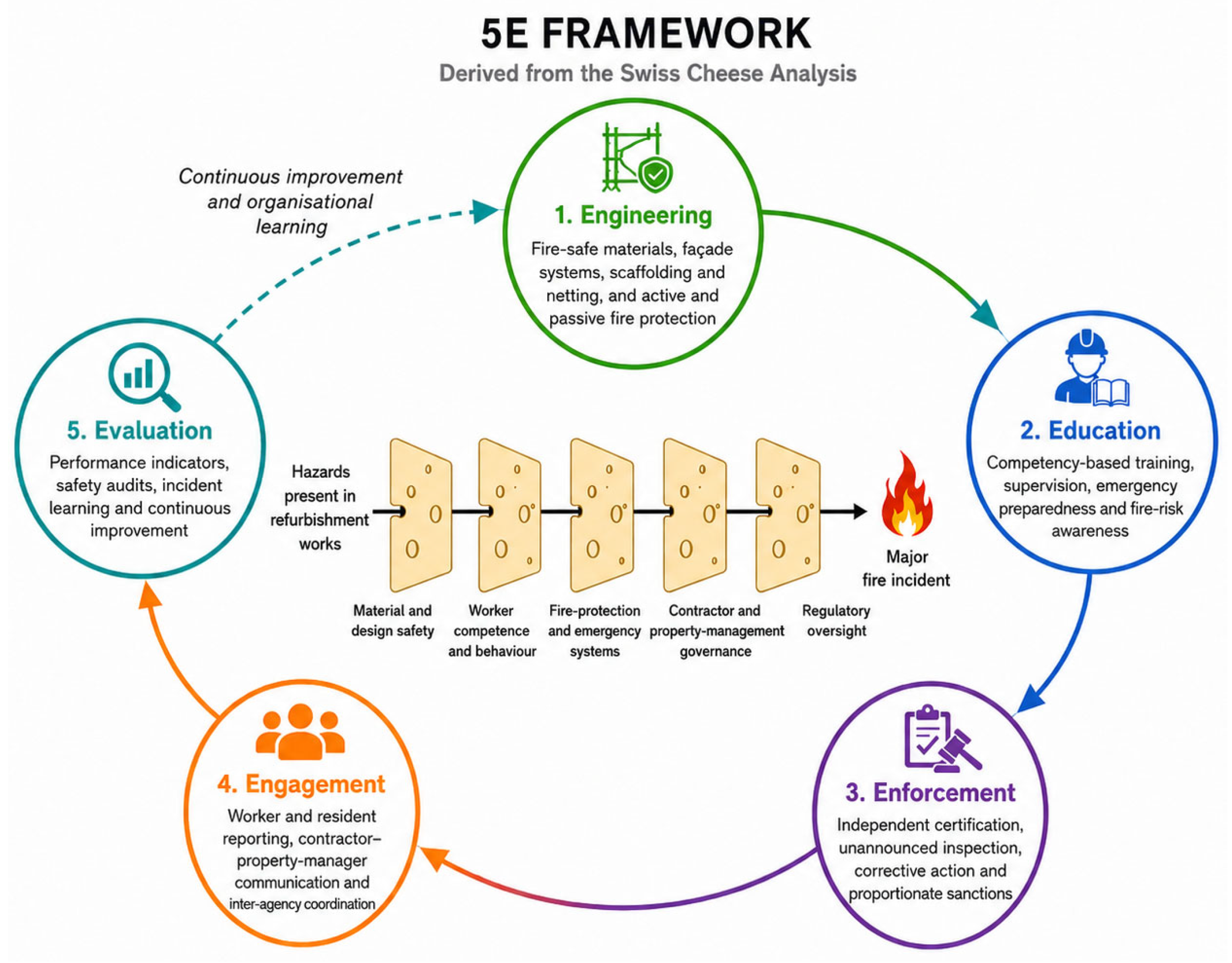
The Tai Po Wang Fuk Court fire incident had a significant impact on construction and building safety. In this section, we propose the 5E framework as a useful guideline and valuable source of insight for construction. The 5E framework is ahead. 5E is described as Engineering, Education, Enforcement, Engagement, and Evaluation. The 5E framework is shown in Figure 2.
Engineering—Fundamentally, the fire blazed through due to highly flammable styrofoam or polyfoam boards and non-fire-retardant window protection. The stack effect in light wells sent flames roaring up, and wooden boards were substituted for fireproof staircase windows [38,47]. In response, the authorities are urgently conducting lab certification and on-site random sampling of all scaffold nets. Also, the authorities may consider using Industry 4.0 (e.g., Internet of Things (IoT)) smart monitoring and fire-detection sensors to provide instant notifications to management if time-honoured systems experience service interruptions or undergo repairs. Furthermore, new or existing houses must comply with international safety standards, such as automated fire suppression and structural fire resistance (compartmentation).
Education—The Wang Fuk Court fire highlighted deficiencies in safety awareness among construction workers and other stakeholders. Construction workers were frequently observed smoking near combustible materials despite residents’ complaints, while an ISS electrician reportedly disconnected fire switches without realising they were connected to the estate-wide alarm system [43]. The authorities should therefore collaborate with the Construction Industry Council to strengthen occupational safety training for construction workers, focusing on hot-work risk management, recognition of fire-safe materials (e.g., flame-retardant scaffold netting), and emergency procedures. Separately, the Fire Services Department and relevant professional bodies should enhance training programmes for property management practitioners, covering emergency evacuation planning, notification protocols, routine fire safety inspections, and the maintenance and testing of fire protection systems. More broadly, the Education Bureau and community organisations could promote public fire safety awareness through school education, public campaigns, and community engagement activities. These initiatives should focus on emergency preparedness, evacuation awareness, and fire prevention to strengthen community resilience and foster a stronger safety culture.
Enforcement—The incident highlighted weaknesses in regulatory enforcement and contractor oversight [45]. The Labour Department, Buildings Department, and Fire Services Department should strengthen coordinated inspections, certification, and enforcement of fire safety requirements during refurbishment works. Accredited testing bodies should conduct independent certification and random sampling of scaffold net materials before installation, while contractors should remain responsible for complying with safety standards. Where serious non-compliance is identified, regulators should implement follow-up inspections, corrective actions, and appropriate sanctions. An independent review panel involving government agencies, industry professionals, and academic experts could periodically review major construction incidents and recommend improvements to safety regulations and practices.
Engagement—Construction safety should extend beyond the construction site to include effective communication with residents and building users during refurbishment works [48]. Property managers, contractors, residents, and government agencies should collaborate on fire safety awareness, emergency preparedness, evacuation planning, and timely reporting of potential hazards. Following major incidents, stakeholder engagement can also support recovery and strengthen long-term community resilience and safety culture.
Evaluation—Continuous evaluation is essential to ensure that safety measures remain effective throughout refurbishment projects. Regulatory authorities should monitor safety performance using measurable indicators such as certified scaffold-net compliance, the frequency of unannounced inspections, fire alarm downtime, corrective action closure rates, inspection non-compliance rates, and third-party audit findings. These indicators can support benchmarking, continuous improvement, and evidence-based policy development while reducing reliance on contractor self-reporting [46].
By explicitly linking each “E” to the corresponding slice from the Swiss cheese analysis, this section shows a logical progression from systemic diagnosis to targeted interventions.

6. Conclusions

This study employed the Wang Fuk Court fire as a representative case to examine the underlying causes of construction-related safety failures in Hong Kong. By applying Reason’s Swiss Cheese Model, the study demonstrated that the disaster was not attributable to a single error or isolated act of negligence. Instead, the tragedy emerged from the alignment of multiple defensive-layer failures, including deficiencies in material and design safety, unsafe worker behaviour, ineffective fire protection systems, weaknesses in contractor management, and inadequate regulatory oversight. The findings reinforce the view that major construction accidents are systemic in nature and typically result from the interaction of latent organisational conditions and active failures.
Building upon the Swiss Cheese analysis, this study proposed the 5E Framework comprising Engineering, Education, Enforcement, Engagement, and Evaluation as an integrated governance approach for improving construction safety. Unlike traditional accident investigations that primarily focus on identifying causes, the 5E Framework translates accident findings into practical interventions. Engineering addresses deficiencies in construction materials and fire safety systems; education improves safety awareness and competency among workers and stakeholders; enforcement strengthens compliance and accountability mechanisms; engagement promotes safety culture and community resilience; and evaluation facilitates continuous monitoring, auditing, and organisational learning. Together, these five dimensions provide a comprehensive roadmap for enhancing safety climate, safety culture, and safety leadership in the Hong Kong construction industry.
The findings of this study have important implications for policymakers, regulators, contractors, property management organisations, and construction professionals. Future construction safety governance should move beyond compliance-based approaches and adopt a systems-thinking perspective that recognises the interconnected nature of technical, behavioural, managerial, and regulatory risks. By integrating Swiss Cheese analysis and the 5E Framework, this study provides both a theoretical lens for understanding construction accidents and a practical framework for preventing future disasters. The government may provide future policy directions in response to the human-made disaster. The Buildings Department may execute new regulations requiring certification and on-site random sampling of every scaffold net before installation. Also, rigid controls are being attached to employ foamboard and plastic sheeting to block windows for the time being during renovations. Moreover, the authority may strengthen the smart tender system to help building owners assign trustworthy contractors and consultants [46,49].
Despite its contributions, this study has several limitations. First, the analysis is based on a single representative case study, which may limit the generalisability of the findings to other construction contexts and jurisdictions. Future studies could conduct comparative analyses of major construction accidents across different countries to validate the applicability of both the Swiss Cheese Model and the proposed 5E Framework.
Second, the study primarily relies on archival records, government reports, media reports, and legislative documents. While these sources provide valuable evidence, they may not fully capture the perceptions and decision-making processes of key stakeholders. Future research could adopt a mixed-methods approach, involving interviews with contractors, regulators, construction workers, residents, and policymakers, to gain deeper insights into safety culture and organisational behaviour.
Finally, future studies may further examine the influence of emerging challenges such as climate change, extreme weather events, digital construction technologies, and smart-site management systems on construction safety performance. Such investigations would contribute to the development of more resilient and adaptive safety management frameworks for the construction industry.

Author Contributions

Conceptualisation, Y.-y.L.; Methodology, Y.-y.L.; Investigation, Y.-y.L. and M.C.-P.P.; Writing—original draft, Y.-y.L.; Writing—review and editing, M.C.-P.P.; Visualization, M.C.-P.P. All authors have read and agreed to the published version of the manuscript.

Funding

This research received no external funding.

Data Availability Statement

The original contributions presented in this study are included in the article. Further inquiries can be directed to the corresponding author.

Acknowledgments

During the preparation of this manuscript, the author used OpenAI ChatGPT (GPT-5.5) to assist in generating and refining the design of Figure 1 and Figure 2. The generated output was subsequently reviewed, edited, and verified by the author to ensure its accuracy, clarity, and consistency with the study. The author takes full responsibility for the content of this publication.

Conflicts of Interest

The authors declare no conflicts of interest.

References

  1. HKTDC. Real Estate and Construction Services Industry in Hong Kong; HKTDC: Hong Kong, China, 2025. [Google Scholar]
  2. Wang, H.H.; Miao, M.L. Global Development and Cooperation with China: New Ideas, Policies and Initiatives for a Changing World; Springer: Berlin/Heidelberg, Germany, 2025. [Google Scholar]
  3. Global Data. Hong Kong Construction Market Size, Trend Analysis by Sector, Competitive Landscape and Forecast to 2030 (H1 2026); Global Data: London, UK, 2026. [Google Scholar]
  4. Morad, A.M. An analysis of global construction projects: Causes and implications of cost overruns. Int. J. Innov. Res. Sci. Eng. Technol. 2023, 8, 1–10. [Google Scholar] [CrossRef] [Scilit]
  5. Tsang, W.C.; Memon, S.A.; Rowlinson, S. Exploring safety violations of the construction workers in Hong Kong: A sociotechnical systems approach. Soc. Impacts 2025, 6, 100141. [Google Scholar] [CrossRef] [Scilit]
  6. Legislative Council HKSAR. Construction Accidents in Hong Kong; Legislative Council HKSAR: Hong Kong, China, 2024.
  7. Luo, X.; Tang, Y.; Zhou, J.; Wang, M.; Tian, Y. A Study on the Cascade Evolution Mechanism of Construction Workers’ Unsafe Behavior Risk Factors. Buildings 2024, 14, 2483. [Google Scholar] [CrossRef] [Scilit]
  8. Guo, S.; He, J.; Li, J.; Tang, B. Exploring the impact of unsafe behaviors on building construction accidents using a Bayesian network. Int. J. Environ. Res. Public Health 2020, 17, 221. [Google Scholar] [CrossRef] [Scilit] [PubMed]
  9. Soriano-Serrano, M.; Carrillo-Castrillo, J.A.; Rubio-Romero, J.C.; García-Jiménez, M. The impact of enforcement capabilities on the effectiveness of public assessment on occupational safety. Int. J. Environ. Res. Public Health 2020, 17, 6426. [Google Scholar] [CrossRef] [Scilit] [PubMed]
  10. Mavroulidis, M.; Vouros, P.; Fotiadis, S.; Konstantakopoulou, F.; Fountoulakis, G.; Nikolaou, I.; Evangelinos, K. Occupational health and safety of multionational construction companies through evaluation of corporate social responsibility reports. J. Saf. Res. 2022, 81, 45–54. [Google Scholar] [CrossRef] [Scilit] [PubMed]
  11. Seo, H.J.; Hong, A.J. Text mining analysis on research trends in workplace safety engagement education. Cogent Educ. 2023, 10, 2197665. [Google Scholar] [CrossRef] [Scilit]
  12. Alhammadi, Y.; Farouk, A.M.; Rahman, R.A. Enhancing Construction Safety Education: Insights from Student Perspectives. Buildings 2024, 14, 660. [Google Scholar] [CrossRef] [Scilit]
  13. Sadeghi, H.; Cheung, C.M.; Yunusa-Kaltungo, A.; Manu, P. A systematic review of occupational safety and health in modular integrated construction. Saf. Sci. 2025, 189, 106897. [Google Scholar] [CrossRef] [Scilit]
  14. Xiang, Q.; Ye, G.; Liu, Y.; Goh, Y.M.; Wang, D.; He, T. Cognitive mechanism of construction workers’ unsafe behavior: A systematic review. Saf. Sci. 2023, 159, 106037. [Google Scholar] [CrossRef] [Scilit]
  15. Sathvik, S.; Krishnaraj, L.; Awuzie, B.O. Establishing the root causes of unsafe behaviors among construction workers: An integrative interpretive structural modeling analysis. Sci. Rep. 2023, 13, 7006. [Google Scholar] [CrossRef] [Scilit] [PubMed]
  16. Yang, Y.; Huang, R.; Yang, A.; Chen, Y.; Wang, L. Influencing Factors of Workers’ Unsafe Behaviors in the Construction Cycle of Commercial Building: A Dual Perspective of Frequency and Entropy. Buildings 2026, 16, 1505. [Google Scholar] [CrossRef] [Scilit]
  17. Shabani, T.; Jerie, S.; Shabani, T. A comprehensive review of the Swiss cheese model in risk management. Saf. Extrem. Environ. 2024, 6, 43–57. [Google Scholar] [CrossRef] [Scilit]
  18. Larouzée, J. Human error and defense in depth: From the “Clambake” to the “Swiss Cheese”. In Resilience: A New Paradigm of Nuclear Safety: From Accident Mitigation to Resilient Society Facing Extreme Situations; Springer: Berlin/Heidelberg, Germany, 2017; pp. 257–267. [Google Scholar]
  19. Antwi-Afari, M.F.; Li, H.; Wong, J.K.; Oladinrin, O.T.; Ge, J.X.; Seo, J.; Wong, A.Y.L. Sensing and warning-based technology applications to improve occupational health and safety in the construction industry: A literature review. Eng. Constr. Archit. Manag. 2019, 26, 1534–1552. [Google Scholar] [CrossRef] [Scilit]
  20. Trask, C.; Linderoth, H.C.J. Digital technologies in construction: A systematic mapping review of evidence for improved occupational health and safety. J. Build. Eng. 2023, 80, 108082. [Google Scholar] [CrossRef] [Scilit]
  21. Babalola, A.; Manu, P.; Cheung, C.; Kaltungo, A.Y.; Bartolo, P. Applications of immersive technologies for occupational safety and health training and education: A systematic review. Saf. Sci. 2023, 166, 106214. [Google Scholar] [CrossRef] [Scilit]
  22. Basaga, H.B.; Temel, B.A.; Atasoy, M.; Yildirm, I. A study on the effectiveness of occupational health and safety trainings of construction workers in Turkey. Saf. Sci. 2018, 110, 344–354. [Google Scholar] [CrossRef] [Scilit]
  23. Bourahla, A.; Fernandes, G.; Ferreira, L.M.D.F. Managing occupational health and safety risks in construction projects to achieve social sustainability—A review of literature. Procedia Comput. Sci. 2024, 239, 1053–1061. [Google Scholar] [CrossRef] [Scilit]
  24. Umeokafor, N.; Evangelinos, K.; Windapo, A. Strategies for improving complex construction health and safety regulatory environments. Int. J. Constr. Manag. 2022, 22, 1333–1344. [Google Scholar] [CrossRef] [Scilit]
  25. Kum, Y.T.; Yap, J.B.H.; Lew, Y.L.; Lee, W.P. COVID-19 health and safety challenges on construction sites: Unfolding novel dimensions for construction industries in developing countries. Int. J. Constr. Manag. 2024, 24, 187–198. [Google Scholar] [CrossRef] [Scilit]
  26. Saleem, M.S.; Isha, A.S.N.; Yusop, Y.M.; Awan, M.I.; Naji, G.M.A. The role of psychological capital and work engagement in enhancing construction workers’ safety behavior. Front. Public Health 2022, 10, 810145. [Google Scholar] [CrossRef] [Scilit] [PubMed]
  27. Conchie, S.M.; Moon, S.; Duncan, M. Supervisors’ engagement in safety leadership: Factors that help and hinder. Saf. Sci. 2013, 51, 109–117. [Google Scholar] [CrossRef] [Scilit]
  28. Lu, W.; Ye, M.; Flanagan, R.; Ye, K. Corporate social responsibility disclosures in international construction business: Trends and prospects. J. Constr. Eng. Manag. 2016, 142, 04015053. [Google Scholar] [CrossRef] [Scilit]
  29. Kineber, A.F.; Antwi-Afari, M.F.; Elghaish, F.; Zamil, A.M.A.; Alhusban, M.; Qaralleh, T.J.O. Benefits of implementing occupational health and safety management systems for the sustainable construction industry: A systematic literature review. Sustainability 2023, 15, 12697. [Google Scholar] [CrossRef] [Scilit]
  30. Chiang, Y.-H.; Wong, F.K.-W.; Liang, S. Fatal construction accidents in Hong Kong. J. Constr. Eng. Manag. 2018, 144, 04017121. [Google Scholar] [CrossRef] [Scilit]
  31. Chan, A.P.; Wong, F.K.; Chan, D.W.; Yam, M.C.; Kwok, A.W.; Lam, E.W.; Cheung, E. Work at height fatalities in the repair, maintenance, alteration, and addition works. J. Constr. Eng. Manag. 2008, 134, 527–535. [Google Scholar] [CrossRef] [Scilit]
  32. Chan, A.; Hon, C. Safety of Repair, Maintenance, Minor Alteration, and Addition (RMAA) Works: A New Focus of Construction Safety; Routledge: Abingdon, UK, 2016. [Google Scholar]
  33. Mo, J.; Jia, X.; Li, G.; Cui, L. A Study on Unsafe Behaviors of Construction Workers Based on Personality Trait Theory. Appl. Sci. 2025, 16, 336. [Google Scholar] [CrossRef] [Scilit]
  34. Li, R.Y.M.; Chau, K.W.; Zeng, F.F. Ranking of risks for existing and new building works. Sustainability 2019, 11, 2863. [Google Scholar] [CrossRef] [Scilit]
  35. Shafique, M.; Rafiq, M. An overview of construction occupational accidents in Hong Kong: A recent trend and future perspectives. Appl. Sci. 2019, 9, 2069. [Google Scholar] [CrossRef] [Scilit]
  36. Chow, W. Safety alert on scaffolding practices in Hong Kong. Smart Constr. Sustain. Cities 2024, 2, 4. [Google Scholar] [CrossRef] [Scilit]
  37. Tsang, W.C.; Memon, S.A.; Rowlinson, S. Safety violations of construction workers: An empirical study. Buildings 2025, 15, 3297. [Google Scholar] [CrossRef] [Scilit]
  38. Hong Kong Free Press. Tai Po Fire Timeline: Wang Fuk Court’s HK$330 Million Renovation, Ignored Warning and Aftermath; Hong Kong Free Press: Hong Kong, China, 2025; Available online: https://hongkongfp.com/2025/12/17/tai-po-fire-timeline-wang-fuk-courts-hk330-million-renovation-ignored-warnings-and-aftermath/ (accessed on 30 April 2026).
  39. HK01. Wang Fuk Court Hearing. Available online: https://www.hk01.com/article/60332076?utm_source=01articlecopy&utm_medium=referral (accessed on 5 July 2026).
  40. Li, T.; Chen, Y.; Sun, J.; Chang, D.H.-F.; Zhang, C.J.; Cao, Y. Real-Time Physiological and Emotional Responses to the Deadly Tai Po Fire in Hong Kong. Wellbeing Space Soc. 2026, 10, 100422. [Google Scholar] [CrossRef] [Scilit]
  41. Wong, S.Y.-S.; Chan, E.Y.-Y.; Ho, K.-M.; Wong, E.L.-Y.; Chiu, P.W.-Y. High Rise Living Means High Risk Living; British Medical Journal Publishing Group: London, UK, 2026. [Google Scholar]
  42. RTHK. Contractors ‘Hid Use of Non-Fire-Retardant Netting. 2025. Available online: https://news.rthk.hk/rthk/en/component/k2/1834118-20251201.htm#:~:text=seven%20of%20the%20mesh%20netting,material%20from%20inspectors (accessed on 18 July 2026).
  43. The Standard. Systemic Failures and Negligence Exposed in Wang Fuk Court Fire Inquiry. 2026. Available online: https://www.thestandard.com.hk/sup/national-security/articlecontent.php?article_id=328691&section_id=2 (accessed on 20 May 2026).
  44. Hong Kong Free Press. Unsafe Construction Netting Found at Tai Po Fire Site, 13 Arrests for Alleged Manslaughter-Officials; Hong Kong Free Press: Hong Kong, China, 2025; Available online: https://hongkongfp.com/2025/12/01/breaking-unsafe-construction-netting-found-at-tai-po-fire-site-13-arrests-for-alleged-manslaughter/ (accessed on 8 July 2026).
  45. South China Morning Post. Tai Po Fire Probe Rules out Statutory Powers, Says Evidence Sufficient—As It Happens. 2026. Available online: https://www.scmp.com/news/hong-kong/law-and-crime/article/3357852/hong-kongs-tai-po-fire-inquiry-panel-rules-out-statutory-powers (accessed on 8 July 2026).
  46. Independent Committee in Relation to the Fire at Wang Fuk Court in Tai Po. 2026. Available online: https://www.ic-wangfukcourtfire.gov.hk/eng/secretariat.html (accessed on 5 July 2026).
  47. Hong Kong Free Press. Tai Po Fire: Simulation Finds Substandard Scaffold Nets Caused Rapid Spread of Blaze, Inquiry Hears; Hong Kong Free Press: Hong Kong, China, 2026; Available online: https://hongkongfp.com/2026/06/24/tai-po-fire-simulation-finds-substandard-scaffold-nets-caused-rapid-spread-of-blaze-inquiry-hears/ (accessed on 8 July 2026).
  48. China Daily. Lessons of HK Fire Tragedy Must Be Learned. 2025. Available online: https://www.chinadailyhk.com/hk/article/624491 (accessed on 9 July 2026).
  49. South China Morning Post. Tai Po Fire Probe: Experts Propose Tighter Rules and Wider Reforms—As It Happens. 2026. Available online: https://www.scmp.com/news/hong-kong/society/article/3358267/wang-fuk-court-blaze-not-first-its-kind-except-magnitude-expert-says (accessed on 8 July 2026).
Figure 1. Wang Fuk Court Block Plan. Source: Hong Kong Housing Authority and redesigned by OpenAI.
Buildings 16 03040 g001
Figure 2. 5E Framework for Tai Po Wang Fuk Court fire incident.
Buildings 16 03040 g002
Table 1. Summary of the notions of 5E—Engineering, Education, Enforcement, Engagement, and Evaluation.
ItemsStudyTopicMethodMain Findings
EngineeringSadeghi et al. [13]Explore the main challenges and identify effective mitigation strategies to improve overall construction safety performanceSystematic literature reviewModular integrated construction is an emerging trend for improving overall safety performance in the construction industry.
Antwi-Afari et al. [19]The use of sensing- and warning-based technologies enhances OHS in the construction industry.Systematic literature reviewDifferent kinds of sensing- and warning-based technology applications to enrich OHS in the construction industry
Trask and Linderoth [20]Explore the use of digital OHS technologies in the construction industrySystematic mapping reviewThe majority of research studies focused on technology development and provided little to no evidence of reduced illness/injury or improved work conditions among construction workers.
EducationBabalola et al. [21]The adoption of immersive technologies for OHS education and trainingSystematic literature reviewThe use of immersive technologies can minimise or prevent fatalities, injuries, and illnesses in the construction industry.
Alhammadi et al. [12]Explore students’ awareness of construction safety educationStatistical data analysisThe urgency for custom-made educational strategies to increase construction safety knowledge and align education with construction industry needs.
Basaga et al. [22]Investigate the OHS knowledge of construction workers at the construction sitesStatistical data analysisThe construction training programme needs to be integrated with visualisation techniques, interactive teaching approaches, and situational modelling.
EnforcementBourahla et al. [23]Design, implement, and enhance OHS management practices in construction projectsSystematic literature reviewThe importance of legal compliance in OHS in construction project management
Umeokafor et al. [24]Develop strategies to enrich the regulation of construction health and safety legislationThematic analysisThe establishment of a robust health and safety regulatory system improves the likelihood of acceptance and the workability of the strategies proposed by the regulated.
Kum et al. [25]Investigate the key challenges for pandemic management in executing COVID-19 health and safety measures on construction sitesFactor analysisThe existing shortfalls in the health and safety system in a developing country, and the urgency of developing responsive strategies to control the spread of future diseases at construction sites.
EngagementSeo and Hong [11]Workplace safety engagement education plays a vital role in mitigating damage induced by industrial accidentsText mining analysisWorkplace safety engagement education includes four main elements, including workplace environment, organisational risk management, safety competency, and education component
Saleem et al. [26]Investigate the relationships between psychological capital and work engagement relevant to safety in the construction industryStructural equation modellingWork engagement, hope, and optimism have a remarkable and positive effect on safety compliance. Work engagement, resilience, self-efficacy, hope, and optimism have a remarkable and positive effect on safety participation.
Conchie et al. [27]Supervisors’ safety leadership in fostering employees’ engagement in construction safetyThematic analysisOn the one hand, formal procedures, role overload, and production pressure decrease safety leadership. On the other hand, autonomy and social support improve safety leadership.
EvaluationMavroulidis et al. [10]Assess OHS behavior in the
construction industry through the evaluation of Corporate Social Responsibility reports
Documentary analysisMost construction firms have shown poor performance in OHS.
Lu et al. [28]The current and future trends of corporate social responsibility disclosures in the construction industryContent analysisThe construction firms will implement more remedial strategies if they encounter more negative impacts on the firm.
Kineber et al. [29]A systematic literature review for the sustainable construction industry in the context of OHSSystematic literature reviewA small number of construction firms provide construction workers with effective occupational health and safety management systems.
Table 2. Summary of Previous Research on Construction Safety and Refurbishment Risks.
StudyContext and Research FocusMethodKey FindingsLimitations and Relevance to the Present Study
Chan et al. [31]Hong Kong repair, maintenance, alteration and addition (RMAA) works; work-at-height fatalitiesAnalysis of 22 fatal fall-from-height cases occurring between 2000 and 2004Falls from height remained a major source of construction fatalities. The study identified 12 recurring contributing factors and recommended safer working systems, suitable working platforms, training, supervision and fall-arrest measures.Concentrates on fall-from-height accidents and preventive measures. It does not examine refurbishment-related fire hazards or interactions among technical, organisational and regulatory failures.
Chan and Hon [32]Safety management in Hong Kong RMAA projectsBook-length synthesis drawing on industry evidence, contractor interviews and Delphi findingsRMAA works pose distinctive safety challenges because they are often small-scale, short-duration, and undertaken by small- or medium-sized contractors. Safety arrangements developed for new construction may not be fully applicable to RMAA projects. Provides broad sector-level safety guidance but does not reconstruct the development of a particular catastrophic incident or explain how multiple defensive layers failed simultaneously.
Chiang et al. [30]Fatal accidents in the Hong Kong construction industry, with particular attention to RMAA worksHistorical accident-data analysis, principal component analysis and cluster analysisFatalities remained persistent over the study period. Older workers, hot and humid working conditions and private-sector RMAA works were associated with elevated fatality risks. Uses aggregated fatality records and identifies statistical patterns rather than reconstructing how hazards emerged, interacted and escalated during an individual accident.
Li et al. [34]Comparison of safety risks in new building works and decoration, repair and maintenance projects in Hong KongLiterature review, court-case analysis, interviews and Analytic Hierarchy Process risk rankingThe importance of safety risks differed between project types. Limited safety budgets ranked highly for new building works, whereas weak safety regulation was particularly important in decoration, repair and maintenance projects. Prioritises risk factors but does not examine how risk controls failed during an actual incident or how institutional and organisational conditions shaped the consequences.
Shafique and Rafiq [35]Occupational accidents in the Hong Kong construction industry between 2011 and 2017Analysis of Labour Department statistics, incidence and mortality rates, and analysis of varianceSlips, trips, and falls on the same level accounted for the most injuries, while falls from height accounted for the most fatalities. The study recommended stronger safety-management systems and technology-supported prevention. Relies on aggregated and frequency-based indicators. It does not reconstruct project-level managerial failures, refurbishment conditions or fire-propagation mechanisms.
Chow [36]Scaffolding safety, public access and fire-code compliance in Hong KongPerspective paper using a local scaffolding case and analysis of occupational-safety and fire-code requirementsUnsafe scaffolding practices can create hazards for workers and the public and may indicate weaknesses in safety management, safety culture and compliance with occupational-safety and fire codes.Provides an important safety warning but is presented as a perspective based on an illustrative case rather than a systematic documentary reconstruction of a catastrophic fire in an occupied building.
Tsang et al. [37]Safety violations among Hong Kong construction workersMixed-method study comprising 365 questionnaire responses based on an adapted Theory of Planned Behaviour and 37 semi-structured interviewsIntention significantly influenced safety violations. Perceived behavioural control and attitude influenced workers’ intentions, with perceived behavioural control having the strongest effect. The study also highlighted the relevance of High Reliability Organising and tailored safety training. Primarily explains workers’ behavioural intentions and organisational perceptions. It does not reconstruct the interactions among material, fire protection, contractor management, and regulatory failures during a major incident.
Mo et al. [33]Personality traits and unsafe behaviours among construction workersQuestionnaire survey, confirmatory factor analysis, correlation analysis and regression modellingNeuroticism, openness, and extraversion were positively associated with unsafe behaviours, whereas conscientiousness was negatively associated. Fluke mentality acted as a mediator, while safety climate moderated the relationship between fluke mentality and unsafe behaviour.Focuses primarily on individual psychological and behavioural mechanisms rather than interactions among technical, managerial, emergency-system and regulatory failures.
Table 3. The Location of Fatalities Found.
Name of BlockNumber of DeathsRemarks
AWang Yan House0The block affected by fire
BWang Tao House2The block affected by fire
CWang Sun House2The block affected by fire
DWang Kin House0The block affected by fire
EWang Tai House82Second block in flames
FWang Cheong House81Point of origin
GWang Shing House1The block affected by fire
HWang Chi House0The block was unaffected by fire
Source: [39].
Table 4. Timeline of Tai Po Wang Fuk Court Fire Incident.
PeriodYearRemarks
2016–Early 20242016Wang Fuk Court has reached its 33rd year. Thus, the HKSAR government delivered a directive under the Mandatory Building Inspection Scheme to the owners’ corporation committee of the housing estate.
2019Will Power Architects secured the project from an Invitation for Bids.
2021–2022Wang Fuk Court homeowners selected Will Power Architects to reappraise the estate and manage the restoration.
2023–early 2024Will Power Architects suggested three renovation plans for homeowners to choose from. Homeowners and their authorised representatives attended the general meeting to endorse the proposed renovation plan. They represented 30 per cent of all property shareholders at Wang Fuk Court. Surprisingly, they chose the premium coverage option and selected Prestige Construction as the contractor. In general, each residence was billed between HK$160,000 and HK$180,000. Although a group of Wang Fuk Court residents reported suspected bid-rigging to the ICAC, the anti-graft agency said it could not comment while the inquiry was in progress.
Mid-2024 to mid-November 2025July 2024Prestige Construction started the renovation project. They installed protective netting and bamboo scaffolding around the buildings. Additionally, Prestige Construction noted that the foamboards were adjusted to cover the windows to protect furnishings from remodelling dust during the renovation.
August–September 2024The resident filed a written complaint with the Labour Department regarding construction workers’ smoking, the use of flammable foamboards to cover windows, and the protective netting. The residents also posted the relevant photos to the Facebook group for Wang Fuk Court. Nevertheless, the Labour Department replied that the renovation did not require ‘hot work’. In other words, tasks that create heat, sparks, or flames on the netting and scaffolding were up to fire-resistant standards.
October–November 2024Prestige Construction presented an inspection/test report to the Independent Checking Unit (ICU) for review. No deficiencies were observed regarding the fire-retardant standards. ICU officers identified ‘no combustible’ characteristics during the site visit.
Fire at Wang Fuk Court26–28 November 2025The fire duration was 44 h and 18 min. Seven out of the eight blocks of the complex were burned to the ground. Eventually, the incident injured 79, killed 168 people (i.e., including a firefighter).
AftermathDecember 2025–July 2026To prevent a recurrence, the Chief Executive announced the establishment of the Independent Committee on 12 December 2025. Also, the HKSAR government released the Hearing Timetable for Witnesses to Give Evidence starting from 23 March 2026.
Source: [38,44,46].
Disclaimer/Publisher’s Note: The statements, opinions and data contained in all publications are solely those of the individual author(s) and contributor(s) and not of MDPI and/or the editor(s). MDPI and/or the editor(s) disclaim responsibility for any injury to people or property resulting from any ideas, methods, instructions or products referred to in the content.