Review

Physics-Informed Neural Networks for Urban and Building Thermal Environment Modeling: A Review of Evolution, Workflows, and Prospects


1
School of Landscape and Ecology, Shenzhen City Polytechnic, Shenzhen 518060, China
2
Shenzhen Key Laboratory for Optimizing Design of Built Environment, School of Architecture and Urban Planning, Shenzhen University, Shenzhen 518060, China
3
China Construction Science and Industry Co., Ltd., Shenzhen 518000, China
4
The Institute of Architecture Design & Research, Shenzhen University, Shenzhen 518060, China
*
Author to whom correspondence should be addressed.
These authors contributed equally to this work.
Buildings 2026, 16(13), 2562; https://doi.org/10.3390/buildings16132562
Submission received: 30 April 2026 / Revised: 18 June 2026 / Accepted: 22 June 2026 / Published: 26 June 2026

Abstract

Modeling thermal environments across scales is crucial for climate-adaptive design and energy management. Traditional numerical methods (e.g., CFD) offer high accuracy and physical consistency, but they are computationally expensive. In contrast, purely data-driven models, though efficient, lack physical consistency and generalization capability. This review systematically examines Physics-Informed Neural Networks (PINNs), a hybrid paradigm in which physical prior knowledge is embedded directly into the neural network training process. A structured keyword search of the Web of Science Core Collection was performed, and 94 peer-reviewed journal articles were analyzed. The evolution from numerical simulations and data-driven surrogate models to PINNs is outlined. PINN methods are classified according to the stage at which physical prior information is integrated (i.e., dataset development, model construction, or loss function formulation). Current research remains heavily focused on loss function constraints, whereas systematic integration into data augmentation and model construction remains limited. Application domains span indoor environments, outdoor environments, and building systems, with each domain exhibiting unique prior integration strategies tailored to specific problems. Future PINN modeling should evolve toward multi-physics coupling, adaptive loss balancing, cross-scenario transfer learning, and unified evaluation benchmarks. PINNs in this field are promising but remain at an early stage, especially for complex urban-scale deployment. This review synthesizes existing research around the three stages of dataset development, model construction, and loss function formulation, summarizes the prior integration strategies adopted in the domain of building thermal environments, and provides a practical workflow for embedding physical prior knowledge at different stages of model development.

1. Introduction

Global urbanization has been accelerating continuously, and the urban thermal environment has consequently become a key challenge that limits sustainable urban development. The thermal evolution of a city is a complex system driven by multi-scale, multi-factor coupling. This coupling involves solar radiation, urban morphology, surface and building material properties, meteorological conditions, and human activities, leading to strong nonlinearity, spatiotemporal heterogeneity, and high uncertainty [1,2]. In the context of global warming, extreme heat events have become more frequent and intense. These events exacerbate the urban heat island effect, increase cooling demand and energy consumption, and add anthropogenic heat and carbon emissions, thereby creating a feedback loop on the urban thermal environment [3,4]. The 2022 heatwave in Germany, for instance, caused more than one thousand heat-related deaths in June and July alone and also had widespread impacts on productivity, agriculture, infrastructure, and healthcare systems [5,6]. Climate science indicates that anthropogenic climate change has significantly increased the probability and intensity of extreme heat events in most land regions. The IPCC Sixth Assessment Report projects a global mean surface temperature increase of 2.4 to 4.4 °C by the end of this century [7]. Therefore, constructing predictive models that can accurately represent complex physical processes while maintaining strong generalization capability is of great scientific and engineering value for identifying high-risk heat zones, supporting climate-adaptive urban planning, and optimizing building and urban scale energy management strategies [8].
Existing modeling methods fall into two main categories [9,10]: The first category comprises numerical simulation methods (i.e., physical law-based modeling), also called white-box or first-principle models. The second category consists of data-driven models, also known as black-box models. Numerical methods solve governing equations to represent thermal physical processes, offering inherent physical consistency and interpretability. However, their computational cost grows significantly with increasing domain size, making rapid multi-scenario assessment difficult [11,12,13,14]. Data-driven models learn input–output mappings from historical data, providing simplicity and high computational efficiency. Nevertheless, they suffer from two major limitations:
  • At the data level, they heavily depend on large-scale, high-quality samples. Due to the lack of standardized datasets in the urban thermal domain, model training often relies on costly numerical simulations to generate samples, ranging from dozens [15,16,17] to thousands [15,18,19], which significantly undermines their expected efficiency advantage.
  • At the model level, the absence of physical guidance makes it difficult to establish an inherent connection between the model structure and the real physical mechanisms [20]. Essentially, these models perform function fitting within the data distribution space rather than solving or approximating the governing equations.
As a result, they exhibit poor generalization and lack physical consistency in application [21,22]. When the prediction scenario deviates from the training data distribution, model performance degrades significantly, and predictions may even violate fundamental physical laws (e.g., energy conservation [23]). Thus, no single paradigm can simultaneously satisfy the comprehensive requirements of computational efficiency, physical consistency, and generalization for urban and building thermal environment prediction. Consequently, deeply integrating physical information into data-driven models is regarded as a key direction to enhance model reliability and expand applicability [18,24,25,26]. Against this background, the Physics-Informed Neural Networks (PINNs) paradigm, which integrates physical priors with machine learning, has emerged.
To avoid terminological confusion, this paper adopts the following hierarchy:
  • SciML (Scientific Machine Learning): The broadest term, covering all methods that integrate machine learning into scientific computing.
  • PIML (Physics-Informed Machine Learning): A subset of SciML, emphasizing the integration of physical knowledge into machine learning processes.
  • PINN (Physics-Informed Neural Network): A representative approach within PIML, specifically referring to methods that embed physical constraints (e.g., PDE residuals) as loss terms into neural network training.
  • PINNs (Physics-Informed Neural Networks, the plural form of PINN): A general term for methods that share the core idea of embedding physical priors into neural network training. This usage follows the common practice in the field as an umbrella term for PINN and its generalized paradigms [27,28]. For simplicity, “PINNs” is used throughout as a general term for this class of methods, and its scope is essentially equivalent to Physics-Informed Machine Learning (PIML) in this paper, including vanilla PINN and its variants (e.g., PCNN, PGNN).
  • Vanilla PINN: Refers specifically to the original PINN framework proposed by Raissi et al. [29,30,31], which uses PDE residuals as loss functions.
Furthermore, “thermal environment” modeling in this paper is defined broadly, covering multiple scales from urban blocks and building complexes to indoor spaces, including outdoor environments, building systems, and indoor environments.
The main objectives of this review are:
  • Systematic classification: based on the evolutionary trajectory of urban thermal modeling, extant PINN methods are systematically classified according to where physical priors are introduced into the modeling pipeline. This clarifies the modeling characteristics and applicable scenarios of each approach (Section 3);
  • Workflow synthesis: common development patterns in dataset construction, network design, and loss function formulation are distilled, providing a reference methodological framework for future studies (Section 4);
  • Summary and prospects: the main limitations of current physical prior integration are summarized, and future directions toward multi-stage, multi-dimensional physical fusion are proposed (Section 5).
The main contributions of this review are threefold. First, it synthesizes and organizes existing PINN research around the three key stages of the modeling pipeline—dataset development, model construction, and loss function formulation—thereby clarifying how physical prior knowledge is introduced at each stage. Second, it summarizes the distinct prior integration strategies adopted in the building thermal environment domain, covering indoor environments, outdoor environments, and building systems. Third, it distills a practical workflow for embedding physical priors at different stages of model development, offering a methodological reference for future studies seeking to balance computational efficiency, physical consistency, and generalization capability.

2. Methodology

Significant cross-use and confusion of related terms exist in the field of physics-data hybrid modeling. Concepts such as “hybrid model” and “grey-box” vary considerably across studies, making it difficult to conduct an exhaustive keyword-based retrieval. In contrast, Physics-Informed Neural Networks (PINNs) offer a clearer technical criterion, i.e., physical laws explicitly constrain the neural network training process via PDE residuals, initial conditions, or boundary conditions. Therefore, this study takes PINNs as the starting point of the search and follows a structured literature review approach.
Based on this consideration, this review uses PINNs (i.e., PIML) as the starting point of the search, focusing on two types of studies. First, it includes those that explicitly propose improved or extended frameworks based on PINN. Second, it includes those that, although not directly named PINN, explicitly embed physical constraints in the training process (e.g., PCNN, PGNN). These methods typically describe themselves as variants of PINN or physically consistent networks in the original texts. Scientific Machine Learning (SciML) is treated here as a broader methodological background to explain the research origins of PINNs; hybrid model and grey-box are only used in conceptual clarification to articulate their relationship with PINNs and are not included as exhaustive review objects. Through these delimitations, this review systematically analyzes the methodological evolution, key characteristics, and application patterns of PINNs in urban and building thermal environment modeling while ensuring methodological consistency and reproducibility of literature screening.
The literature search was conducted on 30 January 2026, in the Web of Science Core Collection, covering the period from the database inception date to this search date. Although the search covered all historical records, the included papers were all published in 2021 or later. WOS was chosen as the primary database due to its comprehensive coverage of engineering and environmental science journals. This review focuses on building and urban thermal environments as an engineering-oriented domain, rather than providing an exhaustive review of all PINNs-related literature. Papers clearly outside the building environment domain were excluded during the initial screening stage.
  • The keyword string was: (“physics-informed” OR “physics-guided” OR “physically consistent” OR “scientific machine learning” OR “PINN”) AND (“urban” OR “building” OR “indoor” OR “microclimate”) AND (“neural network*” OR “deep learning” OR “machine learning”). This search returned 628 papers in the Web of Science Core Collection.
  • The search results were restricted to Web of Science categories relevant to this study, including: Engineering Civil, Construction Building Technology, Energy Fuels, Engineering Environmental, Mechanics, Environmental Sciences, Thermodynamics, and Meteorology Atmospheric Sciences. After this restriction, 211 papers remained.
  • The screening was performed by the first author based on titles, abstracts, and keywords, and the final set of 94 papers was reviewed and discussed with a co-author.
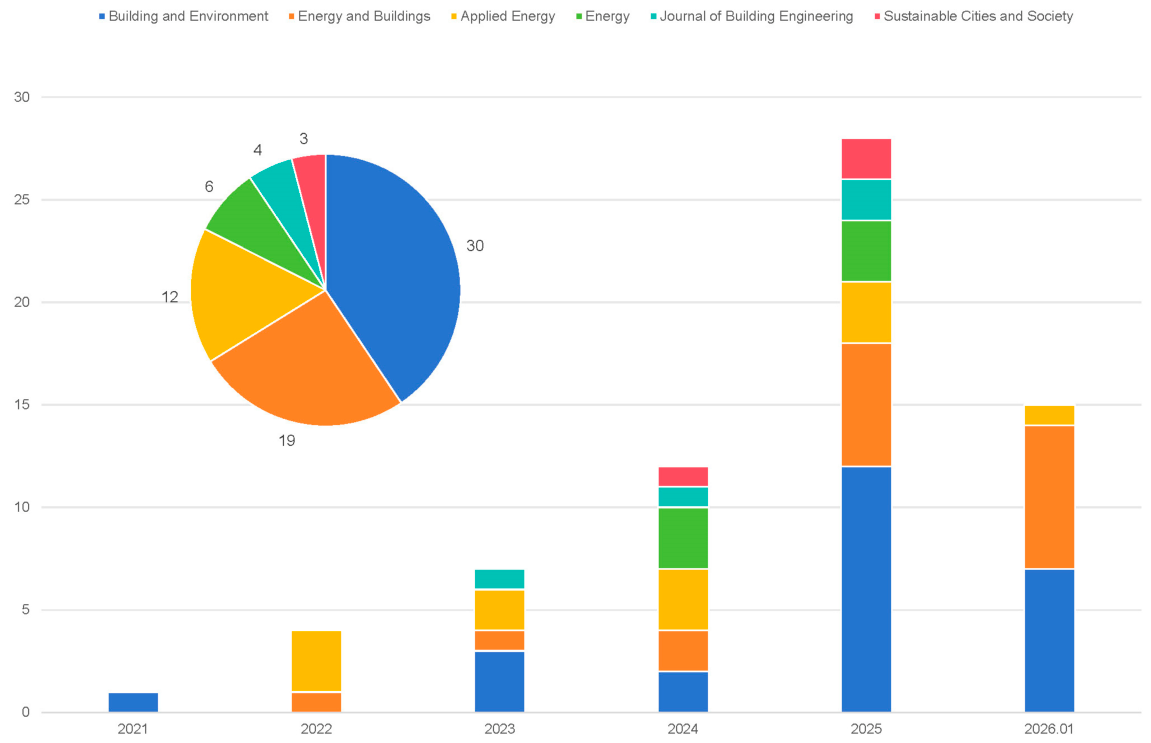
After this multi-stage screening, a final corpus of 94 core journal papers was established. Figure 1 shows the distribution of these papers across different journals. The results indicate that Building and Environment published the largest number of relevant papers (approximately 30, accounting for about 31.9%), followed by Energy and Buildings, Journal of Building Engineering, and Applied Energy. It should be acknowledged that the reliance on a single database (Web of Science) and the exclusion of conference proceedings represent inherent limitations of this review.

3. Evolution

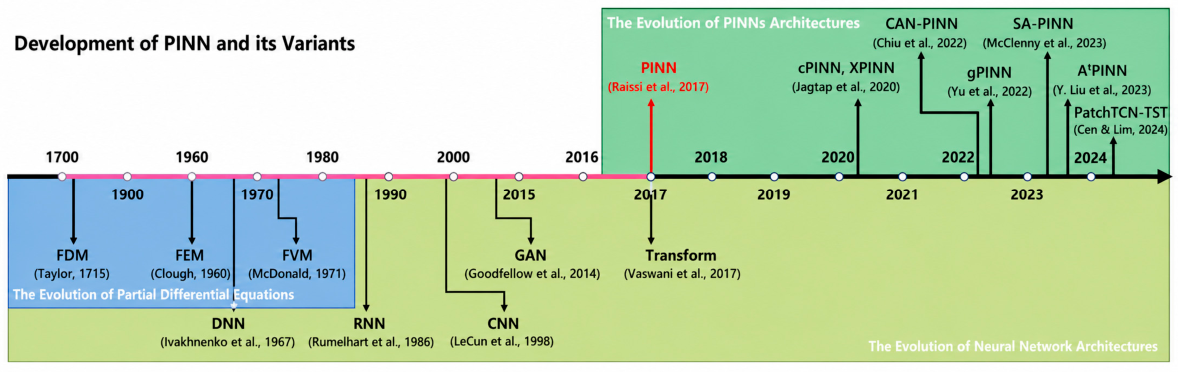
As shown in Figure 2, the development of PINNs and their variants can be summarized and traced through three key stages: numerical simulation, data-driven, and hybrid-driven [32].

3.1. Numerical Simulation Stage

Before the widespread adoption of machine learning, modeling and prediction of complex physical systems relied mainly on numerical simulation methods (i.e., numerical solution of governing equations). These methods are based on the conservation laws of mass, momentum, and energy, and solve ordinary differential equations (ODEs) or partial differential equations (PDEs) to represent key physical processes such as airflow, heat conduction, radiative exchange, and energy transport. Over the past 300 years, representative methods such as the Finite Difference Method (FDM), Finite Element Method (FEM), and Finite Volume Method (FVM) have discretized continuous PDEs into algebraic equation systems, enabling quantitative solution of physical processes on computers. These methods have been systematically developed over a long period in engineering and scientific computing fields such as fluid mechanics, heat transfer, and structural mechanics, and they also serve as the fundamental technical prerequisite for neural network model optimization.
However, as the research object expands from individual buildings to blocks and even city scales, the spatial extent, physical processes, and boundary conditions involved rapidly become more complex, and the number of degrees of freedom after numerical discretization increases dramatically. Consequently, computational cost grows significantly with spatial resolution and domain size. Taking building wind environment research as an example, although Computational Fluid Dynamics (CFD) methods based on the Navier–Stokes equations offer advantages such as lower cost and higher accuracy compared to wind tunnel tests and field measurements [14], their computation time is typically measured in hours or even days [11,12,13], making it difficult to meet the demands of rapid multi-scenario assessment and optimization. To alleviate the computational burden and improve simulation efficiency, researchers have proposed simplified or accelerated methods such as multi-zone models [47], Fast Fluid Dynamics (FFD) [48,49,50,51,52], porous media models [53,54], lattice Boltzmann methods [55,56,57], and coarse-grid CFD [58], and have developed mature simulation platforms such as EnergyPlus, TRNSYS, Modelica, and IDA ICE. However, these methods often rely on idealized assumptions or model simplifications, and still face trade-offs between efficiency and accuracy in scenarios involving complex geometry, multi-scale coupling, and large-scale rapid prediction [59].

3.2. Data-Driven Stage

In the past three decades, machine learning methods such as Deep Neural Networks (DNNs), Recurrent Neural Networks (RNNs), Convolutional Neural Networks (CNNs), Generative Adversarial Networks (GANs), and Transformers have achieved breakthrough progress, enabling rapid modeling of complex nonlinear systems. Compared to traditional numerical simulation methods, data-driven models do not require explicit solution of governing equations; instead, they learn input–output mappings directly from sample data, demonstrating significant advantages in computational efficiency and scalability. Although pure data-driven models offer high predictive efficiency in physical system modeling, they still suffer from inherent deficiencies in physical consistency, generalization, and interpretability. To address this issue, high-fidelity physical models are approximated or replaced using machine learning models, with the physical model serving as an external reference to significantly reduce computational cost during inference.
Against this background, surrogate modeling methods that use machine learning to replace or accelerate numerical simulations such as CFD have developed rapidly and become a representative research direction in the data-driven stage. A powerful information processing framework is provided by machine learning, enriching the technical routes of fluid mechanics research and industrial applications [60]. Calzolari and Liu [21] concluded that most existing works treat machine learning as an efficient substitute for expensive numerical simulations to enable rapid prediction and design optimization in built environment analysis. Westermann and Evins [61] further concluded that fast surrogate models have significant acceleration potential in stages such as conceptual design, design optimization, sensitivity analysis, and uncertainty analysis within the building design process, reducing computation time to about 20% of the original without significant loss of accuracy. However, such methods typically fit the physical model output only at the data level; physical laws do not explicitly participate in the model training process, limiting prediction reliability, interpretability, and cross-scenario generalization [21,61].
Depending on what the surrogate model predicts, research at this stage can be further divided into two types: index-type surrogates and spatial-field surrogates [21,62], corresponding to rapid approximate modeling of overall performance indicators and high-dimensional physical field distributions, respectively.

3.2.1. Index-Type Surrogate

Index-type surrogates aim to bypass complex physical field solutions and directly predict one or a few key comprehensive performance indicators (scalars) of the system. These indicators can be global (e.g., total building energy consumption, area-averaged pollutant concentration) or local (e.g., wind pressure on a specific window surface, average wind speed in a courtyard). The essence of these surrogates is to learn a high-dimensional response surface function from input parameters (e.g., geometric features, meteorological conditions) to output indicators, featuring relatively simple development and low data requirements. Since inputs are mostly structured vectors and outputs are scalars, Artificial Neural Networks [16,17,63,64,65] (ANNs) have become the most common modeling tool for this task due to their powerful nonlinear fitting capability [62]. For example, Zhou et al. [66] used parameters such as incident wind speed, temperature, and window surface temperature to predict indoor airflow velocity and ventilation performance; Zhang et al. [67] combined multiple variables including dew point temperature, cooling COP, and operating status to establish an urban-scale residential and commercial building energy consumption prediction model; Li et al. [17] further used inputs such as incident wind speed, number of heat sources, and indoor temperature to predict CO2 concentration and thermal comfort level for assessing cross-ventilation potential in high-density urban environments. Tree-based ensemble models [19,68,69] (e.g., random forests) have also been adopted in some studies due to their good interpretability. GAN methods have been used to construct evaluation models for natural ventilation performance of high-rise residential buildings, estimating air changes per hour (ACH) for each functional area by predicting building surface wind pressures [70].
These models typically describe the physical environment using a few comprehensive indicators and establish functional relationships through a small number of key input parameters. Such methods are generally problem-specific, easy to develop, require relatively small training datasets, and are suitable for rapid screening in early design stages. However, they also have strong limitations: the models usually rely on strong assumptions, which restrict their reusability across scenarios, and they lack generalization capability.

3.2.2. Spatial-Field Surrogate

Spatial-field surrogates aim to directly predict the full spatial distribution of physical quantities such as velocity, temperature, and concentration. These surrogates surpass index-type surrogates in information dimensionality and provide support for in-depth mechanistic analysis and refined design. These models reformulate the building environment prediction problem as a mapping from input morphology (e.g., images, parameterized grids) to output physical fields, with the core task being the use of machine learning models to learn complex nonlinear relationships in high-dimensional spaces.
Many studies adopt three types of architectures: Convolutional Neural Networks (CNNs), Generative Adversarial Networks (GANs), and Artificial Neural Networks (ANNs). Building layouts are associated with corresponding wind field and temperature field images for training, achieving rapid assessment of new block environments [21,71,72,73]. In the realm of GANs, Mokhtar et al. [74] used pix2pix (a conditional GAN) as a surrogate model to achieve rapid prediction of pedestrian-level wind field slices from building morphology images within seconds. Subsequently, research based on the pix2pix framework has been rapidly extended to multi-physics field prediction (e.g., wind, heat, radiation synergy) [75], few-shot learning [76], and large-scale training to improve generation quality [71], fully demonstrating the adaptability and potential of such image generation models in building environment spatial field prediction. Li et al. [77] used CycleGAN to achieve unpaired image-to-image translation from building layout to wind field slices, further expanding the application of generative models in built environments. In terms of CNNs, relevant applications include rapid prediction of wind velocity profiles [11] and prediction of air quality distribution in building floor plans [78,79]. Multilayer Perceptron (MLP), as a classic structure of ANNs, has also been widely used for estimating non-isothermal velocity and temperature fields [66,80,81,82] and analyzing the relationship between urban morphology and local climate [83]. Fourier Neural Operators (FNOs) are an emerging architecture developed in recent years, significantly reducing prediction error and improving generalization compared to traditional neural networks, and they have been used for real-time simulation of 3D dynamic microclimates [26].
Although spatial-field surrogates are superior to index-type surrogates in terms of applicability and information completeness, their limitations are equally prominent. First, data cost is high; models typically use approximately 3000 to 100,000 data cases, and data generation itself constitutes a computational bottleneck. Second, interpretability is insufficient. Most studies convert physical fields into images and directly apply generative algorithms such as pix2pix and CycleGAN, treating the neural network as a black box without in-depth analysis or targeted improvement of its internal mechanisms and structural rationality. Existing research is mostly limited to 2D or fixed-height slices, making extension to true 3D complex scenarios difficult. This difficulty arises because high-dimensional inputs and outputs impose extremely high demands on model capacity and computational resources, making end-to-end 3D prediction face severe scalability challenges. Furthermore, even in 2D scenarios, discretizing unstructured physical fields into regular image formats inherently entails accuracy loss; the original mesh topology and spatial adjacency relationships are largely discarded during the field-to-image conversion and are not effectively utilized.

3.3. Hybrid-Driven Stage

Although data-driven surrogate models have achieved significant progress in computational efficiency, their limitations in physical consistency and cross-scenario generalization have driven research to gradually shift toward the PINN paradigm as a hybrid-driven modeling approach. PINNs use neural networks as the architecture and embed physical knowledge such as governing equations and conservation laws as explicit constraints. The core idea is to explicitly embed physical constraints during model training to improve generalization and reduce dependence on large-scale training data [22,84,85]. PINNs can be placed within the broader category of Scientific Machine Learning (SciML). It should be noted that other broader integration concepts exist in the literature, such as Physics-Enhanced Machine Learning (PEML) and Informed Machine Learning (IML). PEML focuses on the knowledge acquisition process, while IML emphasizes explicit integration at multiple stages; both differ from the PINN paradigm that this paper focuses on in terms of philosophy and scope.
Within the PINNs category, PINN is regarded as the most representative and rapidly developing technical route due to its direct constraint form and clear framework [86]. Vanilla PINN explicitly embeds physical constraints such as PDE residuals, initial conditions, and boundary conditions into the loss function, simultaneously minimizing data error and physics error during neural network training. From a developmental perspective, the vanilla landmark PINN framework was systematically proposed and established by Karniadakis, Raissi, and colleagues [29,30,31] in 2017. Its key contribution is the introduction of automatic differentiation (AD), which enables neural networks to efficiently compute partial derivatives, thereby incorporating PDE residuals directly as constraint terms into the loss function. This achieves a deep integration of physical laws and data-driven models during training, providing a new paradigm for scientific computing. In fact, the idea of using neural networks to solve differential equations has earlier origins: Dissanayake [87] attempted to use neural networks to approximate solutions of nonlinear PDEs in the 1990s, and Lagaris et al. [88] transformed PDE solving into an unconstrained optimization problem by constructing trial functions that satisfy boundary conditions. These early works laid important theoretical foundations for the PINN framework.
Since the introduction of the PINN framework, research has continuously deepened around the question of in what form and at what stage physical priors should be introduced into neural networks. Various extended frameworks (i.e., PINN variants, see Section 3.4.2) have been proposed at different levels including loss functions, model architectures, and training procedures. Although terminologies differ, their common characteristic is that physical information participates in learning as an explicit constraint. Due to their direct constraint form, clear framework, and strong adaptability, PINNs have become the most representative research direction in physics–data hybrid-driven modeling in this field.

3.4. Representative Hybrid-Driven Methods

After reviewing the evolution from numerical simulation methods to data-driven surrogate models, it is clear that relying solely on numerical simulation or data-driven methods makes it difficult to simultaneously satisfy the multiple demands of computational efficiency, physical consistency, and generalization. Physics-Informed Neural Networks (PINNs) are a typical hybrid-driven method proposed in this context, whose core characteristic is the explicit embedding of physical constraints into the neural network training process itself. Around this fundamental idea, a series of PINN variants have been developed in recent years, continuously expanding PINNs in terms of model architecture, training strategies, and application paradigms. To systematically present their technical content and evolutionary paths, this review discusses PINNs-related methods at three levels: the basic principles of vanilla PINN, PINN variants, and typical applications of PINNs in urban thermal environments.

3.4.1. Vanilla PINN Principles

A Physics-Informed Neural Network (PINN) is a method that embeds a physical model (e.g., PDEs) into a neural network and solves the model by minimizing a loss function. Its typical framework was proposed by Karniadakis, Raissi, and colleagues in 2017 [29,30,31]. The core idea is to construct a neural network with structured physical prior information to improve model interpretability. Specifically, governing equations such as the Navier–Stokes equations are used as constraints, and the residuals of the neural network outputs are incorporated into the loss function with certain weights to achieve accelerated solution of physical fields [22].
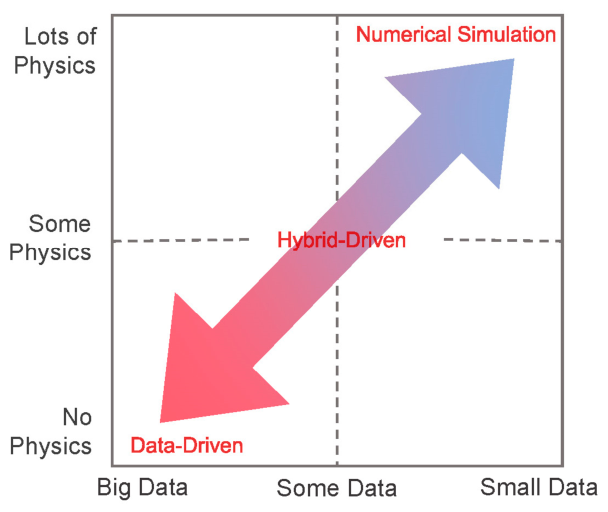
As shown in Figure 3, data-driven models and physics-driven models (i.e., numerical simulation methods) are opposite in terms of data requirements and the degree of physical rule intervention. As physical laws are introduced, the data requirement of the model gradually decreases, and the interpretability and generalization capability of the model increase, but the difficulty of model construction also gradually increases [29,30,31]. The PINN method emphasizes embedding physical laws into the neural network while remaining data-driven, combining the two approaches to obtain the advantages of both.
The core idea of PINNs is to convert physical prior knowledge into physical constraints embedded in the loss function, thereby achieving a fusion of physical laws and data-driven modeling. Physical prior knowledge refers to the understanding of fundamental physical laws and principles of the real world, which are independent of machine learning and data [85]. In existing studies, PINN methods have shown great potential in solving complex nonlinear PDE problems, especially in cases with scarce data or limited boundary conditions. This section takes the vanilla PINN as an example to briefly analyze its components and working mechanisms [28].
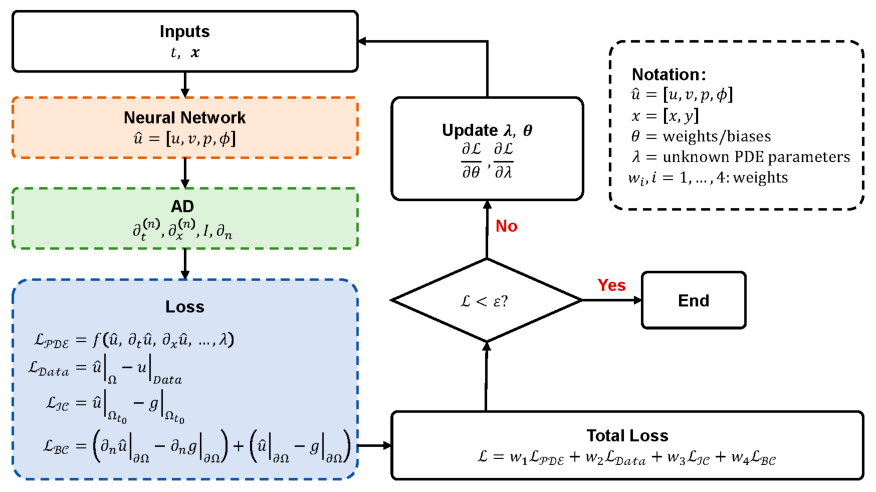
Figure 4 shows a schematic of a typical PINN architecture [84]. Following related studies [85,89], the PINN framework can be considered to consist of two main parts: neural network with data feedback, and physical information constraints.
  • Neural network and data feedback. In the PINN framework [86], the neural network is usually a fully connected backpropagation neural network. The network input typically receives spatiotemporal coordinates (x, t), and the model output is the solution u(x, t) of the physical field. The neural network can compute derivatives through automatic differentiation (AD) to obtain the partial derivative terms required for the physics loss function. During training, the loss function is fed back to the optimizer to guide the neural network model optimization. The optimizer is typically the adaptive algorithm Adam [90], and backpropagation is used to find the optimal solution. When the loss function value reaches the preset tolerance ε, the training process ends, and the network parameters θ and PDE parameters λ are considered to have reached their optimal values.
  • Physical information constraints. The neural network solution process transforms the optimization of neural network hyperparameters θ into an optimization problem, i.e., minimizing the model loss function L . Therefore, the loss function is the key function in the model training process, typically expressed as Equation (1).
    L = ω D a t a L D a t a + ω P h y L P h y
    L P h y = ω P D E L P D E + ω I C L I C + ω B C L B C
Specifically, the loss function consists of two main parts: data loss L D a t a and physics loss L P h y . The data loss measures the agreement between the network output and the training labels, typically using mean squared error (MSE). The physics loss measures the agreement between the network output and the physical laws, and its typical composition is shown in Equation (2), including PDE loss L P D E , initial condition loss L I C , and boundary condition loss L B C . These are weighted by respective coefficients to balance the importance of each constraint during training. The weights need to be adjusted according to the specific problem to ensure that different components of the loss function work together.

3.4.2. PINN Variants

As research objects shift from idealized heat transfer problems to multi-zone buildings and complex urban thermal environments, the vanilla PINN, which relies primarily on PDE residuals, faces challenges in training stability and scalability. Consequently, many problem-specific variants have emerged. The research paradigm is shifting from relying on explicit PDE constraints to embedding physical priors through more essential approaches such as network architecture design, constraint form innovation, and training strategy integration, to improve robustness and generalization in complex systems.
In the dataset utilization stage, the proportion of relevant studies is relatively low, and the integration of physical priors often occurs in coordination with other stages. However, this area has grown rapidly in recent years, with physics-based label generation methods becoming a trend. These methods generate high-fidelity training data through physical simulations, embedding prior knowledge into the dataset as supervised signals. Examples include PGF-NN [91] generating temperature field data based on CFD simulations, PT-DNN [92] pre-training using radiative transfer models, and UFV-PINN [93] using the finite volume method to solve PDEs for pollutant concentration labels. In addition, a small number of studies have adopted case sampling or data augmentation strategies to improve data representativeness and diversity.
In the model construction stage, recent research trends show a shift from general-purpose frameworks toward deep customization. Physically guided architecture development is an important direction. These methods embed physical priors directly into the network structure to ensure physical consistency at the architectural level. They include physically consistent architectures (e.g., PCNN [94]), convexity and monotonicity constraint architectures (e.g., CMNN [95]), state-space embedded architectures (e.g., NNiSS [96]), physics-oriented specialized networks (e.g., PIGNN-CFD [14] using graph neural networks for unstructured meshes), and modular decoupling (e.g., modular PCNN [97] separating core control and action mapping). Feature engineering is another common method, constructing physically meaningful input features (e.g., the signed distance function in PGF-NN [91]) to make it easier for the model to learn physical laws. Multi-task and multi-physics architectures and interpretability analysis have also been explored in some studies.
Early studies primarily achieved physical consistency by adding residuals of physical equations to the loss function; for example, Jing et al. incorporated residuals of the Reynolds-averaged Navier–Stokes (RANS) equations [98] and later the Navier–Stokes equations [99], as penalty terms in the loss function, while Kim et al. [100] embedded the mass conservation equation as a regularization term; these methods guide the network output toward physically plausible solutions through soft constraints. More recent studies have shifted focus toward innovations in training strategies to address loss balancing and convergence stability issues in multi-objective optimization. Adaptive loss balancing is a representative approach; for instance, dpPINN [101] dynamically adjusts the weights of individual loss terms according to their relative errors, while PIGAN [102] adopts a staged training procedure, sequentially introducing reconstruction, adversarial, and physics losses to avoid gradient conflicts. Two-stage and transfer learning strategies have also been widely adopted; for example, PGF-NN [91] pre-trains a surrogate model and then fine-tunes a difference model to bridge the gap between numerical simulation and measured data, and Dyna-PINN [103] employs a PINN as an environment model within a reinforcement learning framework to improve sample efficiency. In addition, some studies have optimized the training process through dynamic weight adjustment (e.g., PI-Seq2seq [104]) combined with Kalman filtering, or through output variable scaling (e.g., Two-step PINN [105]) to mitigate numerical imbalance in small-scale quantities.

3.4.3. Applications of PINNs in Urban Thermal Environments

At the application level, PINNs have been used for multi-scale thermal environment problems ranging from building interiors to urban blocks. It should be noted that thermal environment problems at different scales have significantly different physical mechanisms, data availability, and engineering objectives, which directly determine the types of prior knowledge to be integrated and how they are embedded into the neural network. In other words, PINNs are not built using a single fixed paradigm; instead, physical priors are selectively embedded into different stages of the model according to the core challenges of the specific problem. To systematically reveal this pattern, this subsection summarizes applications across three scales: indoor environment, building system, and outdoor environment (as shown in Table 1), and focuses on explaining the intrinsic relationships among problem characteristics, prior type, and integration approach at each scale.
At the indoor environment scale, the core challenges are: complex spatial geometry, fine physical processes, extremely sparse measured data available for training, and the need to couple physiological responses such as human thermal comfort. Therefore, the required priors mainly include governing equations describing flow and heat transfer, boundary conditions, and human physiological models. The integration approaches are reflected as: using governing equation residuals as loss function constraints to guide the model in reconstructing physically consistent full-field distributions from sparse data; while using physiological models as additional output-layer constraints or loss terms to achieve personalized thermal comfort modeling. For example, Jing et al. [99] successfully reconstructed indoor three-dimensional flow fields from sparse sensor data using a PINN framework. Semeraro et al. [114] addressed the data scarcity problem in historical buildings by proposing a two-stage PINN framework, achieving reliable prediction of temperature, humidity, and energy consumption. For problems strongly coupled with physiological responses such as human thermal comfort, this scale is dedicated to developing PINN variants that deeply integrate physical equations with limited measured data, supporting rapid flow field reconstruction and personalized thermal comfort control with physiological constraints.
At the outdoor environment scale, the core challenges are: extremely complex urban geometry, significant multi-scale and multi-physics coupling characteristics in physical processes, and the high computational cost of traditional CFD simulations. Therefore, the required priors include not only fluid dynamics and thermodynamics governing equations but also the representation of complex geometric boundaries and the characterization of multi-physics coupling relationships. The integration approaches are more diverse: First, at the network architecture level, graph neural networks are used to handle unstructured meshes, embedding geometric topological relationships as structural priors into the model (e.g., PIGNN-CFD). Second, at the training strategy level, dynamic weighting is used to balance multi-physics loss terms to address convergence difficulties in coupled problems (e.g., dpPINN [101]). Third, at the generative framework level, generative adversarial networks are fused with physical constraints to achieve wind field generation under small-sample conditions (e.g., PIGAN [102]). Through these diversified prior integration strategies, these methods significantly improve computational efficiency in complex urban scenarios while maintaining physical consistency. At the building system scale, the core challenges are: strongly nonlinear and long-term temporal characteristics of building thermal dynamics, coupling effects between zones, and the need for the model to serve optimization control tasks such as model predictive control (MPC). Therefore, the required priors mainly include the law of energy conservation, lumped-parameter descriptions of heat transfer processes (e.g., RC models), and mathematical requirements for system controllability and differentiability. The integration approach has shifted from soft constraints represented by loss functions to hard constraints at the network architecture level, by embedding physical priors directly into the network architecture to ensure physical consistency and long-term prediction stability from the ground up. By designing network structures that satisfy energy conservation (e.g., PCNN), physical consistency and long-term prediction stability are guaranteed at the fundamental level. Furthermore, to adapt to optimization control algorithms, some studies have further introduced mathematical properties such as input convexity as priors to construct models that are both physically consistent and convex-optimization-friendly.
Despite the breadth of applications summarized above, a notable gap across all three scales is the near absence of human-centric dimensions—subjective thermal comfort, psychological adaptation, and biophilic design preferences—in the physics-constrained modeling pipeline. Psychological parameters such as mood state have been shown to significantly affect thermal sensation, and recent work has proposed quantitative correction factors (e.g., Turhan and Özbey coefficients) to capture this effect. These coefficients have been modeled with high accuracy via interpretable algorithms such as Multivariate Adaptive Regression Splines (MARS) [115,116], opening the possibility of embedding human-centric priors into PINN frameworks. However, this integration has not yet been realized in current urban thermal PINN studies and remains an important direction for future development. It is also worth noting that most reviewed studies rely predominantly on RMSE and R2 as evaluation metrics, with limited verification of physical consistency, out-of-distribution extrapolation, or prediction uncertainty. The lack of standardized benchmarks across different studies further undermines the comparability and credibility of reported performance. These validation gaps represent a central bottleneck that must be addressed for the field to progress toward reliable real-world applications.

4. Workflows

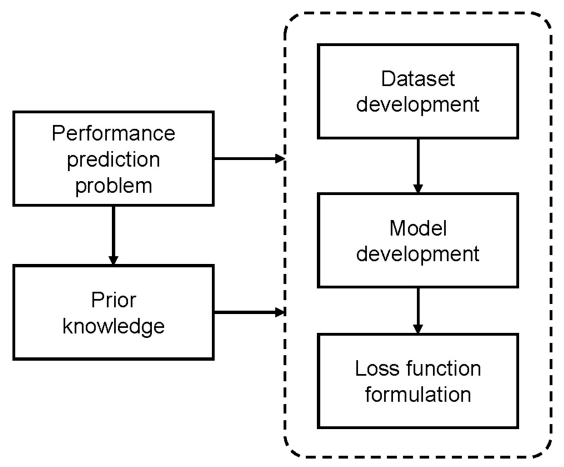
We have reviewed the research on machine learning applied to building environmental performance and discussed the concepts, development, and main issues of physically consistent neural network methods. As shown in Figure 5, the integration relationship between neural network models and prior knowledge depends on the nature of the performance prediction problem, and such prior knowledge can be involved in multiple stages of neural network model development [117,118]. In this review, each reviewed study is categorized according to the stage that represents its primary contribution in integrating physical priors. For studies that involve multiple integration stages, the classification is determined by the dominant methodological contribution, and any cross-stage characteristics are noted in the relevant discussion. PINNs are not a fixed paradigm but rather the result of on-demand combination of prior knowledge across different modeling stages.
This section first defines the types of physical priors and their integration stages in the modeling workflow (Section 4.1), and then systematically describes the PINN development workflow from three dimensions: dataset development (Section 4.2.1), model construction (Section 4.2.2), and loss function formulation (Section 4.2.3). In this process, the specific integration methods for physical priors at each stage are explained in detail. It should be noted that the prior knowledge discussed in this paper specifically refers to knowledge related to physical system modeling, including physical laws, simplified physical models, empirical formulas, geometric constraints, boundary conditions, etc., which are the concrete referents of “physical information” in the PINN paradigm.

4.1. Types of Prior Knowledge

Prior knowledge is the sum of information from common sense and logic, physical laws, and human feedback [119]. As shown in Table 2, research problems in urban thermal environment modeling can correspond to these three types of prior knowledge. This paper focuses on the part of prior knowledge related to physical system modeling, i.e., physical laws and their derived forms (such as simplified models, empirical formulas, geometric constraints, etc.). In this table, we provide only non-exhaustive examples for the three categories of prior knowledge. At present, research on integrating physical prior knowledge with neural network models is still in its early stages, and we cannot provide examples for every combination of prior knowledge types.

4.2. Workflow for Integrating Prior Knowledge

For urban thermal environment modeling problems, this paper proposes a workflow for integrating prior knowledge into PINNs. This workflow involves three core stages: dataset development, neural network model construction, and loss function formulation. As shown in Table 3, prior knowledge can be introduced into any of these stages on demand. This section describes the key actions and typical integration methods for each stage. This development framework is applicable to all scales of urban thermal environment modeling (indoor, outdoor, and building system), and different combinations of stages can be selected according to problem characteristics.

4.2.1. Dataset Development

Urban thermal environment modeling involves many factors and complex research objectives. Currently, there is no publicly available standard dataset in this field, which constrains the models proposed by researchers. Prior knowledge can play a role in case sampling, data augmentation, and label generation.
When constructing urban thermal environment datasets, due to the computational cost of physical models, researchers often use sampling methods to select cases. Common sampling methods include random sampling, stratified sampling, systematic sampling, and cluster sampling. Using prior knowledge to rationally plan case sampling so that the model cases cover the characteristics of the target prediction cases as much as possible ensures the representativeness and diversity of the training set. Diversity in the spatial distribution of training samples can improve training efficiency, save computational resources, and help neural networks improve generalization and robustness [120]. This approach has been demonstrated in several studies. For example, Shen [121] used Latin Hypercube Sampling (LHS) to generate parameter tables for constructing case sets to enhance dataset representativeness [122]; Zhong et al. [123] also used LHS to train models with a small number of samples.
Data augmentation is also a method to enhance model generalization by increasing case diversity. It typically uses prior knowledge to analyze the characteristics and deficiencies of the sampled case set and applies a series of transformations to the existing data or generates new datasets to compensate for deficiencies and increase quantity. For example, in image processing, geometric transformations (rotation, flipping, scaling), color transformations (adjusting brightness, saturation, contrast), and random erasing are commonly used for data augmentation [124]. Some typical prior knowledge can also be used for data augmentation [125], such as introducing physical symmetries or implicit relationships from high-fidelity simulations. In time-series prediction of building energy consumption, methods such as time reversal [126], changing time order [127], and even using CNNs to generate new data [128] are used to increase sample sizes.
The performance of machine learning models strongly depends on the quantity and quality of data. For urban thermal environment modeling, high-quality, large-scale datasets are often difficult to obtain, and data acquisition costs are high. Building performance prediction involves multiple dimensions of data, such as building structure, energy consumption data, climate data, and sensor data. Acquiring these data requires long-term monitoring and recording and faces technical and ethical issues such as privacy protection and data integration. Furthermore, thermal environment data have high temporal dependence, and data often contain missing values, noise, or measurement errors. Therefore, most researchers choose to use the results of physical models as label data to obtain higher-quality training sets. Some studies use empirical formulas or simplified physical models to generate labels to obtain a larger number of data labels within a given time, such as Guo [11] generating nearly 10,000 data cases using a simplified lattice Boltzmann method.
Despite these advances, the quality and reliability of training data merit critical scrutiny. First, sensor measurements in urban thermal monitoring are often affected by noise, missing data, and sensor drift, which can propagate into PINN training and degrade prediction reliability. Second, most “ground truth” labels used in current PINN studies are themselves generated by numerical simulations (CFD, FVM, LBM), which carry inherent modeling errors and simplifications. This creates a risk of training models on simulation outputs that may not accurately represent real urban conditions. Future work should incorporate real measurement data for validation and develop methods to quantify and mitigate the simulation-to-reality gap.

4.2.2. Model Construction

The neural network model determines whether the model has the ability to fit building environmental performance problems. During the model development stage, prior knowledge can be integrated in various ways, such as physically guided architecture development, feature engineering, model evaluation and interpretability analysis, and multi-task learning with transfer learning.
  • Basic Architectures
The basic architecture of a neural network is the starting point of model construction, determining the types of data the network can process and its learning capability. As shown in Table 4, different architectures, due to their inherent inductive biases, are naturally suited to different types of physical problems and data characteristics. The way prior knowledge is integrated into the model largely depends on the chosen basic architecture [117]. This section categorizes and introduces various basic neural network models and discusses their applications in PINNs.
  • Physically Guided Architectures
For different modeling tasks, corresponding model combinations should be selected. Model architecture development should be consistent with data types and physical process characteristics. For spatial invariance, Convolutional Neural Networks (CNNs) can extract local spatial features. Using CNNs to extract building environment features enables CFD prediction [21,71,72]. When one-dimensional convolution kernels are used, the model can also process one-dimensional sequence data. For example, Fang et al. proposed hybrid-PINN-CNN, which draws on the idea of the finite volume method and uses CNNs to solve one-dimensional PDEs [130]. For temporal dependencies, Recurrent Neural Networks (RNNs) can capture temporal dynamics. Ren et al. [131] proposed PhyCRNet, a physics-informed convolutional recurrent learning architecture that combines the strengths of CNNs and RNNs to solve PDEs without labeled data. Agga et al. [133] used CNN-LSTM and ConvLSTM to predict power generation trends in photovoltaic plants, fusing the advantages of convolutional and sequential networks. For the geometric complexity of unstructured meshes, Graph Neural Networks (GNNs) can naturally encode topological priors. Shao et al. [14] proposed PIGNN-CFD, which takes unstructured mesh nodes as graph nodes and mesh connections as edges, and combines RANS equations as physics loss to achieve urban wind field prediction in complex geometries. For multi-physics coupling and generative tasks, Generative Adversarial Networks (GANs) show unique advantages. For example, Liu et al. [132] developed a physics-informed GAN (PI-GAN) that encodes stochastic differential equations into the GAN architecture. By selecting network structures that are isomorphic to the physical processes, prior knowledge can be embedded more naturally, enhancing the physical consistency of the model.
  • Feature Engineering
Feature engineering is the process of preparing, transforming, constructing, and filtering features to optimize data analysis tasks [134]. It improves the computational efficiency and learning performance of machine learning models by optimizing the relevance and redundancy of data. For urban thermal environment modeling, raw data often have significant deficiencies, such as containing redundant and noisy data or lacking structural information. Such data cannot be directly used for establishing mapping relationships and training machine learning models. Therefore, feature engineering is needed to deeply process the raw data through feature construction, feature selection, and feature extraction [135], ultimately improving the efficiency and accuracy of machine learning models. Guo et al. [11] used the signed distance function (SDF) to encode the distance from spatial positions to obstacles as input features, achieving good results. Zhong et al. [123] compared Boolean representation features and SDF representation features for wind field prediction and found that the SDF-represented model achieved better prediction performance. Wang et al. [136] extracted key wind-field-related indicators and their complementarity based on prior knowledge, constructing feature functions to improve model performance.
  • Evaluation and Interpretability
Model evaluation should select appropriate metrics according to the physical meaning and distribution characteristics of the output data. In addition to commonly used metrics such as RMSE and R2, for image-like outputs, metrics such as the Structural Similarity Index (SSIM) can be used. For example, Li et al. [77] used the Fréchet Inception Distance (FID) as an evaluation metric for wind environment generation models. After model evaluation, interpretability algorithms can be used to analyze the trained model, understand the working mechanisms of different model components, and provide directions for model improvement. Zhong [137] used the HSV algorithm to analyze the role of convolutional layers in building environmental performance and proposed further increasing convolution or improving attention mechanisms to enhance the model’s spatial perception capability.
  • Multi-Task and Transfer Learning
Most urban thermal environment problems are multi-task modeling problems involving multi-physics coupling. Researchers use the potential correlations between different physical quantities in prior knowledge to transfer model knowledge to the prediction of other physical quantities through parameter transfer, soft sharing, etc. For example, Yang et al. [138] achieved collaborative inversion of multiple pollutants through a physics-informed multi-task network. Chen et al. [92] used physics-guided transfer learning to improve the accuracy of high-resolution aerosol inversion. Such methods effectively alleviate the bottleneck of scarce labeled data in urban thermal environment modeling and are an important path to improving the cross-scenario generalization capability of surrogate models.

4.2.3. Loss Function Formulation

The loss function measures the discrepancy between the neural network model output and the ground truth, and its formulation directly determines the final performance of the model. In loss function formulation, prior knowledge can be integrated as a physics-guided loss, and weights can be adjusted according to physical relationships. Physical relationships in prior knowledge (e.g., mass conservation, energy conservation, logical derivation) can be used to construct loss functions that drive the neural network to converge to physically feasible solutions. At the same time, the weights of different loss components can be estimated based on prior knowledge, or dynamic/adaptive strategies can be used for weight assignment. For example, Rui et al. [101] used a dynamic prioritization self-adaptive loss balancing strategy (dpPINN) to adjust loss terms at different scales, improving the prediction accuracy of 3D flow fields.

5. Conclusions and Prospects

5.1. Conclusions

This review systematically examines the research progress of PINNs in urban thermal environment modeling, revealing the integration logic of physical priors from three perspectives: evolution, method classification, and development workflow. The main conclusions are as follows:
  • Evolution perspective: Urban thermal environment modeling has undergone a paradigm shift from numerical simulation (high cost, high accuracy) to data-driven surrogate models (high efficiency, weak physics) and then to hybrid-driven models (balancing efficiency and physical consistency). PINNs, represented by the vanilla PINN, embed physical constraints such as governing equations into neural network training, providing an effective path to address the insufficient generalization and lack of physical consistency of pure data-driven models.
  • From a method classification standpoint: PINNs have continuously innovated in dataset utilization, model construction, and loss function formulation. At the three scales of indoor environment, outdoor environment, and building system, problem characteristics (data sparsity, geometric complexity, control orientation) determine the types of physical priors and their integration approaches. Indoor environments mainly use loss function constraints; outdoor environments have driven architectural and strategic innovations; building systems show a trend from soft constraints to hard constraints.
  • Regarding the development workflow: Physical priors can be integrated on demand into three stages: dataset development (sampling strategies, data augmentation), model construction (architecture selection, feature engineering, physically guided design), and loss function formulation. Current research is highly concentrated on physical constraints at the loss function level, while systematic integration in data augmentation, network architecture design, and model interpretability evaluation remains insufficient, limiting the application potential of models in complex urban scenarios.
In terms of practical readiness, the three application scales exhibit markedly different maturity levels. Indoor reconstruction problems (e.g., flow field reconstruction from sparse sensors) are relatively mature, with several validated case studies. Building system control problems (e.g., MPC with physics-constrained neural networks) are promising but require further validation on real systems. Large-scale outdoor urban microclimate prediction remains the least mature, facing significant barriers in geometric complexity, multi-physics coupling, data availability, and computational cost. Collectively, this review contributes the first systematic classification of physical prior integration strategies in urban thermal PINNs and provides a practical development workflow, thereby establishing a methodological foundation for future hybrid-driven modeling in this domain.

5.2. Prospects

Although progress has been made in PINNs for urban thermal environment modeling, the integration of prior knowledge remains highly concentrated at the loss function level, with systematic integration in dataset development and model architecture still insufficient. As the field moves toward real-world deployment, a number of critical technical bottlenecks must be explicitly recognized and tackled. In this section, we first delineate key unresolved challenges (Section 5.2.1) and then outline priority research directions (Section 5.2.2) that can help bridge the gap between current capabilities and practical requirements.

5.2.1. Key Challenges and Open Issues

Despite promising results, several fundamental challenges remain that must be addressed before PINNs can be reliably deployed in complex, real-world urban scenarios. Below we discuss five key challenges spanning training dynamics, computational trade-offs, uncertainty quantification, hardware deployment, long-term temporal scales, and multi-physics coupling.
Challenge 1: Gradient pathologies and convergence stability in complex geometries. When applying PINNs to highly nonlinear Navier–Stokes equations in geometrically complex urban domains, gradient pathologies are frequently observed, leading to convergence failures or non-physical solutions. Possible mitigation strategies include adaptive loss balancing (e.g., learning rate annealing), curriculum learning. Nonetheless, robust training of PINNs for urban-scale geometries remains an open problem, particularly when multiple interacting physical fields are involved.
Challenge 2: Uncertainty quantification (UQ). Current urban thermal PINN studies typically report only point estimates of predicted fields. However, reliable decision-making requires distinguishing between at least two sources of error: (i) model approximation error arising from the neural network’s finite capacity and stochastic training, and (ii) model form error stemming from simplifications in the governing PDEs (e.g., turbulence modeling assumptions). Systematic separation and quantification of these two error sources have rarely been addressed in existing urban thermal PINN research, and this remains an important open direction for future work.
Challenge 3: Deployment on edge-computing devices and real-time building management systems. Transitioning PINNs from offline research tools to online, real-time building management systems (BMS) or edge devices raises practical engineering requirements. Model compression (pruning, quantization, knowledge distillation) is essential to reduce memory and computational footprints. Moreover, the inference architecture must be compatible with existing BMS communication protocols and meet strict latency and power constraints. Research on hardware-aware PINN design and deployment is still lacking.
Challenge 4: Long-term transient simulations under non-stationary climates. Most PINN applications in the built environment operate on diurnal or hourly time scales. Extending PINNs to simulate multi-decadal climate change scenarios—where boundary conditions are non-stationary and fluctuate over decades—presents a fundamental difficulty. Standard global space-time PINN formulations suffer from error accumulation and causality violation. Potential solutions include time-marching strategies, recurrent (LSTM-based) PINN architectures, and coupling with climate model downscaling, but robust long-term predictive capability has not yet been demonstrated.

5.2.2. Future Research Directions

Building on the challenges identified in Section 5.2.1, future research should prioritize the following directions.
Direction 1: Multi-physics coupled modeling. Existing research mainly focuses on predicting a single physical quantity (e.g., temperature field or wind velocity field), making it difficult to capture the combined effects of coupled processes such as radiation, heat transfer, and airflow on the urban thermal environment. The urban thermal environment is essentially the result of multi-physics interactions; neglecting coupling relationships will limit model applicability in real-world scenarios. Future research should introduce multi-physics consistency constraints into PINN frameworks, develop surrogate models for radiation-convection-heat transfer full coupling mechanisms, achieve collaborative prediction and information feedback between different physical fields, and improve the ability to characterize complex thermal environment evolution.
Direction 2: Adaptive loss balancing strategies. Current PINNs mostly rely on manually set weight coefficients to balance data loss and prior knowledge constraint loss, which can lead to constraint conflicts, training instability, or slow convergence in multi-objective optimization. Urban thermal environment problems involve multi-scale, multi-physics coupling, making the composition of loss terms more complex and more sensitive to weight settings. Future research should develop adaptive loss balancing mechanisms, such as gradient-based dynamic weight adjustment, uncertainty weighting, or attention-guided constraint selection strategies, to achieve dynamic synergy between physical laws and data characteristics, improving training efficiency and prediction accuracy.
Direction 3: Cross-scenario transfer learning and generalization enhancement. Existing PINN models are mostly trained for specific building morphologies, climate conditions, or boundary settings. When the application scenario changes (e.g., new city, new building type, new climate zone), model performance often degrades significantly, requiring retraining or parameter tuning, which limits the engineering promotion value of the method. Future research can introduce transfer learning and meta-learning frameworks to pre-train general-purpose urban thermal environment surrogate models, perform few-shot fine-tuning for different scenarios, and achieve cross-scenario reuse of knowledge. At the same time, by combining graph neural networks or spatial encoding methods, urban topological structures and climate zone characteristics can be used as transferable inputs to enhance model generalization across different geometric configurations and boundary conditions.
Direction 4: Integration of human-centric factors into physics-informed learning. A key direction is to integrate quantitative psychological coefficients into PINN frameworks as source terms in energy balance PDEs, as learnable parameters in the loss function, or as regularizers on predicted comfort outputs. More broadly, qualitative human-centric data (e.g., thermal sensation votes, visual greenness indices, biophilic perception scores) can be transformed into quantitative adaptation coefficients through validated psychometric–physiological models and then embedded into physics-informed learning pipelines. Embedding human-centric data would improve the practical relevance of simulations and foster interdisciplinary collaboration between building science, environmental psychology, and machine learning.
Direction 5: Unified model evaluation and benchmarking system. Current studies mostly use generic statistical metrics such as RMSE and R2 to evaluate model performance. However, due to differences in experimental settings such as building morphological complexity, input data accuracy, and prediction resolution, performance results across different models lack comparability. Furthermore, relying solely on numerical accuracy makes it difficult to comprehensively measure model performance in terms of physical consistency, interpretability, and extrapolation capability. Future research urgently needs to construct a multi-dimensional comprehensive evaluation system for urban thermal environment surrogate models, covering core dimensions such as prediction accuracy, computational efficiency, physical consistency, and interpretability. In particular, systematic benchmarking of training time versus inference speedup—and comparisons with traditional CFD—should be included as part of the computational efficiency assessment and to establish publicly available benchmark datasets and standardized evaluation procedures, promoting transparent comparison of model performance and the formation of community consensus.
The future development of PINNs for urban thermal environment modeling should move from single-field prediction to multi-field synergy, from static weights to adaptive optimization, from scenario-specific to cross-scenario generalization, from purely physical metrics to human-inclusive evaluation, and from single metric to multi-dimensional evaluation. Through continuous exploration in these directions, it is expected to achieve a leap from fittable to interpretable and from specialized models to general frameworks, ultimately promoting the engineering practicalization and standardization of intelligent urban thermal environment modeling.

Author Contributions

Conceptualization, X.X. and L.Y.; methodology, X.X. and G.Z.; software, T.Z.; validation, G.Z. and B.Y.; formal analysis, G.Z. and B.Y.; investigation, L.Y.; resources, L.Y.; data curation, D.L.; writing—original draft preparation, G.Z.; writing—review and editing, X.X. and L.Y.; visualization, G.Z.; supervision, L.Y.; project administration, L.Y.; funding acquisition, L.Y. All authors have read and agreed to the published version of the manuscript.

Funding

This research was funded by the National Key R&D Program of China, grant number 2023YFC3806502.

Data Availability Statement

Data sharing is not applicable to this article as no new data were created. All data analyzed are from published sources cited in the manuscript.

Conflicts of Interest

Author Dongfeng Long is employed by the China Construction Science and Industry Corp. Ltd. The remaining authors declare that the research was conducted in the absence of any commercial or financial relationships that could be construed as a potential conflict of interest.

Abbreviations

The following abbreviations are used in this manuscript:
PINNPhysics-Informed Neural Network
PDEPartial Differential Equation
CFDComputational Fluid Dynamics
GNNGraph Neural Network
GANGenerative Adversarial Network
CNNConvolutional Neural Network
RNNRecurrent Neural Network
MPCModel Predictive Control
ANNArtificial Neural Network
MLPMultilayer Perceptron
FVMFinite Volume Method
FEMFinite Element Method
FDMFinite Difference Method
LHSLatin Hypercube Sampling
SDFSigned Distance Function
MSEMean Squared Error
RMSERoot Mean Squared Error
SSIMStructural Similarity Index
FIDFréchet Inception Distance

References

  1. Zhao, Y.; Xiong, C.; Luo, Z.; Hussein, T.; Zhao, T. The Impact of Human-Induced Turbulence on Indoor Thermal Environment and Pollutant Diffusion. Build. Simul. 2025, 18, 473–497. [Google Scholar] [CrossRef]
  2. Li, J.; Zhang, J.; Ge, W.; Liu, X. Multi-Scale Methodology for Complex Systems. Chem. Eng. Sci. 2004, 59, 1687–1700. [Google Scholar] [CrossRef]
  3. Ni, W.; Areal, A.T.; Lechner, K.; Breitner, S.; Zhang, S.; Woeckel, M.; Slesinski, S.C.; Nikolaou, N.; Dallavalle, M.; Schikowski, T.; et al. Low and High Air Temperature and Cardiovascular Risk. Atherosclerosis 2025, 406, 119238. [Google Scholar] [CrossRef] [PubMed]
  4. Li, L.; Yu, L.; Li, R.; Zhou, X.; Zhang, N.; Meng, Q. Carbon Emission Accounting and Carbon Neutrality Strategies at Universities: A Case Study from Guangzhou, China. Build. Environ. 2025, 281, 113210. [Google Scholar] [CrossRef]
  5. Xu, G.; Li, J.; Shi, Y.; Feng, X.; Zhang, Y. Improvements, Extensions, and Validation of the Urban Weather Generator (UWG) for Performance-Oriented Neighborhood Planning. Urban Clim. 2022, 45, 101247. [Google Scholar] [CrossRef]
  6. Zou, J.; Lu, H.; Shu, C.; Ji, L.; Gaur, A.; Wang, L.L. Multiscale Numerical Assessment of Urban Overheating under Climate Projections: A Review. Urban Clim. 2023, 49, 101551. [Google Scholar] [CrossRef]
  7. Zhou, X.; Cui, Y.; Fan, C.; Liao, Y.; Zhu, X. How Does Anthropogenic Heat Emissions from Buildings Affect Urban Heat Island Intensity? Based on Neighborhood Scale and Urban Scale Analysis. Urban Clim. 2025, 62, 102525. [Google Scholar] [CrossRef]
  8. Farahani, A.V.; Leinonen, M.; Ruotsalainen, L.; Jokisalo, J.; Kosonen, R. Predicting Summer Indoor Temperatures in Nordic Apartments Considering Heatwaves Forecasts. Energy Build. 2025, 336, 115630. [Google Scholar] [CrossRef]
  9. Pan, Y.; Zhu, M.; Lv, Y.; Yang, Y.; Liang, Y.; Yin, R.; Yang, Y.; Jia, X.; Wang, X.; Zeng, F.; et al. Building Energy Simulation and Its Application for Building Performance Optimization: A Review of Methods, Tools, and Case Studies. Adv. Appl. Energy 2023, 10, 100135. [Google Scholar] [CrossRef]
  10. Chen, T.; Li, R.; Hu, X.; Zhang, B.; Liu, Y.; Wang, L.; Gao, N. Machine Learning as CFD Surrogate Models for Rapid Prediction of Building-Related Physical Fields: A Review of Methods and State-of-the-Art. Build. Environ. 2025, 285, 113667. [Google Scholar] [CrossRef]
  11. Guo, X.; Li, W.; Iorio, F. Convolutional Neural Networks for Steady Flow Approximation. In Proceedings of the 22nd ACM SIGKDD International Conference on Knowledge Discovery and Data Mining, San Francisco, CA, USA, 13–17 August 2016; pp. 481–490. [Google Scholar]
  12. Xu, X.; Gao, Z.; Zhang, M. A Review of Simplified Numerical Approaches for Fast Urban Airflow Simulation. Build. Environ. 2023, 234, 110200. [Google Scholar] [CrossRef]
  13. Zhao, R.; Liu, S.; Liu, J.; Jiang, N.; Chen, Q. A Two-Stage CFD-GNN Approach for Efficient Steady-State Prediction of Urban Airflow and Airborne Contaminant Dispersion. Sustain. Cities Soc. 2024, 112, 105607. [Google Scholar] [CrossRef]
  14. Shao, X.; Liu, Z.; Zhang, S.; Zhao, Z.; Hu, C. PIGNN-CFD: A Physics-Informed Graph Neural Network for Rapid Predicting Urban Wind Field Defined on Unstructured Mesh. Build. Environ. 2023, 232, 110056. [Google Scholar]
  15. Lin, X.; Fu, Y.; Peng, D.Z.; Liu, C.-H.; Chu, M.; Chen, Z.; Yang, F.; Tse, T.K.; Li, C.Y.; Feng, X. CFD-and BPNN-Based Investigation and Prediction of Air Pollutant Dispersion in Urban Environment. Sustain. Cities Soc. 2024, 100, 105029. [Google Scholar]
  16. Tian, X.; Cheng, Y.; Lin, Z. Modelling Indoor Environment Indicators Using Artificial Neural Network in the Stratified Environments. Build. Environ. 2022, 208, 108581. [Google Scholar] [CrossRef]
  17. Li, L.; He, Y.; Zhang, H.; Fung, J.C.; Lau, A.K. Enhancing IAQ, Thermal Comfort, and Energy Efficiency through an Adaptive Multi-Objective Particle Swarm Optimizer-Grey Wolf Optimization Algorithm for Smart Environmental Control. Build. Environ. 2023, 235, 110235. [Google Scholar] [CrossRef]
  18. Hodges, J.L.; Lattimer, B.Y.; Luxbacher, K.D. Compartment Fire Predictions Using Transpose Convolutional Neural Networks. Fire Saf. J. 2019, 108, 106394. [Google Scholar] [CrossRef]
  19. Ding, C.; Lam, K.P. Data-Driven Model for Cross Ventilation Potential in High-Density Cities Based on Coupled CFD Simulation and Machine Learning. Build. Environ. 2019, 165, 106394. [Google Scholar]
  20. Lu, C.; Li, S.; Lu, Z. Building Energy Prediction Using Artificial Neural Networks: A Literature Survey. Energy Build. 2022, 262, 111718. [Google Scholar] [CrossRef]
  21. Calzolari, G.; Liu, W. Deep learning to replace, improve, or aid CFD analysis in built environment applications: A review. Build. Environ. 2021, 206, 108315. [Google Scholar] [CrossRef]
  22. Karniadakis, G.E.; Kevrekidis, I.G.; Lu, L.; Perdikaris, P.; Wang, S.; Yang, L. Physics-Informed Machine Learning. Nat. Rev. Phys. 2021, 3, 422–440. [Google Scholar] [CrossRef]
  23. Wei, C.; Ooka, R.; Zhou, Q. Performance Comparison Using Different Multilayer Perceptron Input–Output Formats to Predict Unsteady Indoor Temperature Distribution. Jpn. Archit. Rev. 2022, 5, 661–671. [Google Scholar] [CrossRef]
  24. Pedro Souza de Oliveira, J.; Victor Barbosa Alves, J.; Neuenschwander Escosteguy Carneiro, J.; de Andrade Medronho, R.; Fernando Lopes Rodrigues Silva, L. Coupling a Neural Network Technique with CFD Simulations for Predicting 2-D Atmospheric Dispersion Analyzing Wind and Composition Effects. J. Loss Prev. Process Ind. 2022, 80, 104930. [Google Scholar] [CrossRef]
  25. Jurado, X.; Reiminger, N.; Benmoussa, M.; Vazquez, J.; Wemmert, C. Deep Learning Methods Evaluation to Predict Air Quality Based on Computational Fluid Dynamics. Expert Syst. Appl. 2022, 203, 117294. [Google Scholar] [CrossRef]
  26. Peng, W.; Qin, S.; Yang, S.; Wang, J.; Liu, X.; Wang, L.L. Fourier Neural Operator for Real-Time Simulation of 3D Dynamic Urban Microclimate. Build. Environ. 2024, 248, 111063. [Google Scholar] [CrossRef]
  27. Penwarden, M.; Zhe, S.; Narayan, A.; Kirby, R.M. A Metalearning Approach for Physics-Informed Neural Networks (PINNs): Application to Parameterized PDEs. J. Comput. Phys. 2023, 477, 111912. [Google Scholar] [CrossRef]
  28. Cai, S.; Mao, Z.; Wang, Z.; Yin, M.; Karniadakis, G.E. Physics-Informed Neural Networks (PINNs) for Fluid Mechanics: A Review. Acta Mech. Sin. 2021, 37, 1727–1738. [Google Scholar] [CrossRef]
  29. Raissi, M.; Wang, Z.; Triantafyllou, M.S.; Karniadakis, G.E. Deep Learning of Vortex-Induced Vibrations. J. Fluid Mech. 2019, 861, 119–137. [Google Scholar] [CrossRef]
  30. Raissi, M.; Perdikaris, P.; Karniadakis, G.E. Physics Informed Deep Learning (Part I): Data-Driven Solutions of Nonlinear Partial Differential Equations. arXiv 2017, arXiv:1711.10561. [Google Scholar]
  31. Raissi, M.; Perdikaris, P.; Karniadakis, G.E. Physics Informed Deep Learning (Part II): Data-Driven Discovery of Nonlinear Partial Differential Equations. arXiv 2017, arXiv:1711.10566. [Google Scholar]
  32. Hao, Z.; Liu, S.; Zhang, Y.; Ying, C.; Feng, Y.; Su, H.; Zhu, J. Physics-Informed Machine Learning: A Survey on Problems, Methods and Applications. arXiv 2022, arXiv:2211.08064. [Google Scholar] [CrossRef]
  33. Liu, Y.; Liu, W.; Yan, X.; Guo, S.; Zhang, C. Adaptive Transfer Learning for PINN. J. Comput. Phys. 2023, 490, 112291. [Google Scholar] [CrossRef]
  34. Vaswani, A.; Shazeer, N.; Parmar, N.; Uszkoreit, J.; Jones, L.; Gomez, A.N.; Kaiser, Ł.; Polosukhin, I. Attention Is All You Need. Adv. Neural Inf. Process. Syst. 2017, 30. [Google Scholar]
  35. Chiu, P.-H.; Wong, J.C.; Ooi, C.; Dao, M.H.; Ong, Y.-S. CAN-PINN: A Fast Physics-Informed Neural Network Based on Coupled-Automatic–Numerical Differentiation Method. Comput. Methods Appl. Mech. Eng. 2022, 395, 114909. [Google Scholar]
  36. Ivakhnenko, A.G.; Lapa, V.G. Cybernetics and Forecasting Techniques; America Elsevier Publishing Company: New York, NY, USA, 1967. [Google Scholar]
  37. Jagtap, A.D.; Karniadakis, G.E. Extended Physics-Informed Neural Networks (XPINNs): A Generalized Space-Time Domain Decomposition Based Deep Learning Framework for Nonlinear Partial Differential Equations. Commun. Comput. Phys. 2020, 28. [Google Scholar]
  38. LeCun, Y.; Bottou, L.; Bengio, Y.; Haffner, P. Gradient-Based Learning Applied to Document Recognition. Proc. IEEE 1998, 86, 2278–2324. [Google Scholar] [CrossRef]
  39. Yu, J.; Lu, L.; Meng, X.; Karniadakis, G.E. Gradient-Enhanced Physics-Informed Neural Networks for Forward and Inverse PDE Problems. Comput. Methods Appl. Mech. Eng. 2022, 393, 114823. [Google Scholar]
  40. Goodfellow, I.J.; Pouget-Abadie, J.; Mirza, M.; Xu, B.; Warde-Farley, D.; Ozair, S.; Courville, A.; Bengio, Y. Generative Adversarial Nets. Adv. Neural Inf. Process. Syst. 2014, 27. [Google Scholar]
  41. Rumelhart, D.E.; Hinton, G.E.; Williams, R.J. Learning Representations by Back-Propagating Errors. Nature 1986, 323, 533–536. [Google Scholar] [CrossRef]
  42. Taylor, B. Methodus Incrementorum Directa; 1715. [Google Scholar]
  43. Cen, S.; Lim, C.G. Multi-Task Learning of the PatchTCN-TST Model for Short-Term Multi-Load Energy Forecasting Considering Indoor Environments in a Smart Building. IEEE Access 2024, 12, 19553–19568. [Google Scholar]
  44. McClenny, L.D.; Braga-Neto, U.M. Self-Adaptive Physics-Informed Neural Networks. J. Comput. Phys. 2023, 474, 111722. [Google Scholar]
  45. McDonald, P.W. The Computation of Transonic Flow Through Two-Dimensional Gas Turbine Cascades; American Society of Mechanical Engineers: New York, NY, USA, 1971; Volume 79825. [Google Scholar]
  46. Clough, R.W. The Finite Element Method in Plane Stress Analysis; American Society of Civil Engineers: Reston, VA, USA, 1960. [Google Scholar]
  47. Yao, R.; Luo, Q.; Li, B. A Simplified Mathematical Model for Urban Microclimate Simulation. Build. Environ. 2011, 46, 253–265. [Google Scholar] [CrossRef]
  48. Jin, M.; Zuo, W.; Chen, Q. Simulating Natural Ventilation in and around Buildings by Fast Fluid Dynamics. Numer. Heat Transf. Part A Appl. 2013, 64, 273–289. [Google Scholar] [CrossRef]
  49. Zuo, W.; Chen, Q. Fast and Informative Flow Simulations in a Building by Using Fast Fluid Dynamics Model on Graphics Processing Unit. Build. Environ. 2010, 45, 747–757. [Google Scholar] [CrossRef]
  50. Katal, A.; Mortezazadeh, M.; Wang, L.L. Modeling Building Resilience against Extreme Weather by Integrated CityFFD and CityBEM Simulations. Appl. Energy 2019, 250, 1402–1417. [Google Scholar]
  51. Stam, J. Stable Fluids. In Seminal Graphics Papers: Pushing the Boundaries, Volume 2; Association for Computing Machinery: New York, NY, USA, 2023; ISBN 979-8-4007-0897-8. [Google Scholar]
  52. Liu, W.; Jin, M.; Chen, C.; You, R.; Chen, Q. Implementation of a Fast Fluid Dynamics Model in OpenFOAM for Simulating Indoor Airflow. Numer. Heat Transf. Part A Appl. 2016, 69, 748–762. [Google Scholar] [CrossRef]
  53. Hang, J.; Li, Y. Wind Conditions in Idealized Building Clusters: Macroscopic Simulations Using a Porous Turbulence Model. Bound.-Layer Meteorol. 2010, 136, 129–159. [Google Scholar] [CrossRef]
  54. Getachew, D.; Minkowycz, W.; Lage, J. A Modified Form of the κ–ε Model for Turbulent Flows of an Incompressible Fluid in Porous Media. Int. J. Heat Mass Transf. 2000, 43, 2909–2915. [Google Scholar] [CrossRef]
  55. Obrecht, C.; Kuznik, F.; Merlier, L.; Roux, J.-J.; Tourancheau, B. Towards Aeraulic Simulations at Urban Scale Using the Lattice Boltzmann Method. Environ. Fluid Mech. 2015, 15, 753–770. [Google Scholar]
  56. Chen, S.; Doolen, G.D. Lattice Boltzmann Method for Fluid Flows. Annu. Rev. Fluid Mech. 1998, 30, 329–364. [Google Scholar] [CrossRef]
  57. Wu, R.; Fang, X.; Liu, S.; Li, Q.; Brown, R.; Yan, J. A Workflow for Rapid Assessment of Complex Courtyard Wind Environment Based on Parallel Lattice Boltzmann Method. Build. Environ. 2023, 233, 110112. [Google Scholar] [CrossRef]
  58. Wang, H.; Zhai, Z. Application of Coarse-Grid Computational Fluid Dynamics on Indoor Environment Modeling: Optimizing the Trade-off between Grid Resolution and Simulation Accuracy. HVACR Res. 2012, 18, 915–933. [Google Scholar] [CrossRef]
  59. Yang, M.; Oh, G.; Xu, T.; Kim, J.; Kang, J.-H.; Choi, J.-I. Multi-GPU-Based Real-Time Large-Eddy Simulations for Urban Microclimate. Build. Environ. 2023, 245, 110856. [Google Scholar]
  60. Brunton, S.L.; Noack, B.R.; Koumoutsakos, P. Machine Learning for Fluid Mechanics. Annu. Rev. Fluid Mech. 2020, 52, 477–508. [Google Scholar] [CrossRef]
  61. Westermann, P.; Evins, R. Surrogate Modelling for Sustainable Building Design—A Review. Energy Build. 2019, 198, 170–186. [Google Scholar]
  62. Caron, C.; Lauret, P.; Bastide, A. Machine Learning to Speed up Computational Fluid Dynamics Engineering Simulations for Built Environments: A Review. Build. Environ. 2025, 267, 112229. [Google Scholar] [CrossRef]
  63. Shen, X.; Cao, Z.; Liu, H.; Cong, B.; Zhou, F.; Ma, Y.; Zou, X.; Wei, S. Inverse Tracing of Fire Source in a Single Room Based on CFD Simulation and Deep Learning. J. Build. Eng. 2023, 76, 107069. [Google Scholar] [CrossRef]
  64. Wai, K.-M.; Yu, P.K. Application of a Machine Learning Method for Prediction of Urban Neighborhood-Scale Air Pollution. Int. J. Environ. Res. Public Health 2023, 20, 2412. [Google Scholar] [CrossRef] [PubMed]
  65. Higgins, S.; Stathopoulos, T. Application of Artificial Intelligence to Urban Wind Energy. Build. Environ. 2021, 197, 107848. [Google Scholar] [CrossRef]
  66. Zhou, Q.; Ooka, R. Influence of Data Preprocessing on Neural Network Performance for Reproducing CFD Simulations of Non-Isothermal Indoor Airflow Distribution. Energy Build. 2021, 230, 110525. [Google Scholar] [CrossRef]
  67. Zhang, L.; Plathottam, S.; Reyna, J.; Merket, N.; Sayers, K.; Yang, X.; Reynolds, M.; Parker, A.; Wilson, E.; Fontanini, A.; et al. High-Resolution Hourly Surrogate Modeling Framework for Physics-Based Large-Scale Building Stock Modeling. Sustain. Cities Soc. 2021, 75, 103292. [Google Scholar] [CrossRef]
  68. He, Y.; Liu, X.-H.; Zhang, H.-L.; Zheng, W.; Zhao, F.-Y.; Schnabel, M.A.; Mei, Y. Hybrid Framework for Rapid Evaluation of Wind Environment around Buildings through Parametric Design, CFD Simulation, Image Processing and Machine Learning. Sustain. Cities Soc. 2021, 73, 103092. [Google Scholar] [CrossRef]
  69. Mortezazadeh, M.; Zou, J.; Hosseini, M.; Yang, S.; Wang, L. Estimating Urban Wind Speeds and Wind Power Potentials Based on Machine Learning with City Fast Fluid Dynamics Training Data. Atmosphere 2022, 13, 214. [Google Scholar] [CrossRef]
  70. Gan, V.J.L.; Wang, B.; Chan, C.M.; Weerasuriya, A.U.; Cheng, J.C.P. Physics-Based, Data-Driven Approach for Predicting Natural Ventilation of Residential High-Rise Buildings. Build. Simul. 2022, 15, 129–148. [Google Scholar] [CrossRef]
  71. Kastner, P.; Dogan, T. A GAN-Based Surrogate Model for Instantaneous Urban Wind Flow Prediction. Build. Environ. 2023, 242, 110384. [Google Scholar] [CrossRef]
  72. Tanaka, H.; Matsuoka, Y.; Kawakami, T.; Azegami, Y.; Yamamoto, M.; Ohtake, K.; Sone, T. Optimization Calculations and Machine Learning Aimed at Reduction of Wind Forces Acting on Tall Buildings and Mitigation of Wind Environment. Int. J. High-Rise Build. 2019, 8, 291–302. [Google Scholar] [CrossRef]
  73. Duering, S.; Chronis, A.; Koenig, R. Optimizing Urban Systems: Integrated Optimization of Spatial Configurations. In Proceedings of the 11th Annual Symposium on Simulation for Architecture and Urban Design, Virtual, 25–27 May 2020; p. 7. [Google Scholar]
  74. Mokhtar, S.; Sojka, A.; Davila, C.C. Conditional Generative Adversarial Networks for Pedestrian Wind Flow Approximation. In Proceedings of the 11th Annual Symposium on Simulation for Architecture and Urban Design, Virtual, 25–27 May 2020; pp. 469–476. [Google Scholar]
  75. Huang, C.; Zhang, G.; Yao, J.; Wang, X.; Calautit, J.K.; Zhao, C.; An, N.; Peng, X. Accelerated Environmental Performance-Driven Urban Design with Generative Adversarial Network. Build. Environ. 2022, 224, 109575. [Google Scholar] [CrossRef]
  76. Milla-Val, J.; Montañés, C.; Fueyo, N. Adversarial Image-to-Image Model to Obtain Highly Detailed Wind Fields from Mesoscale Simulations in Urban Environments. Build. Environ. 2024, 266, 112123. [Google Scholar]
  77. Li, J.; Guo, F.; Chen, H. A Study on Urban Block Design Strategies for Improving Pedestrian-Level Wind Conditions: CFD-Based Optimization and Generative Adversarial Networks. Energy Build. 2024, 304, 113863. [Google Scholar]
  78. Shin, S.; Baek, K.; So, H. Rapid Monitoring of Indoor Air Quality for Efficient HVAC Systems Using Fully Convolutional Network Deep Learning Model. Build. Environ. 2023, 234, 110191. [Google Scholar] [CrossRef]
  79. Kim, N.K.; Kang, D.H.; Kim, B.W.; Kang, H.W. Optimal Location and Performance Prediction of Portable Air Cleaner in Composite Room Shapes Using Convolutional Neural Network. Build. Environ. 2023, 242, 110500. [Google Scholar] [CrossRef]
  80. Zhou, Q.; Ooka, R. Neural Network for Indoor Airflow Prediction with CFD Database. In Proceedings of the Journal of Physics: Conference Series; IOP Publishing: Philadelphia, PA, USA, 2021; Volume 2069, p. 012154. [Google Scholar]
  81. Wei, C.; Ooka, R. Indoor Airflow Field Reconstruction Using Physics-Informed Neural Network. Build. Environ. 2023, 242, 110563. [Google Scholar] [CrossRef]
  82. Quang, T.V.; Doan, D.T.; Phuong, N.L.; Yun, G.Y. Data-Driven Prediction of Indoor Airflow Distribution in Naturally Ventilated Residential Buildings Using Combined CFD Simulation and Machine Learning (ML) Approach. J. Build. Phys. 2024, 47, 439–471. [Google Scholar] [CrossRef]
  83. Javanroodi, K.; Nik, V.M.; Giometto, M.G.; Scartezzini, J.-L. Combining Computational Fluid Dynamics and Neural Networks to Characterize Microclimate Extremes: Learning the Complex Interactions between Meso-Climate and Urban Morphology. Sci. Total Environ. 2022, 829, 154223. [Google Scholar] [CrossRef] [PubMed]
  84. Faroughi, S.A.; Pawar, N.M.; Fernandes, C.; Raissi, M.; Das, S.; Kalantari, N.K.; Kourosh Mahjour, S. Physics-Guided, Physics-Informed, and Physics-Encoded Neural Networks and Operators in Scientific Computing: Fluid and Solid Mechanics. J. Comput. Inf. Sci. Eng. 2024, 24, 040802. [Google Scholar]
  85. Cuomo, S.; Di Cola, V.S.; Giampaolo, F.; Rozza, G.; Raissi, M.; Piccialli, F. Scientific Machine Learning Through Physics–Informed Neural Networks: Where We Are and What’s Next. J. Sci. Comput. 2022, 92, 88. [Google Scholar] [CrossRef]
  86. Raissi, M.; Perdikaris, P.; Karniadakis, G.E. Physics-Informed Neural Networks: A Deep Learning Framework for Solving Forward and Inverse Problems Involving Nonlinear Partial Differential Equations. J. Comput. Phys. 2019, 378, 686–707. [Google Scholar] [CrossRef]
  87. Dissanayake, M.W.M.G.; Phan-Thien, N. Neural-Network-Based Approximations for Solving Partial Differential Equations. Commun. Numer. Methods Eng. 1994, 10, 195–201. [Google Scholar] [CrossRef]
  88. Lagaris, I.E.; Likas, A.; Fotiadis, D.I. Artificial Neural Networks for Solving Ordinary and Partial Differential Equations. IEEE Trans. Neural Netw. 1998, 9, 987–1000. [Google Scholar] [CrossRef] [PubMed]
  89. Toscano, J.D.; Oommen, V.; Varghese, A.J.; Zou, Z.; Daryakenari, N.A.; Wu, C.; Karniadakis, G.E. From PINNs to PIKANs: Recent Advances in Physics-Informed Machine Learning. Mach. Learn. Comput. Sci. Eng. 2025, 1, 15. [Google Scholar] [CrossRef] [PubMed]
  90. Kingma, D.P.; Ba, J. Adam: A Method for Stochastic Optimization. arXiv 2014, arXiv:1412.6980. [Google Scholar]
  91. Jing, G.; Ning, C.; Qin, J.; Ding, X.; Duan, P.; Liu, H.; Sang, H. Physics-Guided Framework of Neural Network for Fast Full-Field Temperature Prediction of Indoor Environment. J. Build. Eng. 2023, 68, 106054. [Google Scholar] [CrossRef]
  92. Chen, D.; Guo, H.; Gu, X.; Wang, J.; Liu, Y.; Li, Y.; Wu, Y. Physical-Guided Transfer Deep Neural Network for High-Resolution AOD Retrieval. Remote Sens. 2025, 17, 3606. [Google Scholar] [CrossRef]
  93. Mei, D.; Mo, Z.; Zhou, K.; Liu, C.-H. Traffic Assignment Optimization to Improve Urban Air Quality with the Unified Finite-Volume Physics-Informed Neural Network. Sustain. Cities Soc. 2024, 114, 105750. [Google Scholar] [CrossRef]
  94. Di Natale, L.; Svetozarevic, B.; Heer, P.; Jones, C.N. Physically Consistent Neural Networks for Building Thermal Modeling: Theory and Analysis. Appl. Energy 2022, 325, 119806. [Google Scholar] [CrossRef]
  95. Henkel, P.; Ross, S.; Ratz, M.; Muller, D. Monotonic Physics-Constrained Neural Networks for Model Predictive Control of Building Energy Systems. Build. Environ. 2025, 285, 113640. [Google Scholar] [CrossRef]
  96. Mun, J.; Jo, H.-G.; Park, C.S. Toward Scalable Prediction of Indoor Thermal Dynamics: Neural-Network-Implanted State-Space (NNiSS) Model. Energy Build. 2025, 331, 115359. [Google Scholar] [CrossRef]
  97. Montazeri, M.; Remlinger, C.; Haro, B.B.; Heer, P. Fully Data-Driven and Modular Building Thermal Control with Physically Consistent Modeling. Appl. Energy 2025, 390, 125770. [Google Scholar] [CrossRef]
  98. Jing, G.; Wang, H.; Jiu, Y.; Li, X.; Wang, G. Physics-Informed Neural Network-Based Reynolds-Averaged Navier-Stokes Approach with Limited Observations for Indoor Airflow Field Reconstruction. Build. Environ. 2026, 290, 114107. [Google Scholar] [CrossRef]
  99. Jing, G.; Wang, H.; Li, X.; Wang, G.; Yang, Y. An Airflow Velocity Field Reconstruction Method with Sparse or Incomplete Data Using Physics-Informed Neural Network. J. Build. Eng. 2024, 88, 109231. [Google Scholar] [CrossRef]
  100. Kim, J.; Son, J.; Koo, J. Dynamic Estimation of PM2.5 Penetration and Removal Rates Using Physics-Informed Neural Networks for Indoor Air Quality Management. Build. Environ. 2025, 278, 113038. [Google Scholar] [CrossRef]
  101. Rui, E.-Z.; Chen, Z.-W.; Ni, Y.-Q.; Yuan, L.; Zeng, G.-Z. Reconstruction of 3D Flow Field around a Building Model in Wind Tunnel: A Novel Physics-Informed Neural Network Framework Adopting Dynamic Prioritization Self-Adaptive Loss Balance Strategy. Eng. Appl. Comput. Fluid Mech. 2023, 17, 2238849. [Google Scholar] [CrossRef]
  102. Wu, Y.; Cao, Z.; Lei, Y.; Han, Y.; Yuan, M.; Wang, L.; Zhou, X. Multi-Constraint Physics-Informed Generative Adversarial Networks (PIGAN) Enable Small-Data Learning for Urban Wind Field Prediction. Build. Environ. 2026, 290, 114202. [Google Scholar] [CrossRef]
  103. Saeed, M.H.; Kazmi, H.; Deconinck, G. Dyna-PINN: Physics-Informed Deep Dyna-q Reinforcement Learning for Intelligent Control of Building Heating System in Low-Diversity Training Data Regimes. Energy Build. 2024, 324, 114879. [Google Scholar] [CrossRef]
  104. Sun, Y.; Zhang, J.; Guo, C.; Yuan, H.; Liu, Y.; Chai, J.; Sun, L. A Physics-Informed Seq2seq Neural Network-Based Control Strategy for Improving the Energy Flexibility of Building-Integrated Thermal Storage Heat Pump Systems. Energy 2025, 341, 139409. [Google Scholar] [CrossRef]
  105. Wang, Y.; Zhang, B.; Kikumoto, H. Two-Step High-Resolution Reconstruction of Mean Flow Field and Reynolds Stress Distributions Using Physics-Informed Neural Networks in a Two-Dimensional Street Canyon. Build. Environ. 2026, 288, 113958. [Google Scholar] [CrossRef]
  106. Guo, H.; He, K.; Xu, Y.; Lei, Y. A Co-Simulation Methodology for Integrating Data-Driven Termal Sensation Models with Building Energy Control. Energy Build. 2026, 353, 116745. [Google Scholar] [CrossRef]
  107. Guo, H.; He, K.; Luo, Y.; Chang, Y. Physics-Informed Neural Networks for Robust Thermal Comfort Prediction: Overcoming Data Quality Limitations through Physiological Constraints. Build. Environ. 2025, 285, 113588. [Google Scholar] [CrossRef]
  108. Kim, J.; Kim, G.; Bang, J.-I.; Choi, A.; Sung, M. CO2 Concentration Prediction in Office Spaces Using Physics-Informed Neural Network Based on Number of Occupants and IoT Sensor Data. Build. Environ. 2026, 288, 114035. [Google Scholar] [CrossRef]
  109. Wang, Z.; Han, R. Deep Learning for 3D Reconstruction and Trajectory Prediction of Dust and Polluted Aerosols in Educational Environments. Front. Environ. Sci. 2025, 13, 1582806. [Google Scholar] [CrossRef]
  110. Gao, H.; Hu, G.; Zhang, D.; Jiang, W.; Tse, K.T.; Kwok, K.C.S.; Kareem, A. Urban Wind Field Prediction Based on Sparse Sensors and Physics-Informed Graph-Assisted Auto-Encoder. Comput.-Aided Civ. Infrastruct. Eng. 2024, 39, 1409–1430. [Google Scholar] [CrossRef]
  111. Dong, K.; Guo, Z.; Yu, Q.; Xu, J.; Yan, J. Data-Driven Prediction of Fine-Grained Facade Solar Irradiance for Urban PV Potential Assessment. Appl. Energy 2026, 403, 127009. [Google Scholar] [CrossRef]
  112. Di Natale, L.; Svetozarevic, B.; Heer, P.; Jones, C.N. Towards Scalable Physically Consistent Neural Networks: An Application to Data-Driven Multi-Zone Thermal Building Models. Appl. Energy 2023, 340, 121071. [Google Scholar] [CrossRef]
  113. Wang, X.; Wang, X.; Kang, X.; Dong, B.; Yan, D. Physics-Consistent Input Convex Neural Network-Driven Reinforcement Learning Control for Multi-Zone Radiant Ceiling Heating and Cooling Systems: An Experimental Study. Energy Build. 2025, 327, 115105. [Google Scholar] [CrossRef]
  114. Semeraro, S.; Vecchi, F.; Stasi, R.; Berardi, U. Physics-Informed Neural Networks for Predicting Indoor Temperature and Cooling Demand in Historic Buildings. J. Build. Eng. 2025, 115, 114392. [Google Scholar] [CrossRef]
  115. Yerlikaya-Özkurt, F.; Özbey, M.F.; Turhan, C. Modeling the Mood State on Thermal Sensation with a Data Mining Algorithm and Testing the Accuracy of Mood State Correction Factor. New Ideas Psychol. 2025, 76, 101124. [Google Scholar]
  116. Turhan, C.; Özbey, M.F.; Lotfi, B.; Akkurt, G.G. Integration of Psychological Parameters into a Thermal Sensation Prediction Model for Intelligent Control of the HVAC Systems. Energy Build. 2023, 296, 113404. [Google Scholar] [CrossRef]
  117. Kim, S.W.; Kim, I.; Lee, J.; Lee, S. Knowledge Integration into Deep Learning in Dynamical Systems: An Overview and Taxonomy. J. Mech. Sci. Technol. 2021, 35, 1331–1342. [Google Scholar] [CrossRef]
  118. Farea, A.; Yli-Harja, O.; Emmert-Streib, F. Understanding Physics-Informed Neural Networks: Techniques, Applications, Trends, and Challenges. AI 2024, 5, 1534–1557. [Google Scholar] [CrossRef]
  119. von Rueden, L.; Mayer, S.; Beckh, K.; Georgiev, B.; Giesselbach, S.; Heese, R.; Kirsch, B.; Walczak, M.; Pfrommer, J.; Pick, A.; et al. Informed Machine Learning—A Taxonomy and Survey of Integrating Prior Knowledge into Learning Systems. IEEE Trans. Knowl. Data Eng. 2021, 35, 614–633. [Google Scholar] [CrossRef]
  120. Singh, M.M.; Singaravel, S.; Geyer, P. Machine Learning for Early Stage Building Energy Prediction: Increment and Enrichment. Appl. Energy 2021, 304, 117787. [Google Scholar] [CrossRef]
  121. Deutsch, J.L.; Deutsch, C.V. Latin Hypercube Sampling with Multidimensional Uniformity. J. Stat. Plan. Inference 2012, 142, 763–772. [Google Scholar] [CrossRef]
  122. Han, Y.; Shen, L.; Sun, C. Developing a Parametric Morphable Annual Daylight Prediction Model with Improved Generalization Capability for the Early Stages of Office Building Design. Build. Environ. 2021, 200, 107932. [Google Scholar] [CrossRef]
  123. Zhong, G.; Xu, X.; Feng, J.; Yuan, L. A Convolutional Neural Network for Steady-State Flow Approximation Trained on a Small Sample Size. Atmosphere 2023, 14, 1462. [Google Scholar] [CrossRef]
  124. Yang, S.; Xiao, W.; Zhang, M.; Guo, S.; Zhao, J.; Shen, F. Image Data Augmentation for Deep Learning: A Survey. arXiv 2022, arXiv:2204.08610. [Google Scholar]
  125. Pateras, J.; Rana, P.; Ghosh, P. A Taxonomic Survey of Physics-Informed Machine Learning. Appl. Sci. 2023, 13, 6892. [Google Scholar] [CrossRef]
  126. Wen, Q.; Sun, L.; Yang, F.; Song, X.; Gao, J.; Wang, X.; Xu, H. Time Series Data Augmentation for Deep Learning: A Survey. In Proceedings of the Thirtieth International Joint Conference on Artificial Intelligence, Virtual, 19–27 August 2021; pp. 4653–4660. [Google Scholar]
  127. Le Guennec, A.; Malinowski, S.; Tavenard, R. Data Augmentation for Time Series Classification Using Convolutional Neural Networks. In Proceedings of the ECML/PKDD Workshop on Advanced Analytics and Learning on Temporal Data, Riva del Garda, Italy, 19–23 September 2016. [Google Scholar]
  128. Fan, C.; Chen, M.; Tang, R.; Wang, J. A Novel Deep Generative Modeling-Based Data Augmentation Strategy for Improving Short-Term Building Energy Predictions. Build. Simul. 2022, 15, 197–211. [Google Scholar] [CrossRef]
  129. Daw, A.; Karpatne, A.; Watkins, W.; Read, J.; Kumar, V. Physics-Guided Neural Networks (PGNN): An Application in Lake Temperature Modeling. arXiv 2021, arXiv:1710.11431. [Google Scholar]
  130. Fang, Z. A High-Efficient Hybrid Physics-Informed Neural Networks Based on Convolutional Neural Network. IEEE Trans. Neural Netw. Learn. Syst. 2022, 33, 5514–5526. [Google Scholar] [CrossRef] [PubMed]
  131. Ren, P.; Rao, C.; Liu, Y.; Wang, J.-X.; Sun, H. PhyCRNet: Physics-Informed Convolutional-Recurrent Network for Solving Spatiotemporal PDEs. Comput. Methods Appl. Mech. Eng. 2022, 389, 114399. [Google Scholar]
  132. Yang, L.; Zhang, D.; Karniadakis, G.E. Physics-Informed Generative Adversarial Networks for Stochastic Differential Equations. SIAM J. Sci. Comput. 2020, 42, A292–A317. [Google Scholar] [CrossRef]
  133. Agga, A.; Abbou, A.; Labbadi, M.; El Houm, Y. Short-Term Self Consumption PV Plant Power Production Forecasts Based on Hybrid CNN-LSTM, ConvLSTM Models. Renew. Energy 2021, 177, 101–112. [Google Scholar] [CrossRef]
  134. Sun, Y.; Haghighat, F.; Fung, B.C.M. A Review of The-State-of-the-Art in Data-Driven Approaches for Building Energy Prediction. Renew. Sustain. Energy Rev. 2020, 221, 110022. [Google Scholar] [CrossRef]
  135. Wang, Z.; Xia, L.; Yuan, H.; Srinivasan, R.S.; Song, X. Principles, Research Status, and Prospects of Feature Engineering for Data-Driven Building Energy Prediction: A Comprehensive Review. J. Build. Eng. 2022, 58, 105028. [Google Scholar] [CrossRef]
  136. Wang, L.; Feng, J.; Zhong, G.; Xu, X.; Yuan, L. Investigating the Influence Ofurban Morphology Parameterson the Performance of a Convolutional Neural Network Forpredicting Pedestrian-Level Wind Environment. In Proceedings of the Net Zero Carbon Built Environment, Nottingham, UK, 3–5 June 2023. [Google Scholar]
  137. Zhong, G. Convolutional Neural Network Model to Predict Outdoor Comfort UTCI Microclimate Map. Atmosphere 2022, 13, 1860. [Google Scholar] [CrossRef]
  138. Yang, Q.; Yuan, Q.; Gao, M.; Li, T. A New Perspective to Satellite-Based Retrieval of Ground-Level Air Pollution: Simultaneous Estimation of Multiple Pollutants Based on Physics-Informed Multi-Task Learning. Sci. Total Environ. 2023, 857, 159542. [Google Scholar] [CrossRef] [PubMed]
Figure 1. Number and distribution of publications per journal (2021–2025).
Buildings 16 02562 g001
Figure 2. Evolutionary timeline of PINNs and their variants [29,30,31,33,34,35,36,37,38,39,40,41,42,43,44,45,46].
Buildings 16 02562 g002
Figure 3. Conceptual diagram of data–physics coupling methods.
Buildings 16 02562 g003
Figure 4. Schematic structure of PINN.
Buildings 16 02562 g004
Figure 5. Relationship between prior knowledge and neural network models.
Buildings 16 02562 g005
Table 1. Multi-scale thermal environment problems and PINN integration features.
ScaleSpecific ScenarioCore Challenge and RequirementRepresentative MethodIntegration Stage of Physical Priors
IndoorIndoor airflow organization and ventilation efficiency assessmentReconstruct full field from sparse point measurements; need to strictly satisfy complex wall boundary conditionsPINN-RANS-HC [98]Model construction (R-function for hard-coded wall conditions); Loss function (RANS equation residuals)
Human thermal comfort and local heat exposure predictionCouple human physiological models; handle personalized parameters and local non-uniform environmentsPINN-VAE [106,107]Dataset development (Gagge model generates physiological soft labels); Loss function (range penalty terms)
Indoor pollutant transport and source identificationReverse-identify pollution sources based on limited monitoring points; ensure local mass conservationPINN [108,109]Loss function (mass conservation residual regularization)
OutdoorUrban/neighborhood wind field and ventilation simulationHandle complex real geometries; achieve efficient, moderate-accuracy wind field simulation or few-shot learningPGI-AE [110]Model construction (GNN-assisted autoencoder encodes geometric topology); Loss function (mass conservation residuals)
Urban heat island effect and land surface temperature distributionFuse multi-source remote sensing data with low-dimensional physical models; achieve high-resolution temperature field inversionSolarCViT [111]Dataset development (physics simulation generates training labels); Model construction (Transformer encodes solar geometry)
Pollutant dispersion and neighborhood air qualitySimulate neighborhood-scale pollutant transport; support multi-physics coupling and joint inversionUFV-PINN [93]Dataset development (FVM generates training data); Model construction (multi-task architecture); Loss function (PDE residuals + inequality constraints)
Building systemMulti-zone building temperature dynamics and load predictionEnsure long-term prediction physical consistency, stability, and multi-step accuracy under data scarcityPCNNs [112]Model construction (positive constraints on linear physical module parameters; black-box module captures nonlinearity)
Building energy system modeling and optimal control (MPC)Require differentiable, stable system surrogate models that facilitate convex optimizationPCICNN [113]Model construction (ICNN non-negative weights + convex activation function); Loss function (monotonicity regularization terms)
Table 2. Prior knowledge relevant to urban thermal environment modeling.
TypeRuleExample in Building Environmental Performance
Common sense and logicSpatial invarianceSimilar urban morphologies (e.g., row layouts) exhibit similar wind and thermal distribution patterns across different neighborhoods
Semantic knowledgeFor example, the building term “insulation layer” specifies materials that provide thermal insulation functions within the building envelope
Physical lawsAlgebraic relationsAlgebraic relationship between building material quantity and cost: cost = unit price × material quantity
Logical rulesTotal sensible heat flux in the urban canopy equals the sum of sensible heat from individual surfaces; building energy consumption consists of cooling, heating, ventilation, etc.
Physical lawsFor example, the second law of thermodynamics: in an isolated system, the system tends to develop in the direction of increasing entropy
Human feedbackExpert assessmentProfessional judgments by senior experts on building spatial comfort, aesthetic performance, and space utilization rationality
Subject assessmentOccupants’ assessment of environmental thermal comfort
Table 3. Workflow of PINN development for urban thermal environment modeling.
StageKey ActionsIntegration Strategies of PriorsRepresentative Methods
Dataset developmentCase samplingUse existing prior knowledge to rationally plan case sampling, ensuring that the model cases cover the characteristics of the target prediction cases as much as possible, thereby improving model generalizationLatin hypercube sampling; stratified sampling; systematic sampling
Data augmentationUse existing prior knowledge to analyze the characteristics and deficiencies of the sampled case set; increase case diversity to further improve model generalizationGeometric transformation; GAN-based generation; adding case data
Label generationUse existing physical models or empirical formulas to compute performance labels for urban thermal environmentsPhysical model computation
Model constructionArchitecture designEmphasize the isomorphism between model computation and physical computation processes; use CNNs, RNNs, and GNNs to analyze spatial invariance, temporal characteristics, and topological relationships in building environment predictionCNN; LSTM; GNN; multi-modal fusion
Feature engineering and model assumptionsModel inputs and outputs are basic assumptions before model construction; mapping schemes should be guided by existing prior knowledgeFeature mapping; signed distance function
Model performance evaluationSelect appropriate evaluation metrics based on the distribution characteristics of model outputsRMSE, R2, SSIM, CV
Model constructionInterpretability analysisPerform interpretability analysis on trained models to understand the working mechanisms of different model components, improving reliability and providing directions for model debuggingPDP; Grad-CAM; LIME
Multi-task learningUse potential correlations among different performance models in existing prior knowledge to transfer model hyperparameters to predictions of other physical quantities through transfer learning, recombination, etc.Parameter transfer; soft parameter sharing
Loss function designPhysics-guided loss functionUse physical relationships in existing prior knowledge (e.g., mass conservation, energy conservation, logical derivation) to construct loss functions that drive neural network optimizationPhysics loss function
Loss function designWeight settingEstimate loss function weights based on existing prior knowledge, or use dynamic and adaptive strategies for weight settingAdaptive loss function
Table 4. Basic neural network models.
Model ArchitectureRepresentative Neural Network ModelsExample Studies
ANNsMLP, RBFPGNN [129]
CNNsResNet, VGGNet, LeNetHybrid PINN [130]
RNNsLSTM, GRUPhyCRNet [131]
GNNsGCN, GATPIGNN-CFD [14]
Other architecturesGANs, Transformer, VAEPI-GAN [132]
Disclaimer/Publisher’s Note: The statements, opinions and data contained in all publications are solely those of the individual author(s) and contributor(s) and not of MDPI and/or the editor(s). MDPI and/or the editor(s) disclaim responsibility for any injury to people or property resulting from any ideas, methods, instructions or products referred to in the content.