


Abstract
Progressive collapse has become a critical concern in resilient structural design due to accidental impacts, abnormal loading scenarios, and sudden localized damage events that may lead to the sudden loss of structural elements under extreme or unforeseen actions. In this context, UFC 4-023-03 provides design approaches for improving collapse resistance, including the Alternate Path Method, Enhanced Local Resistance Method, and Tie Forces Method. This study focuses on the Tie Forces Method, which is based on mechanical interconnection but remains relatively underexamined in the literature. A six-story reinforced concrete office building was evaluated to determine the required tie reinforcement area for progressive collapse resistance according to UFC 4-023-03. Ten national building codes were considered, with office live loads ranging from approximately 2.0 to 4.8 kN/m2. In this study, the selected national codes are not compared in terms of their complete progressive collapse provisions. Instead, UFC 4-023-03 is adopted as the main Tie Forces Method calculation framework, while national-code-based live load values and reinforcement properties are used as input parameters. Peripheral, longitudinal, transverse, and vertical ties were comparatively assessed. The largest percentage reduction was observed for the peripheral transverse tie reinforcement at the first floor, where the Eurocode-based input set produced a required tie reinforcement area approximately 21.7% lower than that obtained from the Russian input set. In contrast, Canadian provisions govern the highest demand at the ground floor, while South Korean provisions produce the highest demand at upper floors. Overall, the findings highlight the influence of national live load provisions and reinforcement properties on tie force requirements.
1. Introduction
Throughout history, structures have been subjected to various unexpected loads during their service life. This phenomenon, which is not anticipated by design engineers and begins with the loss of a structural element, potentially leading to a chain reaction of collapse, is referred to as “progressive collapse” [1]. Structures experiencing progressive collapse may initially suffer the loss of one or more structural elements, resulting in either localized or total failure.
Structures may be exposed to extreme events and abnormal loading conditions during their service life. Under such conditions, buildings should maintain structural integrity and service continuity. Otherwise, structural failure may result in substantial service disruptions, economic losses, and risks to occupants. In particular, well-documented large-scale structural failure events once again underscored the significance of the progressive collapse concept in structural safety. Following such events, researchers have increasingly focused on improving collapse resistance and structural robustness.
With increasing attention to localized damage and sudden element-loss scenarios, progressive collapse has become an important issue in structural robustness assessment. Localized damage may affect individual structural components and, in severe cases, initiate load redistribution mechanisms that can lead to disproportionate collapse. Therefore, current design approaches should be reassessed to improve structural continuity, ductility, and load redistribution capacity under abnormal loading conditions. Sudden localized damage scenarios may also be considered within the broader context of progressive collapse assessment [2].
The United States was the first country to publish design criteria for progressive collapse through the General Services Administration (GSA) [3] and Unified Facilities Criteria (UFC) [1] guidelines. These guidelines propose three different methods: the Alternate Path Method, the Tie Forces Method, and the Enhanced Local Resistance Method. In the literature, researchers have predominantly used the Alternate Path Method, which includes linear static, non-linear static, and non-linear dynamic analysis methods. However, each analysis method has its own specific limitations.
Ref. [4] discussed the deficiencies of the Tie Forces Method and proposed a new approach to improve it. Ref. [5] highlighted the challenges of applying the Tie Forces Method to a 12-story structure for a project in Canada. While they provided recommendations for UFC 4-023-03, they also emphasized the necessity of interdisciplinary communication during construction for the integration of special design reinforcements. Ref. [6] examined the progressive collapse phenomenon based on Russian standards, investigating the axial continuity, load redistribution capabilities, and structural elements’ behavior under extreme loads in different regions of Russia. Ref. [7] conducted a numerical analysis of a reinforced concrete structure in accordance with Eurocode 2. Their research, which focused on single and multiple element losses, found that multiple element loss significantly reduces the load-bearing capacity of a reinforced concrete structure as per Eurocode 2. Ref. [8] analyzed various building regulations in the context of progressive collapse and discussed the findings. Ref. [9] reviewed existing procedures and guidelines to ensure a minimum level of performance and identified modeling methods for structures subjected to local damage. Ref. [10] investigated the improvement of progressive collapse resistance in reinforced concrete buildings using carbon-fiber-reinforced polymer (CFRP) strengthening. The study indicates that CFRP wrapping can enhance structural performance by reducing damage propagation, improving beam response, and increasing resistance under column-removal scenarios. Ref. [11] investigated the progressive collapse resistance of a sample structure using the Modified Vlasov Soil Model, analyzing how results varied across different soil conditions compared to rigid ones. Ref. [12] investigated the progressive collapse potential of a reinforced concrete school building by considering soil–structure interaction effects. The study evaluates how subsoil conditions and foundation flexibility influence internal force redistribution, column-removal response, and overall progressive collapse resistance. The need to evaluate progressive collapse mechanisms under localized damage and sudden element-loss scenarios has also been emphasized in the literature [13]. Ref. [14] examined how natural disasters can trigger or accelerate progressive collapse mechanisms in steel structures, with a specific focus on cold-formed steel systems. The study highlights the structural vulnerabilities, load redistribution behavior, and failure propagation patterns that may occur when such lightweight steel structures are exposed to extreme events. Ref. [15] investigated the progressive collapse behavior of a reinforced concrete structure using the Enhanced Local Resistance (ELR) Method. The study compares the assessment outcomes based on UFC 4-023-03 and the Turkish Earthquake Code, highlighting differences in structural performance evaluation and collapse-resistance requirements. Ref. [16] evaluated the progressive collapse risk of reinforced concrete structures by considering soil–structure interaction through the Winkler model. The study emphasizes how foundation flexibility and subsoil effects can influence collapse mechanisms, internal force redistribution, and the overall structural response under column-removal scenarios. Ref. [17] assessed the progressive collapse robustness of existing reinforced concrete buildings located in different geographical regions using the Tie Forces Method. The study evaluates the adequacy of structural tying capacity and highlights regional variations in collapse-resistance performance based on existing material properties and reinforcement conditions.
Recent studies on steel–concrete composite wall systems also provide important insight into the real engineering application of robust structural components under sustained and extreme loading conditions. Ref. [18] investigated the long-term performance of steel concrete composite wall panels under axial compression and highlighted the importance of considering sustained loading effects in the design and assessment of composite wall systems. In another recent study, Ref. [19] examined the behavior, design, and performance of steel–concrete composite walls under fire exposure using finite element modeling and extensive parametric analyses. These studies demonstrate that the performance-based evaluation of structural wall systems under axial, sustained, and fire-related actions has become increasingly important in practical structural engineering. In this context, the present study contributes to this broader research direction by examining how national-code-based input parameters affect UFC-based tie force demands and required tie reinforcement areas in a common reinforced concrete benchmark building.
In the literature, it has been observed that there is a lack of research on the Tie Forces Method in accordance with different building regulations. Additionally, existing studies related to the Tie Forces Method are quite limited. The findings of this study make a significant contribution to the Tie Forces Method, which has been addressed only to a limited extent in the literature. For instance, the comparisons conducted in this study based on different national building codes and the UFC 4-023-03 guideline provide an in-depth analysis aimed at understanding the strengths and deficiencies of existing methods. These comparisons offer guiding insights into how international code provisions can be comparatively evaluated to better understand progressive collapse resistance requirements. Moreover, the required tie reinforcement areas determined according to different national code input sets for buildings requiring enhanced robustness serve as a valuable guide for practicing engineers and code developers in achieving economical and safe structural designs. The results of this study not only evaluate the applicability of existing regulations but also shed light on the development of future regulations. Beyond this, the study aims to expand the application areas of the Tie Forces Method and increase awareness of this approach. In doing so, it is expected to encourage further research on enhancing progressive collapse resistance in structures and promote broader adoption of this method in international standards.
In this study, the expression “different national code provisions” refers to selected national-code-based input parameters, mainly office live load values and reinforcement yield strengths, rather than the full progressive collapse design provisions of each code. The novelty of the study does not lie in proposing a new tie force formulation or in independently comparing the complete progressive collapse provisions of national codes. Instead, the main contribution is the consistent application of UFC 4-023-03 to a common six-story reinforced concrete benchmark building while systematically varying national-code-based input parameters. This framework enables a direct comparison of how cross-code live load differences and reinforcement material properties influence UFC-based tie force demands and the corresponding required tie reinforcement areas. Accordingly, the originality of the study lies in the integrated evaluation of national input sets, reinforcement demand variations, and a common UFC-based Tie Forces Method calculation framework for the same reference building.
2. Materials and Methods
Design engineers consider their national building or seismic codes when planning structures. As a result, applying different parameters and coefficients to the same project leads to varied outcomes. In this context, the methodologies used in this study include the Tie Forces Method, building regulations from 10 different countries, and a six-story reinforced concrete structure. Methodologies applied in the study are explained in detail below.
2.1. Tie Forces Method
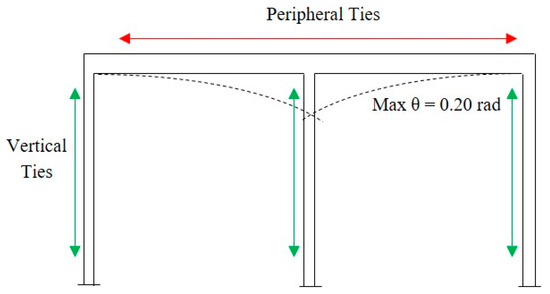
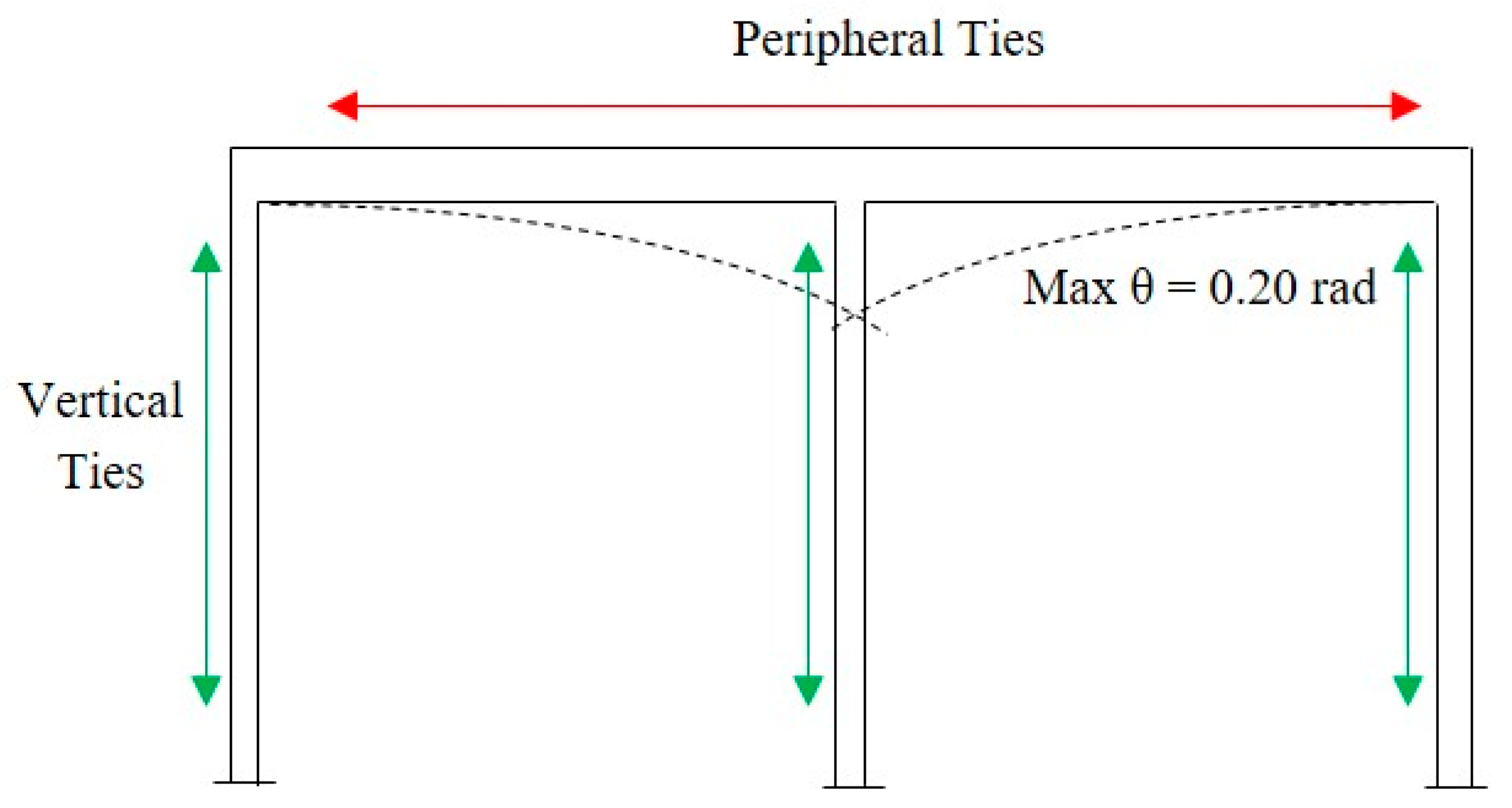
The Tie Forces Method is one of the progressive collapse analysis methods based on the mechanical interconnection of structural elements [1]. This method aims to enhance the mechanical integration of structural components through tie reinforcement, thereby increasing the ductility, continuity, and load redistribution capability within the structure, similar to the Alternate Path Method. The Tie Forces Method consists of vertical ties, internal ties (longitudinal and transverse), and peripheral ties. Each type of tie force is calculated separately within the structure. The representation of these ties within a frame system is shown in Figure 1.
Figure 1.
Representation of Tie Forces in a 2D Frame System.
As shown in the figure, all ties are assumed to be uniform and continuous. The Tie Forces Method should be applied to structures with square or rectangular formwork plans and regular, continuous axes. This ensures a higher degree of connectivity between structural elements, preventing interruptions in load transfer between them. Additionally, the UFC guideline generally limits beam rotation to a maximum of 0.20 radians (11.3 degrees).
The UFC guideline utilizes the load and resistance factor design (LRFD) approach when calculating the strength of tie forces (Equations (1) and (2)). This method increases applied loads while reducing material strength using specific factors. By doing so, a certain level of flexibility is provided to ensure structural safety. The strength equations for tie forces and the required tie strength are given as follows:
Here, , represents the design tie force, is the strength reduction factor, , is the nominal tie force, Ru = ∑ denotes the required tie strength, is the load factor, and represents the load effect. The strength reduction factor (∅) is taken from the relevant regulations.
In the Tie Forces Method calculations, the floor loads must include both dead and live loads in the formulation. The live load values vary across different national building codes, but in floor load calculations, the load combination is determined using Equation (3).
, cat load (lb/ft2 or kN/m2), , dead load (lb/ft2 or kN/m2), and , live load (lb/ft2 or kN/m2) are expressed as follows. For framed and two-way load-bearing wall buildings, the required peripheral tie strength (Equation (4)) Fp is
WC: 1.2 × dead load of cladding over the length L1; L1: the greater of the distances between the centers of the columns, frames, or walls at the perimeter of the building in the direction under consideration; Lp: 3.3 ft (1.0 m).
In addition to the peripheral ties, the internal ties were evaluated separately in the transverse and longitudinal directions. For the framed reinforced concrete system considered in this study, the required internal tie strength was calculated as follows:
where Fi is the required internal tie strength in kN/m, WF is the uniform floor load in kN/m2, and L1 is the spacing between the centers of the supporting elements, such as columns, frames, or load-bearing walls, in the direction under consideration, expressed in meters.
The vertical tie force was calculated based on the maximum vertical load transferred to the selected column from any single floor level. Accordingly, the required vertical tie strength was determined as:
where ΦRn is the design tie strength, Φ is the strength reduction factor, Rn is the nominal tie strength calculated using the appropriate material-specific code, ∑γiQi is the required tie strength, γi is the load factor, and Qi is the load effect.
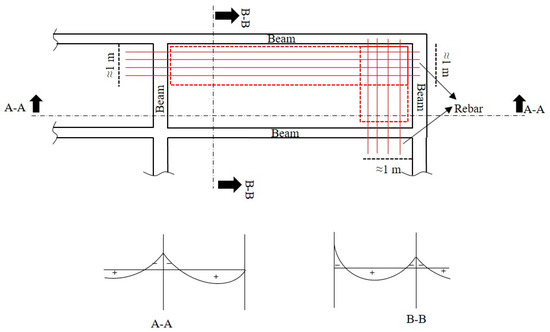
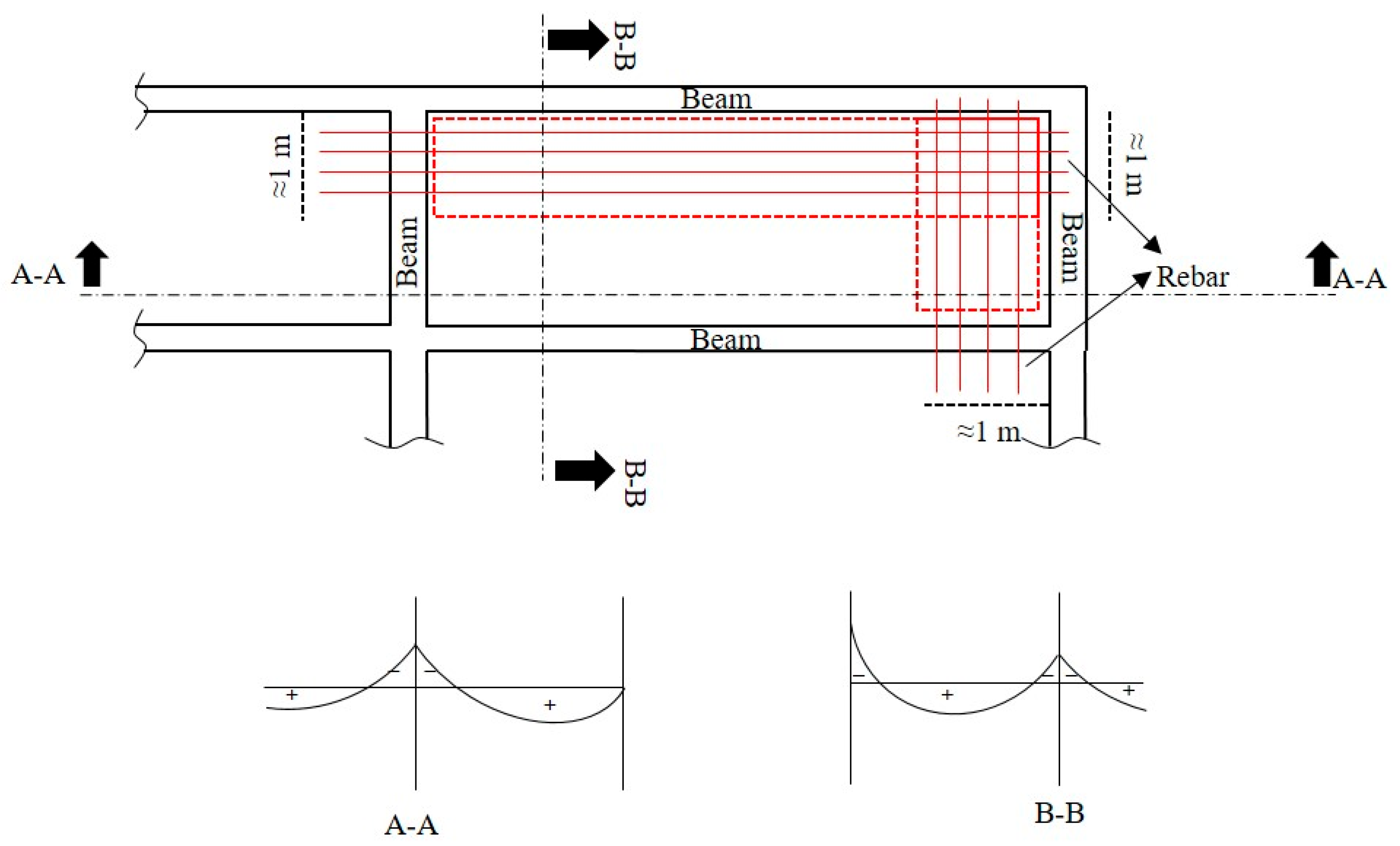
Although the Tie Forces Method may appear to be a separate approach, according to the UFC guideline, it is used together with the Alternate Path Method and the Enhanced Local Resistance Method in certain risk groups. The UFC guideline imposes some restrictions on the applicability of the Tie Forces Method. The most important restriction is that the structures where the method is applied must have at least 4 bays in each direction (UFC 4-023-03). Peripheral ties, as shown in Figure 2, should be placed within the slab, parallel to the beam, extending 3 ft (≈1 m) in width.
Figure 2.
View of peripheral ties.
2.2. Regulations
In the early years of its emergence, the progressive collapse concept was represented in various national regulations by only a few definitions and numerical expressions. After the first regional progressive collapse incident occurred at the Ronan Point apartment building in London in 1968, the United Kingdom’s building regulations were revised [20]. In the following years, several codes defining progressive collapse were published, including [21,22,23,24,25]. Following major structural failure events, interest in progressive collapse increased, particularly in the United States, leading to the publication of guidelines such as GSA and UFC 4-023-03, which examine the progressive collapse behavior of structures [26].
In the UFC guideline, one of the recommended analysis methods for determining the progressive collapse resistance of structures is the Tie Forces Method. This method is already included in the building codes of many countries, although sometimes under different names.
In this study, the ten national regulations were not used as independent progressive collapse calculation frameworks. Instead, they were treated as national code input sets within a common UFC 4-023-03 Tie Forces Method framework. In this context, the office live load values and reinforcement yield strengths specified or commonly used in each country were varied, while the tie force calculation procedure was kept consistent according to UFC 4-023-03. The regulations considered in the analysis include [27,28,29,30,31,32,33,34,35].
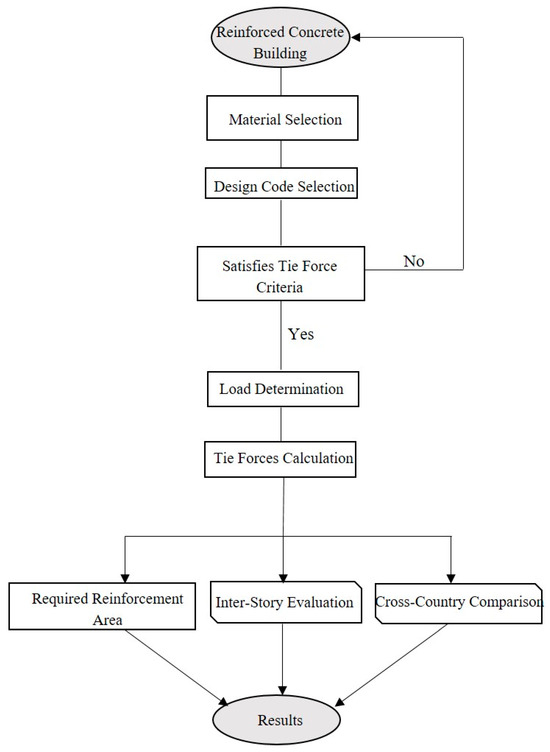
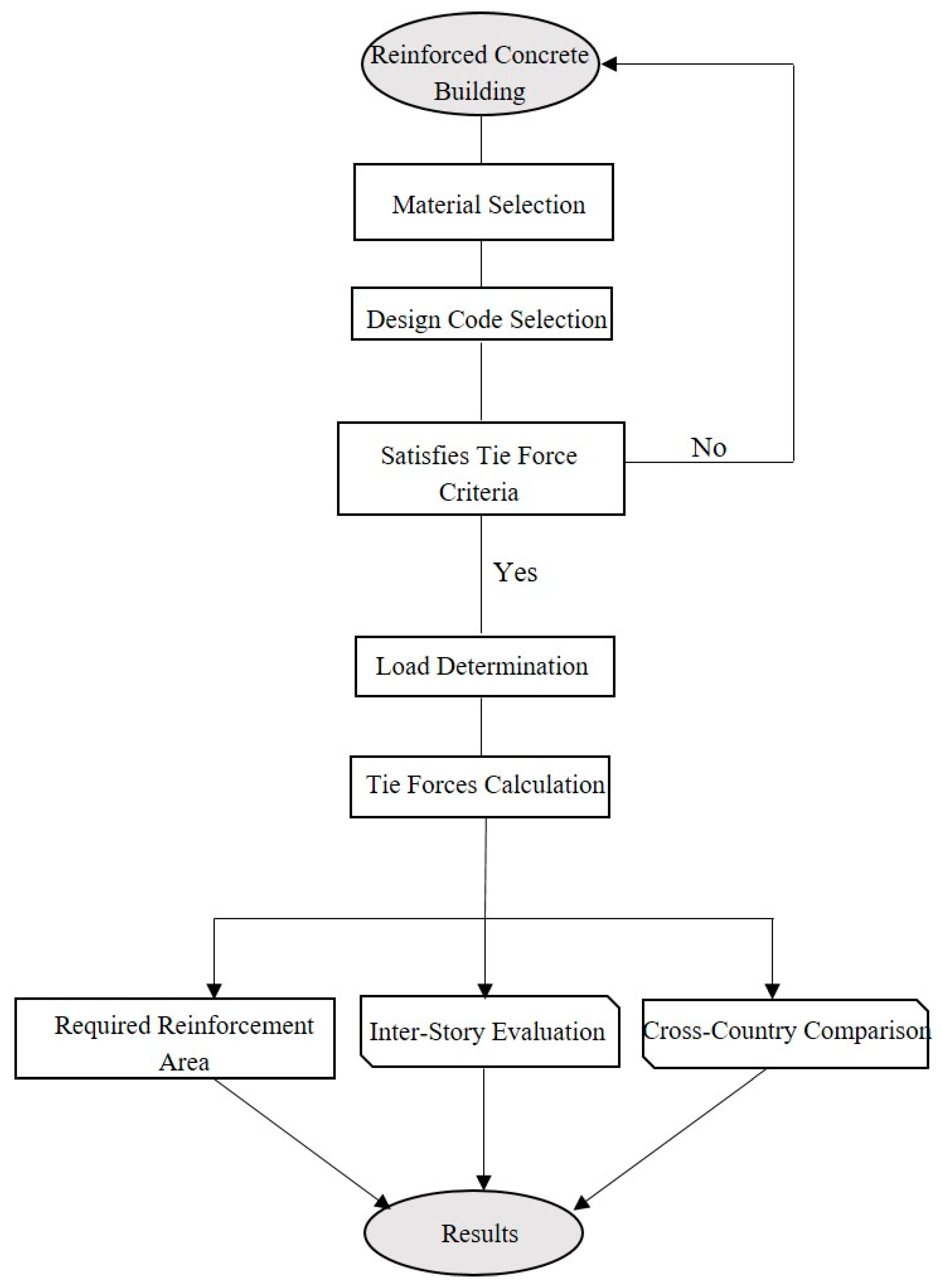
The methodological procedure of the study is presented in a flowchart. This flowchart summarizes all operational steps leading to the final results and illustrates the entire process from the initial model definition and load determination to the calculation of tie forces and the comparative evaluation of the results in a comprehensive and systematic manner. The overall methodology is depicted in Figure 3.
Figure 3.
Flowchart of methodology.
2.3. Six-Story Reinforced Concrete Building
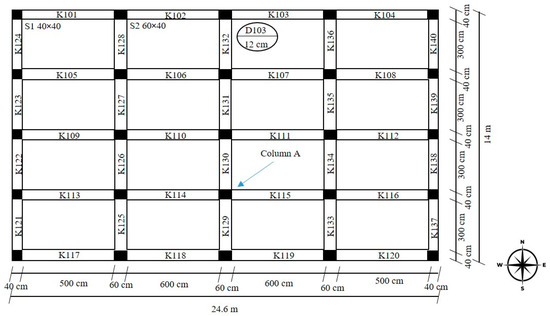
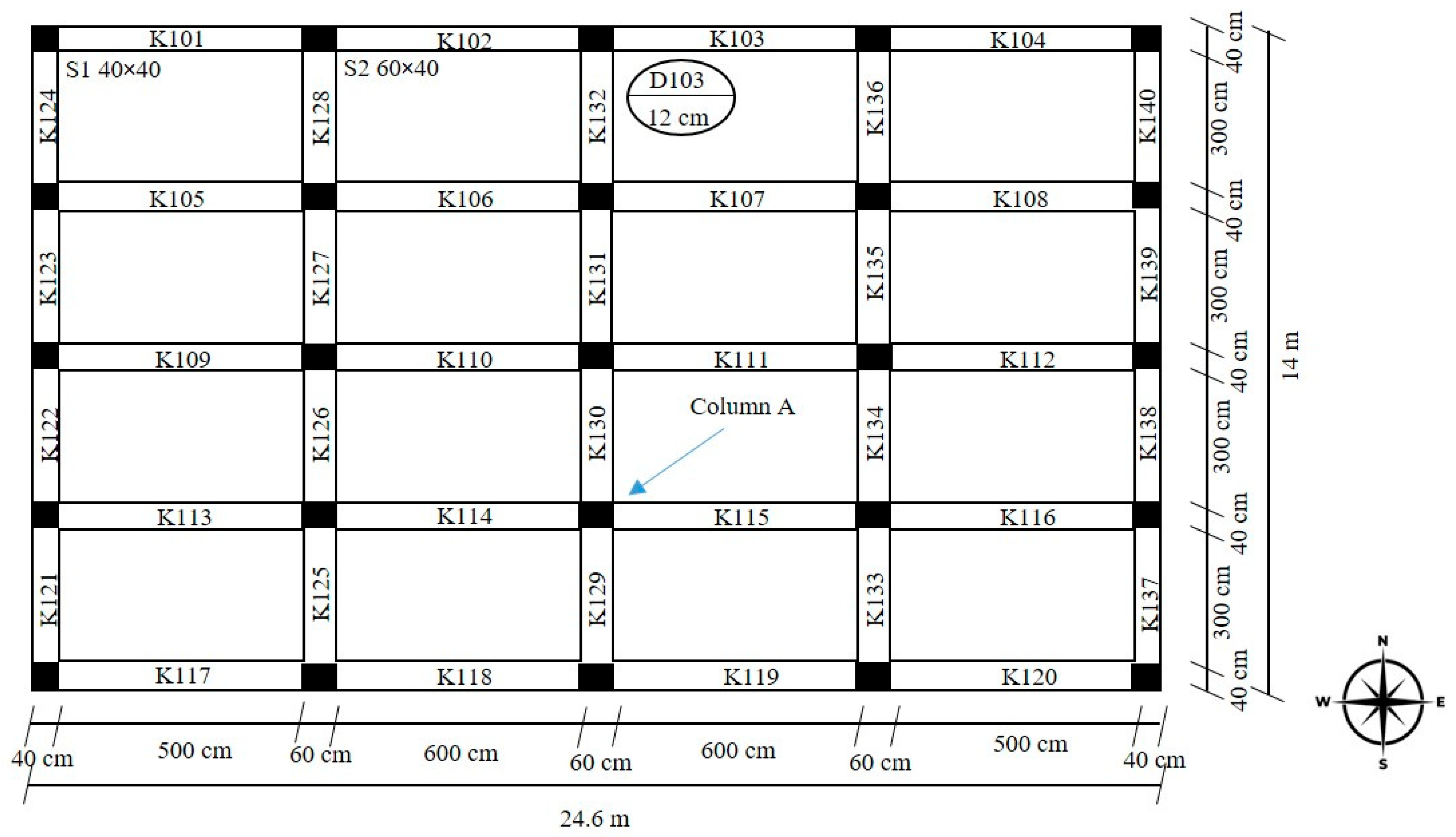
The six-story reinforced concrete building was selected as a common benchmark model to evaluate the influence of national-code-based input parameters under the same structural configuration. Therefore, the geometric dimensions, material properties, boundary conditions, and loading assumptions of the reference building are first defined before the tie force calculations are performed. The six-story commercial reinforced concrete building consists of four spans in both directions. The story height is 3 m, resulting in a total building height of 18 m. The slab thickness is 12 cm, and the column dimensions are 40 × 40 cm and 60 × 40 cm, respectively. All beams have dimensions of 40 × 60 cm, while the overall building dimensions are 14 m × 24.6 m. The concrete compressive strength is 25 MPa. The reinforcement materials vary by country: Grade 60 [36] for the US, B500B [37] for the EU, S420 [38] for Türkiye, A400 (AIII) [39] for Russia, SD400 [40] for South Korea, Grade 60 [41] for Egypt, Grade 400 [42] for Canada, Grade 500E [43] for Australia and New Zealand, HRB400 [44] for China, and Fe 415 [45] for India. The building is fixed at the base, and soil conditions are neglected. These assumptions were adopted to establish a controlled benchmark model and to isolate the influence of national-code-based input parameters on UFC-based tie force demands. In the UFC 4-023-03 Tie Forces Method, the equations used for peripheral, internal, and vertical ties do not include a direct parameter representing soil conditions, foundation flexibility, or soil–structure interaction. Therefore, soil effects were not incorporated into the analytical tie force calculations in this study. However, seismic actions, foundation flexibility, and soil structure interaction may influence the actual global response of a building, including modal properties, force redistribution mechanisms, vertical load transfer, and progressive collapse behavior. Accordingly, the fixed-base and no seismic assumptions should be interpreted as part of the controlled benchmark framework adopted for comparative evaluation, rather than as a general representation of all possible site and foundation conditions. The formwork plan of the building is provided in Figure 4.
Figure 4.
Formwork Plan of the Six-Story Reinforced Concrete Building.
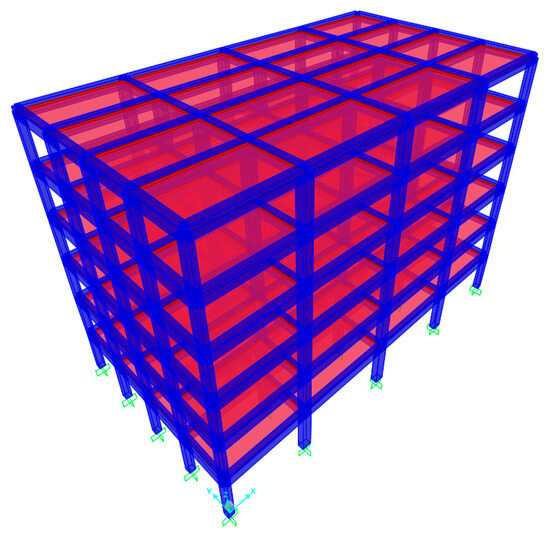
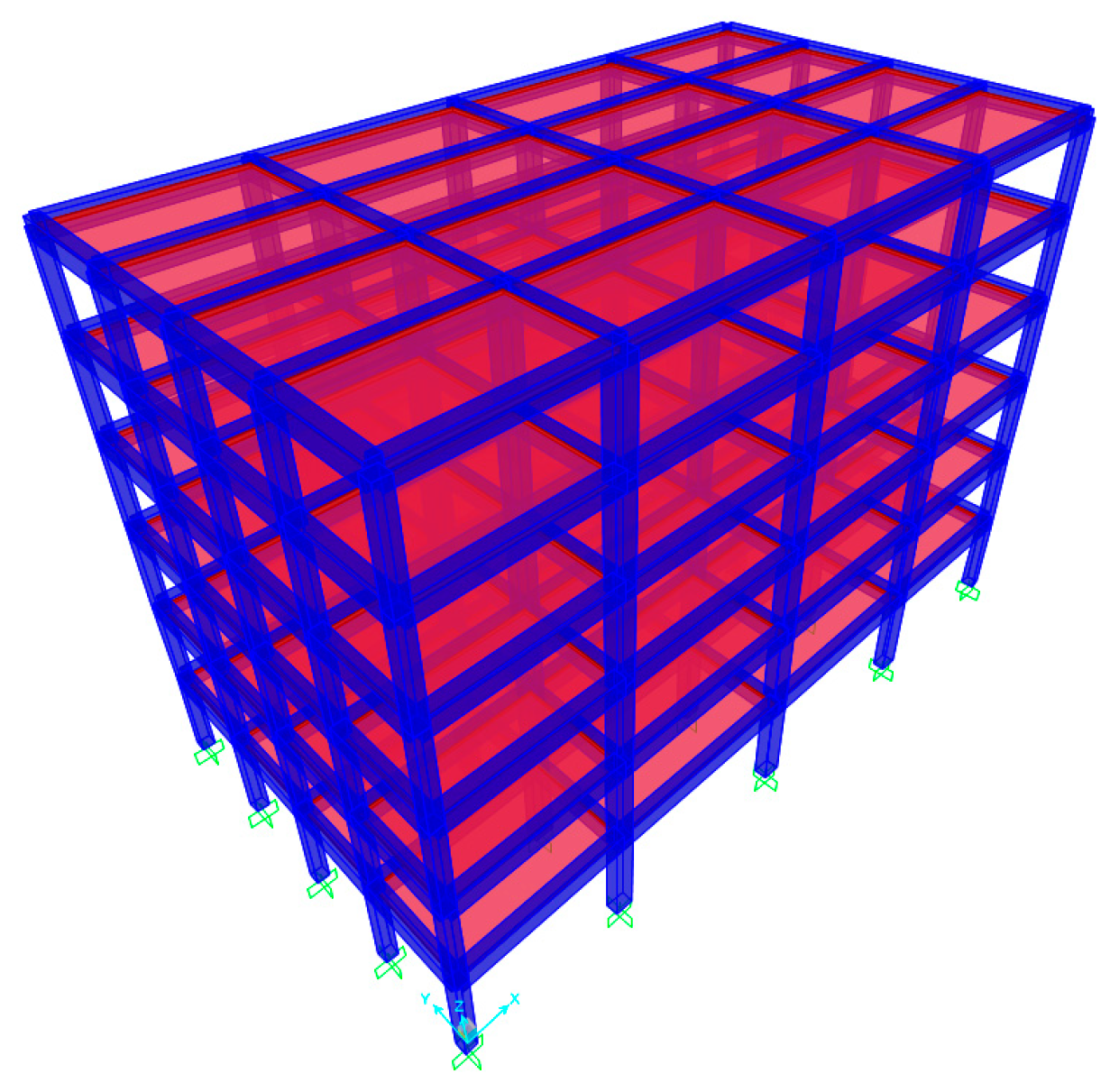
The structural loads are as follows: the self-weight is 6.79 kN/m2 for intermediate floors and 6.23 kN/m2 for the roof floor. The mechanical load is 0.25 kN/m2 for all floors, and the facade load is 2.873 kN/m2. The live load values were determined according to each respective building code. The structure is assumed to be located in a non-seismic region. The reference building was evaluated within the UFC 4-023-03 Tie Forces Method framework. Since the aim of the study is to compare national-code-based live load and reinforcement material input parameters under a common tie force calculation procedure, seismic, snow, ice, and tsunami load effects were not included in the analytical tie force calculations. To ensure progressive collapse resistance, the Tie Forces Method was applied to the 6-story reinforced concrete building with the given physical and mechanical properties. SAP2000 (v16) was not used to directly calculate the tie force demands or required reinforcement areas. These calculations were performed analytically according to UFC 4-023-03 using the building geometry, floor loads, span lengths, cladding loads, and reinforcement material properties. SAP2000 was used only to generate the structural model, provide the isometric representation, and obtain the modal properties of the reference building. The isometric view of the 6-story reinforced concrete building modeled in SAP2000 is provided in Figure 5.
Figure 5.
Isometric View of SAP Model.
3. Results
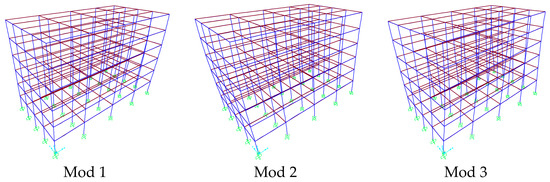
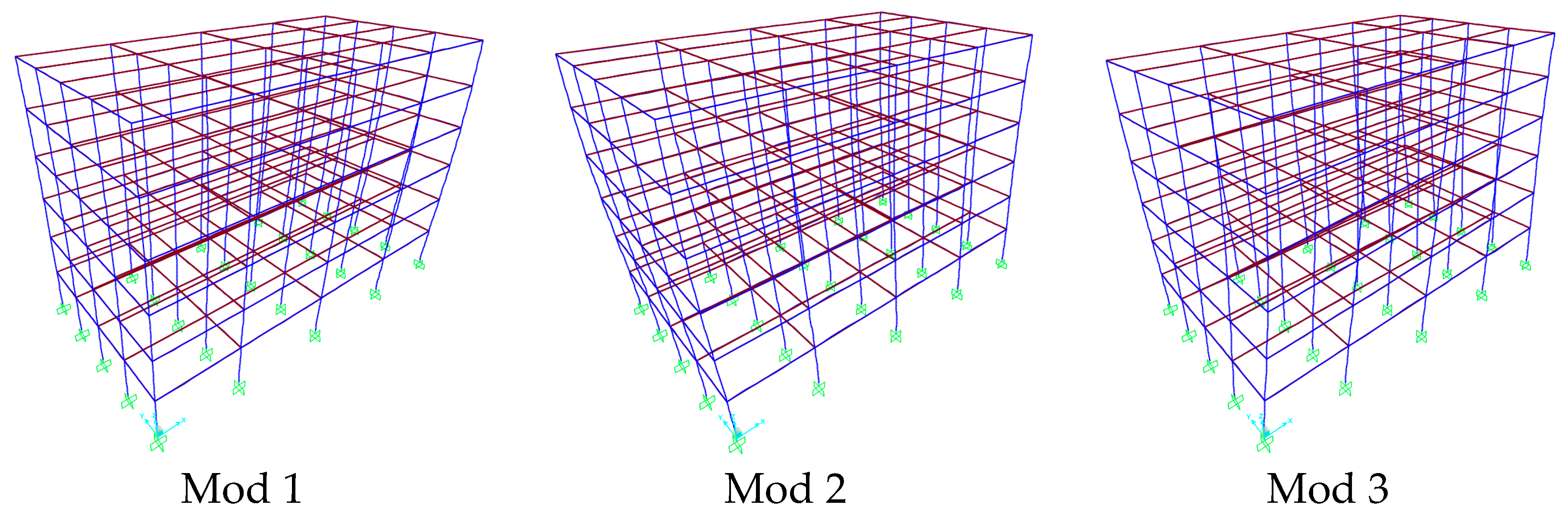
The 6-story reinforced concrete building model given in Figure 5 was modeled using the SAP2000 v16 software. The period values of the model, which was subjected to modal analysis, were determined as T1 = 0.5391 s and T2 = 0.5009 s, respectively. The first three mode shapes of the structure are presented in Figure 6.
Figure 6.
Mode shapes of the structure.
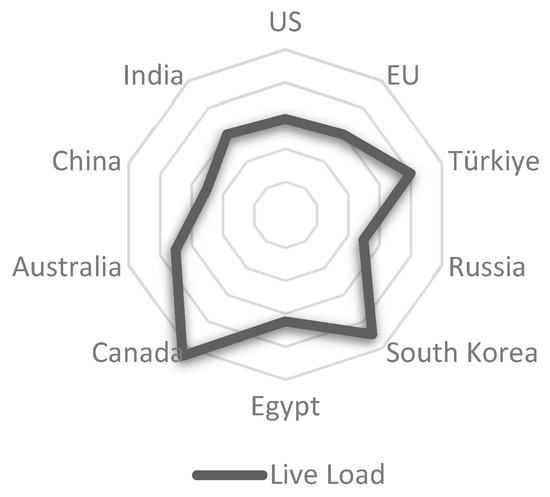
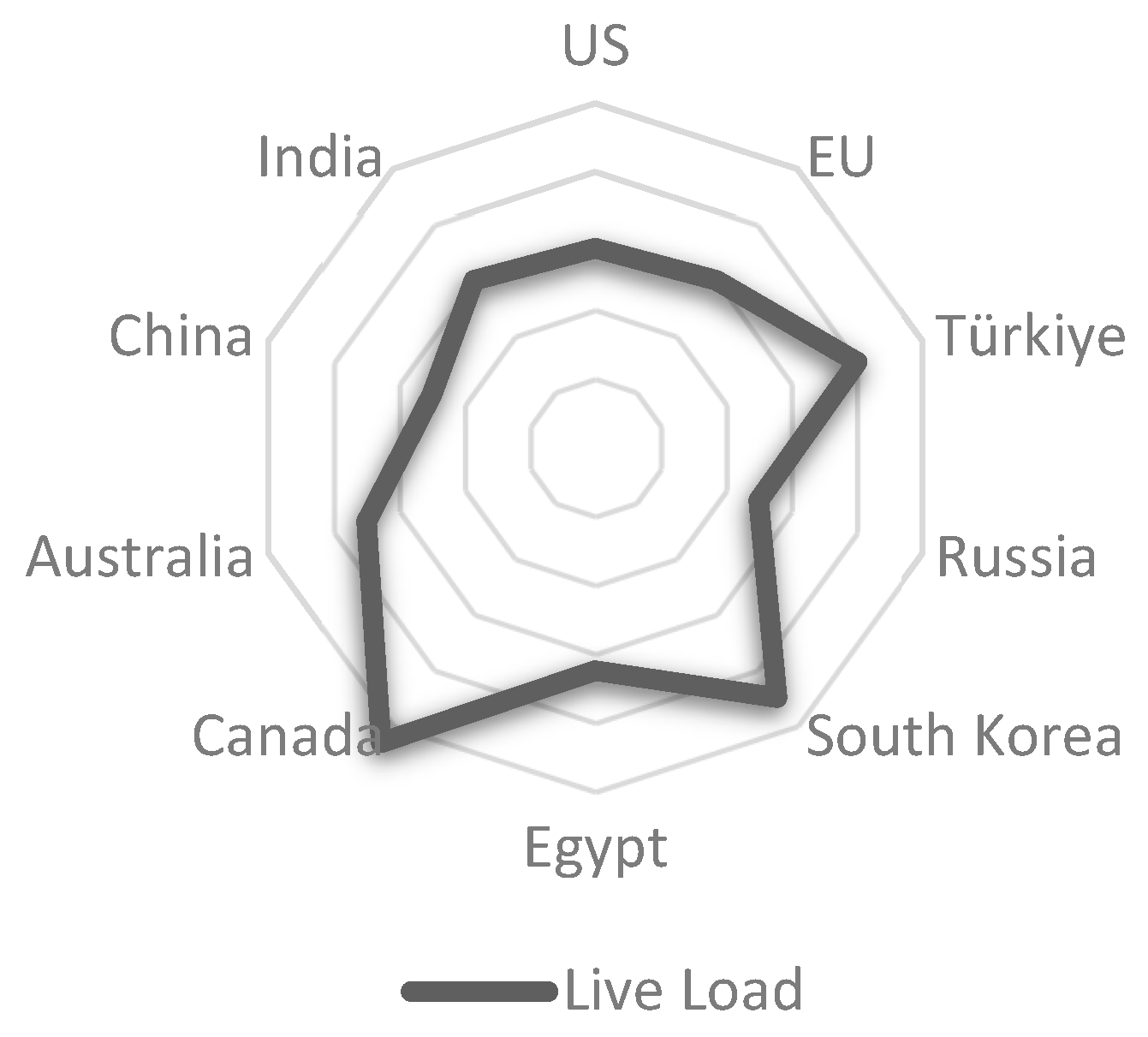
In the United States, Ref. [27] published by the American Society of Civil Engineers (ASCE) is used in structural design. According to this standard, the live load value for the example above is taken as 2.394 kN/m2 (50 psf) [1,27]. The design engineer may increase this value by up to 20 psf if desired [27]. However, live loads considered in the design are generally higher than their actual values [46], which provides a safety margin in structural design. According to [28], which is used in European countries, the recommended live design load for offices ranges from 2.0 kN/m2 to 3.0 kN/m2 (Category B—Table 6.1 and Table 6.2). As is common practice, in this study a live load of 2.5 kN/m2 was considered for [28]. In Türkiye, Ref. [29] published in 1997 and revised in 2021 is used for live loads. This standard recommends a live load of 3.5 kN/m2 for offices [29]. In the Russian Federation, Ref. [30]—Loads and Action—is used for building design and structural planning. According to Table 8.3 of the standard, the live load for office buildings is 2.0 kN/m2. In South Korea, Ref. [31] provides regulations for structural design, specifically in Section 1403 [47]. Following a major revision in 2016, the Korean Building Code (KBC) set the office live load value at 4.0 kN/m2 [48]. In the Arab Republic of Egypt, Ref. [32] is followed. According to this standard, the minimum live load is determined based on occupancy intensity and is set at 2.75 kN/m2. In Canada, Ref. [49] specifies live loads for different floors: 4.8 kN/m2 for basements and the first story and 2.4 kN/m2 for floors above the first story. Australia/New Zealand set the general live load for office areas at 3.0 kN/m2 [33]. In China, Ref. [34] recommends a general office live load of 2.0 kN/m2, as stated in Table 5.1.1. In India, Ref. [35] regulation specifies a live load of 2.5 kN/m2 for office buildings in Part-2, Table 1 of the standard.
The detailed step-by-step calculation procedure of the Tie Forces Method, including representative numerical applications and the conversion of tie force demand into the required tie reinforcement area, has been previously presented by Kılıçer [50]. In the present study, the same calculation sequence was followed consistently for all national code input sets. The live load values for office buildings in the ten different countries mentioned above are presented in Figure 7.
Figure 7.
Live load values for office buildings by country.
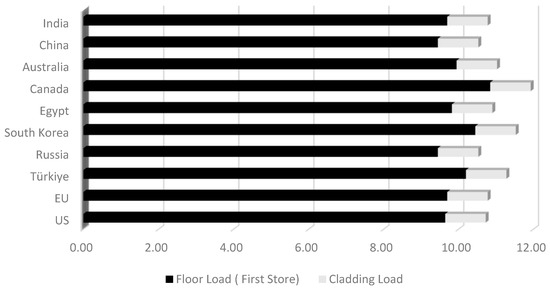
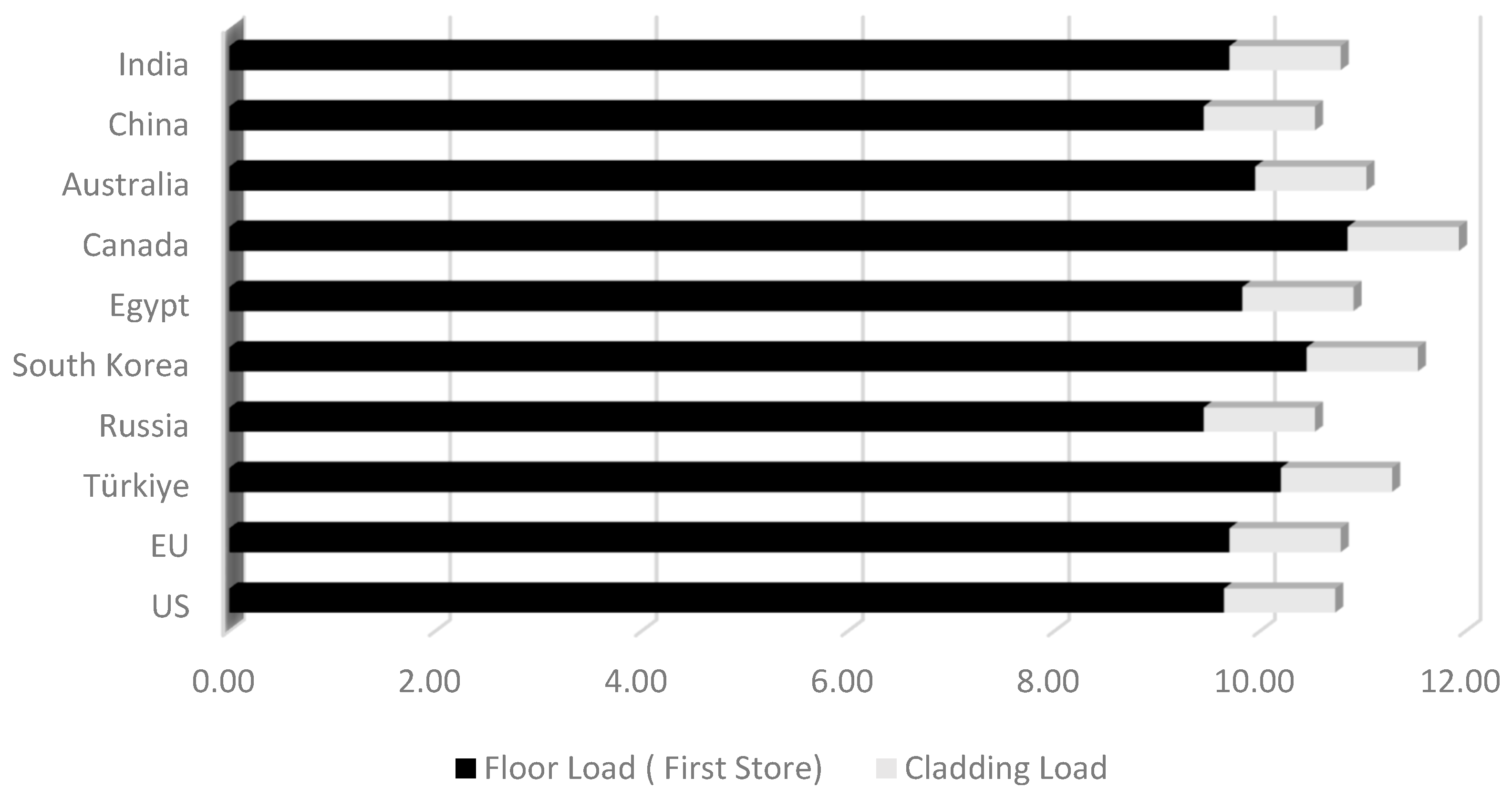
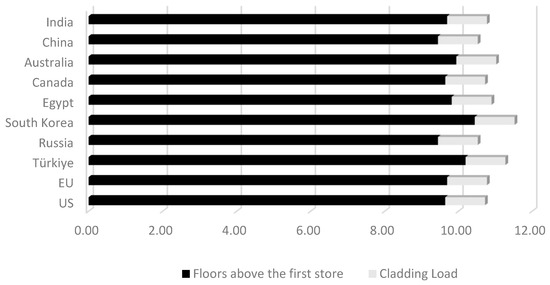
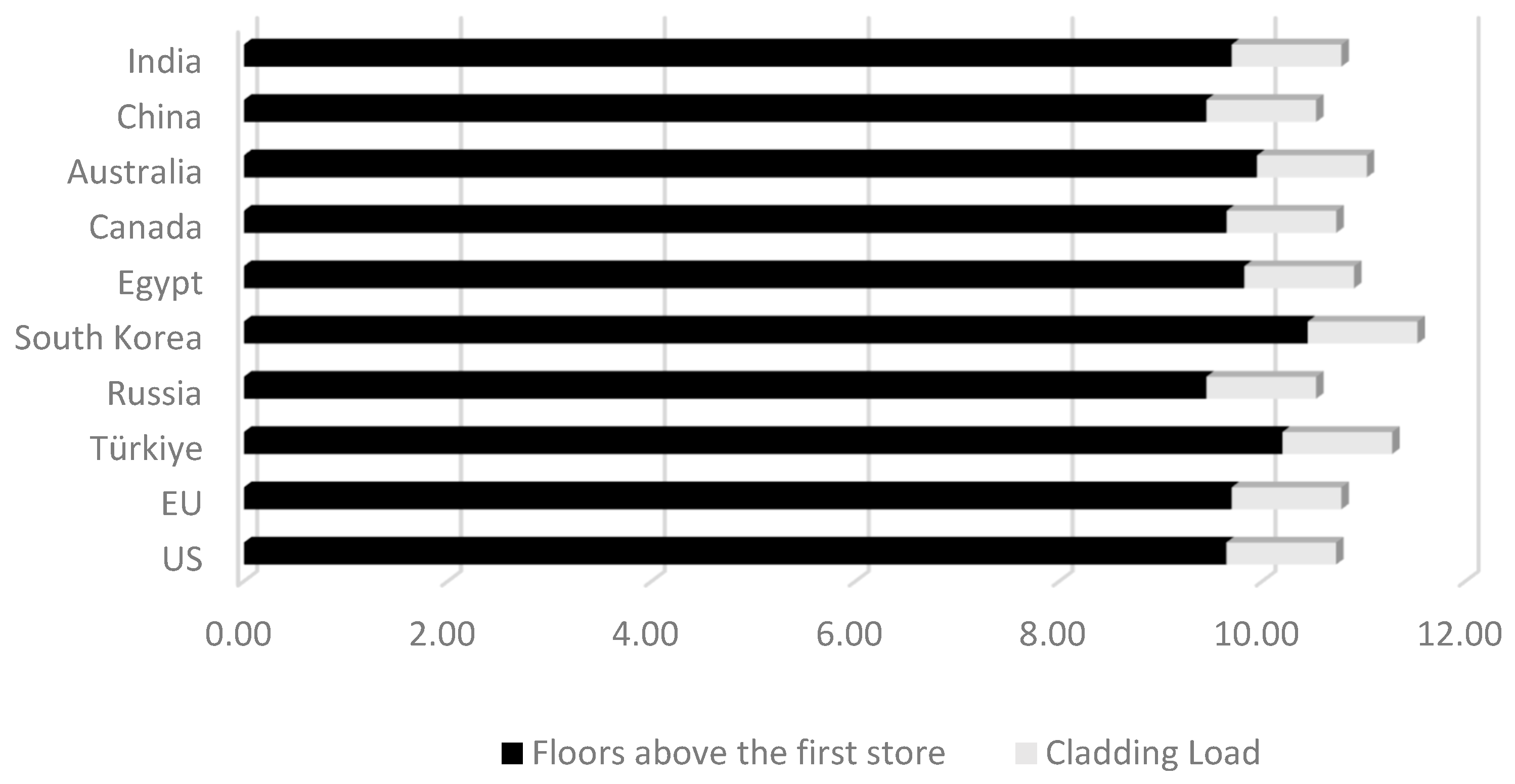
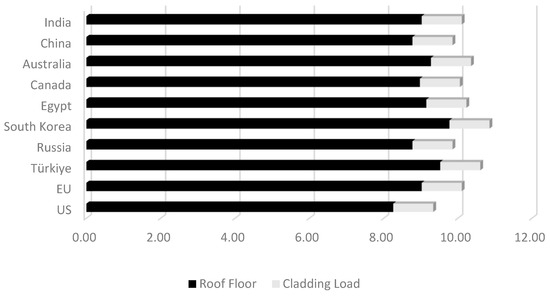
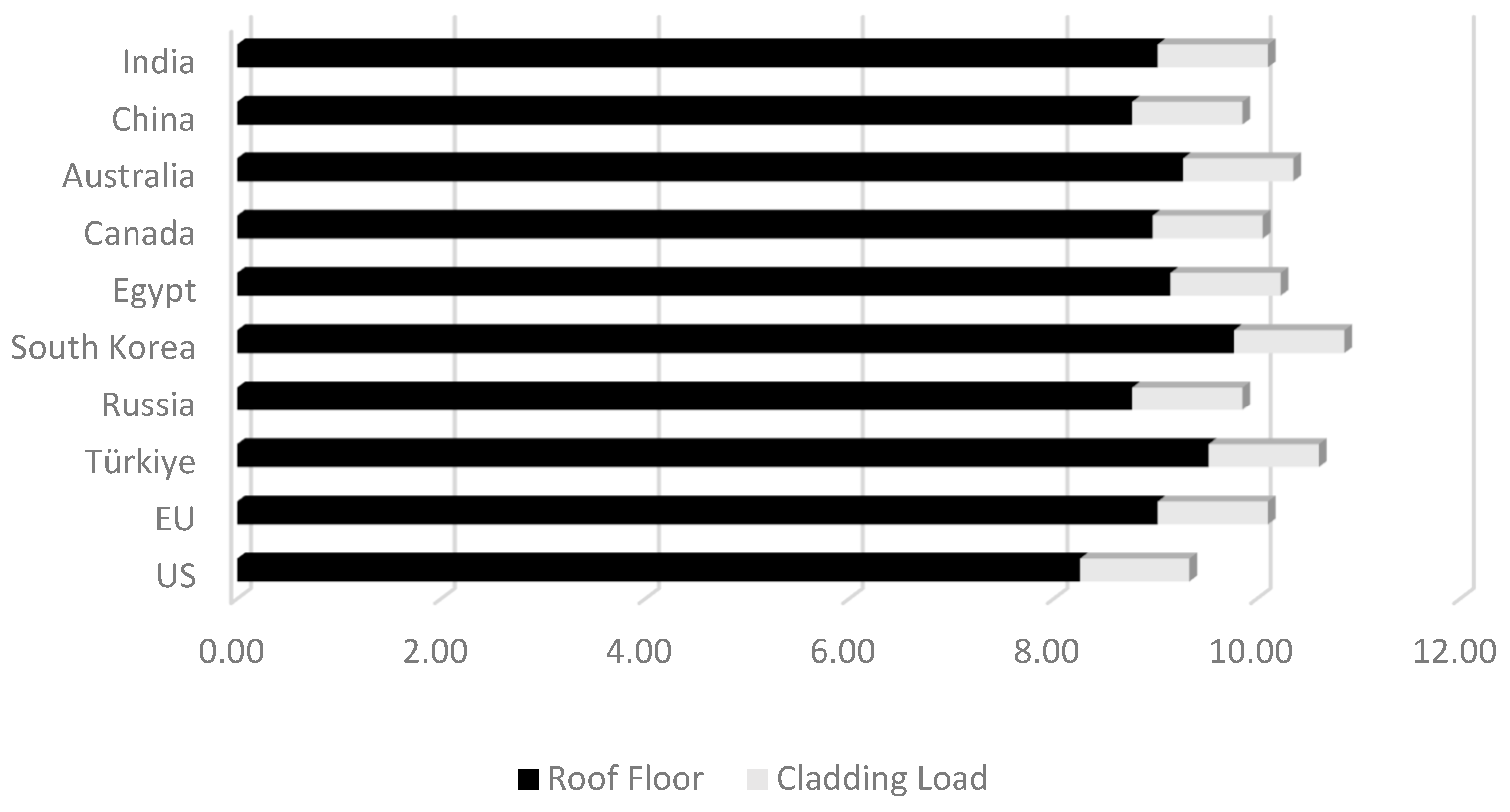
The graph compares the live load values that should be considered in static designs for office buildings (offices) in different countries. One of the highest live load values is 4 kN/m2 in South Korea, while the lowest values are recommended by China and Russia at 2 kN/m2. Türkiye ranks among the top with 3.5 kN/m2, having a similar load recommendation to Australia/New Zealand at 3 kN/m2. Canada suggests 4.8 kN/m2 for ground floors and 2.4 kN/m2 for upper floors. Countries such as Egypt (2.75 kN/m2), the European Union (2.5 kN/m2), India (2.5 kN/m2), and the United States (2.394 kN/m2) propose lower values, which are relatively close to each other. Reduction loads were not considered for the US and EU, and net live loads were used. According to UFC 4-023-03, distributing dead and live loads across the entire floor is a requirement of the Tie Forces Method. In Figure 8, Figure 9 and Figure 10, the same horizontal axis scale of 0–12 kN/m2 was used to allow direct comparison among floor levels. In these stacked bar charts, the black bars represent the floor load excluding cladding, while the gray segments represent the additional cladding load. Therefore, the total bar length indicates the floor load including cladding.
Figure 8.
First floor load with cladding load by national-code-based input set.
Figure 9.
Intermediate floor load with cladding load by national-code-based input set.
Figure 10.
Roof floor load with cladding load by national-code-based input set.
In Figure 8, Figure 9 and Figure 10, a comparison is made of first floor, intermediate floors, and roof floor loads, including cladding loads, based on different national regulations according to the Tie Forces Method in the UFC standard. For the 6-story reinforced concrete building example, when first floor loads are analyzed without considering cladding loads under the Tie Forces Method, the highest value is observed in the Canadian regulations at 10.85 kN/m2. This is followed by South Korea with 10.40 kN/m2 and Türkiye with 10.20 kN/m2. Most countries’ first floor loads range between 9.45 and 10 kN/m2, a range adopted by countries such as China, Russia, Canada, India, and Australia. The lowest first floor load was calculated in the Russian and Chinese regulations at 9.45 kN/m2. When cladding loads are included, the highest first floor load was calculated according to the Canadian regulations at 11.93 kN/m2.
A similar trend to the first floor loads is observed in the intermediate floor loads. Without cladding loads, the highest intermediate floor load was calculated according to the South Korean regulations at 10.45 kN/m2, while Turkish regulations yielded a very close value of 10.2 kN/m2. In other countries, this value generally shows a limited variation between 9.45 and 9.85 kN/m2. With cladding loads included, the highest intermediate floor load was calculated according to South Korean regulations at 11.53 kN/m2. The lowest intermediate floor load was calculated according to Russian and Chinese regulations at 10.53 kN/m2.
In the roof floor loads, differences between countries become more pronounced. Without cladding loads, the highest roof floor load was obtained according to South Korean regulations at 9.78 kN/m2, while countries such as Türkiye, those of the European Union, and the United States propose slightly lower but relatively similar load values. When cladding loads are considered, the highest roof floor load was again calculated according to South Korean regulations at 10.86 kN/m2, while the lowest value was determined according to the US regulations at 8.26 kN/m2. These graphs provide a detailed analysis of the standardized floor loads for each structural level and compare the load limits considered in commercial building designs based on different countries’ tie force methodologies.
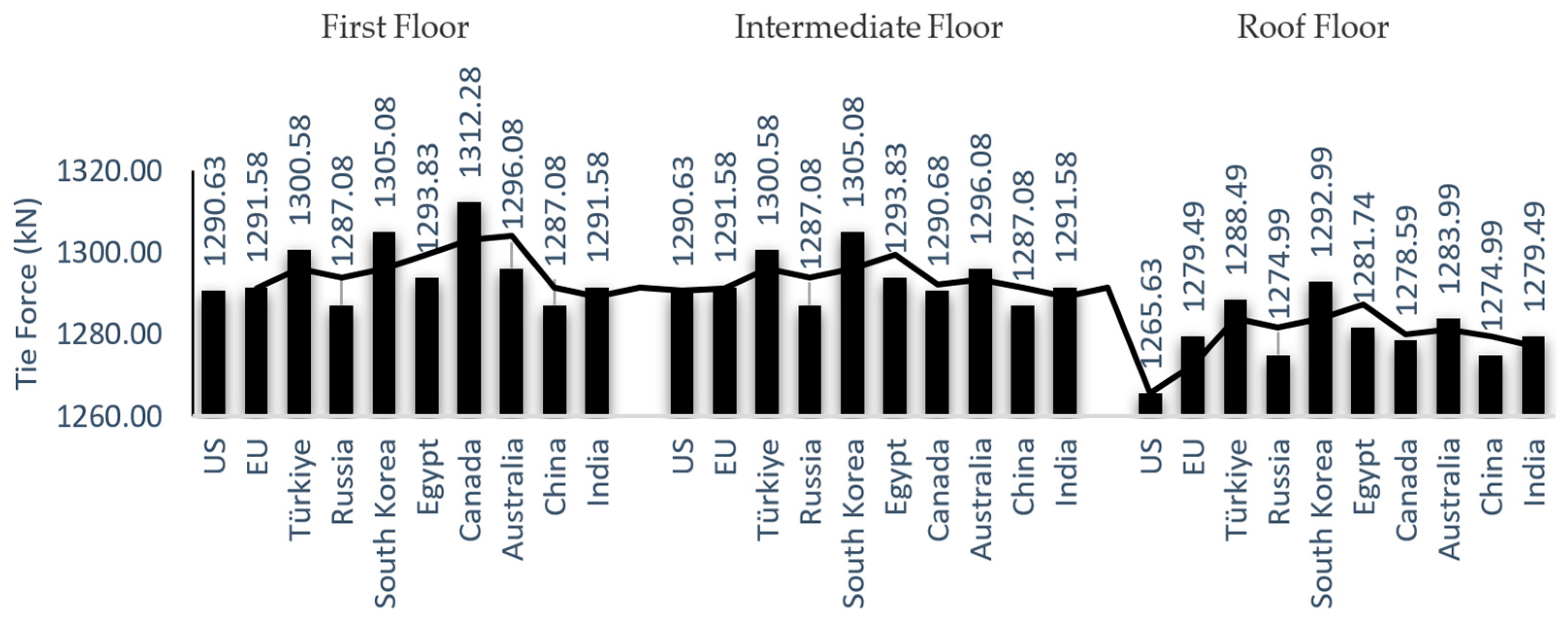
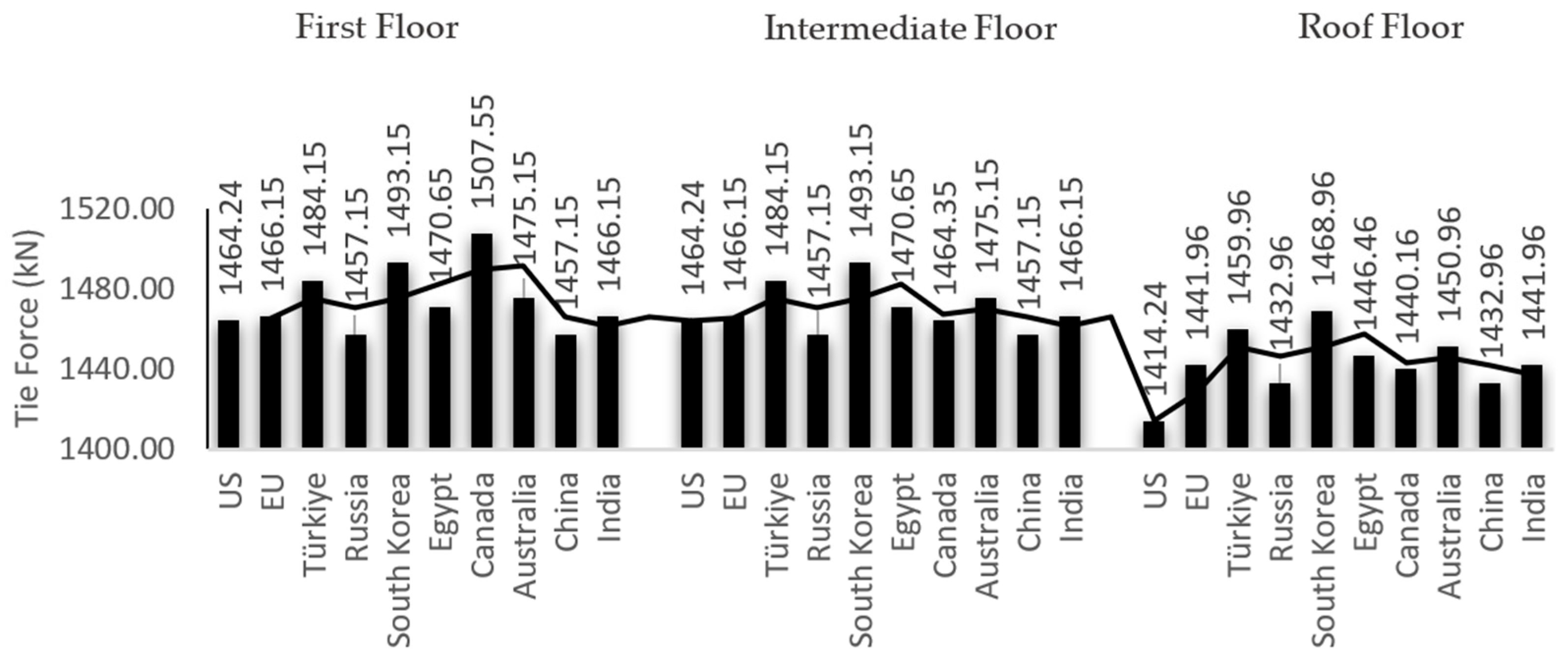
After determining the floor loads separately for the first floor, intermediate floors, and roof floor, the tie forces can be calculated according to different regulations for the example structure. Using the geometric properties of the structure and the floor loads, the required tie forces and reinforcement areas are obtained. Figure 11 and Figure 12 present the required peripheral tie forces calculated in the north–south (N-S) and east–west (E-W) directions, respectively, using Equation (4).
Figure 11.
Peripheral Transverse Tie Force (N-S).
Figure 12.
Peripheral Longitudinal Tie Force (E-W).
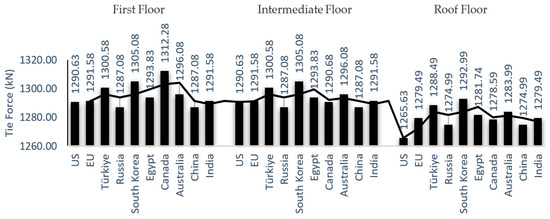
In the graphs presented in Figure 11 and Figure 12, transverse and longitudinal tie force values for the required peripheral tie force are compared in two different directions (N-S and E-W) for the first floor, intermediate floor, and roof floor. In the N-S direction, the highest required tie force at the first floor level was calculated according to the Canadian regulations at 1312.28 kN, while the lowest required tie force was calculated according to the Russian and Chinese regulations at 1287.08 kN. For intermediate floors, the highest value was calculated according to the South Korean regulations at 1305.08 kN, while the lowest required tie force was again obtained according to the Russian and Chinese regulations, as observed at the first floor level. At the roof floor level, the highest required tie force was determined according to the South Korean regulations at 1292.99 kN, while the lowest value was obtained according to the US regulations. When considering all floors together, the highest required tie force was obtained at the first floor according to Canada’s NRCC building regulations, while for the other floors, the highest value was found according to South Korea’s KBC regulations. In general, the required tie forces in the N-S direction were found to be higher at the first floor level, while these values decreased at the roof floor level.
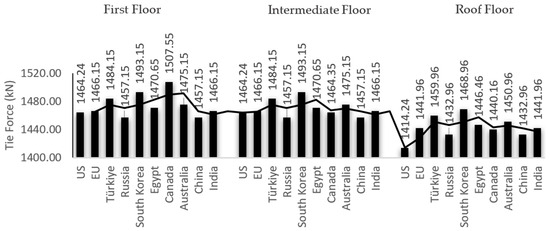
In the E-W direction, at the first floor level, the highest required tie force value was again calculated according to NRCC regulations, with a value of 1507.55 kN. The lowest required tie force was calculated as 1457.15 kN according to SP 20.13330.2016 and GB 50009-2012. For intermediate floors, similar to the results obtained in the N-S direction, the highest required tie force was calculated according to the KBC regulations at 1493.15 kN, while lowest value was calculated as 1457.15 kN according to SP 20.13330.2016 and GB 50009-2012. At the roof floor level, the highest required tie force was determined according to ECP-201 regulations at 1468.96 kN. E-W direction values are generally higher compared to the N-S direction values, which is directly related to the clear span of this axis.
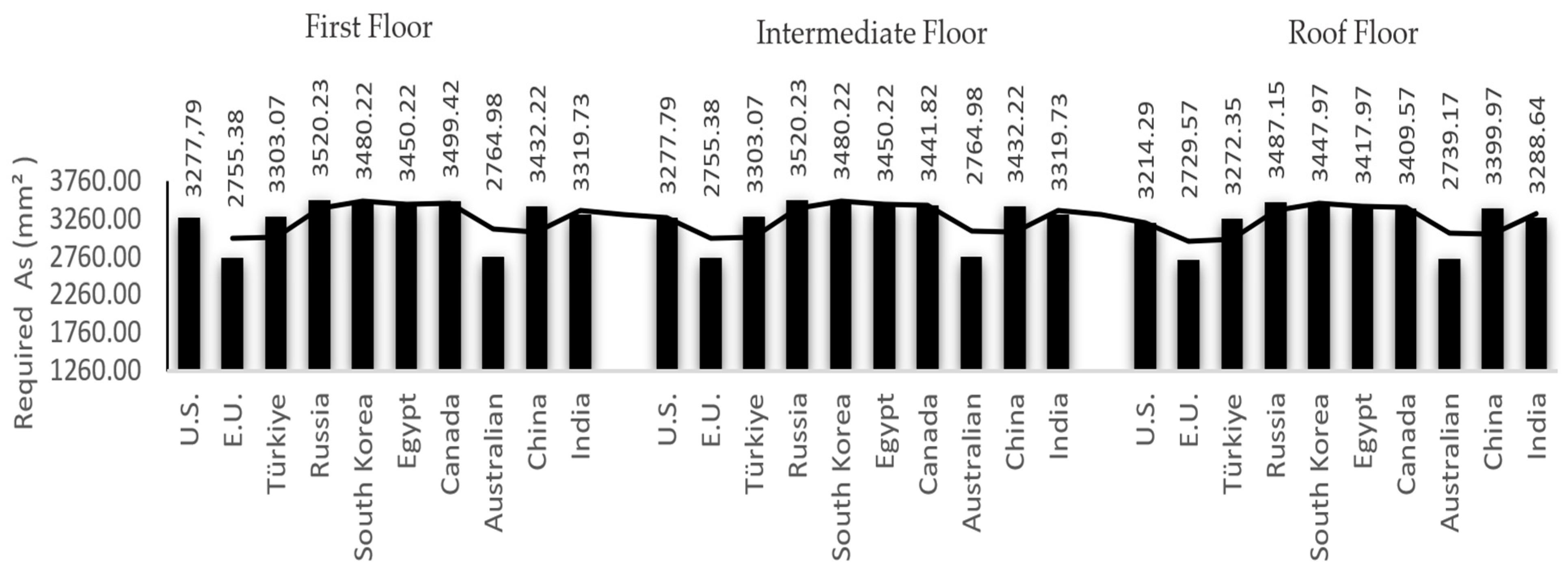
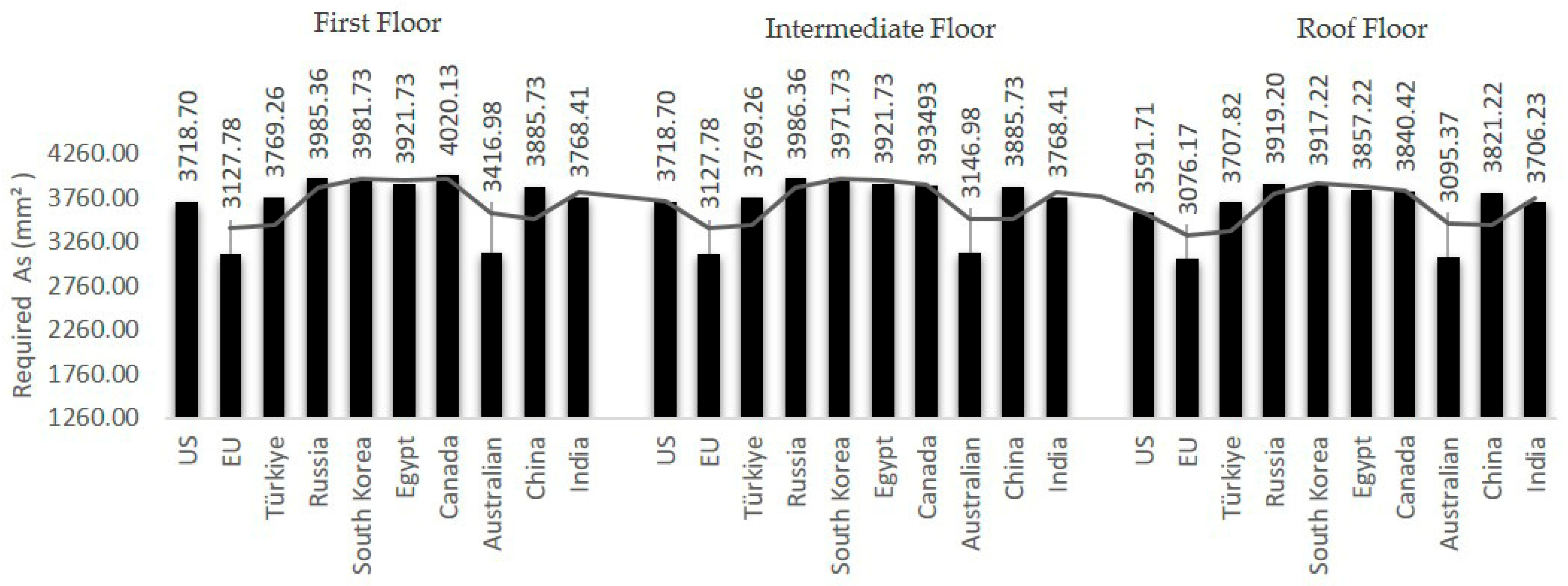
After calculating the tie force demand, the required tie reinforcement area for peripheral ties in the structure was determined. For all these calculations, the required reinforcement area can be obtained using Equations (1) and (2). The graphs showing the required reinforcement area obtained using these equations are presented in Figure 13 and Figure 14.
Figure 13.
Peripheral Transverse Required Rebar Area (N-S).
Figure 14.
Peripheral Longitudinal Required Rebar Area (E-W).
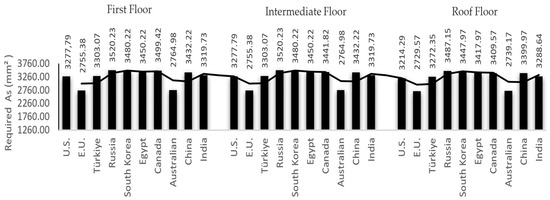
Calculations for the required tie reinforcement area for peripheral transverse tie force in a six-story reinforced concrete structure were conducted separately for the first floor, intermediate floor, and roof floor, considering the regulations and rebar materials used in ten different countries. Accordingly, the required tie reinforcement area for the first floor was calculated as 3277.79 mm2 in the United States, 2755.38 mm2 in the European Union, and 3303.07 mm2 in Türkiye. Russia required the highest tie reinforcement area for the first floor, with a calculated value of 3520.23 mm2, whereas the European Union required the lowest value, with 2755.38 mm2. The value for South Korea was verified as 3480.22 mm2, which is consistent with the surrounding values and does not represent the minimum reinforcement requirement. Reinforcement areas calculated for India, China, Canada, Egypt, and South Korea were relatively close to each other. For intermediate floors, the calculated values were generally parallel to those of first floor. For all countries except Canada, required reinforcement areas were identical to those calculated for first floor. In Canada, although there was a difference compared to first floor, the variation was minimal, only 57.6 mm2. Similar to the first floor, the EU required the least reinforcement area for intermediate floors, while Russia required the most. The required reinforcement areas for the roof floor did not exhibit a different trend compared to first and intermediate floors. In the US, while 3277.79 mm2 was required for the first and intermediate floors, reinforcement area for the roof floor was calculated to be 3214.29 mm2, reflecting a 63.5 mm2 decrease. In the EU, required reinforcement area for roof floor decreased by 25.81 mm2 compared to other floors. Additionally, the EU required the smallest tie reinforcement area among all countries for the roof floor. Another country with a relatively low required tie reinforcement area was Australia. For all other countries, the required tie reinforcement area for the roof floor was similar to the values calculated for other floors.
The maximum percentage difference was calculated using the required tie reinforcement area obtained for the corresponding tie type and floor level. The largest reduction was observed for the peripheral transverse tie reinforcement at the first floor, where the Eurocode-based input set was compared with the Russian input set, which produced the maximum required tie reinforcement area for this case. The percentage difference is summarized in Table 1.
Table 1.
Summary of the maximum percentage reduction in required tie reinforcement area.
Accordingly, the statement in the Abstract refers specifically to the reduction in the required peripheral transverse tie reinforcement area at the first floor relative to the Russian input set.
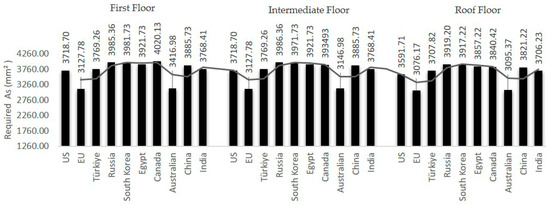
In the calculation of the required tie reinforcement area for peripheral longitudinal tie force, the lowest requirement for the first floor was found in the EU, while the highest was found in Russia. For other countries, the required tie reinforcement area was observed to be between 3200 mm2 and 3450 mm2. A similar trend was observed for both intermediate and roof floors. In both cases, the EU and Australia had the smallest required tie reinforcement areas, while Russia had the largest. This situation is not directly related to a single parameter but is generally associated with variations in live loads and yield strength of rebar materials used.
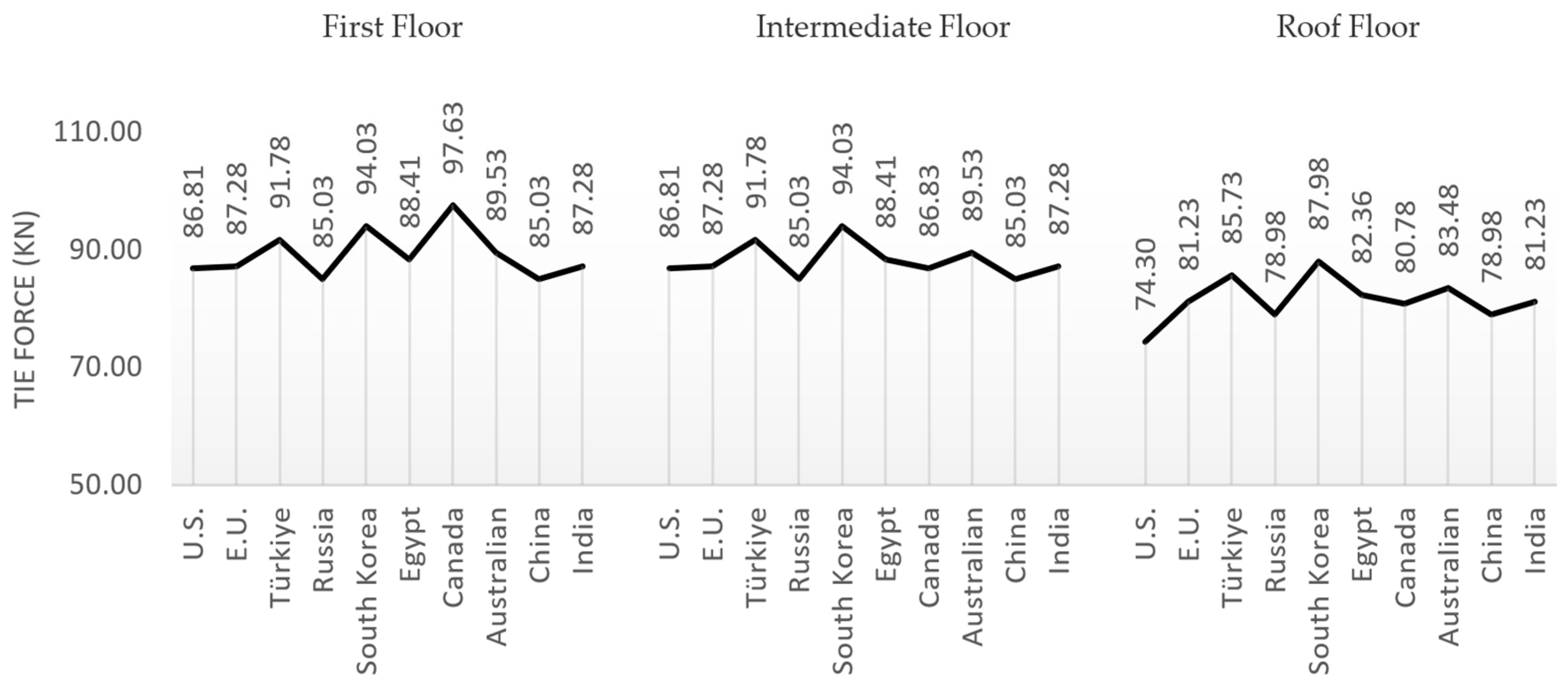
The reinforcement calculation for the system to be added 1 m away from the edge supports was performed based on peripheral tie force. The reinforcement required for the ties along the slab is provided in Figure 15 and Figure 16, independent of the cladding load. These ties are referred to as transverse and longitudinal ties.
Figure 15.
Transverse Tie Force.
Figure 16.
Longitudinal Tie Force.
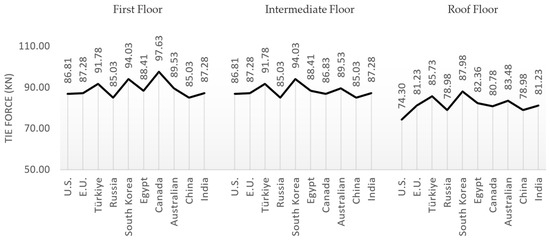
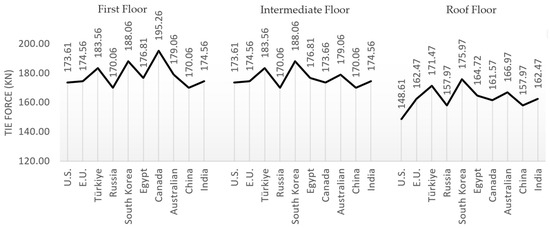
The variation of transverse and longitudinal tie forces at different floor levels was examined according to ten different national code input sets. In Figure 15, it is observed that the calculated tie forces on the first floor generally range between 74 kN and 95 kN. Overall, the behavior of the graph is similar across all floor levels. Regarding transverse tie force, the lowest tie force for the first and intermediate floors was calculated according to the Russian and Chinese regulations. However, in contrast to the other floors, for the roof floor, the US regulations indicate that 74.30 kN would be sufficient. For floor slabs on the first floor, the highest required tie force was calculated according to the Canadian regulations. On the intermediate and roof floors, the highest tie force was calculated according to South Korean regulations. Other countries generally required similar tie forces for the first and intermediate floors, while for the roof floors, required tie force was approximately 7–10% lower compared to other floors. In the United States, this reduction was 15%. For the roof floor, a noticeable decrease in the required tie forces was observed in all countries. In the longitudinal tie force graph, the trends are similar to those observed in the transverse tie force graph. In both graphs, the increases and decreases are quite close to each other. For example, while tie forces on the first floor were higher than on other floors, the lowest values were calculated for the roof floor. In the United States, calculated tie force was 173.61 kN for the first and intermediate floors, but it dropped to 148.61 kN on the roof floor. Similar to transverse tie force, longitudinal tie force also showed a decrease in required tie force values for the roof floor.
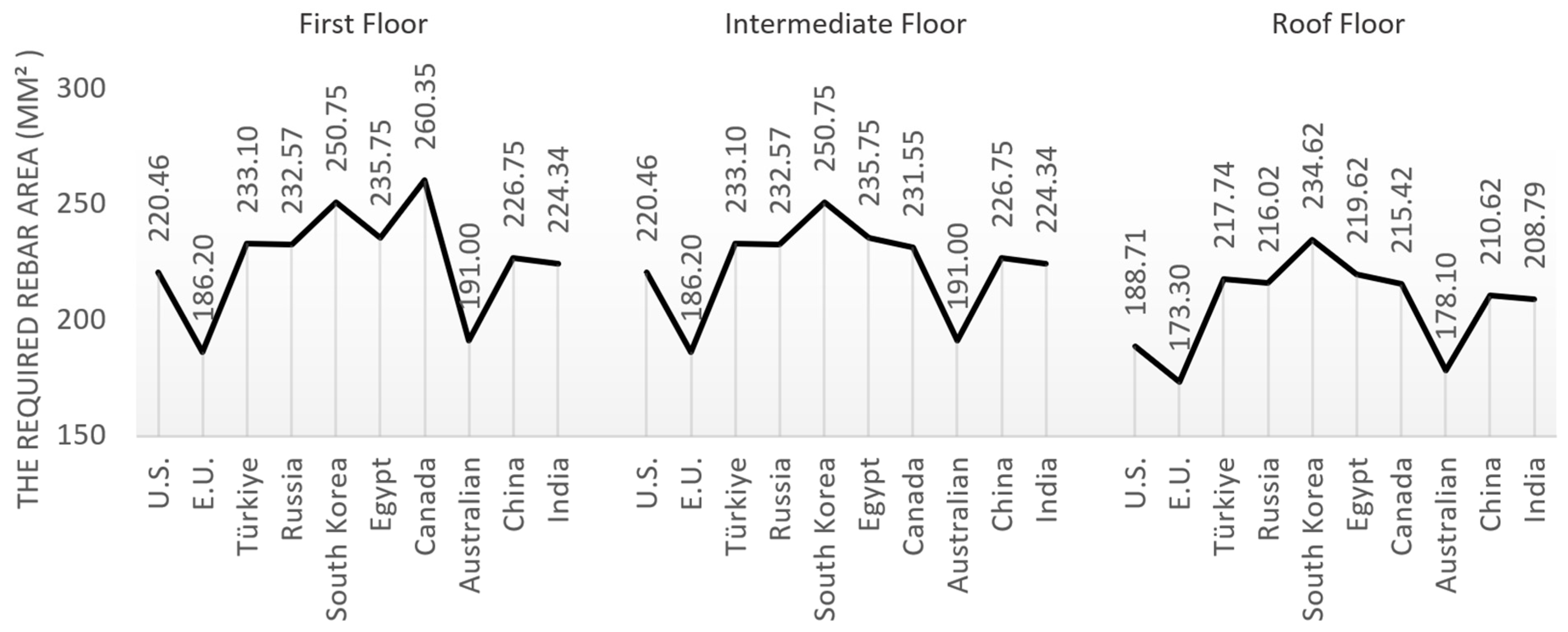
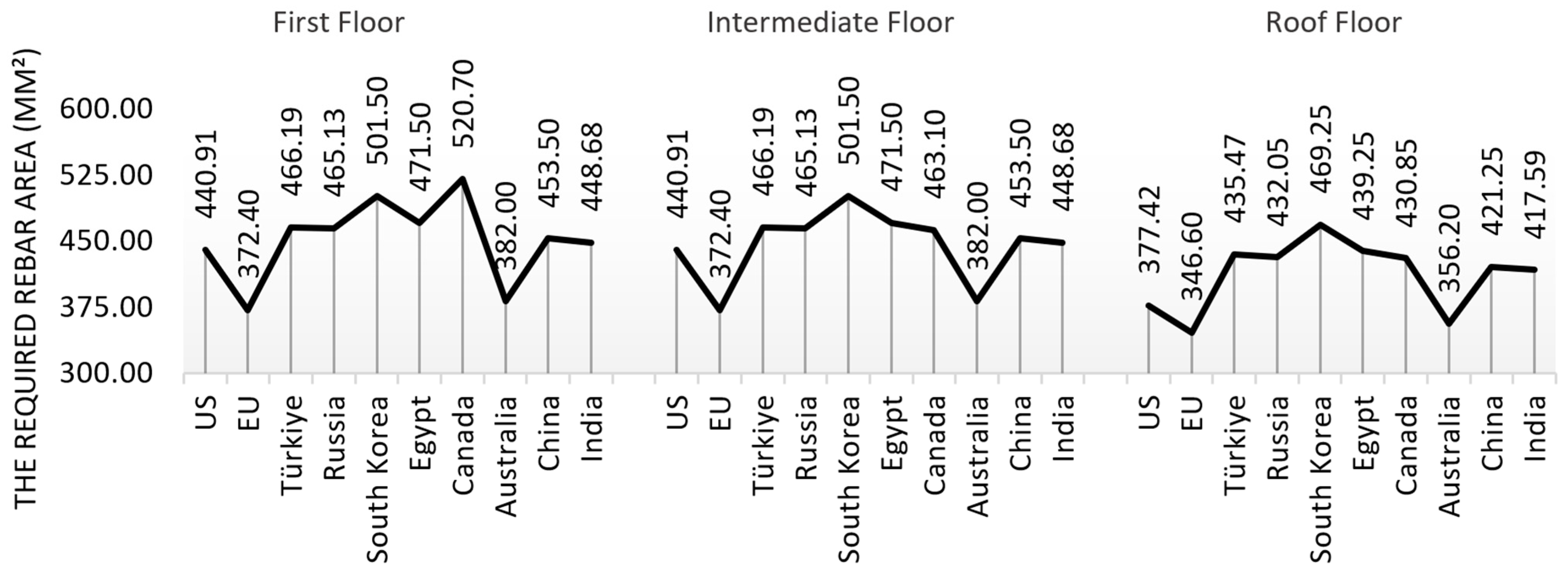
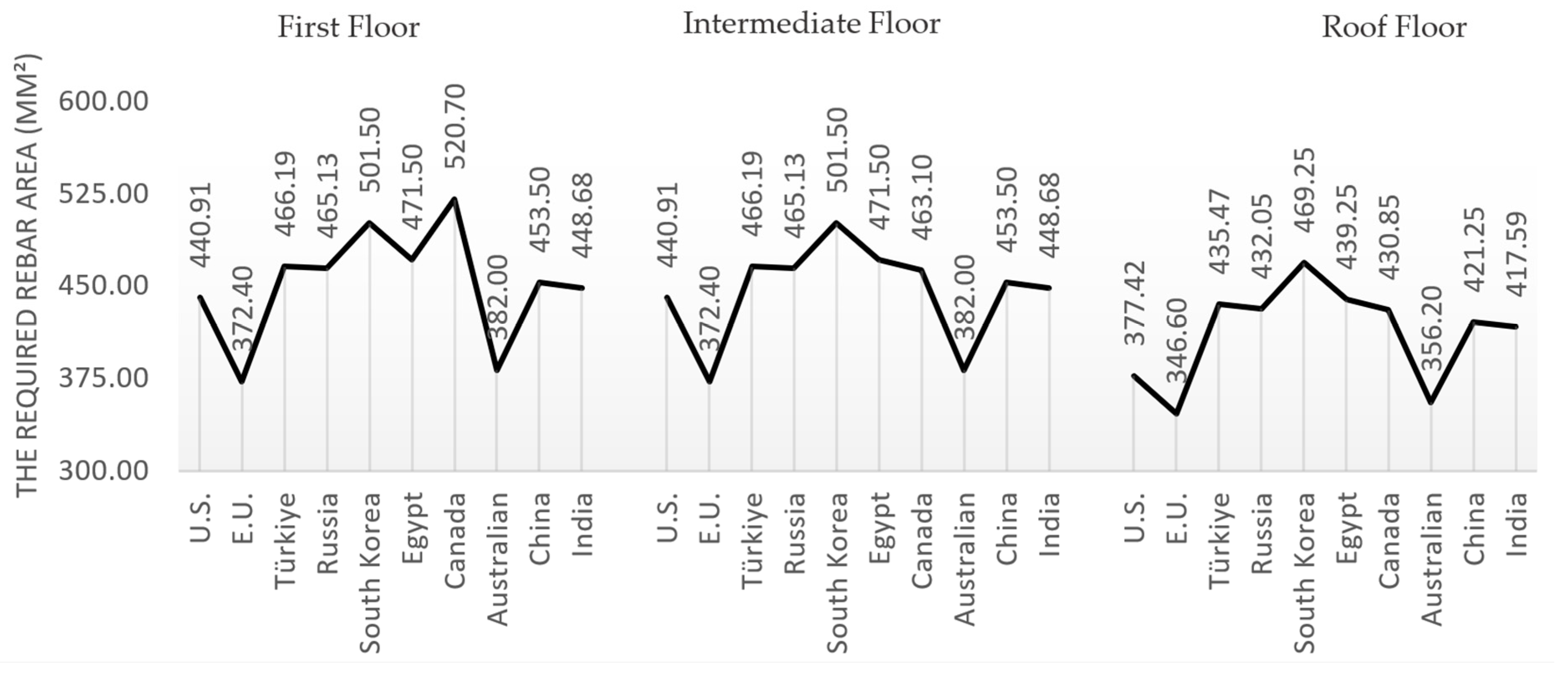
After calculation of tie forces, required reinforcement area for different floors in each country was determined. These reinforcements will be added along the slab and will continuously enhance structural integrity. The required transverse and longitudinal tie reinforcement areas are presented in Figure 17 and Figure 18, respectively.
Figure 17.
Transverse Required Rebar Area.
Figure 18.
Longitudinal Required Rebar Area.
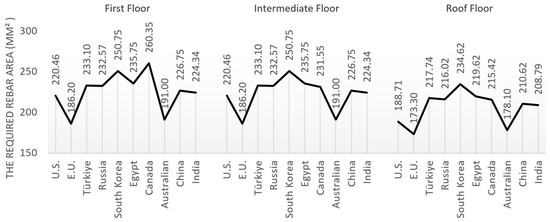
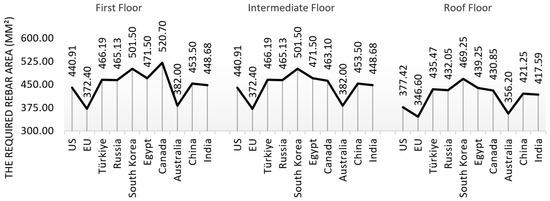
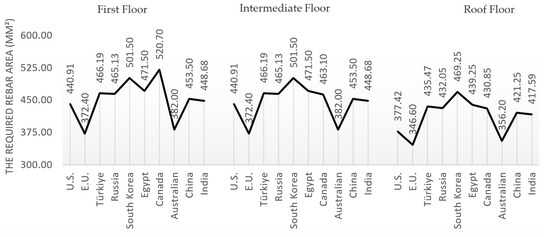
Required rebar area was calculated for ten different countries and for the first floor, upper floors, and roof floor. For transverse tie force, the lowest reinforcement requirement on the first floor was found in the EU, while the highest was in Canada. The reinforcement requirements for other countries were relatively similar. Intermediate and roof floors showed trends similar to that of the first floor. As with tie forces, required reinforcement area for the roof floor was calculated to be lower compared to other floors. Generally, the values ranged between 340 mm2 and 501 mm2. Except for Australia and the EU, other countries required similar tie reinforcement areas. In Figure 18, reinforcement area for longitudinal tie force is examined. Compared to transverse tie force, required reinforcement area was found to be twice as much. This is directly related to the considered slab span being twice the other axis. The trends and variations in Figure 18 are consistent with those observed for the longitudinal tie force results shown in Figure 16.
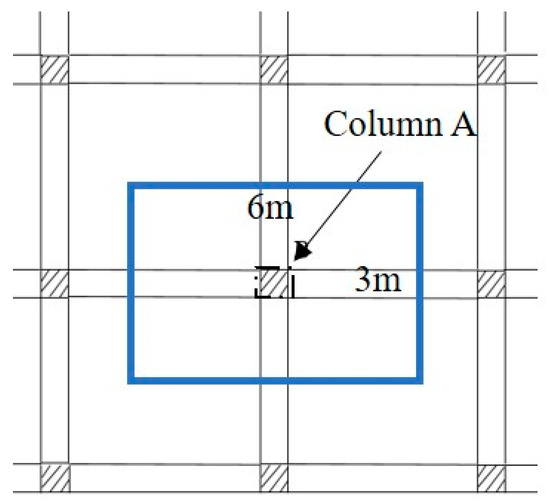
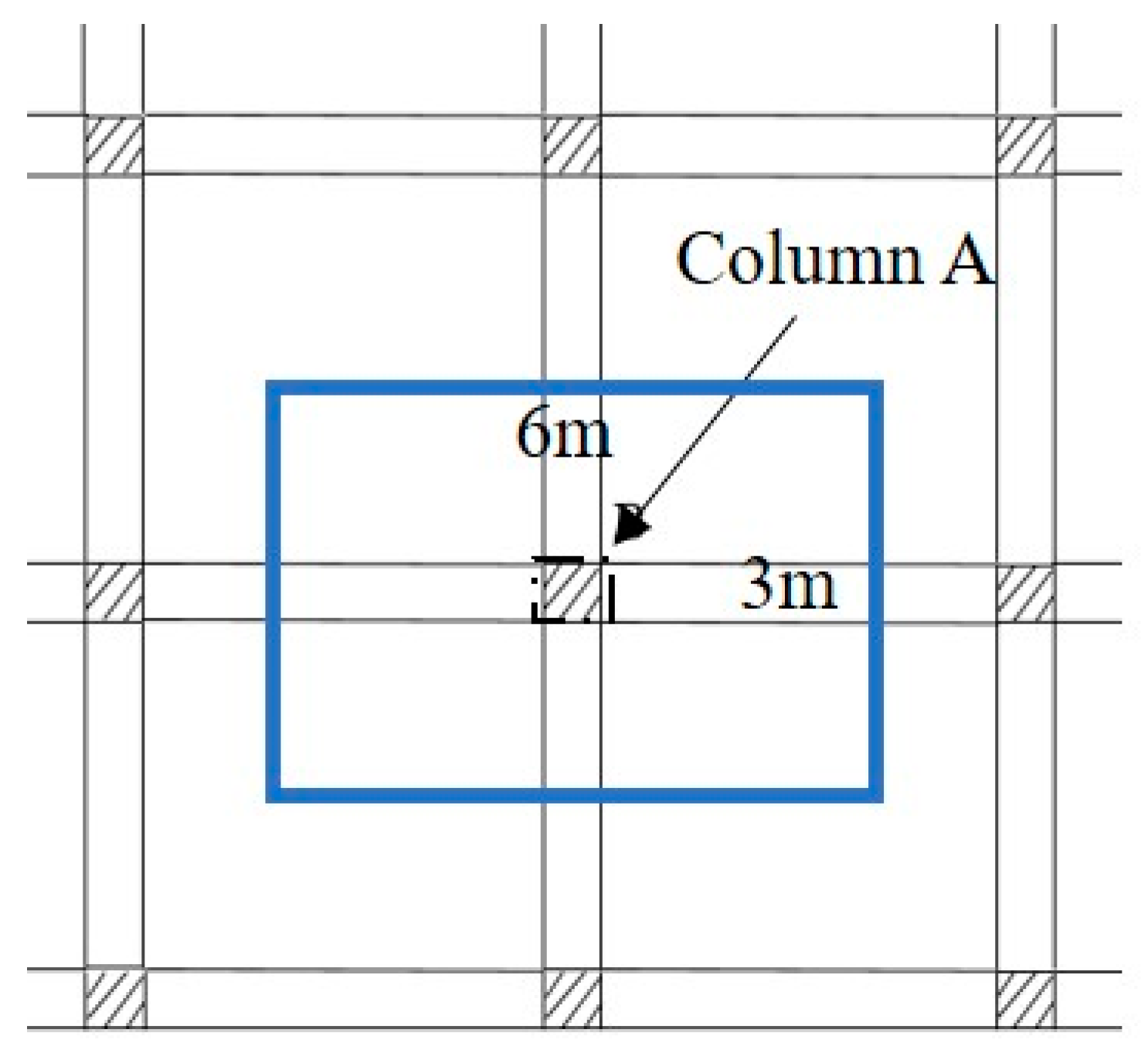
After peripheral, transverse, and longitudinal tie forces, the final calculation was conducted for vertical tie force and required rebar area according to the regulations of ten different countries. For vertical tie force calculation, the column with the largest influence area was selected to determine the maximum possible tie force and required reinforcement area for a six-story reinforced concrete structure. The column and influence areas shown in Figure 19 were considered in the calculations.
Figure 19.
Shaded area of Column A.
The shaded area is obtained by connecting the midpoints of the slabs to which the column is connected [1]. Selecting the column with the largest spanning connections allows for the calculation of the maximum required reinforcement area and tie force capacity. For this reason, Column A, shown in Figure 19, was selected. Column A forms an influence area of 18 m2. The required reinforcement area and tie force capacity are calculated using Equations (1)–(3). The calculated vertical tie force capacity is presented in Figure 20.
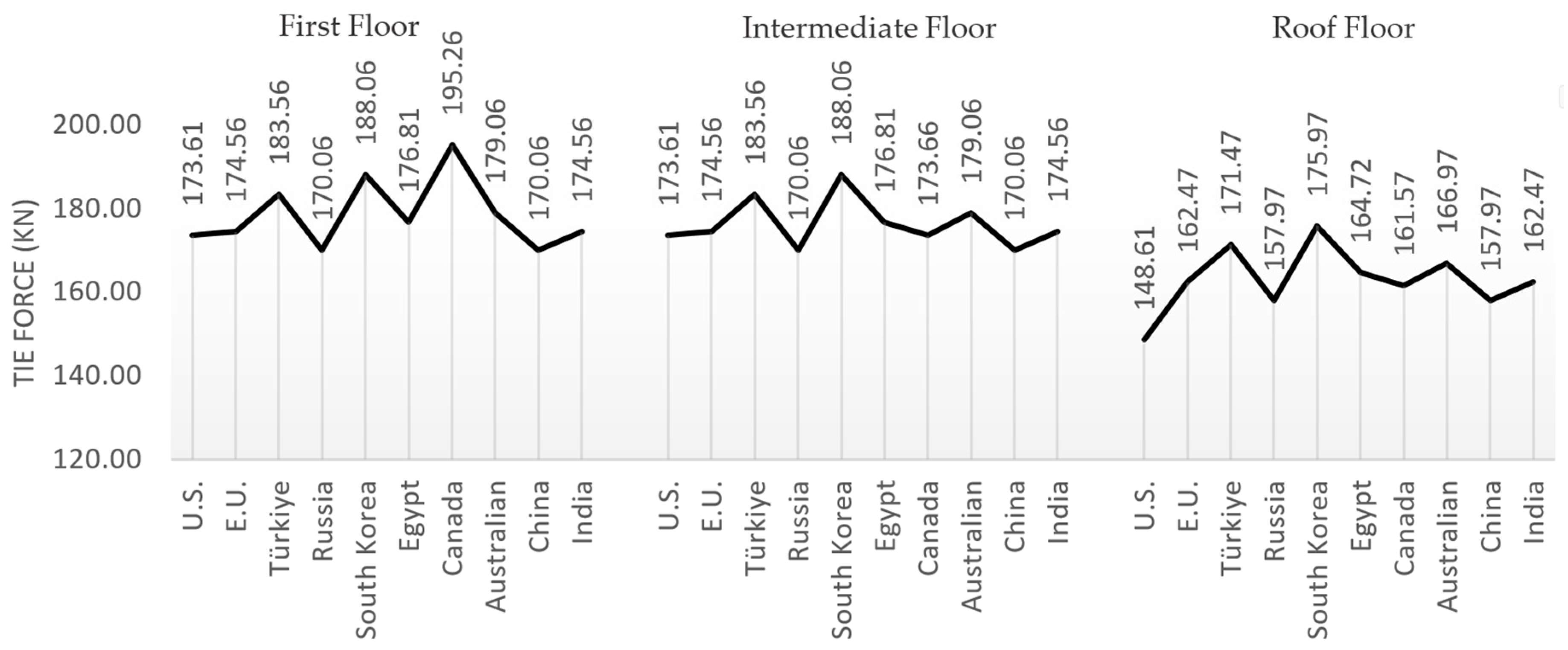
Figure 20.
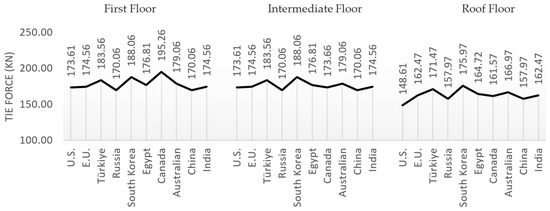
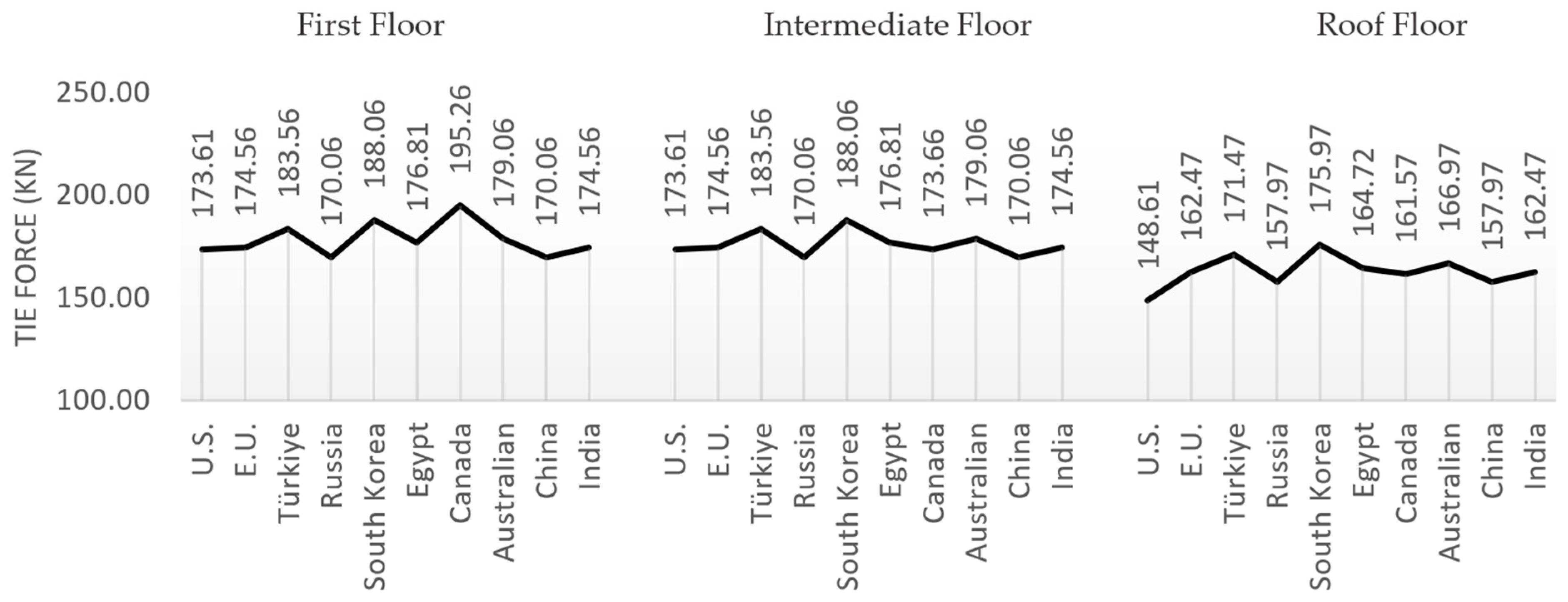
Vertical Tie Force.
In the graph, vertical tie force values for Column A were obtained for different countries and various building floors. For the first floor, tie force values are relatively close to each other, ranging between 170 kN and 195 kN. The lowest vertical tie force was calculated according to Russian and Chinese regulations, while the highest was according to Canadian regulations. The difference between minimum and maximum values is approximately 25 kN, indicating a moderate variation in tie force capacity. The tie force capacities for other countries were calculated to be very similar to each other. For intermediate floors, similar to the first floor, the difference between maximum and minimum values was only 28 kN. Lowest values were obtained according to the Russian and Chinese regulations, while the highest was calculated according to South Korean regulations. In other countries, vertical tie forces obtained for intermediate floors were very close to those of the first floor. For the roof floor, calculated tie forces were lower compared to other floors and followed a trend similar to other types of ties. The lowest tie force was calculated as 148.61 kN for the US, while the highest tie force was 175.97 kN for South Korea. Values for other countries were very close to each other but lower than those calculated for other floors. The required reinforcement area for the vertical tie force is presented in Figure 21.
Figure 21.
Required Rebar Area for Vertical Tie Force.
The required reinforcement area for vertical tie force has been analyzed. On the first floor, the lowest reinforcement requirement was calculated according to EU regulations, while the highest was according to Canadian regulations. The difference between the smallest and largest required reinforcement area was 148.3 mm2. This difference is smaller than the cross-sectional area of one 16 mm diameter reinforcing bar, which is approximately 201 mm2. Therefore, although the calculated required reinforcement areas vary among the national-code-based input sets, the practical reinforcement arrangement for the selected column remains the same when standard 16 mm diameter reinforcement bars are considered. For countries other than Australia, Canada, and those of the EU, the required reinforcement areas were found to be very similar. For intermediate floors, the trend is similar to that of the first floor. The smallest required reinforcement area was calculated according to EU regulations, while the largest was according to South Korean regulations. However, for all countries except Canada, required reinforcement area remained the same. On the roof floor, the required reinforcement area was smaller than that of other floors. This reduction was observed across all country regulations. The smallest reinforcement area was calculated according to EU regulations. For example, on the roof floor, EU regulations require two 16 mm diameter reinforcing bars, whereas the largest required reinforcement area, calculated according to South Korean regulations, requires three 16 mm diameter reinforcing bars. This indicates that the practical difference between the minimum and maximum reinforcement arrangements corresponds to one additional 16 mm diameter reinforcing bar.
The national code input sets corresponding to the maximum and minimum tie forces and required reinforcement areas are provided in Table 2.
Table 2.
Maximum and Minimum Tie Force.
Maximum and minimum tie force data provide maximum and minimum tie force values for structural elements at different floors and by tie force type, along with the corresponding required reinforcement areas according to the considered national code input sets. This helps clarify the differences in tie force and reinforcement demands obtained from the considered national code input sets.
For peripheral tie forces, maximum tie force for the first floor was calculated according to Canadian regulations, while for other floors, it was determined based on South Korean regulations. Minimum tie force was calculated according to Russian and Chinese regulations for first and intermediate floors, whereas for the roof floor, it was based on the US regulations. This indicates how different code input sets affect the calculated tie force demand. It was observed that the maximum required tie reinforcement area was calculated according to Russian regulations for all floors, indicating that the SP 20.13330.2016 input set leads to a higher tie reinforcement demand for the investigated building. On the other hand, the minimum required reinforcement was obtained for the Eurocode-based input set across all floors. Compared with the SP 20.13330.2016 input set, the Eurocode-based input set requires a smaller tie reinforcement area to satisfy the considered tie force demands. A similar trend is observed in transverse and longitudinal tie forces, except for maximum tie strength. As with peripheral ties, maximum tie force was determined based on Canadian regulations for the first floor and South Korean regulations for other floors. The same code input sets governed the required tie reinforcement areas observed for the peripheral tie force calculations. For vertical tie forces, the maximum tie strength at the first floor was obtained using the Canadian code input set, whereas higher tie strength was obtained for other floors according to South Korean regulations. The lowest tie strength was determined for Chinese and Russian regulations on first and intermediate floors, while for the roof floor, it was based on the US regulations. Maximum and minimum reinforcement area results were found to be similar to those observed for other tie force types.
4. Conclusions and Recommendations
The conclusions drawn from the UFC-4-023-03-based tie force calculations for the investigated six-story reinforced concrete benchmark building are summarized as follows:
- The selected national codes were not treated as independent progressive collapse design frameworks. Instead, office live load values and reinforcement material properties were used as national-code-based input parameters within a common UFC 4-023-03 Tie Forces Method calculation framework.
- For the investigated benchmark building, the Canadian input set governed the first-floor tie force demand, mainly because of the higher live load value adopted for the first floor. For the intermediate and roof floors, the South Korean input set generally produced the highest tie force demand.
- The Eurocode-based input set produced the lowest required tie reinforcement area among the considered cases. The largest percentage reduction was observed for the peripheral transverse tie reinforcement at the first floor, where the Eurocode-based input set required 21.7% less reinforcement area than the Russian input set.
- Roof floor tie force demands and required tie reinforcement areas were generally lower than those of the first and intermediate floors because lower vertical loads were considered at the roof level.
- Live load values and reinforcement yield strength influence different stages of the tie force evaluation. Live load variation primarily controls the calculated tie force demand through its contribution to the uniform floor load, whereas reinforcement yield strength governs the conversion of this demand into the required tie reinforcement area. Therefore, the dominant parameter depends on the response quantity considered. Live load values are more directly reflected in tie force demand, while reinforcement yield strength becomes more decisive in determining the required tie reinforcement area due to its inverse relationship with reinforcement demand.
- The Tie Forces Method can be used as a practical preliminary design and assessment tool for buildings requiring enhanced robustness or high service continuity, particularly for evaluating structural continuity and required tie reinforcement area under selected national-code-based input assumptions.
- The scope of this study is limited to a single six-story reinforced concrete benchmark building, fixed-base conditions, non-seismic assumptions, and gravity-load-based UFC tie force calculations. Therefore, the findings should be interpreted within the adopted benchmark assumptions and should not be generalized to all structural systems, site conditions, or loading scenarios.
Based on the limitations of the present study, the following issues are recommended as future research directions rather than direct conclusions of the current analytical results:
- The safety factors for the first, intermediate, and roof floors of structures should be reassessed, and new experimental studies should be conducted to validate and confirm these considerations.
- There are very few studies on the Tie Forces Method in the literature. Further research and experimental studies are needed. Although researchers have conducted numerous studies on the Alternate Path Method, the Tie Forces Method also requires more attention, as both methods are used together in certain types of structures today. Therefore, researchers should conduct more studies on the Tie Forces Method to enhance understanding and application in structural engineering.
- For buildings requiring enhanced robustness or high service continuity, designers and authorities should evaluate tie force capacity using the Tie Forces Method and consider the required tie reinforcement area where necessary.
- When peripheral tie forces are placed at a distance of 3 feet from the support, the resulting reinforcement congestion and structural behavior in this region require further investigation.
- Code provisions that lead to higher required tie reinforcement demand may be further examined in terms of live load definitions, material strength assumptions, and tie force design requirements.
- The effects of seismic behavior and other horizontal loads in the analyses should be supported by experimental studies.
- Building codes should include clear definitions of progressive collapse and establish design criteria for relevant assessment methods.
- As in the study by [11], criteria related to the behavioral changes in the superstructure due to soil effects and the impact of soil–structure interaction on the Tie Forces Method should be examined through new studies.
- In floor load analyses, only vertical loads are considered. However, the effect of horizontal loads is significant in structural behavior. Therefore, it is recommended that experimental studies be conducted to incorporate horizontal loads into newly proposed equations.
- Since the UFC 4-023-03 Tie Forces Method equations do not directly incorporate soil or foundation flexibility parameters, the fixed-base and non-seismic assumptions were used to maintain a controlled comparison; nevertheless, the possible effects of seismic actions, foundation flexibility, and soil–structure interaction on global response and progressive collapse behavior should be investigated in future studies.
Funding
This research was funded by the Scientific and Technological Research Council of Türkiye (TUBITAK), grant number 225M780.
Data Availability Statement
The original contributions presented in the study are included in the article, further inquiries can be directed to the corresponding author.
Conflicts of Interest
The author declares no conflict of interest.
References
- UFC 4-023-03; Design of Buildings to Resist Progressive Collapse—Unified Facilities Criteria (UFC). US Department of Defense: Washington, DC, USA, 2009.
- Baykartech. Bayraktar TB2. 2024. Available online: https://baykartech.com/tr/uav/bayraktar-tb2/ (accessed on 27 June 2024).
- General Services Administration. Design of Buildings to Resist Progressive Collapse; US Department of Defense: Washington, DC, USA, 2020.
- Li, Y.; Lu, X.; Guan, H.; Ye, L. An improved tie force method for progressive collapse resistance design of reinforced concrete frame structures. Eng. Struct. 2011, 33, 2931–2942. [Google Scholar] [CrossRef] [Scilit]
- Sewell, C.; McKay, A. Implementation of Tie Forces for Progressive Collapse Resistance of a 12-Storey Building; Canadian Association for Earthquake Engineering and Seismology: Vancouver, BC, Canada, 2021. [Google Scholar]
- Kozlova, P. The Phenomenon of Progressive Collapse According to Russian Norms. Bachelor’s Thesis, Saimaa University of Applied Sciences, Lappeenranta, Finland, 2013. [Google Scholar]
- Parisi, F.; Scalvenzi, M. Progressive collapse assessment of gravity-load designed European RC buildings under multi-column loss scenarios. Eng. Struct. 2020, 209, 110001. [Google Scholar] [CrossRef] [Scilit]
- Abdelwahed, B. A review on building progressive collapse, survey and discussion. Case Stud. Constr. Mater. 2019, 11, e00243. [Google Scholar] [CrossRef] [Scilit]
- Byfield, M.; Mudalige, W.; Morison, C.; Stoddart, E. A review of progressive collapse research and regulations. Proc. Inst. Civ. Eng.—Struct. Build. 2014, 167, 447–456. [Google Scholar] [CrossRef] [Scilit]
- Kılıçer, S.; Kaya, A.; Özgan, K.; Adanur, S. Improvement of progressive collapse resistance of reinforced concrete buildings using carbon fiber reinforced polymer (CFRP). In Proceedings of the International Civil Engineering and Architecture Conference ICEARC’19, Trabzon, Türkiye, 17–20 April 2019; Volume 1, pp. 1167–1176. [Google Scholar]
- Ozgan, K.; Kılıçer, S.; Daloglu, A.T. Soil–Structure Interaction Effect on the Resistance of a Steel Frame against Progressive Collapse Using Linear Static and Nonlinear Dynamic Procedures. J. Perform. Constr. Facil. 2023, 37, 04022070. [Google Scholar] [CrossRef] [Scilit]
- Ozgan, K.; Kılıçer, S.; Daloglu, A.T. Evaluation of progressive collapse potential of a RC school building considering soil–structure interaction. Asian J. Civ. Eng. 2023, 24, 1199–1213. [Google Scholar] [CrossRef] [Scilit]
- Kılıçer, S. The Impact of Weapon Systems on Structural Damage and Progressive Collapse: A Case Study of Belgorod Oblast. Yüz. Yıl Üniv. Fen Bilim. Enst. Derg. 2025, 30, 215–234. [Google Scholar] [CrossRef] [Scilit]
- Kılıçer, S.; Can, Y. Doğal afetlerin çelik yapılarda aşamalı göçme mekanizmasına etkisi: Soğuk şekillendirilmiş çelik örneği [The effect of natural disasters on the progressive collapse mechanism in steel structures: The case of cold-formed steel]. Cihannüma Technol. Sci. Eng. Sci. Acad. J. 2025, 3, 68–91. [Google Scholar] [CrossRef] [Scilit]
- Kılıçer, S. Progressive collapse analysis of a reinforced concrete structure using the Enhanced Local Resistance (ELR) method: A comparison of UFC 4-023-03 and the Turkish Earthquake Code (TEC 2018). Doğal Afetler Ve Çevre Derg. 2025, 11, 513–525. [Google Scholar] [CrossRef] [Scilit]
- Kiliçer, S.; Özgan, K. Evaluation of progressive collapse risk in reinforced concrete structures considering soil–structure interaction via the Winkler model. Struct. Eng. Int. 2026. early access. [Google Scholar] [CrossRef] [Scilit]
- Kılıçer, S.; Temuçin Kılıçer, S. Progressive-collapse robustness assessment of existing reinforced concrete buildings in diverse geographical regions using the tie-force method. Buildings 2026, 16, 1090. [Google Scholar] [CrossRef] [Scilit]
- Wang, Y.; Khan, M.; Uy, B.; Katwal, U.; Tao, Z.; Thai, H.-T.; Ngo, T. Long-term performance of steel-concrete composite wall panels under axial compression. Structures 2024, 64, 106606. [Google Scholar] [CrossRef] [Scilit]
- Wang, Y.; Khan, M.; Uy, B.; Lim, L.; Thai, H.-T.; Ngo, T. Behaviour, design and performance of steel-concrete composite walls in fire. J. Constr. Steel Res. 2025, 227, 109408. [Google Scholar] [CrossRef] [Scilit]
- ODPM. The Building Regulations—Structure: Approved Document A. ODPM-1970; Office of the Deputy Prime Minister: London, UK, 1970.
- ANSI-72; Safety Code for the Use, Care and Protection of Abrasive Wheels. American National Standards: New York, NY, USA, 1972.
- BOCA. The BOCA Basic Building Code Accumulative Supplement 1972: Containing Approved Changes for the Basic Building Code; Building Officials Code Administrators International: Englewood, CO, USA, 1972. [Google Scholar]
- NRCC-1975; National Research Council of Canada. Associate Committee on the National Building Code: Ottawa, ON, Canada, 1975. [CrossRef] [Scilit] [PubMed]
- SBCCI. Standard Building Code; Southern Building Code Congress International: Englewood, CO, USA, 1994. [Google Scholar]
- ICBO. Uniform Building Code; International Conference of Building Officials: Whittier, CA, USA, 1997; Volume 1. [Google Scholar]
- Kılıçer, S. Zemin-Yapı Etkileşimi Dikkate Alınarak Yapıların Aşamalı Göçme Riskinin Belirlenmesi [Determination of the Progressive Collapse Risk of Structures Considering Soil–Structure Interaction. Ph.D. Thesis, Karadeniz Technical University, Trabzon, Türkiye, 2023. [Google Scholar]
- ASCE/SEI 7-16; Minimum Design Loads and Associated Criteria for Buildings and Other Structures. American Society of Civil Engineers: Reston, VA, USA, 2016.
- EN 1991-1-1; Eurocode 1—Actions on structures—Part 1-1: General actions—Densities, self-weight, imposed loads for buildings. European Committee for Standardization: Brussels, Belgium, 2002.
- TS 498; Yapı Elemanlarının Boyutlandırılmasında Alınacak Yükler. Türk Standartları Enstitüsü: Ankara, Turkey, 2021.
- SP 20.13330.2016; Loads and Effects (Updated Edition of SNiP 2.01.07-85). Ministry of Construction, Housing and Utilities of the Russian Federation: Moscow, Russia, 2016.
- KBC. Korean Building Code (KBC). 2016. Available online: https://www.codil.or.kr/filebank/construction/DC/CIGCDC190010/CIGCDC190010.pdf (accessed on 19 January 2025).
- ECP-201; Egyptian Code of Practice for Calculation of Loads and Forces in Structures and Buildings. National Housing and Building Research Center: Cairo, Egypt, 2012.
- AS/NZS 1170.1:2002; Structural Design Actions, Part 1: Permanent, Imposed and Other Actions. Standards Australia: Sydney, NSW, Australia; Standards New Zealand: Wellington, New Zealand, 2002.
- GB 50009-2012; Load Code for the Design of Building Structures. China Ministry of Housing and Urban-Rural Development. Standards Press of China: Beijing, China, 2012.
- IS 875 (Part 2); Code of Practice for Design Loads (Other than Earthquake) for Buildings and Structures, Part 2: Imposed Loads. Bureau of Indian Standards: New Delhi, India, 1987.
- ASTM A615/A615M-22; Standard Specification for Deformed and Plain Carbon-Steel Bars for Concrete Reinforcement. ASTM International: West Conshohocken, PA, USA, 2022.
- EN 10080; Steel for the Reinforcement of Concrete—Weldable Reinforcing Steel—General. European Committee for Standardization: Brussels, Belgium, 2005.
- TS 708; Steel Bars for Concrete Reinforcement. Turkish Standards Institution: Ankara, Türkiye, 2010.
- GOST 5781-82; Hot-Rolled Steel Bars for Reinforced Concrete. Specifications. Federal Agency on Technical Regulating and Metrology: Moscow, Russia, 1982.
- KS D 3504; Steel Bars for Concrete Reinforcement. Korean Standards Association: Seoul, Republic of Korea, 2020.
- ES 262; Steel for the Reinforcement of Concrete. Egyptian Organization for Standardization and Quality: Cairo, Egypt, 2011.
- CSA G30.18; Carbon Steel Bars for Concrete Reinforcement. Canadian Standards Association: Toronto, ON, Canada, 2018.
- AS/NZS 4671; Steel Reinforcing Materials. Standards Australia: Sydney, NSW, Australia; Standards New Zealand: Wellington, New Zealand, 2019.
- GB 1499.2-2018; Hot Rolled Ribbed Steel Bars for the Reinforcement of Concrete. Chinese Standard Publishing: Beijing, China, 2018.
- IS 1786:2008; High Strength Deformed Steel Bars and Wires for Concrete Reinforcement—Specification. Bureau of Indian Standards: New Delhi, India, 2008.
- Ellingwood, B.R.; Culver, C.G. Analysis of live loads in office buildings. J. Struct. Div. 1977, 103, 1551–1560. [Google Scholar] [CrossRef] [Scilit]
- CTBUH Council on Tall Buildings and Urban Habitat. Introduction to Korean Building Code Draft. 2004. Available online: https://global.ctbuh.org/resources/papers/download/1335-introduction-to-korea-building-codedraft.pdf (accessed on 19 January 2025).
- KBC2016; Bina Yapı Standartları. BMTARS: Seoul, Republic of Korea, 2016. Available online: https://bmtars.tistory.com/26 (accessed on 19 January 2025).
- NRCC. National Building Code of Canada 2015, 14th ed.; National Research Council of Canada: Ottawa, ON, Canada, 2015. [Google Scholar] [CrossRef] [Scilit] [PubMed]
- Kılıçer, S. Aşamalı göçme tasarım prosedürü: Bağ kuvvetleri metodu [Progressive collapse design procedure: Tie forces method]. In İnşaat Mühendisliği Alanında Uluslararası Çalışma ve Değerlendirmeler [International Studies and Evaluations in the Field of Civil Engineering]; İskender, E., Ed.; Serüven Publishing: Ankara, Turkey, 2024; pp. 57–71. [Google Scholar]

Disclaimer/Publisher’s Note: The statements, opinions and data contained in all publications are solely those of the individual author(s) and contributor(s) and not of MDPI and/or the editor(s). MDPI and/or the editor(s) disclaim responsibility for any injury to people or property resulting from any ideas, methods, instructions or products referred to in the content. |
© 2026 by the author. Licensee MDPI, Basel, Switzerland. This article is an open access article distributed under the terms and conditions of the Creative Commons Attribution (CC BY) license.