Article

Dynamic Response and Damage Behavior of Bridge Jacking Support Subjected to Under-Deck Gas Explosion Loading

by
Changling Xie
1,2,
Keqi Huang
1,
Xuejie Zhang
3,
Jian Cui
2 and
Hexin Jin
1,*
1
China Construction Sixth Engineering Bureau Co., Ltd., Tianjin 300171, China
2
School of Civil Engineering, Tianjin University, Tianjin 300354, China
3
School of Civil Engineering, Tianjin Chengjian University, Tianjin 300384, China
*
Author to whom correspondence should be addressed.
Buildings 2026, 16(12), 2448; https://doi.org/10.3390/buildings16122448 (registering DOI)
Submission received: 9 April 2026 / Revised: 2 June 2026 / Accepted: 15 June 2026 / Published: 20 June 2026

Abstract

Hydraulic synchronous jacking technology is extensively employed in bridge reconstruction and new construction, with jacking supports serving as core components whose blast resistance is critical to the structural safety of the bridge jacking system. This study numerically investigates the dynamic response and damage behavior of bridge jacking supports subjected to under-deck gas explosion loading through the finite-element software LS-DYNA. The TNT equivalent method is adopted to convert gas explosion load into equivalent TNT detonation load for simulation, and the effects of TNT detonation location on the blast-resistance performance of the jacking support are analyzed. The results indicate that the bridge segment temporarily loses contact with the jacking support under the action of gas explosion loading. The bridge segment around the web plate undergoes shear damage because of the deformation constraint effect of the web plate. The shear damage level of the bridge segment increases with the increase in TNT mass. The displacement of the jacking support increases with the increase in the mass of the explosive. The enhanced rod around the edge steel pipe support is more prone to damage due to its low local stiffness. The damage level of the bridge segment increases with the decrease in the distance between the TNT detonation and the bridge segment, and then the blast-resistance performance of the jacking support is almost unrelated to the vertical distance. The transverse distance between the TNT detonation and the jacking support has a significant effect on the response of jacking support.

1. Introduction

With the accelerated urbanization process and the continuous upgrading of transportation infrastructure systems, the construction, renovation and functional optimization of bridge structures have become core tasks in the field of civil engineering [1]. As a key node of land transportation networks, bridges are not only important to improve the efficiency of regional logistics and economic circulation, but their under-bridge clearance height is a decisive factor for the traffic capacity of the underlying roads [2]. The insufficient under-bridge clearance of many existing bridges built in the early stages can no longer meet the current transportation demand for large vehicles, which makes the reconstruction and elevation of bridge structures an urgent engineering problem [3].
Traditional bridge reconstruction methods mainly rely on demolition and reconstruction, which not only have the disadvantages of a long construction period, high economic cost and large construction waste, but will also cause long-term interruption of the original traffic lines and a serious impact on the normal travel of residents and the operation of the urban economy [4,5]. In order to solve the above problems, hydraulic synchronous jacking technology has been rapidly developed and widely applied in bridge engineering in recent years due to its advantages of high precision, small structural damage and short construction periods [6]. This technology can realize the integral or segmental elevation of bridge structures on the premise of retaining the original structural system, and its application has greatly improved the efficiency of bridge renovation engineering [7]. Gao et al. [7] carried out on-site monitoring and parameter optimization of jacking height, slope adjustment and jacking mode based on the actual engineering of the Chemical Road Bridge jacking renovation, and further verified the reliability and practicability of hydraulic synchronous jacking technology in actual bridge engineering. As the core bearing component of this technology, the jacking support undertakes the self-weight of the bridge segment and the dynamic reaction force during the jacking process, and its structural safety directly determines the success or failure of the whole bridge jacking project [8].
Bridge structures are in the open air for a long time and have the characteristics of a complex structural system with multiple force transmission paths, which make them extremely vulnerable to various accidental dynamic loads, among which explosion load is one of the most destructive forms [1,9]. In recent years, accidental explosions such as gas leakage and chemical transport vehicle detonation under bridges have occurred from time to time, which have caused serious damage to bridge structures and even led to structural collapse [10,11]. Historical accident investigations have shown that explosion loads have different damage mechanisms to bridge structures according to the detonation distance. Near-field explosions will generate high peak pressure and a short-duration strong impulse, which easily causes local buckling, plastic deformation and even fracture of structural components [12,13]. Far-field explosions will induce long-term resonant vibration of low-stiffness structural components, leading to fatigue damage and cumulative failure of the structure [14,15]. The 1995 Alfred P. Murrah Federal Building truck bomb explosion accident caused serious collateral damage to the adjacent Harvey Avenue Bridge, and the post-disaster detection found that the transverse lifting support of the bridge had obvious buckling deformation and the strain of the steel material exceeded the yield limit [12,16]. Foglar et al. [13] carried out experimental research on the anti-blast performance of steel columns under contact explosion, and the results showed that the steel cross-section was prone to local damage under blast load, and additional anti-blast protection measures were necessary. For bridge jacking support systems, the longitudinal supports with low local stiffness are prone to resonant vibration under far-field explosion, and the bolt connection parts easily produce fatigue cracks and even failure under the action of long-term vibration [15].
At present, domestic and foreign scholars have carried out a lot of research on the anti-blast performance of bridge structures. Yang et al. [1] analyzed the dynamic response and failure mechanism of urban bridges under far-field blast load. Hashemi et al. [17] studied the influence of pylon geometry on the anti-blast performance of cable-stayed bridges. Jia et al. [12] proposed a reinforcement method for bridge piers with steel jackets to improve their anti-blast performance. However, most of the existing studies focus on the overall anti-blast response of conventional bridge structures such as bridge piers, main girders and cable towers [9,11,18], and research on the dynamic response and damage behavior of the jacking support, a key temporary bearing component, under under-deck gas explosion load is still relatively lacking. In recent years, with the widespread use of natural gas and liquefied petroleum gas, gas explosion accidents have become a significant threat to the safety of urban infrastructure. Gas explosions are characterized by a longer pressure rise time, larger spatial distribution of overpressure, and strong dependence on confinement and ventilation conditions [19,20]. In bridge engineering, gas explosions may occur beneath the bridge deck following gas leakage from pipelines or accumulation in confined spaces during construction or maintenance. Such under-deck gas explosions can impose complex loading patterns on the bridge segment and its temporary support structures, including intense pressure waves and subsequent thermal effects. In particular, the coupling effect of bridge segment self-weight and explosion load on the jacking support, as well as the influence of different detonation distances and positions on the anti-blast performance of the jacking support, have not been thoroughly studied.
In view of the above research gaps, this paper takes the bridge jacking support and the corresponding bridge segment as the research objects, and uses LS-DYNA to carry out numerical simulation research on the dynamic response and damage behavior of the bridge jacking support system under under-deck gas explosion load. The TNT equivalent method is used to convert the gas explosion load into the equivalent detonation load, and the effects of TNT detonation standoff distance, detonation position and local stiffness of the jacking support on its anti-blast performance are systematically analyzed. The research results can provide a theoretical basis and technical reference for the anti-blast design and reinforcement of the jacking support in bridge hydraulic synchronous jacking engineering.

2. Numerical Model of the Bridge Segment in Jacking

2.1. Parameters of the Bridge Segment and the Jacking Support

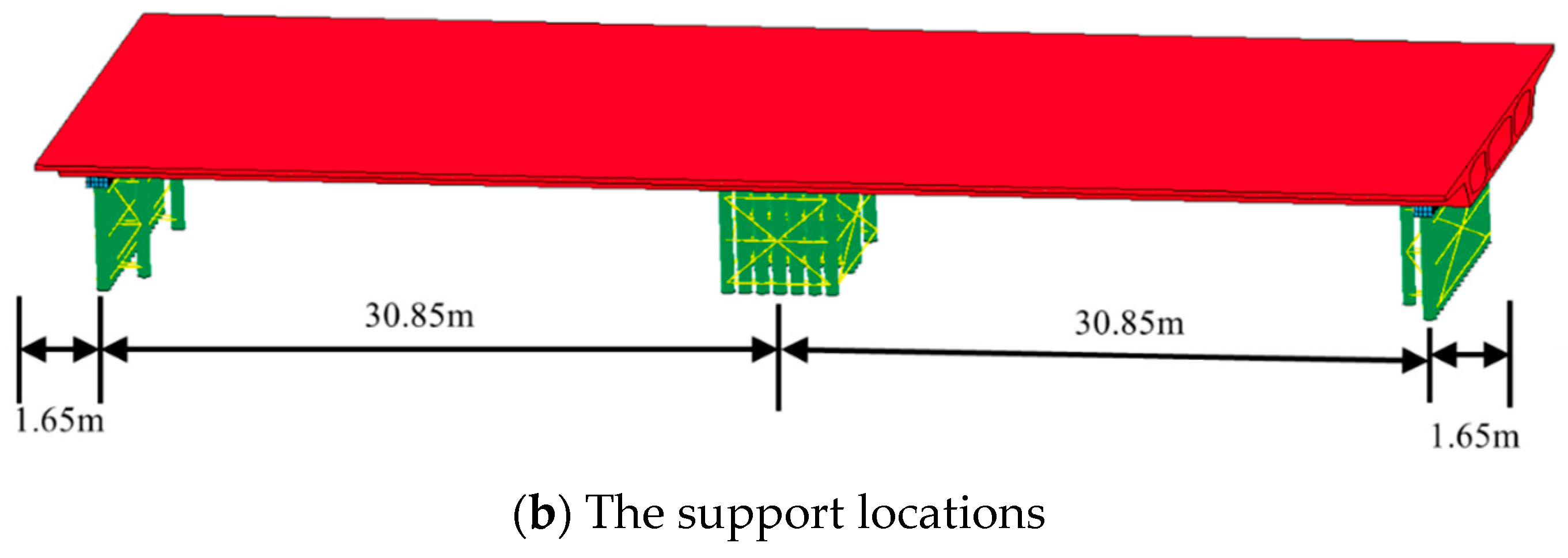
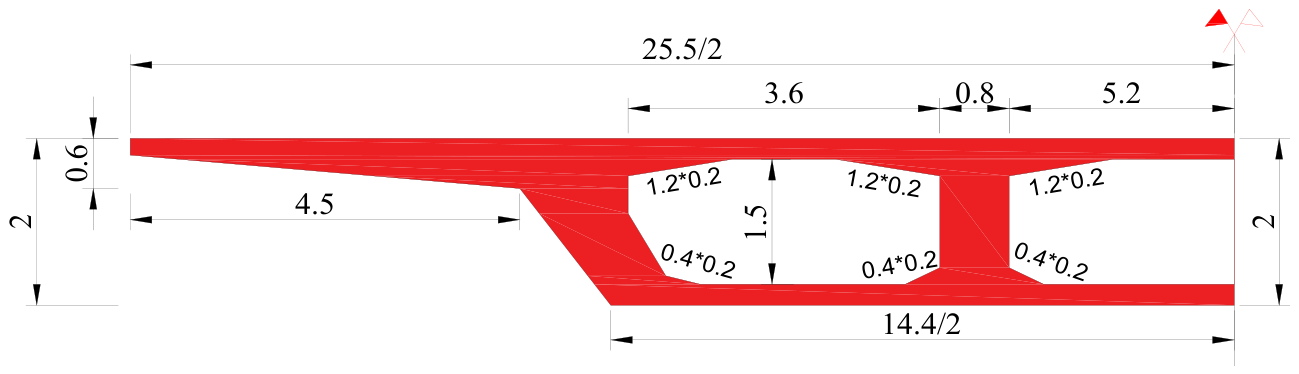
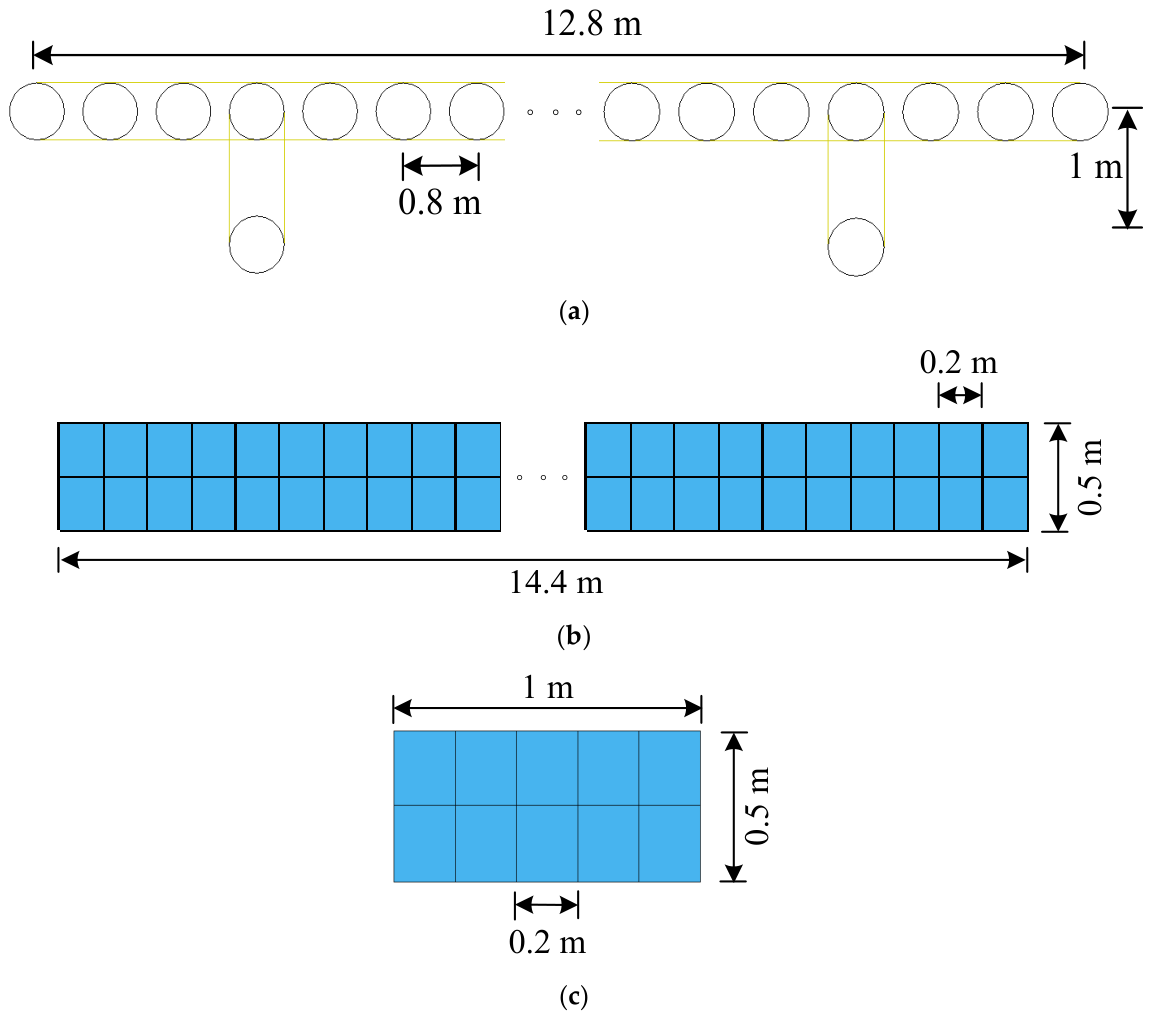
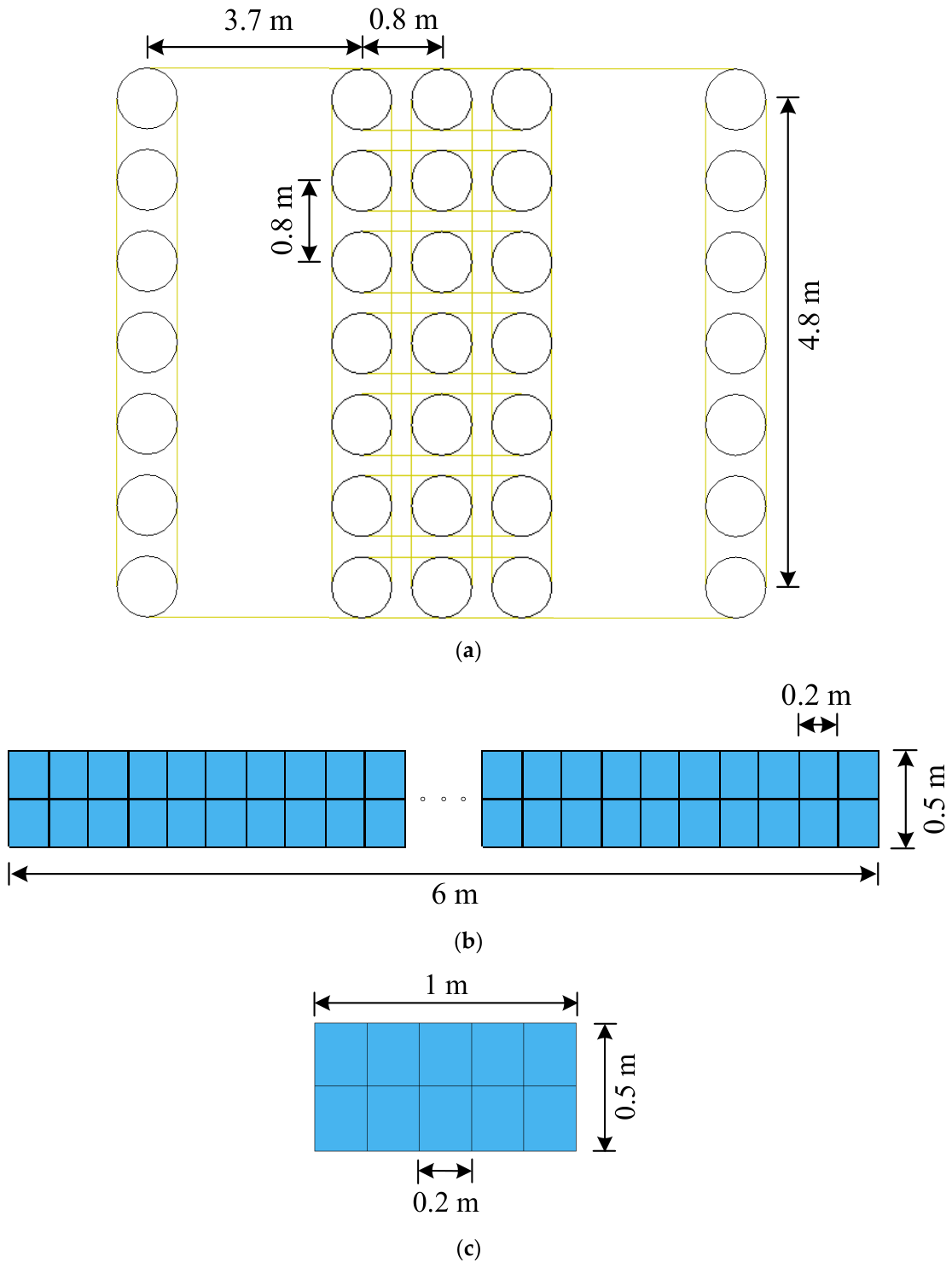
To study the effect of a gas explosion on the global stability of the bridge segment in jacking, the numerical model of the bridge segment supported by a steel pipe is established by LS-DYNA, as shown in Figure 1. Figure 2 shows the geometric parameters of the bridge segment. As shown, the span arrangement of the bridge segment is 32.5 + 32.5 m. The bridge segment is supported by jacking supports #1 to #3. The jacking supports are composed of a distribution beam, steel pipe support and enhanced rod. Figure 3 and Figure 4 show the geometric parameters of jacking supports #1 to #3. The diameters of the steel pipe and reinforcement are 0.6 m and 0.005 m, respectively. The thicknesses of the steel pipe and the distribution beam are 0.02 m, respectively. The outer diameter of the enhanced rod is 0.1 m. The thickness of the enhanced rod is 0.004 m. The height of the steel pipe is 5 m.

2.2. Constitutive-Contact Modeling Information

In this study, the response of a bridge jacking support subjected to an under-deck gas explosion is studied. Under high-speed loading conditions such as explosion and impact, the bridge segment faces severe challenges due to the complex propagation of stress waves. Therefore, the concrete in the bridge segment is defined by the keyword MAT_072R3 which is based on the K&C concrete model. The K&C concrete model is capable of automatically deriving material parameters from the unconfined compressive strength. It incorporates key mechanical behaviors, including strain rate sensitivity, shear-induced damage and plastic deformation. To simulate concrete behavior under gas explosion loading, the erosion criterion is implemented via the *Mat_Add_Erosion keyword, and the element is removed from the calculation once its maximum principal strain reaches 0.1 as its continued presence no longer provides structural resistance. The keyword *Mat_Piecewise_Linear_Plasticity (Mat_024) material model is used to simulate the reinforcement, steel pipe and enhanced rod. This keyword defines elasto-plastic behavior through a user-defined stress–strain curve and incorporates a customizable strain rate effect. The reinforcement is simulated by using the Hughes–Liu beam element. The eight-node constant-stress solid element is used to simulate concrete in the bridge segment. The material parameters for the numerical model are given in Table 1.
The interaction between the reinforcement and concrete is defined by the keyword *Constrained_Beam_in_Solid. The contact condition between the steel pipe and distribution beam is defined by the keyword *Contact_tied_shell_edge_to_surface. The keyword *Contact_automatic_surface_to_surface is applied to define the interaction between different parts in the numerical model. For the surface-to-surface contact, Coulomb’s law is reflected by the consideration of friction. The coefficient of friction is defined as
μ = F D + ( F S F D ) e D C v r e l
where FS is the static coefficient of friction, FD is the dynamic coefficient of friction, DC is the exponential decay coefficient and vrel is the relative velocity of surfaces. The contact parameters mainly consider the static friction coefficient, which is set to 0.6 [22].
The interaction between the enhanced rod and steel pipe is defined by the keyword *Contact_automatic_beams_ to_surface. The boundary condition at the bottom of the steel pipe is fixed, indicating that no displacement or rotation occurs at the bottom of the steel pipe. Gas explosion loading can be evaluated using the TNT equivalent method, TNO multi-energy method and BST method [23]. Although the reaction mechanisms of TNT explosions and gas explosions differ, the TNT equivalency method is frequently adopted in practical engineering and explosion consequence assessments because of its high efficiency, rapid application, and user-friendly nature [24]. Based on the principle of energy equivalence, gas explosion loading in this study can be evaluated using the TNT equivalent method, and the evaluation formula is as follows:
W TNT = η M Δ H c Δ H TNT
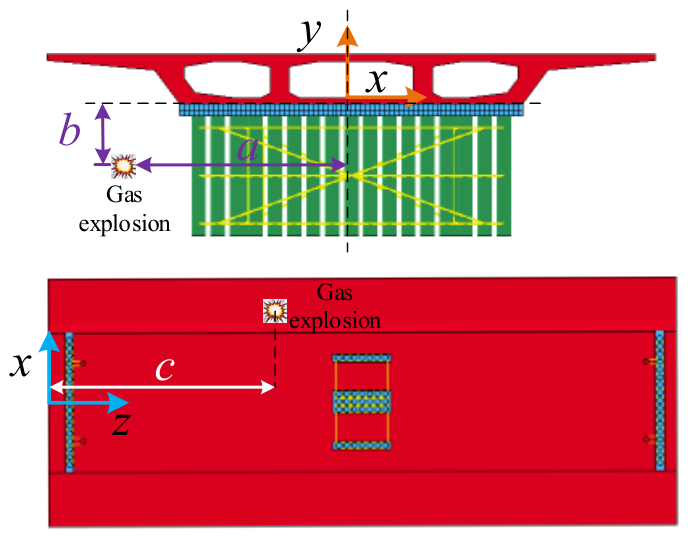
where M is the mass of the gas fuel (kg); ΔHc is the combustion heat of the gas fuel (50,000 kJ·kg−1); ΔHTNT is the explosion heat of the TNT (4680 kJ·kg−1); and η is the dimensionless equivalent coefficient, where η = 0.1. The keyword *Load_ Blast_ Enhanced is used to define the blast load in this study. Figure 5 shows the location of TNT detonation.
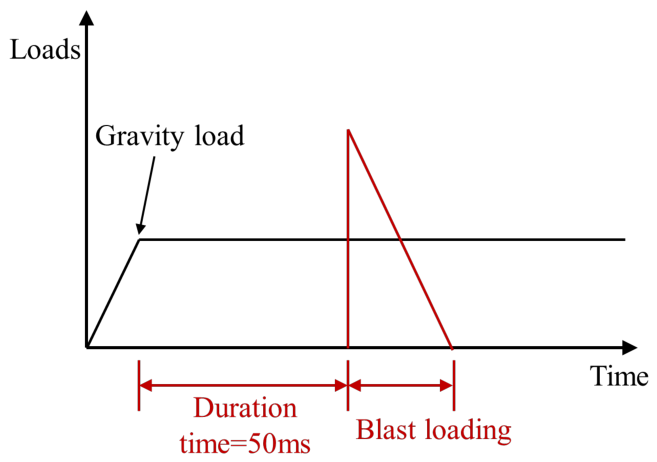
The application of gravity load is shown in Figure 5. After the gravity load is applied, it lasts for 50 ms to achieve dynamic equilibrium of the structure, and then explosion simulation is carried out. After grid sensitivity verification, the horizontal and vertical grid sizes are 0.2 m and 0.25 m, respectively, as shown in Figure 6.
As a multiphase and heterogeneous material, concrete composed of the cement, aggregate and interfacial transition zone exhibits unique dynamic responses under impulsive load. Under high-speed loading conditions such as blast load and impulsive load, the internal material faces severe challenges due to the complex propagation of the stress wave. Due to significant differences in wave impedance among the components, the stress wave undergoes repeated reflection, refraction and scattering when passing through different phase interfaces, which can easily induce local stress concentration in a relatively weak interface area, thereby triggering a large number of diffusely distributed microcracks. This heterogeneity causes concrete to exhibit a significant strain rate effect at the macroscopic level, which means the strength and stiffness of concrete increase sharply with the loading rate, and leads to a change in the failure mode from a single main crack propagation under the quasi-static condition to crushing or spalling under the dynamic condition. Therefore, the strain rate effect on the dynamic responses of the concrete, reinforcement, steel pipe support, enhanced rod and distribution beam is considered in this study, and is defined by the dynamic increase factors (DIFs), as given in Equations (3)–(5).
The DIFs for concrete [25,26] are
CDIF = f cd f cs = 0.0419 ( log ε ˙ d ) + 1.2165 ,                 ε ˙ d 30   s 1 0.8988 ( log ε ˙ d ) 2 2.8255 ( log ε ˙ d ) + 3.4907 ,     ε ˙ d > 30   s 1
TDIF = f td f ts = 0.26 ( log ε ˙ d ) + 2.06 ,       ε ˙ d 1   s 1 2 ( l o g ε ˙ d ) + 2.06 ,                                     1   s 1 < ε ˙ d 2   s 1 1.44331 ( l o g ε ˙ d ) + 2.2276 ,       2   s 1 < ε ˙ d 150   s 1  
where f cd is the dynamic compressive strength of concrete, f cs is the static compressive strength of concrete, f td is the dynamic tensile strength of concrete, f ts is the static tensile strength of concrete, and ε ˙ is the strain rate.
The DIFs for the reinforcement, steel pipe support, enhanced rod and distribution beam [25] are
DIF = ε ˙ 1 0 4 α
where α corresponds to the stress condition. For the yield stress fy, α f y = 0.074 0.04 f y / 413.7 . For the ultimate stress, α f u = 0.019 0.009 f y / 413.7 .

2.3. Validation of Numerical Model

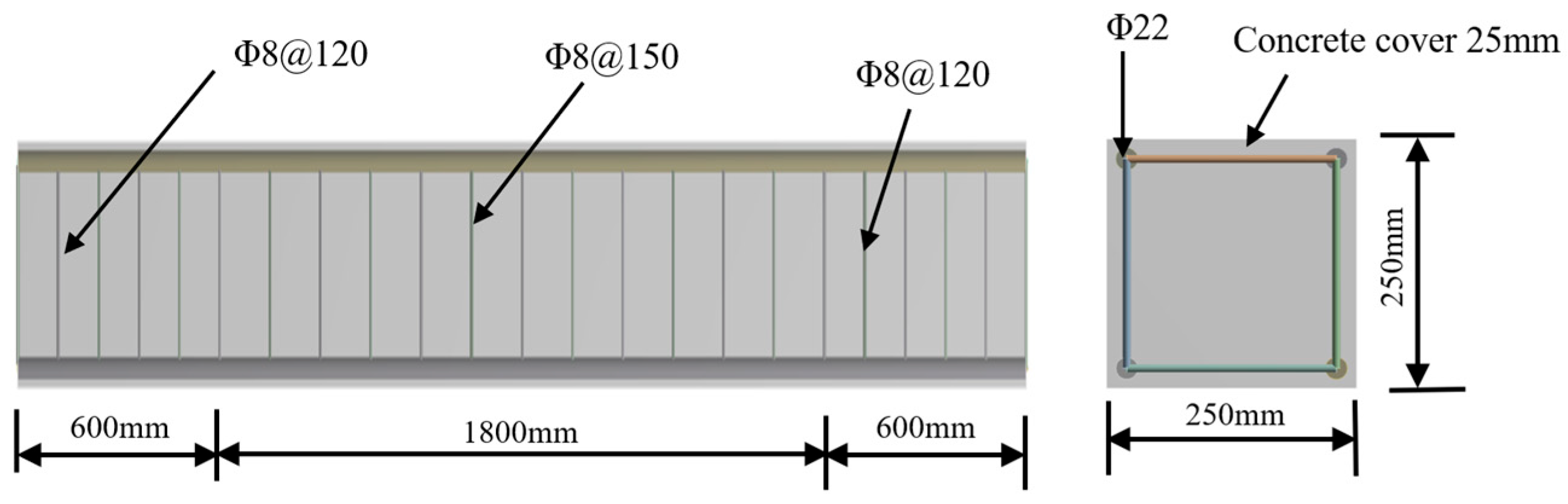
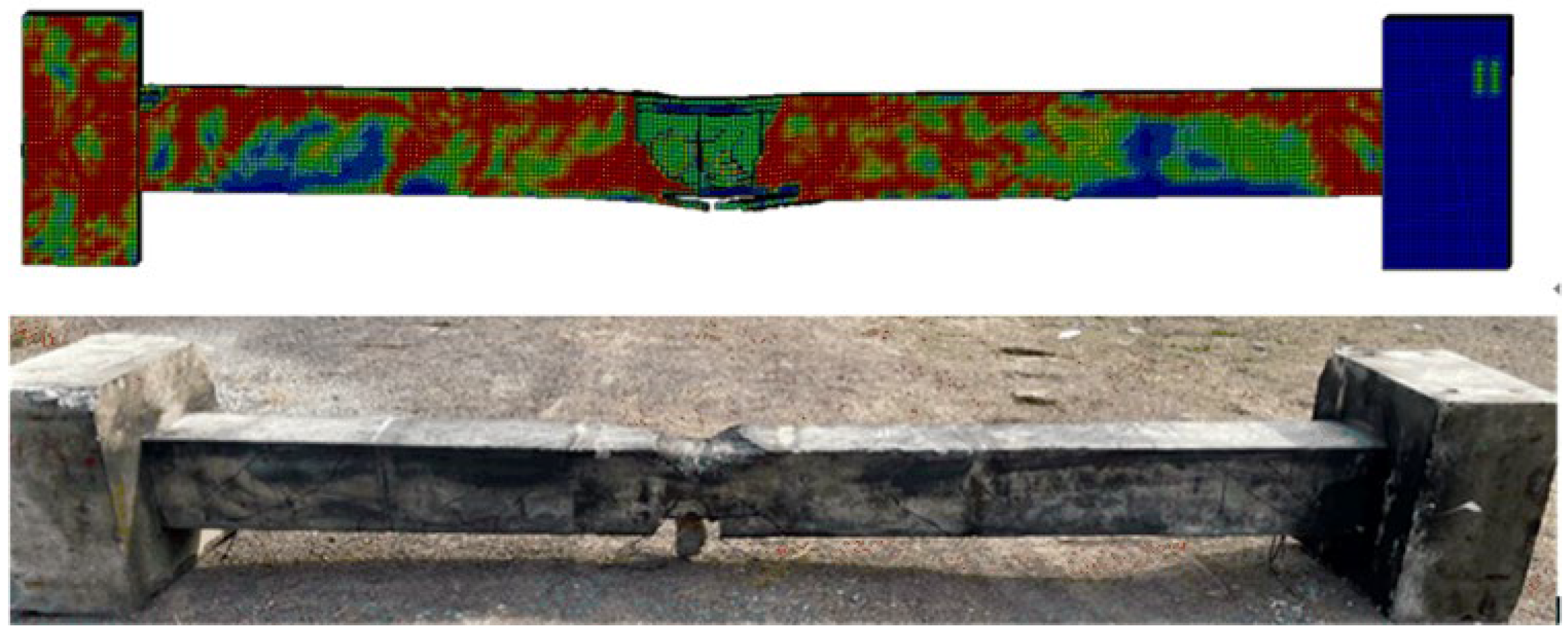
To calibrate the numerical model and its parameters, the experimental results of RC columns under blast loading are adopted [27]. The specimen dimension is shown in Figure 7. The mass of TNT detonation is 24 kg. The distance between the TNT and the blast front surface of the specimen is 1.5 m. The diameters of longitudinal reinforcement and transverse reinforcement are 22 mm and 8 mm, respectively.
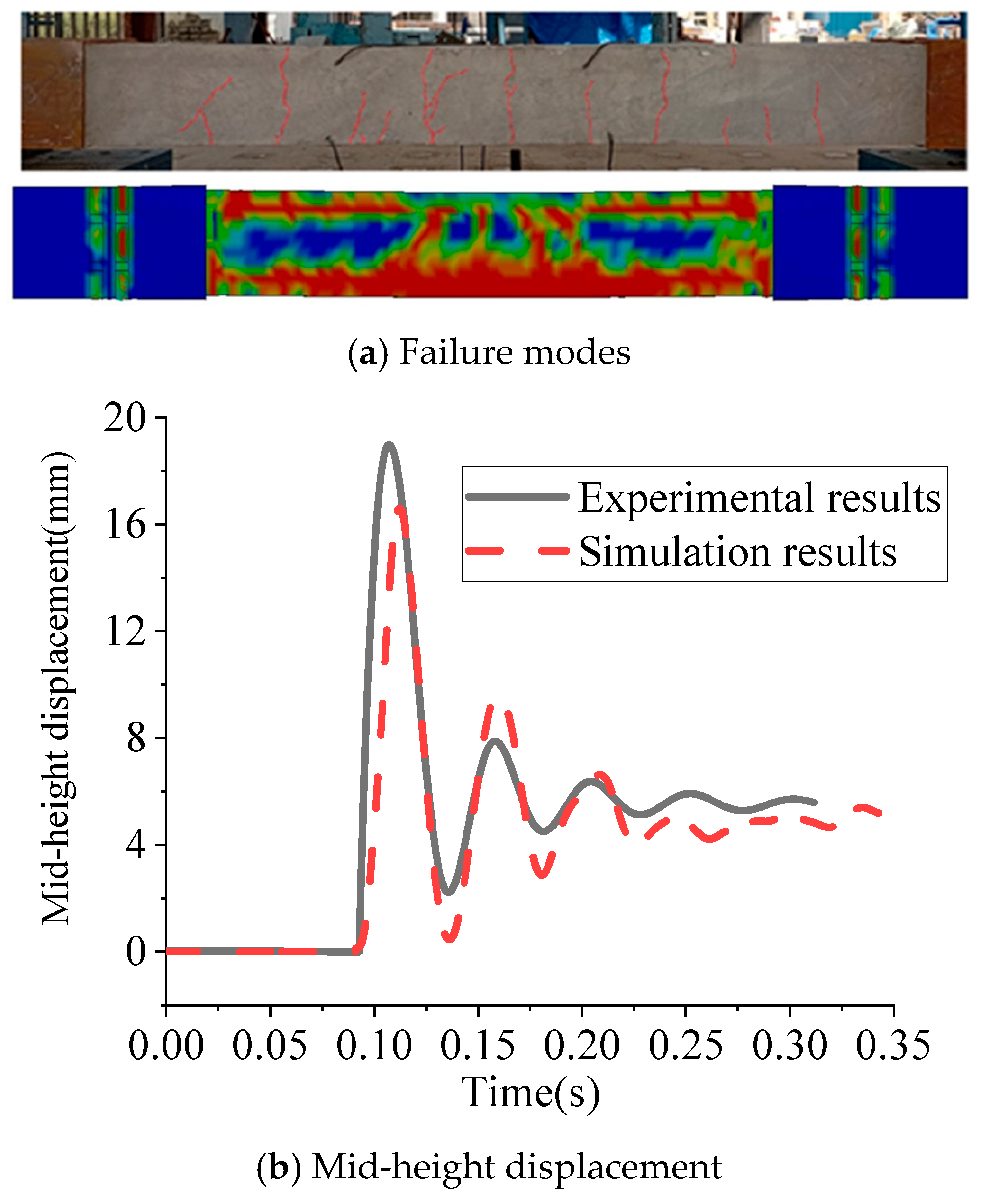
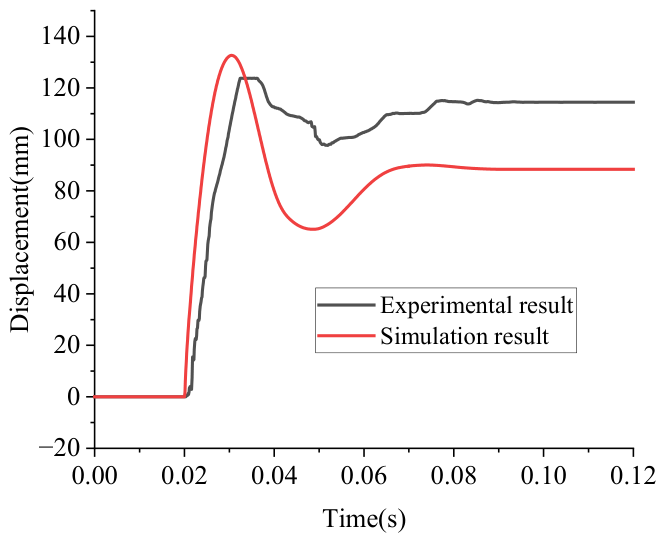
Figure 8 shows the damage modes of the RC column obtained through the experiment and simulation. The mid-height concrete spalling situation of the column in the experiment and simulation is similar. The numerical and experimental results of mid-span displacement are shown in Figure 9. Peak displacements of the experiment and numerical simulation are 123.6 mm and 132.7 mm, respectively, and the error is about 7%. Experimental and numerical residual displacements are 114.4 mm and 88.7 mm, respectively, and the error is about −22%. The failure modes agree well with the testing results, and the change trend of deflection time history curves is also consistent. Therefore, the numerical model in this paper can be used for subsequent numerical simulations.
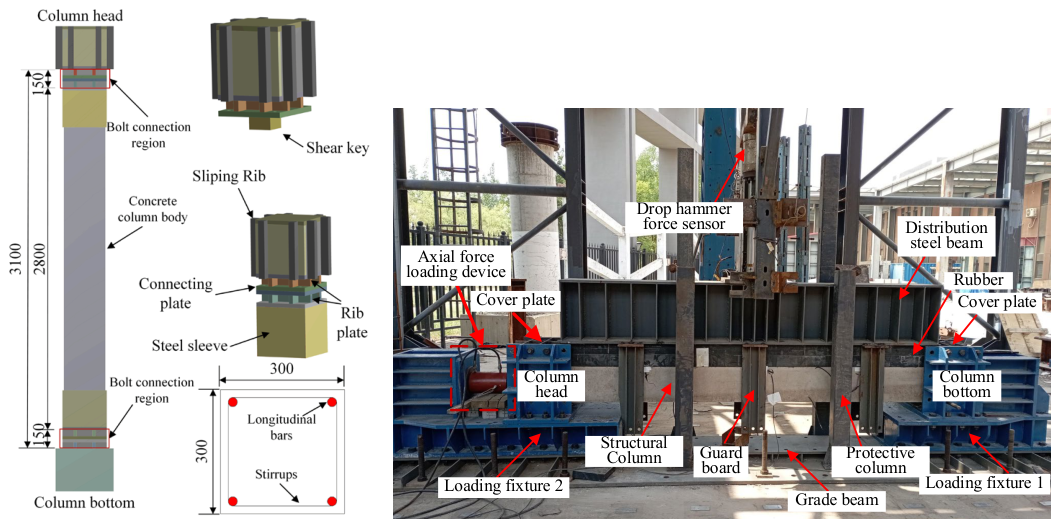
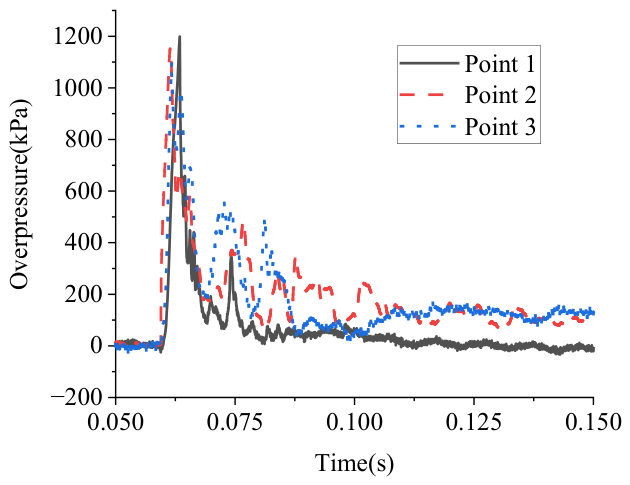
To further validate the model parameters, the response of the prefabricated steel–concrete composite column as shown in Figure 10 under the action of a drop hammer is studied [28,29]. The loadings, as shown in Figure 11, are applied to the numerical model. The strain rate effect of concrete is accounted for via the dynamic increase factor (DIF), while the erosion effect is also considered. Contacts between connecting plates are treated with *Contact_automatic_surface_to_surface. In the simulation, boundary conditions are defined as fixed at the column base and sliding at the column head, using the keyword *Boundary_spc_set for implementation. The simulation results are shown in Figure 12. The results indicate that the simulated failure mode is consistent with the experimental phenomena, but the displacement time history curve is slightly different, which may be related to the failure of the experimental boundary conditions to reach the ideal boundary conditions for numerical simulation. However, considering the relatively small error, the numerical model parameters can be used to simulate the dynamic response and damage of assembled columns under explosive loads in the future.

3. Response of Bridge Segment in Jacking Under the Action of Under-Deck Gas Explosion

3.1. Effect of Explosive Mass on the Response of Bridge Segment in Jacking

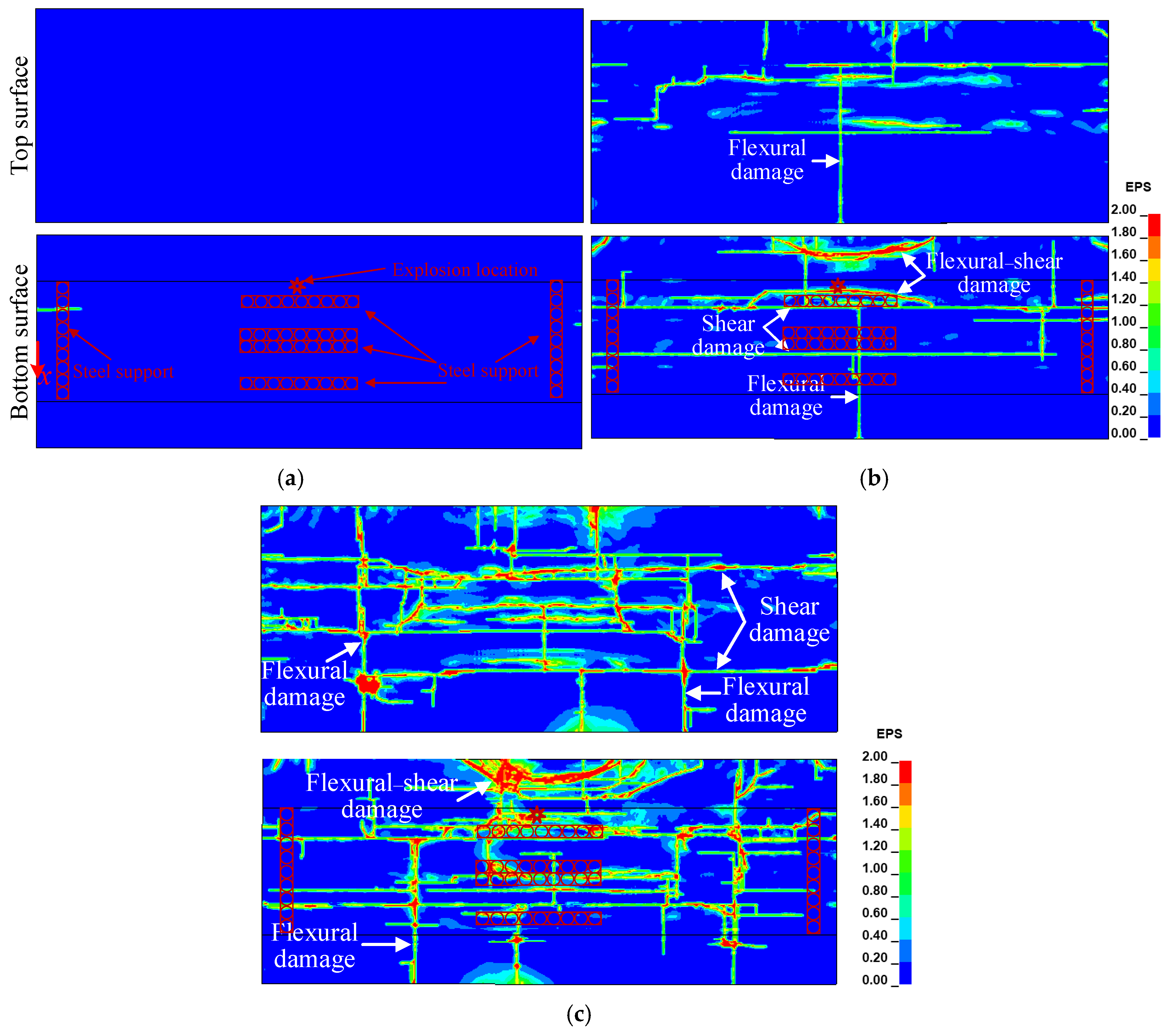
To study the effect of an explosive mass on the response of the bridge segment in jacking, three blast loading scenarios with different masses, as given in Table 2, are considered in this study. The 10–50 kg TNT equivalent corresponds to a medium-scale gas leak (e.g., a small delivery truck or gas tank). There may be liquefied petroleum gas cylinders on the construction site, or natural gas pipelines passing under bridges. Figure 13a–c show the damage modes of a bridge segment subjected to blast loading scenarios No. 1 to No. 3. As shown, only minor damage is observed in the bridge segment under the action of blast loading scenario No. 1 because of the low mass of TNT. The top plate and bottom plate of the bridge segment around the web plate undergo shear damage when subjected to blast loading scenarios No. 2 and No. 3 because of the deformation constraint effect of the web plate, and the shear damage levels of the top and bottom plates increase with the increase in TNT mass. The top and bottom plates of the bridge segment undergo flexural damage at the traverse section of the bridge segment, and the damages of the plates subjected to blast loading scenario No. 3 are more severe than those to blast loading scenario No. 2.
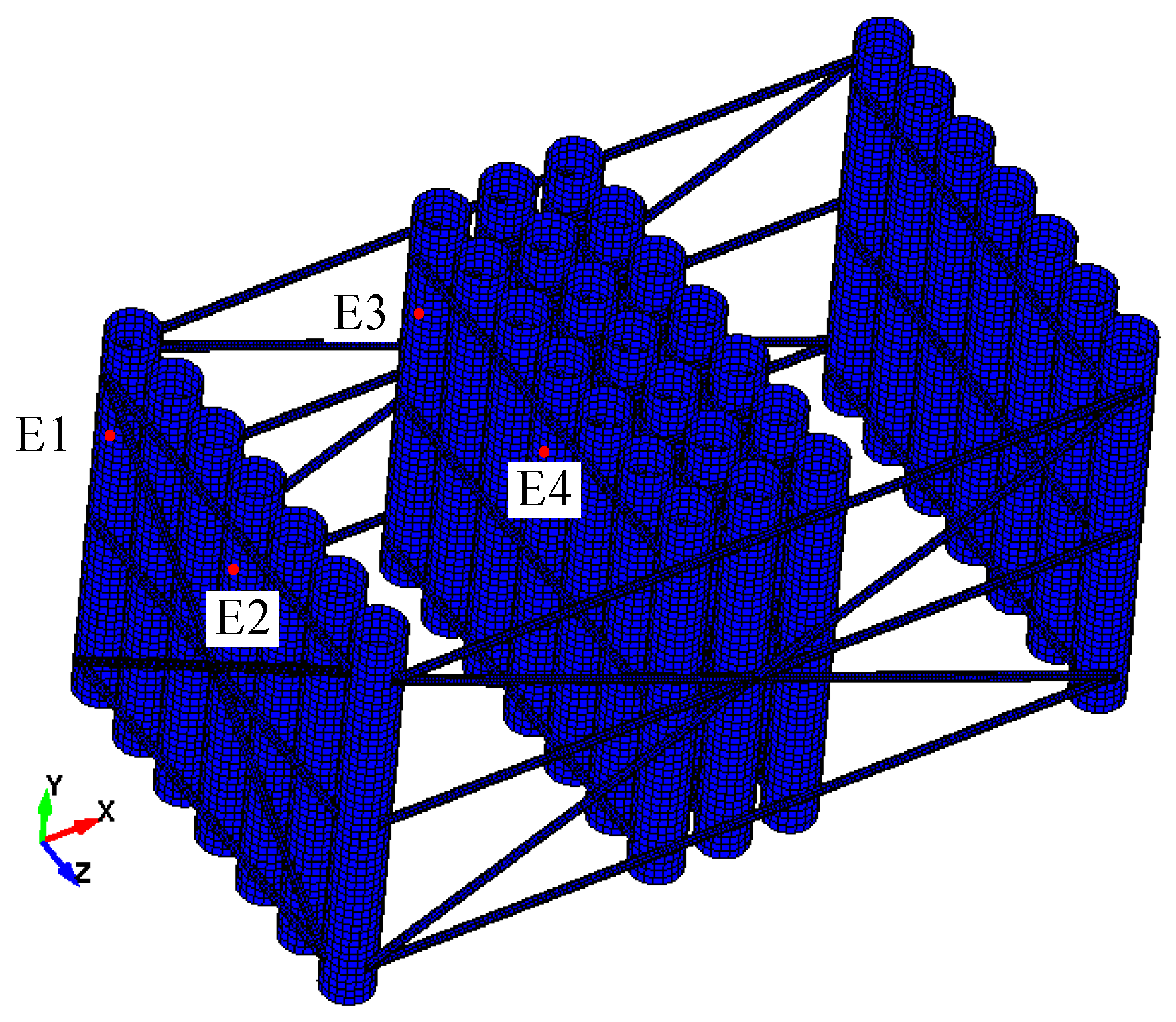
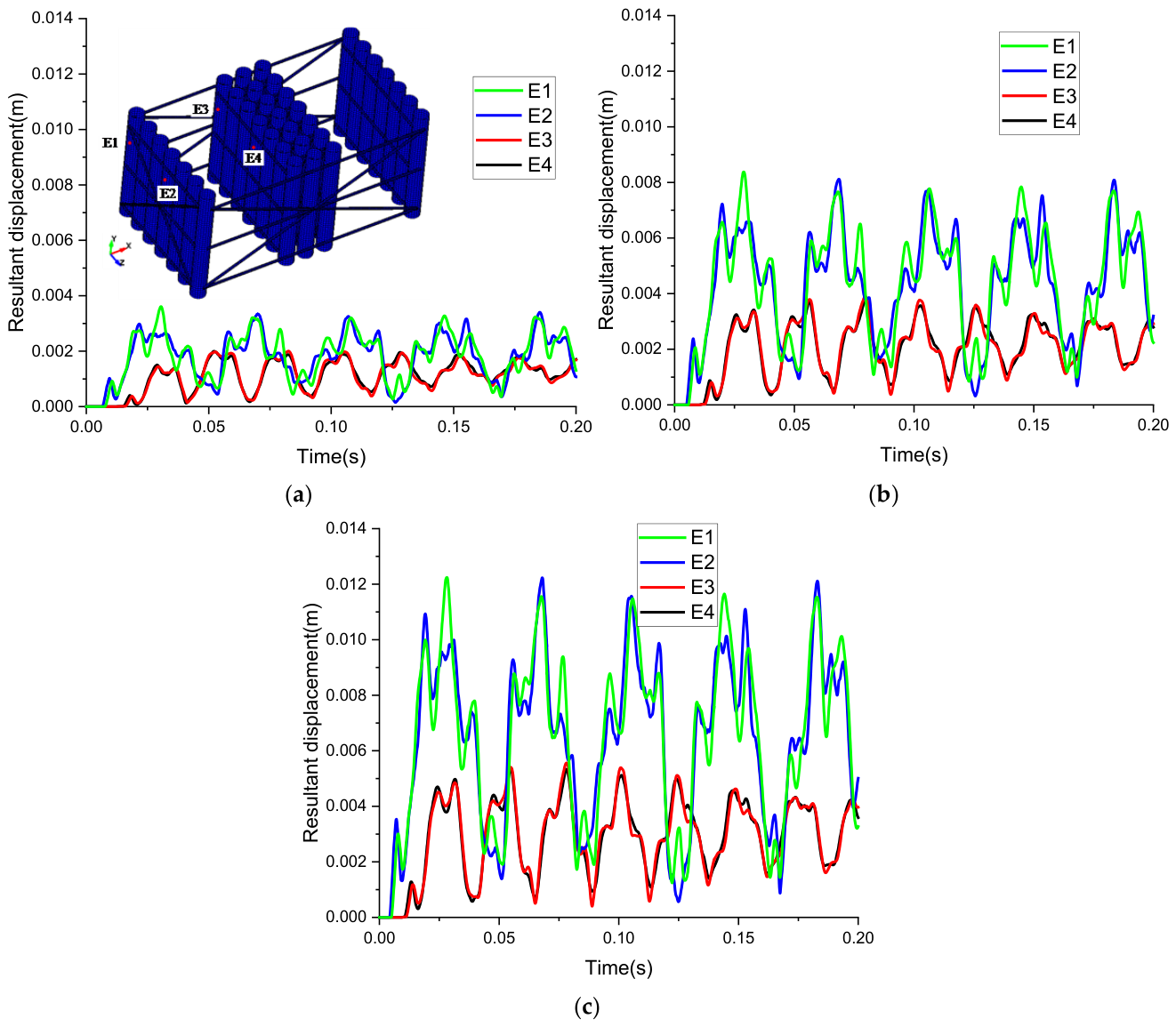
To study the dynamic response of the jacking support, four elements facing the explosive at steel pipe support #2 as shown in Figure 14 are selected. E1 and E3 are located on the mid-height blast-facing side of steel pipe support #2, and E2 and E4 are located on the edge blast-facing side of steel pipe support #2. The y-axis coordinates of these elements are −2 m. Figure 15a–c show the resultant displacement time histories of the steel pipe support subjected to blast loading scenarios No. 1 to No. 3. As shown, the resultant displacement value of the steel pipe support increases with the increase in the mass of TNT explosive. The peak values of resultant displacement at E2 when subjected to blast loading scenarios No. 2 and No. 3 are 133% and 240% higher than that under the action of blast loading scenario No. 1.
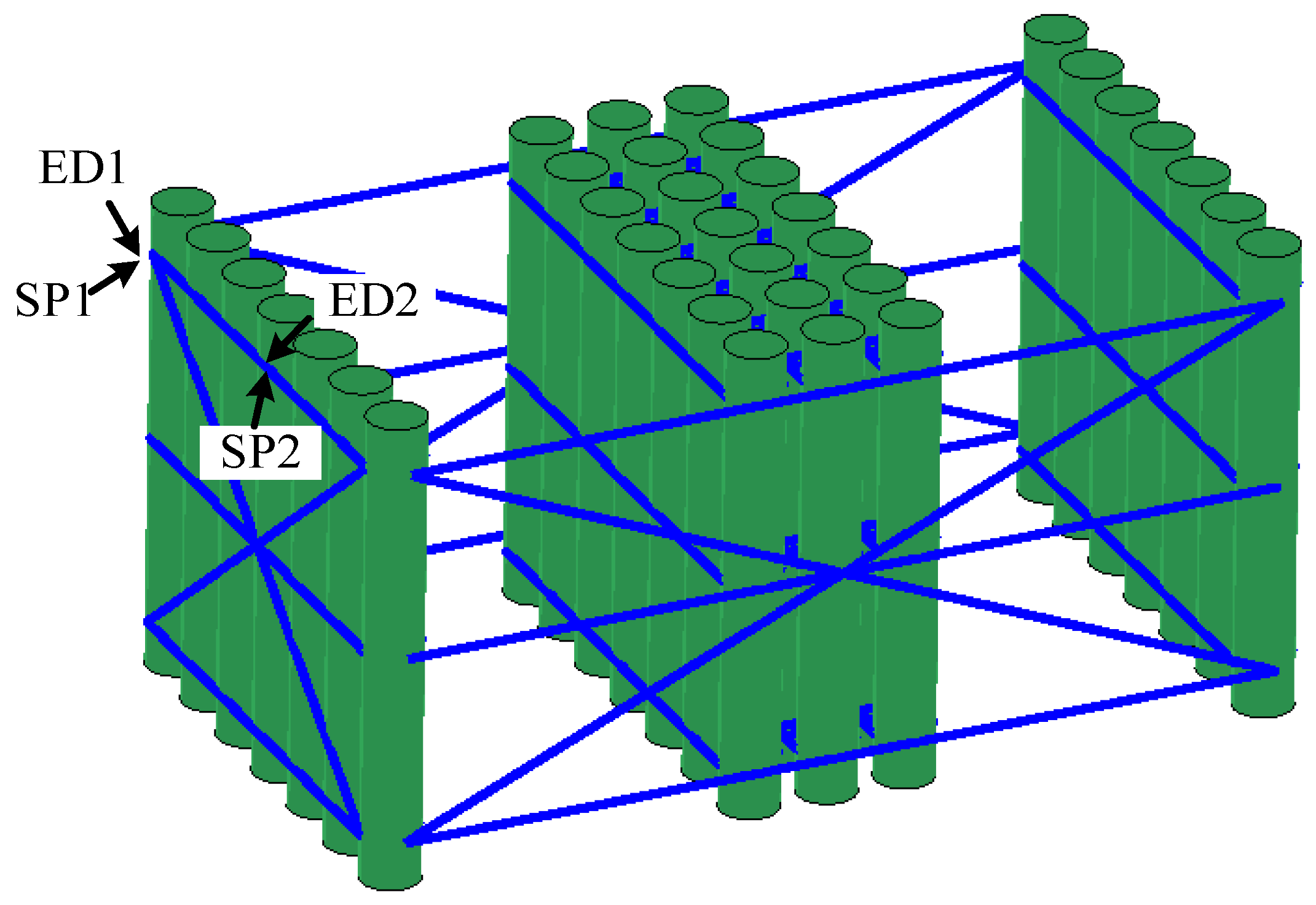
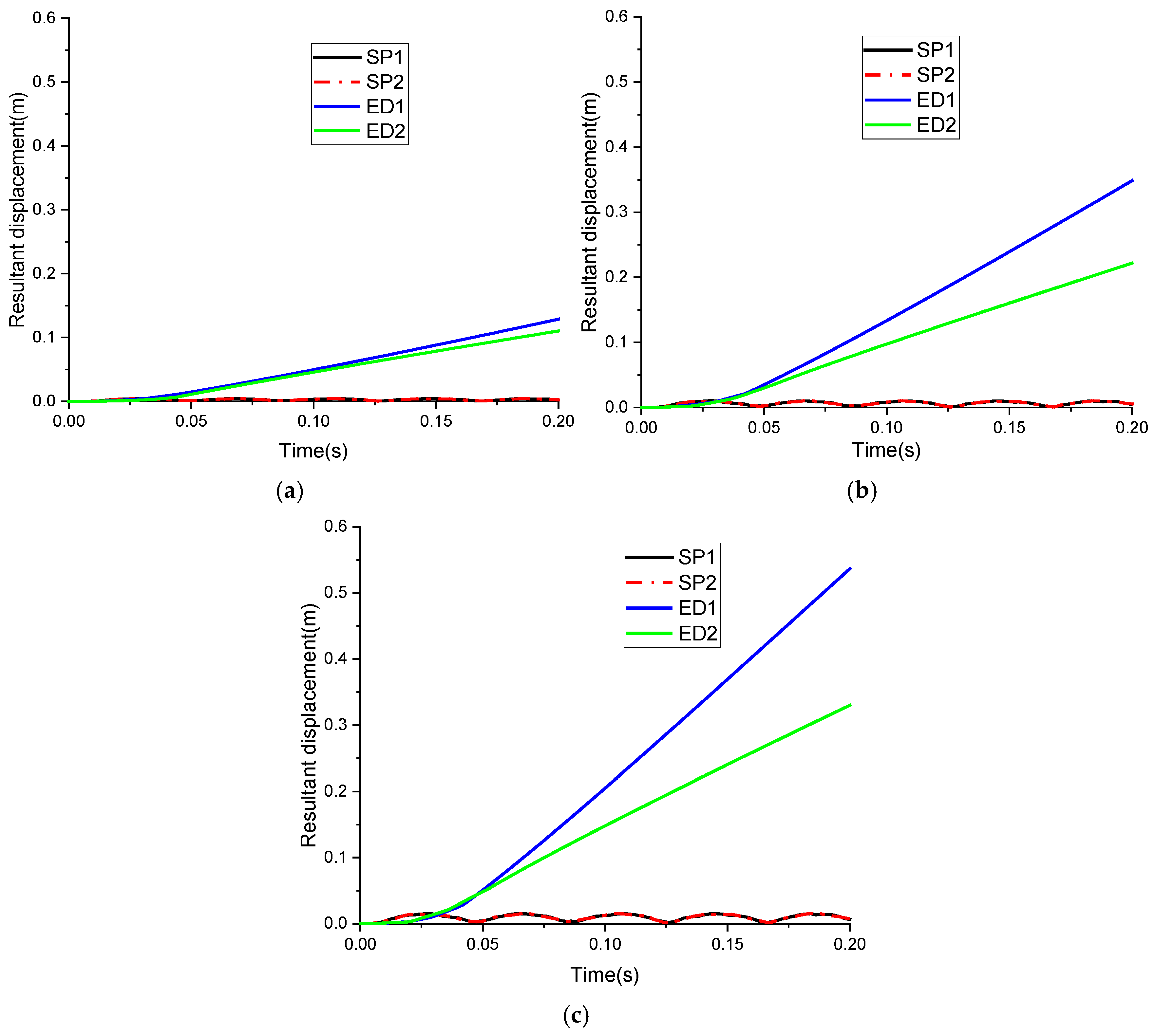
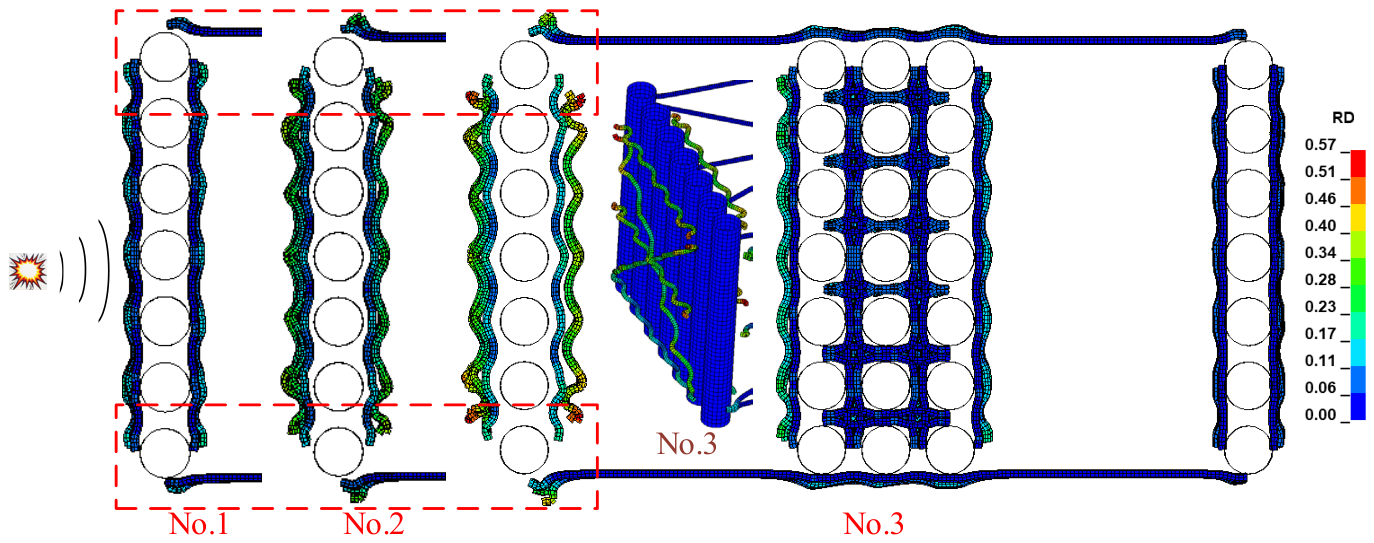
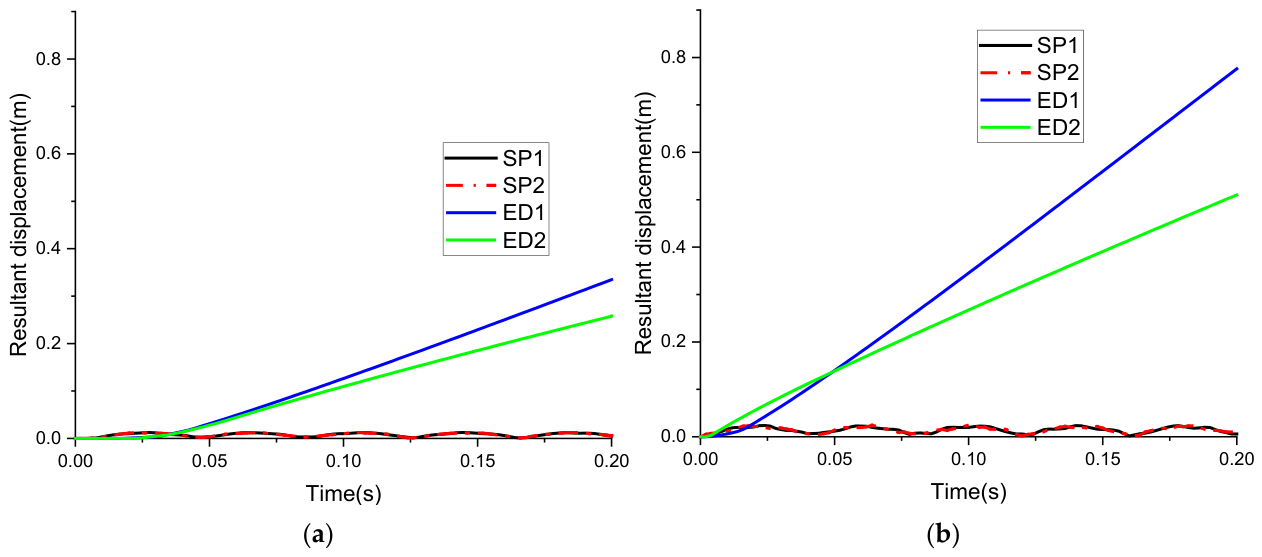
To investigate the response of an enhanced rod subjected to different blast loading scenarios, the resultant displacements of four elements as shown in Figure 16 are studied. The elements ED1 and ED2 are enhanced rod elements, and the elements SP1 and SP2 are steel pipe support elements. Figure 17a–c show the resultant displacement time histories of enhanced rod and steel pipe supports. As shown, under the action of blast loads, the enhanced rods are separated from the steel supports. As the mass of TNT detonation increases, the resultant displacement of the enhanced rods increases. The resultant displacements at ED1 are 16.7%, 57.2% and 62.6% higher than that at ED2 corresponding to blast loading scenarios No. 1 to No. 3. The displacement of the enhanced rod at the edge of the steel support is higher than that of the enhanced rod at the middle of the steel support. Figure 18 shows the resultant displacement contour of the enhanced rod at t = 0.2 s. As shown, the resultant displacement of the enhanced rod increases with the increase in the mass of the explosive. Furthermore, the enhanced rod around the edge steel pipe support is more prone to damage due to its low local stiffness as highlighted in red, indicating that the blast-resistance performance of the enhanced rod around the edge steel pipe support is weak.

3.2. Effect of Explosive Location on Response of Bridge Segment in Jacking

The bridge segment is jacked up by the steel pipe support. As a global system, the blast-resistance performance of the bridge jacking system is controlled by the steel pipe support. To study the effect of explosive location on the response of the bridge segment in jacking, six blast loading scenarios as given in Table 3 are applied to the bridge jacking system. As given in Table 3, the distance between the TNT detonation and the bridge segment decreases from blast loading scenario No. 4 to No. 7. The distance between the TNT detonation and the steel pipe support decreases by comparing blast loading scenarios No. 7, No. 8 and No. 9.
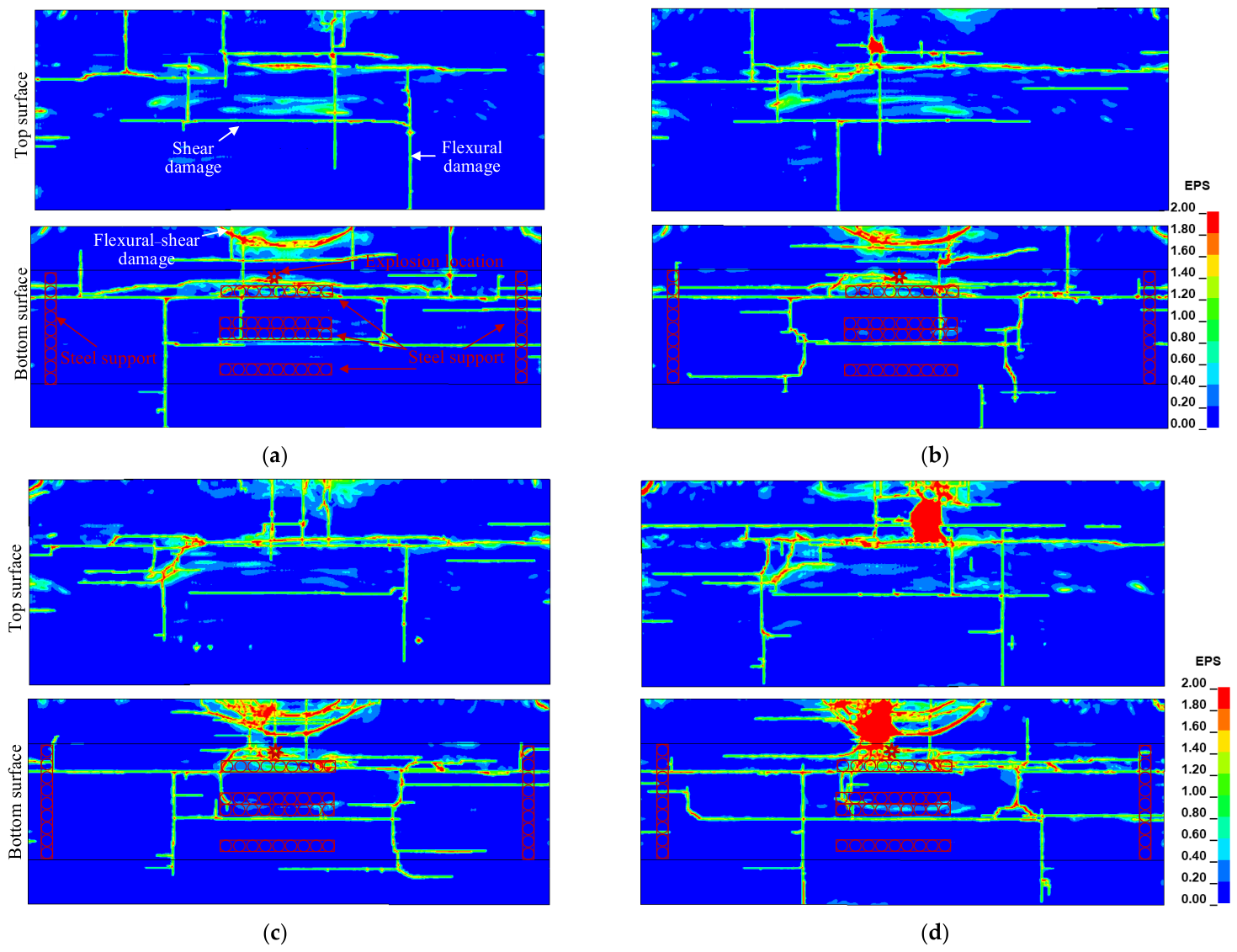
Figure 19a–d show the damage modes of the bridge segment subjected to blast loading scenarios No. 4 to No. 7. The distance between the TNT detonation and the bridge segment’s bottom surface is changed. It can be seen from these figures that the damage level of the bridge segment increases with the decrease in the distance between the TNT detonation and the bridge segment. The top plate and bottom plate of the bridge segment around the web plate undergo shear damage because the deformations of the top and bottom plates are constrained by the web plate inside the bridge segment. The top and bottom plates of the bridge segment undergo flexural damage at the traverse section of the bridge segment.
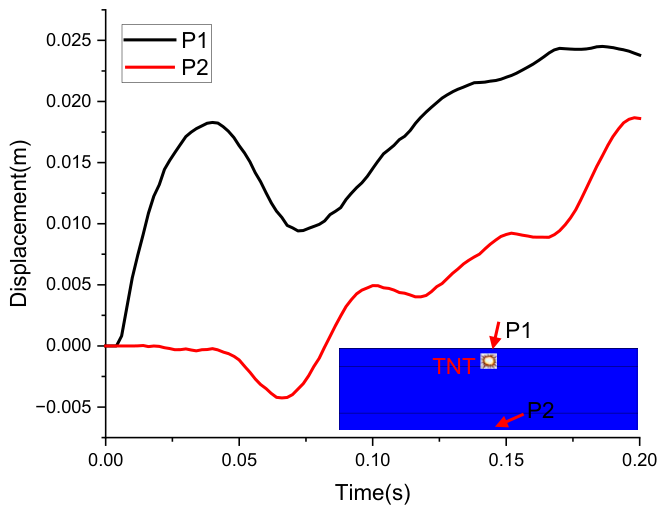
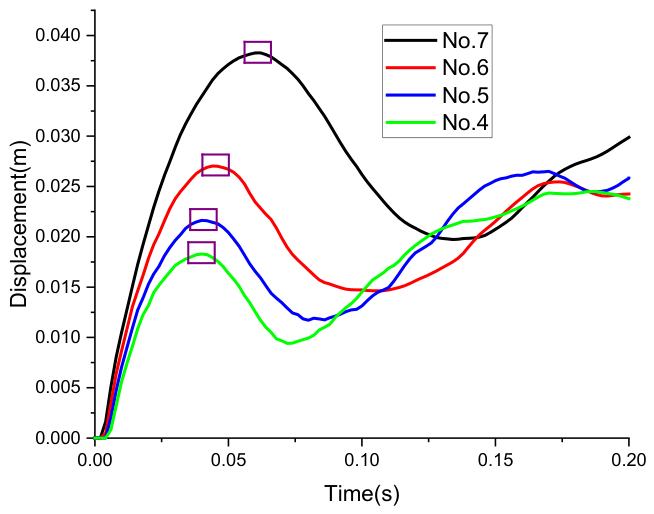
To study the displacement response of the bridge segment, two elements, P1 and P2, as shown in Figure 20, are selected. As shown in Figure 20, element P1 moves towards the positive direction of the y-axis, while element P2 initially moves towards the negative direction of the y-axis and then switches to moving towards the positive direction. This is due to the eccentric loading of the blast load. The bridge segment detaches from the jacking support as time progresses. Figure 21 shows the displacement time histories of the bridge segment at P1 under different blast loads. Table 4 shows the relationship between the TNT detonation location and the displacement response at P1 subjected to various blast loadings. As shown, the first peak value of displacement at P1 as highlighted in purple increases with the decrease in distance between the TNT detonation and the bridge segment.
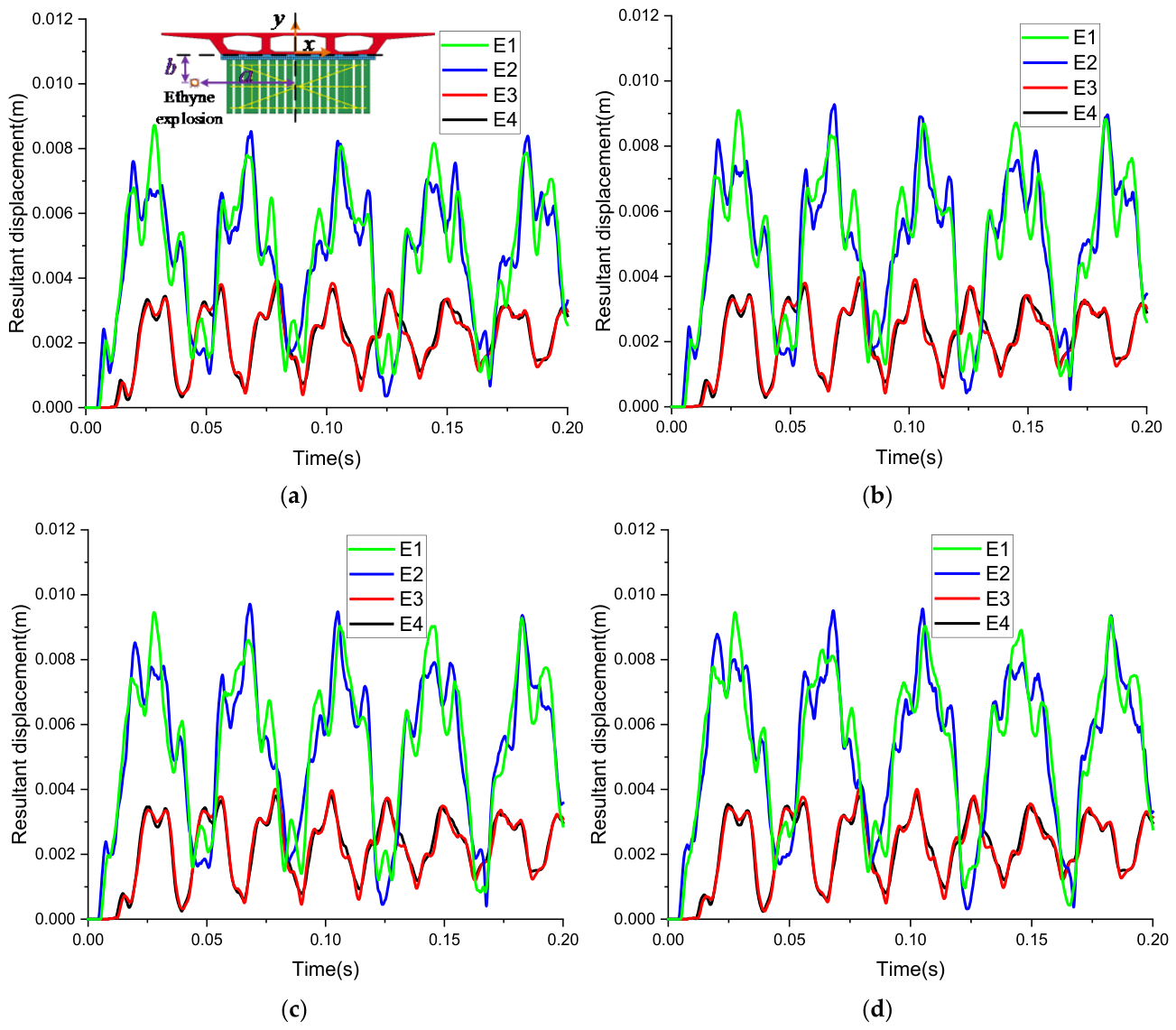
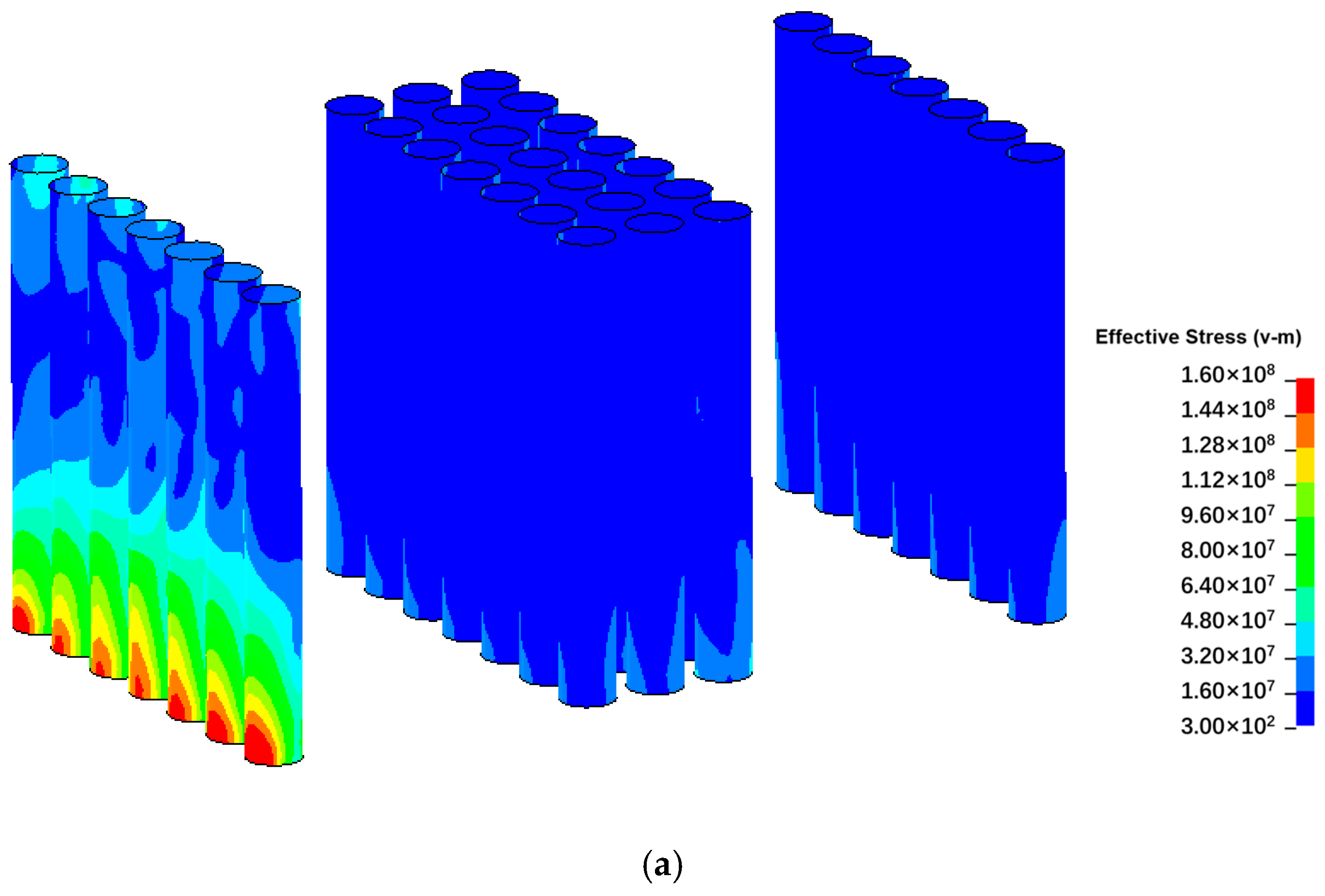
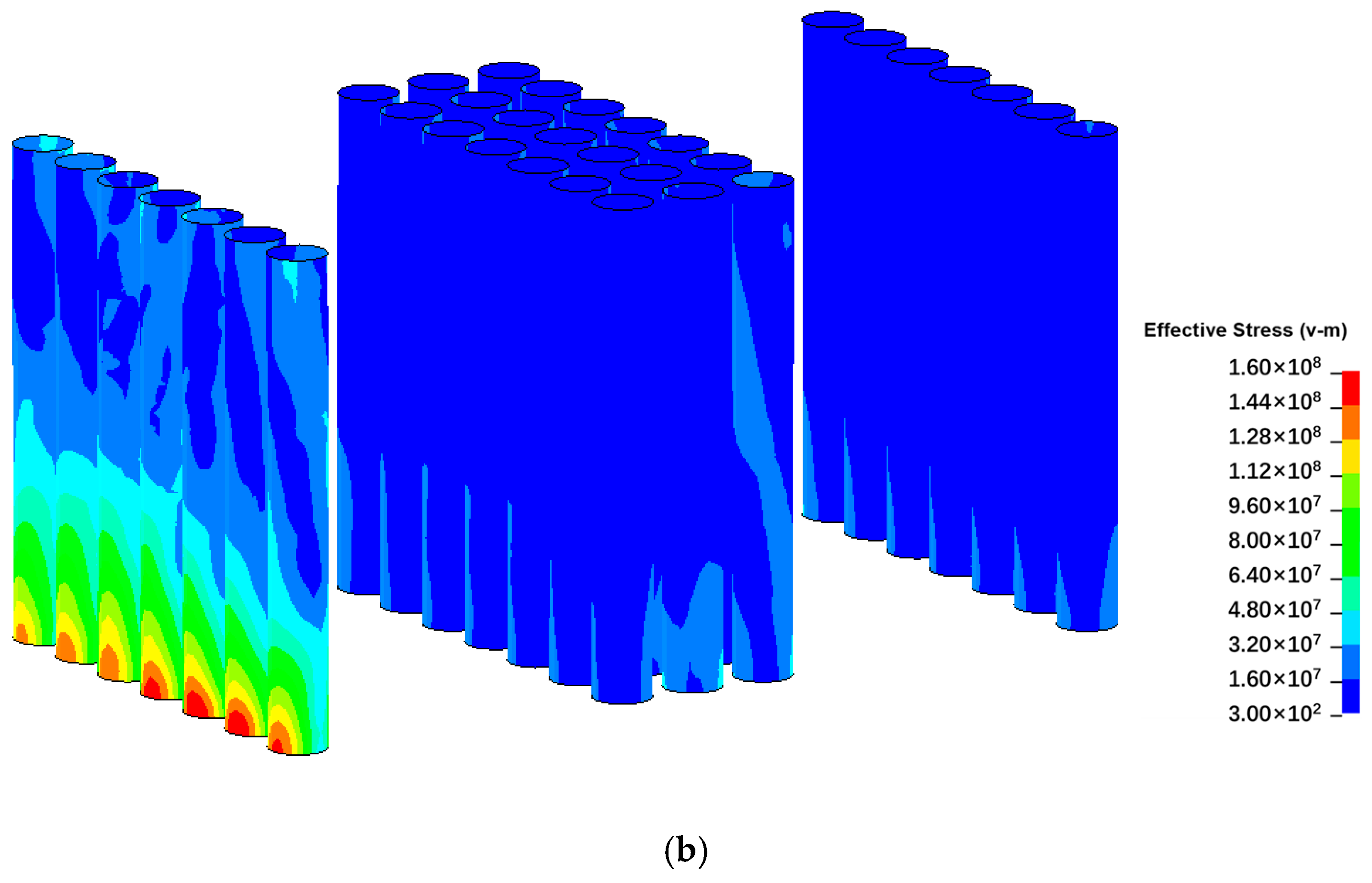
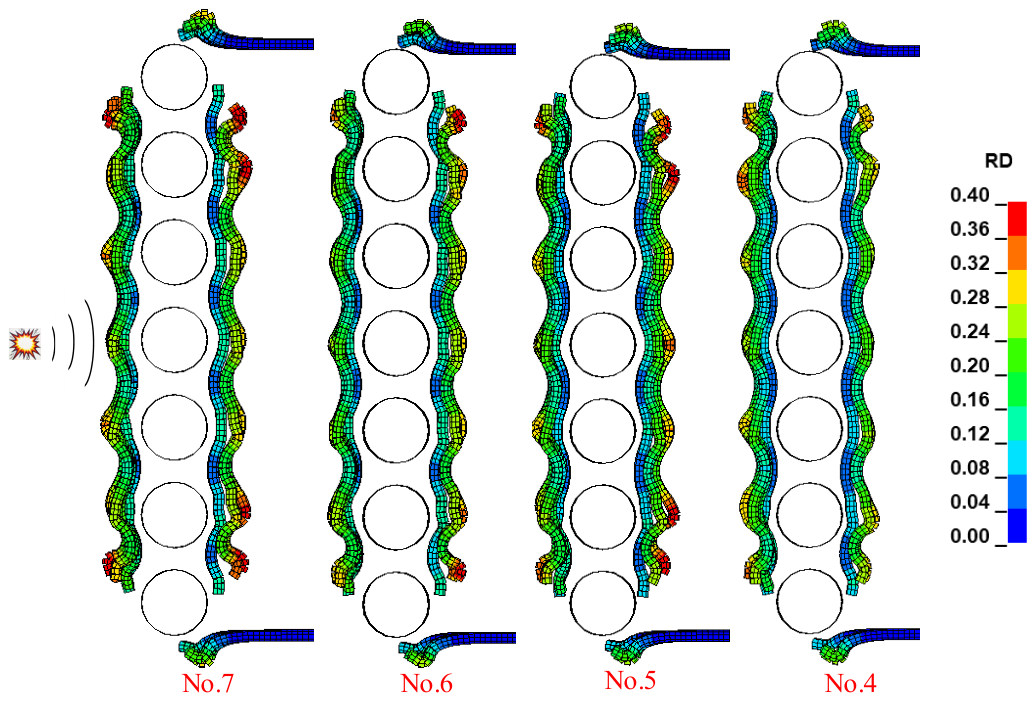
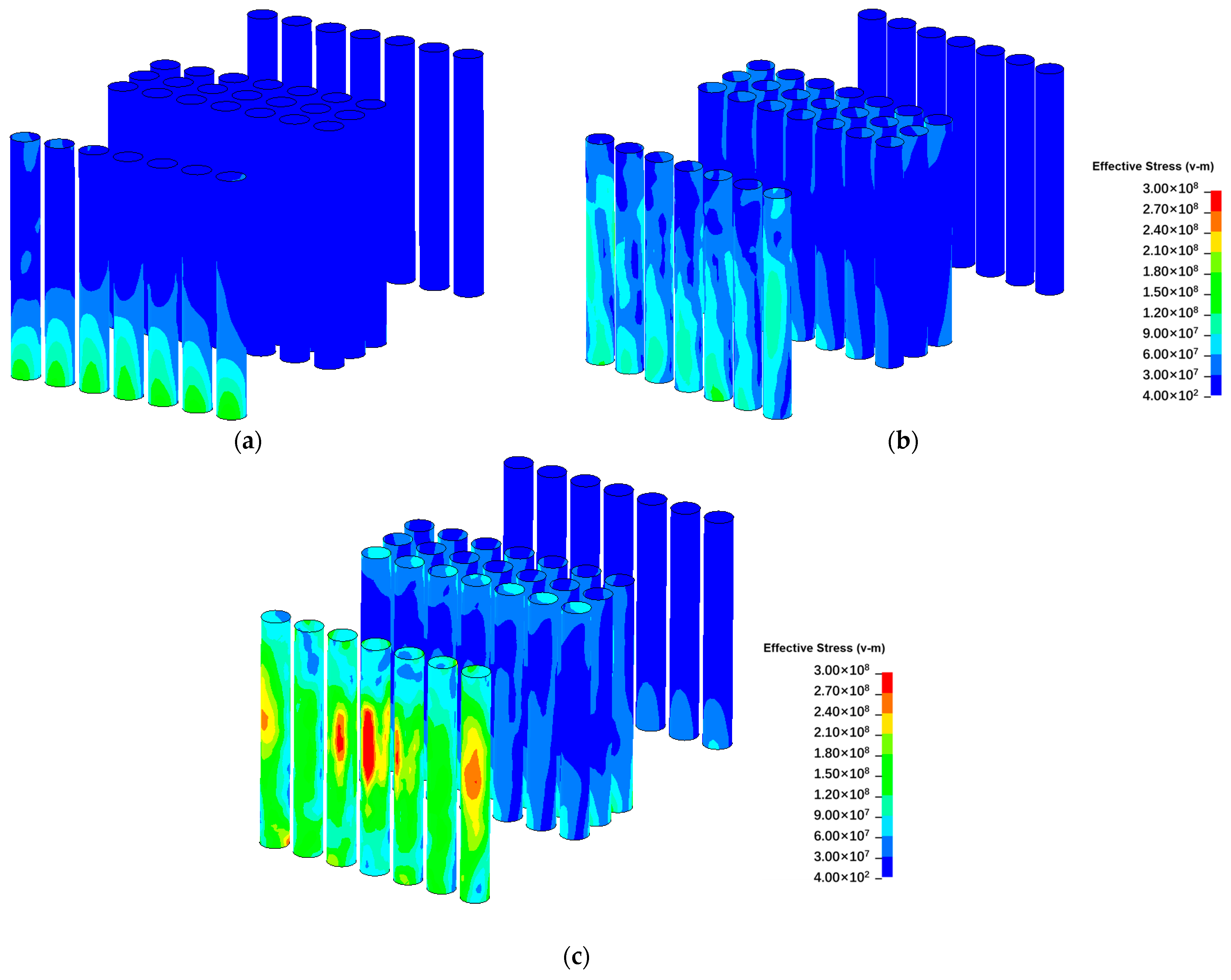
Figure 22a–d show the resultant displacement of a steel pipe support subjected to blast loading scenarios No. 4 to No. 7 at t = 0.2 s. As shown, the displacement of the steel pipe support slightly increases as the vertical distance of TNT detonation decreases. The dynamic response of the steel pipe support is less related to the vertical distance of TNT detonation because the blast overpressure, which is mainly related to the mass and distance of TNT detonation, applied to the steel pipe support is almost unchanged with the increase in the vertical distance of TNT detonation. Figure 23a,b show the effective stress of the steel pipe support under the action of TNT detonation scenarios No. 4 and No. 7, respectively. As shown, the maximum effective stress occurs at the bottom of the steel pipe support, and the value of effective stress reduces with the decrease in the vertical distance of TNT detonation. The maximum value of the effective stress of the steel pipe support is less than that of yield stress. The dynamic response of the steel pipe support is less related to the vertical distance of TNT detonation because the blast impulse applied to the steel pipe support almost is unchanged with the increase in the vertical distance of TNT detonation.
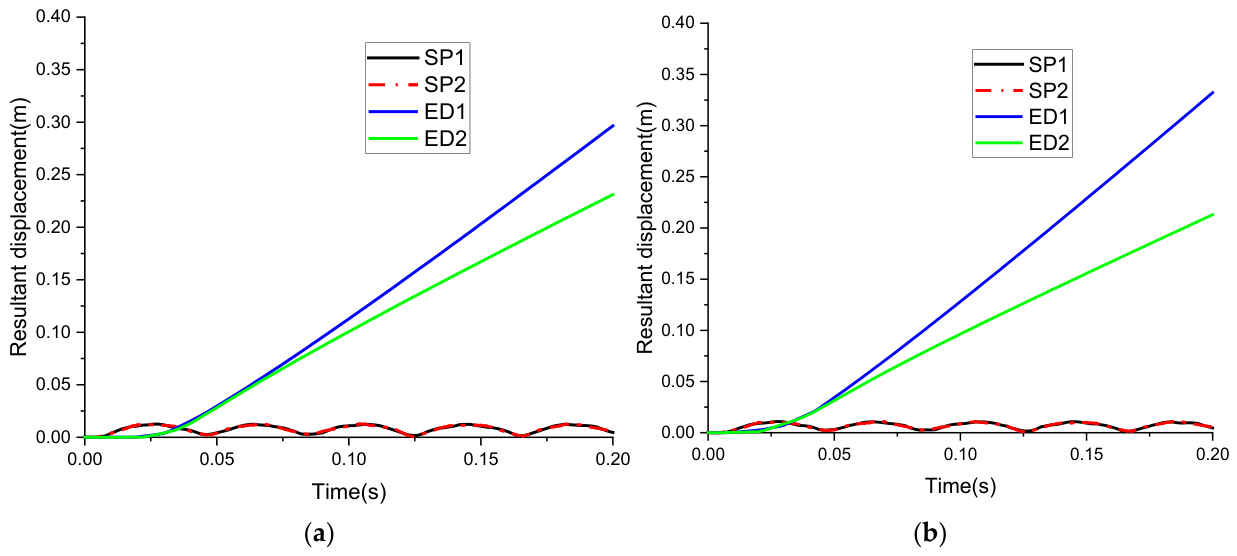
Figure 24 shows the resultant displacement contours of enhanced rods subjected to different blast loading scenarios. Figure 25 shows the resultant displacement time history of enhanced rods. It can be seen that the enhanced rod around the edge steel pipe support is more prone to damage due to its low local stiffness, and the maximum value of the displacement increases with the decrease in the vertical distance of the TNT detonation. The resultant displacements at ED1 are 28.3% and 55.9% higher than those at ED2 corresponding to blast loading scenarios No. 4 and No. 7.
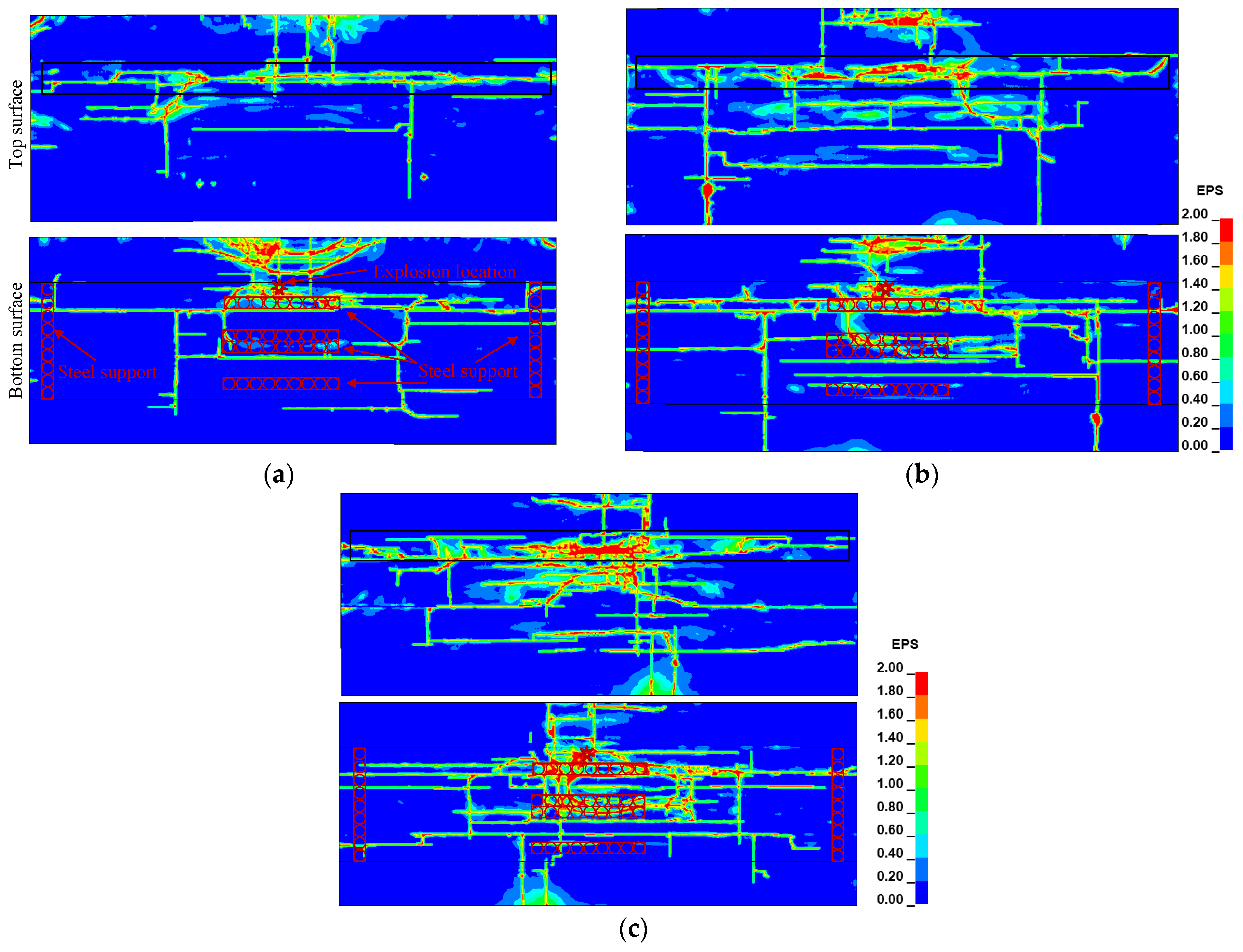
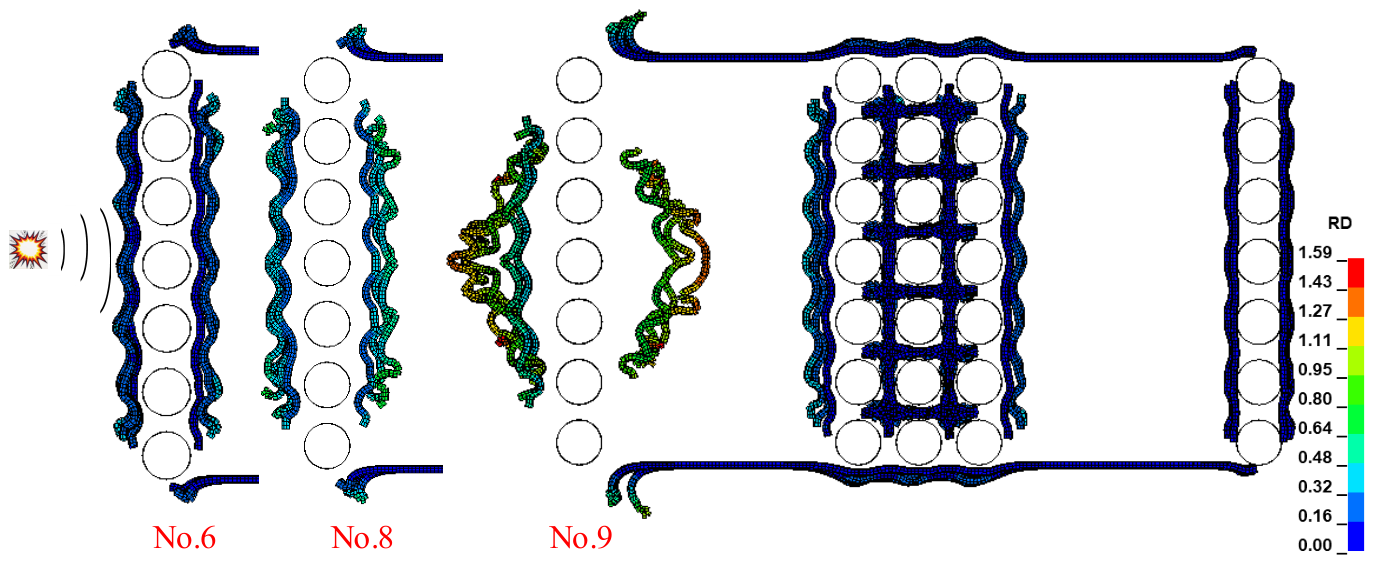
In this study, the effect of transverse distance of TNT detonation on the responses of the bridge segment and steel pipe support is investigated. Figure 26a–c show the damage modes of the bridge segment subjected to blast loadings with different distances between the TNT detonation and the steel pipe support. As shown, the bridge segment around the web plate undergoes shear damage along the longitudinal direction of the bridge segment due to the local restraint effect of the bridge web plate. As the transverse distance of TNT detonation decreases, the shear damage of the bridge top and bottom plates gradually increases, as highlighted in black. Simultaneously, the most severely damaged location of the bridge segment shifts towards the mid-span direction of the bridge, and the damage level of the flange plate gradually decreases.
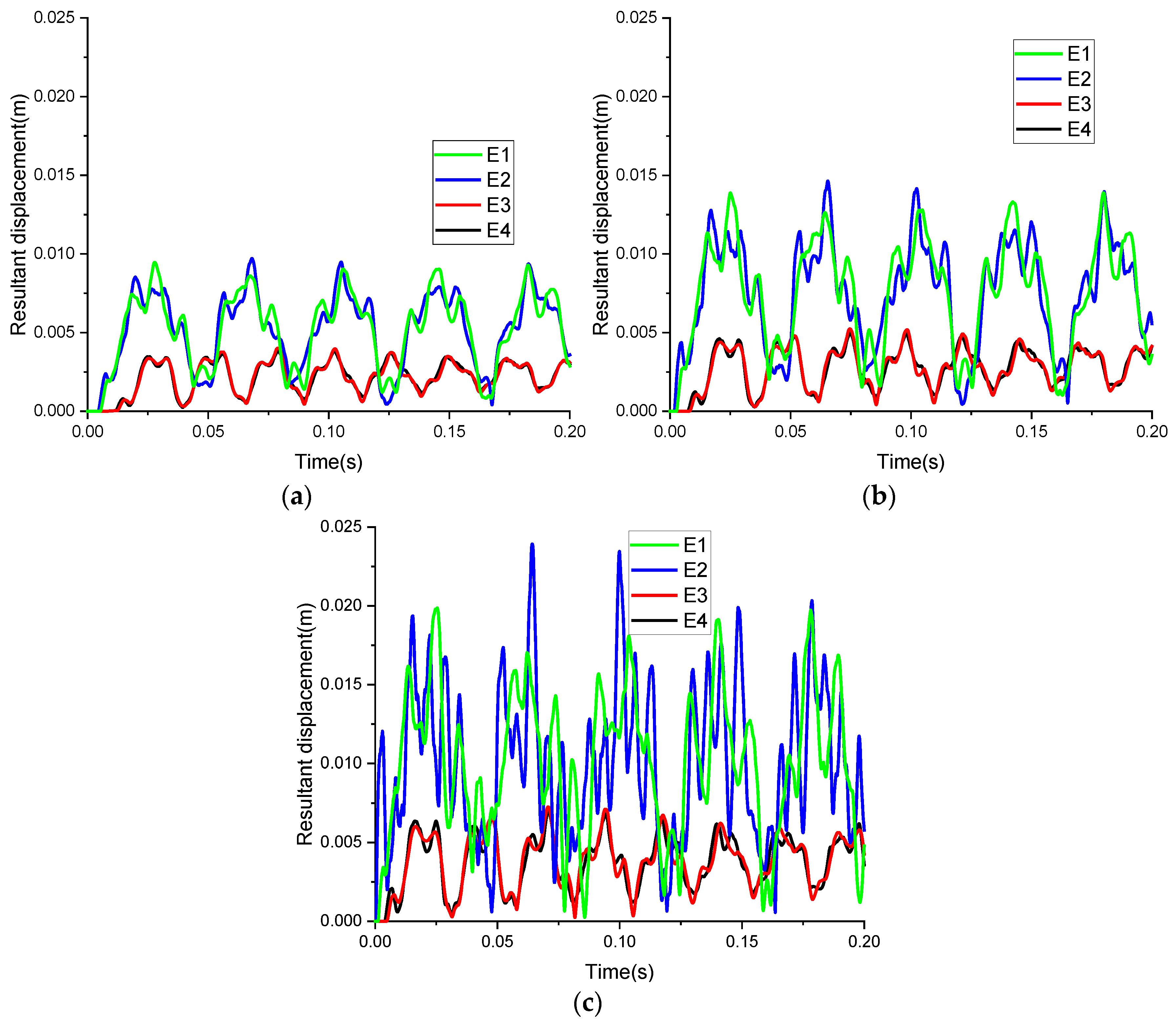
Figure 27a–c show the resultant displacement of the steel pipe support subjected to blast loading scenarios No. 6, No. 8 and No. 9, which have different transverse distances to the steel pipe support. As shown, the peak value of the displacement of the steel pipe support under the action of blast loading scenario No. 9 is 146.4% higher than that when subjected to blast loading scenario No. 6. The displacement of the steel pipe support increases with the decrease in the transverse distance of the TNT detonation to the steel pipe support, and the displacement change in the steel pipe support becomes increasingly severe. Figure 28a–c show the effective stress contours of the steel pipe support under the action of blast loading scenarios No. 6, No. 8 and No. 9. As shown, the maximum effective stress of the steel pipe support changes from the bottom of the support to the middle of the support as the transverse distance of the TNT detonation decreases due to the increased overpressure caused by the TNT detonation acting on the support. Residual displacement of the steel pipe support increases significantly with TNT mass. For example, under scenario No. 3 (50 kg TNT), the residual displacement at element E2 reaches 12.7 mm, accounting for approximately 38% of the peak displacement, indicating notable permanent deformation. The vibration duration, defined as the time required for the displacement time history to decay to 5% of its peak value, extends from 0.18 s (scenario No. 6) to 0.31 s (scenario No. 9) as the transverse detonation distance decreases, representing an increase of about 72%. Furthermore, the plastic energy absorption of the steel pipe increases by approximately 3.5 times when the TNT mass rises from 10 kg to 50 kg, and by about 2.1 times when the transverse detonation distance reduces from 4 m to 2 m.
Figure 29 shows the resultant displacement contours of enhanced rods subjected to different blast loading scenarios. Figure 30 shows the resultant displacement time history of the enhanced rod and steel pipe support. As shown, the enhanced rod around the edge steel pipe support is more prone to damage due to its low local stiffness. As the transverse distance of the TNT detonation to the steel pipe support decreases, the damage of the enhanced rod becomes increasingly severe. The maximum value of resultant displacement at ED1 corresponding to blast loading scenario No. 9 is 131.8% higher than that corresponding to blast loading scenario No. 6.

4. Conclusions

This study takes the bridge jacking support and the corresponding bridge segment as the research objects, aiming to investigate the dynamic response and damage behavior of the bridge jacking support system under under-deck gas explosion loading, which is a key issue in the application of hydraulic synchronous jacking technology in bridge construction and renovation. The numerical model is established via the LS-DYNA. The gas explosion load is equivalent to the TNT detonation load by the energy equivalence principle in the TNT equivalent method.
Through designing numerical simulation schemes with different TNT explosive masses and detonation locations, the effects of explosive mass, vertical distance between detonation position and bridge segment, and transverse distance between detonation position and steel pipe support on the dynamic response and damage characteristics of the bridge segment and jacking support are systematically analyzed. The results show that the damage degree of the bridge segment is positively correlated with the increase in TNT explosive mass. Under low-mass explosive loading, the bridge segment is basically undamaged, while with the increase in explosive mass, the top and bottom plates around the bridge web plate generate shear damage due to the deformation constraint effect of the web plate, and the flexural damage of the transverse section of the bridge segment is continuously aggravated. The displacement response of the steel pipe and enhanced rod also increases with the rise in explosive mass, and the enhanced rod around the edge steel pipe support is more prone to damage due to its low local stiffness, showing weak blast resistance.
The detonation location of TNT has a significant impact on the damage and response of the bridge jacking system. With the reduction in the vertical distance between the detonation position and the bridge segment, the damage level of the bridge segment is gradually aggravated, the first peak displacement of the bridge segment increases non-linearly, and the displacement growth rate shows an increasing trend, while the displacement of the steel pipe support has a slight increase due to the basically unchanged blast impulse on it. When the transverse distance between the detonation position and the steel pipe support decreases, the shear damages of the top and bottom plates around the web plate are further intensified, the most severely damaged position of the bridge segment shifts to the mid-span direction, and the flange plate damage is reduced. The peak displacement of the steel pipe support increases sharply, and the damage of the edge enhanced rod with low local stiffness is significantly aggravated under the action of blast load.
In addition, the blast-resistance performance and damage control factors of the bridge jacking support are closely related to the location of TNT detonation and the stiffness of the jacking support. Under near-field blast loading, the blast impulse is the main control factor, leading to severe localized damage such as buckling and permanent deformation of the transverse jacking support. With the increase in standoff distance, the low local stiffness of support components becomes the main control factor of deformation, and the longitudinal jacking support with low stiffness is prone to resonant vibration under blast load. For the enhanced rod in the jacking support, the edge part with low local stiffness is the weak link of the whole support system under various blast load conditions, and it is the key position of blast damage under different explosive masses and detonation locations.
Based on the above research results, the blast-resistance design and reinforcement of the bridge jacking support system under under-deck gas explosion loading should be targeted according to the blast load characteristics and the structural stiffness characteristics of the support. For near-field explosion, the local stiffness of the transverse jacking support should be strengthened to resist the high impulsive force caused by near-field detonation. For far-field explosion, the longitudinal jacking support with low stiffness should be locally reinforced to avoid resonant vibration damage. In addition, the edge enhanced rod with low local stiffness, as the common weak part of the jacking support under various blast loads, should be uniformly strengthened in the design and construction stage to improve the overall blast resistance of the jacking support system.

Author Contributions

Software, J.C.; Formal analysis, K.H.; Investigation, J.C.; Resources, K.H.; Data curation, C.X.; Writing—original draft, C.X.; Writing—review and editing, H.J.; Supervision, X.Z. and H.J.; Project administration, X.Z. All authors have read and agreed to the published version of the manuscript.

Funding

This study is funded by the National Natural Science Foundation of China under grant number 52508572, and the financial support from the China Construction Sixth Engineering Bureau Co., Ltd., via CSCEC6B-2024-Z-2.

Data Availability Statement

The original contributions presented in this study are included in the article. Further inquiries can be directed to the corresponding author.

Conflicts of Interest

Authors Keqi Huang and Hexin Jin were employed by the company China Construction Sixth Engineering Bureau Corp., Ltd. The remaining authors declare that the research was conducted in the absence of any commercial or financial relationships that could be construed as a potential conflict of interest.

References

  1. Yang, S.L.; Liu, Z.C.; Wang, S.F.; Zhong, W.; Zhang, R.; Yao, X.H. Dynamic response and failure analysis for urban bridges under far-field blast loads. Eng. Struct. 2023, 285, 116045. [Google Scholar] [CrossRef]
  2. Zhang, X.; Xie, S.; Pang, Y. Definition of minimum clearance height of railway bridges in a windblown sand area based on numerical simulation. Heliyon 2025, 11, e03852. [Google Scholar] [CrossRef] [PubMed]
  3. Pisani, M.A.; Ballio, F. Feasibility analysis of a movable bridge compensating for clearance deficit during floods. Eng. Struct. 2010, 32, 3338–3343. [Google Scholar] [CrossRef]
  4. Pereira, S.; Magalhães, M.; Gazzinelli, H. An alternative technique to the demolition of a prestressed concrete box-girder bridge: A case study. Case Stud. Constr. Mater. 2017, 6, 192–197. [Google Scholar] [CrossRef]
  5. Manis, P.; Richardson, P. Great Western electrification programme, UK: Bridge Street overbridge reconstruction. In Proceedings of the Institution of Civil Engineers—Civil Engineering; Thomas Telford Ltd.: London, UK, 2021; Volume 174, pp. 19–28. [Google Scholar] [CrossRef]
  6. Mi, Z.; Chen, L.; Pan, L.; Chen, J.; Wu, R. An electrohydraulic system for synchronously jacked box tunneling in shallow saturated soft soil cover. Autom. Constr. 2012, 25, 1–7. [Google Scholar] [CrossRef]
  7. Gao, H.; Li, B.; Jian, J.; Yu, T.; Liu, H. Integral jacking of concrete continuous box beam bridge. Structures 2023, 57, 1026–1045. [Google Scholar] [CrossRef]
  8. Liu, Y.; Li, W.; Lin, S.; Zhou, X.; Ge, Y. Hydraulic system fault diagnosis of the chain jacks based on multi-source data fusion. Measurement 2023, 217, 113116. [Google Scholar] [CrossRef]
  9. Tetougueni, C.D.; Zampieri, P. Structural response of cable-stayed bridge subjected to blast load. Procedia Struct. Integr. 2019, 18, 765–774. [Google Scholar] [CrossRef]
  10. Mraih, H.; Hashemi, J.; Kalfat, R.; Al-Mahaidi, R.; Lu, G. A review of energy-dissipating systems for over-height vehicle bridge impact mitigation. Eng. Struct. 2025, 330, 119892. [Google Scholar] [CrossRef]
  11. Saha, S. Failure mode and response of a typical RC straight and skew highway girder bridge under the blast, wrapped with and without a non-Explosive Reactive armour using FEM-SPH coupling. Eng. Fail. Anal. 2024, 161, 108330. [Google Scholar] [CrossRef]
  12. Jia, H.; Wei, H.; Li, J.; Cui, S.; Xu, L.; Zheng, S. Blast resistance of steel jacket reinforced double-column bridge pier. Eng. Struct. 2025, 329, 119882. [Google Scholar] [CrossRef]
  13. Foglar, M.; Šulc, V.; Hájek, R.; Čítek, D.; Čítek, A.; Kolísko, J.; Pachman, J. Experimental study on response of axially loaded steel and steel-concrete composite columns to blast loading. Eng. Struct. 2025, 340, 120585. [Google Scholar] [CrossRef]
  14. Shin, J.; Lee, K. Blast performance evaluation of structural components under very near explosion. KSCE J. Civ. Eng. 2018, 22, 777–784. [Google Scholar] [CrossRef]
  15. Zhang, C.; Zhai, W.; Xia, Y.; Wang, C.; Zhao, P.; Li, B.; Pan, Y.; Fang, H.; Ummin, O.; He, W.; et al. Analysis of the stability of a novel assembled working shaft support structure during pipe jacking construction: Experiments and numerical simulations. Eng. Fail. Anal. 2024, 162, 108418. [Google Scholar] [CrossRef]
  16. Jung, J.-W.; Hong, J.-W. Blast response simulation of the Alfred Murrah Building reinforced by use of HPFRCC. Int. J. Concr. Struct. Mater. 2021, 15, 4. [Google Scholar] [CrossRef]
  17. Hashemi, S.; Bradford, M.; Valipour, H. Dynamic response and performance of cable-stayed bridges under blast load: Effects of pylon geometry. Eng. Struct. 2017, 137, 50–66. [Google Scholar] [CrossRef]
  18. Ma, L.; Wu, H.; Fang, Q. Blast-resistant design approach for RC bridge piers. Int. J. Impact Eng. 2023, 180, 104685. [Google Scholar] [CrossRef]
  19. Xu, L.; Hao, Y.; Zhao, Z.; Wang, Y.; Xing, Z.; Xu, N. Study on explosion characteristics of CH4-H2-air premixed gas in pipelines with abrupt changes in structure. Process Saf. Environ. Prot. 2026, 212, 108855. [Google Scholar] [CrossRef]
  20. Li, S.; Rong, X.; Hu, J.; Wang, M.; Qu, Q.; Huang, J.; Guo, X. Risk assessment method of gas explosion based on quantification of margins and uncertainties (QMU): A case study on beam structures in buildings. Structures 2023, 50, 52–62. [Google Scholar] [CrossRef]
  21. Xie, C.; Huang, K.; Jin, H.; Xu, Y.; Zhou, J. Blast-resistance performance of bridge jacking support subjected to up-deck blast load. KSCE J. Civ. Eng. 2026, 30, 100382. [Google Scholar] [CrossRef]
  22. Xue, S.; Hao, H.; Hao, Y. Numerical evaluation of the impact performance of precast concrete segmental columns and strengthening techniques. Eng. Struct. 2021, 244, 112725. [Google Scholar] [CrossRef]
  23. Bjerketvedt, D.; Bakke, J.R.; van Wingerden, K. Gas explosion handbook. J. Hazard. Mater. 1997, 52, 1–150. [Google Scholar] [CrossRef]
  24. Steel Construction Institute for the Health and Safety Executive. Buncefield Explosion Mechanism Phase 1, Volumes 1 and 2; HSE Research Report No. RR718; Health and Safety Executive: Bootle, UK, 2009; Available online: https://www.fuelsindustryuk.org/media/ejlitcvn/hoslexplosion.pdf (accessed on 18 March 2025).
  25. Mašlejová, A.; Fröhlichová, M. Study of scaffold formation mechanism in blast furnace stack. Int. Multidiscip. Sci. GeoConference Surv. Geol. Min. Ecol. Manag. SGEM 2014, 3, 949–956. [Google Scholar]
  26. Jin, H.; Hao, H.; Hao, Y.; Chen, W. Predicting the response of locally resonant concrete structure under blast load. Constr. Build. Mater. 2020, 252, 118920. [Google Scholar] [CrossRef]
  27. Shi, Y.; Hu, Y.; Chen, L.; Li, Z.; Xiang, H. Experimental investigation into the close-in blast performance of RC columns with axial loading. Eng. Struct. 2022, 267, 114568. [Google Scholar] [CrossRef]
  28. Xie, C.; Shi, Y.; Cui, J.; Zhang, Y.; Wang, X. Experimental investigation on dynamic response and damage behavior of structural columns under the combination of blast and impact loading. J. Build. Eng. 2026, 67, 116275. [Google Scholar] [CrossRef]
  29. Shi, Y.; Xie, C.; Yu, M. Numerical derivation of pressure-impulse (P-I) diagrams of prefabricated RC columns with steel joints subjected to blast loads. Structures 2023, 58, 105492. [Google Scholar] [CrossRef]
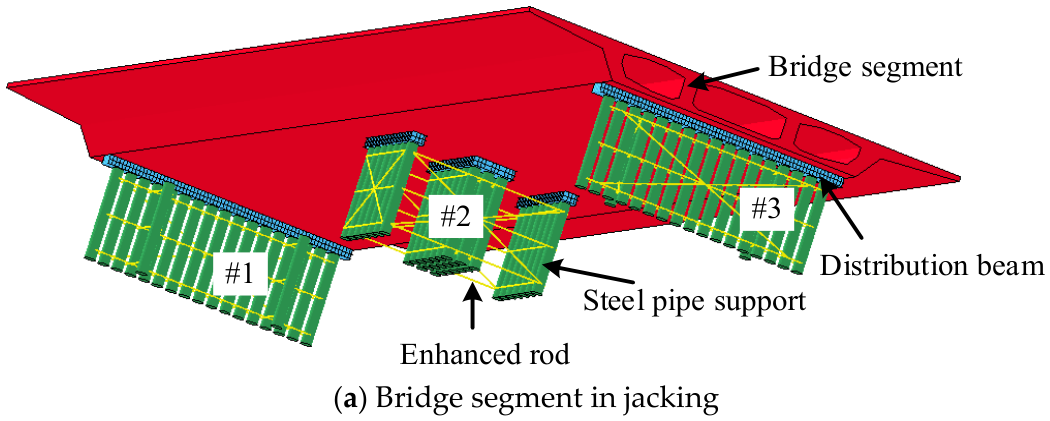
Figure 1. Numerical model of the bridge segment in jacking [21].
Buildings 16 02448 g001aBuildings 16 02448 g001b
Figure 2. Geometric parameters of the bridge segment [21]. Note: * in this figure is used to distinguish the length and width of diagonal boundary.
Buildings 16 02448 g002
Figure 3. Geometric parameters of jacking supports #1 and #3 [21], (a) steel pipe supports in #1 and #3; (b) lateral view of distribution beams in #1 and #3; (c) front view of distribution beams in #1 and #3.
Buildings 16 02448 g003
Figure 4. Geometric parameters of jacking support #2 [21], (a) steel pipe support in #2; (b) lateral view of distribution beam in #2; (c) front view of distribution beam in #2.
Buildings 16 02448 g004
Figure 5. Schematic diagram of TNT detonation.
Buildings 16 02448 g005
Figure 6. Load application process.
Buildings 16 02448 g006
Figure 7. Geometric parameters of the RC column [27].
Buildings 16 02448 g007
Figure 8. Damage modes of RC column obtained through the experiment and simulation.
Buildings 16 02448 g008
Figure 9. Comparison of experimental and simulation mid-height displacement.
Buildings 16 02448 g009
Figure 10. Schematic diagram of steel–concrete composite columns [28,29]. Reprinted with permission from Ref. [28]. Copyright 2026 Elsevier Ltd.
Buildings 16 02448 g010
Figure 11. Loading time history.
Buildings 16 02448 g011
Figure 12. Experimental and numerical results of prefabricated steel–concrete composite columns under explosion loading.
Buildings 16 02448 g012
Figure 13. Damage modes of bridge segment subjected to blast loads (a) No. 1, (b) No. 2, (c) No. 3. Note: EPS is effective plastic strain.
Buildings 16 02448 g013
Figure 14. Schematic diagram of E1 to E4 at steel pipe support #2.
Buildings 16 02448 g014
Figure 15. Resultant displacement time histories of steel pipe support subjected to different blast loads: (a) No. 1, (b) No. 2, (c) No. 3.
Buildings 16 02448 g015
Figure 16. Schematic diagram of four elements at steel pipe support #2.
Buildings 16 02448 g016
Figure 17. Resultant displacement time histories of steel pipe support and enhanced rod subjected to different blast loads: (a) No. 1, (b) No. 2, (c) No. 3.
Buildings 16 02448 g017
Figure 18. Resultant displacement contours of enhanced rods subjected to different blast loads. Note: RD is resultant displacement.
Buildings 16 02448 g018
Figure 19. Damage modes of bridge segment subjected to blast load. (a) No. 4, (b) No. 5, (c) No. 6, (d) No. 7.
Buildings 16 02448 g019
Figure 20. Displacement time histories of bridge segment under blast loading scenario No. 4.
Buildings 16 02448 g020
Figure 21. Displacement time histories of bridge segment at P1 under different blast loads.
Buildings 16 02448 g021
Figure 22. Resultant displacement time histories of steel pipe support subjected to different blast loads: (a) No. 4, (b) No. 5, (c) No. 6, (d) No. 7.
Buildings 16 02448 g022
Figure 23. Effective stress of steel pipe support subjected to blast loads: (a) No. 4 and (b) No. 7.
Buildings 16 02448 g023aBuildings 16 02448 g023b
Figure 24. Resultant displacement contours of enhanced rods subjected to different blast loads.
Buildings 16 02448 g024
Figure 25. Resultant displacement time histories of steel pipe support and enhanced rods subjected to different blast loads: (a) No. 4 and (b) No. 7.
Buildings 16 02448 g025
Figure 26. Damage modes of bridge segment subjected to blast load: (a) No. 6, (b) No. 8, (c) No. 9.
Buildings 16 02448 g026
Figure 27. Resultant displacement time histories of steel pipe support subjected to different blast loads: (a) No. 6, (b) No. 8, (c) No. 9.
Buildings 16 02448 g027
Figure 28. Effective stress of steel pipe support subjected to different blast loads. (a) No. 6, (b) No. 8, (c) No. 9.
Buildings 16 02448 g028
Figure 29. Resultant displacement contours of enhanced rods subjected to different blast loads.
Buildings 16 02448 g029
Figure 30. Resultant displacement time histories of enhanced rod and steel pipe support subjected to different blast loads: (a) No. 6, (b) No. 9.
Buildings 16 02448 g030
Table 1. Material parameters [21].
MaterialParameterValue
ConcreteUnconfined compressive strength (MPa)34
Density (kg/m3)2500
Poisson’s ratio0.19
Enhanced rod, reinforcement, distribution beam and steel pipe supportElastic modulus (GPa)200
Density (kg/m3)7800
Yield stress (MPa)300
Table 2. Blast loading scenarios.
No.Mass of Methane (kg)Mass of TNT (kg)Coordinate (m)
19.410a = −10, b = −4, c = 32.5
228.130a = −10, b = −4, c = 32.5
346.850a = −10, b = −4, c = 32.5
Table 3. Parameters of blast loading scenarios.
No.Mass (kg)Coordinate (m)
430a = −10, b = −3.5, c = 32.5
530a = −10, b = −3, c = 32.5
630a = −10, b = −2.5, c = 32.5
730a = −10, b = −2, c = 32.5
830a = −8, b = −2.5, c = 32.5
930a = −6, b = −2.5, c = 32.5
Table 4. Relationship between the TNT detonation location and the displacement response.
Δb (m)Δd1st (m)Percentage
0.5, (bNo.5bNo.4)0.0033, (dNo.5dNo.4)18%, (Δd1st/dNo.4)
0.5, (bNo.6−bNo.5)0.0054, (dNo.6dNo.5)25%, (Δd1st/dNo.5)
0.5, (bNo.7−bNo.6)0.0110, (dNo.7dNo.6)41%, (Δd1st/dNo.6)
Disclaimer/Publisher’s Note: The statements, opinions and data contained in all publications are solely those of the individual author(s) and contributor(s) and not of MDPI and/or the editor(s). MDPI and/or the editor(s) disclaim responsibility for any injury to people or property resulting from any ideas, methods, instructions or products referred to in the content.