1. Introduction
Renewable energy curtailment has emerged as a structural challenge in power systems worldwide. As variable renewable energy (VRE) penetration deepens, the variability and intermittency of wind and photovoltaic (PV) generation create periodic supply-demand imbalances that grid operators cannot resolve through conventional generation dispatch alone. These conditions place growing pressure on thermal generators, including coal and nuclear, to operate more flexibly, and increase the need for demand-side flexibility resources [
1]. When system flexibility is insufficient, renewable energy curtailment occurs, where renewable generation is limited or shut down to maintain system balance.
According to the International Energy Agency, curtailed wind and PV generation increased by approximately 55% in 2024, with curtailment rates reported at around 4.1% for wind and 3.2% for PV in major power systems [
2]. In Europe alone, system-level costs associated with curtailment and redispatch reached an estimated €7.2 billion across seven countries in 2024 [
3]. In Australia, rooftop PV curtailment has grown from approximately 4% in early 2022 to over 7% in some regions by 2023, with certain days recording curtailment levels approaching 20% of available PV output [
4]. Similar challenges have been documented in Germany, Spain, and the United States [
5]. In contrast to European and Australian systems with wide-area interconnected grids, the Korean mainland grid has limited interconnection capacity and must therefore rely on internal balancing measures to manage growing curtailment pressure from rapidly increasing midday PV generation.
As South Korea accelerates the deployment of renewable energy systems toward its 2030 carbon neutrality targets, the cumulative installed capacity of PV and wind power has expanded significantly, reaching approximately 34.3 GW as of 2024 [
6]. This rapid expansion has intensified curtailment on the grid. While curtailment reduces available renewable generation during periods of supply excess, demand-side solutions are required to address this imbalance. In this context, Plus DR encourages consumers to increase electricity consumption to absorb surplus generation.
In South Korea, curtailment has historically been concentrated in Jeju Island. As an isolated grid with a high concentration of renewable energy installations and no interconnection to the mainland, Jeju was the first region where VRE penetration reached critical levels. Between 2015 and 2023, curtailment events in Jeju increased steadily as VRE penetration grew [
7].
DR programs currently operated by Korea Power Exchange (KPX) include reliability DR and voluntary DR (comprising economic DR, peak demand DR, and fine dust DR), in which building consumers participate as standard-type or small-and-medium-type DR resources and reduce load in response to system emergencies or market price signals [
8]. In response to curtailment, the KPX introduced a Plus demand response (Plus DR) program in Jeju in 2021, in which electricity consumers receive incentive payments for increasing consumption during curtailment periods, the opposite of conventional DR programs. On the Korean mainland, Plus DR pilot programs have been initiated primarily with ESS and EV charging resources, while building-based Plus DR participation has not yet been implemented. On the mainland, curtailment has emerged as a growing concern, particularly during off-peak periods when renewable generation exceeds demand. As curtailment intensifies, there is growing interest in expanding building-based Plus DR participation on the mainland grid.
PV deployment in buildings has steadily increased, expanding from conventional rooftop systems to include building-integrated PV (BIPV) systems and balcony-mounted PV installations. Buildings have been utilized as DR resources due to their ability to control various electrical loads, including heating, ventilation, and air conditioning (HVAC), lighting, and plug loads. This controllable load capacity, traditionally used for load reduction, can also be utilized in the load-increase direction through load shifting or operational adjustments, supporting their participation in Plus DR. Prior studies on building demand response have primarily focused on load-reduction strategies using these resources across commercial and residential building types [
9,
10,
11,
12]. These studies typically apply control-oriented methods, including rule-based strategies, multi-objective optimization, and model predictive control, to minimize electricity costs or maximize self-consumption ratios in the load-reduction direction. Building-to-grid (B2G) frameworks have further demonstrated that coordinated control of PV and energy storage can optimize battery capacity and reduce operational costs across various building types and community configurations [
13,
14]. However, this body of literature optimizes control strategies in the load-reduction direction and has not systematically quantified the upward flexibility available for Plus DR by building use type. Despite growing policy interest, building-based Plus DR participation remains limited, and a quantitative framework for estimating Plus DR availability by use type under curtailment conditions is still lacking. This gap is particularly important because the load profiles and controllable load characteristics of buildings vary considerably by use type, resulting in different Plus DR availability across curtailment hours.
This study estimates the Plus DR potential of building loads by use type (department store, hotel, general commercial, public facility, apartment, and school) in the context of renewable energy curtailment, based on representative building load profiles, PV generation data, and 2025 curtailment data. The findings provide a basis for designing building-integrated Plus DR programs, including the identification of suitable building types and curtailment-responsive time windows.
2. Methodology
2.1. Building Load and PV Generation Profiles by Use Type
To evaluate the Plus DR potential by building use type, six representative building categories are considered: department store, hotel, general commercial, public facility, apartment, and school. Hourly building load profiles for each use type are derived from normalized diurnal load coefficients published in the Building Energy Statistics Information System (EG-TIPS), based on 2021 metered data [
15]. As these coefficients are obtained from metered building consumption, occupancy-driven load variation is reflected in the diurnal load shape of each use type. The coefficients are scaled by the peak load value of each representative building to obtain absolute hourly values. Representative building specifications and peak load values for each use type are summarized in
Table 1. These specifications are defined for the purpose of this study and do not represent specific existing buildings. Floor areas were set as representative assumptions reflecting general scale differences across building use types. Peak load values are determined from the representative building floor area and the electrical load density specified for each use type in accordance with the Korean Electrical Facilities Code (KEC) building load density guidelines [
16].
To estimate the installable rooftop PV capacity for each building, the rooftop area is approximated as the total floor area divided by the number of floors. This approximation does not account for underground floors and may overestimate the rooftop area for buildings with significant basement area. The installable PV area is taken as 50% of the rooftop area, representing a conservative estimate relative to the maximum allowable limit of 70% under Korean rooftop PV installation guidelines [
17], with a unit area requirement of 8 m
2/kW. These assumptions represent simplified approximations, and actual installable capacity may vary depending on building-specific conditions such as rooftop orientation, shading, and structural constraints. The resulting installed PV capacities for each use type are summarized in
Table 1. Hourly PV generation profiles are derived from the 2024 annual average hourly generation data for the Korean mainland published by the KPX [
18]. These data represent the aggregate mainland PV fleet output and therefore embed the regional average solar irradiance and operating conditions of installed systems. The data are normalized to capacity factors and scaled by the installed PV capacity and a system loss factor of 0.8 [
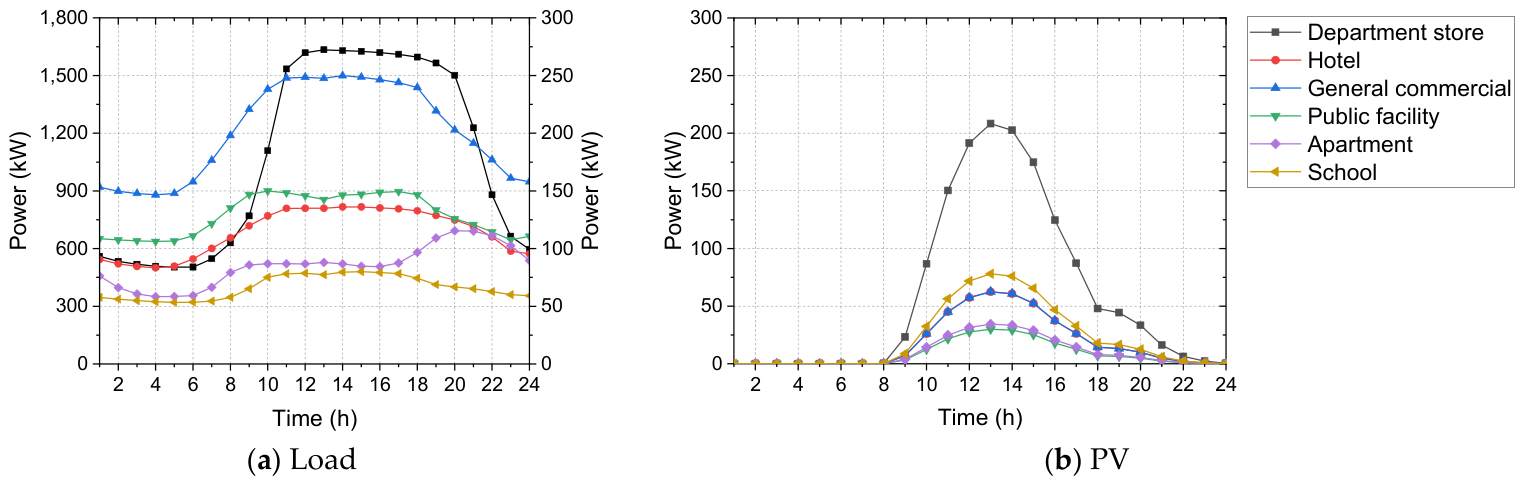
19] to obtain hourly generation values. The resulting diurnal load and PV generation profiles for each use type are presented in
Figure 1.
The net load for each building use type is calculated hourly from the building electrical load L(t) and PV generation G(t) as follows:
where SC(t) is the on-site PV self-consumption, S(t) is the surplus PV generation, and NL(t) is the net electricity drawn from the grid at time t. These definitions distinguish between two operational mechanisms of Plus DR: load increase, where additional consumption is drawn from the grid when G(t) ≤ L(t), and surplus absorption, where increased load reduces exported PV generation when G(t) > L(t).
2.2. Curtailment Data
Curtailment occurrence data for the Korean mainland grid were collected from the KPX Non-Central Dispatch Curtailment bulletin board [
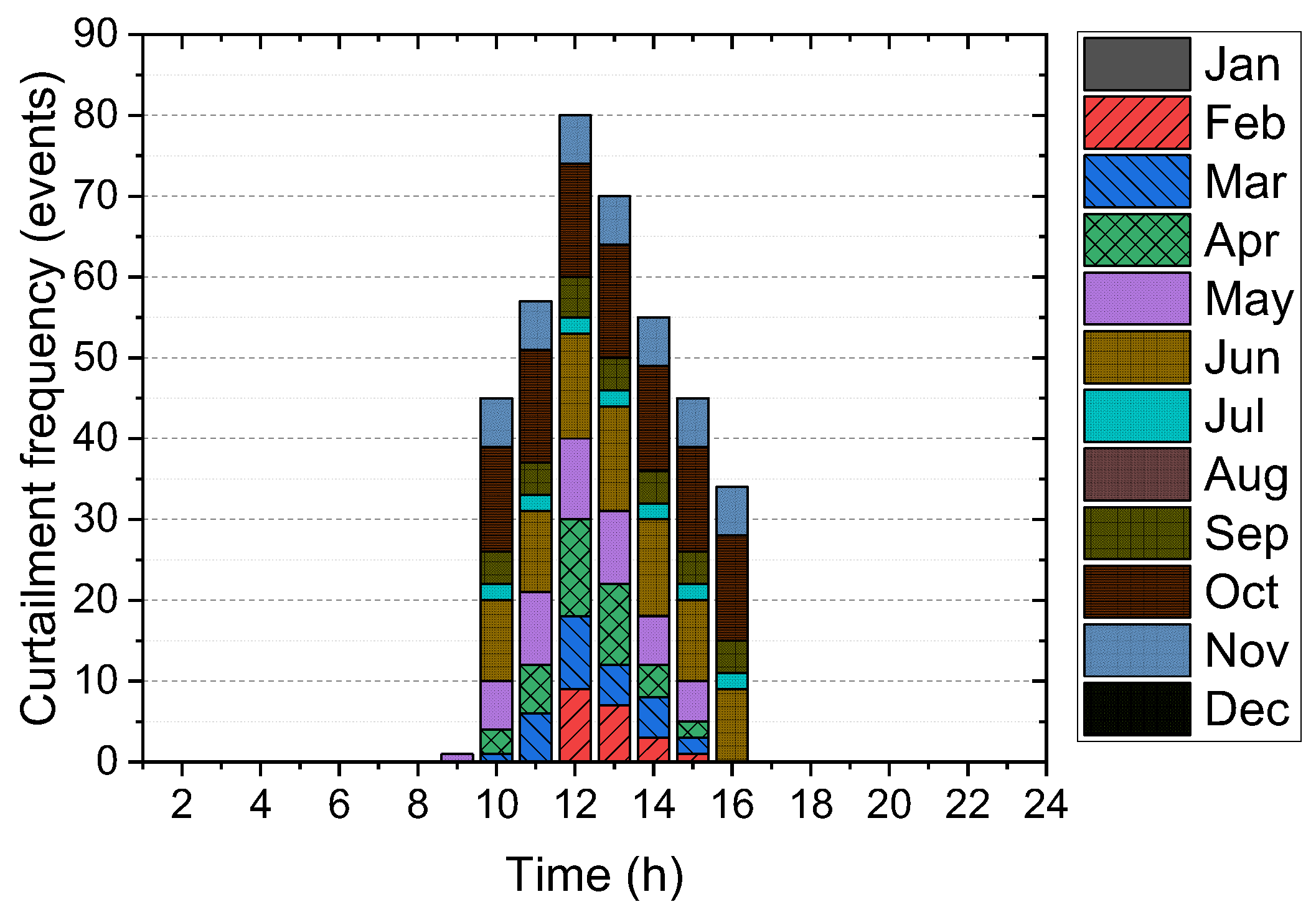
20]. Based on 2025 curtailment records, curtailment events were organized by hour of day and month to identify their temporal distribution. In total, 387 curtailment event-hours were recorded across 82 days in 2025, based on hourly curtailment records published by KPX, with each one-hour interval counted as a single event-hour. As shown in
Figure 2, curtailment events were highly concentrated during midday hours, with the highest frequency occurring at 12:00. The majority of events occurred within the 10:00–16:00 time window, corresponding closely to the diurnal pattern of PV generation. The average duration of these events was approximately 4.7 h, indicating the required response time of Plus DR resources.
Seasonally, curtailment events were most frequent in spring and autumn, while curtailment was absent in winter and minimal during peak summer months. This pattern reflects periods when renewable generation exceeds system demand, as in spring and autumn, high solar irradiance and correspondingly high PV output coincide with low heating and cooling demand at the system level. Transmission network constraints are also a confirmed contributing factor, as KPX curtailment records explicitly list grid congestion as a control reason for curtailment events.
2.3. Plus DR Availability Model
The Plus DR availability estimation approach in this study is developed in reference to the customer baseline load (CBL)-based framework used in conventional DR programs. In this framework, DR capacity is quantified relative to the CBL, estimated from historical metered load data using standardized methods defined by KPX. These include the Max(4/5) approach (the average of the highest four out of the ten most recent non-event days at the corresponding hour) or the Mid(6/10) approach (the middle six of ten days). The reduction DR capacity is then expressed as:
However, to evaluate the generalized Plus DR potential across different building use types, this study utilizes the hourly load profiles derived from EG-TIPS as the baseline. Plus DR availability at time t is defined as:
where L(t) is the building electrical load at time t as defined in
Section 2.1, and α is the Plus DR contribution rate, representing the fraction of current load that can be additionally activated during curtailment periods. In domestic DR market practice, the contracted demand reduction volume is typically set at approximately 10–15% of a participant’s baseline load, with incentives paid based on the degree to which this contracted reduction is achieved [
21]. Although this range reflects load-reduction DR programs, the controllable load fraction it represents is considered a reference point for estimating the load-increase fraction in the Plus DR context. Under curtailment conditions, the controllable loads identified for load-reduction DR are considered potential candidates for activation in the load-increase direction through load shifting or operational adjustment. On this basis, α = 0.1 is adopted in this study as a representative estimate of the load-increase fraction for Plus DR participation by building consumers. The actual realisable Plus DR volume may be lower than the estimated availability due to occupant behavior constraints, equipment availability, and comfort requirements. This estimate should therefore be interpreted as an approximation rather than a guaranteed achievable value.
The net load with Plus DR applied, NL
DR(t), is defined as:
where T
c denotes the set of hours during which curtailment occurs. The Plus DR contribution operates through either increased grid consumption or reduced surplus PV export, depending on the PV generation state.
The controllable loads through which Plus DR is realized differ by building use type, as summarized in
Table 2. The primary mechanisms are load shifting and setpoint adjustment. Load shifting refers to rescheduling loads into the curtailment window, while setpoint adjustment involves modifying HVAC or water-heating setpoints to increase consumption without disrupting occupant comfort.
3. Results
3.1. Net Load Profiles by Building Use Type
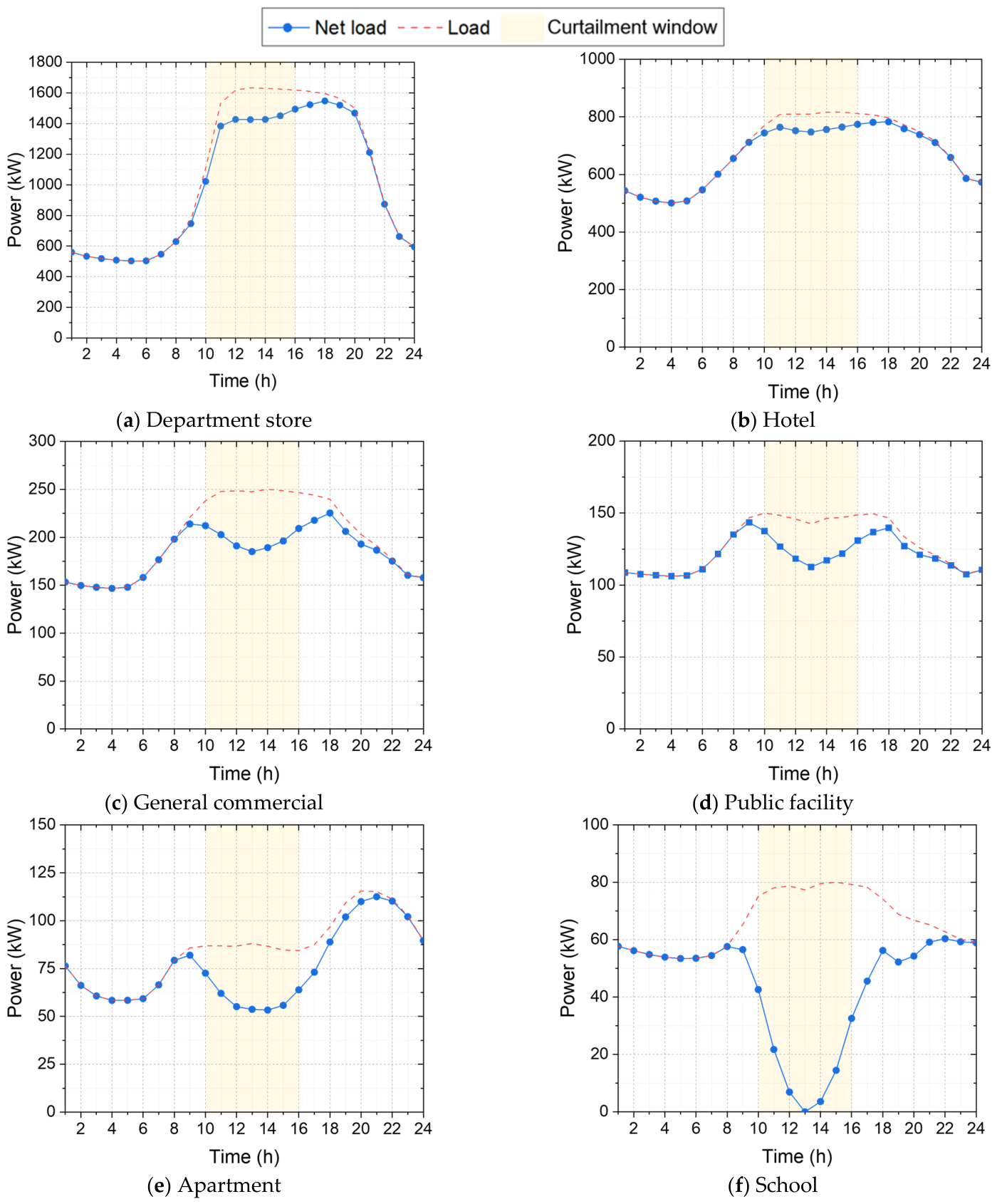
The diurnal net load profiles for the six building use types are presented in
Figure 3, with the curtailment window (10:00–16:00) indicated by shaded background. The degree of net load reduction varies substantially by use type, reflecting differences in PV-to-load ratio and building operational schedule. In each panel, the solid line with markers represents the net load and the dashed line represents the total electrical load (without PV offset).
The department store records a daily baseline consumption of 25,486.4 kWh with a peak load of 1634.0 kW at 13:00. PV self-consumption reduces daily grid consumption by 1401.1 kWh (5.5%) to 24,085.4 kWh. Within the curtailment window, self-consumption accounts for 10.6% of the load (1138.9 kWh out of 10,770.3 kWh), reducing the curtailment-window peak net load to 1494.6 kW. No surplus generation occurs. The high midday load of the department store reflects continuous operation of HVAC, lighting, and refrigerated display equipment throughout business hours, resulting in strong temporal coincidence with the curtailment window.
The hotel shows a daily baseline of 16,407.0 kWh with a peak of 817.0 kW at 15:00. PV self-consumption reduces daily grid consumption by 420.3 kWh (2.6%)—the lowest reduction rate among the six use types—reflecting the small installed PV capacity relative to the building’s consistently high load. The relatively flat diurnal load profile of the hotel is attributable to its 24 h operational continuity, with guest accommodation, food service, and facility management maintaining sustained electricity demand throughout the day. Within the curtailment window, self-consumption covers 6.1% of the load (341.7 kWh out of 5644.0 kWh), reducing the curtailment-window peak net load to 774.2 kW.
The general commercial building has a daily baseline of 4819.4 kWh with a peak of 250.0 kW at 14:00. PV self-consumption reduces daily grid consumption by 420.3 kWh (8.7%) to 4399.0 kWh. Within the curtailment window, self-consumption accounts for 19.8% of the load (341.7 kWh out of 1727.2 kWh), reducing the curtailment-window peak net load to 212.1 kW.
The public facility exhibits a daily baseline of 3088.4 kWh with a peak of 150.0 kW at 10:00—the earliest peak among all use types, reflecting morning-concentrated operations. PV self-consumption reduces daily grid consumption by 201.8 kWh (6.5%) to 2886.6 kWh. Within the curtailment window, self-consumption covers 15.9% of the load (164.0 kWh out of 1028.9 kWh), reducing the curtailment-window peak net load to 137.5 kW.
The apartment building peaks at 115.5 kW at 20:00, reflecting evening-concentrated occupancy, with a daily baseline of 2042.7 kWh. During the curtailment window, the load drops substantially to 604.3 kWh due to limited daytime occupancy. PV self-consumption accounts for 31.1% of the curtailment-window load (187.9 kWh out of 604.3 kWh), reducing the curtailment-window peak net load to 72.6 kW. The mismatch between peak PV generation and daytime occupancy patterns represents a structural constraint on Plus DR participation in residential buildings, as the controllable load available during curtailment hours is inherently limited by low daytime electricity demand.
The school records a daily baseline of 1590.7 kWh with a daily peak of 80.0 kW at 15:00. PV self-consumption reduces daily grid consumption by 524.6 kWh (33.0%) to 1066.1 kWh—the highest daily self-consumption reduction among all six use types. Within the curtailment window, self-consumption accounts for 77.8% of the load (426.3 kWh out of 548.2 kWh), reducing the curtailment-window peak net load to 42.6 kW. At 13:00, PV generation marginally exceeds the building load, resulting in a surplus of 0.77 kW—the only instance of surplus generation observed across all six use types and all curtailment hours. This result reflects the combination of relatively low daytime load and a high PV-to-load ratio under the representative building specifications adopted in this study, rather than a general characteristic of educational buildings.
Across all use types, daily PV generation ranges from 420.3 kWh (hotel) to 1401.1 kWh (department store), and daily net load ranges from 1066.1 kWh (school) to 24,085.4 kWh (department store). As building loads substantially exceed PV output throughout the day, PV self-consumption as a fraction of PV generation is near 100% across all use types. Under the representative building specifications adopted in this study, surplus generation was negligible across all use types, with only the school recording a marginal instance; this finding is conditional on the assumed PV capacity and load levels and may not hold under different conditions. These results are summarised in
Table 3.
3.2. Plus DR Availability
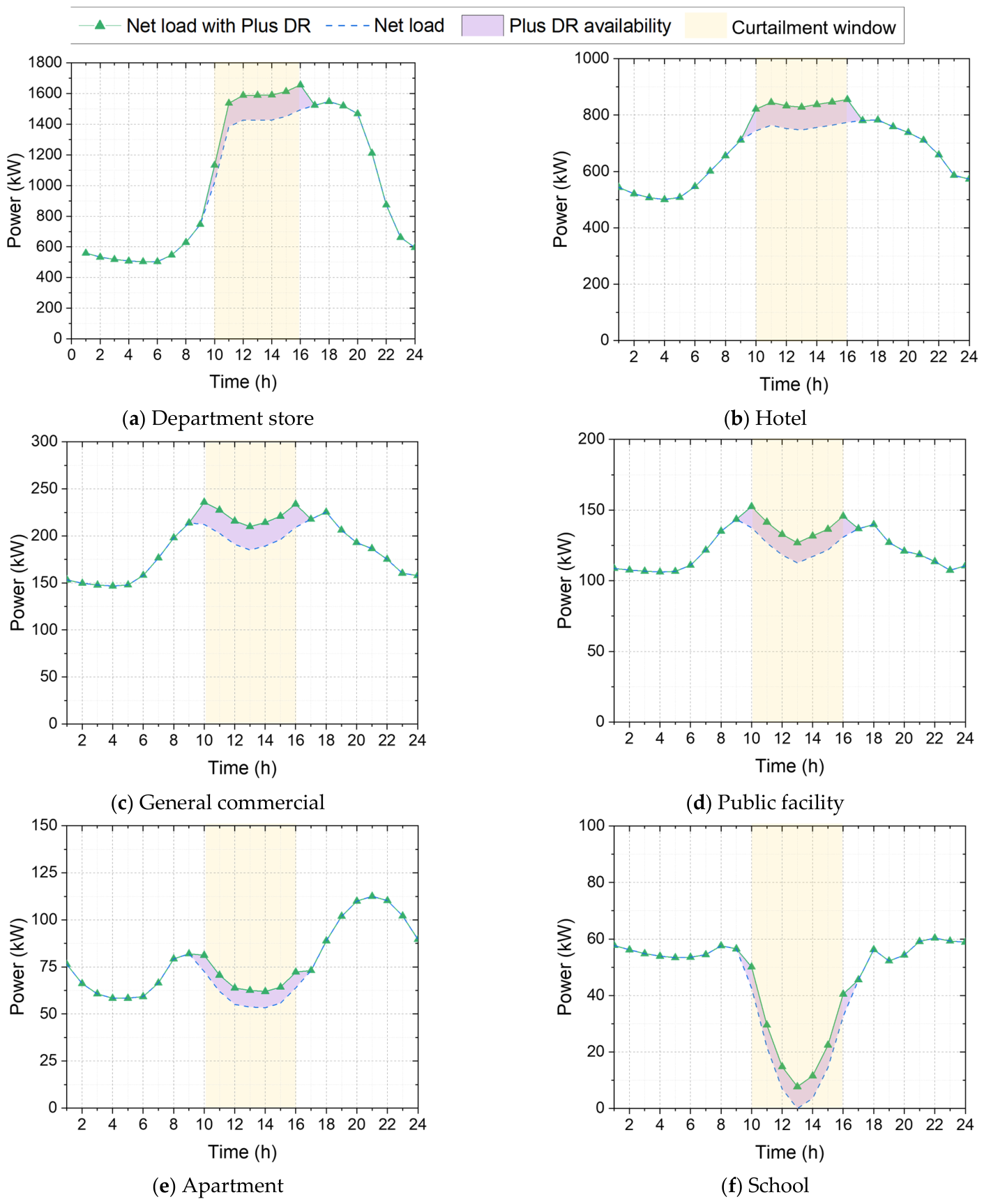
The net load profiles with Plus DR during curtailment hours, presented in
Figure 4, show that Plus DR activation elevates the net load throughout the curtailment window while the profile outside this window remains unchanged. In each panel, the solid line with triangle markers represents the net load with Plus DR and the dashed line represents the net load. The filled area between the two lines within the curtailment window represents Plus DR availability. The shaded background indicates the curtailment window. The peak increment occurs at 16:00 for the department store and hotel, reflecting their sustained high loads through the afternoon. Plus DR activation during curtailment hours effectively raises the net load within the curtailment window, contributing to load leveling during periods of excess PV generation. With Plus DR applied, the daily net load ranges from 1120.9 kWh (school) to 25,162.4 kWh (department store) across the six use types.
For the department store, the curtailment-window peak net load increases from 1494.6 kW to 1656.5 kW at 16:00 (+161.9 kW), with a cumulative Plus DR availability of 1077.0 kWh over the curtailment window. The hotel similarly increases from 774.2 kW to 855.3 kW at 16:00 (+81.2 kW), contributing 564.4 kWh in total. For the general commercial building and public facility, the peak increments are 23.8 kW and 15.0 kW respectively, both at 10:00, with cumulative contributions of 172.7 kWh and 102.9 kWh. The apartment and school show the smallest peak increments of 8.7 kW and 7.5 kW, both at 10:00, with a cumulative Plus DR availability of 60.4 kWh and 54.8 kWh respectively. For the school, at 13:00, PV generation fully offsets the building load. The Plus DR availability at this hour (7.7 kW) operates through the surplus absorption pathway, reducing exported PV generation rather than drawing from the grid. A summary of Plus DR availability characteristics by building use type is presented in
Table 4.
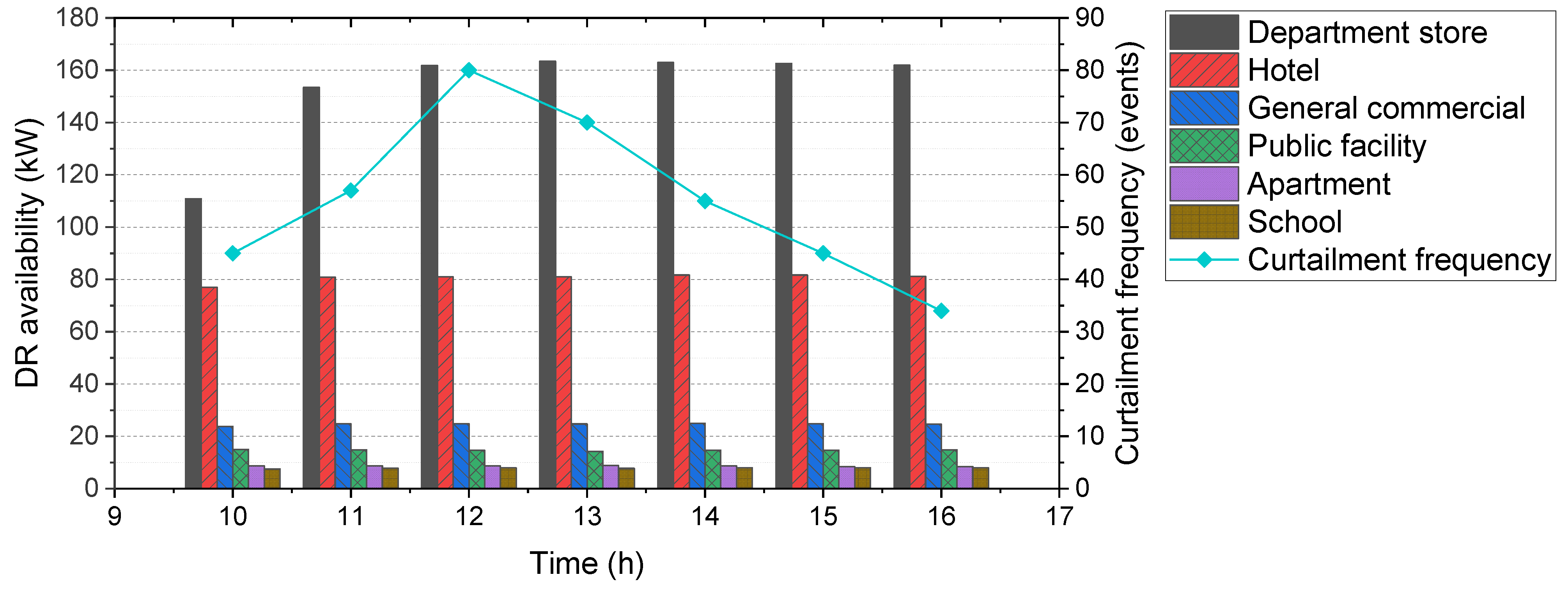
Figure 5 presents the hourly Plus DR availability by building use type alongside curtailment frequency during the 10:00–16:00 window. At 12:00, the department store accounts for 54.2% of the combined total (161.8 kW out of 298.8 kW), followed by the hotel at 27.1% (81.0 kW), general commercial at 8.3% (24.8 kW), public facility at 4.9% (14.6 kW), apartment at 2.9% (8.7 kW), and school at 2.6% (7.9 kW). The combined availability peaks at 300.9 kW at 14:00. Averaged across the curtailment window, the department store records the highest availability at 153.9 kW, followed by the hotel at 80.6 kW; the remaining four use types each contribute less than 25 kW.
The temporal alignment between Plus DR availability and curtailment frequency is strong across all use types. Curtailment frequency peaks at 12:00 (80 events) and remains high between 11:00 and 14:00 (262 events, 67.7% of total), corresponding to the period of peak PV generation. During this core window, Plus DR availability for the department store ranges from 153.4 to 163.4 kW, the hotel from 80.9 to 81.7 kW, general commercial from 23.8 to 25.0 kW, public facility from 14.3 to 15.0 kW, apartment from 8.7 to 8.8 kW, and school from 7.7 to 8.0 kW, all maintaining near-peak levels.
4. Discussion
Plus DR availability during curtailment hours differs substantially by building use type, reflecting differences in daytime load levels, PV-to-load ratios, and operational schedules. This indicates that the diurnal load profile by building use type is a primary determinant of Plus DR availability under the conditions of this study. However, controllability of individual load categories and occupant flexibility are also important determinants in practice, as they govern the fraction of load that can be realistically activated during curtailment periods. As mainland renewable energy capacity continues to grow, the midday supply-demand imbalance is likely to intensify, increasing the need for demand-side flexibility resources that can respond during curtailment periods.
Under the representative building specifications adopted in this study, the department store and hotel collectively averaged 234.5 kW, representing the largest contributors among the six use types. This result reflects the specific floor areas, PV capacities, and load densities defined for each use type; in particular, the higher availability observed in the department store and hotel is attributable to their larger floor areas and correspondingly higher load levels, and should not be interpreted as a general characterization of the building stock. Furthermore, the absolute Plus DR availability values reported in this study are sensitive to the assumed building scale and load level, and would differ substantially under different assumptions. Nevertheless, these use types may serve as suitable primary candidates for building-integrated Plus DR programs on the Korean mainland. Suitability as Plus DR candidates should also consider economic feasibility and operational practicality, including incentive structures, metering requirements, and the willingness of building operators to participate. The general commercial building and public facility offer moderate availability with predictable load schedules, making them viable secondary targets, while the apartment and school contribute limited availability in absolute terms due to low daytime loads.
The Plus DR contribution mechanism differs by PV generation state. When PV generation does not exceed the load, increased building load draws additional power from the grid; when PV generation exceeds the load, it reduces exported surplus. Under the representative building specifications adopted in this study, surplus generation is marginal and occurs only in the school at 13:00, confirming that the load-increase pathway dominates across all use types. As rooftop PV capacity grows in line with zero-energy building mandates, the surplus absorption pathway may become increasingly relevant. The use-type-specific availability quantified in this study suggests that differentiated incentive structures reflecting daytime load levels and PV-to-load ratios by building type warrant further investigation in future program design and policy development. Future research could further explore the integration of EV charging, thermal storage, and battery energy storage systems as additional Plus DR resources, which may substantially increase the achievable flexibility beyond the building load-based estimates presented in this study.
5. Conclusions
This study provides a quantitative framework for estimating Plus DR availability of building loads by use type on the Korean mainland, based on representative building load profiles, PV generation data, and curtailment occurrence data.
Curtailment events were concentrated in the 10:00–16:00 window with peak frequency at 12:00 (80 events). The combined Plus DR availability across the six use types averaged 290.3 kW during curtailment hours, peaking at 300.9 kW at 14:00. The department store exhibited the highest availability at an average of 153.9 kW, followed by the hotel at 80.6 kW; the remaining four use types (general commercial, public facility, apartment, and school) contributed averages of 24.7 kW, 14.7 kW, 8.6 kW, and 7.8 kW, respectively. Plus DR participation operated primarily through the load-increase pathway across all use types, with surplus generation observed only in the school at 13:00 (0.77 kW). These results suggest that building use type can be considered a primary criterion in the design of mainland Plus DR programs, with department stores and hotels identified as suitable primary candidates under the representative building specifications adopted in this study. The findings provide a use-type-specific reference for program designers and grid operators in identifying suitable building categories and curtailment-responsive time windows for mainland Plus DR market development.
Building load profiles are based on annual average metered data, in which seasonal variation is averaged rather than explicitly resolved. Incorporating these seasonal differences would refine the availability estimates, especially for the curtailment-concentrated spring and autumn periods. The Plus DR contribution rate α = 0.1 is applied uniformly across all use types, whereas actual response rates will vary by building type, occupancy, and controllable load capacity. In practice, upward load flexibility may be more constrained than load reduction. Future work should incorporate seasonal load profiles, building-specific metered data, and empirical Plus DR response rates, as well as sensitivity analysis with respect to the Plus DR contribution rate α across different building use types. Validation using real building operational data and occupant response behaviour would further improve the reliability of the availability estimates.