


Abstract
In this study, the crashworthiness performance of triangular Kirigami (TK) structures with various geometric configurations is systematically investigated. Quasi-static crushing experiments are first conducted to provide reference data for the calibration and validation of the numerical models. Subsequently, extensive finite element (FE) models are developed in LS-DYNA to examine the influence of geometric parameters on the crashworthiness behavior of the proposed structures. Three key geometric parameters, namely the inclined sidewall length, model height, and model length, are used to describe the structural configurations, and their effects are evaluated in terms of energy absorption and specific energy absorption. The results indicate that the sidewall inclination angle, jointly controlled by the inclined sidewall length a and the model height h, plays a critical role in governing crashworthiness performance, and an optimal range of 40° to 60° is recommended. In addition, the model length must be carefully selected, as inappropriate values may lead to inefficient energy absorption and an undesirably high initial peak crushing force.
1. Introduction
Sacrificial devices protect structural integrity by absorbing hazardous energy through plastic deformation [1]. A thin-walled energy-absorption structure has been widely used in various fields as a sacrificial structure to mitigate damage to the primary structure under high-impact loading [2]. Thin-walled structures under impact loading can dissipate impact energy through plastic deformation. An ideal energy absorber should possess high energy absorption capacity, a low initial peak force, a constant plateau force, long stroke displacement, uniform crushing resistance, lightweight construction, and low cost, ensuring both high energy absorption efficiency and outstanding mitigation performance [2,3,4]. Thin-walled structures have attracted significant attention due to their lightweight, cost-effective nature [5]. Consequently, many studies have been undertaken to examine the crashworthiness of these structures, exploring various configurations, including tubular [6,7,8], corrugated [9,10,11,12], and honeycomb [11,13,14], under different loading conditions. Corrugated thin-walled structures have been widely used due to their light weight, easy fabrication process, and low cost. Additionally, the geometry and cross-section of corrugated structures can be easily adjusted and bonded to other corrugated structures to form different configurations, which have been used in various fields [15,16].
A wide range of core structural configurations has been explored in recent years, such as corrugated structures [17], graded multilayer corrugations [18], Kirigami foldcore [19,20,21], and origami-based designs [22,23,24]. Due to their simple geometric configuration, low cost, and ease of fabrication, corrugated structures are widely used in engineering applications for energy absorption, and their crushing performance has been extensively investigated [25,26,27]. It is worth noting that, despite their widespread use, conventional corrugated structures are not ideal energy absorbers. Under quasi-static flatwise crushing, they exhibit a high initial peak force, followed by a sudden drop in load after buckling onset, resulting in highly non-uniform crushing resistance and a relatively low average load-carrying capacity [3,28]. Similar non-uniform crushing responses have been reported for aluminum, CFRP, and GFRP triangular corrugated structures under quasi-static loading [28]. Moreover, the crushing response of corrugated panels is highly influenced by the loading rate, and as the crushing speed increases the initial peak increases several times [10,29]. Their performance is also strongly affected by initial imperfections, as plate buckling is highly imperfection-sensitive [17,30].
To overcome the drawbacks of traditional corrugated structures used for energy absorption, several enhancement approaches have been developed, among them the incorporation of lightweight fillers, such as metallic [31] or polymeric foams [32]. These foam-filled corrugated designs have proven effective at significantly enhancing average crushing strength and overall energy absorption capacity [33,34]. Nonetheless, integrating foam or honeycomb cores adds considerable cost and weight because of the machining and bonding processes involved [3]. Alternative fillers, including water [35], sand [36], and shear-thickening fluids [37], have also been explored to enhance mechanical characteristics of corrugated structures. Nevertheless, the inclusion of liquids or sand significantly increases the structural mass and necessitates additional sealing measures [35,36], thereby further increasing the overall weight and cost of the structure [3]. While the precise optimization of mass and stiffness parameters has proven highly successful for mitigating dynamic structural responses in other engineering domains [38], in thin-walled crashworthiness, adding unregulated mass via liquid or granular fillers often compromises the lightweight efficiency of the energy absorber. Another modification strategy is to reinforce corrugated sandwich structures using vertical stiffeners [39]. This approach has been shown to significantly improve compressive strength and bending resistance and can also lead to notable increases in specific energy absorption compared to conventional designs [39,40]. However, the overall enhancement in energy absorption remains limited, and the crushing response still exhibits strong force fluctuations throughout the deformation process [3].
Recently, in some studies, triangular and trapezoidal corrugated unit cells at both ends were folded in by implementing Kirigami modifications [3,10]. These modifications increase crushing resistance and energy absorption by up to 10 times [3,10]. In this study, triangular Kirigami models with different geometric configurations are investigated for their crushing responses, which will help us to assess the best performing configuration in terms of effective energy absorption and crushing resistance. An extensive range of geometric configurations was modeled, and their energy absorption, crushing resistance, and specific energy absorption were compared. Experimental quasi-static crushing tests were conducted on triangular Kirigami (TK) specimens, and their results were utilized for the calibration of the finite element (FE) models. With the utilization of the calibrated TK models, a wide range of TK models were numerically simulated, and their energy absorption and crushing responses were assessed. The effect of the geometric parameters of the TK models such as the inclined sidewall length, model height, and model length on the crashworthiness was investigated. The present study is limited to the parametric analysis of TK models under quasi-static crushing. To fully understand their behavior and facilitate their integration into practical crash-resistant structures, future studies must physically test and numerically simulate these models under high-velocity dynamic loading.
2. Geometry, Material Properties, and Quasi-Static Crushing
2.1. Geometry of the Specimen
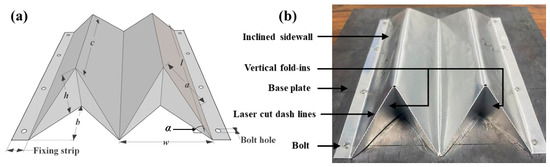
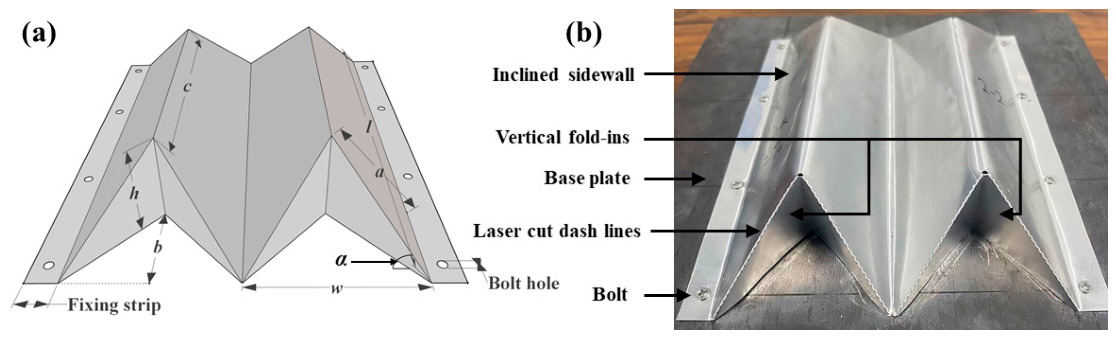
The TK models are formed from the conventional triangular corrugated structure by folding the ends to the vertical position at specified positions. The laser dashed lines are produced at the specified position and are intended to be bent, so the bending process should be easy and precise. The models’ geometric parameters and the fabricated specimen are presented in Figure 1a and Figure 1b, respectively. The configuration of the models depends on three parameters: the inclined sidewall length a, the height h, and the length l. The other parameters, such as the top length c, width w, sidewall inclination angle α, and relative density ρr of the models, can be calculated from the following equations:
where t represents the thickness of the specimen.
Figure 1.
Geometry and fabrication details of the TK model: (a) schematic illustration showing the geometric parameters and main dimensions; (b) photograph of the fabricated specimen.
2.2. Specimen Fabrication and Test Setup
Aluminum (Al 1060) flat sheets of thickness 0.3 mm were cut with laser dash lines at specified positions, at the ends for easy folding. The ends of the specimens were folded vertically to form the specimens. The laser dashed lines were provided only at the positions intended to be bent vertically. The dashed line width is 0.1 mm, the dash length is 1 mm, and the space between each dash laser cut is 4 mm. The dash laser-cutting process is consistent with previous studies, and the details of the overall procedure are described in those studies [3,10]. To be tested, the specimens need a firm base to constrain their outward and lateral movement. For this reason, the specimens were bolted to a 200 mm × 200 mm steel base plate. The specimens were provided with two strips, each 10 mm wide, on each side, each containing four 3 mm diameter holes for fixing the specimens to the base steel plate using bolts. The fixation strips, which are used to secure the specimens to the base plate, are not included in the calculation of the specimens’ relative density, as they serve only to secure the specimens and have no contribution in the energy absorption. The specimens were placed in the universal testing machine and crushed at a uniform speed of 2 mm/min. The crushing process of the specimens was stopped at 25 mm displacement to prevent the crushing disk from contacting the bolts, which can lead to inaccurate results.
2.3. Material Properties of Al 1060
Three dog-bone specimens were prepared from the Al 1060 sheets used for the specimens’ fabrication. The tests were conducted on an Instron universal testing machine with a constant loading rate of 1 mm/min. The engineering stress–strain relation obtained from the test was converted to true stress–plastic strain relation to better represent the material’s plastic behavior. The material properties and the true stress–plastic strain values are presented in Table 1 and Table 2, respectively.
Table 1.
Material properties of Al 1060 used in the study [41].
Table 2.
Al 1060 true stress–plastic strain data from experiments [41].
3. Finite Element Analysis
3.1. Finite Element Modeling
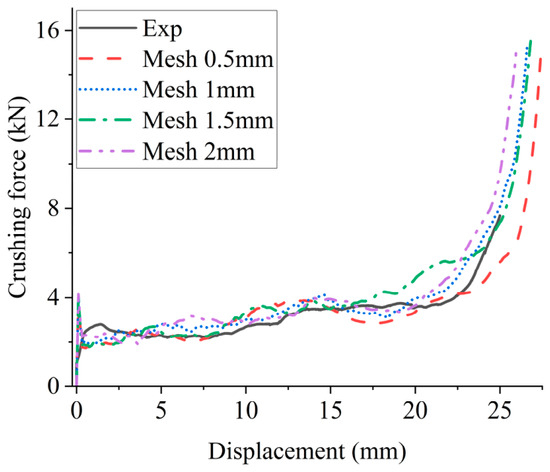
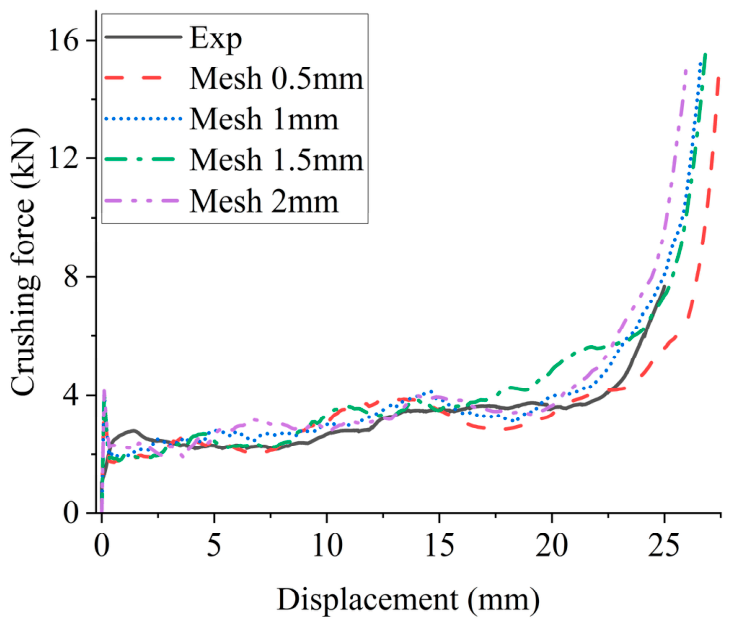
The numerical simulations were carried out using the FE software LS-DYNA R11.1.0. The proposed TK model is a thin-walled structure, so the models were modeled using MAT_24 PIECEWISE LINEAR PLASTICITY material in LS-DYNA R11.1.0. The material properties and the true stress–plastic strain values obtained from testing and used in the simulations are shown in Table 1 and Table 2, respectively. The strain-rate effect on aluminum is neglected as aluminum is generally insensitive to strain rate [3,42]. The fixation bolts on the fixation strips were modeled by fixing the specified nodes at bolt positions in all degrees of freedom. The top plate was given only vertical degrees of freedom, while the base plate was fixed in all degrees of freedom. The self-contact of the model was defined using CONTACT AUTOMATIC SINGLE SURFACE, and the contact between the base, model, and top plate was defined by using CONTACT AUTOMATIC NODES TO SURFACE. The friction coefficient was set to 0.25 for all interfaces in the model, including the top plate and base plate [43]. To achieve accuracy and efficiency, a constant crushing speed of 0.5 m/s was applied to the top plate until strain of 0.91 was reached. The ratio of total kinetic energy to total internal energy was monitored and maintained below 0.05 throughout the simulation, confirming quasi-static conditions [10,44]. The adoption of a crushing velocity of 0.5 m/s is advantageous, as it enhances computational efficiency while maintaining the quasi-static characteristics of the numerical simulation. Mesh plays a vital role in determining numerical simulation accuracy and efficiency. To evaluate its influence, four element sizes of 0.5 mm, 1 mm, 1.5 mm, and 2 mm were analyzed, as shown in Figure 2. The results across different meshes indicated little difference in the initial peak force and the plateau region of all simulated curves; however, the mesh size has a noticeable effect on the densification of the force–displacement curve. The FE model with a 1 mm mesh was selected for the subsequent numerical analysis to achieve accurate simulations and improved computational efficiency.
Figure 2.
Force–displacement curves of the TK model obtained from experiments and FE simulations with different mesh sizes.
3.2. Model Validation
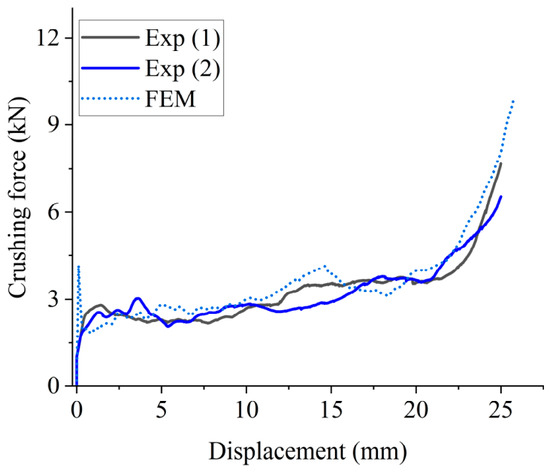
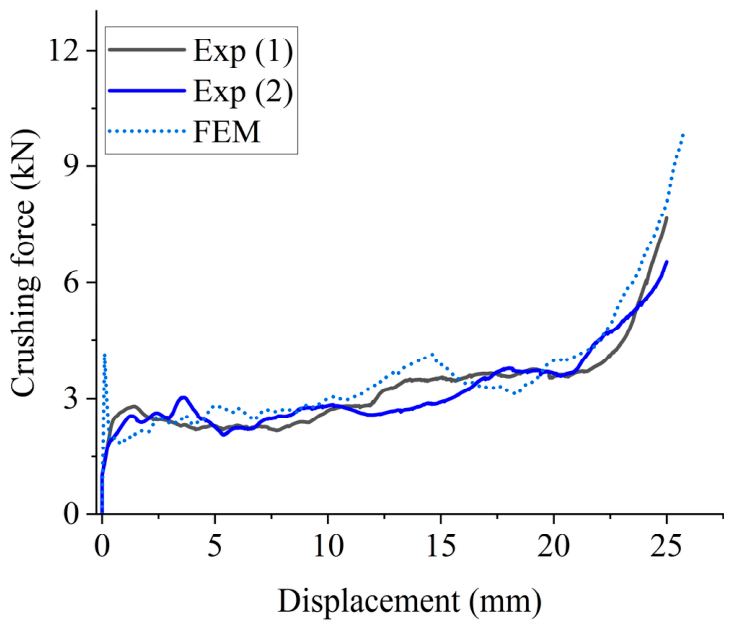
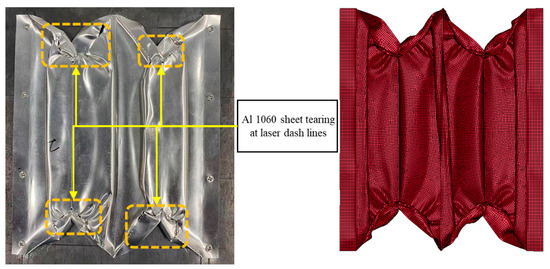
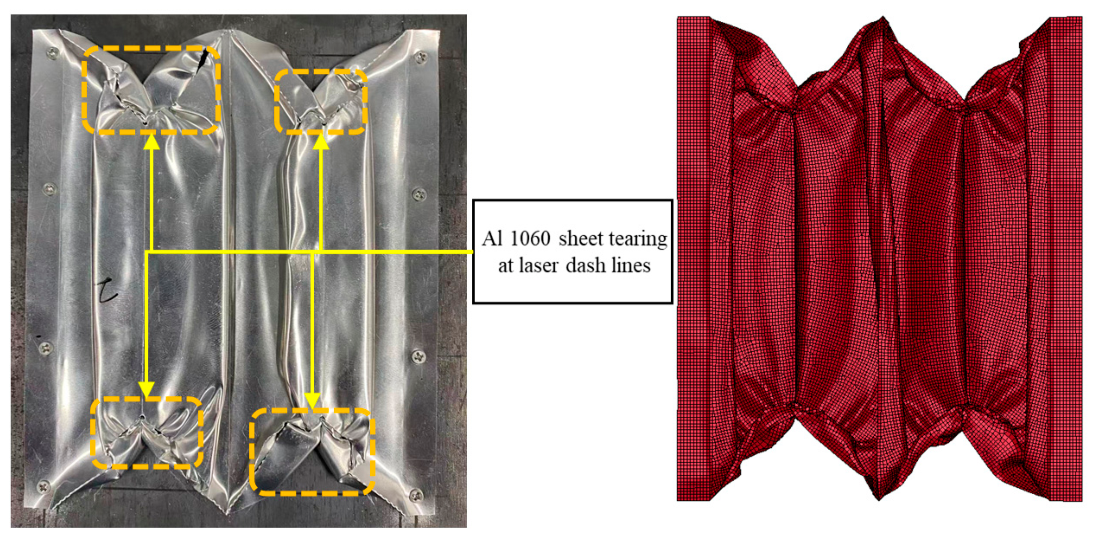
Two TK specimens were experimentally tested for inclined sidewall length a = 40 mm, h = 40 mm and l = 150 mm. The difference between the average crushing force (Favg) of the two tested specimens was 1.37%, which indicates good repeatability of the tests. Considering the good agreement between the experimental results, no further TK specimens were tested. The force–displacement curves of the two TK specimens (experimental) and the FE simulation are presented in Figure 3. The simulation’s force–displacement curve matches the experimental curve well, except for a slight discrepancy at the initial stage. The initial difference in the force–displacement curve can be attributed to imperfections and small gaps between the vertical triangular face and the base plate to which it is bolted. These types of imperfections in the folded and corrugated structures during specimen preparation have been reported by several studies [3,10,43]. Despite these slight variations in the force–displacement curve, the overall trend of the FEM curve is in good agreement with that of the experimental force–displacement curve. The variations in Favg between the experimental and simulated data are given in Table 3. The difference between the Favg from the experimental test and the numerical simulation may be due to tearing of the Al 1060 sheet during the experimental test, as shown in Figure 4. For the experimental test setup, the TK specimens were cut with laser dash lines to facilitate folding. On the other hand, laser dash lines were not provided in the numerical simulation. In our previous study [41], we explicitly incorporated laser dashed lines into the simulated models. A comparison between those findings and the current results reveals only a 9% difference in the Favg between models with and without lase dashed lines. Furthermore, large-scale commercial manufacturing typically employs a stamping process rather than other methods [45]. Therefore, to better align with commercial viability and to reduce computational design time, the laser dashed lines were omitted from the TK model simulations in the present study.
Figure 3.
Comparison between experimental and numerical force–displacement responses of the TK model.
Table 3.
Experimental versus FE-predicted average crushing force for TK model.
Figure 4.
Comparison of damage modes between experimental test and numerical simulation of TK model.
4. Parametric Study
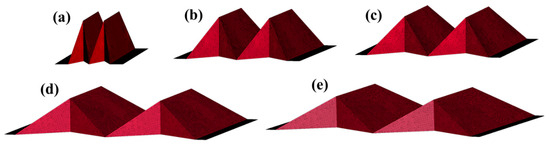
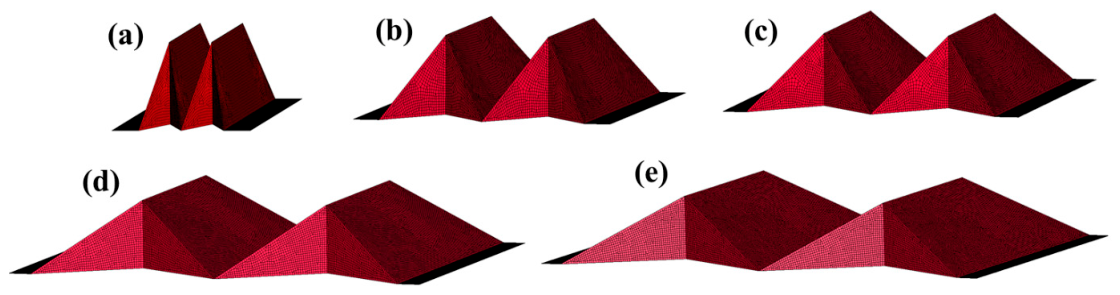
In the following sections, the effects of geometric parameters on the crashworthiness of the TK models are investigated. For TK models, three governing parameters are investigated in the following sections: the inclined sidewall length a, height h, and length l. For the parametric study on the inclined sidewall length a, a varies from 31 mm to 60 mm, and the height h and length l are 30 mm and 150 mm, respectively. Some of the FE TK models are shown in Figure 5. For the parametric study on height h, three heights h (20 mm, 25 mm, and 35 mm) are selected. The inclined sidewall length a for heights h = 20 mm, h = 25 mm, and h = 35 mm is varied from 21 mm to 40 mm, 26 mm to 50 mm, and 36 mm to 70 mm, respectively. The selected range of a resulted in α varying from 30° to 76.4°. Further decreasing or increasing a would produce excessively high or low α values, which increase fabrication difficulty and also result in lower specific energy absorption (SEA). For the parametric study, the best-performing TK models were selected from all four heights (h = 20 mm, 25 mm, 30 mm, and 35 mm), and the models were investigated at lengths l = 70 mm, 90 mm, 110 mm, 130 mm, and 150 mm. To ensure a fair comparison, the relative density of all models was fixed at 1.5%. The thickness of the model is subsequently calculated for each TK geometric configuration. A low relative density is chosen for the TK model to facilitate ease of fabrication, low cost, and easy foldability. The high relative density results in the thicker sheets and may affect the foldability of the TK units. The key evaluation criteria include the peak force (Fpeak), Favg, the crushing force efficiency (CFE), the energy absorption (EA), SEA, and stroke efficiency (SE) are defined using the following formulations:
where δd and m are the densification displacement and mass of the structure, respectively.
Figure 5.
FE TK models (a) a31h30l150, (b) a36h30l15, (c) a40h30l15, (d) a52h30l15, (e) a60h30l15.
4.1. Effect of Length a
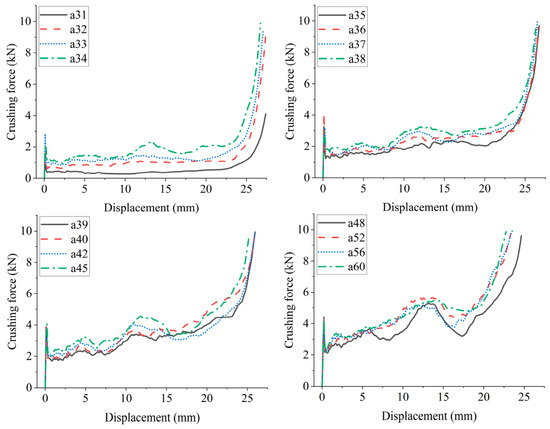
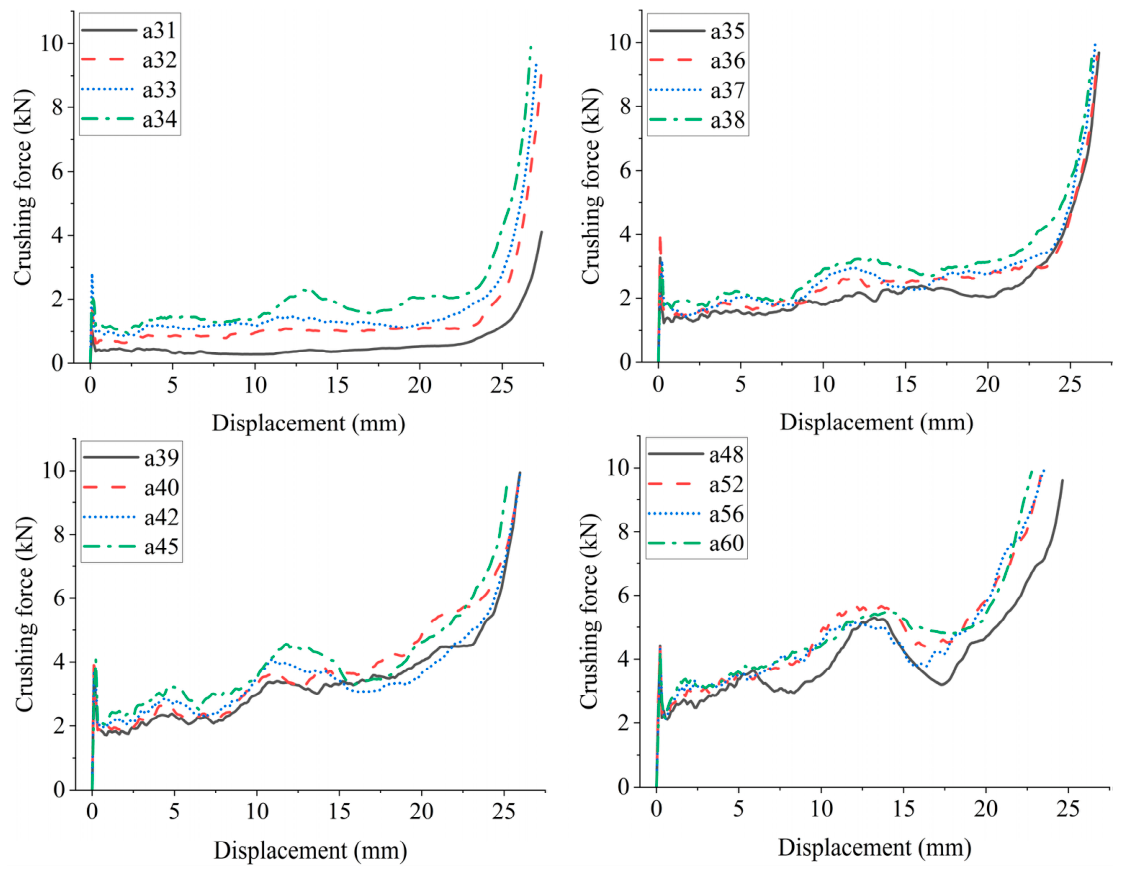
This section investigates the effect of the inclined sidewall length a on the TK models; the other parameters, h and l, are 30 mm and 150 mm, respectively. The change in the inclined sidewall length a, results in the variation in the inclination angle (α) of the inclined sidewalls. The inclined sidewall length a, the sidewall inclination angle (α), the thickness t of the model, and the mass of the model are given in Table 4. For this section, the inclined sidewall length a is chosen from 31 mm to 60 mm, providing a sidewall inclination angle (α) between 30° and 75.4°. Variation in force–displacement behavior of TK models with different inclined sidewall length a are illustrated in Figure 6. With increasing inclined sidewall length a, the Favg and EA of the models increased. A pronounced increase in the Favg was observed when the sidewall length a was increased by only 1 mm, from 31 mm to 32 mm, causing Favg to rise sharply from 0.402 kN to 0.964 kN. With further increases in the inclined sidewall length a, an increase in Favg is observed until a = 52 mm, but with less intensity. The model with an inclined sidewall length a, of 52 mm exhibited the maximum average force of 4.501 kN. Beyond the inclined sidewall length a of 52 mm, the Favg starts to decrease.
Table 4.
Geometric parameters and key performance indicators of TK models with different inclined sidewall length a.
Figure 6.
Force–displacement curves of TK models with different inclined sidewall lengths a.
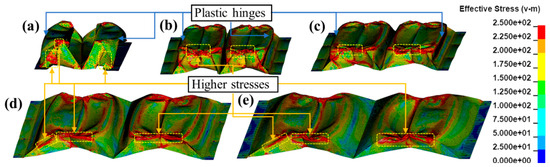
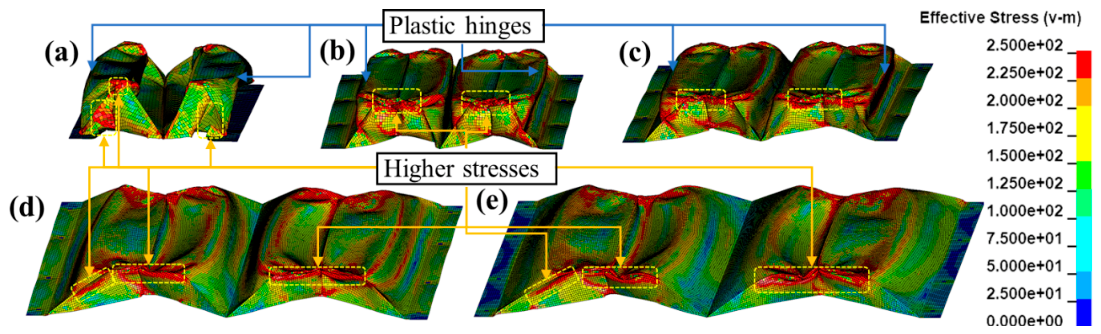
The vertical triangular faces absorb a large amount of the energy at each end of the TK models. Large multi-folding deformations were seen on these vertical triangular faces, while on the inclined sidewalls, plastic hinges formed during deformation, as shown in Figure 7. The dimensions of the vertical triangular faces depend on the inclined sidewall length a and the height h; in this section, the height h for the TK models is kept constant. Hence, the increase and decrease in the vertical triangular faces solely depend on the increase and reduction in the inclined sidewall’s length a. Therefore, if the inclined sidewall length a is small, the vertical triangular faces’ size will also be small, which results in the low Favg and thus low EA. On the other hand, as the inclined sidewall length a increases, the number of vertical triangular faces increases, thereby increasing TK models’ EA capability. However, when the inclined sidewall length a reaches a certain value, the TK models’ EA capacity starts to decrease. When the inclined sidewall length a exceeds a particular value, the outer vertical triangular faces deform less than the middle section of the vertical triangular face, resulting in lower EA. Another reason for the decrease in the EA for the models with long inclined sidewalls a, is the increase in the inclined sidewall length a. As the inclined sidewall length a increases, it becomes easier to buckle the inclined sidewalls with a low crushing force. Table 4 summarizes the SE of the evaluated TK configurations. Notably, models with α value ranging from 38.6° to 69.6° consistently demonstrate an SE greater than 77%.
Figure 7.
Deformation of five TK models at 15 mm displacement: (a) a31h30l150, (b) a36h30l150, (c) a40h30l150, (d) a52h30l150, (e) a60h30l150.
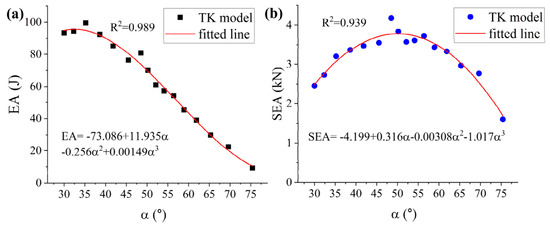
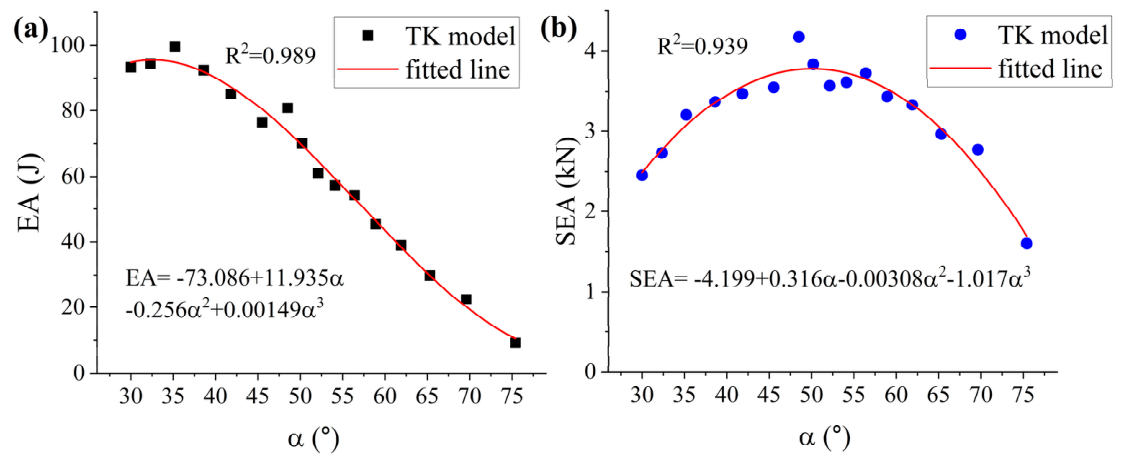
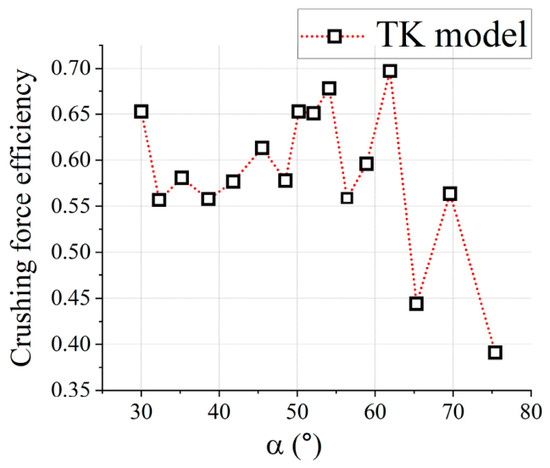
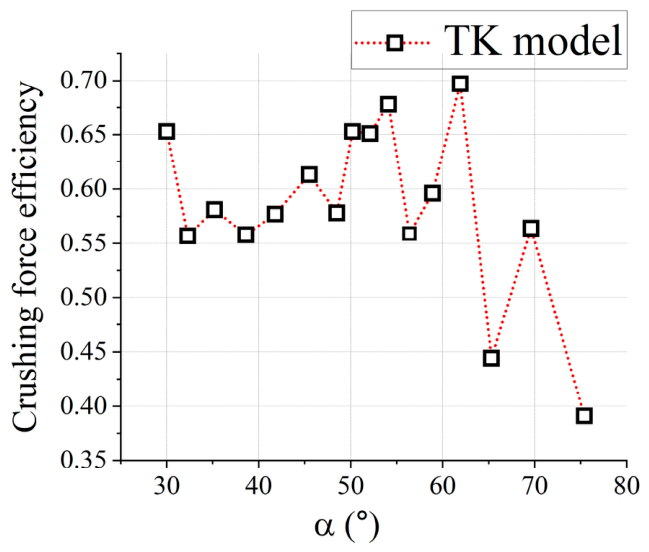
As already mentioned, in this section, the height h of the TK models is kept constant, but when the sidewall length a is increased, the base area of the models increases; thus, the mass of the models is increased, as the relative density is constant at 1.5% for all the models analyzed in this section and in this study. The TK configurations with varying mass show interesting trends, and the results are shown in Figure 8. The EA of the TK model increases with increasing inclined sidewall length a until a = 52 mm and decreases beyond 52 mm as shown in Figure 8a. For SEA, which is the ratio of the EA to the model’s mass, the trends are different. The SEA of the models increases with the increment in the inclined sidewall length a (decrease in the inclined sidewall angle α) until 40 mm, with some exceptions, and then starts to decrease with further increases in a, as shown in Figure 8b. The maximum SEA of 4.176 J/g was achieved by the model with an inclined sidewall length a of 40 mm and an α of 48.5°. At the same time, the lowest SEA among the models was observed in the model with an inclined sidewall length a, of 31 mm. The CFE’s of all the models were higher than 0.55 with the exception of the models of inclined sidewall length a of 31 mm and 33 mm, as shown in Figure 9. The models with sidewall lengths of 31 mm and 33 mm demonstrated CFE’s of less than 0.5. The lower CFE of these models is attributed to their high initial peak force.
Figure 8.
Influence of sidewall angle α (controlled by sidewall length a) on the performance of TK models: (a) EA; (b) SEA.
Figure 9.
Variation in CFE with sidewall angle α (controlled by sidewall length a) for the TK model.
The sidewall inclination angle α of 40° to 60° is the optimal range for crashworthiness for this group. An excessively large sidewall inclination angle α reduces the size of the vertical triangular faces at both ends, thereby limiting the EA of the models, as these faces are huge contributors to EA. On the other hand, when the inclined angle α of the sidewalls is very low, the vertical triangular faces at each end become larger. The large, wide, vertical triangular faces experience less deformation at the far end, resulting in a low EA. To obtain the optimal EA, the inclined sidewalls a need to be carefully selected.
4.2. Effect of Height h
In the preceding section, the optimal inclined sidewall length a and the inclination angle α of the TK sidewalls were discussed with a fixed height h of 30 mm. In this section, TK models with different heights h are examined to determine whether the optimal range of inclination angle is applicable across different heights. Following the analysis of the TK model with h = 30 mm in the preceding section, this section examines three additional heights h of 20 mm, 25 mm, and 35 mm. As in the previous section, the optimal inclined angle α of the inclined sidewall of TK was in the range of 40° to 60° for a height h of 30 mm. In this section, the inclination angle of the sidewalls α is between 30° and 76.4°. As mentioned earlier, the best performance of the TK models with height h of 30 mm was achieved with sidewall inclination angle α in the range of 40° to 60°. So, for these TK models, the majority of models have a sidewall inclination angle α between 40° and 60°. The length l of the model is kept constant at 150 mm throughout this section. The inclined sidewall length a, sidewall inclination angle α, model thickness, and model mass for the TK models with height h = 20 mm, h = 25 mm, and h = 35 mm are listed in Table 5, Table 6, and Table 7, respectively.
Table 5.
Geometric parameters and key performance indicators of TK models with different inclined sidewall lengths a at a constant height h = 20 mm.
Table 6.
Geometric parameters and key performance indicators of TK models with different sidewall lengths a at a constant height h = 25 mm.
Table 7.
Geometric parameters and key performance indicators of TK models with different sidewall lengths a at a constant height h = 35 mm.
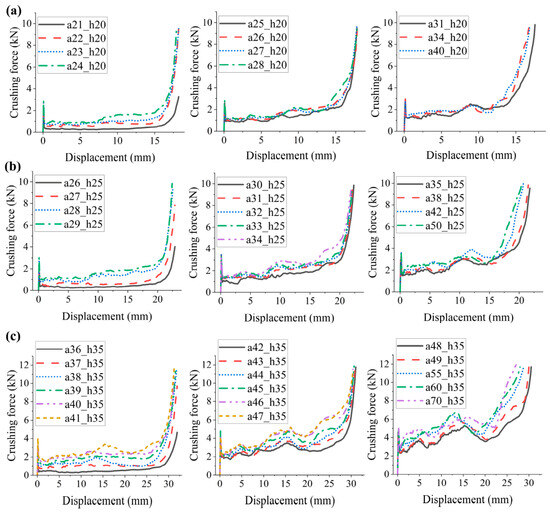
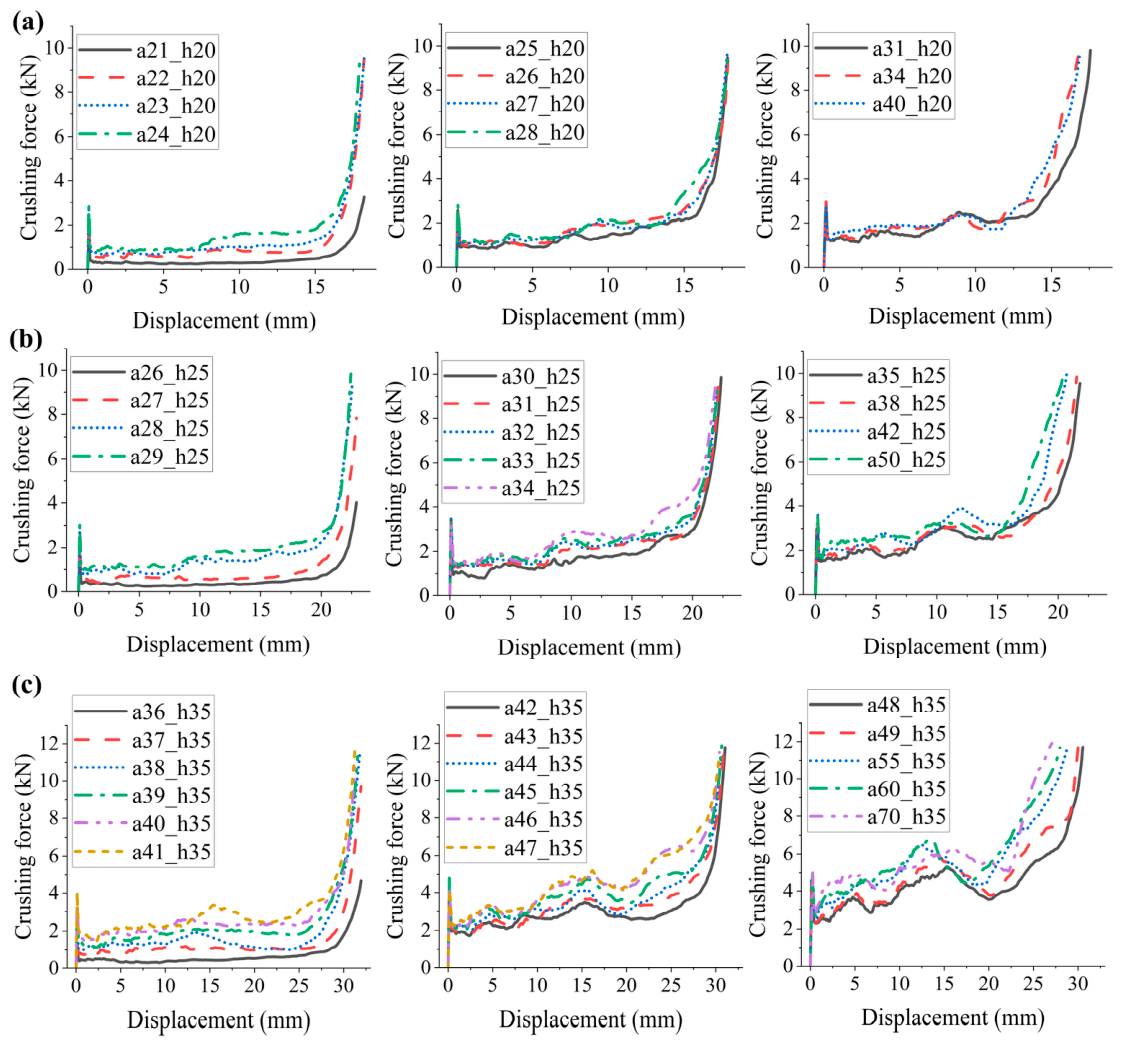
The crushing responses of various TK model configurations are shown in Figure 10. The force–displacement curves demonstrated similar trends with increasing inclined sidewall length a, despite the varying model heights h. As discussed earlier, for a TK model’s height h of 30 mm, the intensity of the crushing force–displacement curves increases noticeably with increasing inclined sidewall length a when the inclined sidewall length a is small, as shown in the first column of Figure 10. For all the TK models with different heights h, as the inclined sidewall length a increased, a further increase in a led to a larger increase in the intensity of the crushing force–displacement curve, but with a smaller increment than when a was smaller.
Figure 10.
Load–displacement curves of TK models with different inclined sidewall lengths a at different height h levels: (a) h = 20 mm; (b) h = 25 mm; (c) h = 35 mm.
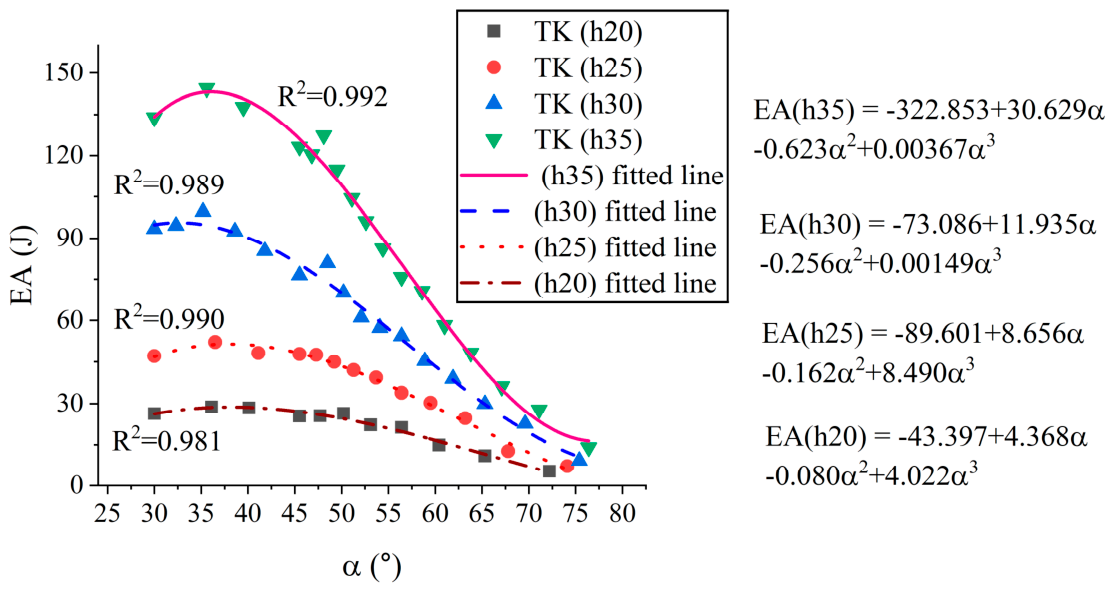
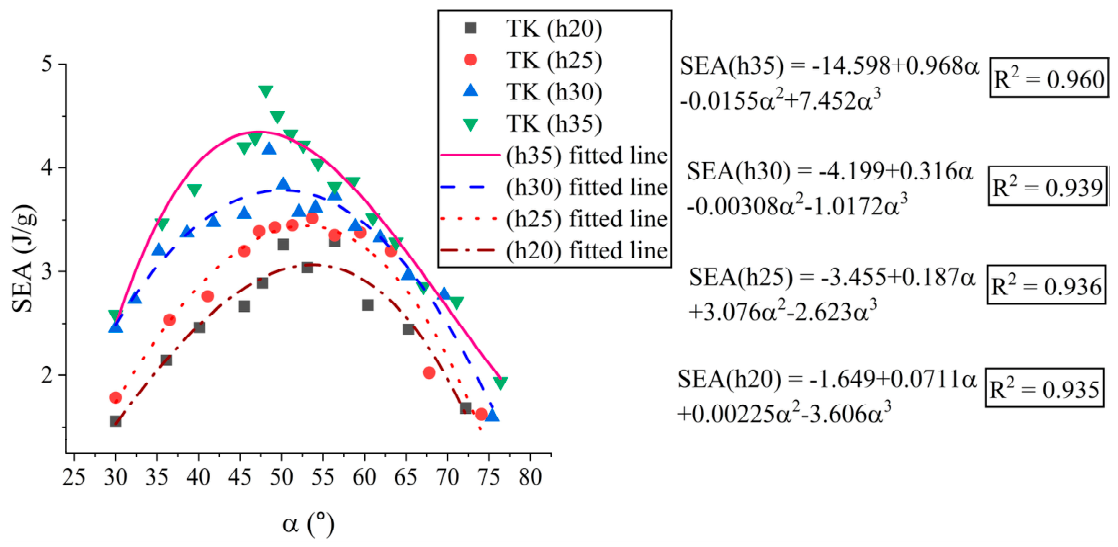
In all TK model simulation scenarios, the change in the crushing response depends on the inclination angle α, which depends on the model’s height h and inclined sidewall length a. The EA and SEA of the TK models with varying heights h and inclined sidewalls a (inclination angle α) are shown in Figure 11 and Figure 12, respectively. As shown in Figure 11, the difference in EA is slight among all four TK models’ heights h, when the inclined sidewall angle α is large. As the sidewall inclined angle α decreases, the difference in EA between TK models with different heights h becomes more pronounced. At similar sidewall inclination angles α, the EA of taller TK models exceeds that of shorter models, because taller models are larger, have thicker walls, and have greater mass to ensure an equivalent relative density to that of the shorter models. The highest EA for TK models h = 20 mm, h = 25 mm, and h = 35 mm was observed at inclined sidewall angles α of 36.1°, 36.5°, and 35.6°, respectively. For all models with different heights h, when the inclined sidewall angle is 30°, the EA decreases. In terms of SE, all TK models performed similarly; however, a consistently low SE was observed across all height variations when α was 30°.
Figure 11.
Effect of sidewall angle α (controlled by sidewall length a) on the EA of TK models with different heights (h = 20 mm, h = 25 mm, h = 30 mm, and h = 35 mm).
Figure 12.
Effect of sidewall angle α (controlled by sidewall length a) on the SEA of TK models with different heights (h = 20 mm, h = 25 mm, h = 30 mm, and h = 35 mm).
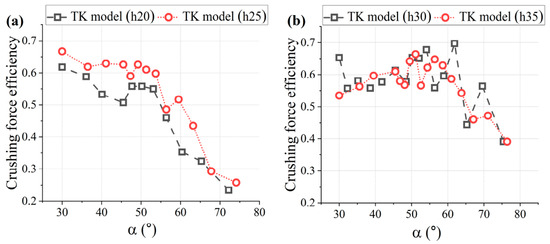
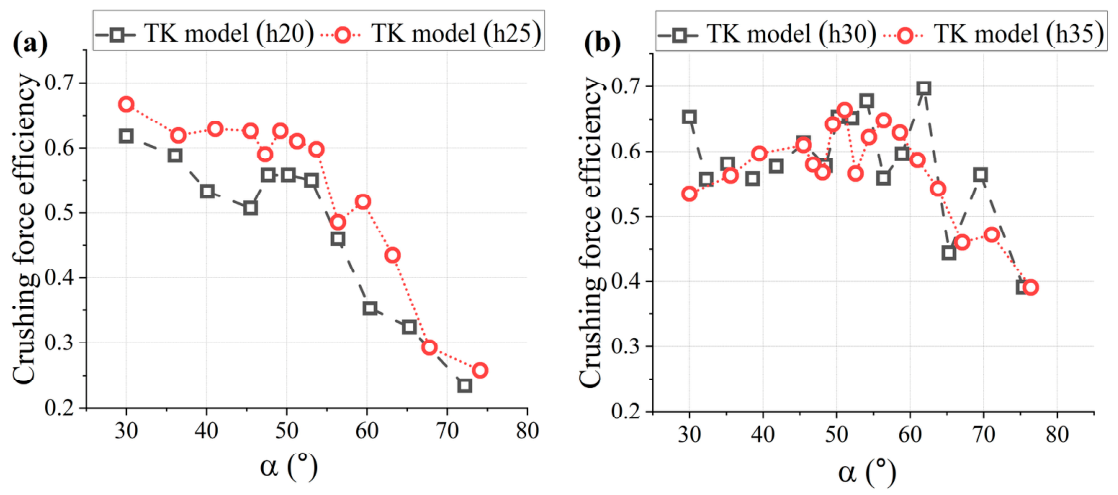
The SEA is defined as the EA of the model divided by the model’s mass, so the trends for SEA differ from those of the EA for TK models at all heights h. The higher SEA is observed at the middle of the considered sidewall inclined angles α, and lower SEA at both higher and lower sidewalls inclined angles α for all the investigated TK models’ heights h. The SEA increases with the model’s height h, so the model with h = 35 mm outperforms the other models with shorter heights, as shown in Figure 12. The best-performing models across all heights are those with a sidewall incline angle α in the range of 45–60°. In terms of CFE, the trends for the shorter TK models (h = 20 mm and h = 25 mm) differ from those for the taller TK models (h = 30 mm and h = 35 mm), as shown in Figure 13. For the shorter model, the TK model shows a CFE less than 0.3 when the inclined angle α is greater than 70°; on the other hand, for taller TK models, the CFE is around 0.4 when α is greater than 70°. As the inclined angle α decreases, the CFE of the shorter TK models increases linearly, with some discrepancies. The highest CFE for the shorter TK models is observed in the models with an inclined angle α of 30°, as shown in Figure 13a. For the taller TK models, the CFE’s are higher when the inclined angle α is between 62° and 50°, with some exceptions, as shown in Figure 13b. Overall, the taller TK models showed better CFE than the shorter TK models.
Figure 13.
CFE versus sidewall angle α for TK models with varying heights: (a) h = 20 mm and h = 25 mm; (b) h = 30 mm and h = 35 mm.
4.3. Effect of Unit Length l
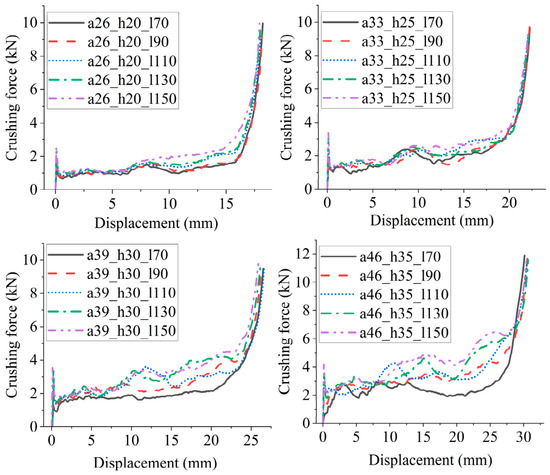
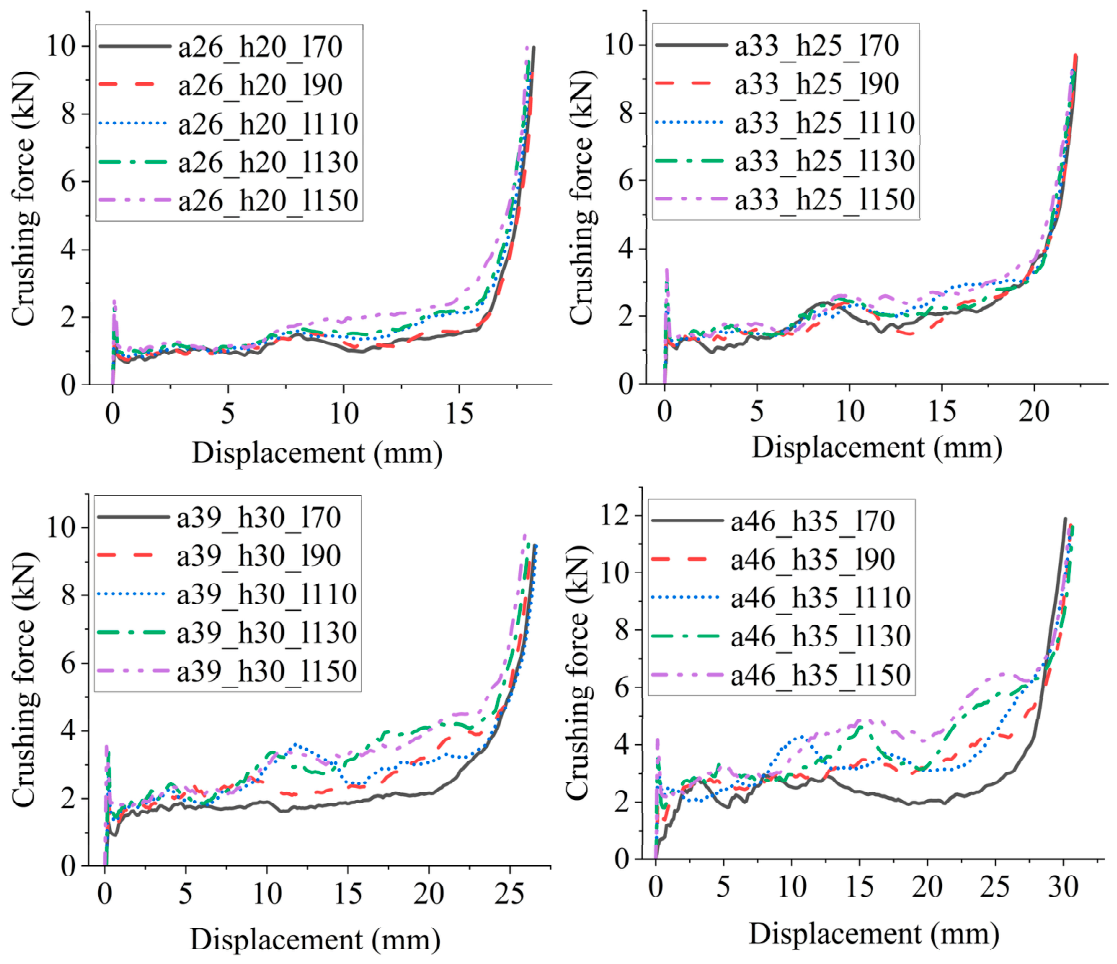
In this section, the effect of model length l is investigated. The best-performing TK models across all four heights h (20 mm, 25 mm, 30 mm, and 35 mm) were selected from the previous sections, and five model lengths l (70 mm, 90 mm, 110 mm, 130 mm, and 150 mm) were investigated. The optimal TK models were selected from the previous sections based on their superior CFE and SEA. As both high CFE and high SEA are essential for an effective energy-absorbing structure, a composite score was calculated by multiplying the CFE and SEA values for each TK model across all evaluated heights (h = 20 mm, 25 mm, 30 mm, and 35 mm), and the best composite scoring TK model was selected for each height h. Table 8 presents these best-performing configurations, which will be further analyzed in this section. The inclined sidewall length a, sidewall inclination angle α, model thickness t, and model mass for the TK models with height h = 20 mm, h = 25 mm, h = 30 mm, and h = 35 mm are listed in Table 9, Table 10, Table 11 and Table 12, respectively. The load–displacement curves of the TK models are shown in Figure 14. For the TK models simulations with heights h of 20 mm and 25 mm, the effect of the model length l on the crushing response is less prevalent, and the force–displacement curves are closely aligned, with slight differences. For the TK models with heights h of 30 mm and 35 mm, the increase in the model’s length l increases the intensity of the force–displacement curves. The TK model with a height h of 30 mm and a length l of 70 mm shows a relatively constant force–displacement curve, with further increase in model length l leading to fluctuations in the force–displacement curve. The influence of the TK model length l on the force–displacement curves is more pronounced in the models of height h = 35 mm. The TK model with height h = 35 mm and length l = 70 mm has a lower crushing force than the other TK models with the same height h; furthermore, its force–displacement curves have a different shape.
Table 8.
Best-performing TK models at different heights h.
Table 9.
Geometric parameters and key performance indicators of TK models with different lengths l at constant inclined sidewall length a = 26 and height h = 20 mm.
Table 10.
Geometric parameters and key performance indicators of TK models with different lengths l at constant inclined sidewall length a = 33 and height h = 25 mm.
Table 11.
Geometric parameters and key performance indicators of TK models with different lengths l at constant inclined sidewall length a = 39 and height h = 30 mm.
Table 12.
Geometric parameters and key performance indicators of TK models with different lengths l at constant inclined sidewall length a = 46 and height h = 35 mm.
Figure 14.
Force–displacement responses of TK models with varying model lengths l for the four optimal configurations at different height h levels.
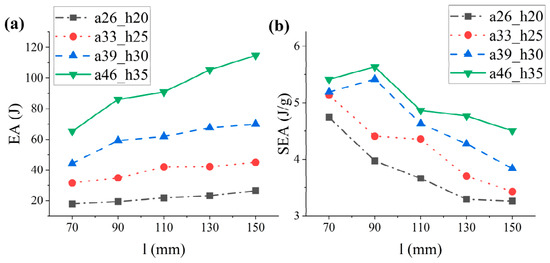
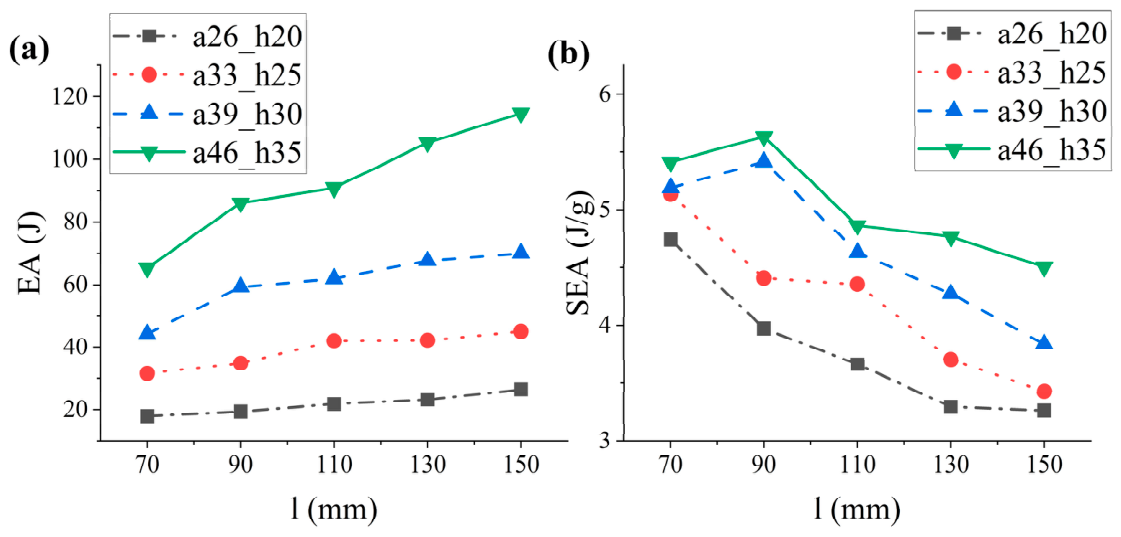
The EA and SEA of the TK models with varying length l for four different heights h are shown in Figure 15. For all four height h TK models, the EA is linearly related to the increase in the TK model’s length, l. The rise in EA for the TK models with length l and h = 35 mm is more apparent than for the shorter TK models, as shown in Figure 15a. The SEA of the short models (h = 20 mm, 25 mm) shows a negative correlation with increasing TK model length l; these models exhibit high SEA when l = 70 mm, as illustrated in Figure 15b. On the other hand, for the models with heights h = 30 mm and 35 mm, the SEA is lower when the model length l is 70 mm than when it is 90 mm. This may be due to the small length at the top of their inclined sidewalls, because when the top edge of the inclined sidewall is narrower, it minimally transfers the crushing force to the inclined sidewalls, as in the case with the TK models with heights h of 30 mm and 35 mm and a length l of 70 mm. When the unit length l of the TK models increases beyond 90 mm, the SEA of all TK models shows a clear decreasing trend. This behavior can be explained by the fact that the inclined sidewalls dissipate less energy during deformation compared to the buckling of the vertical fold-in faces, thereby reducing their contribution to the total EA. As a result, for TK models with the same cross-sectional profile, the SEA generally declines as the length l of the model increases. It is worth noting that when the models’ length l is small, the crushing resistance is dominated by buckling of the vertical fold-in faces, resulting in a greater contribution to SEA.
Figure 15.
Variation in EA and SEA with unit length (l) for four optimal TK configurations at different heights h: (a) EA; (b) SEA.
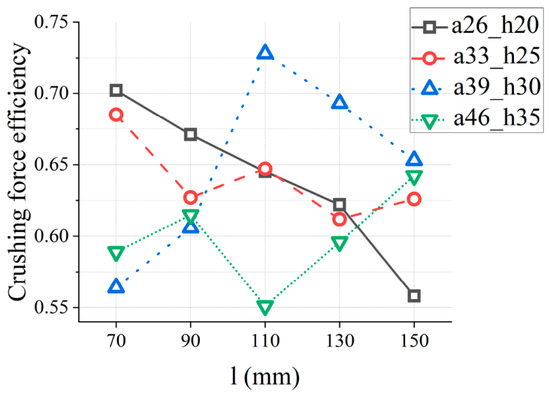
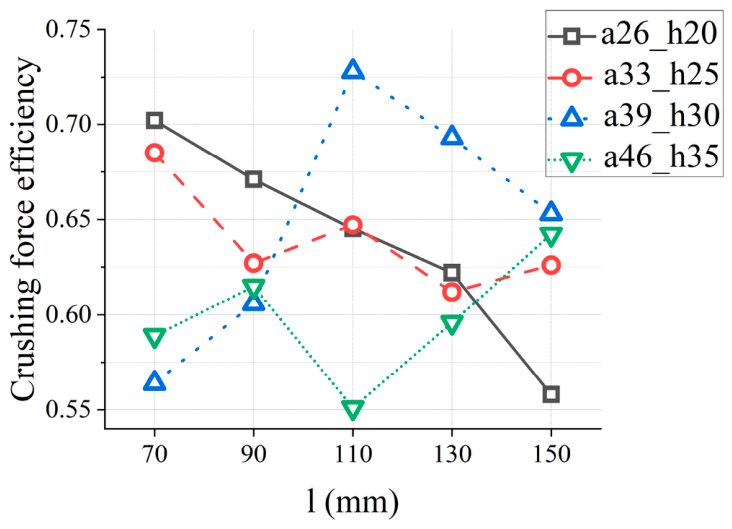
The sidewall length l of the TK models decreases from 150 mm to 70 mm, and the CFE exhibits different patterns for different model heights h, as shown in Figure 16. For the TK model with h = 20 mm, reducing l increases the CFE. In contrast, for the TK model with h = 25 mm, the CFE fluctuates between 0.6 and 0.65, showing a slight increase when the length l is reduced to 90 mm and further rising as the length decreases to 70 mm. For the TK model with h = 30 mm, the CFE initially increases as the length l decreases, reaching a maximum at 110 mm, then decreases as the length l continues to shorten. For the TK model with h = 35 mm, the highest CFE is observed at a model length l of 150 mm, while the lowest CFE is observed at 110 mm.
Figure 16.
Effect of sidewall length l on CFE for TK models at different heights h.
5. Conclusions
In this study, triangular corrugated Kirigami models (TK) were fabricated and tested experimentally. Numerical models were simulated and validated against experimental data. The parametric analysis is conducted with calibrated numerical models. Three governing geometric parameters of the triangular corrugated Kirigami models, the inclined sidewall length a, height h, and length l, and their influence on the crashworthiness of the TK models are investigated. Key performance indicators, including EA and SEA, are used to assess the TK’s performance. Some of the conclusions are as follows:
- The angle of the sidewalls α, determined by the unit height h and the inclined sidewall length a, significantly affects the crashworthiness of TK models. Findings from the parametric analysis indicate that maintaining a sidewall angle α between 40° and 65° across all height ranges consistently delivers the best crashworthiness performance.
- TK models with shorter unit length l generally exhibit higher SEA, since the vertical fold-in faces occupy a larger proportion of the structure and therefore contribute more effectively to energy dissipation. This trend holds for most configurations, with only a few exceptions (such as a39h30 and a46h35 at l = 70 mm). However, shorter units tend to promote buckling-dominated deformation, leading to lower CFE.
Although the present study provides a comprehensive evaluation of the quasi-static crushing behavior of the proposed Kirigami models, future investigations should further examine their dynamic impact response under high-velocity loading conditions.
Author Contributions
S.Z.: writing—original draft preparation, methodology, investigation, formal analysis, conceptualization, software, visualization. Y.W.: writing—review and editing, supervision, project administration, methodology, funding acquisition, conceptualization. A.U.R.: writing—review and editing, formal analysis. M.A.: writing—review and editing, supervision. S.A.: writing—review and editing, software. All authors have read and agreed to the published version of the manuscript.
Funding
This research was funded by the Natural Science Foundation of Heilongjiang Province, grant number YQ2022E035.
Data Availability Statement
Data will be made available on request.
Conflicts of Interest
The authors declare that they have no known competing financial interests or personal relationships that could have appeared to influence the work reported in this paper.
References
- Zhao, H.; Shi, G.; Li, S.; Zhang, N.; Zhuang, S.; Zhu, B. Experimental and numerical study of undersized shear panel dampers with bolted connections. Eng. Struct. 2023, 280, 115699. [Google Scholar] [CrossRef] [Scilit]
- Yan, R.; Li, Z.; Hao, H.; Chen, W. Crashworthiness analysis of new curved Kirigami corrugated structures. Mater. Des. 2025, 249, 113557. [Google Scholar] [CrossRef] [Scilit]
- Li, Z.; Wen, X.; Wen, Y.; Chen, W.; Hao, H.; Zhang, Y.; Liu, B. Crashworthiness analysis and parametric investigation on kirigami corrugated structures. Thin-Walled Struct. 2022, 181, 110136. [Google Scholar] [CrossRef] [Scilit]
- Lu, G.; Yu, T. Energy Absorption of Structures and Materials; Elsevier: Cambridge, England, 2003. [Google Scholar]
- Gao, J.; McShane, G. Energy absorbing properties of open-celled origami-inspired mechanical metamaterials. Int. J. Solids Struct. 2025, 321, 113585. [Google Scholar] [CrossRef] [Scilit]
- Li, X.; Yang, H.; Lei, H.; Lu, G. Lateral crashworthiness performance of CFRP/aluminum circular tubes with mesoscopic hybrid design. Compos. Part B Eng. 2023, 251, 110489. [Google Scholar] [CrossRef] [Scilit]
- Li, Y.; You, Z. Origami concave tubes for energy absorption. Int. J. Solids Struct. 2019, 169, 21–40. [Google Scholar] [CrossRef] [Scilit]
- Xu, X.; Zhao, Z.; Wang, W.; Tong, Z.; Zhou, Z.; Lim, C. A novel design of thin-walled energy absorption structures with local surface nanocrystallization. Thin-Walled Struct. 2021, 160, 107337. [Google Scholar] [CrossRef] [Scilit]
- Deng, Y.; Yang, Y.; Jiang, H.; Ren, Y. On lateral crashworthiness and failure mechanisms of multi-fibers hybrid composite corrugated structures with carbon, glass, Kevlar. Thin-Walled Struct. 2024, 198, 111689. [Google Scholar] [CrossRef] [Scilit]
- Li, Z.; Chen, W.; Hao, H.; Yang, Q.; Fang, R. Energy absorption of kirigami modified corrugated structure. Thin-Walled Struct. 2020, 154, 106829. [Google Scholar] [CrossRef] [Scilit]
- Li, Z.; Yang, Q.; Fang, R.; Chen, W.; Hao, H. Crushing performances of Kirigami modified honeycomb structure in three axial directions. Thin-Walled Struct. 2021, 160, 107365. [Google Scholar] [CrossRef] [Scilit]
- Li, Z.; Wen, X.; Ren, T.; Zhou, P.; Wen, Y.; Hao, H.; Chen, W. Experimental evaluation on the mitigation performance of double-layered Kirigami corrugated cladding against impact load. Int. J. Impact Eng. 2024, 187, 104917. [Google Scholar] [CrossRef] [Scilit]
- Sun, G.; Jiang, H.; Fang, J.; Li, G.; Li, Q. Crashworthiness of vertex based hierarchical honeycombs in out-of-plane impact. Mater. Des. 2016, 110, 705–719. [Google Scholar] [CrossRef] [Scilit]
- Pan, J.; Lyu, M.; Li, M.; Cai, J. In-plane dynamics crushing of a reinforced honeycomb with enhanced energy absorption. Int. J. Impact Eng. 2024, 183, 104807. [Google Scholar] [CrossRef] [Scilit]
- Hosseinpour, E.; Baharom, S.; Yadollahi, Y. Evaluation of steel shear walls behavior with sinusoidal and trapezoidal corrugated plates. Adv. Civ. Eng. 2015, 2015, 715163. [Google Scholar] [CrossRef] [Scilit]
- Fadhil, H.; Ibrahim, A.; Mahmood, M. Effect of corrugation angle and direction on the performance of corrugated steel plate shear walls. Civ. Eng. J. 2018, 4, 2667. [Google Scholar] [CrossRef] [Scilit]
- Hou, S.; Shu, C.; Zhao, S.; Liu, T.; Han, X.; Li, Q. Experimental and numerical studies on multi-layered corrugated sandwich panels under crushing loading. Compos. Struct. 2015, 126, 371–385. [Google Scholar] [CrossRef] [Scilit]
- Cao, B.; Hou, B.; Zhao, H.; Li, Y.; Liu, J. On the influence of the property gradient on the impact behavior of graded multilayer sandwich with corrugated cores. Int. J. Impact Eng. 2018, 113, 98–105. [Google Scholar] [CrossRef] [Scilit]
- Li, Z.; Chen, W.; Hao, H. Numerical study of open-top truncated pyramid folded structures with interconnected side walls against flatwise crushing. Thin-Walled Struct. 2018, 132, 537–548. [Google Scholar] [CrossRef] [Scilit]
- Li, Z.; Chen, W.; Hao, H. Crushing behaviours of folded kirigami structure with square dome shape. Int. J. Impact Eng. 2018, 115, 94–105. [Google Scholar] [CrossRef] [Scilit]
- Li, Z.; Yang, Q.; Chen, W.; Hao, H.; Matenga, C.; Huang, Z.; Fang, R. Impact response of a novel sandwich structure with Kirigami modified corrugated core. Int. J. Impact Eng. 2021, 156, 103953. [Google Scholar] [CrossRef] [Scilit]
- Ye, H.; Ma, J.; Zhou, X.; Wang, H.; You, Z. Energy absorption behaviors of pre-folded composite tubes with the full-diamond origami patterns. Compos. Struct. 2019, 221, 110904. [Google Scholar] [CrossRef] [Scilit]
- Yao, S.; Zhu, H.; Liu, M.; Li, Z.; Xu, P. Energy absorption of origami tubes with polygonal cross-sections. Thin-Walled Struct. 2020, 157, 107013. [Google Scholar] [CrossRef] [Scilit]
- Wang, H.; Zhao, D.; Jin, Y.; Wang, M.; You, Z.; Yu, G. Study of collapsed deformation and energy absorption of polymeric origami-based tubes with viscoelasticity. Thin-Walled Struct. 2019, 144, 106246. [Google Scholar] [CrossRef] [Scilit]
- Schleyer, G.; Lowak, M.; Polcyn, M.; Langdon, G. Experimental investigation of blast wall panels under shock pressure loading. Int. J. Impact Eng. 2007, 34, 1095–1118. [Google Scholar] [CrossRef] [Scilit]
- Rubino, V.; Deshpande, V.; Fleck, N. The dynamic response of clamped rectangular Y-frame and corrugated core sandwich plates. Eur. J. Mech.-A/Solids 2009, 28, 14–24. [Google Scholar] [CrossRef] [Scilit]
- Li, Z.; Wang, L.; Yan, R.; He, Y.; Hao, H.; Lin, Y.; Chen, W. Impact performance of curved double arrow and stacked Miura-ori panels. Eng. Struct. 2025, 323, 119319. [Google Scholar] [CrossRef] [Scilit]
- Rejab, M.; Cantwell, W. The mechanical behaviour of corrugated-core sandwich panels. Compos. Part B Eng. 2013, 47, 267–277. [Google Scholar] [CrossRef] [Scilit]
- Kılıçaslan, C.; Güden, M.; Odacı, İ.K.; Taşdemirci, A. Experimental and numerical studies on the quasi-static and dynamic crushing responses of multi-layer trapezoidal aluminum corrugated sandwiches. Thin-Walled Struct. 2014, 78, 70–78. [Google Scholar] [CrossRef] [Scilit]
- Tilbrook, M.; Radford, D.; Deshpande, V.; Fleck, N. Dynamic crushing of sandwich panels with prismatic lattice cores. Int. J. Solids Struct. 2007, 44, 6101–6123. [Google Scholar] [CrossRef] [Scilit]
- Yan, L.; Yu, B.; Han, B.; Chen, C.; Zhang, Q.; Lu, T. Compressive strength and energy absorption of sandwich panels with aluminum foam-filled corrugated cores. Compos. Sci. Technol. 2013, 86, 142–148. [Google Scholar] [CrossRef] [Scilit]
- Yazici, M.; Wright, J.; Bertin, D.; Shukla, A. Experimental and numerical study of foam filled corrugated core steel sandwich structures subjected to blast loading. Compos. Struct. 2014, 110, 98–109. [Google Scholar] [CrossRef] [Scilit]
- Yu, B.; Han, B.; Ni, C.; Zhang, Q.; Chen, C.; Lu, T. Dynamic crushing of all-metallic corrugated panels filled with close-celled aluminum foams. J. Appl. Mech. 2015, 82, 011006. [Google Scholar] [CrossRef] [Scilit]
- Cheng, Y.; Liu, M.; Zhang, P.; Xiao, W.; Zhang, C.; Liu, J.; Hou, H. The effects of foam filling on the dynamic response of metallic corrugated core sandwich panel under air blast loading–Experimental investigations. Int. J. Mech. Sci. 2018, 145, 378–388. [Google Scholar] [CrossRef] [Scilit]
- Wang, X.; Yu, R.-P.; Zhang, Q.-C.; Li, L.; Li, X.; Zhao, Z.-Y.; Han, B.; He, S.-Y.; Lu, T.J. Dynamic response of clamped sandwich beams with fluid-filled corrugated cores. Int. J. Impact Eng. 2020, 139, 103533. [Google Scholar] [CrossRef] [Scilit]
- Yu, R.-P.; Wang, X.; Zhang, Q.-C.; Li, L.; He, S.-Y.; Han, B.; Ni, C.-Y.; Zhao, Z.-Y.; Lu, T.J. Effects of sand filling on the dynamic response of corrugated core sandwich beams under foam projectile impact. Compos. Part B Eng. 2020, 197, 108135. [Google Scholar] [CrossRef] [Scilit]
- Gu, Z.; Wu, X.; Li, Q.; Yin, Q.; Huang, C. Dynamic compressive behaviour of sandwich panels with lattice truss core filled by shear thickening fluid. Int. J. Impact Eng. 2020, 143, 103616. [Google Scholar] [CrossRef] [Scilit]
- Ozturk, B.; Cetin, H.; Dutkiewicz, M.; Aydin, E.; Noroozinejad Farsangi, E. On the efficacy of a novel optimized tuned mass damper for minimizing dynamic responses of cantilever beams. Appl. Sci. 2022, 12, 7878. [Google Scholar] [CrossRef] [Scilit]
- Yiru, R.; Yabin, D. Core reinforcement design for improving flexural energy-absorption of corrugated sandwich composite structure. Chin. J. Aeronaut. 2021, 34, 510–522. [Google Scholar] [CrossRef] [Scilit]
- Tran, T. Crushing and theoretical analysis of multi-cell thin-walled triangular tubes under lateral loading. Thin-Walled Struct. 2017, 115, 205–214. [Google Scholar] [CrossRef] [Scilit]
- Zeb, S.; Zhang, T.; Wang, Y.; Rahman, A.U. Enhancing crashworthiness of triangular corrugated structures through Kirigami-inspired modifications: Experimental and numerical studies. In Structures; Elsevier: Amsterdam, The Netherlands, 2026; p. 111806. [Google Scholar]
- Zhang, Y.; Lu, M.; Wang, C.H.; Sun, G.; Li, G. Out-of-plane crashworthiness of bio-inspired self-similar regular hierarchical honeycombs. Compos. Struct. 2016, 144, 1–13. [Google Scholar] [CrossRef] [Scilit]
- Fathers, R.; Gattas, J.; You, Z. Quasi-static crushing of eggbox, cube, and modified cube foldcore sandwich structures. Int. J. Mech. Sci. 2015, 101, 421–428. [Google Scholar] [CrossRef] [Scilit]
- Baroutaji, A.; Gilchrist, M.; Smyth, D.; Olabi, A.-G. Analysis and optimization of sandwich tubes energy absorbers under lateral loading. Int. J. Impact Eng. 2015, 82, 74–88. [Google Scholar] [CrossRef] [Scilit]
- Zhu, Z.; Cai, S.; Si, G.; Yu, J.; Zhu, H.; Zheng, Y. The supporting structure strength analysis of indexing stamping machine for manufacturing thin-walled inverting steel tubes. In Proceedings of the Journal of Physics: Conference Series; IOP Publishing: Bristol, UK, 2024; p. 012011. [Google Scholar]

Disclaimer/Publisher’s Note: The statements, opinions and data contained in all publications are solely those of the individual author(s) and contributor(s) and not of MDPI and/or the editor(s). MDPI and/or the editor(s) disclaim responsibility for any injury to people or property resulting from any ideas, methods, instructions or products referred to in the content. |
© 2026 by the authors. Licensee MDPI, Basel, Switzerland. This article is an open access article distributed under the terms and conditions of the Creative Commons Attribution (CC BY) license.