Exploration of Early-Stage Floor Plan Design for University Research Buildings Based on a Conditional Diffusion Model

Abstract
1. Introduction
- 1.
- This study constructs a non-latent-space conditional diffusion model architecture, enabling precise constraints on the spatial topology and irregular boundaries of architectural floor plans.
- 2.
- This study proposes a condition control strategy that maps macro-level functional area indicators to micro-level pixel generation guidance, thereby establishing a connection between quantitative indicators and floor plan generation.
- 3.
- For university research buildings with complex functions, this study proposes an AI-assisted design method that combines controllability and design inspiration, providing a new technical pathway for early-stage floor plan design for university research buildings.
2. Background
2.1. Early-Stage Floor Plan Design for University Research Buildings
2.2. Generative Artificial Intelligence-Assisted Architectural Floor Plan Design
2.3. Diffusion Model-Assisted Architectural Floor Plan Design
3. Materials and Methods
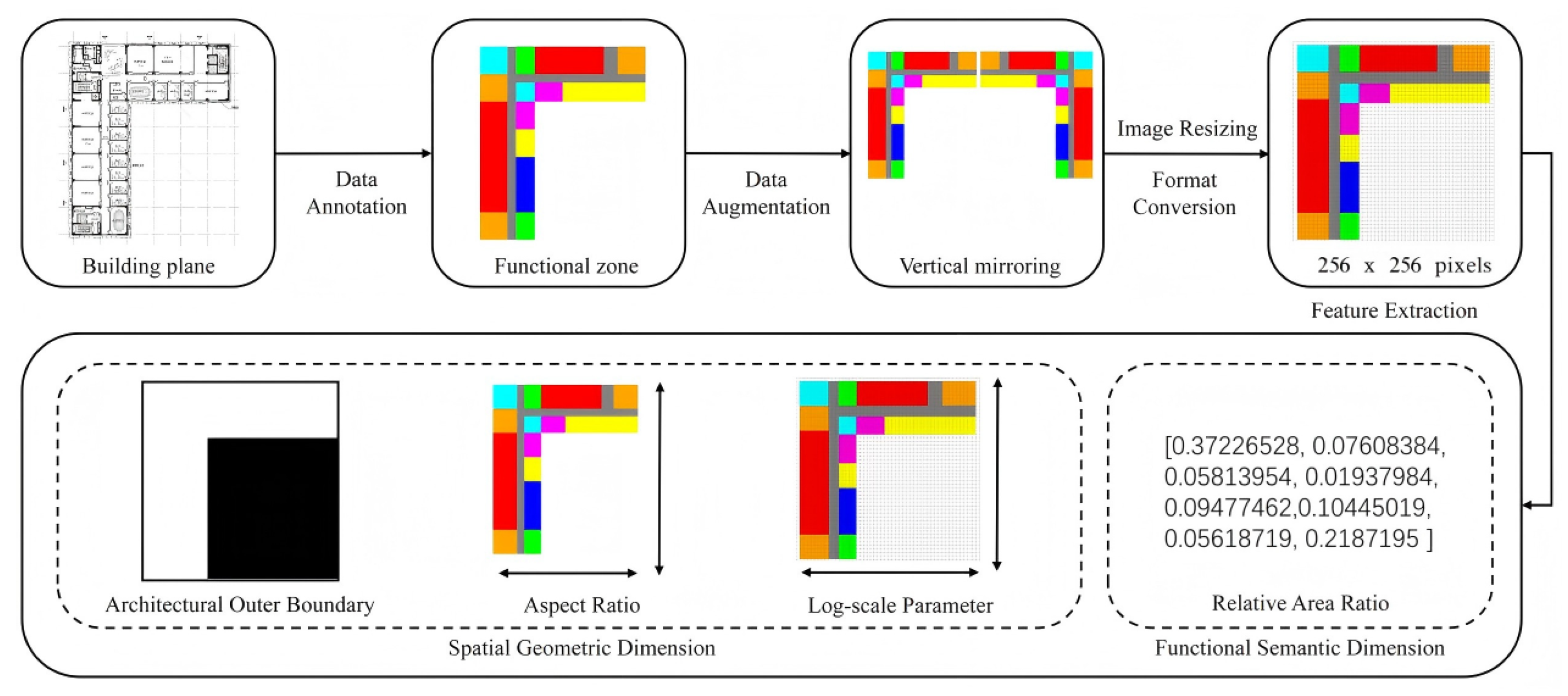
3.1. Data Preprocessing
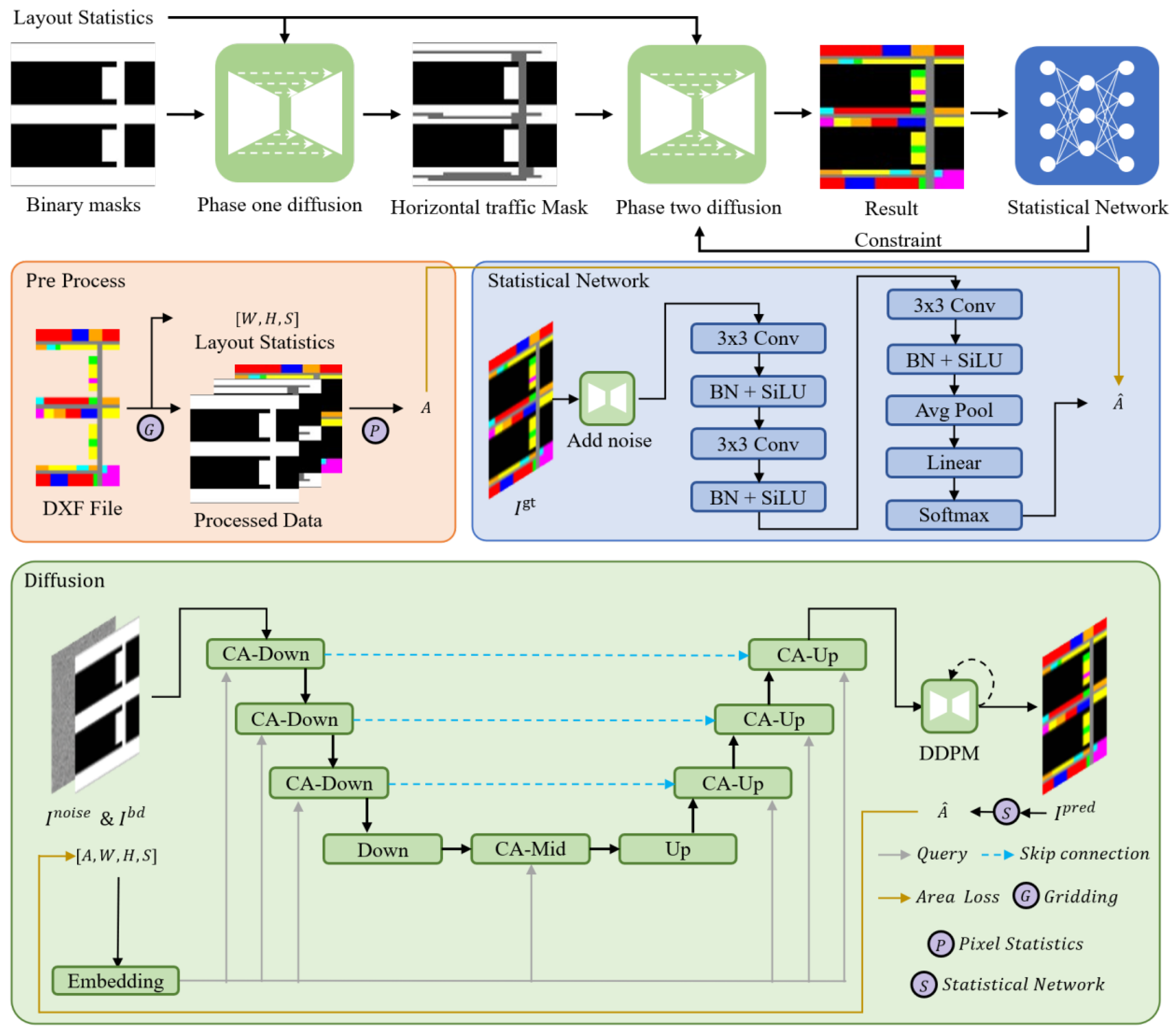
3.2. Conditional Diffusion Model
3.3. Two-Stage Layout-Generation Framework
3.4. Explicit Constraint Guided by the Statistic Network
4. Experimental Results
4.1. Model Training
4.1.1. Training Samples
4.1.2. Training Settings
4.2. Experimental Testing
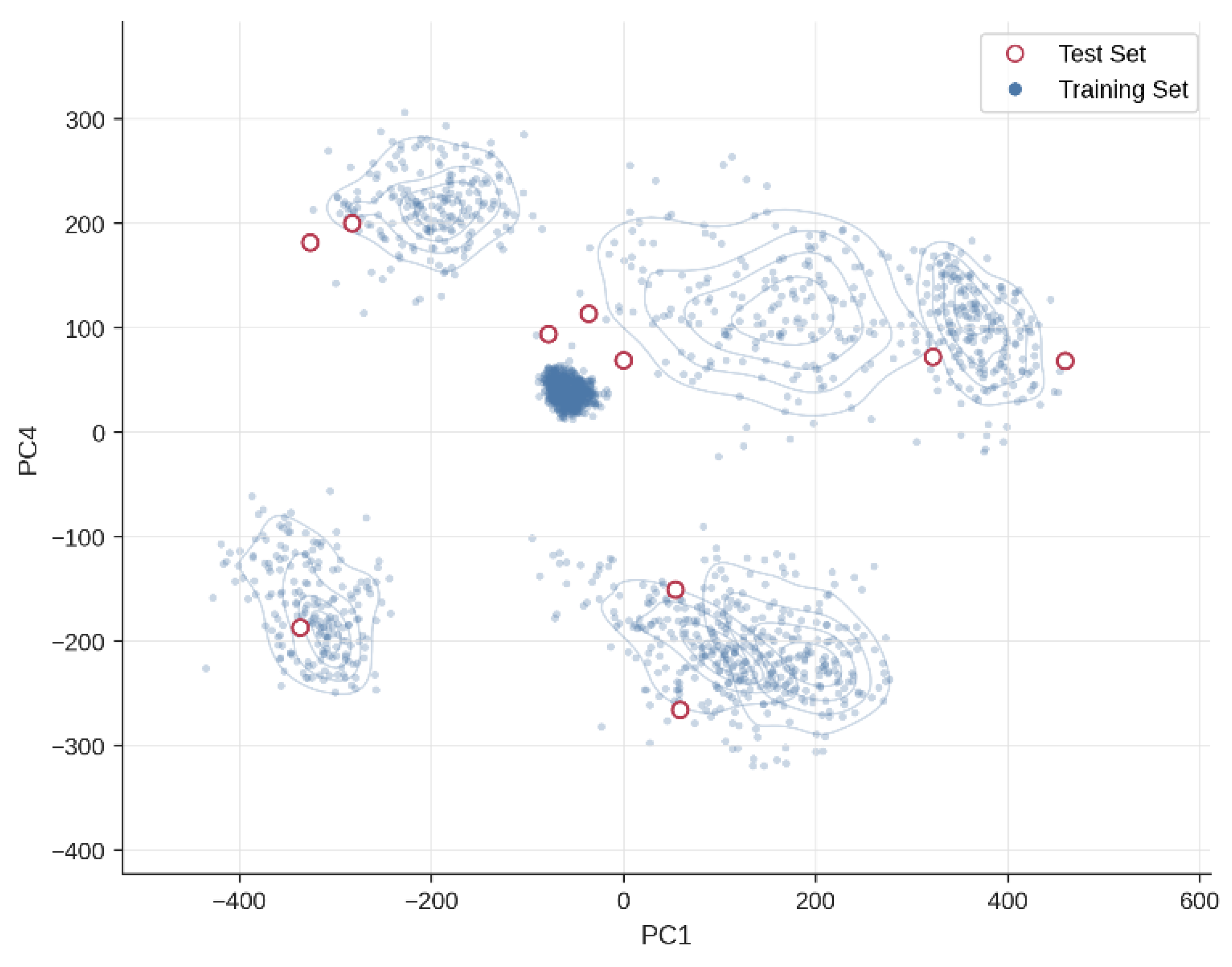
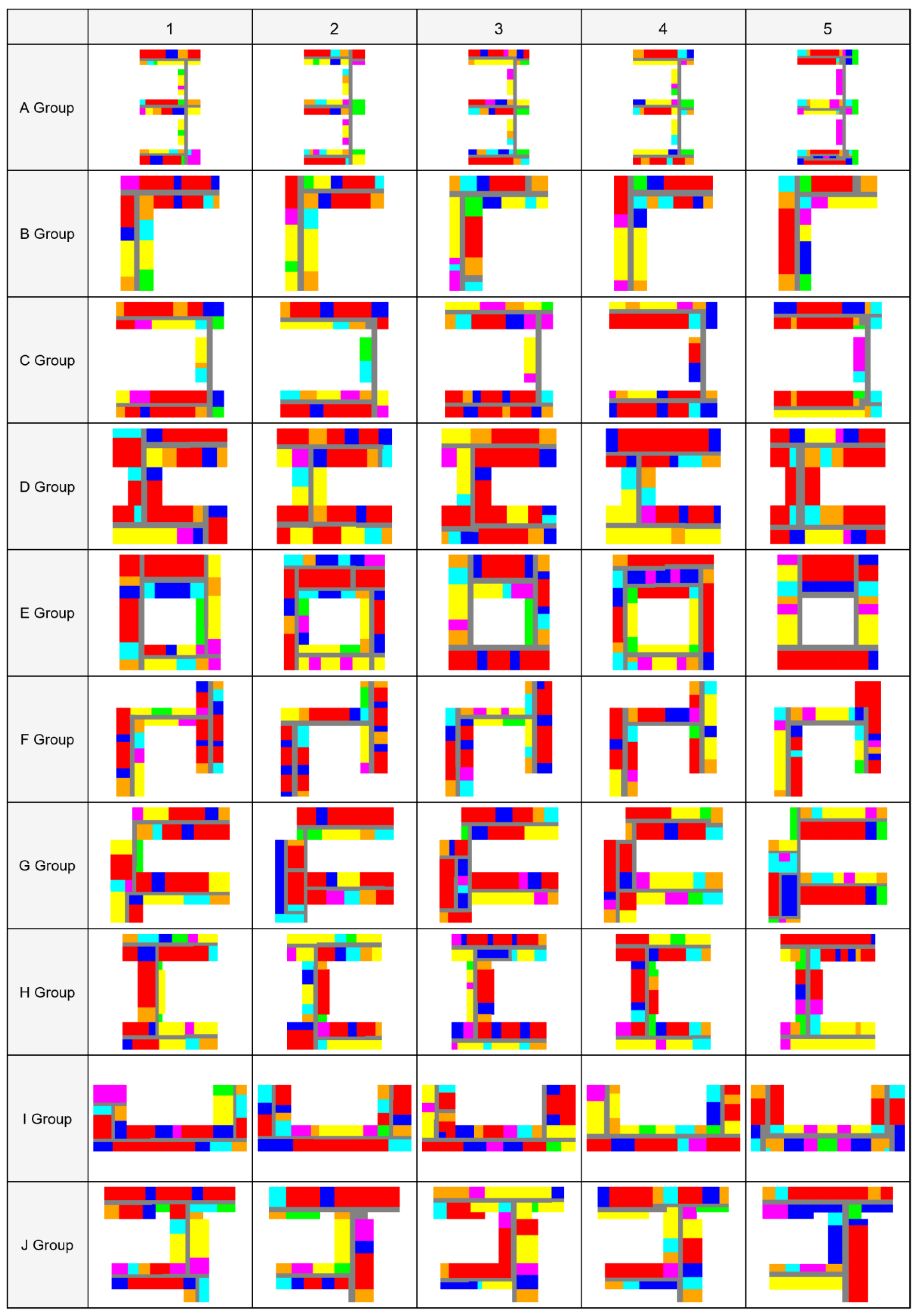
4.2.1. Test Set
4.2.2. Evaluation Metrics
- (1)
- Regional Area Error
- (2)
- Boundary Matching Degree
- (3)
- Spatial Connectivity
- (4)
- Success Rate
- (5)
- Fréchet Inception Distance (FID)
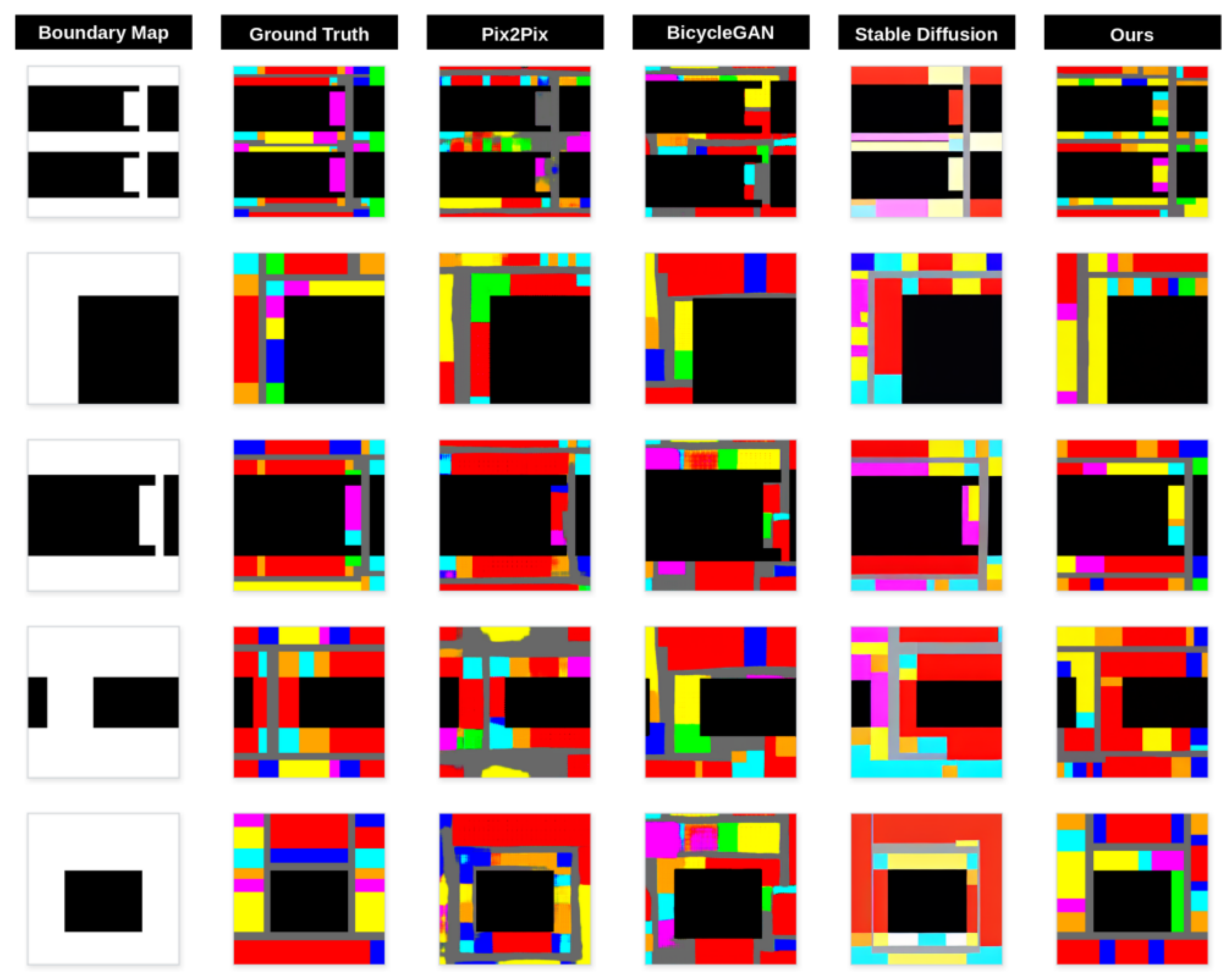
4.3. Model Comparison Experiment
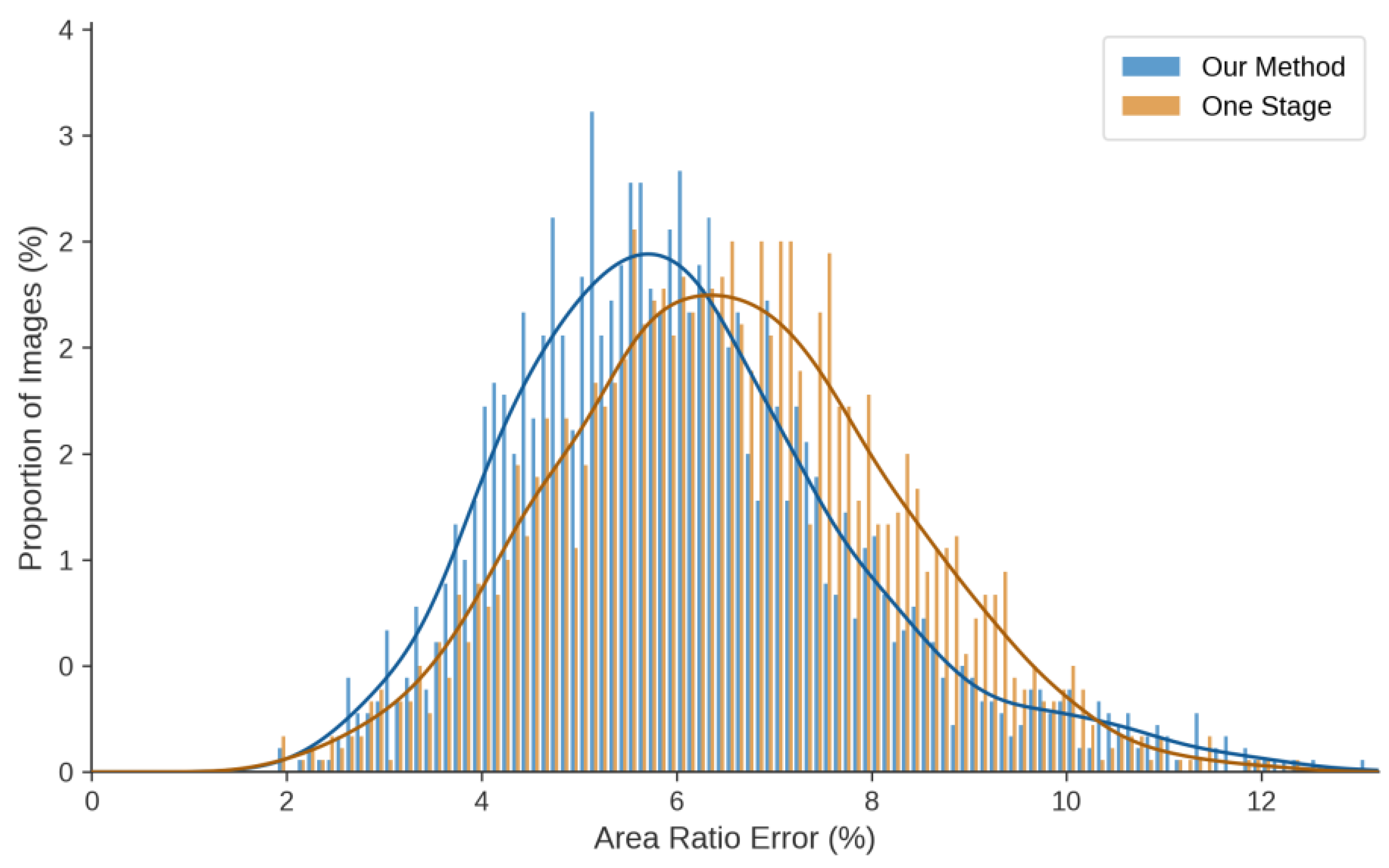
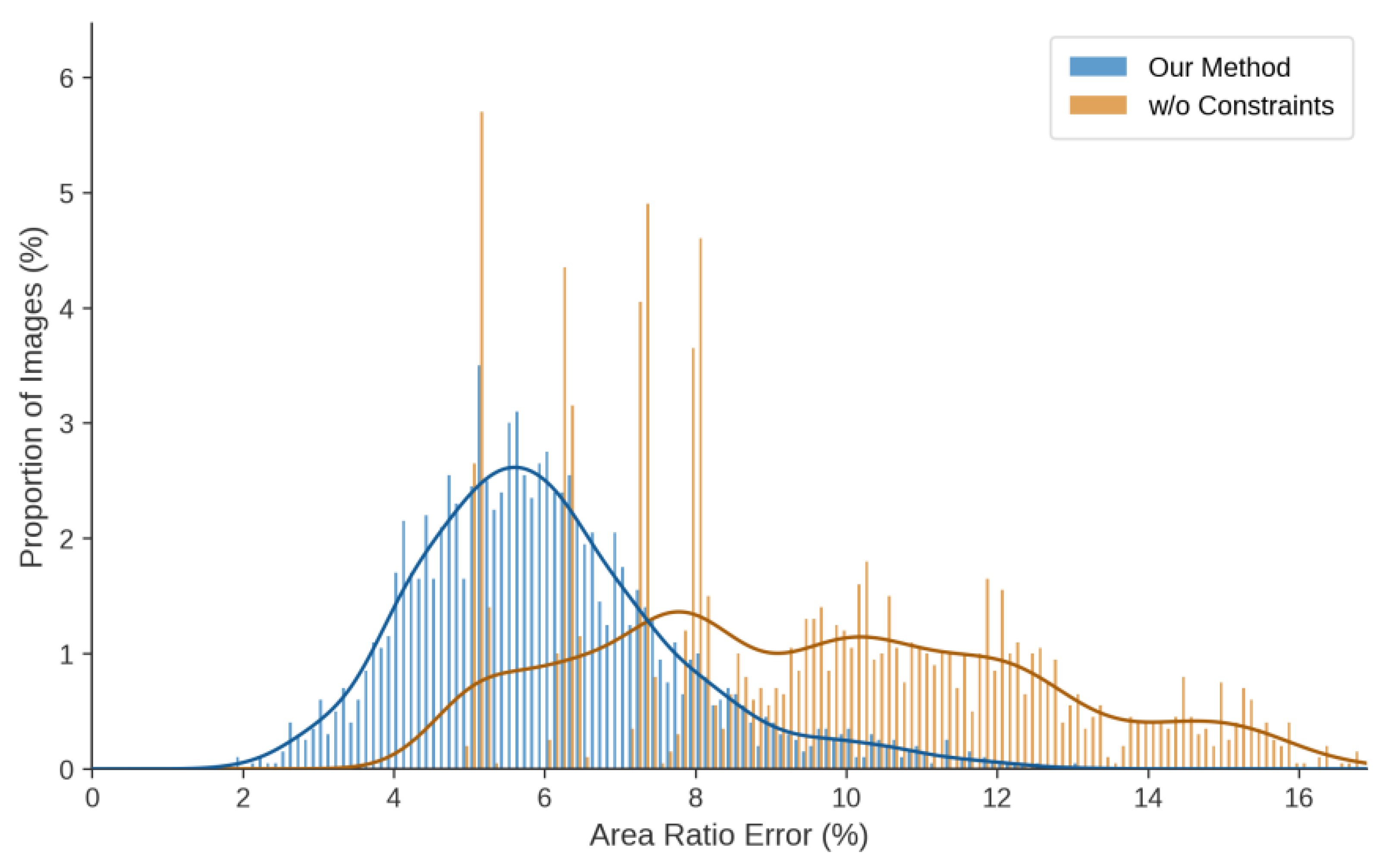
4.4. Ablation Experiment
4.4.1. Verification of the Two-Stage Generation Mechanism
4.4.2. Verification of the Explicit Statistical Constraint
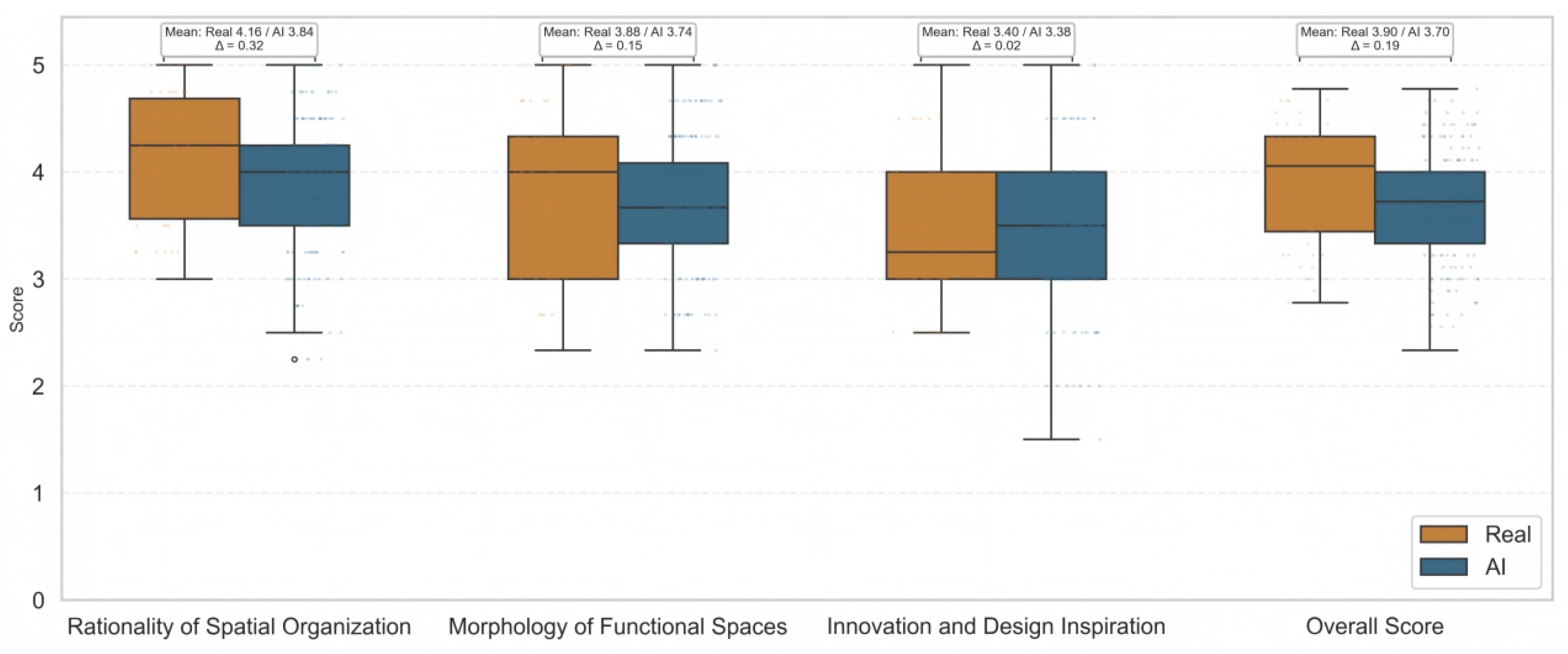
4.5. Double-Blind Evaluation Experiment
4.5.1. Experimental Settings
4.5.2. Comprehensive Analysis of Primary Dimensions
4.5.3. Sub-Indicator Analysis
4.5.4. Analysis of Influencing Factors Related to Building Attributes
5. Discussion
5.1. Interpretation of Model Comparison Results
5.2. Interpretation of Ablation Results
5.3. Analysis of Double-Blind Evaluation Results
5.4. Scope and Limitations of the Evaluation Framework
6. Conclusions
Author Contributions
Funding
Institutional Review Board Statement
Informed Consent Statement
Data Availability Statement
Acknowledgments
Conflicts of Interest
Appendix A

| Laboratory Building Category | Laboratory Type | Basic Laboratory Configuration |
|---|---|---|
| Chemical & Materials Sciences | Basic chemistry laboratory | Inorganic chemistry laboratory; organic chemistry laboratory; analytical chemistry laboratory; physical chemistry laboratory. |
| Materials science and engineering laboratory | Materials synthesis and preparation laboratory; materials characterization and testing laboratory; polymer materials laboratory; nanomaterials laboratory. | |
| Earth & Environmental Sciences | Geomaterial analysis laboratory | Rock and mineral sample preparation and analysis laboratory; isotope geochemistry laboratory; micro-area analysis laboratory. |
| Environmental science laboratory | Environmental chemistry analysis laboratory; environmental biology and ecology laboratory; environmental monitoring and simulation laboratory. | |
| Geology and geography laboratory | General geology and mineralogy laboratory; structural geology laboratory; remote sensing and geographic information systems laboratory. | |
| Physical Sciences | Basic physics laboratory | Mechanics laboratory; thermodynamics laboratory; electromagnetics laboratory; optics laboratory. |
| Engineering & Technology | Electronics and communication laboratory | Microelectronics and integrated circuits laboratory; embedded systems and circuit design laboratory; radio-frequency and microwave laboratory; communication networks laboratory. |
| Optoelectronics and precision instrument laboratory | Laser technology laboratory; precision measurement laboratory; optical fiber communication laboratory. | |
| Control and automation laboratory | Automatic control principles laboratory; sensor laboratory. |
| Laboratory Building Category | Number of Samples |
|---|---|
| Chemical & Materials Sciences | 269 |
| Earth & Environmental Sciences | 59 |
| Physical Sciences | 105 |
| Engineering & Technology | 167 |
| University or Campus | Number of Samples |
|---|---|
| Zhejiang University Zijingang Campus | 52 |
| Zhejiang University Yuquan Campus | 28 |
| Affiliated units of Zhejiang University, including Zhejiang University International School of Medicine, Ningbo Campus, Haining International Campus, and Zhejiang University International Innovation Institute | 168 |
| Zhejiang Sci-Tech University | 34 |
| Hangzhou Dianzi University | 31 |
| Zhejiang Chinese Medical University | 27 |
| Westlake University | 21 |
| Zhejiang Normal University | 19 |
| Zhejiang A&F University | 17 |
| Ningbo University | 13 |
| Anhui University | 27 |
| Northeastern University | 26 |
| China University of Mining and Technology | 19 |
| Guangdong Medical University | 19 |
| Shandong Normal University | 16 |
| Dalian University of Technology | 7 |
| Xidian University | 6 |
| Other universities with fewer than five cases | 70 |
References
- Lawson, B. How Designers Think: The Design Process Demystified, 4th ed.; Routledge: London, UK, 2005. [Google Scholar]
- Mitchell, W.J. The Logic of Architecture: Design, Computation, and Cognition; MIT Press: Cambridge, MA, USA, 1990. [Google Scholar]
- Oxman, R. Theory and design in the first digital age. Des. Stud. 2006, 27, 229–265. [Google Scholar] [CrossRef]
- Licklider, J.C.R. Man-computer symbiosis. IRE Trans. Hum. Factors Electron. 1960, HFE-1, 4–11. [Google Scholar] [CrossRef]
- Eastman, C.; Teicholz, P.; Sacks, R.; Liston, K. BIM Handbook: A Guide to Building Information Modeling for Owners, Managers, Designers, Engineers and Contractors, 2nd ed.; John Wiley & Sons: Hoboken, NJ, USA, 2011. [Google Scholar]
- Terzidis, K. Algorithmic Architecture; Architectural Press: Oxford, UK, 2006. [Google Scholar]
- Schumacher, P. Parametricism: A new global style for architecture and urban design. Archit. Des. 2009, 79, 14–23. [Google Scholar] [CrossRef]
- Schumacher, P. The Autopoiesis of Architecture: A New Framework for Architecture; John Wiley & Sons: Chichester, UK, 2011. [Google Scholar]
- Albukhari, I.N. The role of artificial intelligence (AI) in architectural design: A systematic review of emerging technologies and applications. J. Umm Al-Qura Univ. Eng. Archit. 2025, 16, 1457–1476. [Google Scholar] [CrossRef]
- Chaillou, S. Artificial Intelligence and Architecture: From Research to Practice; De Gruyter: Berlin, Germany, 2022. [Google Scholar] [CrossRef]
- Yuan, F.; Xu, X.; Wang, Y. Towards the era of generative artificial intelligence augmented design. Archit. J. 2023, 10, 14–20. [Google Scholar]
- Dhariwal, P.; Nichol, A. Diffusion models beat GANs on image synthesis. Proc. Adv. Neural Inf. Process. Syst. 2021, 34, 8780–8794. [Google Scholar]
- Huang, W.; Zheng, H. Architectural drawings recognition and generation through machine learning. In Proceedings of the 38th Annual Conference of the Association for Computer Aided Design in Architecture (ACADIA): Re/Calibration: On Imprecision and Infidelity, Mexico City, Mexico, 18–20 October 2018; pp. 156–165. [Google Scholar] [CrossRef]
- Goldstein, R.N. Architectural design and the collaborative research environment. Cell 2006, 127, 243–246. [Google Scholar] [CrossRef]
- Blackwell, B. The architectures of secrecy: Negotiating openness and privacy in buildings of science and technology. Sci. Technol. Hum. Values 2025, 50, 1072–1103. [Google Scholar] [CrossRef]
- Sanni-Anibire, M.O.; Hassanain, M.A.; Mahmoud, A.S.; Al-Hammad, A.-M. An evaluation of the functional performance of research and academic laboratories using the space syntax approach. Int. J. Build. Pathol. Adapt. 2018, 36, 516–528. [Google Scholar] [CrossRef]
- Wang, G.; Zhang, Y.; Wang, W. Evaluating the performance of informal learning spaces in higher education: An integrated methodological framework combining Space Syntax and Post-Occupancy Evaluation. J. Asian Archit. Build. Eng. 2026, 25, 1–20. [Google Scholar] [CrossRef]
- Zhang, X.; Cui, T. Evolution process of scientific space: Spatial analysis of three groups of laboratories in history (16th–20th century). Buildings 2022, 12, 1909. [Google Scholar] [CrossRef]
- Hammadamin, A.B.; Nordin, J.; Mustafa, F.A. Interpretation of space syntax in higher education: A study of functional efficiency in architecture schools in Erbil. Sustainability 2024, 16, 11237. [Google Scholar] [CrossRef]
- Ajtayné Károlyfi, K.; Szép, J. A parametric BIM framework to conceptual structural design for assessing the embodied environmental impact. Sustainability 2023, 15, 11990. [Google Scholar] [CrossRef]
- Hong, S.W.; Lee, J.; Lee, J.K. Human behaviour simulation for promoting usefulness and user-centric values in parametric design. Autom. Constr. 2024, 162, 105386. [Google Scholar] [CrossRef]
- Li, C.; Zhang, T.; Du, X.; Zhang, Y.; Xie, H. Generative AI models for different steps in architectural design: A literature review. Front. Archit. Res. 2025, 14, 759–783. [Google Scholar] [CrossRef]
- Iqbal, K.; Rafique, A.; Qaisar, S.; Tabassum, M. Advancements and challenges in the development of generative adversarial network (GANs) for deep learning. Discov. Netw. 2025, 1, 11. [Google Scholar] [CrossRef]
- Wang, S.; Zeng, W.; Chen, X.; Ye, Y.; Qiao, Y.; Fu, C.-W. ActFloor-GAN: Activity-guided adversarial networks for human-centric floorplan design. IEEE Trans. Vis. Comput. Graph. 2023, 29, 1610–1624. [Google Scholar] [CrossRef]
- Hu, R.; Huang, Z.; Tang, Y.; van Kaick, O.; Zhang, H.; Huang, H. Graph2Plan: Learning floorplan generation from layout graphs. ACM Trans. Graph. 2020, 39, 118. [Google Scholar] [CrossRef]
- Dong, S.; Wang, W.; Li, W.; Lin, K.; Gao, J. Vectorization of floor plans based on edge GAN. Information 2021, 12, 206. [Google Scholar] [CrossRef]
- Upadhyay, A.; Dubey, A.; Bhardwaj, N.; Kuriakose, S.M. CIGMA: Automated 3D house layout generation through generative models. In Proceedings of the 7th Joint International Conference on Data Science & Management of Data (11th ACM IKDD CODS and 29th COMAD), Bangalore, India, 4–7 January 2024; pp. 542–546. [Google Scholar] [CrossRef]
- Isola, P.; Zhu, J.-Y.; Zhou, T.; Efros, A.A. Image-to-image translation with conditional adversarial networks. In Proceedings of the IEEE Conference on Computer Vision and Pattern Recognition, Honolulu, HI, USA, 21–26 July 2017; pp. 1125–1134. [Google Scholar] [CrossRef]
- Nauata, N.; Chang, K.-H.; Cheng, C.-Y.; Mori, G.; Furukawa, Y. House-GAN: Relational generative adversarial networks for graph-constrained house layout generation. In Proceedings of the European Conference on Computer Vision, Glasgow, UK, 23–28 August 2020; pp. 162–177. [Google Scholar] [CrossRef]
- Brooks, T.; Holynski, A.; Efros, A.A. InstructPix2Pix: Learning to follow image editing instructions. In Proceedings of the IEEE/CVF Conference on Computer Vision and Pattern Recognition, Vancouver, BC, Canada, 18–22 June 2023; pp. 18392–18402. [Google Scholar] [CrossRef]
- Nauata, N.; Hosseini, S.; Chang, K.-H.; Chu, H.; Cheng, C.-Y.; Furukawa, Y. House-GAN++: Generative adversarial layout refinement network towards intelligent computational agent for professional architects. In Proceedings of the IEEE/CVF Conference on Computer Vision and Pattern Recognition, Virtual, 19–25 June 2021; pp. 13632–13641. [Google Scholar]
- Ye, X.; Du, J.; Ye, Y. MasterplanGAN: Facilitating the smart rendering of urban master plans via generative adversarial networks. Environ. Plan. B Urban Anal. City Sci. 2022, 49, 794–814. [Google Scholar] [CrossRef]
- Upadhyay, A.; Dubey, A.; Arora, V.; Kuriakose, S.M. FLNet: Graph constrained floor layout generation. In Proceedings of the 2022 IEEE International Conference on Multimedia and Expo Workshops, Taipei, Taiwan, 18–22 July 2022; pp. 1–6. [Google Scholar] [CrossRef]
- Kakooee, R.; Dillenburger, B. Reimagining space layout design through deep reinforcement learning. J. Comput. Des. Eng. 2024, 11, 43–55. [Google Scholar] [CrossRef]
- Wang, X.-Y.; Liu, Y.; Zhang, K. A graph grammar approach to the design and validation of floor plans. Comput. J. 2020, 63, 137–150. [Google Scholar] [CrossRef]
- Luo, G.; Zhou, X.; Liao, Y.; Ding, Y.; Liu, J.; Xia, Y.; Qi, H. Automated residential bubble diagram generation based on dual-branch graph neural network and variational encoding. Appl. Sci. 2025, 15, 4490. [Google Scholar] [CrossRef]
- Meselhy, A.; Almalkawi, A. A review of artificial intelligence methodologies in computational automated generation of high performance floorplans. npj Clean. Energy 2025, 1, 2. [Google Scholar] [CrossRef]
- Zeng, P.; Yin, J.; Zhang, M.; Li, J.; Zhang, Y.; Lu, S. Unified residential floor plan generation with multimodal inputs. Autom. Constr. 2025, 178, 106408. [Google Scholar] [CrossRef]
- Qiu, Z.; Liu, J.; Wu, Y.; Liu, P.; Qi, H.; Liang, H.; Xia, Y. LLM-based framework for automated and customized floor plan design. Autom. Constr. 2025, 180, 106512. [Google Scholar] [CrossRef]
- Barsha, F.L.; Eberle, W. An in-depth review and analysis of mode collapse in generative adversarial networks. Mach. Learn. 2025, 114, 141. [Google Scholar] [CrossRef]
- Nichol, A.Q.; Dhariwal, P. Improved denoising diffusion probabilistic models. In Proceedings of the 38th International Conference on Machine Learning, Virtual, 18–24 July 2021; pp. 8162–8171. [Google Scholar]
- Liu, R.; Wu, R.; Van Hoorick, B.; Tokmakov, P.; Zakharov, S.; Vondrick, C. Zero-1-to-3: Zero-shot one image to 3D object. In Proceedings of the IEEE/CVF International Conference on Computer Vision, Paris, France, 1–6 October 2023; pp. 9264–9275. [Google Scholar] [CrossRef]
- Shabani, M.A.; Hosseini, S.; Furukawa, Y. HouseDiffusion: Vector floorplan generation via a diffusion model with discrete and continuous denoising. In Proceedings of the IEEE/CVF Conference on Computer Vision and Pattern Recognition, Vancouver, BC, Canada, 18–22 June 2023; pp. 5466–5475. [Google Scholar] [CrossRef]
- Huang, S.; Wang, Z.; Li, P.; Jia, B.; Liu, T.; Zhu, Y.; Liang, W.; Zhu, S.-C. Diffusion-based generation, optimization, and planning in 3D scenes. In Proceedings of the IEEE/CVF Conference on Computer Vision and Pattern Recognition, Vancouver, BC, Canada, 18–22 June 2023; pp. 16750–16761. [Google Scholar] [CrossRef]
- Gueze, A.; Ospici, M.; Rohmer, D.; Cani, M.-P. Floor plan reconstruction from sparse views: Combining graph neural network with constrained diffusion. In Proceedings of the IEEE/CVF International Conference on Computer Vision Workshops, Paris, France, 2–6 October 2023; pp. 1583–1592. [Google Scholar] [CrossRef]
- Zhang, H.; Zhang, R. Generating accessible multi-occupancy floor plans with fine-grained control using a diffusion model. Autom. Constr. 2025, 177, 106332. [Google Scholar] [CrossRef]
- Zeng, P.; Gao, W.; Yin, J.; Xu, P.; Lu, S. Residential floor plans: Multi-conditional automatic generation using diffusion models. Autom. Constr. 2024, 162, 105374. [Google Scholar] [CrossRef]
- Hu, E.J.; Shen, Y.; Wallis, P.; Allen-Zhu, Z.; Li, Y.; Wang, S.; Wang, L.; Chen, W. LoRA: Low-rank adaptation of large language models. arXiv 2021, arXiv:2106.09685. [Google Scholar]
- Zeng, P.; Gao, W.; Li, J.; Yin, J.; Chen, J.; Lu, S. Automated residential layout generation and editing using natural language and images. Autom. Constr. 2025, 174, 106133. [Google Scholar] [CrossRef]
- Wang, S.; Pajarola, R. Eliminating rasterization: Direct vector floor plan generation with DiffPlanner. IEEE Trans. Vis. Comput. Graph. 2025, 31, 7906–7922. [Google Scholar] [CrossRef]
- Knechtel, J.; Rottmann, P.; Haunert, J.-H.; Dehbi, Y. Semantic floorplan segmentation using self-constructing graph networks. Autom. Constr. 2024, 166, 105649. [Google Scholar] [CrossRef]
- Hassanain, M.A.; Sanni-Anibire, M.O.; Mahmoud, A.S.; Ahmed, W. Design guidelines for the functional efficiency of laboratory facilities. Archit. Eng. Des. Manag. 2020, 16, 115–130. [Google Scholar] [CrossRef]
- Ho, J.; Jain, A.; Abbeel, P. Denoising diffusion probabilistic models. In Proceedings of the Advances in Neural Information Processing Systems, Virtual, 6–12 December 2020; Volume 33, pp. 6840–6851. [Google Scholar]
- Ronneberger, O.; Fischer, P.; Brox, T. U-Net: Convolutional networks for biomedical image segmentation. In Proceedings of the Medical Image Computing and Computer-Assisted Intervention, Munich, Germany, 5–9 October 2015; pp. 234–241. [Google Scholar] [CrossRef]
- Rombach, R.; Blattmann, A.; Lorenz, D.; Esser, P.; Ommer, B. High-resolution image synthesis with latent diffusion models. In Proceedings of the IEEE/CVF Conference on Computer Vision and Pattern Recognition, New Orleans, LA, USA, 18–24 June 2022; pp. 10684–10695. [Google Scholar] [CrossRef]
- Para, W.; Guerrero, P.; Kelly, T.; Guibas, L.J.; Wonka, P. Generative layout modeling using constraint graphs. In Proceedings of the IEEE/CVF International Conference on Computer Vision, Montreal, QC, Canada, 10–17 October 2021; pp. 6690–6700. [Google Scholar] [CrossRef]
- He, F.; Huang, Y.; Wang, H. iPLAN: Interactive and procedural layout planning. In Proceedings of the IEEE/CVF Conference on Computer Vision and Pattern Recognition, New Orleans, LA, USA, 18–24 June 2022; pp. 7793–7802. [Google Scholar]
- Li, L.; Su, X.; Lin, H.; Han, H.; Fan, C.; Zhang, Z.; Yue, H. ChatAssistDesign: A language-interactive framework for iterative vector floorplan generation via conditional diffusion. Inf. Fusion 2026, 130, 104091. [Google Scholar] [CrossRef]
- Spearman, C. The proof and measurement of association between two things. Am. J. Psychol. 1904, 15, 72–101. [Google Scholar] [CrossRef]
- Mann, H.B.; Whitney, D.R. On a test of whether one of two random variables is stochastically larger than the other. Ann. Math. Stat. 1947, 18, 50–60. [Google Scholar] [CrossRef]


| Functional Zone | Functional Space | RGB | Color |
|---|---|---|---|
| Research laboratory area | Specialized laboratories, general laboratories, research studios, etc. | (255, 0, 0) |  |
| Laboratory support area | Preparation rooms, precision instrument rooms, cultivation rooms, laboratory animal rooms, greenhouses, darkrooms, shower rooms, disinfection rooms, laboratory equipment rooms, sample and reagent storage rooms, storage rooms, etc. | (0, 0, 255) |  |
| Research support area | Library and information rooms, academic lecture halls, meeting rooms, research exhibition spaces, etc. | (255, 0, 255) |  |
| Open communication area | Open spaces that promote communication among researchers, such as atriums, rest platforms, lounges, cafes, etc. | (0, 255, 0) |  |
| Public service area | Supporting rooms and equipment for water, electricity, gas, oil, refrigeration, air conditioning, communication, fire protection, heating systems, and restrooms, etc. | (0,255,255) |  |
| Research office area | Research offices, administrative offices, reception rooms, administrative storage rooms, etc. | (255, 255, 0) |  |
| Horizontal transportation area | Corridors, etc. | (130, 130, 130) |  |
| Vertical transportation area | Stairwells, elevator lobbies, etc. | (255, 165, 0) |  |
| Group | East–West Span (m) | North–South Span (m) | Aspect Ratio | Building Area (m2) | Discipline Type |
|---|---|---|---|---|---|
| 1 | 80.0 | 150.0 | 0.53 | 5687.6 | Multi-discipline |
| 2 | 50.0 | 58.0 | 0.86 | 1552.7 | Single-discipline |
| 3 | 80.5 | 85.0 | 0.95 | 3634.8 | Multi-discipline |
| 4 | 57.6 | 54.0 | 1.07 | 2239.6 | Single-discipline |
| 5 | 45.0 | 51.3 | 0.88 | 1832.4 | Single-discipline |
| 6 | 58.0 | 63.4 | 0.91 | 1766.6 | Single-discipline |
| 7 | 84.0 | 90.5 | 0.93 | 5219.1 | Multi-discipline |
| 8 | 57.0 | 69.0 | 0.83 | 2461.5 | Multi-discipline |
| 9 | 82.8 | 36.0 | 2.30 | 1970.0 | Multi-discipline |
| 10 | 61.2 | 54.0 | 1.13 | 1867.8 | Single-discipline |
| Model | FID | Building Boundary IoU | Horizontal Transportation Connectivity |
|---|---|---|---|
| Pix2pix | 137.4 | 97.6% | 44.3% |
| BicycleGAN | 107.2 | 96.2% | 47.2% |
| Stable Diffusion | 62.4 | 98.3% | 82.5% |
| Our methods | 50.3 | 99.9% | 89.8% |
| Model | FID | Area Error | Building Boundary IoU | Horizontal Transportation Connectivity | Success Rate |
|---|---|---|---|---|---|
| Single-stage model | 52.1 | 6.5% | 99.9% | 85.1% | 2.3% |
| Two-stage model | 50.3 | 5.9% | 99.9% | 89.8% | 18.2% |
| Model | FID | Area Error | Building Boundary IoU | Horizontal Transportation Connectivity | Success Rate |
|---|---|---|---|---|---|
| w/o statistic network | 55.3 | 9.4% | 99.9% | 82.1% | 1.6% |
| Proposed method | 50.3 | 5.9% | 99.9% | 89.8% | 18.2% |
| Evaluation Dimension | Sub-Indicator | Evaluation Criterion (Five-Point Scale) |
|---|---|---|
| Spatial organization rationality | Functional layout logic | Evaluates whether the layout positions of the eight functional zones conform to the research workflow. |
| Functional-zone boundary smoothness | Evaluates whether the edges of functional color blocks are clear and free from fragmentation and whether there is adhesion between rooms. | |
| Circulation connectivity | Evaluates whether the horizontal transportation space effectively connects all functional spaces and whether the vertical transportation space satisfies evacuation requirements. | |
| Circulation rationality | Evaluates whether the research circulation, including people, materials, and experimental paths, is concise and smooth. | |
| Functional spatial form | Spatial scale appropriateness | Evaluates whether the scale of each room conforms to its disciplinary attributes and whether the spatial scale has real physical meaning. |
| Spatial regularity | Evaluates whether room shapes are regular and whether deformed spaces or overly fragmented invalid pixel regions exist. | |
| Daylighting and ventilation potential | Examines whether spaces with environmental requirements, such as office and laboratory spaces, are reasonably arranged along external walls, atriums, or other interfaces with daylighting and ventilation conditions. | |
| Innovation and inspiration | Layout novelty | Evaluates whether the scheme provides a floor plan arrangement different from conventional routine designs and whether open communication areas show distinctive spatial organization. |
| Design inspiration | Evaluates whether the generated result can break designers’ habitual thinking and provide a new inspirational perspective or design starting point in the scheme-conception stage. | |
| Potential for design development | Evaluates the professional maturity of the initial floor plan and determines whether it has potential for further design development. |
| Dimension | Real Group Mean (SD) | AI Group Mean (SD) | Mean Difference | p-Value |
|---|---|---|---|---|
| Spatial organization rationality | 4.155 (0.614) | 3.836 (0.449) | 0.319 | 0.0005 |
| Functional spatial form | 3.880 (0.770) | 3.735 (0.440) | 0.145 | 0.1110 |
| Innovation and inspiration | 3.507 (0.584) | 3.442 (0.468) | 0.065 | 0.5828 |
| Overall score | 3.878 (0.549) | 3.688 (0.354) | 0.191 | 0.0170 |
| Dimension | Sub-Indicator | Real Group Mean (SD) | AI Group Mean (SD) | Mean Difference | p-Value |
|---|---|---|---|---|---|
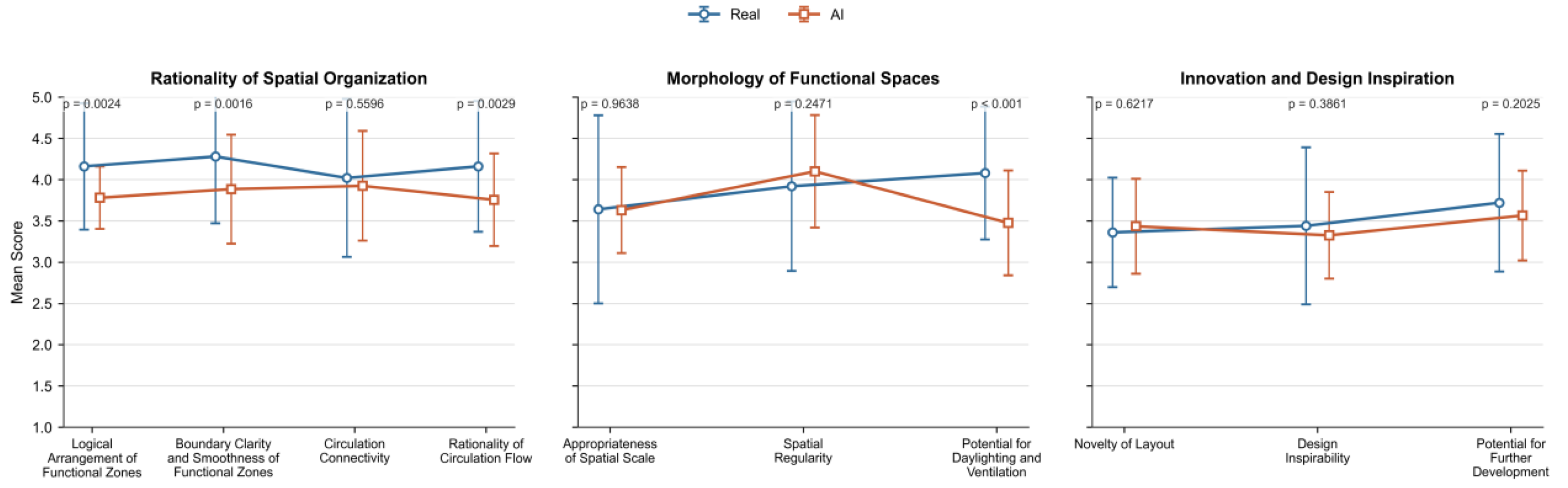
| Spatial organization rationality | Functional layout logic | 4.160 (0.766) | 3.780 (0.377) | 0.380 | 0.0024 |
| Functional-zone boundary smoothness | 4.280 (0.809) | 3.885 (0.661) | 0.395 | 0.0016 | |
| Circulation connectivity | 4.020 (0.958) | 3.925 (0.665) | 0.095 | 0.5596 | |
| Circulation rationality | 4.160 (0.792) | 3.755 (0.561) | 0.405 | 0.0029 | |
| Functional spatial form | Spatial scale appropriateness | 3.640 (1.139) | 3.630 (0.521) | 0.010 | 0.9638 |
| Spatial regularity | 3.920 (1.027) | 4.100 (0.680) | −0.180 | 0.2471 | |
| Daylighting and ventilation potential | 4.080 (0.804) | 3.475 (0.635) | 0.605 | 0.0001 | |
| Innovation and inspiration | Layout novelty | 3.360 (0.663) | 3.435 (0.575) | −0.075 | 0.6217 |
| Design inspiration | 3.440 (0.951) | 3.325 (0.523) | 0.115 | 0.3861 | |
| Potential for design development | 3.720 (0.834) | 3.565 (0.544) | 0.155 | 0.2025 |
| Dimension | Spearman | p-Value |
|---|---|---|
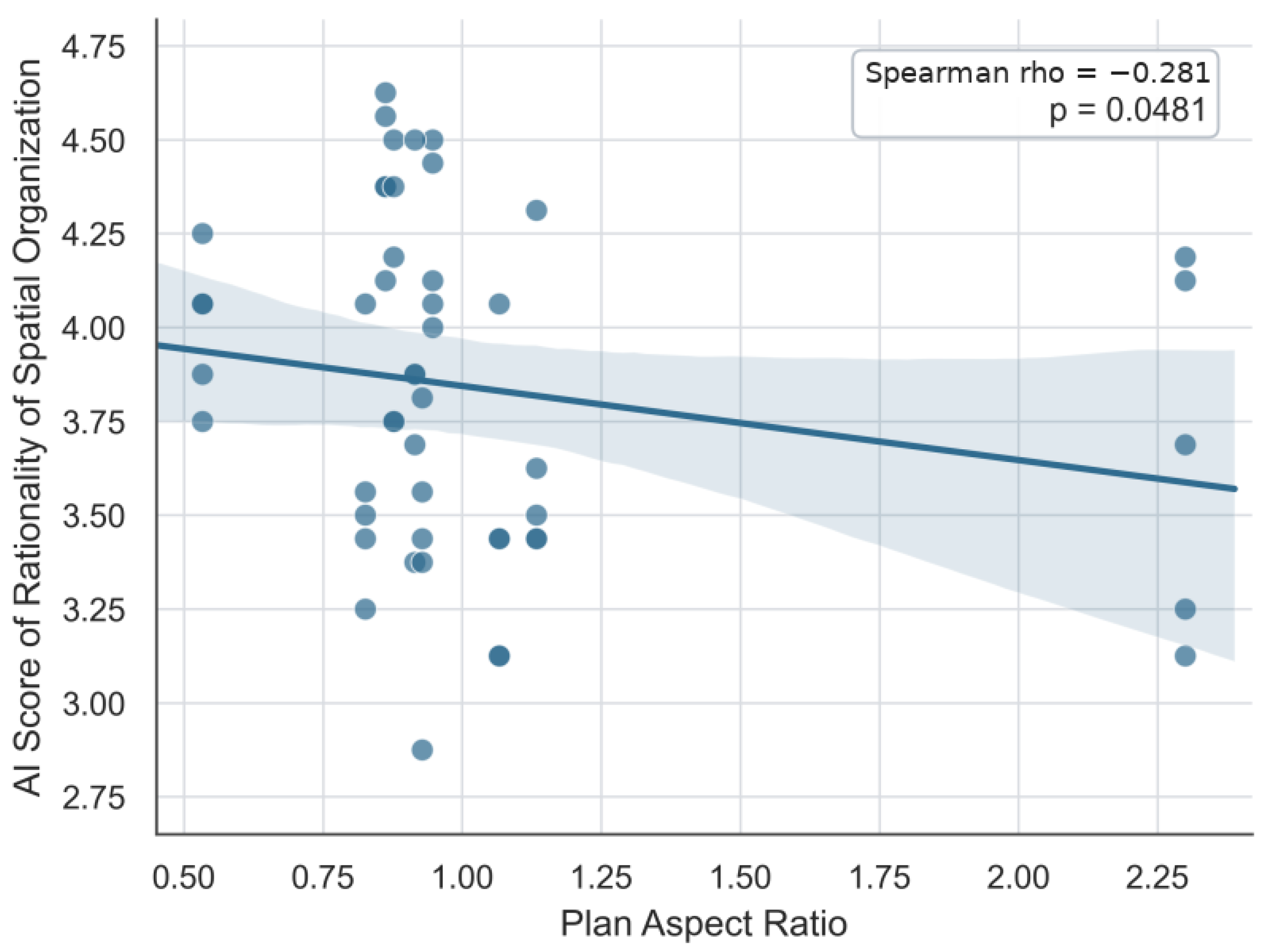
| Spatial organization rationality | −0.281 | 0.0481 |
| Functional spatial form | −0.246 | 0.0853 |
| Innovation and inspiration | −0.154 | 0.2855 |
| Overall score | −0.253 | 0.0762 |
| Dimension | Spearman | p-Value |
|---|---|---|
| Spatial organization rationality | −0.263 | 0.0650 |
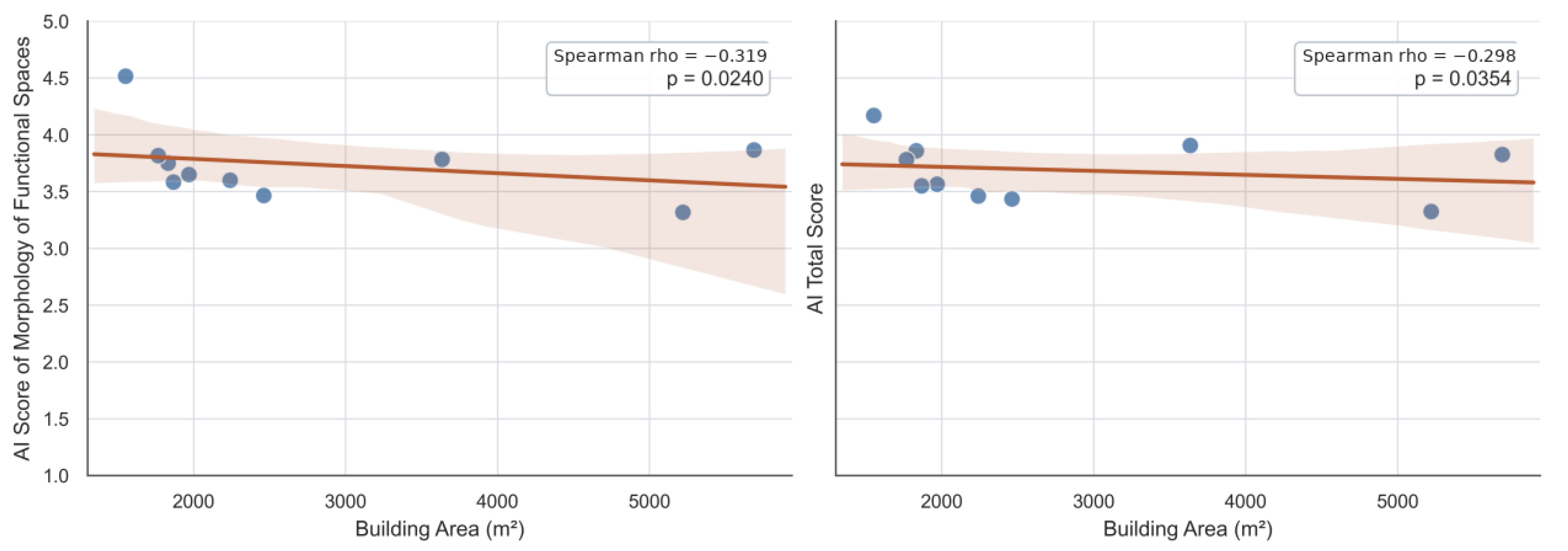
| Functional spatial form | −0.319 | 0.0240 |
| Innovation and inspiration | −0.088 | 0.5437 |
| Overall score | −0.298 | 0.0354 |
| Dimension | Single-Discipline AI Group (SD) | Multi-Discipline AI Group (SD) | U Value | p-Value |
|---|---|---|---|---|
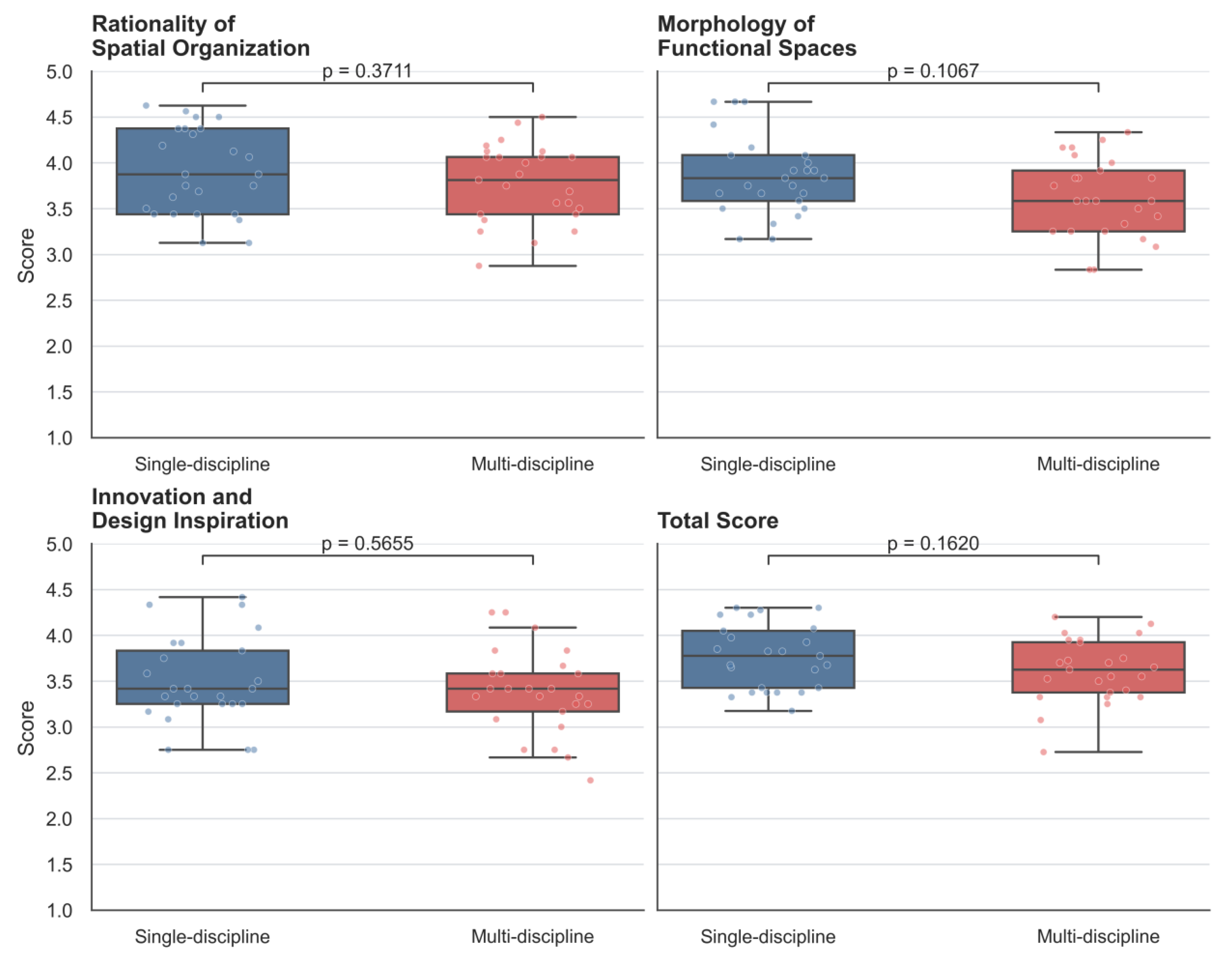
| Spatial organization rationality | 3.898 (0.472) | 3.775 (0.425) | 359.0 | 0.3711 |
| Functional spatial form | 3.853 (0.428) | 3.617 (0.428) | 396.0 | 0.1067 |
| Innovation and inspiration | 3.497 (0.475) | 3.387 (0.465) | 342.5 | 0.5655 |
| Overall score | 3.764 (0.350) | 3.611 (0.348) | 385.0 | 0.1620 |
Disclaimer/Publisher’s Note: The statements, opinions and data contained in all publications are solely those of the individual author(s) and contributor(s) and not of MDPI and/or the editor(s). MDPI and/or the editor(s) disclaim responsibility for any injury to people or property resulting from any ideas, methods, instructions or products referred to in the content. |
© 2026 by the authors. Licensee MDPI, Basel, Switzerland. This article is an open access article distributed under the terms and conditions of the Creative Commons Attribution (CC BY) license.
Share and Cite
Chen, Z.; Liu, Y.; Wu, Z.; Li, B. Exploration of Early-Stage Floor Plan Design for University Research Buildings Based on a Conditional Diffusion Model. Buildings 2026, 16, 2348. https://doi.org/10.3390/buildings16122348
Chen Z, Liu Y, Wu Z, Li B. Exploration of Early-Stage Floor Plan Design for University Research Buildings Based on a Conditional Diffusion Model. Buildings. 2026; 16(12):2348. https://doi.org/10.3390/buildings16122348
Chicago/Turabian StyleChen, Zimo, Yufei Liu, Zhenling Wu, and Bing Li. 2026. "Exploration of Early-Stage Floor Plan Design for University Research Buildings Based on a Conditional Diffusion Model" Buildings 16, no. 12: 2348. https://doi.org/10.3390/buildings16122348
APA StyleChen, Z., Liu, Y., Wu, Z., & Li, B. (2026). Exploration of Early-Stage Floor Plan Design for University Research Buildings Based on a Conditional Diffusion Model. Buildings, 16(12), 2348. https://doi.org/10.3390/buildings16122348