Article

Characterization of Synergistic Enhancement of Compressed Earth Blocks Through Alfa Fiber and Binder Incorporation


1
Geomaterials and Civil Engineering Laboratory, Saad Dahleb Blida-1 University, Blida P.O. Box 270, Algeria
2
Faculty of Engineering, Beirut Arab University, Beirut P.O. Box 11-5020, Lebanon
*
Author to whom correspondence should be addressed.
Buildings 2026, 16(12), 2344; https://doi.org/10.3390/buildings16122344
Submission received: 7 May 2026 / Revised: 2 June 2026 / Accepted: 4 June 2026 / Published: 11 June 2026
(This article belongs to the Collection Sustainable and Green Construction Materials)

Abstract

The present study investigates the synergistic effects of incorporating natural alkali-treated Alfa fibers, lime, and ground granulated blast-furnace slag (GGBS) on the physical and mechanical performance of compressed earth blocks. Laboratory tests were conducted using locally sourced earth material, reinforced with two lengths of alkali-treated Alfa fiber—F1 (3–9 mm) and F2 (20–25 mm)—and stabilized with lime (4, 8%) and GGBS (4, 8, 12%). Tests included wet and dry compressive strength, capillary absorption, linear shrinkage, abrasion resistance and thermal conductivity. Results show that the incorporation of Alfa fibers, particularly when combined with lime and GGBS, significantly enhanced wet compressive strength and abrasion resistance, while the initial reduction in dry compressive strength due to fibers was effectively offset by GGBS. The combination of longer Alfa fibers (F2) with lime and GGBS provided the best overall performance, producing compressed earth blocks with superior mechanical strength, durability, and thermal efficiency.

1. Introduction

The construction industry is responsible for over 40% of global energy usage [1,2]. It contributes to one-third of the overall emissions of greenhouse gases [3], where 16% of these emissions corresponds to embodied carbon (CO2) released during manufacturing and construction activities [3]. The widespread utilization of conventional resource-intensive materials such as concrete and fired bricks, known for their high energy demand and significant waste output, escalates the environmental consequences and amplifies the problem of greenhouse gas emissions. Moreover, considering the previsions, indicating that the global population is anticipated to reach 9.7 billion by 2050 [4], there will be greater demand for housing and infrastructure. This will exacerbate the difficulties the construction industry already faces regarding resource consumption and environmental impact.
Indeed, looking for alternate building materials is essential to reduce the industry’s environmental impact. Earthen materials, an ancestor resource that dates back to more than 9000 years, can offer sustainable solutions. Global earthen construction techniques include rammed earth, adobe and compressed earth blocks (CEBs) [5]. The CEB technique is a more recent technique compared with adobe and rammed earth, involving high compression to produce blocks with improved mechanical properties. Nevertheless, despite this enhancement, CEBs still have certain limitations when compared to modern building materials. Significantly, they show reduced strength under humid conditions, leading to the development of cracks and deterioration of the structure [6].
Various methods of stabilization have been developed to address the limitations of CEB [6,7]. Effective techniques for improving soil’s mechanical strength and durability include chemical stabilization, which involves adding binders to the soil to create a binding matrix between the soil particles and physical stabilization, known as soil reinforcement, which modifies the soil texture by adding fibers [7,8]. The use of natural fibers as reinforcements has been a part of traditional building techniques because of their abundance, affordability, and low energy usage [1]. The use of natural fibers to reinforce CEB has been the subject of many scientific research, with particular attention paid to the material’s mechanical and thermal properties. Some researchers [7,8,9,10] reported that the inclusion of fibers has a negative effect on strength. However, others [6,11,12,13] reported that the incorporation of natural fibers improves the compressive strength and thermal conductivity, and increases the absorption.
In this context, Alfa fibers emerge as a valuable resource in pursuing eco-friendly construction materials. In Algeria, particularly within the steppe zones, these natural fibers are abundant, covering over 4 million hectares of natural land [14]. This extensive availability may help the country’s economy lower its energy consumption from sources that cause pollution. The incorporation of Alfa fibers in earthen construction materials has been well investigated in the literature, emphasizing their effect on physical and mechanical behavior of the reinforced material. Mechanically, fiber addition generally improves strength, though effectiveness depends on fiber characteristics and stabilizer combinations. Both fiber content and length significantly influence mechanical properties. Physical parameters, such as capillary absorption and linear shrinkage, demonstrate nuanced performance, while thermal properties typically show improvement through reduced conductivity, though results vary with specific soil mixtures [6,8,13,15,16,17].
Stabilization with fibers alone is not sufficient to fully guarantee raw earth’s durability and water resistance [1]. Thus, one approach proposes combining fibers with other complementary stabilizers, to overcome these shortcomings, notably using binders such as cement and lime. Indeed, lime plays a decisive role like a binder, helping to consolidate the matrix structure while reducing water sensitivity [18,19]. Additionally, lime is less energy-demanding to produce than cement [20]. However, limiting the use of binders, including lime, poses a significant challenge due to their potential negative environmental impact. The extensive use of lime raises ecological concerns, as its production results in substantial CO2 emissions, contributing to climate change [5]. Therefore, achieving more environmentally sustainable earth construction methods involves reducing the amount of lime used while preserving the material’s mechanical properties and durability.
In this perspective, using supplementary mineral admixtures as partial replacements for lime emerges as an attractive solution, reducing dependence on this binder while maintaining the performance of the final composite material. More specifically, the valorization of local Algerian industrial by-products, such as steelmaking slags, endowed with latent solid pozzolanic potential, paves the way for effective earth stabilization while sustainably managing these abundant wastes [1,2]. With Algeria generating more than 500,000 tons of blast-furnace slag annually [9], characterized in the Algerian literature as an under-valorized industrial waste creating storage and pollution issues [21], the incorporation of GGBS in CEBs markedly reduces the embodied carbon of the binder fraction: GGBS exhibits a substantially lower embodied CO2 (≈0.14 t CO2-eq/t [22]) than both Portland cement (≈0.91 t CO2-eq/t [22]) and quicklime (≈1.2 t CO2-eq/t [23]). Adding slag to raw earth along with lime has shown significant improvements in the strength and durability of the material. Research has demonstrated that this combination improves both strength and durability of stabilized soil blocks, while reducing capillary water absorption [18,24].
Although many studies have examined natural fiber reinforcement and binder stabilization separately, the combined effect of fiber characteristics and binder optimization on the performance of compressed earth blocks remains underexplored. This study investigates the synergistic interaction between alkali-treated Alfa fiber length, lime content, and GGBS replacement, with the dual objective of reducing energy-intensive lime usage and enhancing mechanical strength, durability, and overall sustainability of compressed earth blocks.

2. Materials Characteristics, Sample Preparation and Tests Procedures

2.1. Materials

2.1.1. Soil

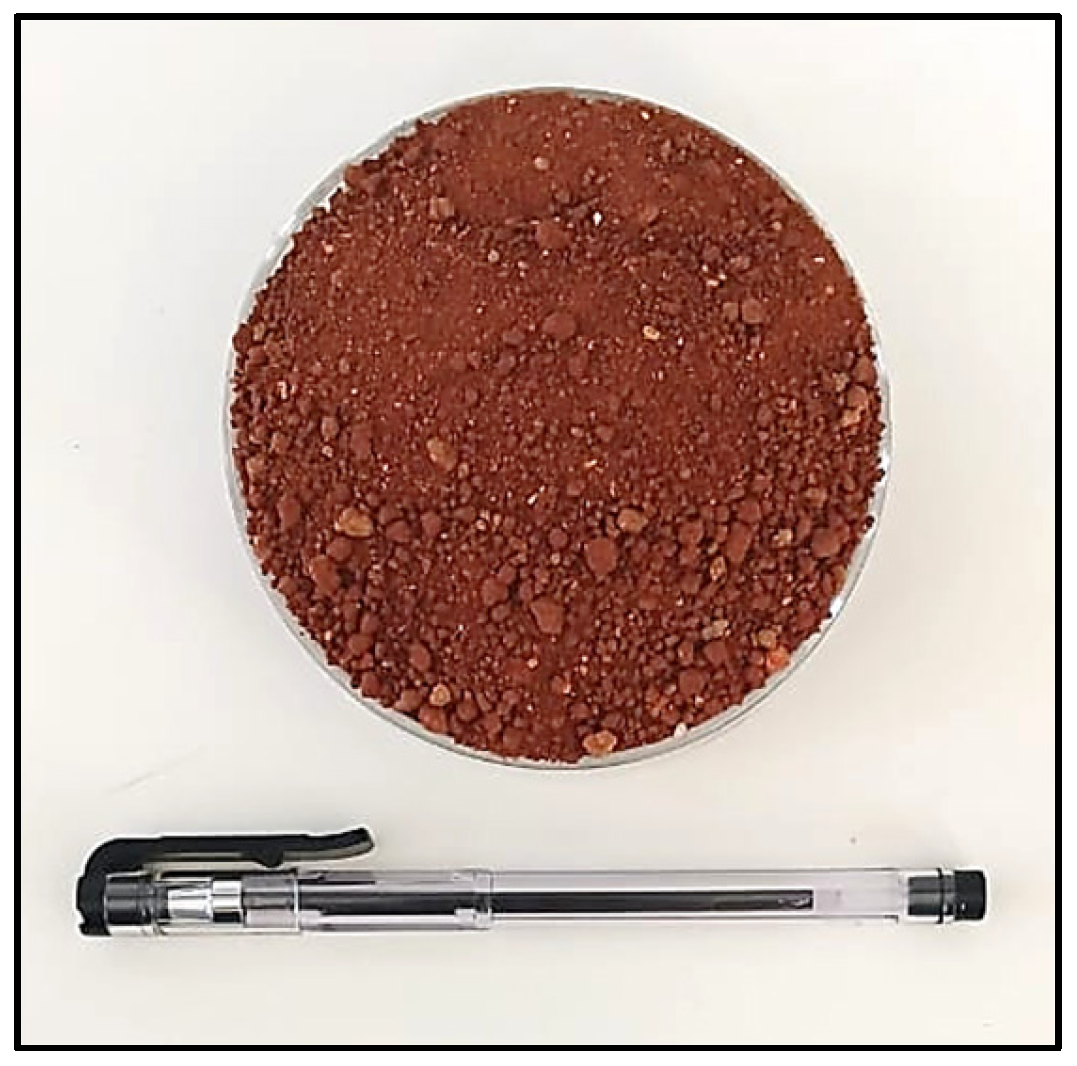
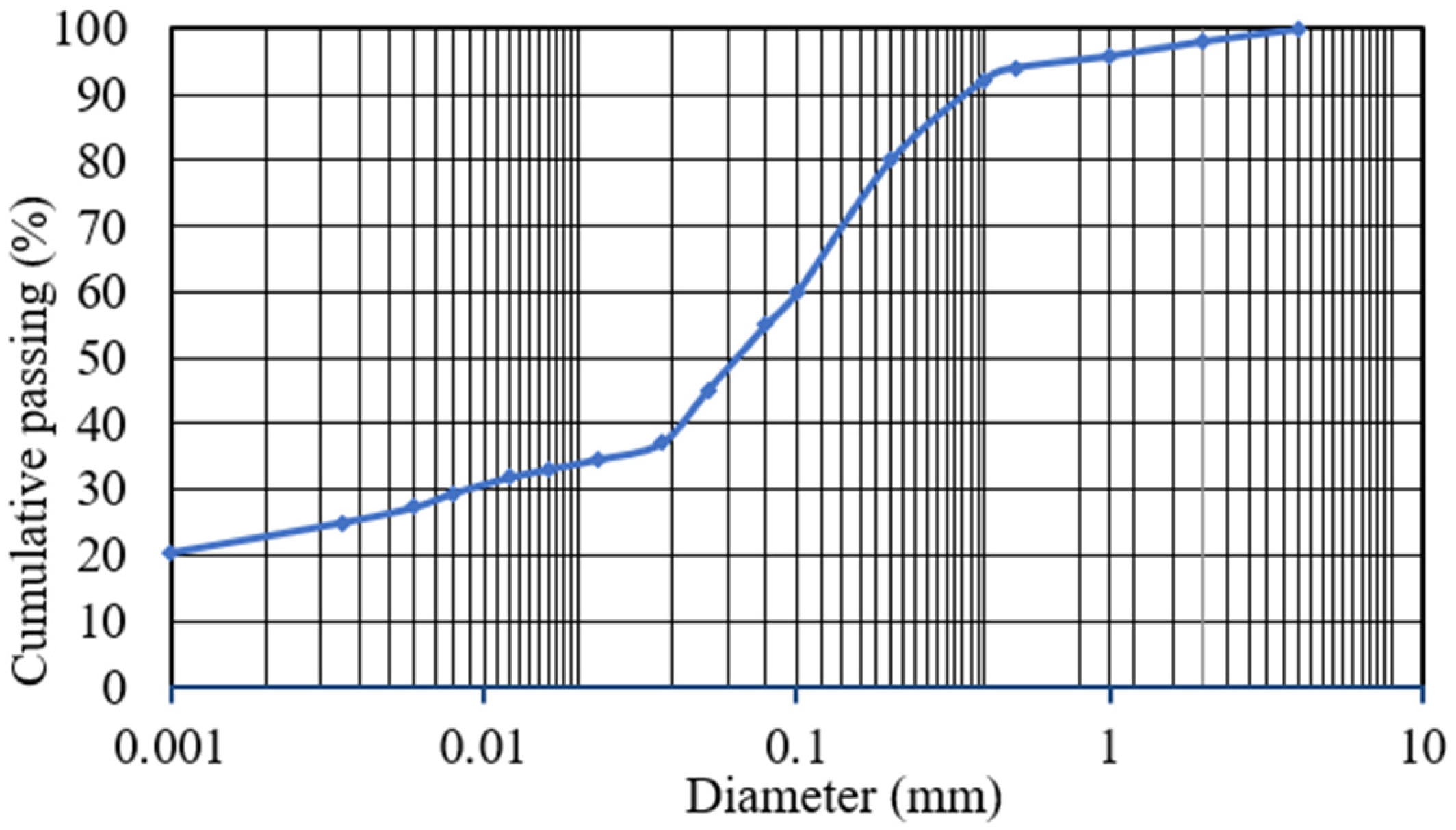
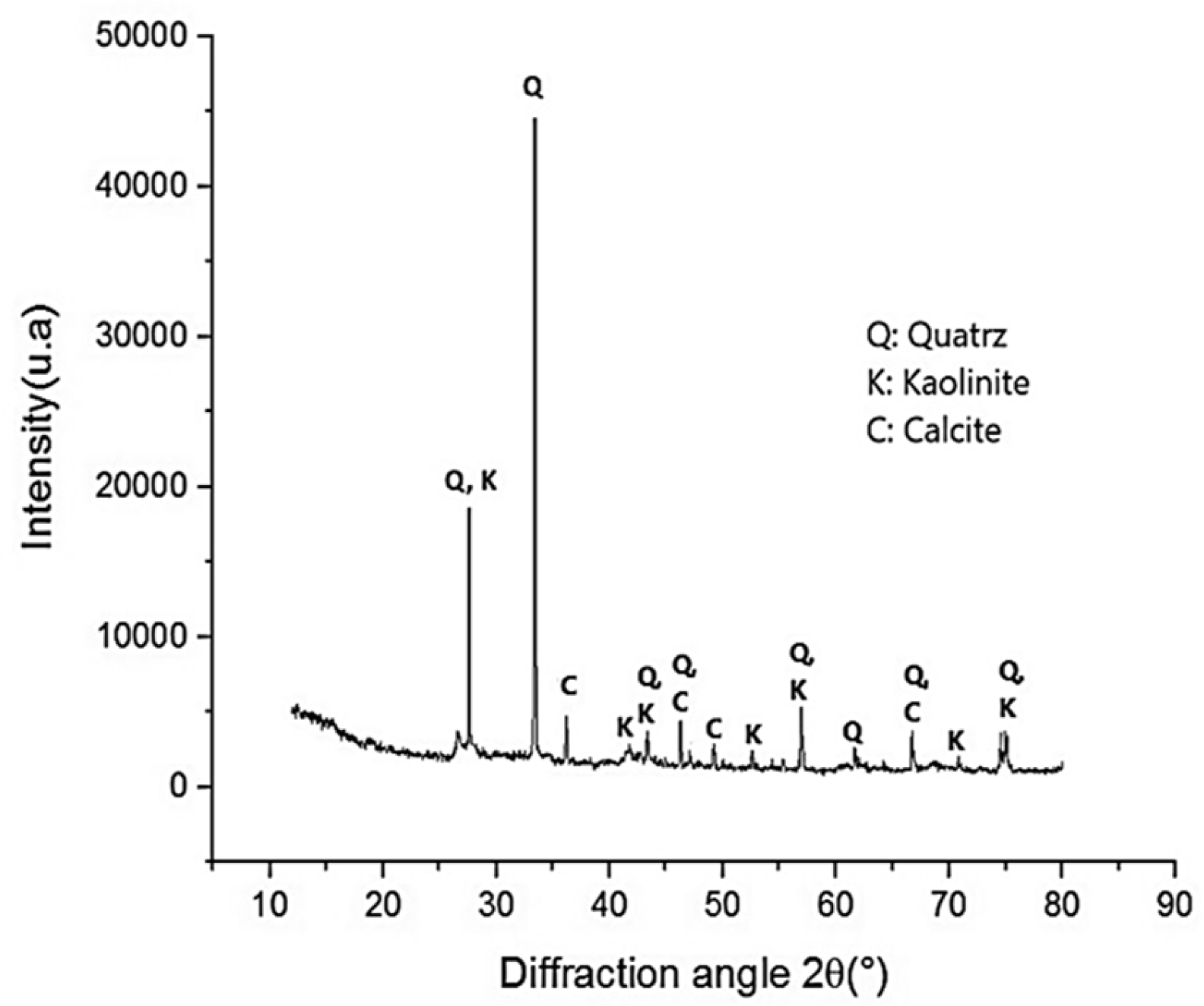
The soil used in this investigation is a silty soil obtained from a region around the capital Algiers (Algeria). Figure 1 presents a photograph of the soil sample. The particle size distribution curve is shown in Figure 2, while the X-ray diffractogram (XRD) is illustrated in Figure 3. The chemical and physical properties of the soil are summarized in Table 1 and Table 2, respectively.

2.1.2. Lime

The lime used in this study is a quicklime, manufactured by “Erco Unit” (Saida, Algeria). The chemical composition is given in Table 2.

2.1.3. Ground Granulated Blast-Furnace Slag (GGBS)

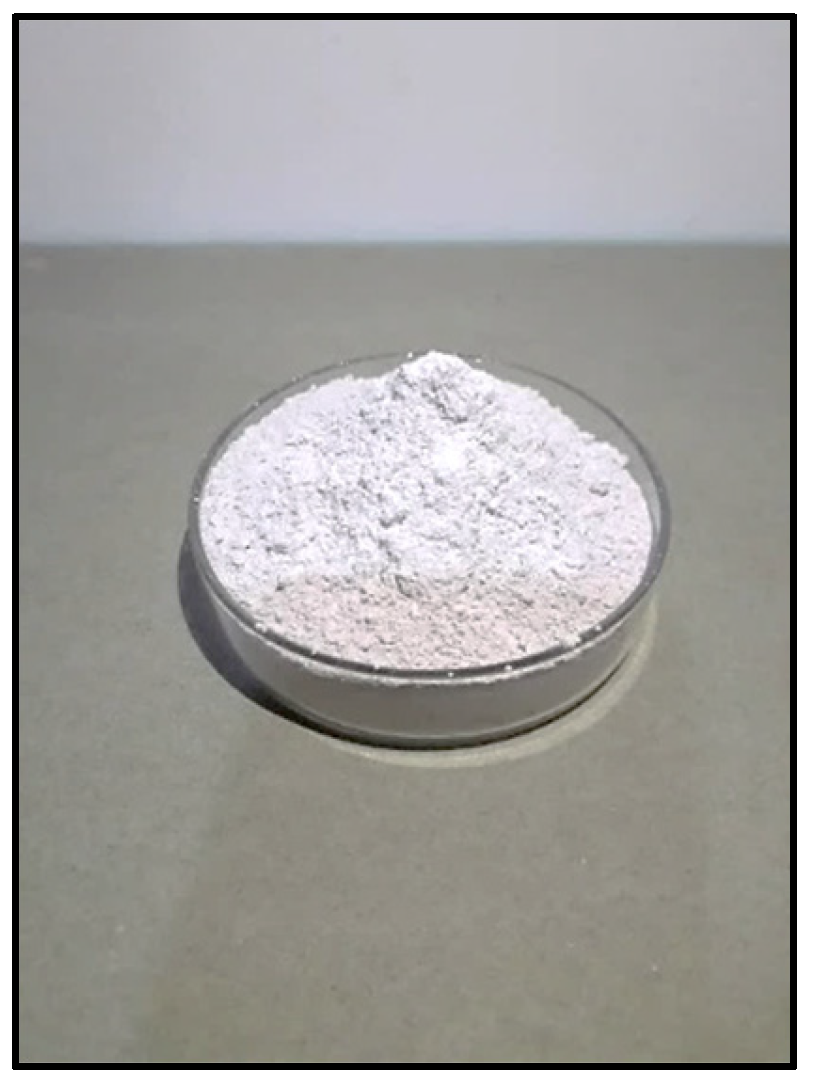
A granulated slag, in light gray color and sandy form, with a particle size of 0/5 was obtained from El Hadjer (Algeria). It was ground to a powder of a specific surface of 300 m2/kg, as shown in Figure 4. The chemical composition is given in Table 2.

2.1.4. Alfa Fibers

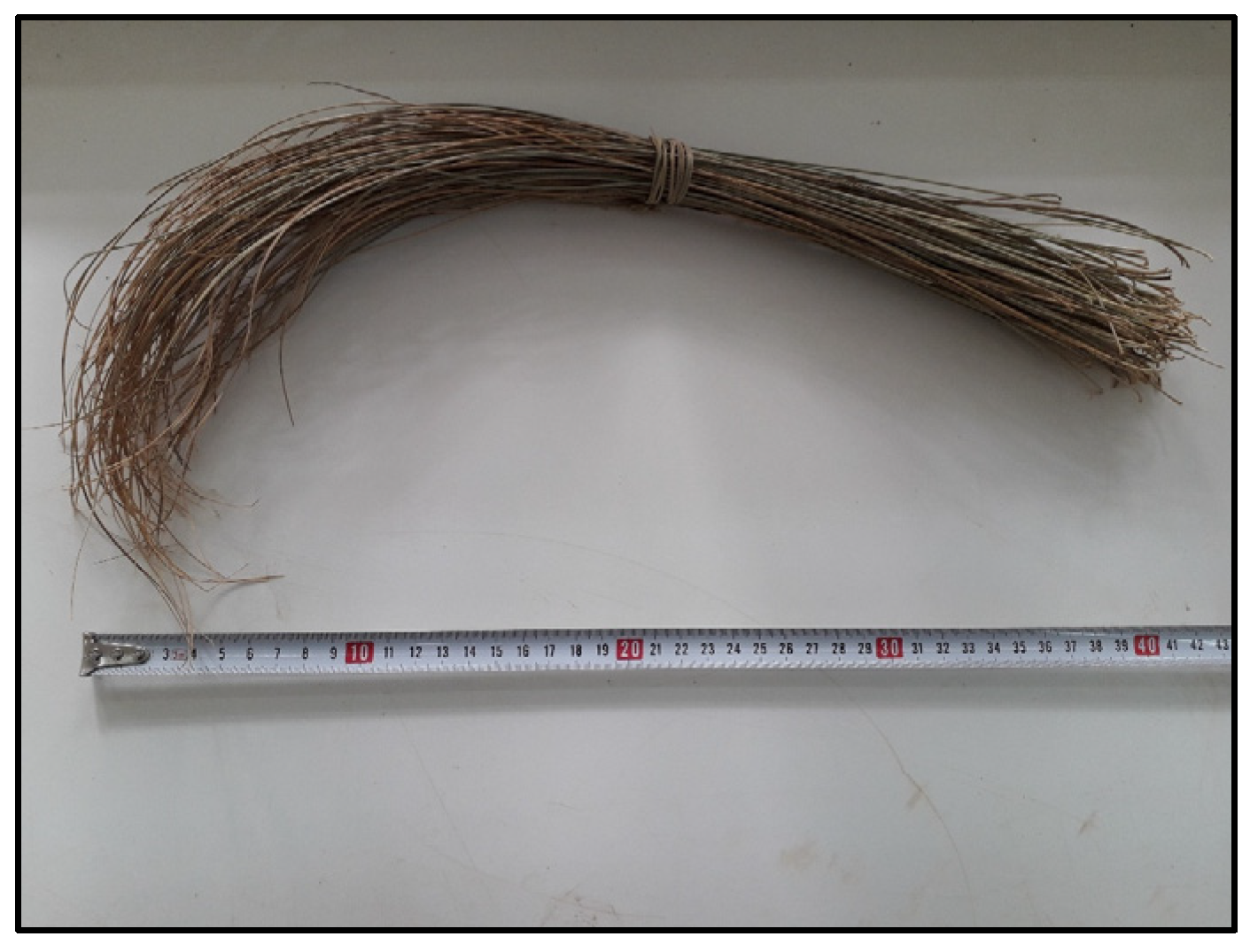
Figure 5 shows the raw Alfa fibers before treatment. The physical properties of the Alfa fibers are presented in Table 3. The chemical composition of Alfa fibers (Stipa tenacissima L.) is cellulose 43–49%, hemicelluloses 18–28%, lignin 12–24%, waxes and extractives 1–6%, and ash 2–8% by dry mass [25,26,27].

2.2. Sample Preparation

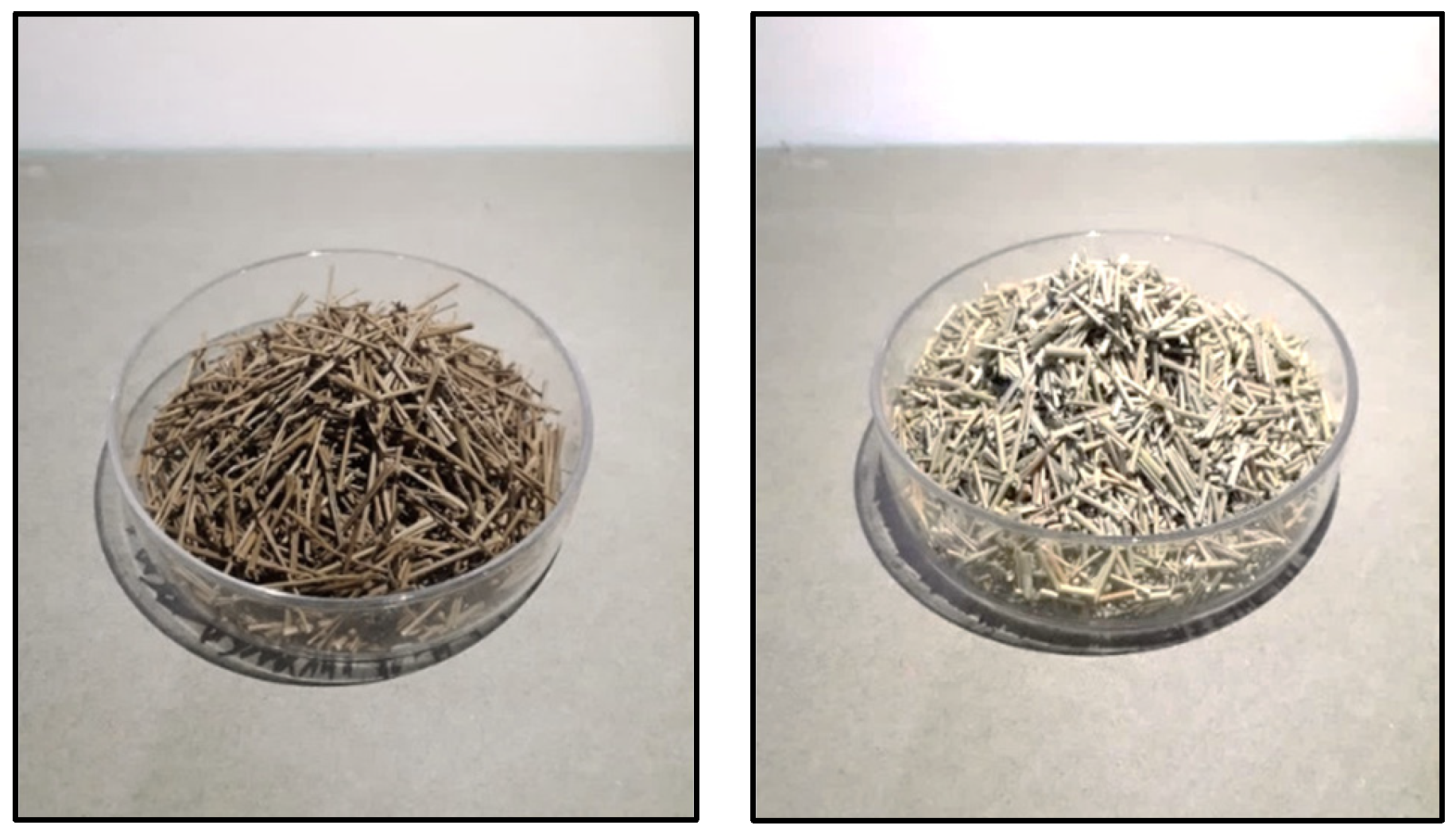
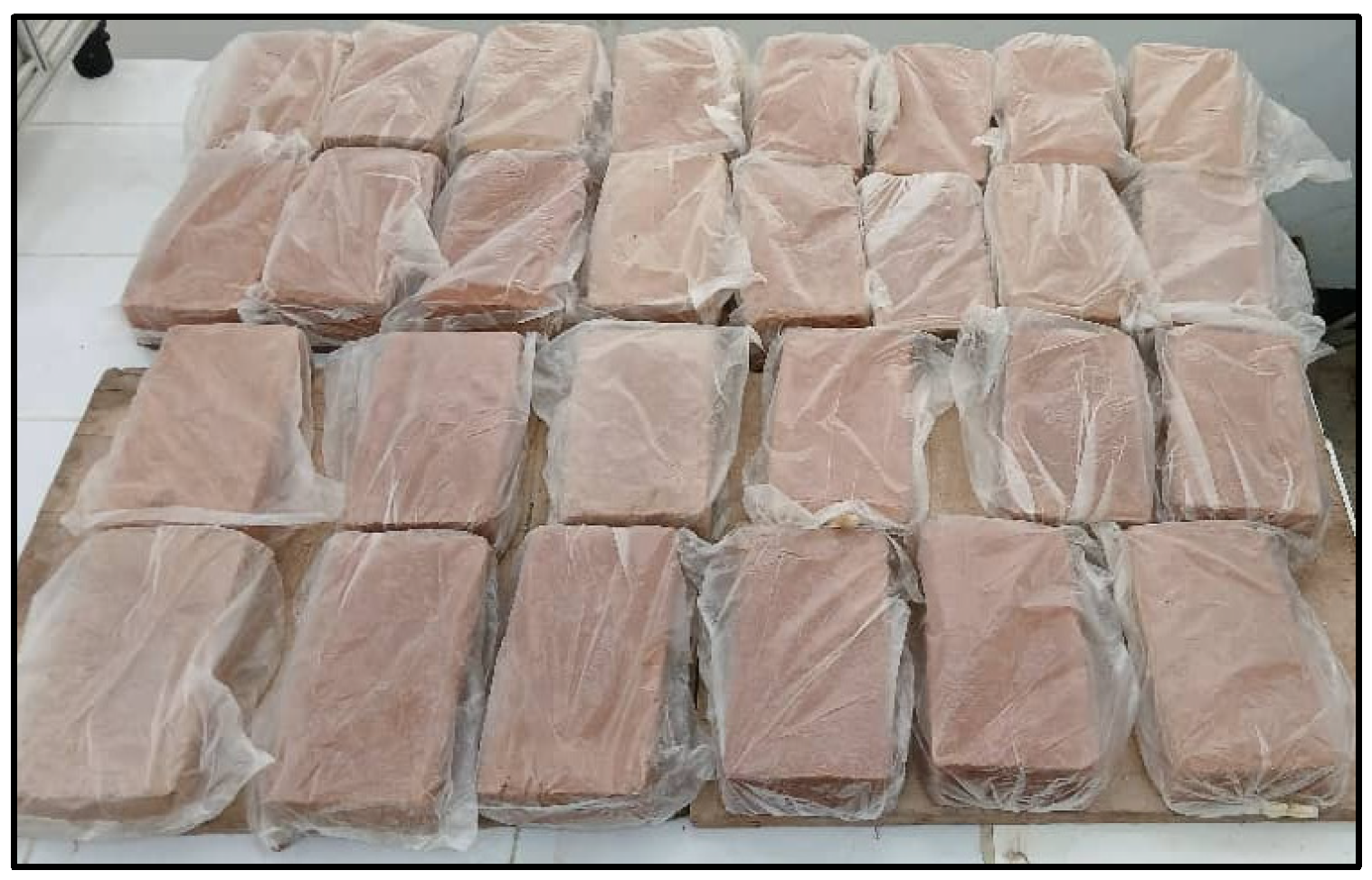
The soil was sifted at 2 mm after going through several stages of drying and crushing to achieve a uniform distribution of the soil with the stabilizer and fiber. The collected fibers were washed with water to remove any waxy residues present. Subsequently, the fibers were cut into two different length ranges: 3–9 mm and 20–25 mm. An alkali treatment was then applied to the Alfa fibers to modify their surface characteristics and improve fiber–matrix adhesion. The fibers were immersed in a 6% NaOH solution for 6 h at room temperature, using a fiber-to-solution ratio of 1:10. This concentration and duration were selected on the basis of the literature on alkali treatment of Alfa fibers [28,29,30]. After treatment, the fibers were thoroughly rinsed with demineralized water, neutralized with a 1% acetic acid solution, rinsed again until a neutral pH was reached, and finally oven-dried at 40 °C. This treatment removes non-cellulosic components such as lignin and hemicellulose from the fiber surface, enhancing the interface between the soil matrix and the fibers (Figure 6). The dry mix of soil, lime, and GGBS was stirred for 60 s in a cement mixer. Subsequently, water was added gradually with vigorous mixing for 180 s, and then the fibers were added to the mix. All ingredients were mixed again for another 60 s. For each block, 2 kg of the prepared mixture was weighed and compacted at its optimum moisture content under a constant static compaction pressure of 2 MPa using a hydraulic press, to ensure comparable manufacturing conditions across all formulations. This compaction pressure was chosen as being suitable for compacting earth blocks, consistent with previous studies [6,7,9]. The resulting blocks were 200 × 100 × 50 mm. After compaction, the specimens were covered with plastic film (Figure 7) to ensure proper hydration and stored in laboratory conditions for 28 days.
The study considered 21 different mixtures with varying proportions of the materials used. The experimental mixture proportions are shown in Table 4. The mixture codifications used are F: fiber; F1: fibers with a length of 3–9 mm; F2: fibers with a length of 20–25 mm; L: lime; S: GGBS. The content is expressed by weight; for example, the code F0L0 refers to a mixture without fibers, GGBS or lime, which is considered the reference mixture and the code F1L4S8 refers to a mixture with 4% lime and 8% slag.
The fiber content was kept constant at 1% by weight based on preliminary tests and based on a value reported in the literature as providing the best mechanical performance for natural-fiber-reinforced earth blocks [11,31,32]. As the effect of fiber content is already well documented, this study instead focused on fiber length, which is less explored. Longer fibers (above 30 mm) were initially tested but were discarded, as they protruded from the block surfaces after compaction and prevented the production of dimensionally regular specimens; the two retained ranges, 3–9 mm (F1) and 20–25 mm (F2), represent the short and long ranges commonly studied.

2.3. Tests Procedure

2.3.1. Dry and Wet Compressive Strength Test

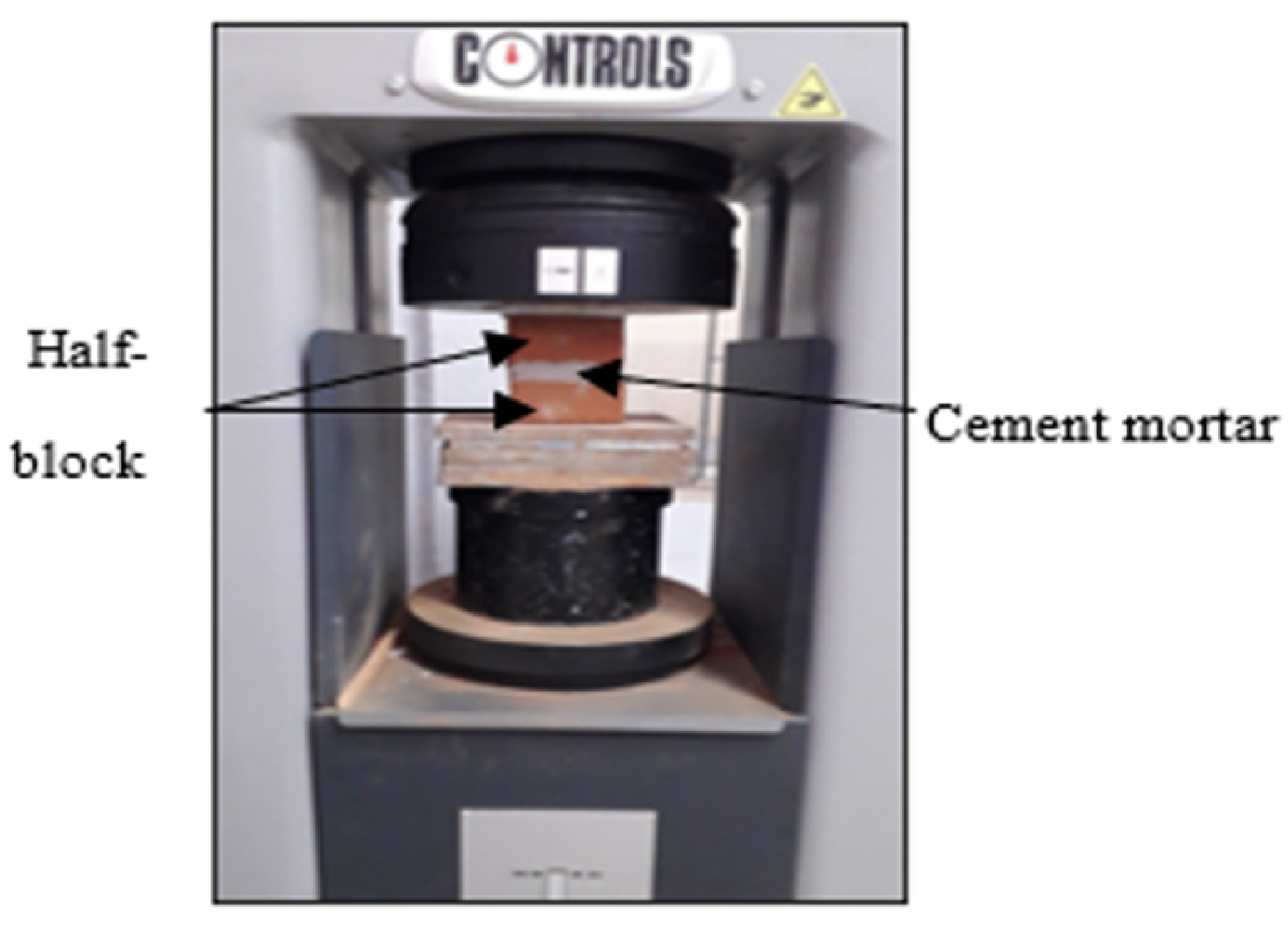
The compressive strength tests have been performed on dry and water-immersed specimens according to the French standard (XP P 13-901) [33]. The samples were prepared by stacking two half-blocks joined with a mortar bed, as shown in Figure 8, with strength calculated as the ratio of maximum failure load to the specimen’s cross-sectional area. This configuration was adopted because the blocks are intended as masonry units, and the standard assesses compressive strength in a manner representative of their performance in a masonry assembly. The mortar joint was prepared in accordance with XP P 13-901 [33], using Portland cement and 0/3 mm sand at a 1:5 volume ratio, with a maximum joint thickness of 10 mm, and cured for 48 h before testing. The same mortar composition and joint thickness were applied to all specimens, both dry and wet, ensuring consistent joint properties across mixes.

2.3.2. Capillary Absorption Test

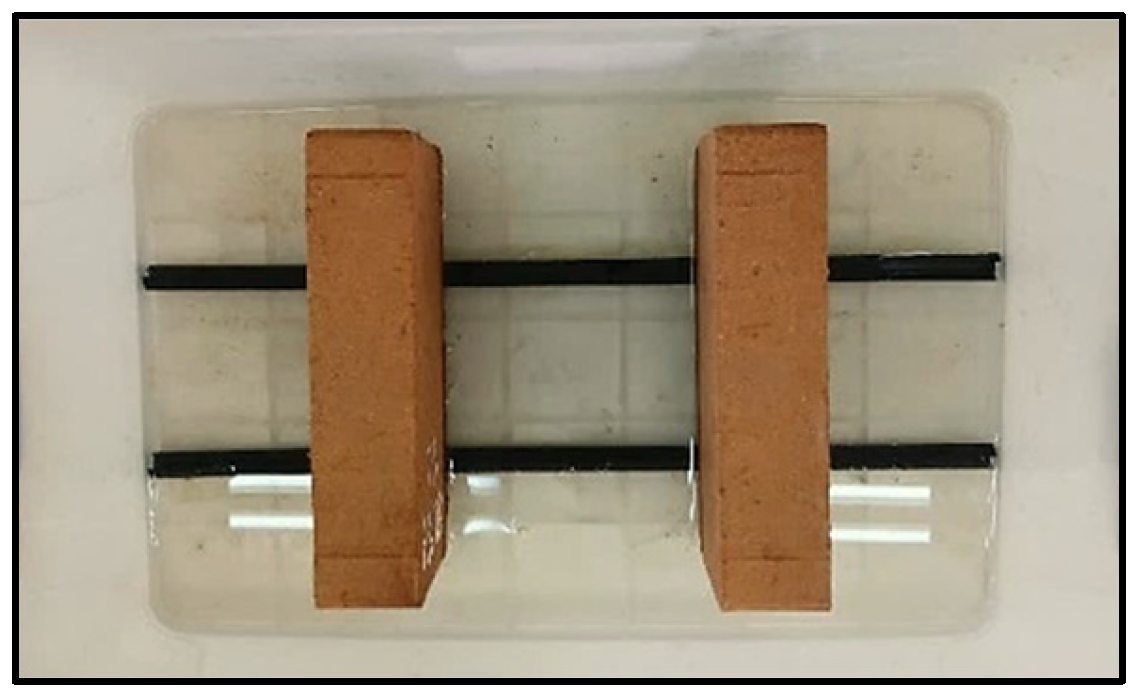
The capillary absorption test was conducted in accordance with the French standard (XP P 13-901) [33]. The specimens were partially immersed to a depth of 5 mm for 10 min as shown in Figure 9. The absorption coefficient (Cb) was determined using the following formula: (Cb = (100 × (Mh − Md))/(S √t)), where Mh − Md is the absorbed water mass, S is the immersed surface area, and t is the immersion time.

2.3.3. Linear Shrinkage

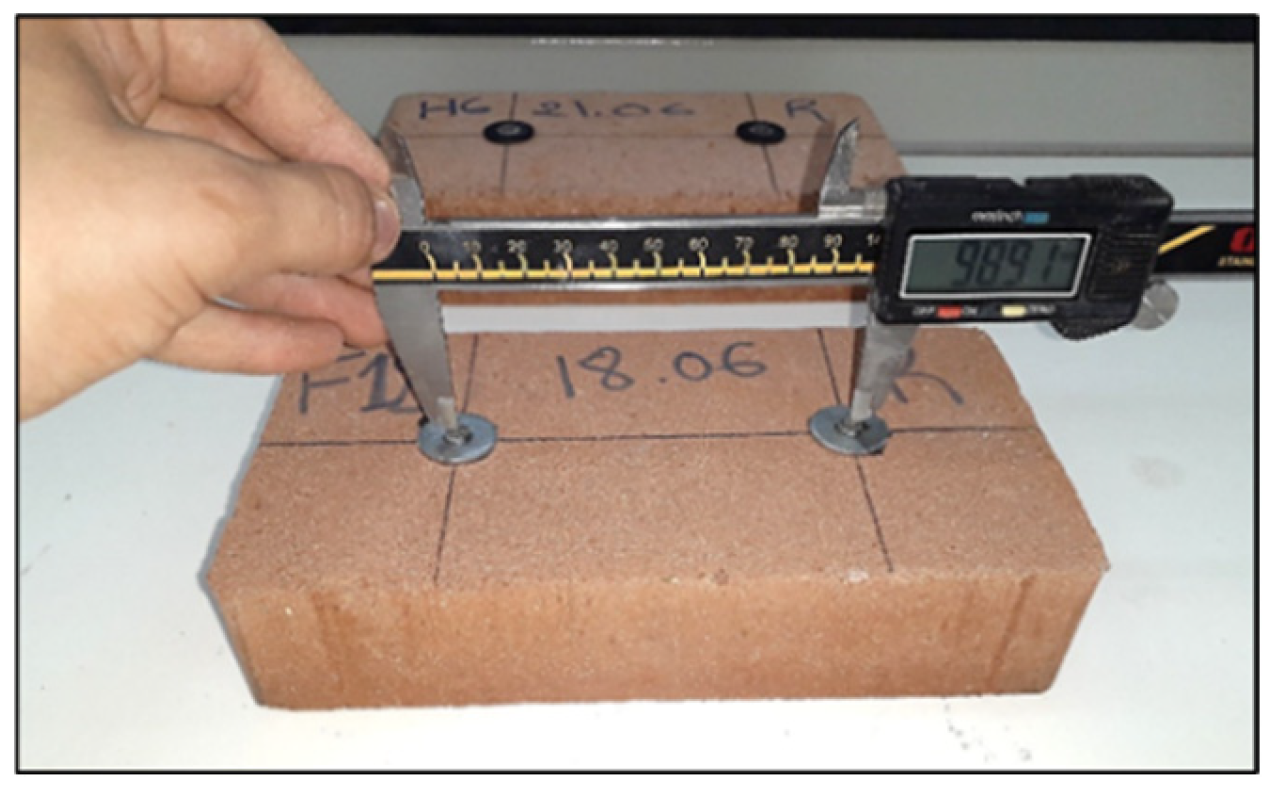
The linear shrinkage testing has been conducted according to the French standard (XP P 13-901) [33]: two measurement studs were sealed onto each block, as shown in Figure 10. The initial distance between the studs (l0) was measured. The blocks were then dried until constant mass, then the new distance between the studs (l2) is measured. The shrinkage amplitude of each block is calculated using the formulae (Δlr (mm/m) = (l0 − l2)/l0), where Δlr represents the shrinkage strain in mm/m.

2.3.4. Thermal Conductivity

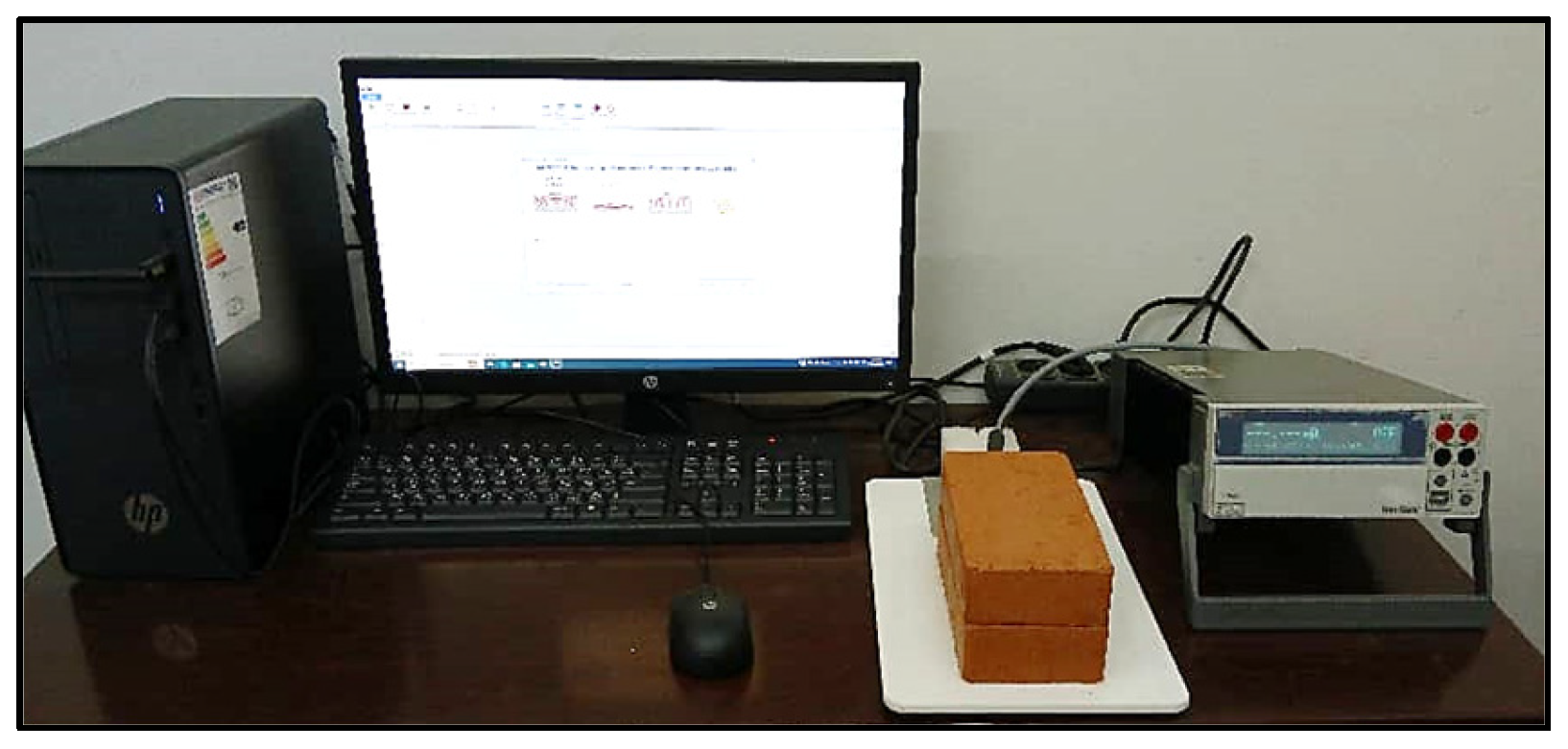
The thermal conductivity of the earth blocks is measured at room temperature using a Hot Disk M1,Gothenburg, Sweden. Two identical smooth-surfaced block samples are assembled with the Hot Disk sensor sandwiched in between (Figure 11). The sensor acts as both a heat source and a temperature probe. As the sensor heats up due to the Joule effect, it monitors the resulting temperature rise over time in the block samples. From this transient heat transfer data, the Hot Disk software (version 7.6.2.1 ) calculates the thermal conductivity of the blocks based on the recorded temperature response curves.

2.3.5. Abrasion Resistance

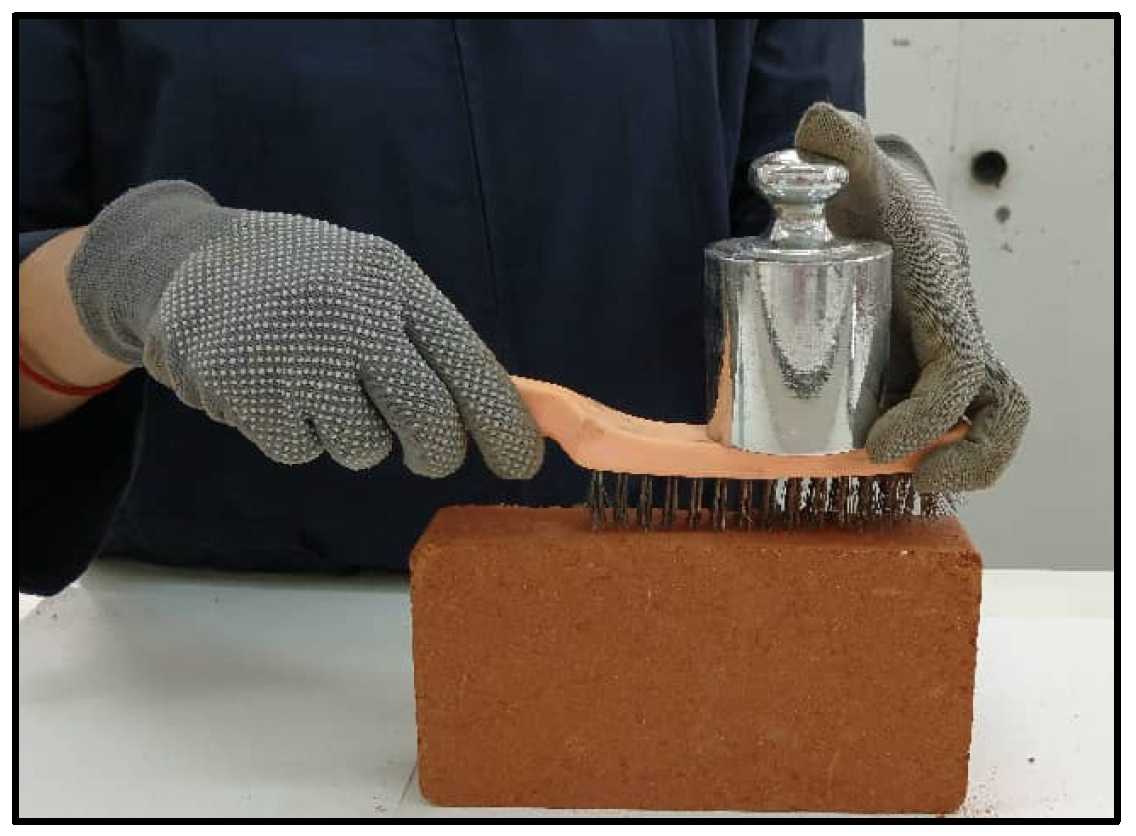
The abrasion resistance was evaluated following the French standard (XP P 13-901) [33]. The block is subjected to friction from a 25 mm metal brush applied in 60 back-and-forth cycles on the block face (Figure 12). The abrasion coefficient represents the mass loss and is calculated using the following formula: (Ca= S/(m0 − m1)), where S is the abraded area, and m0 and m1 are the block masses before and after brushing.

2.3.6. Microstructural and Chemical Characterization

The microstructure of the samples was examined using a QUANTA 650 scanning electron microscope (SEM). Since the samples are non-conductive, their surfaces were coated with a thin gold layer by cathodic sputtering prior to observation. SEM was used to examine the surface morphology of the Alfa fibers and the fiber–matrix interface within the compressed earth blocks. The mineralogical composition was determined by X-ray diffraction (XRD) using a Rigaku SmartLab diffractometer, allowing identification of the crystalline mineral phases present in the samples. For the Alfa fibers, XRD was also used to evaluate the crystallinity index before and after alkali treatment. The chemical functional groups of the Alfa fibers were analyzed by Fourier-transform infrared (FTIR) spectroscopy using a Jasco FT/IR-4X spectrometer, in order to identify the modifications induced by the alkali treatment. The oxide compositions of the soil, lime and GGBS were determined by X-ray fluorescence (XRF) spectroscopy using an X-200 XRF analyzer.

3. Results and Discussion

3.1. Effect of Alkaline Treatment on Alfa Fibers

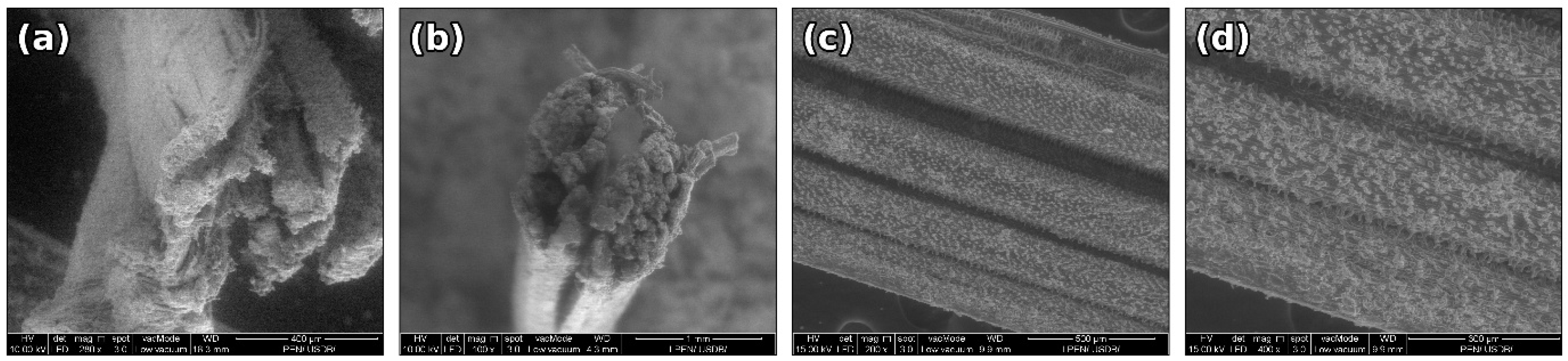
The alkaline treatment plays a crucial role in refining the properties of the Alfa fibers, enabling them to interact more effectively with the soil matrix by improving their compatibility and adhesion [8,28,34]. The scanning electron microscope (SEM) images in Figure 13 reveal the morphological structure of treated Alfa stems, showcasing diagonal and longitudinal section views. The diagonal section (Figure 13a,b) displays a thick layer surrounding vertically aligned fibrils. Smaller fibrils are linked with lignin and other inorganic matter [28]. An enlargement of the space between cellulose fibrils and alterations is observed, which is hypothesized to result from the treatment’s removal of hemicelluloses lignin and cellulosic components [35]. Additionally, the dissolution of hemicelluloses increases the interfibrillar region when treated with an alkali for extended periods [36]. The longitudinal surface of the plant exhibits a unique structure, as presented in Figure 13c,d. These images reveal a homogeneous distribution of various particles called trichomes with regular forms covering the surface. The trichomes primarily assist the plant in absorbing water and minerals, which aligns with the research work cited [25].
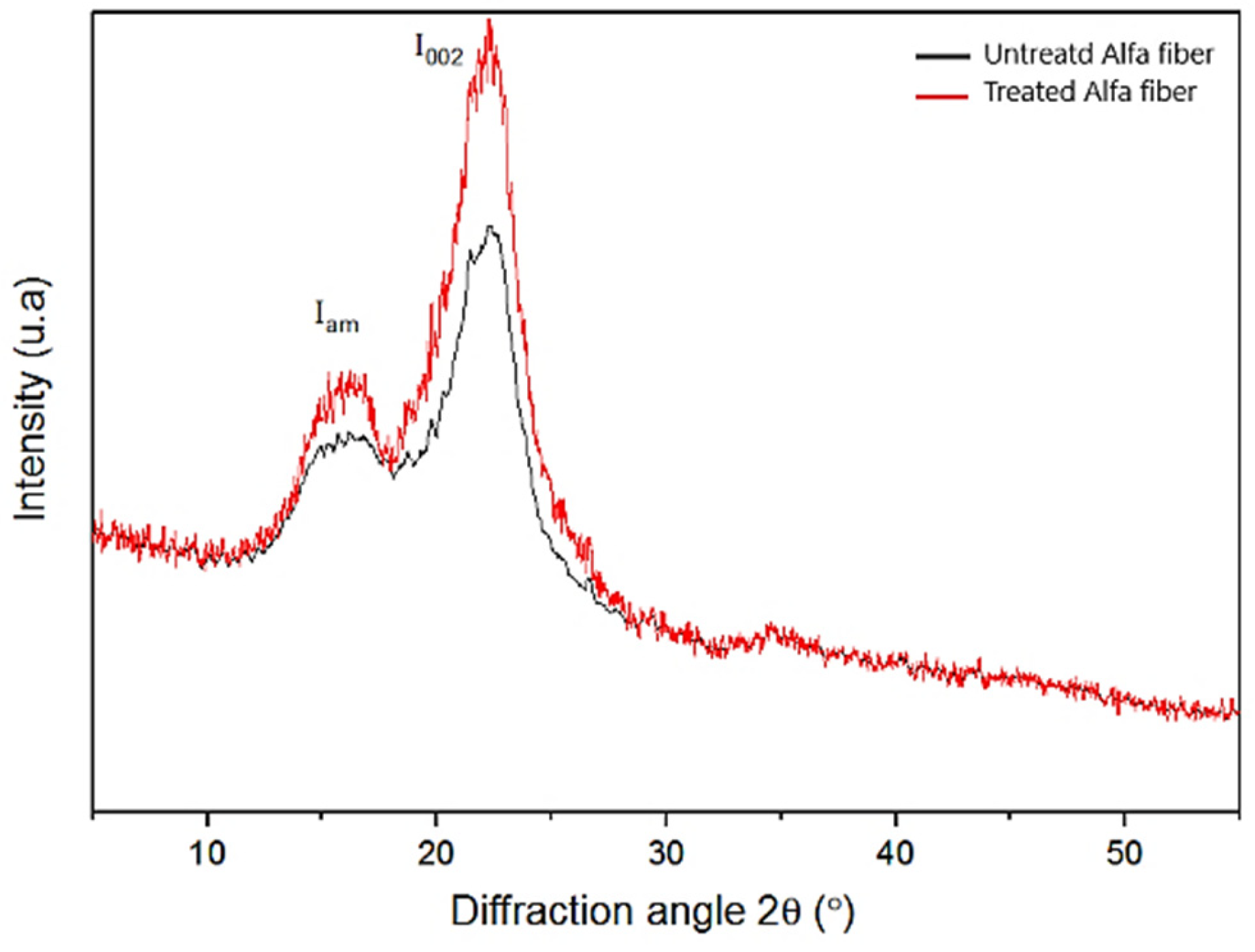
In Figure 14, X-ray diffraction (XRD) was performed in an angle range between 10 and 50° to analyze its crystallinity index (CrI). The CrI is determined using the intensity peaks [37], where Iam represents the amorphous peak at a 2θ angle of approximately 16°, and I002 is the peak intensity reading at a 2θ angle of 22°, both characteristic of cellulose [29]. After calculation, the CrI improved from 37% in untreated to 46% in treated Alfa fibers, a 24.3% increase. This indicates that alkaline treatment effectively eliminates amorphous compounds, such as hemicellulose and lignin, resulting in a significant increase in their crystallinity index.
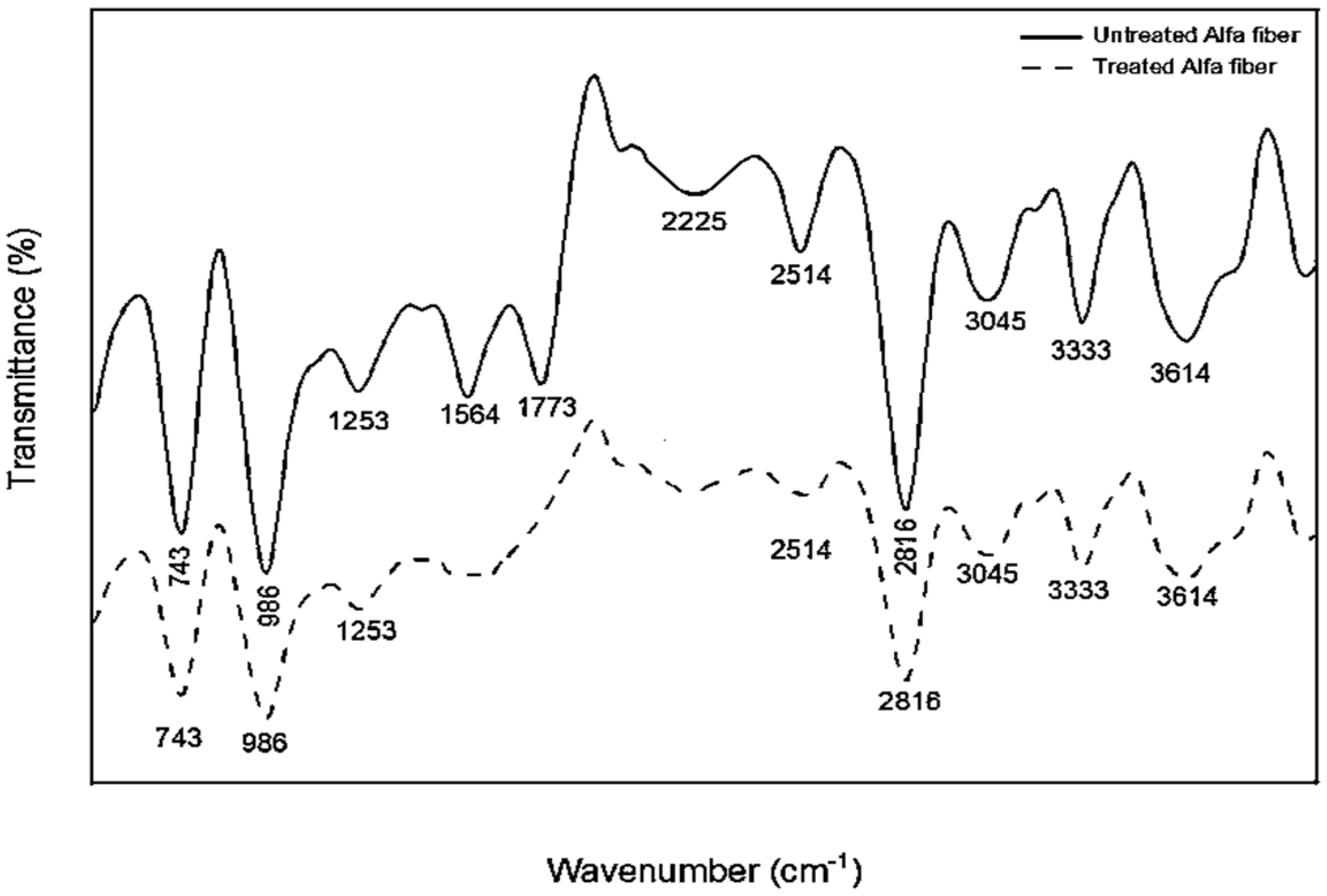
FTIR spectroscopy is used to analyze the chemical compounds of a sample by measuring the amount of infrared light it absorbs. Results are presented in Figure 15, with some indications of bands summarized in Table 5. Details of peaks and type of chemical stretching are defined based on previous investigations [6,26,28,38,39]. The alkaline treatment has modified some non-cellulosic components, as evidenced by changes in the FTIR spectrum. In the raw fiber a peak at 1773 cm−1 is observed and is assigned to C=O stretching of esters/carboxyl groups. After alkali treatment this band disappears, consistent with alteration in hemicelluloses and esterified lignin structures, as noted by Borchani et al. [30]. Similarly, the peak at 1564 cm−1, associated with C=C stretching of aromatic rings (lignin), was also reduced or removed after treatment, further supporting modification of aromatic structures as reported by El Achaby et al. [26]. A broad absorption between 3600 and 3300 cm−1 corresponds to hydrogen-bonded O–H stretching from cellulose and hemicellulose [39]. Other significant peaks include 2816 cm−1, which are attributed to aliphatic C–H stretching [30]. A weak band at 2225 cm−1 was observed, which is more likely due to contamination or an artifact than to genuine nitrile groups. Likewise, the small peak at 2514 cm−1 lies in an unusual region and is best regarded as an overtone or artifact rather than a true functional group. Overall, these spectral changes indicate chemical transformations of the fiber structure occurring during the alkaline treatment.
The chemical and morphological modifications induced by the alkali treatment directly contribute to improved fiber–matrix adhesion. The removal of lignin, hemicellulose, and surface waxes, confirmed by FTIR and by the increase in crystallinity index from 37% to 46%, exposes the cellulose fibrils and produces a rougher, cleaner fiber surface, as observed in the SEM images (Figure 13). This increased surface roughness enhances mechanical interlocking and enlarges the effective contact area between the fiber and the surrounding matrix. Furthermore, the removal of the surface waxy layer exposes the hydroxyl-rich cellulose surface, which establishes closer contact with the polar binder hydration products and promotes a more continuous interfacial zone. Together, these modifications improve stress transfer across the fiber–matrix interface and reduce interfacial defects, which explains the enhanced bonding observed when treated fibers are incorporated into the stabilized blocks [8,28,34].
The NaOH consumption per block remains very limited. With 1% fiber by weight (≈20 g per 2 kg block), a 1:10 fiber-to-solution ratio, and a 6% NaOH concentration, the gross alkali demand is of the order of 12 g of NaOH per block. At a representative caustic-soda price of 0.33 USD/kg [40] and an embodied carbon of 0.66 kg CO2-eq/kg NaOH [41], this corresponds to less than 0.01 USD and ≈8 g CO2-eq per block, an order of magnitude lower than the lime and GGBS contributions. At the industrial scale, this footprint can be further reduced through bath recirculation, which has been shown to lower the carbon footprint of the treatment by up to 25% on natural fibers [42] and to allow recovery of unreacted alkali from retting baths [43].

3.2. Combined Effects of Binders and Fibers on Compressive Strength

3.2.1. Dry Compressive Strength

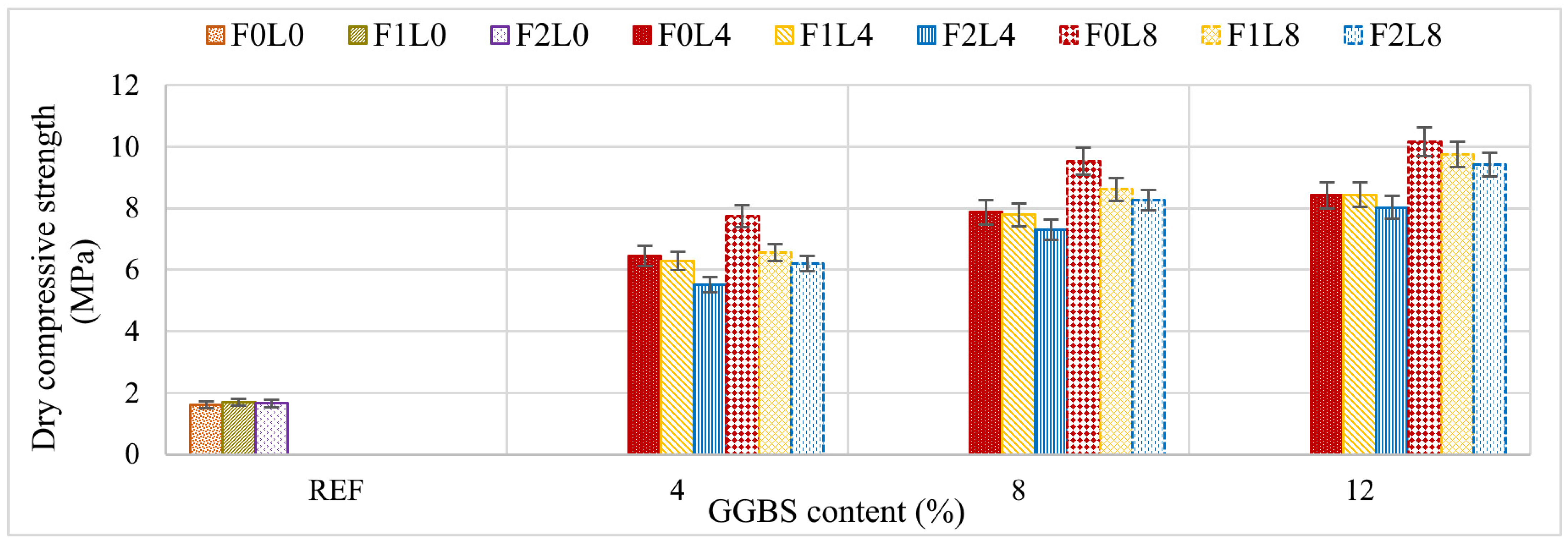
As can be seen in Figure 16, the incorporation of Alfa fibers alone does not bring a significant gain in strength to the earth blocks. Compressive strength values of only 1.66 MPa and 1.7 MPa are obtained respectively from earth blocks reinforced with long fibers, representing the mixture (F2L0) and the short ones, representing the mixture (F1L0), compared to the initial value of 1.61 MPa obtained from the virgin sample, representing the mixture (F0L0). These values remain below the minimum recommended one (2 MPa) after 28 days of curing [33]. This modest gain reflects a crack-bridging mechanism: in the weakly cohesive reference earth, fibers carry load through pull-out and friction along the fiber–soil interface, deflecting incipient microcracks [11,32,44].
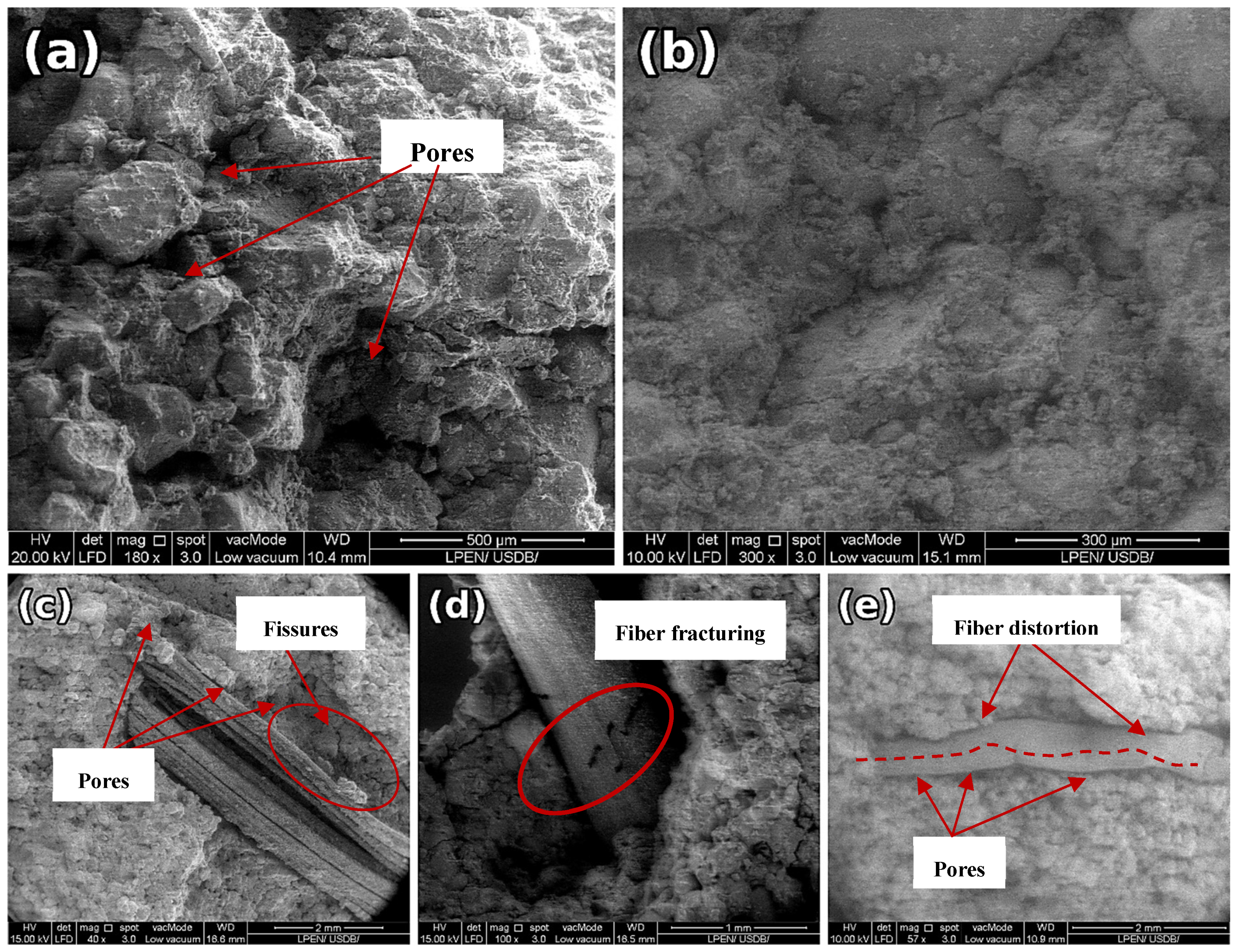
However, the mixture of F0L4S4 increases the dry compressive strength by 300% compared to the reference sample F0L0 (1.61 MPa to 6.45 MPa), while F0L8S4 (8% lime, 4% GGBS) shows an increase in strength by 379% (1.61 MPa to 7.74 MPa). Increasing GGBS content leads to a further increase in strength, reaching 8.42 MPa (424% increase) and 10.16 MPa (531% increase), respectively, for the samples (F0L4S12) and (F0L8S12). These values exceed the typical compressive strength range reported for soils stabilized with lime and natural fibers and compare favorably with earlier studies. For instance, Bouchefra et al. [45] reported 8.63 MPa with 9% lime under higher compaction pressure, while a similar value was achieved in this study with only 8% lime and 4% GGBS. Likewise, Taallah et al. [7] obtained 7.48 MPa with 8% lime alone, slightly lower than the results obtained. In contrast, Ouedraogo et al. [46] found no significant difference between unstabilized bricks and bricks stabilized with 4% lime, whereas the combination of 4% lime and 4% GGBS in the present work produced a substantial enhancement. These comparisons indicate that lime–slag blends are more efficient than lime alone in promoting strength gain. The SEM observations (Figure 17a,b) corroborate this finding, showing reduced pore networks in stabilized samples compared to untreated ones, confirming matrix densification. This is consistent with the work of Benhaoua et al. [9] and Soundarya [18], who reported that lime–slag mixtures undergo pozzolanic reactions forming cementitious compounds (C–S–H), which contribute significantly to strength development.
The addition of fibers (F1, F2) to lime–GGBS mixtures decreases the compressive strength, particularly at 4% lime content. In contrast with the unstabilized case, the cohesion of the C–S–H–densified matrix now exceeds the fiber–matrix interfacial bond, so the fibers no longer reinforce the matrix but act as stress concentrators that introduce porosities and microcracks within the interfacial transition zone (ITZ) at the fiber–matrix interface, as shown in the Scanning Electron Microscopy (SEM) image in Figure 17c. This observation is consistent with the work of Benzerara et al. [47], who investigated the effect of diss and palm tree fibers and reported a decrease in strength. However, this decrease in strength was counterbalanced with the addition of stabilizers. Similarly, poor fiber–matrix bonding can promote the appearance of microcracks and lead to a reduction in strength, as reported by Bouchehma et al. [44], who studied Alfa fiber-reinforced earthen specimens without any additional stabilizers. The decrease in compressive strength due to fiber addition is less pronounced when higher GGBS percentages (8–12%) are used. This is because the CaO present in GGBS undergoes hydration when activated by the alkaline environment created by lime, reducing matrix porosity and creating rigid bonds between soil particles and fibers. The role of Alfa fibers in CEBs is therefore governed by the matrix state: they reinforce a weak earth through crack-bridging but introduce defects in a densified lime–GGBS matrix; the strength recovery at higher GGBS contents reflects the partial re-anchoring of the fiber surface by additional C–S–H precipitation.
A similar trend in the behavior regarding the compressive strength is obvious when considering the treated samples with longer fibers, F2. Indeed, the longer fibers F2 appear to decrease the compressive strength more significantly compared to the shorter fibers F1. In addition, more deformations and voids are induced by longer fibers during the process of compaction. Longer F2 fibers are more prone to bending, folding, or even buckling, leading to curved or irregular shapes, as shown in the Scanning Electron Microscopy (SEM) analysis (Figure 17d,e) below. Conversely, the shorter F1 fibers deform less, preserving then, the initial dense structure of the composite. The distortion, local fracturing, and surrounding pores observed for F2 fibers (Figure 17d,e) disrupt the continuity of the reinforcement and concentrate stresses at the fiber–matrix interface, accounting for the larger strength reduction recorded for F2 compared with F1. These observations align with the work of Jiang et al. [48], who observed that while longer fibers eventually reduce compressive strength, this reduction is initially preceded by a short increase.
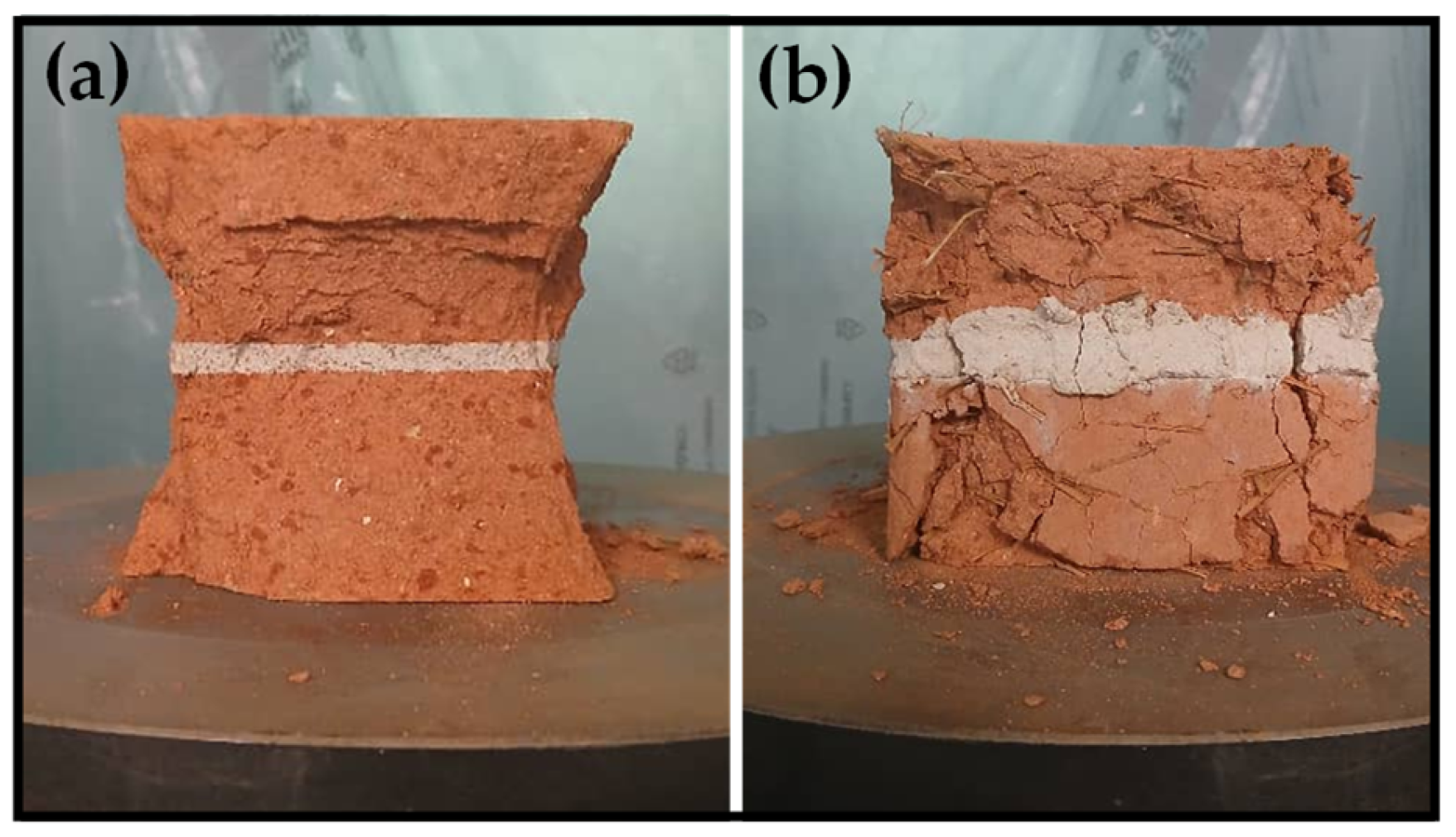
Finally, this study reveals contrasting failure behaviors between reinforced and unreinforced samples. The unreinforced samples (F0L4S8) exhibited rapid and abrupt failure, characterized by hourglass-shaped cracks inclined towards the center of the specimen (Figure 18a). In contrast, the reinforced samples (F2L4S8) showed a ductile failure mode, attributed to the bridging action of the randomly distributed Alfa fibers within the soil matrix, which helped transfer internal stresses (Figure 18b). This observation is consistent with the conclusions of Bouhicha et al. [11], who used barley straw, and Donkor et al. [32], who studied polypropylene fibers, both of whom reported brittle failure with large cracks in unreinforced samples versus ductile and gradual failure in fiber-reinforced specimens.

3.2.2. Wet Compressive Strength

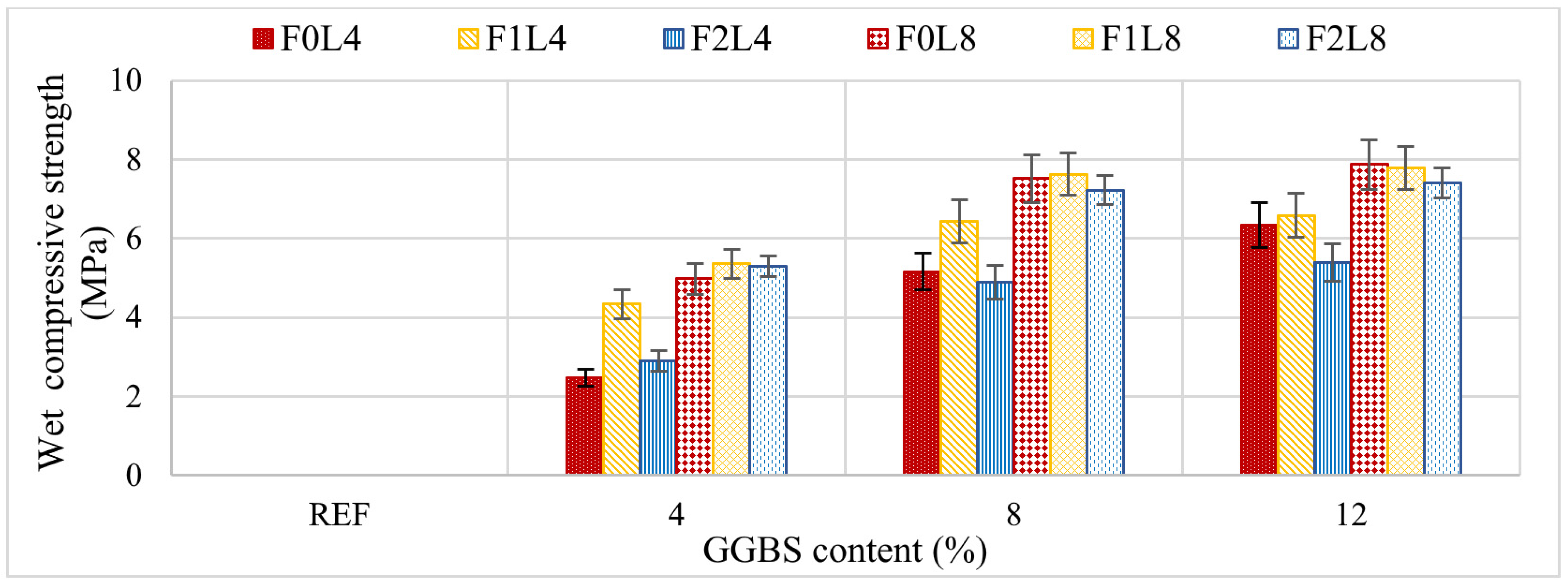
According to the French standard XP P13-901 [33], the wet compressive strength should exceed 0.8 MPa for construction applications. The experimental results (Figure 19) demonstrated that the studied mixes meet this requirement, particularly those containing fibers and GGBS. The reference samples (F0L0, F1L0, F2L0) collapsed during the 2 h humid curing period. However, the addition of 4% lime and 4% GGBS (F0L4S4) significantly improved the wet compressive strength to 2.47 MPa, while 8% lime (F0L8S4) further enhanced it to 4.98 MPa.
Increasing GGBS content to 12% enhanced wet compressive strength reaching 6.34 MPa for F0L4S12 (156% increase from F0L4S4) and 7.88 MPa for F0L8S12 (58% increase from F0L8S4). The wet compressive strength represented 38–83% of the dry compressive strength for 4% lime mixes and 64–89% for 8% lime samples. This reduction in wet strength, more pronounced in lower lime content mixtures, can be attributed to unbonded soil particles [49]. The wet strength reduction can be more specifically attributed to the partial dissolution of clay–binder bonds under water ingress, the swelling of unreacted clay particles, and the saturation-induced loss of capillary cohesion within unreacted matrix domains, all of which preferentially weaken the soil fraction not converted into pozzolanic C–S–H phases, in agreement with recent observations on fiber–stabilizer composites under wet–dry cycling [50].
The addition of F1 fibers improves the wet compressive strength through their binding effect, consistent with the findings of Lejano et al. [51] and Kumar et al. [31], who reported better wet compressive strength in fiber-reinforced samples. Similarly, Latha et al. [52] reported that incorporating sisal fibers together with cement increased the wet compressive strength of CSEBs, confirming that fibers, when combined with stabilizers, can contribute positively to moisture resistance. While F2 fibers similarly enhanced strength in most cases, they showed a slight decrease in mixtures with 8% and 12% GGBS combined with 4% and 8% lime, likely due to matrix discontinuity and pore formation resulting from the disruption of the continuity of the soil–lime–slag matrix induced by the incorporation of F2 fibers.

3.3. Combined Effects of Binders and Fibers on Physical Properties

3.3.1. Capillary Absorption

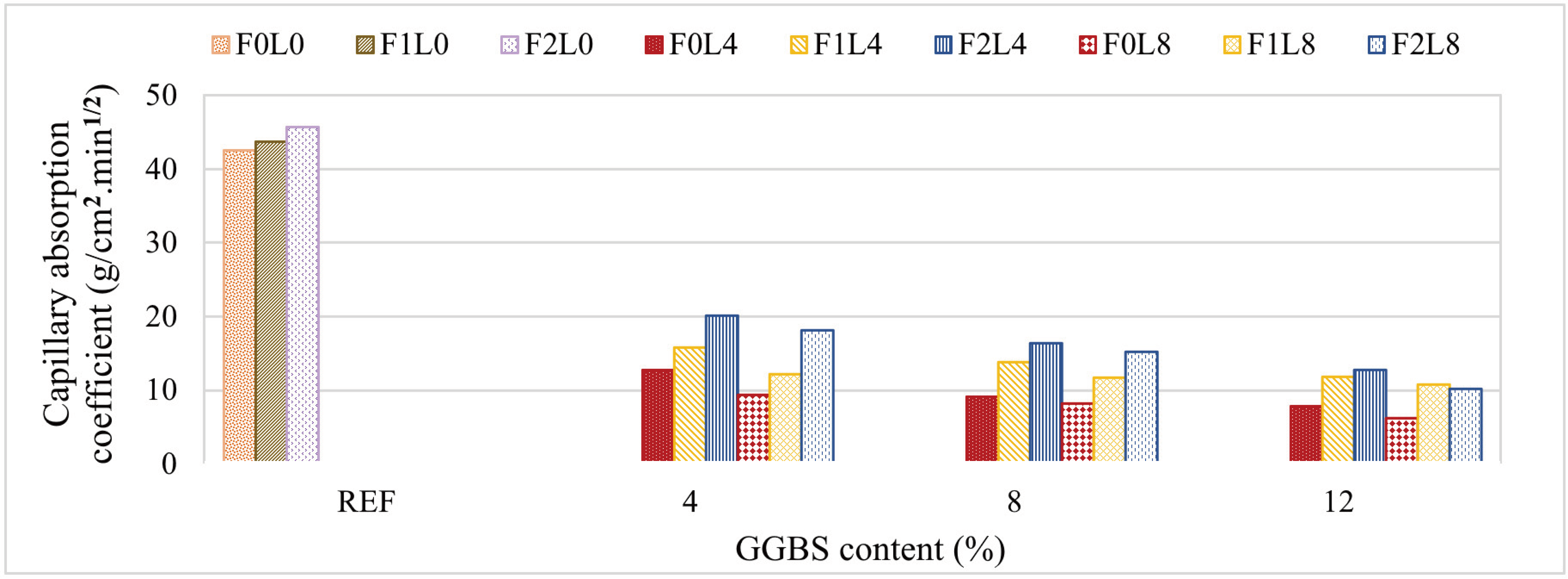
As can be seen in Figure 20, that reference mixes (F0L0, F1L0, F2L0) exhibited the highest capillary absorption coefficients (43–45). According to the French standard (XP P13-901) [33], water absorption should not exceed 20 (g/cm2·min1/2). All mixes meet this requirement except for the reference blocks and mixes F2L4S4 and F2L8S4.
The addition of lime and GGBS significantly decrease the capillary absorption, compared to reference blocks. Adding 4% GGBS (F0L4S4, F0L8S4) improves the coefficient by 70.1% and 77.82%, respectively, while 12% GGBS (F0L4S12, F0L8S12) shows further improvements of 81.6% and 85.44%. The enhancement from F0L4S4 to F0L4S12 (38.6%) confirms GGBS’s beneficial effect; this can be explained by the formation of C-S-H gels, leading to matrix densification and reduced porosity leading to lower permeability. These findings align with Obuzor et al. [53] and Sekhar et al. [54] who reported that GGBS–lime combinations enhance density through pore blocking and accumulation of hydration and pozzolanic products.
It is also interesting to compare these results with those of Bouchefra et al. [34], who used doum fibers treated with 9% lime. Their blocks exhibited a water absorption behavior almost similar to that of our mix with 8% lime and 4% slag. However, when 12% slag was added to 8% lime in our study, an additional improvement of nearly 11% was achieved, clearly highlighting the significant contribution of slag to reducing capillary absorption beyond lime stabilization alone.
In contrast, the incorporation of fibers (F1, F2) increased capillary absorption compared to fiber-free mixes (F0). This can be explained by the hydrophilic nature of the fibers and the voids created in the matrix structure, which promote water ingress, as shown in the SEM image in Figure 17a. Similar observations were reported by Benhaoua et al. [9], who used straw, and Taallah et al. [7], who studied palm fibers. However, the increase in absorption was less pronounced in their studies compared to the inclusion of Alfa fibers in the present work. This is likely because their fibers were not treated; indeed, Taallah et al. [7] also observed that treated palm fibers absorbed more water than untreated fibers, due to surface modifications increasing hydrophilicity. It is also observed that F1 fibers have a less significant impact on capillary absorption than F2 fibers. The F1L4S12 mix showed a 51.9% increase (to 11.86) compared to F0L4S12, while F2L4S12 showed a 62.9% increase (to 12.72). This difference can be explained by the fact that adding F2 fibers creates more voids in the matrix structure, which facilitates water penetration into the sample [55].

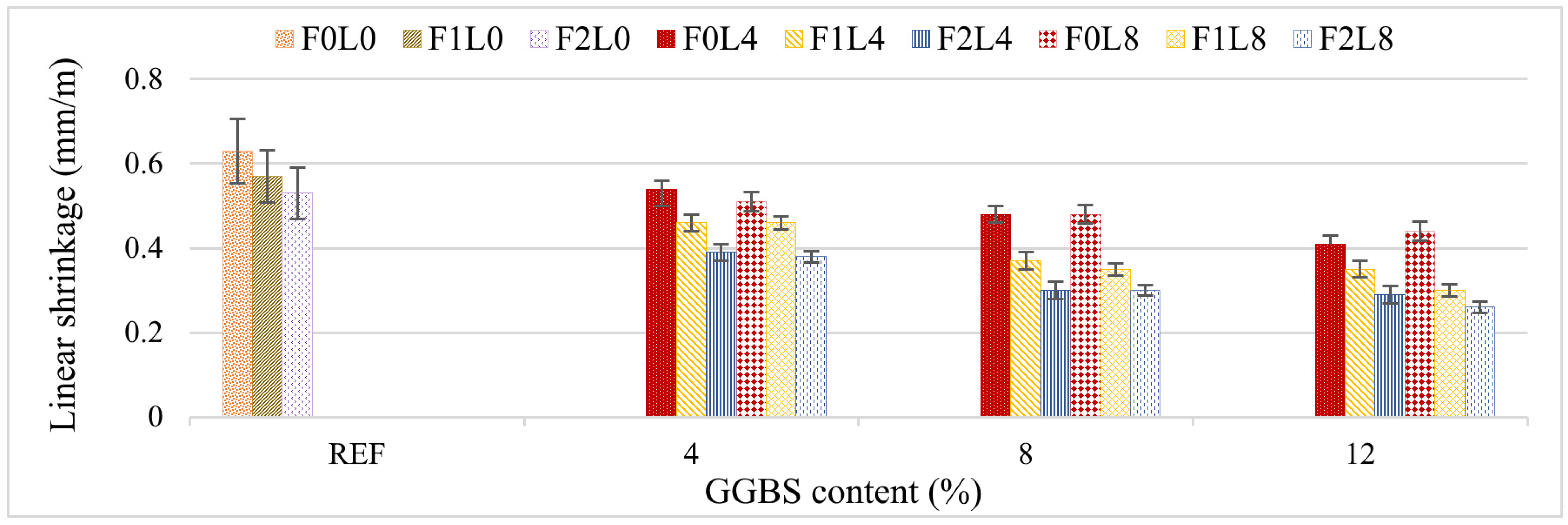
3.3.2. Linear Shrinkage

The dimensional change caused by the evaporation of water within a material is evaluated through the results given in Figure 21. As can be seen from the histogram, the reference mixture F0L0 shows the highest linear shrinkage (0.63). However, the addition of lime and GGBS progressively reduces the shrinkage values—F0L4S4 (0.54) and F0L4S12 (0.41), representing decreases of 14% and 35% respectively compared to F0L0. Similar reductions are observed in 8% lime mixtures, with F0L8S4 (0.51) and F0L8S12 (0.44) showing decreases of 19% and 30.2%.
Fiber’s incorporation, reduces further the linear shrinkage. F1 fibers decrease the shrinkage by 23% (F1L4S8) and 32% (F1L8S12) compared to fiber-free mixtures (F0). F2 fibers achieve the most significant reductions, 37.5% (F2L4S8) and 41% (F2L8S12), These improvements can be explained by the ability of the fibers, particularly the longer ones (F2), to resist deformation and limit shrinkage due to matrix bonding of longer Alfa fibers [9,11,16,56]. Shrinkage in earthen composites originates from the capillary tension developed in inter-particle pores during water evaporation; both lime–GGBS binders and fibers act against this driving force, the binders by converting free water into chemically bound C–S–H phases that no longer contribute to capillary tension, and the fibers by mechanically restraining the matrix contraction through their tensile stiffness, with F2 fibers being more effective due to their longer load-transfer length, as also reported by Zewudie et al. [57] and Latha et al. [58].
The differences between F1 and F2 pertain to their dimensions and surface characteristics. shorter fibers (F1) disperse more uniformly, whereas F2 fibers are longer, enhancing strength but potentially creating localized discontinuities. The addition of lime and GGBS mitigates these drawbacks, as the stabilizers densify the matrix while the fibers act as micro-reinforcement. This synergy provides superior shrinkage resistance compared to fibers alone. Sadouri et al. [16] demonstrated that this combination exhibits superior resistance to shrinkage compared to fibers alone. In comparison with the literature, the 41% shrinkage reduction obtained in the present study with F2L8S12 exceeds the values typically reported for natural-fiber-stabilized blocks. Latha et al. [58] reported a maximum 20% reduction with sisal fibers and 8% cement, while combined fiber–binder systems in earlier work generally remain below 30%, which underlines the specific benefit of the Alfa fiber–lime–GGBS combination for shrinkage control.

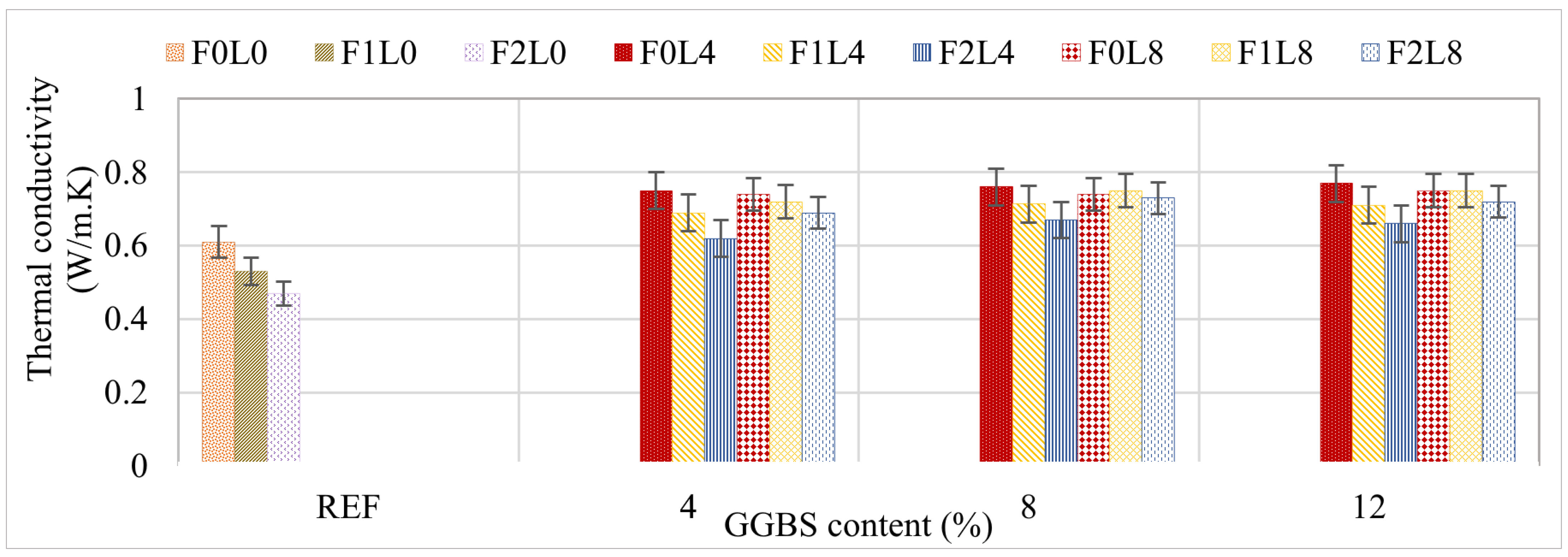
3.3.3. Thermal Conductivity

Figure 22 shows the evidence that the reference mixture (F0L0, F1L0, F2L0) achieves optimal insulation with conductivity values near 0.6 W/(m·K). The addition of GGBS to compressed earth blocks increases thermal conductivity compared to the reference mixture. This increase in thermal conductivity becomes more pronounced as the GGBS content increases, ranging from 0.75 W/(m·K) at 4% GGBS (F0L4S4) to 0.77 W/(m·K) at 12% (F0L8S12). However, lime addition slightly counteracted this effect, as seen in F0L8S12 (0.75 W/(m·K)). The observed increase is attributed to reduced porosity from fine particle infill, thereby decreasing the insulating capacity of the material. These findings are consistent with the works of Saidi et al. [59] and Liu et al. [60], who reported similar trends in their studies.
Incorporating fibers into the blocks enhanced thermal conductivity. A decrease of 8% in thermal conductivity is observed for the mixture F1L4S4 compared to F0L4S4, while a 2.7% decrease is noted for F1L8S4. Using F2 fibers, showed superior performance, decreasing conductivity from 0.77 to 0.66 W/(m·K) in L4S12 mixes (14.3% reduction). Notably, a more pronounced decrease in thermal conductivity is observed with 4% lime. This improvement stems from increased air pocket formation between longer fibers and soil particles. Consequently, heat transfer is reduced, resulting in lower thermal conductivity values. These findings are consistent with the results reported by Labiad et al. [6] and Mellaikhafi et al. [61], who reported similar trends in their studies. Thus, when GGBS reduced insulation performance, fiber addition, particularly F2, effectively offset this effect. This dual behavior is consistent with effective-medium considerations: GGBS densification reduces the volume fraction of insulating air pores and shifts the matrix toward higher-conductivity solid phases, while longer fibers introduce both low-conductivity cellulosic material (≈0.05 W/(m·K)) and surrounding micro-voids that partially restore the insulating character of the composite [62]. The value of 0.66 W/(m·K) obtained for F2L4S12 is higher than the 0.20 W/(m·K) reported by Elmaatoufi et al. [63] for Alfa-fiber CEBs without binder addition, reflecting the trade-off introduced by lime–GGBS densification; however, the present formulation simultaneously delivers significantly higher compressive strength and durability, illustrating the balanced mechanical–thermal performance achieved by the Alfa–lime–GGBS system.

3.4. Combined Effects of Binders and Fibers on Durability

3.4.1. Wet-to-Dry-Compressive Strength Ratio

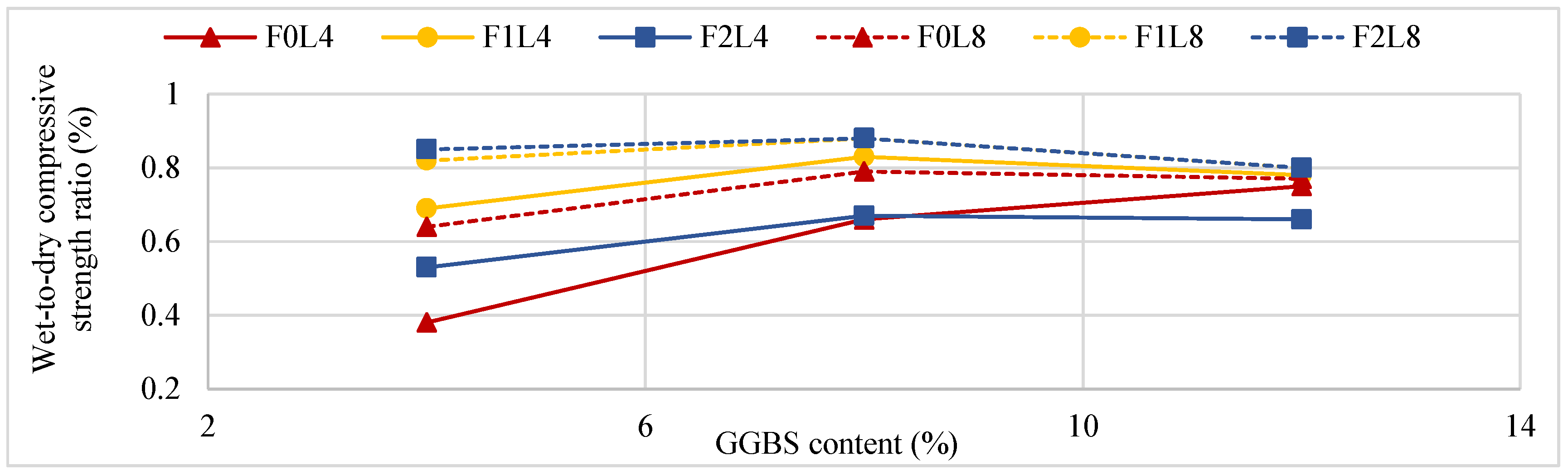
The wet-to-dry-compressive strength ratio is an important indicator of durability and stability against water [55]. It is calculated as the ratio of wet compressive strength to dry compressive strength. According to recommendations, a strength ratio higher than 0.33 is acceptable [64]. Figure 23 shows that the strength ratio improves by adding GGBS and lime. For mixtures without fibers, the coefficient increases from 0.38 for F0L4S4 to 0.75 for F0L4S12, indicating a 97% increase as the GGBS content increases.
The inclusion of F1 fibers further improved the ratio, reaching 0.83 for the F1L4S8 mix. The addition of F1 fibers proves more efficient. For the 8% GGBS mix, the coefficient increases from 0.66 without fibers (F0L0) to 0.83 with F1L4S8 (an increase of 26%) and 0.67 with F2L4S8 (an increase of only 1.5%). There is a 24.5% difference between F1 and F2, which can be attributed to the length of the Alfa fiber, increasing porosity, and reducing block density [55]. The combined incorporation of fibers and binders contribute to improving the strength ratio of the soil samples, with the shorter F1 fibers performing slightly better than the longer F2 fibers in some cases. The F2L8S8 mix shows the highest ratio, while the F0L4S4 (fiber-free) mix shows the lowest. Overall, 8% GGBS yield optimal results throughout the various combinations.

3.4.2. Abrasion Resistance

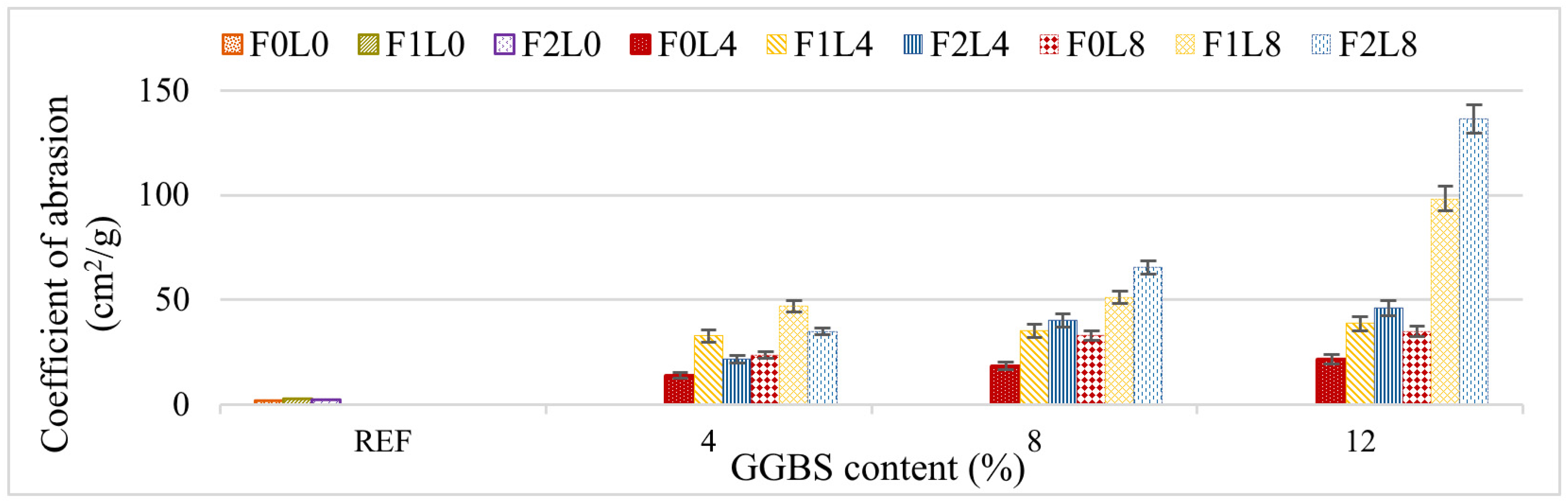
The coefficient of abrasion resistance indicates how well a material can withstand wear and erosion when subjected to frictional forces. According to the XP P13-901 French standard [33], the acceptable limit for abrasion resistance is set at a minimum of 2 cm2/g. In this study, the reference mixes (F0L0, F1L0, F2L0) show the lowest values, around 2 cm2/g, as indicated in Figure 24; showing low abrasion resistance regardless of fiber presence. Materials exhibit superior durability when achieving a higher coefficient of abrasion (Ca).
The introduction of lime and GGBS results in a significant improvement in abrasion resistance compared to the reference mixes, consistent with findings by González-López et al. [65]. who reported similar improvements in lime-stabilized CEBs. Notably, mixtures F0L4S4 and F0L8S4 demonstrated remarkable enhancements of 599% and 1098%, respectively. Enhanced GGBS content produced superior results, with values spanning from 13.76 to 34.94 cm2/g.
Incorporating fibers (F1, F2) leads to a significant additional increase in abrasion resistance. For instance, mix F1L4S4 reaches 38.66 cm2/g, while F2L4S4 reaches 46 cm2/g. Furthermore, F1L8S12 and F2L8S12 exhibited exceptional values of 98.2 cm2/g and 136.36 cm2/g respectively.
The GGBS effectively binds with the lime and fibers synergistically, reducing the abraded particles. The adhesion of fibers to soil particles makes the block less prone to wear. Similar results were observed by Velasco-Aquino et al. [66], who used lime and coconut fibers, and by Millogo et al. [12]. Moreover, it is consistently observed that F2 fibers outperform F1, particularly at higher GGBS contents, due to their greater capacity to reinforce the soil matrix and limit surface degradation.

4. Conclusions

This study evaluated the combined effects of alkali-treated Alfa fibers, lime, and GGBS on compressed earth blocks. The experimental investigation led to the following conclusions:
  • Integrating longer Alfa fibers (20–25 mm) with lime–slag binders can effectively address the intrinsic weaknesses of earthen materials. Compared to binder-only mixes, the addition of fibers improved ductility, abrasion resistance, and shrinkage control, while lime–GGBS blends significantly increased strength and durability through pozzolanic matrix densification. The unstabilized reference earth exhibited a dry compressive strength of only 1.61 MPa, which was raised up to 10.16 MPa (+531%) by lime–GGBS stabilization. Together, these mechanisms yielded blocks with up to 35% higher wet compressive strength, over 40% lower shrinkage (from 0.63 to 0.41 mm/m), and 14% reduced thermal conductivity (from 0.77 to 0.66 W/(m·K)).
  • The most effective balance between mechanical, physical, and durability properties was obtained with 4% lime and 12% GGBS combined with longer fibers (F2). This mixture not only achieved the highest overall performance across strength, wet-to-dry strength ratio, abrasion resistance, thermal insulation, and shrinkage, but also reduced lime content compared to 8% lime mixes, thereby supporting sustainable construction goals.
  • The comparison of fiber lengths further showed that F1 fibers (3–9 mm) were more effective in reducing capillary absorption (11.86 vs. 12.72 g/cm2·min0.5 for F1L4S12 and F2L4S12, respectively), whereas F2 fibers (20–25 mm) provided more consistent improvements in strength, durability (abrasion resistance up to 136 cm2/g for F2L8S12), and thermal performance (14% reduction with F2 versus 8% with F1), confirming their superior role as micro-reinforcement.
  • Although these findings are based on laboratory-scale testing, they underline the potential of fiber- and slag-stabilized compressed earth blocks as eco-efficient alternatives for arid and semi-arid regions.
  • Future work should validate long-term durability under natural weathering, and include quantitative measurements of porosity, C–S–H content, and fiber–matrix interfacial bond strength to further support the proposed microstructural mechanisms.

Author Contributions

I.B.: Investigation, data curation, writing—original draft, formal analysis, visualization; K.G.: supervision, funding acquisition, validation, methodology, writing—review and editing; S.K.: supervision, funding acquisition, validation, methodology, writing—review and editing; J.K.: validation, methodology, writing—review and editing. All authors have read and agreed to the published version of the manuscript.

Funding

This research received no external funding.

Data Availability Statement

Data is available on request.

Acknowledgments

The authors are thankful for The Directorate General for Scientific Research and Technological Development (DGRSDT), Algiers, Algeria for providing the financial support. The authors acknowledge the contribution of the Geomaterials and Civil Engineering Laboratory of the University of Blida 1, Algeria for providing the materiel and equipment for conducting this research.

Conflicts of Interest

The authors declare no conflicts of interest.

References

  1. Jannat, N.; Hussien, A.; Abdullah, B.; Cotgrave, A. Application of agro and non-agro waste materials for unfired earth blocks construction: A review. Constr. Build. Mater. 2020, 254, 119346. [Google Scholar] [CrossRef]
  2. Chel, A.; Kaushik, G. Renewable energy technologies for sustainable development of energy efficient building. Alex. Eng. J. 2018, 57, 655–669. [Google Scholar] [CrossRef]
  3. Valenzuela, M.; Ciudad, G.; Cárdenas, J.P.; Medina, C.; Salas, A.; Oñate, A.; Pincheira, G.; Attia, S.; Tuninetti, V. Towards the development of performance-efficient compressed earth blocks from industrial and agro-industrial by-products. Renew. Sustain. Energy Rev. 2024, 194, 114323. [Google Scholar] [CrossRef]
  4. United Nations; Department of Economic and Social Affairs; Population Division. World Population Prospects 2022: Summary of Results; UN DESA/POP/2022/TR/NO. 3; United Nations: New York, NY, USA, 2022. [Google Scholar]
  5. Van Damme, H.; Houben, H. Earth concrete. Stabilization revisited. Cem. Concr. Res. 2018, 114, 90–102. [Google Scholar] [CrossRef]
  6. Labiad, Y.; Meddah, A.; Beddar, M.; Pantelidis, L. Study on characterization, mechanical, and thermal properties of alfa fiber-reinforced compressed earth blocks incorporating crushed brick waste. Arab. J. Geosci. 2023, 16, 575. [Google Scholar] [CrossRef]
  7. Taallah, B.; Guettala, A. The mechanical and physical properties of compressed earth block stabilized with lime and filled with untreated and alkali-treated date palm fibers. Constr. Build. Mater. 2016, 104, 52–62. [Google Scholar] [CrossRef]
  8. Oubani, M.; Bouferra, R.; Essaleh, M.; Bouhassoune, M.; Bouhamidi, S.; Benjelloun, M.; Belhouideg, S. Developing sustainable building materials using local soil reinforced with alkali-treated and untreated alfa fiber: A characterization study of thermal and mechanical properties. Chem. Afr. 2024, 7, 329–344. [Google Scholar] [CrossRef]
  9. Benhaoua, W.; Grine, K.; Kenai, S. Performance of stabilized earth with wheat straw and slag. MRS Adv. 2020, 5, 1285–1294. [Google Scholar] [CrossRef]
  10. Laborel-Préneron, A.; Aubert, J.E.; Magniont, C.; Bertron, A. Influence of straw content on the mechanical and thermal properties of bio-based earth composites. Acad. J. Civ. Eng. 2015, 33, 517–522. [Google Scholar] [CrossRef]
  11. Bouhicha, M.; Aouissi, F.; Kenai, S. Performance of composite soil reinforced with barley straw. Cem. Concr. Compos. 2005, 27, 617–621. [Google Scholar] [CrossRef]
  12. Millogo, Y.; Morel, J.-C.; Aubert, J.-E.; Ghavami, K. Experimental analysis of pressed adobe blocks reinforced with Hibiscus cannabinus fibers. Constr. Build. Mater. 2014, 52, 71–78. [Google Scholar] [CrossRef]
  13. Ajouguim, S.; Talibi, S.; Djelal-Dantec, C.; Hajjou, H.; Waqif, M.; Stefanidou, M.; Saadi, L. Effect of alfa fibers on the mechanical and thermal properties of compacted earth bricks. Mater. Today Proc. 2021, 37, 4049–4057. [Google Scholar] [CrossRef]
  14. Benyoussif, Y.; Aboulhrouz, S.; El Achaby, M.; Cherkaoui, O.; Lallam, A. Preparation and properties of bionanocomposite films reinforced with nanocellulose isolated from Moroccan alfa fibres. AUTEX Res. J. 2015, 15, 164–172. [Google Scholar] [CrossRef]
  15. Mohamed, R.; Houcine, B.; Kherfane, S. Compressed stabilized earth block stabilized with cement and reinforced with alfa fibers. J. Biomech. Sci. Eng. 2023. Available online: https://www.researchgate.net/publication/370653749_COMPRESSED_STABILIZED_EARTH_BLOCK_STABILIZED_WITH_CEMENT_AND_REINFORCED_WITH_ALFA_FIBERS (accessed on 7 November 2025).
  16. Sadouri, R.; Benyoucef, M.; Cherradi, Y. Elaboration and characterization of earth-sand adobe bricks reinforced by alfa fibers. Res. Sq. 2022. [Google Scholar] [CrossRef]
  17. Garrouri, S.; Lakhal, W.; Benazzouk, A.; Sediki, E. Potential use of alfa fibers in construction material: Physico-mechanical and thermal characterisation of reinforced specimen. Constr. Build. Mater. 2022, 342, 127787. [Google Scholar] [CrossRef]
  18. Soundarya, N. Effect of fly ash and GGBS on lime stabilized mud block. Mater. Today Proc. 2021, 47, 4636–4640. [Google Scholar] [CrossRef]
  19. Adnan, M.; Kumar, S.; Garg, N.; Gupta, K.K.; Das, S.K. Soil stabilization using waste ‘bagasse ash and lime’: A review. Mater. Today Proc. 2023; in press. [CrossRef]
  20. Malkanthi, S.N.; Balthazaar, N.; Perera, A.A.D.A.J. Lime stabilization for compressed stabilized earth blocks with reduced clay and silt. Case Stud. Constr. Mater. 2020, 12, e00326. [Google Scholar] [CrossRef]
  21. Rouabah, K.; Zergua, A.; Beroual, A.; Guetteche, M.N. Recovery and use of blast furnace slag in the field of road construction in Algeria. Open J. Civ. Eng. 2013, 3, 113–118. [Google Scholar] [CrossRef]
  22. Ahmad, J.; Kontoleon, K.J.; Majdi, A.; Naqash, M.T.; Deifalla, A.F.; Ben Kahla, N.; Isleem, H.F.; Qaidi, S.M.A. A comprehensive review on the ground granulated blast furnace slag (GGBS) in concrete production. Sustainability 2022, 14, 8783. [Google Scholar] [CrossRef]
  23. Laveglia, A.; Sambataro, L.; Ukrainczyk, N.; De Belie, N.; Koenders, E. Hydrated lime life-cycle assessment: Current and future scenarios in four EU countries. J. Clean. Prod. 2022, 369, 133224. [Google Scholar] [CrossRef]
  24. Kasiviswanathan, M.; Govindarajulu, K. Experimental study on mechanical and durability properties of fly ash-lime-slag block for dry stack masonry construction. J. Mater. Civ. Eng. 2023, 35, 04023034. [Google Scholar] [CrossRef]
  25. El-Abbassi, F.E.; Assarar, M.; Ayad, R.; Bourmaud, A.; Baley, C. A review on alfa fibre (Stipa tenacissima L.): From the plant architecture to the reinforcement of polymer composites. Compos. Part A Appl. Sci. Manuf. 2020, 128, 105677. [Google Scholar] [CrossRef]
  26. El Achaby, M.; Kassab, Z.; Barakat, A.; Aboulkas, A. Alfa fibers as viable sustainable source for cellulose nanocrystals extraction: Application for improving the tensile properties of biopolymer nanocomposite films. Ind. Crops Prod. 2018, 112, 499–510. [Google Scholar] [CrossRef]
  27. Mallek-Fakhfakh, H.; Fakhfakh, J.; Walha, K.; Hassairi, H.; Gargouri, A.; Belghith, H. Enzymatic hydrolysis of pretreated alfa fibers (Stipa tenacissima) using β-D-glucosidase and xylanase of Talaromyces thermophilus from solid-state fermentation. Int. J. Biol. Macromol. 2017, 103, 543–553. [Google Scholar] [CrossRef]
  28. Ajouguim, S.; Abdelouahdi, K.; Mohamed, W.; Stefanidou, M.; Saadi, L. Modifications of alfa fibers by alkali and hydrothermal treatment. Cellulose 2019, 26, 1503–1516. [Google Scholar] [CrossRef]
  29. Mouhoubi, S.; Bourahli, M.E.H.; Osmani, H.; Abdeslam, S. Effect of alkali treatment on alfa fibers behavior. J. Nat. Fibers 2017, 14, 239–249. [Google Scholar] [CrossRef]
  30. Borchani, K.E.; Carrot, C.; Jaziri, M. Untreated and alkali treated fibers from alfa stem: Effect of alkali treatment on structural, morphological and thermal features. Cellulose 2015, 22, 1577–1589. [Google Scholar] [CrossRef]
  31. Kumar, N.; Barbato, M. Effects of sugarcane bagasse fibers on the properties of compressed and stabilized earth blocks. Constr. Build. Mater. 2022, 315, 125552. [Google Scholar] [CrossRef]
  32. Donkor, P.; Obonyo, E. Earthen construction materials: Assessing the feasibility of improving strength and deformability of compressed earth blocks using polypropylene fibers. Mater. Des. 2015, 83, 813–819. [Google Scholar] [CrossRef]
  33. AFNOR. XP P13-901: Compressed Earth Blocks for Walls and Partitions—Definitions, Specifications, Test Methods and Delivery Acceptance Conditions; Association Française de Normalisation: La Plaine Saint-Denis, France, 2001. [Google Scholar]
  34. Elhamdouni, Y.; Khabbazi, A.; Benayad, C.; Dadi, A.; Ahmid, O.I. Effect of fiber alfa on thermophysical characteristics of a material based on clay. Energy Procedia 2015, 74, 718–727. [Google Scholar] [CrossRef]
  35. Guo, C.; Li, M.; Wang, S.; Zhang, S.; Li, Y.; Li, C. Alkali treatment of bamboo fibers improves the mechanical properties of metakaolin geopolymer. J. Dispers. Sci. Technol. 2024, 45, 980–989. [Google Scholar] [CrossRef]
  36. Benyahia, A.; Merrouche, A. Effect of chemical surface modifications on the properties of alfa fiber-polyester composites. Polym.-Plast. Technol. Eng. 2014, 53, 403–410. [Google Scholar] [CrossRef]
  37. Palai, B.K.; Sarangi, S.K. Characterization of untreated and alkalized Eichhornia crassipes fibers and its composites. J. Nat. Fibers 2022, 19, 3809–3824. [Google Scholar] [CrossRef]
  38. Borchani, K.E. Développement d’un Composite à Base d’un Polymère Biodégradable et de Fibres Extraites de la Plante d’Alfa. Ph.D. Thesis, Université de Lyon and École Nationale d’Ingénieurs de Sfax, Sfax, Tunisia, 2016. [Google Scholar]
  39. Sanjay, M.R.; Madhu, P.; Jawaid, M.; Senthamaraikannan, P.; Senthil, S.; Pradeep, S. Characterization and properties of natural fiber polymer composites: A comprehensive review. J. Clean. Prod. 2018, 172, 566–581. [Google Scholar] [CrossRef]
  40. Thannimalay, L.; Yusoff, S.; Zawawi, N.Z. Life cycle assessment of sodium hydroxide. Aust. J. Basic Appl. Sci. 2013, 7, 421–431. [Google Scholar]
  41. Euro Chlor. Eco-Profile of the European Chlor-Alkali Industry (Chlorine, Sodium Hydroxide, Hydrogen); Euro Chlor: Brussels, Belgium, 2022; Available online: https://www.eurochlor.org/ (accessed on 23 May 2026).
  42. Alcivar-Bastidas, S.; Petroche, D.M.; Ramirez, A.D.; Martinez-Echevarria, M.J. Characterization and life cycle assessment of alkali treated abaca fibers: The effect of reusing sodium hydroxide. Constr. Build. Mater. 2024, 449, 138522. [Google Scholar] [CrossRef]
  43. Jose, S.; Mishra, L.; Basu, G.; Samanta, A.K. Study on reuse of coconut fiber chemical retting bath. Part 1: Retting efficiency. J. Nat. Fibers 2016, 13, 603–609. [Google Scholar] [CrossRef]
  44. Bouchehma, A.; Essaleh, M.; Benjelloun, M.; Bouferra, R.; Belhouideg, S. Mineralogical, geotechnical and mechanical characterization of clay/alfa short fiber composites for sustainable building. NanoWorld J. 2023, 9, S356–S361. [Google Scholar] [CrossRef]
  45. Bouchefra, I.; El Bichri, F.Z.; Chehouani, H.; Benhamou, B. Mechanical and thermophysical properties of compressed earth brick reinforced by raw and treated doum fibers. Constr. Build. Mater. 2022, 318, 126031. [Google Scholar] [CrossRef]
  46. Ouedraogo, K.A.J.; Aubert, J.-E.; Tribout, C.; Escadeillas, G. Is stabilization of earth bricks using low cement or lime contents relevant? Constr. Build. Mater. 2020, 236, 117578. [Google Scholar] [CrossRef]
  47. Benzerara, M.; Guihéneuf, S.; Belouettar, R.; Perrot, A. Combined and synergic effect of Algerian natural fibres and biopolymers on the reinforcement of extruded raw earth. Constr. Build. Mater. 2021, 289, 123211. [Google Scholar] [CrossRef]
  48. Jiang, H.; Cai, Y.; Liu, J. Engineering properties of soils reinforced by short discrete polypropylene fiber. J. Mater. Civ. Eng. 2010, 22, 1315–1322. [Google Scholar] [CrossRef]
  49. Islam, M.S.; Elahi, T.E.; Shahriar, A.R.; Mumtaz, N. Effectiveness of fly ash and cement for compressed stabilized earth block construction. Constr. Build. Mater. 2020, 255, 119392. [Google Scholar] [CrossRef]
  50. Pederson, F.; Florendo, R.; Khawaja, S.A.; Dimond, K.; Kim, H.J. Effects on the compressive strength of cement-stabilized rammed earth blocks with varied content of buffelgrass-based fibers in wet-dry conditions. Front. Built Environ. 2024, 10, 1362254. [Google Scholar] [CrossRef]
  51. Lejano, B.A.; Pineda, K.S.D. Investigation of the effects of different natural fibers on the strength of compressed stabilized earth blocks (CSEB). Int. J. GEOMATE 2018, 14, 37–43. [Google Scholar] [CrossRef]
  52. Thennarasan Latha, A.; Murugesan, B. Compressed stabilised earth block synergistically valorising municipal solid waste incinerator bottom ash and sisal fiber: Strength, durability and life cycle analysis. Constr. Build. Mater. 2024, 441, 137514. [Google Scholar] [CrossRef]
  53. Obuzor, G.N.; Kinuthia, J.M.; Robinson, R.B. Enhancing the durability of flooded low-capacity soils by utilizing lime-activated ground granulated blastfurnace slag (GGBS). Eng. Geol. 2011, 123, 179–186. [Google Scholar] [CrossRef]
  54. Sekhar, D.C.; Nayak, S. Utilization of granulated blast furnace slag and cement in the manufacture of compressed stabilized earth blocks. Constr. Build. Mater. 2018, 166, 531–536. [Google Scholar] [CrossRef]
  55. Raavi, S.S.D.; Tripura, D.D. Predicting and evaluating the engineering properties of unstabilized and cement stabilized fibre reinforced rammed earth blocks. Constr. Build. Mater. 2020, 262, 120845. [Google Scholar] [CrossRef]
  56. Sangma, S.; Tripura, D.D. Experimental study on shrinkage behaviour of earth walling materials with fibers and stabilizer for cob building. Constr. Build. Mater. 2020, 256, 119449. [Google Scholar] [CrossRef]
  57. Zewudie, B.B. Experimental study on the production and mechanical behavior of compressed lime-cement-stabilized interlock soil blocks. Adv. Mater. Sci. Eng. 2023, 2023, 2933398. [Google Scholar] [CrossRef]
  58. Thennarasan Latha, A.; Murugesan, B.; Skariah Thomas, B. Compressed earth block reinforced with sisal fiber and stabilized with cement: Manual compaction procedure and influence of addition on mechanical properties. Mater. Today Proc. 2023; in press. [CrossRef]
  59. Saidi, M.; Cherif, A.S.; Zeghmati, B.; Sediki, E. Stabilization effects on the thermal conductivity and sorption behavior of earth bricks. Constr. Build. Mater. 2018, 167, 566–577. [Google Scholar] [CrossRef]
  60. Liu, X.; Hu, M.; Ke, S.; Fu, C.; Guo, X.; Ye, X. A novel rammed earthen material stabilized with steel slags. Constr. Build. Mater. 2018, 189, 1134–1139. [Google Scholar] [CrossRef]
  61. Mellaikhafi, A.; Ouakarrouch, M.; Benallel, A.; Tilioua, A.; Ettakni, M.; Babaoui, A.; Garoum, M.; Alaoui Hamdi, M.A. Characterization and thermal performance assessment of earthen adobes and walls additive with different date palm fibers. Case Stud. Constr. Mater. 2021, 15, e00693. [Google Scholar] [CrossRef]
  62. Al-Sakkaf, Y.K.; Onaizi, A.M.; Mo, K.H.; Alengaram, U.J.; Yusoff, N.I.M.; Loganathan, T.M. Advancing sustainable compressed earth blocks practices: A critical application of simulation and optimization in reducing energy consumption and greenhouse emissions in green building. Energy Sci. Eng. 2025, 13, 926–943. [Google Scholar] [CrossRef]
  63. Elmaatoufi, S.; Nasla, S.; Kheltent, M.; El Maatoufi, Y.; Gueraoui, W.; Cherraj, M. Comparative study of compressed earth blocks reinforced with natural fibres: Alfa fibres, date palm fibres and barley straw fibres. JP J. Heat Mass Transf. 2025, 38, 285–298. [Google Scholar] [CrossRef]
  64. Heathcote, K.A. Durability of earthwall buildings. Constr. Build. Mater. 1995, 9, 185–189. [Google Scholar] [CrossRef]
  65. González-López, J.R.; Juárez-Alvarado, C.A.; Ayub-Francis, B.; Mendoza-Rangel, J.M. Compaction effect on the compressive strength and durability of stabilized earth blocks. Constr. Build. Mater. 2018, 163, 179–188. [Google Scholar] [CrossRef]
  66. Velasco-Aquino, A.A.; Espuna-Mujica, J.A.; Perez-Sanchez, J.F.; Zúñiga-Leal, C.; Palacio-Perez, A.; Suarez-Dominguez, E.J. Compressed earth block reinforced with coconut fibers and stabilized with aloe vera and lime. J. Eng. Des. Technol. 2021, 19, 795–807. [Google Scholar] [CrossRef]
Figure 1. Photograph of the soil sample.
Buildings 16 02344 g001
Figure 2. Particle size distribution of the soil.
Buildings 16 02344 g002
Figure 3. X-ray diffraction of the soil.
Buildings 16 02344 g003
Figure 4. Ground granulated blast-furnace slag.
Buildings 16 02344 g004
Figure 5. Raw Alfa grass fibers.
Buildings 16 02344 g005
Figure 6. Cut and treated Alfa grass fibers.
Buildings 16 02344 g006
Figure 7. Blocks encased in plastic film during laboratory curing.
Buildings 16 02344 g007
Figure 8. Compressive strength test procedure on CEB.
Buildings 16 02344 g008
Figure 9. Capillary absorption test procedure on CEB.
Buildings 16 02344 g009
Figure 10. Linear shrinkage test procedure on CEB.
Buildings 16 02344 g010
Figure 11. Thermal conductivity test procedure on CEB.
Buildings 16 02344 g011
Figure 12. Abrasion test procedure on CEB.
Buildings 16 02344 g012
Figure 13. SEM observation of treated Alfa fiber. (a,b) Diagonal view, (c,d) longitudinal view.
Buildings 16 02344 g013
Figure 14. X-Ray diffraction of treated and untreated Alfa fiber.
Buildings 16 02344 g014
Figure 15. FTIR analysis of treated and untreated Alfa fiber.
Buildings 16 02344 g015
Figure 16. Effect of lime–GGBS and Alfa fibers on dry compressive strength.
Buildings 16 02344 g016
Figure 17. SEM images of CEB; (a) L0F0, (b) F0L8S8, (c) F1L8S4, (d) F2L4S12, (e) F2L4S4.
Buildings 16 02344 g017
Figure 18. Failure mode after dry compressive strength test. (a) Unreinforced, (b) reinforced with fibers.
Buildings 16 02344 g018
Figure 19. Effect of lime–GGBS and Alfa fibers on wet compressive strength.
Buildings 16 02344 g019
Figure 20. Effect of lime–GGBS and Alfa fibers on capillary water absorption.
Buildings 16 02344 g020
Figure 21. Effect of lime–GGBS and Alfa fibers on linear shrinkage.
Buildings 16 02344 g021
Figure 22. Effect of lime–GGBS and Alfa fibers on thermal conductivity.
Buildings 16 02344 g022
Figure 23. Effect of lime–GGBS and Alfa fibers on wet-to-dry compressive strength ratio.
Buildings 16 02344 g023
Figure 24. Effect of lime–GGBS and Alfa fibers on abrasion resistance.
Buildings 16 02344 g024
Table 1. Physical properties of the soil.
TestsValues
Plastic limit WP (%)22
Liquid limit WL (%)34
Plasticity index IP (%)12
Specific gravity2.61
Methylene blue test2
PH test7.5
Organic matter %0.8
Table 2. Chemical composition of the soil, quicklime, and GGBS (% by mass).
MaterialSiO2Al2O3Fe2O3CaOMgOTiO2P2O5MnOK2OV2O5SO3Na2OCO2LOI
Soil46.5913.9810.777.70-1.421.121.322.921.30---12.88
Quicklime1.511.291.50.4-----0.50.43.5-
GGBS40.829.180.1938.865.700.72-0.310.54-1.44-1.750.49
Table 3. Physical properties of Alfa grass fibers.
PropertyValues
Diameter (mm)1.24 ± 0.40
Water absorption at saturation (%)92 ± 2
Absolute density (g/cm3)0.98 ± 0.05
Length (mm)3–9/20–25
Table 4. Compositions of the different formulations prepared.
CodeEarth (%)Lime (%)GGBS (%)Fiber (3–9) mm (%)Fiber (20–25) mm (%)
F0L0100
F1L099 1
F2L099 1
F0L4S49244
F0L4S88848
F0L4S1284412
F1L4S491441
F1L4S887481
F1L4S12834121
F2L4S49144 1
F2L4S88748 1
F2L4S1283412 1
F0L8S48884
F0L8S88488
F0L8S1280812
F1L8S487841
F1L8S883881
F1L8S12798121
F2L8S48784 1
F2L8S88388 1
F2L8S1279812 1
Table 5. FTIR peak position and functional group.
Wavenumber cm−1Vibration Assignment
3614; 3333 O-H stretching
3045; 2816C-H stretching
1773C=O stretching
1564C=C stretching
1253C-O stretching
986; 743C-H stretching
Disclaimer/Publisher’s Note: The statements, opinions and data contained in all publications are solely those of the individual author(s) and contributor(s) and not of MDPI and/or the editor(s). MDPI and/or the editor(s) disclaim responsibility for any injury to people or property resulting from any ideas, methods, instructions or products referred to in the content.