Study on Mechanical Performance of Steel Truss–Concrete Composite Girder During Post-Rotation Jacking Process
Abstract
1. Introduction
2. Analytical Formulation for Jacking-Induced System Conversion and Bearing Reaction Redistribution
2.1. Basic Mechanical Model and Assumptions
- (1)
- The main girder operates within the elastic range; the material constitutive behavior obeys Hooke’s Law, and neither geometric nonlinearity nor second-order effects are considered.
- (2)
- The equivalent flexural stiffness EI of the transformed section of the main girder is assumed constant along the span length. In the transverse analysis, the equivalent torsional stiffness GJ is additionally considered, while the effects of shear deformation and axial deformation are neglected.
- (3)
- In the vertical analysis, the two-span continuous girder is simplified as a hyperstatic structure supported at the intermediate pier top and the two end abutments. At the intermediate pier, the temporary bearings and permanent bearings jointly sustain the self-weight of the girder.
- (4)
- In the transverse analysis, the main girder and the piers are collectively treated as a rigid frame in the horizontal plane. The transverse force distribution is governed jointly by the transverse flexural stiffness of the main girder and the lateral thrust stiffness of the piers. For the case involving multiple bearings within the same cross-section, the main girder is idealized as an elastic beam with equivalent flexural stiffness and equivalent torsional stiffness.
2.2. Force Method Analysis of Synchronous Jacking
2.3. Formula for Bearing Reaction Distribution Under Asynchronous Jacking
2.3.1. Displacement Decomposition and Stiffness Matrix
- (1)
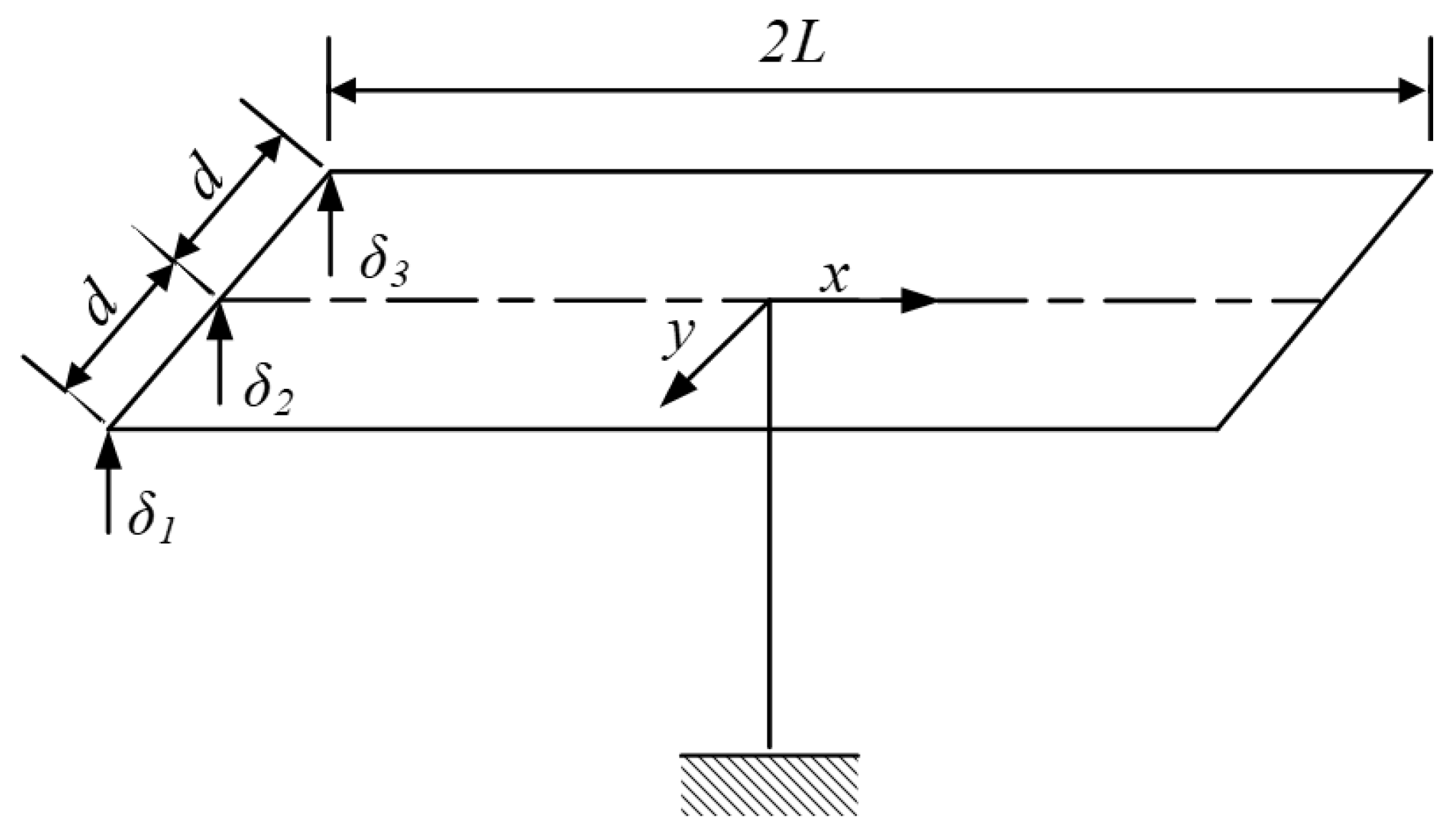
- Overall vertical displacement mode: Induced by the average displacement , this mode corresponds to vertical flexural deformation of the main girder and produces a uniform bearing reaction component.
- (2)
- Torsional deformation mode: Induced by the torsional displacement difference , this mode corresponds to torsion of the main girder about its longitudinal axis and produces a bearing reaction component proportional to the y-coordinate.
- (3)
- Distortional deformation mode: Induced by the distortional displacement , this mode corresponds to transverse bending deformation of the main girder cross-section (i.e., change in cross-sectional shape) and produces a self-equilibrating bearing reaction component.
2.3.2. Formulation of the Flexibility Matrix
2.3.3. Stiffness Matrix and Bearing Reaction Expressions
3. Finite Element Simulation Analysis
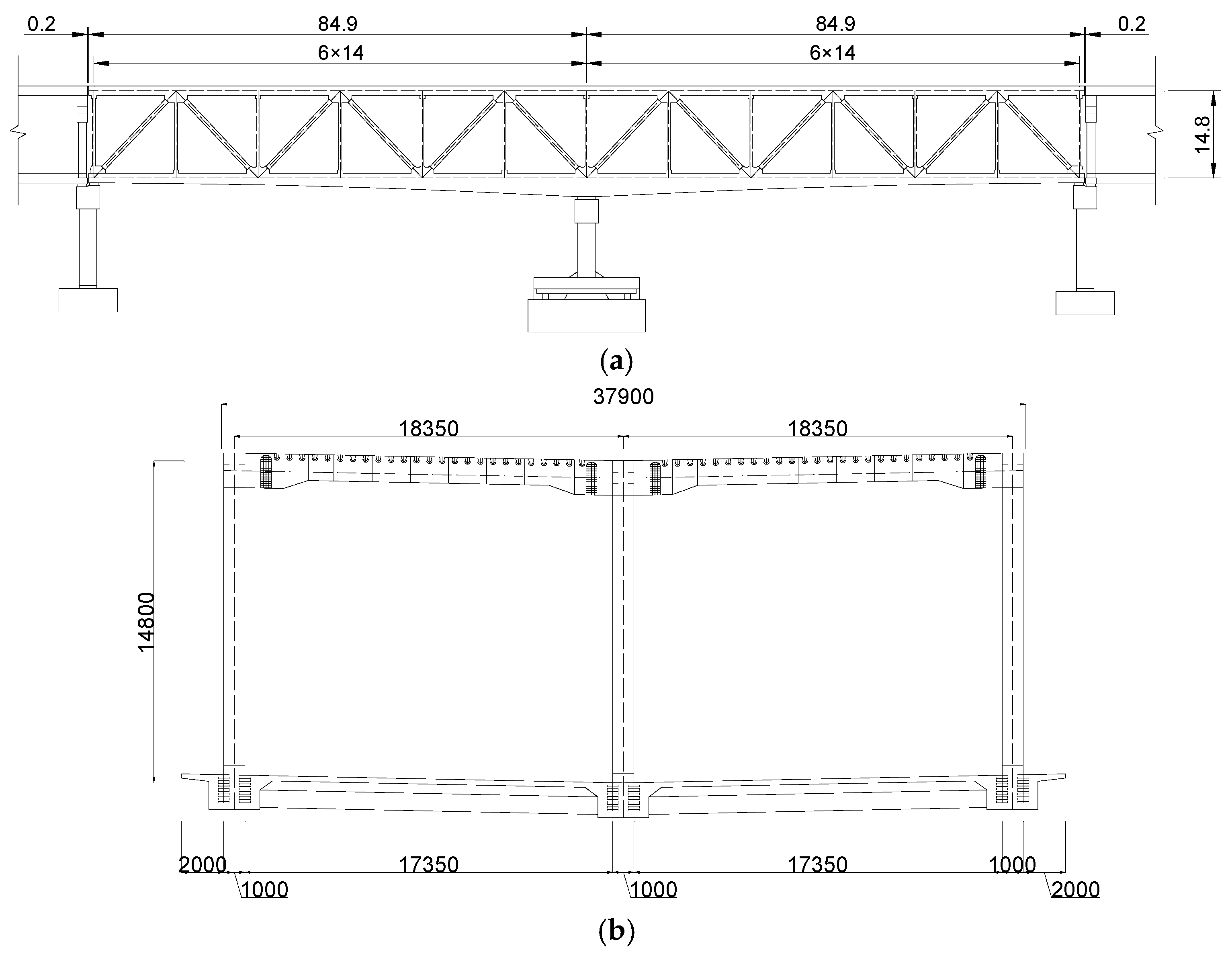
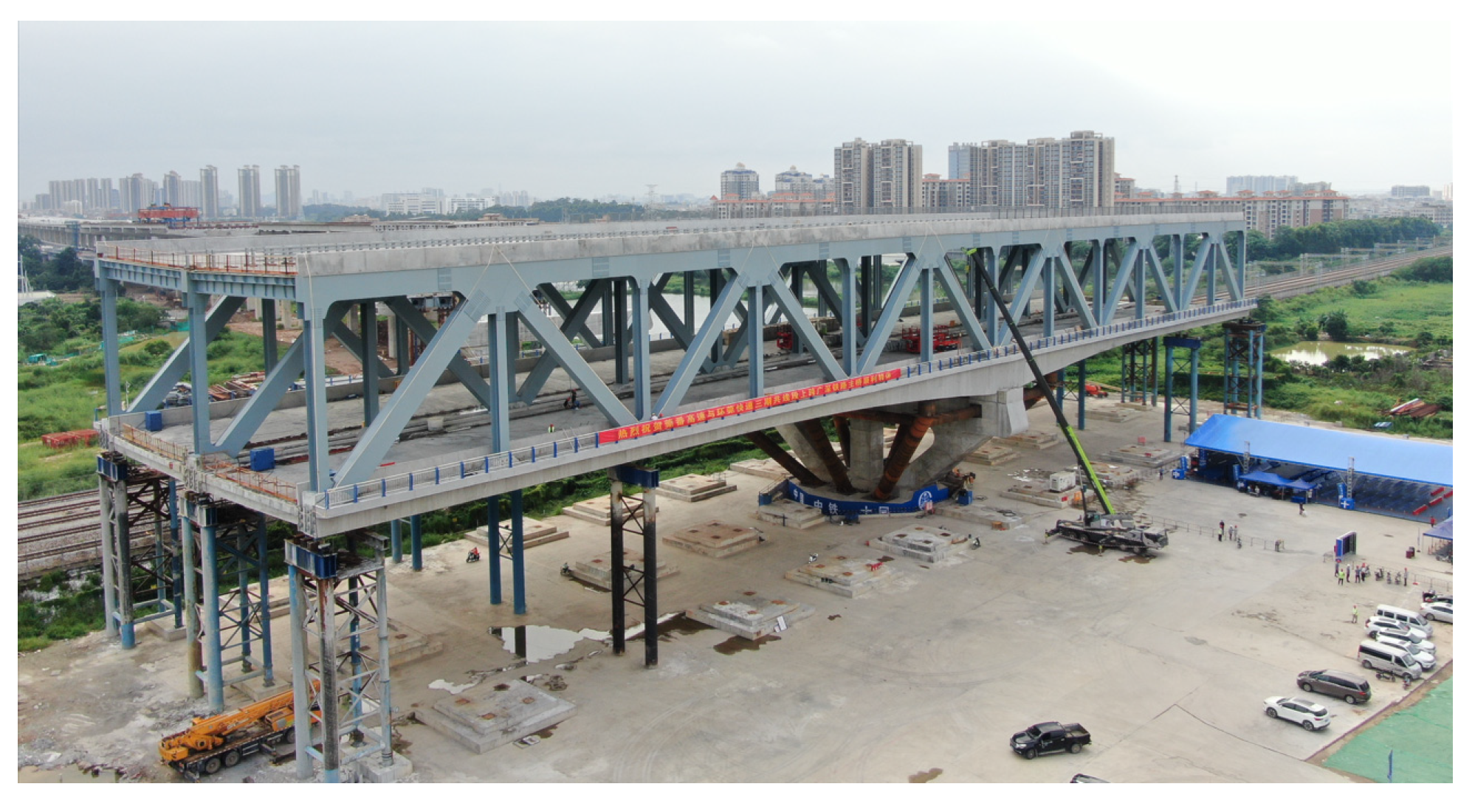
3.1. Engineering Overview
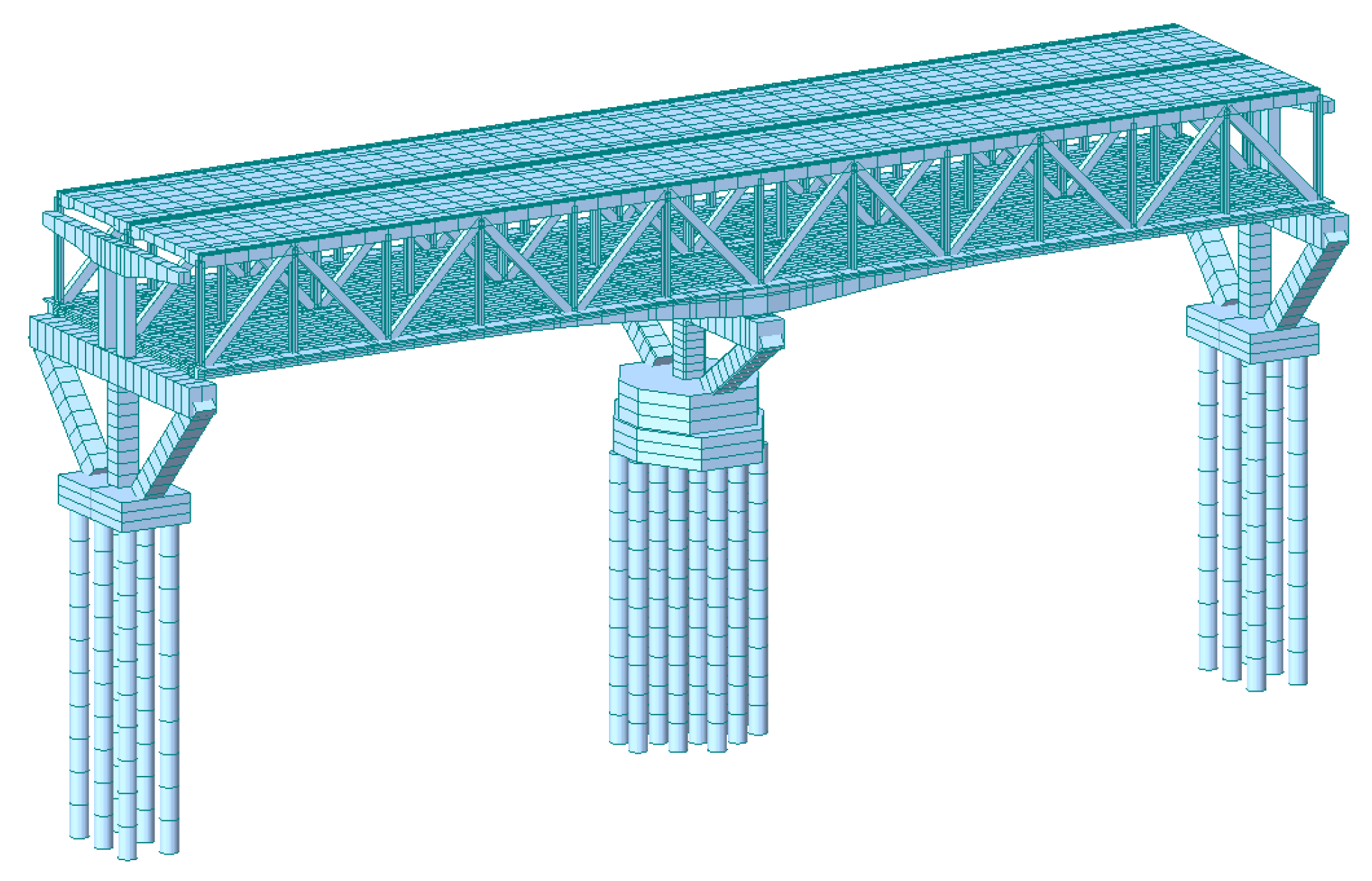
3.2. Model Establishment
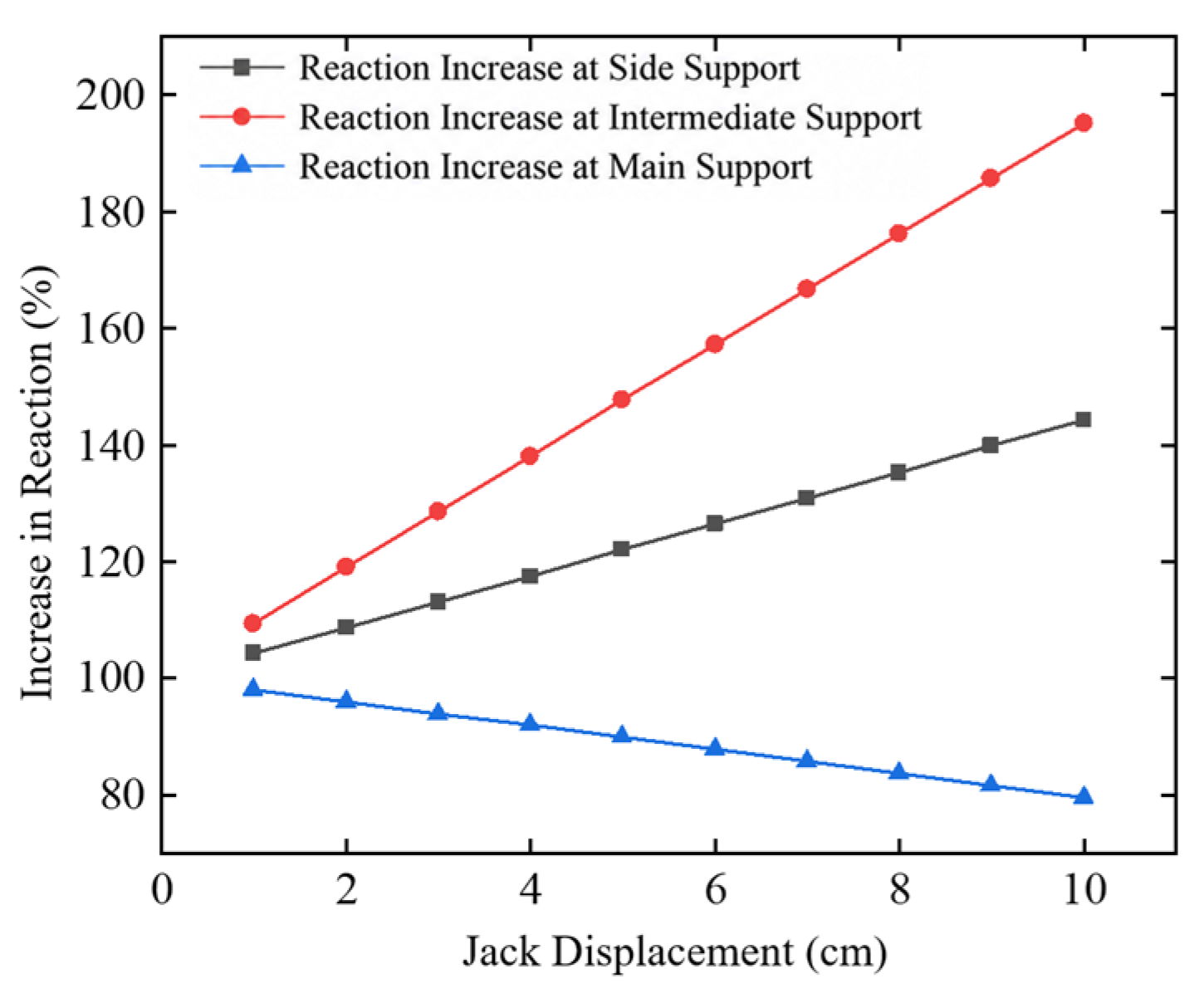
3.3. Longitudinal Redistribution Pattern of Bearing Reactions
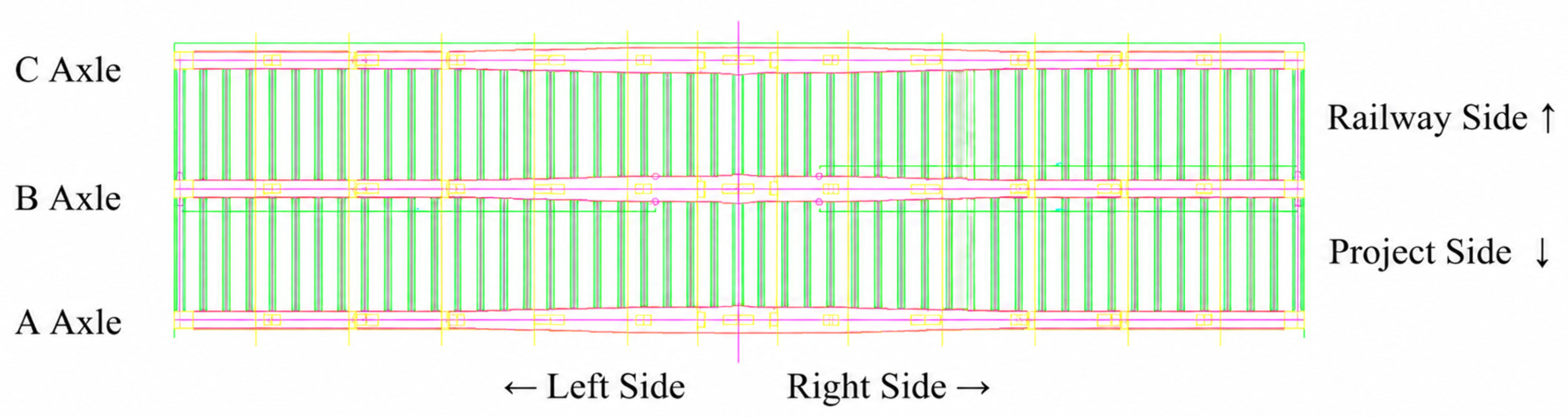
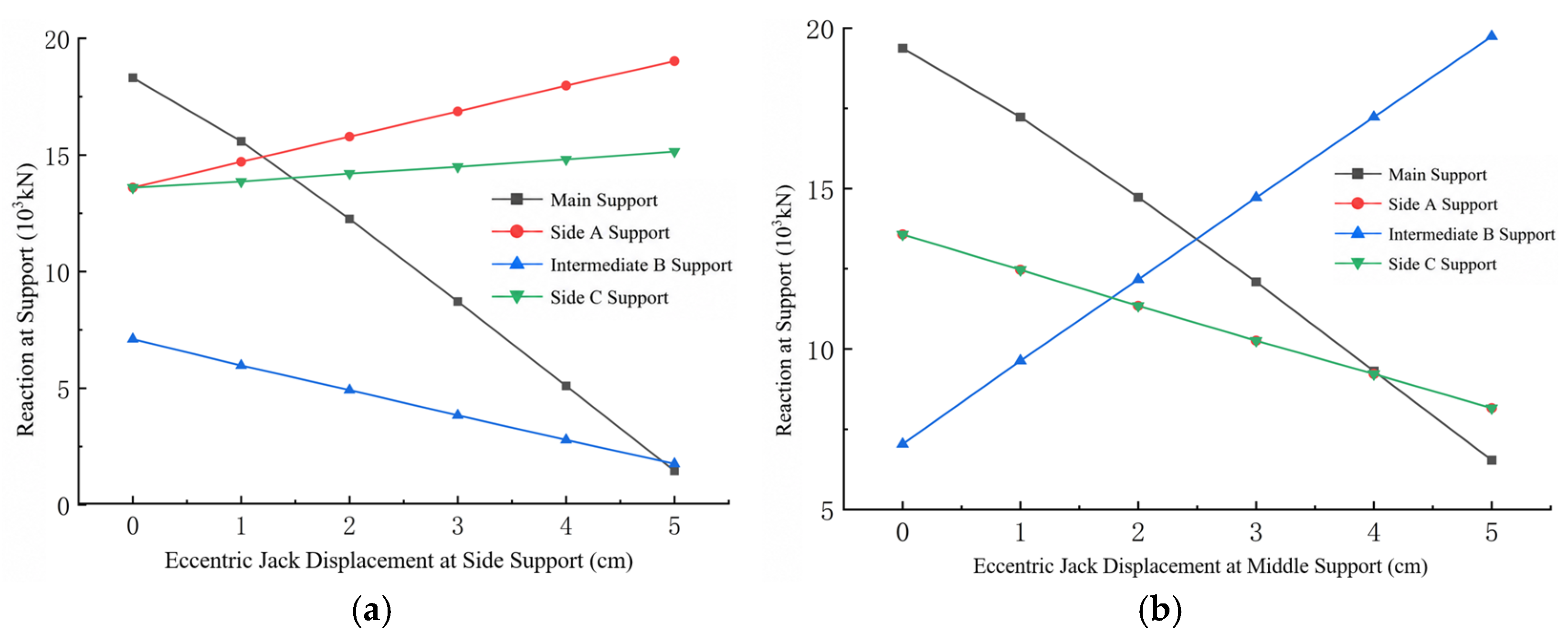
3.4. Transverse Redistribution Pattern of Bearing Reactions
3.5. Determination of Excess Jacking Magnitude and Analysis of Control Methods
3.5.1. Analysis of Excess Jacking Magnitude
3.5.2. Finite Element Simulation Verification of Excess Jacking Magnitude
3.6. Comparison and Selection of Jacking Control Methods
3.6.1. Displacement Control
3.6.2. Force Control
3.6.3. Combined Control Strategy
4. On-Site Bridge Monitoring
4.1. Monitoring Scheme and Measurement Point Layout
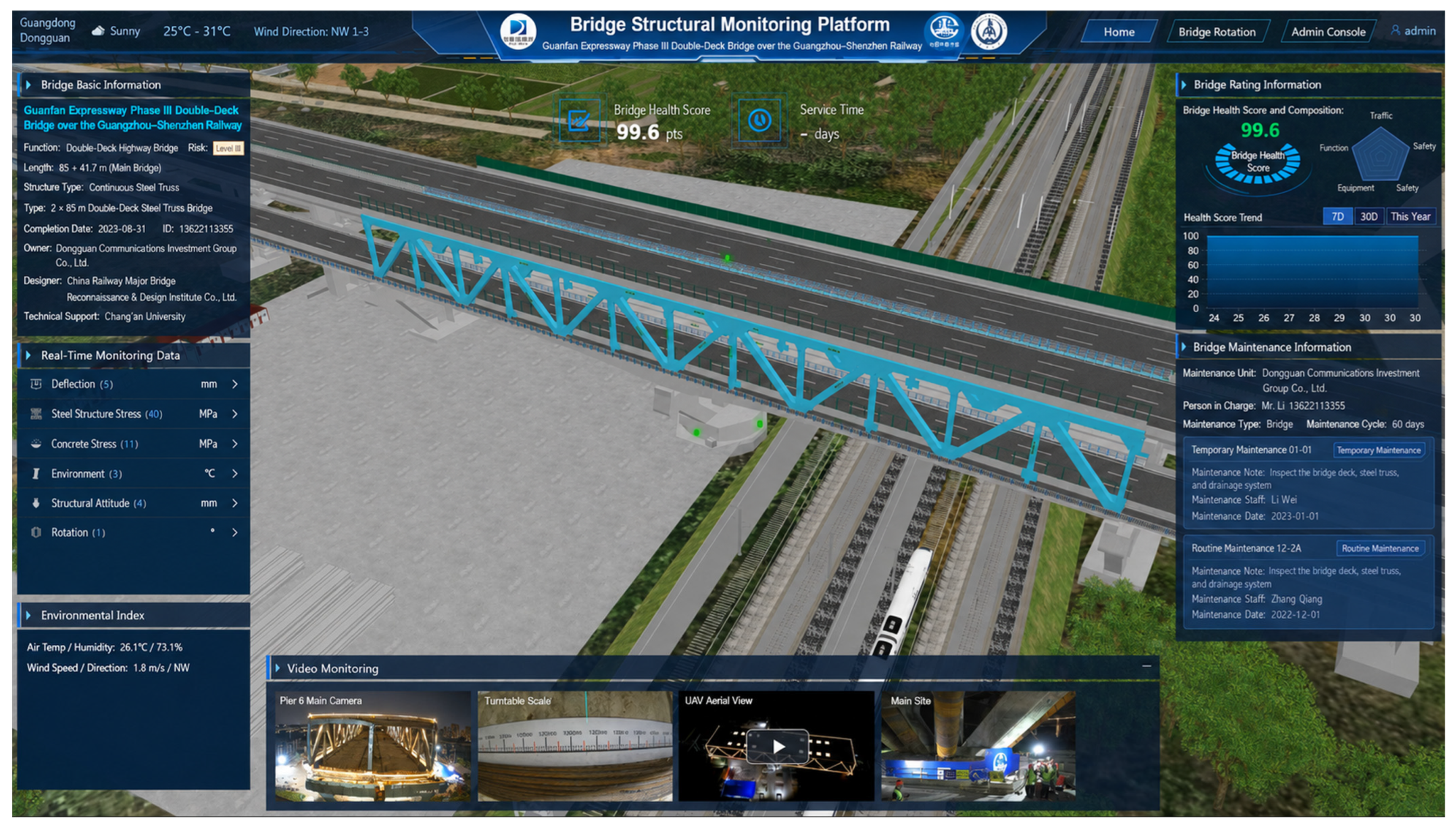
4.1.1. Three-Dimensional Visualization Monitoring System for Bridge Rotation and Jacking
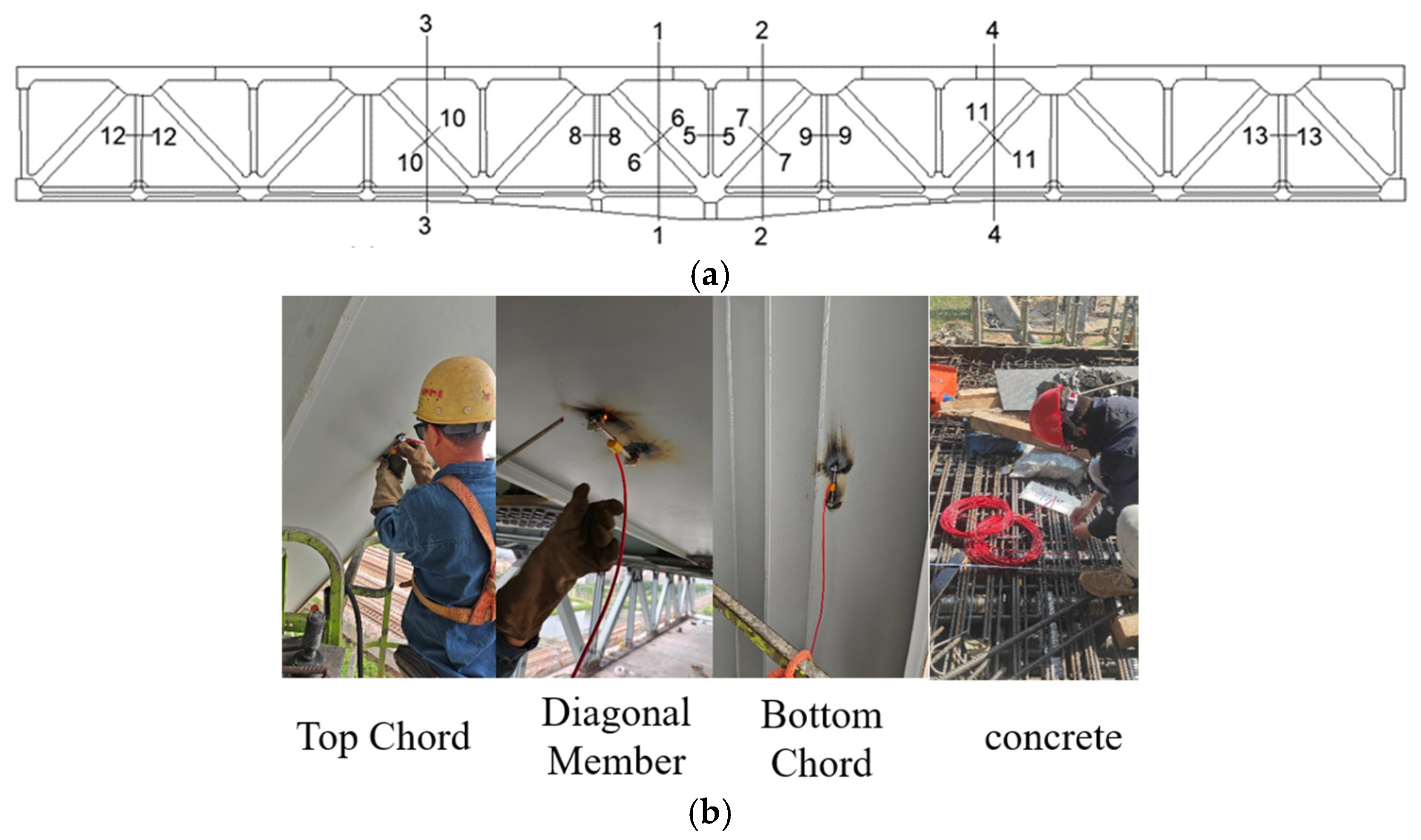
4.1.2. Main Girder Stress Monitoring
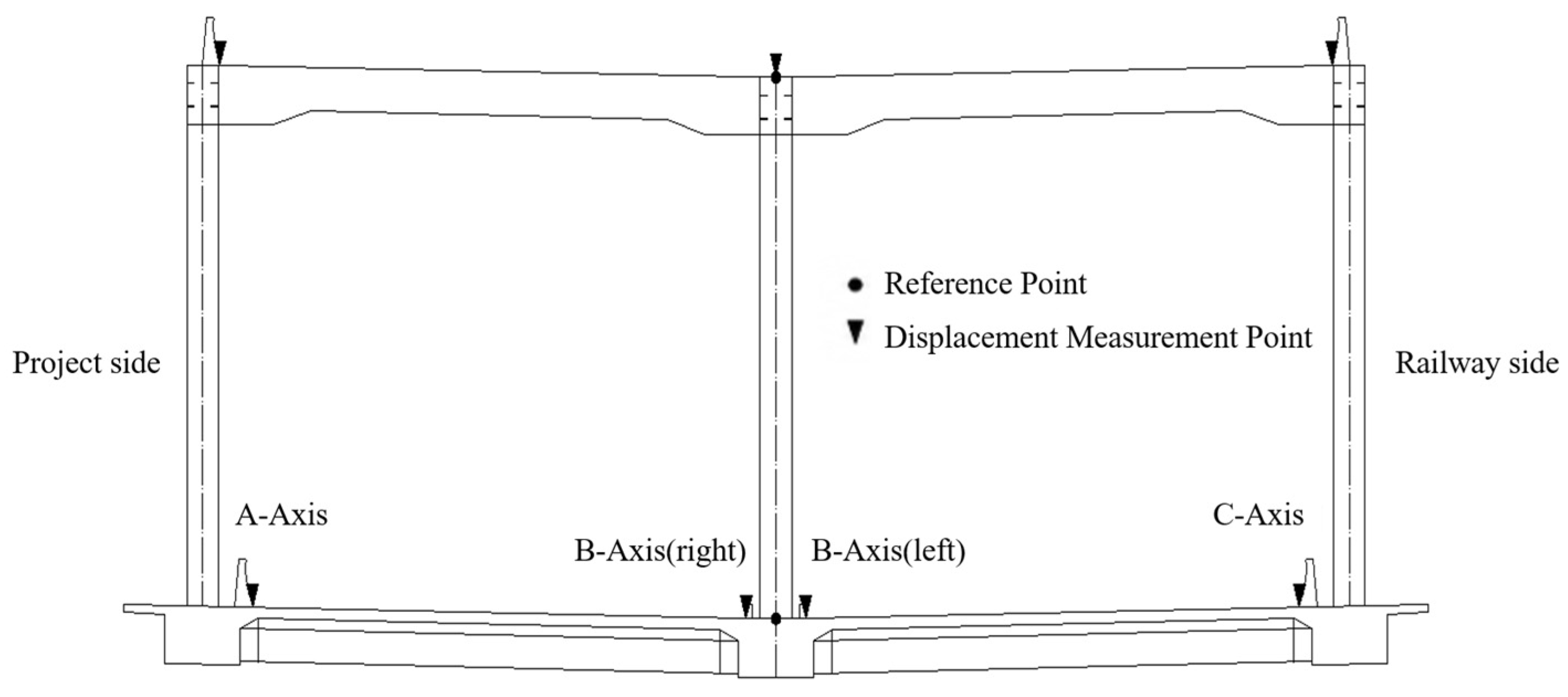
4.1.3. Layout of Main Girder Displacement Measurement Points
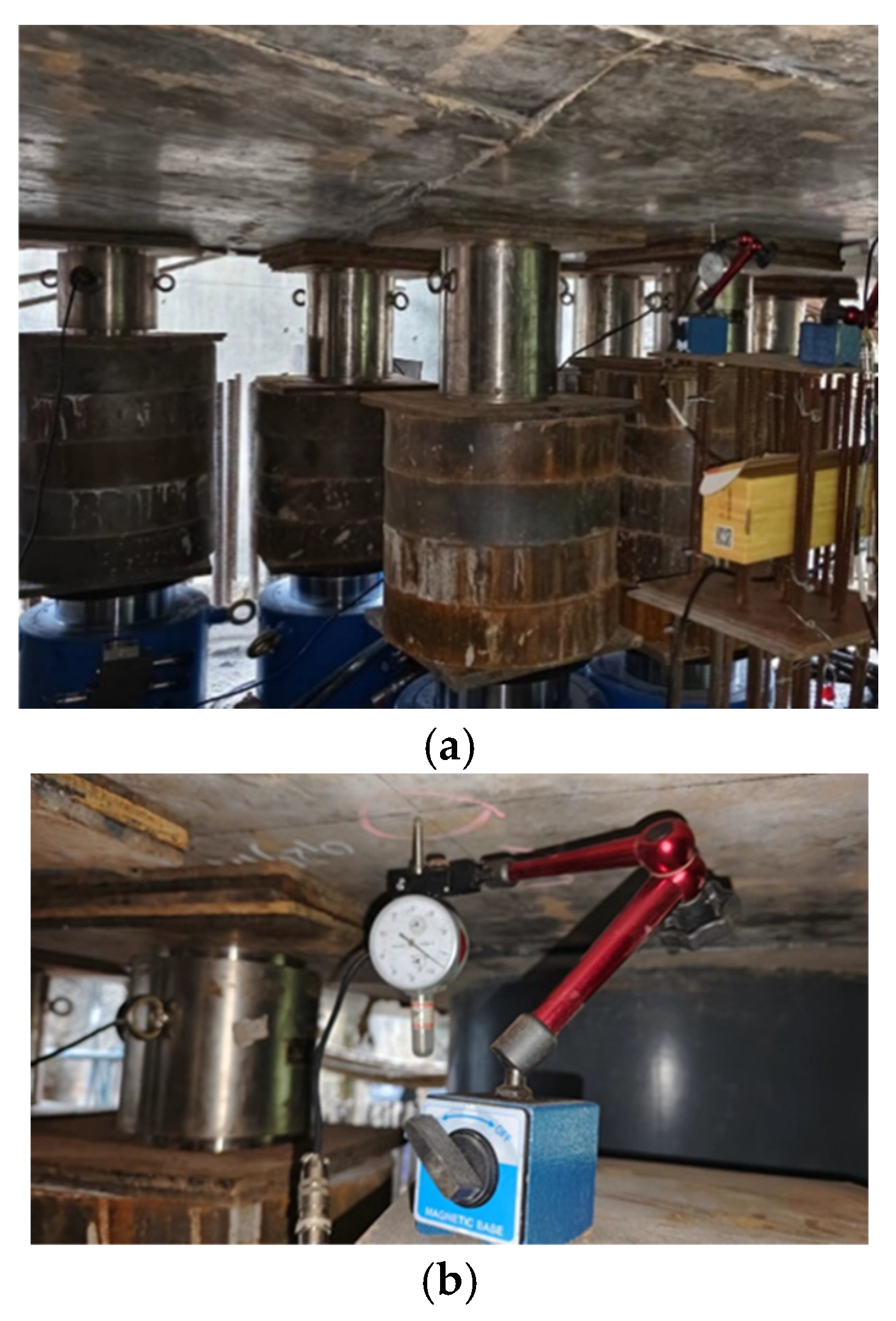
4.1.4. Monitoring of Jacking Force and Girder-End Displacement
4.2. Data Comparison and Analysis
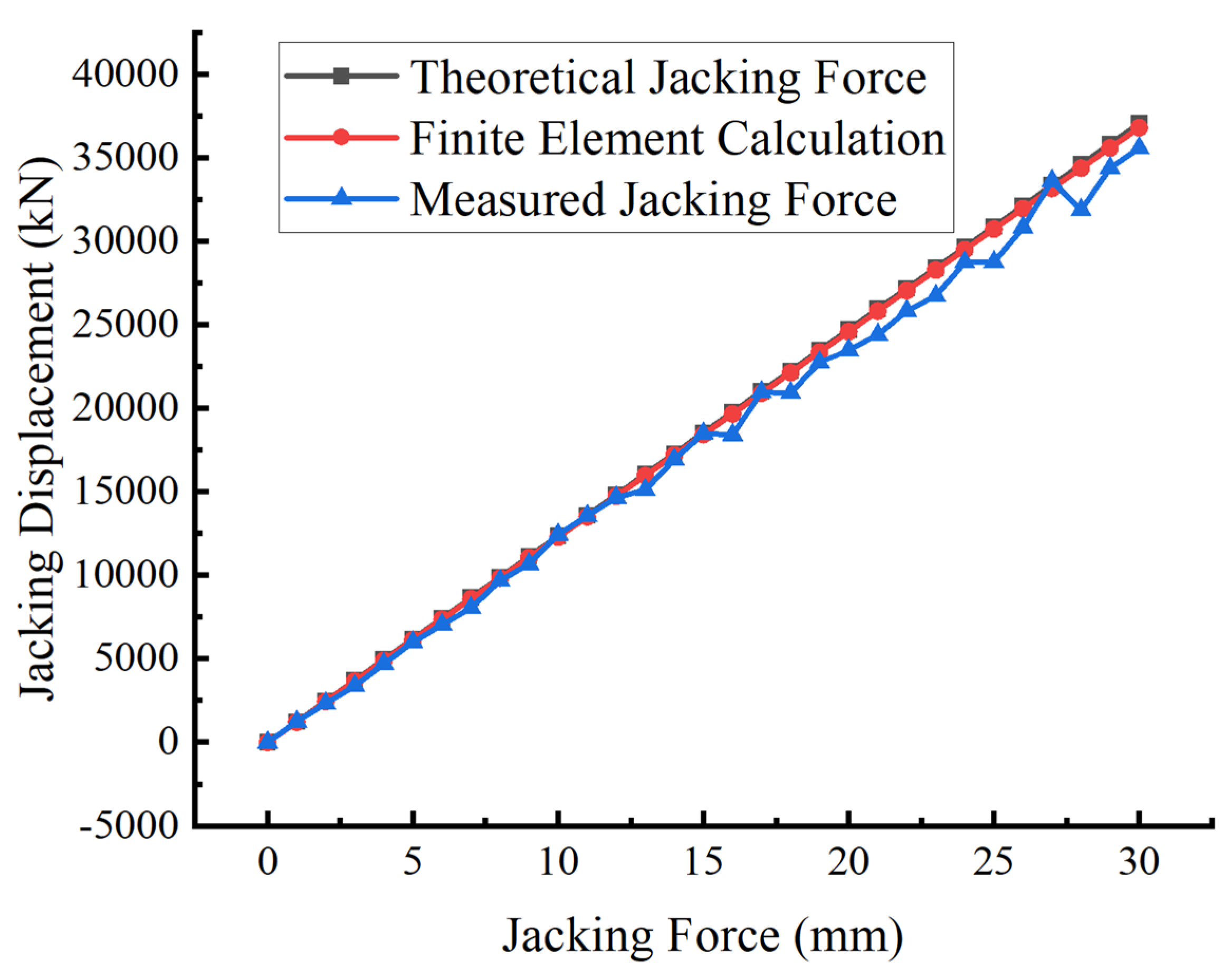
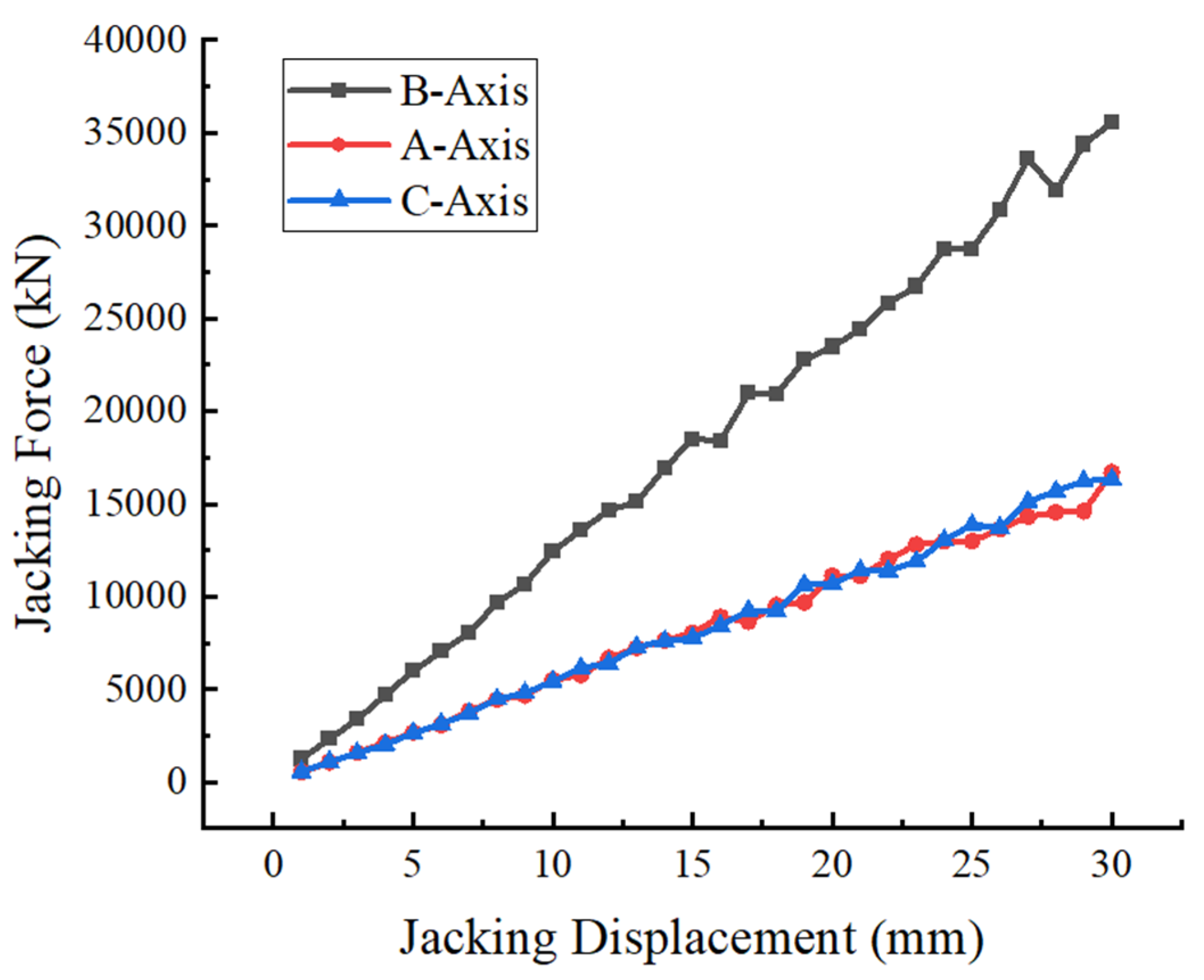
4.2.1. Comparison of Jacking Force–Displacement (P-δ) Curves
4.2.2. Comparative Analysis of Stresses
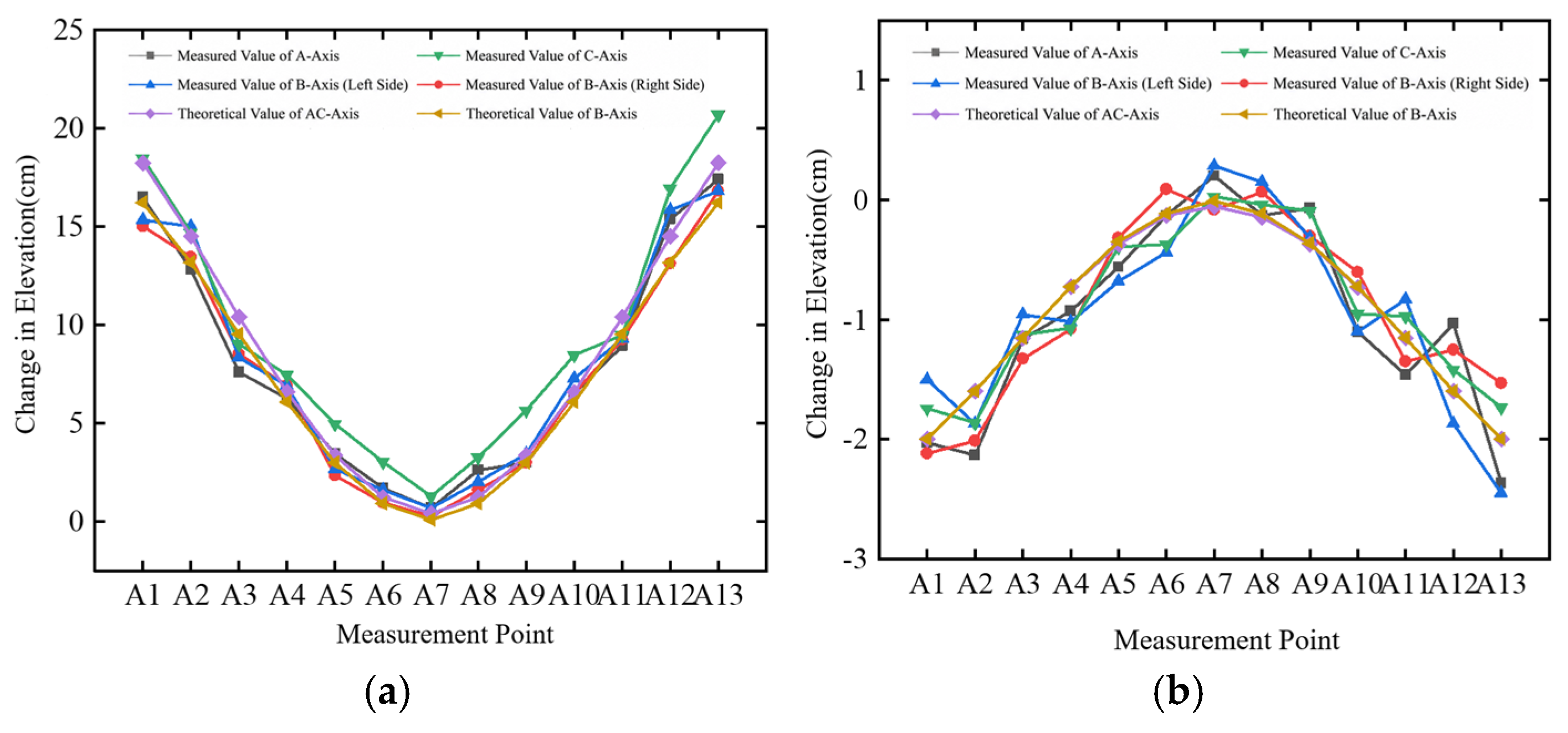
4.2.3. Alignment Analysis
4.2.4. Definition and Statistical Analysis of the Verification Coefficient
5. Conclusions
- (1)
- Based on the force method of structural mechanics, a linear analytical relationship between synchronous jacking force and displacement was established, and a theoretical model for bearing reaction distribution under laterally asynchronous jacking was derived by considering the combined effects of vertical bending, torsion, and transverse multi-bearing support. The proposed model reveals the redistribution mechanism of bearing reactions during jacking and provides a theoretical basis for construction control.
- (2)
- Finite element analysis shows that during synchronous jacking, the increase in reaction force at the middle bearing is significantly greater than that at the side bearings. For the investigated bridge, each centimeter of synchronous jacking displacement results in an increase of approximately 9.4% in the middle-bearing reaction and 4.3% in the side-bearing reaction relative to their initial values. Under transverse eccentric jacking, the reaction force at the jacking position increases while those at adjacent supports decrease, and this effect is more pronounced when eccentric jacking occurs at the middle bearing.
- (3)
- The analysis of key control indicators indicates that when the transverse non-uniform jacking displacement reaches 20 mm, a tensile stress of approximately 0.3 MPa develops at the bottom flange of the concrete crossbeam. Therefore, the differential stroke among individual jacks should be controlled within 20 mm for the investigated bridge. In the actual construction process, the computerized synchronous jacking system maintained a stroke control accuracy of ±0.5 mm and a transverse elevation difference within 1 mm, ensuring a sufficient safety margin.
- (4)
- Field monitoring results verify the accuracy of both the theoretical analysis and finite element simulation. The measured jacking force–displacement relationships agree well with the calculated results. The Pearson correlation coefficients between the measured jacking forces and the finite element and theoretical predictions are 0.9987 and 0.9988, respectively, with corresponding mean relative errors of 3.84% and 4.23%. The completed bridge alignment deviation was controlled within ±3 cm. In addition, the fitted stiffness of the B-axis middle bearing is approximately 2.19 times the average stiffness of the A-axis and C-axis side bearings, indicating that the middle bearing should be regarded as the key force control point during jacking. The measured and calculated stress responses also exhibit consistent variation trends, with a Pearson correlation coefficient of 0.9980 and a mean relative error of 12.77%. No abrupt stress variation was observed during jacking or unloading, demonstrating a stable load-transfer process.
- (5)
- Statistical evaluation of the verification coefficients yields an overall mean value of 0.968 and a 95% empirical agreement range of [0.888, 1.048], indicating good agreement between the measured and calculated results. The integrated research approach combining theoretical analysis, numerical simulation, and field monitoring can effectively support the refined control of post-rotation jacking construction. Although the quantitative indicators obtained in this study are specific to the investigated bridge, the proposed analytical framework and force–displacement combined control strategy can provide useful references for similar ultra-wide steel truss–concrete composite girder bridges.
Author Contributions
Funding
Data Availability Statement
Conflicts of Interest
References
- Chen, J.; Jiang, M.; Zhou, C.; Kuang, G. Calculation method of deflection of steel truss web concrete composite beam. J. Chongqing Jiaotong Univ. Nat. Sci. 2022, 41, 66–72. [Google Scholar] [CrossRef]
- Liu, D.; Miao, C.; Deng, W.; Zhang, J.; Zhang, L.; Gu, J. Shear lag effect of steel-concrete composite girder bridge with steel truss webs: Experiment, finite element, and theory. J. Struct. Eng. 2025, 151, 04025154. [Google Scholar] [CrossRef]
- Wang, S.; Li, Y.; Zhang, G.; Zhu, J.; Pang, X. Optimal design of steel truss-concrete composite beams based on orthogonal experiment. J. Chang’an Univ. Nat. Sci. Ed. 2023, 43, 49–59. [Google Scholar] [CrossRef]
- Cheng, G.; Liu, S.; Zhang, Y.; Liu, Y.; Hao, L.; Liu, Z.; Cai, Y. Monitoring construction and system development of bridge horizontal rotation “traction-rotation”. China J. Highw. Transp. 2025, 38, 73–83. [Google Scholar] [CrossRef]
- Peng, C.; Wang, J.; Chen, H.; Tang, R. Application of Fuzzy-ISM-MICMAC in the risk analysis affecting swivel bridge construction spanning existing railway lines: A case study. Buildings 2024, 14, 52. [Google Scholar] [CrossRef]
- Wang, J.; Sun, Q. Parameter sensitivity analysis of stability of T-shaped rigid frame bridge by adopting swivel construction method. Multidiscip. Model. Mater. Struct. 2020, 16, 1203–1231. [Google Scholar] [CrossRef]
- Hao, L.; Liu, S.; Yu, X.; Chu, S.; Cheng, G. Research of horizontal rotation construction technology and monitoring of single-tower cable-stayed bridge tower across railway. J. Munic. Technol. 2024, 42, 161–166, 174. [Google Scholar] [CrossRef]
- Luo, R.; Liu, Z.; Chen, L.; Wang, G.; Li, X. Closure scheme study of multi-span extradosed cable-stayed bridge with new support system. J. Railw. Sci. Eng. 2021, 18, 3286–3293. [Google Scholar] [CrossRef]
- Zhang, H.; Tang, Y. Research on the system transformation construction scheme of Egongyan Railway Bridge. J. Railw. Eng. Soc. 2020, 37, 57–62. [Google Scholar]
- Xu, C.; Xu, X.; Huang, J.; Zhang, T.; Gong, Y.; Zhao, C.; Song, Z. Study on mechanical performance of spherical hinge of unbalanced swivel bridge. J. Railw. Sci. Eng. 2022, 19, 3063–3069. [Google Scholar] [CrossRef]
- Quan, W.; Zhang, Z.; Liu, X.; Deng, L. Research on rotational spherical hinge design method considering unbalanced moments. Bridge Constr. 2023, 53, 112–119. [Google Scholar] [CrossRef]
- Zhang, J. Study on longitudinal cracking control of closure segment concrete in rotation bridge. Highway 2023, 68, 207–212. [Google Scholar]
- Liu, B.; Hu, J.; Chang, Z.; Hu, D.; Huang, F.; Wang, N. Accurate monitoring and real-time visualization research on the spatial pose of swivel bridges. J. Railw. Sci. Eng. 2025, 22, 3545–3555. [Google Scholar] [CrossRef]
- Gao, H.; Li, B.; Jian, J.; Yu, T.; Liu, H. Integral jacking of concrete continuous box beam bridge. Structures 2023, 54, 1026–1045. [Google Scholar] [CrossRef]
- Fang, Y.M.; Chou, T.Y.; Hoang, T.V.; Lee, B.J. Automatic management and monitoring of bridge lifting: A method of changing engineering in real-time. Sensors 2019, 19, 5293. [Google Scholar] [CrossRef] [PubMed]
- Li, F.; Wu, P.; Yan, X. Analysis and monitoring on jacking construction of continuous box girder bridge. Comput. Concr. 2015, 16, 49–65. [Google Scholar] [CrossRef]
- He, Z.; Ye, A. Reasonable discrete element length of force-based nonlinear beam-column elements. Eng. Mech. 2014, 31, 178–184, 198. [Google Scholar] [CrossRef]
- Wei, Y.; Zhang, Y. Analysis on flexural-torsional internal force of skewly supported continuous box girder based on force method. J. Railw. Sci. Eng. 2021, 18, 2324–2332. [Google Scholar] [CrossRef]
- McGuire, W.; Gallagher, R.H.; Ziemian, R.D. Matrix Structural Analysis, 2nd ed.; John Wiley & Sons: New York, NY, USA, 2000. [Google Scholar]



| Load Case | Structural State | Active Boundary Condition | Applied Action |
|---|---|---|---|
| LC1 | Post-rotation locked state | Temporary bearings active; permanent bearings inactive | Self-weight + superimposed dead load + shrinkage and creep |
| LC2 | Synchronous jacking | Jacks activated at side-pier support points | Equal vertical jack displacement |
| LC3 | Eccentric jacking at side support | One side support point jacked; other support points unchanged | Prescribed eccentric displacement of 0–50 mm |
| LC4 | Eccentric jacking at intermediate support | Intermediate support point jacked; side support points unchanged | Prescribed eccentric displacement of 0–50 mm |
| LC5 | Excess jacking verification | Jacks and temporary bearings jointly active | Non-uniform excess jacking of 5 mm, 10 mm, and 20 mm |
| LC6 | Support transfer | Temporary bearings removed; permanent bearings activated | Permanent actions + support-boundary conversion |
| LC7 | Jack unloading | Permanent bearings active; jacks unloaded step by step | Jack force/displacement release |
| Non-Uniform Jacking Distance | Concrete Longitudinal Girder | Concrete Crossbeam | ||||||
|---|---|---|---|---|---|---|---|---|
| Top Flange | Bottom Flange | Top Flange | Bottom Flange | |||||
| Max | Min | Max | Min | Max | Min | Max | Min | |
| 5 mm | −11.9 | −2 | −15.5 | −1.4 | −13.9 | −1.7 | −16.9 | −3.9 |
| 10 mm | −11.4 | −1.9 | −14.7 | −1.3 | −14.6 | −1.6 | −17 | −2.5 |
| 20 mm | −10.7 | −1.7 | −13.2 | −1.1 | −16.2 | −1.6 | −17 | 0.3 |
| Jacking Displacement (mm) | Absolute Error Between Measured and FE (kN) | Relative Error Between Measured and FE (%) | Absolute Error Between Measured and Theoretical Value (kN) | Relative Error Between Measured and Theoretical Value (%) |
|---|---|---|---|---|
| 5 | 143 | 2.38 | 188 | 3.14 |
| 10 | 169 | 1.36 | 99 | 0.79 |
| 15 | 65 | 0.35 | 30 | 0.16 |
| 20 | 1105 | 4.71 | 1225 | 5.22 |
| 25 | 1979 | 6.88 | 2124 | 7.39 |
| 30 | 1222 | 3.44 | 1482 | 4.1 |
| Bearing Axis | Linear Fitting Slope (kN/mm) | Pearson Correlation Coefficient, r | Coefficient of Determination, R2 | Measured Jacking Force at 30 mm (kN) |
|---|---|---|---|---|
| A-axis side bearing | 529.31 | 0.9976 | 0.9953 | 16,697 |
| B-axis middle bearing | 1178.01 | 0.9986 | 0.9972 | 35,568 |
| C-axis side bearing | 548.14 | 0.9983 | 0.9965 | 16,318 |
| Location | Measured Stress Variation (MPa) | Calculated Stress Variation (MPa) | Absolute Error (MPa) | Relative Error (%) |
|---|---|---|---|---|
| side pier location | 51.98 | 59.18 | 7.2 | 13.85 |
| 40 | 45.3 | 5.3 | 13.25 | |
| 20 | 22.6 | 2.6 | 13 | |
| −13.4 | −15.2 | 1.8 | 13.43 | |
| mid-span location | −74.88 | −75.37 | 0.49 | 0.65 |
| −58 | −65.4 | 7.4 | 12.76 | |
| −43.5 | −48.9 | 5.4 | 12.41 | |
| −34 | −38.2 | 4.2 | 12.35 | |
| intermediate pier location | −30.02 | −36.99 | 6.97 | 23.22 |
| Parameter Type | Sample Size | Mean ζ | Std. Dev. ζ | Max ζ | Min ζ | 95% Empirical Agreement Range |
|---|---|---|---|---|---|---|
| Jacking Force | 54 | 0.984 | 0.042 | 1.062 | 0.901 | [0.902, 1.066] |
| Steel Truss Stress | 42 | 0.958 | 0.036 | 1.028 | 0.892 | [0.887, 1.029] |
| Concrete Slab Stress | 18 | 0.941 | 0.044 | 1.015 | 0.876 | [0.855, 1.027] |
| Overall | 114 | 0.968 | 0.041 | 1.062 | 0.876 | [0.888, 1.048] |
Disclaimer/Publisher’s Note: The statements, opinions and data contained in all publications are solely those of the individual author(s) and contributor(s) and not of MDPI and/or the editor(s). MDPI and/or the editor(s) disclaim responsibility for any injury to people or property resulting from any ideas, methods, instructions or products referred to in the content. |
© 2026 by the authors. Licensee MDPI, Basel, Switzerland. This article is an open access article distributed under the terms and conditions of the Creative Commons Attribution (CC BY) license.
Share and Cite
Sun, X.; Zhou, G.; Zheng, S.; Wei, C.; Cheng, G. Study on Mechanical Performance of Steel Truss–Concrete Composite Girder During Post-Rotation Jacking Process. Buildings 2026, 16, 2318. https://doi.org/10.3390/buildings16122318
Sun X, Zhou G, Zheng S, Wei C, Cheng G. Study on Mechanical Performance of Steel Truss–Concrete Composite Girder During Post-Rotation Jacking Process. Buildings. 2026; 16(12):2318. https://doi.org/10.3390/buildings16122318
Chicago/Turabian StyleSun, Xiaogang, Guangjin Zhou, Shaojie Zheng, Chuyin Wei, and Gao Cheng. 2026. "Study on Mechanical Performance of Steel Truss–Concrete Composite Girder During Post-Rotation Jacking Process" Buildings 16, no. 12: 2318. https://doi.org/10.3390/buildings16122318
APA StyleSun, X., Zhou, G., Zheng, S., Wei, C., & Cheng, G. (2026). Study on Mechanical Performance of Steel Truss–Concrete Composite Girder During Post-Rotation Jacking Process. Buildings, 16(12), 2318. https://doi.org/10.3390/buildings16122318