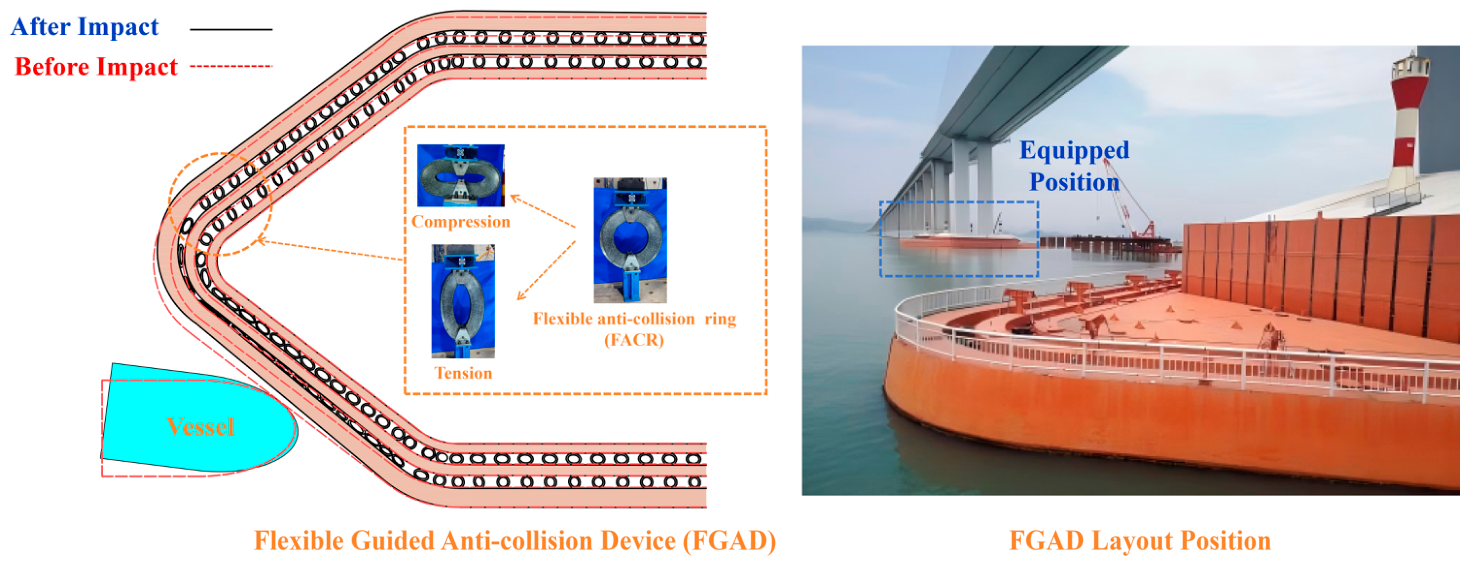
Experimental and Numerical Study on the Quasi-Static Mechanical Behavior of Flexible Anti-Collision Ring (FACR) for Bridge Protection
 , ,
, ,
Abstract
1. Introduction
2. Mechanical Testing of the FACR
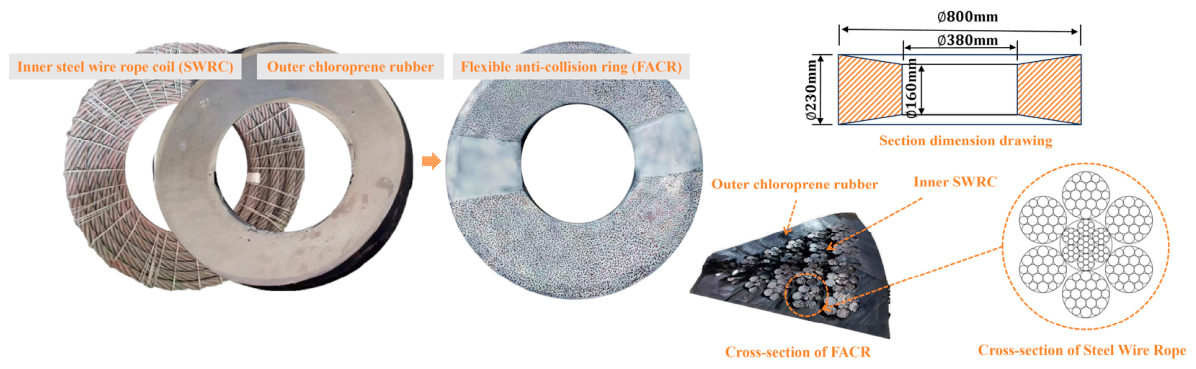
2.1. Structure of the FACR
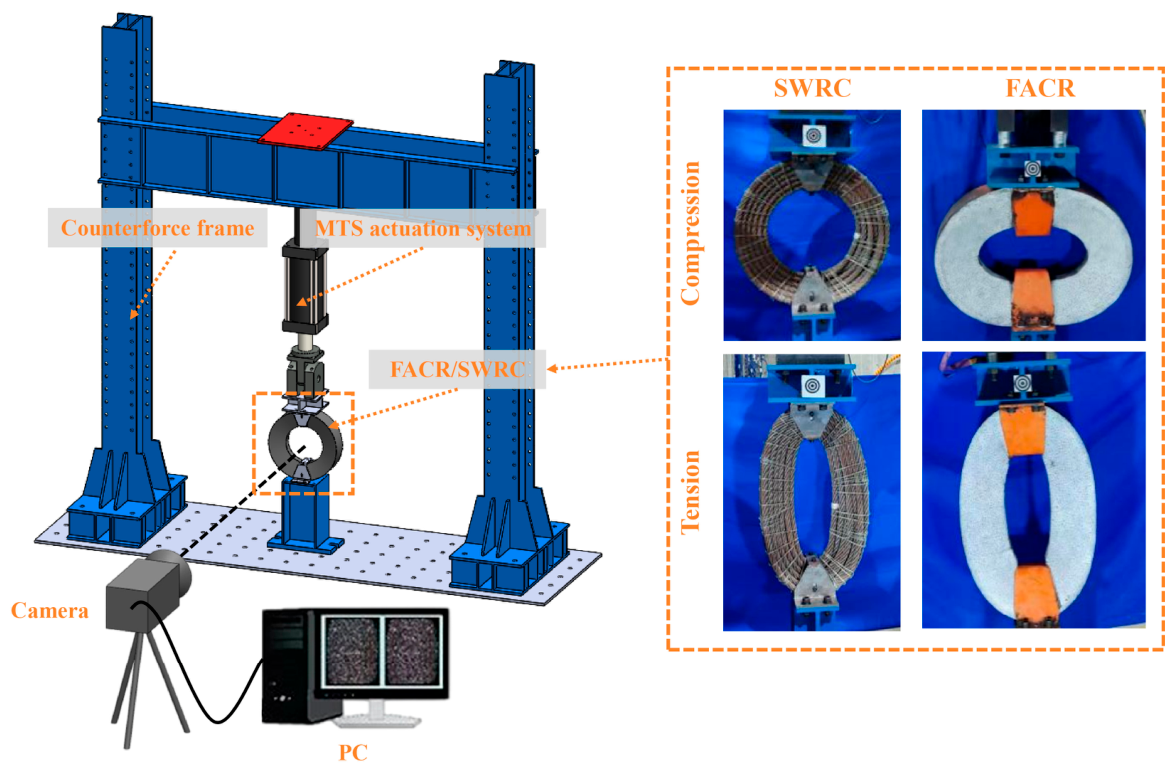
2.2. Experimental Setup and Loading Conditions
2.3. Test Results and Analysis
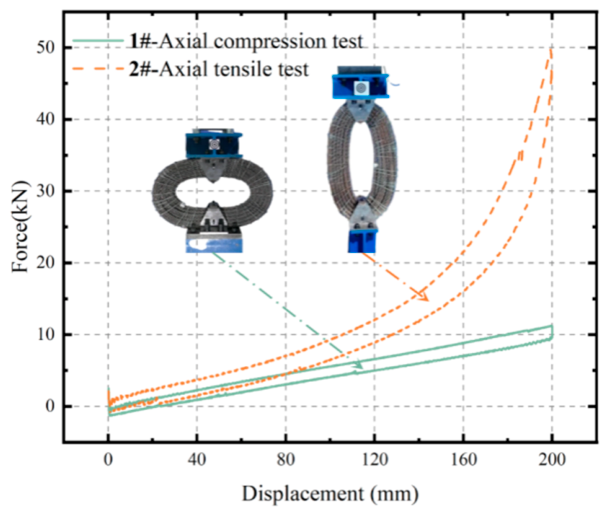
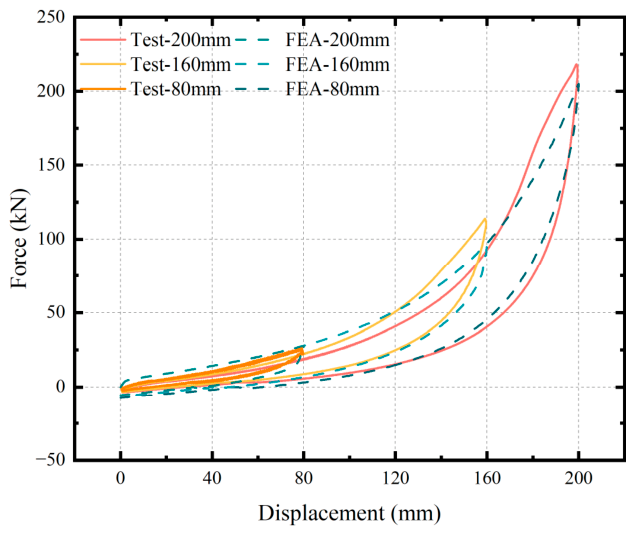
2.3.1. Force-Displacement Response and Energy Dissipation
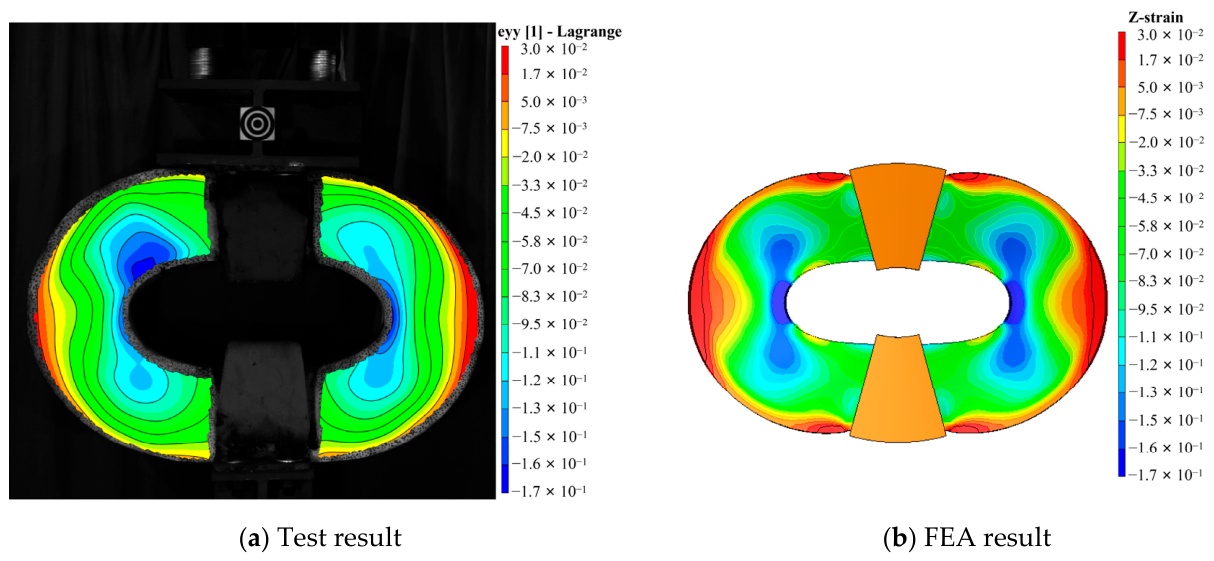
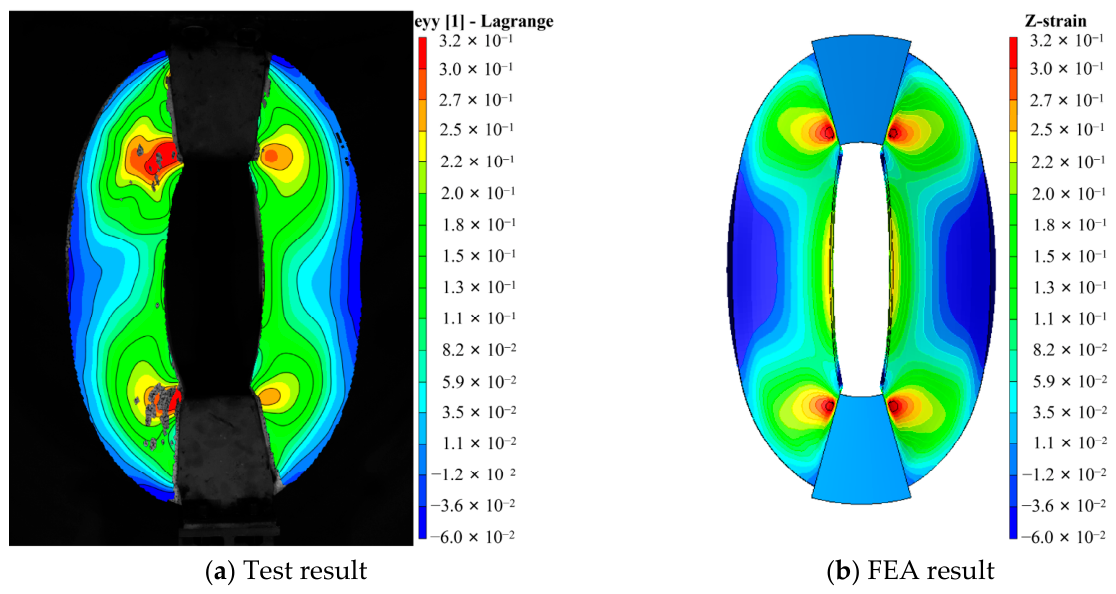
2.3.2. Digital Image Correlation (DIC) Strain Field Analysis
3. Numerical Modeling and Analysis of the FACR
3.1. Numerical Model of the SWRC
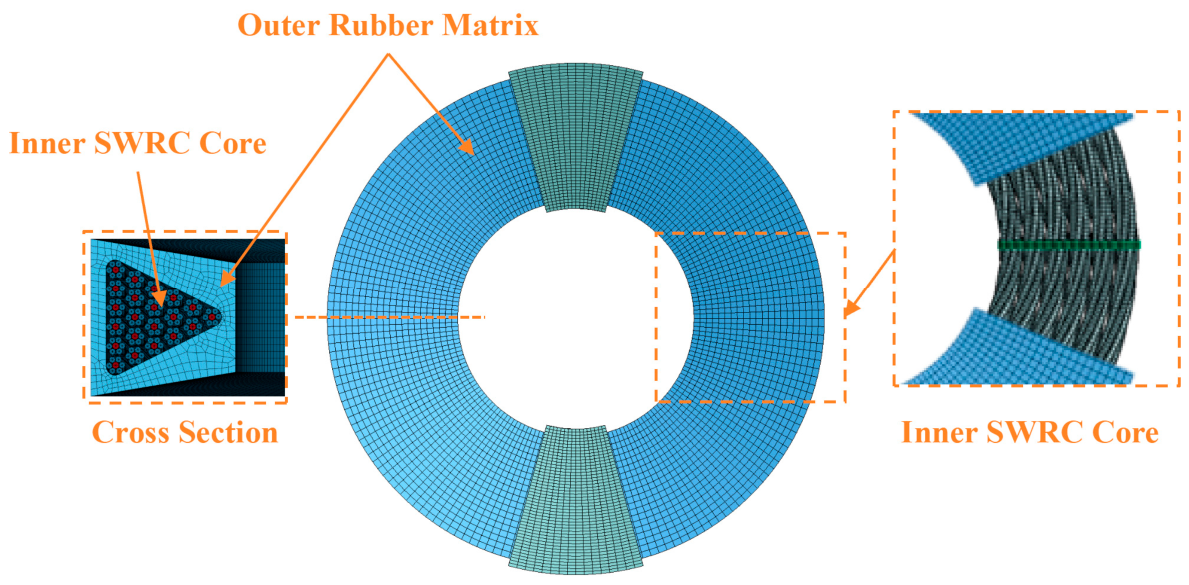
3.2. Numerical Model of the FACR
3.3. Energy Dissipation Mechanism of the FACR
4. Parameter Analysis of the FACR
4.1. Effect of Cross-Sectional Ratio
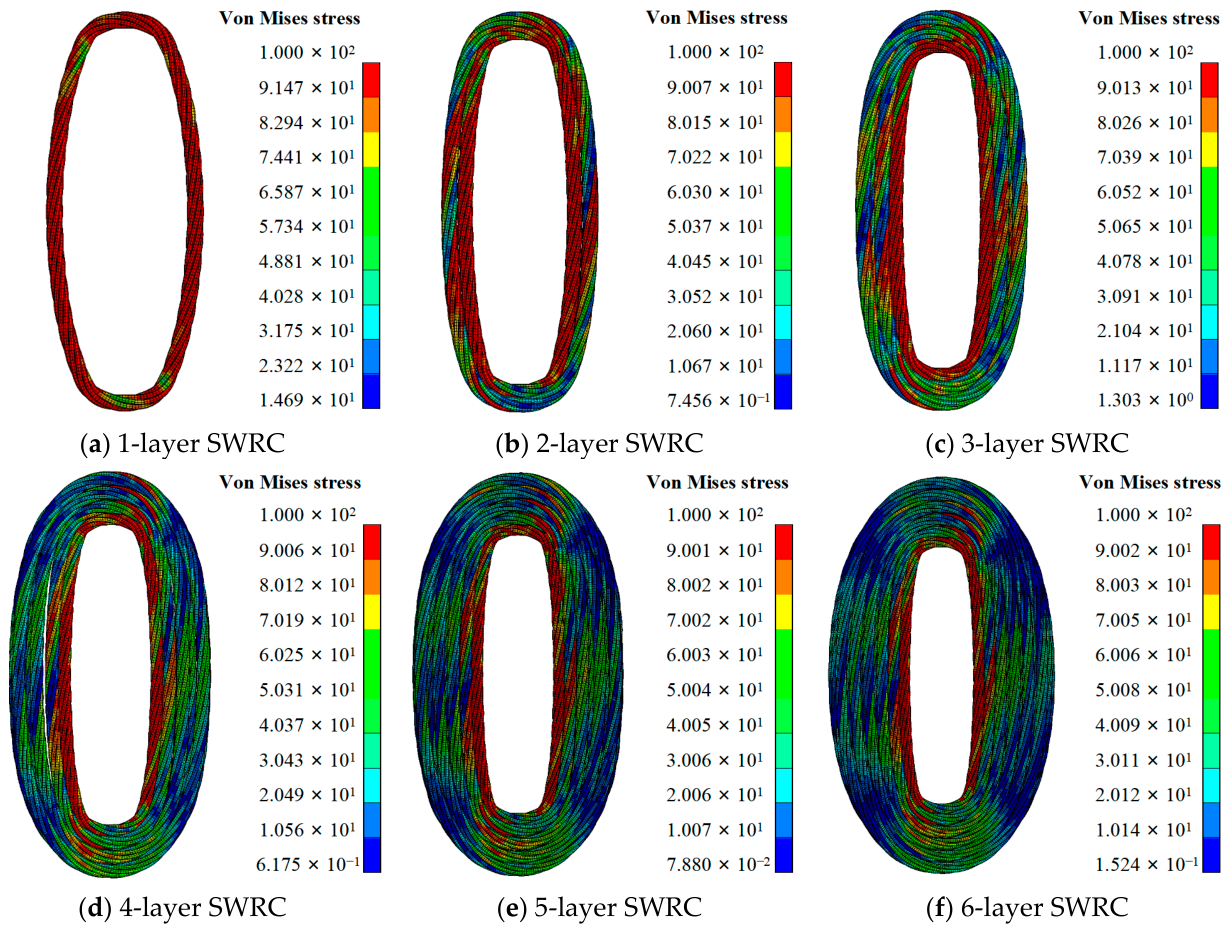
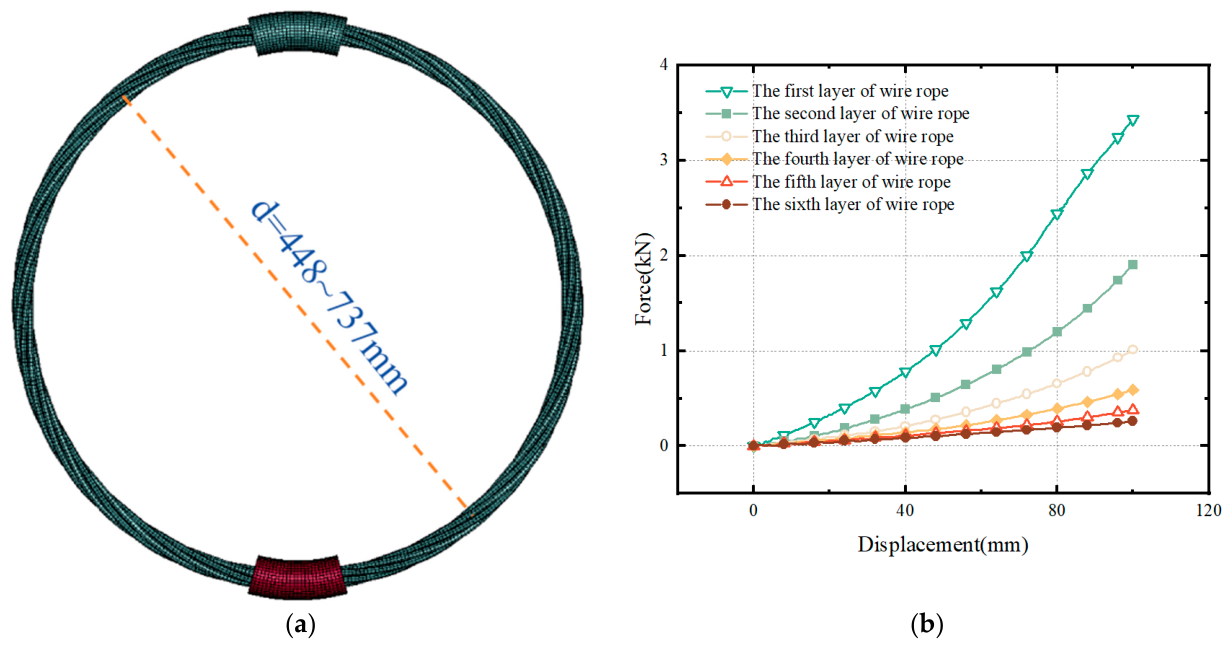
4.2. Layer-Dependent Mechanical Response Mechanism
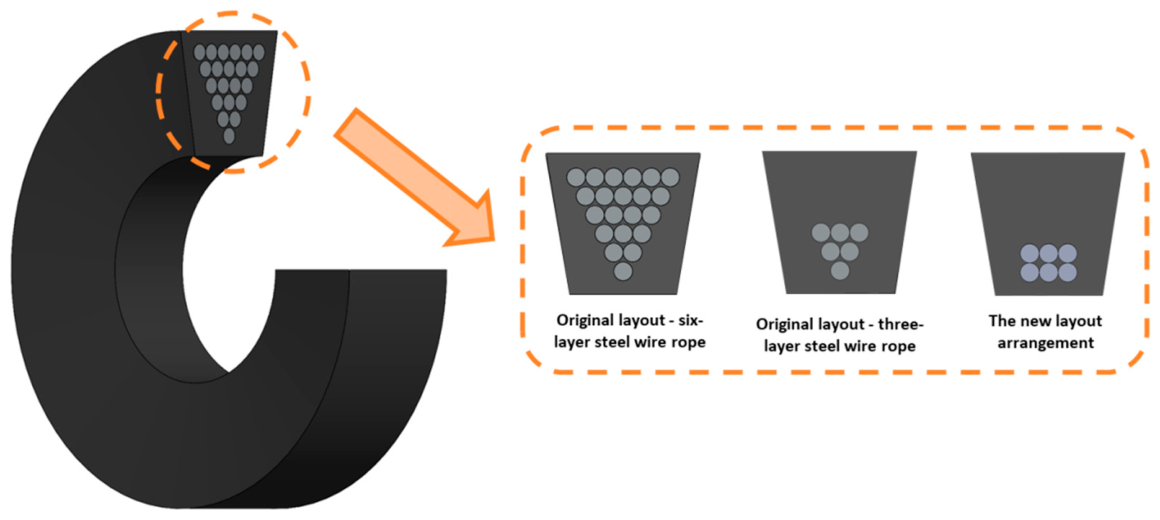
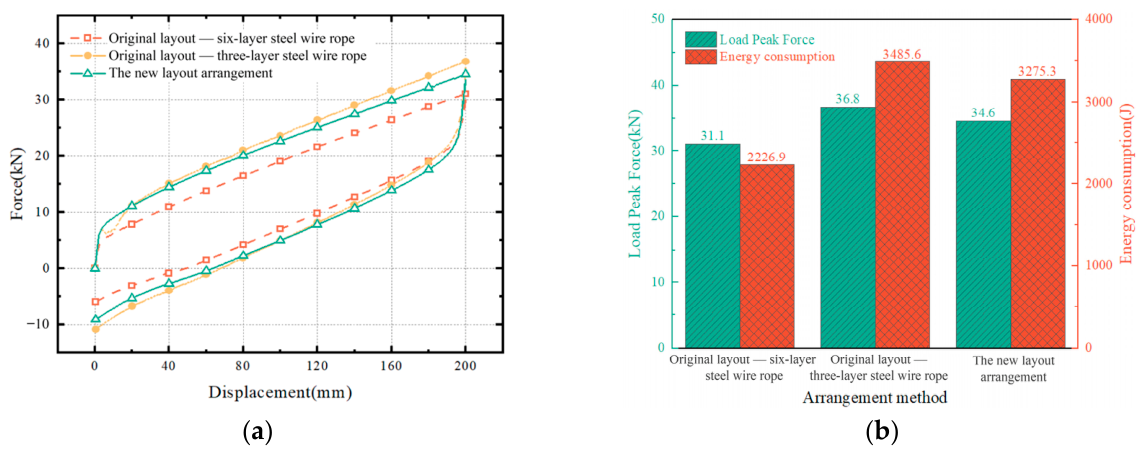
4.3. Optimization of Steel Wire Rope Arrangement
5. Conclusions
- (1)
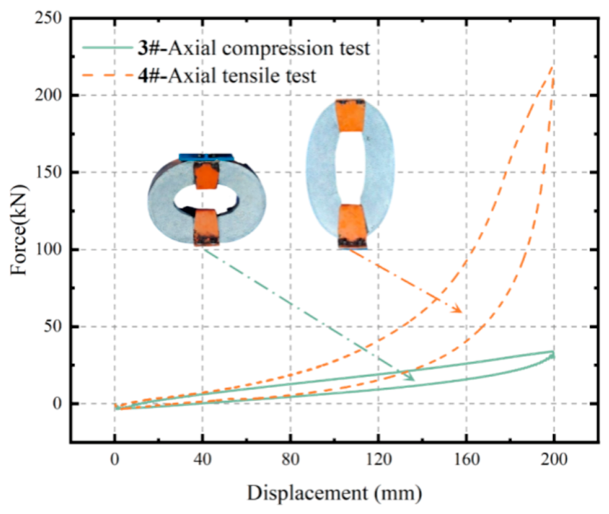
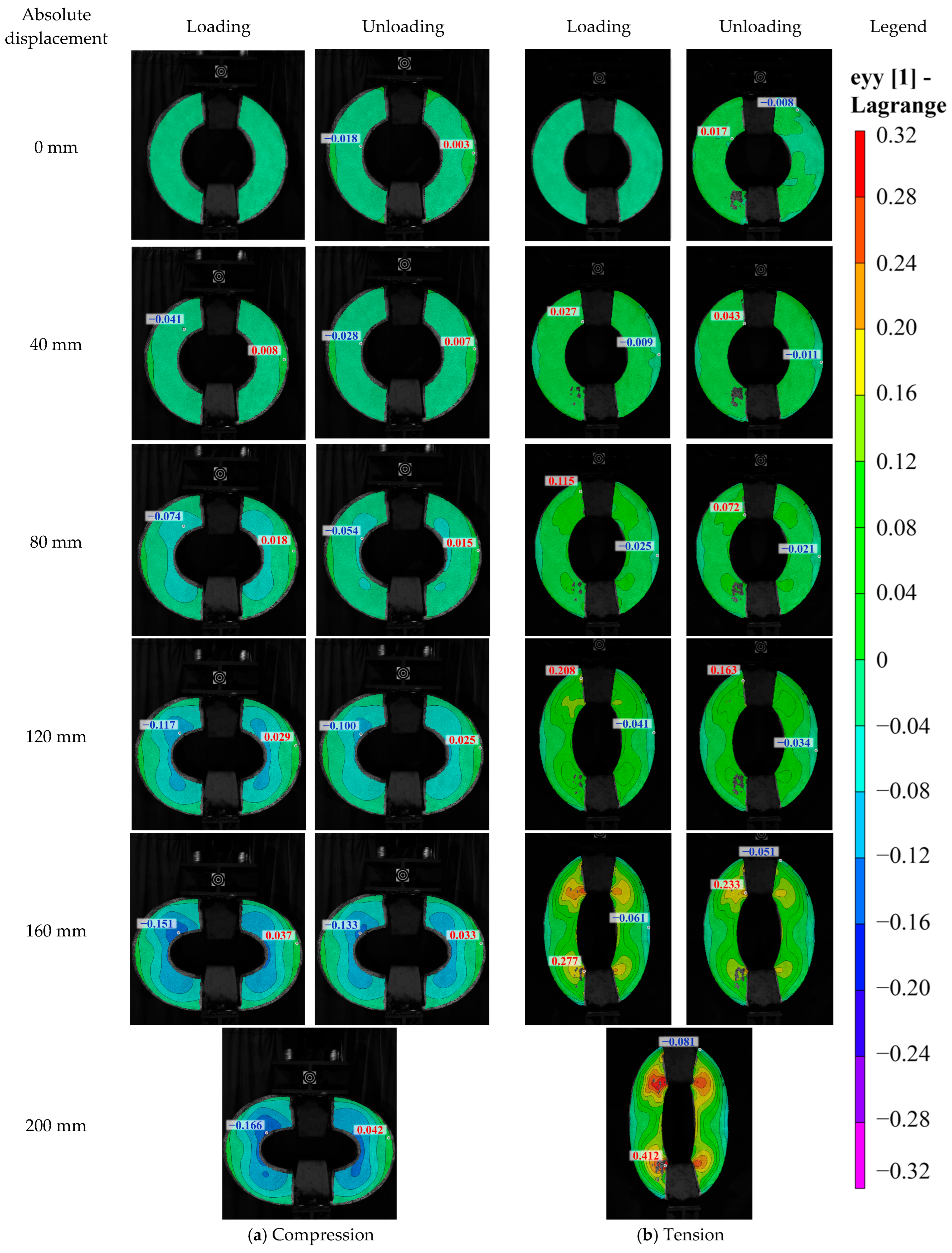
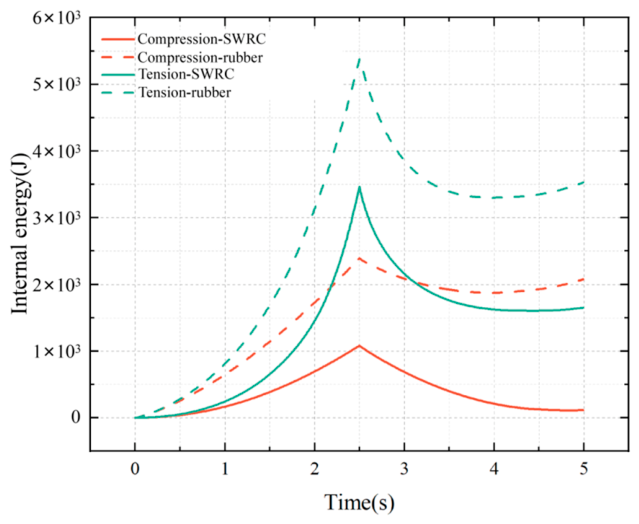
- Quasi-static tests reveal that the rubber matrix plays a critical role in enhancing both load-bearing capacity (increased by 200% in compression and 337% in tension) and energy dissipation (increased by 403% in compression and 620% in tension), resulting in substantial performance gains over the bare SWRC. The deformation is dominated by bending, producing opposite radial strain distributions under compression and tension, and the introduction of the SWRC significantly amplifies the tension–compression asymmetry.
- (2)
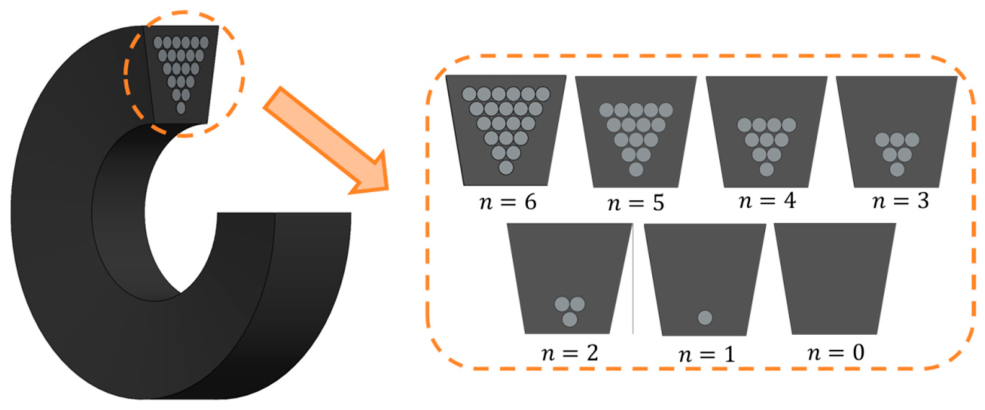
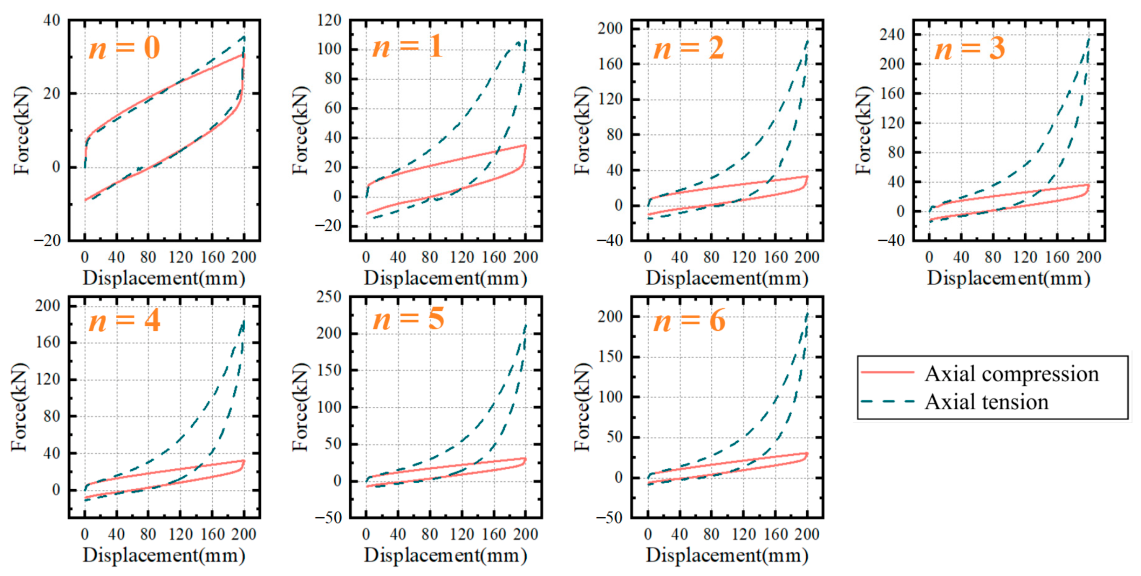
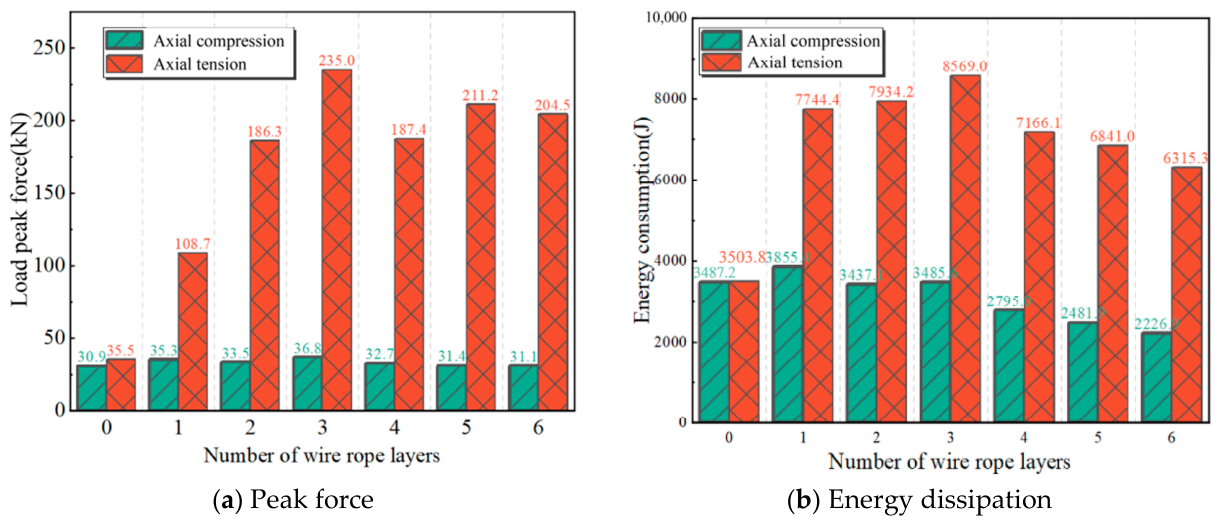
- The number of steel wire rope layers has a pronounced nonlinear effect on the tensile mechanical response. A three-layer configuration achieves the optimal balance between peak force (33.5 kN in compression, 186.3 kN in tension) and energy dissipation (3437 J in compression, 7934.2 J in tension), as it maximizes the effective utilization of the inner coils while avoiding the rapid stiffness decay observed in outer layers when the layer count exceeds three. Excessive layers hinder coordinated load sharing among the coils and reduce the rubber volume, thereby degrading overall performance.
- (3)
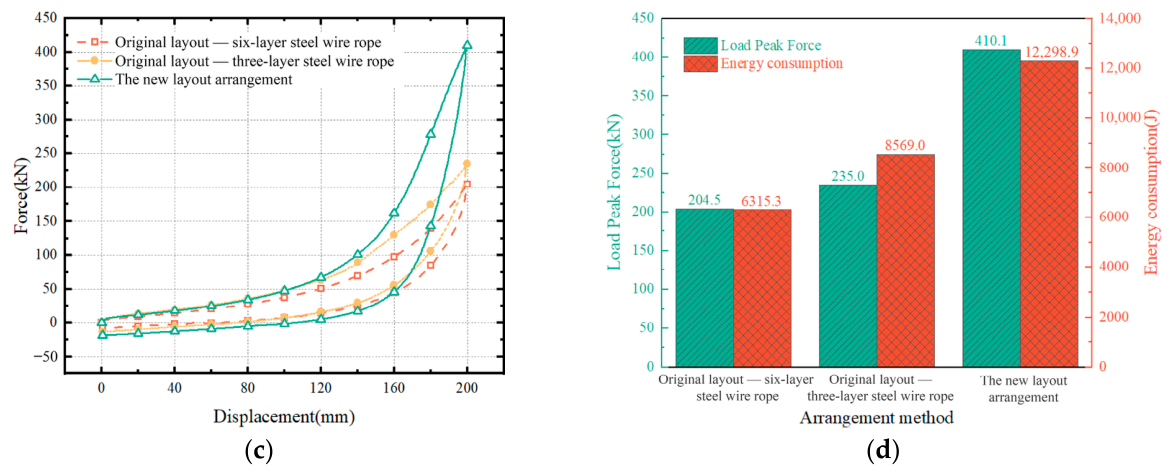
- An optimized two-layer steel wire rope arrangement that maximizes the inner-layer proportion is proposed based on numerical simulations. Compared with the original six-layer and three-layer designs, this configuration shows increases in peak tensile force and energy dissipation of up to 2.0 and 1.9 times, respectively, while reducing steel consumption. These numerical results suggest that optimizing material distribution according to the layer-dependent mechanism could be an effective strategy for improving anti-collision performance. However, experimental verification is still needed to confirm the actual performance of the proposed design.
Author Contributions
Funding
Data Availability Statement
Conflicts of Interest
Abbreviations
| FACR | Flexible anti-collision ring |
| FEA | Finite element analysis |
| SWRC | Steel wire rope coil |
| FGAD | Flexible guided anti-collision device |
References
- Barratt, M.J. IABSE Colloquium, Copenhagen 1983 Ship Collision with Bridges and Offshore Structures Introductory and Preliminary Reports. Appl. Ocean Res. 1983, 5, 239. [Google Scholar] [CrossRef]
- Chen, J.; Wei, X.; Huang, J.; Wang, H.; Dai, M. Research on High-Pressure Water Jet Interference for Collision Prevention of Waterway Viaduct Piers: Case Study of Guangzhou Lixinsha Bridge. Buildings 2024, 14, 2118. [Google Scholar] [CrossRef]
- Hörteborn, A.; Ringsberg, J.W. A Method for Risk Analysis of Ship Collisions with Stationary Infrastructure Using AIS Data and a Ship Manoeuvring Simulator. Ocean Eng. 2021, 235, 109396. [Google Scholar] [CrossRef]
- Zhang, W.Z.; Pan, J.; Sanchez, J.C.; Li, X.B.; Xu, M.C. Review on the Protective Technologies of Bridge against Vessel Collision. Thin Walled Struct. 2024, 201, 112013. [Google Scholar] [CrossRef]
- Gucma, L.; Batista, M.; Perkovič, M. A Probabilistic Framework for Assessing Vessel Impact on Bridges Considering Technical Failures: Insights from the Baltimore Accident Case Study. Mar. Struct. 2026, 105, 103906. [Google Scholar] [CrossRef]
- Hoang, L.C.; Lützen, M. Ship Collisions with Pile-Supported Structures—Estimates of Strength and Ductility Requirements. Struct. Eng. Int. 2012, 22, 359–364. [Google Scholar] [CrossRef]
- El-Sawy, M.; Shagin, V.; Elmorsi, M. Vessel Collision Analysis and Design of a Pile Support Fender System. In Structures Congress 2020; American Society of Civil Engineers: Reston, VA, USA, 2020; pp. 560–574. [Google Scholar] [CrossRef]
- Carbonari, S.; Antolloni, G.; Gara, F.; Lorenzoni, C.; Mancinelli, A. A Performance-Based Approach for the Design of Coupled Dolphin-Fender Berthing Structures. Mar. Struct. 2019, 64, 78–91. [Google Scholar] [CrossRef]
- Fan, W.; Yuan, W.; Chen, B. Steel Fender Limitations and Improvements for Bridge Protection in Ship Collisions. J. Bridge Eng. 2015, 20, 06015004. [Google Scholar] [CrossRef]
- Fan, W.; Guo, W.; Sun, Y.; Chen, B.; Shao, X. Experimental and Numerical Investigations of a Novel Steel-UHPFRC Composite Fender for Bridge Protection in Vessel Collisions. Ocean Eng. 2018, 165, 1–21. [Google Scholar] [CrossRef]
- Fan, W.; Xu, X.; Zhang, Z.; Shao, X. Performance and Sensitivity Analysis of UHPFRC-Strengthened Bridge Columns Subjected to Vehicle Collisions. Eng. Struct. 2018, 173, 251–268. [Google Scholar] [CrossRef]
- Chen, J.; Fang, H.; Liu, W.; Zhu, L.; Zhuang, Y.; Wang, J.; Han, J. Energy Absorption of Foam-Filled Multi-Cell Composite Panels under Quasi-Static Compression. Compos. Part B Eng. 2018, 153, 295–305. [Google Scholar] [CrossRef]
- Fang, H.; Mao, Y.; Liu, W.; Zhu, L.; Zhang, B. Manufacturing and Evaluation of Large-Scale Composite Bumper System for Bridge Pier Protection against Ship Collision. Compos. Struct. 2016, 158, 187–198. [Google Scholar] [CrossRef]
- Fang, H.; Bai, Y.; Liu, W.; Qi, Y.; Wang, J. Connections and Structural Applications of Fibre Reinforced Polymer Composites for Civil Infrastructure in Aggressive Environments. Compos. Part B Eng. 2019, 164, 129–143. [Google Scholar] [CrossRef]
- Zhu, L.; Liu, W.; Fang, H.; Chen, J.; Zhuang, Y.; Han, J. Design and Simulation of Innovative Foam-Filled Lattice Composite Bumper System for Bridge Protection in Ship Collisions. Compos. Part B Eng. 2019, 157, 24–35. [Google Scholar] [CrossRef]
- Han, J.; Zhu, L.; Fang, H.; Wang, J.; Wu, P. The Energy Absorption Behavior of Novel Composite Sandwich Structures Reinforced with Trapezoidal Latticed Webs. Rev. Adv. Mater. Sci. 2021, 60, 503–518. [Google Scholar] [CrossRef]
- Chen, J.; Zhu, L.; Fang, H.; Han, J.; Huo, R.; Wu, P. Study on the Low-Velocity Impact Response of Foam-Filled Multi-Cavity Composite Panels. Thin Walled Struct. 2022, 173, 108953. [Google Scholar] [CrossRef]
- Chen, C.; Fang, H.; Zhu, L.; Han, J.; Li, X.; Qian, Z.; Zhang, X. Low-Velocity Impact Properties of Foam-Filled Composite Lattice Sandwich Beams: Experimental Study and Numerical Simulation. Compos. Struct. 2023, 306, 116573. [Google Scholar] [CrossRef]
- Chen, J.; Fang, H.; Zhuang, Y.; Shen, Z.; He, W. Crushing Behavior of Multi-Layer Lattice-Web Reinforced Double-Braced Composite Cylinders under Lateral Compression and Impact Loading. Thin Walled Struct. 2023, 193, 111289. [Google Scholar] [CrossRef]
- Zhao, S.; Fang, H.; Wang, R.; Cao, P. Ship Collision Performance of a Fiber-Reinforced Composite Material Winding Tube Filled with Ceramic Pellets. Eng. Struct. 2025, 324, 119335. [Google Scholar] [CrossRef]
- Zhou, S.; Fang, H.; Zhang, X.; Zhu, L.; Wang, S. Ship Collision Performance of a Flexible Anti-Collision Device Designed with Fiber-Reinforced Rubber Composites. Eng. Struct. 2024, 302, 117472. [Google Scholar] [CrossRef]
- Liu, T.; Zhang, B.; Xu, M.; Pan, J. Experimental Study on the Impact of Sandwich Structure Against Vessel Collision. Wuhan Ligong Daxue Xuebao Jiaotong Kexue Yu Gongcheng Ban/J. Wuhan Univ. Technol. Transp. Sci. Eng. 2019, 43, 447. [Google Scholar] [CrossRef]
- Xu, M.; Cai, K.; Wang, H.; Pan, J. Study on Crashworthiness of Y-shape Sandwich Structure for Protecting Bridge Piers Against Vessel Collision. Wuhan Ligong Daxue Xuebao Jiaotong Kexue Yu Gongcheng Ban/J. Wuhan Univ. Technol. Transp. Sci. Eng. 2017, 41, 910. [Google Scholar] [CrossRef]
- Cheng, Y.; Wang, W.; Zhu, Z.; Zhong, Y.; Tang, Y. Impact Resistance for ECC-RC Bridge Columns Protected by an Innovative Steel-GFRP-Foam Anti-Collision Device: Experimental, Numerical and Theoretical Analysis. Compos. Struct. 2025, 373, 119667. [Google Scholar] [CrossRef]
- Cheng, Y.; Xiao, Z.; Zhang, Y. Theoretical and Numerical Investigation on Perforation Resistance of Monolithic and Segmented Concrete Targets with Steel Liners under Normal Penetration. Adv. Civ. Eng. 2019, 2019, 3415423. [Google Scholar] [CrossRef]
- Cheng, Y.; Wang, W.; Wu, Z.; Tang, Y.; Zhao, Q.; Zhang, J. Crashworthiness Analysis of a Novel Steel-GFRP-Foam Protective Structure for ECC-RC Pier against Vessel Collision. Ocean Eng. 2025, 340, 122299. [Google Scholar] [CrossRef]
- Wang, L.; Yang, L.; Huang, D.; Zhang, Z.; Chen, G. An Impact Dynamics Analysis on a New Crashworthy Device against Ship–Bridge Collision. Int. J. Impact Eng. 2008, 35, 895–904. [Google Scholar] [CrossRef]
- Wang, F.; Chang, H.-J.; Ma, B.-H.; Wang, Y.-G.; Yang, L.-M.; Liu, J.; Dong, X.-L. Flexible Guided Anti-Collision Device for Bridge Pier Protection against Ship Collision: Numerical Simulation and Ship Collision Field Test. Ocean Eng. 2023, 271, 113696. [Google Scholar] [CrossRef]
- Wang, J.J.; Song, Y.C.; Wang, W.; Chen, C.J. Evaluation of Flexible Floating Anti-Collision Device Subjected to Ship Impact Using Finite-Element Method. Ocean Eng. 2019, 178, 321–330. [Google Scholar] [CrossRef]
- Zhou, F.; Yu, T.X.; Yang, L. Elastic Behavior of Ring-on-Foundation. Int. J. Mech. Sci. 2012, 54, 38–47. [Google Scholar] [CrossRef]
- Yang, H.S.; Zheng, Y.X.; Fu, Y.Q.; Yang, L.M.; Zhou, F.H.; Yu, T.X. Impact Response of a Ring on Viscoelastic Foundation. Int. J. Impact Eng. 2022, 168, 104311. [Google Scholar] [CrossRef]
- Wang, G.; Peng, Y.; Zhu, Z.; Wang, D.; Tang, W.; Chen, G.; Liu, W.; Zhang, Q.; Huang, K. Tribological Properties and Residual Strength of Wire Rope with Different Strands during the Interlayer-Transition Stage. Wear 2021, 480–481, 203930. [Google Scholar] [CrossRef]
- Zhang, J.; Wang, D.; Song, D.; Zhang, D.; Zhang, C.; Wang, D.; Araújo, J.A. Tribo-Fatigue Behaviors of Steel Wire Rope under Bending Fatigue with the Variable Tension. Wear 2019, 428–429, 154–161. [Google Scholar] [CrossRef]



| ID | Type | Condition | Loading/Unloading Speeds (mm/s) | Maximum Displacement (mm) |
|---|---|---|---|---|
| 1# | SWRC | Compression | 80 | 80/160/200 |
| 2# | Tension | |||
| 3# | FACR | Compression | ||
| 4# | Tension |
| Type | Compression Force (kN) | Tensile Force (kN) | Compression Energy (J) | Tensile Energy (J) |
|---|---|---|---|---|
| SWRC | 11.20 ± 0.06 | 49.70 ± 0.25 | 304.5 ± 1.5 | 754.8 ± 3.8 |
| FACR | 33.70 ± 0.17 | 217.00 ± 1.09 | 1530.5 ± 7.7 | 5432.4 ± 27.2 |
| Percentage increase | 201 ± 2% | 337 ± 3% | 403 ± 3% | 620 ± 5% |
| Parameters | Density (g/cm3) | Elastic Modulus (MPa) | Poisson Ratio (-) | Yield Strength (MPa) |
|---|---|---|---|---|
| Value | 7.85 | 6000 | 0.3 | 100 |
| Parameters | Density (g/cm3) | Poisson Ratio (-) | Prony Series (-) | G (MPa) | SIGF (MPa) | μ1 (MPa) | μ2 (MPa) | μ3 (MPa) |
|---|---|---|---|---|---|---|---|---|
| Value | 1.25 | 0.499 | 2 | 50 | 0.2 | 0.9 | −0.18 | 0.09 |
| Parameters | α1 (-) | α2 (-) | α3 (-) | g1 (MPa) | β1 (-) | g2 (MPa) | β2 (-) | |
| Value | 1.0 | −3.0 | 8.5 | 0.4 | 1.5 | 0.15 | 0.005 | |
| Simulation Groups | Number of Steel Wire Ropes | Loading Type | Loading Speed |
|---|---|---|---|
| ) | 0 | Compression | 80 mm/s |
| Tension | |||
| ) | 1 | Compression | |
| Tension | |||
| ) | 3 | Compression | |
| Tension | |||
| ) | 6 | Compression | |
| Tension | |||
| ) | 10 | Compression | |
| Tension | |||
| ) | 15 | Compression | |
| Tension | |||
| ) | 21 | Compression | |
| Tension | |||
| ) | 0 | Compression | |
| Tension |
| Category | First Layer | Second Layer | Third Layer | Fourth Layer | Fifth Layer | Sixth Layer |
|---|---|---|---|---|---|---|
| (mm) | 448 | 504 | 560 | 616 | 672 | 737 |
| (kN) | 3.43 | 1.90 | 1.01 | 0.59 | 0.38 | 0.26 |
| (kN/mm) | 0.0343 | 0.0190 | 0.0101 | 0.0059 | 0.0038 | 0.0026 |
| Relative Stiffness (%) | 100% | 55.4% | 29.4% | 17.2% | 11.15% | 7.6% |
Disclaimer/Publisher’s Note: The statements, opinions and data contained in all publications are solely those of the individual author(s) and contributor(s) and not of MDPI and/or the editor(s). MDPI and/or the editor(s) disclaim responsibility for any injury to people or property resulting from any ideas, methods, instructions or products referred to in the content. |
© 2026 by the authors. Licensee MDPI, Basel, Switzerland. This article is an open access article distributed under the terms and conditions of the Creative Commons Attribution (CC BY) license.
Share and Cite
Ma, B.; Zheng, L.; Fan, Y.; Wang, F.; Chang, H.; Liu, T.; Shao, K. Experimental and Numerical Study on the Quasi-Static Mechanical Behavior of Flexible Anti-Collision Ring (FACR) for Bridge Protection. Buildings 2026, 16, 2317. https://doi.org/10.3390/buildings16122317
Ma B, Zheng L, Fan Y, Wang F, Chang H, Liu T, Shao K. Experimental and Numerical Study on the Quasi-Static Mechanical Behavior of Flexible Anti-Collision Ring (FACR) for Bridge Protection. Buildings. 2026; 16(12):2317. https://doi.org/10.3390/buildings16122317
Chicago/Turabian StyleMa, Bohan, Liangliang Zheng, Yuanji Fan, Fei Wang, Huijuan Chang, Tengfei Liu, and Kaixuan Shao. 2026. "Experimental and Numerical Study on the Quasi-Static Mechanical Behavior of Flexible Anti-Collision Ring (FACR) for Bridge Protection" Buildings 16, no. 12: 2317. https://doi.org/10.3390/buildings16122317
APA StyleMa, B., Zheng, L., Fan, Y., Wang, F., Chang, H., Liu, T., & Shao, K. (2026). Experimental and Numerical Study on the Quasi-Static Mechanical Behavior of Flexible Anti-Collision Ring (FACR) for Bridge Protection. Buildings, 16(12), 2317. https://doi.org/10.3390/buildings16122317