Article

Empowerment or Depletion? Unpacking the Asymmetrical Pathways from Perceived Autonomy to Human–AI Trust


1
School of Urban Economics and Management, Beijing University of Civil Engineering and Architecture, No. 1 Zhanlanguan Street, Xicheng District, Beijing 100044, China
2
School of Business, Jiangnan University, No. 1800 Lihu Road, Wuxi 214122, China
3
School of Built, Environment & Design, Western Sydney University, Penrith, NSW 2751, Australia
*
Author to whom correspondence should be addressed.
Buildings 2026, 16(11), 2264; https://doi.org/10.3390/buildings16112264

Submission received: 30 April 2026 / Revised: 31 May 2026 / Accepted: 2 June 2026 / Published: 4 June 2026

Abstract

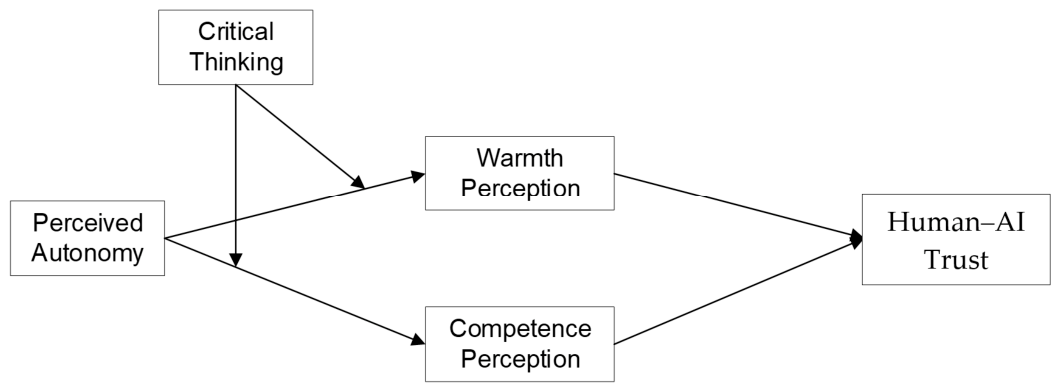
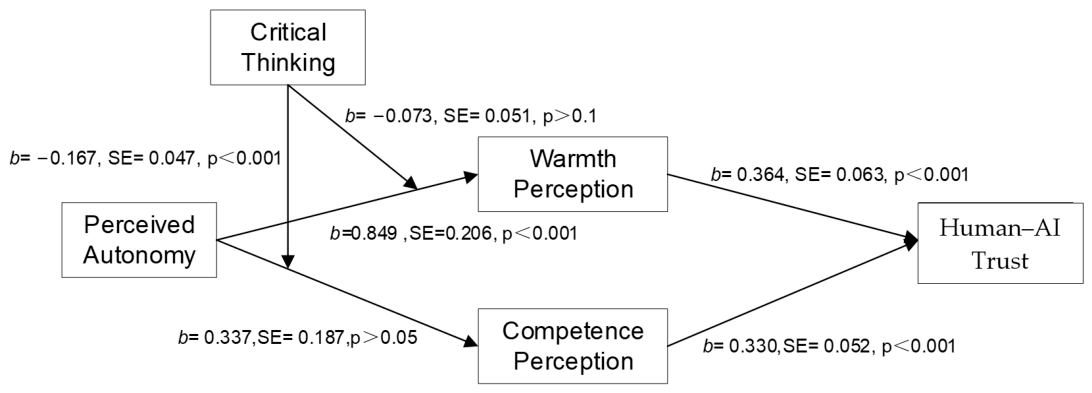
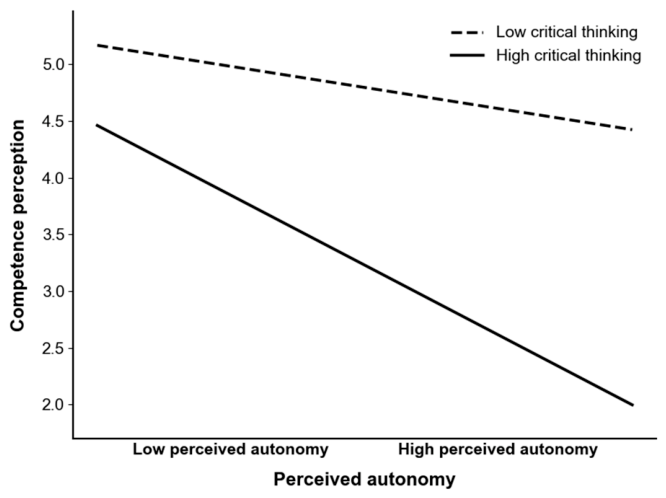
As intelligent systems become decision-support tools in the architecture, engineering, and construction (AEC) industry, establishing human–AI trust is critical. However, in engineering consulting, the psychological mechanisms underlying trust formation remain unclear. Grounded in Self-Determination Theory and the Stereotype Content Model, this study utilized multi-wave survey data from Chinese engineering consulting employees to investigate these mechanisms. We examined how perceived autonomy influences human–AI trust through the competitive dual-mediation of warmth perception and competence perception, alongside the asymmetric moderating role of critical thinking. Results reveal that perceived autonomy directly enhances trust. However, social cognition acts as a competitive mechanism: autonomy positively impacts trust via warmth perception but generates a negative indirect effect via competence perception. Furthermore, critical thinking exerts an asymmetric boundary effect; it does not interfere with the intuitive warmth pathway but significantly intensifies the negative indirect effect through the competence pathway. Ultimately, these findings highlight that perceived autonomy exerts a double-edged sword effect in the context of human–AI collaboration. To mitigate professional defensive rejection and calibrate trust, AEC firms should prioritize human-in-the-loop deployment strategies, objective interface designs, and the cultivation of AI collaborative literacy.
Keywords: human–AI trust; perceived autonomy; stereotype content model; engineering consulting human–AI trust; perceived autonomy; stereotype content model; engineering consulting