1. Introduction
The construction industry is undergoing a profound digital transformation, with Artificial Intelligence (AI) emerging as a pivotal enabler of productivity, safety, and sustainability. Despite rapid advancements in AI technologies, such as Machine Learning (ML), Deep Learning (DL), Computer Vision (CV), and Natural Language Processing (NLP), their adoption in CM remains fragmented and inconsistent across organizations and regions [
1,
2]. Many construction stakeholders continue to rely on manual or semi-automated processes, creating a persistent disconnect between academic innovation and real-world implementation [
3].
Over the past decade, AI has demonstrated significant value in addressing long-standing challenges in Construction Management (CM), such as cost overruns, schedule delays, and quality assurance issues [
4,
5,
6]. Notable applications include cost forecasting using gradient boosting models [
7], contract risk analysis through NLP [
8], and safety monitoring via Unmanned Aerial Vehicle (UAV) based CV systems [
9]. Recent research has also explored emerging innovations such as speech-enabled Human–Robot Collaboration (HRC) [
10], and sustainability-oriented optimization algorithms [
11], further illustrating AI’s evolving role in intelligent and adaptive construction practices.
Nevertheless, the deployment of AI in construction remains constrained due to several technical and organizational barriers. These include fragmented and heterogeneous data environments, limited model interpretability, high computational demands, and resistance to black-box systems among decision-makers [
3,
12]. Additionally, key domains such as legal compliance, Human–Robot Interaction (HRI), and environmental performance remain underrepresented in AI in AI-CM research [
8,
13,
14]. A lack of standardized frameworks for integrating AI with platforms such as Building Information Modeling (BIM), the Internet of Things (IoT), and digital twins further hinders scalability and interoperability.
While previous literature reviews have examined aspects of AI in construction, most have either concentrated narrowly on specific technologies, such as ML, BIM, or CV, or remained largely descriptive, without offering system-level taxonomies or actionable frameworks [
1,
2,
13]. Very few studies account for recent advances in Generative AI (Gen-AI), transformer architectures, or Explainable AI (XAI). This study addresses these limitations through a systematic review of 191 peer-reviewed articles published between 2020 and 2025. The review is structured around two core research questions: (a) What are the core AI techniques applied in CM? (b) What are the main application areas, challenges, and emerging trends in AI use within CM? The proposed taxonomy is primarily conceptual in nature, providing a structured and hierarchical framework for organizing AI techniques and their applications in CM. In addition to its conceptual role, the taxonomy offers analytical insights into relationships between AI models and CM domains; however, it is not intended as a fully operational or implementation-ready system.
To address these limitations, this study presents a comprehensive and hierarchical taxonomy that integrates a wide range of AI techniques, including ML, DL, CV, NLP, optimization algorithms, reinforcement learning, Gen-AI, and XAI, within CM. Unlike prior reviews that focus on isolated techniques, this work adopts a cross-domain analytical perspective that enables the identification of dominant research trends, underexplored areas such as legal analytics and cybersecurity, and emerging opportunities for hybrid AI approaches. Furthermore, by incorporating recent advancements such as transformer-based models, Gen-AI, and XAI, the proposed taxonomy reflects the evolving landscape of AI in CM. By combining hierarchical classification with application-level synthesis and critical evaluation of challenges, this study advances the existing literature by providing both a structured conceptual framework and practical guidance for selecting appropriate AI techniques in CM.
2. Materials and Methods
This study adopts a systematic literature review methodology guided by the PRISMA 2020 (Preferred Reporting Items for Systematic Reviews and Meta-Analyses) protocol to ensure transparency, rigor, and reproducibility. The review process consists of three main stages: (1) literature identification and retrieval, (2) structured data collection, and (3) descriptive synthesis. From an initial pool of 400 records, 190 peer-reviewed journal articles met the inclusion criteria, with 191 empirical studies retained for in-depth analysis.
2.1. Literature Identification and Retrieval
The literature search was conducted across four major academic databases: Scopus, Web of Science, IEEE Xplore, and the ASCE Library. A Boolean search strategy was employed, combining keywords such as “Artificial Intelligence”, “Machine Learning”, “Deep Learning”, “Computer Vision”, and “Natural Language Processing” with “Construction” and “Construction Management”. The search was limited to peer-reviewed journal articles published in English between January 2020 and May 2025 with direct AI applications in CM were included, while irrelevant, non-empirical, or low-quality studies were excluded.
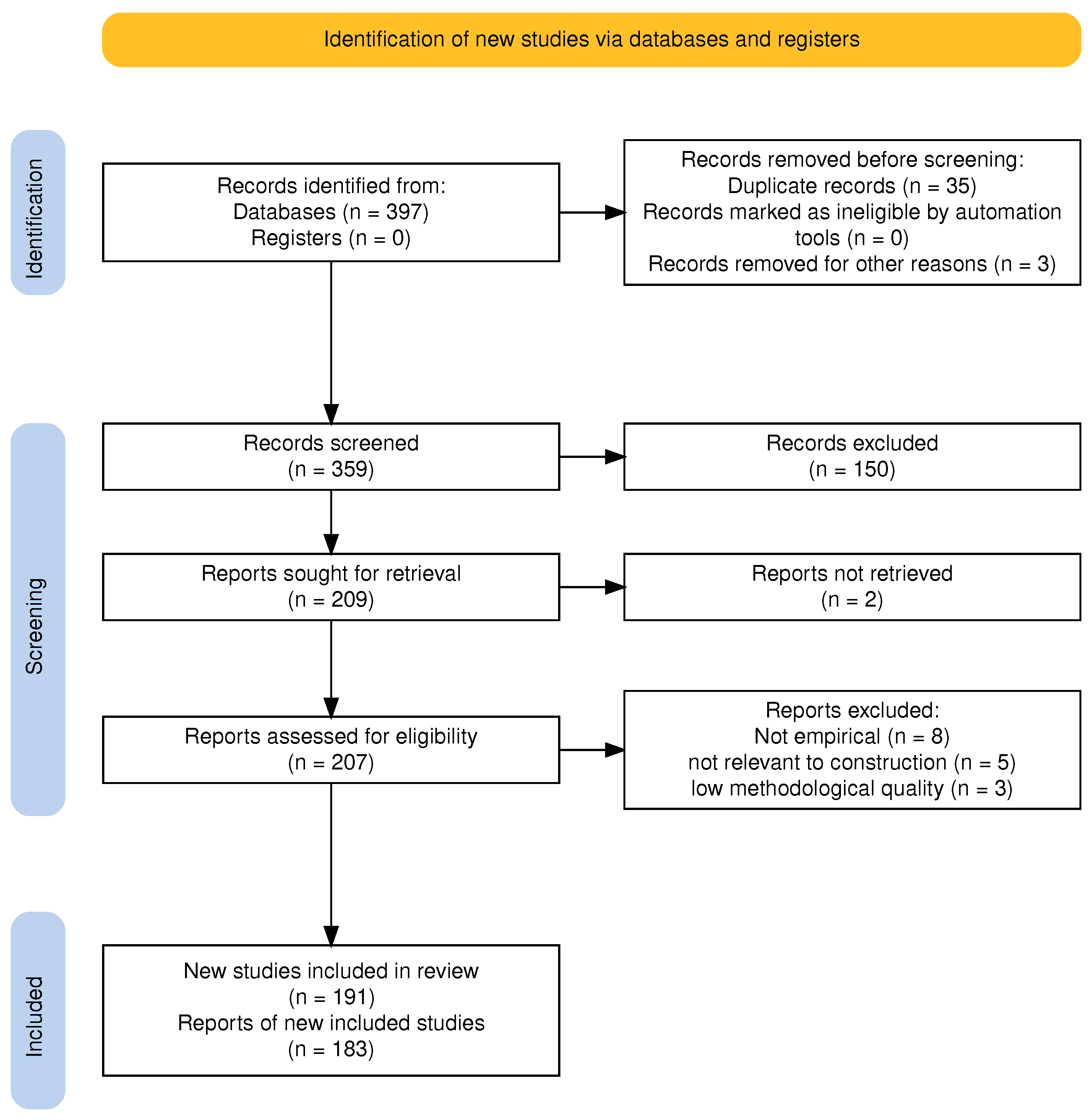
Studies were included if they featured a technical implementation of AI methods with a direct application in CM domains. A small set of 14 review papers was retained for theoretical framing purposes but excluded from the quantitative synthesis. The manuscript describes the step-by-step screening process identification, duplicate removal, title/abstract screening, full-text review. The study selection process followed the PRISMA 2020 framework (see
Supplementary Materials), as illustrated in
Figure 1. Initially, 397 records were identified from the selected databases. After removing duplicates (n = 35) and irrelevant entries (n = 3), 359 records were screened based on titles and abstracts.
Subsequently, 209 full-text articles were assessed for eligibility, of which 207 were retained after excluding non-empirical and low-quality studies. Ultimately, 191 studies were included in the final analysis. This structured process ensures transparency and reproducibility in study selection.
2.2. Structured Data Collection
Each of the 191 selected studies was carefully reviewed and analyzed using a standardized approach to ensure consistency across the dataset. For each study, key information was recorded, including the AI models and techniques employed (e.g., Convolutional Neural Networks (CNNs), Reinforcement Learning (RL), etc.), and the functional domain of application (e.g., safety, scheduling, etc.).
To ensure the reliability of the review, the selected studies were evaluated based on their methodological quality, technical contribution, and relevance to CM applications. Studies were included only if they demonstrated clear implementation of AI techniques and provided sufficient detail on datasets, models, or evaluation metrics.
2.3. Descriptive Synthesis
To contextualize the reviewed literature, a descriptive analysis was conducted across four dimensions of (1) publication trends over time, (2) journal representation, (3) geographic origin of research, and (4) publisher distribution.
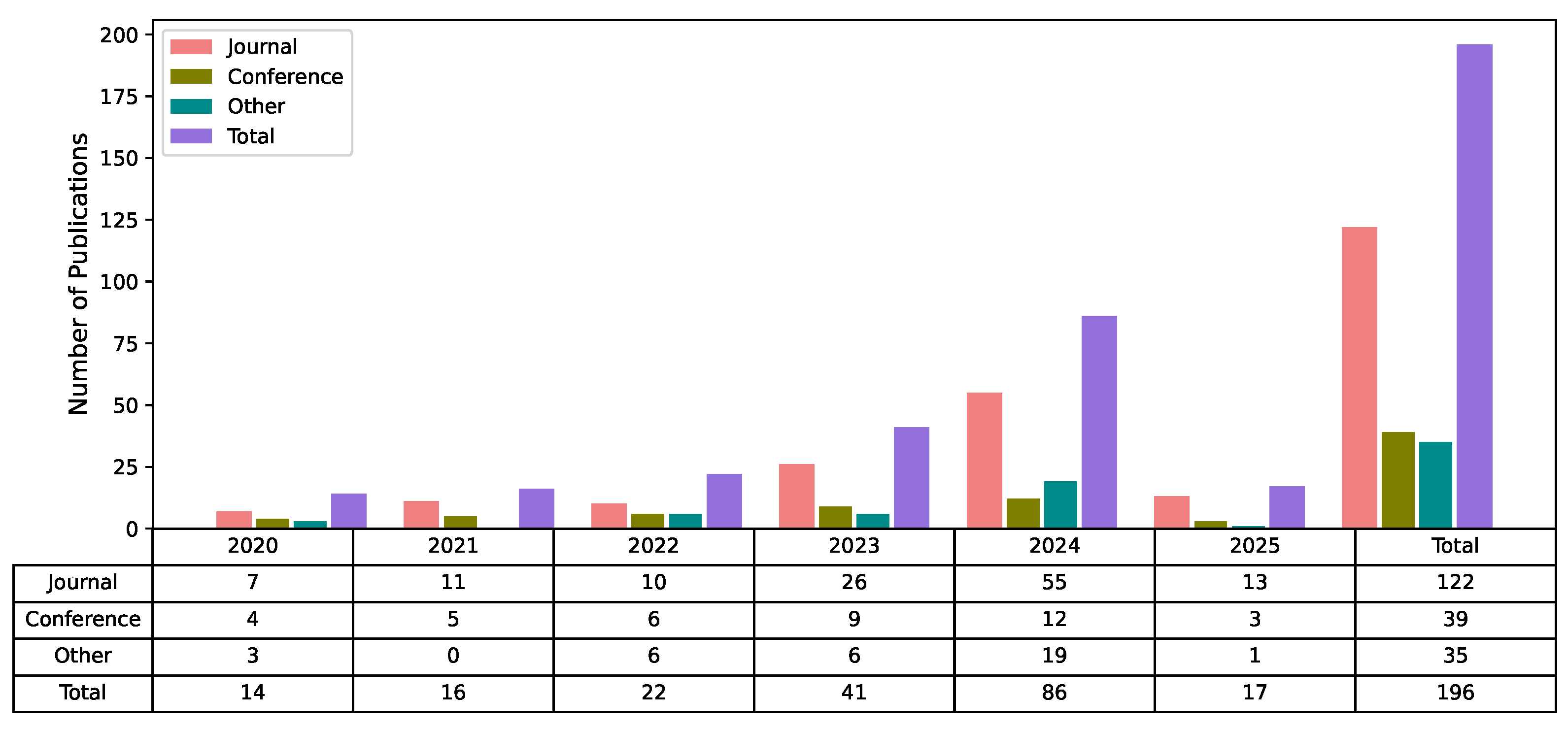
As shown in
Figure 2, AI-related publications in CM have increased markedly, with 2024 alone accounting for more than half of all included studies. This growth signals a convergence of technological maturity and practical relevance in AI for construction workflows.
To better understand the origins and dissemination of AI–CM research,
Figure 3 and
Figure 4 present the geographic and publisher-level distribution of the reviewed studies.
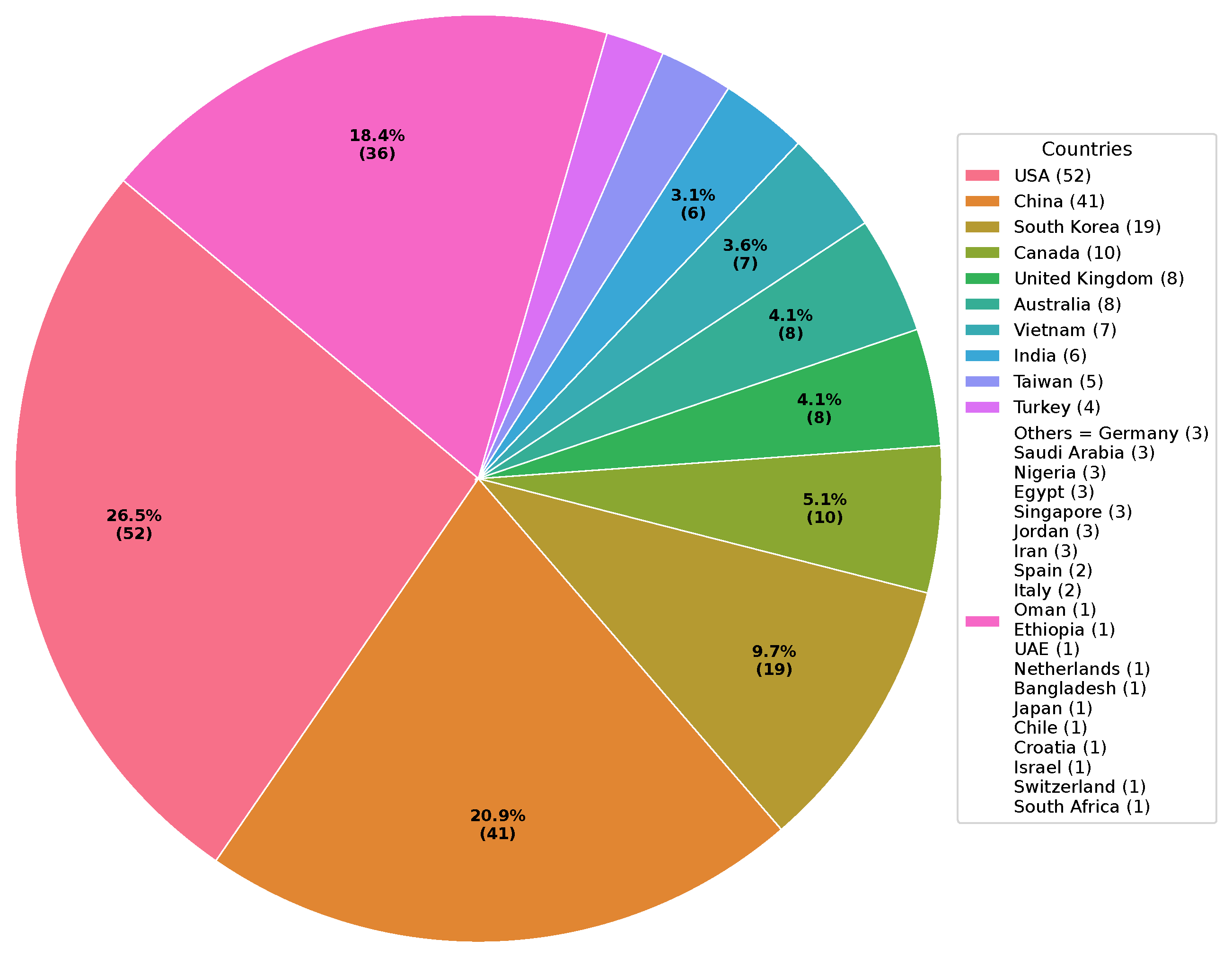
Figure 3 shows that the research is predominantly concentrated in technologically advanced regions, with the United States and China each contributing 29.2% of the reviewed studies, followed by South Korea (15.2%) and Canada (7%). This suggests that AI integration in construction is being led by countries with strong digital infrastructure and research investment.
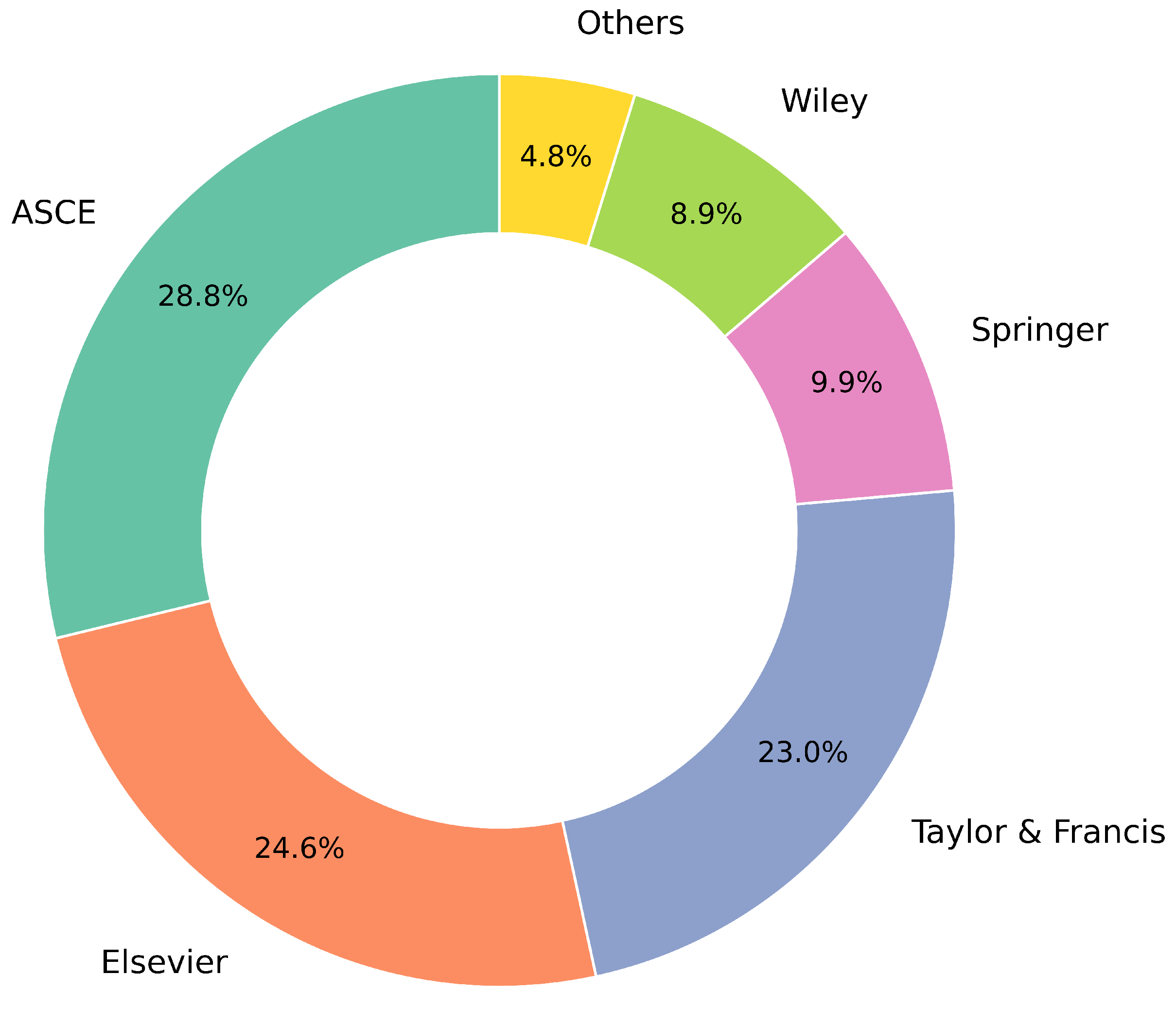
Figure 4 illustrates the publisher distribution, with ASCE (43%), Elsevier (38.8%), and Springer (15.8%) representing the majority of reviewed outputs. These figures reflect a consolidation of AI–CM research in specialized, technically focused publication venues.
At the journal level,
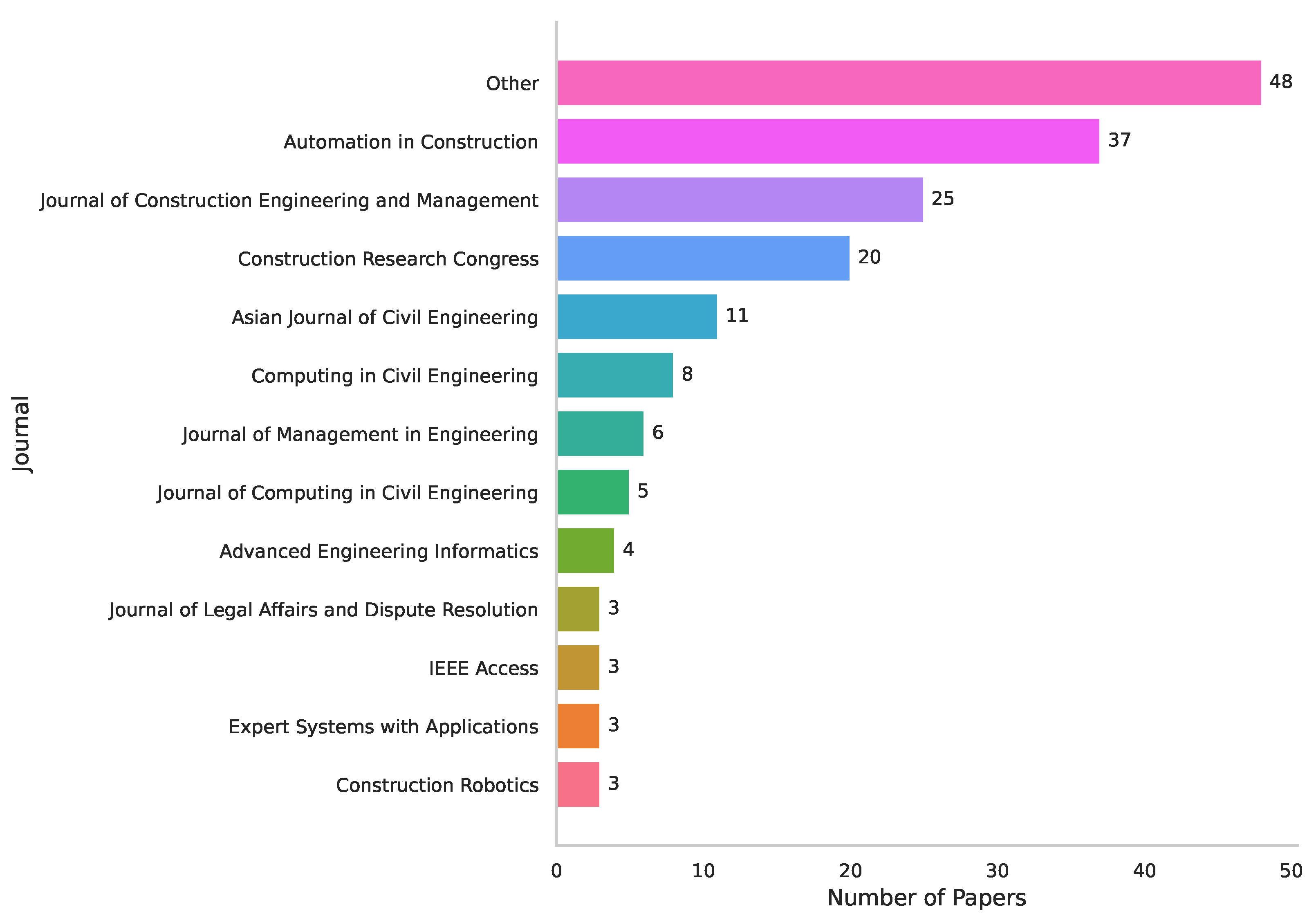
Figure 5 illustrates the specific publication venues most frequently contributing to AI–CM scholarship. Automation in Construction emerged as the leading outlet, followed by the Journal of Construction Engineering and Management and Construction Research Congress. This concentration highlights the central role of a few domain-specific journals in shaping the discourse around AI integration in CM.
This review is based on several key assumptions. First, it assumes that the selected peer-reviewed articles published between 2020 and 2025 provide a representative and up-to-date overview of AI applications in CM. Second, it assumes that the methodologies and findings reported in these studies are valid and reliable. Third, the review assumes that AI techniques can be consistently categorized into defined groups (e.g., ML, DL, CV, NLP), enabling structured comparison. Finally, it assumes that application domains (e.g., safety, scheduling, cost management) are sufficiently consistent across the literature to allow meaningful synthesis and mapping.
3. Core AI Techniques in CM
In the past decade, a wide range of AI techniques has been adopted to address the complex, data-intensive, and dynamic nature of CM tasks, with each method suited to particular objectives, data types, and operational contexts [
2,
4].
3.1. Deep Learning (DL)
DL is a computational approach based on multi-layer Artificial Neural Networks (ANNSs) that automatically learn hierarchical representations from large datasets, enabling the modeling of complex patterns in high-dimensional data [
15]. In CM, DL is particularly effective for tasks involving visual, sequential, or spatial data, such as defect detection, schedule prediction, progress tracking, and safety monitoring [
4]. DL models used in CM can be broadly grouped into several key categories, each tailored to different data types and prediction tasks.
Table 1 summarizes these categories, detailing their representative architectures, citation frequencies, and supporting references from the literature.
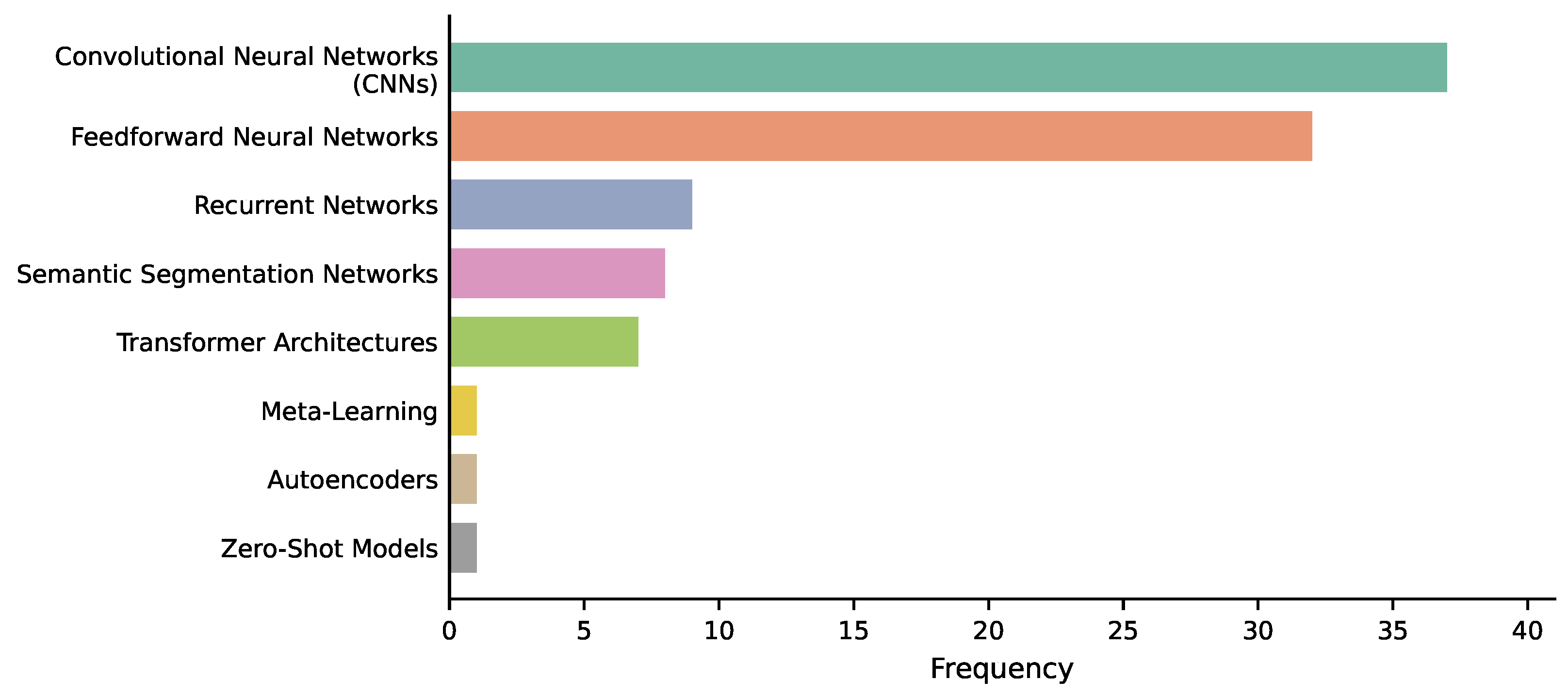
Figure 6 presents the frequency distribution of major DL architectures applied in the reviewed studies. The figure highlights the prevalence of different DL approaches, including CNNs, Feedforward Neural Networks, Recurrent Networks, Semantic Segmentation Networks, Transformer Architectures, Meta-Learning, Autoencoders, and Zero-Shot Models. Among these, CNN-based approaches appear most frequently, indicating their dominant role in DL-driven applications within the reviewed literature.
Among these models, CNNs are the most frequently used DL models in CM. Architectures such as You Only Look Once (YOLO), Residual Network (ResNet), and Fully Convolutional Network (FCN) are widely applied for object detection, defect classification, and visual inspections using UAV imagery, photogrammetry, and LiDAR scans [
28]. Their dominance is largely due to their effectiveness in processing unstructured image data with high accuracy and speed.
In detail, Feed-Forward Neural Networks (FNNs) are often used for structured prediction tasks. These include cost estimation, resource planning, and design impact assessments, where tabular data is available and model transparency is important [
4]. Recurrent Neural Networks (RNNs) are employed to model time-dependent variables, enabling accurate predictions in dynamic scheduling, productivity monitoring, and cost forecasting [
4]. Bidirectional LSTM and feedforward architectures are used for sequential labeling and structured classification in legal, technical, and safety-related documents [
95]. Transformer-based models have recently gained traction in CM for their ability to model long-range dependencies. These are used in document parsing, contract clause classification, and complex human–robot task interpretation [
4]. While for fine-grained visual tasks, semantic segmentation networks provide pixel-level classification of construction elements and surface defects, often within BIM or digital twin environments [
4].
Different AI models are preferred for specific construction tasks based on their underlying capabilities and data requirements. CNNs are particularly effective for image-based tasks such as safety monitoring, defect detection, and progress tracking, due to their ability to capture spatial hierarchies and local visual features. In contrast, transformer-based models excel in handling sequential and contextual data, making them well-suited for applications such as contract analysis, document classification, and complex human–robot interaction scenarios. While CNNs provide high accuracy and efficiency in visual recognition tasks, transformers offer superior performance in modeling long-range dependencies and multimodal relationships. Therefore, the choice of model depends on the nature of the data (visual vs. textual/sequential) and the specific requirements of the construction task.
Despite their strengths, DL models in CM remain highly dependent on domain-specific datasets, which are often scarce or unstructured. Addressing these data constraints is critical for reliable deployment in real-world construction settings [
1].
3.2. Machine Learning (ML)
ML refers to a class of computational methods that allow systems to learn patterns from data and make predictions or decisions without explicit rule-based programming. It is one of the most widely adopted AI approaches in CM, offering powerful capabilities for predictive modeling, classification, clustering, and optimization across structured data domains [
7,
15,
96]. ML models in CM are typically grouped into functional categories based on their computational logic and task orientation.
Table 2 presents a summary of the most frequently used ML techniques and their reported use in the literature.
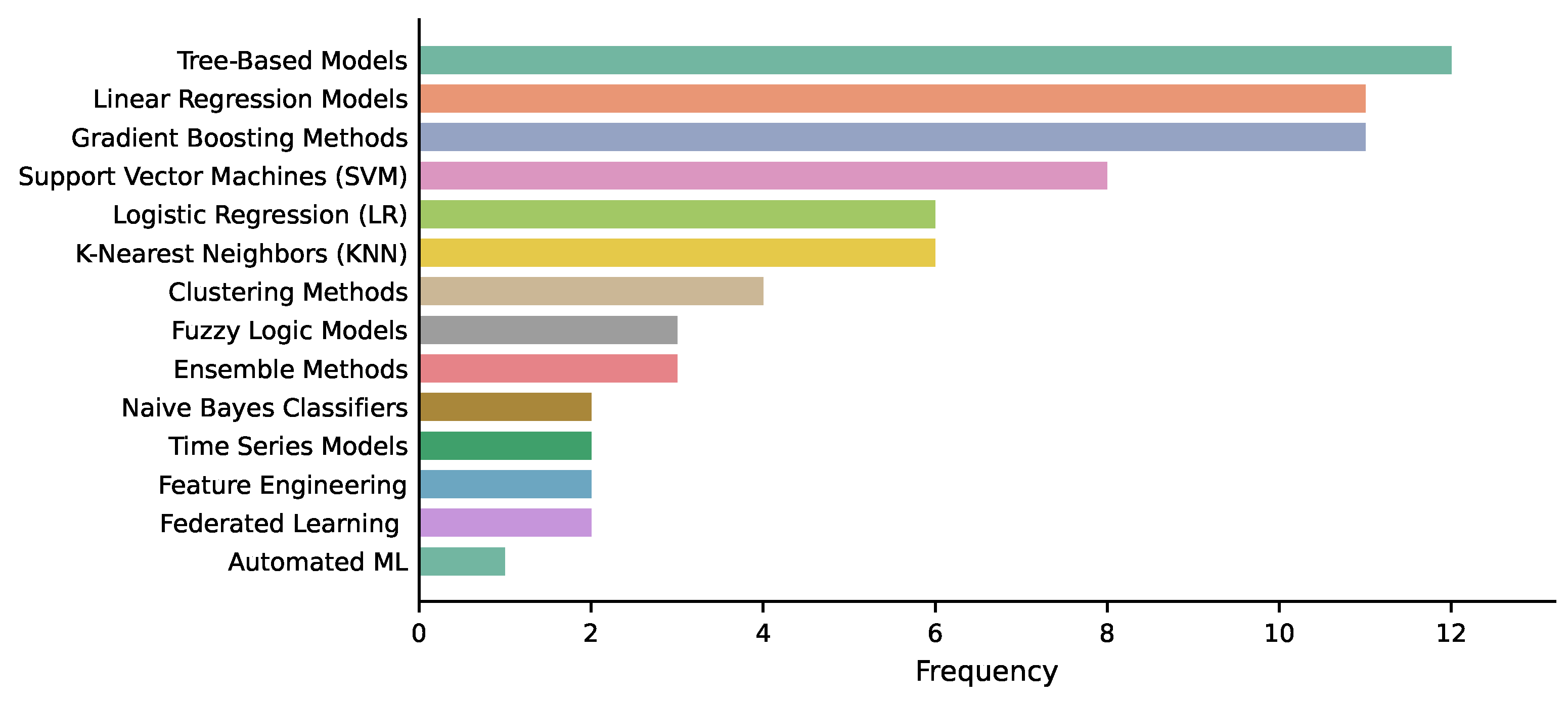
Figure 7 shows the frequency distribution of ML techniques utilized across the reviewed studies. The figure summarizes the adoption of various ML approaches, including Tree-Based Models, Linear Regression Models, Gradient Boosting Methods, Support Vector Machines (SVM), Logistic Regression (LogR), K-Nearest Neighbors (KNN), Clustering Methods, Fuzzy Logic Models, Ensemble Methods, Naive Bayes Classifiers, Time Series Models, Feature Engineering, Federated Learning, and Automated ML. Among these techniques, Tree-Based Models and Linear Regression Models appear most frequently, reflecting their widespread application in the analyzed literature.
Among these ML models, Tree-based models are favored for their interpretability and have been applied to tasks like cost estimation, resource scheduling, and risk classification [
57]. Boosting algorithms offer enhanced accuracy by combining weak learners iteratively. Among these, NGBoost provides probabilistic forecasts and uncertainty quantification, making it especially effective in construction cost modeling [
7,
108]. Linear Regression (LinR) techniques remain widely used due to their transparency and ease of integration. These models are often applied in cost forecasting, design impact analysis, and schedule performance prediction [
55,
61,
104].
On the other hand, LogR serves as a standard for binary classification tasks, including hazard detection and defect identification, due to its simplicity and robustness [
4]. SVMs are used in safety classification, pricing models, and stakeholder behavior analysis [
111]. Instance-based learners, like K-Nearest Neighbors (KNN), are applied in baseline classification but are sensitive to feature scaling and dimensionality. Naive Bayes classifiers, while less common, offer rapid solutions in text categorization and stakeholder profiling [
4].
Clustering algorithms are used in stakeholder segmentation, risk profiling, and behavior clustering [
4]. Fuzzy logic models are beneficial when dealing with linguistic variables or vague thresholds, particularly in safety and qualitative evaluations [
4]. Ensemble methods enhance performance through diversity in learners and resampling strategies. These techniques are especially effective in imbalanced datasets and multi-criteria evaluation settings [
4].
Time series forecasting models support trend analysis in scheduling and cost tracking, especially when long- and short-term dependencies must be modeled. Hybrid approaches, such as Optimal Moving Average Neural Network (OMA-NN) or recurrent network combinations, have also been used for sequential modeling in construction operations [
4,
102].
Feature selection and dimensionality reduction techniques help refine input datasets for better model performance and reduced overfitting. These methods are particularly relevant in deformation monitoring and cost performance prediction [
102]. Recent studies have also demonstrated that combining multiple ML models with tailored feature selection can substantially improve predictive performance in civil infrastructure applications, such as deformation monitoring [
102].
Recent advances in Automated Machine Learning (AutoML) have enabled non-expert users to deploy ML solutions more efficiently. Tools like Tree-based Pipeline Optimization Tool (TPOT) and Auto-sklearn automate model selection, hyperparameter tuning, and feature processing [
4]. Additionally, Federated Learning (FL) frameworks are increasingly used for privacy-preserving collaboration across distributed datasets, while Group Method of Data Handling (GMDH) provides hierarchical, self-organizing regression models for decision support [
40,
45,
107].
While ML techniques are widely used due to their transparency and adaptability, their performance in CM applications still hinges on effective feature engineering and contextual calibration.
3.3. Computer Vision (CV)
CV involves computational techniques that enable machines to automatically analyze and interpret visual data, such as images and videos. It techniques play a central role in automating visual perception tasks within CM, including real-time monitoring, safety inspection, quality control, and defect detection through image and video analysis [
2,
15]. CV models in CM are often based on DL architectures, particularly CNNs and transformer-based variants, offering strong performance in unstructured environments.
Table 3 summarizes the key categories of CV techniques used in CM, along with their representative models, frequency of use, and supporting references.
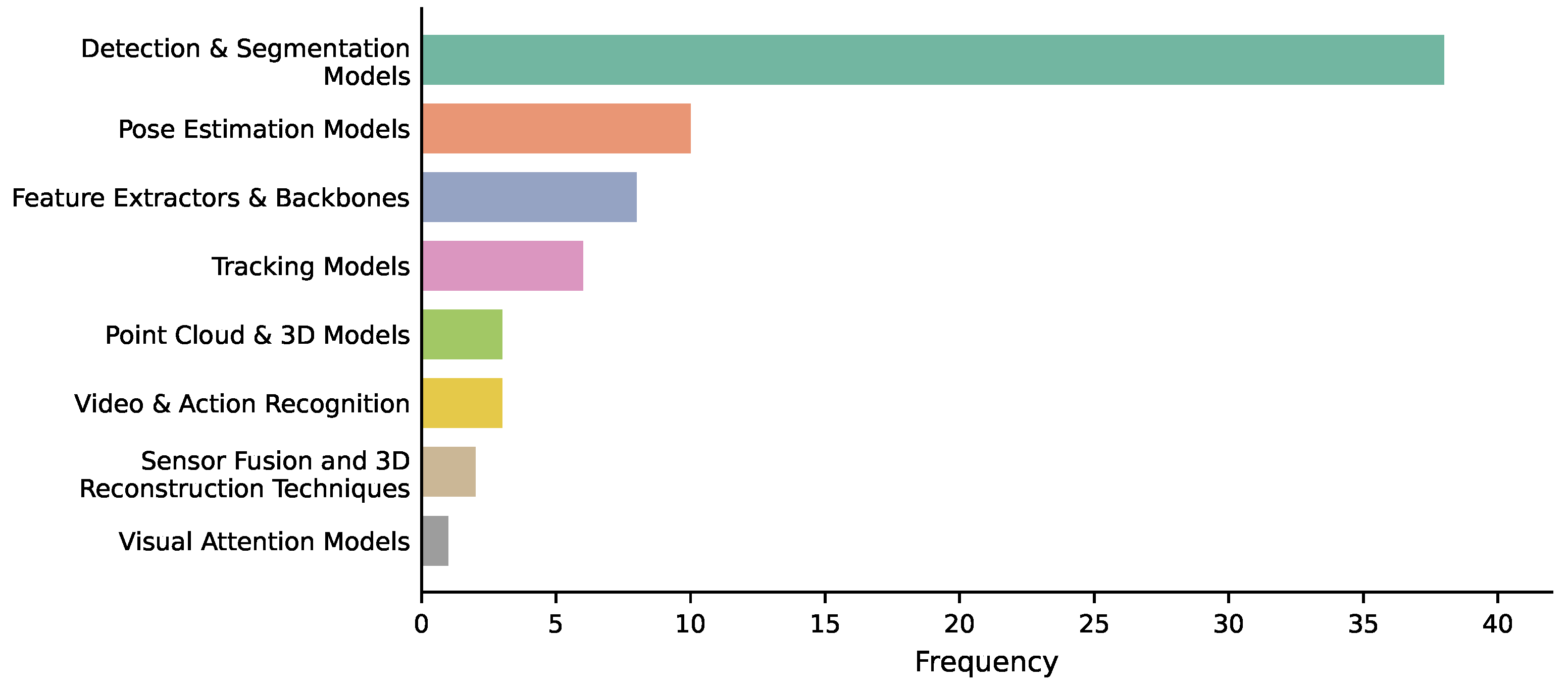
Figure 8 shows the frequency distribution of computer vision and visual intelligence techniques adopted in the reviewed studies. The figure illustrates the use of various approaches, including Detection and Segmentation Models, Pose Estimation Models, Feature Extractors and Backbone Networks, Tracking Models, Point Cloud and 3D Models, Video and Action Recognition, Sensor Fusion and 3D Reconstruction Techniques, and Visual Attention Models. Among these, Detection and Segmentation Models are the most frequently utilized, demonstrating their significant role in visual analysis and automated perception tasks across the surveyed literature.
The most widely used CV models in CM are object detection and segmentation algorithms. YOLO, Faster Region-Based Convolutional Neural Network (Faster R-CNN), and Single Shot MultiBox Detector (SSD) are applied to identify workers, machinery, structural components, and safety hazards in complex site environments. Segmentation models enable pixel-level classification to detect defects, assess surface conditions, and validate construction layouts [
4,
46].
Pose estimation and tracking models serve critical functions in safety and productivity monitoring. Algorithms like OpenPose, High-Resolution Network (HRNet), and YOLO-Pose capture worker postures and movements for ergonomic assessment and behavior analysis [
51], while tracking frameworks such as Simple Online and Realtime Tracking (SORT), Deep SORT, and Complete Intersection-over-Union-based Tracking (C-BIoU) enable dynamic monitoring of personnel and machinery, supporting hazard detection, resource utilization, and time-motion studies [
15,
52].
Three-dimensional scene understanding and spatial modeling are facilitated by photogrammetry, LiDAR, and point cloud processing techniques such as Structure-from-Motion (SfM) and Iterative Closest Point (ICP). These are used for digital twin generation, as-built verification, and compliance analysis [
9]. Feature extractors and backbone networks, such as ResNet are commonly used in CV model architectures, enhancing learning efficiency through transfer learning and pretrained representations [
30].
Recent advances in video and action recognition have introduced models such as 3D ResNet, Inflated 3D ConvNet (I3D), and SlowFast, which analyze motion and collaboration patterns on-site to improve situational awareness and activity logging [
38,
48,
51]. In parallel, emerging vision–language models like Contrastive Language Image Pretraining (CLIP) and Bootstrapping Language Image Pretraining (BLIP) integrate visual inputs with textual data to support automated report generation, document-image alignment, and AI-assisted inspections [
13,
124,
134].
In field deployment, the reliability of CV systems often declines due to inconsistent lighting, motion blur, or sensor occlusion, highlighting the need for more robust, context-aware implementations in construction sites [
13].
3.4. Natural Language Processing (NLP)
NLP enables machines to interpret and process human language in both text and speech forms, supporting automation in CM for tasks such as contract analysis, document classification, risk identification, and verbal instruction processing [
15]. The scope of NLP applications in CM has expanded significantly in recent years, driven by advances in transformer architectures, word embeddings, and domain-specific datasets.
Table 4 summarizes the major NLP model categories employed in CM, along with representative techniques, usage frequency, and supporting literature.
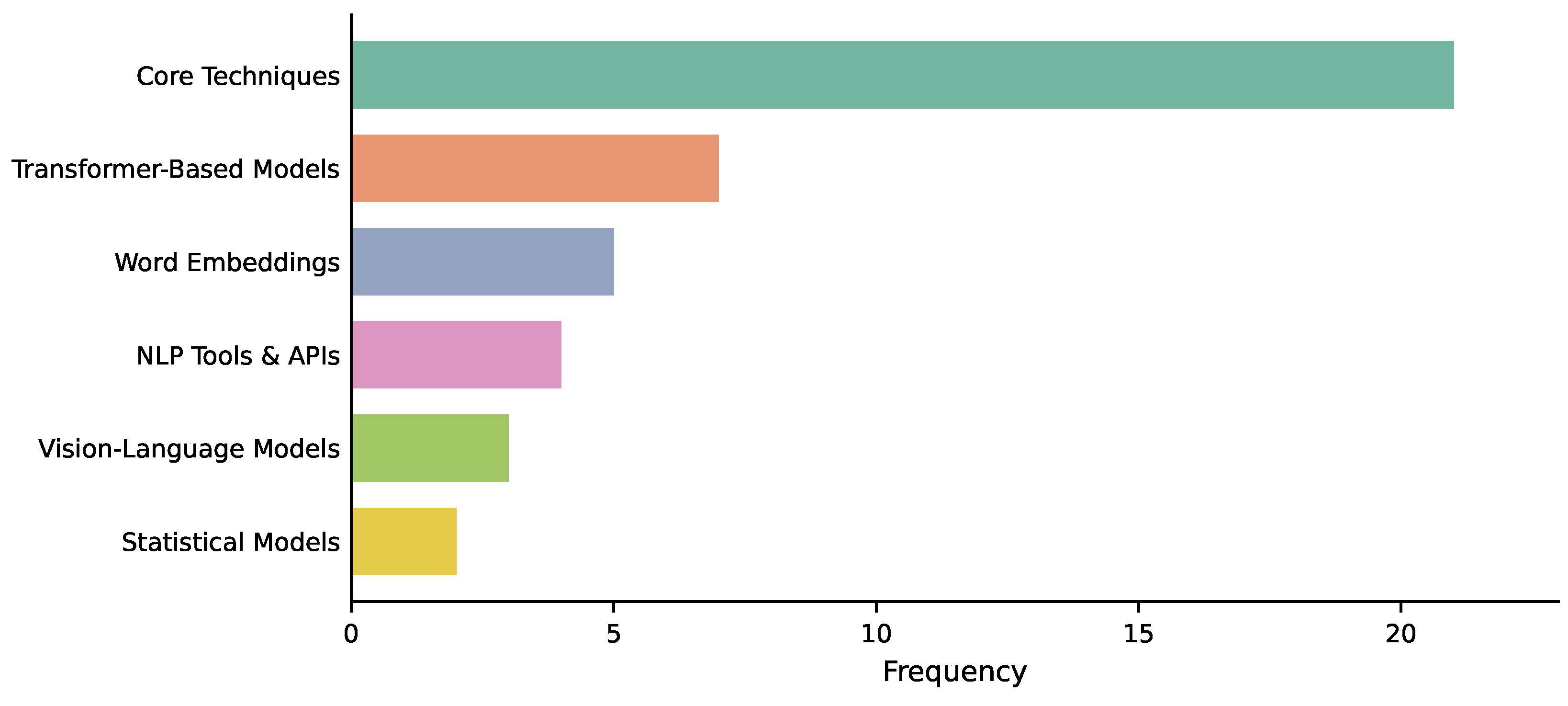
Figure 9 shows the frequency distribution of NLP and language-related AI techniques employed in the reviewed studies. The figure highlights the adoption of several approaches, including Core NLP Techniques, Transformer-Based Models, Word Embeddings, NLP Tools and APIs, Vision-Language Models, and Statistical Models. Among these methods, Core Techniques and Transformer-Based Models are the most frequently utilized, indicating the growing importance of advanced language understanding and multimodal learning approaches in the analyzed literature.
Core NLP techniques such as Term Frequency–Inverse Document Frequency (TF-IDF), Part-of-Speech (POS) tagging, Named Entity Recognition (NER), and syntactic parsing are commonly applied in construction document analysis. These methods are used for clause extraction, tender document classification, and automated report generation. Rule-based approaches and pattern matching remain prevalent in tasks involving technical specifications, compliance checks, and regulatory parsing [
4].
Modern transformer-based models, such as BERT outperform traditional RNN-based architectures in tasks involving long-sequence data. Their attention-based mechanisms allow nuanced understanding of domain-specific language and improve generalizability across document types [
139].
Word embeddings convert unstructured text into dense vector representations, allowing semantic comparison, clustering, and classification of construction documents. These models are especially effective for analyzing textual records such as incident reports, risk assessments, and project communications [
4].
In practical implementation, NLP Application Programming Interfaces (APIs) and frameworks such as Amazon Lex, Transcribe, and LangChain enable voice-activated controls, chatbot-based interfaces, and multimodal input integration within CM platforms. These tools accelerate the deployment of natural language interfaces for field operations, document retrieval, and stakeholder interaction [
147].
By bridging the gap between unstructured textual data and structured decision systems, NLP plays an essential role in automating construction communication workflows. Despite recent advances, current NLP applications in CM struggle to interpret legal and technical language accurately, particularly in heterogeneous contract formats and multilingual project environments [
112,
139].
3.5. Optimization Algorithms
Optimization algorithms play a crucial role in AI-CM by identifying optimal or near-optimal solutions in areas such as scheduling, resource allocation, site layout planning, and sustainability trade-offs. These methods are often integrated with ML, simulation, or control systems to enhance performance under complex, multi-constraint environments [
4,
15].
Table 5 summarizes the distribution of major AI techniques applied in CM, along with their frequency of occurrence in the reviewed literature. Optimization algorithms represent the most frequently used AI techniques in CM research, with 39 studies identified in the reviewed literature.
Among these, evolutionary and swarm intelligence algorithms are the most widely applied. Genetic Algorithms (GA) are used for balancing time, cost, and quality in scheduling, structural design, and emission-constrained planning [
152]. Swarm-based approaches offer decentralized and flexible optimization for complex project scenarios, such as urban development and site layout planning [
188]. Metaheuristics are also prevalent in tasks involving nonlinear and discontinuous objective functions, including pavement maintenance and materials optimization [
188].
Path planning and navigation algorithms are applied in robotics and automation contexts. These models enable equipment routing, obstacle avoidance, and dynamic task allocation for construction robots and automated site inspection. Tools such as the Robot Operating System (ROS) Navigation Stack and MoveIt framework are also commonly used for real-time robotic planning and execution [
130].
Traditional optimization methods continue to be used for parameter tuning, layout selection, and design configuration under constrained conditions. Hybrid techniques combining brute-force enumeration with heuristics or simulation platforms are often adopted in early design stages or when solution spaces are relatively small [
157].
Federated optimization techniques have emerged in response to data privacy concerns in collaborative, multi-party project settings. Techniques such as Federated Averaging (FedAvg) and attention-based aggregation allow distributed agents to optimize shared objectives without centralizing data, making them suitable for cross-organization scheduling, procurement, and performance modeling [
15,
40,
45].
Finally, geometric optimization techniques are used for spatial alignment, registration, and model calibration in 3D reconstruction and digital twin workflows. These techniques enhance spatial accuracy and interoperability between physical site data and digital representations [
81,
132].
Optimization algorithms shift construction decision-making from heuristic or rule-based approaches toward systematic, data-driven strategies. However, the practical utility of optimization algorithms varies considerably across projects; for instance, heuristic planners may excel in early design stages but lack the responsiveness needed for real-time execution [
4].
3.6. Graph-Based, Knowledge-Based, and Rule-Based Systems
Graph-based, knowledge-based, and rule-based systems offer structured frameworks for reasoning and inference in CM, especially in scenarios where expert knowledge, logical relationships, or semantic structures are critical. These symbolic AI methods are applied in resource dependency analysis, contractual logic modeling, safety evaluation, and semantic data integration [
119,
141,
143]. As shown in
Table 5, symbolic AI techniques such as graph based, knowledge based, and rule based systems represent a significant portion of AI applications in CM, with 36 studies identified in the reviewed literature.
Among these techniques, Rule-based systems provide interpretable frameworks for modeling decision logic in CM. These are often used in safety assessments, performance grading, and stakeholder evaluation, especially when expert judgment or qualitative thresholds are required. Fuzzy Inference Systems (FIS) are particularly effective in modeling ambiguity, where deterministic rules fall short [
4].
Knowledge-based models enable systems to represent and reason over construction concepts like materials, activities, and roles. Through tools like Resource Description Framework (RDF) and SPARQL, these models facilitate intelligent querying, semantic integration, and improved interoperability across fragmented project data sources. Applications include contract clause modeling, compliance checking, and cross-platform decision support [
177].
Graph-based techniques are increasingly used for learning on structured relational data. In CM, these models support classification, prediction, and clustering over task networks, spatial BIM graphs, and supply chains. Node2Vec embeddings are often used to map large construction graphs for downstream learning tasks [
94].
While symbolic approaches offer interpretability, integrating them with data-driven systems remains a challenge due to mismatched data structures and ontological inconsistencies [
4].
3.7. Reinforcement Learning and Generative AI (Gen-AI)
RL and Gen-AI techniques are emerging as influential tools in CM, particularly in adaptive scheduling, data simulation, and autonomous decision-making. These approaches enable machines to either learn through interaction or synthesize realistic data when training resources are limited [
15]. As summarized in
Table 5, RL and Gen-AI techniques represent a growing area of research in CM, with 28 studies identified in the reviewed literature.
Large Language Models (LLMs) such as Generative Pre-trained Transformer 4 (GPT-4), Large Language Model Meta AI (LLaMA), and MiniGPT-4 are increasingly applied in CM for document generation, instruction interpretation, semantic extraction, and multimodal task automation. These models support knowledge retrieval, voice-assisted inspection tools, and interaction with project data via natural language. Their integration with construction-specific datasets enables more context-aware reasoning and user-aligned outputs [
144,
149,
166,
184].
RL algorithms are used for adaptive control under dynamic and uncertain conditions. In CM, RL supports robotic path planning, equipment routing, scheduling, and real-time task allocation, particularly in autonomous or semi-autonomous systems [
4,
71].
Retrieval-Augmented Generation (RAG) combines LLMs with external knowledge bases to enhance contextual understanding. RAG techniques have shown promise in CM applications such as technical document summarization, intelligent querying of BIM-linked repositories, and verbal risk explanation, especially where standard LLMs lack domain-specific context [
112,
144,
149].
Generative Adversarial Networks (GANs) and autoencoders are used to generate synthetic visual data, helping train AI models when annotated construction imagery is unavailable. These methods are widely applied in defect simulation, safety detection, and rare event augmentation workflows [
64].
Style transfer models are employed for image-to-image translation between synthetic and real-world conditions. This enhances the realism of training data for vision systems, improves domain adaptation, and supports digital twin calibration [
64,
70].
Diffusion models, though still growing in construction AI, have gained attention for their ability to synthesize high-resolution images with fine-grained control. These models are particularly useful in generating synthetic datasets for defect detection and visual inspection under varied conditions [
2].
RL and Gen-AI techniques contribute to task-specific automation in construction by supporting applications such as adaptive scheduling, data simulation, and semantic interpretation. Their integration into planning and sensing workflows enhances responsiveness in selected CM use cases, although practical deployment remains limited and context-dependent [
4].
Although transformer-based models and Gen-AI demonstrate considerable potential for advancing CM applications, their adoption in real-world construction practice remains limited. Most current studies focus on experimental research settings or proof-of-concept evaluations, while only a small number of applications have progressed to pilot implementation or broader industry deployment. Furthermore, challenges related to computational requirements, data availability, interoperability, implementation cost, and organizational readiness continue to restrict large-scale adoption. Therefore, while these technologies represent promising directions for future research and innovation, their readiness for mainstream implementation in CM should be interpreted cautiously.
3.8. Explainable AI (XAI)
XAI addresses a key limitation of many high-performing AI models, their lack of transparency. In CM, where decisions must be justified for safety, cost accountability, and regulatory compliance, XAI techniques help clarify how and why AI systems produce certain outputs [
106,
107]. As summarized in
Table 5, XAI research in CM remains relatively limited compared to other AI techniques, with only 13 studies identified in the reviewed literature.
Model-agnostic techniques such as SHapley Additive exPlanations (SHAP) and Local Interpretable Model-Agnostic Explanations (LIME) are widely used in CM to evaluate the influence of input features, such as cost drivers or delay factors, on model outputs like risk scores or budget forecasts. These tools allow stakeholders to interpret complex models without needing access to internal model parameters [
106].
Beyond tabular data, feature attribution techniques are applied in vision and language models. These highlight which image regions or input tokens contributed most to a classification, improving defect detection and contract analysis workflows [
62]. Transformer-based models use attention mechanisms to visualize which elements of a sequence are prioritized during inference. In CM, this supports applications such as clause interpretation, verbal command parsing, and integrated document analysis [
62].
XAI also enhances human–AI collaboration when integrated into immersive environments. For example, Virtual Reality (VR)-based safety training tools augmented with explainability overlays enable construction personnel to observe the logic behind AI-driven hazard detection or path planning in real time [
176]. The integration of XAI tools in CM is still limited, with most applications focusing on tabular data. Broader adoption will require expanding explainability techniques to include vision-based and multimodal systems [
4].
AI is an overarching field that encompasses a wide range of computational techniques aimed at enabling machines to perform tasks that typically require human intelligence. Within this broad domain, ML represents a subset of AI that focuses on data-driven learning and predictive modeling. DL is a specialized branch of ML that utilizes multi-layer neural networks to learn hierarchical representations from large datasets. Neural Networks (NNs) serve as the foundational architecture for DL models, including CNNs and RNNs. Transformer models are a more recent class of DL architecture that leverage attention mechanisms to model long-range dependencies in sequential and multimodal data. Gen-AI refers to models capable of generating new content, such as text, images, or simulations, including approaches like GANs and LLMs. In contrast, XAI focuses on improving the transparency and interpretability of AI systems, enabling users to understand and trust model outputs.
To ensure conceptual clarity, the taxonomy in this study is organized hierarchically. AI is defined as the overarching domain, with ML as a primary subset and DL as a specialized branch based on neural network architectures. Within DL, model classes such as CNNs, RNNs, and transformer-based models are distinguished according to their functional characteristics. Gen-AI is positioned as a content-generation paradigm typically built upon DL architectures, while XAI is treated as a cross-cutting framework applicable across different AI techniques. This structure establishes clear conceptual boundaries and supports a systematic understanding of AI applications in CM.
The deployment of AI models in CM is closely tied to the availability of computational resources. DL and CV models, particularly CNNs and transformer-based architectures, typically require high-performance GPUs and substantial memory capacity for training on large-scale image or multimodal datasets. In contrast, traditional ML models (e.g., RF, SVMs) can be trained on standard CPUs with relatively lower computational cost, making them more accessible for organizations with limited resources. NLP models, especially transformer-based models such as BERT, also demand significant computational power during training but can be efficiently deployed using pre-trained models and cloud-based services. Additionally, the use of cloud computing platforms and edge devices is increasingly enabling scalable and cost-effective deployment of AI solutions in construction environments. Therefore, selecting an appropriate AI model should consider not only task requirements and data availability but also hardware constraints and operational costs.
4. Application Domains of AI-CM
AI has demonstrated a significant potential across various domains of CM, offering solutions to enduring challenges related to safety, cost, scheduling, quality, and resource optimization [
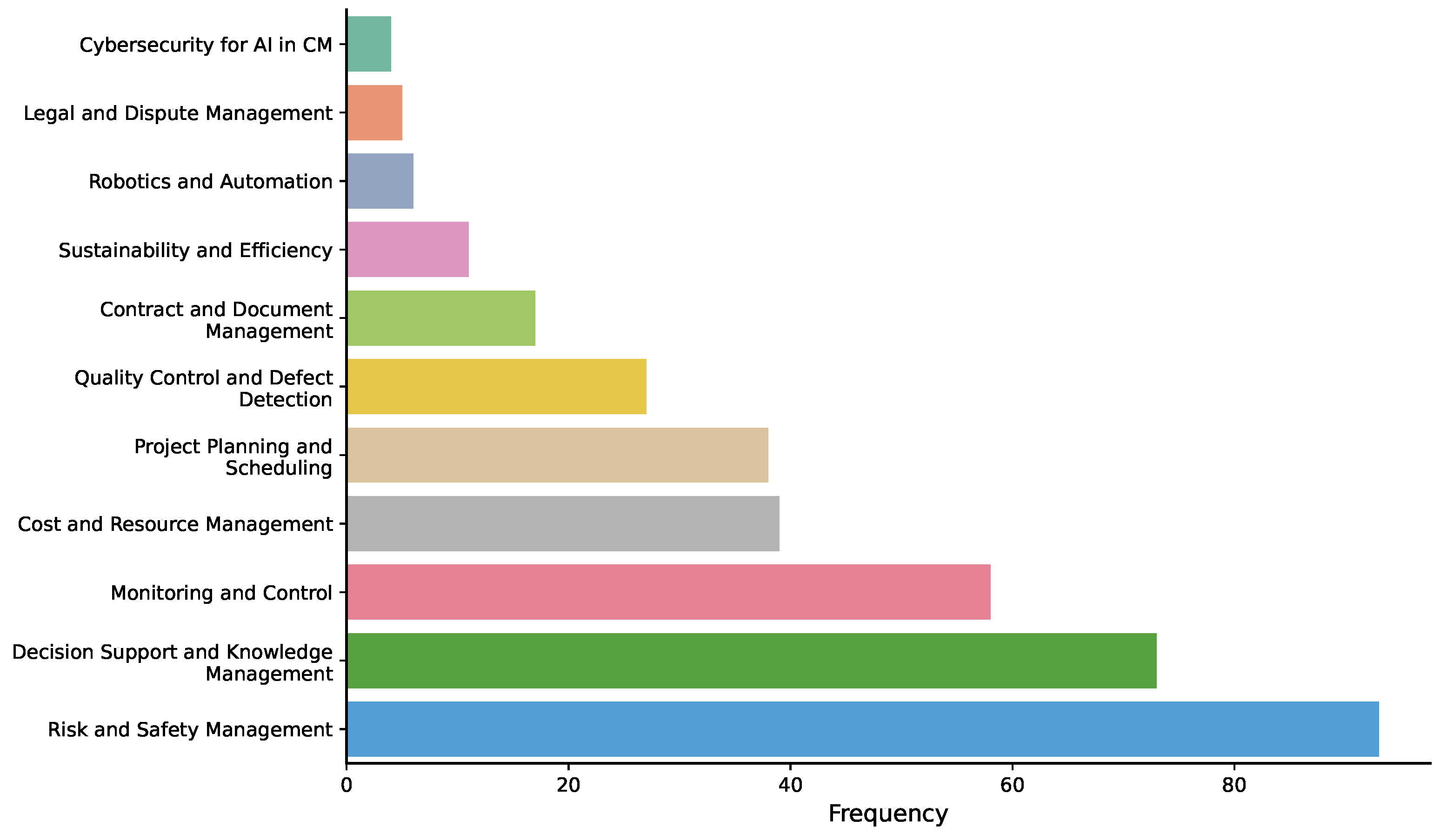
4]. As illustrated in
Figure 10, the most frequently addressed domains include risk and safety management, decision support and knowledge management, monitoring and control, cost and resource management, and project planning and scheduling. Emerging but less explored areas include sustainability analytics, robotics, legal and dispute management, and cybersecurity for AI-enabled systems.
To provide a structured synthesis,
Table 6 categorizes these domains based on application scope, frequency of occurrence in the reviewed literature, and associated studies. The following subsections present a domain-by-domain analysis of how AI techniques are operationalized across functional areas in CM.
To further improve practical understanding of AI implementation requirements in CM,
Table 7 summarizes representative data types, commonly used AI models, and general dataset scale trends reported across major AI application domains. The table highlights the relationship between data characteristics and the suitability of different AI techniques in construction environments.
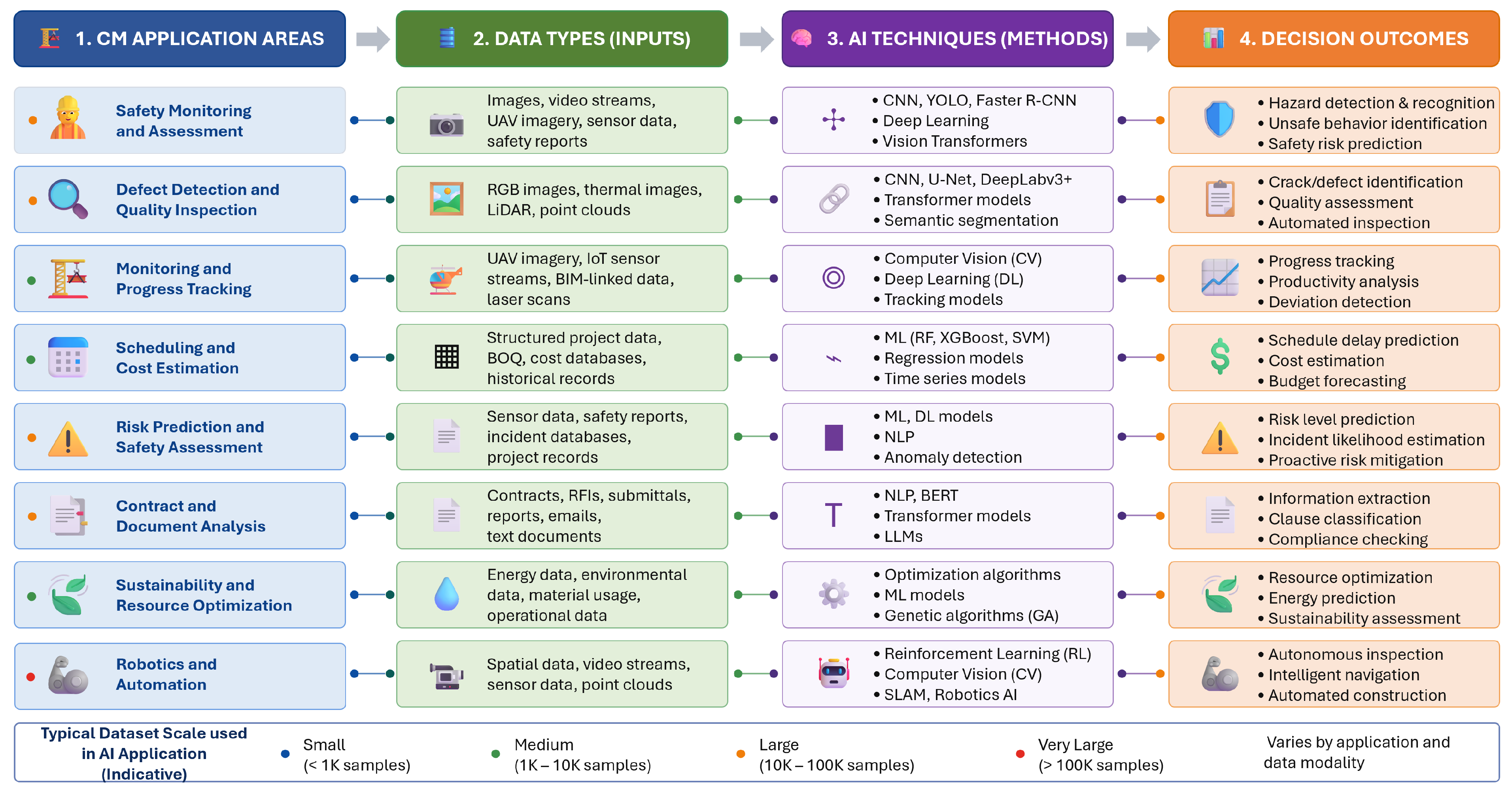
Figure 11 presents a structured synthesis taxonomy of AI applications in CM. The figure provides an integrated overview of the relationships among CM application domains, representative data modalities, commonly used AI techniques and models, decision-support outcomes, and indicative dataset scale trends. By visually linking these components within a single conceptual framework, the taxonomy highlights how different AI approaches are applied across construction functions and operational contexts. The figure complements
Table 7 by providing a concise synthesis of the reviewed literature and clarifying the role of AI methods in supporting data-driven decision-making, automation, monitoring, optimization, and risk management in CM.
4.1. Main Domains of AI Application in Construction
4.1.1. Risk and Safety Management
Risk and safety management is the most active application area of AI in construction. AI-driven models are used for real-time hazard detection, risk forecasting, and safety training [
6,
46,
107]. CV systems process images and video streams from UAVs and site surveillance to detect unsafe behavior, posture anomalies, and PPE compliance [
31,
126,
127]. RL and VR-based environments train workers in simulated risk scenarios [
4]. Predictive systems utilize historical safety data for proactive risk assessment [
66]. NLP techniques further support automated extraction of risk indicators from safety reports [
117,
129]. Overall, AI enhances construction safety by enabling real-time hazard detection, predictive risk assessment, and automated monitoring of workers, equipment, and site conditions [
191].
4.1.2. Decision Support and Knowledge Management
AI enhances construction decision-making through predictive modeling, clustering, and knowledge extraction tools [
94]. ML models are integrated into management platforms to assist with resource allocation, supplier evaluation, and design decision-making [
180]. NLP and ontology-based systems facilitate knowledge extraction from reports, documents, and site records [
112,
177]. FL is also being explored to enable multi-stakeholder knowledge collaboration while preserving data privacy [
45].
4.1.3. Monitoring and Control
Monitoring and control systems use CV and sensor data to track construction progress, worker movements, and equipment utilization [
18]. DL models are used for visual tracking of site activity [
52]. UAVs and IoT devices provide real-time spatial and operational data, which are then processed to detect deviations from planned sequences [
128]. Tools like Buildots and Doxel align site data with BIM models to support automated verification and delay detection [
150].
4.1.4. Cost and Resource Management
AI models are widely employed in cost estimation, budget control, and resource optimization [
61,
108]. Regression techniques, gradient boosting, and DL models process historical cost data, material quantities, and real-time field inputs for dynamic forecasting. NGBoost and GPR support uncertainty quantification in cost risk analysis [
57]. AI-based inventory management integrates CV with RFID and GPS for equipment tracking and usage prediction [
150].
4.1.5. Project Planning and Scheduling
Planning and scheduling systems increasingly rely on AI to simulate scenarios, predict delays, and re-sequence activities dynamically [
2,
55,
96]. Generative platforms such as ALICE Technologies optimize schedule logic based on constraints like labor availability and equipment flow Sequence-aware models are applied for time-series scheduling prediction [
4]. Hybrid neural networks have shown improved forecasting accuracy [
53,
102]. Integration with Last Planner System (LPS) data has also enhanced ML-based planning models [
96].
4.1.6. Quality Control and Defect Detection
CV and DL techniques are increasingly deployed for defect detection, surface anomaly classification, and dimensional verification [
46]. Models such as Faster R-CNN, U-Net, and DeepLabv3+ are used in tandem with UAVs and vehicle-mounted cameras for automated inspections [
16]. GANs and autoencoders support enhanced imaging under challenging field conditions. Deepomatic is one example of a commercial CV tool applied in façade inspection and quality assurance workflows [
125].
4.1.7. Contract and Document Management
NLP models enable AI-based extraction and analysis of contract clauses, specifications, and RFIs [
129,
139]. Transformer models like BERT and Text-To-Text Transfer Transformer (T5) assist with semantic parsing, clause summarization, and inconsistency detection [
4]. Chatbot interfaces and virtual assistants are being used to automate routine documentation tasks and enhance stakeholder communication efficiency [
8,
10].
4.1.8. Sustainability and Efficiency
AI supports sustainability initiatives in construction by monitoring environmental parameters and optimizing material and energy consumption. IoT-connected sensors collect real-time data on temperature, air quality, and noise levels, which are processed by ML models to assess compliance and environmental performance [
2,
6]. Optimization algorithms such as Non-dominated Sorting Genetic Algorithm II (NSGA-II) and GA help evaluate design and construction alternatives for cost, emissions, and energy performance [
11,
154].
4.1.9. Robotics and Automation
AI-enabled robotics perform repetitive and high-risk tasks on construction sites. Systems using ROS, Collaborative Robots (Cobots), and simulators like Gazebo are applied in welding, masonry, and inspection tasks [
130]. Autonomous Mobile Robots (AMRs), equipped with CV and Simultaneous Localization and Mapping (SLAM), enable autonomous navigation and payload delivery [
130]. RL is used to train robots to adapt their movements in unstructured environments [
43], and real-time safety-aware operation is facilitated by human-aware robotic control system [
49].
4.1.10. Legal and Dispute Management
AI applications in legal and dispute resolution are emerging, focusing on contract review, claims classification, and litigation risk analysis [
8,
97,
110]. NLP models can identify high-risk clauses and tag relevant legal precedents [
139]. Transformer-based models assist in summarizing dispute records and linking past rulings to current claims [
97]. Knowledge-based reasoning systems are being explored for automated contract auditing and argument generation [
8].
4.1.11. Cybersecurity for AI-CM
As AI systems become more integrated with cloud and IoT platforms, cybersecurity risks grow. Blockchain frameworks, such as Blockchain-Enabled Decentralized AI Workflow Platform (BC-DAWP), have been proposed to ensure secure, decentralized data sharing and model training [
22,
122]. FL approaches allow organizations to collaborate on AI development without exposing sensitive data [
40]. These tools support robust, privacy-preserving AI ecosystems that maintain compliance and data integrity in distributed construction environments.
The suitability of AI approaches in CM is related to the nature of the data and task requirements. DL and CV models are particularly effective for image-based tasks such as safety monitoring, defect detection, and progress tracking due to their strong spatial feature extraction capabilities. In contrast, ML models are more suitable for structured, tabular data applications, including cost estimation, scheduling, and risk prediction, where interpretability and lower computational requirements are important. NLP and transformer-based models are well-suited for text-intensive tasks such as contract analysis, document classification, and knowledge extraction, as they capture contextual and semantic relationships in textual data. Optimization algorithms are particularly effective for multi-objective problems such as resource allocation and project scheduling, while RL is advantageous in dynamic and sequential decision-making environments, such as robotic control and adaptive planning. This alignment between AI techniques and application domains provides a more practical basis for selecting appropriate models in CM.
4.2. Mapping AI Models to Applications in CM
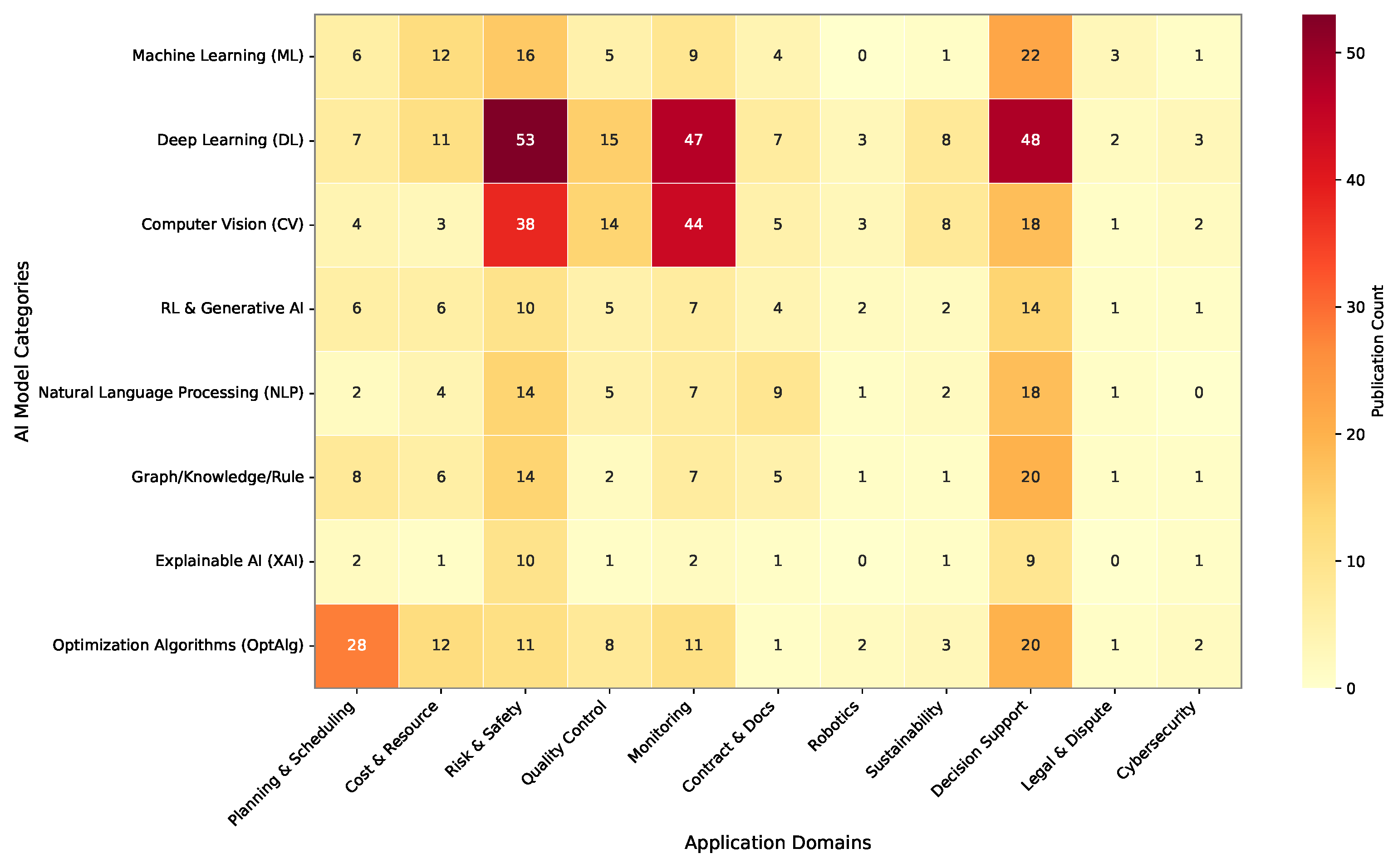
This section provides a systematic mapping of AI models to functional domains within CM, based on co-occurrence analysis of peer-reviewed literature. The goal is to identify dominant alignments between AI model categories and application areas, highlight emerging intersections, and inform future research priorities.
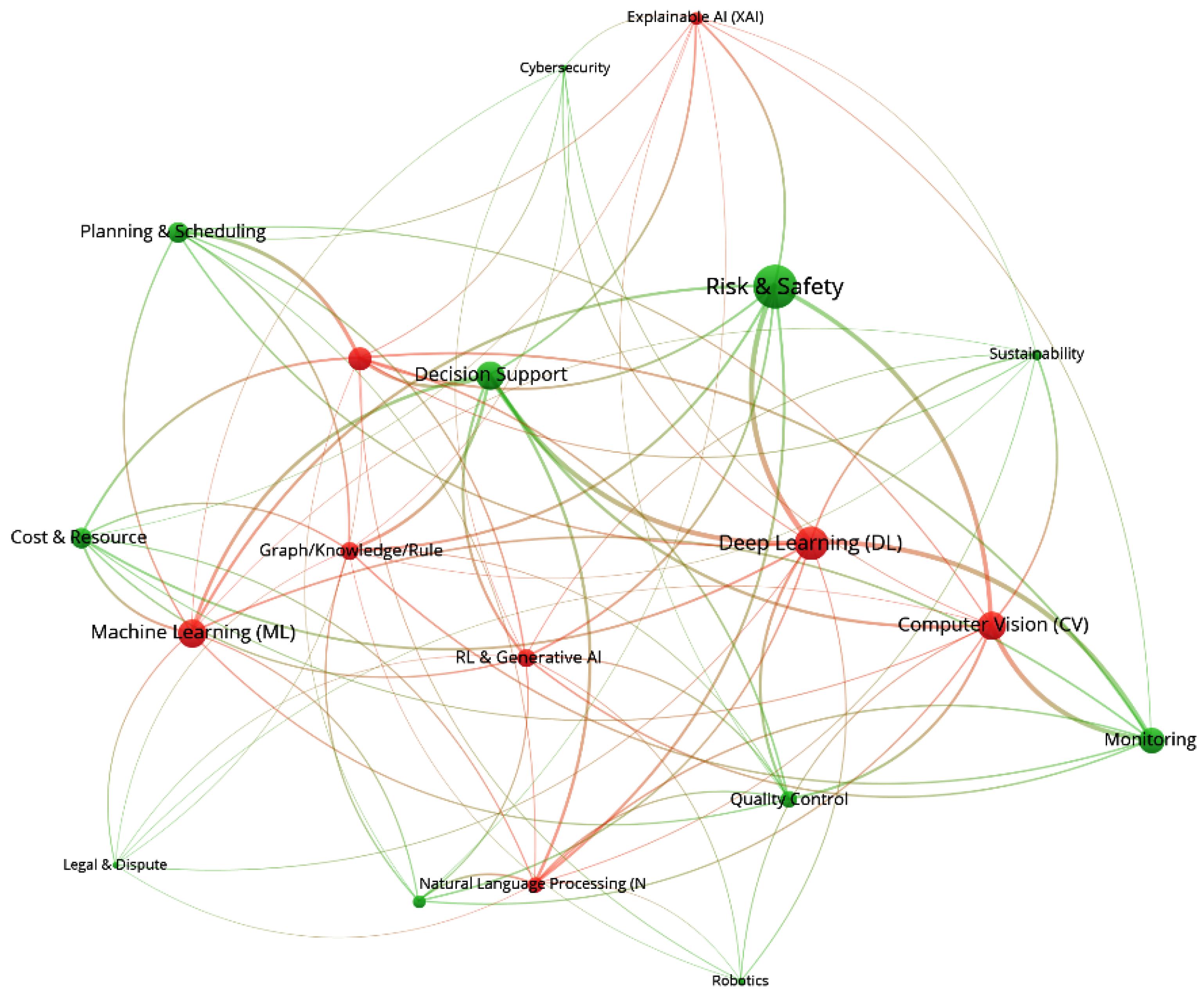
Figure 12 presents a heatmap showing the co-occurrence frequency between AI models and 12 core CM functions, offering a comparative overview of research intensity and domain alignment. Complementing this,
Figure 13 illustrates a force-directed network graph, in which green nodes represent CM application domains and red nodes represent AI model types. Node size reflects the number of related publications, and edge thickness indicates the strength of the model–application connection.
The analysis shows that DL and CV dominate tasks involving visual perception, such as safety monitoring and defect detection [
16,
83] ML is broadly applied across predictive and optimization functions, especially in planning, cost forecasting, and risk analysis [
57,
108]. Optimization algorithms are particularly effective for multi-objective planning and sustainability [
11,
154]. In contrast, techniques like NLP, graph-based reasoning, RL, and Gen-AI remain underutilized despite their potential in areas such as document analysis, simulation, and automation [
4,
94,
129]. XAI is increasingly important for enhancing transparency in high-risk applications [
62]. Notably, domains like legal analytics and cybersecurity are underexplored and present significant opportunities for future AI integration [
8,
45]. Advancing construction AI will require hybrid models, domain-specific adaptation, and interoperable frameworks to ensure scalable and intelligent deployment [
178].
While existing studies demonstrate the effectiveness of AI models in CM, several limitations must be acknowledged. Many AI approaches, particularly DL and CV models, are highly dependent on large, high-quality datasets, which are often scarce or inconsistent in construction environments. Additionally, model generalizability remains a challenge, as solutions developed for specific projects or datasets may not perform reliably across different contexts. Biases in data collection and annotation can further affect model accuracy and fairness. Furthermore, the ‘black-box’ nature of many advanced AI models limits interpretability, reducing trust and adoption among industry practitioners. Practical limitations also include high computational requirements, integration challenges with existing systems, and difficulties in real-world deployment under dynamic and uncertain site conditions.
Despite the growing adoption of AI in CM, several critical challenges remain. Implementation barriers include limited data availability, high computational requirements, and difficulties in integrating AI systems with existing construction workflows. Ethical concerns such as data privacy, transparency, and trust in AI-driven decision-making also pose significant challenges. Interoperability issues arise due to the lack of standardized frameworks for integrating AI with platforms such as BIM and IoT systems. Furthermore, organizational readiness, including workforce skill gaps and digital maturity, plays a crucial role in successful AI adoption. Industry-wide challenges such as high implementation costs, resistance to change, and lack of standardization further hinder large-scale deployment. Additionally, the reliability of AI outputs in real-world construction environments remains a concern due to data quality issues, environmental variability, and limited model generalizability.
Ethical and societal concerns also play a critical role in AI adoption. Issues such as data privacy, cybersecurity risks associated with cloud-based and IoT-enabled systems, algorithmic bias, and lack of transparency can affect trust in AI-driven decision-making. From an organizational perspective, workforce displacement, the need for reskilling, and varying levels of digital maturity influence the readiness of firms to adopt AI technologies. Legal accountability for AI-assisted decisions remains an emerging concern, particularly in safety-critical applications. Furthermore, high implementation costs, including infrastructure investment and system integration, may limit adoption, especially for small and medium-sized enterprises.
5. Discussion
Different AI models and methods have important implications for construction practice, trust, governance, and project management. ML models are widely applied in cost estimation, scheduling, and risk prediction because of their interpretability and adaptability to structured project data, supporting data-driven project management and resource planning. DL and CV models significantly improve real-time monitoring, safety inspection, and defect detection through automated analysis of images and video streams; however, their “black-box” nature can reduce stakeholder trust and create challenges in transparency and accountability. NLP and transformer-based models enhance contract analysis, document management, and communication workflows by automating information extraction and semantic interpretation, although concerns remain regarding legal reliability and contextual accuracy. XAI techniques play a critical role in improving trust, governance, and decision transparency by helping stakeholders understand how AI systems generate predictions and recommendations. In addition, optimization algorithms and RL models support adaptive scheduling, resource allocation, and autonomous decision-making, enabling more proactive and efficient project management. Nevertheless, the successful implementation of these technologies depends on organizational readiness, interoperability with BIM and IoT platforms, cybersecurity protection, regulatory compliance, and workforce acceptance in real-world construction environments.
To further clarify the originality and comparative contribution of this study,
Table 8 summarizes selected review studies related to AI in CM and highlights the distinctive contributions of the present work. Compared to previous reviews that primarily focus on isolated AI techniques or descriptive trend analysis, this study provides a comprehensive and hierarchical taxonomy integrating emerging AI paradigms, cross-domain AI–CM mapping, implementation challenges, and future research directions.
AI–CM Convergence, Divergence and Tensions
The integration of AI into CM demonstrates both strong areas of convergence and significant practical tensions. AI and CM converge in their shared objective of improving efficiency, safety, productivity, and decision-making across the project lifecycle. AI-driven approaches such as ML, DL, CV, and optimization algorithms support predictive analytics, automated monitoring, scheduling, cost forecasting, and risk management, enabling more proactive and data-driven construction operations. The integration of AI with BIM, IoT, digital twins, and robotics further enhances real-time project visibility and operational intelligence. These developments indicate a growing alignment between digital technologies and CM practices.
However, important divergences remain between AI capabilities and the realities of construction environments. Many AI models are developed and validated under controlled research conditions, whereas construction projects are highly dynamic, unstructured, and context-dependent. Construction data are often fragmented, inconsistent, and heterogeneous, limiting the scalability and generalizability of AI systems across projects and organizations. In addition, while AI systems emphasize automation and computational optimization, CM also depends heavily on human judgment, stakeholder coordination, contractual interpretation, and site-specific experience that are difficult to fully capture through algorithmic models.
Several tensions also emerge in the adoption of AI within CM. The increasing use of DL and transformer-based models introduces concerns related to transparency, explainability, and trust, particularly in safety-critical and legally sensitive applications. Interoperability challenges between AI systems and existing BIM or enterprise platforms further complicate implementation. Organizational resistance, workforce skill gaps, cybersecurity risks, implementation costs, and concerns regarding legal accountability and data governance also continue to hinder widespread adoption. These tensions highlight that successful AI integration in CM requires not only technological advancement but also organizational adaptation, regulatory support, and human-centered implementation strategies.
6. Conclusions
This study provides a comprehensive review of AI models and their applications within the context of CM. By categorizing AI methods across ML, DL, CV, RL, NLP, and knowledge-based systems, the paper presents a structured understanding of their current use and emerging potential. A key contribution of this work is the systematic mapping between AI techniques and CM application domains, which highlights the functional relevance and operational impact of various models. Despite promising advancements, there are persistent challenges around data quality, model interpretability, system interoperability, and industry readiness. These barriers emphasize the importance of developing scalable, explainable, and domain-adapted AI systems tailored to the complex dynamics of construction.
Looking ahead, the integration of AI with digital ecosystems, the evolution of AI-centric software tools, and the emergence of application-specific innovations represent promising avenues for future research and practice. The findings affirm that AI holds transformative potential when thoughtfully applied, shifting CM from reactive control to proactive, data-driven decision-making. Sustained progress will depend on interdisciplinary collaboration, standardization, and organizational commitment to digital transformation.
The successful integration of AI into CM workflows will depend on the construction industry’s ability to adapt organizationally and culturally. Efforts must prioritize user-centric design, cross-platform interoperability, and explainable outputs to gain trust across stakeholders, from field engineers to project executives. Moreover, aligning AI development with regulatory frameworks, data governance policies, and sustainability objectives will be essential for ensuring ethical and responsible adoption.
To facilitate the transition from traditional to AI-driven CM, a step-by-step implementation framework is proposed. First, organizations should assess their current digital maturity, data availability, and infrastructure readiness. Second, relevant use cases (e.g., safety monitoring, cost estimation, or scheduling) should be identified based on organizational priorities. Third, appropriate AI models should be selected according to data type and task requirements. Fourth, data collection, preprocessing, and integration with existing platforms such as BIM or IoT systems should be established. Fifth, pilot projects should be conducted to validate model performance and feasibility in real-world settings. Sixth, organizations should invest in workforce training and develop interdisciplinary teams to support AI adoption. Finally, scalable deployment should be implemented, supported by continuous monitoring, model updating, and integration into decision-making workflows.
The proposed framework is conceptual and analytical in nature and has not yet been empirically validated through live construction projects or industry-based case studies. Nevertheless, the framework is developed based on the synthesis of 191 peer-reviewed studies representing diverse CM applications, technologies, and implementation contexts. AI adoption in practice varies significantly depending on organizational scale, technological maturity, and regional economic conditions. Large construction firms generally possess greater financial resources, digital infrastructure, and technical expertise to support AI integration, whereas small and medium-sized enterprises often face barriers related to implementation cost, workforce training, and limited data availability. Similarly, developed economies tend to exhibit higher levels of AI adoption due to stronger digital ecosystems and regulatory support, while developing economies frequently encounter challenges associated with infrastructure limitations, fragmented datasets, and restricted access to advanced computational resources. In resource-constrained environments, lightweight AI models, cloud-based services, and scalable deployment strategies may provide more feasible pathways for adoption. These differences highlight the importance of context-aware AI implementation strategies and demonstrate that successful adoption depends on organizational readiness, infrastructure capacity, and economic conditions.
Although AI demonstrates considerable potential for improving efficiency, automation, and decision-making in CM, many technologies remain in the experimental or early-stage deployment phases, with limited large-scale validation in real-world construction environments. Widespread adoption continues to be constrained by challenges related to data quality, interoperability, implementation cost, workforce readiness, cybersecurity, and regulatory considerations. Therefore, the practical impact of AI should be interpreted cautiously and within the context of organizational and technological readiness. Future research should also explore longitudinal case studies and cross-disciplinary collaborations to validate AI applications in diverse project contexts. By bridging the gap between academic advances and industry constraints, the community can move beyond isolated pilots toward scalable, system-wide transformation. In doing so, AI in CM can evolve from a promising innovation to a foundational infrastructure within the broader ecosystem of digital construction.
Future research should also prioritize the development of hybrid and multimodal AI frameworks integrating BIM, IoT, digital twins, and Explainable AI (XAI) to improve interoperability, transparency, and real-time decision-making in CM. Additional attention is needed in underexplored areas such as legal analytics, cybersecurity, robotics, sustainability optimization, and the validation of Generative AI and transformer-based systems through large-scale industry case studies.
This study has several limitations that should be acknowledged. First, the review is limited to peer-reviewed articles published between 2020 and 2025, which may exclude relevant earlier or non-indexed studies. Second, the analysis relies on the availability and quality of reported data in the selected studies, which may introduce bias or inconsistencies. Third, the categorization of AI models and application domains, while systematic, may involve a degree of subjectivity. Finally, the review focuses on the academic literature and may not fully capture industry practices or proprietary implementations of AI in CM.