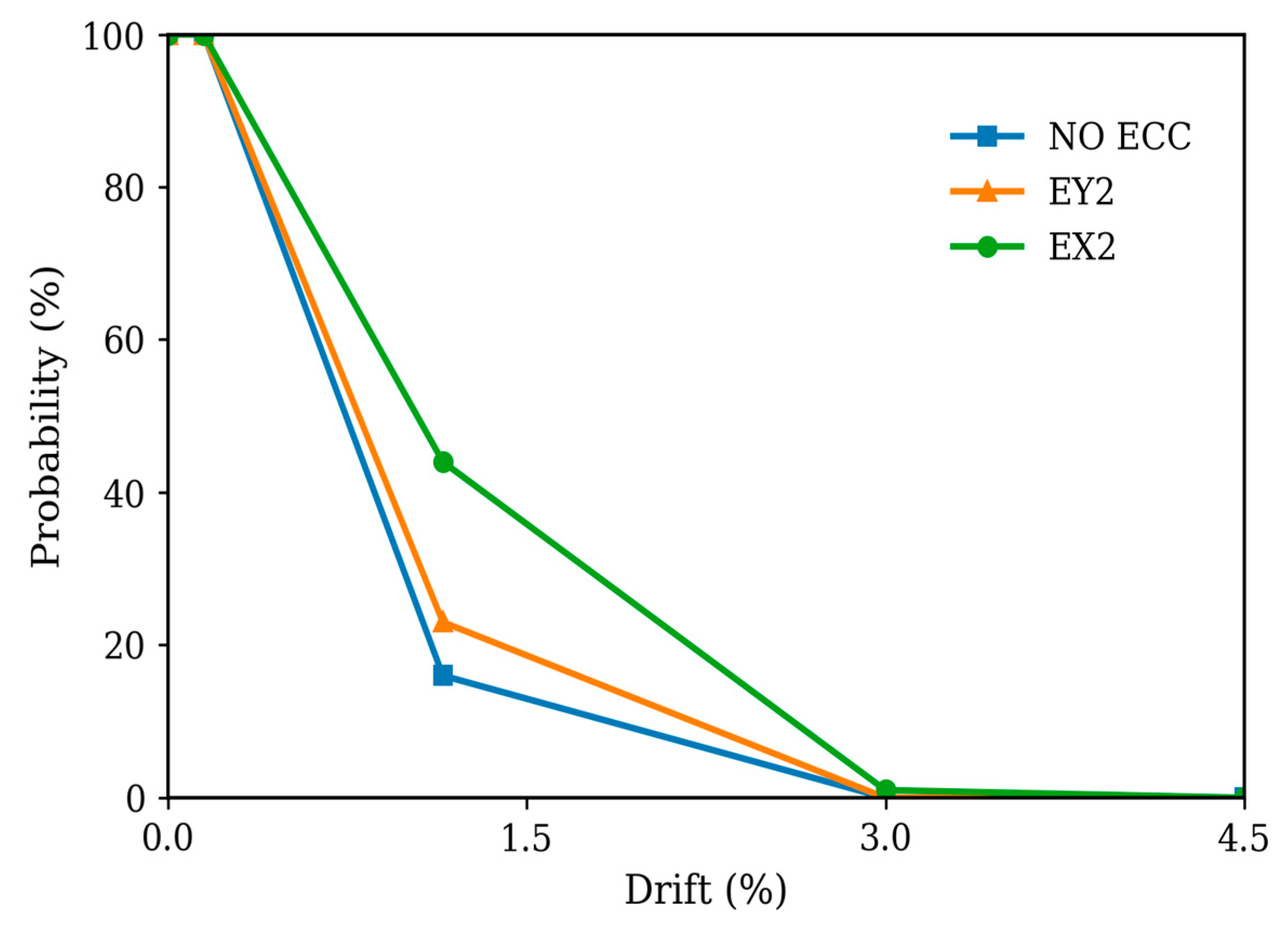
Fragility Analysis of RC Frames Accounting for In-Plan Irregularity Using Artificially Introduced Incremental Eccentricity


 ,
, 
Abstract
1. Introduction
2. Methodology
2.1. Characteristics of the Buildings and the Study Cases
2.2. Modelling Technique and Numerical Model Description
- (i)
- Global models: the nonlinear response of a structure is concentrated at a selected degree of freedom. Such models are useful in the preliminary design phase for estimating inter-storey drifts and displacement ductility demand.
- (ii)
- Discrete finite element model: the structure is modelled as an assembly of interconnected elements that describe the hysteretic behaviour of reinforced concrete members. It is worth noticing that two types of element formulation are possible for the discrete finite element approach: lumped plasticity and distributed plasticity.
- (iii)
- Eventually, the micro finite element models or detailed finite element models are the most accurate due to their ability to simulate real behaviour by discretising the element and joint into a large number of finite elements mostly using solid elements. However, a high computational cost of this approach is inevitable due to the large number of involved elements.
- (i)
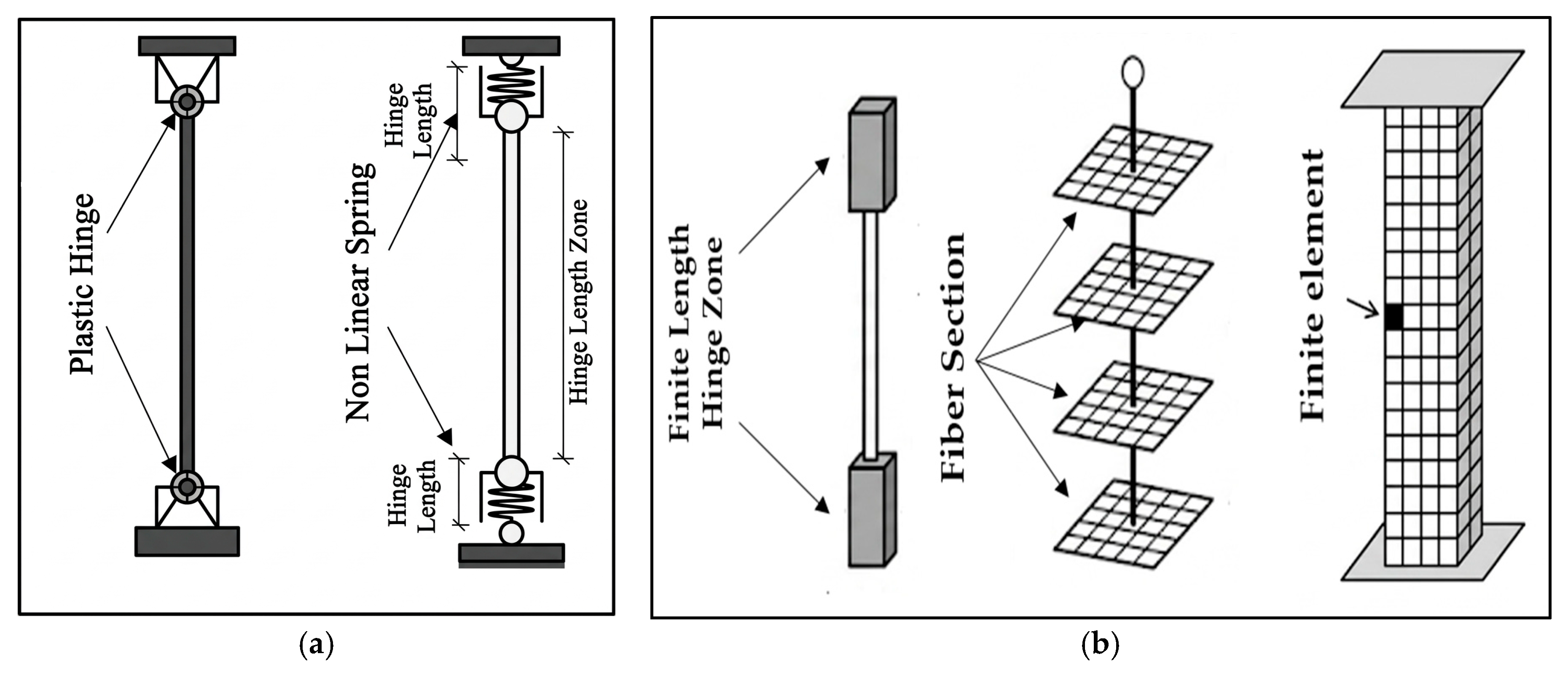
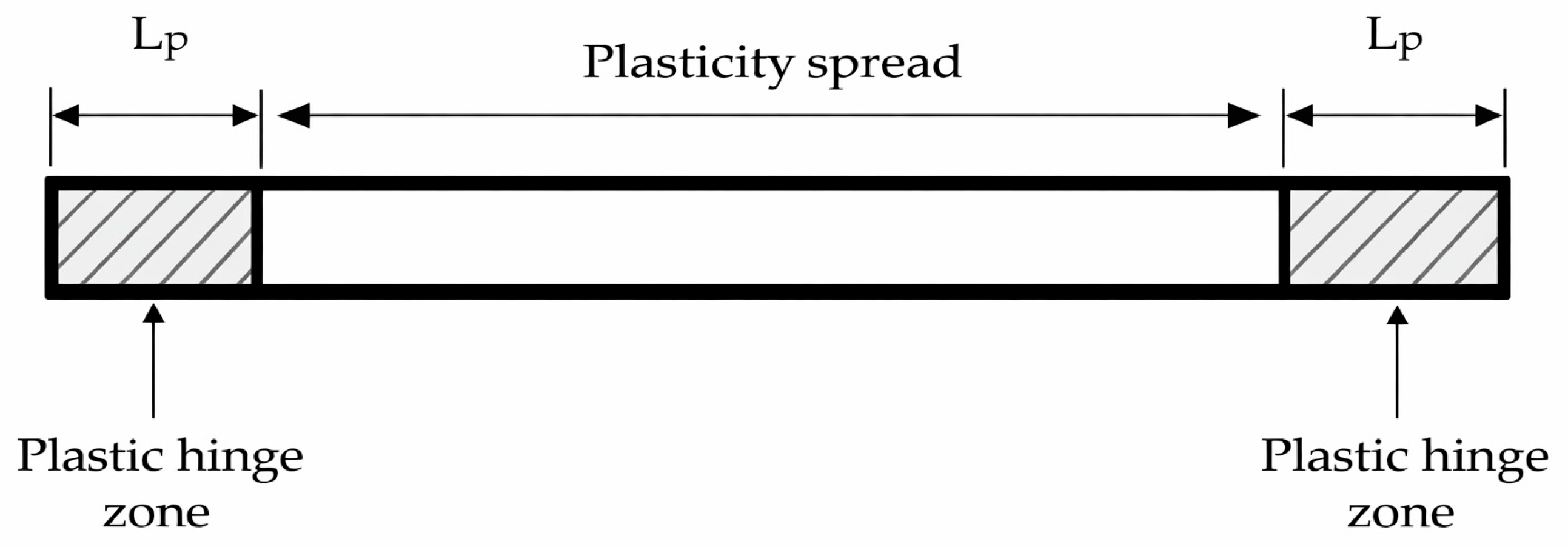
- Lumped plasticity element: this approach, as illustrated Figure 5, lumps the material nonlinearity at a specific length of the element known as the plastic hinge length [21,22,23,24,25]. This length can be established according to the section dimensions and element geometry [26]. This approach provides an effective method for modelling and controlling plastic hinge formation.
- (ii)
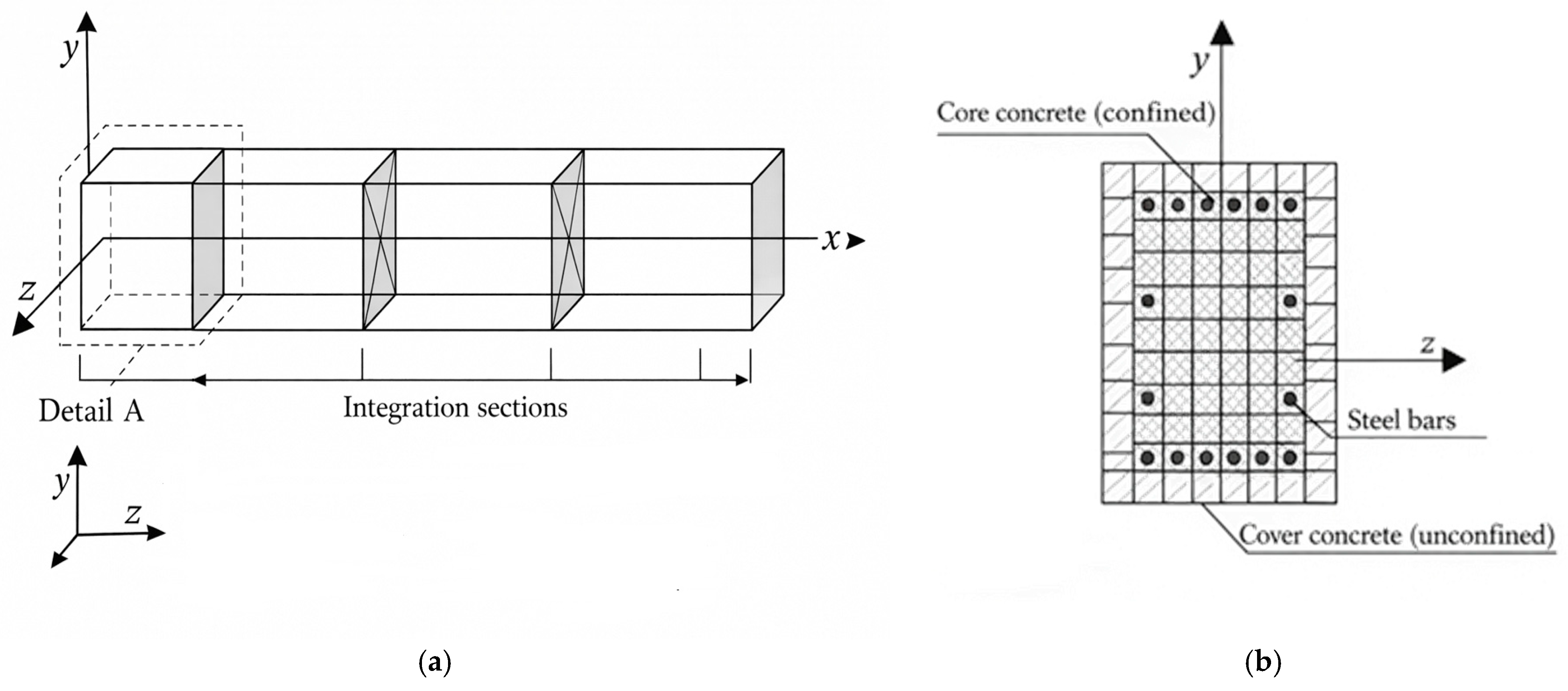
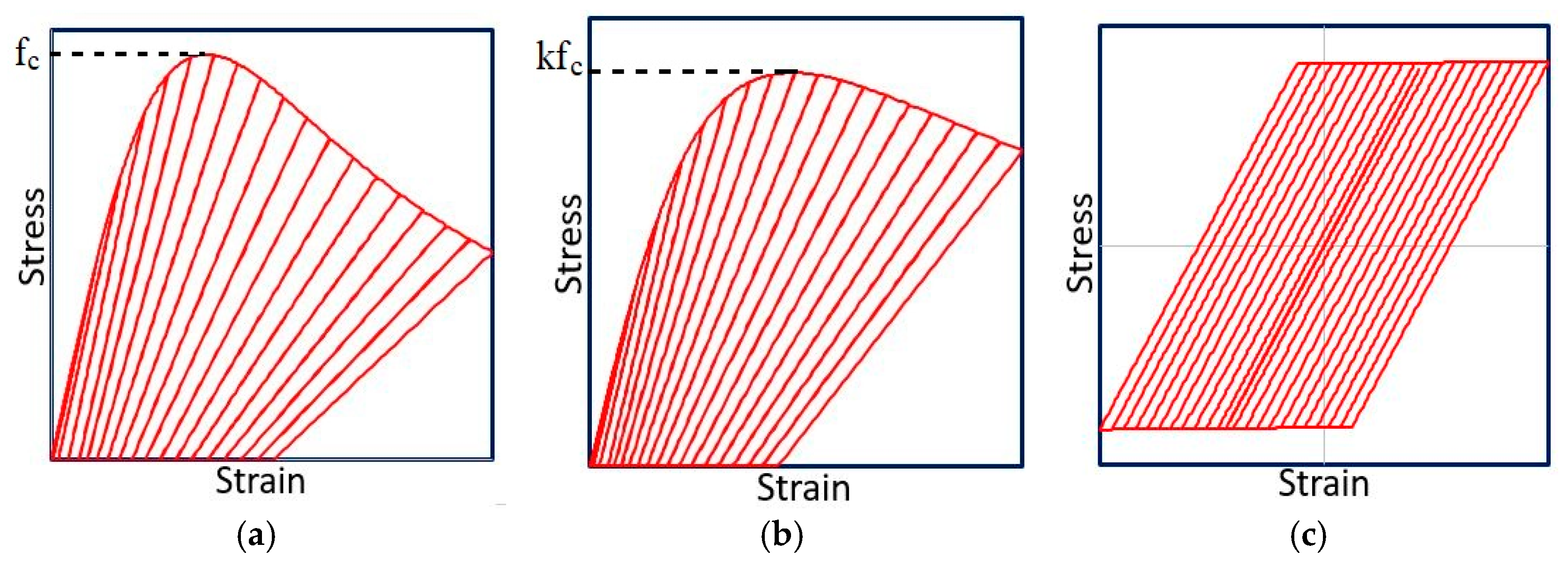
- Distributed plasticity element: this approach presupposes that plasticity is evenly spread along the entire length of the member as shown Figure 5. It should be noted that the fibre sections serve as the foundation for the majority of distributed plasticity models. Consequently, the distributed plasticity approach provides a more precise characterisation for the nonlinear performance of the reinforced concrete components. In this approach, the global nonlinear behaviour of the elements is produced by weighted integration of the section behaviour, and the material nonlinearity is evenly spread along the entire length of the element therefore it exists at any section of the element as illustrated in Figure 5. Practically, just the behaviour of the chosen section at the integration point is captured because the element integrals are obtained numerically. The behaviour of the cross-section can be estimated either by applying the plasticity theory and the resulting stress and strain or by separating the cross-section into fibres as shown in Figure 6. A distributed plasticity element is applied in this study despite it requiring more computational effort compared to the lumped one. The main feature of this modelling strategy is that it ignores the predefined length and allows each section to resist the inelasticity over the whole response range (linear and nonlinear).
3. Description of Analysis Procedure
3.1. Ground Motion Record Selection Procedures
3.2. Engineering Demand Parameters and Definition of Damage Limit States
3.2.1. Seismic Intensity Measures (IMs)
3.2.2. Development of Fragility Curve
3.2.3. Considered Buildings
4. Results of the IDAs
5. Fragility Curve Results
- (A)
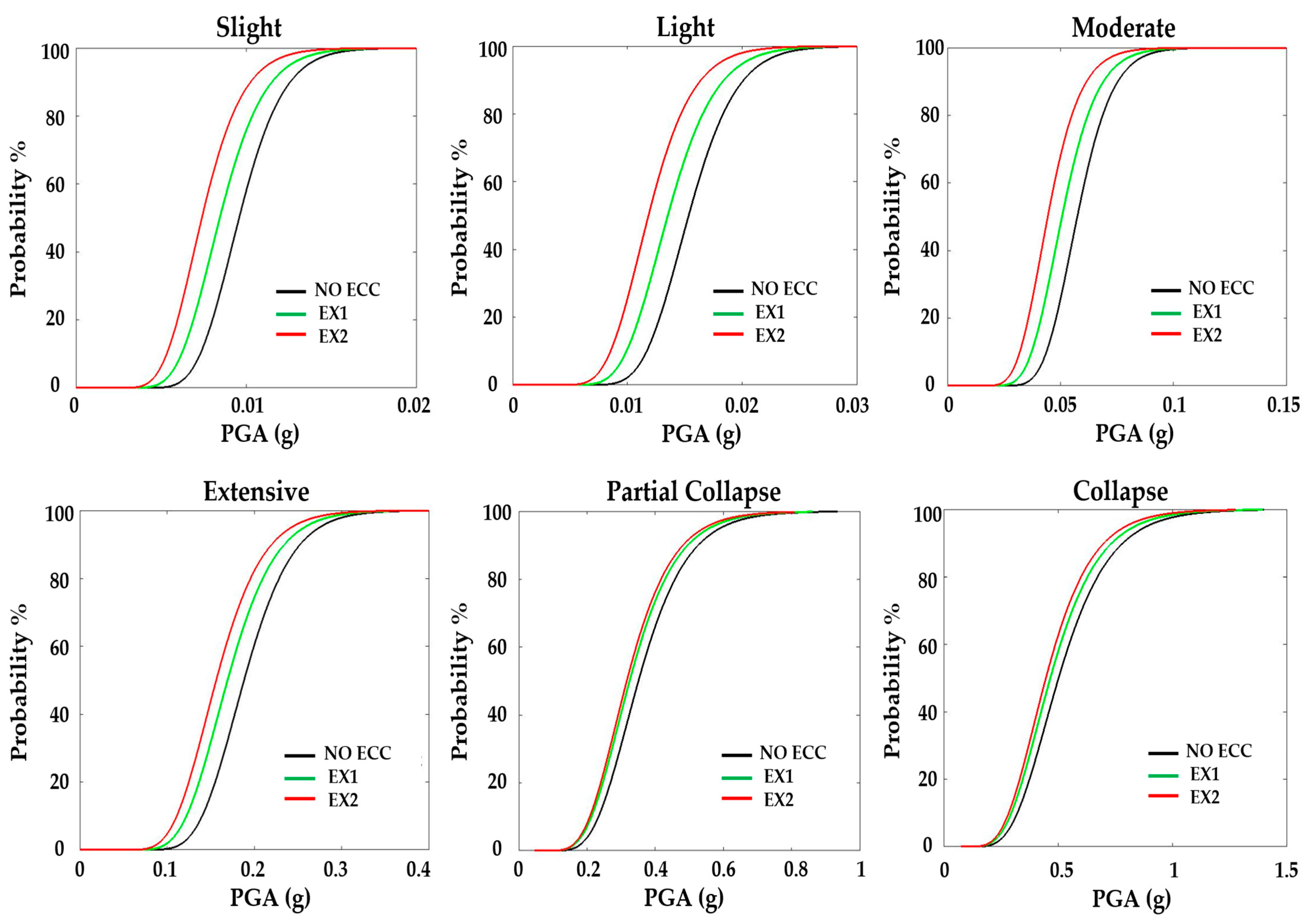
- Influence of eccentricity on the four-storey building in the X-direction
- (B)
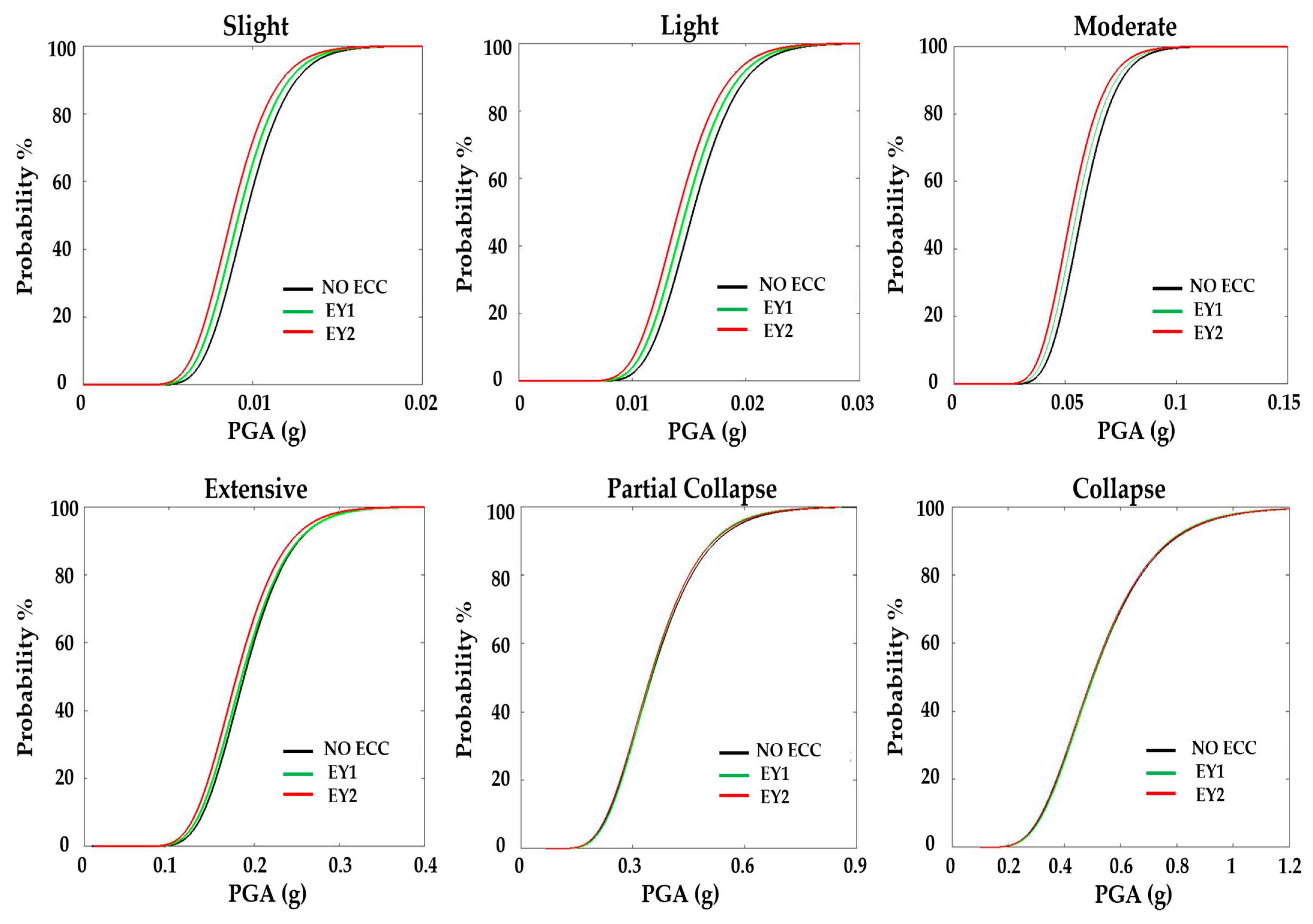
- Influence of eccentricity on the four-storey building in the Y-direction
- (C)
- Influence of eccentricity on the six-storey building in the X-direction
- (D)
- Influence of eccentricity on the six-story building in the Y-direction
- (E)
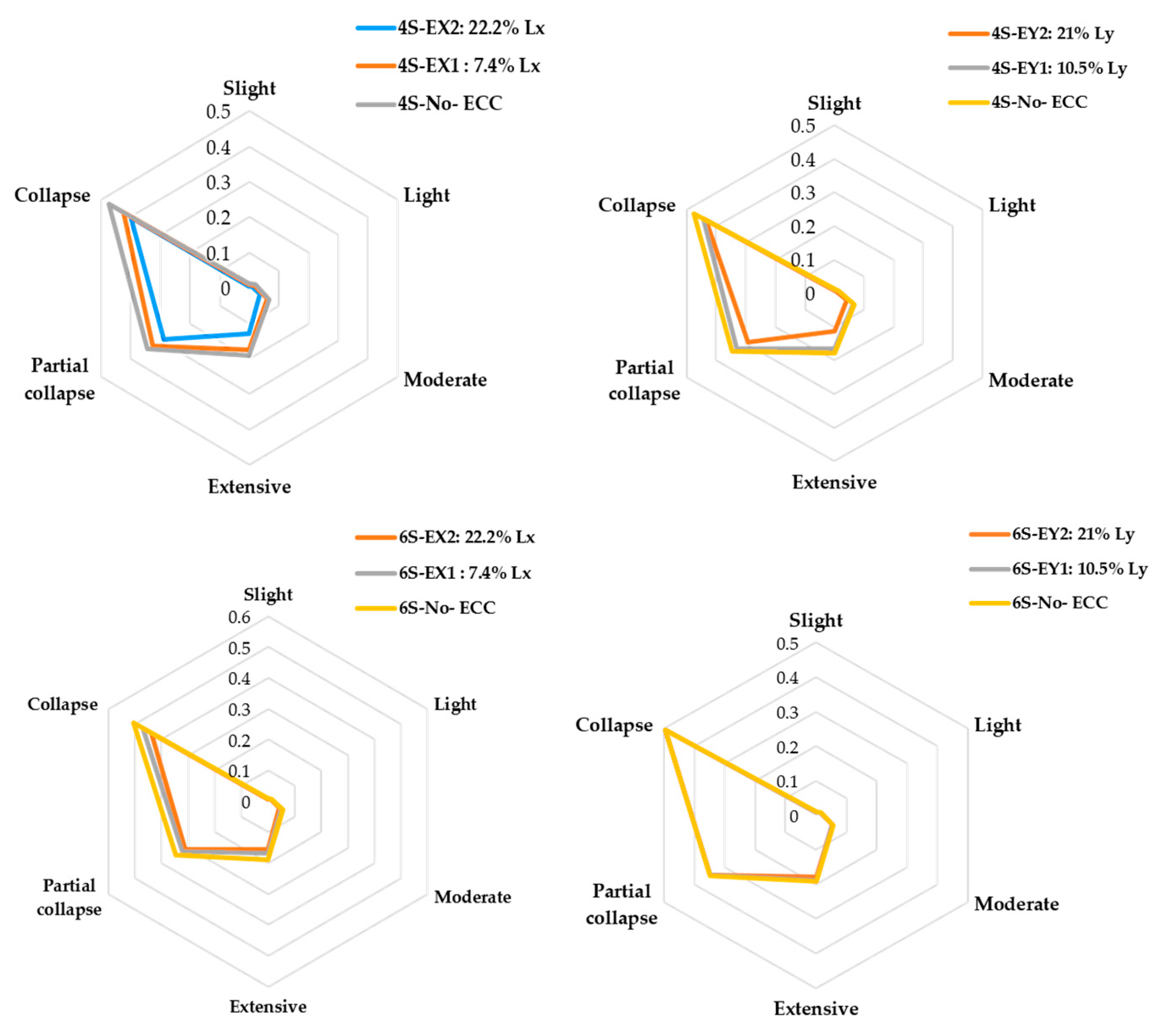
- Overall trends
6. Conclusions
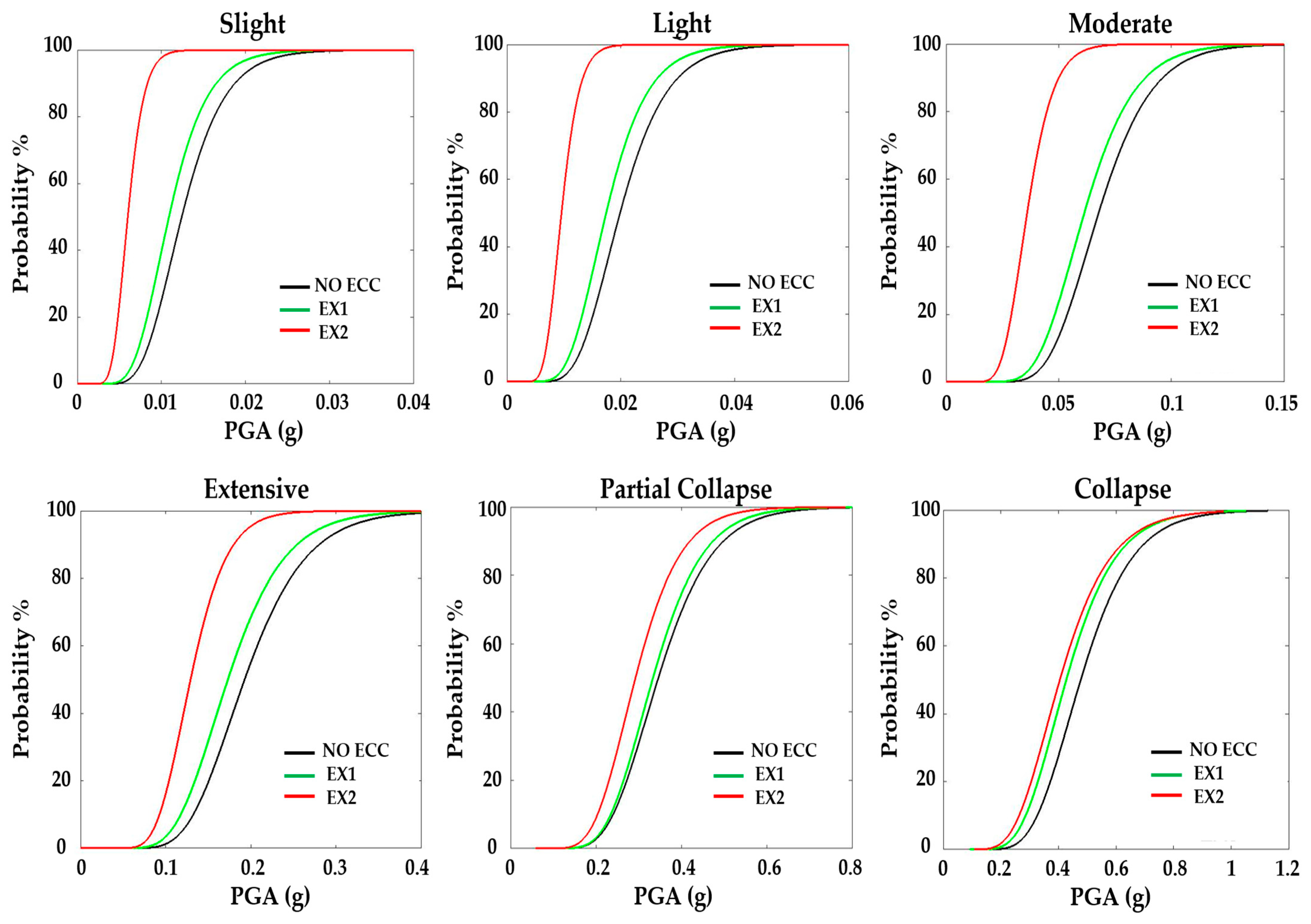
- The buildings with plan irregularities exhibit higher seismic vulnerability compared to their regular counterparts, as reflected by the reduction in the median PGA values across the considered damage states. This reduction becomes more pronounced with increasing eccentricity levels, particularly for cases EX2 and EY2. For instance, in the four-storey building subjected to loading in the X-direction, the reduction in median PGA reaches approximately 54% in the slight and light damage states, highlighting the significant influence of torsional response and the resulting nonuniform distribution of drift demands.
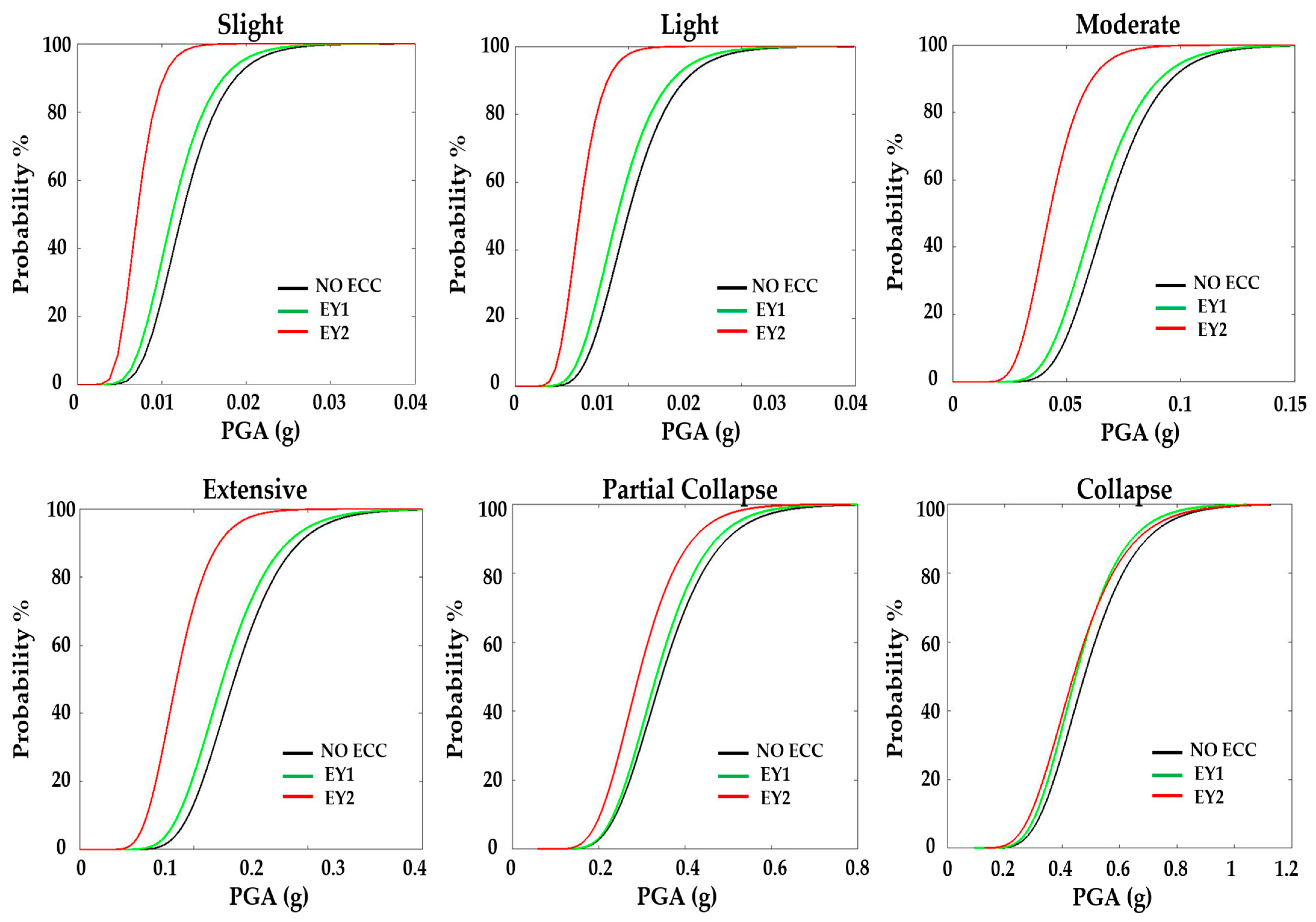
- Eccentricity has a limited influence on structural performance in the partial collapse and collapse damage states, where the median PGA values of different configurations become nearly identical. This convergence trend is observed across the considered structural cases, but it is more pronounced in the six-storey building, particularly in the Y-direction. This indicates that the relative influence of eccentricity becomes less significant as the structural response approaches collapse.
- The six-storey building generally demonstrates improved performance in the partial collapse and collapse damage states compared to the four-storey building, with higher or comparable median PGA values observed across the considered configurations. This behaviour can be associated with the increased global flexibility of higher structures.
- Increasing the eccentricity between the centre of mass (CM) and the centre of rigidity (CR) leads to increased seismic vulnerability of the buildings, as reflected by the reduction in median PGA values. Furthermore, eccentricity in the X-direction (lower stiffness direction) results in more pronounced reductions in seismic capacity compared to the Y-direction, highlighting the influence of directional stiffness on structural response.
- The results highlight the importance of accounting for plan irregularity and directional stiffness in seismic design, as neglecting these effects may lead to an underestimation of seismic demand, particularly in the weaker stiffness direction.
Author Contributions
Funding
Data Availability Statement
Conflicts of Interest
References
- Hussein, H.M.; Elenean Abou, K.M. Source parameters of the significant earthquakes in Egypt, 1992–1998 inferred from the P-waves magnitude spectra of teleseismic seismograms. Geofizika 2008, 25, 1–26. [Google Scholar]
- EC-201; Egyptian Code for Calculating Loads and Forces in Structural Work and Masonry. Housing and Building National Research Center, Ministry of Housing, Utilities and Urban Planning: Cairo, Egypt, 2012.
- Zembaty, Z.; De Stefano, M. Seismic Behaviour and Design of Irregular and Complex Civil Structures II; Springer: Berlin/Heidelberg, Germany, 2016. [Google Scholar]
- Lavan, O.; De Stefano, M. Seismic Behaviour and Design of Irregular and Complex Civil Structures; Springer: Berlin/Heidelberg, Germany, 2013; Volume 24. [Google Scholar]
- Bakalis, A.P.; Makarios, T.K. Dynamic eccentricities and the ‘capable near collapse centre of stiffness’ of reinforced concrete single-storey buildings in pushover analysis. Eng. Struct. 2018, 166, 62–78. [Google Scholar] [CrossRef]
- Bakalis, A.; Makarios, T.; Athanatopoulou, A. Inelastic dynamic eccentricities in pushover analysis procedure of multi-story RC buildings. Buildings 2021, 11, 195. [Google Scholar] [CrossRef]
- Kaushik, S.; Dasgupta, K. Seismic damage in shear wall-slab junction in RC buildings. Procedia Eng. 2016, 144, 1332–1339. [Google Scholar] [CrossRef]
- Sezen, H.; Whittaker, A.S.; Elwood, K.J.; Mosalam, K.M. Performance of reinforced concrete buildings during the August 17, 1999 Kocaeli, Turkey earthquake, and seismic design and construction practise in Turkey. Eng. Struct. 2003, 25, 103–114. [Google Scholar] [CrossRef]
- Mohamed, H.; Romão, X. Seismic fragility analysis of RC frames with masonry infills. In Proceedings of the 16th European Conference on Earthquake Engineering, Thessaloniki, Greece, 18–21 June 2018. [Google Scholar]
- Chopra, A.K.; Goel, R.K. Capacity-Demand-Diagram Methods for Estimating Seismic Deformation of Inelastic Structures: SDF Systems; Pacific Engineering Research Center: Berkeley, CA, USA, 1999. [Google Scholar]
- Tso, W.K.; Dempsey, K.M. Seismic torsional provisions for dynamic eccentricity. Earthq. Eng. Struct. Dyn. 1980, 8, 275–289. [Google Scholar] [CrossRef]
- Smith, J.; Coull, A.; Structures, T.B. Analysis & Design; Wiley and Sons: New York, NY, USA, 1991. [Google Scholar]
- Makarios, T.; Anastassiadis, K. Real and fictitious elastic axes of multi-storey buildings: Applications. Struct. Des. Tall Build. 1998, 7, 57–71. [Google Scholar] [CrossRef]
- Makarios, T.; Anastassiadis, K. Real and fictitious elastic axes of multi-storey buildings: Theory. Struct. Des. Tall Build. 1998, 7, 33–55. [Google Scholar] [CrossRef]
- Makarios, T.K. Optimum torsion axis to multistorey buildings by using the continuous model of the structure. Struct. Des. Tall Spec. Build. 2005, 14, 69–90. [Google Scholar] [CrossRef]
- Makarios, T.; Athanatopoulou, A.M.; Xenidis, H. Numerical verification of properties of the fictitious elastic axis in asymmetric multistorey buildings. Struct. Des. Tall Spec. Build. 2006, 15, 249–276. [Google Scholar] [CrossRef]
- Makarios, T. Practical calculation of the torsional stiffness radius of multistorey tall buildings. Struct. Des. Tall Spec. Build. 2008, 17, 39–65. [Google Scholar] [CrossRef]
- McKenna, F. Open System for Earthquake Engineering Simulation; University of California: Berkeley, CA, USA, 2000. [Google Scholar]
- EC-203; Egyptian Code for the Design and Construction of Concrete Structures. Housing and Building Research Center: Cairo, Egypt, 2017.
- Taucer, F.; Spacone, E.; Filippou, F.C. A Fiber Beam-Column Element for Seismic Response Analysis of Reinforced Concrete Structures; Earthquake Engineering Research Center, College of Engineering, University of California: Berkeley, CA, USA, 1991; Volume 91. [Google Scholar]
- Clough, R.W. Inelastic earthquake response of tall buildings. In Proceedings of the 3rd World Conference on Earthquake Engineering, Auckland and Wellington, New Zealand, 22 January–1 February 1965; pp. 68–89. [Google Scholar]
- Giberson, M.F. The Response of Nonlinear Multi-Story Structures Subjected to Earthquake Excitation. PhD Thesis, California Institute of Technology, Pasadena, CA, USA, 1967. [Google Scholar]
- Hilmy, S.I.; Abel, J.F. Material and geometric nonlinear dynamic analysis of steel frames using computer graphics. Comput. Struct. 1985, 21, 825–840. [Google Scholar] [CrossRef]
- Powell, G.H.; Chen, P.F.-S. 3D beam-column element with generalized plastic hinges. J. Eng. Mech. 1986, 112, 627–641. [Google Scholar] [CrossRef]
- Ziemian, R.D.; McGuire, W. Modified tangent modulus approach, a contribution to plastic hinge analysis. J. Struct. Eng. 2002, 128, 1301–1307. [Google Scholar] [CrossRef]
- Calabrese, A.; Almeida, J.P.; Pinho, R. Numerical issues in distributed inelasticity modeling of RC frame elements for seismic analysis. J. Earthq. Eng. 2010, 14, 38–68. [Google Scholar] [CrossRef]
- Messaoudi, A.; Chebili, R.; Mohamed, H.; Furtado, A.; Rodrigues, H. The in-plane seismic response of infilled reinforced concrete frames using a strut modelling approach: Validation and applications. Buildings 2024, 14, 1902. [Google Scholar] [CrossRef]
- Paulay, T.; Priestley, M.J.N. Seismic Design of Reinforced Concrete and Masonry Buildings; Wiley: New York, NY, USA, 1992; Volume 768. [Google Scholar]
- Popovics, S. A numerical approach to the complete stress-strain curve of concrete. Cem. Concr. Res. 1973, 3, 583–599. [Google Scholar] [CrossRef]
- Kent, D.C.; Park, R. Flexural members with confined concrete. J. Struct. Div. 1971, 97, 1969–1990. [Google Scholar] [CrossRef]
- Vamvatsikos, D.; Cornell, C.A. Incremental dynamic analysis. Earthq. Eng. Struct. Dyn. 2002, 31, 491–514. [Google Scholar] [CrossRef]
- Araújo, M.; Macedo, L.; Marques, M.; Castro, J.M. Code-based record selection methods for seismic performance assessment of buildings. Earthq. Eng. Struct. Dyn. 2016, 45, 129–148. [Google Scholar] [CrossRef]
- Ricci, P.; De Risi, M.T.; Verderame, G.M.; Manfredi, G. Procedures for calibration of linear models for damage limitation in design of masonry-infilled RC frames. Earthq. Eng. Struct. Dyn. 2016, 45, 1315–1335. [Google Scholar] [CrossRef]
- Building Seismic Safety Council. FEMA 273: NEHRP Guidelines for the Seismic Rehabilitation Of Buildings; Federal Emergency Management Agency (FEMA): Washington, DC, USA, 1997.
- Structural Engineers Association of California. Performance Based Seismic Engineering of Buildings, Volumes I and II. Sacramento; Structural Engineers Association of California: Sacramento, CA, USA, 1995. [Google Scholar]
- Rossetto, T.; Elnashai, A. Derivation of vulnerability functions for European-type RC structures based on observational data. Eng. Struct. 2003, 25, 1241–1263. [Google Scholar] [CrossRef]
- Ghobarah, A. On drift limits associated with different damage levels. In International Workshop on Performance-Based Seismic Design; Department of Civil Engineering, McMaster University: Hamilton, ON, Canada, 2004; pp. 321–332. [Google Scholar]
- Rossetto, T.; Elnashai, A. A new analytical procedure for the derivation of displacement-based vulnerability curves for populations of RC structures. Eng. Struct. 2005, 27, 397–409. [Google Scholar] [CrossRef]
- Aschheim, M.; Hernández-Montes, E.; Vamvatsikos, D. Design of Reinforced Concrete Buildings for Seismic Performance: Practical Deterministic and Probabilistic Approaches; CRC Press: Boca Raton, FL, USA, 2019. [Google Scholar]
- Grünthal, G. European Macroseismic Scale 1998 (EMS-98); European Seismological Commission (ESC): Luxembourg, 1998. [Google Scholar]
- Musson, R.M.W.; Grünthal, G.; Stucchi, M. The comparison of macroseismic intensity scales. J. Seismol. 2010, 14, 413–428. [Google Scholar] [CrossRef]
- Vamvatsikos, D.; Cornell, C.A. Developing efficient scalar and vector intensity measures for IDA capacity estimation by incorporating elastic spectral shape information. Earthq. Eng. Struct. Dyn. 2005, 34, 1573–1600. [Google Scholar] [CrossRef]
- Shafieezadeh, A.; Ramanathan, K.; Padgett, J.E.; DesRoches, R. Fractional order intensity measures for probabilistic seismic demand modeling applied to highway bridges. Earthq. Eng. Struct. Dyn. 2012, 41, 391–409. [Google Scholar] [CrossRef]
- Bianchini, M.; Diotallevi, P.; Baker, J.W. Prediction of inelastic structural response using an average of spectral accelerations. In Proceedings of the 10th International Conference on Structural Safety and Reliability (ICOSSAR09), Osaka, Japan, 13–17 September 2009; pp. 2164–2171. [Google Scholar]
- Cordova, P.P.; Deierlein, G.G.; Mehanny, S.S.F.; Cornell, C.A. Development of a two-parameter seismic intensity measure and probabilistic assessment procedure. In The Second US-Japan Workshop on Performance-Based Earthquake Engineering Methodology for Reinforced Concrete Building Structures; Pacific Earthquake Engineering Research Center, University of California: Berkeley, CA, USA, 2000. [Google Scholar]
- Eads, L.; Miranda, E.; Lignos, D.G. Average spectral acceleration as an intensity measure for collapse risk assessment. Earthq. Eng. Struct. Dyn. 2015, 44, 2057–2073. [Google Scholar] [CrossRef]
- Kohrangi, M.; Bazzurro, P.; Vamvatsikos, D. Vector and scalar IMs in structural response estimation, Part II: Building demand assessment. Earthq. Spectra 2016, 32, 1525–1543. [Google Scholar] [CrossRef]
- Baker, J.W.; Cornell, C.A. Vector-valued intensity measures incorporating spectral shape for prediction of structural response. J. Earthq. Eng. 2008, 12, 534–554. [Google Scholar] [CrossRef]
- Kohrangi, M.; Vamvatsikos, D.; Bazzurro, P. Implications of IM selection for seismic Loss Assessment of 3D Buildings. Earthq. Spectra 2016, 32, 2167–2189. [Google Scholar] [CrossRef]
- Hancilar, U.; Çaktı, E.; Erdik, M.; Franco, G.E.; Deodatis, G. Earthquake vulnerability of school buildings: Probabilistic structural fragility analyses. Soil Dyn. Earthq. Eng. 2014, 67, 169–178. [Google Scholar] [CrossRef]
- Lin, T.; Harmsen, S.C.; Baker, J.W.; Luco, N. Conditional spectrum computation incorporating multiple causal earthquakes and ground-motion prediction models. Bull. Seismol. Soc. Am. 2013, 103, 1103–1116. [Google Scholar] [CrossRef]
- Bakhshi, A.; Asadi, P. Probabilistic evaluation of seismic design parameters of RC frames based on fragility curves. Sci. Iran. 2013, 20, 231–241. [Google Scholar]
- Modica, A.; Stafford, P.J. Vector fragility surfaces for reinforced concrete frames in Europe. Bull. Earthq. Eng. 2014, 12, 1725–1753. [Google Scholar] [CrossRef]
- Villar-Vega, M.; Silva, V.; Crowley, H.; Yepes, C.; Tarque, N.; Acevedo, A.B.; Hube, M.A.; Gustavo, C.D.; María, H.S. Development of a fragility model for the residential building stock in South America. Earthq. Spectra 2017, 33, 581–604. [Google Scholar] [CrossRef]
- Haran Pragalath, D.C.; Davis, R.; Sarkar, P. Reliability evaluation of RC frame by two major fragility analysis methods. ASIAN J. Civ. Eng. 2015, 6, 47–66. [Google Scholar]
- Zentner, I.; Gündel, M.; Bonfils, N. Fragility analysis methods: Review of existing approaches and application. Nucl. Eng. Des. 2017, 323, 245–258. [Google Scholar] [CrossRef]
- Kennedy, R.P.; Ravindra, M.K. Seismic fragilities for nuclear power plant risk studies. Nucl. Eng. Des. 1984, 79, 47–68. [Google Scholar] [CrossRef]
- Calvi, G.M.; Pinho, R.; Magenes, G.; Bommer, J.J.; Restrepo-Vélez, L.F.; Crowley, H. Development of seismic vulnerability assessment methodologies over the past 30 years. ISET J. Earthq. Technol. 2006, 43, 75–104. [Google Scholar] [CrossRef]
- Porter, K.; Kennedy, R.; Bachman, R. Creating fragility functions for performance-based earthquake engineering. Earthq. Spectra 2007, 23, 471–489. [Google Scholar] [CrossRef]







| Description | Units | Practice Value |
|---|---|---|
| Self-weight of concrete | KN/m3 | 25.0 |
| Floor cover | KN/m2 | 1.50 |
| Masonry wall weight | KN/m3 | 18.0 |
| Live load | KN/m2 | 2.0–3.0 * |
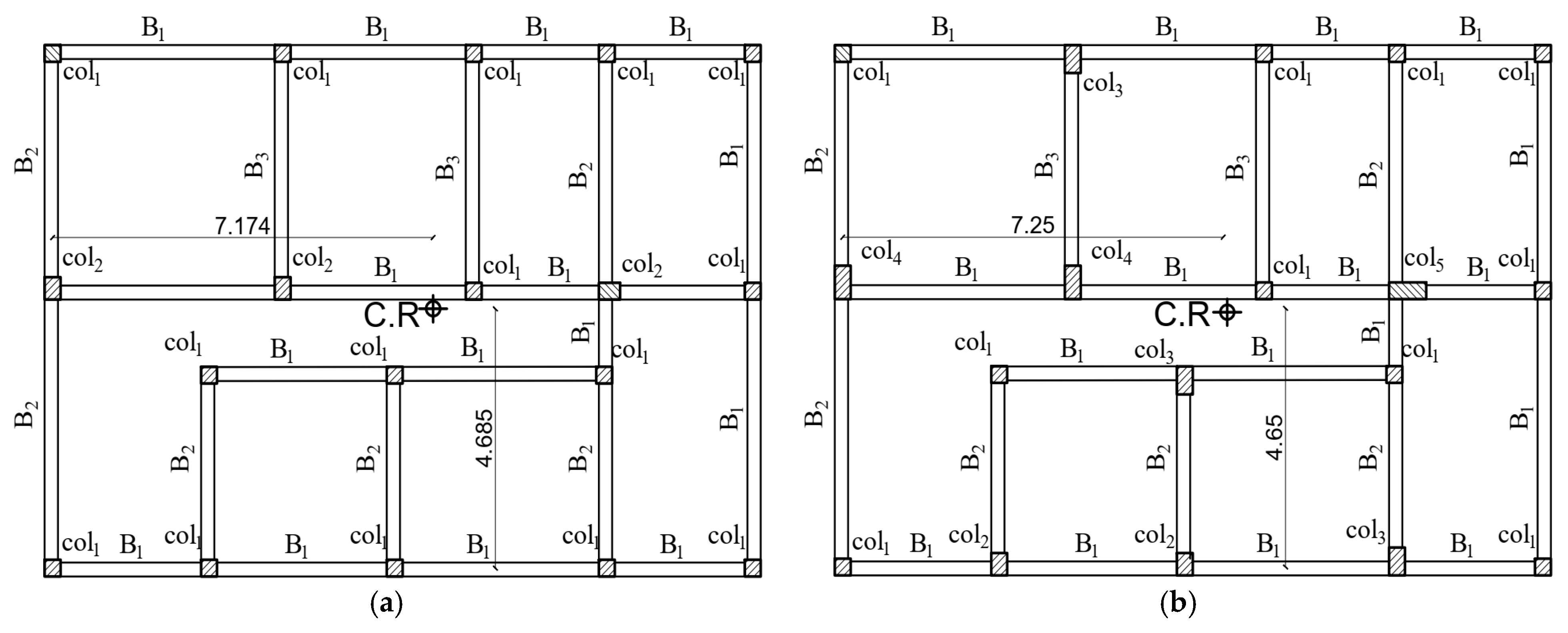
| No. of Storeys | Sample | Section (cm2) | Reinforcement Steel |
|---|---|---|---|
| Four storeys | Col1 | 30 × 30 | 8 Ø 12 |
| Col2 | 30 × 40 | 10 Ø 12 | |
| Six storeys | Col1 | 30 × 30 | 8 Ø 12 |
| Col2 | 30 × 40 | 10 Ø 12 | |
| Col3 | 30 × 50 | 12 Ø 12 | |
| Col4 | 30 × 60 | 14 Ø 12 | |
| Col5 | 30 × 70 | 16 Ø 12 |
| Sample | Section (cm2) | Reinforcement Steel | |||||
|---|---|---|---|---|---|---|---|
| Start | Middle | End | |||||
| Upper | Lower | Upper | Lower | Upper | Lower | ||
| B1 | 25 × 50 | 5 Ø 12 | 2 Ø 12 | 3 Ø 12 | 4 Ø 12 | 5 Ø 12 | 2 Ø 12 |
| B2 | 25 × 50 | 5 Ø 12 | 3 Ø 12 | 3 Ø 12 | 5 Ø 12 | 5 Ø 12 | 3 Ø 12 |
| B3 | 25 × 50 | 2 Ø 12 | 4 Ø 12 | 3 Ø 12 | 6 Ø 12 | 2 Ø 12 | 4 Ø 12 |
| Record No. | Ground Motions in X- and Y-Directions | DT (s) | Scaling Factor | Record No. | Ground Motions in X- and Y-Directions | DT (s) | Scaling Factor |
|---|---|---|---|---|---|---|---|
| 1 | Northridge01 | 0.02 | 3.48 | 21 | ChiChiTaiwan06 | 0.005 | 2.758 |
| 2 | Chichi Taiwan | 0.004 | 3.999 | 22 | Chichi Taiwan | 0.005 | 1.164 |
| 3 | Northridge01 | 0.02 | 3.139 | 23 | Northridge01 | 0.01 | 2.619 |
| 4 | Northridge01 | 0.02 | 3.025 | 24 | Loma Prieta | 0.005 | 1.674 |
| 5 | Landers | 0.005 | 2.295 | 25 | Chichi Taiwan | 0.005 | 1.443 |
| 6 | Kocaeli Turkey | 0.005 | 1.341 | 26 | ChiChiTaiwan04 | 0.005 | 3.153 |
| 7 | Northridge01 | 0.01 | 1.424 | 27 | BigBear01 | 0.02 | 4 |
| 8 | ChiChiTaiwan06 | 0.005 | 3.38 | 28 | ChiChiTaiwan06 | 0.005 | 3.799 |
| 9 | ChiChiTaiwan06 | 0.005 | 4 | 29 | Hector Mine | 0.01 | 3.014 |
| 10 | ChiChiTaiwan05 | 0.004 | 3.899 | 30 | Victoria Mexico | 0.01 | 2.866 |
| 11 | SuperstitionHills02 | 0.01 | 2.144 | 31 | ChalfantValley02 | 0.005 | 1.428 |
| 12 | Chichi Taiwan | 0.004 | 3.999 | 32 | Northridge01 | 0.01 | 1.834 |
| 13 | Northridge01 | 0.01 | 2.614 | 33 | Loma Prieta | 0.005 | 3.176 |
| 14 | Chichi Taiwan | 0.005 | 0.952 | 34 | Chichi Taiwan | 0.005 | 3.812 |
| 15 | ChiChiTaiwan06 | 0.005 | 3.47 | 35 | Denali Alaska | 0.01 | 3.082 |
| 16 | Northridge01 | 0.02 | 1.528 | 36 | Point Mugu | 0.005 | 2.783 |
| 17 | ChiChiTaiwan05 | 0.005 | 3.43 | 37 | Loma Prieta | 0.005 | 0.725 |
| 18 | Northridge01 | 0.02 | 2.446 | 38 | Loma Prieta | 0.005 | 0.958 |
| 19 | ChiChiTaiwan03 | 0.005 | 2.837 | 39 | Coalinga01 | 0.01 | 3.449 |
| 20 | Chichi Taiwan | 0.005 | 0.909 | 40 | BigBear01 | 0.01 | 3.329 |
| Damage State | Inter-Storey Drift (%) |
|---|---|
| Slight | 0.05 |
| Light | 0.08 |
| Moderate | 0.3 |
| Extensive | 1.15 |
| Partial collapse | 2.8 |
| Collapse | >4.36 |
| No of Storeys | Model | Eccentricity Direction | Eccentricity Level | Applied Analysis Method |
|---|---|---|---|---|
| Four storeys | NO-ECC | No eccentricity | 0 | IDA |
| EX1 | X-direction | 7.4% Lx | IDA | |
| EX2 | X-direction | 22.2% Lx | IDA | |
| EY1 | Y-direction | 10.5% Ly | IDA | |
| EY2 | Y-direction | 21% Ly | IDA | |
| Six storeys | NO-ECC | No eccentricity | 0 | IDA |
| EX1 | X-direction | 7.4% Lx | IDA | |
| EX2 | X-direction | 22.2% Lx | IDA | |
| EY1 | Y-direction | 10.5% Ly | IDA | |
| EY2 | Y-direction | 21% Ly | IDA |
| Storeys | Direction | Damage State | NO-ECC | Model 1 | Model 2 | Reduction 1 (%) | Reduction 2 (%) |
|---|---|---|---|---|---|---|---|
| Four storeys | X-direction | Slight | 0.0125 | 0.0106 (EX1—7.4% Lx) | 0.0058 (EX2—22.2% Lx) | 15.20 | 53.60 |
| Light | 0.0196 | 0.0170 | 0.00937 | 13.27 | 52.20 | ||
| Moderate | 0.0671 | 0.0612 | 0.03558 | 8.79 | 46.97 | ||
| Extensive | 0.1900 | 0.1740 | 0.1290 | 8.42 | 32.11 | ||
| Partial collapse | 0.3450 | 0.3260 | 0.2890 | 5.51 | 16.23 | ||
| Collapse | 0.4750 | 0.4250 | 0.4000 | 10.53 | 15.79 | ||
| Y-direction | Slight | 0.01235 | 0.01115 (EY1—10.5% Ly) | 0.00723 (EY2—21% Ly) | 9.72 | 41.46 | |
| Light | 0.01300 | 0.01203 | 0.00752 | 7.46 | 42.15 | ||
| Moderate | 0.06790 | 0.06226 | 0.04189 | 8.31 | 38.31 | ||
| Extensive | 0.17930 | 0.16580 | 0.11180 | 7.53 | 37.65 | ||
| Partial collapse | 0.34700 | 0.33100 | 0.29210 | 4.61 | 15.82 | ||
| Collapse | 0.47400 | 0.44500 | 0.43430 | 6.12 | 8.38 | ||
| Six storeys | X-direction | Slight | 0.00958 | 0.00845 (EX1—7.4% Lx) | 0.00728 (EX2—22.2% Lx) | 11.80 | 24.01 |
| Light | 0.01539 | 0.01348 | 0.01173 | 12.41 | 23.78 | ||
| Moderate | 0.05758 | 0.05056 | 0.04354 | 12.19 | 24.38 | ||
| Extensive | 0.18951 | 0.16929 | 0.15655 | 10.67 | 17.39 | ||
| Partial collapse | 0.34780 | 0.32325 | 0.31191 | 7.06 | 10.32 | ||
| Collapse | 0.50560 | 0.47150 | 0.44030 | 6.74 | 12.92 | ||
| Y-direction | Slight | 0.00963 | 0.009114 (EY1—10.5% Ly) | 0.00872 (EY2—21% Ly) | 5.36 | 9.45 | |
| Light | 0.01542 | 0.01470 | 0.01405 | 4.67 | 8.88 | ||
| Moderate | 0.05760 | 0.05470 | 0.05240 | 5.03 | 9.03 | ||
| Extensive | 0.19000 | 0.18840 | 0.17910 | 0.84 | 5.74 | ||
| Partial collapse | 0.34900 | 0.34800 | 0.34700 | 0.29 | 0.57 | ||
| Collapse | 0.49500 | 0.49500 | 0.49500 | 0.00 | 0.00 |
Disclaimer/Publisher’s Note: The statements, opinions and data contained in all publications are solely those of the individual author(s) and contributor(s) and not of MDPI and/or the editor(s). MDPI and/or the editor(s) disclaim responsibility for any injury to people or property resulting from any ideas, methods, instructions or products referred to in the content. |
© 2026 by the authors. Licensee MDPI, Basel, Switzerland. This article is an open access article distributed under the terms and conditions of the Creative Commons Attribution (CC BY) license.
Share and Cite
Messaoudi, A.; Abd-Elwahab, M.; Mohamed, H.; Chebili, R.; Madkour, H.; Zakaria, M.; Rodrigues, H. Fragility Analysis of RC Frames Accounting for In-Plan Irregularity Using Artificially Introduced Incremental Eccentricity. Buildings 2026, 16, 2086. https://doi.org/10.3390/buildings16112086
Messaoudi A, Abd-Elwahab M, Mohamed H, Chebili R, Madkour H, Zakaria M, Rodrigues H. Fragility Analysis of RC Frames Accounting for In-Plan Irregularity Using Artificially Introduced Incremental Eccentricity. Buildings. 2026; 16(11):2086. https://doi.org/10.3390/buildings16112086
Chicago/Turabian StyleMessaoudi, Abdelghaffar, Mahmoud Abd-Elwahab, Hossameldeen Mohamed, Rachid Chebili, Hany Madkour, Mohamed Zakaria, and Hugo Rodrigues. 2026. "Fragility Analysis of RC Frames Accounting for In-Plan Irregularity Using Artificially Introduced Incremental Eccentricity" Buildings 16, no. 11: 2086. https://doi.org/10.3390/buildings16112086
APA StyleMessaoudi, A., Abd-Elwahab, M., Mohamed, H., Chebili, R., Madkour, H., Zakaria, M., & Rodrigues, H. (2026). Fragility Analysis of RC Frames Accounting for In-Plan Irregularity Using Artificially Introduced Incremental Eccentricity. Buildings, 16(11), 2086. https://doi.org/10.3390/buildings16112086