Equipment Selection Optimization and Empirical Analysis of Operational Performance for a Commercial Building Refrigeration Plant

 , ,
, ,
Abstract
1. Introduction
2. Building Cooling Load Characteristics
3. System Form and Equipment Selection Optimization
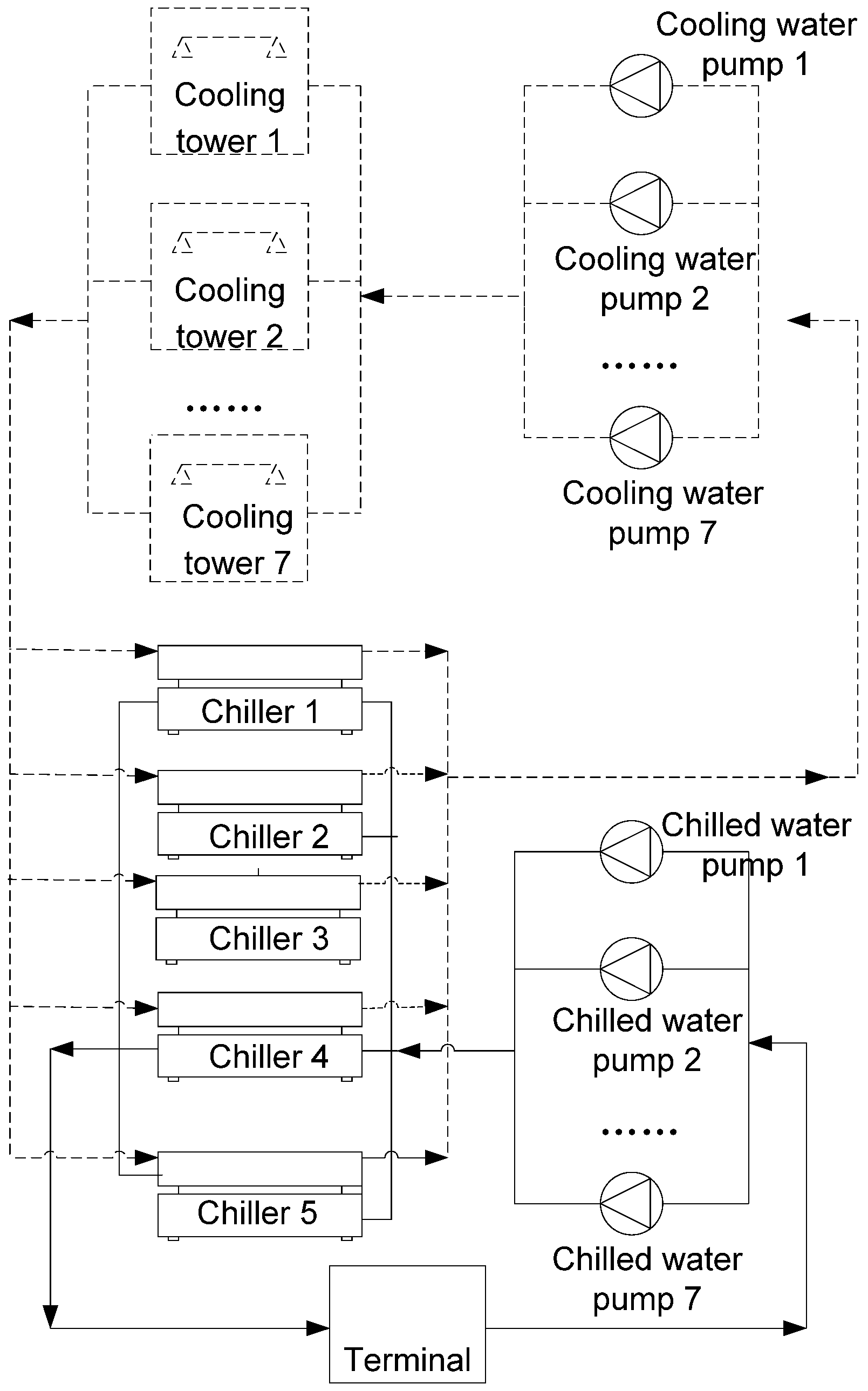
3.1. System Form
3.2. Equipment Energy Consumption Models
- (1)
- Chiller Energy Consumption Model.
- (2)
- Pump Energy Consumption Model.
- (3)
- Cooling Tower Energy Consumption Model.
3.3. Equipment Selection Optimization
- (1)
- Chiller.
- (2)
- Pump.
- (3)
- Cooling tower.
4. Empirical Results and Discussion
4.1. Refrigeration Plant Monthly Operational Performance Analysis
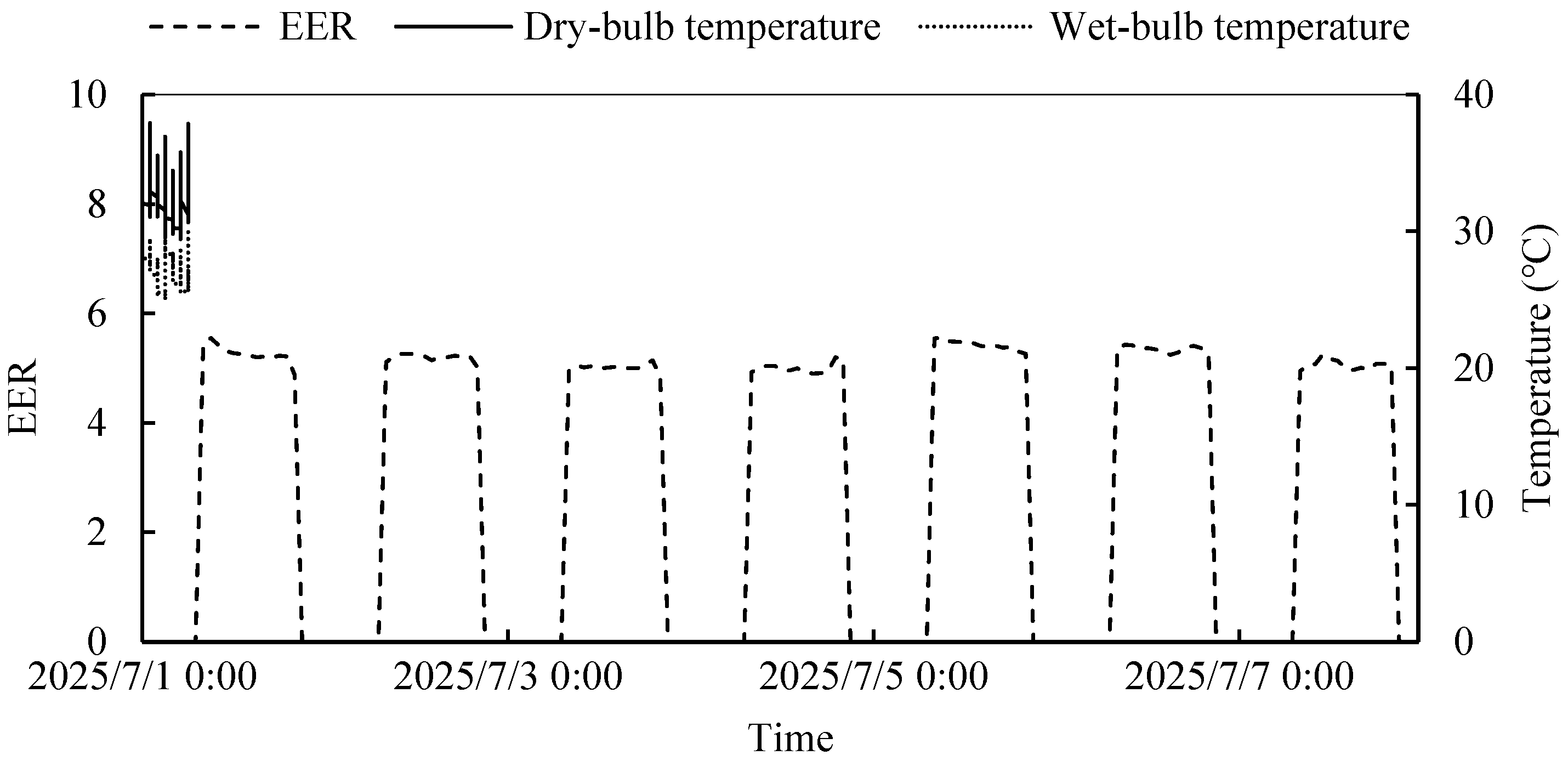
4.2. Refrigeration Plant Operational Performance Analysis During the Hottest Week
4.3. Equipment Operational Performance Analysis
- (1)
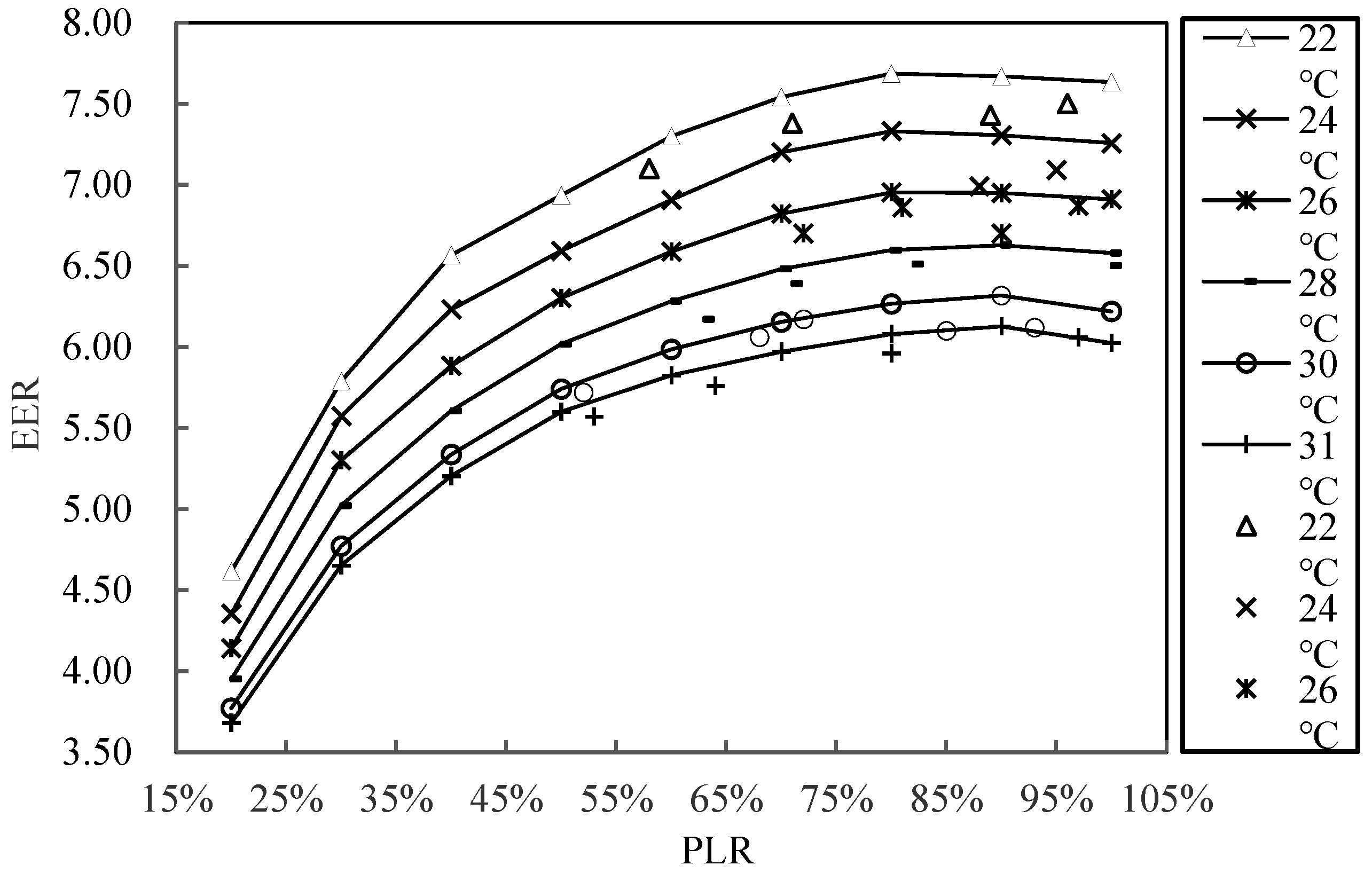
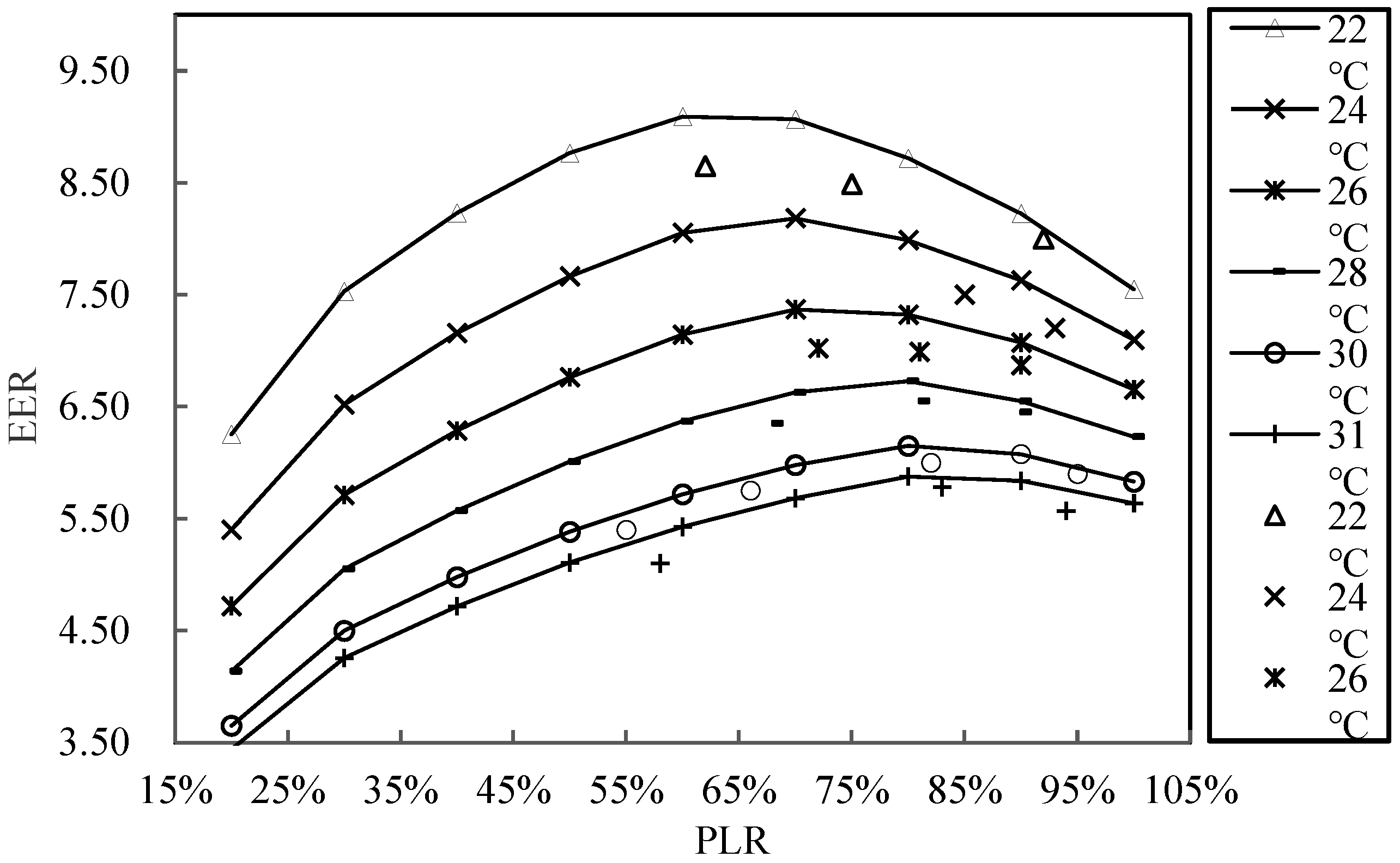
- Chiller.
- (2)
- Pump.
- (3)
- Cooling tower.
5. Conclusions
- (1)
- A comprehensive optimization of the refrigeration plant equipment selection for a commercial building in Xiamen was conducted, encompassing chillers, chilled/cooling water pumps, and cooling towers. Theoretical calculations indicated that the optimized schemes (particularly for chillers and cooling towers) would offer significant energy-saving potential and favorable economic returns.
- (2)
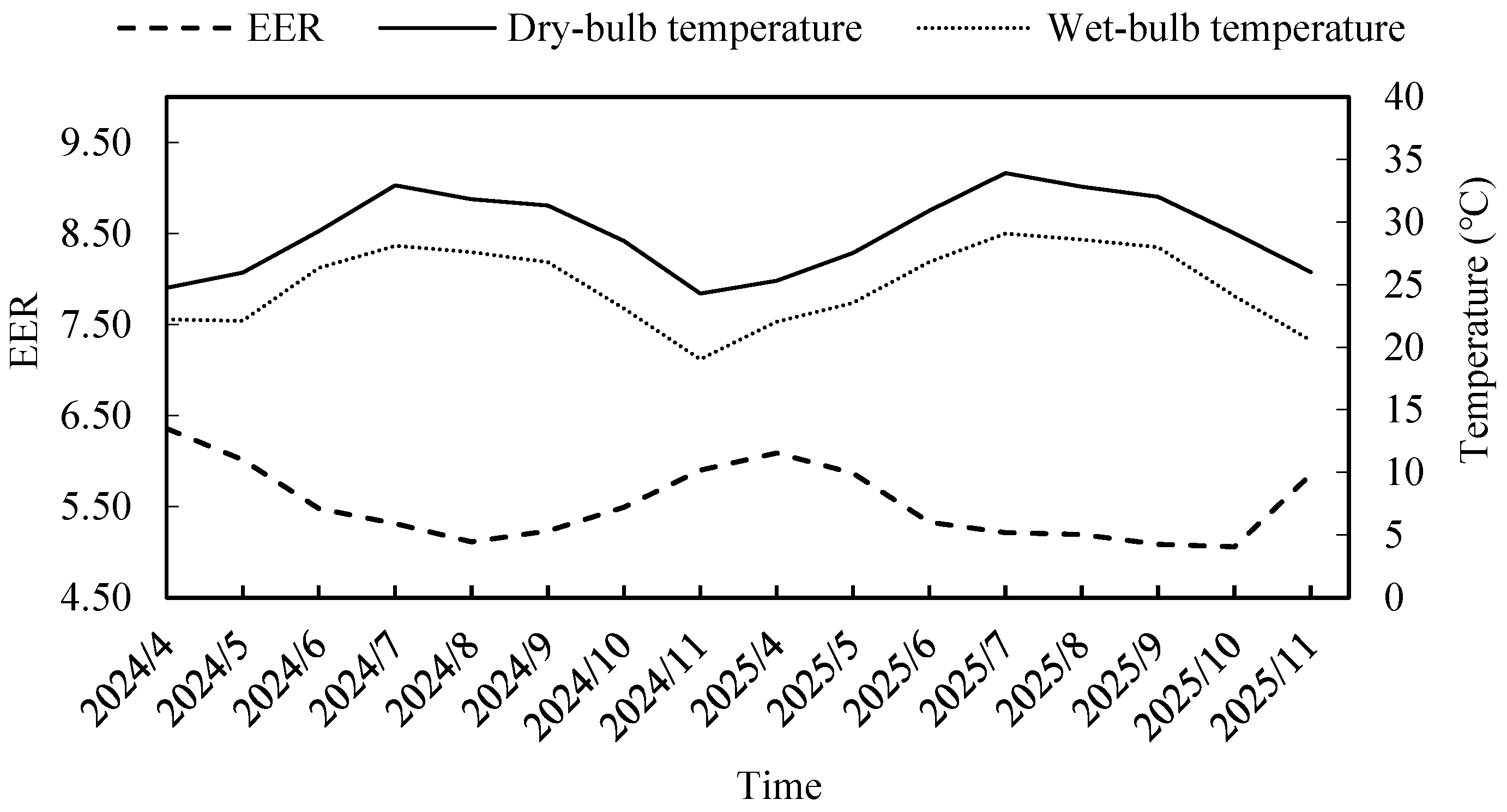
- Empirical analysis based on long-term operational data from 2024 to 2025 confirmed the high efficiency of the optimized refrigeration plant. The system achieved annual comprehensive EER values of 5.44 (2024) and 5.28 (2025), with monthly EER consistently above 5.06. This performance meets the stringent Grade I efficiency classification according to the standard T/CRAAS 1039-2023.
- (3)
- Equipment-level performance evaluation revealed excellent real-world operation. Chiller efficiency deviations from rated values were generally controlled within 5%. Pump transport factors, benefiting from variable frequency drives, are excellent (≥30 for chilled water pumps, ≥45 for cooling water pumps). Cooling tower actual performance, favored by Xiamen’s maritime climate, was close to or better than its rated performance.
Author Contributions
Funding
Data Availability Statement
Conflicts of Interest
Abbreviations
| EER | Energy efficiency ratio |
| MPC | Model predictive control |
| PLR | Part load ratio |
| CSD | Constant-speed drive |
| VSD | Variable-speed drive |
| VFD | Variable-frequency drive |
| RMSE | Root mean square error |
| MAE | Mean absolute error |
| MAPE | Mean absolute percentage error |
References
- Chen, Y.; Hong, T.; Luo, X.; Hooper, B. Development of City Buildings Dataset for Urban Building Energy Modeling. Energy Build. 2019, 183, 252–265. [Google Scholar] [CrossRef]
- Hong, T.; Chen, Y.; Luo, X.; Luo, N.; Lee, S.H. Ten Questions on Urban Building Energy Modeling. Build. Environ. 2020, 168, 106508. [Google Scholar] [CrossRef]
- International Energy Agency. Global Status Report for Buildings and Construction: Towards a Zero-Emission, Efficient and Resilient Buildings and Construction Sector; United Nations Environment Programme: Nairobi, Kenya, 2021. [Google Scholar]
- González-Torres, M.; Pérez-Lombard, L.; Coronel, J.F.; Maestre, I.R.; Yan, D. A Review on Buildings Energy Information: Trends, End-Uses, Fuels and Drivers. Energy Rep. 2022, 8, 626–637. [Google Scholar] [CrossRef]
- Gang, W.; Wang, S.; Xiao, F.; Gao, D. Robust Optimal Design of Building Cooling Systems Considering Cooling Load Uncertainty and Equipment Reliability. Appl. Energy 2015, 159, 265–275. [Google Scholar] [CrossRef]
- Chen, Q.; Wang, Y.F.; Xu, Y.C. A Thermal Resistance-Based Method for the Optimal Design of Central Variable Water/Air Volume Chiller Systems. Appl. Energy 2015, 139, 119–130. [Google Scholar] [CrossRef]
- Taylor, S.T. Fundamentals of Design and Control of Central Chilled-Water Plants; ASHRAE Learning Institute: Atlanta, GA, USA, 2017. [Google Scholar]
- Peterson, K.W. Improving Performance of Large Chilled Water Plants. ASHRAE J. 2017, 59, 74–78. [Google Scholar]
- Ho, N. Optimizing Campus Chilled Water Connections. ASHRAE J. 2020, 62, 68. [Google Scholar]
- Chen, Y.; Yang, C.; Pan, X.; Yan, D. Design and Operation Optimization of Multi-Chiller Plants Based on Energy Performance Simulation. Energy Build. 2020, 222, 110100. [Google Scholar] [CrossRef]
- Xu, X.; Liu, Z.; Li, W.; Zhu, Z.; Yan, M.; Li, P. Comprehensive and Quantitative Evaluation for Selecting a Suitable Scheme of Central Air-Conditioning during the Design Phase. J. Build. Eng. 2024, 82, 108245. [Google Scholar] [CrossRef]
- Peixer, G.F.; Nakashima, A.T.D.; Lozano, J.A.; Barbosa, J.R., Jr. System-Level Multi-Objective Optimization of a Magnetic Air Conditioner through Coupling of Artificial Neural Networks and Genetic Algorithms. Appl. Therm. Eng. 2023, 227, 120368. [Google Scholar] [CrossRef]
- Huang, X.; Yan, J.; Zhou, X.; Yang, Z.; Huang, X. Energy-Efficient Optimization Method for Air Conditioning Terminal Systems in IDC Based on Genetic Algorithm. Energy 2025, 333, 137502. [Google Scholar] [CrossRef]
- Karami, M.; Wang, L. Particle Swarm Optimization for Control Operation of an All-Variable Speed Water-Cooled Chiller Plant. Appl. Therm. Eng. 2018, 130, 962–978. [Google Scholar] [CrossRef]
- Gao, Z.; Yu, J.; Zhao, A.; Hu, Q.; Yang, S. Optimal Chiller Loading by Improved Parallel Particle Swarm Optimization Algorithm for Reducing Energy Consumption. Int. J. Refrig. 2022, 136, 61–70. [Google Scholar] [CrossRef]
- Kumkam, S.; Trinuruk, P.; Chaiwiwatworakul, P.; Saito, K. A Comparative Analysis of Reinforcement Learning and Model Predictive Control for HVAC System Optimization. J. Build. Eng. 2025, 112, 113776. [Google Scholar] [CrossRef]
- Liao, C.; Miyata, S.; Qu, M.; Akashi, Y. Year-Round Operational Optimization of HVAC Systems Using Hierarchical Deep Reinforcement Learning for Enhancing Indoor Air Quality and Reducing Energy Consumption. Appl. Energy 2025, 390, 125816. [Google Scholar] [CrossRef]
- Zhao, J.; Liu, D.; Yuan, X.; Wang, P. Model Predictive Control for the Ice-Storage Air-Conditioning System Coupled with Multi-Objective Optimization. Appl. Therm. Eng. 2024, 243, 122595. [Google Scholar] [CrossRef]
- Sha, X.; Ma, Z.; Sethuvenkatraman, S.; Li, W. Online Learning-Enhanced Data-Driven Model Predictive Control for Optimizing HVAC Energy Consumption, Indoor Air Quality and Thermal Comfort. Appl. Energy 2025, 383, 125341. [Google Scholar] [CrossRef]
- GB 50189-2015; Design Standard for Energy Efficiency of Public Buildings. China Architecture and Building Press: Beijing, China, 2015.
- Reddy, T.A.; Andersen, K.K. An Evaluation of Classical Steady-State Offline Linear Parameter Estimation Methods Applied to Chiller Performance Data. HVACR Res. 2002, 8, 101–124. [Google Scholar] [CrossRef]
- Luan, Z.J.; Zhang, G.M.; Tian, M.C.; Fan, M.X. Flow Resistance and Heat Transfer Characteristics of a New-Type Plate Heat Exchanger. J. Hydrodyn. 2008, 20, 524–529. [Google Scholar] [CrossRef]
- Braun, J.E. Methodologies for the Design and Control of Central Cooling Plants. Ph.D. Thesis, University of Wisconsin-Madison, Madison, WI, USA, 1988. Available online: https://minds.wisconsin.edu/bitstream/handle/1793/46694/Braun1988.pdf (accessed on 22 December 2025).
- Yang, J.; Xu, A.; Guan, L.; Zhang, D. Optimization of Multi-Parameter Collaborative Operation for Central Air-Conditioning Cold Source System in Super High-Rise Buildings. Buildings 2025, 15, 4363. [Google Scholar] [CrossRef]
- T/CRAAS 1039-2023; Energy Efficiency Monitoring and Grading Standard for High-efficiency Air Conditioning and Refrigeration Station Systems. China Refrigeration and Air-Conditioning Industry Association: Beijing, China, 2023.
- ASHRAE Guideline 36-2021; High-Performance Sequences of Operation for HVAC Systems. ASHRAE: Atlanta, GA, USA, 2021.


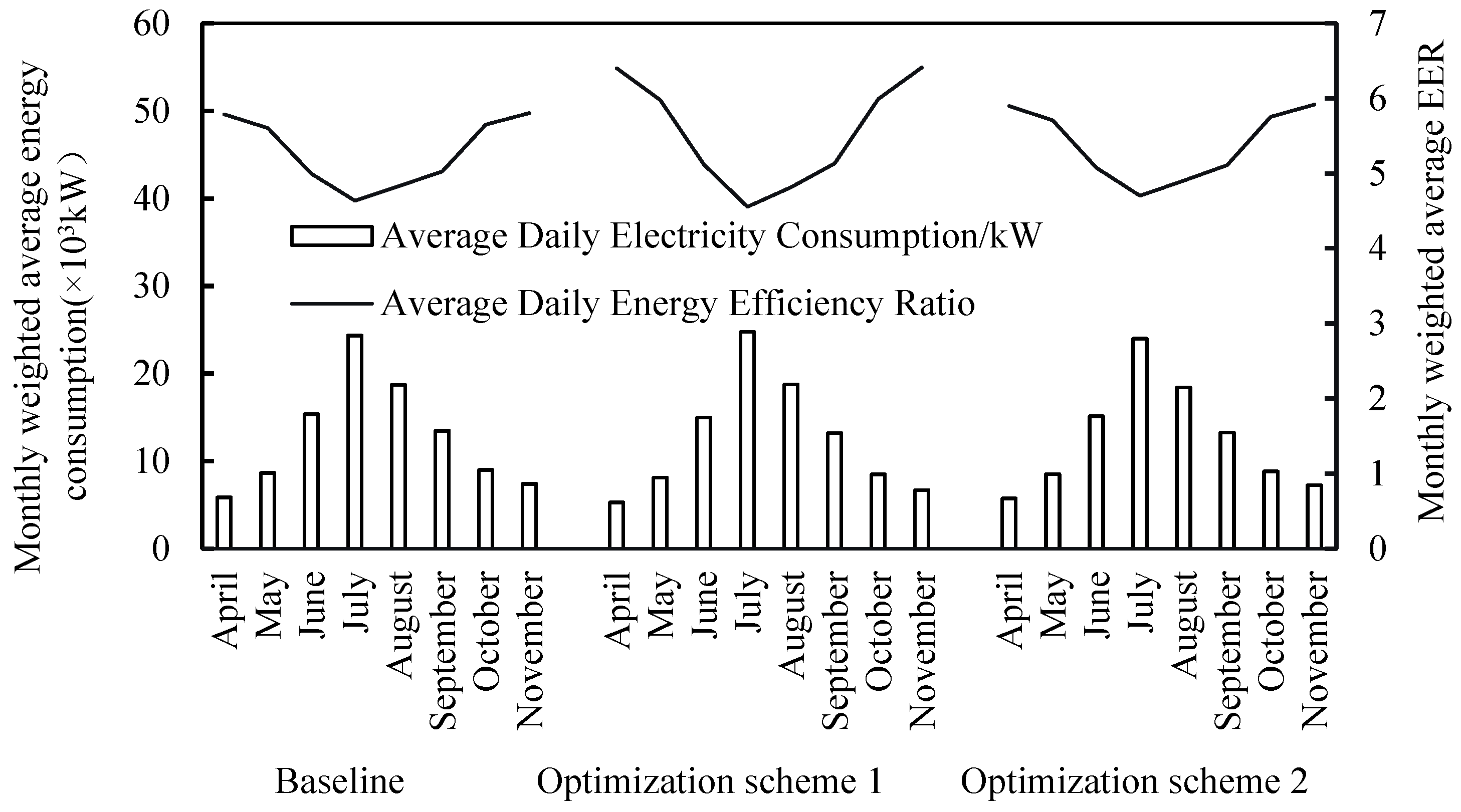
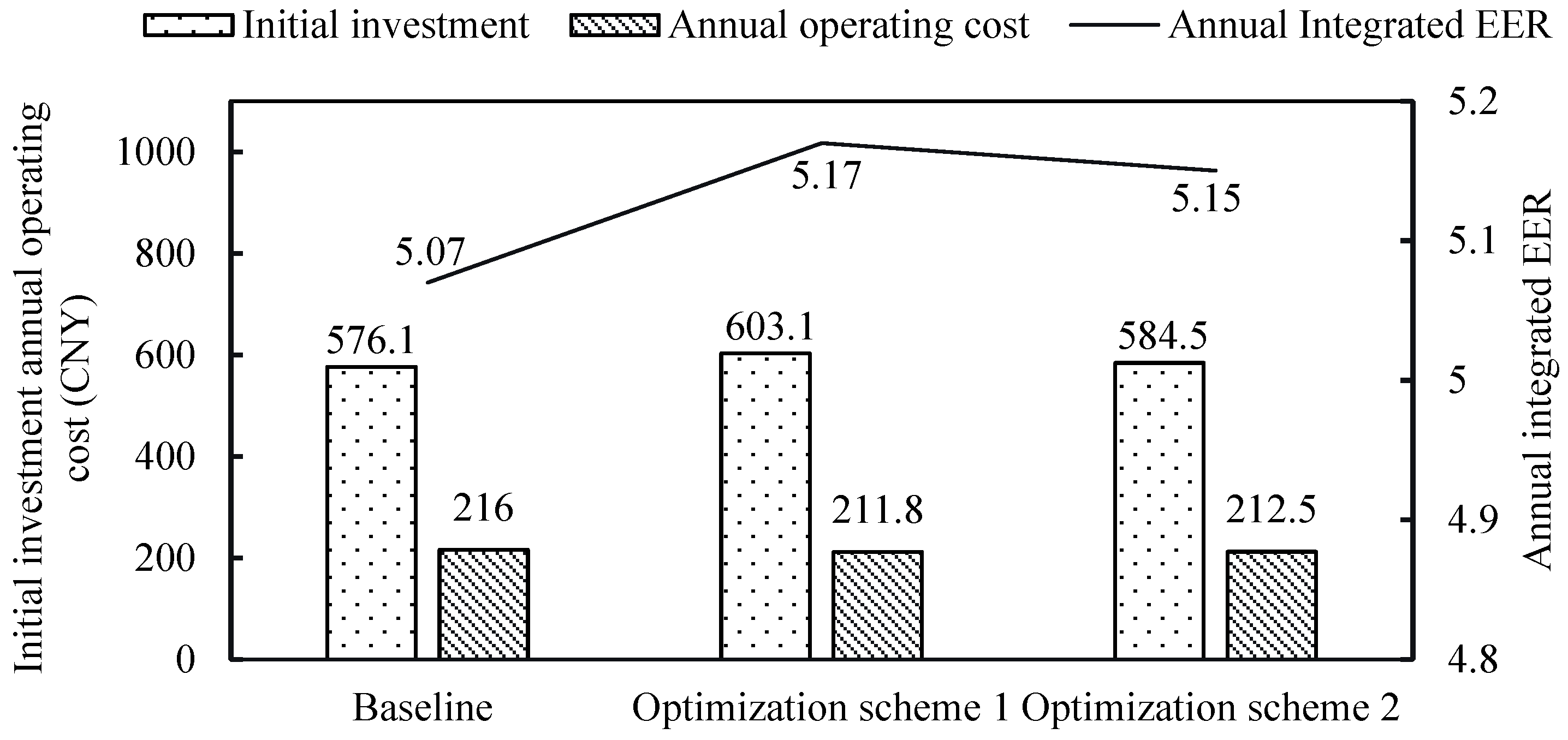

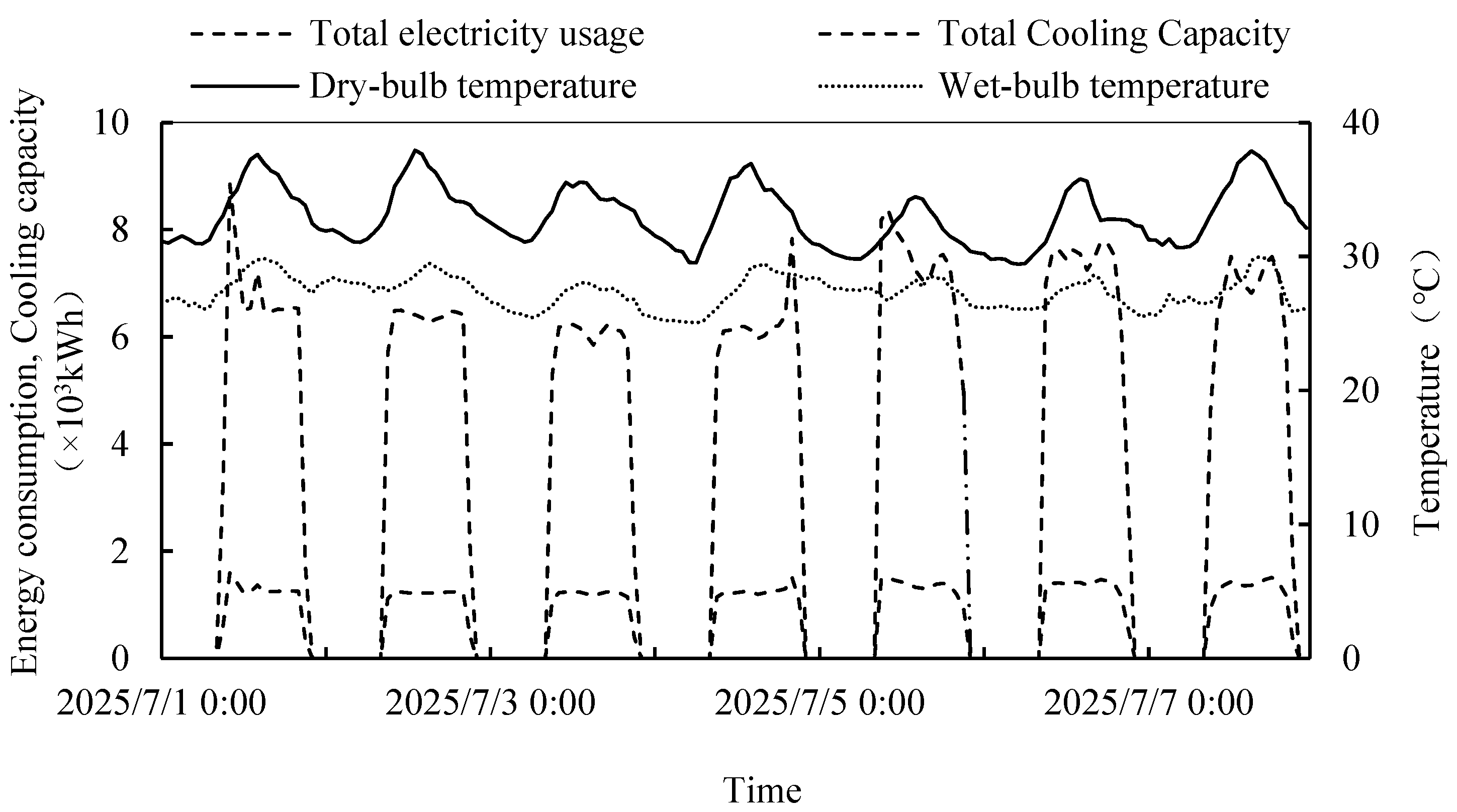



| Parameters | Baseline Scheme | Optimization Scheme 1 | Optimization Scheme 2 |
|---|---|---|---|
| chiller configuration | 900 RT × 4 CSD + 600 RT × 1 VSD | 900 RT × 2 CSD + 900 RT × 2 VSD + 600 RT × 1 VSD | 900 RT × 4 CSD + 600 RT × 1 VSD |
| chiller pressure drop | 8 mH2O | 8 mH2O | 6 mH2O |
| chilled water supply and return temperature | 6/12 °C | ||
| Pump | Scheme | Flow Rate (m3/h) | Head (m) | Power (kw) | Efficiency | Pump Number | Initial Investment (CNY) |
|---|---|---|---|---|---|---|---|
| Chilled water pump | Baseline scheme | 460 | 41 | 75 | 81% | 5 | 332,064 |
| 310 | 41 | 55 | 77% | 2 | |||
| Optimization scheme | 483 | 31 | 55 | 84% | 4 | 254,520 | |
| 326 | 31 | 45 | 79% | 2 | |||
| 155 | 31 | 18.5 | 82% | 1 | |||
| Cooling water pump | Baseline scheme | 650 | 35 | 90 | 83% | 5 | 291,187 |
| 460 | 35 | 75 | 82% | 2 | |||
| Optimization scheme | 674 | 31 | 75 | 81% | 5 | 309,992 | |
| 477 | 31 | 55 | 84% | 2 |
| Scheme | Cooling Water Supply/Return Temperature | Outdoor Air Wet-Bulb Temperature | Flow Rate (m3/h) | EER | Operation Cost (×104 CNY) | Initial Investment (×104 CNY) |
|---|---|---|---|---|---|---|
| Baseline scheme | 32/37 °C | 28 °C | 3380 | 4.85 | 225.8 | 143 |
| Optimization scheme | 31/36 °C | 28 °C | 3360 | 5.07 | 216.0 | 158 |
| Time | Chiller Operation Status and EER | Pump Operation Status and Frequency | Cooling Tower Operation Status and Frequency |
|---|---|---|---|
| 10:00, 5 July | Chillers #2, #4, #5 in operation, EER: 6.69, 6.59, 8.20 | Chilled water pumps #2, #5 in operation, Frequency: 40 Hz; Cooling water pumps #1, #4, #5 in operation, Frequency: 40 Hz | Six cooling tower fans in operation; Fan frequency: 50 Hz |
| 21:00, 3 July | Chillers #1, #3 in operation, EER: 5.06, 5.17 | Chilled water pumps #1, #3 in operation, Frequency: 32 Hz; Cooling water pumps #1, #3 in operation, Frequency: 15 Hz | Two cooling tower fans in operation; Fan frequency: 18 Hz |
| Item | 1# | 2# | 3# | 4# | 5# |
|---|---|---|---|---|---|
| Chilled water pump transport factor | 36.7~86.5 | 37.0~116.8 | 35.0~105.2 | 33.8~102.2 | 33.0~79.7 |
| Cooling water pump transport factor | 50.8~143.8 | 51.2~128.3 | 50.3~136.8 | 50.2~137.5 | 48.0~124.2 |
| Item | Rated Condition | Operating Time | |||
|---|---|---|---|---|---|
| Time | / | 14 June 2024 12:30 | 29 June 2024 20:00 | 22 June 2024 11:30 | 30 June 2024 19:30 |
| Cooling tower outlet water temperature (°C) | 31 | 31.26 | 31.29 | 31.33 | 31.12 |
| Cooling tower inlet water temperature (°C) | 36 | 36.07 | 35.94 | 35.98 | 36.03 |
| Outdoor wet-bulb temperature (°C) | 28 | 28.57 | 27.77 | 28.19 | 28.24 |
| Approach degree (°C) | 3 | 2.69 | 3.52 | 3.14 | 2.88 |
| Cooling tower efficiency | 62.50% | 64.13% | 56.92% | 60% | 63% |
Disclaimer/Publisher’s Note: The statements, opinions and data contained in all publications are solely those of the individual author(s) and contributor(s) and not of MDPI and/or the editor(s). MDPI and/or the editor(s) disclaim responsibility for any injury to people or property resulting from any ideas, methods, instructions or products referred to in the content. |
© 2026 by the authors. Licensee MDPI, Basel, Switzerland. This article is an open access article distributed under the terms and conditions of the Creative Commons Attribution (CC BY) license.
Share and Cite
Zhang, D.; Guan, L.; Xu, A.; Zhou, W.; Yang, J.; Zhang, Y. Equipment Selection Optimization and Empirical Analysis of Operational Performance for a Commercial Building Refrigeration Plant. Buildings 2026, 16, 2067. https://doi.org/10.3390/buildings16112067
Zhang D, Guan L, Xu A, Zhou W, Yang J, Zhang Y. Equipment Selection Optimization and Empirical Analysis of Operational Performance for a Commercial Building Refrigeration Plant. Buildings. 2026; 16(11):2067. https://doi.org/10.3390/buildings16112067
Chicago/Turabian StyleZhang, Dongliang, Lingjun Guan, Aiqin Xu, Wen Zhou, Jiankun Yang, and Yuanyuan Zhang. 2026. "Equipment Selection Optimization and Empirical Analysis of Operational Performance for a Commercial Building Refrigeration Plant" Buildings 16, no. 11: 2067. https://doi.org/10.3390/buildings16112067
APA StyleZhang, D., Guan, L., Xu, A., Zhou, W., Yang, J., & Zhang, Y. (2026). Equipment Selection Optimization and Empirical Analysis of Operational Performance for a Commercial Building Refrigeration Plant. Buildings, 16(11), 2067. https://doi.org/10.3390/buildings16112067