1. Introduction
Globally, the preservation of history is an important subject. Historic buildings are the most prone to degradation because they come into direct contact with the external environment, which is an extremely aggressive factor. So, their conservation and restoration is essential. Of all the old materials, wood is the most sensitive to the external environment, mostly because of wood-destroying organisms, and their conservation and restoration has been priority [
1,
2,
3]. Wood exposed to the outdoor environment struggles with three major factors: high humidity, extreme temperatures and biological attack (insects, fungi and microorganisms) [
4]. Over the years, several consolidants were proposed, but most have various disadvantages. These solutions can be applied on wood by various techniques, such as spraying, brushing, dipping, infusion, impregnation, injection, and so on [
5]. Both the treatment and application method of the solution are important. Treatment can achieve the prevention of further damage and restoration of the degraded wood, by improving its strength, durability, dimensional stability, and other wood properties if the ideal treatment is selected and the right application method is employed.
Wood is a material highly exposed to external environmental factors, being found in many buildings, especially older ones. Over time, several materials have been proposed to protect and strengthen the wood. For example, acryloids and epoxies have been proposed in order to strengthen the wood structure; however, it was found that the used materials do not significantly increase the resistance of wood against fungi and may even be themselves used as a substrate [
6]. In another study, it was found that these consolidants increase the mechanical resistance of wood, but no tests have been conducted on their antifungal or absorption properties [
7]. Harandi d. and co-workers investigated the performance of Poly (vinyl butyral-co-vinyl alcohol-co-vinyl acetate) solution on fir wood. It was demonstrated that the treatment created a more hydrophobic surface, compared to untreated wood. Also, the applied treatment increased wood hardness locally, being enhanced with solution concentration, but the antifungal character was not investigated [
8]. In another study, Paraloid B72 and Regalrez 1126 were used individually and in combination to investigate their antifungal effect on wood. It was found that when applied together, they slowed the growth of both fungal species (
Fomitopsis palustris and
Trametes versicolor) compared to the results obtained when they were individually applied [
9]. Munteanu M. and co-workers used acrylic polymers (Paraloid B72 and Paraloid B67) in order to restore old lime trees and old oak trees. It was reported that, in both cases, the treatments significantly changed the natural color of the wood, and none of the wood samples returned to their original color [
10]. Biological durability tests were carried out on treated birch wood with methyltrimethoxysilane and 3-mercaptopropyltrimethoxysilane with 25 wt% in ethanol against Basidiomycete fungi. An efficiency of approximately 90% (very durable) was reported for the wood treated with methyltrimethoxysilane, while an efficiency of approximately 65% (moderately durable) was observed and reported for the wood treated with 3-mercaptopropyltrimethoxysilane [
11].
One real solution is offered by nanotechnology, as nanomaterials have played a key role in the development of new wood preservatives [
1,
12,
13]. Serafini I. and Ciccola A. reported that ZnO nanoparticles could represent a good choice for wood preservation and restoration due to their chemical stability and the possibility of preventing dust accumulation and UV-induced aging. However, the disadvantage reported by this group was that ZnO nanoparticles were able to prevent fungal growth for only three fungal species (
Alternaria alternata,
Penicillium chrysogenum, and
Penicillium pinophilum), whereas in the case of
Aspergillus niger the nanoparticles stimulated microbial growth [
14]. In another study, the antibacterial activity of the coating based on ZnO-carboxymethyl-chitosan was investigated on
S. aureus and
E. coli. The results showed that all coatings produced larger inhibition zones than the untreated samples, and the resistance of
E. coli was higher compared to
S. aureus. [
15]. Another important well studied property of ZnO nanoparticles is their hydrophobic character. In a study, ZnO nanoparticles were dispersed in ethanol and the colloidal suspension was spin-coated on a silicone substrate several times in order to evaluate its hydrophobicity. It was reported that the water contact angle of the untreated substrate was below 5°, whereas after coating the water contact angle increased to 150°, turning the material into a hydrophobic one [
16].
In recent years, researchers have attempted to overcome the limitations of ZnO nanoparticles by incorporating them into a polymeric matrix. For example, Abbasi J. and co-workers obtained a consolidant based on polyvinyl butyral and ZnO nanoparticles and tested the product on old dried wood samples in order to evaluate its effect on wood penetration and wettability. It was found that the obtained consolidant led to a reduction in water penetration and wettability of the samples, compared to the control. Also, the degradation rate under accelerated aging conditions of samples treated with the obtained consolidant was lower in comparison with the control [
17].
Previous studies on wood consolidants have shown that reducing water uptake and moisture can significantly improve durability by limiting moisture-induced degradation mechanisms, such as fungal degradation [
18]. However, excessive pore blocking may also affect vapor transport and moisture exchange within hygroscopic substrates. Belt T. and co-workers reported that the improved decay resistance of modified wood is associated with reduced moisture uptake and limited diffusion processes within the cell wall [
19].
In conservation science, maintaining a balance between hydrophobic protection and vapor permeability is considered essential for long-term compatibility. In this context, the proposed MWCNTs_ZnO + PHBHV solution represents a multifunctional treatment approach combining mechanical reinforcement, reduced water absorption, hydrophobic behavior, and antifungal activity. Unlike conventional single-component treatments, the hybrid nanocomposite structure may provide synergistic effects through the interaction between the polymer matrix, carbon nanotubes, and ZnO nanoparticles.
In recent years, there has been a tendency in wood conservation to investigate new efficient materials and improve the existing materials that have interesting features such as eco-friendliness, reversibility, and highly compatibility with wood [
1,
20,
21]. Harandi, D. and M. Moradienayat obtained a consolidant based on nanocrystalline cellulose/ZnO nanofibers dispersed in Polyvinyl Butyral solution and applied the solution on the wood. It was reported that the obtained coating provided protection against moisture and UV light [
22]. In another study, lignin-ZnO was dispersed in poly(3-hydroxybutyrate-co-3-hydroxyvalerate) and the obtained solution was applied on oak wood specimens by brushing. It was reported that, compared to control, the treated samples presented an improvement in hydrophobicity and fungal resistance [
23]. Poly(3-hydroxybutyrate) seems a good choice due to its intrinsic hydrophobic character, low acidity and biodegradability, but its application is quite limited due to its mechanical properties and processability. In order to enhance its properties, David M.E. and co-workers obtained a solution based on MWCNTs decorated with ZnO nanoparticles dispersed in poly(3-hydroxybutyrate) (PHBHV). The authors combined the hydrophobic character and biodegradability of PHBHV with the ideal mechanical properties of MWCNTs and the antimicrobial, antifungal and UV resistance of ZnO nanoparticles in order to obtain an ideal solution for wood protection and preservation [
21].
Unlike traditional polymeric consolidants or inorganic nanoparticle coatings, the proposed PHBHV-based nanocomposite combines biodegradability with multifunctional surface protection, offering not only hydrophobic improvement but also structural consolidation and greater compatibility with sustainable conservation strategies.
The reported data suggested that the treated wood did not change its natural color (in the case of 0.1% MWCNTs_ZnO + PHBHV and 0.2% MWCNTs_ZnO + PHBHV) and properties such as water absorption, humidity and mechanical tests significantly improved after treatment (in the case of 0.2% MWCNTs_ZnO + PHBHV and 0.4% MWCNTs_ZnO + PHBHV). Also, greater fungal inhibition was observed for samples treated with 0.2% MWCNTs_ZnO + PHBHV, ensuring good protection against mold and fungi [
4]. Due to the promising data obtained in our previous article, the present study represents a deepening of the research. Thus, the solution based on 0.2% MWCNTs decorated with ZnO nanoparticles dispersed in PHBHV was chosen and applied on real old and degraded wood by brushing.
In order to deeply investigate the consolidation capacity of the obtained solution, old wood from Banloc Castle was selected.
The novelty of the study lies in demonstrating the consolidant’s ability to protect and improve the properties of the historic wood material, which is in a highly degraded state. Due to the fact that old historic wood is very sensitive to environmental conditions, acting as a hygroscopic material that absorbs and releases moisture, in large quantities, in response to the surrounding environment, it is difficult to find a suitable consolidant. Furthermore, historic wood is constantly and for many years subject to movements—such as swelling, shrinkage and deformation—when exposed to temperature and humidity fluctuations, which leads to severe degradation over time. Borda M. and Hill C.A.S. reported that historical wood will not reach the same moisture equilibrium levels compared to young wood under the same environmental conditions [
24], which means that it is more than necessary to study the behavior of old wood and wood in a state of severe degradation in order to state with certainty whether the treatment is appropriate for both young and old wood.
Banloc Castle is included in the category of historical buildings and is positioned in the center of Banloc commune, being the most important monument in the area. The property was finished in 1759 and has a “U”-shaped plan, with brick thick walls [
25,
26]. The castle is an imposing building and consists of: a basement, a ground floor, an intermediate floor and a massive wooden roof. The walls of the castle are made of bricks and layers of lime mortar. The roof is solid and robust, with a wooden supporting structure that reflects the construction technique of the Habsburg period. The joinery is made of oak wood and is simply executed. The windows and doors have artistic brass ironwork from the 19th century. Oak is the main wood found throughout the castle, such as the built-in wardrobes, the main staircase, including the small wardrobe under the staircase, the stairs to the cellar and the corridors [
27,
28,
29]. Oak wood has historically represented one of the principal materials used in European heritage architecture and wooden artifacts due to its high mechanical strength and natural durability. Historical oak elements are commonly encountered in doors, staircases, beams, structural frames, furniture, and decorative architectural components [
4,
30]. Therefore, the wood material taken and chosen for future studies was part of an interior door from Banloc Castle.
2. Materials and Methods
This study was carried out in order to demonstrate the efficiency of the previously obtained treatment [
4] on aged and degraded oak wood. Based on the previous study, the best consolidant was composed from 0.2% MWCNTs_ZnO NPs dispersed in a solution of 2% PHBHV (molecular weight of 67,000 g/mole containing 2% hydroxyvalerate—Good Fellow). In this study, the consolidant was applied by brushing—in three layers on each side of the wooden material.
2.1. Preparation of Wooden Material
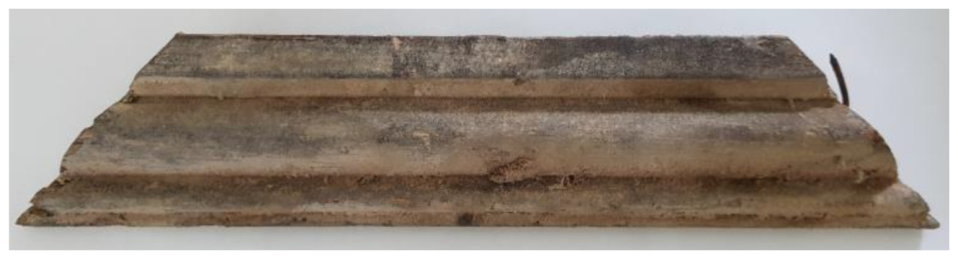
A piece of oak wood with heritage value from a window frame of an interior door belonging to Banloc Castle was chosen in order to study the efficiency of the selected consolidant (
Figure 1). The wooden piece was carefully cleaned with a brush, after which it was sized into pieces of approximately 2.5–3 cm in length, 2–2.2 cm in width and 0.86 cm in thickness.
Due to the intrinsic heterogeneity of historical wood, special attention was paid to sample selection and conditioning. All specimens were conditioned under identical laboratory conditions prior to testing (the sized wooden pieces were conditioned for one month at a temperature T = 20 ± 5 °C and a relative atmospheric humidity φ = 55 ± 5%).
After consolidant application, the wooden pieces were allowed to dry at room temperature and were reconditioned for another month. After that, the treated samples and control samples were used in order to investigate the treatment applicability.
Although natural variability cannot be completely eliminated in severely aged wood, these measures were intended to improve experimental reproducibility and comparability between untreated and treated samples.
2.2. Consolidant Retention (CR)
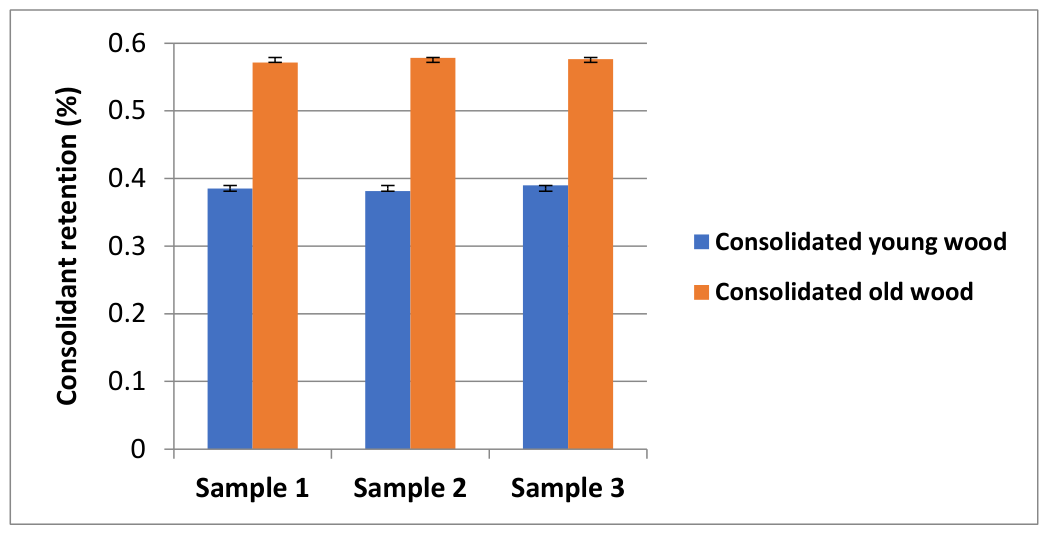
CR was investigated by a gravimetric method using (Equation (1) [
31]), where the data were recorded before and after treatment. The degree of wooden impregnation was monitored in order to evaluate the effectiveness of the applied treatment. The determinations were performed in triplicate for each sample (control vs. treated), and the arithmetic mean was calculated.
where
CR is the mass percentage increase in [%];
mf is the final mass of the treated and conditioned sample in [g]; and
mi is the initial mass of the conditioned sample in [g].
2.3. Optical Microscopy (OM)
In order to investigate the uniformity of the applied treatment on the wood surface optical microscopy was used. A NovexMicroscope BBS, which offers the possibility to investigate the samples in transmitted light with magnification between 4 and 100×, was used. The equipment has a digital video camera (EUROMEX, Arnhem, The Netherlands) attached, which, through the microscope software (ZenPro 2.3), allowed the acquisition of data in real time.
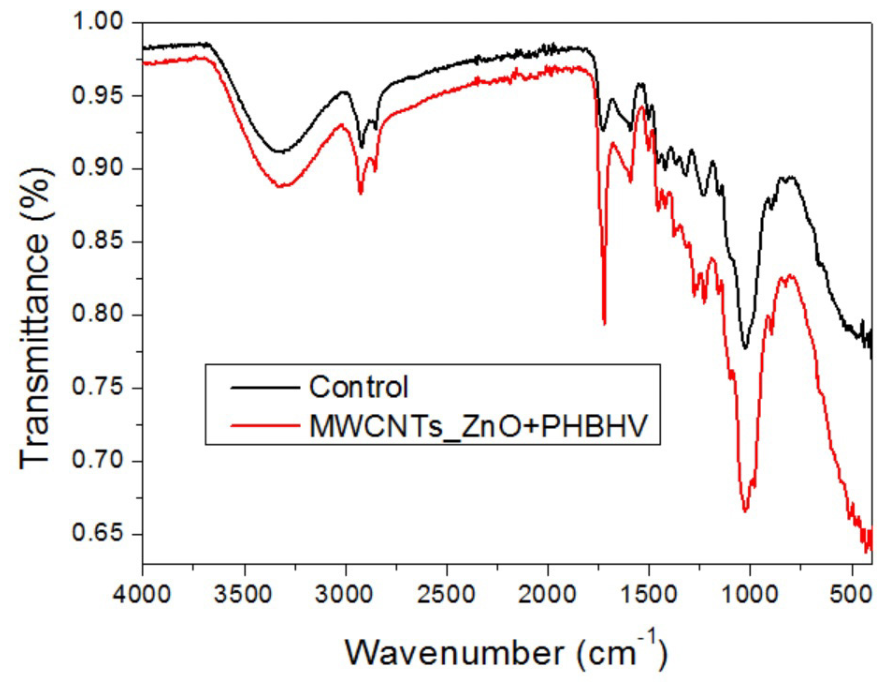
2.4. Fourier Transform Infrared Spectroscopy (FTIR)
A GX-type spectrometer (Perkin Elmer, Waltham, MA, USA), which allows measurements in the range of 4000–600 cm−1, was used in order to record the IR spectra. The recording of the spectrum collection was performed in total attenuation reflection mode at a resolution of 4 cm−1 for the accumulation and mediation of 32 spectra.
2.5. Wavelength Dispersive X-Ray Fluorescence (WDXRF)
In order to determine the qualitative and quantitative elementary composition of the wood WDXRF was performed. The WDXRF instrument is equipped with 3 crystal analyzers (with automated exchange): LiF (200) (Rigaku, Tokyo, Japan) for heavy elements (Ti-U), PET and RX 25 for light elements (O-Mg and Al-Sc) at 200 W power (50 kV tens, 4 mA int). Detection limit: 1 ppm–10 ppb; accuracy < 0.1–0.5%; the elements ranged from 8 O to 92 U.
2.6. Colorimetric Tests
A very important aspect of a consolidant is that once it is applied on the material it should not influence the natural color of the material. For this reason, colorimetric tests were carried out. A CR-410 colorimeter (Konica Minolta, Tokyo, Japan) set in the CIE L*a*b* system (CIE 1986) was used. For each sample, three determinations were performed before and after the application of the treatment, and the arithmetic mean was calculated for each sample. The total color difference (Δ
Exfinal) was calculated according to [
32] Equation (2):
where ΔL is the difference in lightness, calculated with the formula: ΔL = L
treated sample − L
untreated sample; Δa is the chromatic deviation of the coordinates of a* coordinates, calculated with the formula: Δa = a
treated sample − a
untreated sample; and Δb is the chromatic deviation of the b* coordinates, calculated with the formula: Δb = b
treated sample − b
untreated sample.
2.7. Water Absorption Test (WA)
The wood samples were dried in an oven at 103 °C and then were left to cool at room temperature and weighed (
W1). Subsequently, the wood pieces were immersed for 24 h in distilled water at room temperature, and then they were removed from the water, wiped with a towel and weighed (
W2). Their mass was determined with an accuracy of 0.01 g.
WA was calculated according to [
33] Equation (3). The determinations were performed in triplicate for each sample (control vs. treated), and the arithmetic mean was calculated.
2.8. Humidity Test (H)
Wood samples were immersed in distilled water for 30 min and then weighed (
Wi). Subsequently, wood samples were dried for 1 h at 100 °C in the oven and left for 24 h at room temperature, according to ISO 22157-1: 2004 [
34]. Finally, the samples were weighed (
Wf), and H was calculated according to [
35] Equation (4). Their mass was determined with an accuracy of 0.01 g. The determinations were performed in triplicate for each sample (control vs. treated), and the arithmetic mean was calculated.
2.9. Contact Angle
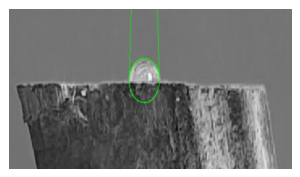
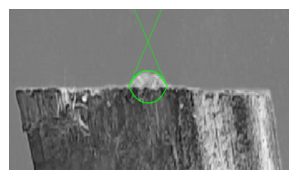
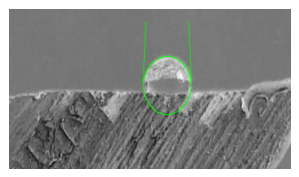
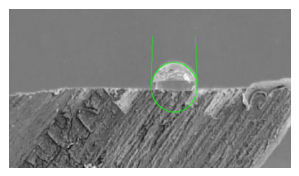
Hydrophobicity is another characteristic that an ideal consolidant solution should offer to the materials. Contact angle measurements were made in order to examine the hydrophobicity of the wood surface before and after treatment. The wood sample was positioned on a straight surface near a light source, and 6 μL of distillated water was dropped at a single point on the wood surface. After the drop touched the surface, photos were taken at a distance of 10 cm from the wood sample, every 15 sec for 1 min, in order to calculate the contact angle at different times. The measurements were recorded at a temperature of 23 ± 1 °C. DropAnalysis plugin LB-ADSA from ImageJ 1.52v was used to calculate the samples’ contact angle. For each sample, two determinations were performed (control vs. treated), and their arithmetic mean was calculated.
2.10. Mechanical Tests
Wooden mechanical strength, expressed by determining the rebound number, was investigated by using a Silver Schmidt Proceq hammer, type L, with impact energy of 0.735 Nm [
36]. This procedure was chosen due to the limited availability and heritage significance of the Banloc Castle wood samples in order to avoid destructive mechanical testing methods.
For each sample, 10 measurements were performed, with a minimum edge distance of 5 mm. The hammer was positioned at 90° on the sample. The compressive strength, expressed in MPa, was calculated according to Equation (5) using the arithmetic values of the rebound number, determined in duplicate:
where 2.77 is the device constant, and
Q is the rebound number.
2.11. Artificial Aging Test by Exposure to Humidity Variations
Wood is a hygroscopic material which absorbs and desorbs humidity from the environment due to the hydroxyl groups in the cell walls. The dimensional stability of wood and durability under real conditions were investigated by hysteresis, according to ISO 12571:2013 [
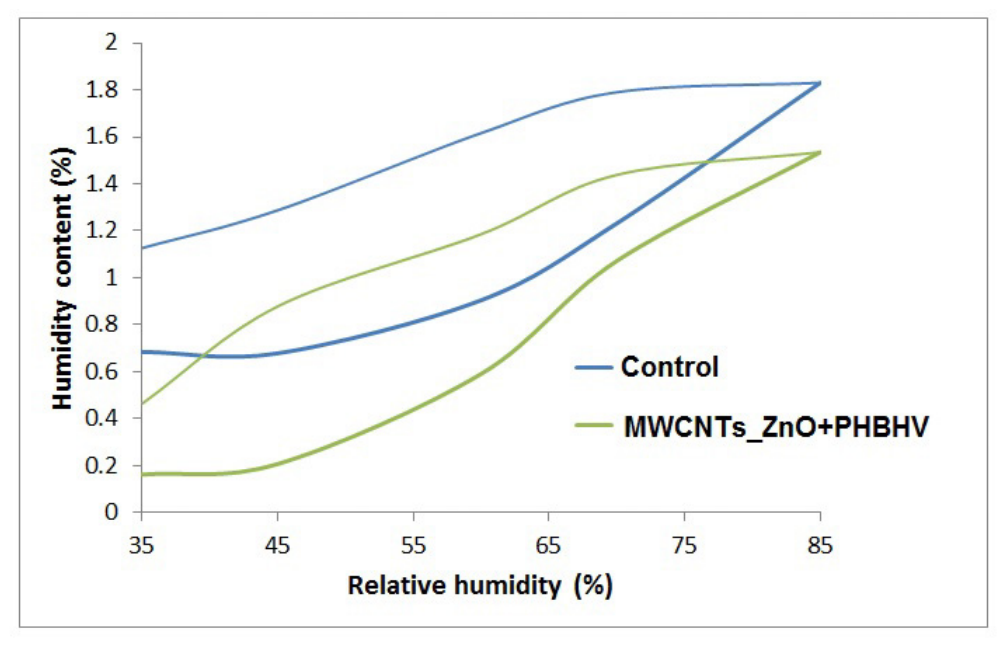
37], using a KK 115 Smart PRO climatic chamber, POL-EKO Aparatura, Wodzisław Śląski, Poland, with the fan used at 20% capacity and light at 50%. The wood samples were placed in the climatic chamber with controlled temperature and humidity. By maintaining the temperature at 25 °C, and varying the humidity from 35% to 85%, the samples reached a constant mass after approximately one hour. The determinations were performed in triplicate for each sample (control vs. treated), and the arithmetic mean was calculated.
The samples were weighed after each cycle, with an accuracy of 0.01 g and the moisture content was calculated with Equation (6):
where
ACx—moisture content, in [%];
SHx—sample mass at humidity
x, in [g], and
SIx—sample mass at initial environmental conditions, in [g].
Sorption/desorption kinetics for each wood sample per unit area depending on the specific humidity value was expressed in the sorption/desorption curve.
2.12. Antifungal Activity
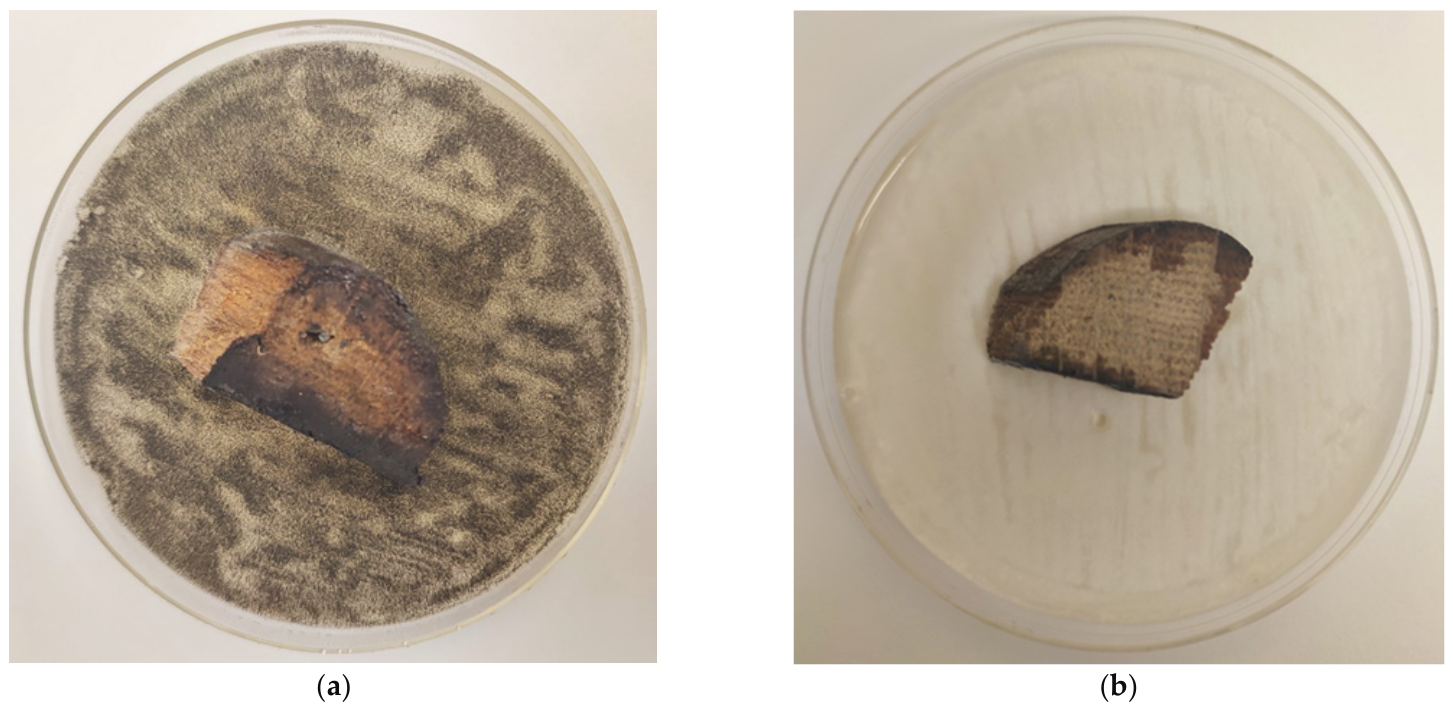
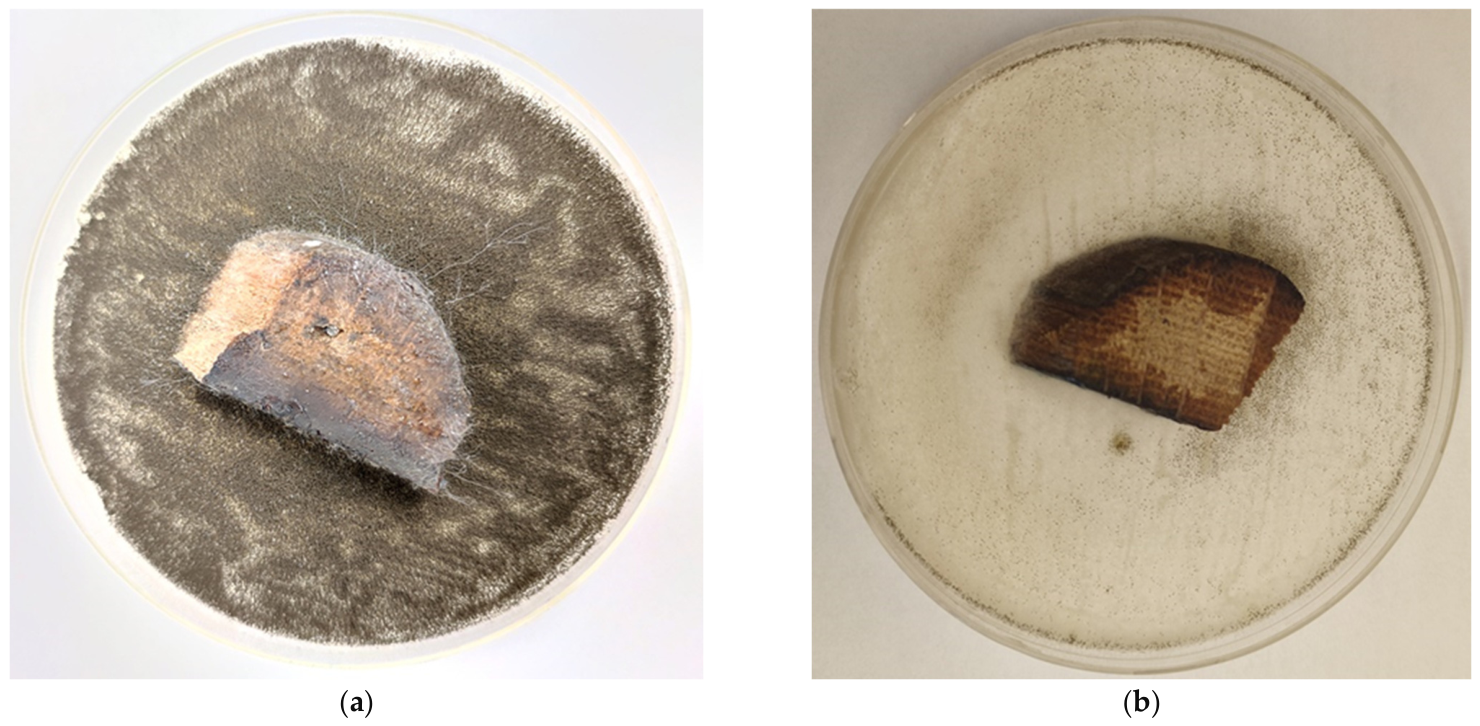
Each sample was embedded, individually, in a specific culture medium for the growth and isolation of Aspergillus niger. As a culture medium for growing and isolating fungi, solid Sabouraud medium was used. A suspension of sterile physiological water with a concentration of 1–3 × 10⁶ spores/mL from a fresh fungal culture grown for 4 days on solid PDA medium (Scharlau, peptone—4; glucose—20; agar—15 (g/L)) was used as inoculum. Petri dishes with sterile Sabouraud medium were seeded in cloth with a sterile swab. The sample was placed in the middle of the Petri dish, and the Petri dishes were incubated at 28 °C for up to 5 days. During this time, the plates were observed and photographed to visually assess the absence or presence of growth of Aspergillus niger on the surfaces of the wood samples.
Fungal growth was semi-quantitatively analyzed using ImageJ software. The fungal-colonized area was determined by threshold-based image segmentation and expressed as a percentage of the total Petri dish surface.
2.13. Statistical Analysis
Statistical analyses were conducted in Microsoft Excel using two-tailed independent Student’s t-tests with the assumption of unequal variances (Welch’s t-test). Mean values between untreated and treated wood samples were compared for mechanical strength, water absorption capacity, and average size of the wood voids. Data are presented as mean ± standard deviation (SD). Statistical significance was set at p < 0.05.
4. Conclusions
Oak wood pieces over 200 years old, coming from Banloc Castle, were chosen in order to investigate the consolidation capacity of the selected solution (0.2% MWCNTs_ZnO + PHBHV). The treatment was applied by brushing on the wood surface and the successful retention of a significant amount of consolidation in the pores of the wood material was demonstrated. Also, the retention and uniform application of the consolidation on the wood surface was confirmed by optical microscopy. Colorimetric tests have confirmed that the treatment does not alter the natural color of the wood, with the total color difference being very small.
Through water absorption, humidity and contact angle tests, the water absorption rate, droplet size and droplet residence time were studied for untreated wood samples and consolidated products, respectively. As a result of the tests, it was demonstrated that untreated wood has a high water and moisture absorption capacity, a property that makes aged wood extremely vulnerable to the external environment and time. Also, the high absorption capacity of the wood was demonstrated by investigating the contact angle, where the water droplet was completely absorbed by the wood after 30 s. After treating the wood pieces with the consolidation solution, a significant decrease in the water and moisture absorption capacity was obtained, which confirms the creation of a protective layer on the wood surface, which prevents water from penetrating the material. Also, the surface of the wood material changed after applying the treatment, presenting a hydrophobic character. The treatment also produced a moderate increase in rebound-derived mechanical resistance, thus suggesting a potential consolidating effect on the degraded wood material. The study of the behavior during accelerated aging by exposure to humidity variations reconfirmed the fact that untreated wood has an increased capacity to absorb moisture from the external environment. Also, water desorption is slower when the humidity in the external environment drops to 35%. In the case of the treated wood pieces, it is observed that the used treatment protected the wood material, preventing moisture from penetrating the wood structure. In this case, rapid desorption was observed at low humidity and a low percentage of moisture was retained in the wood material. The performed antifungal tests showed that old oak materials treated with 0.2% MWCNTs_ZnO + PHBHV inhibited the growth of the Aspergillus niger strain. Thus, it can be concluded that the applied treatment to the surface of old wood pieces provides antifungal protection, preventing the colonization of microorganisms in the structure of the wood material, and, respectively, its disintegration. Through the methods investigated by our group, it was demonstrated that the selected treatment is a good choice for the consolidation of aged and degraded oak wood materials. However, in real conservation applications, wooden materials are continuously exposed to humidity fluctuations, temperature variations, biological attack, and wetting–drying cycles, which may influence the long-term stability and performance of the treatment system. In particular, aging phenomena such as polymer degradation, nanoparticle redistribution, changes in vapor permeability, or loss of hydrophobicity may occur over extended periods of exposure. Future studies should be conducted to investigate the wood vapor transport behavior, long-term durability under fluctuating environmental conditions and retreatability in order to further assess the suitability of the proposed treatment for conservation applications.





 ,
,