


Abstract
Improving the health supportiveness of the campus built environment is a key strategy for alleviating health pressures in higher education institutions (HEIs). As a complex environmental system, a university campus requires systematic assessment of its environmental health performance to inform science-based design and planning decisions. This study systematically reviews the environmental characteristics of current healthy-campus assessment tools (HCATs) for HEIs and evaluates their compatibility with a Chinese standards context. A three-phase mixed-methods approach identified 12 HCATs, examined their environmental features, and constructed a content framework. Three representative Chinese alternative tools were compared. The results show that: (1) HCATs vary by development context but consistently prioritize physical environmental resources that support health behaviors, such as abundant and reasonable active transportation and fitness facilities and a health-promoting environmental culture, rather than conventional physics performance. (2) Although Chinese tools overlap with HCATs on certain environmental topics, they cannot replace HCATs in terms of environmental integration, coverage, and applicability to HEI settings. (3) Future Chinese HCATs should strengthen environmental support for behavior change and health promotion and improve operability. This study reveals gaps between current Chinese tools and HCATs, underscores the necessity of developing environment-focused HCATs for Chinese HEIs, and provides a foundation for related tools’ development work.
1. Introduction
Health has become a central issue in the development of higher education and is recognized as essential to HEIs’ academic mission [1]. In urban and community contexts, population health is achieved by intervention to modifiable factors, including both physical and non-physical conditions, to prevent disease and foster a healthy setting [2]. According to this approach, many setting-based approaches such as that of a “healthy city” [3] and “healthy community” [4] have been proposed.
Since the 1990s, the healthy campus (HC) initiatives of HEIs have emerged globally, such as in the concepts of a “Healthy Campus” [5], “Health-Promoting University” [6], and “Healthy University” [7]. Although these conceptual initiatives differ in name, they are considered to have a consistent goal [8] of advocating for the creation of a health-supportive environment in HEIs and the formation of a larger positive impact through courses, services, and knowledge output in higher education [9].
To achieve HC goals, several tools have been developed. HCATs are theoretical instruments that promote university users’ health by measuring modifiable factors in the HEI environment, thus identifying gaps toward HC goals [10]. Their assessment content includes physical environmental factors and the supporting non-physical conditions. Within the socio-ecological model of health [11], these assessment items reflect modifiable health determinants in the HEI environment, including physiological, psychological, and social impacts on populations [12]. Extensive evidence from multiple disciplines explains these health determinants, including pollution [13] and poor physics performance [14] in environmental hygiene; lack of physical activity [15], nature contact [16,17], and social interaction [18] in environmental behavior and psychology; service provision [19] in healthcare administration; and efforts at the public policy level [20]. The content of HCATs offers a broader perspective for examining cross-disciplinary evidence and establishes a theoretical link between such evidence and the overall goals of HC.
China is home to 2822 HEIs, enrolling more than 47 million students [21]. More than 12 million people become freshmen each year, and this number will continue to grow until 2035 [22]. China’s HEIs are facing enormous pressure from public health, including concerning college students’ lack of physical activity [23] and psychological [24] and social health problems [25]. Based on population health pressures caused by the huge scale of higher education, the Ministry of Education of the People’s Republic of China issued the “Healthy School” initiative nationwide in 2022 to control the decline in health of university students [26].
Some Chinese universities [27,28] have started HC development, introduced the conceptual framework from FISU [29] and OSU [30], and generated demands for environmental assessment. As a theoretical prerequisite for the development of HCATs, it is necessary to review and compare the existing tools in order to obtain an in-depth understanding. Previous studies have discussed different assessment tools for the HEI environment, such as those focusing on sustainable campuses [31], low-carbon campuses [32] and so on [33]. The application of relevant evaluation tools in the context of HEIs has been reviewed under specific health goals such as those concerning physical activity [34,35] and the food environment [36]. Some common indicators [37] or repeatedly mentioned strategies [38,39] have been identified, and a new tool has been developed based on the analysis [40]. However, the research perspective lacks comprehensiveness and is insufficient to depict the overall picture of HCATs. Research on environmental assessment tools with a more comprehensive perspective mostly focuses on cities [41], communities [42] and buildings [43]. Few studies focus on the review and comparison of HEI campuses. Given that HCATs are continually evolving, regularly reviewing relevant tools and comparing their strengths and limitations can make them more adaptive and effective in practice.
Meanwhile, some Chinese universities [44,45] also have introduced assessment tools such as the Assessment Standard of Green Campus (ASGC) as alternative environmental benchmarks for promoting a HC. Existing studies have primarily adopted an integrated perspective [46] in examining the linkage between health and sustainability objectives, noting that both concepts are grounded in a whole-institution approach [47] and share thematic priorities such as the natural environment, outdoor activity spaces, waste management, and transportation [48]. Common indicators [49] and strategies [50,51] have been developed accordingly. In China, assessment tools have a significant influence on campus planning and design and are often regarded as a key quantitative basis for evaluating design plans and making decisions.
However, few studies have focused on the differences between their assessment tools to clarify how they diverge from other evaluation frameworks aimed at similar campus development goals. Considering that China has not yet introduced a dedicated HCAT for HEIs, it has well-established evaluation standards in areas such as sustainable campuses and healthy communities. A comparative study of these existing types of assessment tools would be beneficial: it could enhance the awareness of HC-related stakeholders in the country regarding the distinctions between tools, help them understand the degree of alignment between the alternative tools they use and their own objectives, and contribute to recognizing the necessity of developing a targeted assessment tool.
Therefore, this study aims to progressively explore the typological characteristics of HCATs from both the internal and external perspective, focusing on two questions:
- What existing HCATs are currently available, and what are their features?
- How do HCATs differ from existing Chinese assessment tools with similar objec-tives, such as those for sustainable campuses and healthy communities?
A three-phase mixed-methods approach was adopted to achieve the research objec-tives. First, a structured review of multiple core literature databases was conducted to map the overall vision of existing HCATs and identify those meeting the inclusion crite-ria for analysis. The second phase focused on analyzing the internal characteristics of the identified HCATs. This involved mapping their basic attributes to categorize the properties, followed by a comparative analysis of their emphasis and indicator features. In the third phase, health-related assessment tools representative of the Chinese standards context were selected and compared with HCATs to examine the external differences. Ultimately, a comprehensive overview of existing HCATs was developed, identifying their internal characteristics and interrelationships, while also clarifying the distinctiveness of HCATs compared to the Chinese alternatives.
2. Methods
2.1. Screening of HCATs
2.1.1. Retrieval Strategy
The search logic was designed as the intersection of three key concepts: the higher education environment, health, and assessment tools, with each concept represented by a union of multiple synonymous academic terms to account for potential variations in terminology across different research contexts. A unified search strategy and criteria were applied to three major databases: Web of Science (WOS), Scopus, and PubMed (Table 1).
Table 1.
The retrieval strategy used in screening.
2.1.2. Eligibility Criteria
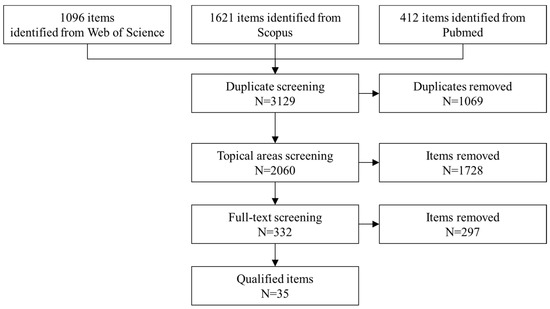
In the search conducted in April 2023, a total of 3129 relevant articles were retrieved. After removing the duplicates, 2060 articles remained for screening. The screening was carried out in two steps: first, the articles themselves were reviewed, and then the assessment tools mentioned in the articles were examined.
The eligibility criteria for article review were established based on identifying assessment tools for healthy campuses and environmental evaluation in higher education, focusing primarily on the relevance, applicability, reliability, and practicality of the samples (Table 2) [31,37]. Articles unrelated to the research questions were excluded, such as those not targeting the higher education context or focusing solely on educational policies or institutional governance. Additionally, the applicability of the article topics was screened; studies that only used isolated indicators for evaluation or were limited to specific subpopulations within higher education (e.g., the elderly or faculty) were also excluded. Subsequently, a thorough evaluation was conducted on the assessment tools included in the eligible articles. In this phase, tools were selected based on the following criteria: they must be publicly accessible, include evidence-based research in their complete development documentation, have a clear development background in higher education, and be fully developed. Details of the excluded tools and reasons are provided in Appendix A Table A1.
Table 2.
Inclusion criteria of the screening.
2.1.3. Identification of HCATs
In the literature review phase, 1728 potentially irrelevant articles were first excluded through screening of titles and abstracts. The full texts of 332 articles were then retrieved to determine the suitability of their research content. Ultimately, 35 eligible articles were identified, and an additional 4 articles [27,52,53,54] outside the databases were supplemented through cross-referencing. These articles fall into three categories: (i) development or updating of assessment tools; (ii) analysis of existing HCATs; and (iii) application of HCATs in evaluating HEIs (Table 3, Figure 1).
Table 3.
The classification of selected literature.
Figure 1.
The process of literature screening.
From these articles, 12 eligible items were identified based on further screening against the assessment tool criteria. All eligibility reviews were selected by two independent researchers, and differences were discussed and resolved by selection from a third reviewer.
Each HCAT is briefly described as follows:
- (1)
- Healthy Campus Standard [27] (HCS)—Developed and administered by the International University Sports Federation (FISU), HCS serves as an assessment tool for HCs in universities worldwide.
- (2)
- Healthy Green School and College [52] (HGSC)—A healthy-campus certification standard jointly developed by the Healthy School Campaign and Green Seal, targeting both K–12 schools and higher education institutions.
- (3)
- Healthy University Rating System [53] (HURS)—Developed and operated by the ASEAN University Network–Health Promotion Network (AUN-HPN) with support from the Thai Health Promotion Foundation.
- (4)
- Healthy University Self-Review Tool [10] (HURST)—Developed by the UK Healthy University Network and applied within the network and across multiple Commonwealth universities.
- (5)
- Campus Outdoor Space Evaluation Toolkit [66] (COSE)—Developed and validated by researchers at the University of Guelph, Canada.
- (6)
- College Campus Environment Scale [62] (CCES)—Established by developers at the City University of New York and validated across several institutions.
- (7)
- The Policies, Opportunities, Initiatives, and Notable Topics Audit [70] (POINTS)—Developed and cross-institutionally validated by a collaborative research team from multiple U.S. universities [77].
- (8)
- College Environmental Perceptions Survey [63] (CEPS)—Developed by the Healthy Campus Research Consortium (HCRC), a multi-state research group affiliated with the U.S. Department of Agriculture (USDA).
- (9)
- Campus Assessment Tool [54] (CAT)—Originated from a participatory research project led by youth scholars in Canada and is regularly tested across multiple campuses.
- (10)
- Behavior Environment Perception Survey [67] (BEPS)—A campus environment perception measure developed by researchers from the University of Maine, West Virginia University, and others.
- (11)
- University Health Index [59] (UHI)—Developed by researchers at Virginia Tech under the guidance of the U.S. Centers for Disease Control and Prevention, validated using data from the National College Health Assessment.
- (12)
- Physical Activity Campus Environmental Supports Audit [61,71] (PACES)—Developed with funding from the U.S. Department of Agriculture’s National Institute of Food and Agriculture.
2.2. Analysis of HCATs
2.2.1. Basic Characteristics
First, the basic characteristics of the 12 identified HCATs were examined, including their development background and intended application scenarios. Additionally, the assessment methods, data types, computational models, and reporting formats of these tools were systematically analyzed. Based on these basic characteristics, the 12 assessment tools were then classified, and a general mapping of the basic features across different tool types was outlined.
2.2.2. Evaluation Content
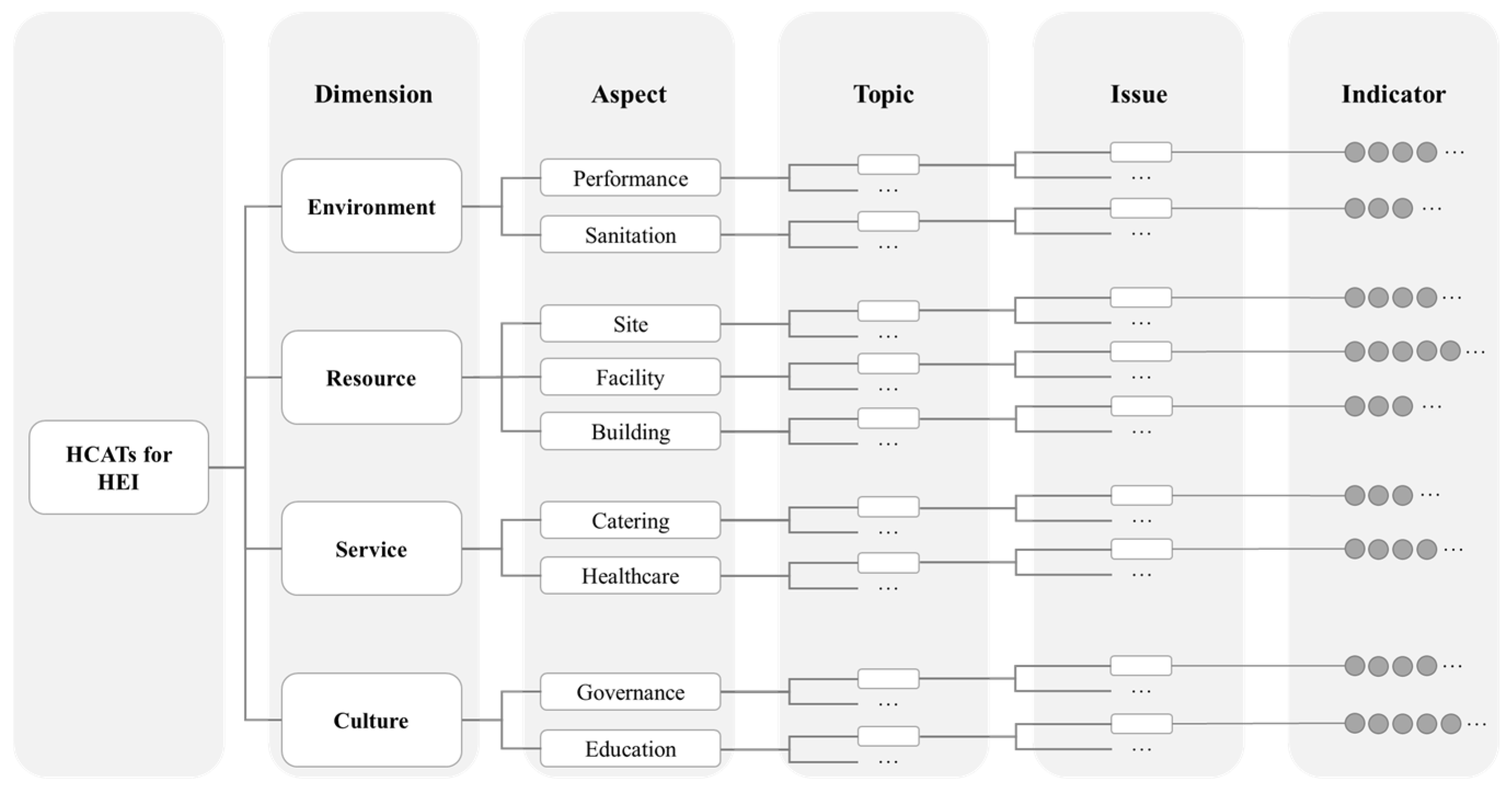
The content composition and focus of the 12 HCATs were analyzed to establish a benchmark for multi-tool comparison (Figure 2). Based on a method from relevant works [84,85], all 557 indicators from the 12 HCATs were initially categorized. Four fundamental dimensions were identified based on their content:
- (1)
- Environmental performance (EN): Content related to exposure risks, such as thermal comfort, acoustic, lighting, air quality, pollution, and other aspects associated with environmental exposure.
- (2)
- Physical resources (REs): The material resources that support users’ health behaviors and lifestyles, including campus planning and transportation and the campus landscape, as well as various facilities such as sports, healthcare, etc.
- (3)
- Health services (SEs): Includes campus medical services, mental health services, catering services, and similar provisions.
- (4)
- Health culture (CU): Primarily encompasses institutional policies, operations, health education, health promotion, and health-related activities aimed at fostering a health-conducive culture.
Subsequently, within each dimension, indicators were further classified into finer subsets. A structured hierarchical framework comprising four levels—dimension, aspect, topic, and issue—was established to match the content covered by all indicators. To ensure reliability, the assignment of each indicator to dimensions, aspects, topics, and issues was conducted through two independent processes, with the final results determined based on consensus between the two. Ultimately, all 557 indicators were classified into 9 aspects, 33 topics, and 78 issues across the four dimensions (Figure 2).
Figure 2.
The hierarchy of the content analysis.
2.2.3. Indicator Characteristics
Recent advances in multi-source information integration and system-level status evaluation offer methodological insights that could complement the weighting and indicator aggregation approaches used in our review [86]. The weight distribution of HCATs was calculated using the following methods: (i) for assessment systems that employ weight coefficients or weighted scoring, the weight of each evaluation indicator was calculated as its proportion relative to the total; (ii) for assessment systems without explicit weights or weighted scores, weights were derived based on the number of indicators within each structural component as a proportion of the total number of indicators.
It should be noted that for tools without explicit weights, assigning weight based on indicator count assumes equal importance per indicator, which is a simplification. This approach is adopted only for cross-tool comparison of emphasis; the results should be interpreted as a proxy of relative attention rather than true metric importance. Future quantitative validations are needed.
In addition to weights, the different types of indicators adopted by the assessment systems were documented, including quantitative indicators based on measurable or relative parameters and qualitative indicators based on comprehensive evaluation. The characteristics of each indicator type were also examined.
2.3. Comparison of HCATs and Related Chinese Tools
2.3.1. Selection of Related Chinese Tools
The publicly accessible document databases of the Chinese government and housing sector—namely, the State Council Policy Document Library and the Ministry of Housing and Urban–Rural Development Standards and Norms Library—were selected to search for officially published and currently implemented assessment tools. Based on relevance and practical application, the following tools were chosen for comparison:
- (1)
- ASGC [87] (GB/T 51356-2019) is a green campus assessment tool for higher education institutions issued by China’s Ministry of Housing and Urban–Rural Development (MoHUD), which includes “environment and health” as one of the core objectives of sustainable campuses.
- (2)
- CAHS [88] (GB/T 18205-2012) is a supervisory assessment tool for campus environmental hygiene originally issued by the former Chinese Ministry of Health, now under the National Health Commission (NHC). It serves as a unified national standard for evaluating environmental health across all types of educational institutions.
- (3)
- ASHC [89] (T/CECS 650-2020) is jointly issued by the China Association for Engineering Construction Standardization (CECS) and the Chinese Society for Urban Studies (CSUS). It functions as a community-level assessment tool within China’s healthy building evaluation framework.
These tools were developed for green campuses, environmental hygiene, and healthy communities, respectively. They either address campus health issues or target environments similar to university campuses, and are therefore regarded as potential alternatives for HC development in Chinese HEIs.
2.3.2. Comparison with HCATs
The characteristics of the three relevant Chinese assessment tools were extracted. Next, all 299 indicators from the Chinese tools were mapped into the content framework of the HCATs based on their evaluative content. This process utilized the previously established HCAT content framework, and indicators that could not be aligned with the HCAT framework were excluded from subsequent analyses. Additionally, differences in specific clauses and benchmarks between the Chinese tools and HCATs under the same evaluative content were examined. This approach was used to investigate discrepancies in content scope between the relevant Chinese tools and the specialized HCATs.
The indicator weights for the Chinese tools were determined based on their respective calculation models. Among the three tools, ASGC and ASHC reflect importance through the scores assigned to each indicator, while CAHS reflects emphasis through the number of indicators in each aspect. Therefore, actual weight calculations for ASGC and ASHC were based on the score weight of each indicator, whereas for CAHS, weights were calculated based on the proportion of indicators. The proportion of content aligned with HCATs in each Chinese tool was computed, as well as the emphasis each Chinese tool places on HCAT content. This allowed for an examination of how the Chinese tools prioritize HCAT-related content. Furthermore, the operational characteristics of all 299 indicators across the three Chinese tools were documented.
3. Results
3.1. Characteristics of HCATs
3.1.1. Properties
The basic characteristics of the HCATs are shown in Table 4.
Table 4.
The basic features of the HCATs.
- (1)
- Context and Purpose
The global or regional property of a HCAT is determined by its development context and the geographic scope of its application status. The distinction between global and regional HCATs is not absolute. Rather than being mutually exclusive, they can interact through information sharing and mutual benefit, and are flexibly adaptable in application.
- Global: Global HCATs are designed to assess and guide the development of HCs in HEIs across multiple countries or worldwide. For instance, HCS was developed within a global university context and has been applied in numerous countries. Similarly, HURS serves as a coordinating benchmark for HC development within ASEAN universities, aligning with the characteristics of a global tool. HUSRT also functions as a global instrument. Initially created for UK universities, it has since been extended to institutions across the Commonwealth.
- Regional: Some HCATs focus on HC development within a regional scope. Tools such as PACES, POINTS, CEPS, CCES, UHI, and BEPS were developed and validated using data from a single country. CAT is also considered a regional instrument, applied in both the United States and Canada. COSE is tailored more closely to the built environment context of specific campuses in Canada, while HGSC is designed for educational campuses in the United States. In response to their respective regional contexts, these HCATs purposefully address the specific health needs of local HEIs. For example, PACES, POINTS, CEPS, and CCES consider factors such as physical activity, healthy eating, and safety within U.S. campuses.
- (2)
- Application and Process
HCATs serve as reference and guidance tools for HEIs for developing HC initiatives. Two distinct application approaches have been identified:
- Rating and Certification: This category includes tools such as HCS, HGSC, and HURS, which provide reliable frameworks for rating and certifying HC progress in HEIs. They employ clear scoring models to assess the level of HC development and output overall ratings based on score intervals, thereby encouraging institutional engagement and accountability. HGSC uses a weighted scoring system summed arithmetically, while HURS incorporates a weighted calculation model. HCS applies equal-weighted indicators, reflecting importance through the number of items per dimension, and sets minimum required scores for each aspect in addition to overall thresholds. Most tools in this category are designed for self-assessment, though HGSC has also developed a rapid assessment version for institutional self-review.
- Scale and Audit: This property group comprises HURST, POINTS, CCES, COSE, CEPS, CAT, BEPS, UHI, and PACES. These tools focus on investigating the current state of HC in HEIs, aiming to support self-evaluation, research, information dissemination, and increasing awareness. Although they do not produce tiered results, most—including HURST, POINTS, CCES, COSE, CEPS, BEPS, and UHI—have developed structured index calculation systems. PACES uses normalized results suitable for cross-institutional comparison. CAT originates from an online multi-campus survey and presents frequency distributions to reflect user demographics and perceptions. UHI, POINTS, and PACES rely on objective data for assessment. Most tools in this category provide clear guidelines for use, with POINTS and PACES including reference criteria for interpreting results.
3.1.2. Emphasis of HCATs
- (1)
- Emphasis of HCATs on Dimensions and Aspects
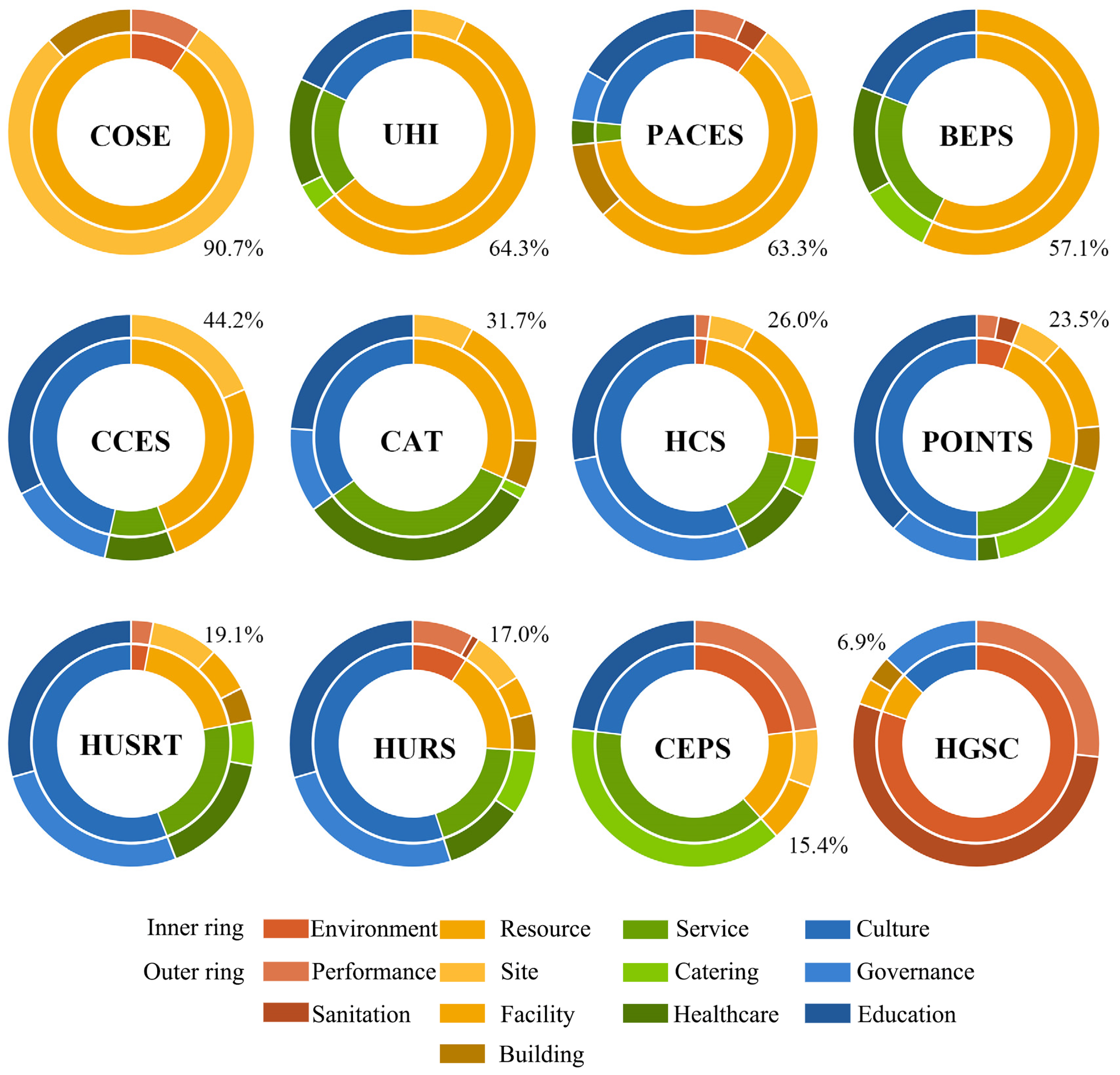
- EN: This dimension recorded the lowest average weight proportion (11.8%). With the exception of HGSC (80.2%), most assessment systems assigned limited emphasis to this dimension.
- RE: This dimension received widespread attention across the assessment systems (37.3%), with weights ranging from 6.9% (HGSC) to 90.7% (COSE), and represented the largest proportion in five HCATs. Within this dimension, the Facility aspect attracted the most focus (average 20.2%), followed by the Site aspect (average 13.0%). The Building aspect accounted for an average of 4.1% and was not emphasized in UHI, CCES, CEPS, or BEPS.
- SE: The average weight proportion for this dimension was 17.8%, ranging from 0% (HGSC, COSE) to 44.4% (CAT). Apart from CEPS and CAT, weights were relatively balanced across the remaining assessment systems in this dimension.
- CU: This dimension also received considerable emphasis (average 33.0%). The education aspect accounted for an average of 21.6% and represented the largest aspect in CCES, POINTS, HURST, and HURS. The governance aspect averaged 10.9% (Figure 3).
Figure 3.
Emphasis attributed to dimensions by HCATs, in order of %, dedicated to the RE dimension. The inner loop represents the weights of each dimension, while the outer loop reflects the weights of each aspect. Number indicates RE dimension weight.
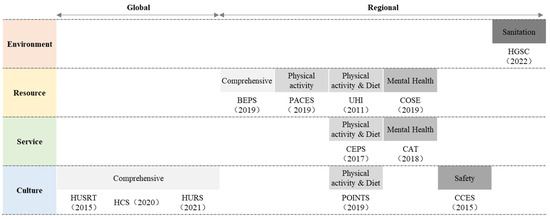
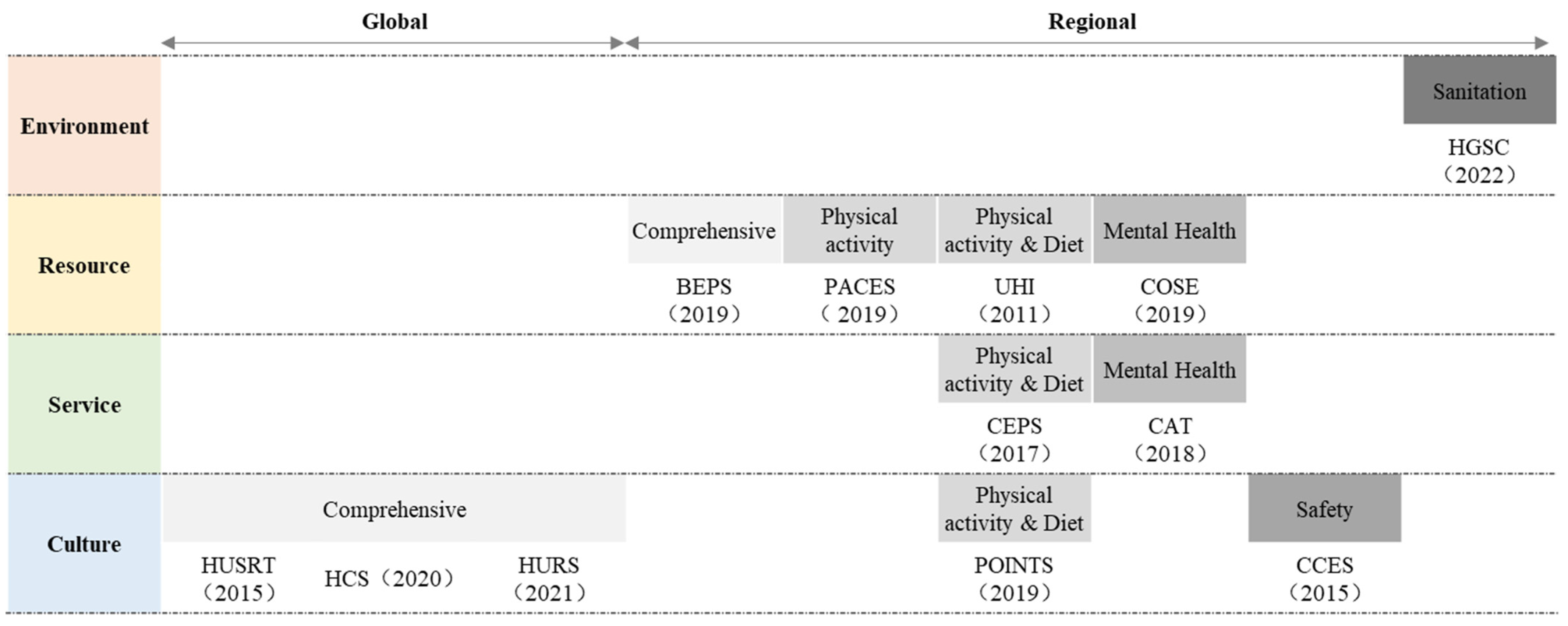
Overall, global HCATs are designed to promote a shared vision of healthy campuses across HEIs in countries with varying development levels and specific needs. Such tools generally prioritize the culture dimension. Among regional HCATs, POINTS emphasizes the establishment of health-oriented cultures at the institutional level. Other regional HCATs focus on more targeted health benefits, often shaping their priorities around specific outcomes. Those regional HCATs concerned with physical activity tend to treat the physical resource dimension as the highest priority (Figure 4).
Figure 4.
The emphasis of HCATs with different contexts and purposes.
- (2)
- Emphasis of HCATs on Topics and Issues
- EN: Eight tools, comprising 76 indicators, address issues related to this dimension. The air and water topics are covered by the most HCATs, while some also address external climate conditions as well as hygiene and pollution risks on campus.
- HGSC includes the most evaluation content in this area, whereas other systems generally cover two to three topics each, with variations in their specific focus (Table 5).
- RE: All HCATs address this dimension, encompassing a total of 180 indicators. Most HCATs focus on the Site and Facility aspects (11/12), while some also include requirements concerning the Building aspect. The majority of HCATs cover topics within this dimension, such as the Transportation (10/12) and Fitness topics (9/12). Half of the HCATs address themes related to Safety and Universal design.
- With the exception of HGSC and CEPS, HCATs generally cover multiple topics within this dimension. HURST demonstrates the broadest coverage of content in this dimension, while PACES, HURS, and POINTS also address a relatively wide range of related topics (Table 6).
- SE: A total of 93 indicators from 10 HCATs are classified under this dimension. Most HCATs address the topic of medical services, covering topics such as Medical treatment, Health checkup, Disease surveillance, Vaccination, and Sexual health (9/12). Food Supply and mental health services are two other widely emphasized topics (7/12 each). Some assessment systems also highlight the food information (5/12) and food management (4/12) topics within HEIs (Table 7).
- All topics within this dimension are addressed by multiple HCATs, with tools such as POINTS and HCS covering the majority of the topics and issues in this dimension.
- CU: This dimension encompasses 208 indicators from 11 HCATs. Most HCATs address the Curriculum and activity topics (9/12). Guaruntees and publicity for HC development in HEIs are also emphasized by a majority of HCATs (8/12). Many have established provisions to encourage knowledge production related to health (8/12). Institutional organization structures (6/12) and special policies (7/12) represent another focus for some HCATs (Table 8).
Table 5.
The emphasis of HCATs in the EN dimension.
Table 6.
The emphasis of HCATs in the RE dimension.
Table 7.
The emphasis of HCATs in the SE dimension.
Table 8.
The emphasis of HCATs in the CU dimension.
All these HCATs cover both the governance and education aspects and include multiple topics within them. High consistency is observed across HCATs in provisions related to health education, activities, and governance frameworks. POINTS, HURS, HCS, and HURST provide the most comprehensive coverage of this dimension.
- Unique Content: Additionally, there was some content within HCATs that was identified to feature distinctive provisions, while still being classified under relevant content categories. For example, HURS includes content related to unhealthy behaviors such as gambling and drug use. CAT further distinguishes the psychological conditions of different demographic groups on campus. PACES and COSE require the collection of environmental and user-specific parameters for assessment.
3.1.3. Indicator Characteristics of HCATs
- (1)
- Quantitative indicators
- Relative metrics are widely employed in quantitative indicators to provide a holistic assessment of various aspects of campus environments. For instance, HURS uses measures such as coverage rates and proportions to evaluate environmental strategies, campus policies, and funding. Some rating-oriented HCATs incorporate clauses aligned with relevant standards in their quantitative indicators. HGSC references the WELL Standard clause SA1 in its “ventilation assessment.” Audit- and scale-focused tools with narrower scopes include a reasonable number of quantitative indicators. PACES, for example, consists of 30 indicators covering categories, Likert-scale items, and parametric measures.
- (2)
- Qualitative indicators
- Qualitative indicators are widely used in current HCATs to assess the nature and effectiveness of measures, with supporting conditions established to ensure their proper application. Rating and Certification tools provide detailed criteria and information requirements to aid evaluators in judgment. For example, within the “Safe Buildings and Infrastructure” category, HURS requires HEIs to submit documents, implementation records, and incident-free reports to substantiate qualitative assessments.
- Scale and Audit tools incorporate operational-level specifications. For instance, POINTS and HURST employ a dual-review rule for evaluating information. Some qualitative indicators in CCES, CAT, and CEPS are derived from subjective surveys, where responses from individuals within an HEI are aggregated to form an institutional-level assessment.
3.2. Comparison of HCATs and Related Chinese Tools
3.2.1. Comparison of Properties
Context and Purpose: The three selected Chinese assessment tools were all developed for Mainland China. Each represents a distinct environmental development objective in the local context. ASGC outlines a higher education environment based on safety, health, suitability, and efficiency, advocating for the synergistic achievement of resource conservation and environmental protection. CAHS targets a traditionally hygienic environment, covering areas such as sanitation, food safety, and infectious disease prevention. ASHC promotes environments that not only fulfill their basic functions but also provide additional facilities and services that enhance user health. Both ASGC and ASHC encompass broader and more integrated objectives, whereas CAHS has a more focused scope.
Application and Process: The three Chinese tools all fall under the Rating and Certification property. They share similar application approaches and procedures with their counterparts among the HCATs. A common step in their process involves submitting relevant documentation to external bodies for evaluation, and the resulting scores are typically converted into rating levels to summarize overall performance.
3.2.2. Comparison of Emphasis
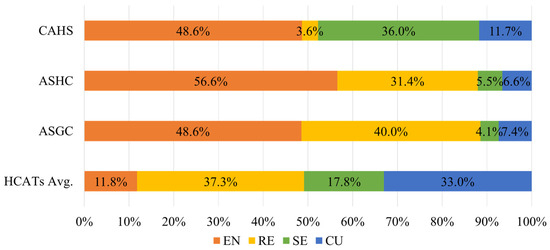
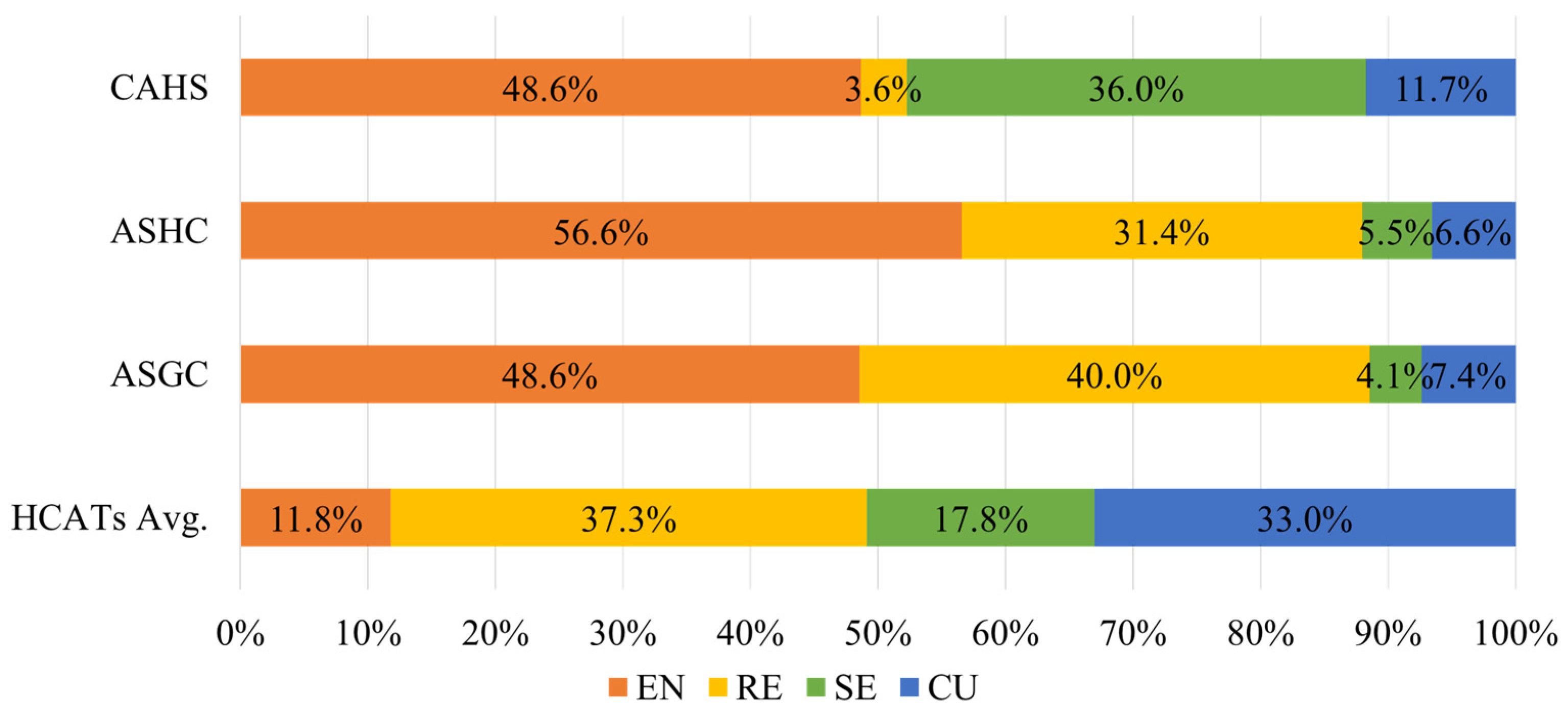
More than half of the indicators from the Chinese alternatives show similarities with the HCATs. Specifically, 45 indicators (51.1%) in the HEI sector of ASGC align with the HCAT framework; 95 indicators in CAHS (97.9%) and 104 indicators in ASHC (91.2%) can be matched (Figure 5).
Figure 5.
The emphasis attributed to dimensions by Chinese-relevant tools.
- (1)
- Comparison of Emphasis on Dimensions and Sectors
- EN: The Chinese tools place greater overall emphasis on this dimension. Compared to the HCATs, their focus on this dimension is more consistent (48.6–59.1%). Both ASGC and ASHC prioritize performance aspects most heavily, while CAHS places greater emphasis on sanitation.
- RE: The emphasis on this dimension varies among the Chinese tools. The weights assigned in ASGC (31.4%) and ASHC (40.0%) are close to the average level of HCATs. In contrast, CAHS assigns the lowest weight to this dimension (3.6%).
- SEe: CAHS places stronger emphasis on this dimension, with balanced weights in both catering and healthcare. ASGC and ASHC allocate only about 5% weight to this dimension, which is below the average level observed in HCATs.
- CU: The three Chinese tools assign weights ranging from 6.6% to 11.7% to this dimension, failing to reach the average level of HCATs. CAHS has the highest weight in this dimension (11.7%), focusing primarily on governance and education related to public health.
- (2)
- Comparison of Emphasis on Topics and Issues
- EN: All topics and most issues in this dimension are supported by at least two Chinese tools. The three tools show the broadest consensus in addressing the topics of air and water. ASGC and ASHC cover nearly all themes and the majority of topics, while CAHS focuses primarily on air, water, and sanitation within buildings (Table 9).
Table 9.
The emphasis of Chinese tools in the EN dimension.
- RE: Although all Chinese tools cover this dimension, their scope varies significantly. The most commonly addressed content belongs to the health facilities. Certain topics, such as construction safety on campus, restorative spaces, and active design in buildings, are not covered by any of the Chinese tools. Campus planning, fitness facilities, and catering facilities each appear in only one tool, while other themes are supported by two tools.
ASHC provides the broadest coverage within this dimension, followed by ASGC. CAHS is limited almost entirely to healthcare facilities (Table 10).
Table 10.
The emphasis of Chinese tools in the RE dimension.
- SE: The content within this dimension is relatively narrow across the Chinese tools. Food management and medical services are the most widely covered topics. ASHC and ASGC also mention mental health services, with ASHC additionally focusing on healthy food availability. The topic of food information is not addressed by any of the Chinese tools (Table 11).
Table 11.
The emphasis of Chinese tools in the SE dimension.
Compared to CAHS, ASHC and ASGC offer more comprehensive coverage in this dimension, as CAHS is limited to food safety and medical services.
- CU: While the Chinese tools support multiple topics within this dimension, the overall emphasis is modest. Guarantees, curriculum, and publicity are jointly supported by all three tools. Some operational strategies and campus activities are also mentioned in ASGC and ASHC. Beyond these commonly addressed topics, a few others appear sporadically, such as organizational structures for healthy environments and emergency preparedness. However, thematic measures in HEIs and health-related knowledge production are overlooked (Table 12).
Table 12.
The emphasis of Chinese tools in the CU dimension.
- Unmatched content: Certain content in the Chinese alternatives does not align with the HCAT analytical framework. Examples include clauses in ASGC related to building material efficiency, efficient irrigation for greenery, and prefabricated construction; clauses in ASHC concerning children and the elderly; and incentive clauses in both ASGC and ASHC that encourage the pursuit of other certifications. CAHS also includes indicators recording institutional conditions (e.g., per capita area, number of beds), which were not matched within the HCAT framework.
3.2.3. Comparison of Indicators
Absolute metrics are more commonly used in the Chinese tools. Beyond measuring performance parameters, they are also employed to assess the implementation of certain measures. For example, ASGC uses the number of times an activity is conducted to evaluate promotional and educational initiatives. Relative metrics are used less frequently and are typically applied to assess scale. Examples include clauses in ASHC concerning the per capita area of service facilities, the proportion of area dedicated to communication spaces, and the green space ratio.
Qualitative indicators are used less often in the Chinese tools and are primarily applied to verify the existence of measures. Examples include ASGC’s requirements for management mechanisms, ASHC’s stipulations regarding accessibility conditions and services, and CAHS’s requirements for emergency preparedness measures.
The Chinese tools also consider alignment with other established standards. For instance, ASHC defines its relationship with China’s Assessment Standard for Healthy Building (ASHB). Both standards reference a consistent set of normative documents.
4. Discussion
Unlike prior work focusing on single health objectives, this study explores the overall typological characteristics of HCATs. By comparing HCATs internally, the study identifies their properties and clarifies the overall vision they address. Furthermore, by using Chinese-related alternatives as an external reference, it compared the distinctive typological properties of HCATs compared to other relevant assessment tools, such as those for sustainable campuses and healthy communities.
4.1. Characteristics of HCATs
Overall, HCATs emphasize the holistic engagement of HEIs. Their content includes not only the physical environmental elements that constitute a healthy campus but also the non-material supporting factors that help maintain and operate these physical environments. This indicates that current HCATs place greater emphasis on the synergistic effects among different strategic approaches, rather than focusing solely on the isolated impact of individual measures. To some extent, this also aligns with the whole-institution philosophy and initiatives of healthy campuses in higher education [6].
Given their varied development contexts and objectives, HCATs exhibit clear differences in the organization and emphasis of specific evaluation content. Although HCATs are designed with diverse content structures to assess health support and guide cross-domain interventions, lifestyle or behavioral interventions are widely regarded in this study as pathways to health outcomes within the campus environment. Consequently, most assessment tools, in terms of the physical environment, focus more on physical resources that facilitate or promote various health behaviors on campus, rather than on the conventional physical performance of the built environment. At the same time, many assessment tools also emphasize the healthy culture dimension, aiming to establish institutional safeguards for campus physical environment development through governance, education, and other efforts, while reducing barriers to the use of these physical resources. The emphasis on these two dimensions creates a cycle of physical environment construction and utilization, designed to fully leverage the campus environment in promoting students’ healthy lifestyles.
Previous works have reviewed the characteristics of some certain HCATs in application, such as their features [36], scale [33], and the nature of assessment outcomes [38]. Within a broader sample of HCATs, their application characteristics exhibit even greater diversity, yet it remains possible to outline some common trends worthy of consideration. Overall, the composition of indicators, measurement methods, and evaluation processes of HCATs are closely linked to their respective tool types. Regardless of the operational mode initially envisioned during development, qualitative indicators and quantitative indicators employing relative metrics remain the primary approaches used by HCATs to assess complex factors within campus environments. This likely stems from the integrated nature of campuses themselves. Unlike individual healthy buildings on campus, a campus more closely resembles a micro-city composed of diverse workplace and living environments. Consequently, evaluating subsystems at the whole-campus level involves multiple interconnected elements. For example, assessing conditions related to sports facilities, medical services, and other resources typically encompasses various buildings, dormitories, sports venues, laboratories, and different administrative units. In such contexts, many HCATs commonly incorporate qualitative indicators to balance measurement scales with comprehensiveness.
4.2. Comparison of HCATs and Related Chinese Tools
Through comparative analysis with existing assessment tools in China, it is evident that while Chinese tools share similarities with HCATs in terms of objectives, content, and usage to varying degrees, none of them can fully substitute the role of HCATs as a standalone tool.
As a sustainable campus assessment tool, ASGC encompasses broader evaluation objectives and more diverse assessment content. While ASGC addresses certain typical campus health issues—such as a comfortable and safe environment and accessibility—its coverage remains limited. Moreover, a significant portion of its content focuses on other Sustainable Development Goals (SDGs), such as resource consumption and carbon emissions. Even in areas of overlapping focus, ASGC’s criteria tend to be more generalized. For example, it qualitatively assesses whether campus planning integrates with natural topography and protects site ecology, whereas HCATs specify more concrete requirements, such as providing dynamic or plant-based landscape resources. On the other hand, shared evaluation content may serve different underlying objectives. Furthermore, even when addressing similar evaluation content, the two systems may serve different underlying objectives. For instance, in the area of campus transportation, ASGC places greater emphasis on carbon reduction, whereas HCATs commonly focus on promoting active mobility. These distinctions make HCATs more efficient than ASGC in aligning with the specific goals of healthy-campus development, as their streamlined structure and targeted guidance are inherently designed to advance campus health outcomes.
CAHS focuses on localized aspects of HCs, such as environmental hygiene, food safety, and disease prevention and control, while overlooking resources related to campus landscapes, transportation, and facilities, as well as the enhancement of health skills and awareness. As a compliance-based assessment tool, CAHS emphasizes the management of health risks on campus, which results in more basic benchmarks for its evaluation criteria. Moreover, the implementation of these criteria is often limited to only a few departments within the campus. Consequently, CAHS does not fully reflect the health promotion orientation of contemporary HC or the setting-based whole-institution approach [6].
Studies have documented cases where HEIs have adopted healthy-community assessment tools. By comparing ASHC with HCATs, this research not only confirms their overall similarities but also provides a detailed understanding of their differences. As China’s official healthy-community assessment tool, ASHC covers all four dimensions of HCATs and shares a common focus on certain physical resources and cultural factors. However, ASHC carries distinct residential community characteristics and does not sufficiently address the needs of young populations, which reduces its relevance to the core demographic of HEIs. The residential focus of communities also differs from the nature of university campuses, reflected in ASHC’s stronger emphasis on physical environment aspects (EN and RE) and relatively limited attention to services and governance. Importantly, due to differences in the settings they target, the two tools diverge in the scoring benchmarks of many indicators. For instance, ASHC requires the designation of permitted smoking areas. Thus, ASHC does not fully represent the characteristics of HEIs and their users. The choice between the two tools depends primarily on establishing consensus regarding the unique goals of HC. Widespread recognition among HEI leadership of the specific challenges involved in HC development would make HCATs more advantageous than introducing healthy-community assessment tools.
Therefore, this study shows that HCATs demonstrate higher efficiency compared to existing Chinese tools. That is, they achieve a more comprehensive description of health-promoting environmental goals with fewer non-health-related items, align more directly with the behavioral and cultural determinants of health, and show better fit with campus characteristics. For example, ASGC allocates only 51.1% of its indicators to health-relevant content. CAHS uses 97.9% of its indicators but covers only a subset of the 12 environmental hygiene-related topics, mainly concentrated in the EN and CU dimensions. ASHC overlooks the role of HEIs in cultural governance. In contrast, HCATs devote more than 80% of their indicators to constructing environmental factors that support campus behaviors and culture. Their clear focus, broad coverage, and strong alignment with HEIs provide higher efficiency in assessing campus HC levels.
The observed differences between HCATs and Chinese tools may reflect deeper institutional and disciplinary divergences. HCATs largely emerged from health promotion and behavioral sciences, often developed by university networks or NGOs, emphasizing user–environment interaction and institutional culture. In contrast, ASGC and CAHS originate from engineering and public health traditions, prioritizing measurable physical parameters and compliance with national standards. This governance difference—bottom-up versus top-down—also shapes the tools’ scope: HCATs aim to guide voluntary improvement, whereas Chinese tools serve as mandatory benchmarks. Understanding these underlying logics is essential for adapting HCAT insights to the Chinese context without imposing foreign frameworks directly. The priority on RE and CU indicates a paradigm shift from a “deficit” model (reducing exposure to hazards) to an “asset” model (building resources and capabilities for health). This shift aligns with the salutogenic framework, which emphasizes creating supportive environments rather than merely preventing disease. Chinese tools, by contrast, remain largely deficit-oriented, focusing on eliminating hygiene risks and complying with performance standards.
4.3. Suggestions for Chinese HCAT Development
The internal review and external comparison of HCATs have identified key development trends in related assessment instruments. HCATs focus on conceptual guidance and campus-specific environmental characteristics in their content, while prioritizing ease of promotion across institutions and usability in diverse application scenarios. These observations offer valuable insights for the future development of HCATs in China.
Specifically, the emphasis of HCATs on the physical resource dimension can serve as a reference for the future development of Chinese tools. Although all the Chinese tools examined in this study demonstrated greater specificity and rigor in terms of the environmental performance dimension, it should be noted that most university campuses in China are self-contained enclosed spaces, and newly built campuses are increasingly located in peri-urban areas. Consequently, the campus environment itself largely constitutes the physical context and resource foundation for students’ daily life and activities. This further elevates the importance of the resources dimension in modifying students’ lifestyles and supporting health-related behaviors. In the physical resource dimension, priority should be given to adding assessment indicators for active transport facilities (e.g., bike lanes, walkways) and fitness facilities (both indoor and outdoor sports areas). In the health culture dimension, the weight of health education curricula and governance mechanisms (such as cross-departmental health committees) should be strengthened. Moreover, future Chinese HCATs may draw upon mature environmental performance clauses from the Assessment Standard of Green Campus while supplementing with HCAT-specific behavioral support indicators. Future Chinese HCATs may further align with this characteristic by emphasizing the role of campus physical resources in facilitating behavior change and health promotion.
Given the multifaceted content that future HCATs may encompass and the existing array of assessment tools and standards on campuses, cross-referencing indicator clauses and evaluation benchmarks between HCATs and relevant established frameworks is a feasible approach. This practice has already been adopted in several current HCATs and Chinese assessment tools and has been validated in the development of broader healthy-environment evaluation systems. Such an approach helps control the scale of indicators while reducing coordination costs among overlapping criteria across various campus subsystems, as well as between objectives such as HC and Sustainable Development.
5. Conclusions
This study reviewed current HCATs designed for HEIs, along with relevant Chinese assessment instruments. Through analysis, 12 HCATs and 4 context-specific Chinese assessment tools were identified. An internal and external comparison of HCATs revealed and interrelated their basic characteristics—including their background, objectives, evaluation content, emphasis, indicator types, assessment procedures, and measurement methods—while also informing the future development of Chinese HCATs.
The conclusion highlighted that:
- Regardless of context, HCATs consistently emphasize the role of campus environments in promoting students’ healthy lifestyles and behaviors. Their focus on the built environment centers on physical resources that support such behaviors, rather than on conventional environmental performance, while also emphasizing non-material factors that facilitate the development and usage of these resources.
- The current development of HCAT indicators is characterized by the use of qualitative measures, relatively scaled quantitative metrics, and the incorporation of established criteria.
- HCATs demonstrate greater efficiency in assessing health-related aspects, with over 80% of their indicators focusing on the RE and CU dimensions compared to only 51.1% in ASGC. They also provide more systematic coverage, while Chinese tools cover only limited topics, and show stronger alignment with higher education institutions. These advantages make it difficult for existing Chinese tools to fully replace the role of HCATs.
The internal and external features of HCATs clarify the distinct demands of healthy-campus development as an emerging goal for HEIs. Future research should periodically examine the evolving progress and characteristics of HCATs in light of ongoing explorations in HEI healthy-campus practice. Additionally, this study could be expanded through empirical analysis to test the real-world impact of HCATs and propose context-informed recommendations. From a practical perspective, university administrators are encouraged to prioritize HCATs that integrate the RE and CU dimensions and to establish cross-departmental governance structures. Campus planners should adopt RE dimension indicators—such as active transport and fitness facilities—as design benchmarks. Policymakers may use the gap analysis presented here to inform the development of a national HCAT standard tailored to Chinese HEIs.
6. Limitations
This analysis has certain limitations that could be addressed in future research. First, while the distinct features of HCATs were discussed based on their fundamental development backgrounds and application contexts, the underlying differences in these backgrounds and their implications for the practice of healthy campuses in HEIs have rarely been explored. Second, the study was limited to Chinese assessment tools as comparative cases. Although nationally representative tools were selected, locally developed or specialized tools that are not fully publicly accessible may have been excluded. Meanwhile, the application and quantification of protocols in the screening process could be further improved. Finally, the proposed references are drawn primarily from the components of the selected HCATs and may not reflect a broader perspective.
Author Contributions
Conceptualization, G.C. and K.S.; methodology, G.C.; validation, G.C.; formal analysis, G.C. and F.C.; investigation, G.C.; resources, G.C. and K.S.; data curation, G.C. and B.Z.; writing—original draft preparation, G.C.; writing—review and editing, G.C. and F.C. and K.S. and B.Z.; visualization, G.C.; supervision, K.S.; project administration, G.C. and K.S.; funding acquisition, G.C. and K.S. All authors have read and agreed to the published version of the manuscript.
Funding
This research was jointly funded by the National Natural Science Foundation of China, No. 52078325, and the Youth Research Special Project of North China University of Technology, No. 2025NCUTYRSP026.
Data Availability Statement
The data presented in this study are available on request from the corresponding author.
Acknowledgments
The authors would like to express their gratitude to the reviewers of this journal who have offered important and very beneficial insights into this inquiry and have contributed to increase the overall quality of the manuscript.
Conflicts of Interest
The authors declare no conflicts of interest.
Abbreviations
The following abbreviations are used in this manuscript:
| HCAT | Healthy-Campus Assessment Tool |
| HEI | Higher Education Institution |
| HC | Healthy Campus |
Appendix A
Table A1.
The screening process of HCATs in reference order.
References
- Jackson, M.L.; Weinstein, H.M. The importance of healthy communities of higher education. J. Am. Coll. Health 1997, 45, 237–241. [Google Scholar] [CrossRef] [Scilit]
- Charter, O. Ottawa Charter for health promotion. In First International Conference on Health Promotion; World Health Organization: Geneva, Switzerland, 1986. [Google Scholar]
- WHO. Good Urban Governance for Health and Well-Being: A Systematic Review of Barriers, Facilitators and Indicators; WHO: Geneva, Switzerland, 2023. [Google Scholar]
- Srinivasan, S.; Fallon, L.R.O.; Dearry, A. Creating healthy communities, healthy homes, healthy people: Initiating a research agenda on the built environment and public health. Am. J. Public Health 2003, 93, 1446–1450. [Google Scholar] [CrossRef] [Scilit]
- Roncone, J. Healthy Campus Wellness Initiative: Bridging the Gap between Healthy Campus 2020. AURCO J. 2019, 25, 160–176. [Google Scholar]
- Newton, J.; Dooris, M.; Wills, J. Healthy universities: An example of a whole-system health-promoting setting. Glob. Health Promot. 2016, 23, 57–65. [Google Scholar] [CrossRef] [Scilit]
- Dooris, M.; Wills, J.; Newton, J. Theorizing healthy settings: A critical discussion with reference to Healthy Universities. Scand. J. Public Health 2014, 42, 7–16. [Google Scholar] [CrossRef] [Scilit]
- Dooris, M.T.; Jennie, C.; Sharon, D.; Sue, P. Healthy Universities: Concept, Model and Framework for Applying the Healthy Settings Approach Within Higher Education in England; University of Central Lancashire: Preston, UK, 2010. [Google Scholar]
- Pani, S.M.; Mereu, A.; Floris, L.; Brunelli, L.; Cadoni, F.; Contu, P.; Fanti, M.; Lemma, P.; Paglino, F.; Scaioli, G.; et al. The Okanagan charter in action: Mapping health promotion strategies in Italian state universities in 2025. BMC Public Health 2025, 25, 3458. [Google Scholar] [CrossRef] [Scilit] [PubMed]
- Dooris, M.; Farrier, A.; Doherty, S.; Holt, M.; Monk, R.; Powell, S. The UK Healthy Universities Self-Review Tool: Whole System Impact. Health Promot. Int. 2016, 33, 448–457. [Google Scholar] [CrossRef] [Scilit] [PubMed]
- Barton, H.; Grant, M. A health map for the local human habitat. J. R. Soc. Promot. Health 2006, 126, 252–253. [Google Scholar] [CrossRef] [Scilit] [PubMed]
- WHO. Preamble to the Constitution of the World Health Organization as Adopted by the International Health Conference; WHO: New York, NY, USA, 1946. [Google Scholar]
- Chen, Z.; Wang, J.; Ma, G.; Zhang, Y. China tackles the health effects of air pollution. Lancet 2013, 382, 1959–1960. [Google Scholar] [CrossRef] [Scilit]
- Tong, S.; Prior, J.; McGregor, G.; Shi, X.; Kinney, P. Urban heat: An increasing threat to global health. BMJ 2021, 375, n2467. [Google Scholar] [CrossRef] [Scilit]
- Azeez, S.A.; Mustafa, F.A.; Ahmed, R.M. A Meta-Analysis of Evidence Synthesis for a Healthy Campus Built Environment by Adopting Active Design Approaches to Promote Physical Activity. Buildings 2023, 13, 1224. [Google Scholar] [CrossRef] [Scilit]
- Hipp, J.A.; Gulwadi, G.B.; Alves, S.; Sequeira, S. The relationship between perceived greenness and perceived restorativeness of university campuses and student-reported quality of life. Environ. Behav. 2016, 48, 1292–1308. [Google Scholar] [CrossRef] [Scilit]
- Kaplan, S. The restorative benefits of nature: Toward an integrative framework. J. Environ. Psychol. 1995, 15, 169–182. [Google Scholar] [CrossRef] [Scilit]
- Abu Elkhair, K.I.; Sarhan, A.E.N.; Bayoumi, A.A. Enhancing Social Qualities in University Campus Outdoor Spaces through Islamic Spatial Configurations: The Case of the American University in Cairo. Buildings 2023, 13, 1179. [Google Scholar] [CrossRef] [Scilit]
- Mikkelsen, B.E. Images of foodscapes: Introduction to foodscape studies and their application in the study of healthy eating out-of-home environments. Perspect. Public Health 2011, 131, 209–216. [Google Scholar] [CrossRef] [Scilit]
- Perry, C.K.; Garside, H.; Morones, S.; Hayman, L. Physical activity interventions for adolescents: An ecological perspective. J. Prim. Prev. 2012, 33, 111–135. [Google Scholar] [CrossRef] [Scilit] [PubMed]
- China, T.M.O.E. 2023 Education Statistics—Government Portal of the Ministry of Education of the People’s Republic of China. Available online: http://www.moe.gov.cn/jyb_sjzl/moe_560/2023/ (accessed on 18 April 2026).
- China to See an Increase of 430,000 College Graduates in 2025. China is Projected to See a Surge in the Number of College Graduates in 2025. With an Estimated Rise of 430,000 Graduates from the Previous Year, the Total Number of College Graduates is Expected to Reach 12.22 Million, According to Official Data released on Thursday. Available online: https://english.www.gov.cn/archive/statistics/202411/14/content_WS67358fe7c6d0868f4e8ecee6.html (accessed on 18 April 2026).
- Pan, M.; Ying, B.; Lai, Y.; Kuan, G. Status and influencing factors of physical exercise among college students in China: A systematic review. Int. J. Environ. Res. Public Health 2022, 19, 13465. [Google Scholar] [CrossRef] [Scilit] [PubMed]
- Hou, H.; Feng, X.; Li, Y.; Meng, Z.; Guo, D.; Wang, F.; Guo, Z.; Zheng, Y.; Peng, Z.; Zhang, W.; et al. Suboptimal health status and psychological symptoms among Chinese college students: A perspective of predictive, preventive and personalised health. EPMA J. 2018, 9, 367–377. [Google Scholar] [CrossRef] [Scilit]
- Cai, P.; Feng, J.; Li, X.; Hadfield, K. Social capital, psychological resilience, and psychological distress in Chinese university students: A cross-sectional survey. Acta Psychol. 2025, 261, 105938. [Google Scholar] [CrossRef] [Scilit]
- Symposium on Developing National Health Schools Held in Beijing—Ministry of Education of the People’s Republic of China. Available online: http://en.moe.gov.cn/news/press_releases/202312/t20231217_1094926.html (accessed on 18 April 2026).
- University|FISU Healthy Campus. Donghua University—Songjiang is Certified by FISU Healthy Campus Programme. Available online: https://fisuhealthycampus.sport/directory/uni/ELRa-Q8Oy-5mi9-M5DC?winid=c69638 (accessed on 13 April 2026).
- Geng, G.; Zhang, Z.; Meng, X. Interpretation and Enlightenment of the American FISU Healthy Campus Model. Sport Sci. Technol. 2023, 44, 134–136. (In Chinese) [Google Scholar] [CrossRef]
- International University Sports Federation. Healthy Campus Standard. Available online: https://www.fisu.net/programmes/healthy-campus/ (accessed on 18 April 2026).
- Harrington, S. “America’s Healthiest Campus®”: The OSU Well-Being Strategy Model. Am. J. Health Promot. 2016, 30. [Google Scholar]
- Du, Y.; Arkesteijn, M.; den Heijer, A.; Song, K. Sustainable assessment tools for higher education institutions: Guidelines for developing a tool for China. Sustainability 2020, 12, 6501. [Google Scholar] [CrossRef] [Scilit]
- Valls-Val, K.; Bovea, M.D. Carbon footprint in Higher Education Institutions: A literature review and prospects for future research. Clean Technol. Environ. Policy 2021, 23, 2523–2542. [Google Scholar] [CrossRef] [Scilit]
- Lee, H.; Ortouste, M.; Syed, A.; Mann, K. A systematic review of campus climate assessments at institutions of higher education. J. Divers. High. Educ. 2025, 18, 740. [Google Scholar] [CrossRef] [Scilit]
- Moudon, A.V.; Lee, C. Walking and bicycling: An evaluation of environmental audit instruments. Am. J. Health Promot. 2003, 18, 21–37. [Google Scholar] [CrossRef] [Scilit]
- Peng, S.; Khairani, A.; Uba, A.; Yuan, F. Physical activity measurement tools among college students in intervention studies: A systematic review. PLoS ONE 2025, 20, e0321593. [Google Scholar] [CrossRef] [Scilit] [PubMed]
- Dahl, A.A.; Fandetti, S.; Ademu, L.; Harris, R.; Racine, E.F. Assessing the healthfulness of university food environments: A systematic review of methods and tools. Nutrients 2024, 16, 1426. [Google Scholar] [CrossRef] [Scilit]
- Lane, H.G.; Calvert, H.; Deitch, R.; Harris, R.; Babatunde, O.; Turner, L.; Hager, E.; Pitts, S. A systematic review of existing observational tools to measure the food and physical activity environment in schools. Health Place 2020, 66, 102388. [Google Scholar] [CrossRef] [Scilit] [PubMed]
- García-Álvarez, D.; Faubel, R. Strategies and measurement tools in physical activity promotion interventions in the university setting: A systematic review. Int. J. Environ. Res. Public Health 2020, 17, 6526. [Google Scholar] [CrossRef] [Scilit]
- Tafireyi, C.G.S.; Grace, J.M. The physical activity and health promotion activities of global university students: A review of reviews. Glob. Health Promot. 2022, 29, 63–73. [Google Scholar] [CrossRef] [Scilit]
- Clifton, K.J.; Smith, A.D.L.; Rodriguez, D. The development and testing of an audit for the pedestrian environment. Landsc. Urban Plan. 2007, 80, 95–110. [Google Scholar] [CrossRef] [Scilit]
- Pineo, H.; Glonti, K.; Rutter, H.; Zimmermann, N.; Wilkinson, P.; Davies, M. Urban health indicator tools of the physical environment: A systematic review. J. Urban Health 2018, 95, 613–646. [Google Scholar] [CrossRef] [Scilit] [PubMed]
- Dronavalli, M.; Thompson, S.C. A systematic review of measurement tools of health and well-being for evaluating community-based interventions. J. Epidemiol. Community Health 2015, 69, 805–815. [Google Scholar] [CrossRef] [Scilit]
- Lin, Y.; Yuan, X.; Yang, W.; Hao, X.; Li, C. A review on research and development of healthy building in China. Buildings 2022, 12, 376. [Google Scholar] [CrossRef] [Scilit]
- Chen, G.; Du, Y. Design and Evaluation Framework of Green Transformation of Existing University Campus: On Weijin-Road-Campus of Tianjin University as an Example. J. BEE 2022, 50, 71–80. (In Chinese) [Google Scholar]
- Condezo-Solano, M.J.; Erazo-Rondinel, A.; Barrozo-Bojorquez, L.; Rivera-Nalvarte, C.; Giménez, Z. Global Analysis of WELL Certification: Influence, Types of Spaces and Level Achieved. Buildings 2025, 15, 1321. [Google Scholar] [CrossRef] [Scilit]
- Orme, J.; Dooris, M. Integrating health and sustainability: The higher education sector as a timely catalyst. Health Educ. Res. 2010, 25, 425–437. [Google Scholar] [CrossRef] [Scilit]
- Dooris, M.; Powell, S.; Parkin, D.; Farrier, A. Health promoting universities: Effective leadership for health, well-being and sustainability. Health Educ. 2021, 121, 295–310. [Google Scholar] [CrossRef] [Scilit]
- Davis, J.M.; Cooke, S.M. Educating for a healthy, sustainable world: An argument for integrating health promoting schools and sustainable schools. Health Promot. Int. 2007, 22, 346–353. [Google Scholar] [CrossRef] [Scilit]
- Dawodu, A.; Dai, H.; Zou, T.; Zhou, H.; Lian, W.; Oladejo, J.; Osebor, F. Campus sustainability research: Indicators and dimensions to consider for the design and assessment of a sustainable campus. Heliyon 2022, 8, e11864. [Google Scholar] [CrossRef] [Scilit]
- Lau, S.S.; Yang, F. Introducing healing gardens into a compact university campus: Design natural space to create healthy and sustainable campuses. Landsc. Res. 2009, 34, 55–81. [Google Scholar] [CrossRef] [Scilit]
- Wang, L.; Liu, R.; Yu, L. Research on Sustainable Design Strategy of University Campus Public Space from the Perspective of Health Promotion. In Proceedings of the International Conference on Construction and Real Estate Management 2024, Guangzhou, China, 23–24 November 2024; pp. 1689–1700. [Google Scholar]
- Standard Snapshot—Healthy Green Schools & Colleges. Looking for a High-Level View of the Healthy Green Schools & Colleges Standard? Available online: https://www.healthygreenschools.org/the-program/standard/standard-snapshot/ (accessed on 18 April 2026).
- Healthy University Rating System. Available online: https://www.info.aun-hpn.or.th/document/file/HURS%20Manual%202022.pdf (accessed on 13 April 2026).
- Campus Assessment Tool 2021. Available online: https://jack-productions.webflow.io/reports/cat/2021-en?_360safeparam=201863953 (accessed on 18 April 2026).
- Rimmer, J.H.; Riley, B.; Wang, E.; Rauworth, A. Development and validation of AIMFREE: Accessibility instruments measuring fitness and recreation environments. Disabil. Rehabil. 2004, 26, 1087–1095. [Google Scholar] [CrossRef] [Scilit]
- Dannenberg, A.L.; Cramer, T.W.; Gibson, C.J. Assessing the walkability of the workplace: A new audit tool. Am. J. Health Promot. 2005, 20, 39–44. [Google Scholar] [CrossRef] [Scilit]
- Cerin, E.; Saelens, B.E.; Sallis, J.F.; Frank, L.D. Neighborhood Environment Walkability Scale: Validity and development of a short form. Med. Sci. Sports Exerc. 2006, 38, 1682. [Google Scholar] [CrossRef] [Scilit] [PubMed]
- Minaker, L.M.; Raine, K.D.; Cash, S.B. Measuring the food service environment: Development and implementation of assessment tools. Can. J. Public Health 2009, 100, 421–426. [Google Scholar] [CrossRef] [Scilit]
- Goodwin, S.K. Development of the University Health Index to Examine the Interface Between Campus Environment and Nutrition, Physical Activity, and Weight in College Students. Doctoral Dissertation, Virginia Tech, Blacksburg, VA, USA, 2011. [Google Scholar]
- Horacek, T.M.; White, A.; Greene, G.; Reznar, M.; Quick, V.; Morrell, J.; Colby, S.; Kattelmann, K.; Herrick, M.; Shelnutt, K.; et al. Sneakers and spokes: An assessment of the walkability and bikeability of US postsecondary institutions. J. Environ. Health 2012, 74, 8–15. [Google Scholar]
- Horacek, T.M.; White, A.; Byrd-Bredbenner, C.; Reznar, M.; Olfert, M.; Morrell, J.; Koenings, M.; Brown, O.; Shelnutt, K.; Kattelmann, K.; et al. PACES: A physical activity campus environmental supports audit on university campuses. Am. J. Health Promot. 2014, 28, e104–e117. [Google Scholar] [CrossRef] [Scilit]
- Fish, M.C.; Fish, M.; Gefen, D.; Kaczetow, W.; Winograd, G.; Futtersak-Goldberg, R. Development and validation of the college campus environment scale (CCES): Promoting positive college experiences. Innov. High. Educ. 2016, 41, 153–165. [Google Scholar] [CrossRef] [Scilit]
- Sowers, M.F.; Colby, S.; Greene, G.; Pickett, M.; Franzen-Castle, L.; Olfert, M.; Shelnutt, K.; Brown, O.; Horacek, T.; Kidd, T.; et al. Survey Development to Assess College Students’ Perceptions of the Campus Environment. Am. J. Health Behav. 2017, 41, 701–709. [Google Scholar] [CrossRef] [Scilit]
- Horacek, T.M.; Yildirim, E.; Simon, M.; Bredbenner, C.; White, A.; Shelnutt, K.; Olfert, M.; Morrell, J.; Mathews, A.; Kidd, T.; et al. Development and validation of the full restaurant evaluation supporting a healthy (FRESH) dining environment audit. J. Hunger. Environ. Nutr. 2019, 14, 381–400. [Google Scholar] [CrossRef] [Scilit]
- Zhang, X.; Mu, L. The perceived importance and objective measurement of walkability in the built environment rating. Environ. Plan. B Urban Anal. City Sci. 2020, 47, 1655–1671. [Google Scholar] [CrossRef] [Scilit]
- Damone, V. An Exploration of University Campus Design Standards for Student Mental Health. Master’s Thesis, University of Guelph, Guelph, ON, Canada, 2019. [Google Scholar]
- McNamara, J.; Olfert, M.; Sowers, M.; Colby, S.; White, A.; Byrd-Bredbenner, C.; Kattelmann, K.; Franzen-Castle, L.; Brown, O.; Kidd, T.; et al. Development of an instrument measuring perceived environmental healthfulness: Behavior environment perception survey (BEPS). J. Nutr. Educ. Behav. 2020, 52, 152–161. [Google Scholar] [CrossRef] [Scilit]
- Mann, D.; Kwon, J.; Naughton, S.; Boylan, S.; Chan, J.; Charlton, K.; Dancey, J.; Dent, C.; Grech, A.; Hobbs, V.; et al. Development of the University Food Environment Assessment (Uni-Food) tool and process to benchmark the healthiness, equity, and environmental sustainability of university food environments. Int. J. Environ. Res. Public Health 2021, 18, 11895. [Google Scholar] [CrossRef] [Scilit] [PubMed]
- Horacek, T.; Szklany, K.; Byrd-Bredbenner, C.; Esters, O.; Shelnutt, K.; Morrell, J.; Kattelmann, K. Development and Testing of a Healthy Campus Environmental Audit and the LEAN Index: P25. J. Nutr. Educ. Behav. 2011, 43, S22. [Google Scholar] [CrossRef] [Scilit]
- Horacek, T.M.; Simon, M.; Yildirim, E.; White, A.; Shelnutt, K.; Riggsbee, K.; Olfert, M.; Morrell, J.; Mathews, A.; Zhou, W.; et al. Development and validation of the policies, opportunities, initiatives and notable topics (POINTS) audit for campuses and worksites. Int. J. Environ. Res. Public Health 2019, 16, 778. [Google Scholar] [CrossRef] [Scilit]
- Horacek, T.M.; Yildirim, E.; Seidman, D.; Byrd-Bredbenner, C.; Colby, S.; White, A.; Shelnutt, K.; Olfert, M.; Mathews, A.; Riggsbee, K.; et al. Redesign, Field-Testing, and Validation of the Physical Activity Campus Environmental Supports (PACES) Audit. J. Environ. Public Health 2019, 2019, 5819752. [Google Scholar] [CrossRef] [Scilit] [PubMed]
- Boarnet, M.G.; Day, K.; Alfonzo, M.; Forsyth, A.; Oakes, M. The Irvine–Minnesota inventory to measure built environments: Reliability tests. Am. J. Prev. Med. 2006, 30, 153–159. e43. [Google Scholar] [CrossRef] [Scilit]
- Gilson, N.D.; Ainsworth, B.; Biddle, S.; Faulkner, G.; Murphy, M.; Niven, A.; Pringle, A.; Puig-Ribera, A.; Stathi, A.; Umstattd, M. A multi-site comparison of environmental characteristics to support workplace walking. Prev. Med. 2009, 49, 21–23. [Google Scholar] [CrossRef] [Scilit]
- Roy, R.; Hebden, L.; Kelly, B.; De Gois, T.; Ferrone, E.; Samrout, M.; Vermont, S.; Allman-Farinelli, M. Description, measurement and evaluation of tertiary-education food environments. Br. J. Nutr. 2016, 115, 1598–1606. [Google Scholar] [CrossRef] [Scilit]
- Olfert, M.D.; Barr, M.; Riggsbee, K.; Kattelmann, K.; Leischner, K.; Mathews, A.; Vilaro, M.; Colby, S. A community based participatory approach to training young adults to design and implement a social marketing framed lifestyle intervention on their college campus. Educ. Sci. 2018, 8, 150. [Google Scholar] [CrossRef] [Scilit]
- Suárez-Reyes, M.; Serrano, M.M.; Sden Broucke, V. How do universities implement the Health Promoting University concept? Health Promot. Int. 2019, 34, 1014–1024. [Google Scholar] [CrossRef] [Scilit]
- Murphy, C.; Yanes, I.M.; Norton, C. Determining the healthfulness of an Irish Higher Education Institute (HEI) using the Healthy Campus Environment Audit (HCEA) tools. Proc. Nutr. Soc. 2021, 80, E113. [Google Scholar] [CrossRef] [Scilit]
- Barr, M.L.; McNamara, J. Community-Based Participatory Research: Partnering with College Students to Develop a Tailored, Wellness-Focused Intervention for University Campuses. Int. J. Environ. Res. Public Health 2022, 19, 16331. [Google Scholar] [CrossRef] [Scilit]
- Horacek, T.M.; Erdman, M.; Reznar, M.; Olfert, M.; Brown-Esters, O.; Kattelmann, K.; Kidd, T.; Koenings, M.; Phillips, B.; Quick, V.; et al. Evaluation of the food store environment on and near the campus of 15 postsecondary institutions. Am. J. Health Promot. 2013, 27, e81–e90. [Google Scholar] [CrossRef] [Scilit]
- Peachey, A.A.; Baller, S.L. Perceived built environment characteristics of on-campus and off-campus neighborhoods associated with physical activity of college students. J. Am. Coll. Health 2015, 63, 337–342. [Google Scholar] [CrossRef] [Scilit]
- Tseng, M.; DeGreef, K.; Fishler, M.; Gipson, R.; Koyano, K.; Neill, D. Assessment of a university campus food environment, California, 2015. Prev. Chronic Dis. 2016, 13, E18. [Google Scholar] [CrossRef] [Scilit] [PubMed]
- Wimbardana, R.; Tarigan, A.K.; Sagala, S. Does a pedestrian environment promote walkability? Auditing a pedestrian environment using the pedestrian environmental data scan instrument. J. Reg. City Plan. 2018, 29, 57–66. [Google Scholar] [CrossRef] [Scilit]
- Olfert, M.D.; Barr, M.; Mathews, A.; Horacek, T.; Riggsbee, K.; Zhou, W.; Colby, S. Life of a vegetarian college student: Health, lifestyle, and environmental perceptions. J. Am. Coll. Health 2022, 70, 232–239. [Google Scholar] [CrossRef] [Scilit] [PubMed]
- Alghamdi, N.; den Heijer, A.; de Jonge, H. Assessment tools’ indicators for sustainability in universities: An analytical overview. Int. J. Sustain. High. Educ. 2017, 18, 84–115. [Google Scholar] [CrossRef] [Scilit]
- Findler, F.; Schönherr, N.; Lozano, R.; Stacherl, B. Assessing the impacts of higher education institutions on sustainable development—An analysis of tools and indicators. Sustainability 2018, 11, 59. [Google Scholar] [CrossRef] [Scilit]
- Wang, Y.; Shi, Y.; Yang, T.Y. Structural Performance Warning Based on Computer Intelligent Monitoring and Fractional-Order Multi-Rate Kalman Fusion Method. Fractal Fract. 2026, 10, 186. [Google Scholar] [CrossRef] [Scilit]
- GB/T51356-2019; Assessment Standerd of Green Campus. Ministry of Housing and Urban-Rural Development, China: Beijing, China, 2019. (In Chinese)
- GB/T18205-2012; Comprehensive Appraisement for Health in Schools. Ministry Of Health, China: Beijing, China, 2012. (In Chinese)
- T/CECS 650-2020; Assessment Standard for Healthy Community. China Association for Engineering Construction Standardization: Beijing, China, 2020. (In Chinese)

Disclaimer/Publisher’s Note: The statements, opinions and data contained in all publications are solely those of the individual author(s) and contributor(s) and not of MDPI and/or the editor(s). MDPI and/or the editor(s) disclaim responsibility for any injury to people or property resulting from any ideas, methods, instructions or products referred to in the content. |
© 2026 by the authors. Licensee MDPI, Basel, Switzerland. This article is an open access article distributed under the terms and conditions of the Creative Commons Attribution (CC BY) license.