Article

Digital Twin-Enabled Robust Parallel Control of Construction Engineering Equipment Under Uncertainty

1
State Grid Hubei Economic Research Institute, 93 Xudong Street, Hongshan District, Wuhan 430070, China
2
School of Civil and Hydraulic Engineering, Huazhong University of Science and Technology, 1037 Luoyu Road, Hongshan District, Wuhan 430074, China
3
State Grid Economic and Technological Research Institute, State Grid Office Area, Future Science City, Changping District, Beijing 102209, China
4
Wuhan Optics Valley Information Technologies Co., Ltd., 166 Zhongbei Road, Wuchang District, Wuhan 430206, China
5
Jingzhou Jingli Engineering Design Consulting Co., Ltd., 9 Jiuyang Avenue, Jingzhou 434020, China
*
Author to whom correspondence should be addressed.
Buildings 2026, 16(10), 1982; https://doi.org/10.3390/buildings16101982
Submission received: 25 March 2026 / Revised: 24 April 2026 / Accepted: 13 May 2026 / Published: 18 May 2026
(This article belongs to the Special Issue Digital Twins and AI Technologies for Construction Management)

Highlights

What are the main findings?
  • A digital twin framework for robust parallel control of mobile gin poles is proposed.
  • A finite element kinetic analysis–driven surrogate model is established to capture the behavior–mechanics characteristics of the mobile gin pole.
  • An AI model is developed to accurately predict key stress parameters.
  • A multi-objective optimization approach based on NSGA-III is designed to balance safety and operational efficiency.
What are the implications of the main findings?
  • The proposed framework demonstrates strong robustness under noise interference and missing data conditions.
  • The digital twin system effectively reduces safety risks and improves operational efficiency in complex terrains.

Abstract

This paper proposes a digital twin framework for robust parallel control of the mobile gin pole in ultra-high voltage (UHV) transmission line construction, aiming to improve safety and operational efficiency under uncertain conditions. The new framework integrates kinetic analysis, machine learning models, and multi-objective optimization algorithms to address the challenges of heavy-lifting operations in complex terrains. The method conducts finite-element kinetic analysis based on the actual structure of the mobile gin pole. A Tyrannosaurus Rex Optimization Algorithm (TROA) is employed to enhance the performance of the Extra Randomized Trees (ET) model for predicting key parameters such as maximum axial stress and shear stress. The framework leverages the Non-Dominated Sorting Genetic Algorithm III (NSGA-III) to optimize safety and efficiency metrics by adjusting key control parameters. A digital twin system for the mobile gin pole was constructed to validate the proposed approach. Results indicate that: (1) The proposed prediction model achieved performance improvements with R2, RMSE, and MSE of 0.9642, 19.6, and 7.42, respectively. Compared with baseline machine learning models, the proposed model achieved significant improvements of 21.5%, 19.2%, and 5.1% in R2, RMSE, and MSE, respectively. (2) Experiments confirm that the proposed model maintains high prediction accuracy under noise interference and missing data scenarios, indicating strong robustness. (3) Under various operation conditions, the method reduces safety risks by up to 32.30% and improves operational efficiency by up to 42.73%. Case studies further verify the effectiveness of the proposed framework, demonstrating superior prediction accuracy, noise resistance, and computational efficiency compared to conventional control methods. The core methodological novelty of this study lies in integrating TROA, ET, NSGA-III, and digital twin technology into a unified framework for mobile gin poles. This framework adopts TROA-ET to convert finite-element-based kinetic analysis into a behavior–mechanics surrogate model. It further embeds the constructed surrogate model into an NSGA-III-driven digital twin parallel control architecture. In this way, the study contributes an integrated and computationally efficient solution for safety–efficiency co-optimization of mobile gin pole operations under uncertainty.

1. Introduction

Ultra-high voltage (UHV) transmission line construction is often carried out in mountainous and spatially constrained environments, where tower erection involves high-altitude assembly, heavy lifting, and complex safety risks [1]. In such contexts, mobile gin poles are widely used because they can be coupled with the tower structure without requiring large external working space [2]. Compared with conventional gin poles, mobile gin poles integrate the lifting structure with a tracked chassis, thereby improving mobility and reducing relocation time. Owing to these advantages, mobile gin poles have shown strong potential for tower erection in complex terrain.
Despite these benefits, the operation of mobile gin poles still faces significant challenges in safety and efficiency [3]. Their lifting tasks are executed in limited workspaces and often near surrounding structures or energized components, which increases the risks of collision, overload, and structural failure. In current practice, these risks are still mainly managed through manual observation and experience-based decision-making, which makes it difficult to achieve timely perception, consistent load control, and efficient operation under changing construction conditions [4].
Building on research in technologies such as sensors, communications, virtual platforms, and artificial intelligence, many studies have addressed the challenges of automated lifting operations using methods such as computer vision [5], path planning [6], finite-element analysis [7], and digital twins [8]. For example, digital twin technology has been applied across multiple industries, achieving significant success by creating virtual scenarios consistent with the real world to enable real-time monitoring and control of the entire system [9]. The rapid development of artificial intelligence technology has provided a fast and feasible method for establishing associations between different data sets [10]. In practice, efficiency and safety often have conflicting improvement directions, making comprehensive optimization of the construction process challenging. Therefore, scholars have proposed multi-objective optimization algorithms, with notable examples including genetic algorithms and particle swarm algorithms [11]. Parallel control theory provides an efficient path for the simulation and control of complex systems [12]. However, most of these studies focus on conventional cranes rather than mobile gin poles. Although mobile gin poles share certain structural and operational similarities with cranes, they differ in terms of tower-coupled configuration, working space constraints, and multi-mode motion characteristics. As a result, existing crane-oriented approaches cannot be directly transferred. More importantly, there is still a lack of an intelligent control framework for mobile gin poles that can integrate real-time perception, structural response prediction, multi-objective decision-making, and uncertainty-aware virtual–physical interaction within a unified system [13].
To address this gap, this study proposes a digital twin-enabled robust parallel control framework for the mobile gin pole. The framework combines finite-element-based kinetic analysis, a TROA-ET surrogate prediction model, and NSGA-III-based multi-objective optimization to support real-time safety assessment and operational decision-making under uncertain conditions. Specifically, this study addresses three questions: (1) how to realize real-time spatial attitude monitoring for collision-risk reduction; (2) how to balance operational efficiency and structural safety during lifting; and (3) how to achieve robust parallel control under uncertainty. Accordingly, the main contributions of this study are as follows: (1) a digital twin based intelligent control framework of the mobile gin pole is established; (2) a behavior–mechanics surrogate model is developed by combining finite-element analysis with a meta-heuristic optimized ET model for accurate structural response prediction; and (3) a multi-objective optimization strategy is introduced to improve both safety and efficiency in practical lifting scenarios. Among these, the key methodological contribution is the construction of a computationally efficient surrogate model that translates high-fidelity finite-element results into real-time structural response prediction for control purposes. On this basis, multi-objective optimization and digital twin integration are used to support safety–efficiency co-optimization and closed-loop virtual–physical interaction. Therefore, the novelty of this study should be understood as an integrated control framework tailored to mobile gin poles.
The subsequent sections of this paper are arranged as follows. Section 2 reviews the relevant literature on crane equipment control methods. Section 3 elaborates on the proposed framework and explains the mechanisms of the involved algorithms, including the TROA-ET and the NSGA-III. Section 4 further illustrates the effectiveness of the proposed framework through real-world examples. Section 5 discusses the performance of different optimization algorithms in this case study. Finally, Section 6 summarizes the conclusions of this study, along with limitations and future recommendations.

2. Literature Review on Crane Equipment Control

Regarding the control issues of mobile gin pole systems, a type of large-scale crane equipment, numerous scholars have conducted relevant research to enhance the safety and performance of such equipment. In this section, we will review the research on the control of crane equipment, which can be categorized into several areas: (1) rule-based control using computational models, (2) intelligent control based on artificial intelligence, and (3) system control based on digital twins. While these research streams have been successfully applied in crane control, their integration into a unified intelligent control framework for mobile gin poles remains largely unexplored.
(1)
Rule-based control using computational models
Rule-based control using mathematical models. This type of research aims to quantitatively calculate the forces and motion of equipment using mathematical and physical theories, with most methods based on the lumped mass approach. This includes Lagrange modeling and bond graph modeling [14,15]. Mustafa Tinkir et al. [16] used the Lagrange formula to obtain a dynamic model of a scaled crane system. Yingguang et al. modeled marine cranes using the bond graph method [15]. On the other hand, finite-element analysis and computer-based model analysis are also used for equipment mechanical analysis [17]. For example, Gerdemeli et al. [18] used the finite-element method to perform stress analysis on crane components, considering the crane’s self-weight, effective load, hook weight, trolley weight, and dynamic load, to investigate the damage caused by heavy loads to the equipment. Research on crane mechanical modeling has already reached a relatively mature stage.
(2)
Intelligent control based on artificial intelligence
Currently, equipment controller designs are mainly divided into open-loop control and closed-loop control. Compared to open-loop control, closed-loop controllers can adjust their performance based on the required output response. Feedback schemes utilize measurements and estimates of system state to reduce oscillations and achieve accurate system positioning. Therefore, feedback loops or closed-loop control schemes are less sensitive to disturbances and parameter changes [19]. To measure system state, necessary sensors must be added, which increases the additional costs. One drawback of closed-loop systems is their slow response due to input delay in the feedback loop [20].
Closed-loop controllers can be categorized into linear control [21], optimal control [22], adaptive control [23], intelligent control [24], sliding mode control [25], etc. Among these, intelligent control has garnered significant attention due to the rapid development of artificial intelligence technology. Intelligent control can achieve direct or indirect adaptive control under highly nonlinear systems or model uncertainty conditions, leveraging its powerful learning and adaptive capabilities. Neural networks possess excellent nonlinear processing capabilities and inherent robustness due to their parallel architecture, making them significant for solving mathematical modeling problems [26]. Lee et al. [27] proposed a combination of neural networks and sliding mode controllers to achieve precise vehicle positioning and eliminate the sway angle of the payload. Duong et al. [28] proposed a hybrid evolutionary algorithm to control an underactuated three-dimensional tower crane system using a recurrent neural network. The hybrid evolutionary algorithm (HEA) was designed by embedding genetic operators (crossover and mutation) from genetic algorithms (GA) into particle swarm optimization (PSO) to create offspring that consider parent selection based on adaptive results. The hybrid algorithm was used to construct an RNN-based controller. It demonstrated good performance as it could drive the system to the desired point. Fuzzy logic controllers (FLC) have also been widely used in many crane control systems, which perform well in handling unstable machines, nonlinear systems, and optimal point control problems [29]. Benhellal et al. [30]. combined NN with FLC to serve as a neuro-fuzzy controller for crane systems. The main method of the proposed control strategy is to use sliding mode theory as the learning algorithm to adjust the neuro-fuzzy parameters. Li et al. [31] proposed a method combining NN and fuzzy logic on a specific crane system. The learning algorithm adopted by the neuro-fuzzy controller is based on ant colony optimization, demonstrating faster convergence performance compared to the backpropagation algorithm.
In recent years, swarm intelligence optimization and deep learning have been widely applied in engineering fields such as structural health monitoring and damage identification. Meta-heuristic algorithms effectively solve nonlinear, multi-local-optimum inverse and parameter identification problems, while deep learning supports damage detection, data recovery and physics-informed analysis, and their hybrid strategies further improve data reconstruction and response estimation. Both approaches excel in handling nonlinear mappings, noisy data and incomplete measurements. However, deep learning demands large datasets, high computational costs and extensive parameter tuning, whereas swarm intelligence-optimized ensemble learning is more suitable for medium-scale datasets and scenarios requiring efficiency and robustness. Given this study uses 3350 finite-element simulation samples to build an accurate and efficient surrogate model for real-time digital twin decision support, the TROA-ET strategy is adopted to balance accuracy, robustness and efficiency, with ongoing advances in swarm intelligence and deep learning offering promising directions for future work.
(3)
System control based on digital twins
The concept of digital twins was first proposed by Grieves as a digital virtual representation of a physical entity. A digital twin primarily consists of a physical entity, a virtual model, and the connection between the physical and virtual components [32,33]. It is updated through modeling, simulation, and self-optimization of the physical entity. NASA and the U.S. Air Force have applied digital twin technology to various types of aircraft for condition monitoring, fault diagnosis, lifespan prediction, and design optimization by integrating diverse heterogeneous information sources [34,35,36]. Additionally, extensive research has demonstrated its applications in various equipment, including tunnel boring machines [37], wind turbines [38], and computer numerical control (CNC) machine tools [39]. Digital twins have evolved from a descriptive concept into a practical technology.
In particular, structural safety monitoring is one of the most promising applications of digital twins, as it provides real-time reflections of the physical world and facilitates decision-making based on rapid analysis algorithms [40]. Haag and Anderl [41] developed a digital twin that uses the finite-element method (FEM) for structural analysis of a simple bending beam, with actual forces or displacements obtained from sensors as input. Guivarch et al. [42] proposed a method for constructing a digital twin of a helicopter’s tilting rotor assembly using multibody simulation. Fotland et al. [43] performed various simulation methods and effectively constructed a digital twin for crane pulleys and cables. Moi et al. [44] used strain gauges as load sensors and implemented a digital twin for state monitoring of folding-arm cranes based on an inverse method, which can determine stress, strain, and load at an unlimited number of points in real time. The focus of these studies is to combine mechanistic models, such as structural statics and dynamics with numerical methods to establish digital twins. The fundamental advantage of constructing digital twins using this approach is that the model parameters have practical physical significance, which facilitates scientific interpretation of the results. However, due to the large computational load, numerical methods are typically difficult to use in real-time applications.
To overcome this limitation, Rasheed et al. [45] proposed to use artificial intelligence (AI) to construct digital twins. Both mechanical models and statistical models have their advantages and disadvantages. Therefore, a more reasonable approach should be adopted to combine simulation with AI to construct digital twins for structural analysis [46]. Willcox et al. [47] proposed a promising method that combines a component-based reduced-order model library with Bayesian state estimation or optimal tree algorithms to create data-driven, physics-based digital twins. Therefore, if computational workload is reduced and prediction accuracy is improved, digital twins composed of mechanistic and statistical models will become lighter, more efficient, and more reliable.
Overall, the reviewed studies provide important foundations for intelligent lifting control, but they also reveal clear limitations when considered from the perspective of mobile gin pole applications. Rule-based approaches offer good interpretability and physical consistency, yet they usually rely on simplified assumptions and are difficult to deploy in real time under complex and uncertain construction conditions. AI-based approaches improve adaptability and nonlinear mapping capability, but many of them are weakly connected to structural mechanics and often focus on control performance without explicitly coupling safety-related structural responses with operational efficiency. Digital twin-based approaches provide a promising way to connect physical assets with virtual models for monitoring and decision support; however, existing studies mainly emphasize state monitoring or structural analysis, and an integrated framework that combines real-time perception, physics-informed surrogate prediction, multi-objective optimization, and virtual–physical parallel control is still lacking, especially for mobile gin poles.
Compared with these existing studies, the proposed framework advances the literature in three aspects. First, it combines finite-element-based kinetic analysis with a TROA-ET surrogate model to establish a behavior–mechanics mapping, thereby preserving physical relevance while improving computational efficiency. Second, it moves beyond pure prediction or monitoring by introducing NSGA-III to jointly optimize structural safety and operational efficiency under different operating conditions. Third, it embeds the above models into a digital twin-enabled parallel control architecture with perception, prediction, and guidance subsystems, so that the framework supports not only offline analysis but also virtual–physical interaction and robust decision-making under uncertainty. Therefore, the proposed method can be understood as an integrated extension beyond existing rule-based, AI-based, and digital twin approaches, rather than a simple application of any single research stream.

3. Methodology

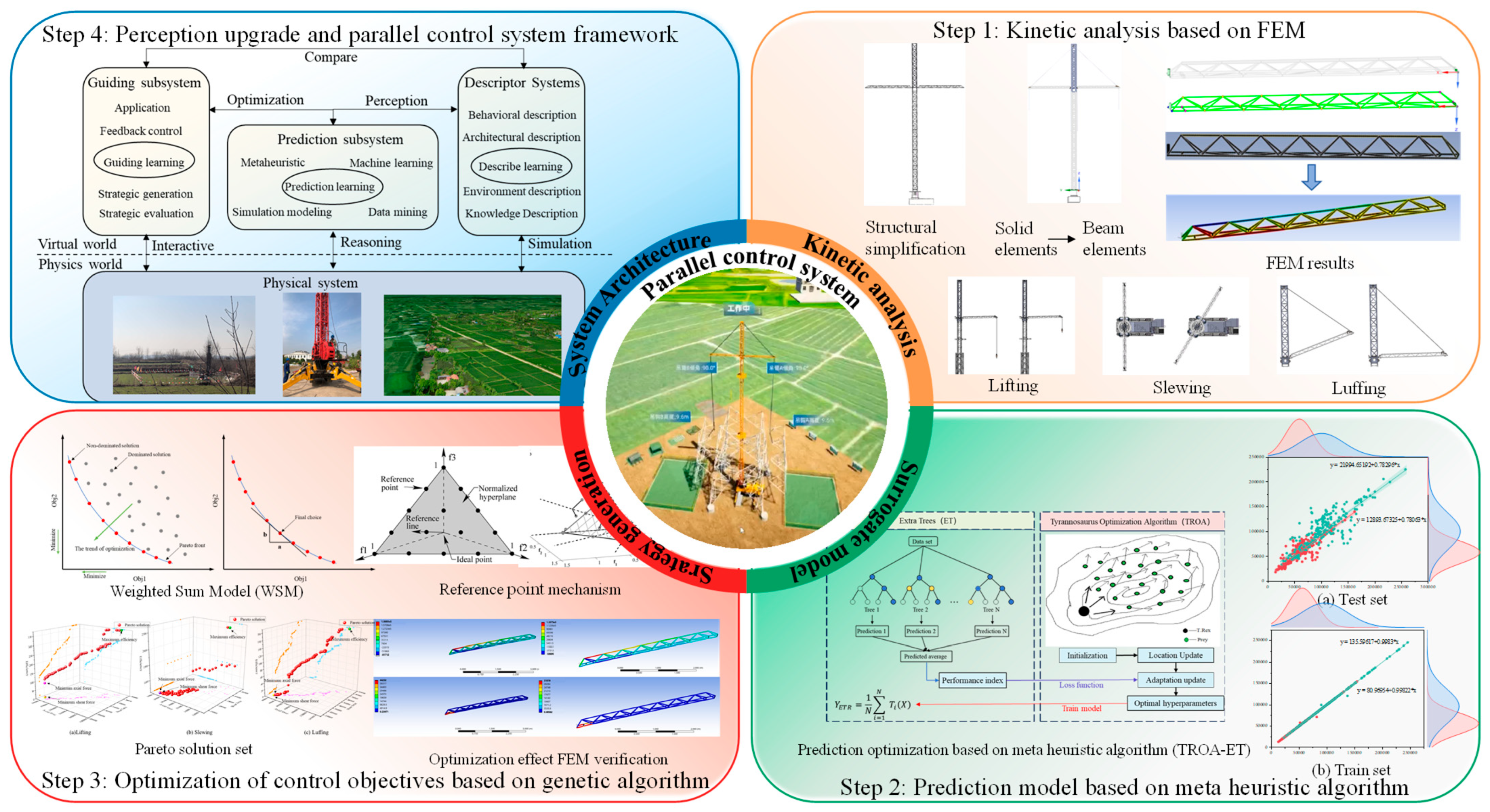
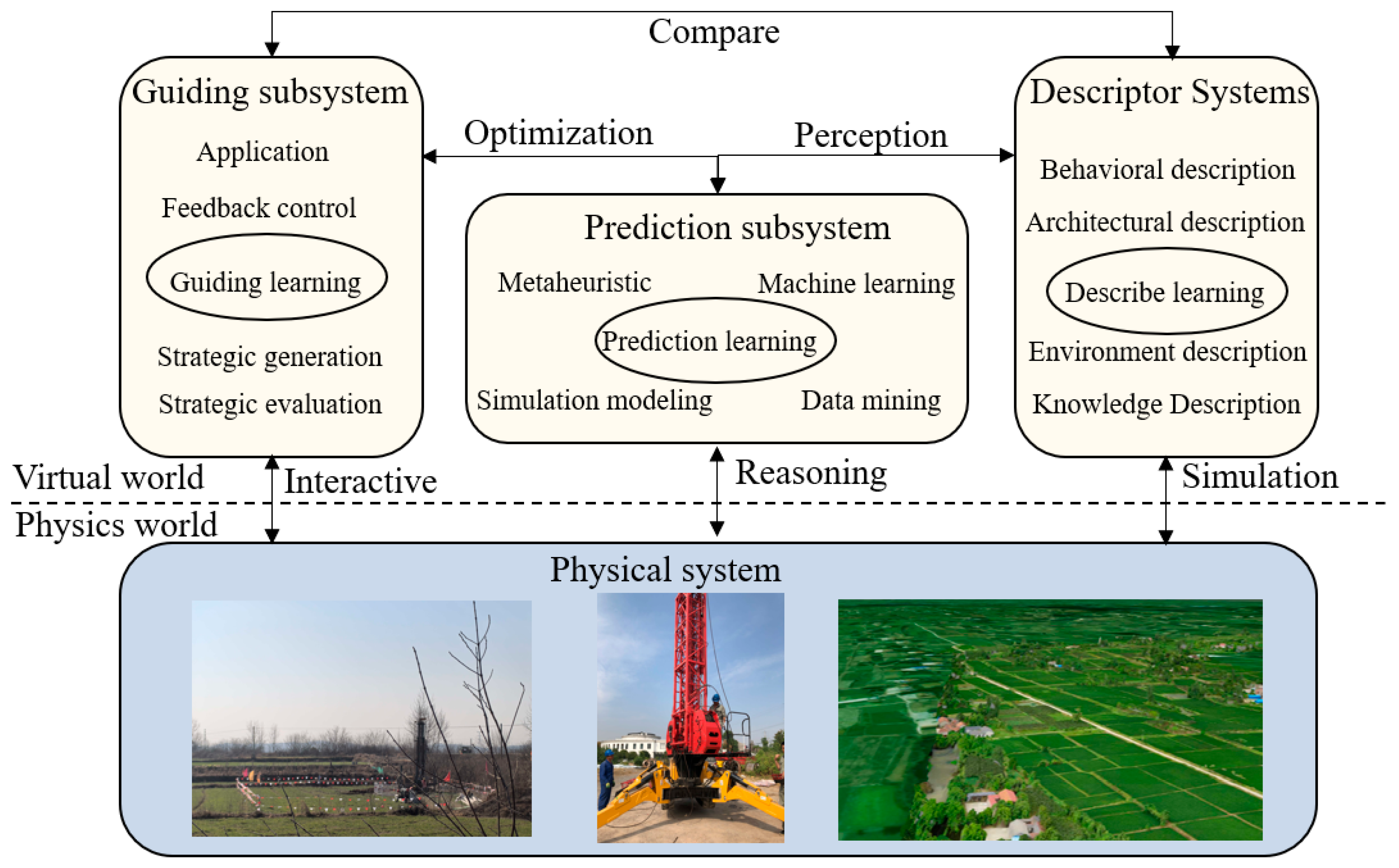
To analyze the safety and efficiency of the mobile gin pole during operation and achieve optimized control of the equipment, this study designed a new digital twin framework. Specifically, kinetic analysis is first used to establish high-fidelity mechanical knowledge of the equipment. TROA-ET is then employed to build a behavior–mechanics surrogate model that preserves physical relevance while enabling rapid prediction. Based on this surrogate, NSGA-III performs safety–efficiency co-optimization, and the resulting models are embedded into a digital twin parallel control architecture. This integrated design transforms high-cost offline analysis into an operational framework suitable for real-time perception, decision support, and robust control under uncertainty. It primarily consists of four parts: (1) construction of a kinetic model for the equipment and finite-element analysis; (2) meta-model optimization of behavior–mechanics surrogate models; (3) control parameters optimization based on NSGA-III; (4) perception enhancement and parallel control framework for the equipment. Section 3.1, Section 3.2 and Section 3.3 provide a detailed analysis of the establishment of kinetic models for the equipment, machine learning models, and multi-objective optimization methods. Section 3.4 outlines the system establishment method. Figure 1 presents the main conceptual diagram of the proposed framework.

3.1. Mobile Gin Pole Kinetic Analysis Based on FEM

In the research and application of complex engineering equipment, physical system simulation plays a crucial role. For critical equipment such as the mobile gin pole used in power engineering construction, a thorough understanding of its physical system characteristics is the foundation for achieving safe and efficient operation. Through physical system simulation, it is possible to simulate the operational state of the mobile gin pole under various working conditions in a virtual environment, obtain its dynamic response data, and thereby provide strong support for the development of subsequent safety control strategies [48].
In actual power engineering construction scenarios, the main body of the mobile gin pole is typically coupled with the existing tower structure. During force analysis, this section generally does not undergo bending failure. During operation, the jibs are subjected to significant dynamic loads, and this component is structurally weaker than the main tower. Therefore, special attention must be paid to the force conditions of the jib. Additionally, different construction tasks have varying requirements for the jib’s lifting capacity, lifting height, and swing range, further increasing the complexity of the analysis.
To address these complex factors, traditional empirical design and analysis methods are no longer sufficient. With the rapid development of computer technology and simulation software, utilizing professional simulation tools to perform physical system simulations on cranes has become an inevitable trend. By establishing a simulation model of the mobile gin pole in ANSYS, one can conduct an in-depth analysis of its overall structure and operating principles, as well as perform dynamic simulation analysis to obtain key data such as stress distribution, deformation conditions, and vibration characteristics. This enables a comprehensive understanding of the mobile gin pole’s mechanical performance under various operating conditions, providing a crucial basis for subsequent optimization design and safety control.
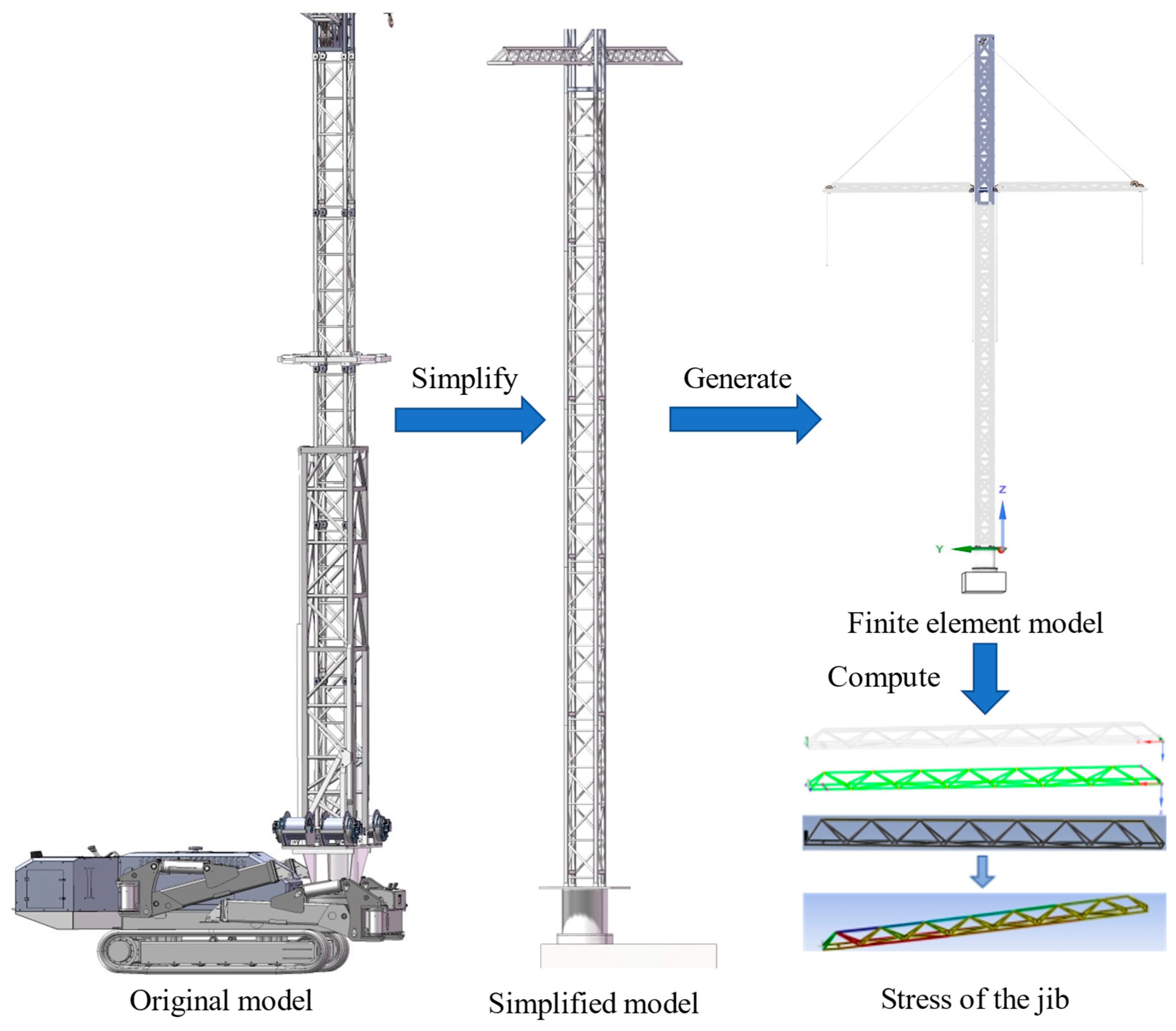
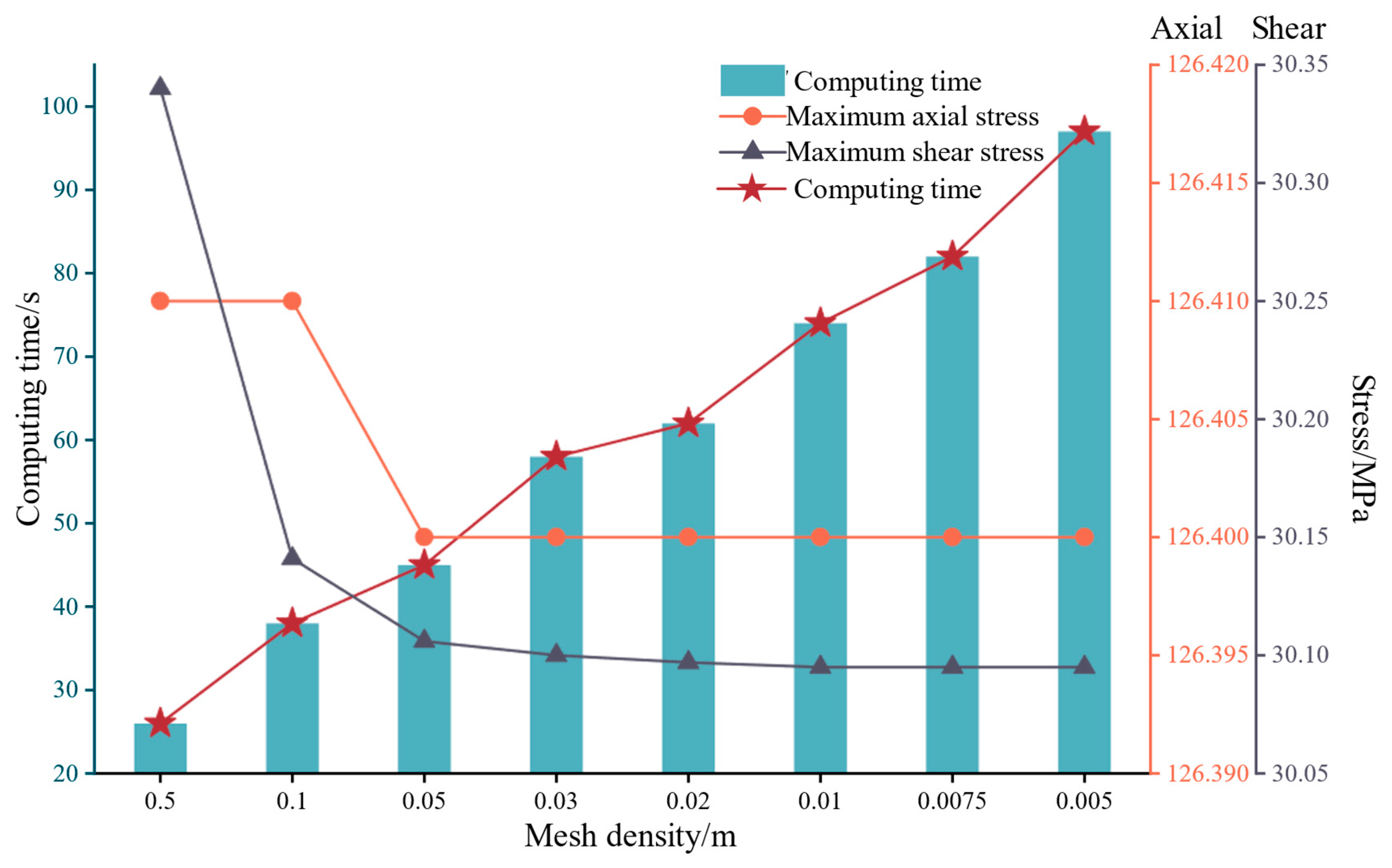
During the dynamic analysis, to reduce computational resource requirements, the gin pole components were simplified, and the track vehicle components were simplified to a square solid. The main load-bearing components of the jibs are steel rods. Therefore, the truss structure was simplified using beam elements. Small geometric features, such as bolts and rounded corners, were removed to avoid mesh distortion. The simplified mobile gin pole three-dimensional model was imported into ANSYA Design Modeler, with material properties set to Q345B. The process of model establishment is shown in Figure 2. Rotating parts in the model were connected using ball joints. Welded parts were set to bound contact. Sliding components were assigned friction contact. Rotational centrifugal force was applied using acceleration. Sinusoidal acceleration was used to simulate lifting impact loads. Based on the operating principle, three motion processes (lifting, slewing, and luffing) were calculated. To further enhance computational speed, this study conducted a mesh independence test to determine the optimal mesh density. This study selected a jib swing motion condition with a load of 1000 kg and a speed of 1°/s for the mesh independence simulation experiment. The element sizes were selected as [0.5, 0.1, 0.05, 0.03, 0.02, 0.01, 0.0075, 0.005], and the maximum axial force and maximum shear force outputs of the finite-element model were recorded. The results of the mesh independence experiments are shown in Figure 3. The maximum axial stress and maximum shear stress of the jib under different conditions were extracted from the computational results.

3.2. Prediction Model Based on Meta-Heuristic Algorithm

To realistically reflect the construction scene, it is necessary to construct a relational model that combines the actual decision parameters and target parameters that characterize the safety risks of the mobile gin pole, and embeds them into the parallel control system. This section combines advanced machine learning models and meta-heuristic algorithms to establish predictive models between relevant parameters. The following provides a detailed introduction to the structure and related evaluation indicators of the prediction model.

3.2.1. Extreme Trees (ET)

The Extreme Trees (ET) proposed by Geurts et al. are a typical representative of ensemble learning algorithms [49]. The Extreme Trees model adopts the same principle as Random Forests (RF) [50] and uses random subsets of features to train each base estimator. Numerous research findings have demonstrated that ET, with its unique randomization strategy and ensemble mechanism, exhibits outstanding performance in complex data processing and prediction tasks. The algorithm has strong feature selection capability and nonlinear mapping ability in high-dimensional spaces. It can accurately capture complex relationships in the data. Therefore, it is well suited for problems with noise or strong nonlinearity.
ET has significant advantages in training efficiency and generalization performance. Its randomized node-splitting strategy reduces computational complexity. As a result, the training speed is higher than that of traditional decision tree algorithms. The model also remains efficient when processing large-scale datasets. Additionally, this strong randomness effectively suppresses model overfitting tendencies, enabling it to produce robust and reliable predictions even in scenarios with small sample sizes or unstable data distributions. As a parallelized ensemble model, ET avoids the limitations of a single model by constructing multiple randomized decision trees and aggregating prediction results. ET can automatically generate feature importance evaluation metrics, reducing reliance on manual feature engineering and minimizing the interference of subjective assumptions on prediction results. Based on the above advantages, this paper selects the ET model as the core prediction model for mobile gin pole performance.
ET utilizes a set of unpruned regression trees, which are generated individually using traditional top-down methods, differing from the RF model. The RF model employs a two-step process involving bagging and bootstrapping for regression analysis. Compared to RF, which selects the optimal split from a random feature subset at each node, ET randomly selects a split point for each feature and then chooses the optimal split from these options. The mathematical form of this process is as follows:
S p l i t E T R = arg m i n f , s Error f , s
where S p l i t E T R represents the final split determined by the ET; f represents the feature, s represents the randomly selected split point for that feature; the function Error f , s is used to measure the reduction in error caused by the split. The core objective of the algorithm is to find the combination of f and s that minimizes the error, thereby determining the optimal split. The final mathematical representation of the ET model output can be concisely expressed as the formula:
Y E T R = 1 N i = 1 N T i X
where Y E T R represents the expected output, which depends on the number of trees N in the set; T i represents the i tree in the set; and X is the input feature vector. By integrating the outputs of multiple unpruned trees with rich diversity, ET achieves an accurate prediction of the target value.

3.2.2. Tyrannosaurus Rex Optimization Algorithm (TROA)

The Tyrannosaurus Rex Optimization Algorithm (TROA) is a novel meta-heuristic algorithm inspired by nature, proposed by Venkata Satya Durga Manohar Sahu et al. in 2023 [51]. The algorithm draws inspiration from the hunting behavior of Tyrannosaurus rex. In the algorithm simulation, it is assumed that the Tyrannosaurus rex hunts alone. The initial positions of the prey and the Tyrannosaurus rex are randomly generated, and the prey closest to the Tyrannosaurus rex is selected as the target. The Tyrannosaurus rex pursues the prey, while the prey attempts to escape. This process continues until the Tyrannosaurus rex successfully captures the prey or the prey escapes. The algorithm primarily consists of three steps:
(1)
Initialization of population positions
For population-based algorithms, randomly generate the number of prey in the search space. The location of prey is randomly generated within the upper and lower limits, as shown in the mathematical model below:
X i = r a n d n p , d i m × u b l b + l b
where X i is the prey position ( i = 1,2 , , n , n is the dimension), n p is the population size, d i m is the search space dimension, u b is the upper limit, and l b is the lower limit.
(2)
Hunting and chasing
Tyrannosaurus rex hunted randomly, and the mathematical model for hunting actions is as follows:
x n e w = x n e w         i f   r a n d ( ) < E r x                   R a n d o m   e l s e        
where E r is the estimated time to reach scattered prey. At the same time, Tyrannosaurus rex hunts prey by updating its position, using the formula:
x n e w = x + r a n d ( ) × s r × t p o s × t r t a r g e t × p r
where s r is the hunting success rate (with values ranging from 0.1 to 1). If the success rate is 0, it means the prey has escaped and the hunt has failed, requiring an update to the prey’s position; t p o s is a parameter representing the T. rex’s relative position to the prey; t r is the T. rex’s running speed; t a r g e t is the minimum position of the prey relative to the T. rex; and p r is a related parameter.
(3)
Selection stage
The selection process depends on the current and previous positions of the prey. It is determined by comparing the fitness function f X of the initial random prey position with the fitness function f X n e w of the updated prey position, expressed as the formula:
X i k + 1 = u p d a t e   t h e   t a r g e t   p o s i t i o n         i f   f ( X ) < f ( X n e w ) t a r g e t   i s   z e r o                                                       o t h e r w i s e        
If the Tyrannosaurus rex fails to catch its prey, the prey’s position becomes zero; if the updated prey position has a better fitness value, the target position is updated. This process is iterated repeatedly until the optimal solution is selected.

3.2.3. TROA-ET Model

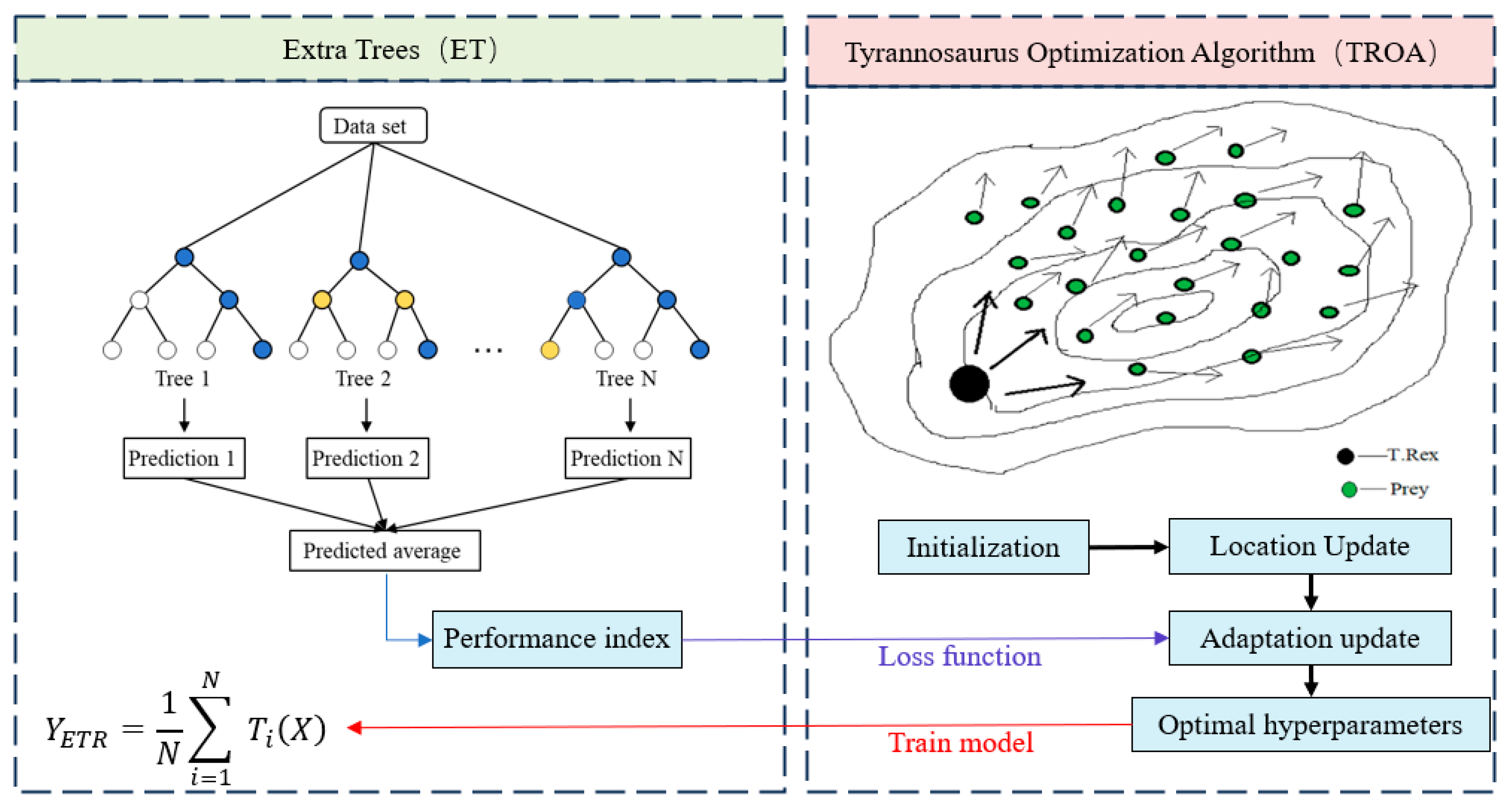
To obtain the optimal hyperparameter combination for the ET model, a hybrid model of TROA and ET is constructed. The TROA-ET model structure is shown in Figure 4. Initially, the original dataset is divided into a training set and a test set. In the TROA, the position of each individual corresponds to a set of randomly generated hyperparameters for the ET model, including n _ e s t i m a t o r s , m i n _ s a m p l e s _ s p l i t , and m i n _ s a m p l e s _ l e a f . For each candidate–hyperparameter combination, model fitness is evaluated using 5-fold cross-validation on the training set, and the average validation loss across the folds is taken as the fitness value in TROA. Once the optimization process terminates, the optimal hyperparameters are obtained. These optimal hyperparameters are then used to retrain the ET model on the full training set, and the final predictive performance is reported on the independent test set. In this way, the test set is not involved in hyperparameter tuning, which reduces the risk of data leakage and optimistic performance estimation. The flow description of ET combined with TROA is shown in Algorithm 1.
Algorithm 1: Pseudocode of TROA-ET model
Input: original dataset D , max Iterations m a x _ i t e r , and population size p o p _ s i z e
Output: optimal hyperparameter combination b e s t _ p a r a m s
01Initialize a population of Tyrannosaurus rex containing p o p _ s i z e individuals
02for   i   =   1   to   p o p _ s i z e do
03    Randomly generate a set of hyperparameter p a r a m s _ i = ( n _ e s t i m a t o r s _ i ,   m i n _ s a m p l e s _ s p l i t _ i ,   m i n _ s a m p l e s _ l e a f _ i )
04    Using p a r a m s _ i as the position of the i th Tyrannosaurus rex
05end for
06for   i t e r = 1   t o   m a x _ i t e r   d o
07      for  i = 1   t o   p o p _ s i z e   d o
08        Using p a r a m s _ i to construct an E T _ m o d e l
09        Calculate the loss function of E T _ m o d e l as the fitness value f i t n e s s _ i
10        if  i = = 1   o r   f i t n e s s _ i < b e s t _ f i t n e s s   t h e n
11                    b e s t _ f i t n e s s = f i t n e s s _ i
12             b e s t _ p a r a m s = p a r a m s _ i
13         end if
14        end for
15         for   i = 1   t o   p o p _ s i z e   d o
16              Update the position of the i th Tyrannosaurus rex p a r a m s _ i
17         end for
18end for
19return  b e s t _ p a r a m s

3.2.4. Prediction Model Evaluation

In the prediction model for the target parameters, the model is constructed through the training set, and the reliability of the model is verified through the test set. In order to effectively evaluate the reliability of prediction models, corresponding model evaluation indicators should be introduced. The commonly used evaluation indicators are as follows:
R M S E = 1 n 1 n y i y i ^ 2
M S E = 1 n 1 n y i y i ^ 2
V a r = 1 n 1 n y i ^ y i 2
R 2 = 1 i y i ^ y i 2 n i y i ^ y i 2 n = 1 M S E y ^ , y V a r y
where n indicates the total number of all samples. y i , y i ^ , and y i ^ represent the true value, the predicted value, and the mean value of all samples, respectively. For the R M S E , M A E , M S E , and V a r , the smaller the value, the more reliable the model. For the R 2 , the closer it is to 1, the more reliable the model.

3.3. Optimization of Control Objectives Based on Genetic Algorithm

Based on the developed TROA-ET model, which accurately maps the relationship between input variables and objectives, multi-objective optimization (MOO) can be performed to obtain the optimal solution for light crane operations. The mathematical representation of the multi-objective optimization problem is as follows:
m i n f 1 x , f 2 x , , f n x
l b x u b A e q × x = b e q A × x b
where f n x is the objective function; x is the variable to be optimized; lb and ub are the upper and lower bounds of variable x; the equations A e q × x = b e q and A × x b are the equality and inequality constraints on x .

3.3.1. Non-Dominated Sorting Genetic Algorithm III

Non-Dominated Sorting Genetic Algorithm III (NSGA-III) is a multi-objective evolutionary algorithm proposed by Deb et al. based on NSGA-II [52]. It has been improved for high-dimensional optimization problems with three or more objectives. By introducing a reference point mechanism and an angle-based selection strategy, it effectively enhances the uniformity and convergence of the solution set in high-dimensional spaces. This study selects the NSGA-III algorithm as the core algorithm for optimizing the safety control of the mobile gin pole. Its core principles can be summarized in the following four parts:
(1)
Non-dominated sorting
NSGA-III inherits the fast non-dominant sorting strategy of NSGA-II, first assessing the dominance relationship among individuals in the population. For two solutions x i and x j , if the following condition is satisfied:
m 1 , 2 , , M ,   f m x i f m x j     m 1 , 2 , , M ,   f m x i < f m x j
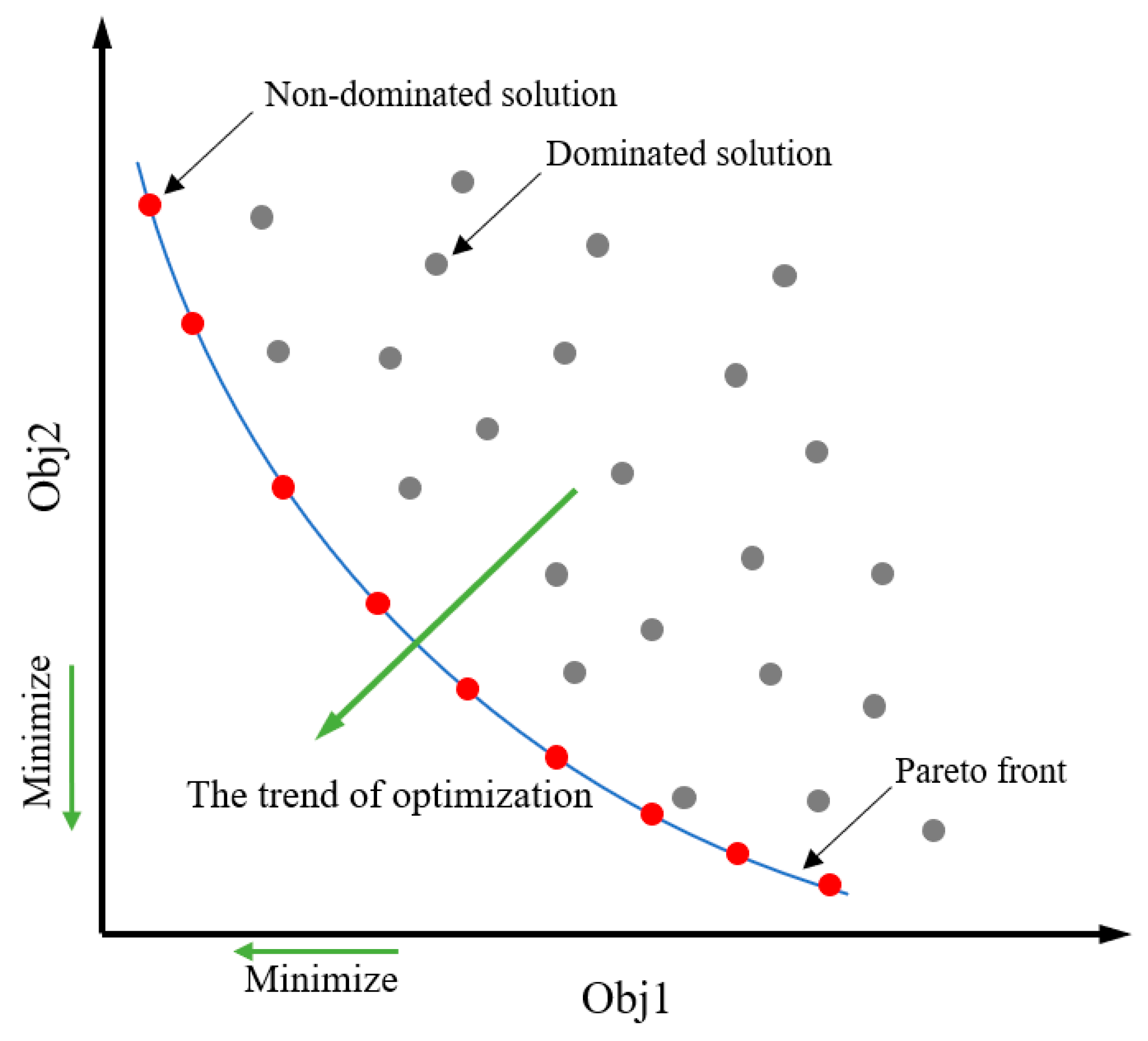
Then x i is said to dominate x j . Through the dominance relationship, all solutions are divided into different non-dominated levels F 1 , F 2 , , F k , where F 1 is the set of Pareto optimal solutions that are not dominated by any other solution, constituting the initial Pareto frontier; subsequent levels F l l > 1 are solutions that are dominated by F l 1 but are not dominated within the same level. The algorithm prioritizes selecting individuals from lower tiers (e.g., solutions in F 1 ) to drive the population toward convergence on the Pareto frontier. Figure 5 shows pareto front and non-dominated sorting.
(2)
Reference point mechanism
The algorithm guides the population to uniformly distribute in the high-dimensional target space through a reference point system. Let the dimension of the target space be M . H reference points { z h | h = 1 , 2 , , H } are generated through Latin hypercube design or uniform grid partitioning, satisfying m = 1 M z m h = 1 and z m h 0 . For an individual x , its normalized objective vector f x f 1 x , f 2 x , , f M x , the Chebyshev distance to the reference point z h is calculated:
d chebyshev ( x , z h ) = m a x M m = 1 w m f m x z m ref
where w m is the weight of m , and z m r e f is the ideal value of the reference point h on target m . Individuals are assigned to the subregion belonging to the reference point with the smallest distance. When the number of individuals in a subregion exceeds the capacity N c a p , the solution’s representativeness is maintained by removing the individuals furthest from the reference point, i.e., retaining the solution that satisfies m i n d c h e b y s h e v ( x , z h ) .
(3)
Selection strategy based on angle
To address the issue of decreased efficiency in traditional crowding distance calculations in high-dimensional spaces, NSGA-III uses a polar coordinate transformation to calculate the angle between individuals to measure distribution. For individuals x i and x j , whose objective vectors are v i = f x i z ref and v j = f x j z ref respectively, the angle θ i j is defined as:
θ i j = a r c c o s v i v j v i v j
Within the same reference point area, solutions with larger angles relative to other individuals are prioritized to avoid clustering of similar solutions. This strategy effectively alleviates the diversity degradation problem caused by the “dimension disaster” by maximizing the angle differences between solution vectors.
(4)
Population renewal
NSGA-III uses genetic operations to iterate the population, with the following specific process: The first step is parent selection: based on the non-dominant hierarchy l x and reference point distance d x , a binary tournament selection is used to prioritize individuals with smaller l x and d x . The second step is crossover mutation: the simulated binary crossover operator is used, with a crossover probability of p c and a distribution index of η c . The offspring individuals u 1 and u 2 are generated from the parent individuals v 1 and v 2 :
u m = 0.5 1 α m v 1 m + 1 + α m v 2 m , random   value 0.5 0.5 1 + α m v 1 m + 1 α m v 2 m , ortherwise
where α m = 2 r + 1 2 r 1 β m 1 / η c + 1 , r is a uniform random number, and β m satisfies β m = 2 r 1 / η c + 1 ( r is another uniform random number). The mutation operation uses polynomial mutation with a mutation probability of p m and an exponent of η m . The third step is population pruning: after merging the parent and offspring generations, redundant solutions at higher levels or within subregions are removed through non-dominated sorting and reference point selection to maintain a constant population size N .

3.3.2. Pareto Optimal Solution Decision

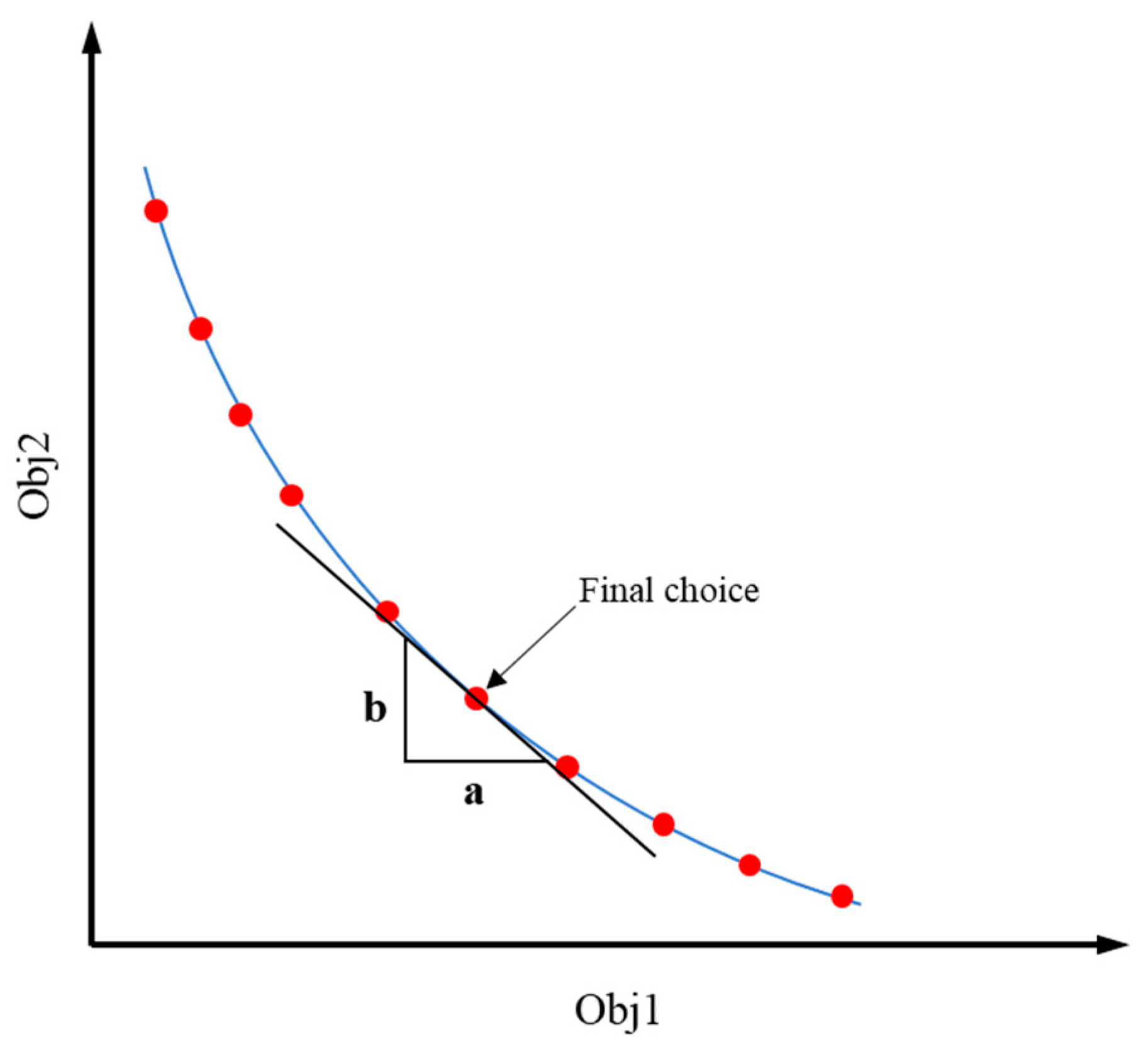
In multi-objective optimization problems, each solution in the Pareto optimal set satisfies the condition of non-dominance, theoretically exhibiting equal acceptability. However, in practical applications, designers often need to select a unique implementation plan from the optimal set. Since optimization of a single objective may lead to deterioration in the performance of other objectives, specific rules are required to narrow the solution set to a feasible optimal subset. Several decision-making methods have been proposed in the academic literature, such as the Weighted Sum Model (WSM) [53], Multi-Attribute Utility Theory (MAUT), Analytical Hierarchy Process (AHP), Elimination and Choice Expressing Reality (ELECTRE), and Technique for Order of Preference by Similarity to Ideal Solution (TOPSIS). In this study, the WSM is chosen as the decision-making tool. The core process is as follows: first, infeasible solutions are eliminated, and then multiple objectives are transformed into a single objective function through a linear combination, where the weight coefficients for the sensitive dimensions are pre-set based on project preferences or practical scenarios. The logical framework of the decision-making process is shown in Figure 6, where the weight coefficients a and b correspond to the priorities of Objective 1 and Objective 2, respectively.

3.4. Perception Upgrade and Parallel Control Framework

Large-scale crane engineering equipment constitutes a complex engineering system encompassing multiple functions such as sensing, positioning, planning, and control. This study employs digital technology and intelligent algorithms to demonstrate exceptional performance, effectively addressing the prediction of structural stress on the equipment and providing optimized decision-making. Sensor integration and physics-based collision detection are utilized to enhance hazard perception capabilities. In this study, multiple module groups are integrated into a comprehensive system through the application of relevant intelligent algorithms and scenario-based design. Based on perception-enhanced physical world lifting equipment and digitally driven virtual engineering scenarios, dynamic control is achieved through parallel control. Specifically, it comprises three main subsystems as shown in Figure 7.
(1)
Description Subsystem: The primary purpose of this system is to instantiate virtual engineering scenarios that resemble real-world construction scenarios. Using appropriate initialization principles, the virtual engineering scenario constructs each critical component, including specific geographic models, lifting equipment, materials, and various supporting tools. Data collected during real-world operations is used to monitor the performance of sensors in the virtual scene, thereby enhancing system performance. This ensures consistency between system data and real-world data. An initialization sensor model is constructed within the subsystem to correspond with the description of the real world. When creating a digital twin, the virtual crane equipment fully maps the behavior of real-world equipment, triggering virtual sensors to generate a set of virtual monitoring data. This data is aligned with real-world data to further enhance the performance of the description subsystem.
(2)
Prediction Subsystem: The prediction subsystem involves mapping the state changes in entities such as the crane and its environment, including equipment trajectory, collisions, position changes, and structural forces on the equipment. Real-world data is collected via sensors and analyzed and modeled using machine learning. Specifically, this study collects data on equipment behavior and its impact on the environment using newly added sensors. GPS is used for equipment positioning, encoders are used to collect the relative angles of various equipment components, and tension sensors are used to monitor lifting weights. Additionally, a large number of sensors installed on the base ensure safe equipment operation, such as hydraulic pressure monitoring, water temperature monitoring, and tilt monitoring. Based on the results of finite-element analysis, this study uses machine learning to construct an equipment behavior–mechanics response model, as detailed in Section 3.2. It is worth noting that in the prediction subsystem, the machine learning model performs mechanical analysis based on real-time equipment monitoring data, further enhancing structural safety.
(3)
Guiding Subsystem: Both the physical system and the virtual system generate control commands. To ensure consistency between the control commands of the virtual system and the physical system, the command deviations must be compared to achieve temporal and spatial synchronization between the physical system and the virtual system. The guidance subsystem connects the virtual system and the physical system. By comparing the leading state of the prediction subsystem’s inference results with the synchronized state of the physical system, the control strategy deviation between the digital twin and the physical system is calculated, enabling difference correction during the virtual–physical interaction process.

4. Case Study

To demonstrate the practical performance and operational effectiveness of the framework proposed in this study, and to test the reliability of the prediction and optimization methods, this study uses actual engineering cases as samples for method validation. This section provides a comprehensive overview of the engineering background, variable prediction, and target parameter optimization, and analyzes the results.

4.1. Data and Resources

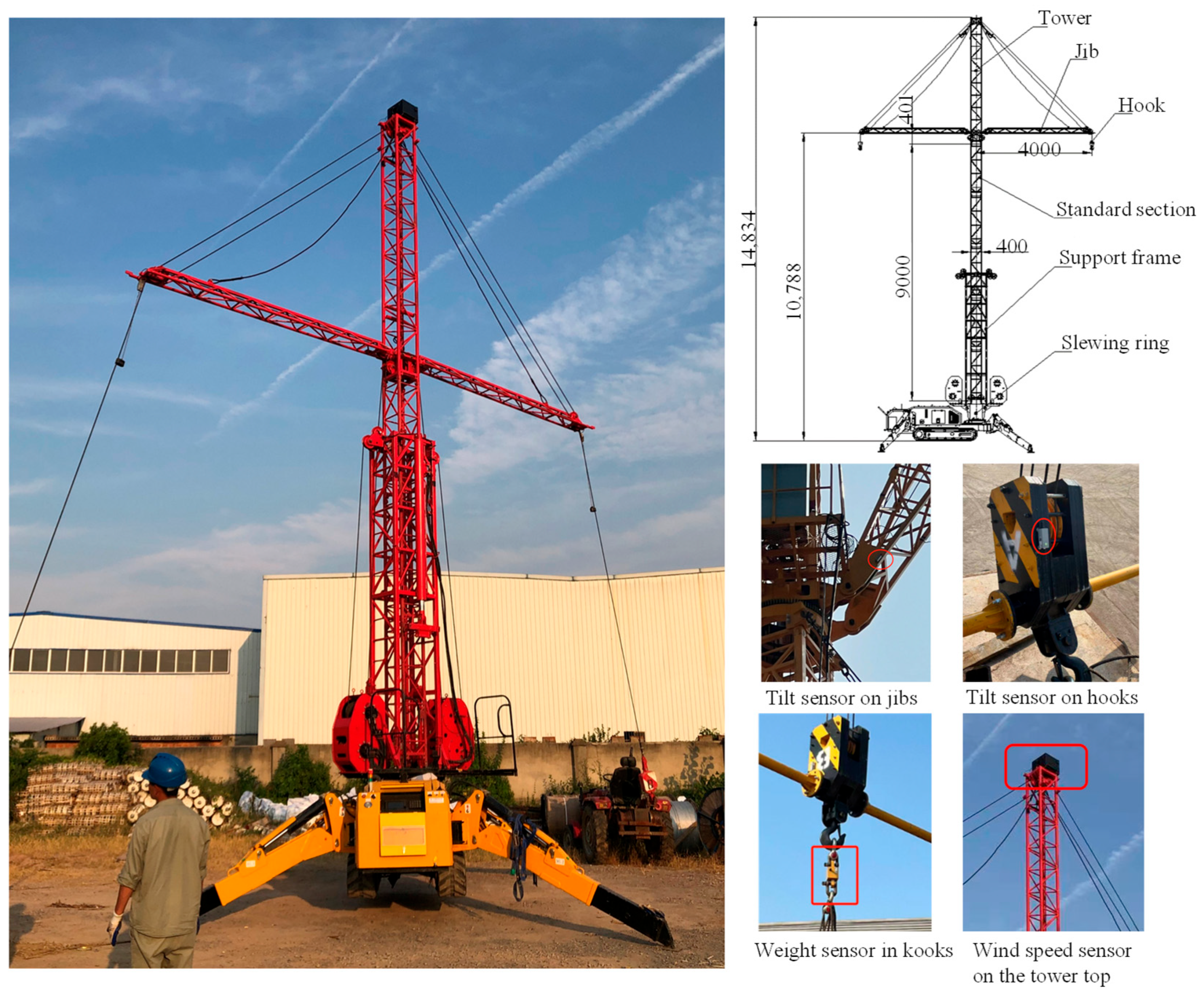
The real-world scenario in this study is derived from the 110 kV transmission project of a 220 kV substation in a certain city, with the MT2DO6 model tracked tower erection equipment as the research subject. All sensor monitoring data in the system is sourced from the equipment’s original or newly added sensors, as shown in Figure 8. The equipment primarily performs three operational modes: lifting, luffing, and slewing. The mobile gin pole rotation speed is ≤0.3 r/min, with a rotation angle of ±170°, a lifting speed of 0–15 m/min, a lifting height ranging from 9 m to 34.6 m, a rated lifting moment of 5.98 t·m, and a luffing speed of 0–7.5 m/min.
A high-precision sensor system records the working status of the gin pole in real time, as shown in Figure 8, thus providing data support for safety risk control. For better monitoring and risk control, a bidirectional data communication system has been developed, capable of bi-directional transmission of information. Its data is derived from a wide range of installed sensors. The upgraded equipment includes jib tilt sensors, hook tilt sensors, hook weight sensors, wind speed sensors, and track vehicle horizontal angle sensors. By calculating sensor monitoring data, information such as the current working amplitude of the mobile gin pole, torque values, and torque difference values can be obtained. After the sensors are fixedly installed, address binding and calibration operations must be performed to ensure that monitoring data is displayed normally. The equipment employs SPC-SDIO-S1212 intelligent distributed I/O across its various systems, utilizing the CANopen bus to collect data and transmit control commands. Additionally, the research equipment is equipped with a Data Transfer Unit (DTU) to facilitate the conversion between serial data and IP data, establishing a data connection with the cloud platform via 4G signals. The DTU module supports the MQTT IoT protocol and is currently connected to the hydraulic system controller, sensor system controller, and main controller within the equipment. The equipment connection interface uses an RS485 interface, enabling real-time transmission of equipment sensing information to a pre-configured MQTT server via the 4G network, as well as subscription to relevant information.
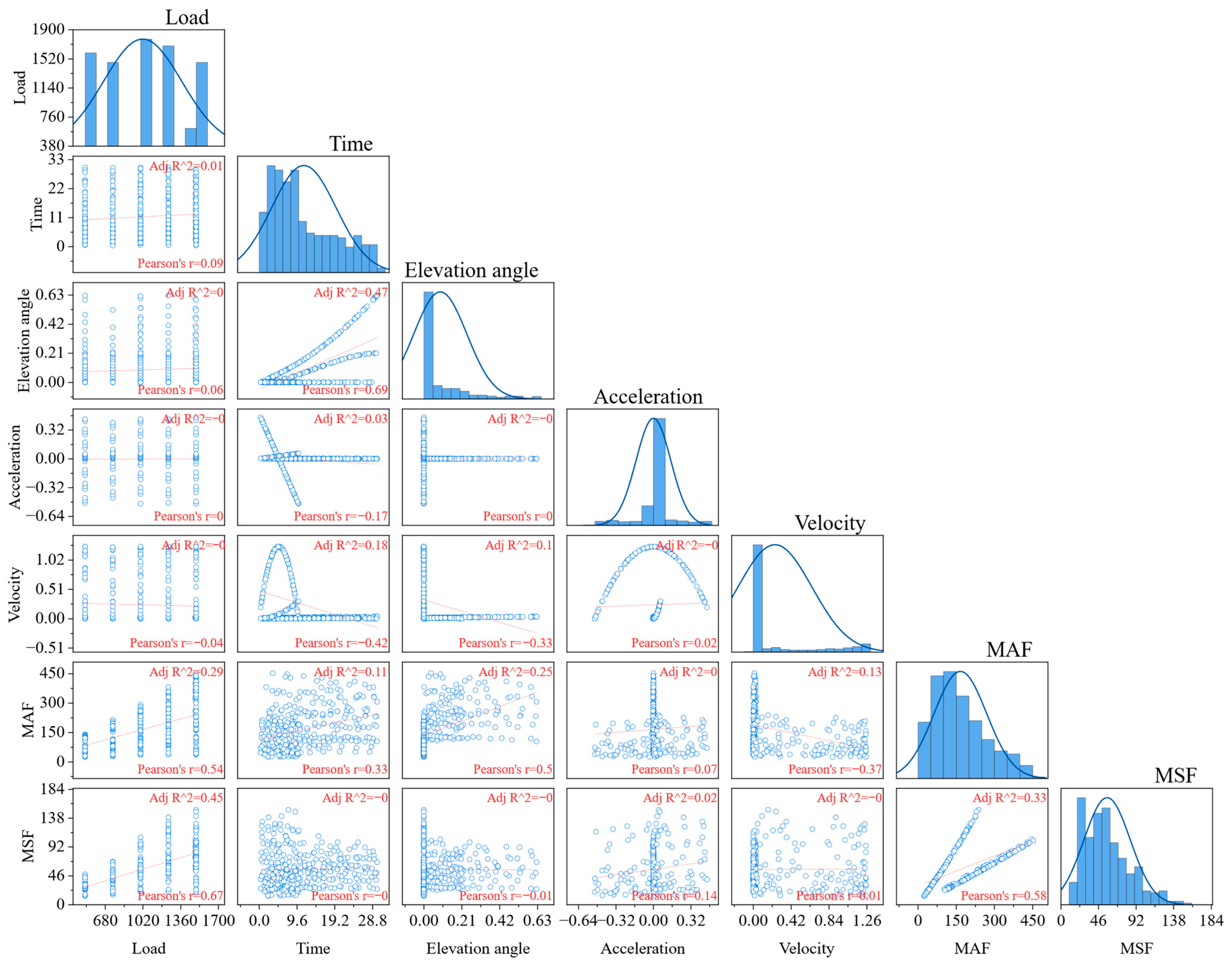
The dataset in this study comes from finite-element calculation results, collecting force data of the luffing, lifting, and slewing of the gin pole under different load conditions. One-hot encoding was used to process the categorical variables. Considering the structural safety and efficiency performance during operation, the maximum axial stress and maximum shear stress of the structure were selected as the target parameters in this study. Axial stress and shear stress are the direct causes of structural failure. At the same time, this study used the product of the load weight and lifting speed to characterize the operating efficiency of the mobile gin pole, i.e., the change in gravitational potential energy of the lifted object per unit time. These three target parameters can well represent the comprehensive operating status of the mobile gin pole. In this study, the main control and state parameters of the gin pole were selected as decision variables for subsequent control optimization, as shown in Table 1. The relevant parameter values distribution is shown in Figure 9.
To clarify the representativeness of the dataset, the 3530 samples were not intended to exhaust all possible field scenarios, but to cover the main operational envelope of the studied mobile gin pole in a structured manner. Specifically, the dataset includes the three primary operating modes of the equipment, i.e., lifting, slewing, and luffing, and spans the principal decision and state variables that govern its mechanical response, including load, elevation angle, acceleration, velocity, and time history. The simulated conditions were designed around the actual operating characteristics of the MT2DO6 equipment and the engineering constraints adopted in this study, so that the generated samples represent typical combinations of working states within the practical operating range rather than isolated idealized cases. Therefore, the dataset should be understood as a representative finite-element-based sampling of realistic operating conditions for the target equipment.

4.2. Model Development

This study uses the TROA-ET hybrid algorithm to map the relationships between different parameters. ET constructs multiple decision trees and then averages them to obtain the final prediction results, thereby reducing the risk of overfitting in a single decision tree and improving generalization ability. To obtain a more reasonable combination of hyperparameters, TROA is used to find potential combinations of hyperparameters. In ET, the core hyperparameters include the size of decision trees (n_estimators), minimum sample size for splitting (min_samples_split), and minimum sample size of leaf (min_samples_leaf). In TROA, the Tyrannosaurus rex position corresponds to a set of randomly generated hyperparameter lists. By calculating the loss function on the test set and using it as a fitness function, the quality of each individual (i.e., hyperparameter combination) in TROA is evaluated.
The TROA-ET model is trained on a dataset of 3530 samples, of which 70% is used as the training set and 30% as the test set. The dataset is derived from finite-element kinetic analysis models based on the physical behavior of an actual gin pole to ensure the robustness of the training process. After multiple trial calculations, the hyperparameters of TROA are determined as shown in Table 2. The ET models for the two target parameters y 1 and y 2 were optimized using TROA for hyperparameter combination, and the results are shown in Table 3. This target parameter y 3 does not require prediction because it can be calculated directly.
To improve the reproducibility of the case study, the main implementation settings are summarized here. The dataset used for surrogate model development contained 3530 samples generated from finite-element simulations of the mobile gin pole under different lifting, slewing, and luffing conditions. The categorical operation modes were transformed using one-hot encoding, and the dataset was divided into training and test subsets with a ratio of 70% and 30%, respectively. To avoid using the test set during model selection, TROA-based hyperparameter optimization was conducted only on the training set. Specifically, for each candidate–hyperparameter combination, 5-fold cross-validation was performed on the training set, and the average validation loss was used as the fitness criterion of TROA. After the optimal hyperparameters were identified, the ET model was retrained using the full training set, and its final performance was evaluated on the independent test set. All baseline models followed the same train–test split for fair comparison. This protocol ensures that hyperparameter tuning and final model assessment were separated, thereby improving the rigor and reproducibility of the reported results. The predicted results are shown in Table 4. The prediction targets of the TROA-ET model were the maximum axial stress and maximum shear stress, while the efficiency objective was directly calculated as the product of load and lifting velocity.
For hyperparameter optimization, TROA was adopted to search for the optimal ET settings. The number of iterations and population size were both set to 50, the convergence threshold was set to 1 × 10⁻⁶, and the mutation probability was set to 0.1. The search ranges of the ET hyperparameters were [30, 250] for n_estimators, [2, 4] for min_samples_split, and [1, 3] for min_samples_leaf. After optimization, the best hyperparameter combinations were obtained as (75, 2, 1) for maximum axial stress prediction and (93, 2, 1) for maximum shear stress prediction. For multi-objective optimization, the three operating conditions, i.e., lifting, slewing, and luffing, were optimized separately according to the engineering constraints listed in Table 5. The objective set included maximum axial stress, maximum shear stress, and operational efficiency, and the final solution was selected from the Pareto set using the weighted sum method. To evaluate computational efficiency, the runtime of each optimization algorithm was recorded under the same implementation conditions. NSGA-III achieved the lowest runtime of 8.13 s, compared with 10.44 s for ACO, 9.20 s for PSO, and 12.71 s for SA. In addition, the finite-element model was used for offline data generation and post-optimization validation, whereas the online decision-making stage relied on the surrogate model rather than repeated high-fidelity simulations, which reduced the computational burden and improved practical applicability.
All finite-element simulations and data-driven computations were conducted on a workstation equipped with Inter Core i7-12700F, 32 GB, running a Windows 10 system. The finite-element analysis was implemented in ANSYS 2024 R2, while the surrogate modeling and optimization procedures were implemented in Python 3.10. These settings are reported to facilitate replication and future comparative studies.
  • Analysis of results
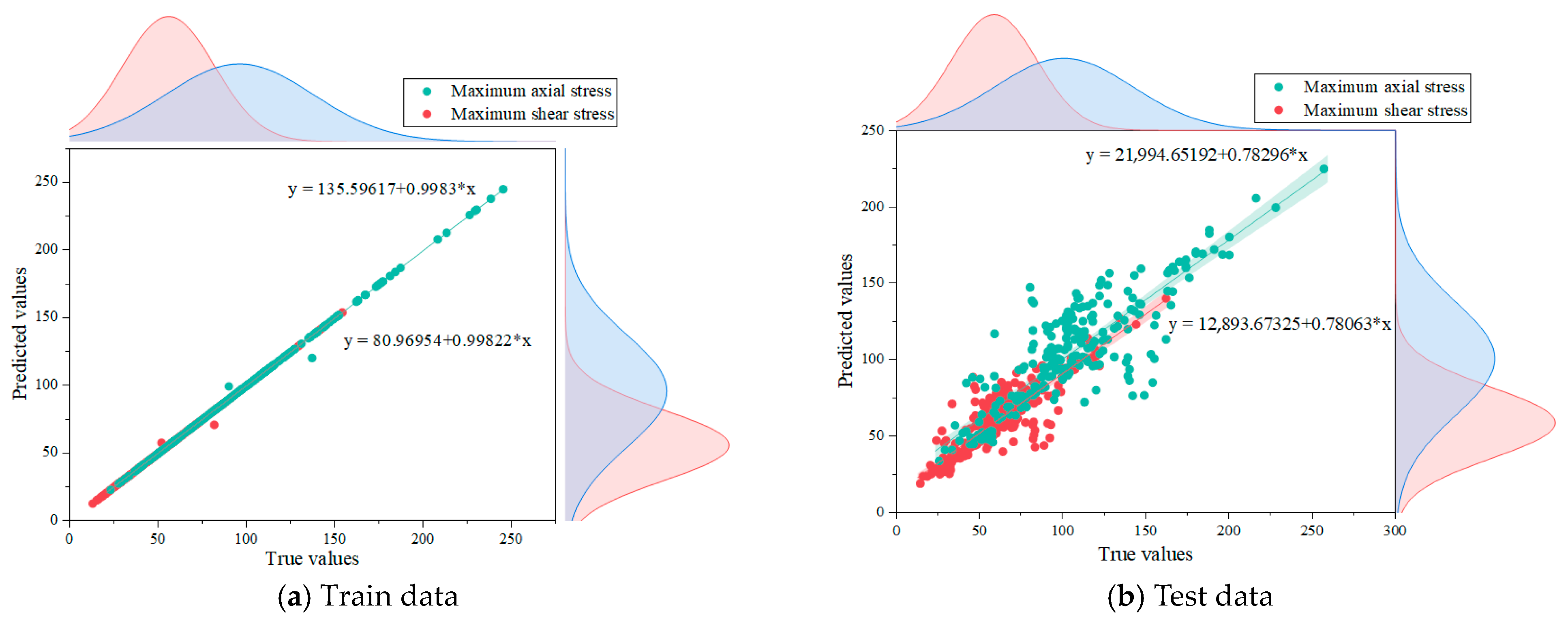
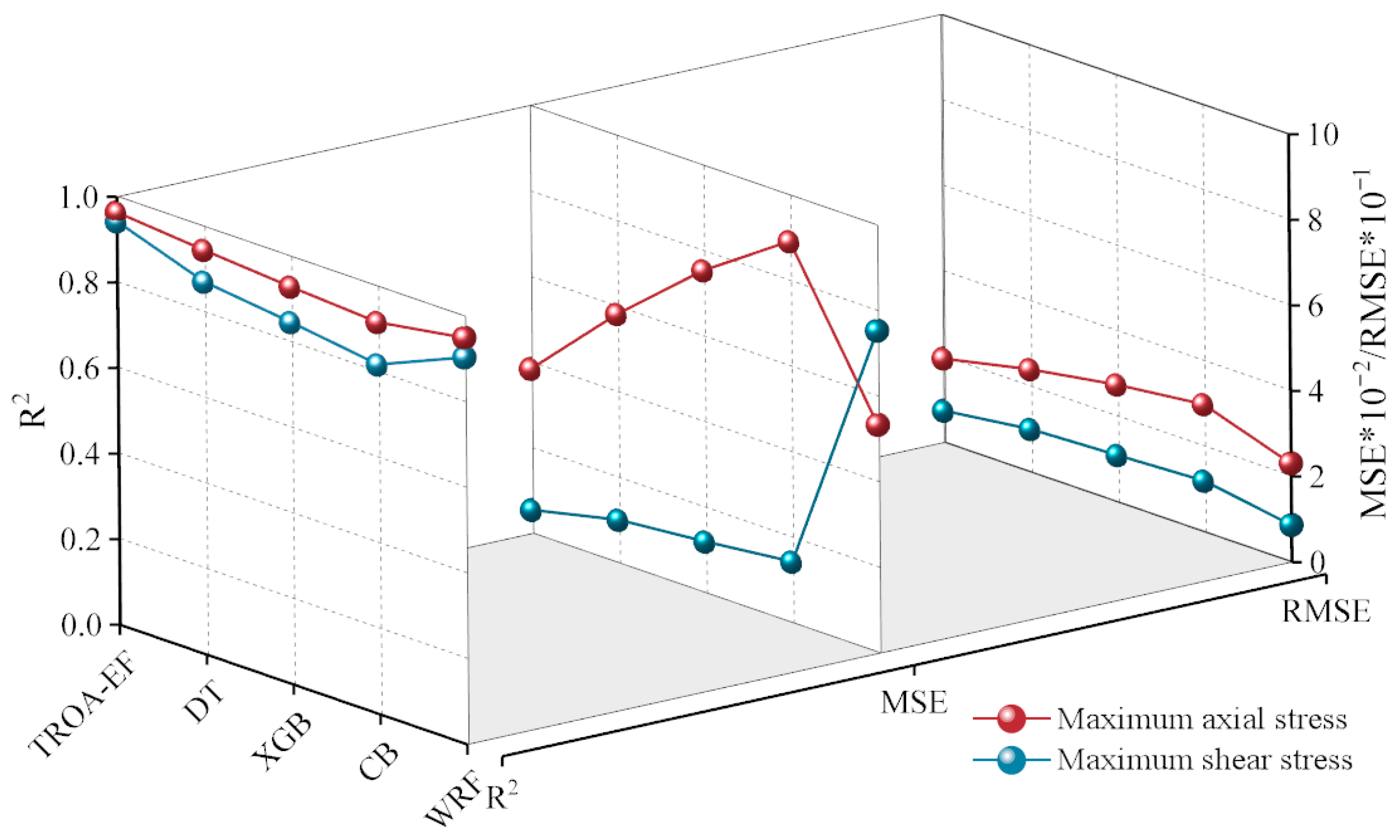
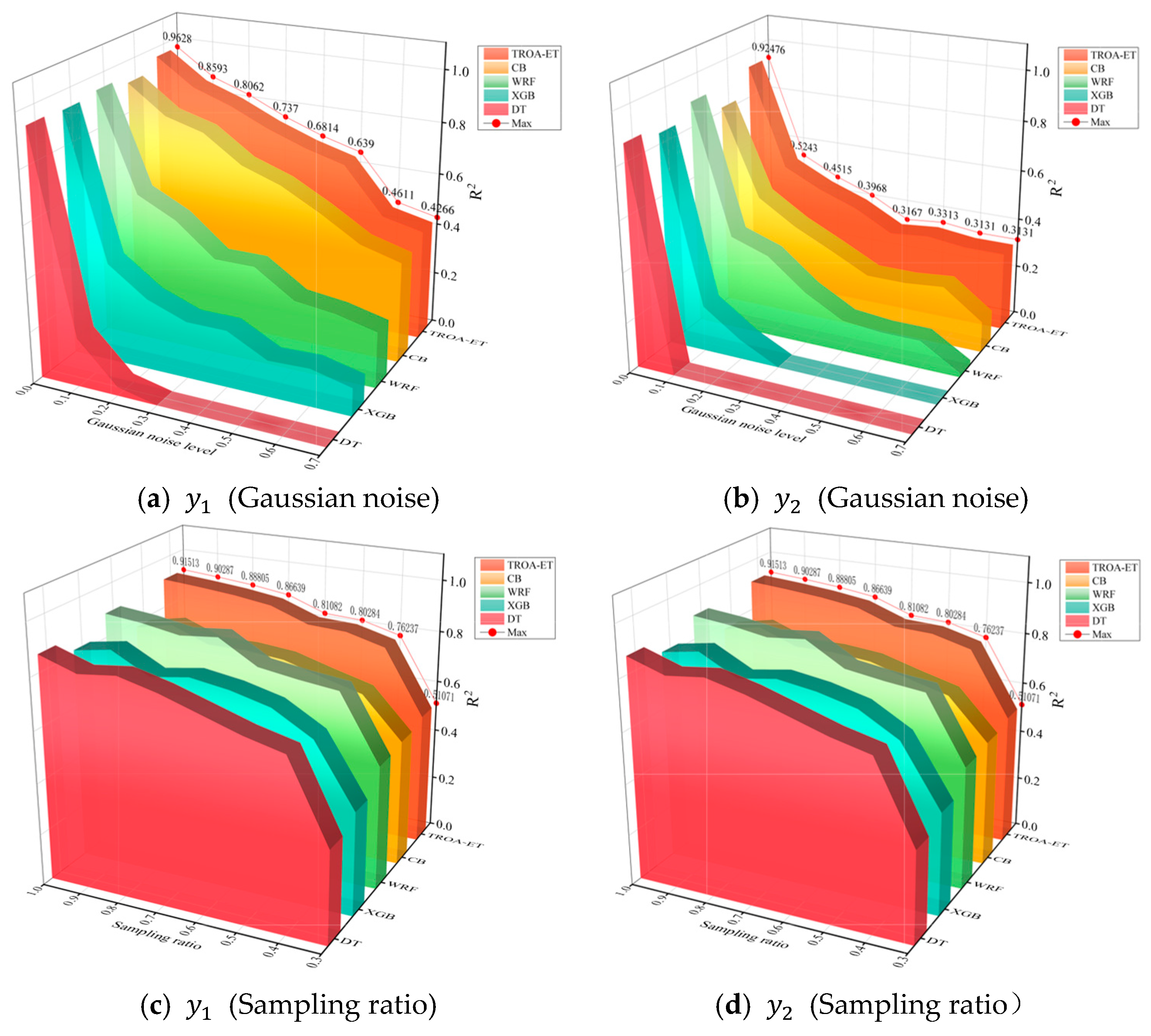
To validate the reliability of the selected decision parameters, further correlation analysis was conducted. Figure 9 shows that the correlation between the decision variables and the objective is weak, with no redundant variables. For the TROA-ET prediction model used in this study, the main hyperparameters were selected according to Section 4.2. The results of the prediction model are shown in Figure 10. All models used the same external train–test split, while hyperparameter tuning for the proposed TROA-ET model was performed only within the training set via cross-validation. The corresponding comparison analysis results will be detailed in the discussion section. Figure 11 and Table 4 present the performance of different baseline models under the same dataset. Figure 12 shows the performance changes in the TROA-ET model and other selected baseline models under different Gaussian noise influences and different sampling ratios.
To minimize safety risks during operation while balancing operational efficiency, this study employs NSGA-III to address the multi-objective optimization problem. The objective parameters are set as the objective function, and the Pareto optimal solution with the highest optimization degree is identified using the weighted sum method within the Pareto solution set. This solution includes the specific values of seven decision variables, including three operating mode variables represented by unique heat coding, which can guide operators or directly control the mobile gin pole in the parallel control system to enhance safety performance and efficiency.
After establishing a predictive model for decision variables and objective parameters, it is necessary to optimize the main control parameters of the mobile gin pole to achieve better operating conditions. To distinguish the working conditions under different operations, three operating conditions were defined based on actual conditions, categorized according to different operations. During the optimization process, the value of each variable must align with engineering realities and be controlled within reasonable limits. The optimization algorithm requires an objective function as shown in Equation (17). In this study, it is the maximum minimum value of three objective parameters, defined as Equation (18).
f y = m i n . f 1 y ,   m i n . f 2 y , m a x . f 3 y
f 1 y = y f 2 y = y f 3 y = x 1 · x 8
s . t . g x = g 1 x , g 2 x , g 3 x , g 4 x , g 5 x , g 6 x , g 7 ( x ) < g r e q
where f i ( y ) is the fitness function for the ith objective, g ( x ) are the constraint functions, and g r e q is the required value for the constraint. Based on the engineering experience, the constraint ranges of the control parameters are given in Table 5.
(1)
The TROA-ET prediction model proposed in this study achieved R2 values of 0.964 and 0.943 for the two prediction targets, respectively. As shown in Figure 11, the Tyrannosaurus algorithm was used to optimize the performance of the ET model, achieving excellent results, the best among all models. The model generated RMSE of 19.6 and 7.42 for the two prediction targets, with MSE results as low as 385 and 5.51, respectively. Although there are some differences in the magnitude of these results, they remain small compared to the scale of the original data. As shown in Figure 10, the evaluation metric values for the training set are slightly better than those for the test set. Overall, the model achieved satisfactory predictive performance on both the training set and the independent test set. Since hyperparameter tuning was conducted through cross-validation within the training set, the test results provide a more reliable estimate of the generalization capability of the proposed model. In the parallel control system, the predicted values and actual historical data are shown in Figure 10. Compared with machine learning baseline methods, the accuracy of TROA-ET used in this study improved by 1.5% to 21.5%. As shown in Figure 11 and Table 4, the R2 scores for TROA-ET, DT, XGB, CB, and WRF are 0.9642, 0.9458, 0.9299, 0.9170, and 0.9504, respectively. Compared to other methods, the prediction accuracy of TROA-ET improved by 21.5%, 1.5%, 5.1%, and 1.5%, respectively. Other accuracy regression metrics, such as RMSE and MSE, also showed similar performance. The results indicate that this method outperforms other machine learning algorithms in terms of accuracy.
(2)
The proposed TROA-ET model maintains an average R2 value of 0.583 when the noise level rises to 0.7 and achieves an average R2 value of 0.697 at an ultra-low sampling rate (0.3), performing best among all models and demonstrating excellent robustness. As shown in Figure 12, the TROA-ET model demonstrates optimal prediction performance and stability under different noise levels and sampling ratios. Its R2 score increases steadily with increasing sampling ratio, and the decrease in R2 score under noise interference is the smallest. In contrast, traditional models like DT are highly sensitive to data volume and noise, with performance deteriorating sharply under insufficient sampling or high noise conditions. While ensemble methods like XGB and CB perform well, their stability falls short of TROA-ET. Additionally, the CB model exhibits abnormally low values in small-sample scenarios (sampling ratio of 0.4), indicating that its randomness may affect reliability. Therefore, the TROA-ET model has significant advantages in terms of data efficiency (low sampling requirements) and robustness (noise resistance), making it particularly suitable for scenarios with limited data quality in practical engineering applications.
(3)
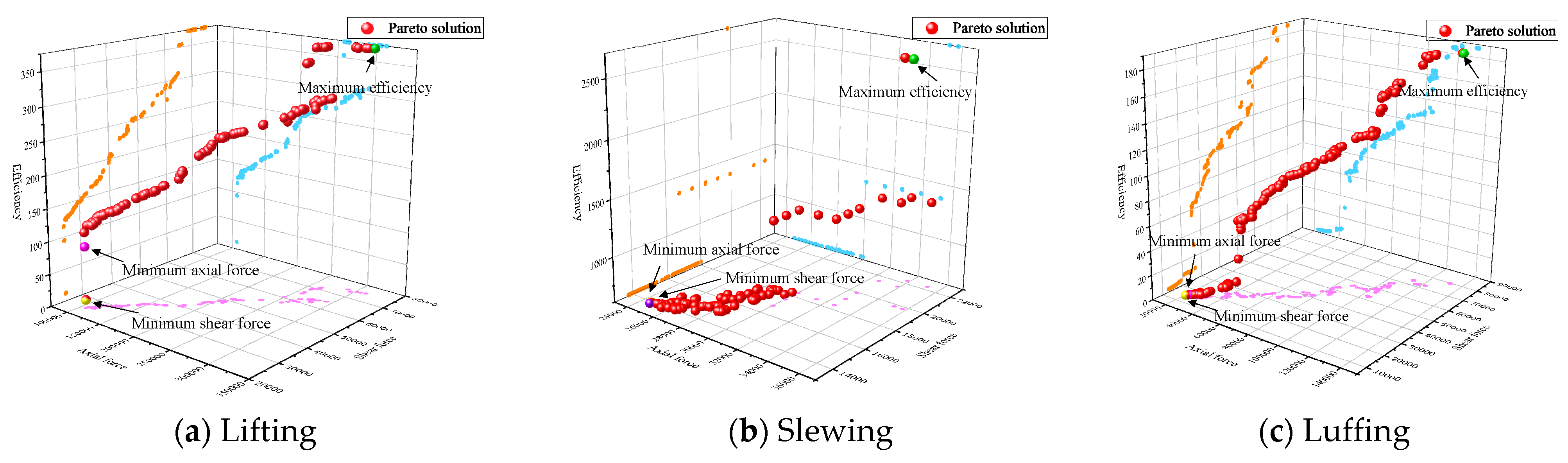
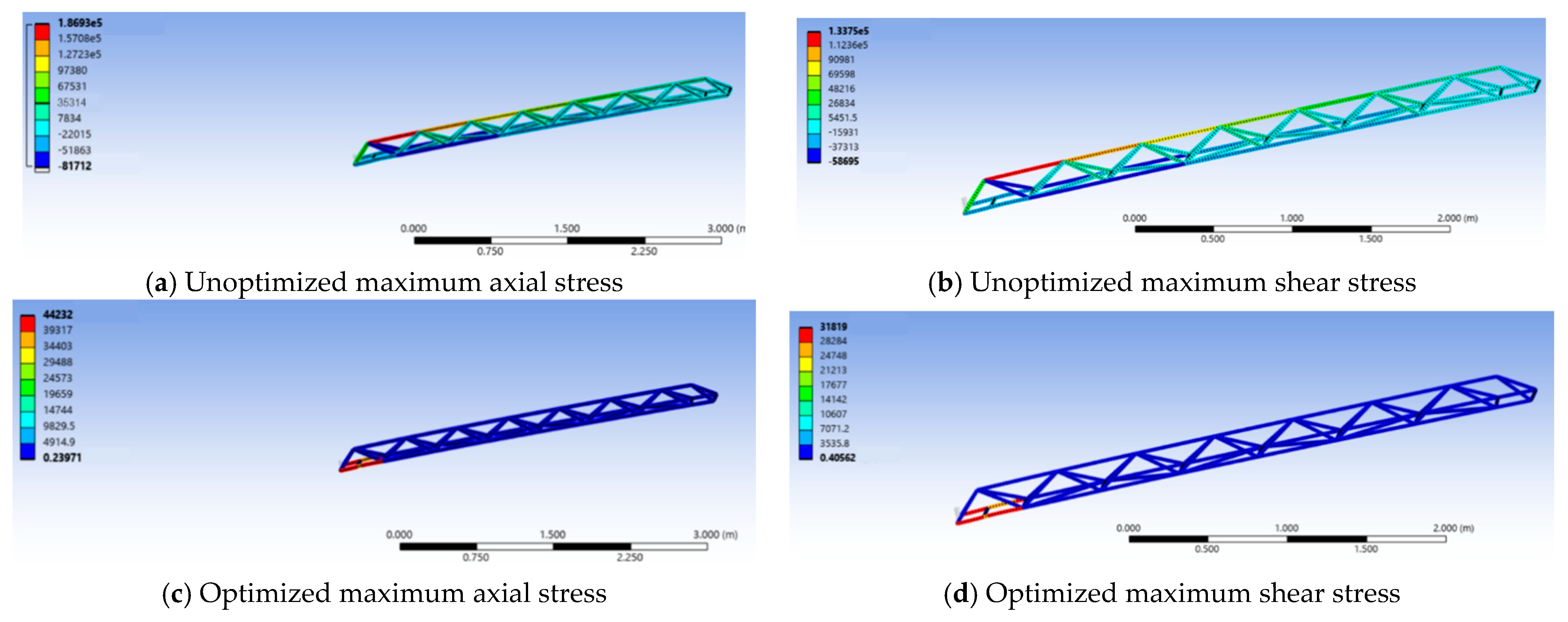
An optimal decision model was established based on NSGA-III, which reduced safety indicators by an average of 8.40%, 22.40%, and 32.30% under the three operating conditions of lifting, slewing, and luffing, respectively, while improving operational efficiency by an average of 42.30%, 40.57%, and 32.73%, respectively. The average optimization rates are 18.90%, 29.31%, and 32.28%, respectively, significantly improving the safety metrics and operational efficiency of the mobile gin pole. The optimization results were validated using finite-element analysis, confirming the practical effectiveness of this optimization approach. Figure 13 and Table 6 in the reference study clearly illustrate the progress achieved in these objectives. As shown in Figure 13 of the manuscript, the entire solution set is relatively uniformly distributed in three-dimensional space, forming a Pareto front, with no tendency to collapse into a two-dimensional plane or a one-dimensional point, indicating a conflicting relationship among the three objective parameters. NSGA-III demonstrates sustained performance improvements in safety control, proving its versatility and adaptability. Table 6 reinforces this by showing the algorithm’s consistent effectiveness in enhancing all three objective parameters under different conditions. The maximum optimization rates for these objectives are impressive, at 31.19%, 71.24%, and 10.34%, respectively. To validate the practical effectiveness of this method, the optimized results were subjected to finite-element dynamic analysis, as shown in Figure 14. Both the maximum axial stress and shear stress of the structure were significantly reduced. These results not only highlight the algorithm’s high adaptability but also its potential to significantly extend the service life of the mobile gin pole and reduce maintenance requirements. Overall, NSGA-III reduces specific safety risks during equipment operation.
(4)
This study presents the development of a virtual–physical integrated mobile gin pole control system, as illustrated in Figure 15. The system achieves real-time perception mapping and closed-loop control between physical assets and their corresponding digital twins. A sensor network is used to collect real-time operational data from the equipment. The data are preprocessed through edge computing and then sent to a finite-element-based digital twin model. The model dynamically simulates structural responses and the evolution of the construction process. This supports an intelligent closed-loop workflow of “perception–simulation–decision–execution.” In addition, the integration of agent-based models and multi-objective optimization improves both safety and operational efficiency in complex environments. Furthermore, the layered architecture and core technologies developed can be extended to other equipment types, such as tower cranes, offering a scalable technical framework for the intelligent control of construction machinery.

5. Discussions

In this study, meta-heuristic algorithms are employed for model hyperparameter optimization and the recommendation of optimal operational parameters. Meta-heuristic algorithms combine random algorithms with local search algorithms, gradually emerging as powerful tools in the field of decision optimization. This approach simulates natural mechanisms such as evolution and group behavior to identify optimal solutions in complex problem spaces, finding widespread application in engineering optimization, artificial intelligence, and other fields [54]. Classic meta-heuristic algorithms include: genetic algorithms (GA) that simulate biological evolution, particle swarm optimization algorithms (PSO) that mimic bird flocks foraging, and ant colony algorithms (ACO) that draw inspiration from ants’ path selection when searching for food. These algorithms not only exhibit theoretical innovation but also demonstrate robust performance in practical applications.
To evaluate the optimization performance of optimization algorithms, corresponding algorithm evaluation metrics must be introduced. This study has three optimization objectives, which are high-dimensional optimization objectives. When selecting evaluation metrics, it is important to consider that the solution set in high-dimensional objective spaces becomes extremely sparse, and a limited solution set is unlikely to cover the entire Pareto front. In high-dimensional objective spaces, the adaptability of various commonly used evaluation metrics decreases. Specifically, this study selected three evaluation metrics: time (T), generation distance (GD), and inverse generation distance (IGD). These three evaluation metrics exhibit good adaptability in high-dimensional objective spaces, with calculations as follows:
T = T i m e A
G D S , P = i = 1 S d i 2 S ,     d i = min ρ P F x i F ρ ,   x i S
I G D P , S = i = 1 P d i 2 P ,   d i = min x S F ρ i F x ,   ρ i P
where S represents the Pareto approximate optimal solution set. P represents the Pareto optimal solution set.   A B represents the Euclidean distance between two elements. F represents fitness function. GD denotes the convergence of the algorithm. IGD can denote both the convergence and diversity of the algorithm. Both GD and IGD are dimensionless.
In this study, several mainstream meta-heuristic algorithms were selected, including NSGA-III, PSO, ant colony, and simulated annealing algorithms (SAs). Under the same proxy model and the same optimal solution evaluation criteria, the optimization performance was compared, as shown in Table 7.
The experimental results indicate that the NSGA-III algorithm demonstrates significant advantages over ACO, PSO, and SAs in terms of convergence and computational efficiency. As shown in Table 7, the lowest GD value achieved by NSGA-III is 0.25, which is notably superior to ACO, PSO, and SA. A lower GD value indicates better convergence to the optimal solution set. In terms of computational speed, NSGA-III stands out with a computational time of only 8.13 s, demonstrating its processing efficiency and lower computational complexity. Another important aspect is the distribution and scalability of the solution set. Both NSGA-III and ACO exhibit outstanding performance in this regard, with more uniform solution set distribution and stronger scalability compared to the SA and PSO algorithms. Additionally, the IGD values for NSGA-III and ACO are both 0.24, significantly lower than PSO’s 2.11. The lower IGD values of NSGA-III algorithms indicate that they not only converge to the true Pareto front but also cover it more uniformly. This makes them more robust and comprehensive when handling multiple objectives, a common scenario in complex engineering problems. In terms of average multi-objective optimization rates, NSGA-III and ACO exhibit similar performance, while PSO and SA perform slightly worse. The results indicate that NSGA-III performs better in terms of convergence efficiency, computational cost, and accuracy.
It is worth noting that the present TROA-ET framework belongs to a broader family of intelligent engineering methods that combine optimization algorithms and data-driven models. Recent studies have shown that swarm intelligence algorithms are effective for solving inverse identification and parameter optimization problems in engineering, while deep learning models are increasingly used for damage detection, structural response estimation, and monitoring data reconstruction. These methods are particularly attractive when the target problem involves strong nonlinearity, high-dimensional search spaces, or incomplete sensor observations. Nevertheless, deep learning models often rely on larger datasets and higher computational resources, which may limit their direct use in engineering scenarios where data volume is moderate and online deployment efficiency is important. In contrast, the present study focuses on a medium-scale finite-element-derived dataset and a real-time digital twin control scenario. Under this setting, the TROA-ET model provides a more lightweight surrogate modeling strategy while still achieving strong predictive accuracy, noise resistance, and low-sampling robustness, as demonstrated in the case study.
Construction projects are not homogeneous processes; instead, they involve multiple stages with substantially different site environments, operational objectives, and data forms. For example, Wang’s domain-adaptive Faster R-CNN study addressed non-PPE identification on construction sites from body-worn and general images, whereas Wang’s graph-neural-network-driven text classification study focused on fire-door defect inspection in pre-completion construction, indicating that construction intelligence problems can differ markedly between safety monitoring and defect inspection tasks across project phases [55,56]. In this context, the present study focuses on the tower-erection stage of UHV construction and proposes an intelligent control framework for mobile gin poles, while broader deployment in construction practice should further account for phase-dependent environmental variability and task heterogeneity.

6. Conclusions and Future Work

This study addresses the issue of safety and efficiency optimization for mobile gin poles in complex construction environments by proposing a robust parallel control framework based on digital twins. To achieve accurate prediction of the target parameters, this study proposes a TROA-ET hybrid model. By combining the TROA-ET hybrid prediction model with the NSGA-III optimization algorithm, the parallel control system facilitates accurate regression prediction and improvement of key control parameters. The validity of this integrated approach is assessed through extensive computational analysis.
To verify the feasibility of the framework, this method is validated through practical cases. The results indicate that: (1) The TROA-ET model can forecast the values of target parameters with high precision, as evidenced by an average R2 of 0.9534. This model has good robustness, demonstrating efficient utilization of data and strong noise resistance. (2) Thanks to the agency relationship established by TROA-ET, NSGA-III is used to convert complex dynamic constraints into quantifiable objective functions. This optimization algorithm reduces safety metrics by an average of 8.40%, 22.40%, and 32.30% under lifting, slewing, and luffing conditions, respectively, while improving operational efficiency by an average of 42.30%, 40.57%, and 32.73%, respectively. (3) The gin pole parallel control system achieved mapping and closed-loop control between physical entities and digital twins. The system provides a visual interface, physics-based collision monitoring, and optimized decision-making, which helps engineers understand the complexity of engineering. The case shows that the system can ensure the safe operation of equipment and improve efficiency, proving its progressiveness.
Despite the promising results, several limitations of the present study should be acknowledged. First, the proposed framework was validated on a specific engineering case and a specific type of mobile gin pole, and its scalability to other lifting equipment, such as tower cranes or other crane-like construction machinery, has not yet been fully verified. Although the proposed architecture shows potential for extension, differences in structural configuration, working mechanisms, motion patterns, and control objectives may require additional model adaptation and parameter recalibration before direct transfer can be achieved. Second, the current study mainly demonstrates the effectiveness of the framework under the developed digital twin environment and case-based validation, whereas large-scale real-time deployment in field conditions still faces practical challenges. These challenges include computational latency, communication delay between sensors, edge devices, and cloud platforms, synchronization between the physical system and the virtual system, as well as the stability of online optimization under continuously changing outdoor construction conditions. Third, the framework is highly dependent on the quality and reliability of sensor data. Since the digital twin mapping, state perception, and optimization decisions all rely on sensor measurements, issues such as sensor noise, missing data, calibration drift, communication interruption, or individual sensor failure may reduce the accuracy of structural response prediction and affect the robustness of control decisions. Fourth, the present dataset and influencing factors are still relatively limited. Although the selected parameters can represent the major operational characteristics of the mobile gin pole, additional environmental, structural, and operational factors may further improve the generalization and interpretability of the model.
Future research should therefore focus on several concrete directions. First, multi-project and multi-equipment datasets should be established to evaluate the transferability of the framework across different types of lifting equipment and construction scenarios. In particular, transfer learning, domain adaptation, or parameter-sharing strategies may be explored to extend the proposed method from mobile gin poles to structurally similar equipment such as tower cranes. Second, to enhance field applicability, future studies should investigate lightweight surrogate modeling, reduced-order mechanical models, and cloud–edge collaborative computing architectures, so that prediction, optimization, and control can be executed with lower latency and higher real-time responsiveness. Third, more robust sensing and perception strategies should be developed, including sensor redundancy design, multi-source data fusion, fault diagnosis, missing-data recovery, and uncertainty-aware control mechanisms, in order to reduce the framework’s dependence on individual sensor quality. Fourth, long-term field deployment and hardware-in-the-loop validation should be conducted to assess the stability of the framework under real construction disturbances, varying weather conditions, and communication uncertainties. Finally, the digital twin control concept may be extended beyond tower erection to other stages of UHV transmission line construction, such as foundation construction, hoisting coordination, and integrated site-level equipment management, thereby promoting the broader development of intelligent and resilient construction systems in power infrastructure engineering.


Author Contributions

Conceptualization, R.C., H.X. and H.Z.; methodology, R.C. and L.Z.; validation, J.R. and H.C.; formal analysis, R.C. and C.W.; investigation, R.C.; resources, L.Z., H.C. and H.Z.; data curation, R.C. and H.X.; software, R.C. and C.W.; writing—original draft, R.C. and H.X.; writing—review and editing, L.Z. and H.Z.; visualization, J.R.; supervision, H.Z. and H.C.; project administration, R.C. and H.Z. All authors have read and agreed to the published version of the manuscript.

Funding

This research is funded by the technology project of the State Grid Corporation of China (No. 5200-202422107A-1-1-ZN4).

Data Availability Statement

The data presented in this study are available on request from the corresponding authors.

Conflicts of Interest

Author Chu Wei was employed by the company Wuhan Optics Valley Information Technologies Co., Ltd.; Author Hu Chang was employed by the company Jingzhou Jingli Engineering Design Consulting Co., Ltd. The remaining authors declare that the research was conducted in the absence of any commercial or financial relationships that could be construed as a potential conflict of interest.

References

  1. Wu, Y.; Chen, H.; Li, B.; Fang, J. Design and research of UHV AC substation. Eur. Trans. Electr. Power 2012, 22, 17–32. [Google Scholar] [CrossRef]
  2. Guo, H.; Zhou, Y.; Pan, Z.; Zhang, Z.; Yu, Y.; Li, Y. Automated Selection and Localization of Mobile Cranes in Construction Planning. Buildings 2022, 12, 580. [Google Scholar] [CrossRef]
  3. Muddassir, M.; Zayed, T.; Ali, A.H.; Elrifaee, M.; Abdulai, S.F.; Yang, T.; Eldemiry, A. Automation in tower cranes over the past two decades (2003–2024). Autom. Constr. 2025, 170, 105889. [Google Scholar] [CrossRef]
  4. Zhu, A.; Zhang, Z.; Pan, W. Technologies, levels and directions of crane-lift automation in construction. Autom. Constr. 2023, 153, 104960. [Google Scholar] [CrossRef]
  5. He, L.; Zhou, Y.; Liu, L.; Ma, J. Research and Application of YOLOv11-Based Object Segmentation in Intelligent Recognition at Construction Sites. Buildings 2024, 14, 3777. [Google Scholar] [CrossRef]
  6. Kim, S.; Oh, J.; Lim, J. Development of an Algorithm for Crane Trajectory Distance Calculation for Erection of Precast Concrete Members. Buildings 2024, 14, 11. [Google Scholar] [CrossRef]
  7. Lei, J.F.; Chen, X.H.; Huang, L.; Lei, S.; Chen, C.S.; Shen, L. Modeling and Modal Analysis of the Whole Structure of PT7032 Tower Crane Based on Finite Element Method. Adv. Mater. Res. 2013, 706–708, 1433–1436. [Google Scholar] [CrossRef]
  8. Yuan, E.; Yang, J.; Saafi, M.; Wang, F.; Ye, J. Realization of the physical to virtual connection for digital twin of construction crane. J. Ind. Inf. Integr. 2025, 44, 100779. [Google Scholar] [CrossRef]
  9. Tao, F.; Xiao, B.; Qi, Q.; Cheng, J.; Ji, P. Digital twin modeling. J. Manuf. Syst. 2022, 64, 372–389. [Google Scholar] [CrossRef]
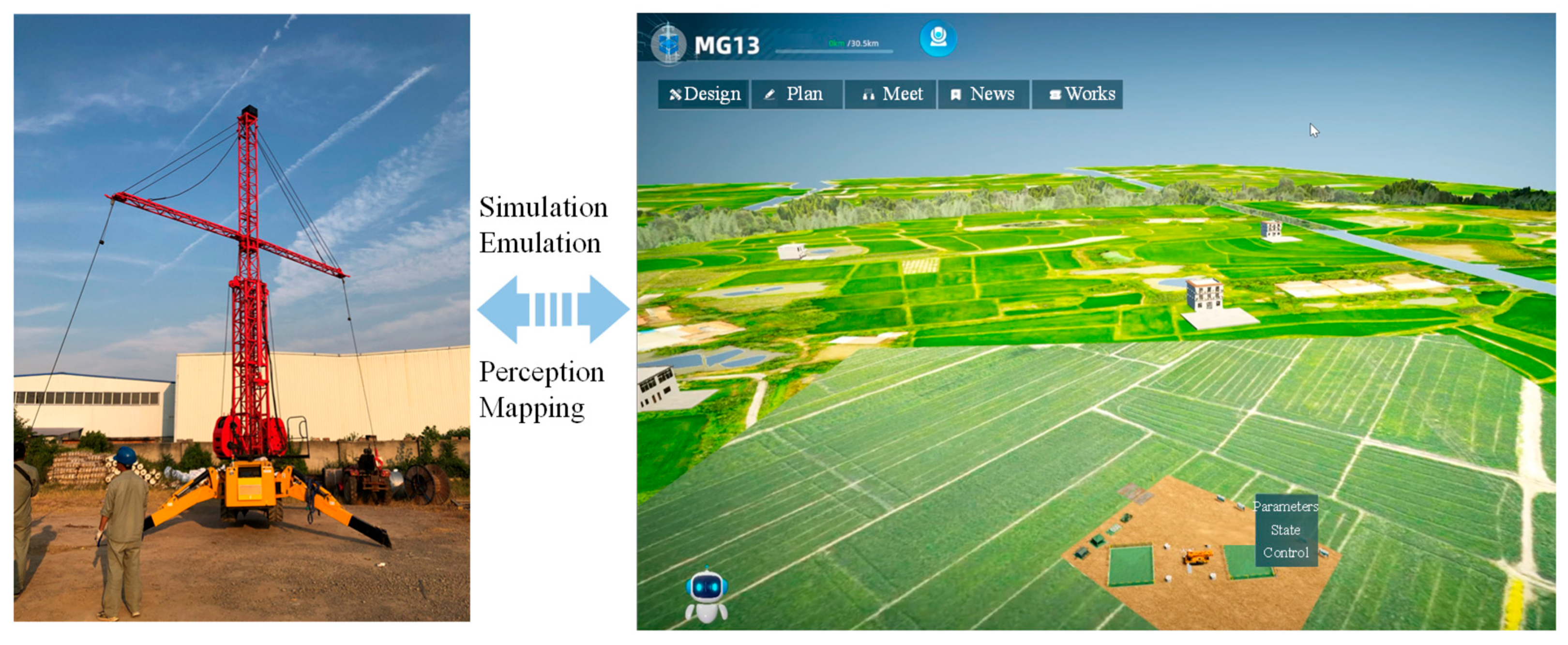
  10. Fu, X.; Ponnarasu, S.; Zhang, L.; Tiong, R.L.K. Online multi-objective optimization for real-time TBM attitude control with spatio-temporal deep learning model. Autom. Constr. 2024, 158, 105220. [Google Scholar] [CrossRef]
  11. Verma, S.; Pant, M.; Snasel, V. A Comprehensive Review on NSGA-II for Multi-Objective Combinatorial Optimization Problems. IEEE Access 2021, 9, 57757–57791. [Google Scholar] [CrossRef]
  12. Zhu, F.; Lv, Y.; Chen, Y.; Wang, X.; Xiong, G.; Wang, F.-Y. Parallel Transportation Systems: Toward IoT-Enabled Smart Urban Traffic Control and Management. IEEE Trans. Intell. Transp. Syst. 2020, 21, 4063–4071. [Google Scholar] [CrossRef]
  13. Zhao, Y.; Cao, C.; Liu, Z. A Framework for Prefabricated Component Hoisting Management Systems Based on Digital Twin Technology. Buildings 2022, 12, 276. [Google Scholar] [CrossRef]
  14. Singhose, W.; Porter, L.; Kenison, M.; Kriikku, E. Effects of hoisting on the input shaping control of gantry cranes. Control Eng. Pract. 2000, 8, 1159–1165. [Google Scholar] [CrossRef]
  15. Chu, Y.; Æsøy, V.; Zhang, H.; Bunes, Ø. Modelling and simulation of an offshore hydraulic crane. In ECMS 2014 Proceedings; ECMS: London, UK, 2014; pp. 87–93. [Google Scholar] [CrossRef]
  16. Tinkir, M.; Önen, Ü.; Kalyoncu, M.; Şahİn, Y. Modeling and control of scaled a tower crane system. In Proceedings of the 2011 3rd International Conference on Computer Research and Development; IEEE: Piscataway, NJ, USA, 2011; pp. 93–98. [Google Scholar] [CrossRef]
  17. Adamiec-Wójcik, I.; Drąg, Ł.; Metelski, M.; Nadratowski, K.; Wojciech, S. A 3D model for static and dynamic analysis of an offshore knuckle boom crane. Appl. Math. Model. 2019, 66, 256–274. [Google Scholar] [CrossRef]
  18. Gerdemeli, I.; Esen, I.; Özer, D. Dynamic Response of an Overhead Crane Beam Due to a Moving Mass Using Moving Finite Element Approximation. Key Eng. Mater. 2011, 450, 99–102. [Google Scholar] [CrossRef]
  19. Omar, H.M.; Nayfeh, A.H. Anti-Swing Control of Gantry and Tower Cranes Using Fuzzy and Time-Delayed Feedback with Friction Compensation. Shock Vib. 2005, 12, 890127. [Google Scholar] [CrossRef]
  20. Sorensen, K.L.; Singhose, W.; Dickerson, S. A controller enabling precise positioning and sway reduction in bridge and gantry cranes. Control Eng. Pract. 2007, 15, 825–837. [Google Scholar] [CrossRef]
  21. Ahmad, M.A.; Ramli, M.S.; Zawawi, M.A.; Raja Ismail, R.M.T. Hybrid collocated PD with non-collocated PID for sway control of a lab-scaled rotary crane. In Proceedings of the 2010 5th IEEE Conference on Industrial Electronics and Applications; IEEE: Piscataway, NJ, USA, 2010; pp. 707–711. [Google Scholar] [CrossRef]
  22. Wu, Z.; Xia, X.; Zhu, B. Model predictive control for improving operational efficiency of overhead cranes. Nonlinear Dyn. 2015, 79, 2639–2657. [Google Scholar] [CrossRef]
  23. Sun, N.; Fang, Y.; Chen, H.; Lu, B.; Fu, Y. Slew/Translation Positioning and Swing Suppression for 4-DOF Tower Cranes with Parametric Uncertainties: Design and Hardware Experimentation. IEEE Trans. Ind. Electron. 2016, 63, 6407–6418. [Google Scholar] [CrossRef]
  24. Saeidi, H.; Naraghi, M.; Raie, A.A. A neural network self tuner based on input shapers behavior for anti sway system of gantry cranes. J. Vib. Control 2013, 19, 1936–1949. [Google Scholar] [CrossRef]
  25. Almutairi, N.B.; Zribi, M. Sliding Mode Control of a Three-dimensional Overhead Crane. J. Vib. Control 2009, 15, 1679–1730. [Google Scholar] [CrossRef]
  26. Duong, S.C.; Uezato, E.; Kinjo, H.; Yamamoto, T. A hybrid evolutionary algorithm for recurrent neural network control of a three-dimensional tower crane. Autom. Constr. 2012, 23, 55–63. [Google Scholar] [CrossRef]
  27. Lee, L.-H.; Huang, P.-H.; Shih, Y.-C.; Chiang, T.-C.; Chang, C.-Y. Parallel neural network combined with sliding mode control in overhead crane control system. J. Vib. Control 2014, 20, 749–760. [Google Scholar] [CrossRef]
  28. Duong, S.C.; Kinjo, H.; Uezato, E.; Yamamoto, T. Particle Swarm Optimization of a Recurrent Neural Network Control for an Underactuated Rotary Crane with Par-ticle Filter Based State Estimation. In Developing Concepts in Applied Intelligence; Mehrotra, K.G., Mohan, C., Oh, J.C., Varshney, P.K., Ali, M., Eds.; Springer: Berlin/Heidelberg, Germany, 2011; pp. 51–58. [Google Scholar] [CrossRef]
  29. Liu, C.; Zhao, H.; Cui, Y. Research on application of fuzzy adaptive PID controller in bridge crane control system. In Proceedings of the 2014 IEEE 5th International Conference on Software Engineering and Service Science; IEEE: Piscataway, NJ, USA, 2014; pp. 971–974. [Google Scholar] [CrossRef]
  30. Benhellal, B.; Hamerlain, M.; Rahmani, Y. Decoupled Adaptive Neuro-Interval Type-2 Fuzzy Sliding Mode Control Applied in a 3DCrane System. Arab. J. Sci. Eng. 2018, 43, 2725–2733. [Google Scholar] [CrossRef]
  31. Li, P.; Li, Z.; Yang, Y. The Application Research of Ant Colony Optimization Algorithm for Intelligent Control on Special Crane. In Proceedings of the 2012 Second International Conference on Instrumentation, Measurement, Computer, Communication and Control; IEEE: Piscataway, NJ, USA, 2012; pp. 999–1004. [Google Scholar] [CrossRef]
  32. Pan, Y.; Zhang, L. A BIM-data mining integrated digital twin framework for advanced project management. Autom. Constr. 2021, 124, 103564. [Google Scholar] [CrossRef]
  33. Pan, Y.; Zhang, L. Integrating BIM and AI for Smart Construction Management: Current Status and Future Directions. Arch. Comput. Methods Eng. 2023, 30, 1081–1110. [Google Scholar] [CrossRef]
  34. Tuegel, E.J.; Ingraffea, A.R.; Eason, T.G.; Spottswood, S.M. Reengineering Aircraft Structural Life Prediction Using a Digital Twin. Int. J. Aerosp. Eng. 2011, 2011, 154798. [Google Scholar] [CrossRef]
  35. Glaessgen, E.; Stargel, D. The Digital Twin Paradigm for Future NASA and U.S. Air Force Vehicles. In Proceedings of the 53rd AIAA/ASME/ASCE/AHS/ASC Structures, Structural Dynamics and Materials Conference, Honolulu, HI, USA, 23–26 April 2012; AIAA, American Institute of Aeronautics and Astronautics: Reston, VA, USA, 2012. [Google Scholar] [CrossRef]
  36. Seshadri, B.R.; Krishnamurthy, T. Structural Health Management of Damaged Aircraft Structures Using Digital Twin Concept. In Proceedings of the 25th AIAA/AHS Adaptive Structures Conference, Grapevine, TX, USA, 9–13 January 2017. [Google Scholar] [CrossRef]
  37. Zhang, L.; Guo, J.; Fu, X.; Tiong, R.L.K.; Zhang, P. Digital twin enabled real-time advanced control of TBM operation using deep learning methods. Autom. Constr. 2024, 158, 105240. [Google Scholar] [CrossRef]
  38. Tao, F.; Zhang, M.; Liu, Y.; Nee, A.Y.C. Digital twin driven prognostics and health management for complex equipment. CIRP Ann. 2018, 67, 169–172. [Google Scholar] [CrossRef]
  39. Luo, W.; Hu, T.; Ye, Y.; Zhang, C.; Wei, Y. A hybrid predictive maintenance approach for CNC machine tool driven by Digital Twin. Robot. Comput.-Integr. Manuf. 2020, 65, 101974. [Google Scholar] [CrossRef]
  40. Jang, D.-H.; Roh, G.-T.; Jeon, C.-H.; Shim, C.-S. Simulation-Based Optimization of Crane Lifting Position and Capacity Using a Construction Digital Twin for Prefabricated Bridge Deck Assembly. Buildings 2025, 15, 475. [Google Scholar] [CrossRef]
  41. Haag, S.; Anderl, R. Digital twin—Proof of concept. Manuf. Lett. 2018, 15, 64–66. [Google Scholar] [CrossRef]
  42. Guivarch, D.; Mermoz, E.; Marino, Y.; Sartor, M. Creation of helicopter dynamic systems digital twin using multibody simulations. CIRP Ann. 2019, 68, 133–136. [Google Scholar] [CrossRef]
  43. Fotland, G.; Haskins, C.; Rølvåg, T. Trade study to select best alternative for cable and pulley simulation for cranes on offshore vessels. Syst. Eng. 2020, 23, 177–188. [Google Scholar] [CrossRef]
  44. Moi, T.; Cibicik, A.; Rølvåg, T. Digital twin based condition monitoring of a knuckle boom crane: An experimental study. Eng. Fail. Anal. 2020, 112, 104517. [Google Scholar] [CrossRef]
  45. Rasheed, A.; San, O.; Kvamsdal, T. Digital Twin: Values, Challenges and Enablers from a Modeling Perspective. IEEE Access 2020, 8, 21980–22012. [Google Scholar] [CrossRef]
  46. von Rueden, L.; Mayer, S.; Sifa, R.; Bauckhage, C.; Garcke, J. Combining Machine Learning and Simulation to a Hybrid Modelling Approach: Current and Future Directions. In Advances in Intelligent Data Analysis XVIII; Berthold, M.R., Feelders, A., Krempl, G., Eds.; Springer International Publishing: Cham, Switzerland, 2020; pp. 548–560. [Google Scholar] [CrossRef]
  47. Torzoni, M.; Tezzele, M.; Mariani, S.; Manzoni, A.; Willcox, K.E. A digital twin framework for civil engineering structures. Comput. Methods Appl. Mech. Eng. 2024, 418, 116584. [Google Scholar] [CrossRef]
  48. Zhang, Q.; Mei, B.; Yang, H.; Hu, X.; An, W.; Yue, Y.; Xu, Y.; Wang, Z. Stress Measurement and Analysis of Structural Parameters of Flat Arm Tower Crane Under Different Working Conditions. Buildings 2025, 15, 1137. [Google Scholar] [CrossRef]
  49. Geurts, P.; Ernst, D.; Wehenkel, L. Extremely randomized trees. Mach. Learn. 2006, 63, 3–42. [Google Scholar] [CrossRef]
  50. Lahouar, A.; Ben Hadj Slama, J. Hour-ahead wind power forecast based on random forests. Renew. Energy 2017, 109, 529–541. [Google Scholar] [CrossRef]
  51. Sahu, V.S.D.M.; Samal, P.; Panigrahi, C.K. Tyrannosaurus optimization algorithm: A new nature-inspired meta-heuristic algorithm for solving optimal control problems. e-Prime—Adv. Electr. Eng. Electron. Energy 2023, 5, 100243. [Google Scholar] [CrossRef]
  52. Yi, J.-H.; Xing, L.-N.; Wang, G.-G.; Dong, J.; Vasilakos, A.V.; Alavi, A.H.; Wang, L. Behavior of crossover operators in NSGA-III for large-scale optimization problems. Inf. Sci. 2020, 509, 470–487. [Google Scholar] [CrossRef]
  53. Jiang, X.; Wang, Y.; Zhao, D.; Shi, L. Online Pareto optimal control of mean-field stochastic multi-player systems using policy iteration. Sci. China Inf. Sci. 2024, 67, 140202. [Google Scholar] [CrossRef]
  54. Wahab, M.N.A.; Nefti-Meziani, S.; Atyabi, A. A comparative review on mobile robot path planning: Classical or meta-heuristic methods? Annu. Rev. Control 2020, 50, 233–252. [Google Scholar] [CrossRef]
  55. Wang, S. Domain-adaptive faster R-CNN for non-PPE identification on construction sites from body-worn and general images. Sci. Rep. 2026, 16, 4793. [Google Scholar] [CrossRef]
  56. Wang, S. Graph neural network–driven text classification for fire-door defect inspection in pre-completion construction. Sci. Rep. 2025, 15, 44382. [Google Scholar] [CrossRef]
Figure 1. The main conceptual diagram of the proposed framework.
Buildings 16 01982 g001
Figure 2. The establishment process of the mobile gin pole finite-element model.
Buildings 16 01982 g002
Figure 3. Verification of mesh independence for the mobile gin pole finite-element model.
Buildings 16 01982 g003
Figure 4. The model structure of TROA-ET.
Buildings 16 01982 g004
Figure 5. Pareto front and non-dominated sorting.
Buildings 16 01982 g005
Figure 6. The display of WSM.
Buildings 16 01982 g006
Figure 7. Framework of the gin pole parallel control system.
Buildings 16 01982 g007
Figure 8. Diagram of the actual structure of the gin pole and installation of sensors.
Buildings 16 01982 g008
Figure 9. Distribution of relevant parameter values.
Buildings 16 01982 g009
Figure 10. The prediction results of the proposed TROA-ET model (a): train data, (b): test data.
Buildings 16 01982 g010
Figure 11. The performance of different baseline models under the same dataset.
Buildings 16 01982 g011
Figure 12. R2 of different baseline models at different noise levels and sampling ratios.
Buildings 16 01982 g012
Figure 13. Pareto sets in different operating conditions.
Buildings 16 01982 g013
Figure 14. Comparison of optimized and unoptimized finite-element simulation results.
Buildings 16 01982 g014
Figure 15. Overview of mobile gin pole parallel control system.
Buildings 16 01982 g015
Table 1. The description of the studied parameters.
ParameterSymbolUnitDescription
Load x 1 kgThe weight of the lifted object
Luffing x 2 NoneAngle variation motion of the gin pole jibs
Lifting x 3 NoneThe lifting motion of the hook driven by the winch
Slewing x 4 NoneThe rotational motion of the gin pole main structure around the slewing bearing
Time x 5 sTime history in finite-element analysis of the gin pole
Elevation angle x 6 °The angle between the jibs and the tower
Acceleration x 7 m/s2Component acceleration under different operating conditions
Velocity x 8 m/sComponent velocity under different operating conditions
Maximum axial stress y 1 MPaMaximum axial stress of the gin pole structure at different times and states
Maximum shear stress y 2 MPaMaximum shear stress of the gin pole structure at different times and states
Efficiency y 3 kg∙m/sThe product of load and velocity is used to characterize the efficiency of gin pole operation
Table 2. The hyperparameters of TROA.
HyperparametersSetting
Number of iterations50
Population size50
Convergence threshold1 × 10−6
Mutation probability0.1
Range of n_estimators[30, 250]
Range of min_samples_split[2, 4]
Range of min_samples_leaf[1, 3]
Table 3. The optimal hyperparameter combination of ET obtained from TROA.
Target Parametersn_Estimatorsmin_Samples_Splitmin_Samples_Leaf
y 1 7521
y 2 9321
Table 4. Performance metrics of different baseline models.
ModelMaximum Axial ForceMaximum Shear Force
MSE/MPa2RMSE/MPaR2MSE/MPa2RMSE/MPaR2
TROA-ET38519.60.96455.17.420.943
CB89329.90.91714412.00.818
WRF53423.10.95075.48.680.905
XGB75527.50.93012111.00.847
DT58324.10.94610210.10.872
Table 5. Allowable ranges of the control parameters.
Control Parameters x 1 x 2 x 3 x 4 x 5 x 6 x 7
Value range100[50, 1500][0, 90][0, 0.025 m/s2][0, 0.25 m/s]
010[50, 1500][0, 90][0, 0.25°/s2][0, 1.8°/s]
001[50, 1500][0, 90][0, 0.01 m/s2][0, 0.125 m/s]
Table 6. The optimization rate in different operating conditions.
ConditionsOptimization ObjectiveNonoptimizedOptimizedImprovementAverage
Lifting y 1 / M P a 123.14111.808.42%18.90%
y 2 / M P a 285.78268.605.99%
y 3 / k g · m / s 9.2313.1442.30%
Slewing y 1 / M P a 348.77272.5822.41%29.31%
y 2 / M P a 197.80148.4224.95%
y 3 / k g · m / s 43.6361.3340.57%
Luffing y 1 / M P a 369.26250.0032.30%32.28%
y 2 / M P a 209.04142.5031.82%
y 3 / k g · m / s 1.942.5732.73%
Table 7. Performance metrics for different optimization methods.
IndicatorsNSGA-IIIACOPSOSA
T(s)8.1310.449.2012.71
GD0.250.502.261.73
IGD0.240.242.112.31
Optimization rate27%26%20%18%
Disclaimer/Publisher’s Note: The statements, opinions and data contained in all publications are solely those of the individual author(s) and contributor(s) and not of MDPI and/or the editor(s). MDPI and/or the editor(s) disclaim responsibility for any injury to people or property resulting from any ideas, methods, instructions or products referred to in the content.