1. Introduction
Architecture is undergoing a significant transformation driven by rapid advances in digital technologies that are reshaping design, fabrication, and construction processes. Among these advancements, 3D printing and robotic fabrication have emerged as key tools enabling new approaches to architectural production. Additive manufacturing, in particular, allows the direct translation of digital models into physical components through layer-by-layer material deposition, significantly expanding design possibilities and fabrication efficiency. 3D printing, also referred to as additive manufacturing (AM), is a process of constructing objects by layering sheet materials based on a virtual model [
1]. It takes the information from a computer-aided design (CAD) file, which is then converted into a stereolithography (STL) file. Using this digital data, the system fabricates objects layer by layer, precisely depositing material to match the design specifications for the physical product [
1]. Initially applied to small-scale prototypes and simple objects, additive manufacturing has rapidly expanded into the architecture, engineering, and construction (AEC) industries. It has demonstrated the use of digital blueprints to 3D print an electronic switch knob [
2], while plastics and nylon are found to produce small-scale building elements like window frames, plumbing fixtures, and electrical fittings [
3].
Unlike subtractive methods, which remove material to create a product, additive manufacturing builds forms layer by layer from the ground up. The approach includes multiple techniques that differ depending on the material and process used [
1]. The applications of 3D printing in architecture span a wide range of scales, from the production of highly detailed facade elements, ornamentation, and structural joints to the construction of full-scale walls, columns, beams, pavilions, and entire buildings [
4]. Moreover, additive manufacturing advances sustainability incorporating recycled materials, minimizing the need for new raw materials and facilitating waste division. Its capacity to repurpose materials from demolished building structures helps play a key role in conserving valuable resources and lowering the demand for newly manufactured materials. Beyond its environmental benefits, additive manufacturing offers enhanced precision, faster production, and greater design flexibility. It not only reduces costs through optimized material usage but also enables the creation of intricate geometries that push the boundaries of conventional structural systems [
4]. Recent advances in large-scale 3D printers further highlight the potential to transform construction processes in ways that are faster, more efficient, and more responsive to customized design needs.
Robotic fabrication, closely linked to these advancements, provides architects and builders with programmable, flexible, and highly precise control over a variety of construction processes, including milling, assembling, weaving, bending, and welding. Robots are not only capable of performing repetitive tasks with extreme accuracy and consistency but also of adapting in real time to environmental conditions or material behavior [
5]. This versatility makes them highly suitable for both standardized mass production and the creation of custom-made components. When paired with additive manufacturing, robotic systems help reduce the gap between digital models and physical construction by improving the translation of design information into built form. In this context, the gap refers to challenges such as converting CAD, parametric, or BIM-based models into machine-executable instructions, preserving geometric fidelity during toolpath generation, and minimizing deviations caused by discretization, coordinate misalignment, tolerance accumulation, and fabrication conditions [
6,
7]. Through precise motion control and adaptive execution, robotic systems improve the consistency between digital design intent and physical realization, while also enabling multi-material assemblies and customized structural strategies [
5,
7].
The adoption of 3D printing and robotic fabrication does not only represent a technological shift but also a reorientation of architectural design practice. These technologies allow architects to explore geometries, structural strategies, and material applications that extend beyond the constraints of conventional methods. In doing so, they shape not only what can be built but also how architects conceptualize design problems and integrate sustainability and performance criteria into their work.
Beyond transforming new construction, these technologies also open pathways for the preservation and restoration of cultural heritage buildings. Their ability to fabricate highly detailed components with precision and efficiency allows for the reproduction of historic elements, such as decorative facades, intricate masonry, or structurally fragile details that would be difficult or too costly to replicate using traditional means.
Despite their growing promise, current 3D printing and robotic fabrication systems in construction face important technical and practical challenges that limit broader adoption [
8]. In additive manufacturing of concrete, the scientific understanding of the relationships among design, material, process, and structural products remains at an early stage [
9]. Specific challenges include sensitivity to process parameters, buildability constraints during layer stacking, geometric limitations of planar deposition, unresolved questions regarding structural safety and ductility, difficulties in integrating conventional reinforcement, and the absence of standardized testing and quality control methods for printed elements [
8,
9]. Broader practical implementation additionally requires improved fabrication consistency under variable site conditions, better characterization of long-term structural behavior, and more effective integration of digitally controlled workflows into real construction practice [
6,
9]. These limitations confirm that, while 3D printing and robotic fabrication offer significant design and production opportunities, their transition from experimental to routine construction practice remains an ongoing technical challenge requiring coordinated research and development [
6,
8,
9]. This review aims to conduct a comprehensive structured and analytical literature review on the synergistic role of 3D printing and robotic fabrication in shaping contemporary architectural design strategies. By exploring current technologies, material implications, advancements, limitations, and built examples, the study highlights how these emerging tools influence design processes, enable material efficiency, and expand architectural forms in response to growing demands for performance, personalization, and sustainability. The paper seeks to map the transformative potential of these technologies, identify their limitations, and suggest future research directions. Broader industry challenges such as costs, scalability, and regulatory barriers are discussed later in the manuscript, ensuring that the Introduction remains focused on design-related impacts and the evolving discourse on what architecture can become in the age of digital fabrication.
A central argument of this review is that the integration of 3D printing with robotic fabrication should be understood not merely as a technological convergence, but as a practical strategy for addressing the key limitations of standalone additive manufacturing in architecture, particularly in reinforcement, geometric control, process reliability, and the translation of digital design into physical construction.
2. Methodology Section
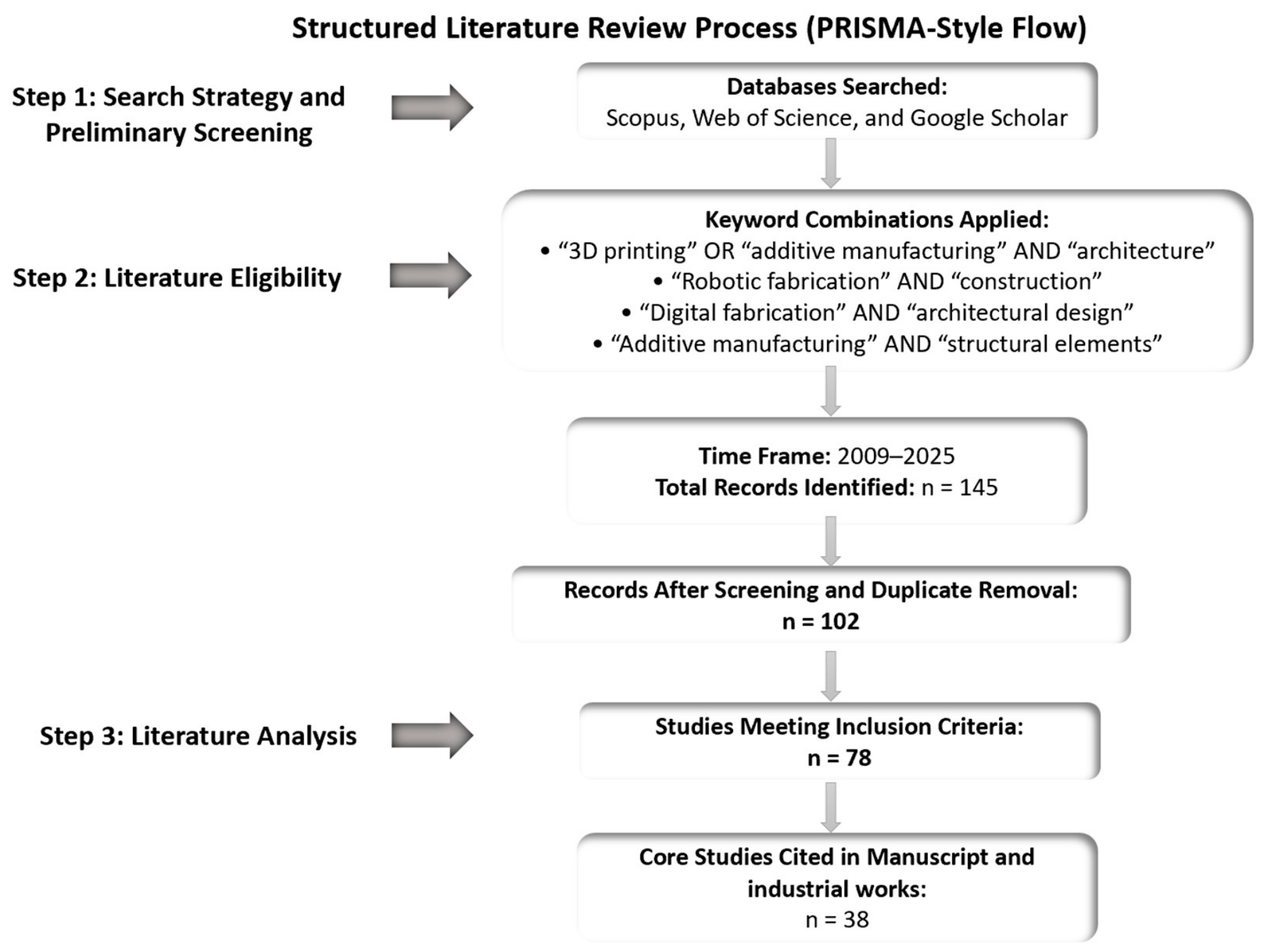
This study adopts a structured literature review methodology designed to ensure transparency, consistency, and reproducibility in the identification and selection of relevant studies. The review process includes systematic database searching, application of defined inclusion and exclusion criteria, and critical screening of selected publications. The process of identifying, screening, and including studies is summarized in
Figure 1 (PRISMA-style flow diagram). The methodology was designed to capture the breadth of current knowledge on 3D printing and robotic fabrication in architectural design while applying structured screening and selection criteria.
Databases Searched:
A comprehensive search was conducted in Scopus, Web of Science (WoS), and Google Scholar. These databases were selected because of their wide coverage of peer-reviewed journal articles, conference proceedings, and interdisciplinary research in architecture, engineering, and construction (AEC).
Search Strategy and Keywords:
The following combinations of keywords and Boolean operators were used:
“3D printing” OR “additive manufacturing” AND “architecture”;
“Robotic fabrication” AND “construction”;
“Digital fabrication” AND “architectural design”;
“Additive manufacturing” AND “structural elements”.
To ensure alignment with the study objectives related to material implications and efficiency, additional keyword combinations were incorporated into the search strategy. These included terms such as “3D printing” AND “material properties,” “additive manufacturing” AND “material efficiency,” “3D printed concrete” AND “mechanical performance,” and “additive manufacturing” AND “durability.”
These keywords were used to capture studies addressing interlayer bonding strength, anisotropic behavior, long-term durability, and resource optimization in additive manufacturing processes. This refinement ensures that the selected literature reflects both technological developments and material performance considerations.
Search strings were refined iteratively to capture both broad discussions of digital fabrication and specific applications in the AEC industry.
Time Frame:
Publications between 2009 and 2025 were included. This time frame was chosen because applications of 3D printing in the AEC industries gained prominence after 2000, with significant acceleration in the last decade.
Inclusion Criteria:
Peer-reviewed journal articles, conference papers, and official standards documents.
Studies explicitly addressing 3D printing, additive manufacturing, or robotic fabrication in architecture and construction.
Exclusion Criteria:
Patents, trade magazines, and news/blog articles without academic validation.
Studies focusing solely on manufacturing sectors outside AEC (e.g., aerospace, automotive).
Conference abstracts without full papers.
Screening and Selection Process:
The search initially identified 145 records. After removing duplicates and applying the inclusion and exclusion criteria, 102 articles were retained for abstract and full-text screening. Following this process, 78 studies met the criteria for inclusion. Of these, 34 were directly cited in the manuscript as the most representative and relevant to architectural applications, while the remaining studies informed the review contextually.
While this review adopts elements of the SLR framework, it is intended as a structured and critical synthesis of current knowledge rather than a full PRISMA-based systematic review.
3. 3D Printing and Robotic Fabrication
This section provides an overview of key 3D printing techniques and robotic fabrication techniques methods, highlighting their material systems, practical applications, and roles within the architecture and construction industries. Each of these technologies brings distinct strengths, enabling innovative solutions across diverse industries and design challenges. While 3D printing and robotic fabrication are frequently discussed as concurrent developments in the digital construction literature, their relationship is more precisely characterized as functionally compensatory: robotic systems specifically address the structural, geometric, and process-level limitations that constrain standalone additive manufacturing, enabling a class of architectural applications that neither technology could achieve independently. Five integration pairings define this relationship in current practice and research.
First, the scale limitation inherent to fixed-volume 3D printing systems is directly resolved by mobile robotic platforms, which extend material deposition to full building-scale footprints without the constraints of an enclosed build chamber. Khoshnevis (2004) identified this as the foundational barrier to construction-scale additive manufacturing [
10], a barrier since overcome through compound mobile robotic systems achieving maximum printable volumes of 2786 m
3 and fabrication rates of 1.728 m
3/h, approximately ninety-six times greater than the fixed-gantry baseline with real-time laser-based terrain compensation maintaining end-effector accuracy across variable site conditions [
11].
Second, the planar deposition constraint which restricts standard 3DCP to horizontal layer-by-layer geometries incompatible with cantilevers, free-form surfaces, and complex architectural profiles [
9] is resolved by six-axis robotic path control. Lloret et al. (2015) demonstrated fabrication of a 1800 mm concrete column with a 180° axial rotation over its full height through a real-time material feedback-controlled robotic slipforming process, eliminating both the geometric constraint and the staircase surface artifact characteristic of layer-based systems [
12].
Third, the absence of tensile reinforcement identified as one of the primary open structural challenges of standalone 3DCP [
9] is addressed through the Mesh Mold process, in which a 6-DOF industrial robot fabricates a spatial steel wire mesh serving simultaneously as porous formwork during casting and structural reinforcement after hardening. Structural testing confirmed post-crack load redistribution performance at mesh steel volume fractions exceeding 1.4%, equivalent to conventionally reinforced concrete [
13].
Fourth, the sensitivity of interlayer bond strength to interval time and surface dehydration, demonstrated quantitatively by Wolfs et al. (2019) and inherent to any open-air printing scenario [
14], is mitigated through closed-loop robotic process control, in which real-time material state data from embedded sensors dynamically govern deposition parameters throughout fabrication, maintaining bond quality under variable environmental conditions [
11,
12].
Fifth, the single-process constraint of standalone extrusion is expanded into multi-process robotic workflows in which the same platform coordinates printing, assembly, reinforcement placement, and inspection within a BIM-linked construction sequence. Systematic review evidence confirms that this system-level integration constitutes both the primary unresolved challenge and the highest-value opportunity in the field [
6], with full-building-scale demonstrations confirming its architectural feasibility [
11,
15]. These five pairings constitute the functional integration framework through which the technologies, case studies, limitations, and future research directions in this manuscript are evaluated.
Table 1 summarizes this framework.
3.1. Types of 3D Printing
A wide range of 3D printing technologies have been developed, each designed for specific purposes. According to ISO/ASTM 52900 [
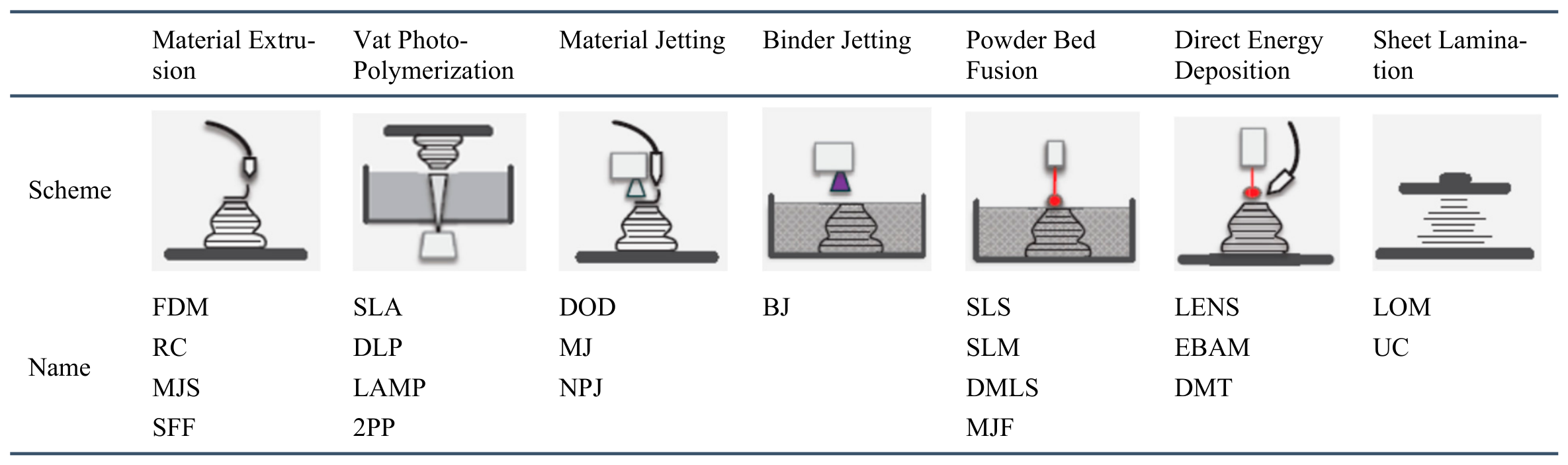
16], additive manufacturing technologies are classified into seven categories, namely material extrusion, vat photopolymerization, material jetting, binder jetting, powder bed fusion, directed energy deposition, and sheet lamination, as shown in
Figure 2.
While additive manufacturing introduces material-efficient processes and new forms of construction, its integration with robotic systems further extends architectural possibilities. Robotic fabrication complements 3D printing by enabling precision assembly, large-scale applications, and hybrid processes that link digital design directly to construction workflows. The following section discusses key robotic fabrication techniques that enhance and extend the potential of additive manufacturing.
A comparative assessment of major additive manufacturing techniques highlights important differences in scalability and structural applicability. Extrusion-based systems, such as concrete printing and fused deposition modeling, are currently the most viable for large-scale architectural applications due to their ability to fabricate continuous elements without the constraints of a fixed build chamber. These systems are widely used for walls, structural components, and full-scale buildings. However, they are limited by relatively lower surface resolution, challenges in controlling interlayer bonding, and geometric constraints such as overhang limitations.
In contrast, powder-based systems, including powder bed fusion and binder jetting, offer higher dimensional accuracy, improved surface finish, and more uniform material properties. These advantages make them suitable for producing complex components, molds, and small-scale structural elements. Nevertheless, their scalability is restricted by build volume limitations, higher energy consumption, and increased operational costs, making them less suitable for full-scale construction. As a result, extrusion-based systems dominate current structural applications in architecture, while powder-based techniques are primarily used for prototyping and specialized components.
From a building application perspective, these additive manufacturing categories differ not only in process mechanics but in the scale and type of construction they can realistically support. Material extrusion is currently the most directly applicable to building-scale construction, enabling walls, structural panels, and continuous façade elements using cementitious or polymer-based materials [
9,
17]. Vat photopolymerization and material jetting are more strongly associated with high-resolution architectural models, molds, and detailed non-structural components where surface precision is prioritized over construction scale [
17,
18,
19]. Binder jetting and powder bed fusion are relevant to customized façade units, casting molds, joints, and small structural components, but remain unsuitable for full-building execution due to build volume and operational constraints [
20,
21]. Directed energy deposition applies primarily to custom metal nodes, structural steel repair, and specialized hybrid applications, while sheet lamination remains largely confined to conceptual models and laminated formwork studies [
21,
22]. This application hierarchy explains why extrusion-based systems currently dominate architectural construction, while other methods serve more specialized roles in design development and component fabrication.
Figure 2.
Categorization of additive manufacturing [
23].
Figure 2.
Categorization of additive manufacturing [
23].
3.1.1. Material Extrusion
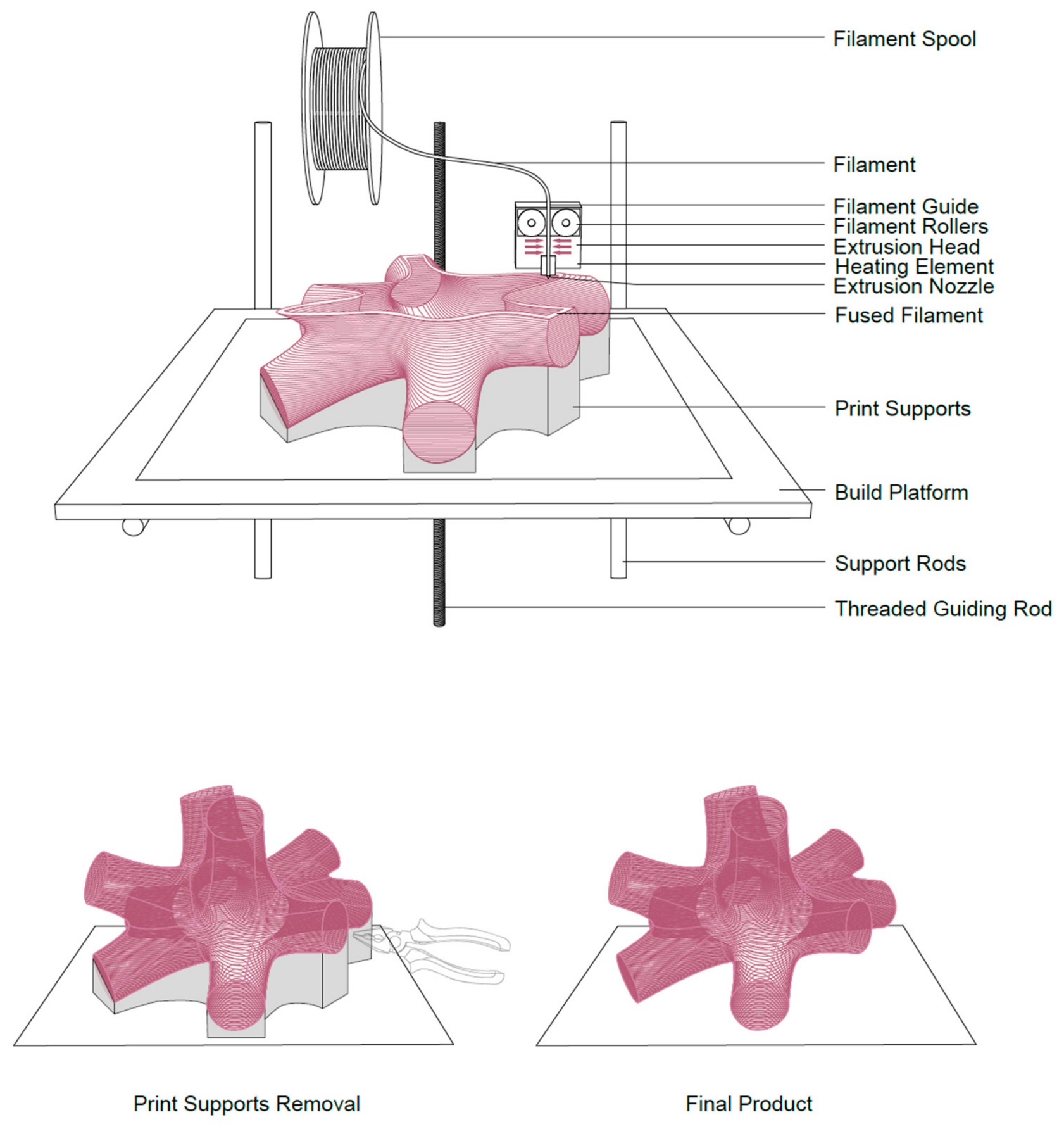
Material extrusion is the most widely used 3D printing technique. It allows for multi-material and multi-color printing. The process is low-cost and capable of producing fully functional parts of a product. One of the earliest and most well-known examples is fused deposition modeling (FDM), which primarily uses polymers as the printing material. FDM creates parts layer by layer, from the bottom up, by heating and extruding thermoplastic filaments [
24]. The fabrication may require additional lattice support to reduce possible distortion and to balance the residual stress. The powder is cooled down once printing is finished. The extra material is then recovered and recycled, leaving behind the final model [
17], as shown in
Figure 3. In
Figure 3, FFF technology, also referred to as fused deposition modeling (FDM), creates objects by extruding thermoplastic filaments layer-by-layer through a heated nozzle. In architectural research, FFF serves as a scalable prototyping method for testing complex geometries, façade modules, and structural joints prior to large-scale concrete or polymer printing. The post-processing stages (support removal, surface finishing, and material curing) illustrate how printed components can achieve the dimensional precision and texture control required for architectural models and functional building elements. It is suitable for rapid prototyping, functional parts, tooling, architectural models, and educational applications [
25].
3.1.2. Vat Photopolymerization
Photopolymerization, another common printing technique, involves curing photo-reactive polymers through exposure to various light sources. This curing method employs lasers (as in stereolithography, SLA) and digital projectors (as in digital light processing, DLP) [
24].
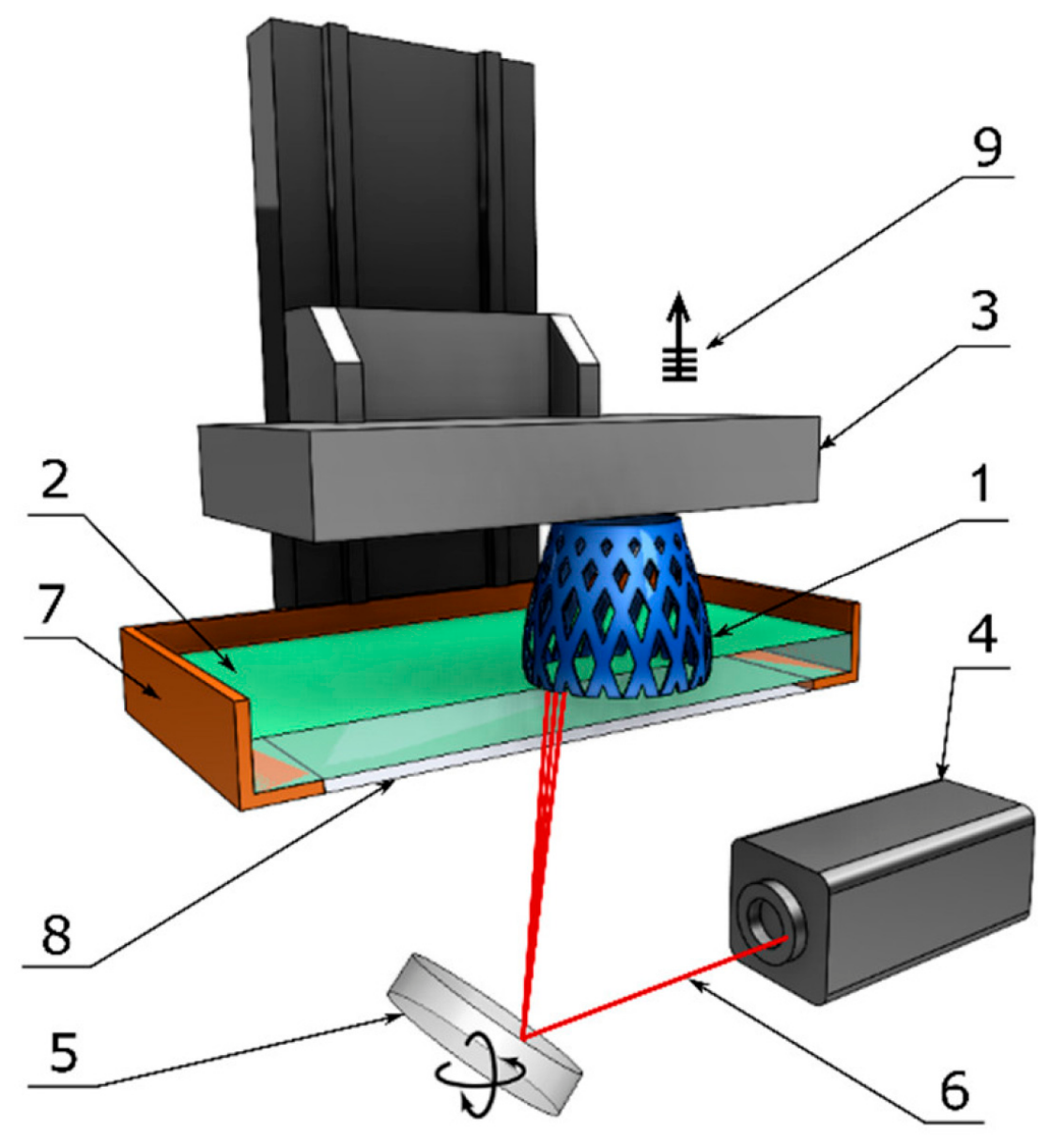
Stereolithography (SLA) is a 3D printing process that uses a UV laser to cure liquid photopolymer resin layer by layer, forming solid objects with exceptional surface smoothness and high resolution (
Figure 4). This technology is particularly suited for creating intricate prototypes and small-batch production parts. Recent advancements in SLA have improved its accuracy, printing speed, and material range. Notably, the development of specialized resin formulations has enabled the production of biocompatible materials for medical use. SLA is now widely applied across industries for producing detailed models, fine jewelry, precise prototypes, dental and medical devices, and custom components [
18]. SLA printing uses a focused ultraviolet laser to selectively cure layers of photopolymer resin with high precision and smooth surface quality. In architectural applications, this technology enables the fabrication of detailed scale models, façade prototypes, and complex geometrical components that capture intricate surface textures and fine structural details. The layer-by-layer curing process allows architects to visualize spatial concepts accurately and to produce molds or formwork for casting small structural or decorative elements. In terms of material properties, standard SLA photopolymer resins exhibit tensile strengths ranging from 38 to 75 MPa in green state and up to 65–75 MPa following post-curing, with tensile modulus values between 1.6 and 4.1 GPa and flexural strength reaching 86–121 MPa for structural resin formulations [
18]. Layer thicknesses typically range from 12 to 150 µm, with 100 µm representing the most commonly applied setting, and an XY spot size of approximately 140 µm enabling high surface resolution and dimensional accuracy in architectural prototype production [
18].
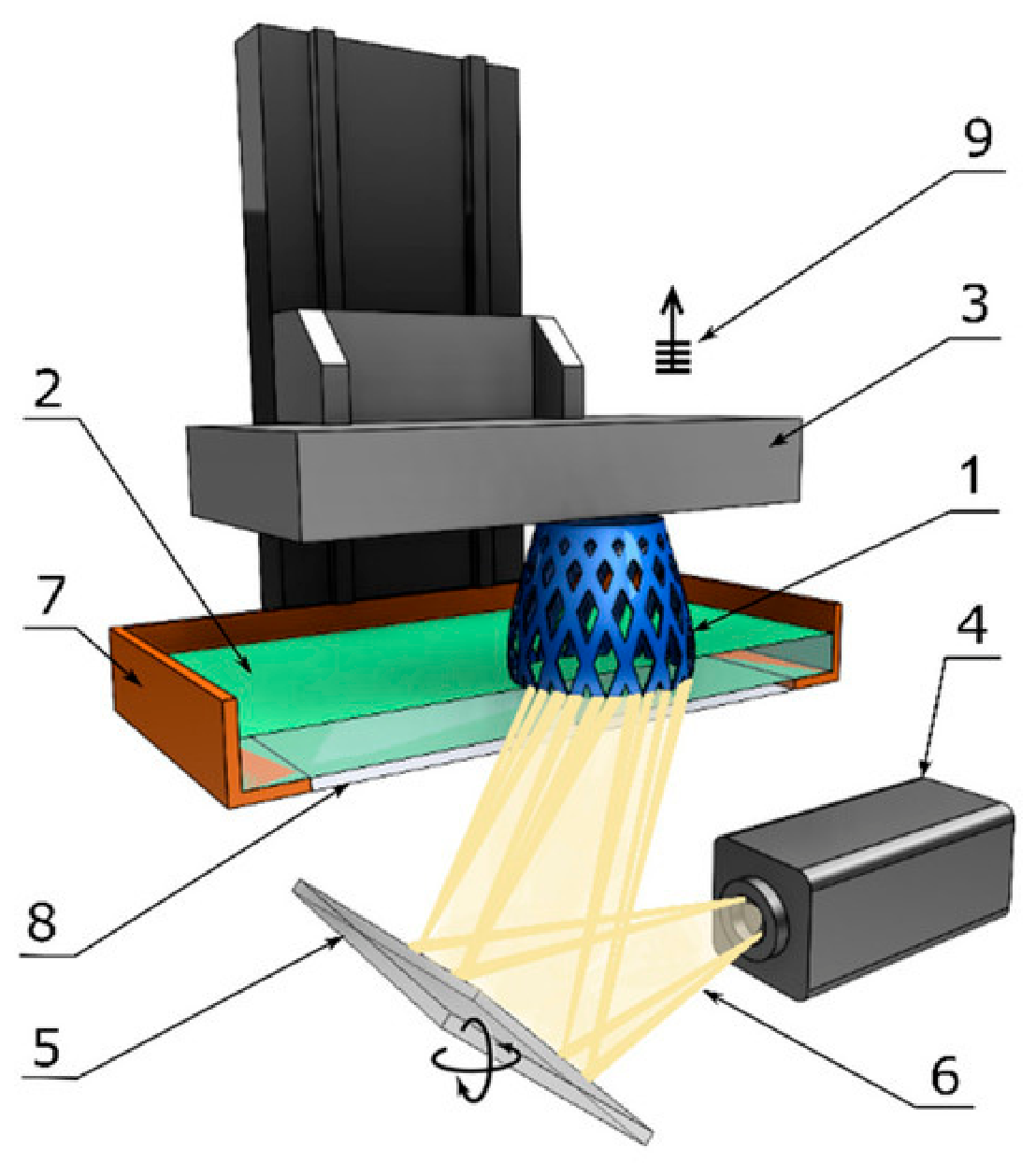
Digital light processing (DLP) works similarly to SLA in that it uses photopolymer resin and ultraviolet light, but instead of a laser, it employs a digital light projector, illustrated in
Figure 5, to cure entire layers at once. DLP technology employs a projected light source to selectively cure photopolymer resin, forming highly detailed components with smooth surface finishes. In architectural applications, this process is valuable for fabricating intricate façade elements, scaled models, and molds for casting lightweight structural or decorative components. Its precision and material versatility make it a key method for translating digital design concepts into tangible architectural prototypes.
This enables faster printing compared to SLA, though with a slight trade-off in resolution. Current research in DLP focuses on expanding material options, reducing layer thickness, and improving resolution. DLP is commonly used for rapid prototyping, jewelry casting, dental appliances, and personalized consumer products [
18].
3.1.3. Material Jetting
Material jetting is a 3D printing process that creates objects by precisely dropping tiny droplets of liquid material layer by layer, which are then cured using ultraviolet light. A precise curing method can boost detail resolution, dimensional accuracy, and surface smoothness by regulating droplet flow and the joining of adjacent droplets [
19].
3.1.4. Binder Jetting
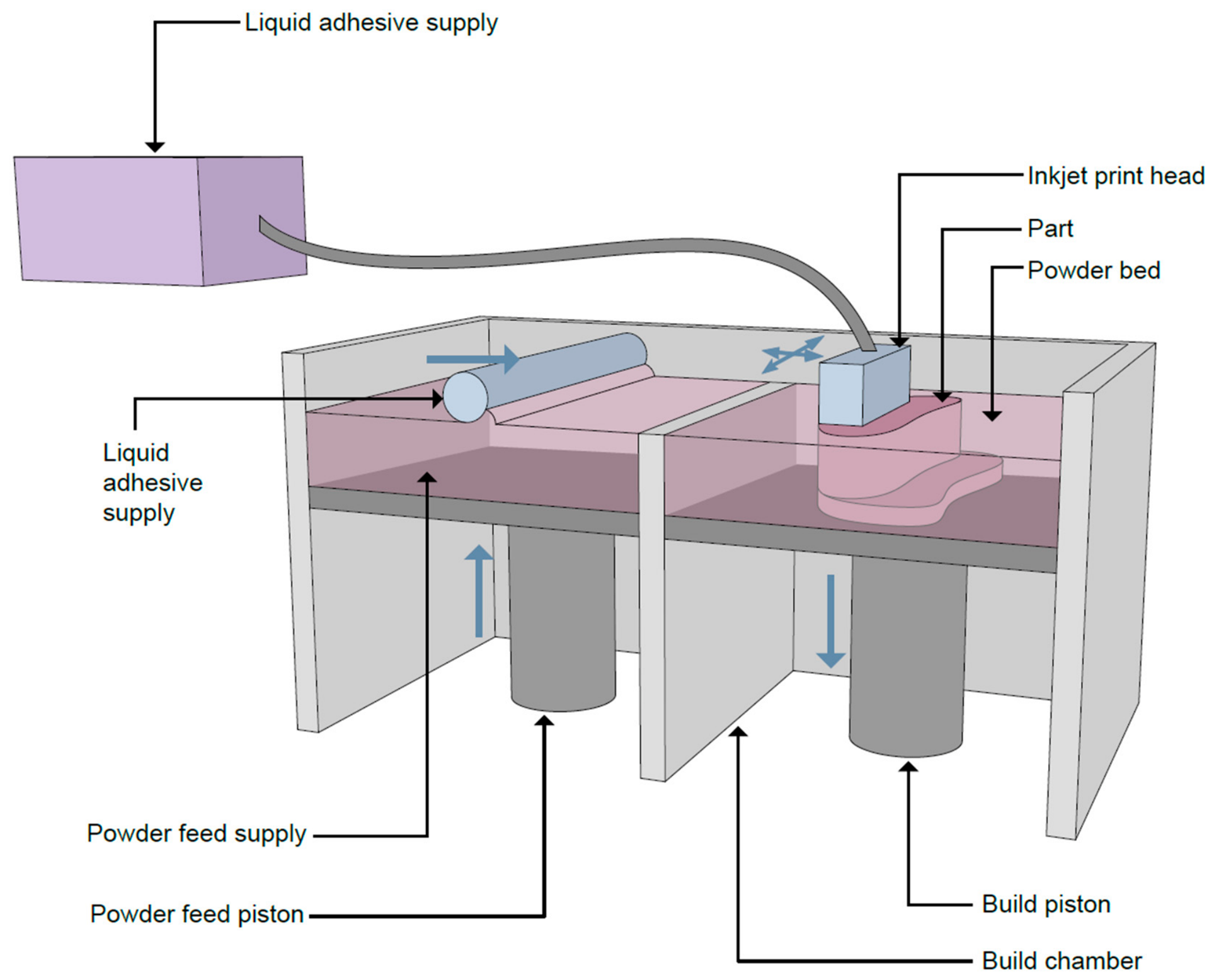
Binder jetting is a rapid prototyping and 3D printing process that uses a liquid adhesive supply to join powder particles, one layer at a time (
Figure 6). Binder jetting technology operates by depositing a liquid binding agent selectively onto layers of powdered material, commonly sand, gypsum, or metal, to form solid components. The main elements include the print head, powder feeder, recoater, and build platform, which together enable precise control over geometry and material distribution. In architectural applications, binder jetting allows for the fabrication of intricate façade panels, customized masonry units, and lightweight structural forms that combine aesthetic complexity with sustainability advantages. In this method, a chemical binder is jetted onto a bed of powder to form each layer [
20]. The finished object is glued together by the binder that remains in the container with the powder base material. After the print is finished, the remaining powder is cleaned off and used for 3D printing the next object [
20]. It is commonly used to produce casting patterns, raw sintered parts, and large-volume products made from materials like sand. This is particularly valuable for producing casting molds, intricate facade components, and large-scale prototypes. It can print with a wide range of materials, including metals, sand, polymers, hybrids, and ceramics [
21]. The process is simple, fast, and cost-effective, as the powder is bonded together with the binder [
24].
3.1.5. Power Bed Fusion
Powder bed fusion is a 3D printing method that includes selective laser sintering (SLS), selective heat sintering (SHS), and electron beam melting (EBM). This technique builds objects by using either a laser or an electron beam to melt or fuse layers of powdered material. The process supports a variety of materials such as metals, ceramics, polymers, composites, and hybrids. Among these, SLS stands out as a key powder-based 3D printing technology as it runs at a fast speed, has high accuracy, and varies surface finish [
26]. It employs a powerful laser to sinter polymer powders and is capable of creating complex parts from metal, plastic, or ceramic materials. SHS, in contrast, uses a heated print head to melt thermoplastic powders and form 3D objects. EBM applies an electron beam as its heat source to fuse material layers together during the printing process. From an environmental perspective, powder bed fusion processes are among the more energy-intensive additive manufacturing techniques, with electricity consumption representing the dominant impact driver. L-PBF energy consumption has been estimated at approximately 400–600 MJ/kg, depending on the material, roughly ten times higher than that of conventional casting processes [
27]. Carbon footprint values for L-PBF components range from approximately 4.2 to 35.9 kgCO
2eq/kg, depending on energy grid conditions and process optimization scenarios, with metal powder production contributing approximately 50% of the total GWP [
28]. The recyclability of unsintered powder across multiple build cycles is a key sustainability advantage of SLS over subtractive methods, though powder quality degrades with repeated reuse, limiting the number of viable reuse cycles. These findings highlight that the environmental performance of PBF processes is highly sensitive to energy source, material type, and process configuration, reinforcing the need for case-specific environmental assessment rather than generalized sustainability claims.
3.1.6. Directed Energy Deposition
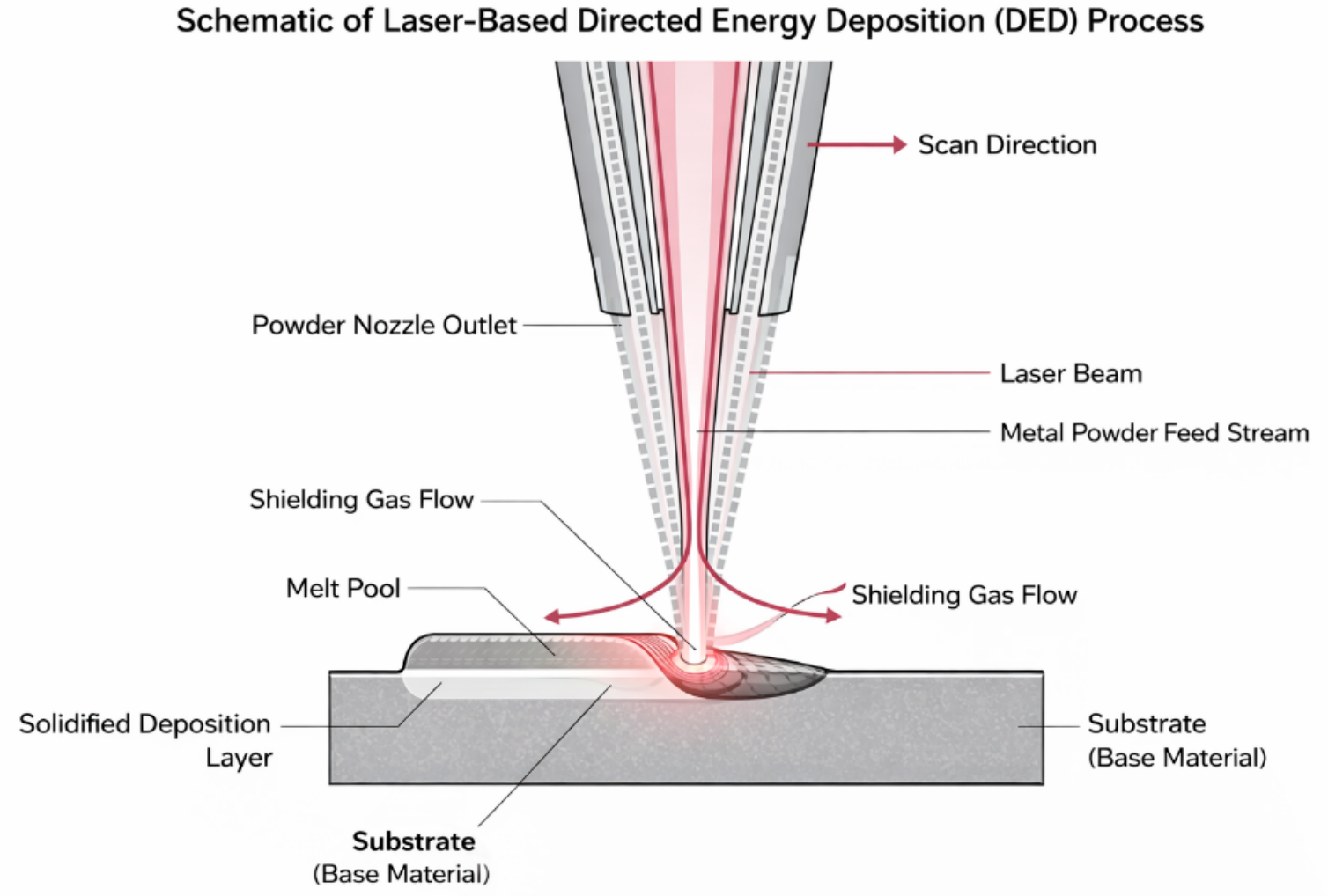
Directed energy deposition (DED) is a more complex 3D printing technique often used to build up or repair existing components with high precision, as illustrated in
Figure 7 [
22]. This process offers excellent control over the grain structure, allowing for the production of high-quality parts. Unlike standard material extrusion, DED nozzles can move freely in multiple directions rather than along fixed axes, enabling greater flexibility in fabrication. Although it can work with ceramics and polymers, DED is most commonly applied to metals and metal-based composites, delivered in wire or powder form. It can offer potential for fabricating large-scale custom metal components, structural elements, and complex joints, combining precision with scalability [
23].
3.1.7. Sheet Lamination
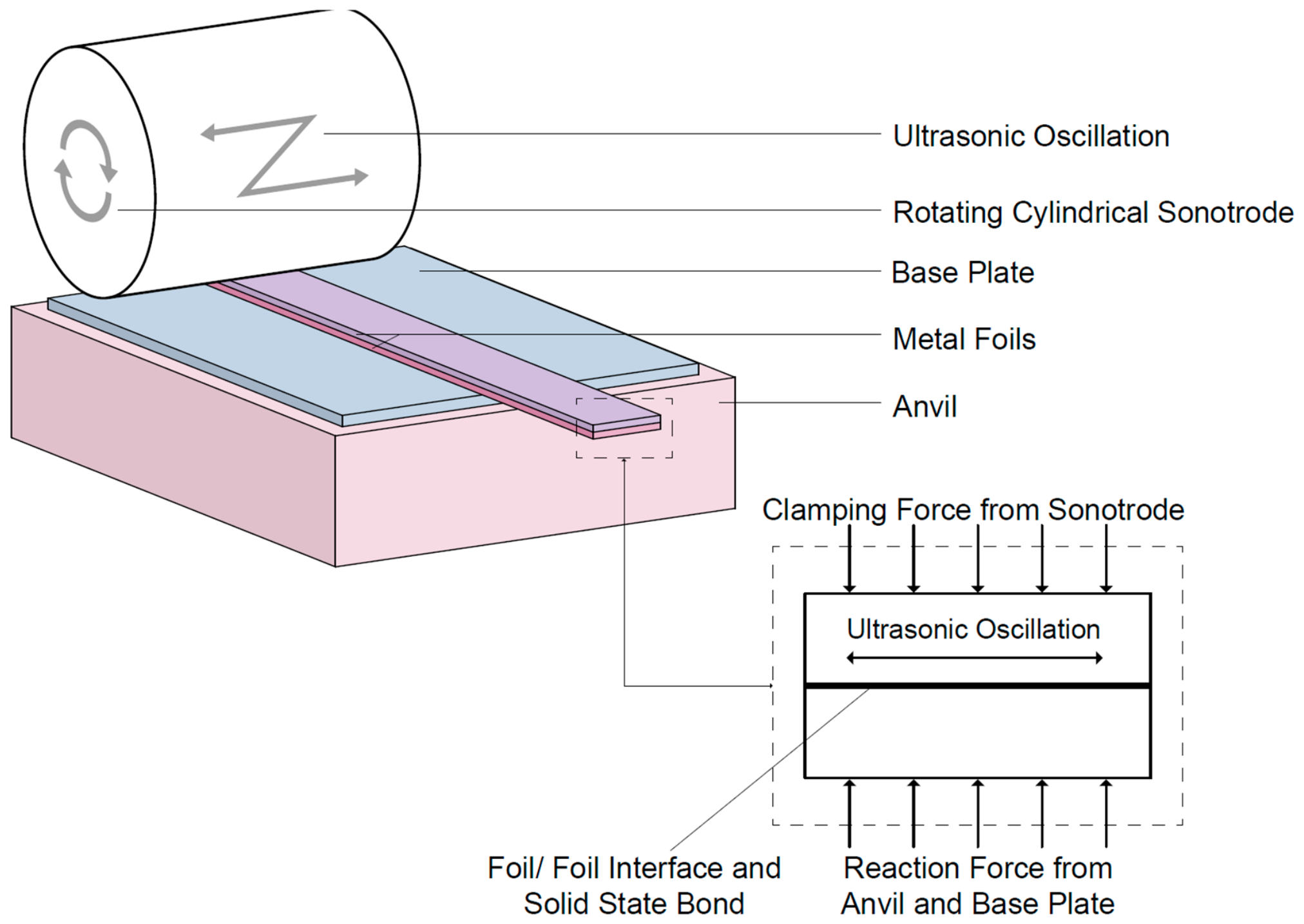
Sheet lamination is a 3D printing process where sheets of material, such as paper, polymer, or metal, are bonded together with external force to form an object [
16]. Examples include laminated object manufacturing (LOM) and ultrasonic additive manufacturing (UAM). This method offers full-color printing, low cost, easy material handling, and recyclability of excess material. LOM produces complex geometries with reduced cost and time, while in UAM metal sheets lamination uses sound waves, illustrated in
Figure 8, to weld in layers and then CNC milled into a proper shape. Paper sheets can be used also, but they are glued by adhesive glue and cut into shape by precise blades [
26].
3.2. Types of Robotic Fabrication
There are numerous types of robotic fabrication technologies designed to perform a variety of tasks directly on construction sites, effectively managing projects of different sizes and complexities despite the challenges posed by large-scale structures.
Among these, autonomous robotic assembly and automated installation systems are commonly used for interior finishing. As shown in
Table 2, automated installation systems are the most frequently referenced technology for exterior envelope installation. Robotic bricklaying and automated robotic assembly stand out as promising solutions for masonry wall construction. Additionally, automated robotic assembly is predominantly applied in steel structure assembly and the construction of prefabricated buildings and elements. Beyond fabrication tasks, robotic systems increasingly incorporate 3D vision capabilities for structural inspection, including LiDAR–camera fusion platforms capable of detecting and measuring surface cracks at sub-millimeter precision [
30].
A critical distinction in robotic fabrication workflows lies between kinematic constraints and control strategies. Kinematic constraints refer to the physical capabilities and limitations of robotic systems, including degrees of freedom, joint limits, reachability, and workspace boundaries, which directly influence feasible fabrication geometries and orientations. These constraints determine whether a robot can physically access and construct specific design features.
In contrast, control strategies govern how robotic systems execute motion, particularly through path planning algorithms that define tool trajectories, velocity profiles, and deposition rates. Path planning accuracy plays a crucial role in determining the geometric tolerance and dimensional precision of fabricated components. Even minor deviations in trajectory execution can lead to cumulative errors, especially in large-scale or multi-layer fabrication processes.
Recent advancements in adaptive control, sensor-based feedback systems, and real-time monitoring have been introduced to improve path accuracy and reduce geometric deviations. These developments are essential for ensuring consistency between digital design models and their physical realization in robotic fabrication processes.
Despite their advantages in precision, repeatability, and programmability, robotic fabrication systems face important practical limitations in construction. Kinematic and workspace constraints restrict feasible geometries and access conditions, while path planning complexity increases significantly in large-scale or multi-step fabrication tasks [
6]. High initial equipment costs, ongoing maintenance requirements, and dependence on specialized programming expertise limit accessibility for smaller firms and projects [
6]. Adaptability in unstructured or variable construction site environments where conditions such as ground unevenness, dust, and vibration differ substantially from controlled manufacturing settings remains a persistent challenge [
6]. Interoperability between digital design environments and robotic control systems also continues to introduce translation errors and execution deviations that affect fabrication accuracy [
6,
7]. Collectively, these constraints confirm that robotic fabrication raises not only questions of technological capability, but equally of system integration, operational robustness, and reliable performance under real construction conditions.
A qualitative SWOT analysis further clarifies the role of robotic fabrication technologies in architectural design and construction. Strengths include high precision, repeatability, and the ability to fabricate complex geometries with minimal human intervention. Weaknesses involve high initial investment costs, limited adaptability to unstructured construction environments, and dependence on specialized expertise. Opportunities lie in the integration with Building Information Modeling (BIM), digital twins, and advanced material systems, which can enable more efficient and data-driven construction processes. Threats include regulatory barriers, interoperability challenges between digital design and robotic systems, and uncertainties regarding long-term performance and scalability in real-world applications.
3.3. Applications of 3D Printing and Robotics
3D printing technology is seen as an environmentally friendly solution that enhances precision and efficiency while enabling the creation of highly complex geometries with minimal material waste. In architecture, 3D printing has primarily been used to produce scaled models for design visualization and presentation [
17]. As technology continues to advance, its role is expanding toward fabricating functional building components such as decorative facade panels, lightweight structural frameworks, and concrete elements [
17]. Despite these advancements, 3D printing alone is often insufficient for large-scale architectural applications, as most current systems struggle with the size and logistical demands of full-scale construction [
22]. As a result, industries like architecture, building, and construction often require the need for on-site, adaptive solutions [
31]. This is where robotics becomes a crucial complement to additive manufacturing. By integrating robotic systems with 3D printing, it becomes possible to extend the precision and efficiency of automated fabrication directly to the construction site.
In the construction industry, it provides the capability to print entire buildings or fabricate individual components with exceptional accuracy. The introduction of Building Information Modeling (BIM) has further advanced the integration of 3D printing in construction by offering a detailed digital representation of a building’s physical and functional characteristics. BIM allows for better information sharing and serves as a reliable tool for decision-making throughout a building’s life cycle from initial conception to demolition for construction or design of the building [
6]. Together, 3D printing and BIM support more efficient and collaborative methods for designing, constructing, and maintaining the built environment. Achieving effective BIM integration requires adherence to established data exchange protocols. The Industry Foundation Classes (IFC) standard serves as the primary open-data format for transferring model information across platforms, enabling interoperability between design authoring tools and fabrication systems. In practice, parametric tools such as Grasshopper and Dynamo translate BIM geometry into machine-executable instructions, with plugins such as KUKA|prc enabling direct robotic programming from within the design environment [
7]. However, data fidelity losses during these translations remain a recognized limitation, reinforcing the need for standardized BIM-to-fabrication protocols across the AEC industries.
Robotic fabrication is playing a key role in bringing these innovations to construction sites. Large-scale robotic systems are now capable of pouring and layering construction materials directly on site, making it possible to build complex structures without the need to transport heavy components. This capability has been widely demonstrated across numerous studies in the literature [
31,
32,
33,
34,
35,
36,
37,
38,
39]. This helps address the challenge of working with large-scale projects that cannot be easily assembled in a factory. Robotic systems enhance speed, precision, and safety while reducing reliance on manual labor for repetitive or hazardous tasks. With these technologies, companies can quickly and affordably produce detailed building models, avoid costly delays, and identify potential issues early in the process. They also improve communication between engineers and clients by turning ideas into tangible forms far beyond what traditional drawings can offer [
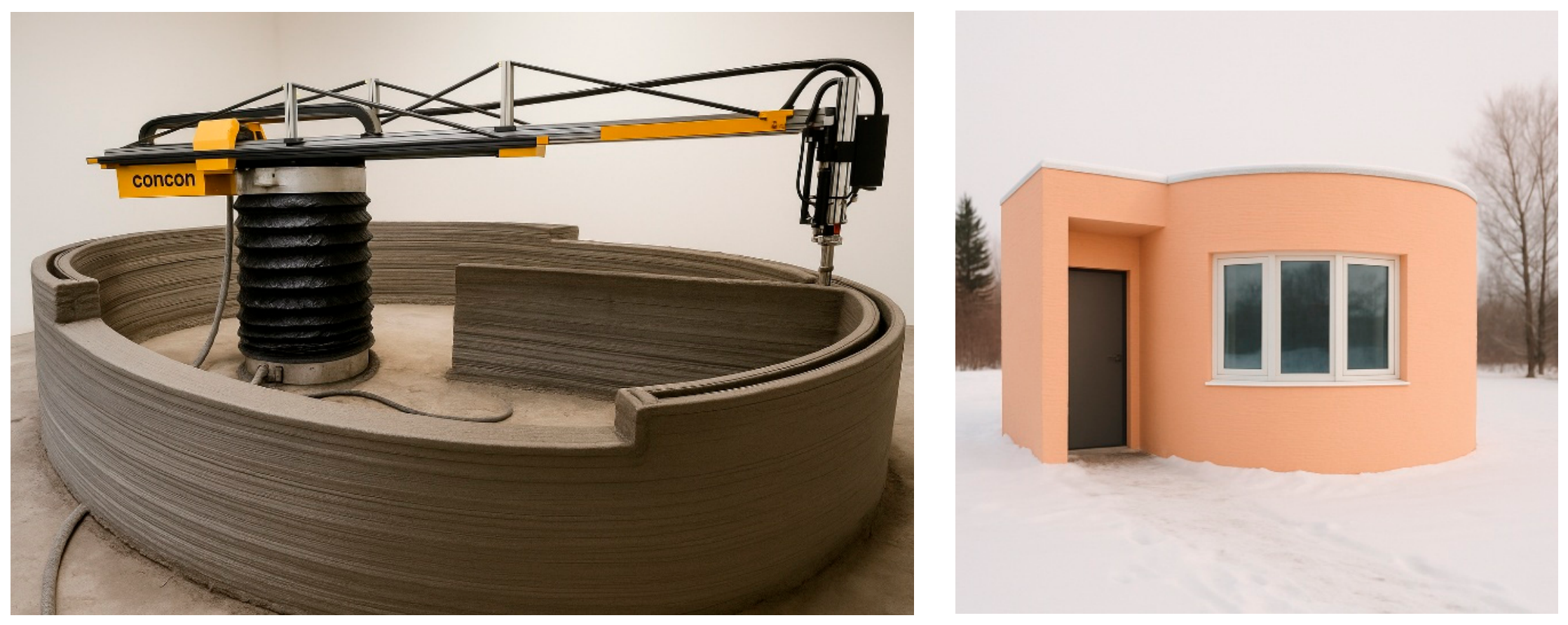
32]. Notable examples of 3D-printed buildings include the Apis Cor Printed House pictured in
Figure 9 [
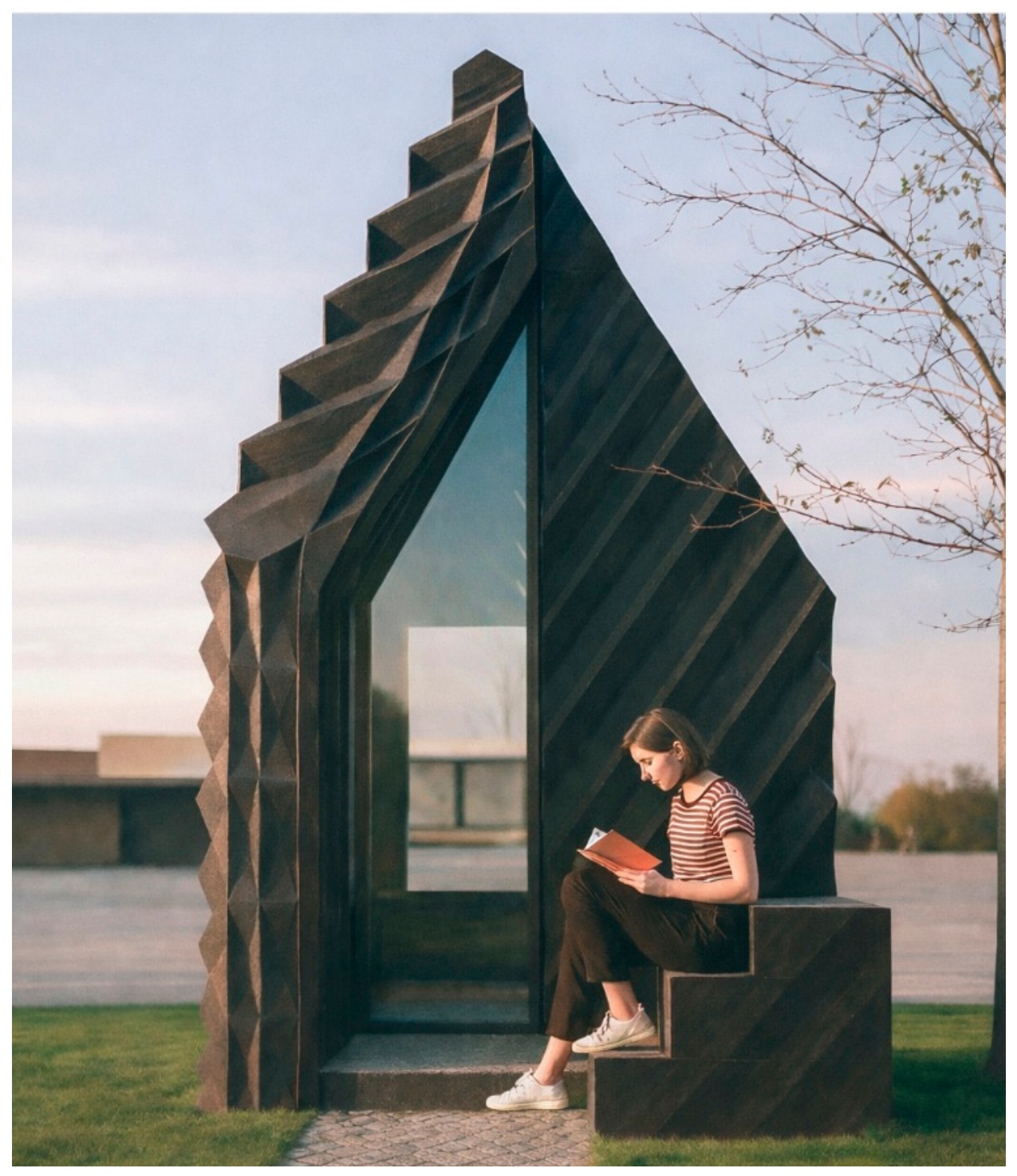
34], the Canal House pictured in
Figure 10 [
35], and the Tecla House [
36]. It is important to note that while some early demonstration projects such as the Apis Cor House and the Canal House are reported mainly in industry outlets, their inclusion here serves to illustrate architectural milestones rather than provide peer-reviewed validation.
Additive manufacturing has also been increasingly explored as a promising solution for affordable housing due to its potential to reduce construction time, labor costs, and material waste. Automated construction processes enable rapid deployment of housing units with lower reliance on skilled labor, which is particularly beneficial in regions facing housing shortages. For example, recent 3D-printed housing projects, such as ICON’s residential developments in the United States, demonstrate the feasibility of delivering cost-effective housing within significantly shorter construction timelines compared to conventional methods [
37]. However, despite these advantages, challenges related to scalability, regulatory approval, and long-term durability remain key barriers to widespread adoption in affordable housing applications.
Several full-scale demonstrations have illustrated the growing feasibility of 3D printing in the building industry. For instance, the Apis Cor project in Russia successfully printed a single-story residential unit within 24 h, showcasing the speed and efficiency of extrusion-based additive manufacturing in harsh climates. Similarly, the Canal House project in Amsterdam utilized large-scale polymer printing to highlight architectural customization and modular assembly. While such projects have primarily emerged from industrial or experimental settings, peer-reviewed research has also validated the structural and material performance of similar systems. For example, Bos et al. [
9] presented one of the earliest systematic investigations of 3D concrete printing for architectural applications, documenting the 3D-Printed Concrete Bridge in The Netherlands and analyzing its mechanical behavior and construction precision. Together, these examples underscore how both academic and industry-driven efforts are converging to expand the architectural potential of additive manufacturing.
Together, additive manufacturing and robotic fabrication form an interconnected toolkit for contemporary architecture. Their combined influence is most evident in built applications, ranging from experimental prototypes to full-scale housing solutions.
Section 4 reviews selected case studies that demonstrate both the potential and current limitations of these technologies in practice.
4. Discussion: Implications and Advancements
Building upon the reviewed technologies, this section discusses the broader implications and advancements of additive manufacturing in architecture focusing on material development, design flexibility, sustainability, and economic feasibility.
Design Flexibility
Material innovations are transforming contemporary architectural design, enabling new possibilities in both structural elements and building envelopes. Among these developments, smart 3D-printed facades represent a significant advancement, which combines fabrication techniques with creative freedom. These emerging materials and technologies are redefining how architects and builders approach form, allowing for more expressive and customized designs.
Ceramic and concrete-based additive manufacturing have demonstrated significant potential in achieving complex geometries, organic forms, and modular assemblies that are difficult to realize using conventional construction methods. These materials allow designers to explore topologically optimized structures, lightweight shells, and highly customized architectural components while maintaining structural performance.
Today, intricate surface patterns and non-standard components can be produced with high precision. When paired with robotic systems, this process becomes even more dynamic as robots can execute complex fabrication tasks with high accuracy, allowing architects to experiment with new forms, textures, and structural strategies. For instance, through careful control of printing parameters, materials like ceramics and concrete can now be 3D printed without large pores, cracks, or structural weaknesses [
1]. Ceramic is well suited for architectural applications as it begins in a fluid state, allowing it to be shaped into any form before hardening. It is strong, durable, and fire resistant. This adaptability makes it an ideal material to be applied in practically any geometry and shape as it is very suitable for future construction and building [
1].
However, despite these advantages, certain design limitations remain. For instance, the layer-by-layer deposition process restricts overhang angles and often requires temporary supports for complex geometries. In the case of concrete printing, nozzle size, rheological control, and interlayer bonding still limit the achievable resolution and surface quality. Similarly, ceramic printing faces challenges related to shrinkage, warping during sintering, and scale-up for full-size architectural elements. Addressing these material and process constraints through hybrid printing methods and advanced material formulations is therefore essential to fully unlock their design potential.
Hybrid printing methods refer to fabrication strategies that combine additive manufacturing with complementary structural or process techniques. These include printed contours subsequently filled with conventionally reinforced concrete, the use of post-tensioning through pre-printed voids, integration of fiber or mesh reinforcement between printed layers, and digitally controlled robotic workflows that improve geometric precision and reduce process-induced defects [
9]. Advanced material formulations refer to printable mixes specifically engineered for both extrusion performance and structural reliability including low-slump but pumpable mortars, rheology-controlled and thixotropic cementitious materials, fiber-reinforced compositions, and mixes tailored to reduce shrinkage, improve buildability, and enhance interlayer bonding [
9,
38]. The effectiveness of both approaches depends critically on the relationship between material rheology, nozzle configuration, and process parameters, all of which must be co-optimized to achieve consistent dimensional stability and mechanical performance [
14,
38].
Concrete, similarly, has been valued for its strength and versatility. With additive manufacturing, concrete can be deposited in precise layers, eliminating the need for traditional formwork that needs a temporary wood or steel mold to shape poured concrete. This allows for the direct fabrication of complex curves, intricate textures, and unique structural elements straight from digital robot models, enabling architects to design without being limited by conventional casting methods. This approach also provides greater control over the internal structure of concrete components, such as adjusting layering density patterns to meet specific performance needs. Thanks to its relatively fast curing time and compatibility with large-scale applications, concrete is especially well suited for 3D-printed structural components and facade elements. Overall, this fabrication method empowers architects and builders to push design boundaries, seamlessly merging structural logic with creative expression.
5. Discussion
While
Section 4 examines design-related advancements of additive manufacturing, this section provides a broader critical evaluation of the field. It synthesizes the reviewed literature through bibliometric observations, identifies practical and structural limitations, and discusses implementation challenges related to scalability, cost, durability, interoperability, and regulatory integration in real construction practice. The two sections are therefore complementary rather than redundant:
Section 4 addresses what these technologies make possible, while
Section 5 addresses what continues to constrain their widespread adoption.
Bibliometric observations confirm the novelty and growth of this research area: nearly 70% of included studies were published after 2015, with Europe, the United States, and China leading in contributions. Thematic clustering shows three dominant trends, namely material innovations, digital design strategies, and sustainability/regulation, while limited research originates from the Global South, highlighting an area for broader geographic engagement.
3D printing and robotic fabrication have emerged as transformative tools in digital construction. 3D printing enables precise material deposition and supports the fabrication of complex geometries. In parallel, robotic fabrication provides programmable control over construction processes, improving accuracy and reducing manual labor. Together, these technologies expand both construction capabilities and architectural design possibilities.
While many of the published studies provide rich insights into the technological capabilities of 3D printing and robotic fabrication, it is important to distinguish between their maturity levels. Prototypes remain confined to laboratory-scale experiments and academic demonstrations, such as 3D-printed façade panels or small-scale pavilions, where the emphasis is on exploring geometric freedom rather than durability or compliance. Experimental projects, such as the ETH Zurich DFAB House, the Apis Cor House in Russia, and the Canal House in Amsterdam, have demonstrated real-world feasibility but largely function as pilot studies without formal integration into building codes [
15,
34,
35]. By contrast, full-scale applications aligned with regulatory frameworks, notably ICON’s 3D-printed homes in the United States and SQ4D’s permitted residential home in New York, represent the current frontier where additive manufacturing has moved beyond proof-of-concept into code-approved practice [
37,
39].
Case studies were selected to represent a progression across two dimensions: construction scale (prototype, experimental, and full-scale) and regulatory alignment (non-compliant, partially compliant, and code-approved). This framework was chosen to illustrate the development trajectory of additive manufacturing in architecture, from early proof-of-concept demonstrations to formally permitted construction, rather than to provide an exhaustive survey of all existing projects. To clarify these differences,
Table 3 summarizes representative projects, highlighting their scale, technologies, materials, and regulatory alignment. This comparative framework demonstrates the trajectory of additive manufacturing in architecture from experimental prototypes to regulated, habitable structures and underscores the research-to-practice gap that must be addressed to accelerate adoption.
However, despite their transformative potential, these technologies are not without limitations and challenges. High implementation costs, concerns about long-term durability and scalability, and challenges with integration into conventional construction workflows continue to present significant barriers. The following sections explore both the advancements and limitations of these technologies in greater detail.
5.1. Advancements
From an architectural design perspective, the precision and programmability of these technologies allow for the realization of highly customized, performance-driven forms, strengthening the link between digital conception and physical construction.
5.1.1. Greater Precision and Speed
Additive manufacturing processes such as 3D printing allow for highly controlled material deposition, achieving a level of precision that traditional construction methods often cannot match. Robotic arms used in fabrication can follow complex, pre-programmed paths to execute tasks with exceptional accuracy, reducing construction errors and ensuring alignment with digital models [
40]. Additionally, 3D printing accelerates the prototyping process, allowing architects to quickly test and refine design ideas. This rapid iteration supports the exploration of multiple concepts, leading to more thoughtful, well-resolved architectural outcomes that balance functionality with aesthetic quality [
40].
3D printing does not automatically increase the intrinsic strength of construction materials through the additive process itself. Its main structural advantage lies in enabling more deliberate control over material composition and deposition geometry. In cement-based systems, printable mixes can be tailored through admixtures, supplementary cementitious materials, and fiber reinforcement to target improved ductility, tensile resistance, and structural efficiency [
9,
38]. Paul et al. (2018) demonstrated that the mechanical properties of 3D-printed cementitious materials depend strongly on printing direction, nozzle configuration, and process parameters, and that printed specimens may exhibit higher or lower strength than cast equivalents depending on layer orientation and print quality [
38]. Extrusion can under some conditions produce a denser matrix and improve strength, while poor interlayer bonding or voids between deposited filaments reduce performance [
38]. Bos et al. (2016) further emphasized that structural safety, reinforcement integration, and reliable large-scale implementation remain unresolved challenges regardless of material optimization [
9]. The manuscript therefore clarifies that 3D printing can improve building performance through optimized material design and controlled fabrication not through the printing mechanism alone provided that interface quality and structural reliability are properly addressed [
9,
38].
5.1.2. Material Efficiency and Sustainability
A major benefit of 3D printing is that it significantly enhances material efficiency by using only the exact amount of material required, unlike traditional subtractive or form-based construction methods. This additive approach minimizes waste and supports sustainable building practices [
40]. Robotic systems further optimize efficiency and reduce material consumption and construction time by refining cutting paths and streamlining assembly, further reducing inefficiencies in fabrication. In response to growing environmental concerns, architects are increasingly leveraging 3D printing to experiment with eco-friendly, recycled, or biodegradable materials. These innovations reduce both material waste and energy consumption, advancing more sustainable architectural solutions [
40].
Quantitative life-cycle assessment studies reveal a nuanced picture of the environmental performance of 3D concrete printing. At the process level, 3D printing operations generate lower emissions (43.33 kgCO
2-eq) than mold-casting (47.91 kgCO
2-eq), representing a 9.5% process-phase reduction. However, the total GWP per m
3 remains higher for standard Portland cement-based 3DCP mixes (742.69 vs. 614.43 kgCO
2-eq/m
3) due to the elevated cement content, which accounts for approximately 90% of the overall emissions [
41]. At the wall assembly scale, 3D-printed concrete walls exhibit 54–99% higher embodied carbon and 33–45% higher embodied energy than conventional construction methods, largely driven by material composition rather than the printing process itself, which accounts for less than 1% of the total embodied carbon [
42]. When unreinforced optimized mixes are used, GWP reductions of approximately 22% relative to conventional construction are achievable, while incorporating conventional steel reinforcement increases GWP by 27.5% above the conventional baseline [
43]. The use of supplementary cementitious materials such as limestone calcined clay cement can reduce greenhouse gas emissions by approximately 45% and energy consumption by 40% compared to standard OPC-based mixes, representing the most effective pathway toward sustainable 3DCP [
44].
Table 4 summarizes key LCA parameters across the reviewed studies.
Energy consumption comparisons further reinforce the conditional nature of 3DCP sustainability. At the process level, 3D printing operations consume 2.26 kWh per m
2 of wall area, with the mixer and pump accounting for 1.55 kWh and the robotic arm for 0.71 kWh [
43]. At the wall assembly scale, 3D-printed concrete walls require 33–45% more embodied energy than conventional construction methods, primarily due to high cement content rather than printing energy, which accounts for less than 1% of total embodied energy [
42]. When optimized unreinforced mixes are used, fossil fuel depletion decreases by approximately 42% relative to conventional construction, while incorporating conventional steel reinforcement eliminates this advantage entirely [
43]. These findings confirm that energy efficiency gains from additive manufacturing are material- and process-dependent rather than universal.
One of the most significant contributions of 3D printing and robotic fabrication is therefore their potential to transform sustainability in construction. Beyond simple waste reduction, several studies highlight the feasibility of incorporating recycled aggregates, fly ash, demolition debris, and other industrial by-products into printable mixes, thereby reducing dependence on virgin materials and lowering embodied carbon. However, while these applications suggest substantial sustainability benefits, comprehensive life-cycle assessment (LCA) studies remain scarce, and results are rarely comparable across projects. Moreover, the energy consumption of large-scale 3D printers and robotic systems has not been systematically evaluated. Without standardized methods to account for material sourcing, energy use, and end-of-life recycling, sustainability claims remain largely qualitative and require more rigorous validation.
Beyond carbon footprint, material waste reduction efficiency is another critical metric, as additive manufacturing typically reduces waste by over 30% through its layer-by-layer deposition process. However, these environmental benefits are highly dependent on factors such as printing energy consumption, transportation, and material sourcing. Despite these promising findings, comprehensive and standardized LCA studies that integrate all life-cycle stages from raw material extraction to end-of-life remain limited, highlighting the need for more consistent evaluation frameworks in future research.
5.1.3. Customization and Personalization
Digital fabrication technologies have revolutionized architectural design by offering unprecedented creative freedom. Parametric modeling and algorithmic design tools make it possible to develop highly customized, organic, and geometrically intricate forms that were once too costly or difficult to construct [
17]. These innovations support tailored architectural solutions that align with individual client needs. From bespoke facades to custom interior elements, architects can produce unique designs that respond precisely to specific demands [
40]. Robotic systems further enhance this process by accurately translating digital models into tangible structures with exceptional precision.
5.1.4. Cultural Heritage Preservation
Beyond new construction, 3D technologies offer established applications in cultural heritage documentation and conservation support. Through 3D scanning, digital modeling, and additive manufacturing, historical objects and architectural elements can be accurately recorded, reconstructed, and selectively reproduced [
17,
45]. The most clearly supported role of 3D printing in this context is not full structural restoration, but rather targeted conservation support: loss compensation, replica production, fabrication of customized structural supports, and replacement of damaged or missing non-structural elements [
45]. These applications are particularly relevant for fragile decorative components, sculptural fragments, casting molds, and detachable fills, where direct intervention on original material is undesirable. The association between 3D printing and cultural heritage preservation is therefore strongest at the level of documentation, replication, and selective element-level conservation support, and the manuscript has been revised to reflect this more precisely.
5.1.5. Regulatory Frameworks and Standards
Regulatory frameworks are essential for transitioning additive manufacturing and robotic fabrication from experimental applications to full-scale, code-compliant construction. In addition, ISO/ASTM 52939 [
46] specifically addresses structural applications in construction and establishes requirements for safety, reliability, and performance. Similarly, the ICC-ES AC509 acceptance criteria [
47] have been adopted in the United States to evaluate 3D-printed concrete walls for compliance with building codes.
The ICC-ES AC509 (Acceptance Criteria for 3D-Printed Construction) [
47] establishes a framework for evaluating the structural reliability and safety of printed concrete components. It specifies several required mechanical tests, including compressive and flexural strength of printed specimens, inter-layer bond strength to assess adhesion between successive layers, and durability assessments such as freeze–thaw resistance. In addition, AC509 mandates full-scale load testing of representative wall panels to confirm that 3D-printed assemblies meet or exceed the performance of conventionally cast concrete walls. These standardized evaluations are critical to bridging experimental innovation and formal building-code compliance. Material characterization of 3D-printed concrete typically follows established test standards including ASTM C39 [
48] for compressive strength, ASTM C78 [
49] for flexural strength, ASTM C1585 [
50] for water absorption and durability, and ASTM C1611 [
51] for fresh-state flowability, while rheological properties such as yield stress and buildability are increasingly assessed through protocols outlined in the RILEM TC 276-DFC guidelines [
14].
Incorporating these standards not only harmonizes terminology but also provides a pathway for integrating additive manufacturing into mainstream construction practice, moving the field closer to regulatory approval and industry-wide adoption.
5.2. Limitations
Although additive manufacturing offers clear advantages in terms of material efficiency, reduced waste, and optimized design, a major limitation remains the scarcity of comprehensive life-cycle assessment (LCA) studies. Current research largely focuses on process optimization and mechanical performance, with limited quantitative evaluation of environmental impacts across production, transportation, operation, and end-of-life stages. The absence of standardized LCA data makes it difficult to compare additive manufacturing with conventional construction methods on a holistic sustainability basis. Future studies should therefore integrate LCA frameworks to quantify embodied carbon, energy consumption, and recyclability within architectural applications.
Despite the significant potential of additive manufacturing and robotic fabrication, several critical challenges remain that constrain their widespread adoption. High initial equipment costs and the need for specialized facilities can restrict accessibility, particularly for smaller firms and projects. Concerns about durability persist, as long-term performance and resilience of 3D-printed or robotically fabricated components are still under investigation. Scalability also poses difficulties, with many applications confined to prototypes or pilot projects rather than full-scale adoption. Furthermore, successful implementation requires careful integration into existing construction workflows, coordination among multiple trades, and compliance with regulatory and code requirements. Without addressing these factors, even the most advanced fabrication technologies may struggle to achieve their full potential in large-scale practice.
Recent studies provide quantitative insights into the mechanical performance of 3D-printed materials, particularly cementitious systems. Interlayer bonding strength, which governs structural integrity between deposited layers, has been reported to range between approximately 60% and 85% of monolithic concrete strength, depending on process parameters such as the time gap between layers and surface conditions [
14]. Furthermore, anisotropic behavior is inherent in layer-based fabrication, where compressive strength perpendicular to the printing direction may exceed parallel strength by up to 20–30%, indicating direction-dependent mechanical performance that must be considered in structural design. In terms of durability, preliminary studies suggest that 3D-printed concrete can achieve comparable freeze–thaw resistance to conventional concrete when optimized mix designs are used. However, long-term performance under environmental exposure, including moisture ingress, thermal cycling, and chemical degradation, remains insufficiently investigated. These findings highlight the need for standardized testing frameworks to ensure consistent and reliable performance of 3D-printed structural elements.
5.2.1. Cost
While additive manufacturing can significantly reduce construction time and material waste, its implementation remains more expensive than conventional methods. The primary cost drivers include the high initial investment in large-scale 3D printing and robotic equipment, the use of specialized materials such as proprietary concrete mixes and binding agents, and the requirement for skilled labor and technical training to operate and maintain these systems [
40]. In addition, limited market availability, low production volumes, and the need for advanced software integration contribute to higher overall expenses. These financial and technical barriers are particularly evident in developing regions and traditional construction markets. Nevertheless, as production scales up and the technology becomes more accessible, overall costs are expected to decline, paving the way for broader architectural adoption. Beyond initial capital investment, hardware maintenance costs represent a significant and often underestimated component of the total cost of ownership for automated installation systems. Annual maintenance expenditure for robotic construction systems has been estimated to range from 3% to 15% of the initial equipment cost, depending on operational intensity and environmental conditions [
6]. Additional cost drivers include sensor recalibration, end-effector replacement, software updates, and unplanned downtime from component failure. In construction environments, exposure to dust, moisture, and vibration accelerates hardware degradation compared to controlled manufacturing settings, further increasing long-term operational costs. These ongoing expenses must be factored into project feasibility assessments alongside capital costs to avoid underestimating the true financial burden of robotic adoption.
It should be acknowledged that improving the mechanical performance of printable materials can partially mitigate cost by enabling more efficient use of material. Higher-strength or fiber-reinforced mixes may allow thinner sections, reduced overdesign, and more material-efficient structural forms, lowering total consumption in certain applications [
9,
38]. However, this benefit does not independently resolve the broader financial challenge of additive manufacturing in construction: high-performance printable materials require specialized mix design and tighter process control, while equipment cost, maintenance, software integration, and skilled operation remain major contributors to total project expense regardless of material efficiency gains [
6,
9]. The economic advantage of stronger printed materials is therefore best understood as a partial offset within a broader cost structure, not as a standalone solution to financial feasibility.
5.2.2. Durability and Scalability
In addition, there is a limited variety of materials available for printing, which can limit the types of products that can be produced, making it difficult for some individuals and small businesses to adopt the technology [
4]. The quality and strength of many current 3D printing technologies are not yet fully optimized for long-term structural durability or large-scale architectural applications. Some printed materials may degrade over time or under environmental stress [
40]. Additionally, scaling up these technologies to accommodate full-scale buildings presents logistical and technical challenges, such as print speed, structural integrity, and environmental control during fabrication. Evaluating the long-term structural durability of 3D-printed components requires a combination of accelerated laboratory testing methodologies. Key approaches include freeze–thaw cycling in accordance with ASTM C666 [
52], through which studies have reported compressive strength losses ranging from 0.4% to 28.7% depending on mix design and air entrainment, accelerated carbonation testing per ISO 1920-12 [
53] to assess concrete degradation under CO
2 exposure, and chloride penetration testing per ASTM C1202 [
54,
55]. Non-destructive evaluation using X-ray microcomputed tomography has also been applied to characterize porosity variations and anisotropic behavior in printed specimens without compromising structural integrity. Despite these advances, no dedicated durability standard for 3D-printed concrete currently exists, and systematic long-term field monitoring of printed structures under real environmental conditions and loading remains largely absent from the literature, representing a critical gap that must be addressed before full-scale code-compliant adoption can be achieved [
8].
5.2.3. Integration and Training
Integrating digital fabrication technologies into existing construction practices requires new workflows, standards, and interdisciplinary collaboration. A lack of industry-wide training, software interoperability, and regulatory frameworks often hinders smooth adoption. Bridging the gap between digital design and traditional building processes remains a key challenge for widespread implementation. Nonetheless, ongoing advancements in materials, printing technology, and integration are slowly addressing these issues.
Despite the advantages of integrating Building Information Modeling (BIM) with digital fabrication, interoperability between design platforms and robotic fabrication systems remains a significant technical challenge. The translation of data from parametric or BIM-based environments into machine-executable formats (e.g., G-code or robot-specific scripting languages) often involves discretization of geometry, loss of parametric relationships, and simplification of complex forms.
These transformations can introduce geometric inaccuracies that propagate throughout the fabrication process. For example, minor discrepancies in toolpath generation, coordinate system alignment, or tolerance definitions may accumulate layer by layer, leading to deviations between the digital model and the fabricated component. Additionally, differences in resolution between design models and machine instructions can further affect dimensional precision.
To address these challenges, recent developments focus on integrated workflows that maintain data continuity across platforms, including direct BIM-to-robot interfaces, parametric toolpath generation, and real-time feedback systems using sensors and computer vision. These approaches aim to minimize data loss, reduce error propagation, and improve the reliability of digital-to-fabrication processes.
Table 5 summarizes the key applications, challenges, and future scope of 3D printing in the architecture and construction industries.
The published literature documents a wide range of applications, but critical analysis reveals persistent gaps. First, long-term durability studies of 3D-printed concrete and composites remain rare, leaving questions about resilience unresolved. Second, life-cycle assessments have not been systematically applied, limiting understanding of environmental performance. Third, integration with BIM and digital twins is still limited to pilot projects, hindering scalability. Finally, regulatory frameworks [
46,
47] (e.g., ISO/ASTM 52939, ICC-ES AC509) are only beginning to emerge, leaving significant uncertainty for practitioners. These gaps highlight the need for interdisciplinary research to bridge experimental prototypes and code-compliant full-scale adoption.
Addressing the scalability of on-site 3D printing requires overcoming practical challenges in continuous material delivery and real-time print quality monitoring. Recent developments include automated material mixing and pumping systems that regulate flow rate, temperature, and rheology to maintain a consistent extrusion profile during long print durations. For example, smart batching units and closed-loop pumping systems can dynamically adjust water-to-binder ratios based on sensor feedback to prevent clogging or segregation. Simultaneously, advances in real-time quality control employ embedded sensors, computer vision, and LiDAR-based monitoring to track layer height, nozzle alignment, and surface defects as printing occurs. Machine-learning algorithms can interpret these data to adjust deposition parameters on the fly, ensuring uniform layer bonding and dimensional accuracy. Together, these technologies form the foundation for autonomous, large-scale additive construction, capable of maintaining continuous production while minimizing human intervention and material waste [
9,
14].
6. Conclusions and Future Directions
The integration of additive manufacturing and robotic systems into the architectural and construction industries is no longer a distant vision but an unfolding reality that is reshaping how buildings are conceived, designed, and executed. This review has systematically examined the role of these emerging technologies, analyzing their technical capabilities, architectural implications, sustainability potential, and limitations. By doing so, it contributes to the growing body of scholarship at the intersection of digital fabrication and architectural design and seeks to establish a coherent framework through which future work can be evaluated.
The findings of this review highlight that additive manufacturing and robotic fabrication are fundamentally altering the relationship between design intent and construction capability. Traditional construction approaches constrained architectural imagination. Designers often had to adapt ideas to the limits of materials, construction tools, and labor-intensive processes. In contrast, additive manufacturing enables highly customized, geometrically complex, and material-efficient structures that were previously unattainable. Similarly, robotic fabrication introduces programmability, precision, and adaptability into construction processes, bridging the gap between digital models and built form. These transformations open up entirely new opportunities for design exploration, rapid prototyping, and the realization of bespoke architectural components.
Equally importantly, the integration of these technologies into practice offers significant sustainability benefits. Additive manufacturing minimizes material waste by employing only the material required for each component, while robotic fabrication optimizes construction workflows and reduces dependence on intensive manual labor. In parallel, the potential use of recycled materials and low-carbon composites creates opportunities for reducing embodied carbon in construction. Together, these developments align strongly with global efforts toward sustainable, resource-efficient, and environmentally responsible building practices.
Despite these advantages, the review also underscores persistent challenges that have slowed the widespread adoption of additive manufacturing and robotic fabrication. Current applications remain concentrated in prototypes and pilot projects, with relatively few examples achieving full-scale, code-compliant implementation. High initial equipment costs, a lack of standardized material testing, limited durability assessments, and the absence of robust regulatory frameworks continue to pose significant barriers. Furthermore, scalability remains a major obstacle, as processes demonstrated at laboratory or small-building scales often do not translate seamlessly into larger, more complex construction environments. Another critical limitation is the fragmented nature of current research: while some studies focus on material science innovations, others emphasize architectural design freedoms or sustainability outcomes, but few attempt to integrate these perspectives into a holistic, multidisciplinary framework.
This lack of integration is particularly evident in sustainability research. While many studies claim environmental benefits from additive manufacturing, very few conduct comprehensive life-cycle assessments (LCAs) to rigorously quantify these claims. Without standardized frameworks for comparing traditional and digitally fabricated methods, the environmental advantages of 3D printing and robotics remain speculative. Similarly, while Building Information Modeling (BIM) and digital twins are increasingly central to design workflows, their coupling with additive manufacturing processes remains at an early stage, confined largely to academic or experimental settings. This gap limits the ability of architects and engineers to optimize design decisions using real-time feedback from fabrication processes.
From this review, several critical research gaps and priorities emerge that must be addressed if additive manufacturing and robotic fabrication are to transition from experimental to mainstream practice:
Durability and Performance Testing:
Research into the long-term performance of 3D-printed and robotically fabricated structures is still sparse. Systematic testing under environmental stresses such as temperature fluctuations, humidity, seismic loads, and fire resistance is required to establish confidence in the safety and resilience of these technologies. Without such validation, building codes and insurance frameworks will continue to resist adoption.
Life-Cycle Assessment and Environmental Impact:
Additive manufacturing promises sustainability benefits, but consistent and rigorous life-cycle assessments are lacking. Future research should focus on developing LCA methodologies tailored to additive manufacturing, including embodied carbon accounting, recyclability, and comparisons with conventional methods. This will provide the data needed to support claims of environmental superiority.
Integration with BIM and Digital Twins:
The next frontier for architectural practice lies in the seamless integration of design, simulation, and fabrication. Linking additive manufacturing with BIM and digital twin technologies will enable real-time design optimization, predictive maintenance, and data-driven life-cycle management. Achieving this integration requires advancements in interoperability, software platforms, and cross-disciplinary collaboration.
Regulatory and Policy Frameworks:
Regulatory clarity is perhaps the most urgent barrier to overcome. While recent developments such as ISO/ASTM 52939 and ICC-ES AC509 represent progress, more comprehensive codes are needed to cover diverse materials, methods, and structural applications. Policymakers, code bodies, and industry leaders must work together to create standards that enable the safe and reliable use of digital fabrication at scale.
Advanced and Sustainable Materials:
Materials research must move beyond traditional cement-based mixes toward innovative solutions such as bio-based composites, low-carbon cements, and self-healing materials. These materials not only align with global decarbonization goals but also unlock new architectural possibilities by allowing forms and functions unattainable with conventional concrete.
Educational and Workforce Development:
The adoption of additive manufacturing and robotics in architecture depends not only on technology but also on people. Training architects, engineers, and construction professionals in digital design, coding, and robotic operation is essential. Universities and industries must collaborate to integrate these skills into curricula and continuing education programs.
Looking forward, the future of architectural design lies in the convergence of these technologies with sustainable design imperatives, regulatory adaptation, and educational innovation. If these research directions are pursued with rigor and collaboration, additive manufacturing and robotic fabrication have the potential to transition from niche demonstrations to a mainstream construction paradigm. They could enable the rapid deployment of affordable housing, support resilient disaster-relief shelters, and foster an architectural culture where material efficiency, customization, and sustainability are embedded in practice rather than treated as afterthoughts.
To facilitate the transition of additive manufacturing from experimental applications to reliable structural systems, future research should prioritize the development of standardized testing protocols and integrated technical frameworks. Key testing protocols should include interlayer bond strength evaluation under tensile and shear loading, full-scale structural testing of printed wall and beam elements, and durability assessments under environmental conditions such as freeze–thaw cycles, thermal loading, and moisture exposure. In addition, rheological characterization of printable materials including flowability, buildability, and setting time should be standardized to ensure consistent print quality and structural performance. Real-time monitoring techniques using embedded sensors, computer vision, and feedback control systems can further support quality assurance during fabrication. Beyond testing, an integrated technical framework is needed to connect digital design models (e.g., BIM), robotic fabrication systems, and material performance models. Such a framework would enable validation of structural behavior, minimize discrepancies between design and fabrication, and support the development of certification pathways and regulatory approval for 3D-printed architectural components.
In conclusion, the promise of 3D printing and robotic fabrication lies not only in their ability to produce complex geometries but also in their potential to reshape the philosophy of architectural design itself. By removing the constraints of traditional construction, they allow architects to explore new forms of expression while addressing urgent global challenges such as urbanization, climate change, and resource scarcity. To realize this potential, innovation must be paired with critical evaluation, interdisciplinary research, and robust policy support. The convergence of technological advancement, regulatory frameworks, and education will be crucial to unlocking this transformation and ensuring that digital fabrication fosters a more sustainable, inclusive, and resilient built environment.
This review highlights the significant role of additive manufacturing and robotic construction technologies in transforming architectural design and construction practices. These technologies enable material efficiency, design freedom, and enhanced sustainability, offering a paradigm shift from conventional methods. However, challenges such as cost, standardization, and limited large-scale validation continue to restrict widespread implementation. Addressing these issues through interdisciplinary research, industrial collaboration, and supportive policy frameworks will be essential for broader adoption.
Future research should focus on developing standardized testing protocols, integrated digital-to-fabrication workflows, and validated life-cycle assessment frameworks to enable reliable, scalable, and code-compliant implementation of 3D-printed architectural systems.