Article

Effect of Nano-Calcium Carbonate on Durability and Physical Properties of 3D-Printed Cement Mortar

by
Poopatai Chumpol
1,
Piti Sukontasukkul
1,*,
Worathep Sae-Long
2,
Thanongsak Imjai
3,
Chattarika Phiangphimai
4,
Phattharachai Pongsopha
5,
Suchart Limkatanyu
6 and
Prinya Chindaprasirt
7,8
1
Construction and Building Materials Research Center, Department of Civil Engineering, Faculty of Engineering, King Mongkut’s University of Technology North Bangkok, Bangkok 10800, Thailand
2
Civil Engineering Program, School of Engineering, University of Phayao, Phayao 56000, Thailand
3
Advanced Composite Research Center, Faculty of Engineering, Burapha University, Chonburi 20131, Thailand
4
Department of Civil Engineering, Faculty of Engineering, Rajamangala University of Technology Krungthep, Bangkok 10120, Thailand
5
Department of Civil Engineering, Rajamangala University of Technology Phra Nakhon, Bangkok 10800, Thailand
6
Department of Civil and Environmental Engineering, Faculty of Engineering, Prince of Songkla University, Songkhla 90110, Thailand
7
Sustainable Infrastructure Research and Development Center, Department of Civil Engineering, Faculty of Engineering, Khon Kaen University, Khon Kaen 40002, Thailand
8
Academy of Science, The Royal Society of Thailand, Bangkok 10210, Thailand
*
Author to whom correspondence should be addressed.
Buildings 2026, 16(10), 1934; https://doi.org/10.3390/buildings16101934
Submission received: 7 April 2026 / Revised: 28 April 2026 / Accepted: 8 May 2026 / Published: 13 May 2026
(This article belongs to the Special Issue 3D-Printed Technology in Buildings)

Abstract

Three-dimensional concrete printing (3DCP) offers an accurate, formwork-free, and resource-efficient construction process; however, the absence of vibration and compaction often results in increased porosity and reduced durability. This study investigates the influence of nano-calcium carbonate (NC), acting as a nano pore-filler, on the durability and other physical properties of 3DCP. NC was incorporated at dosages of 0–3% by weight of cement, and specimens were fabricated using a laboratory-scale 3D printing machine. Durability performance was evaluated after 120 days under plastic-wrapped curing, sulfuric acid exposure, and magnesium sulfate immersion. In addition, thermal conductivity and sound absorption were measured to identify the effect of pore structure modification by NC. The results show that NC enhances matrix densification and mechanical performance up to an optimal dosage of approximately 2%, beyond which its effectiveness decreases. Under magnesium sulfate immersion, the strength decreased slightly but improved with increasing NC content up to about 2%. In the case of sulfuric acid exposure, the strength decreased significantly after 120 days; however, it still increased with increasing NC content. Incorporating NC into 3DCP appears to provide improved resistance to both magnesium sulfate and sulfuric acid exposure. Thermal conductivity increased with NC addition, indicating improved solid-phase continuity, whereas sound absorption decreased due to the reduction in porosity. These findings demonstrate that nano-calcium carbonate can effectively refine pore structure and improve durability-related performance, contributing to extended service life and more sustainable 3D-printed cementitious materials in the built environment.

1. Introduction

Three-dimensional concrete printing (3DCP) is an additive manufacturing technique in which cementitious materials are extruded through a nozzle following a predefined toolpath to form structural elements without the need for conventional formwork. This construction approach offers several advantages over traditional casting methods, including reduced labor demand, shortened construction time, and enhanced architectural flexibility, making it an increasingly attractive technology for modern construction applications [1].
In recent years, significant efforts have been made to develop sustainable cementitious materials aimed at reducing the environmental impact of construction, as well as improving sustainability in the built environment, which should be evaluated through multiple parameters across different scales, ranging from material-level characteristics to structural and system-level performance [2]. In the context of 3D printing cementitious materials, these approaches include the use of supplementary cementitious materials such as fly ash, slag, and silica fume, as well as the development of low-carbon binders and alternative formulations. In 3D printing applications, particular attention has been given to reducing cement content while maintaining printability and mechanical performance. Previous studies [3] have shown that partial replacement of cement with materials such as slag can reduce cement content by up to approximately 30% while still meeting requirements for flow, printable time, and strength. In addition, the incorporation of fibers and chemical admixtures has been shown to improve buildability and dimensional stability of printed elements [4]. Nanomaterials have also been increasingly explored to enhance material performance at lower binder contents by improving microstructural properties and durability. These developments highlight the importance of optimizing mixture design not only for mechanical performance but also for long-term durability and sustainability in modern 3D concrete printing applications.
Despite these benefits, the performance of 3D-printed cementitious materials remains strongly dependent on mixture design and printing parameters, particularly because the extrusion process does not involve vibration or external compaction. As a result, 3D-printed mortars commonly exhibit higher porosity and weaker interlayer bonding compared with cast concrete, which can adversely affect both mechanical performance and long-term durability [5,6].
Previous studies have shown that the pore characteristics of extrusion-based 3D-printed mortars differ significantly from those of conventionally cast specimens. In traditional concrete, pores are generally spherical and relatively uniformly distributed due to air entrapment during casting. In contrast, 3D-printed mortars tend to contain irregular and elongated pores formed by extrusion pressure, with a pronounced concentration of voids at interlayer interfaces [7,8,9]. These microstructural features increase the connectivity of pore networks, facilitating the ingress of aggressive agents such as acids and sulfates, thereby accelerating deterioration mechanisms and reducing service life.
To mitigate porosity-related issues in 3D-printed cementitious materials, three primary approaches have been explored: (1) optimization of mixture design through the incorporation of fine or reactive additives to refine pore structure, (2) control of printing parameters to improve filament compaction and interlayer adhesion, and (3) appropriate curing strategies to promote hydration and limit shrinkage. Among these strategies, the use of nanomaterials has gained increasing attention due to their ability to act as nucleation sites and nano-fillers within the cement matrix. Previous studies have reported that nano-scale minerals such as limestone can accelerate cement hydration and improve microstructural compactness [10], while nano-alumina has been shown to enhance thermal stability and high-temperature performance of mortars [11]. Comparative investigations involving nano-Al2O3, nano-MgO, and nano-Fe2O3 in 3D-printed cement composites further demonstrated that nanomaterials significantly influence fresh-state behavior, printability, and early-age mechanical properties [12]. These findings indicate that nanomaterials can effectively refine pore structure and improve matrix densification in extrusion-based cementitious systems.
However, despite growing research interest in nanomaterial-modified 3D-printed mortars, existing studies have predominantly focused on printability, rheology, and short-term mechanical performance, while investigations on long-term durability under severe chemical attack are still limited. This research gap is particularly critical for extrusion-based cement materials, where pore networks are mostly interconnected and interlayer interfaces allow the transport of substances that could deteriorate the structure.
Nano-calcium carbonate (NC), with average particle sizes smaller than 100 nm, has been widely used to enhance hydration reactions and microstructural development in cementitious composites by filling micro-voids and promoting the formation of dense hydration products [13,14,15,16]. Such properties allow NC to exhibit high potential in improving durability by reducing pore interconnection and limiting the penetration of harmful substances into structural systems, especially in 3D-printed structures. In addition to durability performance, the modification of micro-pore structure also influences the transport of thermal energy and sound. Increased matrix densification generally leads to higher thermal conductivity due to improved solid-phase continuity, while reducing sound absorption as interconnected pores become less available to dissipate acoustic energy.
Therefore, this study aims to bridge these gaps by investigating the effect of nano-calcium carbonate on durability, mechanical performance, and physical properties related to pore structure of extrudable 3D-printable cement mortar. Durability performance was evaluated under aggressive chemical attack, including sulfuric acid and magnesium sulfate exposure over a 120-day immersion period. In addition, thermal conductivity and sound absorption were assessed to investigate the effect of microstructural modification by NC. The main contribution of this study lies in the combined evaluation of durability performance and transport-related physical properties to provide a more comprehensive understanding of pore structure modification in 3D-printed cementitious materials. Furthermore, the study identifies an optimal NC dosage for improving durability under different chemical environments, contributing to the development of more durable and sustainable 3D printing materials. The findings aim to clarify the role of nano-calcium carbonate as a microstructural modifier and to establish its effectiveness in improving the long-term performance of 3D-printed cementitious materials.
The remainder of this paper is organized as follows. Section 2 describes the materials, mixture proportions, and experimental methods. Section 3 presents the results and discussion on durability, mechanical performance, and physical properties. Section 4 summarizes the main findings and conclusions of the study. Finally, Section 5 presents a recommendation for future studies.

2. Materials and Methods

2.1. Materials

The primary binder used in this study was hydraulic cement conforming to TIS 2594–2567, with a specific gravity of 3.15. Natural sand was employed as the fine aggregate, having a maximum particle size of 1.18 mm and a specific gravity of 2.62. Silica fume was incorporated as a mineral admixture to enhance particle packing and microstructural refinement. The silica fume, supplied by Elkem (Thailand), Co., Ltd., Bangkok, Thailand, consisted of ultrafine particles ranging from 0.03 to 0.30 μm, with a specific surface area of approximately 20,000 m2/kg and a specific gravity of 2.20. Its chemical composition is presented in Table 1.
To achieve suitable workability and moisture retention during the extrusion process, a high-range water-reducing admixture classified as Type G in accordance with ASTM C494, supplied by Sika (Thailand), Ltd., Chonburi, Thailand, was added. In addition, polyethylene glycol (PEG), supplied by Chemepan Corporation, Co., Ltd., Bangkok, Thailand, was used as a water-retention agent to stabilize fresh-state rheology and reduce moisture loss during printing.
Nano-calcium carbonate (NC) supplied by Sand and Soil Industry, Co., Ltd., Bangkok, Thailand, used in this study was a commercially available grade. It had an average particle size below 100 nm and a specific gravity of 2.73. The nominal chemical composition, as provided by the manufacturer, is summarized in Table 1. NC was incorporated at dosages ranging from 0 to 3% by weight of cement to evaluate its influence on durability performance and related physical properties of extrusion-based 3D-printed cement mortar. The selected nano-calcium carbonate dosage range (0–3% by weight of cement) was chosen based on evidence from previous studies indicating that the optimum NC replacement is effective at low replacement levels, where it can act as nucleation sites and fillers to enhance matrix densification.

2.2. Mortar Printing Machine

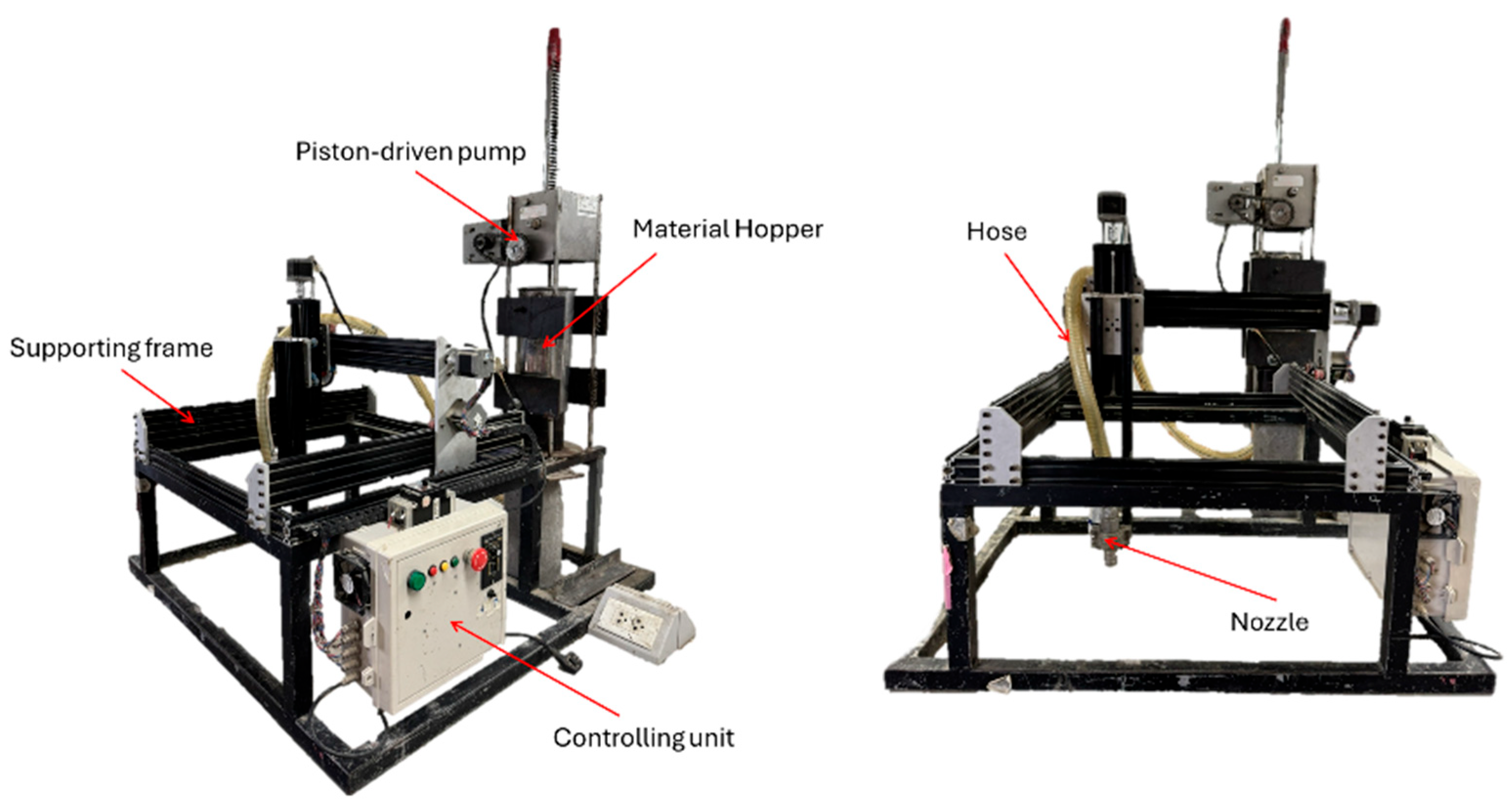
A laboratory scale extrusion-based 3D cement printing system designed and constructed at the Department of Civil Engineering, KMUTNB, was employed in this study [3], as illustrated in Figure 1. The system consisted of four main components: an extruding unit, a control unit, a supporting frame, and a defined printable area. The extruding unit comprised a 5 L material hopper, a piston-driven pump, a delivery hose, and a circular nozzle with a diameter of 20 mm. Material extrusion was controlled by a piston mechanism that provided a constant feeding rate of 15 cm3/s. The principal elements and key specifications of the printing system are summarized in Table 2.
Prior to printing, the prepared mortar was loaded into the hopper and sealed with the piston. The piston was then advanced until contact with the material surface was established, after which extrusion commenced at the predefined feeding rate. The nozzle was positioned at the initial printing location, and the printing process was initiated according to the specified printing parameters.

2.3. Mixture Proportion and Specimen Preparation

The mixture proportions for the 3D-printed cement mortars were designed with a fixed water-to-binder ratio (w/b) of 0.22 and a cement-to-sand ratio (C/S) of 0.75 by mass, where the binder consists of cement and silica fume. Silica fume was incorporated at 10% by weight of cement to improve particle packing and matrix densification. Polyethylene glycol was added at 2.5% by weight of cement as a water-retention agent, while the superplasticizer dosage was fixed at 10% by weight of the total binder (cement + silica fume). Nano-calcium carbonate was incorporated at dosages of 0%, 1%, 2%, and 3% by weight of cement. The detailed mixture proportions are summarized in Table 3.
For mixing, all dry constituents—cement, fine aggregate, silica fume, and nano-calcium carbonate—were first blended for 1 min to ensure uniform dispersion. Subsequently, the liquid components (water, superplasticizer, and PEG) were added, and mixing continued for an additional 2 min. The total mixing time was measured from the moment the liquid and dry materials were combined.
Immediately after mixing, the fresh mortar was tested for flowability in accordance with ASTM C1437. A minimum flow table value of 135% was required to ensure adequate extrudability and print stability. Once the flow requirement was satisfied, the mortar was transferred into the printer hopper for extrusion.
The fresh-state printing properties of each mixture are summarized in Table 4. These include flow table value, initial printable time, minimum time gap between successive layer deposition, viscosity, density, and 7-day compressive strength. The initial printable time was defined as the time at which the extruded filament was able to maintain dimensional stability without collapse, while the time gap represents the minimum interval required between layers to prevent deformation of the printed structure. Specimens were prepared in accordance with the requirements of each test method, and their geometry and configuration are summarized in Table 5.

2.4. Experimental Series

2.4.1. Thermal Conductivity Test

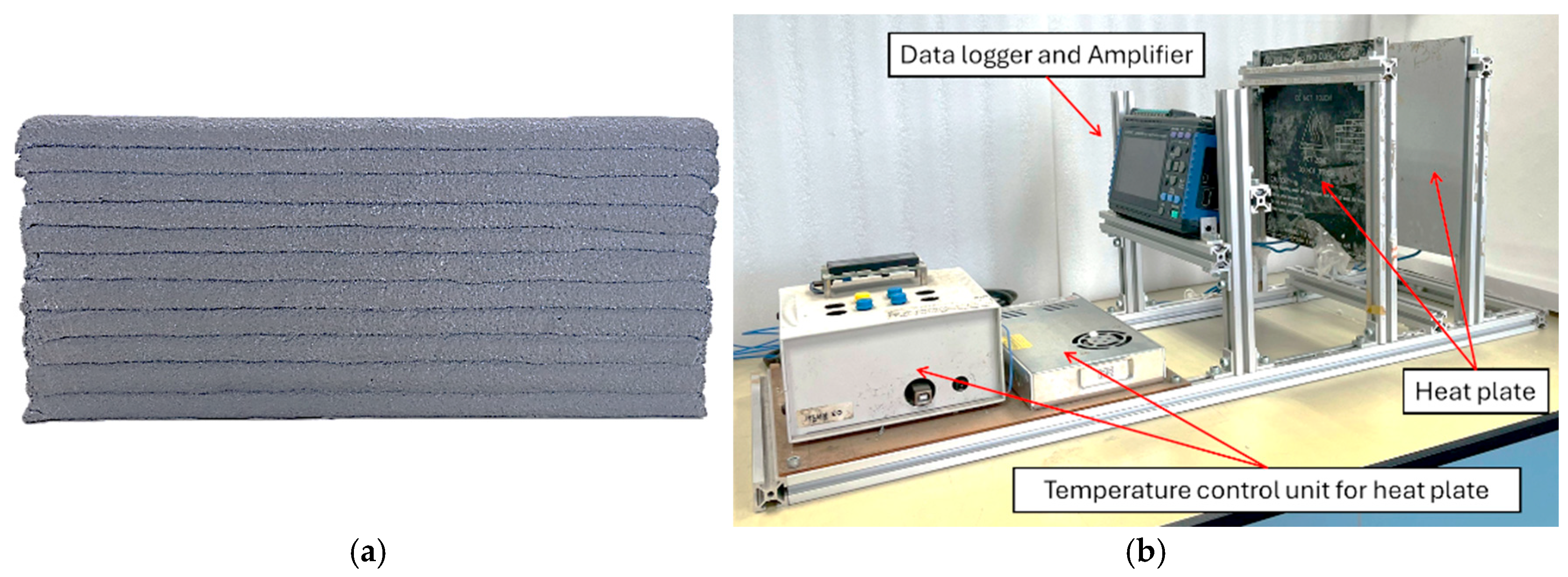
Specimens for thermal conductivity testing were prepared by printing stacks of straight mortar filaments with a length of 200 mm. The nozzle height was set to 15 mm above the printing surface for the first layer and maintained at the same distance for subsequent layers. Printing was initiated at the initial printable time of each mixture, and successive layers were deposited according to the time gap specified in Table 4. A total of 10 layers were printed for each specimen (Figure 2a).
Thermal conductivity was measured in accordance with ASTM C518 under steady-state conditions using a heat flow meter apparatus (Figure 2b). The printed specimen was placed between two heating plates, with heat flux sensors installed on both sides and type-K thermocouples positioned on the specimen surfaces and at the mid-depth to monitor temperature. All specimen surfaces not in contact with the heating plates were insulated to ensure one-dimensional heat transfer. The test was conducted under steady-state conditions by establishing a constant temperature gradient across the specimen. Thermal conductivity (λ) was calculated using Equation (1):
λ = S E L Δ T
where λ is the thermal conductivity (W/m·K), S is the calibration factor of the heat flux sensor ((W/m2)/V), E is the heat flux output (V), L is the distance between the heating plates (m), and ΔT is the temperature difference across the specimen (K).

2.4.2. Sound Absorption Test

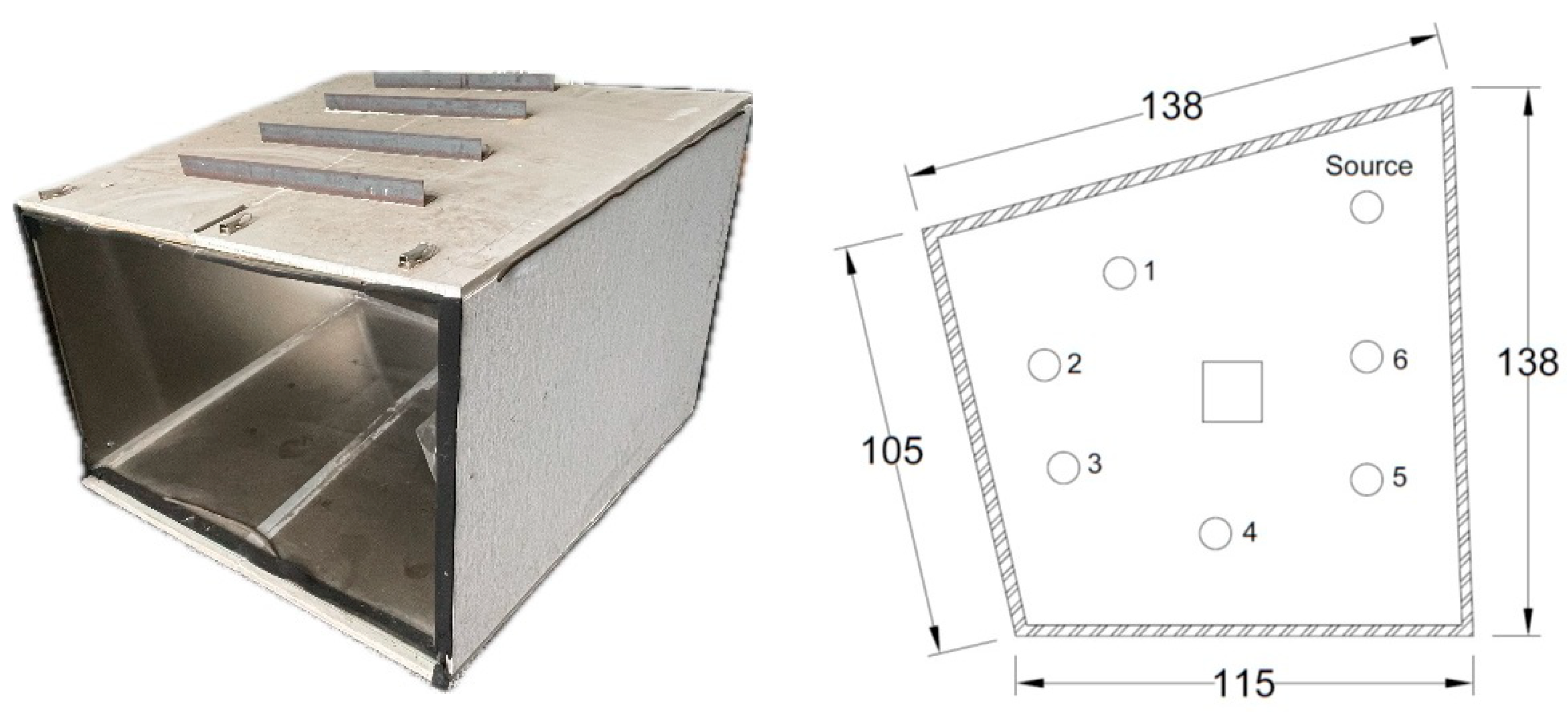
Sound absorption specimens were prepared using the same 10-layer printed filaments described in Section 2.4.1 to ensure consistent pore structure and layer configuration. Sound absorption coefficients were measured in accordance with ASTM C423 using a custom-built small-scale reverberation chamber (Figure 3) designed following the guidelines proposed by del Rey et al. [17].
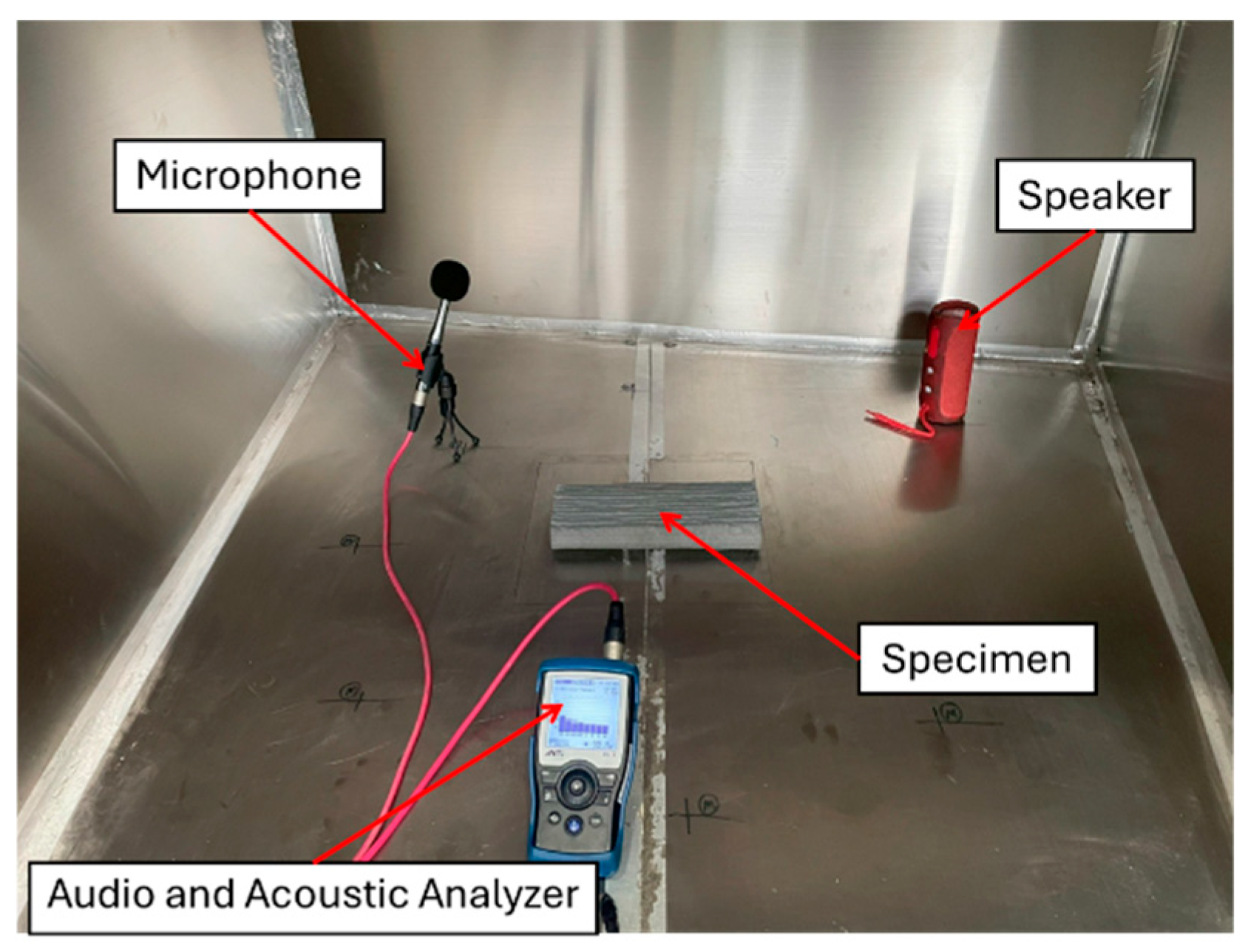
The test setup consisted of a sound source capable of generating frequencies from 20 to 20,000 Hz and a Class 1 measurement microphone connected to an acoustic analyzer (Figure 4). Sound pressure decay was recorded at six measurement positions within the chamber both with and without the test specimen installed. The sound absorption coefficient (α) was calculated based on the difference in sound decay rates using Equations (2)–(4), and the noise reduction coefficient (NRC) was determined as the average of absorption coefficients at 250, 500, 1000, and 2000 Hz, as expressed in Equation (5):
α = A 2 A 1 S
A = 0.912 V d c 0
c 0 = 331 + 0.6 t
NRC = α 250 + α 500 + α 1000 + α 2000 4
where A1 and A2 are the sound absorption of the chamber before and after specimen installation (m2), S is the specimen surface area (m2), V is the chamber volume (m3), d is the sound energy decay rate (dB/s), c0 is the speed of sound (m/s), t is the air temperature (°C), and NRC is the noise reduction coefficient.

2.4.3. Durability Test

Durability testing was conducted to evaluate the resistance of 3D-printed cement mortar to aggressive chemical environments. Specimens were prepared by printing five layers of mortar and curing them under ambient conditions for 7 days. After curing, specimens were cut into cubes (50 × 50 × 50 mm) for compressive strength testing and prisms (40 × 40 × 160 mm) for flexural load testing, following ASTM C109 and ASTM C348, respectively.
The specimens were then divided into three curing conditions: (i) plastic-wrapped curing (reference condition), (ii) immersion in a 3% (w/v) sulfuric acid solution, and (iii) immersion in a 5% (w/v) magnesium sulfate solution. All immersion tests were conducted for a duration of 120 days. The chemical solutions were prepared by dissolving reagent-grade chemicals in distilled water to achieve the specified concentrations and were mixed thoroughly to ensure homogeneity before use.
The durability tests were conducted under controlled laboratory conditions. Specimens were fully immersed in chemical solutions in closed containers and stored in a temperature-controlled curing room at 26 ± 1 °C. The pH of the solutions was monitored regularly throughout the 120-day immersion period and showed no significant variation; therefore, the solutions were not renewed during the test. The solution-to-specimen volume ratio was maintained at approximately 20–30:1, ensuring sufficient solution volume to provide stable chemical exposure conditions. Minor variations in the number of specimens per container did not affect the overall exposure conditions.
Durability evaluation included visual inspection, unit weight measurement, compressive strength, and flexural load. Unit weight was determined from specimen mass and volume, while compressive strength and flexural load were obtained in accordance with ASTM C109 and ASTM C348, respectively.
Note: All experimental results reported in this study represent the average of at least three specimens for each test condition. The variability of measurements was evaluated, and standard deviation values are presented as error bars in the relevant figures to indicate the consistency and repeatability of the results. No outliers were excluded unless clear experimental anomalies were observed.

3. Results and Discussion

The results and discussion are organized to first examine the durability performance of 3D-printed cement mortar incorporating nano-calcium carbonate (NC), as durability is the primary concern for extrusion-based cementitious materials exposed to aggressive environments. Subsequently, thermal conductivity and sound absorption properties are discussed as complementary physical indicators reflecting changes in pore structure and matrix densification induced by NC incorporation.

3.1. Durability Properties

The durability performance of 3D-printed cement mortar incorporating nano-calcium carbonate (NC) was evaluated to assess its resistance to aggressive chemical environments and its ability to retain mechanical integrity over prolonged exposure. Durability assessment included visual inspection, unit weight, compressive strength, and flexural load after 120 days of curing under three conditions: plastic-wrapped curing, sulfuric acid immersion, and magnesium sulfate immersion. These parameters collectively provide insight into both surface deterioration mechanisms and internal microstructural stability of printed mortar.

3.1.1. Visual Inspection

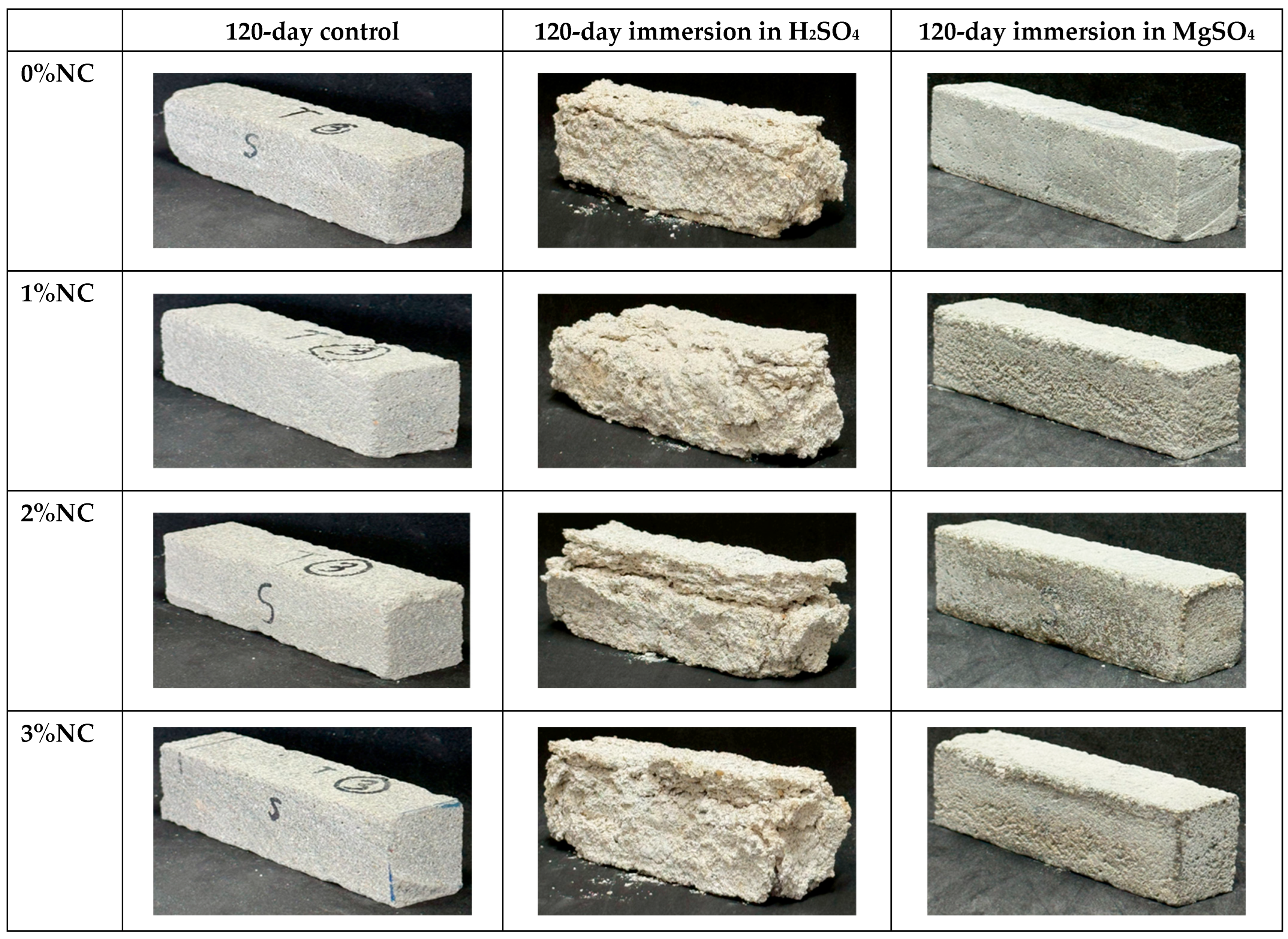
Figure 5 presents the surface characteristics of 3D-printed cement mortar specimens with different NC contents after 120 days of exposure to plastic-wrapped curing, sulfuric acid solution, and magnesium sulfate solution. Specimens cured under plastic-wrapped conditions exhibited smooth surfaces with no visible cracking, spalling, or expansion, indicating stable hydration and minimal deterioration regardless of NC content.
In contrast, specimens immersed in sulfuric acid solution showed severe surface degradation characterized by cracking, spalling, surface softening, and partial material loss. The surfaces appeared rough and whitish due to chemical reactions between sulfuric acid and calcium-bearing hydration products. This deterioration can be attributed to two primary mechanisms: (i) the acidic environment reduced pore solution alkalinity, promoting dissolution of calcium hydroxide and calcium-silicate-hydrate (C–S–H), thereby increasing porosity; and (ii) sulfate ions reacted with calcium compounds to form gypsum, a low-density and weak product that accumulated near the surface and was prone to detachment, leading to expansion and surface disintegration.
Specimens exposed to magnesium sulfate solution exhibited moderate surface roughening but no pronounced cracking or spalling. The observed changes are associated with sulfate attack, in which sulfate ions react with calcium hydroxide to form gypsum and other expansive products. However, the absence of strong acidity limited the extent of dissolution compared with sulfuric acid exposure, resulting in less severe surface damage.
Overall, visual observations indicate that sulfuric acid exposure caused the most aggressive deterioration, while magnesium sulfate induced comparatively mild surface alteration. The incorporation of NC did not eliminate chemical attack but influenced the extent of damage by modifying the internal pore structure of the mortar.

3.1.2. Unit Weight

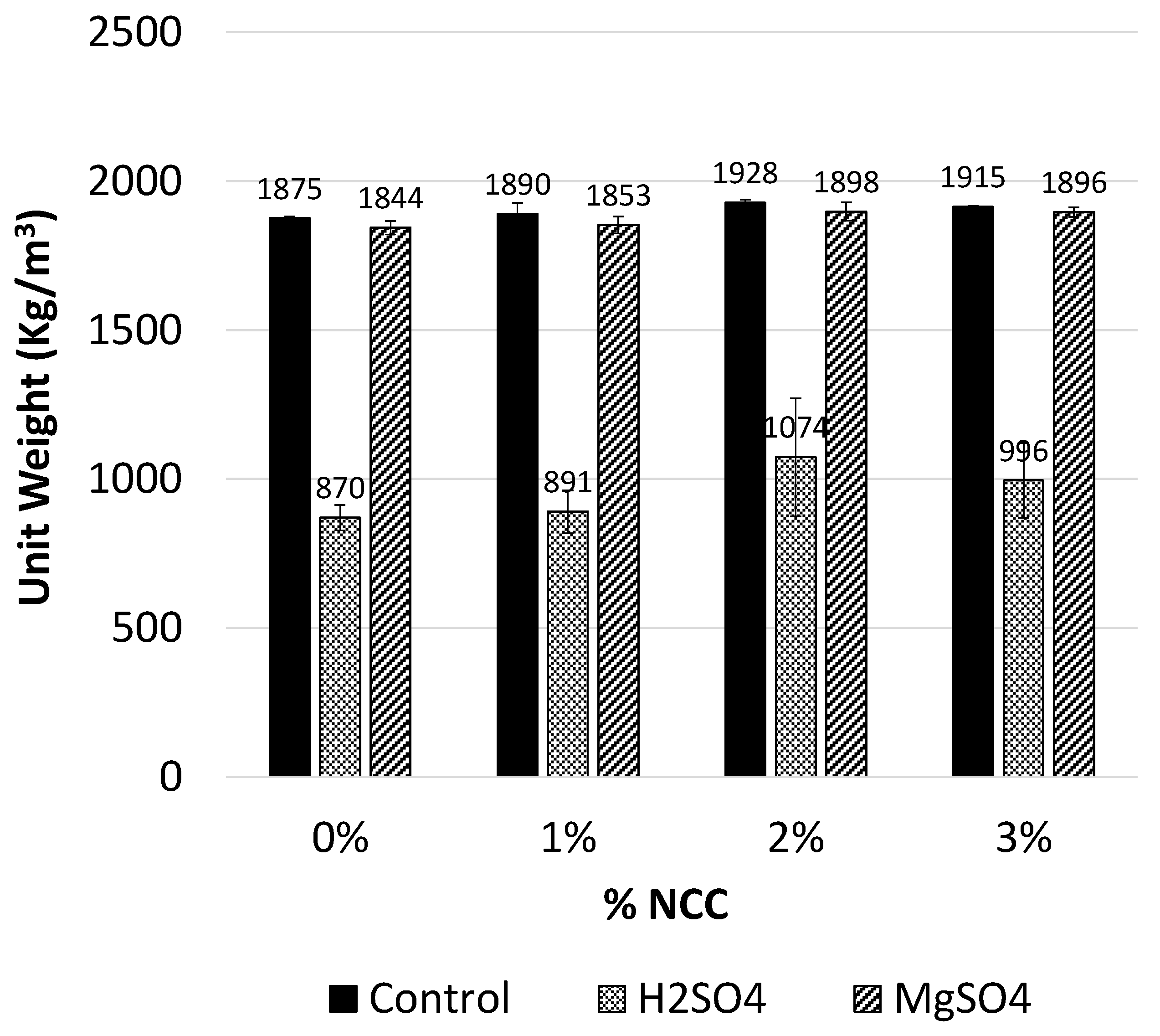
Figure 6 illustrates the unit weight of 3D-printed cement mortars incorporating 0–3% NC after 120 days of curing under different conditions. For plastic-wrapped specimens, unit weight increased with NC addition up to 2%, reflecting the pore-filling effect of NC particles and the resulting densification of the cement matrix. The fine particle size of NC enabled it to occupy micro-voids within the printed mortar, thereby reducing total porosity and increasing bulk density.
At 3% NC, a slight reduction in unit weight was observed. This behavior is attributed to nanoparticle agglomeration caused by the high surface energy of NC, which leads to the formation of localized clusters and reintroduced micro-voids within the matrix, counteracting the pore-filling effect observed at lower dosages.
Specimens immersed in magnesium sulfate solution exhibited unit weight trends similar to those of the plastic-wrapped specimens across all NC contents, indicating limited mass loss and relatively stable internal structure under sulfate exposure. In contrast, specimens immersed in sulfuric acid solution showed a substantial reduction in unit weight for all mixtures. This decrease is attributed to severe chemical degradation, where dissolution of calcium-based compounds and formation of expansive gypsum increased specimen volume while reducing mass, resulting in a pronounced decrease in density.
These results demonstrate that NC improves matrix densification up to an optimal dosage of approximately 2%, while excessive NC leads to diminished effectiveness due to particle agglomeration. Under highly aggressive acidic conditions, chemical deterioration dominates the response regardless of NC content.

3.1.3. Compressive Strength

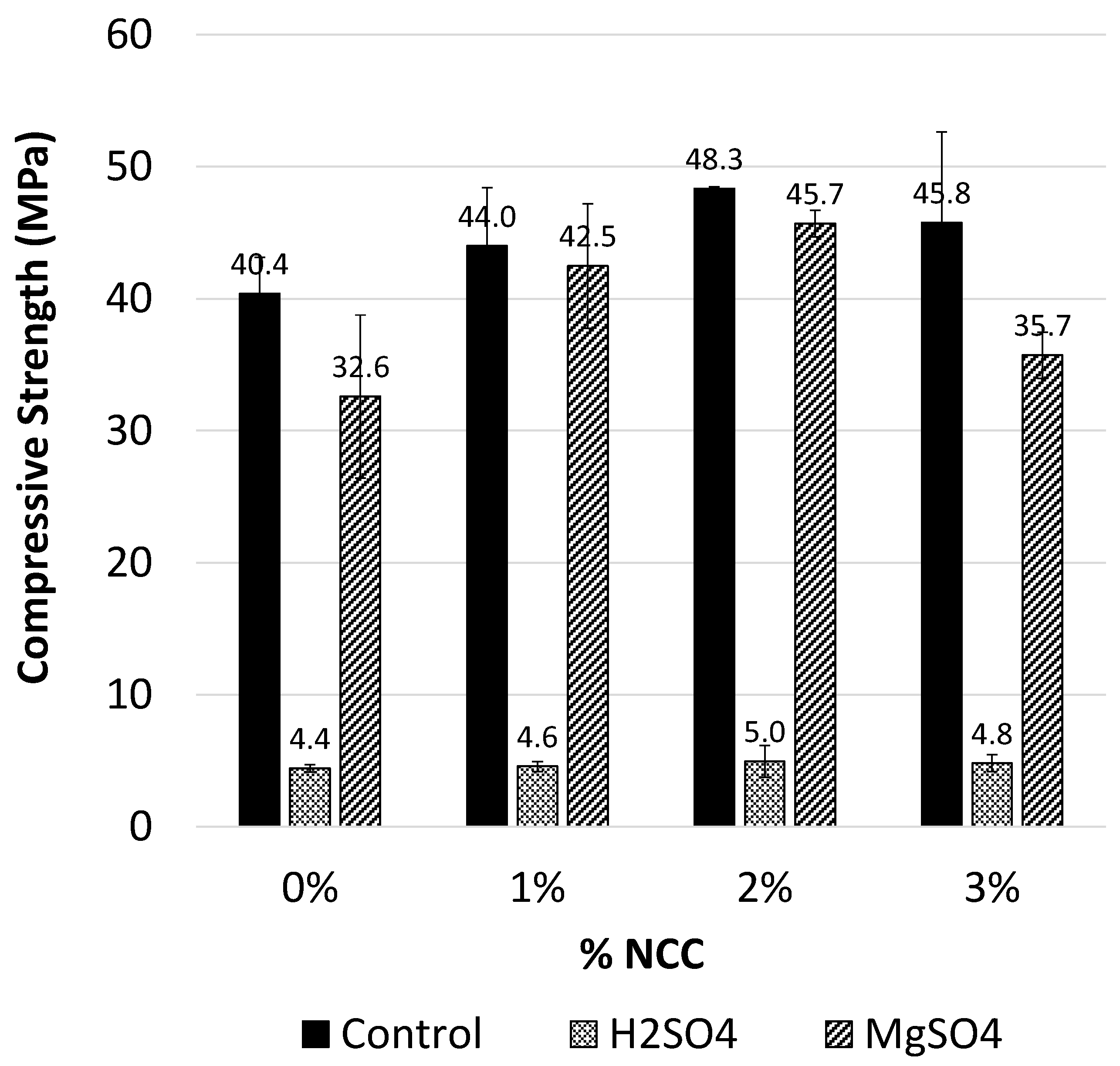
The compressive strength results of 3D-printed cement mortars incorporating different NC contents after 120 days of curing are presented in Figure 7, with loading applied perpendicular to the printing direction. For plastic-wrapped specimens, compressive strength increased with NC addition up to 2%, followed by a reduction at 3% NC. The strength enhancement at moderate NC contents is attributed to pore refinement and improved packing density, which produced a denser and more homogeneous microstructure capable of resisting axial compressive loads.
The reduction in compressive strength at 3% NC may be attributed to nanoparticle agglomeration at higher dosages, as reported in previous studies, which can introduce localized weak zones and micro-voids within the matrix, thereby reducing load-bearing capacity despite the increased solid content [18].
Specimens immersed in magnesium sulfate solution exhibited lower compressive strength than the corresponding plastic-wrapped specimens across all NC contents, indicating deterioration induced by sulfate attack. The reaction between sulfate ions and calcium hydroxide leads to the formation of gypsum and other expansive products, which disrupt the cement matrix and reduce strength.
Specimens exposed to sulfuric acid solution showed a pronounced loss of compressive strength for all mixtures. The severe acidic environment caused extensive dissolution of calcium-bearing hydration products and formation of gypsum at the surface, resulting in structural expansion, increased porosity, and a significant reduction in load-carrying capacity. Although NC improved strength retention under mild conditions, its beneficial effect was insufficient to counteract the severe degradation caused by prolonged sulfuric acid exposure.

3.1.4. Flexural Strength

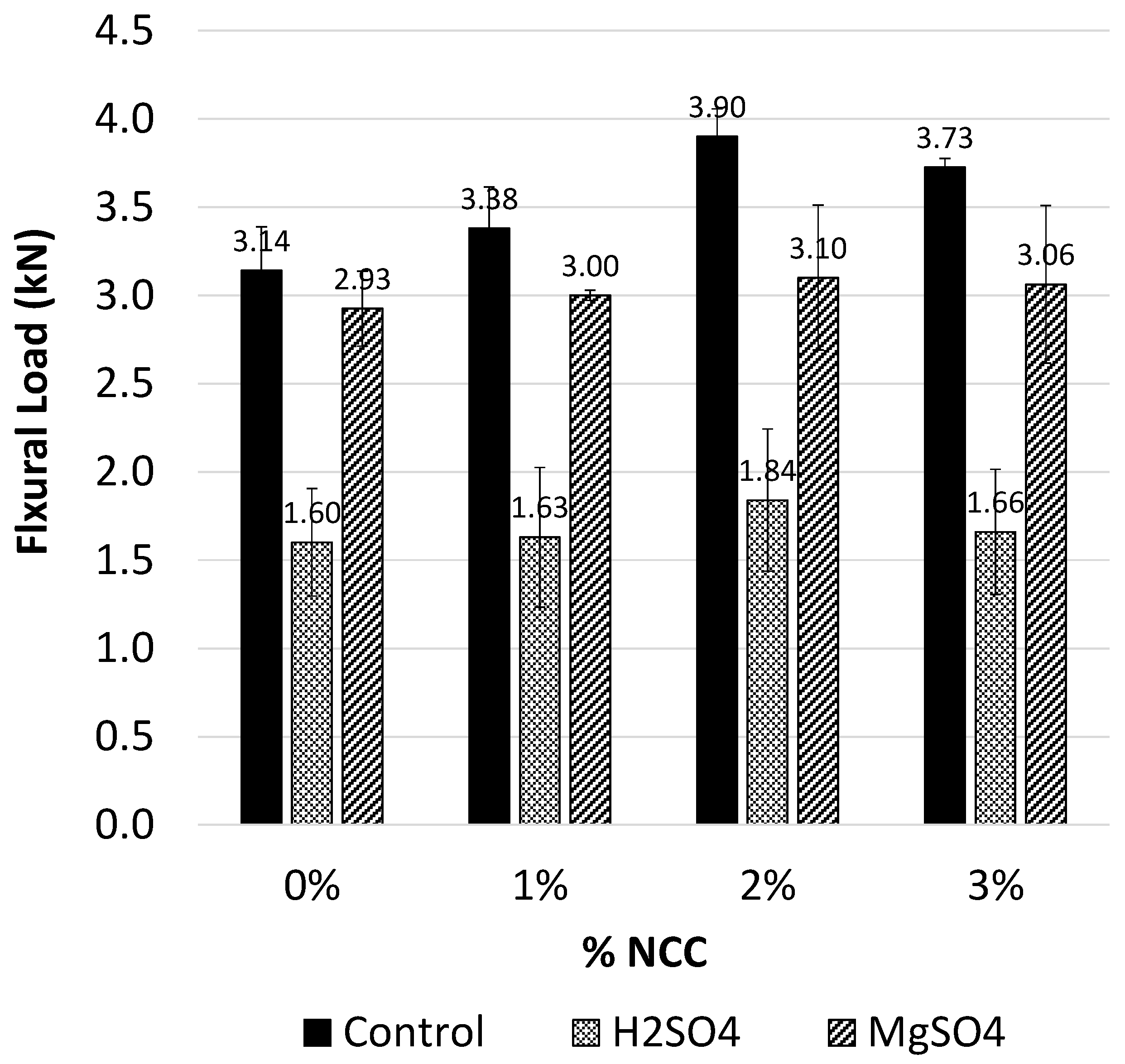
Figure 8 presents the maximum flexural load of 3D-printed cement mortars incorporating different NC contents after 120 days of curing, with loading applied perpendicular to the printing direction. Similar to compressive strength, flexural load increased with NC addition up to 2% for plastic-wrapped specimens, reflecting improved matrix continuity and reduced porosity, which enhanced resistance to bending stresses. At 3% NC, the flexural load decreased, which may be attributed to the potential agglomeration of NC particles at higher dosages. In such cases, insufficient dispersion can lead to the formation of localized clusters rather than a uniform distribution within the cement matrix. These clusters disrupt the continuity of hydration products and create regions with weak interparticle bonding, where load transfer becomes less effective. In addition, agglomerated particles may introduce micro-voids and heterogeneities that act as stress concentration zones under flexural loading, promoting crack initiation and propagation at lower applied loads, as reported in previous studies [18,19].
Specimens immersed in magnesium sulfate solution exhibited reduced flexural load compared with the control specimens, indicating degradation of tensile-dominated behavior due to sulfate-induced microstructural damage. The reduction was more pronounced than that observed in compressive strength, highlighting the sensitivity of flexural performance to surface deterioration and internal microcracking.
Specimens exposed to sulfuric acid solution demonstrated the lowest flexural load across all mixtures. Severe acid attack led to extensive dissolution of calcium-based phases and the formation of weak, expansive products that compromised the integrity of the outer layers, resulting in brittle behavior and limited resistance to bending forces.
Overall, the durability results indicate that nano-calcium carbonate enhances matrix densification and mechanical stability of 3D-printed cement mortar up to an optimal dosage of approximately 2%, beyond which nanoparticle agglomeration diminishes performance. These microstructural modifications directly influence transport-related physical properties such as thermal conductivity and sound absorption, which are discussed in the following sections.

3.1.5. Thermal Conductivity

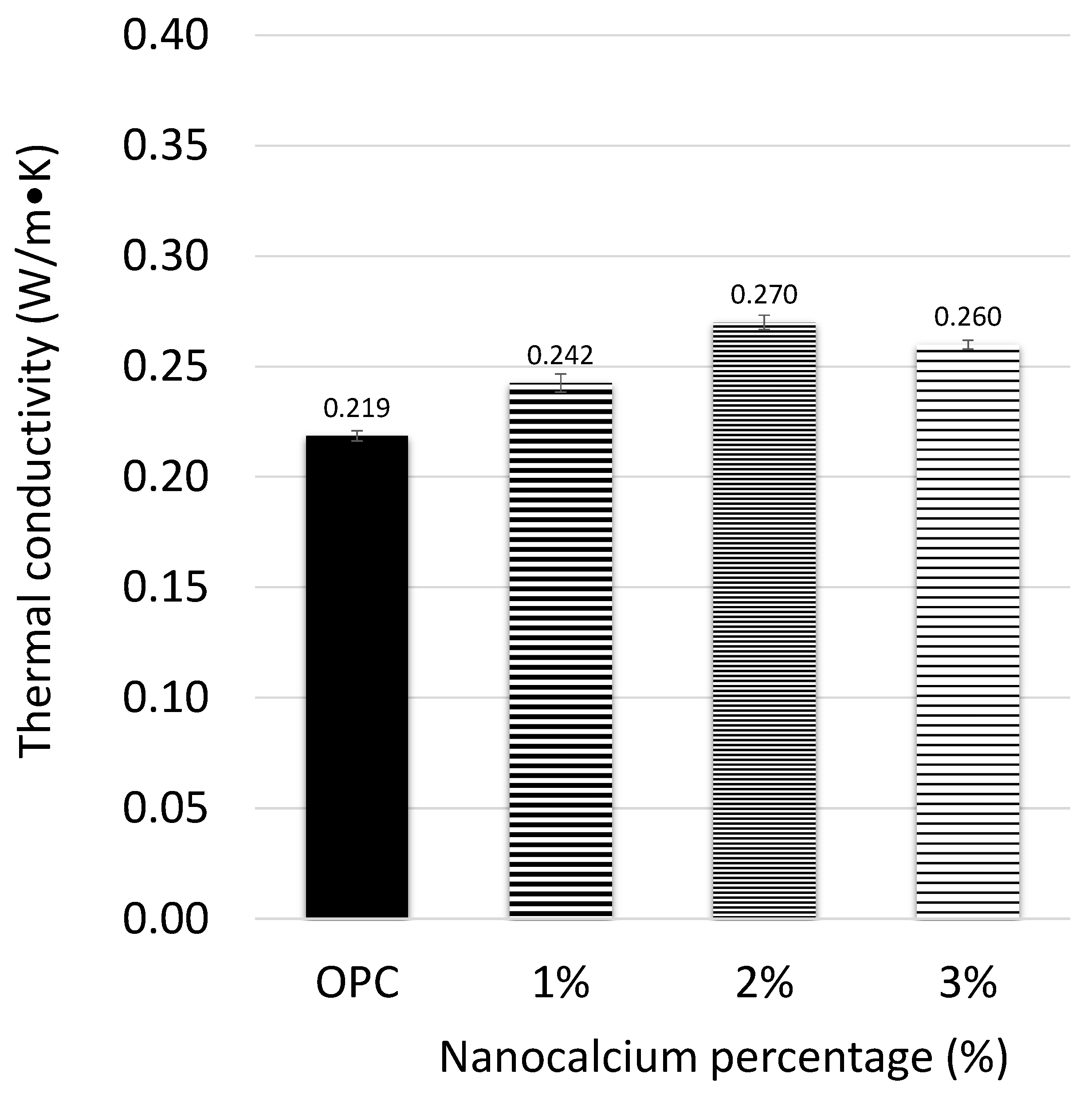
Figure 9 presents the thermal conductivity of 3D-printed cement mortars incorporating different nano-calcium carbonate (NC) contents, measured after 120 days in accordance with ASTM C518. The control mixture without NC exhibited a thermal conductivity of 0.219 W/m·K. With increasing NC content, thermal conductivity increased to 0.242, 0.270, and 0.282 W/m·K for mixtures containing 1%, 2%, and 3% NC, respectively.
The observed increase in thermal conductivity up to 2% NC is attributed to matrix densification resulting from pore refinement and improved particle packing. The fine NC particles effectively filled micro-voids within the printed mortar, reducing air-filled porosity and enhancing solid-phase continuity, which facilitated more efficient heat transfer. This trend is consistent with the increased unit weight and improved mechanical performance observed in the durability assessment, confirming that NC addition promotes a denser and more homogeneous microstructure.
At 3% NC, the rate of increase in thermal conductivity diminished, indicating a deviation from the densification trend. This behavior is likely associated with nanoparticle agglomeration at higher NC contents, which reintroduces localized micro-voids and disrupts heat conduction pathways. Similar agglomeration-related effects were also reflected in the reduced mechanical performance observed at the same NC dosage.
Overall, the thermal conductivity results corroborate the durability findings by demonstrating that moderate NC incorporation enhances matrix compactness, while excessive NC content reduces its effectiveness due to particle clustering. These results further support the identification of approximately 2% NC as the optimal dosage for improving the internal structure of 3D-printed cement mortar.

3.1.6. Sound Test

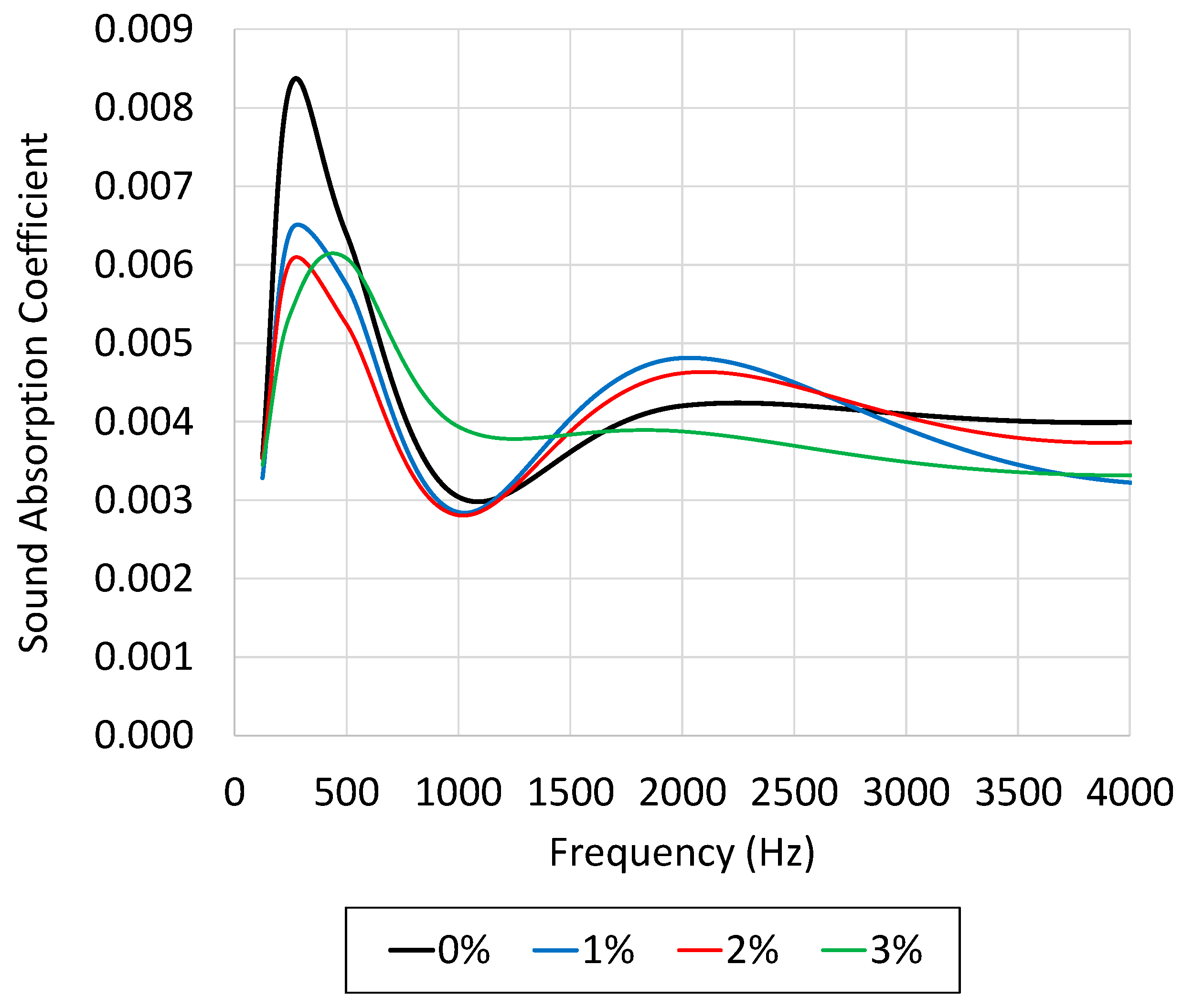
Figure 10 illustrates the sound absorption coefficients of 3D-printed cement mortars incorporating different nano-calcium carbonate (NC) contents over a frequency range of 125–4000 Hz, measured in accordance with ASTM C423. Table 6 summarizes the corresponding absorption coefficients at each frequency as well as the noise reduction coefficient (NRC).
The control mixture without NC exhibited relatively higher sound absorption at low (125–500 Hz) and high (4000 Hz) frequency ranges compared with the NC-modified mixtures. This behavior is attributed to the higher open and interconnected porosity of the control mortar, which provides more pathways for acoustic energy dissipation. With the incorporation of NC, the frequency at which maximum sound absorption occurred shifted depending on NC content. The mixture containing 1% NC showed its highest absorption at 2000 Hz, while the 2% and 3% NC mixtures exhibited peak absorption at 125 Hz and 1000 Hz, respectively. These shifts indicate that NC addition modifies not only the magnitude of sound absorption but also its frequency-dependent response, reflecting changes in pore size distribution and connectivity.
Table 6 presents the noise reduction coefficient (NRC) values of the cement mortars with varying NC contents. With increasing NC content to 1% and 2%, the NRC decreased from 0.0055 for the control mixture to 0.0050 and 0.0047, respectively, corresponding to relative reductions of approximately 9.1% and 14.5%. Although the absolute changes in NRC were small, the decreasing trend suggests reduced acoustic energy dissipation, which may be associated with lower open porosity. Therefore, the sound absorption results should be considered as a supporting indicator of pore refinement, together with unit weight, mechanical performance, and thermal conductivity results, rather than as direct evidence alone.
This trend indicates diminished sound absorption capacity as the mortar matrix becomes denser due to pore refinement and improved particle packing. The decrease in NRC with NC addition is consistent with the increased unit weight and thermal conductivity observed in previous sections, suggesting that reduced open porosity limits the ability of the material to dissipate acoustic energy.
At 3% NC, a slight increase in NRC to 0.0048 was observed. This behavior may be associated with nanoparticle agglomeration at higher NC contents, which can introduce localized micro-voids within the matrix and partially restore sound absorption capacity. Similar agglomeration-related trends were observed in the thermal conductivity and mechanical performance results, indicating that excessive NC content reduces the effectiveness of matrix densification.
Overall, the sound absorption results demonstrate that NC incorporation reduces acoustic absorption as the mortar becomes denser, with an optimal densification effect occurring at approximately 2% NC. When considered alongside durability and thermal conductivity results, sound absorption serves as an inverse physical indicator of pore refinement and matrix compactness in 3D-printed cement mortar.

4. Conclusions

This study evaluated the influence of nano-calcium carbonate (NC) on the durability and related physical properties of extrusion-based 3D-printed cement mortar. NC was incorporated at dosages of 0–3% by weight of cement, and performance was assessed through chemical durability tests, mechanical properties, thermal conductivity, and sound absorption as indirect indicators of pore structure modification. The main findings are summarized as follows:
  • NC enhanced matrix densification up to an optimal dosage of approximately 2–2.5%. Moderate NC addition refined the pore structure and improved particle packing, resulting in increased unit weight and enhanced mechanical performance under plastic-wrapped curing.
  • Durability performance improved under moderate chemical exposure but remained vulnerable to severe acidic attack. Specimens exposed to magnesium sulfate exhibited limited degradation, whereas sulfuric acid caused significant deterioration regardless of NC content. Although NC improved resistance, it could not fully mitigate prolonged acid attack.
  • Mechanical performance showed consistent trends under both compressive and flexural loading. Strength increased with NC addition up to 2% and decreased at 3%, likely due to particle agglomeration and the formation of micro-voids that weakened the matrix.
  • Thermal conductivity increased with NC incorporation, confirming improved matrix densification and solid-phase continuity. The reduced gain at higher NC content further supports the occurrence of particle agglomeration.
  • Sound absorption decreased with increasing NC content, reflecting reduced open porosity. A slight recovery at higher NC content is consistent with agglomeration-induced heterogeneity.
From a practical perspective, the incorporation of nano-calcium carbonate at optimized dosages (approximately 2–2.5%) can improve matrix densification and durability of 3D-printed cementitious materials, particularly under moderate environmental exposure. However, its effectiveness under highly aggressive conditions remains limited, and proper nanoparticle dispersion is essential to avoid performance reduction at higher dosages. Considerations such as cost efficiency, mixing procedures, and quality control are important for large-scale implementation.

5. Limitations and Recommendations for Future Studies

  • This study has several limitations. The experiments were conducted using a laboratory-scale printing system under controlled conditions, which may not fully represent field applications. In addition, microstructural characterization was not performed to directly verify nanoparticle dispersion, and a simplified printing configuration was adopted without considering complex toolpaths or environmental variations. Future work should focus on long-term field performance, detailed microstructural analysis, and optimization of nanoparticle dispersion, as well as the combined use of nano- and micro-scale additives to further enhance durability.
  • Future studies should consider the influence of interlayer bonding quality, printing-induced anisotropy, environmental conditions, and printing path geometry during the printing process, as these factors may significantly affect the mechanical performance and durability of 3D-printed cementitious materials. In particular, complex toolpaths—such as curved trajectories, directional changes, and start–stop events—may influence extrusion stability, surface quality, and defect formation. Previous studies have highlighted the importance of these factors in determining the structural integrity of printed elements [20,21]. In the present study, a simplified straight-layer configuration was adopted to minimize such variability; however, the combined effects of these parameters on transport properties and long-term performance warrant further investigation.

Author Contributions

P.C. (Poopatai Chumpol); Data curation, Investigation, Formal analysis, Methodology, Writing—original draft, P.S.; Conceptualization, Project administration, Resources, Supervision, Validation, Visualization, Writing—original draft, Writing—review and edit, W.S.-L.; Methodology, Writing—review and edit, T.I.; Validation, Writing—review and edit, C.P. Validation, Writing—review and edit, P.P.; Methodology, Validation, Writing—review and edit, S.L.; Validation, Writing—review and edit, P.C. (Prinya Chindaprasirt); Supervision, Writing—review and edit. All authors have read and agreed to the published version of the manuscript.

Funding

This research is funded by the National Research Council of Thailand (NRCT) and KMUTNB under the Senior Research Scholar Program (contract number: N42A690479).

Data Availability Statement

Data is contained within the article. Further inquiries can be directed to the corresponding author.

Conflicts of Interest

The authors declare no conflict of interest.

References

  1. Gosselin, C.; Duballet, R.; Roux, P.; Gaudillière, N.; Dirrenberger, J.; Morel, P. Large-scale 3D printing of ultra-high-performance concrete: A new processing route for architects and builders. Mater. Des. 2016, 100, 102–109. [Google Scholar] [CrossRef]
  2. Mobaraki, A.; Nikoofam, M.; Mobaraki, B. The nexus of morphology and sustainable urban form parameters as a common basis for evaluating sustainability in urban forms. Sustainability 2025, 17, 3967. [Google Scholar] [CrossRef]
  3. Sukontasukkul, P.; Komkham, S.; Jamnam, S.; Zhang, H.; Fujikake, K.; Puttiwongrak, A.; Hansapinyo, C. Eco-friendly 3D Printing Mortar with Low Cement Content: Investigation on Printability and Mechanical Properties. Civ. Eng. J. 2024, 10, 808–823. [Google Scholar] [CrossRef]
  4. Sukontasukkul, P.; Maho, B.; Komkham, S.; Pianfuengfoo, S.; Zhang, H.; Yoo, D.; Tangchirapat, W.; Sae-Long, W.; Limkatanyu, S.; Chindaprasirt, P. Precise determination of initial printable time for cement mortar 3D printing using a derivative method. Rapid Prototyp. J. 2023, 29, 1888–1903. [Google Scholar] [CrossRef]
  5. Yu, S.; Xia, M.; Sanjayan, J.; Yang, L.; Xiao, J.; Du, H. Microstructural characterization of 3D printed concrete. J. Build. Eng. 2021, 44, 102948. [Google Scholar] [CrossRef]
  6. Bhardwaj, A.; Jones, S.; Kalantar, N.; Pei, Z.; Vickers, J.; Zavattieri, P.; Wangler, T.; Zou, N. Additive manufacturing processes for infrastructure construction: A review. J. Manuf. Sci. Eng. 2019, 141, 1–37. [Google Scholar] [CrossRef]
  7. Jakus, A.E.; Geisendorfer, N.R.; Lewis, P.L.; Shah, R.N. 3D-printing porosity: A new approach to creating elevated porosity materials and structures. Acta Biomater. 2018, 72, 94–109. [Google Scholar] [CrossRef]
  8. van den Heever, M.; du Plessis, A.; Kruger, J.; van Zijl, G. Evaluating the effects of porosity on the mechanical properties of extrusion-based 3D printed concrete. Cem. Concr. Res. 2022, 153, 106695. [Google Scholar] [CrossRef]
  9. Rudziewicz, M.; Maroszek, M.; Hutyra, A.; Góra, M.; Rusin-Żurek, K.; Hebda, M. Influence of foaming agents and stabilizers on porosity in 3D printed foamed concrete. Processes 2025, 13, 403. [Google Scholar] [CrossRef]
  10. Péra, J.; Husson, S.; Guilhot, B. Influence of finely ground limestone on cement hydration. Cem. Concr. Compos. 1999, 21, 99–105. [Google Scholar] [CrossRef]
  11. Farzadnia, N.; Abang Ali, A.; Demirboga, R. Characterization of high-strength mortars with nano-alumina at elevated temperatures. Cem. Concr. Res. 2013, 54, 40–49. [Google Scholar] [CrossRef]
  12. Liu, Q.; Zhang, X.; Jiang, Q.; Xia, Y.; Hau, D.; Li, L. Effects of nano-Al2O3, nano-MgO, and nano-Fe2O3 on the properties of cement-based 3D printing: A comparative study. J. Build. Eng. 2025, 111, 113322. [Google Scholar] [CrossRef]
  13. Khan, M.I.; Siddique, R. Utilization of silica fume in concrete: Review of durability properties. Resour. Conserv. Recycl. 2011, 57, 30–35. [Google Scholar] [CrossRef]
  14. Liu, Q.; Jiang, Q.; Zhou, Z.; Xin, J.; Huang, M. The printable and hardened properties of nano-calcium carbonate with modified polypropylene fibers for cement-based 3D printing. Constr. Build. Mater. 2023, 369, 130594. [Google Scholar] [CrossRef]
  15. Antoni, A.; Adi, N.; Kurniawan, M.E.; Agraputra, A.; Teopilus, D.; Pudjisuryadi, P.; Chandra, J.; Hardjito, D. The influence of viscosity-modifying agent and calcium carbonate on 3D printing mortar characteristics. IOP Conf. Ser. Earth Environ. Sci. 2023, 1195, 012021. [Google Scholar] [CrossRef]
  16. Che, Y.; Yang, H. Hydration products, pore structure, and compressive strength of extrusion-based 3D printed cement pastes containing nano-calcium carbonate. Case Stud. Constr. Mater. 2022, 17, e01590. [Google Scholar] [CrossRef]
  17. del Rey, R.; Alba, J.; Rodríguez, J.C.; Bertó, L. Characterization of new sustainable acoustic solutions in a reduced-sized transmission chamber. Buildings 2019, 9, 60. [Google Scholar] [CrossRef]
  18. Douba, A.; Hou, P.; Kawashima, S. Hydration and mechanical properties of high content nano-coated cements with nano-silica, clay and calcium carbonate. Cem. Concr. Res. 2023, 168, 107132. [Google Scholar] [CrossRef]
  19. Hamed, N.; El-Feky, M.S.; Kohail, M.; Nasr, E.-S.A.R. Effect of nano-clay de-agglomeration on mechanical properties of concrete. Constr. Build. Mater. 2019, 205, 245–256. [Google Scholar] [CrossRef]
  20. Li, S.; Nguyen-Xuan, H.; Tran, P. Digital design and parametric study of 3D concrete printing on non-planar surfaces. Autom. Constr. 2022, 142, 104624. [Google Scholar] [CrossRef]
  21. Daneshvar, D.; Rabiei, M.; Gupta, S.; Najmeddine, A.; Prihar, A.; Moini, R. Geometric fidelity of interlocking bodies in two-component robotic additive manufacturing. In Proceedings of the Fourth RILEM International Conference on Concrete and Digital Fabrication (DC 2024); RILEM Bookseries; Springer: Berlin/Heidelberg, Germany, 2024; Volume 53, pp. 134–141. [Google Scholar] [CrossRef]
Figure 1. 3D Printing machine.
Buildings 16 01934 g001
Figure 2. (a) Specimen for thermal test and (b) Heat flow meter apparatus.
Buildings 16 01934 g002
Figure 3. Small-size reverberation chamber.
Buildings 16 01934 g003
Figure 4. Sound absorption setup.
Buildings 16 01934 g004
Figure 5. Characteristics of 3D-printed cement mortar immersion in chemical solution.
Buildings 16 01934 g005
Figure 6. Unit weight of 3D-printed cement mortar after 120-day curing.
Buildings 16 01934 g006
Figure 7. Compressive strength at 120 day-submersion.
Buildings 16 01934 g007
Figure 8. Flexural load at 120 day-submersion.
Buildings 16 01934 g008
Figure 9. Effect of nano calcium content on thermal conductivity.
Buildings 16 01934 g009
Figure 10. Sound absorption coefficients at different frequencies.
Buildings 16 01934 g010
Table 1. Chemical composition of silica fume and nano-calcium carbonate.
ComponentCaCO3SiO2Al2O3Fe2O3CaOSO3MgCO3
Silica fume-88.30%1.17%4.76%0.48%1.05%-
Nano-Calcium98–99.5<0.5<0.3≈56.0% -<1.0
Note: CaO content for nano-calcium carbonate is expressed as CaO equivalent calculated from CaCO3 composition.
Table 2. Principal elements and specifications of the 3D printing system.
ComponentDescription/Specification
Printing systemExtrusion-based 3D cement printer (laboratory scale)
Extruding unit5 L hopper, piston-driven pump, delivery hose
NozzleCircular nozzle, 20 mm diameter
Feeding mechanismPiston-controlled extrusion
Feeding rate15 cm3/s
Nozzle speed2000 mm/min
Control unitSoftware-controlled (piston movement and travel speed)
Supporting frameAluminum frame
Printable area500 × 500 × 170 mm (X × Y × Z)
Table 3. Mix proportions of 3D-printed cement mortar.
DesignationMix Proportions (kg/m3)
CementWaterFine AggregateSilica FumePolyethylene GlycolSuperplasticizer Nano CaCo3
0% NC8792131171882297-
1% NC8.8
2% NC17.6
3% NC26.4
Table 4. Printing properties of 3D-printed cement mortar incorporating nano-calcium carbonate.
Property0% NC1% NC2% NC3% NC
Flow table (%)150145141136
Initial printable time (min)96877974
Time gap (min)>6
Viscosity (Pa)542562568575
Density (kg/m3)1875189019281915
7-day Compressive strength (MPa)>28
Table 5. Geometry and configuration of test specimens.
Test TypeSpecimen Geometry (mm)Description/Configuration
Compressive test50 × 50 × 50Cubic specimens
Flexural test40 × 40 × 160Prismatic specimens
Durability testSame as compression and flexuralSpecimens subjected to chemical immersion
Thermal conductivity200 (length), 10 layersLayered printed specimen
Sound absorption200 (length), 10 layersSame specimen as thermal test
Table 6. Sound absorption coefficient and NRC.
TypeFrequency (Hz)Noise Reduction Coefficient (NRC)
125250500100020004000
OPC0.00350.00830.00640.00300.00420.00400.0055
1% NC0.00330.00640.00570.00280.00480.00320.0050
2% NC0.00350.00600.00520.00280.00460.00370.0047
3% NC0.00340.00540.00610.00390.00390.00330.0048
Disclaimer/Publisher’s Note: The statements, opinions and data contained in all publications are solely those of the individual author(s) and contributor(s) and not of MDPI and/or the editor(s). MDPI and/or the editor(s) disclaim responsibility for any injury to people or property resulting from any ideas, methods, instructions or products referred to in the content.