


Abstract
Current rammed earth in situ practices face economic challenges that outweigh its ecological advantages, rendering it a niche product in the construction sector. This is mainly due to the inefficient and labor-intensive character of the manual construction processes involved, especially those related to formwork. The introduction of automated and robotic fabrication presents an opportunity to reduce the existing imbalance through digitalization, by shortening the building time and reducing labor input. In this paper, the associated potential environmental impacts of manual and robotic in situ manufacture of unstabilized rammed earth walls are compared and quantified in a life cycle assessment. The results show that robotic in situ manufacture is the more environmentally favorable option within the construction phase, with the highest optimization potential in the building phase. The standard robotic scenario demonstrates significant reductions across a range of environmental impact indicators of approx. 9–97% compared to the standard manual scenario due to a reduction of waste and formwork. Specifically, the GWP100-total is reduced by 28% and EE by 68%. Further key factor optimizations—including minimizing transport distances, using locally sourced loam, reducing packaging materials, and utilizing renewable energy—show even greater benefits. In the robotic procedure, this result in reductions in GWP100-total of 76% and EE of 70% compared to its robotic standard scenario, and to reductions of 83% and 90%, respectively, compared to the standard manual procedure.
1. Introduction
The construction industry is a major contributor to environmental impacts and must act to mitigate its impact. Globally, it accounts for approximately 60% of resource consumption, 35% of energy demand, and around 35% of greenhouse gas emissions [1]. The high greenhouse gas emissions of the construction industry are primarily driven by its global carbon dioxide (CO2) emissions, which amount to 38% [2], significantly contributing to climate change.
To address the climate crisis, counteract resource depletion, and meet the EU’s climate neutrality target by 2050 in line with the Paris Climate Agreement, the construction industry must transition to more sustainable practices. One possible solution is to rediscover low-emission materials such as clay-containing soils and their respective traditional construction methods, transforming them through technical innovation, and applying optimized building methods that significantly reduce ecological harm.
Unstabilized rammed earth (RE) construction methods exactly meet those demands: a circular building material with minimal environmental impact. By avoiding chemical stabilizers entirely, the material bond relies solely on the reversible physical binding of clay minerals. This enables full reusability: the material can be reprocessed simply by adding water [3], generating no waste and preserving natural resources—provided that no impurities compromise its circularity. This closed-loop material cycle supports cascade utilization, allowing the material to be reused after its use phase in a building, either as a secondary raw material in the same or within a gradual, quality-reducing cascade.
However, economic considerations currently outweigh the ecological advantages of RE construction. The method remains a niche due to its high labor requirements and time-intensive manual workflows, making it a comparatively costly building technique. Although monolithic structures such as RE generally incur lower costs than multilayer systems [4], the manufacturing costs of RE buildings still exceed those of masonry or concrete buildings [5,6] even though loam is widely available [6,7,8] and inexpensive [6,8]. One key reason is that formwork construction accounts for up to 30% of the total working time [7], making it a significant cost driver. Nevertheless, the single-material principle underlying RE construction helps reduce construction waste and lowers disposal costs [5].
To overcome these barriers, current research projects are investigating the semi-automation of specific production steps in the prefabrication of linear RE elements. Gomma et al. investigated several manufacturing procedures [9]; however, this study focuses only on those relevant to RE wall production. “Lehm Ton Erde GmbH” has developed a linearly guided production unit for simultaneous, layer-wise material application and compaction using a vibrating plate and pneumatic rammers [10]. The unit is mounted on a formwork system with a detachable side wall. After reaching the desired wall height, the side is released, and the RE element is cut to size with a hand-guided saw for transport and assembly. “Form Earth” has developed a compact, automated prototype comprising a material hopper, slip formwork, and pneumatic rammer [11]. Positioned via small crane, the hopper discharges the RE mixture in layers, with compaction performed by the rammer moving vertically with the slip formwork. The system shows potential for improving surface quality and edge definition and appears partially reliant on manual hopper filling and crane positioning. “ERNE AG Holzbau” has developed a rail-guided ramming system with a six-axis robotic arm and pneumatic rammer [12]. It operates sequentially across three production zones, each with a dedicated step: formwork preparation, material placement, or compaction. While formwork assembly and material feeding remain manual, the robotic arm enables flexible adjustment to different geometries and ensures continuous workflow.
The research at the Institute of Structural Design (ITE) pursues a full-automation concept, representing a significant step toward the digitalization of RE construction. The aim is to enhance efficiency, reduce costs, and enable integration into digital planning and construction processes in line with industry 5.0 principles and to reveal the economic and environmental potential of RE and therefore to promote a wider adoption in the construction sector and reduce the sector’s ecological footprint. The ITE robotic production unit fully automates the manufacturing of RE walls, with all building steps executed autonomously by computerized numerical control (CNC) machines or robotic arms following predefined instructions across multiple work cycles. The setup, consisting of a six-axis robotic arm suspended from a three-axis gantry, guiding the slipform and compaction unit (left), and a five-axis CNC hopper for precise material feeding (right) (see Figure 1). This system enables both in situ manufacturing and prefabrication, offering greater flexibility in construction logistics. The core innovation lies in replacing the labor- and time-intensive formwork operations with an active slip form system, combined with automated material feeding and compaction. Therefore, the integrated robotic unit performs formwork molding, compaction, and material feeding simultaneously, merging three traditionally separate manufacturing steps into a single, continuous operation. A distinctive feature of this system is the minimization of the formwork-size, supporting only the active compaction area. This significantly reduces both material consumption and the cost of formwork construction.
Figure 1.
Robotic fabrication of a rammed earth wall at the Digital Building Fabrication Laboratory (DBFL) at TU Braunschweig; © Joschua Gosslar, ITE TU BS.
As a result of the shift in manufacturing procedure, the ecological advantages of robotic manufacturing over traditional manual methods for an RE wall must be critically compared and examined. Therefore, the development of the two life cycle assessment (LCA) product systems in this study builds on a literature review and expert discussions on manual and robotic procedures and their unit processes in order to develop the most accurate product system for each within the construction phase. While eliminating manufacturing steps through the robotic procedure enhances efficiency and removing formwork reduces material consumption, these benefits must be weighed against the material-intensive production of the robotic unit itself. This comparison is essential from an ecological perspective to prove whether robotic manufacturing genuinely enhances environmental impact and contributes to a more sustainable construction industry or not.
2. Literature Research
2.1. Rammed Earth
The use of earth as a building material is an ancient construction technique, dating back over 9000 years [7]. Depending on the climate zone, some earth buildings have remained intact for over thousands of years, demonstrating their long-term durability [7,13]. Due to its regional availability at little to no cost, and its versatile usability with minimal technical effort, earth has been used as a construction material for centuries [7]. Furthermore, due to its generally recognized advantages in terms of building physics, it contributes to enhanced indoor air quality [14,15] and provides hygrothermal comfort [16,17,18]. One form of earth construction is RE, in which loam—typically with low clay content—is compacted in layers between formwork panels to create a homogeneous mass wall [19]. In industrialized regions, massive earthen construction such as RE has gradually been replaced by modern building materials such as concrete. In the context of sustainable construction, loam is experiencing a renaissance, due to its low energy consumption [20,21], reduced overall environmental impact compared to other building materials [22,23,24,25], and the absence of harmful organic compounds [15,26]. Furthermore, its regional availability, low-impact extraction (e.g., excavated soil on construction sites), and simple processing contribute to minimal CO2 emissions [27].
In some applications, RE is stabilized with additives in order to increase structural performance or erosion resistance. However, unstabilized RE exhibits significantly lower embodied emissions [22,28,29], it relies solely on clay as a natural binder without chemical stabilizers or property-altering additives. Other binding agents have a significantly negative effect on the environmental impact [30], especially cement, which increases CO2 emissions and water consumption [22]. Moreover, chemical stabilization with inorganic binders can compromise complete reusability and impede natural reintegration into the environment [22]. Alternatively, stabilization can be achieved through mechanical reinforcement by the inclusion of physical substances, such as natural fibers [10,31,32,33]. Biopolymers show potential to improve mechanical performance while maintaining a low environmental footprint. Plant-, animal-, and microbe-based biopolymers have been shown to improve the mechanical performance and durability of clayey soils, enhancing their competitiveness with conventional building materials without compromising natural degradability [34]. Furthermore, natural fibers can reduce CO2 emissions, as CO2 is stored in the plant fibers during growth, which counts as a benefit in the LCA [22,34,35].
To identify further key factors for reducing the ecological footprint of an RE wall, a comprehensive literature review was conducted [22,23,24,25,28,29,30,35,36]. Based on the findings, general recommendations were derived for producing the most environmentally friendly variant of an unstabilized RE wall. These recommendations are independent of the specific manufacturing procedure but dependent on geographical conditions and functional building requirements. They include the following:
- Minimization of transport distances;
- Use of local soil and materials;
- Reuse of excavated earth;
- Streamlined processing steps;
- Optional biopolymer stabilization.
The construction of RE walls follows a defined sequence of manufacturing steps that transform raw materials into the final structural element. Key steps include raw material excavation, material preparation, shuttering, material feeding, material compaction, and stripping. The excavated soil is classified as pit loam, which refers to a natural primary raw material extracted from geologically formed soil in a moist state [3,37]. Depending on its source, pit loam is categorized into two types: primary pit loam, which is specifically mined for RE construction, and secondary pit loam, which is repurposed from excavation activities [37]. Excavated, untreated loam may require processing into a homogeneous mixture suitable for RE construction by mixing and, if necessary, adding appropriate aggregates, additives, or admixtures to ensure adequate structural integrity and workability [13], as its composition varies greatly by region and location [3,7]. In traditional manual manufacturing procedures, the material is placed in 10–15 cm thick layers within formwork and compacted either manually or mechanically into shape through ramming [3,7,38]. These formworks are temporary structures, either fabricated on the construction site or prefabricated systems. In general, they consist of vertical posts that absorb the load of the compaction pressure and are connected to the lateral formwork panels (e.g., wood or wood-based materials) by distance holders (e.g., steel). Once the formwork is in place, the material is either filled in manually with a shovel and bucket or mechanically using a wheel loader or a crane-mounted conveyor bucket [7]. A common method for manually building RE walls involves vertical climbing formwork or self-built stationary formwork with a hand-guided pneumatic rammer for compaction [6,38,39]. Pneumatic rammers are typically powered by a diesel-driven air compressor [23].
2.2. Robotic Rammed Earth
While unstabilized RE offers significant environmental advantages, its manual and labor-intensive construction process limits competitiveness compared to conventional construction methods. To overcome this, automatization presents promising solutions with robotic technologies enabling a paradigm shift from a traditionally manual, labor-intensive approach to a systematic, process-oriented manufacturing and assembly method [40]. This reduces workload and time demands, thereby improving efficiency and scalability while maintaining physical and mechanical performance consistent with manual processes [41]. In addition, sustainability is enhanced by optimizing material and energy consumption, durability, greenhouse gas emissions, and waste production over a building’s life cycle [42]. It also addresses several key challenges in the construction industry, including declining product quality, shortage of skilled labor, unfavorable working conditions, safety concerns, error rates, cost overruns, and an aging workforce [43,44,45]. As a result, semi- or fully automated manufacturing procedures are increasingly recognized for their economic and environmental potential, making RE more competitive with conventional construction methods [6,9,46,47]. In semi-automation, machines automate certain steps of the manufacturing procedure, while supplementary manual tasks (e.g., material supply), operation, and monitoring are still performed by humans. In contrast, full automation executes all workflows autonomously, following predefined instructions in multiple cycles without human intervention, although occasional supervision is necessary. However, construction sites—unlike controlled factory environments—present significant challenges for digital production units due to harsh conditions such as extreme weather, dust, and unforeseen physical impacts [48]. This necessitates robust and resilient system designs [49]. Key challenges include robot mobility, weight and size limitations, accuracy, operational constraints, and external factors such as fragmented project structures, limited standardization, worker reluctance toward technological change, and market instability [50].
However, automation in RE construction remains limited [46,48], even though it is highly compatible with robotic and sensor applications [5]. To address this limitation, a fully automated process for building structural wall elements, called robotic rammed earth (RRE), was developed at the ITE. Characterized by a high degree of automation compared to existing approaches [9], it demonstrates strong potential for improving efficiency and enhancing the sustainability of RE construction.
2.3. Life Cycle Assessment
The existing LCA literature shows that no comparative studies have been conducted on the environmental performance of different manufacturing methods for unstabilized RE constructions. Furthermore, no product system for robotic manufacture has been documented, despite the increasing relevance of automation in construction. Lavrik et al. conducted an LCA that emphasized the production of different natural additives, while giving less attention to the building process, excluding aspects such as formwork and material feeding for RE wall manufacturing [35]. Mateus et al. developed the manual product system, including shuttering and stripping of the formwork, but did not account for their input and output flows, while identifying fuel consumption from ramming as the major contributor to the environmental impact [25]. Nanz et al. focused on measuring the primary energy consumption for manufacturing an RE wall, revealing that its actual energy demand exceeds previous assumptions in the literature [36]. While their analysis provides a detailed breakdown of the RE mix mass fractions, it lacks information on auxiliary materials used during wall assembly and in the production unit itself.
In a building LCA, the mechanization degree of construction machinery for processing building materials and products is crucial for accurate results [51]. Machinery significantly contributes to energy consumption and emissions, depending on the energy source used, and must therefore be fully integrated into LCA models. Its relative impact is greater for low-energy and low-CO2 emission materials like loam than for high-impact materials such as concrete or steel. In RE construction, mechanization appears to be underrepresented in product system modeling, although RE walls are likely not constructed entirely by hand in practice. Various manufacturing steps—such as transporting and placing the RE-mixture into the formwork—are typically supported by machinery, including cranes with material buckets. Furthermore, a common issue in construction-related LCAs is the limited availability of data on construction processes [52].
This study addresses a critical research gap by providing a direct environmental comparison between manual and robotic in situ RE construction. It extends previous LCAs by offering a detailed analysis of manual in situ construction, enabling a precise assessment of manufacturing steps and their environmental impact. This allows for a clearer differentiation between the expanded manual in situ products system and the first-time robot-aided in situ product system and their environmental impact. Additionally, it expands the LCA database for unstabilized RE walls, improving future sustainability assessments.
3. Materials and Methods
In this section, goal and scope definition, life cycle inventory (LCI), and life cycle impact assessment (LCIA) are represented. The focus lies on the LCI, where the two product systems—manual and robotic in situ manufacturing of an unstabilized RE wall—are modeled in detail. The unit processes of the manufacturing steps are differentiated to highlight technological and procedural differences and to ensure their accurate representation in the LCI model.
3.1. Goal and Scope Definition
The goal of this research is to compare the technical procedures of manual and robotic in situ manufacturing of unstabilized RE walls and to quantify their environmental impact through LCA. A typical manual in situ RE procedure serves as the reference system, providing a comparative baseline for evaluating the environmental advantages, and trade-offs of automation, and to identify environmental hot spots, i.e., the processes and components contributing most significantly to the overall impact. The LCA enhances and expands the data foundation in scientific literature, particularly regarding unstabilized RE. The findings support the promotion and broader adoption of environmentally friendly RE construction while fostering efficiency improvements through digitalization and automation.
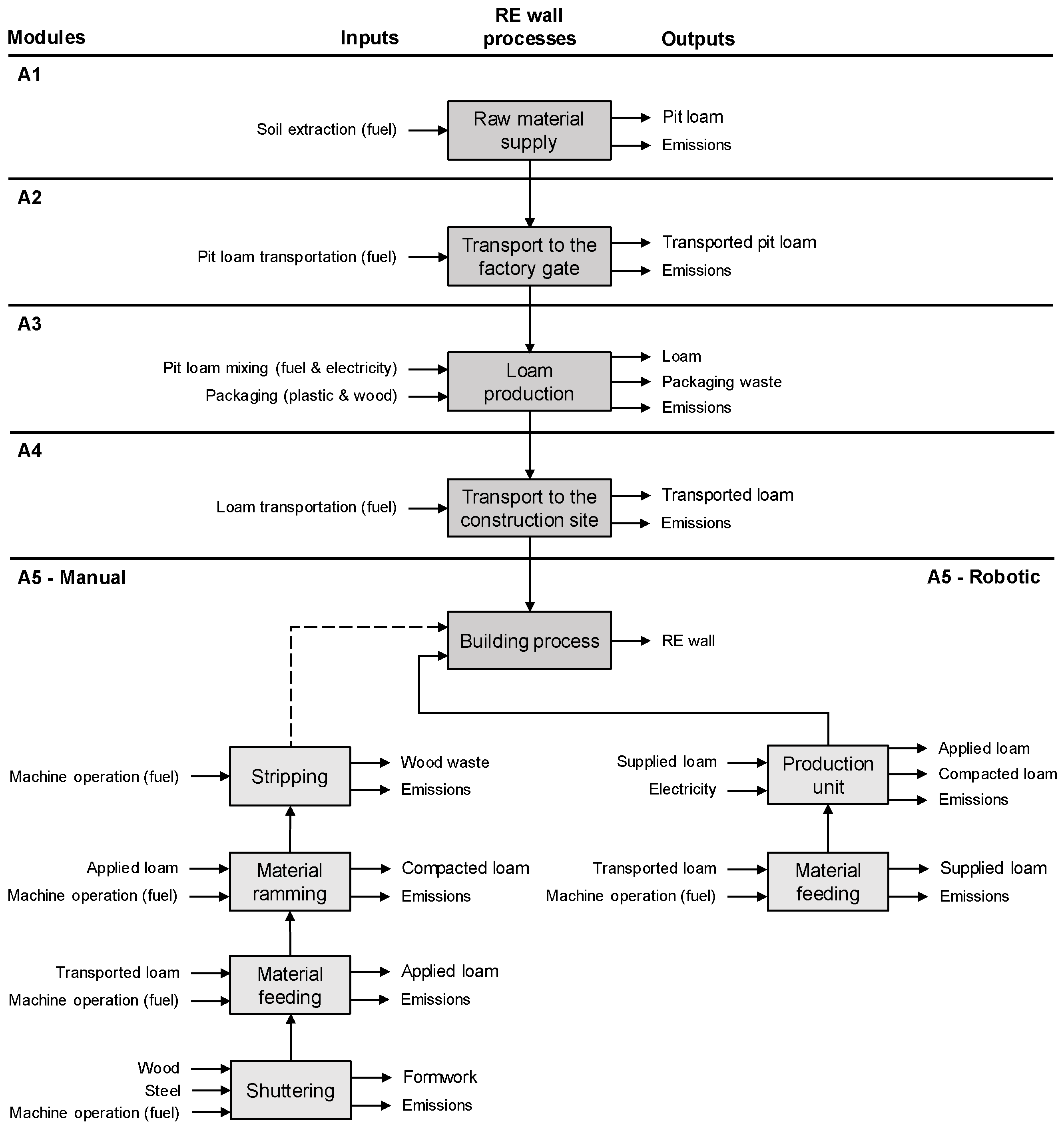
The scope of this LCA defines the methodological framework applied, the analyzed product system, and system boundaries in the study. The LCA follows an attributive, process-oriented approach with cut-off criteria in accordance with EN 15804:2022-03 [53], while adhering to the LCA guidelines of EN ISO 14040:2021-02 [54], and EN ISO 14044:2021-02 [55]. The LCA calculations are conducted using OpenLCA, a widely accepted, open-source software for environmental impact quantification for simple wall facades [56]. The ecoinvent cut-off v.3.9.1 database serves as the background data system, while expert interviews provided foreground system data, as this contributes most significantly to the environmental impact of construction products [57]. The functional unit is 1 m2 of a continuous, monolithic, unstabilized RE wall segment, with a thickness of 0.60 m [13,31,58], based on German in situ manufacturing practices. Since both manufacturing methods use the same material with identical physical and mechanical properties, further functional specification is redundant, as both result in the same structural performance. The system boundary follows a cradle-to-site approach (A1–A5) [51], covering all key modules of the construction phase: raw material supply, transport to the factory, loam production, transport to the construction site, and the building process at the location of use (see Figure 2). Modules A1–A4 are therefore independent of the subsequent manufacturing method. The differences between manual and robotic construction only occur during the building process (A5), where the actual manufacturing procedure is applied. The main flows of the individual processes are integrated into the system model to provide a well-founded evaluation of the manufacturing procedure, while process subdivision minimizes allocations to ensure transparency and accuracy. In order to quantify environmental impacts, different indicators are used. All midpoint impact indicators defined in EN 15804:2022-03 [53] were considered to ensure a comprehensive assessment and avoid trade-offs. Additionally, embodied energy (EE) was included due to its widespread use and relevance in construction LCAs and its strong link to global warming potential (GWP) [59]. For clarity, results are presented for abiotic depletion potential for elements (ADPE), abiotic depletion potential of fossil fuels (ADPF), acidification potential (AP), eutrophication potential (EP)terrestrial, GWP100-total, ozone depletion potential (ODP), EE, photochemical ozone creation potential (POCP), and water depletion potential (WDP), with emphasis on the key construction-related indicators GWP100-total and EE.
3.2. Life Cycle Inventory
As mentioned above, the lack of data on RE construction, whether in databases or the literature, poses a major challenge for LCA studies. A structured survey did not lead to practice-based improvements in the database. Wherever available, German datasets were used; otherwise, European datasets were applied. Switzerland was included due to its role as the database’s source and its relevant data availability. In cases where neither German nor European datasets were accessible, global datasets were selected. If no suitable unit process data were available, similar unit processes were used and subsequently adjusted. To enhance result validity, specific machine times and material quantities were calculated for the RE wall product system and supplemented with engineering assumptions. Due to the limited availability of empirically measured data for both manual and robotic rammed earth construction processes, these assumptions are inherent to the modeling approach and reflect typical practice in construction-related LCAs. To ensure transparency and robustness, all assumptions were systematically derived, critically reviewed, and validated through expert consultations. The standard scenario aims to represent the state of the art in manual in situ RE wall manufacturing in Germany as accurately as possible, reflecting an average building process. In the robotic scenario, the greatest challenges lay in modeling in situ RE wall manufacturing, as this approach is being assessed in an LCA for the first time. Due to technical differences in manufacturing procedures, the two product systems only diverge in the A5 building process, where direct building steps occur, while A1–A4 remain identical (see Figure 2). This reflects the fact that upstream processes are related to material provision and logistics, whereas the differentiation between the scenarios arises exclusively from the execution of the construction process. The flowchart illustrates the processes in each module along with the associated main flows. In A5, the continuous arrow indicates the focus research route. For the manual RE building process, the main steps include shuttering, material feeding, material ramming, and stripping. In contrast, the robotic building process integrates formwork molding, material feeding, and material ramming within a single robotic production unit, consolidating these steps into one. The material feeding process remains in the flowchart, as the material still needs to be transported to the robotic material bucket, which then distributes it.
Figure 2.
Flowchart of both product systems for the manufacture of a rammed earth wall.
3.3. Life Cycle Inventory Model
The development of the LCI model involves numerous iterative adjustment steps, which are inherent to the LCA process and simultaneously lead to modifications in the product system. The iterative adjustment of key parameters during model development served as a qualitative sensitivity analysis, contributing to the robustness of the results and supporting their interpretation in terms of relative differences and trends. These adjustments of parameters, assumptions, and system boundaries ensured a realistic and consistent representation of the product systems. Two manufacturing procedures for an RE wall are considered:
- For manual in situ manufacturing, a self-built stationary formwork with a pneumatic rammer is applied, with material feeding by wheel loader and a material conveyor bucket attached to a crane (see Figure 3).
- For robotic manufacturing, the developed ITE robotic arms (see Figure 1)—one for material feeding and one for compaction—is used in combination with a COBOD BOD2 2-2-2 gantry system, which ensures mobility during the building process [60].
Figure 3.
Manual manufacturing variant of a rammed earth wall; © Lehm Ton Erde Baukunst GmbH.
3.3.1. A1: Raw Material Supply
To simplify the product system, it is assumed that loam is available in sufficient quantity and quality at the extraction site and is obtained as pit loam from excavated soil. It is one common production practice, that pit loam is processed with its natural moisture content, eliminating the need for significant water addition both during production and at the construction site.
A suitable construction loam with a specific composition [61] was assumed as the basis, with an earth-moist content of 9% [62]. From this, a typical earth-moist density of 2017 kg/m3 was calculated [38]. The required loose material volume determines the excavation volume and transport weight (see Table 1). Excavation increases the volume due to a bulking factor of 1.27 for medium-looseness soils (e.g., boulder marl, boulder loam) [63]. During ramming, the material compacts by one-third to two-thirds [13,38]; an average compaction factor of 0.50 is assumed, meaning twice the loose volume is required for the final compacted form. The resulting parameters were applied as input parameters in the corresponding unit processes.
Table 1.
Raw material supply input per 1 m2 of 0.60 m thick in situ rammed earth.
3.3.2. A2: Transport to the Factory Gate
Diesel-powered articulated lorries over 32 t are assumed for pit loam transport, a standard choice for earthworks involving heavy mass movements. In ecoinvent, the process is modeled with an average freight load factor of 15.96 t. However, no specific dataset exists for articulated lorries over 32 t in Germany within EURO III–VI emission classes [64]; only European data are available. Given transport’s significant impact on RE [30], the European generic dataset is modified to better reflect German conditions. The percentage distribution of diesel-powered articulated lorries on German roads in 2024 [64] is directly mapped onto the transport distance distribution for material transport weight, ensuring each vehicle class is assigned a proportional share of the transport route (see Table 2). Empty return trips for RE material transport by lorry were considered in the product system. The transport distance to the production facility is set at an average of 40 km, as in practice, loam building material manufacturers often source raw materials within a range of 30–50 km, although this varies depending on location and availability. Giuffrida et al. assume a transport distance of 30 km to the factory gate, which is in line with this assumption [22].
Table 2.
Transport to the factory gate input per 1 m2 of 0.60 m thick in situ rammed earth.
3.3.3. A3: Loam Production
No specific input parameters were calculated for loam production due to the complexity of industrial processes. Given the lack of data for prefabricated RE mixture production, existing datasets in ecoinvent were merged, with relevant flows either adopted or simplified. However, the ecoinvent data records were adjusted by scaling them up to the required weight or volume of the loam (see Table 1). The only preparation step considered in this module of the LCA is the mechanical homogenization at a plant, assuming the pit loam is available in sufficient quality and quantity. This step ensures consistent mechanical and physical properties, which are critical for structural performance and may also be necessary to counteract segregation during long transport distances [38]. A concrete mixing plant is selected as a comparable reference, and the production process is expanded to include packaging material for transport. No additional drying processes are considered, as moist processing is standard practice. While mechanical processing is included in the product system to reflect realistic practice, the addition of mineral aggregates (clay, silt, sand, gravel) is often required to achieve the necessary material quality and quantity.
3.3.4. A4: Transport to the Construction Site
The modeling of the unit process in this module follows the same approach as in A2: Transport to the factory gate, but the input parameters differ significantly (see Table 3). Expert consultations revealed significant discrepancies in transport distances for prefabricated RE mixtures, ranging from on-site sourcing with minimal transport needs to distances of up to 450 km. Similarly, Nanz et al. highlighted the long transport distances associated with RE wall manufacturing [36]. A standardized transport distance of 100 km is assumed, in line with Giuffrida et al. [22], and is used as a representative reference value for typical transport conditions of prefabricated rammed earth mixtures. Given the variability observed in practice, this assumption is complemented by sensitivity scenarios covering a broader range of transport distances. This approach allows for both a consistent baseline comparison and the evaluation of variability in transport-related environmental impacts.
Table 3.
Transport to the construction site input per 1 m2 of 0.60 m thick in situ rammed earth.
3.3.5. A5: Building Process
This section outlines the process-related differences between the RE and RRE approach. In addition, general aspects relevant to both systems are addressed to provide a consistent basis for comparison.
The construction site requires electricity, which is supplied either through the local grid, if available, or via diesel generators. For this study, diesel generators are assumed to represent a conservative scenario, as they enable network-independent wall construction and reflect the significant relevance of machine-related CO2 emissions from fossil fuel consumption. Consequently, precise machine time calculations are crucial for accurately determining these emissions. The machinery was selected from the construction equipment list [65] based on its suitability for each manufacturing step. Particular attention was given to optimizing the workflow to ensure seamless coordination and maximum efficiency. Assumptions were validated through discussions with RE experts, with adjustments made as necessary. Machines with low load factors in ecoinvent were selected to account for partial operation, as the layered structure of an RE wall requires sequential processing. For simplification, machine transport was excluded.
No reference values for machine times were found in the literature, and expert consultations did not yield reliable data due to the high variability of the RE building process and its limited application in the construction industry. This highlights a general data gap in construction process modeling. Therefore, the machine times applied in this study should be understood as representative engineering estimates rather than exact measurements, with a focus on ensuring internal consistency and comparability between scenarios. To address this, the number of layers and material buckets are determined to calculate the specific machine times for material feeding and ramming in both procedures. The chosen compacted layer height serves as the basis for these calculations. In manual manufacturing, the uncompacted layer height is assumed to be 0.12 m [58], resulting in a compacted height of 0.06 m. In contrast, the robotic building process is assumed to have a lower compacted layer height of 0.03 m [66]. As a result, more layers are required to construct a 1 m high wall segment, 17 layers for the manual process, and 34 layers for the robotic process. However, since both approaches use the same total material volume, the number of material buckets remains identical at two.
Manual
Material feeding
A machine chain consisting of a wheel loader (BGL no. D.3.10.0040 [65]), a crane (BGL no. C.0.02.0031 [65]), and a liftable material conveyor bucket (BGL no. C.3.00.0750 [65]) is assigned to transport material to the location of use. Engineering-based assumptions were applied to calculate machine runtimes and total process duration (see Table 4). Loading the material conveyor bucket with the wheel loader is estimated at 5 min per bucket. Transport to the formwork via crane requires 4 min. Unloading into the formwork takes 2 min per layer and raking and leveling 3 min per layer. The unloading time per layer is included in the calculation, as the crane must lift the conveyor bucket for each unloading cycle.
Table 4.
Material feeding time input per 1 m2 of 0.60 m thick manual in situ rammed earth.
Material ramming
A pneumatic rammer operating at 6 bars with an average air flow rate of 0.65 m3/h is used for the compaction process [7]. A diesel-powered compressor (BGL No. Q.0.00.0012 [65]) provides the required compressed air. According to Nanz et al., this setup is a valid representation of construction site manufacturing [36]. The ramming time per RE layer is estimated and validated through expert consultations to ensure a realistic timeframe for achieving proper compaction of the wall segment (see Table 5). It is within the range of Lavrik et al.’s findings, where 20 min were needed to compact a 1 m2, 30 cm thick wall, considering that the RE wall in this study is twice as thick [35].
Table 5.
Material ramming time input per 1 m2 of 0.60 m thick manual in situ rammed earth.
Shuttering
Since formwork times for concrete work are well documented in the literature, but specific data for RE formwork are lacking, these values serve as the basis for process modeling (see Table 6). Average values for buildings with low formwork complexity are used, as they typically apply to residential and high-rise structures with geometrically simple shapes and consistent cross-sections [63], which correspond to the typical level of complexity encountered in RE formwork tasks. However, the formwork system considered in this study is not solely based on generic concrete construction practice, but reflects a system applied in practice for rammed earth construction. In particular, the modeling is informed by the formwork used in the construction of the Weleda logistics center, one of the largest industrial rammed earth structures in Europe [67]. The assumptions were further supported by expert interviews with the contractor responsible for the RE structure, as well as by publicly available project documentation. For this building step, machinery use (crane and wheel loader) is partially accounted for, with 1.40 h of machine time assumed within the total shuttering time of 3 h.
Table 6.
Formwork time input per 1 m2 of 0.60 m thick manual in situ rammed earth.
Similarly, the material consumption for formwork in concrete construction is well documented and is used as a basis (see Table 7 and Table 8) [63]. Formwork material three-layer cross-laminated timber panels have demonstrated good practical performance by achieving high-quality results. A timber loss rate of 25% is accounted for due to the self-build stationary nature of the formwork [63]. Timber posts are assumed for vertical bracing and steel posts for horizontal support. To withstand the high formwork pressure, glulam is used for vertical posts instead of solid timber to prevent bending [7]. Although glulam is not the exact material used in practice—where a mix of various wood-based materials is applied—it is assumed to best represent the average environmental impact on the available ecoinvent database. A reuse rate of up to five cycles is considered feasible for timber posts. This assumption is based on expert consultations and reflects typical reuse practices observed for timber formwork components under construction site conditions. Steel consumption includes the formwork, horizontal posts, scaffolding, and spacers. As no specific data on steel reuse were available, a reuse rate of 200 cycles is assumed, taking glass-fiber plywood panels as a reference. These panels have been reported to be reusable for up to 150 cycles [63], which serves as a literature-based benchmark. Based on this, it is considered reasonable that steel components, due to their higher durability, can achieve even higher reuse rates.
Table 7.
Formwork (wood-based) material input per 1 m2 of 0.60 m thick manual in situ rammed earth.
Table 8.
Formwork (steel) input per 1 m2 of 0.60 m thick manual in situ rammed earth.
Stripping
When stripping the formwork, the operation of the crane and wheel loader is accounted for with a machine time of 1 h within a total duration of 1.50 h. This building step generates a waste flow of non-reusable three-layer panels (see Table 7). Reuse on another RE construction site is not feasible due to damage or deformation of the timber.
Total building process duration
By summing up the time required for each individual step—both mechanical and manual—the total construction time for a manually in situ manufactured 1 m2 RE wall with a thickness of 0.60 m amounts to a 6.93 h wall under idealized construction execution conditions (see Table 9). This assumes a fully synchronized workflow, well-coordinated machinery, and no external disruptions. However, in practice, the complexity and dynamic nature of construction, along with interdependencies between disciplines, often lead to discrepancies between theoretical assumptions and real-world execution. Therefore, a conservative and practice-oriented estimate of approximately 7.93 h is considered more realistic.
Table 9.
Manual building process duration per 1 m2 of 0.60 m thick manual in situ rammed earth.
Robotic
Robotic production unit
Due to its pilot-stage status, no specific data on material quantities and types are available for the robot production unit. The pilot system consists of two Stäubli TX2-200 robotic arms [68], which form the basis for the estimations. Material quantities and types are derived from the robot printing cell model by Kuzmenko [69] and adjusted to match the total weight of both robotic arms (see Table 10). The COBOD BOD2 2-2-2 gantry system, which supports the two robot arms, weighs 5390 kg and is made of S355 steel (see Table 11) [70]. It should be noted that the size of the system depends on the size of the reachable area, i.e., the mobility of the robot production unit, that needs to be covered. The system requires four 1.50 m × 0.60 m × 1.50 m concrete blocks to ensure stability at the installation site [71]. These foundations are expected to be reused 10 times. The density of normal concrete with 2000 kg/m3 is assumed to calculate the weight of the blocks. The power consumption of the robot production unit is estimated based on internal experience at ITE (see Table 12). It is assumed that the unit requires 5 kW in standby mode, while the robotic arm for material ramming consumes 3 kW and the arm for material feeding consumes 5 kW. This results in a total power requirement of 13 kW, leading to an estimated energy consumption of 23.39 kWh per 1 m2 of in situ robotic RE (RRE) wall with 0.60 m thickness. The service life of robots is estimated at 30,000 h, which corresponds to a lifespan of 15–18 years [69]. This depends largely on the specific location where the robots are used, and how the environmental conditions and operational factors there affect their performance and functionality. Construction sites pose a challenging environment, characterized by high dust levels and the fixation in the robot system, inconsistent weather conditions, and potential mishandling of equipment. For this reason, this research assumes a reduced service lifespan of 10 years and an operating performance of 17,000 h, which corresponds to a reduction of approximately 40–45% compared to literature values.
Table 10.
Robot production unit (robotic arms) input per 1 m2 of 0.60 m thick robotic in situ rammed earth.
Table 11.
Robot production unit (gantry system) input per 1 m2 of 0.60 m thick robotic in situ rammed earth.
Table 12.
Robot production unit (energy consumption) input per 1 m2 of 0.60 m thick robotic in situ rammed earth.
Material feeding
The total process duration of robotic material feeding differs from manual feeding (see Table 13). Generally, the material must be transported to the place of use by crane and wheel loader. In the case of the robotic production unit, the material is delivered to the end effector bunker for material feeding. For efficient implementation, ongoing developments focus on ensuring a steady material supply process to the bunker and adjusting the bunker size, enabling a continuous building process. This requires machinery to operate in sync with the robotic production unit. One option is direct feeding from the material conveyor bunker attached to the crane via a material chute. Due to the ongoing development of the material supply process, the unloading procedure per shift remains unchanged, and material feeding steps still align with those in the manual process. However, a key difference between the two methods is that manual raking and leveling is no longer necessary with robotic material feeding due to automation.
Table 13.
Material feeding time input per 1 m2 of 0.60 m thick robotic in situ rammed earth.
Material ramming
The robotic ramming process is assumed to be largely similar to the manual method, with slight differences in ramming time (see Table 14). Due to automation, the process is expected to be somewhat faster, as it eliminates fatigue-related performance slowdowns present in manual ramming. However, the precise and consistent ramming pattern of the RRE- process may take longer than manual compaction with a hand-operated pneumatic rammer, as manual guidance can introduce inaccuracies that lead to faster but less uniform compaction.
Table 14.
Material ramming time input per 1 m2 of 0.60 m thick robotic in situ rammed earth.
Total building process duration
By adding up the durations of all individual steps—both mechanical and manual—in the building process the total time of a robotic in situ manufacturing of a 1 m2 RE wall with a thickness of 0.60 m is 2.56 h (see Table 15). A practice-oriented conservative estimate is approximately 3.56 h.
Table 15.
Robotic building process duration per 1 m2 of 0.60 m thick robotic in situ rammed earth.
3.4. Life Cycle Impact Assessment
The impact assessment was conducted in OpenLCA using predefined environmental impact assessment methods and their underlying assumptions. To ensure the most accurate results, the most suitable methods were carefully selected for each impact indicator [72,73]. Subsequently, a scenario analysis is conducted to identify optimization potential by adjusting inventory data parameters, addressing key hotspots, and evaluating their environmental impact on the product system. The following LCA scenarios were analyzed to quantify environmental impacts:
- Standard scenario: robotic vs. manual manufacturing;
- Sensitivity scenario transport: varying transport distances for RE mix for robotic manufacturing;
- Sensitivity scenario electricity mix: modified robot electricity mix for robotic manufacturing;
- Best-case scenario: in situ loam excavation and preparation for robotic manufacturing.
In the standard scenario, both product systems, representing the current state of their respective manufacturing methods, are directly compared to analyze differences in manufacturing procedures and their environmental impact. The sensitivity scenario for transport evaluates the environmental impact of transporting prefabricated RE mixtures over varying distances to construction sites, as transport is a key contributor to the overall environmental footprint. One scenario extends the transport distance to approximately 450 km, increasing it by 350 km, while another shortens it to 30 km, reducing it by 70 km. Both transport routes have been observed in practice. The sensitivity scenario for the electricity mix examines the impact of different energy sources on the robotic production unit, as adjusting the electricity mix is a simple measure with potentially significant effects. The German electricity mix, which partially relies on fossil fuels, is compared to a Swiss electricity mix, which consists entirely of renewable energy sources. However, a key requirement for maximizing these benefits is the availability and accessibility of a green electricity infrastructure. The best-case scenario envisions an optimized RRE wall process, where loam is excavated either directly in situ or in close proximity to the construction area, minimizing transport distances. This approach is particularly advantageous for RE construction, as it prevents unnecessary emissions from material transport while ensuring that excavated soil can be reused directly for the building process. This promises reducing transport-related environmental impacts while maximizing the effective reuse of locally available resources. A key prerequisite for this scenario is that the loam is available in sufficient quality and quantity. Otherwise, it must be evaluated whether the environmental impact of processing loam on-site exceeds that of transporting prefabricated RE mixtures from a factory. The transport distances in module A2 (raw material transport) and module A4 (product transport) are each assumed to be 1 km. A total transport distance of approximately 2 km is considered realistic. This reflects two possible cases:
- The material is extracted on the building site, transported to a nearby temporary preparation facility, and returned to the construction site, or
- The material is excavated near the building site, processed, and then delivered to the location of use.
Additionally, the A3 module (loam production) differs, as no packaging material is required for transport and no packaging waste is generated, unlike in industrial processes. Furthermore, the renewable energy mix from the previous scenario is incorporated to further reduce the environmental impact. The best-case scenario therefore extends beyond a pure A5-focused comparison and partially captures variations within the product system, including changes in modules A1–A4 such as transport, material sourcing, and packaging, which may otherwise not be reflected in the standard scenario. At the same time, the best-case scenario represents a theoretical optimization scenario and is intended to explore the maximum potential for environmental improvement under idealized conditions. It combines several favorable assumptions and should therefore be interpreted as an upper-bound estimate rather than a realistic representation of typical construction practice.
4. Results
This section presents the results of the LCA scenarios, focusing on EE and GWP100-total as key indicators, while trade-offs are reported where present. It should be noted that the results are subject to uncertainties related to input parameter assumptions; however, due to the consistent modeling framework applied to both scenarios, the comparative results are considered robust in terms of relative differences between manual and robotic manufacturing. First, the standard scenario compares manual and robotic in situ manufacturing to determine the procedure with the lower environmental impact. The subsequent assessment of the construction phase (A1–A5) reveals the contribution of each module and identifies hotspots with the greatest reduction potential. A unit-process-specific breakdown of the building process (A5) then highlights hotspots within the procedure and illustrates their differences. Subsequent sensitivity analyses quantify the influence of key parameters in the robotic procedure, including transport distances and electricity mixes. Based on these results, a best-case scenario is developed by integrating all parameters that minimize environmental impacts, thereby demonstrating the potential advantages of RRE manufacturing. Finally, all robotic scenarios are compared to manual in situ manufacturing, providing a comprehensive picture that quantifies the environmental effects of automation in the in situ manufacturing of RE walls.
4.1. Standard Scenario
This section analyzes both manual and robotic in situ manufacturing, comparing their environmental performance as the baseline for all subsequent scenarios and identifying key hotspots for further analysis, representing current practice conditions.
4.1.1. Comparison Robotic vs. Manual
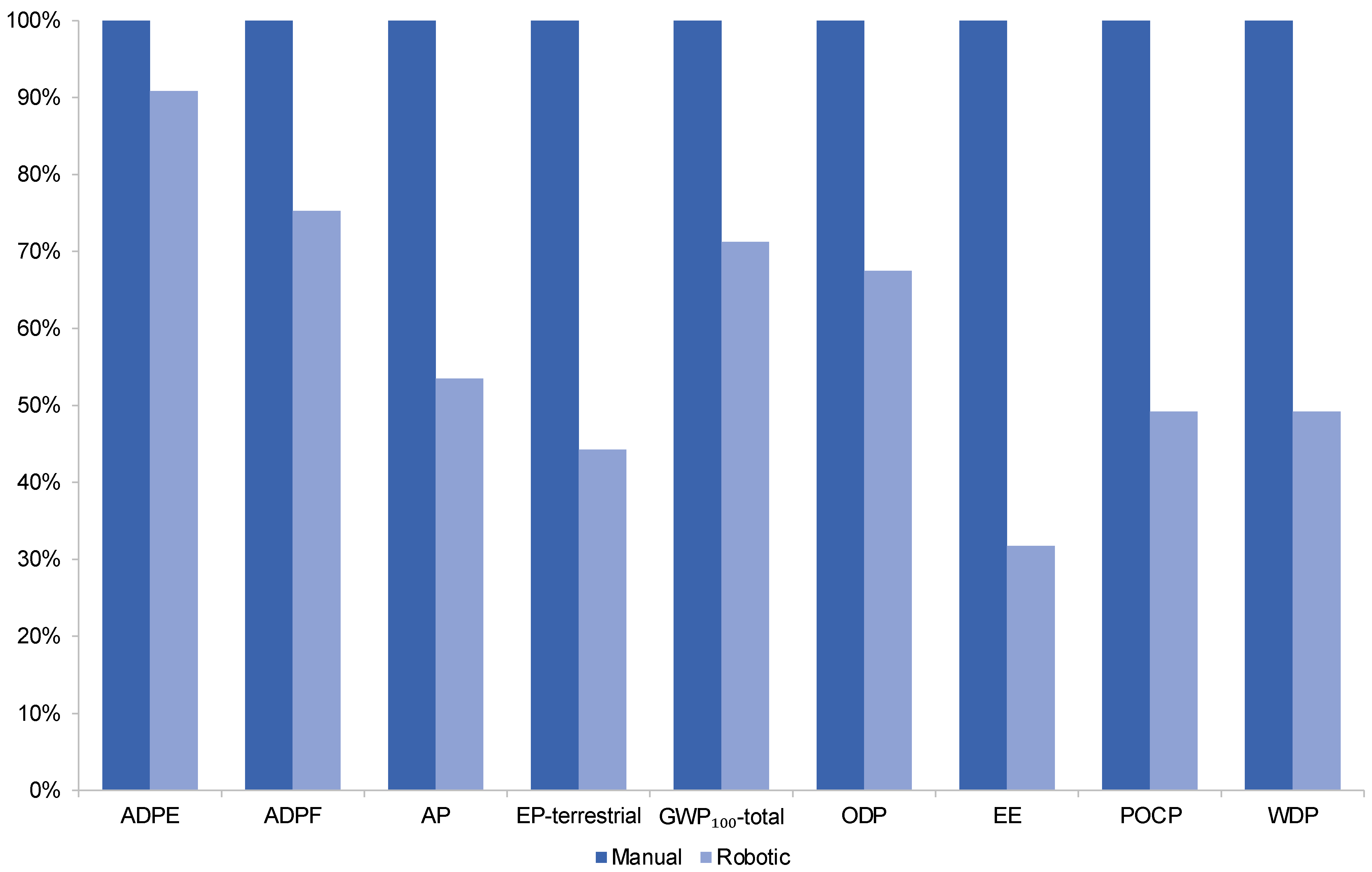
It is important to emphasize once again that due to technical differences in the manufacturing procedures, the two product systems only diverge in the A5 building process, where direct building steps take place, while A1–A4 remain identical. This means that the overall deviation (see Table 16 and Figure 4) between the two procedures is attributable to the A5 module.
The robotic procedure for manufacturing an in situ RE wall is a more environmentally favorable option compared to manual manufacturing of the in situ RE wall. The environmental impacts of the robotic procedure are lower compared to the manual procedure for almost all impact indicators. Reductions in environmental impact of approx. 9–97% are achieved. Only EP-freshwater shows an increase in environmental impact of 68%. The EE of the robot system shows a reduction in environmental impact of 68%. The GWP100-total is reduced by 28%.
Table 16.
Environmental impact (A1–A5) for robotic vs. manual in situ rammed earth.
Figure 4.
Environmental impact (A1–A5) for robotic vs. manual in situ rammed earth.
4.1.2. Construction Phase (A1–A5) Manual and Robotic
The building phase (A4–A5) of an RE wall is the most important stage for optimizing both procedures to reduce their environmental impact in the construction phase. In the manual procedure, GWP100-total and EE account for 83% and 89%, whereas in the robotic procedure, they amount to 76% and 66%. In contrast, during the production phase (A1–A3), the GWP100-total and EE for the manual procedure are 16% and 10%, whereas for the robotic procedure, they are 23% and 33%. A module-specific breakdown allows for the identification of modules with the highest potential for optimization.
In the case of manual in situ manufacturing, the building process (A5) accounts for the largest share of almost all and is therefore the key module for optimization to reduce the environmental impact (see Table 17 and Figure 5), except for ADPE, where the A3 module has the highest impact. The GWP100-total accounts for 56%, and EE for 79%.
Table 17.
Environmental impact (A1–A5) for manual in situ rammed earth.
Figure 5.
Environmental impact (A1–A5) for manual in situ rammed earth.
The robotic manufacturing of an in situ RE wall is the environmentally superior procedure compared to the manual procedure. However, the building process (A5) still offers the greatest optimization potential (see Table 18 and Figure 6), especially for GWP100-total at 38% and EE at 34%, closely followed by the A4 module with GWP100-total at 37% and EE at 32%. Again, the ADPE impact indicator is an exception due to the A3 module. Overall, the module A4 plays a more significant role in ADPF, POCP, and WDP, highlighting the importance of transport distances. When combining transport modules A4 and A5, the highest environmental impact is observed across most indicators, with GWP100-total at 53% and EE at 45%, making it the cross-modules optimization area in the robotic procedure.
Table 18.
Environmental impact (A1–A5) for robotic in situ rammed earth.
Figure 6.
Environmental impact (A1–A5) for robotic in situ rammed earth.
4.1.3. Building Process (A5) Manual and Robotic
In the manual procedure, the shuttering accounts for the highest environmental impact across all indicators (see Table 19 and Figure 7), contributing 53% to the GWP100-total and 92% to the EE. This is mainly due to the use of cross-laminated timber as a formwork panel. The impact and the proportion of glulam beams are significantly reduced by the fivefold reuse. The high environmental impact of wood-based materials is due to the energy-intensive production process of drying, gluing, and pressing. This is precisely where the robotic process proves beneficial, as it minimizes the need for formwork and reduces the number of material components, thereby rendering the formwork—and its associated environmental impact—largely obsolete.
Table 19.
Environmental impact (A5) for manual in situ rammed earth.
Figure 7.
Environmental impact (A5) for manual in situ rammed earth.
In the robotic procedure, there is no clear distinction between structural components and their environmental impact, as material feeding and electricity consumption alternate as the primary influencing factors across different impact indicators (see Table 20 and Figure 8). The significant 68% reduction in EE during the construction phase compared to the manual method results from eliminating cross-laminated timber formwork and reducing the reliance on diesel-powered machinery. For GWP100-total, electricity consumption accounts for 56%, while material feeding contributes 37%. Regarding EE, electricity consumption makes up 63%, whereas material feeding accounts for 31%, making electricity the dominant factor in both indicators. Additionally, the impact of the robot production unit remains low across most indicators due to its long service life, contributing just 6% to GWP100-total and 4% to EE in the building process. The compressed air supply is negligible for all impact indicators.
Table 20.
Environmental impact (A5) for robotic in situ rammed earth.
Figure 8.
Environmental impact (A5) for robotic in situ rammed earth.
4.2. Sensitivity Scenario Transport
This section evaluates only the robotic procedure, analyzing the impact of transporting prefabricated RE mixtures over varying distances. As transport is a key contributor to the footprint, two scenarios are tested: an extended distance of 450 km (+350 km) and a shortened distance of 30 km (–70 km), representing realistic variations in transport conditions observed in practice.
4.2.1. Transport Distance 450 km
It is evident that a longer transport distance negatively affects the impact indicators, but the extent of this influence is particularly pronounced (see Table 21 and Figure 9). In the construction phase, the GWP100-total increases by 132% and the EE by 114% compared to the standard RRE scenario (see Table 18). The two transport modules A2 and A4 thus together account for 73% of the total GWP100-total and 74% of the EE contribution in the construction phase. As a result, the environmental impacts of the other modules diminish in significance. The A5 module accounts for 16% of GWP100-total and 15% of EE. Only ADPE still has a strong influence from the A3 module related to loam production. It can be observed that the environmental impacts of transport are distributed relatively evenly across the other impact indicators in relative terms. This results in trade-offs in ADPE, ADPF, AP, EP-freshwater, GWP100-total, ODP, POCP, and WDP. This suggests that transport influences most impact indicators in a similar proportion within the robotic manufacturing procedure, making it a key contributor to the overall environmental footprint.
Table 21.
Environmental impact (A4) at 450 km for robotic in situ rammed earth (grey: optimized phase).
Figure 9.
Environmental impact (A4) at 450 km for robotic in situ rammed earth.
4.2.2. Transport Distance 30 km
A transport distance of 30 km to the construction site represents a realistic and feasible compromise, allowing for an expanded catchment area for excavated soil while maintaining a low transport-related environmental impact. Compared to the standard RRE scenario, this reduces GWP100-total by 26% and EE by 22% (see Table 18). With decreasing transport distance, the A5 module emerges as the dominant contributor to most impact indicators, except for ADPE and WDP (see Table 22 and Figure 10). The A5 module contributes 52% to GWP100-total and 44% to EE, while A2 and A4 modules account for 36% and 29%. The shorter transport distance did not significantly reduce the trade-off in EP-freshwater, as it was already present in the standard RRE scenario, indicating that it is not transport related.
Table 22.
Environmental impact (A4) at 30 km for robotic in situ rammed earth (grey: optimized phase).
Figure 10.
Environmental impact (A4) at 30 km for robotic in situ rammed earth.
4.3. Sensitivity Scenario Electricity Mix
This section evaluates only the robotic procedure, analyzing the impact of different energy sources on the robotic production unit. Given the high share of electricity consumption, the partly fossil-based German mix is contrasted with a fully renewable alternative to assess their environmental effects, representing a realistic variation in energy supply conditions.
A Swiss renewable electricity mix is used to examine its effect on the environmental footprint of the building process. This leads to a reduction across all impact categories (see Table 23 and Figure 11). In the A5 module, the total reduction compared to the robotic standard scenario is 54% for GWP100-total and 35% for EE (Table 20 and Figure 8). However, the reduction varies across different impact categories, with the highest percentage decreases in ADPF and AP, while ADPE and WDP show the smallest changes. The electricity share within the building process contributes only 3% of GWP100-total but 44% of EE. Therefore, a change in the electricity mix reduces GWP100-total more significantly than EE. Moreover, optimizing material handling—particularly the loading and transport of loam to the robot’s material bunker—represents a key opportunity for further environmental improvement. By contrast, modifying the electricity mix is an immediately feasible measure that already leads to significant reductions. It even eliminates the trade-off in EP-freshwater that is found in the RRE standard scenario. This suggests that the environmental indicator is related to the electricity mix.
Table 23.
Environmental impact (A5) of electricity mix for robotic in situ rammed earth (grey: optimized phase).
Figure 11.
Environmental impact (A5) of electricity mix for robotic in situ rammed earth.
4.4. Best-Case Scenario
This section models only the robotic procedure, integrating all identified optimization measures to quantify the maximum environmental potential of RRE manufacturing, representing a theoretical upper-bound scenario. To achieve the lowest impact RE wall while maintaining its inherent eco-friendliness, loam should be excavated in situ or on-site, minimizing transport distances, avoiding transport-related material waste, and using renewable energy sources.
As a result, significant reductions in the environmental impact of the construction phase are achieved without trade-offs. Compared to the robotic standard scenario, GWP100-total and EE decrease by 76% and 70% (see Table 18 and Figure 6). Consequently, the building process now accounts for the largest environmental impact in the construction phase, as expected (see Table 24 and Figure 12), with 75% of GWP100-total and 74% of EE. The impact of loam production gains more importance in the overall environmental impact, particularly in ADPE, where it becomes the dominant factor.
Table 24.
Environmental impact (A1–A5) best-case for robotic in situ rammed earth (grey: optimized phases).
Figure 12.
Environmental impact (A1–A5) best-case for robotic in situ rammed earth.
4.5. Overview of Scenarios
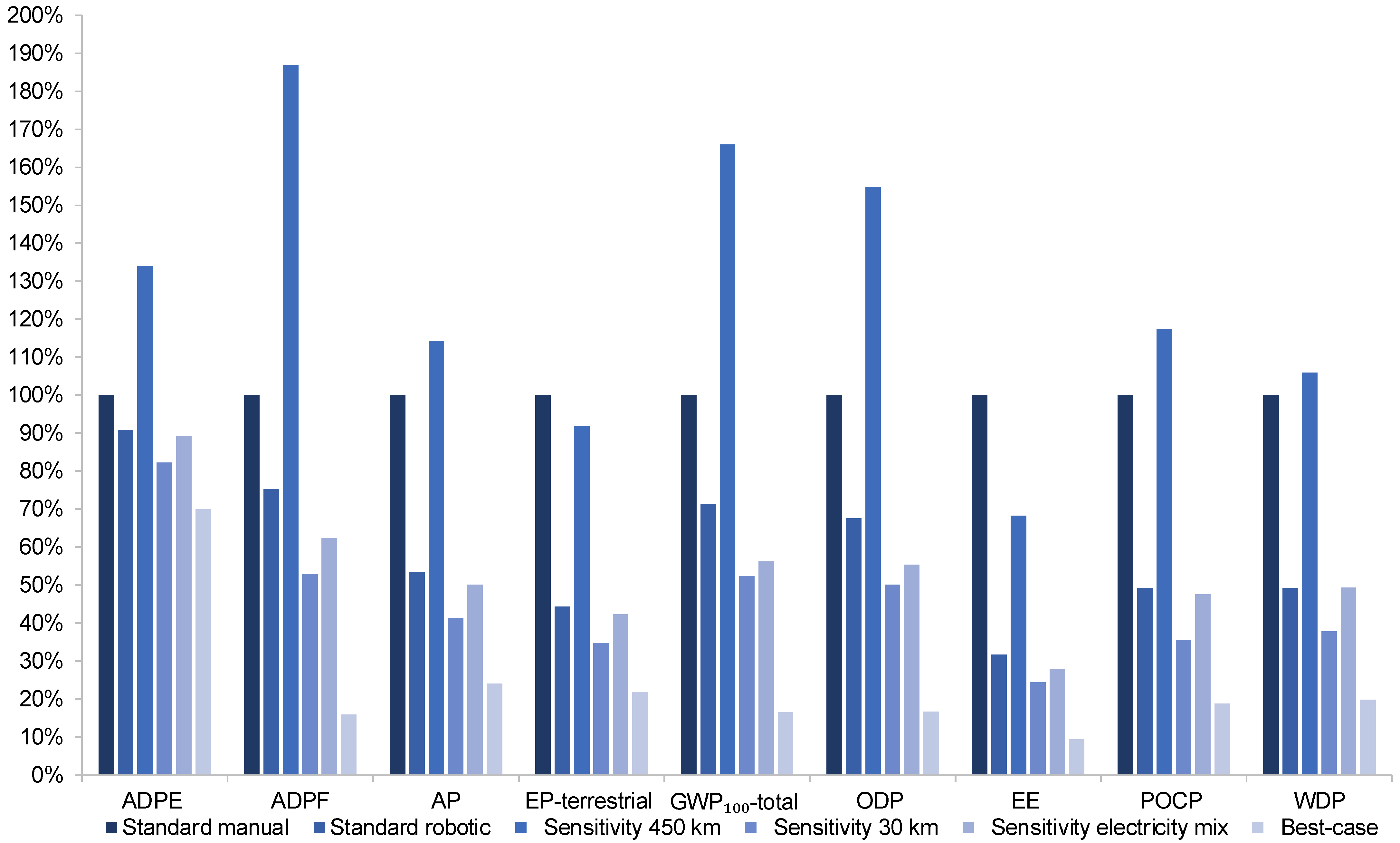
To ensure consistency in comparing both in situ manufacturing procedures, as intended in this research, a comprehensive overview of all scenario results relative to the manual procedure is presented (see Figure 13). This allows conclusions to be drawn on which adaptation has which impact on reducing the environmental footprint of the robotic procedure. For clarity, both quantitative values (see Table 25) and percentage values (see Table 26) are given for each scenario, allowing for a clear comparison of different adjustments and their effects. In the sensitivity scenarios for 450 km transport, 30 km transport, and electricity mix, only one parameter is modified in each case, making it possible to identify the most effective adjustment. As expected, the best-case scenario outperforms all other scenarios. The findings clearly show that reducing the transport distance to 30 km has a greater impact on environmental performance than switching to renewable energy. However, switching to renewable energy remains an effective way to reduce environmental impact. Increasing the transport distance has the most significant negative impact on most environmental indicators, except for EP-terrestrial and EE. The energy-intensive formwork used in the manual procedure exerts such a strong influence on EE that, even with longer transport distances, the robotic procedure does not result in a higher overall environmental footprint compared to the manual approach. A clear, procedure-independent conclusion is that transport distances should be minimized in both manual and robotic in situ construction of RE walls, strongly reinforcing findings reported in previous studies.
Table 25.
Quantitative scenario comparison of environmental impacts (A1–A5) for robotic vs. manual in situ rammed earth.
Table 26.
Percentage scenario comparison of environmental impacts (A1–A5) for robotic vs. manual in situ rammed earth.
Figure 13.
Qualitative scenario comparison of environmental impacts (A1–A5) for robotic vs. manual in situ rammed earth.
5. Discussion
The aim of this study was to compare two manufacturing procedures and to identify their environmental potentials and impacts. Therefore, uncertainties had to be accepted, both due to necessary procedural assumptions and the limited database available for specific manufacturing steps of an unstabilized RE wall. Nevertheless, the analysis highlights the most influential factors for improving both processes. Overall, the presented product system offers a comprehensive and detailed representation of both manual and robotic in situ manufacturing of an RE wall, providing a solid basis for assessing their environmental impacts.
Transport in ecoinvent assumes a load factor of 15.69 t per lorry, implying underutilized capacity and higher environmental impacts per ton transported. Increasing load weight raises diesel consumption, but in practice vehicles are usually used efficiently for economic reasons. The assumption that most lorries comply with EURO VI may underestimate impacts, as older vehicles with lower standards are still in use and have higher emissions. Thus, potential overestimation from underutilized load capacity and underestimation from low-emission lorries may offset each other, rendering the overall effect on an RE wall insignificant.
Loam production in the A3 module introduces uncertainty, as no specific data on RE mixture production are available. Its influence was therefore approximated. The modeling approach is based on merged ecoinvent datasets combined with a concrete mixing plant as a proxy, representing the mechanical homogenization and processing of raw materials. This approach was selected as a pragmatic approximation in the absence of dedicated LCI datasets for unstabilized rammed earth production. A direct validation against primary industrial data is currently not feasible due to the limited availability of documented and standardized production processes. However, the selected proxy reflects comparable mechanical processing steps and energy use, providing a consistent and transparent modeling basis. The assumption of sufficient material quality and quantity means that no impurity separation is considered. However, given the organic nature of potential by-products, their environmental impact is likely negligible, as they can naturally reintegrate into the environment. A major source of discrepancy lies in the extent to which admixtures (clay, silt, sand, gravel) are actually required to achieve a suitable RE mixture. The more materials need to be added, the greater the need to assess the production, which likely increases the complexity of the machinery used and introduces additional production processes. Due to the partial reliance on data from concrete mixing plants, it is likely that the environmental impact of loam production is somewhat overestimated. This results in a conservative representation of this LCA module, which still partially reflects the omission of additional aggregates and preparation processes. Further research is therefore required to develop dedicated and validated LCI datasets for loam production.
The use of cross-laminated panels as formwork material leads to high emissions and is only one possible manufacturing variant. Alternative wood or reusable panels might be able to reduce the environmental impact. Moreover, the use of system formwork could further reduce environmental impacts through repeated use, while also saving time during formwork assembly and disassembly. However, in practice, focusing on timber formwork, untreated boards cannot be used without additional processing. An exploratory analysis in OpenLCA with pure sawn and planed timber formwork shows only a slight change in GWP100-total and the EE. The extent to which the positive CO2 storage properties of wood have been accounted for in the database remains unclear and requires further investigation. Nevertheless, this does not change the amount of waste generated when timber formwork is used as a single-use product, which significantly impacts the LCA.
Furthermore, the robotic production unit is still under development, and reliable data are currently limited. It should be noted that detailed data collection is only meaningful if corresponding datasets are available in databases to ensure replicability. In addition, it should be noted that the system boundary of this study is limited to the construction phase (A1–A5). Therefore, the results are restricted to the environmental impacts associated with the production and building processes. Potential differences arising in the use phase or end-of-life stage (e.g., durability, maintenance, or recyclability) are not considered and may influence the overall environmental performance of the compared systems. A formal uncertainty analysis, such as Monte Carlo simulation or error propagation, was not conducted in this study. This is primarily due to the limited availability of high-quality input data and the reliance on engineering assumptions and expert judgement for modeling novel construction processes. However, key assumptions were validated through expert consultations and cross-checked against available literature. The results should therefore be interpreted as indicative, highlighting relative differences and trends between the compared systems rather than absolute values. Since robotic in situ production facilities for RE construction are not yet in full-scale operation, uncertainties remain regarding their service life. However, the operational period plays a crucial role in its environmental impact, as a longer service life significantly reduces the emissions attributed to individual system components. Nevertheless, the use of a robotic production unit for in situ RE wall manufacturing demonstrates a notable reduction in environmental impact, ensuring that necessary modifications do not render this effect obsolete.
It should be noted that the current comparison is based on an experimental wall sample; consequently, the scaling effects from a single element to a full-scale building remain unquantified. While the gantry system utilized in this study features a build area of 4.5 × 3.9 m2 and a maximum height of 3.5 m, larger or multi-story structures would necessitate either system repositioning or the deployment of larger-scale machinery with higher torque requirements. Such adjustments could lead to a disproportionate increase in energy consumption and digital setup complexity, potentially altering the environmental and economic benefits observed at the prototype level. Moreover, this comparative analysis assumes standardized environmental conditions. In practice, manual RE construction is highly sensitive to site-specific variables such as soil moisture, ambient weather, and individual worker proficiency. While robotic systems offer potential for higher consistency, a comprehensive evaluation of how automation mitigates or amplifies these site-specific risks remains a subject for future investigation.
Another important consideration is the combination of datasets from different regions which exhibit varying environmental impacts. Although this approach is unavoidable due to the limited availability of suitable datasets, it may introduce inconsistencies while simultaneously enabling more broadly applicable conclusions. It should be noted that this assumption represents a controlled modeling framework; in practice, differences in logistics or material sourcing strategies may occur depending on the construction setup. However, the consistent modeling approach ensures that the comparative results remain robust with respect to relative differences between the two construction methods.
6. Conclusions
This paper presents a comprehensive study on the automated, robotic in situ manufacture of an RE wall and its effects on environmental impact in comparison to the manual method. By automating key manufacturing steps of the manual procedure—formwork molding, material feeding, and compaction—robotic construction reduces formwork material use and improves process efficiency, particularly in terms of construction time. This enhances the competitiveness of this inherently low-impact building material compared to conventional construction methods without compromising either automation or environmental sustainability. From an economic perspective, the advantages of robotic fabrication of RE relative to manual methods are primarily twofold: first, labor costs are minimized by transitioning to a smaller, highly specialized workforce; second, formwork expenditures are virtually eliminated through the integration of robot-guided slip-formwork. Conversely, these operational savings are offset by high initial capital expenditures and the ongoing maintenance requirements inherent to robotic systems. Consequently, in order to precisely quantify the economic market viability of such automated processes, further research is required.
The study demonstrates that robotic in situ construction is the more environmentally favorable option within the construction phase for building an unstabilized RE wall. However, these findings are limited to the cradle-to-site system boundary (A1–A5) and do not include potential impacts from the use phase or end-of-life stage. The standard RRE scenario achieves significant reductions across various environmental impact indicators, in the range of approximately 9–97% compared to the standard manual scenario. This wide range is partly attributable to differences between the considered impact categories, which exhibit varying sensitivities to changes in the underlying processes and modeling parameters. In particular, GWP100 decreases by 28%, while EE is reduced by 68%. This is primarily due to the elimination of formwork, which not only avoids the energy-intensive production of formwork materials but also prevents the waste generated from single-use formwork panels. As a result, the robotic procedure negates a major environmental burden associated with the manual approach. Furthermore, the construction time is significantly reduced due to the more efficient building process compared to the manual procedure, decreasing from an ideal 6.93 h (realistically 7.93 h) to an ideal 2.56 h (realistically 3.56 h).
A procedure-independent optimization potential to minimize the environmental burden of the RE wall is the reduction of transport distances. The total environmental impact of the construction phase is significantly influenced by the transport distances from the raw material excavation to the production facility and the construction site. For instance, in the robotic procedure, the GWP100-total and EE associated with both transport modules account for 59% and 45% n in the construction phase. Reducing the transport distance to the construction site by 70 km leads to a reduction of GWP100-total by 26% and EE by 22% in the standard robotic scenario, lowering the combined share of both transport modules to 36% and 29% of the total construction phase.
However, when considering optimization potential in the robotic procedure during the building process, electricity consumption has a more significant impact on GWP100-total and EE than material feeding. Energy consumption accounts for 56% of the GWP100-total, while its share of EE is 63%. Substituting a renewable electricity mix can reduce the GWP100-total by 54% and EE by 35%, offering a straightforward adjustment to lower the environmental impact of the robotic procedure. Consequently, material feeding, particularly the supply to the robot’s material bunker, emerges as the main target for optimization during construction.
To achieve the lowest environmental footprint for an unstabilized robotic in situ RE wall and preserve its superior environmental performance over conventional materials, the robotic procedure must meet key requirements to fully realize its potential. Loam, available in sufficient quantity and quality, should be excavated in situ or near the construction site to minimize transport distances and packaging waste. Moreover, the robotic production unit should be powered by renewable energy to further reduce its environmental impact. With these measures, the best-case robotic scenario achieves even greater reductions across various environmental impact indicators, in the range of approximately 30–99% compared to the standard manual scenario. This leads to a reduction compared to the manual in situ procedure of 83% in GWP100-total and 90% in EE. It is noteworthy that changes in transport distance can have a more pronounced effect on environmental outcomes than adjustments to the electricity mix.
In ongoing research on the development of the robotic production unit, further optimization potentials are in focus: reducing the system to a single robotic arm to minimize material and energy consumption, enhancing overall energy efficiency, and improving material supply to the material bunker. These further adjustments must be balanced against the challenges posed by the prototype nature of the unit and the modeling accuracy in this research. However, due to its expected long lifespan and reusability, the robotic production unit is likely to further reduce its environmental impact.
Overall, the robotic in situ manufacture of an unstabilized RE wall significantly reduces material and energy consumption, as well as greenhouse gas emissions, mitigating the environmental impact of the construction phase within a building’s life cycle. By integrating automation, this approach enhances efficiency while preserving the material’s inherent sustainability, making RE a competitive and scalable option in modern climate-conscious architecture.
Author Contributions
Conceptualization, M.L., J.G. and C.T.; methodology, M.L., J.G., S.V.A. and C.T.; validation, J.G., S.V.A. and C.T.; formal analysis, M.L.; investigation, M.L.; resources, C.T. and H.K.; data curation, M.L.; writing—original draft preparation, M.L.; writing—review and editing, J.G., H.E. and C.T.; visualization, M.L. and J.G.; supervision, J.G., C.T. and H.K.; project administration, J.G. and H.K.; funding acquisition, J.G. All authors have read and agreed to the published version of the manuscript.
Funding
This work was supported by the German Federal Ministry of Education and Research (BMBF) within the initiative “GOLEHM” as part of the WIR!-program for regional structural change (Project: “Mobile Robotic Rammed Earth”, Project No. 03WIR5703). Financial support was also provided by the Deutsche Forschungsgemeinschaft (DFG, German Research Foundation)–Project-ID 414265976–TRR 277 AMC. Additionally, the research was funded by Zukunft Bau/Federal Office for Building and Regional Planning (BBSR) under Project No. 10.08.18.7-18.45 (“Robotergestützte Fabrikation von Bauteilen aus Stampflehm”). The APC was funded by the Puplication Fund of the University Library of Technische Universität Bruanschweig.
Data Availability Statement
The original data presented in the study are openly available in https://doi.org/10.24355/dbbs.084-202602101603-0.
Acknowledgments
The author would like to thank Hubert Heinrichs from Zimmerei Heinrichs for the professional exchange on the state of the art in manual in situ manufactured unstabilized rammed earth walls and for validating the input data used in the life cycle assessment of the manual procedure.
Conflicts of Interest
The authors declare no conflicts of interest.
Abbreviations
The following abbreviations are used in this manuscript:
| ADPE | Abiotic depletion potential for elements |
| ADPF | Abiotic depletion potential of fossil fuels |
| AP | Acidification potential |
| CNC | Computerized numerical control |
| CO2 | Carbon dioxide |
| EE | Embodied energy |
| EP | Eutrophication potential |
| GWP | Global warming potential |
| ITE | Institute of Structural Design |
| LCA | Life cycle assessment |
| LCI | Life cycle inventory |
| LCIA | Life cycle impact assessment |
| ODP | Ozone depletion potential |
| POCP | Photochemical ozone creation potential |
| RE | Rammed earth |
| RRE | Robotic rammed earth |
References
- Schlegl, F.; Gantner, J.; Traunspurger, R.; Albrecht, S.; Leistner, P. LCA of buildings in Germany: Proposal for a future benchmark based on existing databases. Energy Build. 2019, 194, 342–350. [Google Scholar] [CrossRef] [Scilit]
- United Nation Environment Programme. 2020 Global Status Report for Buildings and Construction; United Nation Environment Programme: Nairobi, Kenya, 2020. [Google Scholar]
- Bauteile, B.B. Lehmbau-Regeln: Begriffe, Baustoffe, Bauteile, 3rd ed.; Volhard, F., Röhlen, U., Eds.; Vieweg + Teubner: Wiesbaden, Germany, 2009. [Google Scholar]
- Tersluisen, A.; Nasrollahi, K.; Bauer, K.; Khalatbari, M.; Lebong, N.; Shirani, M.; Kurzrock, B.-M.; Gauer, T.; Völker, C.; Lichtenheld, T. Untersuchung Zeitgemäßer, Monolithischer Wandaufbauten Hinsichtlich Bauphysikalischer, Ökologischer und Ökonomischer Eigenschaften; Fraunhofer IRB Verlag: Stuttgart, Germany, 2018. [Google Scholar]
- Lohmann, J. Potenziale der Digitalisierung im traditionellen Lehmbau. In Nachhaltige und Digitale Baukonzepte; Kölzer, T., Ed.; Springer Fachmedien: Wiesbaden, Germany, 2022; pp. 139–162. [Google Scholar]
- Kloft, H.; Oechsler, J.; Gosslar, J.; Loccarini, F. Robotische Fabrikation von Bauteilen aus Stampflehm. Dtsch. Bauz. (DBZ) 2019, 54–59. Available online: https://www.dbz.de/artikel/dbz_Robotische_Fabrikation_von_Bauteilen_aus_Stampflehm-3390495.html (accessed on 22 January 2024).
- Minke, G. Building with Earth: Design and Technology of a Sustainable Architecture, 1st ed.; Birkhäuser: Basel, Switzerland; Berlin, Germany; Boston, MA, USA, 2006. [Google Scholar]
- Zami, M.S.; Lee, A. Economic benefits of contemporary earth construction in low-cost urban housing—State-of-the-art review. J. Build. Apprais. 2010, 5, 259–271. [Google Scholar] [CrossRef] [Scilit]
- Gomaa, M.; Schade, S.; Bao, D.W.; Xie, Y.M. Automation in rammed earth construction for industry 4.0: Precedent work, current progress and future prospect. J. Clean. Prod. 2023, 398, 136569. [Google Scholar] [CrossRef] [Scilit]
- Küsel, C. Unstabilised rammed earth—100% EARTH.: Why is it so hard to trust in 100%? In LEHM 2020 Tagungsbeiträge der 8. Internationalen Fachtagung Für Lehmbau; Dachverband Lehm e.V.: Weimar, Germany, 2020. [Google Scholar]
- Form Earth. Automated Rammed Earth Machines for House Walls. Available online: https://formearth.com/ (accessed on 30 October 2025).
- CS2 AG-Switzerland, Stampflehm. Available online: https://www.erne.net/de/leistungen/technologien/stampflehm/ (accessed on 30 October 2025).
- Schroeder, H. Lehmbau: Mit Lehm Ökologisch Planen und Bauen, 3rd ed.; Springer Fachmedien: Wiesbaden, Germany; Springer International Publishing AG: Wiesbaden, Germany; Cham, Switzerland, 2019. [Google Scholar]
- McGregor, F.; Heath, A.; Maskell, D.; Fabbri, A.; Morel, J.-C. A review on the buffering capacity of earth building materials. Proc. Inst. Civ. Eng.-Constr. Mater. 2016, 169, 241–251. [Google Scholar] [CrossRef] [Scilit]
- Darling, E.K.; Cros, C.J.; Wargocki, P.; Kolarik, J.; Morrison, G.C.; Corsi, R.L. Impacts of a clay plaster on indoor air quality assessed using chemical and sensory measurements. Build. Environ. 2012, 57, 370–376. [Google Scholar] [CrossRef] [Scilit]
- Ben-Alon, L.; Rempel, A.R. Thermal comfort and passive survivability in earthen buildings. Build. Environ. 2023, 238, 110339. [Google Scholar] [CrossRef] [Scilit]
- Hall, M.R.; Casey, S. Hygrothermal behaviour and occupant comfort in modern earth buildings. In Modern Earth Buildings: Materials, Engineering, Construction and Applications; Hall, M.R., Lindsay, R., Krayenhoff, M., Eds.; Woodhead Pub: Oxford, UK, 2012; pp. 17–40. [Google Scholar]
- Losini, A.E.; Woloszyn, M.; Chitimbo, T.; Pelé-Peltier, A.; Ouertani, S.; Rémond, R.; Doya, M.; Gaillard, D.; Force, M.S.; Outin, J.; et al. Extended hygrothermal characterization of unstabilized rammed earth for modern construction. Constr. Build. Mater. 2023, 409, 133904. [Google Scholar] [CrossRef] [Scilit]
- Jaquin, P.A. Analysis of Historic Rammed Earth Construction. Ph.D. Dissertation, University Durham, Durham, UK, 2008. [Google Scholar]
- Marques, B.; Varum, H.; Corvacho, H.; Guedes, M.C.; Baptista, L. Using Raw Earth Construction Systems on Contemporary Buildings: Reflections on Sustainability and Thermal Efficiency. Renew. Energy Environ. Sustain. 2021, 6, 46. [Google Scholar] [CrossRef] [Scilit]
- Giuffrida, G.; Detommaso, M.; Nocera, F.; Caponetto, R. Design Optimisation Strategies for Solid Rammed Earth Walls in Mediterranean Climates. Energies 2021, 14, 325. [Google Scholar] [CrossRef] [Scilit]
- Giuffrida, G.; Dipasquale, L.; Pulselli, R.M.; Caponetto, R. Compared Environmental Lifecycle Performances of Earth-Based Walls to Drive Building Envelope Design. Sustainability 2024, 16, 1367. [Google Scholar] [CrossRef] [Scilit]
- Nouri, H.; Safehian, M.; Mir Mohammad Hosseini, S.M. Life cycle assessment of earthen materials for low-cost housing a comparison between rammed earth and fired clay bricks. Int. J. Build. Pathol. Adapt. 2023, 41, 364–377. [Google Scholar] [CrossRef] [Scilit]
- Ben-Alon, L.; Loftness, V.; Harries, K.A.; Cochran Hameen, E. Life cycle assessment (LCA) of natural vs conventional building assemblies. Renew. Sustain. Energy Rev. 2021, 144, 110951. [Google Scholar] [CrossRef] [Scilit]
- Mateus, R.; Fernandes, J.; Teixeira, E.R. Environmental Life Cycle Analysis of Earthen Building Materials. In Encyclopedia of Renewable and Sustainable Materials; Elsevier: Amsterdam, The Netherlands, 2020; pp. 63–68. [Google Scholar]
- Akom, J.B.; Sadick, A.-M.; Issa, M.H.; Rashwan, S.; Duhoux, M. The indoor environmental quality performance of green low-income singel-family housing. J. Green Build. 2018, 13, 98–120. [Google Scholar] [CrossRef] [Scilit]
- Reddy, B.V.V. (Ed.) Introduction to Rammed Earth. In Compressed Earth Block & Rammed Earth Structures; Springer Nature: Singapore, 2022; pp. 331–346. [Google Scholar]
- Arrigoni, A.; Ciancio, D.; Beckett, C.; Dotelli, G. Improving rammed earth walls’ sustainability through life cycle assessment (LCA). In Expanding Boundaries: Sytsems Thinking for the Built Environment; vdf Hochschulverlag AG an der ETH Zürich: Zürich, Switzerland, 2016; pp. 1–6. [Google Scholar] [CrossRef] [Scilit]
- Arrigoni, A.; Beckett, C.; Ciancio, D.; Dotelli, G. Life cycle analysis of environmental impact vs. durability of stabilised rammed earth. Constr. Build. Mater. 2017, 142, 128–136. [Google Scholar] [CrossRef] [Scilit]
- Arduin, D.; Caldas, L.R.; Paiva, R.d.L.M.; Rocha, F. Life Cycle Assessment (LCA) in Earth Construction: A Systematic Literature Review Considering Five Construction Techniques. Sustainability 2022, 14, 13228. [Google Scholar] [CrossRef] [Scilit]
- Ávila, F.; Puertas, E.; Gallego, R. Characterization of the mechanical and physical properties of unstabilized rammed earth: A review. Constr. Build. Mater. 2021, 270, 121435. [Google Scholar] [CrossRef] [Scilit]
- Aubert, J.-E.; Faria, P.; Maillard, P.; Ouedraogo, K.A.J.; Ouellet-Plamondon, C.; Prud’homme, E. Characterization of Earth Used in Earth Construction Materials. In Testing and Characterisation of Earth-Based Building Materials and Elements; Fabbri, A., Morel, J.-C., Aubert, J.-E., Bui, Q.-B., Gallipoli, D., Reddy, B.V., Eds.; Springer International Publishing: Cham, Switzerland, 2022; pp. 17–81. [Google Scholar]
- DIN 18942-1; Earthen Materials and Products. Deutsches Institut für Normung e.V.: Berlin, Germany; Beuth Verlag GmbH: Berlin, Germany, 2024.
- Ramezannia, A.; Gocer, O.; Bashirzadeh Tabrizi, T. The life cycle assessment of stabilized rammed earth reinforced with natural fibers in the context of Australia. Constr. Build. Mater. 2024, 416, 135034. [Google Scholar] [CrossRef] [Scilit]
- Lavrik, L.; Losini, A.E.; Stampino, P.G.; Caruso, M.; Grillet, A.-C.; Woloszyn, M.; Dotelli, G. Comparative Life Cycle Assessment of Rammed Earth Stabilized with Different Biopolymers. In Bio-Based Building Materials; Amziane, S., Merta, I., Page, J., Eds.; Springer Nature: Cham, Switzerland, 2023; pp. 1012–1032. [Google Scholar]
- Nanz, L.; Rauch, M.; Honermann, T.; Auer, T. Impacts on the Embodied Energy of Rammed Earth Façades During Production and Construction Stages. J. Facade Des. Eng. 2019, 7, 75–88. [Google Scholar] [CrossRef]
- Dachverband Lehm e.V. Nachhaltigkeit von Bauwerken—Umweltproduktdeklarationen Für Lehmbaustoffe: Allgemeine Regeln Für Die Erstellung von Typ III Umweltproduktdeklarationen; Dachverband Lehm e.V.: Weimar, Germany, 2022. [Google Scholar]
- Röhlen, U.; Ziegert, C. (Eds.) Lehmbau-Praxis: Planung und Ausführung, 3rd ed.; Beuth Verlag GmbH: Berlin, Germany, 2020. [Google Scholar]
- Rauch, M. Gebaute Erde: Gestalten & Konstruieren mit Stampflehm, 2nd ed.; DETAIL-Institut für Internationale Architektur-Dokumentation GmbH & Co. KG: München, Germany, 2017. [Google Scholar]
- Tam, V.W.; Tam, C.M.; Zeng, S.X.; Ng, W.C. Towards adoption of prefabrication in construction. Build. Environ. 2007, 42, 3642–3654. [Google Scholar] [CrossRef] [Scilit]
- Kloft, H.; Goslar, J.; Fernández-Barba, D. Robotergestützte Fabrikation von Bauteilen aus Stampflehm; Bundesinstitut für Bau-, Stadt- und Raumforschung: Bonn, Germany, 2025. [Google Scholar]
- Agustí-Juan, I.; Habert, G. Expanding Boundaries—Environmental Implications and Opportunities of Digital Fabrication; vdf Hochschulverlag AG an der ETH Zürich: Zürich, Switzerland, 2016. [Google Scholar]
- Bock, T.; Linner, T. Robot-Oriented Design; Cambridge University Press: Cambridge, UK, 2015. [Google Scholar]
- Kamaruddin, S.S.; Mohammad, M.F.; Mahbub, R. Barriers and Impact of Mechanisation and Automation in Construction to Achieve Better Quality Products. Procedia-Soc. Behav. Sci. 2016, 222, 111–120. [Google Scholar] [CrossRef] [Scilit]
- Linner, T.; Pan, W.; Hu, R.; Zhao, C.; Iturralde, K.; Taghavi, M.; Trummer, J.; Schlandt, M.; Bock, T. A technology management system for the development of single-task construction robots. Constr. Innov. 2020, 20, 96–111. [Google Scholar] [CrossRef] [Scilit]
- Gomaa, M.; Jabi, W.; Soebarto, V.; Xie, Y.M. Digital manufacturing for earth construction: A critical review. J. Clean. Prod. 2022, 338, 130630. [Google Scholar] [CrossRef] [Scilit]
- Yin, X.; Guo, C.; Sun, B.; Chen, H.; Wang, H.; Li, A. The State of the Art in Digital Construction of Clay Buildings: Reviews of Existing Practices and Recommendations for Future Development. Buildings 2023, 13, 2381. [Google Scholar] [CrossRef] [Scilit]
- Bademosi, F.M.; Issa, R.R.A. Automation and Robotics Technologies Deployment Trends in Construction. In Automation and Robotics in the Architecture, Engineering, and Construction Industry; Jebelli, H., Habibnezhad, M., Shayesteh, S., Asadi, S., Lee, S., Eds.; Springer International Publishing: Cham, Switzerland, 2022; pp. 1–30. [Google Scholar]
- Bock, T. Automation and Robotics in Building Construction. In ISARC Proceedings of the 15th International Symposium on Automation and Robotics in Construction: Automation and Robotics—Todays Reality in Construction: Bauma 98. 15th International Symposium on Automation and Robotics in Construction, Munich, Germany, 31 March–1 April 1998; Poppy, W., Bock, T., Eds.; International Association for Automation and Robotics in Construction (IAARC): Oulu, Finland, 1998. [Google Scholar]
- Morales, G.; Herbzman, Z.; Najafi, F.T. Robots and Construction Automation. In Proceedings of the 16th IAARC/IFAC/IEEE International Symposium on Automation and Robotics in Construction. 16th International Symposium on Automation and Robotics in Construction, Madrid, Spain, 22–24 September 1999; Balaguer, C., Ed.; International Association for Automation and Robotics in Construction (IAARC): Oulu, Finland, 1999. [Google Scholar]
- Warrier, G.A.; Palaniappan, S.; Habert, G. Classification of sources of uncertainty in building LCA. Energy Build. 2024, 305, 113892. [Google Scholar] [CrossRef] [Scilit]
- Bilec, M.; Ries, R.; Matthews, H.S.; Sharrard, A.L. Example of a Hybrid Life-Cycle Assessment of Construction Processes. J. Infrastruct. Syst. 2006, 12, 207–215. [Google Scholar] [CrossRef] [Scilit]
- DIN EN 15804; Sustainability of Construction Works: Environmental Product Declarations—Core Rules for the Product Category of Construction Products. Deutsches Institut für Normung e.V.: Berlin, Germany; Beuth Verlag GmbH: Berlin, Germany, 2022.
- DIN EN ISO 14040; Environmental Management—Life Cycle Assessment: Principles and Framework. Deutsches Institut für Normung e.V.: Berlin, Germany; Beuth Verlag GmbH: Berlin, Germany, 2021.
- DIN EN ISO 14044; Environmental Management—Life Cycle Assessment: Requirements and Guidelines. Deutsches Institut für Normung e.V.: Berlin, Germany; Beuth Verlag GmbH: Berlin, Germany, 2021.
- Bach, R.; Mohtashami, N.; Hildebrand, L. Comparative Overview on LCA Software Programs for Application in the Façade Design Process. J. Facade Des. Eng. 2019, 7, 13–26. [Google Scholar] [CrossRef]
- Silva, F.B.; Reis, D.C.; Mack-Vergara, Y.L.; Pessoto, L.; Feng, H.; Pacca, S.A.; Lasvaux, S.; Habert, G.; John, V.M. Primary data priorities for the life cycle inventory of construction products: Focus on foreground processes. Int. J. Life Cycle Assess. 2020, 25, 980–997. [Google Scholar] [CrossRef] [Scilit]
- Heringer, A.; Howe, L.B.; Rauch, M. Upscaling Earth: Material, Process, Catalyst; gta Verlag: Zurich, Switzerland, 2023. [Google Scholar]
- Anderson, J.E.; Wulfhorst, G.; Lang, W. Energy analysis of the built environment—A review and outlook. Renew. Sustain. Energy Rev. 2015, 44, 149–158. [Google Scholar] [CrossRef] [Scilit]
- COBOD. The BOD2|COBOD International. Available online: https://cobod.com/solution/bod2/ (accessed on 10 July 2024).
- Maniatidis, V.; Walker, P. Structural Capacity of Rammed Earth in Compression. J. Mater. Civ. Eng. 2008, 20, 230–238. [Google Scholar] [CrossRef] [Scilit]
- Schmitz, L.P.; Gosslar, J.; Dorresteijn, E.; Lowke, D.; Kloft, H. Experimental investigations on the compaction energy for a robotic rammed earth process. Front. Built Environ. 2024, 10, 1363804. [Google Scholar] [CrossRef] [Scilit]
- Hoffmann, M. Zahlentafeln Für Den Baubetrieb, 10th ed.; Krause, T., Ulke, B., Ferger, M., Eds.; Springer Fachmedien: Wiesbaden, Germany; Springer International Publishing AG: Wiesbaden, Wiesbaden; Cham, Switzerland, 2024. [Google Scholar]
- Kraftfahrt-Bundesamt. Bestand an Kraftfahrzeugen und Kraftfahrzeuganhängern nach Zulassungsbezirken: 1. Januar 2024 (FZ 1). 2024. Available online: https://www.kba.de/SharedDocs/Downloads/DE/Statistik/Fahrzeuge/FZ1/fz1_2024.html (accessed on 17 November 2025).
- Hauptverband der Deutschen Bauindustrie; Fachverband der Bauindustrie Österreichs. BGL Baugeräteliste 2020: Technisch-Wirtschaftliche Baumaschinendaten, 1st ed.; Bauverlag BV GmbH: Gütersloh, Germany, 2020. [Google Scholar]
- Schweiker, M.; Endres, E.; Gosslar, J.; Hack, N.; Hildebrand, L.; Creutz, M.; Klinge, A.; Kloft, H.; Knaack, U.; Mehnert, J.; et al. Ten questions concerning the potential of digital production and new technologies for contemporary earthen constructions. Build. Environ. 2021, 206, 108240. [Google Scholar] [CrossRef] [Scilit]
- Weleda Logistik Cradle Campus—ZRS. Available online: https://www.zrs.berlin/project/weleda-logistikzentrum/ (accessed on 12 April 2026).
- Stäubli International AG. Datenblatt: TX2-200 Roboterreihe: Sechsachs-Industrieroboter; Stäubli International AG: Pfäffikon, Switzerland, 2024. [Google Scholar]
- Kateryna, K. Environmental Performance in Construction: Case-Study of 3D Concrete Printing. Modelling and Characterization of Impacts. Application to Engineered Structures. Ph.D. Dissertation, École des Ponts ParisTech, Paris, France, 2021. [Google Scholar]
- COBOD. Data Sheet: BOD2 3D Construction Printing: Technical Specification 2021; COBOD: Copenhagen, Denmark, 2021. [Google Scholar]
- YouTube. Cobod BOD 2.5 3D Construction Printer Operation & Safety 101. Available online: https://www.youtube.com/watch?v=6IKjkkqDxLc (accessed on 9 August 2024).
- Hauschild, M.Z.; Rosenbaum, R.K.; Olsen, S.I. (Eds.) Life Cycle Assessment: Theory and Practice; Springer: Cham, Switzerland, 2018. [Google Scholar]
- European Commission-Joint Research Centre-Institute for Environment and Sustainability. International Reference Life Cycle Data System (ILCD) Handbook: General Guide for Life Cycle Assessment: Provisions and Action Steps, 1st ed.; Publications Office: Luxembourg, 2011. [Google Scholar]
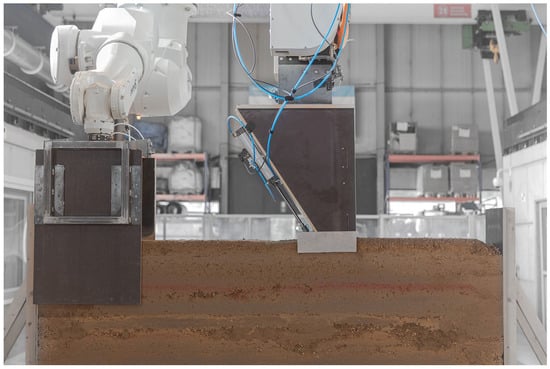
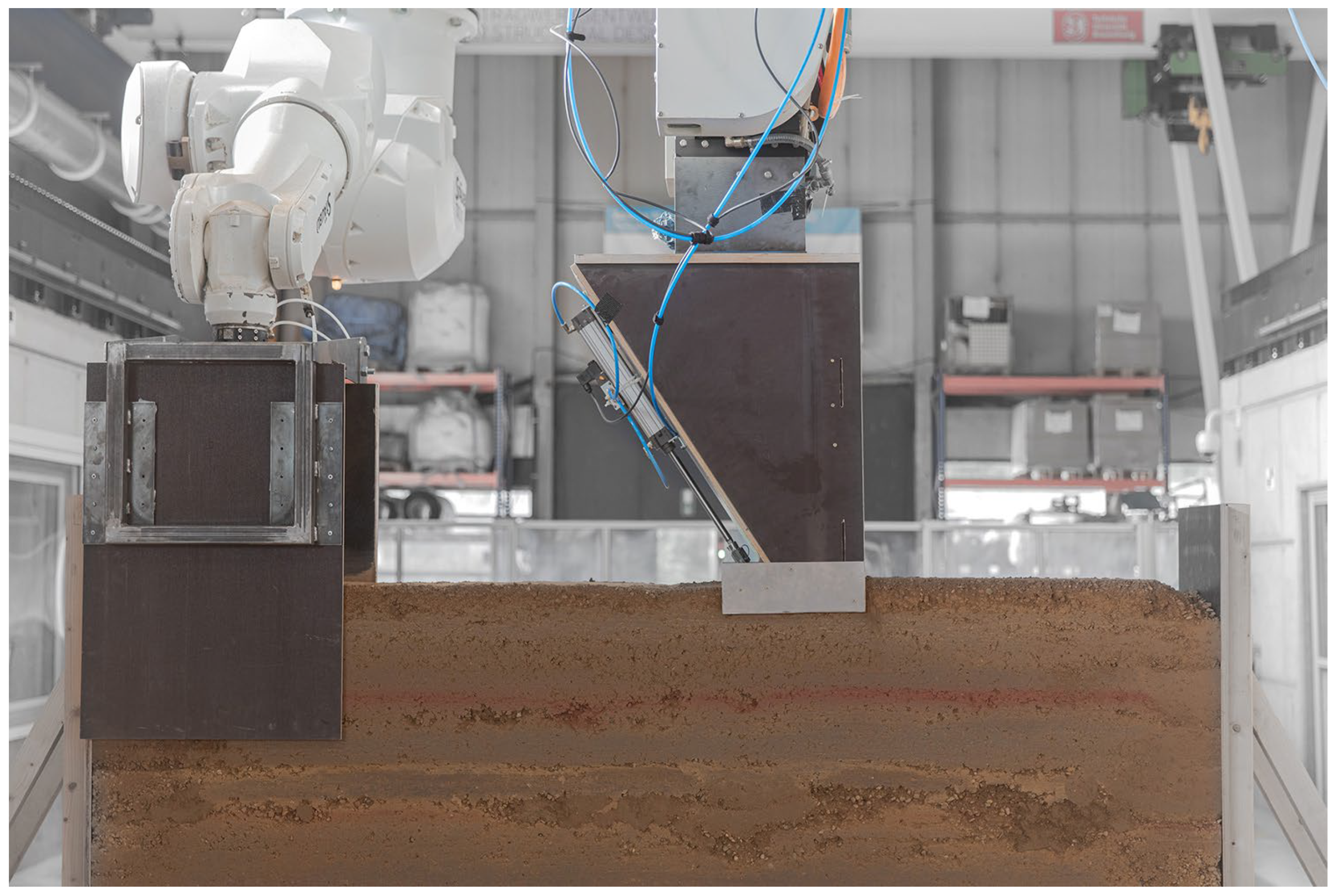
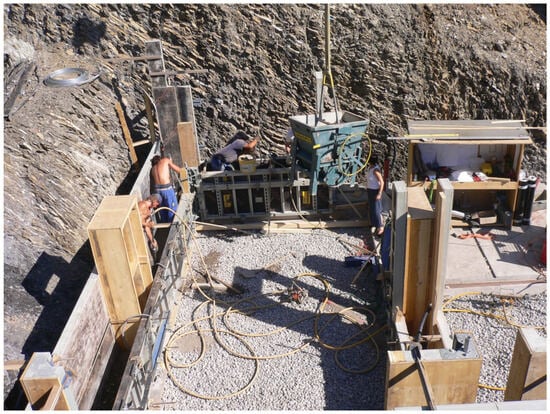
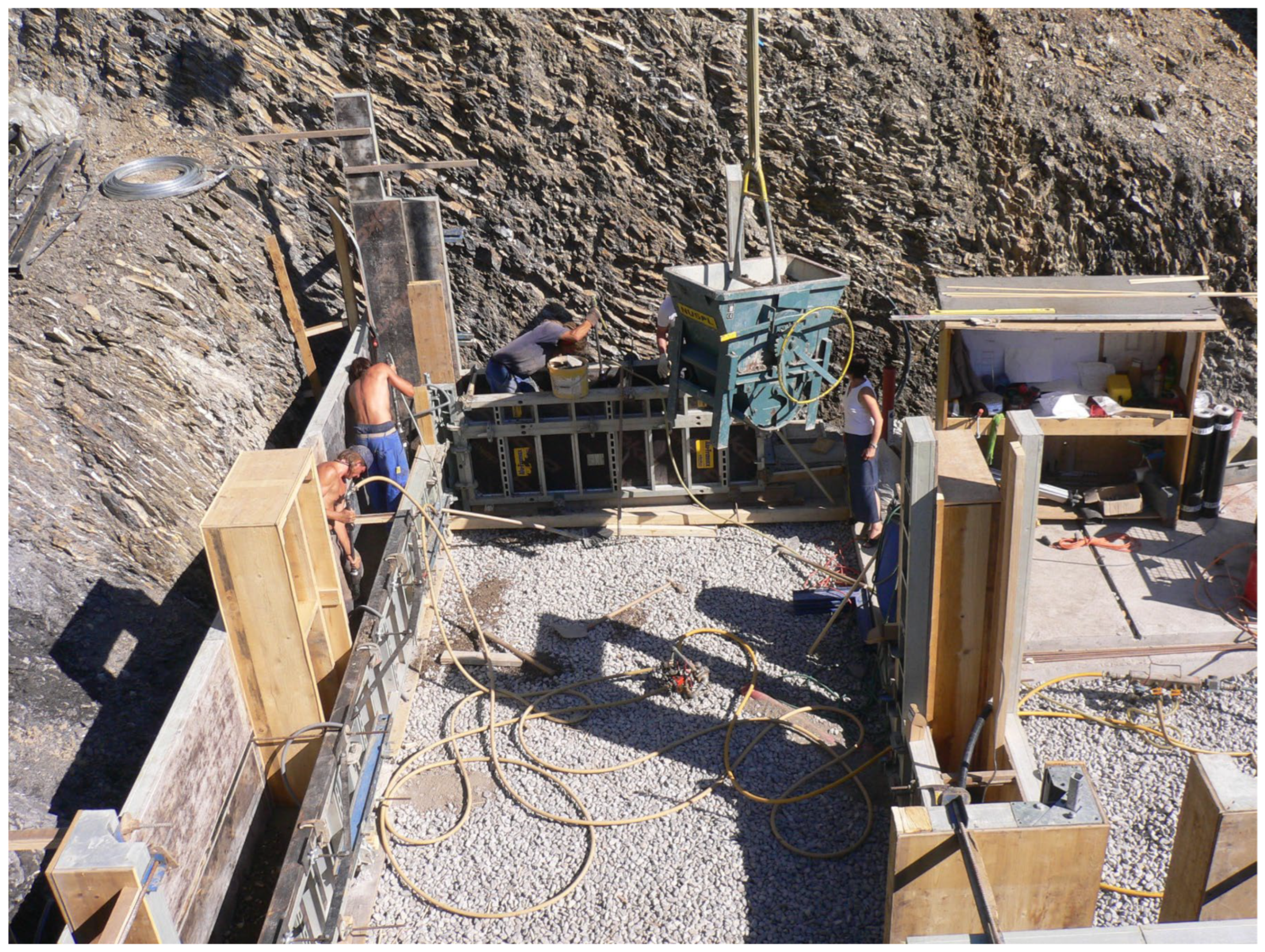
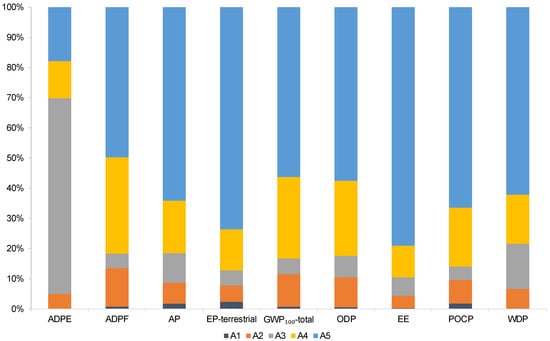
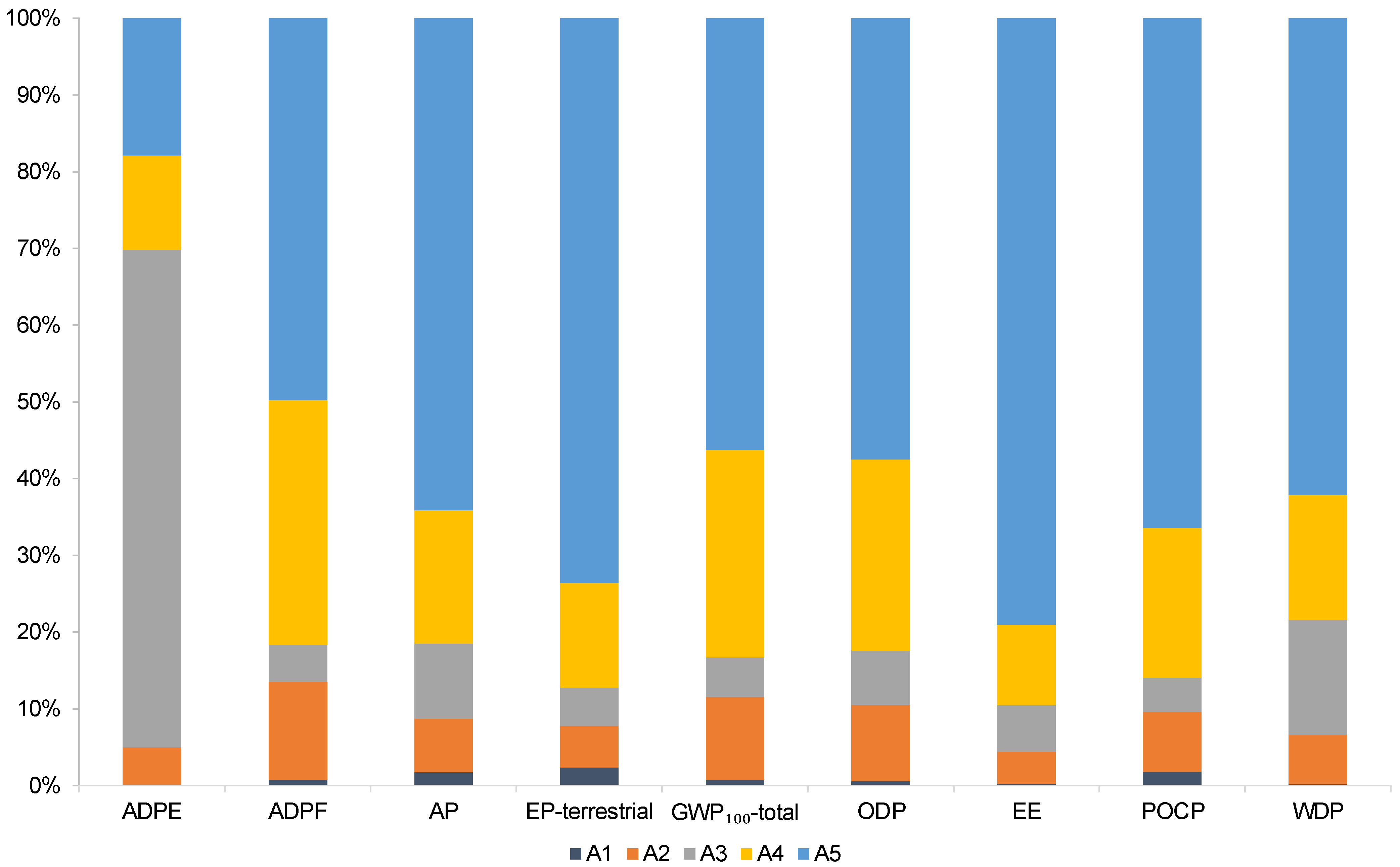
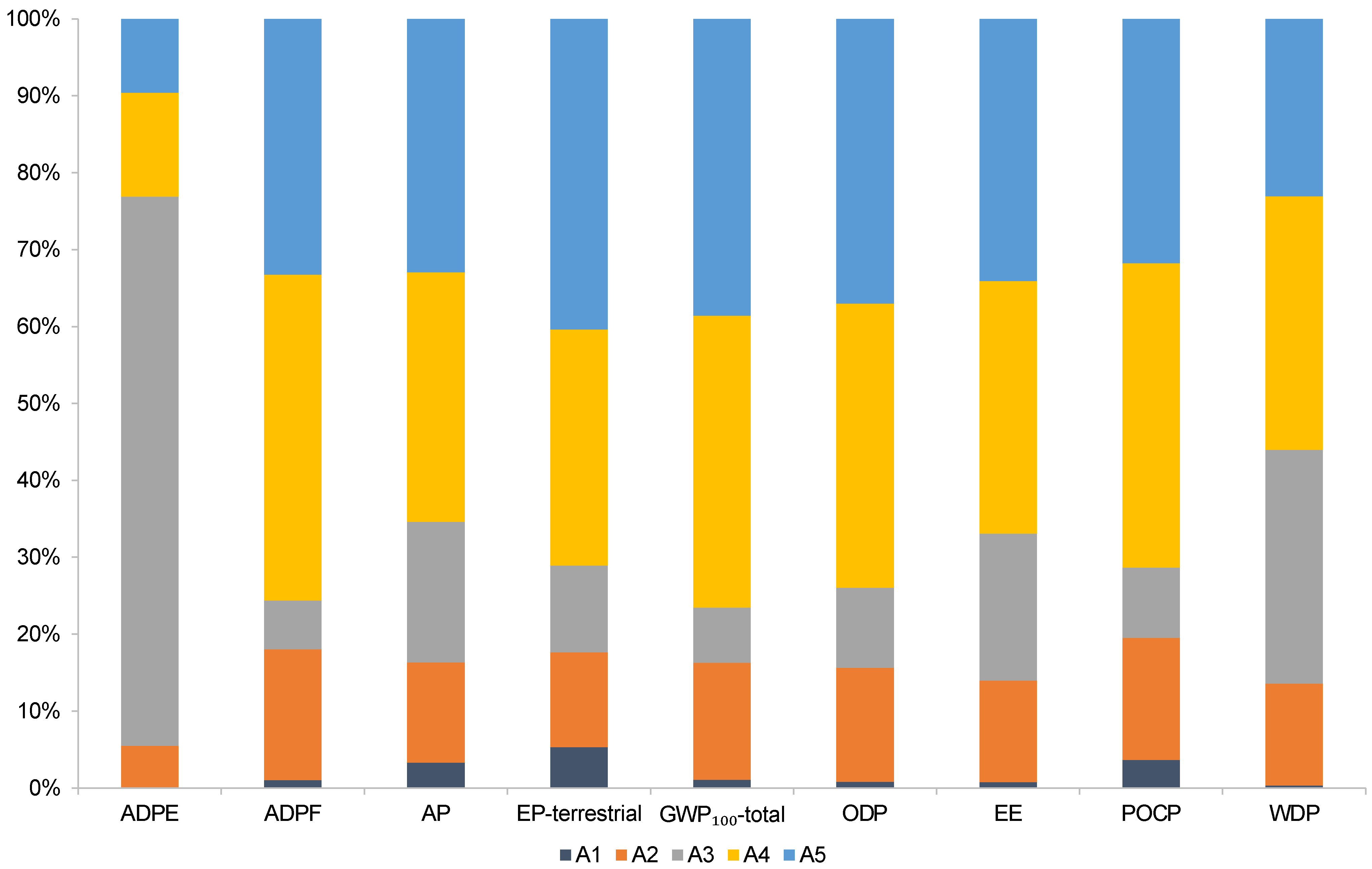
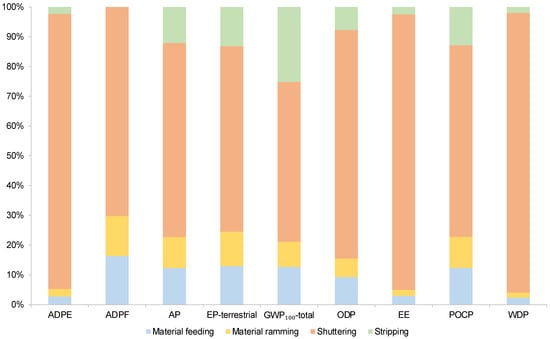
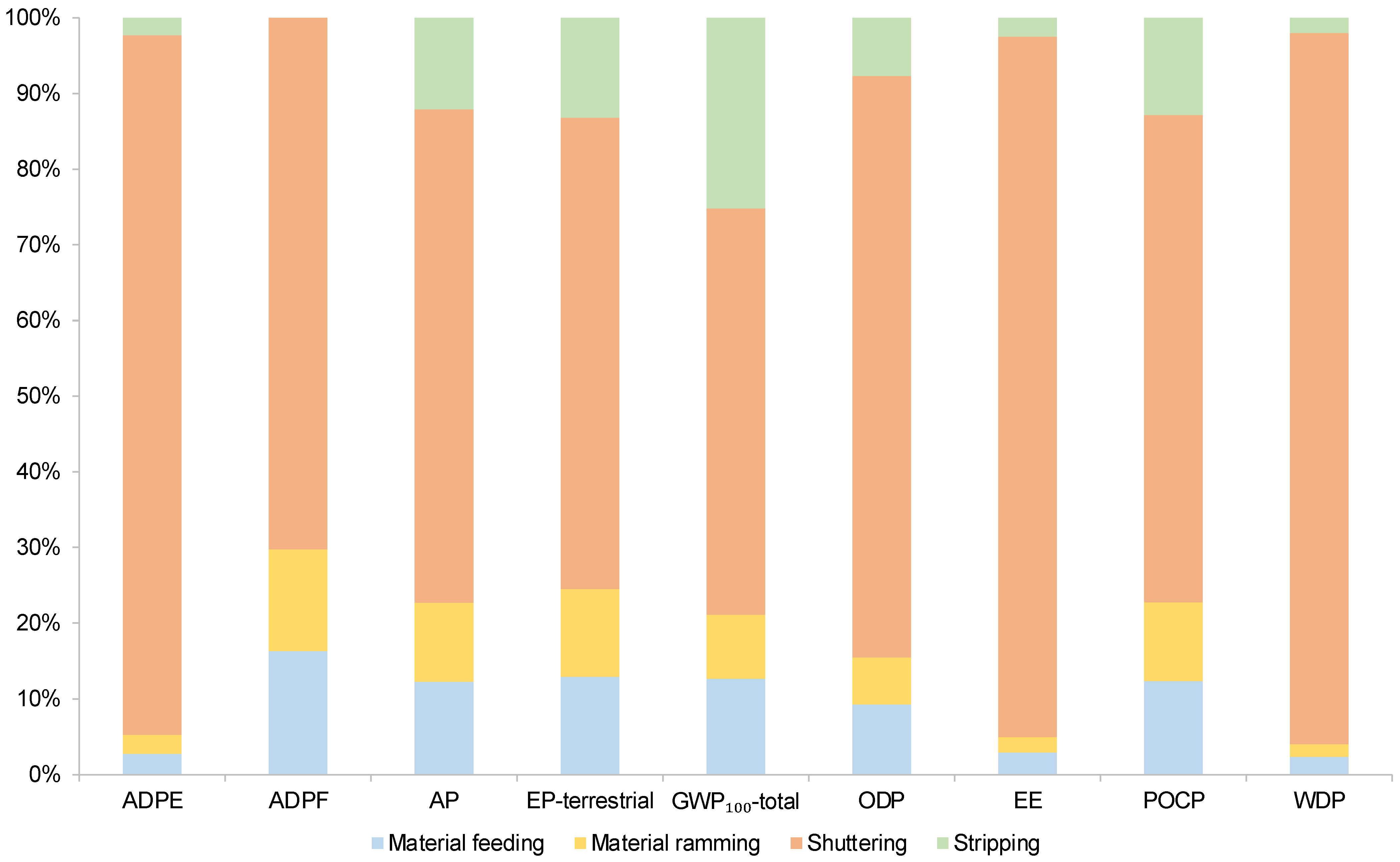
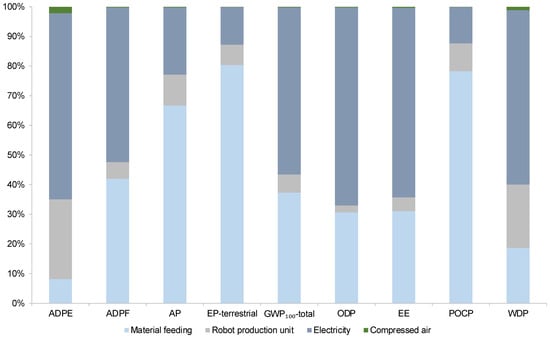
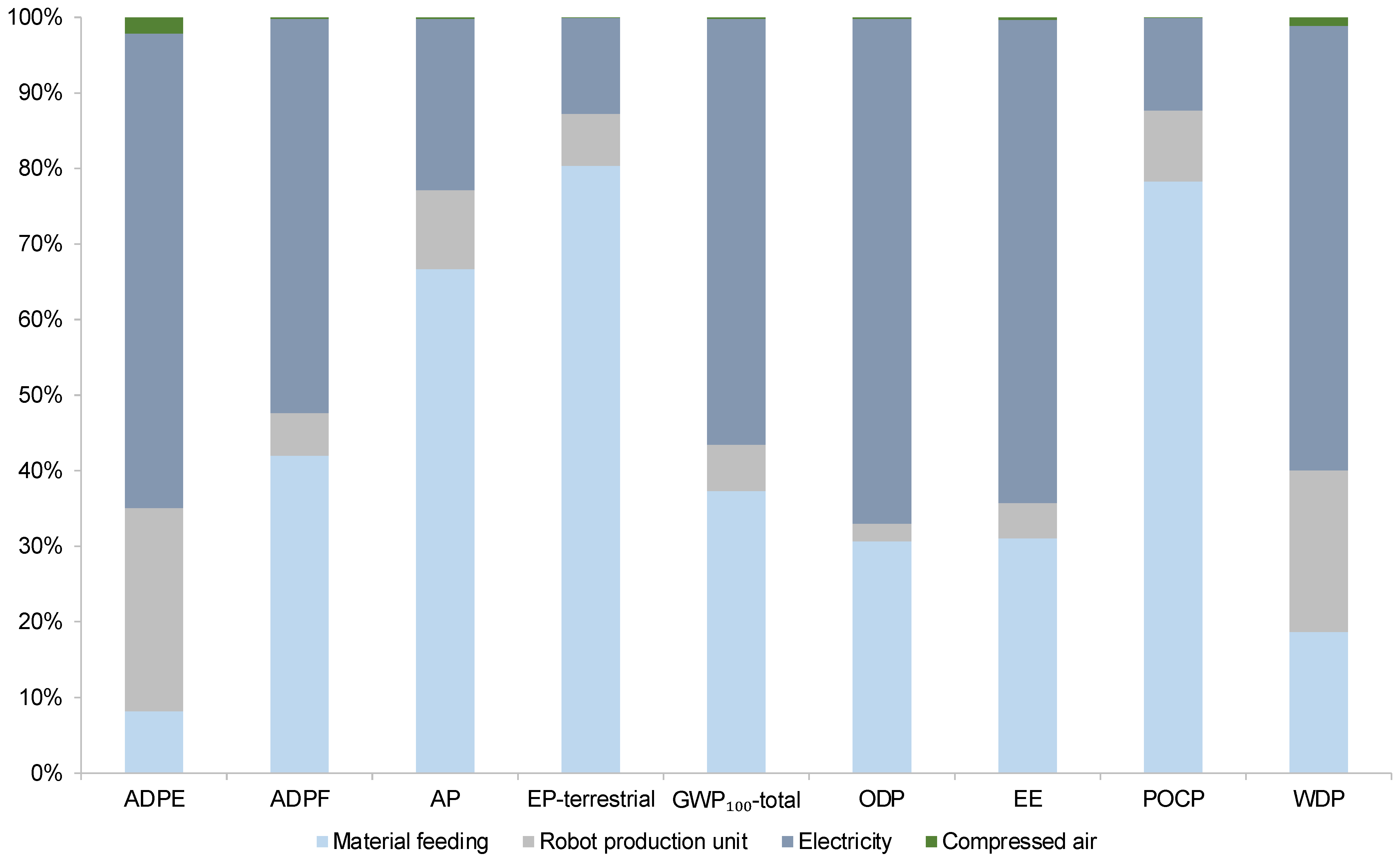
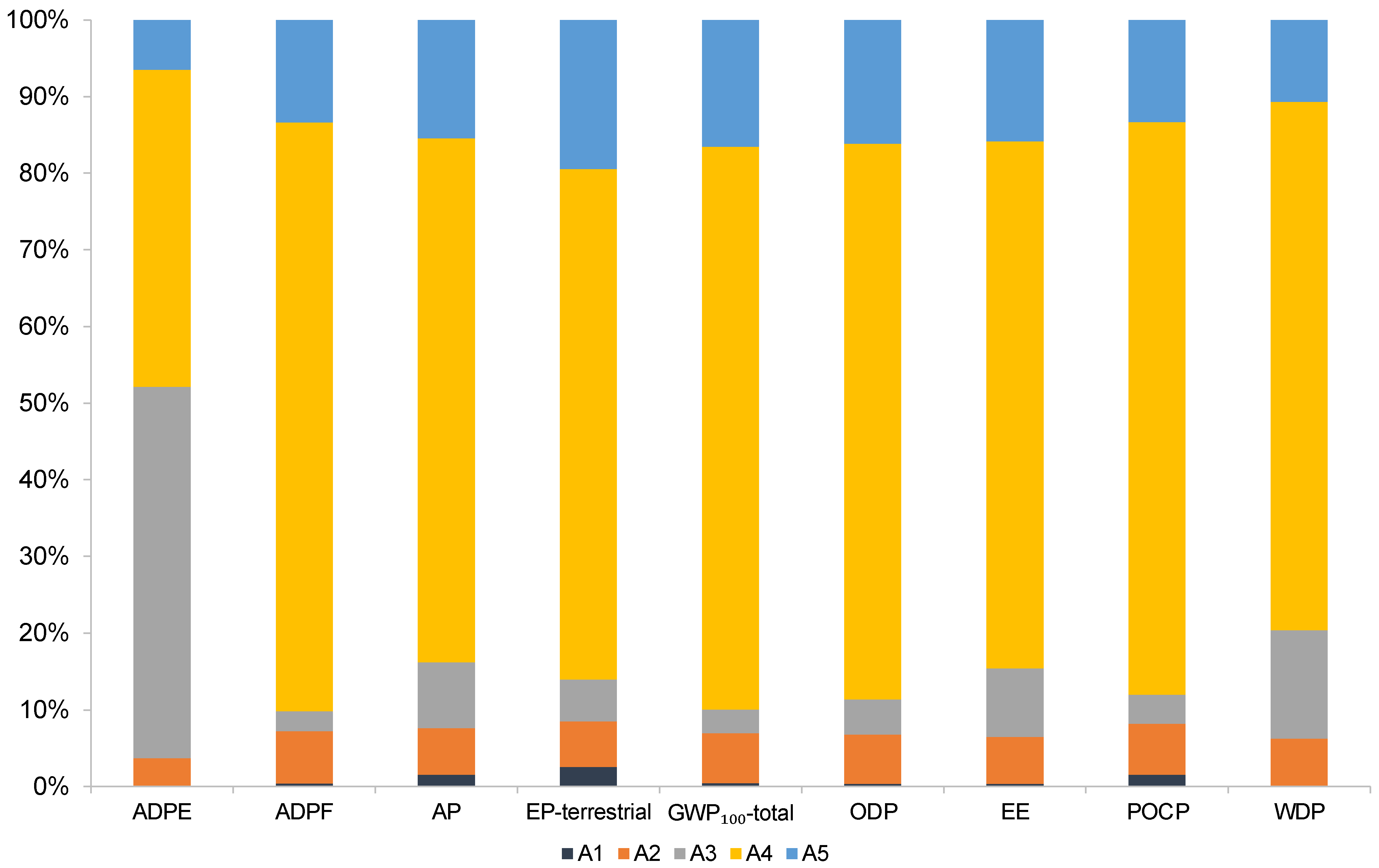
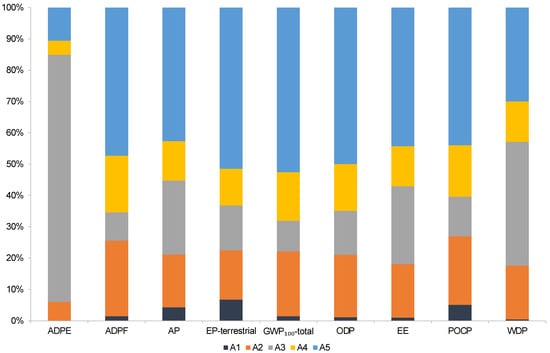
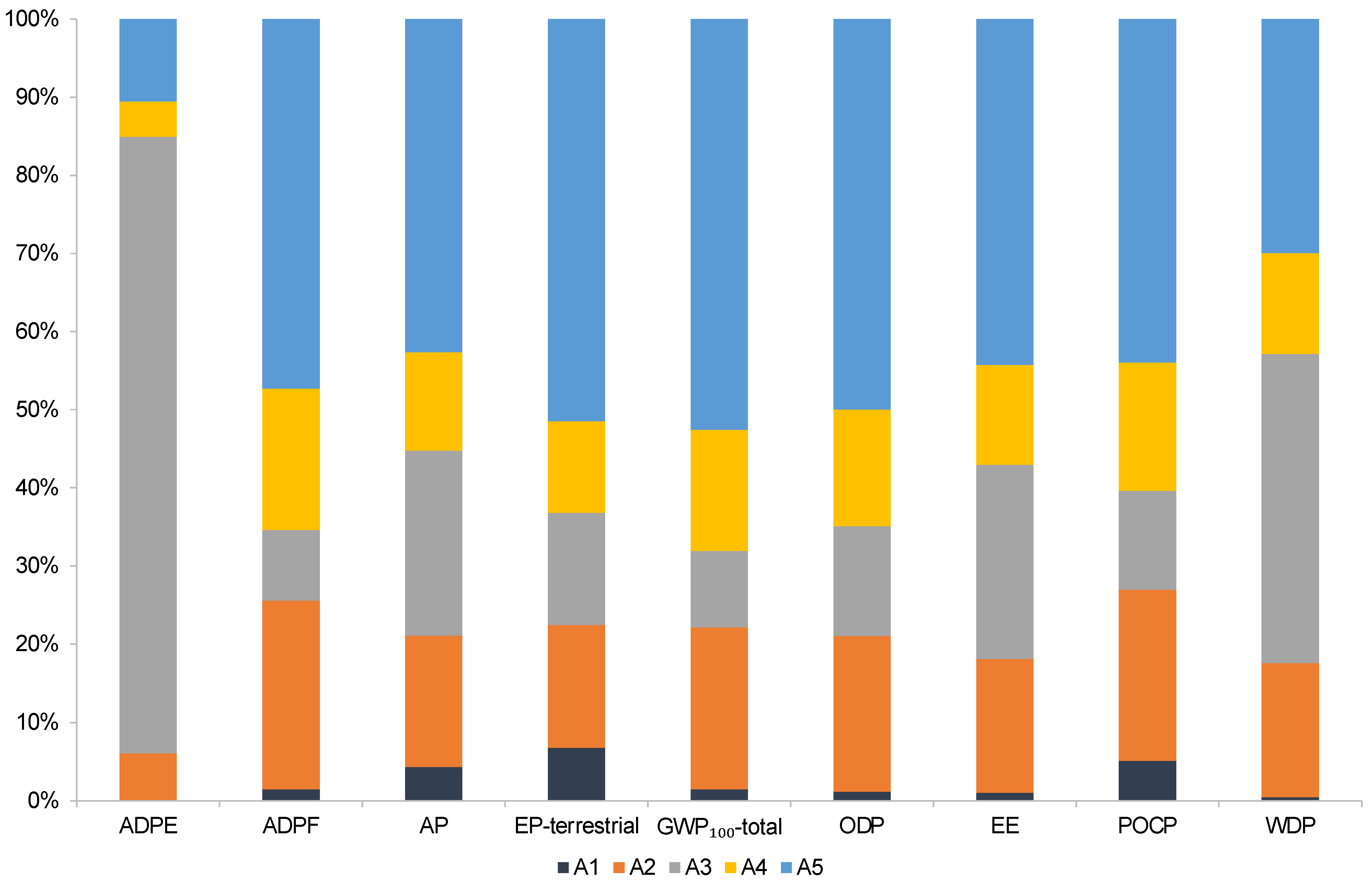
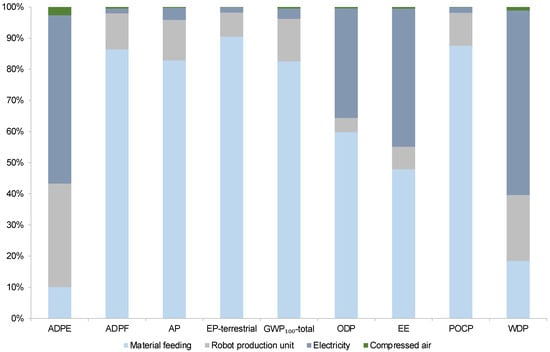
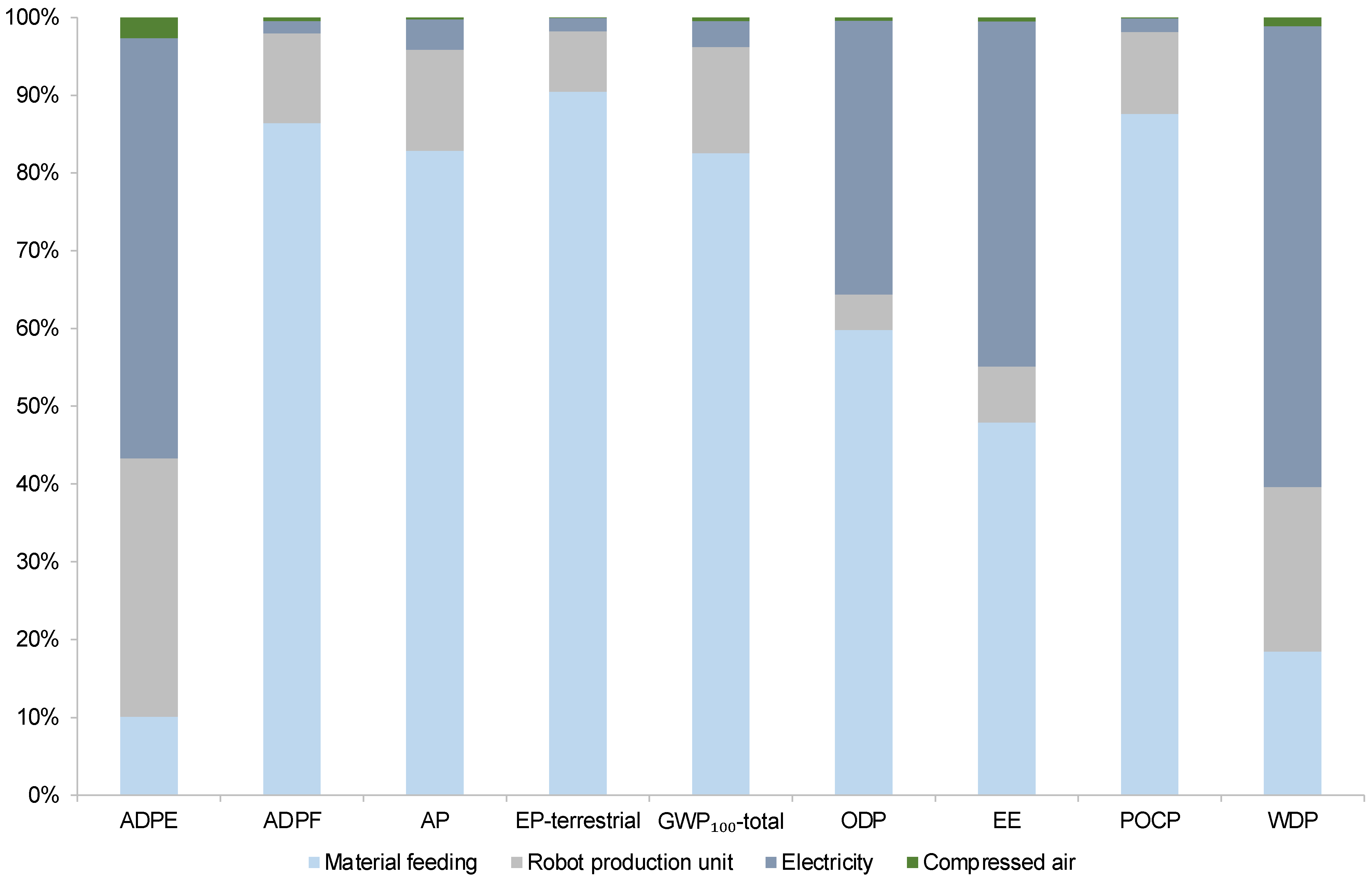
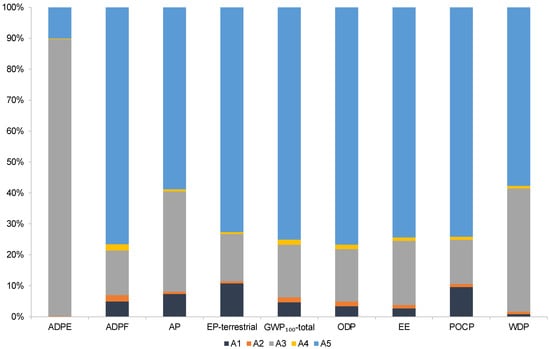
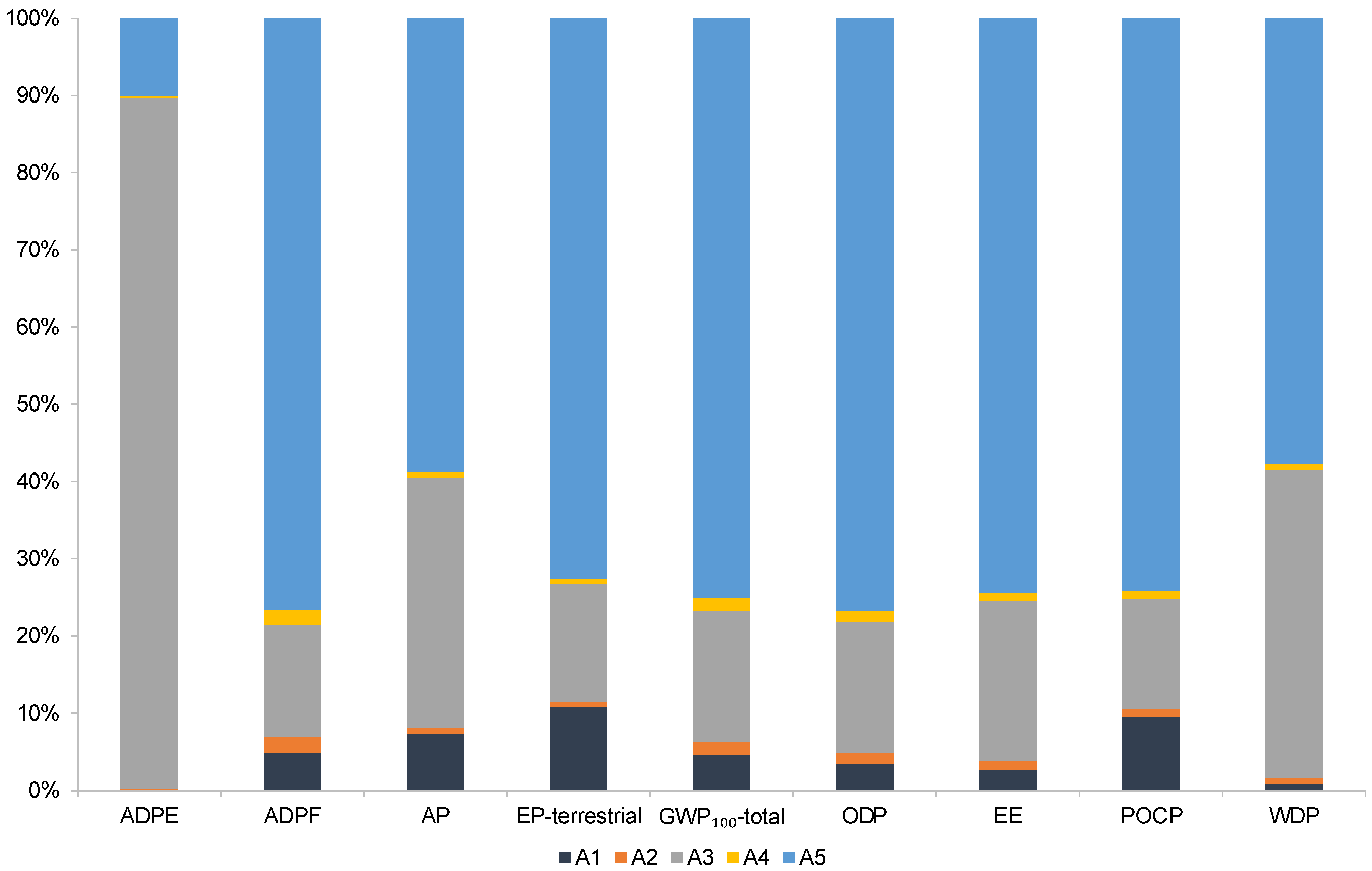

Disclaimer/Publisher’s Note: The statements, opinions and data contained in all publications are solely those of the individual author(s) and contributor(s) and not of MDPI and/or the editor(s). MDPI and/or the editor(s) disclaim responsibility for any injury to people or property resulting from any ideas, methods, instructions or products referred to in the content. |
© 2026 by the authors. Licensee MDPI, Basel, Switzerland. This article is an open access article distributed under the terms and conditions of the Creative Commons Attribution (CC BY) license.