Time-Based Energy Conservation Measures in an Academic Building

 , , , ,
Abstract
1. Introduction
- The effect of seasonal time shifts, i.e., shifting the clock one hour forward or backward according to the season, on energy consumption has rarely been investigated in the literature.
- There is limited research addressing the impacts of time-slot duration and sequence of lectures, tutorial sessions, and labs in academic building schedules on energy consumption and load-profile shape.
- Real-time measurement of occupancy synchronized with energy consumption measurement to detect actual energy use (kWh/person) has limited implementation in the literature.
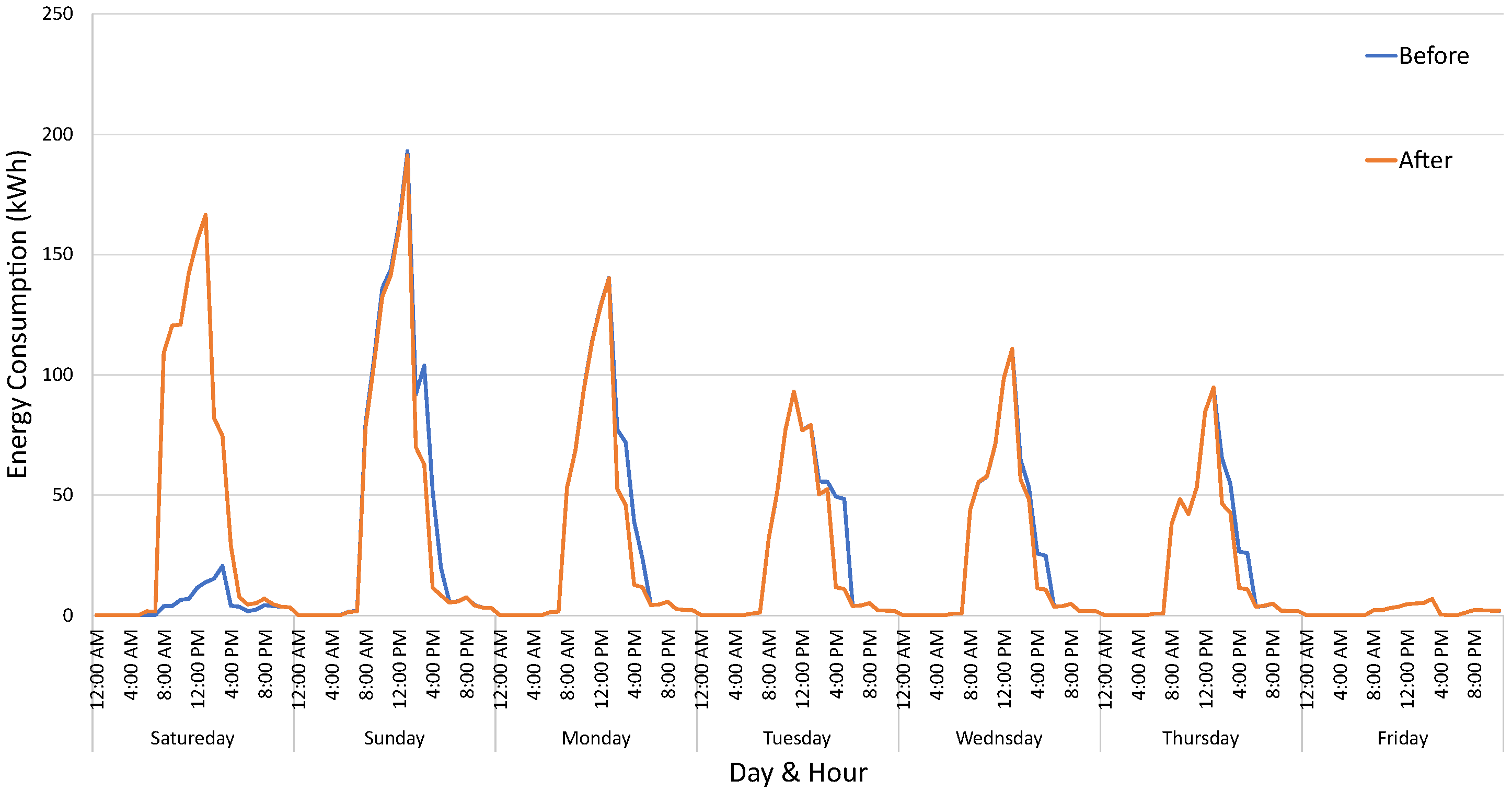
- Quantifying the influence of seasonal time shifts and timetable design (duration, sequence, and time-slot allocation) on energy consumption patterns and load-profile shape in academic buildings and proposing a novel related ECM.
- Synchronized monitoring and analyzing of both energy consumption and occupancy to quantify the actual energy use per person (kWh/person), serving as a key indicator of energy efficiency.
- Conducting a comprehensive energy audit of a university academic building located in Egypt, following the ASHRAE standard levels for ensuring the methodological consistency, reliability, and repeatability of the assessment process.

| Reference | Building Description and Annual Consumption | No-Cost ECMs | Low-Cost ECMs | High-Cost ECMs | Key Findings | ||||
|---|---|---|---|---|---|---|---|---|---|
| Seasonal Time Shifts | Conceptual Rearrangement of Operation Time Slots | Turning off Loads After Work Hours | Lighting Retrofitting | AC COP Improvement | AC Retrofitting | PV Panels | |||
| [11] | Academic Building | × | × | × | × | × | ✓ | × | - Occupant-Based Control (OBC) offers substantial energy savings in academic buildings. - The total HVAC energy savings ranges from 35% to 51% under “occupancy presence” scenarios. - An additional increase in energy savings (3–9%) from “occupancy presence” scenarios to “occupancy counting” scenarios is also achieved |
| [7] | University Residential Building, 270 MWh | × | × | × | × | × | ✓ | ✓ | - Light retrofitting can save 4432.6 kWh annually.- Changing the AC unit type from non-inverter to inverter type can save approximately 61,194 kWh/year, representing 22.96% energy savings. - The proposed SWH system could contribute 38,048 kWh of thermal energy annually, and the rooftop PV system was projected to generate 79,820 kWh/year, covering 31.28% of the building’s electricity demand. |
| [9] | Library of University | × | × | × | ✓ | × | ✓ | × | - Light retrofitting saves about 85.6% of lighting energy consumption. - Replacing air-conditioning unit with floor-mounted inverter unit saves about 36.5% of air-conditioning energy consumption. - Scheduling computer usage based on actual demand for both Windows and Mac can save about 57.02% and 68.75% of computer energy costs, respectively. |
| [21] | University | × | × | × | ✓ | × | ✓ | × | - Lighting retrofitting (by replacing fluorescent lamps with LED lamps) is estimated to reduce the load by about 326.80 kW (63%). - Retrofitting of air-cooling fans is estimated to reduce the load by about 161.28 kW (25%). - Retrofitting of air conditioning is estimated to reduce the load by about 120.64 kW. - Retrofitting of PC is estimated to reduce the load by about 4.95 kW. - The peak generation capacity through PV is calculated to be 2.80 MW. |
| [23] | Education Institution, 82 MWh | × | × | × | ✓ | × | × | × | - Lighting retrofitting (by replacing fluorescent lamps with LED lamps) is estimated to save about 34,602 kWh/year. - Replacing inefficient window AC with energy-efficient split units can save about 96,570 kWh/year - Computer retrofitting by replacing CRT with LCD can save about 38,400 kWh/year. |
| [24] | High School Dorm | × | × | × | × | × | ✓ | × | - Retrofitting of lighting and one hot water boiler, in addition to improving thermal insulation of walls, roofs and windows, can raise the building’s energy class from “E” to “C”. |
| [2] | Academic Building | × | × | × | ✓ | × | ✓ | × | - Replacing conventional ballast (choke) FTL with electronic ballast (choke) FTL can save about 311,126.4 kWh/year - Replacing the CRT monitors with LCD monitors can save about 377,000 kWh/year. - Replacing geysers with a Solar Water Heating System can save about 3600 kWh/year. - Use of motion sensors in corridors and toilets can save about 292 kWh/year. |
| [5] | Educational Building (2 floors), 4.3 GWh | × | × | ✓ | ✓ | ✓ | × | × | - Non-retrofitting ECMs, such as lighting and equipment schedule modification, and reducing infiltration (by closing the doors) can save about 0.29 GWh/year. - Controlling indoor temperature can save about 1.04 GWh/year, and lighting retrofitting can save about 0.1 GWh/year. - HVAC maintenance can save about 0.06 GWh/year. |
| [13] | University (modern and historical buildings), 23 GWh | × | × | × | × | ✓ | × | × | - The heating system refurbishment enables mean energy savings of 12% for the historical buildings and 16% for the recent ones. - The roof insulation enables mean energy savings of 14% for the historical buildings and 22% for the contemporary ones. Window substitution could enable mean energy savings of about 10% for historical buildings and about 16% for recent ones. |
| [25] | Eight-Story Office Building, 1.17 GWh | × | × | ✓ | × | ✓ | × | × | - Annual electrical energy savings can be achieved at 7.2% using the air economizer, 3.4% by raising temperature set point, 2.6% using occupancy sensors and scheduling of lighting, 2.1% by cooling condenser air, and 0.9% for night purging. |
| [26] | University Building | × | × | ✓ | × | × | × | × | - Lighting scheduling ECMs save about 14% of the annual consumption. - HVAC control and scheduling can save about 21% (largest contributor)- Glazing upgrade can save about 2%- Air leakage sealing can save about 1.3% |
| Present work | University Building, 143 MWh | ✓ | ✓ | ✓ | × | × | × | × | Will be discussed in the Results Section in this paper. |
| Author | No-Cost ECMs Discussed |
|---|---|
| Hamida, et al. [26] | - Scheduling the operation of lighting system - Scheduling the operation of HVAC system |
| Itani, et al. [25] | - Raising temperature comfort settings - Night purging |
| Ali Alajmi, et al. [5] | - Turn off lighting after work hours - Turn off equipment after work hours - Reduce infiltration (close doors) |
| Present Work | - Changing number of working days per week - Seasonal time shifts - Lecture and tutorial session duration modification - Rearranging lectures and tutorial sessions - Shifting peak-demand time slots [Turning off lighting and equipment after work hours is already applied in the base case of the studied building.] |
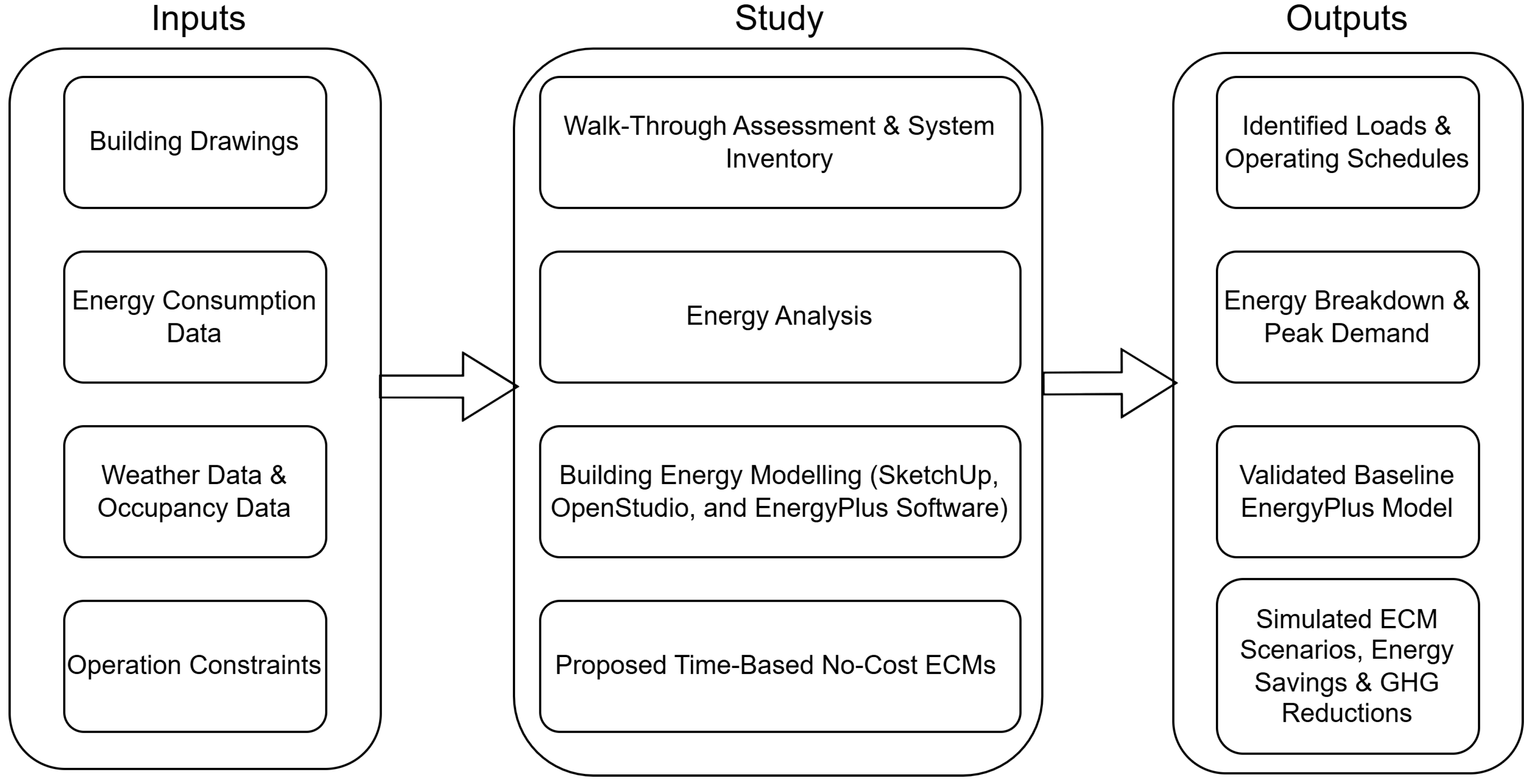
2. Proposed Methodology
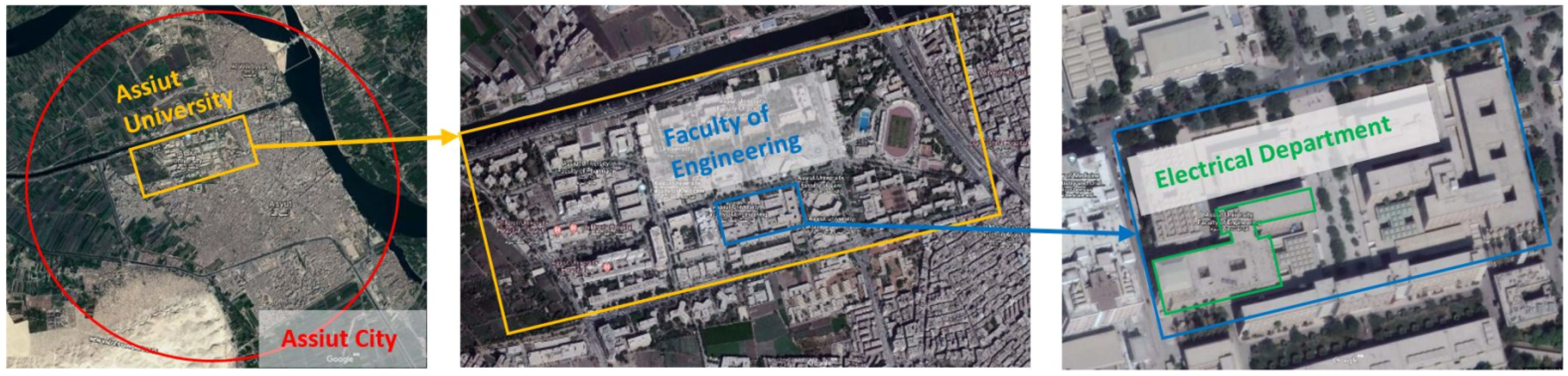
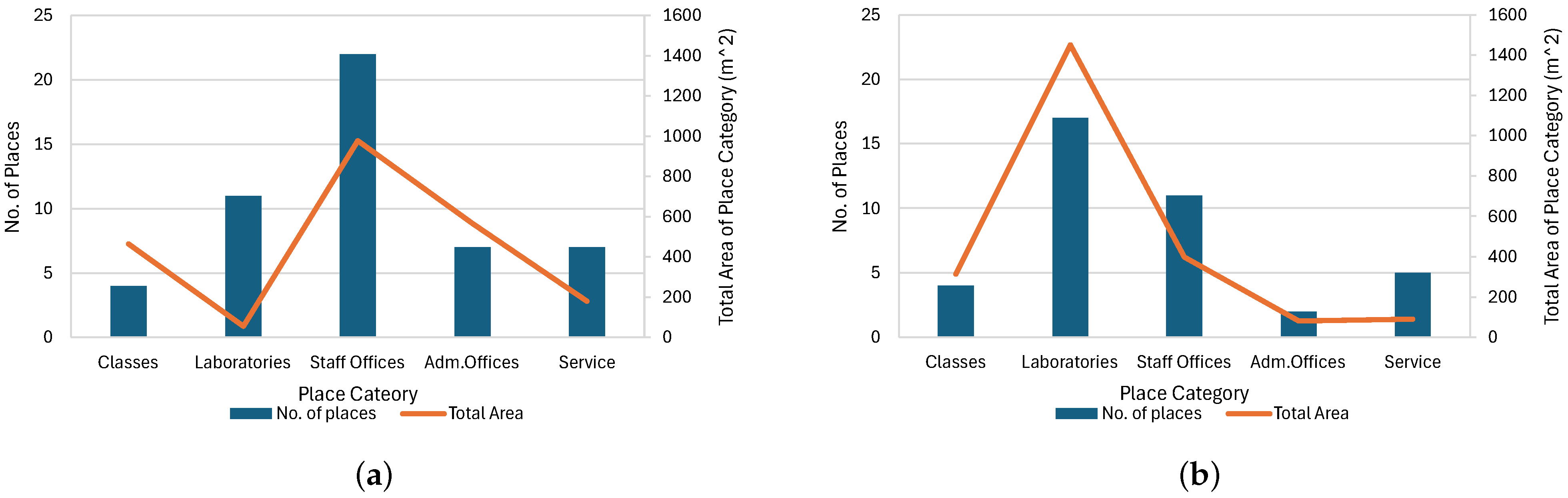
2.1. Building Description
2.2. Walkthrough Assessment
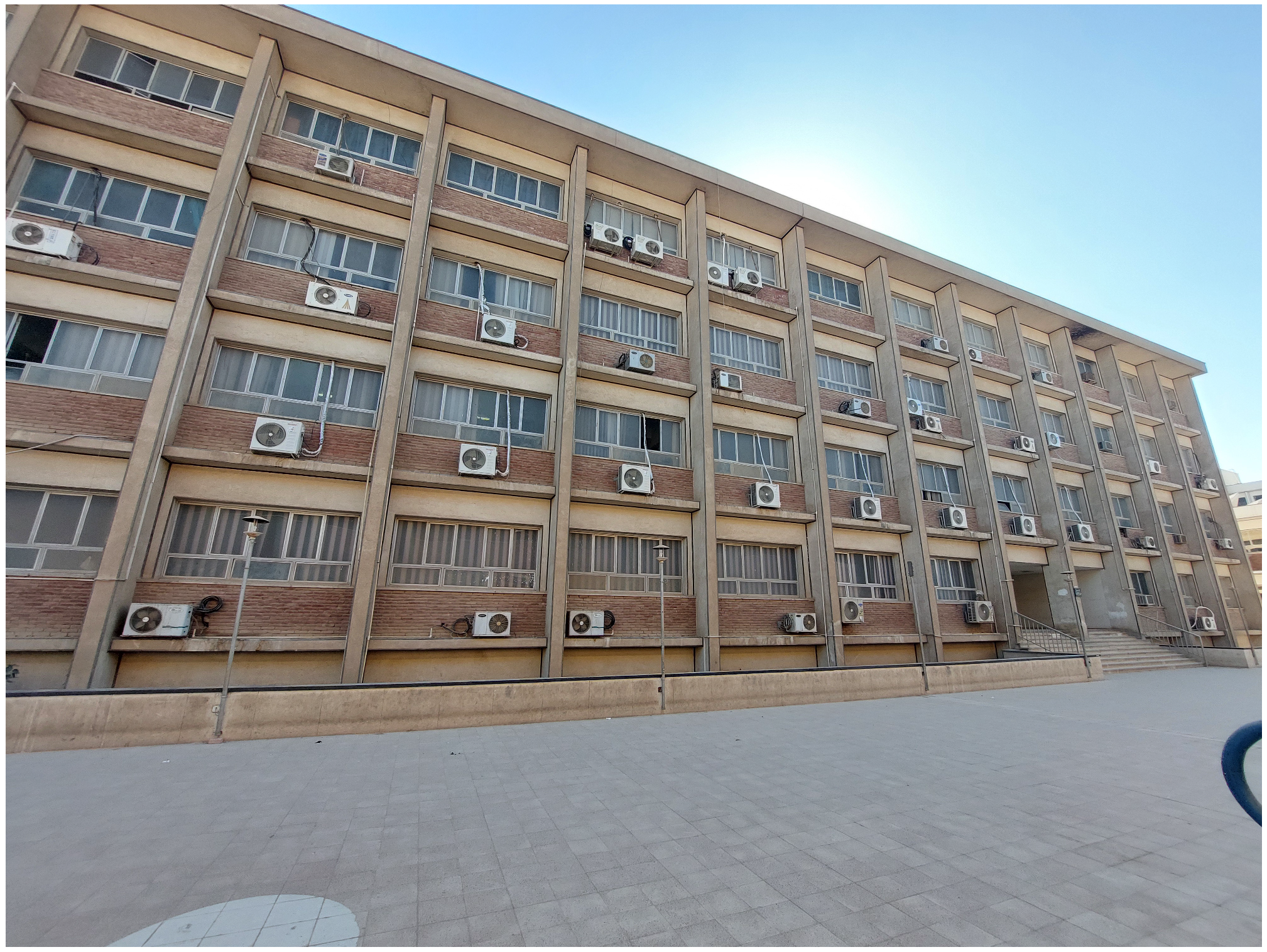
- Most of the lighting fixtures in the building are fluorescent lamps, representing 97.9% of the total, while only 2.1% are LED lamps.
- Many inefficient old load types, like old fans and old computers with CRT monitors, not LCD. Specifically, 17.3% of the computers are equipped with CRT monitors, whereas 82.7% use LCD monitors.
- No periodic maintenance and cleaning for the air conditioners.
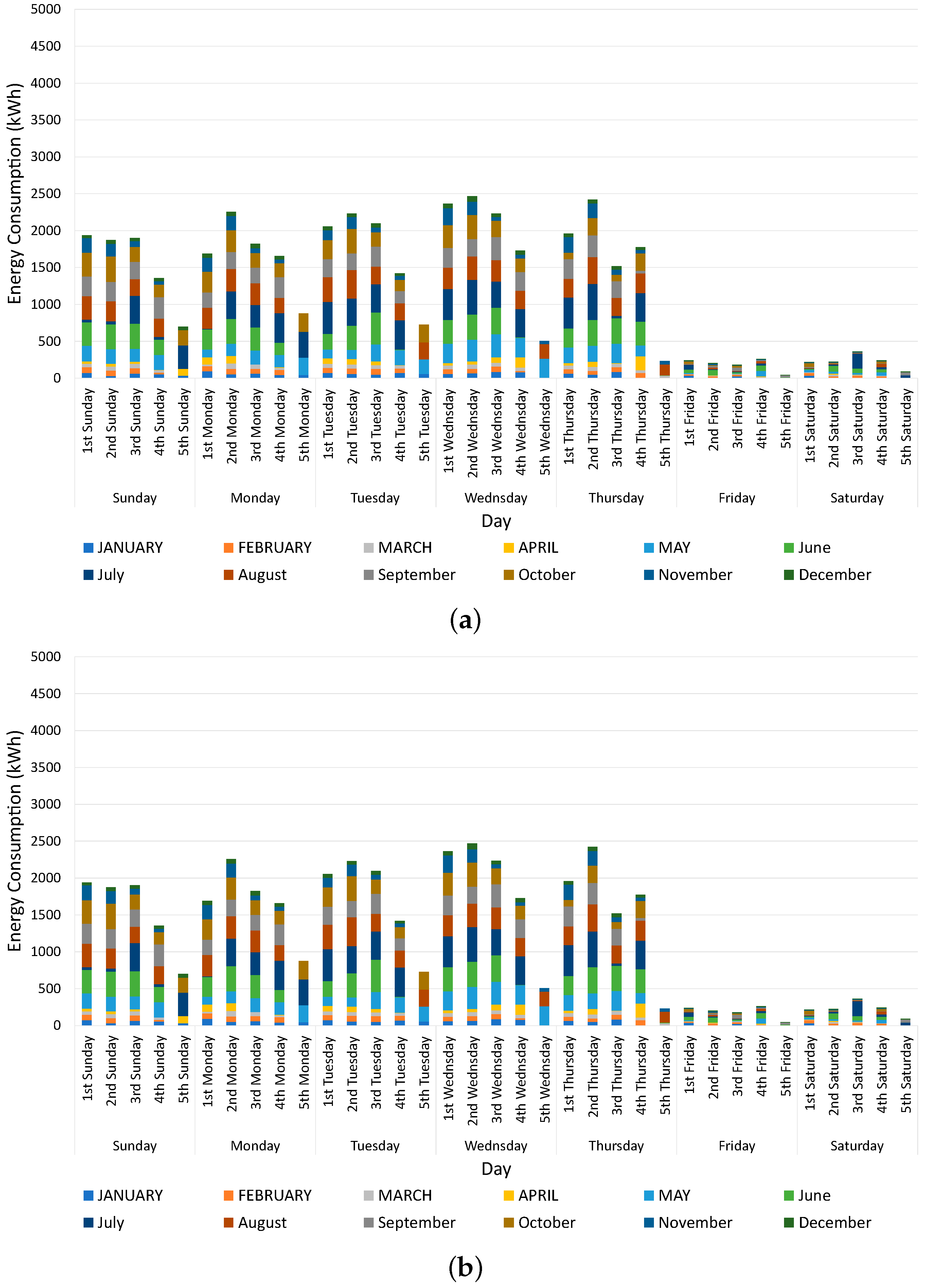
2.3. Energy Consumption Analysis
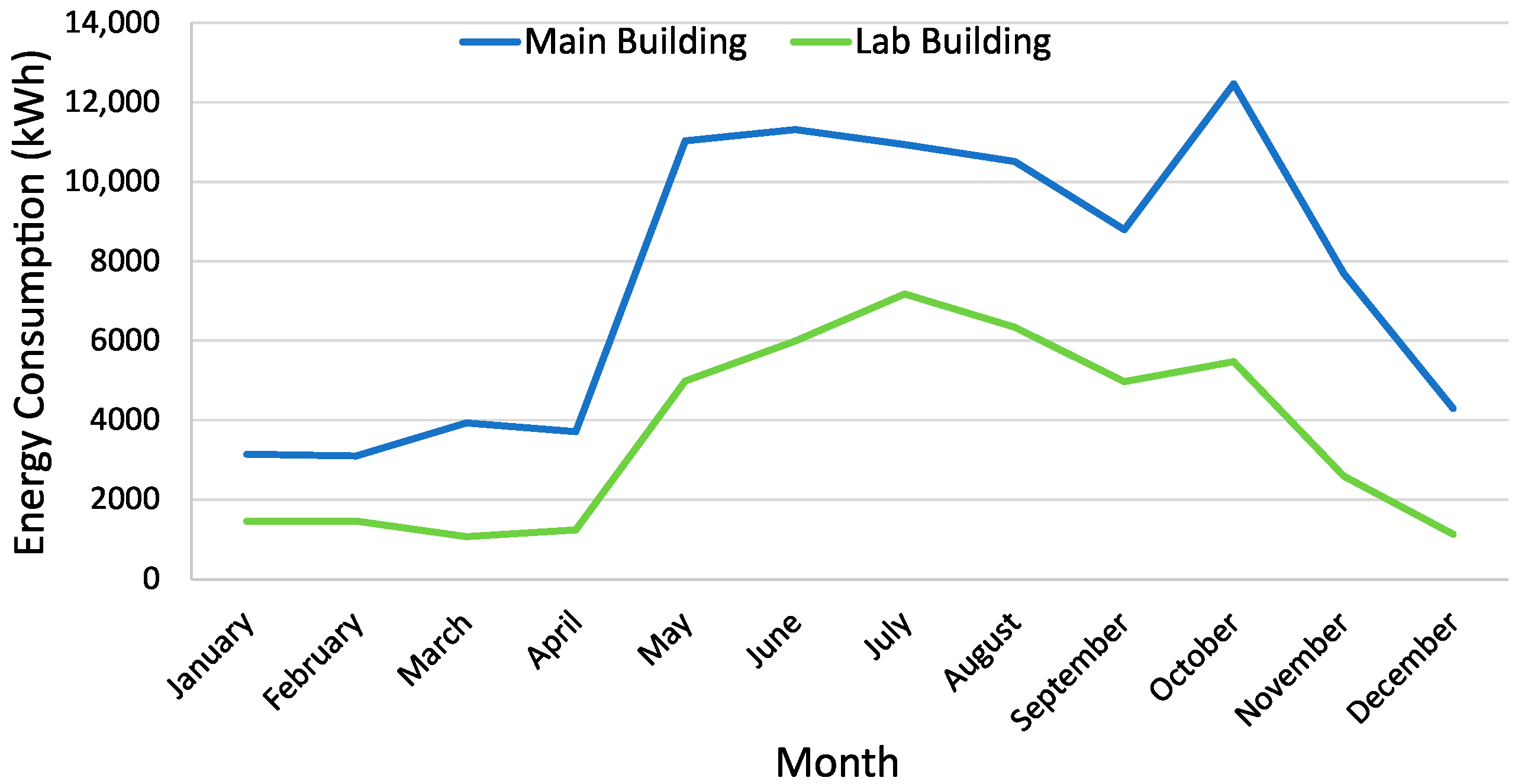
- Energy Consumption Monitoring
- II.
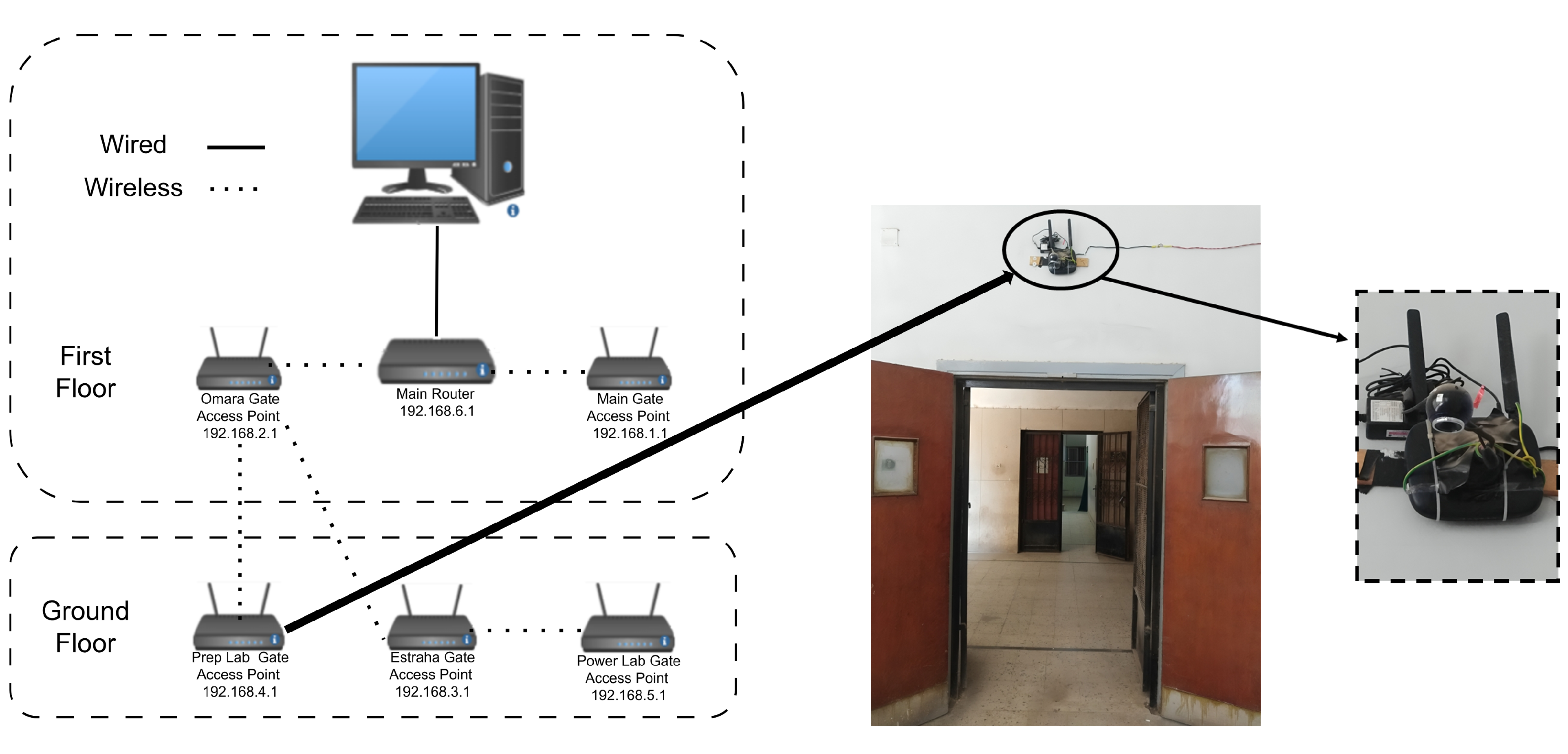
- Occupancy Monitoring
- 1.
- Summer studying days.
- 2.
- Winter studying days.
- 3.
- Summer exam days.
- 4.
- Winter exam days.
- -
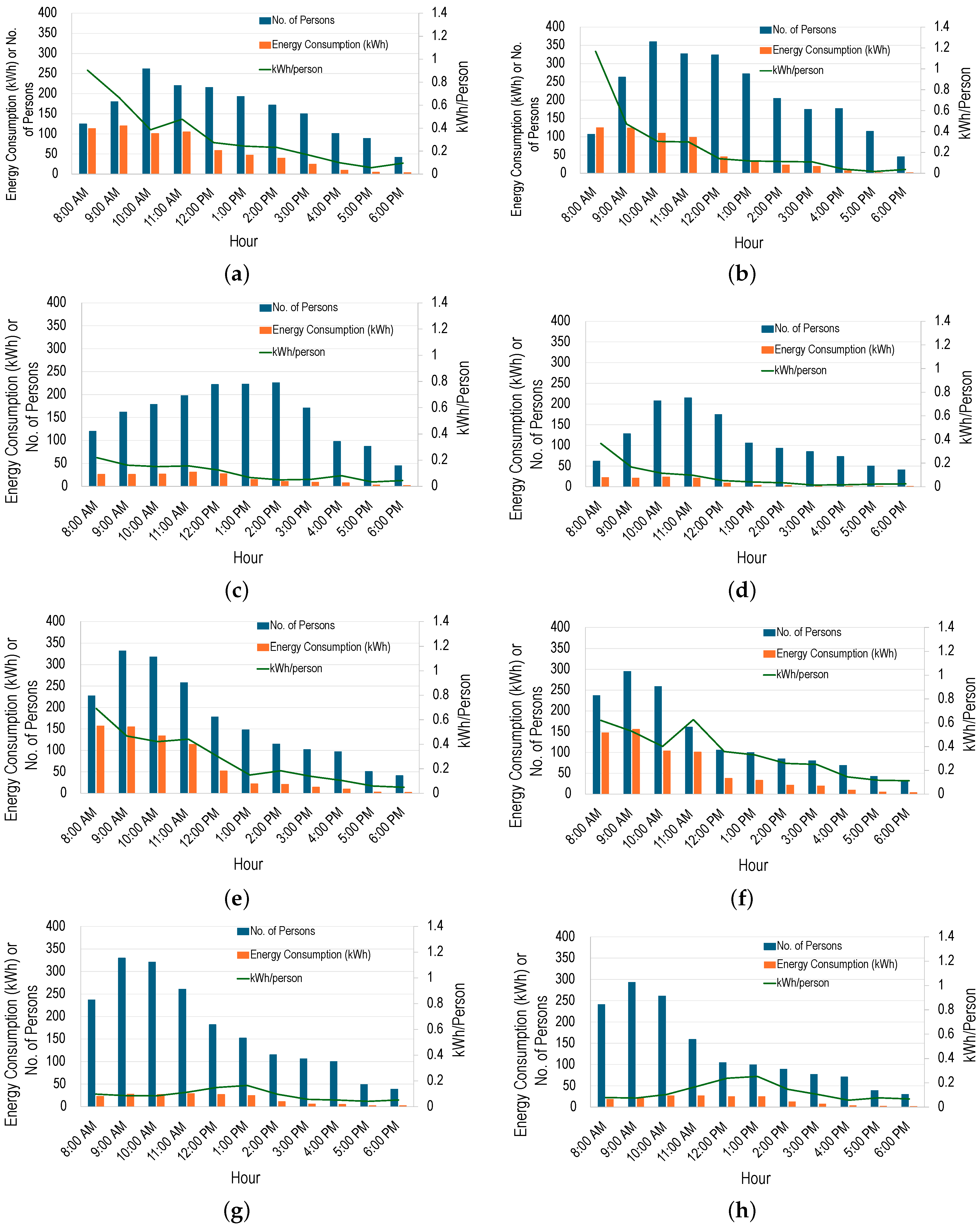
- Also in Figure 9a,b, energy consumption remains relatively stable between 8:00 AM and 11:00 AM, while occupancy increases at a significantly higher rate starting from 8:00 AM. Consequently, the kWh/person metric exhibits an initial peak at the beginning of the day, followed by a gradual decline as occupancy continues to rise, reaching its minimum near the point of peak occupancy.
- Beyond this point, energy consumption decreases at a faster rate than occupancy. As a result, the kWh/person curve continues to decline steadily until the end of the day.
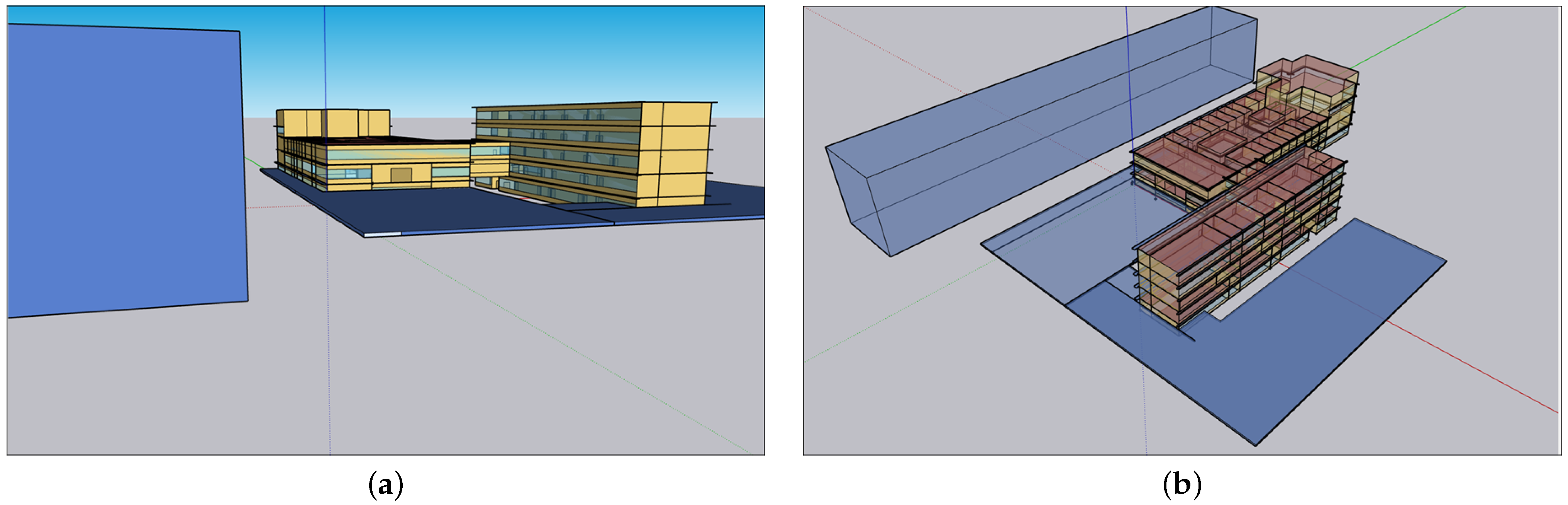
2.4. Building Energy Modeling
- -
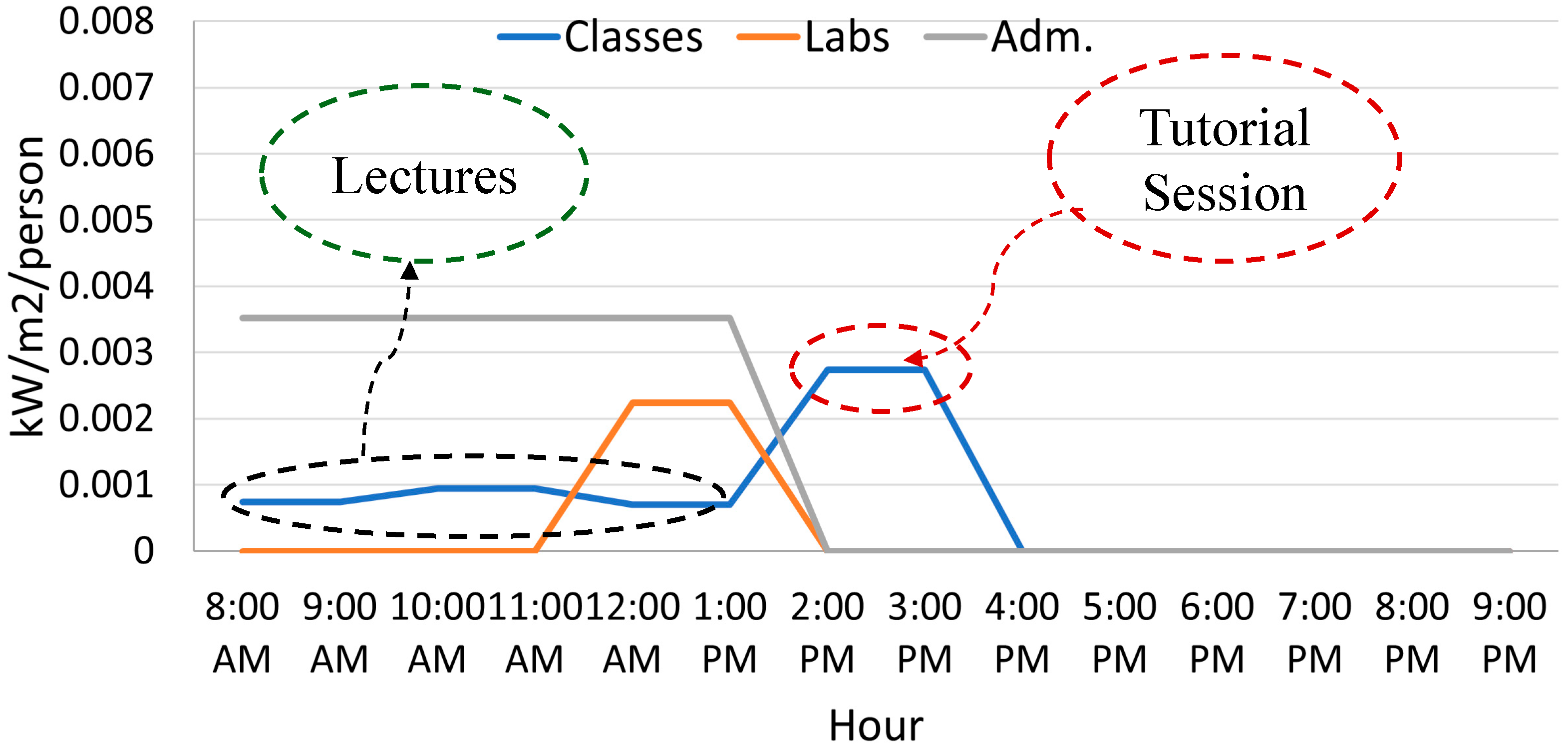
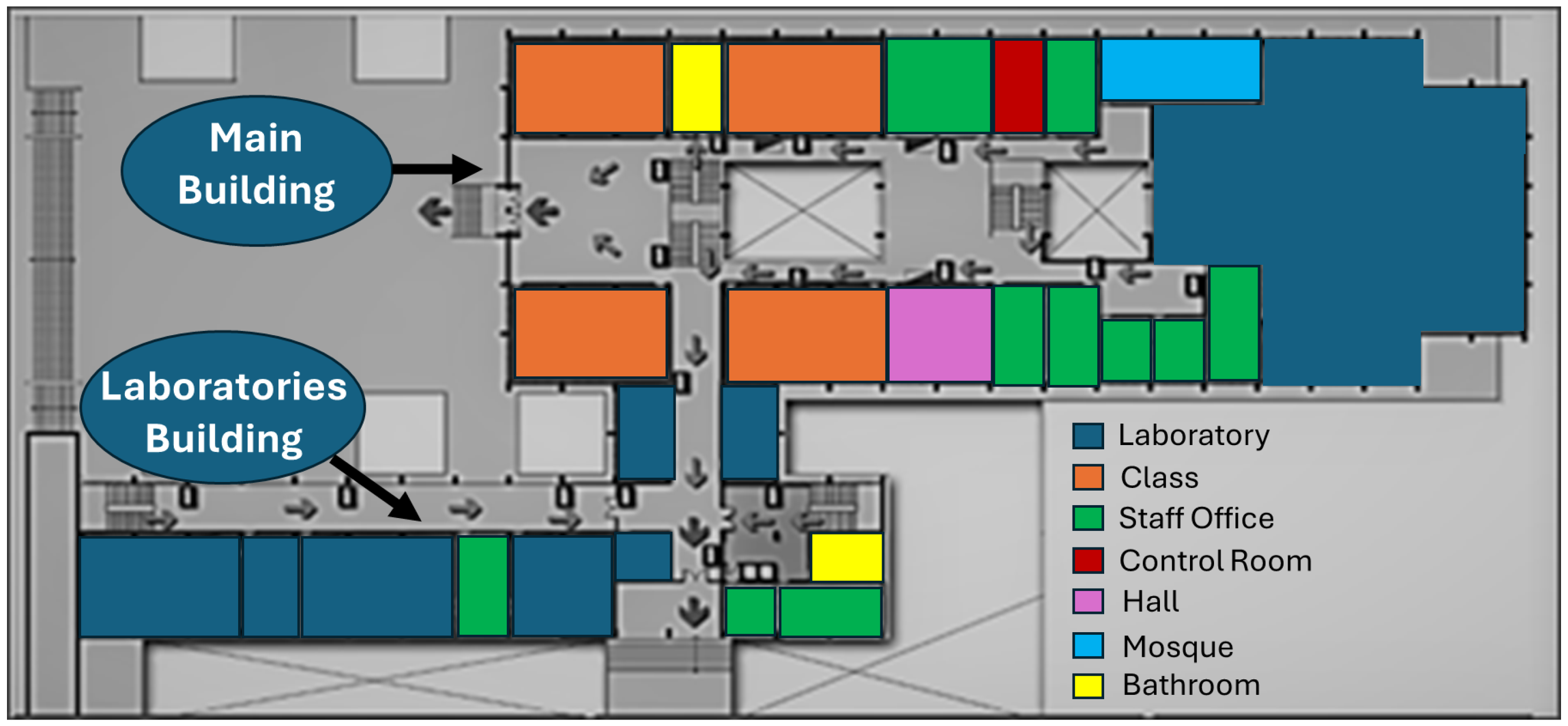
- In some cases, some laboratories are occupied by staff outside the scheduled teaching periods. During these times, building systems such as lighting and air conditioning are used, resulting in additional energy consumption not accounted for in the original schedules.
- -
- During the summer, graduation project workshops are held in classes; however, these activities are not formally scheduled.
- -
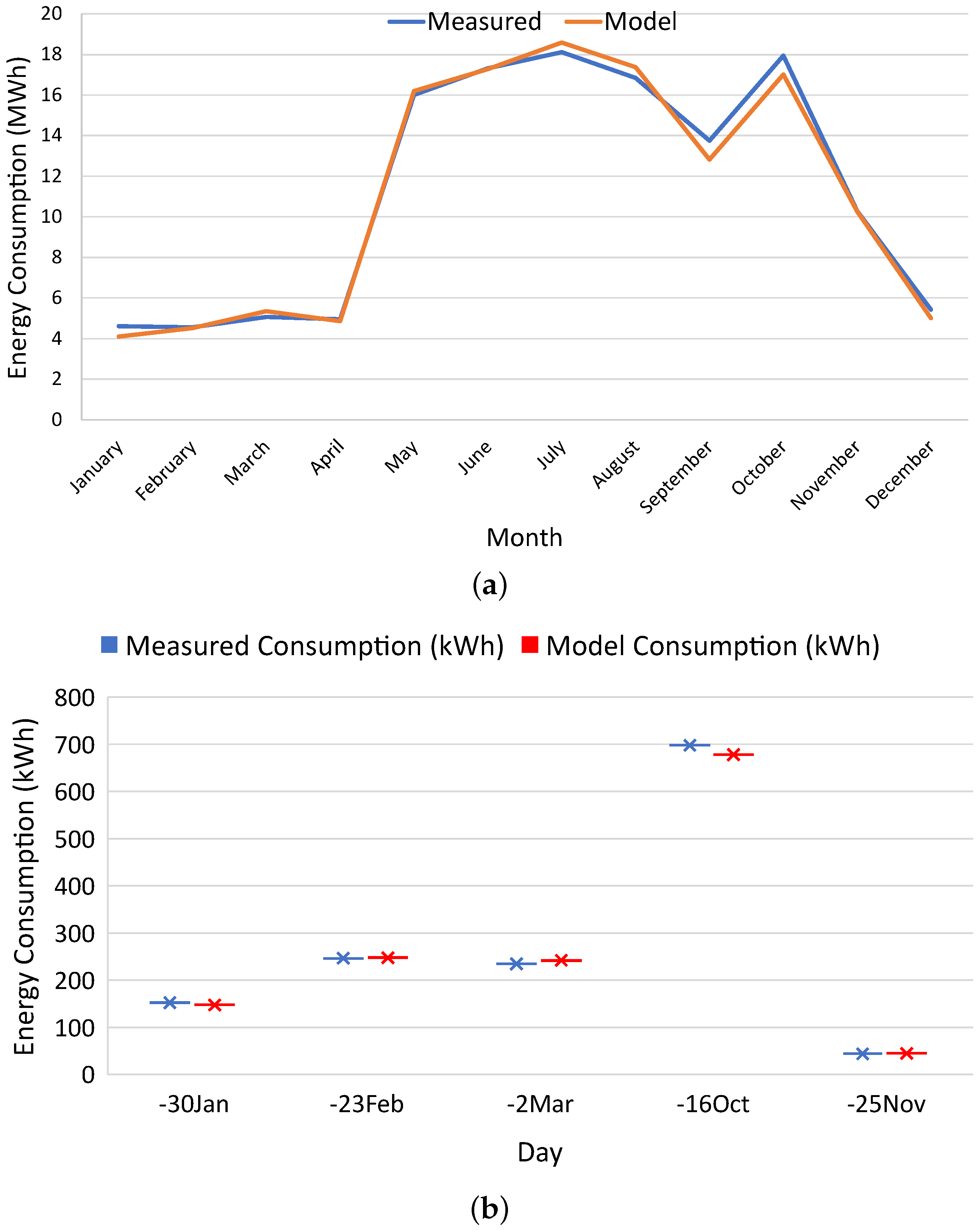
- Many lighting fixtures are not used due to sufficient daylight availability. Therefore, the lighting load fraction in the building model was slightly reduced to reflect this behavior.
- -
- Some air-conditioning units were found to have undergone little or no maintenance over extended periods. To represent the resulting performance degradation, the Coefficient of Performance (COP) of these units was reduced in the simulation model. This adjustment provides a more realistic representation of their operational efficiency and energy consumption.
2.5. Proposed ECMs’ Implementation
- Working-day ECMs, i.e., changing the number of working days per week.
- Time-slot-modification ECMs, i.e., summertime, lecture and tutorial session duration modification, rearranging lectures and tutorial sessions, and shifting peak-demand time slots.
- Base Case
- II.
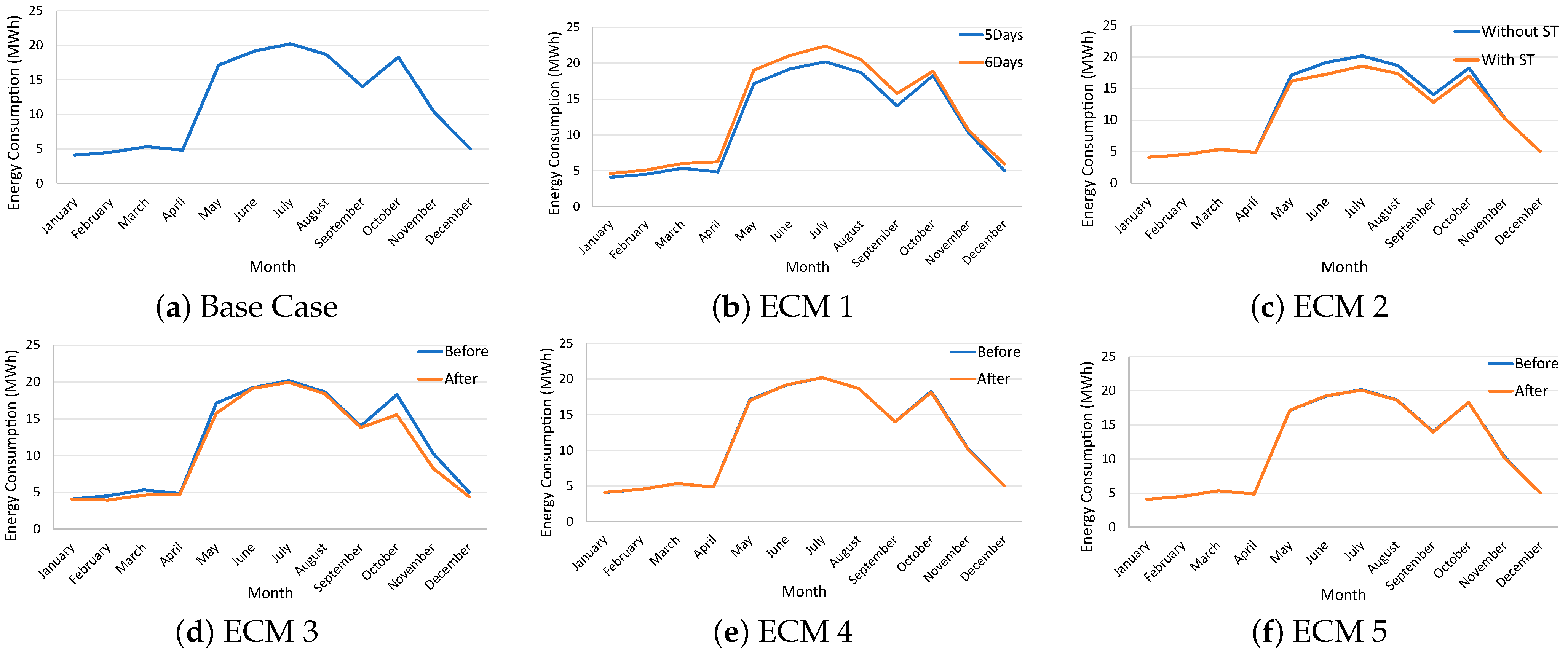
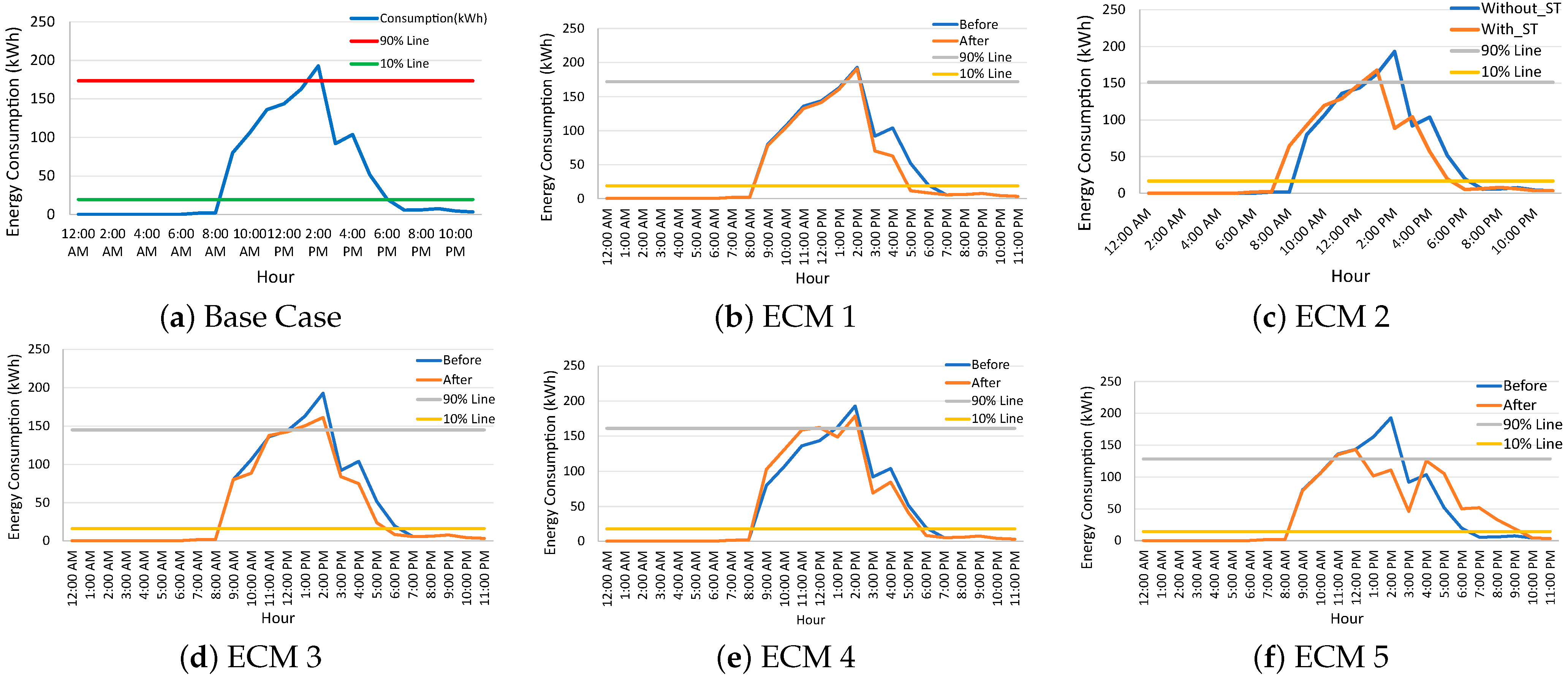
- ECM 1: Number of working days per week (5 days vs. 6 days)
- Any lecture after 2:00 PM is shifted to the sixth day.
- Any tutorial session after 4:00 PM is shifted to the sixth day.
- The administrative work and staff office occupancy will be for 6 days a week instead of 5 days.
- III.
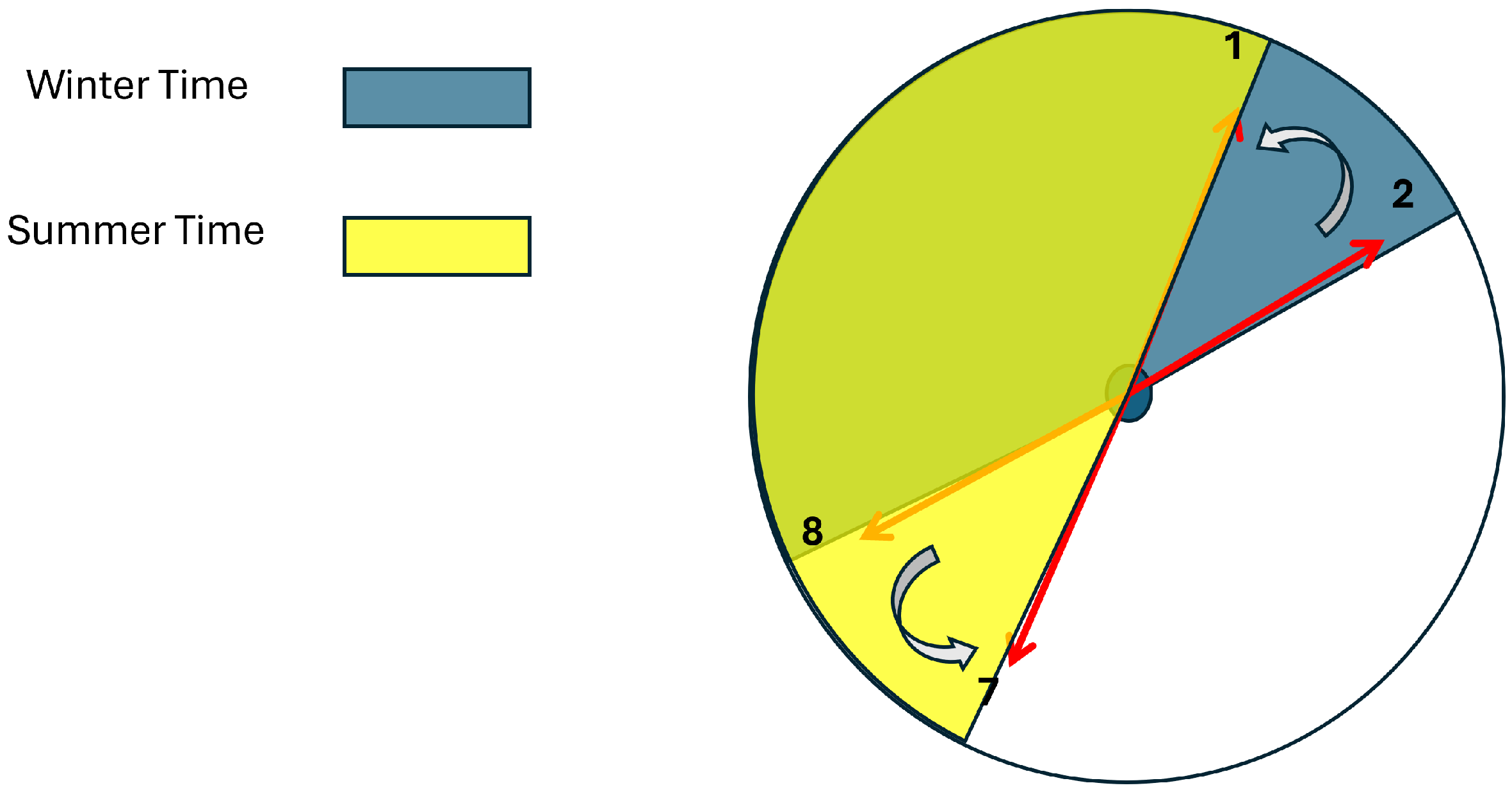
- ECM 2: Applying summertime (shifting the clock one hour forward)
- IV.
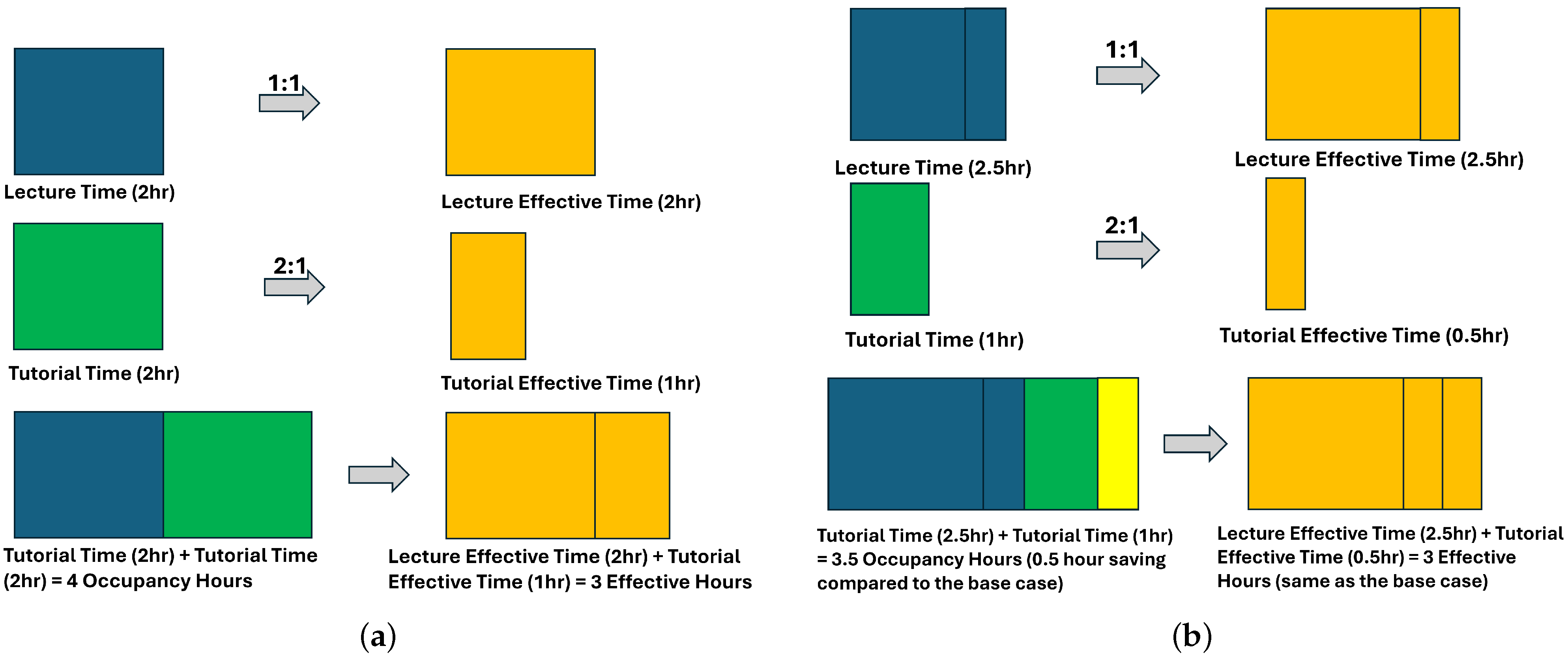
- ECM 3: Redistributing the course time between lectures and tutorial sessions
- V.
- ECM 4: Swapping the lecture and tutorial time slots
- VI.
- ECM 5: Shifting study sessions from the 12:00–15:00 time slot to the 15:00–18:00 time slot.
3. Results and Discussion
3.1. Model Verification
3.2. Proposed ECMs’ Results
3.3. Potential Organizational and Behavioral Barriers
4. Conclusions
Author Contributions
Funding
Data Availability Statement
Conflicts of Interest
References
- Nita, A.; Sunitiyoso, Y.; Tiara, A.R.; Kim, A.A. Exploring decision making factors in public buildings’ energy efficiency projects. Energy Build. 2023, 298, 113563. [Google Scholar] [CrossRef]
- Kumar, L.A.; Ganesan, G. Energy Audit and Management: Concept, Methodologies, Procedures, and Case Studies; CRC Press: Boca Raton, FL, USA, 2022. [Google Scholar]
- Allouhi, A.; El Fouih, Y.; Kousksou, T.; Jamil, A.; Zeraouli, Y.; Mourad, Y. Energy consumption and efficiency in buildings: Current status and future trends. J. Clean. Prod. 2015, 109, 118–130. [Google Scholar] [CrossRef]
- Aly, H.; Abdelaziz, O. Sustainable design trends in the built-environment globally and in Egypt: A literature review. Sustainability 2024, 16, 4980. [Google Scholar] [CrossRef]
- Alajmi, A. Energy audit of an educational building in a hot summer climate. Energy Build. 2012, 47, 122–130. [Google Scholar] [CrossRef]
- Rahman, M. Building Energy Conservation and Indoor Air Quality Assessment in a Subtropical Climate; Central Queensland University, Faculty of Sciences, Engineering and Health: Brisbane, Australia, 2008. [Google Scholar]
- Bosu, I.; Mahmoud, H.; Hassan, H. Energy audit, techno-economic, and environmental assessment of integrating solar technologies for energy management in a university residential building: A case study. Appl. Energy 2023, 341, 121141. [Google Scholar] [CrossRef]
- Darshan, A.; Girdhar, N.; Bhojwani, R.; Rastogi, K.; Angalaeswari, S.; Natrayan, L.; Paramasivam, P. Energy audit of a residential building to reduce energy cost and carbon footprint for sustainable development with renewable energy sources. Adv. Civ. Eng. 2022, 2022, 4400874. [Google Scholar] [CrossRef]
- Chan, M.; Caram, F.B.; Contreras, M.A.; San Miguel, C.A.; Tamayao, M.A. Developing an Energy Audit for Baseline and Scenario Analysis of a University Library. Philipp. Eng. J. 2020, 41, 19–38. [Google Scholar]
- Oyedepo, S.; Dirisu, J.; Fayomi, O.; Essien, E.; Efemwenkiekie, U. Energy evaluation and conservation strategies for a Nigerian private college facilities: Case analysis of energy audit of Covenant University. In Proceedings of the AIP Conference Proceedings; AIP Publishing: Melville, NY, USA, 2019; Volume 2190. [Google Scholar]
- Chu, Y.; Guillante, P.; Mitra, D.; Mahmud, R.; Cetin, K. Typical academic building energy model development and energy saving evaluation using occupant-based control. J. Build. Eng. 2023, 79, 107818. [Google Scholar] [CrossRef]
- Marinosci, C.; Morini, G.L.; Semprini, G.; Garai, M. Preliminary energy audit of the historical building of the School of Engineering and Architecture of Bologna. Energy Procedia 2015, 81, 64–73. [Google Scholar] [CrossRef]
- Magrini, A.; Gobbi, L.; d’Ambrosio, F.R. Energy audit of public buildings: The energy consumption of a University with modern and historical buildings. Some results. Energy Procedia 2016, 101, 169–175. [Google Scholar] [CrossRef]
- Corrado, V.; Ballarini, I.; Paduos, S.; Tulipano, L. A new procedure of energy audit and cost analysis for the transformation of a school into a nearly zero-energy building. Energy Procedia 2017, 140, 325–338. [Google Scholar] [CrossRef]
- Gul, M.S.; Patidar, S. Understanding the energy consumption and occupancy of a multi-purpose academic building. Energy Build. 2015, 87, 155–165. [Google Scholar] [CrossRef]
- Nord, N.; Tereshchenko, T.; Woszczek, A.; Næss, J.S.; Sandberg, N.H.; Pahlavan, H.M.; Brattebø, H. A dynamic modelling approach to explore zero emission building stock opportunities towards 2050–Case study of a university campus. Energy Build. 2024, 325, 115024. [Google Scholar]
- Ascione, F.; Borrelli, M.; De Masi, R.F.; de’Rossi, F.; Vanoli, G.P. Energy refurbishment of a University building in cold Italian backcountry. Part 1: Audit and calibration of the numerical model. Energy Procedia 2019, 159, 2–9. [Google Scholar] [CrossRef]
- Kim, Y.S.; Heidarinejad, M.; Dahlhausen, M.; Srebric, J. Building energy model calibration with schedules derived from electricity use data. Appl. Energy 2017, 190, 997–1007. [Google Scholar] [CrossRef]
- Gui, X.; Gou, Z.; Zhang, F. The relationship between energy use and space use of higher educational buildings in subtropical Australia. Energy Build. 2020, 211, 109799. [Google Scholar] [CrossRef]
- Gui, X.; Gou, Z.; Lu, Y. Reducing university energy use beyond energy retrofitting: The academic calendar impacts. Energy Build. 2021, 231, 110647. [Google Scholar] [CrossRef]
- Latif, M.H.; Ahmed, T.; Khalid, W.; Anis, M.; Mahmood, T. Energy audit, retrofitting and solarization in educational institutes of Pakistan: An effective approach towards energy conservation. In Proceedings of the 2019 International Conference on Engineering and Emerging Technologies (ICEET); IEEE: New York, NY, USA, 2019; pp. 1–6. [Google Scholar]
- Sukumaran, D.; Duraikannan, S.; Thiruchelvam, V.; Abdulla, R.; Mei, D.L.C.; Susaipan, Y.S.L. Energy Audit Using Deep Data Analytics for Building Energy Conservation Measures. Solid State Technol 2020, 63, 899–910. [Google Scholar]
- Adjei-Saforo, K.; Adam, M.; Ntiamoah-Sarpong, K.; Addo, E.; Su, H. A Research on Electrical Energy Audit in an Educational Institution-A Case Study. Int. J. Res. Eng. Technol. 2017, 5, 229–234. [Google Scholar]
- Mijakovski, V.; Mitrevski, V.; Geramitcioski, T. Case Study: Energy Audit of the High School Dorm“ Mirka Ginova”-Bitola. In Proceedings of the International Scientific Conference on Information, Communication and Energy Systems and Technologies, Ohrid, North Macedonia, 27–29 June 2019. [Google Scholar]
- Itani, T.; Ghaddar, N.; Ghali, K. Strategies for reducing energy consumption in existing office buildings. Int. J. Sustain. Energy 2013, 32, 259–275. [Google Scholar] [CrossRef]
- Hamida, M.B.; Ahmed, W.; Asif, M.; Almaziad, F.A. Techno-economic assessment of energy retrofitting educational buildings: A case study in Saudi Arabia. Sustainability 2020, 13, 179. [Google Scholar] [CrossRef]
- ASHRAE, A.G. Guideline 14-2002: Measurement of Energy and Demand Savings; ASHRAE: Atlanta, GA, USA, 2002. [Google Scholar]
- Royapoor, M.; Roskilly, T. Building model calibration using energy and environmental data. Energy Build. 2015, 94, 109–120. [Google Scholar] [CrossRef]









| Category | Parameter | Assumption/Description | Source |
|---|---|---|---|
| Weather | Weather file | Typical Meteorological Year (ETMY) EPW file for the building’s city, i.e., Assiut. | EnergyPlus weather database |
| Geometry | Thermal zoning | The building has been divided into multiple thermal zones based on space function and orientation. | Architectural drawings and walkthrough assessment |
| Envelope | Construction sets | Wall, roof, and glazing thermal properties defined according to as-built specifications through construction sets assigned to the spaces of the building. | Site inspection |
| Operation schedules | Schedule sets | A schedule set, including people schedule, lighting schedule and equipment schedule, is assigned to each space in the building. | Building documentation and site survey |
| HVAC | System type | Split air-conditioning units operating in cooling-only mode. | Site inspection |
| Category | ECM | Parameter Modified | Objective/Expected Impact |
|---|---|---|---|
| Working-day ECMs | ECM 1: Number of working days per week | Workweek structure (5 days vs. 6 days) | Reduce total annual energy consumption by limiting building operational days |
| Time-slot-modification ECMs | ECM 2: Seasonal time shift | Operating hours (clock shift by 1 h forward in summer) | Reduce cooling demand by aligning activities with cooler-outdoor-temperature periods |
| ECM 3: Lecture and tutorial time modification | Duration of lectures and tutorial sessions | Reduce effective occupancy time while maintaining total instructional hours | |
| ECM 4: Swapping lecture and tutorial time slots | Sequence of lectures and tutorials during the day | Shift high-energy-consuming activities to lower-temperature periods | |
| ECM 5: Shifting peak-demand time slots | Timing of study sessions (12:00–15:00 shifted to 15:00–18:00) | Reduce peak demand and reshape daily load profile |
| Parameter Varied | Percentage Change Applied | Percentage Change on Annual Energy |
|---|---|---|
| Occupancy | ||
| Lighting load | ||
| Air-conditioner COP |
| Time Scale | Parameter | Base Case | ECM1 No. of Working Days (6 Days) | ECM2 Seasonal Time Shift | ECM3 Lec. & Tutorial Time Modification | ECM4 Swapping the Lecture and Tutorial Time Slots | ECM5 Shifting Peak-Demand Time Slots |
|---|---|---|---|---|---|---|---|
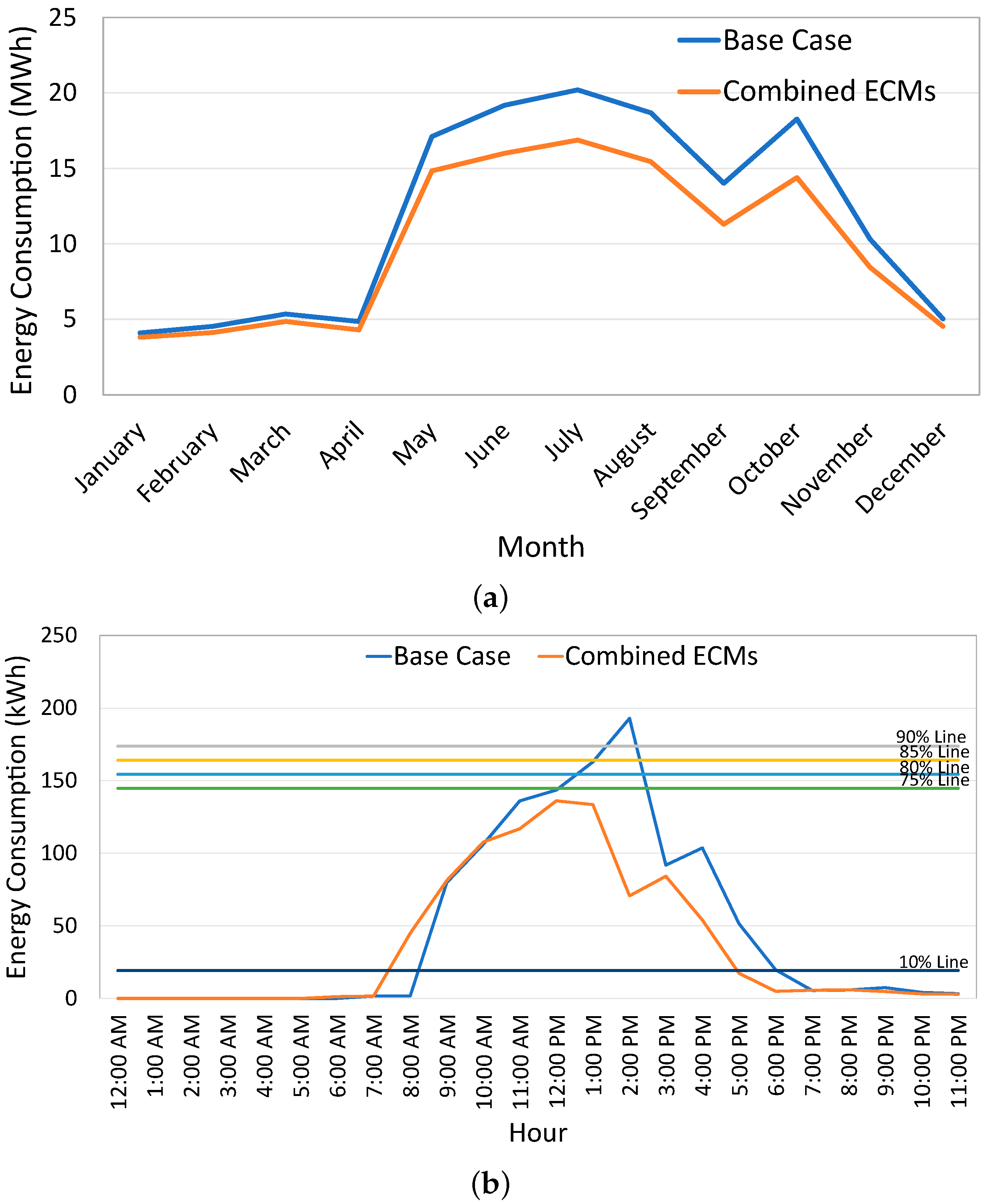
| Yearly | Total Consumption | 141.6 MWh | 156.14 MWh | 133.42 MWh | 132.69 MWh | 141.36 MWh | 141.41 MWh |
| Energy Savings | The five-day workweek scenario saves 14.54 MWh (10.27%) compared to the six-day workweek scenario | 8.18 MWh (5.78%) | 8.91 MWh (6.3%) | 0.24 MWh (0.17%) | 0.19 MWh (0.14%) | ||
| GHG Emission Reduction | The five-day workweek scenario saves 8 tons of CO2/year compared to the six-day workweek scenario. | 4.5 tons of CO2/year | 4.9 tons of CO2/year | 0.13 tons of CO2/year | 0.11 tons of CO2/year | ||
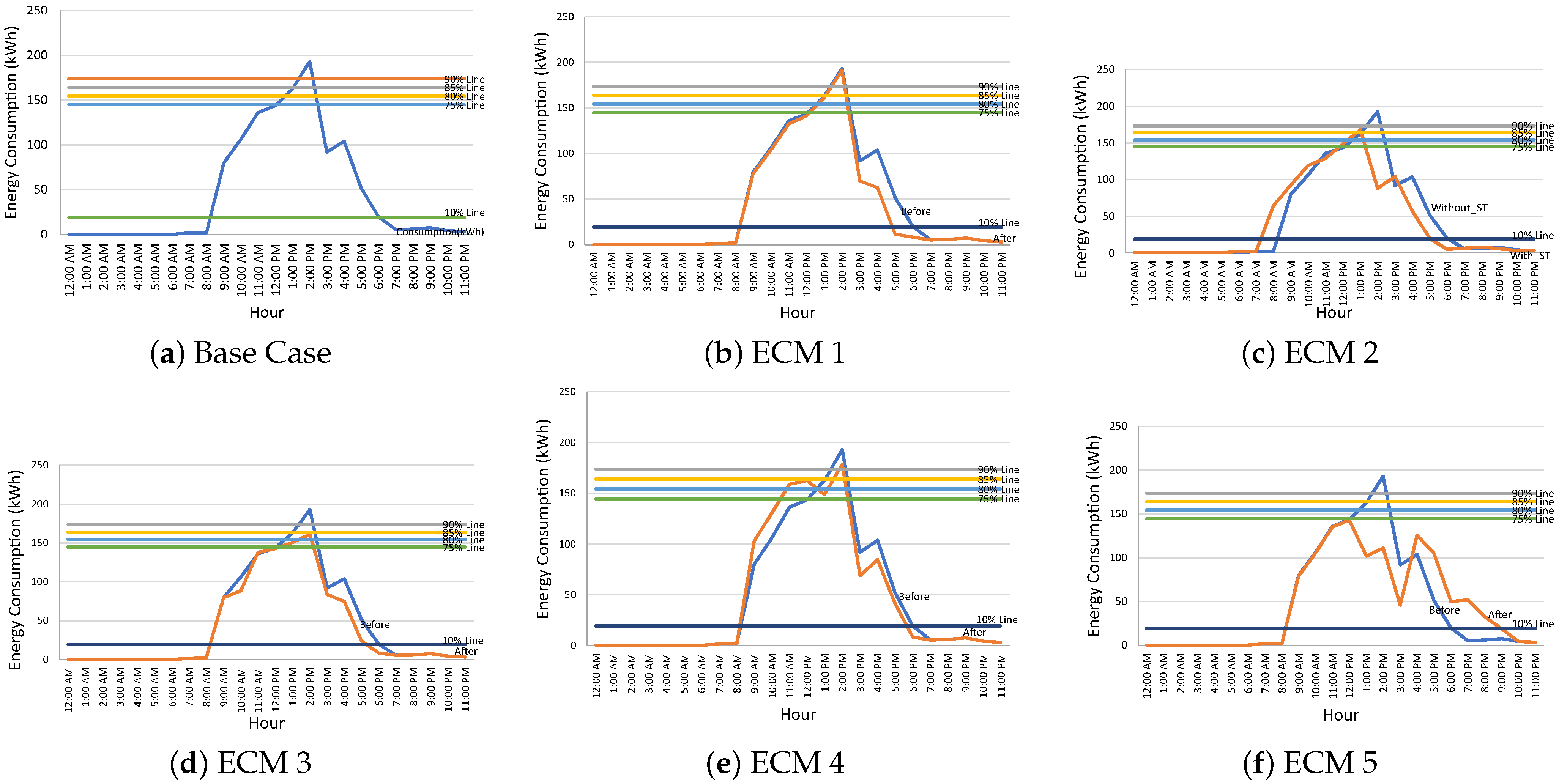
| Daily | Daily Consumption (15th day of October as an example) | 1.12 MWh | 1 MWh | 1.03 MWh | 0.98 MWh | 1.12 MWh | 1.12 MWh |
| Period of Consumption Above 10% | 9 h 40 min (9.666666 h) | 8 h 30 min (8.5 h) | 9 h 50 min (9.8333 h) | 9 h 15 min (9.25 h) | 9 h 35 min (9.58333 h) | 13 h 30 min (13.5 h) | |
| Period of Consumption Above 90% | 50 min (0.83333 h) | 50 min (0.83333 h) | 1 h | 2 h | 40 min (0.6667 h) | 1 h 25 min (1.417 h) | |
| Peak Reduction | <0.2% (marginal) | Suitable for reducing the peak to below 90%. | Suitable for reducing the peak to below 85%. | Suitable for reducing the peak to below 95%. | Suitable for reducing the peak to below 75%. | ||
| Energy Savings | 120 kWh (11.34%) | 90 kWh (8.2%) | 140 kWh (12.26%) | <0.2% (marginal) | <0.2% (marginal) | ||
| Weekly | Weekly Consumption (from 14–20th of May) | 4.38 MWh | 4.79 MWh (6 work days) | 4.17 MWh | 3.93 MWh | 4.3 MWh | 4.025 MWh |
| Range of Daily Peak Reduction | 0.05–3.88% | 5.5–11.9% | 3.8–13.9% | 0.4–8% | 10.9–33.9% |
Disclaimer/Publisher’s Note: The statements, opinions and data contained in all publications are solely those of the individual author(s) and contributor(s) and not of MDPI and/or the editor(s). MDPI and/or the editor(s) disclaim responsibility for any injury to people or property resulting from any ideas, methods, instructions or products referred to in the content. |
© 2026 by the authors. Licensee MDPI, Basel, Switzerland. This article is an open access article distributed under the terms and conditions of the Creative Commons Attribution (CC BY) license.
Share and Cite
El-Hafez, A.A.; Alamri, U.A.; Abdallah, A.S.H.; Nayel, M.A.; Abbas, H.S.; Hendy, M.A. Time-Based Energy Conservation Measures in an Academic Building. Buildings 2026, 16, 1893. https://doi.org/10.3390/buildings16101893
El-Hafez AA, Alamri UA, Abdallah ASH, Nayel MA, Abbas HS, Hendy MA. Time-Based Energy Conservation Measures in an Academic Building. Buildings. 2026; 16(10):1893. https://doi.org/10.3390/buildings16101893
Chicago/Turabian StyleEl-Hafez, Ahmed Abd, Uthman Abdullah Alamri, Amr Sayed Hassan Abdallah, Mohammed A. Nayel, Hossam S. Abbas, and Mohamed A. Hendy. 2026. "Time-Based Energy Conservation Measures in an Academic Building" Buildings 16, no. 10: 1893. https://doi.org/10.3390/buildings16101893
APA StyleEl-Hafez, A. A., Alamri, U. A., Abdallah, A. S. H., Nayel, M. A., Abbas, H. S., & Hendy, M. A. (2026). Time-Based Energy Conservation Measures in an Academic Building. Buildings, 16(10), 1893. https://doi.org/10.3390/buildings16101893