Article

Time-Based Energy Conservation Measures in an Academic Building

by
Ahmed Abd El-Hafez
1,*,
Uthman Abdullah Alamri
2,
Amr Sayed Hassan Abdallah
2,*,
Mohammed A. Nayel
1,
Hossam S. Abbas
1 and
Mohamed A. Hendy
1
1
Electrical Engineering Department, College of Engineering, Assiut University, Assiut 71516, Egypt
2
Department of Architectural Engineering, College of Engineering, Imam Mohammad Ibn Saud Islamic University (IMSIU), Riyadh 11432, Saudi Arabia
*
Authors to whom correspondence should be addressed.
Buildings 2026, 16(10), 1893; https://doi.org/10.3390/buildings16101893
Submission received: 29 March 2026 / Revised: 29 April 2026 / Accepted: 8 May 2026 / Published: 11 May 2026
(This article belongs to the Section Building Energy, Physics, Environment, and Systems)

Abstract

This paper proposes a time-based no-cost category of energy conservation measures (ECMs) enabled by audit-driven building energy modeling. The study presents an audit-to-simulation framework applied to an academic building (Electrical Engineering Department, Assiut University, Egypt) following the audit levels and requirements of ASHRAE Standard 100-2024. The building operation is characterized via audit findings, high-resolution electrical monitoring, and occupancy profiling, then translated into a calibrated building energy model (BEM) developed using SketchUp, OpenStudio, and EnergyPlus. The validated BEM serves as a decision-support testbed to evaluate the proposed ECMs prior to implementation, enabling quantification of their impacts on annual and daily energy use, peak reduction, and load-profile shape. The proposed ECMs are classified into two subcategories: working-day ECMs and time-slot-modification ECMs. The first category involves adjusting the number of working days per week. The second category includes several scheduling-based strategies, namely seasonal time shifts, modification of lecture and tutorial session durations, rearrangement of lectures and tutorial sessions, and shifting peak-demand time slots. The simulation results show that modifying lecture and tutorial durations (ECM3) is the most effective measure, achieving 6.2% annual energy savings, followed by seasonal time shifts (ECM2) with 5.8%. For peak demand, reducing operation during peak periods (ECM5) lowers the daily peak load by 25.9%. The combined implementation of the proposed ECMs reduces annual energy consumption by up to 16% and daily peak demand by 29.4%. The findings highlight the substantial potential of structured audit-informed operational strategies in university buildings, emphasizing their role as low-risk, high-impact interventions for peak management and energy performance enhancement.

1. Introduction

The building and construction sector represents the largest single contributor to global energy consumption and greenhouse gas (GHG) emissions. It accounts for approximately one-third of the worldwide final energy use and contributes nearly 40% of the total global GHG emissions [1,2,3]. At the national level, the sector also constitutes a substantial share of total energy demand; for instance, in Egypt, buildings account for approximately 29% of the national energy consumption [4]. Therefore, improving the operational performance of existing buildings becomes a priority for both cost reduction and emission mitigation. Energy auditing offers a structured evidence-based means to characterize building energy use, identify operational deficiencies, and formulate targeted energy conservation measures (ECMs) while maintaining occupants’ comfort and functional requirements [2,5,6]. Because building use and system conditions evolve over time, audits should be conducted periodically for performance tracking and continuous improvement [5]. It has been reported that 5–25% of energy can be saved in any plant by carrying out systematic and scientific energy auditing [2].
Extensive research concerning the investigation of energy management in the building sector has been published. Numerous studies have focused on energy audits in various areas, including industrial, commercial, educational, and residential buildings, aiming to identify and propose effective ECMs [7].
The previous research has largely concentrated on retrofit-based energy conservation measures that require capital investment (e.g., equipment upgrades, envelope improvements, or renewable integration). In several cases, such measures may be constrained by limited budgets, procurement delays, and operational disruption. Accordingly, operational and scheduling strategies, implemented with negligible or no capital cost, represent a complementary pathway that can deliver rapid, scalable, and low-risk energy savings.
In this context, this study investigates time-based ECMs (instead of retrofit-based ECMs), which comprise a comparatively underexplored class of ECMs, defined as systematic conceptual modifications to the timing, duration, and sequencing of building operation (e.g., workday structure, occupancy scheduling, and time-slot allocation) that reduce energy use and reshape demand profiles without physical retrofitting or capital expenditure.
Academic buildings are a particularly relevant testbed because their occupancy is strongly schedule-driven: teaching and administrative activities directly influence internal gains and HVAC operation, especially in hot climates. Moreover, institutional timetables provide an actionable demand-management instrument, enabling reductions in total energy use and peak demand by the implementation of quantified data-driven ECMs.
Table 1 presents a systematic review of energy conservation measures (ECMs) in academic and educational buildings, categorized into no-cost, low-cost, and high-cost strategies. The review shows that most previous studies focus on retrofit-based solutions (e.g., lighting upgrades, HVAC improvements, and PV systems), achieving significant energy savings. In contrast, limited attention has been given to no-cost operational measures, particularly time-based strategies. The present work addresses this gap by introducing and evaluating novel time-based no-cost ECMs, highlighting their potential as effective low-risk alternatives for energy savings and demand management.
Table 2 provides a comparative overview of the no-cost ECMs reported in previous studies and those investigated in the present work.
From Table 2, it can be observed that previous studies have primarily focused on load scheduling and switching off equipment after working hours. However, time-based ECMs in the literature have largely overlooked building-level operational strategies and the potential for optimizing these strategies to achieve energy savings.
Studies [7,8,9,10] were conducted in hot weather, similar to this study, and considered cooling demand as a driver of consumption. In contrast, studies [11,12,13,14,15,16,17] were conducted in cold weather and considered heating demand as a driver of consumption. A number of studies have further examined occupancy patterns as a critical driver of energy consumption in academic buildings [11,15,18,19,20]. In particular, the influence of academic calendars and scheduling strategies on occupancy regulation, and consequently on energy reduction, has been explicitly addressed in [20]. In terms of energy conservation measures, photovoltaic (PV) systems have been proposed and evaluated as retrofit or integration strategies in several investigations [7,8,14,16,21]. Additionally, a web-based energy audit tool has been developed that allows users to input building data and receive recommendations for ECMs [22]. On the other hand, studies [5,7,21] overlooked the actual occupancy measurement and analysis, which strongly affects the analysis of building operation. Some other studies overlooked energy consumption measurements [9,14]. Furthermore, studies [10,21,23] overlooked building energy modeling for energy simulation, which prevented them from quantifying the impact of any proposed ECM.
While numerous ECMs have been investigated in the literature, the majority are retrofit-based and require significant capital investment. Consequently, there is a need to further explore time-based ECMs that rely on optimized operational strategies and can be implemented with no additional cost in order to address the following gaps:
  • The effect of seasonal time shifts, i.e., shifting the clock one hour forward or backward according to the season, on energy consumption has rarely been investigated in the literature.
  • There is limited research addressing the impacts of time-slot duration and sequence of lectures, tutorial sessions, and labs in academic building schedules on energy consumption and load-profile shape.
  • Real-time measurement of occupancy synchronized with energy consumption measurement to detect actual energy use (kWh/person) has limited implementation in the literature.
This study aims to bridge these research gaps. Accordingly, the main contributions of this paper are as follows:
  • Quantifying the influence of seasonal time shifts and timetable design (duration, sequence, and time-slot allocation) on energy consumption patterns and load-profile shape in academic buildings and proposing a novel related ECM.
  • Synchronized monitoring and analyzing of both energy consumption and occupancy to quantify the actual energy use per person (kWh/person), serving as a key indicator of energy efficiency.
  • Conducting a comprehensive energy audit of a university academic building located in Egypt, following the ASHRAE standard levels for ensuring the methodological consistency, reliability, and repeatability of the assessment process.

The remainder of the paper is organized as follows: Section 2 describes the methodology (audit, monitoring, and modeling workflow), Section 3 presents the model verification and ECM simulation results, and Section 4 concludes by outlining the implications of the findings for operational policy and identifying directions for future research.
Table 1. Systematic literature review of energy conservation measures (ECMs) in academic buildings, categorizing no-cost, low-cost, and high-cost ECMs.
ReferenceBuilding Description and Annual ConsumptionNo-Cost ECMsLow-Cost ECMsHigh-Cost ECMsKey Findings
Seasonal Time ShiftsConceptual Rearrangement of Operation Time SlotsTurning off Loads After Work HoursLighting RetrofittingAC COP ImprovementAC RetrofittingPV Panels
[11]Academic Building××××××- Occupant-Based Control (OBC) offers substantial energy savings in academic buildings. - The total HVAC energy savings ranges from 35% to 51% under “occupancy presence” scenarios. - An additional increase in energy savings (3–9%) from “occupancy presence” scenarios to “occupancy counting” scenarios is also achieved
[7]University Residential Building, 270 MWh×××××- Light retrofitting can save 4432.6 kWh annually.- Changing the AC unit type from non-inverter to inverter type can save approximately 61,194 kWh/year, representing 22.96% energy savings. - The proposed SWH system could contribute 38,048 kWh of thermal energy annually, and the rooftop PV system was projected to generate 79,820 kWh/year, covering 31.28% of the building’s electricity demand.
[9]Library of University×××××- Light retrofitting saves about 85.6% of lighting energy consumption. - Replacing air-conditioning unit with floor-mounted inverter unit saves about 36.5% of air-conditioning energy consumption. - Scheduling computer usage based on actual demand for both Windows and Mac can save about 57.02% and 68.75% of computer energy costs, respectively.
[21]University×××××- Lighting retrofitting (by replacing fluorescent lamps with LED lamps) is estimated to reduce the load by about 326.80 kW (63%). - Retrofitting of air-cooling fans is estimated to reduce the load by about 161.28 kW (25%). - Retrofitting of air conditioning is estimated to reduce the load by about 120.64 kW. - Retrofitting of PC is estimated to reduce the load by about 4.95 kW. - The peak generation capacity through PV is calculated to be 2.80 MW.
[23]Education Institution, 82 MWh××××××- Lighting retrofitting (by replacing fluorescent lamps with LED lamps) is estimated to save about 34,602 kWh/year. - Replacing inefficient window AC with energy-efficient split units can save about 96,570 kWh/year - Computer retrofitting by replacing CRT with LCD can save about 38,400 kWh/year.
[24]High School Dorm××××××- Retrofitting of lighting and one hot water boiler, in addition to improving thermal insulation of walls, roofs and windows, can raise the building’s energy class from “E” to “C”.
[2]Academic Building×××××- Replacing conventional ballast (choke) FTL with electronic ballast (choke) FTL can save about 311,126.4 kWh/year - Replacing the CRT monitors with LCD monitors can save about 377,000 kWh/year. - Replacing geysers with a Solar Water Heating System can save about 3600 kWh/year. - Use of motion sensors in corridors and toilets can save about 292 kWh/year.
[5]Educational Building (2 floors), 4.3 GWh××××- Non-retrofitting ECMs, such as lighting and equipment schedule modification, and reducing infiltration (by closing the doors) can save about 0.29 GWh/year. - Controlling indoor temperature can save about 1.04 GWh/year, and lighting retrofitting can save about 0.1 GWh/year. - HVAC maintenance can save about 0.06 GWh/year.
[13]University (modern and historical buildings), 23 GWh××××××- The heating system refurbishment enables mean energy savings of 12% for the historical buildings and 16% for the recent ones. - The roof insulation enables mean energy savings of 14% for the historical buildings and 22% for the contemporary ones. Window substitution could enable mean energy savings of about 10% for historical buildings and about 16% for recent ones.
[25]Eight-Story Office Building, 1.17 GWh×××××- Annual electrical energy savings can be achieved at 7.2% using the air economizer, 3.4% by raising temperature set point, 2.6% using occupancy sensors and scheduling of lighting, 2.1% by cooling condenser air, and 0.9% for night purging.
[26]University Building××××××- Lighting scheduling ECMs save about 14% of the annual consumption. - HVAC control and scheduling can save about 21% (largest contributor)- Glazing upgrade can save about 2%- Air leakage sealing can save about 1.3%
Present workUniversity Building, 143 MWh××××Will be discussed in the Results Section in this paper.
Table 2. Comparison of no-cost energy conservation measures reported in the literature and those proposed in the present study.
AuthorNo-Cost ECMs Discussed
Hamida, et al. [26]- Scheduling the operation of lighting system - Scheduling the operation of HVAC system
Itani, et al. [25]- Raising temperature comfort settings - Night purging
Ali Alajmi, et al. [5]- Turn off lighting after work hours - Turn off equipment after work hours - Reduce infiltration (close doors)
Present Work- Changing number of working days per week - Seasonal time shifts - Lecture and tutorial session duration modification - Rearranging lectures and tutorial sessions - Shifting peak-demand time slots [Turning off lighting and equipment after work hours is already applied in the base case of the studied building.]

2. Proposed Methodology

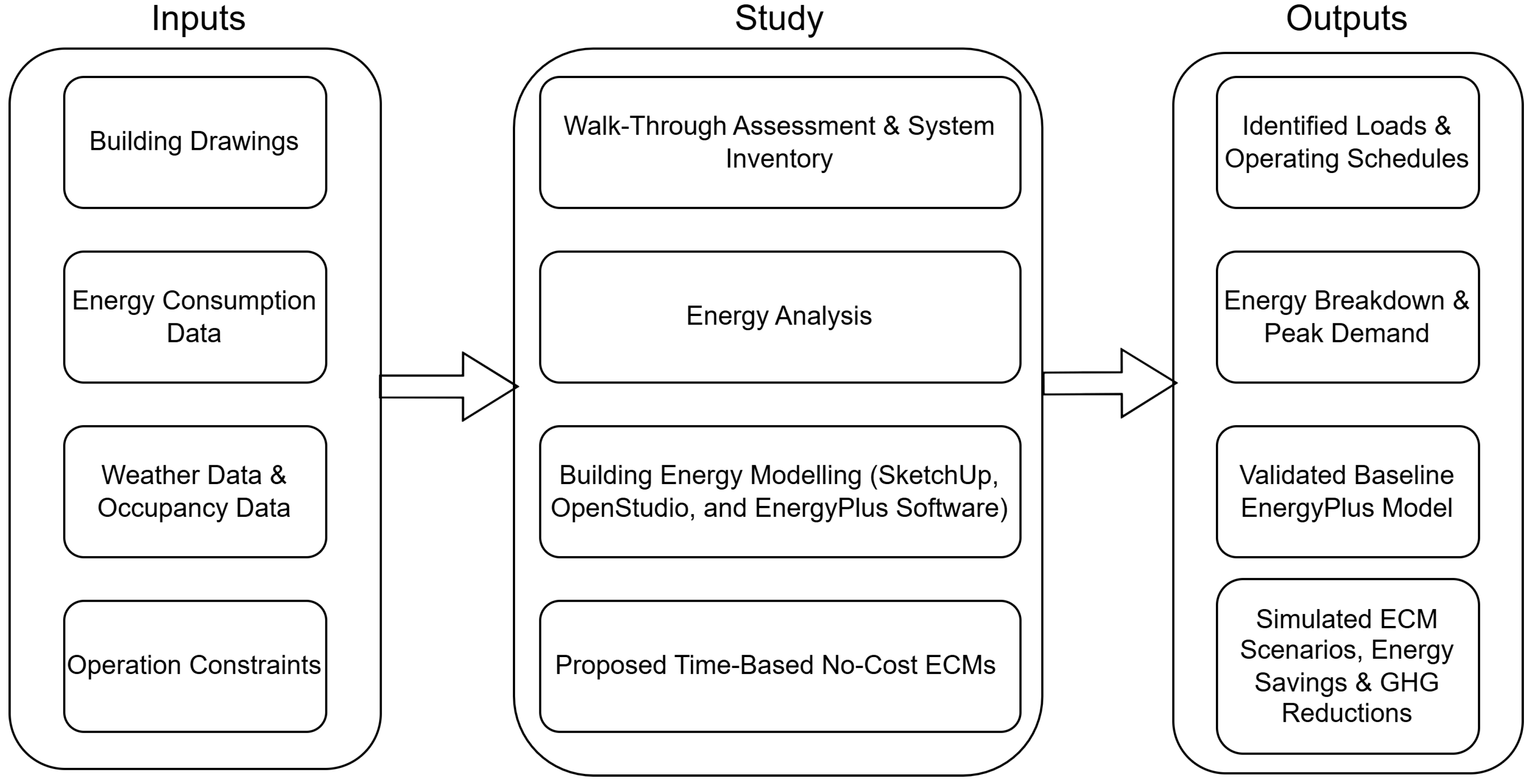
This study follows an audit-to-simulation workflow to identify, test, and quantify time-based no-cost ECMs in an academic building. First, a walkthrough assessment and energy analysis are conducted to characterize the building, its operational patterns, and major energy drivers (weather, building characteristics, and human activities). In parallel, high-resolution electrical monitoring is performed over a full year, and an hourly occupancy profile is developed using gate-based counting. These measured datasets are then used to inform and validate a detailed building energy model (BEM) developed in SketchUp, OpenStudio, and EnergyPlus. After calibration, the validated model is used as a comparative “testbed” to implement and evaluate the proposed time-based no-cost ECMs. Each ECM is simulated under consistent baseline assumptions, and its impact is quantified using energy-use metrics (daily/annual kWh), load-profile indicators (peak reduction and duration above threshold levels), and associated GHG reduction. Figure 1 summarizes the overall workflow.

2.1. Building Description

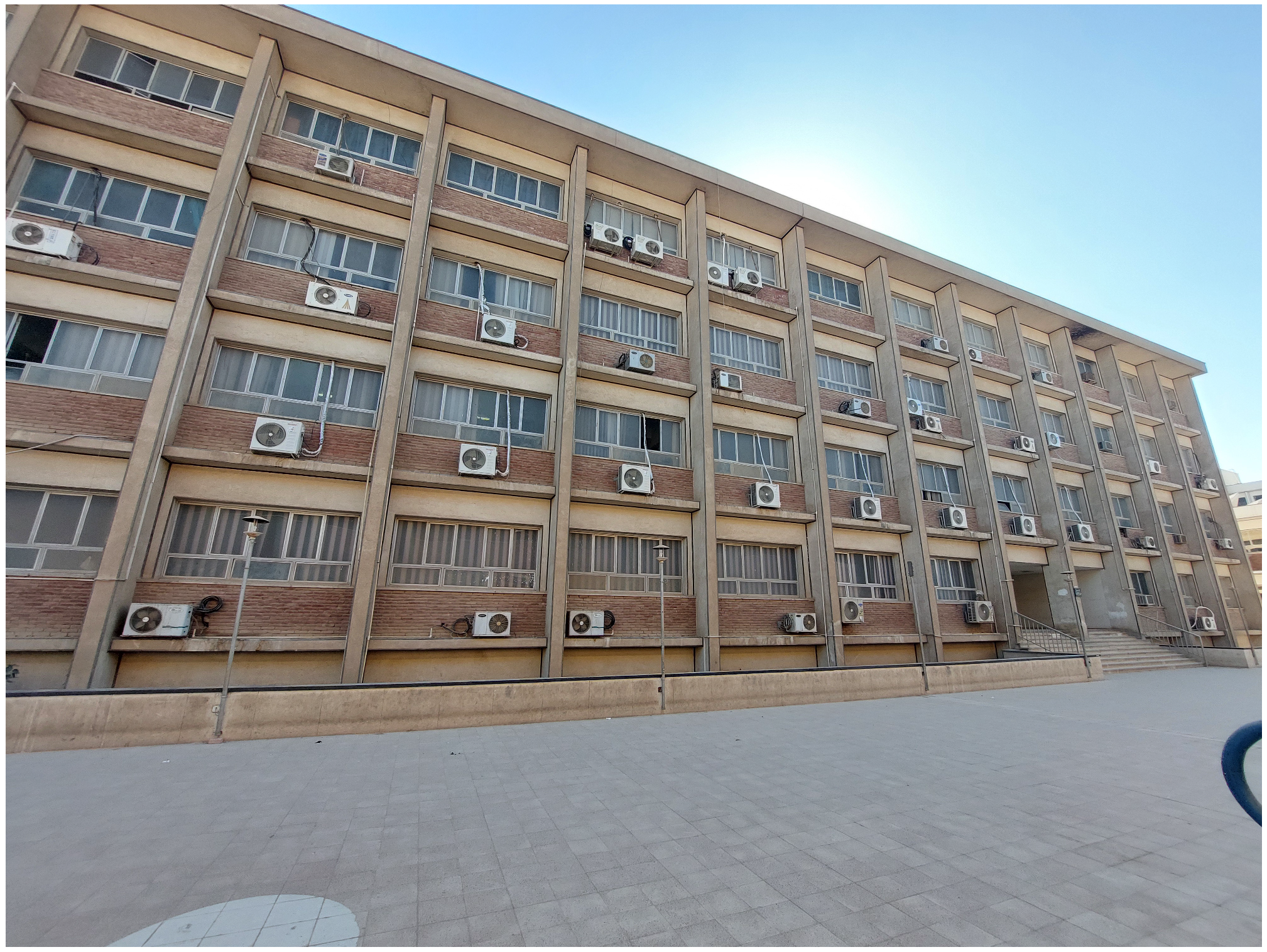
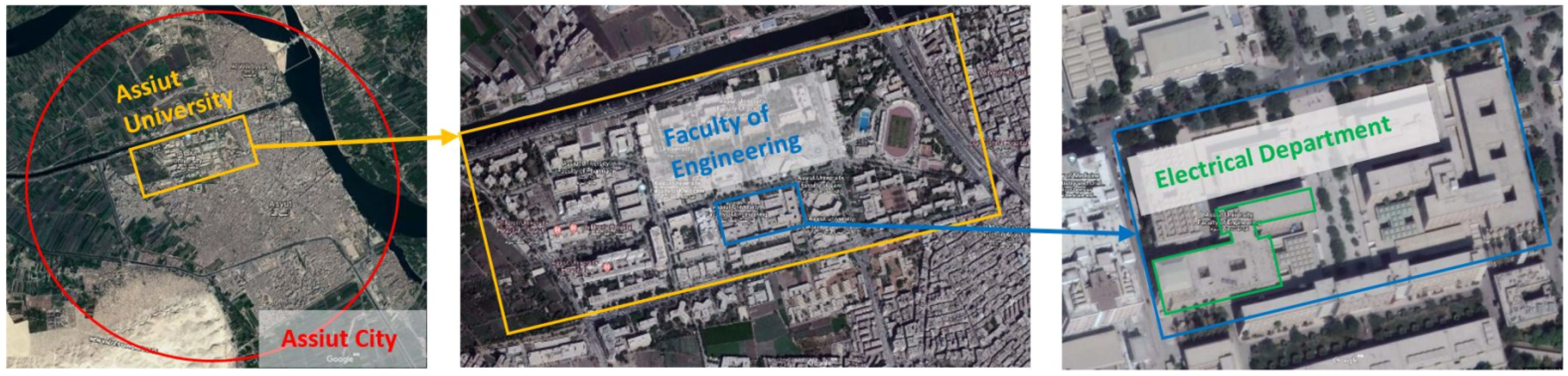
The case study building is the building of the Electrical Engineering Department of Assiut University, Egypt. It consists of two buildings attached to each other through a pathway, i.e., sometimes they are called “the building” as if they are one unit. One of them—which is called the main building—is a 3-story building, and the other—which is called the laboratory building—is a 5-story one. The total floor area is around 3604.5 square meters, lying in Assiut City, as shown in Figure 2 and Figure 3.
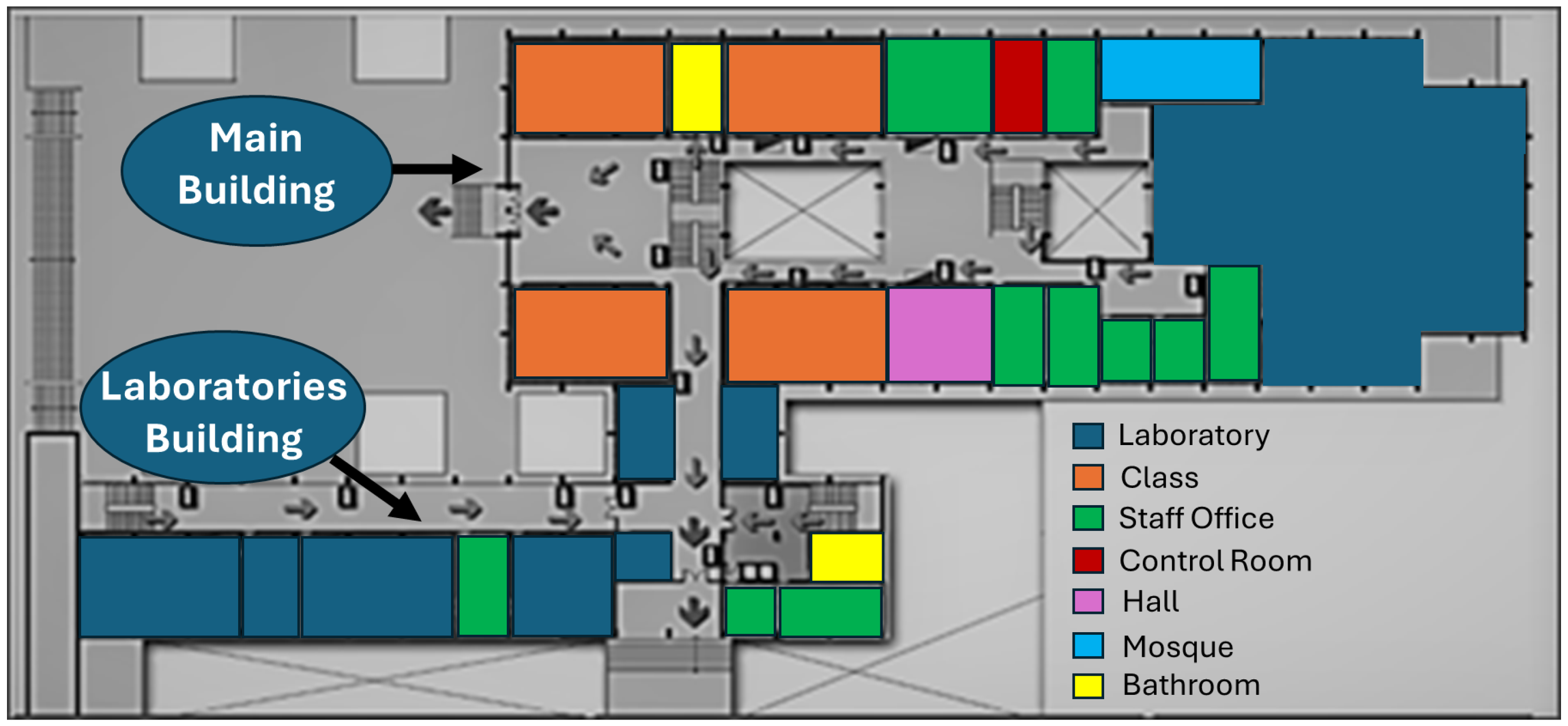
The area of the main building is around 2693.25 m2, and the area of the laboratory building is around 911.25 m2. Figure 4 shows a plan view of the 1st floor in the buildings to visualize the orientation of the buildings and how they are attached. The main building lies to the south of the laboratory building, which causes a slight difference in temperature between the two buildings.
Part of the building consists of educational facilities, including classes and laboratories. Specifically, in addition to educational facilities, there are offices, subdivided into teaching offices and administration offices, including the meeting rooms and library.
Figure 4 illustrates the spatial layout of the first floor, showing the distribution of different functional zones (e.g., laboratories, classrooms, offices, and services) in both the main and laboratory buildings. It also highlights the building orientation and how the two sections are interconnected.
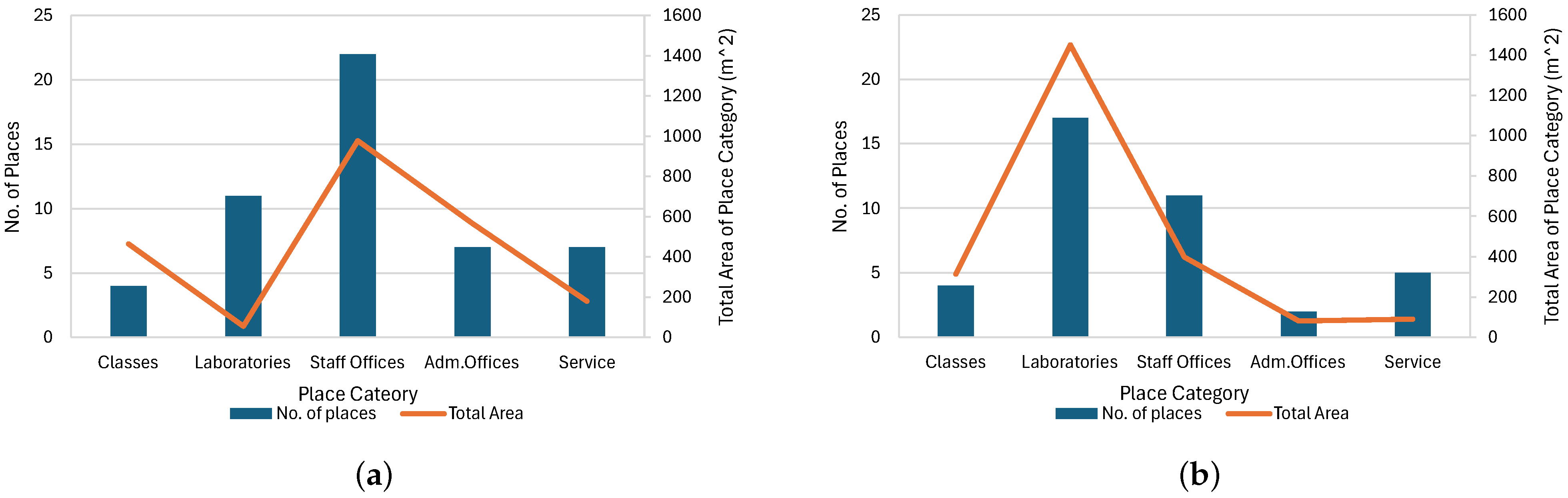
Figure 5 shows the distribution density of each type of place in each building separately. As the name suggests, it is found that, in the laboratory building, the dominant category of places is the laboratories. In the main building, the dominant category is the staff offices. The buildings are served by five main gates, and the walls of the buildings are thick but with weak thermal insulation.
Most of the external walls have windows that are constructed from glass. All openings are metal-framed. Most of the roofs of the buildings are exposed to sunlight. Only small portions are shaded since the roofs are of different levels. This contextual description defines the physical and functional inputs required for both the audit interpretation and subsequent energy modeling.

2.2. Walkthrough Assessment

During the walkthrough assessment, three main energy consumption drivers can be detected and categorized as the building itself, i.e., its characteristics and loads, the weather, and the human activities. In addition, some inefficiencies can be detected as follows:
  • Most of the lighting fixtures in the building are fluorescent lamps, representing 97.9% of the total, while only 2.1% are LED lamps.
  • Many inefficient old load types, like old fans and old computers with CRT monitors, not LCD. Specifically, 17.3% of the computers are equipped with CRT monitors, whereas 82.7% use LCD monitors.
  • No periodic maintenance and cleaning for the air conditioners.

2.3. Energy Consumption Analysis

Following the qualitative screening, the study shifts to measurement-based analysis to quantify consumption patterns and link them to occupancy. This step provides the empirical basis for model inputs and later calibration.
  • Energy Consumption Monitoring
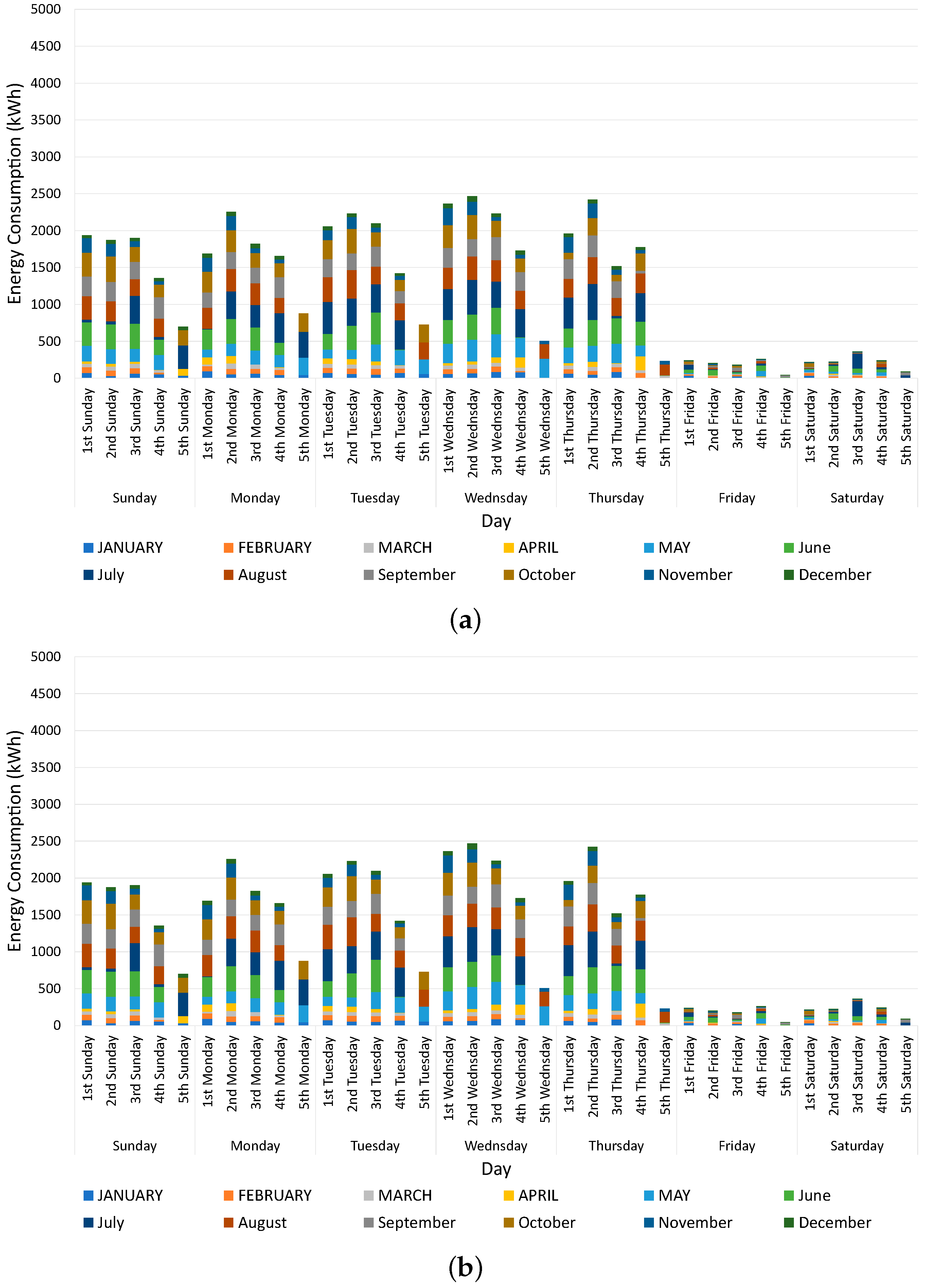
Two AEMC PEL 103 power and energy data loggers monitored the electricity usage for each of the buildings’ main electrical panels. The loggers recorded measurements at 1-s intervals over a continuous 12-month period, providing the electrical parameters necessary to conduct a time series analysis and develop load profiles. The collected data was periodically accessed and processed into hourly, daily, and monthly consumption profiles to identify the effects of weekdays/weekends, seasonal effects, and peak-demand characteristics. Figure 6a,b show the daily consumption of the year 2023 for the two buildings.
From Figure 6a,b, the data show that the consumption of the main building is generally larger than that of the laboratory building, although both exhibit a similar pattern of energy use over time. It is clear that the consumption rises during the working days of each week and drops on the weekends, i.e., Fridays and Saturdays, and rises again at the start of the next week, and so on. This shows the effect of human activities on consumption.
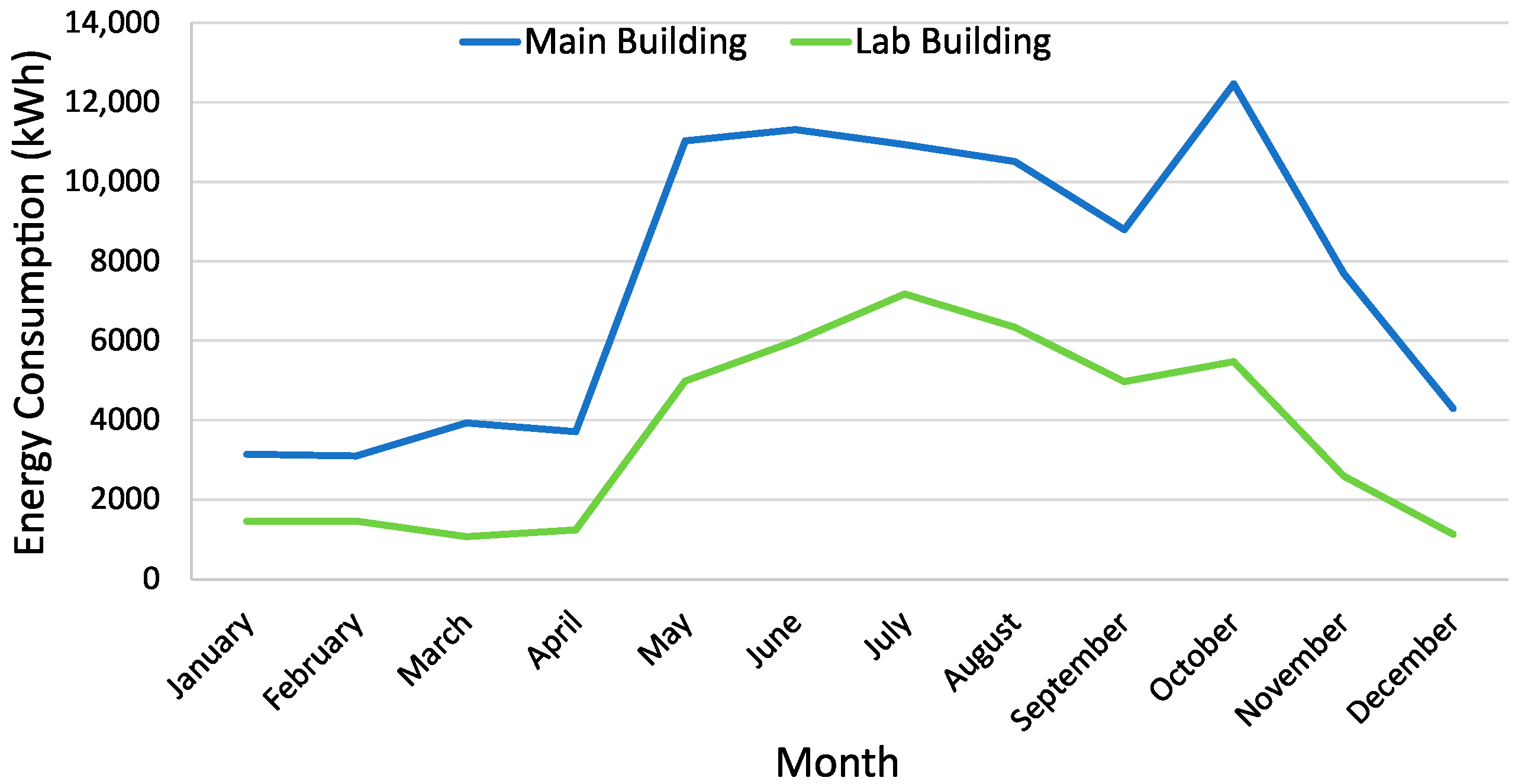
For a wider view of the consumption, a monthly analysis of the data is conducted. Figure 7 shows the monthly consumption for each of the two buildings.
From Figure 7, it is observed that energy consumption during the summer months is significantly higher than in the winter months, primarily due to the increased cooling demand associated with air-conditioning loads. In the main building, the maximum monthly consumption occurred in October, when it reached 12.46 MWh. In the laboratory building, the maximum consumption occurred in July, when it reached 7.18 MWh.
II.
Occupancy Monitoring
Accurate characterization of occupancy patterns is a critical component in evaluating building energy performance, particularly in academic environments with highly dynamic usage profiles. Measuring occupancy enables a more realistic representation of internal loads and operational conditions, thereby improving the reliability of simulation results and calibration accuracy.
Furthermore, occupancy data supports the assessment of energy use intensity on a per capita basis (e.g., kWh/person), allowing for a more meaningful evaluation of operational efficiency across different space types and usage scenarios. It also facilitates the identification of mismatches between energy consumption and actual space utilization, which is essential for the development and justification of time-based ECMs.
Hourly occupancy was estimated using a gate-based visual counting system installed at the building’s five main entrances to record the number of persons entering and exiting.
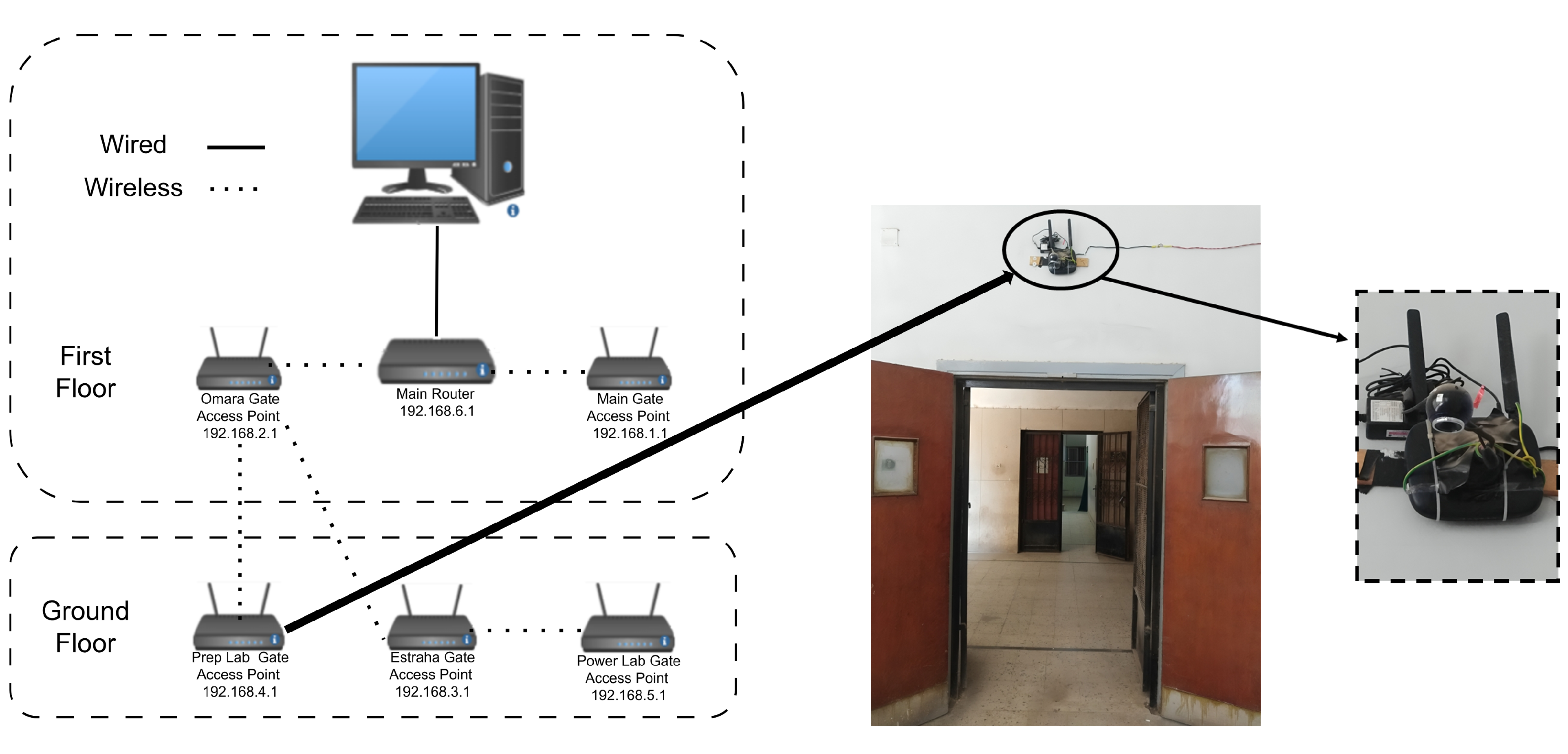
The occupancy counting system is designed as a distributed yet centrally coordinated architecture that integrates multiple camera nodes with a local network infrastructure. As illustrated in Figure 8, cameras are installed at the five main building access gates, where they are positioned at elevated vantage points to capture top-view perspectives of individuals entering and exiting. Each camera is connected to a nearby wireless access point, and all access points are linked through a local Ethernet network to a central router. This router connects to a dedicated central computer, forming a closed local network that ensures stable low-latency communication between all sensing nodes and the processing unit.
At the core of the system, the central computer—running an Ubuntu operating system—executes a Python-based head detection and counting algorithm specifically trained to identify human heads from overhead views. Video streams from all cameras are transmitted in real time over the network and processed sequentially or in parallel, depending on system capacity. The algorithm detects individuals crossing predefined virtual lines at each gate and classifies their movement direction (entry or exit), allowing the system to continuously update the net occupancy count within the building. All detection events and occupancy data are logged in a structured format for further analysis and validation, enabling both real-time monitoring and historical data tracking.
The system is designed with scalability and practical deployment in mind. Additional cameras and access points can be integrated into the network with minimal configuration, making the approach adaptable to buildings with more complex layouts or higher occupancy levels. The use of standard networking components (routers and access points) and open-source software ensures cost-effectiveness and ease of replication. Overall, the architecture supports reliable real-time operation while maintaining flexibility for expansion, making it a practical solution for occupancy-driven energy analysis and building management applications.
It should be noted that the system is subject to uncertainties related to occlusion, lighting variability, and overlapping movement at entry points. However, these effects are minimized through optimal camera placement and directional counting logic, resulting in an estimated accuracy below ±10%, which makes it suitable for aggregated occupancy analysis.
The collected data were processed through timestamp synchronization, duplicate removal, and filtering of anomalous detections. Periods with missing data—primarily due to power interruptions or accidental shutdown of the central computer by operators—were identified and excluded from the analysis, representing a minor source of uncertainty in the dataset.
The derived hourly net occupancy count is synchronized with the hourly energy consumption extracted from the electrical loggers. This synchronization enables calculation of hourly energy intensity per occupant (kWh/person), supporting interpretation of operational behavior (e.g., start-up effects).
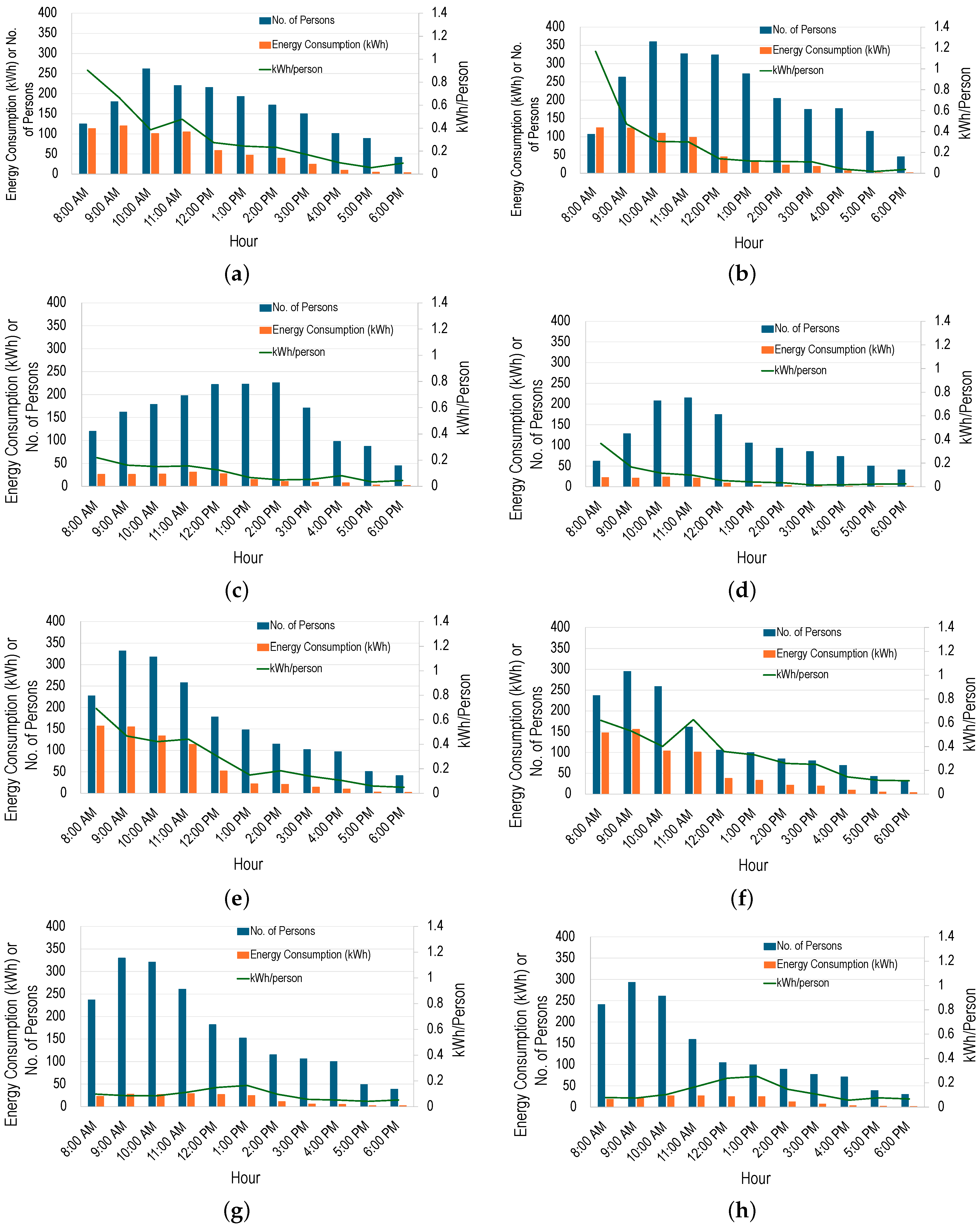
Figure 9 shows the actual energy use per person (kWh/person) for each hour in two sample days in different day categories:
1.
Summer studying days.
2.
Winter studying days.
3.
Summer exam days.
4.
Winter exam days.
Several key observations can be drawn from the data presented in Figure 9 as follows:
In Figure 9a,b, i.e., summer studying days, the number of persons increases from the start of the day at 8 AM to reach a peak at a specific time according to the schedule for these days and then decreases at the end of the day.
-
Also in Figure 9a,b, energy consumption remains relatively stable between 8:00 AM and 11:00 AM, while occupancy increases at a significantly higher rate starting from 8:00 AM. Consequently, the kWh/person metric exhibits an initial peak at the beginning of the day, followed by a gradual decline as occupancy continues to rise, reaching its minimum near the point of peak occupancy.
  • Beyond this point, energy consumption decreases at a faster rate than occupancy. As a result, the kWh/person curve continues to decline steadily until the end of the day.
Another contributing factor to the peak in kWh/person at 8:00 AM is the operational startup behavior reported by facility staff. At the beginning of the day, the workers turn on the electricity panels that were shut down the previous evening without individually switching off every single load, so a large load is switched on at the beginning of the day, coinciding with low occupancy levels, thereby causing a peak in the kWh/person curve at the beginning of the day (realized from the workers’ survey).
As shown in Figure 9c,d, representing winter operating days, the energy use per capita (kWh/person) follows a similar trend to that observed during summer days in Figure 9a,b (e.g., May). However, the curves are consistently shifted downward, reflecting the reduced energy consumption associated with the absence of air-conditioning loads during cooler conditions (e.g., March).
As shown in Figure 9e,f, representing summer exam days, a distinct operational pattern is observed. The peak occupancy occurs at 9:00 AM, corresponding to the start of examination sessions. This is followed by a slight decrease over the next two hours as some students complete their exams and leave early. Thereafter, occupancy declines more significantly toward the end of the day.
Energy consumption during the first two hours remains relatively stable, reflecting the steady operation of building systems during the examination period. A noticeable reduction in consumption begins between 10:00 and 11:00 AM, coinciding with the gradual decrease in occupancy as students leave the examination halls. This reduction in occupancy leads to a corresponding decrease in internal heat gains and, consequently, reduced cooling demand on air-conditioning systems.
The kWh/person metric exhibits more complex behavior. It starts with a relatively high value at the beginning of the day due to low occupancy levels prior to the start of exams, while lighting, fans, and air-conditioning systems are already in operation to prepare the examination spaces. As occupancy increases during the early exam period, the kWh/person value decreases over the following two hours.
Near the end of the examination period, a temporary increase in kWh/person is observed. This is due to a rapid decline in occupancy—caused by students leaving—occurring at a faster rate than the reduction in energy consumption. Subsequently, as building operators begin to switch off equipment, both energy consumption and occupancy decrease. However, a baseline occupancy remains due to staff presence in administrative and academic offices; furthermore, some students remain in the building corridors. As a result, the kWh/person metric resumes a downward trend and continues to decrease steadily toward the end of the day.
As shown in Figure 9g,h, representing winter exam days, the occupancy pattern follows a similar trend to that observed during summer exam days. However, the energy consumption profile differs significantly due to the absence of air-conditioning loads. Under these conditions, lighting becomes the dominant load component, which is less sensitive to changes in occupancy.
As a result, energy consumption remains relatively stable during the first four hours of the day despite the gradual decrease in occupancy as students leave the examination halls. A noticeable decline in consumption occurs only when lighting systems begin to be switched off by staff, after which consumption decreases toward the end of the day.
The kWh/person metric starts at a peak value due to low initial occupancy with active lighting loads. As occupancy increases, the metric decreases due to the distribution of nearly constant lighting energy over a larger number of occupants. Toward the end of the examination period, a temporary increase in kWh/person is observed as occupancy declines more rapidly than energy consumption. Subsequently, as lighting systems are switched off, both consumption and occupancy decrease, leading to a continued decline in kWh/person toward the end of the day.

2.4. Building Energy Modeling

To evaluate the ECMs that will be proposed in a later section prior to real-world implementation, a physics-based building energy model is developed and then validated against the measured energy consumption data. Building energy models can accurately predict the energy performance of buildings if properly calibrated [18].
The model is created using three software programs interacting with each other: SketchUp, OpenStudio, and EnergyPlus. They work together to facilitate building energy modeling. SketchUp provides the 3D modeling environment, and OpenStudio acts as a graphical user interface (GUI) for creating and editing EnergyPlus input files. OpenStudio allows users to create and modify building geometry, run simulations, and view results. EnergyPlus is the underlying simulation engine that calculates energy use.
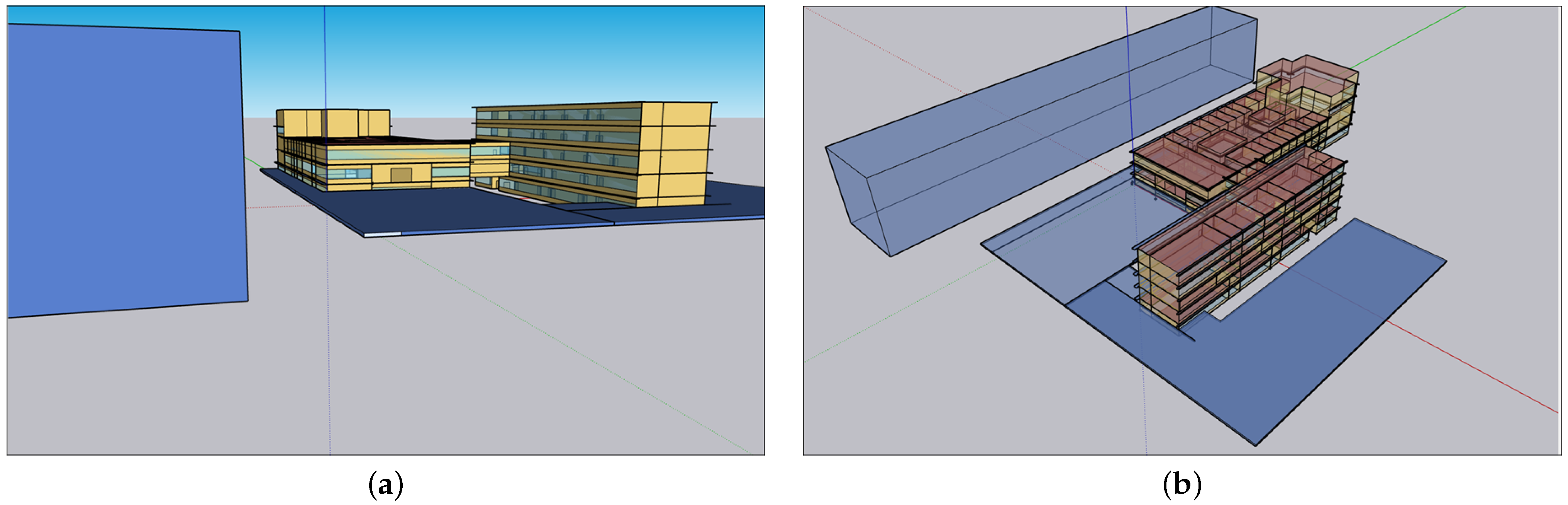
Figure 10 shows the building model on SketchUp. After building the model on SketchUp, a construction set, schedule set, i.e., people schedule, lighting schedule, equipment schedule, and AC schedule, and loads must be assigned to each room in the building through OpenStudio. After finishing all the details of the model in OpenStudio, simulations are executed, and reports of results can be obtained. Table 3 summarizes the main assumptions and input data used in the baseline energy model. It includes weather data based on a Typical Meteorological Year for Assiut. The building geometry is defined through thermal zoning according to function and orientation. Envelope properties are assigned based on actual construction characteristics from site inspection. Operational schedules and HVAC system details are incorporated using field data, building documentation, and on-site observations. Despite the use of detailed input data, inherent modeling uncertainties remain, particularly in assumptions related to occupancy patterns, internal loads, and HVAC system performance. Therefore, a calibration process is required to enhance the reliability of the model. During calibration, these parameters were iteratively adjusted within physically realistic ranges, informed by additional on-site observations and detailed walkthroughs of building operation, to minimize discrepancies between simulated and measured energy consumption.
Model calibration and verification approach
The baseline will be validated through comparisons of measured and simulated electricity usage during the same time period. This comparison will take place at three different time frames: annual, monthly, and selected daily time frames. The calibration is assessed using standard statistical methods (e.g., MBE and CVRMSE) that conform to the ASHRAE Guideline 14 acceptance criteria used to determine the degree of accuracy required for comparative ECM studies.
The calibration process was conducted with careful consideration to avoid overfitting, ensuring that all parameter adjustments remained physically realistic and consistent with observed building operation. Rather than relying on isolated parameter tuning, the process incorporated multiple walkthrough inspections of the building, as well as discussions with facility staff, to capture additional operational details. Incorporating these observations into the model improved its overall accuracy. The most important points identified during the calibration process are as follows:
-
In some cases, some laboratories are occupied by staff outside the scheduled teaching periods. During these times, building systems such as lighting and air conditioning are used, resulting in additional energy consumption not accounted for in the original schedules.
-
During the summer, graduation project workshops are held in classes; however, these activities are not formally scheduled.
-
Many lighting fixtures are not used due to sufficient daylight availability. Therefore, the lighting load fraction in the building model was slightly reduced to reflect this behavior.
-
Some air-conditioning units were found to have undergone little or no maintenance over extended periods. To represent the resulting performance degradation, the Coefficient of Performance (COP) of these units was reduced in the simulation model. This adjustment provides a more realistic representation of their operational efficiency and energy consumption.

2.5. Proposed ECMs’ Implementation

With the calibrated baseline model established, each time-based ECM is implemented as a controlled scenario change so that its isolated impact, in terms of energy savings, GHG emission mitigation, and load-profile reshaping, can be quantified relative to the base case before implementation in the real building.
The base case of the model has been studied first and then compared with the different proposed ECMs when applied to the model. For consistent comparison across scenarios, ECM performance is evaluated using: (1) annual energy savings (% and MWh), (2) representative daily energy savings, (3) peak-demand reduction and load-profile reshaping (including duration above threshold lines such as 75%, 80%, 85%, and 90% of peak), and (4) associated GHG emission reduction derived from the change in annual electricity use.
Table 4 presents a classification of the proposed time-based ECMs, including their respective categories, the specific measures within each category, the parameters modified by each ECM, and the corresponding expected impacts. As shown in the table, the time-based ECMs can be classified into two main categories as follows:
  • Working-day ECMs, i.e., changing the number of working days per week.
  • Time-slot-modification ECMs, i.e., summertime, lecture and tutorial session duration modification, rearranging lectures and tutorial sessions, and shifting peak-demand time slots.
  • Base Case
The base case is the original case of the building without applying any proposed ECM to the model. This case represents the reference case with which the other cases are compared. The base case model represents the verified and calibrated baseline model, adjusted to exclude summertime shifts in order to isolate their effects and enable independent analysis of each ECM. This adjustment has been undertaken because the summertime shift is already implemented in the building and is therefore embedded in the verification model.
II.
ECM 1: Number of working days per week (5 days vs. 6 days)
In the base case, the number of working days per week is 5 days (from Sunday to Thursday), and the weekend is Friday and Saturday, in which there is no study work and no administrative work, but some staff members occupy some offices. To study the effect of increasing the number of working days, a six-day workweek scenario (from Saturday to Thursday) was applied to the model to see the difference between the two cases. In the six-day workweek scenario, the study work hours are kept constant but redistributed over 6 days, where the administrative work hours were extended for one more day. The redistribution is such that:
  • Any lecture after 2:00 PM is shifted to the sixth day.
  • Any tutorial session after 4:00 PM is shifted to the sixth day.
  • The administrative work and staff office occupancy will be for 6 days a week instead of 5 days.
III.
ECM 2: Applying summertime (shifting the clock one hour forward)
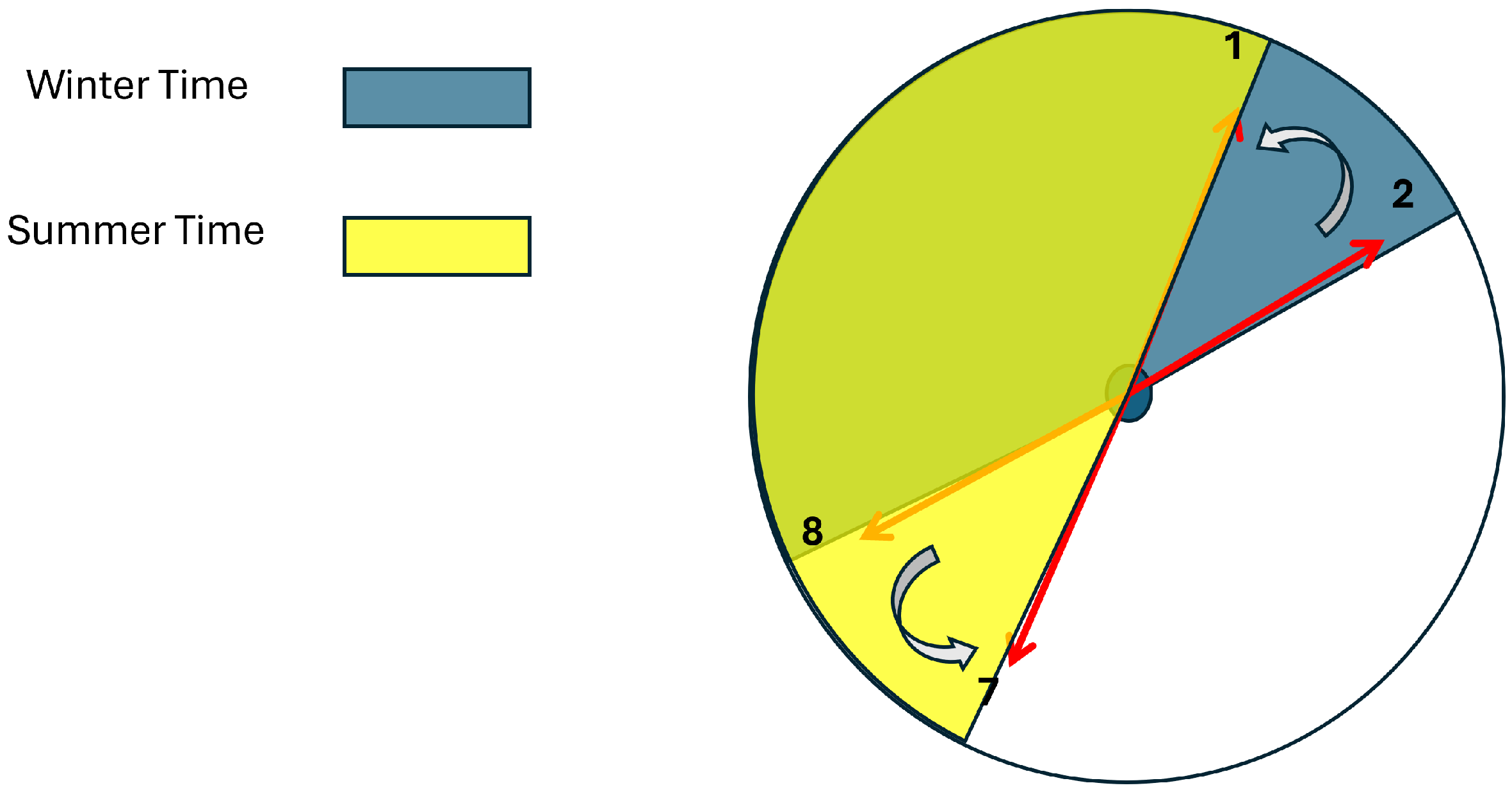
This scenario evaluates the effect of summertime on consumption. The summertime is applied before summer months; in 2023, it was exactly from the 27th of April to the 27th of October. It implies shifting the clock one hour forward. When the clock is shifted one hour forward and the work hours are still the same, this leads to shifting the actual working time one hour backward.
The working (study) time in university starts officially at 8:00 AM (on the shifted clock), but this time is actually 7:00 AM, which becomes 8:00 AM due to the shifted clock for summertime. So, the work actually starts at 7:00 AM instead of 8:00 AM, and, for administrative work, which ends at 2:00 PM, it will end at 1:00 PM instead. For administrative work, for example, this situation is exactly equivalent to replacing the hour 1:00-2:00 PM with the hour 7:00-8:00 AM, which has much lower temperatures and therefore decreased load on the air conditioners. The same idea is applicable for other place categories in the building by replacing the last work hour in these places with the 7:00-8:00 AM hour, which usually has a lower temperature than the last work hour in any place category in the building. This is the main idea encouraging the study of this case. Summertime reduces total consumption by reducing the loading on air conditioners by shifting the work hours to cooler time slots. The seasonal time shift is illustrated in Figure 11.
IV.
ECM 3: Redistributing the course time between lectures and tutorial sessions
Energy-use efficiency during lectures in academic buildings is generally higher than during tutorial sessions within the same facility. This difference can primarily be attributed to occupancy levels. During lectures, the entire student batch is typically accommodated in a single space, whereas tutorial sessions divide the batch into smaller groups distributed across multiple rooms and time slots. This results in a higher energy use intensity per occupant (kWh/person) during tutorials, thereby reducing overall efficiency.
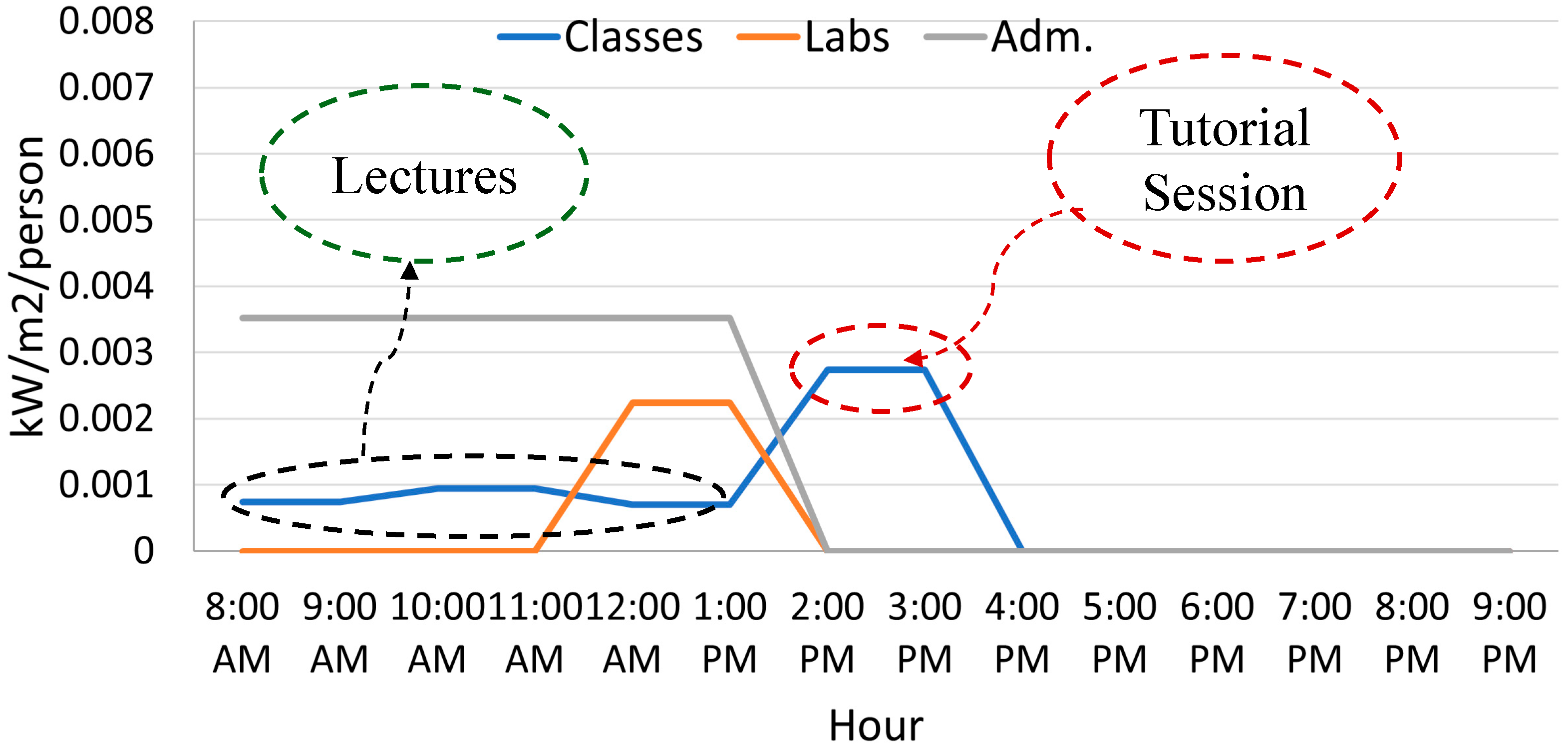
To investigate this effect, a detailed schedule-based analysis was conducted, taking into account spatial areas, time slots, occupancy levels, and functional use categories. The objective of this analysis was to evaluate and compare the nominal energy use intensity (kW/m2/person) across different space types and activities, thereby highlighting variations in operational efficiency.
Figure 12 illustrates the observed differences in efficiency among various space categories during a sample summer day. It is evident that lecture spaces exhibit lower kW/m2/person values (i.e., higher efficiency) compared to tutorial sessions, where fewer students occupy spaces of comparable size and load characteristics. Additionally, administrative offices and laboratory spaces demonstrate even lower efficiency levels, primarily due to significantly lower occupancy densities.
Based on these findings, particularly the efficiency variation between lectures and tutorial sessions, the implementation of ECM3 can be more effectively justified.
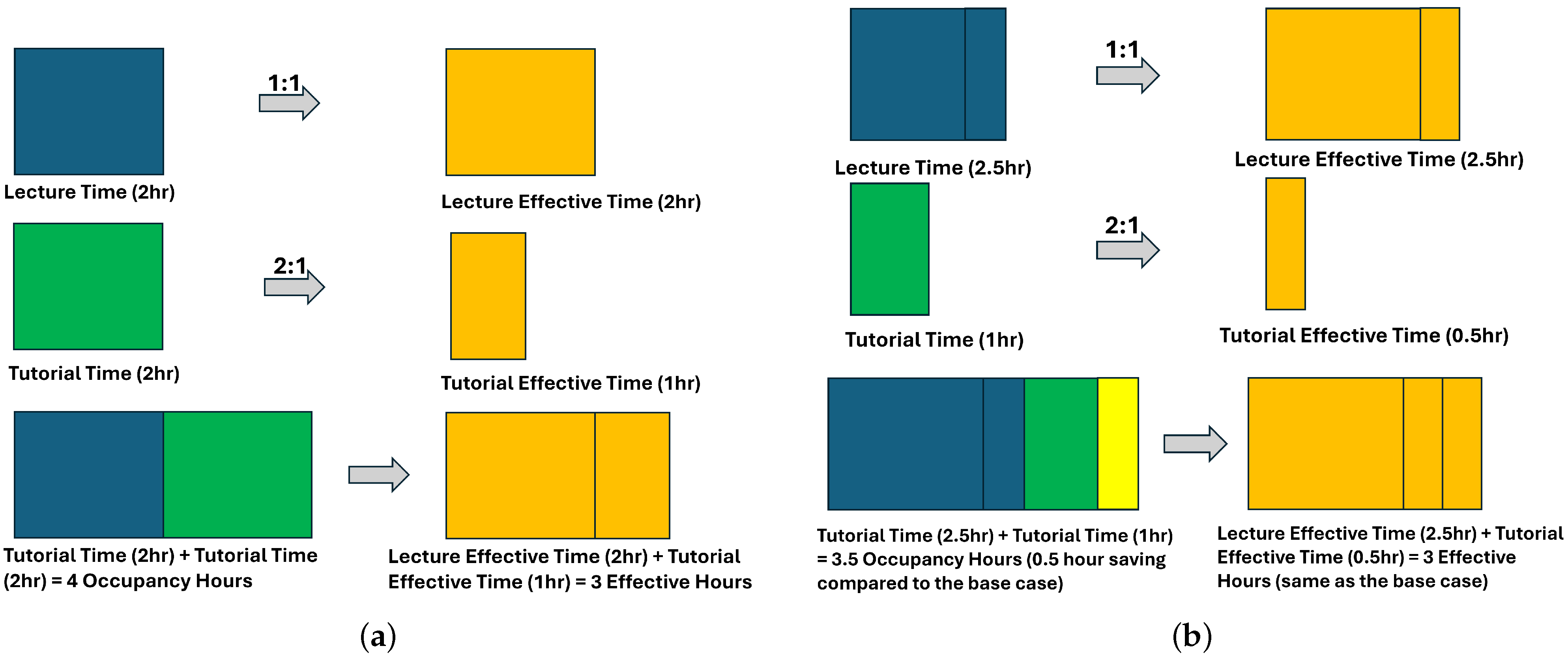
Each study course has a specified number of hours according to the regulations. This number of hours is distributed between lectures and tutorials, as well as practicals for some courses. This distribution considers that the lecture hours are weighted 1:1, so each one hour of lecture is weighted as one hour. On the other hand, the tutorial hours are weighted as 2:1, so each two hours of tutorial are weighted as 1 h.
For example, if a course has 3 h weekly according to the regulations and these 3 weighted hours are distributed such that 2 h are for lectures and 1 h is for tutorials, this will be reflected in the actual occupancy as 2 h for lectures (weighted as 2 h) and 2 h for tutorials (weighted as 1 h). However, if the weighted hours are redistributed for the purpose of increasing the weighted hours of lectures and decreasing those of tutorials while keeping the same total weighted hours per course, this will be reflected in the actual occupancy as reduced working hours. This is the main idea encouraging the study of this case. In this case study, the time of tutorials is reduced by 50%, and the weighted time of the missed 50% is added to the time of lectures, which are more efficient than tutorial sessions in terms of energy use, as explained. For the same example discussed above, the proposed time redistribution is such that the actual time of tutorials will be 1 h (reduced by 50%) and the weighted time of this 1 h is 30 min, and the missed 30 min will be added to the lecture time, increasing it to 2.5 h, and the actual tutorial time will be 1 h. This will sum up to the same weighted 3 h of the course but with a reduction in the actual occupancy time to 3.5 h instead of 4 h. This example is illustrated in Figure 13.
Moreover, when the number of students taking the same course is more than the tutorial session capacity, the students are grouped into more than one tutorial session (but not grouped in the lecture). Therefore, the reduced time from the tutorial time will increase (multiplied by the number of sessions (groups)), while the added time to the lecture will be the same, which increases the benefit of this approach with large numbers of students. For the above example, if there are 3 groups in tutorial sessions, the total occupancy time before applying the proposed approach is 2 + 6 = 8 h, but, after applying the proposed approach, it will be 2.5 + 3 = 5.5 h only without changing the time per student, i.e., 3 h, in regulations.
V.
ECM 4: Swapping the lecture and tutorial time slots
In the current schedule, the lectures are at the beginning of the study day, and then come the tutorials. But tutorial consumption is more than lecture consumption since, in a lecture, all the class students are collected in the same place sharing the same loads, while, in tutorials, the students are grouped, and each group occupies a different place with its own loads, which increases the number of occupied places and thus the used loads. Keeping in mind that, in the studied building, the sizes and loads of all the lecture and tutorial locations are rather similar, this makes the consumption of tutorials larger than that of lectures. But the temperature at the beginning of the day is the lowest and starts increasing across the study day.
The idea is to swap the times of tutorials with those of lectures so that the day starts with tutorial sessions and laboratories followed by lectures so that the higher-energy-consuming events, i.e., tutorials and laboratories, are positioned in lower-temperature time regions and the lower-energy-consuming events, i.e., lectures, are positioned in higher-temperature time regions. This may reduce the consumption of tutorials and increase the consumption of lectures, but the decrease in the consumption of tutorials will depend on the number of student groups, i.e., the number of occupied places, so the benefit of this proposed approach will be more remarkable with large numbers of students and large numbers of student groups, i.e., large numbers of occupied places for tutorial sessions.
VI.
ECM 5: Shifting study sessions from the 12:00–15:00 time slot to the 15:00–18:00 time slot.
The peak energy consumption of the building occurs at 2:00 PM. So, the idea is to shift the study work from the 12:00 to 3:00 PM time slot to the 3:00 to 6:00 PM time slot. At the interval from 12:00 to 3:00 PM, only the administrative offices and staff offices will be occupied, but no classes will be held, which will reduce the consumption during these three hours and increase it in the next three hours. This may not improve the total consumption remarkably, but the main objective of this approach is to reshape the daily load profile to reduce the peak to less than 75% of the peak in the base case. This approach has a limited impact on reducing the annual or daily consumption. But it is very effective for reducing the peak consumption remarkably in daily load profiles.

3. Results and Discussion

3.1. Model Verification

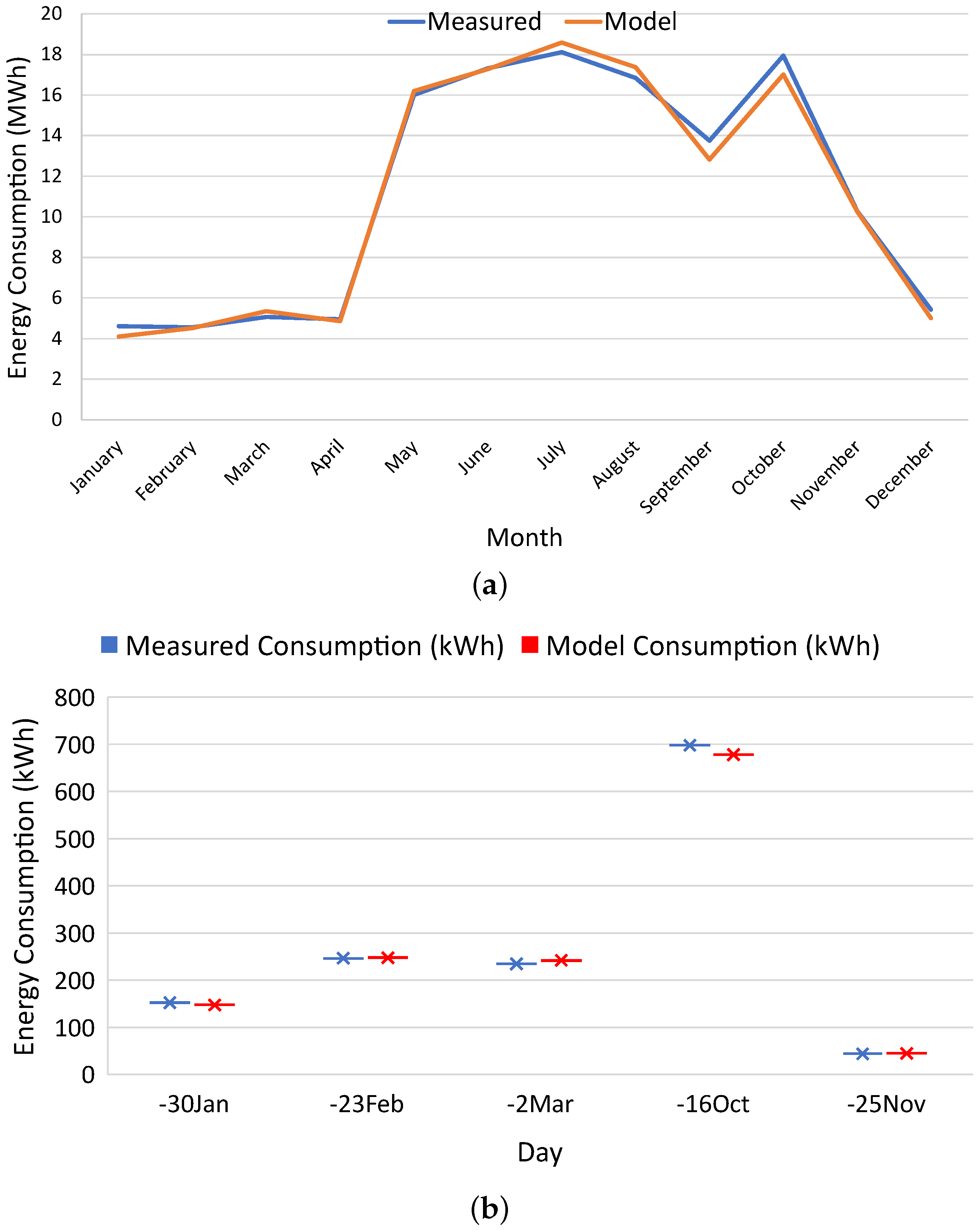
For model verification, the measured energy consumption over a certain period and the energy consumption obtained from the model over the same period are compared against each other. The measured total energy consumption in the year 2023 is 134.86 MWh, i.e., 485.51 GJ, and the results obtained from the model show that the total energy consumption in the year 2023 is 133.416 MWh, i.e., 480.3 GJ, with an error of about 1.07%.
For monthly verification, the measured monthly consumption and also the monthly consumption obtained from the model are plotted as shown in Figure 14a. As illustrated in Figure 14a, the two curves are almost identical, with an average error of around 5%.
It is noted that the hottest months, i.e., from July to October, exhibit higher error levels compared to other months. This is attributed to the increased cooling demand on air-conditioning systems, which introduces additional uncertainty and results in slightly higher error during these periods. In addition, the decentralized nature of split air-conditioning units introduces user-dependent operation patterns, thereby increasing variability and contributing to higher errors during peak summer conditions.
The verification results yielded a mean bias error (MBE) of 1.07% and a cumulative variation in root mean square error (CV(RMSE)) of 4.29%, which satisfy the acceptance criteria recommended by ASHRAE Guideline 14 (acceptance limits: | M B E | ( m o n t h l y ) < 5 % and C V ( R M S E ) ( m o n t h l y ) < 15 % ) [27,28]. For daily verification, the measured consumption of some sample days from different months is plotted against the corresponding consumption obtained from the model, and the results are shown in Figure 14b. From the figure, we see that the daily consumption is similar in both of the measurements and the model, with individual errors ranging between 0.5% and 3.16%.
Sensitivity Analysis
Following the calibration of the building energy model and the achievement of acceptable agreement between the simulated and measured data, it is important to assess the robustness of the model against uncertainties in key input parameters. Although calibration reduces discrepancies, the model still relies on assumptions related to occupancy patterns, internal loads, and system performance, which may vary in practice. Therefore, a sensitivity analysis was conducted to evaluate the influence of these parameters on the predicted energy consumption.
Table 5 shows the results of the sensitivity analysis. The results indicate that the model is most sensitive to air-conditioning system performance, where a 10% change in COP leads to an approximate 4.2% variation in energy consumption. Lighting load also shows less influence, while occupancy variations have a relatively minor effect on total energy use. This confirms that HVAC performance and internal loads are the dominant factors affecting building energy consumption. The relatively moderate changes in energy consumption in response to input variations demonstrate that the model exhibits stable and realistic behavior, indicating good robustness. This suggests that the calibrated model can reliably support the evaluation of the proposed ECMs despite inherent uncertainties in the input assumptions.

3.2. Proposed ECMs’ Results

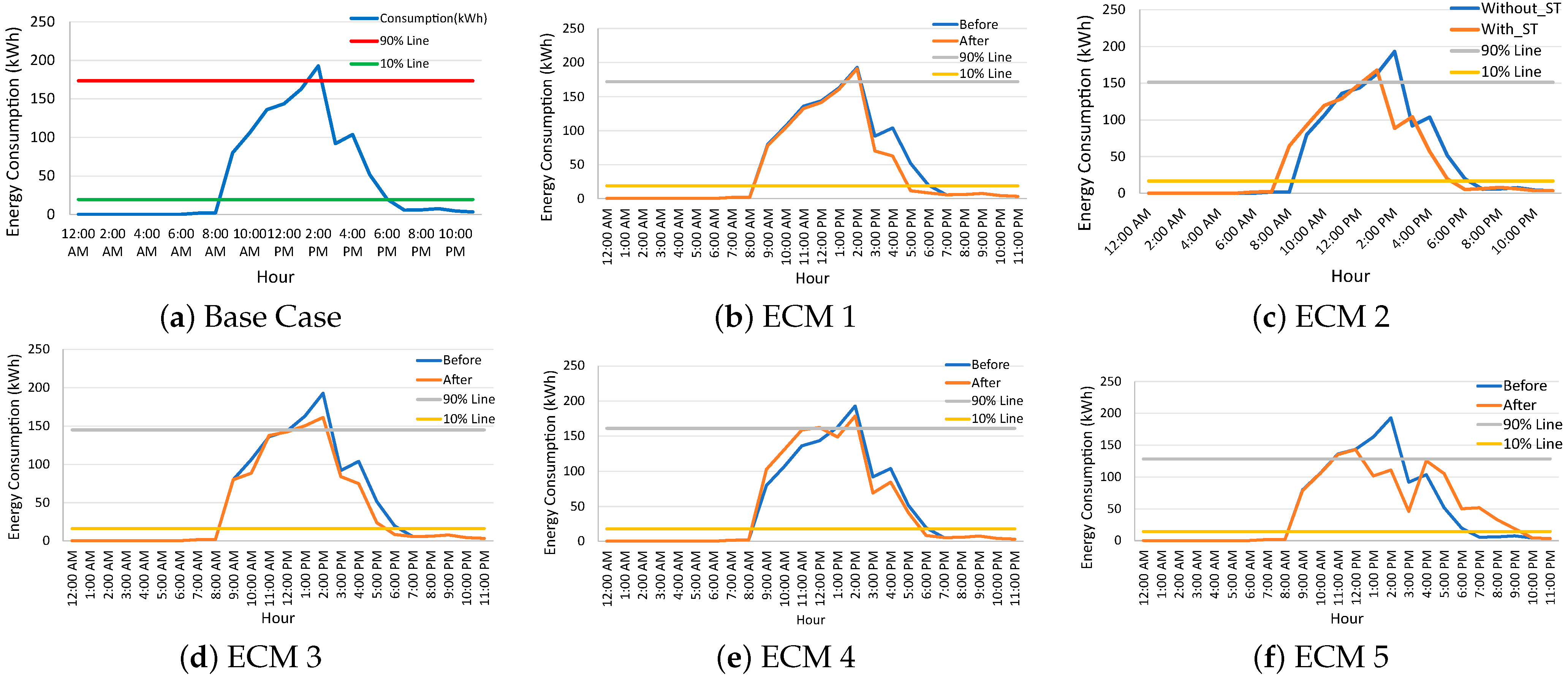
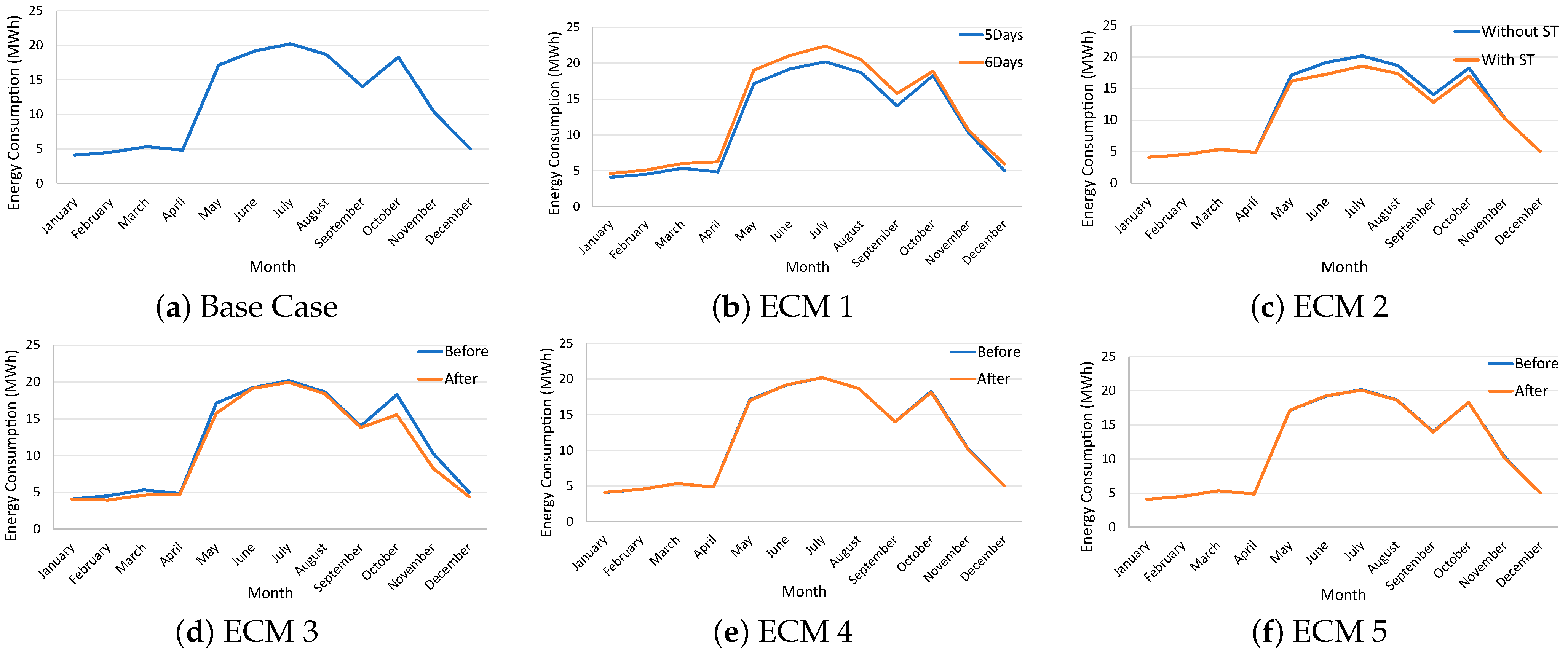
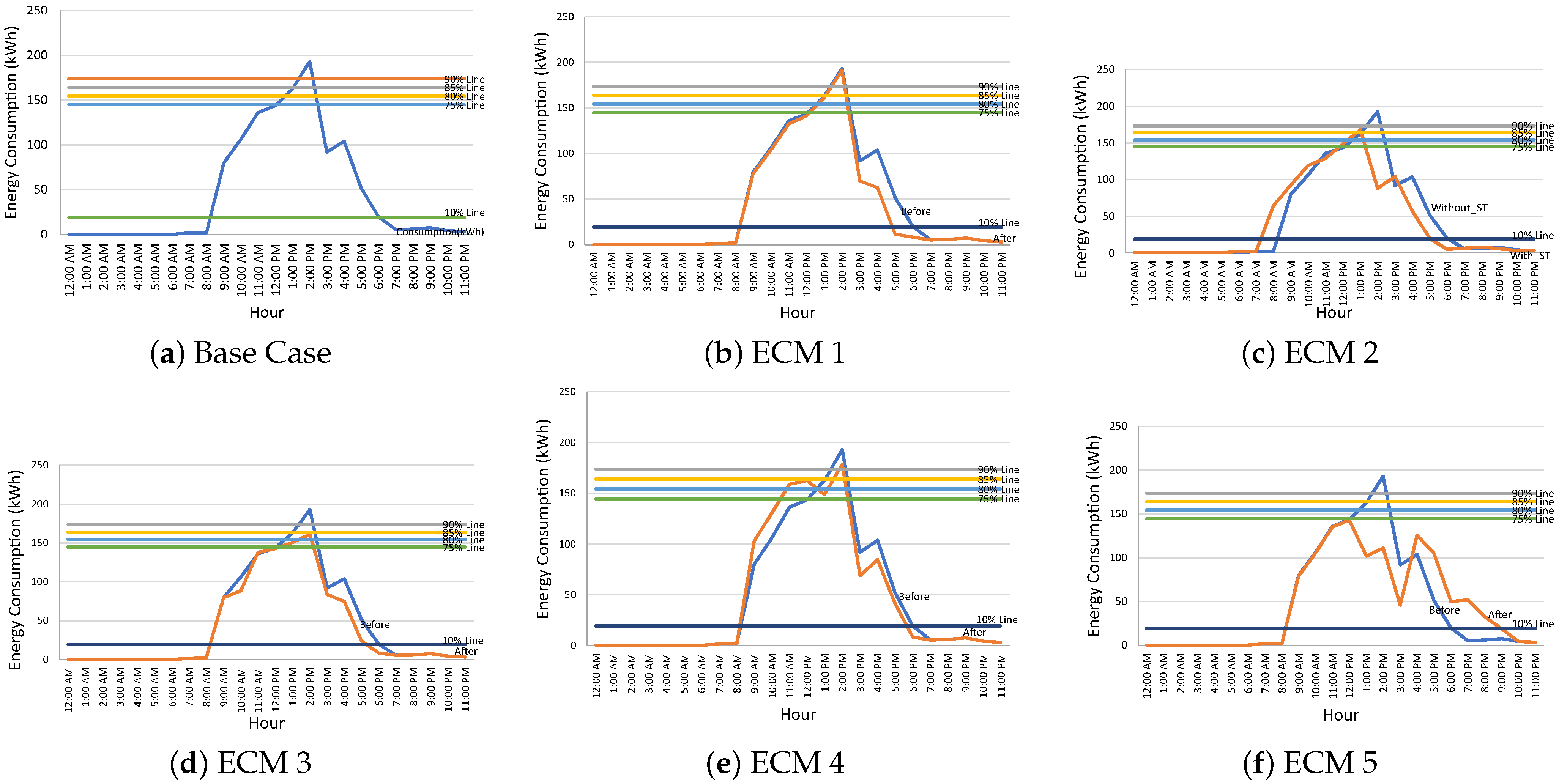
This section presents the results obtained when implementing the proposed time-based no-cost ECMs within the validated building energy model. Each ECM has been evaluated and compared against the base case to assess its impact on energy performance. Yearly and daily studies have been conducted for each proposed ECM. The yearly and daily load profiles of each ECM are shown in Figure 15 and Figure 16, respectively. Constant power threshold lines, expressed as percentages of the base case peak load, were superimposed on the daily load profiles to evaluate the temporal distribution of load levels relative to predefined limits. This metric provides a systematic means of characterizing variations in the load curve shape and facilitates a comparative assessment of peak-demand reduction and load-profile reshaping across the analyzed scenarios. The daily load profiles with limiting lines are shown in Figure 17.
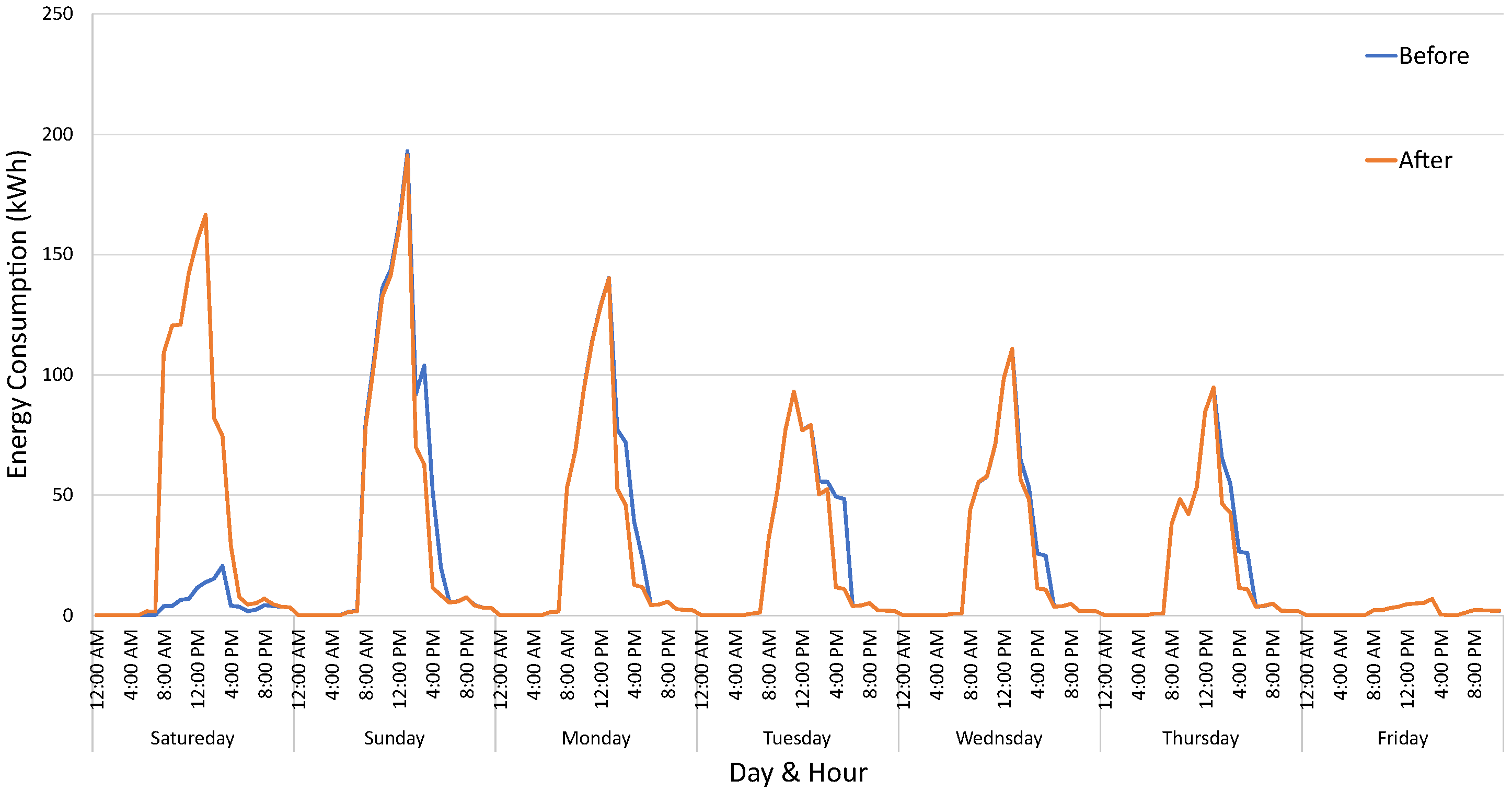
The results in Figure 15, Figure 16 and Figure 17 show that a five-day workweek scenario (already implemented in the base case) is more effective than a six-day workweek scenario. Planning for a five-day workweek instead of a six-day workweek reduces the total annual consumption by about 10.27%. For this ECM, the weekly study is added to highlight the increase in the number of working days per week, which increases the consumption in a six-day workweek scenario. The weekly load profile for the interval between the 14th and 20th of October, as an example, is shown in Figure 18.
The results also show that ECM 2 leads to reductions in annual and daily energy consumption by 5.8% and 8.2%, respectively, mainly due to the decrease in the cooling load on the air-conditioning systems achieved by shifting work hours to cooler time slots. Consequently, the impact of ECM 2 is predominantly observed during the summer months, as illustrated in Figure 15c.
ECM 3 emerges as the most effective no-cost measure in terms of reductions in annual and daily energy consumption, achieving reductions of approximately 6.3% and 12.26%, respectively, compared to the base case. This improvement is attributed to the reduction in the effective occupancy duration while maintaining the same total course hours, in accordance with institutional regulations. Consequently, the impact of ECM 3 is predominantly observed during the study months, as illustrated in Figure 15d. Furthermore, ECM 5 demonstrates the greatest effectiveness in reducing peak demand, reducing the peak of the daily load profile by approximately 25.93% by reducing the operation during peak consumption time slots and shifting the corresponding load to off-peak time slots.
ECM 4 and 5 have a limited impact on annual or daily energy consumption (less than 0.2%); however, they lead to reductions in the daily peak demand by approximately 7.4% and 25.93%, respectively. It is observed that, although ECM5 achieves a peak-demand reduction exceeding 25%, it also increases the duration during which the load exceeds 10% of the peak value, from 9 h and 40 min to 13 h and 30 min. This highlights a trade-off between peak-demand reduction and the prolonged duration of moderate load levels.
Table 6 compares the impact of the proposed ECMs on energy consumption, peak demand, and GHG emissions. ECM1 highlights that a five-day schedule is more efficient than six days (10.27% energy savings and 8 tons CO2/year reduction). ECM3 achieves annual energy savings of 6.3% and GHG reduction (4.9 tons CO2/year), followed by ECM2 (5.8%, 4.5 tons CO2/year). ECM4 and ECM5 have a limited impact on total energy and GHG emissions but effectively reduce peak demand, with ECM5 achieving the highest peak reduction (25.9%) but with increased load duration. It should be noted that the daily peak reduction due to each ECM varies throughout the week since it depends on the daily schedule and the effect of the ECM on the schedule, so the range of peak reduction across a studied week has been quantified in the table for more representativeness.
Combined effects of all the proposed ECMs
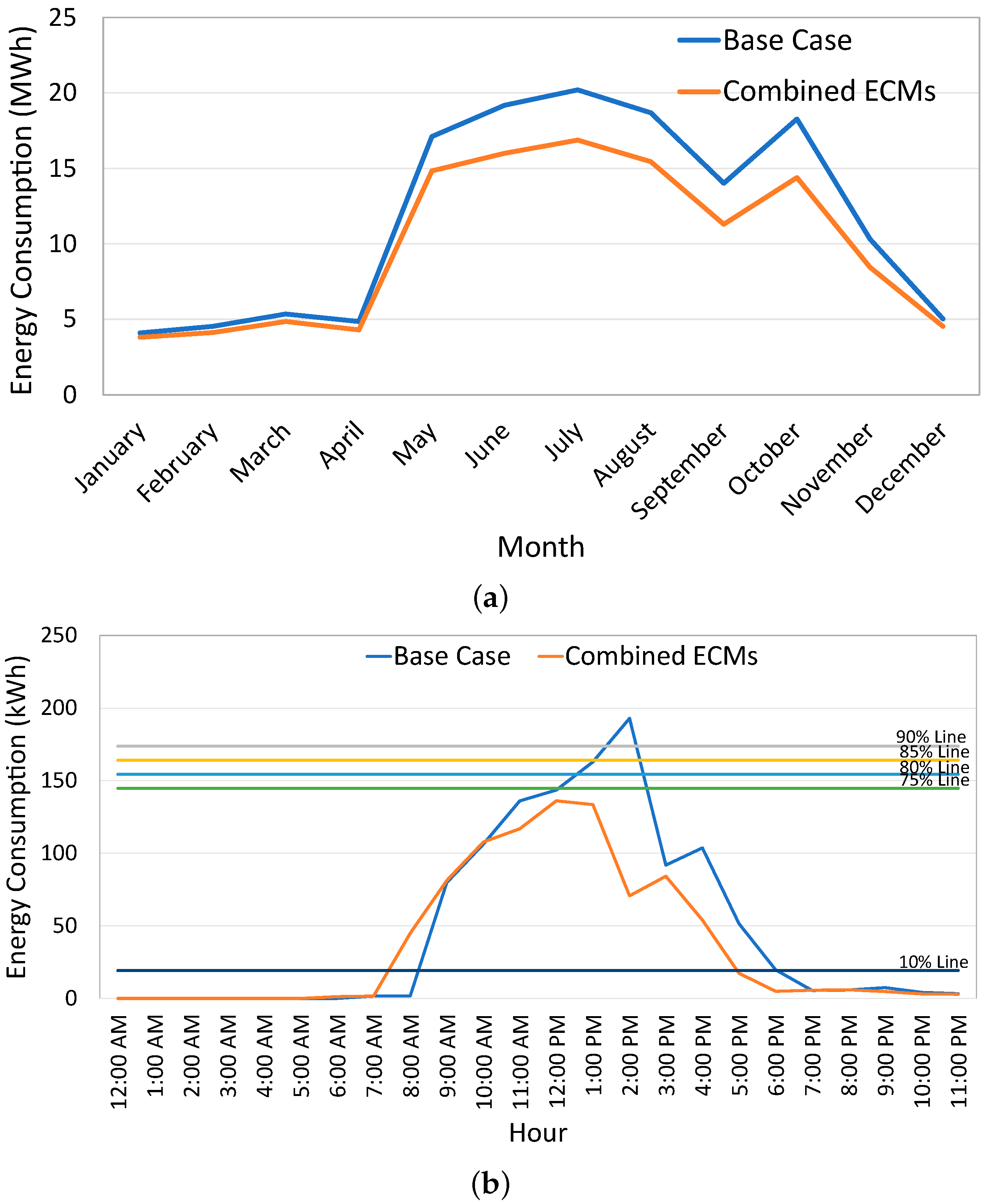
When all the proposed energy conservation measures (ECMs) are applied simultaneously to the building, the annual energy consumption is reduced by approximately 16% compared to the base case, corresponding to a reduction of 11.6 tons of greenhouse gas (GHG) emissions. Figure 19a illustrates that the majority of energy savings occur during the summer months. This indicates that the implemented ECMs are particularly effective in reducing cooling loads, which represent the dominant energy demand in the building due to air-conditioning systems.
Moreover, as illustrated in Figure 19b, the combined effect of the ECMs leads to a reduction in daily peak energy consumption by approximately 29.4%, along with an overall decrease in daily energy use of about 21.16% (for the 15th of October as a sample day). For a more representative indication, for the week from the 14th to 20th of May, the implementation of the combined ECMs reduces the consumption by about 14.8%, and the range of peak reduction is 16–30%. This significant reduction in peak demand not only alleviates stress on the electrical system but also contributes to improved operational efficiency and potential cost savings.
The results further confirm the effectiveness of integrating multiple ECMs as they successfully achieve the dual objectives of reducing overall energy consumption and minimizing peak demand.

3.3. Potential Organizational and Behavioral Barriers

The implementation of the proposed ECMs may face organizational, behavioral, and operational barriers, including resistance to schedule changes, institutional constraints, teaching quality, and student and staff comfort.
Hence, it is essential to evaluate the impact of the proposed ECMs on teaching quality and student and staff comfort in order to explicitly identify potential organizational and behavioral barriers that may influence decision-making.
With respect to ECM1 (five-day weekly schedule), this scenario is generally preferred by both students and teaching staff as it provides an extended weekend period, thereby enhancing overall comfort and work–life balance.
ECM2 (seasonal time shifting) aims to align operational hours with cooler periods of the day. Although its direct impact on individual comfort may be limited, it contributes to measurable energy savings at the building level.
ECM3 represents the most critical intervention. In some institutions, reducing tutorial session duration may be perceived as detrimental to the teaching process. However, this reduction is compensated for by a corresponding increase in lecture time, ensuring that the total effective instructional time (lecture + tutorial) remains constant so as not to compromise institutional requirements. Even with this adjustment, the suitability of ECM3 is context-dependent. It is more applicable in institutions where tutorial sessions are relatively oversized or can be optimized without compromising educational outcomes, thereby enabling energy savings. Conversely, in institutions where tutorial time is already limited, alternative ECMs may be more appropriate. In the case of the studied building, tutorial sessions are typically underutilized and often conclude before the scheduled end time; therefore, implementing ECM3 is not expected to negatively affect teaching quality or occupant comfort.
ECM4 is not anticipated to have a significant impact on either the teaching process or user comfort as it involves only the re-ordering of lectures and tutorial sessions without altering their durations. Additionally, this adjustment may improve lecturer convenience by avoiding very early scheduled sessions.
Finally, ECM5 introduces a structured break period for students and teaching staff, mitigating schedule congestion caused by consecutive sessions. This measure can enhance comfort and reduce fatigue. It should be noted that this break is not applied to administrative staff, whose working hours typically conclude around this period, making it more practical for them to complete their duties without interruption.
While quantitative learning outcomes were not directly assessed in this study, the preservation of total instructional time suggests that academic performance is unlikely to be adversely affected.
Furthermore, several supporting tools can be recommended to address implementation barriers. Smart timetabling systems can facilitate the optimization of lecture and tutorial schedules (ECM3–ECM5), while occupancy monitoring technologies provide data-driven insights to validate and refine scheduling strategies. In addition, building energy management systems (BEMSs) can support the alignment of HVAC and lighting operation with modified schedules. From an organizational perspective, stakeholder engagement, pilot implementation strategies, and flexible teaching approaches can improve acceptance and ensure that the proposed ECMs are implemented without compromising teaching quality.

4. Conclusions

This study presents a systematic framework for identifying and evaluating time-based no-cost energy conservation measures (ECMs) in academic buildings using an audit-driven building energy modeling approach.
The results show that the proposed ECMs have distinct impacts depending on the performance indicator. Planning for a five-day workweek instead of six days (ECM1) is the most effective strategy for reducing annual energy consumption, achieving approximately 10.27% savings. Among the time-based operational modifications with unchanged workdays, ECM3 (lecture and tutorial time adjustment) yields the highest energy reduction (about 6.3%), followed by ECM2 (seasonal time shift) with approximately 5.8%.
From a peak-demand perspective, ECM5 (shifting peak-demand time slots) is the most effective, reducing the daily peak load by approximately 25.9%, followed by ECM3 (>15%).
These findings indicate that ECMs targeting occupancy duration and operational days are more effective for reducing total energy consumption, whereas schedule-based ECMs are more effective for peak-demand management, providing a practical basis for selecting strategies based on specific objectives.
When combined, the ECMs achieve up to 16% energy savings and 29.4% peak reduction, demonstrating the strong synergy of integrated operational strategies. These results highlight the potential of operational policy adjustments as low-risk, high-impact measures for improving energy performance and supporting demand-side management in university buildings.
Future research should extend this framework to a wider range of buildings with different occupancy characteristics to assess its generalizability. Integrating real-time occupancy sensing and adaptive control systems could further enhance performance through dynamic optimization of energy use and peak demand.

Author Contributions

Conceptualization, A.A.E.-H.; formal analysis, A.A.E.-H.; investigation, H.S.A.; resources, A.A.E.-H. and M.A.N.; data curation, M.A.H.; writing—original draft, U.A.A., A.S.H.A., M.A.N., H.S.A. and M.A.H.; writing—review and editing, U.A.A., A.S.H.A., M.A.N., H.S.A. and M.A.H.; supervision, M.A.N.; funding acquisition, A.S.H.A. All authors have read and agreed to the published version of the manuscript.

Funding

This work was supported and funded by the Deanship of Scientific Research, Imam Mohammad Ibn Saud Islamic University (IMSIU) (grant number IMSIU-DDRSP2603).

Data Availability Statement

Data is contained within the article. Further inquiries can be directed to the corresponding authors.

Conflicts of Interest

There are no conflicts of interest.

References

  1. Nita, A.; Sunitiyoso, Y.; Tiara, A.R.; Kim, A.A. Exploring decision making factors in public buildings’ energy efficiency projects. Energy Build. 2023, 298, 113563. [Google Scholar] [CrossRef]
  2. Kumar, L.A.; Ganesan, G. Energy Audit and Management: Concept, Methodologies, Procedures, and Case Studies; CRC Press: Boca Raton, FL, USA, 2022. [Google Scholar]
  3. Allouhi, A.; El Fouih, Y.; Kousksou, T.; Jamil, A.; Zeraouli, Y.; Mourad, Y. Energy consumption and efficiency in buildings: Current status and future trends. J. Clean. Prod. 2015, 109, 118–130. [Google Scholar] [CrossRef]
  4. Aly, H.; Abdelaziz, O. Sustainable design trends in the built-environment globally and in Egypt: A literature review. Sustainability 2024, 16, 4980. [Google Scholar] [CrossRef]
  5. Alajmi, A. Energy audit of an educational building in a hot summer climate. Energy Build. 2012, 47, 122–130. [Google Scholar] [CrossRef]
  6. Rahman, M. Building Energy Conservation and Indoor Air Quality Assessment in a Subtropical Climate; Central Queensland University, Faculty of Sciences, Engineering and Health: Brisbane, Australia, 2008. [Google Scholar]
  7. Bosu, I.; Mahmoud, H.; Hassan, H. Energy audit, techno-economic, and environmental assessment of integrating solar technologies for energy management in a university residential building: A case study. Appl. Energy 2023, 341, 121141. [Google Scholar] [CrossRef]
  8. Darshan, A.; Girdhar, N.; Bhojwani, R.; Rastogi, K.; Angalaeswari, S.; Natrayan, L.; Paramasivam, P. Energy audit of a residential building to reduce energy cost and carbon footprint for sustainable development with renewable energy sources. Adv. Civ. Eng. 2022, 2022, 4400874. [Google Scholar] [CrossRef]
  9. Chan, M.; Caram, F.B.; Contreras, M.A.; San Miguel, C.A.; Tamayao, M.A. Developing an Energy Audit for Baseline and Scenario Analysis of a University Library. Philipp. Eng. J. 2020, 41, 19–38. [Google Scholar]
  10. Oyedepo, S.; Dirisu, J.; Fayomi, O.; Essien, E.; Efemwenkiekie, U. Energy evaluation and conservation strategies for a Nigerian private college facilities: Case analysis of energy audit of Covenant University. In Proceedings of the AIP Conference Proceedings; AIP Publishing: Melville, NY, USA, 2019; Volume 2190. [Google Scholar]
  11. Chu, Y.; Guillante, P.; Mitra, D.; Mahmud, R.; Cetin, K. Typical academic building energy model development and energy saving evaluation using occupant-based control. J. Build. Eng. 2023, 79, 107818. [Google Scholar] [CrossRef]
  12. Marinosci, C.; Morini, G.L.; Semprini, G.; Garai, M. Preliminary energy audit of the historical building of the School of Engineering and Architecture of Bologna. Energy Procedia 2015, 81, 64–73. [Google Scholar] [CrossRef]
  13. Magrini, A.; Gobbi, L.; d’Ambrosio, F.R. Energy audit of public buildings: The energy consumption of a University with modern and historical buildings. Some results. Energy Procedia 2016, 101, 169–175. [Google Scholar] [CrossRef]
  14. Corrado, V.; Ballarini, I.; Paduos, S.; Tulipano, L. A new procedure of energy audit and cost analysis for the transformation of a school into a nearly zero-energy building. Energy Procedia 2017, 140, 325–338. [Google Scholar] [CrossRef]
  15. Gul, M.S.; Patidar, S. Understanding the energy consumption and occupancy of a multi-purpose academic building. Energy Build. 2015, 87, 155–165. [Google Scholar] [CrossRef]
  16. Nord, N.; Tereshchenko, T.; Woszczek, A.; Næss, J.S.; Sandberg, N.H.; Pahlavan, H.M.; Brattebø, H. A dynamic modelling approach to explore zero emission building stock opportunities towards 2050–Case study of a university campus. Energy Build. 2024, 325, 115024. [Google Scholar]
  17. Ascione, F.; Borrelli, M.; De Masi, R.F.; de’Rossi, F.; Vanoli, G.P. Energy refurbishment of a University building in cold Italian backcountry. Part 1: Audit and calibration of the numerical model. Energy Procedia 2019, 159, 2–9. [Google Scholar] [CrossRef]
  18. Kim, Y.S.; Heidarinejad, M.; Dahlhausen, M.; Srebric, J. Building energy model calibration with schedules derived from electricity use data. Appl. Energy 2017, 190, 997–1007. [Google Scholar] [CrossRef]
  19. Gui, X.; Gou, Z.; Zhang, F. The relationship between energy use and space use of higher educational buildings in subtropical Australia. Energy Build. 2020, 211, 109799. [Google Scholar] [CrossRef]
  20. Gui, X.; Gou, Z.; Lu, Y. Reducing university energy use beyond energy retrofitting: The academic calendar impacts. Energy Build. 2021, 231, 110647. [Google Scholar] [CrossRef]
  21. Latif, M.H.; Ahmed, T.; Khalid, W.; Anis, M.; Mahmood, T. Energy audit, retrofitting and solarization in educational institutes of Pakistan: An effective approach towards energy conservation. In Proceedings of the 2019 International Conference on Engineering and Emerging Technologies (ICEET); IEEE: New York, NY, USA, 2019; pp. 1–6. [Google Scholar]
  22. Sukumaran, D.; Duraikannan, S.; Thiruchelvam, V.; Abdulla, R.; Mei, D.L.C.; Susaipan, Y.S.L. Energy Audit Using Deep Data Analytics for Building Energy Conservation Measures. Solid State Technol 2020, 63, 899–910. [Google Scholar]
  23. Adjei-Saforo, K.; Adam, M.; Ntiamoah-Sarpong, K.; Addo, E.; Su, H. A Research on Electrical Energy Audit in an Educational Institution-A Case Study. Int. J. Res. Eng. Technol. 2017, 5, 229–234. [Google Scholar]
  24. Mijakovski, V.; Mitrevski, V.; Geramitcioski, T. Case Study: Energy Audit of the High School Dorm“ Mirka Ginova”-Bitola. In Proceedings of the International Scientific Conference on Information, Communication and Energy Systems and Technologies, Ohrid, North Macedonia, 27–29 June 2019. [Google Scholar]
  25. Itani, T.; Ghaddar, N.; Ghali, K. Strategies for reducing energy consumption in existing office buildings. Int. J. Sustain. Energy 2013, 32, 259–275. [Google Scholar] [CrossRef]
  26. Hamida, M.B.; Ahmed, W.; Asif, M.; Almaziad, F.A. Techno-economic assessment of energy retrofitting educational buildings: A case study in Saudi Arabia. Sustainability 2020, 13, 179. [Google Scholar] [CrossRef]
  27. ASHRAE, A.G. Guideline 14-2002: Measurement of Energy and Demand Savings; ASHRAE: Atlanta, GA, USA, 2002. [Google Scholar]
  28. Royapoor, M.; Roskilly, T. Building model calibration using energy and environmental data. Energy Build. 2015, 94, 109–120. [Google Scholar] [CrossRef]
Figure 1. Proposed methodology flow chart.
Buildings 16 01893 g001
Figure 2. Exterior view of the Electrical Engineering Department building used as the case study.
Buildings 16 01893 g002
Figure 3. Geographic location of the case study building in Assiut City, Egypt [Google Earth].
Buildings 16 01893 g003
Figure 4. Plan view of the first floor showing spatial layout, building orientation, and functional zones.
Buildings 16 01893 g004
Figure 5. Distribution of room categories and corresponding floor areas in (a) the main building and (b) the laboratory building.
Buildings 16 01893 g005
Figure 6. Measured daily electricity consumption profiles over one year for (a) the main building and (b) the laboratory building, highlighting weekday and weekend consumption patterns.
Buildings 16 01893 g006
Figure 7. Monthly electricity consumption of the main building and laboratory building, illustrating seasonal variations and peak-demand periods.
Buildings 16 01893 g007
Figure 8. Overview of the visual occupancy counting system architecture and deployment.
Buildings 16 01893 g008
Figure 9. Hourly profiles of occupancy, energy consumption, and energy use per person (kWh/person) for representative days across different conditions: (a,b) summer studying days, (c,d) winter studying days, (e,f) summer exam days, and (g,h) winter exam days.
Buildings 16 01893 g009
Figure 10. 3D representation of the building model developed in SketchUp: (a) external view and (b) sectional view showing internal zoning.
Buildings 16 01893 g010
Figure 11. Illustration of operational time shift due to summertime application, showing the relationship between actual and adjusted working hours.
Buildings 16 01893 g011
Figure 12. Hourly variation in normalized energy use (kW/m2·person) across different space types (classes, laboratories, and administrative areas), illustrating differences in energy efficiency between lectures and tutorial sessions.
Buildings 16 01893 g012
Figure 13. Conceptual illustration of course time redistribution between lectures and tutorials, keeping the effective time fixed according to the regulations: (a) base case and (b) proposed scenario with reduced tutorial duration and adjusted lecture time.
Buildings 16 01893 g013
Figure 14. Model validation results comparing measured and simulated energy consumption: (a) monthly comparison and (b) selected daily profiles.
Buildings 16 01893 g014
Figure 15. Annual load profiles for the base case and proposed ECM scenarios, highlighting changes in energy consumption patterns across the year.
Buildings 16 01893 g015
Figure 16. Daily load profiles for the base case and proposed ECM scenarios, highlighting changes in energy consumption patterns across the day.
Buildings 16 01893 g016
Figure 17. Daily load profiles with constant threshold levels (75–90% of peak load) used to evaluate peak reduction and load-profile reshaping for each ECM scenario.
Buildings 16 01893 g017
Figure 18. Weekly energy consumption profile comparing the base case and ECM1 (five-day vs. six-day schedule) for the week of 14th–20th October, illustrating the impact of workday redistribution.
Buildings 16 01893 g018
Figure 19. Energy consumption comparison of base case vs. combined ECMs: (a) monthly profile and (b) hourly profile.
Buildings 16 01893 g019
Table 3. Summary of key modeling assumptions, input parameters, and data sources used in developing the calibrated EnergyPlus baseline model.
CategoryParameterAssumption/DescriptionSource
WeatherWeather fileTypical Meteorological Year (ETMY) EPW file for the building’s city, i.e., Assiut.EnergyPlus weather database
GeometryThermal zoningThe building has been divided into multiple thermal zones based on space function and orientation.Architectural drawings and walkthrough assessment
EnvelopeConstruction setsWall, roof, and glazing thermal properties defined according to as-built specifications through construction sets assigned to the spaces of the building.Site inspection
Operation schedulesSchedule setsA schedule set, including people schedule, lighting schedule and equipment schedule, is assigned to each space in the building.Building documentation and site survey
HVACSystem typeSplit air-conditioning units operating in cooling-only mode.Site inspection
Table 4. Overview of proposed time-based ECMs, their classification, associated parameter modifications, and expected impacts on building performance.
CategoryECMParameter ModifiedObjective/Expected Impact
Working-day ECMsECM 1: Number of working days per weekWorkweek structure (5 days vs. 6 days)Reduce total annual energy consumption by limiting building operational days
Time-slot-modification ECMsECM 2: Seasonal time shiftOperating hours (clock shift by 1 h forward in summer)Reduce cooling demand by aligning activities with cooler-outdoor-temperature periods
ECM 3: Lecture and tutorial time modificationDuration of lectures and tutorial sessionsReduce effective occupancy time while maintaining total instructional hours
ECM 4: Swapping lecture and tutorial time slotsSequence of lectures and tutorials during the dayShift high-energy-consuming activities to lower-temperature periods
ECM 5: Shifting peak-demand time slotsTiming of study sessions (12:00–15:00 shifted to 15:00–18:00)Reduce peak demand and reshape daily load profile
Table 5. Sensitivity analysis of key input parameters on annual energy consumption.
Parameter VariedPercentage Change AppliedPercentage Change on Annual Energy
Occupancy ± 10 % ± 1 %
Lighting load ± 10 % ± 3.49 %
Air-conditioner COP ± 10 % ± 4.2 %
Table 6. Summary of the impacts of the proposed time-based no-cost ECMs on annual energy consumption, daily performance, peak-demand reduction, and associated GHG emissions.
Time ScaleParameterBase CaseECM1 No. of Working Days (6 Days)ECM2 Seasonal Time ShiftECM3 Lec. & Tutorial Time ModificationECM4 Swapping the Lecture and Tutorial Time SlotsECM5 Shifting Peak-Demand Time Slots
YearlyTotal Consumption141.6 MWh156.14 MWh133.42 MWh132.69 MWh141.36 MWh141.41 MWh
Energy Savings The five-day workweek scenario saves 14.54 MWh (10.27%) compared to the six-day workweek scenario8.18 MWh (5.78%)8.91 MWh (6.3%)0.24 MWh (0.17%)0.19 MWh (0.14%)
GHG Emission Reduction The five-day workweek scenario saves 8 tons of CO2/year compared to the six-day workweek scenario.4.5 tons of CO2/year4.9 tons of CO2/year0.13 tons of CO2/year0.11 tons of CO2/year
DailyDaily Consumption (15th day of October as an example)1.12 MWh1 MWh1.03 MWh0.98 MWh1.12 MWh1.12 MWh
Period of Consumption Above 10%9 h 40 min (9.666666 h)8 h 30 min (8.5 h)9 h 50 min (9.8333 h)9 h 15 min (9.25 h)9 h 35 min (9.58333 h)13 h 30 min (13.5 h)
Period of Consumption Above 90%50 min (0.83333 h)50 min (0.83333 h)1 h2 h40 min (0.6667 h)1 h 25 min (1.417 h)
Peak Reduction <0.2% (marginal)Suitable for reducing the peak to below 90%.Suitable for reducing the peak to below 85%.Suitable for reducing the peak to below 95%.Suitable for reducing the peak to below 75%.
Energy Savings 120 kWh (11.34%)90 kWh (8.2%)140 kWh (12.26%)<0.2% (marginal)<0.2% (marginal)
WeeklyWeekly Consumption (from 14–20th of May)4.38 MWh4.79 MWh (6 work days)4.17 MWh3.93 MWh4.3 MWh4.025 MWh
Range of Daily Peak Reduction 0.05–3.88%5.5–11.9%3.8–13.9%0.4–8%10.9–33.9%
Disclaimer/Publisher’s Note: The statements, opinions and data contained in all publications are solely those of the individual author(s) and contributor(s) and not of MDPI and/or the editor(s). MDPI and/or the editor(s) disclaim responsibility for any injury to people or property resulting from any ideas, methods, instructions or products referred to in the content.